Tag Archives: revolution of 1848

A New Birth of Freedom and its True Meaning: The Gettysburg Address


Friends of Padre Steve’s World,

The weekend before Donald Trump was elected President I was at Gettysburg with my students from the Staff College. We finished our staff ride at the Soldier’s Cemetery where Abraham Lincoln gave the Gettysburg Address. My practice as always was to close the staff ride by reading his address. I always get a bit choked up when I read it because I realize just how important what he said was then, and still is today. That Sunday it was as if I saw the Confederate hordes advancing upon Cemetery Ridge and the fate of the country hanging in the balance.

I had already seen the assaults on our Republic and Constitution by Donald Trump and his supporters, and that particular day I was full of dread. I knew that if Trump won, and his supporters on the Alt-Right have their way, our system of government will be destroyed, the civil liberties that the men who died at Gettysburg to establish, would be curtailed or even rolled back. I feared, and it turns out quite rightly, that if Trump won, that civil rights would be threatened or rolled back, that White Nationalists would be emboldened, and racist violence and anti-Semitic attacks would increase exponentially. I would have preferred to be wrong, but I was right. Now we are in the midst of impeachment proceedings
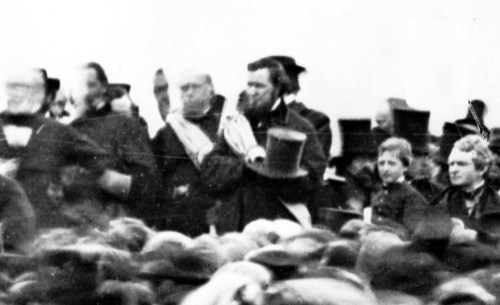
In November of 1863 Abraham Lincoln was sick when when he traveled by train from Washington DC to Gettysburg. When Lincoln delivered the address, he was suffering from what was mostly likely a mild form of Smallpox. Thus the tenor, simplicity and philosophical depth of his address are even more remarkable. It is a speech given in the manner of Winston Churchill’s “Blood sweat toil and tears” address to Parliament upon his appointment as Prime Minister in May, 1940. Likewise it echoes the Transcendentalist understanding of the Declaration of Independence as a “test for all other things.”

Many people in the United States and Europe did not agree with Lincoln’s restatement of the founding premise of the Declaration of Independence. Opponents argued that no nation found on such principles could long survive. The more reactionary European subscribers of Romanticism ridiculed the “idea that a nation could be founded on a proposition….and they were not reluctant to point to the Civil War as proof that attempting to build a government around something as bloodless and logical as a proposition was futile.” [1]

As late as 1848, the absolute monarchies of Europe had fought against and put down with force revolutionary movements attempting to imitate the American experiment. Many of the revolutionaries from Germany, Poland, and other nations fled to the United States, where 15 years later, clad in the Blue of the United States Army fought to preserve that experiment on the battlefields of the American Civil War, including Gettysburg.

But Lincoln disagreed with the conservative reactionaries of Europe, or the American Slave owning aristocracy. He believed that Americans would fight to defend that proposition. He believed that the “sacrifices of Gettysburg, Shiloh, Murfreesboro, Chancellorsville, and a hundred other places demonstrated otherwise, that men would die rather than to lose hold of that proposition. Reflecting on that dedication, the living should themselves experience a new birth of freedom, a determination- and he drove his point home with a deliberate evocation of the great Whig orator Daniel Webster- “that government of the people, by the people, for the people, shall not perish from the earth.” [2]

The Unitarian pastor, abolitionist, and leading Transcendentalist thinker, Theodore Parker wrote:

“Our national ideal out-travels our experience, and all experience. We began our national career by setting all history at defiance – for that said, “A republic on a large scale cannot exist.” Our progress since that has shown that we were right in refusing to be limited by the past. The practical ideas of the nation are transcendent, not empirical. Human history could not justify the Declaration of Independence and its large statements of the new idea: the nation went beyond human history and appealed to human nature.” [3]

Lincoln’s address echoes the thought of historian George Bancroft, who wrote of the Declaration:

“The bill of rights which it promulgates is of rights that are older than human institutions, and spring from the eternal justice…. The heart of Jefferson in writing the Declaration, and of Congress in adopting it, beat for all humanity; the assertion of right was made for the entire world of mankind and all coming generations, without any exceptions whatsoever.” [4]

Theodore Parker’s words also prefigured an idea that Lincoln used in his address. Parker, like Lincoln believed that: “the American Revolution, with American history since, is an attempt to prove by experience this transcendental proposition, to organize the transcendental idea of politics. The ideal demands for its organization a democracy- a government of all, for all, and by all…” [5]

Following a train trip to Gettysburg and an overnight stay, Lincoln delivered these immortal words on that November afternoon:

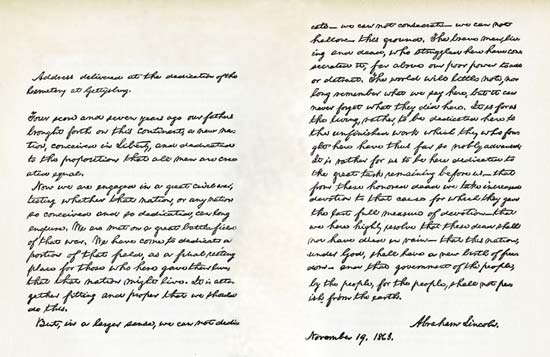
Four score and seven years ago our fathers brought forth on this continent, a new nation, conceived in Liberty, and dedicated to the proposition that all men are created equal.

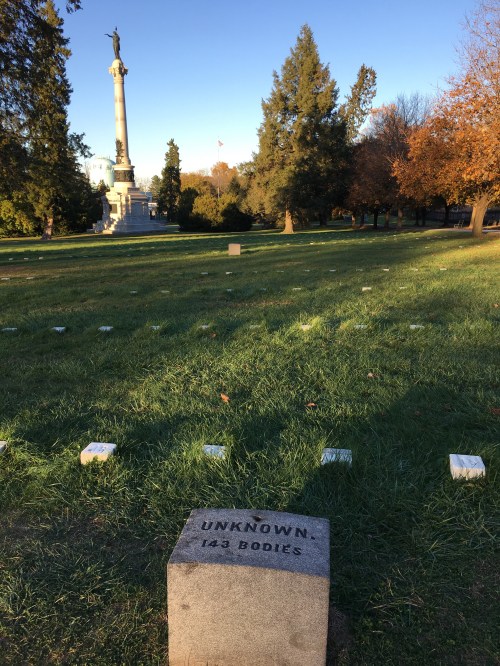
Now we are engaged in a great civil war, testing whether that nation, or any nation so conceived and so dedicated, can long endure. We are met on a great battle-field of that war. We have come to dedicate a portion of that field, as a final resting place for those who here gave their lives that that nation might live. It is altogether fitting and proper that we should do this.

But, in a larger sense, we cannot dedicate — we can not consecrate — we can not hallow — this ground. The brave men, living and dead, who struggled here, have consecrated it, far above our poor power to add or detract. The world will little note, nor long remember what we say here, but it can never forget what they did here. It is for us the living, rather, to be dedicated here to the unfinished work which they who fought here have thus far so nobly advanced. It is rather for us to be here dedicated to the great task remaining before us — that from these honored dead we take increased devotion to that cause for which they gave the last full measure of devotion — that we here highly resolve that these dead shall not have died in vain — that this nation, under God, shall have a new birth of freedom — and that government of the people, by the people, for the people, shall not perish from the earth.[6]
In a time where many are wearied by the foibles and follies of our politicians, especially a man as singularity ill-equipped and ill-tempered as Donald Trump, Lincoln’s words still matter. Since Trump’s election he, and his supporters, many of whom are White Nationalists, and authoritarians have moved on many fronts to curtail civil rights and re-establish White rule in a way unseen since secession, and Jim Crow. So far our institutions have held, but there is no guarantee that they will. In such an environment, one has to wonder if our very form of government can survive.

But it is important that they do, and despite our weariness, we need to continue to fight for those ideals, even when the world seems to be closing in around us as it must have seemed following Lee’s initial success on the first day of battle at Gettysburg.

Dr. Allen Guelzo, Professor of Civil War Studies at Gettysburg College wrote in the New York Times:

“The genius of the address thus lay not in its language or in its brevity (virtues though these were), but in the new birth it gave to those who had become discouraged and wearied by democracy’s follies, and in the reminder that democracy’s survival rested ultimately in the hands of citizens who saw something in democracy worth dying for. We could use that reminder again today.” [7]

Dr. Guelzo is quite correct. Many people in this country and around the world are having grave doubts about our democracy. I wonder myself, but I am an optimist, and despite my doubts, I have to believe that we will eventually recover.

Admittedly, that is an act of faith based on our historical resiliency, and ability to overcome the stupidity of politicians, pundits and preacher, including the hate filled message of Donald Trump and his White Supremacist supporters, especially supposedly “conservative ” Christians. That doesn’t mean that I am not afraid for our future, or that despite my belief that our institutions will hold. Historian, Timothy Snyder correctly noted:

“The European history of the twentieth century shows us that societies can break, democracies can fall, ethics can collapse, and ordinary men can find themselves standing over death pits with guns in their hands. It would serve us well today to understand why.”

The amazing thing during the Civil War was that in spite of everything, the Union survived. Lincoln was a big part of that. His steady leadership and unfailing resolve help see the Republic through manifold disasters.

But, it was the men who left lives of comfort and security to defend the sacred principles of the Declaration, like Joshua Chamberlain, and many others who brought about that victory. Throughout the war, even to the end Southern political leaders failed to understand that Union men would fight and die for an ideal, something greater than themselves, the preservation of the Union and the freedom of an enslaved race. For those men that volunteered to serve, the war was not about personal gain, loot or land, it was about something greater. It was about freedom, and when we finally realize this fact, and take up the cause that they fought and died for, then maybe, just maybe, we can contemplate the real meaning of “that cause for which they gave the last full measure of devotion.d. [8]

Now, I for one do not think that we are currently living up to the ideals enunciated by Lincoln on that day at Gettysburg. I can understand the cynicism disillusionment of Americans, as well as those around the world who have for over 200 years looked to us and our system as a “city set on a hill.” That being said, when I read these words and walk the hallowed ground of Gettysburg, I am again a believer. I believe that we can realize the ideal, even in our lifetime should we decide to again believe in that proposition and be willing to fight, or even die for it. Of course, it is quite possible that we will not measure up to the example set by Lincoln and the men who fought for the Union at Gettysburg. If we don’t, The blame will be upon all of us.

So, have a great day and please stop to think about how important Lincoln’s words remain as we wait to see what the next day of Trump’s America brings. This is important because Trump and his supporters respect tyrants like King George III, as his supporters like Attorney General William Barr have said that the Colonialists revolted against the Parliament, not the King. To make that argument one has to ignore the Declaration of Independence in its entirety and declare that Trump is King, and that his word is law.

That cannot be allowed to happen, and I will be damned if I allow that happen without speaking out.

Until tomorrow,

Peace

Padre Steve+

Notes

[1] Ibid. Guelzo. Fateful Lightening p.409

[2] Ibid. Guelzo. Fateful Lightening p.408

[3] Ibid. Wills. Lincoln at Gettysburg p.110

[4] Ibid. Wills. Lincoln at Gettysburg p.105

[5] Ibid. Wills. Lincoln at Gettysburg p.105

[6] Lincoln, Abraham The Gettysburg Address the Bliss Copy retrieved from http://www.abrahamlincolnonline.org/lincoln/speeches/gettysburg.htm

[7] Guelzo, Allen C. Lincoln’s Sound Bite: Have Faith in DemocracyNew York Time Opinionator, November 17th 2013 retrieved from http://opinionator.blogs.nytimes.com/2013/11/17/lincolns-sound-bite-have-faith-in-democracy/?_php=true&_type=blogs&_r=0 July 18th 2014

[8] Ibid. McPherson This Hallowed Ground p.13
Leave a comment

Filed under civil rights, civil war, History, Military, Political Commentary

A Day of Fate: November 9th “Der Schicksaltag” in Germany


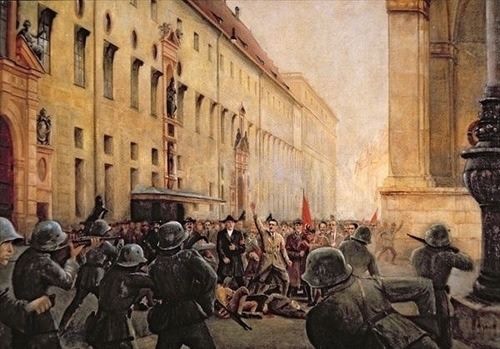
Hitler-Putsch, M¸nchen, Marienplatz

                                   Schicksalstag: The Fateful Day

Friends of Padre Steve’s World,

There are some days in history that are crammed full world changing events, and sometimes those events occur, for good or bad and sometimes good and bad in different countries. In the United States July 4th is not only Independence Day, but eighty-seven years later marked the surrender of Vicksburg and the retreat of Robert E. Lee’s army from Gettysburg. Likewise it was the day that the Louisiana Purchase was announced in 1803 and that in 1826 the Thomas Jefferson and John Adams died.

Since 1918 November 9th has been a day in German history that has impacted both Germany and the world in many ways. In a sense it is almost hard to believe that so much occurred on that day. It is known by many in Germany as Der Schicksalstag (the fateful day).

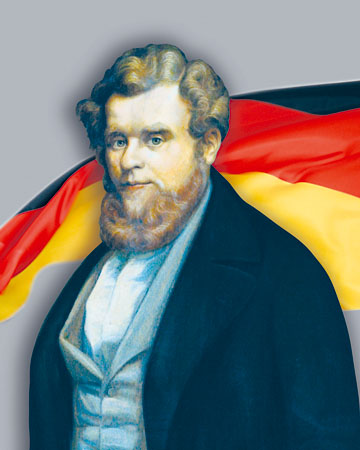
robert-blum-03

                                                        Robert Blum

In 1848 a member of the Frankfurt Parliament, Robert Blum was arrested and executed executed for traveling to Vienna to support the 1848 democracy uprising there. A liberal, humanist and democrat Blum advocated German unification without Prussian dominance, protested Prussian oppression of Poles, stood against anti-Semitism and for the rights of Catholics in heavily Protestant German kingdoms. Blum’s dream remained unfulfilled for over a century after his death. Many of the men and women who took part in the failed revolution of 1848 would come to the United States where during the American Civil War they would fight for the emancipation of slaves and later the Civil rights of freed blacks. Among them was Carl Schurz.


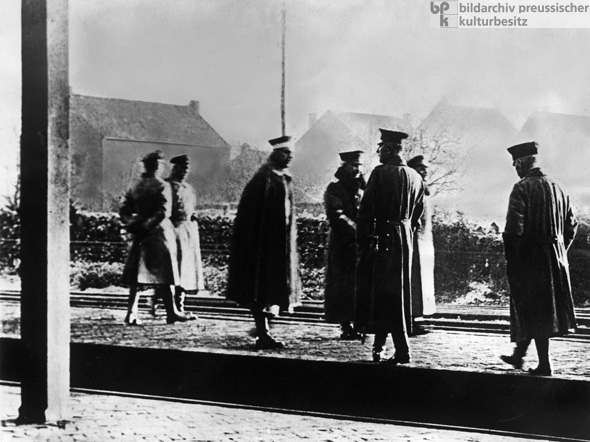
Kaiser Wilhelm II Cross
es the Dutch Border Following his Abdication

November 9th, 1918 was gloomy day at the military headquarters of Kaiser Wilhelm II. General Wilhelm Groener, Quartermaster General of the Army looked his sovereign in the eye and told Kaiser Wilhelm that the war was lost, and that he no longer had the support of the Army. The Kaiser, reeling from battlefield defeats and the mutiny of his precious High Seas Fleet, was stunned. Field Marshal Paul von Hindenburg, who had for all practical intents had headed a military dictatorship with General Erich Ludendorff since 1916, meekly nodded his concurrence with Groener. The Kaiser abdicated the throne and departed in his private train to the Netherlands the next day.

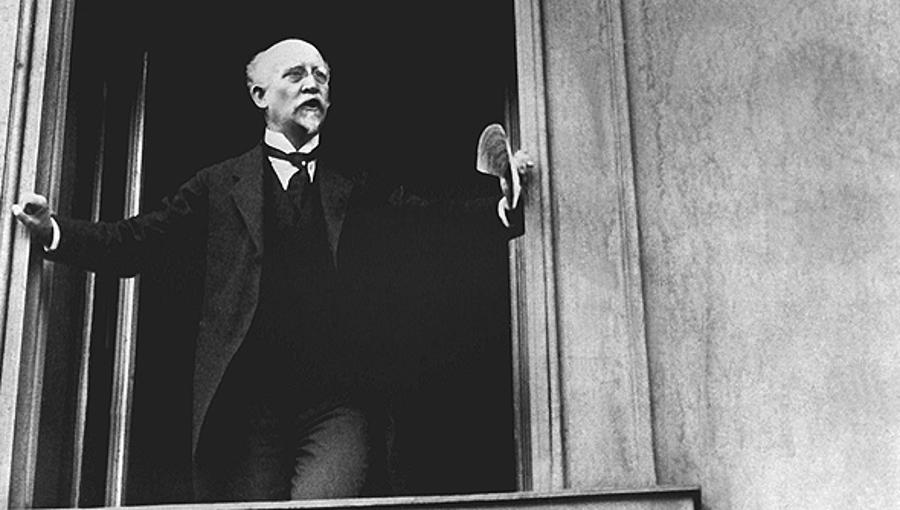
ausrufung-der-republik-in-berlin-preview-image_900x510

                         Phillip Scheidemann Proclaims the Republic 

Meanwhile in Berlin, Majority Socialist parliament member Philip Scheidemann proclaimed the Republic to prevent a Soviet takeover. Unfortunately, Scheidemann’s bold move upset a plan for a smooth transition of power between Friedrich Ebert and the outgoing Chancellor Theobald von Bethmann-Hollweg. Chaos ensued and the Republic, known as the Weimar Republic struggled for its existence in the face of a Soviet Revolution and Conservative reaction.

However, the promise of democracy was soured by events that the leaders of the Republic were blamed: a continued allied blockade, a humiliating peace treaty, the loss of territory, the occupation of the industrial areas of the Ruhr and Saar by France and Belgium, heavy war reparations, and the war guilt clause of the Treaty of Versailles. This was compounded by civil war between various right and left wing factions and major economic problems including massive hyper-inflation of 1920-21 and the Great Depression doomed the young Republic.

                                                Beer Hall Putsch

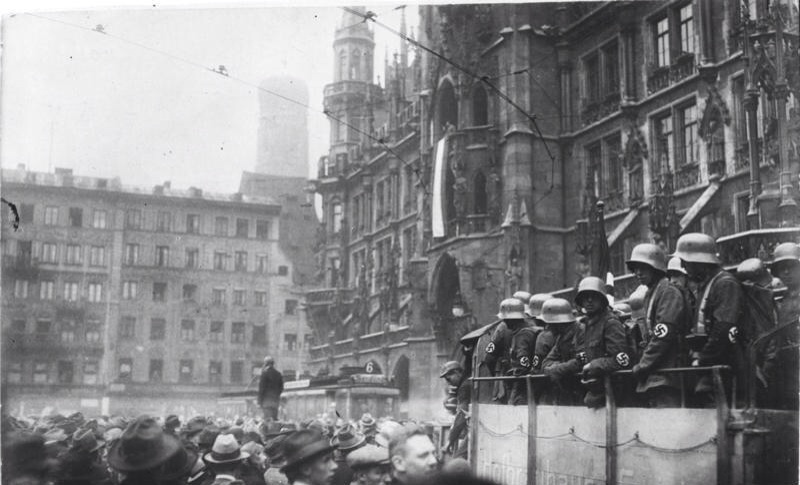
Five years to the day following Scheidemann’s proclamation a charismatic Austrian in Munich who had fought and been wounded fighting for Germany in the First World War gathered with his political sympathizes and para-military street thugs to attempt a putsch. The man was Adolf Hitler, the head of the small and radical National Socialist Deutches Arbeiter Partei, or National Socialist German Workers Party. Hitler hoped that his putsch would result in a popular uprising against the German government in Berlin. The putsch was a failure and ended in bloodshed at the Feldherrnhalle monument on Munich’s Odeonsplatz.

Hitler fled the scene but arrested and put on trial. The case was tried in Munich rather than Berlin and convicted of treason. He was given a light sentence and jailed for nine months at the Landesberg prison where he wrote his book Mein Kampf. In prison he continued to recruit others to his cause. Less than ten years later Hitler was appointed Chancellor by President Hindenburg. Hitler quickly banned political opposition and began his persecution of Jews and others that he believed to be sub-human and upon Hindenburg’s death in 1934 merged the office of Chancellor and President become the leader of Nazi Germany.

In November 1938 Hitler and his henchmen were looking for a reason to openly begin persecuting the Jews. They had been doing so since the seizure of power, but 1938 marked a turning point. Instead of unofficial pogroms launched by his undisciplined Stormtroopers, this was orchestrated by the top men in the Nazi regime.

One of the chief reasons for this was to seize the property and financial resources of German Jews. This coincided with the expulsion of Polish Jews from Germany. A reason for the action was furnished when a young Polish man, Herschel Grynszpan, whose parents were expelled from Germany on November 3rd went to the German embassy in Paris and shot and mortally wounded Ernst von Rath, a young diplomat, who reportedly had some anti-Nazi sentiments. When Von Rath died the the Nazis unleashed their fury.

kristallnacht1

Kristallnacht 

Joseph Goebbels unleashed the storm troopers and others in civilian clothes on the night of November 9th. They were supposedly spontaneous demonstrations, but the Police and Fire Departments were ordered not to intervene except to save German property. Stormtroopers ransacked Jewish businesses, homes and synagogues causing hundreds of millions of Reichsmarks in damage, destroying over 200 synagogues and 7000 businesses. About 100 Jews were killed during the rampage, which went unchecked by police. Another 2000-3000 subsequently died either by suicide or in concentration camps in which 30,000 Jewish men were incarcerated.

To add to the insult to injury Jews were charged for the damage done to their property and insurance payments that should have gone to them were collected by the state. The night became known as Kristallnacht, the night of broken glass and marked a major turn in the open Nazi persecution of Jews in Germany, which would extend throughout Europe and end in the Final Solution and the systematic murder of nearly six million Jews. World War Two ended with the total defeat of Germany and the Nazi regime.

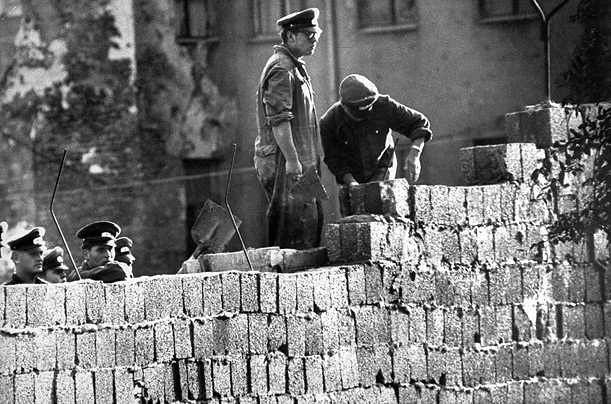
berlin_wall_02

Building the Berlin Wall

Following Germany’s defeat in the Second World War, it was occupied by the Allied powers. Germany was split in two, the East under the domination of the Soviet Union which became the German Democratic Republic, and the West which supported by the United States and Britain became the Federal Republic of Germany.

The divided country became the focal point of what became the Cold War, the fortified border became infamous as the Iron Curtain. The Berlin was blockaded by the Soviets in 1948 and the subsequent airlift kept West Berlin Free. However in August 1961 as the Cold War escalated the leaders of East Germany erected a fence which became the Berlin Wall, a wall which was effectively a means to imprison the population. It seemed to be a fixture that would never come down.

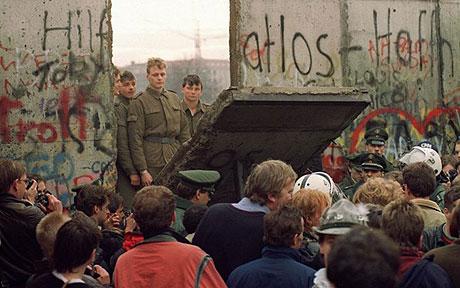
berlin-wall_1412605c

                                              The Wall Comes Down 

But in the late 1980s the Cold War began to thaw. Mikhail Gorbachev took power in the economically strapped Soviet Union which was bogged down in a costly war in Afghanistan, and a struggle against a Polish democratic movement. Premier Gorbachev sought to relieve the situation with a policy of openness. It backfired, and throughout Eastern Europe, pro-democracy and pro-freedom groups began to protest the status quo.

The once feared Warsaw Pact began to disintegrate. As borders were opened hundreds of thousands of Eastern Europeans including thousands of East Germans went west through Hungary and Czechoslovakia. East Germans began to gather at the Berlin Wall and on November 9th 1989 the tottering East German government decided to open border crossing points with restrictions. On hearing the news hundreds of thousands of people gathered at the six crossings demanding to be let through, and finally, ignoring orders, Stasi Lieutenant Colonel Harald Jäger who commanded the Bornholmer Strasse crossing opened the gates. The Berlin Wall had fallen and 339 days later East Germany was dissolved. On October 3rd 1990, Germany was reunited.

The new Germany is the economic heart of the European Union and has become a champion of human rights and social progress. But that could be in danger with the splintering of the major political parties that guided Germany to its position and the rise of a new nationalistic, racist, and anti-Semitic movement built around the AfD, or Alternative for Germany Party. Some leaders and members of this party express admiration for the Third Reich.

It has now been twenty-nine years since the Berlin Wall fell, eighty years since Kristallnacht, ninety-five years since the Beer Hall Putsch, and one hundred years since the abdication of Kaiser Wilhelm II.

These are all important events, and our challenge as citizens of the world is never to forget just how important and fateful each was, and why November 9th is indeed the “fateful day.” One wonders if a future November 9th will become another Schicksalstag that will again shake Germany to its foundations. The reunited Germany is still struggling with its identity thirty years after the Wall came down. Apart from Berlin, much of the former East seems like a different country than the west. It will be a full generation or more before that identity is settled, especially in the former East.

But then, maybe what is going on in the United States today is much more threatening than anything going on in Germany. We have a President who admires the former KGB dictator of Russia and who constantly tries to undermine Germany, NATO, and the European Union and is suggesting that he attend the Soviet/Russian May Day Parade next year, a parade that mixes a celebration of Soviet Communism and Russian Nationalism, with a profound hatred of the United States, NATO, and the European Union. One has to question the loyalties of the American President this Schicksalstag

It is truly a bizarro world. Harry Truman, Dwight Eisenhower, John F Kennedy and Ronald Reagan, not to mention Barry Goldwater must be spinning in their graves.

Peace,

Padre Steve+

3 Comments

Filed under germany, History, nazi germany, Political Commentary

Defending “The New Birth of Freedom” The Gettysburg Address in the Age of Trump

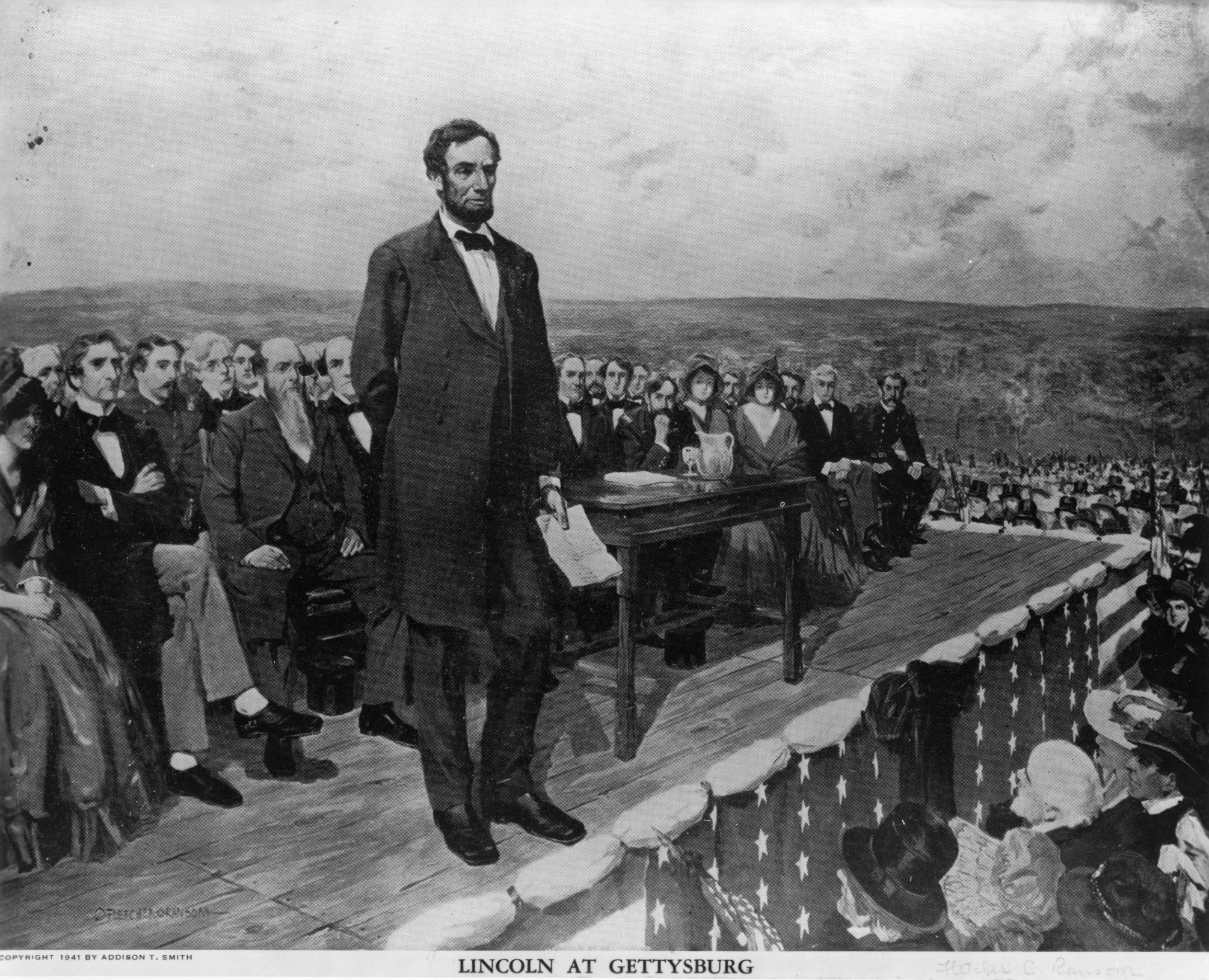
<img src="https://padresteve.com/wp-content/uploads/2014/03/lincolngburg.jpg?w=300&h=243" class="size-medium aligncenter wp-image-13987" width="300" height="243" style="height: auto; max-width: 100%; border: 0px; margin-bottom: 2px" data-permalink="https://padresteve.com/2014/03/09/remembering-gettysburg-and-the-new-birth-of-freedom/gettysburg-address/" srcset="https://padresteve.com/wp-content/uploads/2014/03/lincolngburg.jpg?w=300&h=243 300w, https://padresteve.com/wp-content/uploads/2014/03/lincolngburg.jpg?w=600&h=486 600w, https://padresteve.com/wp-content/uploads/2014/03/lincolngburg.jpg?w=150&h=122 150w" data-image-description="

19th November 1863: Abraham Lincoln, the 16th President of the United States of America, making his famous ‘Gettysburg Address’ speech at the dedication of the Gettysburg National Cemetery during the American Civil War. Original Artwork: Painting by Fletcher C Ransom (Photo by Library Of Congress/Getty Images)

” sizes=”(max-width: 300px) 100vw, 300px” data-comments-opened=”1″ data-image-meta=”{“aperture”:”0″,”credit”:”Getty Images”,”camera”:””,”caption”:”19th November 1863: Abraham Lincoln, the 16th President of the United States of America, making his famous ‘Gettysburg Address’ speech at the dedication of the Gettysburg National Cemetery during the American Civil War. Original Artwork: Painting by Fletcher C Ransom (Photo by Library Of Congress\/Getty Images)”,”created_timestamp”:”0″,”copyright”:””,”focal_length”:”0″,”iso”:”0″,”shutter_speed”:”0″,”title”:”Gettysburg Address”}” data-orig-size=”2826,2291″ data-attachment-id=”13987″ data-orig-file=”https://padresteve.com/wp-content/uploads/2014/03/lincolngburg.jpg” alt=”Gettysburg Address” data-large-file=”https://padresteve.com/wp-content/uploads/2014/03/lincolngburg.jpg?w=500″ data-image-title=”Gettysburg Address” data-medium-file=”https://padresteve.com/wp-content/uploads/2014/03/lincolngburg.jpg?w=300&h=243″>

Friends of Padre Steve’s World,

The weekend before Donald Trump was elected President I was at Gettysburg with my students from the Staff College. We finished our staff ride at the Soldier’s Cemetery where Abraham Lincoln gave the Gettysburg Address. My practice as always was to close the staff ride by reading his address. I always get a bit choked up when I read it because I realize just how important what he said was then, and still is today. That Sunday it was as if I saw the Confederate hordes advancing upon Cemetery Ridge and the fate of the country hanging in the balance.

I had already seen the assaults on our Republic and Constitution by Donald Trump and his supporters, and that particular day I was full of dread. I knew that if Trump won, and his supporters on the Alt-Right have their way, our system of government will be destroyed, the civil liberties that the men who died at Gettysburg to establish, would be curtailed or even rolled back. I feared, and it turns out quite rightly, that if Trump won, that civil rights would be threatened or rolled back, that White Nationalists would be emboldened, and racist violence and anti-Semitic attacks would increase exponentially. I would have preferred to be wrong, but I was right.

In November of 1863 Abraham Lincoln was sick when when he traveled by train from Washington DC to Gettysburg. When Lincoln delivered the address, he was suffering from what was mostly likely a mild form of Smallpox. Thus the tenor, simplicity and philosophical depth of his address are even more remarkable. It is a speech given in the manner of Winston Churchill’s “Blood sweat toil and tears” address to Parliament upon his appointment as Prime Minister in May, 1940. Likewise it echoes the Transcendentalist understanding of the Declaration of Independence as a “test for all other things.”

Many people in the United States and Europe did not agree with Lincoln’s restatement of the founding premise of the Declaration of Independence. Opponents argued that no nation found on such principles could long survive. The more reactionary European subscribers of Romanticism ridiculed the “idea that a nation could be founded on a proposition….and they were not reluctant to point to the Civil War as proof that attempting to build a government around something as bloodless and logical as a proposition was futile.” [1]

As late as 1848, the absolute monarchies of Europe had fought against and put down with force revolutionary movements attempting to imitate the American experiment. Many of the revolutionaries from Germany, Poland, and other nations fled to the United States, where 15 years later, clad in the Blue of the United States Army fought to preserve that experiment on the battlefields of the American Civil War, including Gettysburg.

But Lincoln disagreed with the conservative reactionaries of Europe, or the American Slave owning aristocracy. He believed that Americans would fight to defend that proposition. He believed that the “sacrifices of Gettysburg, Shiloh, Murfreesboro, Chancellorsville, and a hundred other places demonstrated otherwise, that men would die rather than to lose hold of that proposition. Reflecting on that dedication, the living should themselves experience a new birth of freedom, a determination- and he drove his point home with a deliberate evocation of the great Whig orator Daniel Webster- “that government of the people, by the people, for the people, shall not perish from the earth.” [2]

The Unitarian pastor, abolitionist, and leading Transcendentalist thinker, Theodore Parker wrote:

“Our national ideal out-travels our experience, and all experience. We began our national career by setting all history at defiance – for that said, “A republic on a large scale cannot exist.” Our progress since that has shown that we were right in refusing to be limited by the past. The practical ideas of the nation are transcendent, not empirical. Human history could not justify the Declaration of Independence and its large statements of the new idea: the nation went beyond human history and appealed to human nature.” [3]

Lincoln’s address echoes the thought of historian George Bancroft, who wrote of the Declaration:

“The bill of rights which it promulgates is of rights that are older than human institutions, and spring from the eternal justice…. The heart of Jefferson in writing the Declaration, and of Congress in adopting it, beat for all humanity; the assertion of right was made for the entire world of mankind and all coming generations, without any exceptions whatsoever.” [4]

Theodore Parker’s words also prefigured an idea that Lincoln used in his address. Parker, like Lincoln believed that: “the American Revolution, with American history since, is an attempt to prove by experience this transcendental proposition, to organize the transcendental idea of politics. The ideal demands for its organization a democracy- a government of all, for all, and by all…” [5]

Following a train trip to Gettysburg and an overnight stay, Lincoln delivered these immortal words on that November afternoon:

Four score and seven years ago our fathers brought forth on this continent, a new nation, conceived in Liberty, and dedicated to the proposition that all men are created equal.

Now we are engaged in a great civil war, testing whether that nation, or any nation so conceived and so dedicated, can long endure. We are met on a great battle-field of that war. We have come to dedicate a portion of that field, as a final resting place for those who here gave their lives that that nation might live. It is altogether fitting and proper that we should do this.

But, in a larger sense, we cannot dedicate — we can not consecrate — we can not hallow — this ground. The brave men, living and dead, who struggled here, have consecrated it, far above our poor power to add or detract. The world will little note, nor long remember what we say here, but it can never forget what they did here. It is for us the living, rather, to be dedicated here to the unfinished work which they who fought here have thus far so nobly advanced. It is rather for us to be here dedicated to the great task remaining before us — that from these honored dead we take increased devotion to that cause for which they gave the last full measure of devotion — that we here highly resolve that these dead shall not have died in vain — that this nation, under God, shall have a new birth of freedom — and that government of the people, by the people, for the people, shall not perish from the earth.[6]

In a time where many are wearied by the foibles and follies of our politicians, especially a man as singularity ill-equipped and ill-tempered as Donald Trump, Lincoln’s words still matter. Since Trump’s election he, and his supporters, many of whom are White Nationalists, and authoritarians have moved on many fronts to curtail civil rights and re-establish White rule in a way unseen since secession, and Jim Crow. So far our institutions have held, but there is no guarantee that they will. In such an environment, one has to wonder if our very form of government can survive.

But it is important that they do, and despite our weariness, we need to continue to fight for those ideals, even when the world seems to be closing in around us as it must have seemed following Lee’s initial success on the first day of battle at Gettysburg.

Dr. Allen Guelzo, Professor of Civil War Studies at Gettysburg College wrote in the New York Times:

“The genius of the address thus lay not in its language or in its brevity (virtues though these were), but in the new birth it gave to those who had become discouraged and wearied by democracy’s follies, and in the reminder that democracy’s survival rested ultimately in the hands of citizens who saw something in democracy worth dying for. We could use that reminder again today.” [7]

Dr. Guelzo is quite correct. Many people in this country and around the world are having grave doubts about our democracy. I wonder myself, but I am an optimist, and despite my doubts, I have to believe that we will eventually recover.

Admittedly, that is an act of faith based on our historical resiliency, and ability to overcome the stupidity of politicians, pundits and preacher, including the hate filled message of Donald Trump and his White Supremacist supporters, especially supposedly “conservative ” Christians. That doesn’t mean that I am not afraid for our future, or that despite my belief that our institutions will hold. Historian, Timothy Snyder correctly noted:

“The European history of the twentieth century shows us that societies can break, democracies can fall, ethics can collapse, and ordinary men can find themselves standing over death pits with guns in their hands. It would serve us well today to understand why.”

The amazing thing during the Civil War was that in spite of everything, the Union survived. Lincoln was a big part of that. His steady leadership and unfailing resolve help see the Republic through manifold disasters.

But, it was the men who left lives of comfort and security to defend the sacred principles of the Declaration, like Joshua Chamberlain, and many others who brought about that victory. Throughout the war, even to the end Southern political leaders failed to understand that Union men would fight and die for an ideal, something greater than themselves, the preservation of the Union and the freedom of an enslaved race. For those men that volunteered to serve, the war was not about personal gain, loot or land, it was about something greater. It was about freedom, and when we finally realize this fact, and take up the cause that they fought and died for, then maybe, just maybe, we can contemplate the real meaning of “that cause for which they gave the last full measure of devotion.d. [8]

Now, I for one do not think that we are currently living up to the ideals enunciated by Lincoln on that day at Gettysburg. I can understand the cynicism disillusionment of Americans, as well as those around the world who have for over 200 years looked to us and our system as a “city set on a hill.” That being said, when I read these words and walk the hallowed ground of Gettysburg, I am again a believer. I believe that we can realize the ideal, even in our lifetime should we decide to again believe in that proposition and be willing to fight, or even die for it. Of course, it is quite possible that we will not measure up to the example set by Lincoln and the men who fought for the Union at Gettysburg. If we don’t, The blame will be upon all of us.

So, have a great day and please stop to think about how important Lincoln’s words remain as we wait to see what the next day of Trump’s America brings.

Until tomorrow,

Peace

Padre Steve+

Notes

[1] Ibid. Guelzo. Fateful Lightening p.409

[2] Ibid. Guelzo. Fateful Lightening p.408

[3] Ibid. Wills. Lincoln at Gettysburg p.110

[4] Ibid. Wills. Lincoln at Gettysburg p.105

[5] Ibid. Wills. Lincoln at Gettysburg p.105

[6] Lincoln, Abraham The Gettysburg Address the Bliss Copy retrieved from http://www.abrahamlincolnonline.org/lincoln/speeches/gettysburg.htm

[7] Guelzo, Allen C. Lincoln’s Sound Bite: Have Faith in DemocracyNew York Time Opinionator, November 17th 2013 retrieved from http://opinionator.blogs.nytimes.com/2013/11/17/lincolns-sound-bite-have-faith-in-democracy/?_php=true&_type=blogs&_r=0 July 18th 2014

[8] Ibid. McPherson This Hallowed Ground p.138

Leave a comment

Filed under civil rights, civil war, Gettysburg, History, Political Commentary