Tag Archives: smedley butler

No Shutting Up Until it is Fixed: Veteran and Military Mental Health Care

tom-clancy-look-2

“If a policy is wrongheaded feckless and corrupt I take it personally and consider it a moral obligation to sound off and not shut up until it’s fixed.” Col David Hackworth

Over the past couple of weeks I discovered just how mentally and emotionally fragile I still am. As those that follow my writings here know I wrote a couple of articles recently about the treatment that I was receiving at the local Naval Medical Center, and my perceptions of that command. Those, as well as the e-mails to my provider, which were then shared by the person in charge of fixing the problem with the Medical Center Executive Officer without my permission, (I think there is another violation of my HIPPA rights there as well)  were very difficult to write.

They were extremely painful because of the emotions that were unleashed, especially because I thought of doing something that scared me to death. I considered, very briefly in my pain, anger and my sense that the system had betrayed me and for that matter all of us seeking help; the possibility of committing suicide, in a very public and dramatic way. It scared the hell out of me that I developed a perfectly executable plan to do it, a plan that for a moment would have drawn attention to the issue, but at the same time would have traumatized many others.

Of course I do not think I would ever do it. The death of Robin Williams by suicide yesterday shattered me, and no matter how bad things are I wouldn’t want my death to cause distress to anyone. Frankly, I love life too much, and God knows that one more dead body won’t change how the military or the Veteran Administration medical systems treat people in crisis.

However a living person, especially a pain in the ass like me, that won’t stop speaking out just might make a difference. That might take a while to do, but I will do it until war, and the indifference of soulless bureaucracies are  no more. That may be unreasonable, unrealistic and unattainable but it is a windmill worth tilting at.

But I fully understand that people in a moment of madness and despair, would make the choice to end their life, and see as it as a perfectly logical and rational act. I have known senior chaplain colleagues and former commanders who have chosen suicide, and I am sure that none of them thought that they would ever make that choice, until they actually did it. Please don’t worry about me. I am not going to kill myself, the thought scares me too much. Honestly I would rather live to a ripe old age and be a thorn in the side of the system to get veterans the care that they deserve, and the care that this country owes them than to be yet another statistic whose death is swept under the rug as quickly as the system can do it. Unfortunately, that is the reality; any bureaucratic system, military, government or the private sector will go on with as little inconvenience and reflection as is required once the body is disposed of properly.

Just a few months ago I was talking about simple teaching history, religion and ethics at local junior colleges and for profit universities “for the beer money” as I joked with friends. I told people that my desire when I retire was to be like LT Weinberg in the classic movie A Few Good Men and “have absolutely no responsibility here.” The fact is that I am tired and I don’t want to be in charge of anything when I retire, either in the military, civilian or church world. What T.E. Lawrence wrote to a friend shortly before his death in 1935 resonates with me:

“You wonder what I am doing? Well, so do I, in truth. Days seem to dawn, suns to shine, evenings to follow, and then I sleep. What I have done, what I am doing, what I am going to do, puzzle and bewilder me. Have you ever been a leaf and fallen from your tree in autumn and been really puzzled about it? That’s the feeling.”

That being said, I want whatever amount of time left on this earth, and hopefully it is a very, very long time, is to make a difference in the lives of the men and women who have served in the military and who come home broken, in mind, body and spirit. I can think of no other option or higher calling at this point. To that end I have been referred to a therapist in the system, but not at the Naval Medical Center. The therapist was highly recommended by a chaplain friend who has also went through some very difficult times, even in trying to get help for himself. Thankfully, the person who I talked to a week ago agreed to the referral. So I will get help for me, something that I need and go into with a positive attitude based on my friend’s recommendation.

Now those who have never walked the dark path of long lasting, abiding clinical depression or other mental illness may not understand what I am talking about, but those that have walked this terrible path know it all too well. The feeling that no one cares and that you are alone is a major factor in the despair that overwhelms people, and acts as a trigger to suicide.  Unfortunately far too many military personnel and veterans reach that point. The numbers are staggering. No wonder that Major General Smedley Butler wrote about the cost of war, or the “bill” as he calls it: “This bill renders a horrible accounting. Newly placed gravestones. Mangled bodies. Shattered minds. Broken hearts and homes. Economic instability. Depression and all its attendant miseries. Back-breaking taxation for generations and generations…”

There are a number of ways that I could do this. I could go to work for the VA as a Chaplain, or I could go get a degree in counseling and do therapy or any number of other venues. But I think I would be limited by having to serve in ossified bureaucracies if I was to do any of those things.

Thus I am probably going to venture into the world of social activism, working with veterans organizations, political leaders and the media to draw attention to what is happening to veterans that seek care. Veterans like me who perceive that the system doesn’t really care about them, many individual providers may care deeply and deliver wonderful care, but the system itself is soulless and seems often to be clueless. Likewise I will work to expose the war profiteers who seek to cut back medical and mental health care for veterans even more and actively lobby the military, and Congress to enact those cuts. Personally I feel that is immoral and unjust and that it needs to be confronted and exposed.

I wish I could say that things were any better in the civilian mental health system, but they are not. My wife has battled and suffered from severe depression almost all of her life, and over the past 20 years what is paid for by insurance companies for people in crisis has shrunk to a pathetic “system” whereby a person that is hospitalized remains in hospital 2-5 days until they assure they providers that they will not kill themselves. There is no continuity of care, there is little or no therapy or medication management, it is simply warehousing. I’d like to take that on too, but I have to start somewhere, so I’ll start with where I am.
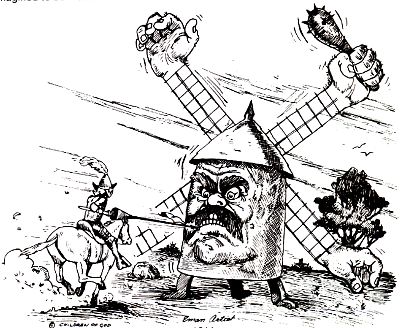
quioxte

I am a dreamer, and I don’t mind tilting at windmills. Lawrence wrote: “All men dream: but not equally. Those who dream by night in the dusty recesses of their minds wake up in the day to find it was vanity, but the dreamers of the day are dangerous men, for they may act their dreams with open eyes, to make it possible.”

I am a dangerous dreamer because as Lawrence noted I will act on my dreams with open eyes. I may not be able to do a lot while I am still on active duty, but when I retire I will be very dangerous because I know far too much and I won’t be afraid to speak out. My heroes include men like Major General Smedley Butler and Colonel David Hackworth and I have no inhibitions at following in their footsteps. I am very determined, persistent and I can be a total ass. When I determine to do something I don’t quit.

As Colonel Hackworth, who I had the honor of corresponding with in the years before he died said: “If a policy is wrongheaded feckless and corrupt I take it personally and consider it a moral obligation to sound off and not shut up until it’s fixed.” The way we are treating our veterans is just that and I won’t shut my mouth until the day that I die, which Lord willing won’t be anytime soon.

Pray for me, I do need it.

Peace

Padre Steve+
 

3 Comments

Filed under healthcare, leadership, mental health, Military

Broken and Unlikely to Get Better: Military Mental Health Care

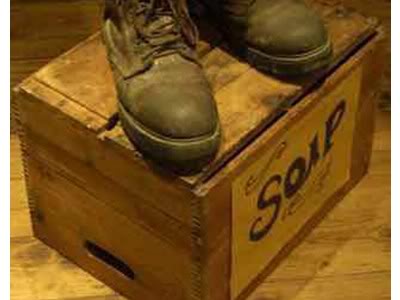
soap-box

Well, my friends it’s time for me to get on the PTSD soapbox and go “Smedley” on the military mental health system. The fact is the system is broken, maybe not as bad as the VA, but broken nonetheless. The biggest part of the problem is not that there are not enough providers, there are not even though many more have been hired. The biggest part of the problem is that the system has lost any humanity that it once had, all in the name of efficiency and the budgetary bottom line. The fact is that the bottom line actually matters more than people and bean counters, not providers have the final say.

Marine Corps Major General, and two time Medal of Honor winner, Smedley Butler wrote after he retired in his classic book War is a Racket:

“I have visited eighteen government hospitals for veterans. In them are about 50,000 destroyed men- men who were the pick of the nation eighteen years ago. The very able chief surgeon at the government hospital in Milwaukee, where there are 3,800 of the living dead, told me that mortality among veterans is three times as great as among those who stayed home.” 

Two years ago, the Navy seeing a increase in healthcare costs decided to bring as many people back into the Navy Medicine system as possible and cut back on referrals for active duty personnel. I understand that, money is short and Lord knows we need to save it wherever we can in order to buy aircraft like those in the grossly over-budget, behind schedule and substandard F-35 Lightening stealth fighter plane program, or ships like the Littoral Combat Ship which are over budget, under armed and not designed to survive the slightest combat. Mind you, none of the F-35s are in service, despite a decade of tests and production delays, costing hundreds of billions of dollars. But I digress…after all, war is a racket.

Now let me be honest and as fair as possible. There are many great mental health providers in the military and the Navy Medicine system; active duty, reserve, civilian and contractors. These people actually do care, but often they don’t get to make decisions that they think are right for their patients. At the same time there are others working in the system that are just in it for job security or the money. However, all of them are at the mercy of commanding officers that decide how they want to spend their budget, and dictate to their providers, sometimes at the threat of their job, contract renewal, a positive fitness report or promotion recommendation what they will approve, or more likely, deny. Thus in some cases commanders will support their providers doing whatever possible to get patients help, while others look at the bottom line. I have had both experiences.

I have been getting mental health treatment for PTSD since July 2008 when my life fell apart after Iraq. I have had mental health providers in the Navy Medical system. I also had a civilian psychiatrist who I was allowed to see when I was at Camp LeJeune, even after Navy Medicine decided to bring people back into the Navy Medicine system.

You see at Camp LeJeune, the old hospital commander, who I worked for, and the Director of Mental Health who I worked with realized that as a Chaplain that my personal and professional privacy, and my need for continuity of care was important. They realized that I needed to feel safe. There I was treated with professional courtesy, with humanity and I felt like people actually cared about me. That was was something that I needed then, and still need now. Unfortunately that is not happening now.

When I returned to the Hampton Roads area I knew that I still needed mental health care. I finally got my first visit and intake evaluation in June. My first appointment with a psychiatrist came on July 7th. The psychiatrist herself was not the issue. You see I used to work at the Naval Medical Center for two years and continued to work at the Naval Hospital Camp LeJeune for another three. I am fairly well known in the Navy Medical Region East.

I suffer a tremendous amount of anxiety. I admit it, I am still bat-shit crazy. I have the PTSD “Mad Cow.” The night before my first appointment I could not sleep, most likely because of being anxious about going to the Naval Medical Center outpatient mental health clinic. The fact is, it is really big and impersonal, and frankly that scares the hell out of me. I can’t go to big churches for the same reason. I feel terribly unsafe in them.

My worst fears were borne out. The waiting room was crowded, and after waiting I had my name and rank called out for everyone to hear, so much for the expectation of privacy, in fact I think that was a HIPPA violation. In the intake room I was met by three very junior hospital corpsmen. I didn’t even get a “hello, how are you doing sir?” from them. Instead one told me to take off my shirt, one told me to step on a scale and after that I was told to sit down, and got my blood pressure taken. My blood pressure was twenty points, actually almost 30 points higher than normal, even after I have just had a bunch of caffeine, which I did not on July 7th. I have to attribute the rise in blood pressure to the anxiety of just going in to the clinic, there is no other reason. After I had my vitals checked, I was asked a series of rapid fire questions that were very personal in nature and that I would prefer a doctor or nurse ask. I was then told to go back and wait.

The whole process was impersonal, embarrassing and dehumanizing. But it was very efficient, and the bean counters should be happy. That being said it was the absolute worst experience I have had with military medicine, and that includes having a thumb stuck up my ass and having to duck walk at the Military Entrance Processing Station. That was a rite of passage, but this scared the absolute hell out of me, I did not feel like I mattered as a person to anyone in the clinic.

When I saw the doctor she was pleasant. I told her of my experience and requested that I be referred to a provider in town as I had at Camp LeJeune. I was told that she would submit the request to her division officer who is a doctor that I know, and get back to me in a day or two. I didn’t hear from her. I waited two and a half weeks, and finally decided to e-mail the doctor on July 24th asking what was going on. Today I got an e-mail telling me that “my case could not be sent to the civilian network.” No reason was provided. The time between that appointment and the denial of my request was almost four weeks, totally unacceptable by any standard of care, military, civilian or even Klingon.

I was given the option of seeing a provider at an outlying clinic however the one close to where I work would be similar to the main hospital, crowded and impersonal. The other option was using a resource called “Military One Source” where I could get up to 10 or 12 appointments with a civilian provider in town with no guarantee that I would be able to see them after those visits were up without approval from the same people who just told me that I couldn’t be seen in town. If I do that my medication would then be managed by my PCM instead of a shrink. At this point I no longer have any trust in the military mental health system, at least for me, and the Military One Source providers are not really there to deal with long term chronic conditions.

I knew that I was being blown off. In military speak it is the old adage that “a mission passed is a mission completed.” The fact is that I do not matter to these providers. Unlike the people at Camp LeJeune, they have no personal investment in me as a patient or as a professional colleague, so why should it matter to them? I don’t write their evaluations, the bean counting admiral does so, why would an old and broken chaplain who doesn’t work with them matter?

Likewise I am being treated like a child in regard to medication. I have no history of drug abuse, prescription or otherwise. Unlike LeJeune where my doctor put refills on my as needed PRN anxiety medicine, I now have to subject myself to the industrial “production line” inhumanity of that clinic, just to get a refill each month.  Even if I didn’t want therapy I would have to endure the ignominy of the inhuman treatment at the clinic 12 times a year just to get a pittance of very low dose anti-anxeity medication. I don’t need that kind of abuse, and that it exactly what it is no matter what the bean counting admiral calls it.

But here’s the deal. I am a senior officer. No wonder so many senior officers decline treatment, attempt to hide their symptoms and self-medicate. The treatment in the system is demeaning and the stigma is there. I have known of a good number of senior officers, Marines, Navy and Army who have ended up losing their careers or lives over untreated PTSD. Right now I am debating even if I should go back to therapy. I know I need it, but if it is a choice of the abuse I am going through at the mental health clinic or maintaining a semblance of human dignity, a good craft beer tastes far better than Xanax.

Not only that, but an even far more important reason than me and my needs, that of the junior enlisted personnel who seek help or are directed by their commands to get help from mental health. Now I cannot imagine what it would be to be a powerless junior enlisted soldier, sailor, Marine or airman. But wait I can, I enlisted in the National Guard back in 1981. However, back then I wasn’t broken, and I cannot now imagine what is is for young, powerless enlisted personnel have to go through what I am going through when getting mental health treatment. That is the bigger issue.

Is it any wonder that the military suicide rates are still high and that this year the Navy is up from the same time as last year? According to statistics released last week, there have been 36 Navy suicides this year, last year at this time there were just 24 with 43 for the entire year. I wonder if that has something to do with pushing people into an often uncaring bureaucratic system that is more concerned with saving money than meeting the needs of patients.

I was talking to a friend, an officer at the Medical Center today while at a different clinic where I am treated with great compassion, care and dignity, a clinic that is not afraid to get me the medical help that I need, even though it is expensive. This officer and I served at Portsmouth together back in 2008-2010 and that officer told me today that the place has changed. He said it was all about business, impersonal and machine like, devoted to the bottom line, with lip service being given to actual patient needs by those in senior leadership.

Thank God I won’t have to stay in the military medical system the rest of my life. The good news is that when I retire I get to go to the amazingly proficient VA system for that care. Won’t that be grand?

No it won’t. Not for me or any of the tens of thousands, maybe hundreds of thousands of military personnel with PTSD, TBI or Moral Injury. We’ve all read about the problems in the VA, they are persistent, endemic and won’t change anytime in the near future. That is shameful.

General and former Secretary of State Colin Powell famously said “you broke it, you buy it.” Of course he was talking about Iraq, but the same principle should apply to those who have put their lives on the line during the last 13 years of war and come back broken. It is a moral obligation, it is something that we as a nation promised. The country pledged to care for those who served, and the fact that it is barely a half percent of the population who have served in war for the last 13 years, men and women who now have to fight for the basic care that a civilized, and as the Religious Right likes to call a “Christian nation” should provide as a matter of basic human decency. It is not special treatment that broken veterans deserve, it is simple decency and honoring a commitment that we made as a nation.

Yes I am going “Smedley” here, because war is a racket, and it is a racket that those inside the military, the government and the private sector promote.

I’m sure that I will get some blowback from this from some in the system, but I don’t care. The system is broken and until we as a nation stop bullshitting and admit there is a problem and elect to do something about it won’t get better. The bean counters, war profiteers and bureaucrats need to be held accountable by our elected representatives.

I am going to be contacting the Admiral that commands the medical center as well as my Congressman, and probably the chairmen of both the House and Senate Defense committees because I suspect from what I hear from soldiers, sailors, Marines and airmen around the country that this is not an isolated instance. So, if someone like me, a senior officer still in the system doesn’t do this who will?

I hope that this post will become viral so that our sailors, Marines, soldiers and airmen get the quality care, delivered with compassion and humanity that they deserve. For some it will be a matter of life and death.

Pray for me a sinner.

Peace,

Padre Steve+

2 Comments

Filed under healthcare, Military, PTSD, US Navy

Inshallah Iraq (إن شاء الله) Maybe Someday things will be Better

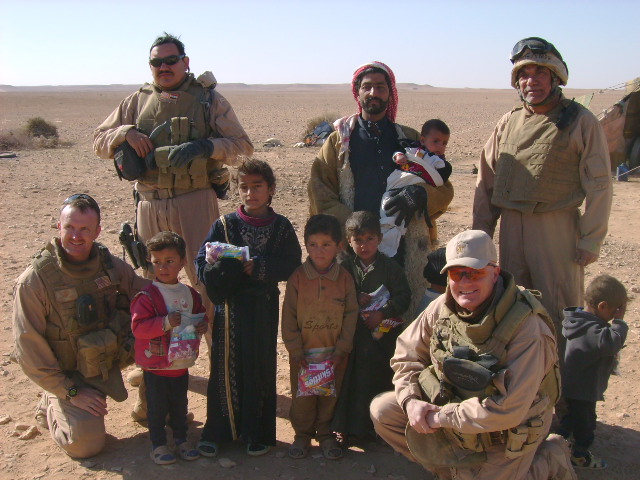
Whenever I read about Iraq I am reminded of how much of my life has been intertwined with that country and people. As I have said on more than one occasion I left my heart in Al Anbar. Back in 2007 and 2008 things were different there. Sunni’s and Shia were at least in the Iraqi military working with Sunni tribesman cooperated with American forces to destroy or drive out the forces of Al Qaida Iraq.

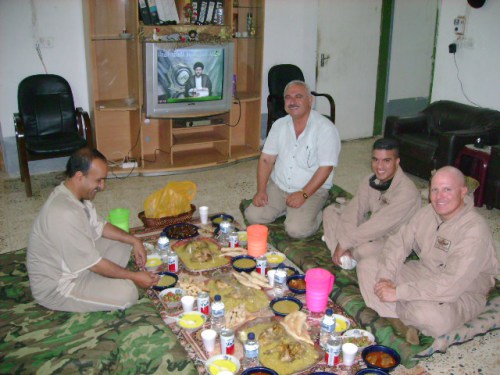
dinner-w-bg-sabah1

Now the group that formed out of AQI, the Islamic State of Iraq and the Levant ISIL has driven Iraqi government forces from the area. Because of Iraqi Prime Minister Nouri Al Maliki’s determination to exclude and marginalize he Sunnis of Al Anbar who were so important in stabilizing that region after the departure of U.S. Forces that Maliki pushed for those tribes are not resisting ISIL/ISIS or in some cases allying themselves with that group, if only to drive out Maliki, who they, as well as many Shia Iraqis despise.

399202_10151366970802059_725286976_n-2

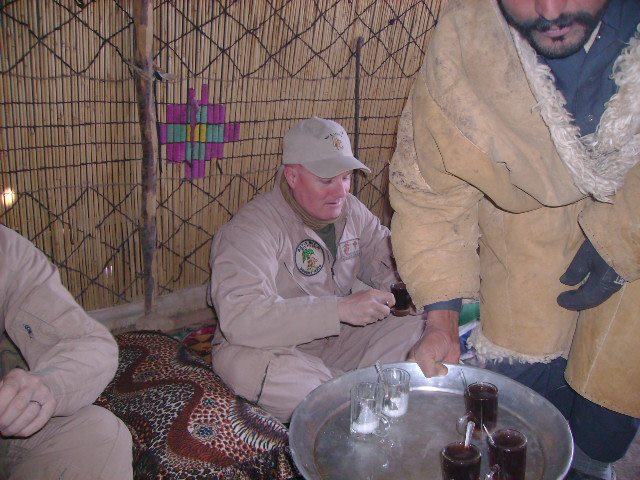
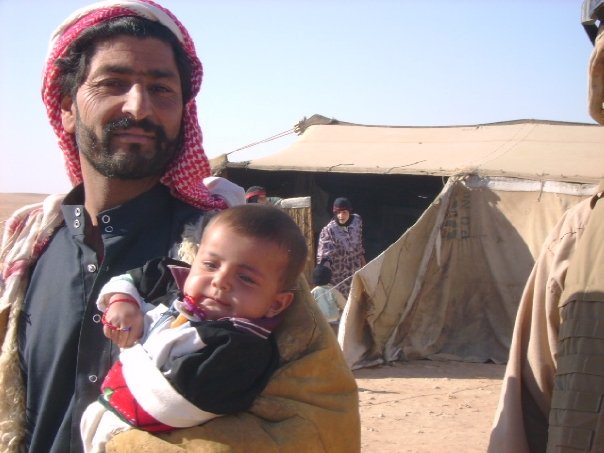
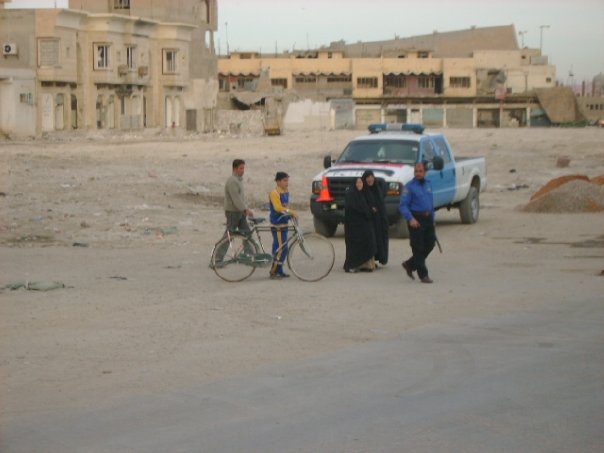
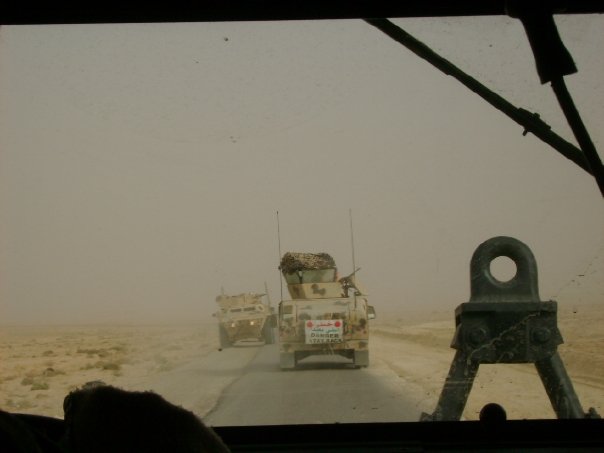
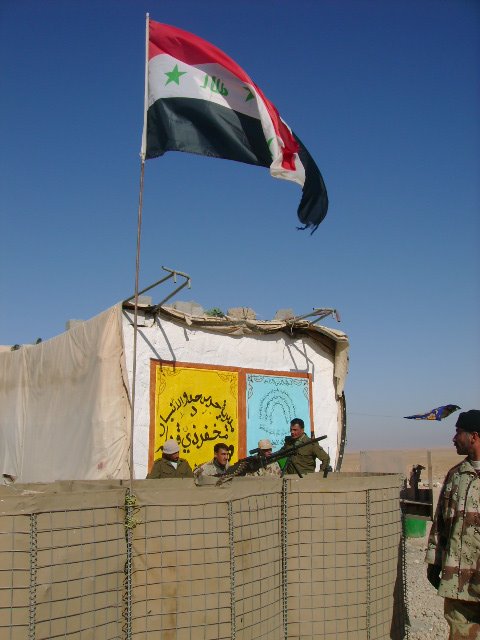
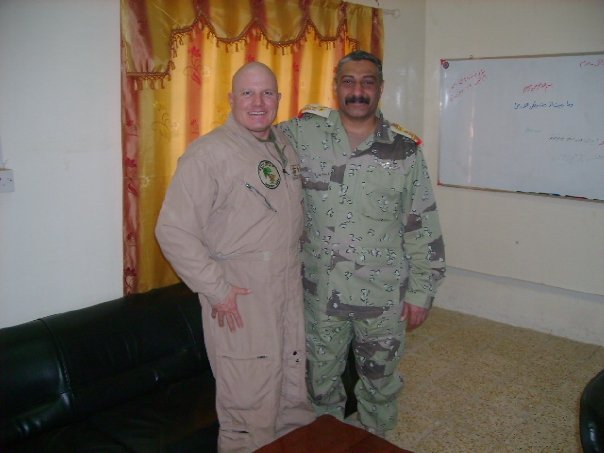
When I was there I traveled the whole province from Fallujah to the border of Syria and Jordan. With our advisors I was treated with great respect and hospitality by officers of the Iraqi Army, Border forces and civilians of all Iraqi religious sects. General Sabah of the 7th Division who hosted me to dinner and met with me a number of times, General Ali of the Habbinyah base who as we shared Chai tea showed me his well worn Arabic-English Bible which he said he loved because it contained things not in the Koran. He told me that he hoped in 5-10 years that I would be able to come to Iraq as his guest. There was the Iraqi operations officer of 2nd Brigade of 7th Division who told me after dinner that he “wished that the Iraqi Army had Christian priests” because they would take care of the soldiers and families no matter what their religion, and the Army company commander at COP South who told me that Iraqis would gladly defend Iraq against the hated Persians if Iran ever attacked. Then there was the first class of female Iraqi Police recruits, who were putting their lives and their family’s safety in danger by volunteering to serve in Ramadi, I was able to spend time with that group of brave women. Of course there were the common soldiers who when they saw me blessing American HUMMVs with Holy Water before a convoy asked me to do the same for them. Then there were the Bedouin who invited us into their tents and homes and treated us to Chia, coffee, dates and other food.

533506_10151366982462059_34997654_n

1930252_26911927058_5336_n

I did see the Sunni Shia division when a Shia staff officer, the Logistics chief of the 2nd Border Brigade at Al Waleed, and a crony of Maliki was accused of selling coalition fuel to insurgents in Al Anbar. I was with our senior advisor and the new Iraqi brigade commander, a Sunni who had served in the old army who had been sent to rid the brigade of those like the logistics officer fired the man. The meeting was one of the most tense I have ever been in, it was like a meeting with a crime family, where weapons were locked and loaded and fingers on the trigger because even the Iraqi commander did not know who was friend or foe. The disgraced logistics officer on finding out I was a Priest tried to curry my favor during the meeting, quite strange and very scary. I still have nightmares and flashbacks about that meeting.

295_26912057058_2651_n-2

1930252_26912037058_1677_n

You see for me the current conflict is quite personal, I have known too many good and decent Iraqis who in many respects are not that much different than your average American. However they have had to bear the domination of the Persian, the Turk, the British and the Americans. Have a king appointed for them by a foreign power, borders drawn to fit British and French interests, been ruled by the dictator Saddam Hussein who most admit now was better than Maliki because he was an equal opportunity oppressor determined to maintain a unified Iraqi state. They have also endured over thirty years of war or wartime conditions, including a civil war and now a war that has a good chance of destroying any hope of an unified Iraqi state. For them violence, disruption and for many being refugees or exiles has become a way of life.

262_29132382058_5961_n-2

305907_10151366984087059_87121005_n

The Iraqis that I know were some of the most kind and hospitable people that I have ever met in my travels around the world. I grieve for what is happening to them and their once proud country. The towns, cities and bases that I served at have almost all been taken over by ISIL/ISIS and their allies. Fallujah, Ta’quadum, Habbinyah, Ramadi, Hit, Haditha, Al Rutba, Rawah, Al Qaim, Al Waleed, Al Turbial and so many others. Syrian and Iranian warplanes are attacking Iraqi towns and cities, including places I have spent time.

n671902058_1153794_4301

532404_10151366971792059_960792196_n

When I left Iraq in 2008 I had hopes that the country might survive, as did many of the Iraqis that I met. I hoped one day to go back and travel to the places that I served, and maybe had the opportunity to see the gracious people that I love again. Maybe in 15 or 20 years there might, God willing be an opportunity. I hope and pray that those I know who were so good to me are safe. Until then I can only pray and hope that for them things will one day be better.

1930252_26911977058_8055_n

When I think of the Iraq war and its costs I am reminded of the words of Major General Smedley Butler in his book War is a Racket: “What is the cost of war?…this bill renders a horrible accounting. Newly placed gravestones. Mangled bodies. Shattered minds. Broken hearts and homes. Economic instability. Depression and all of its attendant miseries. Back -breaking taxation for generations and generations. For a great many years as a soldier I had a suspicion that war was a racket; not only until I retired to civilian life did I fully realize it….”

481801_10151367001287059_1003164983_n-1.jpg

For the Iraqis and us the cost will be with us for at least a generation. But I do always hope and pray that things will be better.

Inshallah (إن شاء الله)

Padre Steve+

3 Comments

Filed under History, iraq,afghanistan, News and current events

Sacrifice, a Broken Heart and No Closure: Thoughts of an Iraq Veteran

400236_10151328400862059_541742014_n-2


Call em up
Dust em off
Let em shine
The ones who hold onto the ones, they had to leave behind
Those that flew, those that fell,
The ones that had to stay,
Beneath a little wooden cross
Oceans away

Elton John “Oceans Away”

For me and from what I am hearing many veterans like me, the last week has been terribly haunting and filled with anxiety regarding the situation in Iraq. I can when needed detach myself from my emotions and compartmentalize them to attempt to provide good analysis of the situation and place it in its historical, diplomatic, military, cultural and religious context. However, the emotions that I feel for Iraq and what is happening there are strong and I will own my sense of grief, loss and brokenness that I feel right now as the ISIL/ISIS fighters drive through Iraq conquering city after city as the Iraqi Army abandons the field. I wish I could say that things will turn around, but I don’t know if that is possible now. That fact troubles me because I love the Iraqis and left part of me in that country. As I have written before, I left my heart in Al Anbar.

During my tour in Iraq I got to see a part of the country and meet people that the average American never met. I got to know Iraqis because I served with our advisors in country, and I got to know some on detained ships in the Arabian Gulf back in 2002. Most are good people, who have hopes and dreams much like any of us. The vast majority are not extremists and relatively secular, regardless of their religious affiliation in comparison to others in the Middle East. They hope for better for their families, their future and in simple for a normal life after over 30 years in various states of war, with us, the Iranians and with themselves. I worry for them, and pray that by some miracle that they are able to get their families out of the country to safety or be able to get to an area of the country where their safety is assured. For some that may be that may be more possible than others. I worry for them because of the reports of how the ISIL/ISIS forces are wantonly executing officers, soldiers and police officials that they capture alongside the road.

I won’t be doing any real analysis today because this essay is more about my feelings about the situation, and I really don’t want to be mixing those with some kind of analysis. What I can say is that I am grieving for all who have been affected by this cruel war, Iraqis and Americans alike. Far too many people died during and after the ill-advised and most likely illegal invasion of that country by the Bush administration in 2003.

I am the kind of person who wanted to believe the best about the reasons the Bush administration took us to war, but as each of those reasons was proved untrue based on the evidence on the ground it was disappointing. However, I volunteered to serve in Iraq in 2006 and finally went in 2007, with a goal of helping in the effort to restore and reunited the country, something that despite everything I believed was a worthwhile goal. It became apparent while I was over there that for many, especially those managing the massive support contracts to U.S. bases were not there for any noble purpose but for their profits. I saw how KBR/Halliburton subsidiaries engaged in what was for all intents and purposes human trafficking as they exploited third country nationals who did the menial work that supported U.S. and coalition forces. I saw the massive destruction in the country, some caused by the U.S. invasion, and some attributable to the civil war that followed.

I felt betrayed by my leadership and I have a fair amount of anger about this, anger toward the Bush administration, the Congress that shirked its duties and allowed this as well as the war profiteers. But I am also angry at the power mongering Iraqi Prime Minister Nouri Al Maliki, whose actions to disenfranchise the Sunnis and others have brought about the current situation, without his idiotic power mania those Sunnis would be fighting against ISIL/ISIS, just as they did against AQI.

Because of this, especially the actions of the war profiteers, I have to agree with Major General Smedley Butler who wrote the classic book War is a Racket and that it is the soldiers that fight the wars and the innocent civilians whose lands, homes and families suffer as a result of it. Butler wrote:

“What is the cost of war? what is the bill? This bill renders a horrible accounting. Newly placed gravestones. Mangled bodies. Shattered minds. Broken hearts and homes. Economic instability. Depression and all of its attendant miseries. Back -breaking taxation for generations and generations. For a great many years as a soldier I had a suspicion that war was a racket; not only until I retired to civilian life did I fully realize it….”

My world has changed. I am not the same person I was that I was when I deployed to Iraq. PTSD, nightmares and terrors and anxiety are still a regular part of my life, as is a certain distance from parts of my life that once were important. When we went to war I didn’t believe that it would end this way. Like Erich Maria Remarque wrote in his classic All Quiet on the Western Front:

“I imagined leave would be different from this. Indeed, it was different a year ago. It is I of course that have changed in the interval. There lies a gulf between that time and today. At that time I still knew nothing about the war, we had been only in quiet sectors. But now I see that I have been crushed without knowing it. I find I do not belong here any more, it is a foreign world.”

imagesCA580JS0

Last night I attended the Elton John concert in Virginia Beach. He shared a song that he and Bernie Taupin wrote in honor of the members of the Greatest Generation on the 70th anniversary of the D-Day landings. The song, Oceans Away is about their sacrifice, and Sir Elton also paid tribute to those who fought and died in World War One as well as those that serve today. When I listened to the song I wondered if people like me will ever be able to go back to the battlefields that we served on.

Anyway, that is all for today. I have a number of writing projects in the works. The link to the song is here: http://www.youtube.com/watch?v=Izma0gpiLBQ

Peace

Padre Steve+

2 Comments

Filed under iraq,afghanistan, middle east, News and current events, PTSD

Who Profits by War?

butler-medals1

In an age where Defense contractors overcharge and under produce, where lobbyists for them ensure that congressional leaders and other elected officials and appointees cater to the needs of these corporations it is important to know who profits from war. It is certainly not the military personnel, nor is it the taxpayer.

The sad fact is that the people that profit from unending war are those who really couldn’t care less about the economy, except as it benefits them nor care about the taxpayers or those that they send into battle in wars that do little or nothing to enhance the security this nation, or for that matter the security of those we are supposedly fight for.

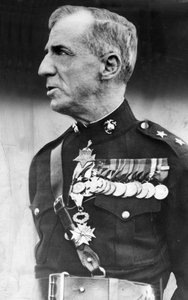
Major General Smedley Butler who was awarded the Congressional Medal of Honor twice, and earned the ire of the Hoover Administration for criticizing Mussolini wrote a book called War is a Racket. I recommend everyone read it because it is timeless. Dwight Eisenhower kind of echoed it when he talked about the military-industrial complex.

Here is the second chapter of that hard hitting book. By the way take the time to Google the names of these corporations in this chapter and see how many are still profiting from war.

Peace

Padre Steve+

Who Makes The Profits?

The World War, rather our brief participation in it, has cost the United States some $52,000,000,000. Figure it out. That means $400 to every American man, woman, and child. And we haven’t paid the debt yet. We are paying it, our children will pay it, and our children’s children probably still will be paying the cost of that war.

The normal profits of a business concern in the United States are six, eight, ten, and sometimes twelve percent. But war-time profits — ah! that is another matter — twenty, sixty, one hundred, three hundred, and even eighteen hundred per cent — the sky is the limit. All that traffic will bear. Uncle Sam has the money. Let’s get it.

Of course, it isn’t put that crudely in war time. It is dressed into speeches about patriotism, love of country, and “we must all put our shoulders to the wheel,” but the profits jump and leap and skyrocket — and are safely pocketed. Let’s just take a few examples.

Take our friends the du Ponts, the powder people — didn’t one of them testify before a Senate committee recently that their powder won the war? Or saved the world for democracy? Or something? How did they do in the war? They were a patriotic corporation. Well, the average earnings of the du Ponts for the period 1910 to 1914 were $6,000,000 a year. It wasn’t much, but the du Ponts managed to get along on it. Now let’s look at their average yearly profit during the war years, 1914 to 1918. Fifty-eight million dollars a year profit we find! Nearly ten times that of normal times, and the profits of normal times were pretty good. An increase in profits of more than 950 per cent.

Take one of our little steel companies that patriotically shunted aside the making of rails and girders and bridges to manufacture war materials. Well, their 1910-1914 yearly earnings averaged $6,000,000. Then came the war. And, like loyal citizens, Bethlehem Steel promptly turned to munitions making. Did their profits jump — or did they let Uncle Sam in for a bargain? Well, their 1914-1918 average was $49,000,000 a year!

Or, let’s take United States Steel. The normal earnings during the five-year period prior to the war were $105,000,000 a year. Not bad. Then along came the war and up went the profits. The average yearly profit for the period 1914-1918 was $240,000,000. Not bad.

There you have some of the steel and powder earnings. Let’s look at something else. A little copper, perhaps. That always does well in war times.

Anaconda Copper for instance. Average yearly earnings during the pre-war years 1910-1914 of $10,000,000. During the war years 1914-1918 profits leaped to $34,000,000 per year. (One should read their history of strip mining massive pollution, ARCO bought them in the 1970s but was stuck with massive environmental problems, such that the company is only on the books to show the losses)

Or Utah Copper. Average of $5,000,000 per year during the 1910-1914 period. Jumped to an average of $21,000,000 yearly profits for the war period.

Let’s group these five, with three smaller companies. The total yearly average profits of the pre-war period 1910-1914 were $137,480,000. Then along came the war. The average yearly profits for this group skyrocketed to $408,300,000. A little increase in profits of approximately 200 per cent.

Does war pay? It paid them. But they aren’t the only ones. There are still others. Let’s take leather. For the three-year period before the war the total profits of Central Leather Company were $3,500,000. That was approximately $1,167,000 a year. Well, in 1916 Central Leather returned a profit of $15,000,000, a small increase of 1,100 per cent. That’s all.

The General Chemical Company (now part of Honeywell) averaged a profit for the three years before the war of a little over $800,000 a year. Came the war, and the profits jumped to $12,000,000. a leap of 1,400 per cent.

International Nickel Company — and you can’t have a war without nickel — showed an increase in profits from a mere average of $4,000,000 a year to $73,000,000 yearly. Not bad? An increase of more than 1,700 per cent.

American Sugar Refining Company (largest Sugar refining company in the world, name brand Domino Sugar) averaged $2,000,000 a year for the three years before the war. In 1916 a profit of $6,000,000 was recorded.

Listen to Senate Document No. 259. The Sixty-Fifth Congress, reporting on corporate earnings and government revenues. Considering the profits of 122 meat packers, 153 cotton manufacturers, 299 garment makers, 49 steel plants, and 340 coal producers during the war. Profits under 25 per cent were exceptional. For instance the coal companies made between 100 per cent and 7,856 per cent on their capital stock during the war. The Chicago packers doubled and tripled their earnings.

And let us not forget the bankers who financed the great war. If anyone had the cream of the profits it was the bankers. Being partnerships rather than incorporated organizations, they do not have to report to stockholders. And their profits were as secret as they were immense. How the bankers made their millions and their billions I do not know, because those little secrets never become public — even before a Senate investigatory body.

But here’s how some of the other patriotic industrialists and speculators chiseled their way into war profits.

Take the shoe people. They like war. It brings business with abnormal profits. They made huge profits on sales abroad to our allies. Perhaps, like the munitions manufacturers and armament makers, they also sold to the enemy. For a dollar is a dollar whether it comes from Germany or from France. But they did well by Uncle Sam too. For instance, they sold Uncle Sam 35,000,000 pairs of hobnailed service shoes. There were 4,000,000 soldiers. Eight pairs, and more, to a soldier. My regiment during the war had only one pair to a soldier. Some of these shoes probably are still in existence. They were good shoes. But when the war was over Uncle Sam has a matter of 25,000,000 pairs left over. Bought — and paid for. Profits recorded and pocketed.

There was still lots of leather left. So the leather people sold your Uncle Sam hundreds of thousands of McClellan saddles for the cavalry. But there wasn’t any American cavalry overseas! Somebody had to get rid of this leather, however. Somebody had to make a profit in it — so we had a lot of McClellan saddles. And we probably have those yet.

Also somebody had a lot of mosquito netting. They sold your Uncle Sam 20,000,000 mosquito nets for the use of the soldiers overseas. I suppose the boys were expected to put it over them as they tried to sleep in muddy trenches — one hand scratching cooties on their backs and the other making passes at scurrying rats. Well, not one of these mosquito nets ever got to France!

Anyhow, these thoughtful manufacturers wanted to make sure that no soldier would be without his mosquito net, so 40,000,000 additional yards of mosquito netting were sold to Uncle Sam.

There were pretty good profits in mosquito netting in those days, even if there were no mosquitoes in France. I suppose, if the war had lasted just a little longer, the enterprising mosquito netting manufacturers would have sold your Uncle Sam a couple of consignments of mosquitoes to plant in France so that more mosquito netting would be in order.

Airplane and engine manufacturers felt they, too, should get their just profits out of this war. Why not? Everybody else was getting theirs. So $1,000,000,000 — count them if you live long enough — was spent by Uncle Sam in building airplane engines that never left the ground! Not one plane, or motor, out of the billion dollars worth ordered, ever got into a battle in France. Just the same the manufacturers made their little profit of 30, 100, or perhaps 300 per cent.

Undershirts for soldiers cost 14¢ [cents] to make and uncle Sam paid 30¢ to 40¢ each for them — a nice little profit for the undershirt manufacturer. And the stocking manufacturer and the uniform manufacturers and the cap manufacturers and the steel helmet manufacturers — all got theirs.

Why, when the war was over some 4,000,000 sets of equipment — knapsacks and the things that go to fill them — crammed warehouses on this side. Now they are being scrapped because the regulations have changed the contents. But the manufacturers collected their wartime profits on them — and they will do it all over again the next time.

There were lots of brilliant ideas for profit making during the war.

One very versatile patriot sold Uncle Sam twelve dozen 48-inch wrenches. Oh, they were very nice wrenches. The only trouble was that there was only one nut ever made that was large enough for these wrenches. That is the one that holds the turbines at Niagara Falls. Well, after Uncle Sam had bought them and the manufacturer had pocketed the profit, the wrenches were put on freight cars and shunted all around the United States in an effort to find a use for them. When the Armistice was signed it was indeed a sad blow to the wrench manufacturer. He was just about to make some nuts to fit the wrenches. Then he planned to sell these, too, to your Uncle Sam.

Still another had the brilliant idea that colonels shouldn’t ride in automobiles, nor should they even ride on horseback. One has probably seen a picture of Andy Jackson riding in a buckboard. Well, some 6,000 buckboards were sold to Uncle Sam for the use of colonels! Not one of them was used. But the buckboard manufacturer got his war profit.

The shipbuilders felt they should come in on some of it, too. They built a lot of ships that made a lot of profit. More than $3,000,000,000 worth. Some of the ships were all right. But $635,000,000 worth of them were made of wood and wouldn’t float! The seams opened up — and they sank. We paid for them, though. And somebody pocketed the profits.

It has been estimated by statisticians and economists and researchers that the war cost your Uncle Sam $52,000,000,000. Of this sum, $39,000,000,000 was expended in the actual war itself. This expenditure yielded $16,000,000,000 in profits. That is how the 21,000 billionaires and millionaires got that way. This $16,000,000,000 profits is not to be sneezed at. It is quite a tidy sum. And it went to a very few.

The Senate (Nye) committee probe of the munitions industry and its wartime profits, despite its sensational disclosures, hardly has scratched the surface.

Even so, it has had some effect. The State Department has been studying “for some time” methods of keeping out of war. The War Department suddenly decides it has a wonderful plan to spring. The Administration names a committee — with the War and Navy Departments ably represented under the chairmanship of a Wall Street speculator — to limit profits in war time. To what extent isn’t suggested. Hmmm. Possibly the profits of 300 and 600 and 1,600 per cent of those who turned blood into gold in the World War would be limited to some smaller figure.

Apparently, however, the plan does not call for any limitation of losses — that is, the losses of those who fight the war. As far as I have been able to ascertain there is nothing in the scheme to limit a soldier to the loss of but one eye, or one arm, or to limit his wounds to one or two or three. Or to limit the loss of life.

There is nothing in this scheme, apparently, that says not more than 12 per cent of a regiment shall be wounded in battle, or that not more than 7 per cent in a division shall be killed.

Of course, the committee cannot be bothered with such trifling matters.

3 Comments

Filed under History, Military, Political Commentary

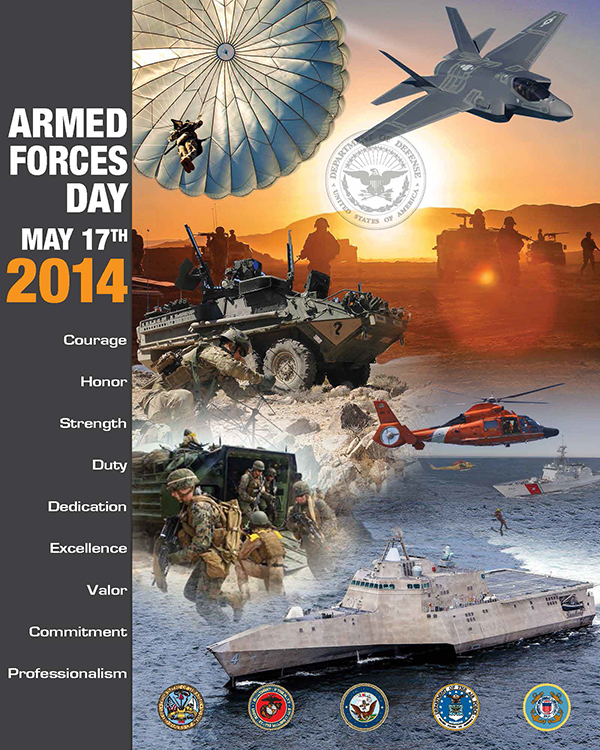
Counting the Cost: Reflections on Armed Forces Day 2014

Event-Armed-Forces-Day-poster-2014

“What is the cost of war? what is the bill?…“This bill renders a horrible accounting. Newly placed gravestones. Mangled bodies. Shattered minds. Broken hearts and homes. Economic instability. Depression and all of its attendant miseries. Back -breaking taxation for generations and generations. For a great many years as a soldier I had a suspicion that war was a racket; not only until I retired to civilian life did I fully realize it….” Major General Smedley Butler USMC

Today is Armed Forces Day and unfortunately most of the country will not notice unless they are attending a Baseball game where it is being observed or some special event on a base, national cemetery, monument or VFW hall.

There are also a fair number of local celebrations to honor members of the Armed Forces across the country but for the most part they are small and not well publicized. As a career officer and son of a Vietnam veteran Navy Chief I appreciate those events and the people that put them together. Being a veteran of Operation Iraqi Freedom and Operation Enduring Freedom, especially those that have taken the time to honor Iraq and Afghanistan veterans.

At any given time less than 1% of Americans are serving in all components of the military. For over 10 years we have been at war in Afghanistan and Iraq as well as other locations that we don’t like to talk about too much. However this has not been the effort of a nation at war, it is the war of a tiny percentage of the population.

As a nation we are disconnected from the military and the wars that the military fights. The fact is that most Americans do not have a personal or vested interest in these wars, they have been insulated by political leaders of both parties from them. There is no draft, and no taxes were raised to fund the wars and the military is now worn out.

We have been at war for nearly 14 years and truthfully there is no end in sight. In that time every single Soldier, Sailor, Marine and Airman volunteered for duty or reenlisted during this time period. Motives may have varied from individual to individual, but unlike the World Wars, Korea and Vietnam every single one volunteered to serve in time of war. I think that this makes the current generation of veterans quite unique, we are no longer a military composed of citizen soldiers we are now, even our reserve components a Warrior caste, set apart from the society that we serve.

There is a tragic disconnection between the military and civilian society in the United States. This is the result of deliberate public policy since the end of the Vietnam War supported by both political parties. For almost 40 years we have relied on an all volunteer force. It is that relatively small and socially isolated military which is sent to fight wars while the bulk of the population is uninvolved and corporations, lobbyists and think tanks get rich.

Andrew Bacevich wrote in his new book Breach of Trust: How Americans failed their Soldiers and their Country:

“Rather than offering an antidote to problems, the military system centered on the all-volunteer force bred and exacerbated them. It underwrote recklessness in the formulation of policy and thereby resulted in needless, costly, and ill-managed wars. At home, the perpetuation of this system violated simple standards of fairness and undermined authentic democratic practice. The way a nation wages war—the role allotted to the people in defending the country and the purposes for which it fights—testifies to the actual character of its political system. Designed to serve as an instrument of global interventionism (or imperial policing), America’s professional army has proven to be astonishingly durable, if also astonishingly expensive. Yet when dispatched to Iraq and Afghanistan, it has proven incapable of winning. With victory beyond reach, the ostensible imperatives of U.S. security have consigned the nation’s warrior elite to something akin to perpetual war.”

Bacevich, a retired Army Colonel and Vietnam veteran who lost a son in Iraq is dead on, as is Rachel Maddow who wrote in her outstanding book Drift: The Unmooring of American Military Power:

“The reason the founders chafed at the idea of an American standing army and vested the power of war making in the cumbersome legislature was not to disadvantage us against future enemies, but to disincline us toward war as a general matter… With citizen-soldiers, with the certainty of a vigorous political debate over the use of a military subject to politicians’ control, the idea was for us to feel it- uncomfortably- every second we were at war. But after a generation or two of shedding the deliberate political encumbrances to war that they left us… war making has become almost an autonomous function of the American state. It never stops.” 

The lobbyists, pundits, politicians and preachers that promote war don’t care about the troops. This is because no matter who is in office or who controls congress these people and corporations will promote policies that keep them employed and their businesses enriched. Marine Major General and Medal of Honor winner Smedley Butler was quite right when he said:

“War is a racket. It always has been. It is possibly the oldest, easily the most, surely the most vicious. It is the only one international in scope. It is the only one in which the profits are reckoned in dollars and the losses in lives. A racket is best described, I believe, as something that is not what it seems to the majority of the people. Only a small ‘inside’ group knows what it is about. It is conducted for the benefit of the very few, at the expense of the very many. Out of war a few people make huge fortunes.”

I think that the reason that our current wars have gone on so long is the that misguided policies have brought about a chronic disconnection in our society between those that serve in the military. But how can there not be when in the weeks after 9-11 people like President Bush and others either directly or in a manner of speaking told people to “go shopping” * as we went to war in Afghanistan? When I returned from Iraq I returned to a nation that was not at war whose leaders used the war to buttress their respective political bases.

The results are terrible. Suicide rates are continuing to rise among veterans who have returned to find that neither the VA nor the civilian mental health care sector is prepared to care for them.

I think that Armed Forces Day should be better celebrated and I am grateful to the people that do things every day to thank and support military personnel. These wonderful people that do this come from across the political spectrum. Some are veterans and others non-veterans. But they care for and appreciate the men and women that serve in and fight the wars that no-one else can be bothered to fight.

481801_10151367001287059_1003164983_n-2

Of course the politicians, pundits, preachers and the defense contractors, banks and lobbyists will find a way to profit. They will do so no matter how many more troops are killed, wounded or injured and how badly it affects military personnel or their families and will push to abandon those who fought as they do after every war. After all, to quote Smedley Butler, “war is a racket.”

Peace

Padre Steve+

President Bush’s actually words were “Now, the American people have got to go about their business. We cannot let the terrorists achieve the objective of frightening our nation to the point where we don’t — where we don’t conduct business, where people don’t shop…” http://georgewbush-whitehouse.archives.gov/news/releases/2001/10/20011011-7.html

2 Comments

Filed under History, iraq,afghanistan, leadership, Military, national security, Political Commentary

Not the Cover of the Rolling Stone but the Front Page: Padre Steve Featured in Washington Times article on PTSD

400236_10151328400862059_541742014_n-2

“We were all at once terribly alone; and alone we must see it through.” Erich Maria Remarque in All Quiet on the Western Front

Well my friends it has been an interesting week. Last week I was contacted by a Public Affairs Officer at the Pentagon who had been a student in our Winter Class because he had been asked by a reporter if he knew someone who could talk about PTSD. I was then contacted by the reporter, Maggie Ybarra of the Washington Times. I was interviewed and the paper sent a wonderful photographer Eva Russo to take pictures of me at Norfolk’s Harbor Park.

Now the Times is not my paper of choice. However the chance to talk about PTSD and the effect on veterans including senior officers in such a high profile forum is important. One does not have to agree with the political slant of news organization if they present the particular topic with sensitivity and balance. The reporter, editor and photographer involved all treated me and those who suffer with respect. I cannot ask for more. Since I was interviewed and quoted by David Wood of the Huffington Post last month for an article on “Moral Injury” shows a sense of balance, I will talk to anyone willing to fairly present the struggles faced by currently serving military members and veterans suffering from PTSD. My brothers and sisters mean more to me than my political leanings. This week I have been contacted by a producer from the BBC about a documentary on that subject but that is waiting on PAO to do something with it.

What matters to me is that veterans suffering from PTSD, TBI and Moral Injury are not forgotten. That happens far too often often after every war. The public forgets, the military forgets and the government forgets. Major General Smedley Butler wrote in his classic War is a Racket:

“I have visited eighteen government hospitals for veterans. In them are about 50,000 destroyed men- men who were the pick of the nation eighteen years ago. The very able chief surgeon at the government hospital in Milwaukee, where there are 3,800 of the living dead, told me that mortality among veterans is three times as great as among those who stayed home.”

Likewise I understand the stigma of PTSD. Many senior personnel both officers and enlisted, the career men and women effected by it PTSD, TBI or Moral Injury don’t want to identify themselves or seek help. I can’t blame them in some ways even though it is killing them. My choice back in 2009 was to decide try tell my story as honestly and transparently. When my shrink asked me what I was going to do with this I thought about it hard. I am very much an introvert and it was scary to “come out.” It was even harder then because though a chaplain I was for all practical purposes an agnostic hoping that there was a God and I was afraid of everything. But I knew that I had to start speaking out because very few senior leaders affected by this scourge had the freedom to do so. That is one of the reasons that I started this website.

It was risky to speak out. Despite efforts by some senior leaders to change the military culture the fact is that there still is a great stigma attached to “coming out” and seeking help for PTSD and other mental illnesses. In fact I know of numerous senior leaders, officer and enlisted whose careers have cratered due to the effects of PTSD and even some who have lost their families or even taken their lives. So for me this is very personal and serious.

The first time I spoke out being interviewed in the Jacksonville (North Carolina) Daily News back in April 2011 there were trolls who made some incredibly hateful and vicious comments about me in the comments of the online edition. Some were even threatening. The paper took the abusive comments down but the wounds remain, some people are simply assholes and I pity them. No wonder people don’t want to talk about the subject and would rather resort to silence, substance abuse and suicide than talk about it.

The fact is that despite the fact that some senior leaders are doing what they can to try to change the culture of the military from one that penalizes, marginalizes and trivializes the suffering of those that serve the stigma remains, and many feel it. One senior enlisted leader in an elite branch of the Navy told me that “leaders could seek help that they would never get any more career enhancing or important assignments.” That was only a few months ago after the suicide of a retired Navy Captain who suffered from PTSD and TBI, a man who meant much to both of us.

The fact is that as a Chaplain I feel pretty much “radioactive” to other chaplains, at senior chaplains. I can count on one hand the number of senior chaplains who have bothered to contact me or ask how I was doing. But that being said I have been contacted by others, chaplains line officers and enlisted personnel who tell me that I am one of the few people who “gets it” and that they feel safe confiding in. Personally I would rather have that be my legacy than anything else.

The fact is it will take a generation of leaders to change the military culture to give the men and women who put it all on the line and suffer for their efforts to get help.

But enough of that for now, I’m getting upset and I already have a terrible time sleeping, I don’t need to spin myself up any more than I am. If you want to read the Times article the link is here: http://www.washingtontimes.com/news/2014/apr/22/less-silent-suffering-veterans-post-traumatic-stre/

On a different note, I did something today that in more than 32 years in the military I have never done. I received a maximum score on my physical fitness test. The past few years I have come close but never maxed it. The sad thing is what I need to do now to get a maximum score is more than I needed to do as a young Army officer in the 1980s.

Anyway, until tomorrow when I will have another Gettysburg article for you, have a great night and remember to care for the veterans and families who suffer the effects of PTSD, TBI and Moral Injury.

Peace

Padre Steve+

3 Comments

Filed under Military, PTSD

Moral Injury: The Silent Killer of Veterans

1622612_10152232336042059_727365308_n

This morning I woke up and got ready to go to work. My wife was up. She had been up most of the night because unbeknownst to me I had been fighting something in my sleep. Judy tried to wake me up, but I didn’t wake up, and evidently the episode lasted much of the night. I do remember some dreams, or rather nightmares last night dealing with a particular situation that I experienced in Iraq, but such nightmares are so common that unless there is something really unusual about them I really don’t think much about them.

I first heard of Moral Injury in 2009 about a year after I was diagnosed with severe and chronic PTSD. However, that being said as a military historian I have to admit that I have read about it time and time again in less clinical language. What I had more experience with were the memoirs of common soldiers and officers, as well as the experiences of Sailors, Marines and Soldiers who had confided in me at various times as their chaplain.

Marine Major General and two time Medal of Honor recipient Smedley Butler wrote in his book War is a Racket:

“Boys with a normal viewpoint were taken out of the fields and offices and factories and classrooms and put into the ranks. They were remolded; they were made over; they were made to “about face”; to regard murder as the order of the day. They were put shoulder to shoulder and through mass psychology, they were entirely changed. We used them for a couple of years and trained them to think of nothing but killing and being killed.

The suddenly, we discharged them and told them to make another “about face”! This time they had to do their own readjusting, sans mass psychology, sans officers’ aid and advice, sans nation-wide propaganda. We didn’t need them anymore. So we scattered them about without any “three minute” or “Liberty Loan” speeches or parades.”

Last year I was interviewed by David Wood of the Huffington Post for a series of three articles that he just published on moral injury.* If PTSD and TBI are considered “invisible wounds” then moral injury must be included. It is a condition as old as war itself and can be seen even in the most ancient of writings about war, Homer’s Iliad, King David’s grief over the loss of his friend Jonathan and many others.

I came home from Iraq forever changed. I served with Marine and Army advisers to Iraqi Army, Border Troops, Police, Highway Patrol and Port of Entry Police in Al Anbar Province in 2007 and 2008. That assignment, which took me throughout the province brought me into contact with a part of the war that many Americans, even those serving in Iraq were shielded from, a part of the war that was never shown in the media that exposed me to realities that before serving there I was unaware.

They were uncomfortable truths. The tensions between the various Iraqi factions, the real hopes for a better Iraq held by many Iraqis and the absolute devastation that the American invasion of Iraq had brought to that unfortunate country. I saw some of the disrespectful and insulting things done by American troops that had to be dealt with by the advisors, men who were as much diplomats as they were Soldiers and Marines. I saw the damage inflicted by bombing campaigns that had little to do with winning a war, but more with destroying infrastructure that even our own war plans had determined was vital to Iraq’s recovery after the success of our campaign. I saw children wounded in fire fights, as well as ministered to the wounded coming through the Fleet Surgical Facility at Ta’Qaddum on their way elsewhere.

I have spent time with Marines and Soldiers who feel real guilt from the actions that they saw or participated in both in Iraq and Afghanistan. Likewise I have dealt with the grief of men and women, Corpsmen, Doctors and Nurses who wish that they could have done more to save the lives of others or done more to prevent suffering. I have also dealt with those who have attempted suicide after taking part in actions that they could not live with or due to what they saw or experienced in Iraq or Afghanistan.

Unfortunately Moral Injury is not taken seriously by the military. This despite the fact many military physicians, mental health providers and chaplains are on the cutting edge of dealing with it. We are doing research, writing and treating those afflicted the services themselves do not even acknowledge it. Even as we do this some in the military, including Chaplains want to call it something more ambiguous using the Orwellian term “inner conflict” to describe something that is far more damaging and insidious.

I suppose that a big part of the reason is that all of the services do an amazing amount of work to built a set of moral values in those that serve. In the Navy we talk about courage, honor and commitment. We talk about being men and women of principle, doing what is right. Such ideas are a part of who we are, Douglas MacArthur spoke of “Duty, Honor Country” and our military academies have long taught the principle that “I will not lie, cheat or steal, or tolerate those that do.”

We teach our Soldiers, Marines, Sailors and Airmen values that are often more rigorous than what they grew up with at home or in school. Then we send them to war and they see and sometimes do things that are at odds with those values as well as the values that we as Americans cherish. We place them in situations where the moral values we teach them contradicted by what we teach and train them to do, and the real unvarnished truth about war, it is hell. Smedley Butler wrote:

“But the soldier pays the biggest part of this bill.
If you don’t believe this, visit the American cemeteries on the battlefields abroad. Or visit  any of the veterans’ hospitals in the United States….I have visited eighteen government hospitals for veterans. In them are about 50,000 destroyed men- men who were the pick of the nation eighteen years ago. The very able chief surgeon at the government hospital in Milwaukee, where there are 3,800 of the living dead, told me that mortality among veterans is three times as great as among those who stayed home.”

How we expect anyone to retain their soul and their sanity when we teach them a set of values that we as a nation fail to uphold is beyond me. The fact that the politicians, pundits and preachers who constantly insist on using the under one percent of the population that serves in the military to bear such burdens to satiate their bloodlust and then refuse to recognize their injuries and then deny them care or benefits is abhorrent.

One of the survivors of the famed World War One “Lost Battalion” wrote:

“We just do not have the control we should have. I went through without a visible wound, but have spent many months in hospitals and dollars for medical treatment as a result of those terrible experiences.”

While I was impacted very much by what happened to me and what I saw. The sad thing is that I was far better prepared and seasoned to survive what I experienced than most of my younger counterparts. After years of training and experience I felt that I was immune to PTSD or Moral Injury. Sadly, I was wrong and today, more than six years after I returned from Iraq I deal with the consequences of war, in my life and those of those that I serve.

I don’t pretend to have answers, but I do expect that our country takes responsibility for the injuries and suffering that its policies have created. Specifically I am speaking to that Trinity of Evil, the Politicians, Pundits and Preachers who constantly lobby for war and refuse to take personal responsibility for it when it comes, and who then for matters of political expediency throw aside the volunteers who went to war for far higher ideals and motives than those that sent them.

Okay, it is time for me to take a deep breath. But I do get really spun up about this, because I have lived this reality and I get angry when I see look around and realize that for most people in this country, the plight of veterans doesn’t matter. We are just another “special interest group” to use the words of a member of a committee appointed by former Secretary of Defense Donald Rumsfeld that wants to decimate military benefits. But even now people like Bill Kristol who have never served a day in the military and never seen a war that they didn’t like, urge that we send more men and women to war over Crimea. But I digress…

Moral injury is a silent killer of the soul and it is high time that we recognize just how deadly it is.

Guy Sager, author of the classic The Forgotten Soldier wrote: “Only happy people have nightmares, from overeating. For those who live a nightmare reality, sleep is a black hole, lost in time, like death.”

I don’t know what nightmares I will have tonight, hopefully at least for Judy’s sake I won’t have any.

With that, I will sign off for the night.

Peace

Padre Steve+

Wood’s Articles can be found here: http://projects.huffingtonpost.com/moral-injury/the-grunts
http://projects.huffingtonpost.com/moral-injury/the-recruits
http://projects.huffingtonpost.com/moral-injury/healing

6 Comments

Filed under iraq,afghanistan, Military, PTSD

“A Foreign World”: The High Cost of Coming Home from War

295_26912117058_5652_n

For me it began in February 2008 when on the way back from Iraq the military charter aircraft bringing us home stopped in Ramstein Germany. After a few hour layover we re-boarded the aircraft but we were no longer alone, the rest of the aircraft had been filled with the families of soldiers and airmen stationed in Germany. Just days before most of us had been in Iraq or Afghanistan. The cries of children and the intrusion of these people, not bad people by any means on our return flight was shocking, it was like returning to a world that I no longer knew.

I think that coming home from war, especially for those damaged in some way, in mind, body or spirit is harder than being at war. In that thought I am not alone. Erich Maria Remarque in his classic novel All Quiet on the Western Front wrote:

“I imagined leave would be different from this. Indeed, it was different a year ago. It is I of course that have changed in the interval. There lies a gulf between that time and today. At that time I still knew nothing about the war, we had been only in quiet sectors. But now I see that I have been crushed without knowing it. I find I do not belong here any more, it is a foreign world.” Erich Maria Remarque in All Quiet on the Western Front

Likewise, Guy Sager a French-German from the Alsace and veteran of the Grossdeutschland Division on the Eastern Front in World War II noted at the end of his book The Forgotten Soldier: 

“In the train, rolling through the sunny French countryside, my head knocked against the wooden back of the seat. Other people, who seemed to belong to a different world, were laughing. I couldn’t laugh and couldn’t forget.” Guy Sager in The Forgotten Soldier

I have been reminded of this several times in the past week. It began walking through a crowded Navy commissary on Saturday, in the few minutes in the store my anxiety level went up significantly. On Tuesday I learned of the death of Captain Tom Sitsch my last Commodore at EOD Group Two, who died by his own hand. His life had come apart. After a number of deployments to Iraq as the Commander EOD Mobile Unit 3 and of Task Force Troy he was afflicted with PTSD. Between June of 2008 and the end of 2009 he went from commanding an EOD Group to being forced to retire.  Today I had a long talk with a fairly young friend agonizing over continued medical treatments for terminal conditions he contracted in two tours in Iraq where he was awarded the Bronze Star twice.

I have a terrible insomnia, nightmares and night terrors due to PTSD. My memories of Iraq are still strong, and this week these conditions have been much worse. Sager wrote:

“Only happy people have nightmares, from overeating. For those who live a nightmare reality, sleep is a black hole, lost in time, like death.”

Nearly 20 years after returning from war, a survivor of the 1st Battalion 308th Infantry, the “Lost Battalion” of World War One, summed up the experience of so many men who come back from war:

“We just do not have the control we should have. I went through without a visible wound, but have spent many months in hospitals and dollars for medical treatment as a result of those terrible experiences.”

Bradley-12-2

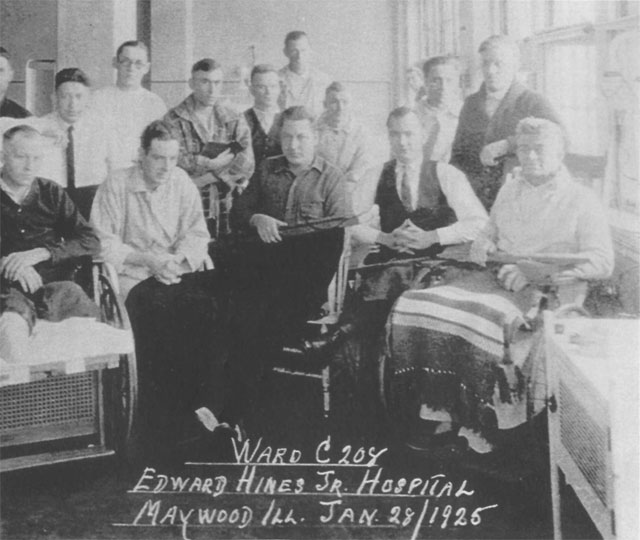
Two time Medal of Honor winner Major General Smedley Butler toured Veterans hospitals following his retirement from the Marine Corps. He observed the soldiers who had been locked away. In his book War is a Racket:

“But the soldier pays the biggest part of this bill. If you don’t believe this, visit the American cemeteries on the battlefields abroad. Or visit  any of the veterans’ hospitals in the United States….I have visited eighteen government hospitals for veterans. In them are about 50,000 destroyed men- men who were the pick of the nation eighteen years ago. The very able chief surgeon at the government hospital in Milwaukee, where there are 3,800 of the living dead, told me that mortality among veterans is three times as great as among those who stayed home.”

Similarly Remarque wrote in All Quiet on the Western Front:

“A man cannot realize that above such shattered bodies there are still human faces in which life goes its daily round. And this is only one hospital, a single station; there are hundreds of thousands in Germany, hundreds of thousands in France, hundreds of thousands in Russia. How senseless is everything that can ever be written, done, or thought, when such things are possible. It must be all lies and of no account when the culture of a thousand years could not prevent this stream of blood being poured out, these torture chambers in their hundreds of thousands. A hospital alone shows what war is.”

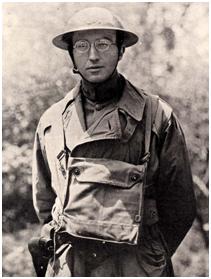
Lt.ColonelCharlesWhiteWhittlesey

Sometimes even those who have been awarded our Nation’s highest award for valor succumb to the demons of war that they cannot shake, and never completely adjust to life at “home” which is no longer home. For them it is a different, a foreign world to use the words of Sager and Remarque. Lieutenant Colonel Charles Whittlesey won the Congressional Medal Medal of Honor as Commander of 1st Battalion 308th Infantry, the “Lost Battalion” in France. After the war he was different. He gave up his civilian law practice and served as head of the Red Cross in New York. In that role, and as the Colonel for his reserve unit, he spent his time visiting the wounded who were still suffering in hospitals. He also made the effort to attend the funerals of veterans who had died. The continued reminders of the war that he could not come home from left him a different man. He committed suicide on November 21st 1921not long after serving as a pallbearer for the Unknown Soldier when that man was interred at Arlington National Cemetery.

In the eulogy Judge Charles L. Hibbard noted:

“He is sitting on the piazza of a cottage by the sea on a glorious late September day but a few weeks ago. . . He is looking straight out to sea, with naught but sea between him and that land where lie so many of his boys. The beating surf is but an echo, the warm, bright sunshine, the blue sky, the dancing waves, all combine to charm. But a single look at his face and one knows he is unconscious of this glory of Nature. Somewhere far down in the depths of his being or in imagination far off across the waters he lives again the days that are past. That unconscious look has all the marks of deep sorrow, brooding tragedy, unbearable memories. Weeks pass. The mainspring of life is wound tighter and tighter and then comes the burial of the Unknown Soldier. This draws the last measure of reserve and with it the realization that life had little now to offer. This quiet, reserved personality drew away as it were from its habitation of flesh, thought out the future, measured the coming years and came to a mature decision. You say, ‘He had so much to live for – family, friends, and all that makes life sweet.’ No, my friends, life’s span for him was measured those days in that distant forest. He had plumbed the depth of tragic suffering; he had heard the world’s applause; he had seen and touched the great realities of life; and what remained was of little consequence. He craved rest, peace and sweet forgetfulness. He thought it out quietly, serenely, confidently, minutely. He came to a decision not lightly or unadvisedly, and in the end did what he thought was best, and in the comfort of that thought we too must rest. ‘Wounded in action,’ aye, sorely wounded in heart and soul and now most truly ‘missing in action.’”

Psychologist and professor Dr Ari Solomon analyzed the case of Colonel Whittlesey and noted:

“If I could interview Whittlesey as a psychologist today, I’d especially have in mind … the sharp discrepancy between the public role he was playing and his hidden agony, his constant re-exposure to reminders of the battle, his possible lack of intimate relations, and his felt need to hide his pain even from family and dearest friends.”

I wish I had the answer. I have some ideas that date back to antiquity in the ways that tribes, clans and city states brought their warriors home. The warriors were recognized, there were public rituals, sometimes religious but other times not. But the difference is that the warriors were welcomed home by a community and re-integrated into it. They were allowed to share their stories, many of which were preserved through oral traditions so long that they eventually were written down, even in a mythologized state.

But we do not do that. Our society is disconnected, distant and often cold. Likewise it is polarized in ways that it has not been since the years before our terrible Civil War. Our warriors return from war, often alone, coming home to families, friends and communities that they no longer know. They are misunderstood because their experience is not shared by the population at large. The picture painted of them in the media, even when it is sympathetic is often a caricature.  Their camaraderie with the friends that they served alongside is broken by distance and the frenetic pace of our society. Remarque wrote “We were all at once terribly alone; and alone we must see it through.”

If we wonder about the suicide epidemic among veterans we have to ask hard questions. Questions like why do so many combat veterans have substance abuse problems and why is it that approximately one in ten prisoners serving time are veterans? It cannot be simply that they are all bad eggs. Many were and are smart, talented, compassionate and brave, tested and tried in ways that our civilian society has no understanding for or clue about. In fact to get in the military most had to be a cut above their peers. We have to ask if we are bringing our veterans home from war in a way that works. Maybe even more importantly we have to ask ourselves if as a culture if we have forgotten how to care about each other. How do we care for the men and women who bear the burden of war, even while the vast majority of the population basks in the freedom and security provided by the soldier without the ability to empathize because they have never shared that experience.

For every Tom Sitsch, Charles Whittlesey or people like my friend, there are countless others suffering in silence as a result of war. We really have to ask hard questions and then decide to do something as individuals, communities and government to do something about it. If we don’t a generation will suffer in silence.

Peace

Padre Steve+

2 Comments

Filed under History, iraq,afghanistan, Military, PTSD

When Will We Ever Learn? Looking at 12 Years of Unending War

peloponnesian-war

War is the province of chance. in no other sphere of human activity must such a margin be left for this intruder. it increases the uncertainty of every circumstance and deranges the course of events.- Karl von Clausewitz

We are coming up on the beginning of the 13th year of our current wars. Wars that when they began were believed to be easy and uncomplicated and since they were being waged against enemies that were “backward” and not hi-tech. Thus we were promised that they would be short in duration, low in cost and casualties. We elected the war option as the quick and easy way to win, neglecting the words of the venerable Chinese strategist Sun Tzu who said “To fight and conquer in all your battles is not supreme excellence; supreme excellence consists in breaking the enemy’s resistance without fighting.”

images-54

In 2001 and early 2002 the Bush Administration pursued the Al Qaeda terrorists to Afghanistan, toppling the unpopular Taliban regime but failing to kill or capture Bin Laden. But by 2002 those in that Administration sought to widen the scope of the war. An “Axis of Evil” comprised of Iraq, Iran and North Korea was identified, even though none of those nations had links to Al Qaeda, and two of which, Iran and Iraq were hostile to Al Qaeda, each for their own reasons, Saddam Hussein because he only embraced Islam when it suited his strategic purposes and Iran because the Shia there were and are mortal enemies with the ultra-Fundamentalist Sunni Wahhabi Islam of Al Qaeda.

al-qaeda

The undeclared war against Al Qaeda became the Global War on Terrorism. It was an amorphous term that allowed the government to play fast and loose with facts even as it by fully “legal” means restricted the rights and invaded the privacy of American citizens through the Patriot Act and expansion of the FISA laws and a massive expansion of electronic surveillance against our enemies, against our allies, even long tern NATO allies and our own citizens.

All of these ideas seemed like good ideas at the time. The United States had been hit by the most well planned, executed and devastating terrorist attack ever conducted and it had been done by those who many believed incapable of doing it. We forgot however the words of Clausewitz that war is the provence of chance.

But then our leaders, regardless of political party over the past 50 years since our entry into Vietnam have been pretty inept at understanding history and understanding the consequences of their actions. The Greek historian Thucydides understood this, he saw what happened to Athens when it allowed itself to become enmeshed in the Peloponnesian War, a war that it entered as the premier economic and military power of its time and ended in disaster. He wrote:

“Think, too, of the great part that is played by the unpredictable in war: think of it now, before you are actually committed to war. The longer a war lasts, the more things tend to depend on accidents. Neither you nor we can see into them: we have to abide their outcome in the dark. And when people are entering upon a war they do things the wrong way round. Action comes first, and it is only when they have already suffered that they begin to think.” 

It seems strange now after so long of war that our openness, freedoms and liberties were not destroyed by the actions of Al Qaeda but by our own government in the Patriot Act a title so Orwellian that it defies logic. The sad fact is that the Patriot Act was only the beginning and the actions and legislative accomplishments those that seek to broaden the war and broaden the powers of the government to restrict freedom, speech and privacy of otherwise law abiding citizens has only increased.

As I listen to the words of some legislators, or both parties I might add I am frightened because for many it seems that the only answer they have to national security issues is the hammer of military force, force that over the years of this war has been eroded and which due to their legislative negligence in the Sequester will only further erode. They seem to forget, or maybe they never learned what is taught to military officers at Command and Staff College that national power is based on the DIME, the diplomatic, intelligence, military and economic power of a nation and not on military power alone.

Our legislators, the talking heads of the media and their political allies of various “think tanks” act as though their decisions have no consequences. Thucydides noted the same in his time:

“Some legislators only wish to vengeance against a particular enemy. Others only look out for themselves. They devote very little time on the consideration of any public issue. They think that no harm will come from their neglect. They act as if it is always the business of somebody else to look after this or that. When this selfish notion is entertained by all, the commonwealth slowly begins to decay.”

Those who think this way frequently praise those that they send to fight their wars. They pound their chests in praise of “the brave soldiers” but as far as the soldier is concerned they care not, thus when through their own political negligence hard budgetary choices need to be made neither the troops or the actual security of the nation matters, only the profits of their financial contributors, those who profit from war and suffering matter.

Two time Medal of Honor winner and Marine Corps Major General Smedley Butler wrote in 1932: “What is the cost of war? what is the bill? This bill renders a horrible accounting. Newly placed gravestones. Mangled bodies. Shattered minds. Broken hearts and homes. Economic instability. Depression and all of its attendant miseries. Back -breaking taxation for generations and generations. For a great many years as a soldier I had a suspicion that war was a racket; not only until I retired to civilian life did I fully realize it….”

Unfortunately despite the hopes of some in the Obama administration and in the country this undeclared “war on terrorism” will not end. It has taken on a life of its own and neither political party will end it. It like Athen’s misadventure in the Peloponnesian War, and so many other nations that ventured into “unending” wars that span generations will be our undoing if we are not take action now to figure out a way to extricate ourselves from it while still keeping our people safe. Somehow I think that our former freedoms, our liberties, transparency and openness are not weaknesses but strengths which at one time were embraced by us and many around the world who loved them and hoped to bring them to fruition in their own countries.

afghanistan_war

I think bout it now. Many of the 18 year old men and women enlisting in the Army, Marine Corps, Air Force and Navy today knowing that they could end up at war were only 5-7 years old on September 11th 2001. That a war should last this long is not only unwise and destructive to liberty but criminal in the fact that we should have known better. Thomas Jefferson wrote to President James Monroe advising him to stay clear of European conflicts saying: “They are nations of eternal war. All their energies are expended in the destruction of the labor, property, and lives of their people.” James Madison wrote to Jefferson in 1798 “The loss of liberty at home is to be charged to the provisions against danger, real or imagined, from abroad.” 

These are dangerous times, the fact is that more war is beckoning and there are those anxious for their own reasons, power, profit or even religion seek to continue and expand the. They care not a whit about those that fight them, those that die in them nor the ultimate costs in blood, treasure and freedom and home. The ends justify their means. Hannah Arendt said: “Although tyranny…may successfully rule over foreign peoples, it can stay in power only if it destroys first of all the national institutions of its own people.”

Peace

Padre Steve+

Leave a comment

Filed under History, iraq,afghanistan, national security, News and current events