Tag Archives: vietnam war

Semper Fidelis! Happy 236th Birthday Marine Corps!

In 1775 a committee of the Continental Congress met at Philadelphia’s Tun Tavern to draft a resolution calling for two battalions of Marines able to fight for independence at sea and on shore.  The resolution was approved on November 10, 1775, officially forming the Continental Marines. The first order of business was to appoint Samuel Nicholas as the Commandant of the newly formed Marines. Robert Mullan the owner and proprietor of the said Tun Tavern became Nicholson’s first captain and recruiter. They began gathering support and were ready for action by early 1776.  They served throughout the War for Independence and like the Navy they were disbanded in April 1783 and reconstituted as the Marine Corps in 1798. The served on the ships of the Navy in the Quasi-war with France, against the Barbary Pirates where a small group of 8 Marines and 500 Arabs under Lieutenant Presley O’Bannon made a march of 500 miles across the Libyan Desert to lay siege Tripoli but only reached Derna. The action is immortalized in the Marine Hymn as well as the design of the Marine Officer’s “Mameluke” Sword. They served in the War of 1812, the Seminole Wars and in the Mexican-American War where in the storming of the on Chapultepec Palace they continued to build and enduring legacy. In the months leading up to the Civil War they played a key role at home and abroad.  In October 1859 Colonel Robert E. Lee led Marines from the Marine Barracks Washington DC to capture John Brown and his followers who had captured the Federal Armory at Harper’s Ferry.

The Corps would serve through the Civil War and on into the age of American Expansion serving in the Spanish American War in the Philippines, Puerto Rico and Cuba where they seized Guantanamo Bay at the battle of Cuzco Wells.  The would serve in China and be a key component of the international force that defended foreign diplomats during the Boxer Revolt as well as the international force that would relieve the diplomatic compound in Peking (Beijing).  In World War One the Marines stopped the German advance at Chateau Thierry and cemented their reputation as an elite fighting force at Belleau Wood where legend has it that the Germans nicknamed them Teufelhunden or Devil Dogs, a name that they Marines have appropriated with great aplomb.

During the inter-war years the Marines were quite active in the Caribbean and Asia and also developed amphibious tactics and doctrine that would be put to use in the Pacific Campaign.  During the war the Marines served in all theaters but won enduring fame at Wake Island, Guadalcanal, Tarawa, Iwo Jima, Okinawa and numerous other battles in the Pacific war. Marine Aviators flew in some the most desperate actions in the war to support the Navy and amphibious operations ashore.

After the war the Truman Administration sought to eliminate the Marine Corps but the Corps was saved by the efforts of Americans across the country and Marine supporters in Congress.  That was a good thing because the Marines were instrumental in keeping the North Koreans from overrunning the South during the Korean War on the Pusan Perimeter, turned the tide at Inchon and helped decimate Communist Chinese forces at the Chosin Reservoir.  After Korea the Marines would serve around the World in the Caribbean and Lebanon and in Vietnam where at Da Nang Keh Sanh, Hue City, Con Thien fighting the North Vietnamese and their Viet Cong allies.  The Marines took the initiative to implement innovative counter insurgency measures such as the Combined Action Platoons which enjoyed tremendous success until they were shut down by the Army high command.  These lessons would serve the Marines well in the new millennium during the Anbar Awakening in Iraq which changed the course of that insurgency and war.

The Marines would again be involved around the World after Vietnam serving in the Cold War, in Lebanon and the First Gulf War which was followed by actions in Somalia, the Balkans and Haiti. After the attacks of September 11th 2001 the Marines were among the first into Afghanistan helping to drive the Taliban from power. In the Iraq Campaign the Marines had a leading role both in the invasion and in the campaign in Al Anbar Province.  After theirwithdraw from Iraq the Marines became a central player in Afghanistan where today they are engaged around Khandehar and in Helmand Province.

The Marines are elite among world military organizations and continue to “fight our nations battles on the air and land and sea.” The Corps under General John LeJeune institutionalized the celebration of the Marine Corps Birthday and their establishment at Tun Tavern. General LeJeune issued this order which is still read at every Marine Corps Birthday Ball or observance:

MARINE CORPS ORDER No. 47 (Series 1921)
HEADQUARTERS
U.S. MARINE CORPS Washington, November 1, 1921

The following will be read to the command on the 10th of November, 1921, and hereafter on the 10th of November of every year. Should the order not be received by the 10th of November, 1921, it will be read upon receipt.

On November 10, 1775, a Corps of Marines was created by a resolution of Continental Congress. Since that date many thousand men have borne the name “Marine”. In memory of them it is fitting that we who are Marines should commemorate the birthday of our corps by calling to mind the glories of its long and illustrious history.

The record of our corps is one which will bear comparison with that of the most famous military organizations in the world’s history. During 90 of the 146 years of its existence the Marine Corps has been in action against the Nation’s foes. From the Battle of Trenton to the Argonne, Marines have won foremost honors in war, and in the long eras of tranquility at home, generation after generation of Marines have grown gray in war in both hemispheres and in every corner of the seven seas, that our country and its citizens might enjoy peace and security.

In every battle and skirmish since the birth of our corps, Marines have acquitted themselves with the greatest distinction, winning new honors on each occasion until the term “Marine” has come to signify all that is highest in military efficiency and soldierly virtue.

This high name of distinction and soldierly repute we who are Marines today have received from those who preceded us in the corps. With it we have also received from them the eternal spirit which has animated our corps from generation to generation and has been the distinguishing mark of the Marines in every age. So long as that spirit continues to flourish Marines will be found equal to every emergency in the future as they have been in the past, and the men of our Nation will regard us as worthy successors to the long line of illustrious men who have served as “Soldiers of the Sea” since the founding of the Corps.

JOHN A. LEJEUNE,
Major General
Commandant

I have had the privilege of serving with the Marines in peace and war and the most memorable Marine Corps Birthday celebrations for me were in Ramadi with the Marine advisors to the Iraqi 7th Division and with the Marine Security Force Company at Guantanamo Bay Cuba. The highlight of my career was serving with the Marines in Iraq and I wear my Iraq Campaign Medal with pride.  The Marines have helped my professional development as an office through the Amphibious Warfare Course, Command and Staff College and the Fleet Marine Force Officer Qualification. I count my Marines as some of my most enduring friends.

Happy Birthday Marines. Thank you for all you do.

Peace

Padre Steve+

1 Comment

Filed under History, Military

Veterans Day 2011: Giving Thanks for the Veterans in my Life

My Dad Aviation Storekeeper Chief Carl Dundas aboard USS Hancock CVA 19 around 1971 or 1972

I always become a bit more thoughtful around Veterans Day and Memorial Day.  I’ve been in the military for over 30 years now.  I enlisted in the National Guard while in college and entered Army ROTC back on August 25th 1981.  Since then it has been to quote Jerry Garcia “a long strange trip.”  During that trip I learned a lot from the veterans who I am blessed to have encountered on the way.

I come from a Navy family. My dad served twenty years in the Navy.  Growing up in a Navy family in the 1960s and 1970s was an adventure for me and that Navy family that surrounded us then remained part of my family’s life long after.  My mom and dad remained in contact with friends that they served with or were stationed with, and now many of them are elderly and a good number have passed away.  Even so my mom, now a widow stays in regular contact with a number of her Navy wife “sisters.”

My dad retired in 1974 as a Chief Petty Officer and did time surrounded in the South Vietnamese city of An Loc when it was surrounded by the North Vietnamese for 80 days in 1972.  He didn’t talk about it much when he came back; in fact he came back different from the war.  He probably suffered from PTSD.  All the markers were there but we had no idea about it back then, after all he was in the Navy not the Army.  I had friends whose dad’s did not return fromVietnamand saw howVietnamveterans were treated by the country as a whole including some members of the Greatest Generation.  They were not welcomed home and were treated with scorn.  Instead of being depicted a Americans doing their best in a war that few supported they were demonized in the media and in the entertainment industry for many years afterwards.

My dad never made a big deal out of his service but he inspired me to pursue a career in the military by being a man of honor and integrity.

It was the early Navy family experience that shaped much of how I see the world and is why I place such great value on the contributions of veterans to our country and to me.  That was also my introduction to war; the numbers shown in the nightly news “body count” segment were flesh and blood human beings.

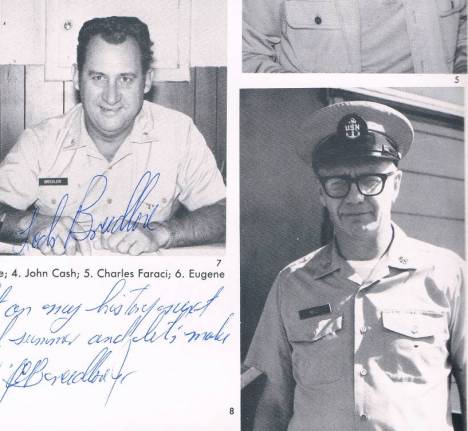
LCDR Jim Breedlove and Senior Chief John Ness

My second view of war came from the Veterans of Vietnam that I served with in the National Guard and the Army.  Some of these men served as teachers and mentors.  LCDR Jim Breedlove and Senior Chief John Ness at the Edison High School Naval Junior ROTC program were the first who helped me along.  Both have passed away but I will never forget them.  Commander Breedlove was someone that I would see every time that I went home as an adult. His sudden death the week before I returned from Iraqshook me.  I have a post dedicated to them at this link.  (In Memorium: Chief John Ness and LCDR Jim Breedlove USN )

Colonel Edgar Morrison was my first battalion commander.  He was the most highly decorated member of the California National Guard at that time and had served multiple tours inVietnam.  He encouraged me as a young specialist and officer cadet and showed a tremendous amount of care for his soldiers.  Staff Sergeant’s Buff Rambo and Mickey Yarro taught me the ropes as a forward observer and shared many of their Vietnam experiences. Buff had been a Marine dog handler on the DMZ and Mickey a Forward Observer.

The Senior NCOs that trained me while in the Army ROTC program at UCLA andFortLewishad a big impact. All were combat veterans that had served inVietnam.  Sergeant First Class Harry Zilkan was my training NCO at the UCLA Army ROTC program.  He was a Special Forces Medic with 7th Group inVietnam.  He still had part of a VC bayonet embedded in his foot.  He received my first salute as a newly commissioned Second Lieutenant as well as a Silver Dollar.  I understand that after the Army he became a fire fighter.  He had a massive heart attack on the scene of a fire and died a few years later from it.  Sergeant Major John Butler was our senior enlisted advisor at UCLA.  An infantryman he served with the 173rd Airborne inVietnam.  Sergeant First Class Harry Ball was my drill sergeant at the ROTC pre-commissioning camp at Fort Lewis Washington in 1982.  He was a veteran of the Special Forces and Rangers and served multiple tours inVietnam.  Though he only had me for a summer he was quite influential in my life, tearing me apart and then building me back up.  He was my version of Drill Sergeant Foley in An Officer and a Gentleman. Like Zack Mayo played by Richard Gere in the movie I can only say: Drill Sergeant “I will never forget you.”

As I progressed through my Army career I encountered others of this generation who also impacted my life. First among them was First Sergeant Jim Koenig who had been a Ranger in the Mekong Delta.  I was the First Sergeant that I would measure all others by.  Once during an ARTEP we were aggressed and all of a sudden he was back in the Delta. This man cared so much for his young soldiers in the 557th Medical Company.   He did so much for them and I’m sure that those who served with him can attest to this as well as me. Jim had a brick on his desk so that when he got pissed he could chew on it.   He was great.  He played guitar for the troops and had a song called “Jane Fonda, Jane Fonda You Communist Slut.” It was a classic.  He retired after he was selected to be a Command Sergeant Major because he valued his wife and family more than the promotion.  It hurt him to do this, but he put them first. Colonel Donald Johnson was the commander of the 68th Medical Group when I got to Germany in January 1984.  Colonel “J” as well all called him was one of the best leaders I have seen in 28 years in the military.  He knew everything about everything and his knowledge forced us all to learn and be better officers and NCOs.  On an inspection visit you could always find him dressed in coveralls and underneath a truck verifying the maintenance done on it.  He served a number ofVietnamtours.  He died of Multiple Myeloma and is buried at Arlington.  Chaplain (LTC) Rich Whaley who had served as a company commander in Vietnam on more than one occasion saved my young ass at the Army Chaplain School.  He remains a friend and is the Endorsing Agent for the Church of Jesus Christ of Latter Day Saints. As a Mormon he was one of the most “Christian” men that I have ever met.  I know some Christians who might have a hard time with that, but Rich demonstrated every trait of a Christian who loved God and his neighbor.

Me with Major General Frank Smoker USAF (ret) and Colonel Tom Allmon US Army at Colonel Allmon’s Change of Command at Ft Myer Virginia 2005 

When I was the Installation Chaplain at Fort Indiantown Gap PA I was blessed to have some great veterans in my Chapel Parish.  Major General Frank Smoker flew 25 missions as a B-17 pilot over Germany during the height of the air war in Europe. He brought his wonderful wife Kate back from England with him and long after his active service was over he remained a vital part of the military community until his death in 2010.  Sergeant Henry Boyd was one of the 101st Airborne soldiers epitomized in Band of Brothers. He had a piece of shrapnel lodged next to his heart from the Battle of the Bulge until the day he died and was honored to conduct his funeral while stationed at Indiantown Gap. Colonel Walt Swank also served in Normandy.  Major Scotty Jenkes was an Air Force pilot in Vietnam flying close air support while Colonel Ray Hawthorne served several tours both in artillery units and as an adviser in 1972 and was with General Smoker a wonderful help to me as I applied to enter the Navy while CWO4 Charlie Kosko flew helicopters in Vietnam.  All these men made a deep impact on me and several contributed to my career in very tangible ways.

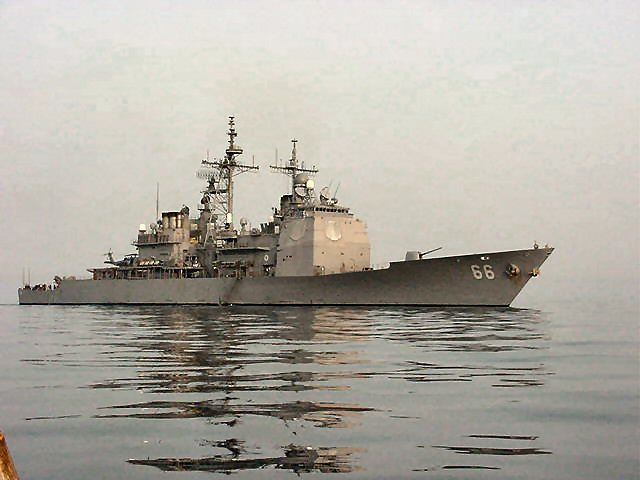
Me with my boarding team on USS HUE CITY CG-66 2002

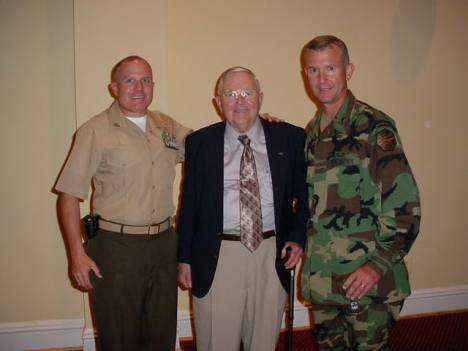
My life more recently has been impacted by others. Since coming into the Navy I have been blessed to serve with the Marines and Sailors of the 2nd Combat Engineer Battalion and Lieutenant Colonel T D Anderson, 1st Battalion 8th Marines and Lieutenant Colonel Desroches, 3rd Battalion 8th Marines and Colonel Lou Rachal and Headquarters Battalion 2nd Marine Division and Colonel, now Major General Richard Lake.   My friends of the veterans of the Battle of Hue City including General Peter Pace, Barney Barnes, Tony “Limey” Cartilage, Sergeant Major Thomas and so many others have become close over the years, especially after I did my time inIraq. They and all theVietnam vets, including the guys from the Vietnam Veterans of America like Ray and John who manned the beer stand behind the plate at HarborPark all mean a lot to me.  My friends at Marine Security Forces Colonel Mike Paulovich and Sergeant Major Kim Davis mean more than almost any people in the world.  We traveled the globe together visiting our Marines.  Both of these men are heroes to me as well as friends, Colonel Paulovich was able to administer the oath of office to me when I was promoted to Commander.

With advisers to 1st Brigade 1st Iraq Army Division, Ramadi Iraq 2007

Finally there are my friends and brothers that I have served with at sea on USS HUE CITY during Operation Enduring Freedom and the advisers on the ground in Al Anbar mean more than anything to me. Perhaps the most important is my RP, RP2 Nelson Lebron who helped keep me safe and accompanied me all over the battlefield.  Nelson who has doneIraq3 times,Afghanistan,Lebanon and the Balkans is a hero.  The men and women of Navy EOD who I served with from 2006-2008 have paid dearly in combating IEDs and other explosive devices used against us in Iraq and Afghanistan are heroes too.  There is no routine mission for EOD technicians.  Then there are the friends that I serve with in Navy Medicine, medical professionals who care for our Sailors, Marines, Soldiers and Airmen, family members and veterans at home and in the thick of the fighting in Afghanistan.

I give thanks for all them men that I mention in this post, especially my dad. For the countless others that are not mentioned by name please know that I thank God for all of you too.

I do hope that people will remember the Veterans that impacted their lives this and every day.  Some may have been the men and women that we served with, perhaps a parent, sibling or other relative, maybe a childhood friend, a teacher, coach or neighbor. As we pause for a moment this Friday let us honor those who gave their lives in the defense of liberty in all of the wars of our nation. They have earned it.

Peace

Padre Steve+

1 Comment

Filed under Loose thoughts and musings

Reflections on 9-11-2001: How the Day Changed Me….

We are coming up on the 10th anniversary of a date that changed the country.  I wrote about it last year in an article entitled 9-11-2001: A Date that Will Live in Infamy 9 Years Later.  This year I am going to post a couple of short reflections leading up to the anniversary on how that event changed me.

I remember the day like it was yesterday. I was getting out of my office at Camp LeJeune after an early morning counseling case and some administrative duties I was getting ready to head to the French Creek gym.  I was about to close out my browser when I saw a little note on the Yahoo.com homepage: “Airplane crashes into World Trade Center.” It was about 0900 that tragic morning.  I thought to myself, “some dumb ass just crashed his Cessna into the building.

The day was clear and absolutely gorgeous, a slight north wind and low humidity, a well deserved break from what had been a hot and humid summer.  Not that I had seen much of the Carolina summer having returned from a deployment to Okinawa, Mainland Japan and Korea in late July. When I got to my car the local talk radio station was broadcasting a second or third tier national talk radio host and he was screaming “oh my God another plane just flew into the towers!”

I drove over to the gym where I joined a large crowd of Marines and Sailors transfixed as we watched the towers burn.  I went back to my office showered and went over to my battalion headquarters and was there when theSouthTowerwent down at 0959.

Since then a lot has changed.  I have made two deployments and traveled to the Middle East many more times.  I came back from my deployment to Iraq with a serious case of PTSD and a health distrust of the media, politicians, preachers and especially the talk radio hosts that I used to listen to as often as I could.  I remember being in Iraq in between missions to the far reaches of Al Anbar Province and watching the news on the televisions at the dining facility and wondering just what war that they were covering.

Before Iraq I could be considered a pretty solid “conservative” but now I really don’t know what I am.  Some call me “liberal” and in fact I was told to leave my old church last year because I had become “liberal.”  However, despite what some of the talk pundits and right wing preachers say just because a person is “liberal” does not mean that they are unpatriotic or do not care about our country or freedom.  After serving in Iraq and seeing how certain people have equated patriotism with adherence to their political agenda I wholeheartedly believe that a person’s patriotism has nothing to do with their politics or their religious beliefs.

Before IraqI was jaded by what happened to my dad’s generation after Vietnamwhen liberals called returning Veterans “baby killers” or “Nazis.”  In fact I had a Sunday school teacher tell me that my dad was a “baby killer” in 1972 and in 1981 had some ass at UCLA call me a “ROTC Nazi.”  As a result I had little love for the Left.  After September 11th I followed the “conservative” talk radio crowd and Fox News more than I had ever before.  The emotions that they stirred up were primal.  But experience and reflection caused me to get beyond the pain of my past and the emotion of the present.  Just as I detest those that characterized my dad’s service or my service as being criminal I also detest those that say one cannot be critical of those that advocate for war regardless of the human and economic cost or actual strategic benefit.

I rejoiced when our SEALS killed Osama Bin Laden and every Al Qaeda leader that we have ushered into the arms of Allah.  They have caused unmitigated suffering around the world, not just to us but to their own Islamic neighbors and deserve no pity and since they refuse to give quarter should be shown none. If that sounds harsh I can’t help it. The attacks of 9-11 and the wars that have followed are personal.

At the same time I question the strategic purpose and value of the campaign in Afghanistan.  I see it as a potential disaster on the order of Stalingrad or Dien Bien Phu should the Pakistanis shut off the supply routes that constitute the major support to our troops there, especially if they did so in the winter months.

At the ten year mark I grieve for those that have lost their lives as well as loved ones in the attacks or in the wars that have followed.  On September 11th 2001 2977 people were killed at the World Trade Center, the Pentagon or on United Flight 93 which went down inPennsylvania.  One of those killed at the Pentagon was Lieutenant Colonel Karen Wagner was a classmate of my in 1983 at the Medical Service Corps Officer Basic Course.

Since then 4474 American military personnel have given their lives in Iraqand 1760 in Afghanistan.  NATO or coalition allies, excluding the Iraqi and Afghani military or police forces have lost another 1270 military personnel.  Another 45,170 Americans have been wounded.  I know a decent number of those wounded and some of those that have died.  The losses are intensely personal and to think that we have lost well over twice the number killed on September 11th 2001 in two wars, many that were children aged 8-12 years old on that tragic September day.  Of course the numbers do not count those that died by their own hand after they returned from the war, a number that grows daily.

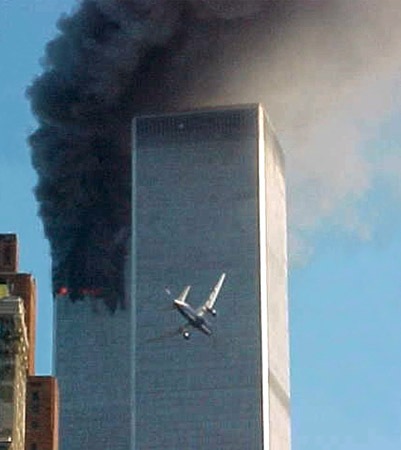
I have been changed by that tragic event. I still shudder when I see the video of United Air Lines Flight 175 crashing into the South Tower or see the videos of the towers crashing down.  They are hard to watch and while I will observe the anniversary with prayers and a lot of reflection I do not know how much of the continuous media coverage of the anniversary that I will be able to watch.

The events of that tragic day changed me, and changed countless numbers of other Americans as well as others around the world.  While we yearn to return to the days before9-11-2001 that is impossible, there is too much water and too much blood that has passed under the bridge.   I know I can’t go back.  Maybe that is good.

Peace

Padre Steve+

6 Comments

Filed under History, iraq,afghanistan, national security, traumatic national events

A Tuesday in DC: Lunch with a Dear Friend and a Night walk through the Monuments

Today was another good day, in fact really good day at the conference I am attending with the George Washington Institute for Spirituality and Health.  At lunch I was able to spend some time with my former commanding officer at Marine Security Forces.  It was good to see Mike again.  He and I went through some very trying times together and I treasure his friendship as well of that of his family.  I think that of all the commanding officers that have served under which have included some incredible men that he was the best.  We are a lot alike in many ways both rather cerebral and out of the box thinkers. We basically are the same generation as far as military service goes, when he was a young Marine Corps Officer I was a young Army Officer.

We reminisced about the way the country was back then how our leaders still worked together and even if we disagreed with the policies of those in the opposing party that we still knew that we were Americans and that at the end of the day we were friends.  I guess that Mike and I are dinosaurs now; we tend to look at the big picture and both being career officers of the same generation have seen the country change. We both entered the military during the Cold War and after the loss of Vietnam.  Our teachers were the men that served in that war, those who came home to a then hostile country.  Neither Mike nor I are service academy types nor the products of conservative military schools, Mike went to Harvard and attended Navy ROTC and I went to a California State University School, CSU Northridge and took Army ROTC at UCLA.  We both come from strong yet tolerant religious traditions and were influenced by chaplains early in our careers.  Mike’s academic background is Economics mine Theology and Military History and both of us hold advanced degrees in those subjects.  We both graduated from the Marine Corps Command and Staff College.  We have both served overseas and in combat.  We love our country and treasure our military service and that of the men and women that we have served with over so many decades.

I am honored that Mike will administer the Oath of Office when I am promoted on September 1st at Harbor Park in Norfolk Virginia.  By the way Mike loves baseball too and being from Boston he is a Red Sox fan.  His dad, a die hard fan died a few months before the Sox broke the “Curse of the Bambino” in 2004. My dad died a few months before his San Francisco Giants won the World Series in 2010.

Talking with Mike today made me think back to a time when things were not like what they are now, where political opponents were simply opponents and not “the enemy.”  I shared with Mike the terms the German Military used in the Second World War to describe those that they fought against.  The Western Allies were “die Gegener” or simply opponents and for the most part the German military observed the Geneva Convention and Laws of War when fighting the Americans, British and French.  However with the Soviet Unionit was different.  The Soviets were “Der Feind” or the enemy.

As divided as we were in the 1970s and 1980s there was still a modicum of respect for the other side and ability to work together when we needed and Mike brought up the relationship of Ronald Reagan and Thomas “Tip” O’ Neill, vigorous political opponents who remained friends.  However there is today and has been for the past 20 years or so for members of the extreme wings of both major parties to identify their opponents as “enemies.”  The language difference is significant. An opponent is a adversary that you hope to defeat but there is not a hatred involved and when the competition ceases the opponents remain friends and even colleagues even as they prepare for the next “game” so to speak.

Enemies are another matter.  To be an enemy is to assume that the other side poses an existential threat to your side or your agenda.  Thus there can be no compromise and the opponent is not simply to be defeated but destroyed and annihilated much like the Old Testament when the Israelites were commanded by God to kill everything even the babies and pregnant women.  So much for being pro-life but I digress….

Today we are more divided than any time since the Civil War, blood is boiling and if there is compromise it will be a mere truce until the next round of political bloodletting which if we are not careful may become actual bloodletting and the enemies allow their unbridled hatred of each other spill out into open conflict.  Such affairs never end well and if we remember our history our Civil War’s military conflict was over in a few years and yet with the relatively primitive weapons of the ay killed more Americans than any other conflict.  The after effects well, frankly Scarlett took over a hundred years to recover from and I would dare posit that some believe that the war is not yet over.

Tonight I went to dinner alone cancelling my plans to head out to watch the Nationals play the Marlins. I needed the time and solitude and somehow a trip on the DC Metro seemed the last place that I would find it. I walked to the Gordon Biersch where I had dinner, drank a few beers and watched the Orioles beat the Blue Jays.  After dinner I detoured from my normal route back to my campus housing which takes me in front of the White House.

Amid the lights and the amazing splendor of the buildings adorned with American and District of Columbia Flags I walked and simply observed people.  Tourists from across the nation and the world were taking pictures, business people and government workers hurried about, vendors hawked their patriotic wares, mostly made in China I might add or snack foods.  Here and there a protester sought to draw attention to their pet cause, there is the anti-nuclear weapons protestor that has been camped across from the White House since 1981, people demanding to see the Birth Certificate, those protesting for the removal of various Arab dictators and others peppered about. Capitol Police and Secret Service officers were out in force and amid the fortress like surroundings of many government buildings and the offices such as the World Bank and major business and financial institutions armed police and private security stood watch with cameras watching every move.

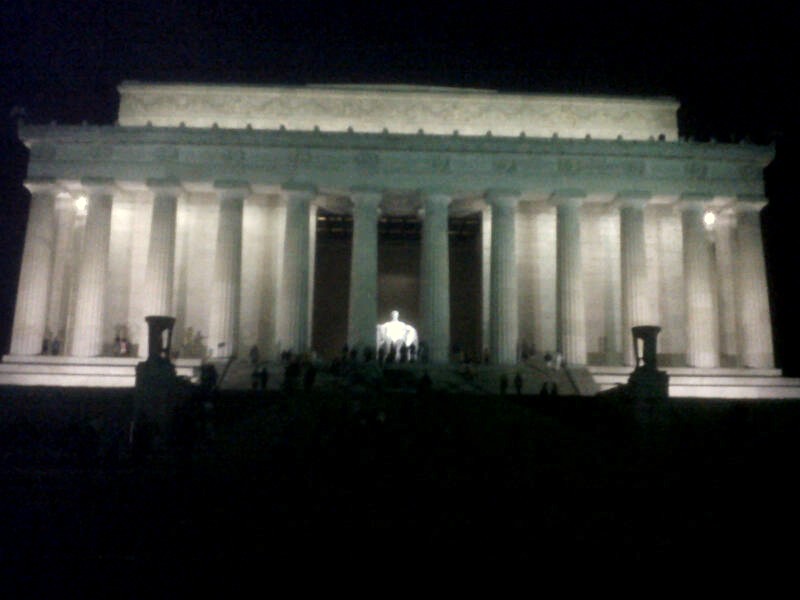
When I passed the White House I was rather down.  So I decided to walk the monuments that adorn the Capitol Mall.  I passed the Executive Office Building and Washington Monument and crossed the street to the World War Two Memorial.  At each place I paused before I continued to walk into the night.  I then stopped by the Korean War Memorial and the Vietnam War Memorial, the stark reminder of the men and women killed and missing in that war as well as the rip in the fabric of the nation that I am not sure we have ever gotten past.  I then went and paused before the Lincoln Memorial and I thought of the immortal words spoken by President Lincoln in his Second Inaugural Address shortly before he was cut down by a bullet fired by John Wilkes Booth.  They are words of reconciliation spoken even while Americans fought Americans in the last months of the war.

Fellow-Countrymen:  At this second appearing to take the oath of the Presidential office there is less occasion for an extended address than there was at the first. Then a statement somewhat in detail of a course to be pursued seemed fitting and proper. Now, at the expiration of four years, during which public declarations have been constantly called forth on every point and phase of the great contest which still absorbs the attention and engrosses the energies of the nation, little that is new could be presented. The progress of our arms, upon which all else chiefly depends, is as well known to the public as to myself, and it is, I trust, reasonably satisfactory and encouraging to all. With high hope for the future, no prediction in regard to it is ventured.

On the occasion corresponding to this four years ago all thoughts were anxiously directed to an impending civil war. All dreaded it, all sought to avert it. While the inaugural address was being delivered from this place, devoted altogether to saving the Union without war, insurgent agents were in the city seeking to destroy it without war—seeking to dissolve the Union and divide effects by negotiation. Both parties deprecated war, but one of them would make war rather than let the nation survive, and the other would accept war rather than let it perish, and the war came.

One-eighth of the whole population were colored slaves, not distributed generally over the Union, but localized in the southern part of it. These slaves constituted a peculiar and powerful interest. All knew that this interest was somehow the cause of the war. To strengthen, perpetuate, and extend this interest was the object for which the insurgents would rend the Union even by war, while the Government claimed no right to do more than to restrict the territorial enlargement of it. Neither party expected for the war the magnitude or the duration which it has already attained. Neither anticipated that the cause of the conflict might cease with or even before the conflict itself should cease. Each looked for an easier triumph, and a result less fundamental and astounding. Both read the same Bible and pray to the same God, and each invokes His aid against the other. It may seem strange that any men should dare to ask a just God’s assistance in wringing their bread from the sweat of other men’s faces, but let us judge not, that we be not judged. The prayers of both could not be answered. That of neither has been answered fully. The Almighty has His own purposes. “Woe unto the world because of offenses; for it must needs be that offenses come, but woe to that man by whom the offense cometh.” If we shall suppose that American slavery is one of those offenses which, in the providence of God, must needs come, but which, having continued through His appointed time, He now wills to remove, and that He gives to both North and South this terrible war as the woe due to those by whom the offense came, shall we discern therein any departure from those divine attributes which the believers in a living God always ascribe to Him? Fondly do we hope, fervently do we pray, that this mighty scourge of war may speedily pass away. Yet, if God wills that it continue until all the wealth piled by the bondsman’s two hundred and fifty years of unrequited toil shall be sunk, and until every drop of blood drawn with the lash shall be paid by another drawn with the sword, as was said three thousand years ago, so still it must be said “the judgments of the Lord are true and righteous altogether.”

With malice toward none, with charity for all, with firmness in the right as God gives us to see the right, let us strive on to finish the work we are in, to bind up the nation’s wounds, to care for him who shall have borne the battle and for his widow and his orphan, to do all which may achieve and cherish a just and lasting peace among ourselves and with all nations.

As I walked through the warm and humid night air I imagined what it must have been like for officers of the United States Army, Navy and Marine Corps as the nation split in 1861 with many Southerners leaving the service to enter the service of their own states.  Many tearful goodbyes were spoken by men that had served together in war and peace and on the lonely frontier of the nation, men who in a few moths time would be commanding American armies and killing their fellow Americans.  My family fought for the South being from Virginia.  I cannot say that I would have done different like them and so many Southerners or if like General George Thomas of Virginia I would have remained with the Union incurring the wrath of his family for the rest of his life.  Since I have never taken my Oath lightly I can only imagine that I would have done what Thomas did even if it meant the loss of family.

Today I fear that even if our leaders can avert a default on or debts that they have now set the stage for worse I the coming months and years. The open hatred and contempt of our leaders for one another and the ideas that each stand for has wounded the nation more deeply than any default or government shutdown could ever do. This is not simply partisan discourse it is a deep enmity and hatred that has not been seen in this country for 150 years.  If cooler heads do not prevail soon the damage may be irreparable and the consequences more terrible than we can imagine and why anyone would willingly continue down this road is beyond me, but hatred does terrible things to people and nations.

Since it was nearing10 PMI hailed a taxi by the Lincoln Memorial.  I entered into a conversation with the driver, an immigrant fromMoroccowho has been in the United States22 years.  I mentioned my concern and he was far more hopeful than me. He said he believed that a shutdown would be averted.  I love immigrants especially recent ones who have left home and family to become Americans.  My dad’s side family has been in this country since 1747 and my mother’s even longer.  It was inspiring for me to hear this man still be in awe of this nation despite all of our troubles. When I left the cab I thanked him, gave him a decent tip shook his hand and in my woeful Arabic said “Assalamu alaikum” or peace be unto you.

As a historian I tend to see the dangers in what is happening in our country and I do have legitimate concerns, but when I hear the words of hope and awe that this country engenders in those who come here to be free I hope again in spite of myself.

Peace

Padre Steve+

1 Comment

Filed under History, leadership, Military, philosophy, Political Commentary, remembering friends

The Bond

This story shall the good man teach his son;
And Crispin Crispian shall ne’er go by,
From this day to the ending of the world,
But we in it shall be remembered-
We few, we happy few, we band of brothers;
For he to-day that sheds his blood with me
Shall be my brother; be he ne’er so vile,
This day shall gentle his condition;
And gentlemen in England now-a-bed
Shall think themselves accurs’d they were not here,
And hold their manhoods cheap whiles any speaks
That fought with us upon Saint Crispin’s day.

From the Speech of King Henry V at Agincourt in Shakespeare’s “Henry V” 1599

In the midst of the petty politics surrounding the Afghan War so so ponderously and pompously purveyed by politicians and pundits of all strains I feel the need to speak up for that small band of brothers that has served in these wars. They are to steal a phrase applied to a previous generation the “New Greatest Generation” something that I am loathe to apply to much of the population at large.  You see the cost of these wars is finally beginning to sink in, at least the financial cost. I’m not so sure that the human cost factors in for most people because the tiny percentage of the population that serve in the wars. The fact is that the volunteer military is an insular community which for the most part is based on bases away from most of the population. We used to have big bases in or near major cities, the New York Naval Yard, the Presidio of San Francisco, Long Beach Naval Shipyard, Fort Devens Massachusetts near Boston, Fort Benjamin Harrison Indiana at Indianapolis.  But after the Cold War they and hundreds of other bases were eliminated and with them a connection to the active duty military.  That is not the fault of the people in the big cities it just happened that way, no the military with a few exceptions is based away from most of the population. As a result people may support the troops but most have no idea what they do, how they live and what they suffer.

In spite of that this new Greatest Generation’s accomplishments will largely go unheralded by history. Unlike the “Greatest Generation” of World War Two they will probably not receive the full honors and accolades due them.  This brotherhood of war who have served in the current War on Terror, Iraq and Afghanistan campaigns have now been serving in a war that is now twice as long as the American involvement in World War Two.  Many, like me have been in this since the beginning and many have made multiple deployments to the combat zones.  And many of us, if not most of us would go again. I know that I would because part of me is still in Iraq; for me this war is still un-won and un-finished.

The battles, Fallujah, Ramadi, Haditha, Mosul, Baghdad, Tal Afar, Marjah, Kandahar, Anaconda, Wanat and thousands of other places significant and insignificant are vivid in the minds of those that were there. Unfortunately for most of their countrymen they might as well be on a different planet.

With no disrespect to the Greatest Generation of World War Two, all of the current Soldiers, Sailors, Marines, Airmen and Coast Guardsmen volunteered to serve in time of war.  At any given time only about one half of one percent is in uniform.  In the three years and ten months of the Second World War about 16.1 Million Americans served in the military, the vast majority being draftees.  Likewise the current generation has fought the war alone.  The vast bulk of the country has lived in peace untouched by any inconvenience to daily life such as gas and food rationing, requirements to work in war industries and the draft as were citizens in World War Two.  In the Second World War Americans shared the burden which in large part has not occurred in this war.  While many have pitched in to help and volunteered to help veterans and their families the vast majority of people in this country are untouched by the war, not that there is anything wrong with that.  This is simply a comparison of the situation that those who served in World War Two and the present conflicts faced.  So I have to say that our current “Greatest Generation” is only a small part of the generation, as the line in Henry V “we few, we happy few who fought together….”

These Soldiers, Sailors, Marines and Airmen from the United States as well as our Allies who serve alongside of us are my brothers and sisters.  They too are volunteers and represent a miniscule portion of their countries population. I am friends with military personnel from the UK, Canada and Germany who have served in the various combat zones or at sea and met quite a few others from France, the Netherlands and Australia. Of course my Iraqi friends who I served with while with our advisers in Al Anbar province who are not only trying to bring peace and stability back to their country but have to worry about the possibility that their families become the target of terrorists.

There are a number of things that unite us in this relatively small brotherhood.  However, I think that this brotherhood could also be extended to our brothers who fought in Vietnam, French, Vietnamese, Australian, South Korean and American, the French who served in Algeria and the Americans and others that served in Korea.  All of these wars were unpopular. All had little support on the home front and often returning veterans found themselves isolated and their sacrifices ignored or disrespected.  For those Americans who serve in the current wars I can say that at least to this point the public has been much more supportive than they were to our Vietnam brothers, many of who were even disrespected by World War Two vets who had fought in “a real war.”  I cannot count the Gulf War in this list as it was hugely successful and the returning vets were hailed as conquering heroes with ticker tape parades.

Our shared brotherhood includes our scars, physical, psychological, neurological and spiritual.  Those who served on the ground in Iraq and Afghanistan as well as those who served in Vietnam, French Indo-China and Algeria have a common shared experience.  All fought people who didn’t or don’t like foreigners no matter how noble our intentions and who by the way have a long history of outlasting people that they believe to be invaders or occupiers.  We have had to fight wars with no front lines, no major units arrayed against us, but rather asymmetrical threats propagated by creatively devious foes who use low tech easily available technology and a willingness to sacrifice themselves and others to force attempt to kill us.  Thus we have cleverly designed and often quite powerful IEDs or Improvised Explosive Devices which can obliterate a HUMMV.

These threats create a situation where there is no front line and thus where every excursion outside of a FOB (Forward Operating Base) or COP (Coalition Outpost) is automatically a trip into a potential danger zone.  Enemies can infiltrate bases posing as local nationals in either military uniform or as workers, rockets and mortars can be lobbed onto even the largest and most secure bases at any time and any vehicle driving by you on the road could be loaded with explosives and just waiting to blow you up while insurgents with automatic weapons and Anti-Tank Rocket Propelled Grenades (RPGs) have taken down helicopters.  When you have taken fire on the road, in the air and had rockets whiz over your head you this becomes a reality that you never forget.

As a result we many men and women with physical wounds as well as wounds that have damaged the psyche or the soul.  PTSD is very common either from a direct encounter or the continual wear and tear of being in a danger zone wondering if you were to get hit that day every day of a tour.  I have lost count now of people that I know who have mild to severe symptoms of PTSD.  Traumatic Brain injury is another condition men and women attacked by IEDs, mortars and rockets experience. Likewise there are the injuries that shatter the soul.  These are the images of ruined buildings, burned out vehicles, wounded bodies, injured children, refugees and wars desolation that can leave a person’s faith in God, or ideals that he or she believes in weakened or even destroyed.  There are the smells of smoke, death, diesel, garbage and sewage that when encountered far away from the combat zone send us back.

The wars have been costly in lives and treasure.  The “up front” casualty numbers are below; they do not include those with PTSD or mild to moderate TBI. They also do not count those that have died later after their service in VA or other civilian care, those that did not report their injuries and those that have committed suicide.

Iraq                   KIA    US  4463       UK 179    Other  139           Total  4781

Afghanistan     KIA  US  1637         UK 374     Other 537        Total  2548

US Wounded   Iraq  32227      Afghanistan   11191

The financial cost: over 1.2 trillion dollars and counting.

As many idealistic and patriotic military personnel question God, their National Leadership and even themselves because of their experience in Iraq or Afghanistan.  I cannot get the image of a refugee camp on the Iraqi Syrian border full of Palestinian refugees who have nowhere to go; they had been invited to Iraq under Saddam and have been sitting on the border trying to get home for years now.  The Palestinian authority wants nothing to do with them. I cannot smell smoke or hear a helicopter or pass a freshly fertilized field without being reminded of Iraq.

These men and women are my brothers and sisters.   I have seen quite a few of my colleagues at the Naval Medical Center and Naval Hospital deploy and deploy, the medical personnel don’t get much of a break.  These are my friends and I do get concerned for them and pray earnestly for their safe return.  I wish that I could go with them because I know them and have already walked with them through the dark valley of the shadow of death in the Medical Center ICU or the wards and clinics of the Naval Hospital.  We already have a bond that will not be broken.

It is now four years since I was in the process of leaving for Iraq and three years since my PTSD crash.  However, I still would do it again in a heartbeat.  There is something about doing the job that you were both trained to do and called to do that makes it so.  Likewise the bonds of friendship and brotherhood with those who you serve are greater than almost any known in the human experience.  Shared danger, suffering and trauma bind soldiers together, even soldiers of different countries and sometimes with enemies.  I remember the conversation that I had with an Iraqi Merchant Marine Captain on a ship that we had apprehended for smuggling oil violating the United Nations sanctions.  The man was a bit older than me, in his early 60s.  He had been educated in Britain and traveled to the US in the 1960s and 1970s. He had the same concerns as any husband and father for his family and had lost his livelihood after Saddam invaded Kuwait in 1990.   He was a gentleman who provided for his crew and went out of his way to cooperate with us.  In our last meeting he said to me: “Someday I hope that like the Americans, British and the German soldiers at the end of the Second World War can meet after the war is over, share a meal and a drink in a bar and be friends.”  That is my hope as well.

In the final episode of the series Band of Brothers there is a scene where one of the American soldiers, Joseph Liebgott who came from a German Jewish family interprets the words of a German General to his men in the prisoner compound.  The words sum up what the Americans had felt about themselves and likewise the bond that all soldiers who serve together in war have in common, if you have seen the episode you know how powerful it is, I ended up crying when I heard it the first time and cannot help but do so now that I have been to the badlands of Al Anbar Province.

“Men, it’s been a long war, it’s been a tough war. You’ve fought bravely, proudly for your country. You’re a special group. You’ve found in one another a bond that exists only in combat, among brothers. You’ve shared foxholes, held each other in dire moments. You’ve seen death and suffered together. I’m proud to have served with each and every one of you. You all deserve long and happy lives in peace.”

As do we.

Peace

Padre Steve+

2 Comments

Filed under History, iraq,afghanistan, Military, PTSD, shipmates and veterans, Tour in Iraq

The Naming of a New Aircraft Carrier and the Centrality of the Navy in Future National Security Strategy

USS HUE CITY CG-66 Enforcing the UN Oil Embargo against Iraq in April 2002

“Control of the seas means security. Control of the seas means peace. Control of the seas can mean victory. The United States must control the sea if it is to protect our security.” —John F. Kennedy

“For in this modern world, the instruments of warfare are not solely for waging war. Far more importantly, they are the means for controlling peace. Naval officers must therefore understand not only how to fight a war, but how to use the tremendous power which they operate to sustain a world of liberty and justice, without unleashing the powerful instruments of destruction and chaos that they have at their command.” Admiral Arleigh Burke

Over the Memorial Day weekend Secretary of the Navy Ray Mabus announced the naming of the second ship in the Gerald R. Ford class aircraft carrier.  The name selected was significant as the ship will be named the USS John F. Kennedy CVN-79, her namesake being President John F. Kennedy who served as a junior officer in the Second World War commanding a Patrol Torpedo Boat, PT-109 in the Solomon Islands. Kennedy’s boat was rammed and split in two by the Japanese Fubuki class destroyer Amagiri in the early hours of August 2nd 1943.  Over a period of six days he made herculean efforts to save his crew and was awarded the Navy Marine Corps Medal and the Purple Heart.

The United States has always been a seafaring nation and today the vast majority of our commerce is borne by ships from the world over. The United States learned during the Revolution and the War of 1812 the importance of sea power when the Royal Navy for all intents and purposes rules the waves. Even the land victory of Washington at Yorktown was sealed by the intervention of the French Fleet which prevented the British from evacuating the garrison.  During the Civil War the Union Navy was the deciding factor as it blockaded Southern ports and forced the Mississippi River cutting the Confederacy in two and sealing its fate even as Confederate armies battled Union forces in the bloodiest battles ever seen on this continent. The Navy was the deciding factor in the Spanish American War sweeping the Spanish Navy from the seas and dooming its garrisons around the world.  The U.S. Navy began the First World War late but by the end was the ascendant naval power in the world and was one of the major reasons that the British in spite of the superiority that they had at the time agreed to the Washington and later London Naval accords.  When the Second World War erupted the United States was in the beginning stages of a Naval build up to reinforce and replace the fleet that was still dominated by the ships built prior to the Naval treaties.   In the Pacific the Japanese Navy steamrolled its scattered and ill equipped opposition while in the Atlantic German U-Boats decimated convoys very nearly breaking the back of Great Britain and the Soviet Union. However it was the Navy initially stretched to its limits by the Two Ocean War which regained the initiative which in an unprecedented build up of Naval Power defeated its adversaries and safeguarded the vast convoys of merchant ships carrying American troops and equipment into battle and bringing American Lend Lease aid to reach Britain and the Soviet Union. During the Cold War, Korea and Vietnam the Navy was a flexible and mobile response force to crises around the globe military, diplomatic and humanitarian, often diffusing situations without a shot having to be fired in anger and eliminating the need for large numbers of ground forces. In the 1980s the Navy secured the Gulf of Sirte against the threats of Libya’s Colonel Gaddafi and kept the Persian Gulf open during the Tanker Wars initiated by Iran on merchant ships transiting the Gulf. American naval power was again on display during the Gulf War and subsequent United Nations sanctions on Iraq.  After 9-11 the Navy has been a response force around the globe in the War on Terrorism as well as numerous natural disasters and humanitarian crises. When a crisis develops which might require a military response the first questions on the mind of every Presidential administration has been where is the nearest Carrier Strike Group and Marine Expeditionary unit.  Today the Navy supports military operations in Afghanistan, Iraq, and the Horn of Africa and against piracy.

The vast majority of the world’s populations now live on the littorals, or the land areas adjacent to the ocean.  The bulk of world commerce is maritime commerce; the United States depends on secure sea lanes to support our economy.

While sea power is essential to American national power, diplomatic, economic and military large standing armies are not. Yes our land forces must be strong and in quality the best in the world. At the same time whenever we have committed large numbers of land forces to ill defined campaigns we have squandered national power and prestige in wars that have been at best stalemates and at worst strategic defeats. This of course excemts the two World Wars where those large land forces were engaged they had a specific mission that was directly tied to national strategy.

We have come to a place in our national life where our strategic thinking still largely influenced by the World Wars and the Cold War has to be modified.  The major land wars launched by the Bush administration in Iraq and Afghanistan have proven incredibly costly in terms of manpower and economics and it is clear that the Obama administration and bipartisan Congress will seek to disengage sooner rather than later from those wars.  One knows that once those wars are over that land forces will shrink as plans are already on the table with cuts already beginning in some services.

Of course one has to ask what the military should be composed of in light of a coherent national security strategy that takes into account the full spectrum of threats to our nation many of which are not military in a traditional sense. To sustain large numbers of land forces on foreign territory is expensive and often fraught with peril when there are changes in the leadership of allied nations on which we depend for the basing of such forces. Even forward deployed Air Force assets are subject to these constraints.  Such basing was necessitated by the Soviet threat during the Cold War.  All previous overseas conflicts were viewed by American leaders as expeditionary in nature, land forces would go in with a specific goal for a limited time. If forces were left in place they were generally small and of a constabulary nature.

Only the Navy-Marine Corps team provides the flexibility to provide a rapid military or humanitarian response to overseas contingencies.  Critics call it “gunboat diplomacy” but then we have found what we are doing is not sustainable and we need an alternative.  That alternative is the Sea Services, which also include the Coast Guard and Merchant Marine.  The Bush administration reduced the Navy in terms of ships and personnel in order to support land wars of questionable strategic value, even turning thousands of Sailors into soldiers to support Army missions in Iraq and Afghanistan without reducing and even expanding the requirements of Naval forces.  This was a mistake of unmitigated proportions, no strategic goal that we have accomplished in either Iraq or Afghanistan could not have been accomplished by the Navy and Marine Corps and contingents of Special Forces, military and civilian advisors and the CIA.

Theodore Roosevelt had a saying, “speak softly and carry a big stick.” He was not an isolationist by any means; he advocated engagement with the world but also protections, military, economic and ecological for Americans.   A strong Navy was central to his thinking as were good relations with other nations.  He understood the importance of the Navy in supporting American interests. In his annual address to Congress on December 6th 1904 he stated:

“In treating of our foreign policy and of the attitude that this great Nation should assume in the world at large, it is absolutely necessary to consider the Army and the Navy, and the Congress, through which the thought of the Nation finds its expression, should keep ever vividly in mind the fundamental fact that it is impossible to treat our foreign policy, whether this policy takes shape in the effort to secure justice for others or justice for ourselves, save as conditioned upon the attitude we are willing to take toward our Army, and especially toward our Navy. It is not merely unwise, it is contemptible, for a nation, as for an individual, to use high-sounding language to proclaim its purposes, or to take positions which are ridiculous if unsupported by potential force, and then to refuse to provide this force. If there is no intention of providing and keeping the force necessary to back up a strong attitude, then it is far better not to assume such an attitude.”

Roosevelt understood better than most of his peers around the world of the necessity of worldwide engagement and the protection of American interests.  As interdependent as the United States and our allies are on international cooperation in anti-terrorism, humanitarian response and the free flow of commerce the Sea Services have to be the primary means of response.  Land forces are important but it is clear that they will need to be reorganized and rebuilt after the long and arduous conflicts that they have shouldered and ultimately they are dependent on the Navy for the bulk of their support when deployed overseas.

Any new national security strategy must prioritize our nation’s goals with diplomatic, intelligence, military and economic assets. We must leverage power and not squander it.  Naval forces are among the most flexible and economic means of exercising the military aspects of such strategy and are not hostage to unstable governments as are forward deployed land forces.   Naval power leverages national power in ways that forward deployed land forces cannot and are far more connected to goodwill than are ground forces which are seen by many around the world as occupying forces.

British Maritime strategist Julian Corbett in his book Some Principles of Maritime Strategyprovides a clear understanding of how sea power is best suited to the principle of a true national strategy for a maritime nation which emphasized limited and asymmetrical warfare.  Such strategy sustained the British Empire until it allowed itself to become mired in the trenches of Flanders and the shores of Gallipoli during the First World War killing off the flower of the nation’s youth and nearly bankrupting the nation and alienating much of the empire.

Corbett maintained that naval forces were best suited to controlling lines of communications, focus on the enemy, and maneuver for tactical advantage.  He also believed that naval forces best suited the political, economic and financial dimensions of waging war as well as war’s technological and material aspects.  One key aspect of this was the Corbett believed that continental war where large land armies are deployed inherently act against opponents limiting their political aims and increase the chance of total war with all of its destructive effects.  Corbett understood, as Clausewitz did before him the primacy of politics in war and necessity to devise appropriate strategies to protect the national interests while emphasizing efficiency in battle while preserving costly assets.

Ultimately the United States is a maritime power. When we try to become a continental power by engaging in protected land wars overseas we lose our strategic and economic advantage.  One can argue that we would not be in Iraq or Afghanistan today had it not been for the deployment of land and air forces on the Arabian Peninsula following the Gulf War.

The new USS John F. Kennedy when completed will be one of the key platforms of American power projection in the middle part of this century and it is important that we strengthen and modernize the Navy so that it might meet the tasks required of it by our nation and our friends around the world.  It is imperative that we as a nation remember our heritage and return to it as we develop a strategy that is at last freed from the World War and Cold War model.  The time for that is now.

Peace

Padre Steve+

2 Comments

Filed under History, Military, national security, Navy Ships, US Navy

Full Military Honors: Getting a Chance to Repay a Service done for My Family by the Navy

Last summer my dad Aviation Storekeeper Chief Carl Dundas died after a long battle with Alzheimer’s disease.  Since I wasn’t much good for anything then my boss at my last duty station Chaplain Jesse Tate contacted the Chief of Chaplains Office and our mutual friend Chaplain Jerry Seeley in California.  These men and the Navy came through to provide my family with a funeral with full military honors for my dad.  It was something that we all treasured and something that really helped my mom get through that dark time. It allowed her to reconnect with the Navy something that was a big part of our lives for years. I won’t forget Chaplain Seeley and his comforting words and the Senior Chief Petty Officer who presented our Nation’s Flag to my mother.  One thing that I did do was construct two collages of pictures from his life which were available for friends and family to view. When I put them together it was really for my mom but the task of sorting through a couple of thousand photos to find the ones that best epitomized my dad, his life and personality was healing to me.

Since I am a Chief’s kid I have a soft heart for Navy Chiefs and in the past two and a half years working in Navy Medicine I have been able to be with quite a few of these men and women in their final days as well as their families. Last week I had the duty pager and received a call to come to our multi-service ward as a family had requested a baptism for one of our former Master Chief Petty Officers named Carl.  He and his family had arranged with one of my staff to be baptized last Friday as he knew his life was coming to an end.  Well late Wednesday night it became apparent that he would not last that long and I was asked to come in.  I got to the hospital and put on my Khakis and went to the nurse’s station where I listened to them tell me the situation and read his chart. I noted the request for baptism and the plan for it to be done Friday.  When I had done that I went to the room where Carl lay in bed dozing. I met his wife Judy and son’s Randy and Jeff and we visited for nearly an hour as he lay there and I listened to them tell me about him as a husband and father, his Navy service, his faith and his love for baseball.

Carl had entered the Navy a couple of years after my dad and remained in it a good deal longer retiring in 1988.  He served in combat as a Corpsman with the Marines in Vietnam and saw service around the world. He retired as the Command Master Chief of Naval Hospital Camp LeJeune.  He was active and played for and managed various Navy Baseball and Softball teams including the hospital’s team which I now play on.  There were a lot of emotional connections for me with this man. He served during the era that my dad did and both served on the ground in Vietnam.  His name was Carl like my dad, his wife Judy like my wife and one son Jeff like my brother.  He loved baseball.  I felt like I was family and in a sense I was because we are part of the Navy family and that is something that is special. I still receive e-mails from one of my dad’s former Chief Petty Officers almost like he is trying to watch out for his friend and fellow Chief’s son.

I prepared to conduct the baptism and Carl woke up. His wife introduced me to him and he greeted me. I explained that I was there to baptize him and asked if he still desired to be baptized and he replied yes and gave me a “thumbs up.” As I baptized him he was praying with a smile on his face as the water flowed over his forehead. I then asked for Carl and his family to join me in the Lord’s Prayer and as we prayed he prayed along with us.  It was a special moment and I elected to stay with the family for a while longer and simply be with them as they shared and ministered to Carl.  I gave Judy my card and went home getting to bed about three AM Thursday.

Yesterday afternoon I received word that I had been asked to conduct his funeral and I was honored. It was like having a chance to repay the generosity given to my family by the Navy.  This morning it seemed that nothing went right in trying to get my stuff together. We are in temporary office spaces as our offices and Chapel are being renovated. As a result I have no earthly idea where half of my things are. I prepared my Service Dress Blue uniform last night and placed it where I wouldn’t forget it. I discovered that I didn’t have it about 5 miles into my trip and had to go back and get it. Then on my second trip in about the same place I had the feeling that I had forgotten something else.  I looked around the car and couldn’t find my Bible and Book of Common Prayer.  I thought I had packed it and taken it home with me last night so I turned around again. I got home to the Island Hermitage and try as I might I couldn’t find them.  So I grabbed the Kindle that my Judy had got me for my birthday knowing that I had the Book of Common Prayer and the liturgy for burial on it.  I got back on the road for the third time and arrived at the office where I found my Bible and Book of Common Prayer.  I then started to get ready to go after a bit of business and discovered that I had everything but a tie, which I only have about five of but none were to be found. Our small Marine Corps Exchange in the hospital had none so I had to go to main side where I got one of the two on the rack; this is a Marine Corps Uniform store so the Navy items are not well stocked.  Getting back to the office I donned my uniform looking perfectly resplendent I might add and went to the funeral home where I met up with other perfectly resplendent Chiefs and Sailors.  One thing about the Navy Service Dress Blues they are a classic uniform and are always a classy look.

We had a significant number of sailors there with members of our Chief’s Mess acting as pallbearers, other Petty Officers and Sailors serving as the Flag detail and one of our Master Chiefs presenting the American Flag to Judy.   We also had about 30 other Sailors present joining Carl’s family, his extended family and friends which included a number of men who had served with Carl during his career.  A Marine Honor Guard commanded by a Gunnery Sergeant fired the 21 gun salute and then Taps was played.  It was an honor and privilege to participate.

The brief homily that I gave came out of the Gospel according to John where Jesus tells Martha at the tomb of Lazarus “I am the resurrection and the life.”  In it I focused on that message even as I mentioned his service, life and care of his family and his sailors and his service during and after Vietnam.  After the committal I lingered with various friends of Carl’s and as the crowd dissipated I got into my car and left.  I was blessed by God to be able to return a favor done to my family.  For me this is a large part of why I continue to serve, to care for God’s people in the Sea Services those currently serving and those that blazed the trail for us.  Sometimes one gets lucky.

Peace

Padre Steve+

1 Comment

Filed under faith, Military, Pastoral Care, shipmates and veterans, US Navy, vietnam

The Unchristian Christianity of Modern America

I cannot and will not recant

We live in an era where religion and politics especially in conservative circles have become one just as they were in the days following Constantine’s granting of religious freedom to all in the Empire while making the Catholic Church the State religion which went from a persecuted Church to an Imperial Church overnight. The Church in the coming centuries became an arm of the State something that until the enlightenment it remained in many nations. Most of the English Colonies that became the United States had State Religions even after the Bill of Rights the last to disestablish its state religion being the Commonwealth of Massachusetts in 1833.  Most European State Churches remained until the fall of the Empires after the First World War but many countries in Europe still have State Churches which are not very vibrant now days.

The curious thing is that until the 18th and 19th Centuries the powers of State Churches were great and heavily benefited greatly through their allegiance to the State.  To disobey the Church was to disobey the State and to disobey the State was often tantamount to disobeying God since the State and the rulers thereof were not simply ordained by God but in fact God’s instruments. Unfortunately this led to many abuses of power by those in the Church as well as the State and thankfully we in the United States were able to for the most part break with that tradition which was and is repugnant to the Gospel as well as human freedom.

In fact the United States has been the foremost proponent of religious freedom and tolerance of any nation in history. It was something that we enshrined, the right of all people to worship according to their faith. Now we haven’t been perfect practitioners of our ideal as there have been plenty of religious based prejudice and persecution in this country dating to colonial times, especially of religions outside the mainstream of Protestant Christianity, it took nearly 150 years for Catholics to become part of mainstream America and longer for others especially religions outside of the Judeo-Christian tradition. Despite those instances our experiment of religious liberty has been an amazing success in which many denominations have prospered.

All that being said I fear we are entering a stage where authoritarian religious groups closely allied with the rich and the powerful are on the ascendant in the United States just as radicals in other religions, particularly Islam but not limited to Islam are on the rise. Frankly I expect that people who are either living in a culture that still believes that the world is like it was back in the 13th Century and those that have become fantastically rich and enamored with the technology of the West to be that way. Let us face facts most of the counties in the Middle East lack the centuries of related social, political, philosophic or religious development that is part of Western culture and we still screw things up. The Islamic World has not experienced anything like the Renaissance, Reformation or Enlightenment. There is a chance that it might amid the pro-democracy and freedom protests that are occurring throughout the Middle East even as radical Islamists dream of a new Caliphate, something that seems to be anathema to many of the young protestors in Egypt and other Arab Nations.

In the United States the movement to religious authoritarian systems closely allied with politicians and the State to do their bidding comes from conservative circles, particularly conservative and fundamental Evangelical Christian churches and the Roman Catholic Church which since the reforms of Vatican Two has retreated into its old Ultramontanistic self.

That being said I figure I should go ahead and continue to dig my grave with my conservative brethren who view anyone to the left of them as a wild eyed raving liberal and quite possibly a Socialist.  I am a moderate and I might be classed as a liberal conservative or conservative liberal.  Thus I and people like me stand in the uncomfortable middle of a deeply polarized society where most to our left or right despise us for actually deviating from the established dogmas of the left or the right.

To the extreme right I might be a raving liberal, and the far left an intolerant conservative but the I choose to live in the tension between the two, although I think that in today’s Tea Party charged environment I would be called a liberal.  But I am a moderate and I will not give up the middle ground simply because others have adopted a scorched earth policy in faith and politics where “if you ain’t for us you’re against us” is the norm. In fact I think that Jesus stood against that kind of thought process, if you don’t believe me look at Mark 9:38-40 where Jesus says something different when the disciples confront him about others casting out demons in his name “he who is not against us is for us.”

As a passionate moderate who is also a Priest and Christian my goal in life is to get along, find common ground among disparate groups and care for God’s people.  I do this by acknowledging and maintaining the tensions that are inherent in a pluralistic society and not simply going along what whatever is popular or expedient. This takes a lot of effort and does not exclude being prophetic.  However that prophetic role comes in relationship with others where there is mutual respect, civility and care for each other even when we do not agree. It does not come from being angry or acting disrespectfully just because I can.  The prophetic role does not come from the outside looking in railing at your opponents.  That only increases your isolation, eventually to the point that you are no longer a player in the debate, simply an annoying pest with absolutely no say in anything.  It takes more courage to be open and dialogue with people respectfully than it does to rail against them.  Anyone can be a critic and anyone can be a wrecking ball.  That’s easy.  There is little personal risk in doing so, because you don’t have to open you self up to the possibility that there may be some merit in your opponent’s view and once you have a relationship with someone it is hard to demonize or dehumanize them.  Unfortunately that is what is happening across the religious and political divide in our society.

Despite the rancor on the extremes I think that there are more people out there like me than not. My belief is that voices like ours are drowned out by drumbeat of competing demagogues on the far right and the far left.  Since I am a priest my focus will be on the dangers that I see in the current climate and the captivity that churches have unwittingly placed themselves in making political alliances.  These alliances, particularly those of conservative Christians have become so incestuous and so intertwined that they are seen as one with supposed political conservatives. As such these churches and Christian leaders have become the religious voice of political movements fighting a cultural war in which only one side can win and in which there is no room for compromise or dialogue.

In doing so these religious leaders have compromised themselves so that only their followers give any credence to what they are saying.  They are so to speak “preaching to the choir” and not reaching out to or even caring about the welfare of their opponents, they are in a sense like the Taliban. They frequently demonize their opponents or for that matter anyone, even other Christians that might disagree with their understanding of the Christian faith.

That is why I say that many have become like the Taliban. If you do not agree with them on their social-religious agenda you are a heretic regardless of how orthodox you are in your actual theology.  Theology and belief is no longer the test, the test is if you agree with a social-political-religious agenda which often is at odds with the Christian faith proclaimed by Jesus.  This is like the Taliban because the goal is to gain control of the government and use the government to impose a social-religious theocracy where the church uses the “police power of the government” to achieve its goals.  Such a message is anathema to the Gospel and its redemptive message that “God was in Christ reconciling the world to himself, not counting men’s sins against them.” What many churches and Christian leaders have done is to for practical purposes discard any real attempts to engage people with the message of the Gospel in favor of using political power to coerce non-believers into compliance through the police power of the government.  This in stark opposition to the early Church which was martyred for their faith in Christ versus their opposition to government policy or social ills, of which there were plenty that they could have protested.

Early in his “Reforming” days the young Martin Luther wrote a book entitled “The Babylonian Captivity of the Church.” It was a severe critique of abuses in the Roman Catholic Church of his era.  I think churches today have become captive to various political parties, social and economic theories, movements and ideas.  These are not necessarily Christian even though any churches have “baptized” them so to speak.  Capitalism for instance is has many benefits, however unbridled capitalism which is not moderated with true concern for the least, the lost and the lonely, is nothing more that economic social Darwinism.  It is the survival of the fittest with little concern or regard for real people.  People in the world of baptized unbridled capitalism are not people, but consumers and economic units.  In the United States we can see this in practical terms where historically US corporations which at one time employed millions of Americans and produced actual good that were in turn exported to the world have outsourced so many jobs and industries to other nations.

This was done in order to increase corporate profits by paying foreign workers almost nothing and not having to abide by US environmental laws or tax codes.  This may bring cheaper goods in the marketplace but it has endangered our economic and even strategic military security. Economic power is one of the key elements of national security.  In the military we call this the DIME:  Diplomatic, Intelligence, Military and Economic power and unless your economy can keep up you will fail.  Just ask the Soviet Union.  It is interesting to see many Christian leaders and churches talk of capitalism as if came down from heaven even using the Bible to try to bolster their argument.  This is just one of many areas where the church is not longer a prophetic voice, but a willing captive mouthpiece for political and economic institutions which at their heart could care less about the Christian faith and wouldn’t mind it going away.

On the left many churches have embraced social reform, the civil rights movement, women’s liberation as well as left leaning and even socialistic economic models and a demonstrated preference for the Democratic Party.  While none of these goals of themselves are anti-Christian the linkage to the causes often over the Gospel has hurt progressive Christianity.

On the right conservative churches beginning in the 1970s in reaction to the social revolutions of the 1960s moved lock, stock and barrel to the Republican Party. They were led by men such as Jerry Falwell who founded the Moral Majority in 1979, Pat Robertson who founded the Christian Coalition and Dr D. James Kennedy who founded the now defunct “Center for Reclaiming America for Christ.”  Ronald Reagan was the political spokesman and was an outspoken advocate of the role of America’s Judeo-Christian heritage. Conservative religious leaders solidified that relationship in the 1990s during the presidency of Bill Clinton, whose sexual proclivities did nothing to help his cause with Christians despite him signing the Defense of Marriage Act.  The 1994 “Republican Revolution” and “Contract for America” helped solidify Christian conservatives as a central component of the Republican Party and by that point there was a clear alliance between Christian conservatives and the Republican Party.  It was also during this time that politically conservative talk radio became a force in American politics and many on the Christian Right gravitated to broadcasters such as Rush Limbaugh and later Sean Hannity.  Conservative Christians now stand at the center of the Tea Party movement and are a force that no Republican politician can ignore if he or she wants to keep their job.

Despite what I have said I am not saying that people’s faith should not play an important part of their political viewpoint.  Churches and influential pastors have been an important part of American life and has contributed to many advances in our society including the civil rights movement, which could not have succeeded without the efforts of the Reverend Martin Luther King Jr. and many other clergymen and women, from across the denominational and racial spectrum.

Other examples of where churches spoke to societal wrongs included slavery and child labor.  Now this was not a unified front as many churches especially regarding slavery and civil rights opposed these measures.  This included the major denominations that split into northern and southern factions over the issue of slavery prior to the Civil War.  The Southern Baptist Church is a product of this split.  Other churches such as the Methodists and Presbyterians eventually came back together, the Presbyterian Church USA doing so in 1982, 117 years after the Civil War…better late than never I guess.  This will not happen with the Southern and American Baptist Convention’s as they are now theologically poles apart.

There has been a trend over the last 20 years or so by many clergy and laity in both liberal and conservative churches to be uncritical in their relationships with political parties. In my view this has emasculated the witness of the church.  I have experienced this on both the left and the right. When I was a kid my dad, a career Navy Chief Petty Officer was serving in Vietnam. New to the area we went to a church of the denomination that my parents had grown up in and in which I had been baptized.  This was a mainline Protestant church, the name I will not mention because it is irrelevant to the discussion.  The minister constantly preached against the war and the military probably assuming that he had no military families in the congregation.  At that church I had a Sunday school teacher tell me that my dad was a “baby killer” when I told her that my dad was serving in Vietnam.  If it had not been for the Roman Catholic chaplain at the little Navy base in town who showed my family the love of God when that happened, caring for our Protestant family without trying to make us Catholic I would have probably never reconciled with the church.

I trace my vocation as a priest and chaplain to that man. Since I have spent more of my life in conservative churches in the days since I have seen a growing and ever more strident move to the political right in conservative churches.  I think this has less to do with the actual churches but the influence of conservative talk radio which has catered to conservatives, especially social conservative Christians.  Conservative Christians are a key part of this demographic and it is not unusual to hear ministers as well as lay people simply parroting what these broadcasters are saying. I often hear my fellow Christians on the right talk more vociferously about free markets capitalism, the war on terror and justifying the other conservative causes which are general less than central to the faith in public forums like Facebook.  Some of what is written is scary.  People who pray for the government to fail, pray for the President to be killed, call anyone who disagrees with them pretty horrible names or prays the “imprecatory Psalms” against their opponents.  I saw an active duty Army Chaplain call the President “that reject.” The words of a lot of these folks are much more like Sean Hannity than the Apostle Paul.  When I have challenged conservative Christian friends on what I think are inconsistencies I have in some cases been attacked and pretty nastily if I might add.

I see this in stark contrast to the witness of the early church.  Pliny’s letter to the Emperor Trajan sums up how Christians responded to real, not imagined persecution for their Christian faith, not social-political cause.

“They stated that the sum of their guilt or error amounted to this, that they used to gather on a stated day before dawn and sing to Christ as if he were a god, and that they took an oath not to involve themselves in villainy, but rather to commit no theft, no fraud, no adultery; not to break faith, nor to deny money placed with them in trust. Once these things were done, it was their custom to part and return later to eat a meal together, innocently, although they stopped this after my edict, in which I, following your mandate, forbade all secret societies.”

Pliny was perplexed because although he thought their religion to be “fanatical superstitions” he could find no other fault in their lives; they even obeyed his order to stop meeting together.  My view is that Christians some on the left but especially on the right lost any prophetic voice not only in society, in their respective political party alliances.  They have become special interest groups who compete with other special interest groups, which politicians of both parties treat as their loyal servants.  This is what I mean by captivity.  I think that the church has to be able to speak her mind and be a witness of the redemption and reconciliation message of the Gospel and hold politicians, political parties and other power structures accountable for their treatment of the least, the lost and the lonely; caring for those that to those who seek to maintain political and economic control, merely numbers.  The church has to maintain her independence or lose submit to slavery.  There are many examples we can look to in this just a couple of relatively modern examples being William Wilberforce and Dr. Martin Luther King Jr.  We can find many others throughout Church history. These men were not apolitical, but they and their ministries were both prophetic and redemptive.  They maintained peaceful dialogue with their opponents and helped bring about justice.  Billy Graham never gave in to the temptation to endorse any political party.  Instead he had a voice and relationship with every US President during his active ministry, be they Republican or Democrat.

It is incumbent on Christians and other people of faith seek to embody this witness in our divided and dangerous world.  Christians especially cannot allow themselves to be ghettoized in any political party, or political faction where they are just another interest group even an important one. Nor can they allow their public witness to be absorbed and consumed by the promotion of political agendas or causes, even if those causes are worthy of support.  It is a matter of keeping priorities causes can never take precedence over the message of God’s love and reconciliation in Christ.  Unfortunately this is too often the case.

My view is that if you build relationships with people by loving them, caring for them and treating them with the same respect that you would want for yourself; even with those that you have major differences, then you will have a place at the table and your voice will be heard.  If we on the other hand cauterize ourselves from relationships and dialogue we will be relegated, and rightly so to the margins of the social and political process of our nation.  In effect we will ensure that people will stop listening to us not only on the social and political issues, but more importantly in our proclamation of the faith in the Kingdom of God which was proclaimed by Jesus which that comes to us from the Apostles.

Unfortunately I believe that Christians thinking that they are more influential than they are have marginalized themselves.  This is because many have compromised the faith by allowing extremists to be the public face of the Christian church in public debates on social, morale and political issues.  I hope someday we will rebuild our credibility as people who actually care about the life of our fellow citizens and our country and not just those who agree with us.  God have mercy on us all.

Peace, Steve+


9 Comments

Filed under christian life, faith, History, philosophy, Religion

A Return to God in the Empty Places

Three years and some change have passed since I returned from Iraq. I originally wrote this article for my former church immediately after returning home. At the time that I wrote it I was well on the way to my psychological and spiritual crash due to PTSD which at the time of writing this I clueless about despite lots of warning signs. Now well into recovery of my life and faith albeit in a different faith community as I was asked to leave my former church last September because I was now “too liberal” I have decided to repost it without any new edits or additions. I do this because for me it is a touch point in relation to being a chaplain serving with military professionals, volunteers fighting a series of unpopular wars. My problem and I think why I keep ending up here is that I was not always a Chaplain. I was not always a Chaplain but I am also a historian and more specifically a military historian and to some degree theorist. Additionally I have served as an enlisted man in the Army National Guard and as a line officer in the Army in command and staff positions before I became a Chaplain first in the Army and then in the Navy, taking a reduction in rank from a senior Army Major to a no time in grade Navy Lieutenant to enter the Navy in February 1999. As such a lot of what I study is military history and the social-political dimension of it.  I graduated from Marine Corps Command and Staff College and was about halfway through my Masters in Military History program of study when I was alerted that I was to be sent to Iraq in the Spring of 2007. As part of both the Command and Staff College and the degree program I spent a lot of time studying counterinsurgency campaigns, especially those of the French in Indo-China and Algeria and I saw many parallels between the professional French soldiers and officers who served in the Paratroops, Foreign Legion and Colonials (Marines) and our military in relation to society and politics in both countries As I point out in the article professional our all volunteer professional military is far different than the men of the Greatest Generation who were for the most part draftees as well as the military that fought in Vietnam the bulk of which were draftees.  This comment is in no way to cast dispersion on the brave men who fought so bravely in both wars, it is just a statement of fact as our military culture is different than it was then as is our political culture. In the middle of this are we happy few, we band of brothers who serve together in very unpopular wars. Tonight I post it again after my first public interview dealing with my struggles to acknowledge all of those that serve today as well as our brothers of the Vietnam era, French Indo-China and Algeria, and the British soldiers who served in so many crummy wars.

Today our Soldiers, Marines, Sailors and Airmen are engaged in three wars in the Middle East, are providing humanitarian relief to the people of Japan as well as other nations and are deployed in many other hot spots that could easily become war zones.  I don’t want anyone to forget them or their sacrifices. Anyway I digress; this is my return to God in the Empty Places.

I have been doing a lot of reflecting on ministry and history over the past few months. While both have been part of my life for many years, they have taken on a new dimension after serving in Iraq. I can’t really explain it; I guess I am trying to integrate my theological and academic disciplines with my military, life and faith experience since my return.

The Chaplain ministry is unlike civilian ministry in many ways. As Chaplains we never lose the calling of being priests, and as priests in uniform, we are also professional officers and go where our nations send us to serve our Soldiers, Sailors, Marines and Airmen. There is always a tension, especially when the wars that we are sent to are unpopular at home and seem to drag on without the benefit of a nice clear victory such as VE or VJ Day in World War II or the homecoming after Desert Shield and Desert Storm.

It is my belief that when things go well and we have easy victories that it is easy for us to give the credit to the Lord and equally easy for others to give the credit to superior strategy, weaponry or tactics to the point of denying the possibility that God might have been involved. Such is the case in almost every war and Americans since World War Two have loved the technology of war seeing it as a way to easy and “bloodless” victory. In such an environment ministry can take on an almost “cheer-leading” dimension. It is hard to get around it, because it is a heady experience to be on a winning Army in a popular cause. The challenge here is to keep our ministry of reconciliation in focus, by caring for the least, the lost and the lonely, and in our case, to never forget the victims of war, especially the innocent among the vanquished, as well as our own wounded, killed and their families.

French Paratroop Corpsmen treating wounded at Dien Bien Phu

But there are other wars, many like the current conflict less popular and not easily finished. The task of chaplains in the current war, and similar wars fought by other nations is different. In these wars, sometimes called counter-insurgency operations, guerilla wars or peace keeping operations, there is no easily discernable victory. These types of wars can drag on and on, sometimes with no end in sight. Since they are fought by volunteers and professionals, much of the population acts as if there is no war since it does often not affect them, while others oppose the war.

Likewise, there are supporters of war who seem more interested in political points of victory for their particular political party than for the welfare of those that are sent to fight the wars. This has been the case in about every war fought by the US since World War II. It is not a new phenomenon. Only the cast members have changed.

This is not only the case with the United States. I think that we can find parallels in other militaries. I think particularly of the French professional soldiers, the paratroops and Foreign Legion who bore the brunt of the fighting in Indo-China, placed in a difficult situation by their government and alienated from their own people. In particular I think of the Chaplains, all Catholic priests save one Protestant, at the Battle of Dien Bien Phu, the epic defeat of the French forces that sealed the end of their rule in Vietnam. The Chaplains there went in with the Legion and Paras. They endured all that their soldiers went through while ministering the Sacraments and helping to alleviate the suffering of the wounded and dying. Their service is mentioned in nearly every account of the battle. During the campaign which lasted 6 months from November 1953 to May 1954 these men observed most of the major feasts from Advent through the first few weeks of Easter with their soldiers in what one author called “Hell in a Very Small Place.”

Another author describes Easter 1954: “In all Christendom, in Hanoi Cathedral as in the churches of Europe the first hallelujahs were being sung. At Dienbeinphu, where the men went to confession and communion in little groups, Chaplain Trinquant, who was celebrating Mass in a shelter near the hospital, uttered that cry of liturgical joy with a heart steeped in sadness; it was not victory that was approaching but death.” A battalion commander went to another priest and told him “we are heading toward disaster.” (The Battle of Dienbeinphu, Jules Roy, Carroll and Graf Publishers, New York, 1984 p.239)

Of course one can find examples in American military history such as Bataan, Corregidor, and certain battles of the Korean War to understand that our ministry can bear fruit even in tragic defeat. At Khe Sahn in our Vietnam War we almost experienced a defeat on the order of Dien Bien Phu. It was the tenacity of the Marines and tremendous air-support that kept our forces from being overrun.

You probably wonder where I am going with this. I wonder a little bit too. But here is where I think I am going. It is the most difficult of times; especially when units we are with take casualties and our troops’ sacrifice is not fully appreciated by a nation absorbed with its own issues.

For the French the events and sacrifices of their soldiers during Easter 1954 was page five news in a nation that was more focused on the coming summer. This is very similar to our circumstances today because it often seems that own people are more concerned about economic considerations and the latest in entertainment news than what is going on in Iraq or Afghanistan. The French soldiers in Indo-china were professionals and volunteers, much like our own troops today. Their institutional culture and experience of war was not truly appreciated by their own people, or by their government which sent them into a war against an opponent that would sacrifice anything and take as many years as needed to secure their aim, while their own countrymen were unwilling to make the sacrifice and in fact had already given up their cause as lost. Their sacrifice would be lost on their own people and their experience ignored by the United States when we sent major combat formations to Vietnam in the 1960s. In a way the French professional soldiers of that era have as well as British colonial troops before them have more in common with our force than the citizen soldier heroes of the “Greatest Generation.” Most of them were citizen soldiers who did their service in an epic war and then went home to build a better country as civilians. We are now a professional military and that makes our service a bit different than those who went before us.

Yet it is in this very world that we minister, a world of volunteers who serve with the highest ideals. We go where we are sent, even when it is unpopular. It is here that we make our mark; it is here that we serve our Soldiers, Sailors, Marines and Airmen. Our duty is to bring God’s grace, mercy and reconciliation to men and women, and their families who may not see it anywhere else. Likewise we are always to be a prophetic voice within the ranks.

When my dad was serving in Vietnam in 1972 I had a Sunday school teacher tell me that he was a “Baby Killer.” It was a Catholic Priest and Navy Chaplain who showed me and my family the love of God when others didn’t. In the current election year anticipate that people from all parts of the political spectrum will offer criticism or support to our troops. Our duty is to be there as priests, not be discouraged in caring for our men and women and their families because most churches, even those supportive of our people really don’t understand the nature of our service or the culture that we represent. We live in a culture where the military professional is in a distinct minority group upholding values of honor, courage, sacrifice and duty which are foreign to most Americans. We are called to that ministry in victory and if it happens someday, defeat. In such circumstances we must always remain faithful.

For those interested in the French campaign in Indo-China it has much to teach us. Good books on the subject include The Last Valley by Martin Windrow, Hell in a Very Small Place by Bernard Fall; The Battle of Dienbeinphu by Jules Roy; and The Battle of Dien Bien Phu- The Battle America Forgot by Howard Simpson. For a history of the whole campaign, read Street Without Joy by Bernard Fall. I always find Fall’s work poignant, he served as a member of the French Resistance in the Second World War and soldier later and then became a journalist covering the Nurnberg Trials and both the French and American wars in Vietnam and was killed by what was then known as a “booby-trap” while covering a platoon of U.S. Marines.

There is a picture that has become quite meaningful to me called the Madonna of Stalingrad. It was drawn by a German chaplain-physician named Kurt Reuber at Stalingrad at Christmas 1942 during that siege. He drew it for the wounded in his field aid station, for most of whom it would be their last Christmas. The priest would die in Soviet captivity and the picture was given to one of the last officers to be evacuated from the doomed garrison. It was drawn on the back of a Soviet map and now hangs in the Kaiser Wilhelm Memorial Church in Berlin where it is displayed with the Cross of Nails from Coventry Cathedral as a symbol of reconciliation. I have had it with me since before I went to Iraq. The words around it say: “Christmas in the Cauldron 1942, Fortress Stalingrad, Light, Life, Love.” I am always touched by it, and it is symbolic of God’s care even in the midst of the worst of war’s suffering and tragedy.

Peace

Padre Steve+


2 Comments

Filed under christian life, faith, History, iraq,afghanistan, Military, Tour in Iraq

Padre Steve’s Top 25 Articles of 2010, some Statistics and a Big Thank You to My Readers

Well we are coming to the end of the year here at Padre Steve’s World and as if you didn’t know from my baseball posts I am a fanatic about statistics.  Last year I published my “Top 10” in order to just get an idea about what my readers were reading and to kind of point new readers to articles that might interest them.

Before I delve into this I want to say thank you to all those people that take the time to stop by my little realm of cyber space and to those that take the time to leave comments, positive and even negative. You help me out a lot both in what I write and making me look at different angles on the subjects that I write about. Likewise various reads comments and suggestions have inspired and sometimes provoked me into writing articles that I might not have written otherwise. So thank you for taking the time to look at this site. Unlike the talk radio hosts that as us to give them 3 hours a day 5 days a week I just hope that you stop by once in a while and if you like what you see to come by more often and recommended the site to friends.

What is interesting to me is the way that some of these essays have almost taken on lives of their own and become much more popular than I could have ever imagined.  Who knows maybe I can actually work on finding a publisher this year and get some of this into print and maybe just maybe actually make a little money for my efforts.  I’ve been looking at the 700 plus posts that now are on the site and I can see a few book possibilities and if you have suggestions please let me know.

So as far as statistics go Padre Steve’s World is coming up on 2 Million total views and should go over that mark late today or early tomorrow.  Of those views about 1,280,000 have come this year, I won’t get an exact count until the New Year but then who but me is counting anyway? With those numbers I am averaging about 3500 views a day with the highest today being on June 17th when I had 9647 views.  I have had readers from almost every country or territory in the world from the United States to Togo and almost everywhere in between.  I think that is pretty cool and shows how the internet can reach almost all parts of the globe and I hope that the people in far off lands are getting something positive out of what I write.

This year I have posted 377 articles of which 169 had something to do with Baseball and 70 were about the military and of the military articles 18 dealt with various types of warships and a further dealt with history.  Another 21 articles dealt with Iraq or Afghanistan in one way or another ranging from historical, operational and theoretical articles interspersed with essays about the human cost of war.  Now the categories dealing with religion were harder to quantify as I posted them in several different categories with some articles listed in more than one category. Of these 24 articles dealt with faith, 29 with the Christian life, 49 in the general category of Religion and 53 fit into the rather amorphous category of Philosophy. I also listed 20 in the Pastoral Care section.  Again many of these posts overlapped so depending on the subject an article might be listed under several categories.

I have also more interactive this year with my readers in terms of the comment section and comments listed on my Facebook page for different articles. If you want to subscribe to the site or a single post and its comments feel free to do so and if you want to be a Facebook “friend” just tell me that you read the site when you do the request.

So this year I am posting my top 25 essays of 2010 as I think it gives me and you a better grasp on what people find interesting on this site.  I have also written a little bit of what caused me to write about those subjects.

Music of the 1970s and 1980s topped my list with 3 articles in the top 25 coming it at number 1, 5 and 9

1. I Miss the Music of the 70’s and 80’s I wrote this because I am went to High School and College in the 70s and 80s and like anyone my musical tastes and preferences were set back then. This year the essay which includes a lot of links to music videos has had over 46,000 viewers.

My article about the Rape of Nanking got me some hate mail from Japan

2. “Revisionist” History and the Rape of Nanking 1937 This article grew out of a research paper that I did in one of my classes for my Masters Degree in Military History. I found the subject interesting because I remember some of the Holocaust deniers when I was in college and the fact that people try to expunge the reality of such crimes against humanity is something for which that I have little tolerance. I did get a couple of nasty responses from some Japanese deniers regarding this article. Almost 20,000 people read this article this year.

3. Padre Steve’s World: Top 10 articles of 2009 What can I say? A lot of people, a bit of 13,000 have found my site and other articles through this post.

4. Halloween Book Burning Update: Bring the Marshmallows Please! I wrote this just prior to Halloween of 2009 on a lark. It was fun but serious and deals with a little church near Ashville North Carolina that publicized a book and Bible burning.  About 10,500 folks read this one.

5. More about Why I Miss the Music of the 70’s and 80’s Obviously I wrote this because I didn’t get enough 70s and 80s songs in the first time. Evidently a lot of people like this one as well as about 10,500 folks read it in 2010 and like the first edition it is chocked full of links to music videos.

The Einsatzgrüppen were a key component of Hitler’s racial war in the East

6. The Ideological War: How Hitler’s Racial Theories Influenced German Operations in Poland and Russia This article also came out of a lot of study and thought. I was a history major in college and my concentration area was in modern German History particularly Weimar and the Nazi Era. In the following 28 years or so I have continued to study and I wrote this essay for one of my Masters Degree classes.  About 10,300 people have read this one this year.

7. Reformation Day: How Martin Luther and Hans Kung Brought Me to an Anglo-Catholic Perspective, a Book and Bible Burning Reaches Ludicrous Speed and Yankees take Game Three 8-5 I wrote this during the 2009 World Series and it was kind of a catch all article for that day. The primary focus was Reformation Day and my journey to a Catholic faith.  It also included an update about the previously mentioned book and Bible burning and game three of the 2009 World Series between the Yankees and Phillies. About 7300 people looked at this article since January 1st 2010.

Star Trek is a part of my spiritual journey

8. Star Trek, God and Me 1966 to 2009 This article came out of my spiritual journey and kind of wove my faith with Star Trek.  I grew up with the original series but find Star Trek TNG and DS9 to be my favorites and I loved the new movie.  When I wrote the article back in May of 2009 I was still struggling with faith and in the midst of a spiritual crisis. Even though it is a relatively old article on the site that it had almost 6000 views this year which I attribute to the popularity of Star Trek and not this site or me.

9. Padre Steve’s Favorite Love Songs…Happy Valentine’s Day! Once again I write about music in this post with many love songs from the 1970s and 80s as well as a few from other eras. Close to 6,000 folks have looked at this since I wrote it in February and it too has a lot of music video links.

10. Can Anybody Spare a DIME: A Short Primer on Early Axis Success and How the Allies Won the Second World War This I kind of wrote on the spur of the moment as I was thinking about the concept of the DIME, or the Diplomatic, Intelligence, Military and Economic factors of national power and how it relates to war, in this case World War Two. About 4800 people read this and though it is to me a rather innocuous post it attracted the attention of a Neo-Nazi White Supremacist who didn’t like it.  The guy would bother me a number of other times and even threaten my life on one of my Norfolk Tides Baseball posts.  Such is the danger of putting stuff in public but the Neo-Nazis can pound sand.

11. Oh the Pain…Padre Steve’s Kidney Stone Naming Contest In February I got slammed hard by a nasty 7mm Kidney Stone that lodged at the top of the bladder and would move. I was out of action for over a month and as I waited for my surgery to get the nasty thing out I had a naming contest. So far about 4600 people have read this and I guess that it is one of the more humorous posts on this very painful subject on the internet. By the way I named him Adolf.

12. Background to “The Pacific” Part One: The Guadalcanal Campaign and the Beginning of Joint Operations I had originally written this article for my Master’s Degree program. When the HBO series The Pacific came out I re-wrote it and published it. Almost 4600 people have read this article.

The Landings at D-Day have always been a favorite subject of mine and this article was written in a more reflective moment

13. D-Day- Courage, Sacrifice and Luck, the Costs of War and Reconciliation This article was written in a more reflective moment before the 2009 D-Day anniversary. It has retained its popularity with almost 4500 views this year.

14. 20 Years: The Fall of the Berlin Wall and the End of the Cold War I wrote this around the anniversary of the fall of the Berlin Wall. Since we lived in Germany where I was a Platoon Leader, Company XO and Company Commander in the Cold War and having travelled to East Berlin in November 1986 I couldn’t help but write about it. We cried when the wall came down and I have had the chance to travel in the former East Germany on a number of occasions since the fall of the wall. A bit over 3700 people have read this article.

The loss of shipmates and friends like Senior Chief Pam Branum played a big role in my writing since I started Padre Steve’s World

15. Turning Points: The Battle of Midway, Randy Johnson Gets his 300th Win and Chief Branum Gets Her Star This was a catch-all article when I wrote it back in June of 2009. I was thinking about the Battle of Midway, celebrating Randy Johnson getting his 300th career victory and remembering a shipmate and friend Senior Chief Petty Officer Pamela Branum who was posthumously promoted at her memorial service.  A bit over 3600 people had read this article.

16. Memorable Recruiting Slogans and the All Volunteer Force This was a fun article because it took me back to the days when I first enlisted in the Army national Guard in 1981.  About 3600 folks viewed this article this year.

17. Operation “Dachs” My First Foray into the Genre “Alternative History” I wrote this originally for my Master’s Degree when I asked permission of a professor to do an alternative history of the Battle of Kursk.  I write it using actual sources but altering one key fact which changes the story. What sets it apart is that I get to kill off Hitler before the battle presuming that the anti-Hitler plotters bomb had gone off in his aircraft as he returned to Germany following his visit to Army Group Center.  Almost 3600 people read this in 2010.

The Battle of Stalingrad

18. The Anniversary of Disaster: Stalingrad 67 Years Later This was an article that I modified from a paper that I wrote for my Master’s degree.  I find I have sympathy for the struggle of common soldiers in hopeless causes, even when they fight in causes and under leaders that are unjust or even evil as the Nazis were. Just over 3000 people read this article this year.

The role of Jackie Robinson and other African American Baseball Players in helping end segregation and give added support to the Civil Rights Movement led by Dr Martin Luther King and others

19. Jackie Robinson and Dr. Martin Luther King they Changed America I find the Civil Rights movement to be one of the most important parts of American history and Jackie Robinson possibly had as much or more impact in the movement as anyone with the exception of Doctor Martin Luther King Junior. I know a number of former Negro League players and I respect their struggle on the diamond and how they helped integrate America.  Almost 3000 people read this article.

20. Laughing to the Music: The Musical Genius of Mel Brooks Mel Brooks is my favorite filmmaker and I probably know almost every song in his films by heart. Most people don’t know that Brooks wrote almost all the music in his films. Just over 2900 folks have read this article which like my other music articles is full of links to videos of Mel Brook’s music.

The Battleships of Pearl Harbor essay focused on what happened to the great ladies of Pearl Harbor like the USS West Virginia above

21. The Battleships of Pearl Harbor This was the first article about the attack on Pearl Harbor. I looked at the Battleships which were present and what happened to each of them. Almost 2900 people took a look at this article which spawned articles about the ships on the far side of Ford Island and one about all the ships present.

22. Padre Steve’s Decade in Review: Up Down Tryin’ to Get the Feeling Again I wrote this on New Year’s Eve day in 2009. It was kind of a fun but serious look at some of the events of the first decade of the new millennium. Almost 2800 folks read this one.

23. Why Johnny Can’t Read Maps: NCAA Tournament Geography for Dummies and a Solution I wrote this as the 2010 NCAA Basketball Tournament began. I just hit tilt on way that the NCAA names the brackets by geographic areas that have no connection with some of the cities in them. Like when is Seattle in the Southeast? Give me a break. Evidently almost 2600 people agree with me.

24. Mortain to Market-Garden: A Study in How Armies Improvise in Rapidly Changing Situations I wrote this originally for my Master’s degree program a few years back. I thought about it more and took another crack at it for the website. Almost 2500 folks took a look a this article this year.

The French in Indochina and Algeria and how we can learn from their experience especially on how such campaigns affect the men that fight them

25. Lessons for the Afghan War: The Effects of Counterinsurgency Warfare on the French Army in Indo-China and Algeria and the United States Military in Vietnam I have studied insurgencies since before I went to Iraq when I started my Master’s Degree in Military History program.  As I studied it I began to buy all the books that I could on the subject and with my Iraq experience still resonating in me, I wrote about how counter-insurgency campaigns affect the Armies and Soldiers that wage them.

So my friends thank you for your support over the past year. I pray that you have a wonderful New Year and hope that you keep stopping by.

Peace

Padre Steve+


1 Comment

Filed under Loose thoughts and musings