Monthly Archives: November 2009

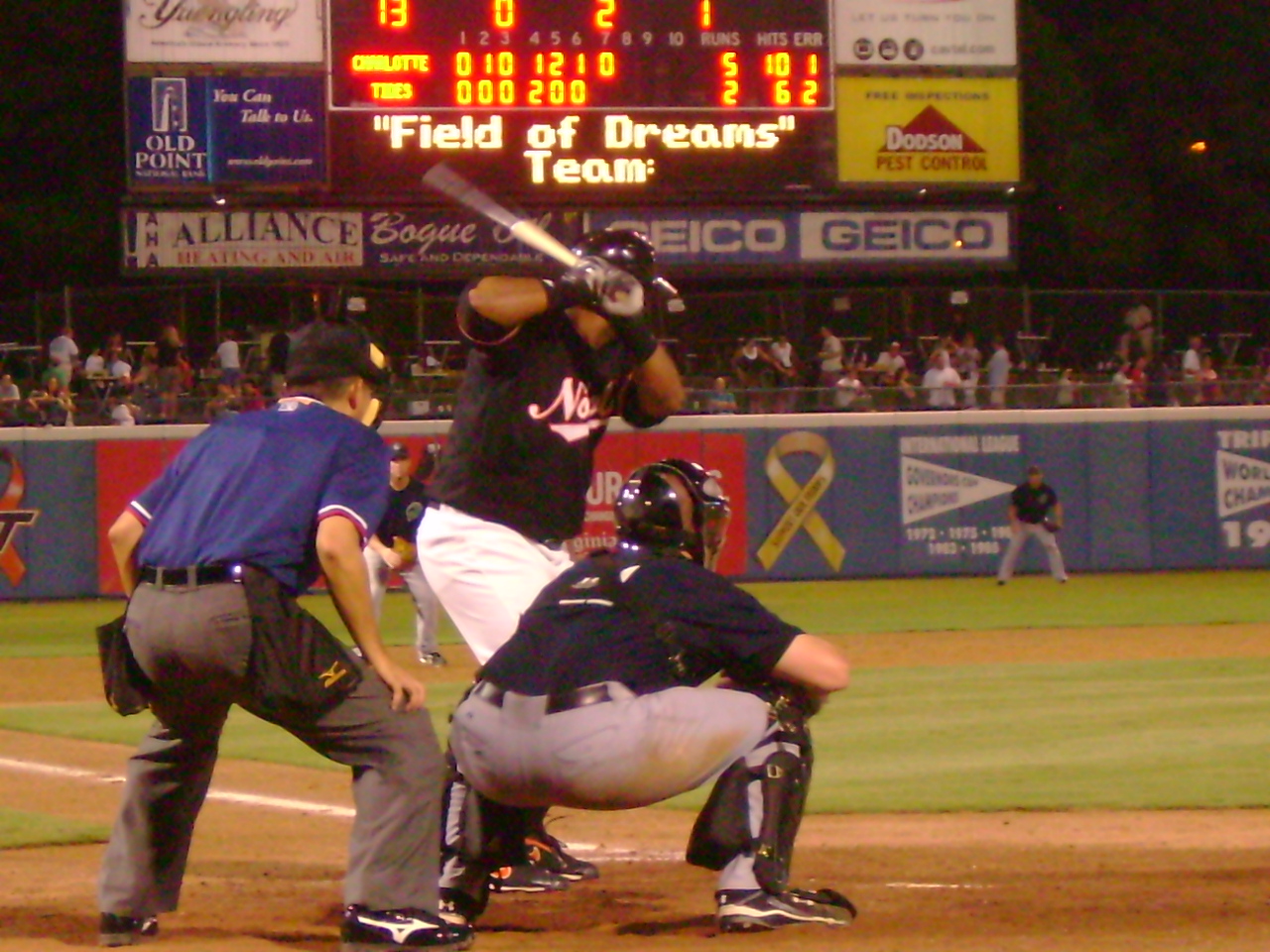
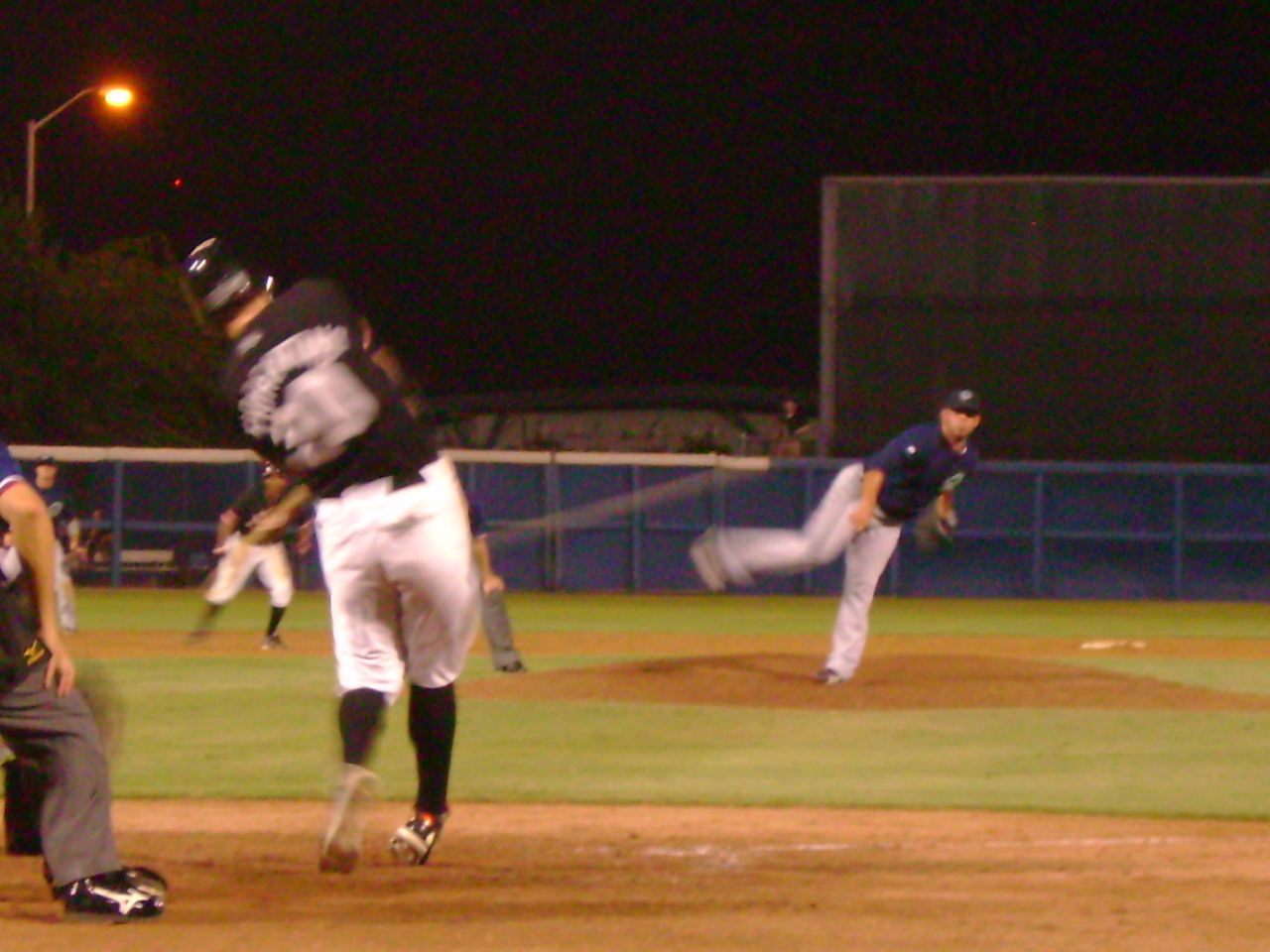
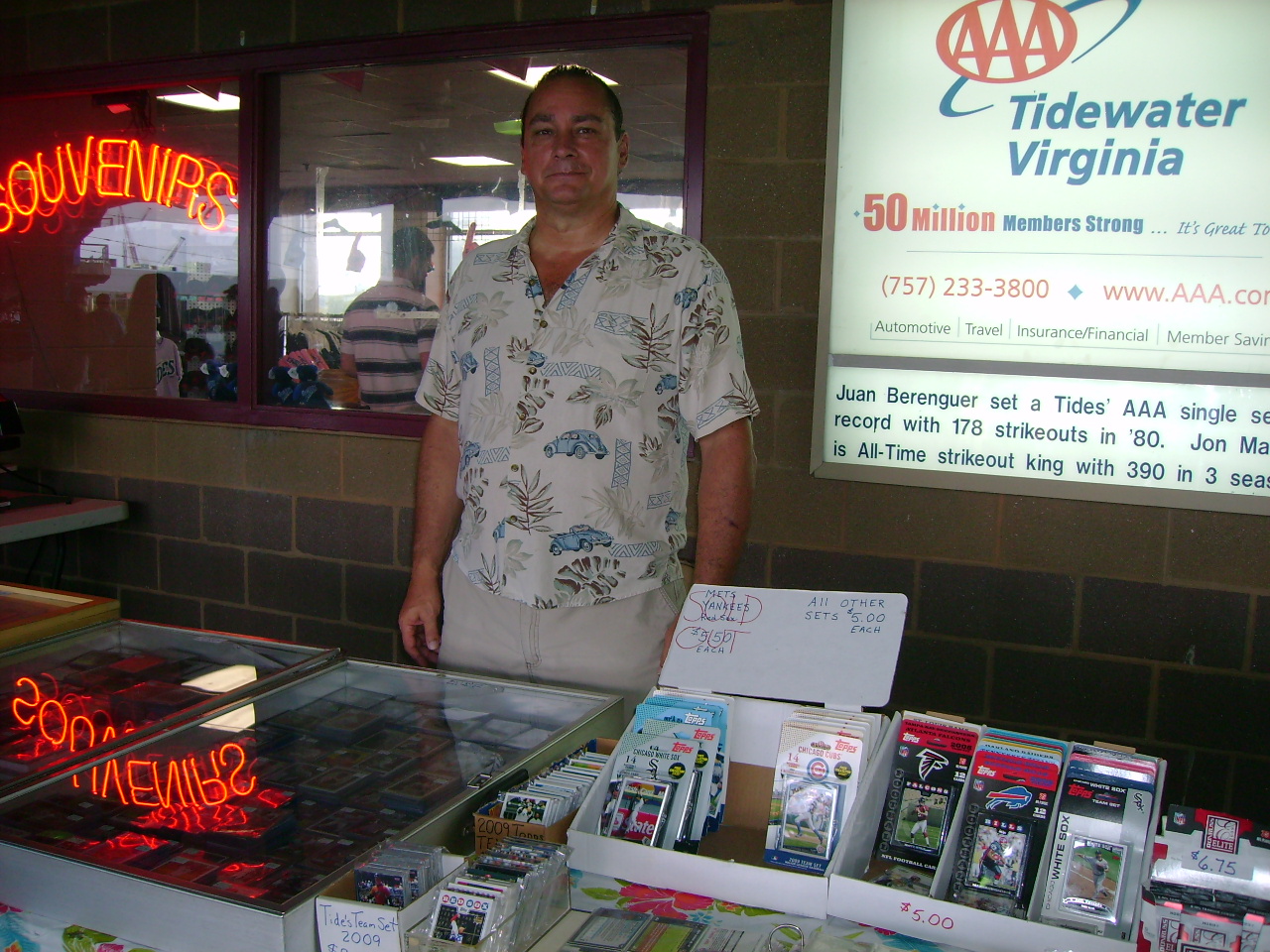
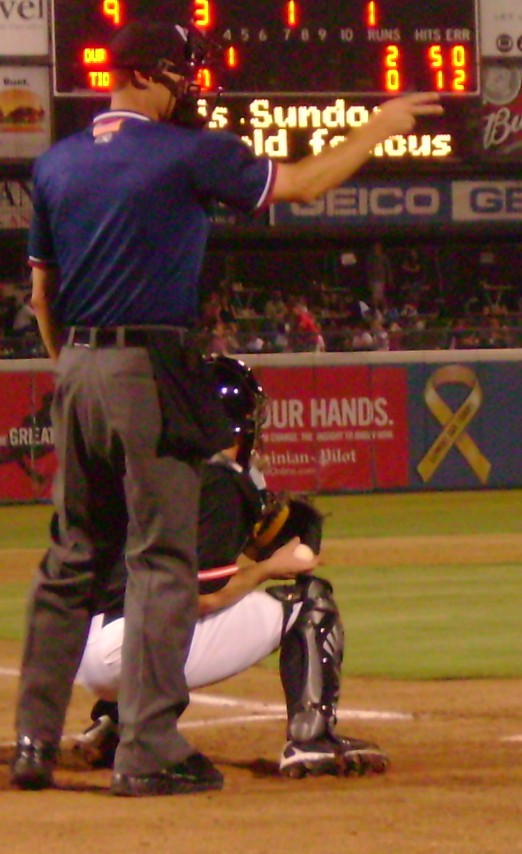
The 2009 Season at Harbor Park…the View from 102 a Season in Pictures

Well, baseball season is now been over a couple of weeks,  but the AAA season ended here on September 4th.  What began in March with an exhibition games between the Orioles and Nationals and ended with a win over the Gwinnett Braves was a memorable season.  I have done other posts analyzing the the season which ended with the Tides having a 71-71 record.  This is a photo journal of the season from my seat at the Church of Baseball Harbor Park Parish, the view from 102.

Peace,

Padre Steve+

Opening Day, postponed one day the Tides home opener was played on a beautiful day


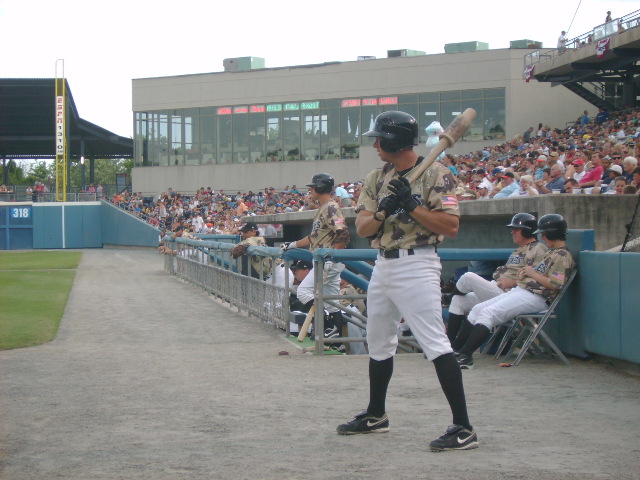
Tides 1st Baseman Michael Aubrey on Deck in the Dessert Camouflage Jersey

Tides vs. Rochester Red Wings

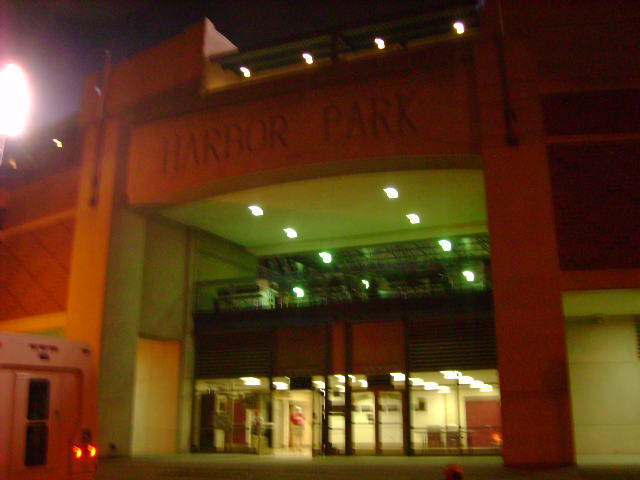
Harbor Park at Night

Michael Aubrey about to go Yard

Home Run Trot after the Hit

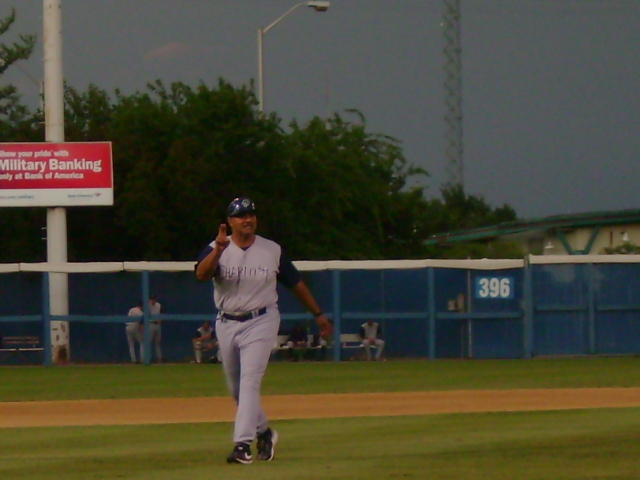
Manager Gary Allenson in the Dugout

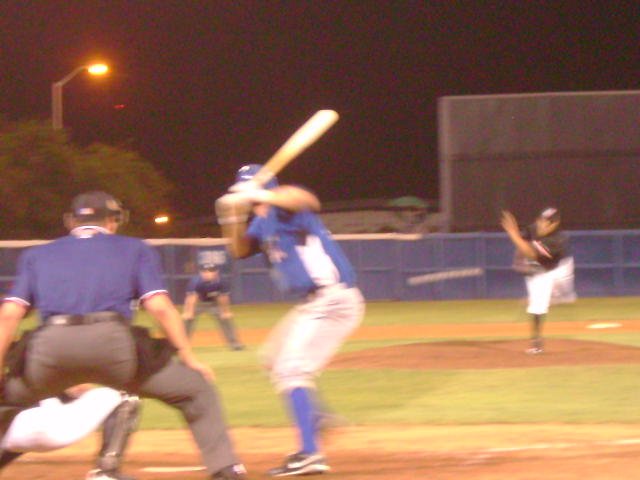
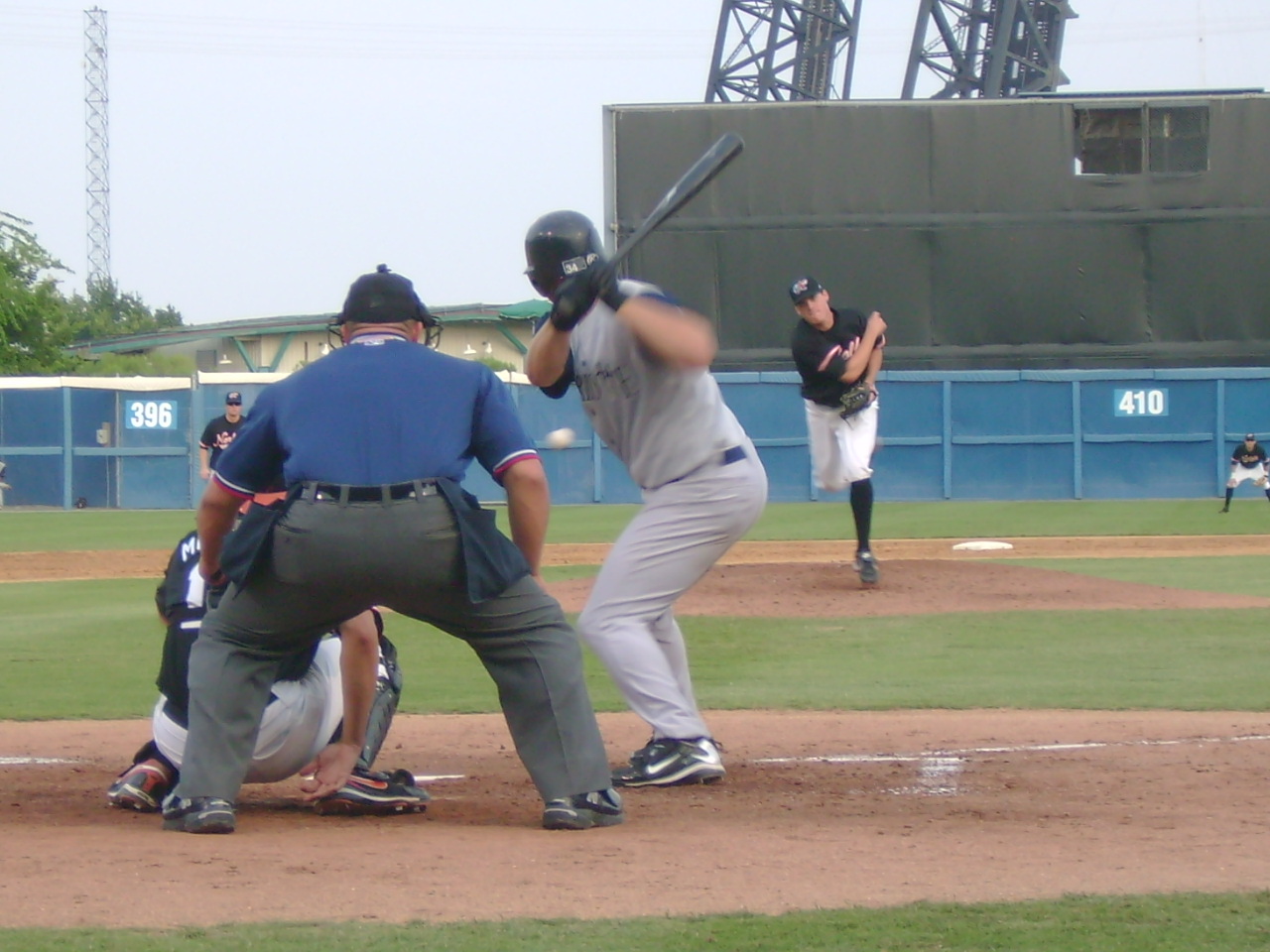
Tides pitcher Jake Arrieta  delivering the pitch

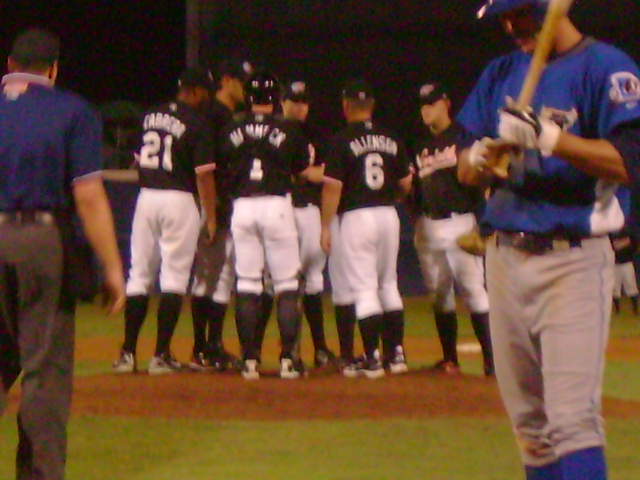
Conference on the Mound

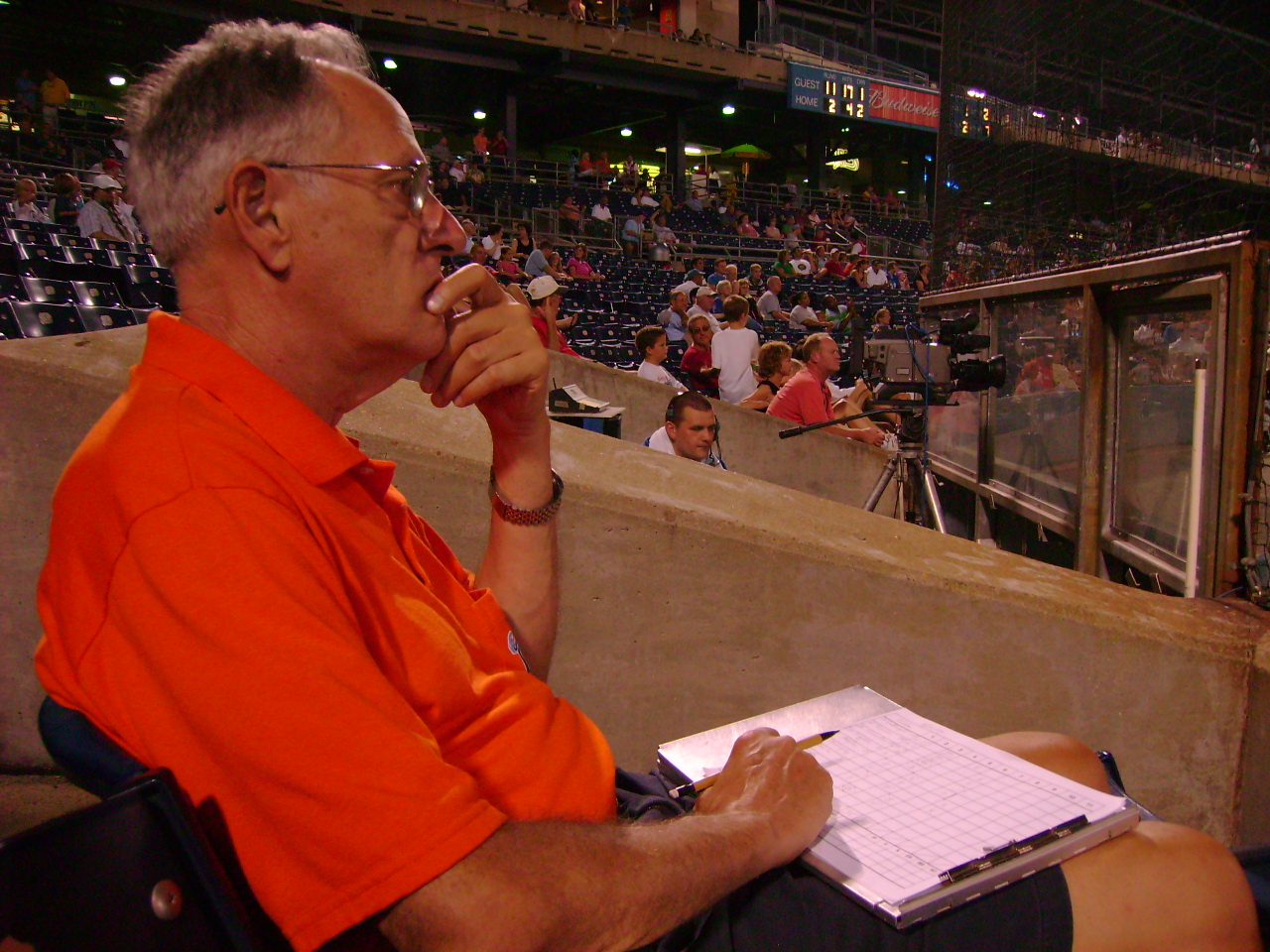
Barry the “Scorekeeper” my fellow Parishoner

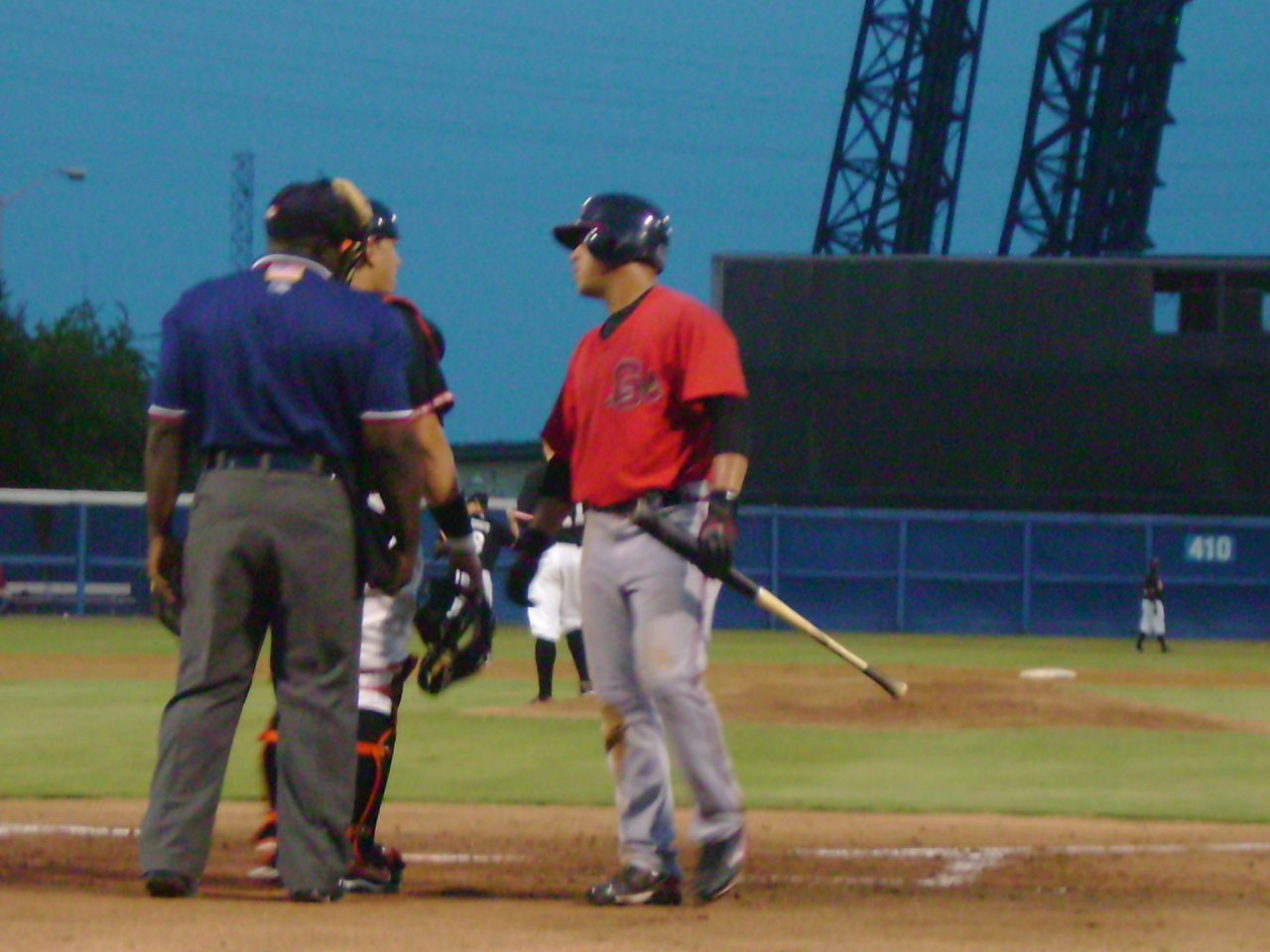
Gwinnett Braves Player registering his displeasure on a called third strike

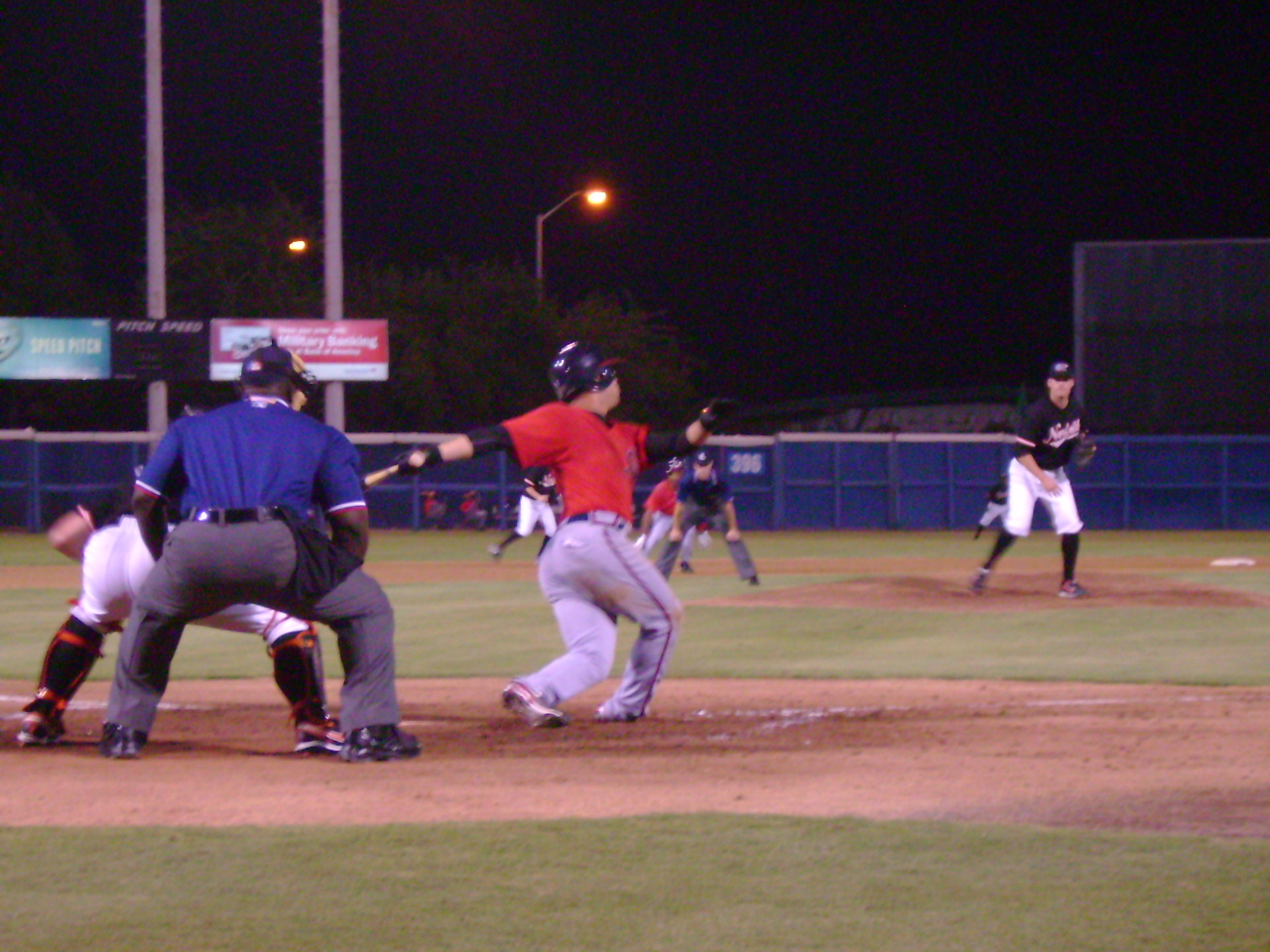
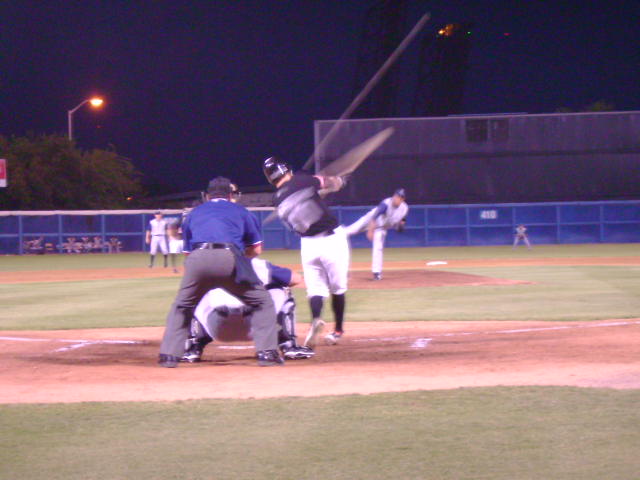
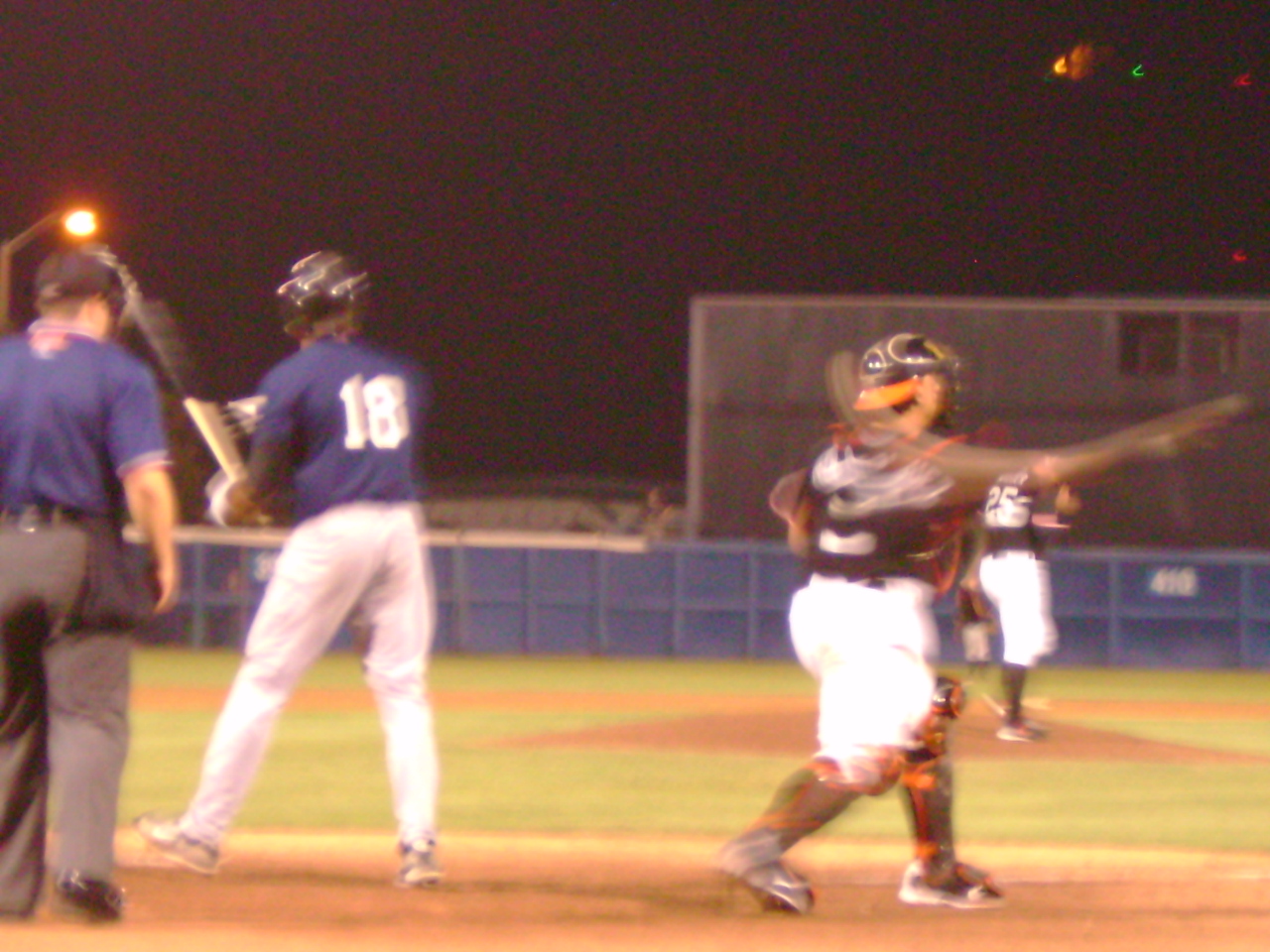
Swing and a Miss

Joey Gathright lays down a Bunt

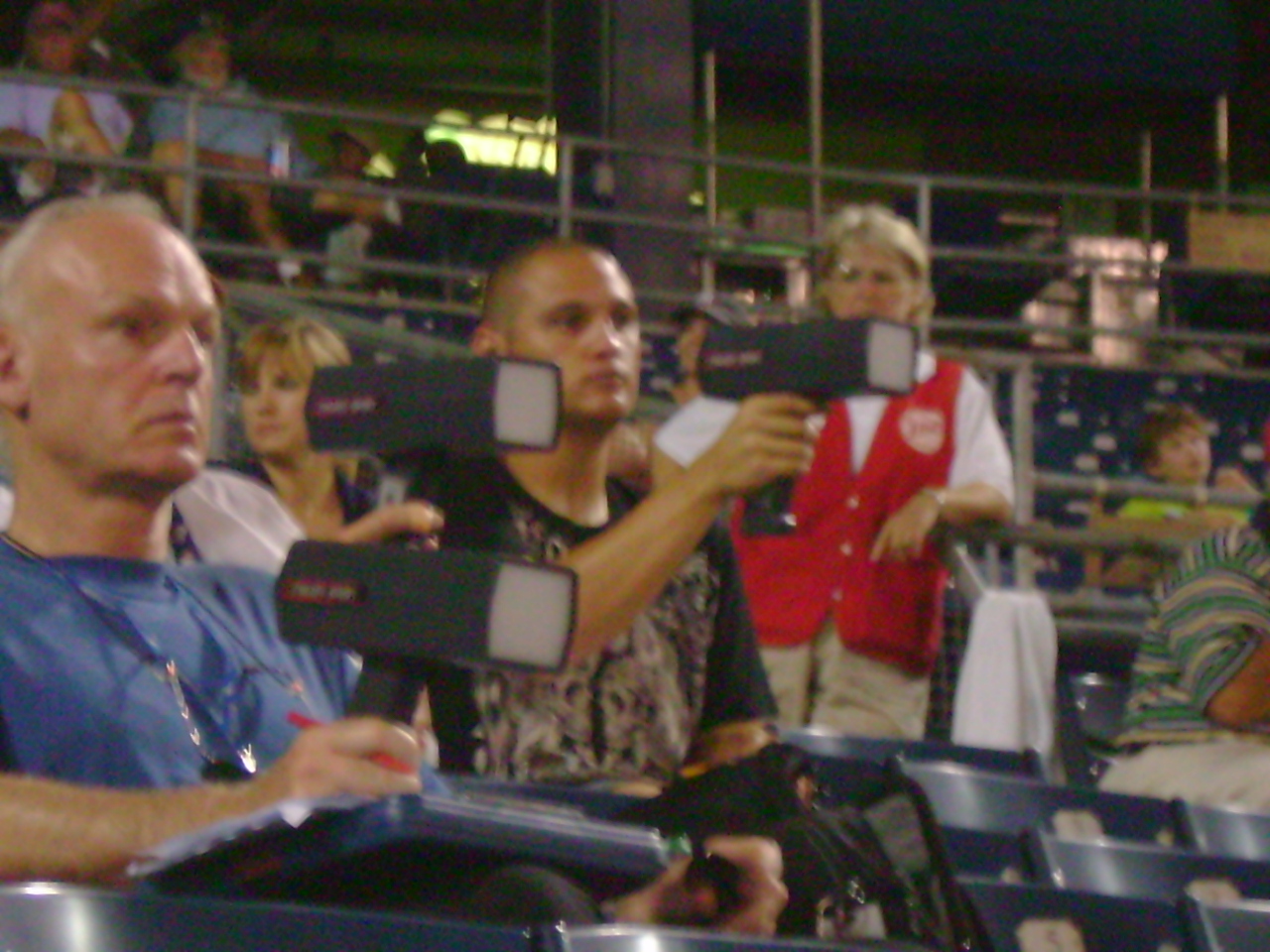
Scouts for other teams doing their work

Harbor Park Entrance

Charlotte Knights Manager Chris Chambliss after a visit to the mound

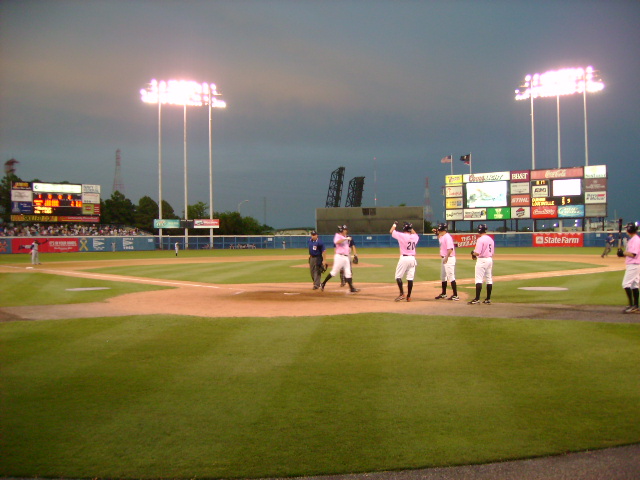
Susan Komen Breast Cancer Night Catcher Robbie Hammock delivers a Grand Slam

Right Fielder Jeff Fiorentino the Tides Home Run and RBI Leader Blasts a s 3 Run Homer

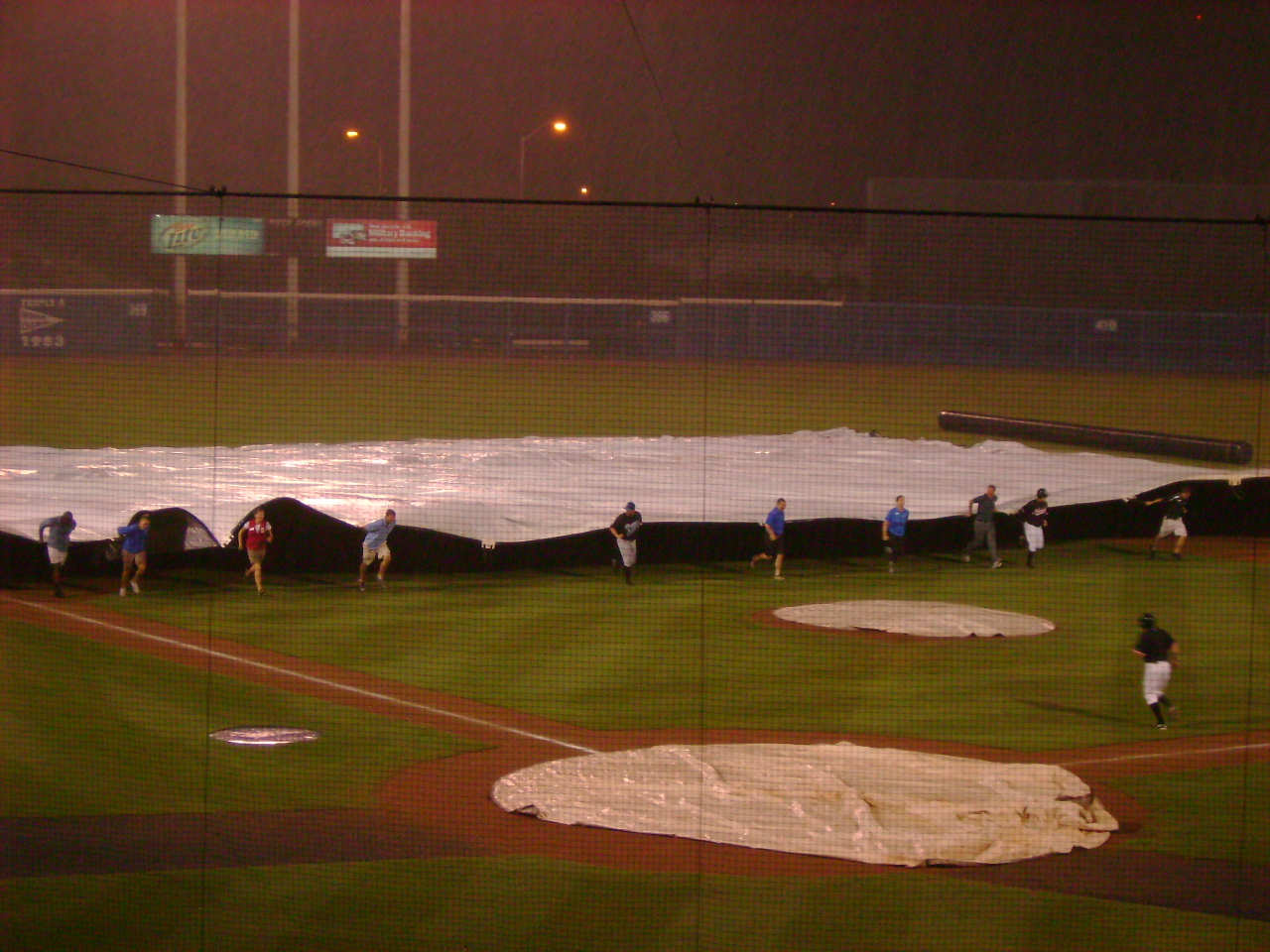
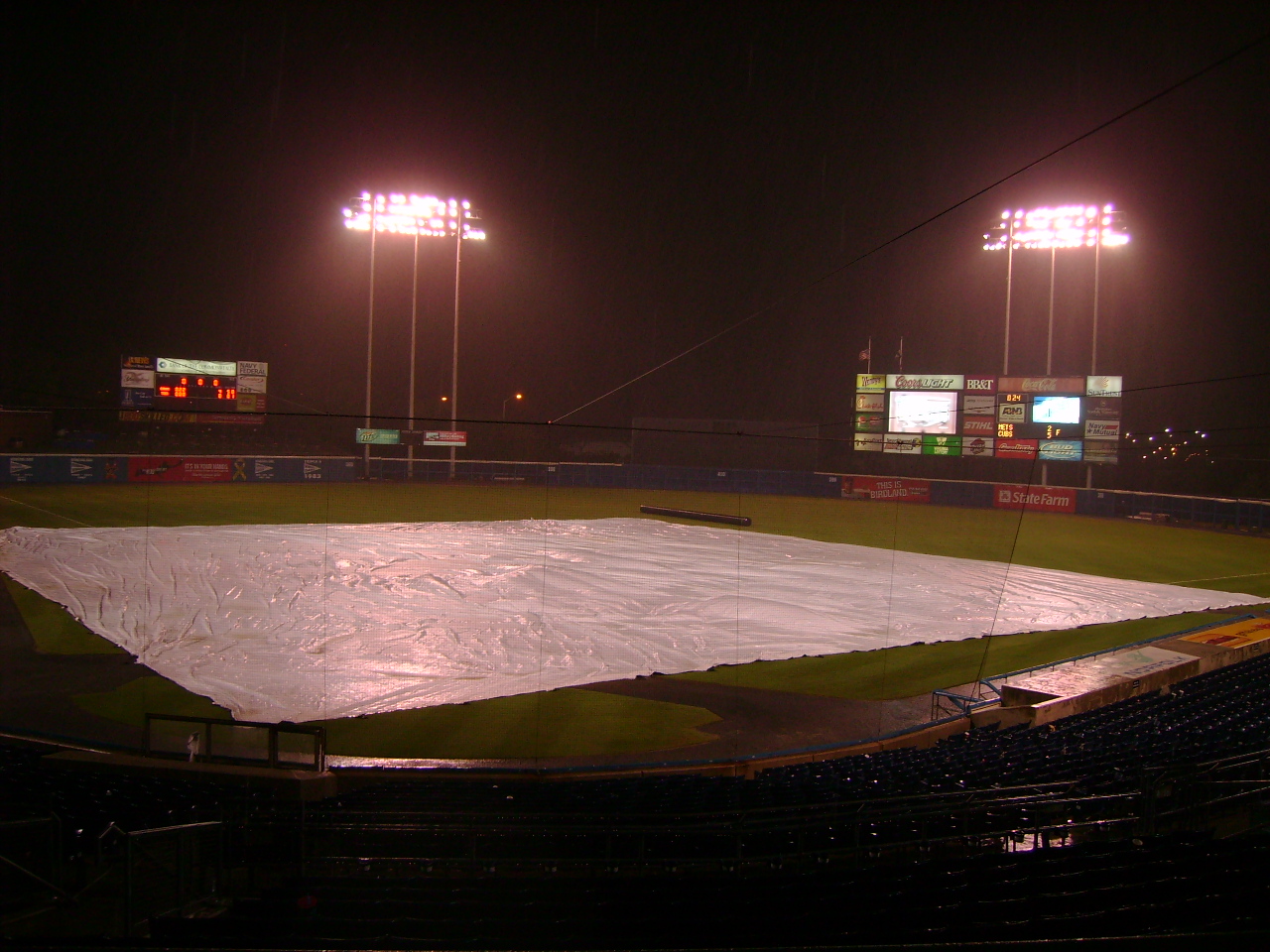
Rain Delay

Lonely Vigil…if this was a football game he would fit right in

Tarp Covering the Field

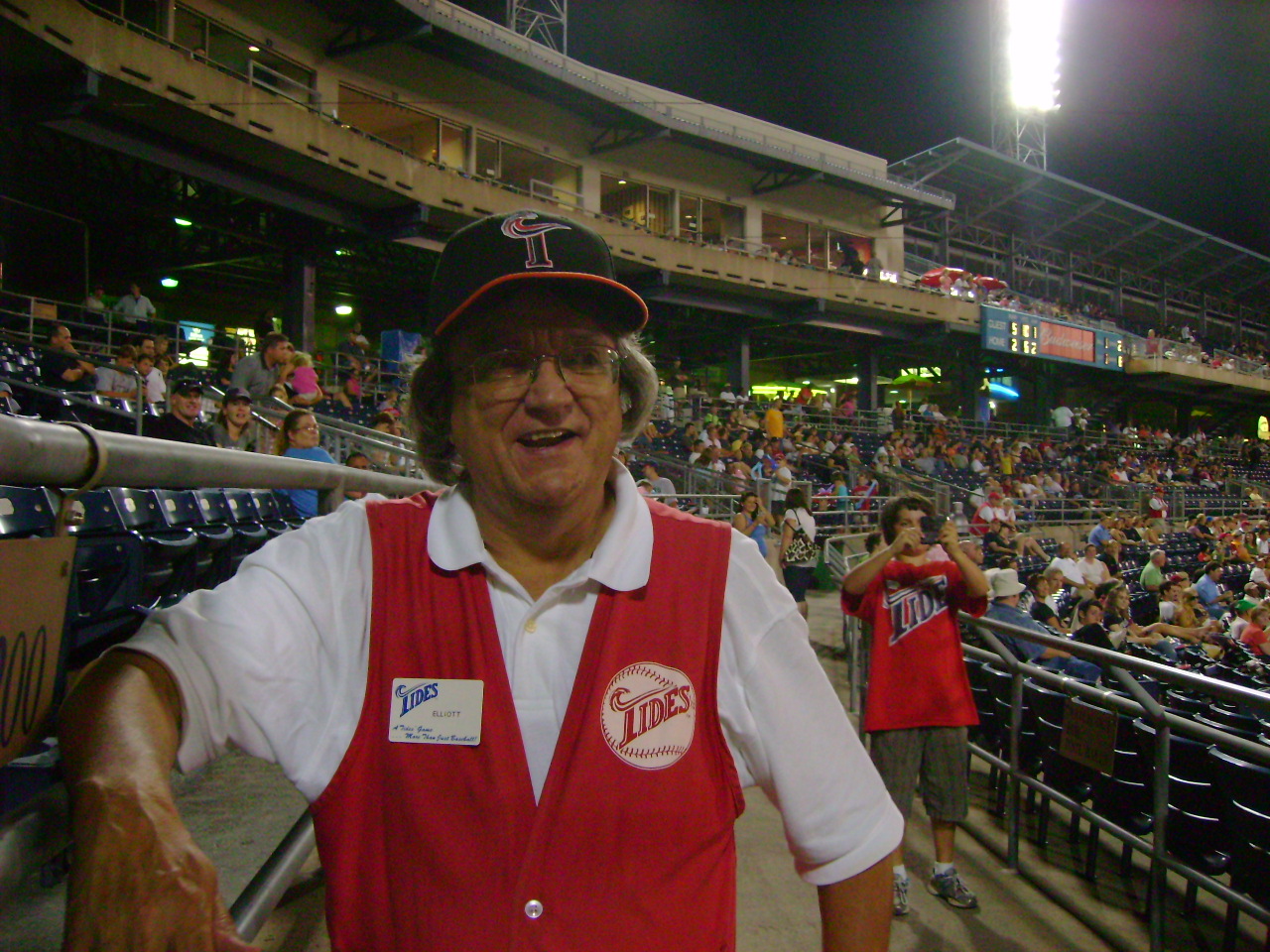
Elliott the Usher

Victor Diaz at the Plate

Jeff Fiorentino Hits a Laser to Right

Marty the Card Dealer

Called Strike

Lead Off

Joey Gathright out at Home

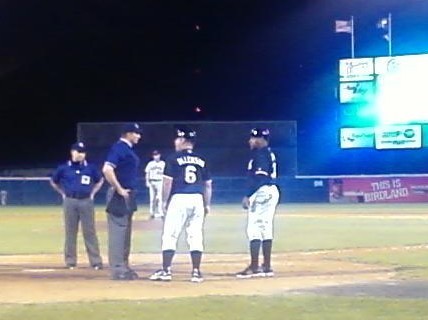
Gary Allenson Arguing His Point

Bartolo Colon Delivers a Pitch for the Knights

Jeff Fiorentino Takes Bartolo Colon Yard

Andy Mitchell Sends on Across the Plate

Downtown Norfolk from Harbor Park

Tides President Ken Young and General Manager Dave Rosenfield

Ground Rules

Chip the Usher

Strike out

Moon Over Harbor Park

Kenny “Crabmeat” the Pretzel Guy

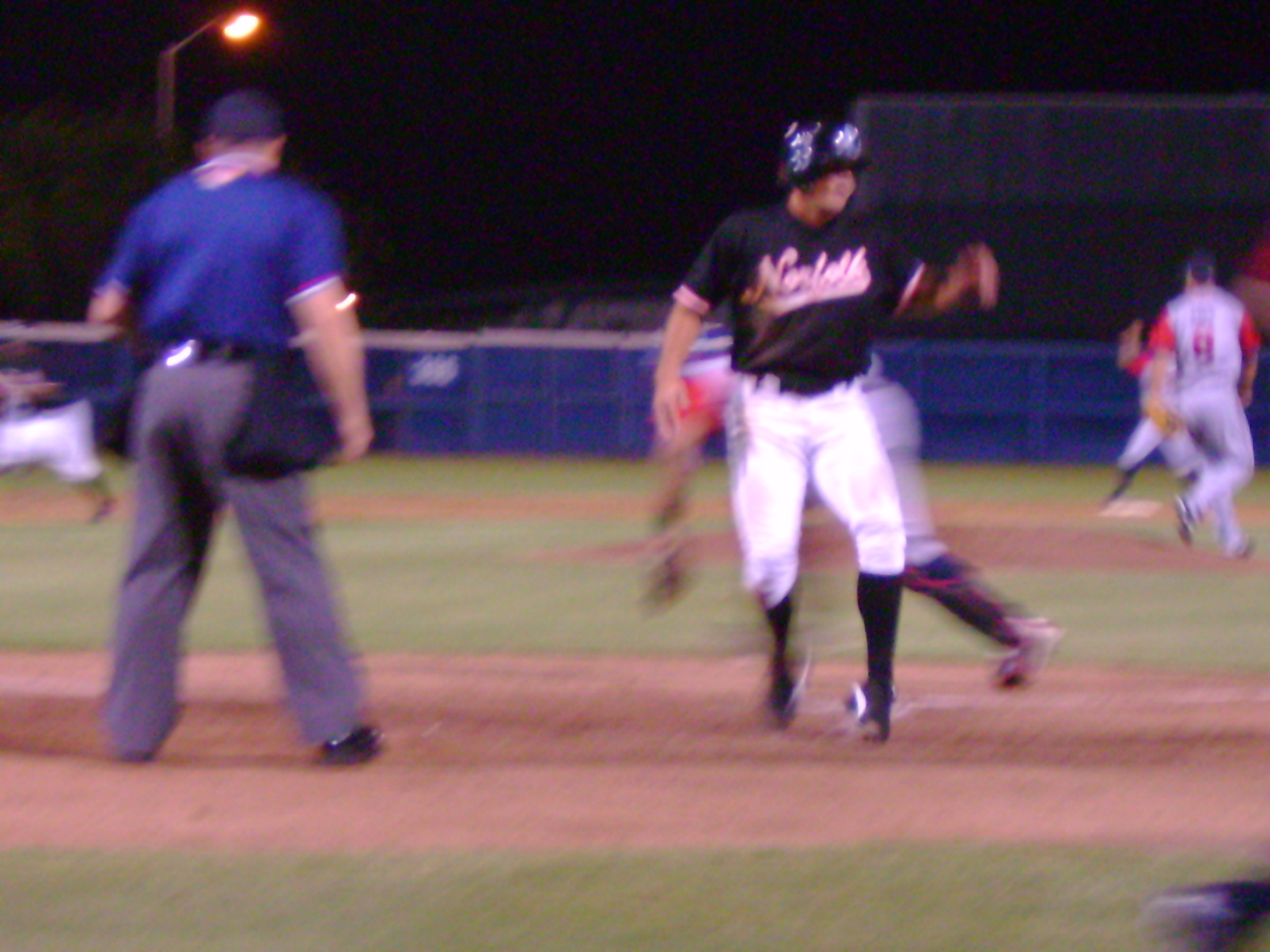
Run Scores

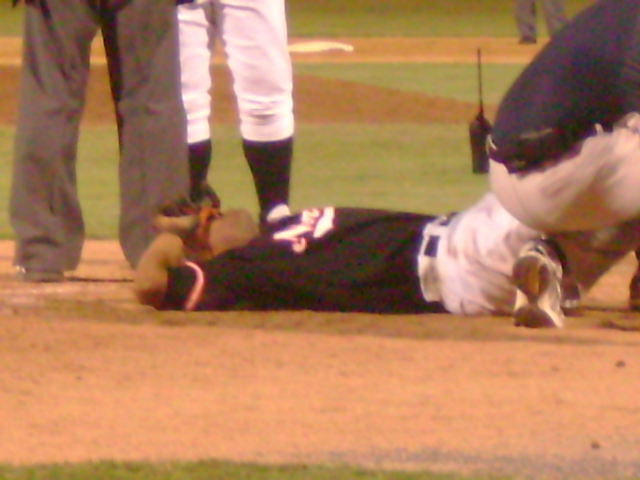
Jolbert Cabrera Down with a Season Ending Broken Ankle

Scout From Japanese Major League Yokohama Bay Stars

Ray and His Crew of the Vietnam Veterans of America Chapter who Man the Beer Stand Behind the Plate

Base Hit

Terri The Usher for Section 100

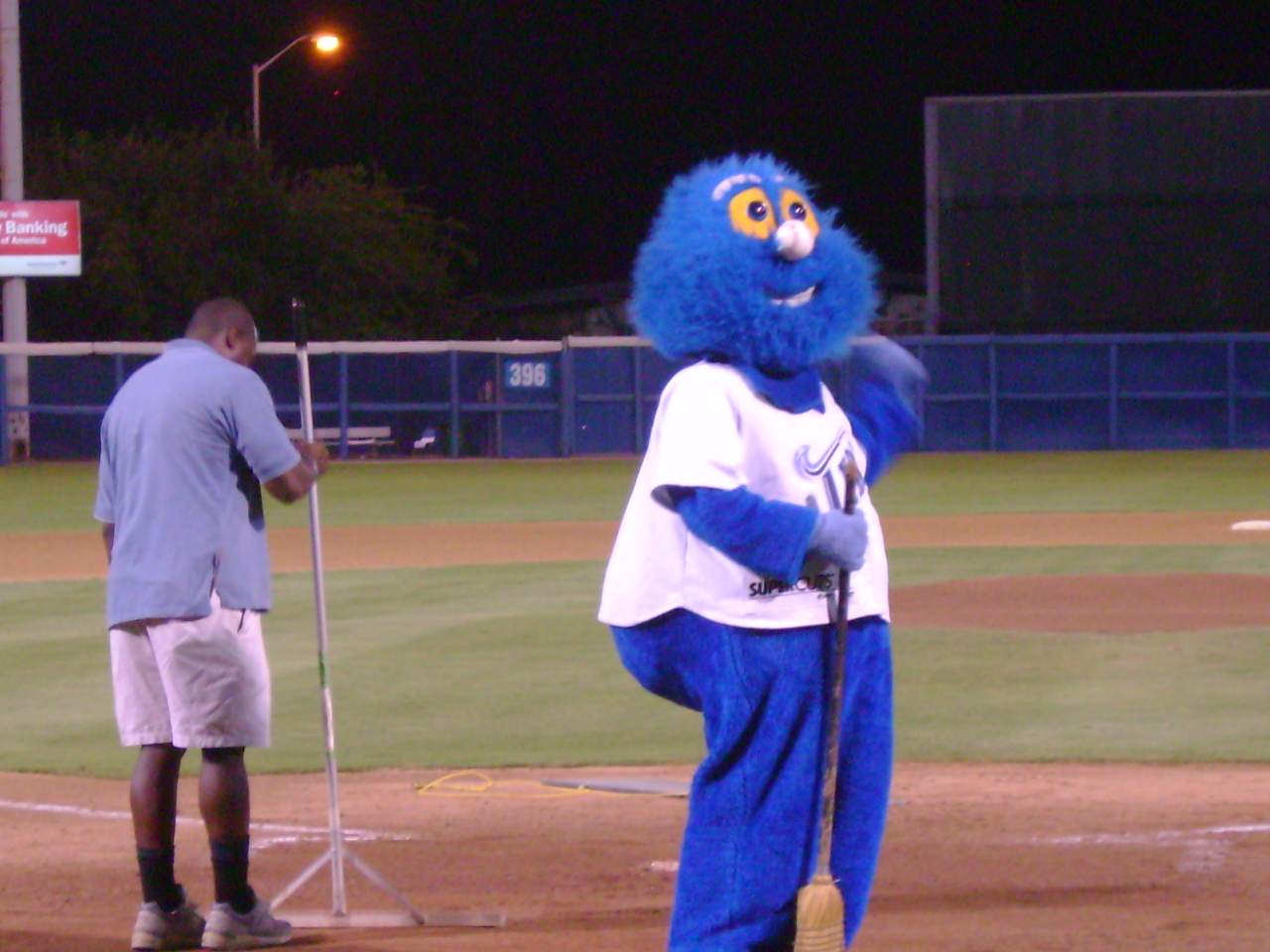
Rip Tide Helping the Grounds Crew between Games in a Double Header

Megan the Official Team Photgrapher

Braves Catcher Asking First Base Umpire to See if the Batter went Around

Mugging With Rip Tide

Post Game Fireworks

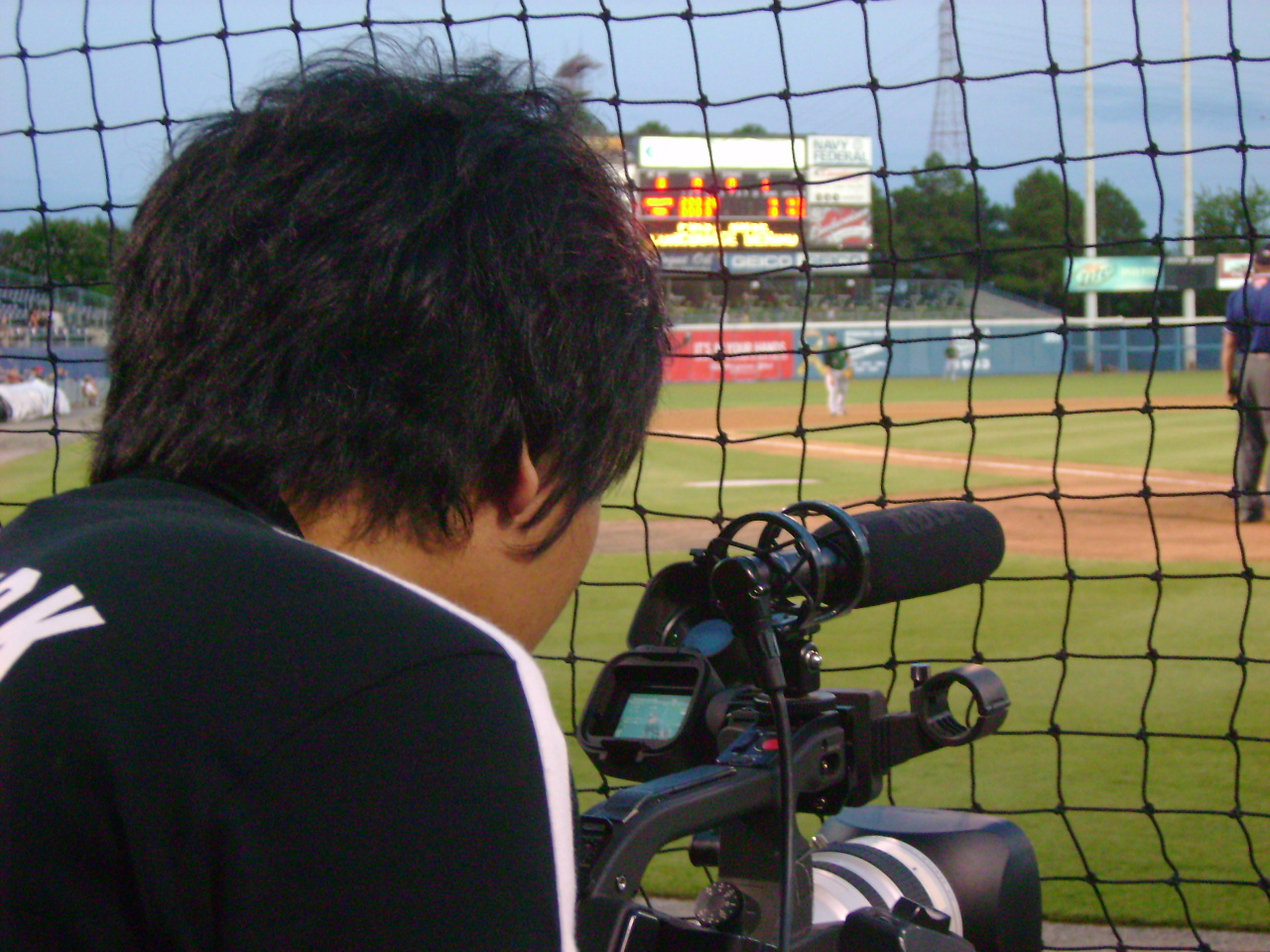
Japanese Film Crew Filming the “Samurai Umpires”

Gunning down a Runner


Last Home Game of 2009


Congratulations on a Final Home Win

Harbor Park Waiting for Next Season

“It breaks your heart. It is designed to break your heart.The game begins in the spring, when everything else begins again, and it blossoms in the summer, filling the afternoons and evenings, and then as soon as the chill rains come, it stops and leaves you to face the fall alone.”A. Bartlett Giamatti

All Images Property of Padre Steve c.2009


Leave a comment

Filed under Baseball, Photo Montages

Trials and Tribble-ations

“If you eliminate the impossible – anything that remains, however unlikely, must be the truth” Commander Spock

I think that I am starting to recover from my trip to California.  If you read some of my posts from 666 Lake of Fire Circle last week you’ll know that it was difficult.  If I recall there is a passage in Scripture where Jesus tells his disciples that “in this world you shall have tribulation, but be of good cheer for I have overcome the world.”  In fact being a fairly well trained theologian, though I do Church history better I know that the passage is there verily even in the Gospel according to Saint John Chapter 16, verse 33.  So there, my Seminary education was not a waste of time.  However if I had used the original language of the King James Version I might have a better time of it.

Tonight after purchasing the new Star Trek movie and watching it, yea verily even for the 3rd time, I realized that as a graduate of Starfleet Academy, no kidding, see the picture,  I know that there are some things that I know defy logic just as Spock said and as strange as they may be must be the truth.  The past week has seemed like a venture into an alternate reality.  I think that I I somehow altered a timeline when I left 666 Lake of Fire Circle for the hotel.  As of yet I know not how this timeline will play out, even as I did not know how the last timeline would but like in the new Star Trek the timeline has been altered, the present reset.

The title of this post Trials and Tribble-ations” comes from an episode of Star Trek Deep Space Nine where Captain Sisko and company end up traveling back in time in search of a modified Klingon named Arn Darvin from the 23rd Century who is traveling back in time to attempt to kill Captain Kirk and alter the timeline.  I like the title and it was a fun episode very well done with the actor Charlie Brill who played Darvin in the original series episode The Trouble with Tribbles reprising the role as an older and vengeful Darvin.

“In this world you will have Tribble-ation but be of good cheer…unless you are a Klingon as Tribbles don’t like you.”  The past few weeks have been filled with Tribble-ations as I went back to see my parents to a dad who no longer knows me and a mother who I no longer know, returned to flood waters and knocked down fences.  However, in all things I am still blessed.  I have a great wife, brother and wonderful friends at work.  Somehow things will work out.  I know people though who have also suffered from bad family situations, personal tragedy and recently significant storm damage including flooded homes damaged or destroyed cars and other property damage caused by our recent Nor’easter.  The lady who runs our little coffee shop and serves up my Southern Pecan coffee had her house flooded while one of our nurses had her car float away and sink into the Elizabeth River from our hospital. There are also those killed or wounded at Fort Hood and those that they leave behind as well as those who suffer illness, disease, poverty and violence that is a daily ordeal.

I am grateful for those that have prayed for and encouraged me through my Tribble-ations not only this past week but the past 16 months or so since returning from Iraq.  I am finding that what I have gone through will in the long run integrate my war experiences, PTSD, emotional turmoil and grief as well as the way I have changed since Iraq into my life.  I will be stronger and my life richer for them.  My Tribble-ations will end up being no Tribble at all. And that, though it seem at times impossible is the truth.

Peace,

Steve+

Leave a comment

Filed under Loose thoughts and musings, star trek

Which Church Father is Padre Steve?


You’re St. Justin Martyr!

You have a positive and hopeful attitude toward the world. You think that nature, history, and even the pagan philosophers were often guided by God in preparation for the Advent of the Christ. You find “seeds of the Word” in unexpected places. You’re patient and willing to explain the faith to unbelievers.

Find out which Church Father you are at The Way of the Fathers!

For once a quiz that actually fairly represents me. 

For some additional information on Justin see:

http://www.earlychristianwritings.com/justin.html 

Peace,

Padre Steve+

1 Comment

Filed under Loose thoughts and musings

Wacht am Rhein: The Battle of the Bulge

The Decision 


            Adolf Hitler gathered with the Chiefs of Oberkommando des Wehrmacht on September 16th 1944 at his “Wolf’s Lair” headquarters in East Prussia.  The situation was critical; he had recently survived an assassination attempt by Army officers led by Colonel Klaus Von Staufenberg at his Wolf’s Lair headquarters in East Prussia.  When the assassination attempt took place the German situation in Normandy was critical. The Americans broke out of the Bocage at St. Lo and spread out across Brittany and the interior of France with Patton’s 3rd Army leading the way.  Even as his commanders in the West pleaded for permission to withdraw to the Seine Hitler forbade withdraw and ordered a counter attack at Mortain to try to close the gap in the German line and isolate American forces. When the German offensive failed the German front collapsed. 40,000 troops, hundreds of tanks and thousands of vehicles were eliminated when the Americans and Canadians closed the Falaise pocket. Despite this cadres of decimated divisions including SS Panzer, Army Panzer and elite Paratroops made their way out of Normandy.  With the Germans in full retreat the Allies advanced to the border of the Reich itself. On the Eastern Front as well disaster threatened when the Red Army launched an offensive which annihilated Army Group Center and advanced to the border of Poland before outrunning supply lines and stalling on the Vistula.

Tiger II Advancing in the Ardennes

            Since Normandy Hitler had wanted to counter attack but had neither the forces nor the opportunity to strike the Allied armies. As the Allied offensive ground to a halt due to combat losses, lack of supplies and stiffening German resistance Hitler maintained a close eye on the situation in the West.  He believed that despite their success that the Americans and British alliance was weak and that a decisive blow could cause one or both to drop out of the war. During a briefing an officer noted the events of the day on the Western Front including a minor counterattack by kampfgrüppen of the 2nd SS Panzer and the 2nd Panzer Divisions which had made minor gains in the Ardennes, Hitler rose from his seat ““Stop!” He exclaimed. “I have come to a momentous decision. I shall go over to the counterattack….Out of the Ardennes, with the objective Antwerp.””[i]

            Thus began the planning for the last great German offensive of WWII.  Hitler “believed that sufficient damage could be inflicted to fracture the Anglo-American alliance, buy time to strike anew against the Soviets, and allow his swelling arsenal of V-weapons to change the course of the war.”[ii]  It was a course of born of desperation, even admitted by Hitler in his briefings to assembled commanders in the week prior to the offensive, one officer noted his remarks: “Gentlemen, if our breakthrough via Liege to Antwerp is not successful, we will be approaching an end to the war which will be extremely bloody. Time is not working for us, but against us. This is really the last opportunity to turn the war in our favor.”[iii]
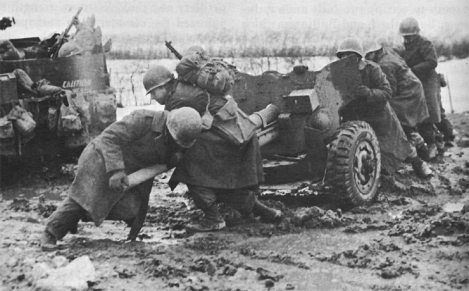
US Soldiers manhandling a 57mm Anti-Tank Gun into Position

            Despite shortages of men and equipment, continuous Allied assaults and over the objections of General Guderian who argued to reinforce the Eastern Front[iv], the OKW staff secretly developed detailed plans. The planning was so secretive that the “Commander in Chief West and the other senior commanders destined to carry out the attack were not informed.”[v] The plans were submitted to Hitler on October 9th [vi] and presented to Field Marshalls Von Rundstedt and Model at the End of October. General Hasso Von Manteuffel, commander of 5th Panzer Army commented that: “The plan for the Ardennes offensive…drawn up completely by O.K.W. and sent to us as a cut and dried “Führer order.”[vii]  Likewise Model and Von Rundstedt objected to the scope of the attack. Von Rundstedt stated: “I was staggered…It was obvious to me that the available forces were way too small for such an extremely ambitious plan. Model took the same view of it as I did….”[viii]  Model reportedly said to General Hans Krebs: “This plan hasn’t got a damned leg to stand on.”[ix] And “you can tell your Führer from me, that Model won’t have any part of it.”[x] Sepp Dietrich, the old SS fighter and commander of 6th Panzer Army expressed similar sentiments.[xi]  Despite the objections by so many senior commanders Hitler scorned Model’s attempt to float a less ambitious plan to reduce the Allied salient at Aachen. Likewise Von Rundstedt’s desire to remain of the defense and wait for the Allies to attack using the armored forces to launch against any breakthrough was rejected.[xii] Hitler’s mind was set and the preparations moved forward.  The plan was complete down to the timing of the artillery bombardment and axes of advance, and “endorsed in the Führer’s own handwriting “not to be altered.””[xiii] Such a plan flew in the face of the well established doctrine of the Auftragstaktik which gave commanders at all levels the freedom of action to develop the battle as the situation allowed and opportunities arose.
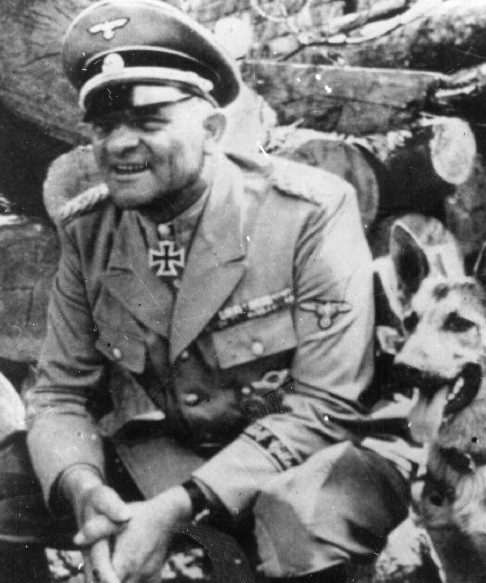
SS General Sepp Dietrich Commander of the 6th SS Panzer Army

          The Germans who the Allies presumed to be at the brink of collapse made a miraculous  recovery following their ghastly losses in Normandy. Kampfgrüppen and remnants of divisions bled the Americans White at the Huertgen Forrest and blunted the British attempt to leapfrog the Northern Rhine at Arnhem decimating the British First Airborne division and causing heavy casualties among other British and American units. The German 15th Army avoided disaster when the British failed to close their escape route from Walchern island allowing 60,000 troops and much equipment to escape.   The Germans re-formed and reorganized the front.  They pulled back many units of the 5th and 6th Panzer Armies for re-fitting and diverted nearly all tank, armored fighting vehicle and artillery production to the West at the expense of the Eastern Front.  The Germans called up 17 year olds and transferred young fit personnel from the Navy and Luftwaffe to the Army and Waffen SS.  Here they were trained by experienced NCOs and officers and brought into veteran units alongside hardened veterans who showed taught them the lessons of 5 years of war.[xiv]  However the rapid influx of new personnel meant that they could not be assimilated as quickly as needed and thus many were not as well trained as they might have been with more time.[xv] Many infantry and Parachute units had received inexperienced officers, taken from garrison duty to fill key positions a problem that would show up during the offensive.[xvi]
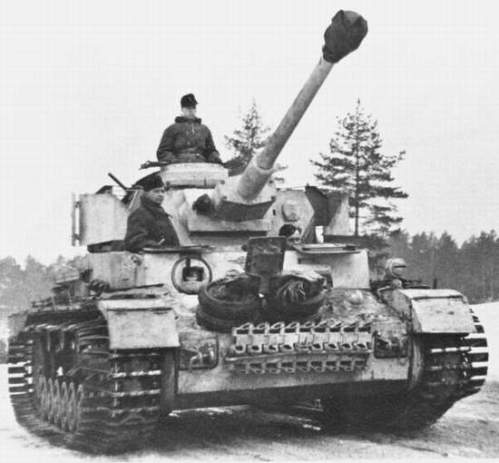
Panzer IV Ausf H of an SS Panzer Divsion in the Bulge

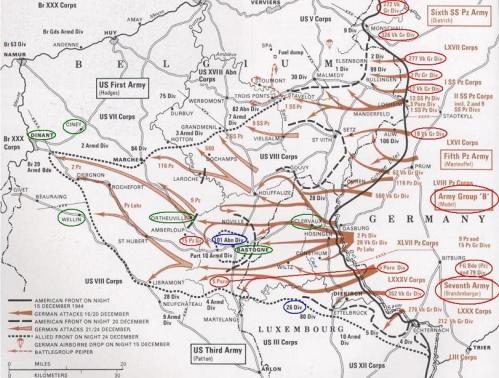
            The Germans were aided by the caution displayed by the Allies throughout the campaign in France which allowed the Germans to reconstitute formations around veteran headquarters staffs.[xvii]  The Germans built up the 5th and 6th Panzer Armies as the Schwerpunkt of the offensive giving them the lion’s share of reinforcements and pulling them out of the line during the fall battles along the Seigfried line and in the Alsace and Lorraine.  The plan was for the two Panzer armies and 7th Army to punch through the Ardennes, cross the Meuse, drive across Belgium, capture Antwerp and severe the link between the British and the Americans.

The spearhead of the assault was 6th Panzer Army Commanded by SS General Sepp Dietrich. It was composed of 1st and 2nd SS Panzer Corps and Army’s LXVII Corps.  The 6th SS Panzer Army included some of the best formations available to the German Army at this late stage of the war including the 1st  SS Panzer Division, the Leibstandarte Adolf Hitler, the 2nd  SS Panzer Division Das Reich, the 9th SS Panzer Division Hohenstaufen and the12th  SS Panzer Division Hitler Jügend. It’s ranks were filled out by the 3rd Parachute Division, the 501st SS Heavy Tank Battalion (attached to 1st SS), the 3rd Panzer Grenadier Division and the 12th, 246th, 272nd, 277th and 326th Volksgrenadier or Infantry divisions. The 6th Panzer Army would be the northern thrust of the offensive and its ultimate objective was Antwerp.  The 6th Panzer Army would be aided by a hastily organized parachute battalion under Colonel Von Der Heydte[xviii] and the 150th Panzer Brigade under SS Colonel Otto Skorzeny which included teams of American dialect speaking soldiers in American uniforms and equipment that were to spread confusion and panic in American rear areas.[xix]
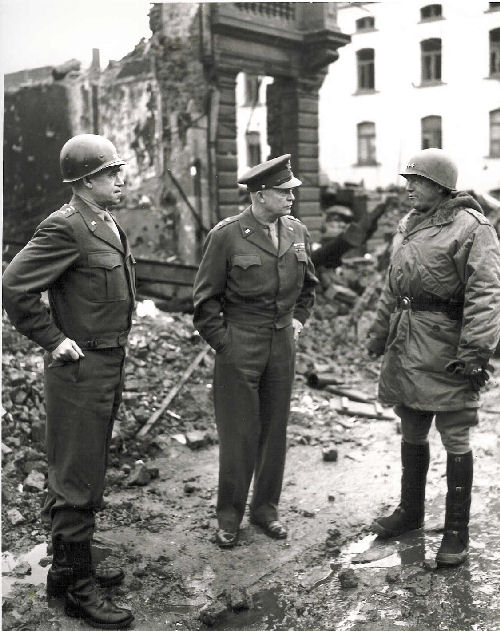
Bradley, Eisenhower and Patton at Bastogne

       To the south was the 5th Panzer Army commanded by General Hasso Von Manteuffel.  The 5th Panzer Army was to advance alongside of the 6th Panzer Army with Brussels as its objective.  Composed of the XLVII and LVIII Panzer Corps and LXVI Corps the major subordinate commands included the best of the Army Panzer divisions including the 2nd Panzer, Panzer Lehr, 9th and the16th Panzer division. It also had the elite Führer Begleit Brigade composed of troops from Panzer Corps Grossdeutschland and commanded by Otto Remer who had help crush the coup against Hitler in July.  The 5th Panzer Army also included the 18th, 26th, 62nd, 560th and later the 167th Volksgrenadier divisions.

The south flank was guarded by 7th Army commanded by General Erich Brandenburger composed of LIII, LXXX and LXXXV Corps.  It included the Führer Grenadier Brigade and later the 15th Panzergrenadier division.  It was the weakest of the three armies but eventually included 6Volksgrenadier divisions of varying quality and strength[xx] and the veteran 5th Parachute division.[xxi]  However with only 4 divisions at the start of the offensive the 7th Army was the equivalent of a reinforced corps.
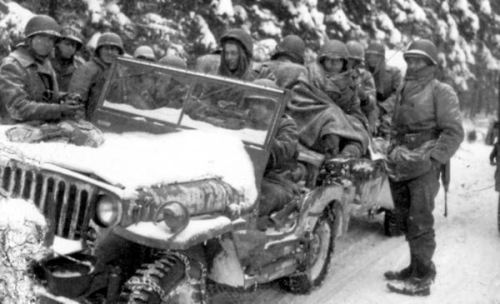
             While this force seemed formidable it had a number of weaknesses beginning with tank strength.  The 1st and 12th SS Panzer divisions were only at approximately half their established tank strengths and faced severe shortages in other vehicles.[xxii]  2nd SS and 9th SS of II SS Panzer Corps reported similar shortages.[xxiii]The shortage of other motorized vehicles, even in Panzer divisions was acute.  “Even the best equipped divisions had no more than 80 percent of the vehicles called for under their tables of equipment, and one Panzergrenadier division had sixty different types of motor vehicles, a logistician’s nightmare.[xxiv] Panzer Lehr was so short in armored half tracks that only one battalion of its Panzer Grenadiers could be transported in them while others had to use “trucks or bicycles.”[xxv]

Limitations on equipment as well as fuel were not the only challenges that the Germans faced. The US V Corps launched an attack on the Roer River Dams just before the offensive making it necessary for the Germans to divert 6th SS Panzer Army infantry divisions and Jagdpanzer units to be used by 6th SS Panzer Army.  One regiment of 3rd Parachute Division and over half of a second division could not take part in the initial 6th Panzer Army attack. Likewise some Jagdpanzer and Sturmgeschutzen units did not arrive until three days after the offensive began.[xxvi]

Allied Response: Before the Battle

            While the German commanders sought to implement Hitler’s plan Allied commanders looked only to completing the destruction of Germany not believing the Germans capable of any major operation.  The Allied commanders with the exception of Patton did not believe the Germans capable of any more than local counter attacks.  Patton’s 3rd Army G-2 Colonel Koch was the only intelligence officer to credit the Germans with the ability to attack.[xxvii]  Most allied commanders and intelligence officers discounted the German ability to recover from disastrous losses, something that they should have learned in Holland or learned from the Soviet experiences on the Eastern front.  Bradley noted in his memoirs hat “I had greatly underestimated the enemy’s offensive capabilities.”[xxviii]  Carlo D’Este noted that “there was another basic reason why the Allies were about to be caught with their pants down: “Everyone at SHAEF was thinking offensively, about what they could do to the enemy, and never about what the enemy might do to them.””[xxix]   This mindset was amazing due to the amount of intelligence from Ultra and reports from frontline units that major German forces were no longer in the line.[xxx] Additionally nearly all commentators note that American units in the Ardennes did not conduct aggressive patrols to keep the enemy off balance and obtain intelligence.[xxxi]  One describes the efforts of 106th Division as “lackadaisical” and notes that enemy before the offensive was not the Germans but the cold.[xxxii] Max Hastings noted that: “the Allies’ failure to anticipate Hitler’s assault was the most notorious intelligence disaster of the war.”[xxxiii]

The Allies also were in the midst of a manpower crisis. Eisenhower did not have enough divisions to establish a clear manpower advantage as “there were not enough Anglo-American divisions, or enough replacements for casualties in the existing divisions.”[xxxiv]  No more American Infantry divisions were available as the Army had been capped at 90 divisions and infantry replacements were in short supply.  This shortage meant that Eisenhower could not pull divisions out of line to rest and refit. He could only transfer divisions such as the 4th and 28th Infantry divisions to the relative quiet of the Ardennes. He had no ability to “create a strategic reserve unless he abandoned the broad front strategy.”[xxxv] The Germans knew of the allied weakness and believed that they could achieve local superiority even if they did not believe they could reach Antwerp. Model believed that “he was sure that he would reach the Meuse in strength before the Americans could move sufficient reserves to halt his armies or even head them off.”[xxxvi]

American Response: The Breakthrough

            The German assault began on December 16th. Some breakthroughs were made especially in the vicinity of the Losheim Gap and the Schnee Eifel by the southern elements of 6th Panzer Army and Manteuffel’s 5th Panzer Army. However the Germans could not break through around Monschau and Elsenborn Ridge held by the inexperienced but well trained 99th Infantry division and elements of the veteran 2nd “Indianhead” Division.  In the far south near Diekirch the 4th Infantry Division held stubbornly against the attacks of 7th Army’s Volksgrenadiers. The Germans achieved their greatest success at Losheim where SS Colonel Josef Peiper and his 1st SS Panzer Regiment had driven off the US 14th Cavalry Group and penetrated 6 miles into the American front.  5th Panzer Army made several breakthroughs and isolated two regiments of newly arrived 106th Infantry Division in the Schnee Eifel. Manteufel also pressed the 28th Division hard along the Clerf River, Skyline Ridge and Clairvaux.  Yet at ‘no point on that first day did the Germans gain all of their objectives.”[xxxvii]  The credit goes to US units that stubbornly held on, but also to the poor performance of many German infantry units.  German commanders were frustrated by their infantry’s failure even as the panzers broke through the American lines.  Manteuffel noted his infantry was “incapable of carrying out the attack with the necessary violence.”[xxxviii]
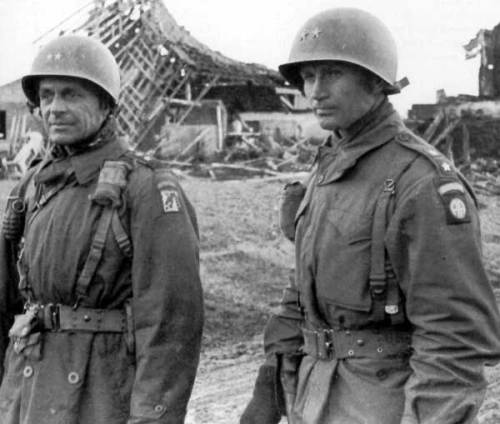
US Airborne Commanders James Gavin (R) and Matthew Ridgeway (L)

            The initial Allied command response to the attack by senior commanders varied.  Bradley believed it was a spoiling attack “to try and force a shift of Patton’s troops from the Saar offensive back to the Ardennes.”[xxxix] Courtney Hodges of 1st Army agreed with Bradley and refused to allow General Gerow, commander of V Corps to call off 2nd Infantry Division’s attack against the Roer dams on the 16th in order to face the German offensive.[xl]  Gerow was one of the first American commanders to recognize the scope of the German attack but Hodges, perhaps the least competent senior American commander in Europe failed to heed Gerow’s advice. Soon after making this decision Hodges “panicked” and evacuated his headquarters at Spa fearing that it would be overrun by the advancing Germans.[xli] Eisenhower when informed of the news realized that something major was occurring and ordered the 7th Armored Division from the 9th Army and 10th Armored Division from 3rd Army into the Ardennes. On the 17th he made other dispositions and released the 82nd and 101st Airborne Divisions from SHAEF reserve at Rheims to the Ardennes under the command of XVIII Airborne Corps.[xlii]  However during this short amount of time Mantueffel’s panzers had advanced 20 miles.
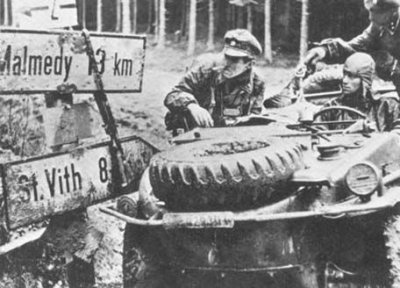
SS Panzer Troops of Kampfgruppe Knittel on the advance.  Photo has often been identified for decades in books and other publications as Waffen-SS Colonel Joachim Peiper the commanding officer of the 1st SS Panzer Regiment and Kampfgruppe Peiper. This has been refuted by recent study.  Peiper is pictured below.

            At the command level Eisenhower made a controversial, but correct decsion to divide the command of the Bulge placing on a temporary basis all forces in the northern sector under Montgomery and leaving those to the south under Bradley.  Montgomery according to one commentary initially “had been astonishingly tactful in handing his American subordinates.”[xliii] However he quickly made himself obnoxious to many American commanders.[xliv] Following the battle Montgomery made the situation worse by claiming to have saved the Americans and giving credit to British units which scarcely engaged during the battle.[xlv]  Eisenhower also ordered Patton to launch a counter-attack along the southern flank of the German advance.  However Patton was already working on such an eventuality and promised to be able to launch a counterattack with three divisions by the 22nd.[xlvi]  Bradley praised Patton highly in his memoirs noting: “Patton’s brilliant shift of 3rd Army from its bridgehead in the Saar to the snow-covered Ardennes front became one of the most astonishing feats of generalship of our campaign in the West.”[xlvii]

American Response: the Shoulder’s Hold

                The 99th Division’s position was precarious, its right flank was subject to being turned and it was suffering severely at the hands of 12 SS Panzer and several Volksgrenadier divisions.  Gerow reinforced the 99th with elements of the 2nd Infantry division even before he had the final authorization to end its attack.  The two divisions stubbornly held Elsenborn Ridge and the villages of Rockerath, Krinkelt and Büllingen. By the 20th the 9th and 1st Infantry divisions arrived to strengthen the defense and lengthen the line to prevent it from being rolled up by the Germans.  The stubborn resistance of the Americans and arrival of reinforcements meant line was proof “against anything Sepp Dietrich might hurl against it”[xlviii]  By the 23rd Dietrich and 6th SS Panzer Army conceded defeat at Elsenborn and “turned its offensive attentions to other sectors.”[xlix]  German commanders like General Priess the commander of 1st SS Panzer Corps believed that terrain and road network in this sector was unfavorable to the German offensive and had proposed moving the attack further south.[l]  The Panzers could not deploy properly and the German infantry was not up to the task of driving the Americans out of their positions before the reinforcements arrived.

In the south the 4th Infantry Division held the line though heavily pressed by Brandenburger’s 7th Army.  The division was reinforced by elements of both 9th and 10th Armored divisions on the 17th and generally held its line along the Sauer River around Echternach “largely because the left flank of the enemy assault lacked the power-and particularly the armor-of the thrust farther north.”[li]

Turning Point: The Destruction of Kampfgruppe Peiper

            While V Corps fought the 6th Panzer Army to a standstill, to the south 1st SS Panzer Division led by Kampfgrüppe Peiper split the seam between V Corps and VIII Corps. The Kampfgrüppe moved west leaving a brutal path of destruction in its wake, including massacres of American POWs and Belgian civilians.[lii]  However its advance was marked with difficulty. On the night of the 17th it failed to take Stavelot. After clearing the American defenders from the town after a hard fight on the 19th it failed to capture a major American fuel dump a few miles beyond the town.  When the Germans approached the American commander ordered his troops to pour 124,000 gallons down the road leading to the dump and set it on fire, depriving the Germans of badly needed fuel.[liii]  Combat Engineers from the 291st Engineer Battalion blew a key bridge across the Ambleve at Trois Ponts and another bridge across the Lienne Creek which left the Germans bottled up in the Ambleve River valley.  This bought time for the 30th Infantry Division to set up positions barring Peiper from the Meuse.  The 30th would be joined by Combat Command B of 3rd Armored Division and elements of 82nd Airborne. These units eventually forced Peiper to abandon his equipment and extricate some 800 troops by foot by the 23rd after a hard fight with the Americans who had barred his every effort to break through to the Meuse.

Turning Point: The Crossroads: St Vith & Bastogne

            The battle rapidly became focused on key roads and junctions, in particular St. Vith in the north and Bastogne in the south.  At St. Vith the 7th Armored Division under General Hasbrouck, who Chester Wilmont calls one of the “great men of the Ardennes”[liv] completed a fifty mile road march from Aachen to St. Vith.  On his arrival he deployed his combat commands around the town which was the key to the road network in the north and also to the only rail line running west through the Ardennes.[lv]  Hasbrouck gathered in Colonel Hoge’s Combat Command B of 9th Armored Division and the 424th Infantry Regiment of the 106th Division into his defensive scheme as well as the survivors of the 112th Infantry Regiment of the 28th Infantry Division which had escaped the German onslaught after holding as long as possible along the Clerf River and Skyline Drive.[lvi]  With these units Hasbrouck conducted “an eight-day stand that was as critical and courageous, as the defense of Bastogne.”[lvii]  After holding the Germans at St. Vith the units were withdrawn to another defensive position along the Salm and Ourthe Rivers and the village of Viesalm.  This was done at the behest of Montgomery and General Ridgeway of XVII Airborne Corps whose 82nd Airborne had moved into that area on the 19th.  The arrival of the 82nd greatly assisted Hasbrouck’s force holding St. Vith whose defenders had lost an estimated 5000 casualties.[lviii]

The stand at St. Vith confined the “confined the Sixth Panzer Army’s penetration to a chokingly narrow corridor.”[lix]  It also posed a problem for German command and control which because it was out of the 6th Panzer Army’s area of operations Dietrich was unable to lend his weight into the fight.  “Hitler himself had strictly prohibited deviations from the zonal boundaries”[lx] which left the fight for St. Vith in the hands of 5th Panzer Army who felt the impact of the stand as the Americans “also choked off one of the Fifth Panzer Army’s best routes to Bastogne, almost nullifying the significance of the captured road junction at Houffalize.”[lxi]

To the south of St. Vith lay Bastogne, another key road junction needed by 5th Panzer Army for its advance.  On the night of the18th Panzer Lehr division came within two miles of the town before being checked by resistance by units of the 10th Armored division, remnants of 28th Division and misdirection by “friendly” Belgian guides onto a muddy path that helped halt their advance.[lxii]  This gave the 101st Airborne just enough time to get to the town and prevent its capture. The siege of Bastogne and its defense by the 101st elements of 9th and 10th Armored Divisions and 28th Division became an epic stand against Manteuffel’s Panzers which had surged around the town.  Wilmont comments that “had the Germans won the race for Bastogne, Manteuffel’s armor would have had a clear run to Dinant and Namur on December 19th and 20th[lxiii] when there were only scattered American units between them and the Meuse. Manteuffel b bypassed Bastonge after the failure to capture it and masked it with 26th Volksgrenadier Division and a regiment of Panzer Lehr.  The remainder of Panzer Lehr and the 2nd Panzer Division moved to the west. [lxiv]  The garrison endured numerous attacks and on the 22nd one of the most celebrated incidents of the war took place when Brigadier General Anthony McAuliffe responded to a demand for the surrender of the town with the reply; “Nuts.”  The town would continue to hold until relieved by 3rd Army on the afternoon of December 26th.[lxv]

Allied Response: The Counterattack


            The Allied counterattack began with 3rd Army in the south on 21 December.  Patton’s initially proposed to attack toward the base of the Bulge in order to cut off the largest number of Germans possible.  Eisenhower dictated an attack further west with the goal of relieving Bastogne.  Eisenhower wanted to delay the attack to concentrate combat power while Patton wanted to attack sooner in order to ensure surprise. Patton got his way but attacked on a wide front.  The attack lost its impetus and bogged down into a slugging match with 7th Army’s infantry and paratroops along the southern flank. [lxvi]  Patton’s failure to concentrate his forc forces for the advance to the north diminished his combat power.[lxvii] While Patton attacked from the south the 1st Army dealt with the advanced spearhead of 2nd Panzer Division which had reached the town of Celles and ran out of gas just four miles from Dinant and the Meuse. The 84th Infantry Division stopped the 116th Panzer division from being able to effect a relief of the 2nd Panzer the US 2nd Armored Division and allied fighter bombers chopped up the virtually immobile 2nd Panzer division completing that task by the 26th.[lxviii]

To the north Montgomery launched a cautious counterattack which slowly and methodically took back lost ground but allowed many Germans to escape. While Montgomery moved south Patton faced heavy German resistance from elements of 5th Panzer Army, reinforced by 1st SS Panzer Corps and 7th Army.  The rupture in the American front was not repaired until 17 January when the American forces met at Houffalize.[lxix] Bradley took over for Montgomery and the Americans pushed the Germans slowly back across the Clerf River by the 23rd.  The advance was hampered by tough German resistance and terrible weather which forced much of the attack to be made by dismounted troops as the roads had completely frozen over.[lxx]

The Allied counter attack has been criticized for allowing too many Germans to escape what could have been a major encirclement.  Patton recognized the incompleteness of the victory in the Ardennes stating: ““We want to catch as many Germans as possible, but he is pulling out.” The “but” clause, the note of regret, the awareness of the imperfection of his victories typified Patton.””[lxxi]  Patton in his memoirs notes: “In making the attack we were wholly ignorant of what was ahead of us, but we were determined to strike through to Bastogne.”[lxxii] Max Hastings simply said: “the Allies were content with success.”[lxxiii]  Murray and Millett place blame on Bradley and Hodges for choosing “merely to drive the enemy out of the Ardennes rather than destroy him.”[lxxiv]

Analysis: Could Wacht Am Rhein Have Worked?

          Could Wacht am Rhein worked?  If much was different, yes.  If the German had been stronger in tanks and vehicles and had adequate stocks of fuel; if their infantry was better trained, and had the Americans not resisted so stubbornly it might have at least got to the Meuse.  Perhaps if the the bad weather held keeping Allied air forces away from the Germans, or had St. Vith and Bastogne been taken by the 18th or 19th, they might have reached the Meuse.  Had the Germans executed their plan and coordinated their assault better[lxxv] in the 6th Panzer Army sector and had the 7th Army enough strength to conduct offensive operations in depth and secure the left flank the attack might have succeeded.  Because the Americans held the shoulders and road junctions, Manteuffel’s 5th Panzer Army, the only force besides the regimental sized Kampfgrüppe Peiper to actually threaten the Meuse was forced to advance while attempting to take Bastogne and defeat 3rd Army’s counterattack. Whether they could have made Antwerp is another matter.  Nearly all German commanders felt the offensive could not take Antwerp but did believe that they could inflict a defeat on the Allies and destroy a significant amount of allied combat power.

The German offense was a desperate gamble.  Too few divisions, scant supplies of petrol, formations that had recently been rebuilt and not given enough time to train to the standard needed for offensive operations coupled with Hitler’s insistence on an unalterable plan kept them from success.  At the same time the Allies were weak in troops as Eisenhower had no strategic reserve save the two American Airborne Divisions.  All reinforcements to the threatened sector had to come from the flanks and by the middle of the battle the 9th Army was drawn down to two divisions. Russell Weigley notes the constraints imposed by the 90 division Army, and of the limited stocks of artillery ammunition.[lxxvi] If the Germans had more forces they might have inflicted a significant defeat on the Allies had they been able to reinforce their success in depth.  Despite this they still inflicted punishing losses on the Americans though suffering greatly themselves.  Hastings notes that the real beneficiaries of the Ardennes offensive were the Russians.[lxxvii]  It is unlikely that the offensive could have ever achieved Hitler’s goals of taking Antwerp and fracturing the British-American alliance.

A Note About other Parts of the Campaign in France

The Riviera and Rhone

            The campaign in south France was strategically wise although opposed by the British to the last minute because they felt it would take away from Overlord.[lxxviii] Though delayed the campaign was well executed by 7th Army, particularly Lt. General Lucian Truscott’s VI Corps of 3 American divisions. Truscott believed “destroying the enemy army was the goal”[lxxix] managed the battle well and skillfully maneuvered his small forces against Blaskowitz’s 19th Army inflicting heavy losses, though some German commanders noted the caution of American infantry in the attack.[lxxx]  Only Blaskowitz’s tactical skills and the weakness of the American force prevented the Germans from disaster. The seizure of Marseilles and Toulon provided the allies with sorely needed ports that were invaluable to sustain the campaign.[lxxxi]

The Lorraine Campaign

            Patton attacked in the Lorraine with the goal of crossing the Moselle and attempting to break into Germany. He doing so he ran into some of the strongest German forces on the front and bogged down in the poor terrain and mud of the region.[lxxxii]  Patton was delayed in making his assault due to his place “at the far end of the logistics queue.”[lxxxiii] German forces skillfully defended the ancient fortress of city Metz forcing the Americans into a protracted campaign to clear the area with the last strongpoint surrendering on 13 December.  Patton is criticized for his failure to concentrate his forces[lxxxiv] but American tactics were less to blame than the weather, German resistance and shortages of infantry.[lxxxv] In some cases American infantry units performed admirably, particularly 80th Division’s assault on the Falkenburg Stellung.[lxxxvi]Liddell Hart criticized the Allies for failing to attack through the then weakly defended Ardennes, commenting: “By taking what appeared to be the easier paths into Germany the Allies met greater difficulties.”[lxxxvii]

The Huertgen Forrest

            The Huertgen Forrest was the worst managed American fight Western European campaign. [lxxxviii] General Courtney Hodges leadership was poor.[lxxxix] In the Huertgen he fed division after division into a battle that made no strategic sense.  American infantry performed poorly and took extremely heavy casualties leaving four divisions shattered.[xc]  Poor American tactics demonstrated by attacking into a forest in poor weather without concentration negated all of Hodges’ advantages in tanks, artillery and airpower. The forest contained no significant German forces capable of threatening any American advance[xci] and its gain offered little advantage.[xcii] Hastings noted that the gains the only saving grace was that it made it easier for the northern shoulder of the Bulge to hold[xciii]   General Model and his subordinates expertly handled their handful of excellent but weary divisions in this battle using terrain, weather and prepared defensive positions to contest nearly every yard of the Forrest.[xciv]

Conclusions

            The lessons of the Bulge and the other campaigns on the German-French border are many and can be gleaned from Allied and German mistakes. On the Allied side the most glaring mistakes were assumptions prior to the German attack that the Germans were incapable of any serious offensive and ignoring the fact that the Germans had attacked through the Ardennes in 1940.  Likewise the self limitation of the American Army to 90 divisions for world-wide service meant that there were no more divisions in the pipeline and that worn out divisions would have to be reinforced with inexperienced troops while in the front line which ensured a lack of cohesiveness in many divisions, especially the infantry.  Allied intelligence failures as well as their reliance of forces much smaller than they should have had for such a campaign ensured that they would suffer heavy losses in the Bulge while poor planning and execution by Hodges wasted many good troops in a senseless battle.  The Germans were hamstrung by Hitler’s fantasy that the Western Allies could be forced out of the war or the Alliance split by a defeat in the Ardennes.  Likewise German forces, even those so quickly reconstituted were often short troops, tanks and vehicles.  German commanders were forced by Hitler’s rigid insistence on not altering the plan to not be as flexible as they might have been in earlier offensives to adjust according to the situation on the ground.


[i] Dupay, Trevor N.  Hitler’s Last Gamble: The Battle of the Bulge December 1944-January 1945Harper Collins Publishers, New York NY 1994 p.2.

[ii] Hastings, Max. Armageddon:  The Battle for Germany 1944-1945 Alfred A Knopf, New York NY 2004 p.197.

[iii] Reynolds, Michael. Sons of the Reich: II SS Panzer Corps; Normandy, Arnhem, Ardennes, and on the Eastern Front.  Casemate Publishing, Havertown PA 2002 p.186

[iv] Ibid. p.198

[v] Warlimont, Walter. Inside Hitler’s Headquarters 1939-1945 translated by R.H. Barry. Presidio Press, San Francisco, CA 1964. p. 480

[vi] Ibid.

[vii] Liddell Hart, B.H. The German Generals Talk. Originally published 1948, Quill Publishers Edition, New York 1979 p.274.

[viii] Liddell Hart, B.H. The History of the Second World War G.P. Putnam’s Sons, New York NY 1970. p.646.

[ix] MacDonald, Charles B. A Time for Trumpets: The Untold Story of the Battle of the Bulge William Morrow and Company, New York, NY 1985 p.35.

[x] [x] Newton, Steven H. Hitler’s Commander: Field Marshal Walter Model, Hitler’s Favorite General.DeCapo Press, Cambridge MA 2005. p.329

[xi] Ibid. Hastings p.198.  Hastings quotes Dietrich: “All Hitler wants me to do is cross a river, capture Brussels, then go on and take Antwerp. And all this at the worst time of year through the Ardennes when the snow is waist-deep and there isn’t enough room to deploy four tanks abreast let alone armored divisions. When it doesn’t get light until eight and it’s dark again by four and with re-formed divisions made up chiefly of kids and sick old men-and at Christmas.”

[xii] Ibid. Liddell-Hart The German Generals Talk p.276

[xiii] Wilmont, Chester. The Struggle for Europe Harper and Brothers Publishers, New York, NY 1952 p.576

[xiv] Ibid. p.557.

[xv] Ibid. Hastings. p.199. Hastings notes that Manteuffel said: “It was not that his soldiers now lacked determination of drive; what they lacked were weapons and equipment of every sort. Von Manteuffel also considered the German infantry ill trained.”

[xvi] Ibid. Dupay.p.47  Dupay notes that in 3rd Parachute Division that most of the regimental commanders had no combat experience.

[xvii] Weigley, Russell  F. Eisenhower’s Lieutenants: The Campaign in France and Germany 1944-1945. Indiana University Press, Bloomington IN 1981 p.432.  Weigley speaks of Allied caution and predictable strategy, caution in logistical planning which did not allow the Allies to provide the fuel needs for a rapid drive into Germany and caution of operational commanders.

[xviii] Liddell Hart discusses the issue of paratroops at length in discussions with Manteuffel and General Kurt Student. At the time of the operation there were very few jump trained paratroops available for the operation as most of the 6 organized Parachute Divisions were committed to battle as infantry during the 1944 battles in the East, Italy and in the West. German Generals Talk pp.282-285.  Although Liddell Hart makes note of the employment of these troops and talked with Model and student about why they were not used to seize bridges and other critical terrain featured ahead of the Panzers instead of the use as a blocking force, I have found no one who questioned why the Germans did not use small glider detachments for the same purpose.  The Germans had demonstrated with Skorzeny when they rescued Mussolini from his mountain prison that they still retained this capability.  The use of the SS Paratroop battalion which could have been assigned to Skorzeny as a glider borne force could have been decisive in capturing the key bridges and terrain ahead of 6th Panzer Army.

[xix] Skorzeny’s operation was Operation Greif designed to sow confusion in the Allied Ranks.  His brigade numbered about 3500 men and had a good number of captured US vehicles including some tanks and tank-destroyers on hand to confuse American units that they came in contact with.

[xx] Ibid. Hastings.  p. 199.  Hastings quotes the Adjutant of 18th Volksgrenadier Division who “felt confident of his unit’s officers, but not of the men “some were very inexperienced and paid the price.”  MacDonald notes that the division had many Navy and Air Force replacements but was at full strength. p.646.

[xxi] See MacDonland pp. 644-655 for a detailed commentary on the German Order of Battle.

[xxii] Reynolds, Michael. Men of Steel: 1st SS Panzer Corps;  The Ardennes and Eastern Front 1944-1945 Sarpendon Publishers, Rockville Center NY, 1999. pp.36-37.  Reynolds notes that the 1st SS Panzer Regiment only had 36 Panthers and 34 Mark IV Panzers to begin the operation (excluding the attached 501st SS Heavy Tank Battalion).  He also notes that many of the tank crew replacements had no more than 6 weeks of military training and some of the tank crews had never been in a tank.  Similar problems were found in all the Panzer Divisions.  Severe shortages of armored half tracks, reconnaissance vehicles and other vehicles meant that Panzer Grenadier and Motorized battalions lacked the lift needed and some went on foot or on bicycles.

[xxiii] Ibid. Reynolds. Sons of the Reich. P.183

[xxiv] Ibid. MacDonald. p.44.

[xxv] Ibid.

[xxvi] Ibid. Dupay pp. 27-28.

[xxvii] Ibid. MacDonald. p.52.  MacDonald notes that Koch warned that the Germans were not finished, that “his withdraw, though continuing has not been a rout or mass collapse.” He calls Koch a “lone voice” in the Allied intelligence world.

[xxviii] Bradley, Omar  N. A Soldier’s Story Henry Holt and Company, New York NY 1951. p.459.  Weigley makes some poignant calling Bradley’s comments  “contradictory” and states that: “his apologia is hardly a model of coherence. (p.461)

[xxix]  D’Este, Carlo. Eisenhower: A Soldier’s Life Owl Books, Henry Holt and Company, New York NY 2002. p.638

[xxx] Dupay and others talk about this in detail. See Dupay pp. 35-44.

[xxxi] Ibid. p.38.

[xxxii] Ibid. Hastings. p.201

[xxxiii] Ibid. Hastings. p.199

[xxxiv] Ibid. Weigley. p.464

[xxxv] Ibid.

[xxxvi] Ibid. Wilmont. P.581.

[xxxvii] Ibid. p.583

[xxxviii] Ibid. Hastings. p.223

[xxxix] Ibid. Weigley. P.457

[xl] Ibid. p.471

[xli] Ibid. Hastings. pp.205-206

[xlii] Ibid. Wilmont. pp.583-584

[xliii] Murray, Williamson and Millett, Allan R. A War to Be Won: Fighting the Second World War The Belknap Press of Harvard University Press, Cambridge Massachusetts and London England, 2000 p.470 The authors must base their conclusion on the fact that Montgomery who mentioned to Eisenhower that Hodges might have to be relieved, did not do so and by the next day told Eisenhower that the action was not needed.  A  few other American commanders in the north were favorable to Montgomery but this appears to be a minority view.

[xliv] Ibid. Weigley. pp.504-506.  Weigley and Wilmont both note the comment of a British Staff Officer the Montgomery “strode into Hodges HQ like Christ come to cleanse the temple.” (Wilmont p.592)

[xlv] Ibid. Hastings. pp.230-232.  Hastings is especially critical of Montgomery.  Weigley, equally critical notes regarding  the January 7th press conference, Montgomery’s “inability to be self critical at any point.” p.566.

[xlvi] Ibid. Weigley. p.500.

[xlvii] Ibid. Bradley. p.472  Other commentators differ in their view of Patton’s movement.  Wilmont notes that Patton had no “equal in the on the Allied side in the rapid deployment of troops. (p.589) Weigley urges readers that “it should be kept in appropriate perspective; it was not a unique stroke of genius.” And he compares it to Guderians disengagement with Panzer Group 4 and 90 degree change of direction and assault against the Kiev pocket in the 1941 Russian campaign (p.500)  Hastings notes that “Patton had shown himself skilled in driving his forces into action and gaining credit for their successes. But he proved less effective in managing a tough, tight battle on the southern flank.” (p.230)  Regardless of the perspective and criticism Patton’s movement was unequaled by any Allied commander in the war and had he not moved so quickly the 101st Airborne might not have held Bastogne. Admittedly his attack north was dispersed along a wide front but part of the blame for this must be assigned to Eisenhower who dictated the attack toward the west vice the base of the Bulge where Patton desired to make it.  A note I would make is that being a cavalryman Patton thought like one and when faced with the tight battles in close quarters was not at his best.  Similar comparisons could be made to J.E.B. Stuart at Chancellorsville when he had to take command of Jackson’s Corps.

[xlviii] Ibid. Weigley. p.475

[xlix] Ibid. p.474

[l] Ibid. Reynolds Men of Steel pp.51-52.

[li] Ibid. Weigley. p.470

[lii] The worst of these took place at the village of Malmedy where Battery B 285th Field Artillery Observation Battalion of 7th Armored Division was captured and about 150 soldiers were rounded up and machined gunned in a field with survivors killed with pistol shots in the head.

[liii] Ibid. Weigley. pp.478-479.

[liv] Ibid. Wilmont. p.584

[lv] Ibid. Weigley. p.487

[lvi] Ibid. Weigley. pp.486-487

[lvii] Ibid. Hastings. p.215. Hastings gives most of the credit to Brigadier General Bruce Clarke of CCB 7th Armored Division for the stand.

[lviii] Ibid. MacDonald. 481-487.  MacDonald notes that following the war that the commanders of the units involved “would be grateful to Field Marshal Montgomery for getting them out of what they saw as a deathtrap for their commands. (p.487)

[lix] Ibid. Weigley. p.487

[lx] Ibid.

[lxi] Ibid.

[lxii] Ibid. Hastings. p.217 Also  MacDonald. p.289 who talks of the confused situation east of Bastogne both for the Americans and Germans.

[lxiii] Ibid. Wilmont. p.598

[lxiv] Ibid. Liddel Hart. The German Generals Talk. p.288

[lxv] The defense of Bastogne would continue until after the 1st of January as Hitler renewed the attempts to secure the town in order to push on to the Meuse. Other German formations including units of 1st SS Panzer Corps shifted south from their original attack would make determined efforts to dislodge the stubborn American defenders.

[lxvi] Ibid. Weigley. pp.500-501.  Bradley gives Patton more credit than later commentators. Wilmont notes that the Germans though “amazed at the speed with which Patton had disengaged from the Saar and wheeled them northward…they received due warning of his movement by monitoring the radio net which controlled American traffic, and they were braced to meet his assault. (p.599).

[lxvii] Ibid. Weigely. Pp.520-521

[lxviii] Ibid.  pp.535-537

[lxix] Ibid. pp. 558-561

[lxx] Ibid. pp.563-564

[lxxi] Ibid. p.566.

[lxxii] Patton, George S. War as I Knew It  Originally published by Houghton Mifflin Company NY 1947, Bantam Paperback Edition,  Bantam Books, New York, NY 1980 p.364

[lxxiii] Ibid. Hastings. p.230

[lxxiv] Ibid. Murray and Millett p.471.

[lxxv] Hastings notes that “Tactically, the Ardennes was one of the worst-conducted German battles of the war, perhaps reflecting that none of the generals giving the orders saw any prospect of success. (p.236)

[lxxvi] Ibid. Weigley. pp.567-572

[lxxvii] Ibid. Hastings. p.236-237.  Hastings believes that the employment of the 5th and 6th Panzer Armies in the East “made the task of Zhukov and his colleagues much harder.”

[lxxviii] Ibid. Weigley. p.236. I find it interesting that neither Hastings nor Liddell Hart mention the Riviera and Rhone campaign.

[lxxix] Ibid. Weigley. p.236

[lxxx] Giziowski, Richard. The Enigma of General Blaskowitz  Hippocrene Books Inc. New York NY, 1997. p.328

[lxxxi] Ibid.  Weigley comments on how much the overall supply situation was aided by the operation and capture of the ports and notes that the pace of the Cobra breakout had created a crisis in supply and “without the southern French ports the crisis would have been insurmountable.” (p.237)

[lxxxii] Ibid. p.397.  Weigley notes: “The immobilizing mud and the enemy’s recalcitrant resistance had fragmented the battle into affairs of squads, platoons, companies and battalions….and Patton’s juniors more than he controlled the course of action, to the extent that control was possible.”

[lxxxiii] Ibid. p.384

[lxxxiv] Ibid. p.390 Weigley states: “The American disinclination to concentrate power was rarely more apparent.” comparing the frontages of 1st, 9th and 3rd Armies and notes that Patton attacked along his entire front.”

[lxxxv] Ibid. Weigley. pp.400-401.  Weigley spends a fair amount of time on American infantry shortages in 3rd Army.

[lxxxvi] Ibid. Weigly. P.400.  Weigley notes a German General Wellm attributed part of that victory to the “prowess of the American infantry.”

[lxxxvii] Ibid. Liddell Hart. The History of the Second World War p.560

[lxxxviii] Hastings and Weigley both note how many American division and regimental commanders were relieved of command for their failures in the Huertgen.

[lxxxix] Ibid. Hastings. p.179.  Hastings notes that “instead of recognizing the folly of attacking on terrain that suited the Germans so well, Courtney Hodges reinforced failure.”

[xc] Ibid. Weigley. p.420.  Weigley notes the high numbers of ballet and non battle casualties in the 4th, 8th, 9th and 28th Divisions as well as CCR of 5th Armored and 2nd Ranger Battalion.

[xci] Ibid. Hastings. p.275.  Hastings notes that defending 275th Division “were poor grade troops who-like the garrison of Aachen posed no plausible threat to the flanks of an American advance to the Roer.”

[xcii] Weigley compares the battle in its effect on the American army to Grants “destruction of the Confederate army in the Wilderness-Spotsylvania-Cold Harbor campaign expended many proud old Union army formations…” (p.438)

[xciii] Ibid. Hastings. p.215

[xciv] Ibid. Newton. p.324

7 Comments

Filed under History, Military, world war two in europe

Moslem Allies and Friends

I posted a piece that I’m sure that some will find controversial yesterday.  Entitled “A Christian Defense of the Rights of Moslems in a Democracy (or Constitutional Republic) it dealt with comments and demands made by some that Moslems be removed from the military, security services and government positions simply because of religion or ethnicity.  You an see the post here:

https://padresteve.wordpress.com/2009/11/14/a-christian-defense-of-the-rights-of-moslems-and-others-in-a-democracy-or-constitutional-republic/

It generated some heated debate and I am sure that more will come. However I am just going to show a photo montage of the Iraqi military, US employed interpreters and former Iraqi officers helping the Iraqi government and US Forces.  The people of Iraq and much of the Middle East are not a monolithic bloc or extremists as many in this country are prone to believe.  Moslems fight every day against terrorists and are killed by the same kind of extremists who took down the Trade Center Towers and inspired Major Hasan in his shooting at Fort Hood.  They are friends and allies in the war against Moslem terrorists.  I post this article to put a human face on those that are often lumped together as the “enemy” simply because of their religion.

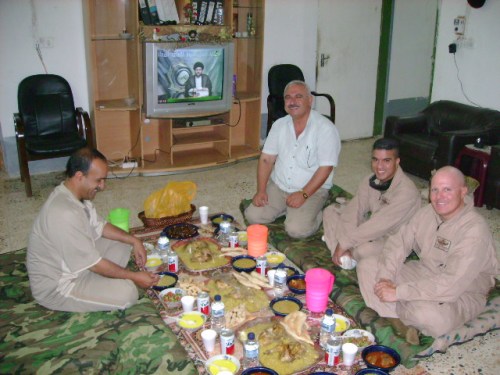
074Dinner with Brigadier General Sabah of 1st Brigade of 7th Iraqi Division in Ramadi. A professional soldier and Shia he sees himself as an Iraqi and ally of the US. The Last time we met in January 2008 in passing at the helo terminal in Ramadi he greeted me with a hug in front of his staff and many American soldiers and Marines calling me a friend.
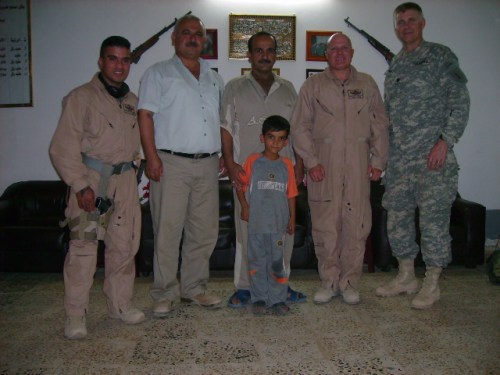
079Group Shot with General Sabah, his youngest son, our interpreter, the American Brigade Senior Adviser and my Assistant RP2 Lebron
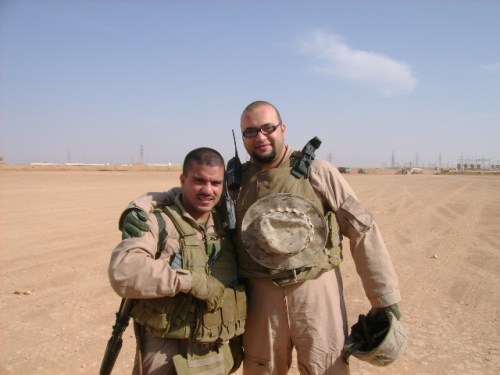
176RP2 Lebron with one of the “Terps” interpreters named “Shaun” originally from Palestine but a Green Bay Packer fan living in Minnesota

237Iraqi Children Greeting us in a town along the Euphrates

227Iraqi man in traditional garb happy to see us because Americans helped clean out the terrorists from his village
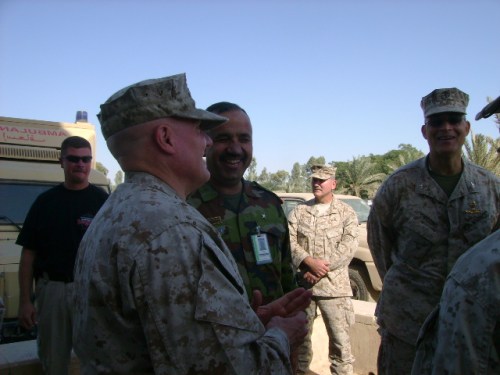
258With Iraqi Officers of 7th Division and Marine Advisers at the 2007 Marine Corps Birthday Cake Cutting at Camp Blue Diamond. Trained by the Marines the 7th and the 1st Iraqi Divisions helped turn the Tide in Al Anbar and the 1st went on to liberate Basra and then to Diyala Province
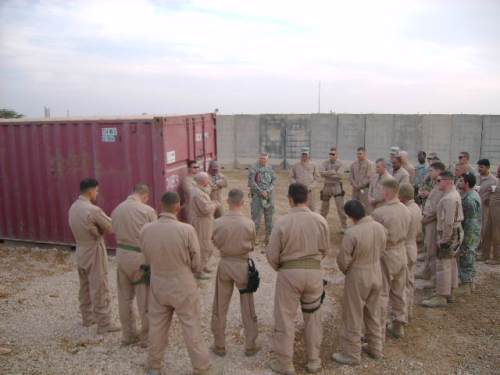
372Blessing Advisers of 7th Division as they prepared to go with Iraqis to guard a fuel convoy. Following this the Iraqis asked if I would bless them and their vehicles too, it seems they have some kind of Holy Water too and were willing to take the Christian kind as well.
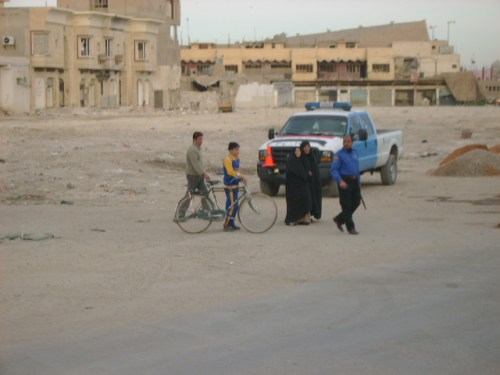
291A man with a Dangerous Job. Iraqi Policeman Escorting Civilians across Route Michigan in Ramadi. Shortly after we took small arms fire and Iraqi Police engaged the target
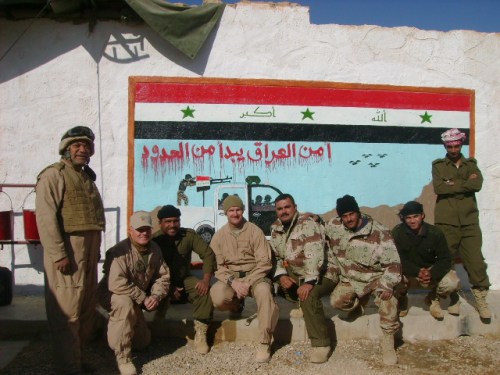
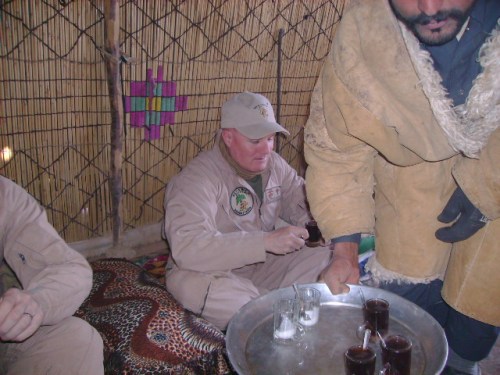
866With the Leaders of an Iraqi Border Force Company a kilometer from Syria, they like all the Iraqis we dealt with were hospitable offering us Ch’ai as well as food on our visit with the adviser team

880With a Bedouin Family near the Syrian border on Christmas Eve 2007

867Iraqi Border Troops at Border Fort Five near Syria
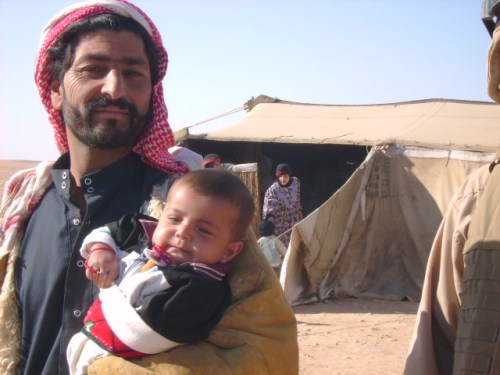
882Proud Bedouin Father and his son

883The Bedouin Father serves us Ch’ai and cakes
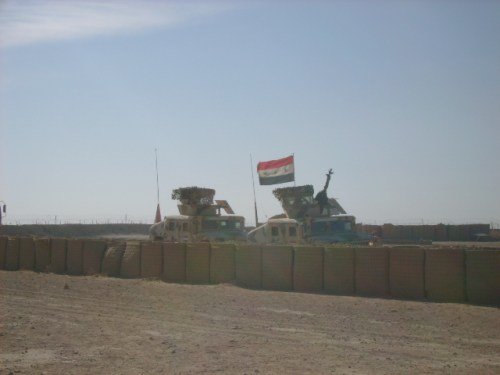
934Iraqi Troops of 7th Division coming back from Patrol on Christmas Day at COP North an isolated post near Syria. While we celebrated they worked and trained.

911One of the Iraqi vehicles in one of our convoy’s near Al Qaim pulling security for us to pass. Our convoys generally had about 3 American and 2-3 Iraqi trucks transiting dangerous areas with very few soldiers, nothing more than 240 series or .50 cal machine guns and far away from any big reinforcements should we have been hit
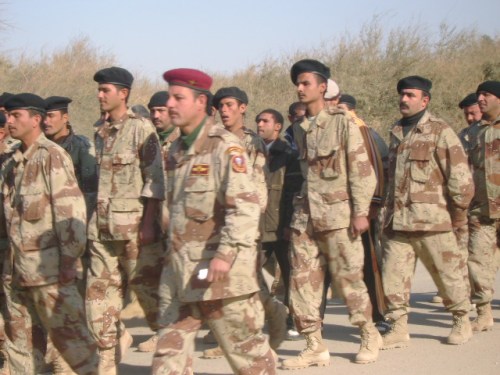
969New Iraqi Army Soldiers in Basic Training at Habbiniya. Imagine being far away from your family and know that they are in danger just because you serve in the Army

971Chaplains and our Assistants with General  Ali and his staff of the Training and Support Center at Habbinyah. He proudly showed us his well worn Arabic-English Bible. A Moslem he liked it because it had information not in the Koran

973Bakers at the Iraqi Army Bakery in Habbinyah the fresh bread is great

Dundas and FallahWith General Falah Hasan..driven from Iraq by Saddam under threat of death he returned from the United States to help rebuild the Iraqi Air Force and advise the Iraq Assistance Group.When asked what branch of Islam he said “My mother was Sunni, my father Shia I don’t know I am an Iraqi”
Of course I had many more interactions with the Iraqis than just these photos.  There was the G-3 Officer at 2nd Brigade of 7th Division who said that he wished that the Iraqis had Christian Priests to serve as Imams because he knew that they would care for the soldiers and families and were not compromised like many Sunni and Shia clergy.  The Iraqi military, Sunni and Shia distrusts most Moslem clergy because of their political militancy and divisiveness during the worst part of the civil war.  At one time they had Imams during the Saddam era but many commanders refused to appoint Imams.  Then there was the Iraqi Company commander at out in the west who tracked me down to meet the “American Imam and thank him” for serving our Marines and for praying for Iraq and its people. He also said to let people know that if something ever happened between the US and “Persia” that most Iraqis would support us. I could go on but needless to say there are millions of Moslems who fight along side of us as well as the American Moslems who serve in our ranks without being traitors like Major Hasan.   

Peace and blessings,

Padre Steve+


2 Comments

Filed under iraq,afghanistan, Tour in Iraq

A Christian Defense of the Rights of Moslems and Others in a Democracy (or Constitutional Republic)

Martin Niemöller was a war hero.  He had served on U-Boats during the First World War and commanded a U-Boat in 1918 sinking a number of ships.  After the war he resigned his commission in the Navy in opposition to the Weimar Republic and briefly was a commander in a local Freikorps unit. His book Vom U-Boot zur Kanzel (From U-boat to Pulpit) traced his journey from the Navy to the pastorate. He became a Pastor and as a Christian opposed what he believed to be the evils of Godless Communism and Socialism.  This placed him in the very conservative camp in the years of the Weimar Republic and he rose in the ranks of the United Evangelical Church of the Old Prussian Union.  Active in conservative politics, Niemöller initially support the appointment of Adolf Hitler as Chancellor.  However, he quickly soured on Hitler due to his insistence on the state taking precedence over the Church.  Niemöller was typical of many Germans of his era and harbored ant-Semitic sentiments that he only completely abandoned his anti-Semitic views until after he was imprisoned.  He would spend 8 years as a prisoner of the Nazis a period hat he said changed him including his views about Jews, Communists and Socialists.  Niemöller was one of the founding members of the Pfarrernotbund (Pastor’s Emergency Federation) and later the Confessing Church. He was tried and imprisoned in concentration camps due to his now outspoken criticism of the Hitler regime.

Herman Maas was another Evangelical Pastor.  Unlike Niemöller, Maas was a active participant in the ecumenical movement, built bridges to the Jewish community and defended the rights of Jews as German citizens.  He received a fair amount of criticism for his attendance of Reichspräsident Friedrich Ebert’s funeral.  Ebert was both a Socialist and avowed atheist.  Maas too was active in the Pfarrernotbund and the Confessing church, and unlike Niemöller maintained his opposition to anti-Semitism and the Nazi policies against the Jews. He would help draft the Barmen declaration.  He too would be imprisoned and survive the war.  Maas was the first non-Jewish German to be officially invited to the newly formed state of Israel in 1950. In July 1964 Yad Vashem recognized the Maas as one of the Righteous Among the Nations.

Dietrich Bonhoeffer a young Pastor and theologian would also step up to oppose the Nazis and offer support for the Jews.  He helped draft the Bethel Confession which among other things rejected “every attempt to establish a visible theocracy on earth by the church as a infraction in the order of secular authority. This makes the gospel into a law. The church cannot protect or sustain life on earth. This remains the office of secular authority.”  He also helped draft the Barmen declaration which opposed and condemned Nazi Christianity.  Bonhoeffer would eventually along with members of his family take an active role in the anti-Nazi resistance as a double agent for Admiral Canaris’ Abwehr.  For this he would be executed after his final sermon in the concentration camp at Flossenburg just a month prior to the end of the war.  Another opponent of the Nazis in the Confessing Church was Swiss-German theologian Karl Barth.  Barth went into exile as a Swiss citizen but remained active in the criticism of the Nazi regime.

Bishop Galen of Münster and Father and others including Father Rupert Meyer in Munich who opposed Hitler in the early 1920s would also oppose the Nazi policies toward the Church and the Jews.  They would also end up in concentrations camps with some dying at the hands of the Nazis.

All these men took risks to defend the Jews who were religious minority group that had been traditionally discriminated against in Germany.  They opposed the Nazi policies which were widely supported by much of the German populace making them unpopular in their own churches as among the traditionally conservative supporters of the Evangelical and Catholic Churches.  The Jews were not simply discriminated against as a racial or religious group but also identified with the political left, especially the Social Democrats, Independent Socialists, Communists and the Spartacists. Since the Independent Socialists, Communists and Spartacists were all involved in attempts to create a Soviet state during the early tumultuous years of Weimar and been involved in many acts of violence against traditional German institutions and the state, they were viewed by Hitler and others as part of the Bolshevik-Jewish threat to Germany.  Karl Liebnicht and Rosa Luxembourg were among the high profile leaders of this movement in Germany and both were Jewish.  The fact that many in the leadership of the Bolshevik movement in the Soviet Union were Jewish added fuel to the fire that the Nazis stoked in Germany.  Hitler and the Nazis played on the historic, but muted prejudice against German Jews who in many cases were more secular and German than religious and had assimilated well in Germany.  Hitler’s rhetoric as well as that of other Nazis and Nazi publications helped identify the Jews as part of the “Stab in the back” myth that was commonly used by the German right to explain the defeat in the First World War.  Thus they were painted as a political and social threat to Germany.

When Hitler took power persecution of the Jews began in earnest.  Jews were along with Communists, Trade Unions and Socialists enemies of the state.  They were banned from the military, civil service and other government employment, professional associations and forced to wear a gold Star of David on their clothing.  Their property was seized, many were abused by SA men acting as deputized auxiliary police and many times their businesses, Synagogues and homes were vandalized, burned or seized by the state.  Many would be forced to flee in order not to be sent to ghettos and concentration camps.  Even those leaving only escaped with the minimum of their possessions as the Nazi regime extorted anything of value from them as they left Germany.  This was all done because Hitler and those like him portrayed the Jews as not only an inferior race, but enemies of the state and the German people.

Today we face a similar movement in conservative circles in the United States.  This time it is not the Jews, but Moslems who are the targets of xenophobic rage by many influential members of the “conservative” media, including Rush Limbaugh, Sean Hannity and numerous others.  Their popularity in voicing support for “Christian morale values” such as being against abortion has ingratiated them with conservative Christians.  It is so bad that that many “conservative” Christians cannot differentiate between their vitriolic and un-Christian rage against Moslems, Democrats or anyone else portrayed by the big media talkers as the enemy that they have forgotten the Gospel and become simply an appendage to Republican or “conservative” politicians.  It is not uncommon to see Christians on the web or on the call in talk radio programs identify lock stock and barrel with Limbaugh and others identifying the crass materialism and social Darwinism of “pure” Capitalism and the anti-Christian policy of pre-emptive war.   That may seem harsh, but many of these people in the “Conservative Bible project” seek to re-translate the Bible into their own political, social and economic policies even seeking to change or minimize any Scripture that might be equated with the “Social Gospel.”  Unfortunately many Christians and others have jumped in on the anti-Moslem and anti-immigrant crusades launched by those on the far right.

These men and women have found new grist in the wake of the traitorous terrorism of the disaffected and possibly psychotic Major Nidal Malik Hasan at Fort Hood where he killed 13 and wound 30 Soldiers and military civilians.  Why Hasan was allowed to continue to serve after numerous reports of his Anti-American and pro-Jihadist is the question that needs to be investigated.  However the reaction of some is to treat all Muslims as suspect in a collective manner.  This is troubling.  I have posted just a few of the comments by various “conservatives” some who are Christians to demonstrate the point.

Bryan Fischer of the American Family Association is demanding that Moslems be removed from the military or other security related positions in government.  His position is that until we can prove which Moslems are not going to commit acts of terrorism that we should ban them from the military.  His comments are here:

“It it is time, I suggest, to stop the practice of allowing Muslims to serve in the U.S. military. The reason is simple: the more devout a Muslim is, the more of a threat he is to national security. Devout Muslims, who accept the teachings of the Prophet as divinely inspired, believe it is their duty to kill infidels. Yesterday’s massacre is living proof. And yesterday’s incident is not the first fragging incident involving a Muslim taking out his fellow U.S. soldiers. Of course, most U.S. Muslims don’t shoot up their fellow soldiers. Fine. As soon as Muslims give us a foolproof way to identify their jihadis from their moderates, we’ll go back to allowing them to serve. You tell us who the ones are that we have to worry about, prove you’re right, and Muslims can once again serve. Until that day comes, we simply cannot afford the risk. You invent a jihadi-detector that works every time it’s used, and we’ll welcome you back with open arms. This is not Islamophobia, it is Islamo-realism.”

Pat Robertson of the 700 Club and Regent University said:

“Islam is a violent–I was going to say religion–but it’s not a religion. It’s a political system. It’s a violent political system bent on the overthrow of governments of the world and world domination.”

“They talk about infidels and all this. But the truth is, that’s what the game is. You’re dealing with not a religion. You’re dealing with a political system. And I think you should treat it as such and treat it’s adherents as such. As we would members of the Communist party and members of some Fascist group.”

Dave Gaubatz, author of Muslim Mafia said:

Politicians, Muslims, and law enforcement are concerned about a ‘backlash’ against Muslims. Now is the time for a professional and legal backlash against the Muslim community and their leaders.” The post was redacted later by the website that it was on to change “backlash against the Muslim community” to “backlash against the Muslim Brotherhood.”  I guess the website realized that the use of the term community went a bit far.

Brigitte Gabriel of the American Congress for Truth told students at the Joint Forces Staff College  in response to the question “Should we resist Muslims who want to seek political office in this nation?”

“Absolutely. If a Muslim who has — who is — a practicing Muslim who believes the word of the Koran to be the word of Allah, who abides by Islam, who goes to mosque and prays every Friday, who prays five times a day — this practicing Muslim, who believes in the teachings of the Koran, cannot be a loyal citizen to the United States of America.”

Tell that to the Moslem Soldiers and Marines who have given their lives for this country and their fellow warriors in Iraq and Afghanistan.  Some of those include: U. S. Army Corporal Kareem Rashad Sultan Khan who was killed by a roadside bomb in Iraq, U.S. Army Specialist Rasheed Sahib who was accidently shot to death by a fellow soldier in Iraq, U.S. Army Major James Ahearn, killed by a bomb in Iraq, Army Captain Humayun Khan, who lured a suicide car bomb away from the men in his charge, saving their lives but giving up his own, Army Spc. Rasheed Sahib, an American Muslim from Guyana, Army Spc. Omead Razani, a son of Iranian immigrants or Marine Staff Sgt. Kendall Damon Waters-Bey, who was killed in a helicopter crash, and sadly many more.

Popular Talk Radio host and Fox News commentator Glenn Beck made this comment back in December 2006:

“I’m telling you, with God as my witness… human beings are not strong enough, unfortunately, to restrain themselves from putting up razor wire and putting you on one side of it. When things—when people become hungry, when people see that their way of life is on the edge of being over, they will put razor wire up and just based on the way you look or just based on your religion, they will round you up. Is that wrong? Oh my gosh, it is Nazi, World War II wrong, but society has proved it time and time again: It will happen.”

Timothy Rollins of the American Partisan suggests in the wake of the Fort Hood shootings:

“While the dust is still settling and everything starts getting sorted out with the usual deflections away from the truth that this administration is notorious for doing, there is no better time than now to improve the safety of our military, and this can best be done by enacting the Great Muslim Purge from our military and other national security apparatuses. These people need to be removed from every security post, even to be completely removed from all levels of government employment, be it federal, state, county, city or other municipality. This applies especially to universities. To keep them employed in these positions places our food, water, and other essential services at unacceptable risk.”

Of course there is Doug Giles an unabashed “Christian” columnist for Townhall.com using scripture to justify torture making this delightfully Christian comment in one of his columns about the practice of water boarding:  “Please note: If Christ wasn’t cool with irrigating irate Islamicists for facts, I must admit, I would still have to green light our boys getting data from enemy combatants 007 style. Stick a fire hose up their tailpipe and turn it on full blast. I don’t care. I’m not as holy as most of you super saints or as evolved as some of you progressive atheists purport to be. Security beats spirituality in this scenario, as far as I’m concerned.”

This is so similar to the Nurnberg Laws and the Aryan Paragraph issued by the Nazis that it is scary.  Likewise the threats to American Moslems of placing them “behind razor wire” as we did to American Japanese citizens in World War II are chilling.  I wonder how Christians would react if an atheist or someone on the political left suggested all conservative Christians or members of pro-Life groups be imprisoned for the actions of Christians or pro-Life movement members like Scott Roeder or Eric Rudolph who killed to stop abortion or Fred Phelps and his Westboro Baptist Church?

This new found militancy has swept up the “Christian right” and others since 9-11 and has reached proportions that I could never have imagined. After my tour in Iraq I realized that much of what these people were saying was not Christian at all and when taken to their logical conclusion would be a police state in which anyone who opposed them would be persecuted. In Iraq I met many good Moslems fighting on our side against jihadists and terrorists many of whom have great respect and appreciation of the Christian faith and are more tolerant to Christians than many Christians are to Moslems.  These men put their families at risk to side with us to try to free Iraq from Al Qaida terror.  Almost all had lost family and friends to extremists.

As for the suggestions or demands that all Moslems be investigated and removed from the military these people insist that such action is necessary in the name of “security” and “protecting the Constitution.” All Moslems, even those who are loyal American citizens as well as those from Iraq and other nations who fight and die alongside Americans are placed on the same level as the fanatics and terrorists.  I question the motivations of the leaders of the movement but believe that most of the Christian conservatives have been caught up in the anger and the emotion of the times versus being true believers in what these men say.  That being said, you don’t have to be a true believer to be a willing accomplice in actions that first are not Christian and second trample on the Constitutional rights of American citizens.

I could keep citing examples but if someone can show me where this is condoned in the Gospels I would like to know.  The fact is that Christians are to place God first and defend the rights of others, even non-believers.  This is found not only in Scripture but runs through the Christian tradition across the denominational spectrum unfortunately there are Americans such as Marine Reservist Jasen Bruce have gone “terrorist hunting” and misidentifying a Greek Orthodox Priest as a Jihadist attacking him because of he didn’t speak English. http://www.tampabay.com/news/publicsafety/crime/article1050707.ece Admittedly people like Bruce are idiots, but it doesn’t take much to push some people over the edge.

The fact that so many people are suggesting such actions against American Moslems is troubling on a number of levels especially when those doing so claim to be Christians.  First is that it is the Church, or member’s thereof adopting a non-Christian worldview and attempting to use the state to enact legislation and laws against minority groups that they oppose, in this case the Moslems.  The fact that we live in a secular state, something that many of our Nation’s founding Fathers intended it to be, especially in regard to religion being mandated by the state is a point lost on many of these people.  Many Christians have completely embraced the mythology of the United States being a “Christian Nation.” With some even regarding the Constitution as a God inspired document.  For a more detailed critique of the Christian Nation mythology see Jared Holloway’s article on his Saepe Nihil Cogitamus website: http://jzholloway.wordpress.com/2009/08/04/did-the-founding-fathers-usa-found-the-nation-as-a-christian-nation/

Thankfully there are some, including the daughters of one of the men killed by Major Hasan who said on CBS The Early Show Kerry Cahill said:

“You can’t blanket a whole group of people. There’s extremists in every religion, and there’s extremists all over the world…when this man was obviously ill, I think.” Her sister Keely Vanacker said, “The death of our father or any of these victims shouldn’t be an excuse or a reason to begin to hate an entire group of people.”

There are also leaders of the Religious Right who have taken a stand against such action, Reverend Rob Schenck, President of the National Clergy Council, comments in regard to the Moslem prayer vigil in Washington D.C. earlier this year:  “With over 1.5 billion Muslims in the world, it is important that Christians have an open dialogue with the Islamic community. The church must never be timid in reaching out to peoples and groups with differing beliefs and traditions. Too much is at stake for future generations not to begin this historic conversation. This is an opportunity that we cannot afford to miss.”

And the Reverend Patrick J. Mahoney, Director of the Christian Defense Coalition states:

“The heart of Christ is to reach out and build bridges to all peoples regardless of what their faith traditions or beliefs might be. Several years ago the Christian Defense Coalition began reaching out to the Muslim world which resulted in a prayer delegation going to Baghdad to pray for the nation of Iraq and Prime Minister Maliki. Since then we have had many conversations and discussions with Islamic leaders in Washington, D.C. and around the world. This news conference gives us another chance to dialogue and share with our Islamic neighbors. It also gives us the platform to celebrate the greatness of America where everyone is allowed to practice their faith tradition in the public square free from government interference of harassment. The prayer vigil on the lawn of the Capitol this Friday highlights that timeless truth. Since 9/11, the church should not run from Muslims in America but begin reaching out with God’s love.”

What the good people who suggesting these punitive actions against American Moslems do is dangerous, not just for Moslems and other minorities but for them.  American and English law is based on legal precedence.  Once something has been determined to be legal, or constitutional it is considered by the law to be settled law.  This is a point made by Chief Justice Roberts regarding Roe v. Wade at his confirmation hearings.  If Christians want to use the law against Moslems or for that matter any other minority be it religious or political they tread on very dangerous ground.  Not only do they make a mockery of the Gospel command to love our neighbors, care for the foreigners among us and to be a witness to non-Christians support policies or laws that if enacted could and very well would be used against them by their opponents.  Law is all about precedent and if such laws were enacted and upheld by the courts they would be settled law that could be used against anyone.   What these dear brothers and sisters fail to realize is that such laws can be turned against them if the state should ever decided based on the statements of actions of some that the Christian community is a threat to state security of the public welfare.  With the actions of some radical Christians who have committed murder and violence against political, social and religious opponents it would not be hard for the government to label whole churches as enemies of the state.  The law is a two edged sword and those who want to use it to have the state enforce their religious, social, ideological or political beliefs on others need to remember what comes around goes around.

The Confessing church understood this and many were imprisoned, exiled or killed for this belief.  The founding fathers of this country understood this too, that is why there is the Constitution protection of Religion in the First Amendment.  This was put in because Virginia Baptists who had been persecuted by Anglicans lobbied James Madison for the amendment in the Bill of Rights threatening to withdraw their support for his candidacy if he did not.  Niemöller would discover the depths of his earlier folly in prison telling one interviewer after the war:

“I find myself wondering about that too. I wonder about it as much as I regret it. Still, it is true that Hitler betrayed me. I had an audience with him, as a representative of the Protestant Church, shortly before he became Chancellor, in 1932. Hitler promised me on his word of honor, to protect the Church, and not to issue any anti-Church laws. He also agreed not to allow pogroms against the Jews, assuring me as follows: ‘There will be restrictions against the Jews, but there will be no ghettos, no pogroms, in Germany. I really believed given the widespread anti-Semitism in Germany, at that time—that Jews should avoid aspiring to Government positions or seats in the Reichstag. There were many Jews, especially among the Zionists, who took a similar stand. Hitler’s assurance satisfied me at the time. On the other hand, I hated the growing atheistic movement, which was fostered and promoted by the Social Democrats and the Communists. Their hostility toward the Church made me pin my hopes on Hitler for a while. I am paying for that mistake now; and not me alone, but thousands of other persons like me.”

It is easy for well meaning people Niemöller to be bought with promises of support by politicians and media types who speak the words they want to hear in difficult times.  So today I suggest the formation of an ecumenical Pastor’s Emergency League which will not be bought by the empty and godless promises of hate mongers on the right or the left.  Such a group of men and women spanning the breadth of the Christian tradition and others that see the danger of extremism of all types is becoming necessary.  Such a step is becoming necessary due to the militancy of the Christian right as well as the militancy of atheist groups who lobby against all public religious expression by any religion.  Such a League would respect the various creeds and statements of faith of each member’s denomination.  The movement o the right has set a dangerous course fraught with perils that they do not comprehend. Just allow those that they believe are oppressing or persecuting them now to be empowered with the precedent of laws discriminating against specific religious groups against the Christians that supported them in the first place.  It will be a bitter poison indeed when that happens to them later if American Moslems were to be targets by such laws.

We have entered a dangerous phase of American history.  These movements have the potential not only to oppress law-abiding and patriotic American Moslems and to crush the religious freedoms of all in this county. Suggesting that American citizens, including those who serve the county in the military or government of entire religious or ethnic groups be  targeted for punitive action on the basis of extremists and fanatics like Major Hasan sets a precedent that is chilling.

Niemöller would say it well in this poem:

First they came for the communists, and I did not speak out—because I was not a communist;
Then they came for the socialists, and I did not speak out—because I was not a socialist;
Then they came for the trade unionists, and I did not speak out—because I was not a trade unionist;
Then they came for the Jews, and I did not speak out—because I was not a Jew;
Then they came for me—and there was no one left to speak out for me.

Peace,

Padres Steve+

40 Comments

Filed under History, iraq,afghanistan, Military, philosophy, Religion

Pleasant Travels

Today has been a very long travel day.  I had to be up very early for a 0600 flight out of Sacramento to Los Angeles, a couple of hours in LAX and a breakfast burrito and beer.  I then went to my flight to Chicago.  I was crammed into steerage with a nice couple, he was a member of the Church of Baseball Wrigley Field Parish, obviously a true believer had not rejected his faith despte moving to Los Angeles.  In Chicago I had a beer with a Army soldier on his way back from one phase of training as he got ready to deploy to Afghanistan.  The Fox Sports Bar in terminal E/F was packed, he saw my desert back pack, asked what service and to his table.

Other people have been really nice at every stop.  I just about missed my flight because after waking up at 0245 I fell back asleep and had to dash out of the hotel at 0400 only bothering to wash my face and brush my teeth.  I got on California 99 and fell in with a couple of other cars doing 85-90 MPH and made record time to airport just making it to the gate as the aircraft was already boarding.

Now my flight to Norfolk, or as it is known by it’s airport code as ORF is delayed by about 45 minutes due to the Nor’easter that has flooded my neighborhood.  Elmer the shrink is going to pick me up as it will keep the Abbess off the road in the dark, flooded and generally crappy conditions.

What has been nice about this trip has been the pleasantness of the people. Anyway, time to board.

Peace, Padre Steve+


Leave a comment

Filed under Loose thoughts and musings

Veteran’s Day: Goodbye to 666 Lake of Fire Circle, a Golf Outing and Remembering the Veterans in my Life

veteransday2009

Today was Veteran’s Day. Amid the solemnity of the day I am still in California where I came this week to try to help my mom with my dad’s affairs and to also see my dad who is definitely in the end stages of Alzheimer’s disease.  This has been the hardest trip home in my life.  I knew I had to come, although the Abbess was against it fearing for my emotional health and perhaps she was right.  Tonight I sit in a hotel room self medicating and trying to regain some sense of sanity.

Me and last last picDad and Me back in May…He Still knew Me then

The past few days have been hell.  My dad does not know me anymore; he has almost no response to anything and stares straight ahead.  The hardest part is when I realized that he didn’t know me.  So I asked if he had seen my mother who I had taken to visit him the day before and my brother.  He said that he had seen them, and even seen my mom the morning I asked him the question.  However she had not been there that day.  So I asked if “Steve had visited yesterday.”  He got agitated and said “I don’t know any Steve yesterday.”  Today was much the same, I asked if he knew who Steve was, and he said “yes” and I asked if he had seen him and he said “no he hasn’t been here.”  This whole trip he has probably spoken under 50 words in 4 visits.  There is nothing left. For all practical purposes he is dead in a body that won’t die.  If that was not bad enough my mother has not skipped any opportunity to attack and pick at me until I broke.  I begged her to lay off, told her that I was not up to fighting with her and tried to keep my cool but she wouldn’t let up.   I cannot deal with constant conflict and a mother who calls me “a weak, politically correct pansy.”  I’m a combat veteran and went to war unarmed into hostile territory with little groups of Americans far away from the big battalions with all the heavy weapons and the women called me a “weak, politically correct pansy.  She has put me down, belittled my education, vocation and career and insulted my wife for the last time. When I told her that “everything in her life that was wrong was somebody else’s fault and not hers” she agreed.  I knew it was over at that point. This may sound un-Christian but I will not go see her again.   Tomorrow I will see my dad for what it is worth, see my brother and his family and then early Friday I will get the hell out of Dodge.  She had offered to pay for my trip out but I can’t prostitute myself for that kind of abuse.    The next time I come back it will be for my father’s funeral.  I love my brother and his family.  He and his wife are saints.  I couldn’t live that near my mother without ending up in a psychotic state, something that I came perilously close to this week.  God bless Jeff, Mel and their kids.

Me and Jeff at mickey groveWith my Brother back in May

I went golfing with my brother and nephews today.  For much of the day I couldn’t hit water if I fell out of the damned boat.  My mind was so gooned up and upset by the events of the week I couldn’t concentrate worth a shit.  Even my well hit shots were mainly slicing to the right and I embarked on a tree killing expedition.  I hit 7 trees solidly, took down a couple of decent sized branches, grazed three other trees and nailed an outhouse.  However it was really good to be out with Jeff, Darren and Nate.  Nate can really hit the ball for an 8 year old; he has the potential to be a really good golfer.  Darren doesn’t really care and is out to have fun.  He enjoyed my sarcasm as I commented on my shots and helped keep track of the number of trees that I hit and I told him that I would see how many I could try to kill before the day was out.  By the end of the round I was hitting the ball a lot better and it was going more often than not where I wanted it to go, but the first 7 holes were hell.  It makes me think of Robin Williams’ golf routine. http://www.youtube.com/watch?v=xDQd49rEF_0

As I mentioned today was Veteran’s day.  After I got my hotel I went to a local Applebee’s where I had a sirloin steak and potatoes and a couple beers on their Veterans’ day salute.  I sat at the bar with a couple about 10 years older than me; he had served on a Navy Minesweeper in Vietnam.  They were nice; I think that is why I like sitting at the bar when I go out to eat, there is a sense of community that you don’t find a lot of other places.

As it is Veteran’s day I think I will take some time to remember some of the Veterans in my life who have helped my through my life and career.  This is taken from a post that I did around Memorial Day.

I’ve been in the military for almost 28 years now.  I enlisted in the National Guard while in college and entered Army ROTC back in 1981.  Since then it has been to quote Jerry Garcia “a long strange trip.”  My dad served twenty years in the Navy.  He retired in 1974 as a Chief Petty Officer and did time surrounded in the South Vietnamese city of An Loc when it was surrounded by the North Vietnamese for 80 days in 1972.  He didn’t talk about it much when he came back; in fact he came back different from the war.  He probably suffered from PTSD.  All the markers were there but we had no idea about it back then, after all he was in the Navy not the Army.

breedlove-ness2LCDR Breedlove and Chief Ness

My second view of war came from the Veterans of Vietnam that I served with in the National Guard and the Army.  Some of these men served as teachers and mentors.  LCDR Jim Breedlove and Senior Chief John Ness at the Edison High School Naval Junior ROTC program were the first who helped me along. They have both passed away in the past year and a half.  I will never forget them.  A post dedicated to them is on this blog. Colonel Edgar Morrison was my first battalion commander.  He was the most highly decorated member of the California National Guard at that time and had served multiple tours in Vietnam.  He encouraged me as a young specialist and officer cadet and showed a tremendous amount of care for his soldiers.  Staff Sergeant’s Buff Rambo and Mickey Yarro taught me the ropes as a forward observer and shared many of their Vietnam experiences. Buff had been a Marine dog handler on the DMZ and Mickey a Forward Observer.  Sergeant First Class Harry Zilkan was my training NCO at the UCLA Army ROTC program.  He was a Special Forces Medic with 7th Group in Vietnam.  He still had part of a VC bayonet embedded in his foot.  He received my first salute as a newly commissioned Second Lieutenant as well as a Silver Dollar.  I understand that after the Army he became a fire fighter.  He had a massive heart attack on the scene of a fire and died a few years later from it.  Sergeant Major John Butler was our senior enlisted at UCLA.  He served with the 173rd Airborne in Vietnam.  Sergeant First Class Harry Ball was my drill sergeant at the ROTC pre-commissioning camp at Fort Lewis Washington in 1982.  He was also Special Forces and a Ranger and served multiple tours in Vietnam.  He was quite influential in my life, tearing me apart and then building me back up.  He was my version of Drill Sergeant Foley in An Officer and a Gentleman. Like Zack Mayo played by Richard Gere in the movie I can only say: Drill Sergeant “I will never forget you.”

As I progressed through my Army career I encountered others of this generation who also impacted my life. First among them was First Sergeant Jim Koenig who had been a Ranger in the Mekong Delta.  I was the First Sergeant that I would measure all others by.  Once during a ARTEP we were aggressed and all of a sudden he was back in the Delta. This man cared so much for his young soldiers in the 557th Medical Company.   He did so much for them and I’m sure that those who served with him can attest to this as well as me. Jim had a brick on his desk so that when he got pissed he could chew on it.   He was great.  He played guitar for the troops and had a song called Jane Fonda, Jane Fonda You Communist Slut. It was a classic.  He retired after he was selected to be a Command Sergeant Major because he valued his wife and family more than the promotion.  It hurt him to do this, but he put them first. Colonel Donald Johnson was the commander of the 68th Medical Group when I got to Germany in January 1984.  Colonel “J” as well all called him was one of the best leaders I have seen in 28 years in the military.  He knew everything about everything and his knowledge forced us all to learn and be better officers and NCOs.  On an inspection visit you could always find him dressed in coveralls and underneath a truck verifying the maintenance done on it.  He served a number of Vietnam tours.  He died a few years back of Multiple Myeloma and is buried at Arlington.  Chaplain (LTC) Rich Whaley who had served as a company commander in Vietnam on more than one occasion saved my young ass at the Army Chaplain School.  He remains a friend and is the Endorsing Agent for the Church of Jesus Christ of Latter Day Saints. As a Mormon he was one of the most “Christian” men that I have ever met.  I know some Christians who might have a hard time with that, but Rich demonstrated every trait of a Christian who loved God and his neighbor.

MVC-023SMe with Major General Frank Smoker USAF (Ret) and Colonel Tom Allmon 2005

When I was the Installation Chaplain at Fort Indiantown Gap PA I was blessed to have some great veterans in my Chapel Parish.  Major General Frank Smoker flew 25 missions as a B-17 pilot over Germany during the height of the air war in Europe. He brought his wonderful wife Kate back from England with him.  Henry Boyd who I buried was one of the 101st Airborne soldiers epitomized in Band of Brothers. He had a piece of shrapnel lodged next to his heart from the Battle of the Bulge until the day he died. Scotty Jenkes was an Air Force pilot in Vietnam flying close air support. Colonel Ray Hawthorne served several tours both in artillery units and as an adviser in 1972.  CWO4 Charlie Kosko flew helicopters in Vietnam.  All these men made a deep impact on me and several contributed to my career in very tangible ways.

051Ray and his Crew from The Vietnam Veterans of America at Harbor Park

My life more recently has been impacted by others.  My friends of the veterans of the Battle of Hue City including General Peter Pace, Barney Barnes,  Tony “Limey Cartilage ” Sergeant Major Thomas and so many others have become close over the years, especially after I did my time in Iraq. They and all the Vietnam vets, including the guys from the Vietnam Veterans of America like Ray and John who man the beer stand behind the plate at Harbor Park all mean a lot to me.  My friends at Marine Security Forces Colonel Mike Paulovich and Sergeant Major Kim Davis mean more than almost any people in the world.  We traveled the globe together visiting our Marines.  Both of these men are heroes to me as well as friends.

boarding teamUSS HUE CITY Boarding Team 2002

Finally there are my friends and brothers that I have served with at sea on USS HUE CITY during Operation Enduring Freedom and the advisers on the ground in Al Anbar mean more than anything to me. Perhaps the most important is my RP, RP2 Nelson Lebron who helped keep me safe and accompanied me all over the battlefield.  Nelson who has done Iraq 3 times, Afghanistan, Lebanon and the Balkans is a hero.  The men and women of Navy EOD who I served with from 2006-2008 have paid dearly in combating IEDs and other explosive devices used against us in Iraq and Afghanistan are heroes too.  There is no routine mission for EOD technicians.

307With 1st Brigade 1st Iraqi Division Advisers in East Ramadi January 2008
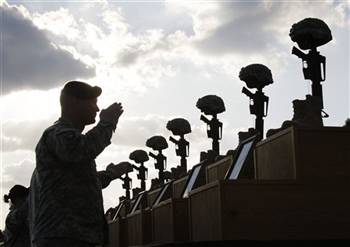
I give thanks for all them men that I mention in this post, especially my dad. God bless all of you guys. Please honor the Veterans that you know not only on Memorial Day or Veterans’ Day but every day.   Honor also those who gave their lives in the defense of liberty in all of the wars of our nation. They have earned it.

Today as I write many of my friends serve in harm’s way.  I hope that my recovery, spiritually, emotionally and physically goes well enough that I can go back with them.  For now I need to recover. My boss is right about that, if this week is any indication I’m in no shape to go back to a combat zone, bit Lord willing I will be so I can be with those I care for and serve alongside.

Peace,

Padre Steve+

Post Script: I do pray that no one takes offense at my words regarding my dealings with my mother. If someone thinks that I am wrong, or out of line they can contact me privately.  However, I have to protect me now.  I can’t help her or save her so I’m done.

12 Comments

Filed under alzheimer's disease, golf, iraq,afghanistan, Military, PTSD

Fort Hood Memorial and Veteran’s Day…The War Comes Home via a Traitor to His Oath

fort hood memorialSoldiers rendering Honors to Fallen Comrades at Fort Hood (MSNBC Photo)

The killings of 13 Americans and wounding of 30 others by Major Nidal Malik Hasan has left a bitter taste in many American’s mouth.  It was an act of treason by a man who apparently became a “self-radicalized home grown terrorist.”  Influenced by his religious beliefs which even some of his Moslem Imam’s thought were troubling and for which they would not approve him to serve as a volunteer lay leader for other Moslem soldiers, Major Hasan attacked his fellow soldiers.  He walked into a processing center for soldiers and opened fire allegedly shouting “Allah Akbar!” as he began his 4 minute rampage firing over 100 rounds from two weapons, one a “cop killer” type of pistol.  It appears that in the year prior to this terrorist act that Major Hasan not only made statements approving of suicide bombing, statements against U.S. Service Members of the Moslem faith fighting other Moslems and vehemently opposing the U.S. involvement in the wars in Afghanistan and Iraq.  Many of these statements were around other Army personnel and evidently Army investigators had been watching him.  As an officer who at one time was a company commander and also helped the administrative oversight of various criminal investigations I wonder how Major Hasan was not fully investigated and called into account for his statements which were in direct contravention to his oath as an Army Officer, his Commission which as a Regular Army Field Grade Officer was actually approved by the Senate, and his Hippocratic Oath as a Physician to “do no harm.”  Major Hasan is not the first soldier, Moslem or otherwise to kill his fellow soldiers.  What makes his case unique is that he is an officer and a physician.  I personally think that is why he was never called to account for his words by others in the Army.  The fact is that no one ever assumes that an officer or a physician could or would actually commit such an act.  This was one of the hardest things for me in comprehending Major Hasan’s crime, simply put “officers do not do such things.” Maybe I’m old fashioned and my sense of honor as an officer borders on archaic but how such a man could swear the oath “to support and defend the Constitution of the United States against all enemies, foreign and domestic “ could kill his fellow soldiers is beyond me.  I read his power point presentation given to his class last year which is posted here:

http://a.abcnews.go.com/images/Blotter/Hasan_2007.pdf

The presentation is troubling because of the more fundamentalist understanding that Major Hasan shows even in relationship to Moslems that he considers “moderate.”  “Muslims may be seen as moderate (compromising) but God is not.”  And “We love death more than you love life!” Having attended the Jordanian Army Peace Operations Training Center and gotten to know senior Iraq officers while serving with our advisors I can say that Major Hasan has a different take on this than many Islamic officers in the armies of Arab nations.  How Hasan was able to present this and have had documented contact with known radicals without being at least questioned shows an incredible lack of forsight by the FBI and Army investigators.

http://abcnews.go.com/Blotter/official-nidal-hasan-unexplained-connections/story?

I pray that he faces justice and of there are any accomplices that they will also be cause and pay for this.  At the same time I pray that the xenophobic ramblings of some who see all Moslems as the enemy are curbed and that they will not incite violence against the innocent in the name of revenge.

Fort Hood conducted a memorial service today for the fallen.  I listened to a lot of it on the radio as I was out.  I was impressed by the remarks of General Cone, General Casey and President Obama.   I think that given the circumstances that the words were fitting and appropriate especially since tomorrow is Veteran’s Day.  The link to the text of the President’s speech is here:

http://www.whitehouse.gov/the-press-office/remarks-president-memorial-service-fort-hood

However I do think that a couple of parts of the speech stand out enough to post here:

This is a time of war.  Yet these Americans did not die on a foreign field of battle.  They were killed here, on American soil, in the heart of this great state and the heart of this great American community.  This is the fact that makes the tragedy even more painful, even more incomprehensible.

For those families who have lost a loved one, no words can fill the void that’s been left.  We knew these men and women as soldiers and caregivers.  You knew them as mothers and fathers; sons and daughters; sisters and brothers.

But here is what you must also know:  Your loved ones endure through the life of our nation.  Their memory will be honored in the places they lived and by the people they touched.  Their life’s work is our security, and the freedom that we all too often take for granted.  Every evening that the sun sets on a tranquil town; every dawn that a flag is unfurled; every moment that an American enjoys life, liberty and the pursuit of happiness — that is their legacy…

These are trying times for our country.  In Afghanistan and Pakistan, the same extremists who killed nearly 3,000 Americans continue to endanger America, our allies, and innocent Afghans and Pakistanis.  In Iraq, we’re working to bring a war to a successful end, as there are still those who would deny the Iraqi people the future that Americans and Iraqis have sacrificed so much for.

As we face these challenges, the stories of those at Fort Hood reaffirm the core values that we are fighting for, and the strength that we must draw upon.  Theirs are the tales of American men and women answering an extraordinary call — the call to serve their comrades, their communities, and their country.  In an age of selfishness, they embody responsibility.  In an era of division, they call upon us to come together.  In a time of cynicism, they remind us of who we are as Americans.

We are a nation that endures because of the courage of those who defend it.  We saw that valor in those who braved bullets here at Fort Hood, just as surely as we see it in those who signed up knowing that they would serve in harm’s way.

We are a nation of laws whose commitment to justice is so enduring that we would treat a gunman and give him due process, just as surely as we will see that he pays for his crimes.

We’re a nation that guarantees the freedom to worship as one chooses.  And instead of claiming God for our side, we remember Lincoln’s words, and always pray to be on the side of God.

We’re a nation that is dedicated to the proposition that all men and women are created equal.  We live that truth within our military, and see it in the varied backgrounds of those we lay to rest today.  We defend that truth at home and abroad, and we know that Americans will always be found on the side of liberty and equality.  That’s who we are as a people.

Tomorrow is Veterans Day.  It’s a chance to pause, and to pay tribute — for students to learn the struggles that preceded them; for families to honor the service of parents and grandparents; for citizens to reflect upon the sacrifices that have been made in pursuit of a more perfect union.

For history is filled with heroes.  You may remember the stories of a grandfather who marched across Europe; an uncle who fought in Vietnam; a sister who served in the Gulf.  But as we honor the many generations who have served, all of us — every single American — must acknowledge that this generation has more than proved itself the equal of those who’ve come before.

We need not look to the past for greatness, because it is before our very eyes.

This generation of soldiers, sailors, airmen, Marines and Coast Guardsmen have volunteered in the time of certain danger. They are part of the finest fighting force that the world has ever known.  They have served tour after tour of duty in distant, different and difficult places.  They have stood watch in blinding deserts and on snowy mountains.  They have extended the opportunity of self-government to peoples that have suffered tyranny and war.  They are man and woman; white, black, and brown; of all faiths and all stations — all Americans, serving together to protect our people, while giving others half a world away the chance to lead a better life.

In today’s wars, there’s not always a simple ceremony that signals our troops’ success — no surrender papers to be signed, or capital to be claimed.  But the measure of the impact of these young men and women is no less great — in a world of threats that no know borders, their legacy will be marked in the safety of our cities and towns, and the security and opportunity that’s extended abroad.  It will serve as testimony to the character of those who served, and the example that all of you in uniform set for America and for the world…

Long after they are laid to rest — when the fighting has finished, and our nation has endured; when today’s servicemen and women are veterans, and their children have grown — it will be said that this generation believed under the most trying of tests; believed in perseverance — not just when it was easy, but when it was hard; that they paid the price and bore the burden to secure this nation, and stood up for the values that live in the hearts of all free peoples.

The speech which I heard on radio moved me.  A president acknowledged what I have believed about our current military.  We serve because we believe in the ideals of this nation and unlike wars past, the “Good Wars” where there were homecoming parades after surrender ceremonies we come home to a nation which mostly has not been at war, a nation that we have protected and served in harm’s way when most Americans were told to be patriotic after 9-11 by President Bush by “going shopping.”  In the midst of all we serve, many of us volunteering for more, not because we like war, but because we believe in our country and in helping others come to know freedom.  I know that amid the political cynicism that is so rampant that such idealism is derided by those who only see America as a force for evil, but such is not the case.  By and large our Soldiers, Marines, Sailors, Airmen and Coastguardsmen serve not for college money or to simply have a job, but because we care about the country and know that by serving now that we will likely end up in a combat zone.

We serve in unpopular wars and our sacrifice is to many people just a news bite in between economic, entertainment and sports stories.  There are those on the left who despise us as much as they did those who served in Vietnam. Likewise there are those on the right who have no compunction about using us in the military until we are spent without sharing a whit in our sacrifice, without ever having put on a uniform much less seeing combat.  Some are politicians seeking a way to increase their power; others are people that I used to listen to on the radio all the time whose answer is to automatically suggest bombing or invading another country.  They say many kind words about us who serve and occasionally sponsor events to “help” military families, but none suggest any real shared sacrifice on the part of the nation.  In fact sometimes they have a negative effect on those who serve because their words are believed as gospel by many and if a combat veteran disagrees with a popular radio talk show host he can be told that that he is “politically correct” “weak” or even a “pansy” by people who shop till they drop under the protection provided by we who serve.  Having had this happen to me recently I know it is the case and the blowhards who drive goad people into such idiocy can go to hell.

So we fight the wars alone while contractors such as Halliburton and the company formerly known as Blackwater get rich lining their pockets with tax dollars doing jobs that at one time were done by the military in an era when much of the nation had a personal interest in the outcome of the war.  We fight the wars and deal with the trauma while others beat the war drums without regard to cost and for the first six years of the war continued to reduce the size of the military.  The previous administration had to be forced by congress into increasing the size of the active Army and Marine Corps and to stop cutting the Navy and the Air Force.

I am glad that unlike Vietnam that the majority of people seem to care about the military and our servicemen and women, even if they disagree with the national policy regarding the present wars.  For that I am grateful and blessed for the outward show of support by many stands in stark contrast what our brothers and sisters who served in Vietnam faced.

This has been and will continue to be a long war.  We have been at war over 8 years since 9-11 as opposed to under 4 years of American involvement in World War II.  The overwhelming burden of the war has been on the backs of an incredibly small segment of the American population.   If you look at the numbers it is well under one percent of the population of the United States that has served in Iraq or Afghanistan.  This is not a shared sacrifice.

Today is Veteran’s Day.  Take the time to recognize the sacrifices of not just those who fought in the big popular wars, but for those who have endured the unpopular and unglamorous wars such as Vietnam, Iraq and Afghanistan.  I have made two combat deployments as well as numerous trips in and out of theater. When the time comes and my boss thinks I’m ready to go again I will go to serve alongside my friends and comrades many of whom are serving in harm’s way now.

I ask readers of this website to remember the fallen in Iraq, Afghanistan and the other fronts in this ongoing war including the home front which felt the effect of the war when Major Hasan attacked his fellow soldiers.  Remember the fallen, care for the wounded and the families of those who have lost their lives, being wounded in mind body or spirit and those who have served in wars past as well as this war.  Our brothers and sisters who fought in World War II, Korea and Vietnam are growing fewer in number daily and “we, we happy few” who continue this fight need all the support that we can get.

I have been in California this week helping with my parents affairs.  My dad is in a nursing facility here with Alzheimer’s disease.  During my last visit he still recognized me and for a few minutes I had him back. Now he no longer knows who I am.  He is a retired Navy Chief and toward the end of his career served at An Loc where he endured that siege in the spring of 1972.  I thank God for my dad’s service and example that helped lead me to chose serving in the military, something for me that has lasted more than 28 years in service with the Army and the Navy.  I pray for God’s peace and mercy on him as he lives what little life that he has left.

God bless all of our veterans, the living and the dead as well as all of those who serve in harm’s way in Iraq and Afghanistan.  Pray for our country and the military.

Peace,

Padre Steve+

1 Comment

Filed under Military, Political Commentary, traumatic national events

Happy 234th Birthday Marines…Semper Fidelis My Friends

PK pics 350

tun tavernTun Tavern

On November 10th 1775 the Continental Marine Corps was founded at Tun Tavern in Philadelphia.  In the 234 years since that day the Marines have led the way.  The litany of battles and heroes is long. From their first action at Nassau in the Bahamas the Marines at sea, ashore and in the air have distinguished themselves as one of the most elite military organizations in history.

belleau woodMe with Deputy Commandant at Belleau Wood 2004
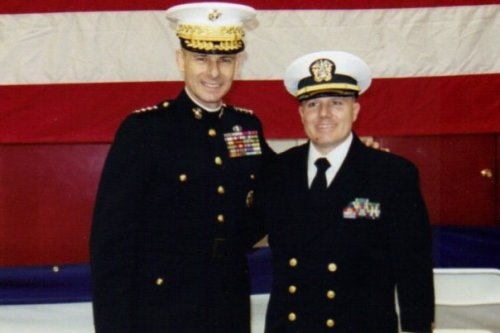
I have had the privilege of serving with the Marines three different times in my Navy Chaplain career.  I have been assigned to the 2nd Marine Division where I served with the 2nd Combat Engineer Battalion, the 1st Battalion 8th Marines, the 3rd Battalion 8th Marines and Headquarters Battalion 2nd Marine Division.  I has honored to serve with some great Marines there, Lieutenant Colonel T.D. Anderson and Dave Ottignon at 2nd CEB, Lieutenant Colonel DeRoches at 1/8, Lieutenant Colonel Lou Rochelle at 3/8 and Brigadier General Richard Lake at Headquarters Battalion.  These men and the many hundreds of Marines that I served with in the division helped imprint the ethos of the Marine Corps in me.  While with 3/8 I was able to deploy to the Far East Okinawa, Japan and Korea including the DMZ.  I was at Headquarters Battalion on 9-11-2001 and will not forget that day as I saw the planes crash into the Trade Center at the French Creek Gym and saw Marines shift to a war footing in minutes.  No one does this better than the Marines.

general pace and meGeneral Peter Pace and I at the 2002 Battle of Hue City Memorial
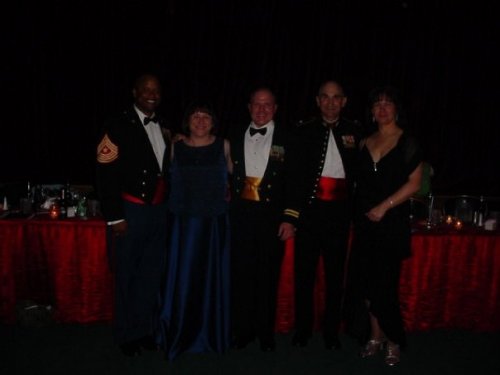
I was assigned to the USS HUE CITY CG-66, the only ship named after a Viet Nam battle, the Battle of Hue City and I was privileged to get to know many of the heroes of that battle, some of whom I still remain in contact with today.  Happy Birthday to my friends Limey, Barney and General Pace!  Thank you and all of the gallant Marines who fought at Hue City.

gitmo birthday ballMarine Corps Birthday Guantanamo Bay Cuba 2005 L-R Sergeant Major Davis, Judy, Me, Colonel Rogers and Debbie Rogers
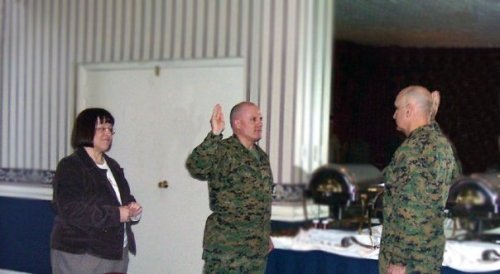
After my tour on the HUE CITY I was assigned to the Marine Security Force Battalion and was honored to serve with Colonel Mike Paulovich who I regard as one of the finest officers that I have served with in my career, Colonel Dan Rogers and Sergeant Major Kim Davis.  With Security Force Battalion I was able to serve with Marines in nearly every place and clime.  From Japan, to the Middle East, Scotland, France and the fence line at Guantanamo Bay Cuba.  One of my most memorable Marine Corps Birthday celebrations was at Gitmo, where we toasted Country and Corps “300 yards from 4000 Cubans trained to kill me.”  (Thank you Colonel Jessup) I was also able to visit Belleau Wood with our Marines for the 2004 Memorial Day ceremony.  During this time I became more acculturated in the Corps, I graduated from the Marine Corps Command and Staff College and earned my Fleet Marine Force Officer Qualification, the pin which I wear proudly on my Navy Uniform.

promotion to LCDRMost Memorable Promotion: Swearing the Oath of Office before Colonel Rogers on being promoted to Lieutenant Commander at Marine Security Force Battalion
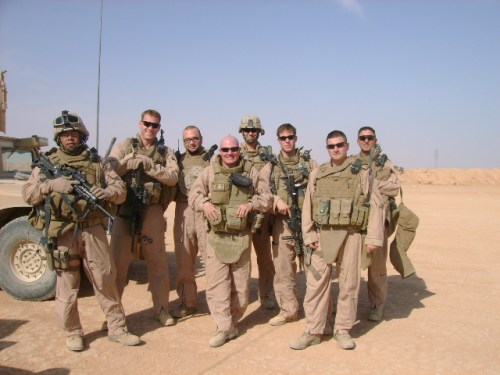
Within 10 months of leaving Security Forces I was back serving with Marines in combat.  I served with the Marine and Army advisers serving with the 1st and 7th Iraqi Divisions the Second Border Brigade, Port of Entry Police, Highway Patrol and Police in Al Anbar Province.  These were awesome men who served as advisers, diplomats and trainers to make the two divisions the best and most reliable in the Iraqi Army.  I celebrated the Marine Corps Birthday with the 7th Division Advisors at Camp Blue Diamond in Ramadi in 2007.  I will never forget these men who served in isolated detachments throughout the province helping the Iraqis so that they could regain control of their country.  Lieutenant Colonel Dave Kuehn, Lieutenant Colonel Stefan Bien, Colonel Scott Cottrell and Brigadier General John Broadmeadow are men that I will always admire and respect.

175With Marine Advisers to 3rd Bn 3rd Brigade 7th Iraqi Division 2007 near Syrian Border

The Marines currently serve in harm’s way world-wide defending us, protecting the innocent and battle the enemies of freedom.  I end this post with General John LeJeune’s message to the Corps which is read on every Marine Corps Birthday.

260Marine Corps Birthday Camp Blue Diamond 2007
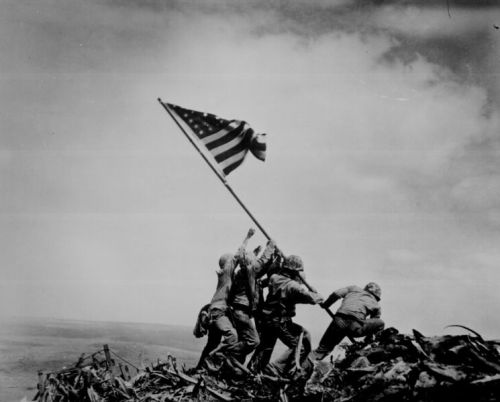

On November 10, 1775, a Corps of Marines was created by a resolution of the Continental Congress. Since that date, many thousand men have borne the name Marine. In memory of them, it is fitting that we who are Marines should commemorate the Birthday of our Corps by calling to mind the glories of its long and illustrious history.

The record of our Corps is one which will bear comparison with that of the most famous military organizations in the world’s history. During 90 of the 146 years of it’s existence the Marine Corps has been in action against the nations foes. From the battle of Trenton to the Argonne. Marines have won foremost honors in war, and in the long eras of tranquility at home. Generation after generation of Marines have grown gray in war in both hemispheres and in every corner of the seven seas that our country and its citizens might enjoy peace and security.

In every battle and skirmish since the birth of our Corps Marines have acquitted themselves with the greatest distinction, winning new honors on each occasion until the term Marine has come to signify all that is highest in military efficiency and soldierly virtue.

This high name of distinction and soldierly repute we who are Marines today have received from those who preceded us in the Corps. With it we also received from them the eternal spirit which has animated our Corps from generation to generation and has been the distinguishing mark of the Marines in every age. So long as that spirit continues to flourish Marines will be found equal to every emergency in the future as they have been in the past, and the men of our nation will regard us as worthy successors to the long line of illustrious men who have served as “Soldiers of the Sea” since the founding of the Corps.

Semper Fidelis

Padre Steve+

iwo jima flag raising

Leave a comment

Filed under History, Military