Monthly Archives: June 2010

D-Day and After: Battling Through the Bocage

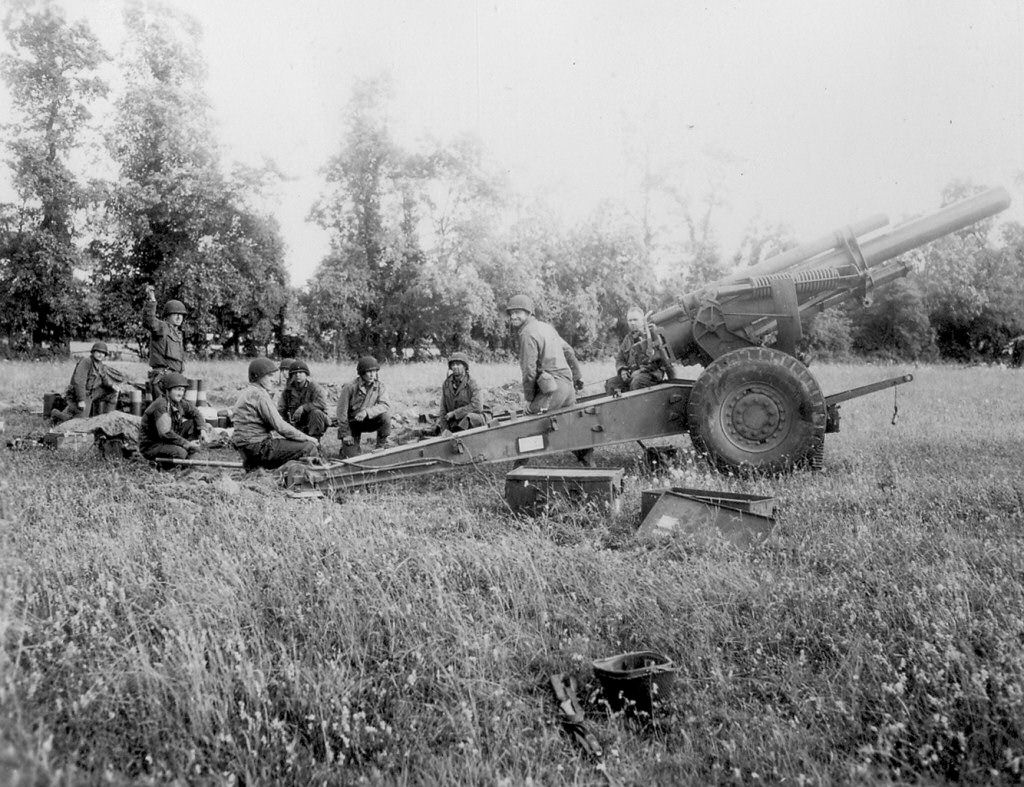
US 155mm Howitzer in Normandy. The American artillery was considered the best branch of the American combat arms by the German commanders

It took nearly a week for the American V and VII Corps on Omaha Beach and Utah Beach to link up with each other and secure their beachheads against fierce German resistance.    Elements of the 29th Division and the 90th Division pushed inland from OMAHA to expand the beachhead toward UTAH. Opposed by the 352nd Division, elements of the 91st Airlanding Division and other non-divisional units the American divisions took heavy casualties.  The fighting revealed the inexperience of the American infantry formations and the uneven quality of their leadership as they tackled the Germans in the labyrinth of the Bocage country. However by June13th the link up was solid enabling the Americans to conduct the follow up operations needed to expand the beachhead, secure Cherbourg and clear the Cotentin.
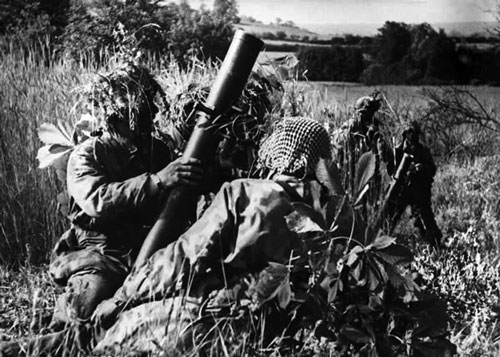
German Falschirmjaeger with 81mm mortar. This simple weapon was one of the most lethal in the German arsenal and accounted for a large number of Allied infantry casualties

The lack of success of the 90th Division, led the VII Corps commander General “Lightening Joe” Collins to relieve the division commander and two of his regimental commanders.   This was a portent of things to come with other American units as they took heavy casualties despite having a vast superiority in firepower over the Germans.[i] As the two corps pushed into the “Bocage” they were followed by a massive build up of troops and equipment delivered to the beaches and to the artificial “Mulberry” harbors.  Despite their numeric superiority, air supremacy and available Naval gunfire support and facing few units of high quality save the 352nd, 91st and the 6th Parachute Regiment, the Americans made painfully slow progress as they expanded the beachhead.[ii]
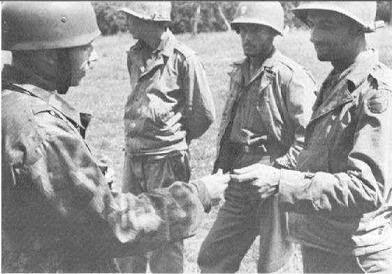
Poor training and leadership caused many US infantry casualties and many GIs to be captured. Here a Falschirmjaeger accepts a cigarette from a GI of the 29th Infantry Division

Once the beachheads had been consolidated the Americans turned their attention toward Cherbourg. This was the major Naval Port at the far northwest tip of the Cotentin and considered vital to the resupply of the Allied forces as they pushed into the heart of France.  D-Day planners counted on the swift capture of Cherbourg and rehabilitation to serve as a supply port for the Allied forces to lessen the dependency on the artificial Mulberry harbors. The first task was to isolate Cherbourg and to do this the 9th Division drove south from the beaches to the coast near Barneville.  The corps captured Barnville on the 18th of June cutting off the German forces covering the approaches to Cherbourg.[iii] This put the Germans in a bind as the 7th Army “had to split its forces in the peninsula in order to hold the fortress a little longer and thus to gain time for the establishment of the southern front on the Cotentin peninsula.[iv]
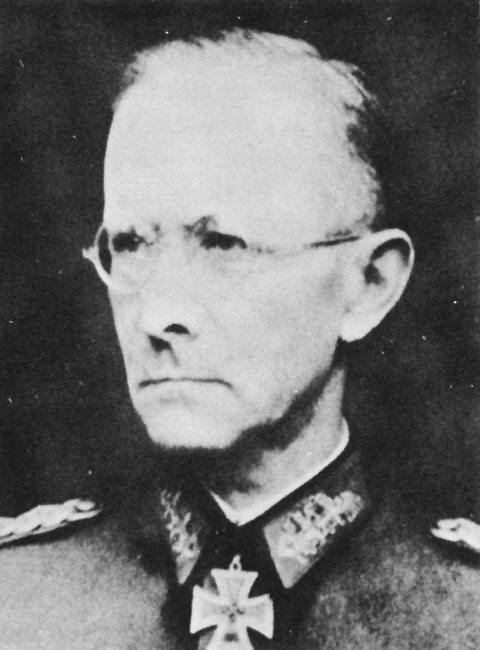
General Erich Marcks a one legged veteran of the Eastern Front led a spirited defense until he was killed in action

The German forces arrayed before Cherbourg waged a desperate defense centered on the 243rd Infantry Division and other assorted battle groups of LXXXIV Corps. During the fighting the LXXXIV Corps commander General Marcks was killed in action on 12 June.[v] This was a tough loss for the Germans as Marcks was a resourceful planner and resolute leader and considered one of the best German commanders in Normandy.

Once Cherbourg was cut off from German support Collins and the U.S. VII Corps composed of the 9th, 4th and 79th Divisions pushed up the peninsula capturing Cherbourg on June 29th.  Bradley pushed hard for the capture of the port as the Mulberries had been ravaged by a severe Channel storm greatly diminishing the over the beach logistics support. Cherbourg’s port was thoroughly demolished by German engineers and would not be fully operational for months. The loss of the Mulberries and delay in Cherbourg’s availability meant that few supplies were landed on the beaches.  This would “hinder the escape from the constricting land of the hedgerows into which the Americans had come in search of a port” [vi] and was a setback to allied planning.
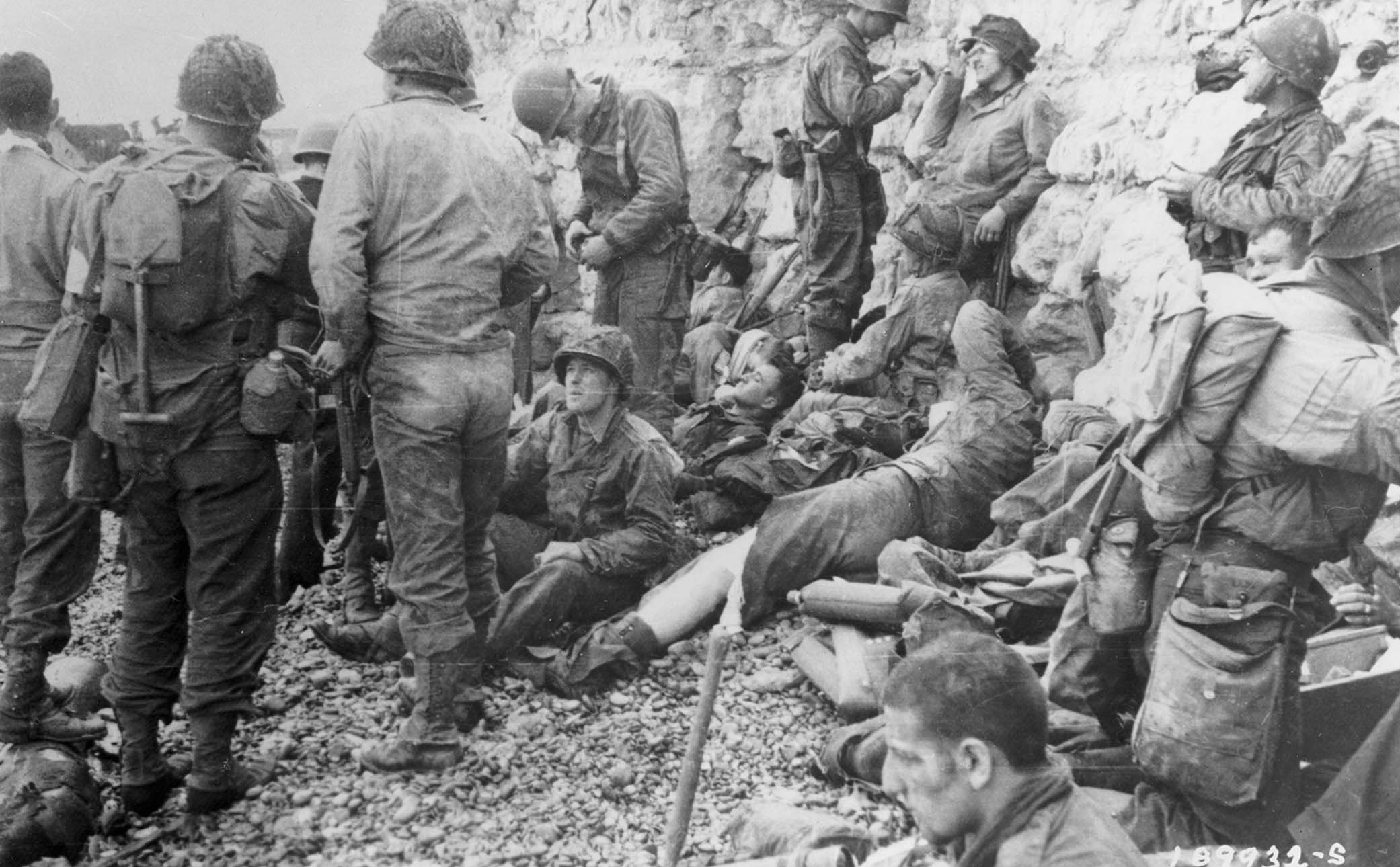
US 1st Infantry Division soldiers pause during operations in Normandy

To the east of VII Corps the V Corps under Major General Leonard Gerow made a cautious advance by phase lines toward Caumont, St Lo and Carentan.  The deliberate advance by the Corps toward a line weakly held by the Reconnaissance battalion of the 17th SS Panzer Grenadier Division was directed by Bradley who did not want to divert attention from the effort against Cherbourg.  A more aggressive commander might have tried to push further to expand the beachhead but caution was a hallmark of the American campaign in Normandy up to Operation COBRA.  After capturing Caumont V Corps halted and continued aggressive patrolling to deceive the Germans while digging in.[vii] Bradley’s decision to err on the side of caution had an effect on the broader campaign in Normandy.   Had Bradley directed a strong push against the weak German line it could have led to an opportunity to envelope the German line west of Caen. The opportunity lost through caution helped lead to the bloody and controversial campaign to capture Caen.[viii] Throughout the campaign in the Bocage American units were badly handled by their commanders, especially at lower levels and the experience and initiative shown by German battle groups and small unit leaders constantly stymied to American advance.
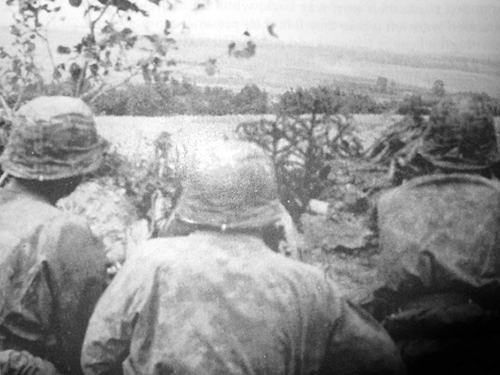
German Panzergrenadiers on Hill 112 awaiting a British attack beyond Caen

The Americans were not alone in their struggle against the Germans. Field Marshal Bernard Law Montgomery had ambitious plans to break out of Normandy by capturing Caen on D-Day and driving toward Falaise and Argentan.  The British failed to capture Caen and their plans were frustrated by the rapid reinforcement of the sector by the Germans.   The 21st Panzer, Panzer Lehr, and the 12th SS Panzer Divisions skillfully defended the area taking a fearful toll on the British and Canadians arrayed against Caen.
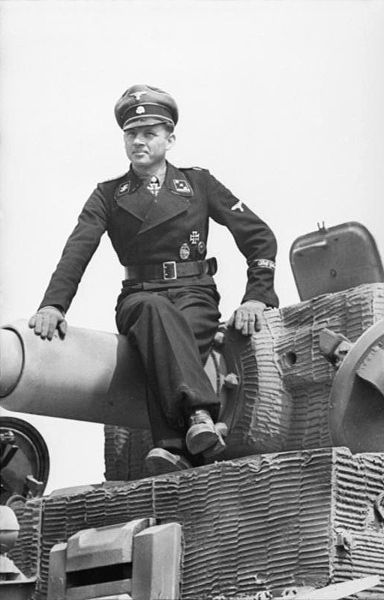
Captain Michael Wittmann of the 101st SchwererPanzer Battalion (Heavy Tank Battalion) in Normandy

A flanking maneuver at Villers-Bocage was frustrated by a few Tiger tanks of SS Heavy Tank Battalion under the command of Captain Michael Wittmann that destroyed 14 tanks and 15 personnel carriers of the British 7th Armoured Divsion along with 2 anti-tank guns within the space of 15 minutes. [ix]
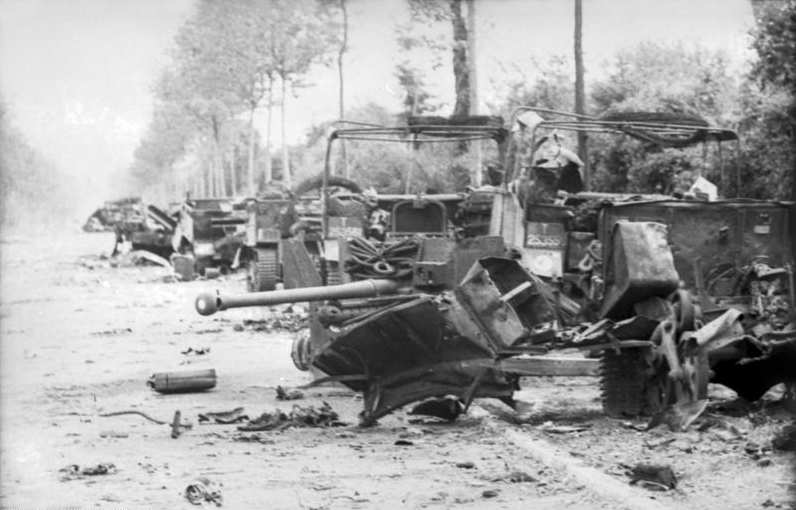
Vehicles Destroyed by Wittmann’s detachment at Villers-Bocage

Likewise a series of disastrous attacks toward Caen (EPSOM, CHARNWOOD and GOODWOOD) which were strongly supported by air strikes and naval gunfire were mauled by German forces and only finally succeeded in taking the unfortunate city of Caen on July 18th.
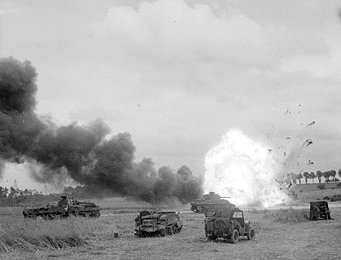
British Ammo Carrier goes up in flames after being hit by German fire during Operation Epsom

However the British failed to take the heights beyond the town[x] which led to more attacks against crack well dug in German forces.  In the campaign to take Caen and the hills beyond it the British took heavy casualties in tanks and infantry which seriously strained their ability to conduct high intensity combat operations in the future.[xi] The one benefit, which Montgomery would claim after the war as his original plan was that German forces were fixed before Caen and ground down so they could not be used against Bradley’s breakout in the west at St Lo.[xii]
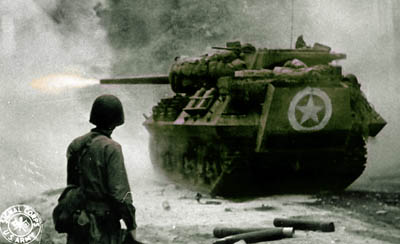
US M-10 Tank Destroyer firing at German positions in Normandy

The Caumont gap no longer “yawned invitingly in front of V Corps;”[xiii] as the Germans had reinforced the sector while the Americans dug in, yet now Bradley wished to push forward rapidly to achieve a breakthrough in the American sector.[xiv] Facing the most difficult terrain in France amid the Bocage and swamps that limited avenues of approach to the American divisions committed to the offensive.  The Americans now faced their old foe the 352nd division as well various elements of elite II Parachute Corps, the 17th SS Panzer Grenadier and Panzer Lehr Divisions.
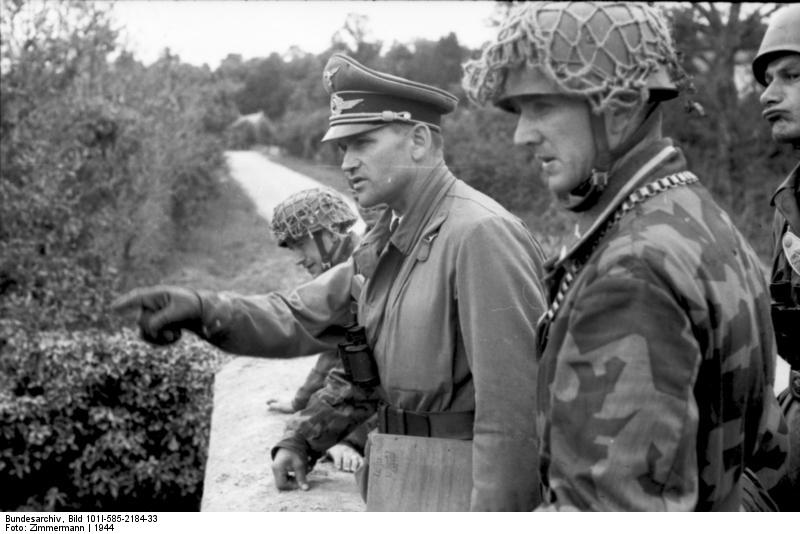
German Falschirmjaeger in Normandy

American tanks and infantry made slow progress and incurred high losses as they fought the Germans yard by yard in the Bocage.  The Americans incurred high numbers of casualties and in the VIII Corps sector alone the attack “consumed twelve days and 10,000 casualties to cross eleven kilometers of the Bocage…the achievements of the VII and XIX Corps were no better than comparable.[xv] Such losses incurred so early during the campaign would have far reaching effects when the Americans reached the Alsace-Lorraine and the German border.
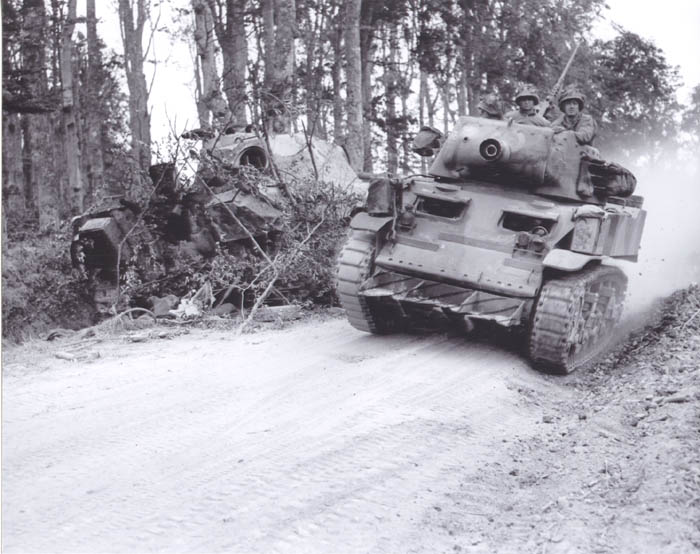
M-8 Gun carrier of a reconnaissance battalion advancing in Normandy

In order to break out of the Bocage the town of St Lo had to be captured.  It lay at a vital road juncture and its capture would help open the way into the French interior, thus St. Lo was key to Bradley’s breakout efforts.  His First Army had to capture it and the roads leading of it to launch Operation COBRA along the coast.  The task of capturing St. Lo was assigned to Gerow’s V Corps and Charles “Cowboy Pete” Corlett’s XIX Corps.  They faced opposition from the tough paratroops of the German 3rd Falschirmjaeger (Parachute) Division of II Parachute Corps commanded by General Eugen Meindl a tough veteran paratrooper and resourceful commander who had been shot through the chest at Crete.
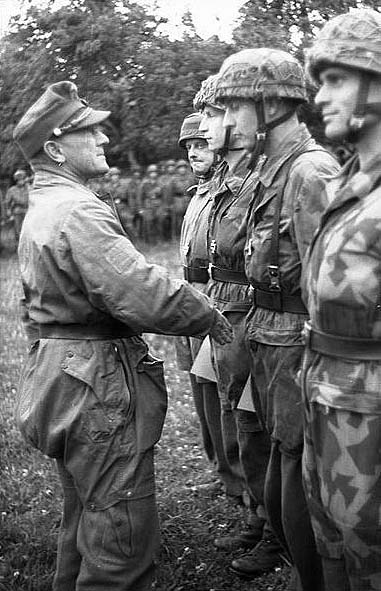
General Eugen Meindl of II Falschirmjaeger Corps decorating troops. In contrast to many Allied commanders many senior German officers like Meindl led following the doctrine of “Auftragstaktik” from the front sharing the hardships and dangers of their soldiers

The 2nd, 29th, 30th and 83rd Divisions of XIX Corps fought a tough battle advancing eleven kilometers against the German defenders again taking high numbers of casualties especially among the infantry.  However they were successful and secured St. Lo on 18 July.[xvi]
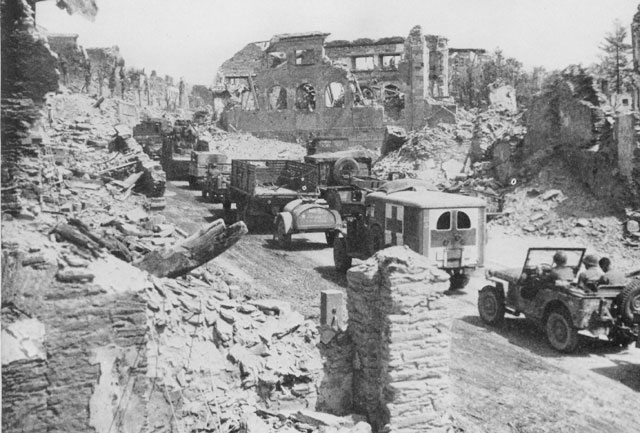
US Vehicles advancing through the shattered city of St Lo

With St Lo in their possession the Americans had finally cleared the hedgerows of the Bocage and now looked at the open country of the French interior.  St Lo epitomized the struggle that the American Army had to overcome in the Bocage.
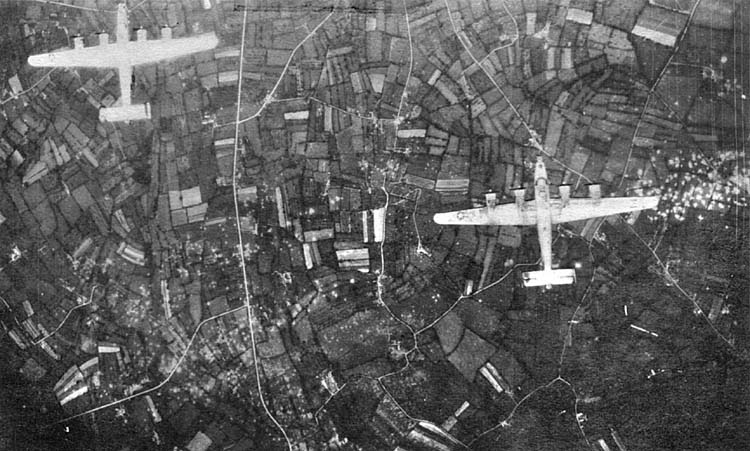
B-24’s Bombing St Lo on July 25th an attack that went awry killing many US soldiers near the front

Americans faced hard fighting against heavily outnumbered but superiorly led German troops that occupied excellent defensive country that inflicted heavy casualties on the Americans for every yard of ground given up. The Germans for all of their disadvantages exacted a terrible price in American blood between D-Day and the capture of St Lo despite the Allied control of the skies and the numerical superiority of the American Army.[xvii]
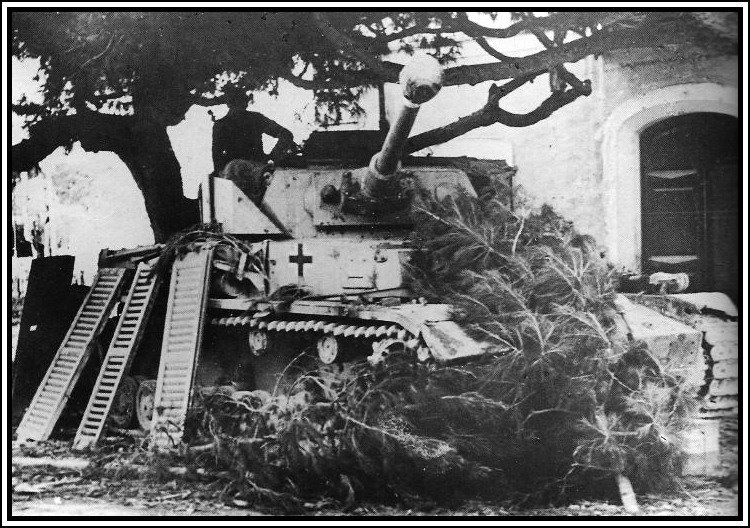
A Panzer IV camouflaged in a Normandy town

With the Bocage behind him Bradley desired to push the Germans hard and moved from a cautious to bold strategy to break the German line.  COBRA was his plan to break out of Normandy.  Bradley ably assisted by Collins realized that the better terrain, road networks past St Lo favored a decisive breakout.  American preparations for the attack included a technical advance that allowed tanks to plow through hedgerows, the “Rhino” device fashioned by American troops which was installed on three of every five First Army Tanks participating in the operation.[xviii] The Rhino device allowed the American Tanks to cut through the thick earthen hedgerows instead of being forced to climb them and expose their unprotected bellies to German anti-tank weapons or limit their movement to the constricted road net.
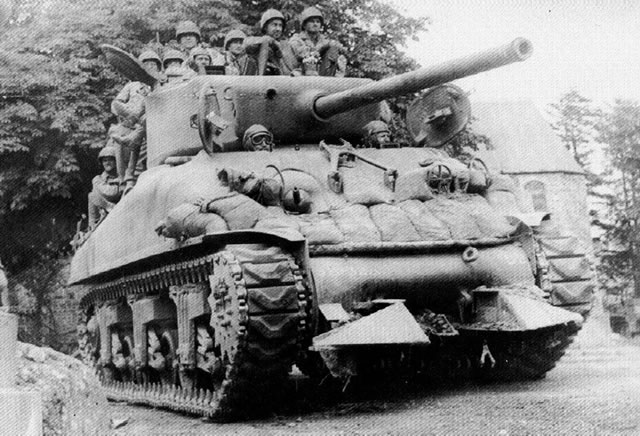
Sherman Tank equipped with the Rhinoceros device

As the Americans prepared the Germans continued to conduct a spirited active defense but were hampered by a lack of reinforcements.  As it happened they did not receive reinforcements in anywhere close to the numbers needed as the German Replacement Army was hoarding vast numbers of troops in Germany in anticipation of the plot to assassinate Hitler of which several high ranking members of the Replacement Army were leading conspirators. The Germans at the front were being starved of replacement divisions even as the Allies continued to build up their own forces in Normandy.
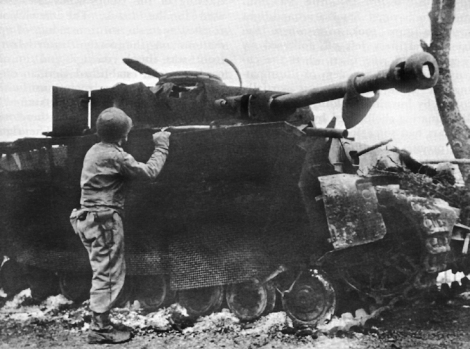
GI inspecting a knocked out Panzer IV

VII Corps was designated to lead the attack which was to begin on July 24th. American planning, reflecting more experience against the Germans was more advanced than in past operations.  Collins and Bradley planned for exploitation operations once the breakthrough had been made as part of the overall operational plan.  The aircraft of the 8th and 9th Air Forces were designated to conduct a massive air bombardment that would precede the attack. Division, Corps and additional artillery battalions were allotted to pulverize German positions to assist in the breakthrough.   A mistake by the heavy bombers in the 24th resulted in the heavy casualties to forward units which led to a postponement of the attack until the 25th of July.[xix]
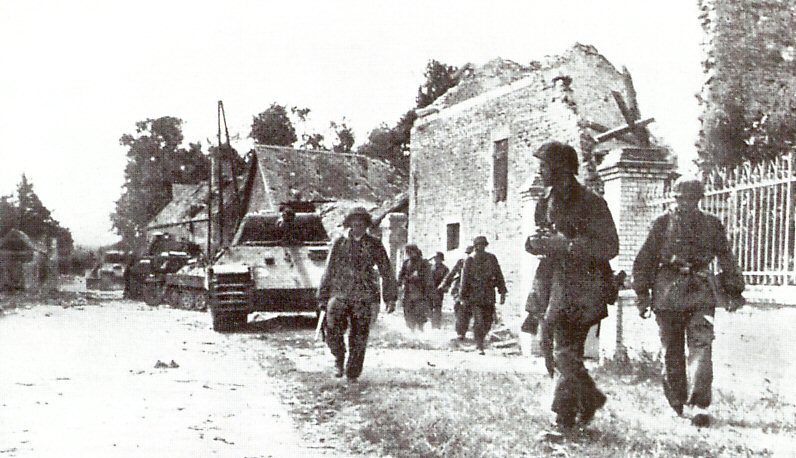
German Panzers and Panzer Grenadiers advancing in Normandy

The attack commenced on the 25th and yet another mistake by the bombers led to more American casualties[xx] and the dead included Lieutenant General Leslie McNair.  McNair was the Commander of Army Ground Forces, a position from which he directed the organization and training of American ground forces.
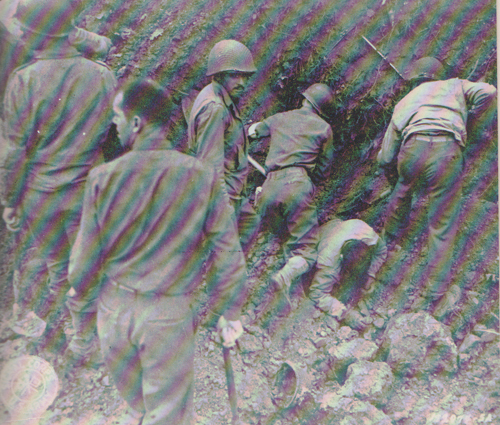
Men of Co D 117th Infantry being dug out after being bomber by “friendly” US Bombers at St Lo

Many of McNair’s decisions were responsible for the lack of adequate training received by American soldiers as individuals and units which had a direct correlation to the less than stellar performance of many American divisions in the European campaign. However the effect of the bombardment on the German forces was profound as men, equipment and fortifications were blasted by a barrage that the Germans had not yet encountered on the western front.  VII Corps units pressed forward against the determined resistance of Panzer Lehr survivors and the remnants of units that had fought the Americans since the invasion began.  Although it was a “slow go” on the 25th Bradley and his commanders were already planning for and beginning to execute the breakout before the Germans could move up reinforcements.  The 26th of June brought renewed attacks accompanied by massive air strikes.
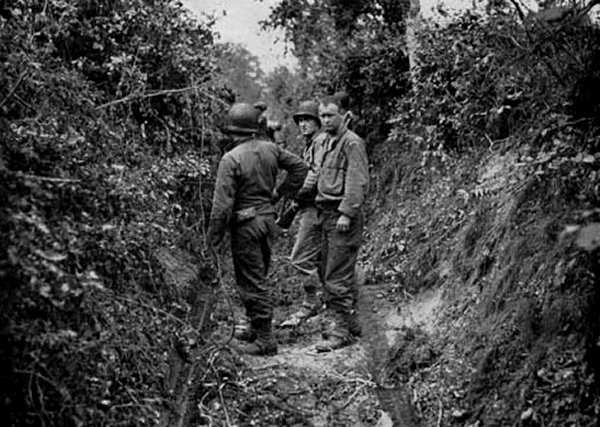
Infantry of the 30th Infantry Division

While not much progress was made on the 26th, the Americans discovered on the 27th that the German forces were retreating.  The capture of Marigny allowed VIII Corps to begin exploitation operations down the coastal highway to Coutances and for the first time since the invasion the campaign entered a phase of maneuver warfare where the mechanization and motorization of US Army forces gave them an advantage that they did not have in the Bocage.
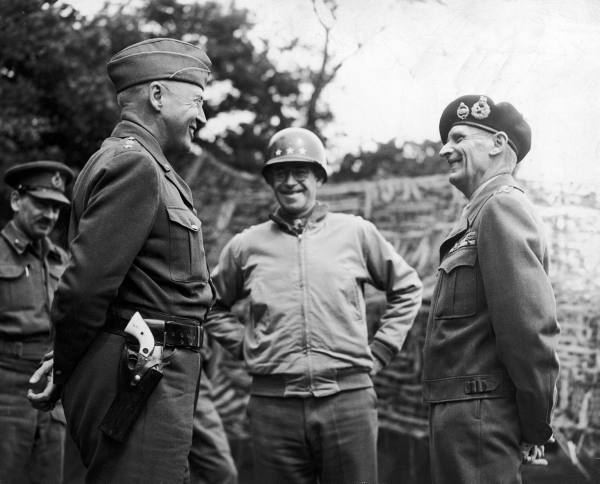
General George S Patton, Omar Bradley and Field Marshal Bernard Law Montgomery in Normandy, in Patton the Allies found a senior officer that understood the importance of strategic maneuver

On the 27th General George S Patton was authorized to take immediate command of VIII Corps a precursor to the activation of his 3rd Army.  COBRA ripped a hole in the German line and inflicted such heavy casualties on the already depleted German 7th Army that it could do little to stop the American push despite heroic performances by many units which were operating at 50% or below of their authorized strength.[xxi] As the American forces pushed forward they reinforced their left flank absorbing the local German counterattacks which were hampered by the Allied close air support.  As the breakthrough was exploited the command of the forces leading it shifted to Patton and the 3rd Army.
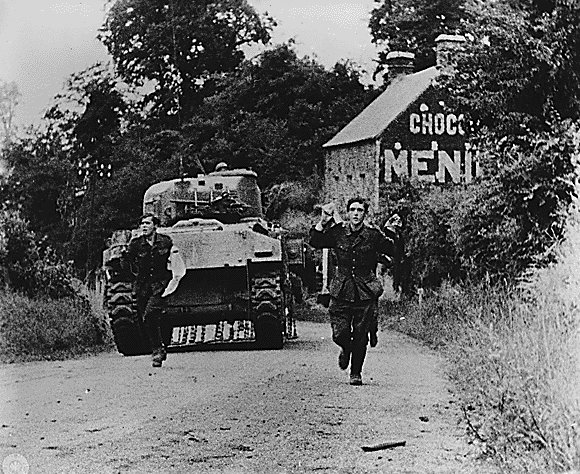
German prisoners being escorted to the rear past a Sherman

By the 28th VIII Corps led by the 4th and 6th Armored Divisions had reached Avranches and established bridgeheads over the See River with additional bridges being captured intact on the 30th.[xxii] The capture of Avranches allowed the Americans to begin exploitation operations into Brittany and east toward the Seine. Weigley notes that for the first time in the campaign that in Patton the Americans finally had a commander who understood strategic maneuver and would use it to great effect.[xxiii]

The American campaign in Normandy cost the U.S. Army a great deal. It revealed weaknesses in the infantry, the inferiority of the M4 Sherman tank to most German types, problems in tank-infantry cooperation and also deficiencies in leadership at senior, mid-grade and junior levels.  Numerous officers were relieved including Division and Regimental commanders.  Nonetheless during the campaign the Americans grew in their ability to coordinate air and ground forces and adapt to the conditions imposed on them by their placement in the Cotentin.  The deficiencies in training and leadership would continue to show up in later battles but the American Army learned its trade even impressing some of the German commanders on the ground in Normandy.[xxiv]


[i] Ibid. p.99 Both Weigley and Hastings make note of the failure of both the Americans and British to train their troops to fight in the bocage once they had left the beaches.

[ii] Ibid. Hastings. pp.152-153

[iii] Ibid. Weigley p.101

[iv] Isby, David C., Ed. “Fighting in Normandy: The German Army from D-Day to Villers-Bocage.” Greenhill Books, London,  2001.  p.143

[v] Ibid. Hastings p.173 Allied fighter bombers exacted a fearful toll among German commanders. The Commanders of the 243rd and 77th Divisions fighting in the Cotentin were also killed by air attacks on the 17th and 18th.   Further east facing the British the commander of the 12th SS Panzer Division, Fritz Witt on the 17th.

[vi] Ibid. Weigley. p.108

[vii] Ibid. p.111-112.

[viii] Ibid.

[ix] The efforts of the 51st Highland Division and 7th Armored Division were turned aside by the Germans in the area and were dramatized by the destruction of  a British armored battalion by SS Captain Michael Wittman and his platoon of Tiger tanks.  See Hastings pp.131-135.

[x] The British 8th Corps under General O’Connor lost 270 tanks and 1,500 men on 18 July attempting to crack the German gun line on the ridge beyond Caen. Weigley, pp.145-146.

[xi] Hastings comments about the critical British manpower shortage and the pressures on Montgomery to not take heavy casualties that could not be replaced. Overlord. pp.241-242.

[xii] Ibid. Weigley pp.116-120

[xiii] Ibid. p.122

[xiv] Ibid. p121 Bradley told Eisenhower “when we hit the enemy this time we will hit him with such power that we can keep going and cause a major disaster.”

[xv] Ibid. 134

[xvi] Ibid. Weigley. pp. 138-143.  Weigley notes of 40,000 U.S. casualties in Normandy up to the capture of St. Lo that 90% were concentrated among the infantry.

[xvii] Weigley quotes the 329th Regiment, 83rd Division historian “We won the battle of Normandy, [but] considering the high price in American lives we lost. P.143. This is actually a provocative statement that reflects America’s aversion to massive casualties in any war.

[xviii] Ibid. p.149

[xix] Ibid. p. 152

[xx] Ibid. pp. 152-153.  Among the casualties were the command group of the 9th Division’s 3rd Battalion 47th Infantry and General Leslie McNair who had come to observe the assault.

[xxi] Ibid. pp.161-169. Weigley notes the advances in U.S. tactical air support, the employment of massive numbers of U.S. divisions against the depleted German LXXXIV Corps, and the advantage that the “Rhino” device gave to American tanks by giving them the ability to maneuver off the roads for the first time.

[xxii] Ibid. pp.172-173.

[xxiii] Ibid. p.172

[xxiv] Ibid. Isby, David C. “Fighting in Normandy,” p.184, an officer of the 352nd Division referred to the American soldier “was to prove himself a in this terrain an agile and superior fighter.”

Bibliography

Carell, Paul. “Invasion: They’re Coming!” Translated from the German by E. Osers, Bantam, New York 1964.

Hastings, Max. Overlord: D-Day and the Battle for Normandy Vintage Books, New York, 1984

Isby, David C. Ed. “The German Army at D-Day: Fighting the Invasion.” Greenhill Books, London 2004

Isby, David C., Ed. “Fighting in Normandy: The German Army from D-Day to Villers-Bocage.” Greenhill Books, London, 2001.

Ryan, Cornelius, “The Longest Day” Popular Library Edition, New York 1959

Tsouras, Peter. “Disaster at D-Day: The Germans Defeat the Allies, June 1944,” Greenhill Books, London 1994.

Von Luck, Hans.  “Panzer Commander“ Dell Publishing, New York, 1989

Warlimont, Walter. “Inside Hitler’s Headquarters: 1939-1945.” Translated from theGerman by R.H. Barry. Presidio Press, Novao CA, English Edition Copyright 1964 Wiedenfeld and Nicholson Ltd. Warlimont, Walter. “Inside Hitler’s Headquarters: 1939-1945.” Translated from theGerman by R.H. Barry. Presidio Press, Novao CA, English Edition Copyright 1964 Wiedenfeld and Nicholson Ltd.

Weigley, Russell F. Eisenhower’s Lieutenants: The Campaign of France and Germany, 1944-1945, Indiana University Press, Bloomington IN, 1981
3 Comments

Filed under History, Military, world war two in europe

Tides Shutout Bisons 6-0: Troy Patton Pitches 7 Scoreless Innings for Win

Troy Patton dominated the potent bats of the Buffalo Bisons Monday

The Norfolk Tides bats remained on fire even as the temperature cooled into the mid 70s in Hampton Roads and today both the defense and the pitching showed up.  After losing five straight to include three high scoring games where the Tides offense produced enough runs to win each handily had pitching, defense or calls by umpires gone their way.  But this Monday was another day and Troy Patton had the answer on to how to shut down the potent offense of the Buffalo Bisons and I do hope that he starts telling other pitchers just how to do this as he went seven innings giving up just three hits with only one walk and three strikeouts to gain the victory.  Patton was aided by Ross Wolf and Mike Hinckley who pitched the 8th and 9th innings without surrendering a hit.

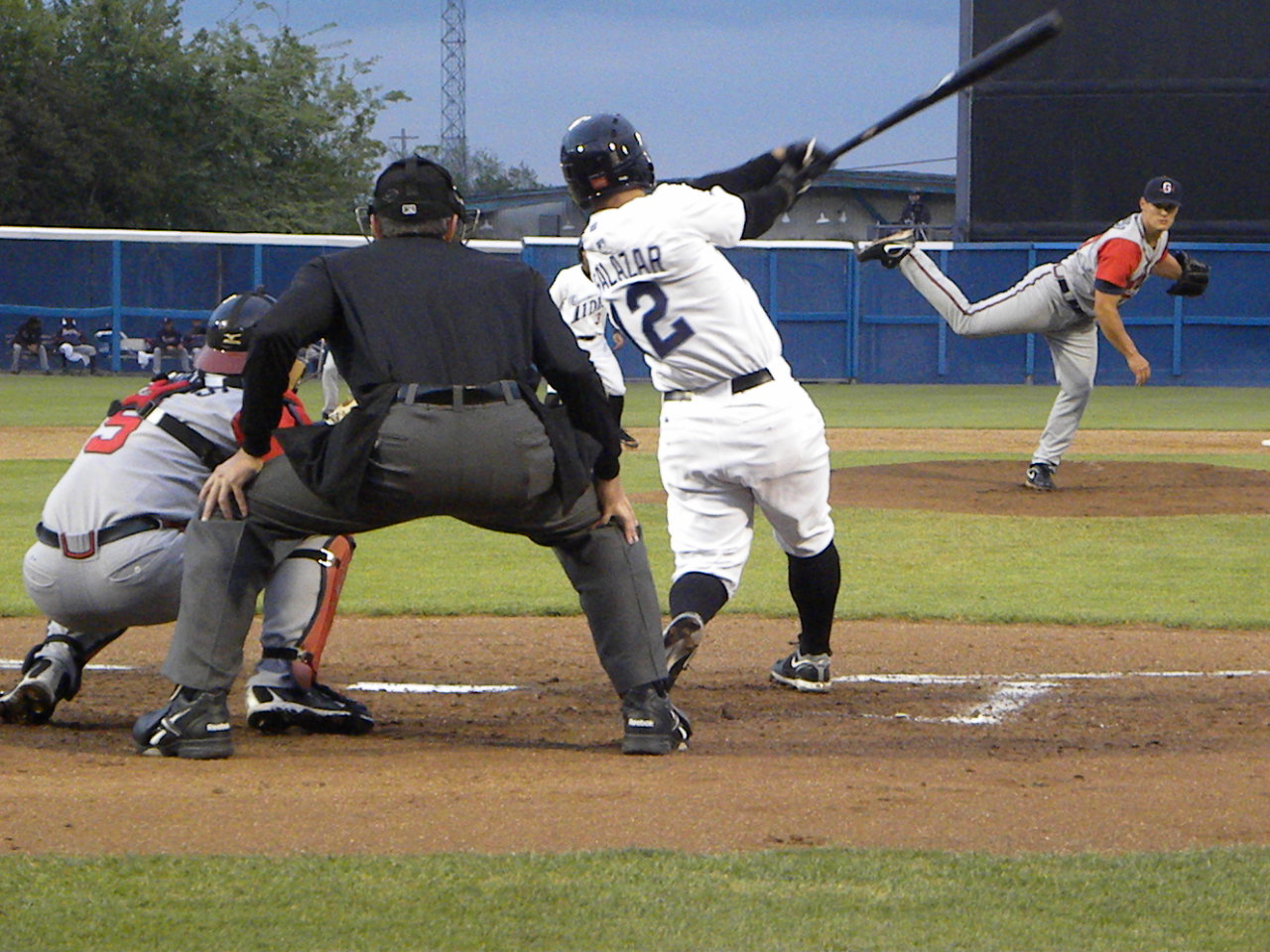
Jeff Salazar hit his 9th home run of the season in the 6th inning

After watching many games where the hitting showed up and the pitching did not, or the pitching showed up only to have the offense go into a coma or the defense to fail it was good to see a game where the fundamentals of the ball game, pitching, hitting and defense came together as the Tides shut down the Bisons 6-0.

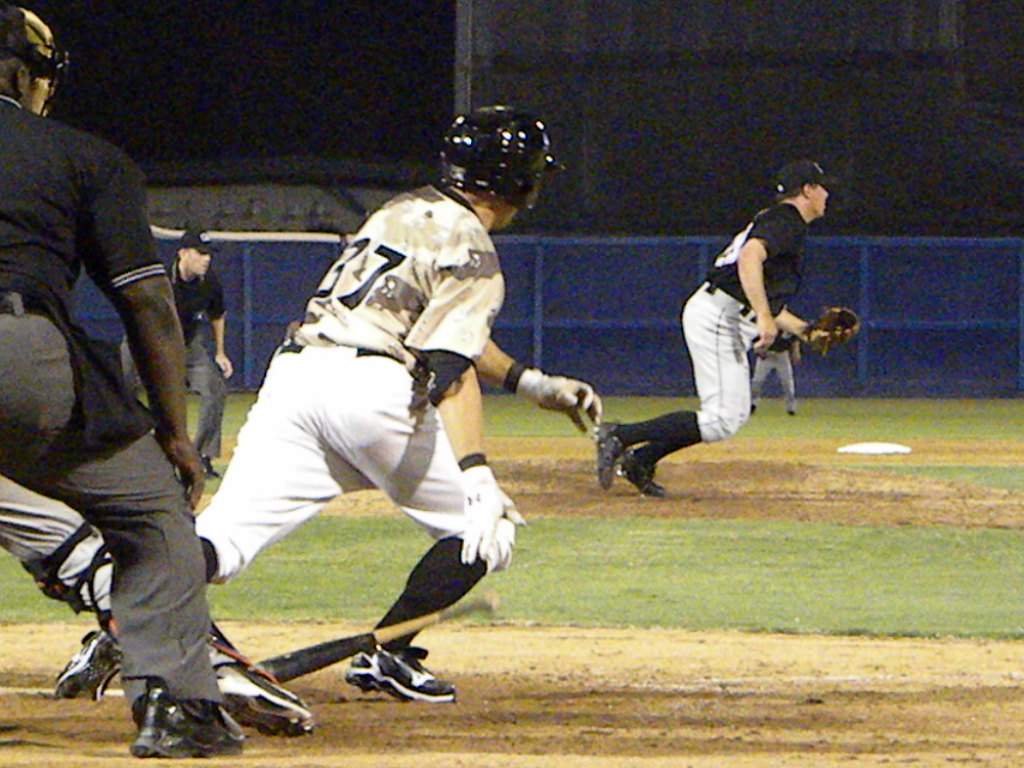
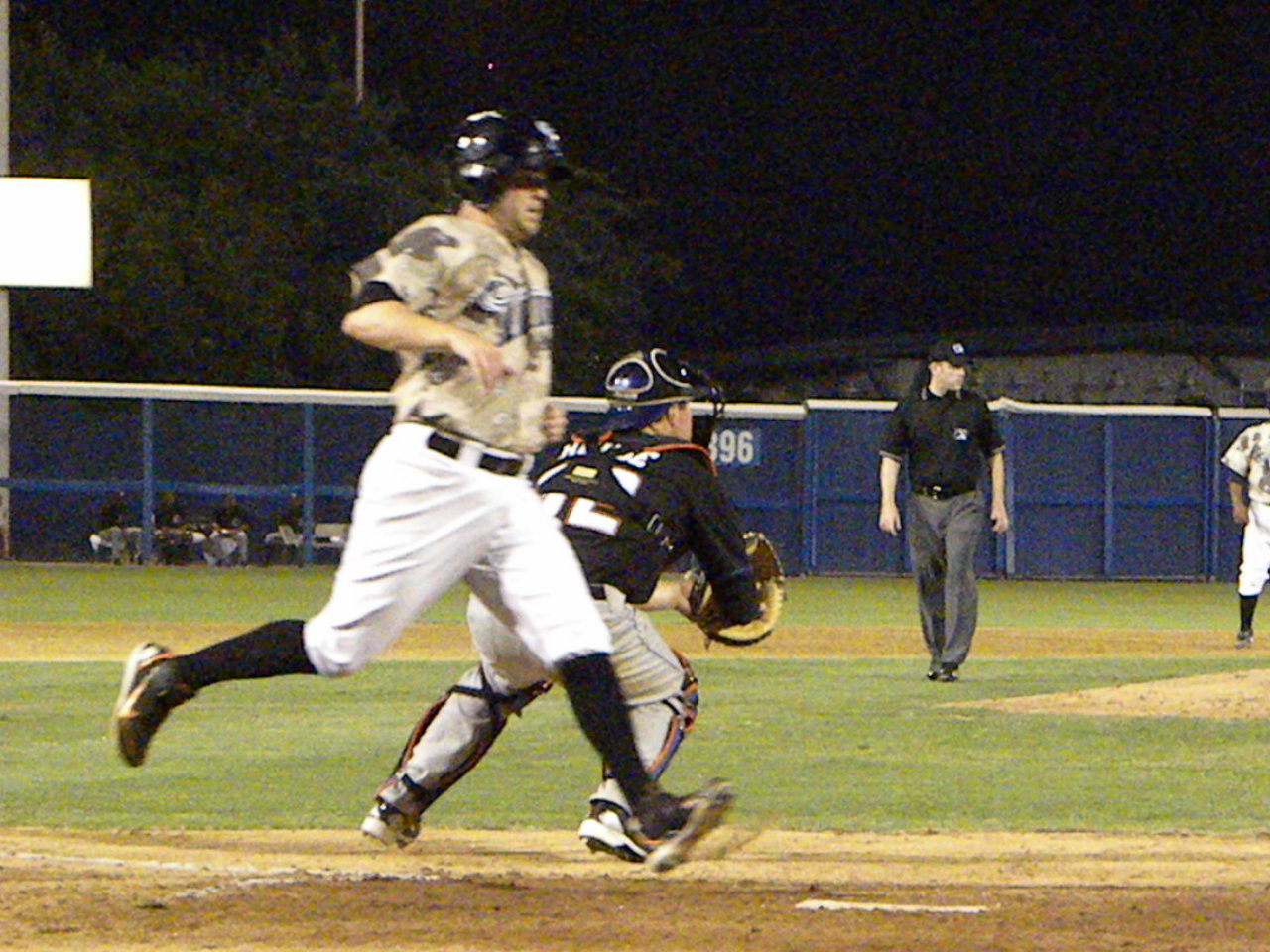
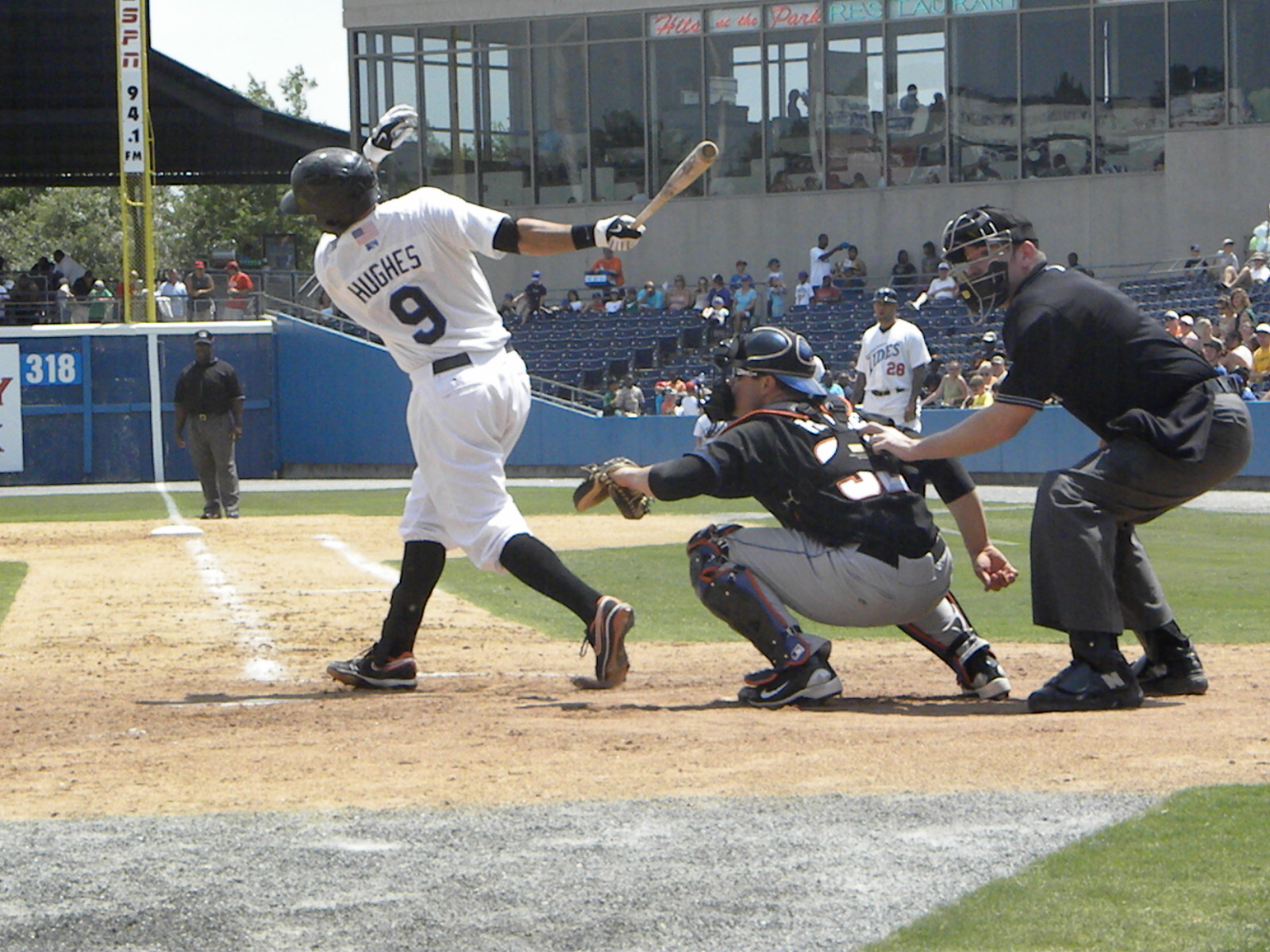
Patton surrendered only 3 hits, a double in the second inning and two singles while walking only one in a dominant performance against the hottest hitting team in the International League. The Tides offense continued its strong performance since the arrival of interim manager Bobby Dickerson.  The Tides opened up on the Bisons in the bottom of the 3rd inning when catcher Adam Donachie led off the inning with a double and scored on a single by Matt Angle.  Robert Andino tripled to drive in Angle and scored on a sacrifice fly by Jeff Salazar.  They added two more in the bottom of the 6th inning when Jeff Salazar hit his 9th dinger of the season and Rhyne Hughes launched his 4th of the season both of which were solo shots to make the score 5-0.  The Tides added a final run in the bottom of the 8th when Josh Bell doubled and advanced to third when Rhyne Hughes singled and scored on reliever Michael O’Connor’s wild pitch, the second time that “Wild Thing” O’Connor allowed a run to score at Harbor Park during this home stand but at least he did not bounce it over the screen behind home plate this time….he’s improving.

Rhyne Hughes also homered for the Tides in the 6th inning

The game ended with the Tides winning by a score of 6-0. The Bisons had no runs on 3 hits and one error and left 5 men on base. The Tides 6 runs on 10 hits and no errors leaving four men aboard. Bobby Livingston (2-6 4.43 ERA) got the loss for the Bisons and Troy Patton (4-7 5.13 ERA) got the win for the Tides. Troy had his excellent performance backed up with great run support as well as solid defense to get the well deserved win.

During the series the Tides scored 27 runs on 57 hits including 6 home runs by far their most productive series of the year and a series where for the first time this season they showed consistency on offense over a sustained period and not just a game or two.  Since little has changed in the aspect of Tides offensive personnel with the exception of the addition of Matt Angle and Paco Figueroa but now for the first time that I can remember this season the Tides hitters are hitting with power as well as making contact.  Though it does not seem like much the Tides team batting average has improved from .234 on May 18th to .243 today in fact going up more in the past 4 days than the previous two weeks. While it is still early the only explanation that I can see for this turnaround is Interim Manager Bobby Dickerson.

The Tides open a series against the Gwinnett Braves at Harbor Park on Tuesday at 7:15 and we will see of the Tides can continue this merry offensive romp.  See you at Harbor Park.

Peace,

Padre Steve+

Leave a comment

Filed under Baseball, Batlimore Orioles, norfolk tides

Tides Lose in Sunday Afternoon Slugfest 8-6

“The key to winning baseball games is pitching, fundamentals, and three run homers.” Earl Weaver

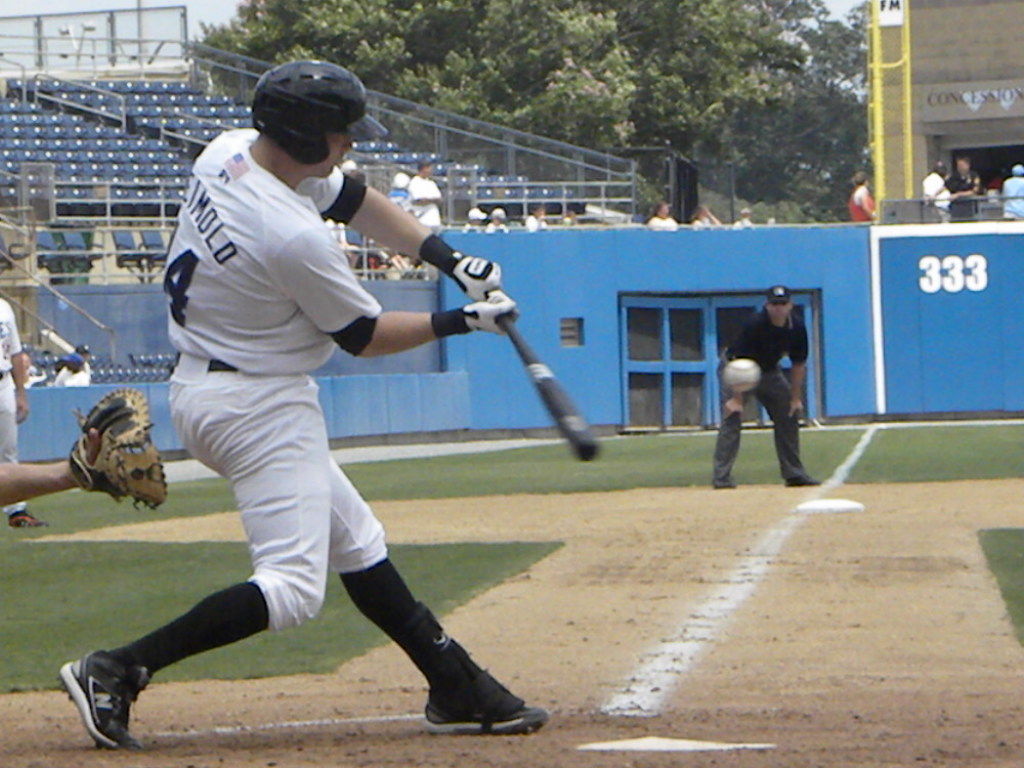
Getting his swing back. Nolan Reimold hammers a deep fly ball on Sunday

The Norfolk Tides lost their 5th straight falling to the Buffalo Bisons in a Sunday afternoon slugfest in which for the third time in three games they collected what should have been enough hits and runs to win. In fact today of the 8 runs scored by the Bisons 3 were unearned coming as the result of poor fielding and throwing by Tides infielders in particular a top of the 8th inning error where shortstop Robert Andino ran past what would have been an easy double play ball off the bat of former Norfolk Tides infielder Justin Turner that scored two runs at a point that the Tides were ahead in the game.  The runs gave the Bisons a lead that they would not relinquish and seal the fate of the Tides on this blistering hot Sunday afternoon.

Jeff Salazar steps on home plate following his 7th inning home run

Tides starting pitcher Chris George gave up 5 runs, 4 of which were earned in 5.2 innings work and Zack Clark so new to the team from AA Bowie that he went out in a jersey without his name affixed to it gave up 3 runs in 2.1 innings of which only 1 was an earned run.  Ross Wolf pitched the 9th inning coming in with two on and two out. He got J R House out while trying to bunt and made an excellent play to field the ball and throw out Valentino Pascucci at third. He then got Jesus Feliciano to ground into a double play to end the inning.

Brandon Snyder bunts for a hit

The big damage to the Tides came from the extremely potent Buffalo offense. For once the Bisons’ parent organization the New York Mets has invested in putting experienced and potent offensive force together despite a dearth of young prospects. The Bisons pack a huge offensive punch including Mike Hessman the all-time Minor League home run king but the Chief Tides basher has been Mike Jacobs who has beaten Tides pitching about in a rude and nearly ruthless manner over the past two days as well as former Tides catcher J R House who today had a home run, double plating 3 of the Bisons runs.

However if there is a silver lining in the past three games it is for the first time this season the Tides seem to be hitting the ball consistently using both contact and power to make things happen. The Tides picked up their first run in the bottom of the 2nd inning one singles by Rhyne Hughes, Brandon Snyder and Michel Hernandez. The Bisons collected two in the top of the 3rd inning when Andy Green reached on an error J R House doubled and Jesus Feliciano singled to drive in both Green and House.

The Tides tied the score in the bottom of the 4th as Rhyne Hughes and Brandon Snyder singled and Michel Hernandez sacrificed to right field to score Hughes.  Buffalo then scored 3 runs in the top frame of the 6th driving Tides starter Chris George out of the game and it was as the sage Earl Weaver mentioned, the part about the three run home runs as   J R  House clubbed a three run homer off of George with one out.  However the Tides did not roll over and die as they had in so many games earlier in the season and in the bottom of the 7th the now scrappy Tides offense plated 4 runs.  Michel Hernandez, Blake Davis and Matt Angle singled to load the bases. Robert Andino then hit into a double play but Hernandez scored.  Jeff Salazar then hit a 2 run home run off of Pat Misch to tie the game. Nolan Reimold and Rhyne Hughes singled and Brandon Snyder singled to drive in Reimold before Blake Davis grounded out to end the inning.

Chris George allowed 4 earned runs in 5.2 innings getting no decision

In the top of the 8th the Bisons took the lead when Robert Andino missed what looked to be an easy grounder that easily could have been a double play, the ball rolled into short left field and two runs scored and the Bisons were back in the lead and add an insurance run in the 9th to make the final score 8-6.

The Bisons scored 8 runs on 11 hits with 1 error and 11 men left on base. The Tides 6 runs on 15 hits and 4 errors leaving 8 on base including 5 left in scoring position with 2 outs.

While the Tides offense has come alive the pitching has been weak and they were not helped by four errors which allowed three unearned runs.  In spite of this the Tides are showing signs of life under Interim Manager Bobby Dickerson who took on an umpiring crew that made three obviously bad calls that cost the Tides runs the most egregious being a hit by J R House in the top of the 2nd which should have been a foul ball that was ruled fair and went for a double, a force at second in the top of the 8th which the 2nd base umpire ruled that second baseman Blake Davis who was plowed over at second had been pulled off the bag.  Later in the 8th Mike Hessman was ruled hit by a pitch which had all the marking of a ball that hit the bat before striking him. The last call got Dickerson tossed by Home Plate Umpire Chris Conroy.  Dickerson does not just manage but he leads and appears to inspire. Players that have not been performing have been benched and for the first time in recent memory the Tides took infield practice on a game day. What appears to be the new mantra in the Orioles organization is accountability and chemistry.  Things are not better yet but if I were the Orioles I would make Dickerson the permanent manager of the Tides tomorrow.  It takes time to get the pitching right and I do not see a quick fix to that with the probability that Arietta will be in Baltimore possibly within the week, however it appears that he is bringing some discipline and order back to a team that has a lot of talent but not achieved the success that it is capable of accomplishing. It will be interesting to see what happens in the coming days and weeks as Andy McPhail and the Orioles begin to make the hard choices regarding players and ultimately who will remain in Baltimore and on the 40 man roster.

The Orioles defeated the Red Sox today at Camden Yards 4-3 in 11 innings with David Hernandez getting his first win of the season in relief.

The final game of the season series between the Bisons and Tides will be on Monday at 12:15 as Troy Patton (3-7, 5.73 ERA) will take the hill for the Tides against former Tide Bobby Livingston (2-5, 4.18 ERA).

Peace

Padre Steve+

Leave a comment

Filed under Baseball, Batlimore Orioles, norfolk tides

Tides Lose in Harbor Park Slugfest 12-9

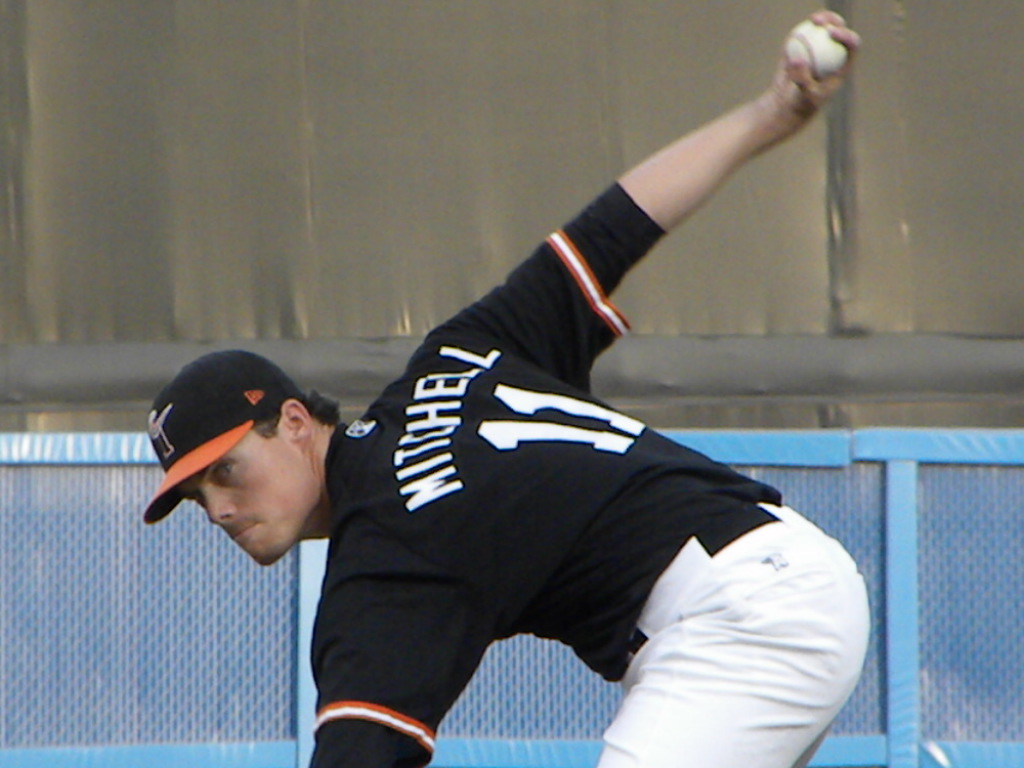
Andy Mitchell was hit hard in the first two innings and registered the loss despite the Tides Hitters attempts

It was a hot night at the Church of Baseball, Harbor Park Parish as the temperature was high and bats were on fire. If you were looking for a pitcher’s duel this was not the place to see one. In part this was due to Norfolk Tides ace Jake Arietta being pulled from the start the day of the game in what is believed to be a move by the Orioles to have him ready to come to Baltimore in a middle relief role at short notice.  In his place veteran submariner Andy Mitchell got the start, his first start since April.  Unfortunately for Andy it was his worst outing of the year as the veteran Bisons’ line up which has the highest batting average in the league and is loaded with players who have played against him for years had his number. After giving up 6 runs in the 1st inning he lasted 2 and 2/3rds innings giving up a total of 7 runs on 13 hits.  Andy has been at his best this year in middle relief following hard throwing pitchers where his submarine style keeps batters who are locked in on the hard throwing pitchers off balance.

Mike Jacobs hit everyone that he faced including Jake Arietta

Tonight the Bisons had Andy’s number and with 2 outs in the top of the 3rd inning he was pulled for Mike Hinckley who after an inauspicious debut in the 9th inning Friday night pitched 1 and 1/3 innings allowing no runs on hits.  Jake Arrieta came into the game in the 5th to throw two innings gave up another run on 3 hits before handing the ball over to Kam Mickolio in the 7th. Kam who has struggled gave no hint of that on Saturday pitching very well in 1 and 2/3rds innings giving up no runs on 3 hits before being pulled with a 2-0 count against Mike Cervenak appearing to be injured and closer Denis Sarfate came in and struck out Cervenak to end the inning.

Mike Hinckley had a good outing in his second appearance for the Tides

The Tides hitters were not silent and as on Friday night chipped away at the Buffalo lead in a convincing manner in a performance on any normal night would have been a game winning performance.

The comeback started in the bottom of the 2nd inning when Blake Davis and Paco Figueroa both singled and Figueroa stole 2nd setting up Matt Angle who singled to drive in both runners.  In the 5th inning with a runner on and 1 out the improving Nolan Reimold homered to left to make the score 7-4. The Tides scored 2 more runs in the bottom of the 6th.  Adam Donachie singled and reached third on a double by Paco Figueroa.  The Bisons then sent in Michael O’Connor to relieve starter Dylan Owen.  O’Connor promptly threw a wild pitch in the dirt that bounce over the home plate netting into the seats to score Donachie.  He the got Matt Angle to ground out to first before Robert Andino singled to score Figueroa. Jeff Salazar struck out and then Rhyne Hughes singled Andino to 3rd base.  Jose Della Torre came into the game for O’Connor and hit Nolan Reimold with a pitch to load the bases. He then walked Brandon Snyder to score Andino before getting Blake Davis to ground out to first to end the inning.

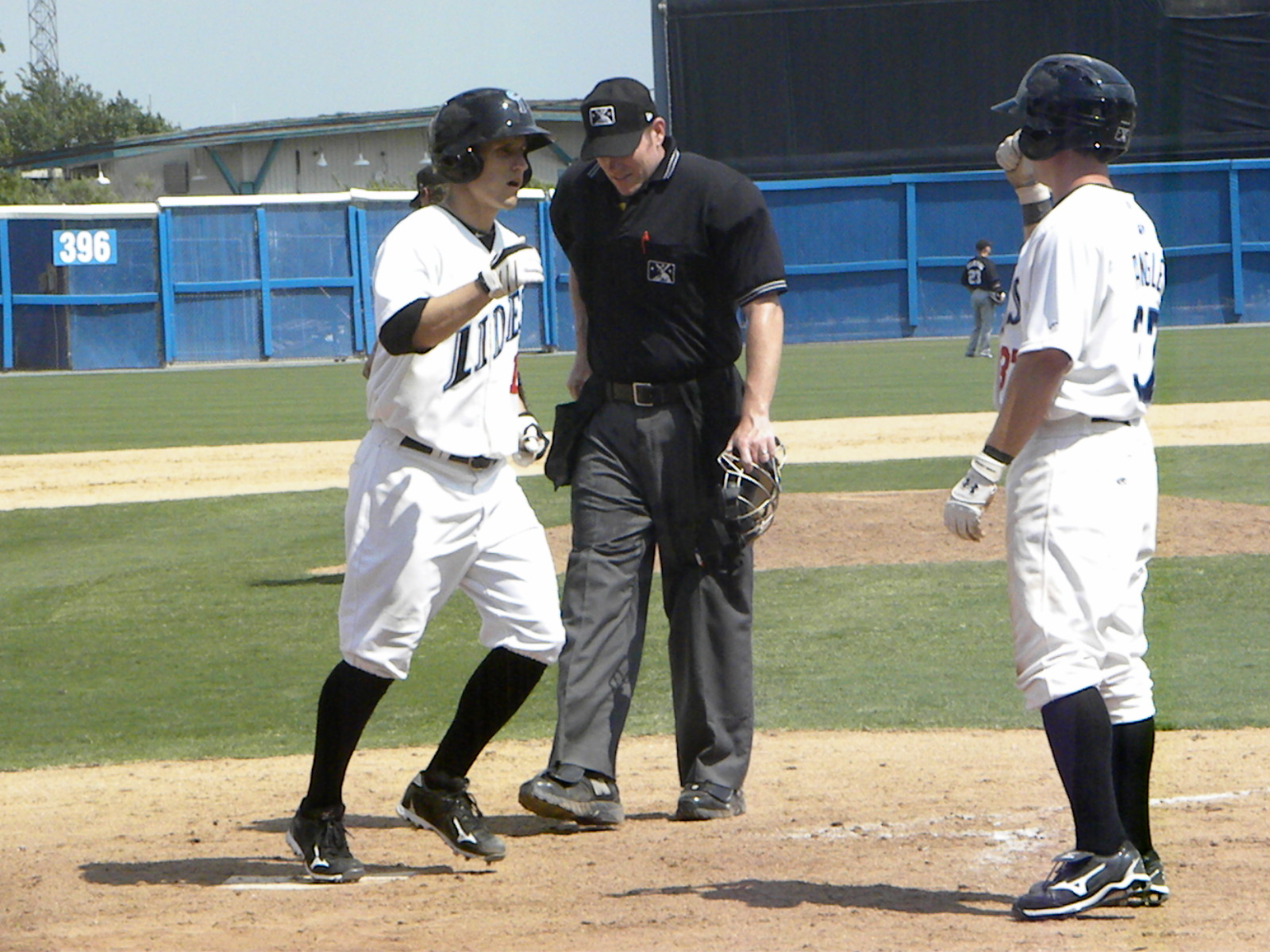
Nolan Reimold greeted at the plate after hitting a 2 run homer in the 5th inning

Once again the Tides seemed to have momentum on their side but fortune turned against them as Denis Sarfate who has been lights out in the 9th inning gave up 4 runs the big damage coming on a Mike Jacobs bases clearing triple with the bases loaded. This gave the Bisons a 12-7 lead going into the bottom of the 9th.  The Tides did not go quietly into the night however as Brandon Snyder hit a leadoff home run and Blake Davis doubled. Adam Donachie struck out swinging and Paco Figueroa grounded out to move Davis to 3rd base. Davis scored on a wild pitch by Manny Acosta to narrow the lead to 12-9. Matt Angle then singled and it looked like the Tides might be about to pull this one out of the fire, instead Robert Andino flied out to center on a 2-0 pitch to end the game.

Once again the Tides put enough runs on the board to win a game and didn’t. Tonight as Earl Weaver said “The only thing that matters is what happens on the little hump out in the middle of the field” and that was in evidence Saturday as Tides pitchers gave up 10 runs in just two innings.  Had the pitching been there the Tides would have walked away with the win but instead dropped their 4th straight.  On the positive side for the second night in a row the Tides hitters produced hits and runs.

As I said at the beginning of this article this was not a night to see pitching.  The Bisons had 12 runs on 22 hits and no errors and left 11 men on base. The Tides with production that should get a win on any night had 9 runs on 15 hits and 1 error leaving 11 on base. Andy Mitchell (0-1 9.86 ERA) got the loss and Dylan Owen (2-1 6.14 ERA) got the win with Manny Acosta getting the save. The teams play Sunday afternoon at Harbor Park. See you there.

Peace,

Padre Steve+

Leave a comment

Filed under Baseball, Batlimore Orioles, norfolk tides

D-Day: Omaha Beach

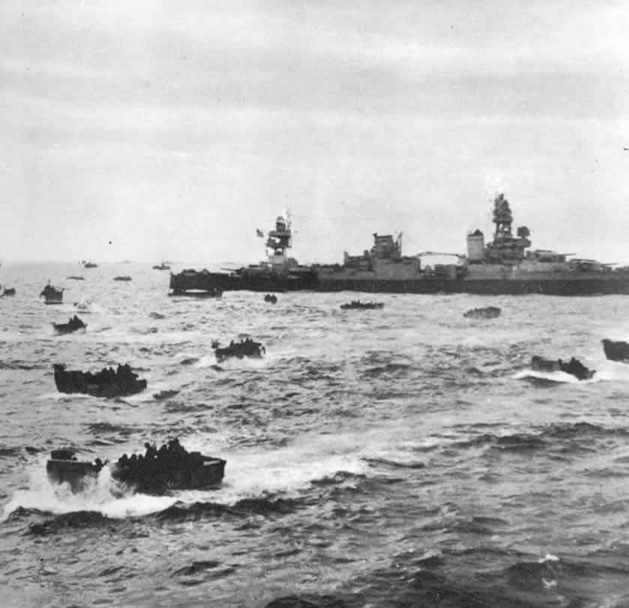
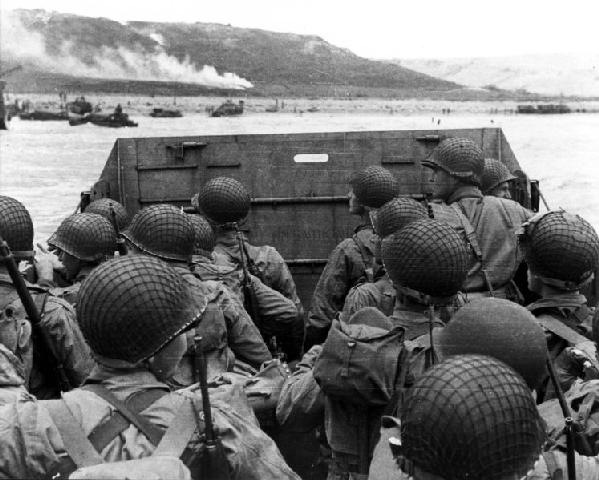
LCVP’s pass USS Augusta

Like the rest of the Allied invasion forces the 1st and 29th Divisions set sail from their embarkation ports with the intent of landing on June 5th.  General Bradley, commanding the First Army until the American Army Group would be activated accompanied the invasion force.  The OMAHA landing was placed under General Gerow and his V Corps while VII Corps landed the 4th Infantry Division landed at Utah supported by airdrops of the 82nd and 101st Airborne Divisions inland.  American command and control was exercised from sea although General Officers went ashore with each of the American divisions.  A severe channel storm disrupted the plan to land on the 5th and Eisenhower delayed the invasion one day catching a break in the weather and electing to go on the 6th.[i] This delay while uncomfortable for the embarked troops caused the Germans to believe that no invasion would take place until the next favorable tide and moon cycle later in the month[ii] a break which caused a number of senior German leaders, including Rommel to be absent from the invasion front when the Allies landed.[iii]

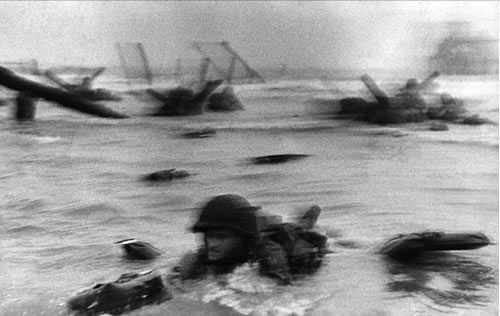
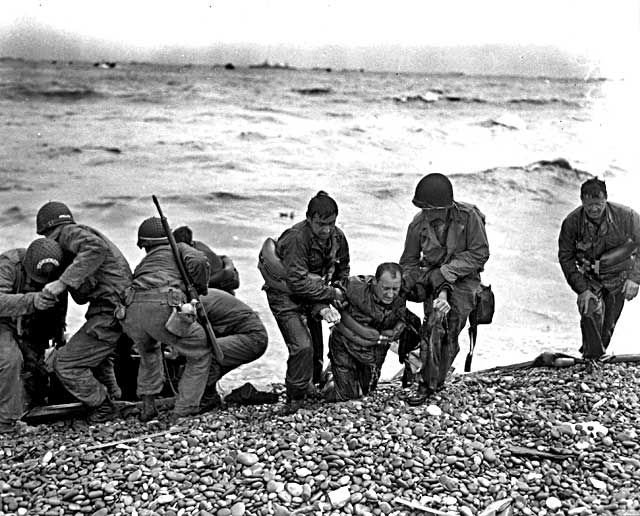
US Soldier struggling in surf at Omaha Beach

The landing beaches at OMAHA stretched about 6500 meters from Colleville-Sur-Mer to Vierville-Sur-Mere in the west.  A further objective to the west of Vierville; Pont du Hoc, was believed to house a 150mm battery sighted where it could enfilade OMAHA and was assigned to the 2nd Ranger Battalion.  Companies from this battalion made a heroic landing and scaled the cliffs to capture the strongpoint only to discover that the guns had not been emplaced and held their isolated beachhead until relieved by the 29th Division on the morning of June 8th.[iv]

H-Hour for OMAHA was 0630.  Unfortunately the assault troops were transferred to their LCVPs 16-20 kilometers from the beach resulting in a long and dangerous ride in the small craft for the infantry.  Most of the infantry were completely soaked in sea spay and seasick before going ashore carrying loads far above what they normally would carry into battle.[v] One battalion of DD tanks, the 741st Armored Battalion, supporting the 16th Infantry of 1st Infantry Division was launched too far out and nearly all of its tanks were swamped and lost before firing a shot in anger.[vi] Weigley notes that at OMAHA “at least 10 of the LCVPs sank” as did “the craft carrying almost all of the 105mm howitzers that were to be the first artillery ashore after the tanks.”[vii] The losses would cripple the assault on OMAHA and nearly cause its abandonment.

As the soldiers of the American divisions on OMAHA came ashore they faced German defenders of the 352nd, 716th and a regiment of the 709th Infantry Division, the latter under the tactical command of the 352nd.   Without the bulk of their tanks artillery and lacking close air support the Americans struggled across the beaches and were cut down in large numbers before being pinned down behind the sea wall.[viii] As the Americans pinned down on the beach failed to advance the time tables for the reinforcing waves became snarled amid the German beach obstacles which had not been cleared due to 40% casualties among the Combat Engineers and the loss of all but five bulldozers.[ix] Naval officers were frustrated in their attempts to provide support by the lack of identifiable targets on the beaches but strongpoints were “knocked out by either by superbly directed vigorous gunfire from destroyers steaming as close as 800 yards offshore, or by determined action from Rangers or infantry.[x]

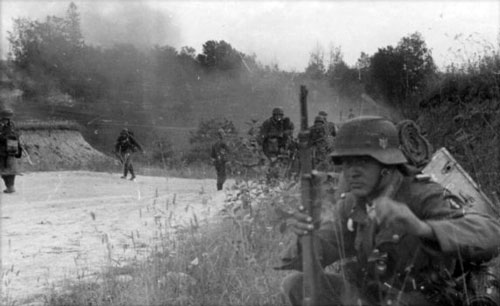
Grenadiers of 352nd Infantry Division move to counter-attack

Soldiers ashore discovered the truth that they were not facing the static 716th Division but the 352nd Division as well.[xi] But for the leadership of Brigadier General Norman Cota, assistant division commander of 29th Infantry Division and Colonel Charles Canham of the 116th Infantry who were able to rally their troops and just enough leaders and small units from the 116th which had its linage back to the “Stonewall Brigade” as well as units of the 1st Divisions’ 16th and 18th Regiments  who kept their heads and began to lead survivors through the dunes and up the bluffs to attack German defenders of the roads leading up from the beach from the flank and rear as well as a mid-day break in the weather which allowed some close tactical air support General Bradley may have ordered the evacuation of OMAHA.

Omaha Beach rescue of wounded from surf

At sea events were as confused as Bradley and his staff attempted to make sense of what was going on.  Even later in the evening there was discussion of diverting all further reinforcements from OMAHA to the British beaches.[xii]At 1330 hours “Gerow signaled Bradley: “Troops formerly pinned down on beaches…advancing up heights behind beaches.”[xiii] By the end of the day Bradley’s aid Major Hansen noted Bradley’s comments to Collins: “They are digging in on Omaha beach with their fingernails. I hope they can push in and get some stuff ashore.”  And Montgomery: “Someday I’ll tell Gen[eral] Eisenhower just how close it was for a few hours.”[xiv]

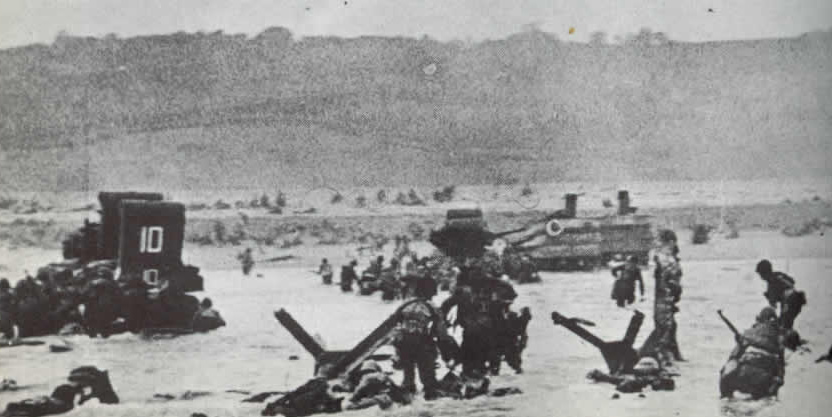
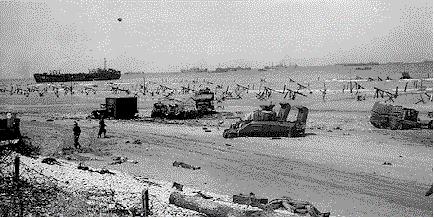
Omaha Beach Wreckage

The landings at OMAHA did succeed at a cost of over 2000 casualties, critical to their success were the German inability to reinforce their defending troops on the beach and the weakness of the units available to mount the standard counterattack that was critical to German defensive plans on D-Day itself. The 352nd Division fought superbly under the full weight of V Corps and the British XXX Corps on its right suffering heavy casualties as they contested every inch of ground.  The 716th Division units melted under the onslaught.  Allied air supremacy played a key role as sorties by the 8th and 9th Air Forces helped keep German reinforcements from arriving and interdicted counter attacks inland.  Weigley credits the Allied air superiority with the success of the landings and with limiting the cost of allied lives.[xv] Von Rundstedt and other German commanders in France were limited by the delay and refusal of Hitler and OKW to release Panzer reserves when needed most early on June 6th.  By the close of D-Day allied forces had secured the five invasion beaches but not achieved their objectives of taking Caen and Bayuex and forces had not linked up leaving the beaches extremely vulnerable had the Germans been able to mount a rapid counterattack by Panzers and strong infantry formations.

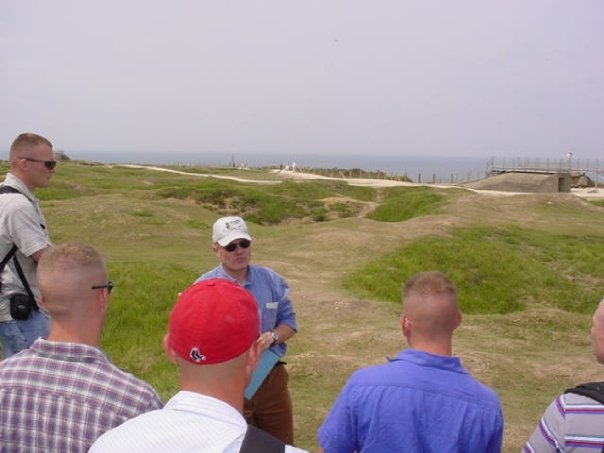
The author lecturing at Pont du Hoc Omaha Beach 2004


[i] Ibid. p.74-75

[ii] Von Luck, Hans.  “Panzer Commander“ Dell Publishing, New York, 1989 pp. 169-170.  Von Luck a regiment commander in 21st Panzer noted that General Marcks of 84th Corps had predicted a 5 June invasion at a conference May 30th.

[iii] Almost every D-Day historian talks about the weather factor and its effect on the German high command’s reaction to the invasion.  Rommel was visiting his wife for her birthday and planned to make a call on Hitler. Others including commanders of key divisions such as the 91st Airlanding Division were off to a war game in Rennes and the 21st Panzer Division to Paris.

[iv] Ibid. Weigley p. 96

[v] See Cornelius Ryan, “The Longest Day” Popular Library Edition, New York 1959. pp. 189-193 for a vivid description of the challenges faced by soldiers going from ship to landing craft and their ride in to the beaches.

[vi] Ibid. Weigley. p.78 Weigley talks about the order for the tanks to be carried ashore on their LCTs that did not get transmitted to the 741st.

[vii] Ibid.

[viii] Ibid. Weigley  p. 87 The weather prevented the aerial bombardment from being effective. Because the bombers could not see their targets they dropped their bomb loads further inland, depriving the infantry of support that they were expecting.  Naval gunfire support had some effect but had to be lifted as the troops hit the beach leaving much of that support to come from Destroyers and specially equipped landing craft which mounted rockets and guns.

[ix] Ibid. Hastings. pp. 90-91.

[x] Ibid. p.99

[xi] Ibid. Weigley p.80

[xii] Ibid. p.101  Also see Weigley p.80

[xiii] Ibid. p.99

[xiv] Ibid. Weigley. p.95

[xv] Ibid. p.94

2 Comments

Filed under History, Military, world war two in europe

Tides Come Back from 6-0 deficit but Lose as Hinkley gives up 4 runs in 9th Inning

Armando Gabino had his worst outing of the year

On a very warm evening the Norfolk Tides looked like they would get a big comeback win. On their first night with Interim Manager Bobby Dickerson at the helm the Tides opened their four game series against the Buffalo Bisons at Harbor Park where a crowd of 6345 gathered to celebrate “Marine Night.”

The Tides managed to rebound from a 6-0 Buffalo lead only to lose in the 9th inning when Michael Hinckley just promoted to Norfolk from AA Bowie loaded the bases with no outs to give up 4 runs in the top of the 9th inning.

Tides starter Armando Gabino had his worst outing of the season giving up 6 runs on 6 hits, though 2 of the runs were unearned due to a fielding error by Second Baseman Blake Davis in the 3rd inning which opened the floodgates. Gabino got into trouble again in the 4th and was relieved by Jim Miller. Miller would settle things down and pitch three innings before yielding to Ross Wolf in the 7th. Wolf too held the Bisons in check as the Tides offense went to work.

Jim Miller continued good work as a middle releiver

Brandon Snyder ignited the Tides in the 5th inning when with one out he hit a line drive over the right field wall into the Tides bullpen. That hit by Snyder rocked Harbor Park. The fans that had been silenced by the Bisons were back in the game and the effect was electric.  Blake Davis then singled and Michel Hernandez walked.  With 2 on and 1 out Matt Angle singled to drive in Davis to cut the lead to 6-2.  In the 5th inning the Tides scored another run when Josh Bell reached second on a throwing error on an infield ground ball.  Nolan Reimold who seems to be improving after a dismal season in Baltimore followed by a worse start in Norfolk singled to drive in Bell making it a 6-3 game.

Matt Angle with one of his four hits

The Tides tied the game in the bottom of the 7th when with 1 out Michel Hernandez singled and advanced to second on a single by Matt Angle.  Hernandez scored when Robert Andino singled and Matt Angle advanced to second base.  Jeff Salazar singled to drive in Angle and move Andino to third base and would score on a sacrifice fly to center to tie the game at six.

Blake Davis Scores in the 5th inning on a Matt Angle Single

It appeared at this point that the Tides had all the momentum and had the Bisons on the ropes.  In the top of the 9th Michael Hinckley who had just been promoted to Norfolk from Bowie when hard luck Pedro Viola was sent down to Bowie made his first AAA appearance.  He gave up a single to former Tides infielder Justin Turner and a double to Mike Jacobs.  He then walked all time Minor League Baseball Home run king Mike Hessman to load the bases.  Now with the bases loaded he walked Russ Adams to give Buffalo the lead.  At this point Bobby Dickerson brought in former Oriole Cla Meredith hoping that Meredith’s Major League experience would pay off and shut down the Bisons before more damage could be done.  This was not the case as the first batter that Meredith faced Valentino Pascucci doubled down the line in right to clear the bases and give the Bisons a 10-6 lead.  Meredith struck out Andy Green but lost it on a wild pitch which put Green on first and Pascucci on third base.  J R House grounded out to score Pascucci before Meredith got Jesus Feliciano to ground out to end the frame. The Tides went down quietly in the bottom of the 9th and the game ended with the final score Buffalo 11 and the Tides 6.

Buffalo had 11 runs on 12 hits with 1 error and 8 men left on base, the Tides 6 runs on 12 hits and 2 errors with 6 runners left on base.  Bisons’ reliever Bobby Parnell (1-1 4.73 ERA) got the “unsave” and the win and Hinckley the loss giving up 4 runs without retiring a batter.

I did notice a couple of things that I thought were important. First Bobby Dickerson did not wait and wait to make pitching changes; he got pitchers out of the game when they got in serious trouble. Unfortunately in the 9th inning he had misplaced confidence in Cla Meredith. The second thing and this was even more important, the Tides hitters got the team back in the game as relievers Miller and Wolf held the Bisons after they had gotten out to the 6-0 lead.  Another note of interest was the continued hitting of Brandon Snyder and the 4 hits of Matt Angle in the lead off position.

The Tides and Bisons play tonight at Harbor Park and it will be a hot one with temperatures in the high 80s at game time. Jake Arietta (6-2 1.77 ERA) will be going for his 7th win of the season against Dylan Owen (1-1 4.76).

See you there.

Peace

Padre Steve+

Leave a comment

Filed under Baseball, Batlimore Orioles, norfolk tides

Preparing for D-Day

The planning for the Normandy invasion began in earnest after the QUADRANT conference in Quebec in August 1943 and its timetable was established at the Tehran conference where Stalin sided with the Americans on the need for an invasion of France in the spring of 1944.[i] Prior to this there had been some planning by both the British and Americans for the eventual invasion initially named ROUNDUP including a large scale raid at Dieppe in 1942 which ended in disaster but which provided needed experience in what not to do in an amphibious assault on a heavily defended beach.   Dieppe also darkened the mood of the Allies, the British in particular to the success of such operations, bringing to mind the failed Gallipoli campaign of 1915 as well as the opposed landings at Salerno and the USMC experience at Tarawa.[ii] Despite this the Americans led by General Marshall pushed for an early invasion of northwest Europe while the Churchill and the British due to their weakness in land power pushed for land operations in the Mediterranean, and even in Norway as an option to the assault in France. The mindset of the Allies left them in the position of planning almost exclusively for the success of the initial landings and build up to the near exclusion of planning for the subsequent campaign, especially “the maze of troubles awaiting behind the French shore.”[iii]

Operation FORTITUDE: Dummy Sherman Tank

Despite this the Normandy landings planned for in NEPTUNE and OVERLORD moved ahead and with the appointment of Eisenhower as the commander of SHAEF and his major subordinates for Land, Air and Sea which caused consternation on both sides of the Atlantic,[iv] [v]and expanding the operation from the initial 3 division assault on a narrow front to a minimum 5 division assault on a broad front across Normandy[vi] supplemented by a strong airborne force.[vii] Overall the plan as it developed reflected a distinctly “American willingness to confront the enemy head-on in a collision which Britain’s leaders had sought for so long to defer.”[viii] It is ironic in a sense that the British avoidance of the head on attack was based on their known lack of manpower, especially infantry reserves to sustain the war effort and the Americans only late recognized their own deficiency in both quantity and quality of infantry forces on which their strategy depended.  That the western allies, so rich in material and natural resources would be so deficient in infantry manpower was a key constraint on the subsequent campaign in France and Germany.  The Germans too faced manpower shortages resulting in smaller divisions and the creation of many “static” divisions manned by elderly or invalid Germans, as well as “volksdeutsch” and foreign “volunteers.”

Germans building anti-landing craft obstacles. Many would be armed with artillery shells or land mines


Prior to the final decision to mount an invasion the Allied planners had first contended with the location of the assault in northwestern France.  The Pas de Calais while providing a direct route was rejected because it was where the Germans would expect the strike to occur and because it was where the German defenses were strongest, and the fiasco at Dieppe had provided ample proof of making the assault into a heavily fortified port.  Likewise the mouth of the Seine near Le Harve was rejected because of the number and quantity of landing beaches and because the forces would be split on both sides of the river.  Brittany was excluded due to its distance from the campaigns objectives in Germany.[ix] This left Normandy which offered access to a sufficient number of ports and offered some protection from the weather and which offered options to advance the campaign toward the “Breton ports or Le Harve as might be convenient.”[x] Omaha beach, situated on the center right of the strike would be crucial to the success of the assault situated to the left of UTAH and the right of the British beaches.

Rommel on Inspection Tour

Once Normandy was selected as the location for the strike Planning was at times contentious especially over the amount and type of amphibious lift that could be provided in particular the larger types of landing ships and craft to support the Normandy invasion and the planned invasion of southern France, Operation ANVIL.  The increase in OVERLORD requirements for landing craft did have an impact in the Mediterranean and resulted in ANVIL being postponed until later in the summer.

Loading LST’s for D-Day

As part of their preparations the Allies launched a massive deception campaign, Operation FORTITUDE utilizing the fictitious First Army Group under LTG George Patton. Patton still smarting from his relief of command of 7th Army following slapping commanded an “Army Group” incorporating the use of dummy camp sites, dummy tanks, aircraft and vehicles, falsified orders of battle and communications to deceive German intelligence.[xi] The success of this effort which was heightened by the fact that all German Abwehr agents in the U.K. had been neutralized or turned, and the Luftwaffe limited air reconnaissance could only confirmed the pre-invasion build ups throughout England without determining the target of the invasion.[xii] The German intelligence chief in the west, Colonel Baron von Roenne “was deceived by FORTITUDE’s fantasy invasion force for the Pas de Calais.”[xiii] Despite this 7th Army commander recognized by 1943 that Normandy was a likely Allied target and efforts were made to shift 7th Army’s center of gravity from Brittany to Normandy.  The one potential German success in getting wind of when the Allied landings would occur was lost when German intelligence discovered two lines of Verlaine’s “Chason d’ Automme” in January 1944 which were to alert the French Resistance of the invasion.  The security section of 15th Army heard them transmitted on the afternoon of 5 June and notified General Jodl at OKW, but no action was taken to alert forces on the coast.[xiv]Allied intelligence was aided by ULTRA intercepts of coded German wireless transmissions though less so than they were during the African and Italian campaigns as more German communications were sent via secure telephone and telegraph lines vice wireless.[xv] Allied deception efforts were for the most part successful in identifying German forces deployed in Normandy, but were uncertain about the 352nd Infantry Division which had been deployed along OMAHA as it had taken units of the 709th Infantry Division under its command when it moved to the coast.[xvi]

Officers of 2nd Battalion 916th Infatry Regiment 352nd Infantry Division before the invasion

The Allied air campaign leading up to the invasion was based on attempting to isolate the invasion site from German reinforcements. Leigh-Mallory the Air Chief developed the “TRANSPORTATION PLAN” which focused efforts on destroying the French railroad infrastructure.[xvii] A more effective effort was led by General Brereton and his Ninth Air Force which was composed of medium bombers and fighters.  His aircraft attacked bridges and rapidly achieved success in crippling German efforts to reinforce Normandy.[xviii] Hastings gives more credit to the American bombing campaign in Germany led by General Spaatz and the 8th Air Force in destroying both German production capacity in oil and petroleum as well as the degradation of the German fighter force achieved in the American daylight raids, which so seriously degraded the German fighter force that it could not mount effective resistance to the invasion.[xix] Weigley too notes that Albert Speer the Reich Armaments Minister said that “it was the oil raids of 1944 that decided the war.”[xx]

Getting Tanks ashore was vital and the Dual Drive Sherman Tanks were integral to the American Plan at Omaha Beach

Planning and preparations for OMAHA were based around getting the 1st and 29th Infantry Divisions ashore and them securing a beachhead “twenty-five kilometers wide and eight or nine kilometers deep.”[xxi] American preparations were thorough and ambitious, but the American assault would go through the most heavily defended sector of German defenses in Normandy with wide beaches bordered by dunes which were nearly impassable to vehicles and “scrub covered bluffs thirty to fifty meters high…rough and impassable to vehicles even to tracked vehicles except at a few places.  The exits were unimproved roads running through four or five draws that cut the bluffs.”[xxii] Dug in along those bluffs would be the better part of the 352nd Division. Compounding the selection of a difficult and heavily defended landing zone the Americans failed to take advantage of many of the “gadgets” that were offered by the British which in hindsight could have aided the Americans greatly.  The Americans made use of two battalions of DD (Dual Drive) tanks but turned down the offer of flail tanks, flamethrower tanks, and engineer tanks, the “funnies” developed by General Hobart and the British 79th Armored Division.[xxiii] Weigley believes that the American view of “tanks as instruments of mobility rather than of breakthrough power.” And the fact that American victories in the First World War were won by infantry.[xxiv] In this aspect the Americans were less receptive to utilizing all available technology than the British whose use of the Armor on the beaches to provide direct fire into German strong points lessened their infantry casualties on D-Day. Due to this lack of armor support on the beach American forces on OMAHA had little opportunity to exercise true combined arms operations.[xxv]

“Czech Hedgehogs” on the Pas De Calais

German preparations for an Allied landing in Normandy were less advanced than the Pas de Calais, although Field Marshal Rommel had increased defensive preparations along the front, including the Normandy beaches.  One of Rommel’s initiatives was to deploy Panzer Divisions near the coast where they could rapidly respond to an invasion however he did not get everything that he wanted rather than two Panzer Divisions deployed near the Normandy beaches, only one, the 21st Panzer Division was deployed near Caen in the British sector.  One wonders the result had the 12th SS Panzer Division been deployed behind OMAHA. [xxvi]

Rommel with gunners of the 21st Panzer Division’s Self-Propelled Artillery Regiment. The SP Guns were locally built by the Division using captured French Tanks and German artillery

Tomorrow: D-Day


[i] Weigley, Russell F. Eisenhower’s Lieutenants: The Campaign of France and Germany, 1944-1945, Indiana University Press, Bloomington IN, 1981 p.33
[ii] Ibid pp. 34-35

[iii] Ibid p.35

[iv] General Montgomery 21st Army group and Land Forces, Admiral Sir Bertram Ramsey as Allied Naval Expeditionary Force and Air Marshall Sir Trafford Leigh-Mallory as Commander in Chief Allied Expeditionary Air Force. Weigley p.43

[v] Max Hastings in Overlord: D-Day and the Battle for Normandy Vintage Books, New York, 1984, comments that many in Britain wondered if Eisenhower with the lack of actual battle experience could be a effective commander and that Eisenhower was disappointed in the appointment of Leigh-Mallory and Ramsey, and had preferred Alexander over Montgomery, pp. 28-29.

[vi] Ibid. Weigley p.40.  Montgomery was the first to object to the 3 division narrow front invasion rightly recognizing that seizing Caen with its road junctions could provide a springboard for the campaign into open country.

[vii] Ibid. p.37

[viii] Hastings, Max. Overlord: D-Day and the Battle for Normandy Vintage Books, New York, 1984 p.29  Hastings finds the irony in the selection of the British officers to execute the plan that reflected the American way of thinking.

[ix] The Germans agreed with this in their planning leaving Brittany very lightly defended.  See  Isby, David C. Ed. “The German Army at D-Day: Fighting the Invasion.” p.27 The report of General Blumentritt, Chief of Staff OB West noted that only 3 divisions were assigned to Brittany.

[x] Ibid. Weigley, pp. 39-40

[xi] Ibid. p.73

[xii] See Isby p. 69.  General Max Pemsel of 7th Army noted that “During  the spring of 1944, Seventh Army received only tow good photographs of British southern ports, which showed large concentrations of landing craft.”

[xiii] Ibid. Hastings p.63.  Hastings comments also about the success of using the turned Abwehr agents.

[xiv] Warlimont, Walter. “Inside Hitler’s Headquarters: 1939-1945.” Translated from theGerman by R.H. Barry. Presidio Press, Novao CA, English Edition Copyright 1964 Wiedenfeld and Nicholson Ltd. Pp.422-423

[xv] Ibid. Weigley pp. 53-54

[xvi] Ibid. p. 67

[xvii] Ibid. pp.57-64  Weigley spends a great deal of time on the wrangling between Eisenhower, Leigh Mallory and Spaatz on the nature of the plan, the allocation of forces both strategic and tactical assigned to carry it out and its success, or in the light of postwar analysis the lack of effect that it had on German operations.

[xviii] Ibid. p.67-68.

[xix] Ibid. Hastings pp. 43-44 In large part due to the long range P-51 Mustang which accompanied the American bombing raids beginning in 1943.  Another comment is that the campaign drew the German fighters home to defend Germany proper and prevented their use in any appreciable numbers over the invasion beaches.
[xx] Ibid. Weigley p.69

[xxi] Ibid. p.89

[xxii] Ibid. pp. 88-89

[xxiii] Ibid. p.87

[xxiv] Ibid. Weigley also talks about the rejection of General Corlett’s ideas to use Amtracks used by the Marines in the Pacific to land on less desirable, but less defended beaches to lessen casualties on the beaches and the need for additional support equipment even on smooth beaches.  One of Corlett’s criticisms was that too little ammunition was allotted to supporting the landings and not enough supporting equipment was provided. pp. 46-47

[xxv] Hastings notes that with the strength and firepower of the German forces on OMAHA that many of these vehicles had they been employed would like have ended up destroyed further cluttering the beachhead. “Overlord” p.102

[xxvi] The battle over the deployment of the Panzer Divisions is covered by numerous historians.  The source of the conflict was between Rommel who desired to place the Panzer Divisions on the Coast under his command due to the fear that Allied air superiority would prevent the traditional Panzer counterthrust, General Gyer von Schweppenburg commander of Panzer Group West (Later the 5th Panzer Army) and Field Marshal Von Rundstedt who desired to deploy the divisions order the command of Rundstedt for a counter attack once the invasion had been launched, a strategy which was standard on the Eastern Front, and Hitler who held most of the Panzer reserve including the SS Panzer Divisions under his control at OKW.  Hitler would negotiate a compromise that gave Rommel the satisfaction of having three Panzer Divisions deployed behind coast areas in the Army Group B area of responsibility.  21st Panzer had those duties in Normandy.

1 Comment

Filed under History, Military, world war two in europe

A Whole Lot of Shaking Going On: O’s Fire Dave Trembley, Samuels to Manage O’s; Allenson promoted to Baltimore as Coach, Dickerson to Manage Tides

Gone: Dave Trembley Fired by Orioles

The axe finally came down on Dave Trembley in Baltimore following a sweep by the Yankees and an 8th straight loss.  The 15-39 Orioles decided that it was time for a change firing Trembley and promoting Third Base Coach Juan Samuel as to Interim Manager.  In the ripple effect that followed Norfolk Tides Manager Gary Allenson was promoted to the Orioles to assume the 3rd Base Coach position and Orioles Minor League Infield Coordinator/Latin America Field Coordinator Bobby Dickerson named as the Tides Interim Manager.  Last year Dickerson Managed the AAA Iowa Cubs to a 72-72 record.  He has an extensive Minor League career and has a 525-462 record as a Minor League Manager in which he led the AA Southern League West Tennessee Diamond Jaxx to the post season on two occasions.

It is now time for Andy McPhail and the Orioles to get the kind of big name franchise kind of manager that is also a good teacher for young talent to show Orioles fans that they are serious about winning.  Of course if you have ready me since the close of the 2009 campaign, that man is Bobby Valentine.  In the mean time it is important for the O’s to really start scrutinizing their roster and making changes to the 25 and 40 man roster and focus on performance as well as potential.

Dickerson will manage his first game against the Buffalo Bisons tonight at Harbor Park.  See you there and may God help the Orioles and Tides. Armando Gabino (2-0 1.80 ERA) will pitch for the Tides and face Tobi Stoner (3-5 5.13 ERA). The game will see the return of a number of familiar faces to Harbor Park including Justin Turner, J R House and Mike Cervenak.

Peace

Padre Steve+

Leave a comment

Filed under Baseball, Batlimore Orioles, norfolk tides

Five Minutes that Changed History: The Battle of Midway 1022-1027 hours June 4th 1942

Instruments of Death SBD Dauntless Dive Bombers at Midway

Six months after Pearl Harbor the United States Navy met the Imperial Japanese Navy in battle on the seas and in the airspace around Midway Island. It was a battle between a fleet that had known nothing but victory in the months after Pearl Harbor, sweeping across the Pacific and the Indian Oceans and decimating Allied Naval forces that stood in their way, the HMS Prince of Wales and HMS Repulse off of Singapore, a force of Royal Navy cruisers and the Aircraft Carrier HMS Hermes in the Indian Ocean, the bulk of the US Asiatic Fleet in the waters around the Philippines and the Dutch East Indies culminating in the Battle of the Java Sea where the bulk of the American, British, Dutch and Australian naval forces engaged were annihilated.  In only one place had a Japanese Naval task force been prevented from its goal and that was at the Battle of the Coral Sea where Task Force 11 and Task Force 17 centered on the Carriers USS Lexington and USS Yorktown prevented a Japanese invasion force from taking Port Moresby sinking the light carrier Shoho, damaging the modern carrier Shokaku and decimating the air groups of the Japanese task force.

In May US Navy code breakers discovered the next move of the Imperial Navy an attack on Midway Island and the Aleutian islands.   Since the occupation of Midway by Japanese forces would give them an operational base less than 1000 miles from Pearl Harbor Admiral Chester Nimitz committed the bulk of his naval power, the carriers USS Enterprise CV-6, USS Yorktown CV-5 and USS Hornet CV-8 and their 8 escorting cruisers and 15 destroyers, a total of 26 ships with 233 aircraft embarked to defend Midway along with a force of 5 cruisers and 4 destroyers to cover the Aleutians.  Midway had a mixed Marine, Navy and Army air group of 115 aircraft which included many obsolete aircraft, 32 PBY Catalina Flying Boats, of which the 83 fighters, dive bombers, torpedo planes and Army Air Force bombers piloted by a host of inexperienced pilots.

The Japanese Flagship Akagi

The Japanese sent a force of 7 battleships, 7 carriers including the elite First Carrier Striking Group composed of the Pearl Harbor attackers Akagi, Kaga, Soryu and Hiryu and their highly trained and combat experienced air groups composed of 273 aircraft along with 14 cruisers and 39 destroyers assigned to take Midway and destroy the US Navy when it came out to fight as well as a force of 4 battleships, 12 destroyers assigned screen to the Aleutian invasion force which was accompanied by 2 carriers 6 cruisers and 10 destroyers.   The other carriers embarked a further 114 aircraft.  A factor which aided the Americans was the distance between the Japanese Task forces which were scattered over thousands of square miles of the Northern Pacific Ocean from which they could not rapidly come to the assistance of any other group.

With the foreknowledge provided by the code breakers the US forces hurried to an intercept position northeast of Midway eluding the Japanese submarine scout line which the Japanese Commander Admiral Yamamoto presumed would find them when they sailed to respond to the Japanese attack on Midway.  Task Force 16 with the Enterprise and Hornet sailed first under the command of Rear Admiral Raymond A Spruance and Task Force 17 under Rear Admiral Frank “Jack” Fletcher with the Yorktown which had been miraculously brought into fighting condition after suffering heavy damage at Coral Sea. Fletcher assumed overall command by virtue of seniority and Admiral Nimitz instructed his commanders to apply the principle of calculated risk when engaging the Japanese as the loss of the US carriers would place the entire Pacific at the mercy of the Japanese Navy.

On June 3rd a PBY Catalina discovered the Japanese invasion force and US long range bombers launched attacks against it causing no damage.  The morning of the 4th the Americans adjusted their search patterns in and the Japanese came into range of Midway and commenced their first strike against the island.  In response land based aircraft from Midway attacked the Japanese carrier force taking heavy casualties and failing to damage the Japanese task force.  The American Carrier task forces launched their strike groups at the Japanese fleet leaving enough aircraft behind of the Combat Air Patrol and Anti-submarine patrol.  As the Americans winged toward the Japanese fleet the Japanese were in confused.  A scouting report by an aircraft that had been delayed at launch discovered US ships but did not identify a carrier until later into the patrol.  This was the Yorktown and TF 17. The Japanese attempted to recover their strike aircraft and prepare for a second strike on the island and then on discovery of the carrier embarked on the task of unloading ground attack ordnance in favor of aerial torpedoes and armor piercing bombs.  The hard working Japanese aircrew did not have time to stow the ordnance removed from the aircraft but by 1020 they had the Japanese strike group ready to launch against the US carriers.

AM6-2 Zeros Mauled the US Torpedo Bombers

As the Japanese crews worked the Japanese carriers were engaged in fending off attacks by the US torpedo bomber squadrons, VT-6 from Enterprise, VT-8 from Hornet and VT-3 from Yorktown.  The Japanese Combat Air Patrol ripped into the slow, cumbersome and under armed TBD Devastators as they came in low to launch their torpedoes.  Torpedo Eight from Hornet under the command of LCDR John C Waldron pressed the attack hard but all 15 of the Devastators were shot down.  Only Ensign George Gay’s aircraft was able to launch its torpedo before being shot down and Gay would be the sole survivor of the squadron.

Hopelessly obsolete 40 of 44  TBD Devastators were lost in action

Torpedo 6 under the command of LCDR Eugene Lindsey suffered heavy casualties losing 10 of 14 aircraft with Lindsey being one of the casualties.  The last group of Devastators to attack was Torpedo 3 under the command of LCDR Lem Massey from the Yorktown.  These aircraft were also decimated and Massey killed but they had drawn the Japanese Combat Air Patrol down to the deck leaving the task force exposed to the Dive Bombers of the Enterprise and Yorktown.

TBD Devastator attacking Akagi

There had been confusion among the Americans as to the exact location of the Japanese Carriers, the Bombing 8 and Scouting 8 of Hornet did not find the carriers and had to return for lack of fuel with a number of bombers and their fighter escort having to ditch inn the ocean and wait for rescue.  The Enterprise group under LCDR Wade McClusky was perilously low on fuel when the wake of a Japanese destroyer was spotted.  McClusky followed it to the Japanese Task Force.  The Yorktown’s group under LCDR Max Leslie arrived about the same time.  The found the skies empty of Japanese aircraft. Aboard the Japanese ships there was a sense of exhilaration as each succeeding group of attackers was brought down and with their own aircraft ready to launch and deal a fatal blow to the American carrier wondered how big their victory would be.

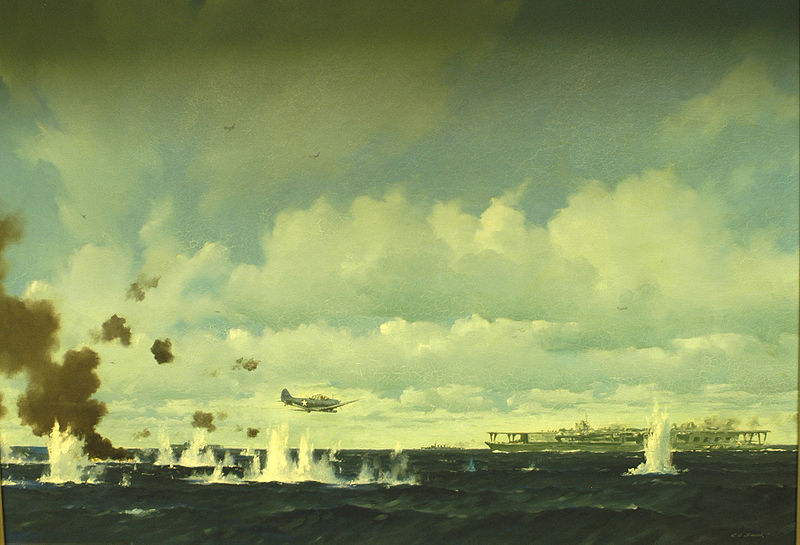
At 1020 the first Zero of the Japanese attack group began rolling down the flight deck of the flagship Akagi, aboard Kaga aircraft were warming up as they were on the Soryu.  The unsuspecting Japanese were finally alerted when lookouts screamed “helldivers.” Wade McClusky’s aircraft lined up over the Akagi and Kaga pushing into their dives at 1022. There was a bit of confusion when the bulk of Scouting 6 joined the attack of Bombing 6 on the Kaga.  The unprepared carrier was struck by four 1000 pound bombs which exploded on her flight deck and hangar deck igniting the fully fueled and armed aircraft of her strike group and the ordnance littered about the hangar deck.  Massive fires and explosions wracked the ship and in minutes the proud ship was reduced to an infernal hell with fires burning uncontrollably. She was abandoned and would sink at 1925 taking 800 of her crew with her.     LT Dick Best of Scouting 6 peeled off from the attack on Kaga and shifted to the Japanese flagship Akagi. On board Akagi were two of Japans legendary pilots CDR Mitsuo Fuchida leader of and CDR Minoru Genda the architect of the Pearl Harbor attack and subsequent string of Japanese victories.  Both officers were on the sick list and had come up from sick bay to watch as the fleet was attacked.  Seeing Kaga burst into flames they stood mesmerized until Akagi’s lookouts screamed out the warning “helldivers” at 1026.  Best’s aircraft hit with deadly precision landing tow of their bombs on Akagi’s flight deck creating havoc among the loaded aircraft and starting fires and igniting secondary explosions which turned the ship into a witch’s cauldron.  By 1046 Admiral Nagumo and his staff were forced to transfer the flag to the cruiser Nagara as Akagi’s crew tried to bring the flames under control. They would do so into the night until nothing more could be done and abandoned ship at 2000.  Admiral Yamamoto ordered her scuttled and at 0500 on June 5th the pride of the Japanese carrier force was scuttled.

Scouting 6 gets the Akagi

VB-3 under LCDR Max Leslie from the Yorktown stuck the Soryu with 17 aircraft, only 13 of which had bombs due to an electronic arming device malfunction on 4 of the aircraft including the squadron leader Leslie.  Despite this they dove on the Soryu at 1025 hitting that ship with 3 and maybe as many as 5 bombs. Soryu like her companions burst into flames as the ready aircraft and ordnance exploded about her deck. She was ordered abandoned at 1055 and would sink at 1915 taking 718 of her crew with her.

The remaining Japanese flattop the Hiryu attained the same fate later in the day after engaging in an epic duel with the Yorktown which her aircraft heavily damaged.

It was quite miraculous what happened at Midway in those five pivotal minutes.  Authors have entitled books about Midway Incredible Victory and Miracle at Midway and the titles reflect the essence of the battle.  A distinctly smaller force defeated a vastly superior fleet in terms of experience, training and equipment and when it appeared that the Japanese Fleet would advance to victory in a span of less than 5 minutes turn what looked like certain defeat into one of the most incredible and even miraculous victories in the history of Naval warfare.  In those 5 minutes history was changed in a breathtaking way.  While the war would drag on and the Japanese still inflict painful losses and defeats on the US Navy in the waters around Guadalcanal the tide had turned and the Japanese lost the initiative in the Pacific never to regain it.   The Japanese government hid the defeat from the Japanese people instead proclaiming a great victory while the American government could not fully publicize the information that led to the ability of the US Navy to be at the right place at the right time and defeat the Imperial Navy.

When one looks at implications of the victory it did a number of things. First it changed the course of the war in the Pacific probably shortening it by a great deal.  Secondly it established the aircraft carrier and the fast carrier task force as the dominant force in naval warfare which some would argue it still remains.  Finally those five minutes ushered in an era of US Navy dominance of the high seas which at least as of yet has not ended as the successors to the Enterprise, Hornet and Yorktown ply the oceans of the world and the descendants of those valiant carrier air groups ensure air superiority over battlefields around the world.

Peace

Padre Steve+

7 Comments

Filed under History, Military, US Navy, world war two in the pacific

Tides Shelled Thursday: Shut out by Rochester 9-0 and an Orioles Report

Brandon Erbe was Rocked again by the Rochester Red Wings

The second expedition of the Norfolk Tides to the great north ended on a cloudy and cool afternoon in Rochester as the Red Wings hammered the Tides to split the four game series.  Unlike the first three games of this series this game took an ugly turn in the 6th inning when the Wings scored 6 runs.  Tides starting pitcher Brandon Erbe’s woes continued as the young right hander was hit hard giving up 5 runs 4 of which were earned runs on 5 hits in 5 innings before being pulled in the 6th after facing four batters without getting any out.  Erbe (0-9 6.14 ERA) was followed by another pitcher that most thought last year would be in the Orioles bullpen possibly as a closer and that is Kam Mickolio (1-2 10.43 ERA).  Mickolio gave up 2 runs on 4 hits getting just one batter out before being replaced by Andy Mitchell.  Mitchell gave up 2 runs on 3 hits in 1.2 innings work before Pedro Viola (0-2 15.23 ERA) entered the game in the bottom of the 8th giving up no runs on 1 hit.   Rochester starter Jeff Manship (3-2 3.64 ERA) pitched 9 innings of scoreless ball scattering just 4 hits, walking none while striking out 6.

The Red Wings runs came the 5th, 6th and 7th innings.  In the 5th the Wings scored a run on 3 singles, an error and a wild pitch.  In the 6th inning they scored 6 runs on 8 hits against Erbe and Mickolio and in the 7th 2 runs on Mitchell.  Of the 16 hits produced by the Wings 13 were singles and the three extra base hits were all doubles.

The Norfolk offense was non-existent today just the four singles to Robert Andino, Jeff Salazar, Nolan Reimold and Blake Davis.

The Tides return to Harbor Park on Friday to play the Buffalo Bisons at 7:15 on Marine Night, a tradition here in Norfolk where the Tides honor “the Few, the Proud, the Marines” that serve in our midst.

As for the Orioles one commentator referred to them today as “hapless” after losing 6-3 and being swept by the Yankees.  They fall to 15-39 with a .278 win percentage 21 games behind Eastern Division leader Tampa Bay.  The O’s go into a 3 game series against the Red Sox at home on Friday with Chris Tillman on the mound hoping to help the Orioles turn things around.

Dave Trembley: Will he survive the week in Baltimore?

I doubt if Dave Trembley will be around much longer as the Manager of the O’s, some are speculating that he will be relieved of his duties as early as today or tomorrow.  It will be a sad day for the O’s as Trembley is well liked who always tries to be positive about things even when you can see the suffering on his face, night after night and loss after loss.  He has been saddled with a near impossible task for the past number of years, working on a rebuilding program but having to call up many of the Orioles best prospects before they are ready to play every day in the toughest division in baseball.  Since the end of the last campaign I have felt that he needed to be let go but I feel bad for him and the team, especially all the young players who look up to him and his caring leadership.  Trembley never had enough of a solid veteran nucleus to build around and had to throw his young guys into situations that were often impossible.  They now need someone that can turn the organization around someone who can combine patience with urgency and caring with cold steel and blazing fire. The Orioles need to move some of the non-producing veterans and pick up some winners who will help the team win now and serve as mentors to the young players.  They also need to look at their 40 man roster as there are some hard decisions that will have to be made there as they cannot afford to keep players on the 40 man roster that cannot consistently perform at the AAA level.  This includes some of the Norfolk pitching staff. I find it notable that the Tides pitchers having the most difficult time and the worst seasons imaginable are all on the 40 man roster while the ones performing really well to include Jake Arietta and Denis Sarfate are not on it.

Peace,

Padre Steve+

Leave a comment

Filed under Baseball, Batlimore Orioles, norfolk tides