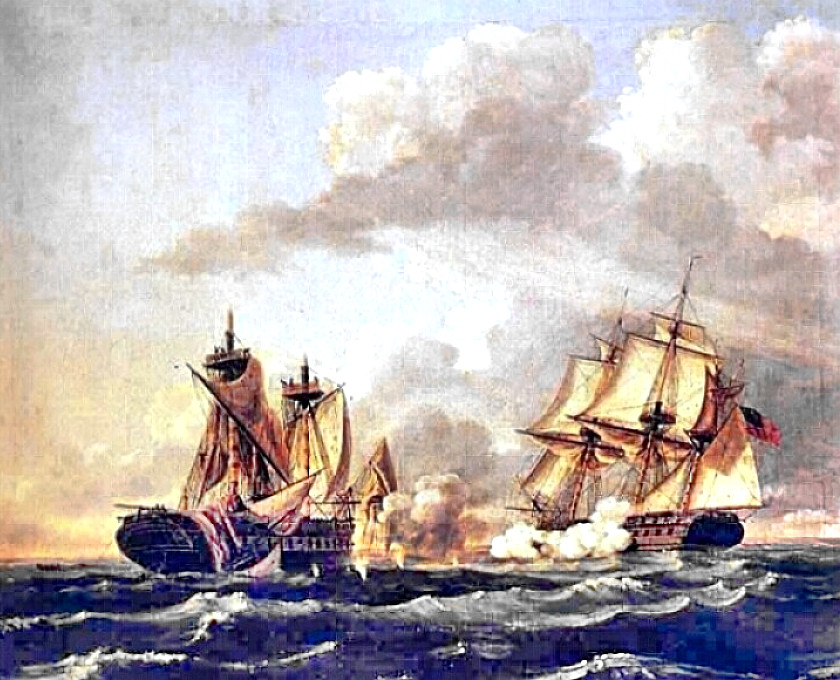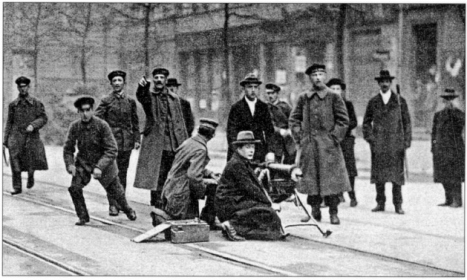
Yearly Archives: 2011

The Promise and Peril of Revolutionary Times: A Warning From History

“In a revolution, as in a novel, the most difficult part to invent is the end.” – Alexis de Tocqueville

“They who clamor loudest for freedom are often the ones least likely to be happy in a free society.”  Eric Hoffer – The True Believer

I don’t know about you but it seems that everywhere I look that revolution is in the air.  Revolutionary times can be exciting to watch or even to participate in because all at least initially cater to the hopes of people, the hope of change, freedom, justice and equity are common themes.   As a historian I find it fascinating to observe revolutions and to read about revolutions throughout history.  But I always have a concern about how even the most well intentioned revolts against real or perceived injustice often miscarry and create conditions ripe for civil war, dictatorship and even regional or world war.

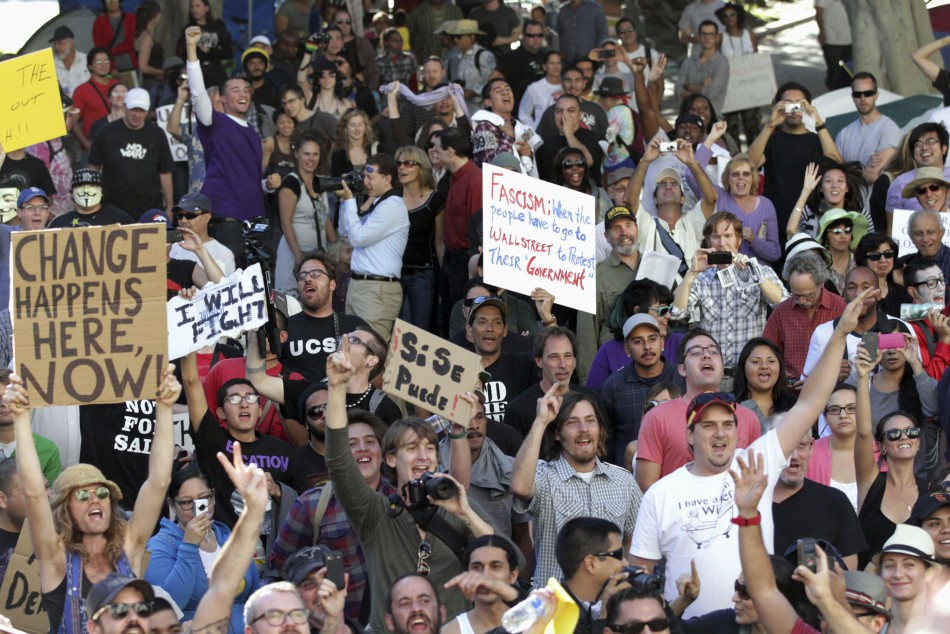
The revolutions sweeping the world today and I include the proto-revolutionary movements of the conservative Tea Party and Occupy Wall Street movements as revolutionary movements are becoming mass movements.  As mass movements they share many things in common even if their ideologies and backers appear to be diametrically opposed.  We now have two diametrically opposed revolutionary movements seeking power in this country and neither side will be satisfied until they achieve it.

Those that dismiss or seek to tame the Tea Party or the Occupy Wall Street movement are foolish. The anger, resentment and the hatred that these movements have for the established order are too great to be easily dismissed.  The politicians that try to channel these movements for their own benefit or party or that attempt to encourage them without actually addressing their grievances will discover too late that lip service and cosmetic change will not be enough.  Peaceful nonviolent protests can turn violent in a moment with very unpredictable results.

In our country there is great dissatisfaction with the status quo on the right and the left which in large part is due to the actions of those in power in government, media, business and even religion to address the concerns of those on both sides of the political abyss.  Likewise it is the same entities that in order to maintain their power have used every opportunity to create enmity among Americans.

Similar events are occurring on the other side of the Atlantic as the crisis in Greece threatens the economic stability and quite possibly the viability of the European Union.  The extremists on the left and right are garnering support that they have not had in decades from people that until the current economic downturn were content with the status quo because they were doing alright.

Even those revolutions that bring positive change tend to bring in some form of social unrest and upheaval to include the maltreatment and sometimes exile of people that did not agree with the revolution.  One only has to take a look at the large numbers of British colonists in the 13 Colonies who were loyal to the British Crown and lost their place in society and many times their homes and livelihoods as they were no longer welcome.  Many fled to Canada, the British West Indies or had to return to England.

Revolutionaries do not take kindly to those that oppose them, especially when they are kinsmen.  Those officers or Federal officials that remained loyal to the Union during the American Civil War that hailed from Southern States often found that they were no longer welcome in their communities and sometimes disowned by their families.  This was the fate of General George Thomas who remained faithful to his oath despite being fromVirginia. His family turned his picture around and refused to have anything to do with him from that point forward even refusing financial assistance from him after the war.

The English Civil Wars of 1641-1653 were some of the most brutal to occur inEuropeand devastated Ireland which lost some 41% of its population and where the lingering scars are still seen today.

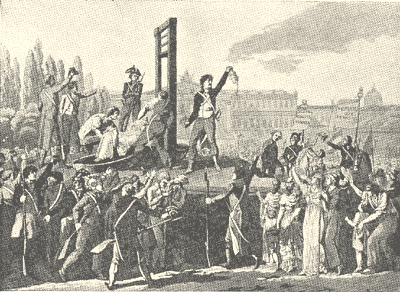
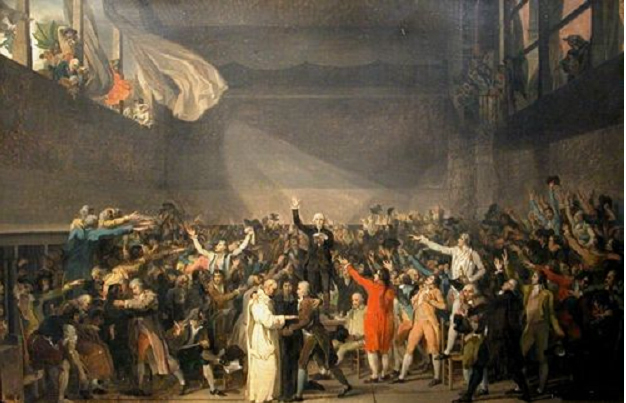
The French Revolution was a bloodletting that shaped France to the present day.  People tend to forget that the root cause of this revolution was a financial crisis brought about by the costs of the Seven Years War with England and the French support of the American Revolution which brought the country into more conflict with England. The antiquated and regressive French tax code put a heavy burden on the middle and lower classes but provided many exemptions to the nobility and the clergy.  When comptroller Jacques Necker proposed ending or reducing those exemptions he was fired.  But the crown was so week that it decided to call the Estates General into session for the first time since 1618 and when the three components of the assembly could not agree on credentials the lower assembly of commoners broke off and formed their own National Assembly and when it appeared that the King was bringing foreign troops to Paris it set off an armed revolt.

The revolution was brutal and unleashed an unprecedented series of wars which engulfed the European continent the West Indies and Egypt.  Eventually a young Army officer named Napoleon Bonaparte did much to secure the new regime’s security by a series of brilliant military victories.  He was so successful that he overthrew the government and became a dictator in 1799 and would proclaim himself Emperor in 1804.  The wars in Europe were devastating and would create a situation where a weakened Spain and Portugal would lose their colonies in Central and South America.

When Napoleon was finally defeated for the last time at Waterloo in 1815 the Congress of Vienna reestablished a conservative order and peace inEurope.  There was a brief revolutionary period in 1848 and the wars that led to the unification of Germany and the defeat of France by Prussia in 1870-71. But for the most part stability reigned until the First World War as European powers focused on using their power in imperialist ways in Africa, the Middle East and Asia.   The war set in motion revolutionary movements that would lead to the overthrow of empires and birth the mass movements of Communism, Fascism and Nazism that would be responsible for some of the most destructive wars and crimes against humanity ever seen by the world.

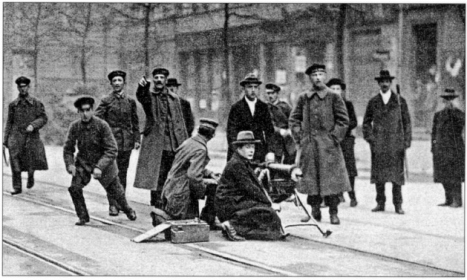
Other revolutions have caused immeasurable suffering, the Cultural Revolution in China, the Iranian revolution, the Bolshevik Revolution in Russia to name a few. The Spartacus revolution in the early days of the Weimar Republic helped doom it and led to the Nazi revolution in Germany. The Nazi revolution was brought about through legal means with the appointment of Adolf Hitler as Chancellor after which his revolutionary policies were put in place.

The revolutions in the Soviet Union and Warsaw pact in aftermath of the Cold War have brought a multiplicity of outcomes, some which appear to have brought forth societies where human rights and individual liberties are respected and others which have become or are in the process of becoming dictatorships.

And so today we live in an age of revolution which is heightened and moves across the globe like a wind fanned wildfire due to the instantaneous nature of the communication and media that we now enjoy.  There is the Arab Spring and the beginnings of revolutionary movements in Europe, Asia and now even North America.  Governments seem impotent to do anything about the conditions that have moved these revolutionary groups to action and have given the ideologues on the left and right respectability that they could have never enjoyed before.  The ideologues make their money by providing a platform for the airing of the grievances of their readers or listeners real and imagined by playing on the need for hope.  The motive of the listener or follower is finding something to believe in a hope and promise, hope around the corner not hope deferred.  Eric Hoffer noted “To have a grievance is to have a purpose in life. It not infrequently happens that those who hunger for hope give their allegiance to him who offers them a grievance.”

The extremists on both sides of the line in the United States have held sway so long that they have turned the extreme into the mainstream inspiring one of the most amazing displays of left-right groupthink that I have ever seen.  I read a lot of conservative and liberal blogs and websites,some which are considered mainstream by their proponents.  I believe that you can tell a lot about movements by what the rank and file write or share.  One thing that I notice is how interchangeable these blogs are and how much they mirror the talking points of their respective echo chambers.  There is little creative though only the endless repetition of talking points. If one ventures a dissenting opinion on one of these sites he or she will find themselves shouted down and demonized and it doesn’t matter if the site is left wing or right wing, religious or secular.  The purity of ideology and necessity of conformity to the group-think ensures that opposing points of view be shouted down.

I first started noticing this when I returned fromIraqin 2008. At that time I was still listening to conservative talk radio on a regular basis and I started noticing that with minor differences all the talk show hosts sounded alike, the same talking points driven home day after day.  Alternative viewpoints even those that differed only slightly from the party line were ridiculed and demonized. That was eye opening to me and I noticed a similar tone emanating from the left.  Both emphasize that they are being oppressed or persecuted and the rank and file believe that they are oppressed and gladly allow themselves to become parts of these mass movements.

It is the real and perceived feelings of oppression or persecution provide these disparate movements their most fervent followers and energy.

One attitude prominently displayed is an absolute hatred and distain of moderation.  Both have an absolute distain of dialogue and neither appear to want a win-win situation to develop simply because to both sides only absolute victory for themselves and destruction of all that that they oppose matters.  It is a nihilistic zero sum game that both sides play.  Both sides are slaves to their doctrine and the vast majorities of the followers of these mass movements are absolutely unaware of this.  Philosopher Eric Hoffer wrote “A doctrine insulates the devout not only against the realities around them but also against their own selves. The fanatical believer is not conscious of his envy, malice, pettiness and dishonesty. There is a wall of words between his consciousness and his real self.”

Revolutionary movements of themselves can be transforming and in the long run quite beneficial but for every one that is such there are many more that in succeeding bring about tyrannies as bad or worse than the ones that they ended.  The evidence of this is widespread.  Much of this is due to a desire not for freedom but for revenge as those that viewed themselves as oppressed or persecuted turn their new found power into a weapon of revenge and retaliation.  Hoffer wrote “It is doubtful if the oppressed ever fight for freedom. They fight for pride and power — power to oppress others. The oppressed want above all to imitate their oppressors; they want to retaliate.”

History shows that in more cases than not that when revolutionaries take power they become oppressors themselves and are perfectly willing to crush dissent by force. They become the conservative faction resistant to change and opposed to dissent.  Hannah Arendt observed that “The most radical revolutionary will become a conservative the day after the revolution.”

Eric Hoffer understood mass movements as few in the last century have.  Hoffer’s book The True Believer (1951) is a study of mass movements and since Hoffer had witnessed the mass movements of the 1920s and 1930s that defined the age, Fascism, Communism and Nazism.  Hoffer notes similarities between political, social and religious mass movements and when it was written in 1951 President Dwight D. Eisenhower praised it.  It is well worth the read.  Hannah Arendt also understood how individuals in mass movements could participate in evil including genocide and think that they were just doing their job and helping society.  Her book Eichmann in Jerusalem: A Report on the Banality of Evil.

Revolutionary times are filled with promise and peril. The wise in Tea Party and the Occupy Wall Street and other movements around the world need to understand that crucial truth.  Movements such as these can be co-opted and driven in ways that those that began them can little anticipate and the leaders of such movements often become victims of the very movement that they helped create.  The names of such instigators that have become victims is too long to list.

As a historian I find the process that we see unfolding as simply fascinating and I cannot predict how this revolutionary era will play out.  I just hope and pray that things don’t get too sporty.

Peace

Padre Steve+

5 Comments

Filed under History, News and current events, Political Commentary

Goodbye Iraq… Inshallah (إن شاء الله)

A spokesman for the Administration confirmed that US Forces will leave Iraq by the end of the year. The decision came after Iraqi Prime Minister Nouri al-Maliki has told U.S. military officials that he does not have the votes in parliament to provide immunity to the American trainers.

As of today 4478 American, 179 British and 139 other coalition troops have given their lives in this campaign. 32200 Americans have been wounded. Over 10,000 members of the Iraqi Army and Security Forces have given their lives to defend their country following the fall of Saddam Hussein. The official count of Iraqi civilian deaths is a bit over 50,000 people but the actual toll is probably much higher. The Congressional Budget Office estimates the long term cost of the Iraq War will be about 1.9 trillion dollars.

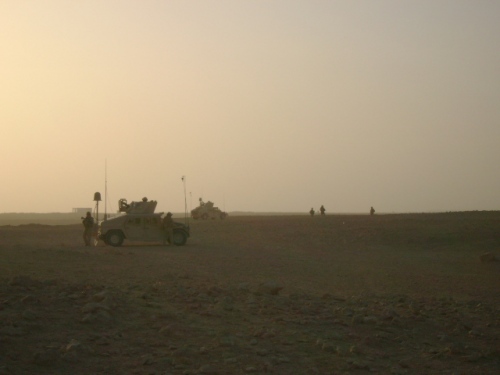
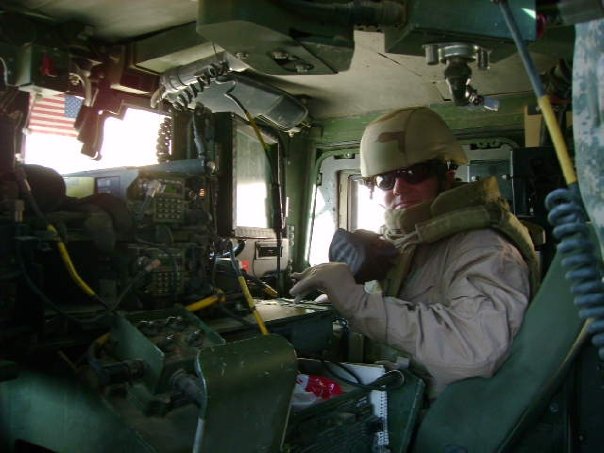
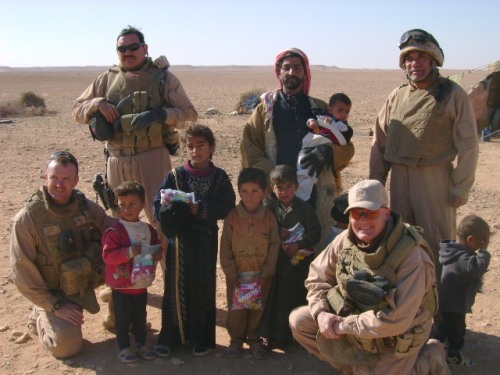
I served in Iraq and I am proud of my service there as part of the Iraq Assistance Group serving with our Marine Corps, Army, Navy and Air Force working with our Iraqi allies in Al Anbar Province from 2007-2008. I have found that it was probably the most rewarding tour I have had in my 30 years in the military. It also changed me in ways that I did not anticipate, especially the effects of PTSD. People sometimes ask me why the tour in Iraq was more rewarding than peacetime or non-deployed service and why I desire to serve in combat again as a Chaplain. The first time someone asked the answer at first surprised them. I said while I viewed peacetime and garrison service as important and meaningful ministry that it was like the regular baseball season. On the other hand getting to do what I did in a combat zone outside the wire with little groups of Americans and their Iraqis was like playing in the World Series. Some will not understand that and I can respect their opinion and their bewilderment. However you had to be there to understand.

I left part of me in Iraq and I will value my friendships with Iraqi military officers and the hospitality shown by them where ever I traveled. I will worry about them and their families as Iraq attempts to stabilize itself and rebuild from the war. I pray that there will be no civil war as some speculate and thatIran’s influence will become less as we leave and the Iraqi Shia Arabs remember that the “Persians” are not their friends as an Iraqi Shia officer reminded me. I do hope that one day I can go back as a visitor and see what I hope to be a free and prosperous country that is a friend.

Yet despite my feelings the question has to be asked: Was it worth it? Somehow I am left feeling that it hurt us andIraqin the long run. Saddam is gone and with him the terror that he imposed on the Iraqi people, but the Iranians are stronger and they were always the real threat to the region.

I almost feel like General Roy Urquhart played by Sean Connery at the end of the movie “A Bridge too Far.” http://www.youtube.com/watch?v=1j9kRciiD3E

We have to ask was it worth the human cost born by the United States military and the Iraqi people. Was it worth the strategic result of Iran becoming stronger? Was it worth the immense cost in blood, military strength and treasure and to our image around the world?

I am not sure if it was. I can only hope and pray that in the end something good will result for us and the long suffering people of Iraq.

Inshallah,

Padre Steve+

Note: Inshallah (إن شاء الله) is the Arabic word for “God Willing” or “if God wills it.”

5 Comments

Filed under History, iraq,afghanistan, Tour in Iraq

The Navy is the Future of National Security

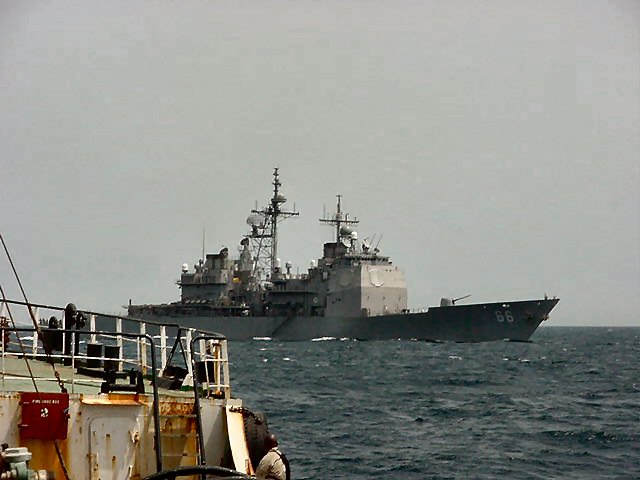
USS HUE CITY CG 66 in the Arabian Gulf 2002.  “I wish to have no Connection with any Ship that does not Sail fast for I intend to go in harm’s way.” John Paul Jones 

“Without a decisive naval force we can do nothing definitive, and with it, everything honorable and glorious.”  President George Washington

“A good Navy is not a provocation to war. It is the surest guaranty of peace.” President Theodore Roosevelt

“A powerful Navy we have always regarded as our proper and natural means of defense; and it has always been of defense that we have thought, never of aggression or of conquest. But who shall tell us now what sort of Navy to build? We shall take leave to be strong upon the seas, in the future as in the past; and there will be no thought of offense or provocation in that. Our ships are our natural bulwarks.” President Woodrow Wilson

“Events of October 1962 indicated, as they had all through history, that control of the sea means security. Control of the seas can mean peace. Control of the seas can mean victory. The United States must control the seas if it is to protect your security….” President John F. Kennedy

There are a great many debates in Congress and the Pentagon regarding the current and future military budgets in light of the massive budget deficits and economic crisis facing the nation.  Complicating the issue is our massive commitment to land campaigns that contribute little to the long term national security of the United States and its friends. These wars constrain our diplomatic military and economic ability to respond to other crises at home and around the world be they military threats, terrorism or natural or man made disasters.

Until the mid 20th Century theUnited States viewed the land forces when used abroad as expeditionary forces which were employed overseas for relatively short periods of times of combat.  The mission and strategy was to fight the war, bring all or most of the forces home, assist with security as needed and depend on a naval presence to show the flag without a continued large “boots on the ground” presence.   The two times that we have elected to fight protracted ground wars with no definable condition of victory we have come out weaker than we went in.  This was the case inVietnam a war which badly divided the nation and nearly destroyed the military as a viable force.  The present campaign in Afghanistan and the war in Iraq which is close to ending have the potential to do the same.

In the prosecuting the Global War on Terror which was launched in response to the attacks of September 11th 2001 we have for the most costly and historically flawed ways to use an American Army.  In doing so we have had to invest a huge amount of our expenditures simply to maintain a force to keep the status quo in a country that will turn on us as soon as it convenient to do so.

In the process of focusing on these aspects of this war we have forgotten the more crucial long term aspects of national security which can only be addressed by maritime power.  This power includes the military might of the Navy and Marine Corps team but also includes our Merchant Marine and Coast Guard.

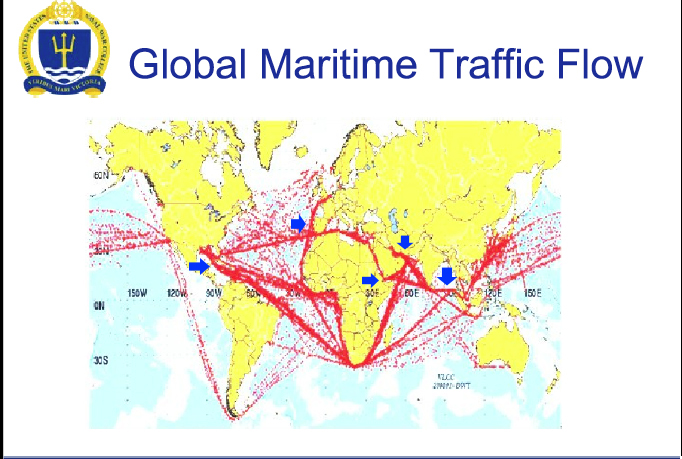
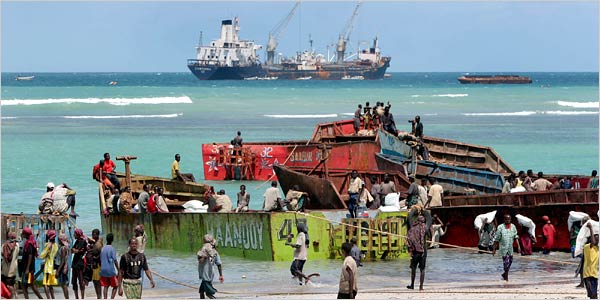
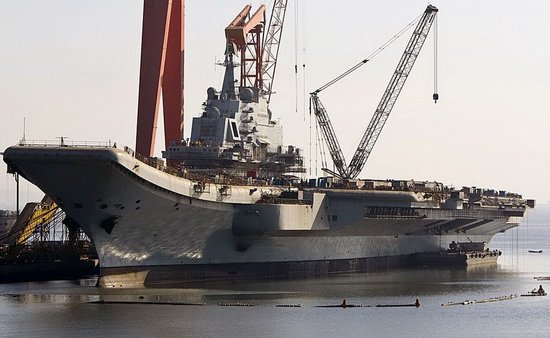
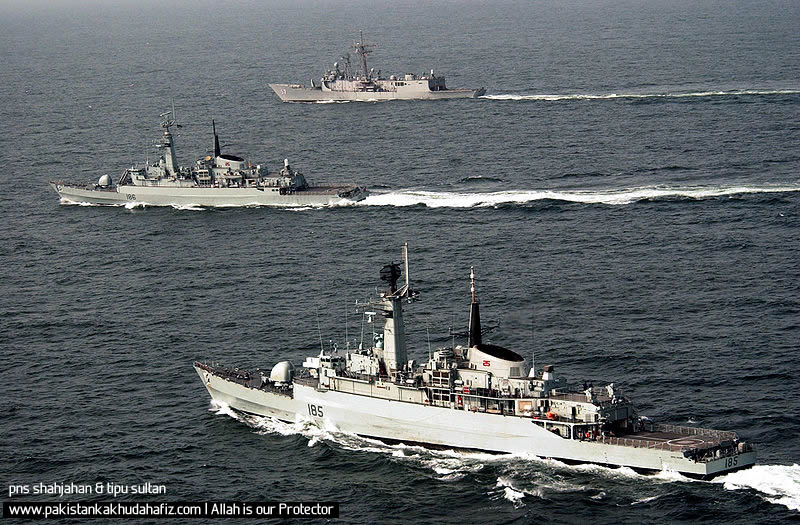
Ninety percent of world trade is transported by ship via sea lanes that have choke points such as the Strait of Hormuz,Strait of Malacca, the Bab El Mendeb and the Horn of Africa, and the Strait of Gibraltar.  Likewise other traffic must pass through the South China Sea, the Taiwan Straits or around Cape Horn.  Then there are the two major maritime canals the Panama and Suez Canals.  Terrorists, pirates, rogue nations and ascending Naval powers such asChinapose real threats in all of these critical maritime commerce choke points.

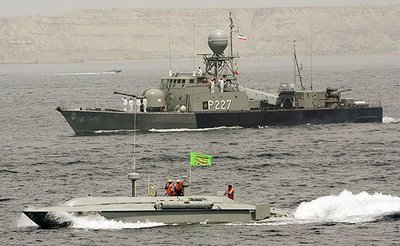
Real and potential threats to the choke points: Iranian Naval and Revolutionary Guard Naval forces, Somali pirates, the new Chinese aircraft carrier and a Pakistani Navy that may become an enemy overnight 

Most of the world’s population lives in what are called the littorals, the areas of land adjacent to oceans and major waterways.  Likewise most industry is located in these areas. Most of these populations and industries are also in areas under the same type of threats as the sea lanes and choke points.  Simply put the sea and the littorals are much more important to this country and the world than landlocked Afghanistan.  They also are much more easily influenced by naval power that is not bound to land bases in nations where governments and their policy to the United Statesand our friends can change overnight and which large land armies would have minimal impact.

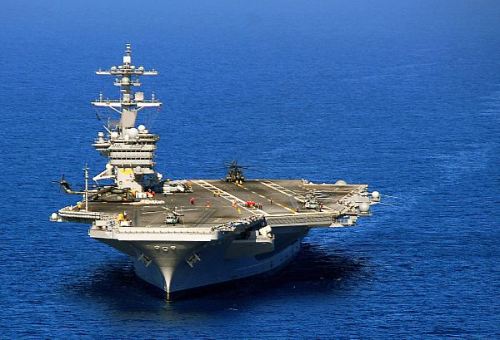
The United States Navy has been and still is the world’s preeminent naval power. It will likely remain so for the foreseeable future but the navy is strained.  Since 2001 it has shrunk in size, shed some 52,000 sailors and seen its scope of responsibility and operational tempo increase putting greater strain on the ships, aircraft and personnel remaining.  Ships are aging, maintenance was deferred and the planned new construction has not materialized.  The Ticonderoga Class Guided Missile Cruisers are nearing an average age of 20 years, our carriers average 23 years old, many of our submarines are nearing the end of their projected service lives and some other ships are far older.

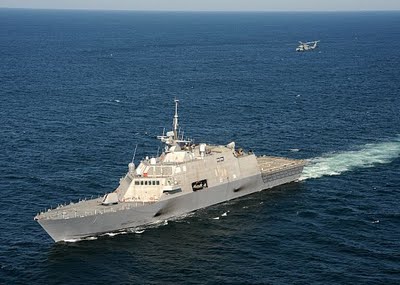
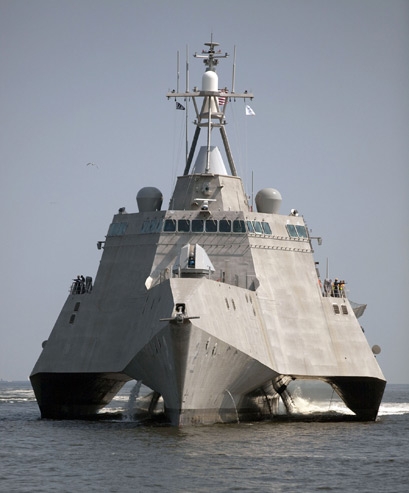
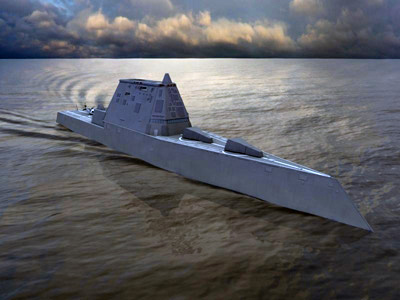
Ship classes like the Freedom and Independence class Littoral Combat Ships (LCS), San Antonio Class Landing Ships (LPD) and the DD-1000 Zumwalt Class are badly over budget, plagued with technical and workmanship issue and are behind in production.

USS Freedom (above) and USS Independence Littoral Combat Ships

The LCS in particular seems like a bad investment, the ships are undermanned and under armed, planned weapons modules are not in production and they are not designed for survivability.  In effect they are large fast ships with almost no offensive or defensive capabilities that would be hard pressed to survive in a fight with any current or future Corvette or Frigate fielded by an opposing naval force. In order to be effective they need heavier armament and larger crews and need a redesign to improve their survivability. It makes no sense to spend more than half a billion dollars each on ships that are not survivable and cannot fulfill their intended missions.  A better choice would be something similar to the Dutch De Zeven Provincien  German Sachsen or the French Lafayette Class frigates which have a heavy armament and good endurance or the smaller and cheaper German Braunschweig class Corvettes.

DD-1000 the Zumwalt Class

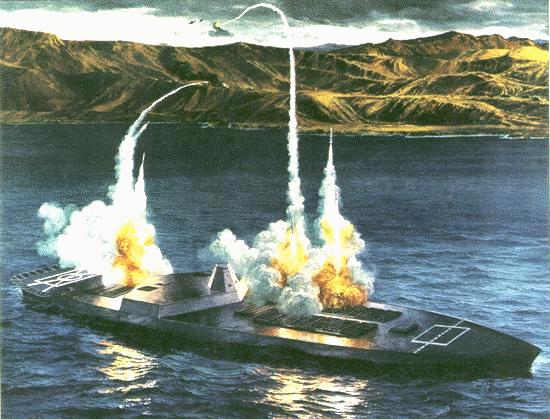
The Zumwalts are 14,000 ton “Destroyers” that were designed as a replacement for the battleship.  Originally 32 were planned but the high cost and multiple problems associated with the design. These issues have included such things as seaworthiness due to their hull form and other hull issues, its integrated advanced electro-magnetic propulsion system and its surface and air warfare capabilities.  Their armament has been an issue since the beginning as they cannot meet the standards of the Aegis equipped Cruisers and DDGs and cannot support the Ballistic Missile Defense capabilities of those ships.  Their naval gunfire support capability which was advertised as one of their main selling points is woeful. They are to be equipped with two 155mm long range naval guns designed to use a “smart” munitions. The ships will carry a limited supply of shells for these guns and because of the need for extended range and guidance capabilities the shells will have a smaller charge than their land based counterparts.   They will have only two-thirds of the VLS cells than Ticonderoga class ships meaning that they can carry few missiles of all types.  It is likely that the Tomahawk cruise missile will comprise the bulk of their missile armament but if one wants a ship that’s only significant capability is launching Tomahawks then there are many other ideas which are more economical and can carry far more missiles than the Zumwalts. One of these was the Arsenal ship which was designed to carry 500 Tomahawks on a stealthy platform that requires a small crew and had an estimated cost of 500-800 million dollars.  It was cancelled in favor of the project that eventually turned into the Zumwalt class. The DD-1000 program began with the DD-21 program in 1994 and the first ship may not enter service until 2015. The cost of just two of these ships has grown exponentially to 6.6 billion as of 2011.  The two ships under construction have little place in the current or future Navy and would likely serve as technology test beds.

The Arsenal Ship

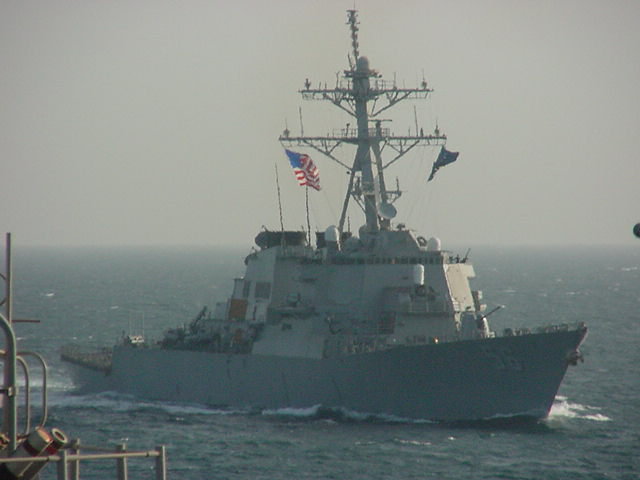
While we have increased the numbers and continued the production of the highly successful Arleigh Burke class guided missile destroyers (DDG) and Wasp class Amphibious Assault ships (LHD) it is not enough to compensate for the continued attrition.  If worst case budget projections occur the Navy could experience massive cuts without any decrease in maritime threats or operational commitments.  The Coast Guard is in even worse shape.

The USS John S McCain DDG 56

The most important aspect of national defense, free trade and humanitarian assistance in the coming years are America’s Navy, Marine Corps, Coast Guard and Merchant Marine.  Without a strong Navy and the other components of maritime power we are at the mercy of tin-horned dictators, pirates and terrorists who live and operate in the most vital areas of the world’s maritime transportation network.

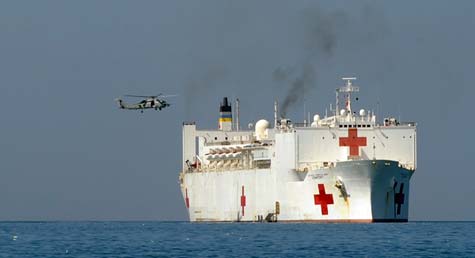
Humanitarian assistance: USNS Comfort off Haiti 

As our political leaders meet in the coming weeks and months decisions will be reached in matters of national security.  They will be based budget considerations alone as we have not operated on a clearly defined national security strategy since the end of the Cold War.  Force structure has to be decided based on the over arching national strategy and broad brushed and un-thought out cuts are a recipe for disaster.

History tells us this. Following our Revolution the nation was deep in debt and eliminated the Navy.  Since our merchant shipping was no longer protected by the Royal Navy and the treaty withFrancewas allowed to lapse American ships became easy prey for the Barbary Pirates.  Rather than build a navy to protect American citizens and shipping the nation paid “tribute” to dictators which amounted to tens of millions of dollars until Thomas Jefferson sent the new re-established Navy to counter the threat.   Our history and that of other maritime powers such asGreat Britainand theNetherlandsprovide many precedents for this use of power.

What needs to happen now is for the LCS ships and Zumwalt class production to end with the current ships building.  No carriers except the 50 year old USS Enterprise should be decommissioned until a full up national strategy review is completed and agreed to by both political parties.  That strategy needs to actually prioritize the most important areas of engagement that the military should focus its efforts.  The Middle East will remain important but will fade as Asia continues to gain importance.

Regarding other ship classes much needs to happen.  DDG production should be stepped up and an affordable yet fully capable replacement to the Ticonderoga class designed, to include the ability to conduct ballistic missile defense.  A diesel electric attack submarine needs to be fielded to complement the Virginia Class attack boats.  A Light Fleet Aircraft Carrier design should be designed and produced to compliment the Nimitz and Ford Class Carriers now in commission or building. The Navy should design or take an off the shelf Corvette or small Frigate type ship to fill the role envisioned by the LCS.  Such ships should be designed for specific tasks to avoid the massive cost overruns and simplify production.  When one remembers that it as the United States Navy that first developed the Destroyer Escort type ship to fill a specific role such an undertaking should be well within ship designer and capabilities so long as they do not try to “gold plate” the type and make it a jack of all trades and master of none ship.  Other types of ship should be studied to include smaller but still capable aircraft carriers and new amphibious ships to support the Marine Expeditionary forces.

Ships need to be designed with combat power, survivability as the first priorities and they need to be affordable and easy to mass produce.  Designs do not need to be over thought.  George Patton’s adage “a good plan violently executed now is better than a perfect plan next week” applies today for this nation and the Navy.  To adapt Patton’s adage I say that “a combat effective and survivable ship class that we can afford and mass produce now is better than a perfect ship that bankrupts us and cannot be produced in the numbers needed to secure the seas.” 

The Navy is the American Armed Force of the Future. Of all the Armed Services the Navy offers the United States the ability to protect its interests abroad and homeland security without the need to base large numbers of ground forces overseas.  Naval forces are flexible, are easily sustainable and conduct security, combat and humanitarian operations better and more affordably than any armed service in the world. When coupled with the expeditionary capability of the Marines offer a force that affordably provides national security.  George Washington, John Adams, Theodore Roosevelt and Franklin Delano Roosevelt all knew this.  I do hope that the current Administration, Congress and their successors will not allow the current superiority that we enjoy on the high seas to decay just as our greatest economic and military competitors build up their naval capabilities and the threat of terrorists, pirates and the small but dangerous navies of rogue states threaten the sea lanes that are absolutely vital to our economy and national security.

The Navy is also the least provocative armed service and history has repeatedly shown that naval forces are a deterrent to war and guarantee of peace.

On that last note…

Peace

Padre Steve+

3 Comments

Filed under History, Military, national security, Navy Ships, US Navy

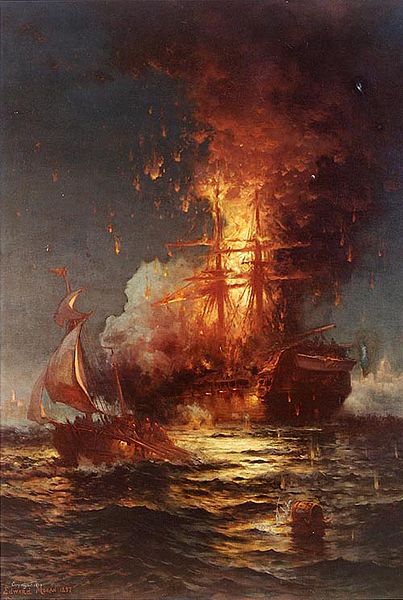
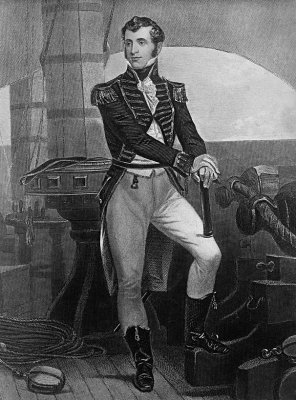
“The most bold and daring act of the age” Stephen Decatur and the Burning of the USS Philadelphia at Tripoli


“Our Country! In her intercourse with foreign nations may she always be in the right; but right or wrong, our country!” Stephen Decatur

This is the latest of a series of articles that I am writing this month in celebration of the brave men and proud ships of the United States Navy on its 236th Anniversary. Thursday October 13th is that day and I ask my readers to wish any United States Navy Sailor that you know a “Happy Birthday” and thank them for their service in this time of war.

Peace

Padre Steve+

In 1803 the United States Navy was two years into its campaign against the Barbary Pirates who sailed from Algiers, Tunis, Tripoli and Morocco.  For years the United States like other nations had paid tribute to the rulers of these states for free passage of its ships and hefty ransoms to free the sailors that were enslaved following the capture of their ships.  By 1800 tens of millions of dollars had been paid and in that year the amount of tribute paid was 20% of the government’s total revenue.

In 1801 the Pasha of Tripoli Yusuf Karamanli demanded the payment of $225,000 tribute from the new President of the United States President Thomas Jefferson. In years past Jefferson had advised against payment of tribute believing that such payment only encouraged the Barbary States to continue their actions.  The anti-naval partisans and even his Republican allies had blocked his recommendations even though Secretary of State John Jay and President John Adams agreed with him. These partisans insisted that tribute be paid irregardless of the effect on European trade or the fate of American seamen because they believed that the Atlantic trade and involvement in the “Old World” detracted from the westward expansion by diverting money and energy away from the west.  When Jefferson refused the demand and put his beliefs into practice Karmanli declared war on the United States by cutting down the flag at the US Consulate in Tripoli.

Jefferson sent a small force to defend protect American ships and sailors and asked Congress to authorize him to do more as he did not believe that he had the Constitutional power to do more. Congress did not issue a declaration of war but authorized Jefferson to “employ such of the armed vessels of the United States as may be judged requisite… for protecting effectually the commerce and seamen thereof on the Atlantic Ocean, the Mediterranean and adjoining seas.”

Jefferson sent the best of the United States Navy to deal with the situation and US Navy ships soon began to take a toll on the pirate vessels.  The squadron was composed of ships that would become legend in the history of the Navy. Commanded by Commodore Edward Preble and included the USS Argus, Chesapeake, Constellation, Constitution, Enterprise, Intrepid, Philadelphia and Syren.  Numerous young officers who would distinguish themselves in the following years served aboard the ships of the squadron.

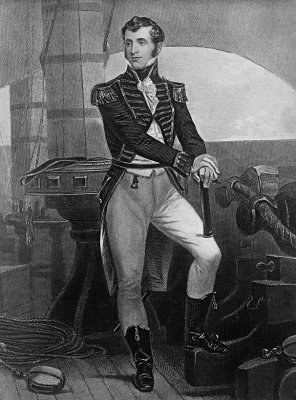
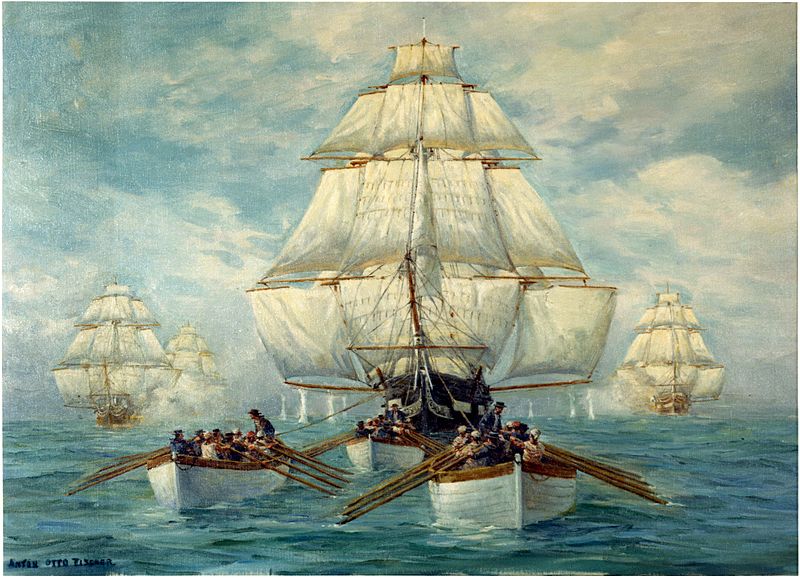
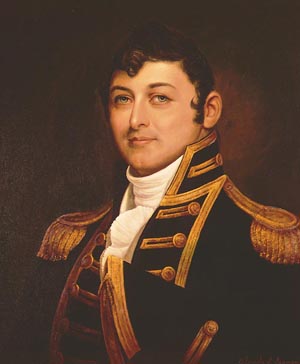
One of the young officers was the 24 year old Captain of the 12 Gun Schooner USS Enterprise Stephen Decatur the son of a Navy Captain who had entered the Naval service as a Midshipman in 1798 and who had risen rapidly through the ranks due to his abilities and leadership. He was among the few officers selected to remain in service following the end of the Quasi-War with France.  By the time that he took command of Enterprise Decatur had already served as the First Lieutenant of the Frigates USS Essex and USS New York.  After an altercation with British officer while wintering in Malta he was sent home to command the new Brig of War USS Argus. He was ordered to bring her to Europe where he handed over command to Lieutenant Isaac Hull who would achieve fame in the War of 1812 as Commanding Officer of the USS Constitution.  Decatur was given command of Enterprise on when he detached from the Argus.

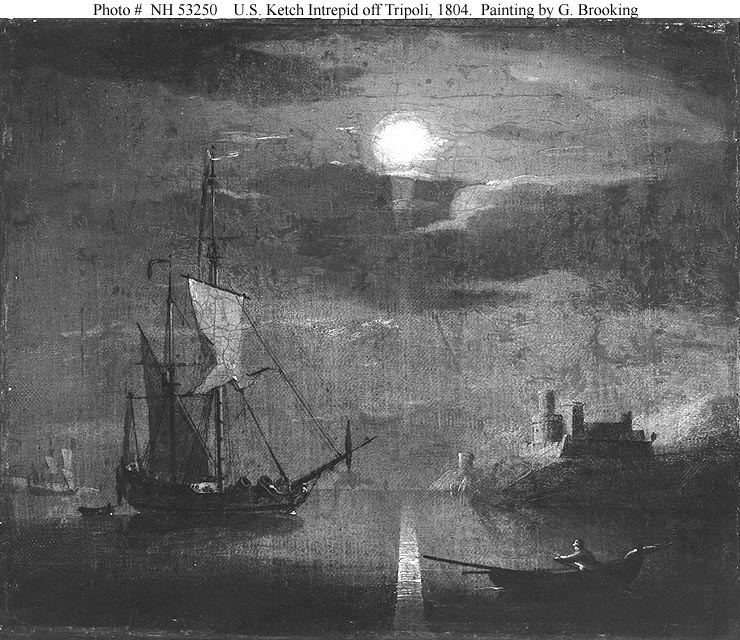
On December 23rd 1803 while operating with the Constitution Decatur and the Enterprise captured the small Tripolian ketch Mastico which was sailing under Turkish colors.  The small ship was taken to Syracuse where Commodore Edward Preble condemned her as a prize of war, renamed her Intrepid and placed Decatur in command.

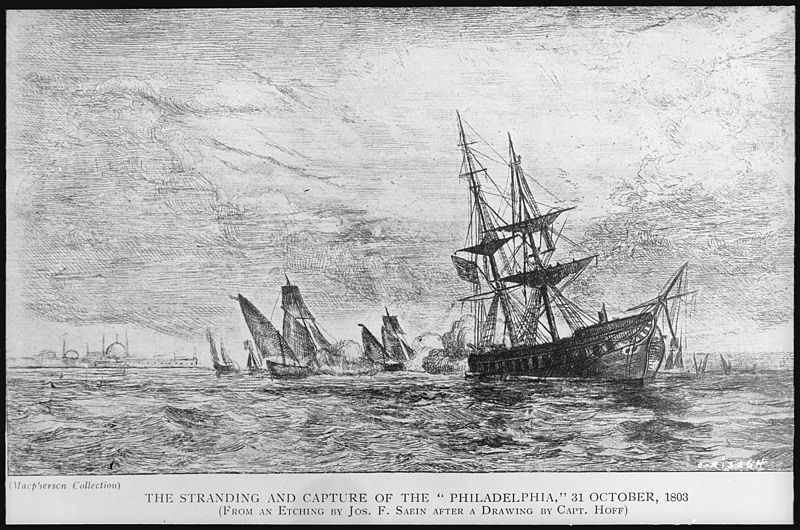
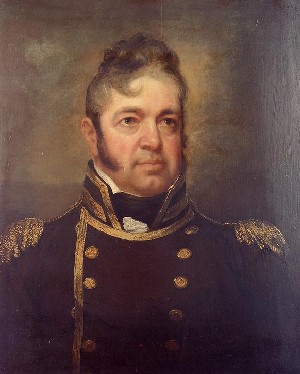
Normally such an event would be considered a demotion for an officer of Decatur’s caliber but events at Tripoli had forced Preble to make a bold strike at the heart of the enemy.  On October 31st 1803 the Frigate USS Philadelphia one of the most powerful ships in the squadron under the command of Captain William Bainbridge ran aground on an uncharted shoal and was captured.  Her crew was taken prisoner and the ship floated off by the Tripolians partially repaired and moored as a battery in the harbor until her foremast could be remounted having be cut away by Bainbridge in his  unsuccessful  attempt to float the ship off the shoal.

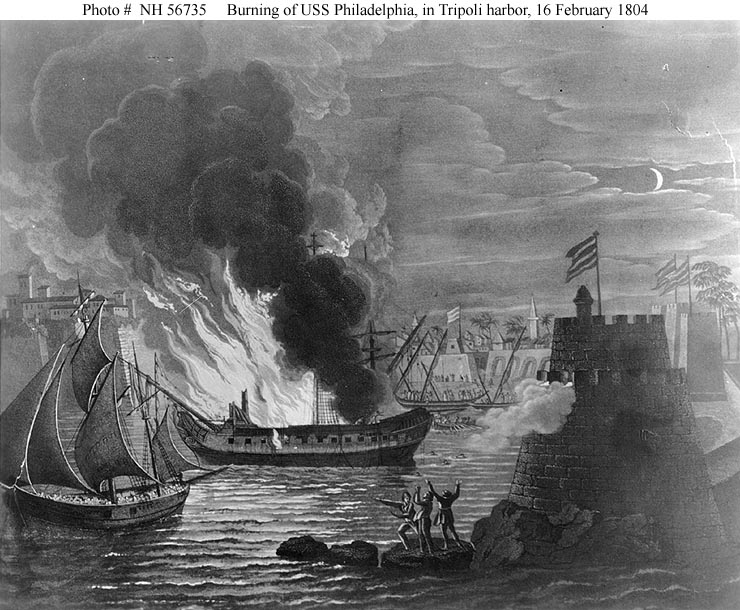
Burning the Philadelphia

The threat posed by such a powerful ship in the hands of the enemy was too great to ignore. Preble order Decatur to man the Intrepid with volunteers to destroy the Philadelphia at anchor.  Decatur took 80 men from the Enterprise and was joined by eight more volunteers  from USS Syren including Lieutenant Thomas McDonough who had recently served aboard Philadelphia and knew the ship well.

Under the cover of night of February 16th 1804 Decatur took the former Tripolian ship into the harbor beneath the dim light of the new moon.  Posing as a Tripolian ship he was able to slip past the guns of the forts overlooking the harbor using a Sicilian sailor who spoke Arabic to request permission. This was granted and Intrepid approached Philadelphia and when close enough ordered his crew to board the Frigate. After a brief skirmish with the small contingent of sailors aboard he took control of the vessel and set it ablaze. When he was sure that the fire could not be extinguished he ordered his men back aboard Intrepid and sailed out of the harbor under the fire of the shore batteries and gunboats.

Decatur sailed Intrepid back to Syracuse where he was greeted as a hero and became one of the Navy’s legends.  Pope Pius VII publicly proclaimed that “the United States, though in their infancy, had done more to humble the anti-Christian barbarians on the African coast, than all the European states had done for a long period of time.” Admiral Lord Horatio Nelson, one of the most heroic sailors that ever lived and no stranger to daring said that Decatur’s accomplishment was “the most bold and daring act of the Age.

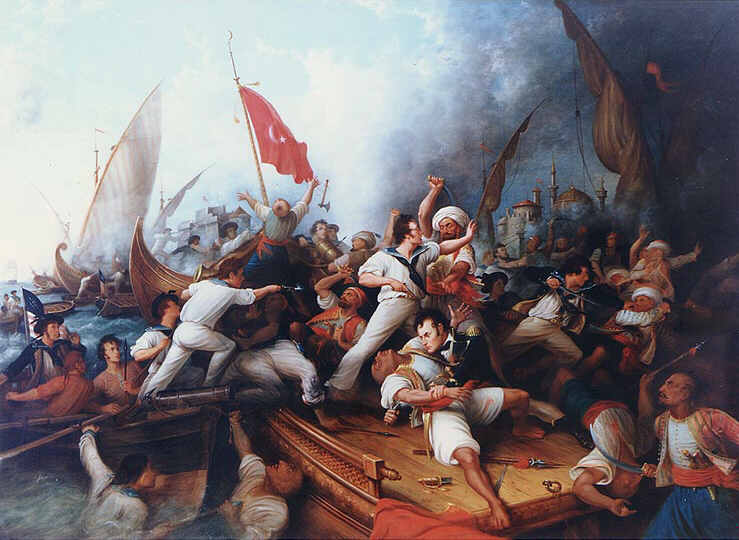
Decatur leading American Sailors in hand to hand combat against Barbary Pirates at Tripoli 1804 his younger brother Lieutenant James Decatur was killed aboard another gunboat in the action

Decatur would return to command the Enterprise in 1804 and would prove himself again against the forces of Tripoli. He distinguished himself  in the years to come against the Royal Navy in the War of 1812 and later in the Second Barbary War. Decatur’s squadron decisively defeated the Algerian fleet capturing the Frigate Mashouda and killing the highly successful and chivalrous commander of the Algerian raiding squadron Rais Hamidu.  The Pashas of Algiers, Tunis and Tripoli all made peace and reimbursed the Americans for the financial damage that they had done.  His victory ended the terror that the Barbary States had inflicted on Europeans for centuries and helped bring peace to the Mediterranean.  Stephen Decatur more than any one man ended their reign of terror against Christian Europe.

3 Comments

Filed under History, leadership, Military, national security, Navy Ships, US Navy

The Real Danger of Revolution and Violence in our Country

Occupy Wall Street and the Tea Party a Revolution is Coming

Since the economic crash of 2008 the United States has been in turmoil. The Republican administration of George Bush had made itself so unpopular that the Democrats led by the young and inexperienced Barak Obama took control of the White House and both houses of Congress.  However the new administration and its allies in Congress did nothing to help their cause promoting health care reform instead of addressing serious problems in the economy, especially unemployment. As the Obama administration floundered in its response to the economy and remained mired in the increasingly unpopular wars in Iraq and Afghanistana new political force came into being. This was the Tea Party movement a collection of social and economic conservatives, libertarians and other conservative groups backed by major business leaders and promoted by the Fox New Channel.

The Tea Party grew in prominence in the Republican Party at the local and state levels mobilizing voters as it took advantage of the discontent and fear felt by many conservatives.  The movement featured many patriotic images and some within the Tea Party used militant language to describe their goals including that of revolution to retake the power of government.  Liberal opponents likened the Tea Party to Nazis and today some Tea Party back members of Congress and Presidential candidates refer to the Occupy Wall Street protestors as anarchist and communists.

The Obama administration and many on the left dismissed the movement but by the 2010 mid term elections the Tea Party and their backers spearheaded the Republican taking of the House and nearly regained control of the Senate. Typically divided government has forced parties to work together and compromise to achieve their goals.  That did not happen in 2010. The Tea Party forced the hand of Republican leadership not to compromise with President Obama and the Democrats.  The near shutdown of the government in June only served to worsen the division.

The Tea Party mow distrusts many established Republican leaders as much as it despises the Democrats and as the division continued to grow a new movement came into being, the Occupy Wall Street campaign.  The Occupy Wall Street demonstrations began in September and were ignored by most of the media, just as the media outside of Fox News ignored or downplayed the incipient Tea Party in 2009. Now the demonstrations continue to gain strength and have spread to close to 90 cities.  Organizers and some commentators are referring to the movement as “the American Spring.”

However the Occupy Wall Street movement is quite diverse from those protesting many of the same things that the Tea Party stands against to those with a harder and revolutionary edge.  While the movement itself is somewhat amorphous and appears to be unclear on its goals the PR head of the movement commented in one interview that the goal is to “overthrow the government.” Other protestors carried an effigy of the head of the CEO of Bank of America on a pike in one demonstration. Still others have simply become a nuisance to those that live and work in the area of their protests.   Such statements and actions give their opponents like Glenn Beck all the ammunition that they need to demonize the protestors as Beck did today when he said “Capitalists, if you think that you can play footsies with these people, you’re wrong. They will come for you and drag you into the streets and kill you…they’re Marxist radicals…these guys are worse than Robespierre from the French Revolution…they’ll kill everybody.” Beck also suggested that the only way to stop the movement was a “forceful crushing from the top” which he compared to Hitler’s “Night of the Long Knives.”

Even the President has called his political opponents “enemies” and they have responded in kind. Of course Obama has been called everything but an American since he was elected by some on the right and many in his own party believe that he is nothing more than a pawn of business and the establishment.

Both the Presidency and the Congress suffer from the fact that most people no longer believe a word that they say and this is shown in their approval ratings which are abysmal.  President Bush’s second term approval rating averaged just 37% and had a low of 25%.  President Obama initially had high approval ratings but his ratings have spun downward to the point that they are hovering at or below 40.  Congress is even worse with all polls below 20 approval rating and the CBS poll is down to 11%, the lowest ever recorded.

Tea Party Message Rockford Illinois 

Is it any wonder that people in the Tea Party andOccupy Wall Street are bringing their own variety of revolution to the nation?  The economy is in tatters and long term unemployment at highs not seen since the Great Depression. The country is deeply divided on religious and social issues, the role ad purpose of government and the majority of people we believe that we have lost the wars inIraqandAfghanistan.  This is a toxic and dangerous environment where it will not take much to bring about violence.

While many on the right and the left seek to frame the members of the Tea Party and the Occupy Wall Street in the most demonic ways that they can and fan the flames of hatred it is important to take a step back and see both movements in their current and historical context.  The temptation is to get caught up in the emotion of these “revolutionary” movements and proceed down the revolutionary way without thinking of the consequences of revolutions. Revolutions are inherently unpredictable and often bring unintended and sometimes tragic results.  Both movements have valid points and Washington, Wall Street and our political, media and business elites better wake up. Both have many good and law abiding people in them but both also have a people that would do everything that they can do in order to bring about change, if not at the ballot box on the streets.

During revolutionary times those on the extremes gain prominence and their movements grow most often at the cost of the middle. When the center disappears there is little to stop whichever side comes out on top from doing whatever they want.  The winners also have their losers as the most powerful or organized parties within a movement tend to crush opposition within their own ranks once they take power.

Spartacus League fighters in the German Revolution: Coming here? 

Unlike some I do not venture to have an answer for the long term ills of the country but I do not think revolution from the left or right is the way to solve them.  Revolutions tend to be rather messy and bloody affairs and as the rhetoric on the left and the right continues to escalate as the economic and world situation worsens the danger of armed conflict in this country grows greater every day.  In fact there are foreign powers such asIranthat are reveling in such a possibility with others quietly doing so.  Unfortunately I do not think that many people on either side of the divide see the danger looming in our future.

That is what scares me about the revolutionary rhetoric that is that things can spiral out of control when groups are massed on the street. Agitators from any side can create events that precipitate violence on the part of the demonstrators or the police and security forces.  Once in power revolutionaries frequently kill or exile members of their own parties as Hitler did with when he liquidated the leadership of his  SA Brown Shirts on the Night of the Long Knives.

This is a dangerous time and I do pray that our political leaders will regain their collective sanity before all hell breaks loose.  I re-posted a paper about the German Revolution of 1919-1922 in my last post to show some of the unpredictable ways revolutions can develop. You can read it below.

Peace

Padre Steve+

1 Comment

Filed under History, national security, Political Commentary

The German Revolution 1919-1922: A Warning from History

The Spartacus League brought armed mobs onto the streets of the new and fragile Weimar Republic 

In light of the increasing revolutionary rhetoric from both the political right and left, the ongoing demonstrations in many American cities that are part of the Occupy Wall Street Campaign I felt that it was important to remind people of what can happen when a society enters a revolutionary period. When a nation is in turmoil and is besought by political division and ineffective and out of touch government, a massive economic problems, wars that are believed to be lost and veterans that feel abandoned by their government and isolated from their fellow citizens and what some see as massive economic inequities, or lack of respect for their political, social or religious views then it is facing real danger. It is my belief that we need as individuals and as a nation take a step back from the brink. 

Peace, Padre Steve+

The German Revolution of 1919 and civil war is important for those who study highly developed states when they enter a period of social and political upheaval. Often such upheavals occur following military defeats or economic crisis that cause the society to question or even overthrow the established order.  The end of Imperial Germany and the establishment of the WeimarRepublicon November 9th 1918 is a prime example.  Following the declaration of the Republic the Majority Socialists who had assumed power had no military force of any caliber to support it. The Army had melted away following the end of the war and the units which remained were unreliable and heavily infiltrated by Soviet style “workers and soldiers councils.”

Chaos ruled the streets, Communists and Independent Socialists of The situation being chaotic the Majority Socialists under the leadership of Friedrich Ebert joined forces with German General Staff to create a military force capable of bringing order the Germany.  To do this they allowed for the formation of Freikorps to quell revolutionary chaos and avert the establishment of a Soviet State.

The study begins with the establishment of the Republic and concludes with the Kapp Putsch.  This is an era that is seldom referenced by political or military leaders in western states and historians themselves are often divided in their interpretation of the subject.  The study of this period is vital to those who study politically polarized societies which are either war weary or have suffered the shock of military defeat coupled with a government which is blamed for the events.  Thus, it is important to study the relationship of the military to the government and in particular the military’s relationship to politicians who have little connection to or affinity for the military, its traditions and culture and the often adversarial relationship of these politicians to military leadership which often sees them as adversaries.  The period also shows how actions of those who in their antipathy to the military create a climate where the military loathes the civilian leadership and the government.  The results of such conditions can endanger the society as a whole and ultimately usher in periods of great tragedy.  This occurred inWeimarGermanywith the result that the military in the later years of the Republic neither the military nor the Majority Socialists could not work together against the Nazi takeover of the state.  However, the first years of the relationship set the tone and foredoomed the Republic.

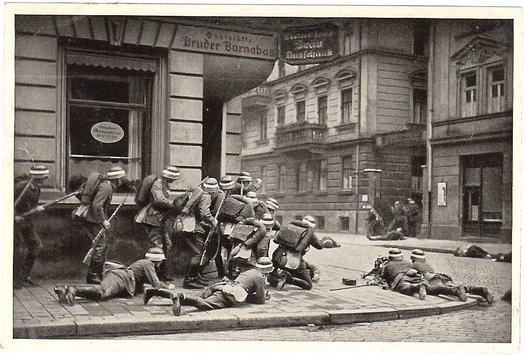
Freikorps troops battle Leftists in the streets

The history of Weimar, particularly that of the military and Freikorps in their relationship to the Republic is complex.  Not only is the relationship between the military and government complex, but the Freikorps themselves, their organization, leadership and political affiliation were not monolithic as is sometimes maintained,[i] nor were the Freikorps the direct ancestors of the Nazi SS/SA organizations despite often similar ideology,[ii] nor can they dismissed by saying that they were composed of “former soldiers and officers ill-disposed to return to civilian life.”[iii] The Freikorps’ association with the Army and Republic is more complex than some historians assert.  Despite the right wing leanings of many of units and fighters and future association of some to the Nazis, the blanket claim that the Freikorps were forerunners of the Nazi movement is not supportable.[iv] It is true that without Freikorps support in Munich, along with support of the Thule Society, business leaders and others “that the transition of the DAP into the Hitler party could not have taken place.”[v] It is also true that elements of the Freikorps branded too revolutionary and unruly for service in the Army continued as secret societies and affiliated themselves with various right-wing political groups.[vi] Likewise a case can be made that the fierceness of many Freikorps veterans, younger leaders of the Army laid the foundation for the brutality of both the Army and Waffen SS as they prosecuted the Second World War.[vii]

Yet simply because certain aspects of a subject are true does not make for a broader “truth.”  Heinz Höhne argues the reverse of what some have written in regard to the relationship of the Freikorps and Reichswehr to the Nazis, that in fact the Nazis did not issue from the Freikorps, but rather that many former members of the Freikorps, Imperial Army or the Reichswehr were attracted to the Nazis, particularly to the SS by its “philosophy of “hardness” and its attitude of bellicosity per se, basically unconnected with ideology.”[viii] Others historians state similar views especially those that study the relationship of the Reichswehr leadership to the Freikorps.  Thus the thesis of this paper is that the historiography like the period itself is complex; that the composition, leadership and motivations of the Freikorps were not monolithic, nor were they beloved by the Reichswehr, nor were they the “trailblazers” for the Nazi movement.  The focus of this article is on the relationship of the Reichswehr and the Freikorps to the Republic to the Kapp Putsch and the dangers of a relationship built on necessity without mutual trust.  Such a relationship is dangerous and can lead to unintended consequences.   This paper will explore the first years of theWeimarRepublic and specifically look at several key events that were pivotal in the relationship between the Army and Freikorps and the Majority Socialists.
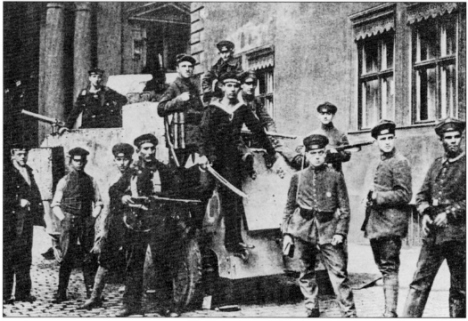
The Leftist “Volksmarine” Division which terrorized Berlin in late 1918 and early 1919 

The literature covering this period ranges from well written and researched academic histories and poorly researched and badly done works which attempt to present particular views of the Freikorps which often border on myth. Additionally there are biographical works which shed some light on the subject. The Reichswehr and the German Republic 1919-1926 by Harold Gordon Jr. is perhaps the best study of the Freikorps and their relationship to the state and the army.  Gordon’s work is exceptional in documenting the numbers, types, political affiliation, action and ultimate disposition of the Freikorps.  Other works which provide exceptional treatment of the relationship between the military and the Republic include The History of the German General Staff by Walter Goerlitz; The Nemesis of Power: The German Army in Politics 1918-1945 by John Wheeler-Bennett, The Reichswehr and Politics 1918-1933 by F.L. Carsten and The Politics of the Prussian Army: 1640-1945 by Gordon A. Craig.

The best of the general histories of the period, which focus on the National Socialist state are The German Dictatorship by Karl Dietrich Bracher, and Richard Evans’ The Coming of the Third Reich. Richard Watt’s The Kings Depart is one of the best for telling the story of the fall of the Empire and the revolution in Germany.  Watt’s account is well written and documented work and touches on other factors affecting the new republic including Versailles and Allied political actions. The final chapter of Holger Herwig’s The First World War: Germany and Austria-Hungary 1914-1918 gives a good account of the Army’s role in the end of the Empire and beginning of the Republic.  Andreas Dorpalen’s Hindenburg and the Weimar Republic adds an interesting dimension of Hindenburg’s role in the republic’s formation and negotiations between Groener, Noske and Ebert while Steven Ozments’ history of Germany A Mighty Fortress is superficial in its treatment of the period.  Nigel Jones’ Birth of the Nazis: How the Freikorps Blazed a Trail for Hitler is an interesting and somewhat entertaining but poorly documented work. Jones tends to “broad brush” the Freikorps in sometime as “sensationalist” manner. His book has none of the detail or nuance of Gordon, Craig, or Carsten on the Freikorps. Nor does Jones have the depth of Goerlitz or Wheeler-Bennett on the Republic’s relationship with the Army, or the attitude of the Reichswehr leadership to the Freikorps.  William Shirer’s The Rise and Fall of the Third Reich, Gerald Reitlinger’s The SS: Alibi of a Nation 1922-1945 and Heinz Höhne’s The Order of the Death’s Head.  All of these works add some information which details Nazi involvement in the early part of theWeimarRepublic but are limited in their coverage of the subject.

Of other works, Kenneth Macksey’s Why the Germans Lose at War has an insightful but short chapter dealing with this period and Wolfram Wette’s The Wehrmacht: History, Myth, Reality offers an interesting and at times provocative look at anti-Semitism in the German military in the years following the First World War.  Carlos Caballero Jurado’s The German Freikorps 1918-1923 is a short but very detailed study of Freikorps organizations and actions.  B.H. Liddell-Hart has a small chapter on General Von Seeckt in The German Generals Talk which hasinteresting commentary on later actions of former Reichswehr officers who served the Nazi state.

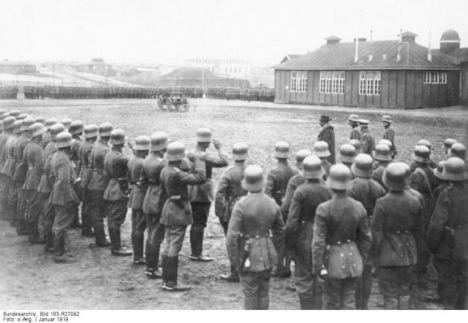
Freikorps Von Hulsen being sworn into the Provisional Reichswehr

A number of biographies touch on actions of German Officers who played key roles in World War Two.[ix] Most auto-biographies gloss over the Weimar period; however Admiral Reader’s memoir Grand Admiral offers the insight of a naval officer with some direct observation of the revolution and the Kapp Putsch.  Guderian in Panzer Leader omits his service in the Baltic “Iron Division.”

The relationship of the Republic to the Army was born in the moment of crisis of the abdication of Kaiser Wilhelm II and the armistice discussions with the Allies.  Beset by revolts in key naval bases and mutinies aboard ships of the High Seas Fleet and unrelenting Allied pressure on the German armies in the west the situation continued to deteriorate as the “red flag was flying in all the principle cities, soldiers behind the front were electing soldiers councils Russian fashion.”[x] Revolutionary and defeatist propaganda spread by the radical left wing of the Independent Socialists and Spartacus League spread through the country and even affected combat units,[xi] while the “Majority Socialists had found out that the militant factions of the Independents had secretly armed themselves out of funds supplied by the Soviet ambassador and adopted the slogan “all or nothing.””[xii] The situation had deteriorated so badly that Karl Liebknecht, leader of the Spartacus League “was announcing the establishment of a Soviet regime from the steps of the Imperial Palace.”[xiii]

Under these dire conditions, General Wilhelm Groener who had succeeded General Ludendorff as Quartermaster General called an emergency meeting of fifty “of his most senior army commanders.”[xiv] In response to his question of whether the troops would follow the Kaiser and oppose the revolts only one answered in the affirmative, and eight responded that “there was no hope of using regular Army units to quell unrest at home.”[xv] On November 9th Groener went to the Kaiser on behalf of the Supreme Command and in response to a suggestion that the Kaiser lead the Army back and suppress the revolts boldly stated “The Army will march home in peace and under its leaders and commanding generals, but not under the command of Your Majesty, for it stands no longer behind Your Majesty.”[xvi] The Emperor abdicated fleeing to Holland and Friedrich Ebert leader of the Majority Socialists was named Chancellor on November 9th.  Upon hearing the news Philipp Scheidemann a leader in the Social Democrats announced that Ebert was Chancellor proclaimed “Long live the great German Republic!”[xvii] It was an ill conceived act as Scheidemann had not consulted Ebert and his act prevented Ebert from working toward an orderly transition of power.

The mobs in the street were not placated by the announcement and the far left organizations aligned with the Independents “had no intention of letting the revolution stop there.”[xviii] In the streets of Berlin soldiers sold their weapons and vehicles officers were attacked by crowds on the streets and whenever “crowds found an Army officer, they tore off his epaulettes and medals.”[xix] Everywhere mutual recrimination was in the air, soldiers “blamed revolutionaries for the betrayal and stab-in-the back while revolutionaries blamed officers for all the costs and losses of the war.”[xx]

Groener called Ebert promising the Army’s support of the new government in return for the government’s assistance to the Army in the maintenance of discipline and supply.[xxi] He also drafted a letter signed by Hindenburg pledging the Army’s loyalty and telling him that “the destiny of the German people is in your hands….”[xxii]One source notes: “Thus, in half a dozen sentences over a telephone line a pact was concluded between a defeated army and a tottering semi-revolutionary regime; a pact destined to save both parties from the extreme elements of revolution but, as a result of which the Weimar Republic was doomed at birth.”[xxiii]

The High Command was able to bring the Army home in good order following the armistice but upon arriving most units “melted away like snow under a summer sun,”[xxiv] those which remained were often shells of their former selves beset by soldier’s councils and leftist revolutionaries.  To support the government the High Command issued a directive stating that it “put itself as the disposal of the present government led by Ebert without any reservation.”[xxv]Yet in December delegates of the National Assembly continued to sow resentment in the military by military discipline be placed in the hands of soldiers’ councils, that all badges of rank be removed with all decorations of insignia and honor.[xxvi] Reaction was heated,[xxvii] but despite this Groener, Colonel Walter Reinhardt, the Prussian Minister of War and the Republic’s Defense Minister, Gustav Noske endeavored to find forces to combat the growing revolution and rebellious military units.  The choice was not hard, the Army was of no use, so called “democratic forces” were in most cases both unreliable and ineffective, while only the Freikorps “provided suitable material for the immediate creation of an efficient, combat-ready army.”[xxviii] Thus the Freikorps became the instrument of necessity to ensure that the government was not swept away by a Soviet style revolution.

Gustav Noske, of the Majority Socialist party “saw himself as a patriot, a man of action…who had no time for theories…and was one of the few Socialists that the Supreme Command trusted.”[xxix] He had already distinguished himself by helping to bring under control the sailors revolts in Kiel by forming a loyal “Naval Brigade”[xxx] and he  “realized that the government must have a dependable military force behind it if it was to survive and rule Germany” and the “old Officer Corps must be the backbone of any such force.”[xxxi] The Army had melted away and units of the workers and soldiers councils were poorly trained, organized and led “”fought against the government as often as for it” and “were of little practical value to either the government or the rebels.”[xxxii] In the chaos of a Spartacus, now called the German Communist Party uprising and vacuum of political leadership of January 1st 1919 agreed to become defense minister stating “Someone must be the bloodhound, I won’t shirk the responsibility!”[xxxiii]

Noske helped by the High Command helped organize volunteer units led by officers and NCOs composed of reliable veterans.  Freikorps varied in size from divisions to companies and were led by Generals down to Sergeants and even a Private First Class.  Their greatest success was in early 1919 when the Republic was beset by “Red” revolutions in many major cities.  Without the use of the Freikorps by the government it is unlikely that the Republic would have survived.[xxxiv] On January 4th Ebert and Noske reviewed the troops of General Maercker’s Freiwillege Landesjaegerkorps and Maercker informed them that every volunteer had pledged loyalty to the government, seeing the discipline and order Noske told Ebert “Don’t worry. Everything is going to turn out all right now.”[xxxv]

On January 5th 1919 the leftist mobs attacked the Chancellery and the officers of the Socialist Vörwarts newspaper. Noske led the Freikorps back into Berlin [xxxvi] to regain control of the city for the government [xxxvii] and crushed the revolt.  Among the casualties were Spartacus leaders Karl Liebknecht and Rosa Luxemburg who were lynched by the officers of the Guards Cavalry Rifle Division.[xxxviii]

In March 1919 after a period of uneasy calm the Freikorps, now reinforced by the 2nd Naval Brigade, or Ehrhardt Brigade[xxxix] were called upon to put down the revolt of the leftist “People’s Naval Division.”[xl] Making liberal use of heavy weapons including tanks the Freikorps inflicted heavy losses on the leftists who lost over 1500 dead and 12,000 wounded in the uprising.[xli] Other revolts were crushed and the Freikorps reached their zenith in Württemberg where Freikorps led by Lieutenant Hahn, a Social Democrat put down leftist revolts[xlii] and in Bavaria where Independents and Communists had taken the city with their “Bavarian Red Army” which numbered nearly 25,000 men[xliii] on April 7th.

After failed attempts by the Socialist led Bavarian government to retake Munich, they asked for Berlin’s help.  Violence and massacres of citizens by the various leftist groups inflamed the Freikorps, including the Ehrhardt Brigade and the revolt was crushed by May 2nd.[xliv] Dorpalen called the Freikorps ruthlessness “completely unwarranted in view of the weakness of the opposing forces” and noted though they broke the leftist powers they deepened the nations’ cleavages”[xlv] while Macksey wrote that “where Freikorps’ brutality stained the pages of history there was invariably a forgoing or simultaneous record of excess by their sworn opponents.”[xlvi]

There was a tension between many in the Reichswehr and those on the German left and this came out in many ways as officers were caught in between various political camps while attempting to conduct their duties. Field Marshal Albert Kesselring recounted with great bitterness his experience:

“My cup of bitterness was full when I saw my devoted work rewarded by a warrant for my arrest for an alleged putsch against the socialist-influenced command of my III Bavarian Army Corps. Notwithstanding the degrading episodes during my imprisonment after 1945, I do not hesitate to describe this as the most humiliating moment of my life.”[xlvii]

The end of the Freikorps era began when the Provisional Reichswehr was established on March 6th 1919. The High Command assembled from Freikorps, remaining Army units and Republican defense forces. There was a great distrust between many in the Army, the remaining Freikorps and the Socialists. When the German delegation to Treaty of Versailles signed the treaty under threat of invasion it provoked a crisis. Noske and others threatened resignation over the war guilt clauses, but Groener warned that if the treaty was rejected the Army could not win against the Allies if hostilities were renewed.[xlviii] The treaty imposed harsh limitations on the German Army which many bitterly resented, however, Seeckt, the Chief of Staff of the Army felt that it was “more important to keep the Army in being and preserve the possibility of a military resurrection.”[xlix] Yet by signing the treaty the government lost the support of many officers who looked to General Walther von Lüttwitz, the Reichswehr’s senior commander, and commander of troops in the Berlin area for leadership.[l]

Revolution from the Right: The Kapp Putsch

Lüttwitz, leaders of certain Freikorps, right-wing groups and individuals made plans to overthrow the government.  They favored revolt against the government, but “their political aims were hazy.”[li] Army leadership recognized the threat posed by disaffected Freikorps and their leaders. Seeckt and Reinhardt felt it necessary to demobilize Freikorps who’s ill-discipline and political radicalism was a “danger to the consolidation desired by the army command.”[lii] The plotters sensed a threat to their plans for a putsch and Lüttwitz found a willing co-conspirator in Wolfgang Kapp, a failed politician.  Lüttwitz took action when the High Command ordered the 2nd and 3rd Naval Brigades be demobilized in compliance with Versailles treaty limitations and their radical views.[liii] Over the opposition of his chief of staff Von Lüttwitz began planning a coup, in his mind, to save Germany.[liv] The key unit in Lüttwitz plan was the 2nd Naval Brigade Commander by Korvettenkapitän (Lieutenant Commander) Ehrhardt.

Lüttwitz and his fellow conspirators showed “little regard for coordination of effort” and demonstrated “a quite amazing ability to work at cross purposes.”[lv] On March 12th without consulting Kapp, Lüttwitz and Ehrhardt launched the Putsch and Ehrhardt’s brigade in full battle dress entered Berlin. At this point the Reichswehr command froze; officers refused to condone the putsch but at the same time refused to support Noske and Reinhardt who demanded armed opposition to the coup,[lvi] while most Navy officers openly supported it.[lvii] Seeckt who did not want to see the army set against itself refused to deploy troops to counter Ehrhardt’s men.  He declared that “Troops do not fire upon troops!” and “When at occurs, then the true catastrophe, which was avoided with so much difficulty on November 9, 1918 will really occur.”[lviii] Despite the lack of support by the army the coup died amid massive strikes by workers and lack of popular support. However the damage done to the Reichswehr’s relationship to the government, especially the more moderate Majority Socialist was severe.

In the wake of the putsch Noske resigned, many officers in were discredited[lix]and dismissed including Lüttwitz and Admiral Von Trotha, head of the Navy, who openly supported the coup.[lx] Admiral Erich Raeder in his memoirs says that Von Trotha and the Navy staff only” thought of anything of complete loyalty to the government.” [lxi]

However the actions of the Navy leadership showed otherwise. The uncomfortable relationship which had endured the dire days of the Republic was ended.  The Reichswehr would emerge a lean and highly trained organization and remain a power broker in the Republic.  However the animosity between the Army and the Socialists was now so great that they could not stand together against the Nazis despite their mutual interest in doing so.[lxii]

Conclusion

The period was a critical and complex and should be studied by anyone living in a state with a powerful military tradition and institutions in crisis.  Unlike popular notions, the Freikorps were diverse and not the seed-bed of the Nazi movement and though many former members would become Nazis.  Several, including Ehrhardt narrowly escaped death at Nazi hands.[lxiii] Freikorps were viewed by Army leadership as an expedient force that could not remain in the service once the Army was functional.

Key lessons include that the military cannot become a “state within a state,” and that both military and civilian leaders must seek to bridge any gulf that separates them in times of crisis.  In Weimarboth the military and the Socialists thoroughly distrusted one another with the result that they eventually, despite early success [lxiv] worked against each other in later years.  Actions by both Socialists and the military ultimately subverted the Republic and ensured its demise and Seeckt’s policy of separation from politics “tended toward a renunciation of the soldier’s potential restraining influence on adventurous statesmen.”[lxv] Such is the fateful lesson for today for those who suggest a military coup to overturn a government that they oppose in much the same manner as those who supported Lüttwitz, Kapp and Ehrhardt.  Such actions only undermine democratic institutions, especially if they are weak and the nation is in crisis.  Often such actions bring about regimes far more dangerous than what they seek to overthrow and compromise the integrity of the military.


[i] Jones, Nigel. The Birth of the Nazis: How the Freikorps Blazed a Trail for Hitler. Constable and Robinson Ltd.London,U.K. 1987 and 2004.  This is Jones assertion and he attempts to make the tie using careers of some individuals who served both in Freikorps and either in the Nazi Party or Military and attitudes common in many Freikorps with similar attitudes found in the Nazi movement.  The 2004 edition of his work includes an introduction by Michael Burleigh echoing his sentiments.

[ii] Evans, Richard J. The Coming of the Third Reich. Penguin Group.London,U.K. andNew York,NY. 2003. pp.227-229.  Evans discusses the fact that the Nazis did have a number of Freikorps veterans but at no point makes the connection that the Freikorps are a direct ancestor.

[iii] Ozment, Steven. A Mighty Fortress: A New History of the German People.Harper-Collins Publishers,New York,NY 2004 p.246

[iv] Gordon, Harold J. Jr. The Reichswehr and the German Republic 1919-1926.Princeton University Press,PrincetonNJ 1957.  Gordon’s work is perhaps the most detailed study involving the Freikorps and the Reichswehr. He is exceptional in discussing the relationship of both with the various political parties including the Nazis.  He refutes this assertion throughout the book.

[v] Bracher, Karl Dietrich. The German Dictatorship. Translated by Jean Steinberg. Praeger Publications, New York, NY 1970. Originally published asDie Deutsche Diktatur: Enstehung, Struktur, Folgen des Nationalsozialismus.Verlag Kiepenheuer & Witsch,Koln undBerlin. 1969. p.101

[vi] Wheeler-Bennett, John W. The Nemesis of Power: The German Army in Politics 1918-1945. St. Martin’s Press,New York,NY 1954 pp. 91-92

[vii] Shepherd, Ben. War in the Wild East: The German Army and Soviet Partisans.HarvardUniversity Press,Cambridge,MA andLondon,U.K. 2004. p.28

[viii] Höhne, Heinz. The Order of the Death’s Head: The Story of Hitler’s SS. The Penguin Group, London U.K. and New York, NY 1969. Translated by Richard Barry. Originally Published as Der Ordnung unter dem Totenkopf.Verlag der Spiegel,Hamburg, 1966. p.54.

[ix] These include Macksey’s biographies of Kesselring and Guderian , Richard Giziowski’s The Enigma of General Blaskowitz. Peter Padfield’s Dönitz: the Last Führer, David Fraser’s biography of Field Marshal Rommel Knight’s Cross, Messenger’s work on Von Rundsedt, The Last Prussian, and Höhne’s Canaris: Hitler’s Master Spy all provide brief but interesting views of the actions and attitudes of these officers during the revolution and during the Weimar period.

[x] Goerlitz, Walter. History of the German General Staff 1657-1945.Translated by Brian Battershaw. Westview Press. Boulder CO and London. 1985 Originally published as Der Deutsche Generalstab, Verlag der Fankfurter Hefte, Frankfurt am Main.  FirstU.S. publication in 1953 by Preager Publishers. p.200

[xi] Gordon, Harold Jr. The Reichswehr and the German Republic 1919-1926.Princeton University Press, Princeton, NJ 1957 pp.4-5 Gordon recounts the story of an entire replacement train revolting when it reached the front which had to be disarmed by a shock battalion.

[xii] Watt, Richard M.  The Kings Depart: The Tragedy of Germany: Versailles and the German Revolution. Simon andSchuster,New York, NY 1968. p.186

[xiii] Wheeler-Bennett, John W. The Nemesis of Power: The German Army in Politics 1918-1945. St. Martin’s Press,New York,NY 1954. p.18

[xiv] Herwig, Holger H. The First World War: Germany and Austria Hungary 1914-1918. Arnold Press a member of the Hodder-Headline Group,London,UK andNew YorkNY 1997 p.445

[xv] Ibid. Herwig. p.445

[xvi] Carsten, F.L. The Reichswehr and Politics 1918-1933. Oxford University Press,Oxford,UK 1966 p.6.  It is noted by a number of author’s that Groener did this, to maintain the unity ofGermany and prevent its division.

[xvii] Ibid. Watt. p.196  Watt notes Ebert’s reaction as being enraged as the proclamation of the Republic technically “invalidated the existing constitution;Germany was now technically without a government.” (p.197)

[xviii] Ibid. Watt. p.197

[xix] Ibid. Watt. p.197

[xx]Giziowski, Richard. The Enigma of General Blaskowitz Hippocrene Books Inc.New YorkNY, 1997. p.65

[xxi] Craig, Gordon A. The Politics of the Prussian Army 1640-1945. Oxford University Press,Oxford,UK 1955 pp.347-348.  Craig gives an interesting account noting the Groener’s call to Ebert shows recognition of the legitimacy of the new government and notes that the offer was somewhat conditional.

[xxii] Dorpalen, Andreas. Hindenburg and the Weimar RepublicPrincetonUniversity Press,Princeton,NJ. 1964 p.26

[xxiii] Ibid. Wheeler-Bennett. p.21

[xxiv] Ibid. Gordon. p.15

[xxv] Ibid. Carsten. p.11. This was of critical importance as Carsten later notes that the Army realized that the government could not survive without its support.  Groener was perhaps the officer who most recognized the situation and endeavored to ensure that “the best and the strongest element of the oldPrussia, was saved for the newGermany, in spite of the revolution.” (p.12)

[xxvi] Ibid. Carsten. p.18 Carsten produces the bulk of the English translation of these points and notes that the anti-military feeling had become widespread.

[xxvii] Ibid. Giziowski. p.66  Giziowski recounts the speech of Hermann Goering in response to the announcement. This shows how such treatment can breed anger and resentment in a military that feels it has been betrayed after serving its country in a long and difficult war: For four long years we officers did our duty and risked all for the Fatherland. Now we have come home, and how do they treat us? The spit on us and deprive us of what we gloried in wearing. I will tell you that the people are not to blame for such conduct. The people were are comrades…for four long years.  No, the ones who have stirred up the people, who have stabbed this glorious army in the back…. I ask everyone here tonight to cherish a hatred, a deep and abiding hatred, for these swine who have outraged the German people and our traditions.  The day is coming when we will drive them out of ourGermany.”

[xxviii] Ibid. Gordon. p.15

[xxix] Ibid. Watt. p.168

[xxx] Ibid. Gordon. pp. 19 and 24.  This was the 1st Marine Brigade, or Brigade Von Roden of which elements would later serve in under the command of other Freikorps such as the Guards Calvary Rifle Division.

[xxxi] Ibid. Gordon. p.14

[xxxii] Ibid. Gordon. p.18

[xxxiii] Ibid. Watt. p.239

[xxxiv] Ibid. Gordon. p.426

[xxxv] Ibid. Watt. p.247

[xxxvi] Thee forces included the Landesjaegerkorps and Guards Cavalry Rifle division.

[xxxvii] Ibid. Gordon. p.30

[xxxviii] Ibid. Wheeler-Bennett. p.36

[xxxix] This was one of two additional Naval Brigades formed by Noske after the success of Naval Brigade Von Roden.  It was one of the most combat effective but unfortunately violent and radical of the Freikorps, it would as we will see be a key unit in the Kapp Putsch but would not be absorbed into the Reichswehr.

[xl] This unit was not a Navy unit at all but was composed of many who were criminals and other rabble. See Gordon, Carsten and Watt.

[xli] Jurado, Carlos Caballero. The German Freikorps 1918-23. Illustrated by Ramiro Bujeiro. Osprey Publishing,Oxford,UK 2001 p.12

[xlii] Ibid. Gordon. p.42  His units were known as Security Companies.

[xliii] Ibid. Jurado. p.13

[xliv] Ibid. Gordon. pp.47-49. An estimated 550 people including 200 innocent bystanders were killed in the fighting.

[xlv] Ibid. Dorpalen. p.29

[xlvi] Macksey, Kenneth. Guderian: Creator of the Blitzkrieg. Stein and Day Publishing,New York,NY 1975 p.45

[xlvii] Kesselring, Albrecht. The Memoirs of Field Marshal Kesselring with a new introduction by Kenneth Macksey. Greenhill Books, London UK. 1997. Translated from the German by William Kimber Ltd. Originally published as Soldat bis zum letzen Tag. Athenaum,Bonn,Germany 1953 pp.18-19

[xlviii] Ibid. Wheeler-Bennett. pp.57-59

[xlix] Ibid. Goerlitz. p.216

[l] Ibid. Wheeler-Bennett. p.61

[li] Ibid. Carsten. p.74

[lii] Ibid. Carsten. pp.74-75

[liii] Ibid. Carsten. p.76  Another consideration is that Noske, Reinhardt and Seeckt all were seeking to retire Lüttwitz.

[liv] Ibid. Gordon. p.97

[lv] Ibid. Craig. p.376

[lvi] Ibid. Carsten. pp.78-79

[lvii] Höhne, Heinz. Canaris: Hitler’s Master Spy. Cooper SquarePress,New York,NY 1979 and 1999. Translated from the German by J. Maxwell Brownjohn, Originally published inGermany by C. Bertelsmann Verlag Gmbh, München. 1976. p. 78.  Canaris also had been suspected of complicity in the murders of Rosa Luxemburg and Karl Liebknecht but was acquitted. (pp.56-71)

[lviii] Ibid. Gordon. pp.114-115

[lix] Among them Maercker who had been such a strong supporter of the Republic in the early days.

[lx] Ibid. Carsten. p.98

[lxi] Raeder, Erich. Grand Admiral. Translated from the German by Henry W. Drexell.United States Naval Institute,AnnapolisMD, 1960. Da Capo Press edition published 2001. p.111. This is interesting as almost all histories implicate the Navy High Command of either some complicity or at least agreement with the Putsch participants.

[lxii] The final part in the drama would come when General Kurt Von Schleicher became the last Chancellor before Hitler.  Schleicher had assisted Groener and Noske in the early days of the Republic and often attempted to use the Army’s influence in politics. He was fatally short sighted and was a victim of the SS “night of Long Knives” which was directed against the SA.

[lxiii] Ibid. Jones. p.266  Others such as Gerhard Rossbach had similar experiences.  Korvettenkapitän Löwenfeld of the 3rd Naval Brigade became an Admiral, Wilhelm Canaris , who was implicated in the Kapp Putsch but kept his career would later head the Abwehr and die in a concentration camp.

[lxiv] Ibid. Gordon. p.426  Gordon has a good discussion of this topic in his conclusion.

65 Liddell-Hart, B.H. The German Generals Talk. Published 1948 B.H. Liddell-Hart, Quill Publications,New York,NY. 1979. p.18 Liddell-Hart’s analysis of the results of the Reichswehr’s disconnection from the larger society and political process is remarkable due to current trends in the American military which like the Reichswehr has become somewhat more conservative and disconnected from society, exceptionally technically proficient but not adept in politics or grand-strategy.

Works Cited

Bracher, Karl Dietrich. The German Dictatorship: The Origins, Structure and Effects of National SocialismTranslated from the German by Jean Steinberg with an introduction by Peter Gay.  Praeger Publishers, New York, NY. 1970 Originally published in Germany as Die deutsche Diktator: Entstehung, Struktur, Folgen den Nationalsozialismus by Verlag Kiepenheuer und Witsch.Koln undBerlin.

Carsten, F.L. The Reichswehr and Politics 1918-1933OxfordUniversity Press,Oxford,UK 1966

Craig, Gordon A. The Politics of the Prussian Army 1640-1945. OxfordUniversity Press,Oxford,UK 1955

Dorpalen, AndreasHindenburg and the Weimar RepublicPrincetonUniversity Press,Princeton,NJ. 1964

Evans, Richard JThe Coming of the Third Reich. Penguin Books,New York,NY andLondon,UK. 2003

Giziowski, RichardThe Enigma of General Blaskowitz. Hippocrene Books Inc.New YorkNY, 1997

Goerlitz, WalterHistory of the German General Staff 1657-1945. Translated by Brian Battershaw. Westview Press. Boulder CO and London. 1985 Originally published as Der Deutsche Generalstab, Verlag der Fankfurter Hefte, Frankfurt am Main.  FirstU.S. publication in 1953 by Preager Publishers

Gordon, Harold Jr. The Reichswehr and the German Republic 1919-1926. PrincetonUniversity Press,Princeton,NJ 1957

Guderian, Heinz. Panzer Leader. (abridged) Translated from the German by Constantine Fitzgibbon, Ballantine Books,New York 1957

Herwig, Holger HThe First World War: Germany and Austria Hungary 1914-1918. Arnold Press a member of the Hodder-Headline Group,London,UK andNew YorkNY 1997

Höhne, HeinzCanaris: Hitler’s Master Spy. Cooper SquarePress,New York,NY 1979 and 1999. Translated from the German by J. Maxwell Brownjohn, Originally published inGermany by C. Bertelsmann Verlag Gmbh, München. 1976.

Höhne, Heinz. The Order of the Death’s Head: The Story of Hitler’s SS. The Penguin Group, London U.K. and New York, NY 1969. Translated by Richard Barry. Originally Published as Der Ordnung unter dem Totenkopf. Verlagder Spiegel,Hamburg, 1966.

Jones, Nigel. The Birth of the Nazis: How the Freikorps Blazed the Way for Hitler. Constable and Robinson Ltd.London,UK 1987

Jurado, Carlos CaballeroThe German Freikorps 1918-23. Illustrated by Ramiro Bujeiro. Osprey Publishing,Oxford,UK 2001

Kesselring, AlbrechtThe Memoirs of Field Marshal Kesselring with a new introduction by Kenneth Macksey. Greenhill Books, London UK. 1997. Translated from the German by William Kimber Ltd. Originally published asSoldat bis zum letzen Tag. Athenaum,Bonn,Germany 1953.

Liddell-Hart, B.H. The German Generals Talk. Published 1948 B.H. Liddell-Hart, Quill Publications,New York,NY. 1979

Macksey, KennethGuderian: Creator of the Blitzkrieg. Stein and Day Publishing,New York,NY 1975

Macksey, KennethKesselring: The German Master Strategist of the Second World War. Greenhill Books,London,UK 2000.

Ozment, Steven. A Mighty Fortress: A New History of the German People.Harper-Collins Publishers,New York,NY 2004

Shepherd, BenWar in the Wild East: The German Army and Soviet Partisans.HarvardUniversity Press,Cambridge,MA andLondon,U.K. 2004

Wheeler-Bennett, John W. The Nemesis of Power: The German Army in Politics 1918-1945. St. Martin’s Press,New York,NY 1954

Watt, Richard M.  The Kings Depart: The Tragedy of Germany: Versailles and the German Revolution. Simon andSchuster,New York, NY 1968

Wette, Wolfram. The Wehrmacht: History, Myth, Reality. Harvard University Press, Cambridge, MA and London, UK  2006. Translated from the German by Deborah Lucas Schneider. Originally published as Die Wehrmacht: Feindbilder, Vernichtungskrieg, Legenden. S. Fischer Verlag Gmbh,Frankfurt am Main,Germany 2002

5 Comments

Filed under History, leadership, Military, national security

The Pejorative use of the term Cult by people that should know Better: Reverend Robert Jeffress and Mitt Romney

Mitt Romney: According to some unfit for office because he is a Mormon

“In every country and every age, the priest has been hostile to Liberty.” Thomas Jefferson 

Cult: cult/kəlt/  Noun:  1) A system of religious veneration and devotion directed toward a particular figure or object.  2) A relatively small group of people having religious beliefs or practices regarded by others as strange or sinister.

A prominent pastor in the Southern Baptist Convention made a political endorsement the other day.  Dr Robert Jeffress pastor of the venerable and massive 10,000 member First Baptist Church of Dallas endorsed fellow Texan Rick Perry. In doing so he said “Rick Perry’s a Christian. He’s an evangelical Christian, a follower of Jesus Christ, Mitt Romney’s a good moral person, but he’s not a Christian. Mormonism is not Christianity. It has always been considered a cult by the mainstream of Christianity.”

This is not new for Jeffress who back in 2008 made a similar comment at the Religion Newswriters Association annual meeting “I believe we should always support a Christian over a non-Christian…The value of electing a Christian goes beyond public policies. . . . Christians are uniquely favored by God, [while] Mormons, Hindus and Muslims worship a false god. The eternal consequences outweigh political ones. It is worse to legitimize a faith that would lead people to a separation from God.

While the view that Mormonism is “outside mainstream Christianity” based on its doctrine of the Trinity and understanding of the Godhead is correct, it should never be labeled as a “cult.”  Mormons like a number of other splinter movements that have their roots in Christianity and even hold to some orthodox Christian theology would be more correctly labeled a heretical church.  The term heresy is a theological term and has been used by various churches to label others as such since the early days of the church. It describes people, groups and doctrines that are at variance with established religious beliefs and the adherence to such dissenting opinion or doctrine.

Every religion has their heretics and since the genus of Mormonism was Joseph Smith’s dissent from Evangelical Christianity and his new revelations that he claimed were delivered to him by the Angel Moroni it is better to describe Mormonism as a heretical form of Christianity.  The use of the word cult by Jeffress and others is sloppy theology and even worse public policy in a nation where religious liberty is enshrined in the very first amendment to the Constitution.  The use of the word cult to define Mormonism is prejudicial because the same word is used to describe Satanists and splinter groups where members are based and controlled by a “cult” leader who demands their unconditional submission, devotion and obedience.  Although Mormonism has its own core “orthodoxy” there is a wide variance in the practice of faith in that church.

I actually expect better of Baptist leaders because the irony is that at one time Baptists were considered a heretical sect by Anglicans, Catholics and Lutherans.  In fact if the term cult had been used then as it is today that is what those groups would have labeled Baptists.  In earlyVirginiathe Anglican Church was the state church and because the landed gentry were Anglicans they were the government.  The Anglicans made their church law apply to the civil realm which of course had an impact on Baptists and others that settled in the colony. Virginia’s General Assembly protected the established church in law. It enforced laws that penalized dissenters: for example, requiring all officeholders to be Anglican. When theUnited Stateswas founded Anglicans inVirginiawere pressing to retain their religious control over the society.   In the Constitution there was no guarantee of the Freedom of Religion until the Reverend John Leland of the Virginia Baptist Convention pressed James Madison on the issue.  The result is that that the right of Free Exercise and the corresponding Non-Establishment clauses were written into the First Amendment of the Bill of Rights along with Freedom of Speech and Freedom of Association.

My concern is that many Evangelical Christians are doing the same thing that the Virginia Anglicans did; they are trying to impose their beliefs as the law of the land.  The tragedy is that most Evangelicals hail from groups that have all been labeled as heretical or cults by other more powerful churches.  The descendants of persecuted religious minorities are now flexing political muscle backed by a militant understanding of a dominant Christian Church in a way that would have made their ancestors shake their heads.

We can all debate and decide who is and who is not a Christian based on the teachings of our church.  Christians simply do not agree with each other on many points of doctrine.  Some place an emphasis on one belief or practice that if not followed damns those that do not believe to hell.  Others are very open in their understanding of what constitutes the church.  Do all of us have values and even theological opinions that inform our life to include our political beliefs? Of course we do.  As Americans we live in the tension created by the fact that we live in a pluralistic society where all citizens have an equal right to practice their religion and equal rights as citizens to participate in the political process.  Dr. Martin Luther King Jr. made the comment that we should judge people by “the content of their character.”  I believe that such a belief is exactly what our founders meant when they enshrined the rights of the Free Exercise of Religion and the non-Establishment clause together with the Freedom of Speech and Freedom of Assembly in the Constitution.

The fact is that there are many conservative Christians who in their fear of secularism and humanism have decided to create a “Christian” theocracy and are quite militant in how they will establish it and who is not included.  Those that embrace Dominion or “Seven Mountains theology believe that there is no middle ground, even among Christians that do not believe like them.  It appears that Reverend Jeffress seems to agree.

I think that Reverend Jeffress those like him and the politicians that enlist their support need to really ponder what Thomas Jefferson said before they make political decisions solely based on their theological and religious beliefs and that enlist or commandeer the government to accomplish goals that they have been unable to achieve by persuasion and witness. To me that is not the mark of people confident in their faith but people reacting out of fear.  Such seldom bodes well for any free society. Jefferson wrote:

“Religious institutions that use government power in support of themselves and force their views on persons of other faiths, or of no faith, undermine all our civil rights. Moreover, state support of an established religion tends to make the clergy unresponsive to their own people, and leads to corruption within religion itself. Erecting the ‘wall of separation between church and state,’ therefore, is absolutely essential in a free society.” 

His words are truer now than when he wrote them.  If a preacher or politician wants to call those that believe different from them to be a cult that is his or her right, but to blindly assert that those that believe different than us are unfit to govern because of their religious beliefs is ignorant and foolish and demonstrates a profound sense of insecurity on their part. Reverend Jeffress should know better, he should have taken at least one course in Baptist History in seminary….but wait, he didn’t go to a Southern Baptist seminary until he did his doctorate, I guess that he didn’t take the class.  By the way, I went to the seminary where he received his doctorate and although I am not and never have been a Southern Baptist I do know Baptist History and it stands against what Reverend Jeffress preaches in regard to politics.

Peace

Padre Steve+

2 Comments

Filed under film, History, laws and legislation, Political Commentary, Religion

Politics! Politics! Politics! Mel Brooks, the Roman Empire the Inquisition, the Old West and our Republic

I love Mel Brooks movies and find them hysterically funny. Despite some of the course language and double entendres employed I find that they speak our political climate. Both Blazing Saddles and History of the World Part I came out in times of political and economic turmoil. Like now when these films came out people were disillusioned and cynical about their political leaders.  The country was badly divided, racism was rampant while divisive social issues, a problem riddled military and economic malaise ruled the day.  The Soviet Union seemed to be on the ascendant while some were writing the obituary of the United States and Western Europe.  There are a lot of similarities.

In such difficult times most political leaders and their partisan followers are absolutely devoid of humor, as are most pundits and politically minded preachers.  As a result everything becomes personal, and anyone that deviates from the party line is “the enemy.”  This goes for partisans on both sides of the political chasm.

Unfortunately our problems are multifaceted in scope, and deeper than the Marianas Trench.  Scandals have long been part and parcel of both the Legislative and Executive branches of our government.  As a people we seem to hate the sinner involved but love the scandal itself. The scandals titillate us and satiate our most wanton desires for reality entertainment. Our corporate 24 hour news cycle thrives on them and even the slightest odor of a potential scandal sends the media into a frenzy. But many of the scandals while troubling seldom amount to a hill of beans. Meanwhile  implicated office holder or official  is incessantly beaten by the opposing media and sometimes even “friendly” media long after grounds for the scandal are shown to be false.  That being said there is a double standard because it is quite often that a truly guilt party gets off with no punishment, few are forced forced to resign from office, while even fewer ever end up in court for offenses that most of us would get jail time for doing.

More troubling from my point of view is the manner in which politicians at almost every level prostitute themselves in order to rake in political donations from big donors.  This is a bi-partisan problem.  Business, political action committees, and special interest groups of all varieties participate in getting in bed with those in power. I think one of the most egregious examples are the Koch brothers, but they are not alone. In the midst of the money driven depravity for power the actual needs of constituents or the greater good of the country are seldom address. God forbid a constituent show up at a town hall meeting and ask hard questions or state opposition to their representative’s position.  Sometimes those who have the courage to do so are physically assaulted by the supporters of the politician, forcibly removed and sometimes arrested.

The average congressman spends a third or more his or her time in office raising money for the next election, some spend more than 50% of their time raiding campaign contributions.  The thing is that money talks and if you look at any major legislation who will see a direct correlation of money to the votes of congress. Again, both parties are guilty of this and they do it every day. Is it a wonder that Congress has single digit approval ratings?  Is it any wonder that the President barely polls 40% approval?  Is it any wonder that grass roots Tea Party members and the progressives that by and large make up the Occupy Wall Street movement are in the streets?  True partisans on both sides deride the opposing movement but the fact that so many people are upset shows that our political system as we know it is broken and may not last.

Now I admit that was an awfully serious interlude. However, it sets the stage for the humor of Mel Brooks.  Like I said in the beginning I love the humor of Mel Brooks. He is a comic genius and understands that humor is often more effective in making political and social commentary than almost any other means. Both Blazing Saddles and The History of the World Part One had wonderful if crude satire about politics and speak volumes about our political condition and how many people feel about their government.  I am putting a few clips from both films here and let them do the talking with no commentary from me.  Have fun and enjoy even as you cringe at how accurate Brooks’ commentary is today.  You would think that he is a prophet.

Peace

Padre Steve+

The System: Politics Politics Politics! The corruption starts….

http://www.youtube.com/watch?v=qtX9Mj8sofs

The Attitude: Shall we continue to build palaces for the rich or affordable housing for the poor?

http://www.youtube.com/watch?v=rYqF_BtIwAU

The new inquisitors (religious right and ultra secular left): The Inquisition let’s begin…

http://www.youtube.com/watch?v=jbcyiFt5VEs

Political loyalty: I love my people….

http://www.youtube.com/watch?v=dk47saogI8o

Responsibility: We’ve got to save our phony baloney jobs…

http://www.youtube.com/watch?v=uTmfwklFM-M

The prejudice that some still have: We’ll take…but we don’t want the Irish

http://www.youtube.com/watch?v=boO4RowROiw

4 Comments

Filed under film, movies, Political Commentary

Hank Williams Junior’s Free Speech Violated? Give me a Break… it was Business doing what is best for Business


“After reading hundreds of e-mails, I have made MY decision. By pulling my opening Oct 3rd, You (ESPN) stepped on the Toes of The First Amendment Freedom of Speech, so therefore Me, My Song, and All My Rowdy Friends are OUT OF HERE. It’s been a great run.” Hank Williams Jr. announcement Thursday after ESPN announced that he would no longer be featured as the intro to Monday Night Football

Back when I was in college I did something incredibly stupid simply because I thought that I was being funny.  I had a part time job as a Peer Counselor with the Educational Opportunity Program.  The program was to help kids from poor families with not so great educations get a chance at college. Some kids did well and others didn’t.  My wife Judy was a student in the University’s program for Deaf and Hard of Hearing Students.  The office that ran the deaf program was called Support Services for Deaf Students or simply SSDS.

Judy had a roommate named Kendra and the three of us came up with some pretty sick jokes. In fact I learned sign language more to tell jokes with Kendra more than any other reason. Since Judy was “just hard of hearing” I used some sign with her but mostly to help her understand in difficult situations as for the most part she functioned as a hearing person despite having a 77% hearing loss.   Judy is also an artist and a cartoonist. One day we came up with a fake flyer for a parody of SSDS.  We called it Support Services to Dead Students.  Judy did the drawing and all would have been well had I not gotten the less than brilliant idea to “spam” the flyer out. Now this was way before e-mail and Facebook or any other social media.  So I went to a copy store and made about 50 copies and took them to work. I put them in messenger envelopes and sent them to most school departments through the internal school mail system.  I thought that it was hysterical and I must have let slip to someone that I had pulled this off this prank. Anyway a couple of days later I was called into my boss’s office and was told by him that he knew that I did it. He felt that it was deeply offensive and that I could resign or be fired.  I ended up resigning and my boss was grateful.  To be truthful it had nothing to do with the EOP students we were poking fun at the deaf students. Yes it was still crass and insensitive but I didn’t think that I would lose my job over it. I thought that it was a funny parody. My employer didn’t.

I learned a hard lesson. No matter how funny I thought that my parody was that it didn’t mean that my employer had to keep me on. What I did embarrassed my department and paid the price for it. Was anyone harmed? No. Was it malicious? No.  Could it be interpreted in ways that I didn’t intend it to be? Yes. Did it reflect on my lack of judgment? Yes.  Did my boss have a right to terminate me? Yes.  Did I learn? Most of the time.

http://www.youtube.com/watch?v=1eF6vCv13bw

Now of course Hank Williams Jr. made a complete ass of himself on Fox and Friends Monday morning.  Not only did he compare President Obama with Hitler but he went into a rant that just made him look like an angry idiot.  He called Obama “the enemy” and in making the Hitler comparison really made light of the Holocaust.  There is little that any American politician on the right or the left can do to be compared with Hitler.  Even his Fox friends who are not known for their love of Obama looked really uncomfortable as Hank ranted on.

Now to get things right I will defend people’s free speech rights and I don’t have to agree with them. If one decides to compare any American President with Adolf Hitler Joe Stalin, Pol Pot or the Ayatollah Khomeini he or she can say it without fear of being prosecuted by the State for doing so and if he is I will defend his right to that speech, even if I think it is hateful.  It may be hateful and ignorant to do what Hank did but there is no law against it and if he was prosecuted for it by the government I would defend his Free Speech rights.

That being said if one is the face of Monday Night Football as Hank was ESPN then there are risks to acting like an idiot. The producer of that show and the NFL had a right to end his relationship with the show.  It is about business, other companies with that advertise on Monday Night Football don’t want to be linked to the “H” word.  If they had not ended the relationship it would have been bad for business.

Let’s face it using the Hitler analogy tends to get people fired and it is not about free speech it is about business.  There are probably hundreds if not thousands of “conservative” commentators, bloggers and journalists who have made the Hitler analogy frequently on the internet and in print. It is protected Free Speech.  In fact when George W. Bush was President left wing bloggers and columnists frequently played the Hitler card against him. .  However none of them were the face of Monday Night Football and generally they work for employers that make money by criticizing Obama and the Democrats or Bush and the Republicans so they keep their jobs.  Remember each business determines what is good for their business.   Monday Night Football decided that Hank was now bad for business.

Hank is now saying that he decided to leave Monday Night Football “with his rowdy friends.” He said that what happened to him was a violation of his free speech rights. Now it seems like most people with the exception of Hank and Sean Hannity think that ESPN was within its rights to end their relationship with Hank.  If I recall one of the key conservative tenants is that employers are the ones that set the conditions for employing people.  The right to hire and fire at will is something that conservatives and Libertarians love.  Firing and shunning celebrities for doing stupid, ignorant or hateful things or even for benign associations is a sport in this country if a business deems the celebrity’s actions bad for business.

Let’s just go back 50-60 years, the McCarthy hearings and the Hollywood “blacklist” which tarred and feathered many actors, directors and others involved in the film industry being associated with the Communists or other unpopular causes at some point in their life, even if they had renounced that association.  Those people were not allowed to work, many for years simply because their loyalty to the country which had nothing to do with their acting abilities was questioned and producers fearing audience backlash simply blacklisted them.  Some of the many people blacklisted included Orson Welles, Burgess Meredith, Eddie Arnold and Edward G. Robinson.

Then there was an actress named Hanoi Jane Fonda, daughter of Hollywood icon Henry Fonda who had the dumb ass idea to go to North Vietnam, make anti-American and anti-war statements and be photographed on an anti-aircraft gun within a mile or so of the Hanoi Hilton POW camp.  She couldn’t get work for several years and when she did start working again, many people, me included boycotted her films and I still won’t watch them.  She was able to say what she wanted but she suffered the consequences and is still one of the most hated Hollywood celebrities in conservative circles.

There are so many other examples where celebrities have been fired or shunned because of their actions. Here are a few:

Gilbert Gottfried: Tsunami jokes got him fired as the voice of the Aflack Duck.

Megan Fox: Canned from Transformers due to Hitler remarks.

Madonna: Fired from her Pepsi sponsorship when the American Family Association boycotted Pepsi after Madonna released her controversial “Like a Prayer” music video.

Michael Phelps: After getting caught smoking dope was dropped by Kellogg’s Corn Flakes and Frosted Flakes.


Mel Gibson: He was shunned after making anti-Semitic comments during a DUI arrest. His career has not been the same since.

Whoopi Goldberg: The Sister Act star got canned from her Slim Fast spokesperson job when she made double entendres about President George Bush at a John Kerry fund raiser.  She was also shunned by Kerry after it.

Sharon Stone: Dropped by Christian Dior inChina for suggesting that Chinese earthquakes were caused byChina’s treatment of Tibet.

The Smothers Brothers: Their hit comedy was cancelled by CBS for their controversial statements about racism,Vietnam and politics.

The Dixie Chicks: While touring “Old Europe” the country singers lashed out at President Bush and the Iraq War.  They were not fired but lost a huge number of fans in the process. The fans shunned them. They lost money and have not regained their former popularity.

The list can go on but I think I make my point. If people want to claim that business are free to do as they please and hire and fire people for whatever reason they deem fit on one hand, then they shouldn’t  that their Free Speech rights are being violated.  It is a two way street.  Think about it. If you are a business owner or in management and one of your employees does something that you think reflects badly on your business and may hurt your business would you fire them? You bet your ass you would and it doesn’t matter for what reason politics, religion or even your sense of humor.

What old Hank did was so stupid it defies imagination but he could say it. Fox didn’t cut away as he shot off his mouth, he wasn’t censored.  While his words and tenor were unbelievably stupid they were not illegal.  However I don’t blame ESPN for firing his sorry ass.  Hank is no victim of political correctness he shot his own balls off and I don’t care if he works ever again or he overcomes this and his career recovers.  However, he can say what he wants and believe what he wants and if he was prosecuted by the government for voicing those beliefs I would defend his Free Speech rights.  But that is not the case here.

Now I do have a lot of strong feelings about the often capricious ways that businesses use their liberty to mistreat or silence workers for speaking their political and religious beliefs in the workplace.  However if one wants to say that businesses should be free to do what they want to increase profits and market share without government interference then one has to expect that businesses will do best for business. Profit and not Free Speech is their number one concern.  Many celebrities and ordinary citizens have found this out before Hank; he can just join the club.  Heck, I’m no celebrity but it happened to me too… boo hoo Hank. Boo hoo. I’ll cry in my beer with you.  Wow that rhymed.

Peace

Padre Steve+

3 Comments

Filed under celebrities, football, laws and legislation, Loose thoughts and musings, Political Commentary

1812: The Year of the Frigates

USS Constitution

This is the second of a series of articles I will write commemorating the 236th anniversary of the founding of the United States Navy. This article discusses the actions of the USS Constitution and USS United States at the outbreak of hostilities in which they defeated three British Frigates in battles that are legend in the annals of Naval History. I grew up reading the stories of naval actions during the War of 1812 with rapt fascination.  I could describe the battles, the ships and the brave Captains in detail even at a young age.  I can close my eyes and see the paintings, drawings and the diagrams of the ships, their sailors and the battles that they fought. I guess that I was destined to end up in the Navy. But then how could I not? My birthday falls on March 27th, the anniversary of the founding of the current United States Navy.  

On March 27th 1794 the Congress of the United States appropriated funds to establish a Navy built around six powerful Frigates, the 44 Gun USS Constitution, USS President and USS United States and the 38 Gun USS Congress, USS Constellation and USS Chesapeake.  The 44 gun ships were larger and had a heavier armament than the majority of their British, French or Spanish counterparts.  Although rated as 44 Guns they mounted 56 guns, 30 of which were the heavy 24 pound cannons and 22 were the short range but powerful 32 pound carronades. They were built of oaken timbers that were of the size used to build Ships of the Line in other navies.  In comparison the standard Royal Navy Frigate of the day was the 38 gun ship mounting 18 pound cannons.  The ships would serve during the Quasi-War withFrance from 1798-1800 and the First Barbary War from 1801-1805.

Chase of the Constitution

When the United Stateswent to war with Britainin 1812 neither side was well prepared. The British were deeply engaged in the Napoleonic Wars and the bulk of the Royal Navy was engaged in blockade operations against Franceand its allies on Europe’s Atlanticand Mediterranean coasts.  Deployed the Western Atlantic was a 64 Gun Ship of the Line HMS Africa 9 Frigates and assorted and about 75 smaller vessels.  The United States Navy was minuscule even compared with the forces deployed by the Royal Navy to the Western Atlantic.

Captain Isaac Hull

When the Federalist administration of John Adams left office the Navy was on the ascendant.  Built around a nucleus of 13 Frigates with six 74 gun Ships of the Line under construction the Navy was reduced to just 8 Frigates, most of which were laid up in dry dock at any given time.  There was an anti-Navy sentiment in the Republican administrations of  Thomas Jefferson and James Madison.  The building program was ended and replaced with a program of gunboat construction.  About 174 of these were built between 1805 and 1812 but only 62 were in service at the time of the war.   They were particularly unsuited to engaging any substantial British ship as they were too lightly built and were poor sea boats with a light armament and it would take 40 gunboats to match the firepower of a single British Frigate.  Likewise instead of being cheap to build and maintain the cost per gunboat came out to $10,000 each instead of the budgeted cost of $5000 and their cost to maintain one gunboat per year was more than that of a Frigate.

Captain Stephen Decatur

The reduction of the “blue water” Navy was a move of political ideology. Despite the obvious need to protect commerce as was displayed during the Quasi-War and the First Barbary War the Jefferson administrations was intent on a coastal defense strategy to which the gunboats were key.  However it was poor naval policy because there was no way to determine where any actual British strike would take place and the dispersion of the gunboats meant that there would never be enough at any port to repel the Royal Navy.

Captain William Bainbridge

When war was declared the United States Navy comprised of just 8 Frigates and 14 smaller Sloops and Brigs and the worthless gunboats.  Since the build program was stopped the Navy had no Ships of the Line.   The Secretary of the Navy was an incompetent named Paul Hamilton and the Jeffersonian strategy of coastal defense was embraced by Albert Gallatin who recommended that all the Navy’s large ships be turned into floating batteries for harbor defense.

USS Constitution vs. HMS Guerrière

The Navy was fortunate to have bold officers with the combat experience of the Quasi-War and the Barbary War under their belt.  The ships had fine crews of well trained professional sailors who excelled at seamanship and gunnery.  Taking advantage of the thinly stretched Royal Navy a squadron under Commodore John Rodgers was already at sea when the administration decided on the coastal defense strategy and forced the Royal Navy to divert many ships that could have decimated the merchant marine of the time allowing many American flagged ships to safely reach port with their cargo.

The USS Constitution under the command of Captain Isaac Hull sailed from Boston at the outbreak of hostilities and nearly met disaster when it ran into a Royal Navy squadron comprised of the HMS Africa and 5 Frigates.  Becalmed Hull and his crew used every device known to escape in an epic 57 hour close quarter chase.  He returned to Boston, replenished his stores and set sail again.  On August 19th some 600 miles out of Boston Constitution came across the 38 Gun Frigate HMS Guerrière. The Captain of Guerrière was James Dacres who had a low opinion of the United States Navy. Hull directed the fire of his powerful 24 pounders into Guerrière shredding her rigging and smashing her hull. Two hours after the fight began Dacres struck Guerrière’s colors.  Guerrière was so badly damaged that she was burned and sunk with her crew taken back to Boston as prisoners.  During the action a sailor aboard Constitution noted that Guerrière’s shot was bouncing harmlessly off of the thick oaken sides of the ship. He is quoted as shouting “Huzza, her sides are made of iron,” which provided the ship her nickname Old Ironsides. Constitution lost 7 men killed and 7 wounded in the battle while Guerrière lost 15 killed and 78 wounded of her 272 member crew.

USS United States vs. HMS Macedonian

The USS United States under the command of Captain Stephen Decatur found the 38 Gun HMS Macedonian under the command of Captain John S. Carden 600 miles west of the Canary Islands.  The battle commenced at 0920 and firing from long range Decatur’s gunners partially dismasted Macedonian leaving her hard to maneuver. Decatur then positioned United States on the quarter of Macedonian and pounded the helpless British ship into submission.  Macedonian surrendered about 1200.  Damage to the United States was light and 7 sailors were killed and 5 wounded.  Macedonian lost over one-third of her 301 man crew killed or wounded.  The Americans took over the British vessel and after temporary repairs at sea the United States and the newly christened USS Macedonian sailed for New York arriving on December 4th 1812.  The ship would serve in the U.S. Navy until 1828 when she was broken up at Norfolk.

USS Constitution vs HMS Java

In late October 1812 the Constitution now under the command of Captain William Bainbridge sailed from Boston.  This time she encountered the 38 Gun Frigate HMS Java under the command of Captain Richard Lambert off the coast of Brazil on December 29th 1812.  Java was a fine ship with a well drilled crew and brave Captain and she was faster than Constitution.  Though she was rated as 38 Guns she had 49 mounted making her a far tougher opponent than Guerrière or Macedonian. In addition to her own crew she had on board 100 additional sailors to reinforce ships inIndia. She was carrying Lieutenant General Thomas Hislop who was to command British forces inIndia, officers from his staff and several other high ranking Royal Navy officers enroot to commands inIndia.

The action commenced about 1410 and Lambert was able to maneuver across Constitution’s stern 3 times shooting away her helm at 1430 and wounding Bainbridge. Constitution was able to close with Java and the ships became fouled which took away the advantage Java had temporarily acquired.  Java had her bowsprit and jib boom shot away at 1500 and in the next 55 minutes Constitution dismasted Java with the exception of part of her mainmast which went over the side at 1620.  The gallant Captain Lambert was mortally wounded at 1530 and command was assumed by Lieutenant Henry D. Chads.  At 1725 Constitution took up a raking position and Lieutenant Chads after consulting with his surviving officers struck the colors.  The battered Java was not salvageable and was burned and sunk the next day but not before Java’s helm was salvaged and installed on Constitution.  In an ironic twist Commodore Henry Chads in command of a British squadron at Singapore in 1845 provided medical assistance to Constitution when her crew suffered an outbreak of Dysentery and fevers during her around the world cruise.

Within the space of four months the Royal Navy lost three Frigates and forbade their Frigate Captains not to engage the American “Super-Frigates” one on one.  Only Ships of the Line or squadrons would be allowed to engage the American ships.

Over the next two years the British tightened their blockade of American ports bottling up most of the Navy.  The Navy lost two of the Super-Frigates to the British during the war, the 36 gun USS Chesapeake which was captured by HMS Shannon on June 1st 1813 and the USS President on January 15th 1815.

Neither was a fair fight, Chesapeake’s Captain James Lawrence was new to the ship which had a new and poorly trained crew and Shannon was one of the most combat effective ships in the Royal Navy whose Captain was Philip Broke had been her skipper for 7 years and trained the crew into a well drilled machine.  Lawrencewas mortally wounded but uttered the cry which immortalized him “Don’t give up the ship, fight her until she sinks.” Lawrence’s friend Commodore Oliver Hazard Perry would name his flagship on Lake Erie the USS Lawrence and fly a flag that read “Don’t give up the Ship.”  The USS President under the command of Stephen Decatur was lost after she was badly damaged in a winter gale and snowstorm when pilots navigated her onto a sand bar.  Although Decatur was able to move the ship off the bar she was badly damaged and caught by a superior British squadron and captured.

The exploits of the small force of Frigates and smaller ships on the high seas and Perry’s squadron onLake Erie proved to be the only real military successes of the war.  But even more it was the three engagements in the closing months of 1812 that defined the spirit of the United States Navy for generations.

Peace

Padre Steve+

8 Comments

Filed under History, Military, Navy Ships, US Navy