Monthly Archives: December 2013

Padre Steve’s Look at Christmas Rhythm and Blues

Friends of Padre Steve’s World. I am in that Christmas music mood so instead of re-iventing the shell I updated an article from last year. The links are all working as of today, I had to replace a couple. So I hope you enjoy this and other Christmas music articles that I write or re-publish this year. If you want take a look and listen to yesterday’s Padre Steve’s Rockin’ Christmas.
Peace and Blessings
Padre Steve+

padresteve's avatarThe Inglorius Padre Steve's World

R&B Christmas - (front)

American Christmas music has been enriched by the influence of Jazz, Blues, Gospel and what came to be known as Rhythm and Blues in the 1940.  I have always loved R & B and some of the most memorable songs about Christmas come from the African American experience and the R & B genre.

R&B as it became known was what record labels marketed music by American American artists. It became popular with White Americans as well with audiences in Europe and the musical influence was felt in the early days of Rock and Roll as Elvis Presley’s musical style incorporated many facets of this rich tradition.

R&B Christmas music incorporated a good amount of faith found in Black Churches of the time as well as the reality of life including poverty, brokenness and loneliness.

Rather than listening to political commentary, news or sports lately I have been spending a…

View original post 1,122 more words

Leave a comment

Filed under Loose thoughts and musings

Padre Steve’s Rockin’ Christmas: Music for Anyone to Get into the Spirit of the Season

santa-thwak-guitar1

Christmas music comes in many forms and genres. Some is quite traditional yet like any music Christmas music has captured the hearts of many artists over the decades of recorded on records, tapes, CDs and now digital media.

David-Bowie-Bing-Crosby_400

One genre where Christmas music has found a home for the last 60 years or so has been Rock and Roll. I think a great bridge between the more traditional and the contemporary is the duet of Little Drummer Boy between Bing Crosby and David Bowie  http://www.youtube.com/watch?v=DiXjbI3kRus

Of course this is in no way an exhaustive list of these songs, just some plucked from memory that I could find music videos of and which I might not have already done on past years articles. I think that some of these are on multiple posts but still, they struck me tonight.

I usually listen to 60s, 70s or 80‘s music whenever I drive but I think soon I will switch over to Christmas music on my Sirius radio. Maybe I will switch back and forth depending on my mood and the traffic. That being said here are some of the more interesting Christmas songs, some religious, some non-religious by some Rock artists from the 50s, 60’s, 70’s and 80’s, some of whom are still around recording new versions of Christmas songs.

blue-christmas

Some of the earliest Rock and Roll Christmas songs included a number by Elvis Presley  including the classic Blue Christmas http://www.youtube.com/watch?v=qzHfQk7ATU0 . Brenda Lee’s  Rockin’ Around the Christmas Tree  http://www.youtube.com/watch?v=_6xNuUEnh2g and Bobby Helms’ Jingle Bell Rock  http://www.youtube.com/watch?v=itcMLwMEeMQ seem never to get old, in fact they have been recorded by others. 1980’s new wave rocker  Billy Idol did a classy version of the latter http://www.youtube.com/watch?v=itcMLwMEeMQ nor can we forget the legendary Chuck Berry who recorded Run Run Rudolph http://www.youtube.com/watch?v=KCTeXUkTFwQ&list=PLD104FAECADC5F176 which has also had many artists release it since Berry first did.

D61CDC41A1

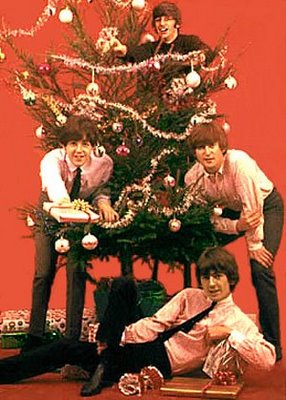
The members of the Beatles are not absent from the list. The Beatles released a version of Christmas Time is Here Again http://www.youtube.com/watch?v=a4vE5DnFWV0  while the members of the Fab Four all released Christmas songs. John Lennon’s  Happy Christmas (War is Over) http://www.youtube.com/watch?v=XPm3CWvDmvc  is a modern classic. Paul McCartney and Wings turned Wonderful Christmas Time http://www.youtube.com/watch?v=R1-sXrdQtog into a massive hit. Ringo Starr’s Glam Rock Come On Christmas, Christmas Come On  http://www.youtube.com/watch?v=aaguXYTXYoA was less memorable while George Harrison’s Ding Dong, Ding Dong was an upbeat and funny song http://www.youtube.com/watch?v=VggAH1dk3Qk .

beach-boys-christmas

Peter Noone and Herman’s Hermit’s released a version of O Holy Night http://www.youtube.com/watch?v=sfOqingPZzk while The Beach Boy’s Little Saint Nick http://www.youtube.com/watch?v=aSynDh_K0EE brought us a very California rendition of a Santa Song. Simon and Garfunkel did Comfort and Joy (God Rest Ye Merry Gentlemen) http://www.youtube.com/watch?v=3uB_oFQXv3w

 hqdefault-3

Some of the biggest acts of the 1970s had popular Christmas releases including Gary Glitter who released Another Rock ‘n’ Roll Christmas http://www.youtube.com/watch?v=kn06NJzYQc4 . Freddie Mercury and Queen released Thank God it’s Christmas http://www.youtube.com/watch?v=FIUmggOhHCM and the Eagles Please Come Home for Christmas http://www.youtube.com/watch?v=J1AaMe1KbwE was a pleading look at a broken relationship. Chicago had a number of Christmas releases including Christmas Time is Here  http://www.youtube.com/watch?v=d8B0jyKBF4U and O Come All Ye Faithful http://www.youtube.com/watch?v=G-9hrvoFpp4 .

springsteen-xmas-blowup

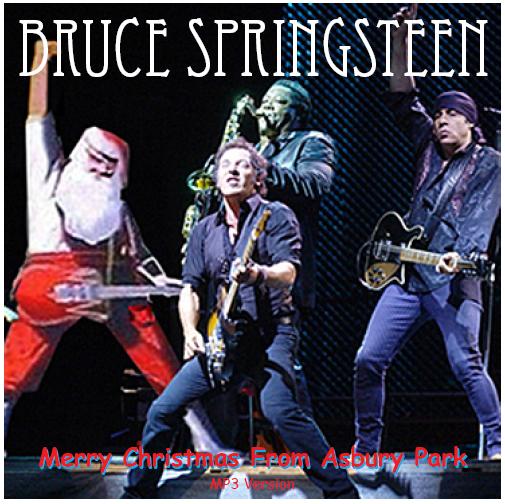
They were not alone British rocker Cliff Richard released Christmas Time http://www.youtube.com/watch?v=U9U0R1kCRzU, Tom Petty and the Heartbreakers performed Christmas All Over Again http://www.youtube.com/watch?v=gaPj1GoDpQw. Foghat released a version of All I want for Christmas is You http://www.youtube.com/watch?v=SUv7T_Uq6QU, Bruce Springsteen did Santa Claus is Coming to Town  http://www.youtube.com/watch?v=6CIebZ4RtgY and The Bee Gees Thank You For Christmas http://www.youtube.com/watch?v=9rm6pI8ybtA .

TopMusicaBlog_BlondieWeThreeKingsVideo

The groups of the late 1970s and early to mid 1980s are represented. Blondie has always been one of my favorite groups. This is a fairly recent release of We Three Kings http://www.youtube.com/watch?v=0vecWPafdDQ while Pat Benatar released a somewhat patriotic song called Christmas in America  http://www.dailymotion.com/video/xwgmps_pat-benatar-christmas-in-america_music, maybe we as Americans need to be thankful for what we have at Christmas.

ciaface

The classic bad girl, Joan Jett did the Little Drummer Boy http://www.youtube.com/watch?v=I3Qwx8OTV-k , the Girl Band the Bangles performed A Hazy Shade of Winter http://www.youtube.com/watch?v=QvvSQkUK-t4.  One of the more unusual acts who not only did a Christmas song but an entire Heavy Metal Christmas Album was Twisted Sister who have a classic version of White Christmas http://www.youtube.com/watch?v=6_1X-VEhHFc.

cd-cover-2

Classic Rockers Stevie Nicks and Rod Stewart did nice versions of classics, Stevie did  Silent Night http://www.youtube.com/watch?v=ZZPyphUNO6k while Stewart performed  White Christmas  http://www.youtube.com/watch?v=5EvQOmjXCxc.

511tZV2HicL

Like I said, this list is not exhaustive. Since as I do it I keep remembering more I figure I will stop for the night and hope that at least some of these songs help get you into the spirit of the season. After all, there is so much negativity that whether you are a Christian or not the season does present us all the chance to maybe see something positive in ourselves and our neighbors. So with Elton John I invite you my friends to Step Into Christmas http://www.youtube.com/watch?v=eDqi8ENS1FU


Peace

Padre Steve+

1 Comment

Filed under Loose thoughts and musings, music, Religion

The Historic “Christian” War on Christmas

450full-how-the-grinch-stole-christmas-screenshot

“The Grinch hated Christmas! The whole Christmas season!
Now, please don’t ask why. No one quite knows the reason.
It could be his head wasn’t screwed on just right.
It could be, perhaps, that his shoes were too tight.
But I think that the most likely reason of all
May have been that his heart was two sizes too small…” Dr Seuss How the Grinch Stole Christmas

Yes my friends I hate to admit it there is a war on Christmas. However unlike those that want to blame it on all of those Godless types I have to say that the real war on Christmas has been waged by Christians for centuries.

Now I do have to be fair. There are some people in the secularist camp who file lawsuits against municipalities that have Christmas displays on public property and even some who will push those lawsuits to exhibits on private property.  However, despite the media attention these are nothing in comparison to what Christian Grinches have done over the years.

So despite the efforts of some I do not fear for Christmas because the celebration of Christ’s Incarnation and Nativity has survived far worse even from those within the faith.

Now let me be fair here. Some of the things that the Christian Grinches have protested are frivolous and at their heart not very spiritual. But that tends not to be the case today. As Christians we seem perfectly at home in the crass materialism and consumerism of our modern Christmas celebrations even within the walls of our churches. It seems that as long as we are willing to put a nativity scene made by Third World slave laborers in the middle of an otherwise completely capitalistic consumer orgy we don’t care. But God forbid an Atheist object or a member of a minority religion demand equal time and space for their display in the otherwise crassly materialistic celebration. But I digress….

Let us go back and look at some history. Not that fake David Barton and Glenn Beck history but real history. You know, stuff that actually happened and that we have documentary evidence to support, not stuff that we pull out of thin air.

puritans

Back in the the 1600s a religious group influential in our nation’s early development hated the celebration of Christmas. I am not kidding. These were the Puritans, who by their name we must assume were pretty pure.

Since the Puritans already believed that they were the “elect” based on the Calvinist doctrine of double predestination they knew they were right. For those that don’t know what this doctrine means let me explain. The idea was that the Puritans and other strict Calvinists believed that they were the elect. In other words they believed that they were pre-ordained by God before the foundation of the world to go to heaven. Now that isn’t uncommon in religion but they also believed based on the same doctrine that all other people were destined to go to Hell because God decided they would before the creation of the world.

But there was another interesting part of this doctrine that wasn’t about heaven. They also believed that they had the “Biblical Mandate” to rule for God on earth. Their successors in the modern Christian Dominion or 7 Mountains Theology movement believe the same thing. They believed that sine it was God’s will that they rule that whatever they they said that others needed to obey, after all God put them in charge.

The Puritans came out of the Protestant Reformation in England. Unlike today the English took religion pretty seriously.  Now despite the cultured accent that we hear on the BBC or CNN World the English of that day were actually more like unruly football fans only worse. When it came to matters of religious tolerance and loving their neighbors they were pretty un-Christian.

English Protestants of the non-monarchical Reformation type like the Puritans did their best to rid the Church of England of anything that appeared to even look Catholic, especially Christmas. Of course this cleansing of the church often included real people including the few remaining stick in the mud Roman Catholics and Anglicans who still liked Catholic stuff.

But to be fair to the Puritans back then the English of all Christian denominations tended to be a bit intolerant. They would lop off the heads of, burn at the stake or crush with heavy stones anyone that deviated from their beliefs first and ask questions later. It was kind of like the fans of the Premier League only not as well behaved.

Oliver Cromwell by Samuel Cooper

Oliver Cromwell

Early in their history the Puritans were a persecuted group. Militant, intolerant, exclusive  who could not find reasons not to like them? But when the Puritans took power when Oliver Cromwell overthrew the monarchy they took their revenge and they enjoyed it. They didn’t just decide to lop, crush and burn their opponents of all denominations, but they also decided to outlaw the celebration of Christmas.

Christmas law 1658

Of course they did so for noble reasons such as ridding the country of anything that smelled Catholic or did not fit within their rather harsh and purist views of the faith. Thus when they took power they did their best to ensure that everyone was as miserable as them. This included banning the celebration of Christmas. They were kind of like the Taliban in a sense, except they were not Moslems.  But that being said they ruled in a similar manner and made most other people miserable.

article-1332096124019-12390FC5000005DC-933373_304x425

In 1652 it was declared that no Observation shall be had of the Five and twentieth day of December, commonly called Christmas-Day; nor any Solemnity used or exercised in Churches upon that Day in respect thereof’.

In 1647 the Puritan dominated Parliament backed up by the brute force of the Army and Police led by Oliver Cromwell simply abolished the Christmas feast and all that went with it, including the Roast Beast. Gone were such nasty pagan ideas such as Christmas Trees, feasting, caroling, and decorations. And let’s not forget the favorite target of Grinch’s everywhere, Nativity scenes. Of course the Puritans had a different reason than modern secular Grinches for banning them. Nativity scenes were banned because they were “idols.” Not content with banning the outward festivities the Puritans even frowned on the use of the word Christmas because they believed that it was akin to taking the Lord’s name in vain.

Wassail   03

Wassailing 

Likewise the Puritans were not content with inflicting their beliefs on church going people, they inflicted them on the majority of the people who simply wanted some relief for the drudgery of daily life in 17th Century England. The Puritans even banned the poor from the tradition of Wassailing. Wassailing was a custom in which the rather pungent poor would go from house to house, begging for treats in exchange for drinking a toast to the family.  The drink called wassail, was a hot spiced wine.  Now this was not a vintage Napa Valley or French wine but a pungent English wine, thus the need for spices and heat. Wassailing sometimes ended up in an out of control scene of drunken revelry, much like current English Football match celebrations, which is why the Puritans objected so strenuously. They didn’t like football either. No kidding, back then it was known as Mob Football and didn’t have very many rules. It was particularly popular at Christmas which meant that it must be of the Devil.

SPSC1115-Mob-Football-14t

Mob Football

Be it known that the Puritans did had no sense of fun as we know it. They viewed any religious practice that might include something fun harmful and as such religious practices such as these needed to be removed from public life altogether.

Well this situation lasted until 1660 a year after the Lord Protector and head of the Army and Police Oliver Cromwell kicked the bucket. The anti-Christmas laws were quickly overturned and the populace went back to simply lopping, burning and crushing and everyone, save those being lopped, crushed or burned was happy because Christmas was back.  People were so happy to bring Christmas back that the new rulers in England exhumed Cromwell’s body from Westminster Abbey and executed him posthumously. Since they had a flair for decorating they lopped off Cromwell’s head and displayed it outside Westminster Hall for about four years.

A popular verse of the time said:

Now thanks to God for Charles’ return,
Whose absence made old Christmas mourn;
For then we scarcely did it know,
Whether it Christmas were or no.

PURITAN-BAN-ON-CHRISTMAS-WAS-TO-PREVENT-DEMONIZATIONS-OF-CITIZENS-IN-COMMUNITY

Not to be outdone the Puritan colonists in the Massachusetts Bay Colony enacted similar laws to their brethren in England. In 1659 through the newly appointed Governor Sir Edmund Andros. The laws remained on the books until 1681. During the time that the laws were in force everyone had a grand time. Like others in places like Cromwell’s England, Stalin’s Soviet Union, the Ayatollah’s Iran and the Taliban’s Afghanistan the General Court of the Massachusetts Bay Colony banned the celebration of Christmas and other such holidays at the same time it banned gambling and other lawless behavior.

frowning-puritan-300x226

Grumpy Puritan and Revelers 

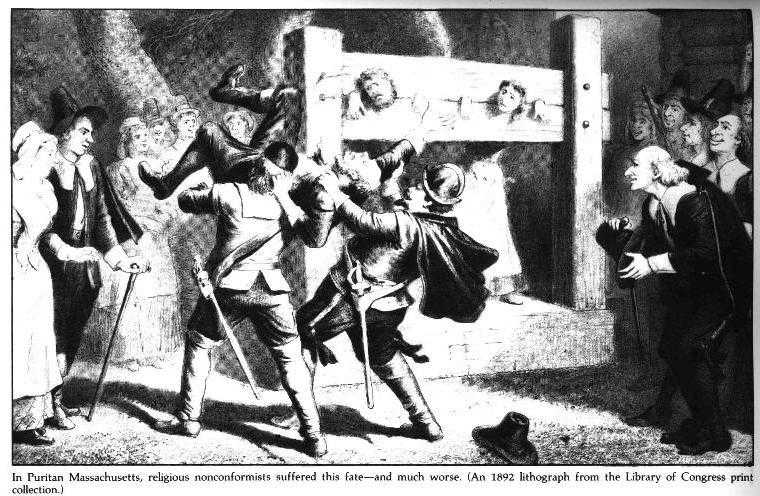
Grouping all such behaviors together the court placed a fine of five shillings on anyone caught feasting or celebrating the holiday in a manner that might be construed as fun. Things like taking time off from work, feasting, partying, wassailing, playing Mob Football or anything else. The law read like this:

“For preventing disorders, arising in several places within this jurisdiction by reason of some still observing such festivals as were superstitiously kept in other communities, to the great dishonor of God and offense of others: it is therefore ordered by this court and the authority thereof that whosoever shall be found observing any such day as Christmas or the like, either by forbearing of labor, feasting, or any other way, upon any such account as aforesaid, every such person so offending shall pay for every such offence five shilling as a fine to the county.”

That sounds lovely doesn’t it? At least they didn’t go lopping, burning or crushing with heavy stones unless you were proven to be a Christmas celebrating witch. Unlike England where the lifting of the ban was celebrated with the aplomb given to a World Cup championship the Colonists up in the Massachusetts Bay Colony and their descendants frowned upon the celebration of Christmas until the 1820s. That was  when enough Irish showed up in Boston to turn the place around and make it the fun town that it is now.  Coincidently the last “State Church” in the United States was the Congregational Church in Massachusetts. It wasn’t disestablished until 1833.

So the next time you hear about those that want to impose their beliefs to quash Christmas regardless of their religious or non-religious reasons please realize that this isn’t a new thing at all. Christians have been doing it for centuries.

Let us also remember that some of the un-fun Fundamentalists screaming about the “war on Christmas” actually want to re-establish the Puritan view of faith which would in effect eliminate any celebration of Christmas if they could only convince the corporations that profit off of Christmas but otherwise support their political causes to go along with it.

But for now we only have to suffer those fun and sentimentality deprived army of Grinch’s that without the religious flair of the Puritans attempt to crush the spirit of Christmas. Thankfully, more people like all the tinsel and bells as well as the presents and time off regardless of their religion or lack thereof and so the Christmas celebration as we know it will survive.

Maybe in doing so a few people will discover the humble, less than pretentious babe laying in the manger. One can always hope.

Peace

Padre Steve+

1 Comment

Filed under christian life, faith, History, News and current events, Religion

“Inter Arma Enim Silent Leges” Between Civil Liberties and National Security: Exploring the National Security State Through Star Trek Deep Space Nine

Friends of Padre Steve’s World,
Thank you for your faithful reading, insightful comments and encouragement. I am doing some work on a case teaching method class tonight to present tomorrow but some interesting things are going on in the world. Since the situation with Edward Snowden and the NSA is not going away anytime soon I thought that this article which I wrote back in June was still appropriate and maybe worth the read for those that have not read it before. The issue with the NSA and the Snowden leaks is the tensions that exist between civil liberties, privacy and security in our interconnected cyber-world. The fact is that I think that sometimes people who write Science Fiction have a better grasp on these issues than activists or defenders of any particular point of view. I think that this episode of Star Trek Deep Space Nine is very enlightening in thinking about the issues that the surround this current controversy.
Have a great night,
Peace
Padre Steve+

padresteve's avatarThe Inglorius Padre Steve's World

enimsilentleges_210

“A popular government, without popular information, or the means of acquiring it, is but a prologue to a farce or a tragedy; or, perhaps both.” James Madison

I am amazed when I read the reports about the activities of the National Security Agency and the reactions of of citizens to them. I know that I feel a sense of apprehension about those activities. The national security state and the seeming all pervasive security and surveillance apparatus which demolishes any sense of privacy, especially the protections enunciated in the Fourth Amendment and to some extent the First Amendment.

I also feel, or rather understand from history and empirical evidence that many others, many from unfriendly countries do not share those apprehensions. It makes for an ethical, legal and even constitutional conundrum that I am not sure if anyone of us is quite comfortable with and perhaps maybe we shouldn’t be.

It…

View original post 1,457 more words

Leave a comment

Filed under Loose thoughts and musings

Salvaging the Fleet: Salvage Efforts after the Attack on Pearl Harbor

h55061

One of the more interesting aspects of the Pearl Harbor attack were the efforts of the US Navy to salvage and return to duty the ships sunk or so heavily damaged that they were thought to be irreparable after the attack. 21 ships were sunk or damaged during the attack, roughly 20% of the fleet present.

BB-37_Oklahoma052org

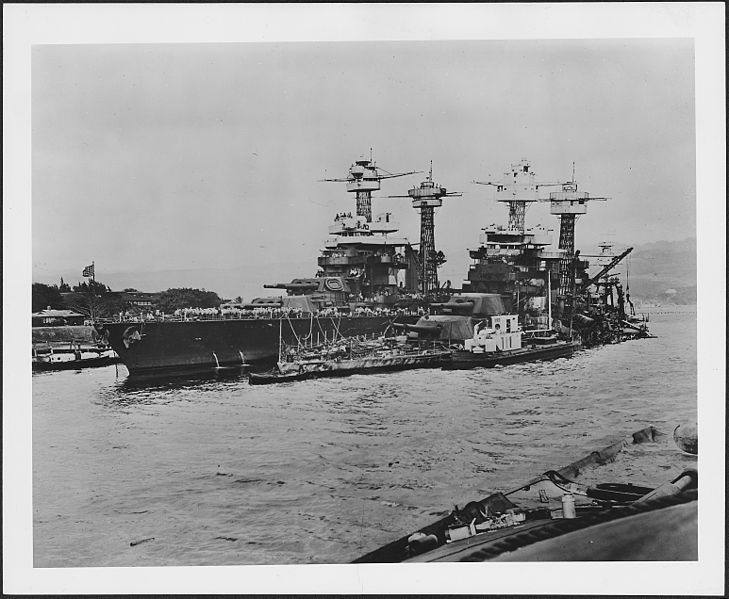
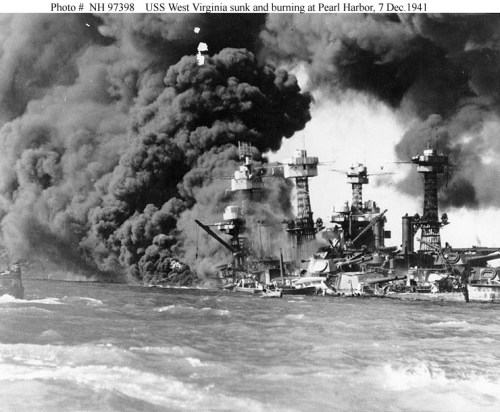
Of these were battleships, the USS Arizona sunk by a cataclysmic explosion, her broken hulk with her collapsed foremast the iconic symbol of the attack. USS Oklahoma was capsized on Battleship Row.  USS Nevada was grounded and sunk off Hospital Point after an abortive attempt to sortie during the attack. USS California and USS West Virginia lay upright on the bottom of Pearl Harbor, their superstructure, distinctive cage masts and gun turrets visible above the oily water.

nh83059

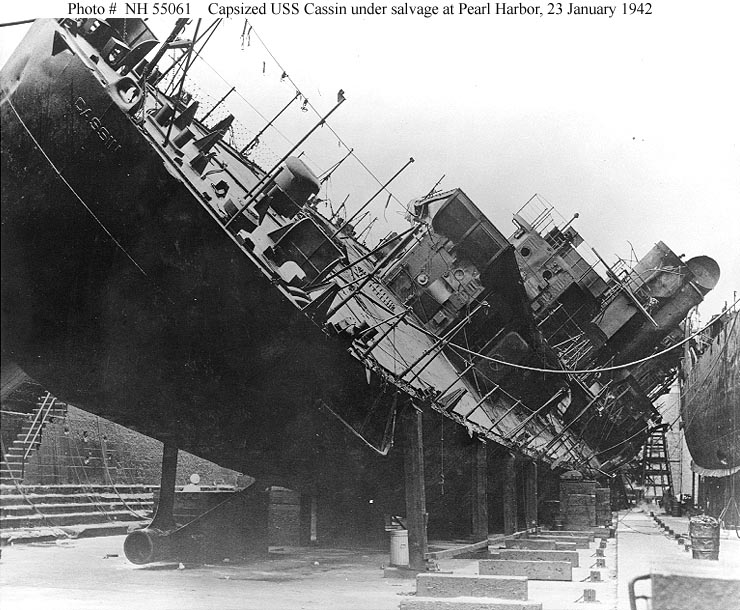
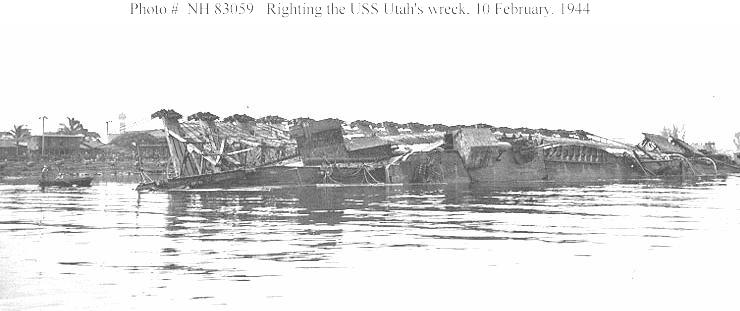
The former battleship USS Utah lay capsized on the far side of Ford Island while the light cruiser USS Raleigh was fighting for her life barely afloat near Utah.  The ancient Minelayer USS Oglala was laying on her side next to the light cruiser USS Helena at the 1010 Dock. She was not hit by a bomb or torpedo but was said to have “died of fright” when Helena was hit by a torpedo, the blast which opened the seams of her hull. The destroyers USS Cassin and USS Downes were wrecks in the main dry dock. USS Shaw was minus her bow in the floating dry dock after exploding in what was one of the more iconic images of the attack. Other ships received varying amounts of damage.

BB-37_Oklahoma105c

As the engineers, damage control and salvage experts looked at the damage they realized that every ship would be needed for the long term fight. The building program of the US Navy was just beginning to pick up steam and it would be some time before new construction could not only make up for the losses but also be ready to fight a Two Ocean War. The decision was made to salvage and return to duty any ship deemed salvageable.

salvage10

Even the seemingly less important ships needed to be rapidly salvaged. Some which initially appeared to be unsalvageable needed at the minimum to be cleared from dry docks and docks needed by operational or less damaged ships. Likewise equipment, machinery and armaments from these ships needed to be salvaged for use in other ships.

h63917

Even by modern standards the efforts of the Navy divers and salvage experts and the civilians who worked alongside them were amazing. In the end only three of the 19 ships never returned to service. The work began quickly and on December 14th Commander James Steele began to direct the salvage operations on the sunken hulks. Captain Wallin relieved Steele on January 9th 1942. Wallin formed a salvage organization of Navy officers and civilian contractors.The civilian contractors were instrumental in the operation. Many had experience in salvage operations that exceeded the military personnel.

h64493

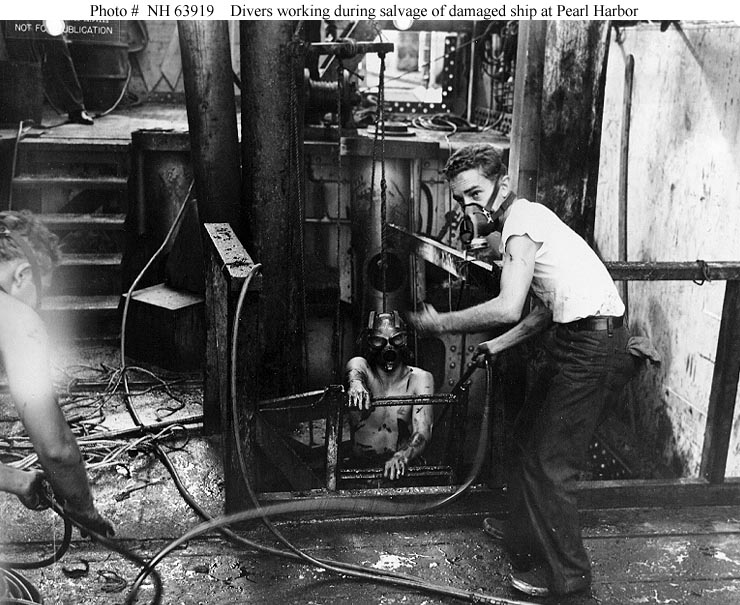
Wallin prioritized the tasks of his organization working to recover items that could be of immediate use to the fleet such as anti-aircraft guns and to salvage less damaged ships in order to return them to service. They worked at the task through 1944. The divers faced extraordinary dangers, poisonous gas, unexploded ordnance, treacherous tides and the uncertainty of the destruction of the ships below the surface that could not be ascertained apart from diving on the wrecks.

salvage09

The divers recovered bodies whenever possible, salvaged equipment, removed weapons and ammunition, made temporary repairs and help rig the ships for righting or re-floating. In each case the salvage experts, divers and engineers faced different challenges.

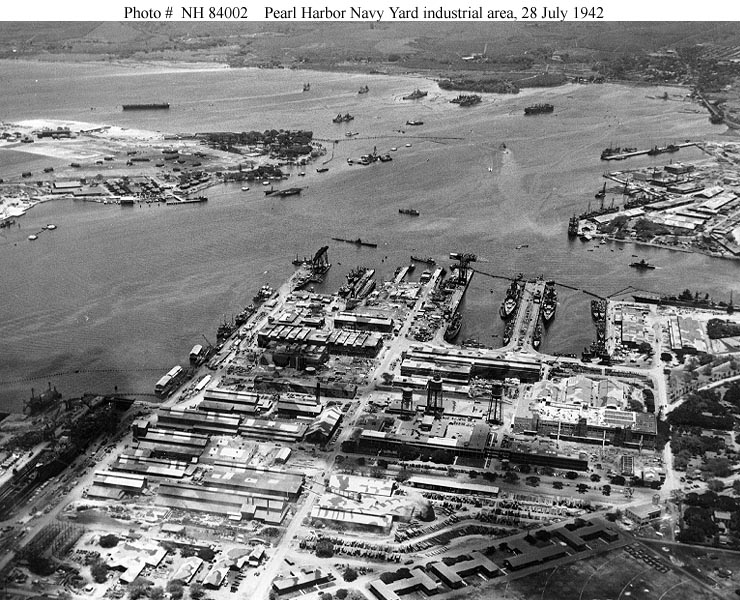
h84002

Arizona was never raised. Her superstructure was cut down, main battery and some anti-aircraft guns removed. The main batter guns were delivered to the Army Coastal Artillery for use as shore batteries but none reached an operational status before the end of the war. The dives aboard were so dangerous that eventually the attempts to recover bodies ceased as several divers lost their lives in the wreck.  Over the years the National Parks Service has continued to dive on the wreck to assess it as a war grave and memorial.

h63921

Utah too was not raised. She was righted in 1942 but efforts to do more were halted because the elderly wreck had no remaining military value. Her wreck along with that of Arizona are war graves, many of their crew members, including over 1000 of Arizona’s men forever remain entombed in their ships. When I visited Pearl Harbor in 1978 as a Navy Junior ROTC Cadet and visited both memorials I was humbled at what  saw. They are haunting reminders of the cost paid by sailors during wartime.

h64496

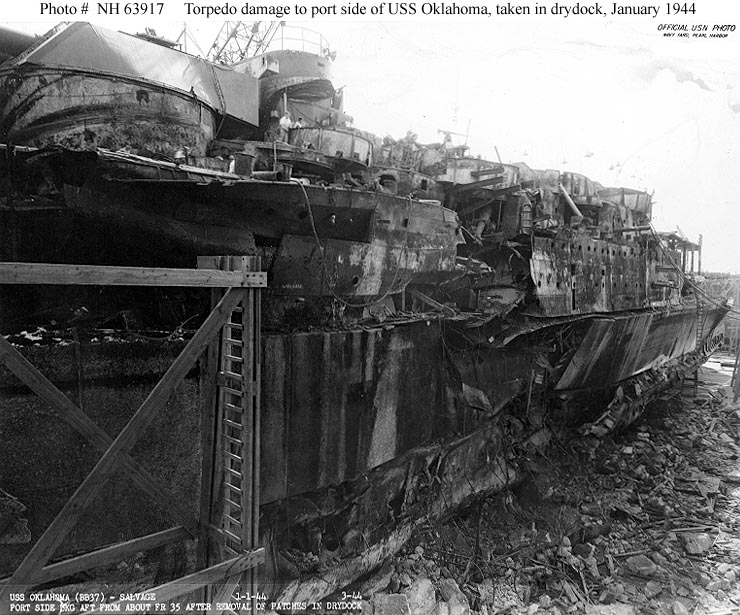
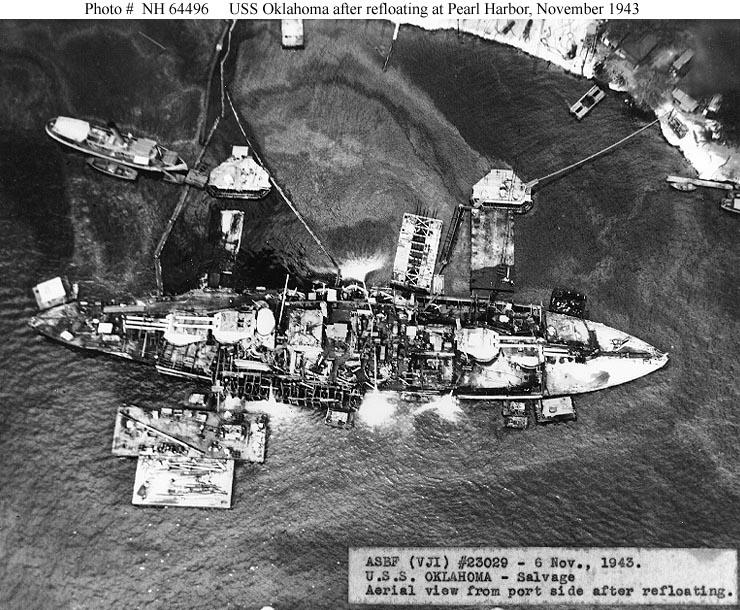
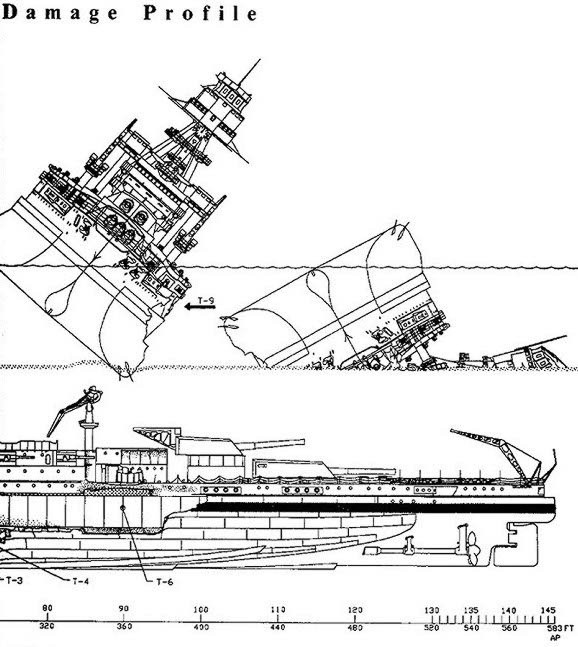
The salvage of the Oklahoma was one of the more challenging endeavors faced by Wallin’s men. Hit by at least five torpedoes during the attack the great ship capsized, her tripod masts digging deep into the mud of the harbor as she settled. Over 400 over her crew lay dead inside the ship. Since it was apparent that the ship was a total loss the salvage operations did not commence until the middle of 1942. The primary goal of the operation was to clear needed space for berthing large ships along Battleship Row. The operation involved making the ship as watertight as possible, solidifying the bottom of the harbor around her to enable her to roll and emplacing a massive system of righting frames, anchor chains and shore mounted winches and cables. The process involved cutting away wrecked superstructure, removing ammunition, weapons and the bodies of those entombed in their former home. She was completely righted in July 1943, and floated again in November. Moved to a dry dock in December she was made watertight and moored in another part of the harbor. Following the war she was being towed to a scrap yard but sank in a storm in May 1947.

h83056

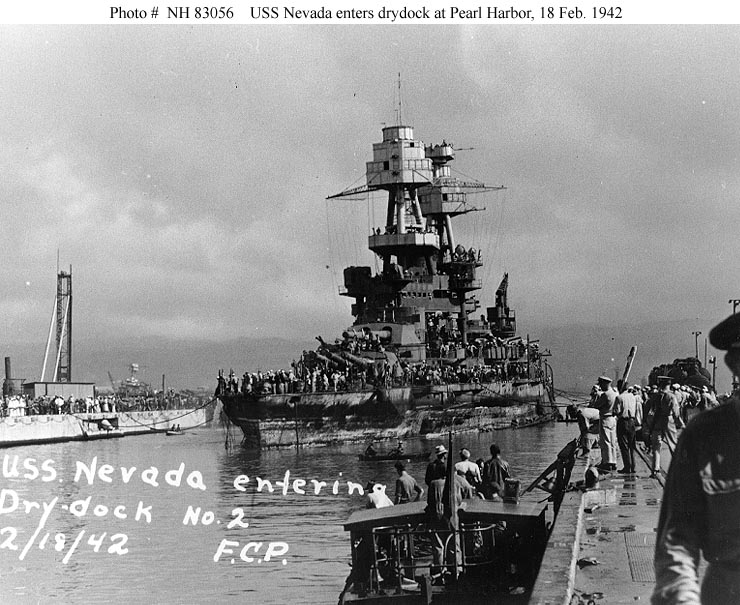
Nevada was the first major ship salvaged. She was re-floated in February 1942 and after temporary repairs sailed to the West Coast on her own power. After repairs and a significant modernization of her anti-aircraft systems was complete she returned to action in 1943 in the invasion of Attu Alaska. She participated in many amphibious operations including Normandy, Southern France, Iwo Jim and Okinawa. She survived the Atomic Bomb tests in 1946 but wrecked and radioactive she was sunk as a target off Hawaii in 1948.

g13154

h55038

California was raised in March and after temporary repairs sailed under her own power to the West Coast. Her repairs and modernization were a major undertaking. Fully reconditioned and modernized to standards of most modern battleships she returned to service in January 1944. She served in retaking Saipan, Guam, Tinian as well as Leyte Gulf were she had a significant part in the Battle of Surigao Strait. Hit by a Kamikaze she was repaired and returned to action at Okinawa and support the occupation operations of the Japanese Home Islands. She was decommissioned in 1947 and sold for scrapping in 1959.

h64474

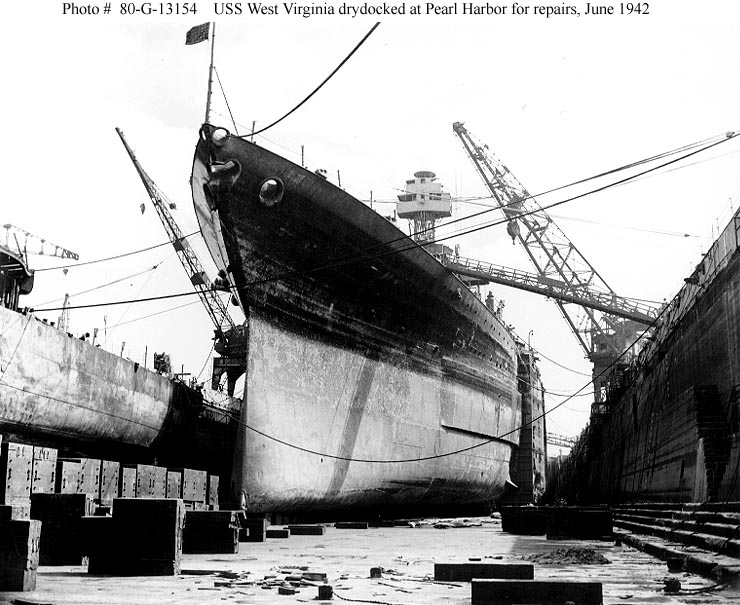
West Virginia suffered the most severe damage of the battleships returned to duty. She was raised in July 1942 and after repairs sailed to Puget Sound Naval Shipyard. Like California she was completely rebuilt and returned to action in October 1944 in time to take the lead role in destroying the Japanese Battleship Yamashiro. She served throughout the remainder of the war in the Pacific at Iwo Jima, Okinawa and the occupation of Japan.

h54564

The Mahan Class destroyers Cassin and Downes were so badly damaged sitting in the Dry Dock Number One with Pennsylvania that initially they were believed beyond salvage. However after closer inspection it was determined that the hull fittings, main weapons systems and propulsion machinery on both ships were worth salvaging. These items were removed, shipped to Mare Island Naval Shipyard and installed on new hulls being constructed. The hulks of the old ships were scrapped at Pearl Harbor. Those ships were commissioned as the Cassin and Downes and served throughout the war.

h55063

Both were decommissioned in 1945 and scrapped in 1947. Their sister ship Shaw which had blown up in the floating dry dock was wrecked from her bridge forward. However the rest of the ship including her engineering spaces were intact. A temporary bow was fashioned and the ship sailed to Mare Island under her own power. Completely overhauled she was back in service by July 1942. She was decommissioned in 1945 and scrapped in 1946.

h50005

The ancient minelayer Oglala was raised in July and sent back to the West Coast where she was repaired and recommissioned as an internal combustion engine repair ship. She survived the war was decommissioned and transferred to Maritime Commission custody. She was a depot ship at the Suisun Bay Reserve Fleet until 1965 when she was sold for scrap.

h64492

The salvage feat to return these ships to duty was one of the most remarkable operations of its type ever conducted. Not only were most of the ships salvaged but most returned to duty. While none survive today many played key roles during the war. Artifacts of some of the ships are on display at various Naval Bases, Museums and State Capitals. They, their brave crews and the Navy Divers and civilian diving and salvage experts who conducted this task exhibited the finest traditions of the US Navy. The successors of the Navy divers at Mobile Diving Salvage Units One and Two still carry on that tradition today.

Peace

Padre Steve+

11 Comments

Filed under History, Military, Navy Ships, US Navy, world war two in the pacific

In Harm’s Way: The Ships that Got Underway at Pearl Harbor

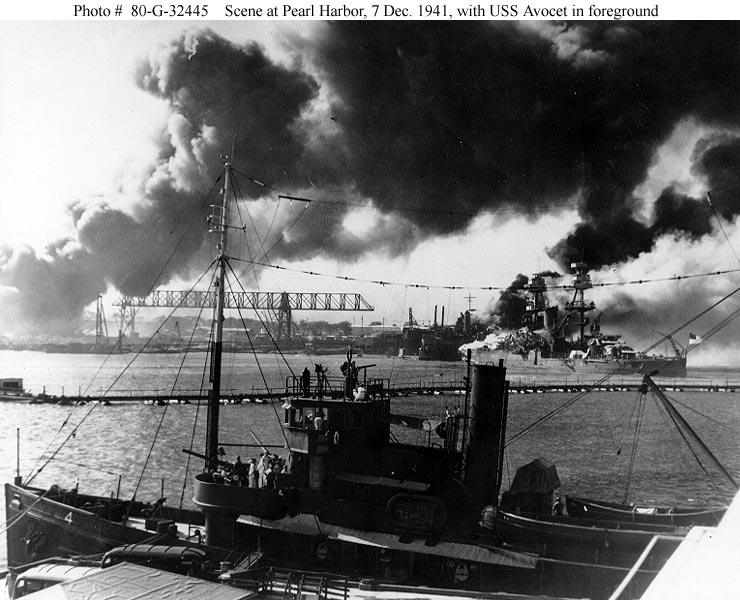
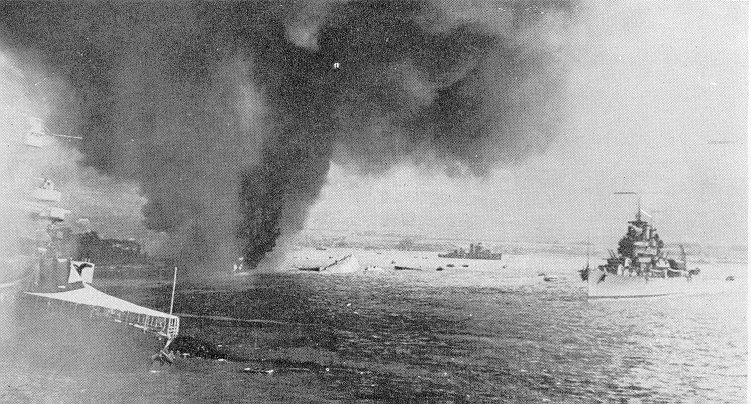
They were an odd collection of ships. A battleship, two modern light cruisers, an elderly light cruiser and a collection of destroyers, destroyer minesweepers and destroyer minelayers. Yet in the midst of the din and bloody chaos of the Japanese attack on Pearl Harbor these ships, sometimes with only the most junior of officers in charge got underway and took to sea in order to seek out and engage the Japanese.

Their sortie is dramatized in the Otto Preminger film In Harm’s Way. 

http://www.tcm.com/mediaroom/video/477483/In-Harm-s-Way-Movie-Clip-Twelve-Bat-Blind-Ships.html

For the first forty minutes of the attack only two ships were underway. The USS Ward which had sunk the Japanese midget submarine outside the harbor entrance an hour before the attack began. The USS Helm was in the main channel as the attack began. They were joined over the next two hours by other ships.

g32445

The USS Nevada was the only battleship to get underway that morning and though she did not get to sea her example served to inspire those on the battered ships in the harbor and ashore. Her commanding officer and executive officer were ashore, along with many other senior officers. However her Damage Control Officer, Lieutenant Commander Francis Thomas, a reservist took command and as the senior officer present on the the ship got her underway. Then as she was battered by the second wave of Japanese attackers he skillfully grounded her off Hospital Point to keep her from being sunk in the narrow main channel.

LL lv PHUSS St Louis passing Battleship Row

The USS St. Louis was moored outboard of her sister ship USS Honolulu at the Naval Station. Her sortie was enabled by members of her crew who chopped down the gangplank and cut water lines to the shore. Under command of Captain George Rood she got underway at 0931 and was the first cruiser to get underway.

6565601_f496

USS Phoenix sortie at Pearl Harbor

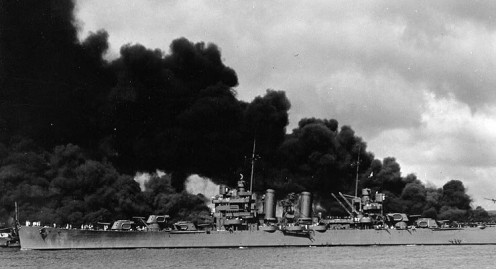
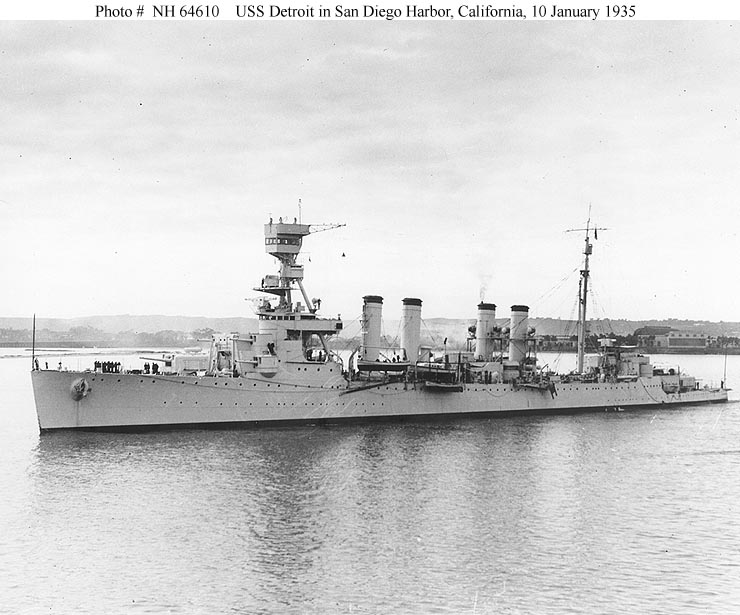
She was joined by her sister ship USS Phoenix and the elderly light cruiser USS Detroit which was moored on the far side of Ford Island.  Phoenix survived the war only to be sunk in the 1982 Falklands war as the Argentine ship General Belgrano.

0400808

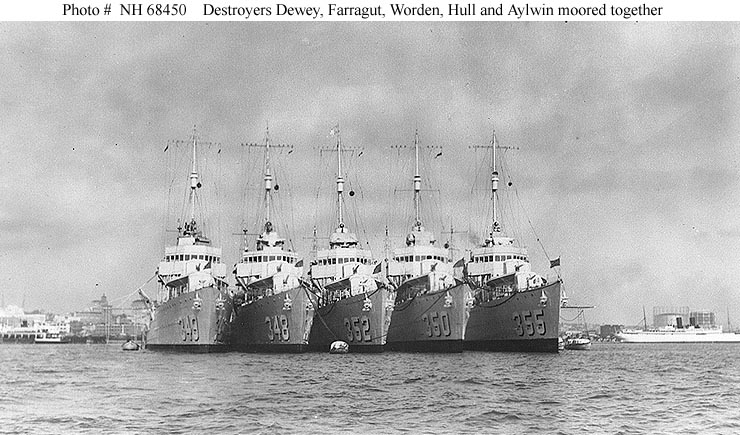
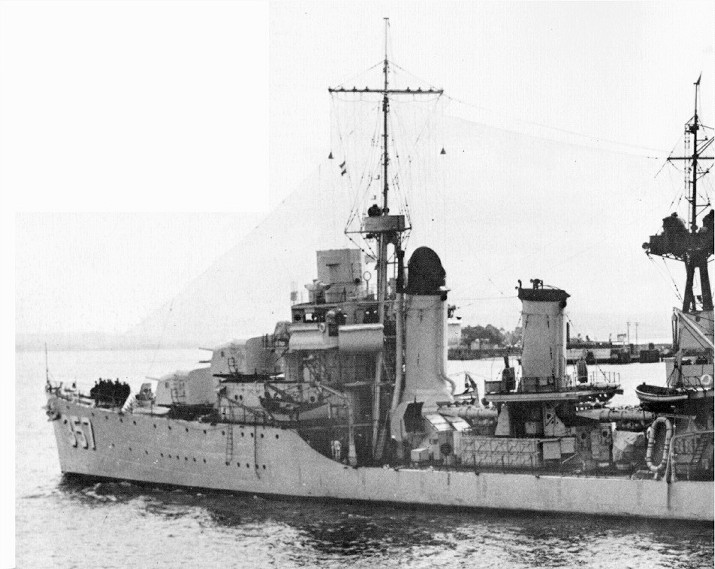
The destroyer USS Blue got underway under the command of Ensign Nathan Asher, who had just three other ensigns with him as that ship got underway. She was joined by Monaghan, Dale, Henley, Phelps, Farragut, MacDonough, Worden, Patterson, Jarvis and Aylwin also under command of an junior officer, Ensign Stanley Caplan. Henley left without her commander under the command of Lieutenant Francis Fleck Jr.

h68450

Others too got underway, The USS Mugford was the duty destroyer and got underway quickly, as did Cummings. The Ralph Talbot was underway by 0900. Conyngham got underway in the early afternoon. Perhaps the most interesting story was the USS Selfridge which got underway manned by a composite crew of 7 different ships.

0535702

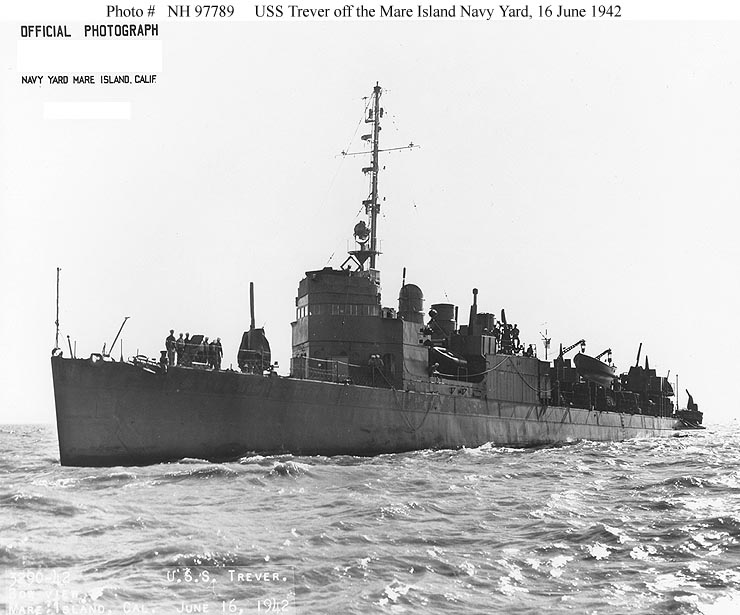
The cruisers and destroyers were joined by a number of elderly former destroyers which had been converted to Destroyer Minesweepers or Minelayers. The Ramsay, Breese, Trever and Perry all got underway, Trever also minus her commanding officer.

h97789

Some of the ships formed in a vain search for the Japanese strike force while others conducted defensive anti-submarine operations in the waters off Pearl Harbor.

The fact that all of these ships were able to get underway and navigate through the chaos of the attack, often under the command of junior officers and without key crew members was a testament to the courage and initiative of US Navy Officers and Sailors. It is a courage and initiative still in evidence today.

Peace

Padre Steve+

4 Comments

Filed under History, Loose thoughts and musings, movies, Navy Ships, US Navy, world war two in the pacific

Battleship Row: The Story of the Battleships of Pearl Harbor

the-japanese-attack-on-pearl-harbor-everett-2

“Yesterday, Dec. 7, 1941 – a date which will live in infamy – the United States of America was suddenly and deliberately attacked by naval and air forces of the Empire of Japan…. The attack yesterday on the Hawaiian Islands has caused severe damage to American naval and military forces. Very many American lives have been lost.” Except of President Franklin D Roosevelt’s Pearl Harbor Speech December 8th 1941
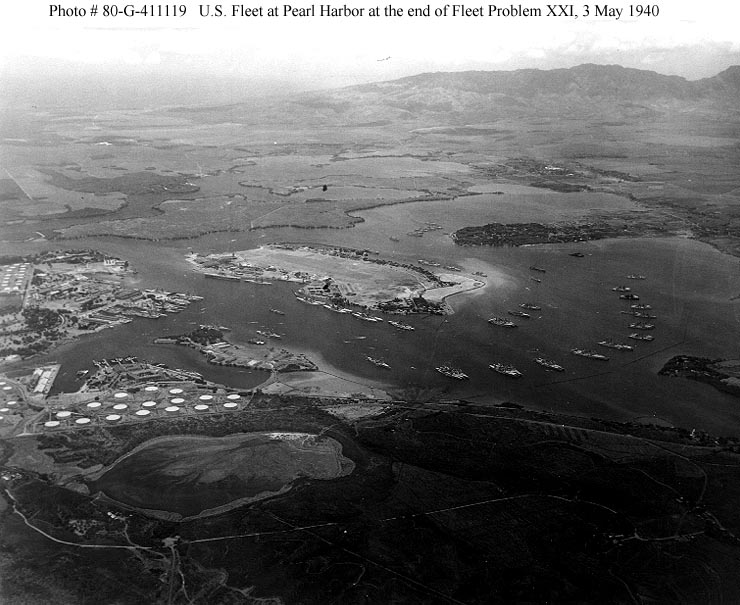
g411119

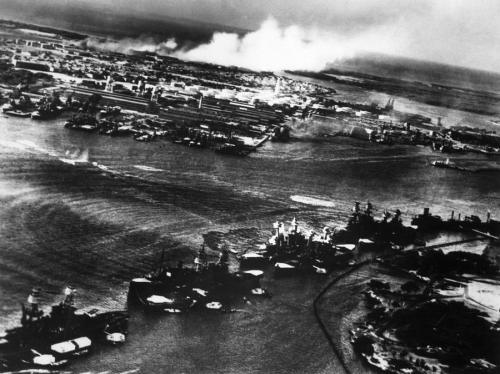
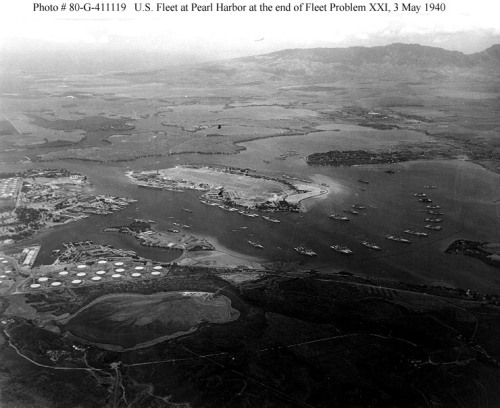
Today is the 72nd anniversary of the Japanese attack on Pearl Harbor and as we were then we are at war. Of course it is not the same kind of war and most Americans live in the illusion of peace which makes it even more important to remember that terribly day of infamy.

I remember reading Walter Lord’s classic and very readable book about Pearl Harbor “Day of Infamy” when I was a 7th grade student at Stockton Junior High School back in 1972.  At the time my dad was on his first deployment to Vietnam on the USS Hancock CVA-19.  As a Navy brat I was totally enthralled with all things Navy and there was little that could pull me out of the library.  In fact in my sophomore year of high school I cut over one half of the class meetings of the 4th quarter my geometry class to sit in the library and read history, especially naval and military history.
arizon-main-battery2-2

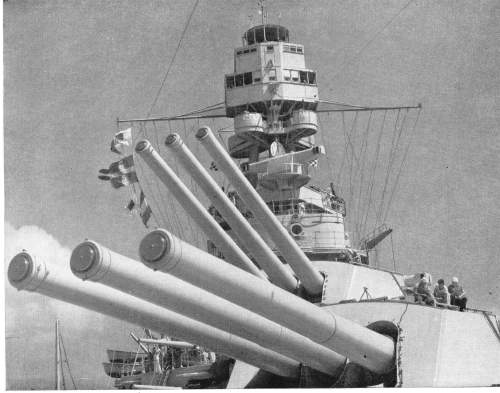
The main battery of either USS Arizona or Pennsylvania 

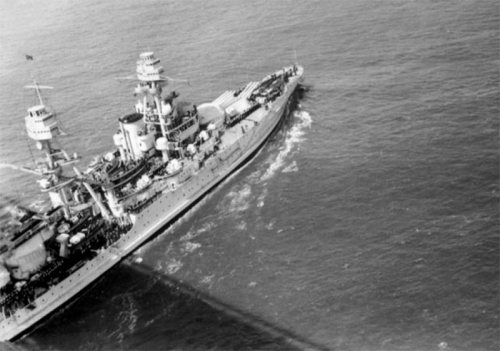
Over the years I have always found the pre-World War Two battleships to be among the most interesting ships in US Navy history.  No they are not the sleek behemoths like the USS Wisconsin which graces the Norfolk waterfront. They were not long and sleek, but rather squat yet exuded power. They were the backbone of the Navy from the First World War until Pearl Harbor.  They were the US Navy answer to the great Dreadnaught race engaged in by the major Navies of the world in the years prior to, during and after World War One.
pennsylvania-under-golden-gate

USS Pennsylvania passing under the Golden Gate

Built over a period of 10 years each class incorporated the rapid advances in technology between the launching of the Dreadnaught and the end of the Great War.  While the United States Navy did not engage in battleship to battleship combat the ships built by the US Navy were equal to or superior to many of the British and German ships of the era.
puyBfl

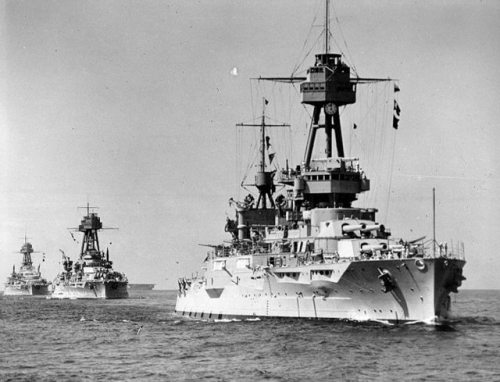
US Battleships at the Grand Fleet Review of 1937

Through the 1920s and 1930s they were the ambassadors of the nation, training and showing the flag. During those years the older ships underwent significant overhaul and modernization.
arizona-and-battleline

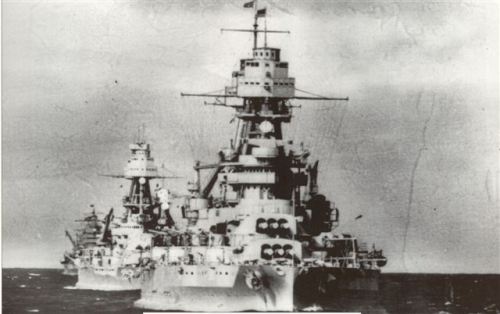
The Battle Force of the Pacific Fleet in 1941 included 9 battleships of which 8 were at Pearl Harbor on the morning of December 7th.  In the event of war the US War Plan, “Orange” called for the Pacific Fleet led by the Battle Force to cross the Pacific, fight a climactic Mahanian battle against the battleships of the Imperial Japanese Navy and after vanquishing the Japanese foe to relieve American Forces in the Philippines.  However this was not to be as by the end of December 7th all eight were out of action, with two, the Arizona and Oklahoma permanently lost to the Navy.

The ships comprised 4 of the 6 classes of battleships in the US inventory at the outbreak of hostilities.  Each class was an improvement on the preceding class in speed, protection and firepower.  The last class of ships, the Maryland class comprised of the Maryland, Colorado and West Virginia, was the pinnacle of US Battleship design until the North Carolina class was commissioned in 1941.  Since the Washington Naval Treaty limited navies to specific tonnage limits as well as the displacement of new classes of ships the United States like Britain and Japan was limited to the ships in the current inventory at the time of the treaty’s ratification.
uss_oklahoma

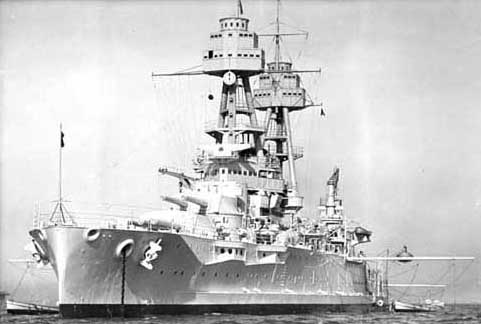
USS Oklahoma

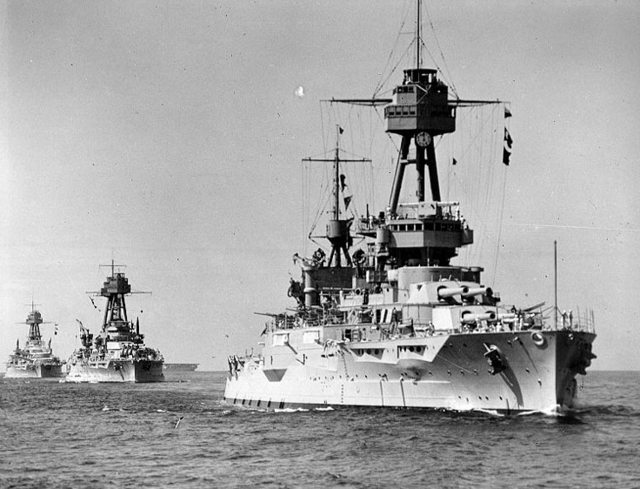
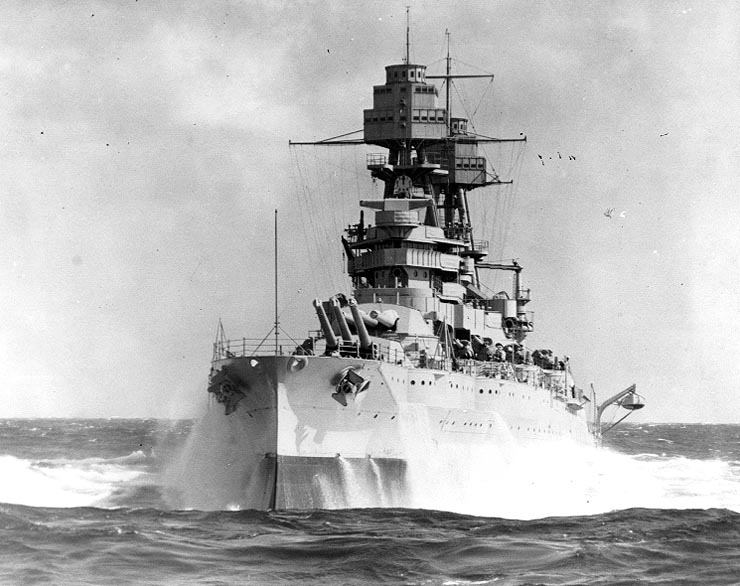
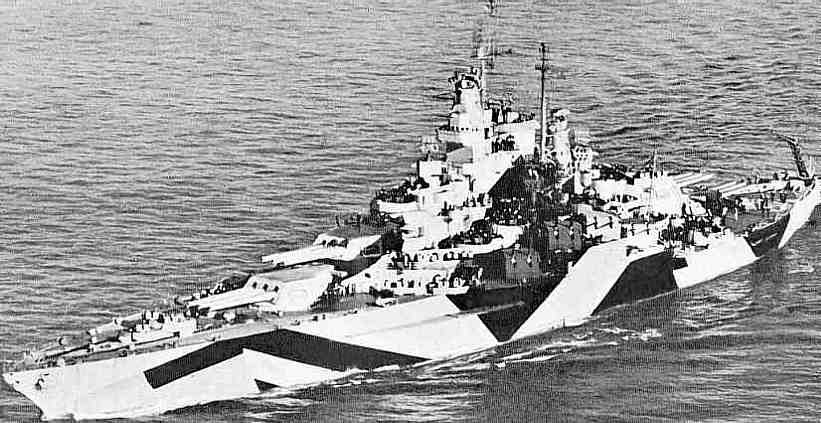
The ships at Pearl Harbor included the two ships of the Nevada class, the Nevada and Oklahoma they were the oldest battleships at Pearl Harbor and the first of what were referred to as the “standard design” battleships. The two ships of the Pennsylvania class, the Pennsylvania and her sister the Arizona served as the flagships of the Pacific Fleet and First Battleship Division respectively and were improved Nevada’s. The California class ships, California and Tennessee and two of the three Maryland’s the Maryland and West Virginia made up the rest of the Battle Force.
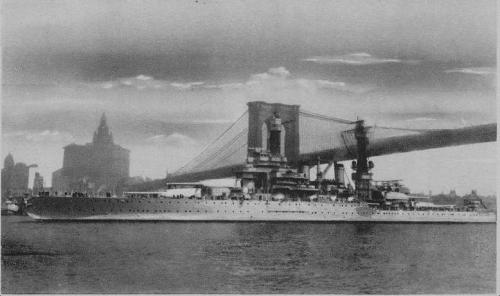
california-1938

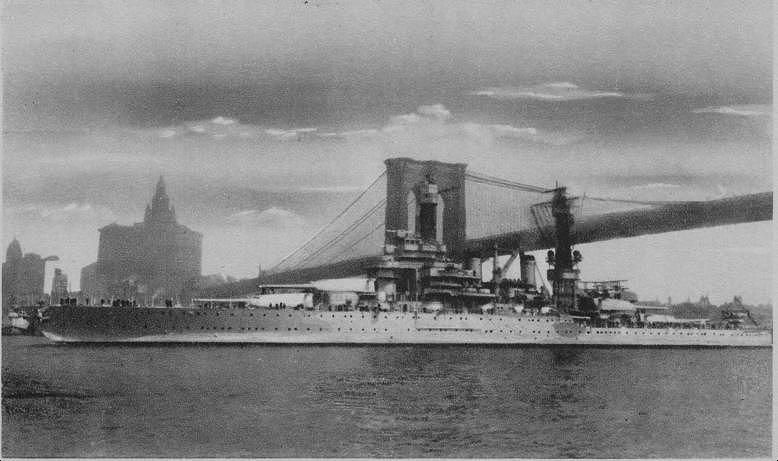
USS California passing under Brooklyn Bridge

The Colorado was undergoing a yard period at Bremerton and the three ships of the New Mexico class, New Mexico, Mississippi and Idaho had been transferred to the Atlantic before Pearl Harbor due to the German threat.  The three oldest battleships  ships of the New York and Wyoming Classes, the New York, Arkansas and Texas also were in the Atlantic. Two former battleships, the Utah and Wyoming had been stripped of their main armaments and armor belts and served as gunnery training ships for the fleet. The Utah was at Pearl Harbor moored on the far side of Ford Island.
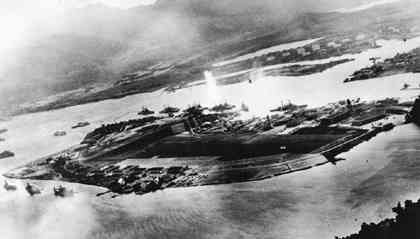
9.athumb

The ships that lay at anchor at 0755 that peaceful Sunday morning on “Battleship Row” and in the dry dock represented the naval power of a bygone era, something that most did not realize until two hours later. The age of the battleship was passing away, but even the Japanese did not realize that the era had passed building the massive super-battleships Yamato and Musashi mounting nine 18” guns and displacing 72,000 tons, near twice that of the largest battleships on Battleship Row.
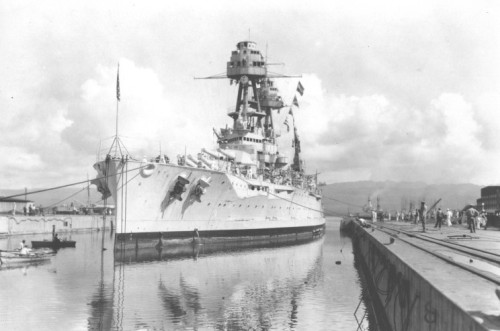
bb36_06

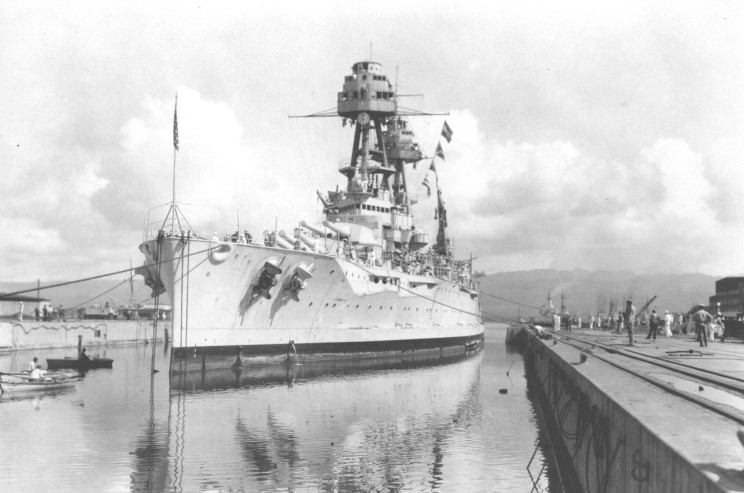
USS Nevada at Pearl Harbor

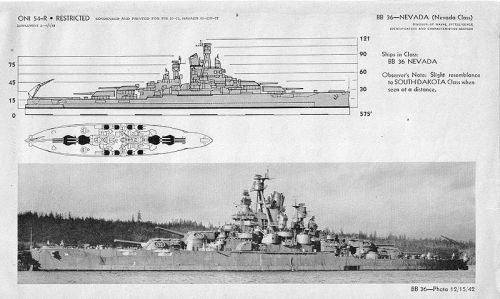
The Oklahoma and Nevada were the oldest ships in the Battle Force.  Launched in 1914 and commissioned in 1916 the Nevada and Oklahoma mounted ten 14” guns and displaced 27,500 tons and were capable of 20.5 knots. They served in World War One alongside the British Home Fleet and were modernized in the late 1920s. They were part of the US presence in both the Atlantic and Pacific in the inter-war years. Oklahoma took part in the evacuation of American citizens from Spain in 1936 during the Spanish Civil War.
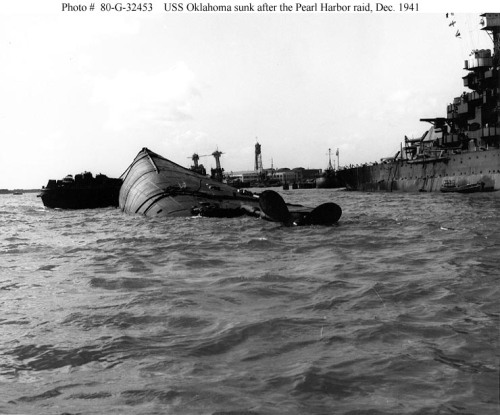
013717


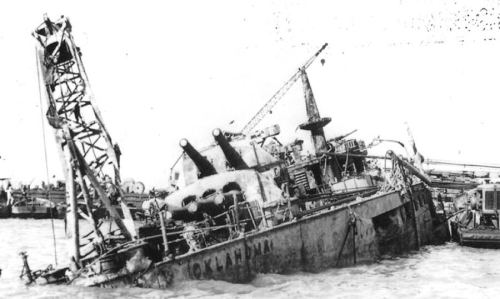
USS Oklahoma Capsized (above) and righted (below)
 

oklahoma-salvage

During the Pearl Harbor attack Oklahoma was struck by 5 aerial torpedoes capsized and sank at her mooring with the loss of 415 officers and crew. Recent analysis indicates that she may have been hit by at least on torpedo from a Japanese midget submarine. Her hulk would be raised but she would never again see service and sank on the way to the breakers in 1946.
nevada-1

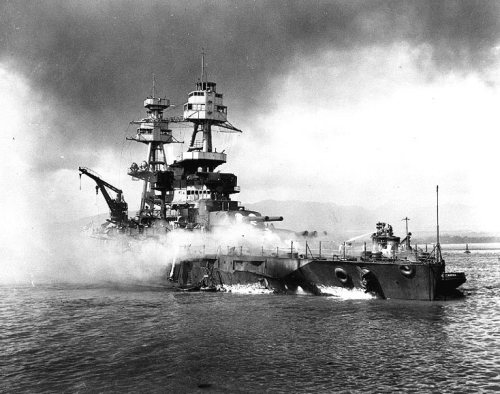
USS Nevada aground off Hospital Point

Nevada was the only battleship to get underway during the attack.  Moored alone at the north end of Battleship Row her Officer of the Deck had lit off a second boiler an hour before the attack.  She was hit by an aerial torpedo in the first minutes of the attack but was not seriously damaged. She got underway between the attack waves and as she attempted to escape the harbor she was heavily damaged. To prevent her from sinking in the main channel she was beached off Hospital Point.
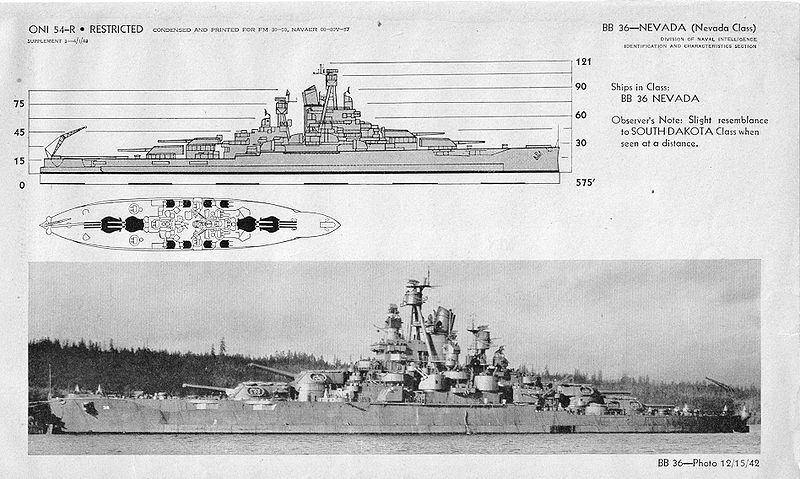
800px-USS_Nevada_(BB-36)_specs

nevada-utah-beach

USS Nevada at Normandy 

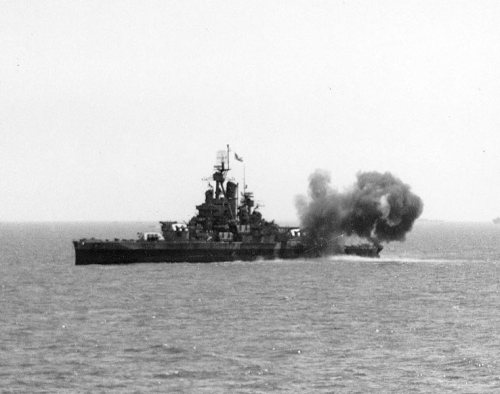
Nevada was raised and received a significant modernization before returning to service for the May 1943 assault on Attu.  Nevada returned to the Atlantic where she took part in the Normandy landings off Utah Beach and the invasion of southern France.  She returned to the Pacific and took part in the operations against Iwo Jima and Okinawa where she again provided naval gunfire support.  Following the war the great ship was assigned as a target at the Bikini atoll atomic bomb tests. The tough ship survived these tests and was sunk as a target on 31July 1948.
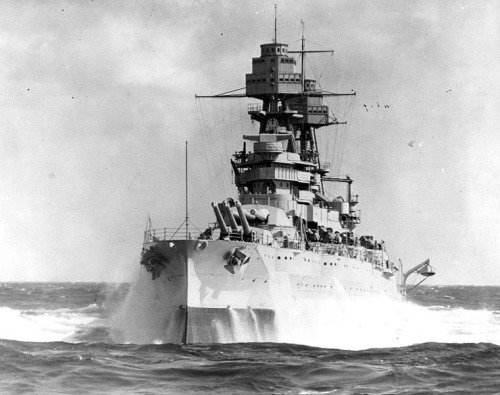
USS_Arizona_(BB-39)_-_1930s

USS Arizona

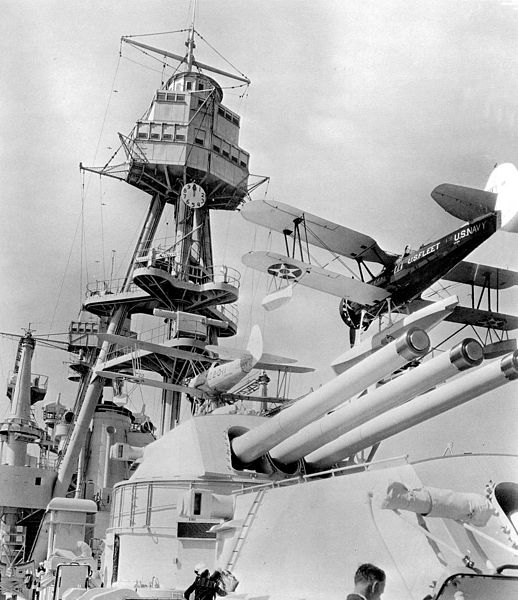
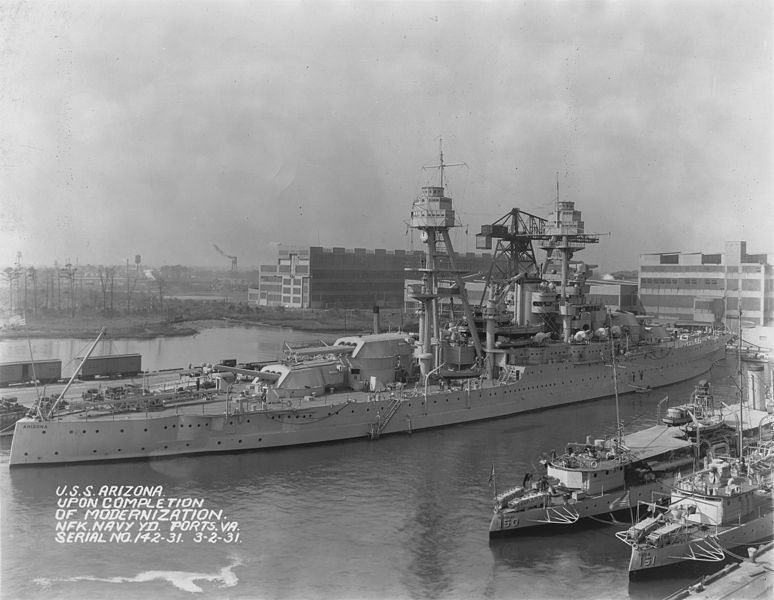
The two ships of the Pennsylvania Class were improved Oklahoma’s.  The Arizona and Pennsylvania mounted twelve 14” guns and displacing 31,400 tons and capable of 21 knots they were both commissioned in 1916. They participated in operations in the Atlantic in the First World War with the British Home Fleet. Both ships were rebuilt and modernized between 1929-1931.
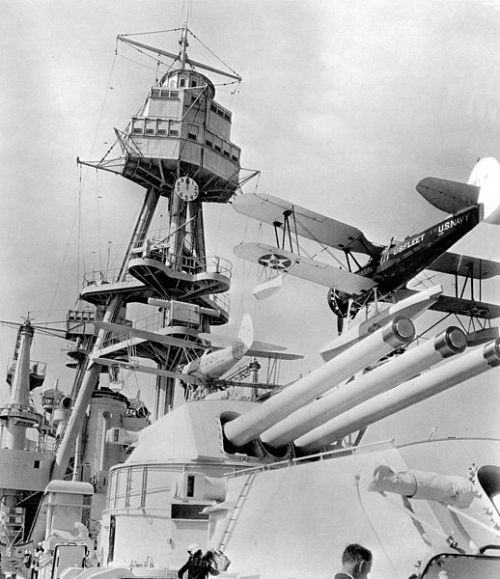
518px-O3U-3s_on_USS_Pennsylvania_(BB-38)_in_1935

They were mainstays of the fleet being present at Presidential reviews, major fleet exercises and making goodwill visits around the world.  Pennsylvania was the Pacific Fleet Flagship on December 7th 1941 and was in dry dock undergoing maintenance at the time of the attack. She was struck by two bombs and received minor damage.
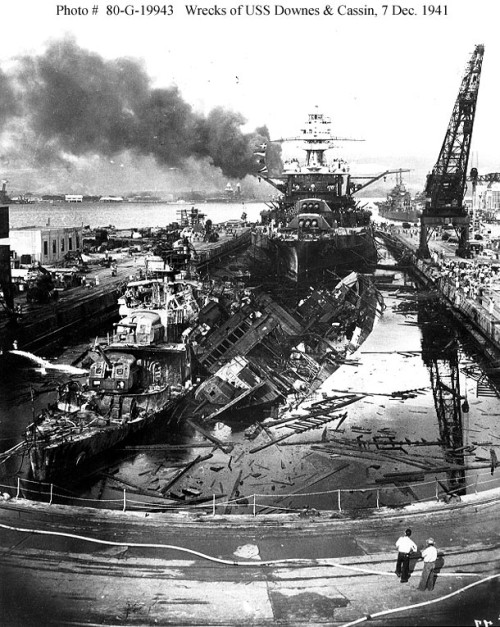
pennsylania-drydock

She was back in action in early 1942. She underwent minor refits and took part in many amphibious landings in the Pacific and was present at the Battle of Surigao Strait.  She was heavily damaged by an aerial torpedo at Okinawa Pennsylvania and was repaired. Following the war the elderly warrior was used as a target for the atomic bomb tests. She was sunk as a gunnery target in 1948.
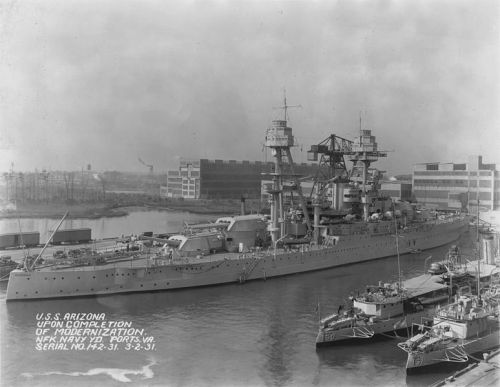
774px-USS_Arizona_after_1931_modernization_NARA_19-LC-19B-1

arizona-buring

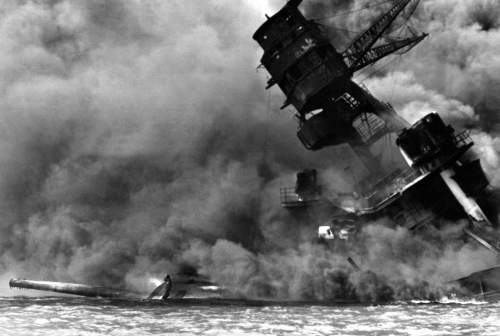
Arizona was destroyed during the attack. As the flagship of Battleship Division One she was moored next to the repair ship USS Vestal.  She was hit by 8 armor piercing bombs one of which penetrated her forward black powder magazine. The ship was consumed by a cataclysmic explosion which killed 1103 of her 1400 member crew including her Captain and Rear Admiral Isaac Kidd, commander of Battleship Division One.  She was never officially decommissioned and the colors are raised and lowered every day over the Memorial which sits astride her broken hull.
tennessee-1938

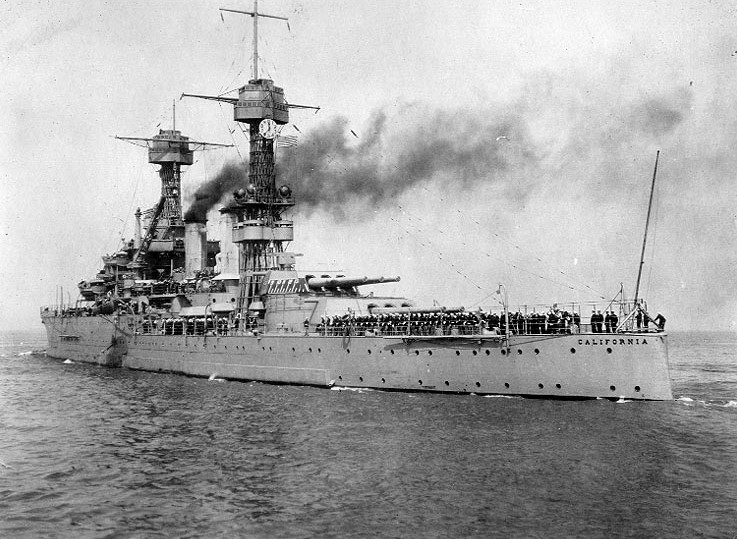
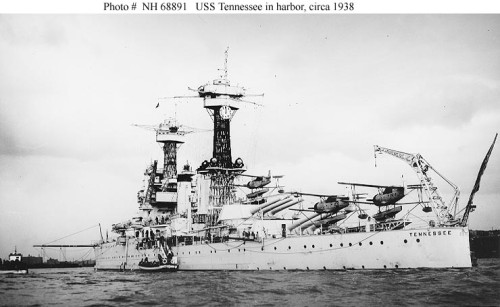
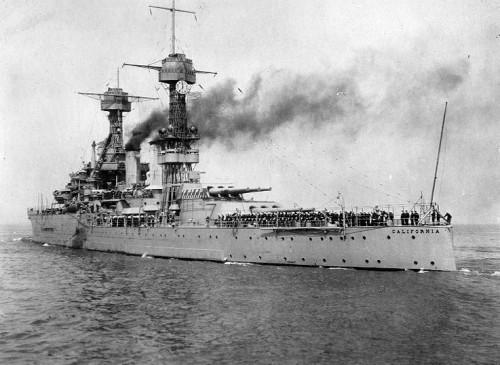
The Tennessee class ships the Tennessee and California were the class following the New Mexico class ships which were not present at Pearl Harbor. These ships were laid down in 1917 and commissioned in 1920. Their design incorporated lessons learned at the Battle Jutland. They mounted twelve 14” guns, displaced 32,300 tons and were capable of 21 knots. At Pearl Harbor Tennessee was moored inboard of West Virginia and protected from the aerial torpedoes which did so much damage to other battleships. She was damaged by two bombs. California the Flagship of Battleship Division Two was moored at the southern end of Battleship Row. She was hit by two torpedoes in the initial attack. However, she had the bad luck to have all of her major watertight hatches unhinged in preparation for an inspection.
uss_california_bb44_03

h64474

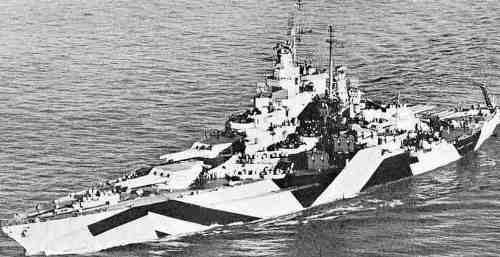
Despite the valiant efforts of her damage control teams she sank at her moorings. She was raised and rebuilt along with Tennessee were completely modernized with the latest in radar, fire control equipment and anti-aircraft armaments. They were widened with the addition of massive anti-torpedo bulges and their superstructure was razed and rebuilt along the lines of the South Dakota class.
USS California Late WWII

USS California following Modernization
014389o

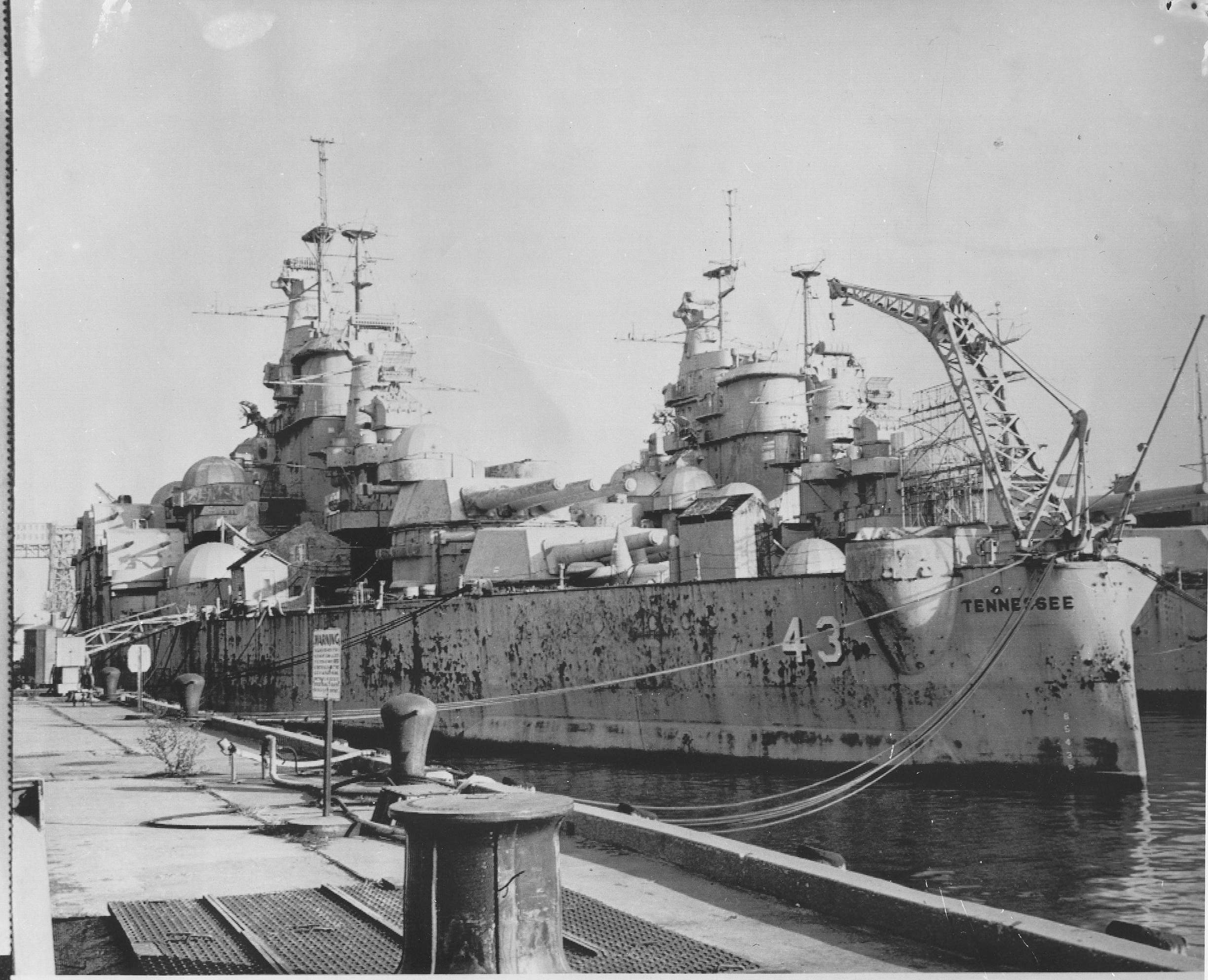
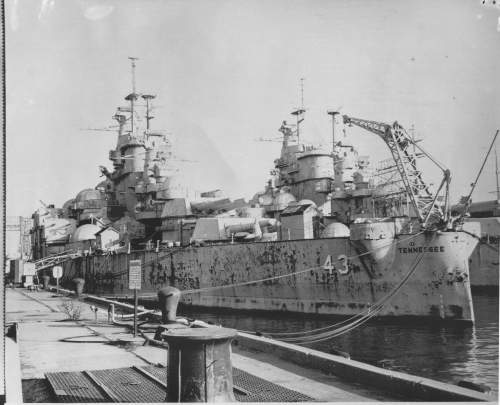
USS Tennessee with another ship, possibly California in reserve awaiting the breakers

When the repairs and modernization work was completed they looked nothing like they did on December 7th. Both ships were active in the Pacific campaign and be engaged at Surigao Strait where they inflicted heavy damage on the attacking Japanese squadron. Both survived the war and were placed in reserve until 1959 when they were stricken from the Navy list and sold for scrap.
west-virginia-1934

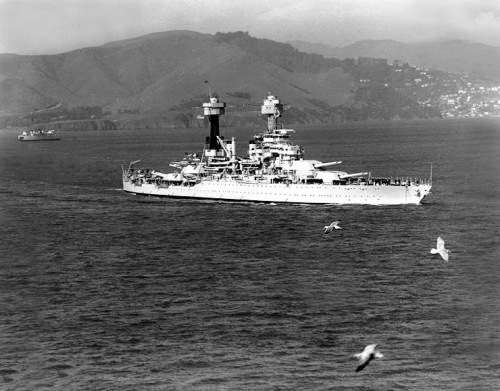
USS West Virginia 

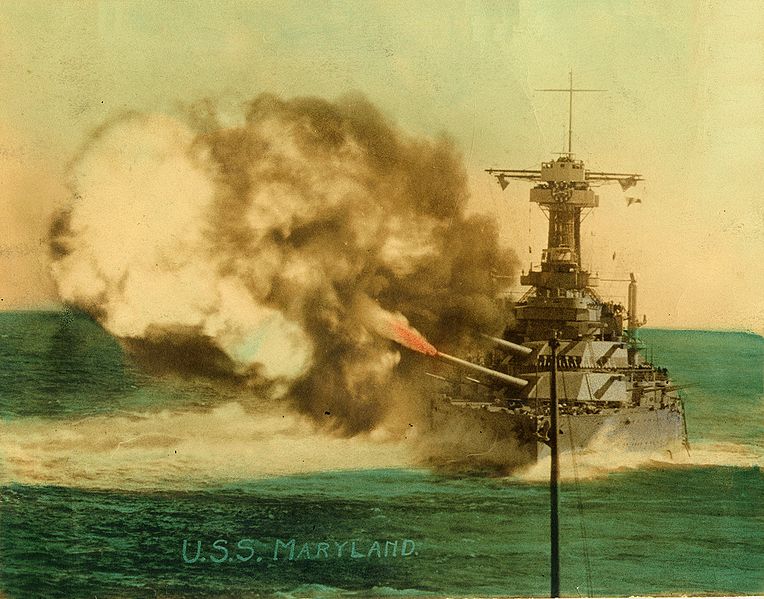
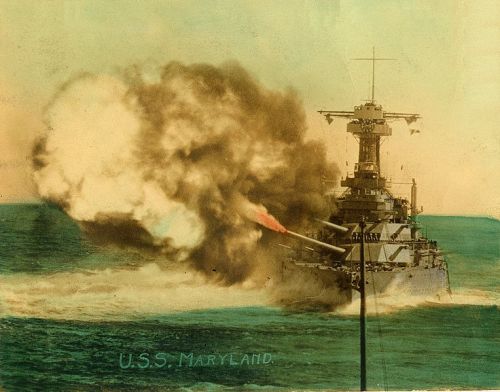
The Maryland and West Virginia were near sisters of the Tennessee class.  They were the last battleships built by the United States before the Washington Naval Treaty. and the first to mount 16” guns. With eight 16” guns they had the largest main battery of any US battleships until the North Carolina class.
764px-USS_Maryland_broadside_1920s

They displaced 32,600 tons and could steam at 21 knots. Laid down in 1917 and commissioned in 1921 they were modernized in the late 1920s. They were the most modern of the Super-Dreadnoughts built by the United States and included advances in protection and watertight integrity learned from both the British and German experience at Jutland.
09_maryland_oklahoma_pearl_harbor

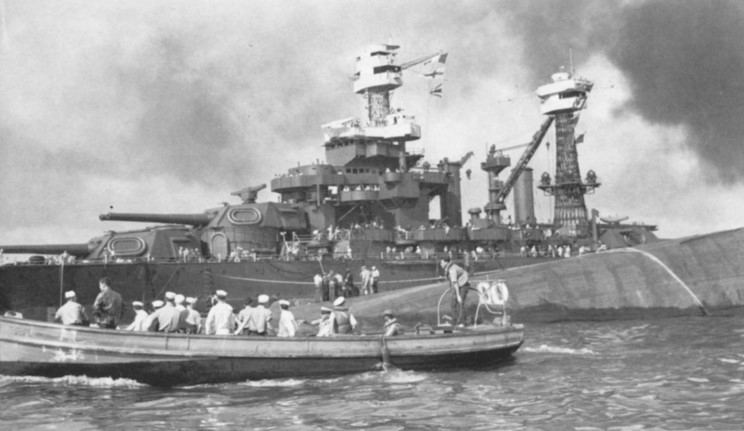
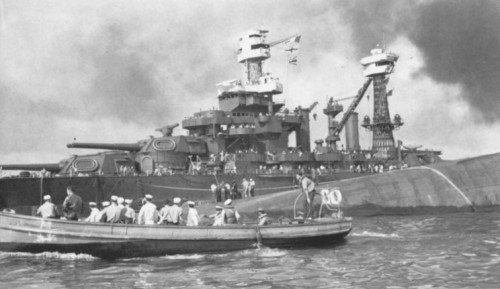
USS Maryland behind the capsized Oklahoma

At Pearl Harbor Maryland  was moored inboard of Oklahoma and was hit by 2 bombs and her crew helped rescue survivors of that unfortunate ship.  She was quickly repaired and returned to action.  She received minimal modernization during the war. She participated in operations throughout the entirety of the Pacific Campaign mainly conducting Naval Gunfire Support to numerous amphibious operations. She was present at Surigao Strait where despite not having the most modern fire control radars she unleashed six salvos at the Japanese Southern Force.
729px-Photograph_of_the_damage_done_to_the_USS_West_Virginia,_sunk_in_the_Japanese_raid_on_Pearl_Harbor_-_NARA_-_306536

754px-USS_West_Virginia_5-21-42,_Port_quarter_showing_previous_water_line_(FCP)_-_NARA_-_296915

west-virginia-damage

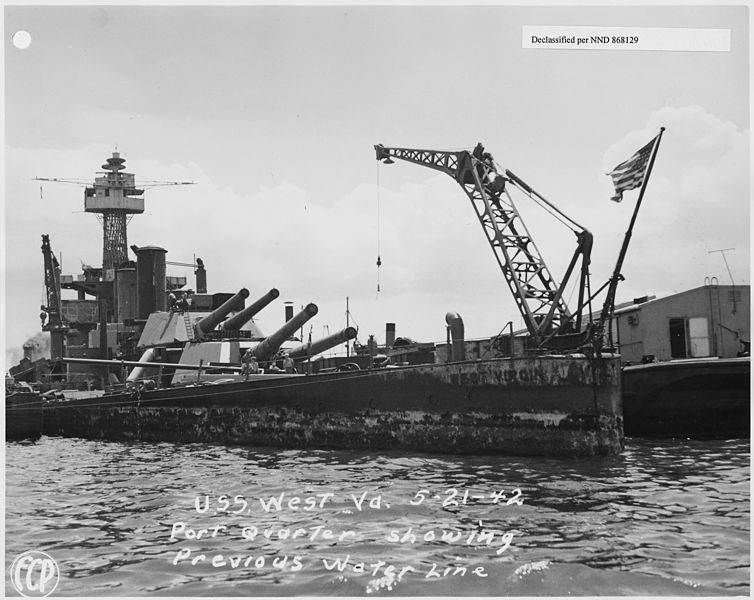
USS West Virginia, sunk, raised and in dry dock, note the massive damage to Port Side

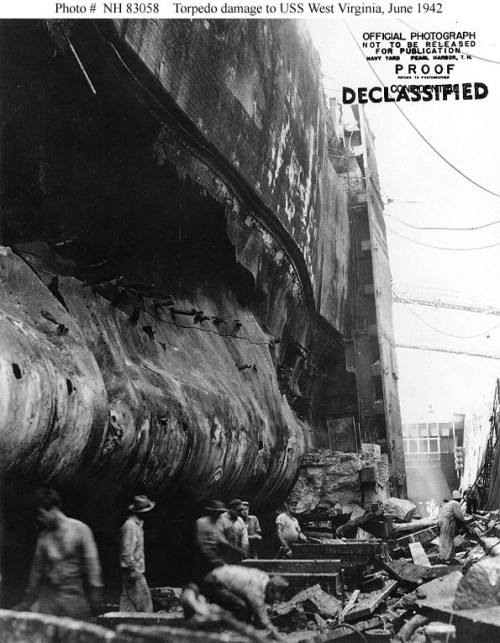
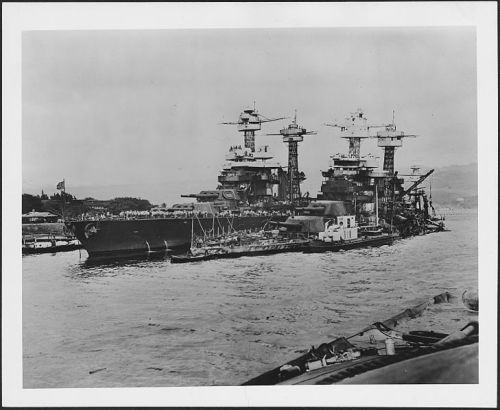
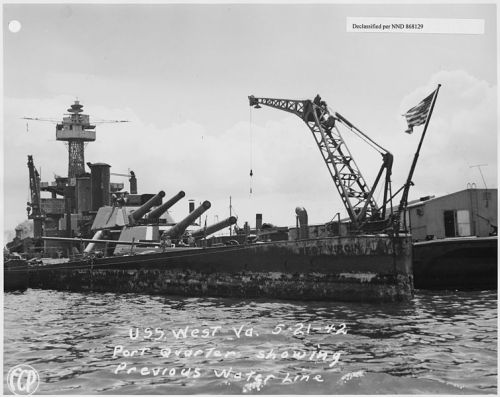
West Virginia suffered some of the worst damage in the attack. She was hit by at least 5 torpedoes and two bombs. She took a serious list and was threatening to capsize. However she was saved from Oklahoma’s fate by the quick action of her damage control officer who quickly ordered counter-flooding so she would sink on an even keel.  She was raised from the mud of Pearl Harbor and after temporary repairs and sailed to the West Coast for an extensive modernization on the order of the Tennessee and California.
west-virginia-final-config

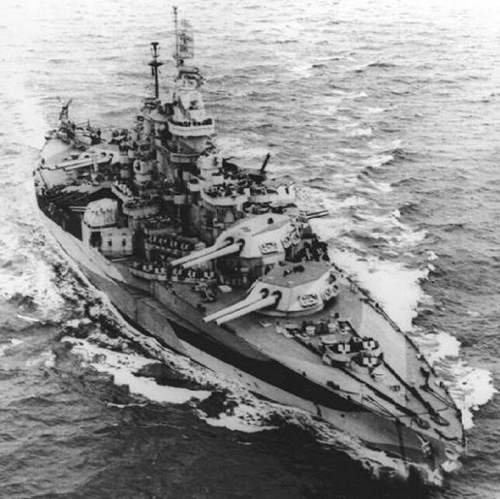
USS West Virginia after salvage and modernization 

West Virginia was the last Pearl Harbor to re-enter service. However when she returned she made up for lost time.  She led the battle line at Surigao Strait and fired 16 full salvos at the Japanese squadron. Her highly accurate gunfire was instrumental in sinking the Japanese Battleship Yamashiro in the last battleship versus battleship action in history.  West Virginia, Maryland and their sister Colorado survived the war and were placed in reserve until they were stricken from the Naval List and sold for scrap in 1959.

The battleships of Pearl Harbor are gone, save for the wreck of the Arizona and various relics such as masts, and ships bells located at various state capitals and Naval Stations.  Unfortunately no one had the forethought to preserve one of the survivors to remain at Pearl Harbor with the Arizona.  Likewise the sailors who manned these fine ships, who sailed in harm’s way are also passing away.  Every day their ranks grow thinner, the youngest are all 89-90 years old.

As this anniversary of the Pearl Harbor attack passes into history it is fitting to remember these men and the great ships that they manned.

Peace,

Padre Steve+

4 Comments

Filed under History, Military, Navy Ships, News and current events, US Navy, world war two in the pacific

The First Shot: USS Ward at Pearl Harbor

Friends of Padre Steve’s World,
Another older post about Pearl Harbor. his one about the USS Ward and her crew. Sometimes war comes at a people unexpectedly and sometimes a relatively Junior Officer figures things out before more senior commanders. Had the word been passed and ships in Pearl Harbor gone to General Quarters and interceptor aircraft been launched the Japanese assault might have taken a different turn.
Peace
Padre Steve+
padresteve's avatarThe Inglorius Padre Steve's World

LT William Outerbridge was new to command. The Lieutenant and veteran of 14 years of service had taken command of the elderly destroyer USS Ward (DD 139) less than 24 hours before she began her weekend Anti-Submarine patrol of the entrance to Pearl Harbor. In the inter-war years promotion was slow and opportunities for advancement slim. Outerbridge had been commissioned following graduation from the Naval Academy in 1927. He was the only Regular Navy Officer on the ship.

The Ward was old but had very few miles on her. A Wickes class destroyer of 1250 tons and armed with four 4” 50 caliber and two 3” guns she was launched and commissioned in 1918 and was decommissioned and placed in reserve in 1921. Recommissioned in January 1941 she was assigned to Destroyer Division 80 at Pearl Harbor. This squadron of elderly ships  consisting of Ward along with USS Schley, USS…

View original post 747 more words

Leave a comment

Filed under Loose thoughts and musings

The Illusion of Peace: Remembering the Day Before Pearl Harbor

Friends of Padre Steve’s World,
It is the eve of the anniversary of the attack on Pearl Harbor. I am re-publishing an updated and expanded article that I wrote a year ago. I think that it brings the days leading up to that attack into a current context.
Peace
Padre Steve+
padresteve's avatarThe Inglorius Padre Steve's World

h97398

“A nation brought up on peace was going to war and didn’t know how.” Walter Lord 

For most Americans and Western Europeans this is time of peace. Well, at least the illusion of peace.

Tens of thousands of American, NATO and European Union troops operating in a number of mandates are in harm’s way. In some places like Afghanistan they are at war, in others attempting to keep the peace. Around the world regional conflicts, civil wars, insurgencies  and revolutions threaten not only regional peace but the world peace and economy. Traditional national rivalries and ethnic and religious tensions especially in Asia and the broader Middle East have great potential to escalate into wars that should they actually break will involve the US, NATO and the EU, if not militarily economically and diplomatically.

But, we live in a dream world an illusory world of peace. as W.H. Auden said in his poem September 1st…

View original post 1,132 more words

Leave a comment

Filed under Loose thoughts and musings

The Long Road to Freedom and Reconciliation: Rest in Peace Nelson Mandela

images-65

“As I walked out the door toward the gate that would lead to my freedom, I knew if I didn’t leave my bitterness and hatred behind, I’d still be in prison.”  Nelson Mandela

One of the greatest men of the last century passed away today at the age of 95. Nelson Mandela, the human and civil rights advocate in Apartheid South Africa who spent 27 years in prison before being released and overseeing the end of apartheid and the beginning of reconciliation in that country. As President he understood the importance of sport to the country and helped use the victory of the Springboks, a rugby team that during the Apartheid era embodied the spirit of that system as a way to unify the country. When the team played the New Zealand All Blacks in the World Cup of Rugby Mandela helped use it to unify the country.

world-cup

Nelson Mandela was one of the most influential men of our time. He was a rare man of grace, courage integrity and vision. He was a man who fought for the liberation of every South African, not just blacks; those imprisoned by walls and laws and those imprisoned by the attitudes of their hearts an minds.

ZZ628BFEC1

Unfortunately so many of us including me did not realize just what an amazing man he was until he had spent so many years in prison. It was only after his release that I began to appreciate and admire him. Up until that point I had only thought that he was another Marxist type revolutionary. Of course I had never read anything he had ever written and didn’t know anything about his life or story. All I knew is that South Africa was “democratic” and stood against the Soviets and their proxies.

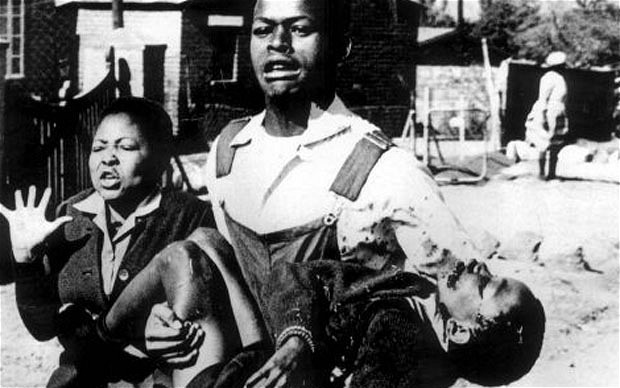
apartheid_sign_1980

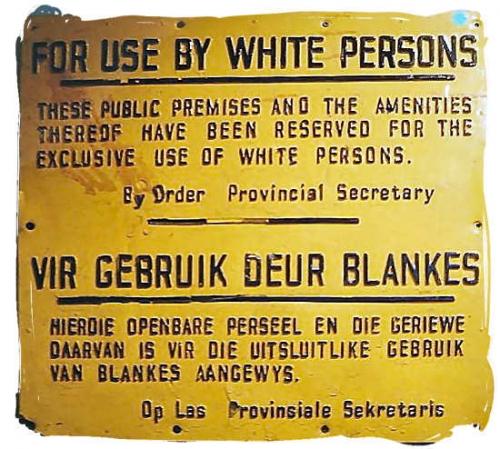
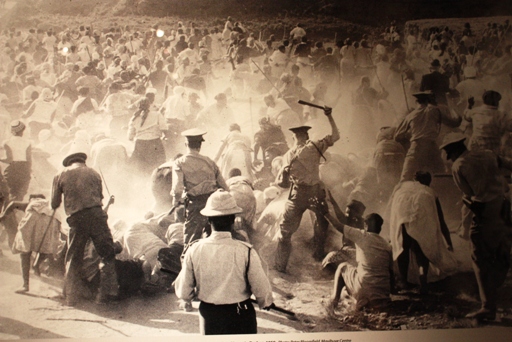
My knowledge of him until his release and later election as the President of South Africa was the product of Cold War anti-Communist propaganda coupled with a distaste for “revolutionaries” in general. However when I began to read his works, understand his life and causes and put them into actual historical context of racism, imperialism and colonialism in Africa I was ashamed of my former views.

PHOTOS Century Collection

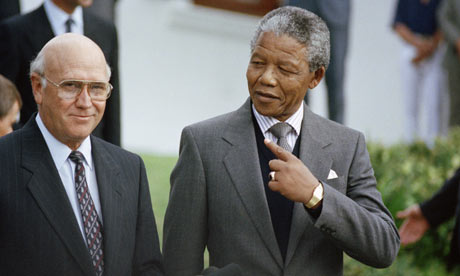
The sad thing was that in the United States I was anti-racism and discrimination and pro equal rights and integration for blacks and other minorities. I was a liberal here in regard to these issues even as I excused the vestiges of colonialism, imperialism and racism in South Africa simply because of the my Cold War “realism.” It is funny how a utilitarian ethic can lead people to positions that are diametrical opposites even in their own life and positions. The irony is that it was the fall of the Berlin Wall and collapse of Soviet Communism that brought the staunchly anti-Communist President F. W. De Klerk to release Mandela from captivity and eventually work with Mandela to end Apartheid.

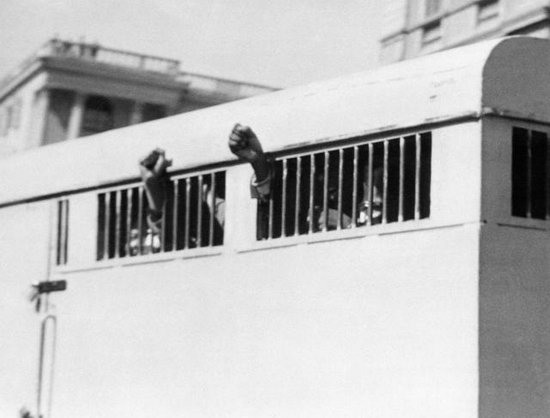
Nelson Mandela - Rivonia Trial - Life in Prison 16-6-1964

When Mandela became President of South Africa I finally began to understand the man who before had been a caricature painted by my supposed “foreign policy realism.” His actions upon his release from prison, his election and his life after leaving office were nothing more than amazing. He was a man of rare personal and pubic integrity, courage, grace and virtue.

apartheid2

Unlike other victorious revolutionaries he did not seek vengeance or seek to settle old scores. His committee on reconciliation was just that. It was not a commission that sought to punish men and women who during the apartheid days persecuted him but all non-whites in South Africa. Mandela understood something that others across the political, racial and religious spectrum fail to understand. He understood that resentment  of the other is a poison. His comment that “Having resentment against someone is like drinking poison and thinking it will kill your enemy”  is among the most rue that an philosopher, politician or preacher has ever uttered.

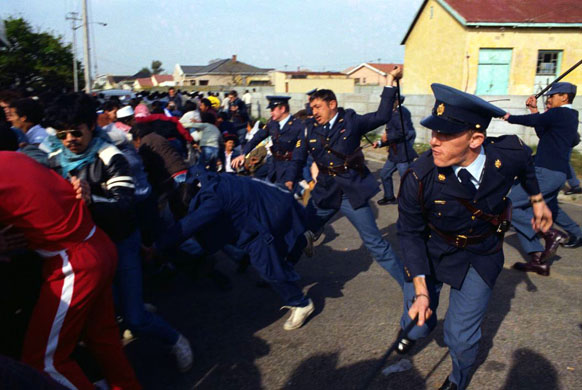
Police Officers Try to Control Protesters

Mandela’s personal leadership in South Africa’s transition from apartheid was perhaps on of his greatest triumphs. It would have been very easy for the country to collapse, for whites to be forced to flee or for civil war between the ANC, various tribal leaders and governments and the South Africa’s white population to tear the country apart and lead to great bloodshed. Instead Mandela modeled reconciliation. He understood something about freedom that many of us never really understand. He wrote: “For to be free is not merely to cast off one’s chains, but to live in a way that respects and enhances the freedom of others.”

Likewise Mandela understood the dynamic human tension that exists between hatred and love. He understood that both were learned behaviors. His words “for to be free is not merely to cast off one’s chains, but to live in a way that respects and enhances the freedom of others,” embody that dynamic. That goes back to Mandela’s many years of imprisonment, years that many in the same situation would become bitter, consumed by hatred and ready to seek revenge, a revenge that he knew would achieve nothing positive. He knew that unless he left hatred and bitterness behind that he would still be in prison, a prison that so many of us, including me at times find ourselves. A prison without physical walls and bars but a prison nonetheless.

He understood that that hatred and bitterness only served to fill a cup of resentment which in his words “resentment is like drinking poison then hoping it will kill your enemies.”

FW-de-Klerk-and-Nelson-Ma-001

He was not unrealistic. He understood that many people saw him as their enemy. He also understood that in a country where great differences existed that such was the case. That being said he understood something that is lacking in much political discourse in our country today. He noted “If you want to make peace with your enemy, you have to work with your enemy. Then he becomes your partner.” That is something that we need to learn again.

Nelson Mandela - South African Flag Face 01

I thank God for Nelson Mandela, his life and works. He was truly a man for the ages. He was a giant. May he rest in peace.

Peace

Padre Steve+

1 Comment

Filed under History, leadership, News and current events