Monthly Archives: February 2015

Religion, Identity and Hate

10570298_10152872503382059_5058681841617456899_n

Friends of Padre Steve’s World

A second short article for the day. I actually have been working on it a few days and finally decided to post it even thug already posted an article earlier today.

Peace

Padre Steve+

Atticus Finch, the hero of  the book and film To Kill a Mockingbird said: 

“Sometimes the Bible in the hand of one man is worse than a whisky bottle in the hand of (another)… There are just some kind of men who – who’re so busy worrying about the next world they’ve never learned to live in this one, and you can look down the street and see the results.”

We like to believe that religion is a benign or positive influence in the world. As much as I want to believe the positive aspects I have to admit based on the historical and sociological evidence that this is not so, especially during unsettled times of great change. We live in such an era and when it comes to identity, God is the ultimate trump card.

If one wonders why the most fanatical individuals and groups on earth are tied to religions, whether it is the Islamic State and Al Qaeda, Boko Haram, Hezbollah, Orthodox Jews, radical Hindus and Buddhists as well as militant Christians. Of course all of these groups have different goals, but their thought and philosophy are quite similar.

Robert Heinlein wrote:

“Almost any sect, cult, or religion will legislate its creed into law if it acquires the political power to do so.”

Heinlein, author of the classic Starship Troopers was absolutely correct. Just look at any place in any time where any religion, sect or cult has gained control of a government. They are not loving, they are not forgiving and they use the police power of the state to persecute any individual or group that is judged to be in error, or even worse has the gall to question their authority.

Since the Christian groups tend to thrive in the West, they only speak in terms of violence, most, with the exception of Russian Orthodox Christians, do not have a government to translation of those words into action. Many, especially conservative Catholics and some Evangelical and Charismatic Protestants seem for a long for the day when they can assume control of a theocratic government.

Samuel Huntington wrote in his book The Clash of Civilizations:

“People do not live by reason alone. They cannot calculate and act rationally in pursuit of their self-interest until they define their self. Interest politics presupposes identity. In times of rapid social change established identities dissolve, the self must be redefined, and new identities created. For people facing the need to determine Who am I? Where do I belong? Religion provides compelling answers….In this process people rediscover or create new historical identities. Whatever universalist goals they may have, religions give people identity by positing a basic distinction between believers and non-believers, between a superior in-group and a different and inferior out-group.”

Huntington was right, you see the true believers, those who follow their religion without question and believe that it is superior to all others also believe that their religion entitles them to be atop the food chain, others who don’t believe like them be damned, if not in this life, the next. That is the certitude of the true believer, especially the religious one. Secular or atheistic fanatics could care less about the next life, for this life is all that they have. But the religious “true believers” are not only interested in destroying someone in this life, but ensuring that in the next that they suffer for eternity, unless they believe in the annihilation of the soul after death, which really spoils the whole Dante’s Inferno perspective of the damned in the afterlife.

Eric Hoffer wrote:

“The impression somehow prevails that the true believer, particularly the religious individual, is a humble person. The truth is the surrendering and humbling of the self breed pride and arrogance. The true believer is apt to see himself as one of the chosen, the salt of the earth, the light of the world, a prince disguised in meekness, who is destined to inherit the earth and the kingdom of heaven too. He who is not of his faith is evil; he who will not listen will perish.”

That is why they, the religious true believers of any faith are capable of such great evil, and why such people can murder innocents in the most brutal manner simply because they do not believe correctly.

Please do not get me wrong. I am a Christian, a priest, a historian and a theologian, but I also know just how insidious those who hold their religion over those of others can be. While I hold faith dear, I know that it can be abused for the claim of some to have God as their final authority is a sort of trump card with which they are able to justify the most obscene and evil acts against others.

One of my heroes of religious liberty is John Leland, a Baptist whose passionate defense of religious freedom prevented Virginia from re-establishing a state church after the American Revolution and whose influence was key in the decision of Madison and Jefferson to amend the Constitution with the Bill of Rights, particularly the First Amendment. In fact, late in life, well after his success in working with Madison and Jefferson Leland wrote:

“The liberty I contend for is more than toleration. The very idea of toleration is despicable; it supposes that some have a pre-eminence above the rest to grant indulgence; whereas all should be equally free, Jews, Turks [Muslims], Pagans and Christians. Test oaths and established creeds should be avoided as the worst of evils.”

Like Leland, I contend for more than tolerance and I contend for acceptance. But that acceptance ends when any person or group is willing to use their religion to enslave, murder, or otherwise dominate other people in the name of their God, not just in this life, but in the next. This is especially true of those who use the police power of the state to enforce their beliefs and hatred on others.  I will do whatever I can to expose them for what they are, irregardless of the “faith” they supposedly represent.

I guess that is why I am even more frightened of religious true believers than non-religious true believers. While the non-religious true believer may sacrifice everything for the sake of power and control in this life, and may in fact commit the most heinous crimes against humanity, their hatred is bounded in space and time to this earth. The religious true believer is not content with that, their enemies must be damned and punished in this life, but for eternity, without hope of salvation.

That is why they are so dangerous for their hatred is unbounded by time, or space, it lasts for eternity.

With that I wish you a good day.

Peace

Padre Steve+


Leave a comment

Filed under christian life, faith, News and current events, philosophy, Religion

Character & Sacrifice: Generals Benjamin O. Davis Sr & Jr.

Benjamin_o_davis

Brigadier General Benjamin O Davis in France 1944

“I have a dream that my four little children will one day live in a nation where they will not be judged by the color of their skin, but by the content of their character.” Dr. Martin Luther King, Jr.

American History would not be the same without the life, work and prophetic ministry of Dr. Martin Luther King Jr. Dr. King was born in a time when most of the country was segregated when “separate by equal” was simply façade to cover the lie that in no way did African Americans have equal rights or privileges in the United States.

Dr King was born less than 60 years after the secession of the Southern states from the Union and the beginning of the American Civil War. Though that blood conflict had freed the slaves it had not freed African Americans from prejudice, violence and discrimination.  When Dr. King began his ministry and was thrust upon the national stage as the strongest voice for equal rights and protections for blacks the discrimination and violence directed towards blacks was a very real and present reality in much of the United States.

However there were cracks beginning to appear in the great wall of segregation in the years preceding Dr. King’s ascent to leadership as the moral voice of the country in the matter of racial equality. In baseball Jackie Robinson became the first African American player in Major League Baseball opening a door for others who would become legends of the game as well as help white America begin its slow acceptance of blacks in sports and the workplace.

Likewise the contributions of a father and son Brigadier General Benjamin O. Davis Sr. and General Benjamin O. Davis Jr. were advancing the cause of blacks in the military which eventually led to the desegregation of the military in 1948.  The impact of these two men cannot be underestimated for they were trailblazers who by their lives, professionalism and character blazed a trail for African Americans in the military as well as society.

Benjamin O. Davis Sr. was a student at Howard University when the USS Maine exploded and sank in Havana Harbor.  He volunteered for service and was commissioned as a temporary 1st Lieutenant in the 8th United States Volunteer Infantry. He was mustered out of service in 1899 but enlisted as a private in the 9th United States Cavalry one of the original Buffalo Soldiers regiments.  He enlisted as the unit clerk of I troop of 3rd Squadron and was promoted to be the squadron Sergeant Major.

Davis was commissioned while the unit was deployed to the Philippines and assigned to the 10th Cavalry.  He was assigned in various positions throughout his career including command, staff and instruction duties including as Professor of Military Science and Tactics in various ROTC programs.  He reached the rank of rank of temporary Lieutenant Colonel and Squadron Commander of 3rd and later 1st Squadron 9th Cavalry from 1917-1920 in the Philippines before reverting to the rank of Captain on his return as part of the post World War I reduction in force.

Davis continued to serve during the inter-war years and assumed command of the 369th Infantry Regiment New York National Guard in 1938. He was promoted to Brigadier General on 25 October 1940 becoming the first African American elevated to that rank in the United States Army and was assigned as Commander 4th Brigade 2nd Cavalry Division. He later served in various staff positions at the War Department and in France and was instrumental in the integration of the U.S. Military. He retired after 50 years service in 1948 in a public ceremony with President Harry S. Truman presiding. He was a member of the American Battle Monuments Commission from 1953-1961 and died in 1970.

davis-3

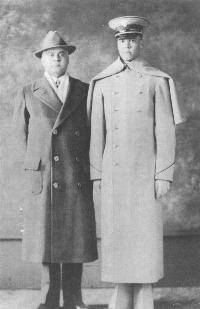
Colonel Davis with his son Cadet Benjamin O Davis Jr.

His son Benjamin O. Davis Jr. was appointed to West Point in 1932.  He graduated and was commissioned in 1936 graduating 35 out of 278, the fourth African American graduate of West Point. During his time at the Academy most of his classmates shunned him and he never had a roommate.  Despite this he maintained a dogged determination to succeed.  The Academy yearbook made this comment about him:

“The courage, tenacity, and intelligence with which he conquered a problem incomparably more difficult than plebe year won for him the sincere admiration of his classmates, and his single-minded determination to continue in his chosen career cannot fail to inspire respect wherever fortune may lead him.”

He was denied entrance to the Army Air Corps because of his race and assigned to the Infantry first to the all lack 24th Infantry Regiment at Ft Benning where he was not allowed in the Officers Club due to his race. Upon his commissioning the Regular Army had just 2 African American Line Officers, 2nd Lieutenant Davis and his father Colonel Davis.

After completion of Infantry School he was assigned as an instructor of Military Science and Tactics and the Tuskegee Institute.  In 1941 the Roosevelt Administration moved to create a black flying unit and Captain Davis was assigned to the first black class at the Tuskegee Army Air Field and in March 1942 one his wings as one of the first 5 African Americans to complete flight training.

In July 1942 he was assigned as Commanding Officer of the 99th Pursuit Squadron which served in North Africa and Sicily flying Curtiss P-40 Warhawks. He was recalled to the United States in September 1943 to command the 332nd Fighter Group. However some senior officers attempted to prevent other black squadrons from serving in combat alleging that the 99th had performed poorly in combat. Davis defended his squadron and General George Marshall ordered an inquiry which showed that the 99th was comparable to white squadrons in combat and during a 2 day period over the Anzio beachhead the pilots of the 99th shot down 12 German aircraft.

davis Library of congress   photo public domain

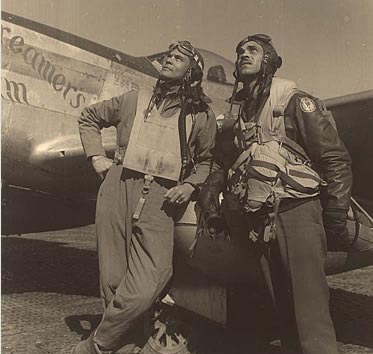
Colonel Benjamin O Davis Jr (left) with one of his Tuskegee Airmen

Davis took the 332nd to Italy where they transitioned to P-47 Thunderbolts and in July 1944 to the P-51 Mustang which were marked with a signature red tail. During the war, the units commanded by Davis flew more than 15,000 sorties, shot down 111 enemy planes, and destroyed or damaged 273 on the ground at a cost of 66 of their own planes.

Tuskegee_01


Their record against the Luftwaffe was outstanding and their protection of the bombers that they escorted was superb with very few bombers lost while escorted by them men that the Luftwaffe nicknamed the Schwarze Vogelmenschen and the Allies the Red-Tailed Angels or simply the Redtails. Davis led his Tuskegee Airmen to glory in the war and their performance in combat helped break the color barrier in the U.S. Military which was ended in 1948 when President Truman signed an executive order to end the segregation of the military. Colonel Davis helped draft the Air Force plan and the Air Force was the first of the services to fully desegregate.

ltgen Benjamindavis

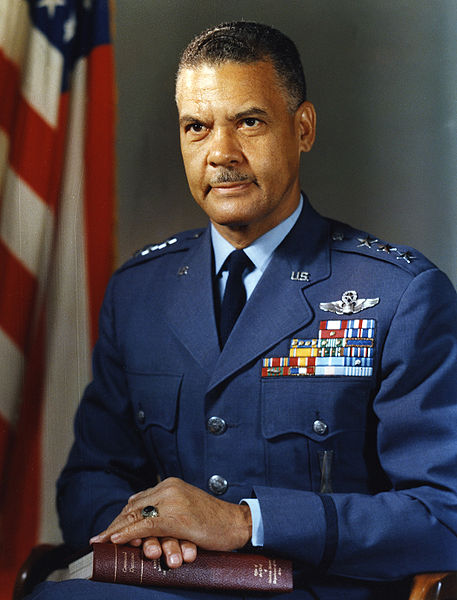
Lieutenant General Benjamin O Davis Jr

Colonel Davis transitioned to jets and let the 51st Fighter Interceptor Wing against Chinese Communist MIGs in the Korean War.  He was promoted to Brigadier General in 1954 and served in numerous command and staff positions. He retired in 1970 with the rank of Lieutenant General and was advanced to General while retired by President Clinton in 1998.  He died in 2002 at the age of 89.

The legacy of Benjamin O. Davis Senior and Benjamin O. Davis Junior is a testament to their character, courage and devotion to the United States of America. They helped pioneer the way for officers such as General Colin Powell and helped change this country for the better.  During times when discrimination was legal they overcame obstacles that would have challenged lesser men.  Benjamin O. Davis Junior remarked:

“My own opinion was that blacks could best overcome racist attitudes through achievements, even though those achievements had to take place within the hateful environment of segregation.”

Such men epitomize the selfless service of so many other African Americans who served the country faithfully and “by the content of their character” triumphed over the evil of racism and helped make the United States a more perfect union.

Peace

Padre Steve+

Leave a comment

Filed under civil rights, History, leadership, Military

Vice Admiral Samuel Gravely Jr. Pioneer of Civil Rights

gravely

Vice Admiral Samuel Gravely Jr.

Vice Admiral Samuel Gravely Jr. is among the great pioneers of civil rights in the U.S. Military. The first African-American ever to be promoted to Flag rank he helped pave the way for so many others. Gravely understood the pressures on him at every stage of his career, He wrote:

“I was sure that I could not afford to fail. I thought that would affect other members of my race if I failed anywhere along the line. I was always conscious of that, particularly in midshipman school and any other schools I went to…I tried to set a record of perfect conduct ashore and at sea.” Vice Admiral Samuel Gravely

gravely_young

Fireman Recruit Samuel Gravely Jr. 

Things have changed much since 1942 when following the attack on Pearl Harbor a young black college student from Richmond Virginia enlisted in the Navy. Samuel Gravely Jr. was the son of a postal worker and Pullman porter while his mother worked as a domestic servant for white families in Richmond. His mother died unexpectedly when he was 15 in 1937 and he remained to help care for his siblings as his father continued to work. Balancing the care of his family with his education he enrolled in Virginia Union College, a Baptist school in Richmond.

It is hard to imagine for most of us now to comprehend the world that the young Gravely grew up in. Segregation was the norm. Blacks in the south and many other locations faced personal as well as entrenched institutional racism. Violence against blacks was quite common and the Ku Klux Klan was strong.

The military was still segregated and a great gulf existed between white military personnel and blacks. Though the selective service law of 1940 called for the conscription of people regardless of race, creed or color the services enjoyed much latitude in determining how minorities could serve. The Secretary of the Navy at the time, Frank Knox resisted integration. Knox determined that African Americans would remain segregated and serve only as Mess Stewards to “prevent undermining and disruptive conditions in the Navy.” Knox told President Roosevelt in the presence of black leaders that “because men live in such intimacy aboard ship that we simply can’t enlist Negroes above the rank of messman. “

That sentiment was strong in both the Navy and the Marines, even more so than in the Army and Army Air Corps. The leaders of both the Navy and Marine Corps resisted attempts to broaden the ability for African Americans to serve and urged that blacks serve in the Army, not the Naval Service.  Marine Corps Commandant Major General Thomas Holcomb agreed with this stance. He commented:

“If we are defeated we must not close our eyes to the fact that once in they [Negroes] will be strengthened in their effort to force themselves into every activity we have. If they are not satisfied to be messmen. they will not be satisfied to go into the constriction or labor battalions. Don’t forger the colleges are turning out a large number of well educated Negroes. I don’t know how long we will be able to keep them out of the V-7 class. I think not very long.”

But Roosevelt was not deterred and by April 1942 changes were announced to allow African Americans to serve in other capacities. Even so African Americans selected for ratings other than messman were to be segregated and commanded by White Officers and Petty Officers.

images-18

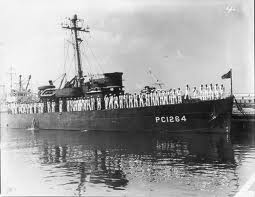
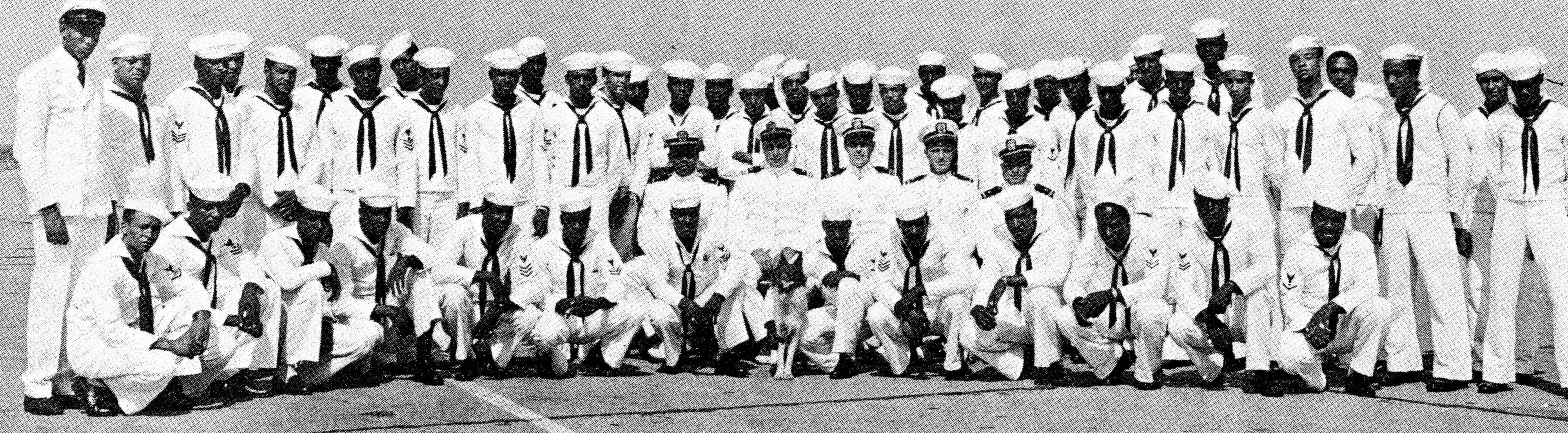
The USS PC-1264 and its crew, Gravely is the lone black officer

USS_PC-1264_officers_and_crew

Gravely enlisted in the Navy under these conditions. Serving as a Fireman Apprentice after receiving training as a Motor Machinist in San Diego he worked in menial jobs. In 1943 Gravely was one of only three sailors in his unit to be selected for the V-12 officer training program. He was the only black to make the cut. He was commissioned as an Ensign on December 14th 1944 and assigned to train black recruits at Great Lakes though the vast majority of his class went to sea. The was mainly due to the policy set forth by the General Board in 1942 that prescribed:

“(a) the white man will not accept the negro in a position of authority over him; (b) the white man considers that he is of a superior race and will not admit the negro as an equal; and (c) the white man refuses to admit the negro to intimate family relationships leading to marriage. These concepts may not be truly democratic, but it is doubtful if the most ardent lovers of democracy will dispute them, particularly in regard to inter-marriage.”

Despite this by 1945 the Navy was beginning to change. Gravely was chosen to serve on one of two ships assigned to the “experiment” of seeing how blacks in general ratings could serve at sea. The USS Mason (DE 539) and the USS PC-1264 were assigned black crews with majority white officers, except that Gravely was assigned to PC-1264. Though his commander was pleased with his service Gravely, who had been denied admittance to Officer Clubs and many other “white only” facilities resigned from the Navy in 1946. He believed that the inherent discrimination of the Navy left him no place for advancement. He returned to complete his bachelors degree at Virginia Union.

In 1949, following President Truman’s integration of the military Gravely was asked by the Navy to return to active duty. But the end of the old order was foreshadowed by a Navy pamphlet published in 1944 entitled The Guide to the Command of Negro Personnel. That publication included the statement that ”The Navy accepts no theories of racial differences in inborn ability, but expects that every man wearing its uniform be trained and used in accordance with his maximum individual capacity determined on the basis of individual performance.”

images-17

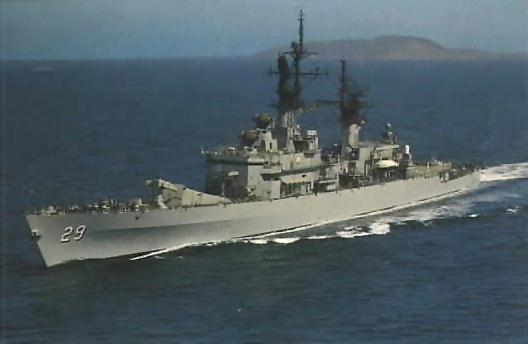
300px-USS_Taussig_(DD-746)_port_side_1965

cg29

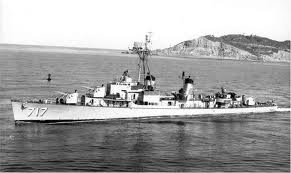
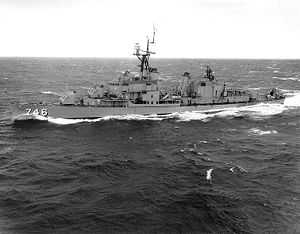
Gravely’s commands (top to bottom) USS Theodore E Chandler, USS Taussig and USS Jouett

Gravely accepted the offer to return to active duty and never looked back. He worked hard for respect and used his natural talents, personality and size to command respect. He was a man who would blaze the way for other African Americans, and later women and most recently gays to go on to greater things.

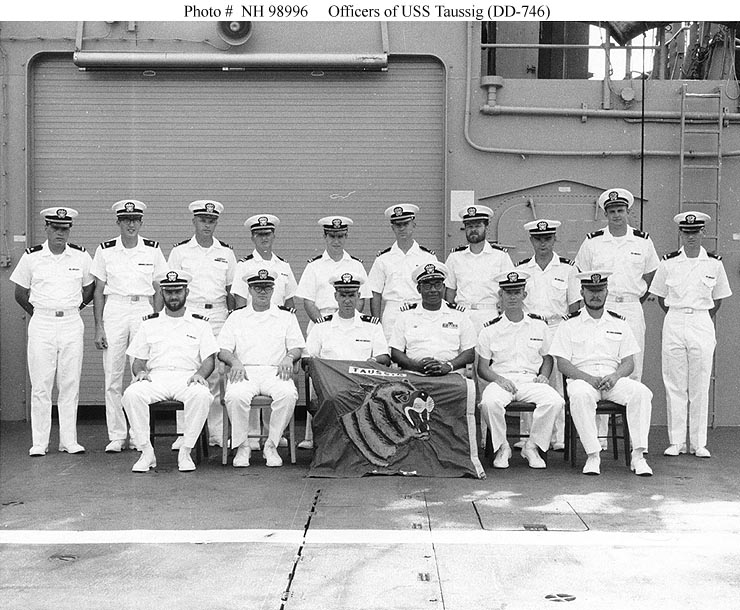
Gravely would go on to command three ships, all surface combatants. He was the first African American Naval Officer to command a Navy warship, the USS Theodore E Chandler (DD 717), the first to command a Navy ship in combat, the USS Taussig (DD 746) and the first to command a major warship, the USS Jouett (CG 29). Promoted to flag rank he eventually became the first to command a Fleet when he took command of 3rd Fleet. He retired in 1980 and passed away in 2004.

h98996

Commander Gravely and his officers on USS Taussig

Gravely gave his parents and conditions of his upbringing much credit for his success. He believed that those conditions which forced him to “capitalize on his strong points, build his weak areas and sustain the positive self-esteem and self-worth that his parents instilled in him as a young child.”

He was a great leader. LCDR Desiree Linson who interviewed him for her Air Command and Staff College project noted that Gravely like many other great military leaders before him learned to manage the image that he presented, be a caretaker for his people, what we would now call a mentor. He said “[If I was CNO] my responsibility would be to make sure enlisted men and families were taken care of. I would do everything in my power to make sure.”

Vice Admiral Gravely’s pursuit of excellence, self confidence and mastery of professional skills empowered him in an institution where he was still an anomaly and where racism still existed. He believed in effective communication, especially verbal communication and in building teams and in being a good follower, listening, learning and proactively anticipating the needs of his superiors. Gravely was also a believer in personal morality and self discipline and preparedness. He said:

“I did everything I could think of to prepare myself. If the opportunity came, I would be prepared for it. [The question would not be] “Why didn’t you prepare for this opportunity.” I would be prepared for whatever opportunity that came. If it came, fine. If it did not, fine, but I would be prepared if it did come.”

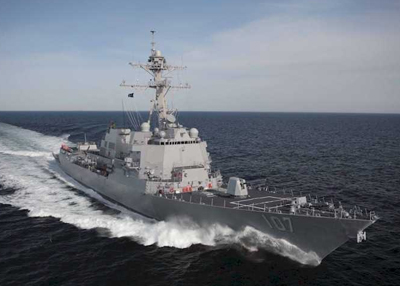
USS_Gravely

The USS Gravely DDG 107

Vice Admiral Gravely blazed a trail for those that followed him and set an example for all Naval Officers to follow. He did it under conditions that most of us could not imagine. I am proud to serve in the Navy that he helped to make.  I happen to work for an African-American Admiral at the Staff College, and I have served under African American commanders throughout every stage of my military career, in the Army and in the Navy. Admiral Gravely’s vision, service and memory are carried on in this navy and in the ship that bears his name, the USS Gravely DDG-107. Today that ship and her crew stand watch in defense of our nation and our friends around the world. It is a fitting tribute to such an amazing leader.

Peace

Padre Steve+

2 Comments

Filed under civil rights, History, Military, US Navy

The Orangeburg Massacre and the Uncertain Memory of Justice Clarence Thomas

Friends of Padre Steve’s World
Today is a good day, a good day to remember the past. This is a slightly edited article that I posted last year about this time. Again it is a reminder of our past, and how some people will do anything to deny that past. The article is about the Orangeburg Massacre of February 8th 1968. Think about it, 1968. It’s not that long ago. It is important that we do not forget history, as George Santayana said “Those who forget history are doomed to repeat it and it doesn’t take much for it to happen again, if not to Blacks, to Hispanics, Arabs, the LGBT community, you name the group. When it happens it will be at the hands of your neighbors, good respectable people, pillars of the community.
Never forget.
Have a great weekend.
Peace
Padre Steve+
Spread the word,
Peace
Padre Steve+

padresteve's avatarThe Inglorius Padre Steve's World

633060317174650000_Smith-Hammond-Middleton-1

Last February, Supreme Court Justice Clarence Thomas lamented the “race consciousness” and “sensitivity” as compared to growing up in Savannah Georgia in the 1960s.

If he were not in a position of nearly unlimited power and influence where he can through a legal opinion overturn established laws regarding voters rights, equal opportunity and discrimination it would be laughable. However, Justice Thomas seems to have missed so much of what was happening to African Americans and others during the Jim Crow Era, the campaigns for resistance in the “segregation forever” movement and the wanton violence used on African Americans who simply wanted the same rights that other Americans enjoyed.

How a man as educated and supposedly aware as Thomas supposedly is can make such an absurd statement is beyond me. In fact it is ludicrous and speaks volumes about how Thomas would willingly cover up the gross injustices that were perpetrated…

View original post 1,089 more words

Leave a comment

Filed under Loose thoughts and musings

They Answered Every Expectation: Black Regiments in the Civil War

Friends of Padre Steve’s World,
It is a very busy weekend as we get our house really for a new Papillon puppy, Izzy, or Izzy Belle who will be the little sister for our three year old Papillon Minnie, or Minnie Scule. Due to that and other things going on I am doing a re-posting of an article taken from one of my Gettysburg text chapters about emancipation and the African-American Regiments and volunteers who served during the Civil War. Since it is Black History Month I thought it appropriate. I will be putting out some more of my articles on the pioneers of the Civil Rights movement, African-American military men and the men of the Negro Leagues who helped bring some measure of of equality to African-Americans who suffered long under Jim Crow, segregation, prejudice, persecution and even were lynched, or burned alive by White Americans.
So anyway, have a great weekend,
Peace
Padre Steve+

padresteve's avatarThe Inglorius Padre Steve's World

41_090_lg

Friends of Padre Steve’s World,

The following is a newly added except to the first chapter of my Gettysburg Text. It is part of the chapter the “First Modern War” which I recently updated on this site. In order not to simply repost a massive article I have only posted the new material.

Peace

Padre Steve+

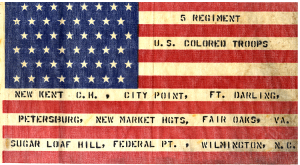
The war brought about another change to warfare in America. This was a societal and political and a political change that has shaped American military history, culture and life ever since. The Emancipation Proclamation gave African Americans, both Freedmen and recently freed slaves the opportunity to serve in the Union Army. The change of policy instituted by Lincoln was revolutionary as well as controversial and it had strategic implications for the war effort. There were many doubters in the north whose attitudes towards African Americans were not much different than Southerners, especially among the…

View original post 5,276 more words

Leave a comment

Filed under Loose thoughts and musings

A Return to “God in the Empty Places”

313_34838767058_2205_n

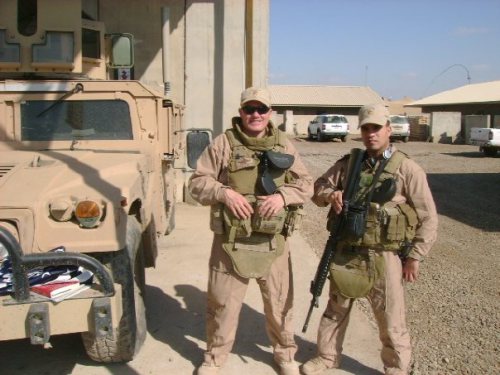
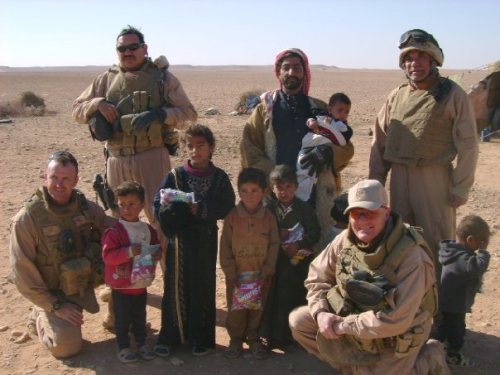
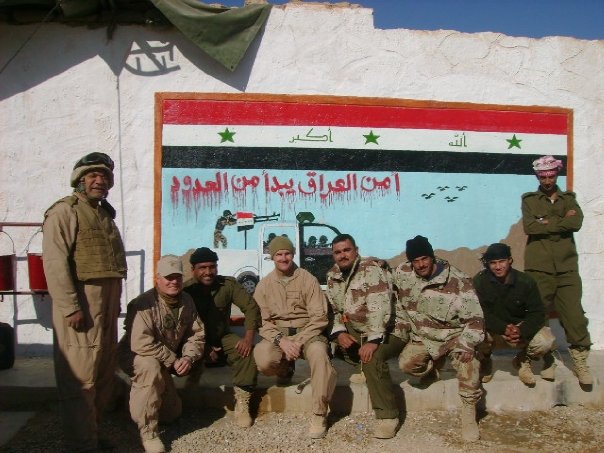
Leaving Iraq, January 31st 2008

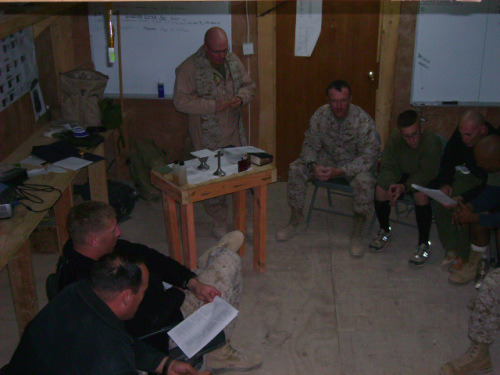
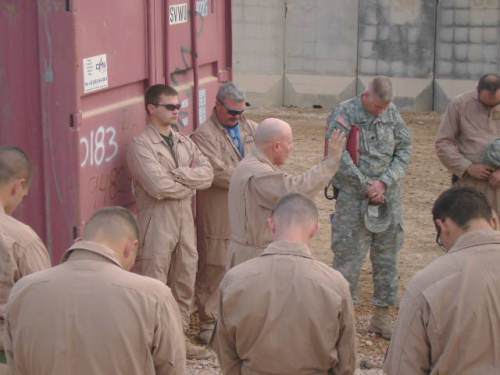
Seven years ago yesterday I arrived home from Iraq. It was the beginning of a new phase in my life.  I wrote an article shortly after my return for the church that I belonged to at the time and I have republished it around this time of year a number of times.

When I wrote it I really had no idea how much I had changed and what had happened to me. When I wrote it I was well on my way to a complete emotional and spiritual collapse due to PTSD.  In some ways things are better, now but it was a very dark time for several years and I still have a lot of bad days.

dien-bien-phu6

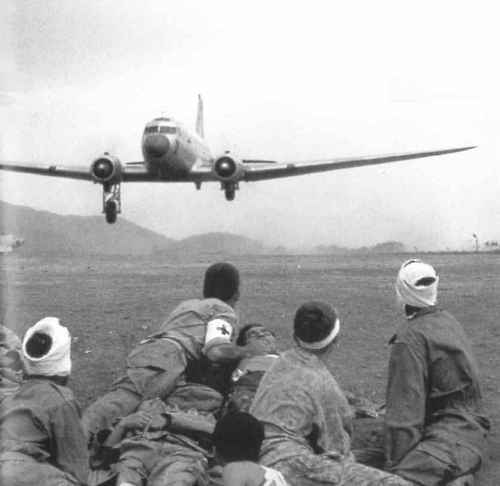
French Wounded awaiting Evacuation from Dien Bien Phu

These wars in Iraq and Afghanistan have been terribly costly in lives, treasure and they have lost almost all sense of public support. I have been in the military almost all of my adult life, over 32 years. I am also a historian and the son of a Vietnam Veteran. Thus, I feel special kinship with those that have fought in unpopular wars before me. French Indochina, Algeria and Vietnam, even the Soviet troops in Afghanistan before we ever went there. 

I am honored to have served with or known veterans of Vietnam, particularly the Marines that served at the Battle of Hue City, who are remembering the 44th anniversary of the beginning of that battle.  My dad also served in Vietnam at a place called An Loc. He didn’t talk about it much and I can understand having seen war myself. 

533506_10151366982462059_34997654_n

Border Fort Five “West Virginia” on Syrian Border

When I look up at the moonlit sky I think about seeing all of those stars and the brilliance of the moon over the western desert of Iraq near Syria. Somehow, when I see that brilliant sight it comforts me instead of frightens me. 

Tonight our Soldiers, Marines, Sailors and Airmen serve in harm’s way nearly 10,000 Americans in Afghanistan alone. We are sort back Iraq but Lord knows how things will turn out in the long run, and it appears that the fight with the Islamic State will be long and costly.  

295_26912092058_3949_n

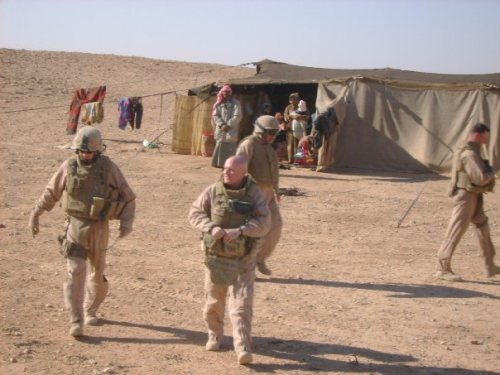
Bedouin Camp

Tonight I am thinking about them, as well as those men who fought in other unpopular wars which their nation’s government’s sent them. 

When I left Iraq I was traumatized. All that I had read about our Vietnam veterans, the French veterans of Indochina and Algeria and the Soviet veterans of Afghanistan resonated in my heart. The words of T. E. Lawrence, Smedley Butler, Erich Maria Remarque and Guy Sager also penetrated the shields I had put around my heart. 

So I wrote, and I wrote, and I still write. But tonight here is God in the empty Places.

262_29132262058_8844_n-2

God in the Empty Places. 

I have been doing a lot of reflecting on ministry and history over the past few months. While both have been part of my life for many years, they have taken on a new dimension after serving in Iraq. I can’t really explain it; I guess I am trying to integrate my theological and academic disciplines with my military, life and faith experience since my return.

481801_10151367001287059_1003164983_n1

British Tombstone: Habbinyah Iraq

The Chaplain ministry is unlike civilian ministry in many ways. As Chaplains we never lose the calling of being priests, and as priests in uniform, we are also professional officers and go where our nations send us to serve our Soldiers, Sailors, Marines and Airmen. There is always a tension, especially when the wars that we are sent to are unpopular at home and seem to drag on without the benefit of a nice clear victory such as VE or VJ Day in World War II or the homecoming after Desert Shield and Desert Storm.

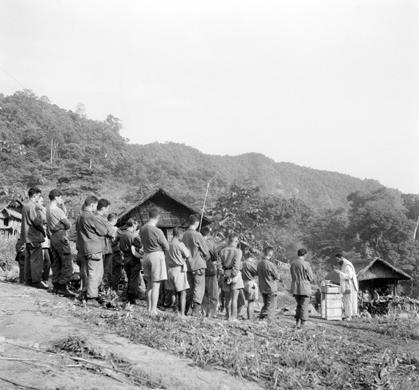
french-chaplain-and-soldiers-2

French Chaplain and Soldiers Indochina

It is my belief that when things go well and we have easy victories that it is easy for us to give the credit to the Lord and equally easy for others to give the credit to superior strategy, weaponry or tactics to the point of denying the possibility that God might have been involved. Such is the case in almost every war and Americans since World War Two have loved the technology of war seeing it as a way to easy and “bloodless” victory. In such an environment ministry can take on an almost “cheer-leading” dimension. It is hard to get around it, because it is a heady experience to be on a winning Army in a popular cause. The challenge here is to keep our ministry of reconciliation in focus, by caring for the least, the lost and the lonely, and in our case, to never forget the victims of war, especially the innocent among the vanquished, as well as our own wounded, killed and their families.

iraqchristmas

Mass at COP South and Blessing a Convoy at Ramadi

377

But there are other wars, many like the current conflict less popular and not easily finished. The task of chaplains in the current war, and similar wars fought by other nations is different. In these wars, sometimes called counter-insurgency operations, guerrilla wars or peace keeping operations, there is no easily discernible victory. These types of wars can drag on and on, sometimes with no end in sight. Since they are fought by volunteers and professionals, much of the population acts as if there is no war since it does often not affect them, while others oppose the war.

Likewise, there are supporters of war who seem more interested in political points of victory for their particular political party than for the welfare of those that are sent to fight the wars. This has been the case in about every war fought by the US since World War II. It is not a new phenomenon. Only the cast members have changed.

legion-algeria1

French Foreign Legion Paratroops Algeria

iraq-2007

Ready for Convoy: Ramadi to Al Asad

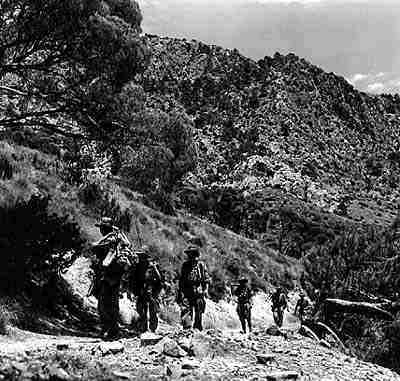
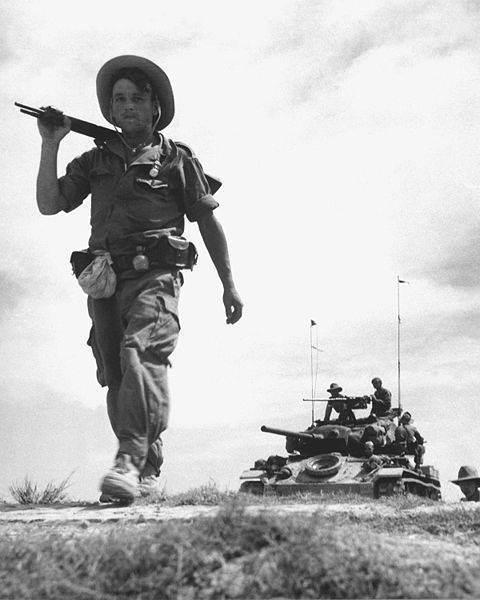
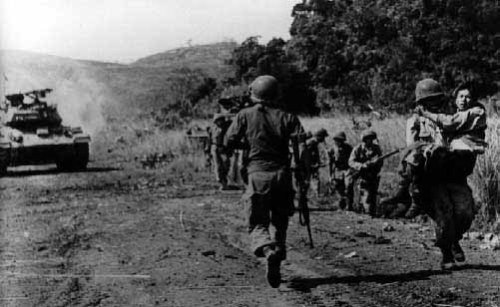
This is not only the case with the United States. I think that we can find parallels in other militaries. I think particularly of the French professional soldiers, the paratroops and Foreign Legion who bore the brunt of the fighting in Indochina, placed in a difficult situation by their government and alienated from their own people. In particular I think of the Chaplains, all Catholic priests save one Protestant, at the Battle of Dien Bien Phu, the epic defeat of the French forces that sealed the end of their rule in Vietnam. The Chaplains there went in with the Legion and Paras. They endured all that their soldiers went through while ministering the Sacraments and helping to alleviate the suffering of the wounded and dying. Their service is mentioned in nearly every account of the battle. During the campaign which lasted 6 months from November 1953 to May 1954 these men observed most of the major feasts from Advent through the first few weeks of Easter with their soldiers in what one author called “Hell in a Very Small Place.”

frenchforeignlegionairevtnamdod-2

French Foreign Legion in Indochina

n671902058_1153794_4301

Convoy: Route Uranium west of Ramadi

Another author describes Easter 1954: “In all Christendom, in Hanoi Cathedral as in the churches of Europe the first hallelujahs were being sung. At Dienbeinphu, where the men went to confession and communion in little groups, Chaplain Trinquant, who was celebrating Mass in a shelter near the hospital, uttered that cry of liturgical joy with a heart steeped in sadness; it was not victory that was approaching but death.” A battalion commander went to another priest and told him “we are heading toward disaster.” (The Battle of Dien Bien Phu, Jules Roy, Carroll and Graf Publishers, New York, 1984 p.239)

bedouin

Of course one can find examples in American military history such as Bataan, Corregidor, and certain battles of the Korean War to understand that our ministry can bear fruit even in tragic defeat. At Khe Sanh in our Vietnam War we almost experienced a defeat on the order of Dien Bien Phu. It was the tenacity of the Marines and tremendous air-support that kept our forces from being overrun.

You probably wonder where I am going with this. I wonder a little bit too. But here is where I think I am going. It is the most difficult of times; especially when units we are with take casualties and our troops’ sacrifice is not fully appreciated by a nation absorbed with its own issues.

legion-indo-china

French Convoy Under Attack Indochina

1931281_53208642058_6303_n

Al Waleed

For the French the events and sacrifices of their soldiers during Easter 1954 was page five news in a nation that was more focused on the coming summer. This is very similar to our circumstances today because it often seems that own people are more concerned about economic considerations and the latest in entertainment news than what is going on in Iraq or Afghanistan.

french-at-dien-bien-phu

Commanders of a Doomed Force: French Commanders at Dien Bien Phu

dinner-w-bg-sabah

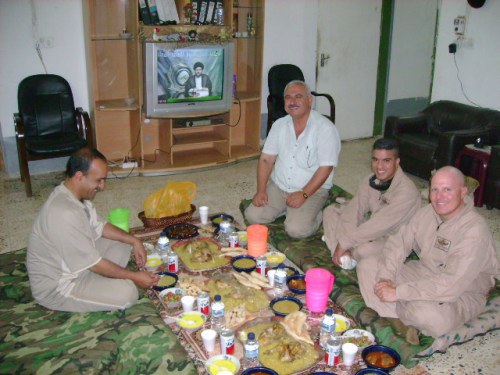
With Brigadier General Sabah, Interpreter and my Assistant Nelson Lebron: Ramadi

The French soldiers in Indochina were professionals and volunteers, much like our own troops today. Their institutional culture and experience of war was not truly appreciated by their own people, or by their government which sent them into a war against an opponent that would sacrifice anything and take as many years as needed to secure their aim, while their own countrymen were unwilling to make the sacrifice and in fact had already given up their cause as lost. Their sacrifice would be lost on their own people and their experience ignored by the United States when we sent major combat formations to Vietnam in the 1960s.

In a way the French professional soldiers of that era, as well as British colonial troops before them have more in common with our current all volunteer force than the citizen soldier heroes of the “Greatest Generation.” Most of them were citizen soldiers who did their service in an epic war and then went home to build a better country as civilians. We are now a professional military and that makes our service a bit different than those who went before us.

943043_10151694525692059_632653331_n

Advisers at COP South

Yet it is in this very world that we minister, a world of volunteers who serve with the highest ideals. We go where we are sent, even when it is unpopular. It is here that we make our mark; it is here that we serve our Soldiers, Sailors, Marines and Airmen. Our duty is to bring God’s grace, mercy and reconciliation to men and women, and their families who may not see it anywhere else. Likewise we are always to be a prophetic voice within the ranks.

When my dad was serving in Vietnam in 1972 I had a Sunday school teacher tell me that he was a “Baby Killer.” It was a Catholic Priest and Navy Chaplain who showed me and my family the love of God when others didn’t. In the current election year anticipate that people from all parts of the political spectrum will offer criticism or support to our troops. Our duty is to be there as priests, not be discouraged in caring for our men and women and their families because most churches, even those supportive of our people really don’t understand the nature of our service or the culture that we represent. We live in a culture where the military professional is in a distinct minority group upholding values of honor, courage, sacrifice and duty which are foreign to most Americans. We are called to that ministry in victory and if it happens someday, defeat. In such circumstances we must always remain faithful.

flight-to-baghdad-4-me

For those interested in the French campaign in Indochina it has much to teach us. Good books on the subject include The Last Valley by Martin Windrow, Hell in a Very Small Place by Bernard Fall; The Battle of Dien Bien Phu by Jules Roy; and The Battle of Dien Bien Phu- The Battle America Forgot by Howard Simpson. For a history of the whole campaign, read Street Without Joy by Bernard Fall. I always find Fall’s work poignant, he served as a member of the French Resistance in the Second World War and soldier later and then became a journalist covering the Nuremberg Trials and both the French and American wars in Vietnam and was killed by what was then known as a “booby-trap” while covering a platoon of U.S. Marines.

Bundeswehr zeigt "Stalingrad"-Ausstellung

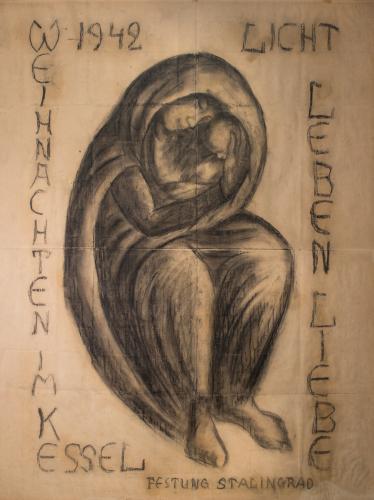
There is a picture that has become quite meaningful to me called the Madonna of Stalingrad. It was drawn by a German chaplain-physician named Kurt Reuber at Stalingrad at Christmas 1942 during that siege. He drew it for the wounded in his field aid station, for most of whom it would be their last Christmas. The priest would die in Soviet captivity and the picture was given to one of the last officers to be evacuated from the doomed garrison. It was drawn on the back of a Soviet map and now hangs in the Kaiser Wilhelm Memorial Church in Berlin where it is displayed with the Cross of Nails from Coventry Cathedral as a symbol of reconciliation. I have had it with me since before I went to Iraq. The words around it say: “Christmas in the Cauldron 1942, Fortress Stalingrad, Light, Life, Love.” I am always touched by it, and it is symbolic of God’s care even in the midst of the worst of war’s suffering and tragedy. I have kept a a copy hanging over my desk in my office since late 2008. It still hangs in my new office.

Peace

Padre Steve+


Leave a comment

Filed under christian life, faith, History, iraq,afghanistan, middle east, Military, shipmates and veterans, Tour in Iraq

“Our Army Would Be Invincible If…” Pt.5 Stuart’s Cavalry

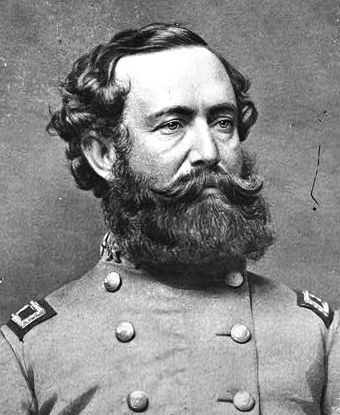
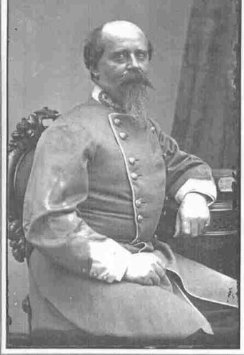
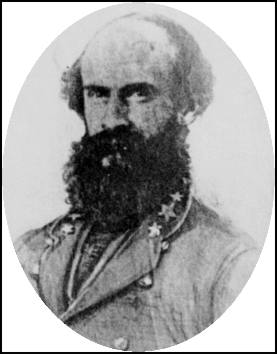
This is the fourth part of my re-written chapter on the leadership of Army of Northern Virginia at Gettysburg. Today is a look at the leaders of Major General J.E.B Stuart as well as three other generals, Brigadier General John Imboden who commanded an independent cavalry brigade, Lee’s Chief of Artillery, Brigadier General William Pendleton, and Major General Isaac Trimble. This like the previous sections of this chapter of my Gettysburg text is interesting because it shows the complexities of the lives and personalities of the men leading these units. Professional soldiers, volunteers with little military experience, soldiers, lawyers, engineers and politicians they are an interesting collection of personalities; some surrounded in myth and others practically unknown. I think it is important for anyone studying a war, a campaign, or a battle to at least look at the lives of the men who planned and fought it. In doing so, even those that oppose what they did in rebelling against the United States can find in them some measure of humanity, and sometimes even gain a sense of empathy for some of them.   

That is why when we look at the lives of soldiers, we have to take the time to at least try to understand the nuance, the contradictions, their strengths and weaknesses as leaders, as well as a measure of their character.

As I get ready to take another group of students to Gettysburg I will be doing more work on my text, editing previously written chapters and writing a chapter similar on the leaders of the Army of the Potomac.

Have a great night

Peace

Padre Steve+

Stuart’s Cavalry Division
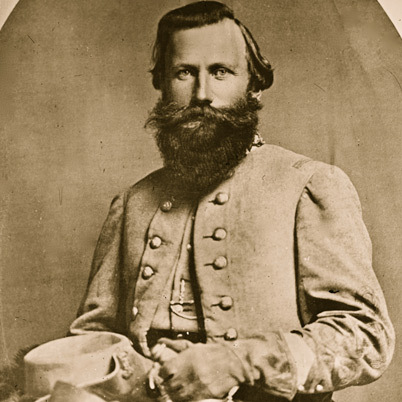
CWP015

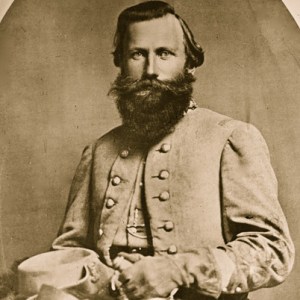
Major General J.E.B. Stuart C.S.A.

The Cavalry Division was commanded by Major General J.E.B. Stuart. While it was considered a division, Stuart’s command was the size of a Union Army Corps with over 10,000 troopers assigned. Despite its large size at Gettysburg the Division was split by agreement of Lee and Stuart. Stuart who had five brigades at his immediate disposal would take three of them, Hampton’s, Rooney Lee’s and Fitz Lee’s on an ill-fated mission which would leave him and them out of the fight during the most important part of the movement to and first two days of battle. His raid causes him “to be absent on the day of all days when he could reconnoiter the Federal position.” [1] Two, Robertson and Grumble Jones’s would remain guarding passes along the Blue Ridge long after that mission had any relevance. Imboden’s would be far to the west and Jenkin’s ere with Ewell’s vanguard in the advance north.

Major General James Ewell Brown Stuart was the son of a former congressman whose family went back five generations in Virginia. He graduated thirteenth in a class of forty-six at West Point in 1854. Classmates included Dorsey Pender and Oliver O. Howard. A fellow cadet who would serve under Stuart during the war, Fitzhugh Lee wrote:

“His distinguishing characteristics were a strict attention to his military duties, an erect, soldierly bearing, an immediate and almost thankful acceptance of a challenge from any cadet to fight, who might in any way feel himself aggrieved, and a clear, metallic, ringing voice.” [2]

At West Point Stuart was noted for his “lifelong religious devoutness. When he was at West Point he was known as a “Bible Class Man.” [3] Stuart was commissioned as a Second Lieutenant and assigned to the Mounted Rifles, which Stuart noted was “a corps which my taste, fondness for riding, and my desire to serve my country in some acceptable manner led me to select above all the rest.” [4] Stuart would serve with the Mounted Rifles for about a year before being selected to serve in one of the first Cavalry regiments formed, the First Cavalry at Jefferson Barracks Missouri.

In the pre-war years the young officer developed a solid reputation in the army where he served on the frontier and in “Bleeding Kansas.” In those years Stuart “was already a young officer of great promise, a natural horseman with a reputation for dash and bravery gained in countless clashes with Indians throughout the West, and for steady competence in the pro- and antislavery warfare of Kansas.” [5]

In 1859 Stuart was on leave visiting Washington D.C. and staying with the Lee’s at Arlington. He was visiting the War Department when news came of John Brown’s raid at Harper’s Ferry. He was given a letter to take to Lee which ordered Lee to take command of troops to suppress the rebellion. Stuart accompanied Lee on the mission and was send by Lee to present terms of surrender to the raiders, who at the time were still nameless to the Federal authorities. Stuart entered the building and was confronted by Brown who he had previously met in Kansas. After some fruitless negotiation, Stuart realized that Brown was not about to surrender. At some time Stuart broke away and motioned for the Marines to move in. “Three minutes after Stuart had given his signal, the affair was over.” [6]

Stuart resigned his commission when Virginia seceded from the Union in April 1861, while his father-in-law, Colonel Philip St. George Cooke remained in Union service. He commanded the 1st Virginia Cavalry in the Valley and at First Manassas and was promoted to Brigadier General in September 1861. The following month he was given command of the army’s cavalry brigade and distinguished himself in the eyes of both General Joseph Johnston and Robert E. Lee. Johnston wrote to President Jefferson Davis praising the young brigadier “He is a rare man…wonderfully endowed by nature with the qualities necessary for an officer of light cavalry….If you add to this army a real brigade of cavalry, you can find no better brigadier-general to command it.” [7]

Lee came to share that opinion and over the course of his service Stuart had come to:

“demonstrate a real talent for the most mundane and most essential role cavalry played in this war – reconnaissance and intelligence gathering. No intelligence source surpassed his eye for seeing and evaluating a military landscape or an enemy’s strengths and dispositions.” [8]

This would be something that Lee came to rely and which he would dearly miss at Gettysburg.

Despite his excellence in this “most mundane” task Stuart developed a flair and passion for the spectacular, which was first demonstrated during the Seven Days, where he took his cavalry on a circuit of McClellan’s army which not only gathered a significant amount of intelligence also unnerved the Army of the Potomac. His raid was “flawlessly executed….” And Stuart “became a hero to his troopers and one of the idols of the public.” [9] Lee wrote that Stuart’s operation “was executed with great address and daring by accomplished officer.” [10] The raid did have its detractors, especially among the infantry and it also revealed something to Stuart that appealed to his own vanity, “that raiding would easily garner headlines in the Richmond papers.” [11]

Stuart Lee’s staff secretary, Colonel Robert Taylor noted that Stuart was “possessing of great powers of endurance, courageous to an exalted degree, of sanguine temperament, prompt to act, always ready for fight – he was the ideal cavalryman.” [12] Stuart also kept a lively headquarters. Taylor remarked “How genial he was! There was no room for “the blues” around his headquarters; the hesitating and desponding found no congenial atmosphere at his camp; good will, jollity, and even hilarity, reigned there.” [13]

Stuart always had his African-American banjo player with him and frequently sang around camp and on campaign. That was not always appreciated by some other officers. Wade Hampton, who in time became Stuart’s right-hand man was not impressed with the atmosphere at Stuart’s headquarters and “was not certain that he could flourish, or even survive, among such people….” [14] Lafayette McLaws wrote home complaining not only about Stuart but others:

“Stuart carries around with him a banjo player and special correspondent. This claptrap is noticed and lauded as a peculiarity of genius, when, in fact, it is nothing more but the act of a buffoon to get attention.” [15]

But Stuart was always aware of his own mortality and there was a serious side to him, often expressed in his faith, which impressed those around him. His West Point classmate and friend, Oliver O. Howard wrote:

“J.E.B. Stuart was cut out for a cavalry leader. In perfect health, but thirty-two years of age, full of vigor and enterprise, with the usual ideas imbibed in Virginia concerning State Supremacy, Christian thought and temperate by habit, no man could ride faster, endure more hardships, make a livelier charge, or be more hearty and cheerful while so engaged. A touch of vanity, which invited the smiles and applause of the fair maidens of Virginia, but added to the zest and ardor of Stuart’s parades and achievements.” [16]

At Chancellorsville Stuart assumed acting command of Jackson’s Second Corps which he led well during the battle, even impressing the infantry, who had long derided Stuart and his cavalry. Leading by example “seemed on fire.” Stuart sang as he led the Stonewall Brigade into action and “the troops joined him, singing while they loaded and fired.” One officer stated “Jeb impressed himself on the infantry.” [17]

Some believed that Stuart should have been appointed to command Second Corps after Jackson’s death, but evidently Lee valued Stuart’s role as a cavalry commander more and despite his accomplishments refused to proffer the command to Stuart. Colonel Rosser told Stuart, who was grieving the loss of his friend Jackson “On his death bed Jackson said that you should succeed him, and command his corps.” Stuart responded “I would rather know that Jackson said that, than to have the appointment.” [18] One wonders what might have occurred during the Gettysburg campaign if Stuart had commanded Second Corps and left the cavalry to someone like the accomplished and level headed Wade Hampton.

Stuart was mortally wounded less than a year after Gettysburg at the Battle of Yellow Tavern, upon his death Hampton was promoted to command what was left of the Cavalry Corps.

Hampton
Hampton_inline

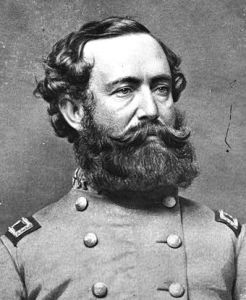
Brigadier General Wade Hampton C.S.A. 

Brigadier General Wade Hampton is one of the fascinating and complex characters in either army who served at Gettysburg. He defies a one dimensional treatment or stereotype. His complexities, contradictions and character make him one of the most interesting men that I have written about during my study of this battle.

Wade Hampton III was one of the richest, if not the richest man in the Confederacy when the war broke out. He had inherited his family’s expansive plantation and many slaves and studied law at the College of South Carolina. As a slave owner he expressed an aversion for the institution, ensured that his slaves were well cared for by the standards of his day, including medical care, he never condemned slavery or worked for the abolition of a system that had made him and his family quite prosperous. He served in the South Carolina legislature and Senate, where he took an “active and prominent role in the public debate on many issues. He was vocal not only on the perils of reopening the African slave trade but also on whether and how his state should seek redress of wrongs, real and imagined, by the federal government.” [19]

As a state senator Hampton was pragmatic, and while he defended the South’s economic interests in slavery, Hampton cautioned against the rhetoric of secessionist fire-breathers. His argument was about “the preservation of the South’s political power and her social and economic institutions, now threatened by the short sighted policies of otherwise good and decent men.” [20] He did not wish to do anything that would lead to the destruction of the South, and he felt that the “only viable course was moderation, conciliation, compromise….” [21]

Hampton was a classic rich “Southern moderate He had opposed secession, and the fire eaters repulsed him.” [22] However, when Lincoln called for volunteers Hampton volunteered to serve in a war that he did not want, which would cost him dearly, and change him from a moderate to a vociferous opponent of most Reconstructionist policies.

Volunteering at the age of forty-three, Hampton had no prior military training. However, he had great organizational skill, leadership ability and a tremendous care and compassion for those who served under his command. Using his own money Hampton organized what would now be called a combined arms unit, the Hampton Legion, which comprised eight companies of infantry, four of cavalry and a battery of light artillery. He was careful in the appointment of the Legion’s officers choosing the best he could find.

Hampton rapidly rose to prominence as a respected officer and commander despite his lack of military training or experience. His soldiers fought well and took over command of an infantry brigade on the Peninsula, and was promoted to Brigadier General in May of 1862 and given command of a cavalry brigade serving under J.E.B. Stuart in July and he “became Stuart’s finest subordinate.” [23] As a brigade, and later division commander, Hampton had “little fondness or respect for Stuart. He regularly criticized Stuart for pampering the Virginia regiments and assigning his South Carolinians to the more arduous tasks.” [24]

During the war he was wounded several times, including at             Gettysburg where he took two sabre cuts to the head. Eventually he took command of the Cavalry Corps after Stuart was killed in action. He fought in nearly every cavalry engagement under Stuart and led his own raids deep into Union territory. He fought well, but “hated the war. In October 1862 he wrote home: “My heart has grown sick of the war, & I long for peace.” [25] Hampton was “one of only three civilians to attain the rank of Lieutenant General in Confederate service.” [26]At Petersburg his son Preston was mortally wounded and died in his arms even as his other son Wade IV was wounded when coming to Preston’s aid. Douglass South Freeman wrote of Hampton:

“Untrained in arms and abhorring war, the South Carolina planter had proved himself the peer of any professional soldier commanding within the same bounds and opportunities. He may not have possessed military genius, but he had the nearest approach to it.” [27]

The war that he opposed cost him the life of his brother, one of his sons and his livelihood. “His property destroyed, many of his slaves gone, and deep in debt from which he would never recover, Hampton faced the future with $1.75 in his pocket.” [28] The war changed the former moderate into a man who sought vindication in some ways, but reconciliation with the black population.

Hampton again entered politics and became the first post-Reconstruction Governor of South Carolina when President Rutherford Hayes withdrew the Federal troops which had supported the Reconstructionist governor. During his campaign and during his terms as Governor, Hampton “opposed the South’s imposition of so-called “black codes” which so restricted the freedom of former slaves as virtually to return them to civility.” [29] Unlike many in the post-reconstruction South Hampton won the thanks of African Americans for condemning whites that would vote for him if they thought that he would “stand between him and the law, or grant him any privileges or immunities that shall not be granted to the colored man.” [30]

Hampton came to dominate South Carolina politics for fifteen years, after two terms as Governor he served as a U.S. Senator until 1891 when a political enemy won the governorship and forced him from the Senate. When he died on April 11th 1902 his final words were “God bless my people, black and white.” [31]

Like so many leaders of so many tumultuous eras, Hampton was complex and cannot be easily classified. He was certainly not perfect, but in war and in peace gave of himself to his state and community.

Rooney Lee
rooney

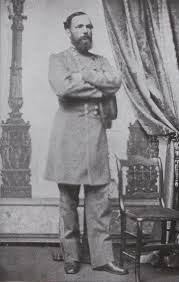
Brigadier General William Fitzhugh “Rooney” Lee C.S.A.

Brigadier General William Fitzhugh Lee, who went by his nickname “Rooney” to distinguish himself from his cousin Fitzhugh Lee, was the second son of Robert E. Lee. He was educated at Harvard and received a direct commission into the Army in 1857, which he resigned in 1859 to manage the White House planation which had been left to him by his grandfather. When war came Lee volunteered for service and was named Colonel of the 9th Virginia Cavalry earning the trust and respect of Stuart and the quiet admiration of his father.

Rooney Lee was promoted to Brigadier General in September 1862 and was wounded at the Battle of Brandy Station as the Gettysburg campaign began and while convalescing was captured by Union forces. He was replaced by Colonel John R. Chambliss, an 1853 graduate of West Point who had left the army after a short amount of active service prior to the war. He was viewed as a competent cavalry tactician and “there was no perceptible anxiety when “Rooney” Lee’s brigade came under Chambliss’ command.” [32]

He was paroled and exchanged in March of 1864. He was promoted to Major General in April 1864 and served until his surrender with the army at Appomattox. After the war he would return to farming and serve in the Virginia legislature and as a Congressman.

Robertson
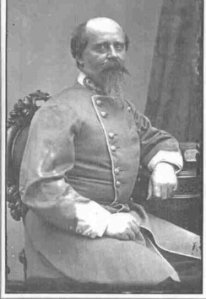
4198ECu5QML._SY355_

Brigadier General Beverly Roberson C.S.A.

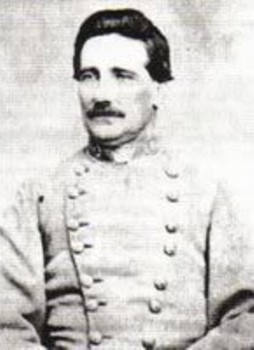
Brigadier General Beverly Roberson was a native Virginian who graduated from West Point in 1849. Most of his service was spent on the frontier with the Second Dragoons where for part of his service he served under command of J.E.B. Stuart’s father-in-law Colonel Philip St. George Cooke who “commended him repeatedly in dispatches.” [33]

Robertson was a veteran of much Indian service and “in person the embodiment of the fashionable French cavalry officer of the time.” [34] Robertson was dismissed from the U.S. Army in August 1861 when it was discovered that he had accepted an appointment in the Confederate army in April 1861.

Robertson’s Confederate service was less than distinguished. He never meshed with Jackson when he commanded Jackson’s cavalry, and Stuart was less than impressed when Robertson’s brigade was assigned to his command. During the Second Manassas campaign Stuart observed Robertson’s less than stellar performance, and his centrality to “so many cavalry quarrels” convinced Stuart that the old regular army veteran and West Pointer “must go. Within a month Robertson was transferred. He would finally go, as one of Stuart’s staff noted, “much to the joy of all concerned.” [35]

Robertson and his brigade were transferred to North Carolina, but returned to the Army of Northern Virginia to participate in the Gettysburg campaign. It was far too easy for Lee to obtain. D.H. Hill commanding in North Carolina “characterized Robertson’s command as “wonderfully inefficient,” [36] and Robertson would prove that again in the coming campaign where he would fail “miserably in his primary duty.” [37] After Gettysburg Robertson was relieved and reassigned to the Department of South Carolina where he served with little distinction until the end of the war.

Fitzhugh Lee

220px-Fitzhugh_Lee_General

Brigadier General Fitzhugh Lee C.S.A.

Brigadier General Fitzhugh Lee was a nephew of both Robert E. Lee and Confederate Adjutant General Samuel Cooper. He “graduated forty-fifth in a class of forty-nine at West Point in 1856.” [38] He was wounded on the frontier and was an instructor at West Point when Virginia seceded. He resigned his commission and was appointed as a Captain. Through his friendship with Stuart he was promoted to Colonel and given command of the First Virginia Cavalry after Grumble Jones was reassigned to the 7th Virginia. He and Stuart “shared a frolicsome nature and hearty laughter, but Lee’s abilities as a horse soldier were limited.” [39]

Wade Hampton held Lee in low regard, and Hampton believed that that Lee was representative of the “most objectionable qualities of the Virginia aristocrat – vanity, ostentation, pomposity, and condensation.” [40] Despite a condition which includes arthritis which hampers him he “fights hard and learns much of the art of command.” [41] He serves until the end of the war, finally surrendering his command in North Carolina.

After the war Fitz Lee enters politics, is elected governor of Virginia and following his defeat in attempting to become U.S. Senator was appointed as counsel-general in Havana by President Grover Cleveland. When the United States went to war with Spain, Lee was appointed as a Major General of Volunteers and serves honorably. Wade Hampton, whose regard for Lee did not increase during the war told his son Albert, who had volunteered to serve on Lee’s staff “Under no circumstances would he have a sin of his ever serve under “such an imperious blowhard as Robert E. Lee’s nephew continued to be.” [42] Lee was retired from the United States Army in 1901 with the rank of Brigadier General and died in Washington D.C. on April 28th 1905.

“Grumble” Jones
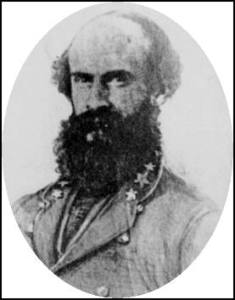
William_Edmondson_Jones

Brigadier General William “Grumble” Jones C.S.A.

Another of the old army cavalrymen to serve under Stuart was Brigadier General William “Grumble” Jones. Jones was an 1848 graduate of West Point and served on the frontier. In 1852 he and his new bride were in a shipwreck, and she was swept out of his arms and drowned. “Jones never recovered in spirit. Embittered, complaining, suspicious he resigned from the army” [43] in 1857 and returned to Virginia.

Jones raised a company at the beginning of the war, and served under Stuart at First Manassas, and from the beginning took a dislike to his young superior. He grumbled to his men that he “would take no orders from that young whippersnapper.” [44] When Stuart was promoted he was made Colonel of the 1st Virginia Cavalry. The assignment did not go well for him. His loathing for Stuart grew and one officer wrote that it “ripened afterwards into as genuine hatred as I ever remembered to have seen.” [45] His hatred of Stuart expanded into a hatred for his Lieutenant Colonel, Fitzhugh Lee, who was a close friend of Stuart. Jones was unpopular with the regiment and Lee much admired and the situation became so bad that Jones was reassigned to command the 7th Virginia Cavalry. Jones performed well in this duty, well enough to warrant promotion and he was promoted to Brigadier General in September 1862. The promotion allowed Lee to send Jones to serve in the Shenandoah Valley away from Stuart since their relationship was so toxic and Jones’s hatred of Stuart “bordered on pathological.” [46]

The need for cavalry for the upcoming invasion of Pennsylvania forced Lee to bring Jones and his command back to the Army of Northern Virginia. Stuart expressed his misgiving to Lee but was given no choice in the matter. Since Jones “had the biggest brigade in the division and had the reputation of being the “best outpost officer” [47] Stuart solved his problem by leaving Jones with Robertson to guard the passes of the Blue Ridge.

After Gettysburg Jones clashed again with Stuart over not being recommend for promotion when the division became a corps. The affair was so explosive and Jones reportedly “cursed him venomously” [48] an offense so great that Stuart had him arrested and court-martialed. The court found him guilty, and although Lee had great respect for Jones’s abilities as a brigade commander he wrote to Jefferson Davis:

“I consider General Jones a brave and intelligent officer, but his feelings have become so opposed to General Stuart that I have lost all hope of his being useful in the cavalry here… He has been tried by court-martial for disrespect and the proceedings are now in Richmond. I understand he says he will no longer serve under Stuart and I do not think it advantageous for him to do so.” [49]

Jones was assigned to command in Southwestern Virginia where “organized a cavalry brigade and rendered excellent service.” [50] In June of 1864, his understrength command was defeated and he was killed at the Battle of Piedmont. Douglas Southall Freeman called his death “a tragic end to a tragic life.” [51]

Jenkins

220px-AGJenkins

General Albert G. Jenkins C.S.A.

General Albert G. Jenkins was another anomaly in the Army of Northern Virginia. He was a native of the far western county of Virginia, Cabell County which was one of the six counties to secede from Virginia after Virginia seceded from the Union. He had no previous military training and like many of the Confederate volunteer officers was a lawyer and politician before the war. At the outset of the war he raised a company of volunteer cavalry from that area, which grew to become the 8th Virginia Cavalry.

Jenkins was promoted to Brigadier General and he and three regiments of his brigade were requisitioned by Lee for the invasion of Pennsylvania. The brigade was badly needed but the troops “had not been well schooled in cavalry tactics or in hard fighting at close quarters. Some had the complex of home guards, and some preferred the life of a guerilla to that of a trooper, but many were good raw material” [52] who Lee hoped could be wielded into a good cavalry force.

Jenkins was wounded on July 2nd in an action east of Gettysburg and his brigade was commanded by a subordinate during the final cavalry clash on July 3rd 1863. Jenkins and his brigade returned to the Valley where he was mortally wounded at the Battle of Cloyd’s Mountain in May of 1864.

Attached or Staff Officers: Imboden, Pendleton and Trimble

Imboden
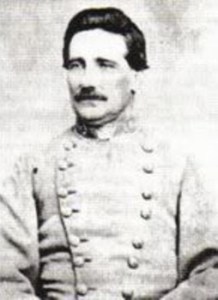
25159e61f0fec416be740c018cae4772

Brigadier General John Imboden C.S.A.

Brigadier General John Imboden commanded a cavalry brigade which operated independently of Stuart’s division during the campaign. Imboden had no prior military experience before the war. He was a graduate of Washington College and a lawyer in Staunton Virginia. He raised a volunteer battery of light artillery, occupied “Harpers Ferry less than thirty hours after Virginia’s secession from the Union.” [53]

Imboden fought at Manassas where he and his battery gave a respectable performance. After Manassas Imboden raised another unit, “the 1st Virginia Partisan Rangers (later called the 62nd Virginia Mounted Infantry)” [54] and operated primarily in the valley and western Virginia. His command expanded in size and he was promoted to Brigadier General in January 1862.

His command during the Gettysburg campaign included the 18th Virginia Cavalry, the previously mentioned 62nd Virginia Mounted Infantry, a battery of artillery and several other partisan units. Imboden and his unit had been on “irregular, detached duty, and many of his men had recently been recruited, some from the infantry service.[55] Imboden’s “brigade” was “more an assortment of armed riders even more unruly and untrained than Jenkins’ and possessing a well-developed proclivity to rob civilians, especially of their horses.” [56] However, they were useful for foraging and guarding supply bases and wagon trains during the march north. It was of dubious value in fighting “pitched battles with veteran enemy cavalry” [57] and would not be used in that capacity. Lee and Stuart did understand the limitations of such irregular formations.

During the march north Imboden’s command slipped away and when found was discovered to be “resting idly at Hancock Maryland, more than fifty miles from Chambersburg When this became known it was to provoke the wrath of Lee as did few events of the war.” [58] Imboden and his brigade served well during the army’s withdraw from Gettysburg, protecting the wounded and the trains. Overall Imboden was not well respected by Lee, Stuart or Early who he later served under and the brigade was not an effective fighting force. As such Lee sent it back to the Valley after Gettysburg.

Pendleton
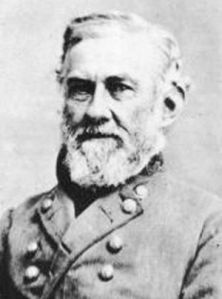
1477804_651224374900088_489425430_n

Brigadier General William Pendleton C.S.A. 

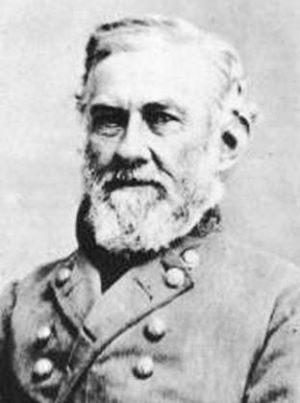
Brigadier General William Pendleton graduated fifth in his class at west Point in 1830, in the class behind Robert E. Lee and was commissioned as an artillery officer. He spent little time on active service and spent most of his active duty in hospitals battling the effects of “fever, nausea, and paralyzed limbs from an illness that may have been yellow fever.” [59] He resigned his commission in 1833, became a teacher and then entered the ministry as an Episcopal Priest. He pastored Grace Episcopal Church in Lexington where after John Brown’s raid he was asked to assist and train some men who had formed a battery of artillery. When war came he was elected Captain of the battery and served at First Manassas. Joseph Johnston appointed Pendleton as Chief of Artillery as he does have a certain amount of organizational skill, and “Johnston appointed him to the post more for his administrative ability, not for his tactical control of cannon on the battlefield.” [60]

When Lee took command he kept Pendleton in the position, in large part due to their friendship and spiritual connection as Episcopalians. As an artillery commander Pendleton showed his limitations during the Malvern Hill, Antietam and Chancellorsville, all of which harmed Confederate efforts on the battlefield. A junior officer remarked: “Pendleton is Lee’s weakness…. He is like the elephant, we have him and we don’t know what on earth to do with him, and it costs a devil of a sight to feed him.” [61]

His miserable performance “makes the younger men of the artillery wonder if he has the basic qualities of command.” [62]As such Lee removed him from command and returned him to his staff position and his “impatient subordinates hoped that would sever him from any combat role.” [63] At Gettysburg, Pendleton’s interference in moving the artillery trains to the rear and repositioning batteries without informing Porter Alexander, would again prove harmful to Confederate efforts.

Pendleton’s relationship with Lee, and his impact as a spiritual leader kept him with the army, today it would be argued that such a man should have been the senior chaplain of the army rather than remain in any form of combatant role. He did have a major effect on many leaders and soldiers as a source of spiritual encouragement. In fact, he “played such an invaluable role in the spiritual well-being of the army, travelling throughout the army and offering Divine Liturgy so frequently that Lee was loath to remove him as artillery chief, even when more accomplished and capable officers were available.” [64] A junior officer remarked: Pendleton was with Lee at Appomattox and after the war the two remained close, Pendleton helping to secure Lee’s appointment at Washington College and Lee serving on the vestry of Pendleton’s parish. When Lee died it was Pendleton who conducted the last rights as the family gathered around Lee’s deathbed. [65]

Trimble
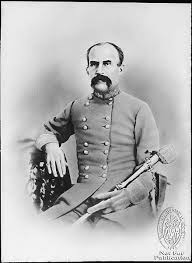
isaactrimble

Major General Isaac Trimble C.S.A.

Major General Isaac Trimble was a General without a command. One of the oldest Confederate Generals at Gettysburg, William “Extra Billy” Smith was older, Trimble graduated from West Point in 1822 and served as a lieutenant of artillery for ten years. He resigned in 1832 and spent the years before the war “as engineer for a succession of Eastern and Southern roads then being constructed.” [66] At the time of secession “Trimble was general superintendent of the Baltimore and Potomac Railroad, and Marylanders regarded him as one of their most distinguished citizens.” [67] He immediately went to Virginia and was appointed as a Colonel of Engineers and was rapidly promoted to Brigadier General. At First Manassas it was his skill with railroads that enabled the troops from the Valley to join with P.T.G. Beauregard’s forces, it was “an assignment that would have overtaxed the ingenuity of any railroad man.” [68] Likewise, it was the first and last time that the Confederacy would use railroads to their fullest advantage.

Trimble led a brigade of Ewell’s division with great verve and skill during the Valley campaign, during the Seven Days and Cedar Mountain. One officer remarked that “there was enough fight in old man Trimble to satisfy a herd of tigers.” [69] His abilities were such that Stonewall Jackson “had him ticked for future command of his own division.” [70] However his was severely wounded at Second Manassas and still convalescing when Lee named Allegheny Johnson to command Jackson’s old division.

Having recovered Trimble was given command of the forces that were to protect Lee’s supply line in the Shenandoah Valley, but “when he reached his new post he found no troops.” [71] This would have deterred or discouraged many an officer, but Trimble wasted no time and riding alone sought out Lee and reported to the army commander at Chambersburg on June 27th 1863. Lee who admired Trimble’s aggressiveness sent him on to Ewell, who he had previously served under as “as a sort of general officer without portfolio.” [72] The old but fiery general would get his chance in battle commanding Pender’s old division during Pickett’s Charge. Badly wounded in the assault he never commands again. He survived the war and died in 1888.

Lee’s Army of Northern Virginia would go into the Gettysburg Campaign with two new and untried corps commanders. Of nine infantry division commanders four were new to division command and another who had never commanded a division in combat. “At brigade level more than one third of the commanders lacked serious combat experience,” [73] of the infantry brigade commanders First Corps was in the best shape with ten of eleven assigned commanders having experience in command at that level, and most were of sound reputation and seasoned by combat. Second Corps was worse off, with six of thirteen assigned brigade commanders new to command, and two of the experienced brigade commanders were not competent to command at that level. Third Corps had nine of its thirteen commanders who had experience as brigade commanders; however, one of them, Brockenbrough was of little value despite being experienced. The Cavalry division too was a mixed bag of solid commanders, especially Wade Hampton but it too suffered its share of less than effective leaders and formations.

Douglas Southall Freeman wrote that the reorganization necessitated by the losses:

“involved an admixture of new units with old, it broke up many associations of long standing, and it placed veteran regiments of a large part of the army under men who were unacquainted with the soldiers and methods of General Lee. The same magnificent infantry were ready to obey Lee’s orders, but many of their superior officers were untried and were nervous in their new responsibilities.” [74]

Had the new commanders had been given a chance to work together in their new command assignments, especially those who had been promoted and or working with new subordinates or superiors before going into action, Lee might have achieved better results. But as Lee told Hood “this army would be invincible if…” In May and June of 1863 Lee did not believe that he had time to do this.

As we know, “if” is the biggest two letter word in the English language, and these men, as Barbara Tuchman noted would be “made bold by the moment, some irresolute, some carefully judicious, some paralyzed and powerless to act.”

[1] Ibid. Freeman Lee’s Lieutenants p.34

[2] Davis, Burke J.E.B. Stuart: The Last Cavalier Random House, New York 1957 p.20

[3] Ibid. Tagg The Generals of Gettysburg p.356

[4] Ibid. Davis J.E.B. Stuart p.27

[5] Ibid. Korda Clouds of Glory p.xxv

[6] Freeman, Douglas Southall, Lee an abridgment by Richard Harwell, Touchstone Books, New York 1997 p.101

[7] Ibid. Freeman Lee’s Lieutenants p.149

[8] Sears, Stephen W. To the Gates of Richmond: The Peninsula Campaign Houghton Mifflin Company, Boston and New York, 1992 p.167

[9] Ibid. Freeman Lee’s Lieutenants p.158

[10] Ibid. Wert A Glorious Army p.26

[11] Ibid. Guelzo, Gettysburg: The Last Invasion p.54

[12] Taylor, Walter. General Lee: His campaigns in Virginia 1861-1865 With Personal Reminiscences University of Nebraska Press, Lincoln Nebraska and London, 1994 previously published 1906 p.92

[13] Ibid. Taylor General Lee p.92

[14] Longacre, Edward G. Gentleman and Soldier: The Extraordinary Life of General Wade Hampton Rutledge Hill Press, Nashville TN 2003 p.83

[15] Ibid. Davis J.E.B. Stuart p.264

[16] Ibid. Girardi. The Civil War Generals p.255

[17] Ibid. Wert A Glorious Army p.198

[18] Ibid. Davis J.E.B. Stuart p.299

[19] Ibid. Longacre, Gentleman and Soldier pp.26-27

[20] Ibid. Longacre, Gentleman and Soldier p.28

[21] Ibid. Longacre, Gentleman and Soldier p.28

[22] Goldfield, David. America Aflame: How the Civil War Created a Nation Bloomsbury Press, New York 2011 p.399

[23] Ibid. Wert A Glorious Army p.64

[24] Ibid. Glatthaar, General Lee’s Army p.352

[25] Ibid. Goldfield, America Aflame p.399

[26] Ibid. Warner Generals in Gray p.123

[27] Ibid. Freeman Lee’s Lieutenants p.770

[28] Ibid. Goldfield, America Aflame p.399

[29] Ibid. Longacre, Gentleman and Soldier p.265

[30] Ibid. Longacre, Gentleman and Soldier p.265

[31] Ibid. Longacre, Gentleman and Soldier p.276

[32] Ibid. Tagg The Generals of Gettysburg p.365

[33] Ibid. Warner Generals in Gray p.259

[34] Ibid. Freeman Lee’s Lieutenants p.286

[35] Ibid. Davis J.E.B. Stuart p.159

[36] Ibid. Sears. Gettysburg p.57

[37] Ibid. Wert A Glorious Army p.227

[38] Ibid. Warner Generals in Gray p.178

[39] Ibid. Wert A Glorious Army p.64

[40] Ibid. Longacre, Gentleman and Soldier pp.84-85

[41] Ibid. Freeman Lee’s Lieutenants p.36

[42] Ibid. Longacre, Gentleman and Soldier p.275

[43] Ibid. Freeman Lee’s Lieutenants p.427

[44] Ibid. Davis J.E.B. Stuart p.54

[45] Ibid. Freeman Lee’s Lieutenants p.427

[46] Ibid. Coddington The Gettysburg Campaign p.15

[47] Ibid. Coddington The Gettysburg Campaign p.111

[48] Ibid. Davis J.E.B. Stuart p.352

[49] Ibid. Davis J.E.B. Stuart p.352

[50] Ibid. Warner Generals in Gray p.167

[51] Ibid. Freeman Lee’s Lieutenants p.723

[52] Ibid. Freeman Lee’s Lieutenants p.532

[53] Brown, Kent Masterson Retreat from Gettysburg: Lee, Logistics, & the Pennsylvania Campaign University of North Carolina Press, Chapel Hill and London, 2005 p.81

[54] Ibid. Warner Generals in Gray p.147

[55] Ibid. Freeman Lee p.306

[56] Ibid. Coddington The Gettysburg Campaign p.17

[57] Ibid. Coddington The Gettysburg Campaign p.17

[58] Ibid. Freeman Lee p.551

[59] Ibid. Tagg The Generals of Gettysburg p.371

[60] Ibid. Wert A Glorious Army p.16

[61] Ibid. Tagg The Generals of Gettysburg p.373

[62] Ibid. Freeman Lee’s Lieutenants p.35

[63] Ibid. Sears. Gettysburg p.57

[64] Ibid. Glatthaar, General Lee’s Army p.239

[65] Ibid. Thomas Robert E. Lee p.415

[66] Ibid. Warner Generals in Gray p.147

[67] Ibid. Dowdy. Lee and His Men at Gettysburg p.129

[68] Ibid. Freeman Lee p.173

[69] Ibid. Pfanz Ewell p.152

[70] Ibid. Dowdy. Lee and His Men at Gettysburg p.129

[71] Ibid. Dowdy. Lee and His Men at Gettysburg p.129

[72] Ibid. Dowdy. Lee and His Men at Gettysburg p.130

[73] Ibid. Wert A Glorious Army p.217

[74] Ibid. Freeman Lee p.306

1 Comment

Filed under civil war, Gettysburg, History, leadership, Military

The Long Strange Trip: Seven Years of PTSD, TBI & Moral Injury

lastmass2

You’re sick of hangin’ around and you’d like to travel,
Get tired of travelin’ and you want to settle down.
I guess they can’t revoke your soul for tryin’,
Get out of the door and light out and look all around.

Sometimes the light’s all shinin’ on me,
Other times I can barely see.
Lately it occurs to me what a long, strange trip it’s been.

Truckin’, I’m a goin’ home. Whoa whoa baby, back where I belong,
Back home, sit down and patch my bones, and get back truckin’ on.

From Truckin’ by the Grateful Dead

It has been seven full years since I descended into the hell of the abyss that is PTSD. Back in the late spring and early summer of 2008 just a few months after my return from what I still consider my best tour of duty in over 30 years of military service with US advisors and Iraq Army and Security forces in Al Anbar Province in 2007-2008 I was in a state of emotional and spiritual collapse.

I really couldn’t believe then what was happening to me or they way that it would end up shaping my life to the present day. In retrospect my return from Iraq marked a beginning of a personal hell that for a number of years seemed like that it would never end. It was painful, it was isolating and it marked a profound change in the way that I saw God, faith, politics and social justice. It changed me in ways that I never could have imagined when I got on a bus heading for Fort Jackson South Carolina following the July 4th holiday of 2007.

Those brave souls that have followed me on this website as well as those that are still my friends despite occasional disagreements and misunderstandings, those that may not understand me but still are my friends have seen this.

So seven years later what is it like? I kind of feel like T.E. Lawrence when he penned this thought in a letter to a friend:

“You wonder what I am doing? Well, so do I, in truth. Days seem to dawn, suns to shine, evenings to follow, and then I sleep. What I have done, what I am doing, what I am going to do, puzzle and bewilder me. Have you ever been a leaf and fallen from your tree in autumn and been really puzzled about it? That’s the feeling.” T. E. Lawrence, Letter 1935

I still have terrible trouble sleeping. It got worse last summer when I had a complete relapse and major crash.  I don’t take heavy doses of sleep meds anymore, my new doctors are working to see what will work. I now take a mild dosage of an anti-anxiety medication and an anti-depressant, I also have a new medication to help reduce the severity and violence of my nightmares. This is far better of a combination than the heavy doses of medications that made me feel like I was hung over without that benefit of sharing too many drinks with friends at the local watering hole.

As opposed to the years immediately following my time in Iraq I have to say that I am no longer self medicating with alcohol. I remember in 2009 going out for dinner, having a few beers, then going to a ball game and drinking a few more and coming home with Krispy Kreme donuts and drinking more beer on a regular basis and usually taking a couple of shots or Jaegermeister or glasses of a  nice Spanish Brandy just to get to sleep so I could go back to facing life and death situations the next day in the ICUs that I then worked in. I don’t need that anymore, even though sleep can be problematic and dreams and nightmares rivaling anything I can watch on my HD TV. I can understand the words of Union General Gouverneur Warren after the Civil War:

“I wish I did not dream so much. They make me sometimes to dread to go to sleep. Scenes from the war, are so constantly recalled, with bitter feelings I wish never to experience again. Lies, vanity, treachery, and carnage.”

I still love to pony up to the bar and share a couple of steins with friends but I don’t need it to numb myself into feeling no pain. Talking with many other vets who have served in Iraq, Afghanistan or even Vietnam I know that I wasn’t alone in those dark days.

I have become a bit less hyper-vigilant than I was just in May of 2008. However, that being said I do notice that I am more on guard on the roads and that little things, sirens, emergency vehicles. Loud noises and traffic still set me off more than when I lived in rural North Carolina while stationed at Camp LeJeune from 2010 until August of 2013.

I absolutely hate air travel. I don’t like the crowds, the stress of security or the constant delays, changes and overcrowding. Truthfully I felt more comfortable flying the skies of Iraq on Marine, Army and Air Force fixed and rotor wing aircraft and on occasion being shot at in Iraq’s Al Anbar Province than I do on any airline today in this country.

I have become exceptionally sensitive to tragedy, death and suffering. The loss of friends or major incidents where military personnel are killed in combat, training missions or just doing their job hits me hard. The worst times are when friends, or others that I know die by their own hand. When they are veterans who suffer from PTSD, TBI or Moral Injury it is like a dagger plunging into me.

Whereas in 2008 through 2010 and even until 2011 I was exceptionally sensitive to criticism to the changes that were occurring in my life including my move to the “left” both theologically and politically I have gotten to the point that I realize that it is more important to be honest and authentic as to who I am and what I believe.

I have found that those that really matter to me don’t care so much about those things and that relationships maintained with people who don’t always agree with each other where all remain their personal integrity are far more rewarding than relationships that are first and foremost decided by allegiance to political or religious orthodoxy no matter what side of the spectrum it is from. I hate group think. Thus though I have to now consider me to be on the “liberal” side of the political and theological divide I still have to be considered a moderate simply because I refuse to make people my enemy simply because I disagree with them or they with me.

When I began this site in the spring of 2009 I named it Padre Steve’s World…Musings of a Passionate Moderate. I think I did that because it actually described me then, and now, even though I am pretty passionately liberal about some things and that doesn’t bother me in any way because it comes from my wrestling with God and faith and realizing that integrity matters more than about anything else. I changed the title of the site to Musings of a Passionately Progressive Moderate last year. I did this because I am a passionately progressive moderate; a liberal committed to a Christian faith that speaks up for the oppressed. I am willing to confront those that would use faith, political or economic power to oppress the weak or those different from us.

Since I returned from Iraq in 2008 I discovered what it was to really question faith and God. To become for a couple of years a man who was for all practical purposes an agnostic praying that God still existed and cared. I discovered that in doing so that faith returned, different but more real than I had ever experienced in a life spent in the Christian faith and ministry.

My agnostic period gave me an immense empathy and appreciation for those who have lost faith, struggle with faith or reject any concept of God. I value reason as much, maybe if not more than faith now, not that reason is infallible or perfect. However, reason does allow me to evaluate my faith, and appreciate the amazing mysteries of the universe that our science and technology continue to reveal in ever more complex detail.

That brought change because my rediscovered faith brought me into conflict with people in the church denomination and faith community where I had been ordained as a priest. I was asked to leave and found a new home church and denomination that fit my life, faith experience and where I could live and minister in complete integrity. In the church that took me in during the fall of 2010 I can be faithful to the Gospel and care for the lost, the least and the lonely. This is especially the case for those who have been abused by churches and ministries, who often contact me.

I am now in the process of more medical evaluation and testing to discover the extent of the Traumatic Brian Injury and how it is interacting with the PTSD.

It has been a long strange trip and it will probably continue to go on.

Peace

Padre Steve+

1 Comment

Filed under faith, mental health, PTSD, Tour in Iraq

Coming Home: Memories of Return from Iraq

lastmass2

Almost seven years ago I returned from Iraq. It was a war that changed me forever and my return from it has been as traumatic as my experiences in Iraq.

I had a good therapy session today with my new shrink. It is a good thing, I am in the process of getting evaluated for things that should have been done years ago. However, dealing with PTSD, Moral Injury and TBI or Concussive injuries is not always an easy or straightforward task. Many of the symptoms that those affected with these injuries overlap. Unfortunately without continuity of care it takes far longer for professionals to make the connections, even very good and experienced medical and mental health professionals.

My case seems to be one of those kind of cases, and my memories seem to almost overwhelm me every year as I approach the date of my return home from Iraq. I fully understand the words of Bruce Dern in the movie Coming Home when he cries out

“What I’m saying is! I don’t belong in this house, and they say I don’t belong over there!” 

 While I no longer feel that I don’t belong in my own house, I still struggle with having to leave Iraq in 2008. I will discuss that  more in the coming days, but it will suffice for now to say that I still struggle. What has happened to that while I still struggle I manage to live with it.
What I will say tonight is that I still struggle, that I often feel alienated from fellow Chaplains and clergy as well as the “true believers” who sit in judgment over those that express their doubts and struggles. My first shrink told me that be speaking the truth that I would be “radioactive” to many of my peers. He was more right than I ever thought possible, but as most of my peers abandoned me, he did not.
I can’t go back to Iraq. Truthfully I would if I could, if nothing else to try to help those Iraqis who I knew. I feel so terrible for them, their country ravaged by a brutal dictator, and savaged by the decision of my country’s former leaders to invade it, bringing about more death, destruction and instability than a thousand Saddam Hussein’s.
The fact is that many veterans of Iraq, and to some extent Afghanistan understand this. We did our duty. We served, we saw things that we wished we could forget. When we returned to a country that the vast majority of people, including many who served in the military but did not have “boots on the ground” we found that we really didn’t fit. We didn’t fit in at home, and our country didn’t want us where we did fit. For me that was in the badlands of Al Anbar Province, where I left my heart.
For years before going to Iraq I studied the people and the country, going there I was blessed to get to know many Iraqis. I still grieve for what they are going through, and what we as a nation are in large part responsible for, the rise of ISIS or ISIL, the existence of Al Qaeda and the rise of other extremist groups. Our intentions were not bad, but they were done out of ignorance and perceived opportunity to dominate others for out own ends.
We sowed the wind and we are reaping the whirlwind.
As for me, like T.E. Lawrence I wonder. Lawrence wrote a friend not long before he died:
“You wonder what I am doing? Well, so do I, in truth. Days seem to dawn, suns to shine, evenings to follow, and then I sleep. What I have done, what I am doing, what I am going to do, puzzle and bewilder me. Have you ever been a leaf and fallen from your tree in autumn and been really puzzled about it? That’s the feeling.”
I understand that feeling.
I’ll be putting out a couple of other memories of my time in Iraq and my return over the next few days. 
Have a great night.
Peace
Padre Seve+

1 Comment

Filed under faith, History, mental health, News and current events, PTSD

Groundhog Day Predictions

groundhog-day-driving

“It’s the same thing your whole life: “Clean up your room. Stand up straight. Pick up your feet. Take it like a man. Be nice to your sister. Don’t mix beer and wine, ever.” Oh yeah: “Don’t drive on the railroad track.” 

Well, Punxsutawney Phil, the seer of weather seers made his predictions today. You guessed it, six more weeks of winter are on our way. Hopefully my next trip to Gettysburg will fall in between major winter storms like it did last year, apart from that I really don’t care, unless winter drags on into baseball season. A number of years ago I remember attending an opening day here in Norfolk where the temperature at game time was 38 degrees and winds were blowing in from center field at close to 40 knots. That was a cold ass opening day. I don’t want that again, but I digress…

However, Phil has expanded his predictions. Phil predicted another six years of political gridlock and insanity from the Tea Party and Religious conservatives, like that’s news, give me a break. Like that prediction takes some kind of gift….  Phil also predicted yet another decade or more of war in the Middle East, Africa and Eastern Europe. I have to admit, the rodent is a genius, he should be employed by a think tank and as a talking head on the various cable news networks. Likewise, the furry beast predicted that the NFL would have another five years of cheating, wife beating and other criminal activity in the NFL before Congress finally revokes the league’s non-profit status.

All that aside, I and probably you live Groundhog Day. I mean like the movie Groundhog Day. Hell, my wake up song on my iPhone is I Got You Babe just like the movie. Since I have been in the military over three decades I can say that every day is Groundhog Day, and every day I wake up on this side of the dirt is not a bad day. Actually, I wouldn’t mind a chance to replay a single day again and again until I exhausted all possibilities and got it right. It could be fun.

1625727_10152283192447059_782802676_n

Tonight I am again watching Groundhog Day and I can relate. If I was Bill Murray’s character, Phil Conners, I cannot say that I wouldn’t have done any of the things that he does in the movie. Presuming I wake up tomorrow, something that nothing none of us are guaranteed of doing, I will wake up to the words of I Got You Babe.

So until tomorrow, happy Groundhog Day and many more…

Peace

Padre Steve+


1 Comment

Filed under Loose thoughts and musings, purely humorous