Monthly Archives: May 2016

Coffee, Eminent Domain & Remembering Molly


Friends of Padre Steve’s World,

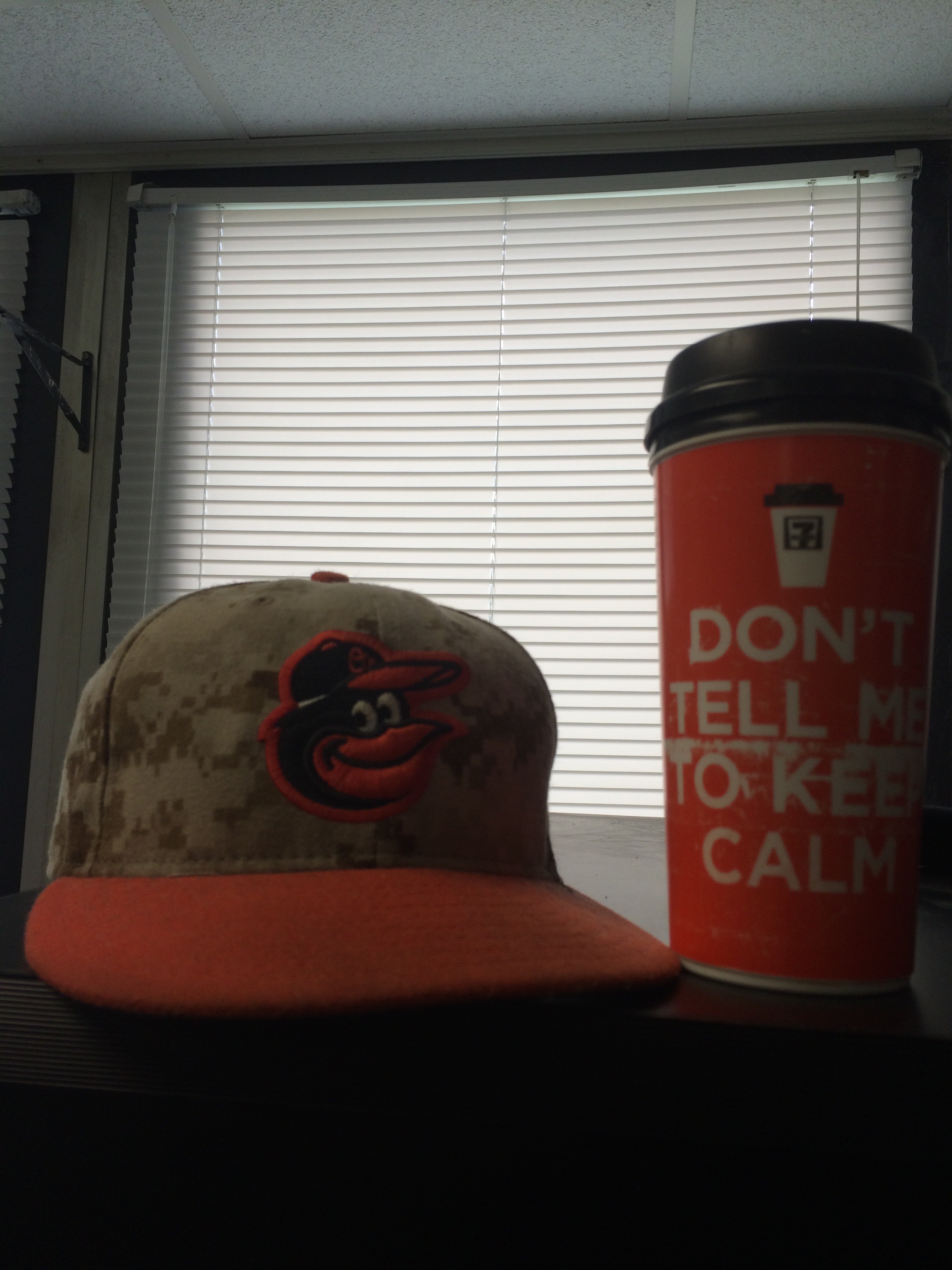
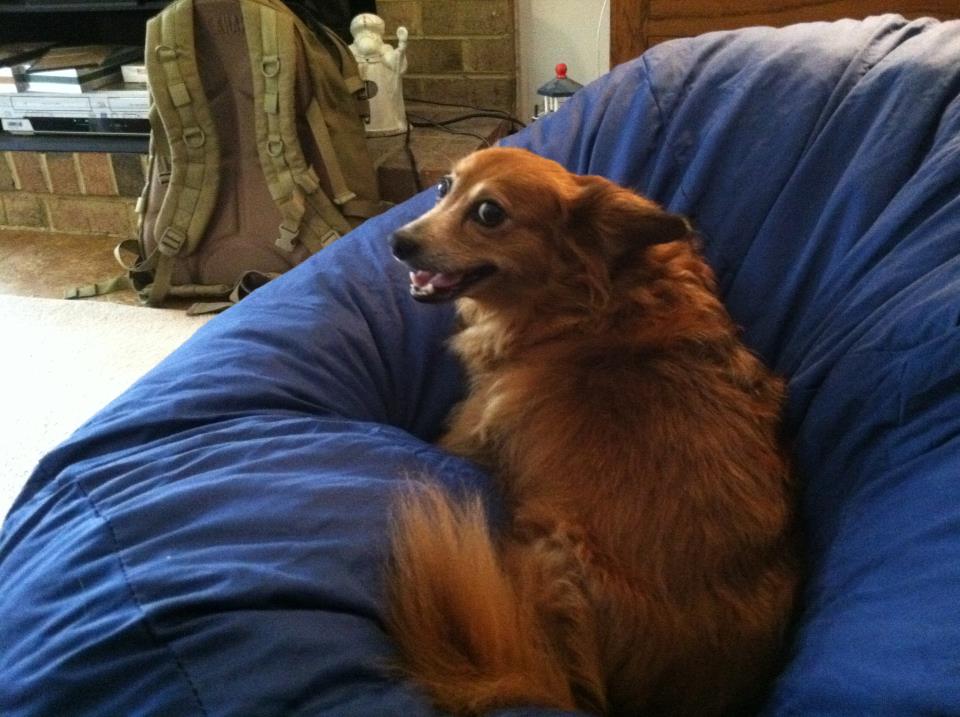
Today was kind of a sad day as I got my last cup of coffee at the 7-11 store that I visit most mornings on my way to work, and it is the anniversary of us losing our wonderful Papillon-Dachshund mix Molly a year ago. Molly was a great dog, a dog who helped me through the some of my worst times after Iraq, and whenever Judy was sick became “Nurse Molly.” We both miss that girl. Thankfully we have Minnie and Izzy, and Izzy especially is beginning to fill in the role of comforter that Molly filled so well.

I am kind of a “blue collar” guy when it comes to morning coffee, not a real big fan of the fancy coffee shops. I like the mixture of working class people who are the clientele more than I do fancy places. Likewise I just like a nice up of coffee with a little French Vanilla creamer and a packet of brown sugar, and a stick of string cheese as my breakfast, instead of some fancy beverage.

This store happens to be on my way to work, just before I get on the freeway. But, sadly, today was the last day for that. The store was a victim of a badly needed expansion of the road and freeway on and off ramps, but it is kind of sad as I have gotten to know the folks that work there as well as the regulars who like me make it their morning coffee stop, and as a creature of habit I hate change. The manager and his wife will go to another store, but not close to me. They are good people, and I will miss them.

mollybag

Molly

Since the construction may make a mess of that route, I may have to find an alternate anyway, but as for now I have to figure it out, but in the meantime I will take some time with Judy this afternoon, and remember Molly while enjoying Minnie and Izzy.

Have a great day,

Peace

Padre Steve+

1 Comment

Filed under Loose thoughts and musings

Cemetery & Culp’s Hill Pt 5

Friends of Padre Steve’s World

I am catching up from  from another trip with my students to Gettysburg, and happen to be posting my newest additions to my text, these dealing with the battles for Culp’s Hill and Cemetery Hill which occurred on the night of July 2nd and early morning of July 3rd 1863. I hope you enjoy.

Peace,

Padre Steve+
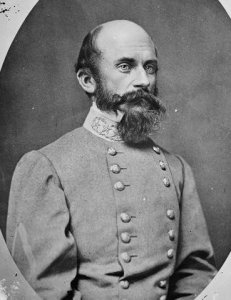
greene monument

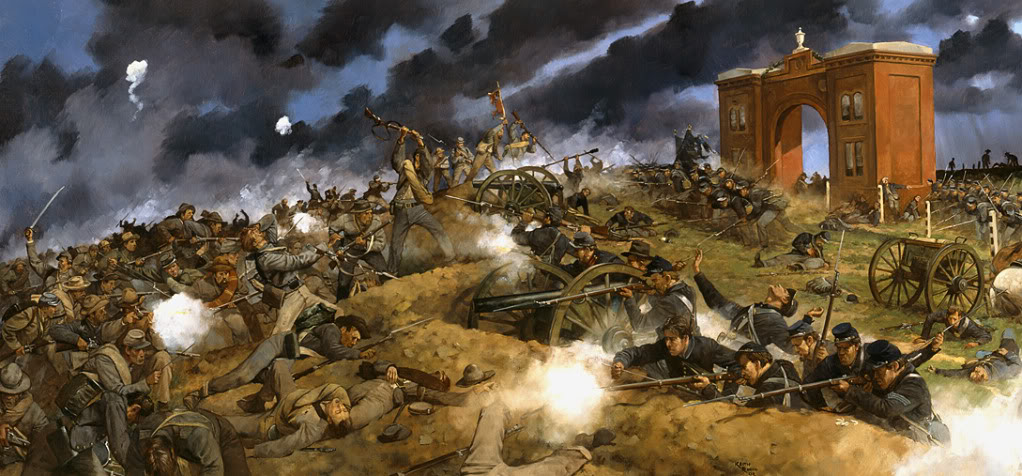
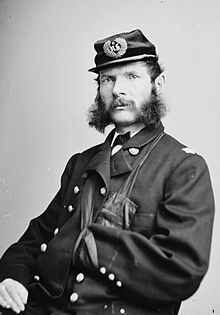
When the divisions Alpheus Williams and John Geary marched away to meet the threat to Cemetery Ridge, only George Greene’s brigade remained to defend Culp’s Hill. In addition to his own position, Greene found his brigade “guarding nearly half a mile of Twelfth Corps works.” [1] Much like Joshua Chamberlain on the extreme left of the Union line, “Greene ended up with a much-thinned single-rank battle line without reserves.” [2] Greene only had between 1,300 and 1,400 men and one battery of artillery, but he made the most of them taking advantage of the natural terrain features as well as the entrenchments which his men and the other Twelfth Corps units had prepared. He “formed his brigade in a single line, with spaces between the men, regiments moving to the right as the line lengthened.” [3] In addition he sent out his smallest regiment, the 78th New York “The Cameron Highlanders” down the hillside to act as skirmishers where they joined with men of the 60th New York.

culp's hill

Allegheny Johnson and his division drew the toughest assignment on this warm summer evening. Since it arrived on the battlefield the previous night it was sheltered to the rear of Brenner’s Hill about a mile east of Gettysburg north of the Hannover Road, where with the exception of sending some skirmishers to Rock Creek, “Johnson kept his infantry concealed and quiet throughout the day.” [4] His four brigades, one of Louisianans under the Colonel Jesse Williams, and the brigades of Brigadier Generals John M. Jones, George “Maryland” Steuart, and James Walker, were primarily Virginians. His four brigades had sat inactive the entire day and impatiently awaited orders to attack, with one staff officer “prudently “conducting religious services…the men gladly joining the solemn exercises.” [5]

When Latimer’s battered artillery battalion withdrew from Brenner’s Hill, Ewell gave orders for the attack to begin. At about seven o’clock Johnson ordered his troops forward, but unlike Early’s troops who were well deployed in a position where they could immediately attack Cemetery Hill, John’s brigades had to make a march over bad, obstacle strewn ground in order to get to their attack positions, and the advance did not go according to plan. James Walker’s “Stonewall” Brigade had to be left behind “to settle accounts with aggressive skirmishers from General Gregg’s cavalry division who had persisted in harassing his left flank and rear.” [6] This stubborn fight of the Union Cavalry troopers prevented “the entire Stonewall Brigade from taking its place in Ewell’s assault column” as Walker “was so flustered by the resistance that he encountered that he deferred his movement to Culp’s Hill, fearing to uncover Ewell’s left to Union observers.” [7] This deprived the Confederates of a quarter of their strength before the attack even began.

ewells-attack-on-culps-hill

As the remaining brigades of the division, “Jones, Williams, and Steuart, in that order, reached Rock Creek, they discovered waist-deep water that would take time to negotiate.” [8] In addition to the high water the far back was very steep and “infested with Yankee soldiers ready to contest any passage.” The officer commanding the skirmishers wrote, “We held this point with the briskest fire we could concentrate…. I decided to…sweep them as the crossed the brook.” [9] The delay cost the Confederates another half hour and the Union troops slowly withdrew up the slope continuing to maintain fire as they withdrew “using “the heavy timber” to make “every tree and rock a veritable battlefield.” [10] As the New Yorkers withdrew, the brigades of Jones and Williams had to make the assault up the steep and rugged slope of Culp’s Hill, and by now it was dark. The main part of Culp’s Hill, where these brigades attack “with its steep, rock strew slopes broken here and there by cliffs fifteen to twenty feet high, afforded great protection to its defenders,” [11] who as previously noted had worked hard to fortify the already imposing ground. Johnson himself was concerned about the effect of the terrain on the advance as “the Confederate infantry halted from time to time, waiting for its advance to clear the way.” [12]

Johnson sent some 4,700 men up Culp’s Hill to attack Greene’s 1,300 dug in veterans. “That kind of manpower edge would have likely been decisive elsewhere on the field that day, but against Pop Greene’s providential and well-constructed breastworks the odds leveled out.” [13] The Confederate troops continued to move up the slope battling the persistent skirmishers the entire way when they discovered another unpleasant surprise. Greene had concealed his men, even hiding the colors below the barricades to disguise his positions and he waited until the Confederates were almost upon his positions and had stopped to dress the line, before opening “a general open fire “like chain lightening” from his brigade.” [14] The fire had a devastating effect on the Confederate’s, whose line wavered. A captain of the 44th Virginia remembered that “all was confusion and disorder.” Private Benjamin Jones of the 44th remembered the enemy’s works as “a ditch filled with men firing down on their heads.” [15] The volleys of Greene’s men from “in front and the abattis behind trapped John Marshall Jones’ Virginia brigade “scarcely thirty yards from the enemy’s breastworks,” [16] forcing them to take cover for nearly fifteen minutes while their officers figured out what to do. Finally they rose up and stormed the works. They charged four times, and General Jones was wounded in the leg, forcing him to turn over command of his brigade. The attacks of Jones and William’s brigades “were bloody disasters. The steep pitch of the hill and the darkness of the hour, compounded by the rocks and brush that everywhere hindered movement, rendered any sort of coherent assault an impossibility.” [17] Finally, the Confederates withdrew to the base of the hill where they established a foothold and tried to regroup.

Greene’s men fought hard but Greene was not ready to rest on his laurels. He requested reinforcements from First and Eleventh Corps on his left. Despite being under attack himself, James Wadsworth, who had fought his division so well at McPherson’s and seminary Ridge the previous day, “promptly sent two regiments, the 6th Wisconsin and the 84th New York. Howard, in response to Greene’s call had Schurz hurry over the 82nd Illinois, the 45th New York, the 157th New York, and the 61st Ohio.” [18] However, the six regiments that arrived had been reduced to fractions of their former strength by the first day’s battle “increased Greene’s force only by about 755 men.” [19]Additionally, Hancock who heard the battle raging “sent two regiments to the relief of Slocum as well.”[20] Greene’s after action report noted:

“we were attacked on the whole of our front by a large force few minutes before 7 p.m. The enemy made four distinct charges between 7 and 9.30 p.m., which were effectually resisted. No more than 1,300 were in our lines at any one time. The loss of the enemy greatly exceeds ours.”[21]

Further south, “Maryland” Steuart’s brigade entered the area of the Federal line which had been vacated by Geary and Williams’s divisions where it posed a brief threat. However, Steuart’s brigade fared no better as it hit the Federal line. Two of his regiments “got ahead of the rest of their command and hooked onto the right flank of the Louisiana troops. This had the unpleasant effect of funneling them into a deadly cul de sac, with unfriendly fire in their front and on both flanks” [22] His left regiments faced little resistance and began to look for a way around Green’s flank in the darkness.

As the night wore on Confederate attacks continued and in the darkness other Federal units arrived, including those from XII Corps which had gone earlier in the day. By mid-morning Johnson’s assault was done. His units had suffered severe casualties and his division had been drained of all attacking power by the time Lee needed it on the morning of July 3rd to support Pickett’s attack. “This division, formed by Stonewall Jackson was never the same again. Its glories were in the past.”[23] In the end the Army of the Potomac still held both Cemetery and Culp’s Hill, in large part due to the actions of the old soldier, George Greene who’s foresight to fortify the hill and superb handling of his troops and those who reinforced him kept Johnson’s division from rolling up the Federal right. However, Greene had refused his right and had occupied the traverse trench line that he had constructed earlier as a fallback position. From here, Colonel David Ireland’s 137th New York conducted a private war with them. Ireland’s men were joined by three companies of the 149th New York, and the 14th Brooklyn, recently arrived from First Corps as well as Rufus Dawes 6th Wisconsin of the Iron Brigade. Steuart wrote “The left of the brigade was the most exposed at first, and did not maintain its position in line of battle. The right, thus in advance, suffered very severely, and, being unsupported, waved, and the whole line fell back in good order. The enemy’s position was impregnable, attacked by our small force, and any further effort to storm it would have been futile, and attended with great disaster, if not total annihilation.” [24] Late in the night the leading elements of the Twelfth Corps units which had went to Cemetery Ridge fought a brisk fight the rest of the night and into the morning with Steuart’s men to regain their trench lines. The fight of the 137th New York until it could be reinforced was instrumental to Union success, but “the cost was high; that night Colonel Ireland lost a third of his men.” [25] As the night wore on across the hill scattered musketry attended the night and the Confederate attacks ceased.

Eventually, Johnson had to settle for the lodgment that he made at the base of the hill and with Steuart’s occupation of the Union trenches. He hoped that the following day, reinforced he might take the hill. Reinforced by troops from Rodes’s division, Allegheny Johnson made a maximum effort in the morning despite the objections of various brigade and regimental commanders, including George Doles and Maryland Steuart. The commanding officer of the 1st Maryland Battalion exclaimed “it was nothing less than murder to send men into that slaughter pen.” [26] The attack was a disaster, Johnson’s division suffered over 2,000 casualties, the supporting units suffered over 1,000 more.

Ewell’s troops would play no further role in the battle. In the end his presence around Cemetery and Culp’s Hill diminished the resources that Lee needed to support his other assaults on the second and third day of battle. In effect it left Lee without one third of his forces. The result was the sacrifice of many troops with nothing to show for it. Ultimately Lee is to blame for not bringing Ewell’s forces back to Seminary Ridge where they and their artillery may have had a greater effect on the battle.

Ewell’s attack was a costly mistake marked by the constant inability of the Confederate commanders to coordinate their attacks. Of the Confederate commanders, only Johnson led his troops into the fight, Ewell remained well behind the lines, Early gave tactical command of the cemetery Hill assault to Hays, and Rodes demurred to the caution of Ramseur and Doles. On the Union side, the splendid work by George Greene helped undo what could have been a disaster when Williams and Geary’s divisions were sent to Cemetery Ridge. Hancock and Howard responded quickly to all danger sending in reinforcement when and where they were needed the most. The stand of the artillery on Cemetery Hill and the counter-attack of Carroll’s Gibraltar Brigade to drive off Hays’s men also were decisive.

The real hero of Culp’s Hill was Greene. But Greene in many ways is a forgotten hero, he was not given much credit in Meade’s after action report though Slocum attempted to rectify this and Meade made some minor changes to his report. But it was in later years that Greene was began to receive recognition for his actions. James Longstreet gave Greene credit for saving the Union line on the night of July 2nd and said that “there was no better officer in either army” at the dedication of the 3rd Brigade monument on Culp’s Hill in 1888. Greene died in 1899 having been officially retired from the Army in 1893 as a First Lieutenant, his highest rank in the Regular Army. A monument to Greene stands on Culp’s Hill looking east in the direction of Johnson’s assault.

Notes

[1] Ibid. Pfanz Gettysburg: Cemetery Hill and Culp’s Hill p. 204

[2] Ibid. Sears Gettysburg  p.326

[3] Ibid. Guelzo Gettysburg: The Last Invasion p.347

[4] Ibid. Greene “A Step All-Important and Essential Element of Victory” p.121

[5] Ibid. Guelzo Gettysburg: The Last Invasion p.347

[6] Ibid. Coddington The Gettysburg Campaign: A Study in Command  p.430

[7] Longacre, Edward G. The Cavalry at Gettysburg: A Tactical Study of Mounted Operations during the Civil War’s Pivotal Campaign, 9 June-14 July 1863 University of Nebraska Press, Lincoln and London 1986 p.212

[8] Ibid. Greene “A Step All-Important and Essential Element of Victory” p.123

[9] Ibid. Trudeau Gettysburg: A Testing of Courage p.400

[10] Ibid. Guelzo Gettysburg: The Last Invasion p.348

[11] Ibid. Coddington The Gettysburg Campaign: A Study in Command  p.431

[12] Ibid. Guelzo Gettysburg: The Last Invasion p.348

[13] Ibid. Sears  Gettysburg p.326

[14] Ibid. Guelzo Gettysburg: The Last Invasion p.348

[15] Ibid. Pfanz Gettysburg: Cemetery Hill and Culp’s Hill p. 216

[16] Ibid. Guelzo Gettysburg: The Last Invasion p.348

[17] Ibid. Trudeau Gettysburg: A Testing of Courage p.400

[18] Ibid. Coddington The Gettysburg Campaign: A Study in Command  p.431

[19] Ibid. Coddington The Gettysburg Campaign: A Study in Command  p.431

[20] Jordan, David M. Winfield Scott Hancock: A Soldier’s Life Indian University Press, Bloomington and Indianapolis 1988 p.94

[21] Ibid. Luvaas and Nelson The U.S. Army War College Guide to the Battle of Gettysburg pp. 159-160

[22] Ibid. Trudeau Gettysburg: A Testing of Courage p.400

[23] Ibid. Dowdy Lee and His Men at Gettysburg: The Death of a Nation p.262

[24] Ibid. Luvaas and Nelson The U.S. Army War College Guide to the Battle of Gettysburg p.155

[25] Ibid. Sears  Gettysburg p.328

[26] Ibid. Trudeau Gettysburg: A Testing of Courage p.447

Leave a comment

Filed under Loose thoughts and musings

Cemetery & Culp’s Hill Pt 4

Friends of Padre Steve’s World

I have just gotten back from another trip with my students to Gettysburg, and happen to be posting my newest additions to my text, these dealing with the battles for Culp’s Hill and Cemetery Hill which occurred on the night of July 2nd and early morning of July 3rd 1863. I hope you enjoy.

Peace,

Padre Steve+

robert-rodes

Major General Robert Rodes, C.S.A.

It would not be until the evening of the 2nd that Ewell’s troops went into action against the now very well entrenched, but depleted, Federal Forces on Cemetery and Culp’s Hill. The assaults began on Cemetery Hill where Jubal Early’s division attacked forces along the north and east section of the hill. This attack was to have been supported by Robert Rodes’ division on the west.

However as with most of the Confederate offensive actions of the battle this too fell apart as Rodes division provided no support to Early’s attack. Edwin Coddington explained that Rodes “did not give himself enough time to get his big division into formation for the attack. By the time he had completed the complicated maneuver of wheeling his brigades forty-five degrees to the left and advancing them half a mile to a good place from which to charge up Cemetery Hill the battle was over.” [1] However, this explanation gives Rodes too much of a pass, although he indeed failed to properly prepare for the attack, he decided not to attack based on the discretion given to him in Ewell’s orders.

Rodes’s division had lost about forty percent of its strength in the disastrous attack on Oak Ridge on July 1st. “Perhaps still shaken from the near disaster the day before, Rodes displayed a lack of diligence and energy which was untypical of his career, civilian or as a soldier.” [2] Robert Rodes was under general instructions from Ewell to support the attacks, which gave him some latitude in decided when and where to do so. As a result he “had been very careful and cautious in marching his men out of Gettysburg and into line across from the northwest corner of Cemetery Hill.” [3] Likewise, he “seems to have greatly underestimated how long it would take to move his five brigades out of Gettysburg and deploy them to the west of the town for an assault.” [4] His two leading brigades, those of Stephen Ramseur and George Doles which had distinguished themselves the previous day, “had covered about half an mile toward the enemy’s line when, in dusk, the two young brigadiers got a good and very sobering look at the Federal position.” [5] Rodes had given tactical command of the advance, and the final say in deciding on the attack, to Ramseur, an aggressive officer “who nonetheless paled when he saw the strength of the enemy defenses.” [6] When his brigade “came within six hundred feet of the Union line, the moonlight was apparently strong enough for Ramseur to observe the great strength of the position: batteries ready to pour “direct, cross, and enfilade fires” upon his lines, and two supporting rows of infantry well protected by stone walls and breastworks.” [7] Alfred Iverson, who had contributed to the disaster the day before claimed “we were advancing to our destruction.” [8]

This was enough for Ramseur who consulted with George Doles and Iverson, and told Rodes of their findings. “When Doles concurred with Ramseur in this report, Rodes cancelled the attack,” [9] and “deferring the attack until daylight.” [10] As the time was past when he could support Early, whose brigades had now ceased their attack, Rodes decided “it would be useless sacrifice of life to go on.” [11]

Despite the failure of Latimer’s barrage, and Rodes’s decision not to attack, “Johnson and Early rushed their men into action as if relieved that the tension of the long wait was over,” [12] and both would meet with bloody failure.

Storm on Cemetery Hill: Early’s Attack

Like the rest of Second Corps, Jubal Early’s division had waited throughout the day for the word to advance. Early had placed the brigades of Colonel Isaac Avery, who was commanding Hoke’s brigade, and Brigadier General Harry Hay’s Louisiana brigade, “in a protected position north of the town, from which they could easily storm cemetery Hill.” [13] He also moved John Gordon’s brigade into a supporting position while leaving “Extra Billy” Smith’s brigade to cover the Confederate rear along the York Road.

350px-Gettysburg_Cemetery_Hill

Assault on Cemetery Hill

It was Early’s division which came the closest to breaking the Union line and seizing the all-important position on Cemetery Hill. His line, with Avery left and Hays on the right, “some 3,500 men in all, stretched east from the town across the fields to within a short distance from Rock Creek. As Johnson closed in on Culp’s Hill around eight o’clock. Early began to whip his men into motion.” [14] Early put Hays in tactical command of the two brigades Hays exhorted his men, including the famed Louisiana Tigers, with the challenge that Early had ordered “the Louisianans and …North Carolinians to take the guns on the hill.” [15] But some of his officers, including Lieutenant Warren Jackson, “who had been on the skirmish line most of the day was not assured; he felt as though his fate had been sealed.” [16]

But some Union troops along the line had become complacent, assuming that the defeat of Latimer’s artillery at Brenner’s Hill meant that the threat had passed. One Union soldier wrote, “We did not expect any assault,” and “could not have been more surprised if the moving column had raised up out of the ground amid the waving timothy grass of the meadow.” [17]

From their starting positions outside Gettysburg, Early’s forces had to make a giant wheel to their right to strike the Federal line on East Cemetery Hill. Hays’s Louisiana regiments “extended out from the pivot of the wheel. Isaac Avery’s three North Carolina regiments, on the outer edge of the wheel had longer to march.” [18] The two brigades began their advance and were immediately assailed by the massed Federal artillery batteries on Cemetery Hill. Charles Wainwright wrote that the Hays’s Confederates “marched straight out of the town, and then facing to their right rushed for the hill.” [19] A Federal artilleryman described the advance, “When they came into full view in Culp’s meadow our artillery…opened on them with all the guns that could be brought to bear. But on, still on, they came, moving steadily to the assault, soon the infantry opened fire, but they never faltered.” [20]

The Confederates faced a fusillade of artillery fire from the guns of First and Eleventh Corps. Captain Michael Wiedrich’s Battery I, 1st New York, “closest to the Louisianans, went to canister almost immediately. Before long all the batteries were firing canister, then double canister. When they ran out of canister they fired case shot without fuzes, the missiles exploding as they left the muzzles.” [21]  However, much of the fire had little effect as the guns could not be depressed enough and many rounds went over the heads of the Confederates, protecting them from an even greater slaughter. Avery’s North Carolina troops suffered worse as they had more open ground to cover and Avery himself was killed early in the advance.

The hill “was ascended through the wide ravine between Cemetery and Culp’s hills,” and “a line of infantry on the slopes was broken,” [22] and “Hays’s men moved straight up the hill, taking three successive positions.” [23] The Union troops in this section of the line were the survivors of Barlow’s division now commanded by Adelbert Ames who manned a thin line along a stone wall near the base of the hill. Numbering just over 1,000 men the division held a line along the base of the hill along the Brickyard lane. The thin line was quickly overwhelmed in many places after a brief fight, while many accused the Germans of fleeing at the first sight of the enemy, some units gave a good account, the 17th Connecticut and 75th Ohio on the right of Harris’s Brigade occupied a spot of high ground from which they were not moved by the Confederates. However, the 107th and 25th Ohio occupying a salient at the extreme north of the Union line were overwhelmed after a brief but fierce fight. Soon “Ames’s brigades were dissolving into an uncontrollable spray of fugitives or inconsequential knots of resistance in the lane, as the rebel tide flowed beyond them.” [24]

cemetery hill

Soon the Louisiana Tigers were among the Federal artillery batteries and fierce hand to fighting raged among the guns and the Union gunners refused to withdraw. The Germans of Wiedrich’s and Rickett’s batteries went toe to toe with the Louisianans and North Carolinians who had gain the summit, and “Wiedrich’s men defended their guns with courage.” [25] As one of “Hay’s Louisiana Tigers confidently threw himself onto the muzzle of a Napoleon, he shouted, I take command of this gun! A German gunner with the piece’s lanyard in his hand replied, Du sollst sie haben (it was a line from a German birthday song – you can have it) and blew the rebel to smoking bits.”  [26] The German gunners fought with such tenacity that Charles Wainwright, a frequent critic of the German units wrote, “the men of “I” Battery, also Germans, fought splendidly, sticking to their guns and finally driving the rebs out with their hand spikes and fence rails.” [27] So it went along the gun line as the Union gunners fought the Confederate infantry matching pikes, rammers, pistols and sabers against the Confederate riflemen, but soon the guns were silent and it appeared “for one incredible moment, as Hays reported, “every piece of artillery which had been firing on us was silenced,” and two Confederate brigades possessed the enemy stronghold.” [28] But the apparent triumph would not last long.

“In the crisis the performance of Howard and Schurz showed up well.” [29] Seeing the chaos on Cemetery Hill, Oliver Howard and Carl Schurz reacted to this with alacrity and ordered Colonel Wladimir Krzyzanowski to take the 119th and 58th New York regiments “at double quick the short distance across the Baltimore Pike to Wiedrich’s battery…. The 119th New York, less than 200 strong…made a “vigorous rush” against the Louisiana interlopers and swept them down the hill. When they reached the base, Krzyzanowski’s men flopped down and Wiedrich’s guns belched canister at the fleeing Confederates.” [30] Howard also had the foresight to ask “for supporting troops from the Second Corps,” a request “Hancock had anticipated by sending out Carroll with most of his brigade, but with “no precise orders” about where he was to go.” [31] Hancock had heard the sound of heavy firing Hancock reacted, he recalled “I heard the crack of musketry on Howard’s front…. Recognizing the importance to the whole army of holding the threatened positions, I directed General Gibbon to send a brigade instantly to Gen’l Howard’s assistance.” [32] The sense of both Generals to order this movement as a precaution proved to be a decision that ensured that Cemetery Hill would remain in Union hands.

220px-Samuel_S_Carroll

Colonel Samuel Carroll

The brigade was commanded by Colonel Samuel Carroll, it was a crack unit, known as the Gibraltar Brigade, aside from the Iron Brigade, the only “Western” brigade in the Army of the Potomac. Carroll was one of the best brigade commanders in the Army of the Potomac. Carroll graduated near the bottom of the West Point class of 1856 and spent four years on the frontier before being assigned as a quartermaster at West Point and took command of the 8th Ohio in the fall of 1861. He soon was a brigade commander but at Gettysburg was still a Colonel, despite this he was a man of action and rapidly moved the brigade exactly where with was needed the most. Carrol had a full head of brick-red hair, which garnered him the name Old Brick Top. His personality and leadership style was such that it “often reminded people of his manic-aggressive division commander, Alex Hays, and this occasion was no exception.” [33]

Coming over from the west side of Cemetery Ridge the brigade appeared in the moonlight to Hays as a shadowy indistinguishable mass. Since Hays expect that Rodes’s troops might be moving in from the west, or Longstreet’s from the south. He was unsure of who the advancing troops were, and how many were advancing towards him. He wrote in his after action report, “I reserved my fire, from the uncertainty of this being a force of the enemy or of our own men, as I had been cautioned to expect friends both in front, to the right and to the left.” [34]

With little direction form either Hancock or Howard, “Carroll trotted him men in column…. He skillfully positioned his men in the dark for the attack, facing obliquely to the left and uphill. The debris of early fighting made it difficult to advance on a wide front, so Carroll placed the 14th Indiana in the advance and stacked up the other two regiments (the 7th West Virginia and 4th Ohio) behind it.” [35] Carroll had a booming voice and he called out to his troops “in a voice that was heard all over East Cemetery Hill: “Halt! Front Face! Charge bayonets! Forward, double-quick! March! Give them Hell!” [36]

The brigade charged the Confederates and “struck Hoke’s brigade and pushed it back. At the same moment some men from Hays’s brigade opened a brisk fire on his left flank from behind a stone wall. Carroll quickly had the 7th West Virginia change from and drive the Louisianans away.” [37] Even so the fight was fierce, “there was a confused sound of pounding feet and colliding human bodies, grunts, yells and curses and a crackling of rifle fire – and the last of the Confederates were driven out.” [38]

Though Early achieved some success his division was repulsed and the threat to the Union gun-line on Cemetery Hill was ending. “Hays, already staggered by three unanswered volleys – the third was especially destructive, delivered at such close range – gave the order at last for his men to return the fire.” [39] His troops fought back but he realized that no help was coming either from Rodes, or Gordon, whose brigade was withheld by Early when he realized that Rodes was not attacking, believing that it “would been a useless sacrifice.” [40] Without support and threatened by more Federal troops, Hays gave the order to withdraw. As one author noted, “Courage and determination could not offset superior numbers and fresh troops. With no help coming and enemy units swarming around them, all those Rebels who were still under some command and control began to fall back.” [41]

img_0578

Early’s attack which had been so promising ended in failure and would be the subject of controversy after the battle and after the war. Rodes’s failure to support his attack on Cemetery Hill, “angered Jubal Early, and he did not mince words about it. In his report, Early complained: “No attack was made on the immediate right, and not meeting with support from that quarter, these brigades could not hold the position that they had attained.” [42]

Whether the Confederates could have taken the position had Rodes delivered his attack is another matter which can only be speculative in nature. Had Rodes and Gordon supported the attack, had Ewell better coordinated with A.P. Hill in order to have Pender’s division support the attack, it might have succeeded Like the earlier Confederate failures of the past two days the issue came down to command and control, coordination, and vague orders. “Ewell had no control over his corps. Three division commanders were coordinating without a central control – and one failed.” [43] Likewise, there is no question that “if Rodes had been able to mount an attack in conjunction with Early, which under the circumstances would have been a miracle of generalship, the defenders of Cemetery Hill would have had a hard time of it.” [44] But the failure of Ewell and his division commanders to coordinate the attack speaks volumes about “the uncoordinated command style that had become Robert E. Lee’s habit, and for the paralyzing evaporation of initiative that crept over the senior generals of the Army of Northern Virginia the longer and deeper they remained in the unfamiliar environment of Pennsylvania.” [45]

Notes

[1] Ibid. Coddington The Gettysburg Campaign: A Study in Command pp.429-430

[2] Ibid. Dowdy Lee and His Men at Gettysburg: The Death of a Nation p.237

[3] Ibid. Trudeau Gettysburg: A Testing of Courage p.407

[4] Ibid. Sears Gettysburg  p.341

[5] Ibid. Dowdy Lee and His Men at Gettysburg: The Death of a Nation p.238

[6] Ibid. Trudeau Gettysburg: A Testing of Courage p.407

[7] Ibid. Coddington The Gettysburg Campaign: A Study in Command p.439

[8] Ibid. Guelzo Gettysburg: The Last Invasion p.344

[9] Ibid. Sears Gettysburg  p.341

[10] Ibid. Coddington The Gettysburg Campaign: A Study in Command p.439

[11] Ibid. Dowdy Lee and His Men at Gettysburg: The Death of a Nation p.238

[12] Ibid. Dowdy Lee and His Men at Gettysburg: The Death of a Nation p.233

[13] Ibid. Coddington The Gettysburg Campaign: A Study in Command p.430

[14] Ibid. Coddington The Gettysburg Campaign: A Study in Command p.435

[15] Ibid. Guelzo Gettysburg: The Last Invasion p.339

[16] Ibid. Pfanz Gettysburg: Cemetery Hill and Culp’s Hill p.236

[17] Ibid. Guelzo Gettysburg: The Last Invasion p.339

[18] Ibid. Sears Gettysburg  p.334

[19] Ibid. Wainwright A Diary of Battle p.245

[20] Ibid. Gottfried  The Artillery of Gettysburg p.169

[21] Ibid. Sears Gettysburg  p.334

[22] Hunt, Henry. The Second Day at Gettysburg in Battles and Leaders of the Civil War Volume III, The Tide Shifts. Edited by Robert Underwood Johnson and Clarence Clough Buel Castle, Secaucus NJ p.312

[23] Ibid. Dowdy Lee and His Men at Gettysburg: The Death of a Nation p.235

[24] Ibid. Guelzo Gettysburg: The Last Invasion p.340

[25] Ibid. Pfanz Gettysburg: Cemetery Hill and Culp’s Hill p.269

[26] Ibid. Guelzo Gettysburg: The Last Invasion p.342

[27] Ibid. Wainwright A Diary of Battle pp.246-246

[28] Ibid. Dowdy Lee and His Men at Gettysburg: The Death of a Nation p.236

[29] Ibid. Coddington The Gettysburg Campaign: A Study in Command p.437

[30] Ibid. Pfanz Gettysburg: Cemetery Hill and Culp’s Hill p.272

[31] Ibid. Coddington The Gettysburg Campaign: A Study in Command p.437

[32] Ibid. Sears Gettysburg  p.339

[33] Ibid. Guelzo Gettysburg: The Last Invasion p.343

[34] Luvaas, Jay and Nelson Harold W. editors. The U.S. Army War College Guide to the Battle of Gettysburg South Mountain Press, Carlisle PA 1986 p.163

[35] Ibid. Tagg The Generals of Gettysburg p.56

[36] Ibid. Sears Gettysburg  p.339

[37] Ibid. Coddington The Gettysburg Campaign: A Study in Command p.437

[38] Catton, Bruce The Army of the Potomac: Glory Road Doubleday and Company, Garden City New York, 1952 p.303

[39] Ibid. Foote The Civil War, A Narrative. Volume Two Fredericksburg to Meridian p.519

[40] Ibid. Sears Gettysburg  p.340

[41] Ibid. Trudeau Gettysburg: A Testing of Courage p.409

[42] Ibid. Pfanz Gettysburg: Cemetery Hill and Culp’s Hill p.281

[43] Ibid. Dowdy Lee and His Men at Gettysburg: The Death of a Nation p.239

[44] Ibid. Coddington The Gettysburg Campaign: A Study in Command p.440

[45] Ibid. Guelzo Gettysburg: The Last Invasion p.344

Leave a comment

Filed under Loose thoughts and musings

Cemetery & Culp’s Hill Pt 3

Friends of Padre Steve’s World

I am traveling with my students to Gettysburg this weekend and happen to be posting my newest additions to my text, these dealing with the battles for Culp’s Hill and Cemetery Hill which occurred on the night of July 2nd and early morning of July 3rd 1863. I hope you enjoy.

Peace,

Padre Steve+

???????????????????

Brigadier General Alpheus William, U. S. Army

What happened next is one of the more complicated and confusing issues of the day. During the morning Meade had considered a spoiling attack against Ewell’s Second Corps using Twelfth Corps and other units on the Federal right. In order to facilitate this he allowed Henry Slocum to persist in believing that he was still an acting wing commander for the troops of Twelfth Corps in what was the Union right wing on the march up to Gettysburg, and the now cancelled Pipe Creek Circular. In the process, Slocum appointed Alpheus Williams of his First Division to head the corps. However, “Meade cancelled the attack but failed to explicitly rescind the entire order, expecting Slocum to return command of the Twelfth Corps by default. He did not. Instead, Slocum assumed that the attack had been cancelled that he still commanded the right wing.” [1] This led to a situation where Meade was unaware of who was actually commanding the corps, and created confusion about what the series of events that happened next. Without direct orders from Meade to relinquish command of the non-existent wing, Slocum chose “to cast himself in the more important role, leaving the tactical handling of the Twelfth Corps to Alpheus Williams.” [2]

In fairness “George Meade was so preoccupied with by his struggle to contain Hill’s and Longstreet’s efforts against his left flank,” [3] that he permitted this nearly catastrophic situation to develop. Longstreet’s attack on the Federal left, supported by the brigades of Rans Wright and Cadmus Wilcox forced Meade to pull troops from all along the Federal line. The Second Corps and Fifth Corps went in and as Longstreet’s attack progressed Meade ordered in reinforcements from John Sedgwick’s Sixth Corps and Slocum’s Twelfth Corps to reinforce his forces in the Peach Orchard, the Wheat Field and along the southern extension of Cemetery Ridge, “but the summons could not have come at a worse time for Slocum, who was growing convinced that Culp’s Hill was about to receive its own attack.” [4] The issue was how much of Twelfth Corps did Meade order Slocum to send to Cemetery Ridge?

Since a copy of Meade’s actual order does not exist we are left with accounts of the various commanders and staff officers. According to some accounts Meade directed Slocum to send “at least one division” to the threatened sector, an assertion also made by Meade’s son who served as his aide during the battle. Partisans of Meade and Slocum have argued about this since the battle, and historians tend to take the side of either general depending on how they interpret the numerous and often conflicting accounts of the evening.

Slocum clearly interpreted the order as a “request for his entire corps. He discussed the matter with Williams in his assumed role as commander of the Twelfth Corps. Both of them expected Meade to amend the order when made aware of the situation on Culp’s Hill.” [5] His actions support that assertion. After the war Slocum insisted that Meade had ordered his to “remove the entire 12th Corps from its position on the right, to one on the left.” [6] But Slocum did not immediately comply with Meade’s order to send the entire corps, if that indeed was what Meade had ordered. Williams later wrote that Slocum ordered him to “detach all I could spare – at least one division on Culp’s Hill.” [7] While Williams dispatched Ruger’s division to the south he retained Geary’s division on the hill.

Meanwhile, after consulting with Williams, Slocum sent an aide to Meade “to convey his opinion that at least a division should be kept on Culp’s Hill.” [8] The aide, Colonel Hiram Rodgers, returned with “Meade’s permission to keep one brigade rather than a division on the right.” [9] It was fortunate that Meade relented, and allowed Slocum to keep a brigade, but “Slocum’s appeal also demonstrates that Meade gave him no initiative, despite what some historians have alleged. Slocum tried to amend the order, Meade insisted. He clearly gave Slocum no choice in the matter.” [10] When John Geary got the order to take two brigades to the south he obeyed, leaving George Sears Greene to defend Culp’s Hill, “leaving some 1,400 men to hold a sector previous occupied by almost 10,000.” [11]

Greene was ordered by Slocum to “occupy the breastworks as thrown up by the corps.” [12] He immediately set to the task of having his brigade redeploy to meet the demands of the new situation. He had a difficult choice to make, he could extent the line to occupy as much of the fortifications that he could, which would leave the line perilously thin, or he could occupy a shorter section that would allow him to better concentrate his firepower. “Greene elected to do the latter. He filled the abandoned trenches for a distance of three regiments, kept to more back to cover his original position, and sent a fifth forward to stiffen the picket line…. Even to hold what he had selected, Greene had to take the risk of nearly doubling the front of each regiment.” [13]

While Greene adjusted his brigade to meet the new situation Geary marched his troops into deepening night following Ruger. However in another unexplainable mistake, he and his division lost their way in the dark and marched south, away from the battle and stopped halted near Rock Creek where it formed a line. Thus, two brigades of the division were out of the battle for four critical hours, leaving Greene and his brigade to make the best of the situation on Culp’s Hill. Blame can be assigned to Geary for not sending out messengers to find Slocum, and to Slocum for losing track of the division which had marched past his headquarters on Powers Hill as they moved south. Part of the reason for this might have been that Slocum assumed that Geary was operating under the orders of Williams who he had appointed to command the corps, and “some hours would pass before everyone realized that Geary had marched off the game board and needed to be recalled to Culp’s Hill.” [14] Thankfully for the Army of the Potomac the march cost nothing in a strategic or tactical sense, but it easily could have.  “Slocum referred to Geary’s march as “an unfortunate and unaccountable mistake…. And the historian of the 2d Massachusetts concluded that “it did not show much of a soldier’s instinct to take a road leading to the rear and follow it for two miles before halting.” [15]

Notes

[1] Ibid. Melton C. Sherman’s Forgotten General p.130

[2] Ibid. Trudeau Gettysburg: A Testing of Courage p.395

[3] Ibid. Trudeau Gettysburg: A Testing of Courage p.394

[4] Ibid. Guelzo Gettysburg: The Last Invasion p.347

[5] Ibid. Melton Sherman’s Forgotten General p.131

[6] Ibid. Pfanz Gettysburg: Cemetery Hill and Culp’s Hill p.194

[7] Ibid. Pfanz Gettysburg: Cemetery Hill and Culp’s Hill p.194

[8] Ibid. Trudeau Gettysburg: A Testing of Courage p.395

[9] Ibid. Greene “A Step All-Important and Essential Element of Victory” p.114

[10] Ibid. Melton Sherman’s Forgotten General p.133

[11] Ibid. Trudeau Gettysburg: A Testing of Courage p.395

[12] Greene, George Sears. The Breastworks at Culp’s Hill in Battles and Leaders of the Civil War Volume III, The Tide Shifts Edited by Robert Underwood Johnson and Clarence Clough Buel Castle, Secaucus NJ p.317

[13] Ibid. Trudeau Gettysburg: A Testing of Courage pp.395-396

[14] Ibid. Trudeau Gettysburg: A Testing of Courage p.399

[15] Ibid. Greene “A Step All-Important and Essential Element of Victory” p.120

Leave a comment

Filed under civil war, History, leadership, Military

Culp’s and Cemetery Hill Pt 2

Friends of Padre Steve’s World

I am traveling with my students to Gettysburg this weekend and happen to be posting my newest additions to my text, these dealing with the battles for Culp’s Hill and Cemetery Hill which occurred on the night of July 2nd and early morning of July 3rd 1863. I hope you enjoy.

Peace,

Padre Steve+

Richard-Ewell

Lieutenant General Richard Ewell, C.S.A

During the day of July second little happened on Ewell’s front, an officer in Maryland Steuart’s brigade wrote “Greatly did officers and men marvel as morning, noon, and afternoon passed in inaction – on our part, not the enemy’s, for, as we well knew, he was plying axe and pick and shovel….” [1] . Though he had persuaded General Lee to leave his troops in place in order to assist Longstreet’s attack if the situation permitted, Ewell remained mostly inactive on July second with the exception of some skirmishing and a battle between the Stonewall Brigade and Gregg’s division of Federal Cavalry on Brinkerhoff’s Ridge about two and a half miles east of the town.

Lee was becoming more frustrated at the inaction of his corps commanders, and wanted Ewell to be able to support Longstreet’s attack, desire it to “make a simultaneous demonstration upon the enemy’s right, to be converted into a real attack should opportunity offer.” [2] But Ewell and his division commanders who had opposed the attack the previous evening, still were against it. Despite his misgivings, Ewell had been stung by Lee’s criticism the night before, and “was eager to make a redemptive showing today.” [3] Accordingly after his meeting with Lee around nine a.m. he began to position his units for the diversion that he hoped would turn into an opportunity to attack. After his conversation with Lee, Ewell “suffered between fear of another failure and an inner goad to commit his troops to action. His unsettled state could not have been helped by the long wait for the sound of Longstreet’s guns, which frayed the nerves.” [4]

Second Corps was deployed in a rough semi-circle to the east, north, and west of Culp’s and Cemetery Hill. The four brigades of Allegheny Johnson’s division which had not been present on the first day of battle occupied the area to the east of Culp’s Hill north of the Hanover Road. From there its skirmishers occasionally clashed with Federal skirmishers, while otherwise spending an uneventful day.

Edward “Old Allegheny” Johnson was an old regular army officer. Johnson was born in Salisbury, Virginia in 1816. He was a graduate of the West Point class of 1838 along with P.T.G. Beauregard and Irvin McDowell. Johnson had a solid record of service in the old Army, he served in the Seminole Wars and received brevet promotions to Captain and Major during the Mexican War. Like many officers that remained in the army after Mexico he served on the frontier on the Great Plains.

Johnson resigned his commission when Virginia seceded from the Union and was appointed Colonel of the 12th Georgia Infantry. [5] He was promoted to Brigadier General in December 1861. Johnson commanded a brigade sized force with the grand name of “the Army of the Northwest” which fell under the command of Stonewall Jackson.[6] He held the crest of the Allegheny Mountains so well with his small force that he was given the “nom de guerre “Allegheny” Johnson.” [7] Johnson was wounded in the ankle at the Battle of McDowell on May 8th 1862, but the wound took nearly a year to heal, imperfectly at that. He was a rather “curious, somewhat uncouth, and strangely fascinating man” [8] who made the most of his convalescence in Richmond, making pass after pass, and occasional proposals to women about town. He was a favorite of Stonewall Jackson who insisted that he be promoted to Major General and be given command of a division.

The division that Johnson took over was the former division of Jackson, and “many of these regiments had fought in “Stonewall” Jackson’s original division, and the troops enjoyed an spirit as exalted as their combat record.” [9] When Ewell was promoted to command Second Corps after Jackson’s death following the Battle of Chancellorsville Johnson was named as commander. Despite his wealth of experience in the pre-war army and service with Jackson in the Valley, Johnson was an outsider to the division and he commanded men “who knew him by reputation only.”[10] Like so many other Confederate division commanders at Gettysburg he had never before commanded a division, so he came to the position “with no real experience above the brigade level.” Likewise he was “unfamiliar with the qualities and limitations of his four new brigadiers,” [11] having served with none of them prior to the Gettysburg campaign. Two, “Maryland” Steuart, and James Walker were experienced brigade commanders, J.M. Jones was a former regular who due to problems with alcohol had only served in staff positions before being promoted to command a brigade, and Colonel Jesse Williams, a regimental commander with little experience had taken a brigade as there was no one else qualified.

Despite this, Johnson became quite popular with his men. Because Johnson walked with a limp and used a long staff to help him walk, it was said that: “his boys sometimes call him “Old Club.” [12] As a division commander “Johnson developed a reputation that when he threw his troops into battle, then struck with the punch of a sledgehammer, exactly the way Lee wanted his commanders to fight.” [13] Johnson “does well in nearly all his fights, hits hard and wins the confidence of his men.” [14] Gettysburg was his first test as a division commander, but not one that gave Johnson a real opportunity to excel.

Jubal Early’s division lay to the north of both Culp’s Hill and Cemetery Hill, with the brigades of Hays and Hoke posted “east of Baltimore Street in the ravine of Winebrenner’s Run,” where it “spent a miserable day,” as the ravine was “deep enough to cut off cooling breezes, its slopes were bare of trees, and the July sun warmed the Confederates without mercy. It was a debilitating and dangerous place. General Ewell wanted to pull Hays’s brigade back when it became apparent that the attack would be delayed, but he could not do so without risk of great loss. But staying there was not much better because, as Lt. William Seymour observed, it was almost death for a man to stand upright. ” [15]

“Old Jube” Early was an unusual character. He was described similarly by many to Dick Ewell in his gruffness and eccentrics. However, unlike Ewell, who was modest and charitable, Early was “ambitious, critical, and outspoken to the point of insubordination. Under certain circumstances he could be devious and malevolent.” [16] James Longstreet’s aide Moxey Sorrel wrote of him: “Jubal Early….was one of the ablest soldiers in the army. Intellectually he was perhaps the peer of the best for strategic combinations, but he lacked the ability to handle troops effectively in the field….His irritable disposition and biting tongue made him anything but popular.” [17] Despite this, Early had proved himself as a brigade commander and acting division commander and Lee referred to him affectionately as “my bad old man.” [18]

Early was the son of a tobacco planter in Franklin County Virginia. He was born in 1816 who had served in the Virginia legislature and was a Colonel of militia. Growing up he had an aptitude for science and mathematics. He was accepted into West Point in 1833 at the age of seventeen. He was a good student, but had poor marks for conduct and graduated in the eighteenth of fifty cadets in the class of 1837. His fellow students included Joe Hooker, John Sedgwick, Braxton Bragg, and John Pemberton, later, the doomed defender of Vicksburg. Also in the class was Lewis Armistead, with whom the young Early had an altercation that led to Armistead breaking a plate over his head in the mess hall. For the offense Armistead was dismissed from the academy.

He was commissioned into the artillery on graduation in 1837. However, after experiencing life in the active duty army, including service in the in the Seminole War, Early left the army and became a highly successful lawyer and active Whig politician. He served in the Mexican war as a Major with Virginia volunteers. Unlike some of his classmates, and later contemporaries in the Civil War, Early, and his men did not see combat, instead, serving on occupation duty. In Mexico Zachary Taylor made Early the “military governor of Monterrey, a post that he relished and filled with distinction.” [19]

After his service in Mexico, Early returned to Virginia, where he returned to his legal practice, serving as a prosecuting attorney. He also entered local politics where he served as a Whig in the Virginia legislature.

During his time in Mexico, Early contracted rheumatic fever, which left him with painful rheumatoid arthritis for the rest of his life. Due to it he “stooped badly and seemed so much older than his years that his soldiers promptly dubbed him “Old Jube” or Old Jubilee.” [20]

Jubal Early was “notoriously a bachelor and at heart a lonely man.” Unlike many Confederate officers he had “no powerful family connections, and by a somewhat bitter tongue and rasping wit” isolated himself from his peers.[21]

Likewise, in an army dominated by those with deep religious convictions, Early was avowedly irreligious and profane, though he did understand the importance of “the value of religion in keeping his soldiers’ spirits up” and as commander of the Army of the Valley, issued orders for a stricter keeping of the Sabbath. [22] Lee’s adjutant Walter Taylor wrote of him “I feared our friend Early wd not accomplish much because he is such a Godless man. He is a man who utterly sets at defiance all moral laws & such a one heaven cannot favor.” [23] That being said Porter Alexander praised Early and noted that his “greatest quality perhaps was the fearlessness with which he fought against all odds & discouragements.” [24]

Jubal Early was a Whig, and a stalwart Unionist who opposed Virginia’s secession, voting against it because he found it “exceedingly difficult to surrender the attachment of a lifetime to that Union which…I have been accustomed to look upon (in the language of Washington) as the palladium of the political safety and prosperity of the country.” [25]  Nonetheless, like so many others he volunteered for service after Lincoln called for 75,000 volunteers to crush the rebellion.

Robert E. Lee “appreciated Early’s talents as a soldier and displayed personal fondness for his cantankerous and profane Lieutenant …who only Stonewall Jackson received more difficult assignments from Lee.” [26] Early was the most influential of Ewell’s division commanders, and his “record in battle prior to Gettysburg was unsurpassed.” [27]

On Ewell’s left, Robert Rodes’s division, which had taken such a brutal beating at Oak Hill on July 1st lay to the west and north of Cemetery Hill in the town itself. “Doles’s, Iverson’s, and Ramseur’s brigades of Rodes’s division occupied Middle Street west from Baltimore Street to the edge of the town. O’Neal’s brigade was along the railroad bed to the right and rear, and Daniel’s brigade occupied the ridge at the seminary.” [28]

Ewell also took the time to scout for artillery positions, the only two that offered any support were on Seminary Ridge to the west and on Brenner’s Hill to the north, and on Brenner’s Hill he deployed Major Joseph Latimer’s artillery battalion. Latimer was not yet twenty years old at Gettysburg. Latimer had been a seventeen year-old student at the Virginia Military Institute at the outbreak of the war and volunteered to help a newly formed artillery battery. He impressed other officers enough that he was given a commission as a First Lieutenant shortly after turning eighteen, and promoted to Captain and command of Virginia’s Courtney Artillery in March of 1862. “Sometimes called “the “Boy Major” and “Young Napoleon,” Latimer had won the respect of the entire army for his skill and bravery,[29] and he was often cheered by the infantry as he rode by. His battlefield performance was such that he was promoted to Major in March 1863, and given command acting command of the battalion of Lieutenant Colonel R. Snowden Andrews who had been wounded at Winchester.

The lack of good positions to place his guns meant that Ewell’s artillery Chief, Colonel J. Thompson Brown had to work hard to find suitable firing positions for all of his guns. Some he placed on Seminary Ridge, and others on Brenner’s Hill. Brown “could get only forty-eight of the eighty or so guns of the Second Corps placed for action. Of these only thirty-two became actively engaged on July 2nd.” [30]

Around four o’clock Latimer’s batteries commenced firing at the Federal positions on Cemetery Hill, provoking a storm of counter-battery fire from Colonel Wainwright’s First Corps guns. The confederate batteries were placed on Brenner’s Hill, which was devoid of cover and about fifty feet lower than the opposing Federal batteries on Cemetery Hill. The Confederates opened fire and Wainwright noted the effectiveness of the Confederate fire from Brenner’s Hill, considering it some “of the most accurate we had seen,” and that the weight of shell between the two sides was about equal, but Latimer’s gunners had no chance. Heavy fire from Wainwright’s batteries “immediately answered him and soon found the range. Within five minutes one of his caissons exploded. Twenty-five men went down in the Allegheny Roughs. Gunners in other batteries began dropping, and it became evident that the open hill was too hot a place to stay.” [31]

The Union fire was most effective and caused great damage to the Confederate batteries. Wainwright wrote, “Still we were able to shut them up, and actually drive them from the field in about two hours.” [32]  The highly accurate Federal fire “smothered the enemy gunners and forced them to pull back from the hill out of effective range.[33]A Confederate artilleryman from the Chesapeake Artillery described the position as “simply a hell infernal,” and wrote “we were directly opposed by some of the finest batteries in the regular service of the enemy, which batteries moreover, held a position to which ours was a molehill. Our shells ricocheted over them, whilst theirs plunged into the devoted battalion, carrying death and destruction everywhere.” [34] Latimer realized that he could not keep up the fight and told General Johnson “that he could no longer hold his posting on Brenner’s Hill. He was told to evacuate all but four guns, which would be used to support the infantry.” [35] While directing the fire of the remaining battery Latimer was mortally wounded by an artillery burst. He died a month later, depriving the Confederacy of one of its most promising young artillery officers. Ewell, who admired him greatly wrote, “Though not yet twenty-one when he fell, his soldierly qualities had impressed me as deeply as those of any officer in my command.” [36] It was “a high price to pay for confirming what should have been apparent before the one-sided contest ever began.” [37] The Confederate cannonade achieved nothing. “As a demonstration it quite failed to distract the Federals, with Meade continuing to reinforce against Longstreet’s offensive. It also quite failed to uncover any obvious “opportunity” for a “real attack” against the Federal right.” [38]

Despite the beating Latimer’s battalion had suffered Ewell was now determined to play his part in the day’s action. During the tense waiting period before the attack Ewell had advised his division commanders “that they should begin their demonstration when they heard Longstreet’s guns. He left to their discretion whether or not they should change the threat into a real assault.” [39] As such he failed to coordinate Ewell made a critical mistake by failing to ensure that Johnson, Early, and Rodes coordinated any offensive that they should undertake. As a result the effort of the Second Corps devolved into three separate actions none of which were coordinated, with fatal results.

As Latimer’s attack ended “quiet, quiet, along with the fading sun, descended on Slcoum’s front,” [40] Ewell and his troops prepared for battle, the impact of Longstreet’s assaults on the Federal left were beginning to be felt on Culp’s Hill.

Notes

[1] Ibid. Sears Gettysburg  p.325

[2] Pfanz, Donald. Richard S. Ewell: A Soldier’s Life University of North Carolina Press, Chapel Hill and London 1998 p.314

[3] Foote, Shelby, The Civil War, A Narrative. Volume Two Fredericksburg to Meridian Random House, New York 1963 p.514

[4] Dowdy, Clifford. Lee and His Men at Gettysburg: The Death of a Nation Skyhorse Publishing, New York 1986, originally published as Death of a Nation Knopf, New York 1958 p.231

[5] Ibid. Warner Generals in Gray p.159 Others sources state this is the 12th Virginia and I cannot find a consensus.

[6] Ibid. Pfanz. Gettysburg: Cemetery Hill and Culp’s Hill p.123

[7] Ibid. Freeman Lee’s Lieutenants p.170

[8] Ibid. Freeman Lee’s Lieutenants p.459

[9] Greene, A. Wilson “A Step All-Important and Essential Element of Victory” Henry Slocum and the Twelfth Corps on July-1-2 in The Second Day at Gettysburg: Essays on Confederate and Union Leadership edited by Gallagher, Gary W.  Kent State University Press, Kent, Ohio and London, 1993 p.111

[10] Ibid. Freeman Lee’s Lieutenants p.459

[11] Ibid. Tagg The Generals of Gettysburg pp.269-270

[12] Ibid. Freeman Lee’s Lieutenants p.47

[13] Ibid. Glatthaar General Lee’s Army from Victory to Collapse p.345

[14] Ibid. Freeman Lee’s Lieutenants p.47

[15] Ibid. Pfanz Gettysburg: Cemetery Hill and Culp’s Hill p.127

[16] Ibid. Pfanz Richard S. Ewell p.268

[17] Ibid. Girardi. The Civil War Generals p.206

[18] Ibid. Wert  A Glorious Army p.155

[19] Ibid. Osborne Jubal p.28

[20] Ibid. Freeman Lee’s Lieutenants p.83

[21] Ibid. Freeman Lee’s Lieutenants p.33

[22] Ibid. Osborne Jubal p.385

[23] Ibid. Girardi. The Civil War Generals p.207

[24] Alexander, Edward Porter. Fighting for the Confederacy: The Personal Recollections of General Edward Porter Alexander edited by Gary Gallagher University of North Carolina Press, Chapel Hill 1989 p.397

[25] Ibid. Osborne Jubal p.50

[26] Gallagher, Gary W. Jubal A. Early, the Lost Cause, and Civil War History: A Persistent Legacy; Frank L Klement Lecture, Alternate Views of the Sectional Conflict Marquette University Press Marquette WI 2003 p.11

[27] Ibid. Tagg The Generals of Gettysburg p.256

[28] Ibid. Pfanz Gettysburg: Cemetery Hill and Culp’s Hill p.128

[29] Gottfried, Bradley The Artillery of Gettysburg Cumberland House Publishing, Nashville TN 2008 p.159

[30] Ibid. Coddington The Gettysburg Campaign: A Study in Command p.429

[31] Ibid. Dowdy Lee and His Men at Gettysburg: The Death of a Nation p.232

[32] Wainwright, Charles S. A Diary of Battle: The Personal Journal of Colonel Charles S. Wainwright 1861-1865 edited by Allan Nevins, Da Capo Press, New York 1998 p.243

[33] Coddington, Edwin B. The Gettysburg Campaign: A Study in Command, A Touchstone Book, Simon and Schuster New York, 1968 p.428

[34] Ibid. Pfanz Ewell p.316

[35] Ibid. Sears Gettysburg  p.283

[36] Ibid. Pfanz Ewell p.316

[37] Ibid. Foote The Civil War, A Narrative. Volume Two Fredericksburg to Meridian p.515

[38] Ibid. Sears Gettysburg  p.283

[39] Ibid. Dowdy Lee and His Men at Gettysburg: The Death of a Nation pp.231-232

[40] Ibid. Greene “A Step All-Important and Essential Element of Victory” p.113

Leave a comment

Filed under civil war, Gettysburg, History, leadership, Military

Gettysburg: Cemetery & Culp’s Hill Pt 1

Friends of Padre Steve’s World

I am traveling with my students to Gettysburg this weekend and happen to be posting my newest additions to my text, these dealing with the battles for Culp’s Hill and Cemetery Hill which occurred on the night of July 2nd and early morning of July 3rd 1863. I hope you enjoy.

Peace,

Padre Steve+

culp's hill

On the night of July 1st 1863 Dick Ewell’s Second Corps of the Army of Northern Virginia and the Army of the Potomac on Cemetery and Culp’s Hill prepared for another day of battle. Despite a significant amount of success on July 1st, Lee’s Army had failed to drive the lead elements of the Army of the Potomac off of Cemetery Hill, which Oliver Howard had wisely placed Steinwehr’s division and his artillery, and which both he and Winfield Scott Hancock recognized had to be held if the Confederates were to be defeated. As the darkness fell over the battlefield that night more Federal troops in the form of Major General Henry Slocum’s Twelfth Corps began to take up positions on Cemetery Hill as well as Culp’s Hill alongside the battered brigades of Oliver Howard’s Eleventh Corps, and Abner Doubleday’s First Corps.

At first Slocum and many of his officers seemed to “have had much apprehension that the Confederates would attempt a head-on attack on Culp’s Hill…or troubled enough by the likelihood of rebel movements to give any orders to improve their hillside positions by digging trenches or chopping down enough trees to form rough protective walls.” [1] The three brigades of Geary’s division of the Twelfth Corps entered the line to the east of the remnants of Wadsworth’s Second division of First Corps along the northern and eastern face of Culp’s Hill.

The commander of the Twelfth Corps was Major General Henry Slocum. Slocum was from upstate New York and entered West Point in 1848 at the age of twenty having already earned a teacher’s certificate at the age of seventeen. “Ability and activity had marked his whole life.” [2] One of his closest friends and roommate at West Point was Philip Sheridan who described the New Yorker as “a cadet whose education was more advanced than mine, and whose studious habits and willingness to aid others benefitted me greatly.” [3] Slocum graduated seventh in the class of 1852 which included George Crook who distinguished himself in the Civil War under the command of Sheridan, as well as Silas Casey, an engineer “whose later architectural achievements would include both the Washington Monument and the Library of Congress.” [4]

Slocum was commissioned in 1852 as a Brevet Second Lieutenant of Artillery and first served in Florida with the First Artillery, and then at Fort Moultrie in Charleston South Carolina. There he was promoted to First Lieutenant and began to study law. Slocum was an abolitionist but he was in favor of gradual abolition, and understood the mood of the South as the fires of disunion and secession over the issue of slavery smoldered. However, due to chronic illnesses that he and his wife suffered in the hot, humid, and fever-ridden climate of the Carolina Low Country, he resigned his commission and returned to New York in late 1856. There he passed the bar, went into the slat business and became relatively well off. He also became active in the Republican Party where he was elected to the State assembly in 1858. As an assemblyman he avoided the schemes that were pressed on him by other members, and maintained a well-earned reputation for honesty. During the time he also became very active in the New York State Militia where he served as a Colonel of Artillery. The governor refused Slocum’s request to raise artillery units instead desiring him to remain as his military adviser at Albany. This was not to Slocum’s liking and he earnestly sought command of an infantry regiment, which he finally obtained when he was appointed as commander of the newly raised 27th New York Volunteer Infantry Regiment.

“Slocum was above medium height, with long, wavy brown hair that he combed behind his ears, a heavy brown mustache and sparkling brown eyes…. He seemed especially disposed to order and discipline and was attentive to details that he sought to master.” [5] As a regimental commander known as a disciplinarian, but also a commander who cared for and defended his troops, making sure that they were adequately led, trained, fed, and billeted. Sadly, the training regimen was cut short and the unit thrown into action at the Battle of Bull run where Slocum was severely wounded in the leg attempting to rally it when it was caught in the flank by Wade Hampton’s South Carolinians. While the regiment’s performance was uneven, it performed about as well as most other Federal units at Bull Run, however, “Slocum’s own conduct was solid and presaged his battlefield demeanor for the rest of the war.” [6]

220px-Henry_Warner_Slocum

Major General Henry Slocum

After Bull Run Slocum earned rapid promotion for his performance. While he was recovering from his wound he was promoted to Brigadier General and made a brigade commander. When the Sixth Corps was formed in 1862 he was given command of its First Division. He “led that division with distinction in the maelstrom of Gaines Mill” [7] during McClellan’s mismanaged Peninsular Campaign. At the Battle of South Mountain during the Antietam Campaign, Slocum and his division distinguished themselves, in an attack that “routed the enemy and captured for battle flags.” [8]  Following that he was promoted to Major General and took command of Twelfth Corps when its commander, Joseph Mansfield was killed at Antietam. His rise had been rapid, nearly meteoric, even though his generalship style was described as similar to John Sedgewick: “competent, careful, cautious, and entirely without military imagination.” [9] He was now the second youngest officer in the army to attain that rank, despite having served just two years as a Lieutenant in the Regular Army, a few months as a Colonel of Volunteers and under two years as a General. He ranked second in the Army of the Potomac to Joe Hooker and was senior to every other corps commander including Reynolds and Meade. Like most volunteer officers he “probably had some political backing, but, if so, it was not particularly blatant according to the standards of the time.” [10]

He commanded Twelfth Corps at Chancellorsville where it was in the fighting and fought well suffering over 3,000 casualties. Slocum was highly critical of Hooker’s performance and was an early advocate for Meade assuming command of the Army of the Potomac. Slocum, who had no desire to command the army went to Lincoln himself to have Hooker removed.

At Gettysburg Slocum was served by two solid division commanders, Brigadier General Alpheus Williams, who though a volunteer officer was considered one of the best division commanders in the army, and Brigadier General Joseph Geary. Joseph Geary was another battle hardened volunteer who had fought with the Pennsylvania volunteers in Mexico and was wounded five times in the assault on Chapultepec. “After this exploit, he was named the regiment’s colonel and returned home a war hero.” [11] He went to California in 1849 was elected as the first mayor of San Francisco. A strong anti-slavery man, Geary was appointed to the unenviable position of Governor of the Kansas Territory where he had vetoed the Lecompton Constitution, earning him the enmity of President James Buchanan.

220px-George_S._Greene

Brigadier General George Sears Greene, U.S. Army

One of Geary’s brigades was commanded by Brigadier General George Sears Greene. Greene was “the oldest general in the army, though he was far from doddering or ineffectual. He was a hardy war-horse, a man who spent most of his time in the saddle, an officer who insisted on hard drilling and discipline in camp and hard fighting on the battlefield.” [12] He was “described as a strict disciplinarian and an officer with a rigid sense of justice,” [13] who did not win immediate affection from his troops, “but those under his command soon learned to appreciate his ability,” [14] his troops nicknaming him “pap” “pop” or “pappy.” Greene led his brigade up Culp’s Hill where it took a position next to the remnants of the Iron Brigade on the eastern face of the rugged edifice.

Greene was born in Warwick Rhode Island in 1801 and graduated from West Point second in a class of thirty five. He was commissioned as an artillery officer some six years before Robert E. Lee. He was a descendent of Revolutionary War General Nathaniel Greene.  His son Lieutenant Dana Greene United States Navy, was the Executive officer of the ironclad warship USS Monitor which fought the Confederate ironclad CSS Virginia at the Battle of Hampton Roads, the first battle between fully steam-powered armored warships in the history of the world. Dana Greene distinguished himself in the battle when he took command of the Monitor when its commander was wounded.

He had graduated second in his class at West Point in 1823, a full six years before Robert E. Lee, and after 13 years of garrison and instructor duty as an artillery officer, left the army in 1836 to enter civilian life as an engineer. After Greene left the army he spent most of his time overseeing the construction of railroads in the rapidly growing nation, as well as designing “sewage and water systems for Washington, Detroit, and several other cities. The Central Park reservoir in New York City was his handiwork, along with the enlarged High Bridge over the Harlem River.” [15]

Greene did not serve in the Mexican War and when the call came for volunteers in 1861 he waited to join up. In January 1862 he resigned from work on the Croatan Reservoir in New York City and was appointed to command the 60th New York Volunteer Infantry, a unit composed of men from the northern reaches of the state along the Saint Lawrence Seaway. Greene was promoted to Brigadier General in 1862 he commanded his brigade and served as an acting division commander at Antietam, where he was one of the few Federal General Officers not to fail the courage of his men in the heat of that bloody action. He commanded the division with skill, and audacity in the fierce fighting around the Dunker Church, the Cornfield and the Eastern Woods, which was “the one bright spot in the abruptly dismal Union picture.” [16] Despite his excellent performance he requited command of the Division to Geary, “who had returned to the army after being wounded at Cedar Mountain. Geary outranked Greene. (Geary’s appointment to brigadier general predated Greene’s by three days), and “Old Man Greene” went back to leading his brigade.” [17] During the battle of Chancellorsville he would again take acting command of the division when Geary was incapacitated during some of the heaviest fighting. During the fight where Twelfth Corps was attacked from multiple directions, Greene saved his brigade “by having them clear a 200-foot-wide space in front of their position and digging in with bayonets, tin cups, and canteen-halves.” [18] Following the battle he again returned to command his brigade of New Yorkers. By the time of Gettysburg the old general “was a seasoned veteran with enough battle experience at or above brigade level to allow his superiors to feel confident in his abilities.” [19]

As Greene’s brigade took their positions on Culp’s Hill, Greene had them do something that was not yet commonplace in either army. They began to construct field fortifications and breastworks. This occurred after he met Geary to discuss the defense of the hill. Geary told Greene that “he personally opposed building breastworks,” as “the men became less than stalwart in the open field. But he would leave the matter to his brigadiers.” [20] Greene replied and told Geary that “the saving of lives was more useful than such theories and that his men would build them if they had time to do so.” [21] With Geary’s blessing Greene ordered his troops to start building the types of fortifications that had helped save them at Chancellorsville.

Working through the night with the ample materials at hand they dug in, an officer wrote “Right and left the men felled the trees, and blocked them up into a close log fence. Piles of cordwood which lay near were appropriated. The sticks, set slanting on end against the outer face of the logs made excellent battening.” [22]  Likewise, “any pioneer details “which had spades and picks” set up a battening of earth over the felled logs.” [23] They linked their positions with each other such as the Iron Brigade on its left, as well as Brigadier General Thomas Kane’s brigade to Greene’s right, “which extended Greene’s line down the southeastern slope, its members imitated their comrades.” [24] The line of fortifications took advantage of the natural terrain which on its own made the ground good for the defense, but when fortified made it nearly impregnable to assault. Greene’s old regiment, the 60th New York, was particularly valuable as “it was largely composed of men accustomed to woodcraft, and they fell in to construct log breastworks with unaccustomed heartiness. All instinctively knew that a life-and-death struggle was impending, and that every help should be used.” [25] Since the Hill was actually two peaks connected by a lower “saddle” which fell at the juncture of his and Kane’s brigades, Greene felt it prudent to “take the additional precaution of having his men construct a short traverse at the lower end of their sector, providing an emergency line facing the saddle.” [26] By noon the fortifications were completed and the Federal troops rested and waited behind their creation for the coming attack. Greene described his position:

“Our position on the front were covered with a heavy growth of timber, free from undergrowth, with large ledges of rock projecting above the surface. These rocks and trees offered good cover for marksmen. The surface was very steep on our left, diminishing to a gentle slope on our right. The Second Brigade was on our right, thrown forward at a right angle to conform with the crest of the hill.” [27]

Notes

Greene’s decision to fortify the hill was emulated by the rest of the division as well as some of Wadsworth’s troops, and the Greene’s actions was fortuitous would have a profound effect on the coming struggle for Culp’s Hill.

[1] Guelzo, Allen C. Gettysburg: The Last Invasion Vintage Books a Division of Random House, New York 2013 p.345

[2] Tagg, Larry The Generals of Gettysburg: The Leaders of America’s Greatest Battle Da Capo Press Cambridge MA 1998 Amazon Kindle Edition p.143

[3] Melton, Brian C. Sherman’s Forgotten General: Henry W. Slocum University of Missouri Press, Columbia and London 2007 p.14

[4] Ibid. Melton Sherman’s Forgotten General p.15

[5] Pfanz, Harry W. Gettysburg: Cemetery Hill and Culp’s Hill University of North Carolina Press, Chapel Hill NC 1993 p.91

[6] Ibid. Melton Sherman’s Forgotten General p.51

[7] Ibid. Tagg The Generals of Gettysburg  p.143

[8] Ibid. Tagg The Generals of Gettysburg  p.144

[9] Sears, Stephen W. Gettysburg. Houghton Mifflin Co. Boston and New York 2003 p.38

[10] Ibid. Pfanz Gettysburg: Cemetery Hill and Culp’s Hill p.91

[11] Ibid. Tagg The Generals of Gettysburg  p.155

[12] Ibid. Tagg The Generals of Gettysburg  p.162

[13] Ibid. Pfanz Gettysburg: Cemetery Hill and Culp’s Hill p.211

[14] Ibid. Tagg The Generals of Gettysburg p.162

[15] Ibid. Tagg The Generals of Gettysburg p.162

[16] Sears, Stephen W. Landscape Turned Red: The Battle of Antietam Houghton-Mifflin Company, Boston and New York 1983 p.231

[17] Ibid. Tagg The Generals of Gettysburg p.162

[18] Ibid. Guelzo Gettysburg: The Last Invasion p.346

[19] Ibid. Tagg The Generals of Gettysburg p.162

[20] Ibid. Sears Gettysburg  p.325

[21] Ibid. Pfanz Gettysburg: Cemetery Hill and Culp’s Hill p.114

[22] Ibid. Sears Gettysburg  p.325

[23] Ibid. Guelzo Gettysburg: The Last Invasion p.346

[24] Trudeau, Noah Andre. Gettysburg: A Testing of Courage, Harper Collins Publishers, New York 2002 p.287

[25] Jones, Jesse H. The Breastworks at Culp’s Hill in Battles and Leaders of the Civil War Volume III, The Tide Shifts Edited by Robert Underwood Johnson and Clarence Clough Buel Castle, Secaucus NJ p.316

[26] Ibid. Trudeau Gettysburg: A Testing of Courage p.287

[27] Ibid. Pfanz Gettysburg: Cemetery Hill and Culp’s Hill p.116

Leave a comment

Filed under civil war, Gettysburg, History, leadership, Military

Happy Cinco de Mayo!

Batalla_de_Puebla

The Battle of Puebla

Friends of Padre Steve’s World,

I just wanted to wish all my readers a happy Cinco de Mayo. This holiday, which is not a Federal holiday in Mexico, and which many people assume is has something to do with the Mexican Independence Day, or the sinking of shipment of mayonnaise bound for Mexico by a German U-Boat during the First World War actually celebrates something entirely different. It celebrates the defeat of a French Army by Mexican forces at the Battle of Puebla on May 5th 1862.

Mexico had already been independent for nearly forty years when this took place. The French had led an intervention in Mexico, and members of the conservative Mexican aristocracy asked Archduke Maximilian of Austria to be the emperor of a new Imperial Mexico, and he agreed, but I digress…

Before Maximilian took over, the French first had to conquer the Mexican Republic, something that most Mexicans rather liked. At Puebla the French commander underestimated the Mexican will to resist and ordered an attack on the city which was repulsed with heavy casualties. Since people around the world expected the French to have an easy time of it the victory was stunning, and it inspired the Mexican people to fight on. Now the war went on for some time. Eventually the French succeeded in capturing Mexico City on May 17th 1863 and installed Maximilian as Emperor of Mexico arriving in Veracruz on May 21st 1864.

Although they had succeeded the war was not over, President Benito Juarez continued to resist and in 1865, aided by weapons, arms and money from the United States which now that its Civil War was over, was able to supply, issued a series of defeats on French Forces. Emperor Napoleon III of France, who had conjured up this mess now decided that the price of supporting Emperor Maximilian was too high and chose better relations with the United States over the hapless Maximilian and his Mexican forces.

The French withdrew, but Emperor Max chose to fight on and was captured by Republican forces and was tried, and sentenced to death. At his execution he paid the firing squad in gold not to shoot him in the head so his mother could see his face. The remnants of his government surrendered in Mexico City on June 20th 1867, the day after his execution.

Despite Cinco de Mayo not being an official Mexican holiday, we Americans and people in a number of other countries do celebrate it, ostensibly as a day to remember Mexican heritage, but more often as an excuse to party, eat Mexican food, and drink lots of beer, margaritas, and tequila shots.

Since I will be drinking beer and Judy will be drinking margaritas tonight I wish you well. I will be traveling with my latest group of students to Gettysburg tomorrow, so I will be putting up some of my more recent Gettysburg text revisions.

Have a great night.

Peace

Padre Steve+

2 Comments

Filed under History

Trumped: The End of the GOP as We Knew It


Friends of Padre Steve’s World,

Today I have just a few quick thoughts on the end of the GOP’s #NeverTrump campaign. 

It came as I thought with the crushing defeat that the Donald dealt Ted Cruz and John Kasich in Indiana last night. Now I really expected one or both to stay in the campaign to try and deny Trump a first ballot nomination in Cleveland, but the campaign to stop Trump seemed to end today when Ohio Governor John Kasich ended his campaign.

It started last night when “God’s Annointed One” for the Presidency, Ted Cruz ended his campaign to establish a theocratic state based on the theology of Christian Dominionism. Though he tried to cast himself as a successor to Ronald Reagan’s conservative mantle in the #NeverTrump movement, that was nothing more than a charade, Reagan would have never considered Cruz a real conservative, nor would have Barry Goldwater, the true ideological father of the now dead modern conservative movement. In fact Goldwater detested and distrusted the Christian Right. The end of Cruz’s campaign was also the death kneel of the Christian Right which expected that one of its own, Cruz, Huckabee, or Ben Carson, would be the GOP nominee this year. It is funny, back in October or November Teddy of last year was one of the favorites to win the nomination while Trump was considered a long shot outsider at best. 

However, the problem for Cruz and the other candidates of the Christian Right was threefold. First the influence of the Christian Right is declining. It’s leaders are old and increasingly ignored inside and outside the GOP, with the exception of people like Cruz. The polling numbers on this are incontrovertible, and the fact is that the incredibly partisan and hardline policies of leaders of the Christian Right is contributing to the rapid loss of young people in churches and the growth of the demographic known as the Nones, or those with no religious preference.  Second, there were too many of them in the race, and they bled votes from Cruz in the early primaries. The third was brought on by Cruz himself, nobody, even in his party likes him. He is viewed as creepy, Nixon without the charm, and former Speaker of the House, John Boehner summed up what many people feel when he  said that Cruz was “Lucifer in the flesh.” That fact was demonstrated in the Iowa caucuses when Cruz’s campaign used dirty tricks and torpedoed the campaign of Ben Carson, making thousands of phone calls the day of the caucus to tell caucus voters to vote for Cruz since Carson had dropped out. It was a bold faced lie and it enabled him to steal a win there. 

As far as Cruz goes, and everything that he represents, I can only say good riddance, and I hope you lose your next senate race. 

What this signals for the GOP is yet to be determined, but like many others I beleive that it signals the end of the GOP as we have known it. The party leadership may attempt to unify behind him and to control him, but it will be an uncomfortable alliance, and one which Trump holds the winning cards. The GOP is broken, it ignored the advice of those who wrote the post-mortem of the 2012 defeat of Mitt Romney, and now they have been “Trumped” so to speak. Trump’s negatives are such that even if he wins the general election, which based on current polls that pit him against either Clinton or Sanders show him losing hardly, the GOP may well lose the Senate, and many seats in the House. The fact is that Trump does not give a damn what Reince Priebus and GOP leadership think, he will do what he needs to win and if he does win, he will take the credit and do as he pleases. Some influential members the GOP conservative media base are already saying that in spite of the collapse that they will not support Trump. 

At first the GOP dismissed Trump. Then they tried to marginalize him, then when it was too late attempted to stop him. At every turn Trump outmaneuver end them, appealed to the anger and frustration of GOP voters, harnessed that energy, and “Trumped” the GOP leadership at every turn. It was quite fascinating to watch, and if I wasn’t a historian and well aware of the kinds of emotions Trump is playing to I would laugh it off. 

But as I have Sid since November, Trump cannot be underestimated, and if the Democratic nominee and party underestimate him, they too may end up being Trumped. So if there are Democrats or progressive out there feeling a sense of satisfactory schadenfreude in this, don’t celebrate too soon. 

So anyway, enough for today. Have a great evening. 

Peace,

Padre Steve+

Leave a comment

Filed under News and current events, Political Commentary

The End of the Republic?

know-nothing_flag

Friends of Padre Steve’s World,

Today Donald Trump will likely bury his Republican competitors in Indiana nearly ensuring that he will win the GOP nomination, and in doing so he will have defied the logic of the GOP leadership by channeling the rage and anger against the status quo that they themselves have fomented over the past four decades. As he does this he will move on, and while some people assume that he will be swept away in November by the Democratic Party nominee, there is no guarantee of that, and those who are wise should not underestimate Trump, or the movement forming around him. The great American philosopher, Eric Hoffer once wrote, “Hatred is the most accessible and comprehensive of all the unifying agents. Mass movements can rise and spread without belief in a god, but never without a belief in a devil.”

Hatred is an amazing emotion. I have been almost overwhelmed by the amount of hatred being posted on social media, blogs, much of it by supposedly Christian preachers, politicians and pundits. Of course if you want find a politician, pundit and preacher all wrapped into one person look no further than Baptist preacher, conservative media pundit, and former Arkansas Governor Mike Huckabee, or the “anointed one” Ted Cruz. But these charlatans of the Christian right pale in comparison to Donald Trump in their ability satiate the desire for a savior of people who are angry and fearful, people that feel cheated, that they have lost their country or their status in it.

This is scary, as it possibly portends the end of our great experiment as a nation. For unlike love, hatred is easy to conjure up. It is kind of like what you need to build a fire; fuel, oxygen and heat. To generate hatred on a massive scale all you need is a disaffected populace, a convenient target, and an agent to ignite the mixture.

Shrewd politicians, preachers, and pundits do this well. Honestly, I think that most effective politician doing this today this is Donald Trump, a man who is lavishly rich, but connects with regular people by speaking their language, and channeling their anger. The situation is much like Germany in 1930 when became a true national party capitalizing on the frustration and anger of Germans at the flailing and failing Weimar Republic. Richard Evans wrote about that in his book “The Coming of the Third Reich.”

“Voters were not really looking for anything very concrete from the Nazi Party in 1930. They were, instead, protesting against the failure of the Weimar Republic. Many of them, too, particularly in rural areas, small towns, small workshops, culturally conservative families, older age groups, or the middle-class nationalist political milieu, may have been registering their alienation from the cultural and political modernity for which the Republic stood, despite the modern image which the Nazis projected in many respects. The vagueness of the Nazi programme, its symbolic mixture of old and new, its eclectic, often inconsistent character, to a large extent allowed people to read into it what they wanted to and edit out anything they might have found disturbing.” 

It does not matter to many of Trump’s followers that his policy propositions in terms of ending alliances, building walls around the border with Mexico paying the bill, massive deportations of people, trade wars to end the deficit, and total bans on travel to this country based on religion, are quite literally impossible. But as Hoffer noted Trump’s followers, like those of any frustrated group and marked by a “facility for make-believe, a readiness to hate, a readiness to imitate [and] credulity, a readiness to attempt the impossible.”

Mass movements, like the one that Trump is building before our very eyes, demonize the target group or population and then let the hatred of their disaffected followers flow. The leaders need that disaffected and angry base in order to rise to power; such was how Hitler, Stalin, and so many other despots gained power. They took advantage of a climate of fear, and found others to blame. For Hitler it was the Jews; while for Stalin it was various groups like the Ukrainians, or the Poles who were the devil to be feared and destroyed. Timothy Snyder in his book Bloodlands: Europe Between Hitler and Stalin wrote:

“Dead human beings provided retrospective arguments for the rectitude of policy. Hitler and Stalin thus shared a certain politics of tyranny: they brought about catastrophes, blamed the enemy of their choice, and then used the death of millions to make the case that their policies were necessary or desirable. Each of them had a transformative utopia, a group to be blamed when its realization proved impossible, and then a policy of mass murder that could be proclaimed as a kind of ersatz victory.”

Snyder is quite correct, demonizing a people and making them some kind of “other”, “they”, or “them”, is a wonderful way to blame a group of people for the ills of society. It is also a good way to deflect the blame for the corporate failures of societies and governments onto a convenient scapegoat; and to blame others for the personal failures and petty jealousies of the people doing the demonizing. It also allows people to abandon ethics and the simple notion of the Golden Rule an engage in genocide.

Mass movements and their leaders love to use this technique; especially when using it against those of other races or religions. The technique is not at all new, it has been used from antiquity but has become much more dangerous in the modern era with the spread of instant communications technology. History shows us all too clearly how it has happened and how easily it can happen again. Witch hunts, slavery and Jim Crow, the extermination of the Native Americans which inspired Hitler in his campaign of genocide and the Holocaust; the Soviet gulags and ethnic cleansing, the Rape of Nanking, the Chinese Communist “Cultural Revolution” the Rwandan genocide, Srebrenica, the Turkish genocide of the Armenians, and the current crimes against humanity of the so called Islamic State. Sadly, the list can go on and on.

All of these events simply required the elements of a disaffected population, a devil or scapegoat to blame, and a leader or leaders to ignite the volatile mixture; fuel, oxygen and heat. Hoffer was quite correct that “Mass movements can rise and spread without belief in a god, but never without a belief in a devil.” The really successful leaders of such movements understand this. For Hitler it was the Jews and other untermenschen; for American Southerners after the Civil it was the Blacks and their white supporters. For the American “Know Nothings” of the 1840s and 1850s it was immigrants, especially Irish and Germans who were Catholic; for Stalin it was non-Russian ethnic minorities. For the leaders of the Islamic State, it is Jews, Shi’ite Moslems, less than “faithful” Sunnis, Christians and well for that matter anyone who does not line up one hundred percent with them on every issue. The examples are so plentiful to support this fact that it is almost overwhelming.

The problem is that when any society, or government begins to label or stigmatize a race, religion, ethnicity, sexual preference, or political ideology, and then in the process demonize those people to the point that they become less than human we have reached a tipping point. Trump has been doing that for his entire campaign. We are very close to the point where we are just one crisis away from all of those crimes against humanity that we believe that we are no longer capable of doing.

But sadly, we human beings are not nearly as evolved as we think and I think that the tipping point in the United States may be far closer than we could ever imagine. In fact, Andrew Sullivan wrote today that “right now, American is a breeding ground for tyranny,” and that “Trump is not just a wacky politician of the far right, or a riveting television spectacle, or a Twitter phenom and bizarre working-class hero. He is not just another candidate to be parsed and analyzed by TV pundits in the same breath as all the others. In terms of our liberal democracy and constitutional order, Trump is an extinction-level event. It’s long past time we started treating him as such.”

I really do not think that we are too far from some tipping point where the politicians, pundits and preachers; especially those of the political right and the media whores who are more concerned about market share than truth, decide that their “devils” must be exterminated and Trump, is the man to make this happen. Of course when he does, his supporters will claim a higher moral, religious, or racial, purpose; or perhaps use the language of Manifest Destiny, the Lost Cause, or the Stab in the Back or some other historical myth that suffices to justify their actions.

As I have said before, Trump’s GOP and potential Democratic opponents would be wise not to underestimate Trump and maybe even form common cause to stop him before it is too late. If they do not the tipping point will have been reached and we will move on into real tyranny.

In the Star Trek the Next Generation episode entitled The Drumhead Captain Picard has to warn his security officer, Lieutenant Worf about the dangers of rampant paranoia. Worf starts: “Sir, the Federation does have enemies. We must seek them out.”
 

Picard pauses and then notes:

“Oh, yes. That’s how it starts. But the road from legitimate suspicion to rampant paranoia is very much shorter than we think. Something is wrong here, Mister Worf. I don’t like what we have become.”

To claim Picard’s words for myself, I have to admit that I don’t like what we have become either.

Peace

Padre Steve+

4 Comments

Filed under leadership, News and current events, Political Commentary

Read or Perish

CW-GettysburgDead

Friends of Padre Steve’s World

Just a short note today as I continue to read, reflect and do some research and writing on my Civil War and Gettysburg Staff Ride text, even as I get ready to lead another staff ride to Gettysburg this weekend.

Those that follow me and read my articles on this site on a regular basis know that I am a voracious reader, especially when it comes to history and biography. Frankly, I am amazed about all that we can learn just from the accounts of those that have already made the same mistakes that we are intent on making, because ultimately, there is nothing new under the sun. The fact that so many supposed strategists, thinkers, and policy makers are too ignorant to remember the past, ensures that the same mistakes will be made over and over again with more and more bodies filling the body bags of hubris.

I have been adding books that I have read over the past few months to my “read” list on my Facebook page, and there were a lot more than I remembered as I worked my way through my stack. If you add things to your Facebook page, movies, books, music or television shows, Facebook will provide lists of suggested titles that you can browse. This of course includes books, and not surprisingly to me, most of the books that were suggested were various forms of fiction or children’s books. There were a few literature classics among the suggestions and a host of Bible books. What I noticed was there were few books on history, philosophy, political science, world affairs or even theology listed.

I was troubled by this; not because I am against people reading fiction or children’s book by any means, but typically those books, with the exception of some of the children’s books are for entertainment, not learning. As entertainment they are fine, but since almost everything else in our culture is geared toward entertainment I wonder where people are being challenged to think critically, and not simply be sponges for the sound bites offered by the politicians, preachers and pundits who dominate so much of our airwaves and the internet.

Barbara Tuchman wrote, “Books are the carriers of civilization. Without books, history is silent, literature dumb, science crippled, thought and speculation at a standstill. Without books, the development of civilization would have been impossible. They are engines of change (as the poet said), windows on the world and lighthouses erected in the sea of time. They are companions, teachers, magicians, bankers of the treasures of the mind. Books are humanity in print.”

Sadly, many people in this country and around the world are sadly deficient in knowing any history at all, and much of what they do know is based on myth. This is dangerous, historian George Santayana wrote, “Those who cannot remember the past are condemned to repeat it.” But I think that Howard Zinn said it the best:

“History can come in handy. If you were born yesterday, with no knowledge of the past, you might easily accept whatever the government tells you. But knowing a bit of history–while it would not absolutely prove the government was lying in a given instance–might make you skeptical, lead you to ask questions, make it more likely that you would find out the truth.”

Have a great night,

Peace

Padre Steve+

2 Comments

Filed under History, leadership, philosophy