Monthly Archives: April 2017

Transfer into the Twilight

Friends of Padre Steve’s World,

The past couple of days have been pretty hectic as I transfer from the Staff College to be the base chaplain at another base in the local area. I’ll still remain as an adjunct at the Staff College to do the Gettysburg Staff Ride which is a good thing. Now truthfully, I did everything I could think of to get a different assignment. I wanted to do something in the Joint world or at least semi-operationally. My qualifications are many, so being assigned to a base chapel makes me feel like I’m being bumped back to the minor leagues, not because caring for people is not important, but because for promotion it’s not highly valued. Of course since I was passed over for promotion last year it is what I get. In today’s military once you are passed over you’re pretty much done, so I’m still lucky to get to do what I have loved doing for decades. Not many people get that chance, so I am lucky, Like Kevin Costner’s character in Bull Durham, I still get to keep going to the ballpark and getting paid for it.

I spent the last couple of days signing out of all the places that I need to, getting my medical records transferred, taking and passing my latest body composition assessment and physical readiness test, and taking care of last minute things needed to transfer. Then yesterday morning I donned my Service Dress Blues to officially sign in at the new command.

It is interesting because unless something unusual and unexpected happens this will be my last ride and the three or four years I spend in the job will take me to retirement with somewhere between 39 and 40 years of cumulative service in the Army and the Navy. I’ll have a good staff and my goal at this point in my career is to take care of them, and help them to succeed while caring for those committed to our care. I’m an old guy now, there aren’t that many people in the military who have served as long as I have, and most of them are admirals or generals.

I’m kind of reminded of the scene in Bull Durham where Kevin Costner’s character, Crash Davis gets sent from AAA down to single A Durham to help mentor a young pitcher. In frustration he tells the manager:  I’m too old for this shit. Why the hell am I back in A ball?

Joe Reardon: ‘Cause of Ebby Calvin LaLoosh. Big club’s got a hundred grand in him.

Larry: He’s got a million dollar arm, and a five cent head.

Joe Reardon: Had a gun on him tonight. The last five pitched he threw were faster that the first five, He has the best young arm I’ve seen in 30 years. You’ve been around. You’re smart, professional. We want you to mature the kid. We want you to room with him on the road, stay on his case all year. He could go all the way.

Crash Davis: Where can I go?

Joe Reardon: You can keep going to the ballpark, and keep getting paid to do it. Beats the hell out of working at Sears.

Larry: Sears sucks, Crash. Boy, I worked there once. Sold Lady Kenmores. Nasty, whoa, nasty.

So anyway, there are a lot worse alternatives. Until tomorrow,

Peace

Padre Steve+

5 Comments

Filed under Baseball, faith, leadership, Loose thoughts and musings, Military

Fragile and Unpredictable: Auschwitz and Human Behavior in the Crisis

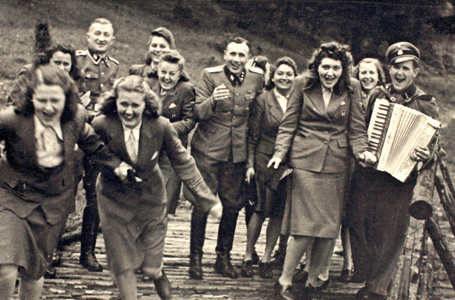
Auschwitz Staff at Play 

Friends of Padre Steve’s World,

In his book Auschwitz: A New History, Laurence Rees noted something that is important about how human beings act in crisis. After interviewing many of perpetrators, victims, and bystanders who were at Auschwitz and other parts of the Nazi death machine he wrote this:

“…human behavior is fragile and unpredictable and often at the mercy of the situation. Every individual still, of course, has a choice as to how to behave, it’s just that for many people the situation is the key determinate in that choice.”

I think that it is a comment worth reflection. One of the things that Rees explored was how people who in one situation can be the best of neighbors, the most conscientious and ethical of businessmen, the most dedicated civil servants can seemingly become something totally different when placed in situations that test who they are.

Selecting those to Die 

This is one of the scary things about human nature itself, while there were many people who were sadistic and enjoyed the evil that they did, there were many more who could not decide to be good or evil, instead they went with the flow and took the path of least resistance. Hannah Arendt wrote of Adolf Eichmann, who was the instrument of destruction for much the Jewish population of Europe:

“The trouble with Eichmann was precisely that so many were like him, and that the many were neither perverted nor sadistic, that they were, and still are, terribly and terrifyingly normal. From the viewpoint of our legal institutions and of our moral standards of judgment, this normality was much more terrifying than all the atrocities put together.” 

In times of great change, in times of crisis, in times of uncertainty demagogues manipulate people through fear, particularly fear of the other, both the other within their society, and those far away. When they do this they dehumanize people who seem different from us, be it in their race, color, religion, politics, gender, or sexual identity. When they succeed in doing this, it is the ordinary people who turn the other way, or collaborate in the persecution of the victims.

We are in a precarious situation and it would not take much for our nation to slide into a totalitarian dictatorship, and if the circumstance were right, if the crisis large enough, most people would probably surrender their freedom for the supposed security offered by a dictator. As Timothy Snyder wrote:

“The European history of the twentieth century shows us that societies can break, democracies can fall, ethics can collapse, and ordinary men can find themselves standing over death pits with guns in their hands. It would serve us well today to understand why.”

That is why we must not only understand history, but at the same time we must be determined to recognize how it informs us today, and how we can prevent such things from ever happening again.

That’s all for today,

Peace

Padre Steve+

3 Comments

Filed under ethics, History, holocaust, laws and legislation, nazi germany, Political Commentary

The Doolittle Raid at 75: And Then There Was One

Lieutenant Colonel Dick Cole

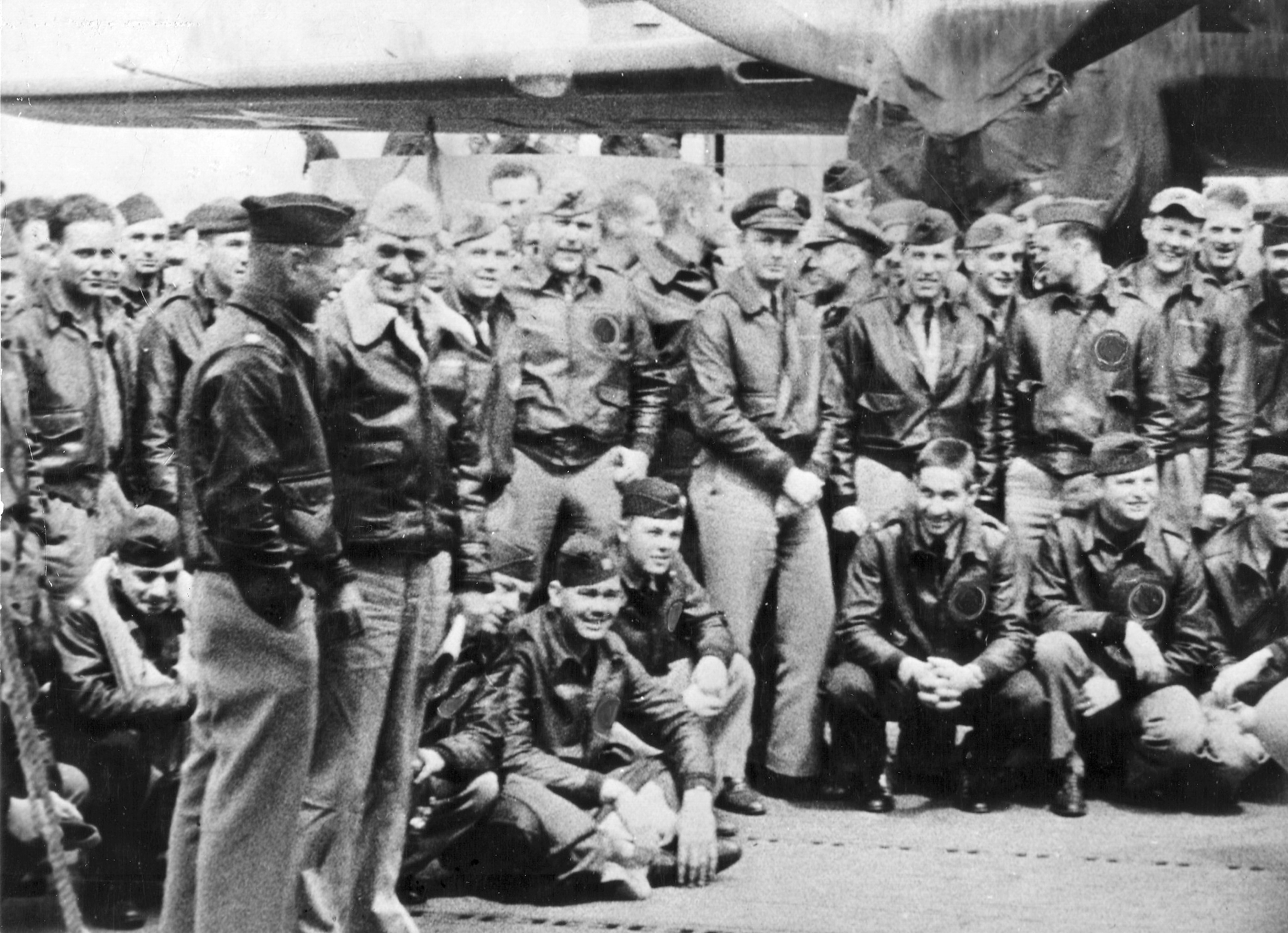
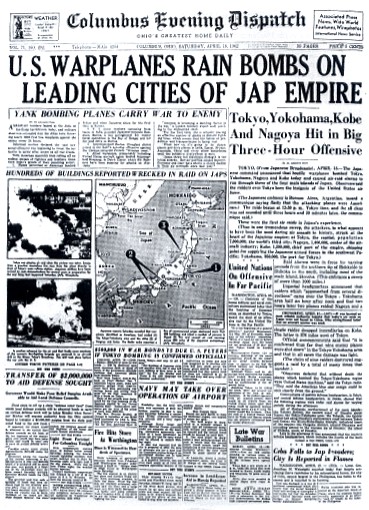
Today marks the 75th anniversary of the Doolittle Raid on Tokyo. 80 US Army Air Corps flyers manning 16 B-25 Mitchell bombers conducted a mission from the deck of the USS Hornet CV-8 which though it caused little damage changed the course of World War Two in the Pacific.

Doolittle and his Airmen with Hornet’s C.O. Captain Marc Mitscher 

The genus of the strike came from the desire of President Franklin Roosevelt to bomb Japan as soon as possible during a meeting just prior to Christmas 1941. Various aircraft types were considered and in the end the military chose the B-25 because it had the requisite range and had the best characteristics. Aircraft and their crews from the 17th Bomb Group which had the most experience with the aircraft were modified to meet the mission requirements. Lieutenant Colonel Jimmy Doolittle was selected to lead the mission.

Once the aircraft were ready they and their crews reported to Eglin Field for an intensive three week period of training. Supervised by a Navy pilot the crews practiced simulated carrier take offs, low level flying and bombing, night flying and over water navigation. When the training was complete the aircraft and crews and support personnel flew to McClellan Field for final modifications and then to NAS Alameda California where they were embarked on the Hornet Hornet’s air group had to be stowed on the ships hanger deck since the 16 B-25s had to remain of the flight deck. Each bomber was loaded with 4 specially modified 500 lb. bombs, three high explosive and one incendiary.

Departing Alameda on April 2nd the Hornet and her escorts, Hornet’s Task Force 18 rendezvoused with the Admiral William “Bull” Halsey’s Task Force 16 built around the USS Enterprise CV-6. task Force 16 provided escort and air cover during the mission. The carriers, escorted by 4 cruisers, 8 destroyers and accompanied by two oilers hoped to get close enough to the Japanese home islands so that the raiders could reach bases in allied China.

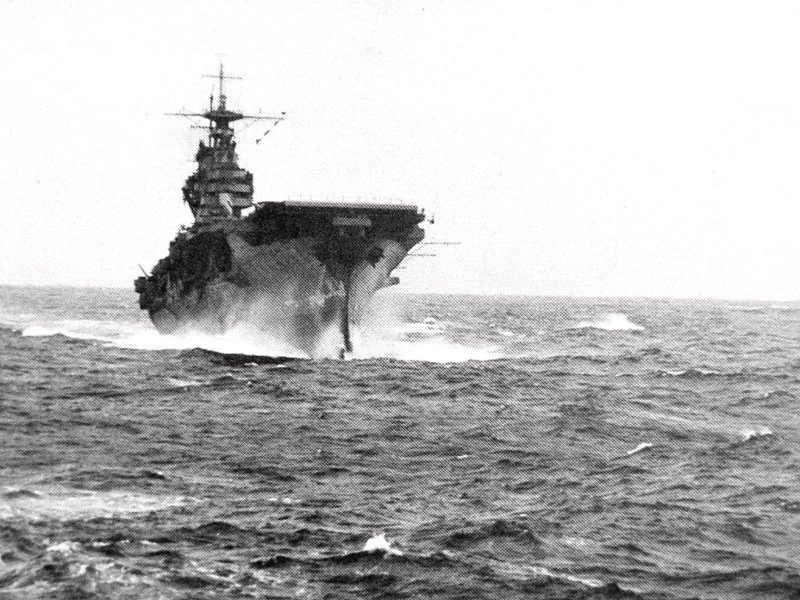
Hornet in Heavy Seas while launching the Raiders

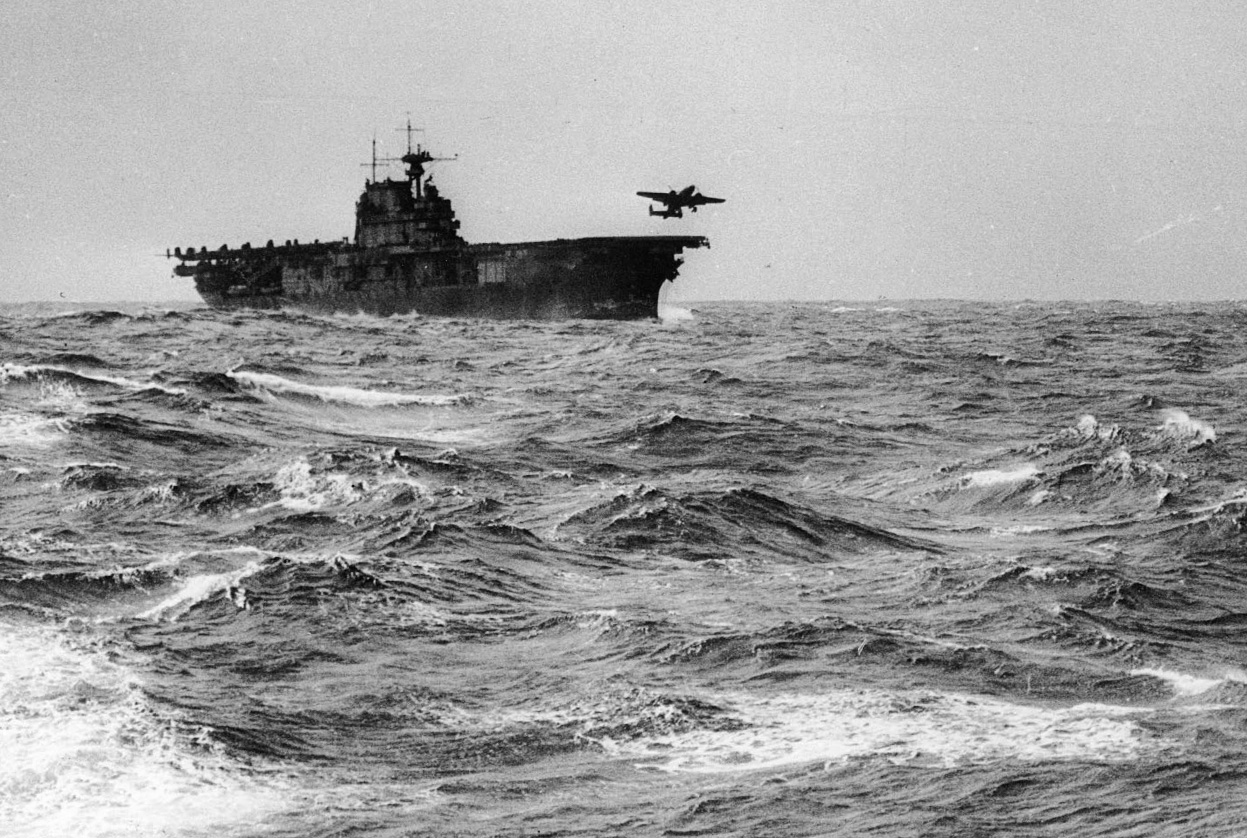
The destroyers and slow oilers broke off on the evening of the 17th after refueling the carriers and cruisers. The two carriers and the cruisers then commenced a high speed run to get into range. However early in the morning of April 18th the ships were sighted by a Japanese patrol boat, the #23 Nitto Maru which was quickly sunk by the USS Nashville but not before it got off a radio message alerting the Japanese command. However the Japanese knowing that carrier aircraft had a relatively short range did not expect an attack. However, realizing the danger that the sighting brought, Mitscher elected to launch immediately, even though it meant that bombers would have to ditch their aircraft or attempt to land well short of the friendly Chinese airfields. The launch was 10 hours earlier and about 170 miles farther out from the Chinese bases than planned.

B-25 Launching from Hornet

Flying in groups of two to four aircraft the raiders struck the Japanese cities of Tokyo, Yokohama, Yokosuka, Nagoya, Kobe and Osaka. Minimal damage was done and only one aircraft was damaged. However they needed to fly nearly 1500 more miles to get to areas of China unoccupied by Japanese forces. Miraculously most of the aircraft and crews managed to find refuge in China. 69 of the 80 pilots and crew members avoided death or capture. Two flyers drowned, one died when parachuting from his aircraft. Eight men were captured. Of those captured by the Japanese three, Lieutenants William Farrow, Dean Hallmark and Corporal Harold Spatz were tried and executed for “war crimes” on October 15th 1942.

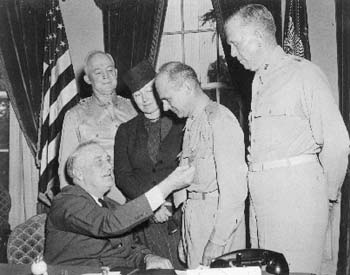
Many of the surviving flyers continued to serve in China while others continued to serve in North Africa and Europe, another 11 died in action following the raid. Doolittle felt that with the loss of all aircraft and no appreciable damage that he would be tried by courts-martial. Instead since the raid had so bolstered American morale he was awarded the Medal of Honor, promoted to Brigadier General and would go on to command the 12th Air Force, the 15th Air Force and finally the 8th Air Force.

The raid shook the Japanese, especially the leadership of the Imperial Navy who had allowed American aircraft to strike the Japanese homeland. The attack helped convince Admiral Isoroku Yamamoto that an attack on Midway was needed in order to destroy the American Carriers and the threat to the home islands.

When asked by a reporter about where the attack was launched from, President Roosevelt quipped “Shangri-La” the fictional location of perpetual youth in the Himalayas’ made famous in the popular book and movie Lost Horizon.

The raid in terms of actual damage and losses to the attacking forces was a failure, but in terms of its impact a major victory of the United States. The attack was psychologically devastating to Japanese leaders, including Prime Minister Hideki Tojo, whose personal aircraft was nearly hit by one of the raiders and Admiral Isoroku Yamamoto, who felt personally humiliated and dishonored by the fact that bombers launched from American carriers.

Likewise the raid gave the people of the United States a huge morale boost at a time when very little was going right. It forced the Japanese Navy to launch the attack on Midway that turned out to be a disaster, decimating the best of the Japanese Naval Air Forces and the loss of four aircraft carriers and enabled the US Navy to take the offensive two months later at Guadalcanal.

Franklin Roosevelt Awards Medal of Honor to Jimmy Doolittle 

In the years after the war the survivors would meet. Today only one survivor of the raid remain alive. One hundred and one year old Lt.Col. Richard “Dick” Cole, Doolittle’s co-pilot will attend the ceremony today.

It will not be long before he too is gone and it is up to us to never forget the heroism, sacrifice and service in a mission the likes of which had never before been attempted, and which would in its own way help change the course of the Second World War.

Peace

Padre Steve+

1 Comment

Filed under History, Navy Ships, World War II at Sea, world war two in the pacific

Slipping into Totalitarianism?

Friends of Padre Steve’s World,

I did my taxes yesterday as across the nation tens of thousands of people protested President Trump’s refusal to release any of his tax returns as he prepares to make wide ranging changes to the U.S. Federal Tax Code which according to most analysts would benefit him. In response the President derided them on Twitter. Likewise, in response to lawsuits about his encouragement of violence at his campaign rallies, Trump stated that since he won the election that he is immune from any actions that any court might find him responsible. Even so many people seem not to care. Despite the fact that the administration lives in a “fact free” world where the President and his advisors can make up things with impunity and accuse anyone who disagrees with promoting “fake news” he is allowed by those who have the power to remove him to get away with it. But this is the normal path to power for any totalitarian.

In her book The Origins of Totalitarianism Hannah Arendt wrote:

“In an ever-changing, incomprehensible world the masses had reached the point where they would, at the same time, believe everything and nothing, think that everything was possible and that nothing was true. … Mass propaganda discovered that its audience was ready at all times to believe the worst, no matter how absurd, and did not particularly object to being deceived because it held every statement to be a lie anyhow. The totalitarian mass leaders based their propaganda on the correct psychological assumption that, under such conditions, one could make people believe the most fantastic statements one day, and trust that if the next day they were given irrefutable proof of their falsehood, they would take refuge in cynicism; instead of deserting the leaders who had lied to them, they would protest that they had known all along that the statement was a lie and would admire the leaders for their superior tactical cleverness.”

Those are not the words of a man interested in maintaining our Republic, its Constitution, or its laws; they are the words of an autocrat and a would be dictator. Sadly, despite the resistance of many people, I don’t think that anything will stop him from gaining that power. Our society is too atomized to come together in any meaningful way to stop him, and he and his closest supporters understand that fact. Despite his frequent mistakes, foul ups, and failures, he is given a pass by his supporters, as well as some in the media who think that firing a few missiles makes one presidential. His anemic approval rating doesn’t seem to concern him probably because his opposition, liberals and conservatives are so divided and distrustful of each other that they cannot come together to oppose him.

Yesterday, the people of Turkey voted to change their constitution to give President Erdrogen and his party nearly unlimited power, paving the way to a one party dictatorship. Even a few years ago most experts said that such an outcome was impossible. No one should assume that the American experiment of a democratic constitutional republic cannot be destroyed. All it takes is a significant part of the populace that is willing to give up its rights for promises of security and prosperity, which is also willing to grant the government extraordinary powers for it to happen. As Timothy Snyder wrote: “People who assure you that you can only gain security at the price of liberty usually want to deny you both.” So with each new crisis, domestic and foreign, many engineered by the Trump administration itself and its media enablers unsettles us, further divides us, and frightens us, know that we are sliding more steadily into a totalitarian world with very passing day.

Peace

Padre Steve+

1 Comment

Filed under ethics, News and current events, philosophy, Political Commentary

An Easter Thought for those Who Struggle

Friends of Padre Steve’s World,

Today I am just wishing you a happy Easter, whatever that may mean to you. Now I know that many of my readers are not Christians, or struggle with faith and belief. I do too. I am all too much like the disciples of Jesus who could not believe the message of the resurrection on that first Easter morning. Even so this morning I will add my alleluia to the cry “He is risen!” 

Easter can be a difficult time for those that struggle with faith and for those that do so struggle, life can be more like Good Friday and the joy that many celebrate on Easter can be hard to find, W.H. Auden said it well:

“Christmas and Easter can be subjects for poetry, but Good Friday, like Auschwitz, cannot. The reality is so horrible it is not surprising that people should have found it a stumbling block to faith.” 

For all too many people, including me after Iraq faith is a struggle. I’m doing better right now, but I still struggle. I know the theology, I believe, yet I struggle. The actions of many who call themselves Christians, the hatred shown by many Christian leaders for others, and the way my Christian fore bearers throughout history have acted out of hate and the need to dominate others in the name of Jesus troubles me and gives me pause.  At times I wonder if anything that the Church proclaims can be true because its witness and its hostility to others is so contrary to that of Jesus. Mahatma Gandhi well summed up my feelings when he remarked: “I like your Christ, I do not like your Christians. Your Christians are so unlike your Christ.” 

I think I understand what Easter means, according to my often painfully inadequate faith, it is the triumph of life over death that only comes only through the experience of Good Friday, the emptiness of what we now call Holy Saturday, and the shock of the resurrection.  One of my favorite theologians, Jurgen Moltmann, wrote:

“In the cross of Christ God is taking man dead-seriously so that he may open up for him the happy freedom of Easter. God takes upon himself the pain of negation and the God forsakenness of judgement to reconcile himself with his enemies and to give the godless fellowship with himself.”

God shares our pain. But for those that struggle and those walking through their own personal versions of Good Friday, Easter often seems like it will never come. I can understand that.

So for all my readers where ever you are and whatever you are going through, be it joy or sorrow, love or loss, even suffering or death; I wish you the best this Easter and I do pray that one day we will all understand what all this means. Until then, for me it will mean opening my life, my inadequate faith, my friendship, and my door to all who I encounter.  That will be my “Alleluia.”

Until tomorrow,

Peace

Padre Steve+

2 Comments

Filed under christian life, faith

Titanic: A Monument and Warning to Human Presumption

Friends of Padre Steve’s World,

In 1912 the Bishop of Winchester said these words in a sermon marking the end of the R.M.S. Titanic: “Titanic, name and thing, will stand as a monument and warning to human presumption,” as well it should. Sadly, it seems that that Trump administration is doing its best to strip away vital safety, health, and environmental regulations that protect people from even worse disasters than that which befell the great ship 105 years ago today.

The story of the Titanic has been told many times, and it should be a cautionary tale for those who in the name of profit and glory seek to dismantle safety and environmental standards. I remember reading Walter Lord’s classic treatment of the story, A Night to Remember back in 7th Grade. It made a tremendous impact on me, and every so often I will go back and read it again.

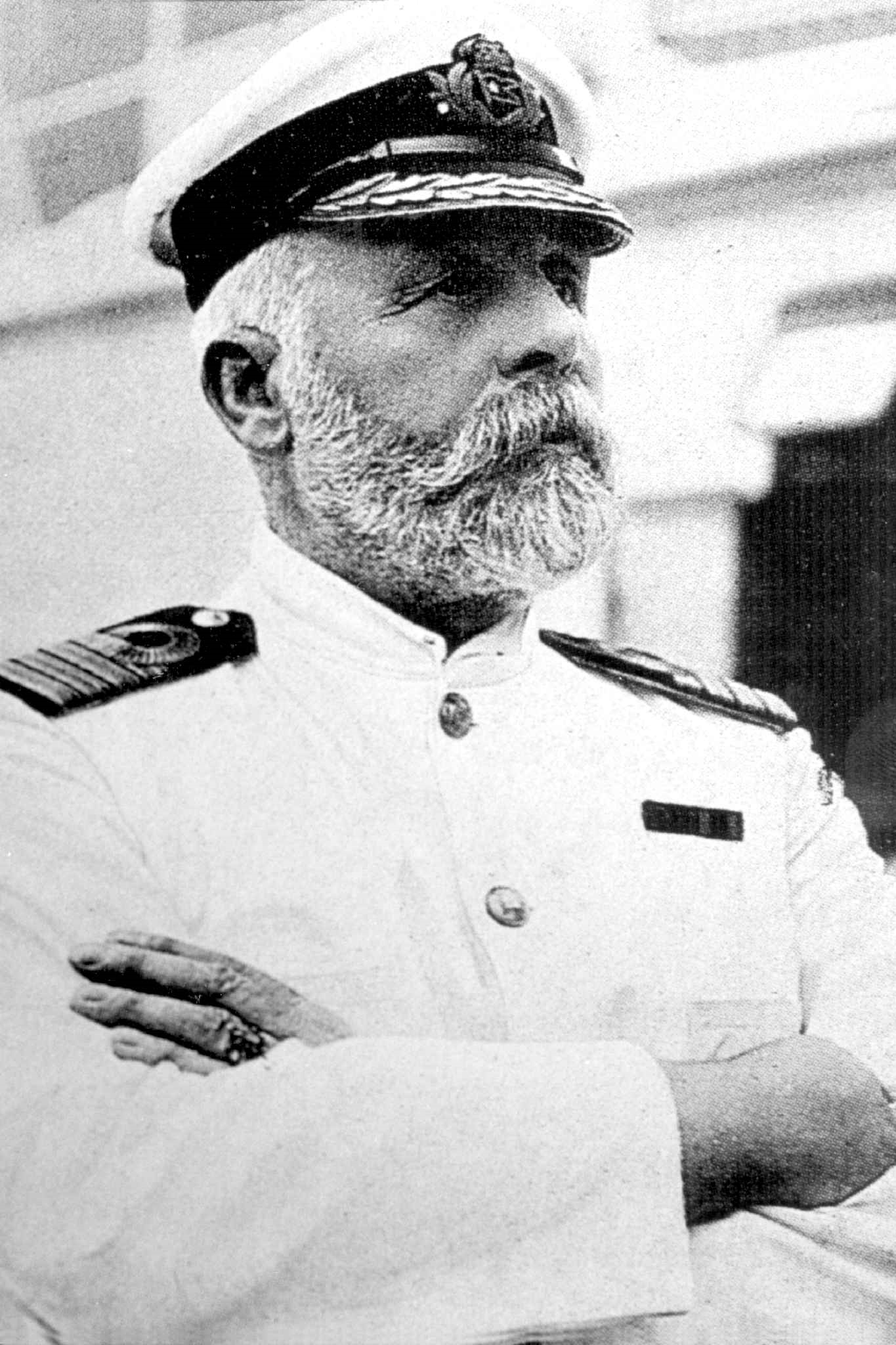
The Titanic’s Captain, Edward Smith, her was blinded by his faith in shipbuilding technology and had said about the Adriatic which he commanded previously, “I cannot imagine any condition which would cause a ship to founder. I cannot conceive of any vital disaster happening to this vessel. Modern ship building has gone beyond that.” A Senator Said during the hearings about the sinking of her captain, “Overconfidence seems to have dulled the faculties usually so alert.”

The story of what happened to the great ship is as hard to believe now as it was then, but then incredible tragedies be they the loss of ships, aircraft, buildings or bridges, and even spacecraft always invoke such feelings. When I was told about the Space Shuttle Challenger blowing up in 1986 I remarked to the young soldier who brought me the news “don’t be silly Space Shuttles don’t blow up.”  Walter Lord, who was probably the most prolific historian and author of the Titanic disaster used to talk of the “if onlys” that haunted him about the sinking of Titanic: If only, so many if onlys. If only she had enough lifeboats. If only the watertight compartments had been higher. If only she had paid attention to the ice that night. If only the Californian did come…” 

Bruce Ismay

The word “if” probably the biggest two letter word that plagues human history, looms large in the tragedy of Titanic. The great ship, which was the largest ship and one of the fastest ocean liners of her time was the victim of her owner and operators hubris as much as she was that of the iceberg which sank her. The ship was heralded by Bruce Ismay, the Chairman and Managing Director of the White Star Line as unsinkable, a claim that was echoed in the press.

Her builders had no such illusions and protested the claims. Thomas Andrews the Managing Director of Harland and Wolff Shipyards where she was built commented “The press is calling these ships unsinkable and Ismay’s leadin’ the chorus. It’s just not true.” 

Titanic was designed with the latest shipbuilding innovations, watertight compartments, a double bottom and equipped with wireless. She was billed as “unsinkable” by her owners but those innovations as advanced as they were for her day were insufficient to save her when her Captain and owners chose to charge through a known ice field at full speed.  Her watertight compartments did not extent far enough up the hull to prevent water from going over them.  Likewise it was never imagined that so many watertight compartments could be compromised.

Thomas Andrews

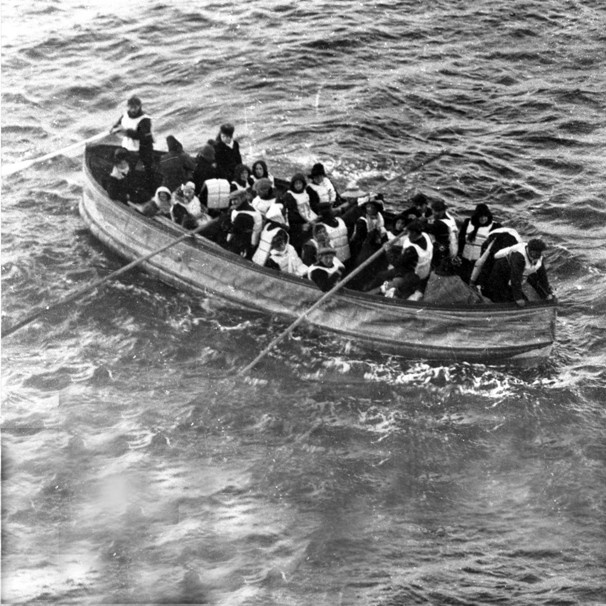
As far as lifeboats, the great ship carried far too few. Thomas Andrews, her builder wanted 64 had his arm twisted to bring the number to 32 and Titanic sailed with only 20 of which 4 were collapsible boats smaller than smaller lifeboats. Justifying himself under antiquated regulations (which were written for ships of 10,000 tons) which allowed just 16 boats J. Bruce Ismay the Director of White Star Line told Andrews:

“Control your Irish passions, Thomas. Your uncle here tells me you proposed 64 lifeboats and he had to pull your arm to get you down to 32. Now, I will remind you just as I reminded him these are my ships. And, according to our contract, I have final say on the design. I’ll not have so many little boats, as you call them, cluttering up my decks and putting fear into my passengers.” 

If only the Californian had come. Californian was the nearest vessel to Titanic and in easy wireless range. However her wireless was unmanned, she did not have enough operators to man it 24 hours a day.  Her lookouts saw Titanic but despite flares being fired from Titanic she never assumed Titanic to be in extremis. The next nearest ship, Carpathia heard the call and made a valiant attempt to reach Titanic but was too late.

If only…so many “if onlys” and so many traceable to one man, the Director of White Star Line J. Bruce Ismay.  Thomas Andrews would go down with the ship but Ismay ensured his own survival. Ismay is symbolic of men who allow their own hubris, vanity and power to destroy the lives of many.  He is so much like those that helped bring about the various economic crises that have wracked the United States and Western Europe and so many other tragedies.

After the disaster the tragedy was investigated by the United States Senate, as well as the British Board of Trade. However, the inquiry of the latter was condemned by the White Star Line’s Archivist, Paul Louden-Brown. He noted: “I think the enquiry is a complete whitewash. You have the [British] Board of Trade in effect enquiring into a disaster that’s largely of its own making.”

Ismay and Titanic are symbols of men guided only by their quest for riches and glory who revel in their power and scorn wise counsel or regulation, government or otherwise. They often believe that rules don’t apply to them. It is a cautionary tale for us today as corporations, lobbyists, and politicians seek to dismantle sensible and reasonable safety and environmental regulations for the sake of their unmitigated profit. Today we are seeing the Trump administration doing all that it can to strip away important safety, workplace, and environmental regulations in order to maximize profits.

But the warning goes far beyond that, it applies to any of us who adopt the mindset, “this cannot happen to us.” After all, there are times when we all end up as victims of our own hubris, such is the human condition.

Until tomorrow,

Peace

Padre Steve+

1 Comment

Filed under History, News and current events, Political Commentary

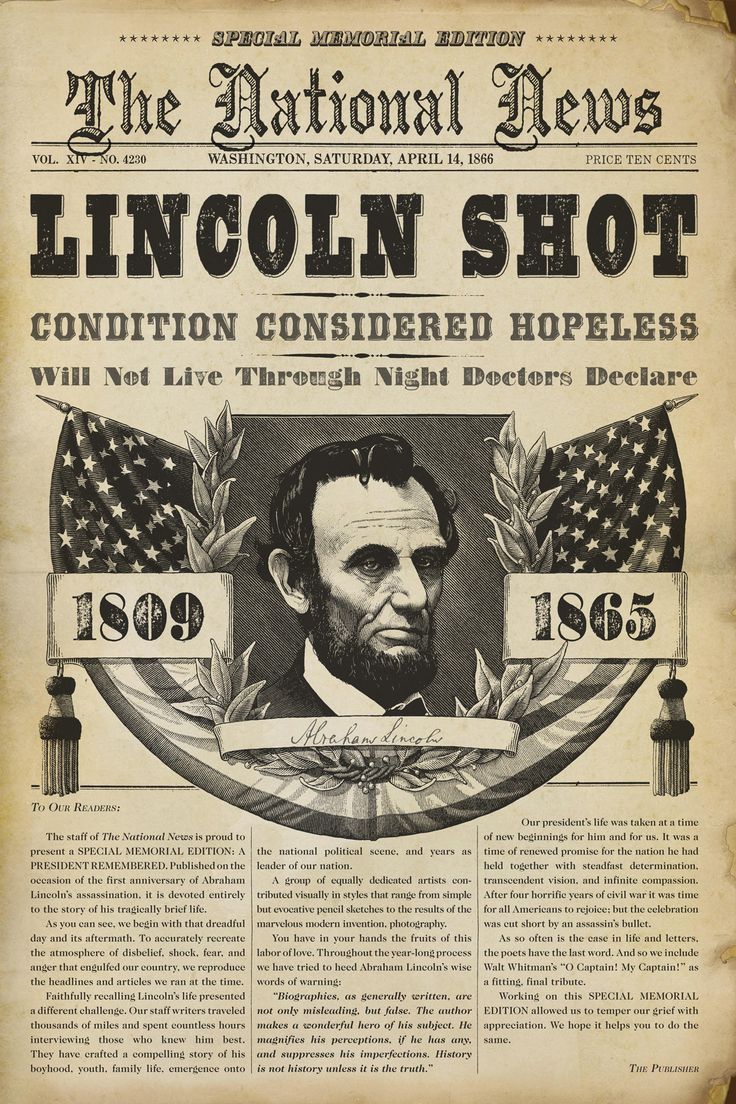
America’s Terrible Good Friday: The Assassination of Abraham Lincoln

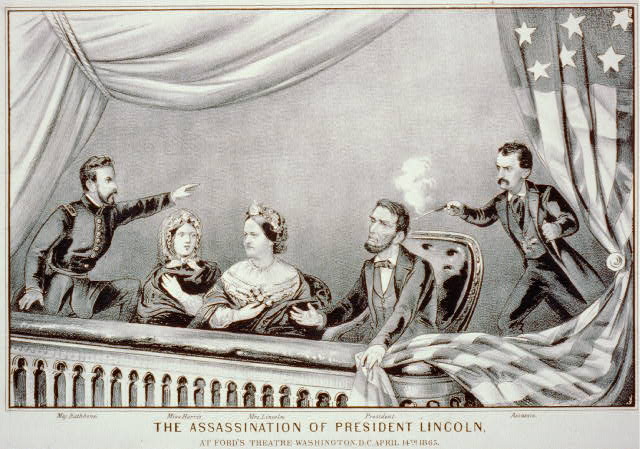
Good Friday is somber day, and I think that there was none more somber than Good Friday 1865. Shortly after 10 P.M. at Ford’s theater a handsome and well known actor walked into the booth occupied by President Lincoln at Washington’s Ford’s Theater. The President was there with his wife Mary Todd Lincoln and another couple after a very full day of business to watch the play Our American Cousin a farcical look at the visit of an American visiting his English relatives when going to settle the family estate.

Lincoln was looking forward to the play. Though the war continued the surrender of Robert E. Lee’s Army of Northern Virginia to Ulysses S. Grant on April 9th for all intents and purposes had placed the final nail in the Confederacy’s malevolent coffin, and it was if a burden have been removed from Lincoln’s shoulders. His task now what the reintegration of the rebellious states back into the Union, a task that he believed needed to be accomplished without malice while still seeking justice. He made this clear in his Second Inaugural Address just over a month before:

“With malice toward none, with charity for all, with firmness in the right as God gives us to see the right, let us strive on to finish the work we are in, to bind up the nation’s wounds, to care for him who shall have borne the battle and for his widow and his orphan, to do all which may achieve and cherish a just and lasting peace among ourselves and with all nations.”

Just three days before Lincoln had given his last public speech at the White House. It was a practical speech dealing with the nuts and bolts reuniting the country including announcing his support for Negro Suffrage. He said:

“By these recent successes the re-inauguration of the national authority — reconstruction — which has had a large share of thought from the first, is pressed much more closely upon our attention. It is fraught with great difficulty. Unlike a case of a war between independent nations, there is no authorized organ for us to treat with. No one man has authority to give up the rebellion for any other man. We simply must begin with, and mould from, disorganized and discordant elements. Nor is it a small additional embarrassment that we, the loyal people, differ among ourselves as to the mode, manner, and means of reconstruction.”

In the speech Lincoln discussed the issues related to the new government of Louisiana and its dealings with African Americans, which did not go far enough for Lincoln, who was intent on extending the franchise to vote for all blacks, even if it took time to make it so. John Wilkes Booth was in attendance that day and as he listened he became ever angrier and he vowed to a fellow conspirator Lewis Powell, “That is the last speech he will make” and Booth was going to ensure this himself.

Lincoln had been troubled for some time by terrible insomnia and dreams, both bizarre and ghoulish. A few days before he had told Mary and others sharing dinner with them of a troubling dream which he described in detail, Mary and those at the table so accustomed to Lincoln’s customary wit and humor were stunned as Lincoln spoke. He closed the description with these words:

“Determined to find the cause of a state of things so mysterious and shocking, I kept on until I entered the East Room, which I entered. There I was met with a sickening surprise. Before me was a catafalque, on which rested a corpse wrapped in funeral vestments. Around it were stationed soldiers who were acting as guards; and a throng of people, some gazing mournfully at the corpse, whose face was covered, others weeping pitifully: ‘Who is dead in the White House?’ I demanded of one of the soldiers. ‘The President’ was the answer; ‘he was killed by an assassin!’ “Then came a loud burst of grief from the crowd…” 

Mary and the others were so upset, particularly with the large number of death threats Lincoln had received throughout the war. However, Lincoln told them all not to worry as “it was only a dream.”

On that Good Friday Lincoln was determined not to mourn, instead of attending Good Friday services or contemplating the war, or reconstruction, he simply wanted to laugh and chose to attend the play, wanting General Grant and his wife to attend. However Grant needed to travel to New Jersey and declined the offer.

Despite this Lincoln was in a cheerful mood, looking forward to the future and discussing all the things that he wanted to see and do after his term in office. Mary was startled by his cheerfulness and Lincoln told her “I have never felt better in my life.” Lincoln and his party arrived late to the cheers of the cast and took their seats in the box about 8:30 to the strains of Hail to the Chief. As the play resumed Lincoln’s bodyguard slipped away to get a drink and about twelve minutes after ten Booth slipped into the box where Lincoln sat watching the play. As the crowd roared its delight at a particularly funny scene a shot rang out and Lincoln’s arm jerked up and he slumped over. Booth then jumped to the stage from the box, injuring his leg and shouting “Sic semper tyrannis” or thus always to tyrants. It was the beginning of a series of attempted assassinations designed to decapitate the Federal government, Secretary of State Seward was badly wounded by Lewis Payne, a third assassin backed out at the last minute and failed to attack Vice President Johnson.

Though physicians sought to save the President the wound was mortal, the bullet having ender the back of his head, and dug deep into his brain, lodging behind his left eye. At 7:22 A.M. Abraham Lincoln was dead. It was a disaster for the nation as the new President, Andrew Johnson was a political enemy of Lincoln and not in line with Lincoln’s understanding of reconstruction and reconciliation. A poor Southerner from Tennessee, Johnson hated the Southern plantation aristocracy and would act as a punisher, while radical reconstructionist members of the cabinet and Congress would act in such a way that reconstruction would never achieve all that Lincoln believed that it could.

While radical Confederates rejoiced in Lincoln’s death others were more circumspect. Jefferson Davis who was fleeing and hoping to continue the war realized that the South would not fare as well under Johnson as Lincoln. In fact Johnson’s lack of understanding of the nuances of northern politics as well as his loathing of blacks, his “beliefs, prejudices, personality traits were a recipe for disaster at a time when an unprecedented national crisis put a premium on the capacity to think in new and creative ways.”

The Army of the Potomac learned of Lincoln’s assassination on Easter Sunday. Joshua Chamberlain told a woman whose mansion was at the center of his division’s camp when she asked what disturbed him “It is bad news for the South.” When the woman asked if it was Lee or Davis Chamberlain told her that it was Lincoln and said “The South has lost its best friend, Madam.” 

Chamberlain ordered chaplain to conduct a field memorial for the fallen President. The division chaplain a Catholic Priest, Father Egan spoke and roused the men, and Egan ended his service “Better so, Better to die glorious, than live infamous. Better to be buried beneath a nation’s tears, than to walk the earth guilty of the nation’s blood.”

During the war Lincoln had endeared himself to his soldiers and they responded with great emotion. One burst into tears and sobbed “He was our best friend. God bless him,” another wrote home “What a hold Old Abe had on the hearts of the soldiers of the army could only be told by the way they showed their mourning for him.” Admiral David Dixon Porter wrote “The United States has lost the greatest man she ever produced.” 

The bullet fired by John Wilkes Booth was a disaster for the country. Sadly, there are some today, in particular the White Supremacist group The League of the South are choosing to celebrate the assassination of the man that they so hate, and honor the assassin as a hero. However, I have to agree with Admiral Porter, there has never been a President before or after who was anything like this man, and I dedicate myself to the quest for equality of all people and for a reconciliation. I will continue to work for that “new birth of freedom” that Lincoln so believed in.

Peace

Padre Steve+

1 Comment

Filed under civil war, History

The Day Freedom Died: The Colfax Massacre

Friends of Padre Steve’s World,

One hundred and forty-four years ago today one of the worst acts of terrorism against Americans by Americans was conducted by members of the White Leagues, a violent white supremacist group in Louisiana. This is from one of my Civil war texts and it is something not to forget in an age where violence against racial and religious minorities is again raising its head.

Have a good day,

Peace

Padre Steve+

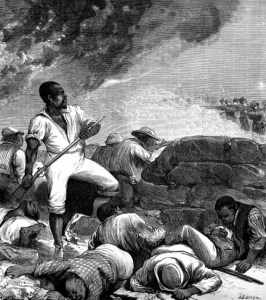
The violence against Southern blacks escalated in the wake of the passage of the Fourteenth and Fifteenth Amendments and with the increasing number of blacks being elected to office in some Southern states during the elections of 1872. In Louisiana a Federal court ruled in favor of Republican Reconstruction candidates following a Democrat campaign to interfere with the vote, which included attacks on polling sites and the theft of ballot boxes. As a result the Louisiana Democrats “established a shadow government and organized paramilitary unit known as the White League to intimidate and attack black and white Republicans.” [1]

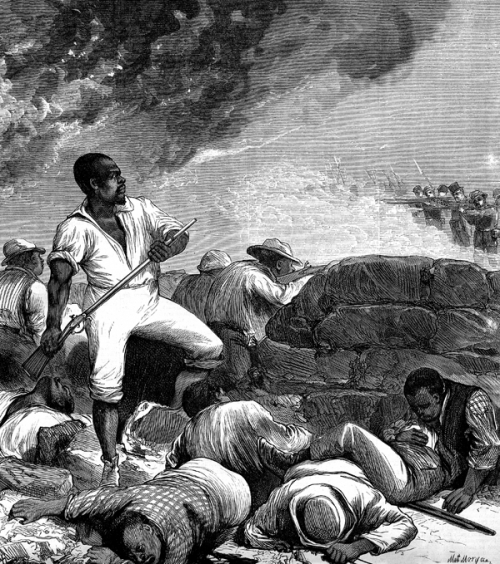
The White League in Louisiana was particularly brutal in its use of violence. The worst massacre committed by the White League occurred Easter Sunday 1873 when it massacred blacks in Colfax, Louisiana. Colfax was an isolated nondescript hamlet about three hundred fifty miles northwest of New Orleans. It sat on the grounds of a former plantation whose owner, William Calhoun, who worked with the former slaves who were now freedmen. The town itself “composed of only a few hundred white and black votes” [2] was located in the newly established Grant Parish. The “parish totaled about 4,500, of whom about 2,400 were Negroes living on the lowlands along the east bank of the Red.” [3] Between 1869 and 1873 the town and the parish were the scene of numerous violent incidents and following the 1872 elections, the whites of the parish were out for blood.

White leaders in Grant Parish “retaliated by unleashing a reign of terror in rural districts, forcing blacks to flee to Colfax for protection.” [4] The blacks of parish fled to the courthouse seeking protection from a violent white mob following the brutal murder of a black farmer and his family on the outskirts of town. The people of Colfax, protected by just a few armed black militiamen and citizens deputized by the sheriff took shelter in the courthouse knowing an attack by the White Supremacists was coming.  As the White League force assembled one of its leaders told his men what the day was about. He said, “Boys, this is a struggle for white supremacy….There are one hundred-sixty-five of us to go into Colfax this morning. God only knows who will come out. Those who do will probably be prosecuted for treason, and the punishment for treason is death.” [5] The attack by over 150 heavily armed men of the White League, most of whom were former Confederate soldiers, killed at least seventy-one and possibly as many as three-hundred blacks. Most of the victims were killed as they tried to surrender. The people, protected by just a few armed men were butchered or burned alive by the armed terrorist marauders. It was “the bloodiest peacetime massacre in nineteenth-century America.” [6]

The instigators of the attack claimed that they acted in self-defense. They claimed that “armed Negroes, stirred up by white Radical Republicans, seized the courthouse, throwing out the rightful officeholders: the white judge and sheriff” and they claimed that the blacks had openly proclaimed “their intention to kill all the white men, they boasted they would use white women to breed a new race.” [7] The claims were completely fabricated, after sending veteran former army officers who were serving in the Secret Service to investigate, the U.S. Attorney for Louisiana, J.R. Beckwith sent an urgent telegram to the Attorney General:

“The Democrats (White) of Grant Parish attempted to oust the incumbent parish officers by force and failed, the sheriff protecting the officers with a colored posse. Several days afterward recruits from other parishes, to the number of 300, came to the assistance of the assailants, when they demanded the surrender of the colored people. This was refused. An attack was made and the Negroes were driven into the courthouse. The courthouse was fired and the Negroes slaughtered as they left the burning building, after resistance ceased. Sixty-five Negroes terribly mutilated were found dead near the ruins of the courthouse. Thirty, known to have been taken prisoners, are said to have been shot after the surrender, and thrown into the river. Two of the assailants were wounded. The slaughter is greater than the riot of 1866 in this city. Will send report by mail.” [8]

Federal authorities arrested nine white men in the wake of the massacre and after two trials in which white majority juries were afraid to go against public opinion, three were “convicted of violating the Enforcement Act of 1871.” [9] None were convicted of murder despite the overwhelming evidence against them and even the lesser convictions enraged the White Supremacists in Louisiana who had employed the best lawyers possible and provided them and the defendants with unlimited financial backing. Assisted by the ruling of Supreme Court Associate Justice Joseph Bradley, who had a long history of neglecting Southern racism, white Democrats appealed the convictions to the Supreme Court.

The attack, and the court cases which followed, notably the judgment of the Supreme Court in United States v. Cruickshank which dealt with the appeal of the men responsible for the Colfax Massacre led to a “narrowing of Federal law enforcement authority” and were “milestones on the road to a “solid” Democratic South.” [10] The decision of the court in United States v. Cruikshank was particularly perverse in its interpretation of constitutional rights and protections. The court ruled in favor of the terrorists and declared that “the right of the black victims at Colfax to assemble hand not been guaranteed because they were neither petitioning Congress nor protesting a federal law. Assembling for any other cause was not protected.” [11] The Cruikshank decision amounted to a Supreme Court endorsement of violence against blacks, and made it “impossible for the federal government to prosecute crimes against blacks unless they were perpetrated by a state and unless it could prove a racial motive unequivocally.” [12] Northern politicians and newspapers, reeling under the effects of the stock market crash of 1873, which had denounced the massacre just a year before now ran from the story and from support of African Americans. A Republican office holder wrote, “The truth is, our people are tired out with this worn cry of ‘Southern outrages…. Hard times and heavy taxes make them wish the ‘nigger,’ the ‘everlasting nigger,’ were in hell or Africa.” [13] Racism and race hatred was not exclusively the parlance of the South.

In the wake of Justice Bradley’s reversal of the Colfax convictions whites in Grant Parish engaged in brutal reprisals against blacks, leading to many murders and lynching’s, crimes which law enforcement, even that favorable to the rights of African Americans were afraid to prosecute for fear of their own lives. Louisiana’s Republican Governor, William Pitt Kellogg wrote Attorney General Williams blaming the violence on Bradley’s ruling, which he wrote, “was regarded as establishing the principle that hereafter no white man could be punished for killing a negro, and as virtually wiping the Ku Klux laws of the statute books.” He added that with the Army leaving the state that his government and other Reconstruction governments would fall, “if Louisiana goes,” Kellogg wrote, “Mississippi will inevitably follow and, that end attained, all the results of the war so far as the colored people are concerned will be neutralized, all the reconstruction acts of Congress will be of no more value than so much waste paper and the colored people, though free in name, will be practically remitted back to servitude.” [14] Governor Kellogg could not have been more correct.

In the years that followed many of the men involved in the massacre and other murders before and after were hailed as heroes, some, including the leader of the attackers, Christopher Columbus Nash were again appointed to office in Colfax and Grant Parish and blacks were reminded every day of just what they had lost. On April 13th 1921 the men who committed the massacre were honored with a memorial in the Colfax cemetery honoring them as “Heroes… who fell in the Colfax Riot fighting for White Supremacy.” In 1951 the State of Louisiana Department of Commerce and Industry dedicated a marker outside the Courthouse which read: “On the site occurred the Colfax Riot in which three White men and 150 Negroes were slain, this event on April 13, 1873 marked the end of Carpetbag misrule in the South.” [15] That marker still stands, there is no marker commemorating the victims.

Other massacres followed across the South, aimed at both blacks and their white Republican allies. In Louisiana the White League had some 14,000 men under arms, in many cases drilling as military units led by former Confederate officers. A White League detachment southwest of Shreveport “forced six white Republicans to resign their office on pain of death – and then brutally murdered them after they had resigned.” [16] This became known as the Coushatta Massacre and it was a watershed because for the first time the White League targeted whites as well as African Americans. The violence, now protected by the courts ensured that neither would last long in the post-Reconstruction South and that the freedom of African Americans in those states would amount to a cruel illusion.

In 1875, President Ulysses S. Grant including comments about the Colfax massacre and the subsequent court decisions in his message to Congress. Grant was angry and wrote: “Fierce denunciations ring through the country about office-holding and election matters in Louisiana…while every one of the Colfax miscreants goes unwhipped of justice, and no way can be found in this boasted land of civilization and Christianity to punish the perpetrators of this bloody and monstrous crime.” [17] President Grant, the man who so wanted to help African Americans attain the full measure of freedom, was unable to do more as the Congress and Courts took sides with the Southern insurgents.

Notes

[1] Ibid. Foner Forever Free p.151

[2] Ibid. Langguth After Lincoln p.312

[3] Ibid. Lane The Day Freedom Died p.42

[4] Ibid. Goldfield America Aflame p.493

[5] Ibid. Lane The Day Freedom Died p.91

[6] Ibid. Goldfield America Aflame p.493

[7] Ibid. Lane The Day Freedom Died p.11

[8] Ibid. Lane The Day Freedom Died p.22

[9] Ibid. Goldfield America Aflame p.494

[10] Ibid. Lane The Day Freedom Died p.251

[11] Ibid. Langguth After Lincoln p.314

[12] Ibid. Goldfield American Aflame p.494

[13] Ibid. Lane The Day Freedom Died p.213

[14] Ibid. Lane The Day Freedom Died p.217

[15] Ibid. Lane The Day Freedom Died pp.261-262

[16] Ibid. McPherson The War that Forged a Nation p. 185

[17] Ibid. Lane The Day Freedom Died p.228

4 Comments

Filed under civil rights, civil war, History, Political Commentary

Missiles and Messages: What is Trump trying to Convey?

Friends of Padre Steve’s World,

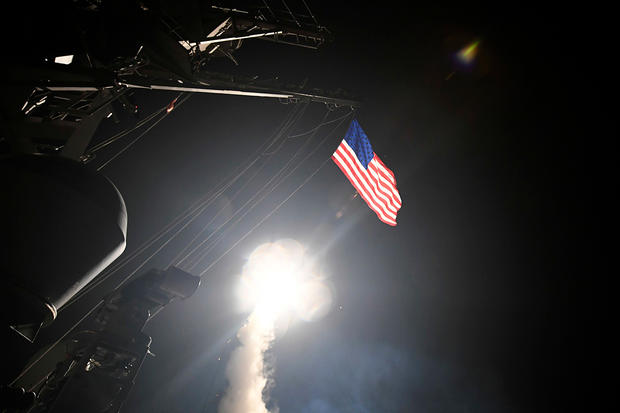
If nothing else the events of last week, in particular President Trump’s decision to launch missiles at a Syrian airbase in response to Syria’s renewed use of poison gas on its own population sent a message to different leaders around the world. What that message is and how effective that it is depends on who heard it and how they interpreted it.

The actual type of strike was nothing new and it certainly was justified in relation to war crimes of the Assad regime. President Clinton used similar strikes as punitive measures against Iraq in the 1990s, President Bush used them against various targets outside of Iraq, and opting for a full invasion of that country. While President Obama tended to be more hesitant about the missile strikes he often used Special Forces and drones in many countries pursuant to the 2001 Authorization for the Use of Force pertaining to the War on Terror, he did use missile and air strikes in conjunction with NATO to help Libyan rebels overthrow the Ghaddafi regime.

That being said what is the message that the President was attempting to send, and how does it fit into a larger foreign policy and national security strategy? That is where my concerns lie in regard to this strike. As for me I would have loved to see a Tomahawk fly up Bashir Assad’s ass and blow him to the Hell of his choice, if Ghaddafi and Saddam deserved death, then Assad deserves it many times more. It’s probably a good thing that I’m not President because I think that those 60 Tomahawks would have been much more wisely employed by taking out Assad’s Presidential Palace and maybe taking out him in the process, but there would have been a much bigger blowback to that than striking the airfield, but I digress…

Going back to what I was saying, how does this fit into a broader foreign policy and national security strategy?

The timing of the strike, minutes after the final dinner between President Trump and Chinese President Xi Jinping certainly sent a message to China and North Korea who it might have been the real audience. If the strike forces China to take stronger action to assist the United States in reducing the building North Korean nuclear threat, then it will have served a worthwhile purpose. A Chinese newspaper reported that this was the intent of the strike just yesterday.

But the effect depends on the rationality of the targeted audience. The Chinese are a rational actor, but the North Koreans may not be, so we have to wait and see. In the meantime the Administration dispatched the USS Carl Vinson carrier strike group to Korea waters to coincide with a time of the year when the North Koreans typically become more active.

There is also the possibility that the message was also intended for Putin’s Russia, the Assad regime, and even Iran, but right now other than a few statements by U.N. Ambassador Nikki Haley there has not been any real follow up to the strike. Secretary of State Tillerson is going to Moscow this week so we may glean more from that meeting.

Of course there is the domestic political audience and based on how the Trump campaign and administration has dealt with truth there is the possibility that this is much more to do about Trump’s plunging poll ratings and as a distraction from the ballooning Russia-Trump election scandals.

Regardless of what message the missile strike was intended to convey, we still don’t know how it will play out and it could play out in any number of ways, good or bad, and it might even turn out to be an act of genius, I doubt the latter but it is a possibility.

That is why the Trump and his administration must determine what its policy will be, especially its diplomatic policy. The President must keep all options on the table, diplomatic, informational, military, and economic, but he must be very judicious in how he uses them. Believe me, I can disagree with and distrust the President all day long, but I don’t want him to screw this up. Too much is at stake.

Peace

Padre Steve+

1 Comment

Filed under Foreign Policy, middle east, Military, national security, News and current events, Political Commentary

Books and Dogs, Key Ingredients for a Happy and Less Stressful Life

Reading can be Difficult 

Friends of Padre Steve’s World,

I spent much of last week moving my books from my office at the Staff College to my new one across town. Mind you, these are not my only books, just the ones I have in my office because I have no room for them at home. But as I moved them I was again reminded just how important that they are to me.

No matter where I am I live my life surrounded by books. I prefer real books, I love turning pages, marking my place, and picking up where I left off. Of course I also use my Kindle app on my iPad mini and I have quite a few books on it. It’s handy for when I travel and sometimes the prices cannot be beat for hard to find or out of print books.


I usually am reading three to six books any given time, usually with one or more of my Papillon puppies, usually Izzy, but sometimes Minnie or our youngest, Pierre, at my side. Groucho Marx one remarked “Outside of a dog, a book is man’s best friend. Inside of a dog it’s too dark to read.” I am sure that is a true statement but having never attempted to read a book inside a dog I can only base my knowledge on the observation of Vetrinarian science and Groucho Marx, but That being said there are some times when the pups can make trying to read a challenge, but I digress…

Honestly I cannot imagine life without books or my dogs, both have been a source of solace to me. I find that books allow my imagination to grow independent of the needless urgency of cable news and the mindlessness of much of what we call entertainment. Barbara Tuchman wrote:

“Books are the carriers of civilization. Without books, history is silent, literature dumb, science crippled, thought and speculation at a standstill. Without books, the development of civilization would have been impossible. They are engines of change (as the poet said), windows on the world and lighthouses erected in the sea of time. They are companions, teachers, magicians, bankers of the treasures of the mind. Books are humanity in print.” 

This is important as books do more for us, our culture, and our knowledge than any number of films, television shows, or news specials. A good author can paint the pictures of people, places, and events so well that when you actually go there, as if by a sixth sense you know where you are going and you can see the events transpire before your eyes. I hope that what I write may be so well written that no pictures are necessary to convey images that I present. There are those that say that a picture is worth a thousand words, but I would say that sometimes a well written sentence or paragraph is worth more than a million pictures. 

Back in 1996 I led a number of history tours to Wittenberg, Mainz, Worms, and Heidelberg to study Martin Luther and the Reformation in Germany. This was before there was much on the internet and before most people had reliable access to it, so all there were were books. As we walked through Wittenberg it came alive, and as I described the events at each place I had a number of people ask how many times I had been there. My comment to each was that though it was my first time there I had read so much that I could see the events and the places in my mind’s eye long before I ever walked the narrow street from the Schlosskirche to the Luther Oak. I had the same kind of experience at Marburg Castle where Luther held his futile discussions with Swiss Reformation leader Ullrich Zwingli, as well as many other historical sites, including Gettysburg with which I am so familiar. The work of so many historians to paint portraits with their words makes it so easy to visualize people, places, and events by just closing ones eyes and opening ones imagination. I think that sometimes our nearly limitless amounts of pictures and videos serves to limit our imagination. 

Judy and I have been watching Ken Burns Civil War this weekend, of course with Minnie, Izzy, and Pierre all about us; but what has struck me were the descriptions of the conflict by those who witnessed it. The written descriptions of leaders, soldiers, slaves, battles, and what were then technological marvels by those who were there are more than amazing, especially since photography was in infancy during the war and film or video not yet imagined. 

So for now I will say have a good day, and if you can please take the time to turn off the television, stop surfing the internet, and pick up a good book. 

Peace

Padre Steve+

2 Comments

Filed under Loose thoughts and musings