Author Archives: padresteve

padresteve's avatar

About padresteve

I'm a Navy Chaplain and Old Catholic Priest

Read, Observe, or Pee on the Electric Fence

Friends of Padre Steve’s World,

The great American humorist Will Rogers once said, “There are three kinds of men. The one that learns by reading. The few who learn by observation. The rest of them have to pee on the electric fence for themselves.”

I wish that more people would take time to read and reflect than to allow themselves to be force fed by their televisions. Timothy Snyder in his book On Tyranny:

“More than half a century ago, the classic novels of totalitarianism warned of the domination of screens, the suppression of books, the narrowing of vocabularies, and the associated difficulties of thought. In Ray Bradbury’s Fahrenheit 451, published in 1953, firemen find and burn books while most citizens watch interactive television. In George Orwell’s 1984, published in 1949, books are banned and television is two-way, allowing the government to observe citizens at all times. In 1984, the language of visual media is highly constrained, to starve the public of the concepts needed to think about the present, remember the past, and consider the future. One of the regime’s projects is to limit the language further by eliminating ever more words with each edition of the official dictionary.”

I am slowing down my writing for the next few days to spend more time thinking, reflecting, reading and observing. I have been writing a lot on the Civil War, Civil Rights and Reconstruction, as well as the Nazi era, totalitarianism and their importance today. I will continue to do that but I am going to slow down a bit, and for the next week or so the articles here will be slightly edited posts from the archives so I can catch up on some reading and do some reflecting. Of course if something really notable happens I will probably at least comment on it, but for now I want to pull back a bit and read.

I do this because as a historian I known that for all of our great advances, especially in the form of technology that the character of people, the nature of humanity remains fairly constant. Technology may change the way we look the world, how we gather information, how and what we produce, how we fight wars, and even how we relate to each other, but humanity remains the same. Our forms of government and even religious faith may evolve, but the character of humanity is the one constant.

There has been a lot going on in this country and around the world and the one thing that I notice is that few seem to be taking the time to observe and seem to be more interested in immediately framing the events of the day into their particular ideology. This tendency is not limited to any one segment the population and goes across ideological divides.  We live in a time of great political and social upheaval and drastic change and if we are to ride out the storm we must continue to learn and not be satisfied with the banal and insipid sound bites that the Unholy Trinity of pundits, politicians and preachers spew out as wisdom.  The pundits, politicians and preachers who cite history usually do so completely out of context and do so in the form of bad analogies rather than by using any semblance of deductive or inductive reasoning.

Our culture has for the most part abandoned any serious attempt at learning. Schools teach to standardized tests, state school boards ensure that textbooks include nothing too controversial; universities sacrifice faculty and academic programs to prop up bloated administration and non-academic programs. We are consumers of corporate owned news networks that consider their programing entertainment and value market share more than truth. American philosopher Eric Hoffer quite rightly said, “In a time of drastic change it is the learners who inherit the future. The learned usually find themselves equipped to live in a world that no longer exists.” But sadly many people, including learned people who should know better and who have great responsibility in political, economic and even education, are content to live in a world that no longer exists.  

Over the past few months I have plowed through a number of books including David Halberstam’s The Best and the Brightest, H.R. McMaster’s Dereliction of Duty, Deborah Lipstadt’s Denying the Holocaust,  Mark Bowden’s Hue 1968, and Volker Ullrich’s Hitler: Ascent 1889-1939.  All are very substantial volumes. Additionally I am almost finished reading German historian Paul Carrel’s Unternehem Barbarossa im Bild (Operation Barbarossa in Pictures) in which the text is in German. I am also about sixty percent of the way through Max Boot’s The Toad Not Taken: Edward Lansdale an the American Tragedy in Vietnam.  My goal over the next week or so is to finish reading the last two books and to take on Ron Chernow’s massive biography of Ulysses S. Grant, and David Frum’s Trumpocracy: The Corruption of the American Republic. 

Learning comes from reading, observation and experience. Otto Von Bismarck, one of the most remarkable statesmen that ever lived said, “only a fool learns from his own mistakes, a wise man from the mistakes of others,” while Arthur Wellesley, the First Duke of Wellington and victor of Waterloo wrote, “Wise people learn when they can; fools learn when they must.”

I for one would rather not be one of those that learn by the last named method.  Learning from my mistakes has never been enjoyable and has usually been quite painful, but then as the late Baltimore Orioles Manager Earl Weaver said, “It’s what you learn after you know it all that counts.”

While I know I will make mistakes and hope to learn from them when I do I would much rather learn from the mistakes of others. Let’s hope that our leaders decide to actually pay attention and learn instead of making us pay for their mistakes. Sadly, I think that most people, especially those who claim to be leaders would rather pee on the electric fence themselves.

Anyway, it is time to do some reading and reflecting.

Peace

Padre Steve+

1 Comment

Filed under History, Loose thoughts and musings, philosophy

“The First Duty of Every Officer is to the Truth”

Friends of Padre Steve’s World,

Most of my readers know that in addition to being a Priest and Navy Chaplain that I am a historian and have taught both ethics and Gettysburg as a faculty member at a Staff College. Many of the men and women that I taught will lead our military as commanders, planners and staff officers. I stay in contact with a number of my former students, including two from South Korea. Now I still write even as I lead the staff at one of the Navy’s largest and most active Chapel programs.

Since I figure that this will be my last duty station before I retire my goal is to help guide those who work with me to success in the military and set them up for success when they leave the military. They are a great group, I could not ask for better and when I have a bad day or seem to be off in some way I have given them permission to ask how I am doing and to ask me hard questions. I give them permission to tell me the truth. A lot of leaders won’t do that, but I try to be transparent and honest with them because I know that they have my back and we do a pretty good job at caring for people and doing the right thing.

As such my first duty, whether it is in teaching, writing or in ministry is to the truth. In fact I quoted Captain Jean Luc Picard, played by Sir Patrick Stewart in Star Trek the Next Generation: “the first duty of every Starfleet officer is to the truth, whether it’s scientific truth, historical truth or personnel truth…” I am not a Starfleet Officer but as an officer nonetheless I have always believed that the truth matters, but sadly I, like so many of us have turned the other way and not spoken out. But the older I get the more I realize that I cannot be silent about subjects that at one time I turned a blind eye to because they were uncomfortable, unpopular or might hurt my career either in the church or in the military.

I have been writing a lot over the past few months about subjects that many people are controversial and as such many people are uncomfortable with those topics. Whether the issue is civil rights, racism, Gay rights and marriage equality, voting rights, religious freedom and religious intolerance, and even xenophobia, or the connection of symbols such as the Confederate Battle Flag to a heritage that goes to a hatred that extends far beyond the battlefields of the Civil War; I am speaking out. Now I am fully aware of that many of these subjects are controversial. I have been asked in comments on this site and on my various social media accounts, particularly Facebook, why I keep bringing up the uncomfortable past. But I have to, I have a duty to the truth and as Oscar Wilde noted “The truth is rarely pure and never simple.”

The late Howard Zinn, a brilliant historian whose work at one time I discounted, said: “But I suppose the most revolutionary act one can engage in is… to tell the truth.” Who would think that telling the truth could or would be a revolutionary act? However, when one lives in a society where the truth is bent, run over and shredded by politicians, preachers and pundits, what I call the Trinity of Evil; when state school boards whitewash history and force their religious views on children in public schools; where corporations and advertisers use the most crass means to deceive customers; and where established science is not met with denial under the guise of “skepticism;” telling the truth is a revolutionary affair.

The honest truth is that I never expected to be a revolutionary in terms of what so much of society, especially the conservative Christian movement that I spent much of my life in expects. Truthfully, upholding tradition, and for that matter defending myth, is much easier when backed by the certitude of an unbending theology and political is much easier than asking the hard questions. Barbara Tuchman once wrote: “The reality of a question is inevitably more complicated than we would like to suppose.” I guess that is why so many people would rather be content with myth than to ask the really hard questions; be they about history, religion, and science or for that matter anything. One of the must uncomfortable things to admit is that truth is always evolving as we learn more, it is dynamic, not static and to attempt to force people to live by the “truth” of our ancestors is disingenuous, dishonest and denies the reality of the universe that we live. Thomas Jefferson recognized this and wrote:

“I know also, that laws and institutions must go hand in hand with the progress of the human mind. As that becomes more developed, more enlightened, as new discoveries are made, new truths disclosed, and manners and opinions change with the change of circumstances, institutions must advance also, and keep pace with the times. We might as well require a man to wear still the coat which fitted him when a boy, as civilized society to remain ever under the regimen of their barbarous ancestors.” 

So why do I write? I write so that we never forget or push aside the great evils that human beings are capable of committing: The Holocaust, slavery and Jim Crow, the extermination of Native Americans by the millions in the name of God and Manifest Destiny, the enslavement, exploitation, and sometimes the extermination of whole peoples by colonialism; the witch trials, the religious wars of the Reformation, the Inquisition, the Chinese Cultural Revolution, Stalin’s purges, the Tuskegee experiments, the Japanese barbarity in the Rape of Nanking and other places in Asia, the Srebrenica genocide and the Rwandan genocide, just to name a few.

All too often the perpetrators of those events and their descendants as all too willing to last the past lie dormant. But at what cost do we do so? Do we sacrifice justice on the altar of prosperity and peace; do we sacrifice uncomfortable truth in order to remain undisturbed and comforted by myth? Do we condemn our descendants to live under the myths of our ancestors? Would we sacrifice the truth and justice in order to ensure obedience? Howard Zinn correctly observed, “Historically, the most terrible things – war, genocide, and slavery – have resulted not from disobedience, but from obedience.”

President John F Kennedy spoke these words at Yale in 1962: “The great enemy of truth is very often not the lie–deliberate, contrived and dishonest–but the myth–persistent, persuasive and unrealistic. Too often we hold fast to the cliches of our forebears. We subject all facts to a prefabricated set of interpretations. We enjoy the comfort of opinion without the discomfort of thought.”

Personally I would rather ask the questions and confront the past so we might have a better future, because though I am a realist, I also believe in my heart that humanity is capable of overcoming hatred, prejudice and ignorance. The problem is that times get difficult those attitudes can overcome our better nature. As Spencer Tracy’s character in the movie Judgment at Nuremberg said:

“But this trial has shown that under a national crisis, ordinary – even able and extraordinary – men can delude themselves into the commission of crimes so vast and heinous that they beggar the imagination. No one who has sat through the trial can ever forget them: men sterilized because of political belief; a mockery made of friendship and faith; the murder of children. How easily it can happen. There are those in our own country too who today speak of the “protection of country” – of ‘survival’. A decision must be made in the life of every nation at the very moment when the grasp of the enemy is at its throat. Then, it seems that the only way to survive is to use the means of the enemy, to rest survival upon what is expedient – to look the other way. Well, the answer to that is ‘survival as what’? A country isn’t a rock. It’s not an extension of one’s self. It’s what it stands for. It’s what it stands for when standing for something is the most difficult! Before the people of the world, let it now be noted that here, in our decision, this is what we stand for: justice, truth, and the value of a single human being.”

That my friends, is why I write: for justice, truth, and the value of a single human life.

Peace

Padre Steve+

1 Comment

Filed under ethics, faith, film, History, News and current events, Political Commentary

Manstein’s Counter Stroke: Turning Certain Defeat into Victory

Friends of Padre Steve’s World,

I’m pullings something out of my archives today. It’s actually a paper I wrote for one of my Masters Degree Classes back in 2009 that I decided to post on the site. I have been reading Paul Carrell’s Unternehem Barbarossa Im Bild (Operation Barbarossa in Pictures) in German I decided to repost it today.  I could probably do more with it but except for more biographical work on Von Manstein I don’t expect that I will. For me character matters more than battlefield brilliance.

The article deals with the crisis that the German armies faced following Stalingrad and how Field Marshal Erich von Manstein succeeded in talking Adolf Hitler out of certain defeat and inflicting a massive defeat on the now overconfident and over extended Soviet armies.

Von Manstein was a brilliant strategist, his bold plan to conquer France in 1940 was a masterpiece, and his conduct of combat operations on the Eastern Front until his relief in March of 1944 for withdrawing (and saving) his armies from Soviet destruction without Hitler’s approval. Von Manstein was a brilliant commander at the operational level of war, but he also gave his approval and support to war crimes committed by the SS Einsatzgruppen against the Jews and others in his area of operations. He believed that Bolshevism and the Jews were linked, thus in his codicil to Von Reichenau’s Severity Order in November 1941 stated:

“Jewish Bolshevik system must be wiped out once and for all and should never again be allowed to invade our European living space … It is the same Jewish class of beings who have done so much damage to our own Fatherland by virtue of their activities against the nation and civilisation, and who promote anti-German tendencies throughout the world, and who will be the harbingers of revenge. Their extermination is a dictate of our own survival.”

He is a complex character, he defended German Jews in the Reichswehr yet went on to cooperate in the deaths of hundreds of thousands of Jews in Russia. There is a decent possibility that he had some Jewish ancestry, he opposed the Aryan Paragraph which banned Jews from serving in the German armed forces telling General Ludwig Beck that anyone who had volunteered to serve had already proved their worth. Though tried and convicted of war crimes he was given an early release from prison at the behest of Winston Churchill, Konrad Adenauer and other notables; and went on to advise the German government on the organization of the new Bundeswehr. His post war writings were highly critical of Hitler and for the most part he succeeded in rehabilitating himself. When he died in 1973 at the age of 85 he was the last surviving German Field Marshal and was buried with full military honors .

He was a brilliant commander and strategist, but he aided and abetted one of the most criminal regimes in history. The German magazine Der Spiegel wrote of him: “He assisted in the march to catastrophe—misled by a blind sense of duty.”

My concern today is if American Generals will be misled by their blind sense of duty and assist in a march to catastrophe.

Until tomorrow,

Peace,

Padre Steve+

Introduction

After Stalingrad the Soviets followed up on their success and attempted to entrap the rest of Army Group South. Field Marshall von Manstein attempted to save the Army Group and perhaps prevent the Soviets from collapsing the entire German front.
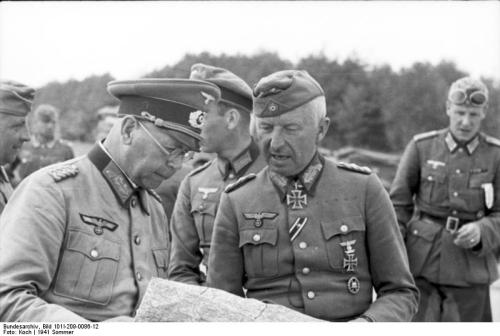
Bild 101I-209-0086-12Manstein (center) planning at the front

Chaos and Peril in the South

As 6th Army died at Stalingrad field Marshall von Manstein was faced with one of the most challenging situations faced by any commander in modern times.  He faced strategic and operational “problems of a magnitude and complexity seldom paralleled in history.”[i] Manstein had to deal with a complex military situation where he had minimal forces to counter the moves of a superior enemy force that was threatening to entrap all German forces in southern Russia. Additionally Manstein had to deal with the “Hitler’s obstinate opposition to a maneuver defense and a Red Army flushed with the victory of Stalingrad.”[ii]Facing him were the six Russian armies of the Voronezh and Southwestern Front’s led by Mobile Group Popov[iii]. These Armies had broken through the Hungarian and Italian armies “making a breach 200 miles wide between the Donetz and Voronezh, and were sweeping westward past Manstein’s flank.”[iv]
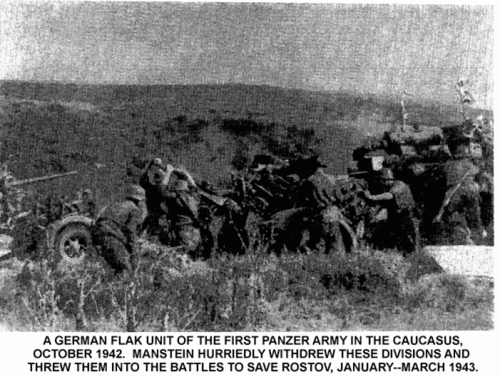
flak in caucasus

The most dangerous threat that Manstein faced was to Army Group A in the Caucasus. This Army Group “found itself in danger of being cut off, forcing an immediate withdraw.”[v] Disaster was averted by the desperate holding actions of Manstein’s meager forces, Army detachment’s Fretter-Pico and Hollidt, and winter conditions that made “offensive operations extraordinarily difficult, even for the hardiest Soviet troops.”[vi] A smart withdraw executed by General von Kleist managed to extricate the Army group “just as the Stalingrad forces collapsed.”[vii] To parry the Soviet thrusts the Germans lacked forces to “establish a deeply echeloned defense” and “instead combined maneuver… with stubborn positional defense to give artificial depth to the battlefield.  In this way the Germans were able to break major Soviet attacks, preventing catastrophic breakthroughs….”[viii] The timely introduction of a battalion of Tiger tanks prevented the Russians from breaking through to Rostov and “cutting the rail and road lines on which First Panzer Army’s retreat depended.”[ix] Even so the escape of the Army Group was narrow. “In terms of time, space, force, and weather conditions it was an astonishing performance-for which Kleist was made a field-marshal.”[x] With the Russians only 70 kilometers from Rostov and his own forces 650 kilometers from that city Kleist executed a withdraw “which had appeared hardly possible to achieve.”[xi] The divisions extricated by Kleist would be instrumental in the coming weeks as Manstein moved to counter the Soviet offensive.

Ostfront, Adolf Hitler, Erich v. Manstein

Hitler and Manstein

Despite the successful withdraw the situation was still precarious in early February, Manstein had no effective contact with his left wing, the bulk of which was tied to Kharkov, The Russians had “virtually complete freedom of action across a fifty-mile stretch of the Donetz on either side of Izyum.”[xii] Manstein was hard pressed to “halt the raids of Mobile Group Popov and other exploiting Soviet tank corps in Operation Gallop.”[xiii] Manstein’s forces in the eastern sector had been divided by Russian penetrations, which threatened 1st Panzer Army’s western flank and blocked the Army Group’s main railway line.[xiv] On 15 February “the SS Panzer Corps withdrew from Kharkov-in spite of orders from Hitler…that the city was to be held to the last.”[xv] SS General Paul Hausser, the corps commander realized that the order to hold Kharkov was impossible and requested permission to withdraw. This was was refused by General Lanz. Under pressure from encircling Russian forces outside and from partisans inside the city, Hausser disobeyed the order and extricated his troops,[xvi] thereby saving thousands of German soldiers and preserved the SS Panzer Corps as a fighting unit.[xvii] Lanz was relieved by Hitler for the loss of Kharkov and although Hausser would escape immediate censure, “Hitler did see it as a black mark against his name.”[xviii] With Kharkov in Soviet hands the gap between Manstein’s army group and Field Marshal von Kluge’s Army Group Center increased to over 100 miles.[xix] It appeared that the entire German southern flank was disintegrating.  Manstein estimated the ratio of German to Soviet forces in his area at 1:8.[xx] He believed that the Soviets could advance and subsequently “block the approaches to the Crimea and the Dnieper crossing at Kherson” which would “result in the encirclement of the entire German southern wing.”[xxi] Popov’s Mobile Group crossed the Donets and reached Krasnoarmeiskaia by 12 February. Vatutin committed two additional fresh tank corps toward Zaporozhe, a critical transport node which was also the location of Manstein’s headquarters.[xxii]
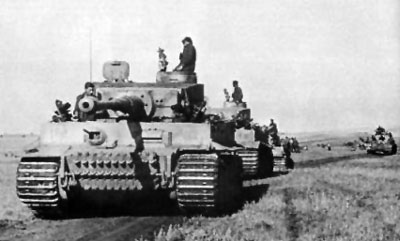
SS-Tiger-LSAH-01Tiger Tanks assigned to 1st SS Panzer Division

Hitler arrived to consult with Manstein on 17 February and remained for three days with Soviet forces perilously close.  Manstein only had some flak units and the Army Group Headquarters Company between him and Popov’s advanced elements. On Hitler’s last day “some T-34’s approached to within gun range of the airfield.”[xxiii]

The conference of Hitler with Manstein at Zaporozhe as well as a previous conference at the Wolfsschanze on 6 February was critical to the development of Manstein’s plan to restore the front. Manstein had now gotten both the 1st and 4th Panzer Armies across the Don, and “with this striking force, he felt confident of smashing the Russian offensive if he was given a free hand to withdraw from the line of the Donetz, evacuate Rostov and take up a much shorter front along the Mius river.”[xxiv] The conference on the 6th was one of the “rare moments in the war where Hitler authorized a strategic withdraw on a major scale.”[xxv] Yet as the Russians continued to advance Hitler became concerned and came to Zaporozhe.  At first Hitler would not concede to Manstein, as he wanted to assemble the SS Panzer Corps for an attack to recapture Kharkov.[xxvi]Manstein explained the need for a counter stroke and through much explanation was able to convince Hitler that the capture of Kharkov was not possible unless “we first removed the danger of the Army Group being cut off from its rear communications.”[xxvii]
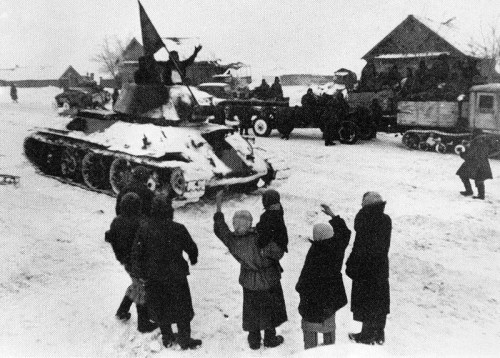
T34_Stalingrad-Offensive-px800Soviet formations advance

The Russian aim was now obvious[xxviii] and Manstein had correctly discerned their strategy.  Manstein knew that his Army Group had to hold the line on the Mius and then quickly defeat the enemy between 1st Panzer Army and Army Detachment Kempf[xxix] in “order to prevent its own isolation from the Dnieper crossings.”[xxx] The Soviets had outrun their logistics support and had suffered heavy losses of their own and had serious equipment shortages.[xxxi] Manstein explained to Hitler the opportunity offered as it was now the Russians who “were worn out” and far from their supply dumps as the Germans had been in November 1942.  Manstein “foresaw an opportunity to seize the operational initiative with a counter offensive of his own.  Manstein’s target was the Soviet armored spearheads, still careening southwestward between Kharkov and Stalino.”[xxxii] Manstein believed that when the Russian “spearhead lunged, as it must toward the crossings on the upper Dnieper,” then Hoth’s Army would be let loose again.  The three SS Panzer divisions could then “play their rightful role as avengers, and strike southeast to meet 4th Panzer Army, catching the Russian armour in a noose.”[xxxiii] Hitler agreed to Manstein’s plan and Manstein shifted 4th Panzer Army to assume control of the SS Panzer Corps, now reinforced by 3rd SS Panzergrenadier Division “Totenkopf.” Hitler reinforced Manstein and released 7 battle worn Panzer and motorized divisions for his attack.[xxxiv]

Soviet Miscalculation

It was now Stalin’s time to miscalculate. He and his subordinates “continued to believe that they were on the verge of a great victory. German defenses in southern Russia appeared to be crumbling and the Stavka sought to expand that victory to include Army Group Center.”[xxxv] To this end they diverted armies to the north and launched attacks in that direction.  However German defenses were stiff and the plan was “predicated on the assumption of continued offensive success further south.”[xxxvi] Reinforcements from Stalingrad failed to deploy and “Army Group Center’s defenses, prepared for the past year and a half proved formidable.”[xxxvii]

In the south Stalin saw the Dnieper and almost “heedlessly drove his armies towards what he thought would be the decisive victory on the banks of this huge Russian river,”[xxxviii] but, Soviet “ambitions exceeded their available resources and the skill of their commanders.”[xxxix] The SS Panzer Corps withdraw from Kharkov “further heightened the Soviet’s intoxication with victory”[xl] and confirmed their beliefs that the Germans were withdrawing.  Stalin believed that “it was inconceivable that Hitler’s Praetorian Guard would abandon Kharkov except as part of a general order to retreat.”[xli] He believed that the encirclement of Army Group South would lead to a chain reaction and quick way to victory over German forces in the east.  Believing that there was no way for the Germans to recover and establish a solid front on the Mius,[xlii] Stalin continued to drive his forces to attack, yet the Russian offensive in the south had reached what Clausewitz had called the “culminating point” and Stalin’s armies were now extremely vulnerable. “The weather, the devastated communications, and their own inexperience in maintaining the traffic density required to support a deep penetration on a narrow front had combined to force a dangerous dispersal of effort on the Russian advance which had broken down into four separate groups.”[xliii]

panzer ivfPanzers assembling to attack

The Soviet forces were now in a dangerous predicament being spread out across the entire south of Russia.  One group, composed of the 69th Army and 3rd Tank Army pushed against Army detachment Kempf west of Kharkov.  To the south the badly depleted 6th Army and 1st Guards Army were now “strung out down a long corridor they had opened between Izyum and Pavlograd,”[xliv] Mobile Group Popov was lagging further east near Krasnoarmeiskaia.   Additional units were isolated behind the front of Army Detachment Fretter-Pico and near Matveyev.  Soviet commanders believed that the Germans were in worse shape and that “the risks of dispersal were justified.”[xlv] They had not anticipated or made allowance for Manstein’s coolness under pressure and actions to preserve his armor while thinning his front “well past the accepted danger limit.”[xlvi]Likewise the Soviets did not know that the Germans had cracked the code used by the Southwest front and from 12 February on “were now privy to Popov’s and Vatutin’s thoughts,” now knowing precisely where the Russians would attack.[xlvii] Manstein had withstood temptation and Hitler’s pressure to use his reserves “for a direct defense of the Dnieper line.”[xlviii] As such he was prepared to launch a devastating counter-stroke against the dispersed and weakened Russian armies which were still advancing into the trap he planned for them. He had managed to “save his counteroffensive plan from Hitler’s shrill demands that the new reserves be thrown into battle piecemeal to prevent further territorial losses.”[xlix] The stage was now set for a two classic mobile operations.[l]

The Destruction of Mobile Group Popov, 6th Army and 1st Guards Army

Manstein launched his counter-stroke on 21 February against Popov’s Mobile Group using XL Panzer Corps under the command of General Henrici composed of the 7th and 11th Panzer Divisions and SS Motorized Division Viking. Popov’s Group was exposed. Popov had “succeed in cutting the railway from Dnepropetrovsk to Stalino and was itching to push further south to Mariupol on the Sea of Azov.”[li] The Soviets once again had failed to discern German intentions, believing that the Germans were retreating.[lii] Likewise the Soviet high command did not fully understand Popov’s situation. His force was weak in tanks and low on fuel and his Mobile Group was defeated in detail by the German Corps.  Popov’s immobilized tank and motorized rifle formations resisted desperately but were bypassed by the panzers.  The 330th Infantry Division mopped up the remnants of these formations.[liii] The key battles took place around the town of Krasnoarmeiskaia and the battle became a running battle between that town and the Donets River.[liv] Popov requested permission to retreat, but still believing the Germans to be retreating Vatutin gave a categorical “no.” The terrain in the area was “almost completely open”[lv] and “Popov’s proud Armoured Group was cut up like a cake.”[lvi] Popov extricated some of his units but “only after serious losses in manpower and equipment.”[lvii] Despite this it would not be until the 24th that Vatutin would order a halt to offensive operations.[lviii]

kharkovSS Panzers in Kharkov

As Popov sought to get his units out of the German scythe Manstein set his sights on 6th Army, 1st Guards Army and 25th Tank Corps which was approaching Zaporozhe.[lix] He assigned the task to Hoth’s 4th Panzer Army and its XLVIII Panzer Corps under General Knobelsdorf composed of the 6th and 17th Panzer Divisions and the SS Panzer Corps comprising SS Divisions LiebstandarteDas Reich and Totenkopf.[lx] Manstein gave Hoth a brief but explicit order: “The Soviet Sixth Army, now racing towards Dnepropetrovsk through the gap between First Panzer Army and Army Detachment Kempf, is to be eliminated.”[lxi] The XLVIII Panzer Corps and SS Panzer Corps were unleashed against the exposed flank of the 6th Army and 1st Guards Army.   XLVIII Panzer Corps quickly “seized bridgeheads over the Samara River, and prepared to move north into the rear of the exhausted Soviet Sixth Army.”[lxii] The two Panzer Corps then made a coordinated concentric attack northwest which “came as a complete surprise to the Russians.”[lxiii] Das Reich thrust deep into the flank of 6th Army supported by Stukas from Richthofen’s 4th Air Fleet.  This attack dislodged one Soviet Rifle Corps and destroyed another allowing the division to capture Pavlograd while XLVIII Panzer Corps led by 17th Panzer Division pushed from the south linking up with the SS Corps. This cut off the Soviet 25th Tank Corps and threatened 6thArmy.[lxiv] What followed was a disaster for the Russians.        Despite overwhelming evidence to the contrary the Stavka and Front commanders still believed that the Germans were retreating.  6th Army was ordered to continue its advance by the front commander who believed that the two German Panzer Corps were withdrawing.[lxv] In a few days the 17th Panzer Division “gained the Izyum-Protoponovka sector on the Donetz River, while the SS Panzer Corps took Losovaya and established contact with Army Detachment Kempf, which had joined the attack from the west.”[lxvi] XL Panzer Corps with the 3rd and 7thPanzer Divisions and 333rd Infantry Division joined in the attack on Popov’s remaining forces completing their destruction.[lxvii] As Hoth and Hausser converged on Pavlograd, Das Reich and Totenkopf “swung left to the east and then wheeled back north again running parallel to the Russian divisions fleeing from Forty-eighth Panzer Corps. What ensured was a turkey shoot.”[lxviii]Fleeing Russian forces on the open steppe were visible and engaged at long range.[lxix] Leibstandarte helped by holding the left flank against Russian counter attacks from the units now isolated in the west,[lxx] and Totenkopf’sgrenadiers fanned out supported by Stukas to “kill or capture as many Russians as possible.”[lxxi] By 1 March the Russian penetrations had been eliminated. Popov’s Mobile Group was smashed, 6th Army and 1st Guards Army badly mauled. 25th Tank Corps and three Rifle divisions had to be completely written off and numerous other corps and divisions took heavy casualties.  Two additional corps, encircled before the offensive began were eliminated by German forces.[lxxii] The Germans counted 23,000 Russian dead on the battlefield, and Manstein noted that “the booty included 615 tanks, 354 field pieces, 69 anti-aircraft guns and large numbers of machine guns and mortars.”[lxxiii] The Germans only took 9,000 prisoners as they were too weak, especially in infantry to seal off the encircled Soviet forces.[lxxiv] Yet the forces that escaped they were in no condition to “block the continued progress of the Panzers and SS.”[lxxv] Now there was a 100 mile gap in the Russian lines with nothing no troops to fill it and only “General Mud” could stop the Germans.[lxxvi] Manstein was not yet finished and the next phase of his operation against the Soviet formations west of Kharkov and that city were about to commence.

The Destruction of 3rd Tank Army

With the immediate threat to his Army Group eliminated and having regained the initiative, Manstein and Army Group South now “proceeded to deliver the stroke against the ‘Voronezh Front’– i.e. the forces located in the Kharkov area.”[lxxvii] But the Russians had not been idle. In order to attempt to assist 6thArmy 3rd Tank Army moved two tank corps and three Rifle divisions south and these ran into Manstein’s advancing panzers.[lxxviii] Manstein’ noted his objective now was “not the possession of Kharkov but the defeat-and if possible the destruction of the enemy units located there.”[lxxix] Between March 1st and 5th his forces advanced on Kharkov. Not knowing the Germans dispositions[lxxx]3rd Tank Army made the mistake of moving between the Leibstandarte’s defensive positions and the attacking divisions of the SS Panzer Corps. Hausser wheeled Totenkopf around and completed an encirclement of these units near Bereka on 3 March.[lxxxi] The Russians made futile attempts to break out but the SS Divisions tightened the noose around them and they were eliminated by the SS Panzer Corps which “engaged in concentric attacks during the three days of hard fighting.”[lxxxii] Even Regimental commanders like Heinz Harmel of Das Reich’s Der Fuhrer regiment became engaged in close combat with the Russians.[lxxxiii] The battle was fought in “snowstorms whose intensity caused the SS severe privations.”[lxxxiv] Totenkopf and Das Reich slammed the Russians “back against the Tiger tanks and assault guns of the Leibstandarte.”[lxxxv] The elimination of these units netted another 12,000 Russians killed,[lxxxvi] knocking “out the last remaining obstacle between the Germans and Kharkov.”[lxxxvii]

Return to Kharkov and Controversy

Manstein turned his attention to Kharkov, supported by Richthofen’s 4th Air Fleet which for the last time in Russia “provided undisputed air superiority for a major German mechanized operation.”[lxxxviii] He decided to “roll up the enemy from the flank and force him away from Kharkov in the process.”[lxxxix]He ordered a “pincer on the town, sending Grossdeutschland around to the north with a reinforced Kempf detachment and the combined force of Hoth and the SS to attack the town from the south and rear.”[xc] Manstein planned to make a wide envelopment to avoid embroiling his panzers in costly urban combat stating “that at all costs the Army Group wished to avoid Kharkov’s becoming a second Stalingrad in which our assault forces might become irretrievably committed.”[xci] To this end he sent Das Reich and Totenkopfapproaching from the south to west of the city[xcii] while XLVIII Panzer Corps swung east toward the Donetz.[xciii] As Hoth’s forces came up from the south to envelope the city, Grossdeutschland and the XI and LI Corps fought the Russians to the north and west,[xciv] eventually moving up to Belgorod.  By 8 March lead elements of the SS Panzer Corps were on the outskirts of the city.

At this point there is some controversy as to German actions. As noted Manstein wished to avoid urban combat and desired to surround the city and force its surrender.  According to one writer Hoth ordered Hausser “to seal off the city from the west and north and to take any opportunity to seize it.”[xcv] Others including Glantz and House and Murray and Millett state that Hausser “ignored a direct order” and attacked into the city.[xcvi] Manstein does not explicitly say that there was a direct order but notes that the Army Group “had to intervene vigorously on more than one occasion to ensure that the corps did not launch a frontal attack on Kharkov.”[xcvii] Sydnor states that Hausser ignored a direct order by Hoth on the 11th by detailing a battalion of Totenkopf to assist Das Reich and Leibstandarte in retaking Kharkov by direct assault. The order entailed pulling Das Reich out of the city and taking it to the east.[xcviii] Lucas adds that this order came in the midst of hard fighting in the city and could not be carried out by the division.[xcix]Carell notes that on 9 March Hoth instructed Hausser that “opportunities to seize the city by a coup are to be utilized,”[c] and goes into detail regarding how Hoth’s 11 March order applied to Das Reich. It was to be pulled out of action and brought east, but division was heavily engaged and in the process of breaking through Soviet defenses “quicker in fact than if he had pulled “Das Reich” out of the operation and led it all the way round the city along those terrible muddy and time wasting roads.”[ci] In the end the SS took Kharkov, Manstein said that the city “fell without difficulty”[cii] while others note the difficulty of the action and the casualties suffered by the SS.  Kharkov’s capture; the defeat of Rokossovsky’s campaign against Orel and the beginning of the spring Rasutitsa ended the winter campaign and stabilized the front.

Analysis

The Russian winter offensive following Stalingrad had great potential.  Manstein said: “the successes attained on the Soviet side, the magnitude of which is incontestable.”[ciii] The greatest Soviet shortcomings were inexperience in conducting deep mobile operations and the inability of their logistics system to keep up with their advance.  Clark notes that this was their “first experience of an offensive war of movement on a large scale.[civ] Glantz and House are not alone in noting that the “Stavka continued to undertake operations that were beyond its resources.”[cv] Murray and Millett state that they “lacked the operational focus that had marked the Stalingrad offensive.”[cvi] Had they had the resources and ability to execute their plans they might have destroyed all German forces in the south.  They misread German intentions based on their own over-optimistic expectations opened their forces to Manstein’s devastating counter stroke.  Von Mellenthin, possibly showing some prejudice commented that the Russian soldier “when confronted by surprise and unforeseen situations he is an easy prey to panic.”[cvii]

The Germans snatched victory out of what appeared to be certain defeat aided by Russian mistakes and operational shortcomings.  Manstein refused to panic and conserved his forces for his counterattack.[cviii] Kleist brought his Army Group out of what might have been encirclement worse than Stalingrad.  Hitler for the most part gave Manstein operational freedom which he had not provided other commanders.  German Panzer forces conducted mobile operations against superior enemy armored forces and bested them.  Landsers held their own in at critical junctures, especially on the Mius and gave Manstein the opportunity to employ the panzers in the mobile defense.[cix] The Luftwaffe recovered its balance and the coordinated operations between it and German ground forces gave them an edge at a point where the Red Air Force was unable to support the Red Army.[cx] Above all the Germans still maintained the edge in both overall quality of generalship, especially that of Manstein and Kleist, but not to exclude Hoth, Hausser and lower level commanders.  Additionally the average German soldier still maintained an edge over his Soviet adversary in the confusion of mobile operations in open terrain.   Manstein and his forces gave Hitler breathing room on the eastern front.[cxi] As Clark notes: “few periods in World War II show a more complete and dramatic reversal of fortune than the fortnight in February and the first in March 1943…it repaired its front, shattered the hopes of the Allies, nipped the Russian spearhead. Above all it recovered its moral ascendancy.”[cxii]

Notes 


[i] Von Mellenthin, F.W. Panzer Battles: A Study of the Employment of Armor in the Second World War. Translated by H. Betzler, Ballantine Books, New York, NY, 1971. Originally Published University of Oklahoma Press, 1956. p245

[ii] Glantz, David M. and House, Jonathan. When Titans Clashed: How the Red Army Stopped Hitler. University Press of Kansas, Lawrence, KS. 1995. p.143

[iii] Ibid. Glantz. P.143. These units include 3rd Tank Army, 1st and 3rd Guards Armies and the 6th, 40th and 69th Armies.

[iv] Liddell-Hart. B.H. Strategy.  A Signet Book, the New American Library, New York, NY 1974, first published by Faber and Faber Ltd. London, 1954 and 1967. p.253

[v] Raus, Erhard. Panzer Operation: The Eastern Front Memoir of General Raus, 1941-1945. Compiled and Translated by Steven H Newton. Da Capo Press a member of the Perseus Book Group, Cambridge, MA 2003. p.185

[vi] Murray, Williamson and Millett, Allan R. A War to Be Won: Fighting the Second World War, The Belknap Press of Harvard University Press, Cambridge MA. 2000. pp.291-292

[vii] Liddell-Hart, B.H. History of the Second World War. G.P. Putnam’s Son’s, New York, NY. 1970  p.478

[viii] Wray, Timothy A. Standing Fast: German Defensive Doctrine on the Russian Front in World War II, Prewar to March 1943. U.S. Army Command and General Staff College, Fort Leavenworth, KS. 1986. p.161

[ix] Ibid. Murray and Millett. p.292

[x] Ibid. Liddell-Hart, Second World War. p.479

[xi] Liddell-Hart, B.H. The German Generals Talk. Quill Publishing, New York, NY. 1979. Copyright 1948 by B.H. Liddell-Hart. pp.211-212.

[xii] Clark, Alan. Barbarossa: The Russian-German Conflict, 1941-45.Perennial, an Imprint of Harper Collins Books, New York, NY 2002. Originally published by William Morrow, New York, NY 1965. pp.299-300

[xiii] Glantz, David M and House, Jonathan. The Battle of Kursk.  University Press of Kansas, Lawrence, KS. 1999. p.11

[xiv] Manstein, Erich von. Lost Victories. Translated by Anthony G. Powell, Zenith Press, an imprint of MBI Publishing Company, St Paul, MN. 2004. First Published as Verlorene Siege Athenaum-Verlag, Bonn, GE 1955, English edition Methuen & Company Ltd. 1958  p.417

[xv] Ibid. Clark. p.300

[xvi] Carell, Paul. Scorched Earth: The Russian German War 1943-1944. Translated by Ewald Osers, Ballantine Books, New York, NY 1971, published in arrangement with Little-Brown and Company. pp.196-199

[xvii] Lucas, James. Das Reich: The Military History of the 2nd SS Division.Cassell Military Paperbacks, London, UK, 1999. First published by Arms and Armour, 1991. p.91  Glantz and House criticize Hausser saying that the SS Panzer Corps Staff lacked the experience to perform its mission.  (Titans Clashed p.144) Most other commentators agree with the necessity of his withdraw.

[xviii] Messenger, Charles. Sepp Dietrich: Hitler’s Gladiator. Brassey’s Defence Publishers, London, 1988. p.113

[xix] Ibid. Clark. p.300

[xx] Ibid. Manstein. p.419

[xxi] Ibid. Manstein. pp.418-419

[xxii] Ibid. Glantz and House. When Titans Clashed. p.144

[xxiii] Ibid. Clark. p.300

[xxiv] Ibid. Von Mellenthin. p.251

[xxv] Ibid. Carell. p.191

[xxvi] Ibid. Manstein. p.424.

[xxvii] Ibid. Manstein. p.428

[xxviii] Ibid. Liddell-Hart. Second World War. p.481

[xxix] This had previously been Army Detachment Lanz, but Lanz had bee relieved over the loss of Kharkov.

[xxx] Ibid. Manstein. p.429

[xxxi] Ibid. Murray and Millet. p.292

[xxxii] Ibid. Wray. p.162

[xxxiii] Ibid. Clark. p.302.

[xxxiv] Ibid. Glantz and House. When Titans Clashed. p.145

[xxxv] Ibid. Glantz and House. When Titans Clashed . pp.144-145

[xxxvi] Ibid. Glantz and House. When Titans Clashed. p.146

[xxxvii] Ibid. Murray and Millett. p.293

[xxxviii] Ibid. Carell. p.191

[xxxix] Ibid. Murray and Millett. p.292

[xl] Ibid. Carell. p.199

[xli] Ibid. Carell. p.199

[xlii] Ibid. Carell. p.193

[xliii] Ibid. Clark. p.303

[xliv] Ibid. Clark. p.304

[xlv] Ibid. Clark. p.304

[xlvi] Ibid. Clark. p.304

[xlvii] Ibid. Carell. p.210

[xlviii] Ibid. Liddell-Hart. Strategy p.253

[xlix] Ibid. Wray. p.163

[l] Ibid. Glantz and House. When Titans Clashed. p.147. Note comments by Glantz and House in footnote 31 on relative strengths of forces involved, especially the weakness of German forces.

[li] Butler, Rupert. SS Wiking: The History of the Fifth SS Division 1941-45.Casemate, Havertown, PA. 2002. p.93

[lii] Ibid. Carell. p.211

[liii] Ibid. Carell. p.210

[liv] Ibid. Glantz and House. When Titans Clashed. p.147

[lv] Ibid. von Mellenthin. p.253

[lvi] Ibid. Carell. p.210

[lvii] Ibid. Murray and Millett. p.293

[lviii] Ibid. Carell. p.213

[lix] Ibid. Glantz and House. When Titans Clashed. p.147

[lx] There is difference in various accounts as to which units composed these Panzer Corps. Von Mellenthin adds 11th Panzer to the XLVIII Panzer Corps and some accounts do not list the Liebstandarte as part of the SS Panzer Corps.

[lxi] Ibid. Carell. p.211

[lxii] Sydnor, Charles W. Soldiers of Destruction: The SS Death’s Head Division 1933-1945. Princeton University Press, Princeton NJ. 1977. p.268

[lxiii] Ibid. Von Mellenthin. p.252

[lxiv] Ibid. Carell. p.212

[lxv] Ibid. Carell. p.212

[lxvi] Ibid. Von Mellenthin. p.252

[lxvii] Ibid. Carell. p.213

[lxviii] Ibid. Sydnor. pp.268-269

[lxix] Ibid. Von Mellenthin. p.253

[lxx] Meyer, Kurt. Grenadiers. Translated by Michael Mende and Robert J. Edwards. J.J. Fedorowicz Publishing Inc. Winnipeg, Manitoba. Canada. 2001. pp.180-181

[lxxi] Ibid. Sydnor. p.269

[lxxii] Ibid. Manstein. p.433

[lxxiii] Ibid. Manstein. p.433. Sydnor lists an addition 600 anti-tank guns and notes that the tanks were almost all T-34s. (Sydnor. p.269)

[lxxiv] Ibid. Glantz and House. When Titans Clashed. p.147

[lxxv] Ibid. Clark. p.306

[lxxvi] Ibid. Carell. p.216

[lxxvii] Ibid. Manstein. p.433

[lxxviii] Ibid. Glantz and House. When Titans Clashed. p.187

[lxxix] Ibid. Manstein. p.433

[lxxx] Ibid. Meyer. p.181

[lxxxi] Ibid. Carell. p.216

[lxxxii] Ibid. Meyer. pp.181-182

[lxxxiii] Ibid. Lucas. p.95

[lxxxiv] Ibid. Lucas. p.95

[lxxxv] Ibid. Sydnor. p.277

[lxxxvi] Ibid. Manstein. p.434

[lxxxvii] Ibid. Sydnor. p.277

[lxxxviii] Ibid. Glantz and House. Kursk. p.13

[lxxxix] Ibid. Manstein. p.435

[xc] Ibid. Clark. p.306

[xci] Ibid. Manstein. p.435

[xcii] Ibid. Sydnor. p.278

[xciii] Weingartner, James. J. Leibstandarte SS Adolf Hitler: A Military History, 1933-45. Battery Press, Nashville, TN.(no publication date listed)  p.75

[xciv] Ibid. Raus. pp.189-192

[xcv] Ibid. Messenger. p.114

[xcvi] See Glantz and House p.187 and Murray and Millett p.293

[xcvii] Ibid. Manstein. p.436

[xcviii] Ibid. Sydnor. p.278

[xcix] Ibid. Lucas. p.96

[c] Ibid. Carell. p.216

[ci] Ibid. Carell. p.219

[cii] Ibid. Manstein. p.436

[ciii] Ibid. Manstein. p.437

[civ] Ibid. Clark. p.303

[cv] Ibid. Glantz and House. p.143

[cvi] Ibid. Murray and Millett. p.292

[cvii] Ibid. Von Mellenthin. p.254

[cviii] A comment by Von Mellenthin commenting on Manstein’s coolness in the conduct of his operations compares him to Robert E. Lee. “To find another example of defensive strategy of this caliber we must go back to Lee’s campaign in Virginia in the summer of 1864. (Von Mellenthin. p.245)

[cix] For some additional comments along these lines see vn Mellenthin who notes four points in regard to the counter stroke: 1. High level commanders did not restrict the moves of armored formations, but gave them long range tasks. 2. Armored formations had no worries about their flanks because the High Command had a moderate infantry force available for counterattacks. 3. All commanders of armored formations, including corps, conducted operations not from the rear, but from the front. 4. The attack came as a surprise regarding the time and place. (Von Mellenthin p.254)

[cx] Ibid. Murray and Millett. p.293

[cxi] Despite his success Hitler was not happy with Manstein in regard to giving up ground for operational purposes and Manstein would lose much of the freedom that he enjoyed by March. Wray has a discussion of this.  See Wray. pp.162-163.  The Nazi hierarchy actively promoted the exploits of the SS Panzer Corps and its leaders, especially the commander of the Leibstandarte Sepp Dietrich. (see Weingartner pp. 76-77) The recognition of Hausser would be delayed, some speculate as a result of his disobedience in giving up Kharkov in February.

[cxii] Ibid. Clark. p.306

Bibliography

Butler, Rupert. SS Wiking: The History of the Fifth SS Division 1941-45.Casemate, Havertown, PA. 2002

Carell, Paul. Scorched Earth: The Russian German War 1943-1944. Translated by Ewald Osers, Ballantine Books, New York, NY 1971, published in arrangement with Little-Brown and Company

Clark, Alan. Barbarossa: The Russian-German Conflict, 1941-45. Perennial, an Imprint of Harper Collins Books, New York, NY 2002. Originally published by William Morrow, New York, NY 1965

Glantz, David M and House, Jonathan. The Battle of Kursk.  University Press of Kansas, Lawrence, KS. 1999

Glantz, David M. and House, Jonathan. When Titans Clashed: How the Red Army Stopped Hitler. University Press of Kansas, Lawrence, KS. 1995

Liddell-Hart, B.H. The German Generals Talk. Quill Publishing, New York, NY. 1979. Copyright 1948 by B.H. Liddell-Hart.

Liddell-Hart, B.H. History of the Second World War. G.P. Putnam’s Son’s, New York, NY.

Liddell-Hart. B.H. Strategy.  A Signet Book, the New American Library, New York, NY 1974, first published by Faber and Faber Ltd. London, 1954 and 1967

Lucas, James. Das Reich: The Military History of the 2nd SS Division. Cassell Military Paperbacks, London, UK, 1999. First published by Arms and Armour, 1991

Manstein, Erich von. Lost Victories. Translated by Anthony G. Powell, Zenith Press, an imprint of MBI Publishing Company, St Paul, MN. 2004. First Published as Verlorene Siege Athenaum-Verlag, Bonn, GE 1955, English edition Methuen & Company Ltd. 1958

Messenger, Charles. Sepp Dietrich: Hitler’s Gladiator. Brassey’s Defence Publishers, London, 1988

Meyer, Kurt. Grenadiers. Translated by Michael Mende and Robert J. Edwards. J.J. Fedorowicz Publishing Inc. Winnipeg, Manitoba. Canada. 2001

Raus, Erhard. Panzer Operation: The Eastern Front Memoir of General Raus, 1941-1945. Compiled and Translated by Steven H Newton. Da Capo Press a member of the Perseus Book Group, Cambridge, MA 2003

Sydnor, Charles W. Soldiers of Destruction: The SS Death’s Head Division 1933-1945. Princeton University Press, Princeton NJ. 1977

Von Mellenthin, F.W. Panzer Battles: A Study of the Employment of Armor in the Second World War. Translated by H. Betzler, Ballantine Books, New York, NY, 1971. Originally Published University of Oklahoma Press, 1956

Weingartner, James. J. Leibstandarte SS Adolf Hitler: A Military History, 1933-45. Battery Press, Nashville, TN.(no publication date listed)

Wray, Timothy A. Standing Fast: German Defensive Doctrine on the Russian Front in World War II, Prewar to March 1943. U.S. Army Command and General Staff College, Fort Leavenworth, KS. 1986

3 Comments

Filed under History, leadership, Military, nazi germany, war crimes, world war two in europe

“Afraid of Words and Thoughts” Panic Engulfs the Trump Administration

Friends of Padre Steve’s World,

It seems like nearly every day we are treated to a new round of manic midnight tweeting by our President, usually because he has been criticized by someone or has went into a rage over after watching the conspiracy theorists and propagandists who support him.

He lashes out like a trapped animal the rage barely concealed by the power of his office. Even his official photograph looks like he is about to scream and rip someone’s head off. I have seen the official photos or portraits of every American President and while some show some sense of serious strength, none exude the anger that drips from the pixels of his photo.

In the past thirteen months I have observed that it is criticism of any kind that gets the President most worked up, it is as if his skin is so thin that any criticism will make him bleed. He shows all the signs of being a narcissistic personality, and seems to revel in his role as the enfant terribles of the Western World.

His response to criticism is that of the quintessential bully, or the abusive husband or father who cannot be criticized without fear of punishment. Now his temper is moved beyond attacking perceived enemies at home to threatening nuclear war in Korea, launching a trade war with our closest allies under the guise of national security, and protecting Vladimir Putin and Russia, foreign power that not only has set out to divide us, interfere with our elections, but which threatens us with new nuclear weapons.

He doesn’t fear power or institutions, he has done his best to undermine all three branches of government and has no respect for the Constitution.  He attacks and Yet at the same time he demonstrates a profound fear of words and ideas that he cannot control, thus his constant attempts to shut down debate, discredit democratic institutions, the institutions of government, the press, and even private citizens. Of course there is his unusual penchant for going after very same critics who have no power other than their ideas and the words that they speak.

I am reminded of Winston Churchill’s who wrote:

“You see these dictators on their pedestals, surrounded by the bayonets of their soldiers and the truncheons of their police … yet in their hearts there is unspoken fear. They are afraid of words and thoughts: words spoken abroad, thoughts stirring at home — all the more powerful because forbidden — terrify them. A little mouse of thought appears in the room, and even the mightiest potentates are thrown into panic.” 

That is what I believe we are seeing from our President and those closest to him. They have power, real power that with the exception of the courts, neither the Congress nor much of bureaucracy has not seen fit to check. Even so one after another they have resigned, been fired, or come under investigation. Reputations have been ruined by mere association with the President and others are imploding. Former associates are speaking with Special Prosecutor Muller, and he still lashed out berating and humiliating those

These are not the actions of a leader committed to the democratic ideals of our Republic nor the constraints of the Constitution, law, precedent, and tradition.

This is frightening to watch as the President more isolated than ever flails against enemies real and imagined while bringing the nation and world closer to a Götterdämmerung of the President and his party’s making, provided words do not fell him before he can.

Until tomorrow,

Peace

Padre Steve+

1 Comment

Filed under History, News and current events, Political Commentary

Adjusting to the Worship of Power: Evangelicalism in 2018

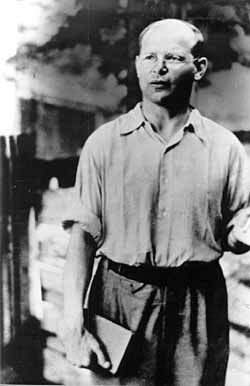
Dietrich Bonhoeffer 

Friends of Padre Steve’s World,

One of the most frightening things to me as a historian who happens of claim to be a Christian is the propensity for the Church and its leaders to be attracted to the worship of power and all of its folly. This has been the case since Constantine made Christianity the State religion of the Roman Empire. Leaders of the church in every place and clime as well as almost every denomination have cozied up to rulers in the pursuit of power almost always to the detriment the Church and sometimes their nation. The hierarchies of different churches were in the forefront of the extermination of supposed “heretics,” the persecution of non-state favored religions, the slave trade, the conquest, subjugation, and extermination of indigenous peoples in the Americas, Africa, parts of Asia; they were often the supporters of disastrous wars, and at home used their place of power to wealthy beyond all measure.

Conversely, on the occasions where the Church and its leaders have advocated for the poor, the marginalized, and others who had no earthly power it lead to advances in human rights and liberty. The abolition of slavery in Great Britain was led by William Wilberforce against heated opposition in Parliament and even the Church of England that spanned decades. During the period of the Industrial Revolution, some churches and Christians made a determined effort to end child labor, support workers’ rights, and advocate for the poor, but many others feasted upon the wealth that their rich benefactors lavished upon them and remained silent. Dr. Martin Luther King Jr. and other African American church leaders helped lead the Civil Rights movement and were joined by some white religious leaders, but many others, including men who were early leaders of the Christian Right opposed the Civil rights movement and used their pulpits to advocate for segregation. Many other just remained silent, just as their forbears had from Constantine one. Silence and the acquiescence to injustice has been a hallmark of the Christian church.

The German martyr Dietrich Bonhoeffer saw the disastrous effects of the German church’s subservience to the Nazi regime and before that to the Kaiser. He wrote:

“Christianity stands or falls with its revolutionary protest against violence, arbitrariness and pride of power and with its plea for the weak. Christians are doing too little to make these points clear rather than too much. Christendom adjusts itself far too easily to the worship of power. Christians should give more offense, shock the world far more, than they are doing now. Christian should take a stronger stand in favor of the weak rather than considering first the possible right of the strong.”

Sophie Scholl (Center)

Bonhoeffer spoke those words in a 1934 sermon, just a bit over a year following the Nazi takeover as Hitler was still consolidating his power and before he and his regime began their war of conquest and extermination. Some German Christians did take the chance to stand up for those oppressed by the Nazis, both in Germany in in the areas the Nazis conquered. Many of those who did would pay for their opposition with either their freedom or their lives, but most of the church was silent. One of the young Christians who opposed the Nazis was Sophie Scholl, a 22 year old student at the University of Munich. She and a number of fellow students formed a group called the White Rose to distribute anti-Nazi materials and to speak out against the crimes of the regime. She wanted those Christians of her day that silence was not an option. She wrote:

“The real damage is done by those millions who want to ‘survive.’ The honest men who just want to be left in peace. Those who don’t want their little lives disturbed by anything bigger than themselves. Those with no sides and no causes. Those who won’t take measure of their own strength, for fear of antagonizing their own weakness. Those who don’t like to make waves—or enemies. Those for whom freedom, honor, truth, and principles are only literature. Those who live small, mate small, die small. It’s the reductionist approach to life: if you keep it small, you’ll keep it under control. If you don’t make any noise, the bogeyman won’t find you. But it’s all an illusion, because they die too, those people who roll up their spirits into tiny little balls so as to be safe. Safe?! From what? Life is always on the edge of death; narrow streets lead to the same place as wide avenues, and a little candle burns itself out just like a flaming torch does. I choose my own way to burn.”

The same is true today in the United States. The vast majority of Evangelical Christians who support the policies of the Trump presidency in order to be at the table of temporal power have cast the church into the pigsty of lies. Likewise they vocally support polices that crush the lives of people who have no power and in doing so mock the words of Jesus. I can only shake my head that it has come to this.

img_0476

There is a choice to be made by anyone who claims the mantle of Jesus the Christ or claims to follow him. Will we do better than our ancestors or will we to silently slide down the road to perdition?

Sadly, I think that most Evangelical Christians have made that choice and that it is not the one that Bonhoeffer and Scholl made.

With that I will end for the day. Until tomorrow,

Peace

Padre Steve+

10 Comments

Filed under christian life, civil rights, ethics, faith, History, News and current events, philosophy, Political Commentary, Religion

The Contempt for Facts and the Power of those Who Fabricate Them

Friends of Padre Steve’s World,

A Short thought to begin the weekend that kind of follows my posts of the last several days. Hannah Arendt wrote in her book The Origins of Totalitarianism this poignant fact and warning:

“Before mass leaders seize the power to fit reality to their lies, their propaganda is marked by its extreme contempt for facts as such, for in their opinion fact depends entirely on the power of man who can fabricate it.” 

In my life which now spans almost 58 years I have never seen an American political leader attempt to present a full-blown counter-factual narrative to support their desire for power; but that was before the presidential campaign and presidency of Donald Trump. This not only comes from watching the campaigns of various presidential candidates and the actions of those men who have gained the Presidency, but from my study of history. Yes, I have seen Presidents lie with varying degrees of success. I have seen politicians twist facts and numbers for specific ends, but I have never seen one do so on such a scale and magnitude as our current President; nor have I seen any President so boldly attack and attempt to discredit the institutions established as checks and balances in the Constitution.

Hannah Arendt’s words describe in terribly precise detail the kind of propaganda campaign that has been waged by the President and his advisers since the beginning of his Presidency, which is reinforced by his spokespeople on a daily basis. Arendt wrote: “The outstanding negative quality of the totalitarian elite is that it never stops to think about the world as it really is and never compares the lies with reality.” Arendt’s statement is very descriptive of this administration. I am going to leave things here for now.

So until tomorrow,

Peace

Padre Steve+

1 Comment

Filed under History, News and current events, philosophy, Political Commentary

Watershed Moments: Trump, Hope Hicks and the Problem of Truth

Friends of Padre Steve’s World,

A watershed moment in the Trump administration occurred a few days ago. Longtime advisor and White House Communications Director Hope Hicks admitted telling “white lies” to protect the President to a Congressional committee. Shortly after she either voluntarily resigned or was forced to resign by an infuriated President. I have read accounts that indicate both. I lean to the latter, but I cannot say that without absolute certainty.

Over 1800 years ago the Roman Emperor and philosopher Marcus Aurelius wrote:

“If someone is able to show me that what I think or do is not right, I will happily change, for I seek the truth, by which no one was ever truly harmed. It is the person who continues in his self-deception and ignorance who is harmed.”

When it came out last year I wrote a review of Timothy Snyder’s book  On Tyranny: Twenty Lessons from the Twentieth Century and today I wanted to follow up on one of the key points made by Dr. Snyder in that work.

Snyder wrote: “To abandon facts is to abandon freedom. If nothing is true, then no one can criticize power, because there is no basis to do so. If nothing is truth, then all is spectacle. The biggest wallet pays for the most blinding lights.”  I have been worried about that since the 2016 election campaign where Snyder noted that seventy-eight percent of the claims and statements made by President Trump on the election trail were demonstrably false. Sadly, that has not changed, in his first year in office, as of the anniversary of Mr. Trump’s inauguration he had told over 2000 verifiable lies and distortions, that’s a rate of about six a day.

As Snyder noted the falsehoods during the election campaign came so fast that they were overwhelming, and they still are today. The assertions were presented as if they were the truth, as if they were fact, creating as Kellyanne Conway said, a world of “alternate facts” and “alternative truths.” Of course there are no such thing as “alternative facts” or “alternative truths” when it comes to the reality that we know. There may be arguments about things that we cannot fully observe or understand, such as the ultimate issues of whether there is a God or not, and if so what is true about him, her, or it; likewise there are things that change the way that we see the world such as when scientists make new discoveries.

But in neither case do these examples posit that there are alternative truth, there are things like God that cannot be proven, and there is a universe that we do not fully understand, but those have nothing to do with people who flagrantly lie about things that are commonly known and claim that the lies are the truth. Such claims are cynical and designed to ensure that those in power cannot be challenged, and when deployed by demagogues in a society in which fear has become an overriding factor, can be frighteningly effective. Thus when the President says “I alone can fix it” or “I am your voice” those who have lost the ability to think critically and who have surrendered to the unending mantras of the demagogue do not question them, they are not matters of reason, they are matters of faith.

Throughout the campaign Trump and his campaign surrogates not only twisted truth, but lied so many times that fact checkers could hardly keep up with their untruths. After the election, Trump surrogate Scottie Nell Hughes told Diane Rehm of NRP: “There’s no such thing, unfortunately, anymore, of facts,” she continued, “Mr. Trump’s tweet, amongst a certain crowd, a large — a large part of the population, are truth. When he says that millions of people illegally voted, he has some — in his — amongst him and his supporters, and people believe they have facts to back that up. Those that do not like Mr. Trump, they say that those are lies, and there’s no facts to back it up.” The biggest problem in this interview was that Ms. Hughes lied and twisted what happened to fit the Trump campaign narrative that truth did not matter. The fact was that then candidate Trump’s tweets were devoid of fact and the criticism of them was based on fact.

I have written about how some people and parties present myths as truth, twisting history to meet their craven desire for power and control. This appeal to myth was the genus of the President’s campaign slogan “Make America great again.” Such slogans are the instruments by which demagogues in every place and time have used to not only gain power, but to convince people to do things that in normal times they would never consider doing.

Such propaganda campaigns are distortions of history that blind their followers to real truth, even worse, they compel people to never learn history and thus accept the lies as truth with all too often fatal consequences. Snyder calls this “the politics of eternity” which “performs a masquerade of history… It is concerned with the past, but in a self-absorbed way, free of any real concern with facts. Its mood is a longing for past moments that never really happened during epochs that were, in fact, disastrous.”

To the politicians who like the President rely on them, the past is “a vast misty courtyard of illegible monuments to national victimhood, all of them equally distant from the present, all of them equally accessible for manipulation. Every reference to the past seems to involve an attack by some mortal enemy upon the purity of the nation.” These are the basis for things like the Myth of the Lost Cause, and the Noble South, and the Stab in the Back.

This is dangerous distortion of history. George Santayana wrote, “Those who cannot remember the past are condemned to repeat it.” But I think that Howard Zinn said it the best:

“History can come in handy. If you were born yesterday, with no knowledge of the past, you might easily accept whatever the government tells you. But knowing a bit of history–while it would not absolutely prove the government was lying in a given instance–might make you skeptical, lead you to ask questions, make it more likely that you would find out the truth.”

I cannot help but think that the rapidity of the lies, the incessant attacks on the institutions of our country’s democracy, and the rights established in the Constitution by the President, people in his administration, and his supporters, especially those in the Breitbart universe of alternative media, are nothing but an attempt to delegitimize those institutions in order to gain total control and establish some kind of authoritarian and totalitarian state.

The deluge of lies and distortions practiced by this administration and so many others who have taken power after being legally elected or appointed is designed to ensure that people no longer believe in truth. Hannah Arendt wrote: “The ideal subject of totalitarian rule is not the convinced Nazi or the convinced Communist, but people for whom the distinction between fact and fiction ( i.e., the reality of experience) and the distinction between true and false ( i.e ., the standards of thought) no longer exist.”

That is the very danger that we face today because many people, especially the President’s most stalwart and sometime violent defenders, as well as his enablers in Congress do not care, and others are so confused and distracted by the tactics of denial and deflection coming from the administration that they are growing weary. Polls show that many people are quite alright with limiting freedom of the press, freedom of speech, the role of the courts and other institutions designed to check executive power, and have no problem with limiting the rights of groups that they have identified as their enemy, and even limitations placed on their own freedom if it serves to absolve them of responsibility for things that they are too uncomfortable to deal with. The British military historian and theorist B.H. Liddell-Hart observed:

“We learn from history that in every age and every clime the majority of people have resented what seems in retrospect to have been purely matter-of-fact comment on their institutions. We learn too that nothing has aided the persistence of falsehood, and the evils resulting from it, more than the unwillingness of good people to admit the truth when it was disturbing to their comfortable assurance. Always the tendency continues to be shocked by natural comment and to hold certain things too “sacred” to think about.”

Believe me I desperately want to be wrong about this, but my study of history tells me that I am not. Thus I believe that every claim of the President and the administration must be questioned and its veracity determined, before it is accepted as truth. The time has come when we cannot simply wait to see what happens and give this administration the benefit of the doubt. Immediately after the election I was prepared to do that, but the actions of the President and his advisors have demonstrated to me that this is no longer an option. I will of course remain true to my oath under the Constitution, I will still respect the office of the Presidency, but I will always stand for the Constitution and defend those rights, and the institutions that are established by it.

Truth: historical, scientific, and verifiable is not our enemy. However, lies, and distortions, and the trampling of truth under the guise of “alternative truth,” “alternative fact,” and “alternative history” is the moral enemy of our republic and its democratic institutions. Thus truth must be upheld and fought for at all costs, because once you have sacrificed truth on the altar of political expediency you pave the way for freedom to be sacrificed.

Marcus Aurelius was right. The truth is not harmful but those who persist in self deception and ignorance can not escape harm. Hope Hicks placed her faith in Donald Trump, even being willing and able to lie for him, now she is firmly in the eye of the Muller investigation and will forever have her reputation tarnished by her work and support for President Trump. Sadly, there will be more.

So until tomorrow.

Peace

Padre Steve+

1 Comment

Filed under culture, ethics, History, News and current events, philosophy, Political Commentary

The Fragility of Human Behavior in the Crisis: When Civil Liberties End, Tyranny Begins

Friends of Padre Steve’s World,

In 1989 Donald Trump wrote in a full page advertisement in the New York Daily News“civil liberties end when an attack on our safety begins.” He said that in relation to the Central Park Five, five teenagers who were falsely accused and convicted of the rape of a jogger in Central Park. In 2002 after the real assailant confessed and his crime verified by DNA evidence. Despite the reality Mr. Trump has continued to speak to that issue and claim that the five falsely convicted and imprisoned men are guilty.

Mr Trump repeated expressed his anger that they did not receive the death penalty, something that by the way is not part of the law in any state. Since becoming President the Mr Trump has suggested all sorts of extrajudicial and unconstitutional remedies to crime. Today he suggested doing that to gun owners who could be considered potential mass murderers. He told a group of Congressmen and Senators, as well as his own Vice President Mike Pence: “You could do exactly what you’re saying, but take the guns first, go through due process second.”

Now personally I don’t think that’s such a bad idea, but it still is unconstitutional. Earlier in the week the President proposed the death penalty to all convicted drug dealers. Again, no love for drug dealers but the President doesn’t get to impose sentences, but the President praised the extermination methods that Philippine President Duterte uses not just to kill suspected drug dealers but political opponents and members of the press. Of course the President has long suggested the political opponents should be jailed and the Press is an “an enemy of the people.” 

As I have written over the past few days in discussing the Reichstag Fire I am very concerned that as the walls close in on the Trump Presidency, that as the Muller investigation implicates more and more of his advisors and quite possibly family members, that as members of his administration like Hope Hicks admit that they lied for him, that the danger to our Republic only rises. I am afraid that there will be a Reichstag Fire moment that will allow the President to through already existing Executive orders and laws to scrap constitutional liberties and establish an authoritarian state. It’s not so much that he has to be popular to do so, the fact is that under threat of attack that most Americans will surrender liberty for the illusion of security. That was demonstrated in 2002 when the Patriot Act, an act so revoltingly un-American and totalitarian in its implications was passed overwhelmingly by both houses of Congress with hardly any resistance.

That is what concerns me. Should a war break out, should there be a major terrorist attack, or anything that severely disrupts the country the mechanisms are in place for the President to declare the situation extraordinary and to take power. The thing is that no President has acted in such a way, but President Trump has repeatedly suggested violating the Constitution and praised foreign leaders like Dutarte, Putin, and Erdogan, men who all use such circumstances and laws to their advantage.

Timothy Snyder wrote:

“For tyrants, the lesson of the Reichstag fire is that one moment of shock enables an eternity of submission. For us, the lesson is that our natural fear and grief must not enable the destruction of our institutions. Courage does not mean not fearing, or not grieving. It does mean recognizing and resisting terror management right away, from the moment of the attack, precisely when it seems most difficult to do so. After the Reichstag fire, Hannah Arendt wrote that “I was no longer of the opinion that one can simply be a bystander.”

Of course Mr Trump has a hard core of loyal supporters who in his words would remain loyal to him “even if he shot someone on 5th Avenue.” Some are actually quite frightening, but in truth I am more frightened by the vast number of people in this country of every part of the political spectrum cannot tell the difference between fact and fiction or true and false, people how simply go along with the flow, especially in times of crisis.  Hannah Arendt, who saw the Nazi takeover of Germany in the beginning wrote:

“The ideal subject of totalitarian rule is not the convinced Nazi or the convinced Communist, but people for whom the distinction between fact and fiction (i.e., the reality of experience) and the distinction between true and false (i.e., the standards of thought) no longer exist.”

In a world such as the one that we live today it is those who simply go with the flow or are easily persuaded into accepting what in normal times they would not accept because the times are exceptional, or in a crisis believe what they are told and regardless of what happens to fellow citizens or neighbors turn their backs on injustice. Most are totally ordinary and unremarkable and are no different than so many others who committed terrible crimes against humanity and too part in genocide.

British Historian Laurence Rees wrote:

“human behavior is fragile and unpredictable and often at the mercy of the situation. Every individual still, of course, has a choice as to how to behave, it’s just that for many people the situation is the key determinate in that choice.” 

When people feel that a crisis makes a situation exceptional to the point that normal codes of conduct, social mores, laws, and ethics are Christopher Browning wrote in his book Ordinary Men:

“I fear that we live in a world in which war and racism are ubiquitous, in which the powers of government mobilization and legitimization are powerful and increasing, in which a sense of personal responsibility is increasingly attenuated by specialization and bureaucratization, and in which the peer group exerts tremendous pressures on behavior and sets moral norms. In such a world, I fear, modern governments that wish to commit mass murder will seldom fail in their efforts for being unable to induce “ordinary men” to become their “willing executioners.” 

My question is: when the crisis finally comes, what will Americans do?

I want to be hopeful. I am not a fatalist. I believe that we can all given the opportunity rise to greatness and defend our Constitution, civil liberties, and embody the principles of the Declaration of Independence. It has happened before. But that being said human history, especially the history of the past century shows us that more often than not that most people do not rise to the occasion. Snyder wrote:

“The European history of the twentieth century shows us that societies can break, democracies can fall, ethics can collapse, and ordinary men can find themselves standing over death pits with guns in their hands. It would serve us well today to understand why.”

In our time that is the most important consideration.

Until tomorrow,

Peace

Padre Steve+

1 Comment

Filed under History, nazi germany, News and current events, Political Commentary, world war two in europe

Guest Post: The Growing Emptiness of Service

Friends of Padre Steve’s World,
I don’t re-blog a lot of articles but this needs to be shared. I fully understand what this officer is saying.
Peace,
Padre Steve+

Angry Staff Officer's avatarThe Angry Staff Officer

By David Dixon

I began my commitment to the service of the United States in 1999, when I showed up at West Point as a fresh-faced new cadet, deeply conservative, religious, and full of a desire to be a patriot and to serve my country.  In the almost twenty years between then and now, much has changed.

I left my religion alongside the Tigris in the blood and sweat and shell casings of my first tour in Iraq.   My conservatism died more slowly and gradually in the face of life experience and widening my sources of information, but die it did.  What did not die was my desire to serve the country, even as I came to believe we’d made serious mistakes both overseas and at home.  That, perhaps alone among the defining values I came into service with, remained up to the present day and sustained my service…

View original post 721 more words

1 Comment

Filed under Loose thoughts and musings

The Courageous Versus the Ideologues

7852066-12185069

Friends of Padre Steve’s World,

Today is a bit of a detour following my last two articles dealing with the Reichstag Fire and Reichstag Fire Decree, but it does have some ties to them and I will pick up on the Reichstag Fire theme tomorrow.

Being an ideologue of any kind is easy, you adopt an ideology and then use it to interpret the world. That is why there are so many of them of so many different varieties: right wing, left wing, religious and so many more. In fact if you take a look at the most strident supporters of any ideology, politician, or religious leader you can see that they are little different from one another. But in terms of the ideologies they espouse the most enduring of them, and the only to have ever been the foundation of state power or those dealing with economics such as the Soviet Union; or race such as Nazi Germany or the American Southern Confederacy. Hannah Arendt wrote:

“For an ideology differs from a simple opinion in that it claims to possess either the key to history, or the solution for all the “riddles of the universe,” or the intimate knowledge of the hidden universal laws which are supposed to rule nature and man. Few ideologies have won enough prominence to survive the hard competitive struggle of persuasion, and only two have come out on top and essentially defeated all others: the ideology which interprets history as an economic struggle of classes, and the other that interprets history as a natural fight of races. The appeal of both to large masses was so strong that they were able to enlist state support and establish themselves as official national doctrines. But far beyond the boundaries within which race-thinking and class-thinking have developed into obligatory patterns of thought, free public opinion has adopted them to such an extent that not only intellectuals but great masses of people will no longer accept a presentation of past or present facts that is not in agreement with either of these views.” 

The fact is that there is a difference between people who lean a certain way politically or religiously, and the people Eric Hoffer called, the “true believers,” the people who chose a side and never wrestle with the hard choices of life. They simply declare all who oppose their ideology or theology to be unworthy of life.

I am a liberal and a progressive, but I often find left-wing ideologues to be as off putting as militant right wingers. I guess that is because despite everything I am a realist. I wake up every day to try to do the hard thing of deciding what is right and what to believe.

My favorite television character, Raymond Reddington, played by James Spader in The Blacklist once said “I know so many zealots, men and women, who chose a side, an ideology by which to interpret the world. But, to get up every single day and to do the hard work of deciding what to believe. What’s right, today? When to stand up or stand down. That’s courage.” The fact is, no matter how stridently they espouse their beliefs, ideologues are by definition not courageous, because courage takes critical thinking, something that ideologues of any persuasion are incapable of doing. I see examples of this every day, especially in my Twitter feed and on Facebook.

While I’m sure that many, if not most of these people are good and well meaning people, they seldom display any originality of thought or true character. I had one left wing Twitter follower attack repeatedly me because to her I was supposedly a sellout. I have had right wing religious friends and followers on social media do the same.  While they attack me and each other from different ends of the political spectrum, the intellectual commonality they share is the fact that they are ideologues and zealots; and while they espouse different beliefs they are almost indistinguishable from each other in their inability to think critically and that wears me out.

I guess that is one of the things that bothers me the most about so much of what I see going on in the United States today. Too many ideologues, not enough critical thinkers. Too many people who value absolute consistently of thought without asking if what they preach is still true today, or if it might be tomorrow.

One thing that I have learned over the past eight years or so is that I have to ask what is right today, and make a choice of when to stand up, or to stand down. Sometimes, I don’t like those choices, but I make them.

I guess that is why I like reading about the lives of complicated and often conflicted people; men like T.E. Lawrence, William Tecumseh Sherman, and the fictional Raymond Reddington. I find much to admire and to criticize in all of them even as I empathize and understand each one of them. Interestingly, each of my heroes all have feet of clay. As Reddington said, “We become who we are. We can’t judge a book by its cover… But you can by its first few chapters, and most certainly by its last.” 

Have a great day, until tomorrow.

Peace,

Padre Steve+

1 Comment

Filed under ethics, philosophy, Political Commentary