Author Archives: padresteve

padresteve's avatar

About padresteve

I'm a Navy Chaplain and Old Catholic Priest

Spring Training Begins: A’s and Mariners Start Camp Today

That’s the true harbinger of spring, not crocuses or swallows returning to Capistrano, but the sound of a bat on a ball.  ~Bill Veeck, 1976

It is still winter but life is beginning to return. Spring training begins today…well early Spring Training for the A’s and Mariners who begin the regular season a week before everyone else in Japan.  Among those competing for a spot on the 25 man or 40 man rosters will be my friend Jim Miller, a relief pitcher who was in the Orioles system and who I know from Norfolk.  Jim has been a AAA All Star with Norfolk of the International League and last year with Colorado’s AAA affiliate Colorado Springs of the Pacific Coast League. I certainly want him to do well and would love to see him work his way into the A’s bullpen as the set-up man or closer.

Say what you want about football and the popularity of the NFL I still love the game of baseball. There is something that is so uniquely American about this game which has found its way into the hearts of so many people around the world in ways that the NFL has not.  I think that part of it is the sheer beauty of the game.  Walt Whitman said in reply to the comment that “Baseball is the hurrah game of the republic!” “That’s beautiful: the hurrah game! well — it’s our game: that’s the chief fact in connection with it: America’s game: has the snap, go fling, of the American atmosphere — belongs as much to our institutions, fits into them as significantly, as our constitutions, laws: is just as important in the sum total of our historic life.”

Likewise through peace and war going back before our terrible Civil War baseball has been around.  It is a game that has changed little and it is a game that through the years has been part of the fabric of America, through good times and bad, in times of peace and war, prosperity and depression. We have had some difficult times of late but I think baseball something that can help. Bill “Spaceman” Lee said that “Baseball is the belly-button of our society. Straighten out baseball, and you straighten out the rest of the world.”  

We are at war and other wars threaten around the world. Our political climate is poisonous and though doing better lately the economy still slow and unemployment high.  But we have seen tough times before and have gotten through them, though at the moment things seem pretty bleak.

I love the movie Field of Dreams and one of my favorite segments is when James Earl Jones says:

“The one constant through all the years has been baseball. America has rolled by like an army of steamrollers. It’s been erased like a blackboard, rebuilt, and erased again. But baseball has marked the time. This field, this game, is a part of our past. It reminds us of all that once was good, and what could be again.” 

I believe that still to be the case and though the regular season does not begin for about a month and a half the fact that spring training is beginning is reason to hope.

Peace

Padre Steve+

Leave a comment

Filed under Baseball, philosophy

Religious Freedom and Religious Hypocrisy the New Improved 2012 Model

In the last few days there has been a uproar regarding the Department of Health and Human Services decision to require employers, including church related service institutions including schools, universities and hospitals to provide FDA approved contraception in their health insurance benefits.  Such benefits are already law in over half of the States of the United States. While many provide some exemptions for churches in eight States churches and related religious institutions receive no exemption in the State laws from contraception mandates.

The Roman Catholic Church as well as some Evangelicals such as Richard Land the President of the Southern Baptist Church have called this an assault on religious liberty.  They have been joined by numerous politicians who with the exception of Rick Santorum seem more intent on using it as a rallying cry against President Obama because for years under Republican administrations they did not complain a bit about about this. It just seems disingenuous and I just have to wonder why now and not then?

However my purpose today is not to argue the particular merits of this case. I really don’t see it as a case of religious liberty but rather employment rights under the law which apply to all employers which religious institutions receive numerous exemptions that no secular employers receive in kind. Religious institutions receive tremendous amounts of tax exemptions, exemptions regarding employment rights and other benefits  that secular institutions or employers do not. That is a product of our continued religious liberty and the place of privilege of religious institutions, particularly Christian ones in this country.

We Christians can cry out that we are being persecuted but we do so from a position of privilege that Christians in other countries where persecution is real and often involves prison and death. I find it hard to take seriously the cries of persecution on this issue by Bishops who preside over diocese which have universities and hospitals that already provide the contraceptive coverage to employees that is being mandated now. Likewise I have a hard time reconciling a claim of persecution by many who have been complicit in the cover up of massive numbers of sexual abuse crimes by clergy and religious and who have used the courts to try to deny the redress if these issues by the victims of these crimes.

The point I want to make is that it seems to me that Christians in the United States generally only rally to the cause of religious freedom when it benefits them economically, socially and legally. I seldom see conservative Christians be they Catholic or Protestant come to the defense of religious rights of minority religions.  In fact more often than not it seems that they are all in favor of restricting the practices of those that don’t agree with them.

I respect the right of the Roman Catholic Church to its beliefs and practice. However it is hypocritical for it or other churches accept and lobby for special exemptions and privileges that no one else receives from the government and then cry that it is being persecuted when required to provide benefits that all other employers are required to provide. It is simply a matter of fairness.

Thomas Jefferson wrote to Horatio Spafford in March 1814 that “In every country and in every age, the priest has been hostile to liberty. He is always in alliance with the despot, abetting his abuses in return for protection to his own.” It seems to me that this is the case now.

I do think that the choice of Catholic bishops as well as the denominational leaders of churches which have no opposition to contraception to make this a major fight is a mistake. I believe that will harm the witness of the church and further increase the perception that American Christians care more about themselves and their rights than they do about those of others. Truthfully this kind of action is the opposite of the early church which in spite of real persecution never stopped loving or caring about those that persecuted them. But then those Christians didn’t have to worry about running the church like a business, political party or government.  I guess that must make a difference.

I do expect some hate mail on this post but oh well, such it life.

Peace

Padre Steve+

1 Comment

Filed under faith, healthcare, Political Commentary, Religion

Padre Steve Reviews “The Wounded Giant: America’s Armed Forces in an Age of Austerity” by Michael O’Hanlon

The Wounded Giant: America’s Armed Forces in an Age of Austerity (An eSpecial from The Penguin Press)

• Format: Kindle Edition
• File Size: 1685 KB
• Publisher: The Penguin Press (November 15, 2011)

I was recently asked to do a review of Michael O’Hanlon’s new book The Wounded Giant: America’s Armed Forces in an Age of Austerity by the folks at TLC Book Tours http://tlcbooktours.com/ I am a historian and have served 30 years in the United States Army and United States Navy. As such I try to look at the nuances of Defense policy from a historical as well as current point of view.

O’Hanlon’s book deals with a topic that is receiving much attention and debate in the wake of the 2011 Congressional Budget impasse and deal and the recently release of the 2012 Defense Strategic Guidance and the FY 2013 Department of Defense Budget request. O’Halon’s book was published in the midst of the budget impasse in which could bind Congress into cuts well in the excess of the proposed $500 Billion in cuts proposed by the Pentagon and the Obama Administration. Cuts that could total over a trillion dollars over the next decade.

O’Hanlon deals with the economic necessity of Defense budget cuts laying out his thesis in the first two chapters dealing with the history of US military budgets since the Second World War with particular attention to the post-Cold War cuts under the Bush and Clinton administrations. In the following chapters O’Hanlon argues for what I would call a strategy of calculated risk in which Defense budgets and the necessary force cuts are balanced with the economic realities of our present time. He does not argue for massive cuts and disengagement from the world that some argue for, at the same time he realizes that defense cuts are necessary but cannot be too great.

He then goes on to discuss the potential reductions for ground forces as well as air and naval forces within the context of potential threats, especially those posed by Iran as well as the potential threat from China.  He argues for a leaner military but also acknowledges the danger of cutting too much.

His conclusions regarding force size and composition will be attacked by some and defended by others.  I think that his arguments regarding ground forces which support going back to the approximate numbers in the Army and Marine Corps in 2001 are reasonable presuming that there is a substantial reduction of US forces in Afghanistan and no other major ground campaigns arise.  The current personnel authorizations were only made reluctantly after years of war by the Bush administration whose first Defense Secretary Donald Rumsfeld was no advocate of large ground forces.

O’Hanlon also discusses the possibility of savings through some base closure as well as reductions in some Air Force and Naval capabilities while attempting to minimize the effects of the reductions by crew rotations of forward based warships and more use of drone aircraft. He also discusses the US capabilities in intelligence and Homeland Security in the context of the overall defense structure.

One thing that I find lacking in O’Hanlon’s treatment of the defense strategy and budget is the lack of attention paid to the overall industrial base required to support the replacement or modernization of our current forces. He argues in favor of keeping production lines open but neglects the fact that most of the US defense industrial base is now the property of about five major corporations. At one time we had more shipyards  and other facilities that made the rapid production of war materials in times of national emergency which at the end of hostilities could revert to civilian industrial production. Much of that capability is now gone, outsourced to China and South Korea.

O’Hanlon has some good proposals and his numbers are not much different than those proposed by the Pentagon. His analysis does included what is called the DIME, the diplomatic, intelligence, military and economic aspects of national security strategy. He describes his vision for a military that despite cuts can still be mission capable. One may argue with his overall strategic thinking and his detailed proposals and many will. I have issues with some of the proposals.  Likewise anyone attempting to project a vision of a national security strategy and military force structure is always fraught with the ever present reality that no one can predict the future. However history tells us time and time again that we seldom are right and that threats yet unimagined can shred the most well thought out and detailed plans.  Making such decisions in an election year makes them all the more prone to being wrong because the political establishments of both parties

It is a good read for anyone seriously interested in national security strategy.It is not perfect by any means but worth the read.  It it is published in paperback as well as the Amazon Kindle edition.

The Author: Dr. Michael O’Hanlon is is director of research and a senior fellow in Foreign Policy at the Brookings Institution, where he specializes in U.S. defense strategy, the use of military force, homeland security and American foreign policy. He is a visiting lecturer at Princeton University and adjunct professor at John Hopkins University. O’Hanlon is the author of several books, most recently A Skeptic’s Case for Nuclear Disarmament. His writing has been published in The Washington Post, The New York Times, The Financial Times, The Wall Street Journal, among other publications, and he has appeared on TV or radio almost 2,000 times since 9/11. Before joining Brookings, O’Hanlon worked as a national security analyst at the Congressional Budget Office and served as a Peace Corps volunteer in Congo/Kinshasa (the former Zaire). He received his bachelor, masters, and doctoral degrees from Princeton, where he studied public and international affairs.

3 Comments

Filed under books and literature, Foreign Policy, Loose thoughts and musings, Military, national security

Those that Should Know Better: Judgement at Nuremberg

“There was a fever over the land. A fever of disgrace, of indignity, of hunger. We had a democracy, yes, but it was torn by elements within. Above all, there was fear. Fear of today, fear of tomorrow, fear of our neighbors, and fear of ourselves. Only when you understand that – can you understand what Hitler meant to us. Because he said to us: ‘Lift your heads! Be proud to be German! There are devils among us. Communists, Liberals, Jews, Gypsies! Once these devils will be destroyed, your misery will be destroyed.’. It was the old, old story of the sacrifical lamb. What about those of us who knew better? We who knew the words were lies and worse than lies? Why did we sit silent? Why did we take part? Because we loved our country! What difference does it make if a few political extremists lose their rights? What difference does it make if a few racial minorities lose their rights? It is only a passing phase. It is only a stage we are going through. It will be discarded sooner or later. Hitler himself will be discarded… sooner or later. The country is in danger. We will march out of the shadows. We will go forward. Forward is the great password. And history tells how well we succeeded, your honor. We succeeded beyond our wildest dreams. The very elements of hate and power about Hitler that mesmerized Germany, mesmerized the world! We found ourselves with sudden powerful allies. Things that had been denied to us as a democracy were open to us now…”  Judge Ernst Janning (Burt Lancaster) in Judgement at Nuremberg

I am getting ready to do some serious writing over the coming months about what Hannah Arendt called “the Banality of Evil.” Banality is not a word often used now days. But it simply means trivial, uncreative or simply ordinary and unremarkable.  I have been pondering this for years and believe that history has to be continually learned and written about in order not to see it repeated.

I studied Weimar and Nazi Germany as well as the Holocaust under Dr. Helmut Haeussler at California State University at Northridge as an undergraduate and in a year of graduate studies.  I also continued that study while in Seminary as well as in my Masters Degree in Military History. I was stationed in Germany several times, done an exchange tour with the German Army and my German friends say that I am fluent in German. I have been to Nuremberg, Dachau and Bergen-Belsen. I have stood on the reviewing stand where Adolf Hitler preached to the multitudes of assembled party faithful on the Zepplinfeld in Nuremberg.

As such I am a realist about the unique horror of the Holocaust. I am a realist about people and how and the circumstances of the times brought ordinary people, men and women to either commit, support or simply turn their backs on the greatest atrocities ever committed by a “civilized” Western nation. A nation steeped in the traditions of Christendom and the Enlightenment.

I have broken out many of my old books used in my various degree programs as well as  as the resources of museums and universities now available on the internet. I am also watching films about the era. Not war films, films about the ordinary men that carried out these crimes either by pulling the trigger, pushing a button, signing an order or simply turning their backs and remaining silent.

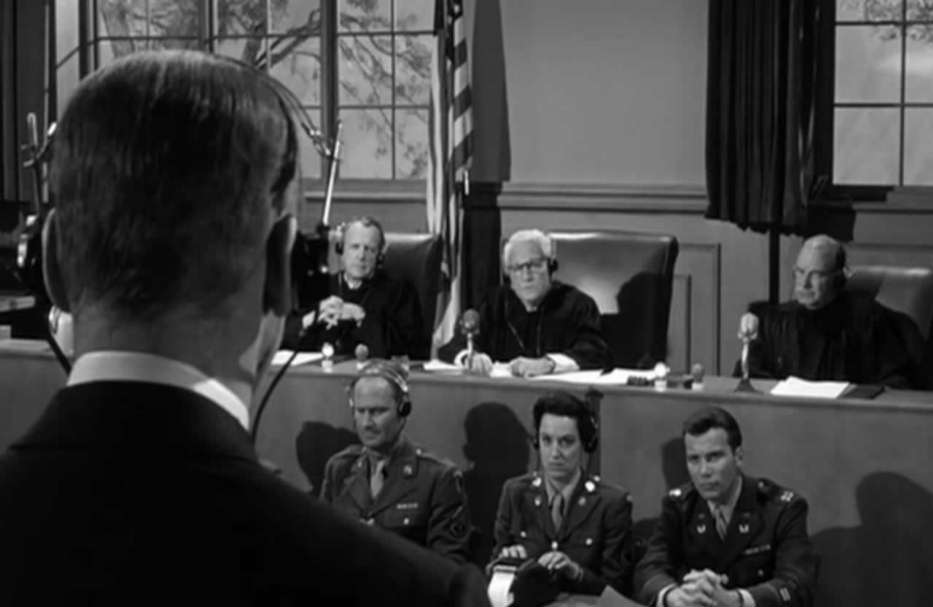
At the end of the movie Judgement at Nuremberg Spencer Tracy as the Presiding Judge Dan Haywood concluded his sentencing remarks with this statement. It is perhaps one of the most powerful statement and something to remember as the Unholy Trinity of Politicians, Pundits and Preachers urge us to hate one another and those different than us. It is something that is especially needed in times of great societal stress as well as real and perceived dangers from without and within.

http://www.youtube.com/watch?v=N3BwK51YFgQ

“Janning, to be sure, is a tragic figure. We believe he loathed the evil he did. But compassion for the present torture of his soul must not beget forgetfulness of the torture and the death of millions by the Government of which he was a part. Janning’s record and his fate illuminate the most shattering truth that has emerged from this trial: If he and all of the other defendants had been degraded perverts, if all of the leaders of the Third Reich had been sadistic monsters and maniacs, then these events would have no more moral significance than an earthquake, or any other natural catastrophe.

But this trial has shown that under a national crisis, ordinary – even able and extraordinary – men can delude themselves into the commission of crimes so vast and heinous that they beggar the imagination. No one who has sat through the trial can ever forget them: men sterilized because of political belief; a mockery made of friendship and faith; the murder of children. How easily it can happen. There are those in our own country too who today speak of the “protection of country” – of ‘survival’. A decision must be made in the life of every nation at the very moment when the grasp of the enemy is at its throat. Then, it seems that the only way to survive is to use the means of the enemy, to rest survival upon what is expedient – to look the other way. Well, the answer to that is ‘survival as what’? A country isn’t a rock. It’s not an extension of one’s self. It’s what it stands for. It’s what it stands for when standing for something is the most difficult! Before the people of the world, let it now be noted that here, in our decision, this is what we stand for: justice, truth, and the value of a single human being.”

This is an unsettling subject and people on the political right and left in this country are apt to compare their opponents to those that were tried at Nuremberg and those that led them. However it is possible that any party in society when divided by fear, hate and the desire for power can behave just as the industrialists, financiers, doctors, soldiers, jurists, civil servants, pastors and educators who oversaw those heinous crimes. People that should have known better.

Peace

Padre Steve+

1 Comment

Filed under film, History, philosophy, Political Commentary

Super Bowl XLVI: Commercials, Madonna and a Football Game

Well the Super Bowl is over, my predictions were right and amid the commercials and halftime show a football game was played.

I didn’t have a dog in the fight this year so I was able to watch the game and do running commentary on it, the commercials and the half-time show starring Madonna on Twitter. I tweeted more tonight than any single night that I have been on Twitter and it was really fun.  Seeing what other people were saying about the game, commercials and Madonna actually made watching the game a lot more enjoyable than I normally find it.

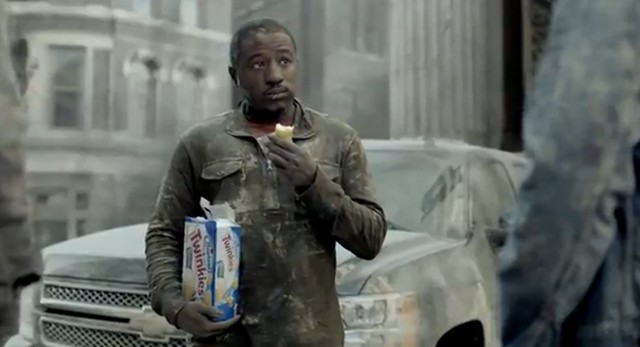
There were a number of commercials that I liked for various reasons and some that I thought could have been better.  My favorite was the Apocalypse commercial for the Chevy Silverado.  How could you go wrong with Manilow’s Look’s like we Made It playing amid scenes of destruction and Twinkies?

http://www.youtube.com/watch?v=XxFYYP8040A

Likewise I found that the Bud Light commercial involving the rescue dog Weego was really well done. My little dog Molly is a rescue and the commercial was cute.  I love my rescue dog.  http://www.youtube.com/watch?v=LoplehNzYoI Budweiser had a great commercial on the end of prohibition but if I had to choose a beer to celebrate the end of that sad period I would do a craft beer. http://www.youtube.com/watch?v=RGgosT-v5sw

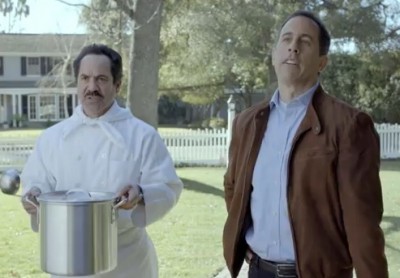
Honda had a commercial for its Acura NSX starring Jerry Seinfeld, Jay Leno, a space alien and Jay Leno that showed that Seinfeld has not lost his touch.  http://www.youtube.com/watch?v=WUFSHzT2xuY It was too bad that he didn’t have a hand in the Jockey underwear commercial featuring David Beckham. That would have been so much better if they had used George Costanza doing the photo shoot with Kramer. http://www.youtube.com/watch?v=6NL5wSs-9kI

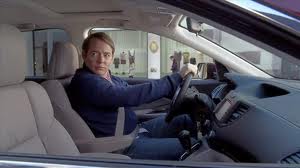
Honda had a great commercial with Matthew Broderick reprising his Ferris Buehler persona for the Honda CRV.  I love Ferris Buehler and have had a Honda CRV since 2001 so for me it was two memories. http://www.youtube.com/watch?v=VhkDdayA4iA

A different automaker had an ad which was far too funny and that I didn’t expect. It was the ad for the Fiat 500 Abarth. The commercial was really quite well done as only Italians could do mixing sexuality, Cappuccino and cars. This is not how I viewed Fiat for most of my life. When I was in Germany in the 1980s it was not uncommon to see Fiat 500‘s littering the roadside broken down.  http://www.youtube.com/watch?v=c7q1Ry0udQY

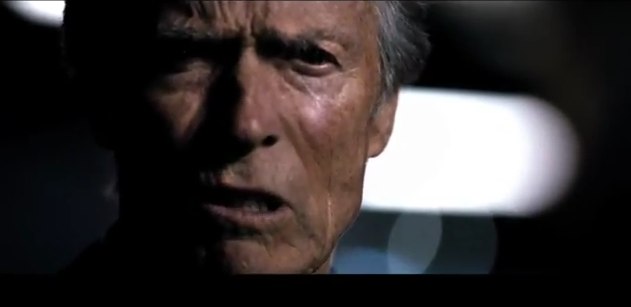
From an inspirational point of view the best commercial of the evening was Chrysler’s Halftime in America with Clint Eastwood doing the voice over.  http://www.youtube.com/watch?v=n8VpW8P8_kU

The halftime show by Madonna was better than I expected. It was kind of a retro 1980s Techno show, the only thing missing was Hans and Franz to pump you up. Madonna did the lip-sync thing well and didn’t do anything scandalous although guest singer MIA evidently have the middle finger salute during one of her solos. I didn’t see it because I was too busy tweeting pithy comments about the show to notice.

As for the game itself. It was about what I expected. It was close, the teams were competitive and it wasn’t a blow out. I really didn’t care who won so that took the pressure off. I saw the game as close enough that either team could have won and New England blew a chance to practically seal a win with about 4 minutes left in the game when Wes Welker dropped a pass that he would normally catch inside the red zone.

Eli Manning as he has shown all of this year showed that he could win when winning mattered. He, the Giants and their coach Tom Coughlin seem to have the Patriots number in big games.  The Patriots season ended with a Super Bowl loss. Tom Brady could not bring the team back in the final minute after the Patriots appeared to let the Giants score a touchdown in order to get the ball back with time on the clock. The move was a bit of twisted genius by Patriots coach Bill Belichick and if the “hail Mary” pass tossed by Brady in the final seconds had been caught by Rob Gronkowski the Patriots might have come out with a remarkable and miraculous win.

So football season is over and we can now get serious. Baseball season is just ahead and not a minute too soon.  Within minutes of the end of the game I flipped the channel to the MLB Channel.

Peace

Padre Steve+

2 Comments

Filed under celebrities, football

The Padre Steve’s Super Bowl Predictions

“It’s tough to make predictions, especially about the future.”  Lawrence Peter “Yogi” Berra

Yes we are inexorably approaching another Super Bowl Sunday and it will be a a back to the future day with the New England Patriots playing the New York Football Giants.  This year it is Super Bowl XLVI and it is a rematch of Super Bowl of Super Bowl XLII and a rematch of Eli Manning and Tom Brady.  The last time that the teams met the Patriots were undefeated and lost to the underdog Giants. I like the use of the Roman numerals in the Super Bowl. It is manly, just like the movie Gladiator. There is something about the use of the Roman numerals that just make the game seem so much more important.

George Santayana said “those that do not read about the past are doomed to repeat it” and likewise based on my knowledge of the past I can pretty accurately predict three things.

I am going to go on the line here and boldly predict that the halftime show headlined by Madonna will suck. Most halftime are forgettable unless someone shows a bodily part that they are not supposed to and Madonna has said that her clothes will stay on so it will just be us watching another aging star lip sync her music while a hoard of excruciatingly skinny gyrating dancers in weird clothes mimic sex with her.

I also predict that the commercials will be cool and even if the game is bad, which it shouldn’t be the commercials will be a major highlight. I like to wait to the day of the Super Bowl to actually watch the commercials being that Super Bowl Sunday is almost a religious holiday. However like a kid finding his Christmas presents before Christmas I happened to watch Matthew Broderick do his updated Ferris Buehler for the Honda CR-V on the internet.  Even though I have seen it I am still excited about seeing it on the big screen.

As far as the game I can accurately predict that one of the two teams will win and to me it doesn’t really matter because it isn’t baseball. I don’t have a dog in the fight even though I am sure that if she had the chance that my little Papillon-Dachshund mix Molly would get in a fight if she could but I won’t let her.

Speaking of Molly she stole what was left of a bag of tortilla chips that I had left over from my take out order from El Zarape  last night. Molly has nervier done this before but tonight she got bold and right in front of me sticker her head in the bag and dragged it off. I laughed so hard that I didn’t take it from her until I took pictures with my I-Phone.

Anyway with all that said, have a nice night, day or whatever it is when you read this and may your team win because my team isn’t playing. Like I said, it isn’t baseball but I will watch it.

Peace

Padre Steve+

1 Comment

Filed under football, Just for fun

Groundhog Day and the 2012 Presidential Campaign

I don’t know about you but the endless cycle of fratricide among the Republican candidates for the GOP Presidential nomination is getting old. Unfortunately this to use “Biblical” terminology is just the beginning of the “birth pangs.” The really intensive labor will begin after the respective party conventions in the summer and climax on November 6th when either Barack Obama will be re-elected or be defeated by Newt Ronmittorum, or possibly Mitt Gingrontorum or maybe Ron Santrongrich or Rick Mittpaulich.

That campaign promises to be one of the nastiest in our history and will be propelled by hundreds of millions of dollars in primarily negative campaign ads from the Super-PACs aligned with the candidates of both parties. I am also resigned to the fact that no matter who wins in November that the endless campaign will continue without a break beginning on November 7th when the parties will gear up for the 2014 mid-term elections and the 2016 pre-primary festivities for the losing party will begin and prospective  candidates will begin a series of 262 debates leading up to the Iowa Caucus.

I am starting to feel like Bill Murray’s character, weatherman Phil Conners in the movie Groundhog Day which coincidentally is observed tomorrow, Wednesday February 2nd 2012.  Unfortunately the emergence of Punxsutawney Phil tomorrow morning will not allow us to get out of this. Much like Phil Conners we will be trapped in an endless cycle of hate filled half-truths that will air between every TV show and even displace popular Super Bowl commercials.  I’m sure that even the infomercial networks will be airing campaign ads.

Happy Groundhog Day,

Peace

Padre Steve+

3 Comments

Filed under film, Political Commentary, purely humorous

God in the Empty Places: Four Years Later

Four years ago I was leaving Iraq for Kuwait, the first stop in the process of coming home.  At that point I wanted to go home but I didn’t want to go either. It was the beginning of a new phase in my life.  I wrote an article shortly after my return for the church that I belonged to at the time. I am reposting article here tonight.  

When I wrote it I really had no idea how much I had changed and what had happened to me.  I feel s special kinship with those that have fought in unpopular wars before me. French Indochina, Algeria and Vietnam, even the Soviet troops in Afghanistan before we ever went there.  

I am honored to have served with or known veterans of Vietnam, particularly the Marines that served at the Battle of Hue City, who are remembering the 44th anniversary of the beginning of that battle.  My dad also served in Vietnam at a place called An Loc. He didn’t talk about it much and I can understand having seen war myself. 

There are no new edits to the article. When I wrote it I was well on my way to a complete emotional and spiritual collapse due to PTSD.  Things are better now but it was a very dark time for several years and occasionally I still have my bad days. Today was a day of reflection.  As I walked my little dog Molly down the street tonight to the beach I looked up at the moonlit sky and I was as I have been thinking lately about seeing all of those stars and the brilliance of the moon over the western desert of Iraq near Syria. Somehow that sight now comforts me instead of frightens me. 

Tonight our Soldiers, Marines, Sailors and Airmen serve in harm’s way nearly 100,000 in Afghanistan alone. We are out of Iraq but Lord knows how things will turn out in the long run there.  

Anyway. Here is is.

God in the Empty Places. 

I have been doing a lot of reflecting on ministry and history over the past few months. While both have been part of my life for many years, they have taken on a new dimension after serving in Iraq. I can’t really explain it; I guess I am trying to integrate my theological and academic disciplines with my military, life and faith experience since my return.

The Chaplain ministry is unlike civilian ministry in many ways. As Chaplains we never lose the calling of being priests, and as priests in uniform, we are also professional officers and go where our nations send us to serve our Soldiers, Sailors, Marines and Airmen. There is always a tension, especially when the wars that we are sent to are unpopular at home and seem to drag on without the benefit of a nice clear victory such as VE or VJ Day in World War II or the homecoming after Desert Shield and Desert Storm.

It is my belief that when things go well and we have easy victories that it is easy for us to give the credit to the Lord and equally easy for others to give the credit to superior strategy, weaponry or tactics to the point of denying the possibility that God might have been involved. Such is the case in almost every war and Americans since World War Two have loved the technology of war seeing it as a way to easy and “bloodless” victory. In such an environment ministry can take on an almost “cheer-leading” dimension. It is hard to get around it, because it is a heady experience to be on a winning Army in a popular cause. The challenge here is to keep our ministry of reconciliation in focus, by caring for the least, the lost and the lonely, and in our case, to never forget the victims of war, especially the innocent among the vanquished, as well as our own wounded, killed and their families.

French Paratroop Corpsmen treating wounded at Dien Bien Phu

But there are other wars, many like the current conflict less popular and not easily finished. The task of chaplains in the current war, and similar wars fought by other nations is different. In these wars, sometimes called counter-insurgency operations, guerrilla wars or peace keeping operations, there is no easily discernible victory. These types of wars can drag on and on, sometimes with no end in sight. Since they are fought by volunteers and professionals, much of the population acts as if there is no war since it does often not affect them, while others oppose the war.

Likewise, there are supporters of war who seem more interested in political points of victory for their particular political party than for the welfare of those that are sent to fight the wars. This has been the case in about every war fought by the US since World War II. It is not a new phenomenon. Only the cast members have changed.

This is not only the case with the United States. I think that we can find parallels in other militaries. I think particularly of the French professional soldiers, the paratroops and Foreign Legion who bore the brunt of the fighting in Indochina, placed in a difficult situation by their government and alienated from their own people. In particular I think of the Chaplains, all Catholic priests save one Protestant, at the Battle of Dien Bien Phu, the epic defeat of the French forces that sealed the end of their rule in Vietnam. The Chaplains there went in with the Legion and Paras. They endured all that their soldiers went through while ministering the Sacraments and helping to alleviate the suffering of the wounded and dying. Their service is mentioned in nearly every account of the battle. During the campaign which lasted 6 months from November 1953 to May 1954 these men observed most of the major feasts from Advent through the first few weeks of Easter with their soldiers in what one author called “Hell in a Very Small Place.”

Another author describes Easter 1954: “In all Christendom, in Hanoi Cathedral as in the churches of Europe the first hallelujahs were being sung. At Dienbeinphu, where the men went to confession and communion in little groups, Chaplain Trinquant, who was celebrating Mass in a shelter near the hospital, uttered that cry of liturgical joy with a heart steeped in sadness; it was not victory that was approaching but death.” A battalion commander went to another priest and told him “we are heading toward disaster.” (The Battle of Dienbeinphu, Jules Roy, Carroll and Graf Publishers, New York, 1984 p.239)

Of course one can find examples in American military history such as Bataan, Corregidor, and certain battles of the Korean War to understand that our ministry can bear fruit even in tragic defeat. At Khe Sahn in our Vietnam War we almost experienced a defeat on the order of Dien Bien Phu. It was the tenacity of the Marines and tremendous air-support that kept our forces from being overrun.

You probably wonder where I am going with this. I wonder a little bit too. But here is where I think I am going. It is the most difficult of times; especially when units we are with take casualties and our troops’ sacrifice is not fully appreciated by a nation absorbed with its own issues.

For the French the events and sacrifices of their soldiers during Easter 1954 was page five news in a nation that was more focused on the coming summer. This is very similar to our circumstances today because it often seems that own people are more concerned about economic considerations and the latest in entertainment news than what is going on in Iraq or Afghanistan. The French soldiers in Indochina were professionals and volunteers, much like our own troops today. Their institutional culture and experience of war was not truly appreciated by their own people, or by their government which sent them into a war against an opponent that would sacrifice anything and take as many years as needed to secure their aim, while their own countrymen were unwilling to make the sacrifice and in fact had already given up their cause as lost. Their sacrifice would be lost on their own people and their experience ignored by the United States when we sent major combat formations to Vietnam in the 1960s. In a way the French professional soldiers of that era have as well as British colonial troops before them have more in common with our force than the citizen soldier heroes of the “Greatest Generation.” Most of them were citizen soldiers who did their service in an epic war and then went home to build a better country as civilians. We are now a professional military and that makes our service a bit different than those who went before us.

Yet it is in this very world that we minister, a world of volunteers who serve with the highest ideals. We go where we are sent, even when it is unpopular. It is here that we make our mark; it is here that we serve our Soldiers, Sailors, Marines and Airmen. Our duty is to bring God’s grace, mercy and reconciliation to men and women, and their families who may not see it anywhere else. Likewise we are always to be a prophetic voice within the ranks.

When my dad was serving in Vietnam in 1972 I had a Sunday school teacher tell me that he was a “Baby Killer.” It was a Catholic Priest and Navy Chaplain who showed me and my family the love of God when others didn’t. In the current election year anticipate that people from all parts of the political spectrum will offer criticism or support to our troops. Our duty is to be there as priests, not be discouraged in caring for our men and women and their families because most churches, even those supportive of our people really don’t understand the nature of our service or the culture that we represent. We live in a culture where the military professional is in a distinct minority group upholding values of honor, courage, sacrifice and duty which are foreign to most Americans. We are called to that ministry in victory and if it happens someday, defeat. In such circumstances we must always remain faithful.

For those interested in the French campaign in Indochina it has much to teach us. Good books on the subject include The Last Valley by Martin Windrow, Hell in a Very Small Place by Bernard Fall; The Battle of Dienbeinphu by Jules Roy; and The Battle of Dien Bien Phu- The Battle America Forgot by Howard Simpson. For a history of the whole campaign, read Street Without Joy by Bernard Fall. I always find Fall’s work poignant, he served as a member of the French Resistance in the Second World War and soldier later and then became a journalist covering the Nuremberg Trials and both the French and American wars in Vietnam and was killed by what was then known as a “booby-trap” while covering a platoon of U.S. Marines.

There is a picture that has become quite meaningful to me called the Madonna of Stalingrad. It was drawn by a German chaplain-physician named Kurt Reuber at Stalingrad at Christmas 1942 during that siege. He drew it for the wounded in his field aid station, for most of whom it would be their last Christmas. The priest would die in Soviet captivity and the picture was given to one of the last officers to be evacuated from the doomed garrison. It was drawn on the back of a Soviet map and now hangs in the Kaiser Wilhelm Memorial Church in Berlin where it is displayed with the Cross of Nails from Coventry Cathedral as a symbol of reconciliation. I have had it with me since before I went to Iraq. The words around it say: “Christmas in the Cauldron 1942, Fortress Stalingrad, Light, Life, Love.” I am always touched by it, and it is symbolic of God’s care even in the midst of the worst of war’s suffering and tragedy.

Peace

Padre Steve+

Leave a comment

Filed under History, iraq,afghanistan, Military, PTSD, Tour in Iraq

Revisiting the Gift of Religious Liberty: The Danger posed by Fanatics

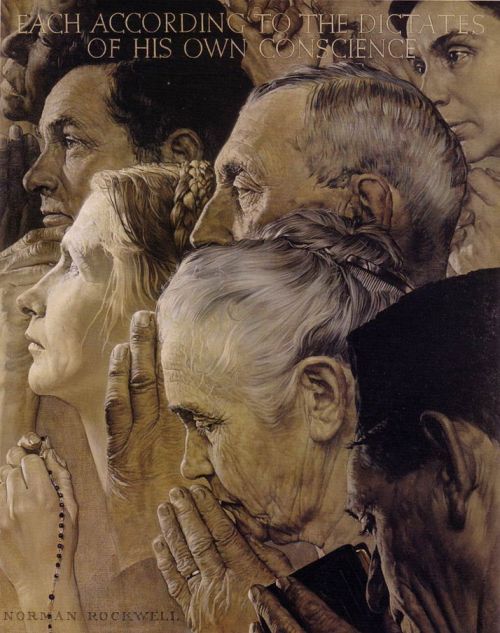
“Congress shall make no law respecting the establishment of religion, or prohibiting the free exercise thereof; or abridging the freedom of speech, or of the press; or the right of the people peaceably to assemble, and to petition the Government for a redress of grievances.” The First Amendment of the US Constitution

“no man shall be compelled to frequent or support any religious worship, place, or ministry whatsoever, nor shall be enforced, restrained, molested, or burdened in his body or goods, nor shall otherwise suffer, on account of his religious opinions or belief; but that all men shall be free to profess, and by argument to maintain, their opinions in matters of religion, and that the same shall in no wise diminish, enlarge, or affect their civil capacities.” Thomas Jefferson in the 1779 Virginia Statute for Religious Freedom

Those that read this site and have gotten to know me through it over the past few years know that I am passionately devoted to religious liberty.  I find it throughout the writings of our founders and and have written about it before numerous times and the comment was in regard to this article The Gift of Religious Liberty and the Real Dangers to It  https://padresteve.com/2011/05/10/the-gift-of-religious-liberty-and-the-real-dangers-to-it/

I do want to say up front that this article is in no way a denigration of those that believe, especially in this case since my critic claims to be a Christian a criticism of other Christians that are committed to their faith but also respect the religious liberties of others and that give God and his grace a little bit of credit to work in the lives of others that are different from them.

A couple of days ago I received a comment on that post that I quote in part:

“I have a serious problem with anyone who calls themselves a Christian supporting the religious liberty of all those who are not Christians because by doing so you condone their worship of false gods which is idolatry. I would rather see all religious worship outlawed than to allow worshippers of false gods allowed to spew their demon inspired idolatrous lies in public.” (pingecho728 Jonathan) 

It is amazing to me to see such words voiced over a subject that is so much a part of the fabric of our country.  Unfortunately with all the poisonous division in the country that religious liberty is in peril in some cases from left wing fanatics that despise all religion but is becoming more pronounced on the fanatical right particularly in the views of some parts of American Evangelical and Conservative Catholic Christianity.

But with that said this commentator is a very angry person and a search Facebook and a Google search that took all of about 5 minutes told me more than I wanted to know about this man. He is a fanatic who has flip-flopped in his passionate beliefs, responding to an atheist on another website in December 2010 regarding the irrationality of Biblical faith.

“PingEcho728  Dec 1, 2010 01:55 PM
I love what you wrote and agree wholeheartedly. Ironically I used to be once upon a time one of those religionist who was content with the “God did it” answer..if the Bible said it I believed it a hundred percent but once I opened my eyes and actually examined everything I had once easily believed to see why I had believed those things I found I had no good rational answer or evidence for believing those things. So I did the only thing a rational freethinking person could do, I abandoned beliefs for which I had no reason or evidence to support it.”

When I responded to the man and noted that everyone was someone else’s heretic and that even Conservative Christians might find his views heretical he responded. “There are certainly no Christians more conservative than me nor would any true Christian call me a heretic.”  Talk about flip-flopping, but this is typical among fanatics of every variety. They easily change sides because they need a cause bigger then them to provide meaning to their lives.  This man who on other Tea Party blogs practically deifies the Founders says of them regarding religious liberty: “I trust in the founders no more than I trust in any fallible man. The freedom to disagree is one thing to allow false religions to flourish in America is one that will undoubtedly lead to the destruction of America and the rise of the antichrist.”

Philosopher Eric Hoffer wrote in his book The True Believer about mass movements and their fanatical followers.  He did not see the followers of the different causes be they religious, secular, atheist, Fascist or Communist to be that different from each other. He saw them as brothers in a sense and their real opponent is the moderate, not the opposing extremist. Hoffer saw that the “true believers” were far easier to convert to an opposing view than you would think and he noted how fanatical Germans and Japanese often were converted to Communism while in captivity after the war.  It was their devotion to the cause not the cause that they became devoted to serving that was what gave meaning to their life.

Hoffer wrote:

“The fanatic is perpetually incomplete and insecure. He cannot generate self assurance out of his individual resources-out of his rejected self-but finds it only by clinging to whatever cause he happens to embrace. This passionate attachment is the source of his blind devotion and religiosity, and he sees in it the source of all virtue and strength. Through his single minded dedication is a holding on for dear life , he easily sees himself as the supporter and defender of the holy cause to which he clings….Still his sense of security is derived from his passionate attachment and not from the excellence of his cause. The fanatic is not really a stickler to principle. He embraces a cause not because of its justness and holiness but because of his desperate need for something to hold on to. Often, indeed, it is his need for passionate attachment which turns every cause he embraces into a holy cause. The fanatic cannot be weened away from his cause by an appeal to reason or moral sense. He fears compromise and cannot be persuaded to qualify the certitude of his holy cause. But he finds no difficulty in swinging suddenly and wildly from one holy cause to another. He cannot be convinced but only converted. His passionate attachment is more vital than the cause to which he is attached.”

Unfortunately there are many people on the extremes of the political spectrum that are like this. They can be found in the factions of the Tea Party and in the Occupy Movement as well as other even more extreme groups.  They are the kind of people that in the social, economic and political turmoil of the 1920s and 1930s were sucked into the great radical movements Communism, Fascism and Naziism.  In fact this has little to do with Christianity itself, even the most conservative expressions of it.  It is a matter that fanatics would rather destroy freedom for everyone than to give it to anyone that they disagree.

The real thing that sets our nation apart from others is the fact that when it came to religious liberty that the Founders were quite clear that religious liberty was the property of every individual. It was not to be forced by the state or by religious bodies acting on behalf of the state. We are not Iran, Saudi Arabia or even Israel. Our founders knew the dangers of fanatical religion having seen the effect of it during the brutal religious wars in England which pitted Anglicans against Separatists and Roman Catholics in the 17th Century.  They harbored no illusions about the danger posed by well meaning “true believers” who would use the powers of the state to enforce their religious beliefs on others as well as those that would seek to obliterate religion from public life as happened during the French Revolution.

I will gladly take criticism from people that believe that I am not a Christian because I defend the religious liberties of others.  I am a Christian and make no apology but  I figure that this liberty is too precious to so despised by those that most depend on it.  Religion can and has often been abused and used as a dictatorial bludgeon. Those who now advocate so stridently for their faith to be made the law of the land should well remember the words of James Madison:

“Who does not see that the same authority which can establish Christianity, in exclusion of all other religions, may establish with the same ease any particular sect of Christians, in exclusion of all other sects?”

Peace

Padre Steve+

1 Comment

Filed under christian life, faith, History, philosophy, Political Commentary, Religion

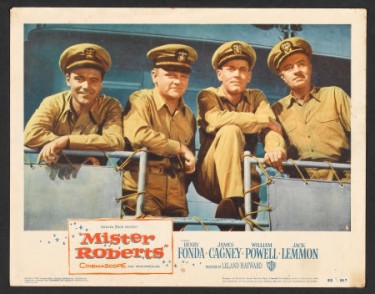
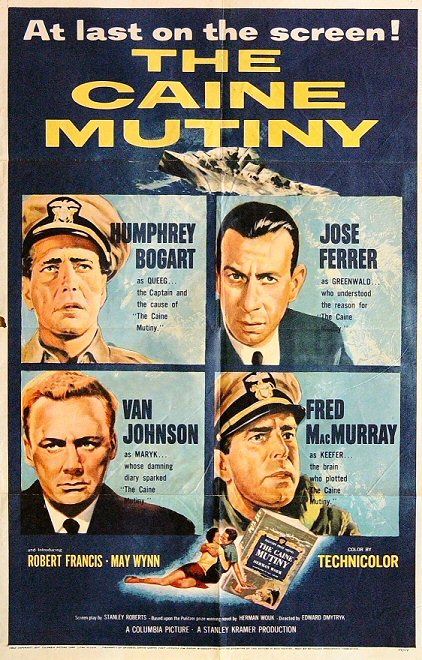
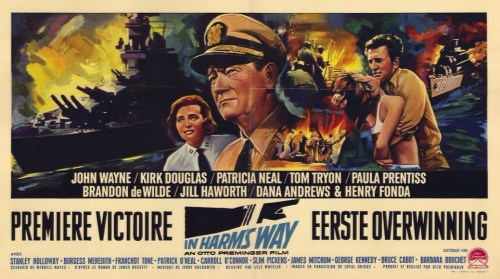
A Weekend of Old Navy Movies: Mister Roberts, The Caine Mutiny and In Harm’s Way

Well I have the duty pager for the hospital this weekend so I have been hanging out at the Island Hermitage with my dog Molly watching classic Navy movies.

Friday night I watched the classic film Mister Roberts. Yesterday I watched In Harm’s Way and The Caine Mutiny.
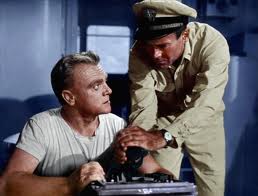
All three films are fictional and because of that I find them great for understanding the complexity of Navy life and leadership.  Mister Roberts and the Caine Mutiny the films deal with the complexities of life and leadership on small and rather insignificant ships while In Harm’s Way deals with more senior officers and their lives. All three deal with subjects that are uncomfortable because they still exist not just in the Navy but throughout the military. Thus all three offer insights into toxic leaders, poor morale, discipline, mental illness, alcoholism and subjects such as sexual assault and suicide.
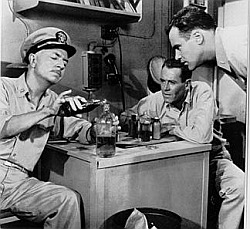
Mister Roberts stared Henry Fonda, James Cagney, Jack Lemmon and William Powell. It is set on the USS Reluctant a Light Cargo Ship in the backwaters of the Pacific in the closing months of the Second World War. Released in 1955 the film was based on the 1946 novel of the same name by Thomas Heggen.

http://www.tcm.com/mediaroom/video/323485/Mister-Roberts-Movie-Clip-Up-All-Night.html

Cagney plays a despotic former Merchant Marine Captain, LCDR Morton an officer of the type that the Navy did not want portrayed on film then, and still doesn’t today.  He is petty, self serving and rules as a tyrant in order to secure his promotion to Commander. His prize possession is a palm tree which was awarded to the ship for handling the most cargo which he believes will be his ticket to promotion. Lemon plays the ship’s Laundry and Morale Officer Ensign Frank Pulver who creatively finds ways of avoiding work. He is so successful that Captain Morton doesn’t know who he is despite having been on the ship 14 months. Pulver provides amusement and aggravation to Henry Fonda plays the ship’s Cargo Officer LTJG Doug Roberts. Roberts is liked by the crew and always in conflict with hs captain.  He is desperate to be transferred off the Reluctant and serve on a ship on the front lines. He fears that the war will pass him by and sends in letter after letter to get transferred to a fighting ship only to have Morton send them on without recommending approval.
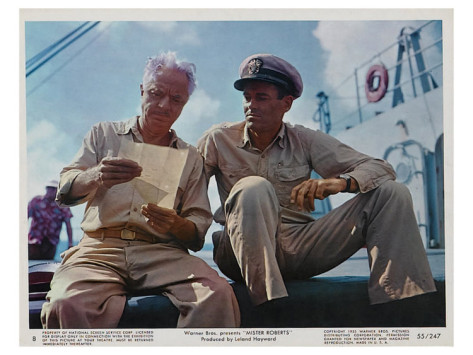
Roberts is caught in the position of many young leaders where they are torn between their duty and their loyalty to their crew.  Eventually he  William Powell in his last film plays ship’s Medical Officer, the wise sage whose advice and counsel is invaluable to Roberts.  Eventually Roberts gets off the ship because the crew forges a request for transfer along with a forged recommendation from the Captain. When he leaves the ship the crew presents him with their “Medal” the “Order of the Palm.” He is transferred to a destroyer and is killed in action. His final letter to Ensign Pulver tells of his appreciation for the crew and comes along with a letter from a friend of Pulver’s on board the destroyer Roberts was transferred telling of Roberts being killed when the ship was hit by a kamikaze.

In the letter Roberts expresses that he finally understood the enemy faced by those in rear areas and all of those that cannot see why they matter or know their place in a war.  The challenge of leaders to understand “that the unseen enemy of this war is the boredom that eventually becomes a faith and, therefore, a terrible sort of suicide.”  He finally after having seen combat that those that he served with on the Reluctant “Right now I’m looking at something that’s hanging over my desk. A preposterous hunk of brass attached to the most bilious piece of ribbon I’ve ever seen. I’d rather have it than the Congressional Medal of Honor. It tells me what I’ll always be proudest of: That at a time in the world when courage counted most I lived among 62 brave men.” 
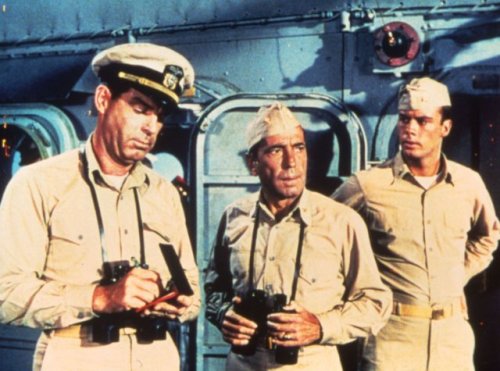
The Caine Mutiny adapted from the novel written by Herman Wouk deals with a another ship where leadership challenges abound. The Captain of the ship, LCDR Queeg played by Humphrey Bogart is plagued by doubt, fear and paranoia.  A Regular Navy Officer on with a wardroom of reservists he comes to the ship battered from two years in the Atlantic. He is also plagued by his Communications Officer, LT Tom Keefer played by Fred MacMurray who spends the time not writing a novel in spreading poison about his ship, the Navy and his commanding officers. Queeg begs for their support and understanding.

http://www.tcm.com/mediaroom/video/413561/Caine-Mutiny-The-Movie-Clip-Like-A-Family.html

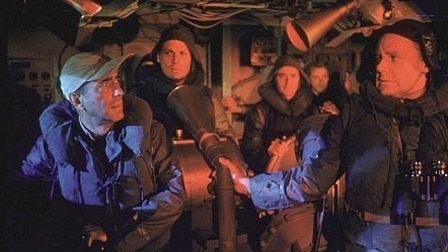
However Keefer is so successful at undermining Queeg that in the midst of a typhoon the Executive Officer, LT Steve Maryk played by Van Johnson takes command and relieves Queeg on the bridge supported by the Officer of the deck Ensign Willie Keith.
http://www.youtube.com/watch?v=vtqf0CCVUek

Maryk is tried and acquitted at court marital but his defense attorney, LT Barney Greenwald played by Jose Ferrer has to destroy Queeg on the witness stand to do it.  During the trial Keefer is called as a witness for the prosecution lies on the stand to avoid incriminating himself while damaging the case of his friend Maryk. At the end Greenwald confronts Kiefer at a party and provides the leadership lesson for a wardroom which abandoned their sick captain long before the mutiny occurred.

http://www.youtube.com/watch?v=EKeISsYKROI

[Greenwald staggers into the Caine crew’s party, inebriated] 

Lt. Barney Greenwald: Well, well, well! The officers of the Caine in happy celebration! 

Lt. Steve Maryk: What are you, Barney, kind of tight? 

Lt. Barney Greenwald: Sure. I got a guilty conscience. I defended you, Steve, because I found the wrong man was on trial. 

[pours himself a glass of wine] 

Lt. Barney Greenwald: So, I torpedoed Queeg for you. I had to torpedo him. And I feel sick about it. 

[drinks wine] 

Lt. Steve Maryk: Okay, Barney, take it easy. 

Lt. Barney Greenwald: You know something… When I was studying law, and Mr. Keefer here was writing his stories, and you, Willie, were tearing up the playing fields of dear old Princeton, who was standing guard over this fat, dumb, happy country of ours, eh? Not us. Oh, no, we knew you couldn’t make any money in the service. So who did the dirty work for us? Queeg did! And a lot of other guys. Tough, sharp guys who didn’t crack up like Queeg. 

Ensign Willie Keith: But no matter what, Captain Queeg endangered the ship and the lives of the men. 

Lt. Barney Greenwald: He didn’t endanger anybody’s life, you did, all of you! You’re a fine bunch of officers. 

Lt. JG H. Paynter Jr.: You said yourself he cracked. 

Lt. Barney Greenwald: I’m glad you brought that up, Mr. Paynter, because that’s a very pretty point. You know, I left out one detail in the court martial. It wouldn’t have helped our case any. 

[to Maryk] 

Lt. Barney Greenwald: Tell me, Steve, after the Yellowstain business, Queeg came to you guys for help and you turned him down, didn’t you? 

Lt. Steve Maryk: [hesitant] Yes, we did. 

Lt. Barney Greenwald: [to Paynter] You didn’t approve of his conduct as an officer. He wasn’t worthy of your loyalty. So you turned on him. You ragged him. You made up songs about him. If you’d given Queeg the loyalty he needed, do you suppose the whole issue would have come up in the typhoon? 

[to Maryk] 

Lt. Barney Greenwald: You’re an honest man, Steve, I’m asking you. You think it would’ve been necessary for you to take over? 

Lt. Steve Maryk: [hesitant] It probably wouldn’t have been necessary. 

Lt. Barney Greenwald: [muttering slightly] Yeah. 

Ensign Willie Keith: If that’s true, then we were guilty. 

Lt. Barney Greenwald: Ah, you’re learning, Willie! You’re learning that you don’t work with a captain because you like the way he parts his hair. You work with him because he’s got the job or you’re no good! Well, the case is over. You’re all safe. It was like shooting fish in a barrel. 

[long pause; strides toward Keefer] 

Lt. Barney Greenwald: And now we come to the man who should’ve stood trial. The Caine’s favorite author. The Shakespeare whose testimony nearly sunk us all. Tell ’em, Keefer! 

Lieutenant Tom Keefer: [stiff and overcome with guilt] No, you go ahead. You’re telling it better. 

Lt. Barney Greenwald: You ought to read his testimony. He never even heard of Captain Queeg! 

Lt. Steve Maryk: Let’s forget it, Barney! 

Lt. Barney Greenwald: Queeg was sick, he couldn’t help himself. But you, you’re *real* healthy. Only you didn’t have one tenth the guts that he had. 

Lieutenant Tom Keefer: Except I never fooled myself, Mr. Greenwald. 

Lt. Barney Greenwald: I’m gonna drink a toast to you, Mr. Keefer. 

[pours wine in a glass] 

Lt. Barney Greenwald: From the beginning you hated the Navy. And then you thought up this whole idea. And you managed to keep your skirts nice, and starched, and clean, even in the court martial. Steve Maryk will always be remembered as a mutineer. But you, you’ll publish your novel, you’ll make a million bucks, you’ll marry a big movie star, and for the rest of your life you’ll live with your conscience, if you have any. Now here’s to the *real* author of “The Caine Mutiny.” Here’s to you, Mr. Keefer. 

[splashes wine in Keefer’s face] 

Lt. Barney Greenwald: If you wanna do anything about it, I’ll be outside. I’m a lot drunker than you are, so it’ll be a fair fight. 
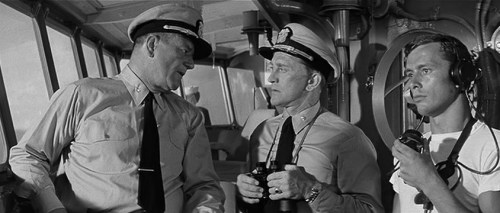
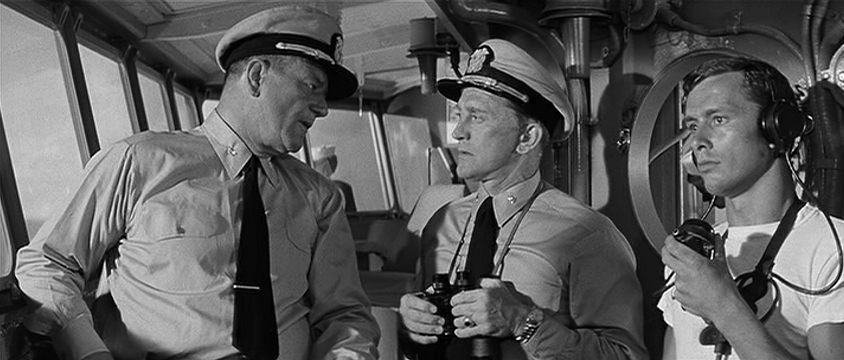
In Harm’s Way was filmed a decade after the Caine Mutiny and Mister Roberts. Starring John Wayne, Kirk Douglas, Henry Fonda, Patricia Neal, Burgess Meredith and Tom Tryon it was a epic that was panned by critics as having a shallow plot. It involved the intersecting lives of a number of officers during the war with John Wayne playing Rear Admiral “Rock” Torrey. Although the plot is relatively shallow the film brings up several very serious subjects that are faced by leaders even today.  The topics of alcoholism, sexual assault and suicide are touched upon through the character played by Kirk Douglas, Captain Paul Eddington.  Eddington is plagued by alcoholism and a failed marriage that ended when his wife was killed while with an Army Air Corps Officer on the morning of the Peal Harbor attack.  Sentenced to a backwater assignment he is called to be Torrey’s Chief of Staff.  In that position he ends up raping a nurse played by Jill Howarth that happens to be the fiancee of Torrey’s son. She then commits suicide. When Eddington discovers that she is dead he sets off on a suicide mission to find the Japanese fleet.

http://www.tcm.com/mediaroom/video/348030/In-Harm-s-Way-Movie-Clip-The-Navy-s-Never-Wrong.html

The questions raised in the film are not answered, there is no Barney Greenwald to point out the moral of the story.  John Wayne plays a flawed hero surrounded by characters of that are all in some way dealing with their own personal demons. However the questions are those that have been faced by military leaders for generations.  How does a leader deal with men and women in failing marriages? How does one deal with those that simply are advancing their own careers? How does a leader deal with key staff that are dealing with alcoholism? How does one prevent sexual assault in a combat area and prevent suicide?  The truth is that we still deal with all of these questions and none of us or any military in the world has solved any of them.  Perhaps Henry Fonda as Admiral Nimitz sums up the situation that we still face “Well, we all know the Navy’s never wrong. But in this case, it was a little weak on bein’ right.”

Taken as a whole the three films all are valuable for today’s naval leader as well as military leaders in general. The I do learn something new every time that I watch them and all challenge me to be a better leader.

Peace

Padre Steve+

3 Comments

Filed under film, leadership, Military, movies, US Navy, world war two in the pacific