Category Archives: faith

An Easter Alleluia?

rubensresurrection1

Friends of Padre Steve’s World,

I am glad that Easter Sunday is over. Of course in my tradition, the Catholic-Orthodox-Anglican tradition, there are 49 more days left in the Easter Season, but who is counting?

I dreaded Easter this year, more than I ever have. I think it is because that for only the second time in my life, Easter Sunday coincided with my birthday. The only previous time that it did was in 2005, when I stilled lived in a cloud-cuckoo-land of unquestioned belief before I went to Iraq, before my crisis in faith, before I was cast aside by most of the clergy of my former church, and abandoned by men, fellow priests, chaplains, and clergy, who I thought were my friends. Interestingly enough, the current head of that church continues to stay in contact with me, and sent me a nice birthday greeting this morning. We may not agree on some of our theology, but I can respect and love him. For that I am grateful, and interestingly enough, many of those who I thought were my closest friends in that church,and in the military chaplaincy, abandoned it, just as they did me, because it wasn’t good enough for them either.

This year, for me, Easter became something existential. I did not think that I was going to live through it. Now, as far as I know there is nothing physically wrong with me that, and in fact I want to live, more than life itself. I want to live to be at least 105 years old so I can lead a staff ride on the 200th anniversary of the Battle of Gettysburg in 2063. I may need one of those hi-tech exoskeleton units to accomplish that should I live that long, but that is my goal.

I love life, but I struggle with faith. This week, in fact the whole season of Lent that preceded Holy Week was a struggle for me. Week after week I showed up to conduct services, to celebrate Eucharist, and no one came, until the last week of the previous class when one student came by. I was thrilled when it did, but truthfully, in the past two and a half years at the Staff College, my most faithful parishioners have been Lebanese Catholic officers, and there were none of them in the winter class. So despite the fact that we are kind of in a between class limbo, I was wondering, “why do I even bother to show up?”

I mean really… on Easter Sunday morning, my birthday to make matters worse, all I wanted to do was die. On the way home from work all I could feel was heaviness, and the only thing that kept me from driving my car off the road was that I didn’t want to put Judy through that pain. What I was feeling was not her fault; she had done all that she could to make this a good week and good birthday. I could not ask for more. But if you say you have faith, and have never been to the point of despair that I have been, please abstain if you can from judging me, and spare me your sermons.

Eventually, we got out to or friends at the Gordon Biersch brewery restaurant. After the horrible morning, the afternoon was good. My mood has lifted considerably. I have been treated with great kindness by hundreds of friends who have wished me well, by phone, e-mail, or on social media. Other friends were kind to me today. My Turkish friend at Biersch, his wife, made me a small cake; others were just kind to give me a hug, spend some time in conversation, or to share a laugh with me over a beer. While there I found that one of my friends here in Virginia Beach was in an automobile accident, and suffered some injuries this morning, and I pray, to the God that I so struggle to believe in, that he will be okay.

But that being said, I wonder at times, what Dietrich Bonhoeffer asked, is not true for me: experience has made us suspicious of others and kept us from being truthful and open; intolerable conflicts have worn us down and even made us cynical. Are we still of any use?”

I admit that I have been worn down, that I am suspicious, and that I struggle. I wonder, as far as my calling and vocation as a minister, priest and chaplain goes, if I am of any use.

If I am, I am glad for that. If I have even helped someone in some small way, in his or her time of crisis, or doubt, I am glad for that. If not, then that is something to be decided not by me, nor by the Church, but by God, and such decisions are way above and beyond my pay grade. As far as the men that I feel who abandoned me when I struggled, and when my questions could no longer be tolerated; men who I did all that I could do to help to where they are today, and men who I thought were my friends and brothers; for that I have no answer. So I guess that too is well above and beyond my pay grade.

As far as yesterday morning, Easter Sunday, I guess I am glad that no one showed up at my chapel. I was so far from even believing, I was so far from the hope of the resurrection, that to cry out “Alleluia! He is risen! The Lord is risen indeed!” would have been blasphemy. So in a sense, as hard as today was, I was glad that I was spared from that.

When I thin that I am reminded of the words of he great German theologian Jurgen Moltmann;

“Believing in the resurrection does not just mean assenting to a dogma and noting a historical fact. It means participating in this creative act of God’s … Resurrection is not a consoling opium, soothing us with the promise of a better world in the hereafter. It is the energy for a rebirth of this life. The hope doesn’t point to another world. It is focused on the redemption of this one.”

I am hoping that this week will be better and that if anyone darkens the door of my chapel this coming Sunday, that I might actually join in the Easter alleluias. I want to experience that rebirth again, I want, not to simply assent to a dogma, but instead to participate in the creative act of God, and maybe to find redemption in this world whatever the next world may bring.

I hope that this makes sense, and even if it doesn’t, please, pray for me a sinner,

Peace

Padre Steve+

3 Comments

Filed under christian life, ethics, faith

Politics and Empty Tombs

roman-soldiers-guard-james-tissot-1

Friends of Padre Steve’s World,

Those who follow my writings know that I struggle with faith. Since my return from Iraq in 2008 I have found a certain kinship with soldiers who have been assigned the unthankful and trying tasks of dealing with occupation duties or fighting insurgencies. 

In the case of the story of Easter it is all too common that writers, theologians and others focus on the story of Jesus and his disciples, or conversely, if they explore anyone else, they focus on the Jewish religious leaders of the time. 

After Iraq I had a harder time relating to Jesus and his followers, or the religious leaders of Jerusalem. That being said, coming home from Iraq, struggling to believe, I find a tremendous affinity with the officers of the Roman Legions serving in Judea and Samaria in the 1st Century A.D. 

This is the final chapter of a series that I have been writing about the Roman Centurion known as Longinus, who according to tradition, was at the cross when Jesus was crucified. I have tried to weave other characters from the Gospel narratives, including the Centurion whose “beloved servant” was healed by Jesus an account mentioned in both Matthew and Luke, where the Greek word for servant “Pais” is only found in these accounts and is different from the word commonly used in the New Testament “Doulos.” The difference leads to some interesting and potentially powerful understandings about the people that Jesus interacted during his earthly ministry.

The reason I am doing this is because I believe that many Christians cannot imagine what it must have felt like to be the Roman occupiers of Judea in a time where they were hated and deep divisions, religious, cultural and political complicated the lives of Roman officers like the Centurion known as Longinus.

I do hope that you enjoyed the series and that it and the Gospel narratives challenged you whether you are a Christian or not. I know from my time in Iraq serving with our advisors to the Iraqi forces that what the Roman officers dealt with was more difficult than any of us could imagine, unless you have been a soldier or officer of an occupying power, which I have been.

Peace and Happy Easter…

Padre Steve+

The pounding on his door awakened Longinus before he expected on this day after the Jewish Passover. He was hoping perhaps beyond hope that the worst was over and that in a few days he could take his soldiers back to the confines of Caesarea and away from the troubled city of Jerusalem. He was tired of this duty and longed for service with a real Legion with real Roman soldiers.

The pounding continued and the weary centurion wiped the sleep from his eyes, rolled out of his bed and went to the door of his quarters in Fortress Antonia. He opened the door to find his Optimo, or second in command Decius standing there, his fist ready to continue pounding, with a look of near panic on his face.

Startled, Longinus asked the young officer to come into his quarters and take a seat at his table. They like the other officers had seen events that they could barely explain over the past week, and some of those events had troubled Longinus in a manner in which he was not accustomed to, or prepared for.

Longinus took a wineskin and poured the contents into two cups. He asked Decius what was so urgent and frightening that he had to be at his quarters well before the duty day began. The young man took off his helmet to reveal a crop of blondish brown hair common to the Tyrol in the northern part of Italy.

The young officer took the cup of wine and downed it in one motion. Longinus, pureed and another as the young Tyrolean told an almost unbelievable story. Wiping his brow and taking a drink from the cup he explained that there was trouble at the tomb of the itinerant preacher named Jesus.

Longinus listened to his report:

The two guards from Longinus’s unit who had relieved the previous watch at the tomb had evidently fallen asleep. While they were asleep there had been a break in. The soldiers claimed that they had been overcome when some kind of “angelic being” descended in front of them. They reported that some of the women who had been at the execution site previously had been near the tomb. They said that when they awakened the body of this Jesus was no longer in the tomb.

The story seemed preposterous, but Longinus could not believe that his soldiers had fallen asleep on duty, as such an act could be punished by a death sentence. Adding to the confusion was a report that two of the preacher’s “disciples” had reportedly entered the tomb and claimed that the body was gone as had some of the women that had been there at the crucifixion.

Longinus took a drink from his cup of wine and thought for a moment. He had to admit that the story was unbelievable, but yet in light of the strangeness of the man and the events surrounding his execution Longinus, was no longer surprised at anything. Longinus looked at his young executive officer and said:

“Optimo, there has to be a logical explanation for what happened, and we need to find the truth. I do not like to think that our soldiers were asleep on duty, and I don’t think that the High Priest would not attempt to use this against us. Please have the soldiers and the Sergeant of the Guard report to me.”

Longinus had Decius bring the two soldiers to him along with the Sergeant of the Guard to explain what had happened.

The two soldiers, one a Samaritan and the other a Greek had good reputations in the unit. Neither had given him cause for concern and the terrified expression on their faces as they explained what happened at the tomb gave Longinus reason to believe them. Yes, it was possible that they were lying but Longinus believed their story because in spite of his threats they stuck to it. He threatened them with death if they had fallen asleep and were lying. When that did not produce results he promised a light punishment if they only told the truth, but despite his efforts to get them to testify to something rational they stuck with this outrageous story.

Longinus was not much of a believer in miracles angels or any sort of magic hocus-pocus purveyed by seers, magicians or fortunetellers. He did not believe in the state “gods” of Rome and likewise had little respect for the Jewish God, not so much because he understood the theology of the Jews, or even might believe in some sort of all-powerful being, but because he was disgusted by their use of their god for their political purposes.

All that being said, Longinus was inclined to believe his solders. When his friend Flavius had told him about his servant being healed by the Jesus fellow he found it hard to accept. That being the case here he was now beginning to believe this outlandish story. It was preposterous, but he could not accept the alternative. To disbelieve his men would mean that there was a serious breakdown of discipline by two outstanding soldiers. Longinus had some soldiers that he wouldn’t believe for an Athenian minute if they told him such a tale, but he believed these men. The terror on their face as they told the story led Longinus to believe that they had to be telling the truth as improbable as it was.

Longinus again thought of his words as the darkness enfolded the city and the earth quaked preacher hung dying on the cross on that evil hill just two days before. He dismissed the soldiers and as they left he prepared himself to tell the scheming governor they latest “good news.” If only Rome had let these people stew in their own mess. Longinus shook his head as he wondered about the wisdom of attempting to police such fouled up lands.

After he washed and put on his uniform, Longinus went to Pilate’s headquarters where he and the other Centurions, including his friend Flavius participated in a meeting with Pilate and his staff, the Jewish High Priest and his representatives and two of Herod’s people.

The meeting reminded Longinus  of a meeting of criminals. The High Priest and his representatives were livid at the report he delivered and demanded that Pilate take immediate action to solve their problem. Herod’s henchmen voiced their displeasure regarding the lapse of the Roman soldiers that allowed this to happen.

Longinus spoke up for his men and said that as improbable as the story was, that he believed his men. That only made the non-Romans angrier and they began not only calling for punishing the soldiers, but Longinus as well. Longinus thought that they were engaging Pilate in yet another histrionic episode in order to force Pilate to do their bidding, if not today, in the future.

The High Priest and Herod’s men insisted that Longinus’ soldiers had to have fallen asleep and or that they had conspired with the preacher’s followers to remove the body from the tomb. This angered Longinus to the point that he interrupted their ranting to defend his men’s honor. Pilate finally ordered Longinus and the High Priest to be silent. He asked the non-Romans to step outside while he conferred with Longinus and the other Centurions. The High Priest objected, but decided not to press the point and left the room.

Pilate explained his dilemma. He was afraid that if he sent the High Priest away by supporting his soldiers that there would be a revolt in the streets. He had seen the tumult on the streets by the supporters of the High Priest when he tried to release the “King of the Jews” and felt that this would be worse for security. He advised the Centurions that while he had no reason to doubt them or their men that he had to placate the High Priest and Herod in order to avoid chaos, chaos that could lose him his job if he wasn’t careful. Likewise he did not feel that he had the military manpower in the city to handle a full-fledged revolt and that he would have to call for reinforcements from the Legions based in Syria. Pilate was loath to do as this as it would get back to the Emperor, and the Emperor did not take kindly to governors who could not manage their provinces.

Longinus thought back to the day of the execution. Pilate had agreed to place a guard at the tomb at the urging of the High Council. Longinus had argued against placing any soldiers at the tomb as he felt that since the “King of the Jews” was the problem of the Jews and since man that he had called the so called  “son of God” was dead that Rome’s obligation was over. Let the Jews handle their own problems.

The whole thing reeked of politics and Longinus did not like it, but on Friday Pilate had overruled him. Then Pilate explained that Roman soldiers needed to guard the tomb because the High Priest insisted that Jesus’ followers would attempt to steal the body and then claim that he this Jesus had been raised from the dead. That insisted the High Priest would lead a revolt against the Jewish council and eventually Rome itself.

Another actor who added to the Judean witches’ cauldron was the Herod Antipas, the corpulent and corrupt “King” of Judea. If Longinus detested Pilate and the Jewish High Priest he hated Herod and all that he stood for even more. The presence of Herod made Longinus wonder why Roman lives and treasure were spent to solve the problems of this God-forsaken land; a land that Longinus believed would still be trouble two millennia from now if the world lasted that long.

Longinus believed that as long as Rome allowed the High Council and Herod to rule the region by proxy that the troubles would never end. He believed that it was only a matter of time before these people, mobilized by the passion of the Zealots would revolt as they had against the Seleucids nearly 200 years before. He knew if that happened that Rome would mobilize more the  enough legions to crush the revolt, and when they were done would not leave as much as a house standing. Longinus hated this occupation and all that it stood for, especially when he saw a good and innocent man like this Jesus fellow killed for no good reason other than the politics of it all. It sickened him.

When Pilate was done explaining his decision to Longinus and the other Centurions Pilate called the quite irate non-Romans back into the proceedings. He told the High Priest and Herod’s men that he would discipline the soldiers involved. He also explained that he would assist them in finding just what parties removed the body from the tomb. In the mean time he would suppress any stories coming from the soldiers about this supposed “resurrection” of this Jesus character from the dead.

The High Priest and Herod’s men agreed that this would suffice and thanked Pilate for his time and effort. Longinus and the other Centurions quietly seethed as this took place. When the non-Roman parties had left Pilate, knowing how his officers hated his decision called them to him. He told the officers that no action would be taken against the men and that he would not actively assist the Jews in trying to find the perpetrators of the event. He had in fact deceived the High Priest and Herod’s men.

Pilate then let the officers know that they and their units would remain in Jerusalem for another week to allow the multitude of pilgrims to leave the city. Once the Jewish festivities were over and the people had departed, they would return to Caesarea. Longinus thought about it and for a brief moment he admired Pilate’s duplicity. Pilate the consummate politician had again found a way to defuse the situation, deceive the local leaders and protect his soldiers, and as much as Longinus and the other Centurions despised the deal it was better than trying to deal with a full fledged rebellion with so few troops available in Jerusalem.

Longinus left with the others and met Decius and Flavius when he stepped into the court of the fortress. He was very unhappy with the deal that Pilate made with the High Priest and Herod even though he understood the reality of the politics behind it. Longinus felt that he had dishonored his soldiers and the unit for the sake of political expediency. He felt ashamed of the Empire for what Pilate had done in cooperating with these people from beginning to end during this affair. He would not forget.

MLPPT_CenturionCross_1

When Longinus returned to his quarters he again looked at his blood stained lance and thought about the man who was put to such an ignominious death for such putrid reasons. Surely something had to be different about him and there had to be some purpose to this injustice. Longinus again mused quietly, “truly this was the Son of God…”

Whatever that meant…


Leave a comment

Filed under faith, History, Religion

The Morning After a Crucifixion

Friends of Padre Steve’s World

Today is what Christians call “Holy Saturday.” It is a day of reflection between the death of Jesus on Good Friday and his Resurrection. So unless something really unusual and earth shattering occurs I am going to take the Easter weekend to do some reflection, including on some spiritual topics. In light of that I am simply going to post three of my older fictional accounts of that weekend today, tomorrow and Sunday.

As a genre this series falls in the realm of historical fiction, which means that while they may be set in a historical event, that they are fiction. Likewise, I admit that they and the main character are more a reflection of me, and my journey, and my over-active imagination, than my cursory study of Roman and New Testament History.

That being said, have a nice weekend, and if you do it, have a nice Easter.

Peace,

Padre Steve+
holy-saturday

The horrible day was passed and a new morning greeted Longinus as he arose. The sun rising over the escarpment in the east that overlooked the Jordan River cast a warm red and yellow glow as its rays infiltrated the window overlooking the courtyard of Fortress Antonia. It seemed an eternity since he watched the sun rise as Pilate debated what to do with that Jesus fellow.

Longinus and his fellow officers Flavius and Decius had spent much of the previous evening in the tavern following the executions. It was not a typical night for them. There was little frivolity, few jokes and none talked much about the events of the day, which had begun for Longinus not long after midnight. Flavius, whose servant had been healed by Jesus in Capernaum had briefly discussed the meaning of Longinus’s comments as the Galilean preacher died upon the cross. Longinus pondered the words again. “Surely this man is the son of God” or something to that effect. He didn’t remember his exact words and he couldn’t even remember why he had said them, but then the day was long and the events struck a nerve. He had seen or taken part in many executions as well as difficult battles. He disliked executions in general but until now he had managed to keep his soul protected from from what he felt on Golgotha by the wall that he had built around his heart.

Longinus looked out the window and then at his desk. He would need to call his officers together soon. He was sure that even though it was the sabbath that those that plotted against Roman rule, as well as the various factions at work in Jerusalem were still plotting, scheming and at work. He wondered how in such a climate anyone could call the day “holy.”

He did not like what had happened the previous day. When Pilate gave in to the Jewish leaders in regard to killing the Galilean he very uneasy. Pilate should have damned the whole politics of the situation and let the man go. The events still bothered him. The man was innocent. Pilate knew it, Longinus knew, hell they all knew and yet all of them had aided and abetted those that wanted the man named Jesus dead. Longinus felt a shame that in all of his years of soldiering he had never before felt. Pilate was able to wash his hands of responsibility. Longinus wished he could do so for himself, but the blood of the innocent man, which still stained the tip of the lance that Longinus had plunged into him, would not let him. Longinus shook his head in disgust.

Just then Decius knocked and entered with the news that Pilate had ordered a guard set at the tomb of Jesus. Supposedly the Jesus fellow had said that he would rise from the dead and the Jews wanted to make sure that no one tried to make off with the body of Jesus.

Longinus was not surprised, somehow as strange as the week had been it made perfect sense. Set a guard over the tomb of a man who was betrayed by one his own, denied by others and abandoned by all but one? It was ridiculous; people don’t rise from the dead. Dead is dead. Longinus thought rather cynically that it was a waste of his troops time and effort. If the Jews were so concerned why didn’t they send their Temple Police to guard the tomb? But then he realized that such duties were beneath the Temple establishment. The dead were unclean, so get the infidel Romans to do the dirty work, that way if something went wrong they could take the blame. It figured.

14_2009_da_02_int

He ordered Decius to set the guard. As he did this he received a report that two of his Samaritan soldiers had been brought in by a patrol dead drunk late in the evening. He would have to discipline them later, that was the lot of a commanding officer. How he wished that he was commanding a unit of Italians in a home province or on a campaign rather than these Samaritan and Syrian cast offs in this God forsaken backwater of the Empire. At least he had a number of good officers under his command, perhaps if he remained in Palestine he could organize a transfer of he and his officers to the Italian Cohort stationed in Caesarea where his friend commanded one of the units. Though he too was based in Caesarea it was much better to be assigned to that Italian unit rather than the locally recruited units.

Flavius joined them as they set down to eat breakfast. Outside Quentin and other sergeants mustered the men, and proceeded to carry out the order of the day. Patrols were dispatched to remind any Zealots or sicarii that even if they had gotten Pilate to do their bidding regarding the Galilean that Rome was still in charge of their capital.

The officers discussed details of the planned movement that would take them back to Caesarea in the next couple of days, whenever Pilate decided that the situation in Jerusalem was calm enough to leave. That would be a day or two at least as the multitudes that had come to observe Passover from the diaspora returned to their homes about the Empire and beyond.

The sun now shown brightly through the window and Pilate looked at the still menacing hill known as Golgotha, now devoid of crosses. He thought about that final scene yesterday amid the gloom as the tree men including the Galilean hung suspended between the heavens and earth. It was a sight that he would not soon forget.

Flavius and Longinus hoped for an uneventful couple of days in order to prepare for the always-dangerous trip through Judea. The Zealots, the Sicarii and other insurgents always hoped to kill Roman soldiers. But tonight, the Gods willing Longinus and his comrades would meet over a cup of ale in the tavern and maybe things would begin to return normal, whatever that meant in this place.

To be continued…


1 Comment

Filed under faith, History, Religion

The Long Good Friday

Friends of Padre Steve’s World

Today is Good Friday and so unless something really unusual and earth shattering occurs I am going to take the Easter weekend to do some reflection, including on some spiritual topics. In light of that I am simply going to post three of my older fictional accounts of that weekend today, tomorrow and Sunday.

There are a number of other articles in the series that cover all of Holy Week. If you want to read them those stories are on the site,

As a genre this series falls in the realm of historical fiction, which means that while they may be set in a historical event, that they are fiction. Likewise, I admit that they and the main character are more a reflection of me, and my journey, and my over-active imagination, than my cursory study of Roman and New Testament History.

That being said, have a nice weekend, and if you do it, have a nice Easter.

Peace,

Padre Steve+

 img_0643-726257

Longinus had finally decided to try to get a bit of rest. After his rather morose meeting with Flavius and Decius he and Decius went back to check on the preparations for the executions scheduled for the next day. Quentin his Tesserarius had been working with the squad chosen to to conduct the actual crucifixions of the prisoners, Bar-Abbas the insurgent as well as the common criminals and murderers Dismas and Gestas who he had met in the hell hole of a jail in the dungeon of Fortress Antonia after Pilate had assigned him the task of conducting the executions.

Longinus was certain of his unit’s ability to carry out the mission, though he would have rather had a unit from Italy than his unit of Syrian and Samaritan troops. There was one positive aspect, his Samaritans and Syrians had no love for the Jews and would have no qualms whatsoever in disposing of the criminals.

He thought for a moment about the prisoners. That Bar-Abbas fellow, he would be glad that he or any other Roman would have to deal with him again once the crucifixion was over. As for the common criminals he felt that everyone would be better off with Gestus dead although he hoped that Pilate might take pity on the repentant thief named Dismas. However, despite his feelings he also knew that the law was the law and repentant or not that Dismas was guilty of the crimes and the sentence was just. As he had realized earlier in the day while talking with Flavius it was important not to become emotionally involved with the locals, especially prisoners. Maintaining an emotional distance ensured that he would not flinch in times when ice rather than blood needed to flow through one’s veins. He was proud that he could do this but envied the humanity that his comrade and friend Flavius still maintained in spite of everything.

He was just about to prepare for bed when a messenger from Pilate knocked on his door. It was late, too late and Longinus wondered just what was going on.

“Come.” He said, the weariness in his voice obvious in the way he answered.

The messenger, a relatively young Italian soldier assigned to Pilate’s bodyguard entered, came to attention and saluted.

Longinus looked at the young man, like him far from home and asked “what am I needed for now?”

“Centurion, the Governor has requested your presence” the soldier replied.

“May I ask what for?” A now increasingly irritated Longinus asked.

“Sir, I do not have the details but it is a pressing matter regarding the Jews and that Galilean preacher.” The young man was obviously uncomfortable in having to request a career officer like Longinus, a veteran of real battles and campaigns appear before Pilate for what was not much more than a religious dispute among an occupied people.

“Pressing matter?” Asked Longinus.

“Yes Centurion. I was told that it was urgent that you come to Governor Pilate now and alert your unit as at least some of your men may be needed if things get out of hand.”

“Can you please tell me just what is going on?” Longinus asked as he pulled his armored breastplate over his shoulders.

“I’m sorry Centurion, I have no more information. You are to report to the Governor within the half hour. The Governor wants your unit ready within the hour.” When he finished he came to attention, saluted and exited the room.

Longinus hated how leaders sent young men to be their messengers and would not give them all of the relevant information.

He then sat back down in his chair where he had been sitting and discussing the situation with Flavius and Decius. He wondered to himself what could be so pressing that Pilate needed him now.

After briefing Decius and Quentin, instructing them to wake the men and be ready for action Longinus took a squad and went to Pilate’s headquarters. When he arrived Pilate greeted him.

“Centurion, I hate to have bothered you at this hour in light of how busy you and your men will be in the morning but a situation has arisen.” Longinus looked around the room and then heard some commotion on the area called “the Pavement.”

“What is happening my Lord?”

“Longinus, these Jews have brought that Jesus fellow here and are accusing him of fomenting a rebellion against the Emperor.”

“A rebellion sir?”

“That is what they say Centurion. They claim that one of his closest associates had turned him in and after a trial of their own that they found him guilty of claiming to be a king and God that will overthrow the Emperor.” Pilate could not hide his discomfort.

“Do you actually believe them sir? After all we had heard this morning that this Judas Iscariot fellow had betrayed him for 30 pieces of silver.”

“I know Centurion, I know.” Pilate looked at Longinus then back out at the crowd gathered outside in the dark. He was afraid and Longinus could sense that fear, fear that if he made the wrong move that a real rebellion could break out and that Pilate as the Governor would take the blame and bear the punishment and wrath of Caesar.

“Centurion, I tried to placate these people be questioning this Jesus fellow myself.” Pilate paused. “I must say that he is a rather unusual man and truthfully I could not find anything that under Roman law that I could find him guilty of doing. Not a thing Centurion, nothing but their leaders kept pressing me.” Pilate’s gaze seemed to be almost pleading with Longinus to help him escape this decision. Longinus knew at that moment that his day was about to get worse. Pilate continued “It seems to be a religious squabble of some kind so in order to deal with it and to try to keep us out of it I sent Jesus to Herod since Herod is the ruler of Galilee.”

“So Herod will certainly deal with the situation, will he not Governor?”

“Centurion, I thought that that corpulent bastard Herod would deal with it but I just got word that Herod too could find no crime. The Jewish leaders and of their Temple Police are supposedly bringing him back to me to render judgment. They are leaving it to me.”

“Judgment for what?”

“Sedition, treason, blasphemy, proclaiming himself a king.” Pilate paused, his face flushed. “My God I’m surprised that they haven’t accused the man of fathering the High Priest’s daughter.” The sarcasm and bitterness was evident in his voice.

“So what do you intend to do.”

“I intend to try to get us out of this with as little trouble or guilt as possible. When they return him to me I will ask a few more questions and set him free as is my prerogative, certainly they wouldn’t want to release a real murderer like Bar-Abbas back into society, I do give them more credit than to stoop that low.”

“I do hope that you are right governor, but from what I understand it seems that they are intent on ridding themselves of the fellow once and for all. I think that their leaders see the Galilean as more of a threat than a man like Bar-Abbas.”

Pilate said nothing and during the silence Longinus’s troops under the direction of Decius entered the perimeter of the court adding an additional security cordon as the crowd grew and got more boisterous. As they took up position the Temple Police and members of the High Priest’s entourage approached the court with the Galilean in custody. Quentin with four soldiers met them and took custody of the obviously tired and already abused man. They delivered Jesus to Pilate and stood back. Longinus watched as it happened. As he did so Flavius entered the room with his servant. The servant appeared unsteady and full of emotion when he saw the man who had healed him two years before. Flavius stood by his face not betraying any feelings except deep-seated rage that was boiling as he saw this travesty of justice take place.

Pilate attempted every trick in the book to garner a way to save the life of the man standing before him. He asked him questions and Jesus clothed in a purple robe that Herod had mockingly placed upon him said nothing. Finally in desperation Pilate asked Jesus if he was a king. The answer both fascinated and terrified Pilate and caused him to wish that he had never come to the city. As he deliberated earlier and debated the members of the Sanhedrin his wife again urged him to “have nothing to do with that innocent man.”

But the answer of Jesus to the question of his kingship troubled Pilate. Had he thought the man insane he would have scourged him, declared him mad and been done with the affair.

“My kingdom is not of this world, if it were my followers would be fighting to ensue that you did not hand me over to the Jewish leaders.” Jesus looked into Pilate’s eyes, the look sent a chill through Pilate’s soul and so he restated the question “so you are a king?”

Jesus replied solemnly “You say I am a king. I was born for this and it is why I came to this world, to testify to the truth. Everyone who belongs to the truth listens to me.”

Pilate appeared stunned and both Longinus and Flavius knew that he was beaten. They listened as Pilate asked “what is truth?” The question was one of a man who had long ago sold his soul to gain the world, it was the question of a deeply cynical man who had long determined that truth was only in the eye of the beholder and to be used as needed to acquire power. At the same time they could see a touch of genuineness in the question as Pilate, desperate for an answer that would enable him to please everyone and spare the life of the man before him wrestled with the question of truth for the first time in years.

They watched as Pilate attempted to bargain for the life of Jesus only to be shouted down by the increasingly riotous crowd who demanded that Bar-Abbas be released. Again attempting to assuage the mob he had Jesus scourged with a barbed whip. The soldier who did that brutal work was a Syrian, big and burley without a trace of feeling in his eyes or face. The servant of Flavius begged him to intervene but Flavius now knew that the things happening to Jesus could no longer be influenced by sentimentality and stories of the goodness of Jesus. He had seen this type of Justice before, and though he despised it, he earnestly hoped that it would be enough to deliver Jesus.

After the scourging, soldiers assigned to Longinus jammed a crown of thorns down on the blood covered Jesus and placed the purple cloak over him. Jesus’s body trembled. Pilate again approached the mob and tried to decline the odious responsibility thrust into his hands. The mob led by the Chief Priests and joined by man of their rivals, the Pharisees cried out for Jesus to be crucified.

They heard Pilate plead with Jesus, again noting that he had power over the life and death of Jesus to which Jesus replied that Pilate “had no power over him that had not been given by God.” Finally he pleaded with the Jews one more time to take Bar-Abbas for execution and to spare the Galilean. The leaders shouted him down again and cried out that Pilate would be “a traitor to Caesar” if he let a man who claimed to be a king live.

Defeated By the mob and by his own weakness of character Pilate asked for a ceremonial washing basin full of water. When it came in the hands of a court member he placed his hands in it and proclaimed “I am innocent of this man’s blood.” He then ordered the soldiers to take Jesus to be crucified even as the prisoners Dismas and Gestus were led from the dungeon for execution and a profoundly perplexed Bar-Abbas was released by the jailer.

Longinus looked at Flavius and whispered to him “wash my hands of his blood? My God, he knows that he is as guilty at them.” Flavius looked on and simply said, “I know my friend, we all are.”

The small cohort of soldiers assigned to the crucifixion detail were commanded by Quentin, a man who had fought many battles, and like Longinus and Flavius felt that these executions of helpless prisoners were unworthy of soldiers like himself. The soldiers of Flavius’s unit had responsibility for helping to clear a way down the narrow street called by the Romans Via Delarosa, or The street of suffering. It was the street that all the condemned travelled to the hill of execution so fittingly called the place of the Skull. Longinus had seen others walk this path but in the past he had been able to shield his person from their suffering, but today was different.

Longinus’s own execution squad led by Quentin led Jesus and the others along, forcing them to carry their crosses. About halfway down the street Jesus collapsed under the weight if his cross and grabbed a bystander, a man from Cyrene to carry the cross while the soldiers prodded the bloody body of Jesus down the street and out of the city to the place of execution. People jeered at the condemned as they did at very execution as for most this was no different than any other crucifixion and most of those present knew little about any of the condemned men and even those that were familiar with Jesus probably did not recognize the bloody man stumbling down the street. Of course there were others present who did know Jesus and watched in horror as their friend, teacher and for one woman her son struggled to the execution site. Longinus wondered about his own elderly mother and thought of her as he saw the mother of Jesus. He quickly tried to chase her image from his mind, he needed to be strong and hard if he was to keep his objectivity and conduct the mission as distasteful as he found it.

When the macabre parade arrived at the hill, the prisoners were stripped, placed on the crosses and nailed to them. Their screams as Quentin hammered the large iron nails home through their already abused flesh echoed for all to hear. Thankfully Quentin knew what he was doing and this part of the execution process happened quickly. Then the crosses were raised, but just before this a messenger from Pilate arrived with the placards that denoted the charges. He handed them to Longinus who noted what was written on the one for Jesus. It said “The King of the Jews.”

The placards were placed and with a thud the crosses were placed in the holes on the hill. The suffering of the prisoners was great, the crowds jeered and mocked them while those that loved them stood at a distance. Soldiers stood guard to ensure that no one interfered with them in any way. There was a bit of banter between the real criminals one of whom, the unpleasant one named Gestus joined in the mocking of Jesus only to be put in his place by the other one named Dismas.

Longinus, Flavius, Decius and a few other officers watched as their soldiers from the crucifixion detail divided the paltry worldly possession of the men between themselves. The men argued over a one piece tunic worn by Jesus, Not wanting to destroy it they cast lots for it. A trooper from Tyre won the tunic. Longinus and Flavius looked at each other and realized how little most of their men earned and neither begrudged the men the few items that they gathered from the men being executed.

The skies which had began the day with bright sunshine now became dark and foreboding. Lightening appeared in the distance and occasionally Jesus would address his mother or one man, Flavius believed him to be a disciple who stood by the cross. Jesus even promised the Dismas character that “he would be with him in paradise” and told others, Longinus thought the soldiers but he wasn’t sure “forgive them they know not what they do.” As it approached the ninth hour Jesus cried out in Aramaic “my God, my God, why have you forsaken me!”

A cold rain began to fall.

Quentin approached him with a sponge on a pole which was soaked in a sour wine. It touched Jesus’s lips and Jesus said “Father into your hands I commit my spirit” and then “it is finished.”

With that last dying remark the head of Jesus fell to his chest and his body, bloody and mangled hung limp. As the men looked on the ground began to tremble and as the ground shook and the officers looked about amid the gloom and confusion as the onlookers took flight Longinus exclaimed “surely this man was the son of God.” Flavius looked at his fellow Centurion in astonishment. Longinus, the man who had closed his heart in a fortress was echoing what he had believed since Jesus had healed his servant, the young man who was more than a servant to him.

As the crowds dispersed Longinus received the message that the executions had to be concluded before the Jews began their Passover. With that he sent Quentin to break the legs of the prisoners to hasten their deaths. When Quentin reached Jesus he called for Longinus.

“Centurion, I believe that this man is already dead. Do you still want me to break his legs?”

Longinus looked up at the bloody corpse and then at his subordinate and said “no I must do this myself.” He had a soldier bring him his lance, a ceremonial lance that denoted his seniority as the senior Centurion in the Legion. He looked at the lance and plunged it into the side of Jesus into his heart. Jesus did not move but from the wound blood mixed with what looked like water poured out of the wound and down his side.

“Quentin, he is dead, you may take him down.” Other soldiers pulled down the dead bodies of the thieves. As they did this a man approached Longinus and Flavius.

“Gentlemen. I am Joseph, I am a member of the Sanhedrin. I have come to take responsibility for the body of Jesus of Nazareth.”

Longinus replied in a businesslike manner “by whose authority?” He had a hard time believing that a member of the Sanhedrin would claim this body.

With that Joseph produced a letter from Pilate. Longinus looked the letter over and handed it back to Joseph without comment. Joseph then motioned to several men with him to take the body as Longinus, Flavius and the others looked on. Longinus thought to himself that it was good that a man of some means and influence would at least take the time to give this innocent man a decent burial.

As Quentin took charge of the cleanup Longinus instructed Decius to prepare the troops to return to Fortress Antonia. Flavius instructed his optimo to do the same. The last thing that any of them wanted to be was on the streets when the Jews began their Passover, as always they decided that it was unwise to stir up any more animosity than was needed. Today was a near run thing with e demonstration outside Pilate’s headquarters and none of them wanted any more excitement this evening.

When the clean up was completed and the bodies removed Longinus and Flavius ordered their soldiers back to Fortress Antonia. When they arrived the Centurions went to Pilate to inform him that the mission was complete. Pilate was glad the ordeal was over but was obviously still disturbed by the events of the day. Longinus, now exhausted was glad to leave Pilate’s presence. He still loathed politicians and wondered if had Pilate been a soldier if he would have had the courage to tell the leaders of the Sanhedrin to “pound sand” and keep Jesus alive. But then he knew that had Pilate done something that only a diplomat could do, he kept the peace. Had he been in charge the man named Jesus might have lived but hundreds maybe even thousands of others might have died.

After he dismissed his soldiers he went to his room, doffed his gear and went to the tavern in the fortress. Flavius joined him about 15 minutes later. They sat at the table as the barkeeper brought them each an ale. They looked at each other and Flavius asked “What did you mean by surely this man was the son of God?”

Longinus shook his head. “My friend I do not really know.” He paused and took a drink from his cup. “Until today I simply figured that he was a good man, but after today, after what I witnessed I just don’t know.”

“If you ask me my friend I think that he must be a God, if not somehow connected to the greatest of Gods, the God of the Jews.”

“Perhaps Flavius you are right. All I know is that I can no longer see the world, the Empire or my life in the same light as I did just a week ago.”

Flavius nodded his understanding as Decius entered the tavern. The younger officer reported to his seniors. They acknowledged his entrance and Longinus asked the younger officer to sit with them.

“What do you know Decius?”

The younger officer spoke. “Sir, I do not know if you heard the latest about the man that betrayed Jesus.”

Longinus asked sarcastically “did they elect him High Priest?”

The younger man caught the sarcasm and replied “if only that we’re the case. He was found dead, hanging from a tree in the Potter’s Field.”

Flavius answered: “So the traitor couldn’t handle the consequences of his own act of duplicity?”

Longinus replied, “Evidently not, it serves the bastard right.” He took a drink from his cup and motioned for the barkeep to get Decius a cup of ale too. The three men continued to drink silently and wondered what else could happen…

Peace

Padre Steve+

Leave a comment

Filed under faith, History, Religion

Not My Faith

  
Friends of Padre Steve’s World

Today is yet another day of presidential primaries, and I will not talk about the races today. I may tomorrow or next week, but not today. Benito Mussolini proclaimed, “Let us have a dagger between our teeth, a bomb in our hand, and an infinite scorn in our hearts.” I have been looking at various polls, as well as comments on social media, including those made by friends, and others that I either know or that I have served alongside, who identify themselves as “conservative Christians”  that trouble me, for they seem to embody in word, and maybe at some point, in deed, the words of the Italian dictator. 

There are times that I hate being a very well read and knowledgable historian, not to mention a well read and theologically astute priest. Today is one of those days. In light of what I know, and what I read today; both the polls and what my friends write, I wish I was a some kind of imbecile who had no context to evaluate these things, and no capacity for self-reflection. Live would be easier, because I could just suck up the bullshit and not care. But I cannot do that, especially when the candidates that the men and women who I thought I knew, stands against everything that the non-political Christian Faith ever stood for; greed, averice, power, control, and even violence against anyone who stands in their candidate’s way. 

This my friends is not the way of Jesus, it is the way of anti-Christ. Not the Anti-Christ of the Apocalypse, but the anti-Christ spirit which even some of the writers of the New Testement refered to in their day, a spirit which made a mockery of faith and would even deceive the elect. Mussolini himself said this this quite well when he said that “every antichrist is a baffled dictator,” and that “Facism is a religion.” 

I am concerned because I understand history, and I understand what is feeding this beast, because at one time I fed at that trough of pseudo-Christian, pseudo-conservative ideology of hatred of the other at least “three hours a day every day,” for over a decade, from 1992 until I returned from Iraq in 2008 just like the conservative talk-radio hosts told me to do. So when I see others, people that I know and love doing the same I am terrified. I think with good reason. Self-reflection and the realization of the things that you once supported without question, even when you knew better, were evil, criminal, and made a mockery of the faith that you pledged your life to support and defend is not not something that is comfortable; it is not politic, nor is it something that many people are capable of doing. In fact when you look at history you will seldom find clergymen capable of realizing that the leaders that they supported were evil and recognize their own complicity in what happened, one of those men was Martin Niemoller, who wrote, “I hated the growing atheistic movement, which was fostered by the Social Democrats and the Communists. Their hostility toward the Church made me pin my hopes on Hitler for a while. I am paying for that mistake now; and not me alone, but thousands of other persons like me.” 

When I listen to the politicians, pundits, and preachers supporting proto-facists like Donald Trump do so in the name of their supposed Christian Faith, I am not surprised, but that is not my faith and my argument is more with them than it is Trump himself. Trump has no real ideology other than bullying people, he has done that his whole life. Having been bullied, and having fought back against bullies, even when I got my ass kicked, I know know how to fight back. But to see men and women who supposedly subscribe to the same Christian faith that even when I struggle, still attempt to follow;  back someone who despises that faith, and who like Mussolini has no problem making agreements to get the political support of churches and Christians while at the same time mocking them is beyond me, but it is happening before our very eyes. This cancer will continue to grow, and whether it metatastisizes through Donald Trump, or another strongman in a future election, I do not know; but we have not seen the end of it, in fact we are only at the beginning. Mussolini noted when he invaded Etheopia in 1936 that he wanted to make Italians less nice, more odious, tough and implacable. 

If that sounds familiar it should, it is an attitude little different that that Trump, and to a slightly lesser degree, Ted Cruz and their spokesmen and allies spout on the campaign trail day, after day, after day; and very few people who call themselves by the name of Christ dare to say a word in opposition, in a large part because they have ceased to love the people that Christ died for, and instead, see themselves and their political allies as the instruments of God to execute judgment on those that they believe to be the enemies of God. Dietrich Bonhoeffer called this “Satanic truth” Bonhoeffer wrote “It’s essence is that under the semblance of truth it denies everything that is real. It lives upon the hatred of the real and the world that which is created and loved by God. It pretends to be executing the judgment of God…” That my friends is why like Mussolini’s Fascist Blackshirts, and Hitler’s Brownshirts, they have no problem with the words of Trump, and the actions of his supporters to physically attack and harm anyone that stands in his way. This my friends is only the beginning. 

When I watched the movie Conspiracy, something that I wrote about yesterday, I wondered wondered how many of my past, and even some current ministerial colleagues would say no to the will of Hitler and Himmler, expressed through Heydrich, if they were called to in such a meeting. Sadly, based on what I am seeing and reading in this election season, I think that quite a few would have no problem. 

On that cheery note, have a nice day. 

Peace

Padre Steve+

Leave a comment

Filed under christian life, faith, History, News and current events, Political Commentary

Faugh a Ballaugh: St. Patrick’s Day Thoughts 

  
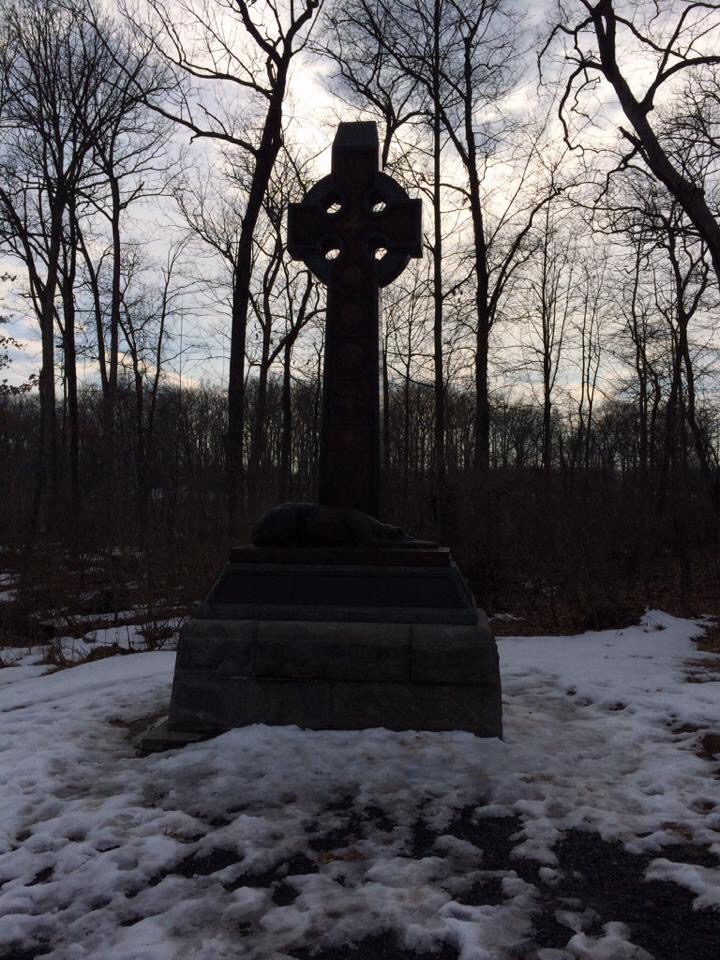
The Irish Brigade Memorial at Gettysburg 

Friends of Padre Steve’s World

According to my DNA tests I am 43% Irish, the highest percentage of any of the DNA in my genetic soup recipe, I enjoy Saint Patrick’s Day. While much of my intellect is coldly logical like the Germans, my attitude toward life is probably more Irish than anything else. I like to have fun, I can be combative, I occasionally suffer from the melancholy that afflicts the Irish, and I love to drink good beer. While my beer preferences tend toward German pilsners and lagers, I love real Irish beer too. When I was deployed on a ship whenever we were in port I found the local Irish expat pubs where I drank a lot of Kilkenny beer with the other old guys from the Wardroom. 

My regular readers know that I am a historian and do a lot with the American Civil War, especially the Battle of Gettysburg. They also know that I am most definitely a Union man despite the fact that many of my ancestors fought for the Confederacy, and that I have tremendous admiration for the legendary Irish Brigade of the Army of the Potomac. In fact the title of this article comes from that unit’s battle cry, which means clear the way. When I lead the Staff Ride to Gettysburg I am always drawn to where those brave men fought in the Wheatfield, the Rocky hill (Houck’s Ridge) and where Father Corby pronounced a general absolution for all of his soldiers, Catholic and Protestant, on Cemetery Ridge before they went into battle the afternoon of July 2nd 1863. 

Likewise, when I am in one of my melancholy moods the Irish song, The Minstrel Boy always comes to mind. 

But all this being said, yesterday and for that matter this week has been a bit tumultuous. I had to deal with a driver who had a road rage attack Wednesday which has left me sleepless, as well as the totally unexpected loss of a beloved long serving civilian employee at the Staff College. 

My wife and some colleagues at work have convinced me to report the road rage incident which I will do today, as the rager was a sailor in uniform.  Since I suffer from PTSD the whole incident was quite unsettling. At first I thought of just letting it go, but I do think now, for safety sake that I should report it. While I don’t think that I am in danger, and while I do not want to have him charged with anything, or have his life ruined, but the young man obviously needs help before his rage gets him killed. 

I attended a memorial for our employee yestday afternoon at the little Baptist Church that he attended. The service was touching and heartfelt, many people from the church and the staff college were in attendance. The man who died wasn’t much older than me and he was a gem. I liked joking with him and he was one of the most conscientious workers, and dearest of people you would have ever wanted to know. Our current class graduates this morning and we are dedicating part of the ceremony to his memory. 

Last night we had a few beers with our friends at Gordon Biersch before going home and taking it easy. 

So anyway, I will have some new material out this weekend. Until then, please take care and be safe. 

Peace

Padre Steve+ 

Leave a comment

Filed under beer, civil war, faith, PTSD

Be Careful What You Vote Against

Friends of Padre Steve’s Worl

Since the Illinois and Missouri primary results will not be settled before I pass out tonight I will save my article about the results of what happened last night until tomorrow. As such I see no reason to do much commentary other than to note that Missouri is going to be close in both the Republican and Democratic races. 

Because of that  I am republishing an article that I wrote almost four years ago. Truthfully, no matter what your political leanings are I think that is important and well worth the read. I find that too many people don’t take the time to examine the second, third, and fourth order consequences of their actions, and that includes the action of casting a vote. Far to many votes are cast out of emotions, especially those of fear and anger, and without thought of the long term consequences. That was the case in less than a century ago in Germany. 

was reminded oft his article when a friend of mine remembered it and posted a link to it on Facebook a couple of days ago. In his note about it he noted that I was well ahead of the media. I hate it when that happens, but such is the danger of being a historian who has the capacity of self-reflection. The article is here in its entirety. I have not updated it with any references to Donald Trump or the violence that is occurring with startling regularity on the campaign trail. Even so it is decidedly uncomfortable reading, especially when I see quite a few Evangelical leaders, including pastors, and media pundits endorsing Trump. 

Peace

Padre Steve+

German Pastor Martin Niemoller wrote: “I hated the growing atheistic movement, which was fostered and promoted by the Social Democrats and the Communists. Their hostility toward the Church made me pin my hopes on Hitler for a while. I am paying for that mistake now; and not me alone, but thousands of other persons like me.” 

79623

Martin Niemöller

Martin Niemöller was a war hero. He had served on U-Boats during the First World War and commanded a U-Boat in 1918 sinking a number of ships. After the war he resigned his commission in the Navy in opposition to the Weimar Republic and briefly was a commander in a local Freikorps unit. His book Vom U-Boot zur Kanzel (From U-boat to Pulpit) traced his journey from the Navy to the pastorate. He became a Pastor and as a Christian opposed what he believed to be the evils of Godless Communism and Socialism. This placed him in the very conservative camp in the years of the Weimar Republic and he rose in the ranks of the United Evangelical Church of the Old Prussian Union. Active in conservative politics, Niemöller initially support the appointment of Adolf Hitler as Chancellor.

However, he quickly soured on Hitler due to his insistence on the state taking precedence over the Church. Niemöller was typical of many Germans of his era and harbored ant-Semitic sentiments that he only completely abandoned his anti-Semitic views until after he was imprisoned. He would spend 8 years as a prisoner of the Nazis a period hat he said changed him including his views about Jews, Communists and Socialists. Niemöller was one of the founding members of the Pfarrernotbund (Pastor’s Emergency Federation) and later the Confessing Church. He was tried and imprisoned in concentration camps due to his now outspoken criticism of the Hitler regime.

338101

Herman Maas

Herman Maas was another Evangelical Pastor. Unlike Niemöller, Maas was a active participant in the ecumenical movement, built bridges to the Jewish community and defended the rights of Jews as German citizens. He received a fair amount of criticism for his attendance of Reichspräsident Friedrich Ebert’s funeral. Ebert was both a Socialist and avowed atheist. Maas too was active in the Pfarrernotbund and the Confessing church, and unlike Niemöller maintained his opposition to anti-Semitism and the Nazi policies against the Jews. He would help draft the Barmen declaration. He too would be imprisoned and survive the war. Maas was the first non-Jewish German to be officially invited to the newly formed state of Israelin 1950. In July 1964 Yad Vashem recognized the Maas as one of the Righteous Among the Nations.

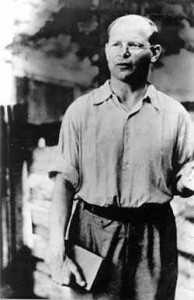
Bonhoeffer-194x300

Dietrich Bonhoeffer

Dietrich Bonhoeffer a young Pastor and theologian would also step up to oppose the Nazis and offer support for the Jews. He helped draft the Bethel Confession which among other things rejected “every attempt to establish a visible theocracy on earth by the church as a infraction in the order of secular authority. This makes the gospel into a law. The church cannot protect or sustain life on earth. This remains the office of secular authority.” He also helped draft the Barmen declaration which opposed and condemned Nazi Christianity. Bonhoeffer would eventually along with members of his family take an active role in the anti-Nazi resistance as a double agent for Admiral Canaris’ Abwehr. For this he would be executed after his final sermon in the concentration camp at Flossenburg just a month prior to the end of the war. Bonhoeffer wrote “If you board the wrong train, it is no use running along the corridor in the other direction.”

Another opponent of the Nazis in the Confessing Church was Swiss-German theologian Karl Barth. Barth went into exile as a Swiss citizen but remained active in the criticism of the Nazi regime.

P8-Bernard

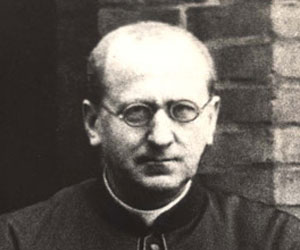
Bernard Lichtenberg

Catholic Bishop Galen of Münster and others including Father Rupert Meyer in Munich who opposed Hitler in the early 1920s would also oppose the Nazi policies toward the Church and the Jews. Some like Meyer would end up in concentrations camps with some like Canon Bernard Lichtenberg of Berlin dying at the hands of the Nazis.

mayer

Rupert Meyer

All these men took risks to defend the Jews who were religious minority group that had been traditionally discriminated against in Germany. They opposed the Nazi policies which were widely supported by much of the German populace making them unpopular in their own churches as among the traditionally conservative supporters of the Evangelical and Catholic Churches. The Jews were not simply discriminated against as a racial or religious group but also identified with the political left, especially the Social Democrats, Independent Socialists, Communists and the Spartacists.

Since the Independent Socialists, Communists and Spartacists were all involved in attempts to create a Soviet state during the early tumultuous years of Weimar and been involved in many acts of violence against traditional German institutions and the state, they were viewed by Hitler and others as part of the Bolshevik-Jewish threat to Germany. A sentiment harbored by many non-Nazi conservatives and Christians.

Karl Liebnicht and Rosa Luxembourg were among the high profile leaders of this movement in Germany and both were Jewish. The fact that many in the leadership of the Bolshevik movement in theSoviet Union were Jewish added fuel to the fire that the Nazis stoked in Germany. Hitler and the Nazis played on the historic, but muted prejudice against German Jews who in many cases were more secular and German than religious and had assimilated well in Germany. Hitler’s rhetoric as well as that of other Nazis and Nazi publications helped identify the Jews as part of the “Stab in the back” myth that was commonly used by the German right to explain the defeat in the First World War. Thus they were painted as a political and social threat to Germany.

sachs-pris

Nazi Political and Religious Opponents in Concentration Camps

When Hitler took power persecution of the Jews began in earnest. Jews were along with Communists, Trade Unions and Socialists enemies of the state. They were banned from the military, civil service and other government employment, professional associations and forced to wear a gold Star of David on their clothing. Their property was seized, many were abused by SA men acting as deputized auxiliary police and many times their businesses, Synagogues and homes were vandalized, burned or seized by the state. Many would be forced to flee in order not to be sent to ghettos and concentration camps. Even those leaving only escaped with the minimum of their possessions as the Nazi regime extorted anything of value from them as they left Germany. This was all done because Hitler and those like him portrayed the Jews as not only an inferior race, but enemies of the state and the German people.

Hitler portrayed himself and his movement as defenders of Christianity. He was not the first or last to do so but his speech of February 1st 1933, the day after he was appointed Chancellor by President Hindenburg made it abundantly clear that he was bent on securing the support of Christians to solidify his grip on power: “The National Government will regard it as its first and foremost duty to revive in the nation the spirit of unity and co-operation. It will preserve and defend those basic principles on which our nation has been built. It regards Christianity as the foundation of our national morality, and the family as the basis of national life. . . .”

23nazibrownshirtschurch

The Sturmabteilung (SA) at Church

Churches became sponsors of Nazi meetings, the Swastika banner hung in the sanctuaries of churches throughout the Reich and Bishops, Priests and Pastors joined Nazi organizations and gave the Nazi salute. They had sold their soul to Hitler and the Nazis out of fear of the Communists, Socialists, Jews and Slavs.

Eric Hoffer noted that “It is when power is wedded to chronic fear that it becomes formidable.” Hitler and his enablers spread fear and took advantage of it to bring those fearful of the left to his support.

20hitlercatholicchurch

Hitler leaving a Church

Today we face a similar phenomena in conservative circles in the United States. This time it is not the Jews but Moslems, Gays, immigrants and racial minorities who are the targets of the xenophobic rage by many influential members of the “conservative” media including Rush Limbaugh, Sean Hannity and numerous others. Their popularity in voicing support for “Christian morale values” such as being against abortion has ingratiated them with conservative Christians. It is so bad that that many “conservative” Christians cannot differentiate between their vitriolic and un-Christian rage against Moslems, Gays and Lesbians, trade unionists, Democrats or anyone else portrayed by the big media talkers and the Gospel.

It is if they have become an appendage to Republican or “conservative” politicians rather than a Christian church. It is not uncommon to see Christians on the web or on the call in talk radio programs identify lock stock and barrel with Limbaugh and others identifying the crass materialism and social Darwinism of “pure” Capitalism and the anti-Christian policy of pre-emptive war. That may seem harsh, but many of these people in the “Conservative Bible project” seek to re-translate the Bible into their own political, social and economic policies even seeking to change or minimize any Scripture that might be equated with the “Social Gospel.” Unfortunately many Christians and others have jumped in on the anti-Moslem and anti-immigrant crusades and anti-Gay launched by those on the far right.

There are those on the far right that advocate eliminating all Moslems from the military, government, security intelligence and police forces and even universities. Similar threats are made against non-European immigrants, legal and illegal alike especially those from Mexico or Latin America. I have a friend; a Navy Officer who served a year in Iraq that was confronted by a member of the “Minutemen” in Texas to show his Green Card and threatened simply because he is Mexican. Others especially conservative Christians suggest criminalizing homosexuality, jailing homosexuals or putting them in concentration camps, deporting them or even punishing gays with the death penalty.

This is so similar to the Nuremberg Laws and the Aryan Paragraph issued by the Nazis that it is scary. Likewise the threats to American Moslems or Gays of placing them “behind razor wire” as we did to American Japanese citizens in World War II are chilling. I wonder how Christians would react if an atheist or someone on the political left suggested all conservative Christians or members of pro-Life groups be imprisoned for the actions of Christians or pro-Life movement members like Scott Roeder or Eric Rudolph who killed to stop abortion or Fred Phelps and his Westboro Baptist Church?

This new found militancy has swept up the “Christian right” and others since 9-11 and has reached proportions that I could never have imagined. After my tour in Iraq I realized that much of what these people were saying was not Christian at all and when taken to their logical conclusion would be a police state in which anyone who opposed them would be persecuted. I question the motivations of the leaders of the movement but believe that most of the Christian conservatives have been caught up in the anger and the emotion of the times versus being true believers in what these men say. That being said, you don’t have to be a true believer to be a willing accomplice in actions that first are not Christian and second trample on the Constitutional rights of American citizens.

I could keep citing examples but if someone can show me where this is condoned in the Gospels I would like to know. The fact is that Christians are to place God first and defend the rights of others, even non-believers. This is found not only in Scripture but runs through the Christian tradition across the denominational spectrum.

The persecution of American Moslems, minorities, Gays and others is dangerous, not just for those minorities but ultimately for Christians who endorse and advocate against those groups. American and English law is based on legal precedence. Once something has been determined to be legal, or constitutional it is considered by the law to be settled law. This is a point made by Chief Justice Roberts regarding Roe v. Wade at his confirmation hearings. If Christians want to use the law against Moslems or for that matter any other minority be it religious or political they tread on very dangerous ground. Not only do they make a mockery of the Gospel command to love our neighbors, care for the foreigners among us and to be a witness to non-Christians support policies or laws that if enacted could and very well would be used against them by their opponents.

During the Republican Presidential primaries major leaders of the Evangelical movement and churches did all that they could to paint Mitt Romney as a religious cultist because he is Mormon. When Romney secured the nomination those same people started backtracking and committing their support to him because they believe that President Obama is an enemy of the country. They don’t like Romney, they are just against Obama. Romney will remember what they called him and their tepid support. If he becomes President he will not be beholden to them and will govern as he desires. Laws and Executive orders that give expanded power to the Executive Branch will not be overturned and if Evangelicals decide that they don’t like what he is doing and act toward him as they have President Obama they could find themselves on the outside and abandoned by the man that they supported.

Law is all about precedent and if such laws were enacted and upheld by the courts they would be settled law that could be used against anyone. What these dear brothers and sisters fail to realize is that such laws can be turned against them if the state should ever decided based on the statements of actions of some that the Christian community is a threat to state security of the public welfare. With the actions of some radical Christians who have committed murder and violence against political, social and religious opponents it would not be hard for the government to label whole churches as enemies of the state. The law is a two edged sword and those who want to use it to have the state enforce their religious, social, ideological or political beliefs on others need to remember what comes around goes around.

The Confessing church understood this and many were imprisoned, exiled or killed for this belief. The founding fathers of this country understood this too, that is why there is the Constitutional protection of Religion in the First Amendment. This was put in because Virginia Baptists who had been persecuted by Anglicans lobbied James Madison for the amendment in the Bill of Rights threatening to withdraw their support for his candidacy if he did not. Niemöller would discover the depths of his earlier folly in prison telling one interviewer after the war:

“I find myself wondering about that too. I wonder about it as much as I regret it. Still, it is true that Hitler betrayed me. I had an audience with him, as a representative of the Protestant Church, shortly before he became Chancellor, in 1932. Hitler promised me on his word of honor, to protect the Church, and not to issue any anti-Church laws. He also agreed not to allow pogroms against the Jews, assuring me as follows: ‘There will be restrictions against the Jews, but there will be no ghettos, no pogroms, in Germany. I really believed given the widespread anti-Semitism in Germany, at that time—that Jews should avoid aspiring to Government positions or seats in the Reichstag. There were many Jews, especially among the Zionists, who took a similar stand. Hitler’s assurance satisfied me at the time. On the other hand, I hated the growing atheistic movement, which was fostered and promoted by the Social Democrats and the Communists. Their hostility toward the Church made me pin my hopes on Hitler for a while. I am paying for that mistake now; and not me alone, but thousands of other persons like me.”

It is easy for well meaning people Niemöller to be bought with promises of support by politicians and media types who speak the words they want to hear in difficult times. So today I suggest the formation of an ecumenical Pastor’s Emergency League which will not be bought by the empty and godless promises of hate mongers on the right or the left. Such a group of men and women spanning the breadth of the Christian tradition and others that see the danger of extremism of all types is becoming necessary. Such a step is becoming necessary due to the militancy of the Christian right as well as the militancy of atheist groups who lobby against all public religious expression by any religion. Such a League would respect the various creeds and statements of faith of each member’s denomination. The movement of the right has set a dangerous course fraught with perils that they do not comprehend.

We have entered a dangerous phase of American history. These movements have the potential not only to oppress law-abiding and patriotic Americans of all faiths and to crush the religious freedoms of all in this county. Suggesting that American citizens, including those who serve the county in the military or government of entire religious, ethnic, political, religious affiliation or sexual preference be jailed, banned from office or fired is totalitarian and dare I say Nazi like.

Niemöller would say it well in this poem:

First they came for the communists, and I did not speak out—because I was not a communist;
Then they came for the socialists, and I did not speak out—because I was not a socialist;
Then they came for the trade unionists, and I did not speak out—because I was not a trade unionist;
Then they came for the Jews, and I did not speak out—because I was not a Jew;
Then they came for me—and there was no one left to speak out for me.

1 Comment

Filed under civil rights, ethics, faith, History, nazi germany, News and current events, Political Commentary

Embarrassed to Call Myself a Christian

  
Friends of Padre Steve’s World,

I have to get something off of my chest. I saw something on a fellow clergyman’s political comments that were so ignorant and over the top in the hatred that seethed from them that I chastised him and told him that I was embarrassed by his comments. Honestly I do not care who someone votes for or against, what political party they belong to, what ideology they affirm, so long as they remain civil, and if they are a member of the clergy to at least not stoop to personal assaults on their opponents that would turn the stomach of Jesus while at the same time turning a blind eye to the faults and anti-Christian behavior and policies of the political leaders that they support. 

A few days ago I read a very provocative article by Russell Moore, the head of the Southern Baptist Ethics and Religious Liberty Commission. In the article Dr. Moore wrote that he could no longer call himself an Evangelical Christian because the term in in the United States no longer has any real meaning. In fact he went out of his way to blast the crass manner in which leading so called  “evangelical” leaders have perverted the Gospel, especially in their politization of it. I was in his Amen corner  throughout the article. 

In the past I have written a number of articles about being afraid of Christians, well at least the kind of people who call themselves by the name of Christ that Dr. Moore referred to in his article. But I am more than afraid, I am terrified of them. I have n doubt that if they were given the chance that they would ruthlessly exterminate every political enemy that they have in the name of God. 

So I will do Dr. Moore one better. I am embarrassed to call myself a Christian, because that term has been so maligned by these people that it is meaningless. Dr. Moore said that he now refers to himself as a Gospel Christian. I can understand that and even on issues where I fail to see eye to eye with him I can respect him. But I cannot even call myself that, the term Gospel itself has been perverted by many of the people that Dr. Land rightly criticizes into an insipid morass of bad ahistorical theology, the blessing of greed, avarice, and violence to get the blessing of God and gain earthly power without any sacrifice, humility, repentance, not to mention the forgiveness of sin that the term Gospel has lost its power. 

Though I have been a Christian for most of my life, and have been an ordained minister an priest for over twenty-five years, I have a hard time calling myself a Christian. I struggle with faith, with belief, and the actions of so many Christians, including people that I once thought of as friends has been so corrosive that I have a hard time believing. A well meaning person asked me a couple of weeks ago if I believed. I told them that about half the time I do, about forty percent of the time I don’t know, and about ten percent of the time that I don’t. At least I am honest. There are times that I sense the wonder, grace, mystery and love of God, and there are many times that I don’t. 

But when I corresponded with my friend I realized that my issue with what he wrote had far less to do with his politics than what he said about people, especially in regards to words that they had not spoken and speeches they have not given. Dietrich Bonhoeffer wrote, “In judging others we blind ourselves to our own evil and to the grace that others are just entitled to as we are.” Is it any wonder that more and more people are fleeing Christ and the Church and that the fastest growing religious demographic in the United States is the Nones, or people who have no specific religious faith? I don’t find it surprising at all, and when I see people who call themselves Christians make hateful, ill-informed comments and then say that they are tired of being politically correct I shake my head in bewilderment. That is the same kind of “Christian Faith”  that Bonhoeffer fought against in the Nazi era. But then Bonhoeffer noted that “if you board the wrong train, it is no use in running down the corridor in the other direction.”  Far too many people who call themselves by the name of Christ have boarded that train, and it has left the station. 

So I guess that I will call myself a follower of Jesus like the man who told Christ, “I believe, help me in my unbelief.” 

Until the next time,

Peace

Padre Steve+ 

12 Comments

Filed under christian life, ethics, faith, Political Commentary

Rites of Spring: Spring Training and Faith

DSCN9504

Friends of Padre Steve’s World,

Sharon Olds wrote, “Baseball is reassuring. It makes me feel as if the world is not going to blow up.”

This week was the true beginning of spring. I know that spring does not actually begin until March, but even so amid the continuing winter, spring is showing its first sign of dawning as pitchers and catchers reported to Spring Training. As Bill Veeck once said, “That’s the true harbinger of spring, not crocuses or swallows returning to Capistrano, but the sound of a bat on a ball.”

I grew up with a love for baseball that was cultivated by my late father, we didn’t always agree on much, but he imparted to me a love for the game that knows no bounds.

For me that is true. From the day the World Series ends I wait in anticipation for the beginning of Spring Training and I can agree with the great Rogers Hornsby who said, “People ask me what I do in winter when there’s no baseball. I’ll tell you what I do. I stare out the window and wait for spring.” Now don’t get me wrong I like Hockey, Soccer, and Football, but in the end they are merely sports and entertainment, were Baseball is a refuge with profoundly religious meaning to me. As Bryant Gumbel once said, “The other sports are just sports. Baseball is a love.”

I think that unlike so many other sports and entertainment that it has a healing quality that is good for society. Walt Whitman wrote, “I see great things in baseball. It’s our game — the American game. It will take our people out-of-doors, fill them with oxygen, give them a larger physical stoicism. Tend to relieve us from being a nervous, dyspeptic set. Repair these losses, and be a blessing to us.”

In a society like ours, wracked by political division, social turmoil, and economic uncertainty, that is important. It can teach us a lot about ourselves, as Saul Steinberg wrote, “Baseball is an allegorical play about America, a poetic, complex, and subtle play of courage, fear, good luck, mistakes, patience about fate, and sober self-esteem.”

When I came back from Iraq the ballpark was one of the very few places that I could go and feel absolutely safe. There is something comforting in looking out over that beautiful diamond, smelling the freshly cut grass, the carefully manicured infield, and taking it all in. In fact for me tit still is one of my few truly safe refuges where war, terrorism, political and religious hatred, and the endless ideological battles of conservative and liberal pundits and politicians take a back seat, and as they fade away I find a peace that I seldom find anywhere else, and that includes most churches where for the life of me I find neither peace, nor God. Maybe that’s why I believe in the Church of Baseball.

I guess that is why it baseball matters so much to me, and why in spite of all the craziness of this week, that the seemingly insignificant act of pitchers and catchers reporting to Spring Training means so much.

Peace

Padre Steve+

Leave a comment

Filed under Baseball, faith

Ash Wednesday 2016

cross-ash-wednesday

Friends of Padre Steve’s World,

Just a shot note to start this Ash Wednesday.

Ash Wednesday is the traditional beginning of the season of Lent in the Christian tradition. Lent is a season of penitence, and if one is doing it right a season of examining their lives, and seeking to do better with the help of the grace of God. Some of the traditions during the season of Lent include going without meat on Fridays and if you are more strict on Wednesdays too, and doing other acts of penitence and contrition. However, that being said, to some I am not a very good Christian, and they may be right for I know that do not claim to have a lock on the mind of God.

Sadly, I have never been very good at observing the season of Lent, at least as far as the external rituals are concerned. My own sorry observance of them does not mean that they are without value, but having tried and tried to observe them and only being more miserable for my efforts, I have simply decided to do my best and let the chips fall where they may so far as the grace of God is concerned. I figure that if God is petty enough to punish me for eating a hamburger on a Friday during Lent that God’s grace really doesn’t matter. So I don’t worry about it. If I am wrong and God really is willing to send me to Hell for something like that, then the rest of my life doesn’t matter that much.

So, that being said I will conduct an ecumenical Ash Wednesday service for our students and faculty at the staff college today, and when I go home I will have a beer or two as I figure out just what I will eat. It might be soup, or a salad, possibly pasta, and may or may not include some kind mom meat. It will not be extravagant, and like today I will probably hand some money to a panhandler figuring as C.S. Lewis did that I would probably just buy a beer for myself with it anyway if I didn’t give it to someone willing to subject themselves to the ridicule and abuse of people that make a good living and for whom five or ten dollars doesn’t matter that much. However, having once been in the place where five, ten, or twenty dollars paid for a tank of gas, a prescription, or a sack of groceries, and having been the recipient of the goodness of people, I have a hard time sitting in judgement over people who struggle. I figure that if they are swindling me then they will have to deal with God about that.

Anyway. today is Ash Wednesday and I hope that Christians will use the day as a time of reflection and a time to renew their faith and trust in the grace, mercy, and love of God, rather than a time to look down their noses at, reject, and condemn other people desperately in need of the grace, mercy and love of God.

Maybe according to some of my more legalisticly observant readers I am not much of a Christian, and for some I am not a Christian at all. God knows that I have been told by quite a few people that I am going to Hell, and most of them are not joking. But, even so, despite how badly I observe Lent, despite what a sorry example I am to some people, I still believe that this season can be of value. I may not observe all the legalism that some do during this season, but I do try to scrutinize my life, and how I treat others, even if I do eat an occasional hamburger on days when I am supposed to go without meat, or without an alcoholic beverage, but as my favorite heretic Martin Luther once said,“It is better to think of church in the ale-house than to think of the ale-house in church.” 

So have a wonderful day, and do the season of Lent as best as you can and as benefits others the most, even of some people condemn your for not doing it perfectly.

Peace,

Padre Steve+

Leave a comment

Filed under christian life, faith, Religion