Category Archives: History

Remembering Titanic 100 Years Later: A Tale Unregulated Hubris

“I cannot imagine any condition which would cause a ship to founder. I cannot conceive of any vital disaster happening to this vessel. Modern ship building has gone beyond that.” -Captain Smith, Commander of Titanic regarding the Adriatic, a previous command

It is as hard to believe now as it was then. Walter Lord, historian and author talked of the “if onlys” that haunted him about the sinking of Titanic. If only, so many if onlys. If only she had enough lifeboats. If only the watertight compartments had been higher. If only she had paid attention to the ice that night. If only the Californian did come…” 

“If” that biggest of two letter words that plagues human history looms large in the tragedy of Titanic. The great ship, the largest ship and one of the fastest ocean liners of her time was the victim of her owner and operators hubris. Her builders had no such illusions and Thomas Andrews the Managing Director of Harland and Wolff Shipyards where she was built commented “The press is calling these ships unsinkable and Ismay’s leadin’ the chorus. It’s just not true.” 

J. Bruce Ismay

Titanic was designed with the latest shipbuilding innovations, watertight compartments, a double bottom and equipped with wireless. She was billed as “unsinkable” by her owners but those innovations as advanced as they were for her day were insufficient to save her when her Captain and owners chose to charge through a known ice field at full speed.  Her watertight compartments did not extent far enough up the hull to prevent water from going over them.  Likewise it was never imagined that so many watertight compartments could be compromised.

 Thomas Andrews

As far as lifeboats there were far too few. Thomas Andrews, her builder wanted 64 had his arm twisted to bring the number to 32 and Titanic sailed with only 20 of which 4 were collapsible boats smaller than smaller lifeboats. Justifying himself under antiquated regulations (which were written for ships of 10,000 tons) which allowed just 16 boats J. Bruce Ismay the Director of White Star Line told Andrews:

“Control your Irish passions, Thomas. Your uncle here tells me you proposed 64 lifeboats and he had to pull your arm to get you down to 32. Now, I will remind you just as I reminded him these are my ships. And, according to our contract, I have final say on the design. I’ll not have so many little boats, as you call them, cluttering up my decks and putting fear into my passengers.” 

If only the Californian had come. Californian was the nearest vessel to Titanic and in easy wireless range. However her wireless was unmanned, she did not have enough operators to man it 24 hours a day.  Her lookouts saw Titanic but despite flares being fired from Titanic she never assumed Titanic to be in extremis. The next nearest ship, Carpathia heard the call and made a valiant attempt to reach Titanic but was too late.

If only…so many “if onlys” and so many traceable to one man, the Director of White Star Line J. Bruce Ismay.  Thomas Andrews would go down with the ship but Ismay ensured his own survival. Ismay is symbolic of men who allow their own hubris, vanity and power to destroy the lives of many.  He is so much like those that helped bring about the various economic crises that have wracked the United States and Western Europe and so many other tragedies.

Ismay and Titanic are symbols of men guided only by their quest for riches and glory who revel in their power and scorn wise counsel or regulation, government or otherwise. Rules don’t apply to them.  Some things never change.

Peace

Padre Steve+

2 Comments

Filed under History

Unforced Errors: The Bane of the American-NATO Campaign in Afghanistan

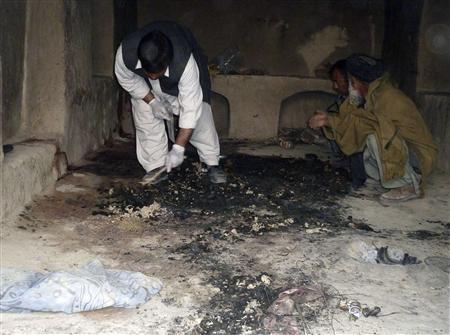
The Scene at one of the Houses (Reuters: Ahmad Nadeem) 

The efforts of the United States in Afghanistan and chances of coming out with anything resembling a successful conclusion to the longest war in its history are being destroyed by unforced errors. Of course anyone who watches any kind of sporting event knows that there are many times that the team that should win self destructs by committing unforced errors that result in them losing a game. In football they might be penalties, fumbles or badly thrown balls that result in interceptions. In basketball the errant pass, the bad foul, the unforced turnover in baseball the error that costs a game. However in war unforced errors cost precious lives, harm the strategic goals of a nation and lead to greater suffering of the populations affected.

Today we learned that a US Army Staff Sergeant went on a rampage in the Afghan villages near his base in Kandahar killing 15 or 16 Afghan civilians including 9 children and 3 women. The killings were particularly brutal. We don’t know details except that some reports indicate that the sergeant had recently had a breakdown and had deployed at least one other time to Iraq or Afghanistan. I would guess that he had multiple deployments.  The initial reports say that he was assigned to troops supporting a Special Forces team that was working with the local villagers.  Some Afghans say that more than one soldier was involved although NATO says that the soldier acted alone.

The murders come after the accidental burning of a Koran sparked riots and attacks on US and NATO forces killing 6 NATO soldiers including 2 US officers working inside a secure area of the Afghan interior ministry. They also follow the video display of Marines urinating on the bodies of dead Taliban and the trial and conviction of soldiers who had their own killing team. All the incidents were unrelated and none had the imprimatur of the American or NATO command.  However like the My Lai massacre committed by the platoon led by Lieutenant William Calley during the Vietnam War the crimes have tarnished the honor of the US military and are undermining all efforts to bring about a successful conclusion to the war in Afghanistan.

Unforced errors do not help when the strategic goals are totally dependent on the cooperation and goodwill of the populace of the country that you are operating in and trying to secure. The whole tenant of Counterinsurgency Warfare is securing the population and by doing that bringing them to cooperate with you. If you do not have the massive numbers of troops to actually secure the country yourself it is doubly important. In fact by doctrine there should be 4 times more troops to conduct a successful counterinsurgency campaign. In places where the indigenous forces are larger and more capable some or even much of the burden can be born by them, however the Afghan National Army and National Police are able to shoulder the burden. Riddled with corruption, plagued by incompetent leaders, poor discipline, high desertion rates and awash in Taliban sympathizers. A growing number of American and NATO soldiers have lost their lives in attacks from the Afghan soldiers and police working alongside of them.

Of course there are other factors such as that the government of the country must inspire the confidence of its own people in order to turn back an insurgency.  Afghanistan is “governed” if one can call it that by the regime of Mohammed Karzai. The government can most charitably be described as corrupt and incompetent.  However the Karzai government has little power or authority outside of Kabul.  It has little control over its own security forces or for that matter even regional governors who function in a near autonomous fashion as best benefits them personally or the tribe that they belong.  A shadow government of the Taliban factions often hold as much real power over the people as the “legitimate” government.  The biggest money maker is the Opium trade as Afghanistan is one of the top Opium producers in the world. The real truth is that for all practical matters Afghanistan is for all practical purposes a narco-State run by criminals and thugs of different factions.

Afghanistan also is a nation whose people believe that it is an offense against Islam foreigners to occupy the country. The Afghanis have shown their resolve against every invader and though successfully invaded they have never been long occupied nor cooperated well with their occupiers, even those that considered themselves liberators. As such the campaign to rid Afghanistan of the Taliban and bring about some form of democracy has had little chance of success after forces were diverted to the invasion of Iraq.

The latest incident will cause more American and NATO soldiers to die and will likely erase any possibility that we can succeed in our goal of an orderly train up of Afghan security forces and transfer of the conduct of the war to them.  It is very likely that the situation on the ground will get worse, perhaps markedly worse.  The American military will do the right thing regarding the investigation and prosecution of this case but that investigation may prove to show how bad things have become.

Unforced errors.  I don’t know how to overcome them.

Peace

Padre Steve+

Leave a comment

Filed under Foreign Policy, History, iraq,afghanistan, Military, national security

The Question is When, Where and How?…not If…. The Inevitability of War with Iran

“War is the unfolding of miscalculations.”  Barbara W. Tuchman

I do not think that there is a sane person in the world that sees any benefit of a war between the United States, Israel and the West and Iran.  But then sane people seem to be in the minority of all those involved in the current escalation of tension regarding Iran,  Israel, the United States, the West and the Arab World.

That being said I don’t think that anyone really wants to go to war even as all of countries involved move military units around the region, stockpile more weapons and issue ever more strident threats against one another.

When the war between Iran and those that oppose it occurs it will be because one of parties involved makes a fatal miscalculation that leads to a regional war with unimaginable consequences.

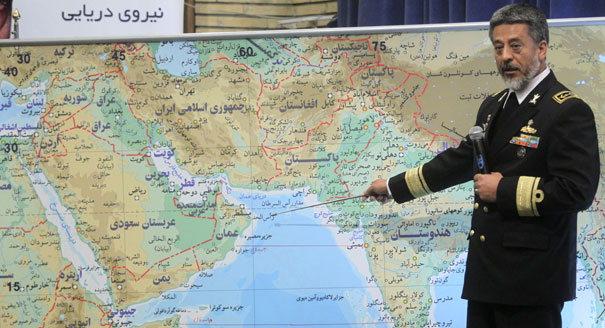
The immediate parties involved, the Iranians, the Israelis and the Americans have all hardened their military, political and economic stances in the past few months. The Iranians in particular have escalated military tensions by threatening to close the Straits of Hormuz, moving naval units to Syria even as that country devolves into civil war and making attempts or threats on the lives of Israeli diplomats in various countries including the United States.

Israel is reacting in kind to what many Israelis view as an existential threat from Iran in regard to the possibility of Iran producing nuclear weapons and delivery systems that could threaten Israel.  Reports seem to indicate that the Israelis could conduct a pre-emptive strike against Iran any time between the spring and the November elections in the United States.

The United States and much of Europe have imposed an increasing number of economic sanctions on Iran that are taking a toll on Iran’s economy.  Iran is increasing pressure on its own citizens who want more freedom. The Iranian military and the Revolutionary Guards are conducting exercises which are becoming increasingly bellicose including sending warships into the Mediterranean Sea to Syria.  Whether they want war or do not their actions could accidentally trigger a war with terrible consequences to the region as well as the global economy.

At this point I do not see any easy way out of a war which everyone knows is coming but cannot or will not avert.  The question is no longer if? It is when, how and where? Will it be a naval action at the Straits of Hormuz? Will it be the assassination of an Israeli, Iranian or perhaps a Saudi diplomat or leader? Will it be a terrorist attack against Israel by an Iranian ally such as Hezbollah which triggers an Israeli response?  Who really knows? There are so many possibilities that could trigger a regional war that it it boggles the mind.

The media with its 24 hour news cycle which demands fresh news raises the tenor of emotions and passions of the people and nations involved with each passing day.  The fear of war is driving people to the brink of it.  Back in the late 1890s it was called “Yellow Journalism.”

Adlai Stevenson said that “In matters of national security emotion is no substitute for intelligence, nor rigidity for prudence. To act coolly, intelligently and prudently in perilous circumstances is the test of a man, and also a nation.”  But this is not always the case. It is very possible that Israel, Iran or the United States may conduct a “preventative” strike against its opponents.  Otto von Bismarck commented that “Preventive war is like committing suicide out of fear of death.”

One can only hope that leaders and nations will see the truth of Stevenson and Bismarck’s words before the someone makes that one fatal miscalculation.

Peace

Padre Steve+

1 Comment

Filed under Foreign Policy, History, middle east, national security, News and current events

Those that Should Know Better: Judgement at Nuremberg

“There was a fever over the land. A fever of disgrace, of indignity, of hunger. We had a democracy, yes, but it was torn by elements within. Above all, there was fear. Fear of today, fear of tomorrow, fear of our neighbors, and fear of ourselves. Only when you understand that – can you understand what Hitler meant to us. Because he said to us: ‘Lift your heads! Be proud to be German! There are devils among us. Communists, Liberals, Jews, Gypsies! Once these devils will be destroyed, your misery will be destroyed.’. It was the old, old story of the sacrifical lamb. What about those of us who knew better? We who knew the words were lies and worse than lies? Why did we sit silent? Why did we take part? Because we loved our country! What difference does it make if a few political extremists lose their rights? What difference does it make if a few racial minorities lose their rights? It is only a passing phase. It is only a stage we are going through. It will be discarded sooner or later. Hitler himself will be discarded… sooner or later. The country is in danger. We will march out of the shadows. We will go forward. Forward is the great password. And history tells how well we succeeded, your honor. We succeeded beyond our wildest dreams. The very elements of hate and power about Hitler that mesmerized Germany, mesmerized the world! We found ourselves with sudden powerful allies. Things that had been denied to us as a democracy were open to us now…”  Judge Ernst Janning (Burt Lancaster) in Judgement at Nuremberg

I am getting ready to do some serious writing over the coming months about what Hannah Arendt called “the Banality of Evil.” Banality is not a word often used now days. But it simply means trivial, uncreative or simply ordinary and unremarkable.  I have been pondering this for years and believe that history has to be continually learned and written about in order not to see it repeated.

I studied Weimar and Nazi Germany as well as the Holocaust under Dr. Helmut Haeussler at California State University at Northridge as an undergraduate and in a year of graduate studies.  I also continued that study while in Seminary as well as in my Masters Degree in Military History. I was stationed in Germany several times, done an exchange tour with the German Army and my German friends say that I am fluent in German. I have been to Nuremberg, Dachau and Bergen-Belsen. I have stood on the reviewing stand where Adolf Hitler preached to the multitudes of assembled party faithful on the Zepplinfeld in Nuremberg.

As such I am a realist about the unique horror of the Holocaust. I am a realist about people and how and the circumstances of the times brought ordinary people, men and women to either commit, support or simply turn their backs on the greatest atrocities ever committed by a “civilized” Western nation. A nation steeped in the traditions of Christendom and the Enlightenment.

I have broken out many of my old books used in my various degree programs as well as  as the resources of museums and universities now available on the internet. I am also watching films about the era. Not war films, films about the ordinary men that carried out these crimes either by pulling the trigger, pushing a button, signing an order or simply turning their backs and remaining silent.

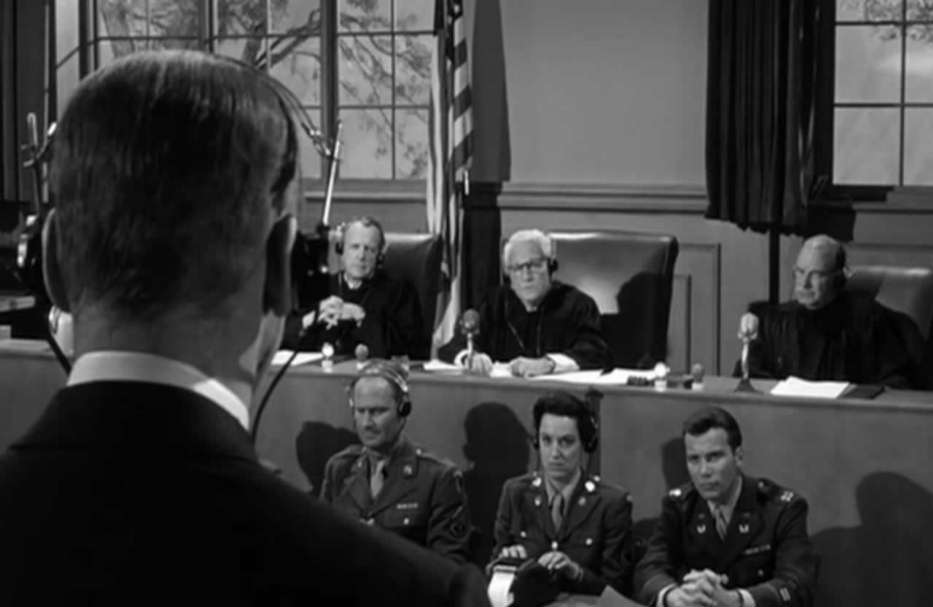
At the end of the movie Judgement at Nuremberg Spencer Tracy as the Presiding Judge Dan Haywood concluded his sentencing remarks with this statement. It is perhaps one of the most powerful statement and something to remember as the Unholy Trinity of Politicians, Pundits and Preachers urge us to hate one another and those different than us. It is something that is especially needed in times of great societal stress as well as real and perceived dangers from without and within.

http://www.youtube.com/watch?v=N3BwK51YFgQ

“Janning, to be sure, is a tragic figure. We believe he loathed the evil he did. But compassion for the present torture of his soul must not beget forgetfulness of the torture and the death of millions by the Government of which he was a part. Janning’s record and his fate illuminate the most shattering truth that has emerged from this trial: If he and all of the other defendants had been degraded perverts, if all of the leaders of the Third Reich had been sadistic monsters and maniacs, then these events would have no more moral significance than an earthquake, or any other natural catastrophe.

But this trial has shown that under a national crisis, ordinary – even able and extraordinary – men can delude themselves into the commission of crimes so vast and heinous that they beggar the imagination. No one who has sat through the trial can ever forget them: men sterilized because of political belief; a mockery made of friendship and faith; the murder of children. How easily it can happen. There are those in our own country too who today speak of the “protection of country” – of ‘survival’. A decision must be made in the life of every nation at the very moment when the grasp of the enemy is at its throat. Then, it seems that the only way to survive is to use the means of the enemy, to rest survival upon what is expedient – to look the other way. Well, the answer to that is ‘survival as what’? A country isn’t a rock. It’s not an extension of one’s self. It’s what it stands for. It’s what it stands for when standing for something is the most difficult! Before the people of the world, let it now be noted that here, in our decision, this is what we stand for: justice, truth, and the value of a single human being.”

This is an unsettling subject and people on the political right and left in this country are apt to compare their opponents to those that were tried at Nuremberg and those that led them. However it is possible that any party in society when divided by fear, hate and the desire for power can behave just as the industrialists, financiers, doctors, soldiers, jurists, civil servants, pastors and educators who oversaw those heinous crimes. People that should have known better.

Peace

Padre Steve+

1 Comment

Filed under film, History, philosophy, Political Commentary

God in the Empty Places: Four Years Later

Four years ago I was leaving Iraq for Kuwait, the first stop in the process of coming home.  At that point I wanted to go home but I didn’t want to go either. It was the beginning of a new phase in my life.  I wrote an article shortly after my return for the church that I belonged to at the time. I am reposting article here tonight.  

When I wrote it I really had no idea how much I had changed and what had happened to me.  I feel s special kinship with those that have fought in unpopular wars before me. French Indochina, Algeria and Vietnam, even the Soviet troops in Afghanistan before we ever went there.  

I am honored to have served with or known veterans of Vietnam, particularly the Marines that served at the Battle of Hue City, who are remembering the 44th anniversary of the beginning of that battle.  My dad also served in Vietnam at a place called An Loc. He didn’t talk about it much and I can understand having seen war myself. 

There are no new edits to the article. When I wrote it I was well on my way to a complete emotional and spiritual collapse due to PTSD.  Things are better now but it was a very dark time for several years and occasionally I still have my bad days. Today was a day of reflection.  As I walked my little dog Molly down the street tonight to the beach I looked up at the moonlit sky and I was as I have been thinking lately about seeing all of those stars and the brilliance of the moon over the western desert of Iraq near Syria. Somehow that sight now comforts me instead of frightens me. 

Tonight our Soldiers, Marines, Sailors and Airmen serve in harm’s way nearly 100,000 in Afghanistan alone. We are out of Iraq but Lord knows how things will turn out in the long run there.  

Anyway. Here is is.

God in the Empty Places. 

I have been doing a lot of reflecting on ministry and history over the past few months. While both have been part of my life for many years, they have taken on a new dimension after serving in Iraq. I can’t really explain it; I guess I am trying to integrate my theological and academic disciplines with my military, life and faith experience since my return.

The Chaplain ministry is unlike civilian ministry in many ways. As Chaplains we never lose the calling of being priests, and as priests in uniform, we are also professional officers and go where our nations send us to serve our Soldiers, Sailors, Marines and Airmen. There is always a tension, especially when the wars that we are sent to are unpopular at home and seem to drag on without the benefit of a nice clear victory such as VE or VJ Day in World War II or the homecoming after Desert Shield and Desert Storm.

It is my belief that when things go well and we have easy victories that it is easy for us to give the credit to the Lord and equally easy for others to give the credit to superior strategy, weaponry or tactics to the point of denying the possibility that God might have been involved. Such is the case in almost every war and Americans since World War Two have loved the technology of war seeing it as a way to easy and “bloodless” victory. In such an environment ministry can take on an almost “cheer-leading” dimension. It is hard to get around it, because it is a heady experience to be on a winning Army in a popular cause. The challenge here is to keep our ministry of reconciliation in focus, by caring for the least, the lost and the lonely, and in our case, to never forget the victims of war, especially the innocent among the vanquished, as well as our own wounded, killed and their families.

French Paratroop Corpsmen treating wounded at Dien Bien Phu

But there are other wars, many like the current conflict less popular and not easily finished. The task of chaplains in the current war, and similar wars fought by other nations is different. In these wars, sometimes called counter-insurgency operations, guerrilla wars or peace keeping operations, there is no easily discernible victory. These types of wars can drag on and on, sometimes with no end in sight. Since they are fought by volunteers and professionals, much of the population acts as if there is no war since it does often not affect them, while others oppose the war.

Likewise, there are supporters of war who seem more interested in political points of victory for their particular political party than for the welfare of those that are sent to fight the wars. This has been the case in about every war fought by the US since World War II. It is not a new phenomenon. Only the cast members have changed.

This is not only the case with the United States. I think that we can find parallels in other militaries. I think particularly of the French professional soldiers, the paratroops and Foreign Legion who bore the brunt of the fighting in Indochina, placed in a difficult situation by their government and alienated from their own people. In particular I think of the Chaplains, all Catholic priests save one Protestant, at the Battle of Dien Bien Phu, the epic defeat of the French forces that sealed the end of their rule in Vietnam. The Chaplains there went in with the Legion and Paras. They endured all that their soldiers went through while ministering the Sacraments and helping to alleviate the suffering of the wounded and dying. Their service is mentioned in nearly every account of the battle. During the campaign which lasted 6 months from November 1953 to May 1954 these men observed most of the major feasts from Advent through the first few weeks of Easter with their soldiers in what one author called “Hell in a Very Small Place.”

Another author describes Easter 1954: “In all Christendom, in Hanoi Cathedral as in the churches of Europe the first hallelujahs were being sung. At Dienbeinphu, where the men went to confession and communion in little groups, Chaplain Trinquant, who was celebrating Mass in a shelter near the hospital, uttered that cry of liturgical joy with a heart steeped in sadness; it was not victory that was approaching but death.” A battalion commander went to another priest and told him “we are heading toward disaster.” (The Battle of Dienbeinphu, Jules Roy, Carroll and Graf Publishers, New York, 1984 p.239)

Of course one can find examples in American military history such as Bataan, Corregidor, and certain battles of the Korean War to understand that our ministry can bear fruit even in tragic defeat. At Khe Sahn in our Vietnam War we almost experienced a defeat on the order of Dien Bien Phu. It was the tenacity of the Marines and tremendous air-support that kept our forces from being overrun.

You probably wonder where I am going with this. I wonder a little bit too. But here is where I think I am going. It is the most difficult of times; especially when units we are with take casualties and our troops’ sacrifice is not fully appreciated by a nation absorbed with its own issues.

For the French the events and sacrifices of their soldiers during Easter 1954 was page five news in a nation that was more focused on the coming summer. This is very similar to our circumstances today because it often seems that own people are more concerned about economic considerations and the latest in entertainment news than what is going on in Iraq or Afghanistan. The French soldiers in Indochina were professionals and volunteers, much like our own troops today. Their institutional culture and experience of war was not truly appreciated by their own people, or by their government which sent them into a war against an opponent that would sacrifice anything and take as many years as needed to secure their aim, while their own countrymen were unwilling to make the sacrifice and in fact had already given up their cause as lost. Their sacrifice would be lost on their own people and their experience ignored by the United States when we sent major combat formations to Vietnam in the 1960s. In a way the French professional soldiers of that era have as well as British colonial troops before them have more in common with our force than the citizen soldier heroes of the “Greatest Generation.” Most of them were citizen soldiers who did their service in an epic war and then went home to build a better country as civilians. We are now a professional military and that makes our service a bit different than those who went before us.

Yet it is in this very world that we minister, a world of volunteers who serve with the highest ideals. We go where we are sent, even when it is unpopular. It is here that we make our mark; it is here that we serve our Soldiers, Sailors, Marines and Airmen. Our duty is to bring God’s grace, mercy and reconciliation to men and women, and their families who may not see it anywhere else. Likewise we are always to be a prophetic voice within the ranks.

When my dad was serving in Vietnam in 1972 I had a Sunday school teacher tell me that he was a “Baby Killer.” It was a Catholic Priest and Navy Chaplain who showed me and my family the love of God when others didn’t. In the current election year anticipate that people from all parts of the political spectrum will offer criticism or support to our troops. Our duty is to be there as priests, not be discouraged in caring for our men and women and their families because most churches, even those supportive of our people really don’t understand the nature of our service or the culture that we represent. We live in a culture where the military professional is in a distinct minority group upholding values of honor, courage, sacrifice and duty which are foreign to most Americans. We are called to that ministry in victory and if it happens someday, defeat. In such circumstances we must always remain faithful.

For those interested in the French campaign in Indochina it has much to teach us. Good books on the subject include The Last Valley by Martin Windrow, Hell in a Very Small Place by Bernard Fall; The Battle of Dienbeinphu by Jules Roy; and The Battle of Dien Bien Phu- The Battle America Forgot by Howard Simpson. For a history of the whole campaign, read Street Without Joy by Bernard Fall. I always find Fall’s work poignant, he served as a member of the French Resistance in the Second World War and soldier later and then became a journalist covering the Nuremberg Trials and both the French and American wars in Vietnam and was killed by what was then known as a “booby-trap” while covering a platoon of U.S. Marines.

There is a picture that has become quite meaningful to me called the Madonna of Stalingrad. It was drawn by a German chaplain-physician named Kurt Reuber at Stalingrad at Christmas 1942 during that siege. He drew it for the wounded in his field aid station, for most of whom it would be their last Christmas. The priest would die in Soviet captivity and the picture was given to one of the last officers to be evacuated from the doomed garrison. It was drawn on the back of a Soviet map and now hangs in the Kaiser Wilhelm Memorial Church in Berlin where it is displayed with the Cross of Nails from Coventry Cathedral as a symbol of reconciliation. I have had it with me since before I went to Iraq. The words around it say: “Christmas in the Cauldron 1942, Fortress Stalingrad, Light, Life, Love.” I am always touched by it, and it is symbolic of God’s care even in the midst of the worst of war’s suffering and tragedy.

Peace

Padre Steve+

Leave a comment

Filed under History, iraq,afghanistan, Military, PTSD, Tour in Iraq

Revisiting the Gift of Religious Liberty: The Danger posed by Fanatics

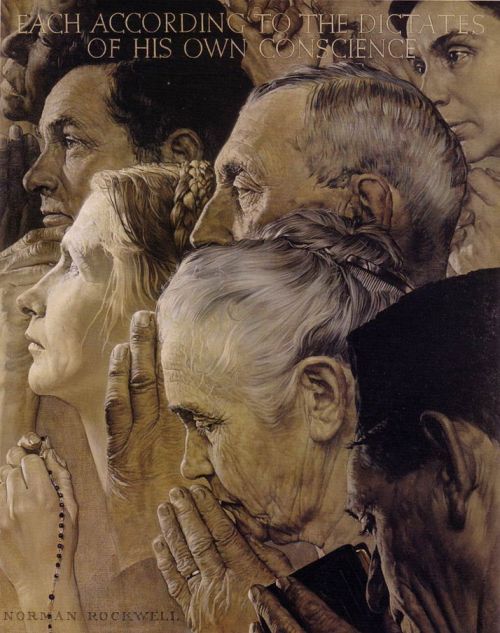
“Congress shall make no law respecting the establishment of religion, or prohibiting the free exercise thereof; or abridging the freedom of speech, or of the press; or the right of the people peaceably to assemble, and to petition the Government for a redress of grievances.” The First Amendment of the US Constitution

“no man shall be compelled to frequent or support any religious worship, place, or ministry whatsoever, nor shall be enforced, restrained, molested, or burdened in his body or goods, nor shall otherwise suffer, on account of his religious opinions or belief; but that all men shall be free to profess, and by argument to maintain, their opinions in matters of religion, and that the same shall in no wise diminish, enlarge, or affect their civil capacities.” Thomas Jefferson in the 1779 Virginia Statute for Religious Freedom

Those that read this site and have gotten to know me through it over the past few years know that I am passionately devoted to religious liberty.  I find it throughout the writings of our founders and and have written about it before numerous times and the comment was in regard to this article The Gift of Religious Liberty and the Real Dangers to It  https://padresteve.com/2011/05/10/the-gift-of-religious-liberty-and-the-real-dangers-to-it/

I do want to say up front that this article is in no way a denigration of those that believe, especially in this case since my critic claims to be a Christian a criticism of other Christians that are committed to their faith but also respect the religious liberties of others and that give God and his grace a little bit of credit to work in the lives of others that are different from them.

A couple of days ago I received a comment on that post that I quote in part:

“I have a serious problem with anyone who calls themselves a Christian supporting the religious liberty of all those who are not Christians because by doing so you condone their worship of false gods which is idolatry. I would rather see all religious worship outlawed than to allow worshippers of false gods allowed to spew their demon inspired idolatrous lies in public.” (pingecho728 Jonathan) 

It is amazing to me to see such words voiced over a subject that is so much a part of the fabric of our country.  Unfortunately with all the poisonous division in the country that religious liberty is in peril in some cases from left wing fanatics that despise all religion but is becoming more pronounced on the fanatical right particularly in the views of some parts of American Evangelical and Conservative Catholic Christianity.

But with that said this commentator is a very angry person and a search Facebook and a Google search that took all of about 5 minutes told me more than I wanted to know about this man. He is a fanatic who has flip-flopped in his passionate beliefs, responding to an atheist on another website in December 2010 regarding the irrationality of Biblical faith.

“PingEcho728  Dec 1, 2010 01:55 PM
I love what you wrote and agree wholeheartedly. Ironically I used to be once upon a time one of those religionist who was content with the “God did it” answer..if the Bible said it I believed it a hundred percent but once I opened my eyes and actually examined everything I had once easily believed to see why I had believed those things I found I had no good rational answer or evidence for believing those things. So I did the only thing a rational freethinking person could do, I abandoned beliefs for which I had no reason or evidence to support it.”

When I responded to the man and noted that everyone was someone else’s heretic and that even Conservative Christians might find his views heretical he responded. “There are certainly no Christians more conservative than me nor would any true Christian call me a heretic.”  Talk about flip-flopping, but this is typical among fanatics of every variety. They easily change sides because they need a cause bigger then them to provide meaning to their lives.  This man who on other Tea Party blogs practically deifies the Founders says of them regarding religious liberty: “I trust in the founders no more than I trust in any fallible man. The freedom to disagree is one thing to allow false religions to flourish in America is one that will undoubtedly lead to the destruction of America and the rise of the antichrist.”

Philosopher Eric Hoffer wrote in his book The True Believer about mass movements and their fanatical followers.  He did not see the followers of the different causes be they religious, secular, atheist, Fascist or Communist to be that different from each other. He saw them as brothers in a sense and their real opponent is the moderate, not the opposing extremist. Hoffer saw that the “true believers” were far easier to convert to an opposing view than you would think and he noted how fanatical Germans and Japanese often were converted to Communism while in captivity after the war.  It was their devotion to the cause not the cause that they became devoted to serving that was what gave meaning to their life.

Hoffer wrote:

“The fanatic is perpetually incomplete and insecure. He cannot generate self assurance out of his individual resources-out of his rejected self-but finds it only by clinging to whatever cause he happens to embrace. This passionate attachment is the source of his blind devotion and religiosity, and he sees in it the source of all virtue and strength. Through his single minded dedication is a holding on for dear life , he easily sees himself as the supporter and defender of the holy cause to which he clings….Still his sense of security is derived from his passionate attachment and not from the excellence of his cause. The fanatic is not really a stickler to principle. He embraces a cause not because of its justness and holiness but because of his desperate need for something to hold on to. Often, indeed, it is his need for passionate attachment which turns every cause he embraces into a holy cause. The fanatic cannot be weened away from his cause by an appeal to reason or moral sense. He fears compromise and cannot be persuaded to qualify the certitude of his holy cause. But he finds no difficulty in swinging suddenly and wildly from one holy cause to another. He cannot be convinced but only converted. His passionate attachment is more vital than the cause to which he is attached.”

Unfortunately there are many people on the extremes of the political spectrum that are like this. They can be found in the factions of the Tea Party and in the Occupy Movement as well as other even more extreme groups.  They are the kind of people that in the social, economic and political turmoil of the 1920s and 1930s were sucked into the great radical movements Communism, Fascism and Naziism.  In fact this has little to do with Christianity itself, even the most conservative expressions of it.  It is a matter that fanatics would rather destroy freedom for everyone than to give it to anyone that they disagree.

The real thing that sets our nation apart from others is the fact that when it came to religious liberty that the Founders were quite clear that religious liberty was the property of every individual. It was not to be forced by the state or by religious bodies acting on behalf of the state. We are not Iran, Saudi Arabia or even Israel. Our founders knew the dangers of fanatical religion having seen the effect of it during the brutal religious wars in England which pitted Anglicans against Separatists and Roman Catholics in the 17th Century.  They harbored no illusions about the danger posed by well meaning “true believers” who would use the powers of the state to enforce their religious beliefs on others as well as those that would seek to obliterate religion from public life as happened during the French Revolution.

I will gladly take criticism from people that believe that I am not a Christian because I defend the religious liberties of others.  I am a Christian and make no apology but  I figure that this liberty is too precious to so despised by those that most depend on it.  Religion can and has often been abused and used as a dictatorial bludgeon. Those who now advocate so stridently for their faith to be made the law of the land should well remember the words of James Madison:

“Who does not see that the same authority which can establish Christianity, in exclusion of all other religions, may establish with the same ease any particular sect of Christians, in exclusion of all other sects?”

Peace

Padre Steve+

1 Comment

Filed under christian life, faith, History, philosophy, Political Commentary, Religion

The Lost Art

“Politics is the art of the possible, the attainable … the art of the next best.” Otto von Bismarck

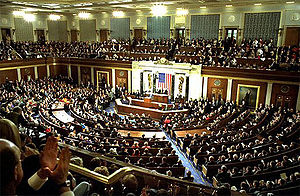
I did my yearly duty of enduring the State of the Union Address.  I have done this every year when not deployed, at sea or in the field since I was in college. I have learned over the years that regardless of who the President is or what party they belong does not make the watching of this speech any less of an ordeal.

Some Presidents were marvelous orators and others not.  Typically the rebuttal to any President’s State of the Union is always a critique of whatever the President said and why the opposition and its ideas or policies are better.  Thus when Presidents like Ronald Reagan, Franklin Delano Roosevelt, Bill Clinton and even President Obama use   lofty language and rhetoric it is hard for the opposition to sound like anything other than less than exciting.  Now this says nothing about the substance of the ideas or even the truth of what is being spoken by either side especially in an election year. Bismarck so adroitly put it “People never lie so much as after a hunt, during a war, or before an election.” 

Call me a cynic but I guess I am now old enough to have see that the speeches really don’t matter that much unless the leaders of both parties are willing to work together for the good of the country.  There are policies and positions in both parties that I agree with and those that I disagree with. I don’t think either party has a lock on truth nor have the answers to all of the challenges that we face totally contained in their ideology or party platform.

The speech by President Obama was an excellent speech and the response by Indiana Governor Mitch Daniels was not bad. Again I am not going into specific details of what either said but rather the tone of both. There were differences and Daniels was pugnacious but not disrespectful and Daniels even found places of agreement with the President. Unfortunately that is rare among the rest of his party.

Maybe I have been in the military too long but some of the things done by leaders, elected leaders and pundits of both parties over the past 10 years since George W Bush was elected turn my stomach. I want the country to do well and for whoever the President is at the time to meet with success.  I may not support all of their agenda but they have the job of President and I don’t.  I believe in the teamwork embodied by the military and particularly that of SEAL Team 6 and the supporting units who killed Osama Bin Laden that the President emphasized so well.

When Nancy Pelosi said of President Bush “Why should we put a plan out? Our plan is to stop him. He must be stopped” I was appalled. When Mitch McConnell said that “the single most important thing we want to achieve is for President Obama to be a one-term president” I was equally appalled. That is no way to help the country.

Otto Von Bismarck was was quite the pragmatist. He understood that there is an art to politics. Ronald Reagan understood the same and was able to work with the opposition as much as he could get of his agenda passed and make deals including raising taxes to get it done. Unfortunately the Unholy Trinity of Politicians Pundits and Preachers on both sides of the political chasm have somehow come to the conclusion that it is a winner take it all game.  I’m glad that President Obama and Governor Daniels despite their differences did not use tonight to demonize their opponents. Maybe that is a start.

Of course this is an election year and the country is bitterly divided. We have practically been at war with each other for at least that long, probably longer. I just hope that somehow we as a people can rally around the country and whatever our politics not forget that we are all Americans and are in this boat together.  As Abraham Lincoln said in his second inaugural address at the close of the Civil War:

“With malice toward none, with charity for all, with firmness in the right as God gives us to see the right, let us strive on to finish the work we are in, to bind up the nation’s wounds, to care for him who shall have borne the battle and for his widow and his orphan, to do all which may achieve and cherish a just and lasting peace among ourselves and with all nations.” 

Peace

1 Comment

Filed under History, News and current events, philosophy, Political Commentary

Iraq Commitment Medal

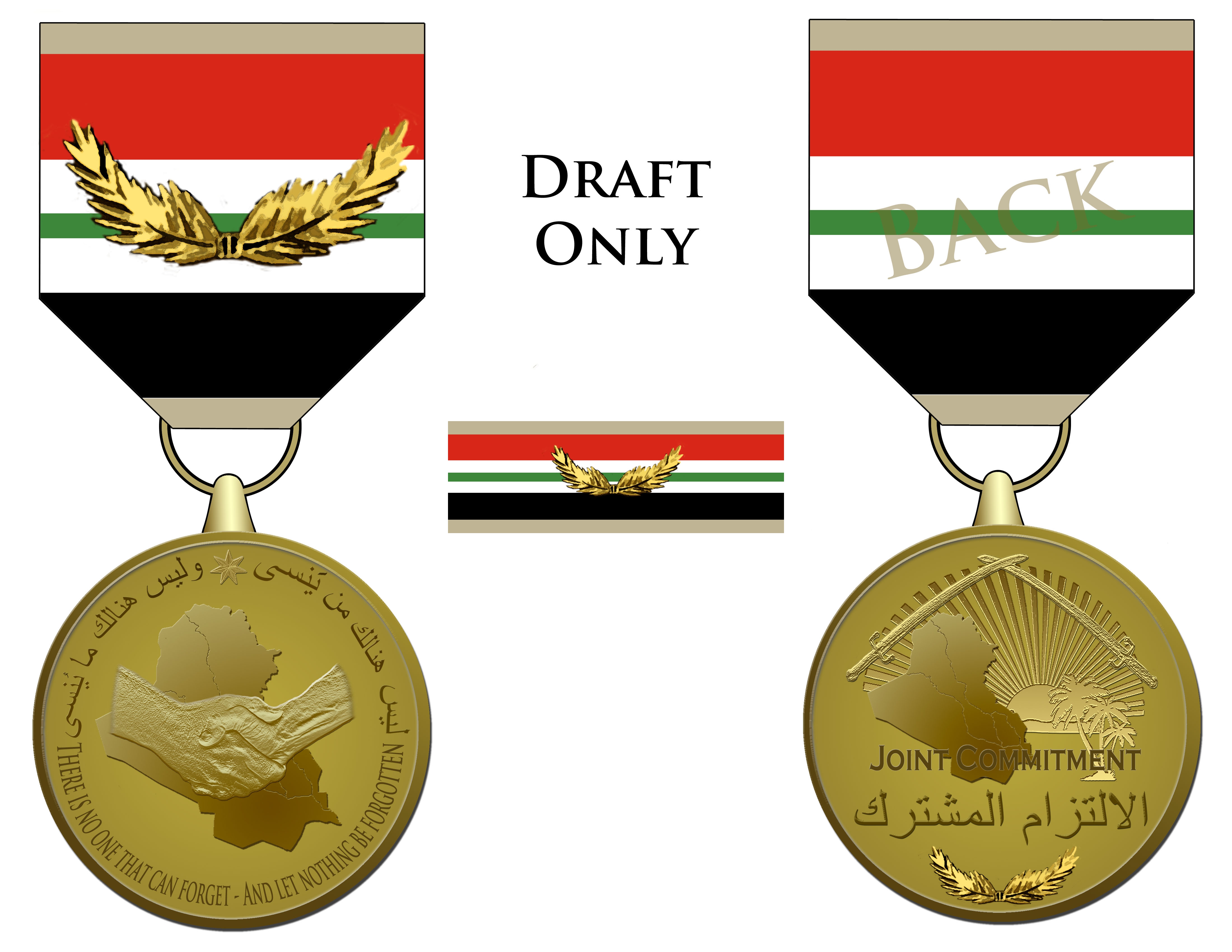
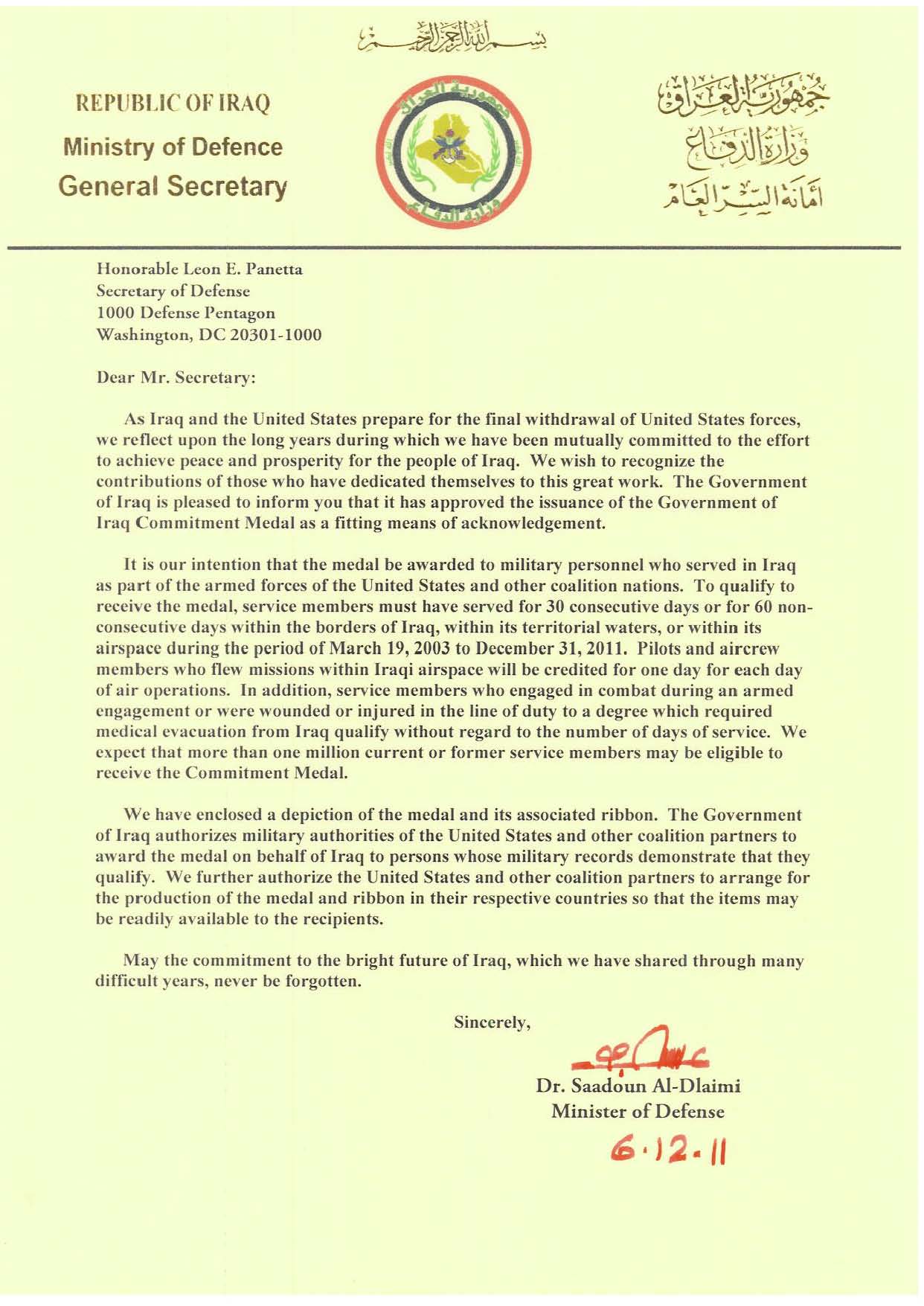
The US Military campaign in Iraq ended at the end of 2011 and in a ceremony marking that the Iraqi government authorized the United States and other coalition partners to award a medal on their behalf to soldiers that served in Iraq. The award still has to be approved for wear by the United States but I cannot imagine that such approval will not be given. Too many thousands of Americans have been killed our wounded in the war not for it to be awarded. The price has been paid in blood and the cost is born in the minds, bodies and spirits of those that served and survived and in the lives of those who have lost loved ones during the war.

The medal called the Government of Iraq Commitment Medal is similar in character to those issued by other countries to American service members that served in their countries. Such awards have been made by the Philippines, South Korea, South Vietnam, Saudi Arabia and Kuwait.

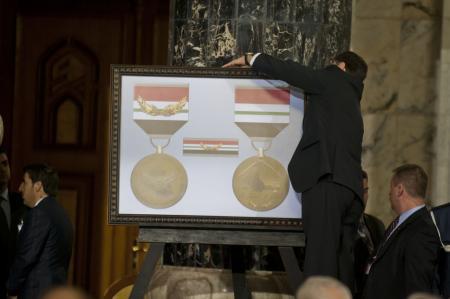
The announcement of the award was made in a ceremony attended by Vice President Biden on 1 December 2011in Bagdad.  http://www.sather.afcent.af.mil/news/story.asp?id=123281953

The letter from the Iraqi Minister of Defense is shown below.

Now to some this award is insignificant and with Iraq’s government in disarray some will mock it. But to many if not most of us that served in Iraq it will be a small thank you and remembrance of our service there. If Iraq can navigate the future successfully and overcome its own divisions perhaps those of us that served will be able to go back as visitors and maybe like those that served in the Second World War be able to help heal the wounds of war alongside the Iraqis that we served alongside, trained and advised.

“Description – The Commitment Medal is a gold-colored medal with enamel, 1 9/16 in diameter. On the front the relief of Iraq represents the area of operation. The lines symbolize the Tigris and Euphrates Rivers, recalling Iraq’s title as “the land of two rivers.” The two hands superimposed over the relief symbolize the friendship between Iraq and her coalition allies. The star at the center top represents a vision of unity for the seven peoples of Iraq (Sunni, Shia, Kurd, Turkoman, Assyrian, Yazidi, Armenian) leading to a more secure, prosperous and free future for Iraqis. The inscription in both Arabic and English merge into a continuous circle symbolizing the closeness of Iraq and her allies.
On the reverse side the rayed disc symbolizes the sun, optimism and Iraq’s future of reconstruction and the establishment of the democratic way of life. The relief of Iraq represents the area of operation. The lines symbolize the Tigris and Euphrates Rivers, recalling Iraq’s title as “the land of two rivers.” The crossed scimitars recall the partnership between Coalition Forces and Iraqi Security Forces essential to bringing a democratic way of life to Iraq. Gold is emblematic of honor and high achievement. It states JOINT COMMITMENT in both Arabic and English symbolizing the unity of effort between Iraq and her Coalition Partners. The palm trees along with the palm fronds on the front represent the sacrifices made by the Coalition Partners.”

Americans and Iraqis alike have sacrificed and suffered during this war. I hope that this medal will come to symbolize an effort that was not in vain.

Peace

Padre Steve+

7 Comments

Filed under History, iraq,afghanistan

The Costa Concordia Disaster Compared with Other Maritime Tragedies

The story of the sinking of the RMS Titanic with the loss of nearly 1500 souls mesmerizes those that imagine the worst disasters involving cruise liners or other passenger vessels.  Conveyed by motion pictures the story reaches into the hearts of people, especially romantics and maritime enthusiasts a century after her demise.  The story is legend. The largest ship then in existence, called “unsinkable” she was the symbol of pre-World War One hubris. The arrogance of her owners, the hubris of her Captain and the storied passenger list which included some of the wealthiest and most famous people of her time lend themselves to a romantic tragedy at sea brought to us by Hollywood.

RMS Titanic

However as great of tragedy as was the Titanic disaster the great liner was neither the largest passenger vessel to sink nor the most souls lost at sea. The Costa Concordia now has the dubious distinction of being the largest passenger vessel to ever sink but comes in very low on the scale for number of fatalities.

SS Sultana disaster

The ships with the greatest number of lives lost came in much more obscure disasters.  The greatest loss of life on a passenger vessel during peacetime was the SS Sultana, a side-wheel steamer returning Union Soldiers home following the end of the Civil War. Grossly overcrowded, the ship which was designed to carry under 400 passengers had nearly 2400 souls aboard when one of her boilers exploded causing a fire which consumed the ship. Only 741 people were rescued.

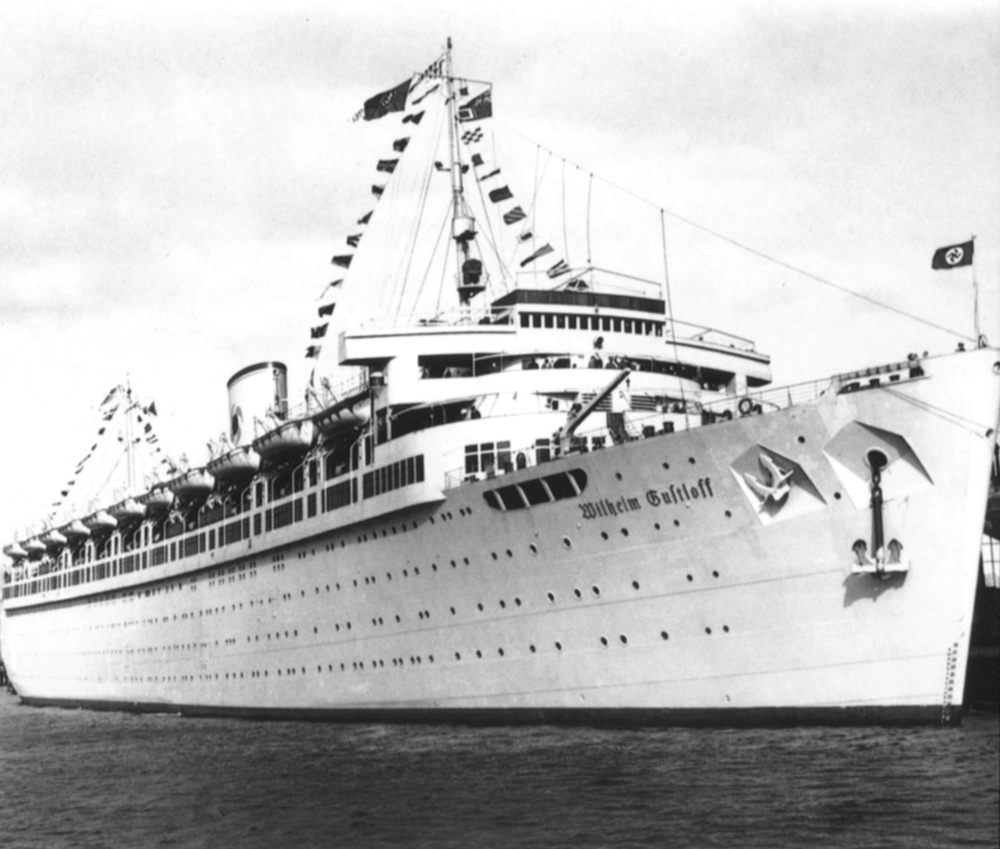
Yet as bad as this tragedy was the worst disaster in maritime history occurred near the end of the Second World War when the SS Wilhelm Gustlaff, a 26,000 ton 684 former cruise liner in the service of the German Navy was torpedoed by the Soviet Submarine S-13 on the night of 30 January 1945. Over 9000 souls, the vast majority civilians or military dependents fleeing the Red Army went down with the ship.  Another great ship, the 38,000 ton RMS Lusitania was sunk by the German U-boat U-20 on May 7th 1915 with the loss of 1198 lives including 128 Americans.

RMS Lusitania (above) and MV Dona Paz (below)

The MV Dona Paz, a ferry with Sulpicio Lines in the Philippines collided with the tanker MT Vector on 27 December 1987 with a loss of over 4000 souls. Called the “Asian Titanic” it was one the worst maritime disasters of modern times.

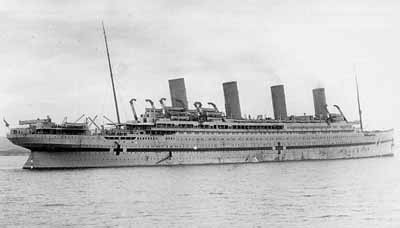
HMHS Britannic

Titanic’s sister the RMS Britannic was serving as a hospital ship in the First World War when she struck a mine in the Aegean Sea sinking in 55 minutes with the loss of only 30 of over 1100 souls aboard.

Andrea Doria sinking off of New York-New Jersey

Another well known wreck was that of the beautiful Italian liner Andrea Doria which collided with the MV Stockholm and sank on July 26th 1956 with the loss of 46 passengers. The sinking was one of the most memorable of all time because of how it was filmed and the heroism of her Captain who unlike Captain Schettino of the Concordia did not leave the ship until he was sure that all passengers and crew were off  and was willing to go down with the ship.

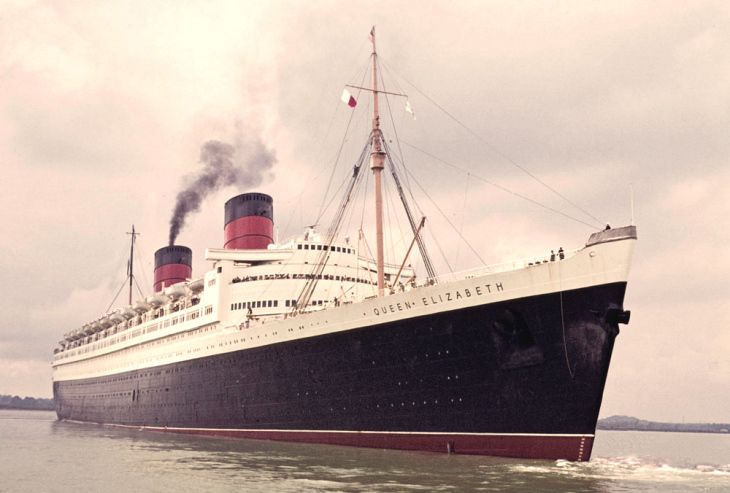
RMS Queen Elizabeth

Yet the largest liners ever sunk were two of the most glorious of their era the RMS Queen Elizabeth and the French SS Normandie.  Both sank under different names and both were due to fires while in port. The the 83,673 ton Queen Elizabeth was retired from the Cunard Line in the late 1960s and taken to Hong Kong where she was renamed SS Seawise University and burned and sank in Hong Kong harbor on 9 January 1972.

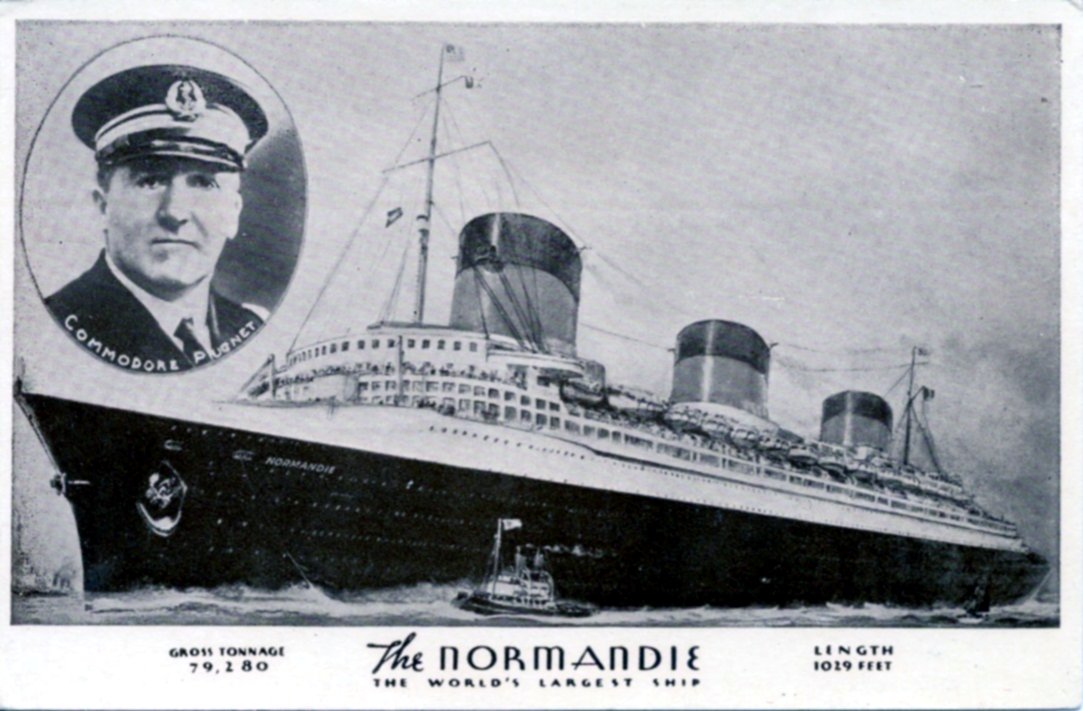
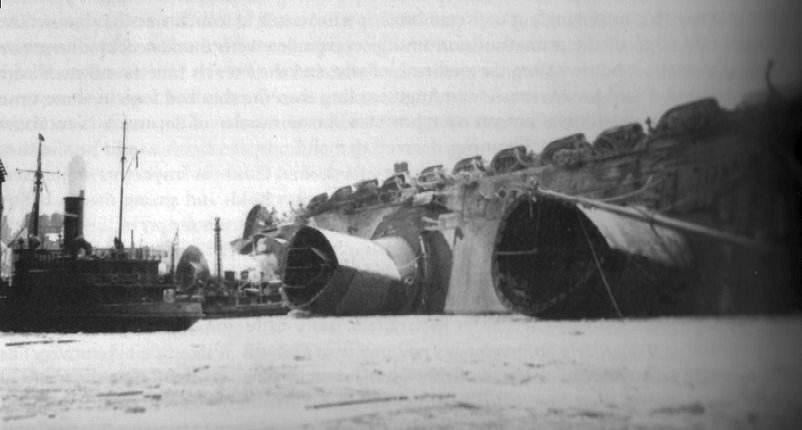
The 83,423 ton SS Normandie, one of the most beautiful ships ever to grace the sea and was the first ship of over 1000 feet long. She was taken over by the US Navy after the French surrender to the Germans. She was renamed was renamed USS Lafayette and while undergoing conversion to a troopship in New York on burned and capsized on the 9-10 February 1942.

SS Normandie/USS Lafayette sunk 

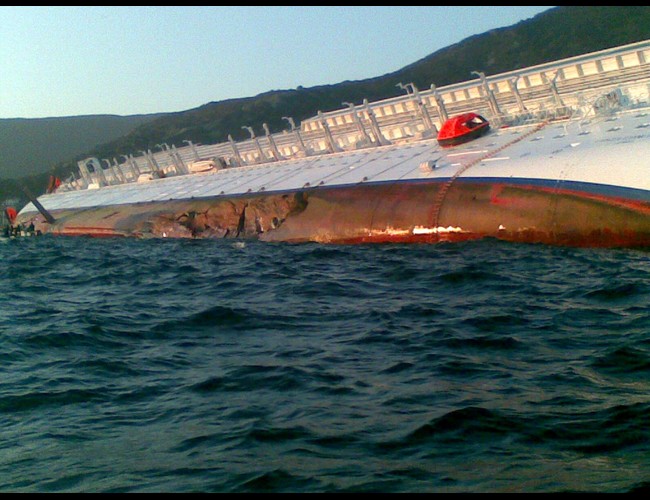
Costa Concordia now lies a few hundred yards off Giglio Island and could either break up or sink into deeper water before she can be salvaged.

All of these events were tragic in their own way be they in war or peace.  Some claimed vast numbers of lives while others resulted in the loss of the most significant ships of their day.  The Costa Concordia is the largest liner ever to go down and things being what they are may not be the last.  Her loss was avoidable by all accounts and hopefully will result in owners, captains and governments doing more to ensure the safety of all that sail the high seas.

For those in peril on the sea….

Peace

Padre Steve+

4 Comments

Filed under History, Navy Ships, News and current events

The Sinking of the Costa Concordia…Unanswered Questions in the Loss of Massive Cruise Ship

“I cannot imagine any condition which would cause a ship to founder. I cannot conceive of any vital disaster happening to this vessel. Modern shipbuilding has gone beyond that.” Captain Edward Smith, Captain of RMS Titanic referring to RMS Adriatic

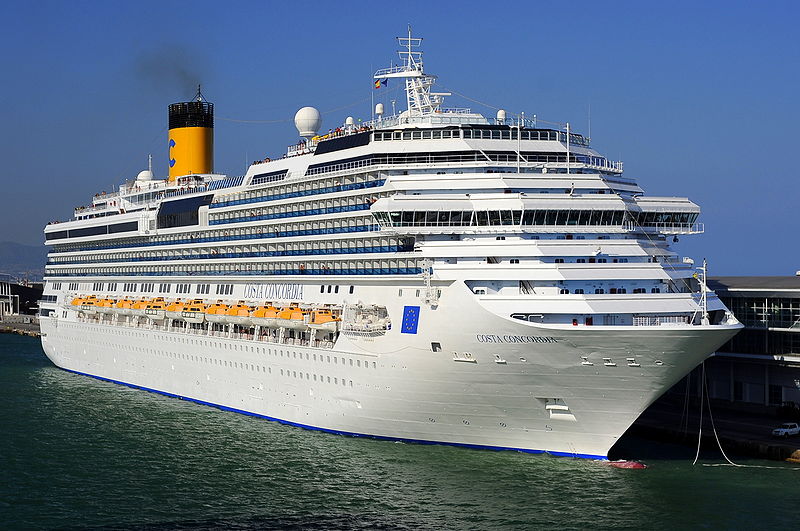
They are considered the queens of the high seas but they are not unsinkable. Modern ship design and technology can always be doomed by the hubris of those that design, build and command them. The Italian cruise ship Costa Concordia sank off of the tiny tourist resort island of Giglio in constricted waters off the Italian coast.  The ship which displaced 114,500 tons and is 952 feet long was carrying over 4000 souls when sailing less than 300 meters from shore she struck a rocky outcropping for unknown reasons.

The liner’s captain claims that he struck an “uncharted” rock and some have speculated that a power failure or navigational systems error could have caused the ship to go off course. However the ship was miles off course and any experienced mariner or Merchant Captain would have recognized that the ship was far off course by visual observation as the weather was clear and the sea calm at the time of the sinking. Additionally the route was a weekly event for the ship and crew.

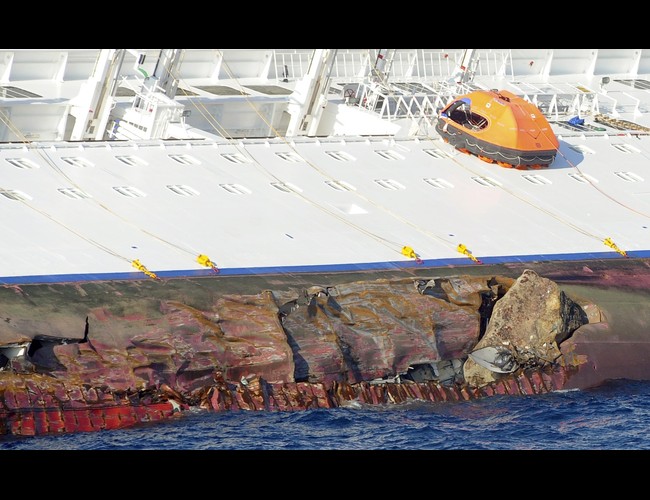
What we do know is that the ship struck rocks which opened a gash 150-300 (depending on the estimate) feet long in the ship’s port side below the waterline encompassing an area that included the main engineering spaces.  The could be more damage below the water on the ship’s bottom as well.

The ship continued on for a bit but the flooding had to rapid and the ship first heeled 20 degrees to port (left as you face the bow or front of the ship) and the Captain ordered the ship about to get her into shallow water obviously fearing that she might go down in deep water.  He did get the ship into shallow water but something else unexpected occurred to cause the ship to list to starboard (right as you face the bow). The list became so bad that she hit bottom with about a nearly 90 degree list exposing the massive damage on the port side which included a massive boulder sticking out of the hull.

The two main questions are why did the ship go strike bottom and why did she sink? A third question that I have regards the ability of any large cruise ship to survive sudden and massive emergencies, not just maritime emergencies but God forbid a terrorist attack like that which nearly sank the USS Cole. The first is being answered by the cruise line which stated:

“While the investigation is ongoing, preliminary indications are that there may have been significant human error on the part of the ship’s Master, Captain Francesco Schettino, which resulted in these grave consequences.

“The route of the vessel appears to have been too close to the shore, and the captain’s judgment in handling the emergency appears to have not followed standard Costa procedures.”

Italian authorities have arrested the Captain and First Officer on charges of manslaughter.  Other charges will probably be filed.  I believe that as the investigation progresses investigators will discover that the Captain endangered the vessel by deliberately sailing close to shore, far closer than any large vessel should sail.    Had he stayed in the main shipping channel nothing would have occurred.

The second question involves how fast the ship sank and why she heeled to starboard when the damage was on the port side. I would suspect that the crew was overwhelmed by damage of the extent that occurred and that their damage control training was insufficient.  The actual number of deck hands and engineers compared to kitchen and wait staff, entertainment and housekeeping was probably minimal. This is because of the tendency for merchant crews to be just large enough to run the ship depending on technology.  However in catastrophic situations technology can be overwhelmed and what is needed are sailors that can effect emergency repairs to keep the ship afloat until help can arrive.  However keeping a surplus of qualified deck hands and engineers on board would cut into the corporate bottom line. Since this is the case it would be important that every member of the crew have some real training in shipboard damage control and firefighting. I suspect that this is not the case even though according to Costa “All crew members hold a BST (Basic Safety Training) certificate and are trained and prepared to emergency management and to assist passengers abandoning the ship with numerous drills.”

However that is not the same as being qualified to assist deck hands and engineers in serious damage control situations.  The crew did a commendable job in evacuating the ship despite the inability to use many lifeboats due to the steep list but had this occurred in deep water or stormy conditions the death toll could have been catastrophic. As of now 6 people are known dead and several dozen  are unaccounted for and could be either trapped in the ship or drowned.

These are important questions to ask and hopefully what happened to the Costa Concordia will lead to even more safety measures and improvement in ship design. There have been a number of incidents of cruise ships sinking in the past number of years but most have been smaller or older ships. The Concordia was very new and considered state of the art.  She is one of the largest ships to every be sunk in history and a warning to those like Captain Smith of Titanic.

Peace

Padre Steve+
4 Comments

Filed under History, Navy Ships, News and current events