Category Archives: History

Götterdämmerung in the Pacific: The Okinawa Campaign

USMC-M-Okinawa-2

Friends of Padre Steve’s World,

Saturday, June 22nd is 74th anniversary  of the end of the Okinawa Campaign, one of the longest and bloodiest campaigns waged by United States Forces in the Pacific during the Second World War. I have resurrected this article from the archives because even today Okinawa is a key strategic location, and the base of thousands of U.S. military personnel, mostly Marines and Air Force personnel, along with Navy and Army personnel. In the event of a military conflict with with North Korea or China, Okinawa would be at the center of the conflagration.

Today, many Okinawans do not consider themselves Japanese, though the United States returned control of Okinawa to Japan in 1972. They are culturally more Chinese than Japanese and during the battle over a third of the civilian population died. Many are opposed to the continued presence of over 26,000 American troops, and also desire independence from Japan. So as you can see the conflict over Okinawa is not yet finished.

The Okinawa Campaign 

The United States decided to invade Okinawa in the fall of 1944 following the seizure of Peleliu and the Philippine landings.  The planned invasion of Formosa was cancelled after General Simon Bolivar Buckner objected.[i] Buckner argued that the Japanese army on it was “much too strong to be attacked by the forces by American Forces then available in the Pacific.”[ii] The strategic rationale behind the decision to invade Okinawa included Okinawa’s proximity to Japan as a staging base for a future invasion of the Japanese mainland.  Likewise taking the island would severe Japan’s lines of communication and commerce with Southeast Asia and to serve as base for strategic bombers.[iii] Planning began in October 1944 and the detailed plan for OPERATION ICEBERG was issued 9 February 1945.[iv] The campaign was not planned in isolation but “was bound up strategically with the operations against Luzon and Iwo Jima; they were all calculated to maintain unremitting pressure against Japan and to effect the attrition of its military forces.”[v]
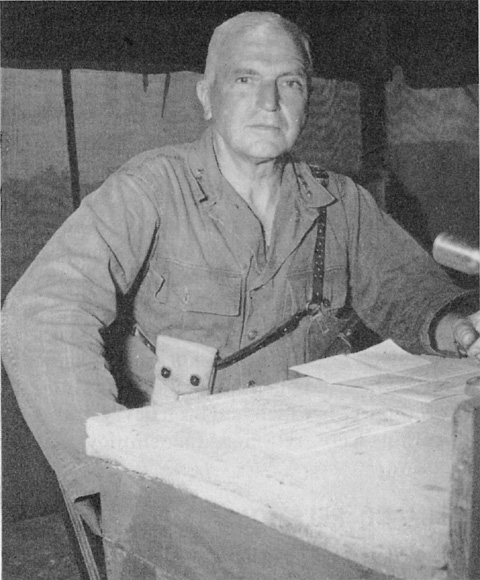
LIEUTENANT_GENERAL_SIMON_B._BUCKNER_in_Okinawa     Lt General Simon Bolivar Buckner Commander of US 10th Army

The War Department insisted that Lieutenant General Simon Bolivar Buckner command the newly formed 10th US Army.[vi] .  Buckner was chosen to command based on his taking of the Aleutians, displacing the veteran Marine Holland M. Smith. One critical history noted that “compared to his subordinates, Buckner was hardly fit to command a corps, let alone a field army.”[vii]

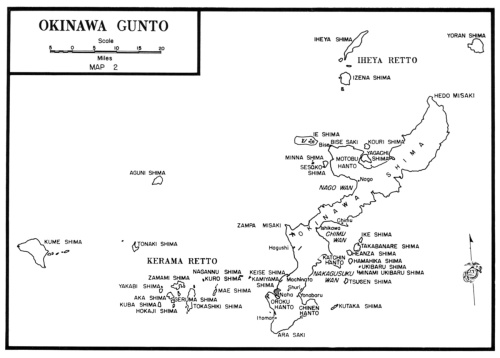
The 10th Army consisted of the 3rd Amphibious Corps (1st, 2nd and 6th Marine Divisions) under Major General Roy Geiger and the XXIV Army Corps (7th, 27th, 77th and 96th Divisions) under Major General John Hodge.[viii] 2nd Marine Division was designated as a diversionary force, and the 77th Division was assigned to take the nearby island of Kerama Retto prior to the landings to provide the Navy a safe anchorage and as an artillery platform to shell Okinawa. The 27th Division was in corps reserve.  All were veteran units and had it was believed they would be “more than enough to overwhelm the estimated 70,000 Japanese on Okinawa.”[ix] However, much of XXIV Corps had only been engaged in hard combat on Leyte and was not relieved of their duties on Leyte on 1 March 1945.  This provided these units with no time to rest and refit.[x] More importantly badly needed troop replacements had been diverted to Europe due to the crisis in infantry strength there during the battle of the Bulge.[xi] The operation was very large and “mounted on a scale that matched the previous year’s Allied landing in Normandy.”[xii]

                                      The Japanese Preparations
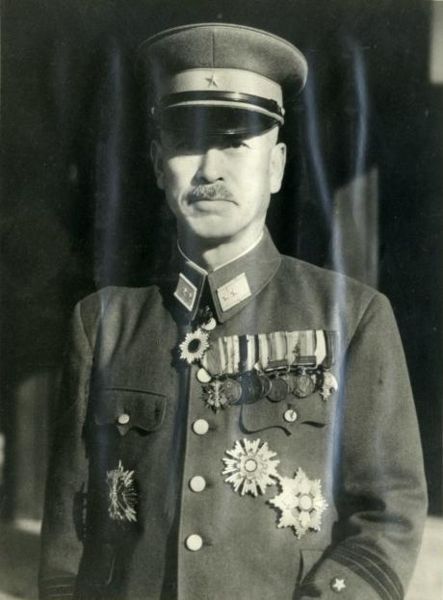
Mitsuru_UshijimaJapanese Commander Lt General Ushijima

American intelligence underestimated the number of Japanese on the island, with an estimate of 55,000 with the expectation of 66,000 by 1 April.[xiii] However by the time of the invasion the Japanese defenders numbered over 100,000.[xiv] The defense of Okinawa was entrusted to the 32nd Army was activated in 1 April 1944 commanded by Lieutenant General Ushijima.  In addition to Okinawa the 32nd Army was responsible for the entire Ryukyu chain.[xv] General Ushijima had commanded an infantry group in Burma and was commander of the military academy when appointed to command 32nd Army and ordered to Okinawa.  His Chief of Staff, General Cho was a firebrand.  Cho had served in China and had participated in a number of attempted military coups in the 1930s as a member of the “Cherry Group.”[xvi] Another key officer though relatively junior was Colonel Yahara the Operations Officer. He had served as an exchange officer in the United States and was intellectual and a modern soldier. He viewed war as a science, won by “superior tactics adjusted to terrain, weapons and troops…not Banzai charges.”[xvii] He was “widely recognized as an expert in his field,”[xviii] and devised the Japanese defensive plan for Okinawa.
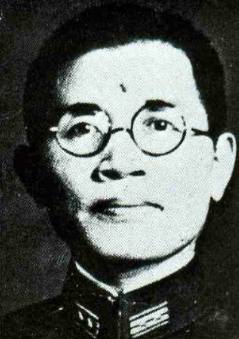
Yahara_Hiromichi          Colonel Yahara Architect of the Japanese Defensive Plan

Until 32nd Army was activated Okinawa was garrisoned by a mere 600 troops,[xix] and until major units arrived these soldiers concentrated on airfield construction.[xx] Eventually the 9th, 24thand 62nd Infantry Divisions, the 44th Mixed Brigade along with a light tank regiment and significant artillery came to Okinawa. Additional forces were alloted to outlying islands.  The 24th Division was a triangular division of 3 infantry regiments of 3 battalions each and supporting arms. The 62nd Division was a “brigaded” division activated in 1943 was formed from the veteran 63rd and 64thbrigades each with 4 infantry battalions and supporting arms. It had no organic artillery.  Both of the brigades of this division received an additional infantry battalion in January 1945 giving the division ten maneuver battalions.[xxi] Okinawa’s defenses were significantly weakened when 9th Division was transferred to Formosa by the 10thArea Army in late 1944. To compensate General Ushijima converted Naval and service troops on the island into front line troops. Additionally he called the Okinawan Boeitai volunteers and conscripts into service.[xxii] The Boeitai numbered 20,000 and burned “with ardor to serve their emperor.”[xxiii] Seven sea raiding units were converted into infantry battalions.[xxiv] The major units, with the exception of 24th Division which had been transferred from Manchuria had combat experience.[xxv]
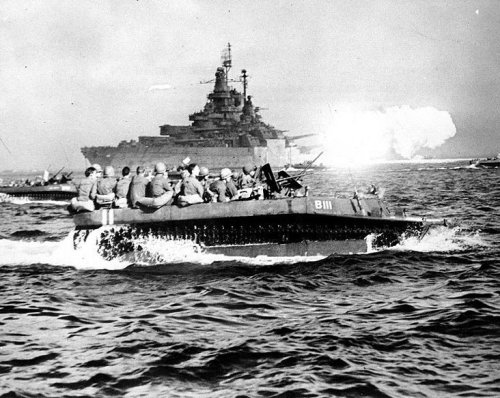
BB-43-LVT-okinawaUSS Tennessee Provides Naval Gunfire Support while LVTs Advance toward the Beaches

Ushijima’s plans to concentrate his forces in the south were delayed by Tokyo.[xxvi] Likewise the number and disposition of troops in the Ryukyu’s were decided by Imperial Headquarters.[xxvii] Colonel Yahara wrote that had Imperial Headquarters “been able to give us an overall plan with specific unit names and arrival dates, we would have been able to follow a consistent policy, disposing units in an efficient manner rather than moving them left and right.”[xxviii] He noted how the 44th Mixed Brigade had to change location and thus its defensive preparations “seven times during the ten months before the actual battle….”[xxix]
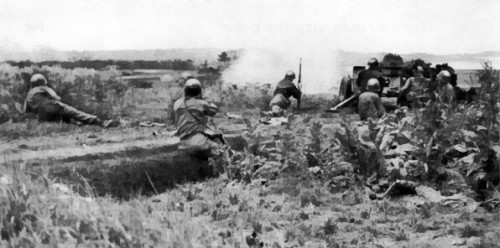
XXIV_Corps_turns_south                                     XXIV Corps Advancing South

The loss of the 9th Division and its 25,000 soldiers forced Ushijima to change his initial plan to defend the beaches and then launch a major counterattack to drive the Americans into the sea.[xxx]Ushijima decided to defend the south end of the island. This was the most defensible area, with a network of fortifications and underground caves centered on the ancient citadel of Shuri Castle. “Troop disposition would conform to local terrain; troop strength would be concentrated; and an extensive system of subterranean fortifications constructed.”[xxxi] The defenses were “anchored in natural and artificial caves which dotted the mountainous regions around Shuri.”[xxxii] “Terrain features were incorporated into the defense and weapons were well sited with excellent fields of fire.”[xxxiii] General Ushijima left Colonel Udo’s 2nd Infantry Unit to fight a delaying action in the north,[xxxiv] having decided that the area was of “little military value.”[xxxv] Likewise Ushijima decided not to contest the landings or to defend the airfields at Kadena and Yontan.[xxxvi] He planned to use Boeitai units to demolish the airfields when the Americans approached.[xxxvii]
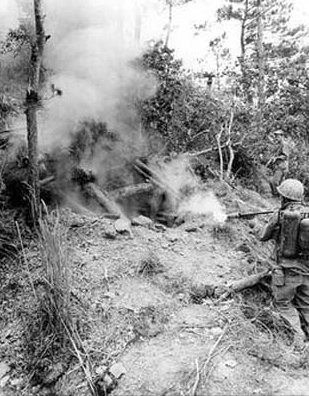
Okinawa_flamethrowerFlamethrowers were Widely Employed their Operators were Targeted by the Japanese

Ushijima’s defensive scheme laid out by Yahara involved concentric defensive lines, tunnels and bunker systems and even the Chinese tombs which dotted the island were converted to pillboxes over the objections of Okinawan elders.[xxxviii] Yahara and Ushijima planned a battle of attrition with all artillery in the army concentrated on the southern end of Okinawa.  Yahara believed the battle would be a “bitter yard-by-yard” defense of the island,[xxxix]with a focus on defense in depth with preparations for anti-tank warfare. There were to be no Banzai charges.[xl] Ushijima turned Bushido “inside out” and urged his soldiers to “Devise combat method [sic] based on mathematical precision, then think about displaying your spiritual power.”[xli] The defenders would be assisted by suicide boat squadrons based on Okinawa and Kerama Retto and over 4000 aircraft, conventional and Kamikaze and a naval force built around the super battleship Yamato.[xlii]

                                                      The Landings
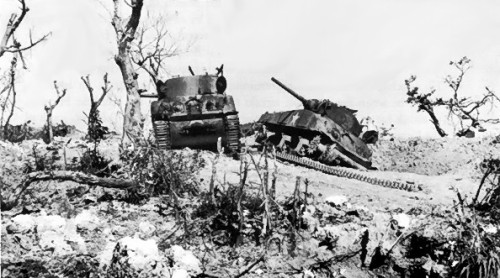
Attack_on_bloody_ridgeWrecked Tanks on Skyline Ridge

The assault on Okinawa began with landings by 77th Division on Kerama Retto on 26 March.   The landings were met with little opposition as most of the combat troops on the islands had been moved to Okinawa leaving only base and service troops and members of a Sea Raiding Unit and Korean laborers to defend the small island.[xliii] By the 29th of March the islands were taken, along with numerous prisoners.  Over 350 of the fast “Suicide Boats” that were to attack US transports and landing craft were destroyed at Kerama Retto and long range artillery was emplaced were it could support the Okinawa landings.[xliv] More importantly Kerama Retto provided the Navy a safe anchorage, and Service Squadron 10 arrived on 27 March to support naval forces around the island.[xlv]The naval bombardment was led by Admiral Deyo’s battleships and Admiral Blandy’s escort carriers[xlvi] and culminated on 1 April when 10th Army went ashore. By the time of the landing 10 battleships and 11 cruisers would join the attack.[xlvii] Over 13,000 large caliber shells were fired and a total of 5,162 tons of ammunition were expended on ground targets and 3,095 air sorties were flown by L Day.[xlviii] Fortunately for the Japanese Ushijima had listened to Colonel Yahara and elected not to defend the beach, and thus most of the shells fell on empty positions and terrain.[xlix]

The Americans landed on the Hagushi beaches adjacent to Kadena and Yontan air bases.  No organized resistance was encountered and in the first hour 16,000 troops landed.[l] There was little disorganization and all units landed on time on the planned beaches.[li] The beaches were bisected by the Bishi River which served as the Corps boundary.  The 1st and 6th Marine Divisions landed north of it and the 7th and 96th to the south.  The Marines chopped up the “Bimbo Butai” in their area many of whom melted back into the civilian population.[lii] The Americans moved rapidly inland and by nightfall over 60,000 Marines and Soldiers were ashore.[liii] As the landings were made the 2nd Marine Division conducted a demonstration off Minatoga on the east side of the Okinawa actually launching several waves of landing craft.[liv] On 2 April the operation was repeated which helped divert some Japanese attention off of the actual landings. Ushijima reported that the attempt “was complete foiled, with heavy losses to the enemy.”[lv] Some Marine veterans of Peleliu were jubilant at not having to land and some wondered what the Japanese were up to.[lvi]
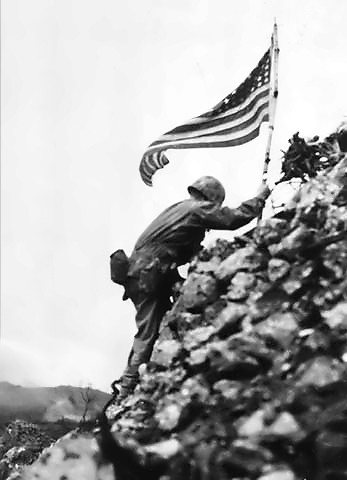
US_Flag_raised_over_Shuri_castle_on_Okinawa     Marine Battalion Commander Raising Flag over Shuri Castle

In the following days the two Marine divisions would race north and east while Army troops advanced cautiously to the south first encountering light opposition.[lvii] The 1st Marine Division cut the island in two on April 3rd and was allowed to clear the Katchin Peninsula which it took without opposition.[lviii] The 6th Marine Division moved north and by the 7th it had had taken Nago.  Colonel Udo’s troops of the 2nd infantry Unit defended the Motubu with great skill[lix] but the Marines took the center of resistance on April 18th.[lx] They then cleared the remainder of the peninsula and the rest of the northern end of the island by the 20th.[lxi] The Marines had advanced 84 miles and killed 2,500 Japanese at the cost of 261 killed and 1,061 wounded. The Japanese survivors according to the plan of Colonel Udo afterward retreated into the hills and engaged in guerilla warfare.[lxii]

                                                  The Ordeal Begins
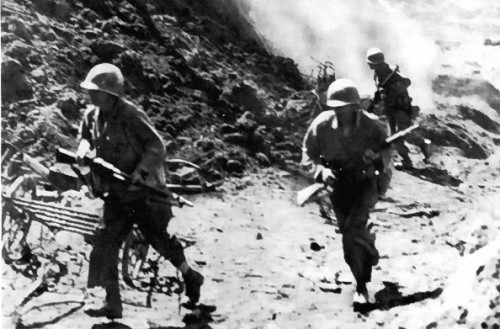
Corkscrew-demolition_team                                      Demolition Team Advancing

As the Soldiers of the 7th and 96th Infantry Divisions felt their way south, they began to encounter resistance from Japanese outposts.  On 4 April 96th Division’s advanced elements including the 96thRecon Troop and 763rd Tank Battalion encountered the first Japanese anti-tank defenses, losing 3 tanks to well concealed 47mm anti-tank guns.[lxiii] The following day both the 7th and 96thdivisions encountered more resistance and were held to minimal gains as they drove the Japanese out of their outpost positions. On the 6th and 7th they captured “the Pinnacle” and “Cactus ridge” from elements of 3 independent infantry battalions which put up stiff resistance.[lxiv] By the end of 8 April against strong opposition XXIV Corps had suffered 1,510 battle casualties and was virtually halted.[lxv] Savage hand to hand fighting took place as the defenders worked to separate the American tanks from their infantry. They held the Americans outside the Shuri zone for 8 days.[lxvi]
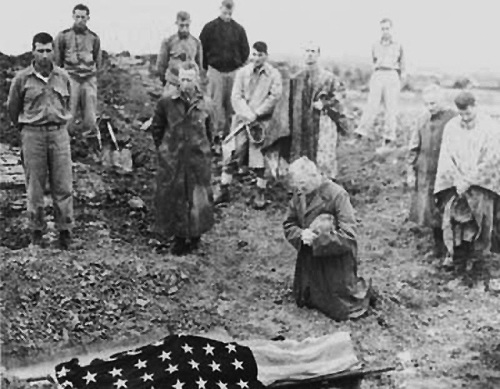
USMC-C-Okinawa burialThe Human Cost of War: Marine Colonel Fenton prays for his Fallen Son

The 96th Division attacked the heavily defended Kakazu Ridge and Tombstone Ridge and was repulsed.  The 7th Division was halted at Hill 178.  The Japanese fought at close quarters and desperate hand to hand fighting “would characterize the Okinawa land battle.” While the Japanese infantry contested every yard “carefully concealed anti-tank guns seemed anchored into the terrain.”[lxvii]The deployment and concealment of the anti-tank guns helped nullify the American advantages in armor. The Japanese also employed 320mm spigot mortars[lxviii] and well sited machine guns and artillery sited on reverse slopes took a heavy toll of the attacking Americans. Of one company of 89 men which attacked Kakazu on 9 April “only three returned unwounded.”[lxix] Assisted by monsoon rains, “the Japanese turned every hill, every ridge into a bloody deathtrap.[lxx] On the 10th two regiments of 96th Division attempted a power drive with battalions advancing on line and were thrown back.[lxxi] The two divisions suffered 2.890 casualties in their abortive attacks while the Japanese lost close to 4,000, mainly to artillery fire.[lxxii] Ushijima’s defense planned by Yahara was “chillingly professional and efficient. Within a week the Japanese had stopped two very good Army divisions in their tracks.”[lxxiii]General Buckner paused sent for the 1st and 6th Marine Divisions and brought the 27th and 77th Divisions ashore to strengthen XXIV Corps.[lxxiv]

                                                  Counterattack
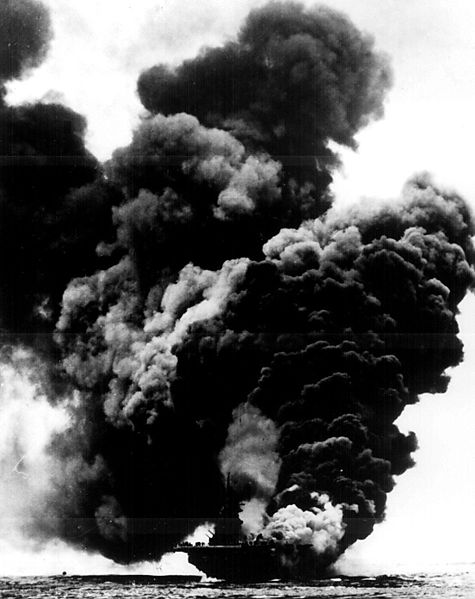
475px-USS_Bunker_Hill_burningThe War at Sea: Kamikaze Attack on USS Bunker Hill

It was at this point when “Yahara’s war of attrition was working well” that a division arose in the 32nd Army Staff, when General Cho; Ushijima’s Chief of Staff had “his first outburst of samurai offensive fever.”[lxxv] Cho noted the failure of the American attacks and believed reports that the American Navy had been heavily damaged by Japanese air power and by the reported success of Operation Ten-Go, the sortie of the Yamato and her escorts on their suicide mission.  He based his optimism on a telegraph from Imperial Navy headquarters “claiming that Ten-go had been “very successful”[lxxvi] when in fact the Yamato and her escorts had been dispatched in hours by carrier aircraft with few American losses.  Cho also assumed a reduction in the number of ships in the Hagushi anchorage and in the number of air sorties as signs of American weakness.[lxxvii] Cho persuaded Ushijima to launch a counterattack over the protestations of Yahara who argued that “it would waste men.”[lxxviii] The attack by four battalions of the 62nd and 24thDivisions began the night of 12-13 April. Based on infiltration tactics and supported by artillery the attack was badly planned and coordinated. One attack almost overran American positions on the draw on Kakazu Ridge, but the Japanese return to “bamboo spear tactics” exposing them to the “overwhelmingly superior America artillery fire….”[lxxix] The attack was a “total failure.”[lxxx]The Japanese lost nearly 1,600 men, half their force in an “operation ill conceived, understrength, misdirected, haphazard and uncoordinated.”[lxxxi]

                                     Cracking the Outer Line

Reinforced by the 27th Division XXIV Corps prepared for another attack against the outlying Shuri defenses. In the interval between the Japanese attack and the new offensive the 77th Division landed on Ie Shima on 16 April and secured it on the 24th amid very heavy fighting killing over 4,700 Japanese, many armed civilians against the loss of 172 killed and 902 wounded Americans.[lxxxii] Among the American dead was legendary reporter Ernie Pyle.

The Americans aimed to penetrate the defenses and “seize the low valley linking Yonabaru on the east coast with the capital of Naha on the west.”[lxxxiii] The attack was supported by 27 battalions of artillery[lxxxiv] including 9 Marine artillery battalions.[lxxxv]Additional Naval gunfire support in the form of 6 battleships, 6 cruisers and 9 destroyers added to the rain of steel unleashed on the Japanese.[lxxxvi] Morison notes that Army historians stated that “Naval gunfire…was employed in greater quantities in the battle for Okinawa than in any other in history.”[lxxxvii] The 7th Division was to take Hill 178 and drive south to the Naha Yonabaru road. 96thDivision minus the 383rd Infantry was to “drive straight through the heart of the Shuri defenses seizing the town of Shuri and the highway beyond.”  27th Division attacking 50 minutes later to take advantage of artillery was to take Kakazu ridge and the coast plain north of Naha.[lxxxviii]

The attack began on April 19th and was preceded by a 19,000 shell bombardment.[lxxxix] Ushijima wisely ordered his men to remain in their caves.  The Corps Artillery commander “doubted as many as 190 Japanese…had been killed in the bombardment.”[xc] The attack was immediately halted all along the line, gains, where there were any were measured in yards. Over 750 casualties were inflicted by the Japanese on the corps and 27th Division’s tank battalion lost 22 of 30 tanks to well positioned 47mm anti-tank guns.[xci] Buckner rejected the requests of the Corps commander Hodge and the Marine divisional commanders,[xcii] to launch a flanking amphibious operation at Minatoga with the 2nd Marine Division, and continued the frontal attacks.  John Toland writing of the rejection of the amphibious operation noted that Ushijima “feared such a maneuver (“It would bring a prompt end to the fighting”) and had already been forced to move his “rear guard division north to beef up the Shuri line.”[xciii] Thus the three divisions continued to press their attacks, suffering heavy casualties.  Eventually the Americans forced the Japanese off Skyline ridge[xciv] though the Japanese still held Kakazu.[xcv] When the 27th Division attacked again it found Kakazu abandoned by the Japanese.[xcvi] By the 24th Ushijima’s line was “pierced in so many places that it was in danger of collapsing….So General Ushijima withdrew to his next chain of defenses.”[xcvii] On April 30th the 1st Marine Division relieved the battered 27th Division which had suffered 2,661 casualties in less than two weeks.”[xcviii] The 1st Marine Regiment launched an attack on 1 May and was driven back with heavy causalities.[xcix]

                                    General Cho’s Final Offensive

General Cho supported by 62nd Division’s commander, General Fujioka persuaded Ushijima over the strenuous objections of Yahara to launch a counter-offensive with the intention of isolating and annihilating the 1st Marine Division and “rolling up” XXIV Corps.[c]The attack was to occur along the entire line and include an amphibious landing behind American lines.[ci] The 62nd Division would take the lead as it had been less heavily engaged than 24thDivision.[cii] Yahara argued his case strongly and warned the Ushijima that to attack “is reckless and will lead to an early defeat.”[ciii] The attack began on the night of 3 May and the forces making the amphibious landing were annihilated by the Marines.[civ] The Japanese made little headway during the main attack; one battalion achieved a small penetration of American lines at Tanabaru but was eliminated the next day.[cv] The Japanese 27thTank Regiment lost most of its tanks and those remaining were used as “stationary artillery and pillboxes.”[cvi] The Japanese lost about 5,000 troops in the offensive.[cvii] Ushijima halted it and told Yahara “as you predicted this offensive has been a total failure.  Your judgment was correct….”  He ordered Yahara “to do whatever you feel is necessary.”[cviii] Cho saw “no hope at all”[cix] and asked Yahara jokingly “when will it be okay for me to commit hari-kari?” [cx]

                                               Göttdammerung

The American offensive resumed on 11 May and amid stubborn Japanese defense and heavy rains which hindered movement. The 1st and 6th Marine Divisions[cxi] and the 77th and the 96th infantry divisions attacked along the line but the primary objective was Shuri.[cxii] The Americans continued to apply pressure and make small gains against strong Japanese resistance put up by the 44thMixed Brigade.  The defense was particularly strong on Sugar Loaf Hill[cxiii] which cost 6th Marine Division nearly 4,000 total casualties before it was cleared out on 21 May.[cxiv] The 96thDivision turned the Japanese east flank at Conical Hill on the 13th  [cxv] while the First Marine Division cracked through the Japanese lines at Dakeshi Ridge.  It fought through Wana Ridge[cxvi] and engaged the Japanese in a costly battle in the Wana Draw. The 2ndBattalion 5th Marines supported by 30 tanks blasted their way through the draw, again against brutal Japanese resistance.[cxvii]On the 22nd Yahara persuaded Ushijima to withdraw from Shuri to the Kiyan Peninsula.[cxviii] The 1st Battalion 5th Marines crossed the divisional boundary of 77th Division to capture Shuri Castle on 24May.[cxix] The Company commander, from South Carolina who took it did not have an American flag so he “substituted the flag of the Confederacy, a banner that he…carried in his helmet.” [cxx] Two days later the American flag was raised along with the standard of the 1st Marine Division in full view of the Japanese.[cxxi]

Following the Japanese withdraw from Shuri the battle continued with heavy rains hampering both sides, especially the more vehicle dependant Americans.[cxxii] The 6th Marine Division cleared the Oruku Peninsula south of Naha the first two weeks of June[cxxiii]killing 5,000 of the Japanese Navy defenders at a cost of 1,608 Marines. The Japanese resistance crumbled when Admiral Ota committed suicide and many defenders fled while others surrendered.[cxxiv] 7th Division pushed onto the Chinen Peninsula and 1st Marine and both 77th and 96th Infantry Divisions pushed steadily south against Japanese rear-guards.[cxxv] The 8th Marines from 2nd Marine Division were brought to the island to reinforce the depleted 3rd Amphibious Corps[cxxvi] A hard fight was fought along the Kunishi-Yuza-Yaeju escarpment where the Japanese conducted their last organized defense.[cxxvii] By the 17th the “32nd Army was dazed and shattered. Discipline had evaporated.”[cxxviii] The 32ndArmy’s discipline and morale collapsed, and it “degenerated into a mob.”[cxxix] Yahara noted that “naturally, morale is low at the end of a battle, but we had never experienced anything like this.”[cxxx]
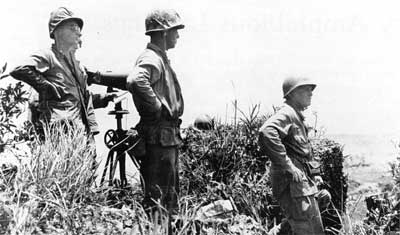
Last_picture_of_LtGen._Buckner_at_OkinawaLt General Buckner (Right) Observing 8th Marines Assault minutes before Being Killed

General Buckner was killed while observing 8th Marines attack Kunishi on the 18th and was succeeded by General Geiger of the Marine amphibious corps.[cxxxi] A final message from Tokyo congratulated 32nd Army on its achievements on the 20th.[cxxxii]General Ushijima and General Cho committed Hari-Kari early on the 23rd after ordering Yahara not to do so. Cho told Yahara “to bear witness as to how I died.”[cxxxiii]

American battle casualties totaled 49,151 including 12,520 dead.[cxxxiv] The Japanese lost over 110,000 killed and 7,400 taken prisoner by the Americans.[cxxxv] About 75,000 Okinawan civilians were killed.[cxxxvi] Small numbers of Japanese renegades and Okinawan rebels conducted low-level guerilla operations until 1947.[cxxxvii]

                                                         Analysis

The key Japanese mistake occurred at the strategic level when 9thDivision was transferred off the island[cxxxviii] and no further reinforcements were sent.  With these forces Ushijima might have been able to hold out until the end of hostilities. Yahara criticized Imperial Headquarters which panicked when the landings occurred and ordered a counterattack which “left our army in utter confusion.”[cxxxix] General Ushijima’s major mistakes during the battle were the two costly offensives urged by General Cho against the protest of Colonel Yahara. These attacks sacrificed of some of his best troops for no effect and significantly weakened the 32nd Army’s defensive posture.  Yahara objected to both of these offensives. According to the American intelligence debriefing Yahara considered the May 4th offensive “as the decisive action of the campaign.”[cxl] Gordon Rottman simply called that attack a “blunder.”[cxli]

On the American side Buckner fought an unimaginative and uninspired battle, much like Mark Clark’s Italian campaign or Courtney Hodges at the Huertgen Forrest.  Murray and Millett, note that Buckner’s “flawed generalship contributed to the slaughter.”[cxlii] Buckner’s decision not to land the 2nd Marine Division or the 77th Division at Minatoga surrendered his one opportunity to maneuver against the Japanese to force them out of their prepared positions.[cxliii] Ronald Spector notes that “in retrospect Buckner ought to have given more consideration to an amphibious attack[cxliv] while Murray and Millett state that Buckner “did not have the experience to make such a critical decision.”[cxlv] Nimitz wondered if “the Army was using slow, methodical tactics to save the lives of soldiers at the expense of the Navy”[cxlvi] which was exposed to Kamikaze attacks as they had to continue to provide the close in support to 10th Army. Buckner’s rejection of this opportunity left him with the straight ahead attack.   Another option which was available to Buckner was to seal off the Japanese and let them wither on the vine. Such an action in effect would have bypasses the Japanese defenders and force them to make Banzai attacks against dug in Americans.[cxlvii] The Americans had the airfields on day one and most of the key facilities needed for future operations and there was little to gain by continuing offensive operations in the south.  Sealing off the Japanese would have certainly caused the Americans fewer casualties than the strategy which Buckner employed.[cxlviii]

Buckner’s leadership was poor his strategy and tactics both unimaginative and foolish bordering on incompetent.  In a time when American infantry replacements were tapped out and no new Infantry divisions were available for action he decimated good formations by throwing them into frontal attacks against well prepared fortified positions manned by experienced troops.  Had Ushijima not followed General Cho’s advice squandering is own troops the battle would have cost even more American lives with the invasion of Japan looming.  The War Department in its attempt to wrest control of an operation that should have remained under the control of the Navy and Marine Corps put the wrong man in the job when other more competent corps commanders such as General “Lighting Joe” Collins who had finished off the Japanese at Guadalcanal were available with European hostilities winding down.  Why Buckner was chosen despite his incredibly limited command experience serving in the relatively inactive Aleutians and not even commanding a company in World War One had to be due to Army politics and in the end it cost nearly 50,000 American casualties on the land alone, not counting Navy casualties which totaled almost 10,000 including over 4,900 dead. The capture of Okinawa provided the Americans with valuable anchorages and airfields close to Japan had there been an invasion of the home islands, but they were obtained at great cost.

Notes


[i] Appleman, Roy, E., Burns, James M., Gugeler, Russell A., and Stevens, John. The United States Army in World War II, The War In the Pacific. Okinawa: The Last Battle, Center of Military History, United States Army. Washington DC. 1948.  p.4

[ii] Leckie, Robert. Okinawa: the Last Battle in the Pacific Penguin Books, New York NY 1996. p.2.  Although not mentioned by Leckie this shortage of forces was due to the American decision to limit the Army to 90 Divisions with dire consequences in Europe and Asia especially in the number of infantry available.  For a good account of the impact of this see Russell Weigley’s Eisenhower’s Lieutenants.

[iii] Willmont, H.P. The Second World War in the Far East. John Keegan General Editor. Cassell Books, London, 1999. p.186.

[iv] Morison, Samuel Eliot. The Two Ocean War: A Short History of the United States Navy in the Second World War. An Atlantic Monthly Press Book, Boston MA 1963. p.525

[v] Ibid. Appleman. p.4

[vi] Costello, John. The Pacific War: 1941-1945 Quill Publishers, New York, NY 1981. p.554.

[vii] Murray, Williamson and Millett, Allan R. A War to Be Won: Fighting the Second World War.  The Belknap Press of Harvard University, Cambridge, MA. 2000. p.515

[viii] Ibid. Leckie. pp. 53-54.  Note Costello misidentifies both of these corps calling them 3rd Marine Corps and XIV Army Corps.   He also does not count the 77th Division in his figures.

[ix] Ibid. Costello. pp. 554-555.  Costello’s figures are slightly above the official estimates listed below.

[x] Ibid. Leckie. p.56

[xi] Ibid. Leckie. p.57 An important point to note is that the Army had reached a critical point in its ability to conduct the war.  The steady drain on infantry strength that began in Normandy was heightened in the Huertgen Forrest and the Bulge.

[xii] Ibid. Costello. p.556

[xiii] Ibid. Appleman. p.15

[xiv] Ibid. Costello. p.555

[xv] Yahara, Hiromichi. The Battle for Okinawa. Introduction and Forward by Frank Gibney. Translated by Frank Pineau and Masatoshi Uehara. John Wiley and Sons, New York, NY. 1995. p.3

[xvi] Rottman, Gordon R. Okinawa 1945: The Last Battle. Osprey Publishing, Oxford, United Kingdom, 2002. p.35

[xvii] Ibid. Leckie. pp.31-32

[xviii] Ibid. Rottman. p.37

[xix] Toland, John. The Rising Sun: The Decline and Fall of the Japanese Empire 1936-1945. Random House, New York, NY 1970. p.683.

[xx] Ibid. Yahara. p.7

[xxi] Ibid. Rottman. Pp.47-48

[xxii] Ibid. Toland. pp.683-684.  Yahara also notes the arrival of the 15th Mixed Brigade and the fact that the Japanese considered the 44th Mixed Brigade “one of our Army’s prized units.” (p.12)

[xxiii] Ibid. Toland. p.683.  Leckie comments on the low opinion of many Japanese soldiers about the Boeitai calling them Bimbo Butai(Poor Detachment), as the most of the Japanese had come to loathe Okinawa and all things Okinawan. A comment from my own service in Okinawa in 2000-2001 is that this loathing of Okinawa by Japanese is still common, Japanese tend to look down on Okinawans and the Okinawans now tend to resent the Japanese.

[xxiv] Ibid. Appleman. p.87

[xxv] Ibid. Yahara. p.31 All sources note that the 24th was a “well trained” division.

[xxvi] Ibid. Costello. p.555

[xxvii] Ibid. Yahara. p.15

[xxviii] Ibid. Yahara. pp. 14-15

[xxix] Ibid. Yahara. p.15

[xxx] Ibid. Yahara. pp. 20-22 and 32.  Yahara details the initial plan and the changes necessitated by the departure of 9th Division.  Rottman gives 9th Division a strength of 17,000. (Rottman p.46)

[xxxi] Ibid. Yahara. p.20

[xxxii] Spector, Ronald H. Eagle Against the Sun: The American War With Japan. The Free Press and Division of MacMillan, Inc. New York, NY 1985. p.533

[xxxiii] Ibid. Rottman. p.25

[xxxiv] Ibid. Leckie p.32 and Costello. p.555. The unit was between 3000 and 3500 strong. Leckie simply identifies the force as the 2ndInfantry Unit while Costello identifies them as a Special Naval Landing Force. Appleman identifies Colonel Udo and the approximate number of troops but does not identify the unit. There appears to be confusion about the Japanese units, Appleman says that the 2nd Infantry Unit was constituted from survivors of 44thMixed Brigade (which had lost most of its troops when their ship was sunk by an American submarine) and 15th Independent Mixed Regiment which was brought in to bolster it, but Yahara consistently places the reconstituted 44th in the south as part of the main defense. (see Appleman p.87) I will relay on Yahara as he was the 32nd Army Operations Officer and in a position to have first hand knowledge.

[xxxv] Ibid. Yahara. pp.22-23

[xxxvi] Ibid. Leckie. p.32

[xxxvii] Ibid. Leckie. pp.32-33

[xxxviii] Ibid. Toland. p.684

[xxxix] Ibid. Yahara. p.32

[xl] Ibid. Yahara. p.25

[xli] Ibid. Leckie. p.35

[xlii] Ibid. Leckie. p.19

[xliii] Ibid. Appleman. pp.52-58

[xliv] Ibid. Appleman. p.60

[xlv] Potter, E.B. Nimitz. Naval Institute Press. Annapolis, MD. 1976. p.369

[xlvi] Ibid. Costello. p. 556 and Morison p.530.

[xlvii] Ibid. Appleman. p.64. Leckie (pp. 67-68) names only 9 battleships: Arkansas, New York, Texas, Nevada, Idaho, New Mexico, Colorado, Tennessee and West Virginia. Of these ships all were built before the war and four were in commission before the US entered the First World War.  Three had been at Pearl Harbor and with the exception of their engines the Tennessee and West Virginia had been completely rebuilt and modernized to the standards of the fast new battleships of the South Dakota class.

[xlviii] Ibid. Appleman. p.64

[xlix] Ibid. Leckie. p.69.

[l] Ibid. Leckie. p.72

[li] Ibid. Appleman. p.74

[lii] Ibid. Leckie. p.73

[liii] Ibid. Appleman. p.75

[liv] Ibid. Appleman. p.74

[lv] Ibid. Leckie. p.72  A point to note is that the “Demonstration” is still one of the Amphibious Operations in the USMC Amphibious doctrine.

[lvi] Sledge, E.B. With the Old Breed at Peleliu and Okinawa. Presidio Press. Novato, CA. 1981. Oxford University Press Paperback, New York, NY 1990. pp. 187-188  William Manchester in Goodbye Darkness talks about the first few days as his 6th Marine Division moved up North.  He talks of the minimal resistance and the beauty of the island. Manchester, William, Goodbye Darkness: A Memoir of the Pacific War Little Brown and Company, New York NY, 1979.pp.356-357

[lvii] Ibid. Potter. pp.370-371

[lviii] Ibid. Leckie. p.78

[lix] Ibid. Manchester. p.357.  Manchester notes that the fight in the north was like “French and Indian Warfare.”

[lx] Ibid. Appleman. p.148

[lxi] Ibid. Leckie. p.83

[lxii] Ibid. Appleman. p.148

[lxiii] Ibid. Appleman. p.104

[lxiv] Ibid. Appleman. pp.107-110

[lxv] Ibid. Appleman. pp.112-113.

[lxvi] Ibid. Appleman. p.112.

[lxvii] Ibid Yahara. p.35

[lxviii] Ibid. Leckie. p.104

[lxix] Ibid. Spector. p.534

[lxx] Ibid. Murray and Millet. p.514

[lxxi] Ibid. Appleman. pp. 126-127

[lxxii] Ibid. Leckie. pp.104-105

[lxxiii] Ibid. Murray and Millett. p.514

[lxxiv] Ibid. Murray and Millett. p.514

[lxxv] Ibid. Yahara. p.36

[lxxvi] Ibid. Leckie. p.108

[lxxvii] Ibid. Leckie. p.108

[lxxviii] Ibid. Yahara. p.36  The battle for a counter-offensive began on 6 April but was rejected. (Appleman. p.130)  Yahara actually went to the commanders of the 24th and 62nd divisions and persuaded them not to use 3 battalions each but only two. (Leckie. pp.107-108)

[lxxix] Ibid. Leckie. p.113

[lxxx] Ibid. Appleman. p.137

[lxxxi] Ibid. Leckie. p.113.

[lxxxii] Ibid. Appleman. p.182. Leckie gives the total of 258 killed and 879 wounded. (Leckie. p.125) and estimates that most might have been uniformed civilians.  Appleman citing Army figures estimates about 1,500 civilians.  Even adding the American MIA totals the differences between Appleman and Leckie’s count of US casualties is puzzling.

[lxxxiii] Ibid. Leckie. p.126

[lxxxiv] Ibid. Leckie. p.127

[lxxxv] Ibid. Appleman. p.185

[lxxxvi] Ibid. Leckie. p.127

[lxxxvii] Ibid. Morison. p.553

[lxxxviii] Ibid. Appleman. pp.184-185

[lxxxix] Ibid. Leckie. p.128

[xc] Ibid. Leckie. p.128

[xci] Ibid. Leckie. p.131 It is interesting to note the vulnerability of the Sherman tanks to the obsolescent 47mm anti-tank guns used by the Japanese.  By this stage of the war comparable German and Russian tanks would not be stopped by such weapons, baring a luck shot.

[xcii] Ibid. Murray and Millett. p.515

[xciii] Ibid. Toland. p.706

[xciv] Ibid. Toland. pp.708-709

[xcv] Ibid. Leckie. p.138

[xcvi] Ibid. Appleman. pp. 243 and 247

[xcvii] Ibid. Leckie. p.139

[xcviii] Ibid. Toland. p.709

[xcix] McMillan, George. The Old Breed: A History of the First Marine Division in World War Two. The Infantry Journal Inc., Washington DC. 1949. p.375

[c] Ibid. Leckie. pp.148-149

[ci] Ibid. McMillan. p.377

[cii] Ibid. Yahara. p.37

[ciii] Ibid. Toland. p.710

[civ] Ibid. Toland. p.710

[cv] Ibid. Appleman. p.299

[cvi] Ibid. Appleman. p.302

[cvii] Ibid. Appleman. p.302.  Rottman states 7,000 and Leckie 6,000.

[cviii] Ibid. Yahara. p.41

[cix] Ibid. Toland. p.712

[cx] Ibid. Yahara. p.42

[cxi] Ibid. Manchester. pp. 358-359. Manchester notes the distain that the Marines felt toward 27th Division which both they and 1stMarine Division had relieved in the south.  Manchester comments that they felt that “the dogfaces lacked our spirit.”

[cxii] Ibid. Rottman. p.80

[cxiii] See Manchester pp.363-378 for a chilling description of the battle for Sugar Loaf.

[cxiv] Ibid. Leckie. pp.172-173

[cxv] Ibid. Appleman. pp.355-356

[cxvi] Ibid. McMillan. pp.385-395. 7th Marine Regiment suffered 1,249 casualties in this fight.

[cxvii] Ibid. Sledge. p.243

[cxviii] Ibid. Yahara. pp.67-73.  Yahara has an interesting account both listing the military options available and the interaction between him and the other officers leading tom the withdraw.  Among those he had to persuade were the divisional commanders of 24th and 62nd Divisions.

[cxix] Ibid. McMillan. p.401

[cxx] Ibid. McMillan. p.401

[cxxi] Ibid. Leckie. p.186

[cxxii] Ibid. Rottman. p.81

[cxxiii] Ibid. Rottman. p. 82  This included an amphibious landing by two regiments to flank the position which was the last opposed amphibious landing in the war.

[cxxiv] Ibid. Leckie. pp.199-200

[cxxv] Ibid. Rottman. p.83

[cxxvi] Ibid. Leckie. p.197  Leckie notes that the 2nd Marine Division had been transported back to Saipan rather than remain at sea as a target for Kamikazes.  As a result the Marines had no reserve on the island.

[cxxvii] Ibid. Sledge. p.301

[cxxviii] Ibid. Toland p.721

[cxxix] Ibid. Appleman. p.456

[cxxx] Ibid. Yahara. p.133

[cxxxi] Ibid. Rottman. p.83

[cxxxii] Ibid. Yahara. p.144

[cxxxiii] Ibid. Yahara. pp.154-156.  Yahara would hide among refugees hoping that he might escape to Japan but was discovered by an interrogation panel and identified on 26 July. (Yahara pp.189-191)

[cxxxiv] Ibid. Appleman. p. 473 This includes Navy losses of 4,907 killed and 4,824 wounded, mostly to Kamikaze strikes on ships supporting the operation. 10th Army lost 7,613 killed and 31,800 wounded. (Morison. p.556)

[cxxxv] Ibid. Appleman. pp473-474.  Other sources report Japanese losses at 65,000 to 70,000.  This may be from listing military civilians like those in the Naval Force and Okinawan militia as civilian casualties and only counting actually Japanese Army and Navy troops in this tally.  Costello gives a count of 10,755 prisoners; this could again be a tally including these civilians and auxiliaries. (Costello. p.578)  Rottman spends some time analyzing the discrepancies in the Japanese casualty numbers and comes to the same conclusion. (Rottman pp.84-85)

[cxxxvi] Ibid. Toland. p.726

[cxxxvii] Ibid. Rottman. p.85

[cxxxviii] Ibid. Yahara. p.31

[cxxxix] Ibid. Yahara. p.196.

[cxl] Ibid. Yahara. p.214

[cxli] Ibid. Rottman. p.73

[cxlii] Ibid. Murray and Millett. p.514

[cxliii] Ibid. Leckie. p.162

[cxliv] Ibid. Spector. p.535

[cxlv] Ibid. Murray and Millett. p.515

[cxlvi] Ibid. Potter. p.373

[cxlvii] Ibid. Leckie. p.162  Leckie does not know if this was considered by Buckner though the tactic was used throughout the “island hopping” campaign where Japanese strong points were bypassed and isolated to whither on the vine.

[cxlviii] Ibid. Leckie. p.162


                                                Bibliography


Appleman, Roy, E., Burns, James M., Gugeler, Russell A., and Stevens, John. The United States Army in World War II, The War In the Pacific. Okinawa: The Last Battle, Center of Military History, United States Army. Washington DC. 1948

Costello, John. The Pacific War: 1941-1945 Quill Publishers, New York, NY 1981

Leckie, Robert. Okinawa: the Last Battle in the Pacific Penguin Books, New York NY 1996.

McMillan, George. The Old Breed: A History of the First Marine Division in World War Two. The Infantry Journal Inc., Washington DC. 1949.

Manchester, William, Goodbye Darkness: A Memoir of the Pacific War Little Brown and Company, New York NY, 1979

Morison, Samuel Eliot. The Two Ocean War: A Short History of the United States Navy in the Second World War. An Atlantic Monthly Press Book, Boston MA 1963

Murray, Williamson and Millett, Allan R. A War to Be Won: Fighting the Second World War.  The Belknap Press of Harvard University, Cambridge, MA. 2000.

Potter, E.B. Nimitz. Naval Institute Press. Annapolis, MD. 1976.

Rottman, Gordon R. Okinawa 1945: The Last Battle. Osprey Publishing, Oxford, United Kingdom, 2002.

Sledge, E.B. With the Old Breed at Peleliu and Okinawa. Presidio Press. Novato, CA. 1981. Oxford University Press Paperback, New York, NY 1990.

Spector, Ronald H. Eagle Against the Sun: The American War With Japan. The Free Press and Division of MacMillan, Inc. New York, NY 1985.

Toland, John. The Rising Sun: The Decline and Fall of the Japanese Empire 1936-1945. Random House, New York, NY 1970.

Willmont, H.P. The Second World War in the Far East. John Keegan General Editor. Cassell Books, London, 1999.

Yahara, Hiromichi. The Battle for Okinawa. Introduction and Forward by Frank Gibney. Translated by Frank Pineau and Masatoshi Uehara. John Wiley and Sons, New York, NY. 1995
1 Comment

Filed under History, Military, News and current events, us army, US Marine Corps, US Navy, World War II at Sea, world war two in the pacific

Southern Justice at 55 Years: Why Must it be Denied and Forgotten?

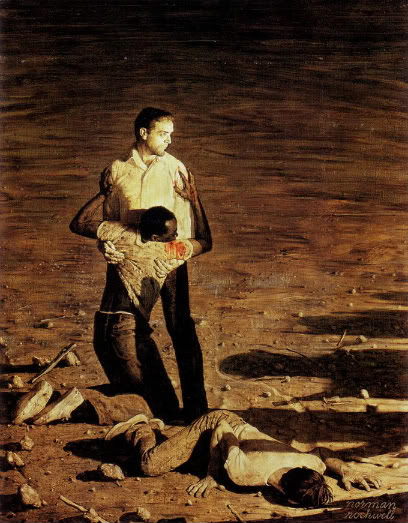
normanrockwellsouthernjustice-2

Friends of Padre Steve’s World,

Fifty-Five years ago three young men working to register blacks to vote as part of the Freedom Summer in Mississippi were brutally murdered by members of the Ku Klux Klan. As a historian I am troubled as I see an increase in racially motivated hate crimes and displays of nooses left as threats at historically black institutions or places dedicated to remembering the Civil Rights movement. When I see the lack of empathy and the lack of concern shown for these crimes by white people, especially Evangelical Christians I wonder if we are sinking back into the abyss of Jim Crow.

I have dealt with Holocaust deniers many times and also plenty of people who find nothing wrong with American slavery, Jim Crow, and racism. I find it troubling that despite the forensic, and historical evidence that people can either deny, minimize, or rationalize such behavior.

The fact that the Southern Baptist Convention, the nation’s largest Protestant denomination had to struggle with the issue of civil rights and the race hatred of the Alt-Right last week showed me that the toxin has not been purged from the Convention, or for that matter much of America. The fact that a man who is active in White Supremacist movements murdered two men and wounded a third as they defended Muslim women on a Portland Oregon commuter train was disturbing, as was the murder of a newly commissioned African American Army Lieutenant by a White Supremacist on the campus of the University of Maryland. Likewise there has been a spate of nooses being placed on college campuses, historically Black institutions, Civil Rights sites, and at the offices or residences of people who support civil rights, including professors.

southern justice 4

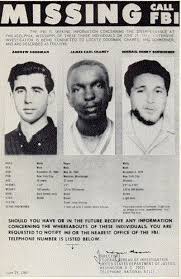
These troubling incidents have again reminded me of the events of June 21st 1964 when three men, Andrew Goodman, Mickey Scherner, and James Chaney were murdered by Ku Klux Klansmen. Twenty year old Andrew Goodman was from New York City. He was a progressive activist and Anthropology student at Queens College. Twenty-four year old Mickey Schwerner was a graduate student at Columbia University’s School of Social Work. Both Goodman and Schwerner were Jewish and had come South to work with others for Civil Rights in Mississippi. The third man, James Cheney, was a twenty-one year old Black Mississippian. Chaney was from Meridian Mississippi and was a volunteer with CORE, the Congress of Racial Equity. All three men were there to assist community leaders with voter registration and education in conjunction with local churches.

On June 21st 1964 the three men were in Philadelphia Mississippi where they were investigating the burning of Mount Zion Methodist Church. The church had been working with CORE’s voter registration and education programs. In the wake of the church being burned, many black citizens and church members were beaten by whites, rumored to be aided by members of the local Sheriff’s office. They specifically accused Sheriff’s Deputy Cecil Price of abuse.

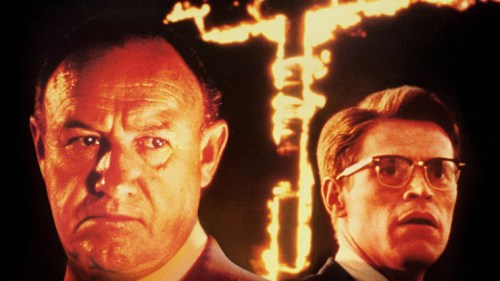
When Goodman, Schwerner, and Chaney were marked men from the moment they arrived. As they left the town the three were arrested for an alleged traffic violation. They were briefly jailed and released that evening, but were not allowed to make any phone calls. On the way back to Meridian, two carloads of Klan members forced their car off the road and then abducted them and murdered them. The bodies were not discovered for 44 days. Their disappearance brought national attention and a major investigation to the town. Eventually seven men, including Deputy Price were convicted of the murders. The murders and the investigation became the subject of the movie Mississippi Burning.

MississippiBurningPressRelease

Iconic American artist Norman Rockwell who was well known for his portraits of American life as well as his support for the Civil Rights movement, painted “Southern Justice” which is sometimes known as “Murder in Mississippi” in 1965. This was not long after passage of the Voting Rights Act of 1964, which over the past decade has been under attack in many southern states and a key provision on racial gerrymandering was gutted by the Supreme Court in 2012.

Fifty-three years ago the murders of these three young men brought national attention to the pervasive racism and discrimination in the country. Before this event most murders, lynchings, as well as the burnings of homes businesses were left uncovered by the media, the victims forgotten and the perpetrators unpunished.

I do hope and pray that we never go back to those days, but there are a number of troubling issues for us in the United States today. The first is that there have been quite a few laws passed to limit voting rights in various states. Some of these have been successfully challenged in the courts and eventually one may make its way to the Supreme Court. Then there is the rapidly growing number of racially motivated hate crimes against Blacks and other minorities as well as the threat of nooses being placed in trees around historic sites and museums dedicated to minorities or civil rights. The Southern Poverty Law Commission monitors the activities of hate groups across the political, religious, and racial spectrum and has noted a sharp increase in attacks over the past two years, coinciding with the election of Donald Trump as President. Heavily armed and militant racist and anti-Semitic groups proudly march hand in hand with Trump supporters, allegedly to protect them from “leftists.”

I wonder if we will see a return to the commonplace violence and silence that characterized the nation’s treatment of minorities before the Civil Rights movement. You think that we have moved the chains so far and that it cannot happen again when before our very eyes it rises like an undead specter to claim new victims. Eternal vigilance is the guardian of freedom; we cannot allow the thousands who died before, and those who have died since these three young men to be forgotten. Too much is at stake.

In memory of Andrew Goodman, James Chaney and Mickey Schwerner and others of the Freedom Summer and the Civil Rights movement who died or suffered to peacefully bring about change to our society, I leave you until tomorrow.

Peace,

Padre Steve+

5 Comments

Filed under civil rights, crime, culture, History, News and current events, Political Commentary

The Battle Of the Philippine Sea, the Great Marianas Turkey Shoot at 75 Years

Friends of Padre Steve’s World,

I was out late tonight at a fundraiser for #VBStrong at Gordon Biersch where the proceeds went to the major organization helping the victims and the families impacted by the mass murder that took place here in Virginia Beach on May 31st. It was also a night that I got to meet and have dinner with one of my blog followers, and his wife who are in town for their church denominational conference. It was a wonderful evening. Judy and I really enjoyed meeting Brian and his wife Ruth, and thoroughly enjoyed our time with them. It is really a wonderful experience to meet and have a wonderful time with people that enjoy what you write. Hopefully, when any of my books get published I will get the chance to meet others like them. Since I don’t do my blog for money, it is the people who are kind enough to comment, and even those who disagree with me at times that make it worthwhile. Trolls are another matter, but people interested in intelligent discussion without personal invective even when we disagree are a joy to behold.

Because of that I am reposting an older article on the Battle of the Philippine Sea, also known as the Great Marianas Turkey Shoot which was fought on the 19th and 20th of June 1944. That was 75 years ago, and unlike D-Day I have not seen a single news article or mention of it, even on Navy and DOD websites. But is was the battle that broke the back of Japanese Naval Aviation in the Pacific and helped speed the defeat of Japan.

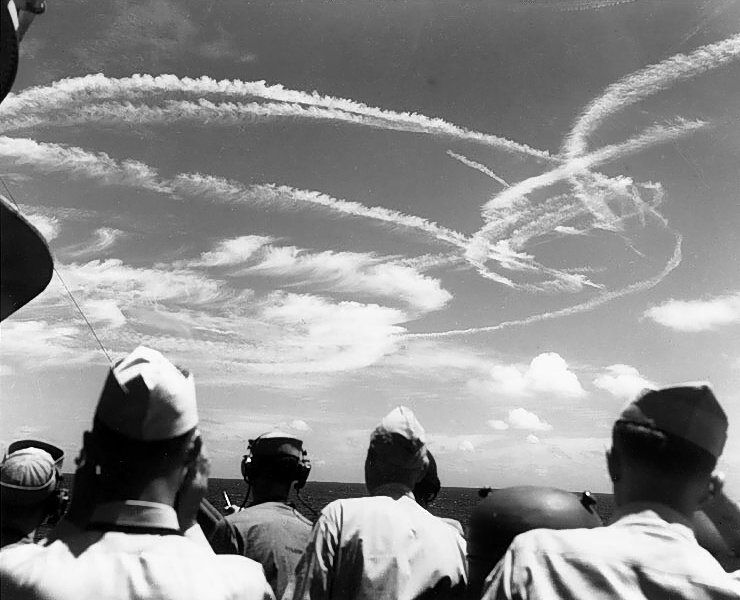
U.S. Navy personnel observe the Air Battle from a Carrier

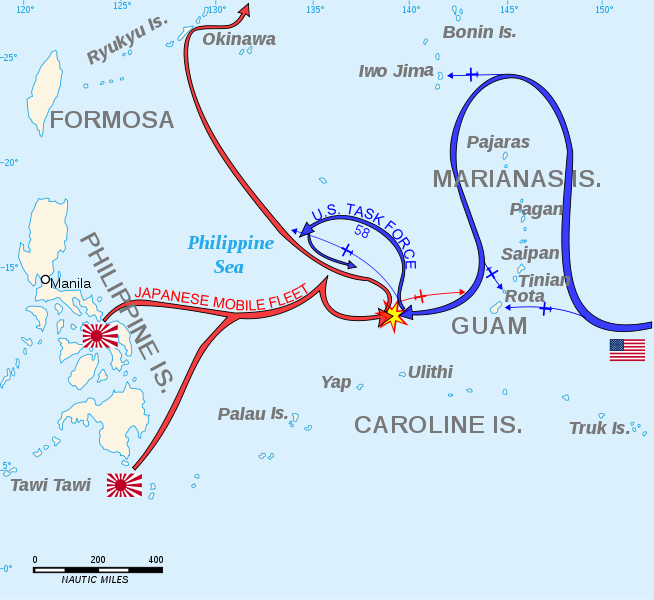
This battle was the largest battle between aircraft carrier fleets in history.  Twenty four aircraft carriers, 15 American and 9 Japanese embarking over 1400 aircraft dueled in the Central Pacific in a battle that so decimated Japanese Naval Aviation that it never recovered. The battle and the subsequent fall of Saipan brought down the government of General Tojo and was the beginning of the collapse of the Japanese Empire and the “Greater Asia Co-Prosperity Sphere.”

http://dsc.discovery.com/videos/destroyed-in-seconds-marianas-turkey-shoot.html

In late 1943 the Japanese realized that they needed to recover the initiative in the Pacific.  Between the Battle of the Coral Sea and the Battle of Santa Cruz Japanese Naval aviation suffered crippling losses especially among the elite pilots and aircrews with who they had begun the war.  These losses were compounded when the Navy attempted to support the operations of the Army to defend the Solomons and New Guinea.  Squadrons sent to battle the United States Navy, Marine Corps and Army Air Corps suffered at the hands of the every more skilled and well equipped American fighter squadrons the victims of which included Admiral Isoruku Yamamoto the Commander of the Combined Fleet when the Betty bomber that he was traveling on was ambushed by U.S. Army Air Corps P-38 Lightening fighters.

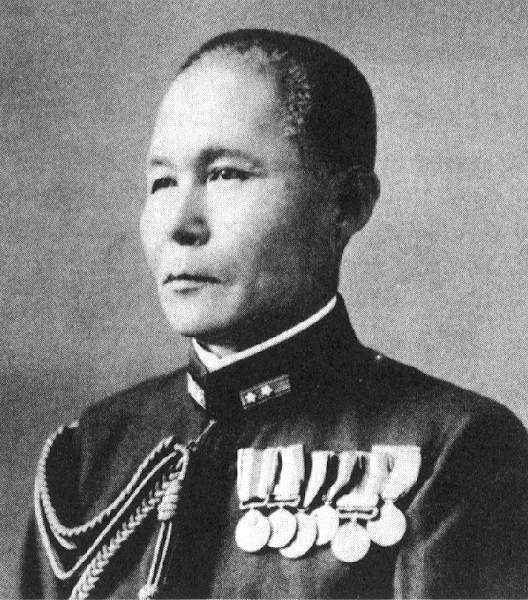
Vice Admiral Jisaburō Ozawa

By late 1943 the Japanese were attempting to train new pilots and aircrews to man the carriers of the Combined Fleet’s Carrier Striking Forces.  Admiral Soemu Toyoda, the new commander of the Combined Fleet and its third commander in less than a year developed “Plan A-Go” as a means to mass carrier and land based aviation assets to defeat the Fast Carrier Task Forces of the United States Navy.  The rebuilt Carrier Striking Groups built around 9 carriers embarking 473 aircraft was commanded by Vice Admiral Jisaburō Ozawa who had taken over from Vice Admiral Chuichi Nagumo.

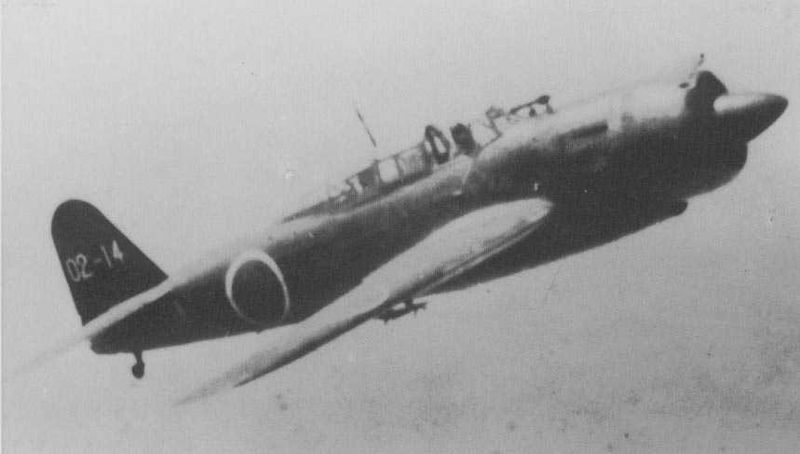
D4Y3 “Judy” Dive Bomber

The Japanese discerned the intentions of the Americans when American Carrier aircraft struck Saipan and Guam. The Japanese had expected the Americans to strike further south and the Marianas had few land-based aircraft in the area. Toyoda made the decision to engage the Americans and ordered the fleet to attack. American submarines discovered the gathering Japanese forces. The Japanese forces were assembled by the 17th and by the 18th the 5th Fleet under the command of Admiral Raymond Spruance spearheaded by Task Force 58 Commanded by Vice Admiral Marc Mitscher had assembled west of Saipan to meet the Japanese.  The Americans fielded 15 carriers including 9 Fleet Carriers of which 6 were the new Essex Class Fleet Carriers which embarked 956 aircraft.

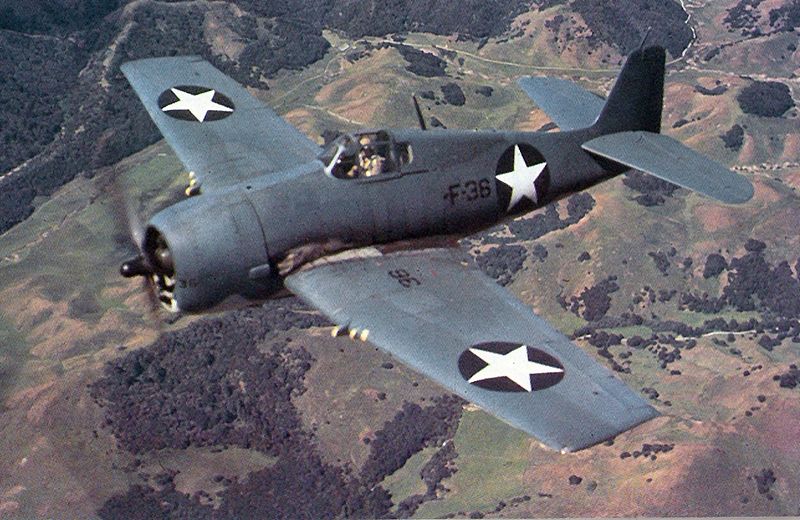
The F6F Hellcat cemented its place as the premier fighter plane of the Pacific war during the “Turkey Shoot”

The Americans held both a quantitative and qualitative advantage against the Japanese. The American fighter squadrons were equipped with the F6F Hellcat which was far superior to the now obsolescent Japanese Zero fighters and their pilots and aircrews were now more experienced and proficient than the newly minted Japanese aviators who by and large had little combat experience and were flying inferior aircraft.  The Japanese had not planned for a long war and had done little to systemically address the heavy losses that their force experienced during 1942 and 1943 at Coral Sea, Midway, Eastern Solomons, Santa Cruz and in the Solomons campaign.

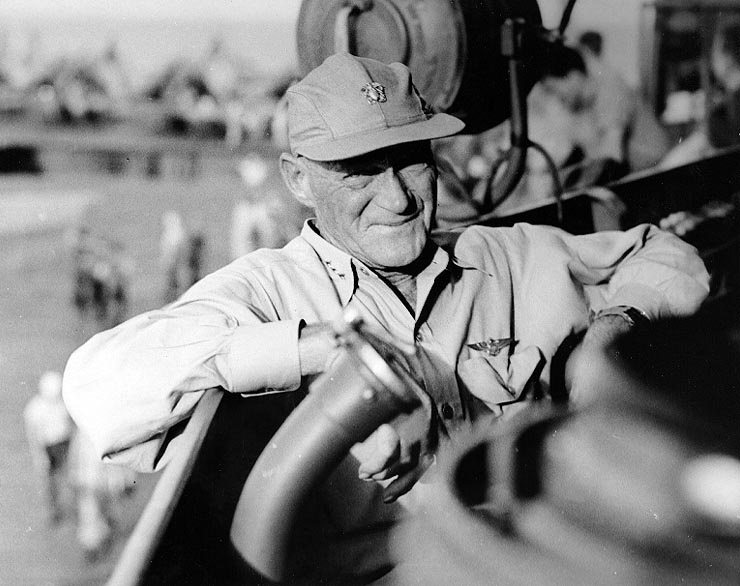
Vice Admiral Marc Mitscher aboard the USS Lexington

Mitscher desired to move aggressively against the Japanese. However he was overruled by Spruance who acting on the advice of his Battle Line Commander Vice Admiral Willis Lee decided that a possible night surface action with the Japanese was not desirable. Spruance instead directed Mitscher to be ready to defend against Japanese air strikes knowing that his carriers and carrier based air groups was more than a match for the Japanese air groups.   Spruance has been criticized for his decision but the words of Willis Lee, a veteran of the Naval Battle of Guadalcanal where he defeated a Japanese force sinking the Battleship Kirishima.  He prevailed in his flagship the USS Washington but losing three of four escorting destroyers and seeing his second battle wagon the USS South Dakota heavily damaged. A night surface engagement was not worth the risk as in Lee’s eyes it evened the playing field for the Japanese and took away the American air power advantages.

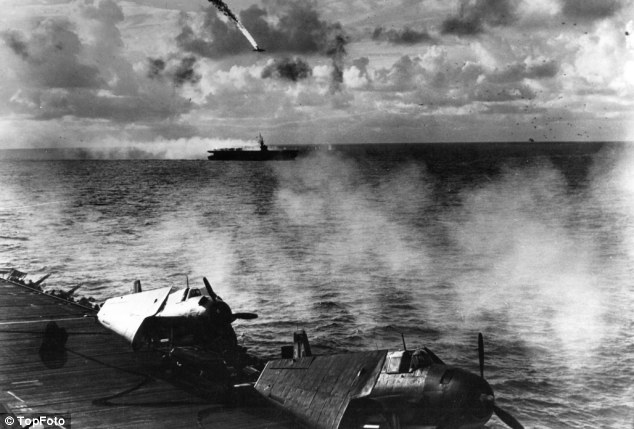
A Japanese aircraft goes down in flames

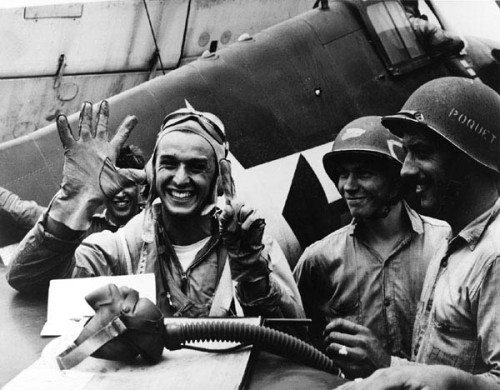
The Japanese began the action on the 19th sending successive attack waves against Task Force 58. They were met by massed formations of Hellcats vectored in by air controllers in the Combat Information Centers of the American carriers using their superior air search radar systems.  In less than two hours well over 200 Japanese aircraft were downed by the Hellcats.  Lieutenant Alexander Vraicu shot down 6 “Judy” dive bombers in minutes before low on fuel he returned to the USS Lexington.

Lieutenant Alexander Vraicru holds up six fingers for six kills

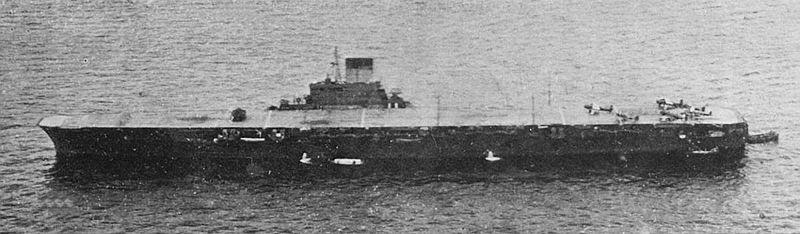
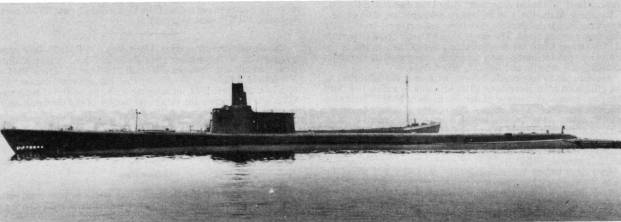
While the Hellcats were chewing up the Japanese squadrons the American submarines USS Albacore and USS Cavalla each sank a Japanese Fleet Aircraft Carrier.  The Albacore hit the Ozawa’s flagship, the new Tiaho with a torpedo which caused minimal damage, but ruptured fuel lines. The Japanese damage control officer opened vents in the ship which allowed the fumes to spread throughout the carrier. They were ignited by a generator causing massive explosions and forcing Ozawa to abandon his flagship. Tiaho would sink by late afternoon after being ripped apart by a series of massive explosions taking with her 1650 of 1750 officers and crew. Cavalla hit the Pearl Harbor veteran Shokaku with a spread of three torpedoes causing that ship to burst into flames with aircraft and ordnance adding to the conflagration. A massive explosion ripped through the ship causing her to sink with a loss of over 1200 officers and crew.

The Japanese flagship Tiaho (above) and her killer the USS Albacore

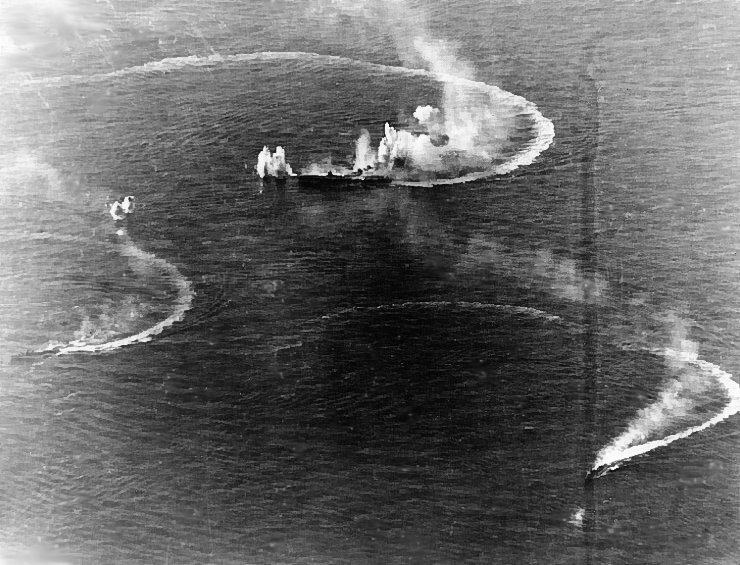
Toyoda desired that Ozawa retire from the battle before he suffered more losses but Ozawa wanted to stay around and hit the Americans with everything that he had left. The Americans sailed west during the night to seek out the Japanese Fleet. It took the majority of the day to find the Japanese. With only 75 minutes of daylight remaining Mitscher launched a strike despite the risk to his aircrew the majority whom were not trained in night landings.  The American strike sank the carrier Hiyo and two tankers and damaged the carriers Zuikaku, Chitoyda and Junyo as well as the battleship Haruna.  By the end of the day Ozawa had 35 aircraft in flyable condition. About 435 of the aircraft operated from the Japanese carriers were lost with the vast majority of their pilots and aircrew.

The Japanese Fleet under attack, carrier Zuikaku and two destroyers on June 20th

The final part of the drama was the return of the American strike group to the carriers. Knowing that if he maintained darken ship he would lose many aircraft and the men that flew them Mitscher ordered that the fleet turn on its lights. This act was incredibly risky but helped bring the majority of the returning aircraft to land or ditch near the task force.  The Americans lost less than 100 aircraft during the battle, most due to the night landings and unlike the Japanese who lost the majority of their aircrews, most of the American pilots and aircrew were rescued. In addition to their carrier based losses the Japanese lost nearly 200 land based aircraft.

Admiral Raymond Spruance

The battle was the death-kneel of Japanese Naval Aviation. Later in the year the carriers again under Ozawa sailed against the Americans only this time they were a decoy force at the Battle of Leyte Gulf, a role that they succeeded in admirably. The American carriers now had free run of the Pacific only opposed by land based aircraft many used in a Kamikaze role until the end of the war. These would cause fearful losses among the American ships heavily damaging a number of carriers.

The battle is often forgotten by due to its proximity to the Normandy landings but was a significant step in the fight against Japan. The islands captured by the Americans, Saipan, Tinian and Guam would provide major sea and air staging areas for the final assault against Japan. Tinian would become the base of many Army Air Corps B-29 “Superfortress” bombers including those that dropped the Atomic bombs less than 14 months later. It was a turning point both militarily and politically. With the fall of the Tojo government the Japanese leaders began to slowly tell the truth about wartime setbacks and losses to a people that it had lied to since their invasion of China and occupation of Mongolia.  It was a setback that even Tojo and the highest leadership of Japan knew that they could not recover.

Until tomorrow,

Peace,

Padre Steve+

Leave a comment

Filed under aircraft, History, Military, Navy Ships, US Navy, World War II at Sea, world war two in the pacific

Vague Orders, Vanity, and the Need for Redemption: JEB Stuart’s Ride at Gettysburg

Friends of Padre Steve’s World

Today I am going back to the archives and re-posting an edited version of something that is part of my unpublished Gettysburg Campaign text. James Ewell Brown (J.E.B.) Stuart is legendary in American military history. A young cavalry officer from Virginia he was like a son to Robert E. Lee and was a man whose military accomplishments were matched by his unbridled vanity, which during the most critical moment in the history of the Confederacy led him to embark on an operation that left his commander in the lurch and helped doom the Confederacy. The story picks up following Stuart being surprised by Federal Cavalry at the Battle of Brandy Station in June of 1863 as Lee’s Army of Northern Virginia was moving north in an attempt to bring the Army of the Potomac to Battle, destroy it, and end the war. Both Stuart and Lee had much to do with the failure of this plan, but I hope that you enjoy this account. 

Peace

Padre Steve+

While the embattled “Fighting Joe” Hooker slowly pursued Lee with the Army of the Potomac, a drama of major significance to the battle Robert E. Lee’s own making was beginning to engulf his operations and leave him blind to the movements of the Federal Army. It involved Lee and his Cavalry commander, J.E.B. Stuart and would be the first of a number of mistakes that would characterize Lee’s campaign. All of these failures dealt with Lee’s singular inability to get his commanders to understand his intent for the campaign and his inability to clearly communicate his wishes.

The necessity of subordinate commanders understanding the intent of their superior is essential to the success of any military operation. During the Gettysburg campaign Lee failed miserably to communicate his operational plan and desire to his commanders. The episode with Stuart was one of several that paint a portrait of Lee not being as good of General as the myth surrounding him.

After the surprise at Brandy Station Stuart’s troopers screened the right flank of the army as it moved north, defending the gaps in the Blue Ridge to keep Alfred Pleasanton’s Federal Cavalry Corps from interdicting the march of the Army of Northern Virginia, or discovering the location of Lee’s three infantry corps which were moving north behind the cover of the Blue Ridge.

In this Stuart was successful, but frustrated. Between June 17th and June 21st his troopers fought a series of engagements against the aggressive Federal Cavalry at Ashby’s Gap, Middleburg and Upperville in Northern Virginia. While Stuart’s troopers had held off Pleasanton’s confident troopers the “running combats were taking a toll on the Southern mounted arm, however. Stuart had already suffered several hundred casualties defending gaps and passes.” [1] Much to their dismay the Confederates noted the improvements in the Federal cavalry during these battles. Captain William Blackford, who served as an engineer on Stuart’s staff noted:

“the improvement of enemy cavalry was enormous, mainly in the heavy fire from long range carbines, and horse artillery that was a match for Stuart’s own These cavalrymen fought as if they had been taken from infantry regiments, for they knew how to fight with horses left behind.” [2]

Unlike the rest of the Army of Northern Virginia that was marching like victors into Pennsylvania and Maryland, Stuart’s Cavalry Division had little cause to rejoice. They had been surprised at Brandy Station and Stuart had been humiliated in the Southern press. The Federal cavalry under Pleasanton gave him no opportunity to redeem himself. While Pleasanton’s troopers never broke through Stuart’s screen, they had pressed him hard, and his division was “really fought out during those two weeks from June 9 until the misty morning of June 22…. Not only had Stuart’s cavalry been pressed on the defensive as never before, but also they had not been able to gain a spot of information about the enemy.” [3] Pleasanton’s troopers and proven that the days of “easy Confederate cavalry triumphs were gone,” [4] and Stuart, now “smarting over the cuts to his ego, refused to read the portents” [5] of future disaster.

Stuart had been fighting defensively the entire campaign, but desperately wanted to go on the offensive. As his troops battled at Aldie, Middleburg and Upperville, Stuart formulated a plan that he submitted to Lee. Stuart reasoned since now that “all the infantry were west of the Blue Ridge…that it would be possible to leave one or two brigades of cavalry to defend the gaps and with the remaining three to descend on the enemy and harass Hooker in any advance into Pennsylvania.” [6] For him the plan was designed for personal glory and redemption after the embarrassment at Brandy Station.

On the morning of the 22nd of June Stuart noticed that the Federal cavalry that had engaged him at Upperville the previous day was no longer present. That morning he also received an order from Lee; an order that was the first of a series of vague, poorly written and contradictory orders that was to plague Lee throughout the campaign.

Unlike his new infantry corps commanders, Ewell and Hill, Stuart was very familiar with Robert E. Lee’s method of command, and Lee had “so much faith in Stuart’s judgment and ability to make the right moves that after indicating his wishes he gave him considerable latitude in carrying them out. His orders were more suggestions than commands….” [7] However well that may have worked for Lee in the past with Jackson and Stuart, the nature of Lee’s orders to Stuart, being conditional, needed to clearly address “the conditions upon which they are based.” [8] This Lee did not do. His order read:

“I judge the efforts of the enemy yesterday were to arrest our progress and ascertain our whereabouts. Perhaps he is satisfied. Do you know where he is and what he is doing? I fear he will steal a march on us and get across the Potomac before we are aware. If you find that he is moving northward and that two brigades can guard the Blue Ridge and take care of your rear, you can move with the other three into Maryland and take position on General Ewell’s right, place yourself in communication with him, guard his flank, keep him informed of the enemy’s movements and collect all the supplies you can….” [9]

James Longstreet, commander of the Confederate First Corps who Stuart was cooperating with on the northward march, added his own comments to Lee’s instructions which even further clouded the order:

General Lee has enclosed this letter for you, to be forwarded to you, provided you can be spared from my front, and provided I think that you can move across the Potomac without disclosing our plans. He speaks of your leaving via the Hopewell Gap and passing by the rear of the enemy. If you can get through by that route I think that you will be less likely to indicate what our plans are than if you should be passing to our rear. I forward the letter of instructions with these suggestions. Please advise me of the condition of affairs before you leave, and order General Hampton, whom I suppose will leave here in command, to report to me at Millwood, either by letter or in person, as may be most agreeable to him.” [10]  

But even without an order from Lee, Stuart was already planning his offensive that he believed would restore his glory. He had sent Major John Mosby with a small detachment of troops to reconnoiter behind the Union lines. Mosby reported the location of all the infantry corps of the Army of the Potomac. Mosby reported to Stuart on June 23rd that the Federal corps were stationary and “were so widely separated…that a column of cavalry could easily get between them.” [11] It was news that Stuart was delighted to hear. Mosby painted a glowing picture of how an operation using the Hopewell Gap could create havoc in the Federal rear and cause panic in Washington as he could “severe communications between Hooker and Pleasanton, destroy a “large portion” of Hooker’s transportation, and take some of the pressure off Lee by creating a diversion for the Union cavalry.” [12]

The inactivity of the Federal army reported by Mosby was exactly the news Stuart wanted to hear, and he asked Lee for permission to plunge into the Federal rear, and in his after action report wrote:

“I submitted to the commanding general the plan of leaving a brigade or so in my present front, and passing through Hopewell, or some other gap in Bull Run Mountain, attaining the enemy’s rear, and passing between his main body and Washington, to cross into Maryland and joining our army north of the Potomac.” [13]

Lee was rather cryptic in his after action report and wrote “Upon the suggestion of the former officer (General Stuart) that he could damage the enemy and delay his passage of the river by getting to his rear, he was authorized to do so.” [14] In that same report of the campaign Lee wrote:

“General Stuart was left to guard the passes of the mountains and observe the movements of the enemy, whom he was instructed to impede and harass as much as possible, should he attempt to cross the Potomac. In that event, General Stuart was directed to move into Maryland, crossing the Potomac east or west of the Blue Ridge, as, in his judgment, should be best, and take position on the right of our column as it advanced.” [15]

That night, during a heavy rainstorm Stuart’s chief of staff Major McClellan received Lee’s reply to his superior’s request. When he received it he immediately delivered to Stuart. Lee’s instruction stated:

“If General Hooker’s army remains inactive, you can leave two brigades to watch him, and withdraw with three others, but should he not appear to be moving northward, I think you had better withdraw this side of the mountains tomorrow night, cross as Shepherdstown next day, and move over to Frederickstown.

You will, however, be able to judge whether you can pass around their army without hindrance, doing them all the damage you can, and cross the river east of the mountains. In either case, after crossing the river, you must move on and feel the right of Ewell’s troops, collecting information, provisions, etc.” [16]

However, Stuart does not deserve the entirety of the blame for what happened. The orders or suggestions that he received from Lee and Longstreet gave Stuart were “so badly worded that it is difficult to make sense of them.” [17] Lee implicitly trusted Stuart but he was wrong in assuming that the young officer should be able to divine his intent after Brandy Station without taking into account the effect the negative press of that battle had on his subordinate. Lee should have “established that Stuart’s most important task was to guard Ewell’s right and report on the direction of Hooker’s advance once Lee crossed the Potomac.” [18] This he did not do. Instead, Stuart was given several conflicting instructions. Lee directed that Stuart maintain contact with Ewell, screen the Blue Ridge gaps, collect information, “raiding around the rear of Hooker’s forces” [19] damaging the enemy and collecting supplies. Stuart could have done any of these tasks, but not all of them, and the smorgasbord offered by Lee played directly into Stuart’s need to redeem himself after the beating that he took in the Confederate Press after Brandy Station.

Specifically, Lee’s lack of clarity and vagueness allowed to Stuart interpret the order in a manner that benefited him. The order could easily be interpreted as getting Stuart and his men into Pennsylvania as quickly as possible to guard Ewell’s flank and discern the intentions of the enemy, which in hindsight appears to be Lee’s intent, or as permission to conduct a raid “roam in the enemy’s rear for an unpredictable period of time, raising havoc with his communications, supplies, and isolated commands” and then “seek out Ewell’s corps and use it as a place of refuge from an aroused enemy.” [20]

The fact is that as they are today that different standards apply to each course of action laid out by a commander and that orders must be clear, otherwise subordinates may interpret them in a far different manner that intended. Such vague orders can have far reaching effects, often contrary to the intent of the commander who issued them; this was the case here.

By giving Stuart the latitude to go around the Federal army Lee undercut his own preference that Stuart cross into Maryland via Shepherdstown and Frederick on June 24th. Lee had provided Stuart an opportunity for something that “Longstreet half-apologetically called “something better than the drudgery of a march around our flank.” [21] It was a critical mistake, which was then further compounded by Stuart and the movement of the Army of the Potomac.

Stung by the criticism of his conduct of the Battle of Brandy Station in the Southern press and frustrated by Pleasanton’s constant thrusts at his troopers screening Lee’s flank on the Blue Ridge Stuart interpreted the orders in the manner that appealed to Stuart’s sense of glory. He would repeat his triumph of the previous year when he rode around the Army of the Potomac. For Stuart this was a chance to regain the limelight and add to his luster. Stuart “summed up his interpretation of his orders when he said later: …it was deemed practicable to move entirely in the enemy’s rear, intercepting his communications with his base (Washington), and, inflicting damage upon his rear, to rejoin the army in Pennsylvania in time to participate in its actual conflicts.”[22]

Historians have long wondered why Lee was not more explicit in his orders to Stuart and why Stuart conducted an operation that left Lee blind and had no obvious advantages, except to allow Stuart to recover his tarnished reputation. Stephen Sears noted in his book Gettysburg that: “The very concept of Stuart’s expedition was fueled by overconfidence and misjudgment at the highest command level.” [23] In a sense the decision harkens back to the hubris of Lee and others about the superiority of his army, and Lee’s distain for the capabilities of Army of the Potomac and Federal troops in general.

In organizing his movement around the Army of the Potomac, Stuart decided to take his three best cavalry brigades with him, and leave the brigades of “Grumble” Jones and Beverly Robertson to defend gaps and screen the rear of the army. The choice was unfortunate; Robertson was unpredictable but was “senior to the dependable Jones” [24] who was considered the “best outpost officer in his command.” [25] The choice ridded Stuart of Robertson, who he did not trust in battle and Jones “whose antipathy for Stuart at least equaled Stuart’s for him.” [26] The intent was that Robertson would screen the army and follow it into Maryland, in fact Stuart gave Robertson “explicit instructions” [27] to do so, but instead “the two brigades would remain fixed, as if planted there, in an inanition of command which immobilized the men for whom Lee in Pennsylvania was anxiously watching.” [28] Longstreet had requested the industrious and dependable Hampton command the remainder of the cavalry, but Stuart disregarded his counsel and took Hampton with him.

Stuart set off with his three best brigades, Wade Hampton’s, Fitzhugh Lee’s, and Rooney Lee’s, the latter now with Rooney Lee having been wounded was under the command of Colonel John R. Chambliss. Chambliss was another former West Pointer who had retired from the old army but had responded to the call to secession.

Almost immediately after setting off Stuart and his brigades encountered a situation that should have immediately stopped movement to the Federal rear and instead brought Stuart to move back to the west of the Blue Ridge. Moving through Glasscock’s Gap Stuart’s troopers  “bumped unexpectedly into “an immense wagon train,” which happened to be the tail end of Winfield Hancock’s 2nd Corps, blocking the road in exactly the fashion Lee had described as a hindrance.” [29] Instead of going back when he had the chance Stuart elected to continue with his “plan to go around the Federal army. It was a crucial decision, for he still could have turned back without losing any more time.” [30] Even so, Stuart had to spend a day grazing his horses since he had no grain with him, delaying his advance north and east, placing him a day behind schedule. Though Stuart and his brigades made better time on the 26th, advancing twenty-five miles, he had to again stop to graze his horses at the Occoquan River. It had “taken forty-eight hours to march thirty-five miles.” [31]

Stuart continued on past the outskirts of Washington on June 27th and was again delayed when attempting to cross the Potomac at Rowser’s Ford where the “water level was two feet higher than normal.” [32] Upon crossing the river he then encountered a large Federal wagon train not far from Washington capturing over 100 wagons and 600 mules. He reveled in that feat and boasted that “he had taken more than one hundred and twenty-five best United States model wagons and splendid teams and gay caparisons,” containing “foodstuffs, oats, hay…bacon, ham, crackers and bread” but his progress was slowed by his enormous wagon train of captured supplies…” [33] He and briefly wondered “whether it might be worth “our entering Washington City” [34] before determining that the effort might be too costly.

On June 28th Stuart received word that Joe Hooker and the Army of the Potomac were across the Potomac. Likewise, Stuart “knew nothing of Lee’s position,” [35] and instead of abandoning the wagon train he sacrificed the speed and mobility of his brigades to keep it. This was a direct consequence of how badly Lee had written his order to Stuart. Now, “far from guarding Ewell’s right, he was now moving away from Ewell, with no idea where Hooker’s army might be and no communication with Lee, who frequently inquiring of his aides, “Can you tell me where General Stuart is?” [36]

On the wrong side of the federal army, encumbered by the captured wagon train, “Stuart would have to make a half circle of more than fifty miles around Gettysburg before arriving there about noon on the second day of battle with most of his troopers, his artillery, and his wagon train lumbering far behind him.” [37] On June 30th his men were engaged by Judson Kilpatrick’s Federal near cavalry division near Hanover, and “his men never fought more poorly…and General Stuart and his staff were nearly captured.” [38] By the time Stuart’s troopers arrived in Gettysburg, the once proud outfit was “exhausted and too late to be of any service.” [39] His arrival at Gettysburg was not a moment of triumph, but was humiliating. Instead of reporting to his commander with information that Lee needed, it was Lee who informed him of the position of his own army and the Army of the Potomac. Lee’s words to his much beloved subordinate were painful. He asked him “General Stuart, where have you been?” [40] Stuart seemed to wilt at his mentor’s words, and attempted to put the best face forward, and told Lee “I have brought you 125 wagons and their teams, General,” to which Lee replied “Yes, General, but they are an impediment to me now.” [41]

Stuart’s raid was disastrous for Lee. Until July 2nd, Lee was blind and had no idea where the Federal army was. He learned some when he told of the location of the Army of the Potomac by Longstreet’s scout Harrison on June 28th, but even then he had no clear idea of the Federal Army’s location, strength, or intentions until the second day of the Battle of Gettysburg. Stuart’s ride was “an act of folly – ill-planned, badly conducted, and (until the very end) executed with an almost total disregard for anything for any interest other than the self-promotion of J.E.B. Stuart.” [42]

To be clear, a number of important military factors important to those involved in planning campaigns are clear: Deception, commander’s intent, and unity of command. Lee successfully used deception to prevent the Federals from discerning his purposes, but that initial success was compromised by his lack of clarity in communicating his intent for the campaign to Stuart, and by Stuart’s careless disregard of any other consideration but his own reputation and vanity.

Both Stuart and Lee share culpability for the failure of the Confederate campaign at the operational and tactical level. Of course they were not the only ones, Longstreet, Ewell, A.P. Hill, Harry Heth, and Jubal Early and many others had a share in the defeat, but Lee in his orders, and his protégé Stuart in trying to redeem his reputation were most culpable in the defeat at Gettysburg.

Notes

[1] Petruzzi, J. David and Stanley, Steven The Gettysburg Campaign in Numbers and Losses: Synopses, Orders of Battle, Strengths, Casualties and Maps, June 9 – July 1, 1863 Savas Beatie LLC, El Dorado Hills CA 2012 p.41

[2] Davis, Burke J.E.B. Stuart: The Last Cavalier Random House, New York 1957 pp.319-320

[3] Dowdy, CliffordLee and His Men at Gettysburg: The Death of a Nation Skyhorse Publishing, New York 1986, originally published as Death of a Nation Knopf, New York 1958 p.57

[4] Freeman, Douglas Southall, Lee’s Lieutenant’s a Study in Command, One volume abridgement by Stephen W Sears, Scribner, New York 1998 p.553

[5] Ibid. Dowdy Lee and His Men at Gettysburg p.57

[6] Ibid. Freeman Lee’s Lieutenants p.553

[7] Coddington, Edwin B. The Gettysburg Campaign: A Study in Command, A Touchstone Book, Simon and Schuster New York, 1968 p.108

[8] Ibid. Coddington The Gettysburg Campaign p.108

[9] Ibid. Davis J.E.B. Stuart: The Last Cavalier p.321

[10] Oates, Willam C. and Haskell, Frank A. Gettysburg: The Confederate and Union Views of the Most Decisive Battle of the War in One Volume Bantam Books edition, New York 1992, originally published in 1905 p.61

[11] Ibid. Coddington The Gettysburg Campaign p.109

[12] Ibid. Coddington The Gettysburg Campaign p.109

[13] McClellan, Henry Brainerd The Life and Campaigns of Major General J.E.B. Stuart Commander of the Cavalry of the Army of Northern Virginia 1885. Digital edition copyright 2011 Strait Gate Publications, Charlotte NC Location 6087

[14] Ibid. McClellan The Life and Campaigns of Major General J.E.B. Stuart location 6106

[15] Lee, Robert E. Reports of Robert E Lee, C.S. Army, Commanding Army of Northern Virginia Campaign Report Dated January 20th 1864. Amazon Kindle Edition location 285

[16] Ibid. Davis J.E.B. Stuart: The Last Cavalier p.324

[17] Fuller, J.F.C. Decisive Battles of the U.S.A. 1776-1918 University of Nebraska Press, Lincoln 2007 copyright 1942 The Royal Society for the Prevention of Cruelty to Animals p.226

[18] Korda, Michael. Clouds of Glory: The Life and Legend of Robert E. Lee Harper Collins Publishers, New York 2014 p.540

[19] Ibid Korda Clouds of Glory p.540

[20] Ibid. Coddington The Gettysburg Campaign p.110

[21] Guelzo, Allen C. Gettysburg: The Last Invasion Vintage Books a Division of Random House, New York 2013 p.96

[22] Ibid. Freeman Lee’s Lieutenants p.555

[23] Sears, Stephen W. Gettysburg, Mariner Books, Houghton Mifflin Company, Boston and New York, 2003 p.106

[24] Ibid. Dowdy Lee and His Men at Gettysburg p.63

[25] Ibid. Davis J.E.B. Stuart: The Last Cavalier p.324

[26] Ibid. Dowdy Lee and His Men at Gettysburg p.63

[27] Ibid. Coddington The Gettysburg Campaign p.112

[28] Ibid. Dowdy Lee and His Men at Gettysburg p.63

[29] Ibid. Guelzo Gettysburg: The Last Invasion p.96

[30] Ibid. Coddington The Gettysburg Campaign p.112

[31] Ibid. Davis J.E.B. Stuart: The Last Cavalier p.325

[32] Ibid. Coddington The Gettysburg Campaign p.112

[33] Ibid Korda Clouds of Glory p.541

[34] Ibid. Guelzo Gettysburg: The Last Invasion p.98

[35] Ibid. Davis J.E.B. Stuart: The Last Cavalier p.325

[36] Ibid Korda Clouds of Glory p.541

[37] Ibid Korda Clouds of Glory p.541

[38] Ibid. Dowdy Lee and His Men at Gettysburg p.73

[39] Ibid. Fuller Decisive Battles of the U.S.A. 1776-1918 p.227

[40] Ibid. Davis J.E.B. Stuart: The Last Cavalier p.334

[41] Ibid. Davis J.E.B. Stuart: The Last Cavalier p.334

[42] Ibid. Guelzo Gettysburg: The Last Invasion p.98

Leave a comment

Filed under civil war, Gettysburg, History, Military, us army

The Largest Cavalry Battle in North America: The Battle Of Brandy Station

Cav Fight at Brandy Station

Friends of Padre Steve’s World,

Today I continue my rest so I can read and relax. take a look back at the battle of Brandy Station, the largest cavalry battle every fought on the North American continent. This is a section of my draft Gettysburg campaign text.

Have a great day,

Peace

Padre Steve+

Movement to attain operational reach and maneuver are two critical factors in joint operations. In the time since the American Civil War the distances that forces move to engage the enemy, or maneuver to employ fires to destroy his forces have greatly increased. Movement may be part of an existing Campaign Plan or Contingency Plan developed at Phase 0; it also may be part of a crisis action plan developed in the midst of a campaign. Lee’s movement to get to Gettysburg serves as an example of the former, however, since his forces were already in contact with the Army of the Potomac along the Rappahannock and he was reacting to what he felt was a strategic situation that could not be changed but by going on the offensive that it has the feel of a Crisis Action Plan. Within either context other factors come into play: clarity of communications and orders, security, intelligence, logistics and even more importantly the connection between operational movement and maneuver; the Center of Gravity of the enemy, and national strategy. Since we have already discussed how Lee and the national command authority of the Confederacy got to this point we will now discuss the how that decision played in the operational and tactical decisions of Lee and his commanders as the Army of Northern Virginia began the summer campaign and the corresponding actions of Joseph Hooker and the his superiors in Washington.

“One of the fine arts of the military craft is disengaging one’s army from a guarding army without striking sparks and igniting battle.” [1] On June 3rd 1863 Robert E. Lee began to move his units west, away from Fredericksburg to begin his campaign to take the war to the North. He began his exfiltration moving Second Corps under Richard Ewell and First Corps under James Longstreet west “up the south bank of the Rappahannock to Culpepper, near which Hood and Pickett had been halted on their return from Suffolk.” [2]Rodes’ division of Second Corps followed on June 4th with Anderson and Early on June 5th. Lee left the three divisions of A.P. Hill’s Third Corps at Fredericksburg to guard against any sudden advance by Hooker’s Army of the Potomac toward Richmond. Lee instructed Hill to “do everything possible “to deceive the enemy, and keep him in ignorance of any change in the disposition of the army.” [3]

The army was tremendously confident as it marched away from the war ravaged, dreary and desolate battlefields along the Rappahannock “A Captain in the 1st Virginia averred, “Never before has the army been in such a fine condition, so well disciplined and under such complete control.” [4]Porter Alexander wrote that he felt “pride and confidence…in my splendid battalion, as it filed out of the field into the road, with every chest & and ammunition wagon filled, & and every horse in fair order, & every detail fit for a campaign.” [5] Another officer wrote to his father, “I believe there is a general feeling of gratification in the army at the prospect of active operations.” [6]

Lee’s plan was to “shift two-thirds of his army to the northwest and past Hooker’s flank, while A.P. Hill’s Third Corps remained entrenched at Fredericksburg to observe Hooker and perhaps fix him in place long enough for the army to gain several marches on the Federals.” [7] In an organizational and operational sense that Lee’s army after as major of battle as Chancellorsville “was able to embark on such an ambitious flanking march to the west and north around the right of the army of the Potomac….” [8]

However, Lee’s movement did not go unnoticed; Hooker’s aerial observers in their hot air balloons “were up and apparently spotted the movement.” [9] But Hooker was unsure what it meant. He initially suspected that “Lee intended to turn the right flank of the Union army as he had done in the Second Bull Run Campaign, either by interposing his army between Washington and the Federals or by crossing the Potomac River.” [10] Lee halted at Culpepper from which he “could either march westward over the Blue Ridge or, if Hooker moved, recontract at the Rappahannock River.” [11]

Hooker telegraphed Lincoln and Halleck on June 5th and requested permission to advance cross the river and told Lincoln that “I am of opinion that it is my duty to pitch into his rear” [12]possibly threatening Richmond. Lincoln ordered Hooker to put the matter to Halleck, with whom Hooker was on the worst possible terms. Hooker “pressed Halleck to allow him to cross the Rappahannock in force, overwhelming whatever rebel force had been left at Fredericksburg, and then lunging down the line of the Virginia Central toward an almost undefended Richmond.” [13] On the morning of June 6th Hooker ordered pontoon bridges thrown across the river and sent a division of Sedgwick’s VI Corps to conduct a reconnaissance in force against Hill.

Lincoln and Halleck immediately rejected Hooker’s request. Lincoln “saw the flaw in Hooker’s plan at once” [14] and replied in a very blunt manner: “In one word,” he wrote “I would not take any risk of being entangled upon the river, like an ox jumped half over a fence and liable to be torn by dogs front and rear, without a fair chance to gore one way or kick another.” [15] Halleck replied to Hooker shortly after Lincoln that it would “seem perilous to permit Lee’s main force to move upon the Potomac [River] while your army is attacking an intrenched position on the other side of the Rappahannock.” [16] Lincoln, demonstrating a keen regard for the actual center of gravity of the campaign, told Hooker plainly that “I think Lee’s army and not Richmond, is your objective point.” [17]

The fears of Lincoln and Halleck were well founded. In stopping at Culpepper Lee retained the option of continuing his march to the Shenandoah and the Potomac, or he could rapidly “recall his advanced columns, hammer at Hooker’s right flank, and very possibly administer another defeat even more demoralizing than the one he suffered at Chancellorsville.” [18] Hooker heeded the order and while Hooker maintained his bridgehead over the Rappahannock he made no further move against Hill’s well dug in divisions.

Meanwhile, J.E.B. Stuart and his Cavalry Corps had been at Brandy Station near Culpepper for two weeks. Culpepper in June was a paradise for the cavalry, and with nearly 10,000 troopers gathered Stuart ordered a celebration, many dignitaries were invited and on June 4th Stuart hosted a grand ball in the county courthouse. On the 5th Stuart staged a grand review of five of his brigades. Bands played as each regiment passed in review and one soldier wrote that it was “One grand magnificent pageant, inspiring enough to make even an old woman feel fightish.” [19] The review ended with a mock charge by the cavalry against the guns of the horse artillery which were firing blank rounds. According to witnesses it was a spectacular event, so realistic and grand that during the final charge that “several ladies fainted, or pretended to faint, in the grandstand which Jeb Stuart had had set up for them along one side of the field.” [20]That was followed by an outdoor ball “lit by soft moonlight and bright bonfires.” [21] Stuart gave an encore performance when Lee arrived on June 8th, minus the grand finale and afterward Lee wrote to his wife that “Stuart was in all his glory.” [22]

Hooker received word from the always vigilant John Buford, of the First Cavalry Division on the night of June 6th that “Lee’s “movable column” was located near Culpepper Court House and that it consisted of Stuart’s three brigades heavily reinforced by Robertson’s, “Grumble” Jones’s, and Jenkins’ brigades.” [23] Hooker digested the information and believed that Stuart’s intent was to raid his own rear areas to disrupt the Army of the Potomac’s logistics and communications. The next day Hooker ordered his newly appointed Cavalry Corps Commander, Major General Alfred Pleasanton to attack Stuart.

After Chancellorsville, Hooker had reorganized the Union cavalry under Pleasanton into three divisions and under three aggressive division commanders, all West Pointers, Brigadier General John Buford, Brigadier General David Gregg and Brigadier General Judson Kilpatrick. While Stuart conducted his second grand review for Lee Pleasanton quietly massed his cavalry “opposite Beverly Ford and Kelly’s Ford so as to cross the river in the early morning hours of June 9th and carry out Hooker’s crisp orders “to disperse and destroy” the rebel cavalry reported to be “assembled in the vicinity of Culpepper….”[24] Pleasanton’s cavalry was joined by two mixed brigades of infantry “who had the reputation of being among the best marchers and fighters in the army.” [25] One brigade, commanded by Brigadier General Adelbert Ames consisted of five regiments drawn from XI Corps, XII Corps, and III Corps was attached to Buford’s division. The other brigade, under the command of Brigadier General David Russell was composed of seven regiments drawn from I Corps, II Corps and VI Corps. [26]

Stuart’s orders for June 9th were to “lead his cavalry division across the Rappahannock to screen the northward march of the infantry.” [27] The last thing that Stuart expected was to be surprised by the Federal cavalry which he had grown to treat with distain. Stuart who was at his headquarters “woke to the sound of fighting” [28] as Pleasanton’s divisions crossed the river and moved against the unsuspecting Confederate cavalry brigades.

The resultant action was the largest cavalry engagement of the war. Over 20,000 troopers engaged in an inconclusive see-saw battle that lasted most of the day. Though a draw “the rebels might have been swept from the field had Colonel Alfred N. Duffie, at the head of the Second Division acted aggressively and moved to the sounds of battle.” [29] The “Yankees came with a newfound grit and gave as good as they took.” [30]Porter Alexander wrote that Pleasanton’s troopers “but for bad luck in the killing of Col. Davis, leading the advance, would have probably surprised and captured most of Stuart’s artillery.” [31]Stuart had lost “over 500 men, including two colonels dead,” [32] and a brigade commander, Fitzhugh “Rooney” Lee, General Lee’s son, badly wounded. While recuperating at his wife’s home a few weeks later Lee “was captured by the enemy.” [33]Stuart claimed victory as he lost fewer troops and had taken close to 500 prisoners and maintained control of the battlefield.

But even Confederate officers were critical. Lafayette McLaws of First Corps wrote “our cavalry were surprised yesterday by the enemy and had to do some desperate fighting to retrieve the day… As you will perceive from General Lee’s dispatch that the enemy were driven across the river again. All this is not true because the enemy retired at their leisure, having accomplished what I suppose what they intended.” [34] Captain Charles Blackford of Longtreet’s staff wrote: “The fight at Brandy Station can hardly be called a victory. Stuart was certainly surprised, but for the supreme gallantry of his subordinate officers and men… it would have been a day of disaster and disgrace….” The Chief of the Bureau of War in Richmond, Robert H.G. Kean wrote “Stuart is so conceited that he got careless- his officers were having a frolic…” [35] Brigadier General Wade Hampton had the never to criticize his chief in his after action report and after the war recalled “Stuart managed badly that day, but I would not say so publicly.” [36]

The Confederate press was even more damning in its criticism of Stuart papers called it “a disastrous fight,” a “needless slaughter,” [37]and the Richmond Examiner scolded Stuart in words that cut deeply into Stuart’s pride and vanity:

The more the circumstances of the late affair at Brandy Station are considered, the less pleasant do they appear. If this was an isolated case, it might be excused under the convenient head of accident or chance. But the puffed up cavalry of the Army of Northern Virginia has twice, if not three times, surprised since the battles of December, and such repeated accidents can be regarded as nothing but the necessary consequences of negligence and bad management. If the war was a tournament, invented and supported for the pleasure of a few vain and weak-headed officers, these disasters might be dismissed with compassion, But the country pays dearly for the blunders which encourage the enemy to overrun and devastate the land, with a cavalry which is daily learning to despise the mounted troops of the Confederacy…” [38]

But the battle was more significant than the number of casualties inflicted or who controlled the battlefield at the end of the day. Stuart had been surprised by an aggressively led Union Cavalry force. The Union troopers fought a stubborn and fierce battle and retired in good order. Stuart did not appreciate it but the battle was a watershed, it ended the previous dominance of the Confederate Cavalry arm. It was something that in less than a years’ time would cost him his life.

Notes 

[1] Sears, Stephen W. Gettysburg, Mariner Books, Houghton Mifflin Company, Boston and New York, 2003 p.59

[2] Foote, Shelby, The Civil War, A Narrative. Volume Two Fredericksburg to Meridian Random House, New York 1963 p.436

[3] Trudeau, Noah Andre. Gettysburg: A Testing of Courage, Harper Collins Publishers, New York 2002 p.25

[4] Wert, Jeffry D. A Glorious Army: Robert E. Lee’s Triumph 1862-1863 Simon and Schuster, New York and London 2011 p.218

[5] Alexander, Edward Porter. Fighting for the Confederacy: The Personal Recollections of General Edward Porter Alexander edited by Gary Gallagher University of North Carolina Press, Chapel Hill 1989 p.221

[6] Ibid. Wert A Glorious Army p.219

[7] Ibid. Sears Gettysburg p.60

[8] Korda, Michael. Clouds of Glory: The Life and Legend of Robert E. Lee Harper Collins Publishers, New York 2014 p.530

[9] Ibid. Foote The Civil War, A Narrative. Volume Two p.436

[10] Wert, Jeffry D. The Sword of Lincoln: The Army of the Potomac Simon and Schuster, New York and London 2005 p.260

[11] Dowdy, Clifford. Lee and His Men at Gettysburg: The Death of a Nation Skyhorse Publishing, New York 1986, originally published as Death of a Nation Knopf, New York 1958 p.37

[12] Ibid. Sears Gettysburg p.61

[13] Guelzo, Allen C. Gettysburg: The Last Invasion Vintage Books a Division of Random House, New York 2013 p.50

[14] Ibid. Wert The Sword of Lincoln p.260

[15] Fuller, J.F.C. Decisive Battles of the U.S.A. 1776-1918 University of Nebraska Press, Lincoln 2007 copyright 1942 The Royal Society for the Prevention of Cruelty to Animals p.223

[16] Ibid Trudeau Gettysburg a Testing of Courage p.26

[17] Ibid. Guelzo Gettysburg: The Last Invasion p.50

[18] Coddington, Edwin B. The Gettysburg Campaign: A Study in Command, A Touchstone Book, Simon and Schuster New York, 1968 p.53

[19] Davis, Burke J.E.B. Stuart: The Last Cavalier Random House, New York 1957 p.304

[20] Ibid. Foote The Civil War, A Narrative. Volume Two p.437

[21] Ibid. Sears Gettysburg p.63

[22] Ibid. Wert A Glorious Army p.221

[23] Ibid. Coddington The Gettysburg Campaign p.54

[24] Ibid. Sears Gettysburg p.64

[25] Ibid. Coddington The Gettysburg Campaign p.54

[26] Petruzzi, J. David and Stanley, Steven The Gettysburg Campaign in Numbers and Losses: Synopses, Orders of Battle, Strengths, Casualties and Maps, June 9 – July 1, 1863 Savas Beatie LLC, El Dorado Hills CA 2012 p.7

[27] Ibid. Sears Gettysburg p.64

[28] Ibid. Davis JEB Stuart p.306

[29] Ibid. Wert The Sword of Lincoln p.261

[30] Wert, Jeffry D. General James Longstreet The Confederacy’s Most Controversial Soldier, A Touchstone Book, Simon and Schuster, New York and London 1993 p. 251

[31] Ibid. Alexander Fighting for the Confederacy p.223

[32] Ibid. Davis JEB Stuart p.310

[33] Ibid. Wert A Glorious Army p.221

[34] Ibid. Coddington The Gettysburg Campaign p.59

[35] Ibid. Davis JEB Stuart p.310

[36] Ibid. Coddington The Gettysburg Campaign p.60

[37] Ibid. Guelzo Gettysburg: The Last Invasion p.57

[38] Ibid. Davis JEB Stuart p.311-312

Leave a comment

Filed under civil war, Gettysburg, History, Loose thoughts and musings, Military, us army

“It Was All About Diverting…” The Relevance Of Milton Mayer’s “They Thought They Were Free” Today

Friends of Padre Steve’s World,

I am tired and pretty worn out and attempting to use this weekend to recuperate as I get ready for more medical appointments, physical therapy, and hopes that I will get a way forward with my pain ridden knees. Because of that I am doing some new reading, and simply reposting an older article that I think is pertinent.

The article tonight is a chapter from Milton Mayer’s “They Thought They Were Free: The Germans 1933-1945.” Mayer was a visiting professor at the University of Frankfurt in the 1950s and lived in a small Hessian town near the city. The book is about the relationships that he built with ten ordinary citizens in the town and how they lived under Nazism and how most saw little wrong with it in the end.

The book is well worth the read and very timely when one compares the attitudes of the men who became Mayer’s friends and many people in the United States today. The last few chapters of the book are a reflection of the author’s opinions of the future of Germany at the time of his writing and he was mistaken on how the Germans would eventually become a society that embraced democracy and rejected authoritarianism (at the time he felt that it was very possible that democracy would fail in Germany,) they do not take away anything from the heart of the book and its message about how people adjust to authoritarian rule.

One chapter in particular struck me, it was a conversion that Mayer had with a colleague at the University who also reflected what it was like to live in the Third Reich and how in doing so he compromised himself and lost the opportunity to resist when resistance might have changed the course of events as Germany proceeded down the road to dictatorship and destruction. The chapter is particularly painful to read as the man understood that he should have known better but didn’t recognize the warning signs of the gradual nature of how life was changing with each new law or dictate from the Fuhrer.

In reading the chapter I see parallels in American society today. There are the Trump loyalists, many of who openly call for restrictions of liberty and crushing opposition to the President’s policies using extra-constitutional means including violence. Many are quite extreme while others, persuaded by years of right-wing talk radio, politically charged sermons by their pastors, and the daily dose of Fox News believe everything said by the President even when confronted by facts. Then there are Trump’s opponents, but many of the opponents are divided and cannot get along with each other. Some of these opponents actually helped Trump into office by circulating the Russian anti-Clinton conspiracy theories and falsehoods throughout the campaign. Each of these groups probably composes about 25-30% of the electorate each. The remaining segment are the people who simply go with the flow because life is too busy and crisis laden to get too deeply enmeshed in the political debate, and many have become so cynical that they see no difference in either side and are much more concerned about making it in a still uncertain economy.

So I invite you to read this and draw your own conclusions. Have a great day.

Peace

Padre Steve+

Chapter 13: But Then It Was Too Late

“What no one seemed to notice,” said a colleague of mine, a philologist, “was the ever widening gap, after 1933, between the government and the people. Just think how very wide this gap was to begin with, here in Germany. And it became always wider. You know, it doesn’t make people close to their government to be told that this is a people’s government, a true democracy, or to be enrolled in civilian defense, or even to vote. All this has little, really nothing, to do with knowing one is governing.

“What happened here was the gradual habituation of the people, little by little, to being governed by surprise; to receiving decisions deliberated in secret; to believing that the situation was so complicated that the government had to act on information which the people could not understand, or so dangerous that, even if the people could not understand it, it could not be released because of national security. And their sense of identification with Hitler, their trust in him, made it easier to widen this gap and reassured those who would otherwise have worried about it.

“This separation of government from people, this widening of the gap, took place so gradually and so insensibly, each step disguised (perhaps not even intentionally) as a temporary emergency measure or associated with true patriotic allegiance or with real social purposes. And all the crises and reforms (real reforms, too) so occupied the people that they did not see the slow motion underneath, of the whole process of government growing remoter and remoter.

“You will understand me when I say that my Middle High German was my life. It was all I cared about. I was a scholar, a specialist. Then, suddenly, I was plunged into all the new activity, as the university was drawn into the new situation; meetings, conferences, interviews, ceremonies, and, above all, papers to be filled out, reports, bibliographies, lists, questionnaires. And on top of that were the demands in the community, the things in which one had to, was ‘expected to’ participate that had not been there or had not been important before. It was all rigmarole, of course, but it consumed all one’s energies, coming on top of the work one really wanted to do. You can see how easy it was, then, not to think about fundamental things. One had no time.”

“Those,” I said, “are the words of my friend the baker. ‘One had no time to think. There was so much going on.’”

“Your friend the baker was right,” said my colleague. “The dictatorship, and the whole process of its coming into being, was above all diverting. It provided an excuse not to think for people who did not want to think anyway. I do not speak of your ‘little men,’ your baker and so on; I speak of my colleagues and myself, learned men, mind you. Most of us did not want to think about fundamental things and never had. There was no need to. Nazism gave us some dreadful, fundamental things to think about—we were decent people—and kept us so busy with continuous changes and ‘crises’ and so fascinated, yes, fascinated, by the machinations of the ‘national enemies,’ without and within, that we had no time to think about these dreadful things that were growing, little by little, all around us. Unconsciously, I suppose, we were grateful. Who wants to think?

“To live in this process is absolutely not to be able to notice it—please try to believe me—unless one has a much greater degree of political awareness, acuity, than most of us had ever had occasion to develop. Each step was so small, so inconsequential, so well explained or, on occasion, ‘regretted,’ that, unless one were detached from the whole process from the beginning, unless one understood what the whole thing was in principle, what all these ‘little measures’ that no ‘patriotic German’ could resent must some day lead to, one no more saw it developing from day to day than a farmer in his field sees the corn growing. One day it is over his head.

“How is this to be avoided, among ordinary men, even highly educated ordinary men? Frankly, I do not know. I do not see, even now. Many, many times since it all happened I have pondered that pair of great maxims, Principiis obsta and Finem respice—‘Resist the beginnings’ and ‘Consider the end.’ But one must foresee the end in order to resist, or even see, the beginnings. One must foresee the end clearly and certainly and how is this to be done, by ordinary men or even by extraordinary men? Things might have. And everyone counts on that might.

“Your ‘little men,’ your Nazi friends, were not against National Socialism in principle. Men like me, who were, are the greater offenders, not because we knew better (that would be too much to say) but because we sensed better. Pastor Niemöller spoke for the thousands and thousands of men like me when he spoke (too modestly of himself) and said that, when the Nazis attacked the Communists, he was a little uneasy, but, after all, he was not a Communist, and so he did nothing; and then they attacked the Socialists, and he was a little uneasier, but, still, he was not a Socialist, and he did nothing; and then the schools, the press, the Jews, and so on, and he was always uneasier, but still he did nothing. And then they attacked the Church, and he was a Churchman, and he did something—but then it was too late.”

“Yes,” I said.

“You see,” my colleague went on, “one doesn’t see exactly where or how to move. Believe me, this is true. Each act, each occasion, is worse than the last, but only a little worse. You wait for the next and the next. You wait for one great shocking occasion, thinking that others, when such a shock comes, will join with you in resisting somehow. You don’t want to act, or even talk, alone; you don’t want to ‘go out of your way to make trouble.’ Why not?—Well, you are not in the habit of doing it. And it is not just fear, fear of standing alone, that restrains you; it is also genuine uncertainty.

“Uncertainty is a very important factor, and, instead of decreasing as time goes on, it grows. Outside, in the streets, in the general community, ‘everyone’ is happy. One hears no protest, and certainly sees none. You know, in France or Italy there would be slogans against the government painted on walls and fences; in Germany, outside the great cities, perhaps, there is not even this. In the university community, in your own community, you speak privately to your colleagues, some of whom certainly feel as you do; but what do they say? They say, ‘It’s not so bad’ or ‘You’re seeing things’ or ‘You’re an alarmist.’

“And you are an alarmist. You are saying that this must lead to this, and you can’t prove it. These are the beginnings, yes; but how do you know for sure when you don’t know the end, and how do you know, or even surmise, the end? On the one hand, your enemies, the law, the regime, the Party, intimidate you. On the other, your colleagues pooh-pooh you as pessimistic or even neurotic. You are left with your close friends, who are, naturally, people who have always thought as you have.

“But your friends are fewer now. Some have drifted off somewhere or submerged themselves in their work. You no longer see as many as you did at meetings or gatherings. Informal groups become smaller; attendance drops off in little organizations, and the organizations themselves wither. Now, in small gatherings of your oldest friends, you feel that you are talking to yourselves, that you are isolated from the reality of things. This weakens your confidence still further and serves as a further deterrent to—to what? It is clearer all the time that, if you are going to do anything, you must make an occasion to do it, and then you are obviously a troublemaker. So you wait, and you wait.

“But the one great shocking occasion, when tens or hundreds or thousands will join with you, never comes. That’s the difficulty. If the last and worst act of the whole regime had come immediately after the first and smallest, thousands, yes, millions would have been sufficiently shocked—if, let us say, the gassing of the Jews in ’43 had come immediately after the ‘German Firm’ stickers on the windows of non-Jewish shops in ’33. But of course this isn’t the way it happens. In between come all the hundreds of little steps, some of them imperceptible, each of them preparing you not to be shocked by the next. Step C is not so much worse than Step B, and, if you did not make a stand at Step B, why should you at Step C? And so on to Step D.

“And one day, too late, your principles, if you were ever sensible of them, all rush in upon you. The burden of self-deception has grown too heavy, and some minor incident, in my case my little boy, hardly more than a baby, saying ‘Jewish swine,’ collapses it all at once, and you see that everything, everything, has changed and changed completely under your nose. The world you live in—your nation, your people—is not the world you were born in at all. The forms are all there, all untouched, all reassuring, the houses, the shops, the jobs, the mealtimes, the visits, the concerts, the cinema, the holidays. But the spirit, which you never noticed because you made the lifelong mistake of identifying it with the forms, is changed. Now you live in a world of hate and fear, and the people who hate and fear do not even know it themselves; when everyone is transformed, no one is transformed. Now you live in a system which rules without responsibility even to God. The system itself could not have intended this in the beginning, but in order to sustain itself it was compelled to go all the way.

“You have gone almost all the way yourself. Life is a continuing process, a flow, not a succession of acts and events at all. It has flowed to a new level, carrying you with it, without any effort on your part. On this new level you live, you have been living more comfortably every day, with new morals, new principles. You have accepted things you would not have accepted five years ago, a year ago, things that your father, even in Germany, could not have imagined.

“Suddenly it all comes down, all at once. You see what you are, what you have done, or, more accurately, what you haven’t done (for that was all that was required of most of us: that we do nothing). You remember those early meetings of your department in the university when, if one had stood, others would have stood, perhaps, but no one stood. A small matter, a matter of hiring this man or that, and you hired this one rather than that. You remember everything now, and your heart breaks. Too late. You are compromised beyond repair.

“What then? You must then shoot yourself. A few did. Or ‘adjust’ your principles. Many tried, and some, I suppose, succeeded; not I, however. Or learn to live the rest of your life with your shame. This last is the nearest there is, under the circumstances, to heroism: shame. Many Germans became this poor kind of hero, many more, I think, than the world knows or cares to know.”

I said nothing. I thought of nothing to say.

“I can tell you,” my colleague went on, “of a man in Leipzig, a judge. He was not a Nazi, except nominally, but he certainly wasn’t an anti-Nazi. He was just—a judge. In ’42 or ’43, early ’43, I think it was, a Jew was tried before him in a case involving, but only incidentally, relations with an ‘Aryan’ woman. This was ‘race injury,’ something the Party was especially anxious to punish. In the case at bar, however, the judge had the power to convict the man of a ‘nonracial’ offense and send him to an ordinary prison for a very long term, thus saving him from Party ‘processing’ which would have meant concentration camp or, more probably, deportation and death. But the man was innocent of the ‘nonracial’ charge, in the judge’s opinion, and so, as an honorable judge, he acquitted him. Of course, the Party seized the Jew as soon as he left the courtroom.”

“And the judge?”

“Yes, the judge. He could not get the case off his conscience—a case, mind you, in which he had acquitted an innocent man. He thought that he should have convicted him and saved him from the Party, but how could he have convicted an innocent man? The thing preyed on him more and more, and he had to talk about it, first to his family, then to his friends, and then to acquaintances. (That’s how I heard about it.) After the ’44 Putsch they arrested him. After that, I don’t know.”

I said nothing.

“Once the war began,” my colleague continued, “resistance, protest, criticism, complaint, all carried with them a multiplied likelihood of the greatest punishment. Mere lack of enthusiasm, or failure to show it in public, was ‘defeatism.’ You assumed that there were lists of those who would be ‘dealt with’ later, after the victory. Goebbels was very clever here, too. He continually promised a ‘victory orgy’ to ‘take care of’ those who thought that their ‘treasonable attitude’ had escaped notice. And he meant it; that was not just propaganda. And that was enough to put an end to all uncertainty.

“Once the war began, the government could do anything ‘necessary’ to win it; so it was with the ‘final solution of the Jewish problem,’ which the Nazis always talked about but never dared undertake, not even the Nazis, until war and its ‘necessities’ gave them the knowledge that they could get away with it. The people abroad who thought that war against Hitler would help the Jews were wrong. And the people in Germany who, once the war had begun, still thought of complaining, protesting, resisting, were betting on Germany’s losing the war. It was a long bet. Not many made it.”

Copyright notice: Excerpt from pages 166-73 of They Thought They Were Free: The Germans, 1933-45 by Milton Mayer, published by the University of Chicago Press. ©1955, 1966 by the University of Chicago. All rights reserved. This text may be used and shared in accordance with the fair-use provisions of U.S. copyright law, and it may be archived and redistributed in electronic form, provided that this entire notice, including copyright information, is carried and provided that the University of Chicago Press is notified and no fee is charged for access. Archiving, redistribution, or republication of this text on other terms, in any medium, requires the consent of the University of Chicago Press. (Footnotes and other references included in the book may have been removed from this online version of the text.)

2 Comments

Filed under History, holocaust, nazi germany, Political Commentary

Why this, Why now? The Attacks on Tankers in the Gulf of Oman

Friends of Padre Steve’s World,

Over the past few weeks I have been watching the situation building in the Persian Gulf, between Iran and its allies, the United States, Saudi Arabia, the various Gulf States, and Israel.

The situation has grown more tense through the threats of the Trump Administration, its increasingly punishing sanctions on Iran, and its deployment of additional Naval and Air Force units. Iran’s economy is on the verge of collapse, and over the past few weeks there have been attacks on tankers in the waters in the Gulf of Oman, which lays just outside the Straits of Hormuz, the vital passage through which passes much of the oil produced in the Middle East for the world markets, especially Asian markets.

I am a naturally suspicious person. When things like this happen I ask “why this, why these people, and why now?” Or in the cases when someone is telling me a story, “why this, why me, why now?” People lie to preachers and priests all,the time, nations and leaders of nations lie all the time. All the characters involved in this drama spin events and intelligence to shape the narrative they want others to believe. That includes the Mullahs of Iran, the Saudi Royal Family, the leaders of the Gulf States, Benjamin Netanyahu Of Israel, and President Trump, and his often conflicted and contradictory administration.

The United States has accused Iran of the attacks on these tankers, there is some evidence that points that way. The Iranians are protesting that their Gulf rivals are conducting these operations in order to frame them. Either, or both explanations are possible. The first two attacks involved very small explosive charges which did minor damage to the first two tankers, most likely placed by divers on the hills of the ships while at anchor. The second set of attacks did significant damage to two tankers. The United States Central Command produced a video of what might be an Iranian Revolutionary Guard Naval Corps boat removing something from one of the recently attacked ships.

But the theory offered by the United States, that these two ships were approached by Iranian craft which placed limpet mines on them, without reporting close encounters with Iranian craft. That would be highly unusual. The explanation by CENTCOM that the craft on the video was removing an unexplored limpet mine from the ship also seems unlikely. The Iranians knew that U.S. warships, equipped with helicopters were near the ships, such a move would be unusual for the Iranians, even the Revolutionary Guards, especially since one of the ships was Japanese owned and the head of the shipping line that owned the ship said that the crew reported an object flying at it. That could have been a rocket, missile, or even an armed drone.

Of course the Iranians could have done any of those things, as could have the Saudis, the Gulf States, the Israelis, or even the Americans.

The rapidity that Secretary of State Pompeo and President Trump labeled the Iranians as the attackers under such opaque circumstances has inadvertently backed the United States into a corner. We now have to prove our allegations. Regardless of who actually conducted the attacks, the refusal of the United States to wait for more forensic evidence of who committed the attack, the quick finger pointing at Iran was unwise. The release of a video which cannot actually identify what was removed from the tanker further obfuscates the situation.

The fact is that in the current situation, it is better to wait for conclusive evidence rather than further ratcheting up the tensions with yet unprovable allegations. There are other parties quite willing to drag the United States and Iran into war to suit their strategic aims.

When I see something like this I think of the Gulf of Tonkin incident which led to a massive escalation of the United States military involvement in Vietnam. But my question is, who is behind it?

I cannot answer that question, however, I can predict that this situation will escalate with very unpredictable and probably tragic consequences. I do hope that I am wrong, but on thing that I know from history, is that leaders in trouble at home, frequently instigate crisis abroad to divert attention from their domestic problems. If that is the case all of the possible subjects, with the possible exception of the Iranians have something to gain from this.

That doesn’t mean that I don’t think that the Iranians couldn’t be behind these attacks, but they would be low on my motivational index, unless the Revolutionary Guard has chosen to act independently of the Iranian government.

Right now I see more questions than answers, and a war brewing that shouldn’t happen. A war that will bring many changes to our world, and very likely to the life we now know in the United States.

Until tomorrow,

Peace,

Padre Steve+

10 Comments

Filed under Foreign Policy, History, middle east, Military, national security, News and current events, Political Commentary

The Nature Of Evil

Friends of Padre Steve’s World,

Thirty years ago when I was in seminary my Philosophy Of Religion Professor, Dr. Yandall Woodfin told our class that until we had death with the realities of evil, death, and suffering we had not yet done Christian theology. He was right, but I have not learned that by wrestling with theology per say, but rather human experience as recorded by history, especially my studies of the Holocaust, and American Slavery, as well as what the and as observed in my life as a trauma and surgery department chaplain in a number of large and medium sized hospitals, including Parkland Memorial Hospital in Dallas.

Since that time I have witnessed hundreds of violent deaths. Most in the United States but some in Iraq. I have seen cruelty, committed by human beings that only can be described as evil. I have also spoken directly with men who killed in cold blood, including an assassination type hit on a man and his son who owed him fifty dollars. That man was a Navy Hospital Corpsmen with a wife and a child, his victims a couple of locals. When I looked in his eyes there was no feeling, it didn’t matter what he had did, he was a classic sociopath. He had no empathy for the men he killed or the devastation he left in the lives of his wife and child. The state he committed the murder in does have the death penalty, but he received two back to back life sentences. The Navy discharged him and that cut off my attempts to communicate with him.

But the question always comes back to the nature of evil itself, and the willing ignorance of many people of it. Having come face to face with this man and others like him, I have to agree with the comments of Captain and psychologist Gustave Gilbert about the Nazi War Criminals at Nuremberg:

“In my work with the defendants (at the Nuremberg Trails 1945-1949) I was searching for the nature of evil and I now think I have come close to defining it. A lack of empathy. It’s the one characteristic that connects all the defendants, a genuine incapacity to feel with their fellow men. Evil, I think, is the absence of empathy.”

I have to admit that the amount of ignorance in the defense of evil that I see daily is simply mind blowing. It makes me shake my head. But then I cannot be surprised anymore. About two years ago I saw a poll in which nine percent of Americans said that holding White Supremacist or Neo-Nazi views and ideology was okay. 

Now nine percent doesn’t sound like a big number or anything to worry about until you extrapolate that percentage into the numbers of people who hold that view. Based on the population of the United States that nine percent equals about thirty million individuals. Now I’m sure that many of these patriotic Americans are not card carrying Klansmen or Nazis, but the fact that they would turn a blind eye to the evil of both in the name of some incomprehensible moral equivalence as did President Trump after Charlottesville is quite disturbing. Perhaps it is his example that enables them to be so open about their acceptance of evil. 

A while back on my Facebook page a friend of a friend commented on an article which discussed new research that indicates that the Nazis in their occupation of the Ukraine killed perhaps a half million more Jews than previously believed. That woman made the comment that there were others, and yes that is true. Had the Nazis won the war tens of millions more of the Jews as well as the Slavs who they referred to as Untermenschen or subhumans would have been killed, either directly or through a policy of intentional starvation. But make no bones about it, from the months that Hitler spent in Landsberg prison for his role in the Beer Hall Putsch of 1923 writing Mein Kampf until the end of the war as the Red Army closed in on his bunker in Berlin, the Jews above all were the object of his personal hatred. 

Close to six million Jews and millions of others were killed by the Nazis. Millions of Africans were enslaved in the United States and even after emancipation were by law treated as less than full citizens. Under Jim Crow they were discriminated against at every level of government including states that were neither a part of the Confederacy or not even States when the Civil War was fought, they were impressed as forced labor under the Black Codes and thousands were murdered, often in public by people who brought their children to watch Black men die. 

But these people were not just numbers. It’s all to easy to blur them into a mass of dehumanized humanity by talking about the millions, when every single one was a human being, yes, I believe created in the image of God. We have to see their faces and we have to recognize their essential humanity as men and women, children, fathers, mothers, brothers, sisters, husbands and wives, whose lives were in the case of the Jews obliterated as if they never existed, and others like African slaves who were simply property.

I explained that in quite a few fewer words and told her that she shouldn’t challenge me on the subject, which of course she did. So I went into more detail and shot her argument down in flames, to the cheers of other commentators on the post. When you have spent much of your academic life studying a subject it really gets old hearing people make excuse for evil by trying to minimize that evil, especially against the targeted people. 

It’s like Confederate apologists saying that the institution of slavery which enslaved millions of Africans was actually worse for White people. Yes it is true that many poor whites benefited little from slavery, but they were not bought and sold as chattel, sold away from their wives and children, whipped, and marched across country in chains to new owners, or yes even killed simply because they were not considered human beings but property. 

Sadly, as Dr. Timothy Snyder wrote “The history of the Holocaust is not over. Its precedent is eternal, and its lessons have not yet been learned.” 

So there are about 30 million Americans who believe that holding Nazi and White Supremacist beliefs is okay. A few years ago I would believed that the number was lower, but after seven months of living in Trump’s America I believe that it might be even higher than the poll indicated. I only say this based on the postings I see on various social media platforms, news comment pages, the proliferation of websites that cater to these beliefs, and the lack of real condemnation of such individuals by the majority of the GOP Senate and House majorities, and the outright defense of them by other GOP representatives at the Federal and State level. These people have not learned the lessons of the Holocaust, nor American slavery. 

Again I don’t believe that the majority of these people are real card carrying Nazis or Klansmen. Most would probably be considered great citizens: they work, they raise families, they go to church, and many would claim that they have “a Black or Jewish friend” so obviously they cannot be racists. But that being said they turn a blind eye to the evil of race hatred and White supremacy, and sometimes join in on social media meme wars where they mock the victims. But no matter what, not condemning the purveyors of White Supremacist or Neo-Nazi ideology, or by using the arguments of moral equivalence to minimize those crimes against humanity makes these people as complicit in the past, present, and future crimes of Naziism as if they were. 

They may be ordinary people, as seemingly normal as anyone else, but as Hannah Arendt noted about Adolf Eichmann and other Nazis who advanced the destruction of the Jews was that they were so normal. She wrote: 

“The trouble with Eichmann was precisely that so many were like him, and that the many were neither perverted nor sadistic, that they were, and still are, terribly and terrifyingly normal. From the viewpoint of our legal institutions and of our moral standards of judgment, this normality was much more terrifying than all the atrocities put together.” 

That my friends is as true as the day she wrote it after Eichmann’s trial, as it is today, and why we must constantly educate people in every forum possible that it is all too easy to become either a perpetrator or evil or a bystander. As Snyder wrote: “It is less appealing, but morally more urgent, to understand the actions of the perpetrators. The moral danger, after all, is never that one might become a victim but that one might be a perpetrator or a bystander. It is tempting to say that a Nazi murderer is beyond the pale of understanding. …Yet to deny a human being his human character is to render ethics impossible. To yield to this temptation, to find other people inhuman, is to take a step toward, not away from, the Nazi position. To find other people incomprehensible is to abandon the search for understanding, and thus to abandon history.” 

Since they were human beings the Nazis were not unique to history. In every era of history human beings have committed atrocities, many in the name of some kind of ethnic, religious, or nationalist ideology of supremacy that held other people to be less than human. That may sound harsh, but it is all too true based on history.

Yehuda Bauer wrote: “The horror of the Holocaust is not that it deviated from human norms; the horror is that it didn’t. What happened may happen again, to others not necessarily Jews, perpetrated by others, not necessarily Germans. We are all possible victims, possible perpetrators, possible bystanders.” 

In the movie Judgment at Nuremberg the judge played by Spencer Tracy noted something important about the defendants in the trial. His words need to be heard today as well:

Janning, to be sure, is a tragic figure. We believe he loathed the evil he did. But compassion for the present torture of his soul must not beget forgetfulness of the torture and the death of millions by the Government of which he was a part. Janning’s record and his fate illuminate the most shattering truth that has emerged from this trial: If he and all of the other defendants had been degraded perverts, if all of the leaders of the Third Reich had been sadistic monsters and maniacs, then these events would have no more moral significance than an earthquake, or any other natural catastrophe.

But this trial has shown that under a national crisis, ordinary – even able and extraordinary – men can delude themselves into the commission of crimes so vast and heinous that they beggar the imagination. No one who has sat through the trial can ever forget them: men sterilized because of political belief; a mockery made of friendship and faith; the murder of children. How easily it can happen. There are those in our own country too who today speak of the “protection of country” – of ‘survival’. A decision must be made in the life of every nation at the very moment when the grasp of the enemy is at its throat. Then, it seems that the only way to survive is to use the means of the enemy, to rest survival upon what is expedient – to look the other way. Well, the answer to that is ‘survival as what’? A country isn’t a rock. It’s not an extension of one’s self. It’s what it stands for. It’s what it stands for when standing for something is the most difficult! Before the people of the world, let it now be noted that here, in our decision, this is what we stand for: justice, truth, and the value of a single human being.

It is high time that we learn that again and that we make up our minds to oppose the ideologies that made the Holocaust and Slavery possible. As Hannah Arendt observed: “The sad truth is that most evil is done by people who never make up their minds to be good or evil.”

But then there are those who have no problem with it, sociopaths who have an extreme absence of empathy.

So until tomorrow, 

Peace

Padre Steve+

7 Comments

Filed under crime, ER's and Trauma, ethics, faith, History, holocaust, Military, ministry, nazi germany, News and current events, philosophy, Political Commentary, world war two in europe

Silence in the Face Of Evil is Evil Itself

Friends of Padre Steve’s World,

Dietrich Bonhoeffer wrote the words “silence in the face of evil is evil itself.”

Today I blocked and deleted a former friend from a church I went to decades ago because of his attitude towards me and what I post on Facebook. I get tired of the hypocrisy of people who pretend to be patriotic when in fact they openly support a President who openly denies his oath when he said today that he would accept “dirt” on his political opponents from foreign sources.

This is a very difficult article to write because truthfully I believe that civility and mutual respect should be an ideal that we as Americans should not retreat from, as John F. Kennedy noted:

“So let us begin a new remembering on both sides that civility is not a sign of weakness, and sincerity is always subject to proof. Let us never negotiate out of fear. But let us never fear to negotiate.” 

I have written about that subject a number of times, the last being on November 22nd 2016 shortly after President Trump’s election and on the anniversary of Kennedy’s assassination. However, since that time I have seen the President lead a descent into depravity that I fully comprehended then, although I hoped for a different outcome. Trust me, as an American with a profound respect for the office of the President that is what I wanted, but it didn’t happen.

The fact is that the President has in his words, deeds, and tweets destroyed any hope of our political divide being healed, or of Americans of different viewpoints being able to reconcile their differences anytime in the foreseeable future. He stokes the hatred and division almost on an hourly basis, and of course his opponents having become wise to him are rolling up their sleeves and fighting back.

Too me that is an unfortunate situation that might become a tragedy for the United States and the world, as Abraham Lincoln noted “a house divided against itself cannot stand.” To GOP Congressman Steve King of Iowa the sight and sound of Trump’s opponents is like “Harpers Ferry” and what comes next will be “Fort Sumter.” Since King proudly displays the Confederate Battle Flag in his office I know exactly what side of this fight that he is on.

The fact is that he and many like him want bloodshed, they want Civil War, they want to remake the Union in a way that Jefferson Davis and his band of traitors failed to do. As a historian of the period with a book awaiting publication the fact is that in the end it comes down to the fact that King, many of the President’s supporters and quite probably the President himself are all White Supremacists. They want a full and complete return to White Man’s Rule and the subservience of all non-white races and non-Christian religions to it. They are the Know Nothings of the North and Slave Power Secessionists of the South rolled into one package of ignorance, incivility, and hatred.

I write often about comparisons of the attitudes and actions administration and its supporters to Nazi Germany, but truth be told there is a lot of dirty laundry in our own history that sheds light on Trump and his supporters.

The fact is that for nearly three decades the vast majority of Northerners were too polite to criticize the egregious actions of the Know Nothings in their midst or the Southern Slave Power Block that dominated the presidency, Congress, and the Supreme Court for the three decades prior to the War of the Rebellion, also known as the American Civil War, or the War Between the States. Honestly, I think that the term ascribed to it by many Union Veterans in the Grand Army of the Republic after the war, the “War of the Rebellion” is the best.

Those opposed to the Know Nothings and Slave Power Block were condemned as being rude, impolite, and worse. Some were physical assaulted. In 1856 Senator Charles Sumner was attacked by Representative Preston Brooks of South Carolina on the floor of the Senate for his speech against the Kansas Nebraska Act. Sumner was beaten until he was unconscious and Brooks’ heavy cane which he used to conduct the attack broke. Brooks continued to beat Sumner aided by Representative Lawrence Keitt also of South Carolina who brandishing a pistol threatened Senators coming to his aid. Sumner has proclaimed no threats of violence but only spoken the truth about the Act and those that supported it. So much for civility and now.

The scurrilous and overtly violent threats against minorities and civil rights advocates by conservatives, especially White Christian conservatives have continued unabated since from the ante-Bellum South and the Know Nothing North, through the War of the Rebellion, Reconstruction, Jim Crow, to the modern day. Whole political campaigns including that of George H.W. Bush run by Lee Atwater turned on the demonization of African Americans. The same is true regarding the Republican revolution led by Newt Gingrich in the 1990s, and again even more so from the time that Candidate Donald Trump descended to the lobby of Trump Tower in 2015 until now. The President proclaims that White Supremacists and Neo-Nazis are “very fine people.” 

The President and many of his followers including administration officials like Stephen Miller set the tone while Presidential spokesperson Sarah Huckabee Sanders lies and denies the President’s words and vilifies anyone that dares to question her. So when she is asked to leave a restaurant, or when Miller or DHS Secretary Nielsen are shamed when trying to enter Mexican restaurants it makes makes my heart bleed. People who have no compassion, no sense of empathy and behave as sociopaths and then act the victim when the tables are turned only deserve scorn.

Their anti-immigrant and often blatantly racist tropes of the President, his administration, and his supporters on the Fox Propaganda Network, the Right Wing media, the Putrid Princes of the Captive Conservative Church, and his assorted sordid supporters should be condemned and opposed around the clock. If they are not then any of us who remain silent knowing the evil of these policies is as guilty as anyone that turned their backs on the Jews in Nazi Germany. The higher the office the greater the guilt and culpability.

That being said if had the chance to see any one of them in a public setting I would not resort to public shaming. I do not own a restaurant or business so I could not ask them to leave. However, that being said if any of them the President himself presented themselves to me at my chapel or any civilian church that I might be celebrating the Eucharist I would deny them communion which from a Christian point of view is “a fate worse than a fate worse than death.”

Bonhoeffer wrote:

“Christianity stands or falls with its revolutionary protest against violence, arbitrariness and pride of power and with its plea for the weak. Christians are doing too little to make these points clear rather than too much. Christendom adjusts itself far too easily to the worship of power. Christians should give more offense, shock the world far more, than they are doing now. Christian should take a stronger stand in favor of the weak rather than considering first the possible right of the strong.” 

As for me I must tell the truth and protest against the violence and the arbitrary pride of power exhibited by the Trump administration and its supporters. I could not live with myself if I didn’t do so. Some might think this political and in some sense it is, but it is entirely based on my understanding of the Christian faith and the very premise of the founders of this country, that phrase in the Declaration of Independence that “all men are created equal and endowed by their creator with certain unalienable rights, among them being life, liberty, and the pursuit of happiness.”

If need be I would die for that faith and that proposition and I will not be silent in the face of evil. I will live and die as a Christian who believes those sacred words of secular scripture found in the Declaration.

So until tomorrow,

Peace,

Padre Steve+

2 Comments

Filed under christian life, ethics, faith, History, News and current events, Political Commentary

A Criminal Campaign and Compliant Generals: Barbarossa 1941

Hv1MLdJ

Friends of Padre Steve’s World,

The 78th anniversary of the German invasion of the Soviet Union in 1941 is approaching. The German war against the Soviet Union was unlike any in modern military history. It was not just a war to defeat the Soviets militarily or to overthrow Stalin’s regime of terror. It was a war conceived to conquer as well as to exterminate and enslave.

The Nazis believed the Slavic peoples of the Soviet Union to what the referred to as untermenschen or sub-human and the plan was designed to provide the German master race with the necessary Lebensraum, or living space. The plan called for ethnic cleansing, the extermination of the Jews and the deliberate starvation of 30 million other people in the Soviet Union. The destruction of the Jews of the Soviet Union, which the Nazis linked with Bolshevism, and the elimination of anyone associated with the Soviet government or Communist Party was paramount. It was an ideological war without mercy in which civilized norms that governed the conduct of war were defied and trampled.

The German war in the east would differ from any previous war.  Its underlying basis was ideological. Economic and geopolitical considerations were given importance in relationship to the understanding of the German “Master Race.”  Race and Lebensraum was the goal of the State that “concentrates all of its strength on marking out a way of life for our people through the allocation of Lebensraum for the next one hundred years…the goal corresponds equally to the highest national and ethnic requirements.” 

Hitler set the stage on March 3rd 1941 when he told confidants: “the forthcoming campaign is more than a mere armed conflict; it is a collision between two different ideologies…this war will not be ended merely by the defeat of the enemy armed forces” and that “the Jewish-Bolshevist intelligentsia must be eliminated….”

On March 30th 1941 Hitler addressed 250 Generals about the nature of the war to come:

Shortly before the order was issued, Hitler previewed it to the generals saying that the war in Russia “cannot be conducted in a knightly fashion” and that it would have to be waged with “unprecedented, unmerciful and unrelenting harshness. Hitler told the Generals that they would have to “dispense with all of their outdated and traditional ideas about chivalry and the generally accepted rules of warfare: the Bolsheviks had long since dispensed with them.” He explained that his orders were beyond their comprehension, he told them “I cannot and will not change my orders and I insist that that they be carried out with unquestioning and unconditional obedience.” Few questioned the order and few protested, those that did were told by the Army Commander, Field Marshal Von Brauchtisch “the he would express their opinion to OKW and Hitler respectively.” 

But Von Brauchitsch refused to protest to Hitler and instead issued an order on his own authority “threatening dire penalties for excesses against civilians and prisoners of war” which he maintained at Nurmeberg “was sufficient to nullify the Commissar Order.” Yet Von Brauchitsch’s hands were not unsoiled and he later told his commanders to “proceed with the necessary hardness.” He knew what that meant as he was present.

General Franz Halder, Chief of the OKH, or the Army High Command took notes on Hitler’s speech. They are chilling to read as none present could have understood them in any other way than Hitler meant:

“Clash of two ideologies. Crushing denunciation of Bolshevism, identified with asocial criminality….We must forget the comradeship between soldiers. A Communist is no comrade before nor after the battle. This is a war of extermination….We do not wage war to preserve the enemy….War against Russia: Extermination of the Bolshevist Commissars and of the Communist intelligentsia….this is no job for military courts. The individual troop commanders must know the issues at stake. They must be leaders in the fight….This war will be very different from war in the West. In the East harshness today means leniency in the future. Commanders must make the sacrifice of overcoming their personal scruples.” 

General Erich Hoepner, commander of Panzer Group Four who would be executed following the attempt to assassinate Hitler in 1944, told his commanders that the invasion was “an essential part of the German people’s struggle for existence” and stated, “the struggle must aim at the annihilation of today’s Russia and must therefore be waged with unparalleled harshness”. Hoepner told his officers that they were fighting for “the defense of European culture against Moscovite–Asiatic inundation, and the repulse of Jewish Bolshevism … No adherents of the present Russian-Bolshevik system are to be spared.”

The German Army as well as the SS Einsatzgruppen and the German Order Police launched their attack in the early hours of June 22nd  and did not lack the hardness required to commit war crimes and atrocities that are unimaginable, and which can never be allowed to happen again.

I could go on but I will end for now.

Peace

Padre Steve+

Leave a comment

Filed under ethics, History, holocaust, leadership, Military, nazi germany, Political Commentary, world war two in europe