Category Archives: leadership

2019: The Coming Disorder and a Spark that Cannot be Extinguished

Friends of Padre Steve’s World,

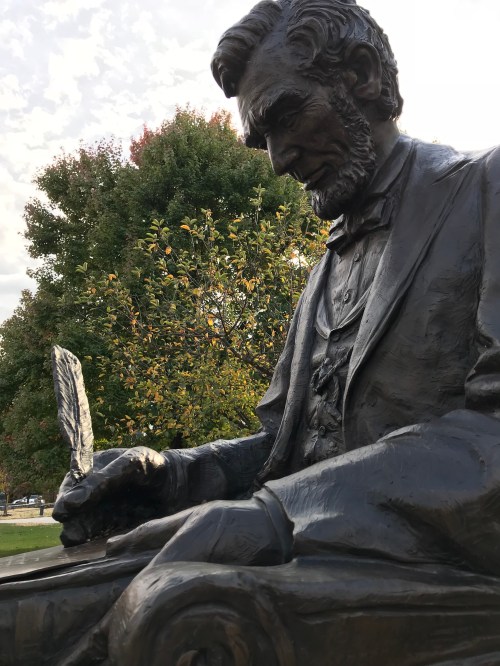
Abraham Lincoln noted:

“The best thing about the future is that it comes one day at a time.”

It is good to remember Lincoln’s words in times of turmoils. I do, and they bring me great motivation to work, believe, and fight for justice, truth, and the belief in a spark of goodness in humanity which enables me to believe the words of the Declaration of Independence:

“We hold these truths to be self-evident, that that all men are created equal, that they are endowed by their Creator with certain unalienable Rights, that among these are Life, Liberty and the pursuit of Happiness.”

The fact that those words come from a time of tumult, yet in a time where men were beginning to wrestle with and proclaim principles of the Enlightenment matters much to me, especially in times like we live today, where that principle is being attacked and undermined by the American President.

That being said, I believe that 2019 will be remembered in history as a time great turmoil, upheaval, and probably usher in a new epoch of war, economic, and ecological disaster. We may again be witnesses to genocide that leaders of governments fail to take the necessary actions to stop.

I don’t want to sound like a pessimist, but as a historian I to look at the world through how human beings, governments, and businesses behave in times of crisis. In fact, human beings are the singular constant in history and in crisis human beings don’t always live up to our ideals.

When major powers and international systems of order break down, or collapse for whatever reason, instability, disorder, and primordial hatreds based on nationalism, religion, and racism rise. A vacuum is created, filled by other powers, but not without some element of travail. Edmond Taylor wrote in his classic “The Fall of the Dynasties: The Collapse of the Order, 1905-1922:

“The collapse of the great supranational — or at least supraparochial — authorities and the dissolution of long-accepted Imperial bonds released upon Europe a fearsome flood of conflicting national ambitions, of inflamed minority particularisms, of historic (sometimes almost prehistoric) irredentisms, of irreconcilable social aspirations and of rival political fanaticisms.

The impending collapse of the old order today can be seen in a return to a more isolationist policy by the United States, rising populist, nationalist, and ethnocentric movements in Europe which are threatening the existence of the European Union. Those include Brexit, ethnic nationalism mixed with a bit of Fascism in Hungary, Italy, Poland, and great strains in France and Germany between right and left wing populist movements.

The common thread is the center which was the key to so much social progress, democracy, economic growth and stability, scientific advancement, and international security is giving way. There are many reasons for this, on the American side going back to the imperialist overreach of the George W. Bush administration, the inconsistent and detached method of the Obama administration towards the Middle East, especially Syria and Iraq, following that, and now the decidedly inconsistent, often irresponsible, and irreconcilable policies of isolationism and militarism.

A rejuvenated Russia is rushing to fill the void in the Middle East as well as working to destabilize its neighbors, Europe, and even the United States. The Chinese are attempting to make gains in other areas and to drive the United States out of Asia by using every element of national power: diplomacy, information, military might, and economics, while the United States following the Trump Administration’s withdraw from the Trans Pacific Partnership, and subsequent punishing tariffs that are hurting allies and Americans more than China the United States is now at a decided disadvantage in Asia.

I could go on, and could go into details on the causes of the current situation but they are many. What we are seeing now is the beginning of the collapse of an order that we have known most of our lives. While many people might be uneasy, most don’t view things in terms of history, in many cases because the events that led to the establishment of the current order are too distant and the witnesses to those times are few, and dying off. People today seldom study history, and even worse no longer know people, including family members who remember what happened to remind them of it.

That was quite similar to the situation in 1914. Europe had been at relative peace for a century. With the exception of the French Republic, most of Europe was still ruled by monarchies with rather limited democratic participation, if any. Barbara Tuchman wrote in her book The Proud Tower: A Portrait Of the World Before the War, 1890-1914:

“The proud tower built up through the great age of European civilization was an edifice of grandeur and passion, of riches and beauty and dark cellars. Its inhabitants lived, as compared to a later time, with more self-reliance, more confidence, more hope; greater magnificence, extravagance and elegance; more careless ease, more gaiety, more pleasure in each other’s company and conversation, more injustice and hypocrisy, more misery and want, more sentiment including false sentiment, less sufferance of mediocrity, more dignity in work, more delight in nature, more zest. The Old World had much that has since been lost, whatever may have been gained. Looking back on it from 1915, Emile Verhaeren, the Belgian Socialist poet, dedicated his pages, “With emotion, to the man I used to be.”

I believe that 2019 will the a year of multiple crises and the further erosion, if not collapse of the old order. What will come I do not know, but I expect that at the minimum it will be unsettling and disruptive, if not catastrophic. That doesn’t mean that I am a pessimist, it means that I study history. Provided that humanity does not find a way to destroy itself, we will recover. It may not be pretty and it certainly will not be the same as it was, but we will recover.

Walter Lord wrote about this his book on American in the early Twentieth Century The Good Years: 1900-1914. In the book he wrote about how things changed for Americans as Europe plunged into war. The effects of the war were soon felt in the United States though it would not enter the war until 1917. Lord wrote:

Economics were only part of the story. Almost overnight, Americans lost a happy, easygoing, confident way of looking at things. Gone was the bright lilt of “When You Wore a Tulip”; already it was the sadly nostalgic, “There’s a Long, Long Trail a-Winding,” or the grimly suggestive, “I Didn’t Raise My Boy to Be a Soldier.” A mounting crescendo of screaming headlines… atrocity stories… U-boat sinkings… charges and counter-charges shocked the nation, jarred its faith, left a residue of doubt and dismay.

Nothing seemed simple any more. Nothing was black and white. Nothing was “right” or “wrong,” the way Theodore Roosevelt used to describe things. And as the simple problems vanished, so did the simple solutions. Trust-busting, direct primaries, arbitration treaties and all the rest. They somehow lost their glamour as exciting panaceas, and nothing took their place. But the problems grew and grew —preparedness… taxes… war… Bolshevism… disillusionment… depression… Fascism… Moscow… fallout… space… more taxes.

So the old life slipped away, never to return again, and wise men sensed it almost at once. Men like Henry White, the immensely urbane diplomat who had served the country so well. “He instinctively felt,” according to his biographer Allan Nevins, “that his world —the world of constant travel, cosmopolitan intercourse, secure comfort and culture —would never be the same again.” The Philadelphia North American felt the same way, but in blunter words: “What does this mean but that our boasted civilization has broken down?”

Perhaps it was just as well. There was much that was wrong with this old way of living —its injustices, its naivete, its waste, its smug self-assurance. Men would come along to fix all that. New laws, controls, regulations, forms filled out in triplicate would keep anybody from getting too much or too little. And swarms of consultants, researchers, special assistants, and executive committees would make sure that great men always said and did the right thing.

There would be great gains. But after all the gains had been counted, it would turn out that something was also lost —a touch of optimism, confidence, exuberance, and hope. The spirit of an era can’t be blocked out and measured, but it is there nonetheless. And in these brief, buoyant years it was a spark that somehow gave extra promise to life. By the light of this spark, men and women saw themselves as heroes shaping the world, rather than victims struggling through it.

Actually, this was nothing unique. People had seen the spark before, would surely do so again. For it can never die as long as men breathe. But sometimes it burns low, leaving men uncertain in the shadows; other times it glows bright, catching the eye with breath-taking visions of the future.

The truth is, even in the midst of crises that the spark that enables people to believe, to hope, and to labor for a better future where the possibilities of peace, justice, freedom, and progress can be realized.

2019 will likely be a very difficult year, a year of change and turbulence, and truthfully it will probably be just the beginning; but unless finds a way to destroy itself, it will not be the end.

So, unless I get a hair up my ass to write something else before midnight, I wish you a Happy New Year, and all the best.

Peace,

Padre Steve+

1 Comment

Filed under ethics, faith, History, leadership, life, middle east, Military, national security, News and current events, Political Commentary, Religion

Yes Men and No Men: Hermann Goering and Johannes Steinhoff in the Age of Trump

Friends of Padre Steve’s World,

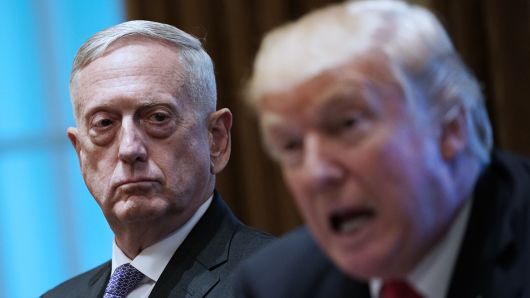
I am posting a slightly updated version on an article that I have published before because I think it is even more relevant following how President Trump has treated, Secretary of Defense James Mattis, Lieutenant General H. R. McMaster, and Mattis’s recommendation of Air Force General David Goldfein to be the next Chairman Of the Joint Chiefs of Staff. All are decorated combat commanders, had been under enemy fire, and all are scholars capable of self-reflection. All stand for a different type of military than that Trump admires, they are not yes men, nor Trump’s Generals. That is why Goldfein was rejected by Trump, why Mattis and McMaster both resigned, and were replaced by men that Trump sees as yes men, the same as with the replacement of Attorney General Jeff Sessions, FBI Director James Comey, and Ambassador to the United Nations Nikki Haley, by people thought to be loyal to the President, most of whom are totally unqualified for their office but whose personal loyalty to the President, not the Constitution, is unquestionable.

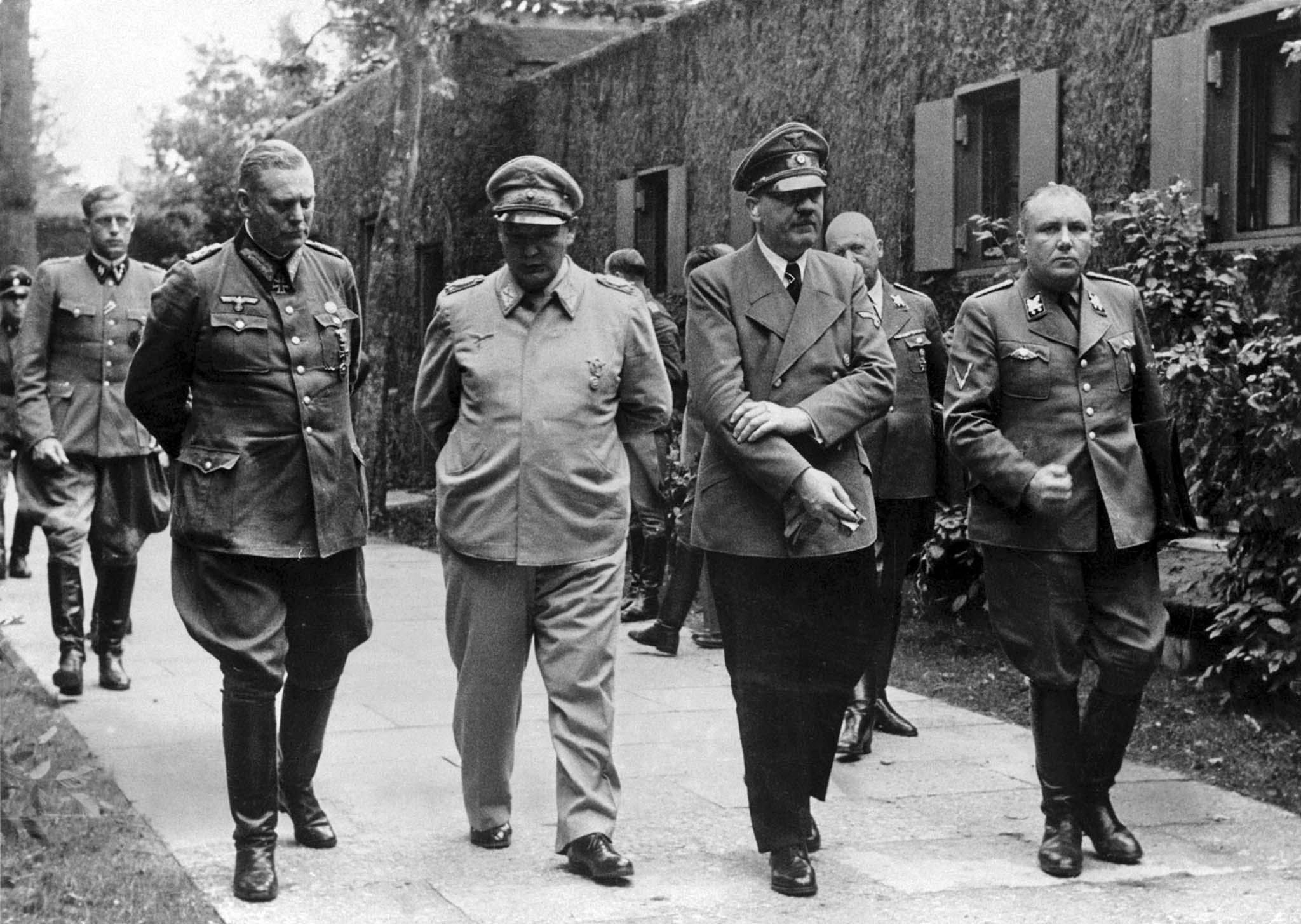
At Nuremberg, Hermann Goering was asked by Gustave Gilbert as to “why he and the others had been such abject “yes men,” Goering replied: “Please show me a ‘no man’ in Germany who is not six feet under the ground today.” Goering, who was exceptionally intelligent and talented subordinated himself to Hitler and while not completely correct in regards to the fate of all the “no men” did understand the principle of unconditional personal loyalty to his leader, which makes the actions of men like Johannes Steinhoff much more remarkable.

A few months back I did some research on the anti-Nazi resistors, which caused me to go back are re-read a book by World War II German Luftwaffe ace Johannes Steinhoff, which I believe should be requires reading for any military officer or public servant in the Trump era.

Steinhoff was unlike many of the German officers who wrote memoirs following the war, memoirs that historian Williamson Murray wrote “fell generally into two categories; generals writing in the genre of “if the fuhrer had only listened to me!” and fighter pilots or tank busters writing about their heroics against the productive flood from America or the primitively masses of the Soviet Union.”

Steinhoff’s book, The Final Hours: The Luftwaffe Plot Against Goering should be essential reading for any currently serving officer, diplomat, Federal law enforcement, intelligence, or Department of Justice official  as the Trump administration becomes more established and capricious.

steinhoff6

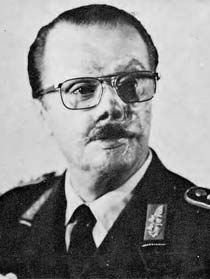
General Johannes Steinhof (above) as a Bundeswehr and NATO officer, showing his burns and before his crash (below)
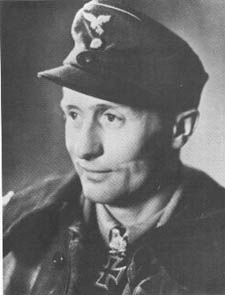
steinhoff WW II

In his books, Steinhoff does something that you do not see authors do in most military or political memoirs, he actually does serious self reflection on his role in supporting an evil regime. In his introduction to his book The Final Hours the legendary fighter ace who was horribly disfigured when his Me-262 jet fighter crashed and burned two weeks prior to the end of the war wrote:

“In recalling these events, which had been long buried in my memory, it has not been my intention to make excuses. Our unconditional self-sacrifice in the service of the Third Reich is too well documented for that….

So it is because of what is happening today—with freedom threatened in virtually every respect by its own abuse—that I offer this contribution, in the form of an episode in which I was myself involved, to the history of the soldier in the twentieth century. Soldiers have always, in every century of their existence, been victims of the ruthless misuse of power; indeed, given the opportunity, they have joined in the power game themselves. But it fell to our own century to accomplish, with the aid of a whole technology of mass extermination, the most atrocious massacres in the history of mankind. This fact alone makes pacifism a philosophy worthy of respect, and I have a great deal of sympathy with those who profess it. 

The figure of the soldier in all his manifestations is thus symptomatic of the century now nearing its close, and it is to the history of that figure that I wish to contribute by describing what happened to me. I have tried to show what it is possible to do to men, how insidiously they can be manipulated by education, how they can be hoisted onto a pedestal as “heroes,” how they can be so corrupted as even to enjoy the experience—and how they can be dropped and denounced as mutineers when they discover that they have scruples. The complete lack of scruples that such treatment implies is peculiar to rulers who believe that the problems of their own and other peoples can be solved by imposing, through the use of military force, peace on their, the rulers’, terms—in our case a pax germanica, but the second Latin word is readily interchangeable.” from “The Final Hours: The Luftwaffe Plot Against Goring (Aviation Classics)” by Johannes Steinhoff

Since I am a historian and and a career military officer with service in the Iraq War, a war that was illegal and unjust by all measure I can understand Steinhof’s words. Because much of my undergraduate and graduate work focused on German history, particularly that of Imperial Germany after the unification, the Weimar Republic, and the Nazi Reich, I draw a lot of lessons from the period. I also understand how people in this country can fall for the same kind of vitriolic propaganda that the Germans of that era did. I can understand because for years I fell for the lies and propaganda being put out by the politicians, pundits and preachers of the American political right.

In fact I wrote about an incident that happened to me in my own chapel where a dedicated Trump supporter attempted to have me charged with Conduct Unbecoming an Officer and Contempt for the President.  He did this because I used biblical preaching backed by sound theology and history to condemn the President’s comparison of immigrants of darker skin colors as “animals” and an “infestation.” I compared those words with the way Hitler and other totalitarian leaders used such terminology to dehumanize their victims. As I mentioned I was completely cleared by the preliminary inquiry but it sends a chill through my spine.

10665323_10154041610267059_5277331492232210946_n

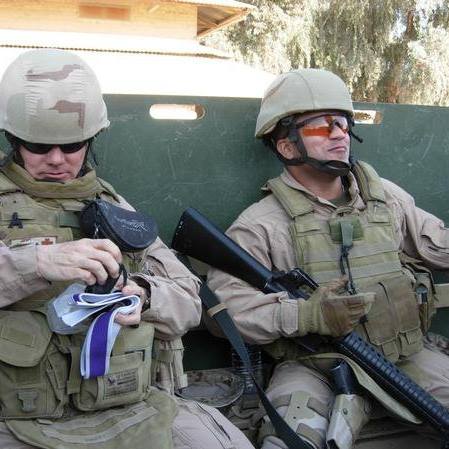
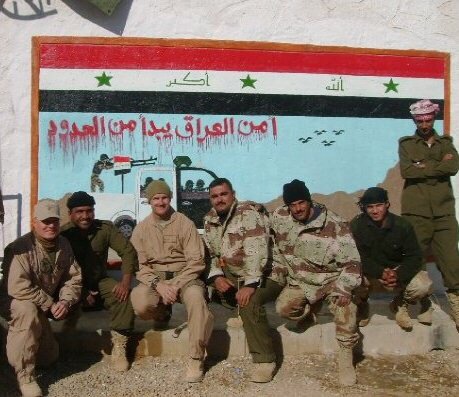
A picture of me (on left) in Iraq 2007 with my assistant and bodyguard RP1 Nelson Lebron

One of those lessons is that in times of crisis, that people, no matter what their race, culture, religious belief system, educational, or economic background are still human. Humanity is the one constant in all of history, our prejudices are often ingrained in us during childhood and reinforced by the words of politicians, pundits, and preachers. In times of stress, crisis, and societal change or upheaval even good people, moral people, people of great intellectual, scientific abilities can fall prey to demagogues who preach hate and blame others, usually racial, ethnic, or religious minorities, as well as civil libertarians who champion the rights of those minorities for the problems of the nation.

Shrewd politicians, preachers, and pundits do this well. They demonize the target group or population and then let the hatred of their disaffected followers flow. The leaders need that disaffected and angry base in order to rise to power; such was how Hitler, Stalin, and so many other despots gained power. They took advantage of a climate of fear, and found others to blame. For Hitler it was the Jews, Slavs, Socialists and Communists; while for Stalin it was various groups like the Ukrainians, or the Poles who were the devil to be feared and destroyed. Timothy Snyder in his book Bloodlands: Europe Between Hitler and Stalin wrote:

“Dead human beings provided retrospective arguments for the rectitude of policy. Hitler and Stalin thus shared a certain politics of tyranny: they brought about catastrophes, blamed the enemy of their choice, and then used the death of millions to make the case that their policies were necessary or desirable. Each of them had a transformative utopia, a group to be blamed when its realization proved impossible, and then a policy of mass murder that could be proclaimed as a kind of ersatz victory.”

But that being said, there are a lot of people who from childhood believe the lies about others without question. In good times such people continue on with life as normal, but in crisis those hatreds and prejudices come to the fore. Rudolf Höss, the notorious sociopath who commanded Auschwitz told American Army psychologist Gustave Gilbert about his reaction when ordered to turn the camp into an extermination center. He said that the order “fitted in with all that had been preached to me for years,” and “at the same time I didn’t think of it as propaganda, but as something one just had to believe.” 

Eugene Davidson in his book on the Nuremberg Trials wrote:

“Every society has in it at all times negative, criminal, sadistic, asocial forces. What holds them in check more than law and police is the consensus of the society – a general belief that despite everything wrong and stupid and muddleheaded in politics, the state is a going concern that will somehow make its way into the future.” (Davidson, The Trial of the Germans p.581)

But when things do not go well, when people do not feel that things will be okay, that the future will be better, and that they have a purpose they look for answers. However, they tend to find their answers in the rantings of demagogues, race baiters, conspiracy theorists, and others who they would tend to dismiss out of hand in good times. In Germany it was the loss of the First World War, the humiliation of Versailles and the economic chaos and social change of the Weimar period which allowed Hitler to gain an audience, then a following, then political power. The demagogues played to what was already in the hearts and minds of the disaffected masses, without that fertile soil, the rantings of Hitler and his propagandists would have never succeeded. Albert Speer wrote:

“As I see it today, Hitler and Goebbels were in fact molded by the mob itself, guided by its yearnings and its daydreams. Of course, Goebbels and Hitler knew how to penetrate through to the instincts of their audiences; but in the deeper sense they derived their whole existence from these audiences. Certainly the masses roared to the beat set by Hitler’s and Goebbels’ baton; yet they were not the true conductors. The mob determined the theme. To compensate for misery, insecurity, unemployment, and hopelessness, this anonymous assemblage wallowed for hours at a time in obsessions, savagery and license. The personal unhappiness caused by the breakdown of the economy was replaced by a frenzy that demanded victims. By lashing out at their opponents and vilifying the Jews, they gave expression and direction to fierce primal passions.”

In a sense a similar thing has happened in the United States which has experienced a series of wars beginning with Vietnam, the shock of the 9-11-2001 attacks, the economic crash of 2007 and 2008 which devastated the savings, home ownership, and investments of many Americans while at the same time benefiting the banking and brokerage houses whose government assisted policies brought about the crash. Of course there are other issues, many religious conservatives hate the progress made by the Women’s and Gay Rights movements, and their leaders play to their fears in apocalyptic terms. I could go on, but I am sure that my readers can identify other issues which demagogues and others use to spread fear and hate to further their goals. The fact is that without the the fertile soil that lays in the hearts of their most fervent followers they would never have a following.

In Weimar Germany hate mongers like Julius Streicher and propagandist Josef Goebbels stuck a chord with disenchanted people who felt that they had lost their country. They were fearful, angry, and desired a leader who would “make Germany great again.” Hitler and his Nazi media sycophants played to that fear, and took advantage of their anger at the existing order. Davidson wrote such people “exist everywhere and in a sick society they can flourish.” 

For decades the way has been prepared for true extremists to take advantage of the fears and doubts of people as modern American versions of Streicher and Goebbels have been at work for years. Rush Limbaugh was a modern pioneer of this in the United States, and he has been joined by so many who are even more extreme in their rantings that it is hard to name them all. Likewise, whole media corporations especially Fox News, websites, and political networks spread such fear every minute of the day, claiming that they, and they alone are real Americans. They actively support politicians who condemn, and sometimes even threaten people who oppose them, and all the while claim that “make America great again.”

When I was younger I devoured that propaganda, despite all of my learning I followed the rantings of men who I realize today are propagandists who promote the basest of lies, and hatred, often in the name of God. I was changed when I was at war, and when I returned home from Iraq in 2008 I realized through hard experience that I had been lied to, and that as a result that thousands of my brothers and sisters were dead, and tens of thousands shattered in body, mind, and spirit. Likewise I saw the massive destruction levied on Iraq and realized how terrible war really is. That was my epiphany, that is what it took to see how much I had been lied to, and it called me to question everything else that I had so willingly believed, things which had been fed to me by years of indoctrination in church, through the media, and by politicians who I believed were truly Christian. I can understand now how Martin Niemoller felt after the Nazi seizure of power when he said, “I hated the growing atheistic movement, which was fostered and promoted by the Social Democrats and the Communists. Their hostility toward the Church made me pin my hopes on Hitler for a while. I am paying for that mistake now; and not me alone, but thousands of other persons like me.”

There was a time that I hated people who espouse the views that I hold today, the views that I write about so often here on this site. I can remember how angry I would get as I listened to the propaganda being put out by Limbaugh, Hannity, the Fox News Channel and all of the others that I listened to every time that I had the chance. But when I changed after Iraq, I felt the sting of that hatred in very real ways. I remember the day I was called by my bishop in my former church, who told me that I had to leave because my views on women, gays, and Moslems were to use his words were now “too liberal.” After that, many men who I considered to be the best of friends turned their backs on me, some in the most bitter and vindictive of ways.

But I realize now that what they did was because I had in a sense left the cult, and had to be ostracized. I can understand that now, because when I was under the spell I too turned my back on people who had fallen out of favor, or people who had rejected the tenants of the church or the political movement, and those are things that I can never undo. But at the time it made sense, it fitted in with all I had been taught for decades, as Albert Speer wrote of Hitler, “One seldom recognizes the devil when he is putting his hand on your shoulder.”

What happened to Steinhoff’s generation is threatening to happen again, in our country, an authoritarian movement is threatening to destroy our democracy and republic. In it soldiers are esteemed, until they realize what is going on and speak out, but by then it is usually too late. I am understanding that fact more and more every day, and having had people troll this blog and call me a traitor and worse, I understand just a bit of what happened to Steinhoff and his fellow officers when they protested to the highest levels what was happening to Germany in early 1945.

In 1944 he and other fighter pilots were subjected to a political indoctrination session and realized that in the Nazi state loyalty and doctrinal purity to Naziism was more important than either combat service or competence. He wrote:

“Now, however, we realized to our horror that a group of officers had decided, after five years of war, to conduct a purge among the troops with the object of eliminating all those “whose past life and present conduct were not consonant with the National-Socialist type” and who did not “stand firm on National-Socialist principles.” We sat there petrified, but some of those present appeared hugely to enjoy the ensuing discussion of what they called “National-Socialist guidelines.” Perhaps, though, for many it was simply an attempt to escape into a less concrete area of discussion than the desperate military situation—and then there was the added satisfaction of being able to censure others. Fanaticism took the place of hopelessness, and phrases like “faith in the Führer,” “rootedness in National-Socialist ideology,” and “irreproachability of character” fell without hesitation from people’s lips. The Luftwaffe leadership, it was said, must be “combed” from top to bottom, and then someone even came out with the “National-Socialist soul…”

We will soon know how military professionals react to being labeled as traitors. President Trump and his followers have been demonizing the personnel of the nation’s intelligence, law enforcement, and diplomatic communities since before the election. The President lambasts critics of any station on his Twitter feed which results in them receiving death threats from his followers. I expect that when Secretary of Defense James Mattis speaks his mind and tells the truth that we will find out.

Personally I expect that when he does that Trump and his most strident supporters will label him as a traitor for doing so. Like a religious cult they have no capacity to tolerate dissent, loyalty to the man will supersede loyalty to the country or the Constitution. When that happens it will be interesting to see the throngs of people in the military and outside of it who make the choice to throw one of the most courageous, selfless, and intellectual soldiers ever produced by our nation under the bus.

Their’s will be a conscious decision. My opinion is that the Constitution and the country will always come first. I wanted to give the President the benefit of the doubt and prayed that he world do the right thing for the country. But I was wrong. I am concerned because of his past and current behavior that his only loyalty is to himself. General Ludwig Beck, who resigned rather than obey Hitler’s order to invade Czechoslovakia in 1938 and died in the anti-Hitler coup attempt in 1944 said:

“It is a lack of character and insight, when a soldier in high command sees his duty and mission only in the context of his military orders without realizing that the highest responsibility is to the people of his country.” 

I have no doubt that General Mattis understands that and will courageously speak his mind, even if he is condemned for doing so. Sadly I have many doubts about other leaders: be they military, political, business, or religious. There are many people who will sell their souls for their personal advancement, the advancement of their agenda, or an increase in their bottom line. It is after all human nature.

But the question is: will we see true men and women of courage who will stand when it appears there is no chance of success? As Atticus Finch said in To Kill a Mockingbird: “Real courage is when you know you’re licked before you begin, but you begin anyway and see it through no matter what.” 

That will be what is demanded in the coming months and years.

Peace

Padre Steve+

5 Comments

Filed under ethics, History, leadership, Military, nazi germany, News and current events, Political Commentary, world war two in europe

Christmas NUTS! Anthony McAuliffe and the 101st Airborne at Bastogne

anthony_mcauliffe1

Brigadier General Anthony McAuliffe

Friends of Padre Steve’s World,

On December 16th 1944 the German Army launched an assault in the Ardennes Forrest completely surprising the thinly spread American VIII Corps.  The German 6th Panzer Army, 5th Panzer Army and 7th Army attacked and forced the surrender of 2 regiments of 106th Infantry Division, mauled the 28th Division in the center of the American line while battering other U.S. forces.  To the north the 2nd and 99th Infantry Divisions were tenaciously defending Elsenborn Ridge while to the south the thinly spread 4th Infantry and 9th Armored Divisions resisted the 7th Army advance. As elements of the two German Panzer armies advanced west Eisenhower dispatched his only reserves the 82nd and 101st Airborne Divisions to meet the threat. The 82nd moved to the town of St Vith to aid the 7th Armored Division while the 101st was dispatched to hold the key road center of Bastogne.

By the 22nd of December the besieged American defenders of Bastogne were causing Hasso Von Manteuffel’s 5th Panzer Army headaches. Manteuffel’s leading Panzer units of the 2nd Panzer Division and Panzer Lehr had been thwarted from taking Bastogne by a Combat Command of 10th Armored Division and lead elements of the 101st Airborne Division. After failing to take the town the Germans invested it with the 26thVolksgrenadier Division, and a regiment of Panzer Lehr while the  2ndPanzer and the bulk of Panzer Lehr continued their westward advance.

Cut off from any other American forces the 101st and a collection of stray units including CCB 10th Armored Division and remnants of CCR 9th Armored Division, three 155mm artillery battalions including the African American 969th Field Artillery Battalion held out. By the 21st of December they were completely surrounded by strong German Forces with no relief in sight.

The Commander of the American garrison was Brigadier General Anthony McAuliffe. McAuliffe was the acting commander of the 101st and normally was the commander of the Division Artillery. Major General Matthew Ridgeway and many key commanders and staff were away from the division when it was hastily deployed to the Bulge to combat the German offensive.  McAuliffe now commanded a division which was surrounded, and that was short of ammunition, food, and cold weather gear.

luettwitz

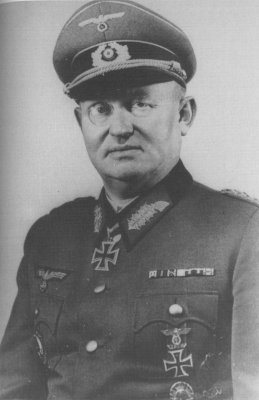
General Der Panzertrüppen Heinrich Freiherr von Lüttwitz

The German forces surrounding the city were commanded by the veteran General Der Panzertrüppen Heinrich Freiherr von Lüttwitz, commander of XLVII Panzer Corps.  Lüttwitz believed that resistance to his forces was futile sent the following message under a flag of truce to McAuliffe

To the U.S.A. Commander of the encircled town of Bastogne.

The fortune of war is changing. This time the U.S.A. forces in and near Bastogne have been encircled by strong German armored units. More German armored units have crossed the river Our near Ortheuville, have taken Marche and reached St. Hubert by passing through Hompre-Sibret-Tillet. Libramont is in German hands.

There is only one possibility to save the encircled U.S.A. troops from total annihilation: that is the honorable surrender of the encircled town. In order to think it over a term of two hours will be granted beginning with the presentation of this note.

If this proposal should be rejected one German Artillery Corps and six heavy A. A. Battalions are ready to annihilate the U.S.A. troops in and near Bastogne. The order for firing will be given immediately after this two hours term.

All the serious civilian losses caused by this artillery fire would not correspond with the well-known American humanity.

The German Commander

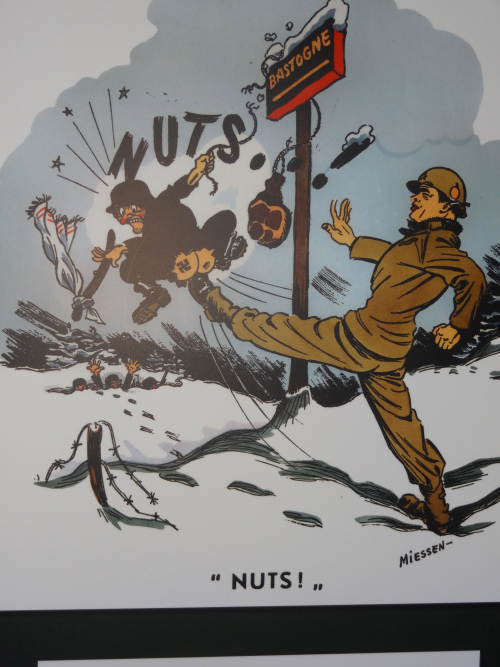
McAuliffe’s response has become one of the immortal responses to a surrender demand in military history. According to staff members present when he received Lüttwitz’s note he simple said “nuts.” One of his staff officers suggested that he use “nuts” as his official reply to Lüttwitz and the following reply was typed:

To the German Commander

NUTS!

The American Commander

The reply was delivered by the commander of the 327th Glider Infantry Regiment Lieutenant Colonel Joseph Harper and his S-3 Major Alvin Jones. When Harper delivered the message he told the German delegation that in “plain English” it meant “Go to hell.” The scene has been immortalized on film in the movie The Battle of the Bulge

Likewise it is also depicted in the mini-series Band of Brothers. 

And in the 1949 film Battleground 

dsc00072a

The garrison held out until it was relieved on December 26th by the 4th Armored Division of General George Patton’s 3rd Army.  Despite that the situation remained tenuous and the town was the scene of much hard fighting over the next two weeks.

1901879_10153009725477994_814138470181390794_n

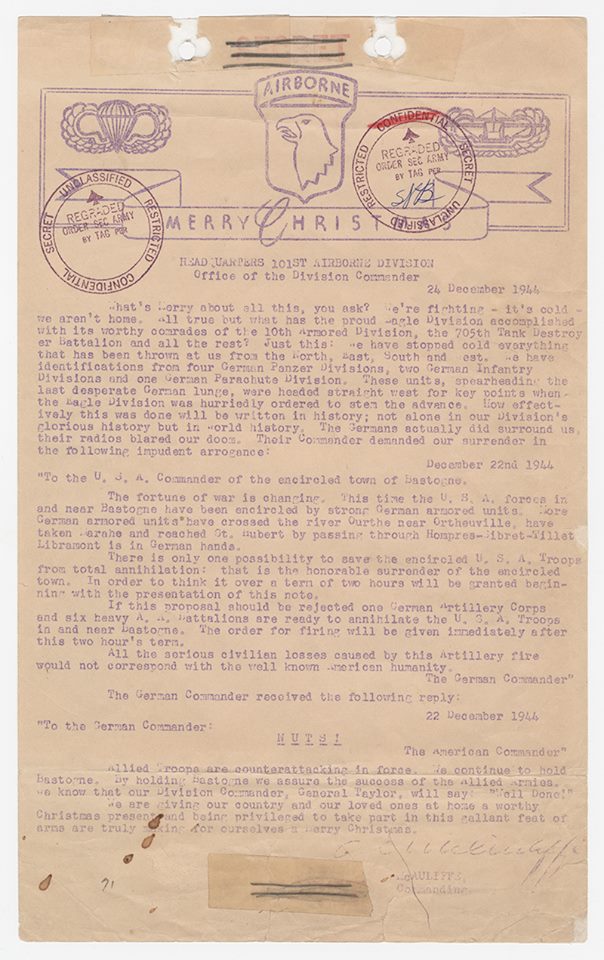
McAuliffe’s Christmas Message to his Soldiers

McAuliffe went on to command the 103rd Infantry Division by the end of the war.  He returned to Europe as Commander of 7th Army in 1953 and U.S. Army Europe in 1955. He retired in 1956 with the rank of General.  He died in 1975 at the age of 77. His adversary Von Lüttwitz died at the age of 72 in 1969.

As we remain engaged in the current war it is always worth our time to remember the heroism, courage and faith of those that served before us.

Peace

Padre Steve+
Post Script: To read more about the Battle of the Bulge on this site go to Wacht am Rhein: The Battle of the Bulge

5 Comments

Filed under film, History, leadership, Military, nazi germany, us army, world war two in europe

A Watershed Moment, and a Time to Be Afraid: Jim Mattis Resigns in Protest

Friends of Padre Steve’s World,

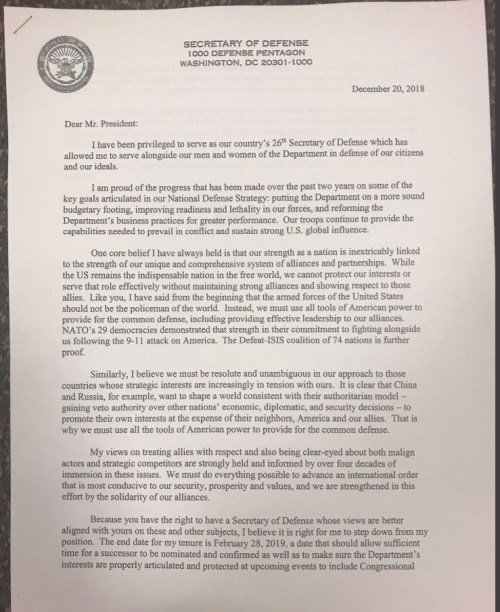
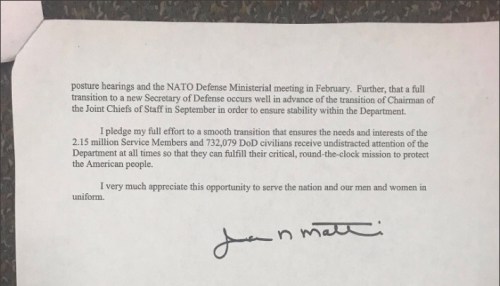
Secretary of Defense James Mattis resigned his position in protest at the manner in which President Trump is endangering the security of the United States. His resignation letter speaks for itself but it echoes many things that I have written regarding the Trump military and foreign policy since his election campaign. The final straw for Mattis was Trump’s unilateral decision against the advice of Mattis, the Department Of Defense, the State Department, and the National Security Council to withdraw all U.S. Troops from Syria falsely claiming that ISIS had been defeated.

Secretary Mattis’s letter is show below.

It was a watershed moment in American History. Honestly, I never expected Mattis to survive this long in the Trump Swamp. Everything about him stands in complete opposition to everything that Donald Trump embodies. The disgraced convicted felon Michael Flynn much more represents for which Trump stands.

Mattis was and remains a Marine who exemplified the Marine motto Semper Fidelis, and of living the creed of Duty, Honor, Country. Many times during his time in office he resisted the worst impulses and decisions made by the President. He knew that his duty and oath were to the Constitution of the United States and not the President. I think that he has become a tragic figure, he accepted the position thinking that he could serve the country better by taking it rather than not.

In the end Mattis could not abide the constant attacks on what he believed were the foundations of American national security and he resigned in protest. In a way he reminds me of Colonel General Ludwig Beck, Chief of Staff of the German Army, who resigned in protest over Hitler’s planned invasion of Czechoslovakia in 1938. Beck, who died in the attempt to kill Hitler on July 20th, 1944 said:

It is a lack of character and insight, when a soldier in high command sees his duty and mission only in the context of his military orders without realizing that the highest responsibility is to the people of his country.”

Working with former Secretary of State Rex Tillerson, and former National Security Advisor H.R. McMaster he had allies within the administration who could help check the President’s worst instincts. But Tillerson and McMaster were forced out and replaced by men who Trump believes that are more personally loyal to him, leaving Mattis isolated in the administration. Mattis was not able to get his recommendation for the next Chairman of the Joint Chiefs of Staff, Air Force Chief of Staff General David Goldfein approved by Trump. Mattis took this as a personal affront because the Secretary of Defense usually gets his recommendation for the position approved by the President. I wonder if Trump rejected Goldfein because in addition to being a decorated combat veteran who was actually shot down over Serbia in 1999, is also Jewish. Honestly, I don’t think that Trump could stomach having a Jewish war hero as his Chief military advisor. Maybe someone should ask that question, but I digress…

Mattis’s resignation, combined with Trump’s declaration of victory over ISIS and withdraw announcement sent a chill throughout Washington and around the world. Even influential Republican leaders who have carried Trump’s water are seeing the approaching danger of Trump unrestrained. The only question is if they will have the courage to choose principle over personal profit and power. Sadly, to this point they have not backed their words with action. Perhaps with the wheels coming off this presidency they will, but I think they are more afraid of his cult like followers than they are of him, so we will have to see.

Trump promises that he will nominate a replacement for Mattis soon. Make no mistake, whoever Trump chooses will be pliant and nothing more than his lackey. The replacement will be someone in the tradition of Field Marshal Wilhelm Keitel, who was absolutely committed to Adolf Hitler and who not only went along with, but signed criminal orders that obliged the German military to commit war crimes, at home and abroad. Supreme Court Justice Robert Jackson who served as the Chief American Prosecutor at Nuremberg said about Keitel:

“Keitel, the weak and willing tool, delivered the armed forces, the instrument of aggression, over to the party and directed them in executing its felonious designs.”

I am not sure who would want the job, but I am sure that he will be an modern embodiment of Keitel, and I will be glad that I will be retired within a few months of his confirmation. A year ago I thought that Senator Tom Cotton would gladly take it, but since he was one of the leading critics of the Syria withdraw, that he saw as a surrender to Russia I am not so sure. I don’t think that he’s that stupid. Instead, I think that Trump may pick a retired General or Admiral from his partisans for the job, there are plenty of them out there who would take it, I could be wrong, but we’ll have to see.

Regardless of who takes over for Mattis is the fact that with Mattis out of the way, Trump’s worst instincts will win policy debates and he may even lose John Bolton. Today the danger to our country and to to world has increased exponentially. To quote General Colin Powell’s words in his waning days as Secretary of State, “I sleep like a baby … every two hours I wake up screaming.”

I think that may be the case for many of us in the coming days, weeks, and months. Since I already do that due to my PTSD and combat based nightmares and night terrors this will be nothing new. If that hasn’t been the case for you, welcome to my world.

Peace,

Padre Steve+

6 Comments

Filed under ethics, Foreign Policy, History, leadership, Military, national security, nazi germany, News and current events, Political Commentary

I Won’t Shut Up Until It’s Fixed: Military and Veteran Mental Health Treatment

Friends of Padre Steve’s World,

Last night I came across the story which threw me back in to the abyss of PTSD. I still suffer terribly from it. I have terrible nightmares and night terrors and often physically act out my dreams. Since 2014 this has resulted in two Emergency Room visits due to the injuries incurred in those dreams, including a broken nose. In the deepest depths of anxiety, fear, depression and at times paranoia I contemplated suicide many times. The only thing that kept me from it was what the effect would be on Judy and how my dog Molly would understand that daddy wasn’t ever coming back.

Anyway, I read about the story of Colonel Jim Turner who committed suicide in the parking lot of the Bay Pines Florida, Department Of Veternas Affairs Medical Center. He had dressed in his Dress Blues with Medals, got out of his car, sat on his service records, and killed himself with a rifle. The story struck so close to home because in July of 2014 I was at the same point following an encounter with a a provider and what was a very inhuman and machinelike system of treatment at Naval Medical Center, Portsmouth, Virginia.

I had been getting treatment and therapy since the summer of 2008 when I crashed following my return from Iraq. In 2013 I thought that I was doing well enough to discontinue therapy. But in early January 2014, my former Commodore at EOD Group Two, Captain Tom Sitsch committed suicide outside a hospital in New Hampshire. He had been retired about five years and his life was falling apart, but when I met in the spring of 2008 he was the only man who seemed to care about me, and how I was coping as I was crashing. His death hit me really hard and I realized that I needed to get back into therapy at least to have someone to talk to every couple of weeks to make sure that I was  okay.

I wrote about these encounters on this blog a number of times from the day until it happened until the situation was resolved by the intervention of my former Commanding Officer at Naval Hospital Camp LeJeune, NC who had since been promoted to Admiral and put me in direct contact with Rear Admiral Jeff Moulton who commanded the Medical Center and Naval Region East.

After my encounter with the provider, a young Psychiatric Resident physician, I was considering suicide in a very similar way to how Colonel Turner killed himself. I was goi g to purchase a chrome plated M1911A1 .45 pistol, my favorite or all weapons I used in the military, clothe myself in my choker whites with full medals and put a round in my heart. I was ready to do it, and then I thought of the effect on my wife Judy, my dogs, and the people who would witness what I did.

If Admiral Lane had not reached out to Admiral Moulton I might well have died by my own hand. But those men took the time to listen to me and ensure that I got help. They saved my life. I am still in therapy. I still suffer crazy nightmares and act out my dreams, even last week when I scared the shit out of my Papillon dog Izzy and Judy when I tried to defend myself from a enemy combatant who had a pistol pointed at me, but I don’t want to die.

But an interesting thing happened. While reviewing my medical records in preparation for going into the VA system I found that the young Psychiatry Resident had put in a very perjorative diagnois Of a personality disorder based on a brief visit and a phone call, in fact the diagnosis was put in weeks after I had talked with her and after I had talked with Admiral. I guess she never thought that I would know about it. I talked with my current therapist who could access her notes about it today. When we talked he gave the dates on her notes, he told me what she wrote, and so this evening I went to my blog archives because I knew I had written about it when it happened. The result blew me away.

If I was a civilian I could sue her for malpractice, but since I am on active duty I cannot due to to provisions of the Feres Decsion. Now at this point in my life I don’t want revenge, I just want to have the perjorative diagnosis removed from my records. Until today I didn’t realize that I had the evidence at my fingertips, my scrambled brain had me think that the encounter was in 2015, but my blog and the Medical records show that it happened in July and August of 2014.

Pray for me, and if you have any legal advice please let me know. I plan to go forward as the psychiatrist is still on active duty at another base heading a clinic that treats patients with PTSD. I wonder if she is using her position to slander young sailors and marines who disagree with her or do not want to use her as a therapist, and who don’t know that a provider can so easily use a medical record to prejudice other providers against them.

As I said back in 2014, I will not shut up until the system is fixed. The late Colonel David Hackworth who Inhad the honor of corresponding with before he died noted: “If a policy is wrongheaded feckless and corrupt I take it personally and consider it a moral obligation to sound off and not shut up until it’s fixed.”

That is now part of my mission, not just for me, but for men like Colonel Turner, Captain Sitsch, and the countless men and women who have been callously treated by military and Veterans Administration mental health providers. For the approximately 20 military personnel and veterans who take their lives every day. All of us deserve better,

By my calculations the psychiatrist who did this to me wasn’t even born whenI enlisted in the Army or had even entered medical school when I deployed to Iraq. At the time that she saw me she had never deployed, been in combat, or commanded troops, in fact I would dare say that when I saw her I had much more experience dealing with death and troops suffering from PTSD than she did. I’m pretty sure that when I told her I didn’t want to do therapy with her I told her that, perhaps she was offended that a non-physician would tell her that, but I tend to tell the truth, and call things the way that I see them.

So anyway, until tomorrow, or maybe since it’s after midnight, later today I wish you peace, and pray for me a sinner.

Peace,

Padre Steve+


6 Comments

Filed under ethics, leadership, mental health, Military, News and current events, PTSD, suicide, Tour in Iraq, us army, US Marine Corps, US Navy

“All Stop” Pausing to Remember the End of An Age

Friends of Padre Steve’s World,

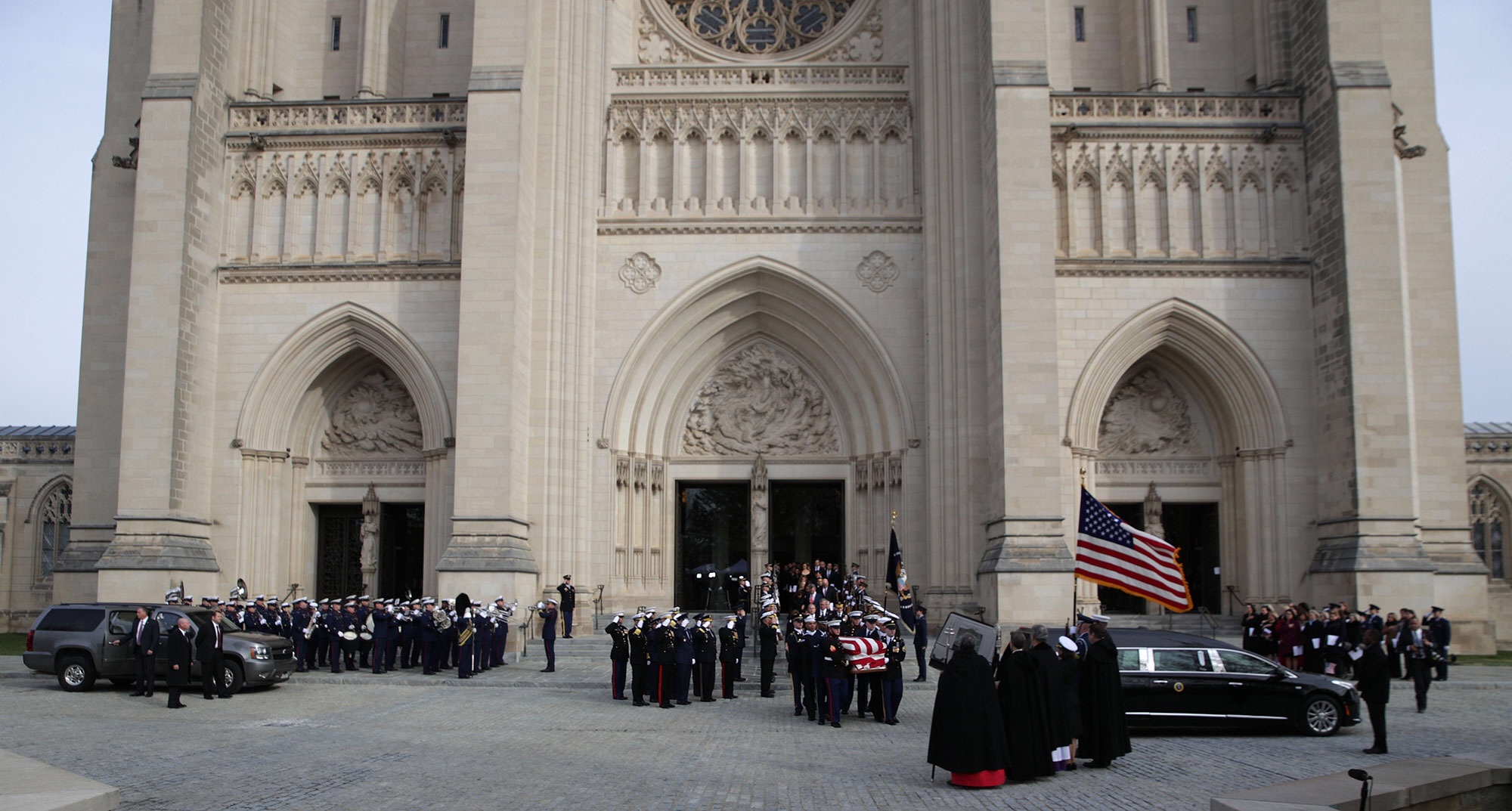
In the midst of a very busy “day off” due to the National Day of Mourning in honor of the late President George H. W. Bush, I stopped everything to watch his funeral. On a ship the command “All Stop” involves taking all engines off line by disengaging the engines from the propeller shafts, where they are neither driving the ship forward or in reverse. For landlubbers it is like one puts a car with a manual transmission in neutral or park. The engines may continue to run, but the ship is not being driven forward or reverse.

For a bit over two hours I did that today. I stopped. I didn’t look at email, didn’t answer telephone calls or texts, and didn’t check Facebook or Twitter, instead I stopped to watch, listen, and reflect during the funeral for President Bush. I had other things that I could have done, but as a historian I knew that it was the end of an age.

State funerals are something special in the United States, unlike our mother country we are a republic, and democracy. While Great Britain is a Constitutional Monarchy, it is still a monarchy. State funerals in the United States serve to remind us of our heritage even in times when many people either pay lip service to it, or actually despise it, longing for some form of autocracy. The funeral of President Bush served as a reminder of that better and more noble heritage, what Abraham Lincoln referred to as the better angels of our nature.

Earlier in the morning I had taken Judy to her first physical therapy appointment in two weeks since she tore a Quadricep muscle while doing at home physical therapy after her first knee replacement surgery. She is making great progress but the pain is still pretty bad and she has a hard time getting comfortable in bed, something that makes sleep difficult. After that we went out to breakfast before coming home.

As a Priest, Chaplain, military officer, and historian I thought that it was important. President Bush had been out of office for around 26 years and only had served one term as President, however, those four years were among the most critical in the history of the modern world. The collapse of the Soviet Union and the Warsaw Pact, the reunification of Germany as a Westen oriented member of NATO and the European Union, and the liberation of Kuwait and defeat of Iraq by a disparate coalition of 29 very different nations under the authority of the United Nations all within a period of barely two years time were remarkable, and something that we will probably never see again in our lifetimes.

Whether one agreed or disagreed with individual policies enacted by him or his administration; and I did have my share of disagreements one had to admit the basic decency, humility, and respect for political opponents that enabled him to build relationships and keep friendships.

Today’s funeral dealt with history and what it is to be an American: friendship, family, faith, a dedication to the ideals written in the Declaration of Independence, spoken of by Abraham Lincoln at Gettysburg, which referred to that ideal and pledged to build a more perfect Union, as well as a belief in an ideal of service to something greater than ourselves.

Historian John Meecham, former Canadian Prime Minister Brian Mulroney, former Senator Alan Simpson, and his son, former President George W. Bush, speaking as a son and not a President, were a portrait and a biography of a man who loved life, loved his family, loved his country and who had the courage to defy Party hardliners if it benefited the county, and who could take the time to care about children afflicted with the Leukemia that killed his daughter Robin at the tender age of three.

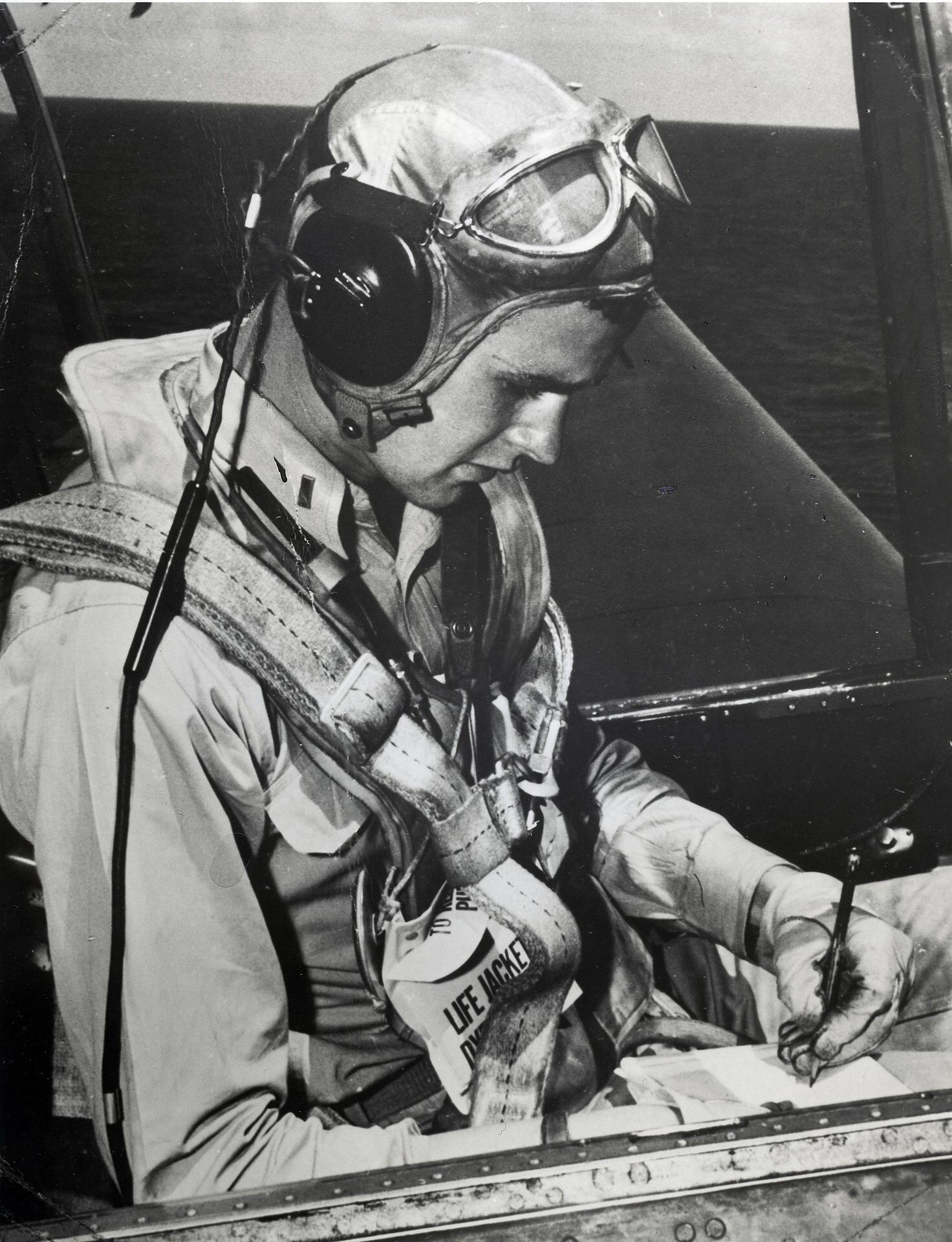
His was the story of a man who defied affluence and privilege to serve his country by volunteering to serve as soon as he could after the nation went to war, and who at the tender age of 18 became the youngest Naval Aviator in our history. Shot down over Chuchi Jima, he mourned the loss of his flight crew and was always aware of the human cost of war. He did not commit the lives of young Americans, allies, or coalition partners without reflecting on the loss of his flight crew. When he committed the nation to war in 1991 he did so only under the mandate of the United Nations and with a coalition that would be unimaginable today. I could never see our current President doing what George H. W. Bush did to keep the world from plunging into an abyss of disorder and irresponsibility.

This isn’t to say that he didn’t make mistakes, couldn’t go for the jugular as a politician, or who didn’t change his positions on various issues out of political expediency; but he always remained a fundamentally decent man who had great empathy for others.

His funeral was attended by more heads of state, former heads of state, or royalty since that of John F. Kennedy. As I watched the hearse which bore his body from the funeral in which the current President and four other Presidents gathered along with so many heads of state or former leaders gathered I was reminded of the words of historian Barbara Tuchman speaking about then funeral of British King Edward VII:

“So gorgeous was the spectacle on the May morning of 1910 when nine kings rode in the funeral of Edward VII of England that the crowd, waiting in hushed and black-clad awe, could not keep back gasps of admiration. In scarlet and blue and green and purple, three by three the sovereigns rode through the palace gates, with plumed helmets, gold braid, crimson sashes, and jeweled orders flashing in the sun. After them came five heirs apparent, forty more imperial or royal highnesses, seven queens – four dowager and three regnant – and a scattering of special ambassadors from uncrowned countries. Together they represented seventy nations in the greatest assemblage of royalty and rank ever gathered in one place and, of its kind, the last. The muffled tongue of Big Ben tolled nine by the clock as the cortege left the palace, but on history’s clock it was sunset, and the sun of the old world was setting in a dying blaze of splendor never to be seen again.”

Until tomorrow,

Peace,

Padre Steve+

2 Comments

Filed under faith, History, iraq, leadership, Military, News and current events, Political Commentary

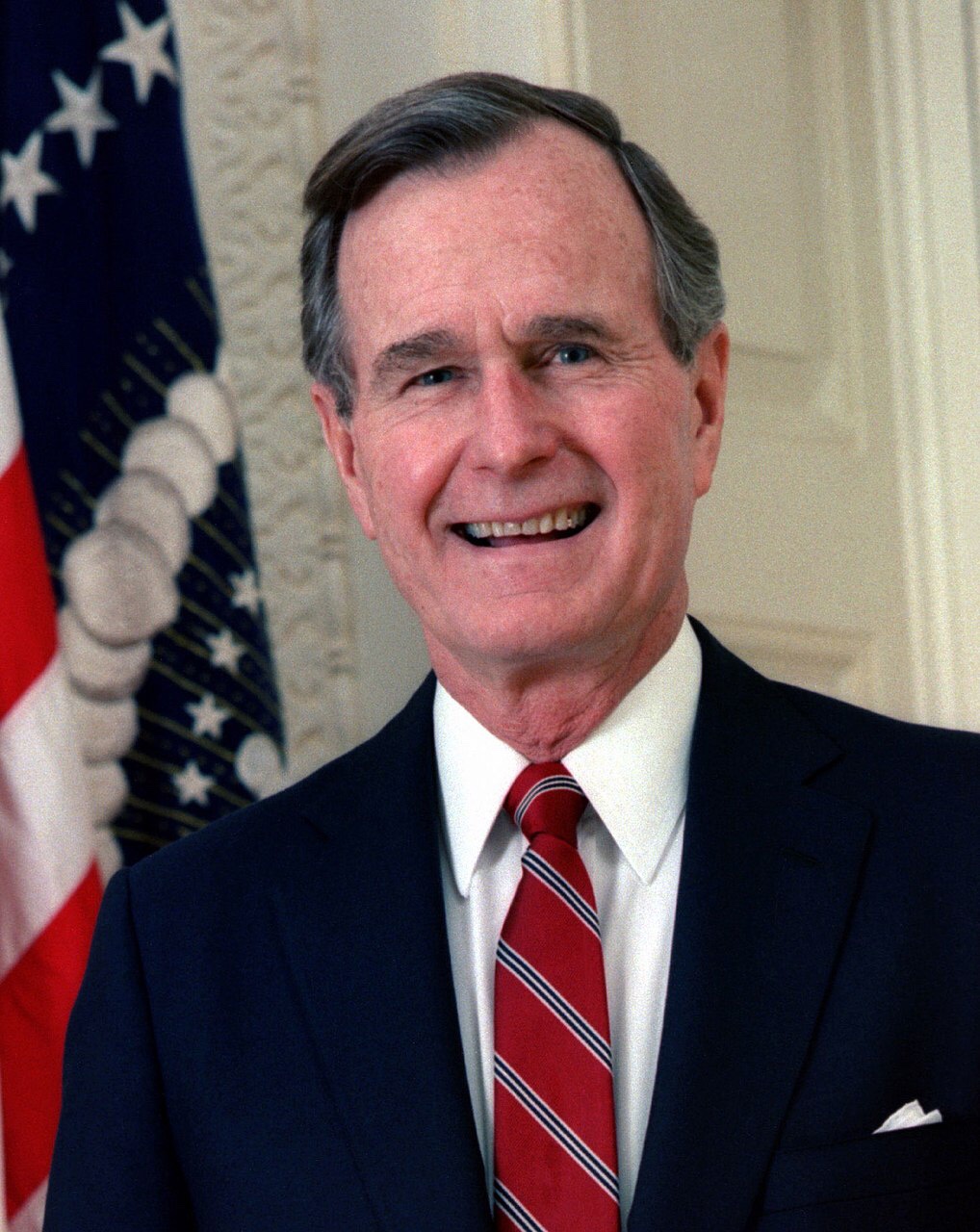
Unassuming, Competent, and Honorable: George H. W. Bush 1924-2018

Friends of Padre Steve’s World,

I was working on another article last night and called it quits because I was tired. I’ll finish and post it tomorrow. But as I was settling in for the night my iPhone and iPad lit up with notifications that former President George H. W. Bush had died.

Many others from across the political spectrum have paid tribute to him far better than Incan ever hope to do. I had a lot of admiration for him. He brought a wealth of experience into the White House which paid huge dividends for the nation and the world as the Cold War ended and the world that we had known for forty years changed overnight.

It was a time fraught with real danger. The collapse of the Soviet Union and the Warsaw Pact brought freedom to much of Eastern Europe, but also unleashed a storm of long suppressed, but ancient ethnic and religious hatreds, especially in the Balkans. Likewise, the system by which the United States and the Soviet Union kept client States in line collapsed. Saddam Hussein’s Iraq was but one of these nations.

Likewise, China responded to calls for democracy by crushing the peaceful demonstrations in Tiananmen Square in June 1989. Some leaders of Warsaw Pact nations whose people began to push for democracy and freedom were tempted to use force to crush their protestors, but none did. Credit has to be given to President Bush for how he used his knowledge, influence, and diplomatic skills to help bring down the Berlin Wall as Communist regimes collapsed all across Eastern Europe.

When Saddam Hussein brazenly invaded Kuwait, it was Bush who worked with the United Nations to build a true international coalition against Hussein and to ensure that Iraq was unable to split that coalition, which included many Arab nations, when it began shooting SCUD missiles at Israel.

At home he wanted a kinder and gentler country, something that we could sure use today. He was despised by Right Wing Republicans and Conservatives for not being “conservative enough.” Of course, the kind of conservatives they wanted in government were the uncompromising, yet morally bankrupt men like Newt Gingrich, and ultimately Donald Trump.

Bush’s political problem was one of hs greatest strengths. He was a decent man who brought humility to his office and did not make the Presidency about himself. He was gracious in defeat and went on work with the man who defeated him in 1992, Bill Clinton, on a number of humanitarian projects.

He was the last member of what has been termed “the Greatest Generation” serve as President. As a nineteen year old he put college on hold and became the second youngest man commissioned as a Naval Aviator. While serving with VT-51 (Torpedo Squadron 51) based on the USS San Jacinto, his TBM Avenger torpedo bomber was shot down over Chuchi Jima. With his aircraft’s engine on fire from hits from Japanese anti aircraft fire, Bush piloted his aircraft away from land to enable his crew to bail out. One went down with the aircraft, the other’s parachute failed to open. Bush landed in the ocean. U.S. fighter aircraft circled overhead and four hours later he was fished from the sea by the crew of the submarine USS Finback. Upon his return to the San Jacinto, Bush rejoined his squadron and flew until the squadron was rotated out of combat. He flew 58 combat missions and was received the Distinguished Flying Cross and three awards of the Air Medal.

Of the Presidents that served in the Second World War, only Bush and John F. Kennedy came so close to death serving in the Pacific. Gerald Ford served in combat operations about the Light Carrier USS Monterrey, a sister ship of San Jacinto for a year and a half. Richard Nixon volunteered for service even though being a Quaker he could have claimed consciousness objector status. He applied for sea duty but was assigned to various logistics and administrative assignments in the Pacific throughout the war. Lyndon Johnson served in the South Pacific, interrupting his congressional term to personally report on the situation to President Franklin Roosevelt. During his tour he got himself aboard an Army Air Force B-26 Marauder which was on a combat mission. There are differences in what happened during the mission, but alone among the crew Johnson, was recommended by Douglas MacArthur for, and awarded the Silver Star. Of course, Ronald Reagan, who had become a Reserve Officer in 1937, never left the Continental United States and was engaged in making training and recruitment films. Jimmy Carter entered the Naval Academy in 1943 but was commissioned too late to see service in the war.

Bush epitomized public service as an elected and appointed official, serving as a Congressman, Ambassador to the United Nations, Envoy to the People’s Republic of China, and Director of the Central Intelligence Agency, before becoming Ronald Reagan’s Vice President.

As President he surrounded himself with competent professionals who were up to the challenges that his Presidency had to deal with. Unlike his predecessor, Ronald Reagan, there was no shady Iran Contra scandal, or Bill Clinton’s descent into extramarital forced fellatio with White House Intern Monica Lewinski and his lies about it. Neither can his response to Saddam Hussein’s Invasion of Kuwait in 1990 be compared to the criminal invasion launched by his son against Iraq in 2003.

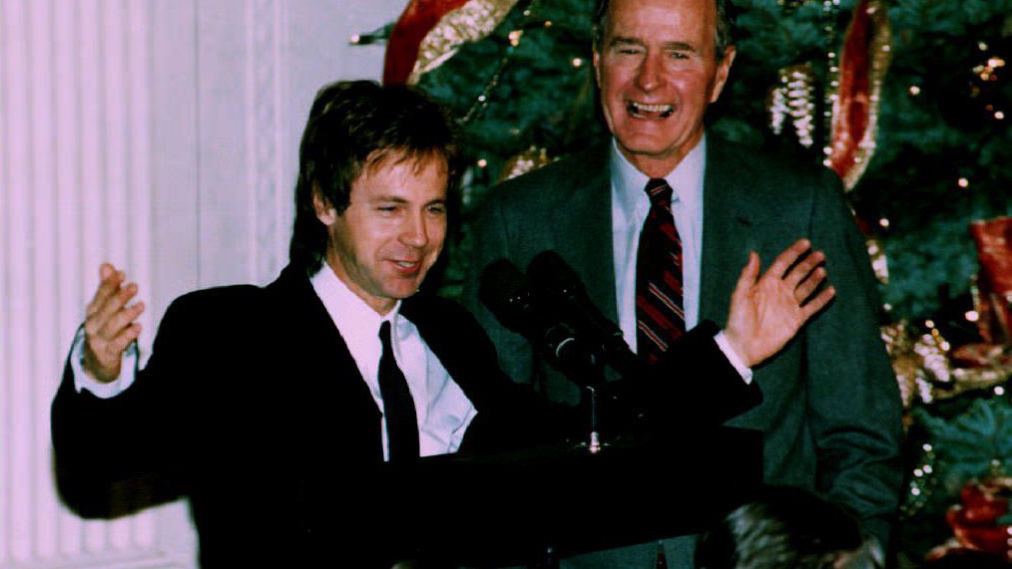
Unlike many of his predecessors and successors he could not only take a jokes and parodies, but became a friend with one of his most successful imitators, Dana Carvey, from Saturday Night Live. Carvey’s parody of the President inspired me to learn to imitate him, Bill Clinton, Ross Perot, Bob Dole and others. Most people who have heard me think that I do Clinton the best, some say that my impersonation of him is scary, but I digress. At his final White House holiday party before he left office, Bush secretly invited Carvey. They became lifelong friends. But that is who George H. W. Bush was, and why I can appreciate him so much.

He was a devoted husband and father. He was preceded in death by his wife Barbara and daughter Robin.

May he Rest In Peace.

Peace,

Padre Steve+

2 Comments

Filed under History, leadership, News and current events, Political Commentary, shipmates and veterans

The War that did not End All War: Recommended Reading in Light of the Centennial of the End of the Great War

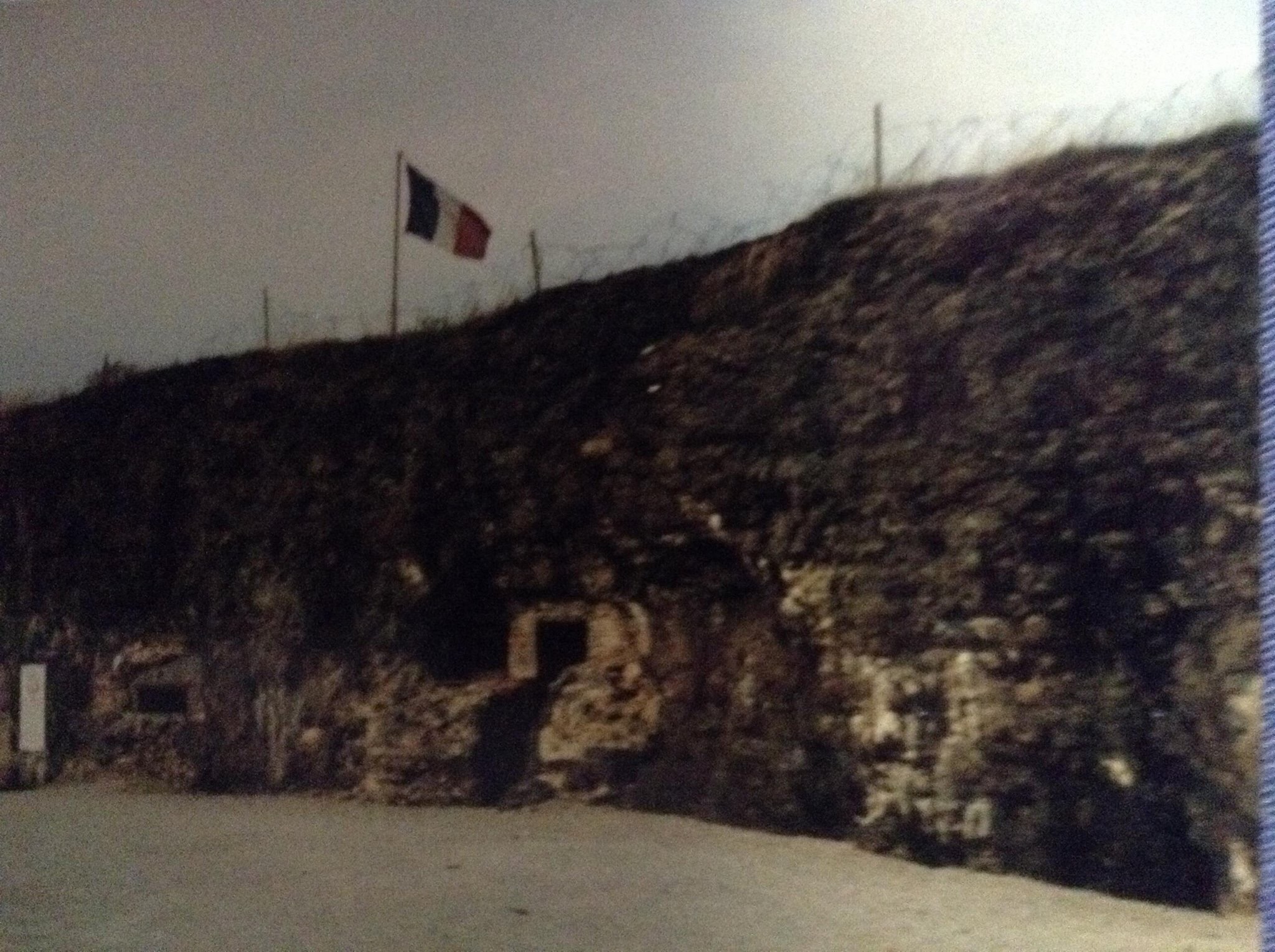
Fort Vaux, Verdun France, 1984

Friends of Padre Steve’s World,

Many Americans are infatuated with the Second World War. I think this is because it is closer to us and how it has been recorded in history and film. I think much of this is due to the resurgence of popular works such as Tom Brokaw’s The Greatest Generation, Stephen Ambrose’s Band of Brothers and the associated classic mini-series, and Steven Spielberg’s cinema classic Saving Private Ryan. Of course there were many other books and films one World War Two that came out even during the war that made it an iconic event in the lives of Americans born in the 1940s, 1950s, and 1960s. In fact I have many of the books and videos in my library.

But as pervasive as is the literary and filmography of the Second War War remains, the fact is that the First World War is much more important in a continuing historical sense than the Second World War. Edmond Taylor, the author of the classic account The Fall of the Dynasties: 1905-1922 wrote:

“The First World War killed fewer victims than the Second World War, destroyed fewer buildings, and uprooted millions instead of tens of millions – but in many ways it left even deeper scars both on the mind and on the map of Europe. The old world never recovered from the shock.”

First World War is far too often overlooked in our time, yet it was the most important war in the effects that still resonate today. One cannot look at the Middle East, Africa, the Balkans, or Eastern Europe without recognizing that fact. A similar case can be made in Asia where Japan became a regional power capable of challenging the great powers in the Pacific by its participation on the side of the Allies in that war. The same is true of the United States, although in the aftermath of the war it retreated into a narcissistic isolationism that took Japan’s attack on Pearl Harbor to break.

But I digress. The purpose I have tonight it to recommend some books and films that I think are helpful in understanding just how important the First World War remains to us today.

I made my first visit to a World War One battlefield when I went to Verdun in 1984. I was a young Army Second Lieutenant, preparing myself for time time that the Red Army would attack across the Fulda Gap. The walk around the battlefield was one of the most sobering events of my life. It was hard to imagine that a minimum of 700,000 German and French soldiers were killed or wounded on this relatively small parcel of ground over a period of nine months in 1916. The fact that many parts of the battlefield are off limits to visitors due to the vast amount of unexploded ordnance and persistent chemical agents, in this gas Mustard Gas also made an impression on me. But what affected me most was unearthing a bone fragment as I shuffled my feet near Fort Vaux and turning it over to a docent. I am sure that it was added to the Ossuary which contains the skeletal remains of over 130,000 French and German soldiers. It is hard to forget.

Barbara Tuchman wrote:

“Books are the carriers of civilization. Without books, history is silent, literature dumb, science crippled, thought and speculation at a standstill. Without books, the development of civilization would have been impossible. They are engines of change (as the poet said), windows on the world and lighthouses erected in the sea of time. They are companions, teachers, magicians, bankers of the treasures of the mind. Books are humanity in print.”

The literature that came out of the First World War by participants or observers, either as memoirs, works of fiction, or poems is impressive. Likewise the volumes chronicled by soldiers which influenced later military strategic, operational, and tactical developments between the World Wars remains with us today. In fact the military works still remain the basis for much of the current understanding of combined arms, counterinsurgency, and mission command doctrine.

More importantly, and perhaps less appreciated by policy makers and strategists are the personal works of soldiers that fought the in the great battles along the western front during the war. For the most part, the soldiers who served on the Western Front, the Balkans, Italy, and the Eastern Front are part of an amorphous and anonymous mass of people who simply became numbers during the Great War, thus the individual works of men like John McRea, Sigfried Sassoon, Erich Maria Remarque, Winfried Owen, Ernst Junger, Erwin Rommel, and even Adolf Hitler, are incredibly important in understanding the war, the ideology, and the disappointment of the men who served in the trenches. This applies regardless of the particular writer’s experience or political ideology.

The fact is that very few men who served on the ground in Europe reached the distinction of individual recognition is remarkable. More often those who achieved fame as relatively low ranking individuals were the Knights of the Air, the aviators who in individual combat above the trenches were immortalized by friend and foe alike. These men were represented as an almost mythological portrait of chivalry in a war where millions of men died anonymously, riddled by machine gun fire, artillery, and poison gas in mud saturated ground, trenches, and no man’s land. There are war cemeteries in France and Belgium where the majority of those interred are unknowns. On the Eastern Front, even those cemeteries and memorials are sparse, swallowed by war, shifting borders, and massive forced population migrations between 1918 and 1948.

For different reasons the books and poems written by the otherwise anonymous soldiers in Europe are important if we are to understand the world that we have inherited and must live in today. The same is true of men like T. E. Lawrence who served in the Middle East, or his East African counterpart, the German Paul von Lettow-Vorbeck. Both of them made their names by conducting inventive campaigns using indigenous irregular soldiers to tie down and defeat far stronger opponents.

Histories and biographies written about the period by later historians using the documents and words of the adversaries, as well as solid hermeneutics and historiography are also quite important. So are the analysis of economists, sociologists, psychologists, philosophers, and even theologians as to the effects of the war on us today, but I digress.

Tonight I will list a number of books, poems, and films that I think are important in interpreting the Great War, especially, in trying to understand just how the men who directed and fought that war set the stage for today.

Lawrence’s “Seven Pillars of Wisdom” as well as many of his post-war letters, articles, and opinion pieces help us understand the current Middle East through the lens of a brilliant but deeply troubled man. Remarque, Sassoon, McRea, Junger, Owen, and Hitler help us to understand the ideology, motivations, fears, and hopes of men on different sides and even very different ideological and political points of view. Now I would not recommend Hitler’s poorly written, turgid, almost unreadable, and hate filled book to anyone but a scholar of the period or biographer the the Nazi dictator.

Later historians Barbara Tuchman, Holger Herweg, Edmond Taylor, Richard Watt, and Robert Massie help us understand that bigger picture of international politics, intrigue, and strategy. Lest to be trusted, are the memoirs of high ranking men of any side who helped to write, and re-write the history of the war and its aftermath in order to bolster their own historical credibility. The same is true of the men who urged on war in 1914 and retreated from that in 1918 as if they had never heard of the war.

As for the books that came out of the war I would have to recommend Lawrence’s classic Seven Pillars of Wisdom, as well as articles, and letters, written by him available online at T. E. Lawrence Studies . Likewise, Remarque’s All Quiet on the Western Front is a classic account of a combat soldier with a distinct anti-war message. Junger’s Storm of Steel is also an account of a combat soldier who came out of the war but with a message completely different than Remarque’s. The poetry of the British Soldiers McRea, Sasson, and Owen is moving and goes to the heart of the war experience in a way that prose, no matter how well written cannot do.

Of the later histories I think that Taylor’s The Fall of the Dynasties, The Collapse of the Old Order, 1905-1922, Tuchman’s The Proud Tower: A Portrait of the World Before the War, 1890-1914 and The Guns of August, Christopher Clark’s The Sleepwalkers: How Europe Went to War In 1914, and Margaret McMillen’s The War that Ended Peace: The Road to 1914, are essential to understanding the events and conditions leading up to the war.

Herweg’s World War One and Massie’s Castles of Steel: Britain, Germany, and the Winning of the Great War at Sea are both good accounts of the war. Catastrophe 1914: Europe Goes to War by Max Hastings, and Home Before the Leaves Fall: A New History of the German Invasion of 1914, by Ian Senior, and Tannenberg: Clash of Empires by Dennis Showalter are excellent recent histories of the opening months of the war which are a good compliment to Tuchman’s The Guns of August.

Books about battles and campaign outside of the opening months and general histories of the war I have to admit that I have not read many. Most of the ones I have read deal with the ordeal and crisis of the French Army in 1916 and 1917. Alistair Horne’s The Price of Glory: Verdun 1916, Richard Watt’s Dare Call it Treason, and David Murphy’s The Breaking Point of the French Army: The Neville Offensive of 1917 document the valor, sacrifice, and near collapse of the French Army.

A book that is focuses on the American military in the war and how it helped change American society is Jennifer Keene’s Doughboys: The Great War and the Making of American Society.

A book that I found interesting was Correlli Barnett’s The Sword-bearers: Supreme Command in the First World War. The book provides short biographies of the lives and influences of German Field Marshal Von Moltke, British Admiral Jellicoe, French General Petain, and German General Ludendorff. It is a good study in command. Another biography that I recommend is

As for the war at sea, I recommend Edwin Hoyt’s The Last Cruise of the Emden, R. K. Lochner’s The Last Gentleman of War: The Raider Exploits of the Cruiser Emden, Geoffrey Bennett’s Coronel and the Falklands, Holger Herweg’s Luxury Fleet: The Imperial German Navy, 1888 – 1918 in addition to Massie’s Castle’s of Steel, of which the latter is probably the best resource for the naval aspects of the war.

A couple of books that deal with the often overlooked campaign in East Africa are Lettow Von Vorbeck’s My Reminiscences of East Africa, and Königsberg: A German East Africa Raider by Kevin Patience shed light on this obscure but important campaign.

Erwin Rommel’s Infanterie Greift An (Infantry Attacks) is quite possibly the best book on tactics and operational methods published by a participant. Likewise, the the British historians and theoreticians B. H. Liddell-Hart and J. F. C. Fuller, and German Panzer theorist and Commander Heinz Guderian, who also served on the front produced a number of volumes which influenced later strategic and operational advancements which are still in evidence today.

Watt’s The Kings Depart: The Tragedy of Germany: Versailles and the German Revolution is a necessity if one is to understand the rise of the Nazi State. Likewise, a good resource of the deliberations leading to the Treat of Versailles is Margaret McMillen’s 1919: Six Months that Changed the World. Related to this is the very interesting account of the scuttling of the interred German High Seas Fleet at Scapa Flow in the aftermath of Versailles, The Grand Scuttle: The Sinking of the German Fleet at Scapa Flow In 1919 by Dan Van der Vat.

One work of fiction that I can recommend is The General by C. S. Forester.

I am sure that there are many other volumes that others could recommend, but these are mine.

In an age where there are many parallels to the years leading up to the Great War, it is important not to forget just how catastrophic such a war can be.

So until tomorrow,

Peace,

Padre Steve+

1 Comment

Filed under books, books and literature, History, leadership, middle east, Military, News and current events, world war one

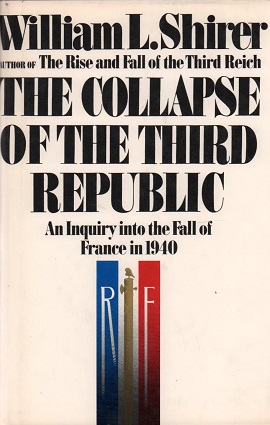
How Republics Die: William Shirer’s “The Collapse of the Third Republic” and its Relevance Today

Friends of Padre Steve’s Word,

As most of my readers know I am a historian who specializes in both the American Civil War as well as the years between the First World War and the end of the Second World War. On of my favorite authors whose works specialize in the latter is the late William Shirer, author of The Rise and Fall of the Third Reich, Berlin Diary, The Nightmare Years, and maybe most importantly for Americans and Western Europeans today, The Collapse of he Third Republic: an Inquiry into the Fall of France 1940. 

The book is very pertinent for our time. Today, the American Republic faces a crisis that will determine if it will survive without becoming a totalitarian state in which the legislative and judicial branches are subordinated to the executive branch and an imperial presidency, and the overwhelming power of an elite oligarchy of industrialists, land owners, and bankers. The parallels between the Third Republic and the United States are many, especially in the attitudes of the economic elites and their responsibility to the Nation. On Tuesday there will be an election which most probably will determine the fate of the American experiment.

The Collapse of the Third Repubic is a massive work, and Shirer was one of the first to gain access to the records of the Third Republic and to interview its political and military leaders in the years after the Second World War. For me, the most interesting part of this work is how many parallels there are between the French Third Republic in the 1920s and 1930s as there are in contemporary American life, culture, and politics. Those comparisons are too many to discuss in a short article like this, but there was  one point that struck me as particularly important was the attitude of wealthy to the existence of the Republic itself. The Hobbesian attitude of the wealthy conservative classes in the Third  Republic was not terribly different than many in the United States today, men and women who value their wealth and privilege above the very country that they call home and which helps to subsidize their existence.

Shirer wrote about the wealthy French citizens who had been saved by the sacrifice of four out of every ten French men in the First World War, the physical destruction of much of the country, and the debt incurred by nation during the which often benefited the people and the  businesses which profited during, who in turn abandoned the Republic during its hour of need. Shirer wrote:

“The power of a small elite which possessed most of the wealth was greater than the power of the republican government elected by the people, presumably to run the country in the interest of all the citizens. This group was determined to preserve its privileged position and thus its money. In effect, since the triumph of the Republic over President MacMahon there had been a virtual alliance between the possessor class and the Republic, which it manipulated through its control of the Press, the financing of political parties, and the handling of its vast funds to influence the fiscal policies of government.”

While the attitude and actions of the wealthy French business leaders became apparent in the 1870s and 1880s, it appeared full bloom after the First World War.  Shirer wrote:

“And more and more, as the last years of the Third Republic ticked off, the wealthy found it difficult to put the interest of the nation above that of their class. Faced with specific obligations to the country if the state were not to flounder in a financial morass, they shrank from meeting them. The Republic might go under but their valuables would be preserved. In the meantime they would not help keep it afloat by paying a fair share of the taxes. The tax burden was for others to shoulder. If that were understood by the politicians, the Republic could continue. If not… were there not other forms of government possible which promised more security for entrenched wealth? The thoughts of some of the biggest entrepreneurs began to turn to the Fascist “experiment” in Italy and to the growing success of the Nazi Party in Germany.”

The French business elites, as well as their conservative allies hated the Republic so much that they were unwilling to support it and worked to destroy it, even if that meant overthrowing it and establishing an authoritarian state. When the Germans defeated the French in 1940, many of these political and business leaders embraced the Nazis and supported the Vichy state. They were even willing to surrender true freedom and independence, becoming subservient to the Nazis in order to destroy the Republic.

I believe that the French example serves as warning for us today when we see government and business leaders working to destroy the institutions that define our republic and are there to protect its citizens. Thus, Shirer’s book is an important and timely read for Americans today.

Marshal Petain warmly greets Hitler

There is much more in the book, including justified criticism of the French left of the time, but I will finish with this today. General Weygand, who led the French armies during the final phase of the German campaign against France despised the Republic. When it fell he said. “I didn’t get the Boches, but I got the regime.” A more traitorous comment could not have been uttered by a soldier.

One of the few dissenting legislators to the dissolution of the Third Republic by Marshal Petain and Prime Mister Laval, Senator Boivin-Champeaux noted:

“It is not without sadness that we shall bid adieu to the Constitution of 1875. It made France a free country…. It died less from its imperfections than from the fault of men who were charged with guarding it and making it work.” 

Will that be said of us someday?

Peace,

Padre Steve+

8 Comments

Filed under History, leadership, News and current events, Political Commentary

Criminal Orders: Trump Suggests that Soldiers Shoot Rock Throwers on the Border

Friends of Padre Steve’s World,

Today I heard President Trump say that he had ordered the military said that he has told the military to respond to any rock throwing by members of the migrant caravan as if it was an armed attack. “They want to throw rocks at our military, our military fights back. I told them to consider it a rifle.” This was after he said that he would deploy 15,000 soldiers to the U.S. Mexican border to repel the non-existent threat of an imaginary invasion.

While I believe that his words are a political stunt to solidify his Christian, White Nationalist base in the final days of the mis-term elections, such an order would be illegal under any circumstances. It would be a criminal order which if followed would make the military members who planned or executed it complicit in crimes against humanity. If the order was transmitted through the Secretary of Defense to the commands involved it would make the Secretary as guilty as Field Marshal Wilhelm Keitel who on Hitler’s direction issued what is now known as the Criminal Order or the Barbarossa Decree. In part it stated:

The exercise of martial law serves primarily to maintain military discipline.

The wide extent of operational space in the East, the form of combat that this offers, and the peculiarity of the enemy, present tasks to the courts martial…that, with their limited personnel, they can only solve, if military law restricts itself for the time being to its central task.

That is only possible if the troops themselves defend themselves against every threat from the enemy civilian population without mercy….

I . Treatment of criminal acts by enemy civilians

1. Criminal acts of enemy civilians are withdrawn until further notice from the jurisdiction of courts-martial and summary courts.

2. Guerrillas are to be dispatched without mercy by the troops either in combat or while trying to escape.

3. Furthermore, all other attacks by enemy civilians against the Wehrmacht, its members and retinue are to be repelled on the spot by the most extreme measures up to the destruction of the attacker.

4. Where measures of this kind were missed or were initially not possible, the suspicious elements are to be immediately brought before an officer. He will decide whether they are to be shot.

Collective drastic action will be taken immediately against communities from which treacherous or insidious attacks against the Wehrmacht are launched, on the orders of an officer with at least the rank of battalion commander upwards, if the circumstances do not permit a speedy apprehension of individual culprits.

If Trump’s spoken word is transmitted by the Secretary of Defense to the Commander of U.S. NORTHCOM is would be an illegal order. It would place officers in the position of having to disobey and risk their careers, and depending on the whim of the President maybe their lives, or to obey. I think that most senior officers would refuse to obey such an order. However, I am not so sure about all of our mid-grade and junior officers or NCOs, many of whom fully subscribe to much of Right Wing propaganda being spewed by the President and his submissive servants in Congress, and the unofficial propaganda ministry of Fox News. I am sure that there is a modern day Lieutenant William Calley our there somewhere who would interpret the President’s words as a license to kill.

I do not think that Secretary of Defense James Mattis, or any of the Joint Chiefs of Staff would consent to such an order, but I don’t know if others below them would fight it.

General Ludwig Beck who resigned his position as the commander of the German Army in 1938 over Hitler’s planned invasion of Czechoslovakia and died in the failed attempt to kill Hitler and overthrow the Nazi regime said:

“Final decisions about the nation’s existence are at stake here; history will incriminate these leaders with bloodguilt if they do not act according to their specialist and political knowledge and conscience. Their soldierly obedience reaches its limit when their knowledge, their conscience, and their responsibility for it carrying out an order.”

We are now in uncharted waters. I believe that if Trump actually issues such an order that there will be many resignations of key DOD military leaders and civilian officials, however, that will leave the military in the hands of loyal and compliant followers or opportunistic careerists.

That is a frightening possibility. The only thing now is to see what the senior military leadership does if the President actually issues this order. Will they do what the Republican majority in Congress has done and bowed their knee to Trump, or will they take their oath to the Constitution and the American people seriously. As Beck noted:

“It is a lack of character and insight, when a soldier in high command sees his duty and mission only in the context of his military orders without realizing that the highest responsibility is to the people of his country.”

Historian Timothy Snyder wrote:

“The European history of the twentieth century shows us that societies can break, democracies can fall, ethics can collapse, and ordinary men can find themselves standing over death pits with guns in their hands. It would serve us well today to understand why.”

At one time I would have believed that the post-Vietnam military might follow such orders, but I am not so sure right now.

Until tomorrow,

Peace,

Padre Steve+

1 Comment

Filed under History, holocaust, leadership, Military, national security, nazi germany, News and current events, Political Commentary