Category Archives: leadership

“In High Spirits and Full of Confidence” The Eve of Disaster at Midway

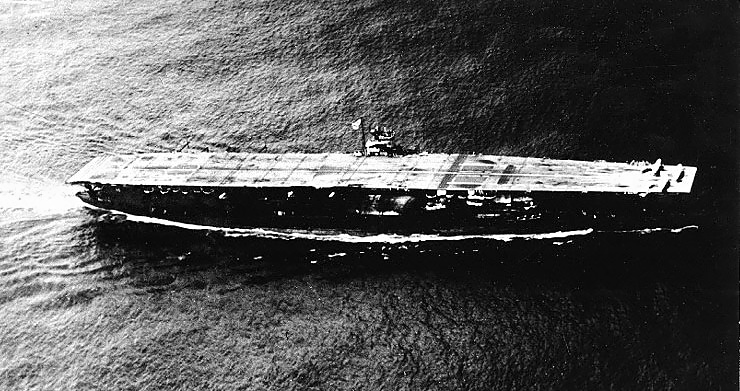
Japanese_aircraft_carrier_Akagi_01

The Flagship IJN Akagi

Friends of Padre Steve’s World,

On the night of June 3rd 1942 the Japanese First Carrier Strike Force under the command of Vice Admiral Chuichi Nagumo sailed east toward the tiny Midway Atoll. Midway was the target of an operation designed by Admiral Isoroku Yamamoto to draw out the remnants of the United States Pacific Fleet, destroy them and set the conditions for Japanese victory and the subsequent dominance of the Pacific by the Empire of Japan. It was to be the battle that ended the war. Yamamoto believed that the Japanese had no chance if the war dragged on and that the only chance of victory, it had to be quick and decisive, it had to destroy the aircraft carriers that were the remnant of American seapower in the Pacific, and it had to happen before the industrial might of the United States was fully mobilized. Yet Yamamoto was so confident of victory now that he believed that “the American fleet was a beaten, demoralized outfit that would need to be coaxed to its annihilation.” 

For six months the Japanese Navy and Army had experienced nothing but victory. Nagumo’s carriers had crushed the U.S. Pacific Fleet at Pearl Harbor. Land based Japanese bombers sank the British battleships HMS Prince of Wales and Repulse near Singapore, while another Japanese fleet destroyed a combined American, British, Dutch, and Australia fleet in the Java Sea. Nagumo’s carriers raided British bases and sank British ships in the Indian Ocean, and devastated shipping in the Australian port of Darwin. Other Japanese land, air, and naval forces conquered Hong Kong, Singapore, the Dutch East Indies, Guam, Wake Island, and the Philippines. Yet victory would not be assured until the U.S. Pacific Fleet had been destroyed.

To do that Yamamoto and his staff began to plan a massive operation against the American base on Midway Atoll, just 1100 miles from Pearl Harbor. His plan was to force the remaining American naval forces into a decisive battle in which they would be destroyed by overwhelming Japanese naval and air assets. However his plan was in conflict with plans of the Army and the Naval General Staff. Some wanted to attack westward against India with the goal of linking up with Rommel’s Afrika Korps in the Middle East. Others preferred land offensives against China, or trying to cut maritime supply line from the United States to Australia by striking Samoa and the Fiji Islands.

In the end no agreement was reached and in April 1942 the Japanese were surprised and embarrassed by bombing of Tokyo by Colonel Jimmy Doolittle’s B-25 bombers which had taken off from the USS Hornet. The raid had caused very little damage but Yamamoto was humiliated and pushed for the operation which despite opposition was approved by Japanese leaders.

There were problems in the plan the chief of which was that the Japanese Fleet was divided and deployed in such a way that should there be trouble the main force under Yamamoto could not support the carrier strike force under Nagumo. Evidence and intelligence reports were ignored, the logistics of the operation minimized, recommendations that the carrier force be refitted and new air crews brought fully up to the high standards of December 1941 were disregarded. Further evidence that suggested that aircrews were not tactically proficient based on observed bombing and torpedo exercises similarly ignored. A war game conducted by the Combined Fleet Staff predicted the loss of two carriers but Yamamoto’s Chief of Staff, Admiral Ugaki revered the call of the umpire and  refloated one from the dead carriers by erasing the hits scored by those playing the American side. It was symptomatic of the “victory disease” that would cloud and distort all that the Japanese did between April and June.

Even so the operation continued forward and doubters put aside those doubts mostly due to a profound disrespect of the United States Navy. Admiral Nagumo had seen many of the risks involved in the plan and in the beginning considered it an “impossible and pointless operation.” But that was before the Doolittle Raid on Tokyo, and Nagumo fell in line as Yamamoto successfully lobbied for the operation. Other leaders of the strike on Pearl Harbor including Commander Mitsuo Fuchida could not see the value in attacking Midway.

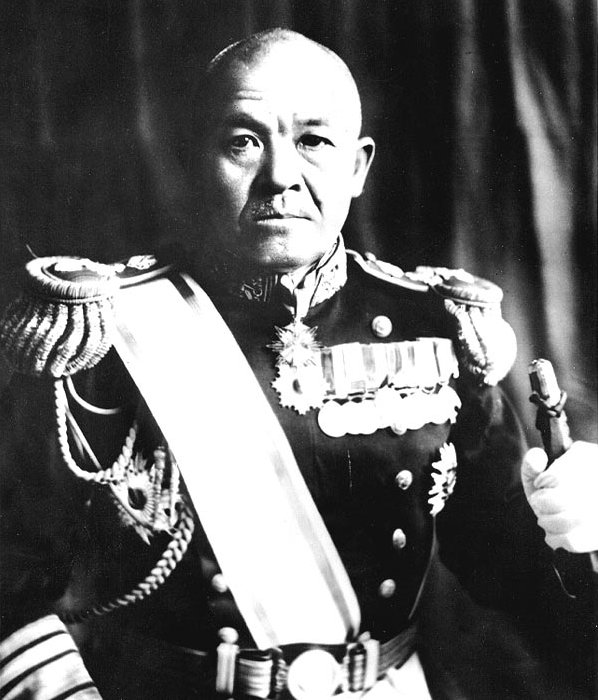
Chuichi_Nagumo

Vice Admiral Chuichi Nagumo

As the First Carrier strike force closed within 300 miles of Midway on the night of June 3rd 1942 Nagumo and his staff prepared for the battle that they and many others believed would be the decisive battle. Aircraft received their final preparations, bombs were loaded and as night faded into early morning air crew arose, ate their breakfast and went to their aircraft.

The ships had been observing radio silence since they departed their bases and anchorages in Japan the previous week. Honed to a fine edge the crews of the ships and the veteran aircrews anticipated victory.

The crews of the ships of the task force and the air groups embarked on the great aircraft carriers Akagi, Kaga, Soryu and Hiryu as well as their escorts were confident. They had since the war began known nothing but victory. They had devastated the Pacific Fleet at Pearl Harbor and roamed far and wide raiding allied targets and sinking allied shipping across the Pacific and deep into the Indian Ocean. Commander Magotaro Koga of the destroyer Nowaki wrote in his diary “Our hearts burn with the conviction of sure victory.”

However, Nagumo and his sailors had no idea that most of what they knew about their American opponents was wrong, just as Yamamoto had no idea that American code breakers had broken the Japanese Naval codes and determined that the Japanese were going to attack Midway.

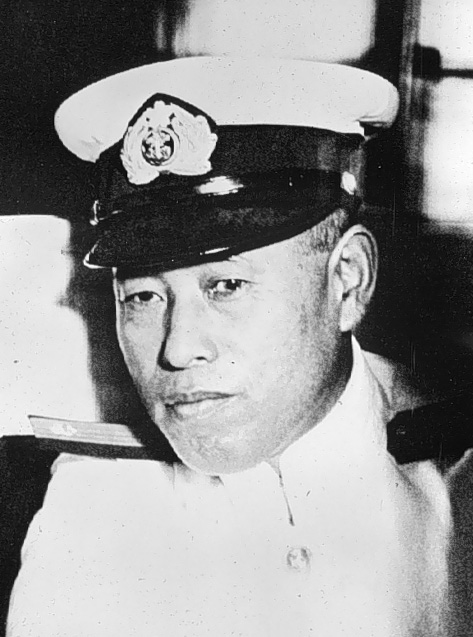
893594c746

Admiral Isoroku Yamamoto 

The Japanese were confident that the Americans could field no more than two operational carriers. However, the Yorktown, which the Japanese believed had been sunk at Coral Sea had been repaired, She was fully operational the air group from the damaged USS Saratoga replaced her air group and Yorktown with Task Force 17 rushed to join the EnterpriseHornet and Task Force 16 northeast of Midway.

An operation designed to get aerial surveillance of US Fleet dispositions at Pearl Harbor had been cancelled because the atoll at French Frigate Shoals that the Japanese flying boats would operate from was occupied by a small US force. Likewise the line of Japanese submarines arrived on station a day late, after the US carrier task forces had passed by. Those aboard the First Carrier Strike Force, including Nagumo or his senior commanders and staff had no idea that the Americans not only knew of their approach but were already deployed in anticipation of their strike.

Within a day all of the Japanese carriers would be sunk or sinking. Thousands of Japanese sailors would be dead and the vaunted air groups which had wreaked havoc on the Allies would be decimated, every aircraft lost and the majority of pilots and aircrew dead. It would be a most unexpected and devastating defeat stolen out of the hands of what appeared to be certain victory.

In the next couple of days I will write some articles on Midway and republish older articles on this site. The fact of the matter is that like Yamamoto and the Japanese that many military leaders, including those of the United States make assumptions about campaigns and battles that turn out to be wrong. Wars are often expected to be short, decisive and glorious but many times end up long, indecisive and agonizing. History has shown that to be the case for the United States in every fight it has been engaged since the Second World War, even when we win every pitched battle.

I think that there is a lesson to be learned from the Japanese who sailed into the night on June 3rd 1942 and saw the sunrise of June 4th. There is no battle, campaign or war that goes according to plan. Thousands of Japanese sailors and airmen went to bed on the night of the 3rd expecting that the following night, or within the next few days they would be celebrating a decisive victory. Thousands of them would be dead by the night of the 4th of June and the ambitions of the Empire of Japan to defeat the United States Navy and end the war would be dealt a decisive defeat from which they would never recover.

IJN_Akagi_World_War_II_Aircraft_Carrier_hit_by_Douglas_SBD_Dauntless_Dive_Bomber_at_Midway-1

The Japanese had known nothing but victory and on the night of June 3rd 1942 they expected nothing more than a glorious victory. However the wisdom of the Romans was proved right yet again,“Sic transit Gloria mundi,” (“Thus passes the glory of the world”,) or as it is more commonly paraphrased “all glory is fleeting.”

Peace

Padre Steve+

3 Comments

Filed under History, leadership, Military, World War II at Sea, world war two in the pacific

The Witness of History: What is the Worth of Human Life?

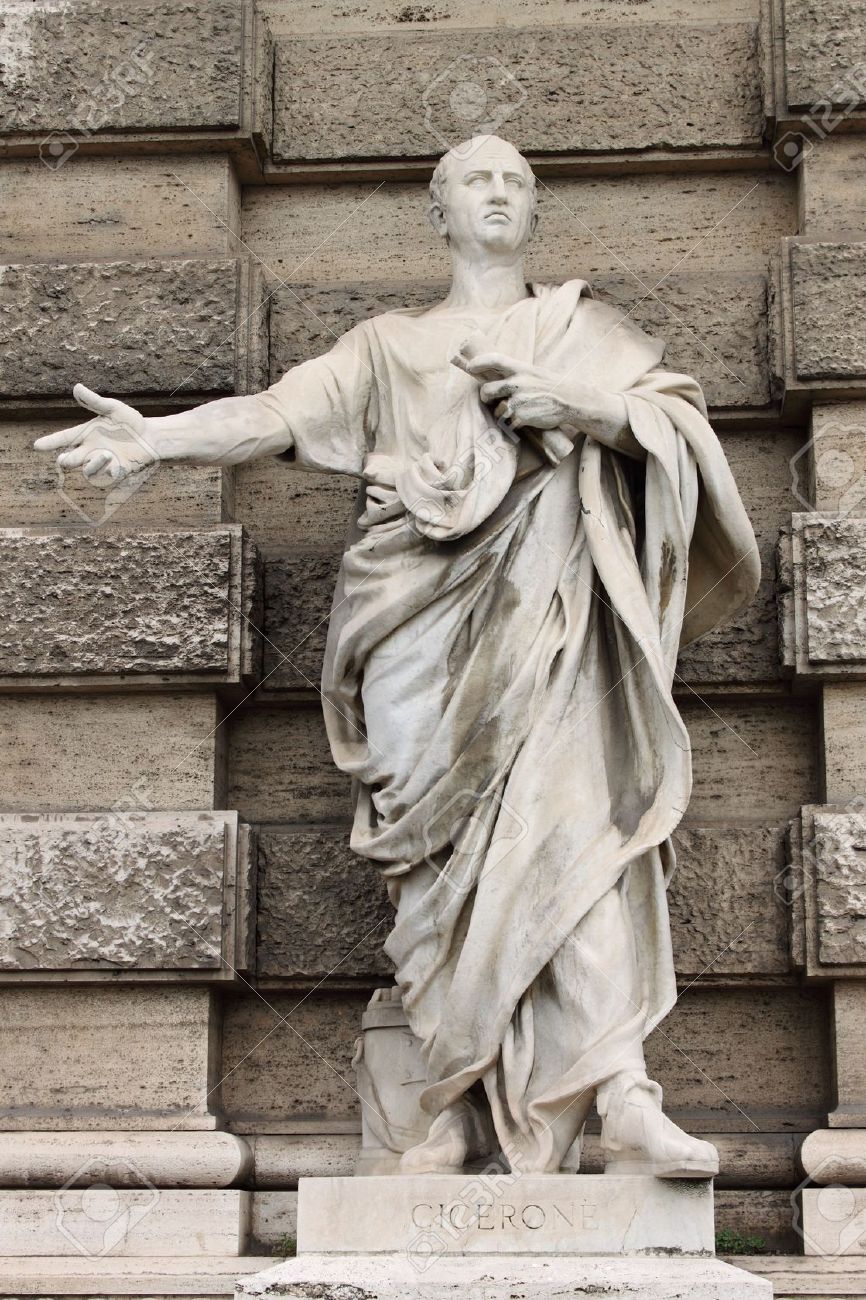
Statue-of-Cicero-Stock-Photo-rome

Friends of Padre Steve’s World,

The great Roman philosopher and political theorist Marcus Tullius Cicero wrote, “History is the witness that testifies to the passing of time; it illumines reality, vitalizes memory, provides guidance in daily life and brings us tidings of antiquities.”

Those who follow my writings here on this site know that I am a historian and that much of what I write, even regarding current events, is framed by history and the stories of those who came before us. That is one of my driving passions, a passion for historical truth, and a passion to ensure that the past is not forgotten.

Cicero is an important figure in history. He resisted the moves toward the dictatorship of the Caesars and would die for his belief in the Republic. As such he inspired the founders of the United States, including Thomas Jefferson and John Adams. Adams wrote of the Roman:

“As all the ages of the world have not produced a greater statesman and philosopher united than Cicero, his authority should have great weight.”

Sadly, it seems that our society, and even our education system is disconnecting itself from history. We have pretty much stopped teaching history in schools, and often what is taught is myth. As such we have become a society that through its ignorance of the past is ever repeating the worst aspects of our history. As a whole we are ignorant of our past, and that ignorance is demonstrated by many of our political, business, journalism, educational, and military leaders on a daily basis.

Cicero wrote “To be ignorant of what occurred before you were born is to remain always a child. For what is the worth of human life, unless it is woven into the life of our ancestors by the records of history?”

Our lives must be woven together with those who came before us, without that sacred connection to the past, we endanger the future, and doom those who follow us. Cicero wrote, “The life of the dead is placed in the memory of the living.” Thus, it is for us the living to remember and never forget those who have gone before. That is why I write.

I will write more on things that Cicero wrote and said, including political and social lessons that are as relevant today as when he wrote them.

Until tomorrow,

Peace

Padre Steve+

1 Comment

Filed under books, History, leadership, philosophy

To Say that there is to be No Criticism of the President is Unpatriotic and Treasonable

Friends of Padre Steve’s World,

I find it both interesting and troubling to listen to many supporters of President Trump castigate anyone for any criticism offered about the President, sometimes going as far to say that critics are being “unfair,” “disrespectful,”or most disturbing, “disloyal” or “treasonous.” Even the President tweets out those kind of accusations on a whim.

Admittedly some forms of criticism cross boundaries and are personally insulting and disrespectful of the President. In my writings I try, even when being very critical of his policies, words, or actions, to refrain from personal insults that could be considered disrespectful to the President because I am still on active duty.  As my readers know I am a historian as well as an theologian/ethicist and when I do write about the actions of the President and his administration I do so based on careful study and comparison with historical, ethical, or legal precedents. My views are likewise informed by my education and and belief in the principles of the Enlightenment, my belief in human rights as set out in the Preamble of the Declaration of Independence, the U.S. Constitution, and the French Rights of Man and the Citizen, as well as my understanding of the Anglican Christian tradition of “Scripture, Tradition, and Reason” being the foundations of faith.

But it is not disloyal or treasonous to offer criticism of policies, legislative proposals, executive orders, or actions and words of the President or his advisers that could endanger the security of the United States, its citizens, and its alliances, or potentially be unlawful.

Even so I am occasionally criticized for offering historical examples that compare the President and his most ardent supporters in an unfair way, some even calling those disrespectful. I find their double standards and lack of appreciation of irony quite fascinating as most of these people have spent the last eight years or more disparaging and disrespecting President Obama with some of the most racist, vile, contemptible, and false accusations ever made against a sitting President, while at the same time condemning others for simply repeating what the President himself has said.

I found out last year when I had a couple of students criticize some of my teaching at Gettysburg when comparing the anti-immigrant Know Nothings of the 1830s-1850s to current anti-immigrant Trump supporters, and stated that some Trump Administration Civil Rights proposals to be a throwback to Jim Crow. My words then were not insulting nor disrespectful, but simply valid historical criticism; but some Trump supporters are so thin-skinned that they cannot abide any criticism of the President, despite dishing out incredibly racist and disgusting personal comments about President Obama, which were mostly devoid of any non-racially based political or ideological principles.

Unlike President Obama the current President is ensnared in numerous legal, criminal, and Constitutionally backed investigations which range from simply enriching himself as a public official (the emoluments clause) and his family, or more seriously collusion with not only Russian, but Saudi, and other nations to influence his election. The Senate committee investigating the Russian connection said that this actually happened and backed up the evidence submitted by U.S. law enforcement, military, and intelligence agencies concerning this. The Saudi and other Sunni Arab connections were just brought to public light last week. Lord knows how many other governments were involved with Donald Trump Jr., and others to seek to influence the 2016 elections and U.S. foreign policy since then.

Theodore Roosevelt had to defend himself in 1918 from such criticism from the supporters of President Woodrow Wilson. Roosevelt was criticizing the Wilson administration because of how badly he thought they were pursuing the war effort against Germany. For this people were castigating him. People said that newspapers should not print what Roosevelt had to say as well as “He should stand by the President” and “He should be stood before a stone wall and shot.” Roosevelt ended up writing an op-ed in the Kansas City Star in which he noted:

“The President is merely the most important among a large number of public servants. He should be supported or opposed exactly to the degree which is warranted by his good conduct or bad conduct, his efficiency or inefficiency in rendering loyal, able, and disinterested service to the Nation as a whole. Therefore it is absolutely necessary that there should be full liberty to tell the truth about his acts, and this means that it is exactly necessary to blame him when he does wrong as to praise him when he does right. Any other attitude in an American citizen is both base and servile. To announce that there must be no criticism of the President, or that we are to stand by the President, right or wrong, is not only unpatriotic and servile, but is morally treasonable to the American public. Nothing but the truth should be spoken about him or any one else. But it is even more important to tell the truth, pleasant or unpleasant, about him than about any one else.”

This is exactly how I base any criticism I offer of the President, his policies, words, and actions. I heartily agree with the words of Senator Stephen A. Douglas when he battled President James Buchanan over the pro-slavery attempt to have Kansas admitted to the Union as a Slave State in 1858. Douglas said of his encounter with Buchanan:

“God forbid,” I said “that I ever surrender my right to differ from a President of the United States for my own choice. I am not a tool of any President!”

Sadly, there are very few GOP Senators who would have the moral courage to do what Stephen Douglas did in 1858. He did so even though it doomed his chances to be President.

I admire Stephan Douglas but there is a difference. Now there is a difference, I am not a Senator or elected Representative, I am an officer and must carry out the orders of the President. However, if I ever come to believe that I cannot in good conscience carry them out, or if I believe that they are un-Constitutional I will retire from the military in order to allow myself the freedom to speak out more openly. To ‘this point in time I have not to have been forced to Carr out any illegal or unconstitutional orders, and as a Chaplain I have been able to speak my thoughts openly, though I am careful in how I say them at least in order to maintain my respect for the office of the President.

One of my examples is the German General Ludwig Beck, who resigned as head of the German Army in 1938 over Hitler’s aggression and his plan to attack Czechoslovakia. He wrote something that I hold particularly important in my service at this point in history:

“It is a lack of character and insight, when a soldier in high command sees his duty and mission only in the context of his military orders without realizing that the highest responsibility is to the people of his country.” 

Unlike the current President who sought numerous deferments from entering the military in a time of war: Stephen Douglas put his political career on the line to follow the Constitution, Theodore Roosevelt resigned from his office as Assistant Secretary of the Navy Since to go to war and place himself in harms way, Ludwig Beck would die in the failed attempt to kill Hitler in July 1944. All three men were far more honorable than President Trump, and their words should be heeded by Americans regardless of their political affiliation.

I am still dealing with the effects of the water damage in our house I will wish you a good night.

Until tomorrow,

Peace,

Padre Steve+

1 Comment

Filed under ethics, History, leadership, Military, national security, News and current events, Political Commentary

My Country Right or Wrong?

29f03605f6b48a52887c2b51a20b5382

Friends of Padre Steve’s World,

Even since I was a child I was an avid reader of history, especially military history and biography. I idolized the men that I read about and many of the things that they said and did, and almost always skewed them into an almost perverse form of patriotism. After the attacks of 9-11-2001 and during the run up to the invasion of Iraq I got into a internet argument with a man who later became the Presiding Bishop of my former denomination. He was and still is a very honorable man.

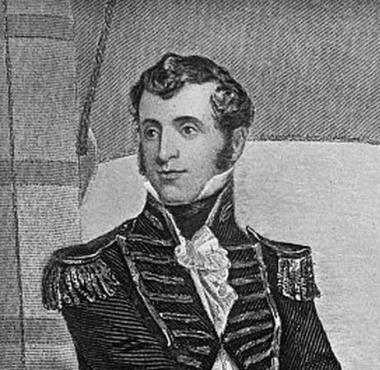
While very conservative theologically he had a strong sense of social justice and having come to adulthood during Vietnam war era he had a certain sense of distrust about military adventurism that I, an officer who at that time had some twenty years of military service did not fully appreciate. I responded to one of his comments with a quote from one of my favorite American Naval heroes, Captain Stephen Decatur who once remarked:

“Our Country! In her intercourse with foreign nations may she always be in the right; but right or wrong, our country!”

decatur 2 sqaure

There is some truth in what Decatur said, but his words should not be used to justify imperialistic nationalism, racism, or militarism. Sadly back then that was exactly how I used it to attempt to shut down the arguments of an honorable man. If he ever reads this I hope that Bishop Craig Bates accepts my heartfelt apology for how I treated him back then.

It took me two combat tours, one at sea where I was a member of a boarding team, and the other in Iraq’s Al Anbar Province, and a lot more military and historical education that I realized how wrong that I was in doing this. Using patriotic quotes to buttress immoral, illegal, unconstitutional, and un-Christian policies is damnable. G. K. Chesterton noted: “‘My country, right or wrong,’ is a thing that no patriot would think of saying. It is like saying, ‘My mother, drunk or sober.’”

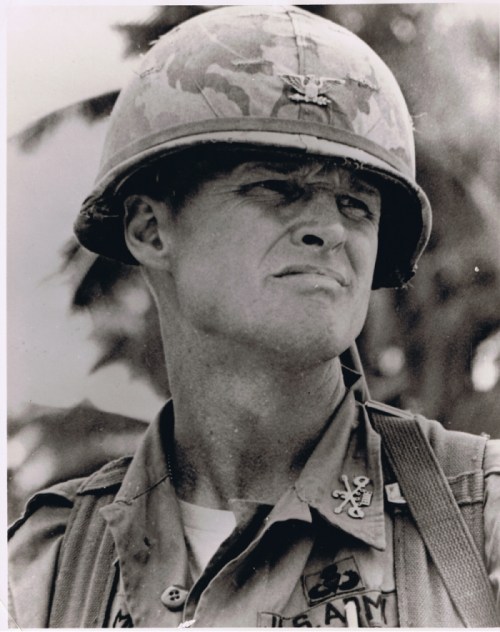
But, I am afraid that my former understanding of patriotism is exactly what many Americans follow today, regardless of their political affiliation or ideology seem to automatically defer to the decisions of the President in launching military strikes. This has been largely true since the end of Second World War until now with the exception of Vietnam. No one wants to be “against the troops” and I am still one of those troops, but opposing nationalism, imperialism, and militarism is not the same as “supporting the troops.” The late Army Lieutenant General Hal Moore, who led his battalion into the Battle of the Ia Drang in 1965 and was memorialized in the film We Were Soldiers told West Point Cadets in 2005:

“The war in Iraq, I said, is not worth the life of even one American soldier. As for Secretary Rumsfeld, I told them, I never thought I would live long enough to see someone chosen to preside over the Pentagon who made Vietnam-era Defense Secretary Robert McNamara look good by comparison. The cadets sat in stunned silence; their professors were astonished. Some of these cadets would be leading young soldiers in combat in a matter of a few months. They deserved a straight answer.

The expensive lessons learned in Vietnam have been forgotten and a new generation of young American soldiers and Marines are paying the price today, following the orders of civilian political leaders as they are sworn to do. The soldiers and those who lead them will never fail to do their duty. They never have in our history. This is their burden. But there is another duty, another burden, that rests squarely on the shoulders of the American people. They should, by their vote, always choose a commander in chief who is wise, well read in history, thoughtful, and slow-exceedingly slow-to draw the sword and send young men and women out to fight and die for their country. We should not choose for so powerful an office someone who merely looks good on a television screen, speaks and thinks in sixty-second sound bites, and is adept at raising money for a campaign.

If we can’t get that part right then there will never be an end to the insanity that is war and the unending suffering that follows in war’s wake-and we must get it right if we are to survive and prosper as free Americans in this land a million Americans gave their lives to protect and defend.”

I remember reading General Moore’s back words then and despite my respect for him I didn’t see their truth, I still believed the lies of Donald Rumsfeld, the Bush Administration, and the Right wing media. I was wrong, and within two and a half years I would discover just how right that he was.

Today, some ten years after I returned from Iraq I find that we now have a President whose historical, ethical, and policy blindness is subjected to his narcissistic and paranoid personality. He is a man who dodged the draft, avoided military service, condemned men and women wounded. killed, or captured in combat as losers while bragging that avoiding sexually transmitted diseases in the 1980s was his Vietnam.

War is a great way to distract from other real concerns, especially if it gives the President, any President, a chance to divert attention from his own malfeasance and criminality. Our Republic is in danger and I do not think that the danger will soon pass. I only wish that it would.

So until tomorrow,

Peace

Padre Steve+


Leave a comment

Filed under ethics, Foreign Policy, History, iraq, leadership, Military, national security, News and current events, Political Commentary, vietnam

The Satanic Truth Of Paul Ryan, Ron Johnson & Ayn Rand

Friends of Padre Steve’s World,

When I see political leaders who clothe their politics in a veneer of the Christian faith and claim to be pro-life while in life doing everything that they can to oppose the basic teachings of the Church regarding the worth of people and their rights I get very angry.

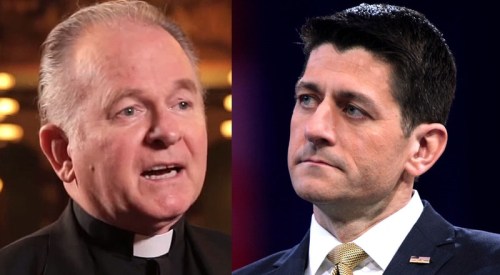
Yesterday I read the words of Senator Ron Johnson of Wisconsin who told a group of high school student that food, medical care, and housing were not basic human rights. His reasoning was based on Ayn Rand. Then I read that Atlas Shrugged toting Paul Ryan fired the Catholic Chaplain of the Speaker of the House for praying during a session dealing with the Trump Tax plan:

“As legislation on taxes continues to be debated this week and next, may all members be mindful that the institutions and structures of our great Nation guarantee the opportunities that have allowed some to achieve great success, while others continue to struggle,” the chaplain said. “May their efforts these days guarantee that there are not winners and losers under new tax laws, but benefits balanced and shared by all Americans.”

A week later Father Conroy heard from Speaker Ryan’s office:

“A staffer came down and said, We are upset with this prayer; you are getting too political,” he said. “It suggests to me that there are members who have talked to him about being upset with that prayer.” Shortly after, when he saw Mr. Ryan himself, Father Conroy said that the speaker told him, “Padre, you just got to stay out of politics.”

This wasn’t the supposedly faithful Catholic speaker’s conflict with the Church on its moral teachings. In 2012 the Jesuits at Georgetown handed a chunk of his skinny ass noting that the House Budget proposal went against Catholic moral teaching:

“As the U.S. Conference of Catholic Bishops has wisely noted in several letters to Congress, “A just framework for future budgets cannot rely on disproportionate cuts in essential services to poor persons.” Catholic bishops recently wrote that “the House-passed budget resolution fails to meet these moral criteria.” In short, your budget appears to reflect the values of your favorite philosopher, Ayn Rand, rather than the Gospel of Jesus Christ. Her call to selfishness and her antagonism toward religion are antithetical to the Gospel values of compassion and love.”

But that’s Paul Ryan whose core values reflect those of Ayn Rand who denigrates the key parts of the Christian faith in regards the sacrifice of Christ which she called “monstrous” and any responsibility to others. Regarding Christ she stated to Playboy:

“According to the Christian mythology, [Christ] died on the cross not for his own sins but for the sins of the non-ideal people. In other words, a man of perfect virtue was sacrificed for men who are vicious and who are expected or supposed to accept that sacrifice. If I were a Christian, nothing could make me more indignant than that: the notion of sacrificing the ideal to the non-ideal, or virtue to vice. And it is in the name of that symbol that men are asked to sacrifice themselves for their inferiors. That is precisely how the symbolism is used. That is torture. ”

In regard to the latter the following exchange between Rand and Mike Wallace on 60 Minutes is telling because it cuts to the very heart of Ryan’s Fred with the Church:

Rand: “You love only those who deserve it.”

Wallace: “And then if a man is weak or a woman is weak he is or she is beyond love?”

Rand: “He certainly does not deserve it. He certainly is beyond it . . . he cannot expect the unearned, neither in love or in money, in matter or in spirit.”

Wallace: “There are very few of us in this world, by your standards, who are worthy of love.”

Rand: “Unfortunately yes, very few.”

Ryan, a true Randian Apostle and evangelist told members of The Atlas Club, a group of Rand devotees: “I grew up reading Ayn Rand and it taught me quite a bit about who I am and what my value systems are and what my beliefs are. It’s inspired me so much that it’s required reading in my office for all my interns and my staff.”

Such philosophical schizophrenia is endemic in people like Ryan who on one hand claim to be followers of Christ and faithful Christians while exalting in their lives and social beliefs the atheistic creed of Rand.

The words of Father Conroy were in keeping with not only the Catholic tradition, but a tradition of human and civil rights that has been a hallmark of the American political and religious tradition since the earliest protests of abolitionists against the institution of slavery. But those are not the traditions that Senator Johnson or Speaker Ryan adhere. Instead they are devoted to the perverse ideology of Ayn Rand, which is nothing more than Social Darwinism and the exploitation of the weak for the benefit of the strong. Sadly, that ideology permeates the supposedly “Christian Right” to the point that it has completely overwhelmed anything that could be considered “pro-life” in their theology. Just because you are against abortion doesn’t mean that you are pro-life, especially if you despise those who are already born and condemn them to death.

Dietrich Bonhoeffer who was martyred by the Nazis wrote:

“Christianity stands or falls with its revolutionary protest against violence, arbitrariness and pride of power and with its plea for the weak. Christians are doing too little to make these points clear rather than too much. Christendom adjusts itself far too easily to the worship of power. Christians should give more offense, shock the world far more, than they are doing now. Christian should take a stronger stand in favor of the weak rather than considering first the possible right of the strong.”

The amorality of the current GOP position on life is absurd. According to it you can kill babies overseas when targeting terrorists with drone strikes, you can execute men and women when there is evidence that they might have been innocent; you can use economic sanctions to so cripple poor country’s to kill hundreds of thousands of children because they do not have food, water, or medical care; you can funnel tax revenues to the richest of the rich and deny food, housing, jobs, education, medical care, post natal care, ad infinitum to people but just don’t abort babies and you are the most commendable of men.

That my friends is Paul Ryan and Ron Johnson. They make President Trump for all of his faults loom like a saint when compared to them. Trump makes no apology for what he is. Trump doesn’t hide behind the image of being a Christian. Yes, he will take the prayers and adulation of Christians, and he will definitely take their votes and money, but he doesn’t pretend to be something that he is not. I respect him more than I do them. As terrible as he is there is the possibility that he could actually a conversion experience, but they won’t because they have perverted the faith for a Satanic ideology.

Bonhoeffer noted:

“It is worse for a liar to tell the truth than for a lover of truth to lie…. There is a truth which is of Satan. Its essence is that under the semblance of truth it denies everything that is real. It lives upon hatred of the real world which is created and loved by God.”

What Ryan, Johnson, and their fellow travelers proclaim in thought, word, and deed Satanic truth, and incompatible with the Gospel. What Ryan did with Father Conroy was truly despicable and politically motivated. I expect now that the deed is done that the Right Wing propagandists, maybe even with Russia help begin to attack the life and character of Father Conroy.

Think about that.

Until tomorrow,

Peace

Padre Steve+

Leave a comment

Filed under christian life, ethics, faith, History, holocaust, leadership, Loose thoughts and musings, News and current events, Political Commentary

“Incapable of Feeling Shame” The Moral Bankruptcy of the Trump Administration

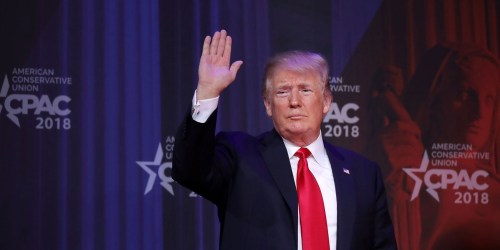
trump-cpac-1519415653-article-header

Friends of Padre Steve’s World,

Tonight I have just a short thought for us to ponder. Hannah Arendt wrote: “The chief qualification of a mass leader has become unending infallibility; he can never admit an error.”

This statement is undeniably true. Hitler, Stalin, Mao, Castro, the Ayatollahs, and Pol Pot are just some examples. More troubling is that such personalities are not absent today, Vladimir Putin, Marianne LePen, Recep Erdogan, Rodrigo Duterte, Viktor Orbán our own President Trump display this tendency, and their most devoted followers embrace it as well.

In the case of President Trump, presidential power means never having to say your sorry, or made a mistake. Failures are blamed on others, Congressional leaders, former President’s Obama and Bush, journalists, and even advisors who have outlasted their usefulness, case in point, Michael Flynn, James Comey, Steve Bannon, H. R. McMaster, Reince Priebus, Rex Tillerson, Gary Cohn, Tom Price, Sebastian Gorka, and so many more. Conservative columnist and former Bush Administration staffer Michael Gerson wrote in July of 2017: “The president and his men are incapable of feeling shame about shameful things.”

The inability to admit error is dangerous, but it also points to other potentially severe psychological issues. It is one of the characteristics of a paranoid personality, as well as a narcissistic personality. Richard Hofstadter wrote:

“The idea of the paranoid style as a force in politics would have little contemporary relevance or historical value if it were applied only to men with profoundly disturbed minds. It is the use of paranoid modes of expression by more or less normal people that makes the phenomenon significant.”

Likewise, even if those characteristics do not reach the point of becoming an actual psychological disorder, they can be severe enough to impair sound judgment as a leader, and lead to potentially terrible decisions including criminal acts so vast that they beggar the imagination. History shows us this all too often. These kinds of leaders see the world as a threatening place, full of enemies, real and imagined. Ethics and law are irrelevant to them so long as they win. The destruction of their enemies is of the first importance to such leaders, even when it is detrimental to the nations that they lead, even Hitler turned on Germany at the end of the Second World War because he lost the war and then blamed it on his people.

So until tomorrow,

Peace

Padre Steve+

1 Comment

Filed under ethics, leadership, mental health, national security, News and current events, Political Commentary

The Lingering Presence of Manifest Destiny in Trump’s America First Message

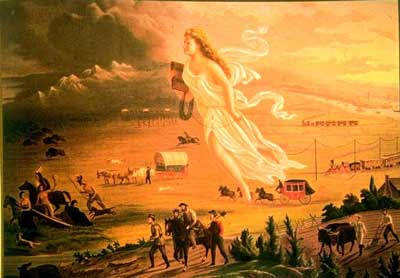
Manife4

Manifest Destiny

Friends of Padre Steve’s World,

This is a part of my yet to be published book, Mine Eyes Have Seen the Glory: Race, Religion, and Ideology in the Civil War Era.  I have posted it before, but as I watch what is going on in the world and President Trump’s militantly isolationist America First foreign policy which often uses the words and images of Manifest Destiny and American Exceptionalism I thought it might be good to post it again.

That past was mythologized in American history and popularized often on film and in print. Since the President admits that does little reading and engages in less critical thought it is obvious that most of what he knows of American history comes from the mythologized past.  This includes the concept of Manifest Destiny and American Exceptionalism. These concepts are the result of a racially and religiously based glorification of imperialistic conquest that resulted in the extermination or enslavement of millions of people in North America, as well as in the Philippines, Mexico, Central America and the Caribbean.

When you have a President of such limited historical knowledge who represents a party controlled by hyper-political religionists who are convinced that God is with them it portends trouble. As true Conservative icon Barry Goldwater once noted:

“Mark my word, if and when these preachers get control of the [Republican] party, and they’re sure trying to do so, it’s going to be a terrible damn problem. Frankly, these people frighten me. Politics and governing demand compromise. But these Christians believe they are acting in the name of God, so they can’t and won’t compromise. I know, I’ve tried to deal with them.” (November, 1994, in John Dean, Conservatives Without Conscience.)

While the President himself shows little evidence of actually believing in any God but himself he certainly does relish the accolades of these political creatures who call themselves Christian preachers. Goldwater in his later years exhibited a certain insight into the dangers of the movement that has taken over the GOP.

Until tomorrow,

Peace,

Padre Steve+

Manifest Destiny and American Exceptionalism

The foreign policy of the United States nearly always reflects to one degree or another a quasi-religious belief in the continued importance of the United States in spreading democracy around the world.

The United States was an anomaly among western nations in the early 1800s. During that time the percentage of people in Europe who were active churchgoers was shrinking and the number of skeptics rising as the industrial revolution, and advances in science, and the philosophies and theology of classic Liberalism permeated the elites of the continent. But in the United States, the situation was different. The Second Great Awakening helped shape and define the purpose of the nation, and by the “mid-nineteenth century, from North to South, was arguably Christendom’s most churchgoing nation, bristling with exceptionalist faith and millennial conviction.” [1] This was especially true of American Protestantism were “church attendance rose by a factor of ten over the period 1800 to 1860, comfortably outstripping population growth. Twice as many Protestants went to church at the end of this period as the beginning.” [2]

This exceptionalist faith kindled a belief in the nation’s Manifest Destiny in large part was an outgrowth of the Second Great Awakening which was particularly influential among the vast numbers of people moving into the new western territories. As people moved west, Evangelical religion came with them, often in the form of vast revival and camp meetings which would last weeks and which would be attended by tens of thousands. The first of these was at Cane Ridge Kentucky in 1801, organized by a Presbyterian others, including Baptists and Methodists joined in the preaching, and soon the revivals became a fixture of frontier life and particularly aided the growth of the Methodist and Baptists who were willing to “present the message as simply as possible, and to use preachers with little or no education,” [3] and which soon became the largest denominations in the United States. These meetings appealed to common people and emphasized emotion rather than reason. Even so the revivals “not only became the defining mark of American religion but also played a central role in the nation’s developing identity, independence, and democratic principles.” [4]

The West came to be viewed as a place where America might be reborn and “where Americans could start over again and the nation fulfill its destiny as a democratic, Protestant beacon to inspire peoples and nations. By conquering a continent with their people and ideals, Americans would conquer the world.” [5] The westward expansion satiated the need for territorial conquest and the missionary zeal to transform the country and the world in the image of Evangelical Christianity.

The man who coined the term “Manifest Destiny,” New York journalist John O’Sullivan a noted that “Manifest Destiny had ordained America to “establish on the earth the moral dignity and salvation of man,” to disseminate its principles, both religious and secular abroad,” [6] and New York Journalist Horace Greely issued the advice, “Go West, young man” which they did go, by the millions between 1800 and 1860.

But the movement also had a dark side. Americans poured westward first into the heartland of the Deep South and the Old Northwest, then across the Mississippi, fanning westward along the great rivers that formed the tributaries of the new territories. As they did so, the “population of the region west of the Appalachians grew nearly three times as fast as the original thirteen states” and “during that era a new state entered the Union on the average of three years.” [7]

The combination of nationalism fueled by Evangelical religion was combined with the idea from revolutionary times that America was a “model republic” that could redeem the people of the world from tyranny,” [8] as well an ascendant rational nationalism based on the superiority of the White Race. This, along with the belief that Catholicism was a threat to liberty was used as reason to conquer Mexico as well as to drive Native Americans from their ancestral homes. “By 1850 the white man’s diseases and wars had reduced the Indian population north of the Rio Grande to half of the estimated million who had lived there two centuries earlier. In the United States all but a few thousand Indians had been pushed west of the Mississippi.” [9] The radical racism used pseudo-scientific writings to “find biological evidence of white supremacy, “radical nationalism” cast Mexicans as an unassimilable “mixed “race “with considerable Indian and some black blood.” The War with Mexico “would not redeem them, but would hasten the day when they, like American Indians, would fade away.” [10]

Manifest Destiny and American Foreign Policy

Just as the deeply Evangelical Christian religious emphasis of Manifest Destiny helped shape American domestic policy during the movement west, it provided similar motivation and justification for America’s entry onto the world stage as a colonial power and world economic power. It undergirded United States foreign policy as the nation went from being a continental power to being an international power; claiming as Hawaii, and various former Spanish possessions in 1890s, and which would be seen again in the moralizing of Woodrow Wilson in the years leading up to America’s entry into World War One.

The belief in Manifest Destiny can still be seen in the pronouncements of American politicians, pundits, and preachers who believe that that this message is to be spread around the world. Manifest Destiny is an essential element of the idea of American Exceptionalism which often has been the justification for much recent American foreign policy, including the Freedom Agenda of former President George W. Bush. Bush referenced this during his 2003 State of the Union Address, “that freedom is the right of every person and the future of every nation. The liberty we prize is not America’s gift to the world, it is God’s gift to humanity.” [11] Bush frequently used language in his speeches in which biblical allusions were prominent in justifying the morality of his policy, and by doing this “Bush made himself a bridge between politics and religion for a large portion of his electorate, cementing their fidelity.” [12]

Throughout the Bush presidency the idea that God was directing him even meant that his faith undergirded the policy of the United States and led to a mismatch of policy ends and the means to accomplish them. Former Israeli Ambassador to the U.S. and historian Michael Oren wrote:

“Not inadvertently did Bush describe the struggle against Islamic terror as a “crusade to rid the world of evildoers.” Along with this religious zeal, however, the president espoused the secular fervor of the neoconservatives…who preached the Middle East’s redemption through democracy. The merging of the sacred and the civic missions in Bush’s mind placed him firmly in the Wilsonian tradition. But the same faith that deflected Wilson from entering hostilities in the Middle East spurred Bush in favor of war.” [13]

Policy makers and military leaders must realize that if they want to understand how culture and religious ideology drive others to conquer, subjugate and terrorize in the name of God, they first have to understand how our ancestors did the same thing. It is only when they do that that they can understand that this behavior and use of ideology for such ends is much more universal and easier to understand.

One can see the influence of Manifest Destiny abroad in a number of contexts. Many American Christians became missionaries to foreign lands, establishing churches, colleges, schools, and hospitals in their zeal to spread the Gospel. As missionaries spread across the globe, American policy makers ensured their protection through the presence of the United States Navy, and missionaries frequently called upon the United States Government for help and the naval strength of the United States during the period provided added fuel to their zeal. In 1842, Dabney Carr, the new American ambassador to the Ottoman Empire“declared his intention to protect the missionaries “to the full extent of [his] power,” if necessary “by calling on the whole of the American squadron in the Mediterranean to Beyrout.” [14] Such episodes would be repeated in the Middle East, Asia, the Pacific, and Central America over and over again until the 1920s.

The White Man’s Burden, Imperialism, Business, and Faith: Manifest Destiny and the Annexation of the Philippines

If one wants to see how the use of this compulsion to conquer in the name of God in American by a national leader one needs to go no farther than to examine the process whereby President McKinley, himself a veteran of the Civil War, decided to annex the Philippine in 1898 following the defeat of the Spanish. That war against the Filipinos that the United States had helped liberate from Spanish rule saw some of the most bloodthirsty tactics ever employed by the U.S. Army to fight the Filipino insurgents. The Filipino’s who had aided the United States in the war against Spain were now being subjugated by the American military for merely seeking an independence that they believed was their right. While the insurgency was suppressed in a violent manner and American rule was established, some Americans came to see the suppression of the Filipino’s as a stain on our national honor which of which Mark Twain wrote: “There must be two Americas: one that sets the captive free, and one that takes a once-captive’s new freedom away from him, and picks a quarrel with him with nothing to found it on; then kills him to get his land. . .” [15]

William McKinley was a cautious man, and after the United States had defeated the Spanish naval squadron at Manila Bay and wrestled with what to do with the Philippines. McKinley was a doubtless sincere believer, and according to his words, he sought counsel from God about whether he should make the decision to annex the Philippines or not. For him this was not a mere exercise, but a manifestation of his deep rooted faith which was based on Manifest Destiny. Troubled, he sought guidance, and he told a group of ministers who were vesting the White House:

“Before you go I would like to say a word about the Philippine business…. The truth is I didn’t want the Philippines, and when they came to us as a gift from the gods, I did not know what to do with them…. I sought counsel from all sides – Democrat as well as Republican – but got little help…. I walked the floor of the White House night after night until midnight; and I am not ashamed to tell you, gentlemen, that I went down on my knees and prayed Almighty God for guidance more than one night. And late one night it came to me this way – I don’t know how it was but it came….” [16]

He then went on to discuss what he supposedly heard from God, but reflected more of a calculated decision to annex the archipelago. He discussed what he believed would be an occupation of just a few islands and Manila, ruled out returning them to Spain as that would be “dishonorable,” ruled out turning them over to France or Germany because “that would be bad for business,”or allowing Filipino self-rule, as “they were unfit for self-government.”[17] The last was a reflection of the deep-rooted opinion of many Americans that the dark skinned Filipinos were “niggers.”

Barbara Tuchman described McKinley’s comments to the ministers:

“He went down on his knees, according to his own account, and “prayed to Almighty God for light and guidance.” He was accordingly guided to conclude “that there was nothing left to do for us but to take them all, and to educate the Filipinos. And uplift and civilize and Christianize them, by God’s grace to do the very best we could by them, as our fellowmen for whom Christ died.” [18]

But the result, regardless of whether McKinley heard the voice of God, or took the advice of advisers with imperialist, business, or religious views, he made the choice to annex the Philippines, believing it to be the only rational course of action, and something that he could not avoid. In a sense McKinley, of who Barbara Tuchman wrote “was a man made to be managed,” and who was considered spineless by Speaker of the House Thomas Reed who said “McKinley has no more backbone than a chocolate éclair.” [19] It appears that McKinley was more convinced by the arguments of those who desired to annex the Philippines for military reasons, a business community which saw the islands as a gateway to the markets of Asia, and by Protestant clergy, who saw “a possible enlargement of missionary opportunities.”[20] He rejected a proposal by Carl Schurz who urged McKinley to “turn over the Philippines as a mandate to a small power, such as Belgium or Holland, so the United States could remain “the great neutral power in the world.” [21]The combination of men who desired the United States to become an imperialist and naval power, business, and religion turned out to be more than McKinley could resist, as “the taste of empire was on the lips of politicians and business interests throughout the country. Racism, paternalism, and the talk of money mingled with the talk of destiny.” [22] Though there was much resistance to the annexation in congress and in the electorate, much of which was led by William Jennings Bryant, but which crumbled when Bryant with his eyes on the Presidency embraced imperialism.

The sense of righteousness and destiny was encouraged by magazine publisher S.S. McClure, who published a poem by Rudyard Kipling addressed to Americans debating the issue entitled The White Man’s Burden:

Take up the White Man’s burden–
Send forth the best ye breed–
Go bind your sons to exile
To serve your captives’ need;
To wait in heavy harness,
On fluttered folk and wild–
Your new-caught, sullen peoples,
Half-devil and half-child…

Take up the White Man’s burden–
The savage wars of peace–
Fill full the mouth of Famine
And bid the sickness cease…

Take up the White Man’s burden–
Ye dare not stoop to less–
Nor call too loud on Freedom
To 
cloke your weariness;
By all ye cry or whisper,
By all ye leave or do,
The silent, sullen peoples
Shall weigh your gods and you…
 [23]

McKinley’s decision and the passage of the peace treaty with Spain to acquire the Philippines sparked an insurrection led by Filipino revolutionary Emilio Aguinaldo who had been leading resistance to Spanish rule on the island of Luzon for several years prior to the American defeat of Spanish naval forces at the Battle of Manila Bay, and the subsequent occupation of Manila. The following war lasted nearly three years and was marked by numerous atrocities committed by American forces against often defenseless civilians and it would help to change the nature of the country. After American troops captured Manila, Walter Hines Page, the editor of the Atlantic Monthly believed that Americans would face greater challenges and difficulties in the coming years than they had known in previous years. He wrote:

“A change in our national policy may change our very character… and we are now playing with the great forces that may shape the future of the world – almost before we know it…. Before we knew the meaning of foreign possessions in a world ever growing more jealous, we have found ourselves the captors of islands in both great oceans; and from our home staying policy of yesterday we are brought face to face with world-wide forces in Asia as well as Europe, which seem to be working, by the opening of the Orient, for one of the greatest challenges in human history…. And to nobody has the change come more unexpectedly than ourselves. Has it come without our knowing the meaning of it?” [24]

Within the span of a few months, America had gone from a nation of shopkeepers to an imperial power, and most people did not realize the consequences of that shift. Manifest destiny and American Exceptionalism had triumphed and with it a new day dawned, where subsequent generations of leaders would invoke America’s mission to spread freedom and democracy around the world, as President George W. Bush said, “that freedom is the right of every person and the future of every nation. The liberty we prize is not America’s gift to the world, it is God’s gift to humanity.”

Notes

[1] Ibid. Phillips American Theocracy: The Peril and Politics of Radical Religion, Oil and Borrowed Money in the 21st Century p.143

[2] McGrath, Alister Christianity’s Dangerous Idea: The Protestant Revolution A History from the Sixteenth Century to the Twenty-First Harper Collins Publishers, New York 2007 p.164

[3] Gonzalez, Justo L. The History of Christianity Volume 2: The Reformation to the Present Day Harper and Row Publishers San Francisco 1985 p.246

[4] Ibid. McGrath Christianity’s Dangerous Idea: The Protestant Revolution A History from the Sixteenth Century to the Twenty-First p.164

[5] Goldfield, David America Aflame: How the Civil War Created a Nation Bloomsbury Press, New York, London New Delhi and Sidney 2011 p.5

[6] Ibid. Oren Power, Faith and Fantasy: America and the Middle East 1776 to the Present p130

[7] McPherson, James. The Battle Cry of Freedom: The Civil War Era Oxford University Press, Oxford and New York 1988 p.42

[8] Varon, Elizabeth R. Disunion! The Coming of the American Civil War 1789-1858 University of North Carolina Press, Chapel Hill NC 2008 p.183

[9] Ibid. McPherson The Battle Cry of Freedom: The Civil War Era p,45

[10] Ibid. Varon. Disunion! The Coming of the American Civil War 1789-1858p.183

[11] Bush, George W. State of the Union Address Washington D.C. January 28th2003 retrieved from Presidential Rhetoric.com http://www.presidentialrhetoric.com/speeches/01.28.03.html 10 June 2015

[12] Ibid. Phillips American Theocracy: The Peril and Politics of Radical Religion, Oil and Borrowed Money in the 21st Century p.252

[13] Oren, Michael Power, Faith and Fantasy: America and the Middle East 1776 to the Present W.W. Norton and Company, New York and London 2007 p.584

[14] Ibid. Oren Power, Faith and Fantasy: America and the Middle East 1776 to the Present p130

[15] Twain, Mark To the Person Sitting in Darkness February 1901 Retrieved from The World of 1898: The Spanish American War The Library of Congress http://www.loc.gov/rr/hispanic/1898/twain.html 12 December 2014

[16] Zinn, Howard A People’s History of the United States Harper Perennial, New York 1999 pp.312-313

[17] Ibid. Zinn A People’s History of the United States p.313

[18] Ibid. Tuchman Practicing History p.289

[19] Tuchman, Barbara The Proud Tower: A Portrait of the World Before the War, 1890-1914 Random House Trade Paperbacks Edition, New York 2008 originally published 1966 by McMillan Company. Amazon Kindle edition location 2807 of 10746

[20] Hofstadter, Richard The Paranoid Style in American Politics Vintage Books a Division of Random House, New York 1952 and 2008 p167

[21] Ibid. Tuchman The Proud Tower: A Portrait of the World Before the War, 1890-1914 location 3098 of 10746

[22] Ibid. Zinn A People’s History of the United States p.313

[23] Kipling, Rudyard “The White Man’s Burden: The United States and the Philippine Islands” 1899 retrieved from https://public.wsu.edu/~brians/world_civ/worldcivreader/world_civ_reader_2/kipling.html 6 August 2016

[24] Ibid. Hofstadter The Paranoid Style in American Politics pp.183-184

1 Comment

Filed under Foreign Policy, History, leadership, News and current events, Political Commentary, Religion

If You Don’t Have Time to Read You don’t Have the Time or Tools to Lead

img_3914

Friends of Padre Steve’s World,

During the first week of March I took about a week off of regular writing and commended a new campaign of reading. This was not because I don’t read, I am always reading, but sometimes I don’t read enough, so that week I began to catch up on some reading. Since then I have read, and read, even as I began to write again, not that I ever really stopped. I fully subscribe to the words of American satirist Will Rogers who noted: “There are three kinds of men. The one that learns by reading. The few who learn by observation. The rest of them have to pee on the electric fence for themselves.”

Honestly I prefer to learn by reading or observing, and reading has been part of my life since I was a child and I cannot imagine trying to write a single sentence without reading, as Stephen King noted: “If you don’t have time to read, you don’t have the time (or the tools) to write. Simple as that.” I would extend King’s observation to say that if you don’t have time to read you don’t have time or the tools to lead. Sadly the American President and many of his most devoted followers never challenge themselves by reading.

So tonight I wanted to take a few minutes and catch you up on the newest additions to my reading rainbow. I finished reading German historian Paul Carrel’s Unternehmen Barbarossa im Bild (Operation Barbarossa in Pictures) in which the text is in German and Max Boot’s The Road Not Taken: Edward Lansdale an the American Tragedy in Vietnam. 

I took on Carrel’s book because I had read many of his histories of the German Army in the Second World War in English and I wanted to use this large German volume to improve my German vocabulary. It’s an excellent volume first published in 1976 but unless you have a moderate familiarity of German it I don’t recommend it despite the vast number of photos that I have not seen elsewhere and his honest commentary and reflections on the moral, social, and political disaster that was Operation Barbarossa.

I also finished Max Boot’s outstanding volume of the life of General Edward Lansdale. This is really a good account of U.S. involvement in the Philippines and Vietnam from 1945 until 1975. Lansdale was deeply involved in one of the few successful counter-insurgencies of the 20th Century, that against the Communist supported Huks in the Philippines  by Lansdale who worked closely with political reformers and sought to understand and win over insurgents without engaging in massive military sweeps. However successful he was he was distrusted by much of the CIA and military establishment and his efforts in Vietnam were undercut by them. Boot treats Lansdale’s story well without attempting to hide his many flaws. Lansdale has been referred to as an American T. E. Lawrence and Boot gives an excellent account of his life in the context of the CIA, American actions in Indochina, and American politics in the from the mid 1950s until the early 1970s. The book is well worth the read.

On the Vietnam front I read the late Michael Herr’s Dispatches, his classic account of his time serving as a war correspondent in Vietnam at Hue, Khe San, and other battles over the course of 18 months. Having been to war I highly recommend it.

On the more contemporary American political situation I read conservative and former Bush Administration advisor, David Frum’s book on the Trump Era, Trumpocracy: The Corruption of the American Republic. It is well worth the read for anyone but I highly recommend that conservatives read it. I don’t always agree with some of Frum’s political positions, but his take on the corrosive effects of Donald Trump on the United States and how Republicans have aided and abetted him.

Continuing down that road I read Michael Isikoff and David Corn’s masterpiece of investigative journalism Russian Roulette: The Inside Story of Putin’s War on America and the Election of Donald Trump. Trump loyalists will hate this book because their work continues to be verified by every new discovery about the Russians and their role in the 2016 elections. It gives the reader a superb understanding of the key players  in this drama and help the reader to put in context the daily revelations of the investigation being conducted by Special Prosecutor Robert Muller and the actions of the President’s words, actions, and policies toward Russia and Putin as well as when he melts down on Twitter. In time it might be ranked with All the President’s Men. 

As a matter of contextualizing the present I read the late historian Tony Judt’s Ill Fares the Land which was written following the collapse of 2008. Judt discusses how we have not learned the lessons of the Twentieth Century and the problems related to the failures of both the right and left to learn those lessons. It is well worth the read but it is not a book designed or written to comfort partisans on any side of the political spectrum.

Going back to look at history I took the time to read Walter Lord’s sequel to his classic book on the sinking of the Titanic, A Night to Remember by reading his book The Night Lives On: The Untold Stories and Secrets of the “Unsinkable” Ship – Titanic. The second volume was published some three decades after Lord’s first volume which I think is the best account of the event ever written.  To follow it up I ordered and watched the film A Night To Remember which was also well worth watching. While not as technically accurate nor filled with “A list” stars the film captures the the tragedy of the ship in a way I don’t think that James Cameron’s masterpiece Titanic really gets.

I re-read Lord’s book on the integration of Ol’e Miss The Past that Would Not Die which though it recounts events of 1962 seems amazingly relevant in the present day.  The account of the admission of Air Force veteran James Howard Meredith in the face of the political opposition of Mississippi’s Governor and Legislature, armed White Supremacists against Attorney General Robert F. Kennedy Jr. and civil rights activists. The event was a crisis that brought to the present the memories and ideology of secession and revolt against the Federal Government and Constitution in the name of preserving a history of white supremacism. Likewise I also re-read British historian and military theorist B. H. Liddell Hart’s little book Why Don’t We Learn from History? 

I took up Jason Stanley’s excellent How Propaganda Works. This is an excellent book for academics but I do not recommend it for the casual reader because it presupposes a knowledge of political philosophy and history that most people don’t have. It was a long and tiring read for me and I liked it. It provides a lot of insights into the mechanics of propaganda. For me it gave me a different level of understanding of the propaganda being used by the Russians agains the United States and the machinations of the American President to discredit opponents through both official government pronouncements and the official unofficial White House propaganda network, Fox News.

I am currently reading a number of books. I am about a quarter of the way through John Dower’s The Bloody American Century, about a third of the way through Timothy Snyder’s The Road to Unfreedom: Russia, Europe, America, and have just started Tony Judt’s Thinking the Twentieth Century and Ron Chernow’s biography of Ulysses S. Grant.

So anyway. Have a great night and see you tomorrow,

Peace

Padre Steve+

Leave a comment

Filed under books, History, leadership, life

Mission Accomplished? Trump Evokes Memories Of Defeat and Shame

Friends of Padre Steve’s World,

The Prussian military theorist Carl von Clausewitz wrote:

“No one starts a war–or rather, no one in his sense ought to do so–without first being clear in his mind what he intends to achieve by the war and how he intends to conduct it.” 

Friday night President Trump unleashed United States Navy and Air Force assets in a coordinated strike against alleged Syrian chemical weapon sites in Damascus and at an air base outside of Homs. A total of about 110 weapons were fired from U.S. and French Navy ships in the Mediterranean Sea, and from USAF, Royal Air Force, and French Air Force aircraft at these targets. It was the second time he conducted an isolated strike against the Syrians for using poison gas. In each case he seemed visibly upset about the pictures of the dead children, but cannot seem to understand that Assad does such things every day even when his forces don’t use chemical weapons, and that his lack of coherence on Syria is only helping Assad.

As the strikes proceeded the President announced his decision and reasoning for the attack. Honestly in his speech Mr. Trump said all the right things, but the well telegraphed actions gave time for the Syrians with probable Russian assistance move key components of their program out of the areas stuck by the military. They were also disconnected from any coherent military and diplomatic strategy for success which is a recipe for failure. If the President bothered to study history, especially the military history of the United States since the Second World War he would understand this, but he doesn’t.

The unfortunate thing was that his previous words pressing the military for a withdrawal from Syria had set the stage for the Syrians to launch their deadly gas attacks. The fact is that President, in thought, word, and deed has not cared enough about what happens in Syria or what Bashar Assad does when it doesn’t involve chemical weapons; nor what happens to the people who fought alongside us after we leave.

The President’s policy of stopping Syrian refugees, be they Muslim or Christian from finding refuge in the United States shows his callous heart. Not only did he prevent them from coming; he demonized them and urged other nations to reject them. It was a shameless reprise of the 1930s and 1940s America First movement that shut out the Jews and defended the Nazis.

His only consideration was the defeat of ISIS which from the time of President Obama the U.S. Military was doing. Unfortunately the decision to withdraw not only has emboldened Assad, but will help Iran, Russia, and yes even ISIS, which once free of U.S. Military pressure will rebuild and rebound from defeat just as Al Qaeda Iraq, its predecessor did in 2011.

Likewise the President began openly telegraphing his intentions days before the attack which gave plenty of warning and time for the Assad regime to work with the Russians to move anything of real importance away from the targeted sites. To add insult to injury the French Foreign Minister admitted that the Russians had been warned and given details of what was to be attacked and the American Chairman of the Joint Chiefs of Staff talked about how we had worked to “de-conflict” in regard to battle space and air space to ensure that Russian units were not hit.

In terms of military effects the Pentagon described the attack as a “one off” and admitted that despite supposedly setting back the Syrian chemical weapons program by years that the Syrians still had the capacity to use them. While U.S. Ambassador to the United Nations Nikki Haley said that the United States is “locked and loaded” to resume strikes the language of the White House is somewhat ambiguous and equivocal. In Syria Assad’s supporters were overjoyed by the lack of force and American allies and opponents of Assad saw their hopes crushed. In Moscow pro-Putin demonstrators burned effigies of President Trump who on Saturday morning proclaimed “Mission Accomplished!!” on Twitter as he praised the actions of the military forces involved.

I’ve been in the military since 1981 and I am still serving, and I think that mission for mission we do our job very well, but our successes are tactical and not strategic. A “one off” missile strike is not a strategy for success. It may have been executed perfectly, but a multitude of tactical successes in absence of a clear strategy for victory and for what happens after it are meaningless in a strategic sense. The sacrifices for soldiers and national treasure for no reason other than to create a distraction from domestic problems is immoral, unethical, and under U.S. and international law illegal.

Meanwhile official Russian Troll and Bot propaganda activity on social media has increased by some 2000% since Friday. Many of those posts and tweets are being shared and spread by Trump supporters as well as insane leftist whose hatred of the United States and the West ensures that they cannot differentiate between truth and fiction. That is dangerous and it gives the Russians an upper hand because Putin’s intelligence services have succeeded in dividing Americans and the West far more effectively than the Soviets in the Cold War.

I believe that the manner in which the President launched the strike, the contradictory messages that the President sends in his tweets, the lack of coherent policy and strategy goals, and the failure to consult makes the decision to strike unwise and illegal and were more a product of his unformed mind and desire for self-preservation at all costs. When I think about these strikes and what might happen in the coming months as political pressure mounts I think of the words of the British military historian B.H. Liddell-Hart:

“I used to think that the causes of war were predominantly economic. I came to think that they were more psychological. I am now coming to think that they are decisively “personal,” arising from the defects and ambitions of those who have the power to influence the currents of nations.

Don’t get me wrong, I despise Assad and his regime and believe that Assad deserves far worse that Gaddafi or Saddam ever got, he is as the President noted an “animal.” But these strikes in the absence of a comprehensive strategy do nothing to remove him, weaken his power, or help those people he and his Russian, Iranian, or Hezbollah allies oppress and terrorize; especially when the President advertises that the United States has no desire to remain in Syria, even to protect the people that the U.S. Military has shed blood to save. The President’s policy and actions bring dishonor to a nation founded on the principle that “all men are created equal.” I strongly believe that this attack was a result of the President’s personal moral defects as his policies do not seem to be linked to any coherent strategy.

Simply doing one off strikes do nothing to redeem him or his policies; his ignorance of history and national security policy should concern and disturb even his most devoted supporters. Unless he decides to couple military power with a coherent approach to overall national security and foreign policy rooted in American values, respect for law, and human rights then regardless of how long he serves as President he will be remembered as a disingenuous fraud who used a foreign crisis to divert attention from his own crimes. Even Hitler didn’t do that.

The situation remains terribly dangerous and no the mission, whatever it is, was not accomplished unless it was to divert attention from his present political problems. If so that lasted about twenty minutes if that. When I watch him and read the President’s tweets I can only think of Lord Balfour’s words about one of his opponents in the House of Lords “If he had a little more brains he would be a half-wit.”

So until tomorrow,

Peace,

Padre Steve+

1 Comment

Filed under Foreign Policy, History, leadership, middle east, Military, national security, Political Commentary

The Terrible American Good Friday

Friends of Padre Steve’s World,

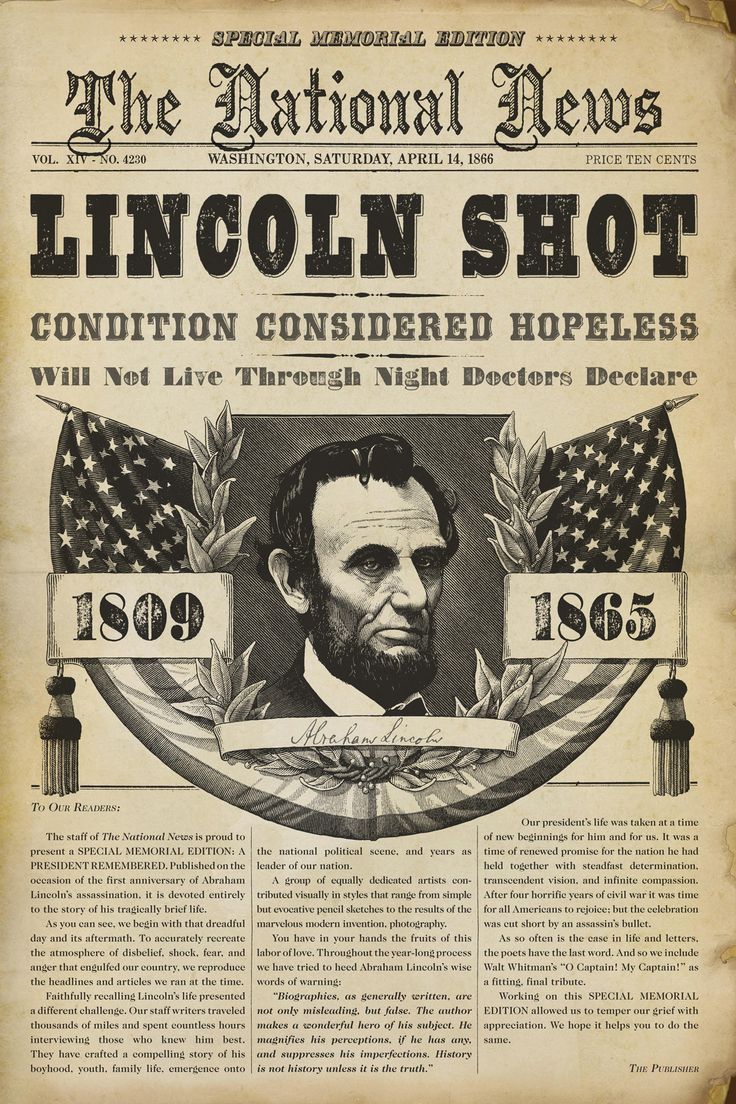
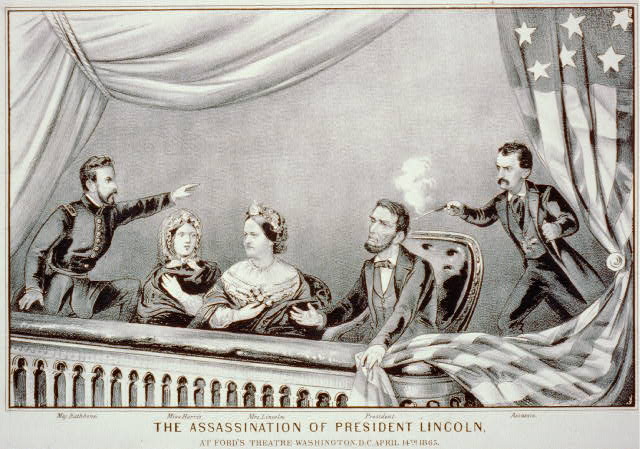
Good Friday is somber day, and I think that there was none more somber than Good Friday 1865. Shortly after 10 P.M. at Ford’s theater a handsome and well known actor walked into the booth occupied by President Lincoln at Washington’s Ford’s Theater. The President was there with his wife Mary Todd Lincoln and another couple after a very full day of business to watch the play Our American Cousin a farcical look at the visit of an American visiting his English relatives when going to settle the family estate.

Lincoln was looking forward to the play. Though the war continued the surrender of Robert E. Lee’s Army of Northern Virginia to Ulysses S. Grant on April 9th for all intents and purposes had placed the final nail in the Confederacy’s malevolent coffin, and it was if a burden have been removed from Lincoln’s shoulders. His task now what the reintegration of the rebellious states back into the Union, a task that he believed needed to be accomplished without malice while still seeking justice. He made this clear in his Second Inaugural Address just over a month before:

“With malice toward none, with charity for all, with firmness in the right as God gives us to see the right, let us strive on to finish the work we are in, to bind up the nation’s wounds, to care for him who shall have borne the battle and for his widow and his orphan, to do all which may achieve and cherish a just and lasting peace among ourselves and with all nations.”

Just three days before Lincoln had given his last public speech at the White House. It was a practical speech dealing with the nuts and bolts reuniting the country including announcing his support for Negro Suffrage. He said:

“By these recent successes the re-inauguration of the national authority — reconstruction — which has had a large share of thought from the first, is pressed much more closely upon our attention. It is fraught with great difficulty. Unlike a case of a war between independent nations, there is no authorized organ for us to treat with. No one man has authority to give up the rebellion for any other man. We simply must begin with, and mould from, disorganized and discordant elements. Nor is it a small additional embarrassment that we, the loyal people, differ among ourselves as to the mode, manner, and means of reconstruction.”

In the speech Lincoln discussed the issues related to the new government of Louisiana and its dealings with African Americans, which did not go far enough for Lincoln, who was intent on extending the franchise to vote for all blacks, even if it took time to make it so. John Wilkes Booth was in attendance that day and as he listened he became ever angrier and he vowed to a fellow conspirator Lewis Powell, “That is the last speech he will make” and Booth was going to ensure this himself.

Lincoln had been troubled for some time by terrible insomnia and dreams, both bizarre and ghoulish. A few days before he had told Mary and others sharing dinner with them of a troubling dream which he described in detail, Mary and those at the table so accustomed to Lincoln’s customary wit and humor were stunned as Lincoln spoke. He closed the description with these words:

“Determined to find the cause of a state of things so mysterious and shocking, I kept on until I entered the East Room, which I entered. There I was met with a sickening surprise. Before me was a catafalque, on which rested a corpse wrapped in funeral vestments. Around it were stationed soldiers who were acting as guards; and a throng of people, some gazing mournfully at the corpse, whose face was covered, others weeping pitifully: ‘Who is dead in the White House?’ I demanded of one of the soldiers. ‘The President’ was the answer; ‘he was killed by an assassin!’ “Then came a loud burst of grief from the crowd…” 

Mary and the others were so upset, particularly with the large number of death threats Lincoln had received throughout the war. However, Lincoln told them all not to worry as “it was only a dream.”

On that Good Friday Lincoln was determined not to mourn, instead of attending Good Friday services or contemplating the war, or reconstruction, he simply wanted to laugh and chose to attend the play, wanting General Grant and his wife to attend. However Grant needed to travel to New Jersey and declined the offer.

Despite this Lincoln was in a cheerful mood, looking forward to the future and discussing all the things that he wanted to see and do after his term in office. Mary was startled by his cheerfulness and Lincoln told her “I have never felt better in my life.” Lincoln and his party arrived late to the cheers of the cast and took their seats in the box about 8:30 to the strains of Hail to the Chief. As the play resumed Lincoln’s bodyguard slipped away to get a drink and about twelve minutes after ten Booth slipped into the box where Lincoln sat watching the play. As the crowd roared its delight at a particularly funny scene a shot rang out and Lincoln’s arm jerked up and he slumped over. Booth then jumped to the stage from the box, injuring his leg and shouting “Sic semper tyrannis” or thus always to tyrants. It was the beginning of a series of attempted assassinations designed to decapitate the Federal government, Secretary of State Seward was badly wounded by Lewis Payne, a third assassin backed out at the last minute and failed to attack Vice President Johnson.

Though physicians sought to save the President the wound was mortal, the bullet having ender the back of his head, and dug deep into his brain, lodging behind his left eye. At 7:22 A.M. Abraham Lincoln was dead. It was a disaster for the nation as the new President, Andrew Johnson was a political enemy of Lincoln and not in line with Lincoln’s understanding of reconstruction and reconciliation. A poor Southerner from Tennessee, Johnson hated the Southern plantation aristocracy and would act as a punisher, while radical reconstructionist members of the cabinet and Congress would act in such a way that reconstruction would never achieve all that Lincoln believed that it could.

While radical Confederates rejoiced in Lincoln’s death others were more circumspect. Jefferson Davis who was fleeing and hoping to continue the war realized that the South would not fare as well under Johnson as Lincoln. In fact Johnson’s lack of understanding of the nuances of northern politics as well as his loathing of blacks, his “beliefs, prejudices, personality traits were a recipe for disaster at a time when an unprecedented national crisis put a premium on the capacity to think in new and creative ways.”

The Army of the Potomac learned of Lincoln’s assassination on Easter Sunday. Joshua Chamberlain told a woman whose mansion was at the center of his division’s camp when she asked what disturbed him “It is bad news for the South.” When the woman asked if it was Lee or Davis Chamberlain told her that it was Lincoln and said “The South has lost its best friend, Madam.” 

Chamberlain ordered chaplain to conduct a field memorial for the fallen President. The division chaplain a Catholic Priest, Father Egan spoke and roused the men, and Egan ended his service “Better so, Better to die glorious, than live infamous. Better to be buried beneath a nation’s tears, than to walk the earth guilty of the nation’s blood.”

During the war Lincoln had endeared himself to his soldiers and they responded with great emotion. One burst into tears and sobbed “He was our best friend. God bless him,” another wrote home “What a hold Old Abe had on the hearts of the soldiers of the army could only be told by the way they showed their mourning for him.” Admiral David Dixon Porter wrote “The United States has lost the greatest man she ever produced.” 

The bullet fired by John Wilkes Booth was a disaster for the country. Sadly, there are some today, in particular the White Supremacist group The League of the South are choosing to celebrate the assassination of the man that they so hate, and honor the assassin as a hero. However, I have to agree with Admiral Porter, there has never been a President before or after who was anything like this man, and I dedicate myself to the quest for equality of all people and for a reconciliation. I will continue to work for that “new birth of freedom” that Lincoln so believed in.

Peace

Padre Steve+

Leave a comment

Filed under civil war, History, leadership, Political Commentary