Category Archives: Military

The Next Generation: The North Carolina Class Battleships

This is the fourth in a series of six articles on the battleships built under the provision of the Washington and London Naval Treaty limitations in the 1930s. I am not including the ships which were completed in the immediate aftermath of the Washington Treaty limitations. This series looks at the modern battleships that the World War II combatants would produce in the 1930s which saw service in the war. Part one covered the Italian Vittorio Veneto class entitled The Pride of the Regina Marina: The Vittorio Veneto Class Battleships. Part two French Firepower Forward: The unrealized potential of the Dunkerque and Richelieu Class Battleships covered the French Dunkerque class and Richelieu class Battleships. Part three covered the British Royal Navy King George V Class battleships entitled British Bulwarks: The King George V Class Battleships Part Five which was to be a subsection of this article will be on the South Dakota Class. I have already published the final part which covers the German Scharnhorst Class entitled Power and Beauty the Battle Cruisers Scharnhorst and Gneisenau . The German Bismarck, Japanese Yamato, British Vanguard and American Iowa Classes will be covered in a subsequent series.

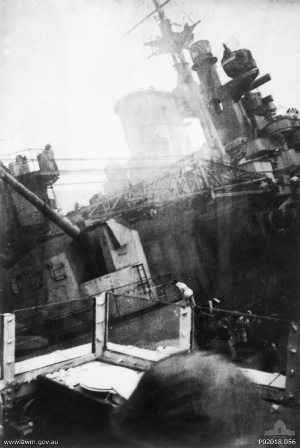
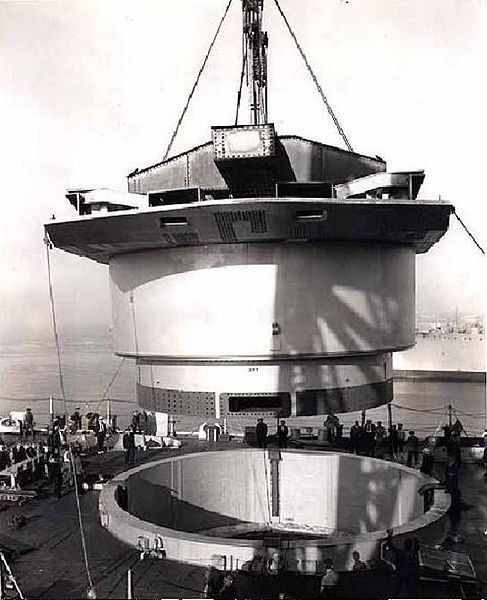
Turret base of USS Washington being lowered into barbet

The United States finished the First World War as the rising economic and potential military power in the world. The British Empire was economically reeling beset by massive debts, heavy loss of life and an empire which was beginning to smell the fresh breezes of independence.  The United States retreated into isolationism and a naïve and unfounded optimism that war could be outlawed while turning its back on the one organization that might have helped bring nations together, the League of Nations. In this environment the United States sponsored the Washington Naval Conference of 1922 which produced the Washington Naval Treaty.  The treaty stipulated limitations on total battleship tonnage, main armament and the maximum tonnage allowed per ship. Ships already in existence could not be replaced until they reached the age of 20 years. A battleship “building holiday” of 10 years was mandated with the major signatories allowed to complete a few ships that were already under construction. Whole classes of new construction were cancelled and many ships under construction were scrapped on the ways or completed only to be scrapped or sunk as targets. The Royal Navy completed two ships of the Nelson Class, the United States completed the 3 ship Maryland Class using a 4th vessel the incomplete USS Washington as a target and the Japanese were allowed to complete two ships of the Nagato Class. The Royal Navy completed the Battleship Eagle and Battle Cruisers Furious, Glorious and Courageous as Aircraft Carriers, the U.S. Navy the incomplete Battle Cruisers Lexington and Saratoga and the Japanese the Battle Cruiser Akagi and Battleship Kaga as carriers. The treaty limits of the Washington Conference were renewed in the London Treaty which also sought to limit the main batteries of new battleships to 14 inch guns.

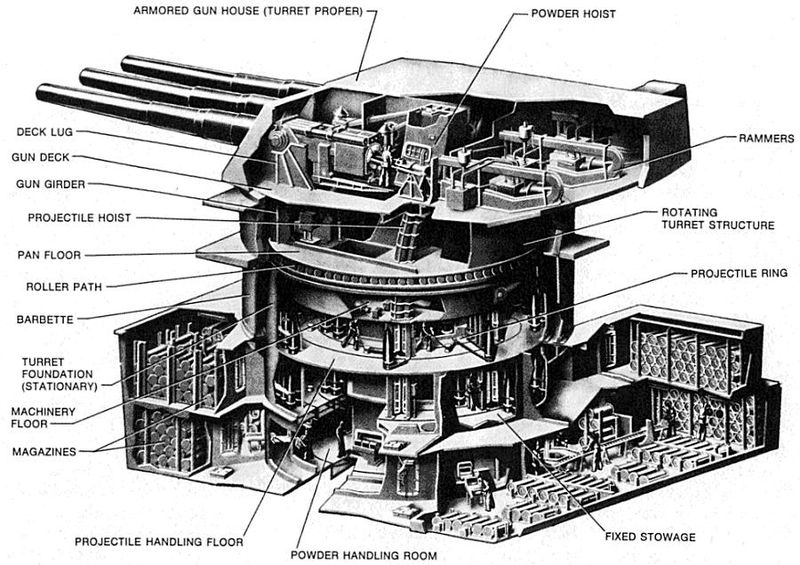
North Carolina Class 16″ Gun Turret

The U.S. Navy began a study of new designs for a fast battleship class to comply with the treaty restrictions in May to July of 1935.  A minimum of 35 different designs were submitted and reviewed by the Navy and also reviewed by the faculty of the Naval War College. After a considerable amount of debate a design called the Type XVI was selected. The design originally called for twelve 14” guns mounted in three quadruple turrets. Other designs considered called for twelve 14″ guns in triple turrets. When the Japanese opted out of the treaty and the Italians began building the Vittorio Veneto Class with 15” guns the U.S. Navy adopted the “escalation clause” and the design was modified to mount nine 16” guns in triple turrets primarily due to the expectation that the Japanese Imperial Navy would mount larger guns in its new ships.

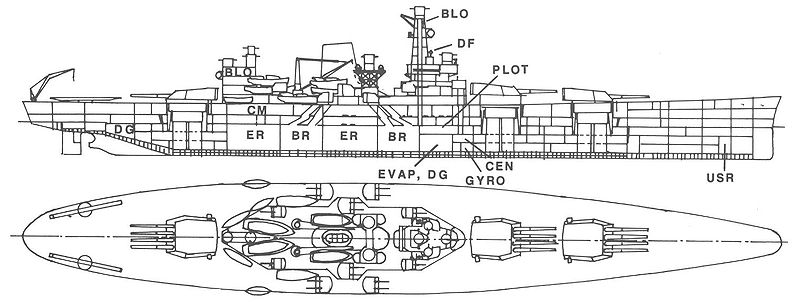
Initial Type XVI design with 14″ guns

The Navy worked to achieve the maximum speed, armament and protection that it could within the 35,000 ton treaty limitations. There was debate among Admirals and designers as to how to solve the problem with some factions leaning toward greater speed and lighter armor and armament and others weighing in on a slightly slower ship with greater firepower and protection. The Type XVI (modified) design original called for twelve 14” guns in quadruple turrets but this was changed to nine 16” guns in triple turrets. The main armor belt was 12” inclined 15 degrees with 16” armor on the turret faceplates and barbets having 16” side armor.  Their conning tower was also protected by 14” armor.  This gave them heavier armor than the Italian Vittorio Veneto Class. They had a lighter belt than the British King George V Class but more protection accorded to their turrets, barbets and conning tower while they had slightly less armor than the French Richelieu class due to those ships all guns forward and all or nothing armor protection.

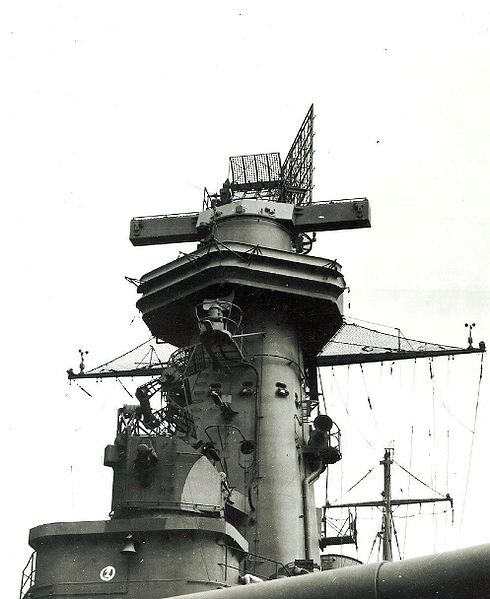
View of USS Washington Conning Tower showing Mk 38 5″ gun directors and SG Surface Search Radar

Their top speed of 27 knots was slower than their European counterparts but their range was far superior to all being able to steam over 20,000 miles at 15 knots and 6,610 miles at 25 knots. Their top speed and ranged decreased slightly during the war with the addition of more anti-aircraft guns and sensors.  Most of the designs considered had speeds from 27-30 knots depending on whether the designers sacrificed speed for armament and protection or protection and firepower for speed. One design, the Type VII resembled earlier classes of battleships with a speed of only 23 knots in favor of much heavier protection on a shorter hull.

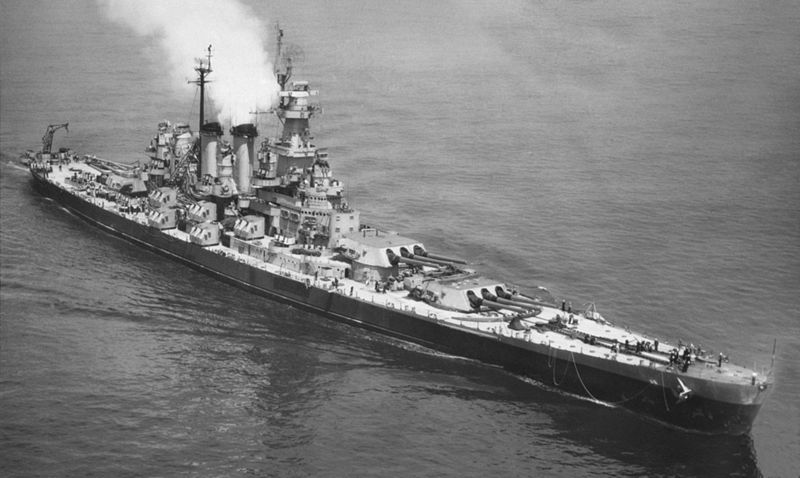
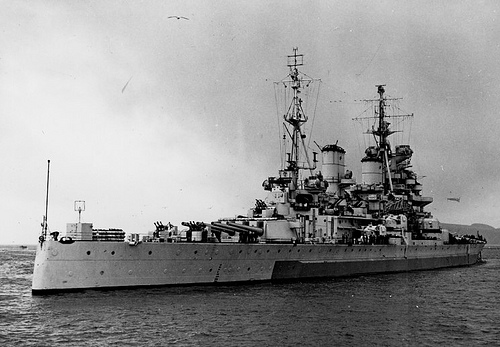
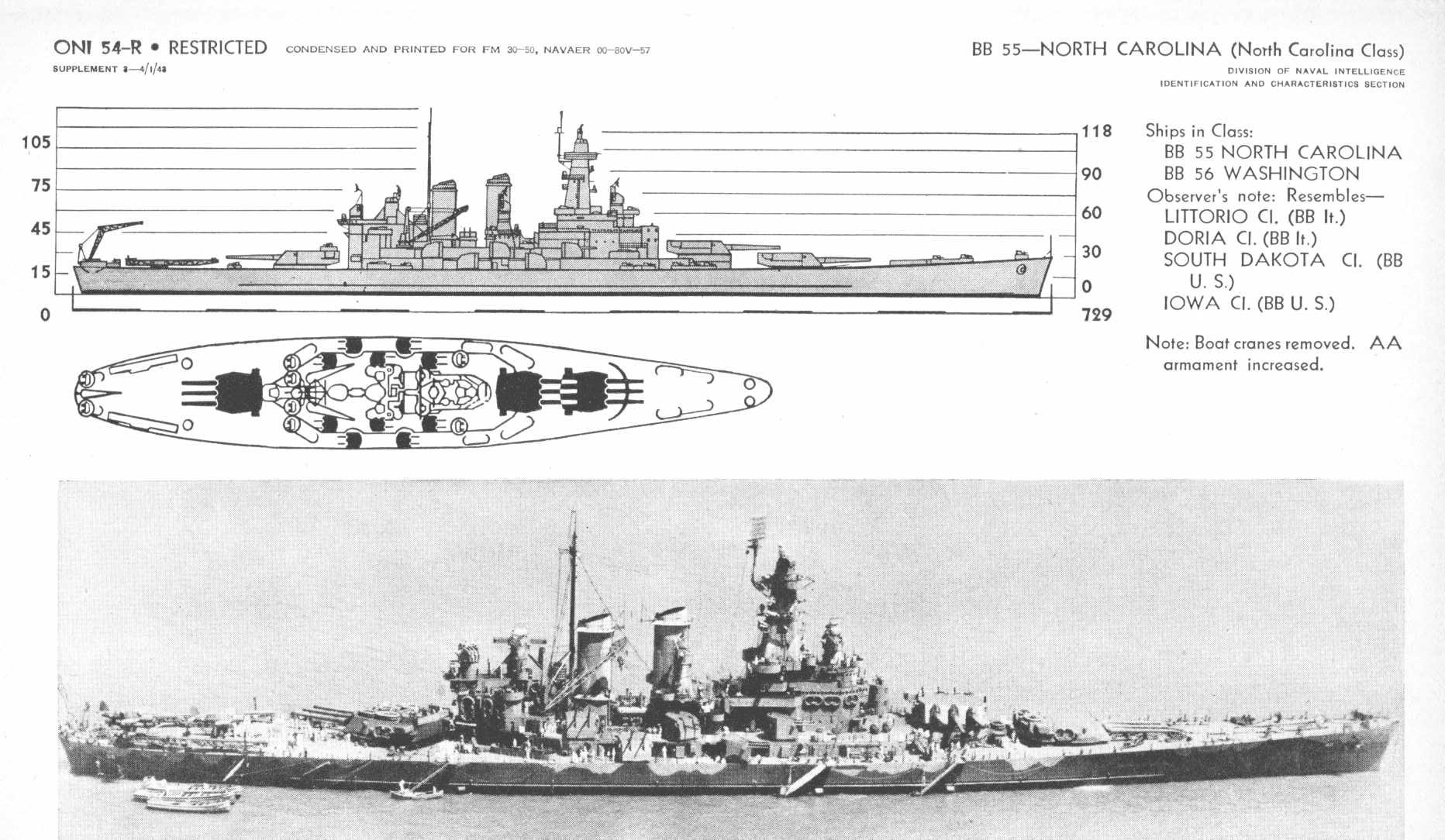
USS North Carolina BB-55

The North Carolina Class was comparable in many ways with the Japanese Nagato Class in speed, protection and armament but with a far greater cruising range.

The North Carolina’s also were superior to their contemporaries in their anti-aircraft armament as well as their electronics, radar and fire direction suites which were all continuously upgraded throughout the war.

The construction of the ships was slow due to material shortages, the design change to 16” guns and labor issues which not only lengthened the length of their construction but raised their cost from $50 million to $60 million dollars each.

North Carolina during underway replenishment in the Pacific

USS North Carolina was laid down on 27 October 1937 launched on 13 June 1940 and commissioned 9 April 1941 though it was months before she was operational due to severe longitudinal vibration of her propeller shafts which was corrected by a modified propeller design.  Despite the efforts to keep to the treaty limitations the ships displaced 36,600 long tons and had a full load displacement of 44,800 long tons. By 1945 the ships full load displacement had increased to 46,700 long tons for North Carolina and 45,370 long tons for Washington.

Torpedo Damage to North Carolina

When she completed her shakedown cruise she was sent to the Pacific where she joined Task Force 16 and the USS Enterprise on 6 August 1942.   She defended Enterprise during the Battle of the Easter Solomons on 24 August and during an 8 minute period she shot down between 7 and 14 Japanese aircraft. On 15 September she was badly damaged by a torpedo from the Japanese submarine I-15 which necessitated her withdraw to Pearl Harbor for repairs. The gravity of the hit sparked great debate in the Navy regarding her protection with some wondering if too much had been sacrificed in her design.  Upon her return to service she operated with TF 38 and TF 58 protecting the carrier task forces in their operations against the Japanese as well as with TF 34 the Fast Battleship Task Force under the command of Vice Admiral Willis Lee.  Serving throughout the Pacific campaign she took part in every major operation in the Central Pacific except Leyte Gulf and against the Japanese mainland.  Her Marines and Sailors took part in the initial occupation of Japan.  She was decommissioned and placed in reserve on 1 June 1960 and survived scrapping to be bought by the State of North Carolina for $250,000 and turned into a memorial at Wilmington North Carolina.  She remains a National Historic Landmark and is maintained by the USS North Carolina Battleship Commission. She is exceptionally well maintained and much of the ship is open for tours.

USS Washington BB-56 on high speed run in 1945

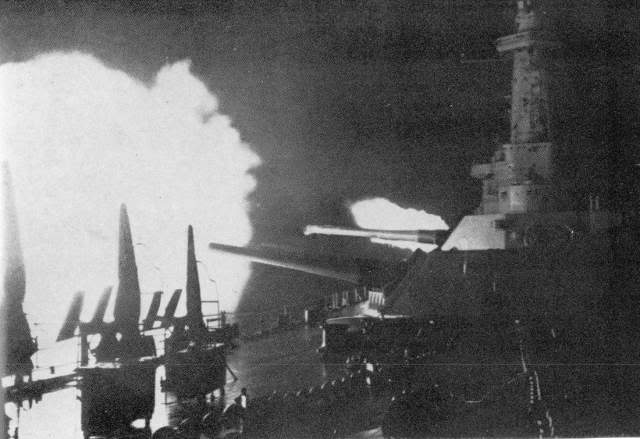
The USS Washington was laid down 14 June 1938 launched on 1 June 1940 and commissioned 15 May 1941 though like North Carolina had propeller shaft vibrations which delayed her operational availability.  She became the first U.S. Navy Battleship to take an active part in the war when she joined the British Home Fleet in March 1942 operating with the Royal Navy escorting Arctic convoys bound for the Soviet Union against possible forays of the Battleship Tirpitz and other heavy German surface units until 14 July when she returned to the United States for a brief overhaul.  She then was deployed to the South Pacific to join U.S. Forces operating against the Japanese at Guadalcanal and became the Flagship of Rear Admiral Willis Lee.  During the Naval Battle of Guadalcanal on the night of 14-15 November she and the USS South Dakota sailed with 4 destroyers to intercept a Japanese task force.  The Japanese force led by the Battleship Kirishima included 2 heavy and 2 light cruisers as well as 9 destroyers.  The Japanese hit the Americans hard early in the battle sinking 3 of the 4 American destroyers and inflicting significant topside damage to South Dakota which caused a power outage and knocked her out of the action.  Washington sailed on undetected by the Japanese and opened a devastating barrage against Kirishima scoring hits with 9 16” shells and 40 5” shell. Kirishima was mortally wounded and was scuttled by her crew the following day.  Washington then drove off the other Japanese ships sparing Henderson Field from certain damage.

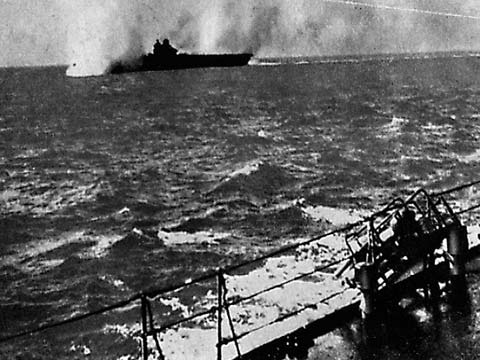
Washington blasting Kirishima at the Naval Battle of Guadalcanal 14-15 November 1942

Washington’s victim the IJN Battleship Kirishima

Washington continued operations in the South and Central Pacific until she was damaged in a collision with USS Indiana which resulted in her losing nearly 60 feet from her bow on 1 February 1944. She received temporary repairs before returning to the Puget Sound Naval Shipyard to receive a new bow and other modernizations returning to action in May 1944. She remained in operation against the Japanese the rest of the war. She was decommissioned in 1947 and struck from the Naval Register on 1 June 1960 and sold for scrap.

Various improvements and ideas were suggested while the ships remained in reserve as some in the Navy wished to reactivate them to include lightening them to increase their speed and conversion into Helicopter Carriers all of which were rejected.

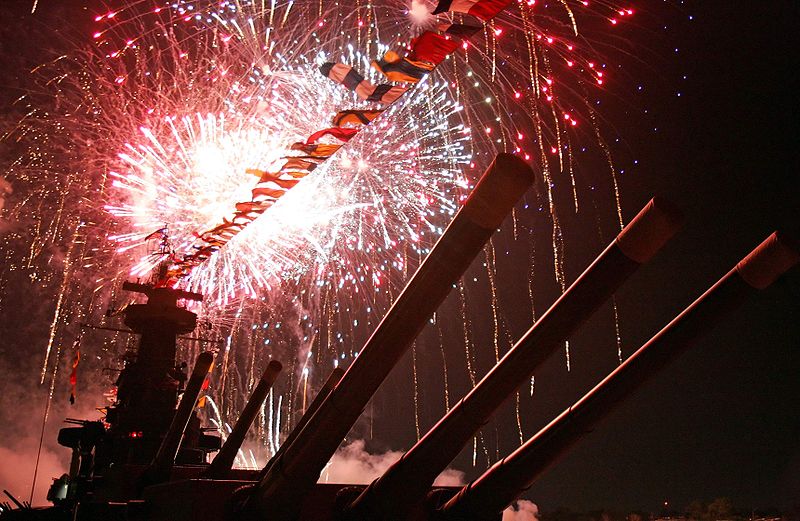
Fireworks over the North Carolina in Wilmington (US Navy Photo)

Though the North Carolina’s were a compromise design they performed admirably throughout the war.  They and their brave crews are remembered in Naval History and the preservation of North Carolina has ensured that they will never be forgotten.

9 Comments

Filed under History, Military, Navy Ships, world war two in europe, world war two in the pacific

British Bulwarks: The King George V Class Battleships

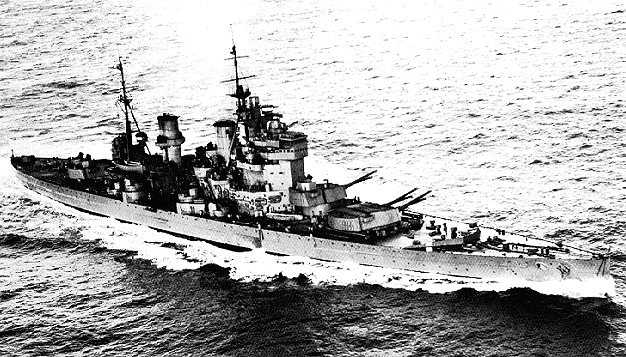
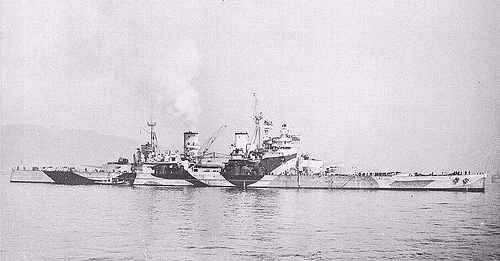
HMS King George V

This is the third in a series of five articles on the battleships built under the provision of the Washington and London Naval Treaty limitations in the 1930s. I am not including the ships which were completed in the immediate aftermath of the Washington Treaty limitations. This series looks at the modern battleships that the World War II combatants would produce in the 1930s which saw service in the war. This article covers the British Royal Navy King George V Class battleships. Part one covered the Italian Vittorio Veneto class entitled The Pride of the Regina Marina: The Vittorio Veneto Class Battleships. Part two French Firepower Forward: The unrealized potential of the Dunkerque and Richelieu Class Battleships covered the French Dunkerque class and Richelieu class Battleships. Part Four the American North Carolina and South Dakota Classes. I have already published the final part which covers the German Scharnhorst Class entitled Power and Beauty the Battle Cruisers Scharnhorst and Gneisenau . The German Bismarck, Japanese Yamato, British Vanguard and American Iowa Classes will be covered in a subsequent series.

HMS King George V in 1941

In the wake of the First World War the major naval powers entered into an agreement restricting the construction of capital ships and limiting the numbers that treaty signatories were allowed to keep. As a result numerous ships were scrapped or disposed of and the majority of planned ships were either cancelled while building or never laid down. In some cases to comply with treaty restrictions ships such as the Royal Navy’s Nelson Class which was a compromise design which sacrificed speed for protection and firepower.  By the late 1920s the Royal Navy’s battle force was comprised of the Nelson’s, the fast Battlecruisers Hood, Renown and Repulse and 10 ships of the Queen Elizabeth and Revenge classes all designed before the First World War.

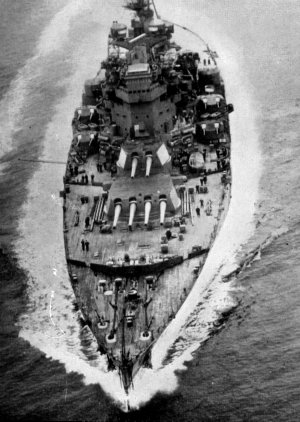
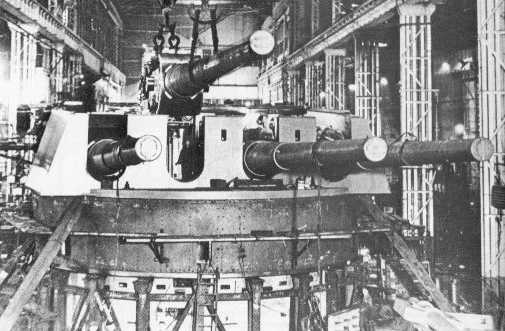
King George V Class Quad Turret being built

The Royal Navy began planning for a new class of battleships in 1928 but the plans were shelved with the signing of the London Naval Treaty which continued the “building holiday” on capital ship construction as well as size and armaments until 1937.  With the realization that its battle force was becoming dated as other nations laid down new classes of battleships the Royal Navy recommenced planning in 1935.  The Navy planned to build to the maximum of the 35,000 displacement limitation and placed a great measure of emphasis on armor and protection. The ships were designed to achieve a 28 knot speed which made them faster than all British battleships although slower than the Battlecruisers. The planners had alternative designs to use 14”, 15” or 16” guns with the Navy favoring the 15” models which had equipped all of their other ships with the exception of the Nelson’s. However the Admiralty to use 14” as the government was endeavoring to negotiate with other powers to impose a 14” limitation on armament for new battleships.  While the Americans and French agreed to the limit neither the Japanese nor Italians followed suit and as a result all new battleships of other powers had larger guns than the King George V Class ships with the French and Italians opting for 15”on the Vittorio Veneto Class, the Americans 16” on the North Carolina, South Dakota and Iowa Classes and the Japanese 18” guns for their Yamato Class. The Germans who were not a signatory built their Scharnhorst Class with 11” although they were planned as 15” ships and would equip the Bismarck Class with 15” guns.  The Royal Navy attempted to rectify this by placing more guns on the ships than those of other navies but the planned armament of twelve 14” guns mounted in quadruple turrets but this was impossible on the 35,000 platform without compromising protection or speed.  Thus the Admiralty compromised on 10 guns mounted in 2 quadruple and 1 twin turret.

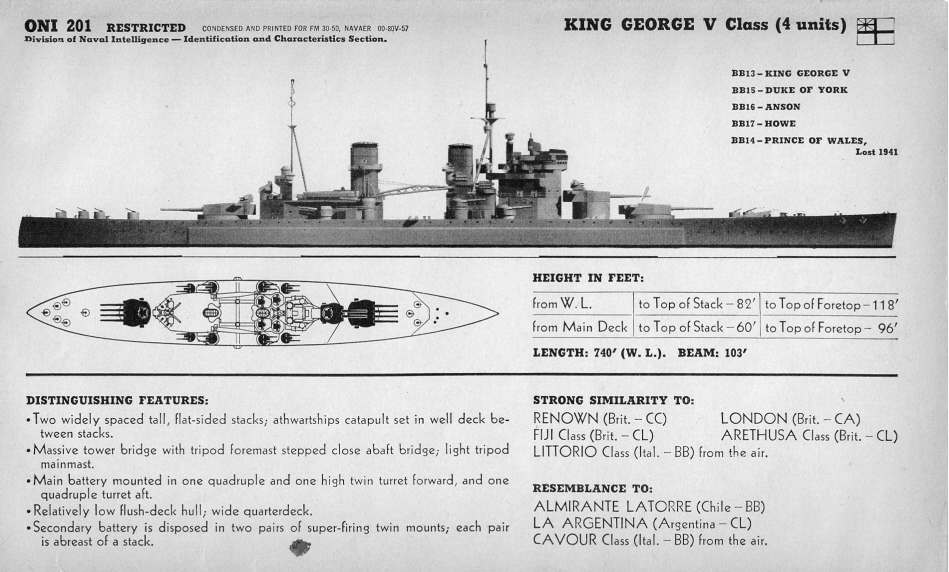
ONI Drawing of King George Class

The ships displaced a full load displacement of 42,237 tons in 1942 which had increased to 44,460 tons in  1944. The were 745 feet long had a beam of 103 feet, a top speed of 28 knots with a cruising range of 5,400 nautical miles at 18 knots. Their relatively poor endurance limited their operations in the Pacific and even nearly caused King George V to have to abandon the chase of the Bismarck in May 1941.

The main batteries of the ships proved problematic in combat with the quadruple turret design causing all the ships problems. This was demonstrated in the engagement of the Prince of Wales against the Bismarck as well as the King George V in its duel with the German behemoth when A turret became disabled and completely out of action for 30 minutes and half of the main battery being out of action for most of the engagement for mechanical reasons.  The Duke of York achieved excellent results against the Scharnhorst but even in that engagement the main battery was only able to be in action 70% of the time.  One of the other drawbacks of the design was that in order to replace a gun due to wear that the turret itself had to be dismantled in order to remove and replace the guns.

The main secondary armament of 5.25” dual purpose guns in twin mounts suffered from poor rate of fire and slow traverse well below their designed standards.

The mounting of the armament was designed to provide protection against turret explosions which could potentially detonate the ship’s magazines.  The main side and underwater protection scheme was sound and protected the ships well in combat.  The vertical protection was also sound as was the protection afforded to the turret barbets and placement of the magazines to shield them from plunging fire.  Only the Prince of Wales was lost due to enemy action had later examination of her wreck revealed that the culprit was a torpedo which detonated in a propeller shaft outside of the armored belt which caused uncontrolled flooding when she was attacked by Japanese aircraft on 8 December 1941.

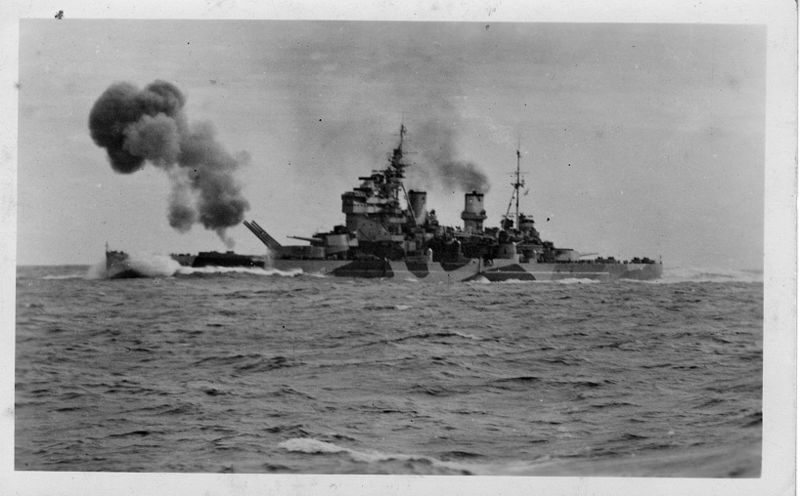
HMS Anson conducting gunnery exercises

The propulsion systems developed problems after 1942 when fuel oil quality was decreased because of the need for aviation gas.  The new mixtures which were higher viscosity and contained more water than the boilers could effectively burn increased maintenance costs and decreased efficiency. To compensate the Admiralty designed new higher pressure fuel sprayers and burners which returned the boilers to full efficiency.

The lead ship of the class the King George V was laid down on 1 January 1937, launched on 21 February 1939 and commissioned on 11 December 1940.  As the flagship of the Home Fleet she took part in the unsuccessful search for the Scharnhorst and Gneisenau and in the hunt for the Bismarck in which she earned lasting fame in helping to sink that ship.  She took part in the Murmansk convoy protection as well as Operation Husky, the invasion of Sicily before sailing to the Far East for operations against the Japanese. She finished the war with the British Pacific Fleet and was present at the Japanese surrender in Tokyo Bay.  She returned as flagship of Home Fleet until she was decommissioned in 1949. She was subsequently sold for scrap in 1957.

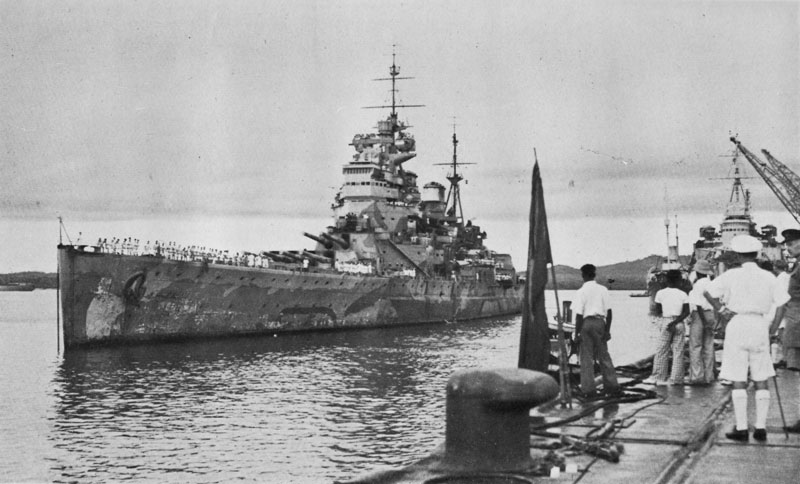
Prince of Wales pulling into Singapore

The second ship the Prince of Wales laid down on 1 January 1937, launched on 3 May 1939 and commissioned 19 January 1941 although she was not officially completed until March 1941. Her initial operation came in May 1941 when she sailed with the HMS Hood to intercept the Bismarck. When she sailed she still had shipyard technicians aboard.  Damaged in the action she did score an important hit on Bismarck which cut a fuel line making her forward tanks inaccessible and causing her to make her run for Brest which she did not complete. Another hit damaged her aircraft catapult and a third an electric dynamo.

Church Service on Prince of Wales at Argentia Bay with Churchill and Roosevelt in attendance

Following repairs she carried Winston Churchill to the Argentia Bay Newfoundland where he met with Franklin D. Roosevelt and together drafted the Atlantic Charter. She accompanied the HMS Repulse to Singapore to bolster the British presence in the Far East but without air cover was sunk by Japanese aircraft which struck her with 4 torpedoes and a bomb, the key hit being a lucky hit on her propeller shaft which caused flooding that caused a loss of power to pumps and anti-aircraft defenses.

Prince of Wales sinking and being abandoned

The third ship the Duke of York was laid down 5 May 1937, launched on 28 February 1940 and commissioned 4 November 1941. She provided convoy escort for the Lend Lease convoys to the Soviet Union as well the sinking of the Scharnhorst on 26 December 1943 during the Battle of North Cape. She was transferred to the Pacific in 1944 and served at Okinawa.  She was decommissioned in 1949 and scrapped in 1957.

Duke of York

The fourth ship of the class the Howe was laid down on 1 June 1937, launched 9 April 1940 and commissioned on 29 August 1942.  She served with the Home Fleet and in the Mediterranean until she was transferred to the Pacific in August 1944. She was stuck by a Kamikaze in May 1945 and Howe was sent for refit at Durban South Africa. She was still in refit when the war ended. She returned home and was placed in reserve in 1950 and scrapped in 1958.

HMS Howe

The last of the class the Anson was laid down 20 July 1937, launched 24 February 1940 and commissioned on 22 June 1942. She operated in the Mediterranean and the North Atlantic and was sent to the Pacific in 1945 where she accepted the surrender of the Japanese Forces at Hong Kong. She returned to Britain and was decommissioned in 1941 and scrapped in 1957.

HMS Anson

The ships had rather unremarkable careers for the most part with the exception of the Prince of Wales and King George V in the hunt for the Bismarck and the Duke of York sinking the Scharnhorst. They had a number of technical problems which limited their operations in the war. However they and their brave crews deserve to be remembered as helping to hold the line against the Axis in the early years of the war and sank two of the four German Battleships lost during the war.  This alone was as remarkable achievement as of their contemporaries only the USS Washington sank an enemy battleship in combat.


12 Comments

Filed under History, Military, Navy Ships, world war two in europe, world war two in the pacific

The Pride of the Regina Marina: The Vittorio Veneto Class Battleships

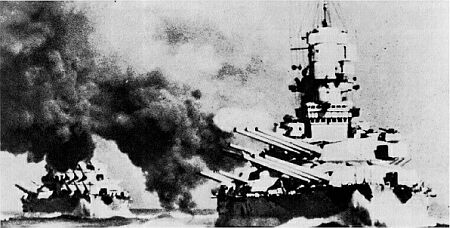
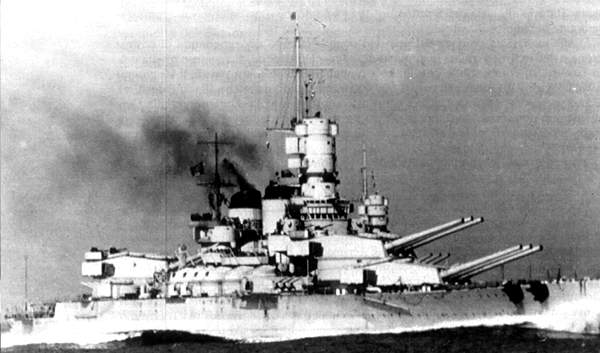
Vittorio Veneto and Littorio

This is the first in a series of five articles on the battleships built under the provision of the Washington and London Naval Treaty limitations in the 1930s. I am not including the ships which were completed in the immediate aftermath of the Washington Treaty limitations. This series looks at the modern battleships that the World War II combatants would produce in the 1930s which saw service in the war. Part one covers the Italian Vittorio Veneto class, Part Two the French Dunkerque and Richelieu Classes, Part Three the British King George V Class and Part Four the American North Carolina and South Dakota Classes. I have already published the final part which covers the German Scharnhorst Class entitled Power and Beauty the Battle Cruisers Scharnhorst and Gneisenau The German Bismarck, Japanese Yamato, British Vanguard and American Iowa Classes will be covered in a subsequent series.
Technically many of these ships were constructed after the expiration of the treaties but since most of the navies at least attempted to maintain a façade of compliance with them most were officially listed as complying with the treaty restrictions.

The Washington Treaty placed a limit on the displacement and armament of battleships. The London Treaty continued them which limited the displacement of new ships to 35,000 tons with the main battery being limited to 16” guns. Each of the treaty signatories as well as the Germans who had been bound by the much more stringent Treaty of Versailles restrictions endeavored to build to the limit of the treaty and if possible skirt the limitations in terms of displacement which allowed them to increase protection as well as more powerful engineering plants.

The Royal Italian Navy had not completed a battleship design since the Andria Doria Class which were constructed between 1912 and 1915 and modernized given an extensive modernization between 1937 and 1940.  A subsequent class the Francesco Caracciolo class was started during the First World War but no ships of the class were completed.

In the 1930s a new naval arms race was underway in the Mediterranean as the French Navy had begun a new class of Fast Battleships, the Dunkerque class which were designed to defeat the German Deutschland class “pocket battleships” and the follow on Richelieu Class. Mussolini saw the new French ships as a threat to the control of the Mediterranean and ordered the construction of a new class of battleships to help Italy achieve naval dominance in the Mediterranean.

The new ships were of a breathtaking design, large, fast and heavily armed officially listed as meeting the prescribed treaty limit of 35,000 tons they actually would displace 41,177 tons standard displacement and 45,963 tons full load. Armed with a main battery of 9 15” guns in triple turrets and a secondary armament of 12 6” and 12 3.5” guns along with 20 37mm and 30 20mm anti-aircraft guns and capable of 29 knots in service and with a relatively short range of 3900 miles at 20 knots they were formidable ships for operations in the Mediterranean. They were well protected although their Pugliese torpedo defense system proved inferior to traditional designs.

Their main armament though formidable was not without its flaws. The 15” guns had a very long range of 42 km or 26.6 miles and high muzzle velocity of 2900 fps. The high muzzle velocity led to a barrel life of only about half that of their counterparts and inconsistent shell fall patterns.  The guns also suffered from a slow rate of fire of only 1.3 rounds per gun a minute.

The Ships:

Vittorio Veneto in 1943

Vittorio Veneto: The Vittorio Veneto was laid down 1934 along with her sister the Littorio and was launched on 25 July 1937 and commissioned on 28 April 1940. She would see action numerous times and give a good account of herself against the British taking part in 56 war missions. She fought at the Battle of Cape Spartivento (Teulada) where she fired 19 salvos to drive off a 7 ship British cruiser squadron in a pitched battle that also included the battleship HMS Ramillies and battle cruiser HMS Renown. In 1941 she took part in the Battle of Cape Matapan where she was damaged by an aerial torpedo after driving off a British cruiser squadron. After repairs she was back in action and on 15 June 1942 participated in the Battle of Mid-June, where she and her sister ship Littorio successfully fenced off a large British convoy from Alexandria by their mere presence at sea.  She was also the first Italian battleship equipped with radar. She surrendered with the Italian fleet to the Allies on 8 September 1943 surviving furious German air attacks. She was interred at the Great Bitter Lakes in the Suez Canal. After the war she taken as war compensation and was returned to Italy and scrapped beginning in 1948.

Littorio

Littorio (later Italia): Littorio was laid down in 1934 and launched on 22 August 1937 and commissioned on 6 May 1940.  She participated in 43 operations including the Battle of Sirte and several actions against British convoys.  Following the Battle of Mid-June she was struck by an aerial torpedo dropped by a Wellington bomber. She was repaired and upon the removal of Mussolini from power was renamed Italia and surrendered with the Italian Fleet on 8 September 1943 being damaged by a Fritz-X radio controlled bomb. With her sister Vittorio Veneto she was interred in the Great Bitter Lake and was returned to Italy where she was decommissioned and scrapped beginning in 1948.

Roma

Roma: Roma was laid down 18 September 1938, launched on 9 June 1940 and commissioned 14 June 1942.  Despite her addition to the fleet she was not deployed due to a fuel shortage. She sailed with the Italian Fleet to surrender on 8 June under the guise of the fleet sailing to attack the Allied invasion fleet off Salerno. The Germans discovering the ruse launched air attacks by Dornier Do-217s armed with Fritz-X radio controlled bombs attacked the fleet as it transited the Strait of Bonafacio.

Roma exploding after being hit by Fritz-X radio guided bomb

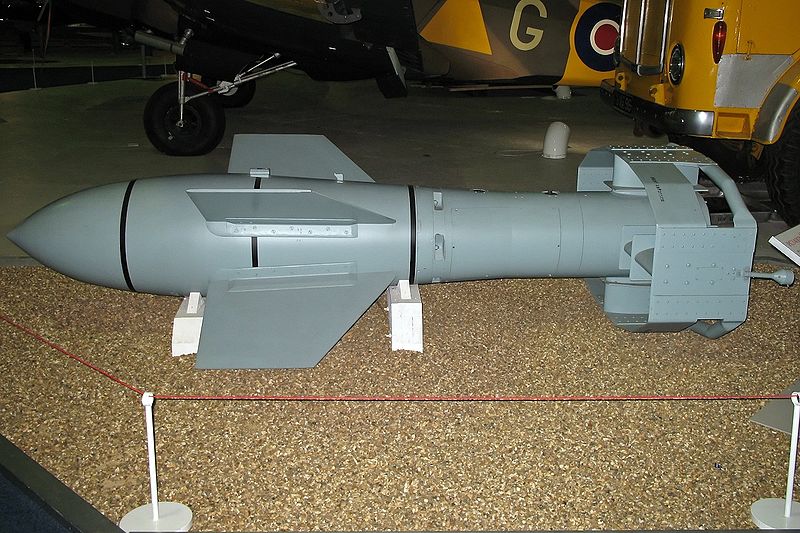
Roma was hit by two of the missiles the first which flooded two boiler rooms and the aft engine room.  She was hit soon after by a second Fritz-X which hit in the forward engine room causing catastrophic damage and igniting the number two turret magazine blowing the turret off the ship and causing the ship to capsize and break in two as she sank carrying 1255 of her crew including Admiral Carlo Bergamini to their death. Roma was the first ship sunk by a radio controlled bomb, the forerunner of our current air launched anti-ship missiles.

The Fritz-X Radio Guided Bomb

Impero: Impero was laid down but never completed and scrapped after the war.

The Vittorio Veneto class was a sound design and operationally successful against the Royal Navy and the brave sailors of the Regina Marina who manned these fine ships should not be forgotten.
10 Comments

Filed under History, Military, Navy Ships, world war two in europe

The Graf Zeppelin and Aquila: Dreams of the Axis Carrier Air Enthusiasts

While the U.S. Navy, the Royal Navy and the Imperial Japanese Navy developed mature Fleet Air Arms and the French Navy experimented with the conversion of a Normandie class battleship hull into a carrier the Bearn the German Kriegsmarine and Italian Royal Navy the Regio Marina lagged behind. The Italian effort was hobbled by inter-service rivalries and doctrinal debates as well as political battles. As a result the Italians maintained a Seaplane Carrier until Mussolini decided in favor of a carrier. In Germany the effort was precluded by the terms of the Treaty of Versailles. In 1935 the Anglo-German Naval Treaty allowed the Germans to build carriers up to 35,000 tons displacement and the same year Hitler announced that Germany would build aircraft carriers. German Naval and Luftwaffe Officers travelled to Japan in 1935 to study the Japanese Carrier Akagi and the German Carrier Flugzugträger A later the Graf Zeppelin was laid down a year later.

The Italian Aircraft Carrier Aquila

Neither ship would ever become operational. The Italian ship named Aquila which was converted from the Ocean Liner Roma was begun in 1941 and by 1943 was nearing completion and already her static tests when Italy surrendered and she was commandeered by the Germans.  Damaged by an allied air attack in 19on 44 she was partially scuttled on 19 April 1945.  Aquila was salvaged and consideration was given to completing her after the war but she was scrapped in 1951.

Incomplete Aquila in German hands 1944

Reggiane Re.2001 Falco II

As a carrier Aquila displaced 28,000 tons full load and would have been capable of a maximum speed of 30 knots.  She was designed to carry an air group of 51 Reggianne Re.2001 OR Serie II figher-bomber/torpedo bombers able to carry a able to carry a 600 kg torpedo or bomb.  Had she been started in 1938 or 1939 instead of 1941 she might have been completed in time to be of assistance to the Italian Navy in its operations against the Royal Navy in the Mediterranean.

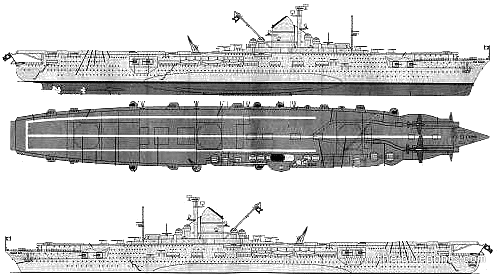
The Kriegsmarine Carrier Graf Zeppelin

The Germans faced their own challenges and despite the fact that Graf Zeppelin was launched on 8 December 1938 she was never completed and never achieved an operational status.  Part of the problem was the weakness of the Kreigsmarine in relation to the other services, especially Goering’s Luftwaffe which maintained control of all German aircraft design, construction and operation. The other major issue was the lack of experience the Germans had in carrier design or construction which resulted in a number of retrofits which lasted until 1943 when she was nearly complete. At that point in time Hitler now thoroughly disillusioned with the Kriegsmarine surface units suspended her construction.   She was scuttled in April 1945 before she could be captured by the Soviets. The Soviet Union would study her and use her in ordnance testing to see what kind of damage a carrier might absorb.  She sank following being hit by 24 bombs, projectiles and two torpedoes.

The incomplete Graf Zeppelin

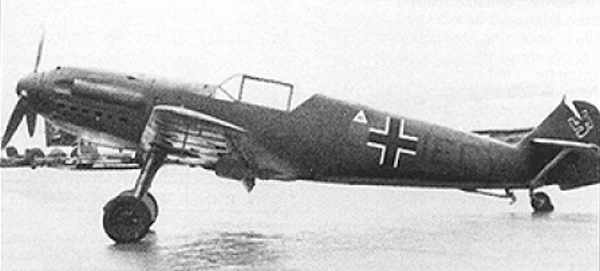
As a carrier Graf Zeppelin was 33,550 tons and would have capable of 35 knots with a 9,000 mile cruising range at 19 knots. Her air group would have been comprised of 30 Bf 109T fighters and 12 Ju 87 dive bombers.

Bf 109 T

The completion of either of these ships by the Axis Powers would probably not altered the course of the war but would have been an interesting footnote to history had they become operational and participated in any action against Allied Carriers.

3 Comments

Filed under History, Military, Navy Ships, world war two in europe

The Coming of Orwell’s 1984 27 Years Late….So Much for Timing

Yes my friends is finally 1984, well the Orwellian kind. I remember the first 1984, back in the good old days of the Cold War and all that.  But that 1984 was more of a number and not very Orwellian. It is funny I read the novel 1984 on my way to my first assignment in Germany in January 1984 and found it rather chilling.  However back then it was still rather futuristic despite being written back in 1948.  Orwell’s vision of surveillance and the manipulation of language didn’t seem as threatening back in 1984 because the technology wasn’t there yet but now it is.

There has been a proliferation of low cost high resolution video surveillance technology which continues to evolve at an exponential rate with corresponding advances in facial, voice and even emotional sensing technology that can have positive outcomes but in the wrong hands, particularly in the hands of terrorists but even worse governments, especially those that sacrifice freedom in the name of security. Since no government or political system is immune to corruption or without actors who are only there for their personal power or advancement of their political, social or even religious ideology these technologies are fraught with danger.  They are a double edged sword with great promise for individuals and societies which can be quickly turned to the service of evil.  An example is high resolution cameras linked to artificial-intelligence software analyzed the images to recognize faces, gestures and patterns of group behavior. There is the Mind’s Eye program being developed for the military which seeks to develop in machines a capability that exists only in animals: visual intelligence. Emotional sensing software is being experimented by some movie studios to judge the emotional reaction of audiences to films and face recognition software is used by Google’s Picasa, Yahoo’s FLICKR and others for file sharing and organizing. Google has also developed Googles which lets a person snap a photograph with a smartphone which then sets off an Internet search of whatever was taken.  Google has refused to put facial recognition software on the phone despite user’s requests. Google realized that since smartphones can be used to take pictures of people’s faces and retrieve all kinds of personal information such as their name, occupation, address and workplace without their knowledge.
September 11th 2001 brought the nation to the realization that terrorism could occur in the United States.  Now people in many other countries have dealt with terrorism of various kinds for years but for Americans it was something that happened to other people far away, or Americans serving, working or living overseas.  When I was a young Army Officer we lived under the daily threat of the Red Army Faction and Baader-Meinhoff terrorists groups in Germany very narrowly avoiding being in the blast zone at the Frankfurt Army Post Exchange on November 25th 1985 when a bomb was detonated injuring 34 Americans. We turned around about 15 minutes before the blast because Judy felt ill; otherwise we would have been right in the zone. I remember getting the call from my Colonel that my Ambulance Company was on alert after this.  We know what it is like to have your vehicle inspected every day going into the base and being questioned by German Police when reporting a terrorist sighting.  So for us this was old hand, but September 11th tore at the soul of the American nation and I dare say that we haven’t been the same since.

We passed the Patriot Act and created new security agencies such the TSA and we greatly expanded the surveillance capabilities at home and abroad of American Intelligence and Police agencies as well as that of the military.  Now I am not knocking all the things that the U.S. Government has done to try to prevent another 9-11 or worse. At the same time every new expansion of security and surveillance there is a corresponding loss of liberty and with each new law or Presidential Executive order or Directive regarding security and intelligence gathering a little more freedom is given up and a greater possibility that the very laws and measures being implemented to “protect” the populace will be used against it in the future.

Those that design the technologies which make the implementation of these laws possible are increasing in the capabilities of their innovations on an exponential basis often with the explicit help and support of the government in particular Federal and State Police agencies, intelligence agencies and the military.  Data mining, aerial surveillance drones both armed and unarmed, the ever present surveillance cameras which seem to populate every public place. Add to the power of individuals using the latest smartphones to do their own spying on people and the technology which has so much promise to do good can and at some point probably will be turned against the people.

This will happen for sure after the next major terrorist attack and it matters not if there is a Democratic or Republican administration in charge.  Security would be the rational and those that dissent will be dealt with in one way or another.  One only has to look back at the Nazi and Soviet regimes to see how governments with far less technology were able to subjugate their people and oppress dissenters to see how easy this can happen. In the name of security and economic stability the Germans, a sizable percentage of that had little regard for the Nazis or Hitler let Hitler enact laws that gave him absolute power.
That is my concern. I like technology and love the benefits that the advances in it provide, but I am certainly aware that the technology that I so enjoy is a two edged sword which in the wrong hand can, is and will be used against the citizens of the countries that come to rely on it and draconian security laws and police procedures.

I am very security conscious. Having lived under the threat of terrorism on a daily basis in the 1980s and having served under constant threat in the far reaches of Al Anbar Province never knowing if Al Qaeda had infiltrated the Iraqi Police or Army units that I was among I fully understand the threat. At the same time I am fully cognizant of the proclivity of men in power to promote a culture of fear in which citizens willingly surrender freedom for security and in the process descend into the abyss.

Peace

Padre Steve+

1 Comment

Filed under History, Military, national security, philosophy, Political Commentary

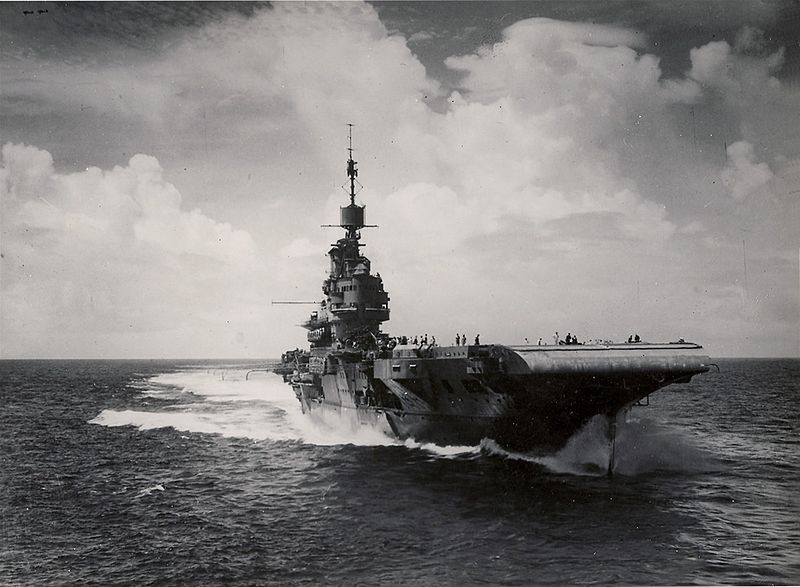
Four of a Kind: The Illustrious Class Aircraft Carriers

HMS Illustrious in 1944

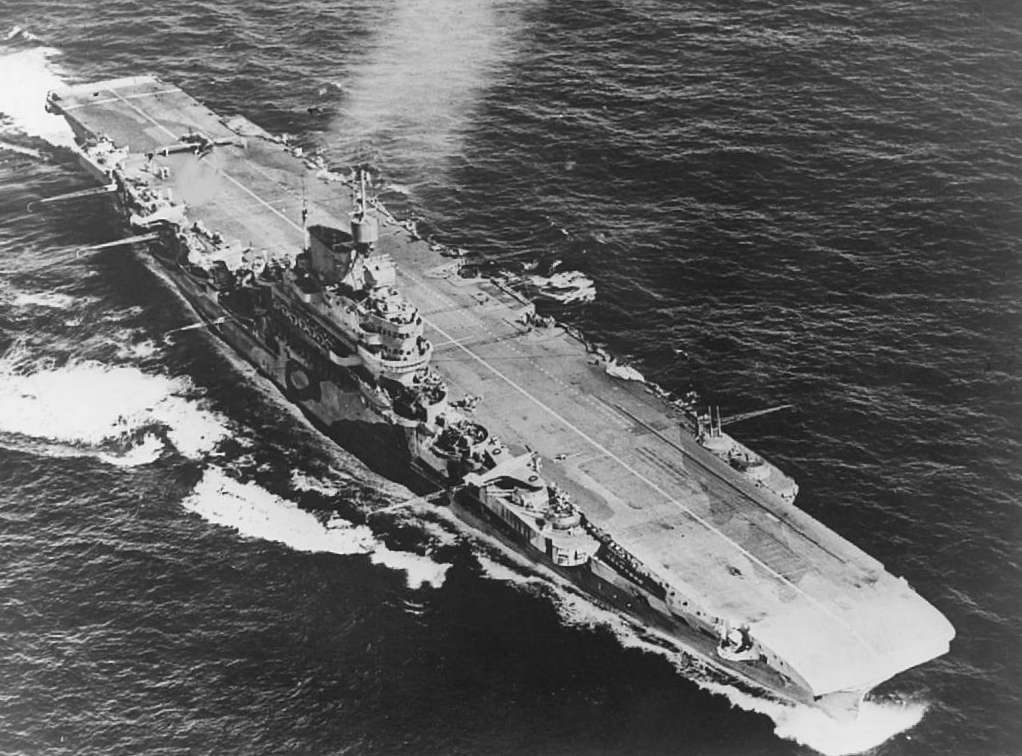
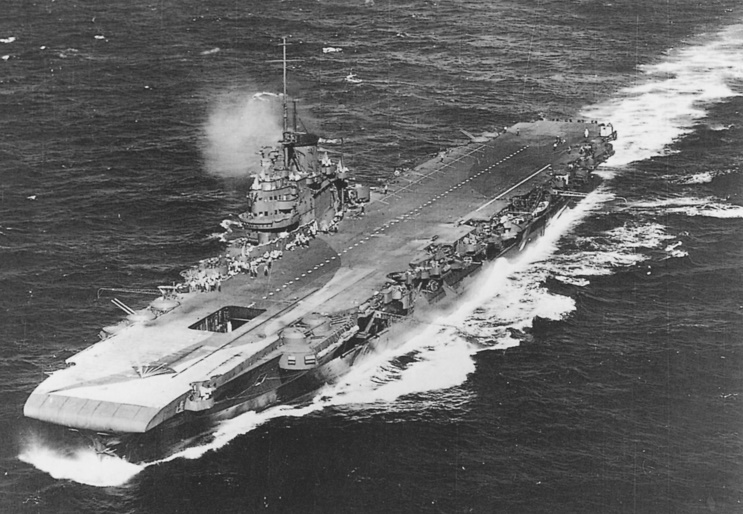
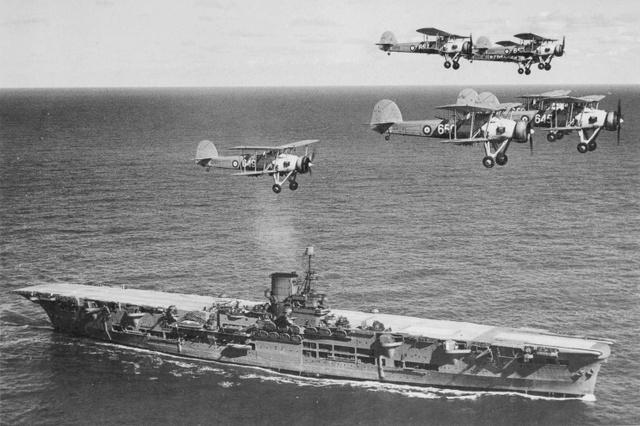
In the mid-1930s the Royal Navy recognized the need to develop and built new Fleet Carriers. The Illustrious Class of four ships was ordered as part of the 1936 Naval Program.  The four ships of the class HMS Illustrious, HMS Formidable, HMS Victorious and HMS Indomitable were some of the most important ships to see service in the Royal Navy in the Second World War and would see action in the Atlantic, Arctic, Mediterranean, Indian Ocean and Pacific.  They were tough ships and all sustained serious damage at least once in their careers that might have sunk other ships.  Different in concept than the Royal Navy’s only modern carrier the Ark Royal they displaced more than the U.S. Navy Yorktown Class and just somewhat less than the following Essex Class ships although they were over 100 feet shorter in length as compared to the American ships.

The class was built with an armored flight deck which covered the hangar deck with both as an integral part of the ship’s structure and defense.  The American ships hanger and flight deck were part of the superstructure with the armored deck being that of the hangar deck itself.  This provided advantages in protection against bombs and later Kamikazes but there was a trade off in both aircraft capacity and the ability for the ships to handle the larger aircraft that came into service following the Second World War.  As designed the ships carried just 36 aircraft as compared with the 80-100 aircraft of the American ships and the 72 that the Ark Royal was rated at.  Later in the war the Royal Navy adopted the American practice of an air park on the flight deck which increased their capacity to up to 70 aircraft. The last ship of the class, the Indomitable was built to a modified deign with an expanded two deck hangar with increased aircraft capacity similar to that of the Ark Royal.  An additional drawback to the design was that any bomb which penetrated the armored flight deck exploded inside the hangar causing deformation to the actual ship’s structure.

British defensive doctrine for these carriers was focused on the passive protection provided by the armored flight deck and by a far heavier anti-aircraft battery than the Yorktown Class and comparable to the Essex Class. This was a different doctrine than that of the Americans and the Imperial Japanese Navy which embarked large air groups believing that the aircraft were integral to the defense of the ship.

The ships displaced 28,919 tons full load and were capable of steaming at 30.5 knots with an operational range of 11,000 nautical miles at 14 knots, far more than any previous Royal Navy carrier but far less than the Essex class which could steam 20,000 nautical miles at 15 knots. The Essex Class ships were had a greater displacement as well as a higher top speed of 33 knots.  The Illustrious class was best suited for operations in the Atlantic and Mediterranean and less suited to the vast expanse of the Pacific where they would spend the last year of the war.

Illustrious under attack by German Bombers

HMS Illustrious: Illustrious was laid down in April 1937, launched in April 1939 and commissioned in May 1940. Upon commissioning she and her air group deployed to the Mediterranean where in the dark days following the fall of France they escorted vital convoys, supported the Royal Army in the war in North Africa and conducted strikes against Italian shore installations and fleet units.  Illustrious launched the first major raid against an enemy shore base by carrier aircraft on 11 November 1940. Her aircraft from number 813, 815, 819 and 823 Squadrons made a night attack on the Naval Base at Taranto sinking the battleship Conte di Cavour and heavily damaging the battleships Andrea Doria and the new battleship Littorio and moderate damage to the Caio Dulio This strike helped cripple Italian naval power and helped give the Japanese inspiration for the Pearl Harbor attack.    On 10 January she suffered severe damage from 6 bomb hits while escorting a convoy near Malta. She was attacked again at Malta causing more damage and she was withdrawn from action and sent to Norfolk Naval Shipyard for repairs. The damage was severe enough to keep her out of the war until May of 1942.  One of her shafts was so badly damaged that it had to be cut away and could not be replaced which reduced her speed to 23 knots. On her return to action she covered the landings against the Vichy French island of Madagascar and the Sicily landings. In 1944 she was in action with the Far East Fleet conducting raids against Japanese held islands in Indonesia and in 1945 was in action as part of the British Pacific Fleet where she saw action at Okinawa where she was hit by two Kamikazes and Formosa where a near miss close aboard by a Kamikaze caused severe damage below her waterline.  She sailed home where she underwent repair until 1946 when she was returned to duty as a training carrier in which capacity she served until she was decommissioned and scrapped in 1954.

Grumman Marlett (F4F Wildcat) on flight deck of HMS Formidable

HMS Formidable: Formidable was laid down in June 1937, launched in August 1939 and commissioned in November 1940.  She actually “launched herself” a half hour before her Christening ceremony which gave her the nickname “The ship that launched herself.”  Formidable saw action in the Mediterranean in 1941 and was heavily damaged by two 1000 kg bombs while escorting a Malta Convoy. This put her out of action for 6 months as she was repaired at Norfolk Naval Shipyard.  On her return she saw service first in the Indian Ocean and then in the invasions of North Africa, Sicily and the Italian Campaign. She also saw service in the Arctic sinking U-331 and in raids against the German Battleship Tirpitz.  She was in action in 1945 against the Japanese with the British Pacific Fleet where she relieved Illustrious after that ship was withdrawn from action. On 4 May 1945 while supporting operations off Okinawa she suffered massive damage from a Kamikaze, temporary repairs kept her in action until hit by another Kamikaze on 9 May. She was withdrawn from action and a fleet review determined that she was not economically repairable in the austere post war years. She was placed in reserve in 1947 and sold for scrap in 1953 with the scrapping taking place in 1956.

HMS Indomitable

HMS Indomitable: Indomitable was built to a modified design which allowed her to operate far more aircraft than her sisters. She was laid down in November 1937, launched in March 1940 and commissioned in October 1941. She was slated to accompany the HMS Prince of Wales and HMS Repulse to the Far East and the defense of Singapore but ran aground on a coral reef during her shakedown cruise in the Jamaica which prevented that deployment.  After repairs she operated with the Far East Fleet in the Indian Ocean and took part in the invasion of Madagascar in November 1942.  In July of 1942 she took part in the Malta resupply mission Operation Pedestal where she was heavily damaged by two 500 kg bombs which penetrated her flight deck. She was withdrawn to the United States for repairs which lasted until February 1943 when she returned to the Mediterranean.  She took a torpedo hit from a German Ju-88 bomber on 15 June 1943 during the build up to the invasion of Sicily and again returned to the United States for repairs which were completed in February 1944. She then took part in operations with the Far East Fleet in the Indian Ocean before joining the British Pacific Fleet in 1945. She received minor damage from a Kamikaze hit on 4 May 1945 while operating near Okinawa. She finished the war in good shape compared to Illustrious and Formidable but was damaged by an internal fire and explosion in 1947 the damage from which was never repaired. She remained in service until she was placed in unmaintained reserve in 1953 and scrapped in 1955.

HMS Victorious

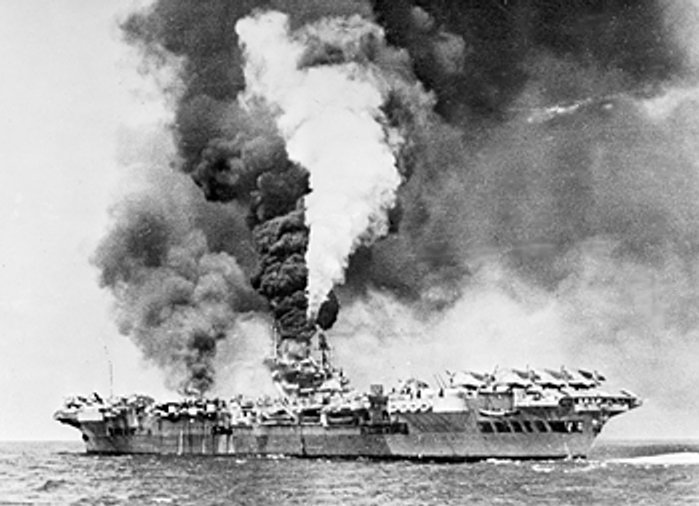
HMS Victorious: The Victorious was probably the most celebrated aircraft carrier in the history of the Royal Navy. Her World War Two service was remarkable by any standard and she was the only ship of her class to be modernized to carry jet aircraft following the war being refitted in much the same way as the American Essex Class ships were in the 1950s with an angled flight deck.  She was laid down in May 1937, launched in September 1939 and commissioned on 14 May 1941. Within 10 days of her commissioning she was taking part in the Hunt for the Bismarck and her Swordfish torpedo bombers scored one torpedo hit on that ship.  She saw much action in the North Atlantic and Arctic escorting convoys and deterring forays of German raiders into the Atlantic. She served in the Mediterranean during some Malta operations including Operation Pedestal and the Operation Torch landings in North Africa.  Due to the shortage of U.S. Carriers from heavy combat in the South Pacific in 1942 Victorious was “loaned” to the U.S. Navy deployed to operate with the U.S. Pacific Fleet following refits to operate U.S. built aircraft. She operated in the South Pacific from March to September of 1943 with the USS Saratoga in operations against the Japanese to include the New Georgia landings. She returned home and took part in raids against the Tirpitz which put that ship out of action for several months. She deployed to the Far East in 1944 and support operations in the Indian Ocean before being transferred to the British Pacific Fleet.

Victorious on Fire off Okinawa

She was involved in extensive Pacific operations including Okinawa and the raids on mainland Japan. She was stuck on a number of occasions by Kamikazes but remained in action.  After the war she was modernized and remained in service until 1969 when the Royal Navy decided that it was going to end its fixed wing operations and decommission its remaining attack aircraft carriers. She was broken up at Faslane beginning in 1969.

The modernized HMS Victorious

The Illustrious Class ships were great ships which performed admirable work in the Second World War. They and their brave crews continued the proud tradition of the Royal Navy. It is my hope that at least the new Queen Elizabeth Class carriers will be renamed for a ship of this class, preferably Victorious.

Peace

Padre Steve+


9 Comments

Filed under History, Military, Navy Ships, world war two in europe, world war two in the pacific

Our Bottom Line is our Honor: Padre Steve Talks About Wall Street

“It was the mystical dogma of Bentham and Adam Smith and the rest, that some of the worst of human passions would turn out to be all for the best. It was the mysterious doctrine that selfishness would do the work of unselfishness.” G.K. Chesterton

The United States is one of the most religious of Nations especially in what we worship. I’m not talking about God her I’m talking about money. The High Priests of this religion are those that run the financial institutions as well as much of what is sometimes described as “American” business. The bottom line is their honor and profit their goal.

I tell you what there is no such thing as an “American” Banker, Investor, Broker or President of any major corporation based in the United States they are men and women without a country with their only loyalty being their profits and what benefits their bottom line. The truth is as Napoleon Bonaparte said so succinctly “Money has no motherland; financiers are without patriotism and without decency; their sole object is gain.”

This has never been in more evidence than today.  The situation has been worsening since the end of the Cold War when under the name of “Free Trade” financial institutions and multinational corporations based in the United States have been selling us short once they figured that they could do better elsewhere like in Communist China as well as Third and Second World countries controlled by tyrants and despots who couldn’t give a damn about human rights.  Mind you that for many years it was American money, the American people and military power that enabled them to prosper particularly in the days when Presidents like Theodore Roosevelt maintain protectionist policies that actually helped them and the country at the same time.

The United States was never stronger than when we practiced protectionism. It benefited out people as well as businesses.  But when people like Teddy Roosevelt saw things that business did which were criminally irresponsible either in the treatment of workers or the environment business cried foul and it has been that way ever since. All “good” conservatives and libertarians have worshiped at the foot of the God of Capitalism and its prophets and the sacred doctrine of Free Trade.

The end of the year numbers are out and it looks like Wall Street and Major U.S. based corporations are doing quite well thank you while doing everything that they can to avoid being good citizens to the people of this country that made them what they are. Profits are up as are stocks and Wall Street is living high on the hog despite having made a mess of things to the point that the American Government had to give them our money, and lots of it to stay solvent and not crash the entire economy. It is as Thomas Jefferson once said “I sincerely believe, with you, that banking establishments are more dangerous than standing armies; and that the principle of spending money to be paid by posterity, under the name of funding, is but swindling futurity on a large scale.” To be blunt “American” financial institutions have raped this country and now that they are done with us are willing to take our money, use our military to protect or even enhance their operations overseas are willing to throw us under the bus because they can make more money elsewhere.

Well it seems that there is happiness in Mudville or shall I say on Wall Street as the year end numbers roll in.  Unfortunately for many Americans those profits won’t benefit this country.  Unemployment remains high, our personal and government debts are skyrocketing and deficits are killing the country while good paying technical and industrial jobs are moved overseas as supposedly American business shutters their U.S. production centers.  Meanwhile business and financial leaders carp about the United States not being a “friendly corporate environment” with “too much government regulation” and too many “powerful unions” as the reason for them to invest elsewhere.  Little things such as safety, the environment and even God forbid the lives of the people that work for them are of little concern, if the citizens of the U.S. or any other country decide that they want a bit more control of such issues then they are thrown under the bus by the financial institutions and corporations. If the U.S. Government asks them for anything it is “screw you” we’ll move to India where incidents what happened like the Union Carbide plant in Bhopal India don’t matter too much and Communist China which does its damndest to violate the human rights of its own people and run roughshod over its neighbors.

Andrew Jackson, perhaps the last President with the guts and moral principles to stand up to the likes of such people said:

“Every man is equally entitled to protection by law; but when the laws undertake to add… artificial distinctions, to grant titles, gratuities, and exclusive privileges, to make the rich richer and the potent more powerful, the humble members of society — the farmers, mechanics, and laborers — who have neither the time nor the means of securing like favors to themselves, have a right to complain of the injustice of their government.”

What Jackson said then is just as applicable now. Nearly every law that is passed in Washington is full of loopholes and benefits for the rich who then after bankrupting the country have the nerve to complain about government social programs. Usually they say that caring for the poor is the voluntary responsibility of individuals, churches and private charities which on principle I agree with, but on the whole is not practical because the need is too great mostly due to the power of the financials and the incompetence of government agencies.

The attitude of these supposedly “American” financial institutions and corporations seems to be all about “Free Trade.” The sad thing is that the moniker of “Free Trade” is somewhat Orwellian if you ask me.  The reality of “free trade” is that these interests should be able to do whatever they want, however they want without anyone being able to regulate them of tell them what to do.  In reality their carping about this not being a “business friendly environment” is them dictating to us that they should be able to operate for free from here while trading wherever they want without any responsibility or return to the country and people that made their success possible in the first place.  I would argue it is the financial houses and multi-national corporations based in the United States that are the real power in the world and that they have used us up and are now in the process of dumping us like they have so many World powers before us.

Napoleon saw this and said: “When a government is dependent upon bankers for money, they and not the leaders of the government control the situation, since the hand that gives is above the hand that takes. The late Marine Corps Major General and two time Medal of Honor winner Smedley Butler said back in 1933 concerning the way that financiers use the government, in particular the military to advance their interests:

“I spent thirty- three years and four months in active military service as a member of this country’s most agile military force, the Marine Corps. I served in all commissioned ranks from Second Lieutenant to Major-General. And during that period, I spent most of my time being a high class muscle- man for Big Business, for Wall Street and for the Bankers. In short, I was a racketeer, a gangster for capitalism….I helped make Mexico, especially Tampico, safe for American oil interests in 1914. I helped make Haiti and Cuba a decent place for the National City Bank boys to collect revenues in. I helped in the raping of half a dozen Central American republics for the benefits of Wall Street. The record of racketeering is long. I helped purify Nicaragua for the international banking house of Brown Brothers in 1909-1912. I brought light to the Dominican Republic for American sugar interests in 1916. In China I helped to see to it that Standard Oil went its way unmolested.”

Let’s fast forward on this while American soldiers get killed by Improvised Explosive Devices in Iraq and Afghanistan, many made with the assistance of Iranian agents the Treasury Department granted over 10,000 permits for U.S. corporations to trade with Iran with you guessed it my friends, some of the Largest U.S. banks reaping the profit.  This has been going on for years and while the bulk of such trade is limited to food items like Louisiana Hot Sauce it has also included deals which allowed other U.S. corporations to trade with Iranian companies that are suspected of involvement in terrorism or weapons proliferation.  http://www.foxnews.com/world/2010/12/23/report-treasury-okd-business-iran/#ixzz19SAQIwIu Pardon my ignorance but isn’t that like blood money when our troops die from Iranian assisted attacks?

Don’t worry though, we are in good company as such people have done the same to those that came before us as well, just look at Britain, once business bled her dry they cast her aside.  You see my friends our government doesn’t really control anything. It is the corporate and financial elites that run the country and dare I say the world.  James Madison saw it coming noting that “History records that the money changers have used every form of abuse, intrigue, deceit, and violent means possible to maintain their control over governments by controlling the money and its issuance.”

Financial institutions and many multinational corporations have acted in the most unseemly of fashions literally bankrupting nations and individuals while they continue to prosper and it seems that they can never get enough.  Great Americans have warned of the dangers of the financial elites controlling both national as well as private lending institutions. In fact if you look at the leadership of the Federal Reserve and the Treasury Department there is an almost incestuous link between them and Wall Street. Dwight Eisenhower talked about the danger of the “military-industrial complex” but that threat is nothing compared to the control that those that come out of Wall Street Investment Banks have over the nations’ economic and monetary policy and over the legislators that supposedly exercise oversight of such institutions. Thomas Jefferson noted that:

“If the American people ever allow private banks to control the issue of their money, first by inflation and then by deflation, the banks and corporations that will grow up around them (around the banks), will deprive the people of their property until their children will wake up homeless on the continent their fathers conquered.”

While Andrew Jackson lectured the leaders of the 2nd Bank of the United States before (probably unwisely) withdrawing U.S. assets from the Bank and eventually destroying it:

“Gentlemen, I have had men watching you for a long time and I am convinced that you have used the funds of the bank to speculate in the breadstuffs of the country. When you won, you divided the profits amongst you, and when you lost, you charged it to the bank. You tell me that if I take the deposits from the bank and annul its charter, I shall ruin ten thousand families. That may be true, gentlemen, but that is your sin! Should I let you go on, you will ruin fifty thousand families, and that would be my sin! You are a den of vipers and thieves.”

I think that even though Jackson’s decision hurt the economy which resulted in the Panic of 1837 but his reasons were sound:

It concentrated the nation’s financial strength in a single institution.

It exposed the government to control by foreign interests.

It served mainly to make the rich richer.

It exercised too much control over members of Congress.

It favored northeastern states over southern and western states.

Banks are controlled by a few select families.

Banks have a long history of instigating wars between nations, forcing them to borrow funding to pay for them.

Now tell me what has changed in this? If I hadn’t said that Jackson used these reasons to abolish the Second Bank of the United States one might think that I am talking about Wall Street and the Federal Reserve.  Let’s see….it looks to me like the only people getting rich are the Wall Street financiers and those that they favor. It seems that foreign nations, particularly the Chinese Communist have us by the balls holding a huge amount of our debt.  It seems that Congress under both Democratic and Republican control is in their power and will do anything that they want in order to “help the economy” but in reality secure their own power and I could go on but won’t.

Now I’m sure that some of my conservative friends and readers will label me as a liberal or Socialist but I’m not, I just want to see those that benefit from the security that our military provides and the hard work of Americans just actually start helping our side rather than looking to their our filthy money grubbing interests. Some things never change do they?

Peace

Padre Steve+

2 Comments

Filed under economics and financial policy, History, laws and legislation, Military, national security, philosophy

Early British Aircraft Carriers: HMS Argus, Furious, Eagle, Courageous, Glorious, Hermes and Ark Royal

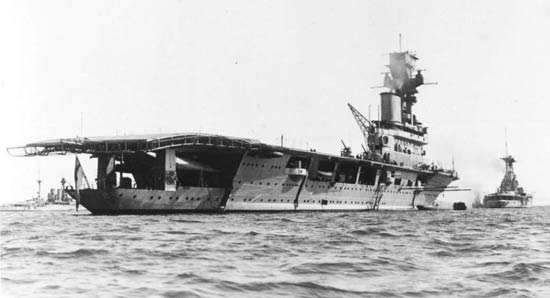
The British Royal Navy was the first to grasp the importance of the aircraft carrier and the first to embark on a carrier construction program and establish a Fleet Air Arm. Between the end of the First World War and the beginning of the Second the Royal Navy would build 7 carriers.  These ships in almost all cases were somewhat experimental as the Royal Navy experimented with flight deck and island designs, arresting systems, catapults and designs. The initial ships were all converted from other types with only two the Hermes and Ark Royal being built from the keel up as carriers.

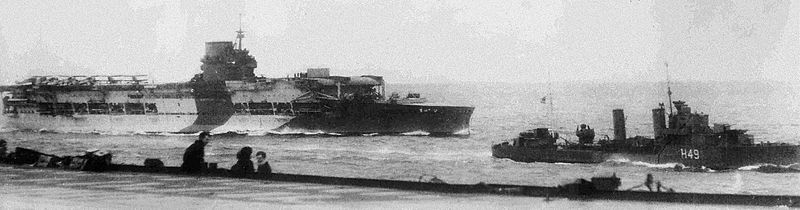
HMS Furious

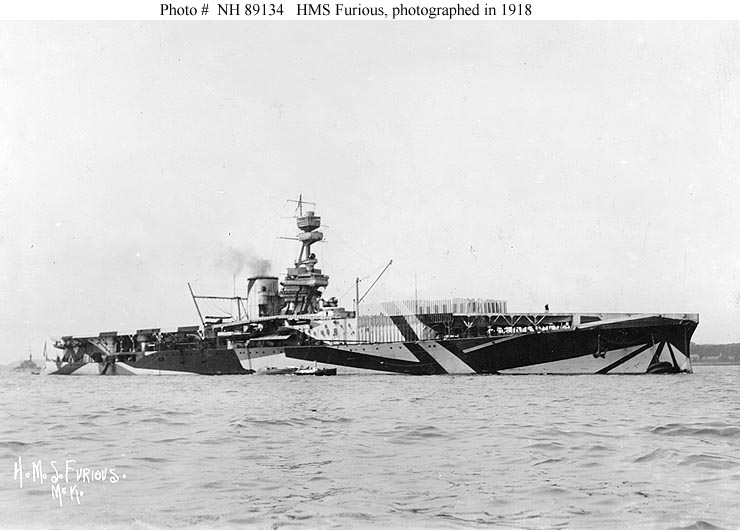
HMS Furious: Furious was built as a Courageous class large light cruiser and mounted two 18” guns in single turrets. A flying off platform was added as was a second flight deck aft following the removal of those guns. She operated Fleet Air Arm Sopwith Pups but aircraft that attempted to land on her aft deck encountered severe turbulence caused by the air currents coming around the superstructure and funnel gasses. She was the first ship to land an aircraft underway on August 2nd 1917 during her trials however the pilot Squadron Commander Edwin Dunning was killed when his Pup’s engine choked on a later attempt. After the war Furious was laid up until she was taken in hand for conversion to an Aircraft Carrier between 1921 and 1925.  When she was completed she could operate a 36 aircraft air group. Between the wars she supported Fleet operations and was used in the testing and evaluation of aircraft. She conducted the first night landing on a carrier when she landed a Blackburn Dart on 6 May 1926. She received a number of overhauls and modernizations. During the war she supported numerous fleet operations including the North Africa landings, operations in the Mediterranean and operations against German fleet units in Norway including the Battleship Tirpitz. Her limitations began to show and she was placed in reserve in September 1944 and paid off in April 1945. She was subsequently used to evaluate the effects of explosives on her structure. She was sold for scrap in 1948.

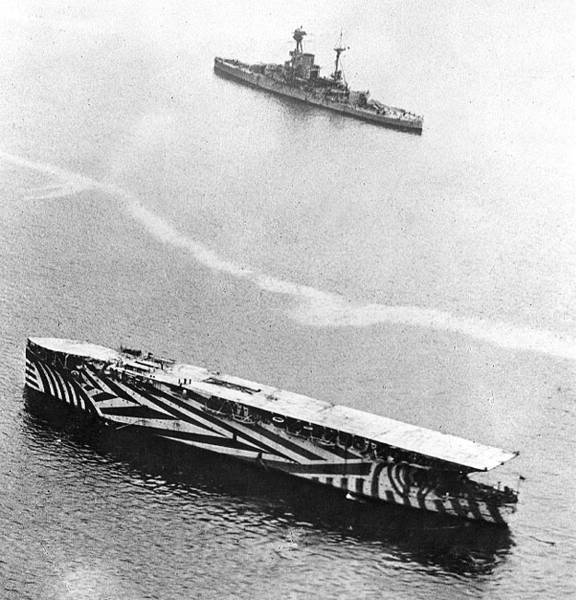
HMS Argus 1918

HMS Argus: The Argus was converted from the Italian Ocean Liner Conte Rosso which was purchases by the Royal Navy with the intent of converting her into an Aircraft Carrier.  She was built with a flush unobstructed flight deck after the Royal Navy’s unsuccessful divided flight deck experiment used on the HMS Furious following her conversion from a Light Battle Cruiser to a carrier. Argus was launched in 1917 and commissioned just prior to the end of the war on September 19th 1918.  Argus was small (15,775 tons) She was only capable of 20 knots and carried 18 aircraft. Like the USS Langley she was not a true frontline though she was used in that role as well as a training ship until the end of the 1920s when she was withdrawn from frontline service. Since she was built before the Washington Naval Treaty she was considered an experimental ship and not counted against Britain.  By the 1930s she was regulated to serving as a tender for remote controlled DH.82B Queen Bees.  During the early part of World War II the Royal Navy suffered heavy losses and the Argus assumed front line duties escorting convoys in the Atlantic and Mediterranean and ferrying badly needed aircraft to Malta for the Royal Air Force. She finally was withdrawn from service in 1944 and used as an accommodation ship until scrapped in 1946.

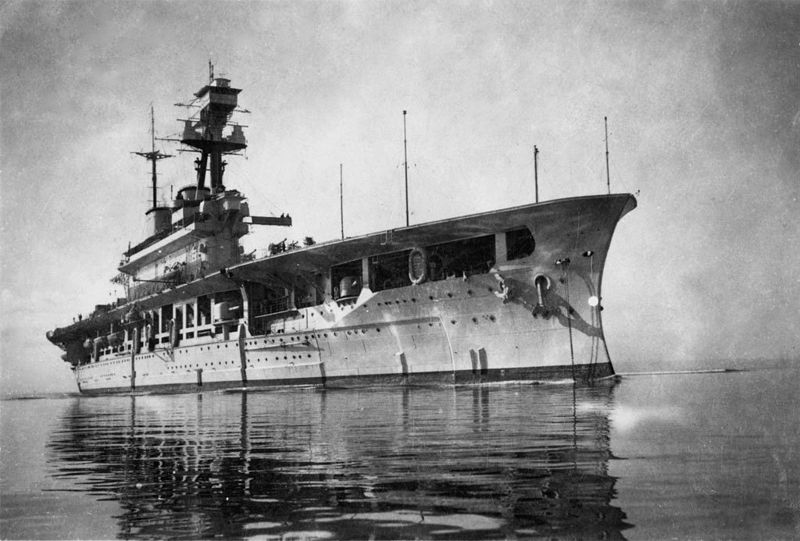
HMS Eagle 1942

HMS Eagle: Eagle was laid down as the Chilean Battleship Admirante Cochrane prior to World War I and her construction was suspended until the Royal Navy purchased her for completion as a through deck Aircraft Carrier. She was 667.5 feet long and displaced 26,000 tons full load and carried up to 21 aircraft.  She conducted sea trials but was taken back to the shipyard for improvements including an all oil-fired plant, anti-torpedo bulges and a longer island structure. She was commissioned in 1924 an saw much service through the 1920s and 1930s serving in the Mediterranean and the Far East until the outbreak of the Second World War.  With the outbreak of hostilities she was recalled from the Far East where she spent most of her time in the Mediterranean escorting convoys, launching airstrikes against Italian bases and fleet units sinking the submarine Iride and the depot ship Monte Gargano in the Gulf of Bomba on 22 August 1941.

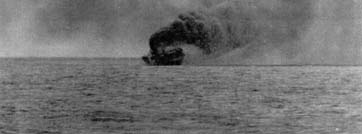
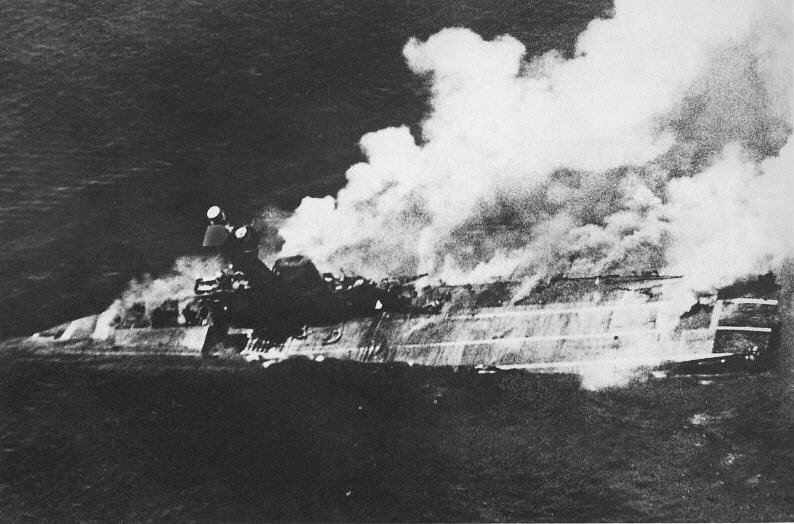
HMS Eagle burning and sinking

She was damaged by near misses by Luftwaffe bombers in October returned to England for repairs before returning to the Mediterranean in February 1942. She and her aircraft were very important in the defense of Malta until she was sunk during another Malta relief mission Operation Pedestal by the German U-Boat U-73 on 11 August 1942.  Hit by 4 torpedoes she sank in 4 minutes with the loss of 160 officers and crew.

HMS Hermes

HMS Hermes: The Hermes was the first carrier built as such from the keel up using a cruiser type hull.  The design of the Japanese carrier Hosho was influenced by Hermes which was launched before Hosho was laid down although Hosho commissioned earlier. Hermes was a pioneer design with a full length flush flight deck and starboard side island structure. She was limited by her small size and slow speed although she could embark almost as many aircraft than could the much larger Eagle. She did have significant limitations including protection, endurance, only 6,000 miles at 18 knots and small air group size which varied from 15-20 aircraft. She primarily served on the China Station until placed in reserve in 1937. In 1939 she was reactivated briefly serving with the Home Fleet before being assigned to the South Atlantic Station. She sailed with HMS Prince of Wales for the Far East in late 1941 but did not accompany the Prince of Wales and Repulse to Singapore where they would be sunk when trying to intercept a Japanese convoy on December 8th 1941.

HMS Hermes sinking after Japanese air attack new Ceylon

She remained at Ceylon and escaped from the harbor before the Japanese carrier’s arrived, however returning to port she was spotted by a Japanese reconnaissance aircraft and attacked by 70 Japanese attack planes which hit her 40 times sinking her with the loss of 307 of her 664 man crew on 9 April 1942.

HMS Glorious and a destroyer taken from Ark Royal at close of Norwegian campaign

HMS Glorious: The Glorious was one of the three Courageous class Battlecruisers designed and built in World War One. Her sister ship HMS Furious had already been taken in hand for complete conversion to an aircraft when the Washington Naval Treaty was ratified. Under the terms of the treaty the Royal Navy had to significantly reduce its number of capital ships.  With their large size and high speed the Courageous class ships, like the American Lexington class were ideal candidates for conversion to aircraft carriers.  Glorious underwent conversion from 1924 until 1930 when she was recommissioned.  With an overall length of 786 feet and full load displacement of 27,859 tons she could carry 48 aircraft and steam at 30 knots. She would spend much of her career in the Mediterranean and undergo modernization from 1934-1935.  At the outbreak of the war she was in the Mediterranean and would take part in the hunt for the German Pocket-Battleship Admiral Scheer in the Indian Ocean until being brought back to the Home Fleet for operations in the Norwegian Campaign.

HMS Glorious sinking picture taken from Scharnhorst

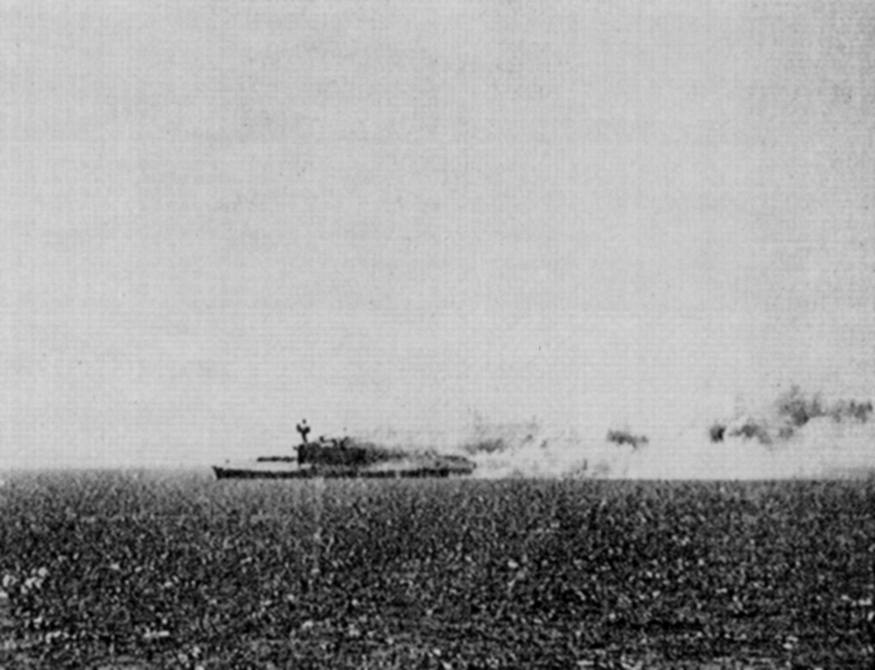
As the British withdraw was completed her Commander requested to steam independently to Scapa Flow to hold a courts martial proceeding against his former Air Group Commander. Sailing with two escorting destroyers Glorious was sighted by the German Battlecruisers Scharnhorst and Gneisenau on June 8th 1941.  Unprepared with no Combat Air Patrol up or aircraft at the ready Glorious and her two escorting destroyers were sunk by the German warships. Only 43 of her complement and air group of nearly 1400 men survived.

HMS Courageous entering Malta

HMS Courageous: Courageous like her sister HMS Glorious was taken in hand for conversion to an aircraft carrier in 1924 was recommissioned as such in 1928.  She would serve primarily with the Atlantic and Home Fleets between the wars and upon commencement of hostilities.

HMS Courageous sinking after being torpedoed by U-29 17 September 1939

He became part of a U-Boat Hunter Killer Group and on the 17th of September 1939 barely 2 weeks after the start of the war she was sunk by two torpedoes fired by the U-29 taking with her 518 of her crew including her Captain.  Her loss sent a shudder through the Admiralty and resulted in Fleet Carriers being pulled from this type of duty.

HMS Ark Royal

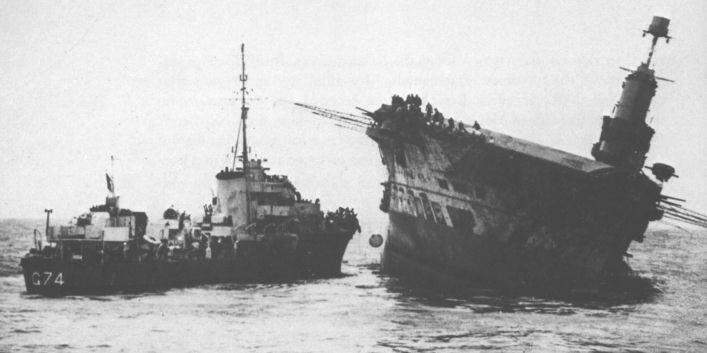
HMS Ark Royal: Ark Royal was the first truly modern Royal Navy carrier. Designed from the keel up as such she incorporated arresting gear and steam catapults. She also was built with two hangar decks as well as elevators that were integral to the hull and thus protected by the ship’s armor belt. Designed to operate 72 aircraft she normally operated 50-60 as the size and weight of aircraft had increased during the time of her construction and commissioning. Displacing 27,800 tons fully loaded she was 800 feet long and had a top speed of 31 knots and range of 7600 nautical miles (8700 miles) at 20 knots being the only British carrier of the era to compare favorably with her American and Japanese counterparts.  Commissioned in December of 1938 Ark Royal which was intended for service in the Far East was deployed with the Home Fleet and in the Mediterranean until the outbreak of the war. Initially employed on Hunter Killer duty she and her escorting destroyers sank the U-39 on 14 September 1939 followed by the hunt for the Pocket Battleship Graf Spee. She saw action in Norway and was a bulwark of British strength in the Mediterranean where she took part in the attack on the French Fleet at Mes-el-Kébir following the French surrender to Germany and the refusal of the French Commander to either scuttle the fleet or bring to British controlled waters.  She was engaged in numerous engagements and operations including the support of Malta, operations against the Italian Fleet and air strikes on Italian shore installations. She survived frequent air attacks by the Luftwaffe during these operations.  When the Bismarck broke out into the Atlantic Ark Royal was dispatched with Force H to assist in the hunt. Ark Royal’s Fairly Swordfish torpedo bombers found the Bismarck on 26 May 1941 and on their last chance to damage the German behemoth stuck her with a torpedo which jammed the Bismarck’s rudders allowing British Battleships to sink her the following day. She returned to the Mediterranean after this where she was again engaged in protecting convoys bound for Malta. While returning with Force H to Gibraltar following one of these runs on 10 November 1941 she was attacked by U-81 which scored a hit with one torpedo. A combination of poor command response, for which her Captain was found guilty of at court-martial as well as design flaws related to her electric power plant which made damage control nearly impossible once power was lost were responsible for her sinking.

The Royal Navy helped pioneer the development of the aircraft carrier but most of their early ships had significant limitations in design, obsolescent aircraft and poor employment which were responsible for the losses of several of the ships.  However they did contribute to Britain’s ability to survive during the early years of the war.  The ships officers and men of these ships company as well as their air groups helped maintain the sea lanes which kept her in the war and allowed her forces to continue to fight in North Africa during the darkest days of the war.  One can never minimize their service or sacrifice in the especially in the early days of the war.

Today the Royal Navy has no Aircraft Carriers in commission. The last the Ark Royal was paid off this year and it will be nearly a decade before the new Queen Elizabeth class enters service. Until then the Royal Navy will have no capability to project air power in support of any contingency.  Let us hope for Britain that no such contingency arises.

Peace

Padre Steve+


10 Comments

Filed under History, Military, Navy Ships, world war two in europe, world war two in the pacific

Christmas at the Front 1776-2010

Note: I wrote most of this on Christmas but didn’t finish it until a bit after 1AM on the 26th.

Today as on so many Christmas Days in days gone by military personnel serve on the front lines in wars far away from home and sometimes not far from their homes. Today American and NATO troops engage a resourceful and determined enemy in Afghanistan. To the west Americans support our Iraqi allies in their continued battle to end terrorism in that country while in many corners of the globe others stand watch on land, at sea and in the air. Unfortunately wars continue and until the end of time as we know it there will likely be war without end.

I have done my time in Iraq at Christmas on the Syrian-Iraqi Border with our Marine advisors and their Iraqis.  Since returning home have thought often of those that remain in harm’s way as well as those soldiers, sailors, Marines and airmen, American and from other nations that have spent Christmas on the front lines. Some of these events are absolutely serious while others display some of the “light” moments that occur even in the most terrible of manmade tragedies.

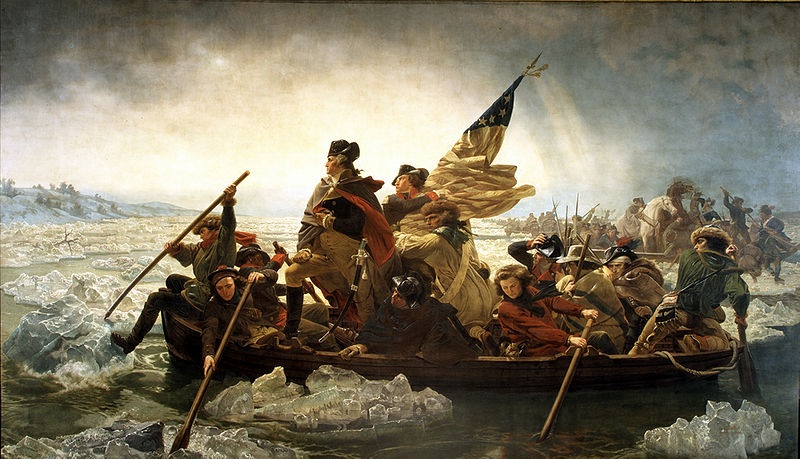
In American history we can look back to 1776, of course we could go back further but 1776 just sounds better. On Christmas of 1776 George Washington took his Continental Army across the Delaware to attack the British garrison at Trenton. Actually it was a bunch of hung over Hessians who after Christmas dinner on the 24th failed to post a guard but it was an American victory. In 1777 Washington and his Army had a rather miserable Christmas at Valley Forge where they spent the winter freezing their asses off and getting drilled into a proper military force by Baron Von Steuben.

While not a battle in the true sense of the word the Cadets at West Point wrote their own Christmas legend in the Eggnog Riot of 1826 when the Cadets in a bit of holiday revelry had a bit too much Eggnog and a fair amount of Whiskey and behaved in a manner frowned upon by the Academy administration. Needless to say that many of the Cadets spent the Christmas chapel services in a hung over state with a fair number eventually being tossed from the Academy for their trouble.

In 1837 the U.S. Army was defeated at the Battle of Lake Okeechobee by the Seminole Nation, not a Merry Christmas at all.  In 1862 the Army of the Potomac and Army of Northern Virginia faced each other across the Rappahannock River after the Battle of Fredericksburg while to the south in Hilton Head South Carolina 40,000 people watched Union troops play baseball some uttering the cry of many later baseball fans “Damn Yankees.” In 1864 the Army of the Potomac and Army of Northern Virginia faced each other again in the miserable trenches of Petersburg while General William Tecumseh Sherman enjoyed Christmas in Savannah Georgia after cutting a swath of destruction from Atlanta to the sea. He presents the city to Lincoln who simply says “nice, but I really wanted Richmond.”

Napoleon had something to celebrate on December 25th 1801 after surviving an assassination attempt on Christmas Eve and 1809 he was celebrating his divorce from Empress Josephine which had occurred on the 21st.

Meanwhile in Europe the 1914 “Christmas Truce” began between British and German troops and threatened to undo all the hard work of those that made the First World War possible.  Thereafter the High Commands of both sides ensured that such frivolity never happened again.

U.S. Soldiers and Anti-Tank Gun at the Battle of the Bulge

World War II brought much suffering in 1941 after Pearl Harbor the Japanese forced the surrender of Hong Kong and its British garrison while two days later the Soviets launched their counterattack at Moscow against Hitler’s Wehrmacht and the British were retaking Benghazi from the Afrika Corps.  A year later the Americans were clearing Guadalcanal of the Japanese and the Red Army was engaged in a climactic battle against the encircled German 6th Army at Stalingrad. At Stalingrad a German Physician named Kurt Reuber who is also a Lutheran minister draws “The Madonna of Stalingrad.”

The drawing which was taken out of Stalingrad by one of the last German officers to be evacuated now hangs in the Kaiser Wilhelm Memorial Church in Berlin. Reuber would draw another in 1943 while in a Soviet POW camp in which he would die in less than a month after that Christmas. Reuber wrote:

“I wondered for a long while what I should paint, and in the end I decided on a Madonna, or mother and child. I have turned my hole in the frozen mud into a studio. The space is too small for me to be able to see the picture properly, so I climb on to a stool and look down at it from above, to get the perspective right. Everything is repeatedly knocked over, and my pencils vanish into the mud. There is nothing to lean my big picture of the Madonna against, except a sloping, home-made table past which I can just manage to squeeze. There are no proper materials and I have used a Russian map for paper. But I wish I could tell you how absorbed I have been painting my Madonna, and how much it means to me.”
“The picture looks like this: the mother’s head and the child’s lean toward each other, and a large cloak enfolds them both. It is intended to symbolize ‘security’ and ‘mother love.’ I remembered the words of St.John: light, life, and love. What more can I add? I wanted to suggest these three things in the homely and common vision of a mother with her child and the security that they represent.”

In 1943 the Marines were battling the Japanese at New Britain while the Red Army was involved in its winter offensive against the Wehrmacht. In 1944 the Russians were advancing in Hungary, the Americans were engaged in a desperate battle with the Germans in the Ardennes with the German 2nd Panzer Division running out of gas 4 miles from the Meuse River and were destroyed by the American 2nd Armored Division. In the Pacific McArthur’s forces were battling the Japanese in the Philippines.

French Chaplain and Soldiers in Indochina

In the years following the Second World War Christmas was celebrated even while armies continued to engage in combat to the death. Christmas of 1950 was celebrated in Korea as the last American forces were withdrawn from the North following the Chinese intervention which the 1st Marine Division chewed up numerous Red Chinese divisions while fighting its way out of the Chosin Reservoir.  In the following years a stalemate along the front brought no end to the war and In French Indo-China the French garrison of Dien Bien Phu celebrated Christmas in primitive fashion unaware that General Giap was already marshalling his forces to cut them off and then destroy them shortly after Easter of 1954.   In 1964 the U.S. commits to the war in Vietnam and for the next 9 years American Soldiers, Marines, Sailors and Airmen will battle the North Vietnamese and Viet Cong with Marines fighting the North at Khe Sanh during Christmas of 1967.

Christmas on the Syrian Border with USMC Advisors

In the years after Vietnam American troops would spend Christmas in the Desert of Saudi Arabia preparing for Operation Desert Storm in 1990, in Somalia the following year and in the Balkans. After September 11th 2001 U.S. Forces spent their first of at least 10 Christmas’s in Afghanistan and in 2003 begin the first for at least 8 Christmas’s in Iraq.

Today Americans serve around the world far away from home fighting the war against Al Qaeda and its confederates and some will die even on this most Holy of Days while for others it will be their last Christmas.

Please keep them and all who serve now as well as those that served in the past, those that remain and those that have died in your prayers.

Peace

Padre Steve+


1 Comment

Filed under faith, History, Military

NUTS!

Brigadier General Anthony McAuliffe

On December 16th 1944 the German Army launched an assault in the Ardennes Forrest completely surprising the thinly spread American VIII Corps.  The German 6th Panzer Army, 5th Panzer Army and 7th Army attacked and forced the surrender of 2 regiments of 106th Infantry Division, mauled the 28th Division in the center of the American line while battering other U.S. forces.  To the north the 2nd and 99th Infantry Divisions were tenaciously defending Elsenborn Ridge while to the south the thinly spread 4th Infantry and 9th Armored Divisions resisted the 7th Army advance. As elements of the two German Panzer armies advanced west Eisenhower dispatched his only reserves the 82nd and 101st Airborne Divisions to meet the threat. The 82nd moved to the town of St Vith to aid the 7th Armored Division while the 101st was dispatched to hold the key road center of Bastogne.

By the 22nd the besieged American defenders of Bastogne were causing Hasso Von Manteuffel’s 5th Panzer Army headaches. Manteuffel’s leading Panzer units of the 2nd Panzer Division and Panzer Lehr had been thwarted from taking the town by a Combat Command of 10th Armored Division and lead elements of the 101st.  After failing to take the town the Germans invested it with the 26th Volksgrenadier Division and a regiment of Panzer Lehr while 2nd Panzer and the bulk of Panzer Lehr continued their westward advance.

Cut off from any other American forces the 101st and a collection of stray units including CCB 10th Armored Division and remnants of CCR 9th Armored Division, three 155mm artillery battalions including the African American 969th Field Artillery Battalion held out. By the 21st of December they were completely surrounded.

The Commander of the American garrison was Brigadier General Anthony McAuliffe. McAuliffe was the acting commander of the 101st and normally was the commander of the Division Artillery. Major General Matthew Ridgeway and many key commanders and staff were away from the division when it was hastily deployed to the Bulge to combat the German offensive.  McAuliffe commanded a division short of ammunition, food and cold weather gear.

General Der Panzertrüppen Heinrich Freiherr von Lüttwitz

The German forces surrounding the city were commanded by the veteran General Der Panzertrüppen Heinrich Freiherr von Lüttwitz commander of XLVII Panzer Corps.  Lüttwitz believing that resistance was futile sent the following message under a flag of truce to McAuliffe:

To the U.S.A. Commander of the encircled town of Bastogne.

The fortune of war is changing. This time the U.S.A. forces in and near Bastogne have been encircled by strong German armored units. More German armored units have crossed the river Our near Ortheuville, have taken Marche and reached St. Hubert by passing through Hompre-Sibret-Tillet. Libramont is in German hands.

There is only one possibility to save the encircled U.S.A. troops from total annihilation: that is the honorable surrender of the encircled town. In order to think it over a term of two hours will be granted beginning with the presentation of this note.

If this proposal should be rejected one German Artillery Corps and six heavy A. A. Battalions are ready to annihilate the U.S.A. troops in and near Bastogne. The order for firing will be given immediately after this two hours term.

All the serious civilian losses caused by this artillery fire would not correspond with the well-known American humanity.

The German Commander

McAuliffe’s response has become one of the immortal responses to a surrender demand in military history. According to staff members present when he received Lüttwitz’s note he simple said “nuts.” One of his staff officers suggested that he use “nuts” as his official reply to Lüttwitz and the following reply was typed:

To the German Commander

NUTS!

The American Commander

The reply was delivered by the commander of the 327th Glider Infantry Regiment Lieutenant Colonel Joseph Harper and his S-3 Major Alvin Jones. When Harper delivered the message he told the German delegation that in “plain English” it meant “Go to hell.” The scene has been immortalized on film in the movie The Battle of the Bulge http://www.youtube.com/watch?v=73OiRZf7DsM

dsc00072

The garrison held out until it was relieved on December 26th by the 4th Armored Division of General George Patton’s 3rd Army.  Despite that the situation remained tenuous and the town was the scene of much hard fighting over the next two weeks.

McAuliffe went on to command the 103rd Infantry Division by the end of the war.  He returned to Europe as Commander of 7th Army in 1953 and U.S. Army Europe in 1955. He retired in 1956 with the rank of General.  He died in 1975 at the age of 77. His adversary Von Lüttwitz died at the age of 72 in 1969.

As we remain engaged in the current war it is always worth our time to remember the heroism, courage and faith of those that served before us.

Peace

Padre Steve+

Post Script: To read more about the Battle of the Bulge on this site go to Wacht am Rhein: The Battle of the Bulge

4 Comments

Filed under History, Military, world war two in europe