Category Archives: Military

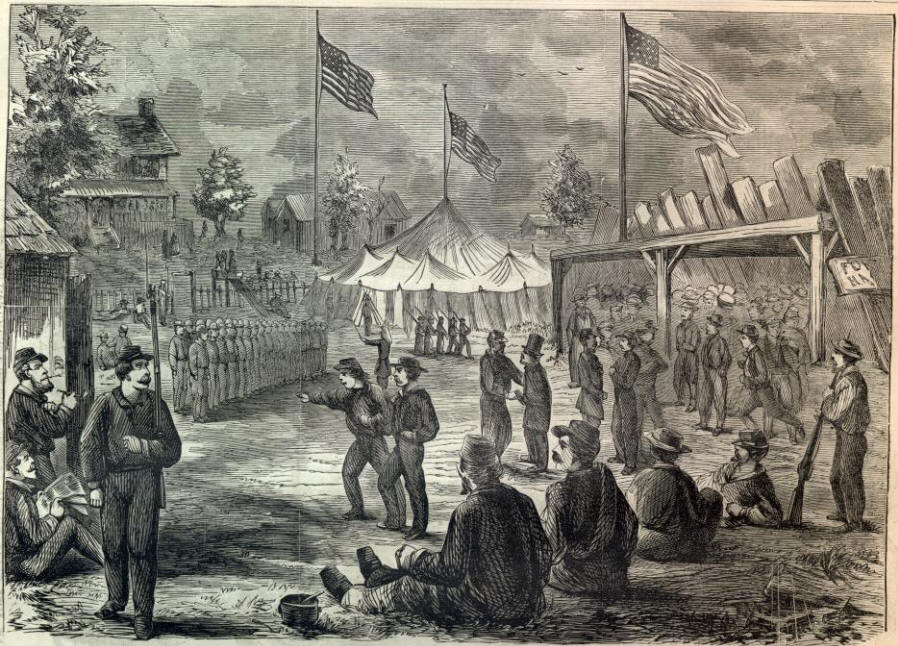
Infantry Tactics at the Beginning of the American Civil War

2nd michigan

Friends of Padre Steve’s World,

Today another revised section of one of my Civil War texts.

Blessings

Padre Steve+

The heart of the Civil War armies was the infantry, of which the key unit was the infantry regiment. The U.S. Army had ten Regular Army infantry regiments that the outbreak of the war, most of which were scattered about the country in small garrisons especially in the west, where they were engaged in providing security in the newly acquired territories and states. The few Regular Army units of the United States Army were expanded during the war, and more importantly were joined by hundreds of volunteer regiments during the war.

The Confederacy, lacking a regular army also raised hundreds of volunteer infantry regiments.  The regiment was built around the infantry company that was composed of sixty to one hundred soldiers commanded by a Captain. Most companies, in the case of the volunteer regiments came from the same town, county or neighborhood. The infantry regiment was composed of ten companies. Union infantry regiments “maximum strength was fixed at 39 officers and 986 men. A Confederate regiment was larger: 49 officers and 1,340 men maximum.”  [1] However, in practice these guidelines were not rigidly adhered to, depending on recruiting efforts some regiments have fewer men than their authorized strength when organized and others from more populous areas had more.

However, most regiments were rarely at their authorized strength after their muster into service and this got far worse for units after they had been on campaign and in battle. Federal statistics show that, “by April 1862, an average regiment had 560 men; by July 1863, it would number only 375 soldiers.” [2] These were average numbers, at Gettysburg, some regiments like the 8th Ohio Volunteer Infantry, which on July 3rd decimated the men of John Brockenbrough and Joseph Davis’s brigades on the left flank during Pickett’s Charge had just 209 men in its the ranks. The 124th New York Volunteer Infantry had just 18 officers and 220 men in its ranks when Hood’s brigades of Texans, Georgians and Arkansas men hit them at Devil’s Den on July 2nd 1863 at Gettysburg. [3]

Prior to the war regiments tended to be scarred about the nation in small garrisons or on the frontier, and the brigade was the largest unit within the army, and then only put together for combat or expeditionary operations. A brigade was typically composed of two to five regiments. In theory brigades were commanded by Brigadier Generals but many times commanded by Colonels. In addition to their organic infantry brigades usually had their “own quartermaster, commissary, and ammunition trains. Medical teams and sometimes artillery, were assigned to brigades.” [4] With the attachments the brigade could function as an independent unit.

With the expansion of the armies divisions of infantry were formed. Composed of two or more brigades divisions could operate independently or banded together as part of an army corps. Corps were composed of two or more divisions. Two or more corps would compose an army.

Infantry formations on both sides relied on Napoleonic infantry tactics which when they were formulated worked well due to the types of weapons used by opposing armies. Depending on the tactical situation, infantry regiments, brigades and divisions advanced into battle in either column formation or line shoulder to shoulder.

The column formation, a tactic borrowed from the French, but also used by other armies was used to move quickly into battle. It involved “massing troops on a narrow front, like a swinging a ram, could smash into, and disrupt, an enemy infantry formation and make it run for its life.” [5] During the Napoleonic Era the French often used to charge in the offense as it could provide weight of numbers at the point of attack. The drawback to this formation was that the attacking units were extremely vulnerable to enemy artillery fire, particularly Solid Shot cannonballs “which could do hideous damage to a tightly packed column with just a few well-placed rounds[6] if the enemy artillery was not sufficiently disrupted or destroyed before they came into range.

Columns could be formed from battalion level up. At Waterloo Napoleon deployed a Corps in column, to gain a better understanding it is best to look at the battalion or regiment in column. Typically a column would be one to two companies wide making a front of 30 to 60 soldiers. Thus a full strength regiment deployed in a two company front column would have about 17 ranks.

The line formation was adopted from the British although the French and Prussians used it as well. The line formation was designed to maximize the fire of regiments by placing the men in a formation of “two or three lines which allowed the full play of musket fire along its front.” [7] Since the rate of fire of muzzle loading muskets, rifled or not was much slower in battle conditions, the tactic enabled infantry regiments to maintain a good volume of fire against enemy units, in the offense or in the defense. However the line was an “extremely fragile formation. Attempting to march a line forward across anything except the smoothest parade ground led to disorder. Men straggled, stumbled, wavered, and the line would soon lose all cohesion.” [8] Confederate General D.H. Hill “later in life once asked, rhetorically but memorably: ‘Whoever saw a Confederate line advancing that was not crooked as a ram’s horn? Each ragged rebel yelling on his own hook and aligning on himself.’” [9]

The great virtue of the line formation was “its ability to deliver musket fire by volley and its relative immunity to artillery fire,” [10] at least fire delivered from the front as it presented a small target. However if enemy artillery was able to get in position to deliver enfilade fire, or fire from the flank as happened to the Confederate troops who made Pickett’s Charge, the effect could be devastating.  Unlike the column formation, the line formation took a great deal of time to deploy in line of battle and to maneuver swiftly as a unit once formed and it was vulnerable to cavalry if caught in the open.

The first American infantry drill manual was issued in 1779 when General Von Steuben was given the task of training the Continental Army. The books was based on the tactics of the Prussian Army under Frederick the Great. However, over time, Americans came to favor French drill manuals. In 1835 General Winfield Scott translated the revised French drill manual and issued it as Infantry Tactics and Rules for the Exercise and Manoeuvers of the United States Infantry. The Army that Scott led into Mexico in 1846 used the manual with success and it remained in publican until 1861, and “its general structure remained the heart of all the civil War drill manuals.” [11] As tacticians began to appreciate the impact of the rifled musket infantry tactics saw some adjustments in order to “increase the speed and mobility of tactical movement.” [12]

Scott’s manual was superseded by the volume produced by William J. Hardee who later became a Confederate general. Hardee’s work, Rifle and Light Infantry Tactics for the Exercise of Manoeuvers of Troops when acting as Light Infantry or Riflemen was “based directly on a new generation of French manuals.” [13] Hardee modified the line formation from three lines to two and had an increased role for skirmishers. Likewise Hardee added “extra provisions for rifle fire and manoeuvers at a gymnastic pace (‘double quick’) of 165 to 180 steps a minute.” [14] While an improvement on the older manuals it was still very similar to Scott’s work.

civilwararmyinfantry

In 1862 the U.S. Army adopted Silas Casey’s manual, Infantry Tactics as its official doctrine. Casey’s work was for the most part a composite of Scott’s and Hardee’s work. That being said, Casey “also contributed tactical doctrine for brigade and larger-unit tactics and made revisions that improved the deployment from column to line.” These contributions were important to both armies as the “Confederates quickly followed the Union army in adapting his revisions.” [15] While Casey’s became the official doctrine it was Hardee’s that “won the widest usage and was issued in the most variants.” [16] These included adaptations for U.S. Colored Troop regiments as well as militia forces.

Casey’s manual was particularly helpful for officers serving as brigade and regimental commanders. Previous manuals had been unclear as to where they should place themselves in the order of march, or when the unit was moving in line or column on the attack. Casey clarified this so that “Budding commanders could easily work out where they should place themselves as their regiments marched to the front in column or line, how brigade artillery should be employed, how the head of a column should be maneuvered to give direction to the main mass, and so on.” [17] Even so new officers who had crammed their heads with Scott, Hardee, or Casey for a few weeks could cause havoc among his own troops. A soldier of the 14th New Hampshire Infantry noted: “The men were serene in their ignorance of tactics; but ambitious officers of the line, who had been cramming Casey for a fortnight, were in a vertebral, cold-shiver temperature…. That the men got caught in a snarl, a tangle, a double twisted, inextricable tactical knot, is tame delineation. The drill caused a great deal of serious reflection…” [18]

As the war went on more use was made of skirmishers, which traditionally had deployed in front of the line. With the rifled muskets the skirmishers, advancing ahead of the massed formations could use the longer range and greater accuracy of their weapons to inflict significant numbers of casualties on the enemy, and to pick off enemy officers and artillerymen. The artillery despised the skirmishers as they could do little to combat them without having their own close infantry support.

But skirmishers took a long time to train and the massed volunteer armies, mostly officered  by volunteers had precious little time or experience to train good skirmishers. The Union attempted to rectify this by organizing Sharpshooter regiments, “two of which were organized for the army of the Potomac by Hiram Berdan in 1862.” [19] Both of these units served well at Malvern Hill in 1862 and Gettysburg on July 2nd and proved their worth on other battlefields of the war.  Highly trained and motivated Berdan’s sharpshooters “lived like a band of brothers, imbued with the one feeling of patriotism in their voluntary enlistment for three years.” [20]

Notes

[1] Robertson, James I. Soldiers Blue and Gray University of South Carolina Press, Columbia 1988 p.21

[2] Ibid. Robertson Soldiers Blue and Gray p.19

[3] For a listing of the numbers of soldiers that each regiment went into battle with at Gettysburg see Petruzzi, J. David and Stanley, Steven The Gettysburg Campaign in Numbers and Losses: Synopses, Orders of Battle, Strengths, Casualties and Maps, June 9 – July 1, 1863 Savas Beatie LLC, El Dorado Hills CA 2012

[4] Ibid. Robertson Soldiers Blue and Gray p.24

[5] Guelzo, Allen C. Gettysburg: The Last Invasion Vintage Books a Division of Random House, New York 2013 p.38

[6] Ibid. Guelzo Gettysburg the Last Invasion p.39

[7] Ibid. Guelzo Gettysburg the Last Invasion p.38

[8] Ibid. Cornwell Waterloo: The History of Four Days, Three Armies, and Three Battles p.69

[9] Ibid. Griffith, Battle Tactics of the Civil War p.111

[10] Ibid. Guelzo Gettysburg the Last Invasion p.38

[11] Ibid. Griffith, Battle Tactics of the Civil War p.100

[12] Ibid. Hagerman The American Civil War and the Origins of Modern Warfare p.20

[13] Ibid. Griffith, Battle Tactics of the Civil War p.100

[14] Ibid. Griffith, Battle Tactics of the Civil War p.100

[15] Ibid. Hagerman The American Civil War and the Origins of Modern Warfare p.20

[16] Ibid. Griffith, Battle Tactics of the Civil War p.101

[17] Ibid. Griffith, Battle Tactics of the Civil War p.103

[18] Ibid. Robertson Soldiers Blue and Gray p.50

[19] Ibid. Guelzo Gettysburg the Last Invasion  p.38

[20] Ibid. Guelzo Gettysburg the Last Invasion  p.261

1 Comment

Filed under civil war, History, Military

A Revolution in Killing: The Rifled Musket and the Minié Ball

claude_etienne_minie

Claude Minié

Friends of Padre Steve’s World,

I have continued to work on my various Gettysburg and Civil War texts and today something from one of them that should appeal to those interested in Civil War infantry weaponry and tactics.  I have to admit that I am kind of a geek about this kind of stuff but in order to understand the broad brush aspects of history one also has to know something about detailed facts. So anyway, here is a section of my text dealing with the advances in weaponry that made the American Civil War and subsequent wars so much more deadly.

Peace

Padre Steve+

minnie-ball

Minié Ball 

While various individuals and manufacturers had been experimenting with rifles for some time the weapons were difficult to load as the rifled groves slowed down the loading process. The British pioneered the use of the rifle during the Napoleonic Wars and the War of 1812. The issue of the Baker rifle, a rifled flintlock which was accurate to about 300 yards was limited to specific Rifle Regiments which were considered elite units, as well as skirmishers in some other regiments. The soldiers assigned to the Rifle regiments wore a distinctive green uniform as opposed to the red wore by the rest of the British Army. When the United States Army formed its first Sharpshooter regiments in late 1861 under the command of Colonel Hiram Berdan. Like the British the men of the regiment as well as the 2nd Regiment of Sharpshooters wore a distinctive green uniform instead of the Union Blue.

In 1832 a captain Norton of the British Army “invented a cylindroconoidal bullet. When fired, its hollow base automatically expanded to engage the rifling of the barrel, thus giving the bullet a horizontal spin.” [1] But the bullet was unwieldy, so it and other bullets that were “large enough to “take” the rifling was difficult to ram down the barrel” and slowed down the rate of fire significantly, and since “rapid and reliable firing was essential in a battle, the rifle was not practical for the mass of the infantrymen.” [2]

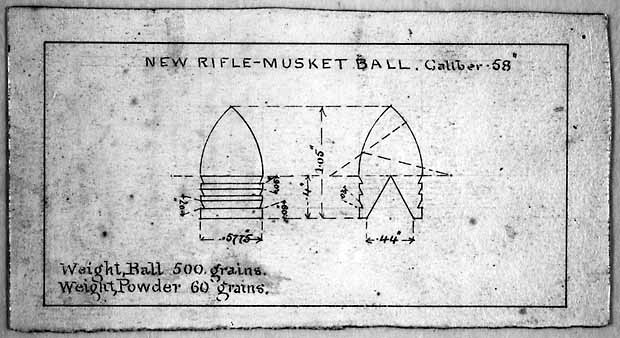
In was not until 1848 when French Army Captain Claude Minié who “perfected a bullet small enough to be easily rammed down a rifled barrel, with a wooden plug in the base of the bullet to expand it upon firing to take the rifling.” [3] Unfortunately the bullets were expensive to produce and it was not until in 1850 an American armorer at Harpers Ferry, James Burton “simplified the design that had made Minié famous and developed a hollow based, .58-caliber lead projectile that could be cheaply mass produced.” [4] Burton’s ammunition was very easy to load into weapons, and soldiers were able to drop the cartridge into the muzzle of their rifles as easily as they could musket balls down a smoothbore.

The tactics the officers were educated in were developed at a time when the maximum effective range of muskets was barely 100 yards. However, the Army did make some minor adjustments to its tactics to increase speed and mobility in the tactic movement of the infantry. Colonel William J. Hardee went on to become a Confederate General adapted changes first made by the French to the U.S. infantry manual. These changes “introduced double-quick time (165 steps per-minute) and the run and allowed changes to the order of march to be made in motion rather than after coming to a halt.” [5]

During Napoleon’s time assaulting an opponent with a large body of troops was a fairly easy proposition, one simply maneuvered out of the rage of the enemy’s artillery and muskets, thus “to bring a heavy mass of troops upon them was possible because of the limited destructiveness of smoothbore firearms. Their range was so restricted that defenders could count on getting off only one reasonably effective volley against advancing soldiers. By the time that volley was unloosed, the attackers would be so close to their objective that before the defenders could reload, the attacking troops would be upon them.” [6] One of Napoleon’s favorite tactics was for his troops to make well executed turning maneuvers aimed at the enemy’s flanks, but the increased range and lethality meant that even when such maneuvers were executed, they often produced only a short term advantage as the defenders would form a new front and continue the action.

Yet by 1860 the rifled muskets had an effective range of about 500 yards and sometimes, depending on the type of weapon even more, but in most cases during the Civil War infantry engagements were fought at considerable shorter ranges. Paddy Griffith notes that even in the modern era long range firing by infantry units is still rare, and that there is “a fallacy in the notion that longer range weapons automatically produce longer-range fire. The range of firing has much more to do with the range of visibility, the intentions of the firer and the general climate of the army.” [7] Drew Gilpin Faust wrote that Civil War battles still “remained essentially intimate; soldiers were often able to see each other’s faces and to know who they had killed.” [8] They knew their weapons could fire at longer range, and one Union soldier explained, “when men can kill one another at six hundred yards they would generally would prefer to do it at that distance.” [9] But for the average infantryman such occasions were the exception.

The advent of the breach loading and later the repeating rifle and carbine further increased the firepower available to individual soldiers. However, with the exception of the Prussian Army, armies in Europe as well as the United States Army were slow to adapt the breech loading rifles. In “1841 the U.S. Arsenal at Harpers Ferry, Virginia, had prepared the pattern weapons of the first general-issue rifled shoulder arm of the U.S. Army” [10]

The process of conversion to the new weapons was slow, conservatism reigned in the Army and the lack of suitable ammunition was a sticking point. However, the U.S. Army began its conversion “to the rifled musket in the 1840s but rejected both the repeating rifle and the breechloader for infantry because of mechanical problems.” [11] Even so there was a continued resistance by leaders in the army to arming infantry with the rifled muskets despite the already noted obsolescence of them during the Crimean War. In discussing the differences of rifles and smoothbore muskets during the Peninsular Campaign, Edward Porter Alexander wrote that “In the Mexican War fought with smooth bore, short range muskets, in fact, the character of the ground cut comparatively little figure. But with the rifles muskets & cannon of this war the affair was proven both at Malvern Hill, & at Gettysburg….” [12]

However, in 1855 the new Secretary of War, Jefferson Davis ordered the Army to convert to “the .58 caliber Springfield Rifled Musket. Along with the similar British Enfield rifle (caliber .577, which would take the same bullet as the Springfield), the Springfield became the main infantry arm of the Civil War.” [13] Even so the production of the new rifles was slow and at the beginning of the war only about 35,000 of all types were in Federal arsenals or in the hands of Federal troops.

The one failure of Union Chief of Ordnance Ripley was his “insistence in sticking by the muzzle loading rifle as the standard infantry arm, rather than introducing the breach-loading repeating rifle.” [14] Ripley believed that a “move to rapid fire repeating rifles would put too much stress on the federal arsenals’ ability to supply the repeaters in sufficient quantities for the Union armies.” [15] There is a measure of truth in this for troops armed with these weapons did have the tendency to waste significantly more ammunition than those armed with slow firing muzzle loaders, but had he done so the war may not have lasted nearly as long.

weapons

Had Ripley done this Union infantry would have enjoyed an immense superiority in sheer weight of firepower on the battlefield. The noted Confederate artilleryman and post-war analyst Porter Alexander believed that had the Federals adopter breech loading weapons that the war would have been over very quickly, noting, “There is reason to believe that had the Federal infantry been armed from the first with even the breech-loaders available in 1861 the war would have been terminated within a year.” [16] Alexander’s observation is quite correct. As the war progressed and more Union troops were armed with breach loaders and repeaters Confederates found themselves unable to stand up to the vastly increased firepower of Union units armed with the newer weapons. A Union soldier assigned to the 100th Indiana of Sherman’s army in 1865:

“I think the Johnnys are getting rattled; they are afraid of our repeating rifles. They say that we are not fair, that we have guns that we load up on Sunday and shoot all the rest of the week. This I know, I feel a good deal confidence in myself with a 16 shooter in my hands, than I used to with a single shot rifle.” [17]

During the war both the Union and Confederate armies used a large number of shoulder-fired rifles and muskets of various manufactures and vintage. This was in large part because of a shortage of the standard M1861 Springfield Rifled Musket at the beginning of the war and initially standardization was a problem, and as a result many units went to war armed with various types of weapons which made supply, training, and coordinated fires difficult. At the beginning of the war, the Federal government had only about 437,000 muskets and rifles in its inventory, and only about 40,000 of these were rifled muskets, either older weapons converted from smoothbores or the newly manufactured Springfield rifles.

The disparity of types of weapons that might be found in a single regiment contributed to difficulties in supplying ammunition to them, and proved to be nightmarish for experienced quartermasters. This was especially the case when the amateur quartermasters of many regiments did not specify exactly what types of ammunition they required.

Likewise, in addition to the existing stocks of weapons available for use, the Federal government only had two armories capable of manufacturing arms, Harpers Ferry Virginia, which had to be abandoned in 1861 when Virginia seceded from the Union, and the other in Springfield Massachusetts, which had a capacity to manufacture between 3,000 and 4,000 rifles a month. Ordnance Chief Ripley solved that problem by contracting with U.S. and foreign manufacturers to make up for what government armories could not do. In the first year of the war he contracted for nearly 750,000 rifles from U.S. and foreign arms suppliers. During the war he expanded the capacity at Springfield so that it could produce over 300,000 weapons a year. Even so at Gettysburg sixty-five of the 242 Union infantry regiments, some 26%, were fully or partially armed with older substandard weapons, both smoothbores and antiquated rifles. In 1863 and 1864, the Confederate Army of the Tennessee over half of the army was armed with smoothbores or antiquated rifles. [18]

But the initial shortage of weapons caused problems for both sides. The Confederacy had to make the best use of what they had obtained in captured federal depots at the beginning of the war, which amounted to 140,000 smoothbores and another 35,000 rifled muskets.  Like the Federal Government, the Confederacy which had much less industrial capacity was forced to purchase many of its weapons from England expending badly needed capital to do so and requiring the weapons to be shipped through the Union blockade on blockade runners operating from England, the Bahamas, or other English Caribbean possessions. During the war the Confederates purchased approximately 300,000 rifled muskets and 30,000 smoothbores from Europe while producing just over 100,000 shoulder fired weapons of all types during the war. The Union through its economic superiority was able to acquire a million rifled muskets, 100,000 smoothbores from Europe in addition to the 1.75 million rifled muskets, 300,000 breechloaders, and 100, repeaters of its own wartime manufacture. [19]

In the end the disparity in quality and quantity of arms would doom the élan of the Confederate infantry in battle after battle. Porter Alexander wrote of the Confederate equipment situation:

“The old smooth-bore musket, calibre 69, made up the bulk of the Confederate armament at the beginning, some of the guns, even all through 1862, being old flint-locks. But every effort was made to replace them by rifled muskets captured in battle, brought through the blockade from Europe, or manufactured at a few small arsenals which we gradually fitted up. Not until after the battle of Gettysburg was the whole army in Virginia equipped with the rifled musket. In 1864 we captured some Spencer breech-loaders, but we could never use them for lack of proper cartridges.” [20]

The number of kinds of weapons that a given unit might be equipped was difficult for commanders and logisticians on both sides.  For example, Sherman’s division at the Battle of Shiloh “utilized six different kinds of shoulder arms, with each necessitating a different caliber of ammunition,” [21] which caused no end of logistical problems for Sherman’s troops as well as other units equipped with mixed weaponry.

Commonly Used Union and Confederate Rifles and Muskets

Type Designed Manufactured Weight Length Caliber Rate of Fire (Rounds per Minute) Feed System Effective Range Maximum Range
M1861 Springfield 1861 ~1,000,000

9 Lbs.

56 inches .58 2-4 Muzzle Loaded 100-400 yards 500-620 yards
M1863 Springfield 1863 700,000 9 Lbs. 56 inches .58 2-3 Muzzle Loaded 200-300 yards 800-1000 yards
Pattern 1853 Enfield (England) 1853 1,500,000 total 900,000 estimated used in Civil War 9.5 Lbs. 55 inches .58 3+ Muzzle Loaded 200-600 Yards 1250 yards
Lorenz Rifle (Austria) 1853  ~325,000 used in Civil War 8.82 Lbs. 37.5 inches .54 2 Muzzle Loaded 100-600 yards 900-1000 yards
M186 to M1842 Springfield Musket 1816-1842 ~1,000,000 10 Lbs. 58 inches .69 2-3 Muzzle Loaded 75-100 yards 200 yards
Sharps Rifle 1848 120,000+ 9.5 Lbs. 47 inches .52 8-9 Breech Loading 500 yards 1000 yards
Spencer Repeating Rifle 1860 200,000 10 Lbs. 47 Inches .52 14-20 Breech Loading 500 yards

1000 yards


While this increase in range, accuracy, and rate of fire were important, they were also mitigated by the fact that the smoke created by the black, non-smokeless gunpowder powder expended by all weapons during the Civil War often obscured the battlefield, and the stress of combat reduced the rate and accuracy of fire of the typical soldier. This was compounded by the fact that most soldiers received little in the way of real marksmanship training. Allen Guelzo notes that the “raw inexperience of Civil War officers, the poor training in firearms offered to the Civil War recruit, and the obstacles created by the American terrain generally cut down the effective range of Civil War combat to little more than eighty yards.” [22] That being said well-drilled regiments engaging enemy troops in the open on ground of their choosing could deliver devastating volley fire on their enemies.

But the real increase in lethality on the Civil War battlefield was the Minié ball “which could penetrate six inches of pine board at 500 yards.” [23] as such, the bullet was decidedly more lethal than the old smoothbore rounds, and most wounds “were inflicted by Minié balls fired from rifles: 94 percent of Union casualties were caused by bullets.” [24] The old musket balls were fired at a comparatively low velocity and when they hit a man they often pass through a human body nearly intact, unless there was a direct hit on a bone. Thus wounds were generally fairly simple to treat unless a major organ or blood vessel had been hit. But the Minié ball ushered in for those hit by it as well as the surgeons who had to treat their wounds:

“The very attributes that increased the bullet’s range also increased its destructive potential when it hit its target. Unlike the solid ball, which could pass through a body nearly intact, leaving an exit would not much larger than the entrance wound, the soft, hollow-based Minié ball flattened and deformed on impact, while creating a shock wave that emanated outward. The Minié ball didn’t just break bones, it shattered them. It didn’t just pierce organs, it shredded them. And if the ragged, tumbling bullet had enough force to cleave completely through the body, which it often did, it tore out an exit wound several times the size of the entrance wound.” [25]

When these bullets hit the arm and leg bones of soldiers the effects were often catastrophic and required immediate amputation of the limb by surgeons working in abysmal conditions. “The two minie bullets, for example, that struck John Bell Hood’s leg at Chickamauga destroyed 5 inches of his upper thigh bone. This left surgeons no choice but to amputate shattered limbs. Hood’s leg was removed only 4 and 1/2 inches away from his body. Hip amputations, like Hood’s, had mortality rates of around 83%.” [26]

This technological advance changed the balance and gave armies fighting on the defensive an edge. The advance in the range and killing power embodied in the rifled musket made it especially difficult for the armies that fought the Civil War to successfully execute frontal assaults on prepared defenders. The defensive power was so enhanced that even a “well executed turning maneuver was likely to produce only a decidedly temporary advantage in the Civil War.” [27] Well trained units could change their front against enemies assailing their flanks and turning them back as was demonstrated by Joshua Chamberlain’s 20th Maine at Little Round Top. Occasionally some assaulting troops would get in among the enemy’s lines, despite the enormous costs that they incurred during their attacks, but “the greater problem was how to stay there and exploit the advantage once the enemy’s line had been pierced. Almost invariably, by that time the attacker had lost so heavily, and his reserves were distant, that he could not hold on against a counterattack by the defending army’s nearby reserves.” [28]

Despite the increased range of the rifled muskets many infantry firefights were still fought at closer ranges, usually under 200 yards, not much more than the Napoleonic era. Much of this had to do with the training of the infantry as well as visibility on the battlefield which in North America was often obscured by heavy forested areas and thickets in which armies would battle each other at close range. Battles such as the Seven Days, Chancellorsville, and much of the Overland Campaign were fought in such terrain.

This was demonstrated time and time again throughout the course of the war as commanders attempted frontal assaults on such positions. “The only way to impose heavy enough casualties upon an enemy army to approximate that army’s destruction was to accept such heavy casualties oneself that no decisive advantage could accrue.” [29] Lee’s assault on Malvern Hill and his numerous frontal assaults on prepared positions at Gettysburg, Burnside’s ghastly assaults at Fredericksburg, Grant’s first attack at Vicksburg, and Grant’s ill-advised attack at Cold Harbor demonstrated the futility and ghastly cost of such tactics. The ability of infantry in the assault to “rise up and deliver a frontal attack became almost always futile against any reasonably steady defenders. Even well executed flank attacks tended to suffer such heavy casualties as experienced riflemen maneuvered to form new fronts against them that they lost the decisiveness they had enjoyed in the Napoleonic Wars.” [30] During the Wilderness Campaign battles were fought for hours on end at point blank range amid heavy woods and fortifications.

As important as the rifled muskets were, the real revolution in battlefield firepower was brought about by the repeating rifles and muskets which came into use during the war. The early examples were not reliable because the ammunition available was in a paper cartridge which sometimes caused gas and flames to escape form the breach, making the weapon dangerous to the user. But this was corrected with the introduction of brass cartridges and later weapons became deadly instrument. Because of its range as compared to the older smoothbores, the rifled musket “added a new spatial dimension to the battlefield,” [31] but the repeating rifles, which had a shorter range than the rifled muskets looked forward to the day of semi-automatic and automatic weapons. The repeaters could “pump out so many shots in such a short time that it offered a new perspective in tactical theory from that used by the old carefully aimed one-shot weapons,” and added “a new temporal dimension to the close range volley.” [32]

Despite the fact that leaders knew about the increased range and accuracy that came with the rifled musket, tactics in all arms were slow to change, and “on every occasion, a frontal assault delivered against an unshaken enemy led to failure.” [33] Even at Gettysburg Robert E. Lee would demonstrate that he had not fully appreciated the effects of the lethality of the rifled musket when he ordered Hood’s assault on Federal troops at Little Round Top on July 2nd and Pickett’s assault on the Union center on July 3rd 1863. Lee should have learned during the bloody battles of 1862 and early 1863 which cost his army over 50,000 casualties.

Notes 

[1] Ibid. Hagerman The American Civil War and the Origins of Modern Warfare p.15

[2] Ibid. McPherson. The Battle Cry of Freedom p.474

[3] Ibid. McPherson. The Battle Cry of Freedom p.474

[4] Leonard, Pat The Bullet that Changed History in The New York Times Disunion: 106 Articles from the New York Times Opinionator edited by Ted Widmer with Clay Risen and George Kalogerakis, Black Dog and Leventhal Publishers, New York 2013 p.372

[5] Ibid. Hagerman The American Civil War and the Origins of Modern Warfare p.20

[6] Ibid. Weigley A Great Civil War p.33

[7] Griffith, Paddy, Battle Tactics of the Civil War Yale University Press, New Haven and London 1989 p.148

[8] Ibid. Faust This Republic of Suffering: Death and the American Civil War p.41

[9] Ibid. Faust This Republic of Suffering: Death and the American Civil War p.41

[10] Ibid. Weigley A Great Civil War p.32

[11] Ibid. Hagerman The American Civil War and the Origins of Modern Warfare p.17

[12] Ibid. Alexander Fighting for the Confederacy: The Personal Recollections of General Edward Porter Alexander p.111

[13] Ibid. McPherson. The Battle Cry of Freedom p.474

[14] Ibid. Guelzo Fateful Lightning p.317

[15] Ibid. Guelzo Fateful Lightning p.251

[16] Alexander, Edward Porter Military Memoirs of a Confederate: A Critical Narrative 1907 republished 2013 by Pickle Partners Publishing, Amazon Kindle Edition location 1691 of 12969

[17] Davis, Burke. Sherman’s March Open Roads Integrated Media, New York, 2016, originally published by Vintage Press 1980 p.196

[18] Ibid. Griffith,  Battle Tactics of the Civil War  pp.76-77

[19] Ibid. Griffith, Battle Tactics of the Civil War p.80

[20] Ibid. Alexander Military Memoirs of a Confederate location 1683 of 12969

[21] Ibid. McDonough William Tecumseh Sherman: In the Service of My Country, A Life  p.2

[22] Ibid. Guelzo Fateful Lightening pp.255-256

[23] Ibid. Guelzo Fateful Lightening p.250

[24] Ibid. Faust This Republic of Suffering: Death and the American Civil War p.41

[25] Ibid. Leonard, Pat The Bullet that Changed History p.372

[26] Goellnitz, Jenny Civil War Battlefield Surgery The Ohio State University, Department of History retrieved from https://ehistory.osu.edu/exhibitions/cwsurgeon/cwsurgeon/amputations 22 December 2016

[27] Ibid. Weigley A Great Civil War: A Military and Political History 1861-1865 p.34

[28] Ibid. Weigley The American Way of War p.117

[29] Ibid. Weigley A Great Civil War: A Military and Political History 1861-1865 p.34

[30] Ibid. Weigley, American Strategy from Its Beginnings through the First World War In Makers of Modern Strategy, from Machiavelli to the Nuclear Age p.419

[31] Ibid. Griffith, Battle Tactics of the Civil War p.75

[32] Ibid. Griffith, Battle Tactics of the Civil War p.75

[33] Ibid. Fuller, The Conduct of War 1789-1961 p.104

5 Comments

Filed under civil war, History, Military

The Battle of North Cape: The Death of the Scharnhorst

Schlachtschiff "Scharnhorst"

Friends of Padre Steve’s World,

Over the past few days I have posted a number of articles dealing with the tragedy of war during the Christmas season and I am continuing that on this day which is often called the Second Day of Christmas or the Feast of St. Stephen.

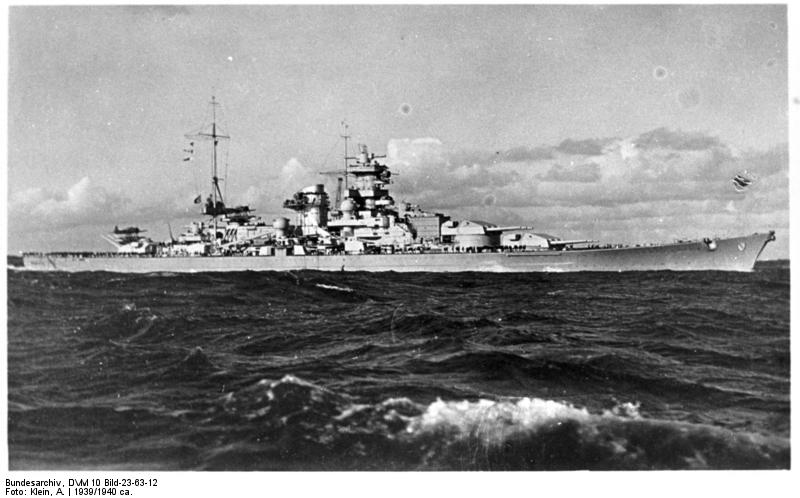
Christmastide is a joyous time for many, but in the course of history there have been times that military men have fought and died in hopeless battles far from their families. Thus it is often a time of sorry, especially for those that die alone. Among those who died alone in the Arctic darkness of December 26th 1943 were the officers and crew of the German battlecruiser Scharnhorst.

Schlachtschiff "Scharnhorst"

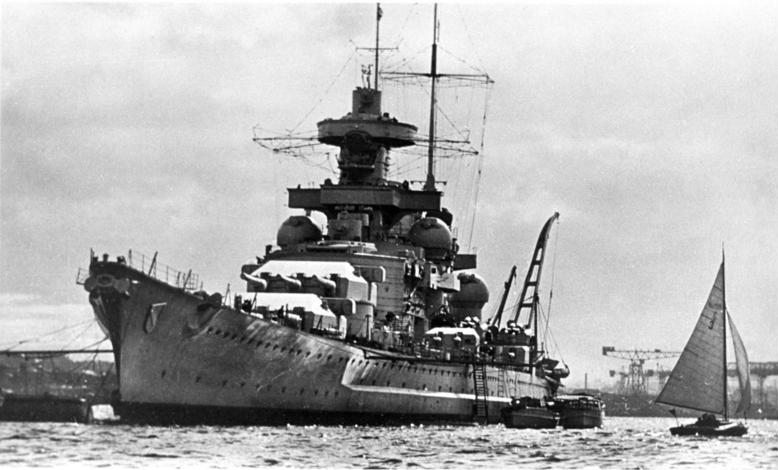
Scharnhorst in port

The Scharnhorst along with her sister ship Gneisenau were the product of the naval architects of Germany who in the early 1930s designed some of the most beautiful as well as deadly warships of the Second World War.  Following Germany’s rejection of the provisions of the Treaty of Versailles the Kreigsmarine enacted a building program to enlarge and modernize the German Navy which then was composed of obsolete pre-Dreadnaught battleships and a few modern light cruisers and destroyers.   The first major units constructed were actually begun by the predecessor to the Kreigsmarine, the Reichsmarineof the Weimar Republic.  These were the Deutschland class Armored Ships, sometimes called “Pocket Battleships” and later reclassified as Heavy Cruisers. These ships were designed to replace the old pre-Dreadnaught battleships and incorporated electric welds to reduce displacement, diesel engines for extended cruise range to enable them to serve as commerce raiders and a battery of six 11” guns.  While an advance over anything in the German inventory they were outclassed by the British battle cruisers Hood, Renown and Repulse.

However, the first truly capital ships built by the Kriegsmarine were the Scharnhorst and Gneisenau Rated as battleships, in reality they were battle cruisers because of their light main battery of 11” guns as opposed to the 14”, 15” or 16” batteries of other nations battleships.  Despite this in displacement and armor protection of the ships was comparable to other battleships of the era and their designed speed of 31.5 knots was superior to almost all other battleships of the era including the British King George V Class and the US Navy’s  North Carolina class.  Only the massive battlecruiser HMS Hood was their superior in speed and firepower.

As built Scharnhorst and Gneisenau displaced 31,000 toms, however at full combat load they both weighed in at nearly 38,000 tons and were 772 feet long.  They had an armor belt that was nearly 14 inches thick.  Armed with a main battery of nine 11” guns and a secondary armament of twelve 5.9 inch guns they also mounted a powerful for the time anti- aircraft battery of fourteen 4.1 inch guns, 16 37mm and 16 20mm anti-aircraft cannons.  Additionally they mounted six 21” torpedo tubes and carried three Arado 196 A3 scout planes.  The main battery was eventually to be replaced by six 15” guns but this never occurred although Gneisenau was taken in hand to mount the new weapons but the conversion was never completed.

scharnhorst2

Scharnhorst firing at HMS Glorious 

Laid down on 15 June 1935 and launched 3 October 1936 Scharnhorst was commissioned 7 January 1939.  Her sister Gneisenau was laid down 6 May 1935, launched 8 December 1936 and commissioned 21 May 1938.  Upon the commencement of the Second World War the two sisters began a reign of destruction on British shipping. In November they sank the Armed Merchant Cruiser HMS Rawalpindi During Operation Weserübung the pair surprised sank the aircraft carrier HMS Glorious and her two escorting destroyers, the only time a Fleet carrier was caught and sunk by battleships during the war.   From January to March 1941 they conducted Operation Berlin against British merchant shipping in the North Atlantic sinking 22 ships before returning to base.

eeb893a0b92de4ae595de56fe0fd90ca

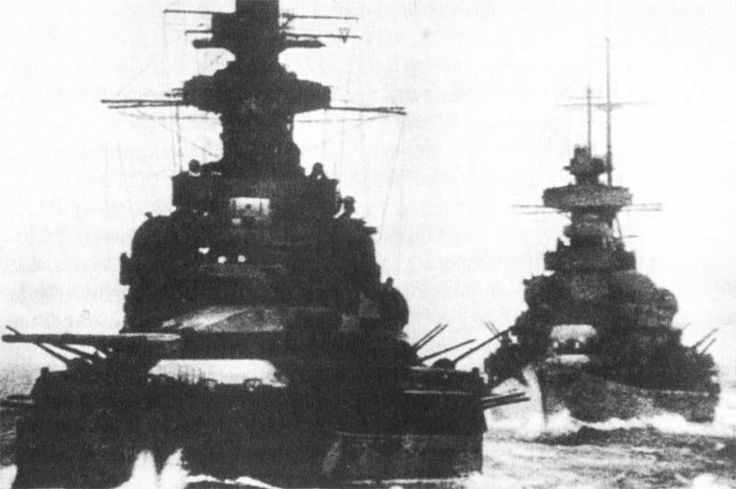
Scharnhorst and Gneisenau during Operation Cerebus

While in the port of Brest Gneisenau was bombed and torpedoed requiring extensive repairs.  Due to the exposed location of the port the German high command decided to return the ships to Germany along with the Heavy Cruiser Prinz Eugen.  The operation was called Operation Cerberus and it took place from 11-13 February 1942. The ships made a dash up the English Channel which was unsuccessfully contested by the British Royal Air Force and Royal Navy. However, both Scharnhorst and Gneisenau were damaged by mines and needed subsequent repairs.  While undergoing repairs in Kiel Gneisenauwas further damaged by the Royal Air Force requiring repairs in or to steam to the port of Gotenhafen for repair and conversion.  Although some work was completed she was decommissioned and sunk as a blockship on 23 March 1945.  Following the war she was raised by the Poles and scrapped.

Scharnhorst was repaired following Operation Cerberes and in March 1943 was transferred to Norway where along with Tirpitz, Admiral Scheer, Lutzow (the former Deutschland), Admiral Hipper and Prinz Eugen she became part of a “fleet in being” poised to strike the Allied convoys bound for Russia.

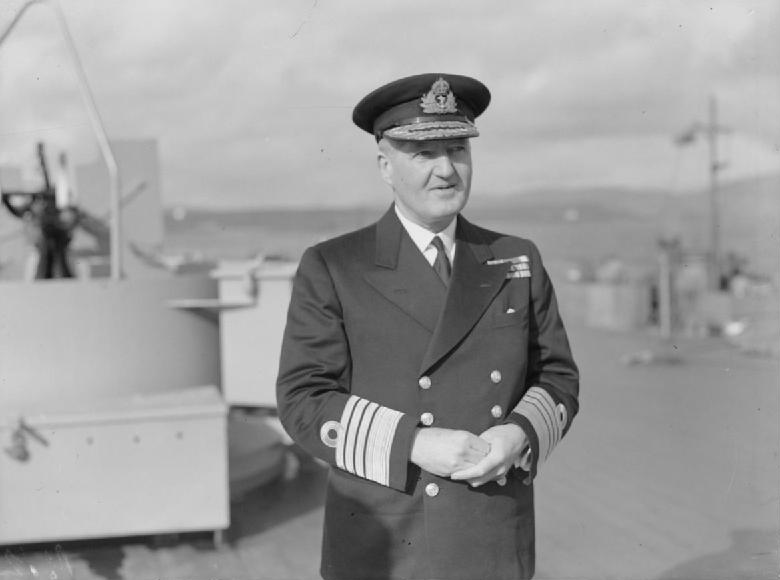
Admiral_Bruce_Fraser_1943_IWM_A_16489

Admiral Bruce Fraser

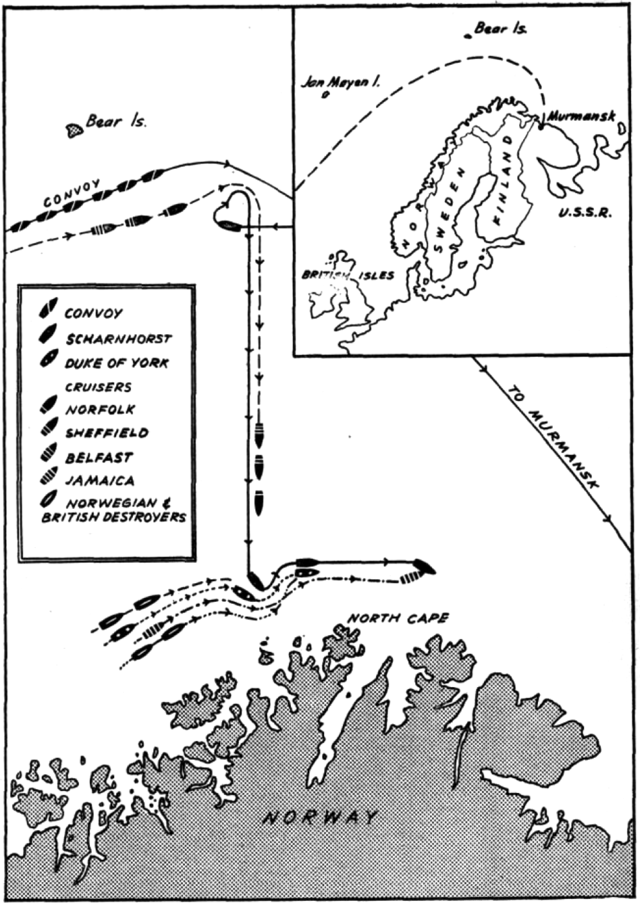
The German surface ships were a potent force that if the circumstances allowed could devastate the Russia bound convoys and the Commander of the British Home Fleet, Admiral Bruce Fraser was determined to entrap and destroy any of these ships that threatened any convoy. As such in December 1943 Fraser formed a task group built around the HMS Duke of York to be ready to pounce on any German raider that threatened the convoys. His intent was to catch any of these ships, especially Scharnhorst and trap them between the convoys and their base, in conduction with a second task group centered around the cruisers HMS Belfast, HMS Norfolk, and HMS Sheffield, Known as Force One, and destroy the German battleship.

The key to British the British operation was Enigma the German code machine and cipher system which they had acquired from captured U-Boats, and which British code-breakers had mastered. The Germans decided to send Scharnhorst and five destroyers to locate and destroy convoy JW-55B which had been spotted by Luftwaffe reconnaissance aircraft. Because of EnigmaFraser knew that Scharnhorst would attempt to intercept the convoy and put his plan in motion.

Battle_of_North_Cape_26_December_1943_map


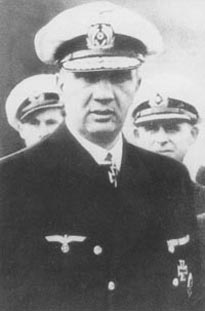
Scharnhorst and her escorts set sail on Christmas Day 1943 under the command of Rear Admiral Erich Bey to conduct Operation Ostfront. Since Fraser knew that the Germans were coming he had the convoy to temporarily reverse course which caused the Germans to miss the convoy. When he did not find the convoy in the expected location Bey detached his destroyers to expand the search area, leaving Scharnhorst alone to face the enemy.

scharnhort_operation_ostfront_5

Rear Admiral Erich Bey

At about 0900 on December 26th 1943 the cruisers of Force One discovered Scharnhorst and the  Battle of North Cape was on. Though little damage was suffered in the first engagement, the radar of Scharnhorst was knocked out, leaving her not only without air support or escort, but blind.

6050465664_e1f42ac7f8_o

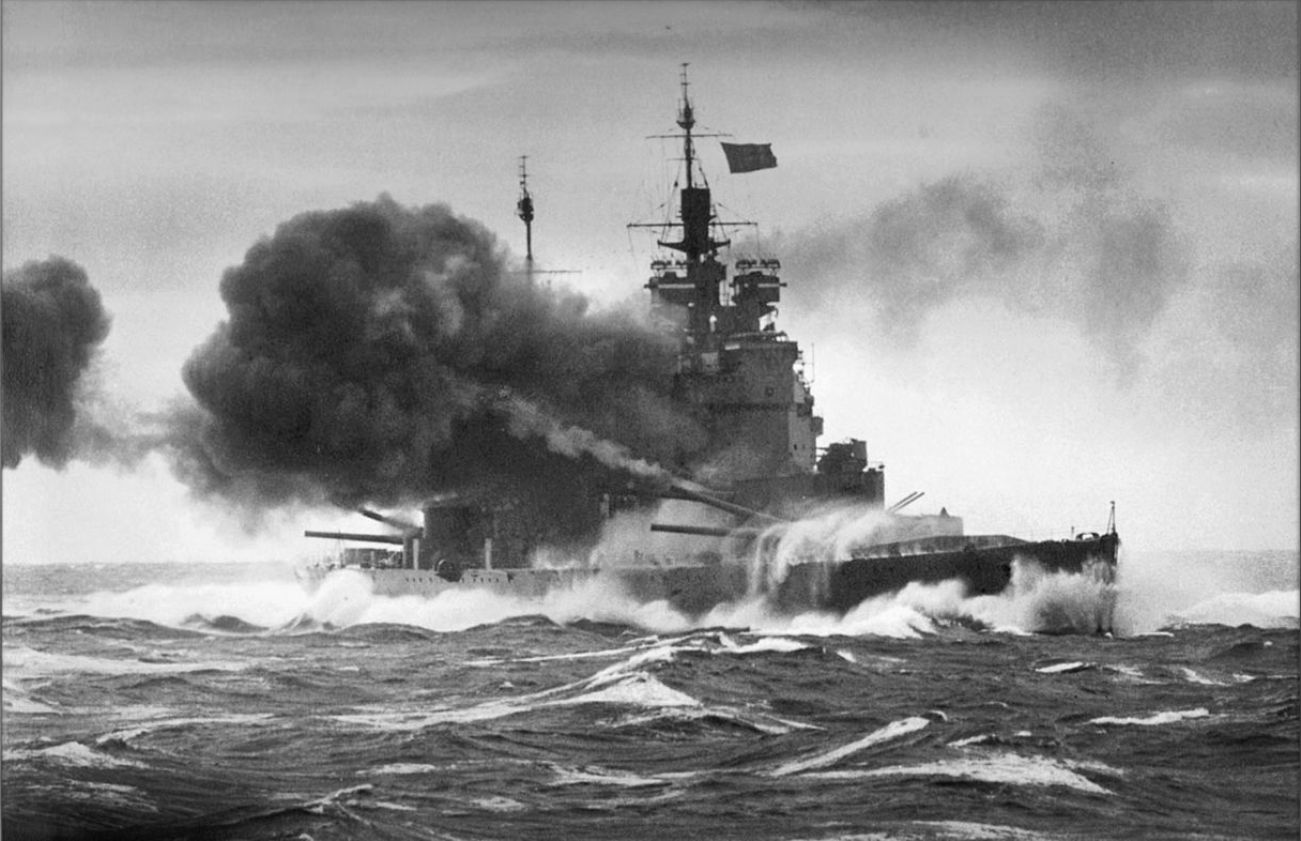
HMS Duke of York firing at Scharnhorst

Scharnhorst attempted to flee but Fraser’s Duke of York  and her four escorting destroyers destroyers intercepted her. Without radar in the blinding snow squalls Scharnhorst was surprised. Duke of York’s first radar direct salvos knocked out her forward main battery but the German ship appeared to be making a getaway when a shell from Duke of York hit her number one boiler room and reduced her speed to barely ten knots. Although the German engineers and damage control teams made some repairs and were able to bring her speed back up to 22 knots, the British ships rapidly made up the distance enabling the British destroyers to launch torpedo attacks.

Knowing the ship was doomed Admiral Bey dispatched a message to the high command of the Kriegsmarine: “We will fight on until the last shell is fired.”

While she still attempted to fight off her attackers and escape she was struck by torpedoes from several destroyers as well as was pummeled by the at at distance of under 10,000 yards by Duke of York’s 14″ shells, as well as the 6″ shells of HMS Belfast and HMS Jamaica. Savaged by hits and incapable of further resistance the German ship capsized and sank at 1945 hours with the loss of all but 36 of her 1968 man crew.  Her wreck was discovered 3 October 2000 some 70 miles north of North Cape Norway.

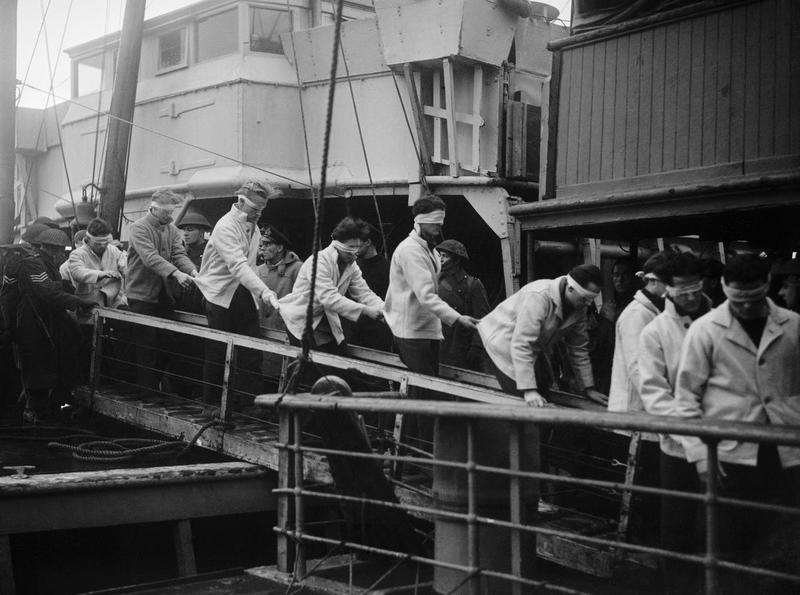
Scharnhorst_survivors_A_021202

Survivors of Scharnhorst 

Admiral Fraser praised the gallantry of the German ship to his officers later that night saying: “Gentlemen, the battle against Scharnhorst has ended in victory for us. I hope that if any of you are ever called upon to lead a ship into action against an opponent many times superior, you will command your ship as gallantly as Scharnhorst was commanded today”

After the battle Grand Admiral Erich Raeder who had authorized the sortie was relieved as commander in chief of the navy and was replaced by Grand Admiral Karl Donitz who commanded the U-Boat forces. Hitler was furious and ended most surface naval operations.

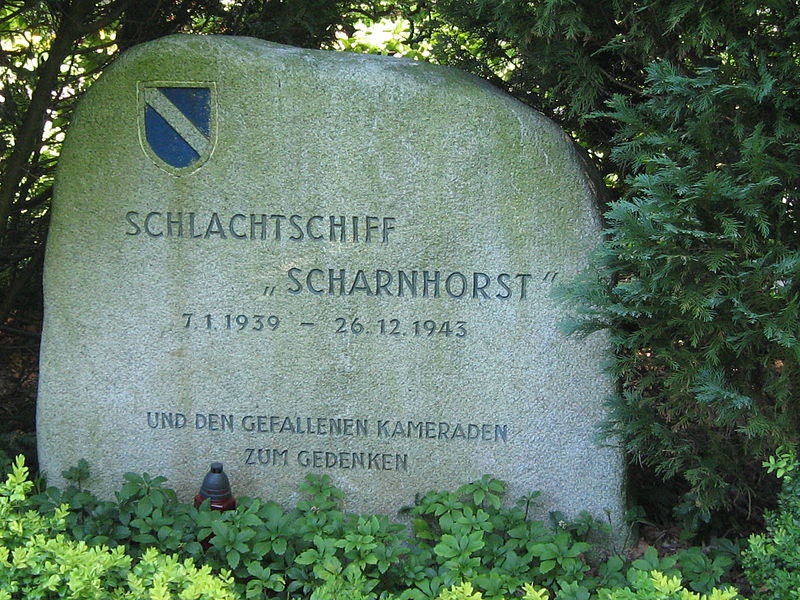
800px-Scharnhorst-WHV-April-2011

Memorial to Scharnhorst and her crew at Kiel

I have written many times about the tragedy of war, on land and at sea. Having served in combat zones on land and having been shot at by the enemy, as well as having served at sea on a cruiser I have a sense of what these men must have gone through on that final day of their lives. Though I am a realist and know that such tragedies will likely occur again, I do pray for the day that war will be no more and that those who serve in harm’s way will never have to again.

Peace

Padre Steve+

Leave a comment

Filed under History, Military, Navy Ships, World War II at Sea

Christmas Eve 2016: I Belong with Those in Pain and Those who have Lost Their Faith

palmer

Friends of Padre Steve’s World,

It is Christmas Eve on this holiest of occasions I am posting an updated version of something that I have posted before because for me it means even more today than it has in the past few years.

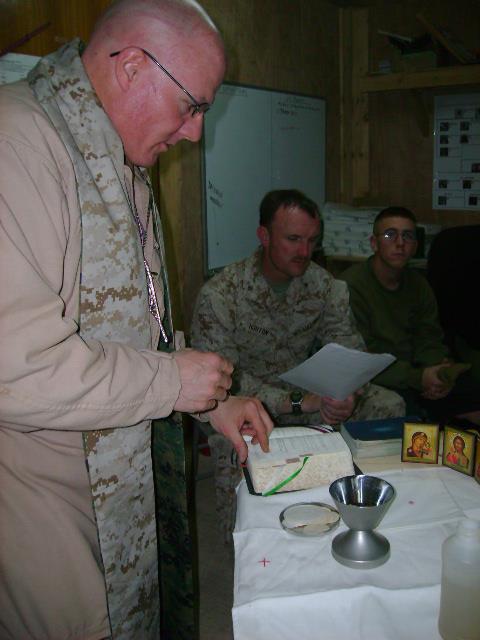
As a veteran who served in the badlands of Al Anbar Province during Christmas of 2007 I can relate to Father Palmer, the British priest and chaplain in the film Joyeux Noel (Merry Christmas) when he makes the comment “I belong with those who are in pain, and who have lost their faith, I belong here.” In the post-truth Trump era I feel my services will still be needed when those who believed in him discover just how badly they have been betrayed.

I again watched that film Wednesday. The film is the story of the amazing and exceptional Christmas Truce of 1914. It is a film that each time I see it that I discover something new, more powerful than the last time I viewed it. It reminds me of serving in Iraq, at Christmas from my perspective as a Chaplain, and thereby giving voice to those who serve now, as well as those who served God’s people in hellish places before me. It reminds me of how much I hate war, and how much I often hate the clergy who are all too often, bloodthirsty cheerleaders for war.


As a Chaplain I am drawn to the actions of the British Padre in the film, who during the truce conducts a Mass for all the soldiers, British, French and German in no-man’s land, who goes about caring for the soldiers both the living and the dead. His actions are contrasted with his Bishop who comes to relieve him of his duties and to urge on the replacement soldiers to better kill the Germans.

As the Chaplain begins to provide the last Rites to a dying soldier the Bishop walks in, in full purple cassock frock coat and hat and the chaplain looks up and kisses his ring.

As the chaplain looks at his clerical superior there is a silence and the Bishop looks sternly at the priest and addresses him:

“You’re being sent back to your parish in Scotland. I’ve brought you your marching orders.”

Stunned the Priest replies: “I belong with those who are in pain, and who have lost their faith, I belong here.”

The Bishop then sternly lectures the Priest: “I am very disappointed you know. When you requested permission to accompany the recruits from your parish I personally vouched for you. But then when I heard what happened I prayed for you.”

I have served that type of Bishop before, not anymore, but I have, and I have little tolerance for those of high office in the Church or anywhere else use their office not to serve the Prince of Peace, but the gods of war and greed.

The Priest humbly and respectfully yet with conviction responds to his superior: “I sincerely believe that our Lord Jesus Christ guided me in what was the most important Mass of my life. I tried to be true to his trust and carry his message to all, whoever they may be.”

The Bishop seems a bit taken aback but then blames the Chaplain for what will next happen to the Soldiers that he has served with in the trenches: “Those men who listened to you on Christmas Eve will very soon bitterly regret it; because in a few days time their regiment is to be disbanded by the order of His Majesty the King. Where will those poor boys end up on the front line now? And what will their families think?”

They are interrupted when a soldier walks in to let the Bishop know that the new soldiers are ready for his sermon. After acknowledging the messenger the Bishop continues: “They’re waiting for me to preach a sermon to those who are replacing those who went astray with you.” He gets ready to depart and continues: “May our Lord Jesus Christ guide your steps back to the straight and narrow path.”

The Priest looks at him and asks: “Is that truly the path of our Lord?”

The Bishop looks at the Priest and asks what I think is the most troubling question: “You’re not asking the right question. Think on this: are you really suitable to remain with us in the house of Our Lord?”

With that the Bishop leaves and goes on to preach. The words of the sermon are from a 1915 sermon preached by an Anglican Bishop in Westminster Abbey. They reflect the poisonous aspects of many religious leaders on all sides of the Great War, but also many religious leaders of various faiths even today, sadly I have to say Christian leaders are among the worst when it comes to inciting violence against those that they perceive as enemies of the Church, their nation or in some cases their political faction within a country. In the Trump era the powerful preachers are doing exactly that, and I will not condone their actions or remain silent. This is not about politics it is about the perversion of the Christian faith by those who should know better.


“Christ our Lord said, “Think not that I come to bring peace on earth. I come not to bring peace, but a sword.” The Gospel according to St. Matthew. Well, my brethren, the sword of the Lord is in your hands. You are the very defenders of civilization itself. The forces of good against the forces of evil. For this war is indeed a crusade! A holy war to save the freedom of the world. In truth I tell you: the Germans do not act like us, neither do they think like us, for they are not, like us, children of God. Are those who shell cities populated only by civilians the children of God? Are those who advanced armed hiding behind women and children the children of God? With God’s help, you must kill the Germans, good or bad, young or old. Kill every one of them so that it won’t have to be done again.”

The sermon is chilling and had it not been edited by the director would have contained the remark actually said by the real Bishop that the Germans “crucified babies on Christmas.” Of course that was typical of the propaganda of the time and similar to things that religious leaders of all faiths use to demonize their opponents and stir up violence in the name of their God.

When the Bishop leaves the Priest finishes his ministration to the wounded while listening to the words of the Bishop who is preaching not far away in the trenches. He meditates upon his simple cross, takes it off, kisses it hand hangs it upon a tripod where a container of water hangs.

The scene is chilling for a number of reasons. First is the obvious, the actions of a religious leader to denigrate the efforts of some to bring the Gospel of Peace into the abyss of Hell of earth and then to incite others to violence dehumanizing the enemy forces. The second and possibly even more troubling is to suggest that those who do not support dehumanizing and exterminating the enemy are not suitable to remain in the house of the Lord. Since I have had people, some in person and others on social media say similar things to what the Bishop asks Palmer the scene hits close to home.

When I left Iraq in February 2008 I felt that I was abandoning those committed to my spiritual care, but my time was up. Because of it I missed going with some of my advisors to Basra with the 1st Iraqi Division to retake that city from insurgents. It was only a bit over a month after I had celebrated what I consider to be my most important Masses of my life at COP South and COP North on December 23rd as well as Christmas Eve and Christmas Day. In fact they were really the last masses that I felt the mystery and awe of the love of God that I used to so much feel.

When I left the new incoming senior Chaplain refused to take my replacement leaving our advisers without dedicated support. He then slandered me behind my back because what I was doing was not how he would do things and because I and my relief were under someone else’s operational control. It is funny how word gets back to you when people talk behind your back. Thankfully he is now retired from the Navy and I feel for any ministers of his denomination under his “spiritual” care. So I cannot forget those days and every time I think about them, especially around Christmas I am somewhat melancholy and why I can relate so much to Father Palmer in the movie.

It has been nine years since those Christmas Masses and they still feel like yesterday. In the intervening years my life has been different. Just a year later I was walking home from church where my wife was to sing in the choir during the Christmas vigil mass. I couldn’t handle the crowds, the noise, and I felt so far away from God. That night I walked home in the dark looking up into the sky asking God if he still was there. If there had been a bar on the way home I would have stopped by and poured myself in.

Since Iraq I have dealt with severe and chronic PTSD, depression, anxiety and insomnia were coupled with a two year period where due to my struggles I lost faith, was for all practical purposes an agnostic. I felt abandoned by God, but even more so and maybe more importantly by my former church and most other Chaplains. It was like being radioactive, there was and is a stigma for Chaplains that admits to PTSD and go through a faith crisis, especially from other Chaplains and Clergy. It was just before Christmas in late 2009 that faith began to return in what I call my Christmas Miracle. But be sure, let no one tell you differently, no Soldier, Sailor, Marine or Airman who has suffered the trauma of war and admitted to PTSD does not feel the stigma that goes with it, and sadly, despite the best efforts of many there is a stigma.

Now that faith is different and I have become much more skeptical of the motivations of religious leaders, especially those that demonize and dehumanize those that do not believe like them or fully support their cause or agenda. Unfortunately there are far too many men and women who will use religion to do that, far too many.

As for me, I thought that I was in a better place a few years ago, but then I had the floor kicked from out from under me in the summer of 2014 and it has been a hard fight and while I have gotten back to a sense of normal, call it a “new normal,” it is a day to day thing. I still suffer the effects of the PTSD, especially the insomnia, nightmares and the nightmares which came back with a vengeance, I had one nightmare so realistic that I flew off the bed into a bookcase and broke my nose a few months back. I also still have the anxiety in crowded places and bad traffic, but working with my new therapist I am coming up with some effective coping mechanisms. As for faith, I do believe again, though at the same time I doubt. I would have to consider myself a Christian Agnostic who echoes the cry of the man who cried out to Jesus, “Lord I believe, help my unbelief!” I believe and I don’t, and yet I still believe.

Like the Priest in Joyeux Noel I know that my place is with those who are “in pain, and who have lost their faith.” For me this may no longer be on the battlefield as I will retire from the Navy in a few years. However, that being said I will strive to be there for those that struggle with faith and believe, especially those who struggle because of what they saw and experienced during war and when they returned home.

533506_10151366982457059_868388211_n


Likewise I expect that I will do my best to speak truth to those in power and those whose faithfulness is more a product of their comfort with the God that they create in their own mind rather than the Crucified God wise death on the Cross s a scandal. For many Christians the scandal of the cross is too easy to avoid by surrounding ourselves with pet theologies that appeal to our pride, prejudice and power, and vote into office men that mock the very faith that they say they believe.  That kind of malevolent power represented by the bishop in Joyeux Noel. Thus I take a measure of comfort in the words of Simone Weil who said “He who has not God in himself cannot feel His absence.” 

Thus, like Paul Tillich I have come to believe that “Sometimes I think it is my mission to bring faith to the faithless, and doubt to the faithful.” In other words to become a complete pain in the ass until the day that I die.

Praying for Peace this Christmas,

Padre Steve+

4 Comments

Filed under christian life, faith, History, Military, Political Commentary

“They Are Not Just Names” Remembering the Heroes of Pearl Harbor

Friends of Padre Steve’s World,

One of the problems of our era is that most Americans and for that matter most Europeans have no understanding of the human costs of war and the amazing resilience of men and women under fire. When we do think about war we tend to focus on the machines of war without so much thinking about the people, and the fact is, that people are the single constant in history and war. So today, the day after the 75th anniversary of the attack on Pearl Harbor I am re-posting an article I wrote a couple of years back.

As I wrote my personal reflection for yesterday’s post I kept thinking about how easy it is to simply get lost in the names, or be overwhelmed by the numbers of casualties and the amount of suffering involved. When you actually understand the human cost of war it can be overwhelming. My mind flashes back to mass casualty incidents that I saw in Iraq, seeing the wounded Marines and Soldiers and the devastating wounds, and to know that all of them are more than a name, more than a rank, more than a number. In the television show Star Trek Deep Space Nine a casualty report is received, and the executive officer of Deep Space Nine remarks to the Captain, “that’s a lot of names.” The Captain, played by Avery Brooks replied: They’re not just names. It’s important we remember that. We have to remember.” 

That my friends is true about all of our wars, including the undeclared wars that we have been fighting for the fifteen years.

With that said, it is time to remember. We have to do that.

Peace

Padre Steve+

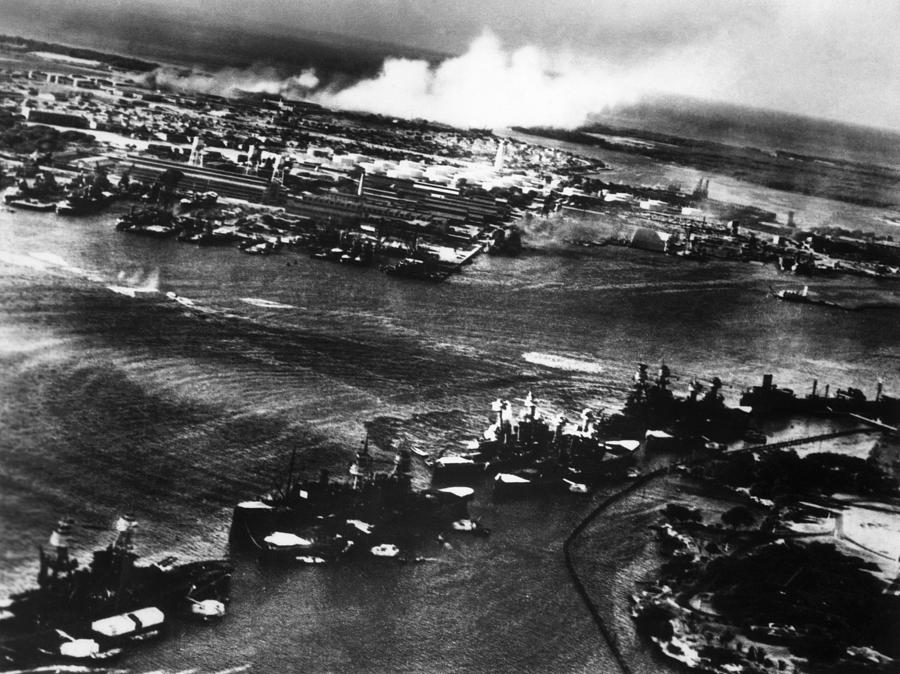
On the morning of December 7th 1941 aircraft from the Japanese First Air Fleet attacked the United States Pacific Fleet as it lay at anchor at Pearl Harbor.

The attack inflicted great damage and casualties on the Pacific Fleet as well as the Army Air Forces based on Oahu. On that fateful Sunday the US Navy had 19 ships sunk or damaged. The Navy, Marine Corps and Army Air Corps lost 188 aircraft destroyed and another 159 damaged. 2402 American Sailors, Marines and Soldiers, including members of the Army Air Corps lost their lives and another 1247 were wounded.

the-japanese-attack-on-pearl-harbor-everett

It was a day where men, suddenly shaken from their peacetime routine by bombs, bullets and torpedoes conducted themselves in in an extraordinary manner. When the last Japanese aircraft turned away the previously placid waters of Pearl Harbor were littered with wrecked and sunken ships, blazing fires and the bodies of sailors and Marines. Desperate rescue efforts were already underway even as undamaged ships sortied to attempt to find and engage the Japanese fleet.

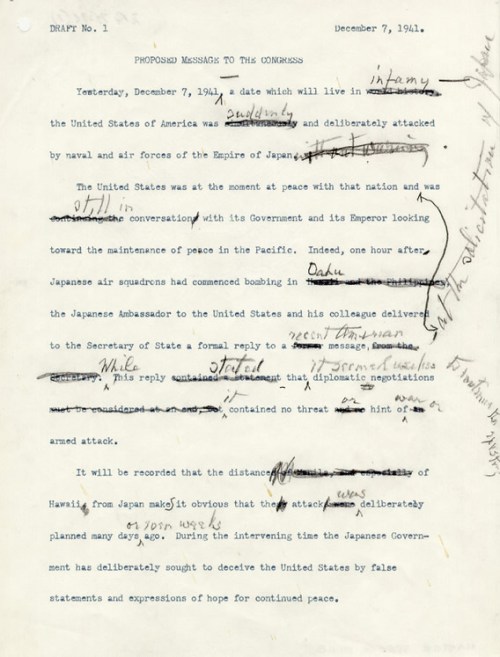
The next day President Franklin Delano Roosevelt asked the Congress for a Declaration of War.His speech, immortalized in its opening words galvanized the nation.

“Yesterday, December 7, 1941 – a date which will live in infamy – the United States of America was suddenly and deliberately attacked by naval and air forces of the Empire of Japan….” 

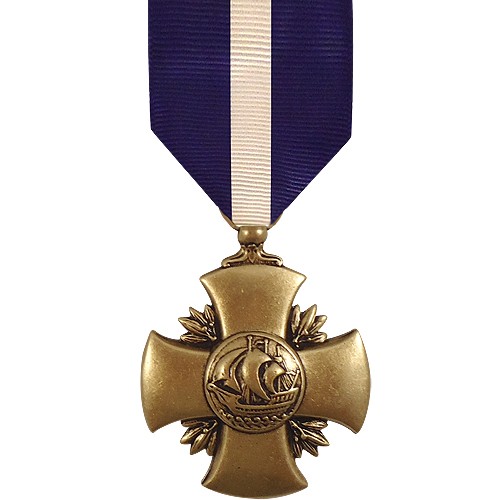
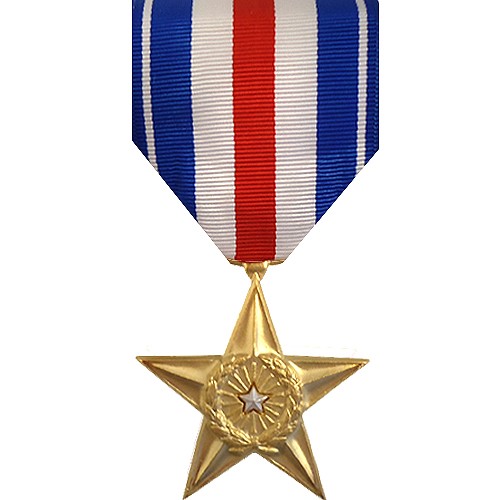
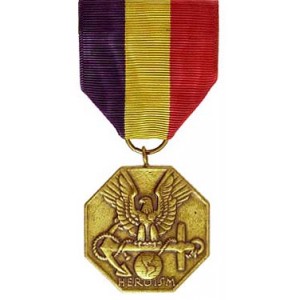
It was also a day where heroism was acknowledged. In the days and months following many Sailors, Soldiers and Marines ware awarded for their heroism, posthumously. 16 Congressional Medals of Honor were awarded, 15 at Pearl Harbor and one at Midway Island which was attacked the same day. Of those 10 were to men killed in action.  There were 51 awards of the Navy Cross, four Silver Stars and three wards of the Navy and Marine Corps Medal. One of the Navy Cross awards was upgraded to the Medal of Honor.

The ranks of the awardees ranged from the Commander of Battleship Division One Rear Admiral Isaac Kidd to killed on the bridge of his flagship the USS Arizona to Seaman First Class James Ward who died on the USS Oklahoma. Kidd’s body was never found, his Naval Academy ring was found fused to a bulkhead on the destroyed bridge of the Arizona.

Ward was a gunner in one of Oklahoma’s main gun turrets. His citation reads:

“For conspicuous devotion to duty, extraordinary courage and complete disregard of his own life, above and beyond the call of duty, during the attack on the Fleet in Pearl Harbor by Japanese forces on 7 December 1941. When it was seen that the U.S.S.Oklahoma was going to capsize and the order was given to abandon ship, Ward remained in a turret holding a flashlight so the remainder of the turret crew could see to escape, thereby sacrificing his own life.”

tumblr_lvtli9HXlM1qigaa4o1_1280

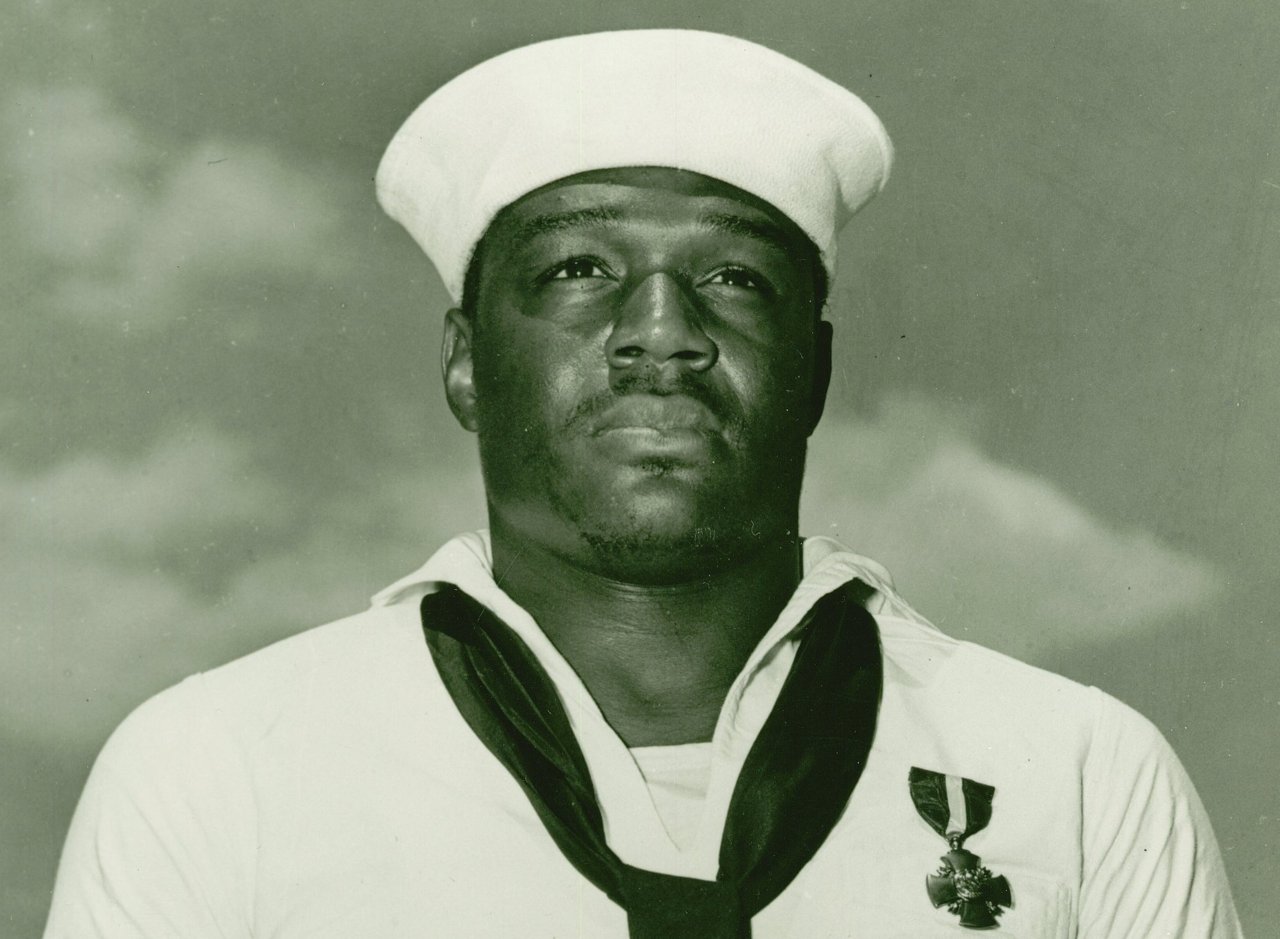
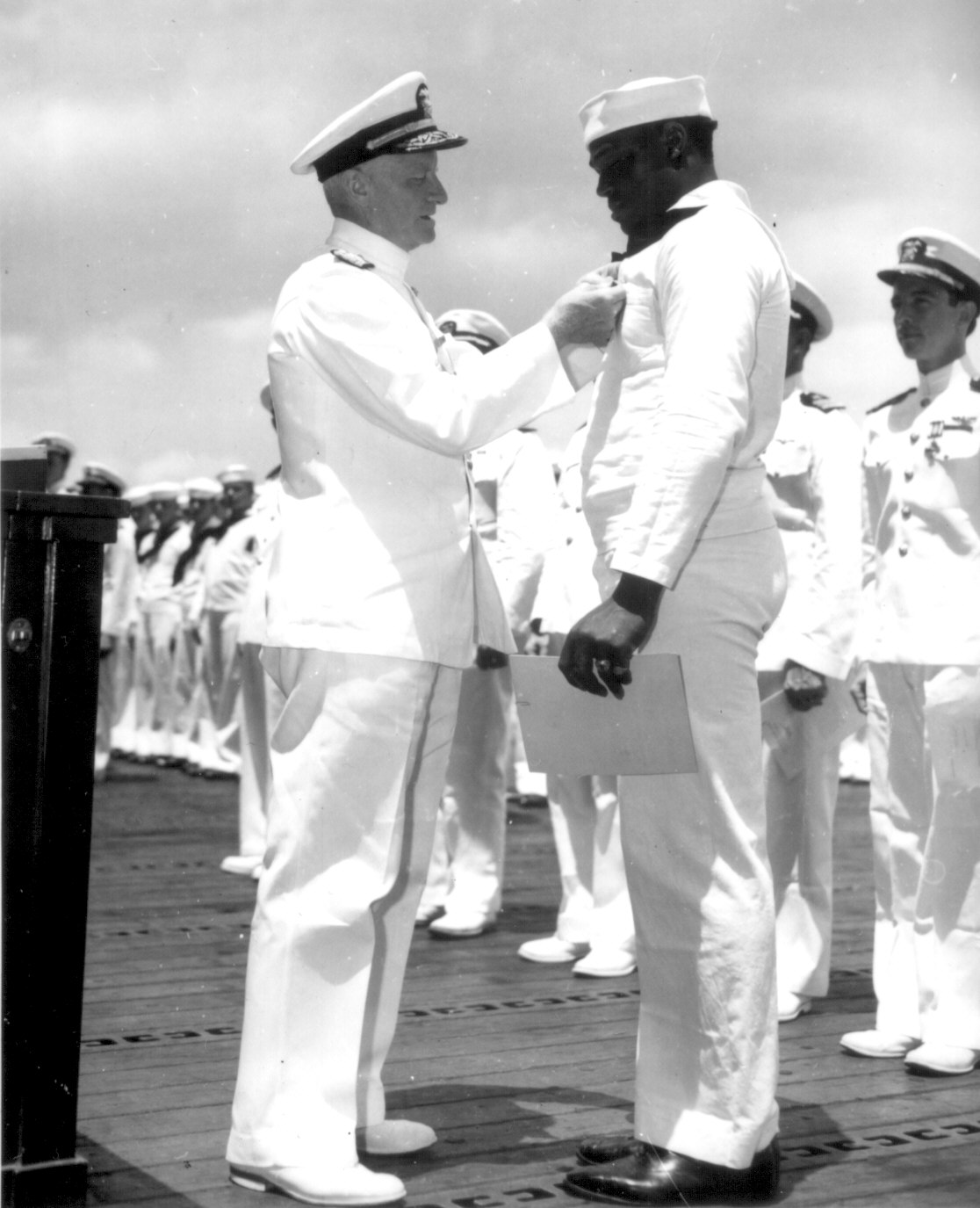
One of the Navy Crosses was awarded to Mess Attendant First Class Doris “Dorie” Miller. Miller was the only African American to win such an award that day. Miller who was assigned to the USS West Virginia received the award from Admiral Chester Nimitz for his efforts to assist his mortally wounded Commanding Officer, Captain Mervyn Bennion and manning a .50 caliber machine gun on his ship, possibly shooting down a Japanese aircraft.

Nimitz_and_miller

Nimitz remarked at the ceremony “This marks the first time in this conflict that such high tribute has been made in the Pacific Fleet to a member of his race and I’m sure that the future will see others similarly honored for brave acts.” Miller died less than two years later along with 645 other sailors when his ship the USS Liscombe Bay was torpedoed and sunk by a Japanese submarine near Tarawa. Miller’s Navy Cross citation reads:

“For distinguished devotion to duty, extraordinary courage and disregard for his own personal safety during the attack on the Fleet in Pearl Harbor, Territory of Hawaii, by Japanese forces on December 7, 1941. While at the side of his Captain on the bridge, Miller, despite enemy strafing and bombing and in the face of a serious fire, assisted in moving his Captain, who had been mortally wounded, to a place of greater safety, and later manned and operated a machine gun directed at enemy Japanese attacking aircraft until ordered to leave the bridge.”

CaptCassinYoung285

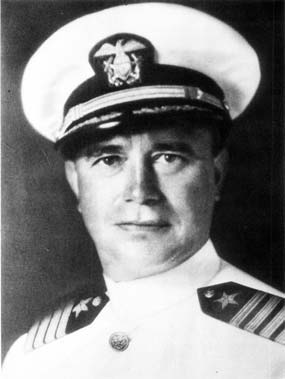
Others who survived the Pearl Harbor attack including Captain Cassin Young of the USS Vestal were later killed in action, Young while in command of the Heavy Cruiser USS San Francisco at the Naval Battle of Guadalcanal on November 13th 1942. Captain Young’s Medal of Honor citation reads:

For distinguished conduct in action, outstanding heroism and utter disregard of his own safety, above and beyond the call of duty, as commanding officer of the U.S.S. Vestal, during the attack on the Fleet in Pearl Harbor, Territory of Hawaii, by enemy Japanese forces on 7 December 1941. Comdr. Young proceeded to the bridge and later took personal command of the 3-inch antiaircraft gun. When blown overboard by the blast of the forward magazine explosion of the U.S.S. Arizona, to which the U.S.S. Vestal was moored, he swam back to his ship. The entire forward part of the U.S.S. Arizona was a blazing inferno with oil afire on the water between the 2 ships; as a result of several bomb hits, the U.S.S. Vestal was afire in several places, was settling and taking on a list. Despite severe enemy bombing and strafing at the time, and his shocking experience of having been blown overboard, Comdr. Young, with extreme coolness and calmness, moved his ship to an anchorage distant from the U.S.S. Arizona, and subsequently beached the U.S.S. Vestal upon determining that such action was required to save his ship.

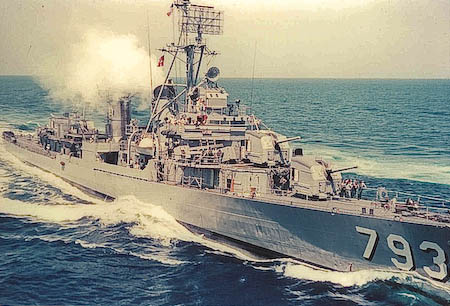
The Fletcher Class destroyer named after Captain Young, the USS Cassin Young DD-793 is now a museum ship in Boston Massachusetts.

In_action_courtesy_the_web

The individual bravery of these men was remarkable and many more did equally heroic things but for whatever reason were not recognized.

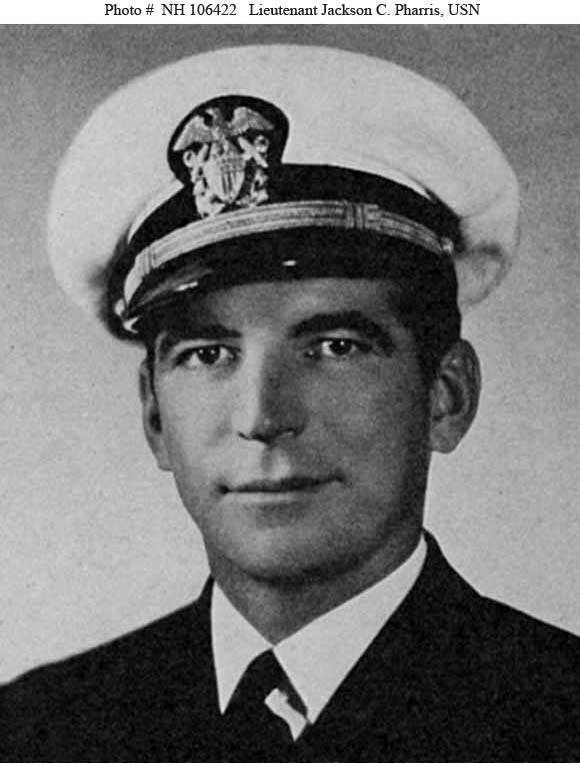
i06422

The citation of Lieutenant Jackson Pharris at the time of the attack a Gunners Mate on the USS California is typical of the actions of so many men on that desperate day. He was first awarded the Navy Cross but the award was upgraded to the Medal of Honor. That citation follows:

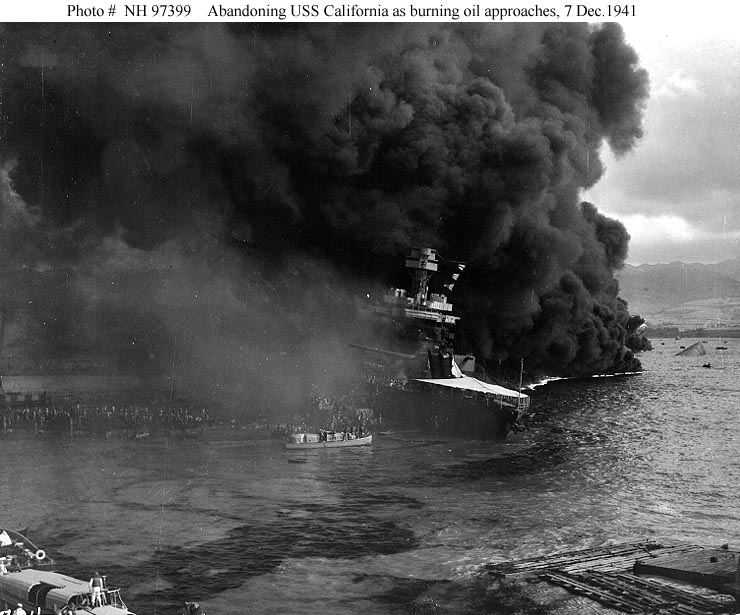
For conspicuous gallantry and intrepidity at the risk of his life above and beyond the call of duty while attached to the U.S.S. California during the surprise enemy Japanese aerial attack on Pearl Harbor, Territory of Hawaii, 7 December 1941. In charge of the ordnance repair party on the third deck when the first Japanese torpedo struck almost directly under his station, Lt. (then Gunner) Pharris was stunned and severely injured by the concussion which hurled him to the overhead and back to the deck. Quickly recovering, he acted on his own initiative to set up a hand-supply ammunition train for the antiaircraft guns. With water and oil rushing in where the port bulkhead had been torn up from the deck, with many of the remaining crewmembers overcome by oil fumes, and the ship without power and listing heavily to port as a result of a second torpedo hit, Lt. Pharris ordered the shipfitters to counterflood. Twice rendered unconscious by the nauseous fumes and handicapped by his painful injuries, he persisted in his desperate efforts to speed up the supply of ammunition and at the same time repeatedly risked his life to enter flooding compartments and drag to safety unconscious shipmates who were gradually being submerged in oil. By his inspiring leadership, his valiant efforts and his extreme loyalty to his ship and her crew, he saved many of his shipmates from death and was largely responsible for keeping the California in action during the attack. His heroic conduct throughout this first eventful engagement of World War 11 reflects the highest credit upon Lt. Pharris and enhances the finest traditions of the U.S. Naval Service.


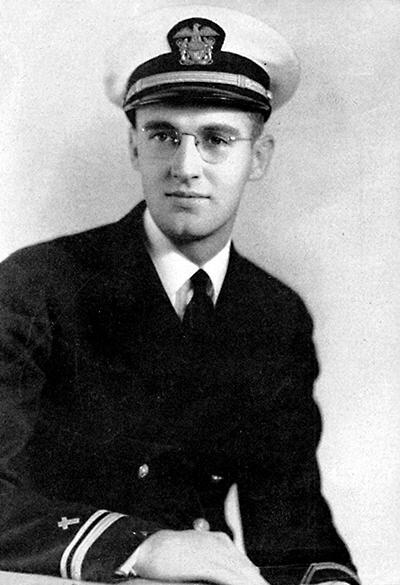
Aloysius Schmitt

There were two chaplains who died that day, one of them, Lieutenant Junior Grade Aloysius Schmitt, the Catholic Chaplain of the USS Oklahoma sacrificed his life to push a sailor out of the ship as it rolled over. He was posthumously awarded the Navy and Marine Corps Medal. His remains were recently identified and returned to his hometown just a few weeks ago.

h97399

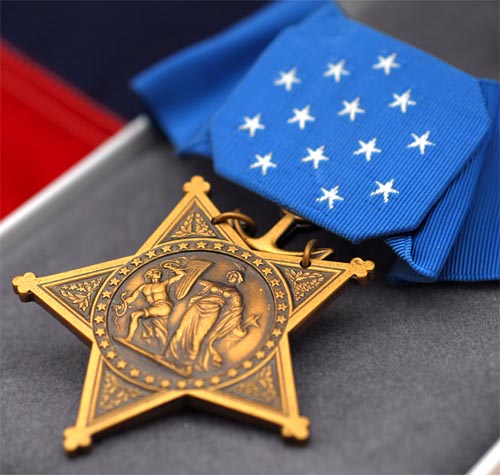
2008-04-medal-of-honor-presented-to-navy-seal-monsoor1

Those awarded the Medal of Honor are listed here:

Bennion, Mervyn, Capt., USN, CO of USS West Virginia, casualty of USS West Virginia 

Cannon, George H., First Lt., USMC, casualty of Midway Island NAS

Finn, John W., Lt.(jg), USN, NAS Kaneohe Bay, from Los Angeles, CA (20 shrapnel wounds from firing at Japanese planes)

Flaherty, Francis C., Ens., USNR, casualty of USS Oklahoma

Fuqua, Samuel G. (Glenn), Capt., USN, USS Arizona, from Missouri

Hill, Edwin J. (Joseph), Boatswain CWO, USN, casualty of USS Nevada

Jones, Herbert C., Ens., USN, casualty of USS California

Kidd, Isaac C., R. Adm., USN, from Ohio, casualty of USS Arizona

Pharris, Jackson C., Gunner, USN, USS California, from Columbus, GA

Reeves, Thomas J., Chief Radioman WO(RAD), USN, casualty of USS California

Ross, Donald K., Lt.Cmdr, USN, USS Nevada

Scott, Robert R., Machinist’s Mate first class MM1c, USN, casualty of USS California

Tomich, Peter, Chief Watertender, USN, casualty of USS Utah

Van Valkenburgh, Franklin, Capt(CO), USN, CO USS Arizona, casualty of USS Arizona

Ward, James Richard, Seaman first class, USN, casualty of USS Oklahoma

Young, Cassin, Capt., USN, Washington DC, USS Vestal

navy_cross_medal_171

Those awarded the Navy Cross are listed here: 

Austin, John A., Chief Carpenter, USN, casualty of USS Oklahoma

Baker, Lionel H., Pharmacist’s Mate second class, USN

Bolser, Gordon E. Lt.(jg), USN

Bothne, Adoloph M., Boatswain, USN

Burford, William P., Lt. Comdr., USN

Christopher, Harald J., Ens., USNR, casualty of USS Nevada

Curtis, Ned B., Pharmacist’s Mate second class, USN

Daly, Edward Carlyle, Coxwain, USN, casualty of USS Downes

Darling, Willard D., Cpl., USMC

Davis, Frederick C., Ens., USNR, casualty of USS Nevada

Dickinson, Clarence E. Jr., Lt., USN

Douglas, C. E., Gunnery Sgt., USMC

Driskel, Joseph R., Corporal, USMC

Dunlap, Ernest H. Jr., Ens., USN

Edwards, John Perry, Ens., USNR

Etchell, George D., Shipfitter, USN

Fleming, W.D., Boatswain’s Mate first class, USN

Gombasy, L.G., Seaman second class, USN

Graham, Donald A., Aviation Machinist’s Mate first class, USN

Hailey, Thomas E., Sgt., USMC

Hansen, Alfred L., Chief Machinist’s Mate, USN

Huttenberg, Allen J., Ens., USNR

Isquith, Solomon S., Lt. Cmdr. USN

Jewel, Jesse D., Comdr.(MC), USN

Kauffman, Draper L., Lt., USNR

Larson, Nils R., Ens., USN

Ley, F. C. Jr., Fireman second class, USNR

McMurtry, Paul J., Boatswain’s Mate first class, USN

Mead, Harry R., Radioman second class, USN

Miller, Doris, Mess Attendant first class, USN 

Miller, Jim D., Lt.(jg), USN

Moore, Fred K., Seaman first class, USN, casualty of USS Arizona

Outerbridge, William W., Lt. Comdr., USN

Parker, William W., Seaman first class, USN

Peterson, Robert J., Radioman second class, USN

Pharris, Jackson C., Gunner, USN (upgraded to Medal of Honor)

Phillips, John S., Comdr. USN

Riggs, Cecil D., Lt. Comdr. (MC), USN

Robb, James W. Jr., Lt.(jg), USN

Roberts, William R., Radioman second class, USN

Ruth, Wesley H., Ens., USN

Singleton, Arnold, Ens., USN

Smith, Harold F., Boatswain’s Mate second class, USN

Snyder, J. L., Yeoman first class USN

Taussig, Joseph K. Jr., Ens., USN

Taylor, Thomas H., Ens., USN

Teaff, Perry L, Ens., USN

Thatcher, Albert C., Aviation Machinists Mate second class, USN

Thomas, Francis J., Lt. Comdr., USN

Thomas, Robert E. Jr., Ens., USN

Vaseen, John B., Fireman second class, USNR

silver_star_medal_205_web.jpeg_1

The Silver Star was awarded to:

Kiefer, Edwin H., Lt.(jg), USNR

Marshall, Theodore W., Lt., USNR

Owen, George T., Comdr., USN

Shapley, Alan, Maj., USMC

983-963-large

The Navy and Marine Corps Medal was awarded posthumously to: 

Day, Francis D., Chief Watertender, USN, casualty of USS Oklahoma

Schmitt, Aloysius H., LTjg, CHC, USNR, casualty of USS Oklahoma

Wright, Paul R., Chief Watertender, USNR, casualty of USS Oklahoma

Note: The Awards listed are also complied at the website http://pearlharbor.org That site also has one of the most extensive searchable casualty listings available on the web. 

As we remember the attack on Pearl Harbor, or for that matter any battle we cannot reduce them to the number of ships, aircraft, tanks or equipment lost. Likewise when we talk the raw numbers of casualties the temptation is to treat them as impersonal statistics. However behind each of those numbers is a name, a man or woman with a life, family and friends who died in the service of their country. We must never forget that they are not just names.

The same is true today the of men and women who serve, most who will remain unknown to most Americans.

Please do not forget them.

Peace

Padre Steve+

Leave a comment

Filed under History, Military, ministry, world war two in the pacific

To Take Increased Devotion… Pearl Harbor at 75, a Personal Reflection

uss-arizona-memorial-pearl-harbor

Friends of Padre Steve’s World,

I never will forget the day that I took a Navy launch from Naval Station Pearl Harbor to the USS Arizona Memorial. It was Easter Sunday, March 26th 1978, the day before my 18th birthday and I was in Pearl Harbor as part of a Naval Junior ROTC Cadet Cruise. Cadets from my school sailed aboard the USS Frederick LST-1184 from San Diego to Pearl, and remained there for a week until returning to San Diego aboard the USS Gray FF-1054.

I honestly don’t know how many young people ever have had that kind of adventure, but for me I know that those three weeks were profoundly important in who I am today, but the one that constantly reverberates in me is the visit to the Arizona Memorial. Back then there was no visitor center on Ford Island, nor was the USS Missouri moored where the USS Oklahoma was that fateful Sunday. The day was sunny with partly cloudy skies, the sunlight reflected on the placid waters of Pearl Harbor. As the launch, manned by Sailor’s in Dress Whites neared Ford Island the bridge like white memorial loomed ahead, the rusty barbette of the battleship’s “C” turret rose slightly out of the water aft of the memorial, and the mooring quay with the USS Arizona inscribed upon it glinted in the bright morning sunlight. To our rear cruisers and destroyers lined the piers of the Naval Station.

uss-airzona-shrine-wall

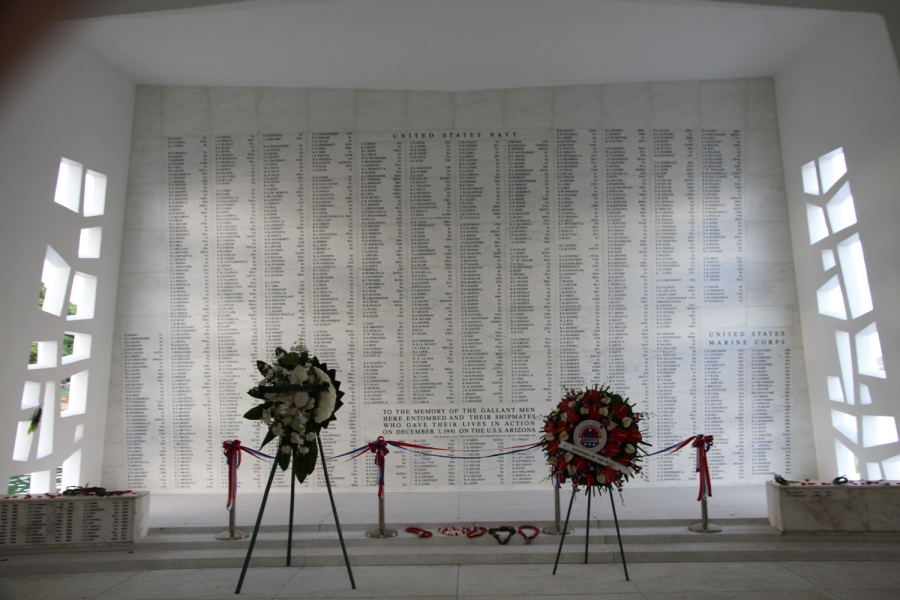
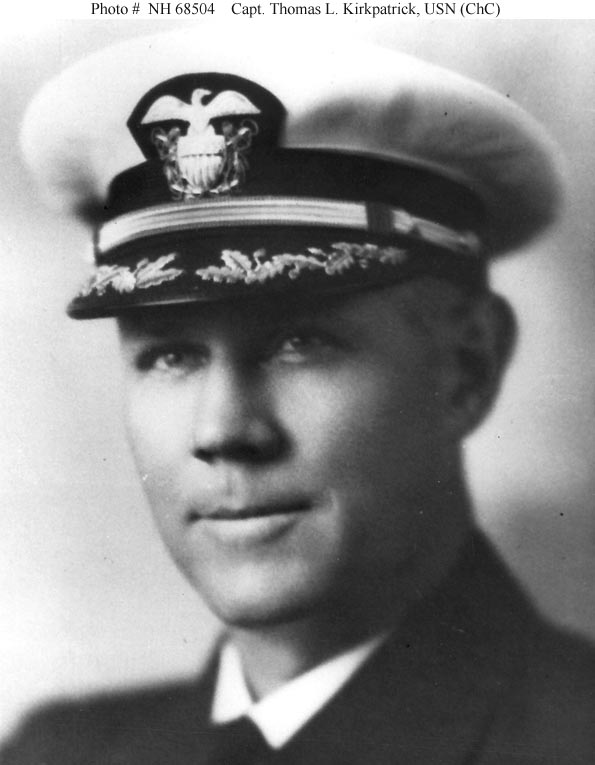
Alighting from the launch I went aboard the memorial at the entry room and walked across the bridge and the assembly room before entering the shrine. As I walked slowly across the bridge I peered into the water below thinking about all the men still entombed in the wreck. Pausing in the shrine I read the names of the 1,177 men killed aboard Arizona that Sunday morning, one of those was the ship’s chaplain, Captain Thomas Kirkpatrick. It was a pivotal moment for me. I had begun to feel a call to the ministry but in that moment I was sure that I wanted to serve as a Navy Chaplain. I remember finding a post card that I had sent my grandparents from the USS Gray when we returned to San Diego, my words were “Dear Ma Maw and Pa Paw, I think I am supposed to be a Navy Chaplain.” I laughed when I saw it because I was then serving as a Chaplain in the Army Reserve. Sadly, when my grandmother died in November 1996 I was deployed, and that simple postcard, my link with that part of my past was discarded by family members who did not think enough to read it, or if they did didn’t give enough of a damn about me to save it. I should have taken it when I had the chance, but sometimes I am too sentimental. 

chaplain-thomas-kirkpatrick

It took me a while to get there, my long strange trip included a 17 ½ year detour in the U.S. Army before I became a Navy Chaplain in February 1999.

Abraham Lincoln spoke of the ground that was hallowed at Gettysburg in his Gettysburg Address. The wreck of the Arizona is also hallowed. Despite our best efforts we cannot consecrate it more than the men who served aboard her that day seventy-five years ago, but we can as Lincoln said so well be dedicated here to the unfinished work which they who fought here have thus far so nobly advanced. It is rather for us to be here dedicated to the great task remaining before us — that from these honored dead we take increased devotion to that cause for which they gave the last full measure of devotion — that we here highly resolve that these dead shall not have died in vain — that this nation, under God, shall have a new birth of freedom — and that government of the people, by the people, for the people, shall not perish from the earth.”

For me that means to continue to serve as a Chaplain in the Navy, never forgetting that the duty of a Chaplain is with his or her Sailors, Marines, Soldiers, and Airmen, especially when they go in harm’s way.

Peace

Padre Steve+

Leave a comment

Filed under faith, History, Military, ministry, World War II at Sea, world war two in the pacific

“Our World in Stupor Lies…” December 6th 1941 at 75 

h97398

Friends of Padre Steve’s World,

Walter Lord wrote this perceptive and prophetic comment about the Japanese attack on Pearl Harbor, “A nation brought up on peace was going to war and didn’t know how.” His words still resonate as most people have no idea about the reality of war. Despite terrorist attacks on major cites and unending war in the Middle East, Afghanistan, and parts of Africa, for most Americans and Western Europeans this is time of peace. Well, at least the illusion of peace.

Today tens of thousands of American, NATO and European Union troops operating in a number of mandates are in harm’s way. In some places like Afghanistan they are at war, in others attempting to keep the peace amidst a resurgence of the Taliban. Around the world regional conflicts, civil wars, insurgencies  and revolutions threaten not only regional peace but the world peace and economy. Traditional national rivalries and ethnic and religious tensions especially in Asia and the broader Middle East have great potential to escalate into wars that should they actually break will involve the US, NATO and the EU, if not militarily economically and diplomatically.

But, we live in a dream world an illusory world of peace, that entraps political leaders across the political spectrum. It is as W.H. Auden wrote in his poem September 1st 1939:

Defenseless under the night
Our world in stupor lies…

On December 6th 1941 the world was already at war and the United States was edging into the war. The blood of Americans has already been shed but for the vast majority of Americans the events in Europe and Asia were far away and not our problem. Though President Roosevelt had began the expansion of the military there were those in Congress seeking to demobilize troops and who fought all attempts at to intervene.

maltese-falcon-by-content-artofmanlinessdotcomw499h371

Most people went about their business that last furtive day of peace. People went about doing their Christmas shopping, going to movies like The Maltese Falcon staring Humphrey Bogart or the new short Tom and Jerry cartoon, The Night Before Christmas.

Tom And Jerry

Others went to football games. UCLA and USC had played their annual rivalry game to a 7-7 tie, Texas crushed Oregon in Austin by a score of 71-7 while Texas A&M defeated Washington State in the Evergreen Bowl in Tacoma by a score of 7-0.

0-3

In Europe a Soviet counter-offensive was hammering a freezing and exhausted German Wehrmacht at the gates of Moscow. U-Boats were taking a distressing toll of ships bound for Britain including neutral US merchant ships and warships, including the USS Reuben James. American Airmen were flying as the volunteer Flying Tigers for the Nationalist Chinese against the Japanese invaders.

decwarp1

War was everywhere but there was still the illusion of peace. When the messages came out of Pearl Harbor the next morning it was already early afternoon on the East Coast. The Japanese Ambassador had been delayed in delivering the declaration of war, people across the country going about their Sunday business, going to church, relaxing or listening to the radio. Thus when war came, despite all the precursors and warnings war came. When it happened it took the nation by surprise. Walter Lord wrote in his classic account of the Pearl Harbor attack Day of Infamy: “A nation brought up on peace was going to war and didn’t know how.”

By the end of the day over 2400 Americans were dead and over 1200 more wounded. The battleships of the Pacific Fleet were shattered. 4 sunk, one grounded and 3 more damaged. 10 other ships were sunk or damaged in the attack. 188 aircraft were destroyed and 159 damaged.


The next day President Franklin D. Roosevelt called the nation to action requesting that Congress declare war on Japan. 

Mr. Vice President, and Mr. Speaker, and Members of the Senate and House of Representatives:

Yesterday, December 7, 1941 — a date which will live in infamy — the United States of America was suddenly and deliberately attacked by naval and air forces of the Empire of Japan.

The United States was at peace with that Nation and, at the solicitation of Japan, was still in conversation with its Government and its Emperor looking toward the maintenance of peace in the Pacific. Indeed, one hour after Japanese air squadrons had commenced bombing in the American Island of Oahu, the Japanese Ambassador to the United States and his colleague delivered to our Secretary of State a formal reply to a recent American message. And while this reply stated that it seemed useless to continue the existing diplomatic negotiations, it contained no threat or hint of war or of armed attack.

It will be recorded that the distance of Hawaii from Japan makes it obvious that the attack was deliberately planned many days or even weeks ago. During the intervening time the Japanese Government has deliberately sought to deceive the United States by false statements and expressions of hope for continued peace.

The attack yesterday on the Hawaiian Islands has caused severe damage to American naval and military forces. I regret to tell you that very many American lives have been lost. In addition American ships have been reported torpedoed on the high seas between San Francisco and Honolulu.

Yesterday the Japanese Government also launched an attack against Malaya.
Last night Japanese forces attacked Hong Kong.
Last night Japanese forces attacked Guam.
Last night Japanese forces attacked the Philippine Islands.
Last night the Japanese attacked Wake Island. And this morning the Japanese attacked Midway Island.

Japan has, therefore, undertaken a surprise offensive extending throughout the Pacific area. The facts of yesterday and today speak for themselves. The people of the United States have already formed their opinions and well understand the implications to the very life and safety of our Nation.

As Commander in Chief of the Army and Navy I have directed that all measures be taken for our defense.

But always will our whole Nation remember the character of the onslaught against us.

No matter how long it may take us to overcome this premeditated invasion, the American people in their righteous might will win through to absolute victory. I believe that I interpret the will of the Congress and of the people when I assert that we will not only defend ourselves to the uttermost but will make it very certain that this form of treachery shall never again endanger us.

Hostilities exist. There is no blinking at the fact that our people, our territory, and our interests are in grave danger.

With confidence in our armed forces- with the unbounding determination of our people- we will gain the inevitable triumph- so help us God.

I ask that the Congress declare that since the unprovoked and dastardly attack by Japan on Sunday, December 7, 1941, a state of war has existed between the United States and the Japanese Empire.

171-0417042317-pearlharbor_paper

Today thousands of US and NATO troops are deployed in Afghanistan, while others are advising Iraqi forces and Syrian rebels in the fight against the so called Islamic State. Some of them are dying in places that most of us do not care about in the least, so that others might have a chance at peace and a better life. Eleanor Roosevelt reflected:

“Lest I keep my complacent way I must remember somewhere out there a person died for me today. As long as there must be war, I ask and I must answer was I worth dying for?”

Wars, revolutions and other tensions in other parts of the world threaten on every side, but most Americans and Europeans live in the illusion of peace.  A very few professionals are given the task of preparing for and fighting wars that our politicians, business leaders, Armageddon seeking preachers and the talking heads of the media sow the seeds. As such many have no idea of the human, material and spiritual cost of war and when it comes again in all of its awful splendor few will be prepared.

We do not know what tomorrow will bring and unfortunately for the vast bulk of Americans and Western Europeans the comments of Walter Lord and W.H. Auden are as applicable today as they were on December 7th 1941 for our world in stupor lies…

Peace

Padre Steve+

Leave a comment

Filed under Foreign Policy, History, Military, national security, world war two in the pacific

Pearl Harbor, Tactical Success, and Failure


Friends of Padre Steve’s World,

Those who have followed my writings since I began this site in 2009 know how much I study and think about the Japanese attack on the U.S. Navy’s Pacific Fleet at Pearl Harbor. The fact is I am kind of a Pearl Harbor geek. Ever since I read Walter Lord’s classic treatment of the attack, Day of Infamy, back in 7th Grade I was hooked and I began to read everything that I could about the attack. Then in 1978 I was privileged to be part of a Navy Junior ROTC cruise to Pearl Harbor and back. I visited the USS Arizona Memorial on Easter Sunday of that year. I have never forgotten peering into the aqua waters of Pearl Harbor and looking down into the wreck of the Arizona as I looked upon the names of the officers and sailors who died aboard her that Sunday morning in 1941. 

The battleships of the Pacific Fleet, including Arizona which were moored on battleship row were unprepared for the onslaught of torpedoes and bombs unleashed by the Japanese Naval aviators that morning. The Japanese had prepared a diabolical set of weaponry that would wreak havoc on the ships moored on Battleship Row. 

The Japanese had learned well from the British Royal Navy attack on the Italian Fleet moored at Taranto earlier in the year. Pearl Harbor was shallow, so the Type 91 aerial torpedoes used by the Imperial Navy were modified to allow them to be dropped from the Nakajima BN5 “Kate” torpedo bombers against targets inshallow waters. The modification was simple. Commander Minoru Genda worked with other specialist in order to modify the torpedos with a wooden fins that kept them from hitting bottom. Likewise 16″ armor piercing shells from the Nagato class battleships were modified to be dropped from other Kates operating as level bombers at an altitude of nearly 10,000 feet. 


The combination proved deadly. Some 19 torpedoes found their mark on the Battleships California, Oklahoma, West Virginia, and Nevada, as well as the gunnery training ship Utah, light cruiser Raleigh, and light cruiser Helena. Meanwhile some 24 of the modified armor piercing shells found their targets on Battleship Row or the far side of Ford Island. 

When all was said and done every one of the Battleships moored along Ford Island as well as the USS Pennsylvania were sunk or heavily damaged during the attack. Tactically the Japanese achieved remarkable success, but their strategic goals remained unfulfilled. The Aircraft Carriers of the Pacific Fleet were not in port on that Sunday morning; likewise the Japanese neglected to attack the fuel oil tank farm on Ford Island, or the submarine base at Pearl Harbor. The omissions of the Japanese High Command in regard to the attack helped doom their empire in the coming months and years. 


Technical marvels which provide tactical successes are important, but when those who unleash those devices without fully comprehending the strategic situation, or forgetting the other military, informational, diplomatic, and economic policy aspects of war and conflict will find that their short term tactical success will prove less than successful. The U.S. Navy was able to recover and within a year had wrested the initiative from the Japanese and was rolling back the initial Japanese success at Coral, Sea, Midway, and Guadalcanal. Four of the six aircraft carriers and both battleships involved in the attack were at tepee bottom of the Pacific by November 1942. In the meantime the United States recovered. All of the battleships except Oklahoma and Arizona returned to action, and some, like West Virgina, California, Tennessee, Maryland, and Pennsylvania wrought havoc on the Japanese at the Battle of Surigao Strait, while Nevada returned to the fight in North Africa, and Normandy before going back to the Pacific. The carriers which the Japanese failed to sink at Pearl Harbor, as well as the submarines proved to be decisive in the battle against Japan. 

The Japanese Navy concentrated their attacks at Pearl Harbor on the America battleships and in the process lost the war. The Japanese, for all of their tactical and operational acumen neglected the larger factors of diplomacy, information, military power, and economics when they attacked the United States and its allies on December 7th 1941. Weapons and tactics are only one part of the equation, something that many war “buffs” fail to appreciate. 

Have a great day,

Peace,

Padre Steve+ 

6 Comments

Filed under aircraft, History, Military, My Other Blogs, national security, World War II at Sea

Dan Sickles Part Five: War and Redemption

Friends of Padre Steve’s World,

I am taking a break over this Thanksgiving weekend and am re-posting some articles from my Gettysburg text dealing with a man that I consider one of the most fascinating , salacious, scandalous, heroic, and incredible figures ever to grace and disgrace American history, Congressman, and Civil War General Daniel E. Sickles.

I hope that you enjoy,

Peace

Padre Steve+

sickles as brigadier


Dan Sickles completed his term in Congress making few speeches and maintaining a relatively low profile, frequently entering and leaving through side entrances. But as tensions rose and secession fever built, Sickles, the longstanding supporter of Southern states rights, who had declined to run for reelection “briefly transformed himself from outcast to firebrand” [1]when secessionist troops opened fire on the transport Star of the West when that ship attempted to deliver supplies to Fort Sumter. Surprising his Southern colleagues he declared the attack on the ship as “naked, unmitigated war,” and declared:

It will never do, sir, for them [the South] to protest against coercion and, at the same moment, seize all the arms and arsenals and forts and navy-yards and ships… when sovereign states by their own deliberate acts, make war, they must not cry peace… When the flag of the Union is insulted, when the fortified place provided for the common defense are assaulted and seized, when the South abandons its Northern friends for English and French alliances, then the loyal and patriotic population of that imperial city [New York] are unanimous for the Union.” [2]

He declared the assault to an act of war, and predicted that “the men of New York would go in untold thousands anywhere to protect the flag of its country and to maintain its legitimate authority.” [3] Sickles’ speech was electrifying and heartened back to his early career and what might have been, and during the remaining days of his term he continued to speak out in the House against the actions of the South and sponsored legislation to bills to suspend postal service with the South and recover the funds in the United States Mint buildings which had been seized by seceding states. He thundered in the presence of Southern friends still serving in the House, “Surely the chivalrous men of the South would scorn to receive the benefit of our postal laws,… “They cannot intend to remain, like Mahomid’s coffin, between heaven and earth, neither in nor out of the Union, getting all the benefits, and subjecting us to all its burdens.” [4]

Shortly thereafter Dan Sickles left Washington to what many thought would be political and possibly personal oblivion, but they underestimated Sickles. Ambition and the desire for redemption still burned in his heart, and shortly after President Lincoln called for 75,000 volunteers to put down the rebellion, Sickles volunteered to help raise and lead the men of the Empire State into battle to restore the Union. As the future commander of a one of the regiments, the French born journalist, Regis De Trobriand, noted “during the lead-up to Sumter, Dan had been among the conciliatory and moderate, “but when the sword was drawn, he was one of the first to throw away the scabbard.” [5]

sickles-brigade

Taking up the challenge to raise a regiment sickles went to work, and “almost overnight, using flag-waving oratory, organizational skills, and promissory notes, he had his regiment, the 70th New York volunteers well in hand.” [6] Soon his authority was expanded to recruit a brigade, which rapidly filled with volunteers, soon over 3,000 men were under his command, and the new brigade, consisting of the 70th, 71st, 72nd, 73rd and 74thNew York Volunteers which Sickles promptly christened the Excelsior Brigade, taking on the Empire State’s motto. However many of the brigade’s volunteers were scorned because of Sickles’ reputation, the brigade’s historian wrote, “no name was too bad for you; one would call you this and another would call you that, and even a person’s own relatives would censure him for joining such a Brigade as that of Daniel E. Sickles.”[7]

Even so, Sickles rapidly captured the hearts of his men. Volunteers were found throughout New York, as well as New Jersey, Ohio, and Pennsylvania, and the men represented the spectrum of White America; men of traditional Anglo-Saxon origin mingled with Irish, Germans, and Dutch. But he was so successful in recruiting that organizers of other regiments, especially in rural New York counties demanded that the Republican governor, Edward Morgan, order Sickles to disband most of the brigade. Believing the action politically motivated, Sickles refused and went directly to Lincoln to get the brigade Federal recognition. At first Lincoln balked at the request, he needed troops but was yet unwilling to get in the way of what he saw as the individual state control of their militias. The result was an impasse as Federal and New York officials argued about the brigade and the status of Sickles himself.

Sickles organizational and leadership skills were tested by the situation, and he went to extraordinary lengths to meet the needs of his soldiers for housing, food and sanitation, “and financed its camp for some time out of his own purse…. At one point he rented a circus tent from P.T. Barnum to house several hundred of his recruits. At another, with several companies or more quartered in a bare hall on lower Broadway, he contracted a cheap bath-house to give fourteen hundred men a shave and shower at ten cents apiece.” [8] To meet the need for cooked meals Sickles’ old friend Captain Wiley “commandeered cooks for the brigade from Delmonico’s, working in inadequate kitchens in side streets, they tried to turn out enough food for the men.” [9] Eventually the brigade was given a campsite on “Staten Island, near Fort Wadsworth, where he and his men could wait until the issue of mustering-in was settled.” [10]

Finally in July of 1861 the Excelsiors were officially mustered in to service as New York Volunteer troops and Sickles commissioned as a Colonel, functioning as the commander of the 70th New York and the de-facto commander of the brigade. Lincoln nominated Sickles for a commission as a Brigadier General of Volunteers but due to pressure from New York officials, still steaming at Sickles for going to Lincoln, and the Senate delated confirmation for months, forcing Lincoln to re-nominate him a second time after which they confirmed him in May 1862, in some measure due to the influence of Sickles former defense attorney, Edwin Stanton who had succeeded Simon Cameron as Secretary of War.

Sickles and his brigade first saw combat at Fair Oaks during the Seven Day’s battle. Sickles acquitted himself well during the fighting, he seemed to be a natural leader of men, who cheered him as he led them into battle. The actions of the Excelsiors and their newly minted Brigadier were praised by the Army commander, George McClellan in a letter to Stanton, “The dashing charge of the Second and Fourth Regiments,…”the cool and steady advance of the Third, occurred under my immediate observation and could not have been surpassed.” [11] A news correspondent attached to the army wrote:

“Gen. Sickles had several narrow escapes; he was always to be found in the thickest of the fight. Had those gifted Senators who refused to confirm his nomination, but witnessed the enthusiasm of his troops when serving under him, and his military qualifications for office, they would do penance until re-elected.” [12]

The success at Fair Oaks was not followed up by McClellan, despite the urging of many officers, including Sickles and Richmond, which many believed could have been taken, remained in Confederate hands. Sickles performance during the Peninsular Campaign won Dan the respect and affection of his soldiers, as well as the respect of his division commander Fighting Joe Hooker. Unlike many other leaders who in their first taste of combat on the Peninsula saw the terrible carnage of battle, the immense numbers of casualties, and the suffering of the troops, Sickles maintained his composure, as others collapsed, “neither the casualties nor the state of the earth daunted Sickles.” [13] Hundreds of his Excelsiors, including his own aid-de-camp were killed or wounded during the campaign, and “the Excelsior Brigade, through steadily reduced by deaths, wounds and illness, had been forged into a body of hard-bitten, battle-wise soldiers educated in the necessities of war and in the tricks of self-preservation.” [14] A member of the brigade wrote, “It is no fable about the men of this Brigade thinking a great deal of the General.” [15]

Following the army’s withdraw from the Peninsula and its return to encampments near Washington D.C. Sickles went back to New York to raise new troops to replace those killed or wounded during the campaign. He also took time to organize efforts to care of the children of the brigade’s soldiers, living and dead who were being taken care of at the Union Home School. Due to this he missed the battles of Second Bull Run and Antietam. His recruiting efforts were successful, even former political enemies were impressed by his service, and his ability to raise and organize troops. His reputation had been so completely rehabilitated by his war service that some of his “old backers in Tammany wanted him to run again for Congress,” [16] but he was opposed by others, like his old friend Sam Butterworth, who had become a “Copperhead,” an anti-war, faction that wanted to end the war and let the South go on its way; “to them, Dan had become a Lincoln man, a crypto-Republican.” [17] the relief of many of his troops he declined the offer to run again. As one of his Chaplains, Joseph Twitchell noted Sickles, “is getting fixed in his new place most successfully and will probably serve himself, as well as the country, better here than in a war of words.” [18]

Sickles-Excelsior-Brigade-Headquarters-City-Hall-Park.-Yorktown

During his recruiting efforts Sickles, now a military, as well as political realist, made many speeches, in which he recognized that conscription was inevitable. Having seen the brutal cost of war and the suffering of his men, Sickles complained of the lack of effort being provided in New York to the war effort. In a speech at the Produce Exchange, he praised the leadership and nerve of President Lincoln, and said, “A man may pass through New York, and unless he is told of it, he would not know that this country is a war…. In God’s name, let the state of New York have it to say hereafter that she furnished her quota for the army without conscription – without resorting to a draft!” [19]

When he returned to the army in November of 1862 his old division commander, Hooker had been promoted to corps command following the relief of George McClellan, and as the senior brigadier was promoted to command of the division. His, division, the Second Division of Third Corps was used in a support role at Fredericksburg and saw little action in that fight and only suffered about 100 casualties. His old friend and defense counsel Thomas Meagher, now commanding the Irish Brigade saw his brigade shattered in the carnage of at Fredericksburg. After Ambrose Burnside who had commanded the army during that fiasco was relieved of command Hooker was appointed by Lincoln as commander of the Army of the Potomac.

One of Hooker’s organizational changes was to establish a Cavalry Corps which was to be commanded by Major General George Stoneman, the commander of Third Corps. This left “Sickles as the corps’ ranking officer.” [20] Sickles was promoted to command the Third Corps by Hooker, who chose Sickles over another volunteer officer, David Birney. Had a professional officer rather than Birney been his competition, “Sickles would have remained division commander.” [21] Sickles was given the corps “on a provisional basis, for his appointment as a major general had not yet been confirmed by the Senate and corps command was definitely a two-star job.” [22]Once again it was political enemies in the Senate, this time Republicans who did not trust the Democrat, who delayed Sickles’ promotion to Major General, but he was finally confirmed on March 9th 1863, with his promotion backdated to November 29th of 1862. “Professionals in the army attributed his rise to his “skill as a political maneuverer.” Few men, however, questioned his personal bravery.” [23]

To be continued…

Notes

[1] Ibid. Hessler Sickles at Gettysburg p.21

[2] Ibid. Hessler Sickles at Gettysburg p.111

[3] Ibid. Keneally American Scoundrel p. 212

[4] Ibid. Keneally American Scoundrel p.214

[5] Ibid. Keneally American Scoundrel p.219

[6] Ibid. Sears Controversies and Commanders p.201

[7] Ibid. Hessler Sickles at Gettysburg p.23

[8] Ibid. Catton Glory Road p. 153

[9] Ibid. Keneally American Scoundrel p.222

[10] Ibid. Keneally American Scoundrel p.222

[11] Ibid. Hessler Sickles at Gettysburg pp.30-31

[12] Ibid. Swanberg Sickles the Incredible p.149

[13] Ibid. Keneally American Scoundrel p.245

[14] Ibid. Swanberg Sickles the Incredible p.153

[15] Ibid. Wert The Sword of Lincoln p.222

[16] Ibid. Hessler Sickles at Gettysburg p.32

[17] Ibid. Keneally American Scoundrel p.245

[18] Ibid. Hessler Sickles at Gettysburg p.32

[19] Ibid. Keneally American Scoundrel p.252

[20] Ibid. Wert The Sword of Lincoln p.223

[21] Ibid. Sears Controversies and Commanders p.206

[22] Ibid. Swanberg Sickles the Incredible p.168

[23] Ibid. Wert The Sword of Lincoln p.223

Leave a comment

Filed under civil war, History, leadership, Military

Bloody Tarawa: One Square Mile of Hell

Friends of Padre Steve’s World,

There are some things that should not be forgotten, unfortunately many of them are lost to history. One of these events was the American assault against the Japanese fortress on Tarawa Atoll in November 1943. The battle was one of the bloodiest encounters of the Second World War and was waged for the control of a tiny coral atoll that only occupied one square mile of the earth’s s surface. Dug in on that atoll were about 4,000 Japanese defenders.

I hope that this small attempt to detail that battle helps you understand the sacrifice of the men who fought there.

Peace

Padre Steve+

The Decision: Operation Galvanic
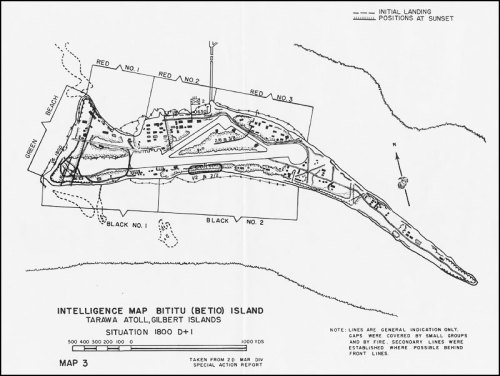
USMC-M-Tarawa-3The Target: Betio Island at Tarawa Atoll

Following Guadalcanal and the shift of significant naval forces from the Solomons the focus of the US shifted to the thrust across the Central Pacific.  Unlike the Solomons which were initially a Navy and Marine Corps Operation and shifted to the Army under MacArthur as the campaign shifted to Borneo, the operations here would be an almost total Navy and Marine Corps operation. Operation Galvanic, the first offensive operation in the Central Pacific, came about as a result of the Joint U.S. Strategic Committee decision in April 1943 to favor an advance in the Central Pacific while maintaining the offensive in the South Pacific.[i] The driving force behind this strategy was Admiral King who fought for the plan and “insisted that any campaign should focus on the destruction of Japan’s overseas resources, which meant an offensive directed only toward the Western Pacific sea lanes.”[ii] The Joint Chiefs believed that a simultaneous attack by Nimitz in the Central Pacific and MacArthur in the South Pacific would “keep the Japanese guessing.”[iii] The decision was presented to the British at the TRIDENT meetings in May 1943 and though the British resisted the American plans a compromise was reached allowing the Americans to “simultaneously…maintain and extend unremitting pressure against Japan….”[iv]
japanese emplacing gunJapanese Emplacing 8″ Vickers Gun

The decision to begin operations in the Central Pacific meant that MacArthur’s priority in logistics and personnel would be reduced in order to launch the Central Pacific operation.  MacArthur protested, to no avail and the Joint Chief’s stood firm in their decision that the Central Pacific operation “would make it easier to isolate Japan from her domain in the south.”[v] MacArthur was allowed to continue OPERATION CARTWHEEL while Nimitz seized the Marshall and Caroline islands.[vi] Nimitz’s staff began preparations and decided on a conservative course to capture the Gilberts first before taking the more heavily defended Marshalls.[vii] This was in part due to the “need to minimize the risks to his untried amphibious forces against such heavily fortified enemy bases out of reach of air cover.”[viii]
japanese conducting firing exerciseJapanese conducting Live Fire Range prior to the Assault

Several factors were considered by Nimitz and his planners considerations in this choice.  Nimitz did not have enough troops to capture all of the vital heavily defended locations in the Marshalls without dividing his forces.[ix] Additionally the Gilbert operation could be supported by land based bombers.[x] A final consideration was the Joint Chief’s decision to allow MacArthur to retain control of 1st Marine Division which Nimitz had hoped would be available for operations in the Central Pacific.[xi] CINCPAC did a thorough photo reconnaissance of the Gilbert’s convinced the Joint Chiefs that Tarawa and Makin needed to be taken to provide air bases for the assault on the Marshalls.  Finally the order for Galvanic was issued on 20 July 1943 with its execution planned for November 1943.[xii]

Japanese Preparations
shibasakiAdmiral Shibasaki boasted that it would take a million men a thousand years to take Betio

The Japanese did little to prepare against potential American offensive operations against the Gilbert’s until Makin Island was raided by elements of 2ndRaider Battalion in August 1942.  The Makin raid shook the Japanese and at which time they reinforced Makin and occupied Betio.[xiii] The Japanese occupied Betio with the Yokosuka 6th Special Landing Force, essentially Naval Infantry or Marines[xiv] and the 111th Construction Battalion on 15 September 1942, over nine months after they attacked Pearl Harbor.[xv] These forces were commanded by Admiral Tomanari, who at once began to fortify Betio. Recognizing his need for more troops  Tomanari asked Tokyo for reinforcements.  The reinforcements came in the form of Commander Sugai’s 7thSasebo Special Naval Landing Force, which landed on 14 March.[xvi]Commander Sugai’s troops were the Rikusentai, the best of the Japanese Navy’s land forces.
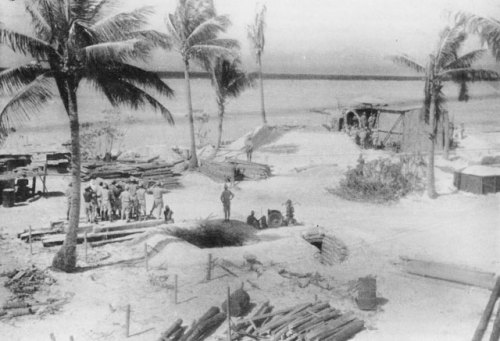
USMC-M-Tarawa-p6Japanese Conducting Gunnery Exercises

The fortification of Betio proceeded slowly until the arrival of Rear Admiral Shibasaki, who relieved Tomanari who returned to Japan.[xvii] Shibasaki, a tough veteran of service at sea and ashore including 19 months as a Rikusentai[xviii] officer in China was chosen by Admiral Koga to instill a better fighting spirit on the island.  The Imperial General Headquarters “New Operations Plan” ordered the outer defensive islands, such as Tarawa, to “hold up any American advance while an inner line of fortresses was constructed….”[xix] Shibasaki drove the garrison hard, inspiring them to “extraordinary heights of labor that resulted in Betio’s superb defenses.”[xx]Betio mounted four 8” Naval guns[xxi], four 14 cm guns, four dual mount 5.5” dual purpose guns[xxii] six 80 mm anti-boat guns, eight 75 mm dual purpose guns, ten 75 mm mountain guns, six 70 mm guns and nine 37 mm anti-tank guns, numerous machine guns and light AA guns and 14 light tanks.[xxiii] These weapons were mounted in well camouflaged armored or reinforced pillboxes.[xxiv] In accordance with the directives of the high command Shibasaki ordered his troops “to defend to the last man all vital areas and destroy the enemy at the waters’ edge.”[xxv] The Japanese records note that Shibasaki “immediately began to strengthen morale and carried out advanced training, and as a result…the garrison remarkably enhanced its fighting capability and they were full of confidence.”[xxvi] Even the service troops were thoroughly trained to fight from their superb defensive positions.[xxvii] Shibasaki reportedly told his men that it would take a million men a thousand years to take Betio.

American Preparations
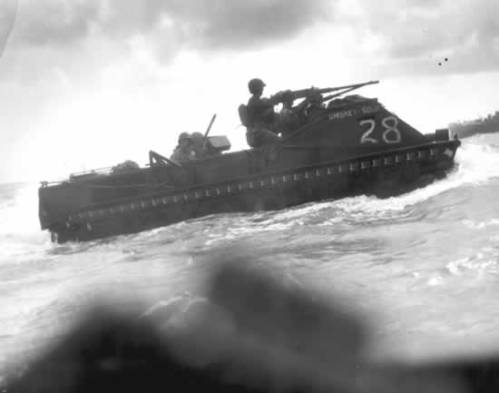
lvtLVT Amphibious Tractor

Nimitz organized his forces into three major commands, the 5th Fleet, commanded by Admiral Raymond Spruance, the 5th Amphibious Force under Admiral Richmond “Kelly” Turner and the V Amphibious Corps under Major General Holland “Howlin’ Mad” Smith, USMC.[xxviii] The 2nd Marine Division which would make the assault at Tarawa was commanded by Major General Julian Smith. The force that sustained in this operation and subsequent amphibious operations was the Service Force Pacific Fleet.[xxix] This was a collection of ships whose mission it was to sustain the fleet in mobile operations,[xxx] which greatly “increased the range and power of the Navy in amphibious operations.”[xxxi] The planned assault called for the Army’s 27th Division take Makin and the veteran 2nd Marine Division which had been blooded at Guadalcanal to take Tarawa supported by the carriers and battleships of 5thFleet.

This was the first application of new amphibious tactics developed for the Pacific war.[xxxii] Air and sea bombardment would precede the actual assault. The Marines would be transported ashore in a new vehicle called an LVT (Landing Vehicle Tracked) and other amphibious ships and craft including the LSD (Landing Ship Dock), LCM (Landing Craft Mechanized) and LCVP (Landing Craft Vehicle Personnel).  The LVTs were absolutely vital, nicknamed “Amtracks” or “Amphtracks” they were essentially a tracked amphibious personnel carrier. They were developed from a commercial vehicle used by U.S. Forrest Service Rangers in the Florida Everglades and were capable of crossing coral reefs that would cause other craft to go aground.  The early LVTs had retrofitted armor and mounted a .50 cal. machine gun.  At Tarawa the Marines deployed 75 LVT-1s[xxxiii] and 50 LVT-2s. 93 LVTs would be part of the first wave of the Marine assault.[xxxiv] The LVTs were transported to Tarawa aboard LSTs (Landing Ship Tanks.)  Other innovations included the assignment of Naval Gunfire Support teams to the Marine Regiments and some battalions,[xxxv] and the first use of the M4 Sherman tank by the Marines.[xxxvi] Tarawa was a proving ground for the tactics and equipment which would be improved on and used in every subsequent amphibious operation in the Pacific.  Tarawa would also mark the last major use of rubber landing craft by the Marine Corps in an opposed landing.[xxxvii]

There were limitations to American preparations. First the size of the force meant that it could not be assembled in one place for rehearsals or to train as a team.[xxxviii] A second problem for the Americans was the assumption that high and low tides would be sufficient to get their landing craft across the reef in spite of warnings to the contrary.[xxxix] Likewise the Americans failed to completely anticipate the scope to which the Japanese had fortified the island. This was despite good intelligence that they had done so. In particular aerial photos taken by the air force and ULTRA intercepts provided good information on the Japanese units on the island and the layout of the defenses.[xl] Additionally some equipment shortages were not remedied. The Marine Bazooka’s did not arrive, and neither the 6th or 8th Marines had made an actual amphibious assault.  At Guadalcanal they made an administrative landing and few field-grade officers remained from the 2nd Marine Regiment who had landed at Tulagi.[xli] They were far from “amphibious experts” that they would become.[xlii] However, they made up for their lack of experience by their cohesiveness, high morale and esprit, being well armed and equipped, in top physical condition and knowing the basic tools of their trade: “weapons proficiency and field firing, close combat techniques, fire and maneuver, tactical leadership, fire discipline.”[xliii]
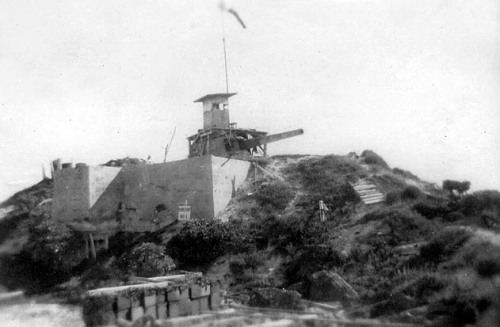
tarawa 8 inch gun8 Inch Gun Emplacement

The most critical aspect of the operation was to get across the reef onto the island.  There were few good landing sites and it was decided to make the landings from inside the atoll’s lagoon onto the Betio’s north shore.  This decision meant that transports embarking the Marines would unload outside of the lagoon and that the landing craft would have to make a 10 mile trip.[xliv]There was only one entrance into the lagoon and it was not deep enough for heavy ships to enter.[xlv]This meant that heavy ships such as battleships and cruisers would not be able to have direct fire on the Japanese positions best situated to disrupt the Marines.

The execution of the plan involved land based bomber strikes beginning on D minus 7. Carrier aircraft would begin their operations on D minus 2.  Cruisers and destroyers joined the cacophony of destruction on D minus 1 and the battleships on D Day itself.[xlvi] On D-Day itself Navy planned to bombard the island with 3,000 tons of shells in 2 ½ hours.[xlvii] The Navy was confident in the bombardment plans. Rear Admiral Kingman commanding the fire support group declared “We will not neutralize; we will not destroy; we will obliterate the defenses on Betio!”[xlviii] Four battalions of Marines would land in the first wave, the three battalions of the 2nd Marines and 2nd Battalion 8th Marines all commanded by Colonel David Shoup. Colonel Shoup who would win the Medal of Honor on Betio and later became the Commandant of the Marine Corps assumed command of 2nd Marines when its Regimental commander fell ill on the journey to Efate.[xlix] The division reserve was the remaining 8th Marine Regiment battalions. The 6th Marine Regiment served as the corps reserve.[l]The assault units would be reinforced by tanks and the 1st and 2nd Battalions 18thMarine Regiment, the division’s combat engineers.

Invasion: Day One
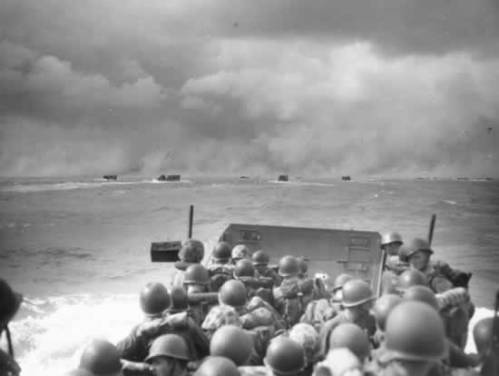
landing craft going to beachGoing Ashore

The naval gunfire bombardment commenced at 0542 on 20 November, and the assault waves began their trek to the beaches.  The transports were out of range of Japanese guns but ththat ensured boats would have to make a 10 mile trip.[li]At this point things began to go wrong.
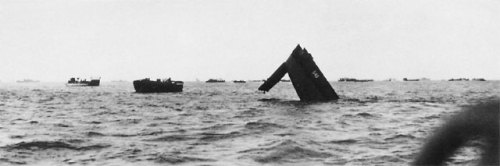
lcm sinking at tarawaNavy LCT Sinking after Being Hit By Japanese Fire

The Navy had “badly miscalculated the amount of softening-up that could be done in two and a half daylight hours bombardment.” Although major coast defense guns were silenced not enough damage was done to the Japanese defenses.[lii] The Japanese helped the Marines by firing their larger guns at warships, identifying their positions to Navy gunners.[liii] The bombardment lifted to allow an attack by carrier based aircraft. However the aircraft were late to arrive and the ships did not resume fire, allowing the Japanese to emerge and re-train their weapons.[liv] Likewise the destroyers Ringgold and Dashiell inside the lagoon had to cease fire, knowing the Japanese gunners along the shore were still active.[lv] Some believe that an extra half hour of direct fire from the destroyers would have saved many lives.[lvi] The LVTs in the first three waves were delayed by heavy chop and did not make landfall until 0913 throwing off the landing schedule.[lvii] The expect and planned for rise in tides did not materialize and they remained unpredictably low for the first 48 hours. No landing boats could cross the reef and the Marines were forced to wade ashore from 600 to 1000 yards.[lviii]
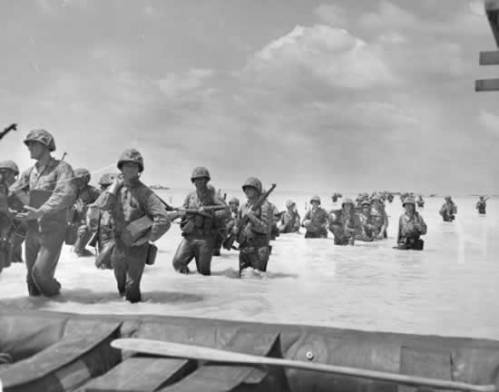
marines wade ashore at tarawaMarines Wading Ashore

Shoup’s Marines landed on three beaches.  Red one and two lay to the west of a 500 yard long pier and Red three lay to the east.  3/2 landed on Red-1, 2/2 on Red-2, 2/8 on Red-3, elements of 1/18 and the scout snipers on the pier, with 1/2 in reserve to land behind the battalion making the best progress.[lix] As soon as the Amtracks hit the reef the Japanese began firing.  Every “working weapon along the north and west shorelines….blazed forth in fierce, interlocking fields of fire.”[lx] As they watched the Amtracks craw over the reef that Japanese knew they were in for a tough fight, one of Warrant Officer Ota’s men exclaimed “Heavens! The God of Death has come!”[lxi] The Marines of 3/2 on Red-1 received enfilade fire from Japanese guns emplaced in a U around the beach.  Before the Marines landed they began to take causalities, Amtracks were hit in the lagoon and most that were not sunk or destroyed were unfit for further use.[lxii] The 2000 Marines who landed in the first hour were badly disorganized, the commanding officer’s of 2/2 and the Amtracks were killed, 3/2’s commander was isolated on the reef and only 2/8’s commander was with his troops. 2/8 was the only battalion being to reach the shore relatively intact.[lxiii] 3/2 was down to 65% of its strength and K/3/2 had taken over 50% casualties.[lxiv] The Marines in the fourth to sixth waves were struggling to wade ashore from the reef. Landing craft “ran aground or milled about helplessly outside the reef, which was swept by crossfire from behind the beaches and from a grounded hulk northwest of the pier.”[lxv] Most of the tanks were put out of action either through accurate fire by Japanese guns or by sinking in deep areas of the lagoon, the Tank battalion commander was blown out of his Amtrack, wounded and survived 24 hours by clinging to a pile of dead bodies to keep from drowning.[lxvi]
Col_Shoup_on_TarawaColonel Shoup Directing Operations on Tarawa

Shoup himself landed at Red-2 and began directing operations on the beach.  He knew that he had to get more troops ashore to exploit the minimal gains his Marines had made.  The news from Red-1 and Two was bad; he decided to bring 1/2 in at Red-2 thought that 3/8 should go in at Red-3.[lxvii] At 1018 General Julian Smith ordered the 8th Marines to dispatch 3/8 to Red-3.[lxviii] 3/8 had to make their way across 700 yards through the water to get to the beach.  It was a slaughter, only 30 percent of the first wave got ashore, in the second less and the third “were practically wiped out.”[lxix]
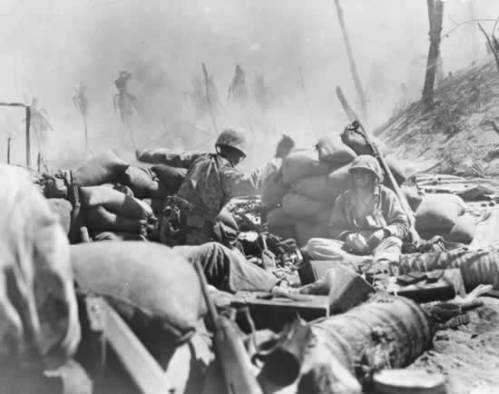
taraw close combatClose Combat on Betio

As his Marines struggled ashore those who had gotten ashore engaged the Japanese at point blank range.  Lt. Hawkins of the 2nd Marine Scout and Sniper platoon and 5 of his men engaged the Japanese on the pier in vicious hand to hand fighting,[lxx] Sergeant Bordelon of the Engineers on Red-2 though grievously wounded knocked out four gun positions, some by lobbing dynamite charges into them and galvanizing survivors into action, finally being killed while taking on a Japanese position alone.  He would be awarded the Medal of Honor.[lxxi]
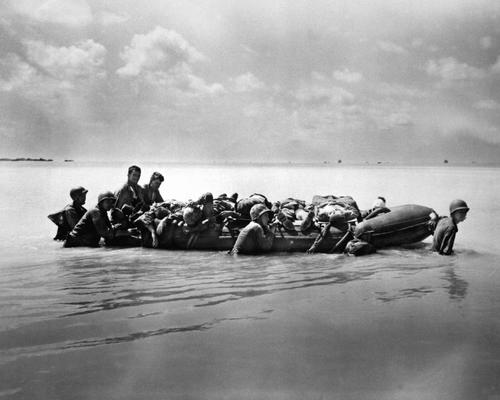
HD-SN-99-02572Wounded Marines Being Evacuated by Rubber Raft

By afternoon Julian Smith realized that he needed more troops, his last battalion, 1/8 waited to go ashore.[lxxii] Smith asked for the 6th Marines and had Admiral Hill send a message to Admiral Turner stating “Issue in doubt. I concur.” This sent a chill through the listening Naval Staff.[lxxiii] Ashore Shoup brought howitzers from 1st Battalion 10th Marines on surviving Amtracks to the eastern edge of Red-2 near the pier,[lxxiv] which landed in the early evening.[lxxv] He sent Lieutenant Colonel Carlson to make a personal report to General Smith that he would hold his beachhead no matter what happened. Shoup ordered his Catholic Chaplain to lay out a cemetery and begin burying the dead who were already decomposing in the tropical heat.[lxxvi] As this transpired 2/8 got two 37mm anti-tank guns into position to drive off Japanese tanks approaching the beachhead.[lxxvii] The Division Band assisted corpsmen in bringing back wounded Marines.[lxxviii] The rest of the day the Marines continued to eke out a beachhead; Shoup’s Marines on Red-2 and Red-3 managed to advance about halfway across the island, 3/2 and elements 1/2 and 2/2 was isolated and Major Ryan of Lima Company pulled them back to meet an expected Japanese counter-attack.[lxxix] The Marines had taken over 1500 casualties of 5000 men landed the first day.[lxxx] There is no evidence that Shoup considered withdraw that night.[lxxxi] No counterattack occurred due to Japanese command and control problems, Admiral Shibasaki and his staff were killed while shifting headquarters during the afternoon,[lxxxii] and their communications were in shambles. A counterattack would have been disastrous in their condition,[lxxxiii] yet they assembled over 1000 men to oppose the Marines on day two.[lxxxiv] Had Shibasaki lived and communications survived a counterattack might have had ramifications far beyond Tarawa.[lxxxv]

Day Two: D+1
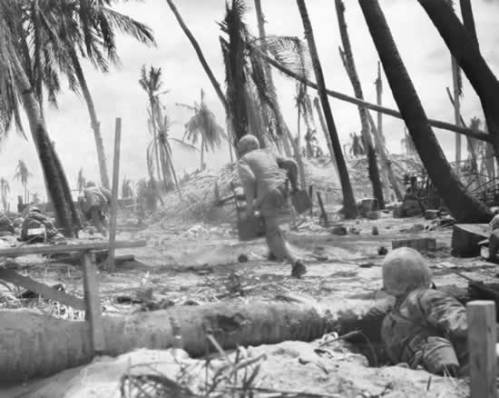
marines advancingMarines Advancing

The second day began with 1/8 landing on Red-2 and the 6th Marines began to land on Green Beach at the far western tip of Betio.  1/8’s landing turned into a bloodbath, the tide fell even lower than the previous day and as they hit the reef and waded ashore drifted into some of the heaviest Japanese defenses. Japanese guns, including the dual 5.5” guns took direct aim at the boats, and Marines ashore watched helplessly, and correspondent Robert Sherrod noted: “This is worse, far worse than it was yesterday.”[lxxxvi] Only half of 1/8 reached the beach with none of their heavy weapons or equipment.  Shoup ordered the remnants of the battalion into line on his western flank in preparation for an advance inland.[lxxxvii] During five hours of landings on day two, the “Marine casualties reached a higher rate than that sustained on the first morning.”[lxxxviii]

Meanwhile, Shoup ordered Ryan’s “orphans” to make an attack down the right flank of the Japanese positions on Green beach and the “ultimate American victory at Betio evolved from the attack during one intense hour the second morning.”[lxxxix] Taking every available Marine, two surviving Shermans and some mortars, Ryan gathered his force and coordinated Naval Gunfire support.  The area contained a number of heavy guns including two of the 8” mounts.  A destroyer blanked the Japanese positions with 5” shells and fire from her light AA guns.[xc] Attacking behind the beach, Ryan’s Marines isolated and destroyed everyone and everything that looked hostile.[xci] Against minimal opposition Ryan’s Marines quickly seized the gun positions and the western end of the airfield.  Within an hour his Marines occupied the entire western side of Betio up to a 200 yard depth by 1200 and he radioed to let Shoup know the good news and that he intended to advance east against the airfield.[xcii] The attack allowed the Marines to be able to land intact battalions with supporting arms for the first time battle.[xciii]

To the east behind Red-2 and Red-3 The 8th Marines and survivors of 1/2 and 2/2 attacked against fierce Japanese opposition near Shibasaki’s former command bunker and two other large bunkers which were mutually supporting.  The attack by the 2nd Marine survivors eventually succeeded in getting completely across the south side of the island.[xciv] During the attack Lt. Hawkins of the Scout Snipers was mortally wounded.  He too would win the Medal of Honor.  The attack cut the island in two but the Japanese launched a counterattack on the Marine positions which was beaten back.[xcv] The 8thMarines faced a more difficult task going against what was now the heart of the Japanese defense, as its defenders had been reinforced by Lt. Minami and his third company of the 7th Special Naval Landing Force.  Vicious fighting ensued and by nightfall “the Marines had little to show for their heavy losses,[xcvi] but they did make significant inroads against the Japanese to warrant optimism for D+2.[xcvii] By evening the Marines on Red-1 and Red-2 had consolidated their beachhead so that reinforcements were landing, including jeeps, artillery and heavy equipment, and other Marines noted that Japanese defenders were beginning to commit suicide and they began to feel that Japanese morale had broken.  By late afternoon Shoup transmitted the message: “Casualties many. Percentage of dead unknown. Combat efficiency-We are winning.”[xcviii] By late afternoon Major Jones’ 1/6 landed on Green beach in their rubber boats, reinforcing Ryan’s orphans, it was the first of the 7 battalions landed to get ashore intact and the two officers coordinated their units for a night defense and an early attack the next morning.[xcix] 2/6 cleared the nearby island of Bairiki allowing 2/10 to land its howitzers on the island.  This in effect cut off any line of retreat for the defenders of Betio.[c] Colonel Edson came ashore during the evening to relieve Shoup[ci], who remained ashore to help coordinate the next day’s attack.  Again there were no coordinated Japanese counterattacks, the only senior officer, Sugai was isolated in the pocket between the Red and Green beaches and no senior officer could coordinate any attacks.[cii]

Day Three and Four: D+2 and D+3
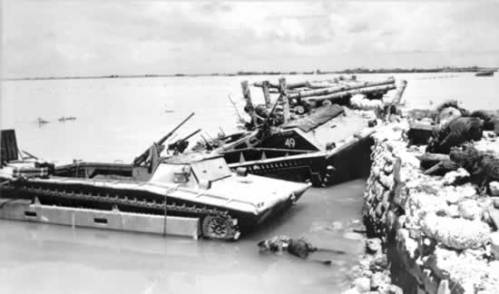
tarawa wreckageWrecked LVY’s and Bodies on the Beach: The Marines Released Photos to Get the Public to Understand the Cost of the Battle

Day three began with attacks against Japanese strong points and the arrival of more reinforcements including 3/6 which landed on Green beach and three light tank platoons which landed on Red-2.[ciii] The Marines attacked off of Green beach sweeping east to join the 2nd Marines who had cut the island in two the day before.  The 8th Marines continued to attack the heavily fortified bunker complex eventually taking these heavily fortified and defended positions.  During the assault Lt Sandy Bonnyman of 1/18 won the Medal of Honor for leading the assault on these positions.[civ] Fighting remained fierce throughout the day and General Smith arrived to take command on shore.  The Marines attacked supported by tanks, artillery and naval gunfire.  By the evening they were established at the east end of the airfield.  The Japanese launched a series of Banzai charges which beginning about 1930 hours and ending about 0400 when the Marines annihilated the last attack with the assistance of artillery.[cv] The attack, which could have succeeded the first or early the second day, now aided the Marines by sacrificing strength that might have been used to exact a higher price for the tail of the island.[cvi] The next morning the Marines pushed forward and eliminated the last Japanese defenders and by 1200 Betio was secured.  Of about 5000 defenders only 17 Japanese and some Korean laborers were taken prisoner.[cvii] The Marines lost over 1000 killed and 2300 wounded.[cviii]
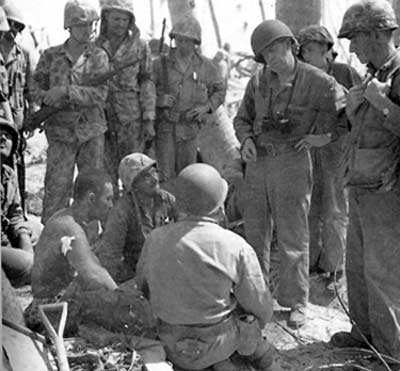
Tarawa prisonerOne of the 17 Japanese Who Survived the Battle being Interrogated by Marines, only one Chief Warrant Officer Ota was an Officer

Epilogue

The Marines paid a heavy price for Betio, but it was not to be a useless sacrifice, though it was a source of great controversy especially among politicians.[cix]Spector wonders if waiting for better tides or a full moon would have saved lives.[cx] Holland Smith later argued that Tarawa should have been bypassed, but Nimitz’s biographer Potter notes “if the lessons of the amphibious assault had not been learned at Tarawa, they would have to be learned elsewhere, probably at greater cost.”[cxi]The lessons learned alone aided all future amphibious operations in the Central Pacific and elsewhere.  Timing and coordination of naval gunfire support, air strikes and combat loading of transports were all refined in future operations. Large numbers of armored and up-gunned Amtracks would be part of every future operation.[cxii] Intelligence was emphasized and replicas of the Japanese fortifications were built and tested to determine the best way of destroying them.[cxiii] The Marines shocked the public by releasing photos and films of the carnage on Tarawa to awaken them to the challenges ahead.[cxiv]

Today the battle is remembered annually by the 2nd Marine Division at Camp LeJeune, an ever shrinking number of veterans of the battle attend the ceremonies.  Samuel Eliot Morison put it best: “All honor, then, to the fighting heart of the United States Marine. Let the battle for that small stretch of coral sand called Betio of Tarawa be remembered as terrible indeed, but glorious, and the seedbed for victory in 1945.”[cxv]

Appendix: Leaders on Tarawa
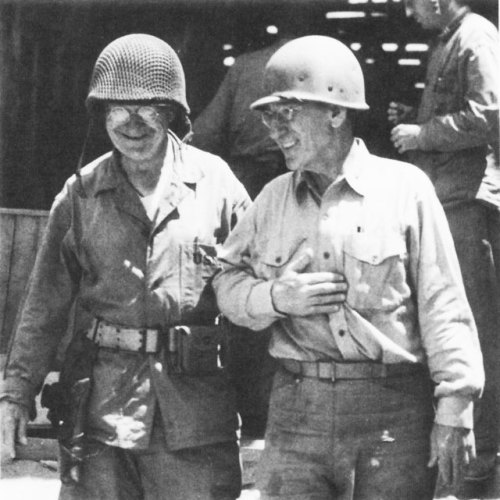
smith and smith at tarawaLieutenant General Holland Smith and Major General Julian Smith on Betio

General Holland M. “Howling Mad” Smith USMC: (1882-1967) Lieutenant General Holland M. Smith command V Amphibious Corps during the Gilberts operation.  Prior to the war he had worked extensively on amphibious warfare doctrine for both the Marine Corps and Navy. Unlike many senior officers Smith was not a Academy graduate having matriculated from the Alabama Polytechnic Institute (now Auburn University) in 1903 and law school in 1903.  Smith served as Adjutant of the 4th Marine Brigade in the First World War and served in Panama and the Dominican Republic in addition to other Marine tours afloat and ashore.  He served well and had many key assignments between the wars culminating in as the Assistant Commandant of the Marine Corps.  Subsequent to the Gilbert campaign he served as Commanding General of the Fleet Marine Force, Pacific and later commanded the Marines at Iwo Jima.  He retired in 1946.

Major General Julian Smith USMC: (1885-1975) Major General Julian Smith served as Commanding General 2nd Marine Division at Tarawa.  He graduated from the University of Delaware and was commissioned as a Second Lieutenant in 1909.  He served in Haiti, Santo Domingo and the Vera Cruz expedition. During the First World War he served as an instructor in the Marine Officer training camps at Quantico. After the war he served in Cuba, Nicaragua and various command and staff posts including the Army Command and General Staff College.  He commanded 5th Marines in 1938 and in 1942 was promoted the Major General serving as director of Fleet Marine Force Schools, New River, NC.  He took command of 2nd Marine Division in May 1943 and served there until April 1944 when he became Commanding General, Expeditionary Troops, Third Fleet and in December 1944 took command of the Military Department of the Pacific.  He retired in 1946.
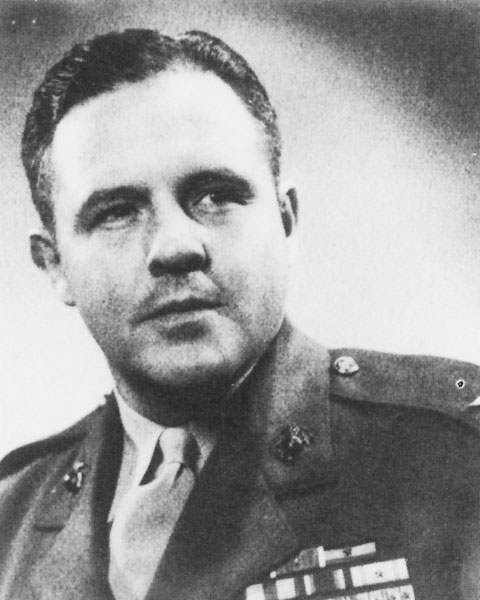
shoupColonel Shoup After the Battle

Colonel David Shoup USMC: (1904-1983) Colonel David Shoup commanded the 2nd Marines at Tarawa, being appointed as commander when its commander fell ill.  Shoup won the Congressional Medal of Honor for his actions on Tarawa.  A 1926 graduate of DePauw University, Shoup was commissioned a Second Lieutenant through the ROTC program that year.  He served in various assignments to include service in China, at sea on the battleship Maryland and Marine Barracks Puget Sound Navy Yard. He joined the staff of 6th Marines in October 1940 and assumed command of 2/6 in February 1942.  He was assigned as the Assistant Operations Officer for 2nd Marine Division in July 1942 and promoted the Lieutenant Colonel.   He went with the Division to New Zealand where he became the G-3 and from which he was fleeted up to command 2ndMarines at Tarawa.  After Tarawa he served as the Division Chief of Staff at Saipan and Tinian.  After the war Shoup continued to be assigned in key billets at the Pentagon and as commanding General, 1st Marine Division and then the Third Marine Division.  He became Chief of Staff, HQMC in 1958 and was appointed as the 22nd Commandant of the Marine Corps by President Eisenhower, a post that he retained until his retirement in 1963.

Admiral Tomanari Sachiro IJN: (1887-?) Commander of Tarawa garrison until relieved by Rear Admiral Shibasaki.   Graduate Naval Academy 1910, initially a communications officer he held various commands including Heavy Cruiser Haguro and Battleship Kirishima and two smaller ships.  Assigned to Tarawa in February 1943 he helped design and supervised the initial construction of Tarawa Defenses until relieved by Admiral Shibasaki on 20 July1943.  He returned to Japan and served the remainder of the war on Navy Division of Imperial General Headquarters.  Tomonari survived the war though nothing is mentioned as to his postwar fate.

Rear Admiral Shibasaki Keiji IJN: (1894-1943) Commanded Tarawa Garrison until his death during the battle.  He graduated from the Naval Academy in 1915 and he was a skilled navigator and instructor.  Prior to the war he had served afloat and ashore and ashore and had commanded a ship and naval station and served as a naval attaché to a member of the Imperial Family.  Among his assignments was 19 month combat tour with the special Naval Landing Forces in China, where he served as Chief of Staff of Shanghai Special Naval Landing Force.  Shibasaki’s leadership helped the garrison improve their defensive capabilities and combat skills as he inspired them to great heights and executed an intense training program. He was killed in the battle.

A Personal Note

I have not been to Tarawa but feel that I know it well.  I served in Second Marine Division from April 1999 through December 2001.  Due to my prior service experience I was used to fill gaps where chaplains were needed and ended up serving in four different battalions.  I served in 2nd Combat Engineer Battalion, the descendant of 1/18, the combat engineers.  We had a WWII Bulldozer outside our command post named after Sergeant Bordelon, the Medal of Honor Citations for Bordelon and Boonyman were prominently displayed.  I also served in 1/8 and 3/8.  I knew the accounts of the slaughter of these Marines as they attempted to land but as I re-read the accounts I was moved by their courage under fire.  The CPs of these battalions are also adorned with citations of their heroes lost at Tarawa.  Veterans would visit our units during Tarawa Days at Camp LeJeune, worn by the battle and the years they always made an impression. There is almost a mystical connection between the Second Marine Division and the Marines of Tarawa; it was a crucible that defined the division, whose motto is the same as the Army Infantry School. “Follow Me!”

Semper Fidelis,

Padre Steve


[i] Spector, Ronald H. Eagle Against the Sun: The American War with Japan.  The Free Press, New York, NY 1985. p.253

[ii] Murray, Williamson and Millett, Allan R. A War to Be Won: Fighting the Second World War, The Belknap Press of Harvard University Press, Cambridge, MA 2000. p.338

[iii] Ibid. Spector. p.253

[iv] Ibid. p.255 The conference also set a date for the invasion of France.

[v] Toland, John. The Rising Sun: The Decline and Fall of the Japanese Empire, 1936-1945. Random House, Inc. New York, NY 1970. p.468

[vi] Ibid. Spector. p.255

[vii] Costello, John. The Pacific War 1941-1945. Quill Publishing, New York, NY 1982. p.430

[viii] Ibid.

[ix] Potter, E.B. Nimitz. Naval Institute Press, Annapolis, MD, 1976, Third Printing with Revisions 1979. p.243. Nimitz’s forces would have had to seize 5 major Japanese bases and his staff was not sure that the Pacific carrier force would be strong or experienced enough to provide the necessary air cover for the operation.

[x] Ibid.

[xi] Ibid. pp.243-245

[xii] Morison, Samuel Elliott. The Two Ocean War: A Short History of the United States Navy in the Second World War. Little Brown and Company, Boston and Toronto, 1963. p.296.

[xiii] Hammell, Eric and Lane, John E. Bloody Tarawa: The 2nd Marine Division, November 20-23, 1943. The Zenith Press, St. Paul MN 2006.  Text copyright 1998 Eric Hammell and John E. Lane. p.4

[xiv] See Alexander, Joseph H. Utmost Savagery: The Three Days of Tarawa.Ivy Books, published by Ballantine Books, New York, NY. 1995. pp. 39-40.  This unit became the Third Special Base Unit on its deployment and was joined by the 111th Construction Battalion.

[xv] Ibid. Hammell. p.4

[xvi] See Alexander pp.39-40. This unit was basically a reinforced infantry battalion with 3 rifle companies, a weapons battery, anti-aircraft battery, a light tank company and support units numbering about1600 men.

[xvii] Ibid. Alexander. p.43

[xviii] Alexander p.27 The Rikusentai was the Japanese equivalent of Marines, who numbered about 50,000 men.  The officers attended Army schools and qualified enlisted men attended additional Army specialist training.

[xix] Ibid. Costello. p.431

[xx] Ibid. Hammell. p.22

[xxi] See Alexander p.77. While most writers say that these guns were brought from Singapore, Alexander notes that British writer William H Bartsch submitted proof (serial numbers) that the guns were sold by Vickers to Japan in 1905 as a legitimate business transaction.

[xxii] These are the same guns (127mm) mounted as the secondary armament of Nachi and Takao Class Heavy Cruisers and later mounted on light cruisers to replace the main battery with a more effective anti-aircraft armament.

[xxiii] Ibid. Hammell. p.22

[xxiv] Hammell notes that many of these bunkers and pillboxes were so well concealed that they could not be seen.

[xxv] Ibid. Toland. p.469.

[xxvi] Ibid. Alexander. p.43.

[xxvii] Ibid. Hammell. p.28

[xxviii] Ibid. Morison. p.297

[xxix] Ibid. Costello. p.429

[xxx] At this point the force could provide everything except major permanent repairs to warships.

[xxxi] Liddell-Hart, B.H.  History of the Second World War. G.P. Putnam’s Sons, New York, NY 1970. p.511

[xxxii] Ibid. Costello. p.431

[xxxiii] The older LVT-1s had boiler plate armor added as a field modification and were given a heavy machine gun. Prior to this they were unarmored and had two light machine guns.

[xxxiv] Ibid. Morison. p.303

[xxxv] Hammell includes a by name list of these officers in Appendix B.  Of note for today, each MEUSOC (Marine Expeditionary Unit, Special Operations Capable) has an assigned Naval Gunfire Support Team.

[xxxvi] Ibid. Alexander. pp. 61-62.  The Shermans had to be transported aboard pre-loaded LCM-3s carried in the well decks of the LSDs.

[xxxvii] Ibid. Alexander. pp.58-59

[xxxviii] Ibid. Morison. p.297.  As a sidebar discussion it should be noted that Galvanic helped provide the model for the organization of all further Marine Corps amphibious doctrine now known by the acronym PERMA; Planning, Embarkation, Rehearsal, Movement and Assault, which describes the 5 phases of a amphibious assault.

[xxxix] Ibid. Hammell details the intricacies of the particular tides seen at Tarawa and the knowledge that the Marines had from the former Resident Commissioner of the Island, Major Frank Holland who warned the division staff that he knew that there would not be enough water over the reef to get landing craft across it. (pp.18-20)

[xl] Ibid. Alexander. pp.75-77

[xli] Ibid. Alexander. pp.67-68.

[xlii] Ibid. p.70

[xliii] Ibid. p.71

[xliv] Ibid. Morison. p.302

[xlv] Ibid. Hammell. p.16

[xlvi] Johnston, Richard W. Follow Me! The Story of the Second Marine Division in world War II.  Copyright 1948 by the Second Marine Division History Board and published by Random House Publishers, New York, NY 1948. p.106

[xlvii] Ibid. Liddell-Hart. p.511  Johnson says 2,700 tons. (p.106)

[xlviii] Ibid. Johnston. p.106

[xlix] Ibid. Hammell. p.17

[l] Ibid.

[li] Ibid.. Hammell. 46-47

[lii] Ibid. Morison. p.303

[liii] Ibid. Alexander. p.113.  Alexander notes that the Japanese would have been better served by using these guns on the stalled out landing craft.

[liv] Ibid. Hammell. p.47.

[lv] Ibid. Hammell. p.58

[lvi] Ibid.

[lvii] Ibid. Morison. p.303

[lviii] Ibid. Alexander. p.79

[lix] Ibid. Hammell. p.17

[lx] Ibid. Alexander. p.121

[lxi] Wukovits, John. One Square Mile of Hell: The Battle for Tarawa. NAL Caliber, published by New American Library, a division of Penguin Group USA, New York NY, 2006. p.112

[lxii] Ibid. Johnston. p.116

[lxiii] Ibid.

[lxiv] Ibid. Wukovits. P.119  Other companies suffered as grievously, K/3/2 was not alone in its suffering.

[lxv] Ibid. Spector. pp.263-264

[lxvi] Ibid. Alexander. pp.136-138

[lxvii] Ibid. Hammell. p.90

[lxviii] Ibid. p.95

[lxix] Ibid. Spector. p.264

[lxx] Ibid. Wukovits. p.114

[lxxi] Ibid. Alexander. pp.139-140

[lxxii] 1/8 did not arrive on the beach due to botched communications until D plus 1.

[lxxiii] Ibid. p.150  The last time this signal had been sent it was by Major Devereaux at Wake Isalnd

[lxxiv] Ibid. p.151

[lxxv] Ibid. Johnston. p.132

[lxxvi] Ibid. Hammell. p.112

[lxxvii] Ibid. p.130

[lxxviii] Ibid. Johnston. p.122

[lxxix] Ibid. Johnston. p.122

[lxxx] Ibid. Costello. p.436

[lxxxi] Ibid. Alexander. p.163

[lxxxii] Ibid. Alexander. pp.157-158  Hammell notes that Shibasaski was most likely killed by fire from Ringgold or Dashiell.

[lxxxiii] Ibid. Hammell.pp.139-140

[lxxxiv] Ibid. Alexander. p.162

[lxxxv] Ibid.  Wukovits. p.176. Wukovits notes how this could have affected the planning for the Normandy invasion.

[lxxxvi] Ibid. Alexander. p.173

[lxxxvii] Ibid. Hammell. p.160

[lxxxviii] Ibid. Costello. p.437

[lxxxix] Ibid. Alexander. p.170

[xc] Ibid. Hammell. p.163

[xci] Ibid. Hammell. p.166

[xcii] Ibid. Wukovits. p.178

[xciii] Ibid. Alexander. p.170 Ryan would be awarded the Navy Cross for his efforts.

[xciv] Ibid. Hammell. p.172

[xcv] Ibid. Alexander. p.179

[xcvi] Ibid. Alexander. p.181

[xcvii] Ibid. Hammell. p.178

[xcviii] Ibid.. Wukovits. p.194

[xcix] Ibid. Hammell. p.202

[c] Ibid. Hammell. p.212

[ci] Shoup would be awarded the Medal of Honor and eventually go on to be the Commandant of the Marine Corps.

[cii] Ibid. Alexander. pp.191-192

[ciii] Ibid. Johnston. p.134  2 platoons landed on Red-2 and one on Green Beach.

[civ] Ibid. Alexander. pp.202-205

[cv] Ibid. Johnston. pp.145-146

[cvi] Ibid. Johnston. p.147

[cvii] Ibid. Toland. p.470

[cviii] Ibid. Murray and Millett. p.345

[cix] Ibid. Liddell-Hart. p.511

[cx] Ibid. Spector. p.266

[cxi] Ibid. Potter. P.264

[cxii] Ibid. Murray and Millett. p.347  The Amtrack in improved forms has been part of the Marines ever since. The current model serves in a traditional amphibious role as well as a Armored Personnel Carrier for Marines involved in ground combat operations ashore.

[cxiii] Ibid. Costello. p.439. The method found to work best was long range plunging fire by heavy guns found on battleships and heavy cruisers.

[cxiv] Ibid. Murray and Millett. p.346

[cxv] Ibid. Morison. p.306

Bibilography

Alexander, Joseph H. Utmost Savagery: The Three Days of Tarawa. Ivy Books, published by Ballantine Books, New York, NY. 1995.

Costello, John. The Pacific War 1941-1945. Quill Publishing, New York, NY 1982

Morison, Samuel Elliott. The Two Ocean War: A Short History of the United States Navy in the Second World War. Little Brown and Company, Boston and Toronto, 1963

Hammell, Eric and Lane, John E. Bloody Tarawa: The 2nd Marine Division, November 20-23, 1943. The Zenith Press, St. Paul MN 2006.

Johnston, Richard W. Follow Me! The Story of the Second Marine Division in world War II.  Copyright 1948 by the Second Marine Division History Board and published by Random House Publishers, New York, NY 1948

Murray, Williamson and Millett, Allan R. A War to Be Won: Fighting the Second World War, The Belknap Press of Harvard University Press, Cambridge, MA 2000

Potter, E.B. Nimitz. Naval Institute Press, Annapolis, MD, 1976, Third Printing with Revisions 1979

Spector, Ronald H. Eagle Against the Sun: The American War with Japan.  The Free Press, New York, NY 1985 Toland, John. The Rising Sun: The Decline and Fall of the Japanese Empire, 1936-1945. Random House, Inc. New York, NY 1970

Leave a comment

Filed under History, Military, world war two in the pacific