Category Archives: Military

Gettysburg: Cemetery & Culp’s Hill Pt 1

Friends of Padre Steve’s World

I am traveling with my students to Gettysburg this weekend and happen to be posting my newest additions to my text, these dealing with the battles for Culp’s Hill and Cemetery Hill which occurred on the night of July 2nd and early morning of July 3rd 1863. I hope you enjoy.

Peace,

Padre Steve+

culp's hill

On the night of July 1st 1863 Dick Ewell’s Second Corps of the Army of Northern Virginia and the Army of the Potomac on Cemetery and Culp’s Hill prepared for another day of battle. Despite a significant amount of success on July 1st, Lee’s Army had failed to drive the lead elements of the Army of the Potomac off of Cemetery Hill, which Oliver Howard had wisely placed Steinwehr’s division and his artillery, and which both he and Winfield Scott Hancock recognized had to be held if the Confederates were to be defeated. As the darkness fell over the battlefield that night more Federal troops in the form of Major General Henry Slocum’s Twelfth Corps began to take up positions on Cemetery Hill as well as Culp’s Hill alongside the battered brigades of Oliver Howard’s Eleventh Corps, and Abner Doubleday’s First Corps.

At first Slocum and many of his officers seemed to “have had much apprehension that the Confederates would attempt a head-on attack on Culp’s Hill…or troubled enough by the likelihood of rebel movements to give any orders to improve their hillside positions by digging trenches or chopping down enough trees to form rough protective walls.” [1] The three brigades of Geary’s division of the Twelfth Corps entered the line to the east of the remnants of Wadsworth’s Second division of First Corps along the northern and eastern face of Culp’s Hill.

The commander of the Twelfth Corps was Major General Henry Slocum. Slocum was from upstate New York and entered West Point in 1848 at the age of twenty having already earned a teacher’s certificate at the age of seventeen. “Ability and activity had marked his whole life.” [2] One of his closest friends and roommate at West Point was Philip Sheridan who described the New Yorker as “a cadet whose education was more advanced than mine, and whose studious habits and willingness to aid others benefitted me greatly.” [3] Slocum graduated seventh in the class of 1852 which included George Crook who distinguished himself in the Civil War under the command of Sheridan, as well as Silas Casey, an engineer “whose later architectural achievements would include both the Washington Monument and the Library of Congress.” [4]

Slocum was commissioned in 1852 as a Brevet Second Lieutenant of Artillery and first served in Florida with the First Artillery, and then at Fort Moultrie in Charleston South Carolina. There he was promoted to First Lieutenant and began to study law. Slocum was an abolitionist but he was in favor of gradual abolition, and understood the mood of the South as the fires of disunion and secession over the issue of slavery smoldered. However, due to chronic illnesses that he and his wife suffered in the hot, humid, and fever-ridden climate of the Carolina Low Country, he resigned his commission and returned to New York in late 1856. There he passed the bar, went into the slat business and became relatively well off. He also became active in the Republican Party where he was elected to the State assembly in 1858. As an assemblyman he avoided the schemes that were pressed on him by other members, and maintained a well-earned reputation for honesty. During the time he also became very active in the New York State Militia where he served as a Colonel of Artillery. The governor refused Slocum’s request to raise artillery units instead desiring him to remain as his military adviser at Albany. This was not to Slocum’s liking and he earnestly sought command of an infantry regiment, which he finally obtained when he was appointed as commander of the newly raised 27th New York Volunteer Infantry Regiment.

“Slocum was above medium height, with long, wavy brown hair that he combed behind his ears, a heavy brown mustache and sparkling brown eyes…. He seemed especially disposed to order and discipline and was attentive to details that he sought to master.” [5] As a regimental commander known as a disciplinarian, but also a commander who cared for and defended his troops, making sure that they were adequately led, trained, fed, and billeted. Sadly, the training regimen was cut short and the unit thrown into action at the Battle of Bull run where Slocum was severely wounded in the leg attempting to rally it when it was caught in the flank by Wade Hampton’s South Carolinians. While the regiment’s performance was uneven, it performed about as well as most other Federal units at Bull Run, however, “Slocum’s own conduct was solid and presaged his battlefield demeanor for the rest of the war.” [6]

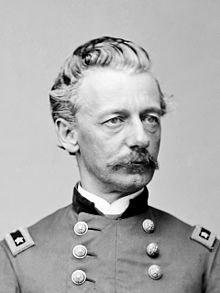
220px-Henry_Warner_Slocum

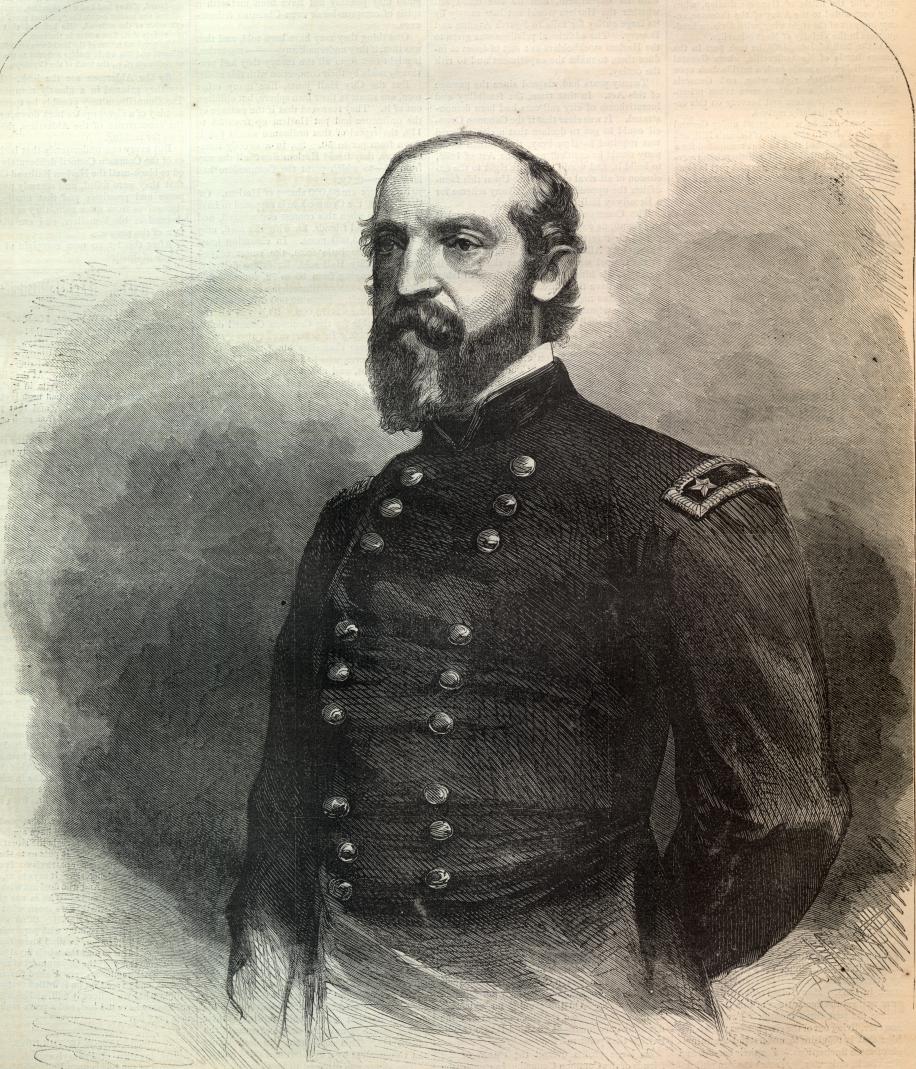
Major General Henry Slocum

After Bull Run Slocum earned rapid promotion for his performance. While he was recovering from his wound he was promoted to Brigadier General and made a brigade commander. When the Sixth Corps was formed in 1862 he was given command of its First Division. He “led that division with distinction in the maelstrom of Gaines Mill” [7] during McClellan’s mismanaged Peninsular Campaign. At the Battle of South Mountain during the Antietam Campaign, Slocum and his division distinguished themselves, in an attack that “routed the enemy and captured for battle flags.” [8]  Following that he was promoted to Major General and took command of Twelfth Corps when its commander, Joseph Mansfield was killed at Antietam. His rise had been rapid, nearly meteoric, even though his generalship style was described as similar to John Sedgewick: “competent, careful, cautious, and entirely without military imagination.” [9] He was now the second youngest officer in the army to attain that rank, despite having served just two years as a Lieutenant in the Regular Army, a few months as a Colonel of Volunteers and under two years as a General. He ranked second in the Army of the Potomac to Joe Hooker and was senior to every other corps commander including Reynolds and Meade. Like most volunteer officers he “probably had some political backing, but, if so, it was not particularly blatant according to the standards of the time.” [10]

He commanded Twelfth Corps at Chancellorsville where it was in the fighting and fought well suffering over 3,000 casualties. Slocum was highly critical of Hooker’s performance and was an early advocate for Meade assuming command of the Army of the Potomac. Slocum, who had no desire to command the army went to Lincoln himself to have Hooker removed.

At Gettysburg Slocum was served by two solid division commanders, Brigadier General Alpheus Williams, who though a volunteer officer was considered one of the best division commanders in the army, and Brigadier General Joseph Geary. Joseph Geary was another battle hardened volunteer who had fought with the Pennsylvania volunteers in Mexico and was wounded five times in the assault on Chapultepec. “After this exploit, he was named the regiment’s colonel and returned home a war hero.” [11] He went to California in 1849 was elected as the first mayor of San Francisco. A strong anti-slavery man, Geary was appointed to the unenviable position of Governor of the Kansas Territory where he had vetoed the Lecompton Constitution, earning him the enmity of President James Buchanan.

220px-George_S._Greene

Brigadier General George Sears Greene, U.S. Army

One of Geary’s brigades was commanded by Brigadier General George Sears Greene. Greene was “the oldest general in the army, though he was far from doddering or ineffectual. He was a hardy war-horse, a man who spent most of his time in the saddle, an officer who insisted on hard drilling and discipline in camp and hard fighting on the battlefield.” [12] He was “described as a strict disciplinarian and an officer with a rigid sense of justice,” [13] who did not win immediate affection from his troops, “but those under his command soon learned to appreciate his ability,” [14] his troops nicknaming him “pap” “pop” or “pappy.” Greene led his brigade up Culp’s Hill where it took a position next to the remnants of the Iron Brigade on the eastern face of the rugged edifice.

Greene was born in Warwick Rhode Island in 1801 and graduated from West Point second in a class of thirty five. He was commissioned as an artillery officer some six years before Robert E. Lee. He was a descendent of Revolutionary War General Nathaniel Greene.  His son Lieutenant Dana Greene United States Navy, was the Executive officer of the ironclad warship USS Monitor which fought the Confederate ironclad CSS Virginia at the Battle of Hampton Roads, the first battle between fully steam-powered armored warships in the history of the world. Dana Greene distinguished himself in the battle when he took command of the Monitor when its commander was wounded.

He had graduated second in his class at West Point in 1823, a full six years before Robert E. Lee, and after 13 years of garrison and instructor duty as an artillery officer, left the army in 1836 to enter civilian life as an engineer. After Greene left the army he spent most of his time overseeing the construction of railroads in the rapidly growing nation, as well as designing “sewage and water systems for Washington, Detroit, and several other cities. The Central Park reservoir in New York City was his handiwork, along with the enlarged High Bridge over the Harlem River.” [15]

Greene did not serve in the Mexican War and when the call came for volunteers in 1861 he waited to join up. In January 1862 he resigned from work on the Croatan Reservoir in New York City and was appointed to command the 60th New York Volunteer Infantry, a unit composed of men from the northern reaches of the state along the Saint Lawrence Seaway. Greene was promoted to Brigadier General in 1862 he commanded his brigade and served as an acting division commander at Antietam, where he was one of the few Federal General Officers not to fail the courage of his men in the heat of that bloody action. He commanded the division with skill, and audacity in the fierce fighting around the Dunker Church, the Cornfield and the Eastern Woods, which was “the one bright spot in the abruptly dismal Union picture.” [16] Despite his excellent performance he requited command of the Division to Geary, “who had returned to the army after being wounded at Cedar Mountain. Geary outranked Greene. (Geary’s appointment to brigadier general predated Greene’s by three days), and “Old Man Greene” went back to leading his brigade.” [17] During the battle of Chancellorsville he would again take acting command of the division when Geary was incapacitated during some of the heaviest fighting. During the fight where Twelfth Corps was attacked from multiple directions, Greene saved his brigade “by having them clear a 200-foot-wide space in front of their position and digging in with bayonets, tin cups, and canteen-halves.” [18] Following the battle he again returned to command his brigade of New Yorkers. By the time of Gettysburg the old general “was a seasoned veteran with enough battle experience at or above brigade level to allow his superiors to feel confident in his abilities.” [19]

As Greene’s brigade took their positions on Culp’s Hill, Greene had them do something that was not yet commonplace in either army. They began to construct field fortifications and breastworks. This occurred after he met Geary to discuss the defense of the hill. Geary told Greene that “he personally opposed building breastworks,” as “the men became less than stalwart in the open field. But he would leave the matter to his brigadiers.” [20] Greene replied and told Geary that “the saving of lives was more useful than such theories and that his men would build them if they had time to do so.” [21] With Geary’s blessing Greene ordered his troops to start building the types of fortifications that had helped save them at Chancellorsville.

Working through the night with the ample materials at hand they dug in, an officer wrote “Right and left the men felled the trees, and blocked them up into a close log fence. Piles of cordwood which lay near were appropriated. The sticks, set slanting on end against the outer face of the logs made excellent battening.” [22]  Likewise, “any pioneer details “which had spades and picks” set up a battening of earth over the felled logs.” [23] They linked their positions with each other such as the Iron Brigade on its left, as well as Brigadier General Thomas Kane’s brigade to Greene’s right, “which extended Greene’s line down the southeastern slope, its members imitated their comrades.” [24] The line of fortifications took advantage of the natural terrain which on its own made the ground good for the defense, but when fortified made it nearly impregnable to assault. Greene’s old regiment, the 60th New York, was particularly valuable as “it was largely composed of men accustomed to woodcraft, and they fell in to construct log breastworks with unaccustomed heartiness. All instinctively knew that a life-and-death struggle was impending, and that every help should be used.” [25] Since the Hill was actually two peaks connected by a lower “saddle” which fell at the juncture of his and Kane’s brigades, Greene felt it prudent to “take the additional precaution of having his men construct a short traverse at the lower end of their sector, providing an emergency line facing the saddle.” [26] By noon the fortifications were completed and the Federal troops rested and waited behind their creation for the coming attack. Greene described his position:

“Our position on the front were covered with a heavy growth of timber, free from undergrowth, with large ledges of rock projecting above the surface. These rocks and trees offered good cover for marksmen. The surface was very steep on our left, diminishing to a gentle slope on our right. The Second Brigade was on our right, thrown forward at a right angle to conform with the crest of the hill.” [27]

Notes

Greene’s decision to fortify the hill was emulated by the rest of the division as well as some of Wadsworth’s troops, and the Greene’s actions was fortuitous would have a profound effect on the coming struggle for Culp’s Hill.

[1] Guelzo, Allen C. Gettysburg: The Last Invasion Vintage Books a Division of Random House, New York 2013 p.345

[2] Tagg, Larry The Generals of Gettysburg: The Leaders of America’s Greatest Battle Da Capo Press Cambridge MA 1998 Amazon Kindle Edition p.143

[3] Melton, Brian C. Sherman’s Forgotten General: Henry W. Slocum University of Missouri Press, Columbia and London 2007 p.14

[4] Ibid. Melton Sherman’s Forgotten General p.15

[5] Pfanz, Harry W. Gettysburg: Cemetery Hill and Culp’s Hill University of North Carolina Press, Chapel Hill NC 1993 p.91

[6] Ibid. Melton Sherman’s Forgotten General p.51

[7] Ibid. Tagg The Generals of Gettysburg  p.143

[8] Ibid. Tagg The Generals of Gettysburg  p.144

[9] Sears, Stephen W. Gettysburg. Houghton Mifflin Co. Boston and New York 2003 p.38

[10] Ibid. Pfanz Gettysburg: Cemetery Hill and Culp’s Hill p.91

[11] Ibid. Tagg The Generals of Gettysburg  p.155

[12] Ibid. Tagg The Generals of Gettysburg  p.162

[13] Ibid. Pfanz Gettysburg: Cemetery Hill and Culp’s Hill p.211

[14] Ibid. Tagg The Generals of Gettysburg p.162

[15] Ibid. Tagg The Generals of Gettysburg p.162

[16] Sears, Stephen W. Landscape Turned Red: The Battle of Antietam Houghton-Mifflin Company, Boston and New York 1983 p.231

[17] Ibid. Tagg The Generals of Gettysburg p.162

[18] Ibid. Guelzo Gettysburg: The Last Invasion p.346

[19] Ibid. Tagg The Generals of Gettysburg p.162

[20] Ibid. Sears Gettysburg  p.325

[21] Ibid. Pfanz Gettysburg: Cemetery Hill and Culp’s Hill p.114

[22] Ibid. Sears Gettysburg  p.325

[23] Ibid. Guelzo Gettysburg: The Last Invasion p.346

[24] Trudeau, Noah Andre. Gettysburg: A Testing of Courage, Harper Collins Publishers, New York 2002 p.287

[25] Jones, Jesse H. The Breastworks at Culp’s Hill in Battles and Leaders of the Civil War Volume III, The Tide Shifts Edited by Robert Underwood Johnson and Clarence Clough Buel Castle, Secaucus NJ p.316

[26] Ibid. Trudeau Gettysburg: A Testing of Courage p.287

[27] Ibid. Pfanz Gettysburg: Cemetery Hill and Culp’s Hill p.116

Leave a comment

Filed under civil war, Gettysburg, History, leadership, Military

The Truth is Rarely Pure & Never Simple

MenBrooklyn

Friends of Padre Steve’s World,

The past few days I have posted short articles about some very personal things dealing with life and relationships. In a sense that continues today as I prepare for another “Staff Ride” with my students to Gettysburg. This trip will be interesting because over half of the students attending the staff ride will be officers from South Korea. Over the past couple of weeks I have been working on major revisions and additions to another chapter of my Gettysburg text and I hope to share that before the coming week is out.

I have a passion for truth, especially in the realm of historical thought, in fact over the past few years this passion has deepened to a level of profoundness that I never dreamed. In fact for me this passion has become a duty, a duty to truth; an un-sanitized, warts and all examination of subjects attempting to strip away the veneer of myth in order to find truth. This is not easy, but it is what my life has become, knowing that in the long run I will not discover all truth, but hopefully point others to examine history, the sciences, philosophy and even theology to find truth. The process can be uncomfortable, especially when confronted by facts, documents, scientific and archeological data which shows what we used to think was truth, as either incomplete, romantic myth, or even complete lies, untruths and fabrication. Oscar Wilde once wrote,“The truth is rarely pure and never simple.”

Barbara Tuchman once wrote: “The reality of a question is inevitably more complicated than we would like to suppose.” That is the nature of truth. It does not matter if it is truth about history, biography, philosophy and religion, science, politics, economics or any part of life. To actively seek truth means that one must open up themselves to the possibility of doubting, as Rene Descartes wrote: “If you would be a real seeker after truth, it is necessary that at least once in your life you doubt, as far as possible, all things.” I admit that this is not comfortable, but it is necessary.

As a historian I have a tremendous passion for truth, and for unsanitized history and for me this means looking at what we know with a critical eye, to compare and examine sources to question what we or others knew before. Far too often what we believe about our own history is often more preserving myth more than by asking hard questions and applying reasoned critical study. To do this is dangerous, because to do so we have to admit that what we know today could be proven wrong at some time in the future when new facts, documents, archeological finds or other historical or scientific are discovered. To those content with half-truth, partial truth or even myth this is disconcerting, and those of us who attempt to unravel myth from fact and present things in a new way are called “revisionists” as if that is somehow a bad thing. The sad thing is we are having to revise in many cases, supposed history that was revised by people who needed to propagate myth, such as with those who promoted the myth of the Lost Cause, the romantic, noble Confederacy which for well over a half century was propagated as historical truth. This myth was sold to the American public in such in film, television and books, fiction and non-fiction alike, to the point that much of white America, even outside the South accepted the myth of the Lost Cause as truth. Films like Birth of a Nation, Gone with the Wind and even Disney’s Song of the South, helped ingrain the myth as truth, and even today when so much more is known, many people hold on to the myth and attack those who differ.

A lot of my readers may wonder why I write so much about the American Civil War as well as the ante-bellum and Reconstruction eras of American history. For me they are very important for a couple of reasons; first they are eras, that for good and bad define us as a nation and people. Second, they still have relevance to what happens today, especially in the understanding of liberty, civil rights and race relations.

I have a passion for this. The American Civil War and the Battle of Gettysburg are intrinsic parts of who we are as Americans today. The events of that war and this battle continue to reverberate in many aspects of our political, social and national life. Thus for me teaching about this event and what happened on the “hallowed ground” of Gettysburg, as Abraham Lincoln called it, and even 150 years later it matters far more than most of us realize.

Civil War hero Joshua Chamberlain is an icon of the Civil War and American history. A professor of Rhetoric and Natural and Revealed Religions at Bowdoin College he volunteered to serve with the 20th Maine Infantry, his military career in the Civil War has been depicted in movies such as Gettysburg and Gods and Generals and written about in biographies and even historical fiction. Chamberlain was one of the heroes of Gettysburg, and his story has a myth like quality, but he too was a complex, contradictory and sometimes flawed character. However, Chamberlain attached a great importance to passing down the stories of people who did noble deeds and who lived exemplary lives. He wrote, “The power of noble deeds is to be preserved and passed on to the future.”

I sincerely believe what Chamberlain said and I am getting ready to lead another Staff Ride for students from our Staff College to Gettysburg this week. I do beleive that the power of noble deeds needs to be preserved and passed on to the future. Even the deeds of less than perfect, often contradictory and sometimes even scandalous individuals. That is part of the task of the historian. I do this in what I teach and what I write, both in the academic setting as well as on this website.

We live in a time of great cynicism, some of which I can understand. We also live in a time where many people and our institutions operate in a “zero defect” culture, those who fail in any way are shunted aside, punished or even chastised or ostracized. However, when I look at the men who fought at Gettysburg, or for that matter almost any individual who has accomplished great things, none are perfect people and many have great flaws in character, or supported causes or ideologies that were evil. That being said, even less than perfect people can rise to do great deeds, deeds that need to be remembered, passed down and told to succeeding generations.

Many great leaders, or other men and women that we consider today to be great, influential or important were or are quite fallible. Even those who did great things often made gross mistakes, had great flaws in their character, and some lived scandalous lives. Such deeds may tarnish their legacy or take some of the luster away from their accomplishments. But I think that these flaws are often as important as their successes for they demonstrate the amazing capacity of imperfect people to accomplish great things, as well as the incredible complexity of who we are as people. No one is perfect. There are degrees of goodness and even evil in all of us. It is part of the human condition. That is the beauty of un-sanitized history, that is the beauty of stripping away myth to discover the humanity of people, and to recognize who they are, who we are, the good, the bad and even the ugly.

When I look at the perfection that imperfect people expect of others I am reminded of something that William Tecumseh Sherman said about his relationship with Ulysses Grant. These were flawed men, but they were in large part responsible for the Union victory in the Civil War. However, to be honest, neither man would never reach the level of command that they rose to in our current military culture, nor would they rise to the top in corporate America. They are too flawed. Sherman said it well, “Grant stood by me when I was crazy, and I stood by him when he was drunk, and now we stand by each other.”

That is a part of my passion about Gettysburg and my appreciation and admiration of the brave men who fought in that battle. As I continue to write about that battle and about those men I hope that my readers will gain a new appreciation of their complex and contradictory natures, as well as think about what that means to us today, as individuals and as a society, for it is only when we strip away the myth and seek the truth. Marcus Aurelius wrote:

“If someone is able to show me that what I think or do is not right, I will happily change, for I seek the truth, by which no one was ever truly harmed. It is the person who continues in his self-deception and ignorance who is harmed.”

Those truths can be scientific, they can be historical or literary, and quite often the truth can also be quite personal.

As John F Kennedy said at Yale in 1962: “The great enemy of truth is very often not the lie–deliberate, contrived and dishonest–but the myth–persistent, persuasive and unrealistic. Too often we hold fast to the cliches of our forebears. We subject all facts to a prefabricated set of interpretations. We enjoy the comfort of opinion without the discomfort of thought.”

So until tomorrow, have a thoughtful night.

Peace

Padre Steve+

Leave a comment

Filed under civil rights, civil war, History, leadership, Military

Success & Happiness


Friends of Padre Steve’s World,

W.P. Kinsella, who wrote the novel Shoeless Joe which became the classic film, Field of Dreams wrote, “Success is getting what you want, happiness is wanting what you get.” 

Yesterday was  an interesting day, a day about winning, losing and finding happiness even when the system says that you should be disappointed. I found out today on Facebook of all places that I was not selected for promotion to Captain in the Navy Chaplain Corps. I think about five years ago I would have been disappointed, maybe even crushed; but today I’m not. I’m actually thankful. I was afraid that promotion might mean more separation from Judy, as the last time I was promoted I was yanked out of my assignment and given what were basically no-notice, take them or leave them orders that entailed a family separation. That was difficult on both of us, the tour was good, but career progression wise it did nothing for me as a back-to-back tour in Navy Medicine. Followed by my current tour teaching at the Joint Forces Staff College, I knew that having no operational assignments in the past seven years that I would most likely not make Captain. So I began to re-prioritize my life. Family, friends, and stability matter more than another promotion. 

I have been successful and I am happy. I have served over thirty-five years in the military evenly split between the Army and Navy. I left the Army Reserve as a Major in 1999 and went back on active duty in the Navy, taking a reduction in rank to do so. I have been blessed to serve all over the world, including tours in Europe, the Far East and combat the Middle East. When I retire at the end of my last tour I will have spent nearly thirty-nine years serving this country, and to me, finishing well matters and helping young men and women succeed is more important than getting promoted. 

Judy is relieved, as this means stability for my last years in the Navy, and for that I am happy. Right now I get to teach, research and write. My last assignment will be managing a chapel program and hopefully being able to continue teaching. No matter what I will continue writing and doing research.

I can live with that as the rest of my life is not defined by making Captain. Sadly I have known quite a few people who end up bitter because they didn’t get promoted, some with good reason, and likewise I have known some people that when they reach high rank or high office are consumed by a lust for power and control. When it happens to ministers, as it does all too often, and not just in the military; it is tragic. They often not only destroy themselves, but those around them; their families, their subordinates, and those that depend on them for spiritual care. 

I called to congratulate a good friend who was selected for promotion on this board after being passed over for promotion before. His attitude was much like mine, he knows that the promotion will also bring added burdens, as his wife is very sick, and has been chronically ill for years. I am happy for him as well as some others that I know who were selected. At the same time, as much as it would have been something to be proud of, I am glad that I was not promoted, it was a relief. Judy has gone through too much in supporting my career. 

I received so many wonderful thoughts from friends last night, and that was a blessing. I have no cause for bitterness or to think that I was cheated, the fact it that not everyone gets promoted, and my career has been amazing and I still get to serve for a while longer. Not everybody gets that. As Lou Gerhig said; “today I consider myself the luckiest man on the face of the earth.” 

I was going to write about the results of yesterday’s primararies, but what can I really say that a thousand other pundits haven’t all ready said, except maybe; know when to drop out. 

Have a great day. 

Peace

Padre Steve+

6 Comments

Filed under Military, philosophy, US Navy

Reflections on Indoctrination & Personal Responsibility

IMG_1931

Friends of Padre Steve’s World

I have written a lot about the dehumanization of people and genocide, and some of the things that create a climate where such events take place, and how political and religious leaders stir the primal passions of otherwise good, decent and law abiding citizens. I wrote yesterday how I am afraid of what is going on in our country, especially in regard to the violence being sanctioned and even promoted by Republican Presidential candidate and real estate mogul Donald Trump.

Sunday night I finished reading a book by World War II German Luftwaffe ace Johanes Steinhoff. Steinhoff was unlike many of the German officers who wrote memoirs following the war, memoirs that historian Williamson Murray wrote “fell generally into two categories; generals writing in the genre of “if the fuhrer had only listened to me!” and fighter pilots or tank busters writing about their heroics against the productive flood from America or the primitively masses of the Soviet Union.”

steinhoff6

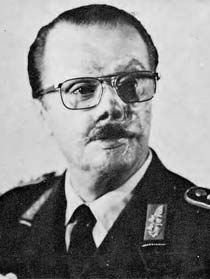
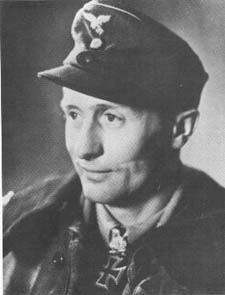
General Johannes Steinhof (above) as a Bundeswehr and NATO officer, showing his burns and before his crash (below)

steinhoff WW II

In his books, Steinhoff does something that you do not see authors do in most military or political memoirs, he actually does serious self reflection on his role in supporting an evil regime. In his introduction to his book The Final Hours the legendary fighter ace who was horribly disfigured when his Me-262 jet fighter crashed and burned two weeks prior to the end of the war wrote:

“In recalling these events, which had been long buried in my memory, it has not been my intention to make excuses. Our unconditional self-sacrifice in the service of the Third Reich is too well documented for that….

So it is because of what is happening today—with freedom threatened in virtually every respect by its own abuse—that I offer this contribution, in the form of an episode in which I was myself involved, to the history of the soldier in the twentieth century. Soldiers have always, in every century of their existence, been victims of the ruthless misuse of power; indeed, given the opportunity, they have joined in the power game themselves. But it fell to our own century to accomplish, with the aid of a whole technology of mass extermination, the most atrocious massacres in the history of mankind. This fact alone makes pacifism a philosophy worthy of respect, and I have a great deal of sympathy with those who profess it. 

The figure of the soldier in all his manifestations is thus symptomatic of the century now nearing its close, and it is to the history of that figure that I wish to contribute by describing what happened to me. I have tried to show what it is possible to do to men, how insidiously they can be manipulated by education, how they can be hoisted onto a pedestal as “heroes,” how they can be so corrupted as even to enjoy the experience—and how they can be dropped and denounced as mutineers when they discover that they have scruples. The complete lack of scruples that such treatment implies is peculiar to rulers who believe that the problems of their own and other peoples can be solved by imposing, through the use of military force, peace on their, the rulers’, terms—in our case a pax germanica, but the second Latin word is readily interchangeable.” from “The Final Hours: The Luftwaffe Plot Against Goring (Aviation Classics)” by Johannes Steinhoff

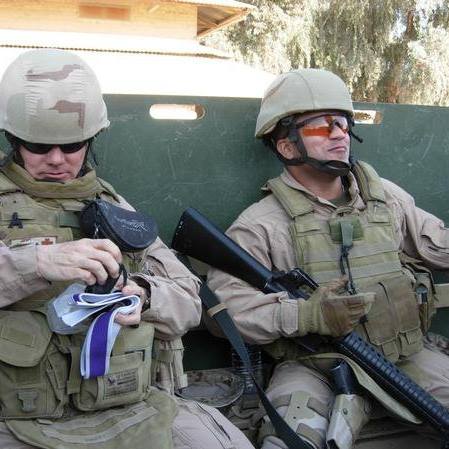
Since I am a historian and and a career military officer with service in the Iraq War, a war that was illegal and unjust by all measure I can understand Steinhof’s words. Because much of my undergraduate and graduate work focused on German history, particularly that of Imperial Germany after the unification, the Weimar Republic, and the Nazi Reich, I draw a lot of lessons from the period. I also understand how people in this country can fall for the same kind of vitriolic propaganda that the Germans of that era did. I can understand because for years I fell for the lies and propaganda being put out by the politicians, pundits and preachers of the American political right.

10665323_10154041610267059_5277331492232210946_n

A picture of me (on left) in Iraq 2007 with my assistant and bodyguard RP1 Nelson Lebron

One of those lessons is that in times of crisis, that people, no matter what their race, culture, religious belief system, educational, or economic background are still human. Humanity is the one constant in all of history, our prejudices are often ingrained in us during childhood and reinforced by the words of politicians, pundits, and preachers. In times of stress, crisis, and societal change or upheaval even good people, moral people, people of great intellectual, scientific abilities can fall prey to demagogues who preach hate and blame others, usually racial, ethnic, or religious minorities, as well as civil libertarians who champion the rights of those minorities for the problems of the nation.

Shrewd politicians, preachers, and pundits do this well. They demonize the target group or population and then let the hatred of their disaffected followers flow. The leaders need that disaffected and angry base in order to rise to power; such was how Hitler, Stalin, and so many other despots gained power. They took advantage of a climate of fear, and found others to blame. For Hitler it was the Jews, Slavs, Socialists and Communists; while for Stalin it was various groups like the Ukrainians, or the Poles who were the devil to be feared and destroyed. Timothy Snyder in his book Bloodlands: Europe Between Hitler and Stalin wrote:

“Dead human beings provided retrospective arguments for the rectitude of policy. Hitler and Stalin thus shared a certain politics of tyranny: they brought about catastrophes, blamed the enemy of their choice, and then used the death of millions to make the case that their policies were necessary or desirable. Each of them had a transformative utopia, a group to be blamed when its realization proved impossible, and then a policy of mass murder that could be proclaimed as a kind of ersatz victory.”

But that being said, there are a lot of people who from childhood believe the lies about others without question. In good times such people continue on with life as normal, but in crisis those hatreds and prejudices come to the fore. Rudolf Höss, the notorious sociopath who commanded Auschwitz told American Army psychologist Gustave Gilbert about his reaction when ordered to turn the camp into an extermination center. He said that the order “fitted in with all that had been preached to me for years,” and “at the same time I didn’t think of it as propaganda, but as something one just had to believe.” 

Eugene Davidson in his book on the Nuremberg Trials wrote:

“Every society has in it at all times negative, criminal, sadistic, asocial forces. What holds them in check more than law and police is the consensus of the society – a general belief that despite everything wrong and stupid and muddleheaded in politics, the state is a going concern that will somehow make its way into the future.” (Davidson, The Trial of the Germans p.581)

But when things do not go well, when people do not feel that things will be okay, that the future will be better, and that they have a purpose they look for answers. However, they tend to find their answers in the rantings of demagogues, race baiters, conspiracy theorists, and others who they would tend to dismiss out of hand in good times. In Germany it was the loss of the First World War, the humiliation of Versailles and the economic chaos and social change of the Weimar period which allowed Hitler to gain an audience, then a following, then political power. The demagogues played to what was already in the hearts and minds of the disaffected masses, without that fertile soil, the rantings of Hitler and his propagandists would have never succeeded. Albert Speer wrote:

“As I see it today, Hitler and Goebbels were in fact molded by the mob itself, guided by its yearnings and its daydreams. Of course, Goebbels and Hitler knew how to penetrate through to the instincts of their audiences; but in the deeper sense they derived their whole existence from these audiences. Certainly the masses roared to the beat set by Hitler’s and Goebbels’ baton; yet they were not the true conductors. The mob determined the theme. To compensate for misery, insecurity, unemployment, and hopelessness, this anonymous assemblage wallowed for hours at a time in obsessions, savagery and license. The personal unhappiness caused by the breakdown of the economy was replaced by a frenzy that demanded victims. By lashing out at their opponents and vilifying the Jews, they gave expression and direction to fierce primal passions.”

In a sense a similar thing has happened in the United States which has experienced a series of wars beginning with Vietnam, the shock of the 9-11-2001 attacks, the economic crash of 2007 and 2008 which devastated the savings, home ownership, and investments of many Americans while at the same time benefiting the banking and brokerage houses whose government assisted policies brought about the crash. Of course there are other issues, many religious conservatives hate the progress made by the Women’s and Gay Rights movements, and their leaders play to their fears in apocalyptic terms. I could go on, but I am sure that my readers can identify other issues which demagogues and others use to spread fear and hate to further their goals. The fact is that without the the fertile soil that lays in the hearts of their most fervent followers they would never have a following.

In Weimar Germany hate mongers like Julius Streicher and propagandist Josef Goebbels stuck a chord with disenchanted people who felt that they had lost their country. They were fearful, angry, and desired a leader who would “make Germany great again.” Hitler and his Nazi media sycophants played to that fear, and took advantage of their anger at the existing order. Davidson wrote such people “exist everywhere and in a sick society they can flourish.” 

For decades the way has been prepared for true extremists to take advantage of the fears and doubts of people as modern American versions of Streicher and Goebbels have been at work for years. Rush Limbaugh was a modern pioneer of this in the United States, and he has been joined by so many who are even more extreme in their rantings that it is hard to name them all. Likewise, whole media corporations, websites, and political networks spread such fear every minute of the day, claiming that they, and they alone are real Americans. They actively support politicians who condemn, and sometimes even threaten people who oppose them, and all the while claim that “make America great again.”

When I was younger I devoured that propaganda, despite all of my learning I followed the rantings of men who I realize today are propagandists who promote the basest of lies, and hatred, often in the name of God. I was changed when I was at war, and when I returned home from Iraq in 2008 I realized through hard experience that I had been lied to, and that as a result that thousands of my brothers and sisters were dead, and tens of thousands shattered in body, mind, and spirit. Likewise I saw the massive destruction levied on Iraq and realized how terrible war really is. That was my epiphany, that is what it took to see how much I had been lied to, and it called me to question everything else that I had so willingly believed, things which had been fed to me by years of indoctrination in church, through the media, and by politicians who I believed were truly Christian. I can understand now how Martin Niemoller felt after the Nazi seizure of power when he said, “I hated the growing atheistic movement, which was fostered and promoted by the Social Democrats and the Communists. Their hostility toward the Church made me pin my hopes on Hitler for a while. I am paying for that mistake now; and not me alone, but thousands of other persons like me.”

There was a time that I hated people who espouse the views that I hold today, the views that I write about so often here on this site. I can remember how angry I would get as I listened to the propaganda being put out by Limbaugh, Hannity, the Fox News Channel and all of the others that I listened to every time that I had the chance. But when I changed after Iraq, I felt the sting of that hatred in very real ways. I remember the day I was called by my bishop in my former church, who told me that I had to leave because my views on women, gays, and Moslems were to use his words were now “too liberal.” After that, many men who I considered to be the best of friends turned their backs on me, some in the most bitter and vindictive of ways.

But I realize now that what they did was because I had in a sense left the cult, and had to be ostracized. I can understand that now, because when I was under the spell I too turned my back on people who had fallen out of favor, or people who had rejected the tenants of the church or the political movement, and those are things that I can never undo. But at the time it made sense, it fitted in with all I had been taught for decades, as Albert Speer wrote of Hitler, “One seldom recognizes the devil when he is putting his hand on your shoulder.”

What happened to Steinhoff’s generation is threatening to happen again, in our country, an authoritarian movement is threatening to destroy our democracy and republic. In it soldiers are esteemed, until they realize what is going on and speak out, but by then it is usually too late. I am understanding that fact more and more every day, and having had people troll this blog and call me a traitor and worse, I understand just a bit of what happened to Steinhoff and his fellow officers when they protested to the highest levels what was happening to Germany in early 1945.

Tomorrow we will know more about our nation’s slide into the abyss if authoritarianism as Donald Trump continues his unrelenting march to the GOP nomination. 

Peace

Padre Steve+

3 Comments

Filed under ethics, History, holocaust, Military, News and current events, Political Commentary

Fort Sumter Pt 2: Only Two Parties Now

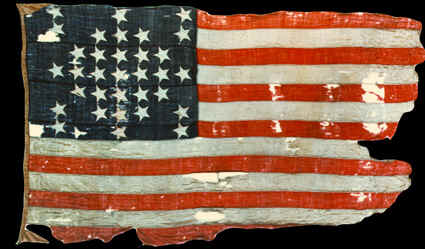
sumterflag

The Flag of Fort Sumter

Friends of Padre Steve’s World,

Here is part two of another two-part installment of my Civil War text. The story follows the implosion of the Democratic Party, the election of Abraham Lincoln, and the secession crisis. It describes who the attack came about and the reactions of people in all parts of the country, as well as the Army to those fateful shots. I hope that you enjoy.

Peace

Padre Steve+

When the Stars and Stripes came down on April 14th 1861 the North was galvanized as never before, and “the clash at Fort Sumter brought forth an outpouring of support for the Union and President Lincoln.” [1] Abner Doubleday wrote “With the first shot fired against Fort Sumter the whole North became united.” [2] Another observer wrote: “The heather is on fire….I never knew what popular excitement can be… The whole population, men, women, and children, seem to be in the streets with Union favors and flags.” [3] The assault on Fort Sumter help to unify the North in ways not thought possible by Southern politicians who did not believe that Northerners had the mettle to go to war against them. But they were wrong, those shots, which Jefferson Davis ordered had the opposite reaction, for Northerners, even opponents of abolition who were not supporters of Lincoln, slavery in the South was one thing, but the attack on a Federal garrison by massed artillery was another; even Senator Stephen Douglas, Lincoln’s stalwart opponent of so many campaigns went to the White House for a call to national unity. Returning to Chicago he told a huge crowd just a month before his untimely death:

“There are only two sides to the question. Every man must be for the United States or against it. There can be no neutrals in this war, only patriots – or traitors” [4]

For Frederick Douglass the shots marked a new phase in abolition:

“The first flash of rebel gunpowder and shell upon the starving handful of men at Sumter instantly changed the nation’s whole policy. Until then, the ever hopeful North was dreaming of compromise…

I wrote in my newspaper; “On behalf of our enslaved and bleeding brothers and sisters, thank God! The slaveholders themselves have saved the abolition cause from ruin! The government is aroused, the dead North is alive, and its divided people united. Never was a change so sudden, so universal, and so portentous. The whole North from East to West is in arms…” [5]

Douglas died less than a month later, possibly from cirrhosis of the liver, but his impact on the Democrats in the North was immense, “for a year of more his war spirit lived among most Democrats. “Let our enemies perish by the sword,” was the theme of democratic editorials in the spring of 1861. “All squeamish sentimentality should be discarded, and bloody vengeance wreaked upon the heads of the contemptable traitors who have provoked it by their dastardly impertinence and rebellious acts.” [6]

sickles as brigadier

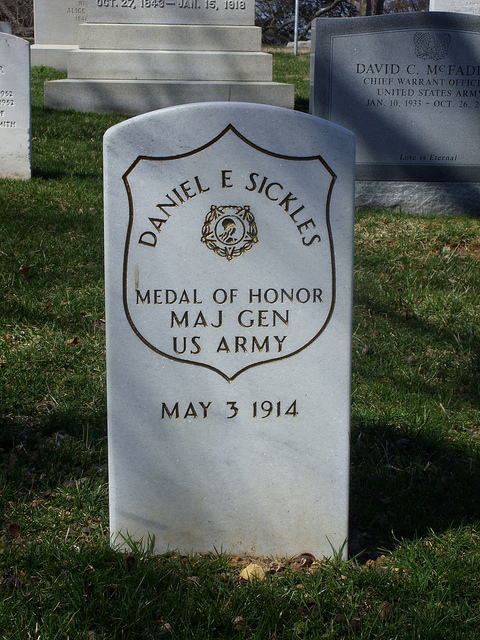
Dan Sickles

One of these Democrats was New York Congressman Dan Sickles. He was one of many men whose outlook toward the South changed when Sumter was fired upon. Sickles had stridently defended Southerners and Southern states rights just months before, so long as they remained in the Union, and he took the actions of his former friends personally. He then became one of the first of men who were known as Union Democrats who followed Lincoln into the war, and despite his lack of ethics in much of his life it was a cause for which he would remain true, during and after the war.

When the soldiers of South Carolina opened fire on Fort Sumter, Sickles, who had said that no troops would cross through New York to invade the South in 1859 proclaimed “the men of New York would go in untold thousands anywhere to protect the flag of their country and to maintain its legitimate authority.” [7] In one of his last congressional speeches Sickles lambasted the South for its threat to the United States as a whole, and condemned the new Confederacy’s policies in spite of Northern attempts to conciliate them, “has been followed by insults to our flag; by the expulsion of the United States troops and authorities from navy yards and forts and arsenals; by measures to control the vast commerce of the Mississippi and its tributaries….” [8] He also condemned the South for its seizure of U.S. funds in the sub-treasuries and mints in the South as well sending envoys to England and France.

Sickles-Excelsior-Brigade-Headquarters-City-Hall-Park.-Yorktown

After the war Sickles, who had lost his leg in the Battle of Gettysburg fighting for the Union, oversaw the early efforts of reconstruction in North Carolina and for ordering the end to the public whippings of blacks by state officials was fired by President Andrew Johnston for supporting voting rights for African Americans. Congress reinstated him but Sickles who had so earnestly supported the South as late as 1860 no longer could stomach such abuse by those men who at one time his political friends and allies. During the election of 1876 Sickles, a lifelong Democrat labeled his party as “the party of treason.” [9] He joined forces with Republicans and helped to prevent the election of New York Democrat Samuel Tilden through shrewd political electioneering in key battleground states.

For Stephen Douglas the attack on Fort Sumter meant the end of his efforts to bring about some kind of reconciliation to reunite the country and restore the Union. When the Little Giant heard the news of the attack and reports of the statements of Confederate leaders he rushed to Lincoln to offer his support. Douglas wrote of the meeting:

“I heartily approve of your proclamation calling up 75,000 militia,” I told him. “Except that I would make it 200,000. You don’t know the dishonest purposes of these southern men as well as I do.” After a review of the strategic situation with the President Douglas continued, “Mr. President,” I said. “Let me speak plainly. I remain unalterably opposed to your Administration on purely its political issues. Yet I’m prepared to sustain you in the exercise of all your constitutional functions to preserve the Union, maintain the government, and defend the capital. A firm policy and prompt action are necessary. The capital of our country is in danger, and must be defended at all hazards, and at any expense of men and money. I speak of the present and future without reference to the past.

He shook my hand, hard. “We need more patriots like you, Douglas,” he said as he walked me to the door.

“I depreciate war,” I said in parting, “but if it must come, I’m with my country and for my country, under all circumstances and in every contingency.” [10]

Douglas then went to his fellow Democrats in Washington and told them: “We must fight for our country and forget all differences. There can be only two parties now – the party of patriots and the party of traitors. We belong to the first.” [11]

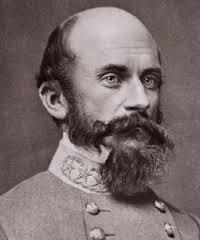
ewell

Richard Ewell

Army officers were conflicted between the Army that they had served, often for many years, the flag that they had fought under, longstanding friendships, and loyalty to their states and families. Richard Ewell who would rise to corps command in the Army of Northern Virginia, described the feelings of many officers in the ante-bellum Army: “Officers generally are very much adverse to any thing like civil war, though some of the younger ones are a bit warlike. The truth is in the army there are no sectional feelings and many from extreme ends of the Union are the most intimate friends.” [12] In California a number of those friends and their families bade tearful farewells as they parted ways. Brigadier General Albert Sidney Johnston and Captains Winfield Scott Hancock and Lewis Armistead gathered one last time. Hancock had already, who had great sympathy for his Southern friends, made his views known had previously announced “I shall fight not upon the principle of state-rights, but for the Union, whole and undivided.” [13] His commander, Johnston, and dear friend Armistead were departing to serve the Confederacy and the parting was painful. Almira Hancock wrote of the final night together in Los Angeles:

“The most crushed was Major Armistead, who with tears, which were contagious, streaming down his face, put his hands upon Mr. Hancock’s shoulders, while looking him steadily in the eye, said, “Hancock, good-bye; you can never know what this has cost me; and I hope God will strike me dead if I am ever induced to leave my native soil, should worse come to worst….” [14]

Colonel Robert E. Lee of Virginia looked askance at secession, but he had made the decision that no matter what he would not lead armies against the South. In fact it was clear when he left Texas to come east where his sentiments lay. He told a friend “If Virginia stands by the old Union, so will I. But if she secedes (though I do believe in secession as a constitutional right, nor that there is sufficient cause for revolution), then I will follow my native State with my sword, and if need be, with my life.” [15] When he returned to Washington D.C. he accepted a promotion to Colonel in the Regular Army less than a month before he was offered command of the Union armies by Abraham Lincoln, a position that he turned down. In his final interview with General Winfield Scott to announce his decision, he admitted that “the struggle had been hard. He did not believe in secession, he said, and if he owned every slave in the South he would free them all to bring peace; but to fight against Virginia was not in him.” [16] When Virginia seceded Lee submitted his resignation from the Army for a cause that he did not really believe was constitutional or necessary, noting in his letter:

“With all my devotion to the Union and feeling of loyalty and duty of an American citizen, I have not been able to make up my mind to raise my hand against my relatives, my children, my home. I have therefore, resigned my commission in the Army, and save in the defense of my native State…I hope I may never be called upon to draw my sword.” [17]

Within days Lee was appointed as a General and commander of the military forces of Virginia. When he arrived at the State House and “before he had much time to ruminate, he found himself being presented with George Washington’s sword, and hailed as a hero in a powerful tribute by the president of the convention.” [18] Even so, Lee’s decision was assailed by much of his Unionist oriented family, and many of them went on to serve the Union with distinction during the war. One relative wrote of Lee’s decision, “I feel no exalted respect for a man who takes part in a movement in which he says he can see nothing but ‘anarchy and ruin’… and yet very utterance scare passed Robt Lees lips… when he starts off with delegates to treat traitors.” [19]

Lee’s future right hand man and chief lieutenant, Thomas Jackson, the soon to be “Stonewall” Jackson was then a professor at the Virginia Military Institute. The often grim and serious Jackson saw the issue of secession as he did all of life through the prism of his Evangelical Protestant Calvinistic faith. For him it disunion was a matter of Divine Providence. When secession came and Jackson heard a minister friend in Lexington lamenting the nation’s troubles he noted:

“Why should Christians be at all disturbed about the dissolution of the Union? It can only come by God’s permission, and only will be permitted, if it is for his people’s good, for does he not say that all things shall work together for the good to them that love God?” [20]

In San Francisco Lieutenant James McPherson of the Corps of Engineers attempted to convince Lieutenant Porter Alexander from going home and joining the cause of the Confederacy. He bluntly spoke the facts of what would happen to the South in coming the war to the future Confederate artillery general:

“The population of the seceding states is only eight million while the North has twenty million. Of your 8 million over 3 million are slaves & may pose a dangerous element. You have no army, no navy, no treasury, no organization & practically none of the manufacturers – the machine shops, coal & iron mines & such things – which are necessary for the support of armies & carrying on war on a large scale.

You are but scattered agricultural communities & will be isolated from the world by blockades.

It is not possible for your cause to succeed in the end…” [21]

But Alexander, like so many Southern officers realized “that a crisis in my life was at hand. But I felt helpless to avert it or even debate the question what I should do. I could not doubt or controvert one of McPherson’s statements or arguments…” [22]

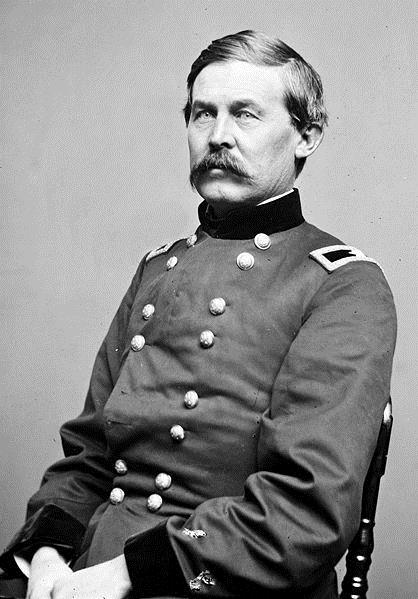
buford

John Buford

However, many Southern born officers serving in the Army did not leave. Close to half of the “Southern West Point graduates on active duty in 1860 held to their posts and remained loyal to the Union.” [23] One was Kentucky’s John Buford who would gain immortal fame at the Battle of Gettysburg. Since Buford’s family had longstanding ties to Kentucky, the pro-secession governor of Kentucky, Beriah Magoffin offered Buford a commission in that states’ militia. At the time Kentucky was still an “undeclared border slave state” and Buford loyal to his oath refused the governor’s offer. He wrote a brief letter to Magoffin and told his comrades that “I sent him word that I was a Captain in the United States Army and I intend to remain one.” [24] Around the same time the new provisional government of the Confederacy “offered Buford a general officer’s commission, which reached him by mail at Fort Crittenden.” [25] According to Buford’s biographer Edward Longacre “a well-known anecdote has him wadding up the letter while angrily announcing that whatever future had in store he would “live and die under the flag of the Union.” [26] A starker contrast could not be drawn.

Close to forty-percent of the Virginians serving on active-duty in the army remained faithful to the Union, including the Commander of the Army, General Winfield Scott and Robert E. Lee’s friend George Thomas and both were ostracized in the Old Dominion. “Thomas’s family never again communicated with him except to ask him to change his name. A young Virginian just out of West Point, acknowledged that by retaining his commission he had been shunned by all of his Southern associates; yet he still derided those who would hold their obligations so lightly as to abandon the nation when it most needed them.” [27]

But throughout the South, most people were less than circumspect and openly rejoiced at the surrender of Fort Sumter. In Richmond the night following the surrender “bonfires and fireworks of every description were illuminating in every direction- the whole city was a scene of joy owing to [the] surrender of Fort Sumter” – and Virginia wasn’t even part of the Confederacy.” [28] John Gordon, the future Confederate General was leading his Georgia volunteers to the new Confederate capital and “found the line of march an unbroken celebration: fires lighted the hilltops; fife-and-drum corps shrilled and thumped; cannons exploded their welcome.” [29]

poor--ulysses-s-grant-president-1040cs021412

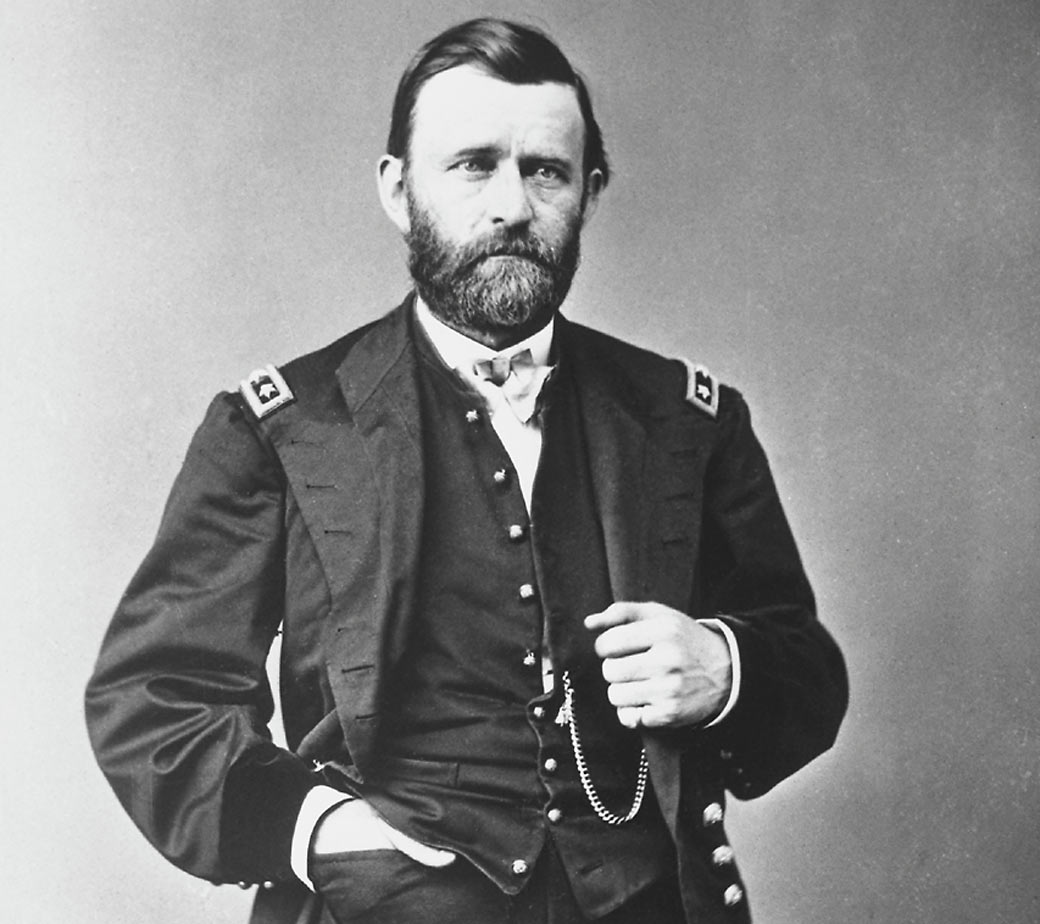
Ulysses Grant

Far to the north in Bangor Maine a little known professor at Bowdin College named Joshua Lawrence Chamberlain read the news “could not abide the thought of a divided nation; the Founding Fathers “did not vote themselves into a people; they recognized and declared that they were a people” whose bonds out not to be severed by political, social, or economic grievances.” [30] The professor “was seized with anger that “the flag of the Nation had been insulted” and “the integrity and existence of the people of the United States had been assailed in open and bitter war.” [31] In Illinois, a former struggling former Regular Army officer and veteran of the War with Mexico, Ulysses S. Grant whose in-laws were sympathetic to the Southern cause who had volunteered to lead a regiment of Illinois volunteers, wrote “Whatever may have been my opinions before, I have but one sentiment now. That is to have a Government, and laws and a flag and they all must be sustained….There are but two parties now, Traitors and Patriots and I want hereafter to be ranked with the latter.” [32]

1st_7th_Reg_Departs

Even in cities that had often leaned toward the South like Cincinnati, people rushed to proclaim their patriotism and support of the Union. George Ticknor told an English friend “The whole population, men, women, and children, seem to be in the streets with Union favours and flags…. Civil war is freely accepted everywhere… by all, anarchy being the obvious, and perhaps the only alternative.” Pacifists who had rejected violence, even in support of righteous causes, turned bellicose. Ralph Waldo Emerson enthused, “Sometimes gunpowder smells good.” [33] As the Sixth Massachusetts Volunteer Infantry marched through the streets of New York on their way to Washington were greeted with cheers from thousands of New Yorkers. The New York Times reported the event:

“Flags were displayed at all the hotels on the route, and waving handkerchiefs from the balconies and windows signified the warm greetings of the fair sex to the brave Bay State soldiers. Opposite the New York Hotel a gray-haired old man mounted a stoop and addressing the soldiers and people, said that he had fought under the Stars and Stripes in the War of 1812 against a foreign power, and now that the flag was spit upon by those who should be its defenders. He closed his remarks by a “God bless our flag,” and left the crowd with tears streaming down his wrinkled cheeks.” [34]

The Rubicon had been crossed and there was now no going back for either side. Poet Walt Whitman wrote:

War! An arm’d race is advancing! The welcome for battle, no turning away;

War! Be it weeks, months, or years, an arm’d race is advancing to welcome it.” [35]

Notes

[1] Ibid. Cooper We Have the War Upon Us p.270

[2] Doubleday, Abner From Moultrie to Sumter in Battles and Leaders of the Civil War Volume I Edited by Robert Underwood Johnson and Clarence Clough Buel Castle, Secaucus NJ p.48

[3] Ibid. McPherson The Battle Cry of Freedom p.274

[4] Ibid. McPherson The Battle Cry of Freedom p.274

[5] Ibid. Oates The Approaching Fury p.423

[6] Ibid. McPherson The Battle Cry of Freedom pp.274-275

[7] Ibid. Keneally American Scoundrel p.212

[8] Ibid. Keneally American Scoundrel p.214

[9] Ibid. Goldfield America Aflame p.525

[10] Ibid. Oates The Approaching Fury pp.421-422

[11] Ibid. Oates The Approaching Fury p.422

[12] Pfanz, Donald. Richard S. Ewell: A Soldier’s Life University of North Carolina Press, Chapel Hill and London 1998 p.120

[13] Jordan, David M. Winfield Scott Hancock: A Soldier’s Life Indiana University Press, Bloomington and Indianapolis 1988 p.33

[14] Hancock, Almira Reminiscences of Winfield Scott Hancock Charles L Webster and Company, New York 1887 pp.69-70

[15] Thomas, Emory Robert E. Lee W.W. Norton and Company, New York and London 1995 p.187

[16] Ibid. Catton The Coming Fury p.335

[17] Ibid. Thomas The Confederate Nation p.85

[18] Pryor, Elizabeth Brown. Reading the Man: A Portrait of Robert E. Lee Through His Private Letters Penguin Books, New York and London 2007 p.295

[19] Ibid. Pryor Reading the Man p.295

[20] Ibid. Rable God’s Almost Chosen Peoples p.38

[21] Alexander, Edward Porter. Fighting for the Confederacy: The Personal Recollections of General Edward Porter Alexander edited by Gary Gallagher University of North Carolina Press, Chapel Hill 1989 p.24

[22] Ibid. Alexander Fighting for the Confederacy p.25

[23] Huntington, Samuel P. The Soldier and the State: The Theory and Politics of Civil-Military Relations, The Belknap Press of Harvard University Press, Cambridge MA and London 1957

[24] Ibid. Guelzo. Gettysburg: The Last Invasion p.121

[25] Longacre, Edward G. John Buford: A Military Biography Da Capo Press, Perseus Book Group, Cambridge MA p.70

[26] Ibid. Longacre John Buford p.70

[27] Pryor, Elizabeth Brown. Reading the Man: A Portrait of Robert E. Lee Through His Private Letters Penguin Books, New York and London 2007 p.292

[28] Ibid. Guelzo Fateful Lightening p.140

[29] Smith, Jean Edward. Grant Simon and Schuster, New York and London 2001 p.99

[30] Longacre, Edward G. Joshua Chamberlain: The Soldier and the Man Combined Publishing Conshohocken PA 1999 pp.49-50

[31] Ibid. Guelzo. Gettysburg: The Last Invasion p.139

[32] Ibid. Smith Grant p.103

[33] Ibid. Goldfield America Aflame p.205

[34] Holzer, Harold and Symonds, Craig L. Editors, The New York Times Complete Civil War 1861-1865 Black Dog and Leventhal Publishers, New York 2010 p.75

[35] Ibid. Goldfield America Aflame p.205

2 Comments

Filed under civil war, History, Military, Political Commentary

Fort Sumter Pt 1: The First Flash of Gunpowder and Shell

fort-sumter-higher-res

Friends of Padre Steve’s World,

Here is another part one of another two-part installment of my Civil War text. The story follows the implosion of the Democratic Party, the election of Abraham Lincoln, and the secession crisis. It describes who the attack came about and the reactions of people in all parts of the country, as well as the Army to those fateful shots. I hope that you enjoy.

Peace

Padre Steve+

The remaining forts under Federal control in the South were a thorn in the side and a constant reminder to Jefferson Davis of the power of the federal government. As such he attempted to negotiate to obtain the forts, and when that offer was rejected out of hand by both Buchanan and Lincoln he began military preparations to seize them if negotiations failed. His task was complicated in Charleston where the Federal commander, Major Robert Anderson unexpectedly withdrew his entire garrison from the mainland to Fort Sumter in Charleston harbor. The move was prompted by President Buchanan’s dithering on the status of the fort and garrison. Anderson was a Southerner who had decided to remain loyal to the Union, his second in command was Captain Abner Doubleday, a strongly committed abolitionist.

Under the cover of darkness the Union officers withdrew their men from old and weak Fort Moultrie in Charleston to Fort Sumter gaining him instant adulation in the North and condemnation in the South. Buchanan wanted to abandon the fort but “when it appeared that Northern public opinion was solidly behind Anderson, Buchanan changed his mind and attempted to persuade the South Carolinians to accept Anderson’s occupation of Fort Sumter as a legitimate exercise of federal authority.” [1] Jefferson Davis, who had not yet resigned from the Senate awaiting Mississippi’s declaration of secession complained that he “pleaded with Buchanan to give up Sumter and avert impending calamity. Once again the old imbecile refused, after his fashion, which is to say that he muttered to himself, nodded and tilted his head as if in agreement, begged leave to say a prayer, and then did nothing at all. Plainly the reins of state were in feeble hands. Had this lame-duck President withdrawn the troops from Sumter, he might have turned away the threatening of civil war.” [2]But Davis was blind to the political realities in the North that secession and seizure of other Federal installations had brought about. A prominent Northern Democrat wrote that “Anderson’s course of action is universally approved and that if he is recalled or if Sumter is surrendered… Northern sentiment will be unanimous in favor of hanging Buchanan….I am not joking – Never have I known the entire people more unanimous on any question. We are ruined if Anderson is disgraced or Sumter given up.” [3] Congressman Dan Sickles who had been such a friend of the South for so many years, even backing peaceful secession, spoke out against the Southern seizure of federal installations, said that the secessionists had committed “a fatal error” and said “it will never do, sir, for them to protest against coercion, and, at the same moment seize all the arms and arsenals and forts and navy yards, and ships that may, through our forbearance, fall within their power. This is not peaceful secession. These acts, whensoever or whomsoever done, are overt acts of war.” [4]

major anderson

Buchanan made a belated attempt to reinforce and resupply the fort and on January 9th 1861, an unarmed civilian ship, the Star of the West entered Charleston harbor. But the operation was bungled, secrecy was broken and the South Carolinians knew the ship was coming, even as Anderson did not get the message about the relief expedition and permission to fire if the Star of the West was fired upon. As a result when Confederate gunners opened fire on the steamer, Anderson, who had instructions to defend himself and not for an instance such as this, did nothing to intervene. “If he opened fire, the United States and South Carolina would be at war…. Major Anderson hesitated, plainly uncertain, an immense weight of responsibility resting on him….” [5] As a result the Star of the West retreated, leaving the garrison unreinforced. But the secessionists “had overplayed their hand. The South Carolina gunners who fired on the Star of the West had, in effect, invited the Federal government to start the war then and there if it wanted a war….” [6] The firing on the Star of the West further inflamed Northerners. Dan Sickles thundered in the House chambers “the authorities of South Carolina, through their military forces, opened fire upon that defenseless ship, and compelled her to retire and abandon the peaceful and legitimate mission in which she was engaged. Now, sir, that was an act of war, unqualified war.” [7]

The debate continued as Buchanan eased out of office and the new Confederate government of Jefferson Davis took ownership of the situation in Charleston. Buchanan did not want to do anything overt to tip the balance in undecided slave states toward secession and Davis did not want South Carolina to act alone and risk a premature attack on the fort. But as both sides waited the balance of power in Charleston shifted, “as local troops day by day strengthened the ring of batteries confronting Sumter’s garrison.” [8] In incoming Lincoln administration debated what to do with some of the incoming cabinet members counseling withdraw and others resistance to Confederate demands. Lincoln gave serious thought to abandoning the fort but could not bring himself to authorize the action. He understood that if he ordered evacuation, “the credibility of his presidency and the Republican administration would be in pieces before either had scarcely begun.” [9]

Instead the new President sought more information and sent three men “down to Charleston to observe the situation and report on what they saw. The first two, both southern-born, were Illinois law associates, both reported reconciliation impossible…. The third, a high-ranking naval observer who secured and interview with Anderson at the fort, returned to declare a relief expedition was feasible.” [10] He also continued to meet with his cabinet members to decide on the appropriate policy to meet the challenge to federal authority in Charleston. “He met with Francis Blair, who, like his son, Monty, believed passionately that the surrender of Sumter “was virtually a surrender of the Union unless under irresistible force – that compounding with treason was treason to the Govt.” [11] On March 29th Lincoln again met with his cabinet and having weighed all of the options, decided to resupply the fort. His decision was to “not send guns or bullets to Sumter, only food and medicine. He would resupply, but not rearm, it. And he would announce the plan in advance so the South could not regard the effort as an act of hostility by an enemy.” [12] If the attempt succeeded “federal authority in South Carolina had been preserved, and Charleston could do little short of war to change it; if it failed, the failure would be due to Charleston’s decision to open fire, and the onus of beginning a civil war would lie on their hands.” [13]

Even as the Confederate moved even more troops and guns into position around the Sumter, more and more people of influence were growing impatient with the delays in gaining Fort Sumter and feared that if something was not done that in some places there might be a call to return to the Union. Jefferson Davis was under great pressure to act, a newspaper in Mobile Alabama editorialized that “If something is not done pretty soon…the whole country will be so disgusted with the sham of independence that the first chance the people get at a popular election the y will turn the whole movement topsy-turvy.” [14] Likewise, “Southern ardor was chafing at the bit anyway, and failure to meet the challenge threatened to undermine the government and weaken Southern resolve.” [15]

P.G.T._Beauregard

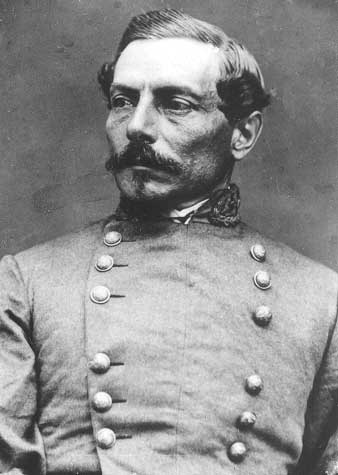
General P.T.G. Beauregard C.S.A.

Knowing from Southern sympathizers still in Washington that a relief expedition was coming, General P.T.G. Beauregard “had already cut off Major Anderson’s purchases in the Charleston market the day before Governor Pickens received Lincoln’s message about the intention to provision Sumter.” [16] Pickens forwarded the message to Davis in Montgomery and Davis was forced to either back down on their threats or fire the first shot of the war, and even worse from a messaging standpoint, “that first shot would be for the immediate purpose of keeping food from hungry men.” [17]

Davis was extremely angry when he went into conference with his cabinet on April 9th upon getting the news of the relief expedition. The debate in the cabinet “ran long and heated. Davis favored proceeding with the bombardment. Charleston’s batteries were ready, and the South Carolinians were more than anxious,” [18] and the majority of the cabinet, with the exception of Robert Toombs concurred. He wrote:

“I summoned the Cabinet and told them that negotiation was now at an end, and that it was time to bombard the fort. Yes, I said, we would now be firing the first shot, but that was not our fault. It was Lincoln who intended war. He and that lying Seward had drawn the sword, and we were responding to them. We were defending our honor.

Toombs, my Secretary of State disagreed. “Sir,” he said to me, “firing at the fort is suicide. It’s unnecessary, it puts us in the wrong, it’s fatal.”

“Sir,” I said, “you are wrong.”

On April tenth, I ordered General Beauregard to demand the evacuation of Fort Sumter, and if refused, to reduce it with his guns.” [19]

Beauregard delivered the ultimatum to Anderson, who rejected it noting that “his sense of honor and obligations to his government prevented him his complying; but in conversation with Beauregard’s aides he remarked that in any event, the garrison would be starved out in a few days.” [20] But the fear of the Confederates that the relief force might actually arrive and succeed in its mission prompted them to open fire on the fort at 4:30 a.m. on the morning of the 12th. The relief force was scattered by a gale and could not resupply Anderson. The bombardment lasted thirty-three hours, and while Anderson’s troops resisted but could not man all of their guns and were short on ammunition and powder. With the fort heavily damaged by over 4,000 hits and interior of the fort on fire, a fire that was threatening the powder magazines, Anderson gave the order to surrender. Beauregard allowed the assembled U.S. Navy ships to evacuate the garrison and as a parting gesture the Confederate General allowed Anderson’s troops to fire a last salute to Old Glory. They hauled down the smoke stained and torn Star Spangled Banner and marched to the ship taking them off the island with their drums beating the tune “Yankee Doodle.” Lincoln realized the importance of what had happened all too well. He noted, “They attacked Sumter. It fell and thus did more service than it otherwise would.” [21]

Notes

[1] Ibid. Guelzo Fateful Lightening p.136

[2] Ibid. Oates The Approaching Fury p.367

[3] Ibid. McPherson The Battle Cry of Freedom pp.265-266

[4] Ibid. Keneally American Scoundrel p.211

[5] Ibid. Catton The Coming Fury pp.180-181

[6] Ibid. Catton The Coming Fury p.184

[7] Ibid. Keneally American Scoundrel pp.211-212

[8] Ibid. Potter The Impending Crisis p.544

[9] Ibid. Guelzo Fateful Lightening p.137

[10] Ibid. Foote The Civil War, A Narrative. Volume One p.46

[11] Ibid. Goodwin Team of Rivals p. 335

[12] Holzer, Harold Lincoln: How Abraham Lincoln Ended Slavery in America Newmarket Press for itbooks an imprint of Harper Collins, New York 2012 p.80

[13] Ibid. Guelzo Fateful Lightening p.137

[14] Ibid. McPherson The Battle Cry of Freedom p.272

[15] Ibid. Catton Two Roads to Sumter p.278

[16] Weigley, Russell F. A Great Civil War: A Military and Political History 1861-1865 Indiana University Press, Bloomington and Indianapolis 2000 pp.20-21

[17] Ibid. Foote The Civil War, A Narrative. Volume One p.47

[18] Ibid. Davis Jefferson Davis p.323

[19] Ibid. Oates The Approaching Fury pp.416-417

[20] Ibid. Weigley A Great Civil War p.21

[21] Ibid. Goldfield America Aflame p.202

1 Comment

Filed under civil war, History, Military, Political Commentary

Controversy & Redemption: Dan Sickles and July 2nd at Gettysburg

Daniel_Edgar_Sickles

Friends of Padre Steve’s World

For those that have followed my writing for some time you know that I teach military history and ethics at the Joint Forces Staff College. One of the great joys that I have is leading the Gettysburg Staff Ride, which is an optional event for students that want to participate. When I took the position here I took some of my older writings on Gettysburg and put them into a student study guide and text. That was two years ago. Then the text was about 70 pages long. It is now about 925 pages long and eventually I hope to get it published. When and if that happens I expect it to become two, and possibly three books.

This is the sixth of a series of articles that I will be posting potions of a chapter that I have rewritten about the critical battles on the south side of the battlefield on July 2nd 1863, the battle for Devil’s Den, the Wheatfield, the Peach Orchard, and the final repulse on Cemetery Ridge.

As you read this don’t just look at the events, but look at the people, and their reaction to the what they encountered on the battlefield, for that understanding of people is where we come to understand history.

So even if you are not a Civil War buff, or even a history buff, take the time to look at the people, their actions, and the things that made them who they were, and influenced what they did. History is about people.

So please enjoy,

Peace

Padre Steve+

LongstreetJ_main

Lieutenant General James Longstreet C.S.A.

President John F. Kennedy paraphrased the words of the Roman Emperor Tacitus after the failed Bay of Pigs invasion, Kennedy told a journalist, “victory has 100 fathers and defeat is an orphan.” The problem in doing a proper analysis of Longstreet’s assault is the fact that many of the men involved on both sides made the battle personal, issuing scathing denunciations of one another, fudging the facts to their advantage, and by making the fight political a political football in the South and in the North.

The Confederate attacks had been badly directed and uncoordinated. In the end though McLaws’ and Hood’s divisions had succeeded in thrashing Sickles’ Third Corps in the exposed salient they were unsuccessful at breaking the Federal line. The disjointed nature of their attacks and the lack of active command and control by Lee and Longstreet had much to do with the outcome. Lee’s presence was needed on the south end of the Confederate line, but he left Longstreet to his own devices.

There was much blame to go around on the Confederate side, Longstreet placed much of the blame for the defeat on Lee, which earned him the everlasting enmity of many Confederates. But Lee’s Warhorse also met with criticism, especially for his performance on July 2nd 1863. Some of the most withering came not years later, but in the days following the battle. The harshest came from Lafayette McLaws, his old friend, who had been a favorite of Longstreet. McLaws blamed his corps commander for the defeat, writing his wife, “I think that the attack was unnecessary and the whole plan of battle a very bad one. Genl Longstreet is to blame for not reconnoitering the ground and for persisting in ordering the assault when his errors were discovered. During the engagement he was very excited [,] giving contrary orders to every one, and exceedingly overbearing. I consider him a humbug – a man of small capacity, very obstinate, not at all chivalrous, exceedingly conceited, and totally selfish….” [1]

One of Longstreet’s biographers wrote “Longstreet’s performance during the morning deserves criticism…. Had he attended to the details that were his responsibility and not allowed his disagreement with Lee to affect his judgment and effort, the afternoon assault would have begun sooner, but not several hours earlier.” [2] That historian believes that had Sickles not moved forward that Longstreet’s attack, even if made earlier would have met success, something echoed by Porter Alexander who wrote, “There seems no doubt that Longstreet’s attack on the 2nd been materially sooner, we would have gained a decided victory.” [3]

Casualties were heavy on both sides but the attack had failed and it had failed because of senior leadership of Lee and his corps commanders. Had Lee “duplicated the active role taken by his counterpart, George Meade, the outcome might have been different.” [4] But this too is speculation born of perfect 20/20 hindsight. One of Lee’s biographer’s wrote “Longstreet was disgruntled, Ewell was inept and Hill was unwell.” [5] To make matters worse, throughout the day, Robert E. Lee did not assert himself and even his most devoted biographer Douglas Southall Freeman would write that on July 2nd 1863 “the Army of Northern Virginia was without a commander.” [6]

general-george-meade

Major General George Meade U.S. Army

On the Federal side most of the controversy has to do with Sickles’ decision to move the Third Corps forward from Cemetery Hill to the Peach Orchard and so it is appropriate to close this chapter discussing Dan Sickles. The matter has been a long subject of controversy, especially because of the way that Sickles politicized his actions in the press and in the Congressional hearings that followed. Many generals on both sides blundered at Gettysburg.

One can speculate that had Sickles remained in the position dictated by Meade that the Confederate assault might have gone down to an even more disastrous defeat. That being said the line that Sickles would have occupied with his 10,600 troops was long and he could not have held it in great strength, even Little Round Top would have been lightly occupied, and Meade might not have been forced to reexamine his line. It is fully possible that “had Longstreet attacked there with the same headlong fury, it is possible that the Confederates would have broken through not merely into Sickles’ rear, but into the entire Union rear and that disaster would have been the result.” [7] However, Sickles, even though he thought he was justified, was wrong in not informing Meade of the move, and leaving his army commander ignorant of the position of his left.

Sickles action, though an error, was something that could have been rationally addressed by him and Meade long before the Confederate attack began. Had the two men “worked in tandem – that is had the line taken by the Third Corps been shared by the Fifth, and had command matters been resolved and fallback plans established – Longstreet’s troops would have been hard pressed to achieve any of their goals.” [8] One historian put the matter of Sickles’s decision and the subsequent controversies into perspective:

“The entire episode has been clouded since 1863 by issues of politics and personality that hinder unbiased analysis. It is time to put aside such extraneous issues. When Sickles’s scandalous prewar behavior, postwar bombast, and special pleading are discounted and the case is considered solely on its merits, the results of the Third Corps advance speak for themselves. Dan Sickles was not perfect on July 2, 1862, but neither was he the military buffoon so often portray.” [9]

In his after action report Meade criticized Sickles and did so again before the Congressional Committee on the Conduct of the War, that latter in regard to comments made by Sickles and his supporters both to the committee and in the press. Meade not only had to deal with the diversions created by Sickles, he also had the real problem of Abraham Lincoln’s disappointment with his failure to catch and destroy the Army of Northern Virginia before it escaped across the Potomac. Dan Sickles did not have to worry about that, and “he could play the role that politicians play best: critic and second guesser.” [10] With the press on his side the former disgraced Congressman was now a one legged war hero, and Sickles attempted to use his redemption and status of a hero “to have Meade removed from command in disgrace.” [11] Many generals on both sides blundered at Gettysburg. Had Sickles taken the high road after the battle rather than attempting to torpedo the name and reputation of George Meade, his action might have provoked less controversy, and “Dan Sickles the historical figure has paid a permanent price for this, overshadowing the laudable work he did as an early force in establishing the Gettysburg National Memorial Park.” [12]

That was most unfortunate, for it has poisoned the discussion of the battle for over 150 years. Unlike Lee, Meade was constantly leading from the front on this long and brutal afternoon. Meade fought a magnificent defensive battle and recovered from the surprise of Sickles movement even as Sickles and his soldiers fought hard greatly impeded the Confederate plan. Sickles was praised in the press and even by long term enemies such as George Templeton Strong, who wrote, “I suppose Sickles… with his one leg, among our best volunteer officers. His recuperative powers are certainly wonderful. Four years ago he was a ruined man in every sense, a pariah whom to know was discreditable.” [13]

“The whole damned field is my memorial”

But the continuing controversy which always seemed to swirl around him prevented him from being honored on the battlefield where he lost his leg. Alone of all the Union Corps commanders at Gettysburg Sickles has no memorial on the battlefield. When asked about the lack of a monument, Sickles, in his typical manner is reported to have said that “The whole damned field is my memorial.” [14]

Despite the controversy surrounding his life, and those that swirled in the fighting and refighting of the Battle of Gettysburg, in true fashion Dan Sickles went on to further glory and scandal. Ulysses Grant never allowed him to command troops in the field, Sickles commanded the Military Department of South Carolina, the Department of the Carolinas, and the Department of the South, where was a strong proponent of Reconstruction. He was retired as a Major General in the Regular Army in 1869 and went on to serve as Minister to Spain where he carried on an affair with the deposed Queen Isabella, a nymphomaniac who long before she ever Sickles had conducted a myriad of high profile affairs. The affair with the former queen was open and offensive to many people, but neither seemed to mind. In a sense they were kindred spirits. A Paris newspaper dubbed the one-legged General “the Yankee King of Spain.” [15] The affair with Isabella eventually burned itself out and Sickles married Senorita Caroline de Creagh, the daughter of a Spanish Minister, who bore him two children. To do this he converted to Roman Catholicism, something that he had never done when Teresa was alive. After his service in Spain was ended Sickles remained in Paris for four years, where he was widely admired and “received the office of Commander of the Legion of Honor.” [16]

Though a Democrat he supported Republican Presidential candidates Ulysses S. Grant and Rutherford Hayes, the latter against a long time Democratic rival from New York. As he got older Gettysburg became an increasing part of his life and in 1892 he ran for Congress in order to spearhead efforts to preserve the battlefield. He was elected and it was in large part due to his efforts that what we now know as the Gettysburg National Military Park exists. In 1893, Sickles met James Longstreet at a Gathering in Gettysburg, and the two men became lifelong friends. Since the war both men had been refighting the battle and the controversies that hung over their decisions that July 2nd like a pall. Longstreet, for his actions on the battlefield, and his decision to become a Republican and serve in the post-war Reconstruction efforts was a pariah in much of the South. That “unpopularity was painful to him, and he was glad to find a sympathetic ally in Sickles. Each of the two generals agreed that the other had moved with blameless skill that day,” [17] and both would defend the other in the succeeding years. As the continuing battle of Gettysburg was fought in the press and in histories written by various participants, Longstreet wrote of Sickles, “I believe it is now conceded that the advanced position at the peach orchard, taken by your Corps and under your orders, saved that battlefield for the Union cause.” [18]

Sickles was awarded the Medal of Honor in 1897, the citation stating, “Displayed most conspicuous gallantry on the field vigorously contesting the advance of the enemy and continuing to encourage his troops after being himself severely wounded.”

Sickles long to outlived George Meade who died in 1872 and all of the other Corps commanders of the Army of the Potomac, not to mention most of his friends and enemies. His father George Sickles died in 1887 leaving Dan an estate of nearly five million dollars. His daughter by Teresa, Laura, whose life had been so scarred by the events of 1859 died alone and estranged from her father. In 1896, disgusted by the nomination of William Jennings Bryant as the Democratic Presidential nominee, the one-legged Sickles went to work with his old Gettysburg comrade, the one-armed Oliver Otis Howard to campaign for the Republican William McKinley. They were quite a pair, the religious Howard, and the libertine Sickles, but they helped McKinley defeat Bryant, and McKinley remained grateful to them until his death by an assassin’s bullet.

In 1913 he attended the fiftieth anniversary ceremonies at Gettysburg where he watched the white haired survivors of Pickett’s Charge hobble across the wide battlefield into the arms of their former opponents on Cemetery Ridge. Helen Longstreet, James Longstreet’s second wife and widow quoted the words of a poet named Horatio King, for the event for a southern newspaper.

I see him on that famous field,

The bravest of the brave,

Where Longstreet’s legions strove to drive

The Third Corps to its grave

The fight was bloody, fierce and long,

And Sickles’ name shall stay

Forever in the hall of fame

As he who saved the day [19]

While Helen Longstreet’s claim that Sickles was “forever in the hall of fame” is a tad farfetched, there is no doubt that scoundrel had found redemption. When Sickles died in 1914 at the age of 94, his funeral was held at Saint Patrick’s Cathedral in New York and he was buried at Arlington National Cemetery, with full military honors, his flag-draped casket carried on an artillery caisson accompanied by a rider-less horse and artillery salutes. His funeral, in a military cemetery among other soldiers was “proof that he was no longer an attorney, politician, or even the murderer of Barton Key,” [20] he was a soldier. His tombstone simply reads:

Daniel E. Sickles

Medal of Honor

Maj. Gen. U.S. Army

May 3 1914

sickles grave

The New York Times made a comment that no one, be they an admirer or enemy could deny. “He was a truly adventurous spirit.” [21]

Notes

[1] Ibid. Oeffinger A Soldier’s General p.197

[2] Ibid. Wert General James Longstreet p.279

[3] Ibid. Alexander Fighting for the Confederacy p.278

[4] Ibid. Wert General James Longstreet p.279

[5] Taylor, John M. Duty Faithfully Performed: Robert E Lee and His Critics Brassey’s, Dulles VA 1999 p.149

[6] Freeman, Douglas S. R.E. Lee volume 3 Charles Scribner’s Sons, New York 1935 p.150

[7] Ibid. Swanberg Sickles the Incredible p.235

[8] Ibid. Trudeau Gettysburg, the Testing of Courage p.421

[9] Robertson, William Glenn The Peach Orchard Revisited: Daniel E. Sickles and the Third Corps on July 2, 1863 in The Second Day at Gettysburg: Essays on Confederate and Union Leadership edited by Gary W. Gallagher, The Kent State University Press, Kent Ohio and London, 1993 p.56

[10] Ibid. Hessler Sickles at Gettysburg p. 244

[11] Ibid. Swanberg Sickles the Incredible p.235

[12] Ibid. Hessler Sickles at Gettysburg p. 401

[13] Ibid. Hessler Sickles at Gettysburg pp.244-245

[14] Ibid. Swanberg Sickles the Incredible p.390

[15] Ibid. Swanberg Sickles the Incredible p.321

[16] Ibid. Keneally American Scoundrel p.339

[17] Ibid. Swanberg Sickles the Incredible p.367

[18] Ibid. Keneally American Scoundrel p.341

[19] Ibid. Keneally American Scoundrel p.353

[20] Ibid. Hessler Sickles at Gettysburg p. 385

[21] Ibid. Swanberg Sickles the Incredible p.390

5 Comments

Filed under civil war, Gettysburg, History, leadership, Military

The Peach Orchard: July 2nd at Gettysburg Pt.6

1497705_10152329726382059_1343167358_n

Friends of Padre Steve’s World

For those that have followed my writing for some time you know that I teach military history and ethics at the Joint Forces Staff College. One of the great joys that I have is leading the Gettysburg Staff Ride, which is an optional event for students that want to participate. When I took the position here I took some of my older writings on Gettysburg and put them into a student study guide and text. That was two years ago. Then the text was about 70 pages long. It is now about 925 pages long and eventually I hope to get it published. When and if that happens I expect it to become two, and possibly three books.

This is the sixth of a series of articles that I will be posting potions of a chapter that I have rewritten about the critical battles on the south side of the battlefield on July 2nd 1863, the battle for Devil’s Den, the Wheatfield, the Peach Orchard, and the final repulse on Cemetery Ridge.

As you read this don’t just look at the events, but look at the people, and their reaction to the what they encountered on the battlefield, for that understanding of people is where we come to understand history.

So even if you are not a Civil War buff, or even a history buff, take the time to look at the people, their actions, and the things that made them who they were, and influenced what they did. History is about people.

So please enjoy,

Peace

Padre Steve+

It was now time for Longstreet to commit the last brigades of McLaws’ division, the Georgians of William Wofford, and the Mississippians of William Barksdale. These units had been waiting west of the Peach Orchard, and the delay of Barksdale’s brigade getting into the fight had greatly chagrinned Joseph Kershaw when his South Carolinians made their attack without the Mississippi brigade supporting their left. “Longstreet never fully explained how he timed his order for Barksdale’s advance, nor did he specify why he allowed Kershaw to attack without Barksdale’s support.” [1] However, the delay was not easy on McLaws, or his brigade commanders, “particularly William Barksdale, whose thirst for glory was as sharp in Pennsylvania as it had been on his great day at Fredericksburg, where Lee to his delight had let him challenge the entire Yankee army.” [2]During the seemingly endless wait, the aggressive Barksdale plead with both McLaws and Longstreet to be allowed to attack, telling Longstreet, “I wish you would let me go in General!” “Wait a little,” answered Longstreet, “we are all going in presently.” [3] In the acrimonious post-war feud between the Confederate generals, Longstreet blamed McLaws for the delay, and Lafayette McLaws blamed Alexander’s slowness in bringing up his artillery for it, and while Alexander complained of “four partial attacks of two brigades each [in Hood and McLaw’s divisions], requiring each an hour and a half to be gotten into action; where one advance by the eight brigades would have won a quicker victory with far less loss.” [4]

However, McLaws was now ready, and Longstreet gave the order to attack. Porter Alexander’s massed artillery opened the battle for the Peach Orchard opening fire on the Federal troops with fifty-four guns which were drawn up to within five hundred yards of the Federal position. Henry Hunt saw the Confederate build-up and brought up more artillery and by four o’clock and they went “into battery not a minute too soon, the Rebel artillery that Hunt had spied moving into position let loose with a converging fire” [5] against Sickles’ troops. The Confederate artilleryman “hoped, with my 54 guns & close range, to make it short, sharp, and decisive. At close ranges there was less inequality in our guns, & especially in our ammunition, & I thought if I could ever overwhelm & crush them I would do it now.” [6]

The effect the barrage was dramatic as the Confederate guns blasted away at the men of Graham’s brigade of Birney’s division who held the angle of the Federal salient. Even so, Henry Hunt had managed to get “an impressive array of ordnance totaling thirty-two guns ready to take on the looming Confederate attack.” [7] By the time McLaws’s infantry attacked, “the three batteries in the Peach Orchard area had been increased to seven. A virtual solid line of forty Federal guns extended south from the Sherfy house to the Peach Orchard and east from there along the Wheatfield Road to Trostle’s Woods and the stony hill.” [8] Exposed to the massed fire of Alexander’s batteries the Federal artillery replied furiously and with more effects than Alexander or the other Confederate commanders expected. Alexander recalled that “they really surprised me, both in the number of guns that they developed, & the way they stuck to them. I don’t think that there ever in our war a hotter, harder, sharper artillery afternoon than this.” [9] In the artillery slugfest Alexander reported losing 144 men and 116 horses to the Federal batteries, He wrote, “So accurate was the enemy’s fire, that two of my guns were fairly dismounted, and the loss of men so great that I had to ask General Barksdale, whose brigade was lying down close to the wood, for help to handle the heavy 24-pounder howitzers of Moody’s battery.” [10] He noted that it was a higher toll than the artillery had suffered at Antietam during the entire battle. Henry Hunt’s gunners tenaciously held on to their exposed positions and with “waves of gray rolling all around them, some of the batteries in the forefront of the line went under, sucked into the vortex of death and devastation. Yet despite the opposition and the ninety-two-degree heat…other batteries held one stubbornly, hurling single and double charges of canister at their opponents, determined to seal up the holes in Meade’s line created by Dan Sickles’s impetuosity.” [11]
general-barksdale

Leading the assault now was the battle-hardened Mississippi brigade of Brigadier General William Barksdale, a former congressional colleague of Sickles whose time in Congress was not without a journey or two into infamy. Barksdale was born in Smyrna Tennessee in 1822. He was a Mississippi lawyer, newspaper editor and politician. Barksdale served in Mexico as a quartermaster officer of a militia unit, but though he was an administrator he did not shy away from battle. He “frequently appeared at the front during heavy fighting, often coatless and carrying a large sword.” [12]

While most of the former Regular Army Confederate officers supported and defended the institution of slavery and secession, many were less than passionate about either and would have preferred that the Union had been preserved. However, Barksdale was one of the few generals serving in Lee’s Army who in the decade leading up to the war had become “violently pro-slavery and secessionist.” [13] But his views regarding secession had evolved since he had first entered politics. When Barksdale entered Mississippi politics he was not a proponent of secession. In fact he was solidly against it and in one debate remarked that “no occasion for the right of [secession] existed.” [14] However, over time he became a reluctant supporter of secession and eventually “came to passionately embrace the Southern dream of an independent nation.” [15]

Barksdale was a passionate and sometimes violent man. As a state legislator and Congressman Barksdale was involved in a number of violent altercations with political opponents. In an 1853 incident at Vicksburg he was attacked and stabbed a number of times before knocking his assailant, his former commander during the War with Mexico out with one punch.

However, the incident for which Barksdale became most famous was an altercation which occurred when Representative Preston Brooks nearly killed Massachusetts Senator Charles Sumner in the Senate chamber. During that brawl Representative Elihu Washburne of Illinois landed a blow on Barksdale that sent Barksdale and his previously unsuspected wig flying. Someone snatched the wig from the floor and “waved it about like a captured flag.” When Barksdale finally recaptured the hairpiece he “and plopped it on his head wrong side out, the absurdity of the scene giving the combatants pause.” [16] As the scrum broke up Barksdale was left “sputtering about his shame.” [17]

At the outbreak of the war Barksdale volunteered for service and enlisted as a private. Shortly thereafter he was elected Colonel of the 13th Mississippi Infantry Regiment. Barksdale took command of the Mississippi Brigade during the Seven Days Battles at Malvern Hill and he was promoted to Brigadier General in August 1862.

At Antietam, Fredericksburg and Chancellorsville he and his Mississippi brigade were always in the thick of the fight. “He possessed a “thirst for battle glory” wrote one Mississippian….Inspiring by example, Barksdale was a leader who dared to go where many other high-ranking officers would not go in a crisis situation.” [18] He had a strong bond with his soldiers which made them willing to follow him anywhere, one soldier wrote “of the comfort of his men he was most considerate, would tolerate no neglect of denial of their rights, or imposition of anyone.” [19]

The other brigade commander of McLaws’s division final strike was Brigadier General William Wofford. Wofford was the newest of McLaws’ brigade commanders, and in many respects was Barksdale’s opposite in temperament and politics, particularly in regard to secession. Wofford was born in Habersham County, Georgia in 1824. Educated a local schools “he studied law, was elected to the bar, and began a practice in Cassville, Georgia.” [20] In addition to his law practice Wofford served as the editor for the Cassville Standard newspaper, and was a respected leader in his community. Though he had no military education Wofford volunteered to serve during the Mexican War, as a Captain of “a battalion of Georgia mounted volunteers” [21] where he experienced a great deal of fighting.

Wofford was considered a man of “high moral bearing…of the strictest sobriety, and, indeed of irreproachable moral character.” [22] Demonstrating the political tensions of the day Wofford was a “staunch Unionist Democrat” who “opposed secession and voted against it at the Georgia secession convention.” [23]

Despite his opposition to secession, Wofford, like others, considered loyalty to his state a higher ideal than to the Union, and when Georgia seceded he volunteered for service and was “elected colonel of the first Georgia regiment to volunteer for the war.” [24] Despite the contradiction of volunteering to serve his home state, Wofford “was a decided Union man from first to last during the whole war” and saw “with exceptional prescience…the certain fatality” of secession, but once the deed was done, he closed ranks…” [25] This may seem hard to comprehend in our present day, to to men like Wofford it was not. When he went to war Wofford served well as the regimental commander of the 18th Georgia regiment, and served as an acting brigade commander during the Seven Days, Second Manassas, Antietam and Fredericksburg. Now the able and experienced the Georgia Unionist was promoted to the rank of brigadier general in January 1863 and given command of the brigade of Thomas Cobb who had been mortally wounded at Fredericksburg.

These two men would lead Longstreet’s final attack of July 2nd 1863. The fiery Mississippian and the pragmatic Georgian would lead their devoted soldiers in one of the fiercest charges of the war, one which pushed their Federal opponents to the limit before it was repulsed on the southern end of Cemetery Ridge.

When the order to attack was relayed to Barksdale by McLaws’ aide-de-camp, Captain G.B. Lamar reported, when I carried him [Barksdale] the order to advance, his face was radiant with joy. He was in front of his brigade, his hat off, and his long white hair reminded me of ‘the white plume of Navarre.’” [26] Barksdale told his regimental commanders “The line before you must be broken – to do so let every office and man animate his comrades by his personal presence in the front line.” [27]

As McLaws division attacked, Barksdale’s Mississippians broke through Federal salient, “charged straight through a picket fence, knocking it down by sheer impact, and they shot and stabbed a Pennsylvania regiment that was dug in behind it, and after a flurry of hand-to-hand fighting under the shattered peach trees the Union defenders turned and ran and the peach orchard was gone.” [28] Porter Alexander wrote, “McLaws’s division charged past our guns, and the enemy deserted their line in confusion. Then I believed that Providence was indeed “taking the proper view,” and that the war was very nearly over.” [29] But like many that day Alexander’s instinct was wrong.

Barksdale’s Mississippians drove forward through the Peach Orchard, through the men of Graham’s brigade, cheering and making the rebel yell, continuing to Plum Run, driving broken Federal regiments and batteries before them. “The Mississippi brigade drove forward at the double-quick and “literally rushed the goal,” tipping the rebel yell “with the savage courage of baited bulls” [30] Barksdale continued to lead his brigade forward though it had suffered significant casualties and was losing cohesion. Barksdale insisted on continuing to advance and would not stop to take time to reform his lines shouting at one of his regimental commanders “No! Crowd them – we have them on the run. Move your regiments.” [31] General Graham, attempted to rally his men and rode forward where he had his mount shoot out from under him. He then encountered Barksdale’s Mississippians who called on him to surrender. Graham, who had taken his adjutant’s mount replied “I won’t surrender. I’m a Brigadier General, and I won’t surrender.” [32] Undeterred the Mississippians shot his second mount out from under him and took him prisoner. “Graham had followed Sickles from their old days together in New York all the way to the Peach Orchard, and now would spend the next several months in captivity as his reward.” [33] As the Mississippians drove the remnants of Graham’s brigade to the rear, “the shattered line was retreating in separate streams[,] artillerists heroically clinging to their still smoking guns, and brave little infantry squads assisting their endangered cannon over soft ground…” [34]

As the Third Corps line collapsed the Trostle farm where Sickles had made his headquarters became hot to remain in. At about six-thirty P.M. Sickles was riding up to a hill just above the Trostle barn which would allow him a better view of his troops, the General was stuck by a Confederate round shot which stuck him in his right leg while leaving his mount unharmed. Sickles wrote:

“I never knew I was hit. I was riding the lines and was tremendously interested in the terrific fighting which was going on along my front. Suddenly I was conscious of dampness along the lower part of my right leg, and I ran my hand down the leg of my high-top boots and pulling it out I was surprised to see it dripping with blood. Soon I noticed the leg would not perform its usual functions. I lifted it carefully over my horse’s neck and slid to the ground. Then I was conscious of approaching weakness, and the last thing I remembered was designating the surgeons of my staff who should examine the wound and treat it. They found that the knee had been smashed, probably by a piece of shell, and that the leg had been broken above and also below the knee; but while all this damage had been done I had not been unhorsed, and never knew exactly what hurt had been received.” [35]
fig23

Sickles ordered Major Tremain to find General Birney and said “Tell General Birney he must take command.” [36] as a tourniquet was placed on his leg and his soldiers prepared to evacuate him to the rear, thinking that his wound might well be mortal. When the stretcher bearers arrived the wounded general, never missing a chance to build upon his legacy, “had an NCO light his cigar, and that was how he was carried away, cap over his eyes, cigar in mouth, hands folded on chest.” [37] Sickles was taken to the rear by ambulance where his leg was amputated in a field hospital that night. A soldier of the 17th Maine wrote, “Our last sight of him in the field ambulance is one we shall long remember….He was sitting in an ambulance smoking and holding his shattered limb and appeared as cool as though nothing had happened.” [38] His surgeon was using a new method of amputation and he had read that “the Army Medical Museum in Washington was advertising for samples, and so, instead of throwing the limb into a heap, he had it wrapped in a wet blanket and placed in a small coffin for shipment to Washington.” [39] In the years following Sickles paid his leg many visits and it can still be viewed along with a round shot similar to the one that wounded him at National Museum of Health and Medicine in Washington D.C.

The disaster that engulfed Sickles’ Third Corps now threatened the Federal center. Meade and Hancock rushed reinforcements in the form of Fifth Corps and much of Second Corps. The tip of the Sickle’s salient at Sherfy’s Peach Orchard manned by Graham’s brigade of David Birney’s division was overwhelmed and retreated in disorder. Once “the angle had been breached, the lines connecting to it on the east and north were doomed.” [40] This exposed the left of Humphrey’s division and it too was forced to retreat under heavy pressure sustaining heavy casualties. The final collapse of Humphrey’s division a large gap opened in the Federal lines between the elements of Fifth Corps fighting along Devil’s Den and Little Round Top and Second Corps along the central portion of Cemetery Ridge.

The Battle on the Plum Run Line July 2nd

When Meade realized the seriousness of the situation he gave Sickles’ free reign to call for reinforcements from Harry Hunt’s Artillery Reserve as III Corps had only batteries organic to it. Those five batteries were in the thick of the fighting providing invaluable support to Sickles’ hard pressed and outnumbered corps. Firing canister and grapeshot they cut swaths of death and destruction through the massed ranks of wildly cheering Confederates of Kershaw and Semmes and Barksdale’s brigades of McLaws’ division. Kershaw recalled:

“The Federals…opened on these doomed regiments a raking fire of grape and canister, at short distance, which proved most disastrous, and for a time destroyed their usefulness. Hundreds of the bravest and best men of Carolina fell….” [41]

mcgilvery

Lieutenant Colonel Freeman McGilveryThis Fiery Line

The Confederates believed that they had cut the Union line in half and advanced through the Peach Orchard and across the Wheat Field toward Cemetery Ridge. But they were to befall another furiously conducted defense, this by artillery hastily collected along what is known as the Plum Run Line.

Among the artillery called into action was the First Volunteer Brigade under the command of Lieutenant Colonel Freeman McGilvery. McGilvery was a Maine native and a former sea captain who had left the high seas to volunteer to serve the Union cause, and it was fortunate for the Union that this officer, knew how to inspire his artillerymen feats many thought unattainable in combat. On obtaining his commission as a Captain of Maine Volunteers, McGilvery organized and commanded the 6th Battery of the 1st Maine Volunteer artillery in January 1862.

McGilvery commanded that unit with distinction in a number of engagements. At the Battle of Cedar Mountain on August 9th 1863, “During the battery’s baptismal fire, McGilvery and his Maine cannoneers, in one general’s opinion, had “saved the division from being destroyed or taken prisoners.” [42] A few days later, operating without infantry support yet again, “The battery performed spectacularly during the Second Manassas campaign, bringing recognition to its salty commander.” [43] He was promoted to Major in early 1863 and assumed command of the brigade during the Chancellorsville campaign. Following Chancellorsville McGilvery was given command of the newly formed First Volunteer Brigade of the Artillery Reserve. Barley a month later as the Army of the Potomac pursued Lee’s Army through Virginia and into Maryland he was promoted to Lieutenant Colonel.

McGilvery’s battalion was directed by Brigadier general Tyler of the Artillery Reserve to assist Sickles, and Henry Hunt met them on the road and directed them into position. McGilvery’s batteries arrived in the sector between 3:30 and 4:00 p.m. and “he was told by Sickles to examine the ground and pace the guns where he saw fit.” [44] He placed his four batters, some twenty-two guns in the Peach Orchard to support the artillery of Third Corps. Three batteries were placed in the Orchard itself near the Emmitsburg Road, and the fourth, the 9th Massachusetts under the command of Captain John Bigelow was deployed near the Trostle Farm. Without infantry support “It would be their job to hold the road down to the stony ridge by themselves.” [45] “Though hurt by enfilading fire from some of Alexander’s batteries, McGilvery’s guns in company with others from the reserve and the Third Corps had exchanged blow for blow with Confederate artillerymen for about two hours and had broken up the movements of some enemy infantry columns.” [46] These batteries were key in the first repulse of Kershaw and Semmes’ brigades at the stony ridge and which mortally wounded Semmes. McGilvery wrote:

“At about 5 o’clock a heavy column of rebel infantry made its appearance in a grain field, about 850 yards in front, moving at quick time toward the woods on our left, where infantry fighting was going on (front of the Round Tops). A well directed fire from all the batteries was brought to bear on them, which destroyed their order of march and drove many back into the woods on the right… In a few minutes another and larger column appeared, at about 750 yards, presenting a slight left flank to our position. I immediately trained the entire line of guns upon them and opened fire with various kinds of ammunition. The column continued to move on at double quick until it reached a barn and farm house immediately in front of my left battery (Bigelow’s) about n450 years distant. When it came to a halt (a shot had killed its commanding officer) I gave them canister and solid shot with such good effect, that, I am sure that several hundred were put hors du combat in a short time….” [47]

The Union batteries continued a destructive fire against various Confederate regiments and brigades but suffered from Confederate artillery fire and close in infantry assaults. Finally, “the pressure of the rebels became too great, and all of McGilvery’s batteries except Bigelow’s retired from this part of the field.” [48] Bigelow wrote, “No friendly supports of any kind were in sight…but Johnnie Rebs in great numbers. Bullets were coming in to our midst from many directions and a Confederate battery added to our difficulties.” [49]

McGilvery rode into the maelstrom of the retreating Third Corps soldiers and guns broken by Alexander’s withering fire. As he rode to and from each battery his horse was hit four times by enemy fire, but the salty artilleryman remained unwounded despite “exposing himself to enemy missiles on all parts of the field from Cemetery Ridge to the Peach Orchard.” [50] As he surveyed the scene he realized that there was no infantry in the immediate area that could plug the gap in the line. Taking the initiative, McGilvery acted instantly on his own authority to make a decision that in all likelihood saved the Union line.

In the confusion of the Third Corps disintegration, with soldiers fighting their way back to Cemetery Ridge and small groups and batteries attempting to keep their guns from being captured, McGilvery rode up to Bigelow and his 9th Massachusetts battery, which now stood alone at the Trostle farm. McGilvery told Bigelow, who was starting to make preparations to withdraw back to Cemetery Ridge, that he and his battery must “hold at all hazards.” [51]

Bigelow later explained that McGilvery told him that “for 4 or 500 yards in my rear there were no Union troops.” He was then instructed by McGilvery “For heavens [sic] sake hold that line…until he could get some other batteries in position…” [52] In another account Bigelow recorded “Captain Bigelow…there is not an infantryman back of you along the whole line which Sickles moved out; you must remain where you are and hold your position at all hazards, and sacrifice your battery if need be, until at least I can find some batteries to put in position and cover you.” [53]

The order could have been considered suicidal, the 21st Mississippi was nearly upon them and they were but one battery and barely one hundred troops. Bigelow did not hesitate to obey; he brought his guns into line at the Trostle house “facing one section slightly to the southwest and the other two sections directly into the path of the oncoming Confederates.” [54]

Henry Hunt described the action, “Bigelow’s 9th Massachusetts made a stand close by the Trostle house in the corner of the through which he had withdrawn with prolonges fixed. Although already much cut up he was directed by McGilvery to hold that point until a line of artillery could be formed in front of the wood beyond Plum Run; that is, on what we now call the “Plum Run line.” [55]
fig20

Bigelow’s Drawing of the action at Trostle Farm

Bigelow’s artillerymen fought like demons he described the effect of his fire on Kershaw’s South Carolinians “the Battery immediately enfiladed them with a rapid fire of canister, which tore through their ranks and sprinkled the field with their dead and wound, until they disappeared in the woods on our left, apparently a mob.” [56] They poured a merciless stream of fire into the advancing Confederates until “they had exhausted their supply of canister and the enemy began to close in on his flanks.” [57] A German born gunner noted “we mowed them down like grass, but they were thick and rushed up.” [58] A hand to hand fight ensued among the guns but the Massachusetts men escaped losing 28 of its 104 men engaged,[59] their brave commander Bigelow was wounded and nearly captured but one of his men helped him to the rear.

Their sacrifice was not in vain. They bought McGilvery an additional half an hour to set up a new line of guns along Plum Run, it was a masterful exercise of improvisation under incredible pressure. “This line was formed by collecting the serviceable batteries, that were brought off, with which, and with Dow’s Maine battery fresh from the reserve, the pursuit was checked. Finally some twenty-five guns formed a solid mass, which unsupported by infantry held this part of the line, aided General Humprheys’s movements, and covered by its fire the abandoned guns until the could be brought off, as all were, except perhaps one. When, after accomplishing its purpose, all that was left of Bigelow’s battery was withdrawn.” [60] Hunt praised the effort of Bigelow’s men to give McGilvery the necessary time to form his new gun line. “As the battery had sacrificed itself for the safety of the line, its work is specially noticed as typical of the service that artillery is not infrequently called to render, and did render in other instances at Gettysburg besides this one.”[61]

Barksdale’s brigade did not pause and continued in their relentless advance towards Cemetery Ridge, sweeping Union stragglers up as they moved forward led by their irrepressible Colonel. Before them was McGilvery’s new line, hastily cobbled together from any batteries and guns that he could find. Initially the line was composed of about fifteen guns of four different batteries and McGilvery was he was joined by two more batteries. This gave him a total of about twenty-five guns on the new line. Subjected to intense Confederate artillery fire and infantry attacks McGilvery’s batteries held on even as their numbers were reduced until only six guns remained operational. “Expertly directed by McGilvery a few stouthearted artillerymen continued to blaze away and keep the low bushes in front of them clear of lurking sharpshooters. Although they had no infantry supports, they somehow managed to create the illusion that the woods to their rear were filled with them, and they closed the breach until the Union high command could bring up reinforcements.” [62]

However, it was McGilvery who recognized the emergency confronting the line and on his own took responsibility to rectify the situation. He courageously risked “his career in assuming authority beyond his rank” [63] and without his quick action, courage under fire and expert direction of his guns Barksdale’s men might have completed the breakthrough that could have won the battle for General Lee despite all of the mistakes committed by his senior leaders that day.

It was another example of an officer who had the trust of his superiors who did the right thing at the right time. It is an example of an officer used the principles of what we today call Mission Command to decisively impact a battle. McGilvery rose higher in the Federal service and was promoted to Colonel and command of the artillery of Tenth Corps. He was slightly wounded in a finger at the battle of Deep Bottom in August 1864. The wound did not heal properly so surgeons decided to amputate the finger. However, during the operation they administered a lethal dose of chloroform anesthesia to the brave colonel and he died on September 9th 1864. When he died the Union lost one its finest artillerymen. His body was returned to his native Maine and buried. However, he was not forgotten. In 2001 Maine legislature designated the first Saturday in September as Colonel Freeman McGilvery Day.

As Barksdale’s Mississippians advanced, Wofford’s Georgians moved forward on their right. It was the advance of Wofford’s men that caused Crawford’s men to pull back from the stony hill and the Wheatfield. That brigade “drove into the gap between the Peach Orchard and de Trobriand’s old position on Stony Hill. The Georgians were an especially welcome sight to Kershaw’s weary South Carolinians, trying to sort themselves out on Rose’s farm.” [64] The remnants of Kershaw’s brigade joined in the advance to the right of Wofford and forced the survivors of Zook, Kelly, and Sweitzer’s brigades from the stony hill. The Confederates advanced driving the Union troops before them and plunged into the valley at the base of Little Round Top. Here that were met by the fresh division of the Pennsylvania Reserves which launched a counterattack, “driving the Southerners back across the ridge and into the Wheatfield…and the fighting on that section of the battlefield on that section abated into deadly sharpshooting.” [65] Longstreet, knowing that nothing more could be done in the sector ordered his troops back.

Barksdale’s advance also affected the Humphrey’s division which up to this point had not been severely engaged and had acquitted itself well against elements of Richard Anderson’s division of A.P. Hill’s corps. When Sickles was wounded he turned command of the Third Corps over to Birney. In spite of being flanked by Barksdale and pressed by Anderson, Humphreys planned to counter attack, but Birney order him back to Cemetery Ridge. One of Humphreys’ aides recalled the scene, “The crash of artillery and the tearing rattle of our musketry was staggering, and added to the noise on our side, the advancing roar & cheer of the enemy’s masses, coming on like devils incarnate.” [66] Pressed hard, Humphreys pulled his troops back in a delaying action and the division suffered about 1,200 casualties, “but it came out intact with morale sound and still full of fight.” [67]
fig22

The High Water Mark

Led by their exuberant commander the brigade pushed past the Trostle farm and into the Plum Run Valley, continuing to take casualties from the stubborn survivors of Third Corps. Now unsupported Barksdale continued to press forward toward cemetery Ridge, a soldier of the 13th Mississippi “recalled the sight of the mounted Barksdale encouraging the boys onward, yelling, “Forward through the brushes.” [68] Barksdale believed that he and his Mississippians could still wrest victory from defeat and he kept urging his decimated brigade forward in spite of the odds.

However, the tide was about to shift for the last time, as Barksdale’s survivors reached the lower portion of Cemetery Ridge a fresh Federal brigade arrived. Commanded by Colonel George Willard this brigade, struck the Mississippians. Willard’s brigade was seeking redemption having been one of the units forced to surrender at Harpers Ferry the previous September. His troops were fresh and full of fight fell upon the Mississippians. “Taking advantage of the downhill grade, they charged headlong into the right flank of Barksdale’s brigade.” [69] As they did so the New Yorkers shouted, “Remember Harper’s Ferry! Remember Harpers Ferry!” “A short but terrible contest ensured in the bushes in the swale” and the Mississippians; “fire slackened and they began to give back.” As they did, “large numbers of them, staring at “the very points of our bayonets,” surrendered and “lay down in ranks.” [70]

The attack by Willard’s brigade broke the Mississippians who had swept so many others before them, but now Barksdale’s troops were spent and disorganized having reached their culminating point of their attack. When the two sides collided in the swale, “the New Yorkers were at the peak of their frenzy, while the Mississippians had spent theirs.” [71] Barksdale “in his gold-braided roundabout jacket, was “almost frantic with rage” at the repulse of his brigade, and “was riding at the front of his troops” and trying to make his men stand.” [72] He was now a conspicuous target and the men of 125th and 126th New York opened fire on him, hitting him “in the chest, puncturing a lung, and in his left leg fracturing a bone.” [73] The gallant officer fell from his horse, mortally wounded as his troops driven back by the New Yorkers. A party of Union soldiers recovered him and took him to a Federal field hospital where he “told his minders “tell my wife I fought like a man and I will die like one.” [74] The former Congressman died the next “morning, his thirst for glory slaked at last.” [75] His final opponent, Colonel George Willard did not live long to savor the redemption that he and his brigade won that afternoon as he was hit “full in the face by a fragment of a shell and died instantly.” [76]

To the north of the salient Anderson’s division of Hill’s corps made a disjointed and uncoordinated attack at toward Cemetery Ridge. Due to apparently garbled orders from Anderson, neither Carnot Posey’s or “Little Billy” Mahone’s brigades advanced. Ambrose Wright’s troops went forward, but his claims to have breached the Federal line are romantic fiction at best, and David Lang’s tiny Florida brigade made only a desultory advance before retiring. Cadmus Wilcox’s brigade advanced unsupported up to Cemetery Ridge which due to the dispatch of troops to the Peach Orchard was only lightly defended.

When Hancock saw the threat he ordered the 1st Minnesota commanded by Colonel William Covill, all of 262 men to charge the advancing Confederates. Hancock told Covill: “Colonel, do you see those colors?…Then take them.” [77] Second Lieutenant Lochran of the regiment remembered the moment “Every man realized in an instant what that order meant, – death or wounds to us all; the sacrifice of the regiment to gain a few minutes time to save the position, and probably the battlefield…” [78] Covill’s tiny force “of a little over three hundred men tore into Wilcox’s right and stopped it cold.” [79] But the cost to the regiment was high, “Covill and all but three of his officers were killed or wounded, together with 215 of his men.” [80] Covill’s gallant troops bought time for Hancock to bring up Gibbon’s division which forth a heavy fire of musketry and were joined by the artillery which just minutes before had ravaged Barksdale’s Mississippians Wilcox, now staggered Wilcox’s regiments. Having taken a fair number of casualties he saw that he had no help or support from the rest of Anderson’s division, and reluctantly he withdrew his brigade from Cemetery Ridge .He later reported, “With a second supporting line the heights could have been carried. Without support on either my right or my left, my men were withdrawn to prevent their entire destruction or capture.” [81]

By the evening fresh Federal troops directed by Meade, Hancock and Hunt poured into the sector. Dan Sickles’ impetuous gamble was a near disaster for the Army of the Potomac, but the cool determination of his soldiers, the outstanding work of the Federal artillery, and the active leadership provided by Meade, Hancock, Warren, and Hunt enabled the army to repulse the Confederate assault. But it had been “another close call, staving off another Chancellorsville through unscripted decisions and split second timing.” [82] By the end of the day despite sustaining massive casualties the Federal Army held its ground and the Confederates, with the exception of their lodgment at Devil’s Den returned to their start positions.

The fighting around the Peach Orchard, the Wheatfield and Devil’s Den was confusing as units of both sides became mixed up and cohesion was lost. Both sides sustained heavy casualties but Lee’s Army could ill afford to sustain such heavy losses. By the end of the evening both McLaws and Hood’s divisions were spent having lost almost half of their troops as casualties. Hood was severely wounded early in the fight, and many other Confederate commanders were killed or mortally wounded including the irrepressible Barksdale and Paul Semmes of McLaws’ division.

Amid the carnage there were acts of kindness shown towards one another by men who not long before had been mortal enemies. Private John Coxe of the 2nd South Carolina wrote:

“I felt sorry for the wounded enemy, but we could do little to help them. Just before dark I passed a Federal officer sitting on the ground with his back resting against a large oak tree. He called me to him, and when I went he politely asked me to give him some water. There was precious little in my canteen, but I let him empty it. His left leg was crushed just above the ankle, the foot lying on the ground sidewise. He asked me to straighten it up, and as I did so I asked him if the movement hurt him. “There isn’t much feeling in it now,” he replied quietly. Then before leaving him I said, “Isn’t this war awful?” “Yes, yes,” said he, “and all of us should be in a better business….” [83]

That evening the exhausted Confederate troops consolidated their positions on the few places where they had made lodgments in near the Federal line, tending to their wounded and seeking shelter among the rocks, trees and the dead. The Federal troops tended to the wounded around their lines while Henry Hunt’s artillerymen repaired their batteries as the night fell and their generals took counsel.

Notes

[1] Ibid. Hessler Sickles at Gettysburg p.193

[2] Ibid. Foote The Stars in Their Courses p.136

[3] Freeman, Douglas Southall, Lee’s Lieutenant’s a Study in Command, One volume abridgment by Stephen W Sears, Scribner, New York 1998 p.580

[4] Ibid. Hessler Sickles at Gettysburg p.193

[5] Ibid. Longacre The Man Behind the Guns p.165

[6] Ibid. Alexander Fighting for the Confederacy p.239

[7] Ibid. Gottfried The Artillery at Gettysburg p.119

[8] Ibid. Pfanz Gettysburg, the Second Day p. 312

[9] Ibid. Alexander Fighting for the Confederacy p.239

[10] Alexander, Edward Porter. The Great Charge and the Artillery Fighting at Gettysburg, in Battles and Leaders of the Civil War Volume III The Tide Shifts Edited by Robert Underwood Johnson and Clarence Clough Buel Castle, Secaucus NJ p.360

[11] Ibid. Longacre The Man Behind the Guns p.167

[12] Ibid. Tagg The Generals of Gettysburg pp.217-218

[13] Ibid. Dowdy. Lee and His Men at Gettysburg p.217

[14] Tucker, Phillip Thomas. Barksdale’s Charge: The True High Tide of the Confederacy at Gettysburg, July 2nd, 1863 Casemate Publishers, Philadelphia and Oxford 2013 p.14

[15] Ibid. Tucker Barksdale’s Charge p.15

[16] Ibid. Goldfield America Aflame p.144

[17] Freehling, William. The Road to Disunion Volume II: Secessionists Triumphant 1854-1861 Oxford University Press, Oxford and New York 2007 p.140

[18] Ibid. Tucker Barksdale’s Charge p.18

[19] Ibid. Tucker Barksdale’s Charge p.17

[20] Warner, Ezra J. Generals in Gray: Lives of Confederate Commanders Louisiana State University Press, Baton Rouge 1959, 1987 p.343

[21] Ibid. Warner. Generals in Gray p.343

[22] Ibid. Guelzo, Gettysburg: The Last Invasion p.296

[23] Ibid. Tagg The Generals of Gettysburg p.221

[24] Ibid. Guelzo, Gettysburg: The Last Invasion p.297

[25] Ibid. Guelzo, Gettysburg: The Last Invasion pp.296-297

[26] Ibid. Dowdy Lee and His Army at Gettysburg p.221

[27] Ibid. Hessler Sickles at Gettysburg p. 193

[28] Ibid. Catton Glory Road p.295

[29] Ibid. Alexander The Great Charge and the Artillery Fighting at Gettysburg p.360

[30] Ibid. Guelzo Gettysburg, the Last Invasion p.308

[31] Ibid. Trudeau Gettysburg a Testing of Courage p.368

[32] Ibid. Guelzo Gettysburg, the Last Invasion p.310

[33] Ibid. Hessler Sickles at Gettysburg p. 202

[34] Ibid. Trudeau Gettysburg, the Testing of Courage p.368

[35] Ibid. Hessler Sickles at Gettysburg p. 202

[36] Ibid. Swanberg Sickles the Incredible p.217

[37] Ibid. Keneally American Scoundrel p.288

[38] Ibid. Hessler Sickles at Gettysburg p. 207

[39] Ibid. Keneally American Scoundrel p.289

[40] Trudeau, Noah Andre Gettysburg: A Testing of Courage Harper Collins, New York 2002 p.368

[41] Ibid. Kershaw Kershaw’s Brigade at Gettysburg p.335

[42] Ibid. Tucker Barksdale’s Charge p.188

[43] Ibid. Gottfried The Artillery at Gettysburg p.97

[44] Ibid. Gottfried The Artillery at Gettysburg p.97

[45] Ibid. Guelzo Gettysburg p.307

[46] Ibid. Coddington The Gettysburg Campaign a Study in Command p.415

[47] Bigelow, John The Peach Orchard Gettysburg, July 2nd 1863, Explained by Official Reports and Maps. Primary Source edition., Originally published by Kimball-Storer Co. Minneapolis 1910 p.20

[48] Ibid. Coddington The Gettysburg Campaign a Study in Command p.416

[49] Ibid. Trudeau Gettysburg a Testing of Courage p.384

[50] Coco, Gregory A. A Concise Guide to the Artillery at Gettysburg Colecraft Industries, Orrtanna PA 1998 p.31

[51] Hunt, Henry Proceeded to Cemetery Hill in Battles and Leaders of the Civil War Bradford, Ned editor, Meridian Books, New York 1956 p.378

[52] Ibid. Guelzo Gettysburg p.314

[53] Ibid. Trudeau Gettysburg a Testing of Courage p.385

[54] Ibid. Trudeau Gettysburg a Testing of Courage p.385

[55] Hunt, Henry. The Second Day at Gettysburg in Battles and Leaders of the Civil War Volume III, The Tide Shifts. Edited by Robert Underwood Johnson and Clarence Clough Buel Castle, Secaucus NJ p.310

[56] Bigelow, The Peach Orchard, 54; History of the Fifth, 638 retrieved from WE SAVED THE LINE FROM BEING BROKEN: Freeman McGilvery, John Bigelow, Charles Reed and the Battle of Gettysburg by Eric Campbell http://www.nps.gov/history/history/online_books/gett/gettysburg_seminars/5/essay4.htm#52

[57] Ibid. Coddington The Gettysburg Campaign p.416

[58] Ibid. Guelzo Gettysburg the Last Invasion pp.314-315

[59] Ibid. Hunt Proceeded to Cemetery Hill p.379

[60] Ibid. Hunt The Second Day at Gettysburg p.310

[61] Ibid. Hunt Proceeded to Cemetery Hill p.379

[62] Ibid. Coddington The Gettysburg Campaign p.417

[63] Ibid. Coddington The Gettysburg Campaign p.417

[64] Ibid. Sears Gettysburg p.302

[65] Ibid. Wert A Glorious Army p.262

[66] Ibid. Trudeau Gettysburg, the Testing of Courage p.379

[67] Nofi, Albert A. The Gettysburg Campaign June – July 1863 Third Edition Combined Publishing, Conshohocken, PA 1986 p.128

[68] Ibid. Tucker Barksdale’s Charge p.221

[69] Ibid. Coddington The Gettysburg Campaign a Study in Command p.417

[70] Ibid. Guelzo Gettysburg, the Last Invasion p.325

[71] Ibid. Trudeau Gettysburg, the Testing of Courage p.388

[72] Ibid. Guelzo Gettysburg, the Last Invasion p.325

[73] Ibid. Wert A Glorious Army p.262

[74] Ibid. Guelzo Gettysburg, the Last Invasion p.325

[75] Ibid. Foote The Civil War, A Narrative: Fredericksburg to Meridian p.509

[76] Ibid. Tucker Barksdale’s Charge p.231

[77] Ibid. Trudeau Gettysburg, the Testing of Courage p.393

[78] Ibid. Gragg The Illustrated Gettysburg Reader p.222

[79] Ibid. Coddington The Gettysburg Campaign a Study in Command p.423

[80] Ibid. Foote The Civil War, A Narrative: Fredericksburg to Meridian p.509

[81] Ibid. Luvaas and Nelson Guide to the Battle of Gettysburg p.128

[82] Ibid. Guelzo Gettysburg, the Last Invasion p.334

[83] Ibid. Gragg The Illustrated Gettysburg Reader p.205


Leave a comment

Filed under civil war, Gettysburg, History, leadership, Military

July 2nd at Gettysburg Pt. 5: The Wheatfield

gettysburg-1

Friends of Padre Steve’s World

For those that have followed my writing for some time you know that I teach military history and ethics at the Joint Forces Staff College. One of the great joys that I have is leading the Gettysburg Staff Ride, which is an optional event for students that want to participate. When I took the position here I took some of my older writings on Gettysburg and put them into a student study guide and text. That was two years ago. Then the text was about 70 pages long. It is now about 925 pages long and eventually I hope to get it published. When and if that happens I expect it to become two, and possibly three books.

This is the fifth of a series of articles that I will be posting potions of a chapter that I have rewritten about the critical battles on the south side of the battlefield on July 2nd 1863, the battle for Devil’s Den, the Wheatfield, the Peach Orchard, and the final repulse on Cemetery Ridge.

As you read this don’t just look at the events, but look at the people, and their reaction to the what they encountered on the battlefield, for that understanding of people is where we come to understand history.

So even if you are not a Civil War buff, or even a history buff, take the time to look at the people, their actions, and the things that made them who they were, and influenced what they did. History is about people.

So please enjoy,

Peace

Padre Steve+

To the left of Benning, “Tige” Anderson’s brigade and two of Robertson’s orphaned regiments assaulted the remaining elements of Hobart Ward’s brigade along the western section of Houck’s Ridge and Rose’s Woods. Ward had been assigned by his division commander, David Birney to defend the left flank of Sickles over-extended line. To do so he had already placed the men of the 124th New York and the 4th Maine on his left, while those remaining took position on Houck’s Ridge and in Rose’s Woods. Like the other units of Third Corps, these troops were all veterans led by veteran officers and they would not give ground without a fight. However, Ward’s troops had not taken the time to erecting any hasty fortifications or breastworks, as one “veteran remembered it, “we had not yet learned the inestimable value of breastworks, and instead of spending time rolling the loose stones into a bullet-proof line, we lounged about on the grass and rocks.” [1] But when the Confederate assault began, these men took advantage of the nature terrain features which made it formidable even without such efforts.

As the Confederates moved against Ward’s troops on the ridge and in Rose’s Woods their left flank made contact with the adjoining brigade of Regis de Trobriand, the leftmost regiment of which, the 17th Maine was posted at the southwest corner of the Wheatfield. As the Union infantry regiments braced for the attack, the Confederate formations were shredded by the shells of the Federal artillery which crashed upon them. “I could hear bones crash like glass in a hail storm,” asserted a Georgian. Colonel Dudley M. DuBose of the 15th Georgia avowed, “I never saw troops move on more steadily & in better order than these did on that occasion.” [2] Despite the carnage the Georgians continued on, and when they got within seventy-five yards of the 17th Maine opened a blistering fire which “slowed Anderson’s brigade’s assault but certainly did not stop it.” [3] Lieutenant Colonel Charles Merrill of the 17th Maine wrote:

“We opened fire on the enemy, then within 100 yards of us. The contest became very severe, the enemy at times being driven back by our line, then by superior numbers compelling us in turn to give way. The ground was hotly contested, but we held our position till, finding the right of my regiment outflanked and exposed to murderous fire from the enemy’s reinforcements, I was obliged to form a new line, changing the right wing of the regiment into position at a right angle to the left. This movement was executed in good order, under a heavy fire from the advancing foe. In this position we continued to fight, checking the enemy till, receiving orders to retire, we fell back across a wheat-field in our rear to the edge of the woods.” [4]

Anderson’s Confederates continued their attack and as they advanced Anderson was wounded and Colonel W.W. White took command, and while the Georgians had succeeded in taking some ground and inflicted heavy casualties on the Federal troops, the brigade was spent. Attesting to the severity of the fight Colonel White wrote, “From the exhausted condition of the men, together with the fact that the enemy were pouring in large re-enforcements on the right, it was deemed impractical to follow him further… The brigade retired in good order across the ravine, and went into bivouac for the night…. The loss of the brigade was heavy…. 105 killed, 512 wounded, and 146 missing.” [5]

The fight in Rose’s Woods and the Wheatfield between Birney’s division and the men of Benning and Anderson’s brigades drew in other units and McLaws’ division entered the fight and the men of Caldwell’s division of the Federal Fifth Corps entered the battle. Initially, the Union infantry was outnumbered but it had the support of the artillery that Henry Hunt had rushed into the fight. The brigades to the right of the woods on the rocky hill commanded by Tilton and Sweitzer were rapidly becoming isolated as the Confederates advanced to their rear and Kershaw’s South Carolina brigade “appeared through the smoke” like a malevolent fury, “moving with shout, shriek, curse, and yell…loading and firing with deliberation as they advanced, begrimed and dirty-looking fellows in all sorts of garb, some without hats, some without coats, none apparently in the real dress or uniform of a soldier.” [6]

Joseph Kershaw was one of the few Confederate commanders without a legacy to protect to write in detail about the battle in the Wheatfield. Kershaw was a lawyer and politician who had served in the Mexican-American War with the Palmetto Regiment. After the war he went back to civilian life and served as a member of the South Carolina State Senate. When South Carolina seceded from the Union, Kershaw volunteered for service and was made Colonel of the 2nd South Carolina Volunteer Infantry which he commanded at Fort Sumter, Bull Run, and on the Peninsula. “Natural leadership and applied intelligence had advanced him to brigades command, and he was tabbed for future material for division command.” [7] As a brigade commander he distinguished himself during the Seven days, Second Bull, Run, Antietam, and Fredericksburg. Kershaw was an natural leader and displayed an ability for “quick and rational decisions, and he never endangered his men rashly” [8] His division commander, Lafayette McLaws had a tremendous amount of trust and respect for his subordinate. “Pious, intelligent, a clear blond of high bred, clean-cut features, he had the bearing of command and a clear voice that seemed to inspire courage when it was raised in battle.” [9] Kershaw was “probably the most popular brigade commander in the entire Army of Northern Virginia. His South Carolinians – the 2,100 men of the 2nd, 3rd, 7th, 8th, and 15th South Carolina, along with the seven companies that made up the 3rd South Carolina Battalion – adored him as “a very fine man and good officer” who is liked by everyone.” Actually, this forty-one-year-old lawyer from Camden…was a chronic depressive, unhappily married, and “intensely lonely” [10] That did not diminish the love of his men for him, and His brigade had been the lead unit of the First Corps’ disastrous movement to contact that afternoon, and he had watched the contra-temps between Longstreet’s and McLaws during the march and counter-march that morning and afternoon, and upon the discovery of Sickles’ troops in the Peach Orchard. His brigade, a unit of battle-hardened veterans may not have looked like soldiers due to the wear and tear of constant campaigning and the lack of new uniforms or equipment but they were among the toughest and most disciplined brigades on either side.

Kershaw’s brigade as well as the Georgia brigade of Brigadier General Paul Semmes, the brother of Rafael Semmes, the Captain of the raider CSS Alabama, formed the right flank of Lafayette McLaws’ attack on the Peach Orchard and the Wheatfield. Kershaw understood from his discussions with McLaws and Longstreet that his attack was supposed to be coordinated with that of Hood’s division on his right, which was “sweep down the Federal line in a direction perpendicular to our line of battle.” [11] and with Barksdale’s brigade on his left. However, as his troops prepared to jump off to start their attack Kershaw “got his first unpleasant surprise when he observed Hood’s brigades moving “independently against Round Top,” a departure from the plan that meant they would not “directly participate in the joint attack.” [12] Without Hood’s support on his right Kershaw was now completely dependent on Barksdale’s brigade on his left to hit the Peach Orchard to protect his left flank from the massed Federal artillery on that height.

When Kershaw received word to advance his troops moved off followed by Semmes’ brigade while Longstreet accompanied the brigade until it reached the Emmitsburg Road. Kershaw made a tactical decision which made sense but which had a major impact on his attack. “All field and staff officers were dismounted on account of the many obstacles in the way.” [13] Kershaw chose to move with his right regiments and being dismounted this diminished his ability to see what was going on with his left, and limited his ability to provide command and control. This was not a mistake, it was a sound tactical move due to the terrain and the exposure of mounted officers to sharpshooters and artillery directed specifically at them.

As Kershaw’s men advanced he looked for Barksdale’s brigade, and only then “heard Barksdale’s drums beat the assembly, and I knew then that I should have no immediate support on my left, about to be squarely presented to the heavy force of infantry and artillery at and in the rear of the Peach Orchard.[14] Without Barksdale on his flank Kershaw was forced to improvise, he divided his regiments with “two going straight toward the stony hill, he sent two to their left to take the Union batteries in the back of the peach orchard.” [15] Porter Alexander, commanding Longstreet’s artillery noted that “Barksdale’s delay “ was especially unfortunate in this case, because advancing Kershaw without advancing Barksdale would expose Kershaw to enfilade by troops who Barksdale would easily drive off. Few battlefields can furnish examples of worse tactics.” [16]

Up to the point of crossing the Emmitsburg Road, Kershaw’s regiments had a relatively easy advance, but as Kershaw feared, they were hit from the front and flank by rifle fire, and by artillery fire. “We saw plainly that their artillerists were loading their guns to meet our assault, while their mounted officers went dashing wildly from gun to gun, to be sure that all were ready,” recalled one soldier of the 2nd South Carolina, and when they opened fire, “every Federal cannon let fly at us” with solid shot and canister.” [17] The effect on Kershaw’s troops was devastating. Scores of his troops were cut down as they advanced, even so they continued to move forward. Private William Shumate of the 2nd South Carolina described the effect of the massed Union artillery fire on Kershaw’s troops. “Kershaw’s brigade moved…in perfect order and with the precision of brigade drill, while upon my right and left comrades were stricken down by grape and canister which went crashing through our ranks. It did not seem to me that none could escape.” [18] Kershaw’s left regiments were now approaching the Federal artillery and Kershaw had lost contact with them. As they approached the Union guns, those batteries ceased fire and prepared to withdraw.

Victory seemed assured and then the unthinkable happened, as it so often does in the confusion of battle and the fog of war; an order was issued by an unknown officer to change the direction of the attack. Evidently someone misunderstood “Kershaw’s orders or his intent and with this false order aborted the attack.” [19] The change of direction resulted in those regiments making a right flank and presenting their exposed left to the Federal artillery men, who now remained their guns and opened a devastating and merciless fire into the flank of the South Carolinians. Kershaw was livid and later wrote:

“The Federals returned to their guns and opened on these doomed regiments a raking fire of grape and canister, at short distance, which proved most disastrous, and for a time destroyed their usefulness. Hundreds of the bravest and best men of Carolina fell, victims of this fatal blunder.” [20]

A Massachusetts infantryman walked the field after the charge and noted, “Masses of Kershaw’s and Wofford’s brigades had been swept from the muzzles of the guns, which had been loaded either with double-shotted, or spherical case, with fuses being cut to one second, to explode near the muzzles. They were literally blown to atoms. Corpses strewed the ground at every step. Arms, heads, legs and parts of dismembered bodies were scattered all about, and sticking among the rocks and against the trunks of trees, hair, brains, entrails, and shreds of human flesh still hung, a disgusting, sickening, heart-rending spectacle to our young minds.” [21]

While his left regiments were being manhandled by the Federal artillery due to the errant order, Kershaw’s right regiments continued their attack on troops of De Trobriand, Sweitzer, and Tilton, on the stony hill. This landmark was in the process of being cut off from the rest of the Federal army as Anderson’s troops gained control of the Wheatfield.

On the surface it seems that the three brigades should have been enough to hold the stony hill, although this is not entirely clear from contemporary accounts or from the histories published since. But, there is one overriding opinion that comes through in most of the accounts, which is that there was a problem with Federal command and control on this section of the battlefield. When the Fifth Corps units of Barnes’ division began arriving in the Third Corps section, Sickles and Birney assumed that these troops were subordinated to their command, but Meade had given contrary orders to Sykes who assumed that the changed orders “relieved his troops from “any call from the commander of the Third Corps.” [22] Whether this was Meade’s plan, Sykes’ interpretation of his orders, or Sickles’ seeking to shift some of the blame for the near disaster to someone else depends on which account one reads.

Thus when pressure began to build on the stony hill as Kershaw’s troops advanced from the front and Anderson’s worked their way to the rear, Barnes or Tilton apparently gave orders to Tilton and Sweitzer, whose “brigades had put up a brief but determined fight along their end of the stony ridge” [23] to withdraw from their position. Like the other controversies of this day this too played out in the media long after the battle was over, however, Sweitzer “clearly reported that he did not retreat until after Tilton’s brigade had fallen back, and then fell back by Barnes’ order.” [24] What appeared to have happened was that the renewed advance of Kershaw’s troops had intimidated Barnes and Tilton, and Barnes, watching the advance with anxiety “issued a precautionary order for withdraw. It seems in retrospect that caution had gone beyond prudence to pessimism.” [25] De Trobriand, who had been encouraged by the arrival of the two brigades was stunned when he saw them withdraw and wrote, “I saw these troops rise up and fall back hurriedly at the command of their officers.” [26] He realized that his position was now untenable noting, “I found myself in danger of being surrounded, and fell back out of the woods” and reforming his lines kept “the enemy at bay until the arrival of sufficient reinforcements from the Second Corps allowed us to be relieved when our ammunition was just exhausted.” [27] The end result was that Kershaw’s troops, despite the heavy casualties that they had suffered now gained the summit of the stony hill and joined forces with Anderson’s brigade. “This success, coupled with the eviction of Ward’s brigade from its position at Devil’s Den, meant that the whole left wing of Sickles’s line had been smashed and that its right wing along the Emmitsburg Road was in jeopardy.” [28]

gettysburg-blog-photo-1

The arrival of the four brigades of John Caldwell’s division of Winfield Scott Hancock’s Second Corps occurred in a nick of time for the men along Sickles’ beleaguered line along the Wheatfield. One of these brigades was the Irish Brigade formerly commanded by Dan Sickles’ friend, and former defense attorney, Thomas Meagher, and now commanded by Colonel Patrick Kelly of the 88th New York. The Irish Brigade had been decimated in fight after fight, “now numbering only about five hundred men. Indeed, as one Irish Brigade officer noted, they “were a brigade in name only.” [29] When it became clear that the brigade was about to go into action, the brigade’s chaplain and after the war, the President of Notre Dame University, Father William Corby, realized that his duties “included the lifting the burden of sin from his flock through the act of conditional absolution.” [30] What followed was one of the most remembered events of the battle. Colonel Kelly:

“called the brigade to attention and commanded it to “Order Arms.” Father Corby stepped up on a boulder about three feet high, explained what he was about to do, and ended his remarks with the observation that the “Catholic church refuses Christian burial to the soldier who turns his back on the foe or deserts his flag.” The men of the brigade knelt, each man on his right knee, head uncovered, hat in left hand, rifle in right, and head bowed, while Chaplain Corby, raised his right hand and pronounced the Latin words of absolution.” [31]

When Father Corby pronounced the words “Dominus nos Jesus Christus vos absolvat” they were made more poignant by the sound of the guns and echoing explosions to their south. The commander of the 116th Pennsylvania noted that even General Hancock, a Protestant noted for his frequent blasphemy, was “watching from his horse, removed his hat and bowed his head. It was, as Corby later declared, an absolution for them all – Catholics and Protestants, northerners and southerners, all “who were susceptible of it who were about to appear before their judge.” [32] An observer wrote “The service was more than impressive, it was awe-inspiring.” [33]

Upon receiving his orders Caldwell moved his division forward crossing Plum Run and moving toward the Wheatfield at the double-quick. Colonel Edward Cross’s brigade was on the right. When Hancock saw him he remarked “Colonel Cross, this day will bring you a star.” Colonel Cross, looking up at Hancock, shook his head and replied gravely, “No General, this is my last battle.” [34] Cross normally wore a red bandana to allow his troops to recognize him in battle, but today he wore a black scarf on his head. As his troops advanced he called out to them, “Boys, you know what’s before you…give ’em hell.” [35] His brigade was followed by Kelly’s Irish Brigade and Brigadier General Samuel Zook’s brigade and that John Brooke. When Caldwell’s division struck it struck with fury, but was met with terrific resistance by Anderson’s men in the Wheatfield and Kershaw’s on the stony hill. Cross’s brigade was stopped before it could break through the Confederate line, with their commander being mortally wounded in the attack. Cross was hit in the abdomen and realizing his wound was mortal said “I hope that peace will be restored to our distressed country. I think that the boys will miss me. Say goodbye to all.” [36]

Wheatfield-irish

Zook’s brigade came next, taking its direction from Dan Sickles. The brigade “deployed near the Trostle farm, and advanced against Kershaw’s men on the stony hill.” [37] There they were met by withering fire, and Zook leading his men from the front was mortally wounded, his brigade suffering massive casualties even as they continued to advance and many “of the companies…came out commanded by sergeants.” [38] A survivor of the brigade remembered it, “the firing became terrific and the slaughter frightful. We were enveloped in smoke and fire, not only in our front, but on our left, and even at times on our right….Our men fired promiscuously, steadily pressing forward, but the fighting was so mixed, rebel and union lines so close together, and in some places intermingled, that a clear idea of what was going on was not readily obtainable.” [39] These stalwart men were followed by Kelly’s Irish Brigade and Brooke’s brigade, Caldwell’s last available unit, which moved through the Wheatfield and up the slope of the stony hill.

These brigades, as well as Sweitzer’s, which had been commandeered by Caldwell finally wrested control of the Wheatfield from Anderson and the stony hill from Kershaw. As the Irish advanced a South Carolina officer remarked “Isn’t that a magnificent sight.” [40] Kershaw later wrote that “the fighting was general and desperate all along the time and so continued for some time….I feared the brave men around me would be surrounded by the large force of enemy constantly increasing in numbers and all the while enveloping us. In order to avoid such a catastrophe, I ordered a retreat to the buildings at Rose’s.” [41] Major St. Clair Mulholland, commanding the 116th Pennsylvania of the Irish Brigade recalled the fight for the hill:

“Having entered a dense woods, we began to ascend a hill, where large bowlders of rocks impeded our progress, notwithstanding which we advanced in good order. We soon came within sight of the enemy, who occupied the crest of the hill, and who immediately opened fire at our approach. Our brigade returned the fire with good effect. After firing for about ten minutes, the order was given to advance, which the brigade did in excellent style, driving the enemy from their position, which we at once occupied….We found the position which our enemy had occupied but a few moments before thickly strewn with the dead and wounded.” [42]

For a time the mixed units that the Federals had committed to the fight for the Wheatfield and the stony hill, along with Sykes’s division of Regulars which had moved up to their left flank stabilized the Federal line. For a time it “appeared that the Rebel effort to overwhelm the Federal flank had failed, save for Devil’s Den. But the situation was changing quickly…”[43]. But the conduct of the battle, “in large part to Sickles, and with help from Longstreet’s execution of the attack, the situation was proving to be a bloody mess on both sides.” [44] The Federal occupation of the stony hill lasted barely twenty minutes when a new threat arose from the direction of the Peach Orchard, Caldwell’s success had placed the division in an exposed position and he had no reserves left to counter any Confederate move on his right flank.

To be continued…

Notes

[1] Ibid. Hessler Sickles at Gettysburg p.164

[2] Ibid. Wert A Glorious Army p.259

[3] Ibid. Pfanz Gettysburg, the Second Day p.247

[4] Ibid. Luvaas and Nelson Guide to the Battle of Gettysburg p.105

[5] Ibid. Luvaas and Nelson Guide to the Battle of Gettysburg p.108

[6] Ibid. Guelzo Gettysburg, the Last Invasion p.286

[7] Ibid. Dowdy Lee and His Men at Gettysburg p.197

[8] Ibid. Tagg The Generals of Gettysburg p.214

[9] Ibid. Pfanz Gettysburg, The Second Day p.151

[10] Ibid Guelzo Gettysburg, The Last Invasion p.282

[11] Ibid. Kershaw Kershaw’s Brigade at Gettysburg p.333

[12] Ibid. Trudeau Gettysburg, a Testing of Courage p.351

[13] Ibid. Kershaw Kershaw’s Brigade at Gettysburg p.334

[14] Ibid. Kershaw Kershaw’s Brigade at Gettysburg pp.334-335

[15] Ibid. Dowdy Lee and His Men at Gettysburg p.222

[16] Ibid. Hessler Sickles at Gettysburg p.181

[17] Ibid. Guelzo Gettysburg, the Last Invasion p.287

[18] Gottfried, Bradley The Artillery of Gettysburg Cumberland House Publishing, Nashville TN 2008 p.125

[19] Ibid. Sears Gettysburg p.285

[20] Ibid. Kershaw Kershaw’s Brigade at Gettysburg p.335

[21] Ibid. Gottfried The Artillery of Gettysburg p.126

[22] Ibid. Coddington The Gettysburg Campaign a Study in Command p.399

[23] Ibid. Guelzo Gettysburg, the Last Invasion p.286

[24] Ibid. Hessler Sickles at Gettysburg p.187

[25] Ibid. Pfanz Gettysburg, The Second Day p.259

[26] Ibid. Sears Gettysburg p.286

[27] Ibid. Luvaas and Nelson Guide to the Battle of Gettysburg p.114

[28] Ibid. Pfanz Gettysburg, The Second Day pp.264-265

[29] Bruce, Susannah Ural The Harp and the Flag: Irish American Volunteers and the Union Army, 1861-1865 New York University Press, New York and London 2006 p.160

[30] Ibid. Trudeau Gettysburg, a Testing of Courage p.303

[31] Ibid. Pfanz Gettysburg, The Second Day p.268

[32] Ibid. Bruce The Harp and the Flag p.165

[33] Ibid. Trudeau Gettysburg, a Testing of Courage p.303

[34] Ibid. Pfanz Gettysburg, The Second Day p.269

[35] Ibid. Guelzo Gettysburg, the Last Invasion p.291

[36] Ibid. Pfanz Gettysburg, The Second Day p.273

[37] Ibid. Trudeau Gettysburg, a Testing of Courage p.363

[38] Ibid. Guelzo Gettysburg, the Last Invasion p.295

[39] Ibid. Sears Gettysburg p.290

[40] Ibid. Trudeau Gettysburg, a Testing of Courage p.363

[41] Ibid. Kershaw Kershaw’s Brigade at Gettysburg pp.336-337

[42] Ibid. Luvaas and Nelson Guide to the Battle of Gettysburg p.117

[43] Ibid. Trudeau Gettysburg, a Testing of Courage p.367

[44] Ibid. Hessler Sickles at Gettysburg p.192

Leave a comment

Filed under civil war, Gettysburg, History, Military

July 2nd at Gettysburg Pt. 4: The Confederate Storm at Devil’s Den

Friends of Padre Steve’s World

For those that have followed my writing for some time you know that I teach military history and ethics at the Joint Forces Staff College. One of the great joys that I have is leading the Gettysburg Staff Ride, which is an optional event for students that want to participate. When I took the position here I took some of my older writings on Gettysburg and put them into a student study guide and text. That was two years ago. Then the text was about 70 pages long. It is now about 925 pages long and eventually I hope to get it published. When and if that happens I expect it to become two, and possibly three books.

This is the fourth of a series of articles that I will be posting potions of a chapter that I have rewritten about the critical battles on the south side of the battlefield on July 2nd 1863, the battle for Devil’s Den, the Wheatfield, the Peach Orchard, and the final repulse on Cemetery Ridge.

As you read this don’t just look at the events, but look at the people, and their reaction to the what they encountered on the battlefield, for that understanding of people is where we come to understand history.

So even if you are not a Civil War buff, or even a history buff, take the time to look at the people, their actions, and the things that made them who they were, and influenced what they did. History is about people.

So please enjoy,

Peace

Padre Steve+

Men_of_Granite

Fix bayonets my brave Texans

The delays had taken a toll on the Confederate plan. By the time Hood and McLaws divisions were in place along with Anderson’s division from Hill’s Third Corps it was nearly four o’clock. Throughout the day the senior commanders of the Army of Northern Virginia had made a thorough mess of their chances for success, but when the attack began it blew into the Federal forces like a violent storm as the Confederate troops fell upon the soldiers of Sickles Third Corps.

However, the Confederate assault was marred by still more command and control issues, the most important which happened in Hood’s division.. “Contrary to orders Hood had moved his division away from the Emmitsburg road for the purpose of taking Little Round Top and outflanking the Union position on the heights of Devil’s Den.” [1] Riding in front of his old Texas brigade, Hood called out “Fix bayonets my brave Texans…forward and take those heights.” His loyal troops responded to their former commander, and cheered his words in response: “Follow the Lone Star Flag to the Top of the mountain!” Cried the lieutenant colonel of the 1st Texas, and there “arose such a wild indescribable battle yell that no one having heard ever forgot.” [2]

McLaws had waited until Hood’s troops advanced across the rough ground that separated his division from “Smith recalled that his guns “tore gap after gap in the ranks of the Confederate foe.” Robertson agreed, reporting that as his brigade advanced through the intervening fields, “for half a mile we were exposed a heavy and destructive fire of canister, grape, and shell” [3] Little Round Top and Devil’s Den. As Hood’s division moved forward it came under artillery fire from the four 10 pound Parrot Rifles of Captain James Smith’s 4th New York Independent Battery on Houck’s Ridge above Devil’s Den and it began to sustain casualties. . Among the earliest to fall was John Bell Hood who was badly wounded when a shell “exploded above his head, and one of the fragments tore into his left arm.” The arm would have to be amputated and as he was taken away by stretcher-bearers recalled that he experienced “deep distress of mind and heart at the inevitable fate of my brave fellow-soldiers, who formed one of the greatest divisions of that world-renown army….” [4]

The absence of Hood would create a leadership void in his division as it made its attack on Devil’s Den and Little Round Top as his successor Evander Law was deeply engaged in leading his brigade in its epic fight at Little Round Top, and not able to influence or coordinate the attacks of the remaining brigades of the division. Coordination “between the brigades soon dissolved. Regiments in Law’s Alabama brigade veered apart, and a gap formed in the center of Jerome Robertson’s Texas Brigade. While these units angled toward the Round Tops, behind them, moving towards Rose’s Woods and Devil’s Den came the pair of Georgia brigades under Henry Benning and George T. Anderson.” [5] Order broke down, and soon control was at the company commander level or lower, “Every fellow was his own general,” a Texan later wrote. “Private soldiers give commands as loud as officers, nobody paying attention to either. [6] In the absence of Hood, Brigadier, and feeling the pressure of the situation, General J.B. Robertson commanding the Texas Brigade on Law’s left, took the initiative and sent couriers to Henry Benning and George Anderson “urging them to hurry their brigades to his support.” [7]

As Law’s brigade and two of Robertson’s regiments assaulted Little Round Top, the remainder of Robertson’s brigade as well as those of Benning and Anderson attacked the Federal position on Devil’s Den. There a fierce fight ensued as the badly outnumbered troops of the 124th New York under the command of Colonel Augustus Van Horn Ellis, and the four guns of Smith’s 4th New York Independent Battery refused to yield the hill to Robertson and Benning’s troops.

Men_Must_See_Us_Today_Gettysburg

The 124th New York was raised in Orange County New York, and a veteran unit, but it had taken many casualties and during the afternoon of July 2nd 1863 it went into action with just 18 officers and 220 men, in a position just to the left rear of Smith’s battery. The left flank of the 124th was protected by the tiny 4th Maine Infantry and the two remaining guns of Smith’s battery. Captain Smith whose battery had already expended its supply of case shot called out, “Give them she’ll! Give them solid shot! Damn them, give them anything!” [8]

Led by their gallant commander, who against the advice of a number of officers, mounted his horse and further exposed himself to enemy fire, the New Yorkers of the 124th were aware of their critical place on the battlefield. Looking at his Major Cromwell, Ellis remarked “the men must see us today.” [9] Cromwell cried out the order to charge the advancing Texans, and “the New Yorkers rushed down the west face of Houck’s Ridge at the double-quick. The 1st Texas reeled back some 200 yards under the surprise onslaught. “The conflict at this point defied description,” wrote an officer of e 124th. “Roaring cannon, crashing rifles, screeching shots, bursting shells, hissing bullets, cheers, shouts, shrieks and groans….” [10] A Confederate soldier wrote that the battle “was more like Indian fighting…than anything I experienced in the war.” [11] A reporter from the Savannah Republican accompanying Benning’s brigade wrote, “Down the plunging shot came…bursting before and around and everywhere tearing up the ground in a terrific rain of death….[As Benning’s brigade] approached the [Yankee] guns, the rain of grape and canister began! Mingling their sharp cries with the shrill whistle of the mad minnie balls which seemed to come in showers.” [12] The gallant regiment held off several attacks by Robertson’s Texans, and Ellis was killed by a bullet, as was Major Cromwell, and many of their gallant soldiers. “In the savage hand-to-hand fighting among the rocks, men shot at one another from the opposite side of the same Boulder, sometimes so close that clothing caught fire from the blaze of an enemy’s rifle. The high-pitched Rebel yell and the full-throated Federal huzzahs echoed through the rocks as first one side and then the other gave way…” [13]

In his after action report, Henry Benning wrote:

“When my first line reached the foot of the peak, I found there a part of the First Texas, struggling to make the ascent… The part of the First Texas…falling in with my brigade, the whole line commenced ascending the rugged…steep [incline] and, on the right, crossing the gorge. The ground was difficult – rocks in many places presenting, by their precipitous sides, insurmountable obstacles, while the fire of the was very heavy and very deadly. The progress was, therefore, not very rapid, but it was regular and uninterrupted….” [14]

With their supporting infantry considerably weakened, Smith’s guns were in danger. Some of Robertson’s troops had reached the base of the hill and taken cover behind a stone wall where they could take Smith’s artillery men under fire. Smith “could no longer depress his guns sufficiently to hit the Rebels. Occupying the low ground and using boulders for cover, the Confederates began to pick off Smith’s gunners. Smith “saw it would be impossible…to hold my position without assistance” and fell back…but the loss of artillery support was the beginning of the collapse of Sickles left flank.” [15] To the left in the Plum Run Valley, which later became known as the Valley of Death, the 4th Maine and Smith’s remaining guns fought off attacks by Robertson and Benning’s brigades before being forced to retreat. With his left now threatened Brigadier General Hobart Ward dispatched the 99th Pennsylvania to protect it, thinning his lines to do so. The Pennsylvanians of the 99th as well as men from the 124th New York, and the 4th Maine launched a counter-attack which succeeded in regaining the lower section of Houck’s Ridge. A soldier of the 99th recalled the moment his unit entered the fight, “Above the crack of the rifle, the scream of shells and the cries of the wounded, could be heard the shout of for “Pennsylvania and our homes…” [16] The cost had been great, but the ridge had been retaken from it the Union men rained fire down on the Alabamians below them in the Valley of Death. Hood’s men occupied Devil’s Den and secured a small lodgment on Houck’s Ridge which enabled the assault on Little Round Top to continue.

In a sense the fight at Devil’s Den was a victory for the Confederates as they had forced Ward’s troops from the position, but the human cost had been high among the men of the assaulting regiments. Robertson was wounded and had to be carried from the field, and most of the field officers of the Texas brigade were either killed or wounded leading their troops in the fight. Historian Harry Pfanz wrote, “The hard fighting at Devil’s Den, together with the sinister character of the spot, gave it a hallowed place in American history that might actually exceed its actual significance.” [17]

Robertson’s Texans and some of Law’s Alabamians surged up the slope of Little Round Top. But the sacrifice of the New Yorkers and Maine men was not in vain, they had helped buy the needed minutes for the soldiers of Colonel Strong Vincent’s brigade to arrive at the summit of Little Round Top, and Confederate casualties had been very heavy even before they attempted to scale the heights of Little Round Top.

To be continued…

Notes

[1] Ibid. Coddington The Gettysburg Campaign p.402

[2] Ibid. Guelzo Gettysburg, the Last Invasion p.256

[3] Ibid. Hessler Sickles at Gettysburg p.166

[4] Ibid. Pfanz The Second Day at Gettysburg pp.172-173

[5] Ibid. Wert A Glorious Army p.259

[6] Ibid. Foote The Stars in Their Courses p.128

[7] Ibid. Coddington The Gettysburg Campaign a Study in Command p.402

[8] Ibid. Sears Gettysburg p.273

[9] Ibid. Pfanz The Second Day at Gettysburg p.293

[10] Ibid. Sears Gettysburg pp.273-274

[11] Ibid. Foote The Stars in Their Courses p.128

[12] Ibid. Trudeau Gettysburg, A Testing of Courage p.342

[13] Ibid. Dowdy Lee and His Men at Gettysburg p.211

[14] Luvaas, Jay and Nelson, Harold W. Editors The U.S. army War College Guide to the Battle of Gettysburg, South Mountain Press Incorporated, Carlisle PA 1986 p.99

[15] Ibid. Hessler Sickles at Gettysburg p.166

[16] Ibid. Trudeau Gettysburg, A Testing of Courage p.345

[17] Ibid. Pfanz Gettysburg, the Second Day

Leave a comment

Filed under civil war, Gettysburg, History, Military