Category Archives: national security

“So it Goes” Remembering the Day Before 9-11-2001 and the Beginning Of War Without End

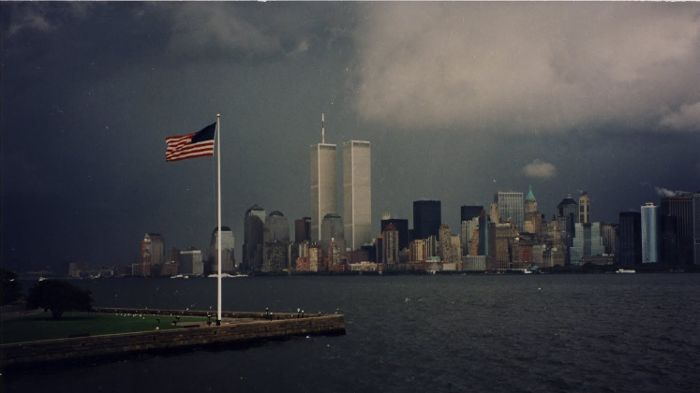
The twin Towers, September 10th 2001 

Friends of Padre Steve’s World,

After 18 years of unending war, terrorism, and the paranoia that come with it, I almost find it hard to remember what things were like on September 10th 2001.

I had been in the military over 20 years by then, but having resigned my commission as a Major in the Army Reserve in order to return to active duty as a Navy Chaplain serving with the 2nd Marine Division at a lower rank, I try to think about Monday, September 10th once in a while.

Despite coming close to a ground war in Kosovo in 1999, we had settled into the norms of peacetime training and preparation for whatever the next crisis might be. I had participated in the preparations for the Kosovo campaign, which thankfully we were prevented from going into a ground war over due to Serbian President Slobodan Miloševićat blinking at the last minute and agreeing to a ceasefire and withdraw from Kosovo, which could have led to a wider war in the Balkans and with Russia.

On the night of September 10th 2001 my mind was as far from war and terror as it could be. I was much more interested in the MLB Pennant Race than I was anything going on in the world, after all the only issues we faced were occasional, if deadly terrorist attacks on foreign installations and deployed ships like the USS Cole.  But as to the security of the Continental United States, or as it has been referred to by some since 9-11 as “the Homeland” I wasn’t concerned. Somehow, despite my knowledge, understanding and study of terrorist groups I just never thought anyone could pull off an attack of this magnitude.  The next morning I discovered just how wrong I was as the first reports came in while I was on my way to a late PT session at Camp LeJeune North Carolina where I was serving with the Second Marine Division, but that is a story for tomorrow night.

September 10th was a normal and pretty much a typical September day in America. The Denver Broncos beat the New York Giants in Denver that night. The Seattle Mariners won their 104th game of the season, defeating the Anaheim Angels 5-1.

But the next morning changed all of our lives and ushered in what is now 18 years of war which has cost the United States military almost 80,000 casualties including over 7,000 dead or died of wounds. Of course that does not count non-DOD agency casualties, or those of the contractors who have been a big part of the war effort, nor does it count the number of friendly Afghans, Iraqis, and others who have to use the antiseptic and dehumanizing term collateral damage, who have been killed, maimed, or displaced by nearly two decades of war.

Eighteen years after 9-11-2001 we are not only still at war, but it is becoming a war without end. President Trump tried and failed using ham handed tactics to make a deal with the Taliban, including a meeting that was to occur yesterday at Camp David to allegedly secure a peace deal that would net him the Nobel Peace Prize. That didn’t happen after Taliban fighters killed yet another American soldier in combat last week. Of course the deaths of over a dozen other Americans since January, not to mention hundreds of Afghan soldiers, police and civilians who have died at the hands of the Taliban and the descendants of the original Al Qaida. Those lives didn’t matter as long as the President thought he could get a deal to end the war, then with Taliban representatives at his doorstep he called the talks off. Personally I don’t think the President really cared about any of those lives, he hasn’t mentioned any of them over the past year, nor gone to their funerals, or met their remains at Andrews Air Force Base, so what happened had to be about him, otherwise why invite Taliban leaders to meet with him of the week of the anniversary of the 9-11-2001? If not to get a deal.

Eighteen years ago, I figured that after a few months Al Qaeda would be no more, and the war that they had unleashed upon us would be over. however I was wrong. Now now, many of the sailors, soldiers, marines, and airmen I deal with were just children or not even born when the attacks happened.

In just over six months I will be retired from the military, and as Kurt Vonnegut wrote in Slaughterhouse Five: “So it goes…” 

Have a good night, until tomorrow,

Peace

2 Comments

Filed under crime, History, iraq,afghanistan, middle east, national security, News and current events, Political Commentary, terrorism, War on Terrorism

The Battle of Savo Island and Threats to the U.S. Navy Today

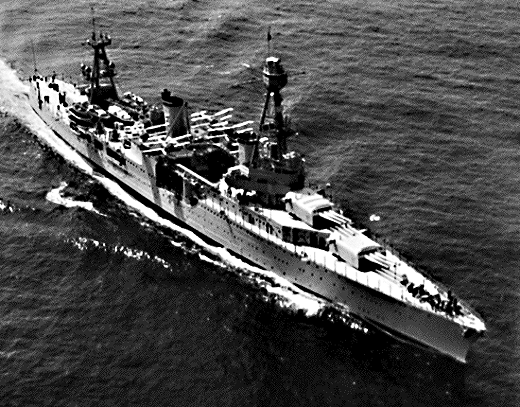
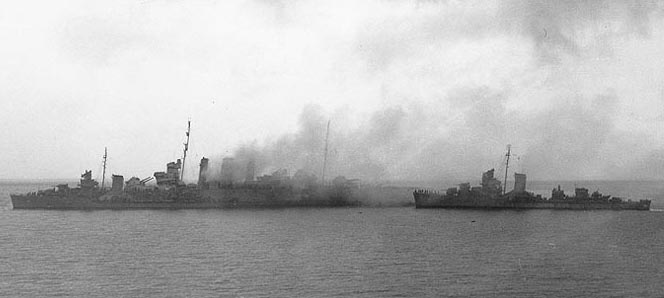
USS_Quincy_CA-39_savo

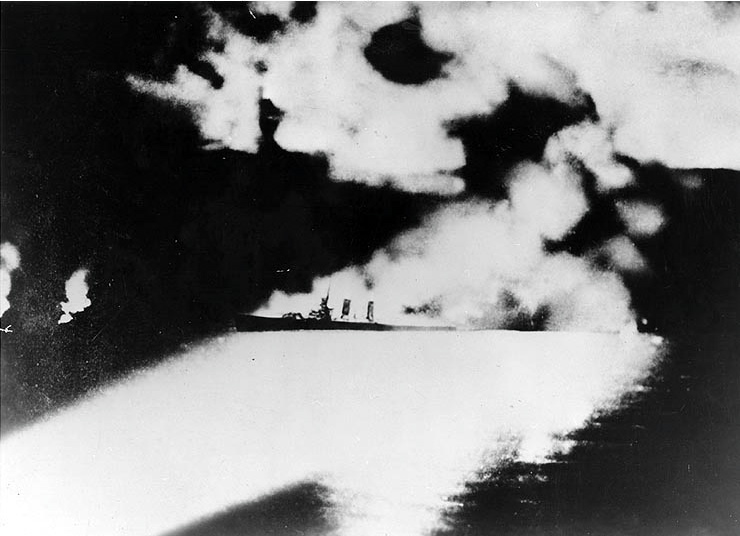
                         USS Quincy under Attack off Savo Island 

Friends of Padre Steve’s World,

Tonight I am going back to my World War II vault and reposting an older article about the Battle Of Savo Island off Guadalcanal. It was the most lopsided defeat in modern American Naval history. It happened a long time ago and in an age where the United States Navy has not lost a ship in combat, other to mines since August 6th 1945, we forget to remember that should a war break out with a near-peer competitor, like the Chinese Communists or the Russians in waterers where they can gain local superiority, or even regional powers such as Iran which could use asymmetric means of large numbers of small missile equipped ships and attack boats, costal submarines, and land based anti-ship missiles in “swarm attacks” to overwhelm technologically superior American ships in confined waters. We have come close to losing major ships, the cruiser USS Princeton and Helicopter Carrier USS Tripoli, to very primitive moored mines during the First Gulf War, the USS Ruben James to a mine during the tanker wars, and the USS Stark which was hit by Iraqi Exocet anti-ship missiles in 1987. Likewise we have come close to losing the Guided Missile destroyers USS Cole (Terrorist attack), USS John S. McCain and USS Fitzgerald (avoidable collisions with merchant ships). 

We have been lucky. We won’t be as lucky in a real live shootout today. Ships will be lost, damaged, and sailors will die. Compounding the problem for the United States is that years of focus on Iraq and Afghanistan, failed experiments with reducing crew size (smart-ship), reductions in numbers of ships and sailors to satisfy the budgets needs to the unnecessary invasion of Iraq, and the stress put on remaining ships and aircraft have worn us down. Readiness rates remain down, and we no longer have the shipbuilding and repair facilities to replace losses and repair damaged ships, especially in a war with China. 

That is why instead of commenting on today’s news I write about the worst defeat suffered by the U.S. Navy in the modern era, which I label from World War II to the present. 

Until tomorrow,

Peace,

Padre Steve+ 

On August 8th 1942 the U.S. Task Force supporting the invasion of Guadalcanal was tired. The crews of the ships had been in continuous combat operations conducting naval gunfire support missions, fending off numerous Japanese air attacks and guarding against submarine attacks for two days. The force commanded by Admiral Richmond K. Turner was still unloading materials, equipment and supplies needed by the men of the 1st Marine Division who they had put ashore on the morning of the seventh.

On the afternoon of the eighth Turner was informed by Admiral Frank “Jack” Fletcher that he was pulling his carrier task force out of action. Fletcher alleged that he did not have enough fighter aircraft (79 remaining of an original 98) and as low on fuel. The carriers had only been in action 36 hours and Fletcher’s reasons for withdraw were flimsy. Fletcher pulled out and left Turner and his subordinate commanders the responsibility of remaining in the area without air support with the transports still unloaded, and full of badly needed supplies and equipment.

Gunichi_Mikawa

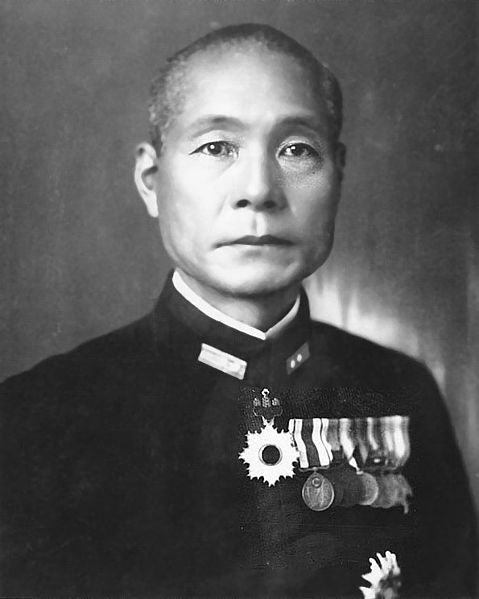
                                          Admiral Gunichi Mikawa

As the American drama played out, the Japanese moved forces into position to strike the Americans. Admiral Gunichi Mikawa commander of the 8th Fleet and Outer South Seas Force based at Rabaul New Britain quickly assembled a force of 6 heavy cruisers, the 14,000 ton Atago Class Chokai, and the four smaller ships of the Kako Class, the Aoba, Kako, Kinugasa and Furutaka, the light cruisers Yubari and Tenryu and the destroyer Yunagi. Mikawa raised his flag aboard Chokai and the force sped down “the slot” which ran the length of the of the Solomon’s chain mid day on the seventh.

The Americans had warning of their coming. The first sighting was by B-17s before the Japanese forces had reached Rabaul. The second was the elderly U.S. Navy submarine S-38 at 2000 on the 7th when they were 550 miles away not far from Rabaul. This report was discounted because it would not be unusual to find a number of fleet units steaming near a major naval base and fleet headquarters. The last which should have alerted the allies was a sighting by a Royal Australian Air Force patrol aircraft on the morning of the 8th. However the pilot did not report the sighting until he returned from his mission returned to his base and had his tea. The eight hour delay in reporting the information as well as errors in it which reported 2 submarine tenders as part of the force lulled the Allied forces into believing that the Japanese were setting up a seaplane base and posed no threat to the invasion forces. It was a fatal error of reporting and judgment by the pilot.

USS_Astoria_(CA-34)_off_Guadalcanal_1942

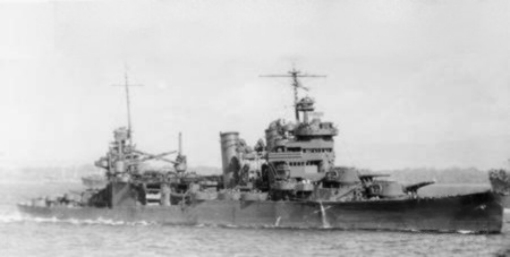
USS Astoria on August 8th off Guadalcanal and USS Chicago (below)

CA-29_Chicago

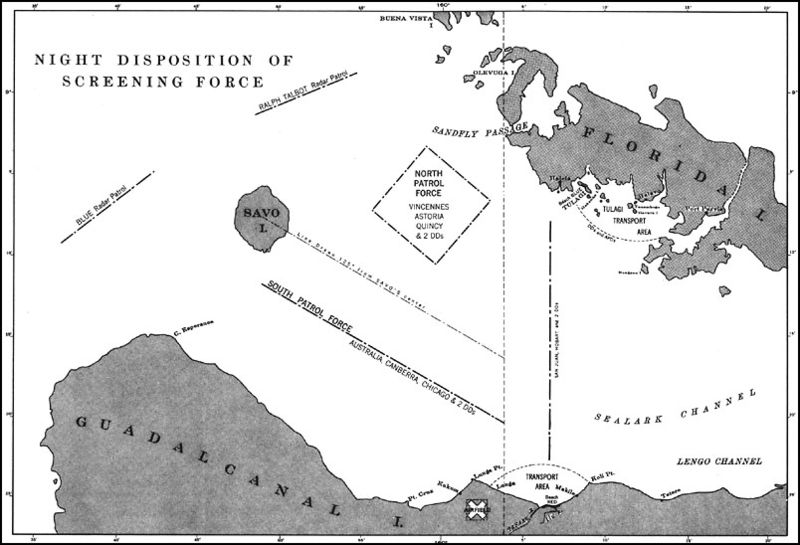
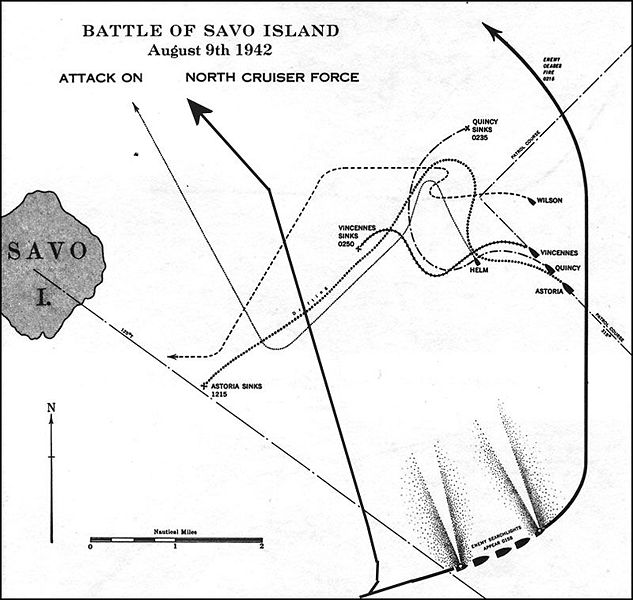
In the absence of good information Turner deployed his support ships to cover the three entrances into what soon would be known as Iron Bottom Sound. He placed the Anti Aircraft Cruiser USS San Juan and Australian Light Cruiser HMAS Hobart to the east with two destroyers under the command of Rear Admiral Norman Scott. To protect the south west entrance into the sound south of Savo Island Turner placed the Heavy Cruisers USS Chicago, HMAS Australia and HMAS Canberra and two destroyers under the command of Rear Admiral R.A.C. Crutchley RN who in theory commanded the screening force. To the north of Savo he deployed the Heavy Cruisers USS Vincennes, USS Astoria and USS Quincy and two destroyers under the tactical direction of Captain Frederick Riefkohl aboard Vincennes. To the west of Savo he placed two destroyers to act as picket ships. Unfortunately these ships radar sets were insufficient and would fail to pick up the approaching enemy.

800px-SavoIslandMap

                                                   Allied Dispositions

During the early evening Turner recalled Crutchley to his flagship for consultations of what to do regarding Fletcher’s retreat. Crutchley came over in his flagship the Australia denuding the southern force of its commander as well as one of its three heavy cruisers. He left the commanding officer of Chicago Captain Howard D. Bode in tactical command but Bode did not have his ship take the lead position in the patrol assuming Crutchley would return bymidnight.

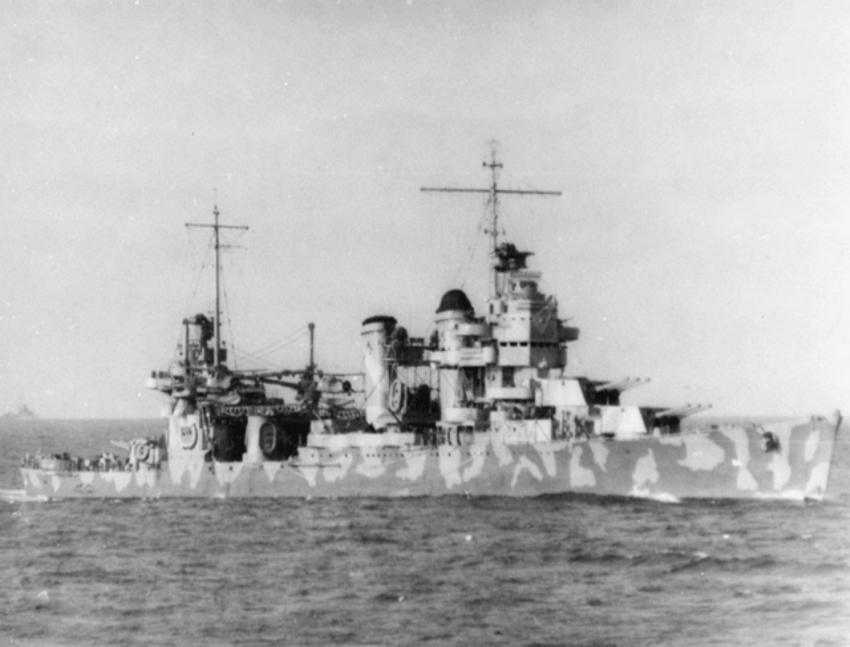
USS_Vincennes_(CA-44)_in_the_Solomons_1942

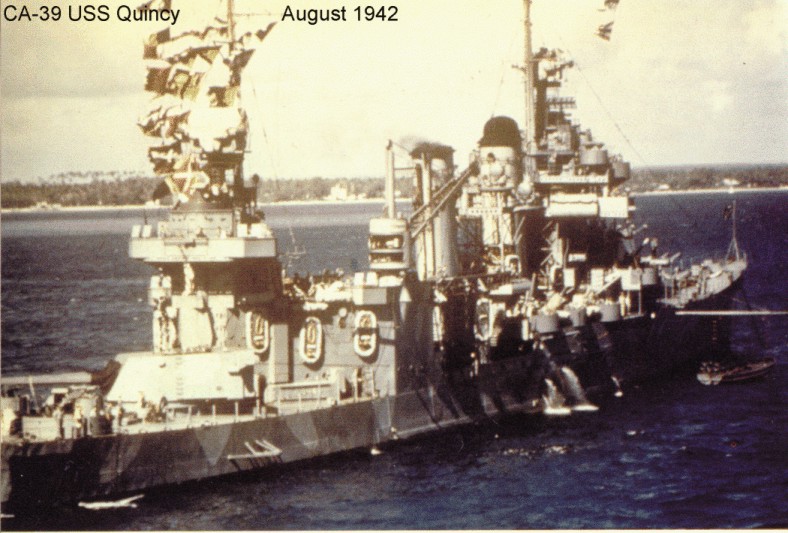
USS Vincennes (above) and USS Quincy (below)

ca__39_uss_quincy___1942.08.03___1a

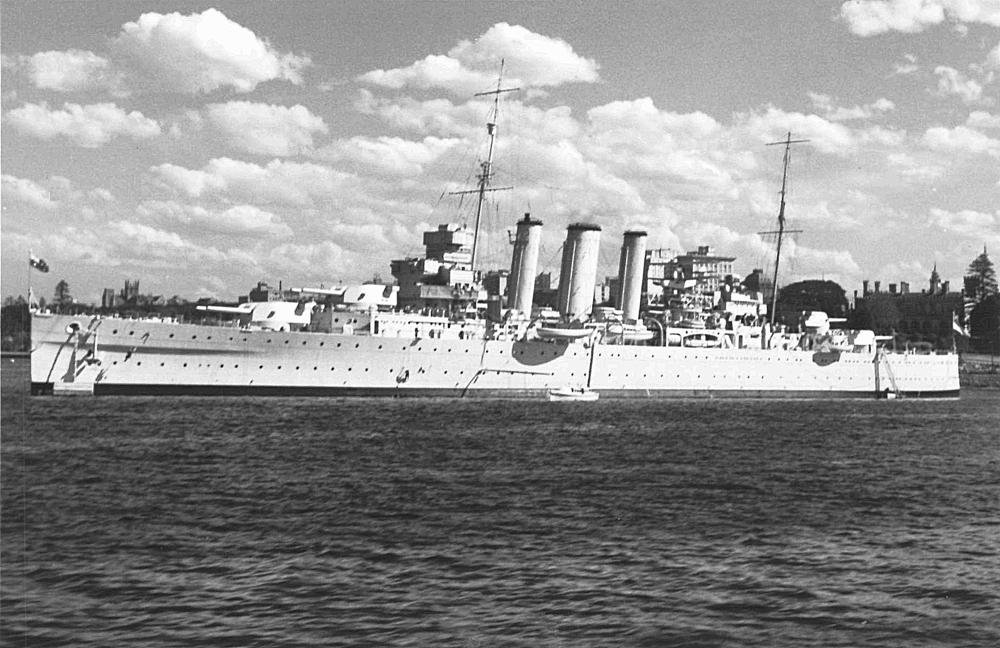
HMAS Canberra Sydney Harbour

                                                    HMAS Canberra 

Mikawa launched float planes to scout the locations of the American ships and to provide illumination once the battle began. Some of these aircraft were spotted but no alert measures were taken as many assumed the Japanese to be friendly aircraft. Many commanding officers were asleep or resting away from the bridge of their ships, lookouts were tired and not expecting the Japanese and Condition Two was set in order to provide some of the tired crews a chance to rest.

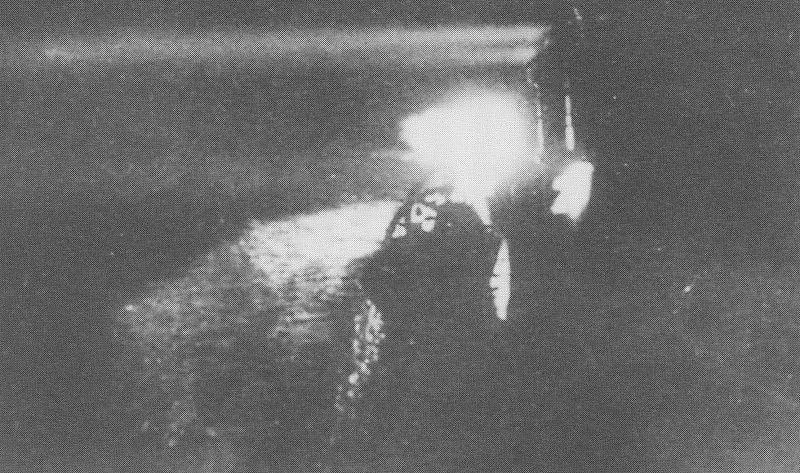
800px-SavoIslandYubariSearchlight

Light Cruiser Yubari illuminating American cruisers at Savo Island

Admiral Mikawa now new the Allied disposition and ordered his ships to battle stations at 0045. At 004 he sighted and passed astern of USS Blue the southern picket which also failed to detect the Japanese force. Mikawa assumed that the destroyer might have reported his presence, briefly turned north but turned back to his original course when a lookout allegedly spotted a destroyer to his northeast. He gave the order to attack at 0132 and promptly spotted the American destroyer USS Jarvis which had been heavily damaged and without radio communications was making her way toAustralia for repair and passed her after some ships fired torpedoes and raced toward the southern force at 26 knots. With the southern force just a few miles away Mikawa ordered his ships to commence firing at 0136 and at 0138 torpedoes had been launched.

Mikawa’s lookouts spotted the northern group at 0144 and changed course. The maneuver was badly executed and left the Japanese in two columns as they swiftly closed on the Americans. Mikawa’s flagship Chokai launched torpedoes at 0148 and Astoria the cruiser closest to the Japanese set general quarters at 0145 and at 0150 the Japanese illuminated her with searchlights and opened fire. Astoria under the direction of her gunnery officer returned fire at 0152 ½ just before her Captain came to the bridge unaware of the situation. He ordered a cease fire until he could ascertain who he was firing at assuming the Japanese to be friendly ships. He delayed 2 minutes and ordered fires commenced at 0154 but the delay was fatal. Astoria had opened fire on the Chokai which then had time to get the range on the American cruiser and hit her with an 8” salvo which caused fires which provided the other Japanese ships an aiming point.

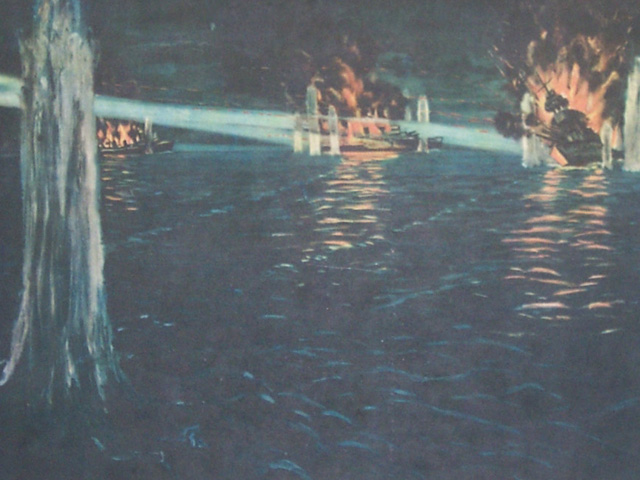
SavoJapaneseWarArt

Japanese artist depiction of attack on US Navy Cruisers at Savo Island

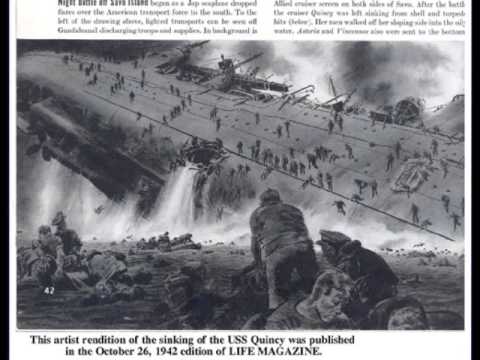
Astoria was left burning and heavily damaged barely maintaining headway but attempted to fight on scoring a hit on Chokai’s forward turret even as the Japanese opened up on the next cruiser in line the USS Quincy. Quincy caught between the two Japanese columns. Aoba illuminated her with her searchlight and Japanese forces opened fire. The gunnery officer order Quincy to return fire getting two salvos off before her skipper Captain Samuel Moore came to the bridge, briefly ordered a cease fire assuming that he was firing on Americans and turned on his running lights. Quincy was ripped by salvo after salvo which killed Captain Moore and nearly everyone in the pilothouse just as a torpedo ripped into her engineering spaces turning them into a sealed death trap forcing the engineer to shut down the engines. Burning like a Roman candle Quincy was doomed she was ordered abandoned and capsized and sank at 0235. However Quincy did not die in vain, at 0205 two of her 8” shells hit Chokai causing enough damage the Admiral’s chart room that Mikawa would order a withdraw at 0220 which spared the now defenseless American transports.

633px-SavoIslandMap2A

Vincennes, the lead ship and flagship was next in the line of death. Captain Reifkohl order General Quarters sounded not long after the Japanese illuminated the southern group. At 0150 Vincennes was lit up by the searchlights of three Japanese ships which opened fire on her. Vincennes returned fire at 0153 hitting Kinugasa before she was hit starting fires on her scout planes mounted on their catapults. The Japanese mauled Vincennes, three possibly four torpedoes ripped into her as shells put ever gun out of action. At 0215 she was left burning and sinking by the Japanese who soon withdrew from the action. Ordered abandoned she sank at 0250.

Savo_Island canberra

         HMAS Canberra being evacuated by the Patterson and Blue

Canberra struggled against the odds but was abandoned and was sent to the bottom by an American torpedo at 0800. Astoria also struggled for life but the damage was too great and she was abandoned sinking at 1215. Mikawa withdrew up the sound but on his return the Heavy Cruiser Kako 70 miles from home was sunk by torpedoes from the American submarine S-44 sinking in 5 minutes.

hqdefault (1)

The Americans and Australians lost 4 Heavy Cruisers sunk and one heavily damaged. Two destroyers were also damaged. Casualties were heavy; Quincy lost 389 men killed, Vincennes, 342, Astoria, 235, Canberra, 85, Ralph Talbot, 14, Patterson, 10, and Chicago, 2.

It was an unmitigated disaster, an allied force destroyed in less than 30 minutes time. Boards of inquiry were held and Captain Bode hearing that he shouldered much blame killed himself in 1943.

USSQuincy7

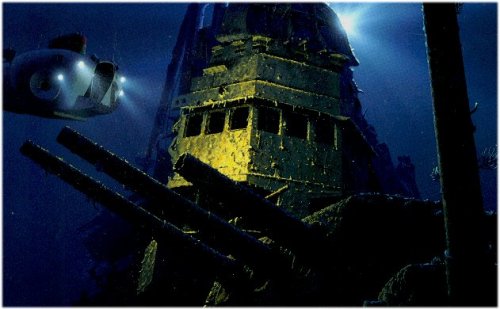
     Wrecks of the USS Quincy, Astoria, Vincennes, and HMAS Canberra

It was a rude awakening to a Navy which had believed that technical advances would give it victory and which  in the words of Admiral Ernest King  was not yet “sufficiently battle minded.” It was the first of many equally bloody battles in the waters around Guadalcanal which in the coming campaign became known as Ironbottom Sound.

Leave a comment

Filed under History, leadership, Military, national security, Navy Ships, News and current events, US Marine Corps, US Navy, World War II at Sea, world war two in the pacific

“I am Death, the Destroyer Of Worlds” Hiroshima and the Genie that Will Not go Back in the Bottle at 74 years


Friends of Padre Steve’s World,

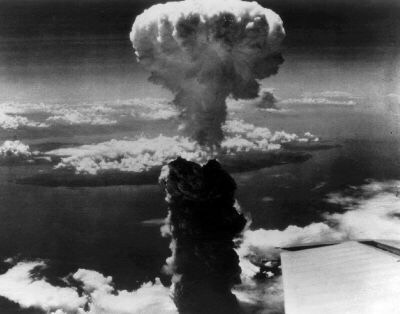
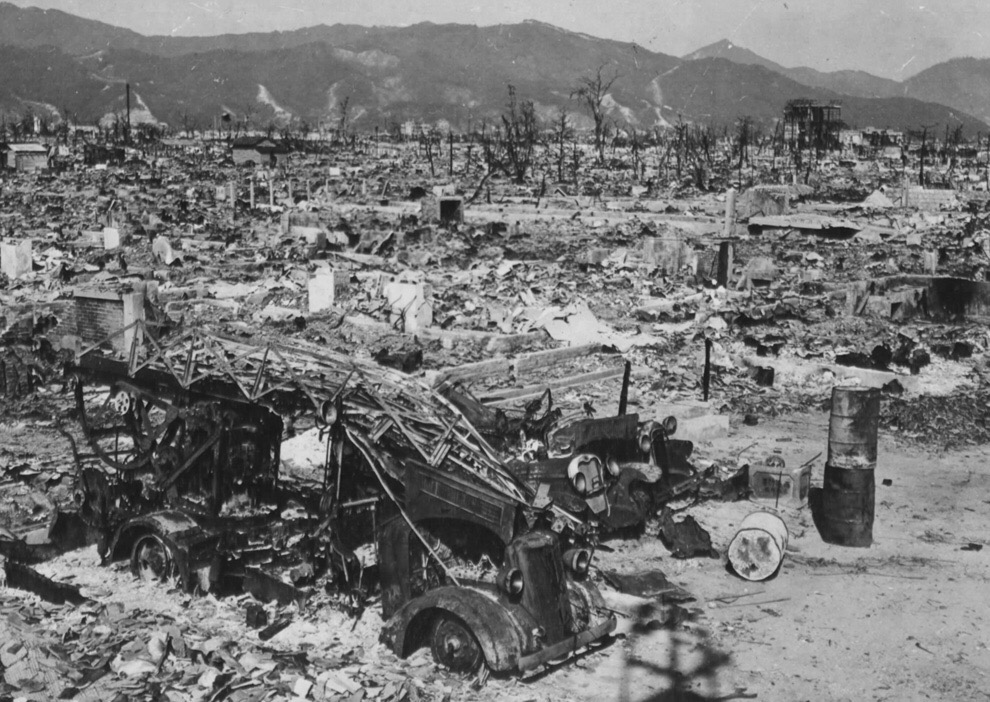
Seventy-four years ago the world changed. A remarkably destructive weapon was introduced in combat, a single bomb that annihilated the city of Hiroshima Japan. The effects were immediate, 70,000 to 100,000 people were killed, tens of thousands of others wounded, many of whom would suffer from the effects of radiation and radiation burns the rest of their lives. Within days a second bomb was dropped on Nagasaki with similar results, and Japan sued for peace. The Second World War was over and a new world was born, a world under the shadow of nuclear weapons.

The anniversary of that event today is something that all of us should ponder with great trepidation as the world seems to lurch towards a day when such a weapon will be used again. The question should not be one of mere military or tactical expediency, but must consider the moral dimension of the use of these weapons as well as the whole concept of total war.

In his book Hiroshima, John Hershey wrote:

“The crux of the matter is whether total war in its present form is justifiable, even when it serves a just purpose. Does it not have material and spiritual evil as its consequences which far exceed whatever good might result? When will our moralists give us an answer to this question?” 

His question is worth considering. It is no wonder that Robert Oppenheimer one of the members of the team that developed the bomb quoted a verse from the Bhagavad-Gita after he witnessed the test explosion “Trinity” on July 16th 1945: “Now, I am become Death, the destroyer of worlds.” 

Up until April of 2017 I spend the last three and a half years teaching the ethics of war to senior military officers at a major U.S. Military Staff College. One of the things that we do in the class is to have the officers do presentations on different historical, or potential ethical problems faced by national policy makers, military commanders and planners. The goal was to have these men and women dig deep and examine the issues, and think about the implications of what they will do when they go back out to serve as commanders, staff officers, advisors to civilian leaders and planners. Sadly, in the gutting of that institution after I departed the Ethics elective and all other electives were eliminated. They also cut back the number of seminars from 13 to five and limited the students to O-5s and O-6s, with command experience, directly contravening the intentions of the Goldwater-Nichols Act which was designed to prevent repeats of Vietnam, the failed Iran hostage rescue attempt, and the invasion of Grenada. The intent of the legislation was to better coordinate the efforts of the services and inculturation of younger officers to understand the capabilities of their sister services, as well as teach history, strategy, and ethics to rising leaders in the Defense Department, State Department, CIA, DIA, and other agencies charged with our national security.

In each class that I taught, at least one student dealt with the use of the Atomic bombs.  Most were Air Force or Navy officers who have served with nuclear forces. Unlike the depiction in the classic movie Dr. Strangelove or other depictions that show officers in these forces as madmen, the fact is that I was always impressed with the thoughtfulness and introspective nature of these men and women. They sincerely wrestle with the implications of the use of these weapons, and many are critical of the use of them at Hiroshima and Nagasaki. It is comforting to me to know that at least in the U.S. military that there are many who can reflect and do try to look at things not just from a purely military standpoint. Of course since I know humanity I figure that there are others in our ranks who are not so reflective or sensitive to the moral implications of the use of these weapons, among whom is our current President. The fact that President Trump acts on impulse and seems to have no moral compass, strategic sense, or anything apart than what benefits him causes me to shudder, especially when he has to actually confront North Korea on their ICBM and nuclear programs, not to mention the use of weapons of mass destruction by a terrorist group. As Barbara Tuchman wrote: “Strong prejudices and an ill-informed mind are hazardous to government, and when combined with a position of power even more so.”

I am no stranger to what these weapons, as well as chemical and biological weapons can do. Thirty-five years ago when I was a young Army Medical Service Corps lieutenant I was trained as a Nuclear, Chemical and Biological Defense Officer. I learned the physical effects of exposure to these weapons, how many Rads of radiation a person could receive before they became sick and died. I learned what radiation exposure does to people at each stage. We trained with maps to chart fallout patterns, and the maps had the cities and towns that we lived in, this was Cold War Germany and yes both NATO and the Warsaw Pact expected that tactical nuclear weapons and chemical weapons would be used and we had to be able to operate in contaminated environments. We operated under the idea of Mutual Assured Destruction or MAD as a deterrent to war. It was chilling and made me realize that the use of these weapons today would be suicidal. When Chernobyl melted down we were in the fallout zone and were given instructions on what we could and could not do in order to minimize any possible exposure to radiation poisoning.

So when it comes to the first use of the Atomic bomb I am quite reflective. As a historian, military officer, chaplain and priest who has been trained on what these weapons can do I have a fairly unique perspective. Honestly, as a historian I can understand the reasons that President Truman ordered its use, and I can understand the objections of some of the bomb’s designers on why it should not be used. I’ve done the math and the estimates of casualties had there been an invasion of the Japanese home islands is in the millions, most of which would have been Japanese civilians.


My inner lawyer can argue either point well, that being said the manner in which it was used at Hiroshima and Nagasaki troubles me. Hiroshima did have military targets, but a big part of the choice was its location, surrounded by hills, which created a bowl that would focus the explosion and maximized its effect. Many of the larger military and industrial targets lay outside the kill zone. The designers and officers on the committee wanted to show the Japanese, as well as the world the destructive power of the weapon. Those who opposed its use hoped that it would convince the leaders of nations that war itself needed to be prevented. These men wrestled with the issue even as they prepared the first bombs for deployment against Japan. The recommendations of the committee can be found here:

http://www.atomicarchive.com/Docs/ManhattanProject/Interim.shtml
Of the 150 scientists who were part of the bomb’s design team only 15% recommended the military use without a demonstration to show the Japanese the destructive power of the bomb and a chance to end the war. The poll of the scientists can be found here:

http://www.atomicarchive.com/Docs/ManhattanProject/Poll.shtml
Leo Szilard wrote a letter to Edward Teller seeking his support in sending a petition to President Truman regarding his opposition to the use of the weapon based on purely moral considerations. Szilard wrote:

“However small the chance might be that our petition may influence the course of events, I personally feel that it would be a matter of importance if a large number of scientists who have worked in this field want clearly and unmistakably on record as to their opposition on moral grounds to the use of these bombs in the present phase of the war.

Many of us are inclined to say that individual Germans share the guilt for the acts which Germany committed during this war because they did not raise their voices in protest against those acts, Their defense that their protest would have been of no avail hardly seems acceptable even though these Germans could not have protested without running risks to life and liberty. We are in a position to raise our voices without incurring any such risks even though we might incur the displeasure of some of those who are at present in charge of controlling the work on “atomic power.”

The entire text of Szilard’s letter can be found here:

http://www.atomicarchive.com/Docs/ManhattanProject/SzilardTeller1.shtml
The two petitions of the scientists to the President are here, the second letter concludes with this recommendation:

“If after the war a situation is allowed to develop in the world which permits rival powers to be in uncontrolled possession of these new means of destruction, the cities of the United States as well as the cities of other nations will be continuous danger of sudden annihilation. All the resources of the United States, moral and material, may have to be mobilized to prevent the advent of such a world situation. Its prevention is at present the solemn responsibility of the United States–singled out by virtue of her lead in the field of atomic power.

The added material strength which this lead gives to the United States brings with it the obligation of restraint and if we were to violate this obligation our moral position would be weakened in the eyes of the world and in our own eyes. It would then be more difficult for us to live up to our responsibility of bringing the unloosened forces of destruction under control.

In view of the foregoing, we, the undersigned, respectfully petition: first, that you exercise your power as Commander-in-Chief to rule that the United States shall not resort to the use of atomic bombs in this war unless the terms which will be imposed upon Japan have been made public in detail and Japan knowing these terms has refused to surrender; second, that in such an event the question whether or not to use atomic bombs be decided by you in the light of the consideration presented in this petition as well as all the other moral responsibilities which are involved.”

http://www.atomicarchive.com/Docs/ManhattanProject/SzilardPetition.shtml

http://www.atomicarchive.com/Docs/ManhattanProject/Petition.shtml

Ralph Bard, Undersecretary of the Navy wrote to Secretary of War Stimson his opinion on July 17th 1945:

“Ever since I have been in touch with this program I have had a feeling that before the bomb is actually used against Japan that Japan should have some preliminary warning for say two or three days in advance of use. The position of the United States as a great humanitarian nation and the fair play attitude of our people generally is responsible in the main for this feeling.”

I think that those who debate the history of this need to look at the entire picture and read the letters, the documents and take into account everything. My hope is that leaders, policy makers, legislators and we the people continue to work to eliminate nuclear weapons. It is true that the nuclear stockpiles of the United States and Russia are significantly smaller than when the Cold War ended, but even so what remain are more than enough to extinguish human life on the planet. Add to these the Chinese, French, British, Indian, Pakistani and the hundreds of undeclared weapons of Israel the fact is that there remains the possibility that they could be used. Likewise there are nuclear programs in other nations, especially North Korea, which given enough time or believing them necessary could produce weapons. But the North Koreans are not alone, they could easily be joined by others including Iran and Saudi Arabia. Add to this the possibility of a terrorist group producing or acquiring a weapon the world is still a very dangerous place.

That is the world that we live in and the world in which policy makers, legislators and educated people who care about the world must attempt to make safe. If you asked me I would say outlaw them, but that will never happen. Edward Teller wrote Leon Szilard:

“First of all let me say that I have no hope of clearing my conscience. The things we are working on are so terrible that no amount of protesting or fiddling with politics will save our souls…. Our only hope is in getting the facts of our results before the people. This might help to convince everybody that the next war would be fatal. For this purpose actual combat use might even be the best thing…. But I feel that I should do the wrong thing if I tried to say how to tie the little toe of the ghost to the bottle from which we just helped it to escape…”

We are on the brink again. India and Pakistan are once again girding themselves up for nuclear war over Kashmir. Iran, after having ceased its production of enriched uranium, has resumed it following the Trump Administration voiding the nuclear nonproliferation agreement signed during the Obama administration. Despite its promises to President Trump, North Korea still seems intent on developing nuclear weapons and delivery systems. The Russians are developing hypersonic missiles and torpedoes which could deliver nuclear warheads against American targets, and the Chinese are increasing their nuclear capability. The United States is now embarked on a plan to modernize its nuclear arsenal and under the Trump administration loosen the restraints on the use of nuclear weapons.

The ghost is out of the bottle, and nothing can ever get it back in. We can only hope and pray that reasonable people prevent any of these weapons from ever being used and that war itself would end. But then, General Of the Army Omar Bradley said in 1948:

“Ours is a world of nuclear giants and ethical infants. We know more about war than we know about peace, more about killing than we know about living. If we continue to develop our technology without wisdom or prudence, our servant may prove to be our executioner.”

I think that the “soldier’s General” was correct. Too many people just don’t care about life, Ethics, or peace.

So, until tomorrow, I leave you with that less than cheerful thought.

Peace

Padre Steve+

2 Comments

Filed under ethics, faith, Foreign Policy, History, leadership, middle east, Military, national security, News and current events, Political Commentary, world war two in the pacific

It’s Not the Video Games Stupid, It’s the Ideology and Easy Access to Military Grade Weaponry

Friends of Padre Steve’s World,

Today President Trump, sounding according to Washington Post Columnist, Helen Olen like he was “like a hostage making a video.” The President, attempting to be the best consoler that he has the Reality Show in Chief tried to present some sort of empathy for the victims. He also placed the blame on violent video games, entertainment, and promising an emphasis on mental health care. Despite being on a TelePrompTer he got the name of the site of the second mass murder wrong, he called it Toledo, not Dayton.

Of course for years conservative politicians and pundits, as well as reputable physiological professionals have blamed violent video games for desensitizing their users into being able to move from virtual killing to real killing. I don’t dispute that such things occur. But I have to say that those games, readily available around the world, and those movies and television series, also readily available and popular around the world don’t seem to trigger the kinds of mostly race and religious based mass killings.

I propose that most of the people who engage in such killings have some kind of ideological belief, or personal grievance against others that motivated their attacks. A few like the teenager who shot and killed all the children at Sandy Hook had mental problems, but in his violence was ensured by a mother who got him as much weapons and familiarization as possible. He killed her too.

But most were motivated by any numbers of political ideologies, and racial and religious hatreds that go beyond violent popular entertainment. They are ideologically motivated terrorists (political, racial, religious) who have easy access to military grade weaponry and body armor. Some, like the Unibomber and Timothy McVeigh and his associates who killed almost 200 innocent people at the Murrah Federal Building were trained or self-trained in the use of explosives.

The real problem is that unlike most countries that share our Western, Jude-Christian, and Pluralistic ideals, we allow the easiest of access to the most lethal weapons and military type hardware for almost anyone. State standards vary, background checks are not always required, and the Supreme Court emasculated the original intent of the Founders regarding the Second Amendment. The only other countries that allow such access are places that we tend to label terrorist states. 

It is not enough to utter platitudes about violent entertainment, and mental health care that neither the government or private insurers wish to pay. In fact “inpatient mental health” is pretty much limited to warehousing troubled people until they are deemed not a risk to themselves or others. There are no real mental health rehabilitation programs in this country because nobody wants to pay for them. You can’t make a profit off the mentally ill, and that is what our medical system is about.

Countries with tighter gun controls and easier access to mental heath care do not have our epidemic of violence, unless they are in the middle of religious, racial, or ideological driven civil wars. It’s the ideology and the dehumanizing of others that leads to the terrorist killings we are seeing in our country today.

Take away the easy access to military grade weaponry, and pay for real mental health care treatment, even long term care. We have to stop carding more about people than profit. It is also necessary for the Congress and the Courts to revisit the case where the late Associate Justice Antonin Scalia wrote for the majority that the entire first section of the Second Amendment related to its necessity to “the maintenance of a well disciplined militia” which at the time was the basis of our new nation’s land based defense; into an individual right to own whatever weapon they need to protect them from the government.

Regardless of the ideology of the terrorists, you shut down their ability to get such weapons and gear, they have a much tougher time committing such crimes.

I’m not anti-gun. As I have written many times before I have qualified or familiarized on most individual or crew based weapons used by the United States military. That being said, there is no reason for anyone with any competence to own an AR-15 type weapon with more than the original 10 round magazine that came with the military version of the military issued M-16. No one needs more than that for self defense. Flash suppressors, silencers, bump stocks, and extended magazines serve no reason other than to kill.

Pour crisis is not a crisis made by the entertainment industry, through I don’t deny that it could be partially to blame. At its heart the true problem is political, ideological, religious. It is founded on hatred of the other and encouraged by all sorts of politicians, preachers, and pundits, including the President. The ease of obtaining such weaponry and protective gear simply makes it a greater problem.

As a nation we are dooming ourselves and our prodigy to many more of these events. That cannot all be blamed on President Trump, and it would be foolish to do that. Sadly, he is one of the least emotionally, and intellectually able men to handle such a crisis as has ever been elected to his office.

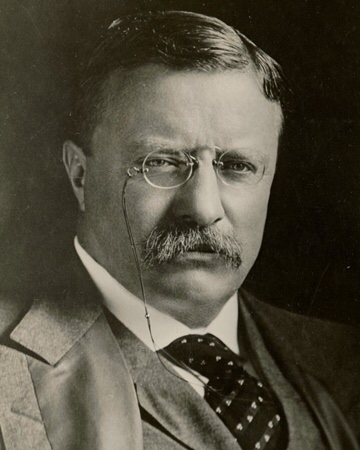
His words are empty. I wish that wasn’t so. I wish he would rise to the measure of someone like Theodore Roosevelt, and that is my prayer for him.

Think about that.

Until tomorrow,

Peace,

Padre Steve+


2 Comments

Filed under civil rights, ethics, History, laws and legislation, leadership, national security, News and current events, Political Commentary

The Beginning Of the End Of a Beginning Of Another End: The First World War at 105 Years

Friends Of Padre Steve’s World,

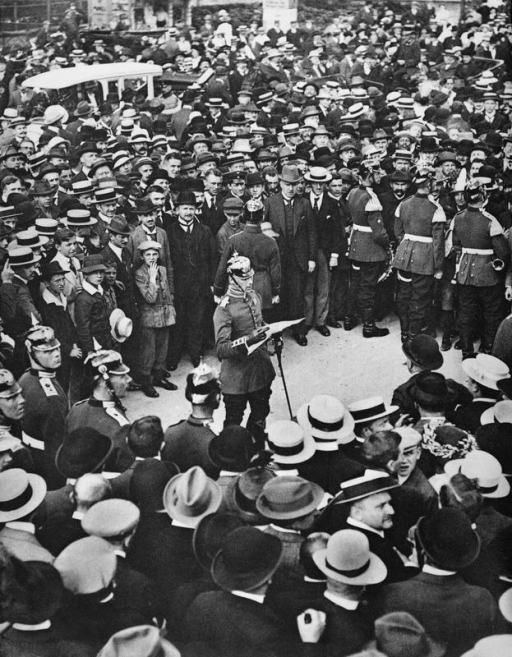
it is hard to believe that 105 years ago Germany declared war on Imperial Russia. They did it to support their Austro-Hungarian allies and expected that the war would be short. But within days they would also find themselves at war with Britain and France. Eventually almost all of continental Europe, it’s colonial dominions, and others, including the United States and Japan would be at war.

The American President, Woodrow Wilson who promised to keep the United States out of the war would lead the country into it in April 1917, calling it the War to End War. Wilson was an idealist in international relations and did not understand how deep the hatred of war could run, despite being a son of the South, the first elected President from a former Confederate State since before the Civil War. However, Wilson was a revisionist Of Civil War history and race relations. Despite his knowledge, he lived in a fantasy world, and when the war ended French President Clemenceau, and British Prime Minister David Lloyd George completely outmaneuvered him during the negotiations over the Treaty Of Versailles. Wilson had thought that his allies would support his idealistic 14 Points, which the interim German Government had agreed to in order to gain an armistice. The final treaty blamed the Germans for all war guilt, saddled them with massive reparations, and humiliated them. The treaty would end up dooming the prospects of democracy in Germany and ensuring another war, this on barely than twenty years after the signing of the Treaty Of Versailles.

That war would, the Second World War would be even more costly than the first. More lives lost, most of Europe and much of Asia devastated, and the world divided into the American led alliance, and the Soviet led Warsaw Pact. It would end most European colonies and birth new wars during the Cold War.

When the Cold War ended many idealists expected the Democratic ideal to take hold in former communist countries, and for a moment in time it did that, but many of the same tensions that brought a return to authoritarian governments in the 1920s, especially globalization and migration have led to the election of authoritarian, nationalist, and racist parties with fascist leanings in much of Eastern Europe, and spreading in to Western Europe, even the Republican Party in the United States led by President Trump is moving in a rapidly authoritarian direction.

The First World War ended a period of relative stability, prosperity, and slow movements toward democracy in Europe. It brought forth disaster after disaster. One can only hope that our generation will do better. But, then that is only hope, history shows that we will not do better. God help us.

Until tomorrow,

Peace,

Padre Steve+

Leave a comment

Filed under History, national security, Political Commentary, world war one

Resistance is Not Futile: Remembering the Men and Women of the German Resistance and Operation Valkyrie

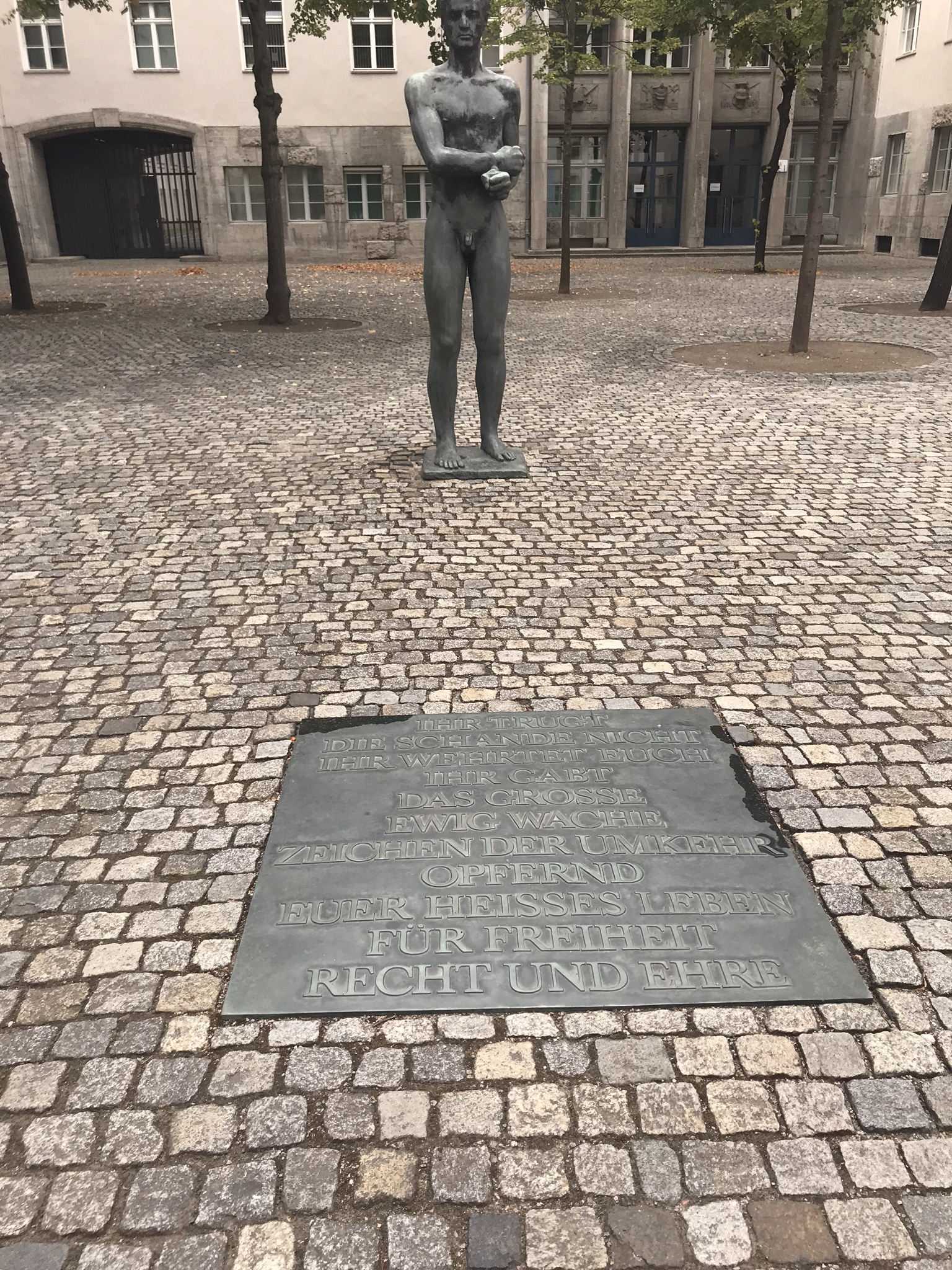
 The Courtyard at Bendlerstraße Where Von Stauffenberg and others Were Executed

Friends of Padre Steve’s World,

July 20th holds many meanings and provides for inspiration for anyone who is human, with the exception of conspiracy theorists and deniers of history. Today we remember the 50th anniversary of the landing of the Landing Module Eagle of Apollo XI on the Moon. The success of the mission can be described as miraculous, a triumph of human achievement in an era of deep division. But twenty-five years to the day before the landing a few imperfect, yet courageous men and women dared to attempt the overthrow of Adolf Hitler and his genocidal Nazi regime.

Stauffenberg with Colonel Mertz von Quirnheim, another key Conspirator who was murdered with Stauffenberg when the Plot Failed 

The participants knew that if they failed they would be labeled as traitors, and they were right. Colonel Claus von Stauffenberg, who planted a bomb at Hitler’s East Prussian Headquarters was quite correct when he noted:

“I know that he who will act will go down in German history as a traitor; but he who can and does not, will be a traitor to his own conscience.” 

Another conspirator, Major General Henning Von Tresckow was even more blunt about their prospects.

“It is almost certain that we will fail. But how will future history judge the German people, if not even a handful of men had the courage to put an end to that criminal?”

The plot failed, Hitler lived. Stauffenberg, Tresckow, many of their immediate associates died. Eventually, thousands of people, many of whom only were guilty of association. The purge and executions of those connected with the plot would continue to Hitler’s death.

In the days we live we are witnessing our President using the same words and terminology to describe anyone who opposes him. He disrespects the Constitution, and the instructions that were designed by our founders to prevent the rise of a tyrant. His words, actions, and policies tend toward both racism and fascism; and they foster violence. The steady rise in White Nationalist and neo-Nazi groups, that the President has not condemned, as well as the number of open White Nationalist and neo-Nazi men running for office at the local and state level as Republicans show that Trump is not a casual anomaly in the GOP. The President, like it or not, has become the voice of White Nationalism, and the far right. Republican moderates for the most part have acquiesced to the new order. Even long time supporters like former Attorney General Jeff Sessions, hardly a man considered liberal, were ruthlessly jettisoned by the President.

There are times that resistance seems almost hopeless. I was talking with one of my friends who is very discouraged about the situation. He is an idealist. I spent much of the evening trying to buck him up.

British Historian Laurence Rees wrote:

“human behavior is fragile and unpredictable and often at the mercy of the situation. Every individual still, of course, has a choice as to how to behave, it’s just that for many people the situation is the key determinate in that choice.” 

We have to put an end to the Trump regime at the ballot box, or should Congress fulfill its Constitutional duties and begin impeachment hearings, regardless of whether a conviction is attained, he and his supporters have made statements that he may not give up power without a physical fight, that of course would bring about a Constitutional crisis and maybe civil war.

His former attorney, Michael Cohen has said exactly that. Trump is destroying the hard work of Americans and our allies to build a better would, and in almost every country, Trump is destroying the image and moral leadership of the United States. Patriotism requires that those committed to the ideals, institutions, and the laws of the country must resist when those are threatened, from inside or outside the country, and if they resist an elected President who shows no regard for those ideals, institutions, and laws, they will be labeled traitors.  Tresckow said in his time:

“We have to show the world that not all of us are like him. Otherwise, this will always be Hitler’s Germany.”

Henning von Tresckow 

Those are import words, but just substitute the name Trump for Hitler. Tresckow was no socialist or liberal, but he believed in freedom. In fact he wrote regarding the Prussian political tradition and how it could be subverted to support evil:

“The idea of freedom can never be disassociated from real Prussia. The real Prussian spirit means a synthesis between restraint and freedom, between voluntary subordination and conscientious leadership, between pride in oneself and consideration for others, between rigor and compassion. Unless a balance is kept between these qualities, the Prussian spirit is in danger of degenerating into soulless routine and narrow-minded dogmatism.”

Truthfully that is a spirit much like the United States that which is engulfing the United States today, soulless routine and narrow minded dogmatism. The tension that exists in the key ideal of the Declaration of Independence and the United States Constitution, and the words of Trump and his supporters men who desire to rule by fiat and by extra-Constitutional means, cannot be more marked than it is today.

In the movie adaptation of the plot to kill Hitler Valkyrie: Tresckow is quoted:

“God promised Abraham that he would not destroy Sodom if he could find ten righteous men… I have a feeling that for Germany it may come down to one.”

To be sure, Trump is no Hitler, though his words sound more and more Hitlerian every day. I will not call the President a Nazi, though he has give tacit support to Neo-Nazi and White Supremacist groups and frequently engages in racist diatribes. He is certainly acting as any authoritarian leader would, and we have to heed the warning of Russian dissident Gary Kasparov:

“dictators & would be autocrats do not ask “Why?” when it comes to using power for their advantage. They ask “why not?”

To go back to the words of Tresckow in Valkyrie, in noting it may come down to the actions of one man or woman, my friends, that “one” may come down to you or me. We cannot sit silently by as more and more actions that would have been considered as criminal in any other era of United States are perpetrated by the President and his followers.

It was not until the late 1960s that most Germans considered the men who attempted to kill Hitler heroes and not traitors. Those who criticize, and work through legal and constitutional means to oppose Trump are already being labeled by him, his supporters, and the right wing media machine based at Fox News as enemies of the state, traitors, and mislabeled as Socialists and Communists; an old tactic of the American Right since the Russian Revolution. The truth doesn’t matter, it’s simply a way to stake rage against fellow citizens.

At this time we still have recourse to the law, elections, and our institutions. How long that remains is another matter. Once Hitler took absolute power, most Germans found ways to make their peace with his regime and turn a blind eye even to its crimes.

I don’t know if Trump will ever attain such absolute power, but it is possible. In which case the equation will change. If that happens risk of risk of resistance will be so high that many will go silent and just try to get along. Even without that kind of threat most Republicans have already done that.

Sophie Scholl and Members of the White Rose in Munich Near the Ost Bahnhof in 1942

That is the real danger, when people who know better acquiesce for their own safety. Sophie Scholl, a 22 year old student at the University of Munich was part of a resistance movement called The White Rose. She and her friends, students and professors embarked on writing pamphlets to distribute throughout Germany to tell the truth about the evils of the Nazi regime. She wrote about this danger:

“The real damage is done by those millions who want to ‘survive.’ The honest men who just want to be left in peace. Those who don’t want their little lives disturbed by anything bigger than themselves. Those with no sides and no causes. Those who won’t take measure of their own strength, for fear of antagonizing their own weakness. Those who don’t like to make waves—or enemies. Those for whom freedom, honour, truth, and principles are only literature. Those who live small, mate small, die small. It’s the reductionist approach to life: if you keep it small, you’ll keep it under control. If you don’t make any noise, the bogeyman won’t find you. But it’s all an illusion, because they die too, those people who roll up their spirits into tiny little balls so as to be safe. Safe?! From what? Life is always on the edge of death; narrow streets lead to the same place as wide avenues, and a little candle burns itself out just like a flaming torch does. I choose my own way to burn.”

I have more to write on this but will close for the night.

So until tomorrow,

Peace,

Padre Steve+

2 Comments

Filed under ethics, History, holocaust, laws and legislation, leadership, Military, national security, nazi germany, News and current events, Political Commentary, racism, White nationalism

The Battle Of Kursk: Nazi Military Operations Cannot be Separated from Hitler’s Genocidal Policies

Friends of Padre Steve’s World,

I am reposting an older article today which was a paper that I wrote for a class as part of my second Masters Degree program.  Tomorrow, July 12th is the anniversary of the one of the largest tank battles in history, The Battle of Prokhorovka, the climax of the Battle Of Kursk, in which nearly 1000 German and Soviet tanks engaged in an often close quarters battle where both suffered staggering casualties, but the Soviets prevented a German breakthrough, and with it a potential German victory. 

The Battle of Kursk was the climactic battle on the Eastern Front from which the Germans never recovered. It was a battle that should not have been fought, at least at the time that it was fought. It was high risk operation with minimal payoff should it succeed. It did not and combined with the Allied landings in Sicily and other setbacks suffered by German forces in 1943 was the battle that doomed Germany to defeat. It was the last time that the German military had a chance to score a major victory against the Soviets and their defeat ensured the defeat of the Third Reich. 

The decision of Hitler and the High Command to launch this offensive is also connected for the need of the Nazis to complete the Final Solution Of the “Jewish Problem,” which was in the process of execution millions of Jews, with an emphasis on the systematic destruction of European Jewry, with the desire to eliminate the Russian Jews who as of yet remained under the protection of the Red Army. The German military campaign in the east can never be disconnected from the genocidal policies of the Nazis, and many of the German troops and commanders involved in Zitadelle were accomplices to Genocide or actively supported it. 

So when you read this article, do not just look at the military dimensions. Remember, that it, like every Nazi military operation was a necessary part of Hitler’s genocidal program. 

Until tomorrow, 

Peace

Padre Steve+


The German Situation and Dilemma in April 1943
Battle_of_Kursk_(map)

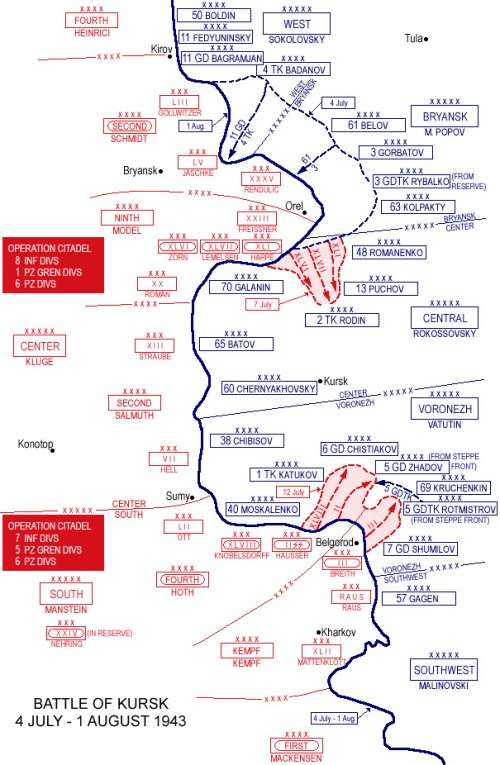
The Germans faced a dilemma in April 1943.  Manstein’s brilliant counter-stroke had turned what could have been disaster into an opportunity to salvage prospects for the Eastern Front. The German action had “repaired its front, shattered the hopes of the Allies, and nipped the Russian spearhead.”[i]Unfortunately for the Germans the spring thaw meant that Manstein could not continue immediately and eliminate the Kursk bulge which had been formed by Rokossovky’s offensive and Manstein’s own counter-stroke.  With the Germans stalled by the weather Stavka cancelled “other significant planned offensives to dispatch reinforcements to the Kursk region.”[ii] Despite the weather Manstein pushed Kluge for an immediate attack on both sides of the bulge but was rebuffed by Kluge who “insisted that his troops needed to rest and refit.”[iii] This rebuff combined with the onset of the Russian mud meant that in “March 1943 the war on the ground came to an end….The front was immobilized.”[iv]

manstein with tanks                 Field Marshal Erich von Manstein with Tiger I Tanks

Manstein’s offensive had “enabled the Germans to consolidate a firm position in the East, and build up strength afresh- not to its former level, but sufficient to provide a good prospect of holding the Russians at bay.”[v] As a result German armies in the south “held again nearly the same positions from which the Blau offensive had begun the previous spring.”[vi] Now the Kursk bulge some 250 Kilometers wide and 160 Kilometers deep[vii] protruded menacingly into the German lines and drew the attention of both sides, to the Germans it appeared to be designed for an encirclement battle.[viii] Thus it appeared that the Kursk bulge was the obvious place for the Germans to resume the offensive and maintain the initiative on the Eastern Front.

But was the Kursk necessary?  Was Operation ZITADELLE as obvious as it seemed to be to Hitler, Zeitzler and others?  The battle is the subject of many books and articles which often focus on tactical and operational details of the German offensive, particularly the battle on the southern side of the bulge and the clash of armor at Prokhorovka.  This essay will focus less on the battle and more on the strategic situation faced by the Germans in the spring of 1943. Key to this are the arguments for and against the operation, the operations timing and the option that the Germans had to conduct a mobile defense.   It is the strategic situation that must be looked at to determine whether Operation ZITADELLE was necessary at all. Manstein believed that had the offensive been launched early enough that it might have succeeded provided it “we launched it early enough we could hope to catch them in a state of unpreparedness.”[ix]Williamson Murray and Allan Millett agree with Manstein’s assessment but note that an early offensive was “riskier…but greater the prospect for a major success.”[x] Guderian on the other hand saw that nothing good could come of ZITADELLE and opposed it from the beginning.[xi] Glantz and House in their detailed study argue that “there is absolutely no basis for assuming that Citadel would have succeeded had it been launched in spring 1943.”[xii]

battle_kursk t 34            The Soviets Reinforced and Fortified the Kursk Salient

The Germans faced a number of major problems in early 1943.  First, among them was manpower.  The armed forces had been mauled on the Eastern Front, “after continuous operations from June 1942 to March 1943, most German units were worn out.”[xiii] Many infantry divisions “were reduced to two thirds of their original strength, with declining mobility and anti-tank defenses.”[xiv] Had the Germans only faced the Russians this might have been overcome, however they not only faced a rejuvenated Red Army, but challenges brought about by multi-theater operations and their weak, ineffective and reluctant allies.  The Allied air offensive which though it “did not decisively effect German arms production it nevertheless prevented a great deal of work from being carried on and had profound moral effects which communicated themselves to all the fronts.”[xv] Likewise the U-Boat campaign had been effectively defeated by May 1943 allowing for increasing numbers of American troops and supplies to reach Europe, including significant Lend-Lease aide for the Soviet Union.  Manpower became a major issue for the the German Army and industry.  Both the military and industryhad difficulty in getting the required number of personnel to meet their personnel needs, in January 1943 the German High Command “demanded 800,000 men-but even the most ruthless call-up was able to produce only 400,000” who were lost to the civilian war economy.[xvi] Even the “belated industrial mobilization of Germany, fueled by slave labor and directed by the organizational genius of men like Speer and Guderian, could do little beyond patching together existing units.”[xvii]

Bild 101I-139-1112-17General Heinz Guderian, Inspector of Panzer Troops was one of Few Senior German Officers to Oppose ZITADELLE from the Beginning

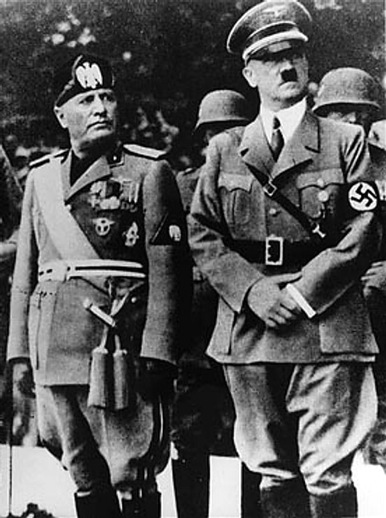
There were other challenges. The German and Italian armies in North Africa had surrendered, and about 330,000 Axis soldiers entered captivity.[xviii] Added to the heavy losses on the Eastern Front, the disasters in North Africa and Stalingrad had “effectively destroyed the Axis military alliance, such as it was.”[xix] Italy, Hungary and Romania all began to pull their forces out of the Eastern front after having them shattered by the Soviet Winter offensive.[xx]Italy, shaken by its losses in North Africa and the Russian front was wavering in its support for Germany; Mussolini’s government itself was on the verge of falling.  Likewise the Hungarian government sought contact with the Allies;[xxi]as did the Romanians.[xxii] Finland too was looking for a way out and limiting its participation in German offensive operations.[xxiii] As her allies looked for a way out, the British and Americans were about to open a new front in Southern Europe, while another had effectively been opened by partisans in Yugoslavia and Greece.[xxiv] The crisis in the south was great enough that OKW under General Jodl began to look at ways of shoring up those fronts in case Italy withdrew from the war including the use of units that would have to be withdrawn from the Eastern Front.[xxv] The Balkans drained German reserves such that the number of German divisions deployed there increased from 5 to 15 between July 1942 and July 1943.[xxvi] Additionally many units had to be created by the Replacement Army to build up the Western Front knowing that an Allied strike there would eventually take place, further depriving the Eastern Front of badly needed infantry replacements and divisions.
Benito_Mussolini_and_Adolf_HitlerHitler Felt Regaining the Initiative in the East was Critical to Keeping his Allies in the War

The German Options and Decision

The question for the Germans now was whether they “had any strategic options that would allow them to avoid defeat.”[xxvii] It is from this perspective that the necessity of Kursk must be examined. Most in the German High Command now realized that strategy in the east could no longer be “based on the illusion of conquering the vast Soviet Union.”[xxviii] As such the discussion turned to what direction the new strategy should take.  Political considerations came into play: Since the German allies were looking for ways to exit the war it was felt that “it was politically impossible for Germany to surrender the initiative on the Eastern Front.”[xxix] Realistically there were two options available: Wait and counterattack or launch a limited attack on the Kursk salient. The general impression among many German commanders in the East was that they had ended the last campaign “with a relative advantage over the Reds, an advantage that should be exploited as soon as the rasputitsa ended in April or early May.”[xxx] But the only strategy that looked feasible balancing the political and military goal of maintaining the initiative was what Manstein originally had in mind after Kharkov, to continue on, pinch out the Kursk bulge with the cooperation of Kluge’s Army Group Center.  As noted the opportunity to do so was lost with Kluge’s refusal and the onset of the spring thaw.  Yet this idea captured Zeitzler at OKH and Kluge at Army Group Center, though by April and May Manstein was more inclined toward “the ‘backhand’ stroke, which involved giving up the whole Donetz basin and staging a major Panzer offensive southeast from Kharkov.”[xxxi] However, this was too bold for Hitler who was “unwilling to give up the Donetz Basin with its industrial and mineral resources.”[xxxii]

battle_kursk_tiger advancing     The New Tiger Tanks Were to Play a Critical Role in the Attack

Manstein felt that the “moment of opportunity had passed, but his counterpart at Army Group Center…Kluge, was enthusiastic about the proposal.”[xxxiii]Zeitzler believed that an “attack at Kursk would be less risky”[xxxiv] than Manstein’s “backhand” and pushed the plan to Hitler.  There were advantages to this strategy if it could be carried out successfully. The Germans would encircle and destroy Russian forces in the salient and “shorten their own defensive lines after such an encirclement.”[xxxv] Yet the plan was opposed by others. Jodl at OKW argued against ZITADELLE “because he believed that it was dangerous to empty the strategic reserve when so many new crises threatened to develop in the Mediterranean.”[xxxvi] Zeitzler countered that because of German weakness in the east that they could not “wait to be hit.”[xxxvii] Guderian did not believe that either Army Group could be ready to mount the offensive that Zeitzler envisioned and “declared that the attack was pointless…if we attacked according to the plan of the Chief of the General Staff, we were certain to suffer heavy tank casualties, which we would not be in position to replace in 1943.”[xxxviii]Guderian asked Hitler at a separate conference “why he wanted to attack at all in the East in 1943.” When Keitel expressed that the reasons were political, Guderian asked Hitler “How many people do you think even know where Kursk is? It’s a matter of profound indifference to the world whether we hold Kursk or not…”[xxxix] Guderian and Speer both pointed out technical problems in producing the Tigers and Panthers but were overruled.[xl] Hitler himself reportedly had misgivings about the attack at one point reportedly stating that “the thought of the Zitadelle operation ‘made [his] stomach turn over’”[xli] In spite of Jodl and Guderian’s warnings, his own misgivings and those of Manstein and Model in April and May, Hitler “allowed himself to be tempted once more into taking the offensive. The Kursk salient…lured him into mounting his great pincer operation known as Citadel.”[xlii] Glantz and House maintain that he could “see no alternative politically and agreed to the plan.”[xliii]

The Facts on the Ground

Kursk_T34_and_Fieldgun-px800Soviet Forces Expected the Attack and Were well Prepared to Meet it

Once the decision to attack was made the question that remained was the timing of the attack. Manstein had preferred an early attack in May, but the operation was postponed to mid-June and then to July due to the request of Model who believed that his forces were too weak and needed reinforcements.[xliv] The attack was to be one of several “limited offensives designed to consolidate the German defenses while inflicting sufficient damage on the Red Army to delay any Soviet offensive.”[xlv] But the delays insisted on by Model and agreed to by Hitler were a fatal error.  The Germans failed to “factor into their decision was the unpalatable reality that Soviet strength in the Kursk salient was growing much faster than the Wehrmacht could muster forces to attack it.”[xlvi] Not only were the Soviet forces growing they knew about the German plans and could deploy their forces to counter them and for their own offensive.[xlvii] Stalin’s generals were able to convince him not to launch an attack and instead wait on the Germans so they could attack as the Germans exhausted their strength.[xlviii] They knew of it since April and reinforced the flanks of the salient with guns and armor at a faster pace than the Germans opposite them.[xlix] At Kursk “improved intelligence collection and analysis permitted the Red Army to predict almost exactly the strategic focal point of a major German offensive.”[l] Into the bulge “Vatutin and Rokossovsky crammed seven armies.”[li] The Russians deployed in depth in heavy fortified zones and minefields along the very sectors of the bulge that the Germans intended to attack, successfully masking their preparations from the Germans. It was “a measure of Soviet self-confidence that the senior commanders were looking beyond the German attack, beyond its failure, to the first major Soviet summer offensive.”[lii] Had the Germans succeeded in pinching off the salient “they would have faced several additional defensive belts constructed to the east of the salient.”[liii]

Typically when one launches an offensive it is desirable to have numeric advantage over the defender, 3:1 is normally assumed to be sufficient. At Kursk the Germans were outnumbered by the Russians 2.3:1 in men and 1.6:1 in tanks[liv] yet somehow the offensive had now morphed from a spoiling attack into a strategic offensive, albeit with more limited objectives attacking one of the strongest points in the Russian line.  General Raus, commanding a corps in Army Detachment Kempf noted: “Considering Russian dispositions, defenses and terrain, German strength could be considered only minimally sufficient for the assigned mission.”[lv] The Chief of Staff of XLVIII Panzer Corps called Kursk “the strongest fortress in the world.”[lvi]

Danger Signs: Requests for Cancellation

keitel-jodl-hitlerGeneral Alfred Jodl at OKW Protested the Offensive Verbally and in Writing

As more delays occurred Manstein “came out in the open and protested that the operation was no longer feasible and must be abandoned, but it was too late.  The united stand of orthodox General Staff opinion, Keitel, Zeitzler, Kluge, had persuaded the Führer, whose mind, once made up, was never altered.”[lvii]Manstein felt that the idea had been to “attack the enemy before the enemy had replenished his forces and got over the reverses of the winter.”[lviii] He felt there was great danger to the Mius line and to the northern Orel bulge with each delay; and the felt the threat of an attack by the Allies in Western Europe.[lix] On 18 June Jodl and the OKW Operations Staff “recommended to Hitler that he abandon Operation Citadel in order to free strategic reserves for defense in both East and West.”[lx] Warlimont writes that Jodl “raised empathic objection to the premature commitment of the central reserves to the East; he pointed out both verbally and in writing that a local success was all that could be hoped from Operation Citadel and that it could have no strategic significance for the overall situation.”[lxi] Hitler again refused the request.  “The doubts of certain Chiefs of Staff of the attacking armies were disregarded, and in the case of Colonel von Schleinitz, answered with dismissal.”[lxii]

The Battle

battle_kursk tigersTigers Advancing

The attacking forces for ZITADELLE involved units of Army Group Center and Army Group South.  Spearheading the assault for Army Group Center was Model’s 9th Army.  2nd Army from the same Army Group took a defensive role in the center of the bulge while Army Group South’s 4th Panzer Army under Hoth and Army Detachment Kempf composed the Southern attack force.  Von Mellenthin noted that to muster the necessary divisions for the attacking armies “neighboring fronts were to be thinned out beyond the limits of prudence” and from a strategic point of view likened Citadel “to be a veritable ‘death ride.’”[lxiii]Manstein worried about stripping the Mius-Donetz salient which “had to hand over all their available forces.”[lxiv] The Germans sent 17 panzer divisions against Kursk including the elite 2nd Panzer, Grossdeutschland, Leibstandarte, Das Reich and Totenkopf. Hoth’s army was the “strongest force ever put under a single commander in the German Army.”[lxv] While the Germans assembled the Russians waited, and beginning on 1 July the “Red Army defenders were on constant alert, waiting in their bunkers for the first sign of attack.”[lxvi]

battle_kursk_0020                                          Panzers on the Advance

ZITADELLE began on 4 July with a reconnaissance in force, the main blow scheduled for 0300 5 July. The Russians learned of the timing from a prisoner and quickly launched an artillery counter-preparation an hour prior to the German attack, disrupting it while air strikes were ordered against Luftwaffe airfields.[lxvii] Model’s 9th Army on the northern flank attacked the Russian “13th and 70th Armies on a frontage of 50 kilometers”[lxviii] with the focus being a 16 kilometer front where he concentrated 6 infantry divisions, a panzer division and all his Tiger and Ferdinand units.[lxix] He intended to break the Soviet defensive system “by constantly feeding in new units to grind down the defenses.”[lxx] The attack stalled by the 9July making minimal progress of “8 to 12 kilometers into the massive Soviet defenses.”[lxxi] A good deal of his problem was due to limited infantry strength which was  “far below established strength….moreover, the Ninth Army’s infantry- even the veterans- lacked experience in conducting set-piece attacks against prepared positions.”[lxxii]The Russians defined the battleground and forced Model into a battle determined by superior firepower on a constricted battlefield, “a game that the Wehrmacht could not win.”[lxxiii] This nullified any advantage the Germans might have had in mobility for their panzer divisions.  In savage battles to take the high ground at Ponyri station and Ol’khovatka Model’s assaults faltered.  9thArmy sacrificed about 50,000 men and 400 tanks to the god of war.”[lxxiv]Model continued to attack until 12 July when the Russians launched their offensive against the Orel bulge forcing him to redeploy to counter the Russian advance.  The battle in the north became “a savage defensive battle in which considerable parts of the offensive wing of Ninth Army were involved.”[lxxv]Model’s defeat made Hoth’s task “much more challenging.”[lxxvi]

battle_kursk_t-34s and infantry                                          Soviet T-34’s and Infantry

The Fourth Panzer Army and Army Detachment Kempf made better progress, nearly breaking through the Russian defenses after hard fighting. They penetrated “into the third Soviet defensive belt, a depth of 35 kilometers, but were stopped by Katukov’s 1st Tank Army.”[lxxvii] The critical point was reached on 11 and 12 July at Prokhorovka station when 5th Tank Army collided with 4thPanzer Army. “Over 1200 tanks from both sides were engaged in this struggle.”[lxxviii] It was the largest tank engagement of the war, over 700 tanks were destroyed and “German losses were too great to allow a decisive breakthrough.”[lxxix] Both sides took heavy casualties but the Germans could not replace theirs while the Russians still had formidable uncommitted reserves.  On 13 July the battle in the south drifted into a stalemate as XLVIII Panzer Corps and Hausser’s II SS Panzer Corps failed to break the Soviet line[lxxx] as the Russians “kept on throwing in fresh troops, and their reserves seemed inexhaustible.”[lxxxi] Manstein desired to continue the offensive as he believed that for his Army Group “the battle was now at its culminating point, that to break it off at this moment would be tantamount to throwing victory away.”[lxxxii] Although Manstein and Hoth felt that they could continue on and break the Russian line, they were now not in a position to do so. Model’s forces were in no shape to assist in the north and Manstein and Kluge were called to the Wolfsschanze by Hitler who, now preoccupied with the Allied invasion of Sicily necessitating withdraws of strong panzer forces from the east to face the threat in the west.[lxxxiii] Hitler rejected Manstein’s counsel to continue and ordered him to withdraw II SS Panzer Corps,[lxxxiv] effectively ending the ZITADELLE as the Russians launched their offensive on 17 July.
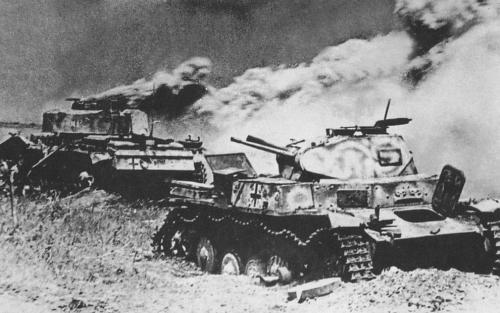
battle_kursk_destroyed panzers                                               Destroyed Panzers

Analysis of the Decision: Zitadelle Was Not Obvious, Necessary nor Well Executed

To Hitler and the supporters of ZITADELLE the operation seemed obvious.  In the two previous years the Germans had dealt punishing blows against the Red Army and the belief of Zeitzler and others was that the Wehrmacht was still qualitatively superior to the Soviets and that even a limited offensive would succeed in its objectives.  But the conditions on the ground had changed and the Germans failed to take the change into account.  The German Army did not have the resources for an offensive of the scope of Barbarossa or Blau. However this lack of resources did not lessen the optimism of some for ZITADELLE; particularly Zeitzler and Kluge. From their perspective the offensive to pinch out the Kursk salient seemed likely to succeed.  Yet as Clark notes the offensive was defined by a “lack of imagination and adaptability….Where the old Blitzkrieg formula….was fed into the computer, with little regard for the changed conditions….” [lxxxv] Von Mellenthin comments that by attacking Kursk, the “German Army threw away all their advantages in mobile tactics, and met the Russians on ground of their own choosing.”[lxxxvi] Glantz and House attribute this to the fact that the Germans “clung to outmoded assumptions about their own superiority over their opponents” due to their previous success. They point out that the Red Army had systematically reviewed its performance after every failure,” so that “Soviet doctrine, organization, and expectations were closer to battlefield reality than were those of the senior German leadership.”[lxxxvii] The German intelligence services failed them[lxxxviii] as they failed to detect the large strategic sized force that the Soviets had concentrated in the spring of 1943.  This was a force that Glantz and House believe would have caused ZITADELLE to fail even had it occurred in May, particularly in regard to the comparatively weak German forces fielded by Manstein.[lxxxix]

An offensive with what appeared to be reasonable objectives that were believed to be within the capabilities of the Wehrmacht failed.  Hitler according to Carell “gambled away not only victory but all hope of a draw.”[xc] Manstein categorized the offensive as a “fiasco.”[xci] Guderian called it “a decisive defeat” that made it “problematical” whether the armored formations could be “rehabilitated in time to defend the Eastern Front.”[xcii] Warlimont who served at OKW commented: “Operation Citadel was more than a battle lost; it handed the Russians the initiative and we never recovered it again right up to the end of the war.”[xciii]Guderian’s biographer Kenneth Macksey wrote that “the failure at Kursk was due to the employment of a faulty plan which lacked the element of strategic as well as tactical surprise.”[xciv] Raus lists several factors for this.  However, his argument is summarized: “once we learned in May and June that this was the area in which the Russians were prepared to offer their stiffest resistance, we should have modified our plans.  Either we should have refrained from attacking at all, or the operation should have been carried out to strike the enemy not at his strongest, but at his weakest point.”[xcv]

Hitler felt that a decisive victory was needed for political and propaganda reasons, yet even a significant victory was unlikely to keep Italy in the war, even if it swayed the lesser allies to stay the course.  ZITADELLE was conducted too late to save the Italians, success in May might have given German supporters in Italy some leverage but the invasion of Sicily and the failure at Kursk emboldened Mussolini’s opponents. The Fascist Grand Council “voted to have Mussolini removed as prime minister” and King Vittorio Emmanuaele “dismissed Mussolini” who was then placed under arrest.[xcvi] Finland refused to take offensive action that might have cut the Murmansk railway[xcvii] and engaged the Americans in a round of “abortive negotiation”[xcviii] while the Hungarians and Romanians provided little assistance to the Germans, partially due to the German reluctance to assist in modernizing and rebuilding their armies.[xcix]

Of the German Generals involved it was only Guderian as Inspector of Armored Troops and Jodl at OKW who consistently opposed ZITADELLE, citing realistic assessments of strengths, risks and dangers in other theaters.  Manstein opposed it when he felt the opportunity had passed, though it was unlikely to succeed had it been launched in May as he desired.  Guderian and Jodl’s arguments proved correct in every respect. ZITADELLE engaged German the preponderance of German forces in a battle that had at best chances of local success. The offensive itself weakened and endangered the German position on all fronts.  In the end, despite the belief and decision of Hitler, Zeitzler Kluge and others in the High Command, Operation ZITADELLE was neither obvious nor necessary and played out with the disastrous results expected by those who opposed it.

                                                        Notes


[i] Clark, Allan. Barbarossa:  The Russian-German Conflict 1941-45. Perennial, an Imprint of Harper Collins Books, New York, NY 2002. Originally published by William Morrow, New York, NY 1965. p. 306

[ii] Glantz, David M and House, Jonathan. The Battle of Kursk.  University Press of Kansas, Lawrence, KS. 1999. p.14

[iii] Ibid. Glantz and House, Jonathan. The Battle of Kursk.  p.14

[iv] Carell, Paul. Scorched Earth: The Russian German War 1943-1944. Translated by Ewald Osers, Ballantine Books, New York, NY 1971, published in arrangement with Little-Brown and Company. p. 335

[v] Liddell-Hart, B.H. The German Generals Talk. Quill Publishing, New York, NY. 1979. Copyright 1948 by B.H. Liddell-Hart. p.212

[vi] Wray, Timothy A. Standing Fast: German Defensive Doctrine on the Russian Front in World War II, Prewar to March 1943. U.S. Army Command and General Staff College, Fort Leavenworth, KS. 1986. p.163

[vii] Glantz, David M. and House, Jonathan. When Titans Clashed: How the Red Army Stopped Hitler. University Press of Kansas, Lawrence, KS. 1995. p.157

[viii] Ibid. Glantz and House. When Titans Clashed. p.157

[ix] Manstein, Erich von. Lost Victories. Translated by Anthony G. Powell, Zenith Press, an imprint of MBI Publishing Company, St Paul, MN. 2004. First Published as Verlorene Siege Athenaum-Verlag, Bonn, GE 1955, English edition Methuen & Company Ltd. 1958  p.447

[x] Murray, Williamson and Millett, Allan R. A War to Be Won: Fighting the Second World War.  The Belknap Press of Harvard University, Cambridge, MA. 2000. p.295

[xi] Macksey, Kenneth. Guderian: Creator of the Blitzkrieg. Stein and Day Publishing, New York, NY 1975 p.206

[xii] Ibid. Glantz and House. The Battle of Kursk. p.261

[xiii] Ibid. Glantz and House. The Battle of Kursk. p.14

[xiv] Ibid. Glantz and House. Clash of Titans. p.174

[xv] Goerlitz, Walter. History of the German General Staff 1657-1945.Translated by Brian Battershaw. Westview Press. Boulder CO and London. 1985 Originally published as Der Deutsche Generalstab, Verlag der Fankfurter Hefte, Frankfurt am Main.  First U.S. publication in 1953 by Preager Publishers. p.441

[xvi] Ibid. Carell. p.336

[xvii] Ibid. Glantz and House. Clash of Titans. p.174

[xviii] Warlimont, Walter. Inside Hitler’s Headquarters 1939-45. Translated by R.H. Berry, Presido Press, Novato CA, 1964. p.312

[xix] DiNardo, Richard L. Germany and the Axis Powers: From Coalition to Collapse. University Press of Kansas, Lawrence, KS. 2005. p.174

[xx] Ibid. DiNardo. p.174. By the summer all Italians units had been withdrawn, all but two Hungarian divisions which were used in anti-partisan operations and nine Romanian divisions.

[xxi] Ibid. Goerlitz. p.441

[xxii] Ibid. Glantz and House. Kursk. p.21

[xxiii] Ibid. DiNardo. p.180

[xxiv] Ibid. Goerlitz. p.441

[xxv] Ibid. Warlimont. pp.317-318

[xxvi] Dunn, Walter S. Jr. Heroes or Traitors: The German Replacement Arm, the July Plot, and Adolf Hitler. Praeger Publishers, Westport CT and London, 2003. p.53

[xxvii] Ibid. Murray and Millett. p.294

[xxviii] Ibid. Carell. p.339

[xxix] Ibid. Glantz and House. Kursk. p.21

[xxx] Ibid. Glantz and House. Kursk. p.21

[xxxi] Ibid. Clark. p.322

[xxxii] Liddell-Hart, B.H. Strategy. A Signet Book, the New American Library, New York, NY. 1974, Originally Published by Faber and Faber Ltd., London. 1954 & 1967. p.280

[xxxiii] Ibid. Glantz and House. When Titans Clashed. p.157

[xxxiv] Ibid. Clark. p.322

[xxxv] Ibid. Glantz and House. p.157

[xxxvi] Ibid. Clark. p.323

[xxxvii] Ibid. Clark. p.323

[xxxviii] Guderian, Heinz. Panzer Leader. (abridged) Translated from the German by Constantine Fitzgibbon, Ballantine Books, New York 1957. pp.245-246

[xxxix] Ibid. Clark. p.325.

[xl] Ibid. Glantz and House. When Titans Clashed. p.157.

[xli] Ibid. Clark. p.325

[xlii] Ibid. Carell. p.341

[xliii] Ibid. Glantz and House. When Titans Clashed. p.158

[xliv]Newton, Steven H. Hitler’s Commander: Field Marshal Walter Model, Hitler’s Favorite General. DeCapo Press, Cambridge MA 2005. pp.218-219

[xlv] Ibid. Glantz and House. When Titans Clashed. p.21

[xlvi] Ibid. Newton. p.219

[xlvii] Ibid. Murray and Millett. p.295

[xlviii] Ibid. Glantz and House. When Titans Clashed. p.158

[xlix] Ibid. Clark. p.326

[l] Ibid. Glantz and House. Kursk. p.63

[li] Overy, Richard. Russia’s War: A History of the Soviet War Effort: 1941-1945. Penguin Books, New York NY and London, 1997. pp.200-201

[lii] Ibid. Glantz and House. When Titans Clashed. p.159

[liii] Ibid. Glantz and House. Kurskp.64

[liv] Ibid. Glantz and House. Kursk. p.65 This reference contains a listing of each sector and the force ratios of men, tanks and guns in each sector.

[lv] Raus, Erhard. Panzer Operation: The Eastern Front Memoir of General Raus, 1941-1945. Compiled and Translated by Steven H Newton. Da Capo Press a member of the Perseus Book Group, Cambridge, MA 2003. p.197

[lvi] Weingartner, James. J. Leibstandarte SS Adolf Hitler: A Military History, 1933-45. Battery Press, Nashville, TN.(no publication date listed)  p.81

[lvii] Ibid. Clark. p.327

[lviii] Ibid. Manstein. p.447

[lix] Ibid. Manstein. pp.447-448

[lx] Ibid. Glantz and House. Kursk. p.55

[lxi] Ibid. Warlimont. p.334

[lxii] Ibid. Goerlitz. p.445

[lxiii] Von Mellenthin, F.W. Panzer Battles: A Study of the Employment of Armor in the Second World War. Translated by H. Betzler, Ballantine Books, New York, NY, 1971. Originally Published University of Oklahoma Press, 1956. p.262

[lxiv] Ibid. Manstein. p.448

[lxv] Ibid. Clark. p.328

[lxvi] Ibid. Glantz and House. Kursk. p.78

[lxvii] Ibid. Glantz and House. Kursk. pp.81-84

[lxviii] Ibid. Glantz and House. When Titans Clashed. p.166

[lxix] Ibid. Erickson. P.99

[lxx] Erickson, John. The Road to Berlin. Cassel Military Paperbacks, London, 2003. First Published by Weidenfeld and Nicholson, 1983. p.99

[lxxi] Ibid. Glantz and House. When Titans Clashed. p.166

[lxxii] Ibid. Newton. p.222

[lxxiii] Ibid. Newton. 234

[lxxiv] Ibid. Glantz and House. Kursk. p.121

[lxxv] Ibid. Carell. p.342

[lxxvi] Ibid. Glantz and House. Kursk. p.121

[lxxvii] Ibid. Glantz and House. When Titans Clashed. p.166

[lxxviii] Ibid. Glantz and House. When Titans Clashed. p.166

[lxxix] Ibid. Overy. p.209

[lxxx] Ibid. Glantz and House. Kursk. pp.215-217

[lxxxi] Ibid. Von Mellenthin. p.274

[lxxxii] Ibid. Manstein. p.449

[lxxxiii] Ibid. Glantz and House. Kursk. pp.217-218.

[lxxxiv] Ibid. Glantz and House. When Titans Clashed. p.167

[lxxxv] Ibid. Clark. pp.329-330

[lxxxvi] Ibid. Von Mellenthin. p.264

[lxxxvii] Ibid. Glantz and House. Kursk. p.269

[lxxxviii] Macksey, Kenneth. Why the Germans Lose at War. Greenhill Books 1996, Barnes and Noble, New York,  2006. p.227

[lxxxix] Ibid. Glantz and House. Kursk. p. 261

[xc] Ibid. Carell. p.342

[xci] Ibid. Manstein. p.449

[xcii] Ibid. Guderian. p.251

[xciii] Ibid. Warlimont. p.334

[xciv] Ibid. Macksey. Guderian p.206

[xcv] Ibid. Raus. p.211

[xcvi] Ibid. DiNardo. p.178

[xcvii] Ibid. DiNardo. p.181

[xcviii] Ibid. Erickson. p.91

[xcix] Ibid. DiNardo. pp.182-188

Bibliography

Carell, Paul. Scorched Earth: The Russian German War 1943-1944. Translated by Ewald Osers, Ballantine Books, New York, NY 1971, published in arrangement with Little-Brown and Company

Clark, Allan. Barbarossa:  The Russian-German Conflict 1941-45. Perennial, an Imprint of Harper Collins Books, New York, NY 2002. Originally published by William Morrow, New York, NY 1965

DiNardo, Richard L. Germany and the Axis Powers: From Coalition to Collapse.University Press of Kansas, Lawrence, KS. 2005

Dunn, Walter S. Jr. Heroes or Traitors: The German Replacement Arm, the July Plot, and Adolf Hitler. Praeger Publishers, Westport CT and London, 2003

Erickson, John. The Road to Berlin. Cassel Military Paperbacks, London, 2003. First Published by Weidenfeld and Nicholson, 1983

Glantz, David M and House, Jonathan. The Battle of Kursk.  University Press of Kansas, Lawrence, KS. 1999.

Glantz, David M. and House, Jonathan. When Titans Clashed: How the Red Army Stopped Hitler. University Press of Kansas, Lawrence, KS. 1995

Goerlitz, Walter. History of the German General Staff 1657-1945. Translated by Brian Battershaw. Westview Press. Boulder CO and London. 1985 Originally published as Der Deutsche Generalstab, Verlag der Fankfurter Hefte, Frankfurt am Main.  First U.S. publication in 1953 by Preager Publishers

Guderian, Heinz. Panzer Leader. (abridged) Translated from the German by Constantine Fitzgibbon, Ballantine Books, New York 1957

Liddell-Hart, B.H. Strategy. A Signet Book, the New American Library, New York, NY. 1974, Originally Published by Faber and Faber Ltd., London. 1954 & 1967

Liddell-Hart, B.H. The German Generals Talk. Quill Publishing, New York, NY. 1979. Copyright 1948 by B.H. Liddell-Hart.

Macksey, Kenneth. Guderian: Creator of the Blitzkrieg. Stein and Day Publishing, New York, NY 1975

Macksey, Kenneth. Why the Germans Lose at War. Greenhill Books 1996, Barnes and Noble, New York, 2006

Manstein, Erich von. Lost Victories. Translated by Anthony G. Powell, Zenith Press, an imprint of MBI Publishing Company, St Paul, MN. 2004. First Published as Verlorene Siege Athenaum-Verlag, Bonn, GE 1955, English edition Methuen & Company Ltd. 1958

Murray, Williamson and Millett, Allan R. A War to Be Won: Fighting the Second World War.  The Belknap Press of Harvard University, Cambridge, MA. 2000

Newton, Steven H. Hitler’s Commander: Field Marshal Walter Model, Hitler’s Favorite General. DeCapo Press, Cambridge MA 2005

Overy, Richard. Russia’s War: A History of the Soviet War Effort: 1941-1945.Penguin Books, New York NY and London, 1997

Raus, Erhard. Panzer Operation: The Eastern Front Memoir of General Raus, 1941-1945. Compiled and Translated by Steven H Newton. Da Capo Press a member of the Perseus Book Group, Cambridge, MA 2003

Von Mellenthin, F.W. Panzer Battles: A Study of the Employment of Armor in the Second World War. Translated by H. Betzler, Ballantine Books, New York, NY, 1971. Originally Published University of Oklahoma Press, 1956.

Warlimont, Walter. Inside Hitler’s Headquarters 1939-45. Translated by R.H. Berry, Presido Press, Novato CA, 1964

Weingartner, James. J. Leibstandarte SS Adolf Hitler: A Military History, 1933-45. Battery Press, Nashville, TN.(no publication date listed)

Wray, Timothy A. Standing Fast: German Defensive Doctrine on the Russian Front in World War II, Prewar to March 1943. U.S. Army Command and General Staff College, Fort Leavenworth, KS. 1986

Leave a comment

Filed under Foreign Policy, History, holocaust, leadership, Military, national security, nazi germany, Political Commentary, war crimes, world war two in europe

Shame at Panmunjom

Like no President Ever: Donald Trump and Kim Jung Un

Friends of Padre Steve’s World,

Like most of you I was greeted this morning by the images of President Trump crossing a few feet in North Korea to meet with North Korean Dictator Kim Jun Un for a photo op and promise that Lil’ Kim would resume negotiations on his nuclear program, the exact same thing he promised last year but hasn’t done.

The sad fact of the matter that the only reason that Trump got this far with Kim was that he has stopped condemning North Korean Human Rights abuses, Slave Labor Camps, political murders, and his support of Iranian missile and nuclear programs. These are things that every President since the North Korean attack on South Korea in 1950 have opposed. But if your overwhelming desire is not the security of the United States and its allies, but your personal aggrandizement means more than the country whose Constitution you swore to uphold and defend then it makes perfect sense. Sacrifice your allies, your country, and the founding principles of the country to make lovey-dovey with a brutal dictator for your ego, and nothing else matters.

During his visit across the border his new Press Secretary was physically assaulted by North Korean Secret Police while attempting to get American reporters to the scene of the event. Don’t expect that he will offer her any words or comfort or support. She was behaving as an official who expected freedom of the press to be observed when it came to visits of the President to foreign countries. I don’t expect her to have a long tour as Press Secretary.

I have served under six Presidents of both parties. Had I not listened to my parents this would be my seventh, but I enlisted at the time that I was also eligible to enter the advanced program of Army ROTC. However, it was the Iranian hostage crisis and the failure of the attempt to rescue to hostages that led me to throw my hat into the ring and volunteer to serve. Now I serve under a President who is threatening to go to war with Iran, while supporting Iran’s primary ally in its quest for ICBMs and nuclear weapons. To me this makes no sense. North Korea is an existential threat to South Korea, and to the security of North East Asia. Should it continue its ICBM development, which I have no doubt that it is, it will become a major threat to the Continental United States.

But for President Trump this doesn’t seem to matter. He hasn’t met or heard of a dictator or authoritarian despot that he doesn’t support. Putin, Kim, Erdogan of Turkey, Orban Of Hungary, and the Central American dictators whose policies are creating the crisis on our souther border.

The fact is that President Trump is willfully ignorant of American History, and political norms, as well as the history Of the Twentieth Century in General. He doesn’t seem to understand that his words and auctions have meaning, and that being President is not just about pleasing his Cult-like supports, but to support and defend the Constitution against all enemies foreign and domestic. For me that is inexcusable, and for him to step across the North Korean Border without confronting the North Korean record on Human Rights, its illegal development of nuclear weapons and delivery systems, and the murder of American student Otto Warmbier is inexcusable, regardless of his political party. If President Obama had acted similarly I would have a similar opinion to render. For me this isn’t about politics or party, but American ideals.

President Trump is a man without principle and he is using his office for personal and political gain, as well as retribution against anyone he has wronged or that oppose his policies. Trump is an existential threat to the American political, economic, and social system that have given us a political and diplomatic stability, and prosperity unknown in history, not that things like that matter to Trump and his Cult.

Honestly, I wish I could have believed that President Trump would have stood for American values and not just policies that could only benefit his bottom line, but that is indeed the case, and that strikes me in the heart as a betrayal of the American tradition and the principles of the Declaration of Independence. I hate that, and that matters have come to this. To see an American President defending and protecting some of the worst violators of human rights, political freedoms, and democracy is disheartening to me.

For that I cannot remain silent. I think of the words of Major General Henning Von Tresckow:

“We have to show the world that not all of us are like him. Otherwise, this will always be Hitler’s Germany.”

In my paraphrase: We have to show the world world that we are not like him. Otherwise this will always be Trump’s America.

Sadly, I believe that we have crossed the Rubicon to dictatorship, Trump will find a way to remain in power no matter what the election, the Congress, or the courts say. We will all end up being damned for it.

Until tomorrow,

Peace,

Padre Steve+

2 Comments

Filed under ethics, Foreign Policy, History, national security, News and current events, Political Commentary

Speak Softly and Carry a Big Stick: Words Of Wisdom too often Ignored

Friends of Padre Steve’s World,

I am a frequent critic of President Trump, but last Friday when I awoke to the news that he had called off military strikes on Iran at the last minute, I was pleased. His closest cabinet level advisors, including John Bolton, one of the principle authors of the invasion of Iraq were pushing him to launch. There is controversy as to when the President learned the potential casualties of the initial strike, but I am less concerned about that than that he did the right thing, and at the same time began to quiet his language toward the Islamic Republic.

Whether this is enough to take us off the path the war is yet unseen. Iran’s Supreme Leader Ayatollah Ali Khamenei, does not seem to be deterred or encouraged by anything Trump does. Much of this is due to the fact that the previous actions of the President and his administration have backed Iran and the United States into a corner that it will take overwhelming political and moral courage to avoid war. The pressure on both men is pushing them towards war, and Trump has the additional pressure of the Saudis and Israelis to do their dirty work regarding Iran for them, much as Israel and many of the same advisors did to President Bush during the run up to the attack on Iraq in 2003. For the moment, President Trump has resisted pulling the trigger that very probably would unleashed a devastating regional war with world wide ramifications. I hope that he continues to do so but he is not the only actor in this play, too many other actors, including Khamenei, the leaders of Iran’s Revolutionary Guard, the Saudi Leadership, Benjamin Netanyahu of Israel, the Gulf States, the Russians, Chinese, North Koreans, as well as various Sunni and Shia surrogates all have a hand in this Hexenkessel of potential war and death.

I have too many friends and shipmates currently stationed in the Gulf to want war there. Likewise, I am still on active duty and my nephew is graduating from Marine Corps Boot Camp this week are still on active duty. A war would be very personal for me and my family. I hope that the President is graced with the moral fortitude, something he has not demonstrated much during his life in order to both preserve peace and American/Western interests in the region. The world cannot endure a war of the kind that will certainly escalate in ways that will engulf the region and possibly the world.

President Trump’s bluster combined with his inaction and accommodation with leaders such as Putin and Kim Jong Un, his unfulfilled rhetoric of regime change in Venezuela, and his continued attacks on American allies do not help his situation right now. He suffers a distinct lack of credibility both domestically and internationally, mostly because of his words, tweets, and outright lies. That does not mean that I want him to fail. In fact I hope that he exceeds my expectations of him. The stakes are too great for him to screw this up.

That does not mean that I will excuse his domestic policies or resist when I see him overreaching his Constitutional authority, or attempt to silence his political, media, or social opponents. But, as Commander in Chief in this volatile and dangerous situation I pray that he doesn’t fuck it up. Of course, the President acts on instinct more than logic, and the adulation of his Cult-like followers over reason. Everything he does is a gamble, I hope that since he is a gambler he knows to know when to hold them and know when to fold them. If he doesn’t tens of thousands, maybe millions of lives may be lost and a true world war begun. An attack an Iran could bring Russian action against American NATO allies in Europe, North Korean actions, or Chinese actions in the South China Sea. That doesn’t include Hezbollah attacks on Israel, or Iranian sleeper agent attacks in the United States.

I pray that the President has the sense to find a way to make a real deal with Iran. For me this is not partisan politics, it is about the country, our institutions, and our future as a nation. A war with Iran will destroy all of those institutions, we will become an autocracy, and Trump might be a tool of others far worse than him.

It is something to think about. Whether I am right or wrong, true patriotism can be complicated and extend to agreements and disagreements on policies and actions.

Theodore Roosevelt wrote:

Patriotism means to stand by the country. It does not mean to stand by the president or any other public official, save exactly to the degree in which he himself stands by the country. It is patriotic to support him insofar as he efficiently serves the country. It is unpatriotic not to oppose him to the exact extent that by inefficiency or otherwise he fails in his duty to stand by the country. In either event, it is unpatriotic not to tell the truth, whether about the president or anyone else.

Regardless I choose to tell the truth. War with Iran would would be disastrous. Our nation is neither prepared for it or unified, likewise the state of readiness of the U.S. military is abyssal, despite all of the defense budget increases. Most of those are not increasing the readiness of deplorable units or the base structures that support them. The are benefiting defense contractors and their shareholders. Marine Corps General and two time awardee Of the Medal Of Honor wrote in his book War is a Racket:

War is a racket. It is the only one international in scope. It is the only one in which the profits are reckoned in dollars and the losses in lives.

The President would be wise to heed Theodore Roosevelt’s warning, in word, deed, and tweet. Speak Softly and carry a big stick.

So until tomorrow,

Peace,

Padre Steve+

4 Comments

Filed under Foreign Policy, History, iraq,afghanistan, middle east, Military, national security, News and current events, Political Commentary

Why this, Why now? The Attacks on Tankers in the Gulf of Oman

Friends of Padre Steve’s World,

Over the past few weeks I have been watching the situation building in the Persian Gulf, between Iran and its allies, the United States, Saudi Arabia, the various Gulf States, and Israel.

The situation has grown more tense through the threats of the Trump Administration, its increasingly punishing sanctions on Iran, and its deployment of additional Naval and Air Force units. Iran’s economy is on the verge of collapse, and over the past few weeks there have been attacks on tankers in the waters in the Gulf of Oman, which lays just outside the Straits of Hormuz, the vital passage through which passes much of the oil produced in the Middle East for the world markets, especially Asian markets.

I am a naturally suspicious person. When things like this happen I ask “why this, why these people, and why now?” Or in the cases when someone is telling me a story, “why this, why me, why now?” People lie to preachers and priests all,the time, nations and leaders of nations lie all the time. All the characters involved in this drama spin events and intelligence to shape the narrative they want others to believe. That includes the Mullahs of Iran, the Saudi Royal Family, the leaders of the Gulf States, Benjamin Netanyahu Of Israel, and President Trump, and his often conflicted and contradictory administration.

The United States has accused Iran of the attacks on these tankers, there is some evidence that points that way. The Iranians are protesting that their Gulf rivals are conducting these operations in order to frame them. Either, or both explanations are possible. The first two attacks involved very small explosive charges which did minor damage to the first two tankers, most likely placed by divers on the hills of the ships while at anchor. The second set of attacks did significant damage to two tankers. The United States Central Command produced a video of what might be an Iranian Revolutionary Guard Naval Corps boat removing something from one of the recently attacked ships.

But the theory offered by the United States, that these two ships were approached by Iranian craft which placed limpet mines on them, without reporting close encounters with Iranian craft. That would be highly unusual. The explanation by CENTCOM that the craft on the video was removing an unexplored limpet mine from the ship also seems unlikely. The Iranians knew that U.S. warships, equipped with helicopters were near the ships, such a move would be unusual for the Iranians, even the Revolutionary Guards, especially since one of the ships was Japanese owned and the head of the shipping line that owned the ship said that the crew reported an object flying at it. That could have been a rocket, missile, or even an armed drone.

Of course the Iranians could have done any of those things, as could have the Saudis, the Gulf States, the Israelis, or even the Americans.

The rapidity that Secretary of State Pompeo and President Trump labeled the Iranians as the attackers under such opaque circumstances has inadvertently backed the United States into a corner. We now have to prove our allegations. Regardless of who actually conducted the attacks, the refusal of the United States to wait for more forensic evidence of who committed the attack, the quick finger pointing at Iran was unwise. The release of a video which cannot actually identify what was removed from the tanker further obfuscates the situation.

The fact is that in the current situation, it is better to wait for conclusive evidence rather than further ratcheting up the tensions with yet unprovable allegations. There are other parties quite willing to drag the United States and Iran into war to suit their strategic aims.

When I see something like this I think of the Gulf of Tonkin incident which led to a massive escalation of the United States military involvement in Vietnam. But my question is, who is behind it?

I cannot answer that question, however, I can predict that this situation will escalate with very unpredictable and probably tragic consequences. I do hope that I am wrong, but on thing that I know from history, is that leaders in trouble at home, frequently instigate crisis abroad to divert attention from their domestic problems. If that is the case all of the possible subjects, with the possible exception of the Iranians have something to gain from this.

That doesn’t mean that I don’t think that the Iranians couldn’t be behind these attacks, but they would be low on my motivational index, unless the Revolutionary Guard has chosen to act independently of the Iranian government.

Right now I see more questions than answers, and a war brewing that shouldn’t happen. A war that will bring many changes to our world, and very likely to the life we now know in the United States.

Until tomorrow,

Peace,

Padre Steve+

10 Comments

Filed under Foreign Policy, History, middle east, Military, national security, News and current events, Political Commentary