Category Archives: Navy Ships

Forerunners of the Next Generation: The New Mexico Class, USS New Mexico, USS Idaho and USS Mississippi

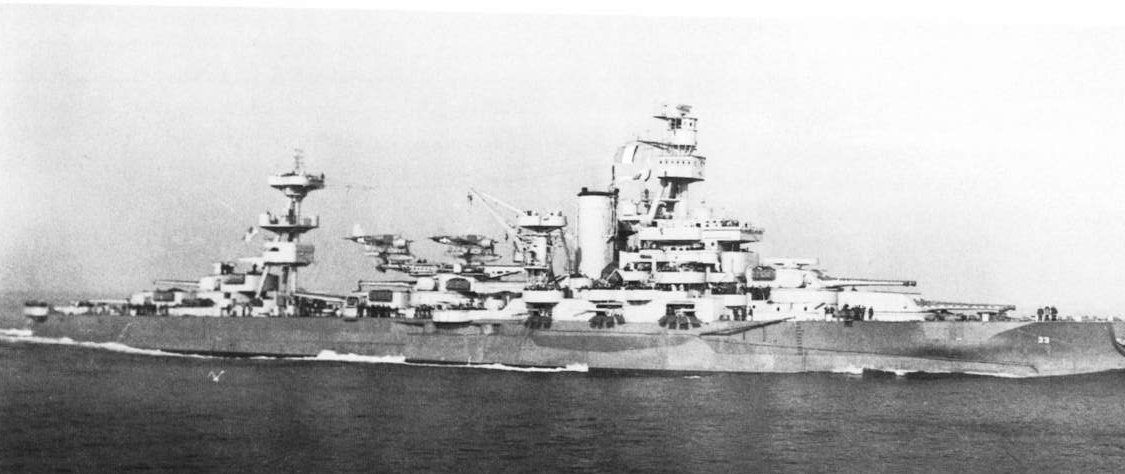
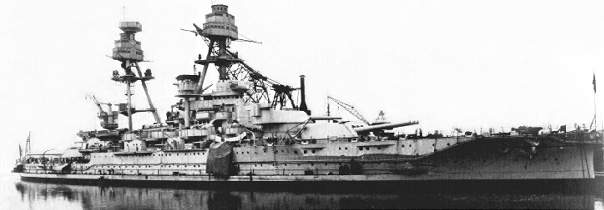
New Mexico BB-40 in 1930 before moderization

The Battleships of the Nevada and Pennsylvania classes had established American ship design as second to none in 1916.  At the same time the US Navy was planning advances in engineering systems that would change naval engineering forever.

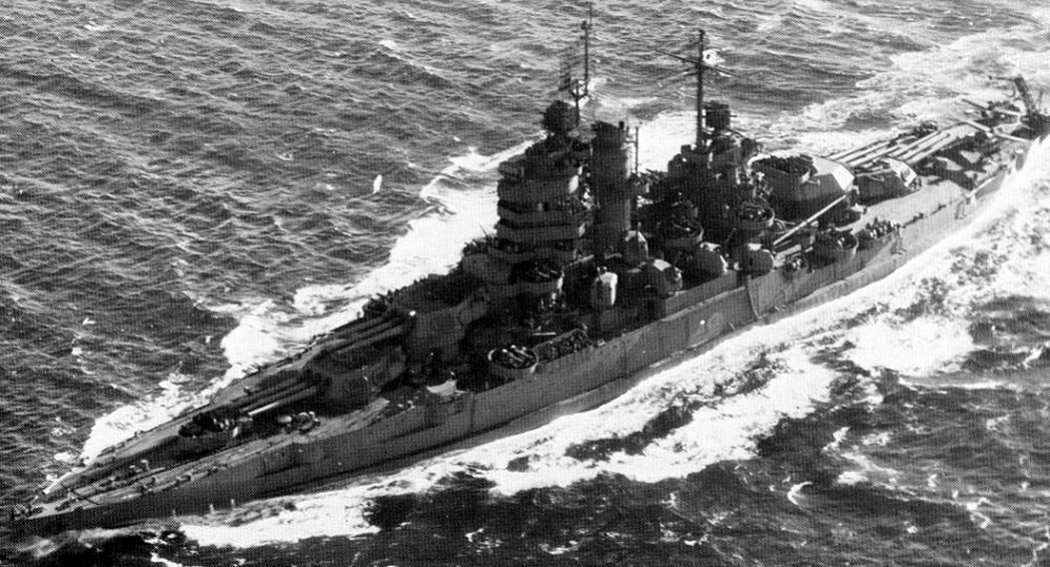
Idaho  BB-42 in 1931 after modernization

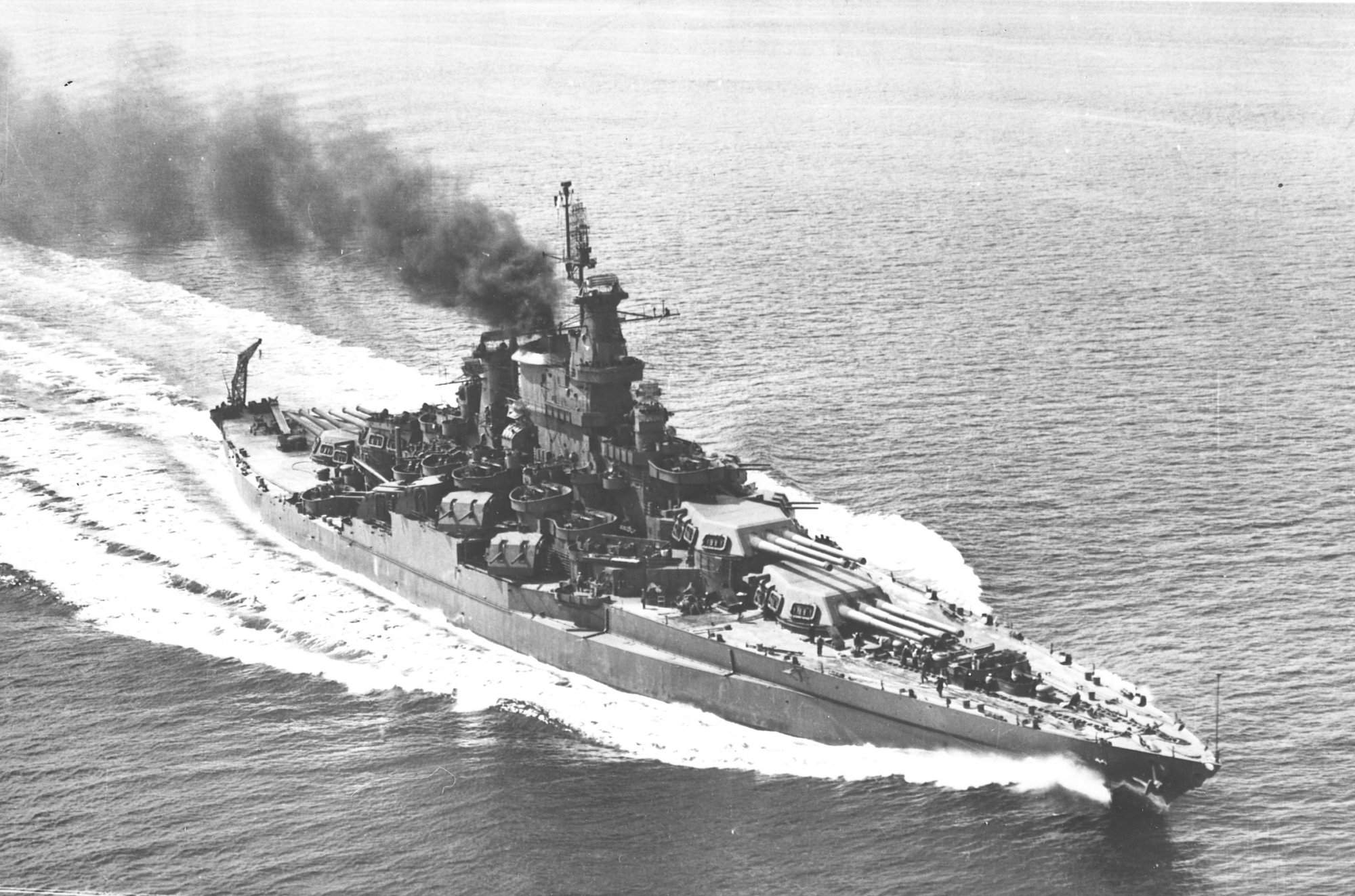
The ships of the New Mexico class were improvements on the preceding Nevada and Pennsylvania class half sisters.  Their hull was lengthened and beam increased. Additionally the new class was given a clipper bow to improve sea keeping capabilities.  While they maintained the same main battery layout of four turrets mounting three 14” guns each, however the guns were a higher caliber 14”/50 models that would also be mounted on the California class.  The New Mexico was also the test bed for a new power plant which featured General Electric geared turbines with electric drive which would be standard on succeeding classes of battleships as well as carriers, cruisers and destroyers.  The Mississippi and Idaho retained the older geared turbine design. The practical effect was that the New Mexico required less horsepower to attain the same speeds as the earlier design turbines.

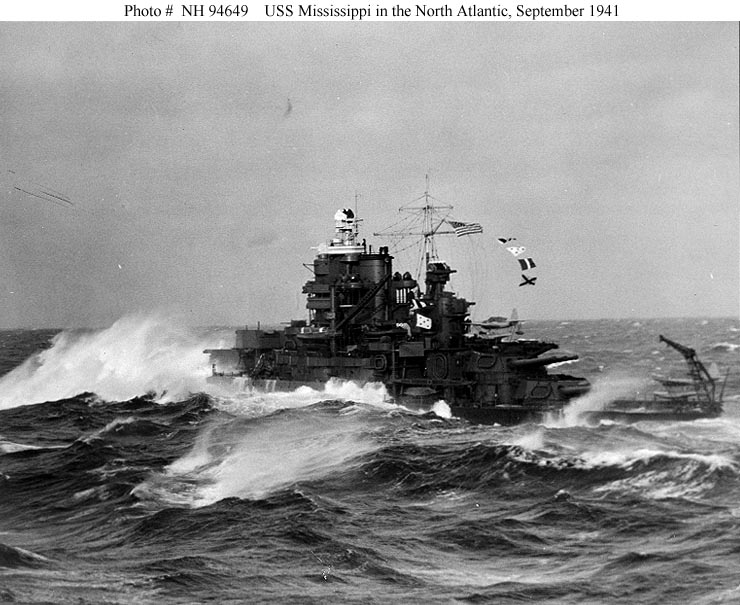
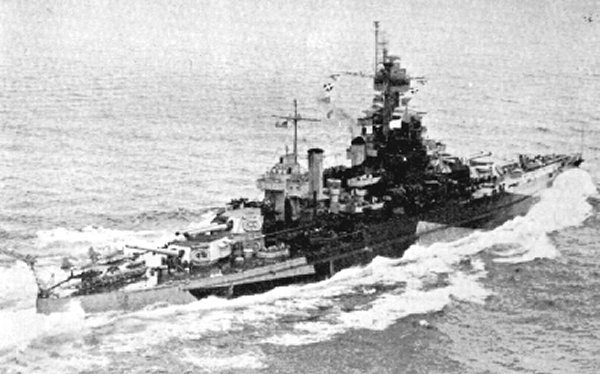
USS Mississippi BB-41 in the North Atlantic September 1941

Displacing 32,000 tons the ships were slightly larger than their predecessors.  New Mexico was launched on 23 April 1917 and commissioned on May 18th 1918.  Her sisters Mississippi and Idaho were actually launched and commissioned sooner being launched on January 25th 1917 and commissioned on December 18th 1917.  None of the ships saw action in the First World War and in 1919 the three would become the nucleus of the newly formed Pacific Fleet. They would serve in the Pacific but conduct exercises with the Atlantic Fleet in the Pacific as well as the Atlantic and Caribbean.  All three were modernized in the early 1930s receiving improvements in armor protection, anti-torpedo blisters, a modernized bridge structure to replace their cage masts, improvements to machinery and their secondary armament.

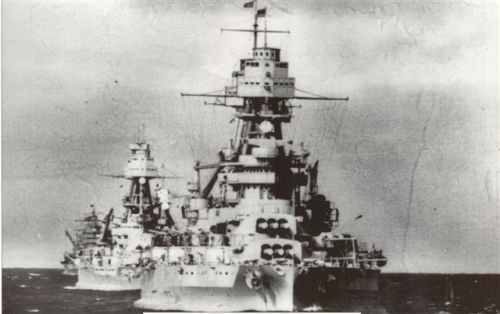
The Three Sister Moored Together, Late 1943

They would return to the Pacific but with the outbreak of war in Europe the three ships were transferred to the Atlantic Fleet where they took part in the Neutrality Patrol. When Pearl Harbor was attacked the three sisters went back to the Pacific where they spent much of 1942 escorting convoys and being prepared to repel any Japanese assault on the US Mainland.  In April 1943 they took part in the Aleutian campaign and the assaults on Attu and Kiska.  They would then sail to the Central Pacific where the provided support to the invasions of the Gilberts, Marshalls and Marianas islands by protecting the transports and providing naval gunfire support to Marines ashore.

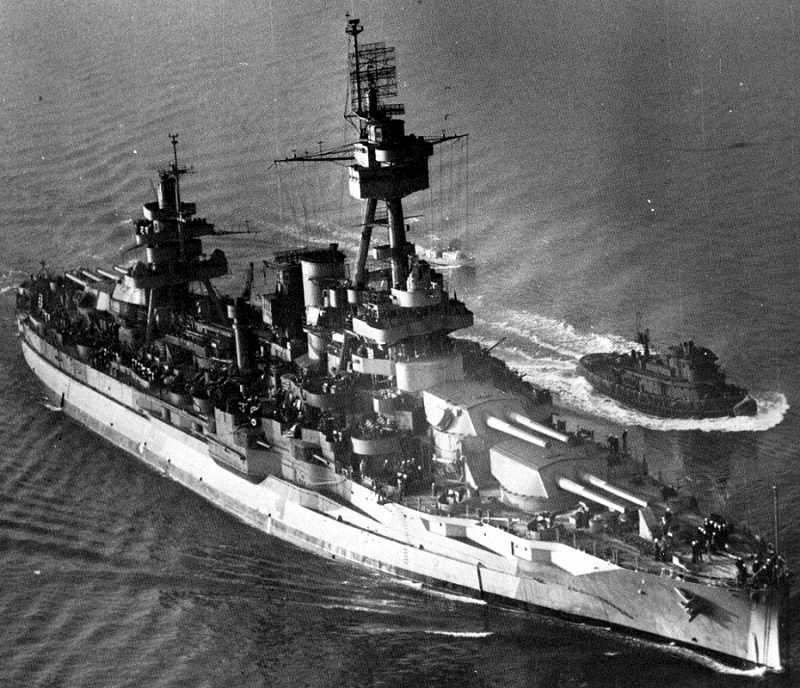
Idaho in her final 1945 configuration. Note the 5″/38 DP Guns in single enclosed mounts used by US Fletcher Class DDs. The Idaho was the only Battleship to have this type of 5″ mount

The three would again operate together during the invasion of the Philippines where the Mississippi served with other battleships of the 7th Fleet’s battle line under Rear Admiral Jesse Oldenforf at the Battle of Surigo Strait where they annihilated a Japanese force including the battleships Fuso and Yamisharo.   Both Mississippi and New Mexico were damaged by Kamikaze hits in Philippine waters, the New Mexico taking a hit on her bridge which killed her Captain and 27 crewmembers.  Both would require repairs and both would miss the invasion of Iwo Jima which Idaho took part in.  The three joined forces again at Okinawa where they provided fire support to Marines and Soldiers ashore.  They would serve until the end of the war in the Pacific and take part in Operation Magic Carpet to return military personnel from the Pacific to the United States.

Idaho at Okinawa

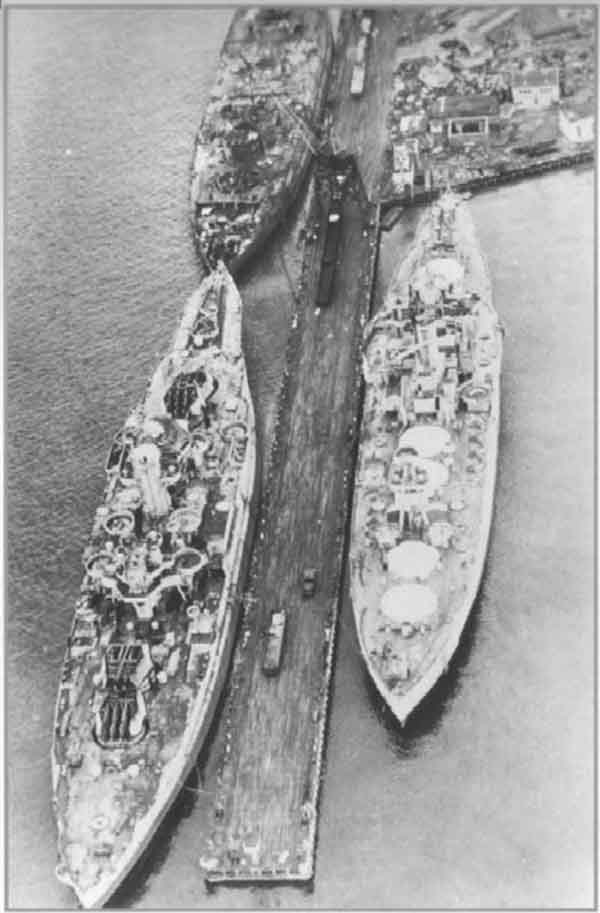
Following the war the New Mexico and Idaho were decommissioned and sold for scrap in 1948.  Mississippi however was converted into a gunnery training ship and reclassified as AG-128.

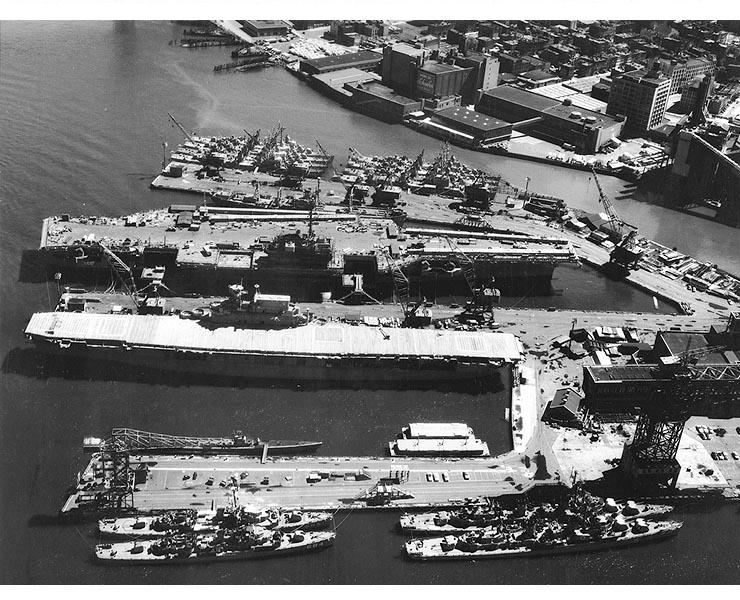
Idaho (lower left) New Mexico (top left) and Wyoming being scrapped at Newark NJ 1948

In this capacity she served as a test bed for new weapons including the Terrier guided missile systems which would be mounted on the first generation of US Navy Guided Missile Cruisers.   She was decommissioned in 1956 and sold for scrap after an abortive attempt by the state of Mississippi to acquire her as a memorial ship.

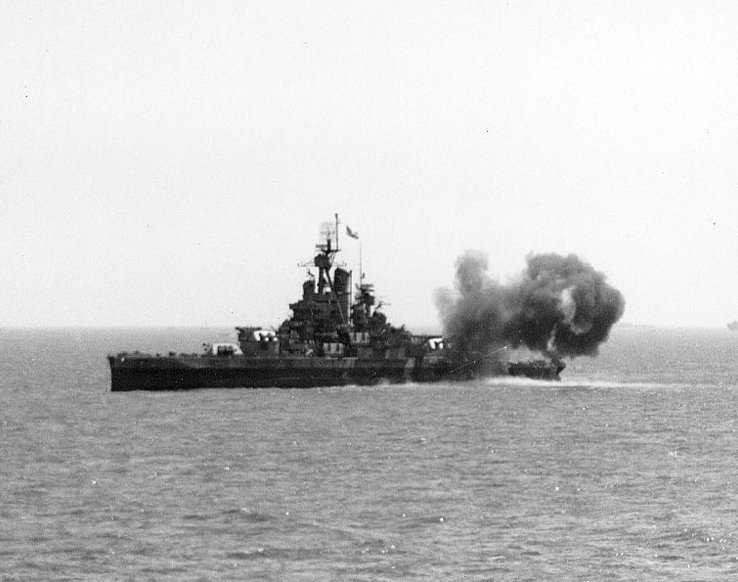
USS Mississippi AG-128 firing Terrier Missiles

The ships provided valuable service during the Second World War and the technical innovations in propulsion and protection would become standard in subsequent classes of US Navy battleships.  Additionally the post war service of the Mississippi helped propel the Navy into the missile era helping to build a foundation that is in evidence today in the Ticonderoga Class Guided Missile Cruisers and Arleigh Burke class Guided Missile Destroyers and their Aegis air defense and ballistic missile defense systems.  The ships of the New Mexico class and their stalwart crews should not be forgotten.

7 Comments

Filed under History, Military, Navy Ships, world war two in the pacific

The Battle Fleet that Never Was: The USS Washington, the South Dakota Class and the Lexington Class Battle Cruisers

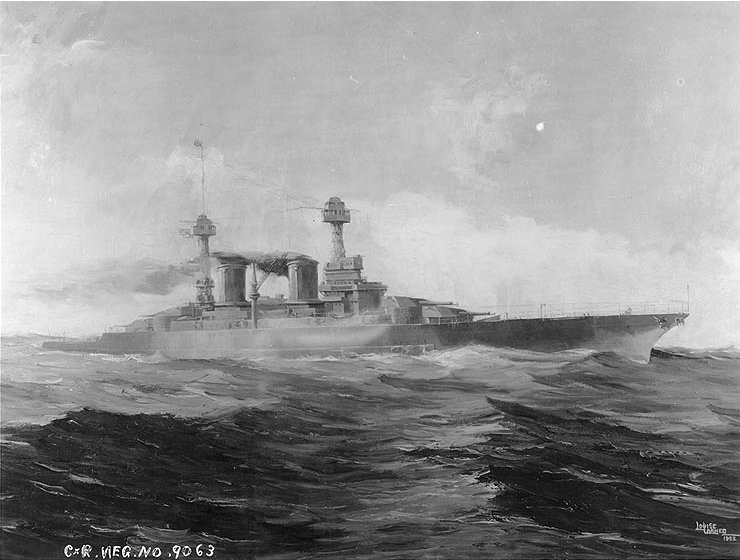
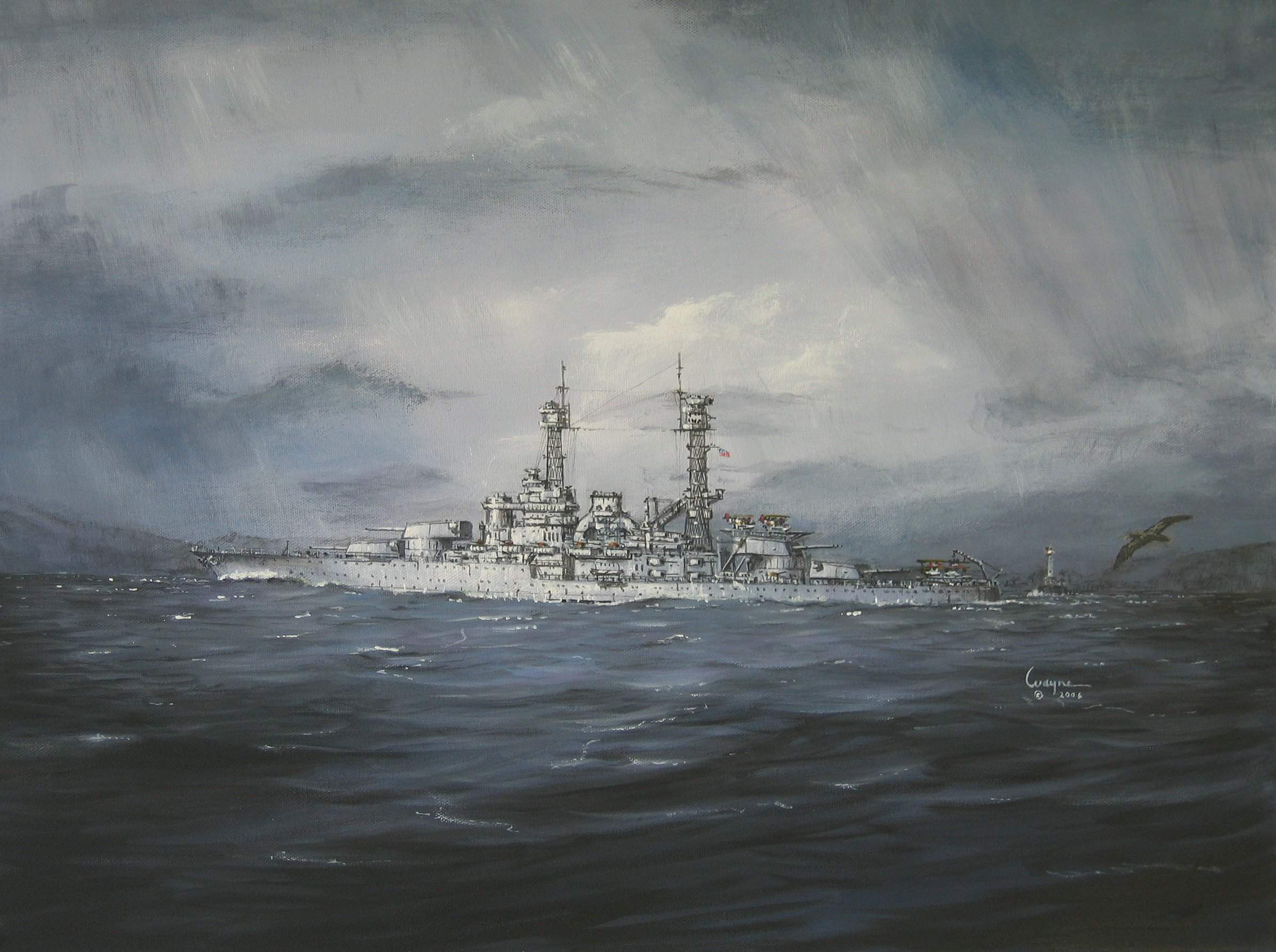
Artist depiction of the Lexington as Battle Cruiser

Note: This is the first of a series of articles on what might have happened if the Washington Naval Treaty had not been signed. This article is a look at the American fleet that never was, the following articles will be in the alternative history genre looking at a war breaking out in the Pacific in 1937.

Historians almost always muse on what might have been.  One of the most significant events of the years following the First World War was the Washington Naval Conference and Treaty. The treaty called by the President Harding and conducted under the auspices of the League of Nations was the first international disarmament conference and attended by none nations having interests in the Pacific. The major players in the conference from the naval power perspective were the British, Americans, Japanese, French and Italians.  Each nation had an agenda for the conference, for the United States it was to break the Anglo-Japanese naval accord and to limit the Japanese naval build up.  The British, exhausted and financially reeling from the effects of the First World War had a number of goals.  Though they had the largest navy and the most Dreadnaught type battleships and battle cruisers of any Navy many of its ships were obsolete or worn out from wartime service.  They had little capital to put into new ship construction, especially considering the vast resources of the United States which was already well into a vast naval buildup including ships that would be among the largest and most heavily armed in the world.  It was in the interest of Britain to limit the both the number, tonnage and armament of these ships.

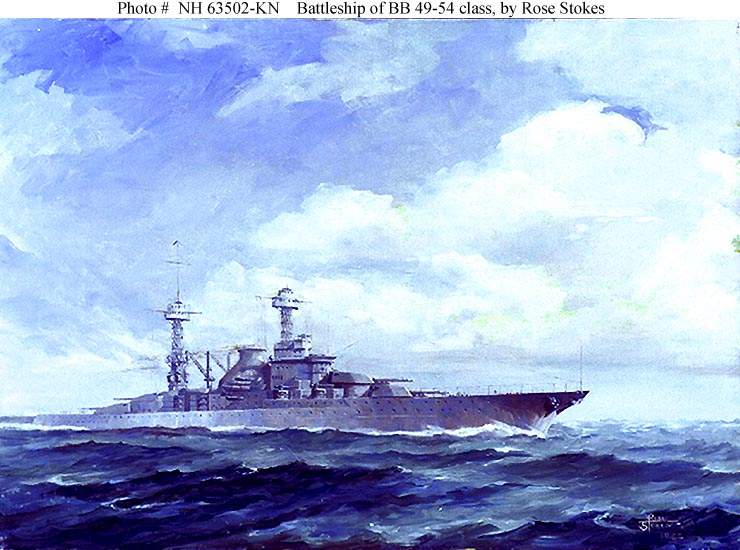
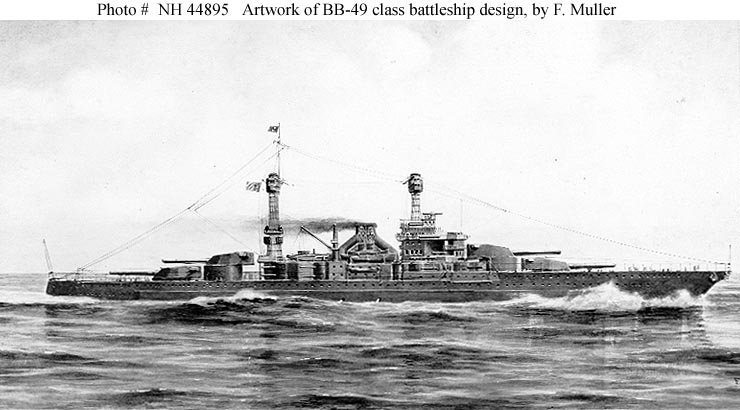
Artist impression of South Dakota Class

The treaty which was ratified in 1922 limited the United States and Great Britain to a maximum of 525,000 tons in their battle ship fleets and 125,000 tons in aircraft carriers.  The Japanese agreed to a limit of 315,000 tons and the French and Italians 175,000 tons each.  Tonnage for battleships was limited to a maximum of 35,000 tons with a limitation on guns size to 16 inches.  Since the bulk of the ships planned or being built by the US and Japan exceeded those limits they would be effected more than the British whose post war shipbuilding program had not begun in earnest. For the US this had a dramatic effect on its planned fleet, which if built would have become the dominant Navy of the 1920s and 1930s.  It is fascinating to think what might have happened if the treaty had not been signed and what the battle fleets of the various nations would have looked like in 1941 had war not come sooner.

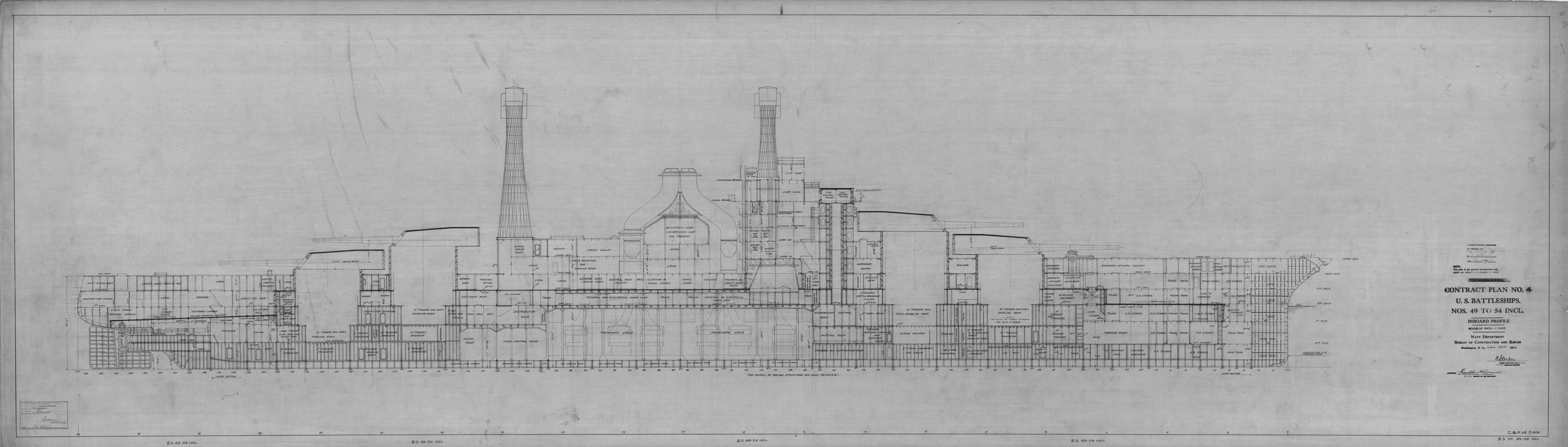
Plans for South Dakota Class

The American Navy went to war in 1941 with 18 battleships, the most modern of which were the new North Carolina and Washington and the rest averaging over 20 years old in 1941. The most modern of these ships were the Colorado class composed of the Colorado, Maryland and West Virginia each mounting eight 16”/50 guns.  The fourth ship of the class the Washington was sunk as a gunnery target when 75% complete under the terms of the Washington Naval Treaty.

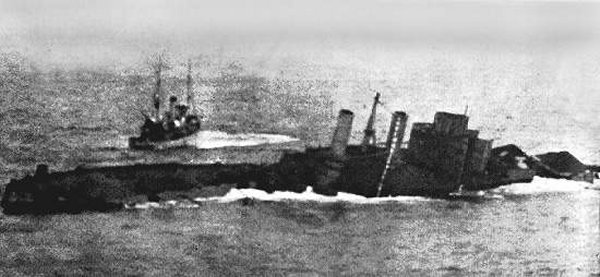
The incomplete USS Washington sinking

However it was a battle force that could have been much larger and far more capable, a force that may not been regulated to convoy escort duties and shore bombardment but instead may have taken on the Imperial Navy on the high seas in battleship combat not seen since Jutland.  Yet this was not to be, the great fleet of super-battleships was never built and only two hulls completed the Lexington and Saratoga which instead of being completed as battle cruisers were completed as aircraft carriers.

Artist impression of South Dakota Class

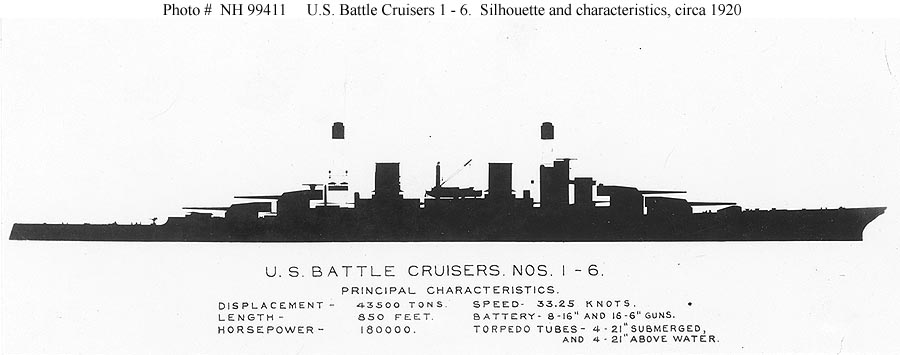
The Americans had set out to build the largest, most modern and powerful battleships and battle cruisers afloat.  The Navy had already produced the Colorado class super-dreadnaughts which were equal to or superior to any battleships of their era.  The Navy planned for a class of six battle cruisers which would be superior to any similar ship afloat, the Lexington class and a class of six battleships, the South Dakota class mounting twelve 16”/50 guns in triple turrets.

Artist impression of South Dakota Class as they might have appeared in 1938

The two classes were leviathans and to counter them the British made plans for a four ship 48,000 ton class of battleships, the N3 project mounting nine 18” guns and a class of battle cruisers mounting nine 16” guns.  The ships of both classes were designed with their main battery mounted forward in order to save weight on armor.  Both classes were canceled with the signing of the treaty and none were laid down.  It is suggested by some that the G3 battle cruiser design was a ploy to get the United States to agree to the cancellation of its capital ship projects. The guns planned for the G3 class were mounted on the Nelson class battleships which complied with treaty limits.  Although powerful ships they suffered from engineering problems which often reduced their speed from what was designed.  Along with the HMS Hood, the sole ship completed of the four ship Admiral class the Nelson and Rodney were the most modern battleships in the Royal Navy until the King George V class entered service in 1941.  The Japanese planned for eight battleships and eight battle cruisers centered on the two existing Nagato class battleships and 4 Kongo class battle cruisers to be joined by the two ship 40,000 ton Tosa class battleships, the Tosa and the Kaga, of which Kaga was completed as an aircraft carrier. They were to be joined by the 4 improved Tosa class or Kii class fast battleships of 42,000 which were ordered but never laid down.  These were to be joined by the four ship Amagi class battle cruiser class.  Amagi was destroyed during the Tokyo earthquake of 1922 and scrapped and Akagi completed as an aircraft carrier.  All of the planned Japanese ships were to mount ten 16” guns in five twin turrets.

Lexington Class final design drawing

The American ships were to be powerful and based on main battery, protection and speed they would have acquitted themselves well had they been built.  The Japanese ships would have had a speed advantage over the South Dakota’s but this would have been offset by the gun power and protection of the latter.  The American Lexington class would have been faster than any of their competitors.

South Dakota Class Design Specifications
Displacement: 43,200 tons normal
Dimensions: 684 x 106 x 33 feet/208.5 x 32.3 x 10.1 meters
Propulsion: Turbo-electric, 12 285 boilers, 4 shafts, 50,000 shp, 23 knots
Crew: 1191
Armor: 8-13.5 inch belt, 3.5 inch deck, 4.5-13.5 inch barbettes, 5-18 inch turrets, 8-16 inch CT
Aviation: none
Armament: 4 triple 16″/50cal, 16 6″/53cal, 8 3″/50cal AA, 2 21 inch torpedo tubes (submerged)

The six ships in the Class, South Dakota, Indiana, Montana, North Carolina, Iowa and Massachusetts were all scrapped in accordance with the treaty when partially complete, the North Carolina being in the most advanced stage of construction, 37.8% when construction was halted.

Lexington class Battle Cruiser Design Specifications

Displacement 43,500 Tons, Dimensions, 874′ (oa) x 105′ 5″ x 31′ (max).
Armament 8 x 16″/50 16 x 6″/53 4 x 3″8 x 21″ torpedo tubes
Machinery, 180,000 SHP; G.E. Geared Turbines with Electric Drive, 4 screws
Speed, 35 Knots, Crew 1500

The ships with the exception of the Lexington and Saratoga were scrapped incomplete.  All were to be named after famous warships or battles, and the Constellation, Constitution, Ranger and the United States were to be named after some of the most illustrious ships ever to serve in the US Navy.

If all of the ships, including the Washington of the Colorado class been completed the US Navy would have had eight battleships and six battle cruisers mounting 16 inch guns to compliment the nine battleships of the Nevada, Pennsylvania, New Mexico and California classes which all mounted 14 inch batteries.  The fleet would have been superior to either the Royal Navy or the Imperial Japanese Navy even with the ships planned by those navies.  Economically the United States was the only nation in the world capable of sustaining a naval arms race of this magnitude, the British economy and political will would have been unable to sustain it and the limited industrial capacity and dependence on the United States for raw materials and machine tools needed to construct their ships would have limited their ability to produce such a fleet. Without the conversion of the Lexington, Saratoga and their Japanese counterparts the Akagi and Kaga into aircraft carriers the development of the carrier would likely have gone slower and that type of ship may not have risen to the prominence that they gained during the Second World War.

8 Comments

Filed under History, Military, Navy Ships

The Oldest Ladies…Battleships USS Arkansas, New York and Texas

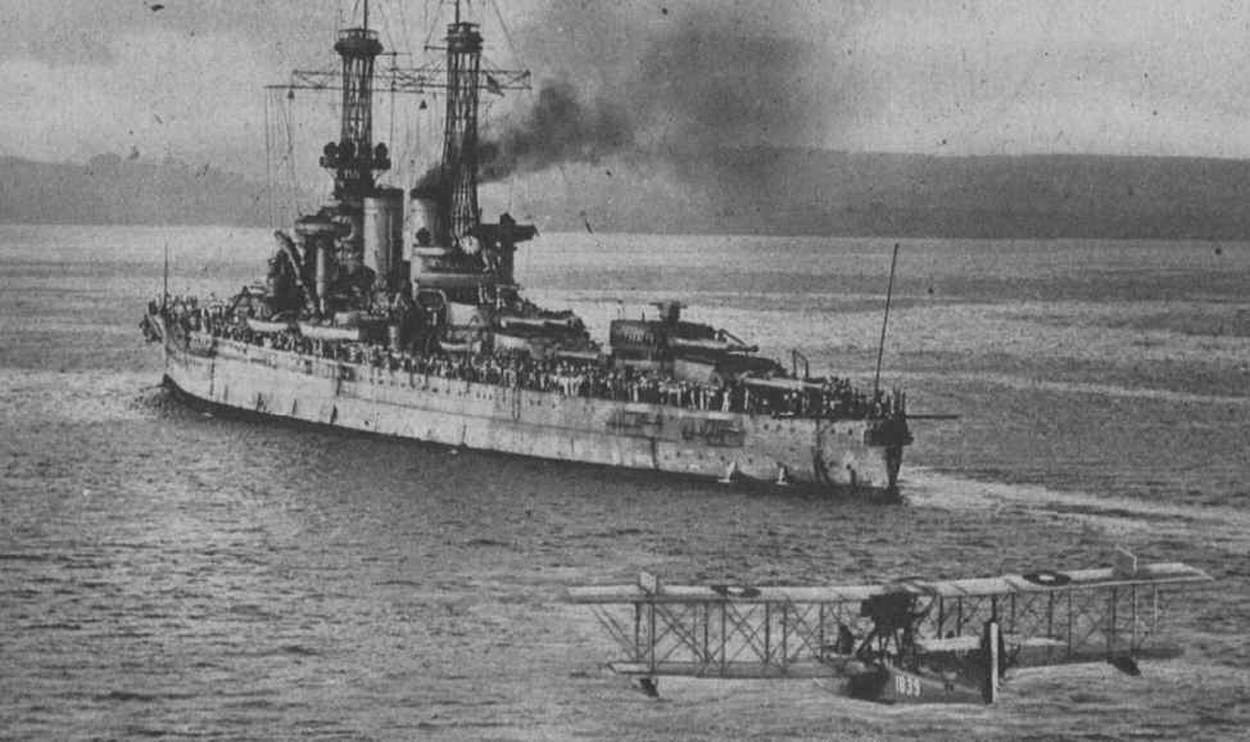
USS Arkansas 1919

Note: This is the second of my series on US Battleships of World War Two. The First was the essay The Battleships of Pearl Harbor and I will follow this with essays on the New Mexico class, the North Carolina class, the South Dakota class and the Iowa Class. I have published other series on US Aircraft Carriers, the Treaty Cruisers, the Alaska Class Battle Cruisers and the German Battle Bruisers Scharnhorst and Gneisenau.

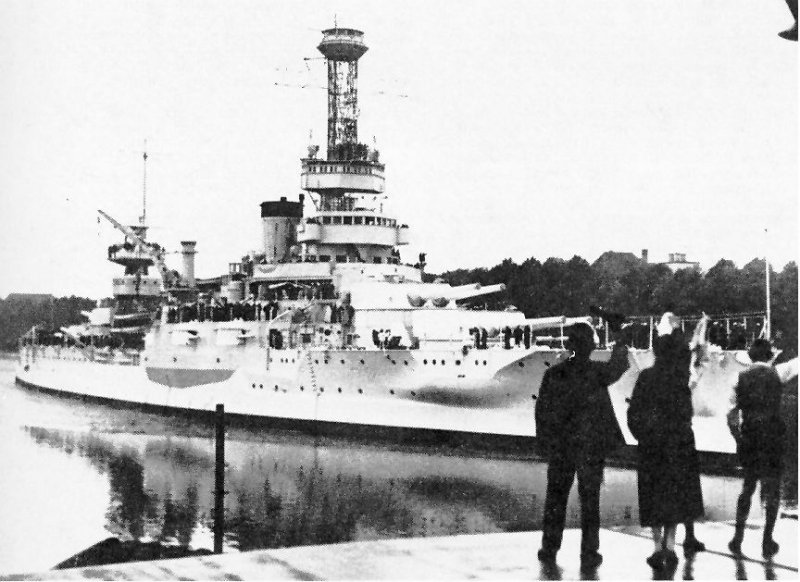
Arkansas Passing through the Kiel Canal on Midshipman Training Cruise June 6th 1937

When the United States entered the Second World War the average age of its battleship fleet was over years, an age that if the new North Carolina and Washington were omitted would have been well over 23 years old.  Two former battleships, the Utah and Wyoming had been demilitarized and were serving as gunnery training ships. The oldest of these ships, the Arkansas, the second ship of the Wyoming class was commissioned well before the First World War and was typical of ships built in that era comparable to the Italian battleships Conti de Cavour, Giulio Caesar.  The Two ships of the New York Class were improved Wyoming’s with a heavier main battery and better protection and were comparable to the Japanese Fuso class and British Royal Sovereign class ships.

Arkansas 1944

The oldest and also the smallest battleship in service in 1941 was the USS Arkansas. Displacing 26,000 tons and sporting a main battery of twelve 12”/50 guns in twin turrets she was launched on 14 January 1911 and commissioned on 17 September 1912 she first saw service in the Mexican crisis of 1914 and served with the British Home Fleet following the entry of the United States into the war. Between the wars Arkansas severed in both the Atlantic and Pacific and was modernized in 1925 receiving oil fired boilers to replace her coal fired plant. During the inter-war years she was engaged as were most battleships of the era in training exercises, midshipman and Naval Reserve cruises, goodwill visits and in the case of Arkansas work with the Fleet Marine force as it began to develop its amphibious doctrine.

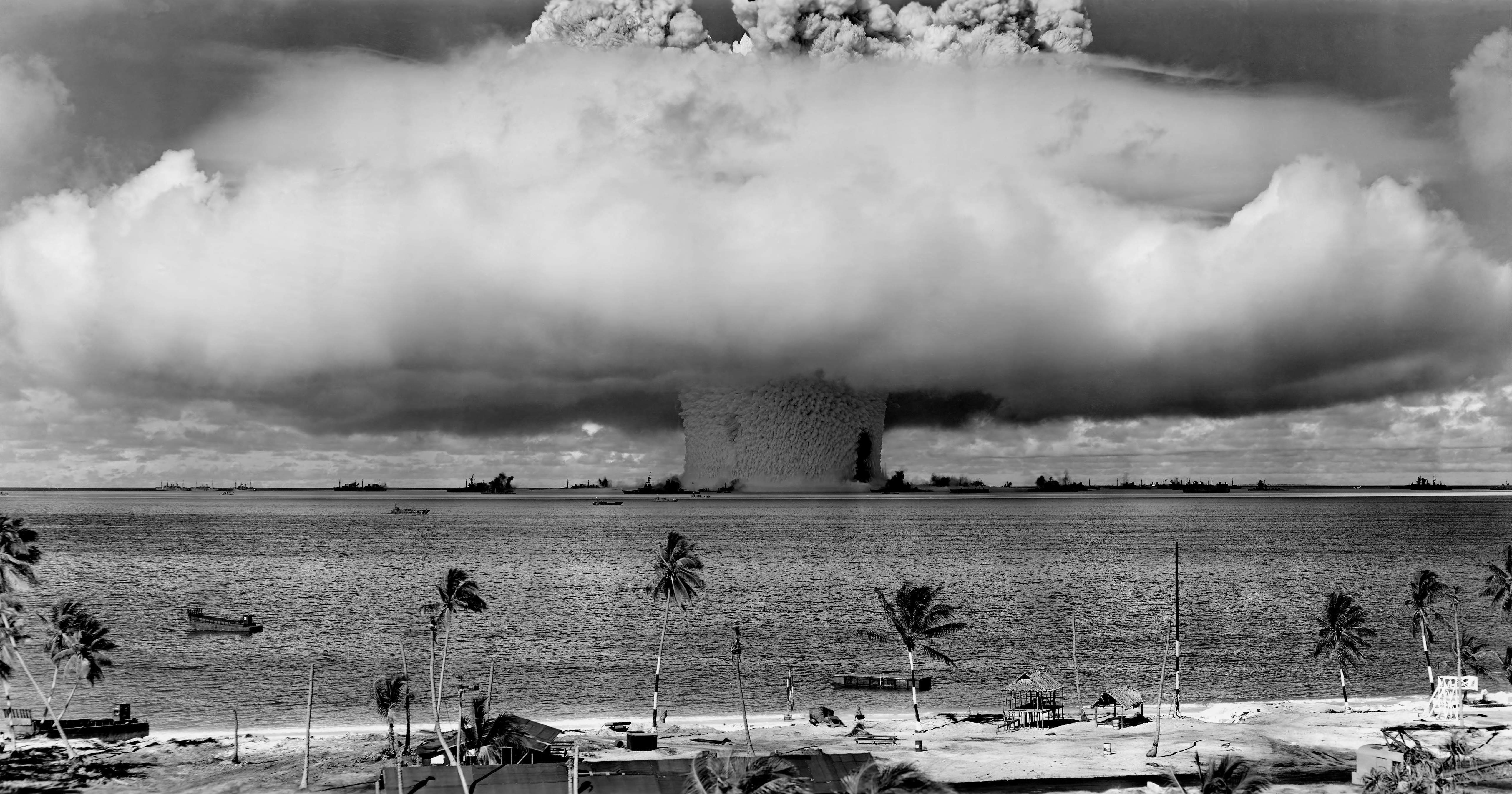
Operation Crossroad, Baker Test note Arkansas standing on end on right side of blast

When war came to Europe in 1939 Arkansas was serving with the Atlantic Fleet and conducted training operations and neutrality patrols.  In April 1941 she escorted the first convoy of Marines to Iceland and following that sailed to Argentia Newfoundland where President Franklin D. Roosevelt was meeting with British Prime Minister Winston Churchill concluding the Atlantic Charter.  Following Pearl Harbor she would primarily serve as a convoy escort and midshipman training vessel until June 6th 1944 where she provided naval gunfire support at Omaha Beach and subsequent support to land operations in Normandy. In August she took part in the invasion of southern France, Operation Anvil before returning the US for repairs and modifications before sailing to the Pacific.  The elderly ship then took part in the battles for Iwo Jima and Okinawa again providing naval gunfire support to Marines and soldiers ashore. She also was introduced to the Kamikaze at Okinawa.   When the war ended she carried returning troops home in “Operation Magic Carpet” and in 1946 she was earmarked for her last mission, Operation Crossroads, the first of the Bikini atomic bomb tests where she was sunk during test Baker on July 25th 1946.   She was anchored very close to the underwater blast and was violently sucked up into the blast where she can be seen standing on end it the picture below.

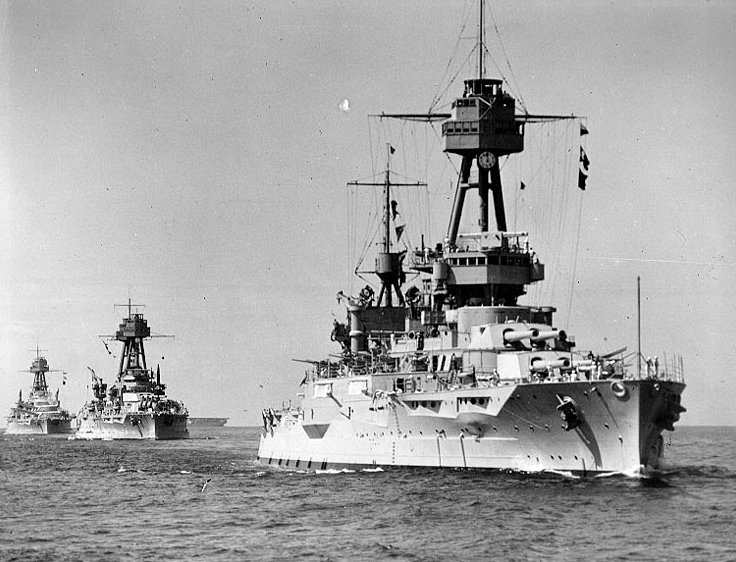
New York 1932 leading the Battle Line

The New York and her sister Texas were the first US Navy battleships armed with 14” guns.  The ships displaced 27,000 tons and mounted ten 14”/45 guns in twin turrets. Launched 30 October 1912 and commissioned April 15th 1914 the New York deployed with the Atlantic battle ship squadrons to Mexico during the crisis at Vera Cruz.  Like Arkansas she joined the American battleship squadron serving with the British Home Fleet in 1917 and served in convoy escort and deterrence missions until the end of the war.  Between the wars New York undertook various training missions and modernizations and was the sole US ship at the 1937 Grand Naval Review for the coronation of King George VI of England.

New York in 1944 departing for the Pacific

As war drew near New York remained engaged in training missions and took part in neutrality patrols and convoy escort missions in the Atlantic.  Following the outbreak of hostilities she would continue these missions and take part in Operation Torch, the invasion of North Africa in November 1942. She continued the vital convoy escort mission until she was withdrawn for service as a gunnery training ship for sailors being assigned to battleships and destroyer escorts.  In November 1944 she was sent to the Pacific where in February 1945 she provided naval gunfire support to the Marines at Iwo Jima. During pre-invasion bombardment she fired more rounds that any of the ships present.

New York at Iwo Jima

Her next action came at Okinawa where she provided 76 straight days of support to Marines and soldiers ashore while fending off kamikaze attacks and taking one minor hit.  She had her guns replaced at Pearl Harbor in preparation for the planned invasion of Japan.  After the cessation of hostilities New York took part in Operation Magic Carpet and took part in Fleet Week in New York.

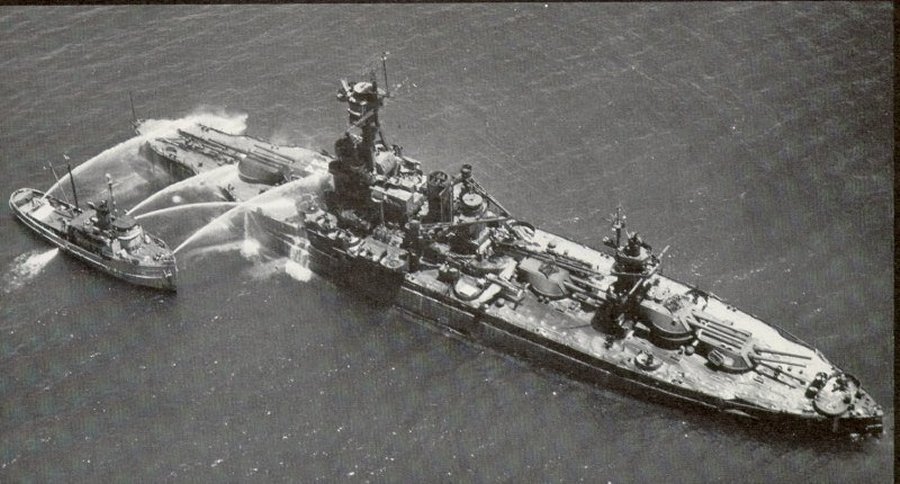
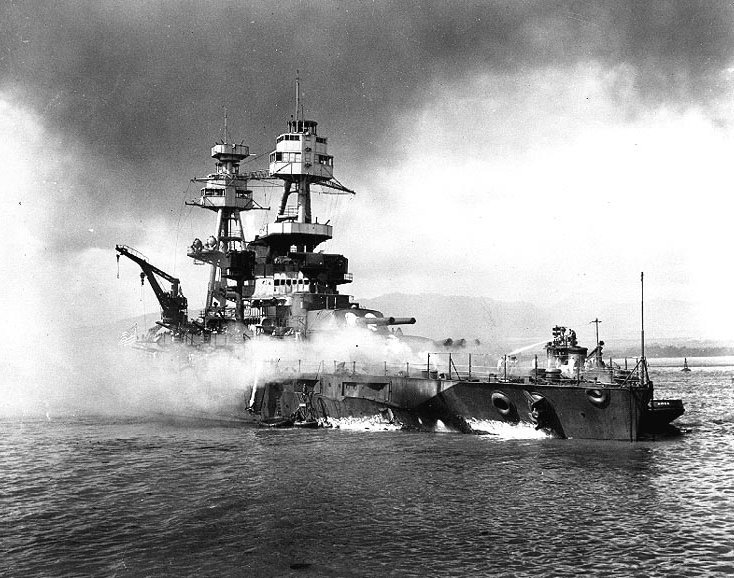
New York receiving anti-radiation wash down after Baker. She has survived the blast in good condition

New York was then assigned to be a target ship in Operation Crossroads where she survived both Test Able and Test Baker.  Towed back to Pearl Harbor for extensive study she was finally expended as a target on July 8th 1948 by the Navy 40 miles off Oahu taking the punishment of a number of ships before sinking after 8 hours under fire.

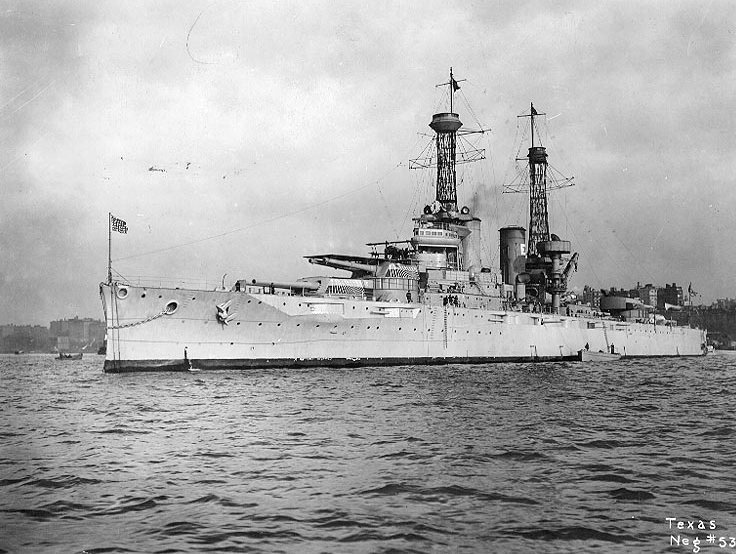
Texas in 1919 note the Battle “E” on her funnel

The Texas was launched on May 18th 1912 and commissioned on March 12th 1914 and within two months was in action with the Atlantic Fleet off Mexico without the benefit of the normal shakedown cruise.

During World War One Texas joined Battleship Division 9 serving alongside the British Home Fleet at Scapa Flow.  In this capacity she took part in convoy escort missions and operations in the North Sea including one where the Home Fleet nearly met the German High Seas Fleet in action.

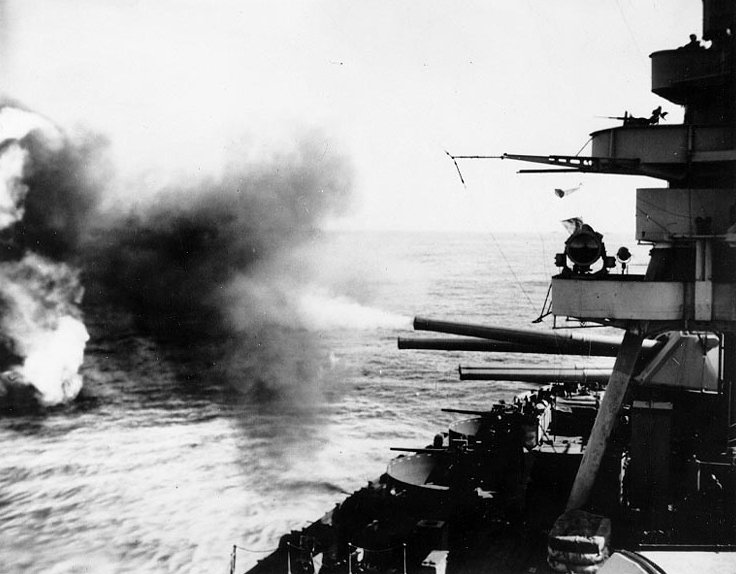
Texas firing her main battery 1927 after her modernization

Between the wars Texas served on both the Atlantic and Pacific Fleets and received a major overhaul in 1925.  Like other ships she engaged in training exercises, midshipman and Naval Reserve training cruises and operations with the Fleet Marine Force.  With the outbreak of hostilities in Europe Texas joined the neutrality patrol.  When the US entered the war Texas served as a convoy escort and participated in Operation Torch.  Her convoy escort duties remained unchanged until she took part in Operation Overlord, the invasion of France and provided gunfire support to Rangers at Point du Hoc and soldiers on Omaha Beach. Closing to within 3000 yards of the beach Texas guns provided direct support to troops on the beach and interdiction fire on German troop concentrations further inland. She continued this following D-Day and while engaged in a duel with heavy German guns near Cherbourg was struck by two 280mm (11.2 inch) shells, one of which struck her on the navigation bridge killing the helmsman and wounding nearly everyone else.   She then sailed into the Mediterranean where she again supported troops ashore lending her weight to the invasion of south France. With that mission completed Texas returned to New York for repairs and to have her main battery guns replaced.

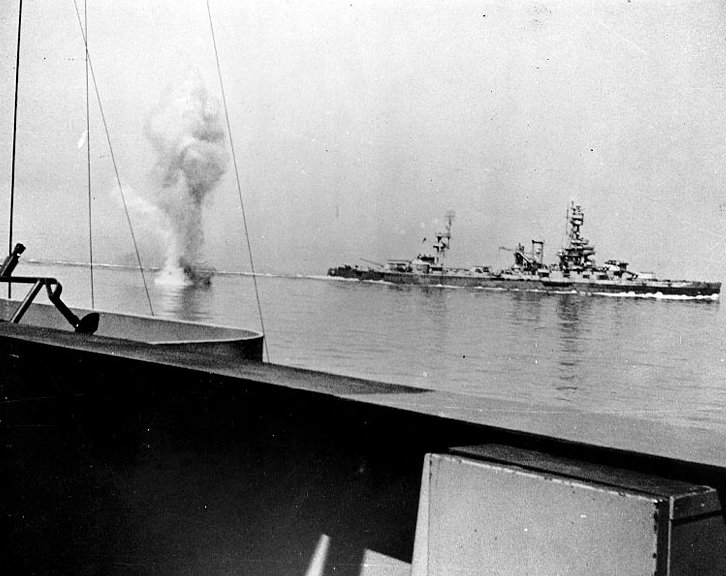
Texas under German Fire off Cherbourg

Reassigned to the Pacific Texas would support the invasion of Iwo Jima and Okinawa where she would remain in action for almost two months.  She finished the war in the Philippines and like so many other ships took part in Operation Magic Carpet. She arrived at Norfolk on February 13th 1946 to prepare for inactivation, but unlike so many other ships was spared the ignominious fate of the scrap yard or that of the New York and Arkansas. She was towed to Texas to serve as a permanent memorial at the San Jacinto battlefield and decommissioned there on April 21st 1948.  She was dry-docked and received a major overhaul in from 1988-90 which restored her to her 1945 appearance and in which major structural repairs were made. Continual restoration is conducted on the ship and there are plans for another major overhaul.  She is the last surviving “Dreadnaught” battleship in the world, a singular example of the great ships that once dominated the seas.

Texas at San Jacinto, the last of the Dreadnaughts

Though obsolete the Arkansas, New York and Texas rendered commendable service throughout the war and took part in some of the key invasions of the war. Their guns inflicted considerable damage on Vichy French, German and Japanese forces in Europe, North Africa and the Pacific.  New York and Arkansas trained thousands of sailors for service aboard other ships.  They performed admirably and their availability to do the less glamorous missions of naval gunfire support, convoy escort and training sailors for the fleet enabled other ships to be available for other missions.  They and the proud Sailors and Marines who served aboard them should never be forgotten.

19 Comments

Filed under History, Military, Navy Ships, US Navy, world war two in europe, world war two in the pacific

Power and Beauty the Battle Cruisers Scharnhorst and Gneisenau

Scharnhorst

The naval architects of Germany in the early 1930s designed some of the most beautiful as well as deadly warships of the Second World War.  Following Germany’s rejection of the provisions of the Treaty of Versailles the Kreigsmarine enacted a building program to enlarge and modernize the German Navy which then was composed of obsolete pre-Dreadnaught battleships and a few modern light cruisers and destroyers.   The first major units constructed were actually begun by the predecessor to the Kreigsmarine, the Reichsmarine of the Weimar Republic.  These were the Deutschland class Armored Ships, sometimes called “Pocket Battleships” and later reclassified as Heavy Cruisers. These ships were designed to replace the old pre-Dreadnaught battleships and incorporated electric welds to reduce displacement, diesel engines for extended cruise range to enable them to serve as commerce raiders and a battery of six 11” guns.  While an advance over anything in the German inventory they were outclassed by the British battle cruisers Hood, Renown and Repulse.

Gneisenau

The next and first truly capital ships built by the Kriegsmarine were the Scharnhorst and Gneisenau battleships which in reality were battle cruisers because of their light main battery of 11” guns as opposed to the 14”, 15” or 16” batteries of other nations battleships.  Despite this in displacement and armor protection of the ships was comparable to other battleships of the era and their designed speed of 31.5 knots was superior to almost all other battleships of the era including the British King George V Class and the US North Carolina class.  Only the British Hood was their superior in speed.

Gneisenau Main Battery

As built they displaced 31,000 toms, however at full combat load they both weighed in at nearly 38,000 tons and were 772 feet long.  They had an armor belt that was nearly 14 inches thick.  Armed with a main battery of nine 11” guns and a secondary armament of twelve 5.9 inch guns they also mounted a powerful for the time anti- aircraft battery of fourteen 4.1 inch guns, 16 37mm and 16 20mm anti-aircraft cannons.  Additionally they mounted six 21” torpedo tubes and carried three Arado 196 A3 scout planes.  The main battery was eventually to be replaced by six 15” guns but this never occurred although Gneisenau was taken in hand to mount the new weapons but the conversion was never completed.

Scharnhorst in Action Against HMS Glorious

Laid down on 15 June 1935 and launched 3 October 1936 Scharnhorst was commissioned 7 January 1939.  Her sister Gneisenau was laid down 6 May 1935, launched 8 December 1936 and commissioned 21 May 1938.  Upon the commencement of the Second World War the two sisters began a reign of destruction on British shipping. In November they sank the Armed Merchant Cruiser HMS Rawalpindi During Operation Weserübung the pair surprised sank the aircraft carrier Glorious and her two escorting destroyers, the only time a Fleet carrier was caught and sunk by battleships during the war.   From January to March 1941 they conducted Operation Berlin against British merchant shipping in the North Atlantic sinking 22 ships before returning to base.

The Channel Dash Seen from Prinz Eugen

While in the port of Brest Gneisenau was bombed and torpedoed requiring extensive repairs.  Due to the exposed location of the port the German high command decided to return the ships to Germany along with the Heavy Cruiser Prinz Eugen.  This was Operation Cerberus and it took place from 11-13 February 1942 and involved the ships making a dash up the English Channel which was unsuccessfully contested by the British Royal Air Force and Royal Navy although both Scharnhorst and Gneisenau were damaged by mines and needed subsequent repairs.  While undergoing repairs in Kiel Gneisenau was further damaged by the Royal Air Force requiring repairs in or to steam to the port of Gotenhafen for repair and conversion.  Although some work was completed she was decommissioned and sunk as a blockship on 23 March 1945.  Following the war she was raised by the Poles and scrapped.

Gneisenau Sunk as Blockship

Scharnhorst was repaired following Operation Cerberes and in March 1943 was transferred to Norway where along with Tirpitz, Admiral Scheer, Lutzow (the former Deutschland), Admiral Hipper and Prinz Eugen she became part of a “fleet in being” poised to strike the Allied convoys bound for Russia. On Christmas Day 1943 under the command of Rear Admiral Erich Bey the Scharnhorst set sail with several destroyers undertook Operation Ostfront and the ensuing battle became known as the Battle of North Cape. This was to be an attack on two Russia bound convoys; however the orders were intercepted and decoded by the British which allowed Scharnhorst to be intercepted by the battleship HMS Duke of York four cruisers and a number of destroyers as she closed with the convoy after Bey had detached his escorting destroyers.  While attempting to escape she received damage that impacted her speed and maneuvering capabilities and was sunk with the loss of all but 36 of her 1968 man crew.  Her wreck was discovered 3 October 2000 some 70 miles north of North Cape Norway.

Thus ended the careers of two of the most beautiful ships to grace the seas, though their careers were short they both survived frequent heavy battle damage to return and fight again.  Perhaps their greatest weakness was the inability of the German Navy to provide them adequate escort and the Luftwaffe being unable to protect them against air strike while in port.

9 Comments

Filed under Military, History, Navy Ships, world war two in europe

They Held the Line: The USS Yorktown CV-5, USS Enterprise CV-6 and USS Hornet CV-8, Part Three the Enterprise

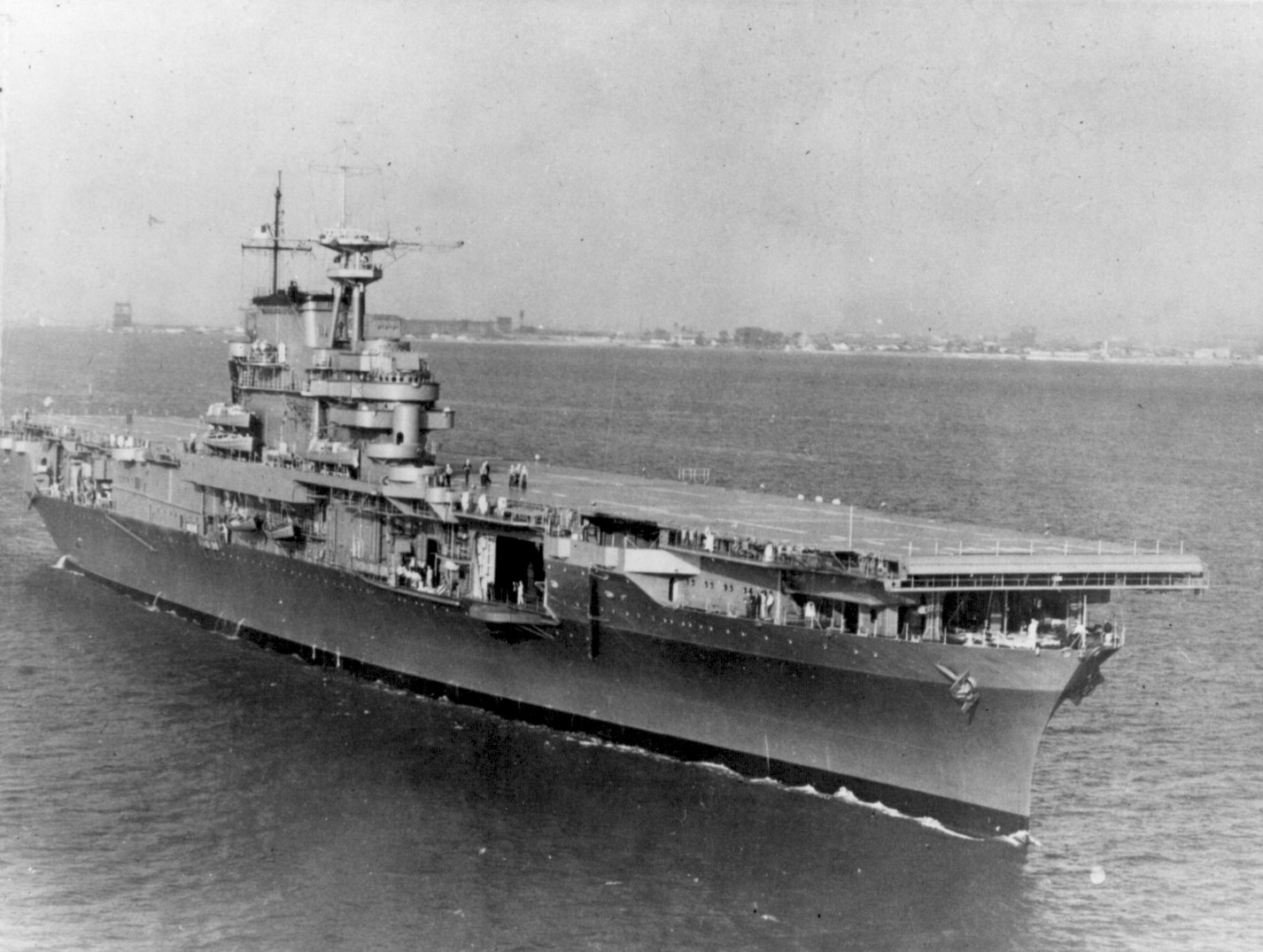
Enterprise CV-6 circa 1940

This is the last of a three part series about the USS Yorktown Class Aircraft Carriers. It is the story of the USS Enterprise CV-6, the legendary “Big E” and possibly the most celebrated American warship of the Second World War.

The USS Enterprise CV-6, the second ship of the Yorktown class was ordered by the Navy on 3 August 1933 as authorized under the National Industrial Recovery Act of 16 June 1933.  She was laid down just under a year later and launched on 3 October 1936 at Newport News Shipbuilding and Drydock Company, Newport News Virginia.  She was commissioned on May 12th 1938 to begin one of the most celebrated careers of any US Navy ship in history.  Displacing 25,500 tons full load Enterprise like her sister ships were designed for fast carrier operation working in conjunction with other carriers not tied to the battle line.  With good protection and speed the Enterprise incorporated the lessons learned in the preceding carriers.

Pre-War photo of Enterprise

After her shakedown cruise she operated in the Atlantic and Caribbean until April 1939 when she was transferred to the Pacific Fleet and based a Pearl Harbor. As the flagship of Task Force 16 under Rear Admiral Bill “Bull” Halsey Enterprise conducted training operations and shuttled aircraft to various US island bases in the Central Pacific one such mission to Wake Island which had her out of Pearl Harbor when the Japanese attacked on December 7th 1941.  Following the attack Enterprise and Task Force 16 would cover the Hawaiian Islands and then be used to conduct raids against Japanese bases in the Marshalls and protect convoys bound for Samoa.

Rare photo of the Enterprise at Midway

In April she escorted the newly arrived USS Hornet CV-8 to conduct the famed “Doolittle Raid” on Tokyo.  Five days after returning to Pearl Harbor Enterprise was dispatched to the Coral Sea but could not arrive before that historic carrier battle.  She returned to Pearl Harbor on May 26th and with Halsey sick departed two days later as flagship of TF-16 under the command of Rear Admiral Raymond A Spruance in company with Hornet, 6 cruisers and 10 destroyers with orders “to hold Midway and inflict maximum damage on the enemy by strong attrition tactics.”

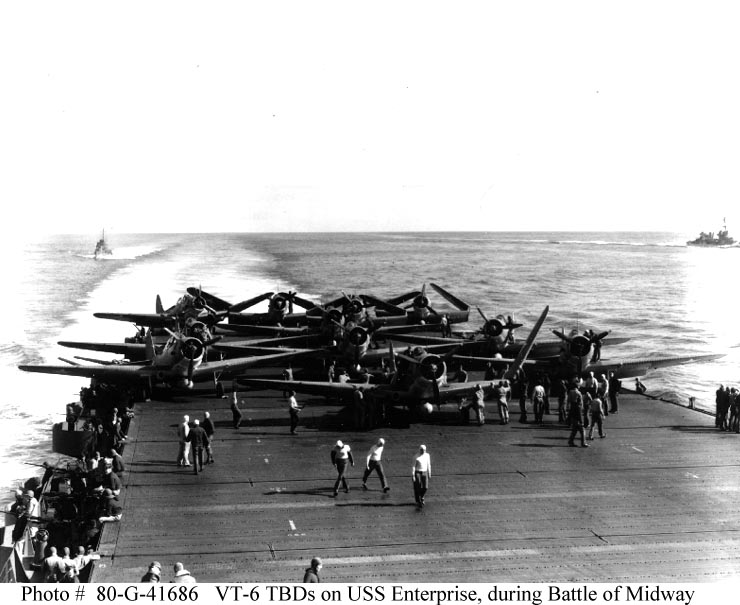
TBD Devastator landign on Enterprise May 1942

They would be joined 2 days later by the hastily repaired USS Yorktown flagship of Rear Admiral Frank “Jack” Fletcher and TF-17 escorted by 2 cruisers and 6 destroyers.  Fletcher the senior officer assumed tactical command of this comparatively small force which represented the bulk of US naval power in the Pacific.

This tiny force would face 4 fleet (CV) and 2 light fleet (CVL) carriers, 7 battleships, 10 heavy (CA) and 2 light (CL) cruisers and 42 destroyers.  Additionally the Japanese had an additional 2 carriers, 4 battleships, 3heavy cruisers 4 light cruisers and 23 destroyers involved in some way the simultaneous invasion of the Aleutian Islands which could be called into the fight if Admiral Yamamoto desired.

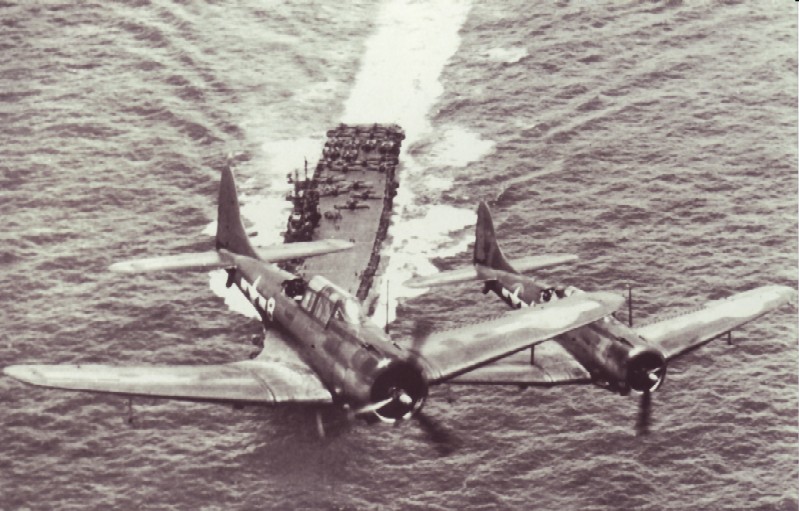
SBD Dauntless Dive Bombers over Enterprise

The Battle of Midway was an epic of warfare and Enterprise and her Air Group 6 would play a pivotal role. Torpedo Six under LCDR Max Leslie in its obsolete, underpowered and under armored TBD Devastators was chopped to pieces as they attempted torpedo attacks on the First Carrier Strike Force of Admiral Nagumo losing 10 of 14 aircraft.  As the gallant air crews of Torpedo Six along with Yorktown’s Torpedo 3 and Hornet’s ill-fated Torpedo Eight made their attacks Bombing Six under the command of CDR Wade McCloskie and Scouting Six under the command of  LT Dick Best attacked and mortally wounded the Japanese Flagship Akagi and the Soryu.  Later in the day aircraft from Enterprise would help sink the Hiryu and the following day helped mortally wound the Heavy Cruiser Mikuma. The Enterprise was not damaged by the Japanese at Midway.

Flight Operations on Enterprise

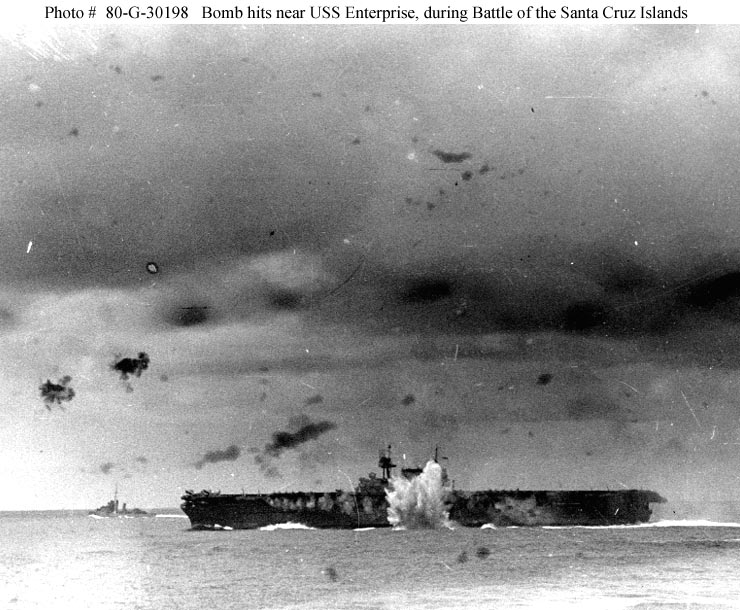
Following the Miracle at Midway the Enterprise took part in the Guadalcanal campaign participating in the invasion as well as the Battles of Santa Cruz and the Eastern Solomons.  In each of these actions she was seriously damaged but her air group was instrumental in the campaign at sea and ashore.   Following the sinking of the Wasp, Hornet and damage to Saratoga Enterprise was the only US carrier in action in the fall of 1942.

Enterprise under attack at the Battle of Santa Cruz Islands

Bomb Explosion on Enterprise at the Battle of Eastern Solomons

In November she took part in the Naval Battle of Guadalcanal where her aircraft helped to finish off the Japanese battleship Hiei and participated in the sinking of 16 Japanese ships including transports which carried troops, equipment and supplies to the Japanese defenders of Guadalcanal. After another 6 months of action in the Solomons supporting the US advance Enterprise returned first to Pearl Harbor at which time she was awarded the Presidential Unit Citation by Admiral Chester Nimitz, the first carrier awarded the citation in the Second World War and then to Bremerton for a badly needed overhaul.

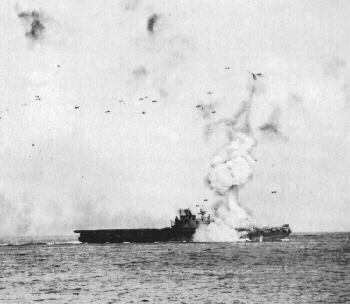
Emterprise struck by Kamikaze

Enterprise was back in action by November 1943 and participated in the US offensives in the Gilberts, Marshalls and the Marianas taking part in numerous raids, support to Marines ashore and in the Battle of the Philippine Sea, the Marianas Turkey Shoot.  After a month long refit at Pearl Harbor she participated in the attacks on the Volcano, Bonin and Palau including strikes on Yap and Ulithi followed by the fast carrier raids on Japanese facilities on Okinawa, Formosa and the Philippines which culminated in her participation in the Battle of Leyte Gulf, the largest naval battle in history.  Her aircraft would participate in strikes on each of the Japanese surface forces hitting battleships, cruisers and other Imperial Navy units in the epic naval battle.

Enterprise made a short return trip to Pearl Harbor in December 1944 where she embarked an air group trained in night operations. Rejoining the fleet she took part in sweeps against Japanese bases, ships and facilities in Indochina, the Philippines, Formosa and Okinawa prior to the invasion of Iwo Jima.

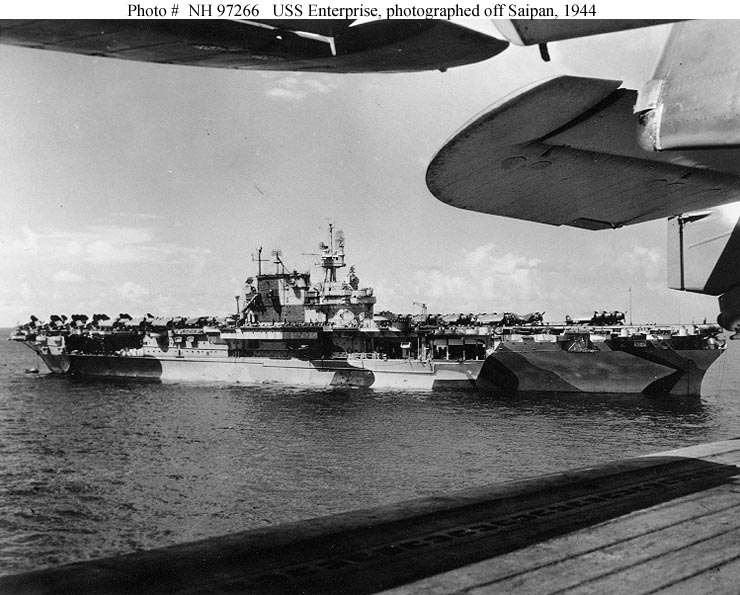
Enterprise at Saipan

During this operation her aircraft worked night and day to provide air strikes and air defense to the fleet.  She then joined the raids against Honshu, Kyushu and the Inland Sea where her aircraft provided night strikes against Japanese targets ashore as well as air defense to fleet units. She was damaged by a Japanese bomb on the 18th of March and on 11 April damaged by Kamikazes off Okinawa and again on 5 May prior to her last wound of the war on 14 May when a Kamikaze struck forward elevator necessitating repairs at Bremerton.

Kamikaze Damage or forward elevator

Returning to the fleet to late for the final actions of the war Enterprise took part in Operation Magic Carpet returning US troops to the United States at the end of hostilities.  She was decommissioned on February 17th 1947.  While she was in reserve the Enterprise was redesignated first as an Attack Aircraft Carrier (CVA), and then as Anti-submarine Carrier (CVS).

Enterprise Fleet Week New York 1945

As the super-carrier entered the scene and the Essex and Midway Classes were modernized to accommodate jet aircraft the Enterprise was determined to be in excess of Navy needs.  Despite attempts by some to save her as a Naval Museum the money could not be raised, even with the support of the dying Fleet Admiral Bill Halsey.  Enterprise which Secretary of the Navy Forrestal said was “the one vessel that most nearly symbolizes the history of the Navy in this war” was sold for scrap on 1 July 1958 and scrapped at Kearney New Jersey from September 1958 to March 1960.  Like so many ships which serve their country so well she was casually disposed of by a nation which had forgotten its past.

Enterprise alongside new CVA 1958

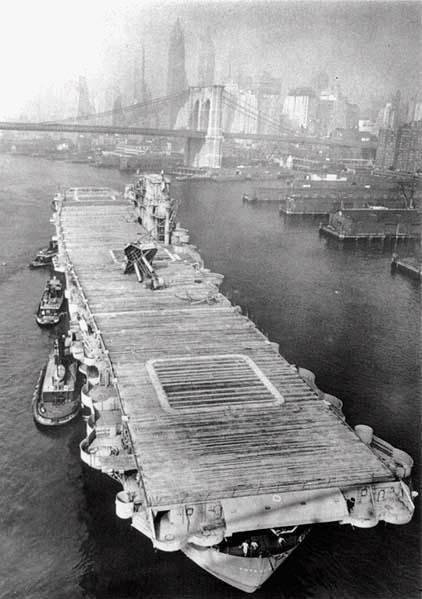
Enterprise on the way to the breakers

Enterprise was the only ship to receive both the Presidential and Naval Unit Citations for her service in World War Two and she was awarded the Asiatic-Pacific Campaign Medal with 20 battle stars.  Her place in the carrier force would be taken by a new Enterprise, CVN-65, the First Nuclear carrier which after nearly 50 years of service is still in commission. The Enterprise is so significant that her legacy continues in Hollywood Science fiction in the various Star Trek series as the Federation Starship Enterprise NCC-1701, 1701-A, 1701-B, 1701-D and 1701-E, so much so that NASA named the first experimental Space Shuttle Enterprise.

Never Forgotten USS Enterprise NCC-1701-B

2 Comments

Filed under History, Navy Ships, world war two in the pacific

The Alaska Class Battle Cruisers: The Last of the Line

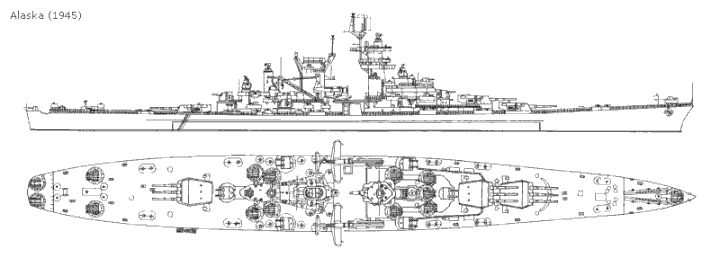
Line drawing of Alaska in 1945

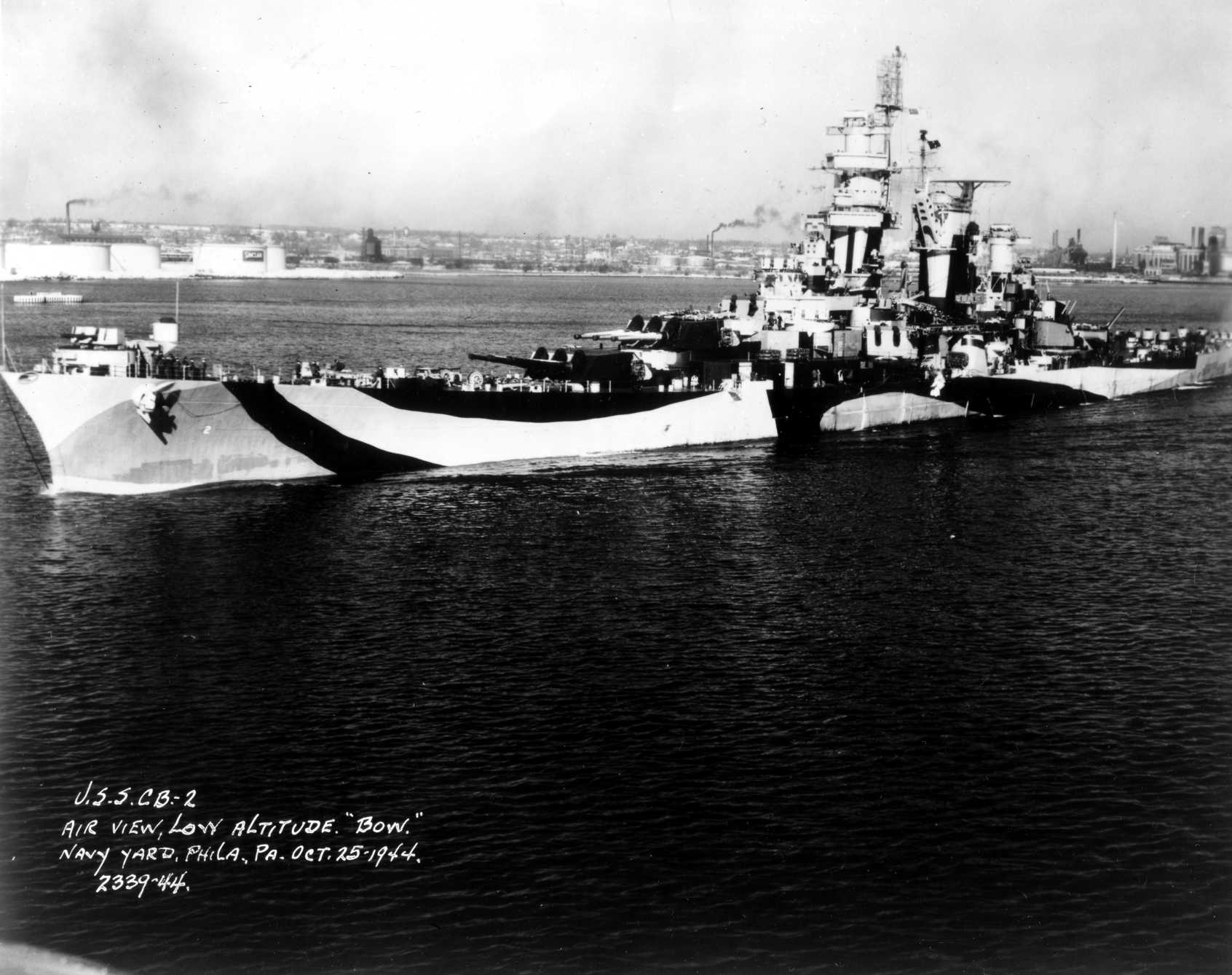
The three ships of the Alaska Class though classed as “Large Cruisers” by the US Navy were actually the last Battle Cruisers designed, built and put into operation by any Navy.  Designed as a counter to the German Scharnhorst and Gneisenau which in 1939 and 1940 had created havoc in the Atlantic raiding convoys and sinking the Royal Navy Aircraft Carrier Courageous, the ships were 809 feet long and 91 feet wide, displaced 27,000 tons, mounted 9 12” guns mounted in three turrets and were capable of 33 knots.  The ships mounted a large anti-aircraft battery of 12 5” 38 Dual Purpose guns, 56 40mm cannon and 34 20mm light anti-aircraft guns.

The Scharnhorst: She and the Gneisenau were the threat that the Alaska’s were designed to counter

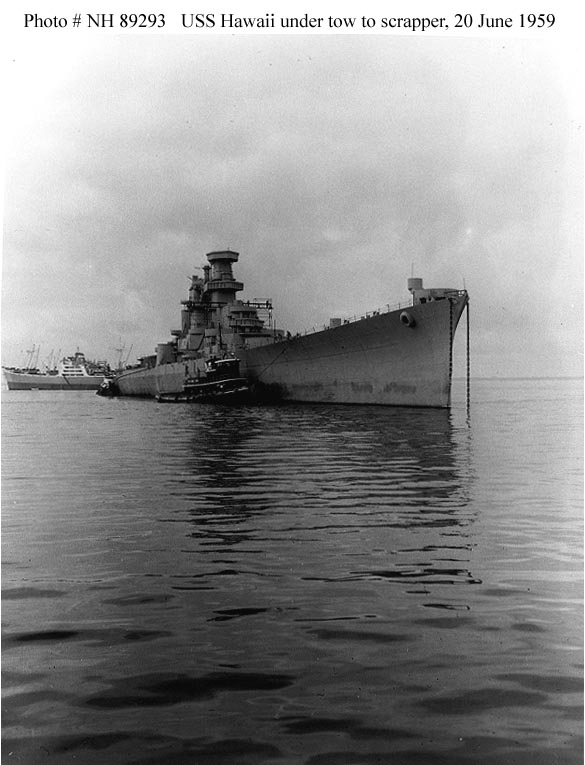
Alaska was laid down in December 1941 shortly after Pearl Harbor, launched 15 August 1943 and commissioned on 17 June 1944. Her sister ship, Guam was launched on 12 November 1943 and commissioned 17 September 1944.  The final ship of the class to be built the Hawaii was launched after the war in November 1945 with her construction halted when she was 84% complete in 1947. Three planned ships, the Philippines, Puerto Rico and Samoa were never laid down.

Aerial View of USS Alaska

While fast and large with more than adequate firepower the purpose that they created for no longer existed by the time that they were commissioned.  The German Scharnhorst had been sunk by a 12 ship British task force led by the HMS Duke of York on December 26th 1943 after mounting an attack on a Murmansk convoy at the Battle of North Cape.  Her sister Gneisenau had been heavily damaged in the “channel dash” and bombing in Kiel and while being refitted had the work discontinued after the sinking of the Scharnhorst.

The USS Guam in 1945

With their natural opponents no longer a factor in the war the Alaska and Guam were sent to the Pacific where they spent their time escorting fast carrier task forces, conducting naval gunfire support missions off Okinawa and conducting sweeps in Japanese waters as part of the initial blockade of Japan.  Following the war Alaska and Guam were active in Operation Magic Carpet the return of US servicemen from the Far East to the United States. Alaska and Guam decommissioned in February 1947 remaining in reserve until stricken from the Naval List and Alaska was scrapped in 1960 with Guam being scrapped in 1961 each having spent slightly over two years each in active service.   The fate of Hawaii would be debated including plans to complete her as the first guided missile cruiser (CG) and later Command Cruiser (CC).  Neither plan for Hawaii’s conversion and completion came to fruition and she was sold for scrap in 1959.

Incomplete and undervalued the Hawaii being towed to the breakers in 1959

The era of the Battle Cruiser which began with the launching of the HMS Invincible in 1907 and culminated in with launching of the HMS Hood ended with the Alaska Class. In a way it was an ignominious ending with practically unused ships being broken up when they would have been ideally suited for conversion to new missions.

In light of the need for a combination of substantial naval gunfire support on a platform large enough to support the latest air defense and, theater air defense and independent operations with substantial protection it seems to me that a new class of Battle Cruisers, in effect a new Alaska Class would be in order.  tried and true 8″, 12″ or 16″ guns Nuclear powered with the latest in Aegis missile defense systems and their own air group  they would be the most v versatile platform that the Navy has had in decades.

Peace

Steve+

26 Comments

Filed under History, Military, Navy Ships, world war two in europe, world war two in the pacific

They Held the Line: The USS Yorktown CV-5, USS Enterprise CV-6 and USS Hornet CV-8, Part Two the Hornet

USS Hornet CV-8 Building at Newport News VA

This is part two of a three part series about the USS Yorktown Class Aircraft Carriers. Part one serves as an introduction as well as the story of the lead ship of the Class, the USS Yorktown CV-5.  Part One about the Yorktown is located here: https://padresteve.wordpress.com/2009/12/27/they-held-the-line-the-uss-yorktown-cv-5-uss-enterprise-cv-6-and-uss-hornet-cv-8-part-one/

Hornet as Completed off Hampton Roads shortly after Her Commissioning

The USS Hornet CV-8 was the third ship of the Yorktown Class and is sometimes referred to as her own one ship Hornet Class.  Laid down on 25 September1939 under the Naval Expansion act of May 17th 1938, Hornet was part of the pre-war naval build up authorized by President and Congress.  The previous Yorktown design was used to speed construction.  Hornet was slightly modified from her sisters Yorktown and Enterprise being 15 feet longer, 5 feet wider in the beam and displacing about 1000 tons more than her near sisters.  Her anti-aircraft armament was also slightly improved.  As with her near sisters Hornet had good protection except that her underwater protection was weak.  However, as would be born out in combat Hornet like her sisters would prove to be extraordinarily tough.

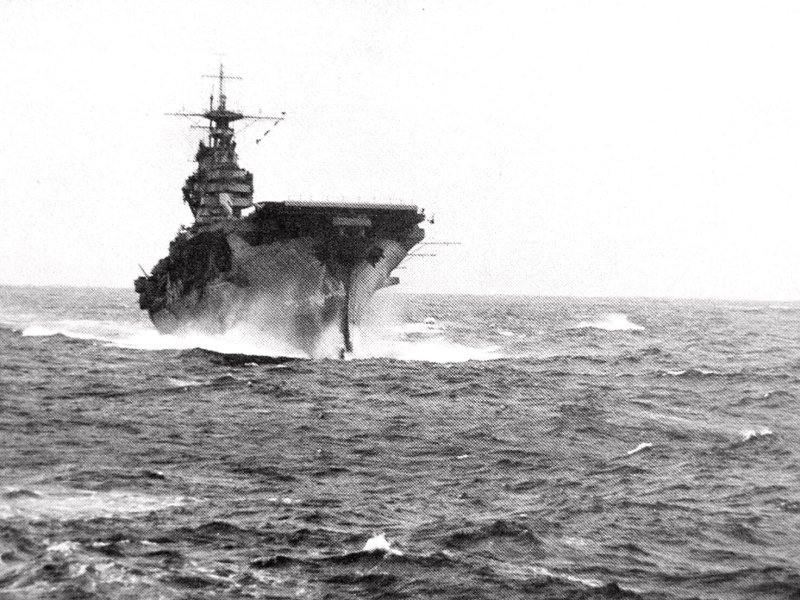
Hornet in Rough Seas Preparing to Launch the Doolittle Raid

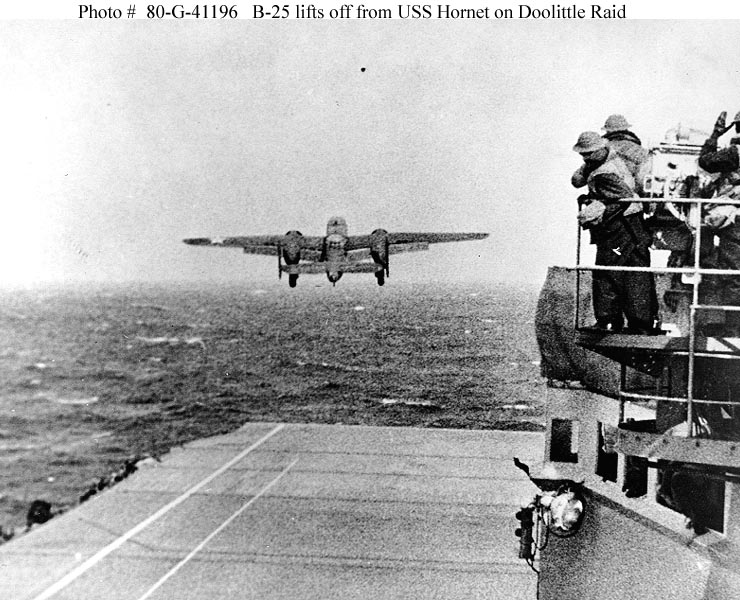
Hornet was launched on 14 December 1940 and commissioned 25 October 1941 with Naval Aviation pioneer Captain Marc A Mitscher Commanding. Hornet conducted her initial training and air group qualifications while operating out of Norfolk.  On February 2nd two Army Air Corps B-25 Medium Bombers were loaded aboard.  As Hornet put to sea the bombers were launched to the astonishment of the crew. Hornet departed Norfolk for the Pacific where she embarked 16 B-25s under the command of Colonel Jimmy Doolittle.  Hornet’s own air group was stowed in the hanger bay.  On April 2nd Hornet departed from San Francisco for a rendezvous with Admiral Halsey’s Task Force 16 and her sister ship Enterprise.  As the ship departed Mitscher informed the crew of their mission.  Hornet would launch Colonel Doolittle’s aircraft against the heart of the Imperial Japanese Empire, Tokyo.

Hornet Launching B-25

The plan was for the task force to sail to 400 miles from Japan and launch the bombers. Enterprise was to provide air cover for the task force while Hornet’s air group was inaccessible while the bombers remained aboard.  On the morning of 18 April the task force was spotted by a Japanese patrol boat.  The craft was quickly dispatched by the heavy cruiser USS Nashville but not before the craft had reported the presence of the task force.  Though the task force was still 600 some miles from Japan Halsey ordered that Doolittle’s aircraft be launched against Tokyo.  The attack while militarily insignificant came as a major surprise to the Japanese who anticipating a raid by naval aircraft believed that any attack could not take place until the following day.  Even more significantly the attack stunned the Japanese military establishment, especially the Navy. The attack would provoke Admiral Yamamoto to attack Midway in order to draw out the American carriers and destroy them.

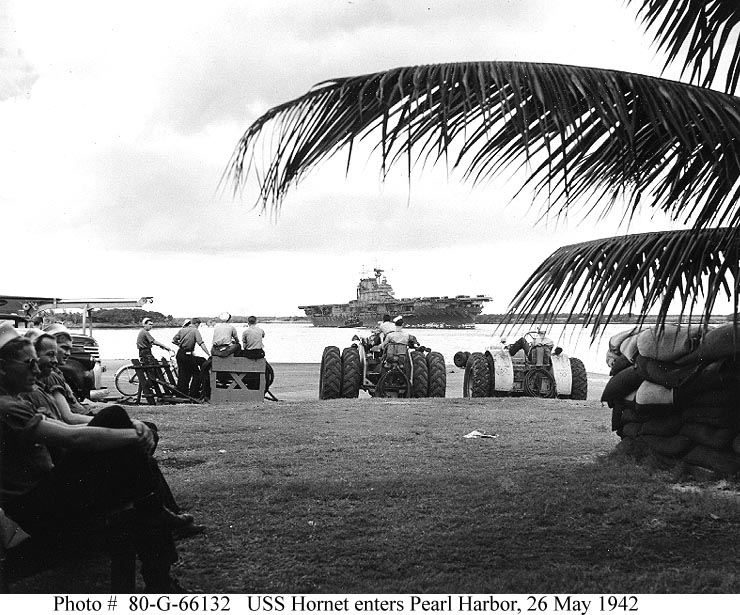
Hornet Arrives at Pearl Harbor Before Midway

Hornet along with Task Force 16 sailed back to Pearl Harbor arriving a week later and the mission would remain secret for over a year.  The task force steamed to assist the Yorktown and Lexington at the Battle of Coral Sea but that battle was over before they could arrive.  The task force returned to Pearl Harbor on the 26th of May and sail on the 28th for Midway.  Hornet’s air group was plagued with bad luck.  Torpedo Squadron 8, or Torpedo 8 commanded by LCDR John Waldron found and attacked the Japanese task force losing all aircraft and all pilots save one.  6 new TBF Avengers from her air group operating from Midway met with heavy losses in their attack against the Japanese.  Only one pilot from Torpedo 8 with Waldron’s group survived, Ensign George Gay.  Hornet’s dive bombers followed bad reports of the location of the Japanese carriers and took no part in the action.  Many would have to ditch in the ocean as they ran out of fuel.  Hornet’s air group would help sink the Japanese Heavy Cruiser Mikuma and heavily damaged Mogami on the 6th.  The Battle of Midway was one of the major turning points of the war.  The Japanese had lost six carriers which had attacked Pearl Harbor along with their aircraft and many of their highly trained pilots and flight crews. Coupled with their losses at Coral Sea the Japanese suffered losses that they could ill afford and could not easily replace.

Following Midway Hornet had new radar installed and trained out of Pearl Harbor until order to the Southwest Pacific to take part in the struggle for Guadalcanal.  By the time she arrived she was the only operational American carrier in the Pacific. Enterprise had suffered bomb damage at the Battle of Easter Solomons on August 24th; Saratoga was damaged by a submarine torpedo on August 31st and the Wasp was sunk by a submarine on September 15th.  In the space of 3 weeks the United States Navy had lost 3/4ths of its operational carriers in the waters off of Guadalcanal. Hornet now faced the Japanese alone, providing much of the badly needed air support for the Marines fighting ashore.

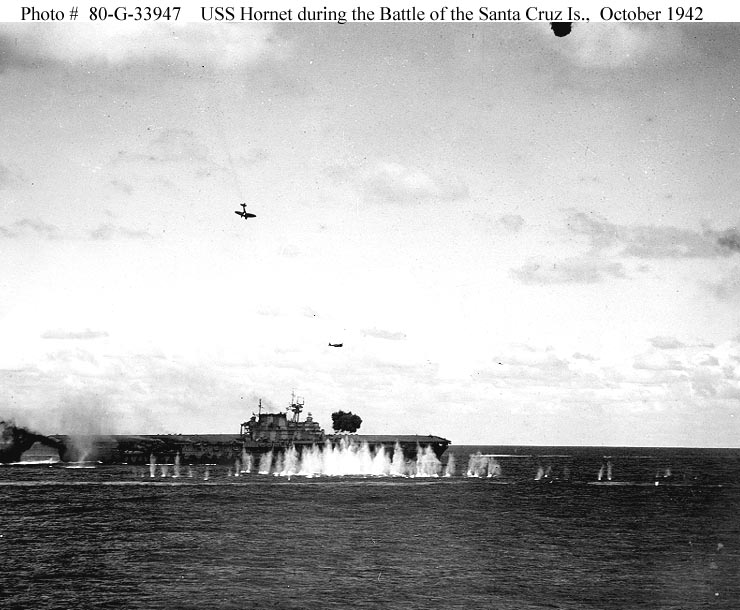
Hornet Under Attack: Note “Val” Dive Bomber about to crash ship

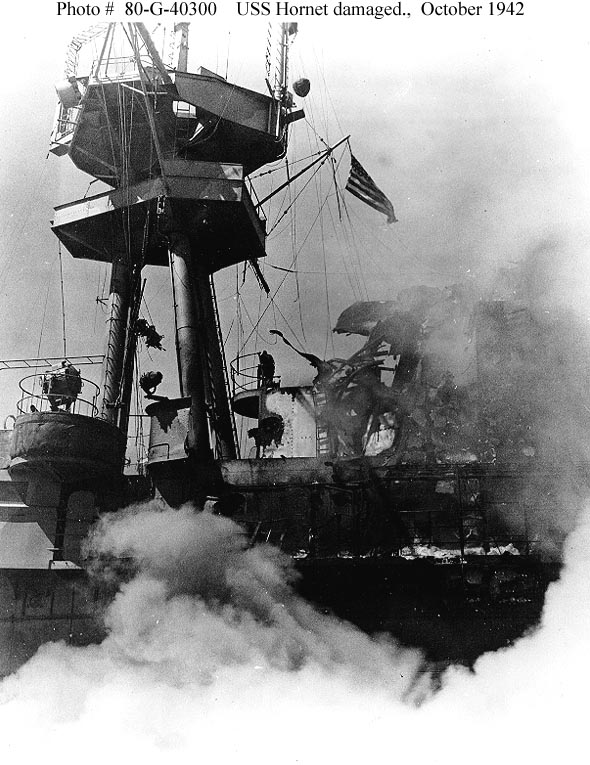
The Enterprise rejoined Hornet following hasty repairs off the New Hebrides Islands on October 24th.  On the 26th they joined battle with a Japanese task force of 4 carriers centered on the veterans Shokaku and Zuikaku. The Hornet’s aircraft attacked and seriously damaged Shokaku even as Japanese torpedo planes and dive bombers launched a well coordinated attack against Hornet. Hornet was hit by three bombs, two torpedoes and had two Vals dive into her with their bombs.  On fire and without power her damage control parties fought to regain control of the ship and extinguish the fires that blazed aboard her.

Hornet’s Damaged Island and Main Mast

Assisted by the heavy cruiser Northampton which took her in tow her crew brought the fires under control and were close to restoring power when another Japanese strike group found her and put another torpedo into her.  With this hit Hornet’s list increase and she was abandoned even as she was hit by another bomb.  With Japanese ships in the area it was decided to scuttle the ship. Escorting destroyers hit her with 9 torpedoes and over 400 rounds of 5” shells.  As Hornet blazed in the night her escorts withdrew and Japanese forces after attempting to take her under tow put four of their 24” “Long Lance” torpedoes into the doomed ship at long last sinking her.

Hornet Being Abandoned by Her Crew

In her last fight Hornet’s aircraft along with those of Enterprise mauled the air groups of Shokaku and Zuikaku again inflicting irreplaceable losses among their experienced air crews.  In the battle Hornet was hit by 4 bombs, two aircraft, 16 torpedoes and over 400 rounds of 5” shells, more hits than were sustained by any other US carrier in a single action during the war.  She was stuck from the Navy list on 13 January 1943 and her gallant Torpedo 8 was awarded the Navy Presidential Unit Citation “for extraordinary heroism and distinguished service beyond the call of duty” in the Battle of Midway.  Her name was given to the Essex Class carrier CV-12. The new Hornet served throughout the war and served well into the Cold War.  She now rests as a Museum ship at Alameda California.

The USS Hornet Association website is here:  http://www.usshornetassn.com/

The Museum site is here: http://www.uss-hornet.org/

If you liked this article you might want to also read the following articles on this site:

The Battleships of Pearl Harbor

The Transitional Carriers: USS Ranger CV-4 and USS Wasp CV-7

The First Aircraft Carriers Part One: The First American Flattops- Langley, Lexington and Saratoga

The Treaty Cruisers: A Warship Review

5 Comments

Filed under History, Military, Navy Ships, world war two in the pacific

Padre Steve’s Pre-Navy Navy Experiences

I officially entered the Navy in 1999 however I had spent a significant amount of my young life hanging around the Navy as a “Navy Brat” as well as a Navy Junior ROTC Cadet.

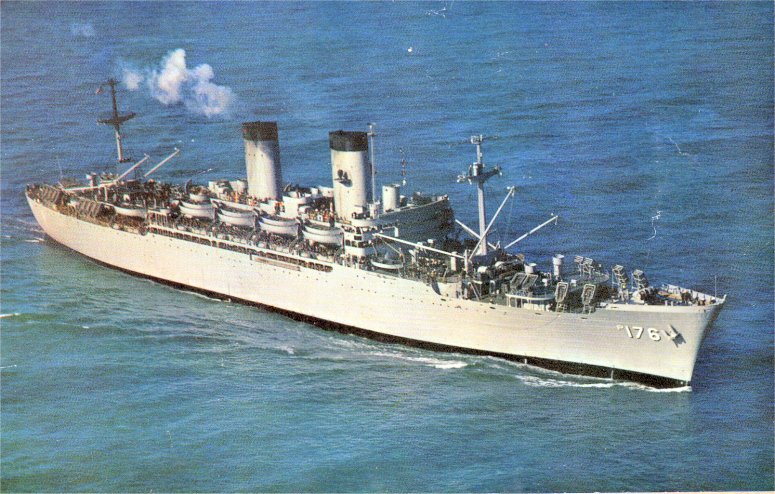
USS J. C. Breckenridge AP 176

My first “underway” was returning from the Philippines on the USS J. C. Breckenridge AP 176 in 1964.  The ship was a troopship and at the time was engaged in the transport of military personnel and their dependents from the Far East to San Fransisco.  In this capacity the ship made regular stops at Guam, Yokosuka, Okinawa, and Inchon, as well as Adak, Alaska, and Midway Island as she sailed between the Philippines, Japan and the west coast.  We rode her back following my father’s assignment at Cubi Point Naval Air Station.

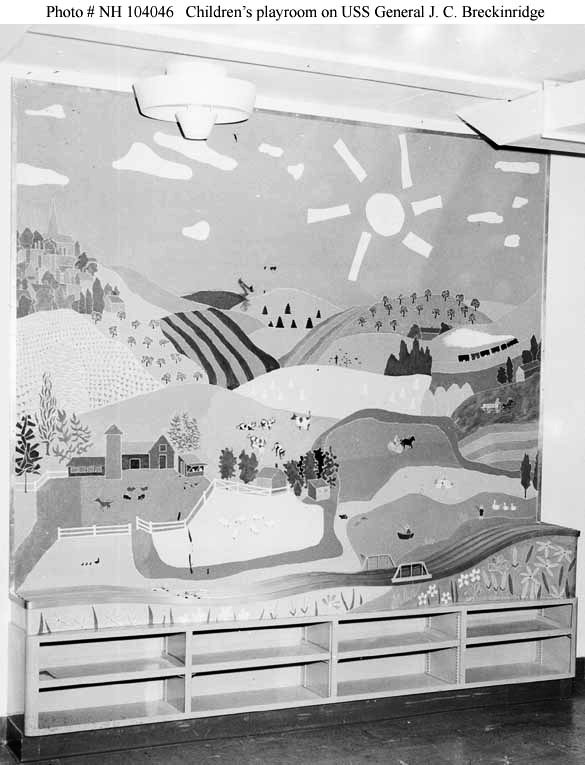
Children’s Playroom on Breckenridge

The trip across the Pacific was something that I remember to this day.  A Marine stood guard outside of the family quarters in a starched “sateen” fatigue uniform.   I remember Marines going over the side of the ship into waiting landing craft at one stop, probably Inchon. I had a tee-shirt from the ship that I wore proudly until it was a tattered rag.

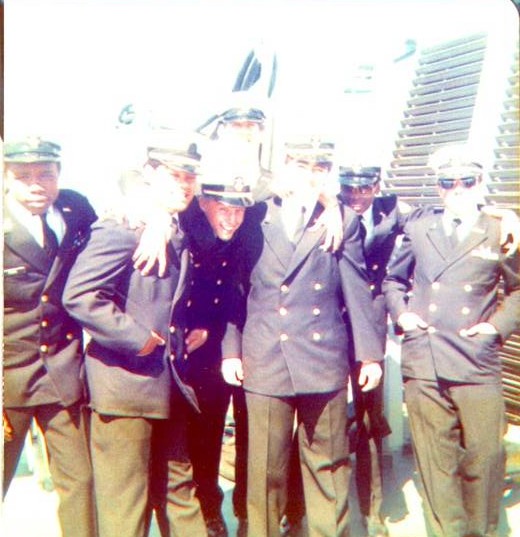
Edison High School NJROTC Cadets on USS Gray April 1978 L-R Alvin Friend, Mark DeGuzman, Jeff Vanover, Joe Mariani (top) Randy Richardson, Delwin Brown and Padre Steve

When I entered High School I joined the Navy Junior ROTC unit.  I was very fortunate because our instructors, LCDR Jim Breedlove and Senior Chief Petty Officer John Ness ensured that we had many opportunities to go underway on various ships.

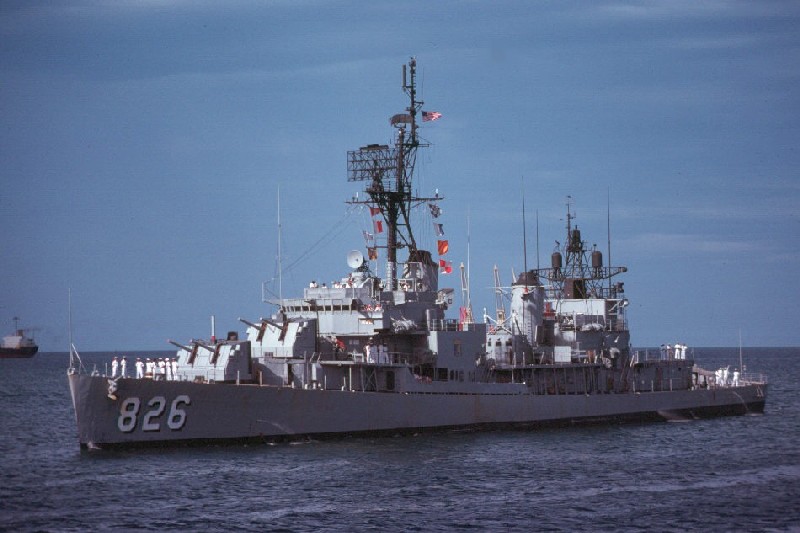
USS Agerholm DD-826

The first of these was the USS Agerholm DD-826 a Gearing Class destroyer commissioned in 1946 which had received a  FRAM-1 modernization and fired the only live nuclear ASROC.  I embarked Agerholm in San Diego with 5 other cadets in October 1975.  During the trip we were able to observe gunnery exercises in the #2 5″ 38 gun mount and help man a towing hawser in exercises with the USS O’Callahan and USS Carpenter DD-825.  The trip was exhilarating as we rode heavy seas, and got to stand watches alongside real sailors.

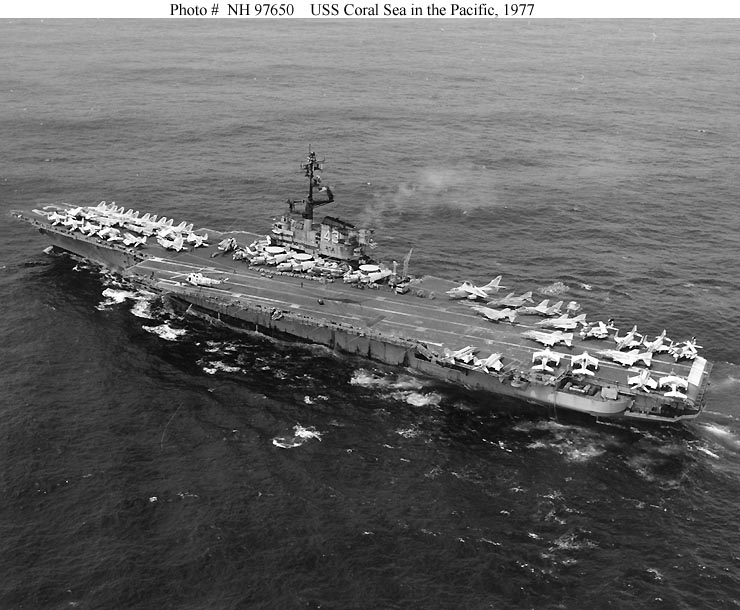
USS Coral Sea CVA-43

The second trip for me was on the USS Coral Sea in July 1976 where I spent 2 weeks working in the ship’s medical department. The trip about Coral Sea was interesting as we were able to observe flight operations and see how carrier operated.

USS Pyro AE-24

I then went on the USS Pyro in the fall of 1976 for a 5 day underway where I witnessed a burial at sea and met the chaplain who covered the service force.  On Pyro I was able to work with the Signalmen.

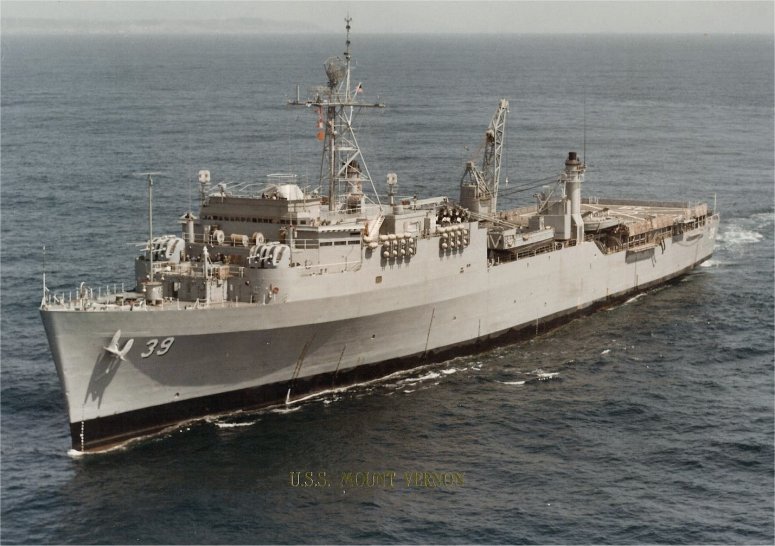
USS Mount Vernon LSD-39

In February 1977 a number of us traveled to Portland Oregon to embark on USS Mount Vernon LSD-39 for its trip from an overhaul back to her home port of San Diego during which we disembarked at Alameda.  That was an interesting trip as well as upon entering the Pacific from the Colombia River we ran into a major storm and we got to see how a flat-bottomed amphibious ship rode in heavy seas, the answer, not well. On the Mount Vernon we stood various watches the most memorable was in the Main Engineering plant.  Mount Vernon like most of the ships of the day was powered by steam turbines and the Engine Room was about 100 degrees.

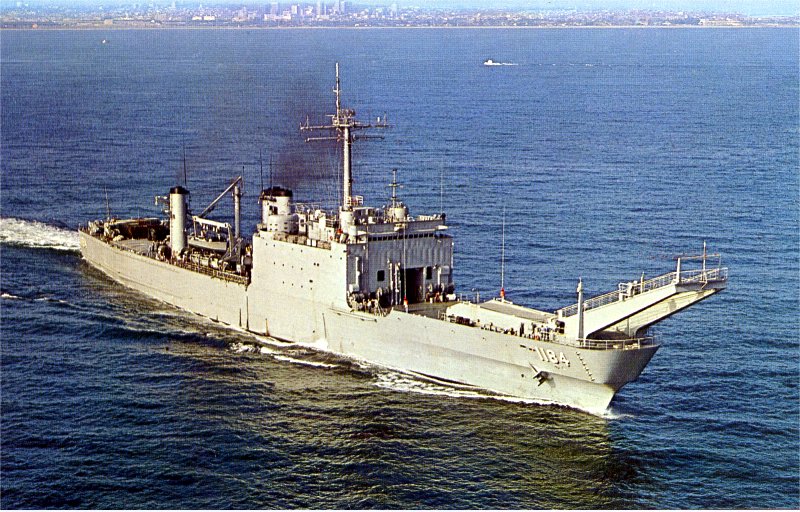
USS Frederick LST-1184

My final underway was a round trip from San Diego to Pearl Harbor and back.  On the outbound trip we rode the USS Frederick LST-1184 as it transited with its Amphibious Group of 7 ships for a WESTPAC deployment.  On Frederick I was paired with the Operations department and Navigation division.  This was interesting as I got to practice skills that I had learned in the classroom as well as learn about the early satellite navigation systems Loran and Omega.  It was on Frederick that I first felt the call to be a Navy Chaplain and aboard which I would celebrate my first Eucharist underway 23 years later.

We spent a week in Peal Harbor when I was able to visit the USS Arizona and USS Utah Memorials, meet Navy Divers, Army Maritime Transportation Corps personnel and tour their landing craft.  We had some liberty in Pearl and the son of one of my parents friends from the Navy picked me up from a day of snorkeling during which I was badly sunburned with 2nd degree burns on my back. This lent me the nickname “Lobsterman” by my fellow cadets.

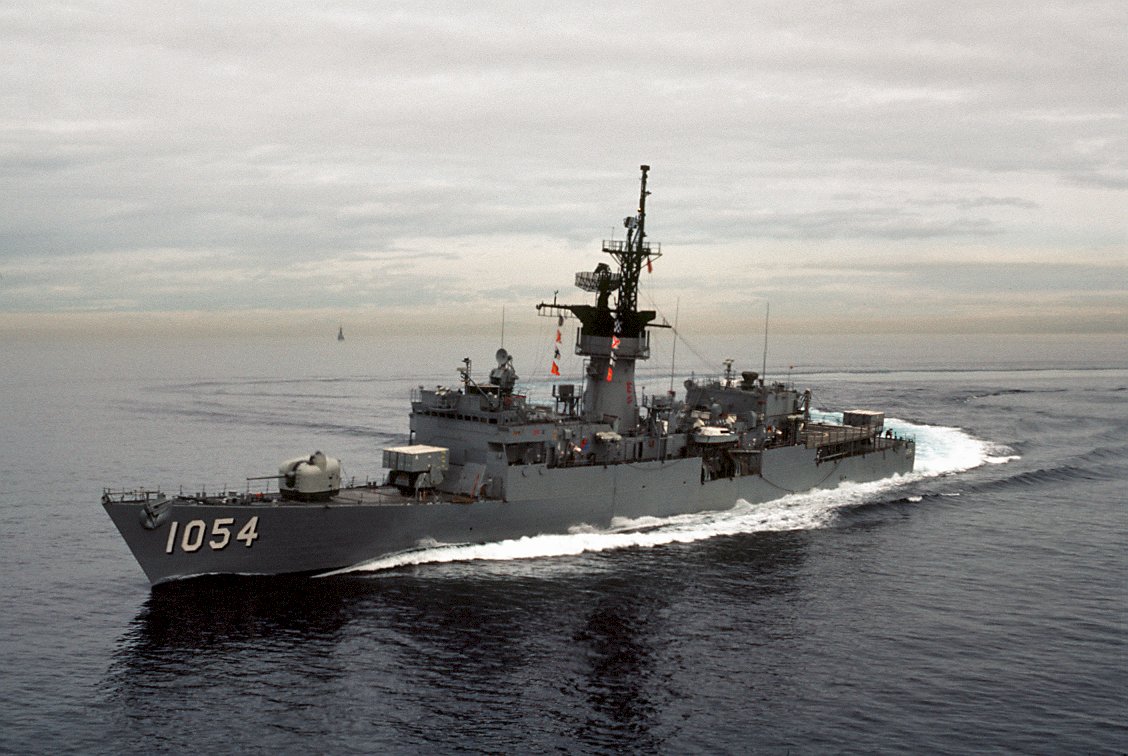
USS Gray FF-1054

The return trip was on the USS Gray FF-1054 a Knox Class Frigate which my dad had helped prepare for commissioning in 1970. Gray and a cruiser destroyer force headed by the USS Chicago CG-10 was returning from deployment.  On Gray I got to see my first underway replenishment

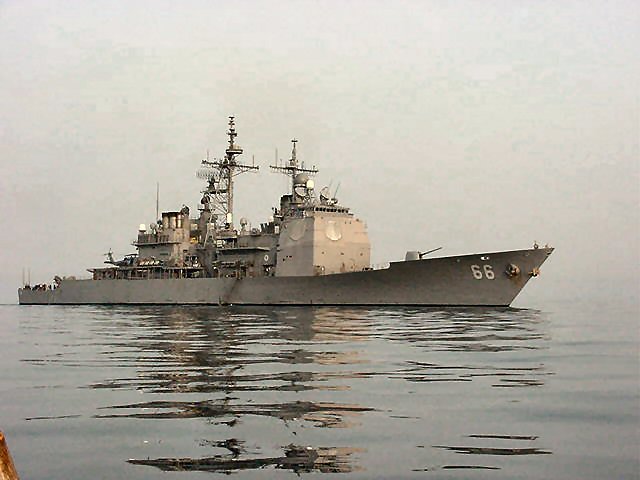
These journeys were important in my life, they put a love of the sea and love of the Navy deep in me that could not be quenched even by my 17 and a half years of service in the Army.  As a Chaplain I had the privilege of serving on the USS Hue City CG-66.

One of my photos of USS Hue City CG-66 during boarding Operations in the Northern Arabian Gulf

I still love the sea and who knows if I will get another sea tour, but I have been blessed in all of these experiences.  Of the ships themselves only Hue City is active in the US Navy while Frederick was sold to Mexico where she still serves.

Harpoon Hitting Agerholm

Agerholm was expended as a target for the Harpoon missile system, Breckenridge, Coral Sea, Gray, Portland were scrapped and Pyro was decommissioned and remains in the National Defense Reserve Fleet at Suisun Bay California.   They were all great ships manned by great crews.

Peace, Padre Steve+

11 Comments

Filed under Navy Ships

The Battleships of Pearl Harbor

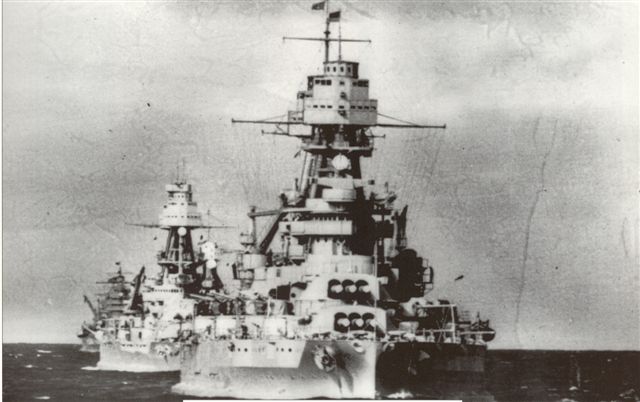
Arizona Leading the Battle Line

“Yesterday, Dec. 7, 1941 – a date which will live in infamy – the United States of America was suddenly and deliberately attacked by naval and air forces of the Empire of Japan…. The attack yesterday on the Hawaiian Islands has caused severe damage to American naval and military forces. Very many American lives have been lost.” Except of President Franklin D Roosevelt’s Pearl Harbor Speech December 8th 1941

Today is the 68th anniversary of the Japanese attack on Pearl Harbor and as we were then we are at war.
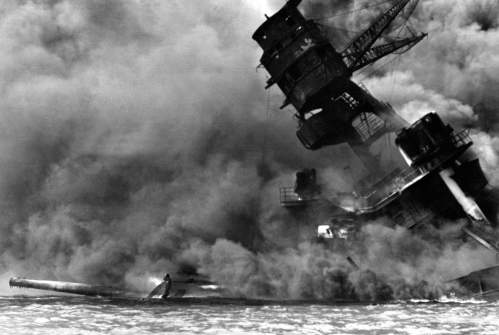
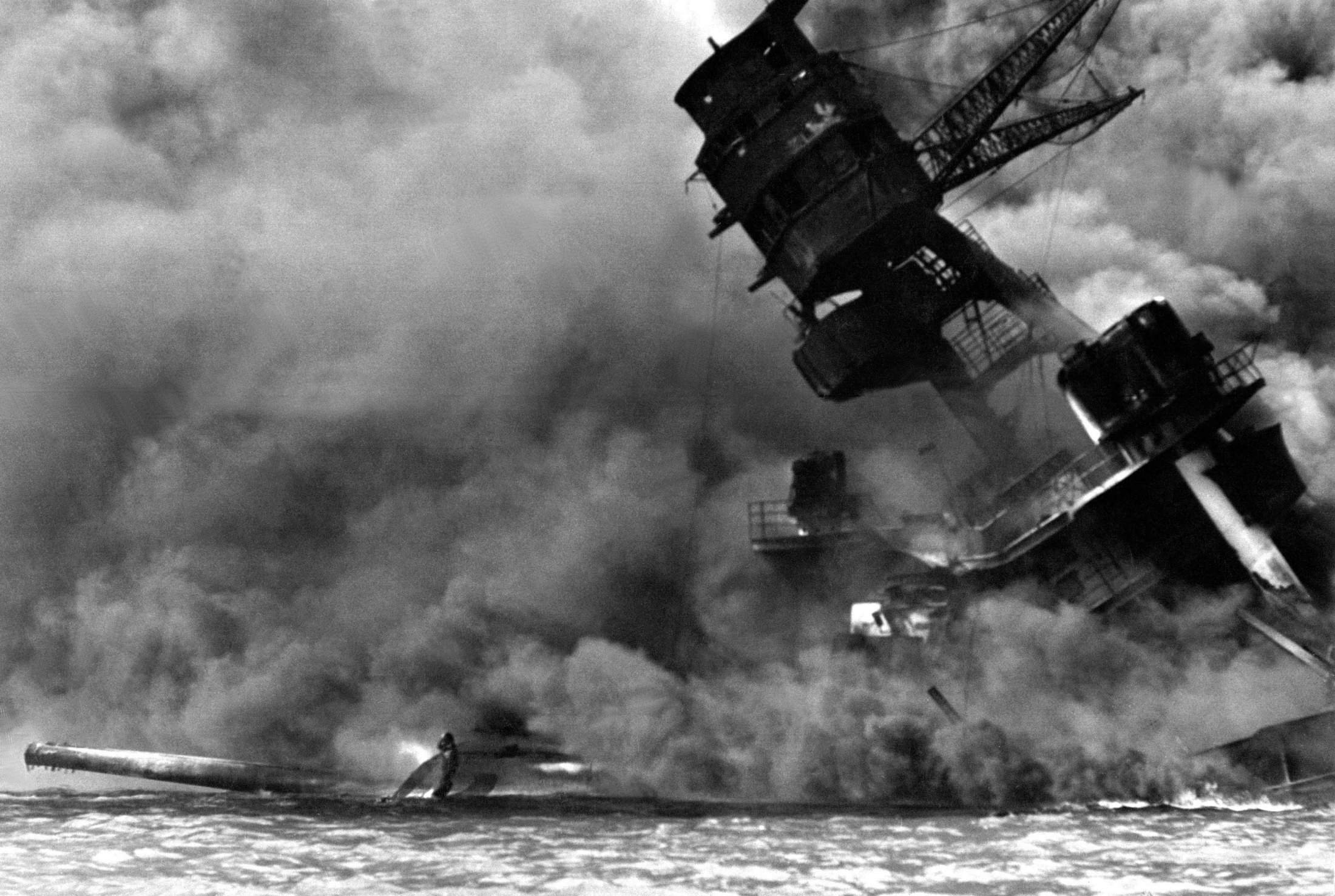
A Date that Will Live in Infamy: USS Arizona Burning

I remember reading Walter Lord’s “Day of Infamy” when I was a 7th grade student at Stockton Junior High School back in 1972.  At the time my dad was on his first deployment to Vietnam on the USS Hancock CVA-19.  As a Navy brat I was totally enthralled with all things Navy and there was little that could pull me out of the library.  Over the years I have always found the pre-World War Two battleships to be among the most interesting ships in US Navy history.  No they are not the sleek behemoths like the USS Wisconsin which I look at almost every day from Portsmouth Naval Medical Center as it lays moored across the Elizabeth River in Norfolk.  No these ships were the backbone of the Navy from the First World War until Pearl Harbor.  They were the US Navy answer to the great Dreadnaught race engaged in by the major Navies of the world in the years prior to, during and after World War One.

These ships were built over a period of 10 years and incorporated the advances in technology since the HMS Dreadnaught first came down the ways in 1906 to the experience gained in combat during the “Great War.”  While the United States Navy did not engage in battleship to battleship combat the ships built by the US Navy were the equal of many of the British and German ships of the era.

Oklahoma Before the War

The Battle Force of the Pacific Fleet in 1941 included 9 battleships of which 8 were at Pearl Harbor on the morning of December 7th.  In the event of war the US War Plans, called “Orange” called for the Pacific Fleet led by the Battle Force to cross the Pacific, fight a climactic Mahanian battle with the battleships of the Imperial Japanese Navy and after vanquishing the Japanese foe to relieve American Forces in the Philippines.  However this was not to be as by the end of December 7th all eight were out of action, with two, the Arizona and Oklahoma permanently lost to the Navy.
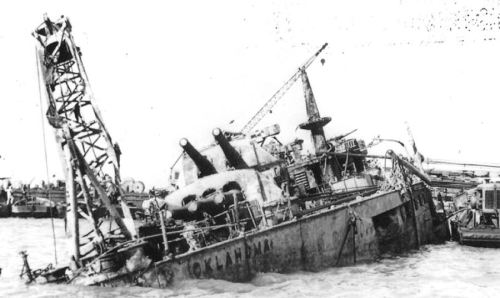
USS Oklahoma Being Raised from the Mud

These ships comprised 4 of the 6 classes of battleships in the US inventory at the outbreak of hostilities.  Each class was an improvement on the preceding class in speed, protection and firepower.  The last class of ships, the Maryland class composed of the Maryland, Colorado and West Virginia, was the pinnacle of US Battleship design until the North Carolina class was commissioned in 1941.  Since the Washington Naval Treaty limited navies to specific tonnage limits as well as the displacement of new classes of ships the United States like Britain and Japan was limited to the ships in the current inventory at the time of the treaty’s ratification.
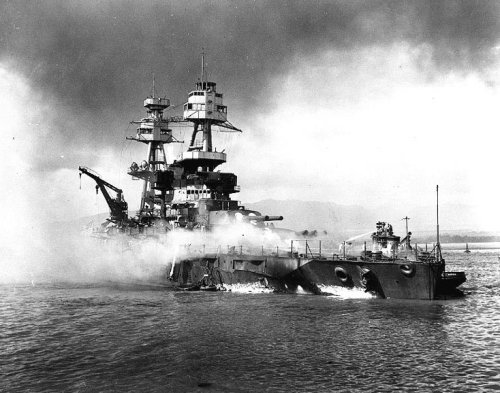
USS Nevada Aground and Burning

The ships at Pearl Harbor included the two ships of the Nevada Class, the Nevada and Oklahoma. The Two ships of the Pennsylvania class, the Pennsylvania and her sister the Arizona, the two California class ships, the California and Tennessee and two of the three Maryland’s the Maryland and West Virginia.  The Colorado was undergoing a yard period at Bremerton and the three ships of the New Mexico class, New Mexico, Mississippi and Idaho had been transferred to the Atlantic before Pearl Harbor to bolster US strength in that area due to the German threat.  The three older ships of the New York and Wyoming Classes, the New York, Arkansas and Texas also were in the Atlantic. Two older battleships, the Utah and Wyoming had been stripped of their main armaments and armor belts and served as gunnery training ships for the fleet. The Utah was also at Pearl Harbor.

USS Nevada Firing on Utah Beach: D-Day

The ships that lay at anchor at 0755 that peaceful Sunday morning on “Battleship Row” and in the dry dock represented the naval power of a bygone era which was not recognized until two hours later. The age of the battleship had passed, but even the Japanese who launched the attack did not realize that the era had passed as they continued to build the massive super-battleships Yamato and Musashi mounting 9 18” guns and displacing 72,000 tons, near twice that of the battleships of the Pacific Fleet.
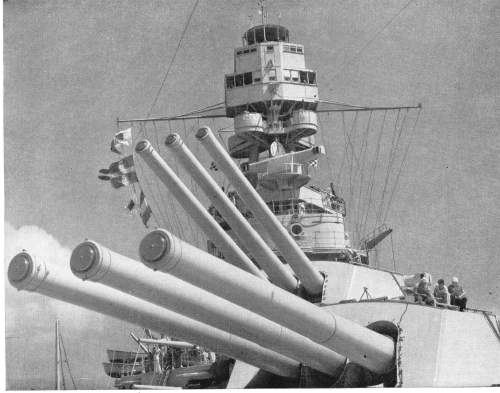
Arizona’s Main Battery

The Oklahoma and Nevada were the oldest ships in the Battle Force.  Launched in 1914 and commissioned in 1916 the Nevada and Oklahoma mounted ten 14” guns and displaced 27.500 tons and were capable of 20.5 knots. Serving in World War One alongside the British Home Fleet they were modernized in the late 1920s they were part of the US presence in both the Atlantic and Pacific in the inter-war years. Oklahoma would take part in the evacuation of American citizens from Spain in 1936 during the Spanish Civil War.  During the Pearl Harbor attack Oklahoma was struck by 5 aerial torpedoes capsized and sank at her mooring with the loss of 415 officers and crew. Recent analysis indicates that she may have been hit by at least on torpedo from a Japanese midget submarine. Her hulk would be raised but she would never again see service and sank on the way to the breakers in 1946.
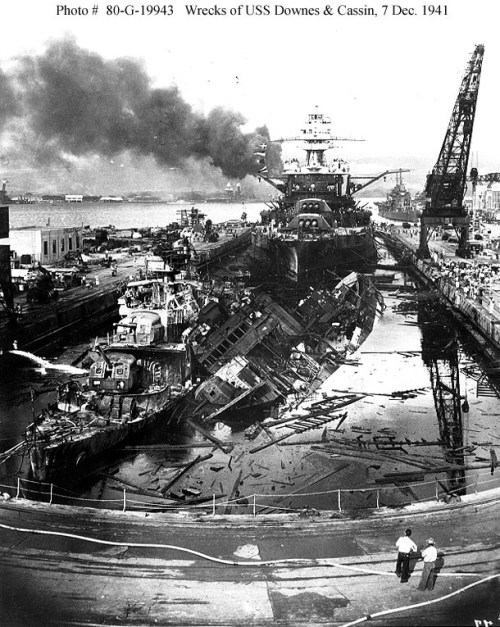
USS Pennsylvania in Drydock with Wrecked USS Cassin and USS Downs

Nevada was the only Battleship to get underway during the attack.  As she attempted to escape the harbor she was heavily damaged and to prevent her sinking in the main channel she was beached off Hospital Point.  She would be raised and returned to service by the May 1943 assault on Attu.  She would then return to the Atlantic where she would take part in the Normandy landings off Utah Beach and the invasion of southern France in July 1944.  She then returned to the Pacific and took part in the operations against Iwo Jima and Okinawa where she again provided naval gunfire support.  Following the war she would be assigned as a target at the Bikini atoll atomic bomb tests, surviving these she would be sunk as a target on 31 July 1948.

USS Pennsylvania at Guam

The two ships of the Pennsylvania Class were improved from the Oklahoma’s.  Mounting twelve 14” guns and displacing 31,400 tons and capable of 21 knots they were commissioned in 1916 and also participated in operations in the Atlantic in the First World War.  Both being rebuilt and modernized in 1929-1931 they were mainstays of the fleet being present at Presidential reviews and making goodwill visits around the world.  Pennsylvania was the Pacific Fleet Flagship on December 7th 1941 and was in dry dock undergoing maintenance at the time of the attack. Struck by two bombs she received minor damage and would be in action in early 1942. She underwent minor refits and took part in many amphibious landings in the Pacific and was present at the Battle of Surigo Strait.  Heavily damaged by an aerial torpedo at Okinawa Pennsylvania would be repaired and following the war used as a target for the atomic bomb tests. She was sunk as a gunnery target in 1948.

USS Pennsylvania Passing Under Golden Gate Bridge Before the War

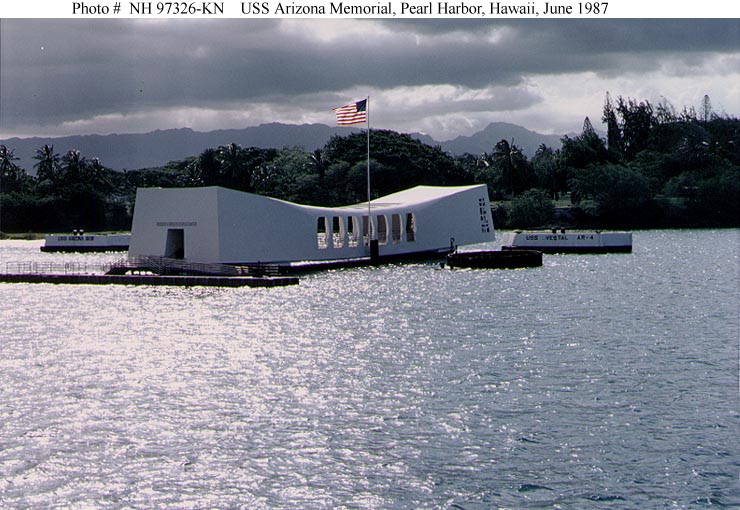
Arizona was destroyed during the attack.  Hit by 8 armor piercing bombs one of which penetrated her forward black powder magazine she was consumed in a cataclysmic explosion which killed 1103 of her 1400 member crew.  She was never officially decommissioned and the colors are raised and lowered every day over the Memorial which sits astride her broken hull.

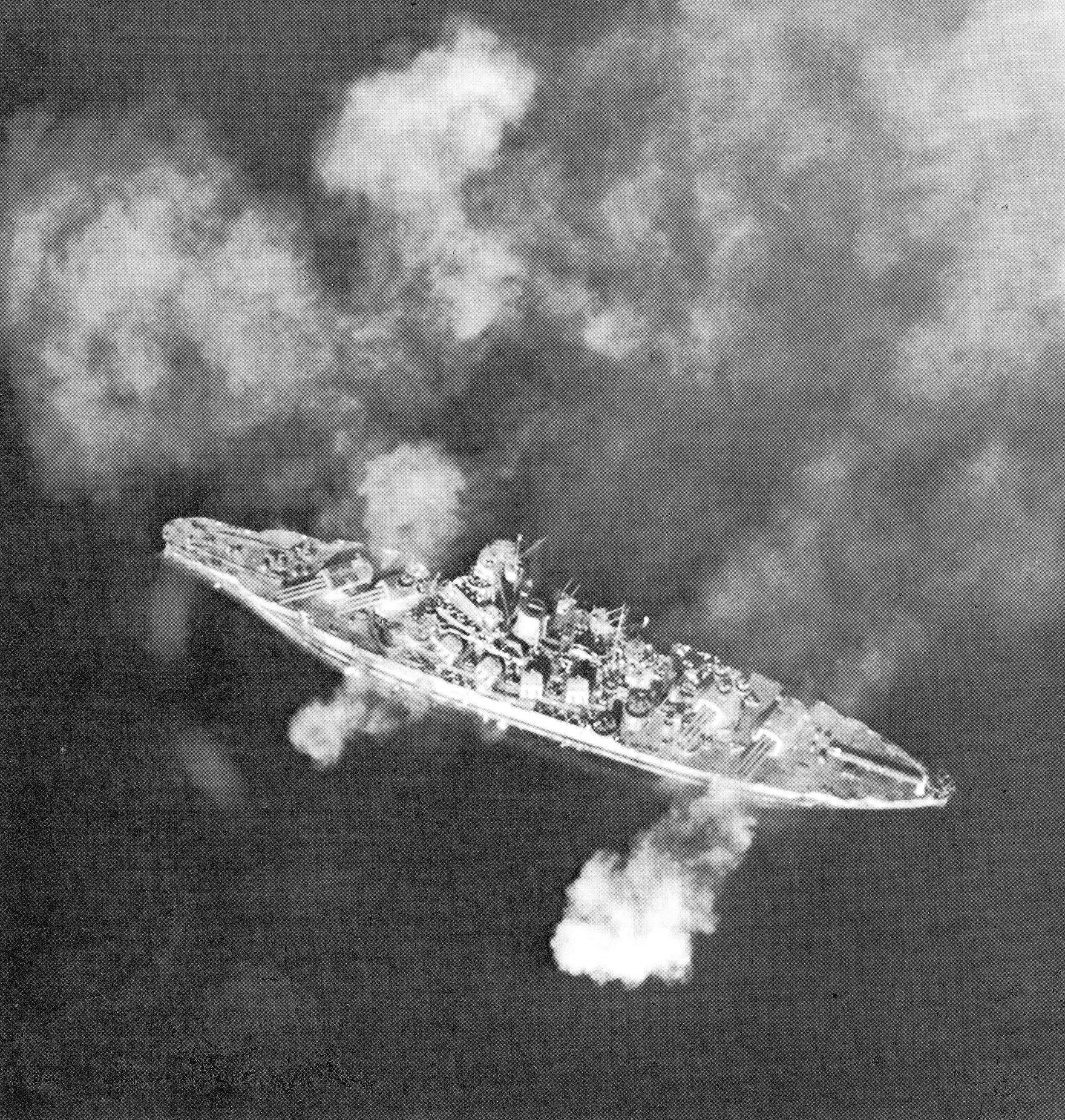
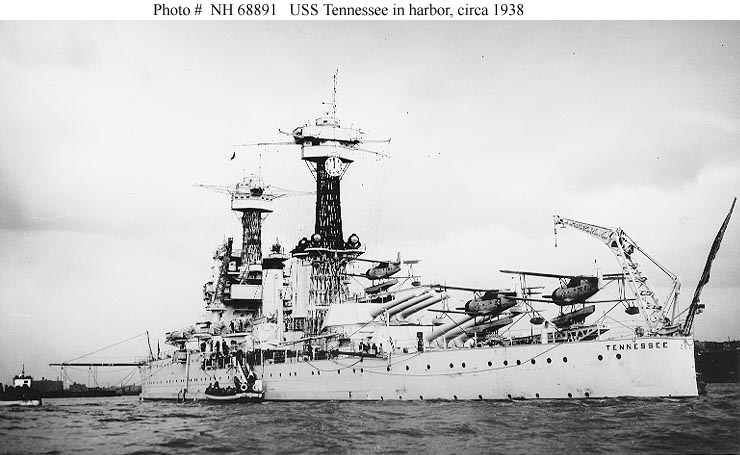
USS Tennessee 1938

The Tennessee and California were the class following the New Mexico’s which were not present at Pearl Harbor.  These ships were laid down in 1917 and commissioned in 1920.  They mounted twelve 14” guns, displaced 32.300 tons and were capable of 21 knots.  Tennessee was damaged by two bombs and was shield from torpedo hits by West VirginiaCalifornia was hit by two torpedoes but had the bad luck to have all of her major watertight hatches unhinged in preparation for an inspection.
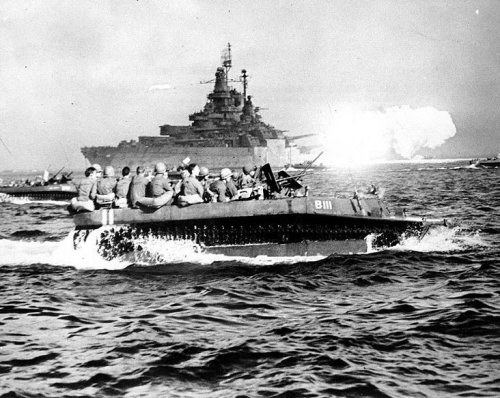
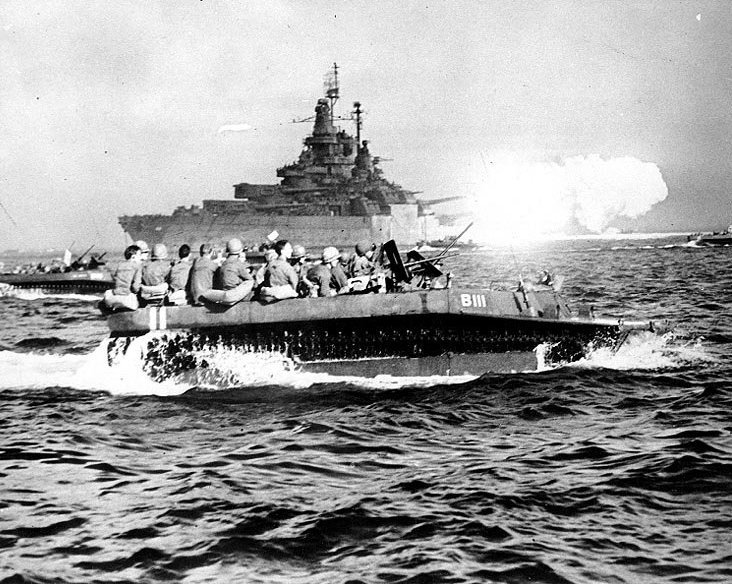
USS Tennessee at Okinawa

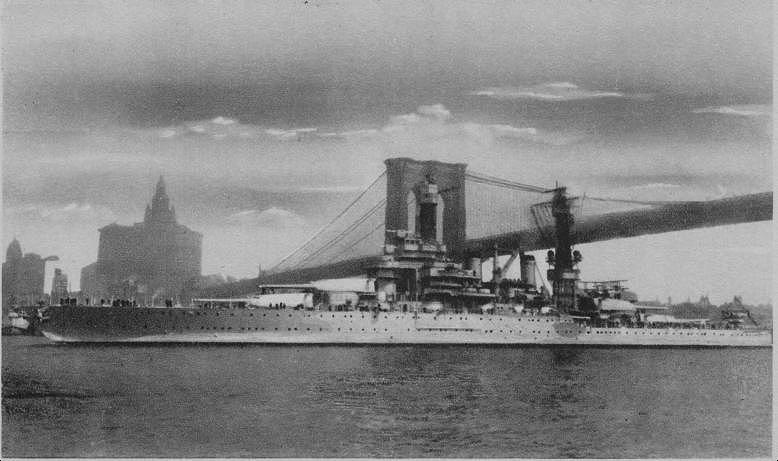
She sank at her moorings and would be refloated, rebuilt and along with Tennessee modernized with the latest in radar, fire control equipment and anti-aircraft armaments.  Both ships would be active in the Pacific campaign and be engaged at Surigo Strait where they inflicted heavy damage on the attacking Japanese squadron. Both would survive the war and be placed in reserve until 1959 when they were stricken from the Navy list and sold for scrap.

USS California Passing Under Brooklyn Bridge

The Maryland and West Virginia were near sisters of the Tennessee class.  They were the last battleships built by the United States before the Washington Naval Treaty.  Mounting eight 16” guns they had the largest main battery of any US ships until the North Carolina class.
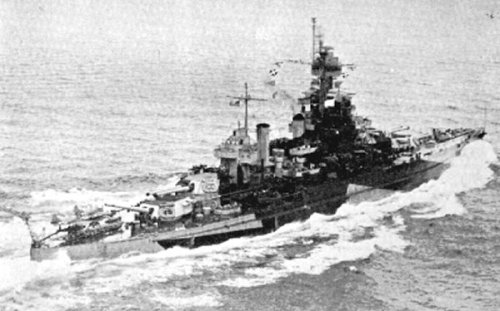
USS Maryland 1944

The displaced 32,600 tons and could steam at 21 knots. Laid down in 1917 and commissioned in 1921 they would be modernized in the late 1920s they were the most modern of the “Super-Dreadnoughts” and included advances in protection and watertight integrity learned from British and German experience at Jutland.
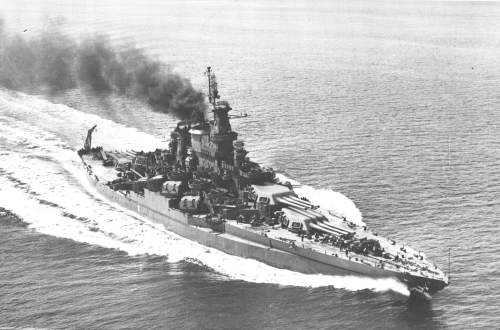
USS California 1944

At Pearl Harbor Maryland  was moored inboard of Oklahoma was hit by 2 bombs.  She would be quickly repaired and returned to action.  She received minimal modernization during the war. She would participate in operations throughout the entirety of the Pacific Campaign mainly conducting Naval Gunfire Support to amphibious operations. 
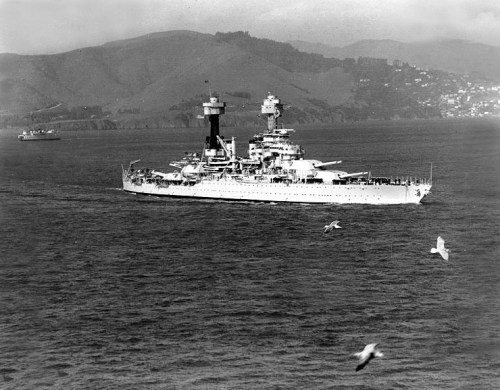
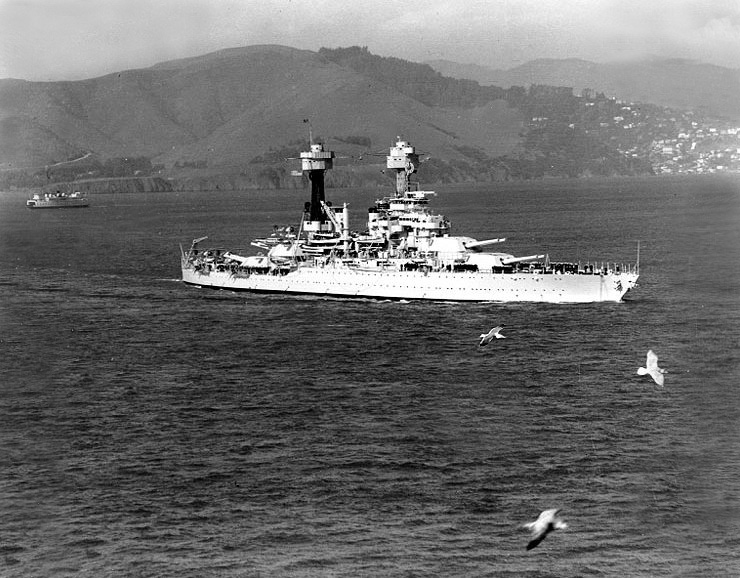
USS West Virginia 1934

and in 1944


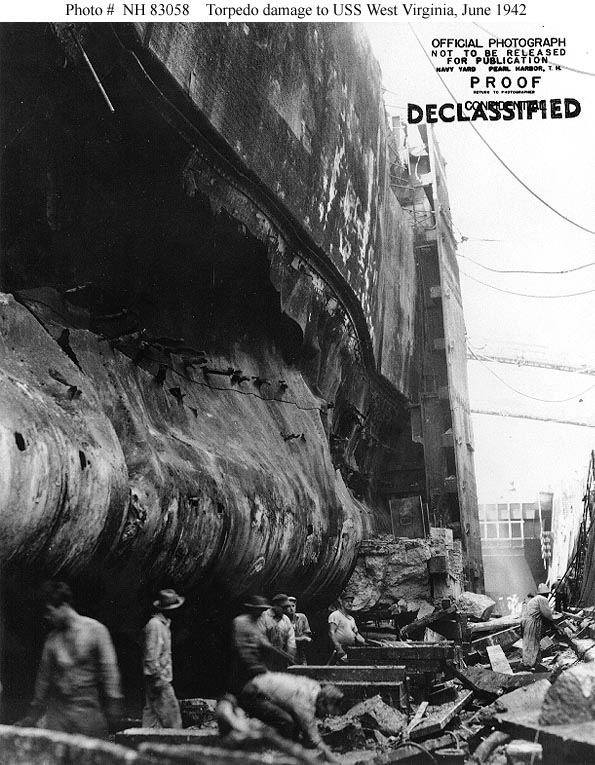
West Virginia suffered some of the worst damage in the attack. Hit by at least 5 torpedoes and two bombs she was saved from Oklahoma’s fate by the quick action of her damage control officer to counter flood so she would sink on an even keel.  She would be raised, refloated and taken back to the West Coast for an extensive modernization on the order of the Tennessee and California. 

Damage to West Virginia’s Hull

The last Pearl Harbor to re-enter service she made up for lost time as she lead the battle line at Surigo Strait firing 16 full salvos at the Japanese squadron helping sink the Japanese Battleship Yamashiro in the last battleship versus battleship action in history.  West Virginia, Maryland and their sister Colorado would survive the war and be placed in reserve until they were stricken from the Naval List and sold for scrap in 1959.

The battleships of Pearl Harbor are gone, save for the wreck of the Arizona and various relics such as masts, and ships bells located at various state capitals and Naval Stations.  Unfortunately no one had the forethought to preserve one of the survivors to remain at Pearl Harbor with the Arizona.  Likewise the sailors who manned these fine ships, who sailed in harm’s way are also passing away.  Every day their ranks grow thinner.  As December 7th  passes into history it is fitting to remember these men and the great ships that they manned.   If you know a Pearl Harbor survivor or a sailor who served on one of these ships take the time to thank them.

Peace,

Padre Steve+

USS Arizona Memorial

21 Comments

Filed under History, Military, Navy Ships, world war two in the pacific

The Transitional Carriers: USS Ranger CV-4 and USS Wasp CV-7

Note: This is the second in a series of articles on US Aircraft Carriers. The first article “The First Aircraft Carriers Part One: The First American Flattops- Langley, Lexington and Saratoga” can be found at this link: https://padresteve.wordpress.com/2009/10/08/the-first-aircraft-carriers-part-one-the-first-american-flattops-langley-lexington-and-saratoga/

I expect to write a follow up article on the Yorktown class, followed by one on the World War II Essex class and Independence class carriers.  At some point I might tackle the post war modernizations, modifications and careers of the Essex class.

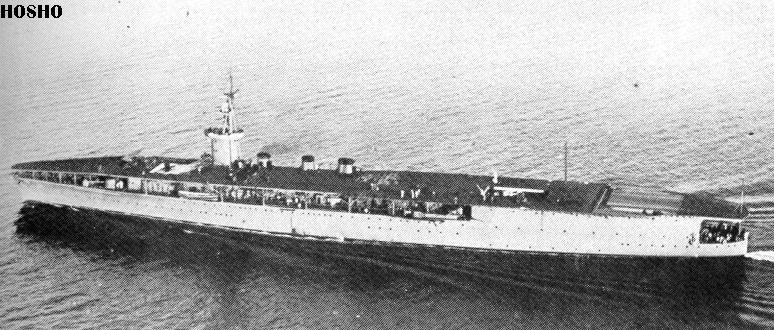
Following the success of the Langley, Lexington and Saratoga the Navy began to design aircraft carriers from the keel up.  The Japanese had already done so when they commissioned the IJN Hosho in 1922. Hosho displaced 10,000 tons was 579 feet long full load carried 26 aircraft at a top speed of 25 knots.  Hosho would serve in a secondary role in the Second World War, surviving the war with minor damage.

Hosho as Built

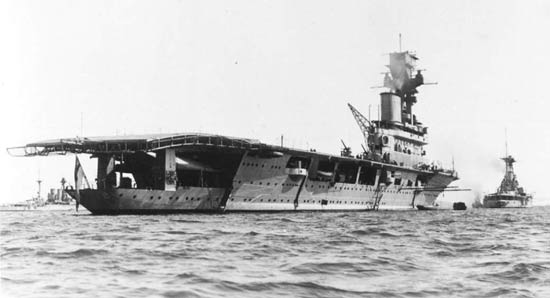
The British commissioned the HMS Hermes in 1923. She was slightly larger than Hosho at 12,900 tons and 598 feet long and capable of carrying 15-20 aircraft. She had a maximum speed of 25 knots.  She was sunk by Admiral Nagumo’s carrier strike force off Ceylon on 23 January 1941.  Both of these ships served in fleet support and training roles much of their careers being smaller and less capable of operating more modern aircraft developed in the late 1920s and 1930s.
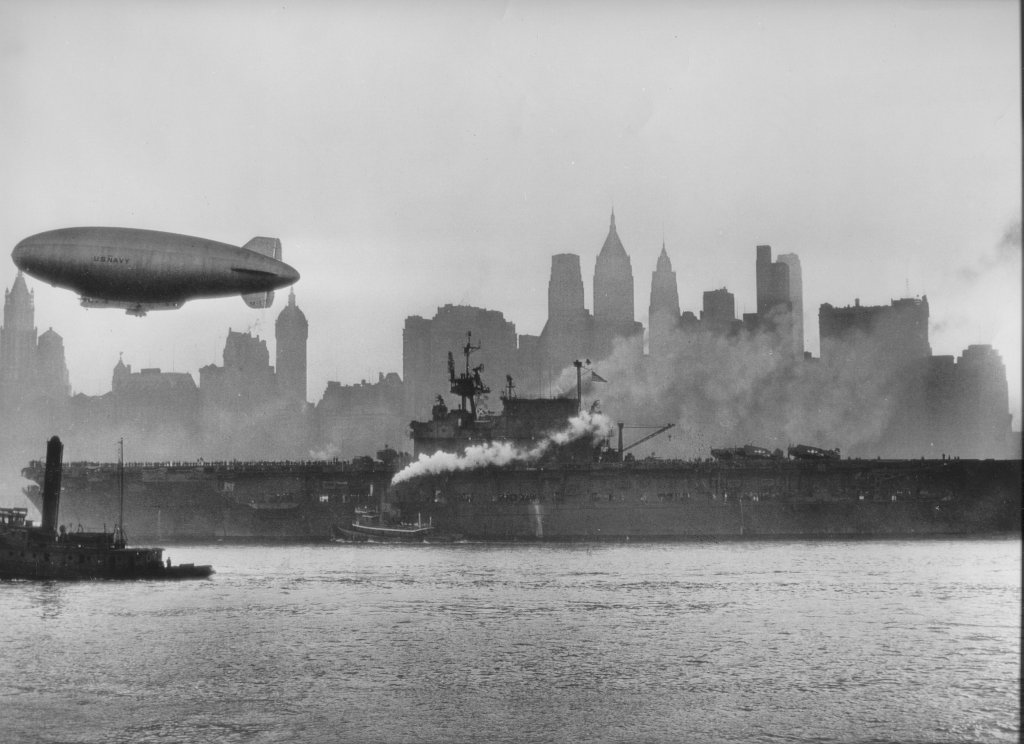
HMS Hermes

The United States Navy was late compared to the Japanese and British ion designing carriers from the keel up, however when it did they were larger, faster and carried a far larger number of aircraft than the Hosho or Hermes.

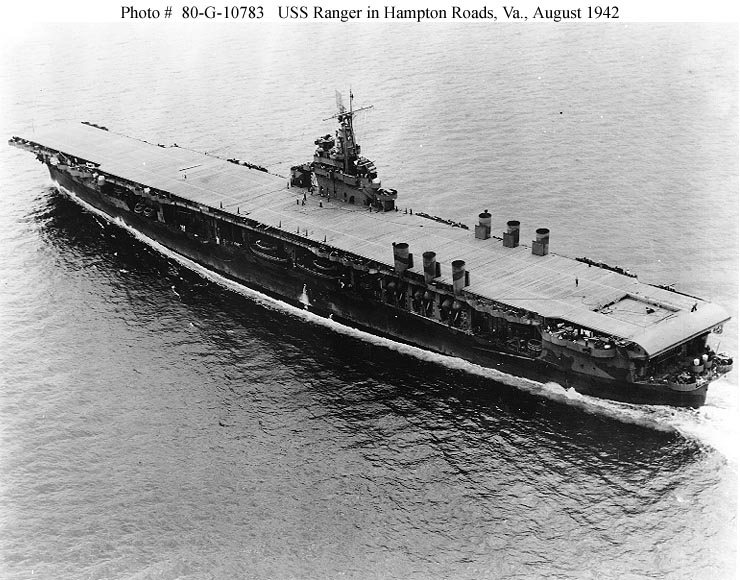
Ranger at Hampton Roads 1942: Note the Funnel Arrangement

The Ranger was commissioned on June 4th 1934 and displaced 14,500 tons, was 769 feet long and had a maximum speed of 29.25 knots.  She carried 86 aircraft, over four times more than Hermes and three times that of Hosho.  She was not initially equipped with a catapult though one would be added later with a more advanced one being retrofitted in 1944.  She had a unique funnel arrangement having 6 small funnels located aft along both sides of the flight deck. These could be repositioned out so as not to interfere with aircraft operations.

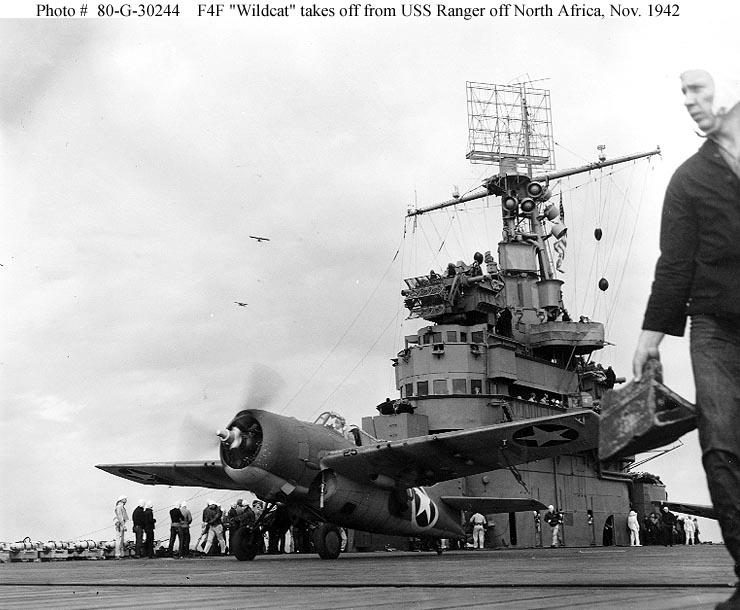
Ranger Launching F4F-3 Wildcat off French North Africa November 1942

She had a small island structure.  This was not a particularly satisfactory design and would not be repeated in the fleet carriers which followed but would be used on the Independence class Light Fleet Carriers (CVL) and all Escort Carriers (CVE).  Ranger would operate with the Pacific Fleet in the 1930s before returning to the Atlantic in early 1939.  She would participate in Neutrality Patrols to protect US Shipping and missions to transfer US Army Air Corps aircraft across the Atlantic.  After the US entry into the war would participate in the Allied landings in French North Africa, Operation Torch launching 496 sorties against Vichy French ships, airfields and ground targets.  She remained in the Atlantic in 1943 conducting patrols, transporting Army Air Corps aircraft across the Atlantic and operating with the British Home Fleet conducting raids against German ships and installations at Bodo Norway.  Following these operations she would be refitted and sent to the Pacific to serve as an advanced training carrier for pilots and air crew being trained for combat duty.   She would decommission in October 1946 and sold for scrap in 1947.

Wasp at Hampton Roads, May 1942

She was not used in a combat role in the Pacific as she was determined to be too small and too slow and having very limited armor protection.  However her design was such that it could be refined for future classes of carriers including better armor protection, expanded anti-aircraft capabilities and better command and control facilities.

The second of these transitional carriers was the USS Wasp; CV-7 was built as a replacement under the Washington Treaty for the Langley and her displacement was limited to 14,700 tons.  Laid down in 1936 and commissioned in April 1940 she benefitted from experience with the Ranger and though roughly the same displacement as Ranger and only marginally faster.  Wasp was only 688 feet long as compared to Ranger, but had better protection and a more efficient design that was similar to the larger Yorktown class ships.  She carried over 80 aircraft and was equipped with 2 flight deck and two hanger deck catapults. Wasp’s career was short but action filled.  During 1940 through early 1942 she remained in the Atlantic conducting training, Neutrality patrols, shadowing Vichy French warships in the Caribbean, transporting badly needed British Spitfires to the besieged island of Malta and operating with the British Home Fleet against the Germans.

Wasp Loading Spitfires for Malta

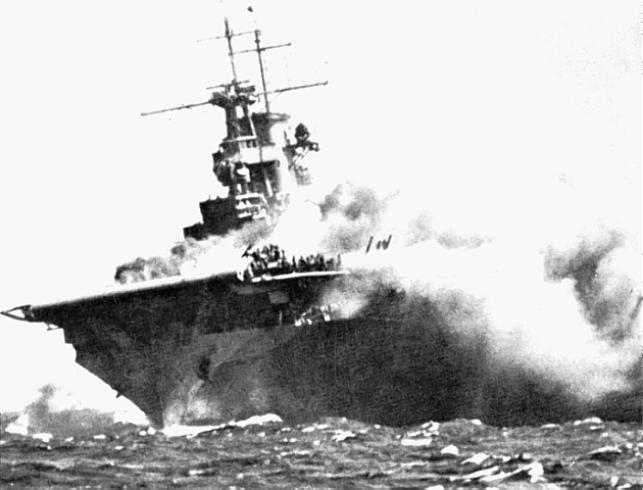
With the shortage of carriers in the Pacific due to the loss of Lexington and damage to Saratoga Wasp was transferred to the Pacific where her air group received new aircraft prior to sailing to the South Pacific to take part in the invasion of Guadalcanal in August 1942.  Her air group acquitted itself well in action against the Japanese in the initial operations and she would remain in the area of operations.  On September Wasp was escorting troop transports carrying the 7th Marine Regiment to Guadalcanal.   As she recovered aircraft she was hit by 2 torpedoes from the Japanese submarine I-19.  I-19 had executed one of the most successful attacks by a Japanese submarine on US Naval Forces during the war, sinking Wasp, damaging the Battleship North Carolina and the destroyer O’Brien which later sank while sailing to the United States for permanent repairs.  At about 1420 the powerful 24” “Long Lance” torpedoes hit the Wasp in the vicinity of her ammunition magazine and aircraft gasoline tanks.  The fires rapidly spread throughout the ship igniting ready ammunition for the anti-aircraft guns.  Despite damage control efforts the fires spread and large secondary explosions wracked the ship forcing her abandonment at 1520.  With the ship abandoned she was sunk by the USS Lansdowne going down at 2100 with the loss of 196 of her crew.

Wasp Burning and Sinking

Though small and short lived the Wasp was a successful design incorporating a folding T-shaped deck edge elevator which was a predecessor of the much larger ones found on modern US Aircraft Carriers. The Ranger despite her limitations was far more capable than other countries early designs and served well in the Atlantic and as a training platform.

Peace,

Padre Steve+

16 Comments

Filed under History, Navy Ships, world war two in europe, world war two in the pacific