Category Archives: nazi germany

“Do not forget that every people deserves the regime it is willing to endure.” My Favorite Resistors, Part One: the Anti-Nazis

359212-1081074754-stauffenberg-nazi-germany-stauffenberg-demotivational-poster-1236884536

Friends of Padre Steve’s World,

They are know and unknown but all resisted tyrants and all have become inspirational figures in my life. They are men and women, and many are soldiers or clergy, while others were civil rights leaders. Most were advocates of non-violence, but some due to the incredibly evil nature of the regime under which they lived and served resorted to violence. But all show me and I hope will show you that the path of resistance is not futile.

The problem is that far too many people become discouraged the longer the struggle lasts and end up accommodating themselves to the evil regimes under which they lived. That will probably be the experience of those who struggle against tyranny around the world today as authoritarianism under many guises becomes more entrenched. It is a world wide phenomena but if the classic understanding of democratic liberalism advocated by so many including the founders of the United States is to survive, authoritarians and their tyrannical worldview must be resisted.

Sophie Scholl, a young student at the University of Munich wrote:

“I’ve been thinking of a story from the Old Testament: Moses stood all day and all night with outstretched arms, praying to God for victory. And whenever he let down his arms, the enemy prevailed over the children of Israel. Are there still people today who never weary of directing all their thinking and all their energy, single-heartedly, to one cause?”

That my friends is important.

Yesterday, July 20th was the 74th anniversary of Operation Valkyrie, the attempt of conservative German military officers, diplomats, and others to kill Hitler and end the tyrannical and genocidal Nazi regime. Among the men who died in that attempt were Colonel Claus von Stauffenberg, General Henning von Trescow, General Ludwig Beck, Lieutenant Colonel Mertz von Quirnheim, and General Friedrich Olbricht. Others were implicated and were murdered after kangaroo court proceedings at the hand of the Volksgericht, the “People’s Court” headed by Roland Freisler. Among them was Field Marshal Erich von Witzleben. While Freisler hounded and tried to humiliate him Witzleben remained calm and announced to the court:

“You may hand us over to the executioner, but in three months’ time, the disgusted and harried people will bring you to book and drag you alive through the dirt in the streets!”


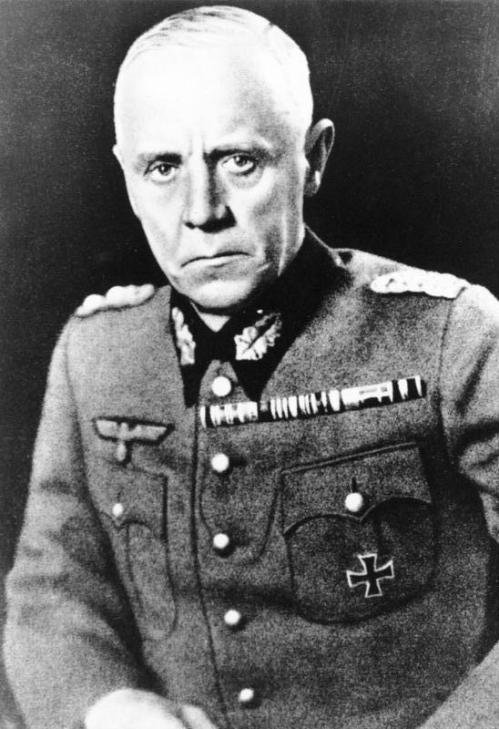
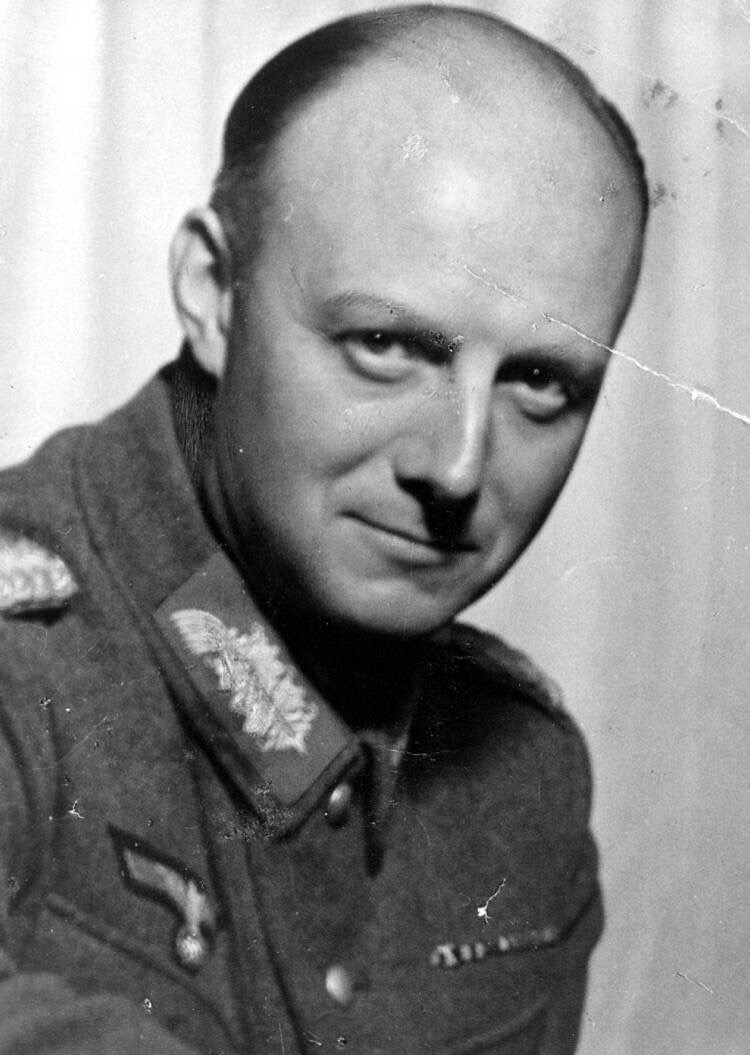
tresckow

General Henning von Tresckow

“We have to show the world that not all of us are like him. Otherwise, this will always be Hitler’s Germany.” When the attempt failed von Trescow was serving on the Russian front far away from Berlin. To avoid arrest and the possibility that under torture he could implicate others or cause harm to his wife and children von Trescow killed himself. Another participant wrote that before his death von Trescow said:

“The whole world will vilify us now, but I am still totally convinced that we did the right thing. Hitler is the archenemy not only of Germany but of the world. When, in few hours’ time, I go before God to account for what I have done and left undone, I know I will be able to justify what I did in the struggle against Hitler. God promised Abraham that He would not destroy Sodom if only ten righteous men could be found in the city, and so I hope for our sake God will not destroy Germany. No one among us can complain about dying, for whoever joined our ranks put on the shirt of Nessus. A man’s moral worth is established only at the point where he is ready to give his life in defense of his convictions.”

Ludwig Beck

General Ludwig Beck

Beck, who had resigned his post as commander of the German Army in protest of the planned invasion of Czechoslovakia wrote something that has become a key part of my military and personal ethic: “It is a lack of character and insight, when a soldier in high command sees his duty and mission only in the context of his military orders without realizing that the highest responsibility is to the people of his country.” 

Tresckow, a committed Christian also noted of Hitler’s supposedly Christian supporters: “I cannot understand how people can still call themselves Christians and not be furious adversaries of Hitler’s regime.” 

220px-Bundesarchiv_Bild_146-1979-013-43,_Wilhelm_Canaris

Admiral Wilhelm Canaris 

There were other Christian resisters of the Hitler regime. Hans Oster was the son of a pastor and one of the senior officers in the Abwehr, the German military intelligence. His boss, Admiral Wihelm Canaris was also a resister. Both would be executed on the personal order of Hitler in April 1945 along with Pastor Dietrich Bonhoeffer, all had been arrested for their involvement in anti-Hitler activities. For his part Canaris would note something that military, intelligence, or police officials who might be tempted to excuse the actions of modern day tyrants or would be authoritarians:

“One day the world will hold the Wehrmacht responsible for these methods since these things are taking place under its nose.”

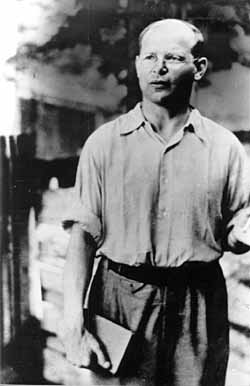
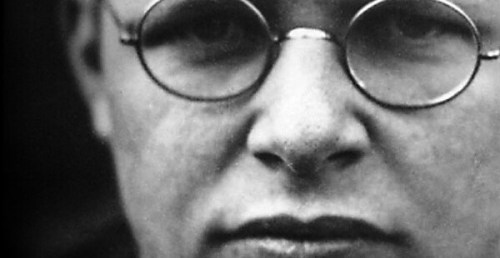
bonhoeffer-prison2

Dietrich Bonhoeffer 

Pastor Bonhoeffer who died with Oster and Canaris at Flossenburg wrote:

“Christianity stands or falls with its revolutionary protest against violence, arbitrariness and pride of power and with its plea for the weak. Christians are doing too little to make these points clear rather than too much. Christendom adjusts itself far too easily to the worship of power. Christians should give more offense, shock the world far more, than they are doing now. Christian should take a stronger stand in favor of the weak rather than considering first the possible right of the strong.”

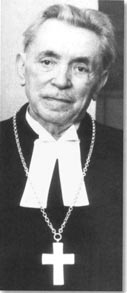
hermann maas

Hermann Maas 

Hermann Maas, another Lutheran pastor made his mark by speaking out in defense of Jews and Socialists. He angered the German political right including the Nazis by doing so. He aided Jews and other non-Aryans to escape Germany, and cared for the elderly Jews who could not. He was removed from his pastorate and imprisoned. He survived the war and would be the first German recognized by Yad Vashem as one of the Righteous Among the Nations. Maas discussed the responsibility of all Germans for the crimes of Hitler and the Nazis, something that Christians and others in nations like the United States, Europe, Asia, Africa, and South America that are threatened by authoritarian leaders and racist regimes:

“Every German bears responsibility for Germany no matter who he is or where he stands, in the homeland or abroad, in public and at home. No one can absolve him of this responsibility. He can transfer it to no one.” 

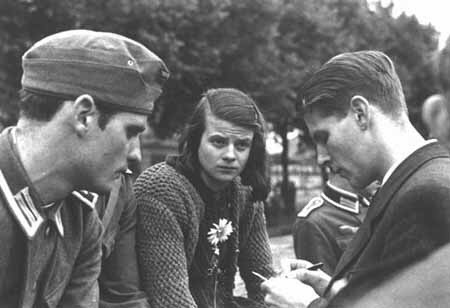
img_0090

Sophie Scholl

But these men were not the only opponents of the Nazi regime. A young woman, a student at the University of Munich named Sophie Scholl and her brother Hans were at the center of an anti-Nazi resistance called the White Rose. They published and distributed a number of anti-Nazi leaflets and were caught doing so in early 1943.

One of those pamphlets noted:

“Nothing is so unworthy of a civilized nation as allowing itself to be “governed” without opposition by an irresponsible clique that has yielded to base instinct. It is certain that today every honest German is ashamed of his government. Who among us has any conception of the dimensions of shame that will befall us and our children when one day the veil has fallen from our eyes and the most horrible of crimes – crimes that infinitely outdistance every human measure – reach the light of day?

If the German people are already so corrupted and spiritually crushed that they do not raise a hand, frivolously trusting in a questionable faith in lawful order in history; if they surrender man’s highest principle, that which raises him above all other God’s creatures, his free will; if they abandon the will to take decisive action and turn the wheel of history and thus subject it to their own rational decision; if they are so devoid of all individuality, have already gone so far along the road toward turning into a spiritless and cowardly mass – then, yes, they deserve their downfall.

Goethe speaks of the Germans as a tragic people, like the Jews and the Greeks, but today it would appear rather that they are a spineless, will-less herd of hangers-on, who now – the marrow sucked out of their bones, robbed of their center of stability – are waiting to be hounded to their destruction. So it seems – but it is not so. Rather, by means of a gradual, treacherous, systematic abuse, the system has put every man into a spiritual prison. Only now, finding himself lying in fetters, has he become aware of his fate.

Only a few recognized the threat of ruin, and the reward for their heroic warning was death. We will have more to say about the fate of these persons. If everyone waits until the other man makes a start, the messengers of avenging Nemesis will come steadily closer; then even the last victim will have been cast senselessly into the maw of the insatiable demon.

Therefore every individual, conscious of his responsibility as a member of Christian and Western civilization, must defend himself against the scourges of mankind, against fascism and any similar system of totalitarianism. Offer passive resistance – resistance – wherever you may be, forestall the spread of this atheistic war machine before it is too late, before the last cities, like Cologne, have been reduced to rubble, and before the nation’s last young man has given his blood on some battlefield for the hubris of a sub-human. Do not forget that every people deserves the regime it is willing to endure.”

She wrote:

“It’s the reductionist approach to life: if you keep it small, you’ll keep it under control. If you don’t make any noise, the bogeyman won’t find you. But it’s all an illusion, because they die too, those people who roll up their spirits into tiny little balls so as to be safe. Safe?! From what? Life is always on the edge of death; narrow streets lead to the same place as wide avenues, and a little candle burns itself out just like a flaming torch does. I choose my own way to burn.”

I think of all of these people that I admire young Sophie Scholl the most. She had no power. She was not an officer, a government official, a businessman, or a pastor. She was simply a young woman who was informed by her faith and her concern for basic human morality and ethics.

While the Nazi State was consumed by the flames of Hitler’s Götterdämmerung, the lives and message of those few who resisted still redounds to us today. And yes, in comparison to the majority of Germans  of the Hitler era, they were a tiny minority, Of over 2000 German General and Flag officers a mere 22 were involved in anti-Nazi activities and the same is true for most professions in the Third Reich.

Milton Mayer wrote the words of a German University Professor and colleague after the war was over. The professor was reflecting on how people ended up going along with the Nazi regime. Mayer wrote his friends words:

“And one day, too late, your principles, if you were ever sensible of them, all rush in upon you. The burden of self-deception has grown too heavy, and some minor incident, in my case my little boy, hardly more than a baby, saying ‘Jewish swine,’ collapses it all at once, and you see that everything, everything, has changed and changed completely under your nose. The world you live in—your nation, your people—is not the world you were born in at all. The forms are all there, all untouched, all reassuring, the houses, the shops, the jobs, the mealtimes, the visits, the concerts, the cinema, the holidays. But the spirit, which you never noticed because you made the lifelong mistake of identifying it with the forms, is changed. Now you live in a world of hate and fear, and the people who hate and fear do not even know it themselves; when everyone is transformed, no one is transformed. Now you live in a system which rules without responsibility even to God. The system itself could not have intended this in the beginning, but in order to sustain itself it was compelled to go all the way.

“You have gone almost all the way yourself. Life is a continuing process, a flow, not a succession of acts and events at all. It has flowed to a new level, carrying you with it, without any effort on your part. On this new level you live, you have been living more comfortably every day, with new morals, new principles. You have accepted things you would not have accepted five years ago, a year ago, things that your father, even in Germany, could not have imagined.

“Suddenly it all comes down, all at once. You see what you are, what you have done, or, more accurately, what you haven’t done (for that was all that was required of most of us: that we do nothing). You remember those early meetings of your department in the university when, if one had stood, others would have stood, perhaps, but no one stood. A small matter, a matter of hiring this man or that, and you hired this one rather than that. You remember everything now, and your heart breaks. Too late. You are compromised beyond repair.

“What then? You must then shoot yourself. A few did. Or ‘adjust’ your principles. Many tried, and some, I suppose, succeeded; not I, however. Or learn to live the rest of your life with your shame. This last is the nearest there is, under the circumstances, to heroism: shame. Many Germans became this poor kind of hero, many more, I think, than the world knows or cares to know.”

I think that I shall close with that tonight.

Peace

Padre Steve+

1 Comment

Filed under christian life, civil rights, ethics, faith, History, holocaust, laws and legislation, leadership, Military, nazi germany, News and current events, Political Commentary

“We have to show the world that not all of us are like him” Operation Valkyrie In the Age of Trump and Other Authoritarians


Henning Von Trescow 

Friends of Padre Steve’s World,

Seventy-three years ago today a number of German military officers as well as civilian officials attempted to assassinate Adolf Hitler in an attempt to overthrow the Nazi Regime and end the Second World War. Ironically many had been supporters of Hitler’s early policies and few had spoken out against the Nazi seizure of power, elimination of political opponents, the outlawing of trade unions and opposition political parties. Most remained silent when Hitler conducted his brutal Night of the Long Knives massacre of 1934 and took the personal oath of loyalty to him after Hindenburg died soon after.

Some would recognize the threat but offered little resistance as Hitler consolidated his power and began to begin his reign of terror at home even as he began to conquer swaths of Europe without firing a shot. Early plans to overthrow Hitler collapsed because his opponents, so used to being loyal and obedient servants of the State were paralyzed whenever an unexpected contingency arose.

Eleven years after Hitler made opposition political parties illegal and almost five years after he invaded Poland to begin the Second World War a plan called Operation Valkyrie was launched. Two of the key plotters were Colonel Claus Schenk Von Stauffenberg, Major General Henning Von Trescow, and retired General Ludwig Beck.

Most understood that the attempt would likely fail, but they were determined to try. Von Trescow said: “It is almost certain that we will fail. But how will future history judge the German people, if not even a handful of men had the courage to put an end to that criminal?” 

When Stauffenberg detonated a bomb at Hitler’s East Prussian Wolf’s Lair headquarters Beck and other conspirators attempted to seize power in Berlin. However their plans went awry. Hitler survived the blast. Josef Goebbels secured Berlin, and the plot fell apart. Stauffenberg and a number of conspirators were shot that night, Beck attempted to commit suicide but failed and was killed. Over 5,000 more conspirators, suspects, and other Nazi opponents, including some of the most respected officers of the Wehrmacht were tried in show trials and executed. Some like Field Marshal Erwin Rommel were given the choice of committing suicide to save their families.

Von Trescow, who killed himself on the Russian front following the collapse of the coup noted: “We have to show the world that not all of us are like him. Otherwise, this will always be Hitler’s Germany.” Likewise, Beck wrote something that has become a key part of my military and personal ethic: “It is a lack of character and insight, when a soldier in high command sees his duty and mission only in the context of his military orders without realizing that the highest responsibility is to the people of his country.” 

Fabian von Schlabrendorff, a conspirator who was captured and tortured by the Gestapo after the failure of Operation Valkyrie, said: “Obedience is the rule. However, there are cases which demand disobedience. This has been uncontested in the Prussian Army. Blind obedience has its origin with Hitler.” 

When Hitler issued the Commissar or Criminal Order on the eve of Operation Barbarossa in 1941, Von Trescow told a colleague:

“Remember this moment. If we don’t convince the field marshal (Fedor von Bock) to fly to Hitler at once and have these orders (Commissar Order) canceled, the German people will be burdened with a guilt the world will not forget in a hundred years. This guilt will fall not only on Hitler, Himmler, Göring, and their comrades but on you and me, your wife and mine, your children and mine, that woman crossing the street, and those children over there playing ball.” 

Unlike Hitler’s Germany Americans still have some checks and balances to guard against a President attempting to gain control of the country the way Hitler did Germany. However, those checks and balances are delicate, fragile, and if neglected will fail in the crisis. In fact they are showing incredible strain as the Republican majorities in Congress fail to exercise their constitutional responsibilities and political appointees undermine the very agencies that they are responsible for maintaining, and laws that they were sworn to uphold. If they do fail, will we have the courage to stand for the principles and ideals of our country? That we do not yet know but my recent experience says that we very well might fail in the crisis. Historian Timothy Snyder wrote:

“The European history of the twentieth century shows us that societies can break, democracies can fall, ethics can collapse, and ordinary men can find themselves standing over death pits with guns in their hands. It would serve us well today to understand why.”

There are prices to be paid for obedience to unlawful orders and the actions of a criminal state, as well as a price to be paid for disobedience. The men who belatedly and against a nation that was still devoted to Hitler understood those questions and acted accordingly. I do hope that none of us have to face what these men did between 1933 and 1944. However, as time marches on and the President and his Administration continue to defy the law, ignore the Constitution, and undermine the foundations of our Republic, even encouraging their supporters to violence, will our democratic institutions survive?

The administration has implemented and is continuing to implement policies that are quite similar in their intent to crimes that the Nazis were tried for at Nuremberg. If Americans do not rise up against them we too will be to use the words of Von Trescow: “be burdened with a guilt the world will not forget in a hundred years.” 

img_0193-1

Bonhoeffer

That is a question that we have to ask. If they do crumble will we stand the test? Will we have the courage to resist even at the cost of our lives? Dietrich Bonhoeffer who had already been jailed by the Gestapo at the time of Valkyrie wrote:

“If I sit next to a madman as he drives a car into a group of innocent bystanders, I can’t, as a Christian, simply wait for the catastrophe, then comfort the wounded and bury the dead. I must try to wrestle the steering wheel out of the hands of the driver.”

Will we have the courage to resist at that moment? Words are cheap, actions are all to rare. Will we be able to stand against the tide?

That my friends is a question we may all have to answer sooner rather than later.

Until tomorrow,

Peace

Padre Steve+

2 Comments

Filed under christian life, civil rights, ethics, faith, History, Military, nazi germany, News and current events, Political Commentary

Accused and Threatened by a Christian Trump Cultist

Friends of Padre Steve’s World,

Saul Steinberg wrote:

“Baseball is an allegorical play about America, a poetic, complex, and subtle play of courage, fear, good luck, mistakes, patience about fate, and sober self-esteem.” 

Last night I watched what turned out to be an magnificent MLB All Star Game. I had a very good day going into it and anticipated it with the same glorious expectations that I have done since the 1970 All Star Game. For me the MLB All Star Game is an event with nearly religious significance. Baseball is a game that helps me connect spiritually with God as well as exhibits some of the best traits of what until now has defined the United States, as reflected in the words of Steinberg.

For me that was comforting and until last night Saul Steinberg’s words comforted me and allowed me to believe a myth about the inherent goodness of America. Despite our flaws, our mistakes, and yes, even many malevolent policies I still believed that we are basically good people. I don’t think that I believe that anymore, even as I still believe that most Americans want to be good people. We like to think that we are the good guys.

As the game went on I developed a terrible headache and I began to become incredibly depressed. I could feel myself slipping down like I haven’t for a few years. I got up this morning doing better but after a good Staff meeting at our base headquarters began to walk to my car and during that time I began to sink into the pit again. I pulled into my parking spot at the chapel and I was terrified until one of my Catholic parishioners came in to talk to me for a few minutes. She’s a sweet English lady and her kindness is always a blessing and today it made a big difference. My Chief came in to me with a laundry list of things that I needed to help with and then I found out that three young Chaplain Candidate Officers were coming to see me. That put me back in my element because over the past couple of years I have come to realize that the most important thing that I do is to mentor young men and women, especially Chaplains or those aspiring to be Chaplains. I didn’t tell them anything of what I am writing tonight, but I was able to give the, good advice and invite them to contact me any time even if I was no longer on active duty.

The game was a fantastic game but I didn’t enjoy it because I was too caught up in something that happened to me two weeks ago when I received the news that I was being investigated for the allegations of violating the Uniform Code of Military Justice made by a member of my Chapel, a retired Navy Officer.

The man accused me of the violation of Article 88 Contempt for an Official in this case the President of the United States, and of Article 133, Conduct Unbecoming an Officer for the content of my sermon. He accused me of “comparing the President to Adolf Hitler” and “the actions of those enforcing the laws of the nation as Nazis or Nazi Sympathizers.” He accused me of “engaging in political activism on the job.”

Because of his allegations to the command my Commanding Officer had to launch a preliminary investigation. If the allegations were found to be true I could have been charged and tried by Court Martial. My career of 37 years of Army and Navy service including two combat tours and multiple deployments and family separations could have been ended had I been charged or convicted of such an offense.

I wrote about that sermon last month and the allegations were scurrilous, unsubstantiated and purely of his own making. If there was any political motivation it was this retired officer’s allegations which were an attempt to silence legitimate Christian preaching on social justice issues. I found the complaint ironic because one of my predecessors preached against the end of the Defense of Marriage Act and the end of the Don’t Ask Don’t Tell policy. That Chaplain attacked the character of President Obama and pledged to disobey any orders to support marriage equality. But not one person in the congregation complained.

Yet when I criticized President Trump’s words in which he described immigrants and refugees as “animals”, called them an “infestation” and linked all of them to being violent murderers, rapists, and associated with the MS-13 criminal gang as being dehumanizing, against the teachings of the church and similar to the words that Hitler used to demonize and dehumanize the Jews, that was wrong. When I criticized the Attorney General for his misuse of Scripture to defend those polices in front of the Catholic Bishops and the complicity of the White House Press Secretary and Pastor Robert Jeffress of First Baptist Church Dallas in defending those remarks I was a criminal in the mind of my accuser.

The fact that I was preaching within a prophetic Christian social justice tradition as Dietrich Bonhoeffer or Martin Luther King Jr. was irrelevant to my accuser. The fact that I could make legitimate historical comparisons, not only with Nazi Germany but American slavery, the Black Codes, Jim Crow, the extermination of Native American tribes, and the internment of Japanese Americans was irrelevant. It was the fact that I deviated from the Christian Trump Religious cult claims that brought about these scurrilous charges.

When I was called in for an interview by the investigating officer, who I know is a very fair, honest, and decent man I sensed that he was uncomfortable in having to question me as we have worked together over the past year. I told him that I could not submit to an interview and without an attorney present.

I left and immediately called Mikey Weinstein of the Military Religious Freedom Foundation, or MRFF. Mikey took my call immediately and connected me with one of his exceptional attorneys. That was on July 3rd and I spent Independence Day wondering if my military career was about to end. On July 5th I was asked by the Investigating Officer for names of other parishioners who had heard the sermon. I was able to give him a few names, all retired African American Chief Petty Officers or Army and Marine Corps Senior NCOs. He interviewed them and my attorney contacted him. The next morning I was called by the Investigating Officer and the Base Executive Officer to let me know that I had been exonerated and the investigation was over. Both seemed happy for me.

I was supported during the ordeal by the regional Chaplain who is much more conservative than me, and this was not a witch hunt by my command. They as well as my commanding officer are all men of integrity who respect and appreciate my work. If they had not been such men my life could have much more difficult. I was fortunate, but I know other officers who have not been so fortunate or had as solid and feared legal counsel as I received from MRFF. Some of them were convicted of crimes that they did not commit or as in the case of one officer was the victim of a witch hunt by his service chief after his command and civilian police officials had determined that there was no evidence that he had committed any crime. His service overruled them and had him tried by a jury and judge of their choice. I know this because I was called as a character witness. I was flown overseas and within two hours of landing I was thrust onto the witness stand without rest or so much time as to shower or shave. He was convicted anyway. However, during my testimony during the sentencing phase the next day which was not impeached or overruled I told the truth, that the only reason that the officer was on trial and been convicted was because he was gay and not because of the evidence. It was a travesty of justice and I am glad that it didn’t happen to me.

That being said I was fortunate that I have a command that has integrity and seeks the truth. The investigation proved that the charges of the retired officer we’re false and more related to his political allegiance than to any Christian teaching or tradition.

However the most disturbing part of this experience was how that it continues to effect me. The fact is that this retired officer couldn’t even follow the clear commands of Jesus or the Apostle Paul to deal with disagreements between brothers privately or within the Church. Never did any New Testament writer or any of the Ante-Nicene Fathers instruct Christians to turn in other Christians that disagrees with them to the State. What happened to me reminded me of the accounts of German Protestant and Catholic Priests who were turned in to the Gestapo by informants in the Church.

I think that is why I went into such a deep depression last night. The situation in our country has even taken away my ability to enjoy a baseball game and made me incredibly suspicious of the members of my chapel congregation.

Sadly, based on other comments on my Facebook page by some other officers I realize that one cannot reason with members of the Christian Trump Cult even using Scripture and the Christian tradition. Like the German Christians who followed Hitler to his Götterdämmerung they will follow Trump even as he shoots someone on 5th Avenue.

Maybe I will write about the All Star Game tomorrow, but if I don’t it will be first time in nine years on this blog that I haven’t. I think that is one of the worst things about my experience, living on such an edge and under such a real threat that I can no longer enjoy things that used give me such joy and peace.

If this is what it means to Make America Great Again I want nothing to do with it or those who pledge their allegiance to Trump over the Constitution or Christ.

I have more to say but will live it at this for the night.

So until tomorrow,

Peace,

Padre Steve+

11 Comments

Filed under civil rights, ethics, faith, History, holocaust, nazi germany, News and current events, Political Commentary, Religion

Kursk: The Death Ride of the Panzerwaffe

Friends of Padre Steve’s World,

I am reposting an older article today which was a paper that I wrote for a class as part of my second Masters Degree program. 

The Battle of Kursk was the climactic battle on the Eastern Front from which the Germans never recovered. It was a battle that should not have been fought, at least at the time that it was fought. It was high risk operation with minimal payoff should it succeed. It did not and combined with the Allied landings in Sicily and other setbacks suffered by German forces in 1943 was the battle that doomed Germany to defeat. It was the last time that the German military had a chance to score a major victory against the Soviets and their defeat ensured the defeat of the Third Reich. 

Peace

Padre Steve+


The German Situation and Dilemma in April 1943
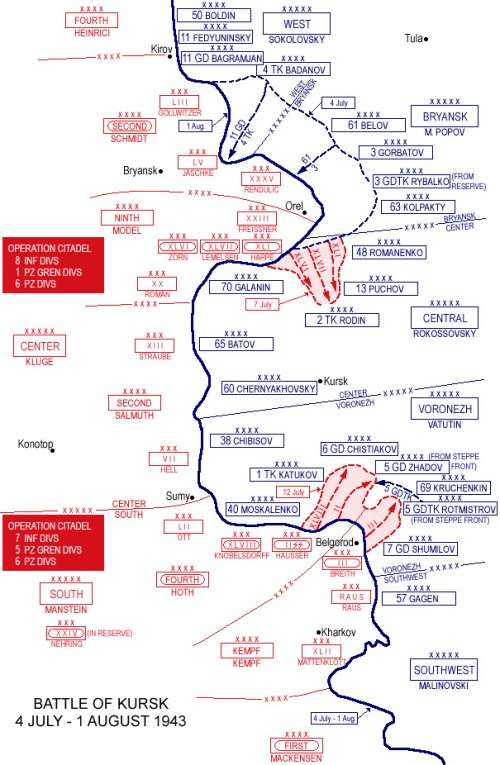
Battle_of_Kursk_(map)

The Germans faced a dilemma in April 1943.  Manstein’s brilliant counter-stroke had turned what could have been disaster into an opportunity to salvage prospects for the Eastern Front. The German action had “repaired its front, shattered the hopes of the Allies, and nipped the Russian spearhead.”[i]Unfortunately for the Germans the spring thaw meant that Manstein could not continue immediately and eliminate the Kursk bulge which had been formed by Rokossovky’s offensive and Manstein’s own counter-stroke.  With the Germans stalled by the weather Stavka cancelled “other significant planned offensives to dispatch reinforcements to the Kursk region.”[ii] Despite the weather Manstein pushed Kluge for an immediate attack on both sides of the bulge but was rebuffed by Kluge who “insisted that his troops needed to rest and refit.”[iii] This rebuff combined with the onset of the Russian mud meant that in “March 1943 the war on the ground came to an end….The front was immobilized.”[iv]

manstein with tanksField Marshal Erich von Manstein with Tiger I Tanks

Manstein’s offensive had “enabled the Germans to consolidate a firm position in the East, and build up strength afresh- not to its former level, but sufficient to provide a good prospect of holding the Russians at bay.”[v] As a result German armies in the south “held again nearly the same positions from which the Blau offensive had begun the previous spring.”[vi] Now the Kursk bulge some 250 Kilometers wide and 160 Kilometers deep[vii] protruded menacingly into the German lines and drew the attention of both sides, to the Germans it appeared to be designed for an encirclement battle.[viii] Thus it appeared that the Kursk bulge was the obvious place for the Germans to resume the offensive and maintain the initiative on the Eastern Front.

But was the Kursk necessary?  Was Operation ZITADELLE as obvious as it seemed to be to Hitler, Zeitzler and others?  The battle is the subject of many books and articles which often focus on tactical and operational details of the German offensive, particularly the battle on the southern side of the bulge and the clash of armor at Prokhorovka.  This essay will focus less on the battle and more on the strategic situation faced by the Germans in the spring of 1943. Key to this are the arguments for and against the operation, the operations timing and the option that the Germans had to conduct a mobile defense.   It is the strategic situation that must be looked at to determine whether Operation ZITADELLE was necessary at all. Manstein believed that had the offensive been launched early enough that it might have succeeded provided it “we launched it early enough we could hope to catch them in a state of unpreparedness.”[ix]Williamson Murray and Allan Millett agree with Manstein’s assessment but note that an early offensive was “riskier…but greater the prospect for a major success.”[x] Guderian on the other hand saw that nothing good could come of ZITADELLE and opposed it from the beginning.[xi] Glantz and House in their detailed study argue that “there is absolutely no basis for assuming that Citadel would have succeeded had it been launched in spring 1943.”[xii]

battle_kursk t 34The Soviets Reinforced and Fortified the Kursk Salient

The Germans faced a number of major problems in early 1943.  First, among them was manpower.  The armed forces had been mauled on the Eastern Front, “after continuous operations from June 1942 to March 1943, most German units were worn out.”[xiii] Many infantry divisions “were reduced to two thirds of their original strength, with declining mobility and anti-tank defenses.”[xiv] Had the Germans only faced the Russians this might have been overcome, however they not only faced a rejuvenated Red Army, but challenges brought about by multi-theater operations and their weak, ineffective and reluctant allies.  The Allied air offensive which though it “did not decisively effect German arms production it nevertheless prevented a great deal of work from being carried on and had profound moral effects which communicated themselves to all the fronts.”[xv] Likewise the U-Boat campaign had been effectively defeated by May 1943 allowing for increasing numbers of American troops and supplies to reach Europe, including significant Lend-Lease aide for the Soviet Union.  Manpower became a major issue for the the German Army and industry.  Both the military and industryhad difficulty in getting the required number of personnel to meet their personnel needs, in January 1943 the German High Command “demanded 800,000 men-but even the most ruthless call-up was able to produce only 400,000” who were lost to the civilian war economy.[xvi] Even the “belated industrial mobilization of Germany, fueled by slave labor and directed by the organizational genius of men like Speer and Guderian, could do little beyond patching together existing units.”[xvii]

Bild 101I-139-1112-17General Heinz Guderian, Inspector of Panzer Troops was one of Few Senior German Officers to Oppose ZITADELLE from the Beginning

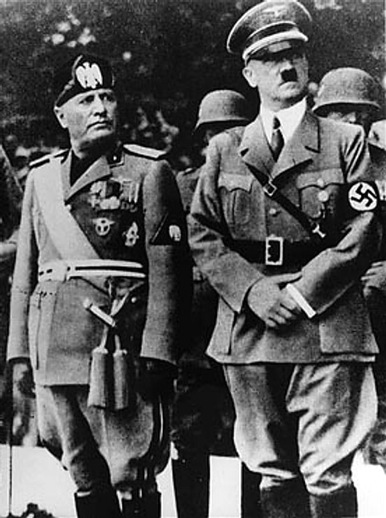
There were other challenges. The German and Italian armies in North Africa had surrendered, and about 330,000 Axis soldiers entered captivity.[xviii] Added to the heavy losses on the Eastern Front, the disasters in North Africa and Stalingrad had “effectively destroyed the Axis military alliance, such as it was.”[xix] Italy, Hungary and Romania all began to pull their forces out of the Eastern front after having them shattered by the Soviet Winter offensive.[xx]Italy, shaken by its losses in North Africa and the Russian front was wavering in its support for Germany; Mussolini’s government itself was on the verge of falling.  Likewise the Hungarian government sought contact with the Allies;[xxi]as did the Romanians.[xxii] Finland too was looking for a way out and limiting its participation in German offensive operations.[xxiii] As her allies looked for a way out, the British and Americans were about to open a new front in Southern Europe, while another had effectively been opened by partisans in Yugoslavia and Greece.[xxiv] The crisis in the south was great enough that OKW under General Jodl began to look at ways of shoring up those fronts in case Italy withdrew from the war including the use of units that would have to be withdrawn from the Eastern Front.[xxv] The Balkans drained German reserves such that the number of German divisions deployed there increased from 5 to 15 between July 1942 and July 1943.[xxvi] Additionally many units had to be created by the Replacement Army to build up the Western Front knowing that an Allied strike there would eventually take place, further depriving the Eastern Front of badly needed infantry replacements and divisions.
Benito_Mussolini_and_Adolf_HitlerHitler Felt Regaining the Initiative in the East was Critical to Keeping his Allies in the War

The German Options and Decision

The question for the Germans now was whether they “had any strategic options that would allow them to avoid defeat.”[xxvii] It is from this perspective that the necessity of Kursk must be examined. Most in the German High Command now realized that strategy in the east could no longer be “based on the illusion of conquering the vast Soviet Union.”[xxviii] As such the discussion turned to what direction the new strategy should take.  Political considerations came into play: Since the German allies were looking for ways to exit the war it was felt that “it was politically impossible for Germany to surrender the initiative on the Eastern Front.”[xxix] Realistically there were two options available: Wait and counterattack or launch a limited attack on the Kursk salient. The general impression among many German commanders in the East was that they had ended the last campaign “with a relative advantage over the Reds, an advantage that should be exploited as soon as the rasputitsa ended in April or early May.”[xxx] But the only strategy that looked feasible balancing the political and military goal of maintaining the initiative was what Manstein originally had in mind after Kharkov, to continue on, pinch out the Kursk bulge with the cooperation of Kluge’s Army Group Center.  As noted the opportunity to do so was lost with Kluge’s refusal and the onset of the spring thaw.  Yet this idea captured Zeitzler at OKH and Kluge at Army Group Center, though by April and May Manstein was more inclined toward “the ‘backhand’ stroke, which involved giving up the whole Donetz basin and staging a major Panzer offensive southeast from Kharkov.”[xxxi] However, this was too bold for Hitler who was “unwilling to give up the Donetz Basin with its industrial and mineral resources.”[xxxii]

battle_kursk_tiger advancingThe New Tiger Tanks Were to Play a Critical Role in the Attack

Manstein felt that the “moment of opportunity had passed, but his counterpart at Army Group Center…Kluge, was enthusiastic about the proposal.”[xxxiii]Zeitzler believed that an “attack at Kursk would be less risky”[xxxiv] than Manstein’s “backhand” and pushed the plan to Hitler.  There were advantages to this strategy if it could be carried out successfully. The Germans would encircle and destroy Russian forces in the salient and “shorten their own defensive lines after such an encirclement.”[xxxv] Yet the plan was opposed by others. Jodl at OKW argued against ZITADELLE “because he believed that it was dangerous to empty the strategic reserve when so many new crises threatened to develop in the Mediterranean.”[xxxvi] Zeitzler countered that because of German weakness in the east that they could not “wait to be hit.”[xxxvii] Guderian did not believe that either Army Group could be ready to mount the offensive that Zeitzler envisioned and “declared that the attack was pointless…if we attacked according to the plan of the Chief of the General Staff, we were certain to suffer heavy tank casualties, which we would not be in position to replace in 1943.”[xxxviii]Guderian asked Hitler at a separate conference “why he wanted to attack at all in the East in 1943.” When Keitel expressed that the reasons were political, Guderian asked Hitler “How many people do you think even know where Kursk is? It’s a matter of profound indifference to the world whether we hold Kursk or not…”[xxxix] Guderian and Speer both pointed out technical problems in producing the Tigers and Panthers but were overruled.[xl] Hitler himself reportedly had misgivings about the attack at one point reportedly stating that “the thought of the Zitadelle operation ‘made [his] stomach turn over’”[xli] In spite of Jodl and Guderian’s warnings, his own misgivings and those of Manstein and Model in April and May, Hitler “allowed himself to be tempted once more into taking the offensive. The Kursk salient…lured him into mounting his great pincer operation known as Citadel.”[xlii] Glantz and House maintain that he could “see no alternative politically and agreed to the plan.”[xliii]

The Facts on the Ground

Kursk_T34_and_Fieldgun-px800Soviet Forces Expected the Attack and Were well Prepared to Meet it

Once the decision to attack was made the question that remained was the timing of the attack. Manstein had preferred an early attack in May, but the operation was postponed to mid-June and then to July due to the request of Model who believed that his forces were too weak and needed reinforcements.[xliv] The attack was to be one of several “limited offensives designed to consolidate the German defenses while inflicting sufficient damage on the Red Army to delay any Soviet offensive.”[xlv] But the delays insisted on by Model and agreed to by Hitler were a fatal error.  The Germans failed to “factor into their decision was the unpalatable reality that Soviet strength in the Kursk salient was growing much faster than the Wehrmacht could muster forces to attack it.”[xlvi] Not only were the Soviet forces growing they knew about the German plans and could deploy their forces to counter them and for their own offensive.[xlvii] Stalin’s generals were able to convince him not to launch an attack and instead wait on the Germans so they could attack as the Germans exhausted their strength.[xlviii] They knew of it since April and reinforced the flanks of the salient with guns and armor at a faster pace than the Germans opposite them.[xlix] At Kursk “improved intelligence collection and analysis permitted the Red Army to predict almost exactly the strategic focal point of a major German offensive.”[l] Into the bulge “Vatutin and Rokossovsky crammed seven armies.”[li] The Russians deployed in depth in heavy fortified zones and minefields along the very sectors of the bulge that the Germans intended to attack, successfully masking their preparations from the Germans. It was “a measure of Soviet self-confidence that the senior commanders were looking beyond the German attack, beyond its failure, to the first major Soviet summer offensive.”[lii] Had the Germans succeeded in pinching off the salient “they would have faced several additional defensive belts constructed to the east of the salient.”[liii]

Typically when one launches an offensive it is desirable to have numeric advantage over the defender, 3:1 is normally assumed to be sufficient. At Kursk the Germans were outnumbered by the Russians 2.3:1 in men and 1.6:1 in tanks[liv] yet somehow the offensive had now morphed from a spoiling attack into a strategic offensive, albeit with more limited objectives attacking one of the strongest points in the Russian line.  General Raus, commanding a corps in Army Detachment Kempf noted: “Considering Russian dispositions, defenses and terrain, German strength could be considered only minimally sufficient for the assigned mission.”[lv] The Chief of Staff of XLVIII Panzer Corps called Kursk “the strongest fortress in the world.”[lvi]

Danger Signs: Requests for Cancellation

keitel-jodl-hitlerGeneral Alfred Jodl at OKW Protested the Offensive Verbally and in Writing

As more delays occurred Manstein “came out in the open and protested that the operation was no longer feasible and must be abandoned, but it was too late.  The united stand of orthodox General Staff opinion, Keitel, Zeitzler, Kluge, had persuaded the Führer, whose mind, once made up, was never altered.”[lvii]Manstein felt that the idea had been to “attack the enemy before the enemy had replenished his forces and got over the reverses of the winter.”[lviii] He felt there was great danger to the Mius line and to the northern Orel bulge with each delay; and the felt the threat of an attack by the Allies in Western Europe.[lix] On 18 June Jodl and the OKW Operations Staff “recommended to Hitler that he abandon Operation Citadel in order to free strategic reserves for defense in both East and West.”[lx] Warlimont writes that Jodl “raised empathic objection to the premature commitment of the central reserves to the East; he pointed out both verbally and in writing that a local success was all that could be hoped from Operation Citadel and that it could have no strategic significance for the overall situation.”[lxi] Hitler again refused the request.  “The doubts of certain Chiefs of Staff of the attacking armies were disregarded, and in the case of Colonel von Schleinitz, answered with dismissal.”[lxii]

The Battle

battle_kursk tigersTigers Advancing

The attacking forces for ZITADELLE involved units of Army Group Center and Army Group South.  Spearheading the assault for Army Group Center was Model’s 9th Army.  2nd Army from the same Army Group took a defensive role in the center of the bulge while Army Group South’s 4th Panzer Army under Hoth and Army Detachment Kempf composed the Southern attack force.  Von Mellenthin noted that to muster the necessary divisions for the attacking armies “neighboring fronts were to be thinned out beyond the limits of prudence” and from a strategic point of view likened Citadel “to be a veritable ‘death ride.’”[lxiii]Manstein worried about stripping the Mius-Donetz salient which “had to hand over all their available forces.”[lxiv] The Germans sent 17 panzer divisions against Kursk including the elite 2nd Panzer, Grossdeutschland, Leibstandarte, Das Reich and Totenkopf. Hoth’s army was the “strongest force ever put under a single commander in the German Army.”[lxv] While the Germans assembled the Russians waited, and beginning on 1 July the “Red Army defenders were on constant alert, waiting in their bunkers for the first sign of attack.”[lxvi]

battle_kursk_0020Panzers on the Advance

ZITADELLE began on 4 July with a reconnaissance in force, the main blow scheduled for 0300 5 July. The Russians learned of the timing from a prisoner and quickly launched an artillery counter-preparation an hour prior to the German attack, disrupting it while air strikes were ordered against Luftwaffe airfields.[lxvii] Model’s 9th Army on the northern flank attacked the Russian “13th and 70th Armies on a frontage of 50 kilometers”[lxviii] with the focus being a 16 kilometer front where he concentrated 6 infantry divisions, a panzer division and all his Tiger and Ferdinand units.[lxix] He intended to break the Soviet defensive system “by constantly feeding in new units to grind down the defenses.”[lxx] The attack stalled by the 9July making minimal progress of “8 to 12 kilometers into the massive Soviet defenses.”[lxxi] A good deal of his problem was due to limited infantry strength which was  “far below established strength….moreover, the Ninth Army’s infantry- even the veterans- lacked experience in conducting set-piece attacks against prepared positions.”[lxxii]The Russians defined the battleground and forced Model into a battle determined by superior firepower on a constricted battlefield, “a game that the Wehrmacht could not win.”[lxxiii] This nullified any advantage the Germans might have had in mobility for their panzer divisions.  In savage battles to take the high ground at Ponyri station and Ol’khovatka Model’s assaults faltered.  9thArmy sacrificed about 50,000 men and 400 tanks to the god of war.”[lxxiv]Model continued to attack until 12 July when the Russians launched their offensive against the Orel bulge forcing him to redeploy to counter the Russian advance.  The battle in the north became “a savage defensive battle in which considerable parts of the offensive wing of Ninth Army were involved.”[lxxv]Model’s defeat made Hoth’s task “much more challenging.”[lxxvi]

battle_kursk_t-34s and infantryT-34’s and Infantry

The Fourth Panzer Army and Army Detachment Kempf made better progress, nearly breaking through the Russian defenses after hard fighting. They penetrated “into the third Soviet defensive belt, a depth of 35 kilometers, but were stopped by Katukov’s 1st Tank Army.”[lxxvii] The critical point was reached on 11 and 12 July at Prokhorovka station when 5th Tank Army collided with 4thPanzer Army. “Over 1200 tanks from both sides were engaged in this struggle.”[lxxviii] It was the largest tank engagement of the war, over 700 tanks were destroyed and “German losses were too great to allow a decisive breakthrough.”[lxxix] Both sides took heavy casualties but the Germans could not replace theirs while the Russians still had formidable uncommitted reserves.  On 13 July the battle in the south drifted into a stalemate as XLVIII Panzer Corps and Hausser’s II SS Panzer Corps failed to break the Soviet line[lxxx] as the Russians “kept on throwing in fresh troops, and their reserves seemed inexhaustible.”[lxxxi] Manstein desired to continue the offensive as he believed that for his Army Group “the battle was now at its culminating point, that to break it off at this moment would be tantamount to throwing victory away.”[lxxxii] Although Manstein and Hoth felt that they could continue on and break the Russian line, they were now not in a position to do so. Model’s forces were in no shape to assist in the north and Manstein and Kluge were called to the Wolfsschanze by Hitler who, now preoccupied with the Allied invasion of Sicily necessitating withdraws of strong panzer forces from the east to face the threat in the west.[lxxxiii] Hitler rejected Manstein’s counsel to continue and ordered him to withdraw II SS Panzer Corps,[lxxxiv] effectively ending the ZITADELLE as the Russians launched their offensive on 17 July.
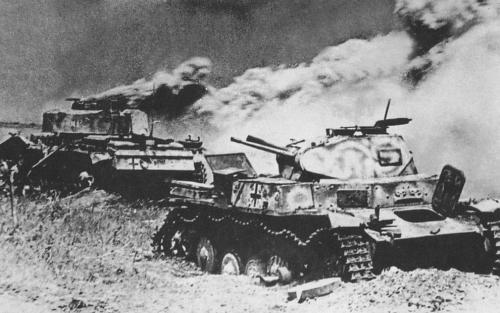
battle_kursk_destroyed panzersDestroyed Panzers

Analysis of the Decision: Zitadelle Was Not Obvious, Necessary nor Well Executed

To Hitler and the supporters of ZITADELLE the operation seemed obvious.  In the two previous years the Germans had dealt punishing blows against the Red Army and the belief of Zeitzler and others was that the Wehrmacht was still qualitatively superior to the Soviets and that even a limited offensive would succeed in its objectives.  But the conditions on the ground had changed and the Germans failed to take the change into account.  The German Army did not have the resources for an offensive of the scope of Barbarossa or Blau. However this lack of resources did not lessen the optimism of some for ZITADELLE; particularly Zeitzler and Kluge. From their perspective the offensive to pinch out the Kursk salient seemed likely to succeed.  Yet as Clark notes the offensive was defined by a “lack of imagination and adaptability….Where the old Blitzkrieg formula….was fed into the computer, with little regard for the changed conditions….” [lxxxv] Von Mellenthin comments that by attacking Kursk, the “German Army threw away all their advantages in mobile tactics, and met the Russians on ground of their own choosing.”[lxxxvi] Glantz and House attribute this to the fact that the Germans “clung to outmoded assumptions about their own superiority over their opponents” due to their previous success. They point out that the Red Army had systematically reviewed its performance after every failure,” so that “Soviet doctrine, organization, and expectations were closer to battlefield reality than were those of the senior German leadership.”[lxxxvii] The German intelligence services failed them[lxxxviii] as they failed to detect the large strategic sized force that the Soviets had concentrated in the spring of 1943.  This was a force that Glantz and House believe would have caused ZITADELLE to fail even had it occurred in May, particularly in regard to the comparatively weak German forces fielded by Manstein.[lxxxix]

An offensive with what appeared to be reasonable objectives that were believed to be within the capabilities of the Wehrmacht failed.  Hitler according to Carell “gambled away not only victory but all hope of a draw.”[xc] Manstein categorized the offensive as a “fiasco.”[xci] Guderian called it “a decisive defeat” that made it “problematical” whether the armored formations could be “rehabilitated in time to defend the Eastern Front.”[xcii] Warlimont who served at OKW commented: “Operation Citadel was more than a battle lost; it handed the Russians the initiative and we never recovered it again right up to the end of the war.”[xciii]Guderian’s biographer Kenneth Macksey wrote that “the failure at Kursk was due to the employment of a faulty plan which lacked the element of strategic as well as tactical surprise.”[xciv] Raus lists several factors for this.  However, his argument is summarized: “once we learned in May and June that this was the area in which the Russians were prepared to offer their stiffest resistance, we should have modified our plans.  Either we should have refrained from attacking at all, or the operation should have been carried out to strike the enemy not at his strongest, but at his weakest point.”[xcv]

Hitler felt that a decisive victory was needed for political and propaganda reasons, yet even a significant victory was unlikely to keep Italy in the war, even if it swayed the lesser allies to stay the course.  ZITADELLE was conducted too late to save the Italians, success in May might have given German supporters in Italy some leverage but the invasion of Sicily and the failure at Kursk emboldened Mussolini’s opponents. The Fascist Grand Council “voted to have Mussolini removed as prime minister” and King Vittorio Emmanuaele “dismissed Mussolini” who was then placed under arrest.[xcvi] Finland refused to take offensive action that might have cut the Murmansk railway[xcvii] and engaged the Americans in a round of “abortive negotiation”[xcviii] while the Hungarians and Romanians provided little assistance to the Germans, partially due to the German reluctance to assist in modernizing and rebuilding their armies.[xcix]

Of the German Generals involved it was only Guderian as Inspector of Armored Troops and Jodl at OKW who consistently opposed ZITADELLE, citing realistic assessments of strengths, risks and dangers in other theaters.  Manstein opposed it when he felt the opportunity had passed, though it was unlikely to succeed had it been launched in May as he desired.  Guderian and Jodl’s arguments proved correct in every respect. ZITADELLE engaged German the preponderance of German forces in a battle that had at best chances of local success. The offensive itself weakened and endangered the German position on all fronts.  In the end, despite the belief and decision of Hitler, Zeitzler Kluge and others in the High Command, Operation ZITADELLE was neither obvious nor necessary and played out with the disastrous results expected by those who opposed it.

Notes


[i] Clark, Allan. Barbarossa:  The Russian-German Conflict 1941-45. Perennial, an Imprint of Harper Collins Books, New York, NY 2002. Originally published by William Morrow, New York, NY 1965. p. 306

[ii] Glantz, David M and House, Jonathan. The Battle of Kursk.  University Press of Kansas, Lawrence, KS. 1999. p.14

[iii] Ibid. Glantz and House, Jonathan. The Battle of Kursk.  p.14

[iv] Carell, Paul. Scorched Earth: The Russian German War 1943-1944. Translated by Ewald Osers, Ballantine Books, New York, NY 1971, published in arrangement with Little-Brown and Company. p. 335

[v] Liddell-Hart, B.H. The German Generals Talk. Quill Publishing, New York, NY. 1979. Copyright 1948 by B.H. Liddell-Hart. p.212

[vi] Wray, Timothy A. Standing Fast: German Defensive Doctrine on the Russian Front in World War II, Prewar to March 1943. U.S. Army Command and General Staff College, Fort Leavenworth, KS. 1986. p.163

[vii] Glantz, David M. and House, Jonathan. When Titans Clashed: How the Red Army Stopped Hitler. University Press of Kansas, Lawrence, KS. 1995. p.157

[viii] Ibid. Glantz and House. When Titans Clashed. p.157

[ix] Manstein, Erich von. Lost Victories. Translated by Anthony G. Powell, Zenith Press, an imprint of MBI Publishing Company, St Paul, MN. 2004. First Published as Verlorene Siege Athenaum-Verlag, Bonn, GE 1955, English edition Methuen & Company Ltd. 1958  p.447

[x] Murray, Williamson and Millett, Allan R. A War to Be Won: Fighting the Second World War.  The Belknap Press of Harvard University, Cambridge, MA. 2000. p.295

[xi] Macksey, Kenneth. Guderian: Creator of the Blitzkrieg. Stein and Day Publishing, New York, NY 1975 p.206

[xii] Ibid. Glantz and House. The Battle of Kursk. p.261

[xiii] Ibid. Glantz and House. The Battle of Kursk. p.14

[xiv] Ibid. Glantz and House. Clash of Titans. p.174

[xv] Goerlitz, Walter. History of the German General Staff 1657-1945.Translated by Brian Battershaw. Westview Press. Boulder CO and London. 1985 Originally published as Der Deutsche Generalstab, Verlag der Fankfurter Hefte, Frankfurt am Main.  First U.S. publication in 1953 by Preager Publishers. p.441

[xvi] Ibid. Carell. p.336

[xvii] Ibid. Glantz and House. Clash of Titans. p.174

[xviii] Warlimont, Walter. Inside Hitler’s Headquarters 1939-45. Translated by R.H. Berry, Presido Press, Novato CA, 1964. p.312

[xix] DiNardo, Richard L. Germany and the Axis Powers: From Coalition to Collapse. University Press of Kansas, Lawrence, KS. 2005. p.174

[xx] Ibid. DiNardo. p.174. By the summer all Italians units had been withdrawn, all but two Hungarian divisions which were used in anti-partisan operations and nine Romanian divisions.

[xxi] Ibid. Goerlitz. p.441

[xxii] Ibid. Glantz and House. Kursk. p.21

[xxiii] Ibid. DiNardo. p.180

[xxiv] Ibid. Goerlitz. p.441

[xxv] Ibid. Warlimont. pp.317-318

[xxvi] Dunn, Walter S. Jr. Heroes or Traitors: The German Replacement Arm, the July Plot, and Adolf Hitler. Praeger Publishers, Westport CT and London, 2003. p.53

[xxvii] Ibid. Murray and Millett. p.294

[xxviii] Ibid. Carell. p.339

[xxix] Ibid. Glantz and House. Kursk. p.21

[xxx] Ibid. Glantz and House. Kursk. p.21

[xxxi] Ibid. Clark. p.322

[xxxii] Liddell-Hart, B.H. Strategy. A Signet Book, the New American Library, New York, NY. 1974, Originally Published by Faber and Faber Ltd., London. 1954 & 1967. p.280

[xxxiii] Ibid. Glantz and House. When Titans Clashed. p.157

[xxxiv] Ibid. Clark. p.322

[xxxv] Ibid. Glantz and House. p.157

[xxxvi] Ibid. Clark. p.323

[xxxvii] Ibid. Clark. p.323

[xxxviii] Guderian, Heinz. Panzer Leader. (abridged) Translated from the German by Constantine Fitzgibbon, Ballantine Books, New York 1957. pp.245-246

[xxxix] Ibid. Clark. p.325.

[xl] Ibid. Glantz and House. When Titans Clashed. p.157.

[xli] Ibid. Clark. p.325

[xlii] Ibid. Carell. p.341

[xliii] Ibid. Glantz and House. When Titans Clashed. p.158

[xliv]Newton, Steven H. Hitler’s Commander: Field Marshal Walter Model, Hitler’s Favorite General. DeCapo Press, Cambridge MA 2005. pp.218-219

[xlv] Ibid. Glantz and House. When Titans Clashed. p.21

[xlvi] Ibid. Newton. p.219

[xlvii] Ibid. Murray and Millett. p.295

[xlviii] Ibid. Glantz and House. When Titans Clashed. p.158

[xlix] Ibid. Clark. p.326

[l] Ibid. Glantz and House. Kursk. p.63

[li] Overy, Richard. Russia’s War: A History of the Soviet War Effort: 1941-1945. Penguin Books, New York NY and London, 1997. pp.200-201

[lii] Ibid. Glantz and House. When Titans Clashed. p.159

[liii] Ibid. Glantz and House. Kurskp.64

[liv] Ibid. Glantz and House. Kursk. p.65 This reference contains a listing of each sector and the force ratios of men, tanks and guns in each sector.

[lv] Raus, Erhard. Panzer Operation: The Eastern Front Memoir of General Raus, 1941-1945. Compiled and Translated by Steven H Newton. Da Capo Press a member of the Perseus Book Group, Cambridge, MA 2003. p.197

[lvi] Weingartner, James. J. Leibstandarte SS Adolf Hitler: A Military History, 1933-45. Battery Press, Nashville, TN.(no publication date listed)  p.81

[lvii] Ibid. Clark. p.327

[lviii] Ibid. Manstein. p.447

[lix] Ibid. Manstein. pp.447-448

[lx] Ibid. Glantz and House. Kursk. p.55

[lxi] Ibid. Warlimont. p.334

[lxii] Ibid. Goerlitz. p.445

[lxiii] Von Mellenthin, F.W. Panzer Battles: A Study of the Employment of Armor in the Second World War. Translated by H. Betzler, Ballantine Books, New York, NY, 1971. Originally Published University of Oklahoma Press, 1956. p.262

[lxiv] Ibid. Manstein. p.448

[lxv] Ibid. Clark. p.328

[lxvi] Ibid. Glantz and House. Kursk. p.78

[lxvii] Ibid. Glantz and House. Kursk. pp.81-84

[lxviii] Ibid. Glantz and House. When Titans Clashed. p.166

[lxix] Ibid. Erickson. P.99

[lxx] Erickson, John. The Road to Berlin. Cassel Military Paperbacks, London, 2003. First Published by Weidenfeld and Nicholson, 1983. p.99

[lxxi] Ibid. Glantz and House. When Titans Clashed. p.166

[lxxii] Ibid. Newton. p.222

[lxxiii] Ibid. Newton. 234

[lxxiv] Ibid. Glantz and House. Kursk. p.121

[lxxv] Ibid. Carell. p.342

[lxxvi] Ibid. Glantz and House. Kursk. p.121

[lxxvii] Ibid. Glantz and House. When Titans Clashed. p.166

[lxxviii] Ibid. Glantz and House. When Titans Clashed. p.166

[lxxix] Ibid. Overy. p.209

[lxxx] Ibid. Glantz and House. Kursk. pp.215-217

[lxxxi] Ibid. Von Mellenthin. p.274

[lxxxii] Ibid. Manstein. p.449

[lxxxiii] Ibid. Glantz and House. Kursk. pp.217-218.

[lxxxiv] Ibid. Glantz and House. When Titans Clashed. p.167

[lxxxv] Ibid. Clark. pp.329-330

[lxxxvi] Ibid. Von Mellenthin. p.264

[lxxxvii] Ibid. Glantz and House. Kursk. p.269

[lxxxviii] Macksey, Kenneth. Why the Germans Lose at War. Greenhill Books 1996, Barnes and Noble, New York,  2006. p.227

[lxxxix] Ibid. Glantz and House. Kursk. p. 261

[xc] Ibid. Carell. p.342

[xci] Ibid. Manstein. p.449

[xcii] Ibid. Guderian. p.251

[xciii] Ibid. Warlimont. p.334

[xciv] Ibid. Macksey. Guderian p.206

[xcv] Ibid. Raus. p.211

[xcvi] Ibid. DiNardo. p.178

[xcvii] Ibid. DiNardo. p.181

[xcviii] Ibid. Erickson. p.91

[xcix] Ibid. DiNardo. pp.182-188

Bibliography

Carell, Paul. Scorched Earth: The Russian German War 1943-1944. Translated by Ewald Osers, Ballantine Books, New York, NY 1971, published in arrangement with Little-Brown and Company

Clark, Allan. Barbarossa:  The Russian-German Conflict 1941-45. Perennial, an Imprint of Harper Collins Books, New York, NY 2002. Originally published by William Morrow, New York, NY 1965

DiNardo, Richard L. Germany and the Axis Powers: From Coalition to Collapse.University Press of Kansas, Lawrence, KS. 2005

Dunn, Walter S. Jr. Heroes or Traitors: The German Replacement Arm, the July Plot, and Adolf Hitler. Praeger Publishers, Westport CT and London, 2003

Erickson, John. The Road to Berlin. Cassel Military Paperbacks, London, 2003. First Published by Weidenfeld and Nicholson, 1983

Glantz, David M and House, Jonathan. The Battle of Kursk.  University Press of Kansas, Lawrence, KS. 1999.

Glantz, David M. and House, Jonathan. When Titans Clashed: How the Red Army Stopped Hitler. University Press of Kansas, Lawrence, KS. 1995

Goerlitz, Walter. History of the German General Staff 1657-1945. Translated by Brian Battershaw. Westview Press. Boulder CO and London. 1985 Originally published as Der Deutsche Generalstab, Verlag der Fankfurter Hefte, Frankfurt am Main.  First U.S. publication in 1953 by Preager Publishers

Guderian, Heinz. Panzer Leader. (abridged) Translated from the German by Constantine Fitzgibbon, Ballantine Books, New York 1957

Liddell-Hart, B.H. Strategy. A Signet Book, the New American Library, New York, NY. 1974, Originally Published by Faber and Faber Ltd., London. 1954 & 1967

Liddell-Hart, B.H. The German Generals Talk. Quill Publishing, New York, NY. 1979. Copyright 1948 by B.H. Liddell-Hart.

Macksey, Kenneth. Guderian: Creator of the Blitzkrieg. Stein and Day Publishing, New York, NY 1975

Macksey, Kenneth. Why the Germans Lose at War. Greenhill Books 1996, Barnes and Noble, New York, 2006

Manstein, Erich von. Lost Victories. Translated by Anthony G. Powell, Zenith Press, an imprint of MBI Publishing Company, St Paul, MN. 2004. First Published as Verlorene Siege Athenaum-Verlag, Bonn, GE 1955, English edition Methuen & Company Ltd. 1958

Murray, Williamson and Millett, Allan R. A War to Be Won: Fighting the Second World War.  The Belknap Press of Harvard University, Cambridge, MA. 2000

Newton, Steven H. Hitler’s Commander: Field Marshal Walter Model, Hitler’s Favorite General. DeCapo Press, Cambridge MA 2005

Overy, Richard. Russia’s War: A History of the Soviet War Effort: 1941-1945.Penguin Books, New York NY and London, 1997

Raus, Erhard. Panzer Operation: The Eastern Front Memoir of General Raus, 1941-1945. Compiled and Translated by Steven H Newton. Da Capo Press a member of the Perseus Book Group, Cambridge, MA 2003

Von Mellenthin, F.W. Panzer Battles: A Study of the Employment of Armor in the Second World War. Translated by H. Betzler, Ballantine Books, New York, NY, 1971. Originally Published University of Oklahoma Press, 1956.

Warlimont, Walter. Inside Hitler’s Headquarters 1939-45. Translated by R.H. Berry, Presido Press, Novato CA, 1964

Weingartner, James. J. Leibstandarte SS Adolf Hitler: A Military History, 1933-45. Battery Press, Nashville, TN.(no publication date listed)

Wray, Timothy A. Standing Fast: German Defensive Doctrine on the Russian Front in World War II, Prewar to March 1943. U.S. Army Command and General Staff College, Fort Leavenworth, KS. 1986.

Leave a comment

Filed under History, Military, nazi germany, world war two in europe

Resist the Dystopian Law and Order of Trump or be Condemned by History

Friends of Padre Steve’s World,

I love the virtues of the law. When I was in seminary I had friends who asked me why I wasn’t in law school and they didn’t mean it as a compliment. In high school and college debate classes I could be assigned to debate for positions that I abhorred and destroy my opponents by using precedent, history, and even appealing to emotion. Honestly had I not felt a real call to the ministry and later the priesthood I would have become a lawyer, which is something that I occasionally think about doing but at my age I find little motivation to follow, I think that as a priest, historian, and stand-up philosopher and ethicist I can do more with the time required to become a lawyer at my age, but I digress…

The problem is that I see far too many people, especially those in power to be all in favor of being for “law and order” and harsh actions against those alleged lawbreakers while not only excusing, but wholeheartedly supporting the most lawless of Presidents and his policies, almost all of which are based on the most unconstitutional, undemocratic, and inhuman ideas seen in a Western nation since the time of Hitler. To be a “law and order” supporter of President Trump one must subscribe to racism, sexism, homophobia, paranoia, nationalism, and scorn for humanity and even the law itself. If you do not subscribe to that, if you dissent in any way you are an enemy of the President and since the President equates personal loyalty with patriotism an enemy of the state.

Let’s revisit a little bit of history.

The founding fathers of the United States were considered lawbreakers, traitors, and rebels by King George III and his government. One of my distant ancestors. Henry Dundas, Viscount Melville, then serving as Lord Advocate and a member of the House of Lords called them traitors to the Crown. He actually coined the word starvation because he recommended that the rebellious colonies be starved into submission, earning him the nickname of Starvation Dundas. But he was a law and order kind of guy.

In the years after the passage of the Fugitive Slave Act of 1850 people living in Free States could be prosecuted for harboring escaped slaves in the name of the law, even if they were in complete obedience to the laws of their home state. The fact is that at that time States rights only mattered if you were supporting the rights of Slave owners and Slave states. The Dred Scott decision showed this to be fact. To be law and order at that time one had to support white supremacy and the institution of slavery, even if you lived in a Free State. Please don’t get me started on the post-Reconstruction and Jim Crow eras, you can read all of that in my book Mine Eyes Have Seen the Glory’s: Race, Religion, Ideology, and Politics in the Civil War Era when it eventually gets published.

Let’s go now to an even more uncomfortable subject, Nazi Germany and the Holocaust. To be law and order in the Nazi State was to support its racist laws. If you defended or harbored Jews, or for that matter even criticized the policies of the Nazi State you were a criminal. That was the case in Germany as well as the counties that it conquered or occupied. If you harbored or protected Jews you were a criminal. Conversely if you turned in a Jew or informed on their protectors you were obeying the law, thus those who hid and protected people like Anne Frank were criminals while those who turned her and her family in were obeying the law.

In our day President Trump, his administration, and his supporters have turned U.S. law, international law, and basic humanity and I dare say Christian morality on their head in regards to immigrants, legal and illegal alike; racial and ethnic minorities, women, LGBTQ citizens, the free press, and political opponents. Most egregiously this is happening on the Southwestern border of the United States where thousands of children have been separated from their parents who are being prosecuted simply because they are seeking asylum and freedom in a country that they believe stands higher than the countries that they are fleeing.

The policies of the Trump administration are even worse than those of previous administrations, Republican and Democrat, none of which can be called truly humanitarian or in accordance with the principles of the Declaration of Independence. Instead our government and most Republicans have adopted the ideology of King George III and Starvation Dundas; that of the Know Nothings, that of the slaveholder, that of the Jim Crow segregationists, and worst of all that of the Nazi State.

To obey the law is to stand against the principles of the Sermon on the Mount, the Declaration of Independence, the United States Constitution, the Four Freedoms, as well as the principles laid down by the United States and its allies at Nuremberg where Supreme Court Justice Robert Jackson stated before the trials ever started:

“If certain acts of violation of treaties are crimes, they are crimes whether the United States does them or whether Germany does them, and we are not prepared to lay down a rule of criminal conduct against others which we would not be willing to have invoked against us.”

Jackson’s words do not matter to this President or his loyal followers, nor of the words of the Declaration or the Constitution.

I do not recognize my country anymore and I hope almost beyond hope that something will stop our slide into the abyss that Trump and his supporters are bringing upon us. I have to agree with Major General Henning Von Tresckow, a Plotter against Hitler who died in the aftermath of Operation Valkyrie:

“I cannot understand how people can call themselves Christian and not be furious opponents of the Hitler regime.”

He also wrote:

“We have to show the world that not all of us are like him. Otherwise, this will always be Hitler’s Germany.”

Today we simply have to change one word in either of Von Tresckow’s quotes, Trump for Hitler and we also must seriously consider the words of Von Tresckow:

“A man’s moral worth is established only at the point where he is ready to give up his life in defense of his convictions.”

All of us have to show the world that we are not Trump’s America. If we do not we will most deserving of the condemnation of God and history on the United States.

So until tomorrow,

Peace,

Padre Steve+

1 Comment

Filed under christian life, civil rights, civil war, ethics, faith, History, holocaust, laws and legislation, leadership, nazi germany, News and current events, Political Commentary

A Thousand Years Will Pass and This Guilt Will Not Be Erased: How Genocide Begins

AP_16124077176862-759x453

Friends of Padre Steve’s World

I am posting late today because last night I was too tired to write and over the past few days I have been doing a lot of reading. Let me say up front that the title of this post will be condemned by some people as being hyperbolic, but I do not do hyperbole. I simply analyze current events in the light of history, sometimes unpleasant history.

I have been reading Neil Sheehan’s classic on the Vietnam War A Bright and Shining Lie: John Paul Vann and the United States in Vietnam, Joachim Fest’s Inside Hitler’s Bunker: The Last Days of the Third Reich, Guenter Lewy’s Perpetrators: The world of the Holocaust Killers, and Carry O’Connor’s book The Butcher of Poland: Hitler’s Lawyer Hans Frank, while skimming through the dairies of Nazi propagandist Joseph Goebbels.

Now admittedly that is a lot of reading and it is important because it gives me a much wider historical view of the present crimes of President Trump and his administration.

What gets me is the vast amount of lies that were told by the leaders of Nazi Germany and the United States in Vietnam to justify murderous polices were in the case of Germany labeled and judged as war crimes, but never admitted by the United States in its misadventure in Vietnam, or for that matter the criminal war against Iraq, a war that I began with by supporting and came away from in 2008 realizing was illegal, immoral, and criminal by any sense of the indictments made by the United States against the leaders of Nazi Germany at Nuremberg.

Now I look at the policies being employed by the Trump administration on the border with Mexico I see the United States using tactics which are so similar to the early actions of the Third Reich that they stir up feelings of dread, especially when those responsible are not held to account by, but actually cheered by his party. The are frightening when officials in high office who allegedly disagree with them still carry them out. They are frightening when the President himself uses them as “bargaining chips” in order to get his agenda passed. They are terrifying when religious people including the Attorney General of the United States misapply Bible verses to support those polices just like was done by the religious leaders of the Third Reich.

Supreme Court Justice Robert Jackson who served as the organizer and Chief prosecutor at the Nuremberg Trials wrote:

“If certain acts of violation of treaties are crimes, they are crimes whether the United States does them or whether Germany does them, and we are not prepared to lay down a rule of criminal conduct against others which we would not be willing to have invoked against us.”

One day our nation will find itself at the dock of justice. No nation no-matter how powerful or how exceptional it believes itself to be ever escapes it. We ignore Justice Jackson’s words at our own peril. Frank declared at his trial:

“A thousand years will pass and this guilt of Germany will still not be erased.” 

Sadly the Trump administration is just getting started and our collective guilt will only multiply as he and his deputies become more aggressive and resort to far more brutal means than they are using today. It won’t be hard for them to do so. While he protests that he hates his administration’s policies but instead of invoking his authority to act against them he blames Democrats for them and says that he is simply obeying the law, but it is not a law. Since the beginning of his campaign in 2015 the President has used the language of dehumanization to describe Mexicans, Central Americans, Blacks, Africans, Arabs, and others. He “jokes” to the Japanese Prime Minister during a moment at the G7 Summit that he will ship 25 million of them to Japan.

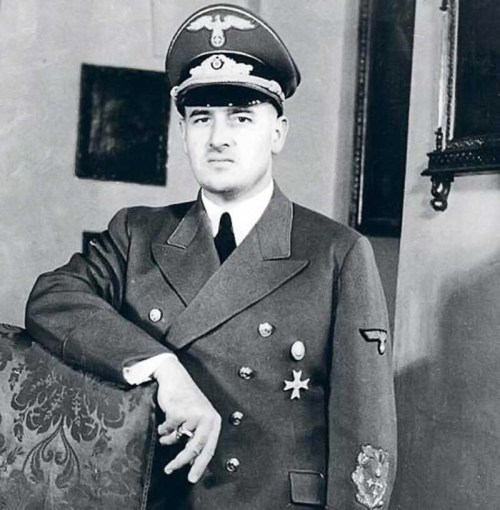
Hans Frank

It is not too far of leap to understand that Trump staff member Stephen Miller said today said “It was a simple decision by the administration to have a zero tolerance policy for illegal entry, period. The message is that no one is exempt from immigration law.”

Of course this is a lie. There is no law dictating the separation of families and imprisonment of people who are not criminals, only people who hope for a better life, as most of our immigrant ancestors did. The fact is that Miller is carrying out Trump’s decrees just as Frank did in the 1930s and 1940s. Frank told his fellow jurists in 1936:

“The National Socialist ideology is the foundation of all basic laws, especially as explained in the party program and in the speeches of the Führer … There is no independence of law against National Socialism. Say to yourselves at every decision which you make: ‘How would the Führer decide in my place?’ In every decision ask yourselves: ‘Is this decision compatible with the National Socialist conscience of the German people?’ Then you will have a firm iron foundation which, allied with the unity of the National Socialist People’s State and with your recognition of the eternal nature of the will of Adolf Hitler, will endow your own sphere of decision with the authority of the Third Reich, and this for all time… ‘The law is the will of the Führer.’”

Under Trump and his supporters this is our future and we will all be condemned because we allowed it to happen. When it is all said and done I am sure than many, if not most of us will echo the words of Martin Niemoller “first they came for… and I said nothing.”

Until tomorrow,

Peace,

Padre Steve+

Leave a comment

Filed under civil rights, ethics, faith, History, holocaust, nazi germany, News and current events, Political Commentary

Repeating Historical Myths: The Trump Administration and the “Stab in the Back”

stab-in-the-back

Friends of Padre Steve’s World,

In light of the many flagrant lies, historical myths and conspiracy theories being floated by President Trump and his supporters  is always appropriate to look at examples of the power of those myths in the lives of nations and their influence on citizens.

It is true that some myths can be positive and inspiring so long as they remain recognized as myth. But myths which are believed as truth lead to conspiracy theories, false accusations and the demonization of others. The vast majority of the time this is done for the purpose of inciting hatred against political, social or religious opponents, or to justify indefensible polices at home or abroad.

Myths also can be used to perpetuate false beliefs about other countries that influence policy decisions, including the decision to go to war that ultimately doom those that believe them. There are many times in history where leaders of nations and peoples embrace myths about their history even when historical, biographical and archeological evidence points to an entirely different record.  Myths are powerful in the way that they inspire and motivate people. They can provide a cultural continuity as a people celebrates the key events and people that shaped their past, even if they are not entirely true.  At the same time myths can be dangerous when they cause leaders and people to make bad choices and actually become destructive.

A good example of this is the Stab in the Back myth that began after the armistice that ended the First World War, as well as the false beliefs held by Hitler and other Nazi leaders about the United States.

Just two days ago President Trump’s Chief Economic Advisor Larry Kudlow accused Canadian Prime Minister Justin Trudeau of “stabbing President Trump in the back” following the G7 meeting in Quebec. The choice of words was not only unfortunate but buttresses every action that the President has taken to delegitimatize faithful allies and partners since long before his inauguration.  In doing so he embraced an infamous term used so often by the Nazis and others on the German right following the defeat of Germany in the First World War.

After the war the belief that the German Army was not defeated but was betrayed by the German people, especially those of the political left.  Like all myths there was an element of truth in the “stab in the back” myth, there were revolts against the Monarchy of Kaiser Wilhelm II and even mutiny on elements of the German High Seas Fleet and Army units stationed in Germany. However the crisis had been brought about by General Ludendorff who until the last month of the war refused to tell the truth about the gravity of Germany’s position to those in the German government.

So when everything came crashing down in late October and early November 1918 the debacle came as a surprise to most Germans.  The myth arose because the truth had not been told by Ludendorff who was arguably the most powerful figure in Germany from 1916-1918.  In the looming crisis which included Ludendorff’s collapse and relief, General Wilhelm Groener presented the facts to the Kaiser and insisted on his abdication.  The Republic that was proclaimed on the 9th of November was saddled with the defeat and endured revolution, civil war and threats from the extreme left and right.  When it signed the Treaty of Versailles it accepted the sole responsibility of Germany for the war and its damages. Ordered to dismantle its military, cede territory that had not been lost in battle and pay massive reparations the legend of the “stab in the back” gained widespread acceptance in Germany.

Hitler always believed that the defeat of Germany in the First World War was due to the efforts of internal enemies of the German Reich on the home front and not due to the fact that the German army was collapsing, the U-Boat campaign had failed, and the Navy’s High Seas Fleet was hopelessly outnumbered and incapable of defeating the Royal Navy and breaking the blockade that was strangling Germany.

The Stab in the Back was a fundamental belief of Hitler and was expressed in his writings, speeches and actions.  The internal enemies of Germany for Hitler included the Jews, as well as the Socialists and Communists who he believed were at the heart of the collapse on the home front.  Gerhard Weinberg believes that the effect of this misguided belief on Hitler’s actions has “generally been ignored” by historians. (Germany, Hitler and World War II p. 196)

Hitler believed that those people and groups that perpetrated the “stab in the back” were “beguiled by the by the promises of President Wilson” (World in the Balance p.92) in his 14 Points.  Thus for him Americans were in part responsible for undermining the German home front, something that he would not allow to happen again.  In fact Hitler characterization of Wilson’s effect on the German people in speaking about South Tyrol.  It is representative of his belief about not only the loss of that region but the war: “South Tyrol was lost by those who, from within Germany, caused attrition at the front, and by the contamination of German thinking with the sham declarations of Woodrow Wilson.” (Hitler’s Second Book p.221)

While others will note Hitler’s lack of respect for the potential power of the United States, no other author that I am familiar with links Hitler’s actions and the reaction of the German political, military and diplomatic elites to the entry of the United States into the war to the underlying belief in the “stab in the back.”   Likewise Hitler had little regard for the military abilities or potential of the United States. Albert Speer notes that Hitler believed “the Americans had not played a very prominent role in the war of 1914-1918,” and that “they would certainly not withstand a great trial by fire, for their fighting qualities were low.” (Inside the Third Reich: Memoirs by Albert Speer p.121)

Hitler not only dismissed the capabilities of the Americans but also emphasized the distance that they were from Germany and saw no reason to fear the United States when “he anticipated major victories on the Eastern Front.” (Germany Hitler and World War II p.92)   Hitler’s attitude was reflected by the majority of the military high command and high Nazi officials. Ribbentrop believed that the Americans would be unable to wage war if it broke out “as they would never get their armies across the Atlantic.” (History of the German General Staff, Walter Goerlitz, p.408).  General Walter Warlimont notes the “ecstasy of rejoicing” found at Hitler’s headquarters after Pearl Harbor and the fact that the he and Jodl at OKW caught by surprise by Hitler’s declaration of war. (Inside Hitler’s Headquarters 1939-1945 pp.207-209) Kenneth Macksey notes Warlimont’s comments about Hitler’s beliefs; that Hitler “tended to dismiss American fighting qualities and industrial capability,” and that Hitler “regarded anyone who tried to show him such information [about growing American strength] as defeatist.”(Why the Germans Lose at War, Kenneth Macksey, p.153.)

Others like Field Marshal Erwin Rommel record the disregard of senior Nazis toward American capabilities in weaponry.  Quoting Goering who when Rommel discussed 40mm anti-aircraft guns on aircraft that were devastating his armored forces Goering replied “That’s impossible. The Americans only know how to make razor blades.” (The Rommel Papers edited by B.H. Liddell-Hart p.295) Rommel was one of the few German commanders who recognized the folly of Hitler’s declaration of war on the United States noting that “By declaring war on America, we had brought the entire American industrial potential into the service of Allied war production. We in Africa knew all about the quality of its achievements.” (The Rommel Papers p.296)

When one also takes into account the general disrespect of the German military for the fighting qualities of American soldiers though often with good reason (see Russell Weigley’s books Eisenhower’s Lieutenants and The American Way of War) one sees how the myth impacted German thought.  This is evidenced by the disparaging comments of the pre-war German military attaché to the United States; General Boeticher, on the American military, national character and capability. (See World in the Balance pp. 61-62)

The overall negative view held by many Germans in regard to the military and industrial power and potential of the United States reinforced other parts of the myth. Such false beliefs served to bolster belief in the stab-in-the back theory as certainly the Americans could not have played any important role in the German defeat save Wilson’s alleged demoralization of the German population.  This was true not only of Hitler, but by most of his retinue and the military, diplomatic and industrial leadership of the Reich. Hitler’s ultimate belief shaped by the stab-in-the back and reinforced by his racial views which held the United States to be an inferior mongrel people. This led him to disregard the impact that the United States could have in the war and ultimately influenced his decision to declare war on the United States, a decision that would be a key factor in the ultimate defeat of Germany.

Myth can have positive value, but myth which becomes toxic can and often does lead to tragic consequences. All societies have some degree of myth in relationship to their history including the United States.  The myths are not all the same, various subgroups within the society create their own myth surrounding historic events. The danger is that those myths can supplant reason in the minds of political, military, media and religious figures and lead those people into taking actions that work to their own detriment or even destruction.

Today the President leads the way in promoting lies patently false myths in the name of his personal greatness which he shrouds himself while conflating that with making America great again all the while endangering the country. He has been promoting conspiracy theories for nearly a decade and has never stopped doing so or offered an apology for those words.

It is the duty of historians, philosophers and others in the society to ensure that myth does not override reality to the point that it moves policy both domestic and foreign in a manner that is ultimately detrimental to the nation.  The lesson of history demonstrated by myths surrounding the German defeat and role of the United States in that defeat shows just how myth can drive a nation to irrational, evil and ultimately tragic actions not only for that nation and its people, but for the world.

Sadly, it appears that the United States led by President Trump is following the path of Hitler’s Germany in terms of how it views the world and treats other nations and history will not be kind to us.

Peace,

Padre Steve+

2 Comments

Filed under History, nazi germany, News and current events, Political Commentary, world war one

A Cautionary Tale of Soldierly Obedience: The Fate of the Desert Fox

rommel

Friends of Padre Steve’s World,

Some seventy-three years ago in Ulm Germany that a car pulled up to the residence of Field Marshal Erwin Rommel. In the car was the driver and two Generals dispatched by Hitler who had orders to give the hero of Germany a choice, death by suicide or a trial before the kangaroo “People’s Court” of judge Roland Freisler.  Rommel was recuperating following being severely wounded in an air attack in Normandy on July 17th 1944.

Rommel had been awarded the Pour le Merite, Imperial Germany’s highest award for valor in the First World War. He was never an official member of the Nazi Party, but like many Germans he believed Hitler’s promises and propaganda. As Hitler rose to power he like many others was carried away by early Nazi successes, the bloodless conquests of the Rhineland, Austria, Czechoslovakia, and the spectacle of the Olympics.

Like most other officers he would serve the regime as it spread its dark pall over Europe, and unlike so many others when he suffered a crisis in conscience about the Nazi leadership and their policies he refused to obey orders that he knew were illegal and immoral and then risked his life by joining the conspiracy to kill Hitler.

After years of stalled promotion, Hitler’s expansion of the military allowed Rommel to be promoted, and when Germany went to war he was commander of the unit which guarded Hitler’s headquarters train when he went into Poland. Rommel received command of the 7th Panzer Division after Poland and as a division commander in France he led his troops on some of the most epic advances of the French campaign.

He was then given command of the troops sent to bail out Mussolini’s failed African adventure. His small force and always ill-supplied force, which became known as the Afrika Korps scored impressive victories against British forces. In Africa, Rommel gained fame and earned rapid promotion. Though Africa was a sideshow in the Nazi war effort, Rommel became a poster-child for Joseph Goebbels’ propaganda machine. His fame also earned the resentment of many fellow officers who because he was not an officer of the General Staff regarded him with jealous envy and distain. Even so, Rommel was a soldier’s soldier. He believed in sharing in the suffering of his troops. He once said: “Be an example to your men in your duty and in private life. Never spare yourself, and let the troops see that you don’t in your endurance of fatigue and privation. Always be tactful and well-mannered, and teach your subordinates to be the same. Avoid excessive sharpness or harshness of voice, which usually indicates the man who has shortcomings of his own to hide.”

bundesarchiv_bild_146-1991-031-25a_nordafrika_vor_tobruk_rommel

In Arica Rommel showed himself to be a remarkable tactician and field commander. Likewise, unlike many other German (and sadly Allied) commanders had the ability to recognize the valor and soldierly virtues of his opponents, even those who were not white. A captured South African officer pleaded with Rommel to spare him being imprisoned with Black troops under his command. Rommel told him:

“For me, soldiers are all equal. Those black people wore your same uniform, fought on your side, and so you will be in the same jail.”

That was not until Rommel discovered the reality of Hitler’s promises as the troops of the Afrika Corps were hollow that he began to understand the man he had sworn his allegiance. He and his gallant German and Italian soldiers found themselves subjected to constant privation from lack of supply, air support and reinforcements. As commander of the Afrika Corps and later the Panzer Armee Arfika he and his troops achieved amazing success against an enemy that was always better supplied and equipped and which had air and sea superiority. Battling the British as well as the political machinations of Mussolini and Germany’s Italian Allies as well as opponents in the German government such as Hermann Goering, Rommel saw his troops crushed under the press of the British as well as the Americans who landed in French North Africa. Eventually, sick and worn out, Rommel was sent back to Germany to recuperate.

While visiting Hitler’s headquarters during that leave Rommel was struck by the atmosphere and made this observation:

“During the conference I realised that the atmosphere in the Fuehrer’s H.Q,. was extremely optimistic. Goering in particular was inclined to minimise our difficulties. When I said that British fighter-bombers had shot up my tanks with 4O-mm. shells, the Reichsmarschall, who felt himself touched by this, said: ” That’s completely impossible. The Americans only know how to make razor blades.” I replied: “We could do with some of those razor blades, Herr Reichsmarschall.”

rommel-with-soldier

Rommel had a sense of honor and humanity that many other German generals lacked. He refused to allow anti-Jewish measures in areas occupied by German troops in North Africa, ensuring that the approximately 425,000 Jews living in Libya, Tunisia, Algeria, and Morocco were spared the fate of the Holocaust. He refused to execute Jewish POWs, and refused to follow the notorious “commando order.” In June of 1994 he protested the massacre of the people of the village of Oradour-sur-Glane by units of the 2nd SS Panzer Division directly to Hitler and asked for the authority to punish those responsible, but was his protest was refused.

In late 1943 and early 1944 Rommel began to learn of the mass killings being orchestrated by Himmler’s SS. His son Manfred asked his father’s permission to join the Waffen SS, which Rommel insisted that he not do, the younger Rommel recounted:

“While, he said, he perfectly well recognised the quality of the S.S. troops, under no circumstances did he want me to be under the command of a man who, according to his information, was carrying out mass killings. ” Do you mean Himmler? ” I asked. ” Yes,” he answered, and instructed me to maintain absolute silence about the whole affair. The war was not going at all well and he had heard that people like Himmler were trying, by actions of this kind, to burn the bridges of the German people behind them. I think he was not at all certain at that time whether Hitler knew anything about what was going on, for no mention of the mass executions had ever been made at the Fuehrer’s H.Q. And perhaps he would never have brought himself to the decision to end the war -by a revolt if necessary -if he had not received further information in the early months of 1944 which confirmed these crimes and gave some idea of their extent. From that moment on, all my father’s inner allegiance to Adolf Hitler, whom he had once admired, was destroyed, and he brought himself, from his knowledge of the Fuehrer’s crimes, to act against him.”

His honest assessments of the chances of the Germans winning the war which he spoke candidly to Hitler and the High Command made him persona non grata in Berlin and Berchtesgaden. In the time before he was posted to France in late 1943 he became a part of the plot to end the war and overthrow Hitler. Rommel’s Chief of Staff at OB West, General Hans Speidel, was a key man in the conspiracy and Rommel had contacts with a number of key conspirators. He believed that the war was lost unless his forces could repel the coming Allied invasion on the beaches and worked feverishly to bolster the beach fortifications. He recommended that the Panzer Divisions be deployed near the coast where they could immediately counterattack Allied invasion forces while they were still vulnerable. But his advice was not taken. He was given command of the Army Group but was not given control of most of the Panzer Divisions, which Hitler kept under his direct control.

When the invasion came Rommel was away from Normandy visiting his wife. On learning of the invasion he sped back to Normandy. When he arrived he fought a desperate battle against the Allied forces. His outnumbered forces were under constant assault from the land, sea and air received paltry reinforcements compared to the Allies. Even so, German troops inflicted many local defeats and exacted a heavy price in allied blood in Normandy but were ground to dust. Even so, many American and British infantry regiments suffered 100% casualties but remained in action because of a continuous stream of replacements. Rommel urged Hitler and the High Command to withdraw German forces from Normandy before the allies broke through his front. By doing so he found that he was now considered a defeatist.

Rommel was severely wounded in an air attack on his vehicle by a just days before the attempt on Hitler’s life. Hitler survived the attempted assassination and exacted a terrible revenge on anyone connected with the plot. Show trials and public hangings of officers who had served valiantly at the front were common. Thousands were killed and thousands more imprisoned.

Eventually, other conspirator’s testimony exposed that Rommel was part of the plot. He was recommended by the “Court of Military Honor” to be expelled from the military and tried by the “People’s Court” of Judge Roland Freisler. During the purge that followed the attempt on Hitler’s life, many noted German military commanders were hauled before this court and humiliated by Freisler before they were sent to their deaths. Freisler, a fanatic Nazi judge has been part of the infamous Wansee Conference which planned the details of the Final Solution was killed when his courtroom was bombed in February 1945.

Because of his fame and popularity in Germany Hitler was decided to offer Rommel a choice of being tried by the People’s Court or committing suicide and ensuring his family’s safety. Hitler dispatched two generals from Berlin to personally deliver the message.

492px-Erwin_rommel_death

Rommel suspected that he would be identified and killed and told that to his friends and family in the days leading up to the arrival of Generals Wilhelm Burgorf and Ernst Maisel from OKW with the ultimatum. They met with Rommel for a short time before giving him the opportunity to say goodbye to his family. Rommel told them of his choice and left his home for the last time. 15 minutes later the Generals called his wife to say that he had died of a heart attack. Rommel was given a state funeral and the German people were lied to about his cause of his death.

Winston Churchill wrote of Rommel:

“He also deserves our respect because, although a loyal German soldier, he came to hate Hitler and all his works, and took part in the conspiracy to rescue Germany by displacing the maniac and tyrant. For this, he paid the forfeit of his life. In the sombre wars of modern democracy, chivalry finds no place … Still, I do not regret or retract the tribute I paid to Rommel, unfashionable though it was judged.”

Rommel was just 52 years old when he died. I find in the story of Rommel some commonality in my own life. Before Rommel went to Africa he believed that Germany would win the war, during his command there he discovered that what he believed was lies and that Hitler had little regard for him or his troops. Before I went to Iraq in 2007 I believed much of the political propaganda promoted by the Bush administration and right wing news media and pundits about that war.

The example of Erwin Rommel is a cautionary tale of what can happen when a brilliant and honorable man comes under the spell of a demagogue. Rommel believed Hitler and blindly followed him until he ran into the hard face of reality in Africa at which point he had the moral courage to do the right thing, but many didn’t.

Sadly there are otherwise honorable men and women in the current United States military who are blindly supporting a delusional and quite probably criminal President;  a man who promises to order soldiers to commit war crimes, who threatens to jail political opponents, who condemns whole races of people and religions, a man who has no respect for the courts, the law, or the Constitution.  Personally as a historian I cannot understand that kind of blind loyalty especially when the the leader in question has no loyalty to anyone other than himself. Not long before he was killed Rommel told his son:

“one thing is quite clear, it’s intolerable that the fate and welfare of a whole nation should depend on the whim of a small group. There must be some limit, otherwise, the most fantastic things can happen without anyone noticing.”

Peace,

Padre Steve+

Leave a comment

Filed under History, leadership, Military, nazi germany, world war two in europe

Requiem for an Alliance: D-Day at 74 Years

imagesCA580JS0

Friends of Padre Steve’s World,

It is hard to believe now as we look at the serene beaches of Normandy that seventy years ago they were places of desperate combat in which hundreds of thousands of Allied and German soldiers, sailors, airmen and marine-commandos battled in a contest that helped free Europe of Nazi tyranny and changed the course of history. What they did helped change the world and brought about a measure of peace and security unparalleled in modern history as the free nations of the Atlantic Alliance charter a course for democracy and freedom. Unfortunately it seems that now the United States led by a President who cares nothing for the alliances so carefully built over the past seven decades has set a course to abandon that work, and our long time allies have come to realize that under this President that the United States is an unreliable partner. They have forgotten the words of Ronald Reagan who said: “From a terrible war we learned that unity made us invincible; now, in peace, that same unity makes us secure.”

The men who fought there were young, most in their twenties, but some in their teens or thirties as well as a smattering of senior leaders or old career soldiers in their 40s and 50s. When I first began to read about and study the battle a good number were still alive, most about the same age as I am now. Today, their ranks thinning they are passing into history. When the 80th anniversary is celebrated, the few that remain will all be about 100 years old, and even now, the youngest of these men are over 90 years old.

On June 6th 1944 the Allies invaded German controlled France on the beaches of Normandy. By that evening the Allied Expeditionary Force had landed six infantry divisions on five invasion beaches and the bulk of three airborne divisions on the approaches to those beaches. Near 175,000 Allied Soldiers, Sailors, Airmen and Marine Commandos were involved in the attack and nearly 10,000 would listed be as killed, wounded or missing by the end of the day, over half on Omaha Beach.

General Dwight D. Eisenhower sent them forward with this message:

You are about to embark upon the Great Crusade, toward which we have striven these many months. The eyes of the world are upon you. The hopes and prayers of liberty-loving people everywhere march with you.  In company with our brave Allies and brothers-in-arms on other Fronts, you will bring about the destruction of the German war machine, the elimination of Nazi tyranny over the oppressed peoples of Europe, and security for ourselves in a free world….

The names of the invasion beaches and the units involved have been immortalized in history, in film and literature. The American 101st Airborne “Screaming Eagles,” the “All American” 82nd Airborne Division and British 6thAirborne Division “Red Devils” made the largest night airborne drop and battled Germans, the elements as the struggled to reorganize on the heels of widely scattered drops.  The Americans battled the German 91st Airlanding Division and the crack 6th Parachute Regiment, while the British faced men of the 716th“Static” Infantry Division and battle groups of the nearby 21st Panzer Division.

On Sword Beach men of the 3rd British Division and 27th Armored Brigade teamed with the 1st Special Services Brigade composed of Army and Royal Marine Commandos made the assault, to their right on Juno Beach the Canadians of the 3rd Canadian Division, 2nd Canadian Armored Brigade and two Royal Marine Commandos (battalions) while to their right on the middle invasion beach, Gold Beach the British 50th (Northumbrian) Infantry Division and 8th Armored Brigade went ashore with elements of the British 79th Armored Division and the 47th Royal Marine Commando.

To the right of the British landed the American V Corps on Omaha Beach, the 1stInfantry Division, the famous “Big Red One” and the 29th “Blue and Gray” Infantry Division of the Virginia and Maryland National Guard. They would fight the most seasoned Germans on the beaches that day, the hardened combat veterans of the 352nd Infantry Division.  The battle of Omaha was nearly a disaster and a one point General Omar Bradley contemplated withdraw from the beach.  The American troops, including the men of the 2nd Ranger Battalion who scaled the cliffs of Point du Hoc to protect the beach from enfilade fire from German artillery mounted on the point, yet the German guns had not yet been emplaced and the Rangers fought a bitter battle against strong German resistance on that rugged mount.  On the far right the American VII Corps led by the 4th Infantry Division assaulted Utah Beach; fortunately the Americans landed away from their planned point of assault and faced little resistance. Had they landed in the correct location they might fared as their neighbors on Omaha Beach.

Offshore the venerable battleships HMS Warspite and HMS Ramillies and the USS TexasUSS Nevada and USS Arkansas provided fire support to the beaches aided by the Free Naval Forces of France, the Netherlands, Poland and Norway.  The French forces included the cruisers Montcalm and Georges Leygues.

Names such has St Mere-Eglise and Pegasus Bridge, the Merville Battery, Point du Hoc and Bloody Omaha remain etched in the minds of the dwindling number of surviving veterans as well as historians, military personnel and others that take the time to remember the sacrifices of these men.

The Men came from all parts of the United States and the British Commonwealth. Additionally personnel from France and other countries occupied by Nazi Germany were represented in the land, air and naval forces involved.  For the French, humiliated by their defeat in 1940 and divided by the Vichy and Free French divide were determined, despite their small numbers to liberate their homeland.

They were opposed by four German Divisions, a Luftwaffe Fallschirmjaeger regiment and elements of the 21st Panzer Division.  The Germans with nothing in the way of air support and no significant naval forces were on their own. Hitler had refused Rommel’s request to deploy Panzer divisions near the beaches and was not awakened when word came of the invasion.  German soldiers fought with considerable valor and would do so throughout the Normandy campaign, even if they fought for a regime that was evil at its core.

As the battle continued President Franklin Delano Roosevelt addressed the nation and asked all Americans to join him in this prayer:

My Fellow Americans:

Last night, when I spoke with you about the fall of Rome, I knew at that moment that troops of the United States and our Allies were crossing the Channel in another and greater operation. It has come to pass with success thus far.

And so, in this poignant hour, I ask you to join with me in prayer:

Almighty God: Our sons, pride of our nation, this day have set upon a mighty endeavor, a struggle to preserve our Republic, our religion, and our civilization, and to set free a suffering humanity.

Lead them straight and true; give strength to their arms, stoutness to their hearts, steadfastness in their faith.

They will need Thy blessings. Their road will be long and hard. For the enemy is strong. He may hurl back our forces. Success may not come with rushing speed, but we shall return again and again; and we know that by Thy grace, and by the righteousness of our cause, our sons will triumph.

They will be sore tried, by night and by day, without rest — until the victory is won. The darkness will be rent by noise and flame. Men’s souls will be shaken with the violences of war.

For these men are lately drawn from the ways of peace. They fight not for the lust of conquest. They fight to end conquest. They fight to liberate. They fight to let justice arise, and tolerance and goodwill among all Thy people. They yearn but for the end of battle, for their return to the haven of home.

Some will never return. Embrace these, Father, and receive them, Thy heroic servants, into Thy kingdom.

And for us at home — fathers, mothers, children, wives, sisters, and brothers of brave men overseas, whose thoughts and prayers are ever with them — help us, Almighty God, to rededicate ourselves in renewed faith in Thee in this hour of great sacrifice.

Many people have urged that I call the nation into a single day of special prayer. But because the road is long and the desire is great, I ask that our people devote themselves in a continuance of prayer. As we rise to each new day, and again when each day is spent, let words of prayer be on our lips, invoking Thy help to our efforts.

Give us strength, too — strength in our daily tasks, to redouble the contributions we make in the physical and the material support of our armed forces.

And let our hearts be stout, to wait out the long travail, to bear sorrows that may come, to impart our courage unto our sons wheresoever they may be.

And, O Lord, give us faith. Give us faith in Thee; faith in our sons; faith in each other; faith in our united crusade. Let not the keenness of our spirit ever be dulled. Let not the impacts of temporary events, of temporal matters of but fleeting moment — let not these deter us in our unconquerable purpose.

With Thy blessing, we shall prevail over the unholy forces of our enemy. Help us to conquer the apostles of greed and racial arrogances. Lead us to the saving of our country, and with our sister nations into a world unity that will spell a sure peace — a peace invulnerable to the schemings of unworthy men. And a peace that will let all of men live in freedom, reaping the just rewards of their honest toil.

Thy will be done, Almighty God.

Today we remember those men who were a part of the Great Crusade to liberate Europe from the Nazi oppressors. On the 40th anniversary of the invasion President Ronald Reagan eulogized those who fought and died for the freedom of the world:

Today, in their memory, and for all who fought here, we celebrate the triumph of democracy.  We reaffirm the unity of democratic people who fought a war and then joined with the vanquished in a firm resolve to keep the peace.

From a terrible war we learned that unity made us invincible; now, in peace, that same unity makes us secure. We sought to bring all freedom-loving nations together in a community dedicated to the defense and preservation of our sacred values.  Our alliance, forged in the crucible of war, tempered and shaped by the realities of the post-war world, has succeeded.  In Europe, the threat has been contained, the peace has been kept.

Today, the living here assembled:  officials, veterans, area citizens, pay tribute to what was achieved here 40 years ago.  This land is secure.  We are free.  These things are worth fighting and dying for.

President Obama continued in the tradition of President Reagan when he noted on the 70th anniversary of the landings:

“We are on this Earth for only a moment in time.  And fewer of us have parents and grandparents to tell us about what the veterans of D-Day did here 70 years ago.  As I was landing on Marine One, I told my staff, I don’t think there’s a time where I miss my grandfather more, where I’d be more happy to have him here, than this day.  So we have to tell their stories for them.  We have to do our best to uphold in our own lives the values that they were prepared to die for.  We have to honor those who carry forward that legacy, recognizing that people cannot live in freedom unless free people are prepared to die for it.”

The words of Roosevelt, Reagan, and Obama are powerful reminders of what was accomplished on that fateful day, June 6th 1944. I hope and pray that as we remember that day and those brave men that we will never forget. Sadly, it appears that President Trump, his advisors, and many of his followers have forgotten just how important this is and I’m sure that if he were still alive that Ronald Reagan himself would agree with me.

Peace

Padre Steve+

Leave a comment

Filed under History, leadership, Military, nazi germany, News and current events, Political Commentary, world war two in europe

Remembering the Men of D-Day: In the Era of Trump who Will We Channel?

img_0061

Friends of Padre Steve’s World,

I find the days around Memorial Day and the anniversaries of the Battle of Midway and the D-Day landings to be a time when I become quite reflective about what it means to be a career American military officer, combat veteran, and the son of a Navy Chief who was also a combat veteran.

When he spoke on Omaha Beach during the ceremony marking the 70thAnniversary of the D-Day landings President Barak Obama said:

“We are on this Earth for only a moment in time.  And fewer of us have parents and grandparents to tell us about what the veterans of D-Day did here 70 years ago.  As I was landing on Marine One, I told my staff, I don’t think there’s a time where I miss my grandfather more, where I’d be more happy to have him here, than this day.  So we have to tell their stories for them.  We have to do our best to uphold in our own lives the values that they were prepared to die for.  We have to honor those who carry forward that legacy, recognizing that people cannot live in freedom unless free people are prepared to die for it.”

All of my adult life I have striven to uphold those values that those men were prepared to die for, and for almost 37 years of Army and Navy service that I have been prepared to do so at a moment’s notice. I still am, against all threats, foreign and domestic. I just hope that I will never have to repeat the words of Colonel Claus von Stauffenberg: “I’m a soldier, but in serving my country, I have betrayed my conscience.”

Seventy-four years ago the liberation of France began on the beaches of Normandy.  Soldiers from 6 Allied Infantry and 3 Airborne Divisions supported by an Armada of over 5000 ships and landing craft and several thousand aircraft braved weather, heavy seas and in places fierce German resistance to gain the foothold on beaches named Omaha, Utah, Gold, Sword and Juno.  Over the next seven weeks the Allied soldiers advanced yard by yard through the hedgerows and villages of Normandy against ferocious German resistance before they were able to break out of the lodgment area and begin the drive across France. In his D-Day message to his troops General Dwight Eisenhower reminded them that their mission was the elimination of Nazi tyranny over oppressed peoples of Europe, and security for ourselves in a free world.” There are still those in the world who subject their people to tyranny and attempt to destabilize and overthrow the governments of liberty loving peoples, likewise Eisenhower knew that security for ourselves meant close alliances with those who have our values and not isolating ourselves from the world.

The fighting was bloody, most American, British and Canadian infantry battalions and regiments suffered nearly 100% casualty rates in Normandy.  Replacements were fed in at a cyclic rate to make up the losses even as fresh divisions flowed ashore, but the losses were terrible.  By the time the landings took place, the British having been at war for nearly five years were bled out.  They had little left to replace their losses.  From Normandy on the British were losing combat power at a rate that they could not make up.

For the Americans there was another problem.  The US High command decided to limit the Army to 90 Divisions.  Many of these were committed to the Pacific and Mediterranean theaters.   Likewise, American Infantry units were generally made up of the lowest caliber of recruits, led often by the poorest officers; the best went to either the Air Corps or technical branches of the Army.

Now this is not to criticize these veterans, but it was a factor in the campaign.  Most US Infantry Divisions with the exceptions of those previously blooded in North Africa and Sicily often performed badly in action.  Some, after being manhandled by the Germans had their leadership replaced and became excellent combat units.  However, every new division that arrived in France after D-Day always got the worst of their initial engagement against German forces.

While performance suffered there was another problem for the Americans.  With the limitation in number of divisions, they stopped building infantry divisions, upon whom the bulk of the campaign depended. Thus they had little in the way of trained infantry replacements to make up heavy losses in Normandy.  By late 1944 during the Battle of the Bulge the American infantry crisis was so bad that 30,000 Air Corps candidates were trained as infantry and soldiers support units such as Ant-Aircraft battalions were used to bolster infantry units.

Had the Germans been able to hold out. Had they not been bled white by the Red Army on the Easter Front. Had they not lost the nearly their entire Army Group Center in the Red Army offensive of 1944 it is conceivable that the British and American offensive in the West would have ground to a halt for lank of infantry in 1945.  In spite of this there was no lack of individual courage among the troops engaged; the courage and sacrifice of all who fought there should not be forgotten.

The human toll among the combatants both Allied and German, as well as the local populace was especially traumatic.  While the American, Canadian and British people are keen to remember the sacrifices made by our soldiers we often forget the toll among the French civilian population of Normandy as well as the German soldiers, mostly conscripts, sacrificed by the Nazi regime.  Normandy suffered more than any part of France during the liberation.  In the months leading up to D-Day Allied Air Forces unleashed hell on Normandy to attempt to lessen potential German resistance.  The Allied Naval bombardment added to the carnage ashore and once the campaign began the combined fires of both Allied and German forces devastated the region.  Whole cites such as Caen were destroyed by Allied Air forces and an estimated 30,000 French civilians were killed during the Normandy campaign, 3000 on D-Day alone.  I think it can be said that the blood of the civilians of Normandy was shed for the freedom of all of France.

The campaign in Normandy was one of the most viciously contested in western military history.  German forces, especially the elite paratroops of the 2nd, 3rd, 5th and 6th Fallschirmjager Divisions, the German Army Panzer Divisions such as the 2nd, 21st, 116th and Panzer Lehr, and those of the Waffen-SS, especially the 1st, 2nd and 12th SS Panzer Divisions held the line against ever increasing Allied forces.  As they sacrificed themselves Hitler refused to commit more forces to Normandy and insisted that his Army contest every meter of ground. In doing so they were ground to dust, their casualties massive, but Hitler forbade his commanders to withdraw his troop to more defensible positions along the Seine.

Hitler’s decisions actually shortened the campaign.  Whatever the crimes of the Hitler Regime and Nazism, which were among the most heinous in history, one can never question the valor, courage and sacrifice of ordinary German soldiers, but many of them too shared in the crimes of the Nazi regime. Their courage and sacrifices were forever tarnished by the cause that they fought for and the way their country and many of them waged war, on the Eastern Front, and in some case on the Western Front.

For those Americans who lump all Germans who fought in World War II with the evil of the Nazi regime, please do not forget this fact:  There are those today, even in this country that make the same charge against Americans who have fought in Iraq and those at home and abroad who have labeled the US as an aggressor nation. As President Trump continues to go his own way to make the United States a pariah nation we have to be very aware of the costs of it and also remember that the Americans who went ashore on D-Day did so to help defeat a pariah nation that had flaunted every standard of justice in attempting to make Germany Great Again. When you judge others, know that the same standard will be applied to you someday and it is possible that our day may come sooner than we think. It is as Justice Robert Jackson who served as the Chief Prosecutor at the Nuremberg War Crimes Tribunal wrote:

“If certain acts of violation of treaties are crimes, they are crimes whether the United States does them or whether Germany does them, and we are not prepared to lay down a rule of criminal conduct against others which we would not be willing to have invoked against us.”

Normandy was a near run thing for the Allies.  First the weather almost delayed it by 2 to 4 weeks.  Had that happened the Germans might have been even better prepared to meet the invasion.  Likewise, the Red Army’s devastating offensive which annihilated Army Group Center in June kept the Germans from transferring additional forces from the Russian Front to Normandy.  On D-Day itself there were a number of times where Lady Luck, or maybe the Deity Herself, saved the Allies from disaster.

Any person who has seen Saving Private RyanThe Longest Day or Band of Brothers knows a little bit about how close Overlord came to failure.  Allied Airborne units were dispersed throughout the region after they drooped.  Many units were not fully operational for more than a day as they sought to organize themselves and gather their troops.  At Omaha Beach the Americans had not counted on the presence of the first rate German 352nd Infantry Division.  This division, despite being pounded by naval and air forces almost cause General Bradley to withdraw from Omaha.  At Utah the soldiers of the 4th Infantry division escaped a similar mauling by landing on the wrong beach.  Had they landed at the planned beaches they would have ran into the same kind of resistance from well dug in German forces.  At Gold Juno and Sword British forces benefited from confusion in the German command which kept the 21st Panzer Division from descending on the British forces and quite possibly splitting the British zones.

The Allies benefited from the absence of Field Marshall Erwin Rommel, Commander of Army Group B who because of the ad weather assumed no invasion was possible and traveled to German to celebrate his wife’s birthday.  Finally, and perhaps most important they benefited by Hitler’s refusal to immediately commit forces, including his Panzer reserve to defeat the invasion at the beachhead.

For those who fought in Normandy and those civilians who lived through it the memories are still vivid. Many suffer the effects of PTSD, grief and other wounds, physical, emotional and spiritual.  When one is exposed to the danger and destruction of war, the smell of death, the sight of burned out cities, vehicles and the suffering of the wounded and dying, it makes for a lifetime of often painful memories.

For some of the German, British and American veterans, the struggle in Normandy has given way to long lasting friendships.  Many of those who fought against the Allied onslaught became fast friends after the war. Those who fought against each other were soon allies as part of NATO and soldiers of nations which were once bitter enemies serve together in harm’s way in Afghanistan.  The generation that fought at Normandy is rapidly passing away, their numbers ever dwindling they remain a witness to courage, sacrifice and reconciliation.

In the end it is reconciliation and healing that matters. Some scars of war never pass away; some memories are far too painful to release.  Yet we who serve often strive to reconcile.  In 2002 while deployed at sea for Operation Enduring Freedom I was an advisor to a boarding team from my ship.  It was our job to make sure that impounded ships which were breaking the UN embargo on Iraq were not in danger of sinking, and that their crews had food, water and medical care.  Since many of these ships remained at anchor for 2-4 weeks in the heat of the Arabian Gulf, this was important.

The delays imposed by UN rules sometimes meant that the sailors of these ships grew resentful.  It was my job to spend time with the Masters of these ships to keep things calm and work out any issues that arose.  On one of these ships I met an Iraqi merchant skipper.  The man was well traveled, educated in the U.K. in the 1960s and in his career a frequent visitor to the US. In 1990 he was the senior captain of the Kuwaiti shipping line.  Then Saddam Hussein invaded Kuwait.  As a result of this when Kuwait was liberated he lost his job.  His nation was an international pariah.  Since his life was the sea he took up the only job possible to support his family, what he knew best, captaining ships.  He was most apologetic for the trouble that he and others like him caused us.  We shared much during those visits.   One of his daughters was in medical school and other children in university.  He longed for the day when Iraq would be free.  On our last talk before his ship was released he remarked to me “I hope one day we will meet again.  Maybe someday like the American, British and German soldiers after the war, we can meet in a pub, share a drink and be friends.” 

I too pray for that, especially after my tour in Al Anbar five years after I encountered that Iraqi Merchant Captain.  Maybe someday we will meet. I hope that he is still alive and maybe he will see this.  I thought of him almost every day that I was in Iraq. I only hope that he and his family have survived the war, the continuing violence in Iraq and are doing well. There is hardly a day that goes by that I do not think of this man or the Iraqis that I had the honor of serving alongside in Al Anbar in 2007 and 2008.

President Obama remarked in Normandy last week about the veterans of the 9-11 Generation of service members, of which I and so many others like me are part:

“And this generation — this 9/11 Generation of service members — they, too, felt something.  They answered some call; they said “I will go.”  They, too, chose to serve a cause that’s greater than self — many even after they knew they’d be sent into harm’s way.  And for more than a decade, they have endured tour after tour.”

The survivors of the D-Day landings and those on the other side of the hill are continuing to pass from the bonds of this earth and into eternity. We owe it to them and to the world to make what they sacrificed themselves to do into reality, battling tyranny and striving for peace and security.

But that being said, what good will that be if we allow freedom to die at home? I wonder if like Claus von Stauffenberg who came to understand that serving Germany was not the same as serving Hitler, if we who serve today will have to make that same choice in regard to President Trump. In light of his actions and his words which indicate that he believes that he is above the law, can that point not be far away? Likewise will we who serve more embody the Americans, British, Canadians, and French at D-Day or the Germans?

Both are good questions to ask as we remember the men of D-Day.

Peace,

Padre Steve+

Leave a comment

Filed under History, iraq, Military, nazi germany, News and current events, Political Commentary, us army, War on Terrorism, world war two in europe