Tag Archives: abraham lincoln

Fort Sumter Pt 2: Only Two Parties Now

sumterflag

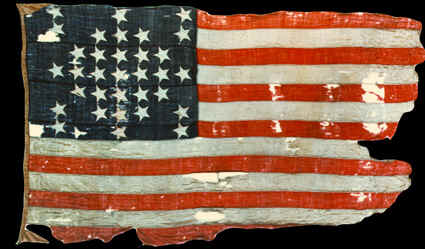
The Flag of Fort Sumter

Friends of Padre Steve’s World,

Here is part two of another two-part installment of my Civil War text. The story follows the implosion of the Democratic Party, the election of Abraham Lincoln, and the secession crisis. It describes who the attack came about and the reactions of people in all parts of the country, as well as the Army to those fateful shots. I hope that you enjoy.

Peace

Padre Steve+

When the Stars and Stripes came down on April 14th 1861 the North was galvanized as never before, and “the clash at Fort Sumter brought forth an outpouring of support for the Union and President Lincoln.” [1] Abner Doubleday wrote “With the first shot fired against Fort Sumter the whole North became united.” [2] Another observer wrote: “The heather is on fire….I never knew what popular excitement can be… The whole population, men, women, and children, seem to be in the streets with Union favors and flags.” [3] The assault on Fort Sumter help to unify the North in ways not thought possible by Southern politicians who did not believe that Northerners had the mettle to go to war against them. But they were wrong, those shots, which Jefferson Davis ordered had the opposite reaction, for Northerners, even opponents of abolition who were not supporters of Lincoln, slavery in the South was one thing, but the attack on a Federal garrison by massed artillery was another; even Senator Stephen Douglas, Lincoln’s stalwart opponent of so many campaigns went to the White House for a call to national unity. Returning to Chicago he told a huge crowd just a month before his untimely death:

“There are only two sides to the question. Every man must be for the United States or against it. There can be no neutrals in this war, only patriots – or traitors” [4]

For Frederick Douglass the shots marked a new phase in abolition:

“The first flash of rebel gunpowder and shell upon the starving handful of men at Sumter instantly changed the nation’s whole policy. Until then, the ever hopeful North was dreaming of compromise…

I wrote in my newspaper; “On behalf of our enslaved and bleeding brothers and sisters, thank God! The slaveholders themselves have saved the abolition cause from ruin! The government is aroused, the dead North is alive, and its divided people united. Never was a change so sudden, so universal, and so portentous. The whole North from East to West is in arms…” [5]

Douglas died less than a month later, possibly from cirrhosis of the liver, but his impact on the Democrats in the North was immense, “for a year of more his war spirit lived among most Democrats. “Let our enemies perish by the sword,” was the theme of democratic editorials in the spring of 1861. “All squeamish sentimentality should be discarded, and bloody vengeance wreaked upon the heads of the contemptable traitors who have provoked it by their dastardly impertinence and rebellious acts.” [6]

sickles as brigadier

Dan Sickles

One of these Democrats was New York Congressman Dan Sickles. He was one of many men whose outlook toward the South changed when Sumter was fired upon. Sickles had stridently defended Southerners and Southern states rights just months before, so long as they remained in the Union, and he took the actions of his former friends personally. He then became one of the first of men who were known as Union Democrats who followed Lincoln into the war, and despite his lack of ethics in much of his life it was a cause for which he would remain true, during and after the war.

When the soldiers of South Carolina opened fire on Fort Sumter, Sickles, who had said that no troops would cross through New York to invade the South in 1859 proclaimed “the men of New York would go in untold thousands anywhere to protect the flag of their country and to maintain its legitimate authority.” [7] In one of his last congressional speeches Sickles lambasted the South for its threat to the United States as a whole, and condemned the new Confederacy’s policies in spite of Northern attempts to conciliate them, “has been followed by insults to our flag; by the expulsion of the United States troops and authorities from navy yards and forts and arsenals; by measures to control the vast commerce of the Mississippi and its tributaries….” [8] He also condemned the South for its seizure of U.S. funds in the sub-treasuries and mints in the South as well sending envoys to England and France.

Sickles-Excelsior-Brigade-Headquarters-City-Hall-Park.-Yorktown

After the war Sickles, who had lost his leg in the Battle of Gettysburg fighting for the Union, oversaw the early efforts of reconstruction in North Carolina and for ordering the end to the public whippings of blacks by state officials was fired by President Andrew Johnston for supporting voting rights for African Americans. Congress reinstated him but Sickles who had so earnestly supported the South as late as 1860 no longer could stomach such abuse by those men who at one time his political friends and allies. During the election of 1876 Sickles, a lifelong Democrat labeled his party as “the party of treason.” [9] He joined forces with Republicans and helped to prevent the election of New York Democrat Samuel Tilden through shrewd political electioneering in key battleground states.

For Stephen Douglas the attack on Fort Sumter meant the end of his efforts to bring about some kind of reconciliation to reunite the country and restore the Union. When the Little Giant heard the news of the attack and reports of the statements of Confederate leaders he rushed to Lincoln to offer his support. Douglas wrote of the meeting:

“I heartily approve of your proclamation calling up 75,000 militia,” I told him. “Except that I would make it 200,000. You don’t know the dishonest purposes of these southern men as well as I do.” After a review of the strategic situation with the President Douglas continued, “Mr. President,” I said. “Let me speak plainly. I remain unalterably opposed to your Administration on purely its political issues. Yet I’m prepared to sustain you in the exercise of all your constitutional functions to preserve the Union, maintain the government, and defend the capital. A firm policy and prompt action are necessary. The capital of our country is in danger, and must be defended at all hazards, and at any expense of men and money. I speak of the present and future without reference to the past.

He shook my hand, hard. “We need more patriots like you, Douglas,” he said as he walked me to the door.

“I depreciate war,” I said in parting, “but if it must come, I’m with my country and for my country, under all circumstances and in every contingency.” [10]

Douglas then went to his fellow Democrats in Washington and told them: “We must fight for our country and forget all differences. There can be only two parties now – the party of patriots and the party of traitors. We belong to the first.” [11]

ewell

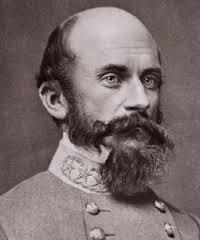
Richard Ewell

Army officers were conflicted between the Army that they had served, often for many years, the flag that they had fought under, longstanding friendships, and loyalty to their states and families. Richard Ewell who would rise to corps command in the Army of Northern Virginia, described the feelings of many officers in the ante-bellum Army: “Officers generally are very much adverse to any thing like civil war, though some of the younger ones are a bit warlike. The truth is in the army there are no sectional feelings and many from extreme ends of the Union are the most intimate friends.” [12] In California a number of those friends and their families bade tearful farewells as they parted ways. Brigadier General Albert Sidney Johnston and Captains Winfield Scott Hancock and Lewis Armistead gathered one last time. Hancock had already, who had great sympathy for his Southern friends, made his views known had previously announced “I shall fight not upon the principle of state-rights, but for the Union, whole and undivided.” [13] His commander, Johnston, and dear friend Armistead were departing to serve the Confederacy and the parting was painful. Almira Hancock wrote of the final night together in Los Angeles:

“The most crushed was Major Armistead, who with tears, which were contagious, streaming down his face, put his hands upon Mr. Hancock’s shoulders, while looking him steadily in the eye, said, “Hancock, good-bye; you can never know what this has cost me; and I hope God will strike me dead if I am ever induced to leave my native soil, should worse come to worst….” [14]

Colonel Robert E. Lee of Virginia looked askance at secession, but he had made the decision that no matter what he would not lead armies against the South. In fact it was clear when he left Texas to come east where his sentiments lay. He told a friend “If Virginia stands by the old Union, so will I. But if she secedes (though I do believe in secession as a constitutional right, nor that there is sufficient cause for revolution), then I will follow my native State with my sword, and if need be, with my life.” [15] When he returned to Washington D.C. he accepted a promotion to Colonel in the Regular Army less than a month before he was offered command of the Union armies by Abraham Lincoln, a position that he turned down. In his final interview with General Winfield Scott to announce his decision, he admitted that “the struggle had been hard. He did not believe in secession, he said, and if he owned every slave in the South he would free them all to bring peace; but to fight against Virginia was not in him.” [16] When Virginia seceded Lee submitted his resignation from the Army for a cause that he did not really believe was constitutional or necessary, noting in his letter:

“With all my devotion to the Union and feeling of loyalty and duty of an American citizen, I have not been able to make up my mind to raise my hand against my relatives, my children, my home. I have therefore, resigned my commission in the Army, and save in the defense of my native State…I hope I may never be called upon to draw my sword.” [17]

Within days Lee was appointed as a General and commander of the military forces of Virginia. When he arrived at the State House and “before he had much time to ruminate, he found himself being presented with George Washington’s sword, and hailed as a hero in a powerful tribute by the president of the convention.” [18] Even so, Lee’s decision was assailed by much of his Unionist oriented family, and many of them went on to serve the Union with distinction during the war. One relative wrote of Lee’s decision, “I feel no exalted respect for a man who takes part in a movement in which he says he can see nothing but ‘anarchy and ruin’… and yet very utterance scare passed Robt Lees lips… when he starts off with delegates to treat traitors.” [19]

Lee’s future right hand man and chief lieutenant, Thomas Jackson, the soon to be “Stonewall” Jackson was then a professor at the Virginia Military Institute. The often grim and serious Jackson saw the issue of secession as he did all of life through the prism of his Evangelical Protestant Calvinistic faith. For him it disunion was a matter of Divine Providence. When secession came and Jackson heard a minister friend in Lexington lamenting the nation’s troubles he noted:

“Why should Christians be at all disturbed about the dissolution of the Union? It can only come by God’s permission, and only will be permitted, if it is for his people’s good, for does he not say that all things shall work together for the good to them that love God?” [20]

In San Francisco Lieutenant James McPherson of the Corps of Engineers attempted to convince Lieutenant Porter Alexander from going home and joining the cause of the Confederacy. He bluntly spoke the facts of what would happen to the South in coming the war to the future Confederate artillery general:

“The population of the seceding states is only eight million while the North has twenty million. Of your 8 million over 3 million are slaves & may pose a dangerous element. You have no army, no navy, no treasury, no organization & practically none of the manufacturers – the machine shops, coal & iron mines & such things – which are necessary for the support of armies & carrying on war on a large scale.

You are but scattered agricultural communities & will be isolated from the world by blockades.

It is not possible for your cause to succeed in the end…” [21]

But Alexander, like so many Southern officers realized “that a crisis in my life was at hand. But I felt helpless to avert it or even debate the question what I should do. I could not doubt or controvert one of McPherson’s statements or arguments…” [22]

buford

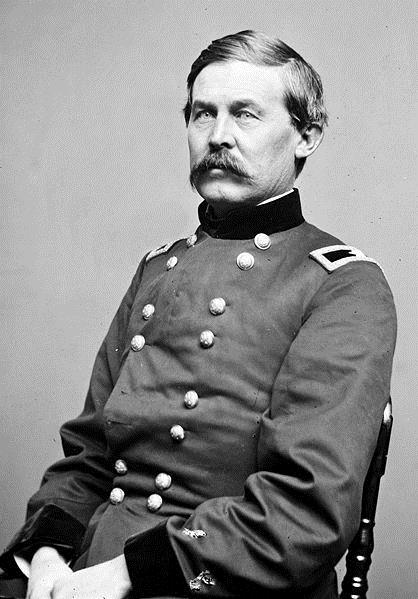
John Buford

However, many Southern born officers serving in the Army did not leave. Close to half of the “Southern West Point graduates on active duty in 1860 held to their posts and remained loyal to the Union.” [23] One was Kentucky’s John Buford who would gain immortal fame at the Battle of Gettysburg. Since Buford’s family had longstanding ties to Kentucky, the pro-secession governor of Kentucky, Beriah Magoffin offered Buford a commission in that states’ militia. At the time Kentucky was still an “undeclared border slave state” and Buford loyal to his oath refused the governor’s offer. He wrote a brief letter to Magoffin and told his comrades that “I sent him word that I was a Captain in the United States Army and I intend to remain one.” [24] Around the same time the new provisional government of the Confederacy “offered Buford a general officer’s commission, which reached him by mail at Fort Crittenden.” [25] According to Buford’s biographer Edward Longacre “a well-known anecdote has him wadding up the letter while angrily announcing that whatever future had in store he would “live and die under the flag of the Union.” [26] A starker contrast could not be drawn.

Close to forty-percent of the Virginians serving on active-duty in the army remained faithful to the Union, including the Commander of the Army, General Winfield Scott and Robert E. Lee’s friend George Thomas and both were ostracized in the Old Dominion. “Thomas’s family never again communicated with him except to ask him to change his name. A young Virginian just out of West Point, acknowledged that by retaining his commission he had been shunned by all of his Southern associates; yet he still derided those who would hold their obligations so lightly as to abandon the nation when it most needed them.” [27]

But throughout the South, most people were less than circumspect and openly rejoiced at the surrender of Fort Sumter. In Richmond the night following the surrender “bonfires and fireworks of every description were illuminating in every direction- the whole city was a scene of joy owing to [the] surrender of Fort Sumter” – and Virginia wasn’t even part of the Confederacy.” [28] John Gordon, the future Confederate General was leading his Georgia volunteers to the new Confederate capital and “found the line of march an unbroken celebration: fires lighted the hilltops; fife-and-drum corps shrilled and thumped; cannons exploded their welcome.” [29]

poor--ulysses-s-grant-president-1040cs021412

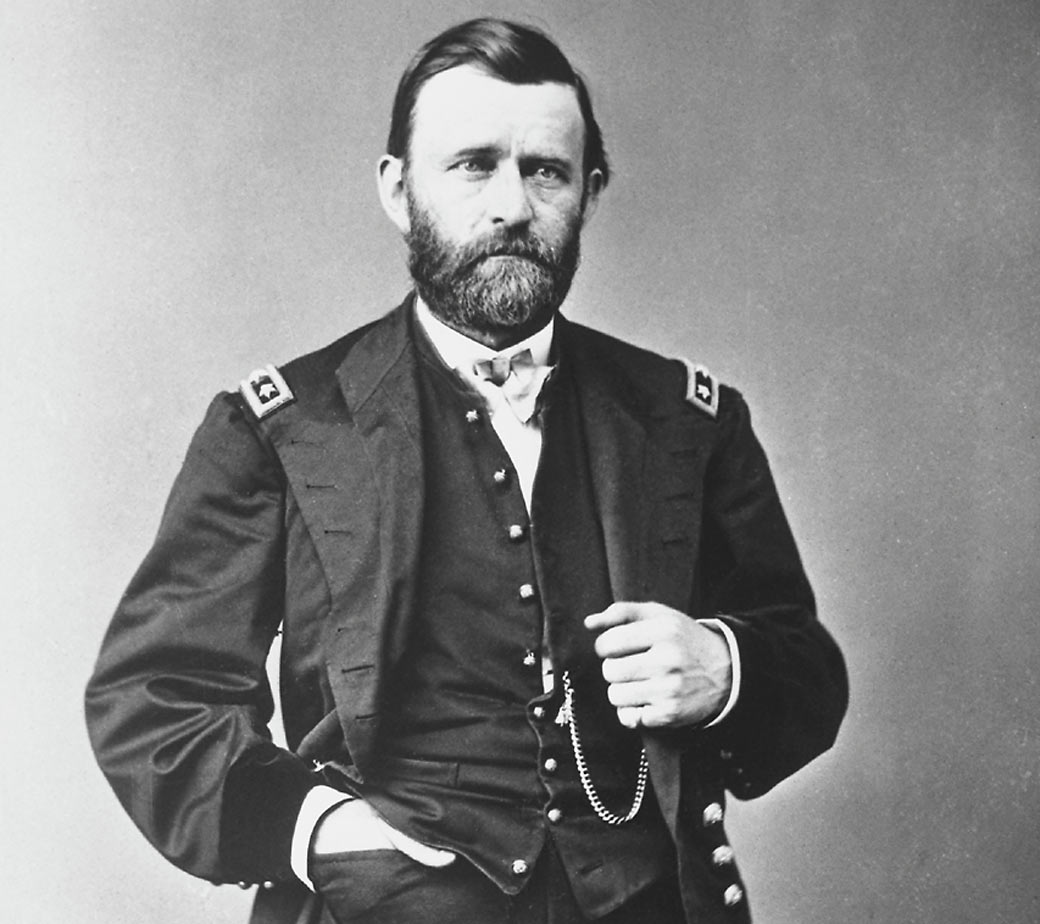
Ulysses Grant

Far to the north in Bangor Maine a little known professor at Bowdin College named Joshua Lawrence Chamberlain read the news “could not abide the thought of a divided nation; the Founding Fathers “did not vote themselves into a people; they recognized and declared that they were a people” whose bonds out not to be severed by political, social, or economic grievances.” [30] The professor “was seized with anger that “the flag of the Nation had been insulted” and “the integrity and existence of the people of the United States had been assailed in open and bitter war.” [31] In Illinois, a former struggling former Regular Army officer and veteran of the War with Mexico, Ulysses S. Grant whose in-laws were sympathetic to the Southern cause who had volunteered to lead a regiment of Illinois volunteers, wrote “Whatever may have been my opinions before, I have but one sentiment now. That is to have a Government, and laws and a flag and they all must be sustained….There are but two parties now, Traitors and Patriots and I want hereafter to be ranked with the latter.” [32]

1st_7th_Reg_Departs

Even in cities that had often leaned toward the South like Cincinnati, people rushed to proclaim their patriotism and support of the Union. George Ticknor told an English friend “The whole population, men, women, and children, seem to be in the streets with Union favours and flags…. Civil war is freely accepted everywhere… by all, anarchy being the obvious, and perhaps the only alternative.” Pacifists who had rejected violence, even in support of righteous causes, turned bellicose. Ralph Waldo Emerson enthused, “Sometimes gunpowder smells good.” [33] As the Sixth Massachusetts Volunteer Infantry marched through the streets of New York on their way to Washington were greeted with cheers from thousands of New Yorkers. The New York Times reported the event:

“Flags were displayed at all the hotels on the route, and waving handkerchiefs from the balconies and windows signified the warm greetings of the fair sex to the brave Bay State soldiers. Opposite the New York Hotel a gray-haired old man mounted a stoop and addressing the soldiers and people, said that he had fought under the Stars and Stripes in the War of 1812 against a foreign power, and now that the flag was spit upon by those who should be its defenders. He closed his remarks by a “God bless our flag,” and left the crowd with tears streaming down his wrinkled cheeks.” [34]

The Rubicon had been crossed and there was now no going back for either side. Poet Walt Whitman wrote:

War! An arm’d race is advancing! The welcome for battle, no turning away;

War! Be it weeks, months, or years, an arm’d race is advancing to welcome it.” [35]

Notes

[1] Ibid. Cooper We Have the War Upon Us p.270

[2] Doubleday, Abner From Moultrie to Sumter in Battles and Leaders of the Civil War Volume I Edited by Robert Underwood Johnson and Clarence Clough Buel Castle, Secaucus NJ p.48

[3] Ibid. McPherson The Battle Cry of Freedom p.274

[4] Ibid. McPherson The Battle Cry of Freedom p.274

[5] Ibid. Oates The Approaching Fury p.423

[6] Ibid. McPherson The Battle Cry of Freedom pp.274-275

[7] Ibid. Keneally American Scoundrel p.212

[8] Ibid. Keneally American Scoundrel p.214

[9] Ibid. Goldfield America Aflame p.525

[10] Ibid. Oates The Approaching Fury pp.421-422

[11] Ibid. Oates The Approaching Fury p.422

[12] Pfanz, Donald. Richard S. Ewell: A Soldier’s Life University of North Carolina Press, Chapel Hill and London 1998 p.120

[13] Jordan, David M. Winfield Scott Hancock: A Soldier’s Life Indiana University Press, Bloomington and Indianapolis 1988 p.33

[14] Hancock, Almira Reminiscences of Winfield Scott Hancock Charles L Webster and Company, New York 1887 pp.69-70

[15] Thomas, Emory Robert E. Lee W.W. Norton and Company, New York and London 1995 p.187

[16] Ibid. Catton The Coming Fury p.335

[17] Ibid. Thomas The Confederate Nation p.85

[18] Pryor, Elizabeth Brown. Reading the Man: A Portrait of Robert E. Lee Through His Private Letters Penguin Books, New York and London 2007 p.295

[19] Ibid. Pryor Reading the Man p.295

[20] Ibid. Rable God’s Almost Chosen Peoples p.38

[21] Alexander, Edward Porter. Fighting for the Confederacy: The Personal Recollections of General Edward Porter Alexander edited by Gary Gallagher University of North Carolina Press, Chapel Hill 1989 p.24

[22] Ibid. Alexander Fighting for the Confederacy p.25

[23] Huntington, Samuel P. The Soldier and the State: The Theory and Politics of Civil-Military Relations, The Belknap Press of Harvard University Press, Cambridge MA and London 1957

[24] Ibid. Guelzo. Gettysburg: The Last Invasion p.121

[25] Longacre, Edward G. John Buford: A Military Biography Da Capo Press, Perseus Book Group, Cambridge MA p.70

[26] Ibid. Longacre John Buford p.70

[27] Pryor, Elizabeth Brown. Reading the Man: A Portrait of Robert E. Lee Through His Private Letters Penguin Books, New York and London 2007 p.292

[28] Ibid. Guelzo Fateful Lightening p.140

[29] Smith, Jean Edward. Grant Simon and Schuster, New York and London 2001 p.99

[30] Longacre, Edward G. Joshua Chamberlain: The Soldier and the Man Combined Publishing Conshohocken PA 1999 pp.49-50

[31] Ibid. Guelzo. Gettysburg: The Last Invasion p.139

[32] Ibid. Smith Grant p.103

[33] Ibid. Goldfield America Aflame p.205

[34] Holzer, Harold and Symonds, Craig L. Editors, The New York Times Complete Civil War 1861-1865 Black Dog and Leventhal Publishers, New York 2010 p.75

[35] Ibid. Goldfield America Aflame p.205

2 Comments

Filed under civil war, History, Military, Political Commentary

Fort Sumter Pt 1: The First Flash of Gunpowder and Shell

fort-sumter-higher-res

Friends of Padre Steve’s World,

Here is another part one of another two-part installment of my Civil War text. The story follows the implosion of the Democratic Party, the election of Abraham Lincoln, and the secession crisis. It describes who the attack came about and the reactions of people in all parts of the country, as well as the Army to those fateful shots. I hope that you enjoy.

Peace

Padre Steve+

The remaining forts under Federal control in the South were a thorn in the side and a constant reminder to Jefferson Davis of the power of the federal government. As such he attempted to negotiate to obtain the forts, and when that offer was rejected out of hand by both Buchanan and Lincoln he began military preparations to seize them if negotiations failed. His task was complicated in Charleston where the Federal commander, Major Robert Anderson unexpectedly withdrew his entire garrison from the mainland to Fort Sumter in Charleston harbor. The move was prompted by President Buchanan’s dithering on the status of the fort and garrison. Anderson was a Southerner who had decided to remain loyal to the Union, his second in command was Captain Abner Doubleday, a strongly committed abolitionist.

Under the cover of darkness the Union officers withdrew their men from old and weak Fort Moultrie in Charleston to Fort Sumter gaining him instant adulation in the North and condemnation in the South. Buchanan wanted to abandon the fort but “when it appeared that Northern public opinion was solidly behind Anderson, Buchanan changed his mind and attempted to persuade the South Carolinians to accept Anderson’s occupation of Fort Sumter as a legitimate exercise of federal authority.” [1] Jefferson Davis, who had not yet resigned from the Senate awaiting Mississippi’s declaration of secession complained that he “pleaded with Buchanan to give up Sumter and avert impending calamity. Once again the old imbecile refused, after his fashion, which is to say that he muttered to himself, nodded and tilted his head as if in agreement, begged leave to say a prayer, and then did nothing at all. Plainly the reins of state were in feeble hands. Had this lame-duck President withdrawn the troops from Sumter, he might have turned away the threatening of civil war.” [2]But Davis was blind to the political realities in the North that secession and seizure of other Federal installations had brought about. A prominent Northern Democrat wrote that “Anderson’s course of action is universally approved and that if he is recalled or if Sumter is surrendered… Northern sentiment will be unanimous in favor of hanging Buchanan….I am not joking – Never have I known the entire people more unanimous on any question. We are ruined if Anderson is disgraced or Sumter given up.” [3] Congressman Dan Sickles who had been such a friend of the South for so many years, even backing peaceful secession, spoke out against the Southern seizure of federal installations, said that the secessionists had committed “a fatal error” and said “it will never do, sir, for them to protest against coercion, and, at the same moment seize all the arms and arsenals and forts and navy yards, and ships that may, through our forbearance, fall within their power. This is not peaceful secession. These acts, whensoever or whomsoever done, are overt acts of war.” [4]

major anderson

Buchanan made a belated attempt to reinforce and resupply the fort and on January 9th 1861, an unarmed civilian ship, the Star of the West entered Charleston harbor. But the operation was bungled, secrecy was broken and the South Carolinians knew the ship was coming, even as Anderson did not get the message about the relief expedition and permission to fire if the Star of the West was fired upon. As a result when Confederate gunners opened fire on the steamer, Anderson, who had instructions to defend himself and not for an instance such as this, did nothing to intervene. “If he opened fire, the United States and South Carolina would be at war…. Major Anderson hesitated, plainly uncertain, an immense weight of responsibility resting on him….” [5] As a result the Star of the West retreated, leaving the garrison unreinforced. But the secessionists “had overplayed their hand. The South Carolina gunners who fired on the Star of the West had, in effect, invited the Federal government to start the war then and there if it wanted a war….” [6] The firing on the Star of the West further inflamed Northerners. Dan Sickles thundered in the House chambers “the authorities of South Carolina, through their military forces, opened fire upon that defenseless ship, and compelled her to retire and abandon the peaceful and legitimate mission in which she was engaged. Now, sir, that was an act of war, unqualified war.” [7]

The debate continued as Buchanan eased out of office and the new Confederate government of Jefferson Davis took ownership of the situation in Charleston. Buchanan did not want to do anything overt to tip the balance in undecided slave states toward secession and Davis did not want South Carolina to act alone and risk a premature attack on the fort. But as both sides waited the balance of power in Charleston shifted, “as local troops day by day strengthened the ring of batteries confronting Sumter’s garrison.” [8] In incoming Lincoln administration debated what to do with some of the incoming cabinet members counseling withdraw and others resistance to Confederate demands. Lincoln gave serious thought to abandoning the fort but could not bring himself to authorize the action. He understood that if he ordered evacuation, “the credibility of his presidency and the Republican administration would be in pieces before either had scarcely begun.” [9]

Instead the new President sought more information and sent three men “down to Charleston to observe the situation and report on what they saw. The first two, both southern-born, were Illinois law associates, both reported reconciliation impossible…. The third, a high-ranking naval observer who secured and interview with Anderson at the fort, returned to declare a relief expedition was feasible.” [10] He also continued to meet with his cabinet members to decide on the appropriate policy to meet the challenge to federal authority in Charleston. “He met with Francis Blair, who, like his son, Monty, believed passionately that the surrender of Sumter “was virtually a surrender of the Union unless under irresistible force – that compounding with treason was treason to the Govt.” [11] On March 29th Lincoln again met with his cabinet and having weighed all of the options, decided to resupply the fort. His decision was to “not send guns or bullets to Sumter, only food and medicine. He would resupply, but not rearm, it. And he would announce the plan in advance so the South could not regard the effort as an act of hostility by an enemy.” [12] If the attempt succeeded “federal authority in South Carolina had been preserved, and Charleston could do little short of war to change it; if it failed, the failure would be due to Charleston’s decision to open fire, and the onus of beginning a civil war would lie on their hands.” [13]

Even as the Confederate moved even more troops and guns into position around the Sumter, more and more people of influence were growing impatient with the delays in gaining Fort Sumter and feared that if something was not done that in some places there might be a call to return to the Union. Jefferson Davis was under great pressure to act, a newspaper in Mobile Alabama editorialized that “If something is not done pretty soon…the whole country will be so disgusted with the sham of independence that the first chance the people get at a popular election the y will turn the whole movement topsy-turvy.” [14] Likewise, “Southern ardor was chafing at the bit anyway, and failure to meet the challenge threatened to undermine the government and weaken Southern resolve.” [15]

P.G.T._Beauregard

General P.T.G. Beauregard C.S.A.

Knowing from Southern sympathizers still in Washington that a relief expedition was coming, General P.T.G. Beauregard “had already cut off Major Anderson’s purchases in the Charleston market the day before Governor Pickens received Lincoln’s message about the intention to provision Sumter.” [16] Pickens forwarded the message to Davis in Montgomery and Davis was forced to either back down on their threats or fire the first shot of the war, and even worse from a messaging standpoint, “that first shot would be for the immediate purpose of keeping food from hungry men.” [17]

Davis was extremely angry when he went into conference with his cabinet on April 9th upon getting the news of the relief expedition. The debate in the cabinet “ran long and heated. Davis favored proceeding with the bombardment. Charleston’s batteries were ready, and the South Carolinians were more than anxious,” [18] and the majority of the cabinet, with the exception of Robert Toombs concurred. He wrote:

“I summoned the Cabinet and told them that negotiation was now at an end, and that it was time to bombard the fort. Yes, I said, we would now be firing the first shot, but that was not our fault. It was Lincoln who intended war. He and that lying Seward had drawn the sword, and we were responding to them. We were defending our honor.

Toombs, my Secretary of State disagreed. “Sir,” he said to me, “firing at the fort is suicide. It’s unnecessary, it puts us in the wrong, it’s fatal.”

“Sir,” I said, “you are wrong.”

On April tenth, I ordered General Beauregard to demand the evacuation of Fort Sumter, and if refused, to reduce it with his guns.” [19]

Beauregard delivered the ultimatum to Anderson, who rejected it noting that “his sense of honor and obligations to his government prevented him his complying; but in conversation with Beauregard’s aides he remarked that in any event, the garrison would be starved out in a few days.” [20] But the fear of the Confederates that the relief force might actually arrive and succeed in its mission prompted them to open fire on the fort at 4:30 a.m. on the morning of the 12th. The relief force was scattered by a gale and could not resupply Anderson. The bombardment lasted thirty-three hours, and while Anderson’s troops resisted but could not man all of their guns and were short on ammunition and powder. With the fort heavily damaged by over 4,000 hits and interior of the fort on fire, a fire that was threatening the powder magazines, Anderson gave the order to surrender. Beauregard allowed the assembled U.S. Navy ships to evacuate the garrison and as a parting gesture the Confederate General allowed Anderson’s troops to fire a last salute to Old Glory. They hauled down the smoke stained and torn Star Spangled Banner and marched to the ship taking them off the island with their drums beating the tune “Yankee Doodle.” Lincoln realized the importance of what had happened all too well. He noted, “They attacked Sumter. It fell and thus did more service than it otherwise would.” [21]

Notes

[1] Ibid. Guelzo Fateful Lightening p.136

[2] Ibid. Oates The Approaching Fury p.367

[3] Ibid. McPherson The Battle Cry of Freedom pp.265-266

[4] Ibid. Keneally American Scoundrel p.211

[5] Ibid. Catton The Coming Fury pp.180-181

[6] Ibid. Catton The Coming Fury p.184

[7] Ibid. Keneally American Scoundrel pp.211-212

[8] Ibid. Potter The Impending Crisis p.544

[9] Ibid. Guelzo Fateful Lightening p.137

[10] Ibid. Foote The Civil War, A Narrative. Volume One p.46

[11] Ibid. Goodwin Team of Rivals p. 335

[12] Holzer, Harold Lincoln: How Abraham Lincoln Ended Slavery in America Newmarket Press for itbooks an imprint of Harper Collins, New York 2012 p.80

[13] Ibid. Guelzo Fateful Lightening p.137

[14] Ibid. McPherson The Battle Cry of Freedom p.272

[15] Ibid. Catton Two Roads to Sumter p.278

[16] Weigley, Russell F. A Great Civil War: A Military and Political History 1861-1865 Indiana University Press, Bloomington and Indianapolis 2000 pp.20-21

[17] Ibid. Foote The Civil War, A Narrative. Volume One p.47

[18] Ibid. Davis Jefferson Davis p.323

[19] Ibid. Oates The Approaching Fury pp.416-417

[20] Ibid. Weigley A Great Civil War p.21

[21] Ibid. Goldfield America Aflame p.202

1 Comment

Filed under civil war, History, Military, Political Commentary

When Political Parties Implode: Pt 5: “The Heather is on Fire…” Politics, Religion, and War

revpalmer

Reverend Benjamin Morgan Palmer, Confederate Preacher and Propagandist

Friends of Padre Steve’s World

Over the past six months or so I have alluded to events in the Republican Party that make it appear that it is about to implode. I am a historian, and there is precedent in American history for the collapse of a national political party. This happened before in the 1854 collapse of the Whig Party, the 1912 division in the republican Party, but more importantly during the 1858 through 1860 collapse of the Democratic Party. Now I am not a person to say that history repeats itself. there are similarities and trends, but nothing is ever exactly the same as to why different parties collapse.  

While the issues of each day may be different there are common threads of humanity, hubris and hatred that unite to destroy political parties. I think that this is happening now in the Republican Party, and that it is possible that something similar may occur with the Democratic Party in the coming years. So it is important to look at history whenever possible to see how different political leaders responded in times of intense ideological, economic, social, national, and sectional division.

I decided to add an afterward to the three part series on the disaster that the Democratic Party made for itself and the country between 1858 and 1860. The third part deals with the after effects of results of the democratic Party split in the election of 1860. I followed those articles with one yesterday that dealt secession crisis that enveloped the nation as former Southern Democrats led their states into rebellion against the Union and Northern Democrats joined the anti-secession party in the North. Today is a section that talks about the mood of the country in that time and the impact of religion on the politics of the era. I do plan on doing a bit more work with it but figure that it works fine for the present moment, when religion again is a major part of politics, not only in the United States but elsewhere in the world.

This is a section of one of the chapters of my Civil War and Gettysburg text and I hope that you will find it interesting and thought provoking.

Peace,

Padre Steve+

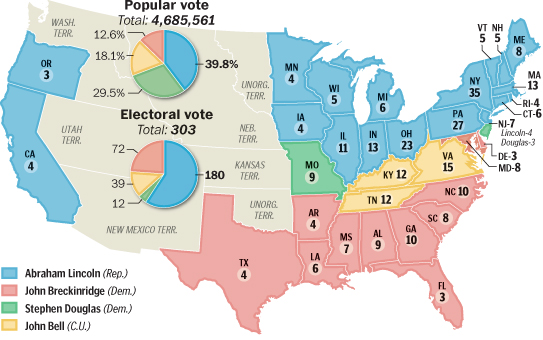
As no middle ground remained, the nation plunged into war with many leaders in the South and North including those who previously had encouraged conciliation and compromise hardened their positions on secession. In the South men like Alexander Stephens and Judah P. Benjamin joined the secession movement, while in the North the positions of leaders hardened as the Southern states seceded and seized Federal installations including armories, forts, and mints and threatened others. “Northerners greeted secession as a deadly assault upon their own rights, welfare and security. Secession leaders sought not to nullify a single law, but the results of an entire presidential election. Far worse, they intended to shatter a nation that was liberty’s last, best hope. That could not be tolerated.” [1]

But soon only four installations in the new Confederacy remained in Federal hands, “two far away in the Florida Keys; Fort Pickens at Pensacola, Florida; and the most visible, Fort Sumter.” [2] Among them, one, Fort Sumter would sit at the eye of the brewing hurricane of civil war that threatened to hit the nation with unmatched fury.

In the South, Church leaders provided “Ministerial hosannahs to the providential nature of secession, such as Benjamin Palmer’s, contributed vital ideological work to the creation of the Confederacy. Such sermonizing language provided the appearance of a seamless bridge between proslavery and the revolution creating an independent nation.” [3] The South forged ahead to claim the mantle of Christ and God for their side; and given the widely held theological “assumptions about divine sovereignty and God’s role in human history, northerners and southerners anxiously looked for signs of the Lord’s favor.” [4] Of course people on both sides used the events of any given day during the war to interpret what this meant and both were subject to massive shifts as the God of Battles seemed to at times favor the armies of the Confederacy and as the war ground on to favor those of the Union. Tennessee Presbyterian pastor William H. Vernor was blunt in what God’s position on secession and slavery was, “In all contests between nations God espouses the cause of the Righteous and makes it his own….The institution of slavery according to the Bible is right. Therefore in the contest between North and South, he will espouse the cause of the South and make it his own.” [5]

Benjamin Morgan Palmer was one of the most influential preachers in the South, and when he took the pulpit on November 29th 1860 preached one of the most polemic pro-slavery and secession sermons made anywhere in the South. This Thanksgiving Sermon became one of the most influential Confederate propagandists. “Some 50,000 copies of that sermon were printed in pamphlet form and circulated throughout the South. That pamphlet became a most powerful part of Southern propaganda.” [6] The sermon was electrifying in it Palmer thundered against abolitionists, in particular Northern ministers equating them to atheists and radicals of the French Revolution. .

“Last of all, in this great struggle, we defend the cause of God and religion. The abolition spirit is undeniably atheistic. The demon which erected its throne upon the guillotine in the days of Robespierre and Marat, which abolished the Sabbath and worshipped reason in the person of a harlot, yet survives to work other horrors, of which those of the French Revolution are but the type. Among a people so generally religious as the American, a disguise must be worn; but it is the same old threadbare disguise of the advocacy of human rights…. Under this suspicious cry of reform, it demands that every evil shall be corrected, or society become a wreck—the sun must be stricken from the heavens, if a spot is found upon his disk. The Most High, knowing his own power, which is infinite, and his own wisdom, which is unfathomable, can afford to be patient. But these self-constituted reformers must quicken the activity of Jehovah or compel his abdication. In their furious haste, they trample upon obligations sacred as any which can bind the conscience…. Working out the single and false idea which rides them like a nightmare, they dash athwart the spheres, utterly disregarding the delicate mechanism of Providence, which moves on, wheels within wheels, with pivots and balances and springs, which the great Designer alone can control. This spirit of atheism, which knows no God who tolerates evil, no Bible which sanctions law, and no conscience that can be bound by oaths and covenants, has selected us for its victims, and slavery for its issue. Its banner-cry rings out already upon the air—”liberty, equality, fraternity,” which simply interpreted mean bondage, confiscation and massacre. With its tricolor waving in the breeze,—it waits to inaugurate its reign of terror. To the South the high position is assigned of defending, before all nations, the cause of all religion and of all truth. In this trust, we are resisting the power which wars against constitutions and laws and compacts, against Sabbaths and sanctuaries, against the family, the State, and the Church; which blasphemously invades the prerogatives of God, and rebukes the Most High for the errors of his administration; which, if it cannot snatch the reign of empire from his grasp, will lay the universe in ruins at his feet. Is it possible that we shall decline the onset?” [7]

Even as their preachers like Palmer urged secession and linked the cause of the Confederacy and slavery to Divine Providence events continued to move forward. Those who had been hesitant about secession in the South were overcome by events when Fort Sumter was attacked. Edmund Ruffin spoke for many of the ardent secessionists when he proclaimed “The shedding of blood…will serve to change many voters in the hesitating states, from submission or procrastinating ranks, to the zealous for immediate secession.” [8]

But very few of the radical secessionists found their way into uniform or onto the front lines. Then like now, very few of those who clamor for war and vengeance the most, who send the sons of others to die in their wars, take up arms themselves. Confederate General Jubal Early saw the sour irony in this. Early had been a strong Unionist and had fought against secession until the last as a Virginia legislator during the Virginia secession debate. But when he finally accepted secession as a reality, he went to war and never looked back becoming an intractable enemy of the Union. During the war he became one of the most committed Rebels of the Cause and after the war became one of the most powerful voices for the Lost Cause. That being said, the caustic Early was not fond of the proponents of secession and took pleasure as the war went on by taunting: “the identifiable secessionists in gray uniform who came his way, especially when the circumstances were less than amusing….” [9]After the disastrous defeat at the Third Battle of Winchester in 1864, Early looked at his second in command, former Vice President of the United States, failed candidate for President in the 1860 presidential election, and Confederate Major General John C. Breckinridge, who had advocated secession as they retreated amid the “chaos and horror of his army’s rout. Early took the occasion to mock his celebrated subordinate: “Well General, he crowed, “what do you think of the ‘rights of the South’ in the territories now?” [10]

In the North a different sentiment rose as one volunteer soldier from Pennsylvania wrote: “I cannot believe…that “Providence intends to destroy this Nation, the great asylum for all the oppressed of all other nations and build a slave Oligarchy on the ruins thereof.” Another volunteer from Ohio mused “Admit the right of the seceding states to break up the Union at pleasure…and how long before the new confederacies created by the first disruption shall be resolved into smaller fragments and the continent become a vast theater of civil war, military license, anarchy and despotism? Better to settle it at whatever cost and settle it forever.” [11]

As the war began and both sides mobilized for war, the clergymen on both sides of the now divided land now proclaimed a holy war to support their side’s cause, just as they had in the decades leading to the crisis. Palmer, whose sermon had helped propagandize the cause of secession was active in giving Confederate soldiers a religious basis for their fight, “he insisted that the Louisiana Washington Artillery resist the Northern invasion in order to protect the right of self-government. To them he advocated the pursuit of a holy war, a war of true Christian faith against fanaticism.” [12] The religious character of the war was in evidence as “Clergymen and their congregations became caught up in the patriotic fervor…..It would not be entirely fair to say that politics rode roughshod over religion, but Americans exhibited more spiritual hubris than spiritual reflection” [13] as the country went to war with itself. The depth of the religious dimension of the struggle can be seen in the hymn most commonly associated with the Civil War and the United States. This was the immensely popular Battle Hymn of the Republic whose lyricist Julia Ward Howe penned the lines “As he died to make men holy, let us live to make men free! While God is marching on” [14]

Evangelical Churches, evangelistic organizations and tract societies were particularly active in conducting revival meetings and working to convert soldiers, and as “early as 1862, large-scale “conversion seasons” swept through both Union and Confederate troops: the Army of the Cumberland and the Army of Northern Virginia both experienced large-scale revivals of religion during the winter and spring of 1864.” [15] These would be the last of these seasons of revival as the war entered a new and more brutal phase, which not only tested, but also shattered the faith of many soldiers, one Illinois surgeon named “John Hostetter remarked, “The is no God in war. It is merciless, cruel, vindictive, unchristian, savage, relentless. It is all that devils could wish for.” [16]

Not content with efforts to evangelize and convert soldiers there was also an attempt on the part of some Northern Evangelicals to push religion to the forefront of the conflict and to establish the Christian faith as the official religion of the United States. In doing so they sought to correct what they believed was an error in the Constitution. The error that they sought to correct was that God was not mentioned in it. These Evangelicals believed that the Civil War was God’s judgment on the nation because the Founders had left the mention of God out of that document. The group, which called itself the National Reform Association proposed what they called the Bible Amendment in 1863. The amendment would united Evangelical Protestantism with the Republic, forming what they believed would be a truly Christian nation. They met with Lincoln and proposed to modify the opening paragraph of the Constitution to read:

“We the people of the United States, humbly acknowledging Almighty God as the source of all authority and power and civil government, the Lord Jesus Christ as the Ruler among the nations, His revealed will as the supreme law of the land, in order to form a more perfect union.” [17]

While Lincoln brushed off their suggestion and never referred to the United States as a Christian nation, much to the chagrin of many Northern Christians, the Confederacy reveled in its self-described Christian character. The Confederacy had “proudly invoked the name of God in their Constitution. Even late in the war, a South Carolina editor pointed to what he saw as a revealing fact: the Federal Constitution – with no reference to the Almighty – “could have been passed and adopted by Atheists or Hindoes or Mahometans.” [18]

Notes

[1] Ibid. Levine Half Slave and Half Free p.236

[2] Ibid. Cooper We Have the War Upon Us p.192

[3] Ibid. Daly When Slavery Was Called Freedom p.141

[4] Ibid. Rable God’s Almost Chosen Peoples p.74

[5] Ibid. Daly When Slavery Was Called Freedom p.138

[6] Wakelyn, John L. Benjamin Morgan Palmer in Leaders of the American Civil War: A Biographical and Historiographical Dictionary edited by Charles F. Ritter and Jon L. Wakelyn, Greenwood Press, Westport Connecticut 1998 p.309

[7] Palmer, Benjamin M. Thanksgiving Sermon, November, 29, 1860. Retrieved from http://civilwarcauses.org/palmer.htm 9 March 2016

[8] Ibid. McPherson The Battle Cry of Freedom p.273

[9] Ibid. Osborne Jubal p.52

[10] Ibid. Osborne Jubal p.52

[11] Ibid. Levine Half Slave and Half Free pp.253-254

[12] Ibid. Wakelyn Benjamin Morgan Palmer p.309

[13] Ibid. Rable God’s Almost Chosen Peoples p.56

[14] Ibid. Huntington Who Are We? P.77

[15] Ibid. Guelzo Fateful Lightening p.415

[16] Ibid. Guelzo Fateful Lightening p.415

[17] Ibid. Goldfield America Aflame p.360

[18] Ibid. Rable God’s Almost Chosen Peoples pp.337-338

Leave a comment

Filed under civil war, History, Political Commentary

When Political Parties Implode, Pt 4: The Secession Crisis

Friends of Padre Steve’s World

Over the past six months or so I have alluded to events in the Republican Party that make it appear that it is about to implode. I am a historian, and there is precedent in American history for the collapse of a national political party. This happened before in the 1854 collapse of the Whig Party, the 1912 division in the republican Party, but more importantly during the 1858 through 1860 collapse of the Democratic Party. Now I am not a person to say that history repeats itself. there are similarities and trends, but nothing is ever exactly the same as to why different parties collapse.  

While the issues of each day may be different there are common threads of humanity, hubris and hatred that unite to destroy political parties. I think that this is happening now in the Republican Party, and that it is possible that something similar may occur with the Democratic Party in the coming years. So it is important to look at history whenever possible to see how different political leaders responded in times of intense ideological, economic, social, national, and sectional division.

I decided to add an afterward to the three part series on the disaster that the Democratic Party made for itself and the country between 1858 and 1860. The third part deals with the after effects of results of the democratic Party split in the election of 1860. This deals with the secession crisis that enveloped the nation as former Southern Democrats led their states into rebellion against the Union and Northern Democrats joined the anti-secession party in the North.

This is a section of one of the chapters of my Civil War and Gettysburg text and I hope that you will find it interesting and thought provoking.

Peace,

Padre Steve+

disunion_carolina-blog427

After the election Lincoln tried to reassure the South that he would remain true to his campaign promise not to interfere with slavery where it already existed, but he also refused to give in to threats of secession. Despite his belief that anything that he said would be twisted into the exact opposite by Southerners, Lincoln released a statement through Senator Lyman Trumbull in Springfield saying:

“The states will be left in complete control of their affairs and property within their respective limits as they have under any administration. I regard it as extremely fortunate for the peace of the whole country, that this point, upon which the Republicans have been for so long, as so presently misrepresented, is now brought to a practical test, and placed beyond the possibility of doubt. Disunionists per se, are now in hot haste to get out of the Union, precisely because they perceive they cannot, much longer, maintain apprehension among the southern people that in their homes, and firesides, and lives, are to be endangered by the action of the Federal Government.” [1]

On his way to Washington D.C. the President Elect stopped in New York and gave a speech “promising that he would “never of his own volition “consent to the destruction of this Union,” he qualified this promise with “unless it were that to be that thing for which the Union itself was made.” [2] Two days later Lincoln speaking Independence Hall in Philadelphia Lincoln further detailed what he meant in New York, going back to the premise of the Declaration of Independence in which “he asserted that he “never had a feeling politically that did not spring from the sentiments embodied in the Declaration…. I was not the mere matter of separation of the colonies from the mother land; but rather something in that Declaration” that provided “hope for the world for all future time. It was that which gave promise that in due time the weights should be lifted from the shoulders of all men, and that all should have an equal chance.” [3] It was a thought that he would continue to refine in the Emancipation Proclamation Gettysburg Address, the Thirteenth Amendment and in his Second Inaugural Address.

Stephen A. Douglas tried to reassure the Southern leaders as well even as argued against secession. He reminded Southerners how he had fought against Lincoln and the platform of the Republican Party and stated “that the mere election of any man to the Presidency does not furnish just cause for dissolving the Union.” [4] Addressing Southern concerns in a pragmatic way, the Little Giant tried to diffuse Southern fears by reminding them that the answer to their fears lay in the checks and balances laid out in the Constitution and in the ballot box. Douglas’s next words redound to the present day:

“It is apprehended that the policy of Mr. Lincoln and the principles of his party endanger the peace of the slaveholding states. Is that apprehension founded? No, it is not. Mr. Lincoln and his party lack the power, even if they had the disposition, to disturb or impair the rights and institutions of the South. They certainly cannot harm the South under existing laws. Will they have the power to repeal or change these laws, or to enact others? It is well known that they will be a minority in both houses of Congress, with the Supreme Court against them. Hence no bill can pass either house of Congress impairing or disturbing these rights or institutions of the southern people in any manner whatever, unless a portion of southern senators and representatives absent themselves so as to give an abolition majority in consequence of their actions.

In short, the President will be utterly powerless to do evil…. Four years shall soon pass, when the ballot box will furnish a peaceful, legal, and constitutional remedy for the evils and grievances with which the country might be afflicted.” [5]

An attempt in Congress led by President James Buchanan and Senator John J. Crittenden of Kentucky to bring about a constitutional compromise to mollify both sides was considered. A committee of thirteen senators was convened to entertain various compromise propositions, however, most of the suggested compromises were heavily weighted toward Southern interests, though it promised to restore the prohibition of slavery north of the line drawn in the Missouri Compromise.

lincolnearly

Abraham Lincoln

A frustrated Lincoln wrote, “I’ll tell you now what bothered me: the compromises measures introduced in Congress required the Republicans to make all the concessions.” [6] Lincoln warned Crittenden that such proposals would not be acceptable: “Entertain no proposition for a compromise in regard to the extension of slavery…. The instant you do they have us under again…. The tug has to come & better now than later.” [7]

Lincoln had seen how for four decades Southerners had pushed for compromises that only benefited them and the extension of slavery, even at the expense of Northern states rights and he was not about to let it happen again. The President Elect wrote:

“The Crittenden plan, I feared, would put the country back on the high road to a slave empire. Whether it was the revival of the Missouri Compromise line or a popular sovereignty, it was all the same. “Let neither be done,” I warned Republicans in Washington, “and immediately filibustering and extending slavery recommences. Within a year, we shall have to take Cuba as a condition on which the South will stay in the Union. Next it will be Mexico, then Central American. On the territorial question, I am inflexible. On that point hold firm as a chain of steel…” [8]

In the South the efforts of staunch Southern Unionists like Alexander Stephens to discourage secession were dismissed as the movement toward secession became a passion filled revolutionary movement, which acted as a cathartic movement for many Southerners. Like Douglas, Stephens had the greatest faith in the checks and balances provided in the Constitution and he pleaded with his fellow Georgians at the state capital of Milledgeville noting that the checks and balances “would render Lincoln “powerless to do any great mischief,” and he warned that “the dissolution of the Union would endanger this “Eden of the world,” that “instead of becoming gods, we shall become demons, and no distant day commence cutting one another’s throats…” [9] While his speech received favorable coverage in the North and even in London, it was met with little enthusiasm at home.

Influential Southern preachers joined in the push for secession and warned of what they saw as the dire consequences of Lincoln’s election. The Baptist clergyman James Furman expressed the outrage and paranoia of many in the South by warning after Lincoln’s election “If you are tame enough to submit, Abolition preachers will be at hand to consummate the marriage of your daughters to black husbands.” [10] Likewise entire southern denominations began to endorse secession, southern Methodists raised “alarms about a Union dominated by abolitionists as they called on the Lord for deliverance from the northern “Egypt.” The division of Israel and Judah (not to mention the nation’s already fractured churches0 became typologies for the American crisis. Just as southern Methodists had once “seceded from a corrupt church,” a Mississippi politician declared, “We must secede from a corrupt nation.” To drive the point home, Georgia Methodists ministers endorsed disunion by an overwhelming 87-9 vote.” [11]

Despite Lincoln and Douglas’s efforts during and after the election to strike a conciliatory tone, it did not take long before Southern states began to secede from the Union. In light of the profoundly sectional nature of Lincoln’s victory “emboldened many Southern politicians and journalists to insist that they would not be bound by the result.” [12] In his final speech before the Senate, Senator Robert Toombs of Georgia lambasted the “black Republicans” and abolitionists, “We want no negro equality, no negro citizenship, we want no negro race to degrade our own; and as one man [we] would meet you upon the border with the sword in one hand and the torch in the other.” [13] Other Senators, many who would become prominent leaders of the Confederacy made their speeches, some, like that of Jefferson Davis tinged with regret while others like Senator Stephen Mallory, and the future Secretary of the Navy for the Confederacy delivered a fiery broadside against his Northern colleagues, “You cannot conquer us. Imbue your hands in our blood and the rains of a century will not wipe away from them stain, while the coming generation will weep for your wickedness and folly.” [14] As these men finished the left the chambers of Congress where many had served for years many left with tears, while some marked their exit with angry words.

220px-Alexander_Stephens

Alexander Stephens

Stephens, still a Unionist at heart lamented the election even as he prepared to leave the Senate before becoming the vice president of the Confederacy, warned that “revolutions are much easier started than controlled, and the men who begin them [often] …themselves become the victims.” [15] Even so the senator noted “If the policy of Mr. Lincoln and his Republican associates be carried out…no man in Georgia will be more willing or ready than myself to defend our rights, interest, and honor at every hazard and to the last extremity.” [16] But as he resigned his office Stephens replied to a friend’s question, “why must we have civil war?”

“Because there are not virtue and patriotism and sense enough left in the country to avoid it. Mark me, when I repeat that in less than twelve months we shall be in the midst of a bloody war. What will become of us then God only knows.” [17]

But Stephens’ warning fell on deaf ears as passionate secessionist commissioners went throughout the South spreading their message of fear. “Thus fanned, mob spirit ran close enough to the surface to intimidate many moderates – the very temperament that inclines men toward moderation is apt to respond timidly when threatened or abused – and to push others closer to the extremist position.” [18] Such was the case with Southern moderates and Unionists as men like Stephens were swept up in the tumult as their states seceded from the Union. Senator Judah P. Benjamin of Louisiana wrote, “The prudent and conservative men South… were not able to stem the wild torrent of passion which is carrying everything before it…. It is a revolution…of the most intense character…and it can no more be checked by human effort, for the time, than a prairie fire by a gardener’s watering pot.” [19]

disunion_dec20_secession3-blog427

The Palmetto State of South Carolina was the first state to secede. Its senior senator, James Chesnut launched a fusillade against the North in a speech before the state legislature in which he argued that the South could not wait for another election: He thundered:

“Because of the Yankee puritans’ invasive mentality, incendiary documents would flood our region, Southern Republicans would fill our offices. Enemies would control our mails. The resulting upheaval would make “Lincoln’s election…a decree for emancipation. Slavery cannot survive the four years of an administration whose overwhelming influences” will be “brought to bear against it.” To submit now is to guarantee that before 1865, we must “slay the Negro, or ourselves be slain.” [20]

William Tecumseh Sherman was serving as the President the Louisiana State Seminary of Learning and Military Academy, what is now Louisiana State University. Like many men in the ante-bellum era, Sherman had thought little about the slavery issue, though he was very concerned with the preservation of the Union. He thought secession made no sense, especially for the people of the South. When Sherman read the news of South Carolina’s secession it “cut to the depths of his nationalistic soul.” The future general wept, and told his friend David Boyd “Boyd, you people of the South don’t know what you are doing! You think you can tear to pieces this great union without war…. “The North can make a steam-engine, locomotive, or railway car; hardly a yard of cloth or shoes can you make. You are rushing into war with one of the most powerful, ingeniously mechanical and determined people on earth…. You are bound to fail. Only in spirit and determination are you prepared for war.” [21] Sherman, the man who later proclaimed that “War is Hell” proved to be a remarkably accurate seer regarding the fate of the Confederacy.

South Carolina was followed by Mississippi, Florida, Alabama, Georgia, Louisiana and Texas. “A belt of seven states from South Carolina to Texas, embracing nearly one-sixth of the country’s population and nearly one-fifth of the national domain, had proclaimed independence and severed its ties with the Union.” [22] Many of the declarations of causes for secession made it quite clear and explicit that slavery, and fear that the institution was threatened by Northern abolitionists was the root cause. The declaration of South Carolina is typical of these and is instructive of the basic root cause of the war:

“all the States north of that line have united in the election of a man to the high office of President of the United States, whose opinions and purposes are hostile to slavery. He is to be entrusted with the administration of the common Government, because he has declared that that “Government cannot endure permanently half slave, half free,” and that the public mind must rest in the belief that slavery is in the course of ultimate extinction.” [23]

Throughout the war slavery loomed large, even though in the beginning of the abolition controversies of the 1830s many northerners “were content to tolerate slavery’s indefinite survival in the South so long as it did not impinge on their own rights and aspirations at home.” [24] Such attitudes were still common in the North during the late 1850s, especially among Democrats.

But it was the continued actions and multiple transgressions of slavery supporters that energized northerners as never before. Their use of the courts to advance their rights and the cause of slavery, by the compromises that had extended slavery to the territories; their use of the courts especially the Dred Scott to allow slaveholders to recover their human property, even in Free States provoked no end of indignation throughout the North, even for those sympathetic to Southern concerns. Those actions demonstrated to Northerners:

“just how fundamental and intractable the differences with Southern political leaders were. Thus educated, most northern voters had decided by 1860 that only an explicitly anti-slavery party could protect their interests.” [25]

The fiery abolitionist and profoundly religious editor of The Liberator, William Lloyd Garrison, used biblical imagery in a rather astute analysis of the behavior of Southern leaders after the election of 1860. He wrote of the Southern response to Lincoln’s election:

“Never had the truth of the ancient proverb “Whom the gods intend to destroy, they first make mad” been more signally illustrated than in the condition of southern slaveholders following Lincoln’s election. They were insane from their fears, their guilty forebodings, their lust for power and rule, hatred of free institutions, their merited consciousness of merited judgments; so that they may be properly classed as the inmates of a lunatic asylum. Their dread of Mr. Lincoln, of his Administration, of the Republican Party, demonstrated their insanity. In vain did Mr. Lincoln tell them, “I do not stand pledged to the abolition of slavery where it already exists.” They raved just as fiercely as though he were another John Brown, armed for southern invasion and universal emancipation! In vain did the Republican party present one point of antagonism to slavery – to wit, no more territorial expansion. In vain did that party exhibit the utmost caution not to give offense to any other direction – and make itself hoarse in uttering professions of loyalty to the Constitution and the Union. The South protested that its designs were infernal, and for them was “sleep no more!” Were these not the signs of a demented people?” [26]

But both sides were blind to their actions and with few exceptions, most leaders, especially in the South badly miscalculated the effects of the election of 1860. The leaders in the North did not realize that the election of Lincoln would mean the secession of one or more Southern states, and Southerners “were not able to see that secession would finally mean war” [27] despite the warnings of Alexander Stephens to the contrary. In fact throughout the South it was believed that there would be no war because “they believed that the Yankees were cowards and would not fight”… “Senator James Chesnut of South Carolina offered to drink all the blood shed as a consequence of secession. It became a common saying in the South during the secession winter that “a lady’s thimble will hold all the blood that will be shed.” [28]

Following their secession the five slave states of the lower South: “appointed commissioners to the other slave states, and instructed them to spread the secessionist message across the entire region. These commissioners often explained in detail why their states were exiting the Union, and they did everything in their power to persuade laggard slave states to join the secessionist cause. From December 1860 to April 1861 they carried the gospel of disunion to the far corners of the South.” [29]

The editors of the Philadelphia Press accused the Southern secessionists of being enemies of democracy and wrote:

“should the Cotton States go out in a body, we shall witness the beginning of an experiment to establish, on this continent, a great slaveholding monarchy. With few exceptions, the leaders of the Disunion cabal are men of the most aristocratic pretensions – men who…easily adopt the habits and titles of the European nobility. South Carolina, which is the head of Secession, is almost a monarchy herself. Her representatives in both branches of Congress, for years past, have acted upon the idea that the people of the free states are servile, and Mr. Hammond, the most candid and straightforward of the set, denounced the laboring white masses of the free States as the mudsills of society …” [30]

The mood of the South in the fall of 1860 was “fearful, uncertain, impatient and volatile, eager to adopt the course that best offered hope of deliverance – which was ideally suited for the immediacy and urgency of the radical secessionists.” [31] Using the political machinery of the Democratic Party in the South which they now possessed, the proponents of secession were far better organized than Southern Unionists who had a difficult time putting up a united front in the face of the radicals.

Slavery and the superiority of the white race over blacks were at the heart of the message brought by these commissioners to the legislatures of the yet undecided states. Former Congressman John McQueen of South Carolina wrote to secessionists in Virginia “We, of South Carolina, hope to greet you in a Southern Confederacy, where white men shall rule our destinies, and from which we may transmit our posterity the rights, privileges and honor left us by our ancestors.” [32] In Texas McQueen told the Texas Convention: “Lincoln was elected by a sectional vote, whose platform was that of the Black Republican part and whose policy was to be the abolition of slavery upon this continent and the elevation of our own slaves to an equality with ourselves and our children.” [33] These Southern secessionists were realists, they knew that the election of 1860 was a watershed in terms of the history of slavery in the United States, emancipation was coming, it might take a decade, it might take twenty-five or even fifty years, but they knew that it was coming, and for them secession was the only logical action left that was “consistent with their ideology.” [34] Many of these men now viewed it as an issue of now or never.

In his First Inaugural Address Lincoln cut to the heart of the division in the country: “One section of our country believes slavery is right and ought to be extended, while the other believes it is wrong and ought not to be extended. This is the only substantial dispute.” [35] Of course he was right, and his Southern opponents agreed. Jefferson Davis wrote: “The great northern party, thus organized, succeeded in electing to the office of the Presidency a man who openly proclaimed his hatred of slavery, who declared that the government could not endure “half slave and half free.” [36]

As the war began, white Southerners of all types and classes rallied to the call of war against the hated Yankee. The common people, the poor yeomen farmers were often the most stalwart defenders of the South. With the Orwellian slogan “Freedom is not possible without slavery” ringing in their ears, they went to war against the Yankees alongside their slave-owning neighbors to “perpetuate and diffuse the very liberty for which Washington bled, and which the heroes of the Revolution achieved.” [37]

Alexander Stephens, the longtime friend of Lincoln who had been a devout Unionist, who had supported Stephen Douglas until the bitter end, and who had strenuously opposed secession in the months leading to the election of 1860 was now the Vice President of the Confederacy. He had been elected Vice President the same day as Jefferson Davis was elected President by the new Confederate Congress and now went through the South speaking about the nature of the new government. Stephens explained the foundations of the Southern state in his Cornerstone Speech of March 21st 1861, the speech echoed what many Southerners had believed for years regarding slavery and the status of Blacks, namely that Blacks were a lesser order of humanity:

Our new government is founded upon exactly the opposite idea; its foundations are laid, its corner- stone rests upon the great truth, that the negro is not equal to the white man; that slavery — subordination to the superior race — is his natural and normal condition. [Applause.] This, our new government, is the first, in the history of the world, based upon this great physical, philosophical, and moral truth.” [38]

Jefferson Davis had issued instructions to cabinet members to downplay slavery as an issue and was infuriated. The new President of the Confederacy wrote: “That speech infuriated me, Oh, what Stephens had said was true, perfectly true, but could anything hurt us more abroad than such impolitic remarks? It was the beginning of a fatal falling out between me and that rebellious and vindictive dwarf, who was hell-bent on forming his own policies and disputing mine with niggardly deviousness.” [39]

The Orwellian definition of slavery as being necessary to liberty and the Confederate leader’s proclamations that they were comparable to the founding fathers was condemned throughout the North. The editors of the New York Evening Post wrote:

“The founders fought to “establish the rights of man… an principles of universal liberty.” The South was rebelling “not in the interest of general humanity, but of a domestic despotism…. Their motto is not liberty, but slavery.” Thomas Jefferson’s Declaration of Independence spoke for “Natural Rights against Established Institutions,” added the New York Tribune, while “Mr. Jeff. Davis’s caricature thereof is made in the interest of an unjust, outgrown, decaying institution against the apprehended encroachments of human rights.” It was, in short, not a revolution for liberty but a counterrevolution “reversing the wheels of progress…. to hurl everything backward into deepest darkness… despotism and oppression.” [40]

Secession3

Virginia’s Ordinance of Secession

Secession commissioners from the first seven Confederate States fanned out to the undecided Slave states to spread the message of secession. One of these men was Henry Benning of Georgia. Benning spoke to the secession convention of Virginia, a state that the new Confederacy deemed all-important to its cause and which it had to have on its side in the coming confrontation with the Union. There the Georgia Supreme Court Justice used the time-honored method of racial fear mongering to sway the men of the Virginia House of Delegates, he thundered:

“If things are allowed to go on as they are, it is certain that slavery is be abolished except in Georgia and the other cotton States, and…ultimately in these States also,” Benning insisted. “By the time the North shall have attained the power, the black race will be a large majority, and we will have black governors, black legislatures, black juries, black everything.” [41]

Not letting up the fiery Georgian told the Virginians that the North would invade the South to end slavery and of the outcome of such an invasion:

“We will be overpowered and our men compelled to wander like vagabonds all over the earth,” he told his audience, “and for our women, the horrors of their state cannot contemplate in imagination.” This then, was “the fate that Abolition will bring upon the white race….We will be exterminated.” [42]

Virginia’s Governor, John Letcher was “a longtime foe of secession and had wanted to bring slavery to an end in Virginia, but once elected to the governorship he adroitly put all that behind him, and rather like [Robert E.] Lee, he went to work with considerable efficiency for two causes in which he did not believe.” [43] One Unionist delegate to the convention wrote of the proceedings, “The scenes witnessed within the wall of that room…have no parallel in the annals of ancient or modern times. On the morning of the 17th, Mr. Wise rose from his seat and drawing a large Virginia horse-pistol from his bosom laid it before him and proceeded to harangue the body in the most violent and denunciatory manner. He concluded by taking his watch from his pocket and, with glaring eyes and bated breath, declared that events were now transpiring which caused a hush to come over his soul.” [44] Those events were a planned seizure of Federal facilities including the arsenal at Harpers Ferry and the Naval Yard at Norfolk. But not all in Virginia were convinced. The strongly Unionist western counties of the state, where few people owned slaves and those who did held very few, voted heavily against secession. The counties withstood the initial shock of secession and would “in a wholly extra-legal way, abetted by Washington – perform its own act of secession, breaking away from Virginia and clinging to the Union as a bob-tailed but finally acceptable new state.” [45]

Former President John Tyler added his voice to the secession cause in Virginia and “personally drafted a document placing the state’s military force under Jefferson Davis’s direct command.” Shortly thereafter he was “elected to the Confederate Congress – becoming the only former President to win office in a foreign country.” [46] However, before he could take office, the former President, now an intractable enemy of the country that he once led, died in Richmond. Shortly thereafter his portrait was removed from its place of honor in the capital.

Tennessee was another state where secession was problematic. Eastern Tennessee was strongly Unionist and the counties “held a convention, denounced the governor and legislature for making the alliance with the Confederacy, and sent a memorial asking that the eastern counties be allowed to form a new state.” [47] The legislature and governor refused this but the area would prove a problem for Jefferson Davis as well as Lincoln who would have liked to help the Tennessee Unionists, but had no military way to do so.

The highly divided border states of Kentucky and Missouri remained in the Union, but became highly partisan battlegrounds between secessionists and Unionists in which insurgents used terrorist methods against their fellow citizens throughout the war. Kentucky’s pro-secession Governor, Beriah Magoffin called the legislature into convention to decide secession “but the legislature, by a vote of 54 to 36 in the lower house, refused to call one and adjourned on February 11 without taking any decisive action.” [48] Losing that vote, he issued a declaration of neutrality which caused both Lincoln and Jefferson Davis to move with caution in the state. Lincoln understood the strategic importance of Kentucky and said “I think to lose Kentucky is nearly the same as to lose the whole game….Kentucky gone, we cannot hold Missouri, nor, as I think, Maryland. These all against us, and the job on our hands is too large for us. We may as well consent to separation at once, including the surrender of this capital.” [49] Lincoln’s use of caution, diplomacy, and when needed the force of the law, courts, and the military paid strategic military and economic dividends for the North as the Ohio River remained under Union control.

Maryland too remained in the Union as Governor Thomas H. Hicks, with the help of federal troops resisted a call in the legislature for a secession vote, even so as Union volunteers marched to Washington in response to Lincoln’s calls for troops some regiments were attacked in Baltimore. The 6th Massachusetts Volunteer Infantry was set upon as a “crowd of southern sympathizers threw bricks and stones and fired into their ranks as they changed trains. They returned the fire, killing twelve citizens and wounding many more, then packed their four dead on ice for shipment north, and came on to Washington, bearing their seventeen wounded on stretchers.” [50]

To Lincoln, the issue of secession as well as territory was “never just about politics. To him it spoke about the nation, even if primarily as a symbol. In his mind the nation must be about freedom, never slavery.” [51] For him the Union was sacred and could not be dissolved for any reason, especially the cause of slavery. In contrast to the secessionists who proclaimed that the states had formed the Federal Government and had the right to dissolve the Union, Lincoln, using the reasoning and arguments of Daniel Webster asserted in his inaugural address that the Union actually predated the Constitution:

“Descending from these general principles, we find the propositions that, in legal contemplation, the Union is perpetual, confirmed by the history of the Union itself. The Union is much older than the Constitution. It was formed, in fact, by the Articles of Association in 1774. It was matured and continued by the Declaration of Independence in 1776. It was further matured, and the faith of all the then thirteen States expressly plighted and engaged that it should be perpetual, by the Articles of Confederation in 1778. And final, in 1787, one of the declared objects for ordaining and establishing the Constitution, was “to form a more perfect Union.” [52]

In early April 1861, a few days before the first shot was fired at Fort Sumter, a New York Times editorial made a proposition that unveiled the reality of the situation now confronting the divided nation, and which so many had for so long refused to face: “If two sections can no longer live together, they can no longer live apart in quiet until it is determined which is master. No two civilizations ever did, or can, come into contact as the North and South threaten to do, without a trial of strength, in which the weaker goes to the wall…. We must remain master of the occasion and the dominant power on this continent.” [53]

Thus, the American ideological war was born; it had taken decades to reach the point of no return. It had taken years of frustration, and attempts at compromise by politicians who attempted to dodge the moral issues inherent in slavery. Time could not heal the wounds caused by slavery as long as “one section of the country regarded it as a blessing, the other as a curse.” [54] Frederick Douglass observed: “Whatever was done or attempted with a view to the support and secularity of slavery on served to fuel the fire, and heated the furnace of [anti-slavery] agitation to a higher degree than had any before attained.” [55]

Notes

[1] Ibid. Oates The Approaching Fury pp.355-356

[2] Ibid. Goodwin Team of Rivals p. 310

[3] Ibid. Goodwin Team of Rivals p. 310

[4] Ibid. Oates The Approaching Fury p.338

[5] Ibid. Oates The Approaching Fury pp.338-339

[6] Ibid. Oates The Approaching Fury p.355

[7] Ibid. Guelzo Fateful Lightening p.134

[8] Ibid. Oates The Approaching Fury pp.354-355

[9] Ibid. Goldfield America Aflame p.184

[10] Ibid. McPherson Drawn With Sword p.50 These words are little different than the words of many conservative Evangelical Christian pastors, pundits and politicians today in relation to the legalization of Gay marriage.

[11] Ibid. Rable God’s Almost Chosen Peoples pp.38-39

[12] Ibid. Holzer Lincoln and the Power of the Press p.256

[13] Ibid. Goodheart 1861 p.77

[14] Ibid. Goodheart 1861 p.77

[15] Ibid. McPherson The Battle Cry of Freedom p.238

[16] Cooper, William J. We Have the War Upon Us: The Onset of the Civil War November 1860-April 1861 Alfred a Knopf, New York 2012 p.75

[17] Ibid. Catton The Coming Fury pp.46-47

[18] Ibid. Catton Two Roads to Sumter pp.250-251

[19] Ibid. McPherson The Battle Cry of Freedom p.237

[20] Ibid. Freehling The Road to Disunion Volume II p.398

[21] O’Connell Robert L. Fierce Patriot: The Tangled Lives of William Tecumseh Sherman Random House, New York 2013 p65

[22] Ibid. Catton Two Roads to Sumter p.248

[23] __________ Declaration of the Immediate Causes Which Induce and Justify the Secession of South Carolina from the Federal Union. Retrieved from The Avalon Project, Yale School of Law http://avalon.law.yale.edu/19th_century/csa_scarsec.asp 24 March 2014

[24] Ibid. Levine Half Slave and Half Free p.251

[25] Ibid. Levine Half Slave and Half Free p.253

[26] Ibid. Oates The Approaching Fury p.342

[27] Ibid. Catton The Coming Fury p.122

[28] Ibid. McPherson The Battle Cry of Freedom p.238

[29] Ibid. Dew Apostles of Disunion p.18

[30] Ibid. Stampp The Causes of the Civil War p.189

[31] Ibid. Catton Two Roads to Sumter p.250

[32] Ibid. Dew Apostles of Disunion p.48

[33] Ibid. Dew Apostles of Disunion p.48

[34] Ibid. Foner Free Soil, Free Labor, Free Men p.145

[35] Lincoln, Abraham First Inaugural Address March 4th 1861 retrieved from www.bartleby.com/124/pres31.html 24 March 2014

[36] Ibid. Oates The Approaching Fury p.429

[37] Ibid. McPherson Drawn With Sword pp.50-51

[38] Cleveland, Henry Alexander H. Stevens, in Public and Private: With Letters and Speeches, before, during and since the War, Philadelphia 1886 pp.717-729 retrieved from http://civilwarcauses.org/corner.htm 24 March 2014

[39] Ibid. Oates The Approaching Fury p.382

[40] Ibid. McPherson The Battle Cry of Freedom p.244

[41] Ibid. Dew Apostles of Disunion p.66

[42] Ibid. Dew Apostles of Disunion p.67

[43] Ibid. Korda Clouds of Glory p.232

[44] Osborne, Charles C. Jubal: The Life and Times of General Jubal A. Earl, CSA Algonquin Books of Chapel Hill, Chapel Hill NC 1992 p.49

[45] Ibid. Catton The Coming Fury p.365

[46] Goodheart, Adam The Ashen Ruin in The New York Times: Disunion, 106 Articles from the New York Times Opinionator: Modern Historians Revisit and Reconsider the Civil War from Lincoln’s Election to the Emancipation Proclamation Edited by Ted Widmer, Black Dog and Leventhal Publishers, New York 2013 p.71

[47] Ibid. Catton The Coming Fury p.365

[48] Ibid. Potter The Impending Crisis p.510

[49] Foote, Shelby, The Civil War, A Narrative. Volume One: Fort Sumter to Perryville Random House, New York 1963 1958 p.53

[50] Ibid. Foote The Civil War, A Narrative. Volume One p.53

[51] Ibid. Cooper We Have the War Upon Us p.80

[52] Ibid. Wills Lincoln at Gettysburg p.130-131

[53] Ibid. Foote The Civil War, A Narrative. Volume One p.43

[54] Ibid. Catton Two Roads to Sumter p.143

[55] Ibid. Levine Half Slave and Half Free p.253

3 Comments

Filed under civil war, History, Political Commentary

When Political Parties Implode, Pt 3: The 1860 General Election

Friends of Padre Steve’s World

Over the past six months or so I have alluded to events in the Republican Party that make it appear that it is about to implode. I am a historian, and there is precedent in American history for the collapse of a national political party. This happened before in the 1854 collapse of the Whig Party, the 1912 division in the republican Party, but more importantly during the 1858 through 1860 collapse of the Democratic Party. Now I am not a person to say that history repeats itself. there are similarities and trends, but nothing is ever exactly the same as to why different parties collapse.  

While the issues of each day may be different there are common threads of humanity, hubris and hatred that unite to destroy political parties. I think that this is happening now in the Republican Party, and that it is possible that something similar may occur with the Democratic Party in the coming years. So it is important to look at history whenever possible to see how different political leaders responded in times of intense ideological, economic, social, national, and sectional division.

This is a three part series on the disaster that the Democratic Party made for itself and the country between 1858 and 1860. The third part deals with the after effects of results of the democratic Party split in the election of 1860.

This is a section of one of the chapters of my Civil War and Gettysburg text and I hope that you will find it interesting and thought provoking.

Peace,

Padre Steve+

tearing1-500x353

The crisis continued to fester and when Lincoln was elected to the Presidency in November 1860, with no southern states voting Republican, the long festering volcano erupted. The various crises of the 1850s had brought the political emotions nation to a fever pitch and 1860 election season saw a dramatic rise in the overtly racial invective of the pro-slavery Democrats, including many in the North. It was also the election that “marked the crystallization of two fully sectionalized parties,” [1] neither of which could find a place of compromise in order to save the Union. A Mississippian observed that “the minds of the people are aroused to a pitch of excitement probably unparalleled in the history of our country.” [2] In the South

Like the present time where the rise of the internet, social media and other platforms allows people, including radical ideologues of various stripes an unparalleled opportunity to spew hate, the changing nature of technology made the campaign one of the most merciless in American history. “Cheap printing and the telegraph made it easier and easier for the shrillest of ideologues to find audiences, even national ones.” [3] As such the campaign prefigured those of the present time. The newspapers and the ideologues may not have changed many the minds of many voters, most of whom were by now hardened in their position, but “they likely helped spur a gigantic voter turnout – some 80 percent of eligible white males nationwide – which was deemed crucial to Republican success in swing states like Indiana and Pennsylvania.” [4]

Lincoln had run a masterful campaign, rising from a comparatively unknown to a national figure due to his debates with Stephen Douglas during the 1858 Illinois Senate campaign. The Republican Party that he represented was a “coalition of old Democrats, former Whigs, and members of the nativist American Party.” [5] Lincoln defeated the odds on favorite to win the Republican nomination, Senator William Seward, as well as Senator Salmon Chase and Missouri’s elder statesman Edward Bates. Lincoln took the nomination on the third ballot and then went on to defeat a fractured opposition which was composed of three different tickets, those of the Northern Democrat Stephen Douglas, the Southern Democrat John C. Breckenridge, and the third, a fusion Constitutional Union Party ticket of John C. Bell and Edward Everett.

The split in the Democrat ticket won the election for Lincoln and was in part the idea of fire-eaters in the South, especially those in South Carolina who could not abide the candidacy of Douglas. These Southern Democrats envisioned “the destruction of the national Democratic Party – and its powerful contingent of moderates in the state – as a visible vehicle for protecting slavery in the Union.” [6]  These men hated Douglas, a man that they once cheered, for his opposition to the Lecompton Constitution and the admission of Kansas as a Slave state. When the Democratic national convention met to nominate a presidential candidate the delegates especially the leaders of the Gulf state delegations “redoubled their sworn efforts to keep the nomination away from Douglas.” Douglas and his team of advisors attempted to work out a deal to secure the nomination with them, but they met with a stubborn refusal to cede the nomination to Douglas. The result was “an open party rupture” [7] which destroyed any chance of defeating Lincoln and the Republicans. The ever pragmatic Unionist Alexander Stephens “who stood with Douglas to the last, despaired, not only for his party but for his country: “There is a tendency everywhere, not only in the North, but the South, to strife, dissention, disorder, and anarchy.” [8]

Opponents of Lincoln turned the election to a referendum on race. The New York Herald, which was a strongly Democrat paper and had the largest circulation of any paper in the nation was typical of papers that used race to attack the Republicans. The Herald served up “a patented blend of sarcasm and sensationalism. The Herald’s editorial page cracked wise almost every day about “the Eternal nigger,” the “Almighty nigger,” the “Irrepressible nigger” and the “nigger-loving black republicans.” [9] In both the North and South opponents of Lincoln and the Republicans conjured up the fear of a future black president in order to further stoke the flames of racial hatred and division.

During the campaign Lincoln was careful to not to go beyond the printed words of his published speeches and he refused to issue any statements to mollify the conspiracy theory hysteria that was enveloping the South. “What is it I should say to quiet alarm?” he asked in October. “Is it that no interference by the government, with slaves or slavery within the states, is intended? I have said this so often already, that a repetition of it is but mockery, bearing an appearance of weakness.” [10] To be frank, Lincoln and other Republicans misread the true feelings of the South and “considered the movement South as sort of a political game of bluff, gotten up by politicians, and meant solely to frighten the North. He believed that when the leaders saw their efforts in that direction unavailing, the tumult would subside.” [11] William Seward equated the Southern threats to cries of “wolf” which had little meaning and told a gathering in New York, “For ten, aye twenty years, these threats have been renewed in the same language and in the same form, about the first day of November every four years. I do not doubt that these Southern statesmen and politicians think that they are going to dissolve the Union, but I think that they are going to do no such thing.” [12] The editor of a Tennessee paper admitted “the cry of disunion had been raised so often that few had taken it seriously in the campaign. Evidently, the ‘Northern sectionalists’ had believed it to be ‘all talk’… while most intelligent Southerners had assumed that it was ‘an idle menace, made to sway Northern sentiment.’” [13]

The Republican Party itself was a coalition of individuals who often held opposing views, and Lincoln understood that the election, as nearly every election tends to be, was not going to be about one issue alone and even the Republican doctrine of Free Soil was seen by them more as “an economic policy than an anti-slave policy.” [14] As important as abolition was to the founding of the Republican Party, other interests had to be taken into account. These included protective tariffs, infrastructure and railroads, and homestead legislation. Thus he could not go too far in any direction that might deviate from the party platform without risking a fracture in his own party He noted: “It would be both impudent, and contrary to the reasonable expectation of friends for me to write, or speak anything upon doctrinal points right now. Besides this my published speeches contain nearly all I could willingly say.” [15]

The Presidential campaign of 1860 was unique since it had four different tickets vying for the office and it unfolded into “three distinct campaigns: Douglas against Lincoln in the North; Breckinridge versus Bell in the South; and Douglas contesting Bell in the border states, with Lincoln and Breckinridge hoping for some support there as well.” [16] As purely sectional candidates Breckinridge had no hope of winning in the North and Lincoln no chance of winning in the South.

In the South politicians, preachers and newspaper editors sounded the alarm at the possibility of a Lincoln presidency which bordered on outright paranoid hysteria. Conspiracy theories and outright falsehoods about Negro atrocities were flouted as truth in the South, whipping up passions and stoking rampant fear, “R.S. Holt, a wealthy Mississippi planter and brother of the U.S. postmaster general, reported that “we have constantly a foretaste of what Northern-brotherhood means, in almost daily conflagrations & in discovery of poison, knives & pistols distributed among our slaves by the emissaries sent out for that purpose…. There cannot be found in all the planting States a territory ten miles square in which the footprints of these miscreants have not been discovered.” [17]

One of the most consistent defenders of slavery and long term proponents of secession, Virginia Edmund Ruffin wrote to Yancey that “a Republican victory was obviously coming and that it would be “a clear and unmistakable indication of future & fixed domination of the Northern section & its abolition party over the Southern states & their institutions, & the speedy progress to the extermination of Negro slavery & and the consequent ruin of the South.” [18] A newspaper editorial in Georgia warned “Let the consequences be what they may – whether the Potomac is crimsoned in human gore, and Pennsylvania Avenue is paved ten fathoms deep with mangled bodies…the South will never submit to such humiliation and degradation as the inauguration of Abraham Lincoln.” [19]

Prominent Southern ministers, though more cautious than the newspapermen and politicians sounded the alarm. Evangelical “proslavery had popularized the South’s unique approach to the Bible and the founding of the nation. The bible supported slaveholding; God supported the South. The formula was clear. Right made might. The South had to triumph.” [20] A Presbyterian editor counseled prayer to deal with the crisis but added: “An agitation that perpetually sends dread and disturbance in to every hamlet, and to every home and fireside in the land is intolerable. No people can abide it long. They will prefer the hazard of any convulsion, the perils of any terrible adventure, to a life of anxiety and disquiet. The instincts of nature will drive them to seek relief by any, even the most dangerous means.” [21] A prominent Southern journal remarked “In religious sentiment the South stands as a unit. Its pure doctrines are linked insuperably, though not by legal constraint, with the laws of the land. No isms and schism rankle our hearts. Christ is acknowledged as the common bond of union.” [22] Prominent church leaders like Leonidas Polk Episcopal Bishop of Louisiana made outright demands for secession if the Lincoln won. As it had so many times in the past two decades, religious sentiment helped fuel the Southern fire.

The only hope for the Democrats was for a “fusion” of the three opposition in key northern states to deny Lincoln their electoral votes and throw the election into the House.” [23] But this was not to be as there was far too much bad blood between the Buchanan faction headed by Breckinridge and Douglas, as well as distrust of the Bell ticket due to its connections with the earlier Know Nothing Party and movement. Jefferson Davis, long a proponent of secession went to Douglas to try to sway him from dropping out of the race in favor of a fusion ticket that could unite the Southern vote. Douglas recalled the conversation “If the Democrats run two candidates,” he said, “the Black Republicans will win the election. In that event the slave states will secede…” [24] Davis tried to convince Douglas to drop out saying that Breckinridge and Bell had agreed to if he would, and Douglas, who had a long standing enmity with the Mississippian wrote:

“This was strange talk from Davis, and I was damned suspicious that it might be a trap. It was all I could do to control my hatred for the Goddamned bastard. “The plan is impractical I said coldly. “If I withdraw, my friends in the North will go over to Lincoln. I’m in the hands of my friends and they won’t accept this proposition.

“Then I’ve done all that I can,” he said, rose and walked out.

Why the Goddamned hell should I withdraw? I asked my aides. I was a matter of honor with me. I had won my nomination fairly, on the basis of the party’s time honored principles. I refused to unite with a bunch of traitors and disunionists…

Others pressed me to unite with the “vandals,” as we called the Breckinridge party, but I answered with a thundering no. “I’m utterly opposed to fusing with any man or party who’ll not enforce the laws, maintain the Constitution, and preserve th4e Union in all contingencies,” I said. I wish to God Old Hickory was still alive, so that he could hang northern and southern traitors from the same gallows.” [25]

The split in the Democratic Party was irrevocable. While all factions of the party had some measure of responsibility for the party’s implosion in 1860, it was the old Southern leaders whose actions doomed the party. Bruce Catton wrote:

“Primary responsibility for the Democratic split in 1860 – the act that ensured a Republican triumph and left the South no cohesive national institution through which it could hope to share or regain power – belongs to those respected Southern leaders whose threats of party rupture and secession as political tactics, in the vain hope that a majority in the party and nation would fall in behind them before the tactic got out of hand. Because they would not adjust to circumstances they were engulfed by them – all without understanding that they were the leading architects of their disaster.” [26]

Despite the cleavage in the Democratic Party, the election of 1860 enthralled the nation as candidates and their surrogates made the cases for each. “Americans everywhere – North and South, men and women, slave and free – took an active part in the four-way campaign of 1860. Issues, platforms, speeches, and candidates were reviewed and debated in corn fields and cotton fields, workshops and markets, family gatherings, churches, picnics, races, sewing circles, family gathering, schoolhouses, slave quarters, taverns and beer gardens.” [27]

Unlike now when all states vote the same day for President, the elections of 1860 consisted of votes over a two month period of time in the different states. When Lincoln began to win early contests in the Northern states Douglas took his campaign south where he did not mince words and defied secessionists in his stated desire to preserve the Union. He told his secretary “That does it…Lincoln is the next President. We must try to preserve the Union. I’ll go to the Deep South where the secession spirit is strongest.” [28] In the South the Little Giant was met with scorn.

election-results-1860-map

When all was said and done Douglas received twenty-nine percent of the national vote, Breckinridge eighteen percent, and Bell thirteen. “Lincoln carried seventeen free states and no slave states; Breckinridge, eleven slave states and no free states, Bell three slave states and no free states.” [29] Douglas only won the embattled state of Missouri despite having more of the national popular vote than either Bell or Breckinridge. Lincoln captured forty percent but took 180 electoral votes, far more than the minimum of 152 needed to elect. Lincoln’s gains among former Whigs who were attracted to him by economic versus anti-slavery policies allowed Lincoln to sweep the Northern states and secure the electoral majority. When Douglas heard the final results he was in Mobile Alabama. He told his friend John Forsyth, “Well, John, I am beaten, I said hoarsely. “Lincoln will win by a big margin in the Electoral College. Even if Breckinridge, Bell, and I had withdrawn and united behind a single Democratic candidate, Lincoln would still have won a majority of electoral votes.” [30]

For decades “Southerners had shown how minorities dominate majoritarian processes. The overwhelmingly ant-Slave Power North had now shown how an awakened majority routs a minority.” [31] Even so by November the new President elect realized that the South was not bluffing in terms of secession. “The election had clarified nothing. It simply meant that a nation which had spent a long generation arguing about slavery had grown tired of talk and wanted something done – without specifying what that something might be.” [32] The process “of sectional polarization was almost complete, and it remained to see what the response would come from the section that was at the losing end of the axis.” [33] The answer was not long in coming, in the South those who had talked threatened secession for years now put their words into action as the leaders of states of the Lower South met to plan their exit from the Union.

Notes

[1] Ibid. Potter The Impending Crisis p.447

[2] Ibid. McPherson The Battle Cry of Freedom p.229

[3] Ibid. Goodheart 1861 p.45

[4] Holzer, Harold Lincoln and the Power of the Press: The War For Public Opinion Simon and Schuster, New York 2014 p.255

[5] Ibid. Goodwin Team of Rivals p. 267

[6] Ibid. McCurry Confederate Reckoning p.44

[7] Ibid. Catton Two Roads to Sumter p.202

[8] Ibid. Goldfield America Aflame p.168

[9] Ibid. Goodheart 1861 p.45

[10] Ibid. McPherson The Battle Cry of Freedom p.231

[11] Ibid. Potter The Impending Crisis p.432

[12] Ibid. Catton The Coming Fury p.95

[13] Ibid. Goodwin Team of Rivals pp.274-275

[14] Ibid. Egnal Clash of Extremes p.255

[15] Ibid. Goodwin Team of Rivals p. 266

[16] Ibid. Goldfield America Aflame p.168

[17] Ibid. McPherson The Battle Cry of Freedom p.229

[18] Ibid. Catton The Coming Fury p.97

[19] Ibid. McPherson The Battle Cry of Freedom p.230

[20] Ibid. Daly When Slavery Was Called Freedom p.135

[21] Ibid. Rable God’s Almost Chosen Peoples pp.34-35

[22] Ibid. Daly When Slavery Was Called Freedom p.135

[23] Ibid. McPherson The Battle Cry of Freedom p.232

[24] Ibid. Oates The Approaching Fury p.329

[25] Ibid. Oates The Approaching Fury pp.329-330

[26] Ibid. Catton Two Roads to Sumter p.211

[27] Ibid. Levine Half Slave and Half Free p.223

[28] Ibid. Oates The Approaching Fury p.331

[29] Ibid. Potter The Impending Crisis p.447

[30] Ibid. Oates The Approaching Fury p.337

[31] Ibid. Freehling The Road to Disunion Volume II pp.338-339

[32] Ibid. Catton The Coming Fury p.119

[33] Ibid. Potter The Impending Crisis p.447


4 Comments

Filed under civil war, History, News and current events, Political Commentary

Dedicated to a Proposition: Super Tuesday & the New Birth of Freedom 


Friends of Padre Steve’s World

I have returned from my time teaching at Gettysburgt and today is Super Tuesday, a day that will most likely establish who will be the Democratic and Republican nominees for President. Thus it is an important day and like any Election Day one that we should approach with a matter of solemn responsibility.

When I go to Gettysburg I always learn more than I teach. Part of this is because I am always reading, researching, writing, and exploring the subject so when I get there I look for things that I might have missed in previous visits. I enjoy the time with my students, not just on the battlefield staff ride, but in our table talk at ouch, dinner, and at the bar. But I think most importantly I am touched with the sense that what happened on that hallowed ground still matters today. At least I think that it should matter today if we honestly believe the words spoken by Abraham Lincoln in his Gettysburg Address:

“Four score and seven years ago our fathers brought forth on this continent, a new nation, conceived in Liberty, and dedicated to the proposition that all men are created equal.” 

Those words, spoken on the site were Federal soldiers turned back the invading Confederate Army just a few months before were as revolutionary as when Thomas Jefferson penned the words “We hold these truths to be self-evident, that all men are created equal, that they are endowed with certain unalienable rights, that among these are Life, Liberty, and the pursuit of happiness. – That to secure these rights governments are instituted among men….” 

Of course when Jefferson wrote them they were revolutionary, but they only guaranteed the rights of white men, primarily those who owned property, which in many cases in those early days included the human property of African American slaves. But just a year prior to speaking at Gettysburg, Lincoln issued the provisional Emancipation Proclamation, giving the Confederacy a last chance to end the war and free their slaves. This was followed by the issuance of the proclamation on January 1st 1863. Lincoln’s action was even more revolutionary than that of Jefferson, for he began the process of univerasalizing the understanding that “all men are created equal.” He followed this with the passage of the 13th Amendment. His allies in Congress passed the 14th Amendment after his assassination over the strident objections of President Andrew Johnson, and Ulysses Grant followed this by ensuring that the 15th Amendment was passed.

  
Of course it took many years of struggle to see the “proposition that all men are created equal” was extended to Native Americans, Women, and most recently Gays and Lesbians. Even so many people according to one recent survey said that they thought that some 13% of Americans disagreed with the Emanicaption Proclamation while 17% weren’t sure. Many others despise the 14th Amendment that provided citizenship rights to African Americans, the 15th Amendment which gave Blacks the right to vote, as well as the 19th Amendment which gave women the right to vote, and most recently the Oberfell v. Hodges decision which gave Gays the right to marry. Of course the precedent for most of the after decisions was found in the 14th Amendment.

emancipation

Today our country is nearly as divided as it was before and during the Civil War, Lincoln said, “Now we are engaged in a great civil war, testing whether that nation, or any nation so conceived and so dedicated, can long endure.” There are politicians, pundits and preachers who are intent on rolling back or eliminating the rights of others in order to preserve their privilege, and to crush the rights of others in doing so for the flimsiest of reasons. That my friends frightens me, but I do believe that the wrong will fail. Even so I do get concerned, but then I remember Lincoln’s words:

“It is for us the living, rather, to be dedicated here to the unfinished work which they who fought here have thus far so nobly advanced. It is rather for us to be here dedicated to the great task remaining before us — that from these honored dead we take increased devotion to that cause for which they gave the last full measure of devotion — that we here highly resolve that these dead shall not have died in vain — that this nation, under God, shall have a new birth of freedom — and that government of the people, by the people, for the people, shall not perish from the earth.”


When I walked among the graves the men men who fought and died to ensure those rights over the weekend I again felt that call, the call to embrace and fight for the new birth of freedom that Abraham Lincoln so eloquently spoke. Yes my friends, it is for us the living to be dedicated to the proposition that all men are created equal. If we do not do so what good are we?

Peace,

Padre Steve+


Leave a comment

Filed under civil rights, civil war, History, leadership, News and current events, Political Commentary

Hallowed Ground: A Weekend at Gettysburg


Friends of Padre Steve’s World,

Once again I am leading a group of my students on a Staff Ride at Gettysburg. We left the Staff College later than I like to but even so we made much better time getting up here than we usually do, only a little traffic to slow us down on I-495 on the way out of Washington D.C. This got us into Gettysburg earlier than I expected so after getting my stuff in my hotel room I took a walk around Cemetery Hill and through the Soldiers Cemetery.

As always I was astounded and humbled as I walked the ground. This really is hallowed ground. I think that Abraham Lincoln, who spoke “a few words” at the dedication of the Soldiers Cemetery said it the best:

“But, in a larger sense, we can not dedicate — we can not consecrate — we can not hallow — this ground. The brave men, living and dead, who struggled here, have consecrated it, far above our poor power to add or detract. The world will little note, nor long remember what we say here, but it can never forget what they did here. It is for us the living, rather, to be dedicated here to the unfinished work which they who fought here have thus far so nobly advanced. It is rather for us to be here dedicated to the great task remaining before us — that from these honored dead we take increased devotion to that cause for which they gave the last full measure of devotion…”


As I walked around Cemetery Hill and through the Soldiers Cemetery I felt the presence of the men that fought and died to preserve this remarkable Union. But when I got to the Masonic Memorial on the western slope of the hill was touched by an image of one of the more human things that happened on the battlefield. That image is a statue of a Union officer, a Captain Bingham rendering aid to Confederate General Lewis Armistead as the latter lay mortally wounded after leading his troops to the High Water Mark of the Confederacy. The story of Armistead is tragic, I have written about it before and it was movingly portrayed by Richard Jordan in the movie Gettysburg.

But when I come up here it is always Lincoln’s words, as well as the gallantry of the soldiers of the Army of the Potomac that inspire me more than anything. Please don’t get me wrong, while I admire the bravery and many of the cities of the Conferate soldiers, I despise the cause that they died for, and no, it is not the myth of states rights. It is the reality that Confederate leaders seceded because they had failed in Congress and at the ballot box to expand slavery outside of where it was legal.

I guess that is why Lincoln’s conclusion of the address resonates with me so much, “that from these honored dead we take increased devotion to that cause for which they gave the last full measure of devotion — that we here highly resolve that these dead shall not have died in vain — that this nation, under God, shall have a new birth of freedom — and that government of the people, by the people, for the people, shall not perish from the earth.”

So anyway, I hope that you are enjoying my latest Gettysburg posts.

Peace

Padre Steve+q

Leave a comment

Filed under civil war, Gettysburg, Military

A President’s Day Reflection” Lincoln’s Second Inaugural Address

abraham-lincoln-secondinauguration3

Friends of Padre Steve’s World,

Today is President’s Day and instead of doing much I am simply going to post one of the most poignant and meaningful speeches ever given by a President,  Abraham Lincoln’s Second Inaugural Address.

The address was delivered on March 4th 1865 just over a month before Robert E. Lee’s Army surrendered at Appomattox, and just 41 days before Lincoln died at the hands of John Wilkes Booth. A man who the League of the South, a radical group bent on returning the whole country to their neo-Confederate ways,  honor on April 14th for “executing” Lincoln who they call a criminal tyrant.

Lincoln’s words need to be remembered for what they are, a remarkable statement of reality as well as hope for the future. When he spoke them the war was all but over, but much blood was still being spilt on battlefields across the South. By the time the war, which began in 1861 was over, more than 600,000 Americans would be dead. It was the bloodiest conflict in American History.

To really understand what Lincoln was speaking of one has to remember that just nine years before the Supreme Court had seemed to demolish any hope at all for Blacks in the United States, and not just the enslaved Blacks of the South, in it’s notorious Dred Scott decision. Roger Taney, the Chief Justice writing for the majority, most of whom were Southerners said about Blacks when denying them any form of Constitutional Rights:

“Can a negro, whose ancestors were imported into this country, sold as slaves, become a member of the political community formed and brought into existence by the Constitution of the United States, and as such become entitled to all the rights, and privileges, and immunities, guaranteed by that instrument to the citizen?…It is absolutely certain that the African race were not included under the name of citizens of a state…and that they were not included, and were not intended to be included, under the word “citizens” in the Constitution, and therefore claim none of the rights and privileges which that instrument provides for and secures to citizens of the United States. On the contrary, they were at that time considered as a subordinate and inferior class of beings, who had been subjugated by the dominant race, and, whether emancipated or not, yet remain subject to their authority, and had no rights or privileges but those who held the power and the Government might choose to grant them”

Before that there was the equally noxious Compromise of 1850 which included the Fugitive Slave Act which gave any Southerner claiming his human “property” not only the rights but a legal mechanism to hunt them down in the North and penalize anyone hindering them with weighty fines and jail terms.

One has to look at the words of Confederate Vice President Alexander Stephens in his Cornerstone Speech to understand the truth of what Lincoln spoke on that day in March 1865. Stephens, just four years before had declared in the starkest terms what the war was about and what the Confederacy’s foundation was:

Our new government is founded upon exactly the opposite idea; its foundations are laid, its corner- stone rests upon the great truth, that the negro is not equal to the white man; that slavery — subordination to the superior race — is his natural and normal condition. [Applause.] This, our new government, is the first, in the history of the world, based upon this great physical, philosophical, and moral truth.”

It took four years of bloody war, the first total war waged on American soil to end slavery, sadly within just a few years the Jim Crow laws had regulated Southern Blacks to a status not much better than their previous estate, and again became victims of often state sanctioned violence, discrimination, prejudice and death through lynching.

Southern leaders like Stephens and Jefferson Davis denied that slavery was the cause of the war and the foundation of the Confederacy in their revisionist histories after the war was over. They did so even though the litany of their letters, speeches and laws they supported, damned their words as the bold faced lies that they were. In the mean time many in the South sought to reclaim their pre-war glory in the myth of the Lost Cause which permeated much of the United States in the decades after the war, being glorified by Hollywood in Birth of a Nation, Gone with the Wind, and Walt Disney’s Song of the South. The unconscionable racism and white supremacy promoted by these masterpieces of cinema helped perpetuate racism across the country.

In the North, blacks faced discrimination and prejudice as well. another Supreme Court decision (Plessy v. Ferguson 1896) had legalized segregation and discrimination against Blacks in the form of “Separate but Equal” across the entire United States, something that would remain until a later Supreme Court would overturn Plessy in Brown v. Board of Education in 1954.

Despite all the reverses and the continued fight against the rights of Blacks, as well as women, other minorities and Gays, the struggle continues.

In August 1863, Lincoln was asked to speak at a gathering wrote in support of stronger war efforts and enlistments. Lincoln could not attend and wrote James Conkling a letter to be read on his behalf. That letter addressed those who disagreed with Lincoln on emancipation while still be claiming to be for the Union. Lincoln ended that letter with this:

“Peace does not appear so distant as it did. I hope it will come soon, and come to stay; and so come as to be worth the keeping in all future time. It will then have to be proved that among freemen that there can be no successful appeal from the ballot to to bullet, and that they who take such appeal are sure to lose their case and pay the cost. And there will be some black men who can remember that with silent tongue, and with clenched teeth, and steady eye, and well-poised bayonet, that they will have helped mankind on to this great consummation, while I fear there will be some white ones unable to forget that with malignant heart and deceitful speech they strove to hinder it….” 

Lincoln, unlike many even in the North recognized the heroic nature of African Americans fighting for their rights and how their struggle was beneficial for every American.

Lincoln died too soon, his death was a tragedy for the nation, but today, on President’s Day let us remember the words of the Lincoln’s Second Inaugural Address and the truth that they express. Lincoln’s concluding sentences which began with “With malice toward none, with charity for all…” should be at the heart of our dealings with all people so that we, as Lincoln said so eloquently “may achieve and cherish a just and lasting peace among ourselves and with all nations.”

It is a speech that always encourages me to fight for freedom and truth, even when that truth is less than popular and often uncomfortable. Lincoln’s words still inspire me, because he spoke the truth that many even today do not want to hear:

At this second appearing to take the oath of the Presidential office there is less occasion for an extended address than there was at the first. Then a statement somewhat in detail of a course to be pursued seemed fitting and proper. Now, at the expiration of four years, during which public declarations have been constantly called forth on every point and phase of the great contest which still absorbs the attention and engrosses the energies of the nation, little that is new could be presented. The progress of our arms, upon which all else chiefly depends, is as well known to the public as to myself, and it is, I trust, reasonably satisfactory and encouraging to all. With high hope for the future, no prediction in regard to it is ventured.

On the occasion corresponding to this four years ago all thoughts were anxiously directed to an impending civil war. All dreaded it, all sought to avert it. While the inaugural address was being delivered from this place, devoted altogether to saving the Union without war, insurgent agents were in the city seeking to destroy it without war–seeking to dissolve the Union and divide effects by negotiation. Both parties deprecated war, but one of them would make war rather than let the nation survive, and the other would accept war rather than let it perish, and the war came.

One-eighth of the whole population were colored slaves, not distributed generally over the Union, but localized in the southern part of it. These slaves constituted a peculiar and powerful interest. All knew that this interest was somehow the cause of the war. To strengthen, perpetuate, and extend this interest was the object for which the insurgents would rend the Union even by war, while the Government claimed no right to do more than to restrict the territorial enlargement of it. Neither party expected for the war the magnitude or the duration which it has already attained. Neither anticipated that the cause of the conflict might cease with or even before the conflict itself should cease. Each looked for an easier triumph, and a result less fundamental and astounding. Both read the same Bible and pray to the same God, and each invokes His aid against the other. It may seem strange that any men should dare to ask a just God’s assistance in wringing their bread from the sweat of other men’s faces, but let us judge not, that we be not judged. The prayers of both could not be answered. That of neither has been answered fully. The Almighty has His own purposes. “Woe unto the world because of offenses; for it must needs be that offenses come, but woe to that man by whom the offense cometh.” If we shall suppose that American slavery is one of those offenses which, in the providence of God, must needs come, but which, having continued through His appointed time, He now wills to remove, and that He gives to both North and South this terrible war as the woe due to those by whom the offense came, shall we discern therein any departure from those divine attributes which the believers in a living God always ascribe to Him? Fondly do we hope, fervently do we pray, that this mighty scourge of war may speedily pass away. Yet, if God wills that it continue until all the wealth piled by the bondsman’s two hundred and fifty years of unrequited toil shall be sunk, and until every drop of blood drawn with the lash shall be paid by another drawn with the sword, as was said three thousand years ago, so still it must be said “the judgments of the Lord are true and righteous altogether.”

With malice toward none, with charity for all, with firmness in the right as God gives us to see the right, let us strive on to finish the work we are in, to bind up the nation’s wounds, to care for him who shall have borne the battle and for his widow and his orphan, to do all which may achieve and cherish a just and lasting peace among ourselves and with all nations.

Peace

Padre Steve+

3 Comments

Filed under civil rights, civil war, History, News and current events, Political Commentary

War and Redemption: Dan Sickles Pt.5

sickles as brigadier

Friends of Padre Steve’s World

I am a historian as well as a chaplain and priest. I do a lot of work with the Battle of Gettysburg and much of my work involves biography as I believe that the one constant in history is people. Technology and many other things may change, but people and human nature are constant, for good and for bad, and frankly I find people fascinating.

One of the most fascinating people of the Battle of Gettysburg is Union Major General Daniel E. Sickles, a man who was one of the most fascinating, salacious, scandalous, and incredible figures ever to grace and disgrace American history.

This is the fifth of a multi-part series taken from my Gettysburg and Civil War text. I hope that you enjoy.

Peace,

Padre Steve+

Dan Sickles completed his term in Congress making few speeches and maintaining a relatively low profile, frequently entering and leaving through side entrances. But as tensions rose and secession fever built, Sickles, the longstanding supporter of Southern states rights, who had declined to run for reelection “briefly transformed himself from outcast to firebrand” [1] when secessionist troops opened fire on the transport Star of the West when that ship attempted to deliver supplies to Fort Sumter. Surprising his Southern colleagues he declared the attack on the ship as “naked, unmitigated war,” and declared:

It will never do, sir, for them [the South] to protest against coercion and, at the same moment, seize all the arms and arsenals and forts and navy-yards and ships… when sovereign states by their own deliberate acts, make war, they must not cry peace… When the flag of the Union is insulted, when the fortified place provided for the common defense are assaulted and seized, when the South abandons its Northern friends for English and French alliances, then the loyal and patriotic population of that imperial city [New York] are unanimous for the Union.” [2]

He declared the assault to an act of war, and predicted that “the men of New York would go in untold thousands anywhere to protect the flag of its country and to maintain its legitimate authority.” [3] Sickles’ speech was electrifying and heartened back to his early career and what might have been, and during the remaining days of his term he continued to speak out in the House against the actions of the South and sponsored legislation to bills to suspend postal service with the South and recover the funds in the United States Mint buildings which had been seized by seceding states. He thundered in the presence of Southern friends still serving in the House, “Surely the chivalrous men of the South would scorn to receive the benefit of our postal laws,… “They cannot intend to remain, like Mahomid’s coffin, between heaven and earth, neither in nor out of the Union, getting all the benefits, and subjecting us to all its burdens.” [4]

Shortly thereafter Dan Sickles left Washington to what many thought would be political and possibly personal oblivion, but they underestimated Sickles. Ambition and the desire for redemption still burned in his heart, and shortly after President Lincoln called for 75,000 volunteers to put down the rebellion, Sickles volunteered to help raise and lead the men of the Empire State into battle to restore the Union. As the future commander of a one of the regiments, the French born journalist, Regis De Trobriand, noted “during the lead-up to Sumter, Dan had been among the conciliatory and moderate, “but when the sword was drawn, he was one of the first to throw away the scabbard.” [5]

sickles-brigade

Taking up the challenge to raise a regiment sickles went to work, and “almost overnight, using flag-waving oratory, organizational skills, and promissory notes, he had his regiment, the 70th New York volunteers well in hand.” [6] Soon his authority was expanded to recruit a brigade, which rapidly filled with volunteers, soon over 3,000 men were under his command, and the new brigade, consisting of the 70th, 71st, 72nd, 73rd and 74th New York Volunteers which Sickles promptly christened the Excelsior Brigade, taking on the Empire State’s motto. However many of the brigade’s volunteers were scorned because of Sickles’ reputation, the brigade’s historian wrote, “no name was too bad for you; one would call you this and another would call you that, and even a person’s own relatives would censure him for joining such a Brigade as that of Daniel E. Sickles.” [7]

Even so, Sickles rapidly captured the hearts of his men. Volunteers were found throughout New York, as well as New Jersey, Ohio, and Pennsylvania, and the men represented the spectrum of White America; men of traditional Anglo-Saxon origin mingled with Irish, Germans, and Dutch. But he was so successful in recruiting that organizers of other regiments, especially in rural New York counties demanded that the Republican governor, Edward Morgan, order Sickles to disband most of the brigade. Believing the action politically motivated, Sickles refused and went directly to Lincoln to get the brigade Federal recognition. At first Lincoln balked at the request, he needed troops but was yet unwilling to get in the way of what he saw as the individual state control of their militias. The result was an impasse as Federal and New York officials argued about the brigade and the status of Sickles himself.

Sickles organizational and leadership skills were tested by the situation, and he went to extraordinary lengths to meet the needs of his soldiers for housing, food and sanitation, “and financed its camp for some time out of his own purse…. At one point he rented a circus tent from P.T. Barnum to house several hundred of his recruits. At another, with several companies or more quartered in a bare hall on lower Broadway, he contracted a cheap bath-house to give fourteen hundred men a shave and shower at ten cents apiece.” [8] To meet the need for cooked meals Sickles’ old friend Captain Wiley “commandeered cooks for the brigade from Delmonico’s, working in inadequate kitchens in side streets, they tried to turn out enough food for the men.” [9] Eventually the brigade was given a campsite on “Staten Island, near Fort Wadsworth, where he and his men could wait until the issue of mustering-in was settled.” [10]

Finally in July of 1861 the Excelsiors were officially mustered in to service as New York Volunteer troops and Sickles commissioned as a Colonel, functioning as the commander of the 70th New York and the de-facto commander of the brigade. Lincoln nominated Sickles for a commission as a Brigadier General of Volunteers but due to pressure from New York officials, still steaming at Sickles for going to Lincoln, and the Senate delated confirmation for months, forcing Lincoln to re-nominate him a second time after which they confirmed him in May 1862, in some measure due to the influence of Sickles former defense attorney, Edwin Stanton who had succeeded Simon Cameron as Secretary of War.

Sickles and his brigade first saw combat at Fair Oaks during the Seven Day’s battle. Sickles acquitted himself well during the fighting, he seemed to be a natural leader of men, who cheered him as he led them into battle. The actions of the Excelsiors and their newly minted Brigadier were praised by the Army commander, George McClellan in a letter to Stanton, “The dashing charge of the Second and Fourth Regiments,…”the cool and steady advance of the Third, occurred under my immediate observation and could not have been surpassed.” [11] A news correspondent attached to the army wrote:

“Gen. Sickles had several narrow escapes; he was always to be found in the thickest of the fight. Had those gifted Senators who refused to confirm his nomination, but witnessed the enthusiasm of his troops when serving under him, and his military qualifications for office, they would do penance until re-elected.” [12]

The success at Fair Oaks was not followed up by McClellan, despite the urging of many officers, including Sickles and Richmond, which many believed could have been taken, remained in Confederate hands. Sickles performance during the Peninsular Campaign won Dan the respect and affection of his soldiers, as well as the respect of his division commander Fighting Joe Hooker. Unlike many other leaders who in their first taste of combat on the Peninsula saw the terrible carnage of battle, the immense numbers of casualties, and the suffering of the troops, Sickles maintained his composure, as others collapsed, “neither the casualties nor the state of the earth daunted Sickles.” [13] Hundreds of his Excelsiors, including his own aid-de-camp were killed or wounded during the campaign, and “the Excelsior Brigade, through steadily reduced by deaths, wounds and illness, had been forged into a body of hard-bitten, battle-wise soldiers educated in the necessities of war and in the tricks of self-preservation.” [14] A member of the brigade wrote, “It is no fable about the men of this Brigade thinking a great deal of the General.” [15]

Following the army’s withdraw from the Peninsula and its return to encampments near Washington D.C. Sickles went back to New York to raise new troops to replace those killed or wounded during the campaign. He also took time to organize efforts to care of the children of the brigade’s soldiers, living and dead who were being taken care of at the Union Home School. Due to this he missed the battles of Second Bull Run and Antietam. His recruiting efforts were successful, even former political enemies were impressed by his service, and his ability to raise and organize troops. His reputation had been so completely rehabilitated by his war service that some of his “old backers in Tammany wanted him to run again for Congress,” [16] but he was opposed by others, like his old friend Sam Butterworth, who had become a “Copperhead,” an anti-war, faction that wanted to end the war and let the South go on its way; “to them, Dan had become a Lincoln man, a crypto-Republican.” [17] the relief of many of his troops he declined the offer to run again. As one of his Chaplains, Joseph Twitchell noted Sickles, “is getting fixed in his new place most successfully and will probably serve himself, as well as the country, better here than in a war of words.” [18]

Sickles-Excelsior-Brigade-Headquarters-City-Hall-Park.-Yorktown

During his recruiting efforts Sickles, now a military, as well as political realist, made many speeches, in which he recognized that conscription was inevitable. Having seen the brutal cost of war and the suffering of his men, Sickles complained of the lack of effort being provided in New York to the war effort. In a speech at the Produce Exchange, he praised the leadership and nerve of President Lincoln, and said, “A man may pass through New York, and unless he is told of it, he would not know that this country is a war…. In God’s name, let the state of New York have it to say hereafter that she furnished her quota for the army without conscription – without resorting to a draft!” [19]

When he returned to the army in November of 1862 his old division commander, Hooker had been promoted to corps command following the relief of George McClellan, and as the senior brigadier was promoted to command of the division. His, division, the Second Division of Third Corps was used in a support role at Fredericksburg and saw little action in that fight and only suffered about 100 casualties. His old friend and defense counsel Thomas Meagher, now commanding the Irish Brigade saw his brigade shattered in the carnage of at Fredericksburg. After Ambrose Burnside who had commanded the army during that fiasco was relieved of command Hooker was appointed by Lincoln as commander of the Army of the Potomac.

One of Hooker’s organizational changes was to establish a Cavalry Corps which was to be commanded by Major General George Stoneman, the commander of Third Corps. This left “Sickles as the corps’ ranking officer.” [20] Sickles was promoted to command the Third Corps by Hooker, who chose Sickles over another volunteer officer, David Birney. Had a professional officer rather than Birney been his competition, “Sickles would have remained division commander.” [21] Sickles was given the corps “on a provisional basis, for his appointment as a major general had not yet been confirmed by the Senate and corps command was definitely a two-star job.” [22] Once again it was political enemies in the Senate, this time Republicans who did not trust the Democrat, who delayed Sickles’ promotion to Major General, but he was finally confirmed on March 9th 1863, with his promotion backdated to November 29th of 1862. “Professionals in the army attributed his rise to his “skill as a political maneuverer.” Few men, however, questioned his personal bravery.” [23]

To be continued…

Notes

[1] Ibid. Hessler Sickles at Gettysburg p.21

[2] Ibid. Hessler Sickles at Gettysburg p.111

[3] Ibid. Keneally American Scoundrel p. 212

[4] Ibid. Keneally American Scoundrel p.214

[5] Ibid. Keneally American Scoundrel p.219

[6] Ibid. Sears Controversies and Commanders p.201

[7] Ibid. Hessler Sickles at Gettysburg p.23

[8] Ibid. Catton Glory Road p. 153

[9] Ibid. Keneally American Scoundrel p.222

[10] Ibid. Keneally American Scoundrel p.222

[11] Ibid. Hessler Sickles at Gettysburg pp.30-31

[12] Ibid. Swanberg Sickles the Incredible p.149

[13] Ibid. Keneally American Scoundrel p.245

[14] Ibid. Swanberg Sickles the Incredible p.153

[15] Ibid. Wert The Sword of Lincoln p.222

[16] Ibid. Hessler Sickles at Gettysburg p.32

[17] Ibid. Keneally American Scoundrel p.245

[18] Ibid. Hessler Sickles at Gettysburg p.32

[19] Ibid. Keneally American Scoundrel p.252

[20] Ibid. Wert The Sword of Lincoln p.223

[21] Ibid. Sears Controversies and Commanders p.206

[22] Ibid. Swanberg Sickles the Incredible p.168

[23] Ibid. Wert The Sword of Lincoln p.223

2 Comments

Filed under civil war, History, leadership, Military

Birth Pangs of Freedom: Blacks in the U.S. Military

negro-regiment-54th-ma

Friends of Padre Steve’s World,

This is a section of my Civil War and Gettysburg text, and I think it is important in light of our remembrance of the life and work of Dr. Martin Luther King Jr. As Dr. King noted in his I Have a Dream speech, “Five score years ago, a great American, in whose symbolic shadow we stand today, signed the Emancipation Proclamation. This momentous decree came as a great beacon light of hope to millions of Negro slaves who had been seared in the flames of withering injustice. It came as a joyous daybreak to end the long night of their captivity.” That Emancipation Proclamation began a slow and often tedious path towards freedom for African Americans, a path that was often paved with the toil, service, and blood of African Americans who served as Soldiers and Sailors, and later Airmen and Marines, who served even as their relatives and friends suffered under Jim Crow, and violence at home. Their sacrifices and service helped pave the way for Dr. King and the pursuit of civil rights in this country. This is part of their story.

Peace

Padre Steve+

Emancipation and the U.S. Military

The war brought about another change to warfare in America. This was a societal and political change that has shaped American military history, culture and life ever since. The Emancipation Proclamation gave African Americans, both Freedmen and recently freed slaves the opportunity to serve in the Union Army. The change of policy instituted by Lincoln was revolutionary as well as controversial and it had strategic implications for the war effort. There were many doubters in the north whose attitudes towards African Americans were not much different than Southerners, especially among the Copperheads.

Prior to the Emancipation some Union commanders in occupied Confederate territory “had unofficially recruited black soldiers in Kansas and in occupied portions of South Carolina and Louisiana in 1862. But the administration had not sanctioned these activities.” [1] The issue for Lincoln in 1861 and 1862 was the necessity of keeping the Border-Slave Sates of Kentucky, Missouri and Maryland, which had not seceded from the Union. Lincoln repudiated the orders of General John Fremont, in Missouri, and his friend General David Hunter, who commanded the Department of the South regarding emancipation, not because he was in complete disagreement, but because he felt that the officers had overstepped their authority.

Lincoln understood that this might hurt him with the abolitionist wing of the Republican Party. While Lincoln was certainly sympathetic to their cause, he insisted that such decisions were not within the prevue of local commanders, but that any such proclamations had to come from him, as Commander-in-Chief. He told Treasure Secretary Salmon Chase, who supported the measures of Hunter and Fremont, “No commanding general shall do such a thing, upon my responsibility, without consulting me.” [2] Lincoln’s decision to reverse and repudiate the decisions of local commanders infuriated some in his cabinet and in the Congress. But Lincoln remained firm in that conviction due to the need to ensure the cooperation of the Border States the continued loyalty of which were absolutely vital to winning the war, without which no meaningful emancipation would be possible.

However, Lincoln did support the efforts of General Benjamin Butler. Butler commanded the Federal forces at Fort Monroe in Hampton Roads. Butler had been a former pro-slavery Democrat who learned that the Confederates were using slaves to construct fortifications and to support their army on the Peninsula. In May 1862 twenty-three slaves escaped to his lines and their owner, a Confederate Colonel, “demanded the return of his property under the Fugitive Slave Law! With as deadpan expression as possible (given his cocked eye), Butler informed him that since Virginia claimed to have left the Union, the Fugitive Slave Law no longer applied.” [3] Butler then declared that since the escaped slaves had worked for the Confederate Army that they were “contraband of war – enemy property subject to seizure.” [4] It was a solid argument, since Southerners themselves referred to African American slaves as property was subject to seizure. Lincoln and Secretary of War Cameron approved of Butler’s action and “eventually, the Congress passed a confiscation law ending the rights of masters over fugitive slaves used to support Confederate troops.” [5]

Salmon Chase and other strong abolitionists opposed Lincoln vehemently for this, but it would not be long until Lincoln made the decision for emancipation. This was first accomplished by the Emancipation Proclamation, a military order that only applied to the states that had seceded. However, Lincoln would follow this by pushing for a constitutional amendment to end slavery. The latter occurred when Congress passed the Thirteenth Amendment was passed in January 1865. This amendment abolished slavery in the United States.

Lincoln had already decided upon emancipation in the spring of 1862, however, following the defeat of McClellan on the Peninsula he decided to postpone announcing it, Secretary of State Seward recommended against it until “until you can give it to the country supported by military success.” Otherwise the world might view it as an incitement for slave insurrections, “as the last measure of an exhausted government, a cry for help…our last shriek, on the retreat.” [6] The wisdom of Seward’s advice was profound, and Lincoln put off the announcement until after the Battle of Antietam.

McClellan, true to form opposed any such policy. When Lincoln visited him after his withdraw from the Peninsula, the defeated but still arrogant General handed Lincoln a memorandum on what McClellan viewed as the “proper conduct of the war.” McClellan advised Lincoln that the war “should not be a war looking to the subjugation of any State in any event…but against armed forces and political organizations. Neither confiscation of property, political executions of persons, the territorial organization of States, or the forcible abolition of slavery should be contemplated for a moment.” [7]

Lincoln was not seeking advice from his recalcitrant commander and put the letter in his pocket and simply told McClellan, “All right.” Interestingly enough just a few months earlier Lincoln would have agreed with McClellan’s views on the conduct of the war. However, with the passage of time and the realization that the Confederacy was fully committed to its independence as well as the continuance and even the expansion of slavery had come to the view that fighting a limited war with limited aims was foolish. He told another Unionist Democrat a few days after McClellan offered his advice that the war could not be fought:

“with elder-stalk squirts, charged with rose water….This government cannot much longer play a game in which it stakes all, and its enemies stake nothing. Those enemies must understand that they cannot experiment for ten years trying to destroy this government, and if they fail still come back into the Union unhurt.” [8]

But as the war continued on, consuming vast numbers of lives the attitude of Lincoln and his administration began to change. After a year and a half of war, Lincoln and the closest members of his cabinet were beginning to understand that the “North could not win the war without mobilizing all of its resources and striking against Southern resources used to sustain the Confederate war effort.” [9] Slave labor was essential to the Confederate war effort, not only did slaves still work the plantations, they were impressed into service in war industries as well as in the Confederate Army.

Lieutenant Colonel Arthur Freemantle, a British observer who was with Lee’s army at Gettysburg noted, “in the rear of each regiment were from twenty to thirty negro slaves.” [10] The fact is that the slaves who accompanied the army remained slaves, they were not the mythical thousands of black soldiers who rallied to the Confederate cause, nor were they employees. “Tens of thousands of slaves accompanied their owners to army camps as servants or were impressed into service to construct fortifications and do other work for the Confederate army.” [11] This fact attested to by Colonel William Allan, one of Stonewall Jackson’s staff members who wrote “there were no employees in the Confederate army.” [12] slaves served in a number of capacities to free up white soldiers for combat duties, “from driving wagons to unloading trains and other conveyances. In hospitals they could perform work as nurses and laborers to ease the burdens of patients.” [13] An English-born artilleryman in Lee’s army wrote in 1863 that “in our whole army there must be at least thirty thousand colored servants….” [14] When Lee marched to Gettysburg he did so with somewhere between ten and thirty-thousand slaves in support roles and during the advance into Virginia Confederate troops rounded up and re-enslaved as many blacks as they could, including Freedmen.

emancipation

Lincoln’s Secretary of War, Edwin Stanton; who was a passionate believer in the justice of emancipation was on of the first to grasp the importance of slave labor to the Confederate armies and how emancipation was of decided military necessity. Stanton, “Instantly grasped the military value of the proclamation. Having spent more time than any of his colleagues contemplating the logistical problems facing the army, he understood the tremendous advantage to be gained if the massive workforce of slaves could be transferred from the Confederacy to the Union.” [15]

Lincoln emphasized the “military necessity” of emancipation and “justified the step as a “fit and necessary war measure for suppressing the rebellion.” [16] The process of emancipation now became not only a moral crusade, but now became a key part of national strategy, not just in a military means, but politically, economically and diplomatically as Lincoln “also calculated that making slavery a target of the war would counteract the rising clamor in Britain for recognition of the Confederacy.” [17]

Lincoln wrote to his future Vice President, Andrew Johnson, then the military governor of occupied Tennessee that “The colored population is the great available and yet unavailed of, force for restoration of the Union.” [18] The idea of simply mollifying the border states was dropped and policy changed that of “depriving the Confederacy of slave labor. Mobilizing that manpower for the Union- as soldiers as well as laborers- was a natural corollary.” [19] Reflecting President Lincoln’s and Stanton’s argument for the military necessity of emancipation, General Henry Halleck wrote to Ulysses Grant that:

“the character of the war has very much changed within the past year. There is now no possibility of reconciliation with the rebels… We must conquer the rebels or be conquered by them….Every slave withdrawn from the enemy is the equivalent of a white man put hors de combat.” [20]

Grant concurred with the decision. Grant wrote to in a letter to Lincoln after the assault on Battery Wagner “by arming the negro we have added a powerful ally. They will make good soldiers and taking them from the enemy weakens him in the same proportion as it strengthens us.” [21] Lincoln wrote after the Emancipation Proclamation that “the emancipation policy, and the use of colored troops, constitute the heaviest blow yet dealt to the rebellion.” [22] The change was a watershed in both American history as well as the future of the U.S. Military services.

“Once the Lincoln administration broke the color barrier of the army, blacks stepped forward in large numbers. Service in the army offered to blacks the opportunity to strike a decisive blow for freedom….” [23] Emancipation allowed for the formation of regiments of United States Colored Troops (USCT), mustered directly into Federal service, which in numbers soon dwarfed the few state raised Black Regiments. However, it was the inspiration provided by those first state raised regiments, the heroic accounts of those units reported in Northern newspapers, as well as the unprovoked violence directed against Blacks in the 1863 draft riots that helped to provoke “many northerners into a backlash against the consequences of violent racism.” [24]

Despite the hurdles that blacks faced even in the North, Henry Gooding, an black sergeant from Massachusetts wrote the editor of the New Bedford Mercury urging fellow blacks to enlist despite the dangers, “As one of the race, I beseech you not to trust a fancied security, laying in your minds, that our condition will be bettered because slavery must die…[If we] allow that slavery will die without the aid of our race to kill it – language cannot depict the indignity, the scorn, and perhaps the violence that will be heaped upon us.” [25]

The valor of the state regiments, as well as the USCT units that managed to get into action was remarkable, especially in regard to the amount of discrimination levied at them by some northerners, and the very real threat of death that they faced of captured by Confederates.

In May of 1863 Major General Nathaniel Banks dared to send the First and Third Regiments of “Louisiana Native Home Guard regiments on a series of attacks on Confederate positions at Port Hudson, Louisiana” [26] where they received their baptism of fire. They suffered heavy losses and “of the 1080 men in the ranks, 271 were hit, or one out of every four.” [27] Banks said of them in his after action report: “They answered every expectation…In many respects their conduct was heroic…The severe test to which they were subjected, and the determined manner in which they encountered the enemy, leave upon my mind no doubt of their ultimate success.” [28]

220px-WilliamCarney

Sergeant William H. Carney of the 54th Massachusetts, Medal of Honor

But the most famous African American volunteer regiment was the 54th Massachusetts, commanded by Colonel Robert Gould Shaw, the “North’s showcase black regiment.” [29] Raised in Boston and officered by many men who were the sons of Boston’s blue blood abolitionist elite, the regiment was authorized in March 1863. Since there was still opposition to the formation of units made up of African Americans, Massachusetts Governor John Andrew authorized the formation of the 54th under the command of white officers, a practice that with few exceptions, became standard in the U.S. military until President Truman desegregated the armed forces in 1948. Governor Andrew was determined to ensure that the officers of the 54th were men of “firm antislavery principles…superior to a vulgar contempt for color.” [30]

The_Storming_of_Ft_Wagner-lithograph_by_Kurz_and_Allison_1890a

The 54th Massachusetts first saw action in early June 1863 and at Shaw’s urging were sent into battle against the Confederate positions at Fort Wagner on July 18th 1863. Leading the attack the 54th lost nearly half its men, “including Colonel Shaw with a bullet through his heart. Black soldiers gained Wagner’s parapet and held it for an hour before falling back.” [31] Though they tried to hold on they were pushed back after a stubborn fight to secure a breach in the fort’s defenses. “Sergeant William H Carney staggered back from the fort with wounds in his chest and right arm, but with the regiment’s Stars and Stripes securely in his grasp. “The old flag never touched the ground, boys,” Carney gasped as he collapsed at the first field hospital he could find.” [32] Shaw was buried with his men by the Confederates and when Union commanders asked for the return of his body were told “We have buried him with his niggers,” Shaw’s father quelled a northern effort to recover his son’s body with these words: We hold that a soldier’s most appropriate burial-place is on the field where he has fallen.” [33] As with so many frontal attacks on prepared positions throughout the war, valor alone could not overcome a well dug in enemy. “Negro troops proved that they could stop bullets and shell fragments as good as white men, but that was about all.” [34]

Despite the setback, the regiment went on to further actions where it continued to distinguish itself. The Northern press, particularly abolitionist newspapers brought about a change in the way that many Americans in the North, civilians as well as soldiers, saw blacks. The Atlantic Monthly noted, “Through the cannon smoke of that dark night, the manhood of the colored race shines before many eyes that would not see.” [35]

Frederick Douglass, who had two sons serving in the 54th Massachusetts, understood the importance of African Americans taking up arms against those that had enslaved them in order to win their freedom:

“Once let a black man get upon his person the brass letters U.S… let him get an eagle on his button, and a musket on his shoulder and bullets in his pockets, and there is no power on earth which can deny he has won the right to citizenship in the United States.” [36]

Other African American units less famous than the illustrious 54th Massachusetts distinguished themselves in action against Confederate forces. Two regiments of newly recruited blacks were encamped at Milliken’s Bend Louisiana when a Confederate brigade attempting to relieve the Vicksburg Garrison attacked them. The troops were untrained and ill-armed but held on against a determined enemy:

“Untrained and armed with old muskets, most of the black troops nevertheless fought desperately. With the aid of two gunboats they finally drove off the enemy. For raw troops, wrote Grant, the freedmen “behaved well.” Assistant Secretary of War Dana, still with Grant’s army, spoke with more enthusiasm. “The bravery of the blacks,” he declared, “completely revolutionized the sentiment in the army with regard to the employment of negro troops. I heard prominent officers who had formerly in private had sneered at the idea of negroes fighting express after that as heartily in favor of it.” [37]
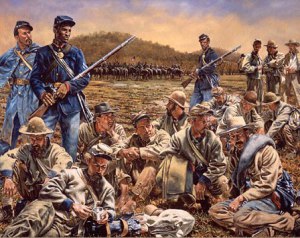
pride_over_prejudice-reeves-b-of-nashville

By the end of the war over 179,000 African American Soldiers, commanded by 7,000 white officers served in the Union armies. For a number of reasons most of these units were confined to rear area duties or working with logistics and transportation operations. The policies to regulate USCT regiments to supporting tasks in non-combat roles “frustrated many African American soldiers who wanted a chance to prove themselves in battle.” [38] Many of the soldiers and their white officers argued to be let into the fight as they felt that “only by proving themselves in combat could blacks overcome stereotypes of inferiority and prove their “manhood.” [39] Even so in many places in the army the USCT and state regiments made up of blacks were scorned:

“A young officer who left his place in a white regiment to become colonel of a colored regiment was frankly told by a staff officer that “we don’t want any nigger soldiers in the Army of the Potomac,” and his general took him aside to say: “I’m sorry to have you leave my command, and am still more sorry that you are going to serve with Negroes. I think that it is a disgrace to the army to make soldiers of them.” The general added that he felt this way because he was sure that colored soldiers just would not fight.” [40]

The general of course, was wrong. In the engagements where USCT units were allowed to fight, they did so with varying success most often attributable to the direction of their senior officers. When given the chance they almost always fought well, even when badly commanded. This was true as well when they were thrown into hopeless situations. One such instance was when Ferrero’s Division, comprised of colored troops were thrown into the Battle of the Crater at Petersburg when “that battle lost beyond all recall.” [41] The troops advanced in good order singing as they went, while their commander, General Ferrero took cover in a dugout and started drinking; but the Confederate defenders had been reinforced and “Unsupported, subjected to a galling fire from batteries on the flanks, and from infantry fire in front and partly on the flank,” a witness write, “they broke up in disorder and fell back into the crater.” [42] Pressed into the carnage of the crater where white troops from the three divisions already savaged by the fighting had taken cover, the “black troops fought with desperation, uncertain of their fate if captured.” [43] In the battle Ferrero’s division lost 1327 of the approximately 4000 men who made the attack. [44]

Major General Benjamin Butler railed to his wife in a letter against those who questioned the courage of African American soldiers seeing the gallantry of black troops assaulting the defenses of Petersburg in September 1864: The man who says that the negro will not fight is a coward….His soul is blacker than then dead faces of these dead negroes, upturned to heaven in solemn protest against him and his prejudices.” [45]

When captured by Confederates, black soldiers and their white officers received no quarter from many Confederate opponents. General Edmund Kirby Smith who held overall command of Confederate forces west of the Mississippi instructed General Richard Taylor to simply execute black soldiers and their white officers: “I hope…that your subordinates who may have been in command of capturing parties may have recognized the propriety of giving no quarter to armed negroes and their officers. In this way we may be relieved from a disagreeable dilemma.” [46] This was not only a local policy, but echoed at the highest levels of the Confederate government. In 1862 the Confederate government issued an order that threatened white officers commanding blacks: “any commissioned officer employed in the drilling, organizing or instructing slaves with their view to armed service in this war…as outlaws” would be “held in close confinement for execution as a felon.” [47] After the assault of the 54th Massachusetts at Fort Wagner a Georgia soldier “reported with satisfaction that the prisoners were “literally shot down while on their knees begging for quarter and mercy.” [48]

On April 12th 1864 at Fort Pillow, troops under the command of General Nathan Bedford Forrest massacred the bulk of over 231 Union most of them black as they tried to surrender. While it is fairly clear that Forrest did not order the massacre and even attempted to stop it, it was clear that he had lost control of his troops. Forrest’s soldiers fought with the fury of men possessed by hatred of an enemy that they considered ‘a lesser race’ and slaughtered the Union troops as they either tried to surrender or flee; but while Forrest did not order the massacre, he certainly was not displeased with the result. Ulysses Grant wrote that:

“These troops fought bravely, but were overpowered I will leave Forrest in his dispatches to tell what he did with them.

“The river was dyed,” he says, “with the blood of the slaughtered for up to 200 years. The approximate loss was upward of five hundred killed; but few of the officers escaped. My loss was about twenty killed. It is hoped that these facts will demonstrate to the Northern people that negro soldiers cannot cope with Southerners.” Subsequently Forrest made a report in which he left out the part that shocks humanity to read.” [49]

The bulk of the killing was directed at the black soldiers of the 6th U.S. Colored Heavy Artillery, which composed over a third of the garrison. “Of the 262 Negro members of the garrison, only 58- just over 20 percent- were marched away as prisoners; while of the 295 whites, 168- just under sixty percent were taken.” [50] A white survivor of the 13th West Tennessee Cavalry, a Union unit at the fort wrote:

We all threw down our arms and gave tokens of surrender, asking for quarter…but no quarter was given….I saw 4 white men and at least 25 negroes shot while begging for mercy….These were all soldiers. There were also 2 negro women and 3 little children standing within 25 steps of me, when a rebel stepped up to them and said, “Yes, God damn you, you thought you were free, did you?” and shot them all. They all fell but one child, when he knocked it in the head with the breech of his gun.” [51]

A Confederate Sergeant who was at Fort Pillow wrote home a week after the massacre: “the poor deluded negroes would run up to our men, fall upon their knees and with uplifted hands scream for mercy, but were ordered to their feet and shot down.” [52]

African American soldiers proved themselves during the war and their efforts paved the way for Lincoln and others to begin considering the full equality of blacks as citizens. If they could fight and die for the country, how could they be denied the right to votes, be elected to office, serve on juries or go to public schools? Under political pressure to end the war during the stalemate before Petersburg and Atlanta in the summer of 1864, Lincoln reacted angrily to Copperheads as well as wavering Republicans on the issue of emancipation:

“But no human power can subdue this rebellion without using the Emancipation lever as I have done.” More than 100,000 black soldiers were fighting for the Union and their efforts were crucial to northern victory. They would not continue fighting if they thought the North intended to betray them….If they stake their lives for us they must be prompted by the strongest motive…the promise of freedom. And the promise being made, must be kept…There have been men who proposed to me to return to slavery the black warriors. “I should be damned in time & in eternity for so doing. The world shall know that I will keep my faith to friends & enemies, come what will.” [53]

The importance of African Americans cannot be minimized, without them the war could have dragged on much longer or even ended in stalemate, which would have been a Confederate victory. Lincoln wrote about their importance in 1864:

“Any different policy in regard to the colored man, deprives us of his help, and this is more than we can bear. We can not spare the hundred and forty or hundred and fifty thousand now serving us as soldiers, seamen, and laborers. This is not a question of sentiment or taste, but one of physical force which may be measured and estimated as horse-power and Steam-power are measured and estimated. Keep it and you save the Union. Throw it away, and the Union goes with it.” [54]

Despite this, even in the North during and after the war, blacks, including former soldiers faced discrimination, sometimes that of the white men that they served alongside, but more often from those who did not support the war effort. Lincoln noted after the war:

“there will there will be some black men who can remember that, with silent tongue, the clenched teeth, the steady eye, the well poised bayonet, they have helped mankind on to this great consummation; while, I fear, there will be some white ones, unable to forget that, with malignant heart, and deceitful speech, they have strove to hinder it.” [55]

Those rights would be fought for another century and what began in 1863 with the brave service and sacrifice of these African American soldiers began a process of increased civil rights that is still going on today. It would not be until after the war that some blacks were commissioned as officers in the Army. When Governor John Andrew, the man who had raised the 54th Massachusetts attempted to:

“issue a state commission to Sergeant Stephen Swails of the 54th…the Bureau of Colored Troops obstinately refused to issue Swails a discharge from his sergeant’s rank, and Swails promotion was held up until after the end of the war. “How can we hope for success to our arms or God’s blessing,” raged the white colonel of the 54th, Edward Hallowell, “while we as a people are so blind to justice?” [56]

The families of the free blacks who volunteered also suffered, especially those who still had families enslaved in Confederate occupied areas or Union States which still allowed slavery. One women in Missouri wrote her husband begging him to come home “I have had nothing but trouble since you left….They abuse me because you went & say they will not take care of our children & do nothing but quarrel with me all the time and beat me scandalously the day before yesterday.” [57]

However, the Emancipation Proclamation transformed the war, and even jaded White Union soldiers who had been against emancipation and who were deeply prejudiced against blacks began to change their outlook as the armies marched into the South and saw the horrors of slavery. Russell Weigley wrote that Union soldiers:

“confronting the scarred bodies and crippled souls of African Americans as they marched into the South experienced a strong motivation to become anti-slavery men…Men do not need to play a role long, furthermore, until the role grows to seem natural and customary to them. That of liberators was sufficiently fulfilling to their pride that soldiers found themselves growing more accustomed to it all the more readily.” [58]

At peak one in eight Union troops were African American, and Black troops made an immense contribution to the Union victory. “Black troops fought on 41 major battlefields and in 449 minor engagements. Sixteen soldiers and seven sailors received Medals of Honor for valor. 37,000 blacks in army uniform gave their lives and untold sailors did, too.” [59]

After the war many of the African American soldiers became leaders in the African American community and no less than 130 held elected office including the U.S. Congress and various state legislatures. Sadly the nation has forgotten the efforts of the Free Black Soldiers and Sailors who fought for freedom, but even so the “contribution of black soldiers to Union victory remained a point of pride in black communities. “They say,” an Alabama planter reported in 1867, “the Yankees never could have whipped the South without the aid of the Negroes.” Well into the twentieth century, black families throughout the United States would recall with pride that their fathers and grandfathers had fought for freedom.” [60]

The Southern Debate about Emancipation and Black Soldiers

In the South, politicians and many senior Confederate Officers fought against any allowance for blacks to serve, for they knew if they allowed this, that slavery itself must be swept away. Despite this, a few such as General Patrick Cleburne, an Irish immigrant and a division commander in the Army of Tennessee demonstrated the capacity for forward thinking in terms of race: Cleburne advocated that blacks serve as soldiers should be emancipated.

fig25

General Patrick Cleburne CSA

Cleburne, known as “the Stonewall Jackson of the West” was a bold fighter who put together a comprehensive plan. He noted that the Confederacy was losing the war because it did not have soldiers, the supplies or resources; and most significantly that “slavery, from being one of our chief sources of strength at the beginning of the war, has now become in a military point of view, one of our chief sources of weakness.” [61] Cleburne recommended that “we immediately commence training a large reserve of the most courageous of our slaves, and further that we guarantee freedom within a reasonable time to every slave in the South who shall remain to the confederacy in this war.” [62]

Cleburne’s realism came through in his appeal:

“Ever since the agitation of the subject of slavery commenced the negro has been dreaming of freedom and his vivid imagination has surrounded the condition with so many gratifications that it has become the paradise of his hopes.” It was also shrewd politically: “The measure we propose,” he added, “will strike dead all John Brown fanaticism, and will compel the enemy to draw off altogether or in the eyes of the world to swallow the Declaration of Independence without the sauce and disguise of philanthropy.” [63]

The Irishman’s “logic was military, the goal more men in uniform, but the political vision was radical indeed.” [64] He was asking more from his fellow Southerners than they could risk. He was “asking them to surrender the cornerstone of white racism to preserve their nation” [65] and he presented it in stark terms that few could stomach “As between the loss of independence and the loss of slavery, we can assume that every patriot will freely give up the latter- give up the Negro slave rather than be a slave himself.” [66] Cleburne’s words were those of a heretic, he noted “When we make soldiers of them we must make free men of them beyond all question…and thus enlist their sympathies also.” [67]

In January 1864 General W.H.T Walker obtained a copy of Cleburne’s proposal and sent it to Davis. Walker opposed it and expressed his outrage over it. Cleburne’s proposal went from being a military matter to a political matter and Davis intervened to quash the proposal. “Convinced that the “propagation of such opinions” would cause “discouragements, distraction, and dissension” in the army, Jefferson Davis ordered the Generals to stop discussing the matter…The only consequence of Cleburne’s action seemed to be the denial of promotion to this ablest of the army’s division commanders, who was killed ten months later at the Battle of Franklin.” [68] In fact Cleburne was “passed over for command of an army corps and promotion to lieutenant general” three times in the next eight months, and in “each care less distinguished, less controversial men received the honors.” [69] All copies of Cleburne’s proposal were destroyed by the order of Davis.

Cleburne was not the only military man to advocate the formation of Negro units or even emancipation. Richard Ewell suggested to Jefferson Davis the idea of arming the slaves and offering them emancipation as early as 1861, and Ewell went as far as “volunteering to “command a brigade of Negroes.” [70] During the war Robert E. Lee became one of the chief proponents of this. Lee said after the war that he had told Davis “often and early in the war that the slaves should be emancipated, that it was the only way to remove a weakness at home and to get sympathy abroad, and divide our enemies, but Davis would not hear of it.” [71]

Ten months later Davis raised the issue of arming slaves, as he now believed that military necessity left him little choice. On November 7th 1864 he made his views known to the Confederate Congress, and they were a radical departure from the hitherto political orthodoxy of slavery. In light of the manpower needs of the South as well as the inability to achieve foreign recognition Davis asked their “consideration…of a radical modification in the theory of law” of slavery…” and he noted that the Confederacy “might have to hold out “his emancipation …as a reward for faithful service.” [72]

This drew the opposition of previously faithful supporters. Davis was now opposed by some of his closest political allies including Howell Cobb who warned “The day that you make soldiers of them is the beginning of the end of the revolution. If slaves will make good soldiers our whole theory of slavery is wrong.” [73] Brigadier General Clement H. Stevens of South Carolina declared “I do not want independence if it is to be won by the help of the Negro.” [74]

Robert E. Lee began to be a formidable voice in the political debate going on in the Confederacy regarding the issue of blacks serving as soldiers and emancipation. He wrote to a member of Virginia’s legislature:

“we must decide whether slavery shall be extinguished by our enemies and the slaves used against us, or use them ourselves at the risk of the effects which may be produced on our social institutions…” and he pointed out that “any act for the enrolling of slaves as soldiers must contain a “well digested plan of gradual and general emancipation”: the slaves could not be expected to fight well if their service was not rewarded with freedom.” [75]

When Howell Cobb heard of Lee’s support for black soldiers and emancipation he fired of a letter to Secretary of War Seddon, “I think that the proposition to make soldiers of our slaves is the most pernicious idea that has ever been suggested since the war began. It is to me a source of deep mortification and regret to see the name of that good and great man and soldier, General R. E. Le, given as authority for such policy.” [76]

The debate began in earnest in the fall of 1864 and revealed a sharp divide in the Confederacy between those who supported the measure and those against it. Cabinet members such as Judah Benjamin and a few governors “generally supported arming the slaves.” [77] The Southern proponents of limited emancipation were opposed by the powerful governors of Georgia and North Carolina, Joe Brown and Zebulon Vance, and by the President pro-tem of the Confederate Senate R.M.T. Hunter, who forcibly opposed the measure. Robert Toombs of Georgia declared “the day that the army of Virginia allows a negro regiment to enter their lines as soldiers the will be degraded, ruined, and disgraced…” [78]

Much of the Southern press added its voice to the opposition. Newspapers in North Carolina declared the proposal “farcical” – “all this was done for the preservation and the perpetuation of slavery,” and if “sober men…are willing to enquire if the South is willing to abolish slavery as a condition of carrying on the war, why may it not be done, as a condition of ending the war?” [79] The Charleston Mercury considered the proposal apostasy and proclaimed “Assert the right in the Confederate government to emancipate slaves, and it is stone dead…” [80]

Some states in the Confederacy began to realize that slaves were needed in the ranks, but did not support emancipation. Led by Governor “Extra Billy” Smith, Virginia’s General Assembly finally approved a law in 1865 “to permit the arming of slaves but included no provision for emancipation, either before or after military service.” [81] Smith declared that without slavery the South “would no longer have a motive to fight.” [82]

Many Confederate soldiers displayed the attitude that would later propel them into the ranks of the Ku Klux Klan, the Red Shirts, the White League and the White Liners after the war. A North Carolina soldier wrote, “I did not volunteer to fight for a free negroes country… I do not think I love my country well enough to fight with black soldiers.” [83]

Finally in March of 1865 the Confederate Congress passed by one vote a watered down measure to allow for the recruitment of slaves. It stipulated that “the recruits must all be volunteers” [84] and those who volunteered must also have “the approbation of his master by a written instrument conferring, as far as he may, the rights of a freed man.” [85] While this in itself was a radical proposition for a nation which had went to war to maintain slavery, the fact was that the slave’s service and freedom were granted not by the government, but by his owner, and even at this stage of the war, few owners were willing to part with their property. It was understood by many that giving freedom to a few was a means of saving the “particular institution.” The Richmond Sentinel noted during the November debate: “If the emancipation of a part is the means of saving the rest, this partial emancipation is eminently a pro-slavery measure.” [86] Thus the law made “no mention of emancipation as a reward of military service” [87] and in deference to “state’s rights, the bill did not mandate freedom for slave soldiers.” [88]

But diehards opposed even the watered down measure. Robert Kean, who headed the Bureau of War and should have understood the stark reality of the Confederacy’s strategic situation, note in his diary, that the law:

“was passed by a panic in the Congress and the Virginia Legislature, under all the pressure the President indirectly, and General Lee directly, could bring to bear. My own judgment of the whole thing is that it is a colossal blunder, a dislocation of the foundations of society from which no practical results will be reaped by us.” [89]

It was Lee’s prestige alone that allowed the measure to pass, but even that caused some to question Lee’s patriotism. The Richmond Examiner dared to express a doubt whether Lee was “a ‘good Southerner’: that is, whether he is thoroughly satisfied of the justice and beneficence of negro slavery.” [90] Robert Toombs of Georgia stated that “the worst calamity that could befall us would be to gain our independence by the valor of our slaves” [91] and a Mississippi congressman stated, “Victory itself would be robbed of its glory if shared with slaves.” [92]

On March 23rd 1865 the War Office issued General Order Number 14, which authorized the call up and recruitment of slaves to the Confederate cause. The order read in part: “In order to provide additional forces to repel invasion…the President be, and he is hereby authorized to ask for and to accept from the owners of slaves, the services of such able-bodied negro men as he may deem expedient, for and during the war, to perform military service in whatever capacity he may direct…” While the order authorized that black soldiers “receive the same rations, clothing and compensation as are allowed to other troops in the same branch of service,” it did not provide for the emancipation of any of the black soldiers that might volunteer. Instead it ended “That nothing in this act shall be construed to authorize a change in the relation which the said slaves shall bear to their owners, except by the consent of the owners and of the States which they may reside….” [93]

Twelve days after the approval of the act, on March 25th two companies of blacks were formed for drill in Richmond’s Capitol Square. As the mobilized slaves assembled to the sounds of fifes and drums they were met with derision and violence as even “Small boys jeered and threw rocks” [94] at them. None of those few volunteers would see action as within a week the Confederate government had fled Richmond.

But some would see that history was moving, and attitudes were beginning to change. It took time, and the process is still ongoing. As imperfect as emancipation was and though discrimination and racism remained, African Americans had reached “levels that none had ever dreamed possible before the war.” [95] In April 1865 as Jefferson Davis and his government fled Richmond, with Davis proclaiming, “again and again we shall return, until the baffled and exhausted enemy shall abandon in despair his endless and impossible task of making slaves of a people resolved to be free.” [96]

The irony in Davis’s empty vow was stunning. Within a week Lee had surrendered and in a month Davis himself would be in a Federal prison. The Federal troops who led the army into Richmond came from General Godfrey Weitzel’s Twenty-fifth Corps, of Ord’s Army of the James. The Every black regiment in the Army of the James was consolidated in Weitzel’s Corps, along with Ferrero’s former division that had suffered so badly at the Battle of the Crater. “Two years earlier in New Orleans, Weitzel had protested that he did not believe in colored troops and did not want to command them, and now he sat at the gates of Richmond in command of many thousands of them, and when the citadel fell he would lead them in and share with them the glory of occupying the Rebel capital.” [97] Among Weitzel’s units were regiments of black “cavalrymen and infantrymen. Many were former slaves; their presence showed their resolve to be free.” [98]

The Post War Experience of Blacks in the U.S. Army

Some of those early African American soldiers went on to distinguish themselves on the prairie as the immortal Buffalo Soldiers. Other African Americans would fight in Cuba and the Philippines during the Spanish American War, however after the war the “contributions of black soldiers to the war were generally ignored, white Southern soldiers were hailed for their valor” [99] as part of a campaign to reintegrate the South into the life of the nation.

la-yosemite-buffalo-soldiers-slated-for-nation-001

Buffalo Soldiers

In the First World War, despite there being some instances of racial harmony, blacks, including officers faced discrimination and met with violent acts. “Refusals to arrest white soldiers who physically assaulted black soldiers accompanied by the tendency to rescind unpopular racial orders and to discourage black officers from demanding salutes from white soldiers” [100] was common.

Most of the Regular Army “Buffalo Soldier” units were not allowed to fight in the First World War. Instead they were left on the frontier and a new generation of draftees and volunteers became the nucleus of two infantry divisions, the 92nd and 93rd. However, at the beginning they were regulated to labor service units. The protests of organizations such as the NAACP and men like W.E.B. DuBois, and Phillip Randolph forced the War Department to reconsider the second-class status of these men and to form them into combat units.

Harlem_Hell_Fighters

Despite this, the leadership of the AEF, or the American Expeditionary Force, refused to allow these divisions to serve under American command. Instead they were broken up and the regiments of the 93rd Division were attached to French divisions. The 369th “Harlem Hellfighters” were assigned to the French 16th Division and then to the 161st Division. The 370th “Black Devils” were attached to the French 26th Division, while the 371st and 372nd were assigned to the French 157th (Colonial) Division, which was also known as the Red Hand Division. The 157th Division had suffered badly during the war and been decimated in the unrelenting assaults in the trench warfare of the Western Front. It was reconstituted in 1918 with one French Regiment and the two African American regiments. Both fought exceptionally well and were cited by the French government for their efforts. The 371st was awarded the French Croix de Guerre and Légion d’honeur. Corporal Freddie Stowers of the 1st Battalion 371st was the only African American awarded the Congressional Medal of Honor in the First World War. The 372nd was also awarded the Croix de Guerre and Légion d’honeur for its service with the 157th Division.

While many white American soldiers depreciated their French hosts and attempted to sow the seeds of their own racial prejudice against the black soldiers among the French, Southerners in particular warned the French of “black rapist beasts.” However the French experience of American blacks was far different than the often-scornful treatment that they received from white American soldiers.

“Soldiers from the four regiments that served directly with the French Army attested to the willingness of the French to let men fight and to honor them for their achievements. Social interactions with French civilians- and white southern soldiers’ reactions to them- also highlighted crucial differences between the two societies. Unlike white soldiers, African Americans did not complain about high prices in French stores. Instead they focused on the fact that “they were welcomed” by every shopkeeper that they encountered.” [101]

Official and unofficial efforts by those in the Army command and individual soldiers to stigmatize them and to try to force the French into applying Jim Crow to laws and attitudes backfired. Villages now expressed a preference for black over white American troops. “Take back these soldiers and send us some real Americans, black Americans,” wrote one village mayor after a group of rowdy white Americans disrupted the town.” [102]

761st-Tank-Bn

Even after President Truman desegregated the armed forces in 1948, African Americans, as well as other racial minorities, women and gays have faced very real discrimination. The military continues to make great strides, and while overt racist acts and other types of discrimination are outlawed, racism still remains a part of American life.
colin powell

General Colin Powell at the Buffalo Soldier Monument

Today things have changed, and that in large part is due to the unselfish sacrifice in the face of hatred and discrimination of the men of the USCT and the State Black Regiments like the 54th Massachusetts and the Louisiana Home Guards who blazed a way to freedom for so many. Those who followed them as Buffalo Soldiers and volunteers during the World Wars continued to be trailblazers in the struggle for equal rights. A white soldier who served with the 49th Massachusetts wrote, “all honor to our negro soldiers. They deserve citizenship. They will secure it! There would be much suffering in what he termed “the transition state” but a “nation is not born without pangs.” [103]

Those birth pangs helped to bring about a new birth of freedom for the United States, and not just for African Americans, but Women and  Gays as well.

Notes

[1] McPherson, James M. Tried by War: Abraham Lincoln as Commander in Chief Penguin Books, New York and London 2008

[2] Ibid. Goodwin Team of Rivals p.435

[3] Ibid. McPherson Tried by War p.58

[4] Ibid. McPherson Tried by War p.58

[5] Ibid. Goodwin Team of Rivals p.369

[6] Ibid. McPherson Tried by War p.109

[7] Ibid. Foote, The Civil War, A Narrative Volume Two p.531

[8] Ibid. McPherson. The Battle Cry of Freedom p.503

[9] Ibid. McPherson Drawn With the Sword: Reflections on the American Civil War p.101

[10] Ibid. Guelzo Gettysburg: The Last Invasion p.160

[11] Foner, Eric Forever Free: The Story of Emancipation and Reconstruction Vintage Books a Division of Random House, New York 2005 p.45

[12] Ibid. Guelzo Gettysburg: The Last Invasion p.160

[13] Ibid. Glatthaar General Lee’s Army from Victory to Collapse p.313

[14] Ibid. Guelzo Gettysburg: The Last Invasion p.160

[15] Ibid. Goodwin Team of Rivals p.465

[16] Egnal, Marc Clash of Extremes: The Economic Origins of the Civil War Hill and Wang a division of Farrar, Straus and Giroux New York 2009 p.318

[17] Ibid. Foner Forever Free p.48

[18] Ibid. McPherson Tried by War p.159

[19] Ibid. McPherson Drawn With the Sword p.159

[20] McPherson, James M. Abraham Lincoln and the Second American Revolution Oxford University Press, New York and Oxford 1991 p.35

[21] Ibid. Guelzo Fateful Lighteningp.381

[22] Ibid. McPherson Abraham Lincoln and the Second American Revolution p.35

[23] Glatthaar, Joseph T. Black Glory: The African American Role in Union Victory in Why the Confederacy Lost edited by Gabor S. Boritt Oxford University Press, Oxford and New York 1992

[24] Ibid. McPherson. The Battle Cry of Freedom p.686

[25] Ibid. Goldfield America Aflame p.282

[26] Ibid. Guelzo Fateful Lightening p.379

[27] Ibid. Foote The Civil War, A Narrative Volume Two p.398

[28] Ibid. Guelzo Fateful Lightening p.379

[29] Ibid. McPherson. The Battle Cry of Freedom p.686

[30] Ibid. McPherson Drawn With the Sword p.101

[31] Ibid. McPherson. The Battle Cry of Freedom p.686

[32] Ibid. Guelzo Fateful Lightening pp. 380-381

[33] Ibid. McPherson. The Battle Cry of Freedom pp.686-687

[34] Ibid. Foote, The Civil War, A Narrative Volume Two p.697

[35] Ibid. McPherson. The Battle Cry of Freedom p.686

[36] Ibid. Guelzo Fateful Lightening p. 381

[37] Ibid. McPherson. The Battle Cry of Freedom p.634

[38] Gallagher, Gary W. The Union War Harvard University Press, Cambridge MA and London 2011

[39] Ibid. McPherson Drawn With the Sword p.89

[40] Catton, Bruce. A Stillness at Appomattox Doubleday and Company Garden City, New York 1953 p.227

[41] Ibid. Catton A Stillness at Appomattox p.249

[42] Foote, Shelby, The Civil War, A Narrative. Volume Three Red River to Appomattox Random House, New York 1974 p.537

[43] Wert, Jeffry D. The Sword of Lincoln: The Army of the Potomac Simon and Schuster, New York and London 2005 pp.384-385

[44] Ibid. Foote The Civil War, A Narrative Volume Three p.537

[45] Ibid. Robertson Soldiers Blue and Gray p.34

[46] Ibid. Guelzo Fateful Lightening p. 377

[47] Ibid. Guelzo Fateful Lightening p. 377

[48] Ibid. Goldfield America Aflame p.281

[49] Grant, Ulysses S. Preparing for the Campaigns of ’64 in Battles and Leaders of the Civil War Volume IV, Retreat With Honor Edited by Robert Underwood Johnson and Clarence Clough Buel Castle, Secaucus NJ pp.107-108

[50] Ibid. Foote The Civil War, A Narrative Volume Three p.111

[51] Ibid. Guelzo Fateful Lightening p. 378

[52] Ibid. Foote The Civil War, A Narrative Volume Three p.112

[53] Ibid. McPherson Abraham Lincoln and the Second American Revolution p.89

[54] Ibid. Glatthaar Black Glory: The African American Role in Union Victory p.138

[55] Ibid. McPherson The War that Forged a Nation p. 113

[56] Ibid. Guelzo Fateful Lightening p. 376

[57] Ibid. Goldfield America Aflame p.282

[58] Ibid. Weigley A Great Civil War p.192

[59] Gallagher, Gary, Engle, Stephen, Krick, Robert K. and Glatthaar editors The American Civil War: The Mighty Scourge of War Osprey Publishing, Oxford UK 2003 p.296

[60] Ibid. Foner Forever Free p.55

[61] Ibid. Thomas, The Confederate Nation p.262

[62] Ibid. Thomas, The Confederate Nation p.262

[63] Winik, Jay April 1865: The Month that Saved America Perennial an Imprint of Harper Collins Publishers New York 2002 p.53

[64] Ibid. McCurry Confederate Reckoning p.327

[65] Ibid. Guelzo Fateful Lightening p. 370

[66] Ibid. Thomas, The Confederate Nation p.262

[67] Ibid. McCurry Confederate Reckoning p.327

[68] Ibid. McPherson. The Battle Cry of Freedom p.833

[69] Ibid. Thomas, The Confederate Nation p.262

[70] Ibid. Guelzo Fateful Lightening p. 370

[71] Ibid. Gallagher The Confederate War p.47

[72] Ibid. McCurry Confederate Reckoning p.335

[73] Ibid. Guelzo Fateful Lightening p. 370

[74] Ibid. Foner Forever Free p.55

[75] Korda, Michael. Clouds of Glory: The Life and Legend of Robert E. Lee Harper Collins Publishers, New York 2014 p.643

[76] Cobb, Howell Letter to James A. Seddon, Secretary of War, January 8, 1865 in the Confederate and Neo-Confederate Reader: The “Great Truth” about the “Lost Cause” Loewen, James W. and Sebesta, Edward H. Editors, University Press of Mississippi, Jackson 2010 Amazon Kindle edition location 4221 of 8647  

[77] Ibid. Thomas, The Confederate Nation p.293

[78] Ibid. McPherson. The Battle Cry of Freedom p.835

[79] Ibid. Guelzo Fateful Lightening p. 370

[80] Ibid. McCurry Confederate Reckoning p.337

[81] Ibid. Foote. The Civil War, A Narrative Volume Three pp.754-755

[82] Ibid. Guelzo Fateful Lightening p. 370

[83] Ibid. Guelzo Fateful Lightening p. 370

[84] Ibid. Foote. The Civil War, A Narrative Volume Three p. 755

[85] Ibid. Thomas, The Confederate Nation p.296

[86] Ibid. McPherson. The Battle Cry of Freedom p.836

[87] Ibid. Foote. The Civil War, A Narrative Volume Three p.755

[88] Ibid. McPherson. The Battle Cry of Freedom p.837

[89] Ibid. Foote. The Civil War, A Narrative Volume Three p.860

[90] Ibid. McPherson. The Battle Cry of Freedom p.837

[91] Ibid. Foote. The Civil War, A Narrative Volume Three p.860

[92] Ibid. McPherson. The Battle Cry of Freedom p.835

[93] Confederate Congress General Orders, No. 14, An Act to Increase the Military Force of the Confederate States, Approved March 13, 1865 in the Confederate and Neo-Confederate Reader: The “Great Truth” about the “Lost Cause” Loewen, James W. and Sebesta, Edward H. Editors, University Press of Mississippi, Jackson 2010 Amazon Kindle edition location4348 of 8647

[94] Ibid. Foote. The Civil War, A Narrative Volume Three p.860

[95] Ibid. Guelzo Fateful Lightening p. 386

[96] Levine, Bruce Half Slave and Half Free: The Roots of the Civil War Revised Edition, Hill and Wang, a division of Farrar, Strauss and Giroux, New York 1992 and 1995 p.241

[97] Catton, Bruce Grant Takes Command Little, Brown and Company Boston, Toronto and London 1968 p.411

[98] Ibid. Levine Half Slave and Half Free pp.241-242

[99] Huntington, Samuel P. Who Are We? America’s Great Debate The Free Press, Simon and Schuster Europe, London 2004 p.124

[100] Keene, Jennifer D. Doughboys, the Great War, and the Remaking of America The Johns Hopkins University Press, Baltimore and London 2001 p.88

[101] Ibid. Keane Doughboys, the Great War, and the Remaking of America p.128

[102] Ibid. Keane Doughboys, the Great War, and the Remaking of America p.129

[103] Ibid Gallagher The Union War p.113

1 Comment

Filed under civil rights, civil war, History, Loose thoughts and musings