Tag Archives: adolf hitler

The Breakout from Normandy

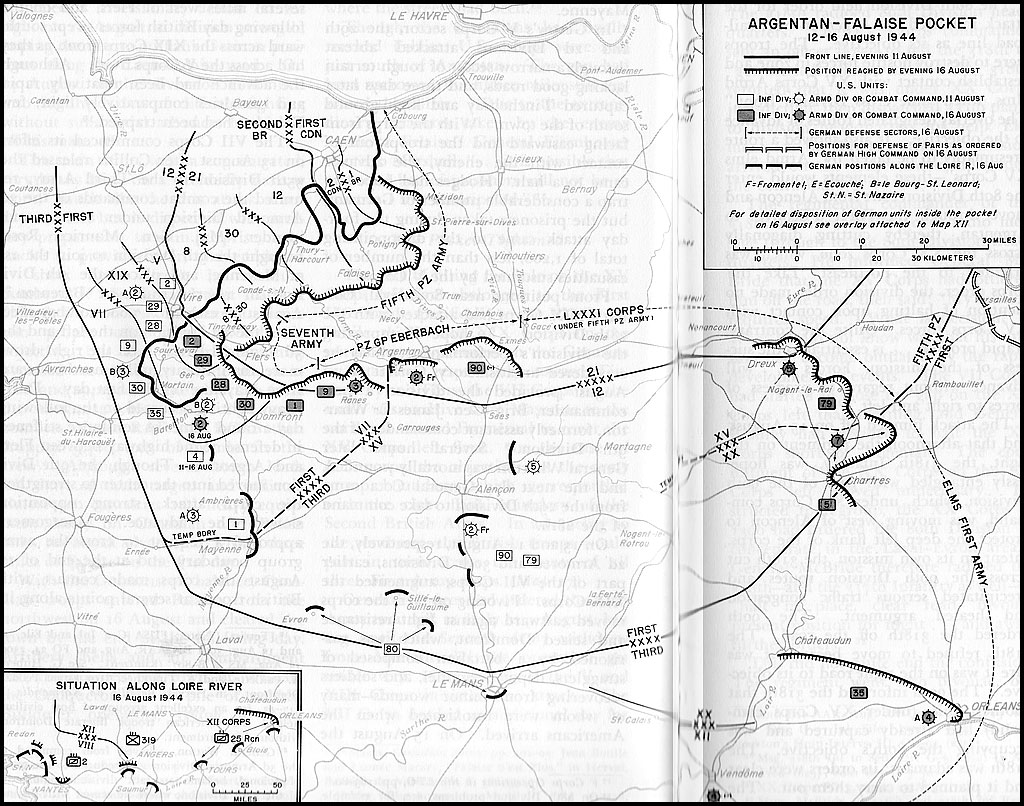
Map of Normandy Breakout

The breakout from Normandy by Bradley’s 12th Army Group at St Lo opened a realm of possibilities for the Allies to defeat the German Army in detail and end the war.  Unfortunately for the Allies the manner that they would exploit their success achieved during Operation COBRA led to their failure to completely destroy the German Army in the west in the late summer of 1944 would ultimately prolong the war.

The Allied and German problem in August 1944 was the sudden change in the nature of the campaign from a nearly static war of attrition in the Norman hedgerows to a campaign of maneuver.  This change brought about a number of opportunities for the Allies to envelope large portions of the German Army in western France as well as in Belgium and southern Holland. Max Hastings notes that the campaign became more of a “commander’s battle” in which it was “the decisions of the generals that determined the manner in which events unfolded in August, their successes and failures which brought about the position that was achieved by September.”[i] This was a major change as Hastings correctly notes in that prior to the breakout success in the hedgerows had been determined on “the ability of British, American and Canadian units to seize ground from their German opponents on the next ridge, the next hedge, beyond the next road.” [ii] In the hedgerows there was not much room for higher level commanders to influence the battle but once the breakout occurred the decisions made by commanders on both sides had greater influence in the following operations. This would become important as the weaknesses in the quality of allied generalship would begin to show, along with logistics management issues and the failure of the Allied High Command to recognize the resiliency of German forces and the resourcefulness of German leaders in their ability to cope with disaster and recover from it.  These were key elements in the campaign that kept the Allies from ending the war by Christmas.[iii]

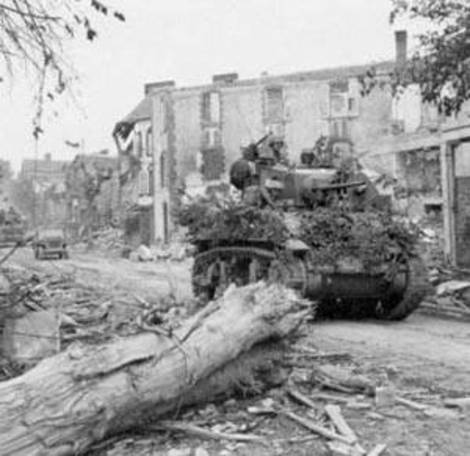
US M5 Light Tank advancing through Coutances

Early in the campaign it was decided that Bradley’s forces needed to capture the Brittany ports, particularly Brest to alleviate shortages of supplies which all still were being delivered across the beaches.  However, the implications of this decision were strategically short sighted and deprived the Allies of a decisive victory in France.  As Third Army exploited the break out from Normandy into the French interior the preponderance of its forces went west which deprived the Americans of the better part of two army corps as well as the logistical assets needed to trap the major part of the German Army in Normandy.  The campaign in Brittany would prove a diversion which did nothing to help the Allied cause.  The divisions committed, casualties taken and supplies expended in an attempt to capture ports that the Germans destroyed before the Americans could capture them. Russell Weigley points this out as a major mistake by Bradley which did little to help the Allied logistical problems and diverted much needed troops away from the focal point of the action in Normandy.[iv] Max Hastings criticized Bradley’s lack of imagination in the initial stages of the breakout by adhering to the original Overlord plan.[v] This is seconded by Patton’s biographer Carlo D’Este.[vi]

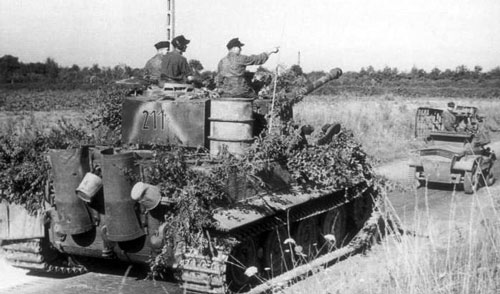
Tiger Tank in Normandy

Patton’s 3rd Army’s weakened eastern push coupled with the continued pressure of the British Army Group toward Falaise put the Germans in a strategic dilemma. With the gate open at Avranches they could attempt to restore the front in Normandy by pinching off the advance or withdraw to the Seine or even further as no “defensive position short of the permanent fortifications of the West Wall on Germany’s frontier offered so many defensive strengths as the Normandy line the Americans had just breached and turned.”[vii] The choice advocated by some senior German commanders was an orderly withdraw to the Seine which would have removed the danger of being enveloped in Normandy as well as make the Allies attack across a major water obstacle defended by still formidable formations.

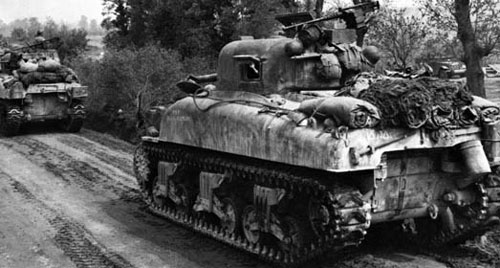
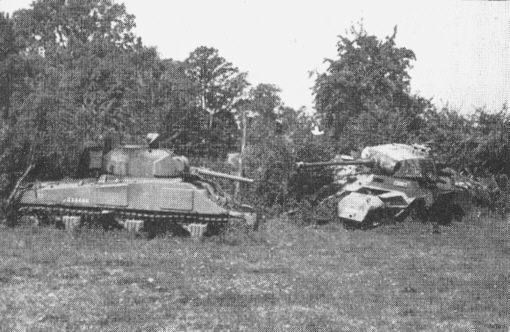
5th Armored Division Shermans near Argentan

With limited options the Hitler decided on a course of no withdraw and ordered his commanders to marshal their panzer divisions seal the breach and ensnare the allies in the hedgerows.[viii] Hitler and Field Marshal von Kluge disagreed in regard to the offensive which Kluge saw as a limited offensive but which Hitler believed gave the Germans a chance to cut off the American forces in Brittany and possibly even more.  Hitler believed that “once the coast had been reached at Avranches a beginning should be made with rolling up the entire Allied position in Normandy!”[ix] General Eugen Meindl of II Parachute Corps was blunt in his assessment of the attack. Paul Carrel in his book “Invasion! They’re Coming” quotes Meindl speaking with Von Kluge’s son a first lieutenant serving at the front:

“Kindly convey to your father exactly what I’m going to say to you. The time has come when Normandy can no longer be held. It cannot be held because the troops are exhausted. This is the fault mainly of orders to hold out in hopeless positions, but we are still being ordered to hold out even now. The enemy will break through to the west and outflank us. If your father knew what is was to operate against an enemy with downright fabulous command of the air, then he would know that our only hope of doing something useful is by attacking at night. Tomorrow’s tank attack is going to be a failure…and all that’s left for the grenadiers to do is lie down and sacrifice their lives. It’s heartbreaking to have to stand by and watch!”

Grenadiers of the 12th SS Panzer Division “Hitler Jugend”

The German attack, Operation Lüttich was led by XLVII Panzer Corps assisted by elements of 1st SS Panzer Division.  Despite warnings from ULTRA the panzers achieved tactical surprise on the front of the 30th US Division at Mortain on the night of 6-7 August advancing without the customary preparatory artillery bombardment.[x] The Germans initially made progress against the 30th Division which had recently taken over positions at Mortain. However the Americans of the 2nd Battalion 120th Infantry “Old Hickory” Regiment held onto key high ground which enabled them to call artillery fire and air strikes on the German forces attacking toward Avranches which included the elite 2nd, 116th, 2nd SS, and part of the 1st SS Panzer Divisions along with a kampfgruppe cobbled together from the remnants of Panzer Lehr and four battered infantry divisions.[xi] The Americans quickly reinforced 30th Division with elements of 2nd Armored Division, 35th Infantry Division and the veteran 4th Infantry Division to hold the line against the weakened German Panzer divisions.  Bradley and other American commanders viewed Lüttich as “an opportunity, not a threat”[xii] which could enable the Allies to entrap the vast majority of German forces in France.  Bradley was “not merely confident of withstanding them, but expected to destroy them.”[xiii] Bradley attempted to lure more Germans into the potential trap hoping that the Germans would press their attacks around Mortain.[xiv]

On the German side the ground commanders were furious at the failure of the Luftwaffe to shield them from Allied air attacks which devastated the Panzers.  The Luftwaffe and promised that 300 fighters would support the attack to provide protection from Allied close air support.  However the Luftwaffe squadrons were engaged by British and American fighters and so badly mauled that no Luftwaffe units made a appearance over Mortain.[xv] Thus despite their initial success which had promise of cutting off the advancing American spearheads the German Panzers were turned back by the Americans who did not even halt their eastward movement which further imperiled the German forces in Normandy.

With the German Panzer divisions ensnared at Mortain, the 3rd Army drove east while the Canadian army attacked towards Falaise. Bradley suggested that the Allies attempt a short envelopment of German forces at Falaise in which over 100,000 German troops would be trapped between the Patton’s troops advancing north and the Canadians.  The Canadians opened their TOTALIZE offensive from Caen to Falaise on August 8th but as was the case in every part of the campaign against determined German resistance as the XV Corps of 3rd Army advanced east.  Bradley’s plan ended the deep envelopment by XV Corps of 3rd Army designed to entrap the Germans against the Seine crossings, an operation that might promise “still surer results.”[xvi] Bradley told Treasury Henry Morgenthau that he had “an opportunity that comes to a commander not more than once in a century. We’re about to destroy and entire hostile army.”[xvii] Hastings noted that “had the Germans “behaved rationally, recognized the threat of envelopment to their entire front and begun a full-scale retreat east, then Bradley could indeed been accused of losing his armies a great prize.”[xviii]

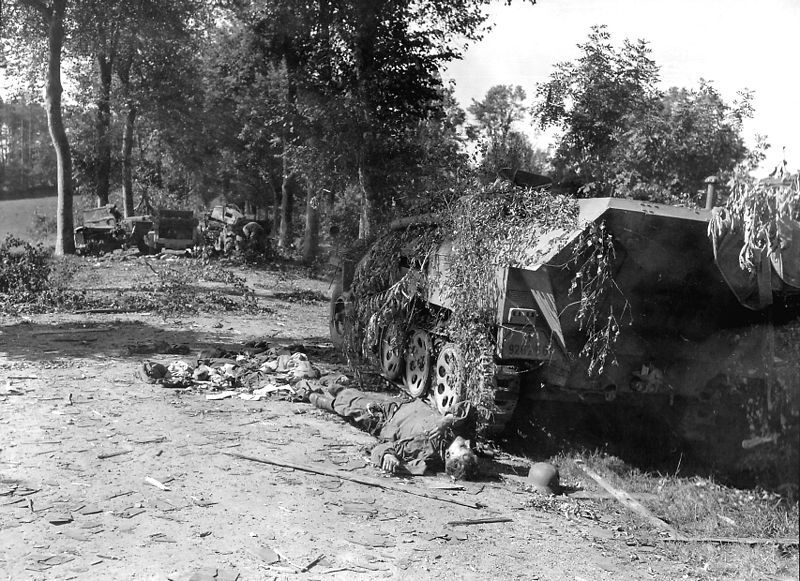
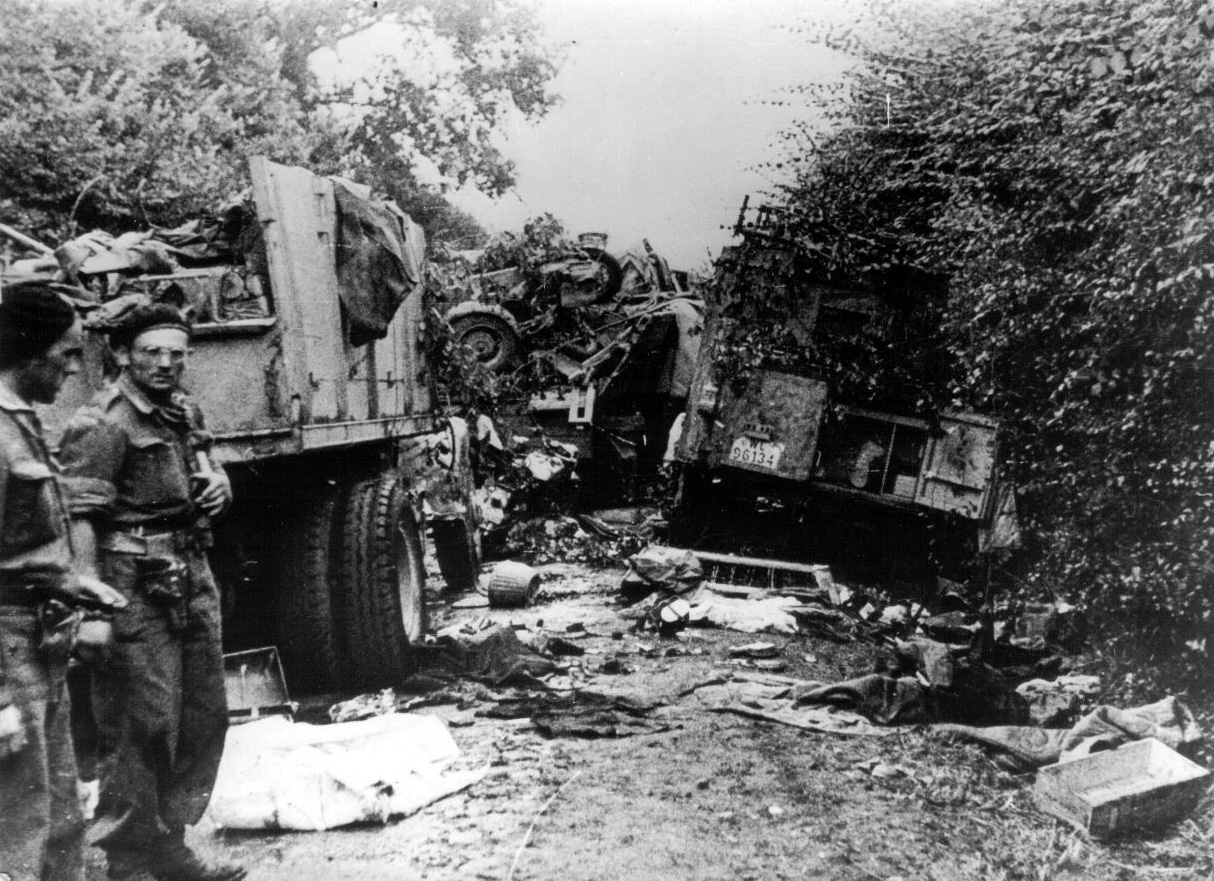
Wrecked German vehicles near Mortain

The decision by Bradley to turn the better part of 3rd Army west into Brittany had deprived him of forces that could have better accomplished mission of entrapping the Germans.  General Wood of 4th Armored Division to his dying day “remained embittered over the lost opportunity”[xix] when his division was turned back into Brittany rather than being allowed to move east toward the Seine.   Weigley points out an even deeper flaw regarding the Brittany decision.  This was that that the OVERLORD planners “had not thought anything resembling the Avranches breakout and pursuit without pause to the Seine likely… stating that it is among the worst forms of generalship that takes counsel of its fears. Yet that was exactly the condition of OVERLORD logistical planning.”[xx] Weigley’s point is well taken, the Allies had not planned for success nor had they anticipated in the OVERLORD planning the full range of possibilities that might open to them once a breakout had occurred.

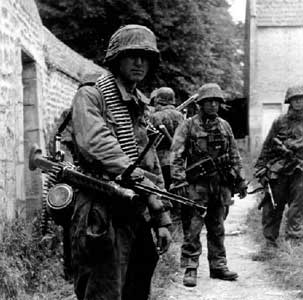
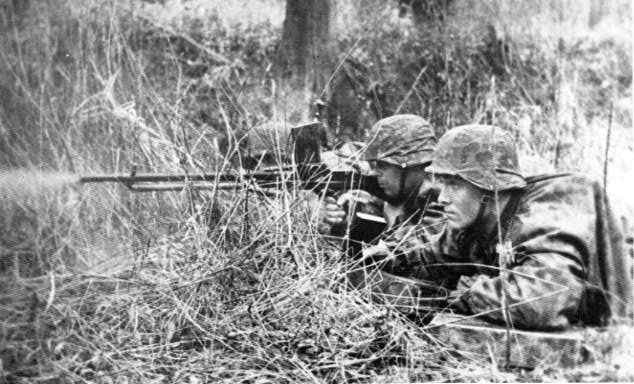
12th SS Panzer Division Machine Gun team

The Allies did have a chance to destroy the German 7th Army.  The LXVII Panzer Corps and II SS Panzer Corps as well as the remnants of II Parachute Corps and other formations battered in Normandy were attempting to withdraw to the east from Mortain. The remnants of I SS Panzer Corps led by 12 SS Panzer Division and Army Panzer divisions such as the 21st Panzer Division offered determined resistance to the Canadians who were attacking toward Falaise.  To the south only scattered Kampfgruppen of divisions shattered in Normandy opposed Patton’s forces at Argentan. The Germans were aided by a fortuitous decision of the commander of the 2nd French Armored Division to move a combat command along a road needed by the American 5th Armored Division delaying it and allowing the Germans to send a battalion into the Argentan which could have “fallen easily a few hours before.”[xxi] The Allies were bedeviled by several other failures which prevented the short double envelopment from occurring and allowing the remnants of 7th Army to escape to fight again despite grievous losses in men, material, and especially armored fighting vehicles, artillery and motor transport.

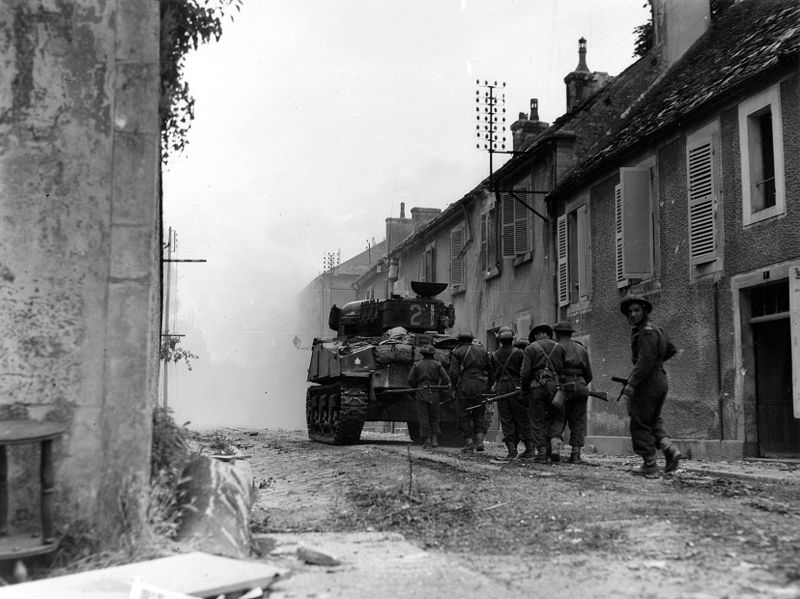
Canadians advance in Falaise

The first of these was the Canadian failure to push the Germans out of Falaise despite overwhelming material and air superiority.  The Canadian offensive Operation TOTALIZE was planned by the best of the Canadian generals, General Simonds. Unfortunately Simonds was not in command of the operation.  Totalize was a promising attack but bogged down halfway to Falaise due to a quick counterattack by 12th SS Panzer kampfgruppen, as well as a misguided bombing attack on the attacking forces by Allied air units, and the inexperience of the attacking units.  The Canadian 4th Armored Division and Polish 1st Armored Divisions paused to eliminate strong points rather than bypass them which allowed the Germans to reform their lines.[xxii] The second failure was that of Montgomery who refused to adjust army group boundaries with Americans and instead ordered the Canadians “renew their drive promptly and vigorously.”[xxiii] This refusal held the Americans advance at Argentan while the Canadians battered themselves against far stronger German opposition.  However, General Crerar of Canadian 1st Army was as bad of Army commander as could be found.  Weigley somewhat sarcastically points out that Crerar spent five days “doing what really battlewise generalship could do by regrouping and making diversionary attacks.”[xxiv] It took over 48 hours for Crerar to launch a determined attack to close the gap despite the weakness of German forces. Even a personal phone call by Montgomery to Crerar urging him to “close the gap between First Canadian Army and 3rd U.S. Army” did nothing to move the Canadian general and Crerar’s dawdling allowed many Germans to escape from Normandy to fight again.[xxv] Despite the vice that had closed around them the Germans successfully withdrew experienced battle groups of elite Wermacht and SS Panzer Divisions as well as the Paratroopers of II Parachute Corps to fight again.  General Meindl himself led a battle group of Falschirmjaeger from his Corps during their breakout through the Allied lines.  Despite the loss of 40,000 soldiers in the Falaise Pocket the Germans had saved a substantial part of their Army.

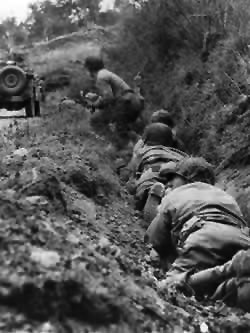
US Infantry advancing near Argentan

General Kurt Meyer of 12th SS Panzer Division faulted the Canadian leadership with a failure to use imaginative planning, and noted that “none of the Canadian attacks showed the genius of a great commander.”[xxvi] American units which Patton had cautiously advanced north of Argentan towards Falaise were recalled after Bradley was unable to convince Montgomery to alter the army-group boundary in light of the new circumstances.[xxvii] Patton recounted that he believed that his units could have “easily entered Falaise and closed the gap” and that the “halt was a great mistake.”[xxviii]

Knocked out Sherman of the Polish Armored Division next to a knocked out Panther

Weigley blames Bradley as much for the halt order as much as Montgomery for “discouraging whatever might have been done to rectify the blunder- even discouraging on August 13th a call from the Supreme Commander to Montgomery about the inter-allied boundary.”[xxix] Thus through a series of Allied mistakes particularly by senior commanders the first opportunity to envelop the Germans passed into history as a great yet incomplete victory.  A victory which though impressive allowed experienced German forces to escape to fight again. As the Germans escaped from Falaise the Allies began a pursuit in conjunction with landings in the south of France that would take them to the borders of Germany.

Polish Soldiers at the Corridor of Death


[i] Hastings, Max. Overlord: D-Day and the Battle for Normandy Vintage Books, New York, 1984 p.280

[ii] Ibid.

[iii] Hastings, Max. Armageddon: The Battle for Germany 1944-1945 Alfred a Knopf, New York, 2004 p.37.  Hastings comments that “British planners threw away it had learned since 1939 about the speed of reaction of Hitler’s army, its brilliance at improvisation, its dogged skill in defense, its readiness always to punish allied mistakes.”

[iv] Weigley, Russell F. Eisenhower’s Lieutenants: The Campaign of France and Germany, 1944-1945, Indiana University Press, Bloomington IN, 1981pp.184-186

[v] Ibid. Hastings. Overlord pp.282-283

[vi] D’Este,  Carlo. Patton: A Genius for War. Harper Collins Publishers New York, 1995 pp.632-633

[vii] Ibid.  p.195

[viii] Ibid. Also

[ix] Warlimont, Walter. Inside Hitler’s Headquarters 1939-45 Presidio Press, Novato CA 1964 pp.449-450.

[x] Ibid pp.195-196. Weigley notes that Montgomery and most other Allied commanders  had been optimistic in not anticipating the German counter attack despite the ULTRA warnings, while Bradley and Patton were cautious in making troop deployments.

[xi] Michael Reynolds in Steel Inferno: The 1st SS Panzer Corps in Normandy notes that the Americans inflicted “astonishing casualties on the northern thrusts of 2nd SS Panzer and remained undefeated when the Germans withdrew 4 days later.”  Reynolds, Michael Steel Inferno: The 1st SS Panzer Corps in Normandy Dell Publishing, New York, 1997 p.264

[xii] Ibid. Hastings Overlord p.283

[xiii] Ibid.

[xiv] Ibid. Weigley p.199.

[xv] Carrell, Paul. Invasion! They’re Coming!” Trans. E. Osers, Originally published as Sie Kommen! Gerhard Stalling Verlag 1960, Bantam Books New York, 1964, 5th Printing June 1984. p. 249

[xvi] Ibid. Weigley p. 199

[xvii] Ibid. p.200

[xviii] Ibid. Hastings. Overlord. pp.282-283

[xix] Ibid. D’Este. p.631

[xx] Ibid. Weigley. p.286  He also points out that the Brittany diversion could have been “worse had it not been for Montgomery’s influence”  p.288

[xxi] Ibid. p. 202

[xxii] Ibid. p.204

[xxiii] Ibid.

[xxiv] Ibid.

[xxv] Reynolds, Michael Steel Inferno: 1st SS Panzer Corps in Normandy Dell Publishing New York, 1997. p.320.

[xxvi] Meyer, Kurt Grenadiers trans. By  Michael Mende and Robert J.  Edwards, J.J. Fedorowicz Publishing, Inc. Winnipeg Manitoba, Canada 2001 p.290.

[xxvii] Ibid. Hastings Overlord pp.288-289.

[xxviii] Patton, George S. War As I Knew It Bantam Books NY  published 1980, originally published by Houghton Mifflin Company 1947. pp.101-102

[xxix] Ibid. Weigley p.209  Weigley quotes Major Hansen, Bradley’s aide in stating that the Falaise halt orde was “the only decision he has ever questioned.”

Leave a comment

Filed under Loose thoughts and musings

D-Day: Omaha Beach

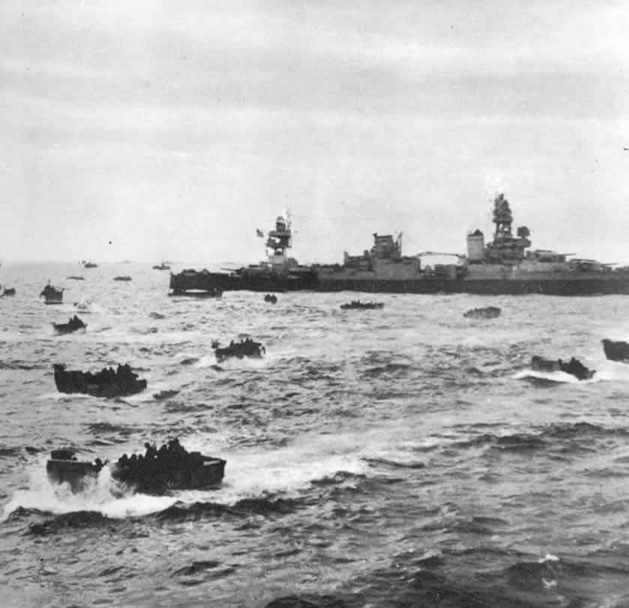
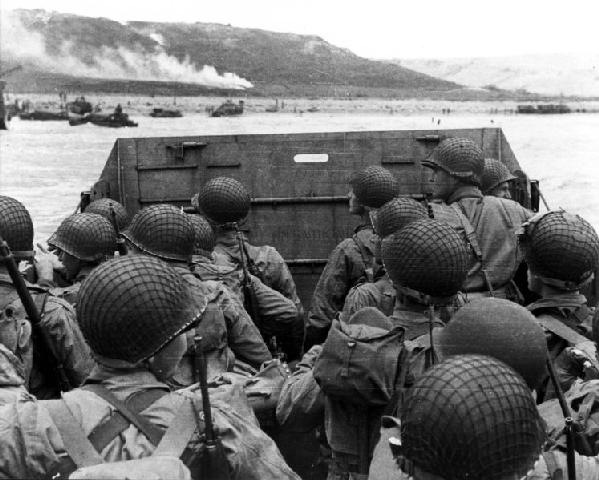
LCVP’s pass USS Augusta

Like the rest of the Allied invasion forces the 1st and 29th Divisions set sail from their embarkation ports with the intent of landing on June 5th.  General Bradley, commanding the First Army until the American Army Group would be activated accompanied the invasion force.  The OMAHA landing was placed under General Gerow and his V Corps while VII Corps landed the 4th Infantry Division landed at Utah supported by airdrops of the 82nd and 101st Airborne Divisions inland.  American command and control was exercised from sea although General Officers went ashore with each of the American divisions.  A severe channel storm disrupted the plan to land on the 5th and Eisenhower delayed the invasion one day catching a break in the weather and electing to go on the 6th.[i] This delay while uncomfortable for the embarked troops caused the Germans to believe that no invasion would take place until the next favorable tide and moon cycle later in the month[ii] a break which caused a number of senior German leaders, including Rommel to be absent from the invasion front when the Allies landed.[iii]

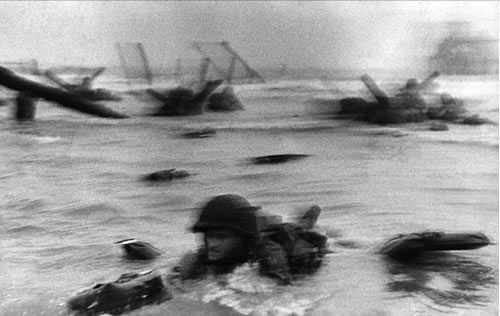
US Soldier struggling in surf at Omaha Beach

The landing beaches at OMAHA stretched about 6500 meters from Colleville-Sur-Mer to Vierville-Sur-Mere in the west.  A further objective to the west of Vierville; Pont du Hoc, was believed to house a 150mm battery sighted where it could enfilade OMAHA and was assigned to the 2nd Ranger Battalion.  Companies from this battalion made a heroic landing and scaled the cliffs to capture the strongpoint only to discover that the guns had not been emplaced and held their isolated beachhead until relieved by the 29th Division on the morning of June 8th.[iv]

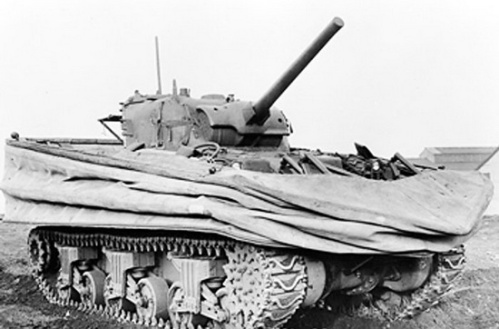
H-Hour for OMAHA was 0630.  Unfortunately the assault troops were transferred to their LCVPs 16-20 kilometers from the beach resulting in a long and dangerous ride in the small craft for the infantry.  Most of the infantry were completely soaked in sea spay and seasick before going ashore carrying loads far above what they normally would carry into battle.[v] One battalion of DD tanks, the 741st Armored Battalion, supporting the 16th Infantry of 1st Infantry Division was launched too far out and nearly all of its tanks were swamped and lost before firing a shot in anger.[vi] Weigley notes that at OMAHA “at least 10 of the LCVPs sank” as did “the craft carrying almost all of the 105mm howitzers that were to be the first artillery ashore after the tanks.”[vii] The losses would cripple the assault on OMAHA and nearly cause its abandonment.

As the soldiers of the American divisions on OMAHA came ashore they faced German defenders of the 352nd, 716th and a regiment of the 709th Infantry Division, the latter under the tactical command of the 352nd.   Without the bulk of their tanks artillery and lacking close air support the Americans struggled across the beaches and were cut down in large numbers before being pinned down behind the sea wall.[viii] As the Americans pinned down on the beach failed to advance the time tables for the reinforcing waves became snarled amid the German beach obstacles which had not been cleared due to 40% casualties among the Combat Engineers and the loss of all but five bulldozers.[ix] Naval officers were frustrated in their attempts to provide support by the lack of identifiable targets on the beaches but strongpoints were “knocked out by either by superbly directed vigorous gunfire from destroyers steaming as close as 800 yards offshore, or by determined action from Rangers or infantry.[x]

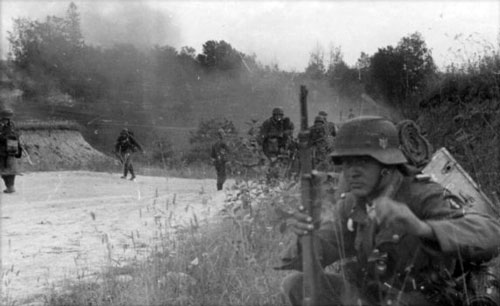
Grenadiers of 352nd Infantry Division move to counter-attack

Soldiers ashore discovered the truth that they were not facing the static 716th Division but the 352nd Division as well.[xi] But for the leadership of Brigadier General Norman Cota, assistant division commander of 29th Infantry Division and Colonel Charles Canham of the 116th Infantry who were able to rally their troops and just enough leaders and small units from the 116th which had its linage back to the “Stonewall Brigade” as well as units of the 1st Divisions’ 16th and 18th Regiments  who kept their heads and began to lead survivors through the dunes and up the bluffs to attack German defenders of the roads leading up from the beach from the flank and rear as well as a mid-day break in the weather which allowed some close tactical air support General Bradley may have ordered the evacuation of OMAHA.

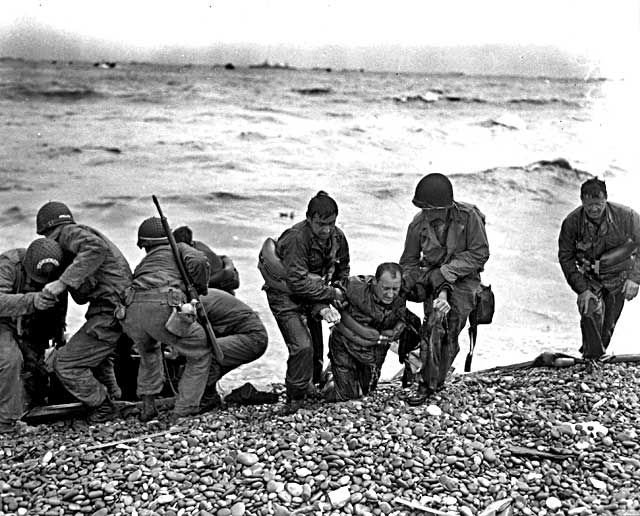
Omaha Beach rescue of wounded from surf

At sea events were as confused as Bradley and his staff attempted to make sense of what was going on.  Even later in the evening there was discussion of diverting all further reinforcements from OMAHA to the British beaches.[xii]At 1330 hours “Gerow signaled Bradley: “Troops formerly pinned down on beaches…advancing up heights behind beaches.”[xiii] By the end of the day Bradley’s aid Major Hansen noted Bradley’s comments to Collins: “They are digging in on Omaha beach with their fingernails. I hope they can push in and get some stuff ashore.”  And Montgomery: “Someday I’ll tell Gen[eral] Eisenhower just how close it was for a few hours.”[xiv]

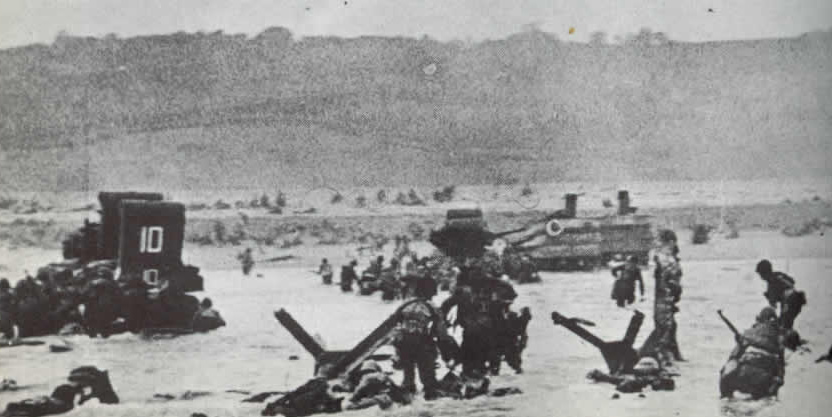
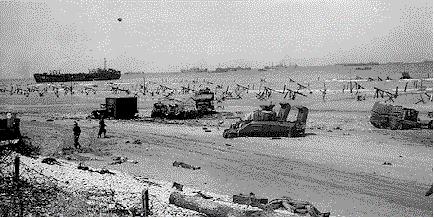
Omaha Beach Wreckage

The landings at OMAHA did succeed at a cost of over 2000 casualties, critical to their success were the German inability to reinforce their defending troops on the beach and the weakness of the units available to mount the standard counterattack that was critical to German defensive plans on D-Day itself. The 352nd Division fought superbly under the full weight of V Corps and the British XXX Corps on its right suffering heavy casualties as they contested every inch of ground.  The 716th Division units melted under the onslaught.  Allied air supremacy played a key role as sorties by the 8th and 9th Air Forces helped keep German reinforcements from arriving and interdicted counter attacks inland.  Weigley credits the Allied air superiority with the success of the landings and with limiting the cost of allied lives.[xv] Von Rundstedt and other German commanders in France were limited by the delay and refusal of Hitler and OKW to release Panzer reserves when needed most early on June 6th.  By the close of D-Day allied forces had secured the five invasion beaches but not achieved their objectives of taking Caen and Bayuex and forces had not linked up leaving the beaches extremely vulnerable had the Germans been able to mount a rapid counterattack by Panzers and strong infantry formations.

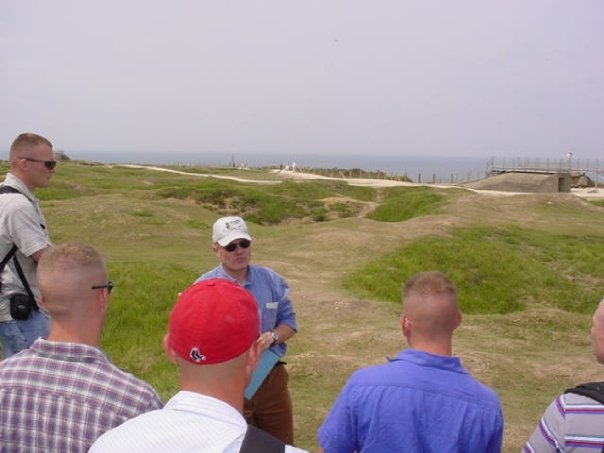
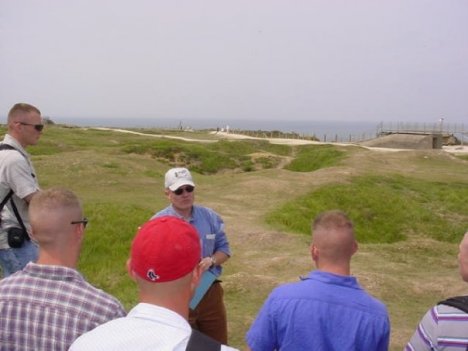
The author lecturing at Pont du Hoc Omaha Beach 2004


[i] Ibid. p.74-75

[ii] Von Luck, Hans.  “Panzer Commander“ Dell Publishing, New York, 1989 pp. 169-170.  Von Luck a regiment commander in 21st Panzer noted that General Marcks of 84th Corps had predicted a 5 June invasion at a conference May 30th.

[iii] Almost every D-Day historian talks about the weather factor and its effect on the German high command’s reaction to the invasion.  Rommel was visiting his wife for her birthday and planned to make a call on Hitler. Others including commanders of key divisions such as the 91st Airlanding Division were off to a war game in Rennes and the 21st Panzer Division to Paris.

[iv] Ibid. Weigley p. 96

[v] See Cornelius Ryan, “The Longest Day” Popular Library Edition, New York 1959. pp. 189-193 for a vivid description of the challenges faced by soldiers going from ship to landing craft and their ride in to the beaches.

[vi] Ibid. Weigley. p.78 Weigley talks about the order for the tanks to be carried ashore on their LCTs that did not get transmitted to the 741st.

[vii] Ibid.

[viii] Ibid. Weigley  p. 87 The weather prevented the aerial bombardment from being effective. Because the bombers could not see their targets they dropped their bomb loads further inland, depriving the infantry of support that they were expecting.  Naval gunfire support had some effect but had to be lifted as the troops hit the beach leaving much of that support to come from Destroyers and specially equipped landing craft which mounted rockets and guns.

[ix] Ibid. Hastings. pp. 90-91.

[x] Ibid. p.99

[xi] Ibid. Weigley p.80

[xii] Ibid. p.101  Also see Weigley p.80

[xiii] Ibid. p.99

[xiv] Ibid. Weigley. p.95

[xv] Ibid. p.94

2 Comments

Filed under History, Military, world war two in europe

Glenn Beck Attacks the Churches and Threatens Religious Liberty

Glenn Beck “Am I advising people to leave their church? Yes!”  (Fox News Photo)

Preface: This post comes in the midst of my Lenten journey in which I have become reacquainted with the works of those who confronted Nazi policies that placed their ideology over the Christian faith. During this time I was not expecting to begin to see certain commentators actually attempt to blatantly attack a key part of the witness of the Christian Church in telling Christians to place political ideology over faith and recommend that church members leave their church if it does not conform to those commentators’ political ideology.  As a historian as well as a Priest I can only draw parallels to the Nazis who placed their ideology above the Church and persecuted those who stood against them, even before they took power. Glenn Beck did just that this week, though not in power he has thrown down a gauntlet to the Church which does not agree with his ideology and strikingly urged church members to leave their churches if those churches had “social justice” as one of their belief’s equating it with Communism and Fascism. This is an attack on the church and as a Priest I cannot be silent. There would be some that will disagree saying that the Left is more of a threat and I do not disagree that ideologues on any part of the spectrum can threaten religious liberty, however I have never seen anyone as popular as Beck is with the Right, who on the Left propose what Beck has this past week.  That is why I must oppose Beck on this issue now. I do hope that my readers understand that this is not an attack on conservatives or conservative principles but rather against a man whose ideas if carried to their logical conclusion would be dangerous. Beck talks a lot about faith and religion on his show which attracts many listeners but he seems to believe that religious expression is one in the same with political ideology.

Peace,

Padre Steve+

“It is not God who divides us but human beings. The Almighty has blessed our work; therefore it cannot be destroyed. No power within or without the Reich will keep us from going our way into the future.” Adolf Hitler speaking in an address at Regensburg July 7th 1937 referring to the arrests of 11 Catholic Priests who condemned Nazi policies.

“We have been silent witnesses of evil deeds; we have been drenched by many storms; we have learnt the arts of equivocation and pretence; experience has made us suspicious of others and kept us from being truthful and open; intolerable conflicts have worn us down and even made us cynical. Are we still of any use?” Dietrich Bonhoeffer

“First they came for the Communists, but I was not a Communist so I did not speak out. Then they came for the Socialists and the Trade Unionists, but I was neither, so I did not speak out. Then they came for the Jews, but I was not a Jew so I did not speak out. And when they came for me, there was no one left to speak out for me.” Martin Niemöller

“Silence in the face of evil is itself evil: God will not hold us guiltless. Not to speak is to speak. Not to act is to act.” Dietrich Bonhoeffer

“Rather, speaking the truth in love, we are to grow up in every way into him who is the head, into Christ, from whom the whole body [is] joined and knit together.” (Eph. 4:15,16)

The Christian Church is the congregation of the brethren in which Jesus Christ acts presently as the Lord in Word and sacrament through the Holy Spirit. As the Church of pardoned sinners, it has to testify in the midst of a sinful world, with its faith as with its obedience, with its message as with its order, that it is solely his property, and that it lives and wants to live solely from his comfort and from his direction in the expectation of his appearance.

We reject the false doctrine, as though the Church were permitted to abandon the form of its message and order to its own pleasure or to changes in prevailing ideological and political convictions.” The Barmen Declaration Article Three.

I do not think that people learn anything from history.  This week Glenn Beck called his own church, the Church of Jesus Christ of Latter Day Saints “Communist or Fascist” its official statements of beliefs regarding social justice.  Now I may disagree with LDS theology but I hardly think them to be Communist or Fascist in fact I think for the most part they are to be commended for their love of this country as well as their ethic of doing good and taking care of needy LDS members.  Not only did Beck call his own church these rather pejorative names but he recommended that people not only leave the church but urged the same for any member of any church that espouses social justice in their official beliefs.  To quote Beck:

“I’m begging you, your right to religion and freedom to exercise religion and read all of the passages of the Bible as you want to read them and as your church wants to preach them . . . are going to come under the ropes in the next year. If it lasts that long it will be the next year. I beg you, look for the words ’social justice’ or ‘economic justice’ on your church Web site. If you find it, run as fast as you can. Social justice and economic justice, they are code words. Now, am I advising people to leave their church? Yes!”

Beck went on the attack this week against churches who teach social justice.  The reason according to Beck is that “Social justice was the rallying cry—economic justice and social justice—the rallying cry on both the communist front and the fascist front….” He went on and attacked his own church saying “Where I go to church, there are members that preach social justice as members–my faith doesn’t–but the members preach social justice all the time. It is a perversion of the gospel….” When called out had to try to reframe his very clear attack on his own church’s official doctrine as well as so many other churches and religions groups.  Speaking as a Christian I cannot answer for other religions but Beck has attacked the clear commands of Scripture and the Christian tradition of caring for the least and the lost in elevating his ideology above both his own church as well as the vast majority of Christian faith and belief that goes back 2000 years.  He has sought to divide people from their churches and from the faithful of their traditions for political expediency.  However Beck is not the first to do so.  Let us take a trip back to the end of the Weimar Republic and Nazi era….

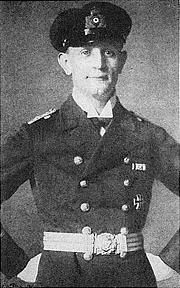
Niemöller in WWI Inperial Navy Uniform

Martin Niemöller was a war hero.  He had served on U-Boats during the First World War and commanded a U-Boat in 1918 sinking a number of ships.  After the war he resigned his commission in the Navy in opposition to the Weimar Republic and briefly was a commander in a local Freikorps unit. His book Vom U-Boot zur Kanzel (From U-boat to Pulpit) traced his journey from the Navy to the pastorate. He became a Pastor and as a Christian opposed what he believed to be the evils of Godless Communism and Socialism.  This placed him in the very conservative camp in the years of the Weimar Republic and he rose in the ranks of the United Evangelical Church of the Old Prussian Union.  Active in conservative politics, Niemöller initially support the appointment of Adolf Hitler as Chancellor.  However, he quickly soured on Hitler due to his insistence on the state taking precedence over the Church.  Niemöller was typical of many Germans of his era and harbored ant-Semitic sentiments that he only completely abandoned his anti-Semitic views until after he was imprisoned.  He would spend 8 years as a prisoner of the Nazis a period hat he said changed him including his views about Jews, Communists and Socialists.  Niemöller was one of the founding members of the Pfarrernotbund (Pastor’s Emergency Federation) and later the Confessing Church. He was tried and imprisoned in concentration camps due to his now outspoken criticism of the Hitler regime.

Herman Maas was another Evangelical Pastor.  Unlike Niemöller, Maas was a active participant in the ecumenical movement, built bridges to the Jewish community and defended the rights of Jews as German citizens.  He received a fair amount of criticism for his attendance of Reichspräsident Friedrich Ebert’s funeral.  Ebert was both a Socialist and avowed atheist.  Maas too was active in the Pfarrernotbund and the Confessing church, and unlike Niemöller maintained his opposition to anti-Semitism and the Nazi policies against the Jews. He would help draft the Barmen declaration.  He too would be imprisoned and survive the war.  Maas was the first non-Jewish German to be officially invited to the newly formed state of Israel in 1950. In July 1964 Yad Vashem recognized the Maas as one of the Righteous Among the Nations.

Bonhoeffer in Nazi Prison in 1944

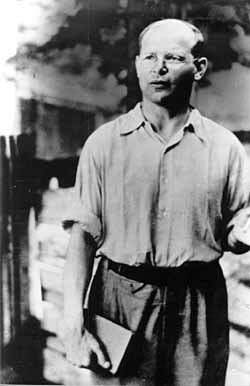
Dietrich Bonhoeffer a young Pastor and theologian would also step up to oppose the Nazis and offer support for the Jews.  He helped draft the Bethel Confession which among other things rejected “every attempt to establish a visible theocracy on earth by the church as a infraction in the order of secular authority. This makes the gospel into a law. The church cannot protect or sustain life on earth. This remains the office of secular authority.”  He also helped draft the Barmen declaration which opposed and condemned Nazi Christianity.  Bonhoeffer would eventually along with members of his family take an active role in the anti-Nazi resistance as a double agent for Admiral Canaris’ Abwehr.  For this he would be executed after his final sermon in the concentration camp at Flossenburg just a month prior to the end of the war.

Karl Barth convicted of “Seducing the German people” and exiled to his native Switzerland

Another opponent of the Nazis in the Confessing Church was Swiss-German theologian Karl Barth.  Barth angrily denounced Naziism when it attempted to create new “German Christian” churches in which National Socialist political theories were given the same sanctity as theological dogma.  Barth went into exile as a Swiss citizen after being removed from his professorship at the University of Bonn for refusing to take the mandatory oath to Adolf Hitler, alter his teaching to meet Nazi standards or begin class with the customary “Heil Hitler!” He would say that it would be in bad taste “to begin a commentary on the Sermon on the Mount with Heil Hitler.” For his efforts he was found guilty by a Nazi court of “seducing the minds” of German students.  For an excellent short article on Barth see “Witness to an Ancient Truth” Time Magazine April 20th 1962 online at http://www.time.com/time/magazine/article/0,9171,873557-1,00.html

Fr Rupert Meyer the “Apostle of Munich” and steadfast opponent of Hitler

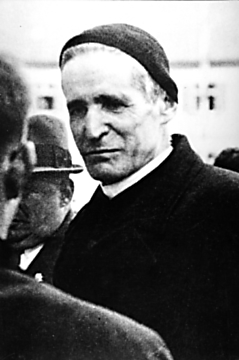
Bishop Galen of Münster and Father and others including Father Rupert Meyer in Munich who opposed Hitler in the early 1920s would also oppose the Nazi policies toward the Church, the Jews and Nazi policies on euthanasia.  They would also end up in concentrations camps with some dying at the hands of the Nazis, in fact over 2000 priests and Protestant ministers from Germany and occupied countries were housed at Dachau.

All these men took risks to defend the Jews who were religious minority group that had been traditionally discriminated against in Germany as well as other groups, political and religious.  They opposed the Nazi policies which were widely supported by much of the German populace making them unpopular in their own churches as well as among the traditionally conservative supporters of the Evangelical and Catholic Churches.  Since I have dealt with the Nazi persecution and atrocities against the Jews and others in other posts I will not elaborate further here.

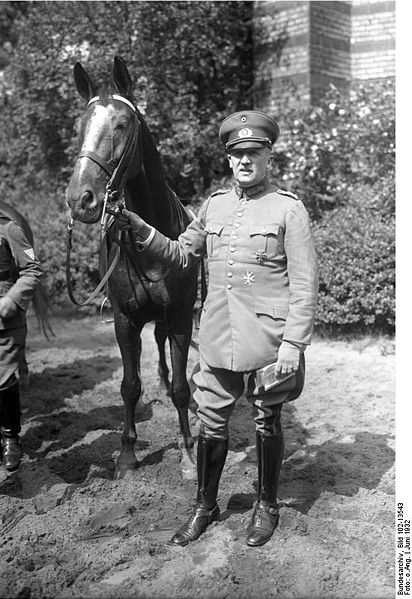
General Wilhelm Groener, despised by the Nazis for saving the by working with Socialists to prevent a Communist takeover

Not only were Jews the enemy but so were any parties that disagreed with the Nazi policies including the church or rather the church that refused to surrender to them.  Likewise military officers who stood by the Republic against Nazi and other right-wing putsches during the 1920s, men who risked all to defend the rights of people on both sides of the political chasm that divided the country.

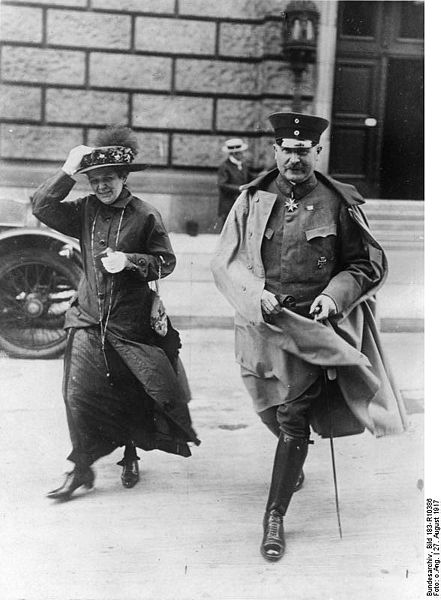
Deposed after the Nazi seizure of power General Kurt von Hammerstein-Equord was deposed as head of the German Army and in retirement worked against the Nazis including the Valkyrie plot until his death from Cancer in 1944

Leftist accused them of being reactionaries and Monarchists while the right did whatever they could to discredit men like General Wilhelm Groener, General Major Walther Reinhardt, General der Infantrie Georg Maerker, General der Infrantie Kurt von Hammerstein-Equord and General Kurt von Schleicher were either driven from office and ostracized, forced out of the military or in the case of von Schleicher killed by the SS during the “night of the long knives.”

Confidant of President Hindenburg, opponent of the Nazis and briefly Chancellor of the Weimar Republic General Kurt von Schleicher would be assassinated by the Nazis during the Night of the Long Knives

Additionally other men who kept the German Republic from becoming a Communist state notably Gustave Noske of the Social Democratic Party who was the first Reichswehr Minister and who with his successor Otto Geßler of the German Democratic Party worked with the military leadership to keep both the extreme left in the form of the Spartacist League, the Independent Socialists and from the extreme Right who attempted to overthrow the government in the Kapp Putsch.  All were treated shamefully by the Nazis and even their successors did not fare well, to consolidate power Hitler had the General Leutnant Werner Freiherr von Fritsch falsely accused of homosexual acts and disgraced and evidence points to his murder on the Polish front in 1939 as the “honorary colonel” of his old Regiment.  Those who opposed Hitler and the Nazis later in the war, even those who were genuine heroes were put to death before Nazi “People’s Courts.”  They did the same with politicians who they viewed to be threats to their rule, even conservatives not just Socialists or Communists.  Religious leaders who resisted both Protestant and Catholic were sent to concentration camps where many did not return from.

Too frequently we here Beck and others call Americans with views different from their ideology “traitors” or “un American.” Before Iraq I listened to talk radio almost every day and when I came back I could no longer stomach the invective and malice that is so widespread among these commentators.  If they continue to dominate “conservative” politics then I fear that they will use the power of the government and media to silence those that oppose them and it will not matter if the opponent has served in the military as they routinely condemn former high ranking military officers who disagree with them such. These propagandists are not patriots and neither Beck nor any of the major conservative talk show hosts have served a day in the military yet they influence “conservative” opinion more than anyone else and dare to slander those in the military or those who have served honorably including Senator John McCain who dare to disagree with them. The Nazis did the same thing.

Today we face a similar movement by some “conservative” voices in the United States.  Many influential members of the “conservative” media, including Rush Limbaugh and most recently Glenn Beck who I have previously referred to own the airwaves, their words listened to often more than those of the Gospel.  They derive some of their popularity from voicing support for “Christian moral values” such as being against abortion.  This has endeared them to many conservative Christians who listen to them more than their faith or religious institutions.  Unfortunately many “conservative” Christians cannot differentiate between the vitriolic and un-Christian rage of these talkers against anyone identified as the enemy that they have forgotten the Gospel and become simply an appendage to Republican or “conservative” politicians.  It is not uncommon to see Christians on the web or on the call in talk radio programs agree lock stock and barrel Beck and others on the crass materialism and social Darwinism of “pure” Capitalism and the anti-Christian policy of pre-emptive war, even when they attacked Pope John Paul II when he refused to countenance the invasion of Iraq. Beck uses Scripture only to give his ideology, whatever it may be some semblance of decency.  What Karl Barth said of Nazi ideology can be said of Beck’s ideology: “This was a nationalist heresy…. confusion between God and the spirit of the German nation.” Pundits and politicians on the Left may also place ideology over religion however they seldom espouse the heresy of linking the Christian faith with the spirit and destiny of the United States.

That may seem harsh, but there is a group led by Andrew Schlafly the “Conservative Bible project” that seek to re-translate the Bible into their own political, social and economic policies even seeking to change or minimize any Scripture that might be equated with to the “Social Gospel.” I guess if Beck wants he can get a copy when it comes out.  If you don’t like what Scripture says change it…right?

I cannot sit by while Beck and others smear people including churches who disagree with their ideology which does not rest on Scripture or but merely uses it to inflame people into actions that turn them against the members of their own churches.  This unfortunately is evil masquerading as good.  Too many turned their eyes away from the Nazi menace thinking that Hitler could be reasoned with and that he really stood for their values.  Too few stood up early to sound a warning.  My issue with Beck and others like him be they pundits, talk show hosts, media personalities or politicians of any stripe regardless of whether they come from the right or the left do what Beck did this week I will call them on it.  People can play political games and fight all they want but when they attack the Church for political and ideological gain, seek to divide it against itself or co-opt churches to do their bidding then I have a problem.  I do not care if that threat comes from the Left as it sometimes does or the Right where a few years ago I would not think it was possible to come from. Unfortunately Beck’s message is main stream to many of his followers regardless of their faith and this is a threat to religious freedom for if those like Beck gained power then religious freedom would only be for those who agree not with Scripture or 2000 years of the Christian tradition but for those who agree with the ideology espoused by Beck and those like him.  It would be the “freedom” of the German Christians who gave themselves to the Nazi ideology to be “free.”  Ideas have consequences and when one advocates revolution and for people to leave their churches for any political ideology it is a grave threat to religious freedom.

Beck and those like him are enemies of freedom of religion. For Beck that cannot be blamed on being a Mormon. In fact he has attacked, perverted and misconstrued the doctrine of that church as well as the Roman Catholic Church and numerous Protestant denominations spanning the theological spectrum simply because he paints them “progressives” which is simply another word for Communist or Fascist. Beck is an enemy of religious liberty because he places his political ideology over that of the Gospel, not just that of his own church, but others.  That is why he should be opposed and confronted every time that he makes such statements. They reveal his true heart, ideology and intentions and no amount of backtracking, excuses or attempts to change the subject can alter that hard cold and brutal fact. His sleight of hand to go on the attack and criticize offenders on the left, notably Jeremiah Wright only clouds the issue and does not change the fundamental truth of Beck’s worldview. Likewise his attempt to separate the Church from the poor is destructive and if Christians want to follow Beck’s teaching then they chose evil over truth. As Father James Martin SJ said in America “Glenn Beck’s desire to detach social justice from the Gospel is a subtle move to detach care for the poor from the Gospel.  But a church without the poor, and a church without a desire for a just social world for all, is not the church.  At least not the church of Jesus Christ.” http://www.americamagazine.org/blog/entry.cfm?blog_id=2&id=21159420-3048-741E-7761300524585116

To again quote the Barmen Declaration”

“Lo, I am with you always, to the close of the age.” (Matt. 28:20.) “The word of God is not fettered.” (2 Tim. 2:9.)

The Church’s commission, upon which its freedom is founded, consists in delivering the message of th free grace of God to all people in Christ’s stead, and therefore in the ministry of his own Word and work through sermon and sacrament.

We reject the false doctrine, as though the Church in human arrogance could place the Word and work of the Lord in the service of any arbitrarily chosen desires, purposes, and plans.” The Barmen Declaration Article 6

I am afraid of the Glenn Beck’s of the world.  We appear to be at a precipice that we may or may not be able to pull back from. The Nazis used the same kind of language to attack the Christian faith and co-opt the vast majority of them. Men like Niemöeller, Bonhoeffer and many others were sent to the concentration camps, tried by kangaroo courts and some killed.  I was on another blog where the discussion of this has been heated. I don’t like getting called a communist by allegedly “Christian” people who have bought Beck’s vision hook, line and sinker. If this is Beck’s version of the faith he can keep it.  Unfortunately the rhetoric is so high, the division so deep and the anger so real that I am afraid that the fuse of violence may have been laid and that nothing will stop it especially with Beck  and others stoking the fire on a daily basis on television and radio. Beck seems to be predicting and almost hoping for some kind of violent revolution seizing upon the now boiling anger on the Right and to some extent on the Left, anger that has consumed and co-opted so many conservative Christians is so great that at sometimes I wonder if this can end well though I do not predict civil war or revolution like Beck.

While I criticize Beck I cannot exclude from criticism those on the Left who have used angry, inflamed and hateful language and actions which also raises ante in ideological clash because it does take more than one faction to stir the witches’ cauldron of hatred which threatens not just religious liberty, but all liberty in this nation.  I will pray for peace, respect and mutual understanding and I will not give up hope or resign myself to despair as my faith is in Christ crucified and resurrected.  I will maintain the faith and remember the words of Bonhoeffer which help to undergird me in times like these:

“The essence of optimism is that it takes no account of the present, but it is a source of inspiration, of vitality and hope where others have resigned; it enables a man to hold his head high, to claim the future for himself and not to abandon it to his enemy.” Dietrich Bonhoeffer

24 Comments

Filed under faith, History, philosophy, Religion

Stalingrad: Disaster on the Volga

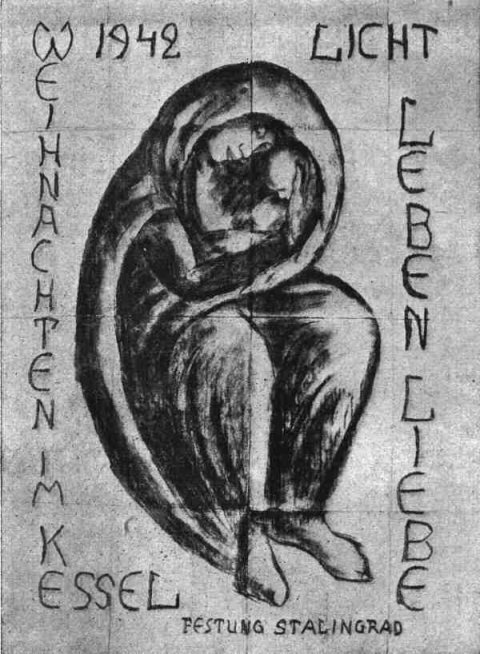
Madonna of Stalingrad: Drawn by a German Chaplain and physician the piece was taken out of the city by one of the last officers to get out. It is now displayed in the Kaiser Wilhelm Memorial Church in Berlin

Sunday the 31st of January marks the surrender of the remnants of the German 6th Army to the Soviets at Stalingrad. The focus of this article is on how the Germans and Russians fought the Stalingrad campaign. In particular it is an analysis of the way the governments and military’s of both Nazi Germany and the Soviet Union planned and executed strategy during the course of the campaign adjusted to the situation and how the campaign ended. It is also a reminder of the price that ordinary soldiers can pay when a country commits them to war. I conclude with a potential modern application for the US and NATO in Afghanistan.

Stalingrad: Primary or Secondary Objective

The mistakes began early in the planning and conduct of the operation

Following the Soviet winter offensive and the near disaster in front of Moscow the German High Command was faced with the strategic decision of what to do in the 1942 campaign.  Several options were considered and it was decided to seize the Caucasus oilfields and capture or neutralize the city of Stalingrad on the Volga.  However, the High Command was divided on the actual objective of the campaign.
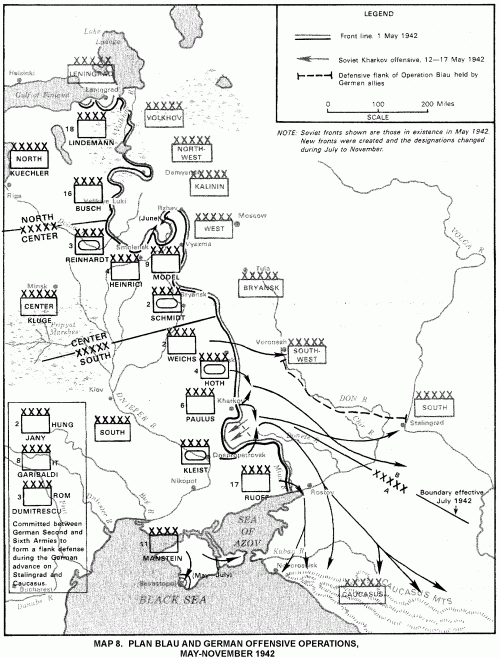
OKH under the guidance of General Halder assumed that Stalingrad was the objective and the advance into the Caucasus was a blocking effort.[i] Hitler and OKW planned to capture the Caucasus oil fields and capture or neutralize Stalingrad to secure the left flank.[ii] Both OKH and OKW considered Stalingrad significant but “German commanders initially regarded it as a weigh station en route to the Caucasus oil fields.”[iii] The conflict echoed in the ambiguity of Directive No. 41 which “included the ‘seizure of the oil region of the Caucasus’ in the preamble concerning the general aim of the campaign, yet made no mention of this in the main plan of operations.”[iv] At the planning conference held at Army Group South in early June “Hitler hardly mentioned Stalingrad. As far as his Generals were concerned it was little more than a name on the map. His obsession was with the oil fields of the Caucasus.”[v] Manstein noted that “Hitler’s strategic objectives were governed chiefly by the needs of his war economy….”[vi] Anthony Beevor notes that at this stage of planning “the only interest in Stalingrad was to eliminate the armaments factories there and secure a position on the Volga. The capture of the city was not considered necessary.”[vii] German planners “expected that the Soviets would again accept decisive battle to defend these regions.”[viii]

In Moscow Stalin and his Generals attempted to guess the direction of the impending German offensive.  “Stalin was convinced that Moscow remained the principle German objective…Most of the Red Army’s strategic reserves…were therefore held in the Moscow region.”[ix] To disrupt the German offensive and to attempt to recover Kharkov three offensives were launched by Red Army forces under the direction of Stavka. The largest of these on Kharkov was defeated between 12-22 May with the loss of most of the armor in southern Russia. This coupled with an equally disastrous defeat of Red Army forces in Crimea by Von Manstein’s 11th Army meant that the Red Army would face the Germans in a severely weakened condition.[x]

Operation Blau: Opening Moves and Divergent Objectives
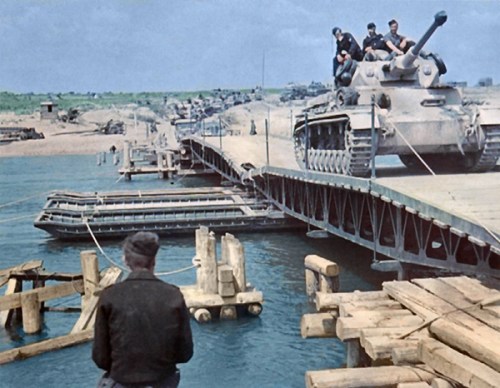
Panzers cross the Don

The German offensive began on 28 June under the command of Field Marshal von Bock. Bock’s command included two separate army groups, Army Group B under General Von Weichs with 2nd Army, 6th Army and 4th Panzer Army operated in the northern part of the operational area. Army Group A was to the south with 17th Army and 1st Panzer Army.[xi] Army Group B provided the main effort and quickly smashed through the defending Soviet armies and by the 20th Hitler believed that “the Russian is finished.”[xii] One reason for the German success in the south was that until July 7th Stalin believed that Moscow was still the primary objective.[xiii] Bock was prevented by Hitler from destroying Soviet formations left behind and was relieved of command by Hitler. He was replaced by Von Weichs which created a difficult command and control problem.  Manstein noted that this created a “grotesque chain of command on the German southern wing” with the result that Army Group A had “no commander of its own whatever” and Army Group B had “no few than seven armies under command including four allied ones.”[xiv]

Destroyed Soviet T-34s

This decision proved fateful.  Hitler’s decided to redirect the advance of the 4th Panzer Army to support an early passage of the lower Don, diverting it from its drive on Stalingrad.  Additionally the army groups became independent of each other when Bock was relieved of command.  They were “assigned independent-and diverging-objectives” under the terms of Directive No.45.[xv] This combination of events would have a decisive impact on the campaign.  The decision prevented a quick seizure of Stalingrad by 4th Panzer Army followed by a hand over to 6th Army to establish the “block” as described by Directive No.41.  Kleist noted that he didn’t need 4th Panzer Army’s help to accomplish his objectives and that it could have “taken Stalingrad without a fight at the end of July….”[xvi]

Field Marshall Von Paulus

The result was damning. Air support and fuel needed by Army Group A was transferred to 6th Army, denuding Army Group A of the resources that it needed to conclude its conquest of the Caucasus.[xvii] At the same time it denied Army Group B of the Panzer Army that could seize Stalingrad when it was still possible to do so.  Beevor calls Hitler’s decision a disastrous compromise.[xviii] Halder believed the decision underestimated the enemy and was “both ludicrous and dangerous.”[xix]

Focus on Stalingrad
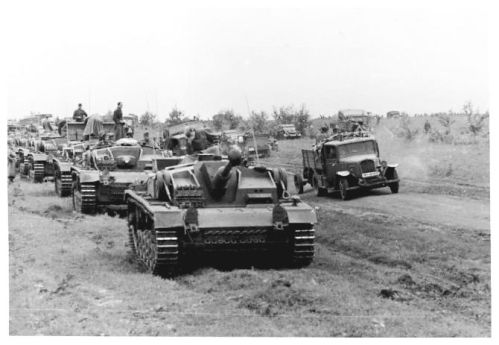
Sturmgeschutz Battalion Advancing toward Stalingrad

On July 22 as the Wehrmacht ran short on fuel and divisions to commit to the Caucasus, and 6th Army fought for control of Voronezh the Soviets created the Stalingrad Front. Stavka moved an NKVD Division to the city,[xx] and rapidly filled the new front with formations transferred from the Moscow Front.[xxi] Stalin issued Stavka Order 227, better known as “No Step Back” on 28 July. The order mandated that commanders and political officers who retreated would be assigned to Penal battalions[xxii] and armies were to form three to five special units of about 200 men each as a second line “to shoot any man who ran away.”[xxiii] Russian resistance west of the Don slowed the German advance. German commanders were astonished “at the profligacy of Russian commanders with their men’s lives.”[xxiv] Von Kleist compared the stubbornness of Russians in his area to those of the previous year and wrote that they were local troops “who fought more stubbornly because they were fighting to defend their homes.”[xxv] Additionally, Stalin changed commanders frequently in the “vain hope that a ruthless new leader could galvanize resistance and transform the situation.”[xxvi] General Chuikov brought the 64th Army into the Stalingrad Front in mid-July to hold the Germans west of the Don.[xxvii]
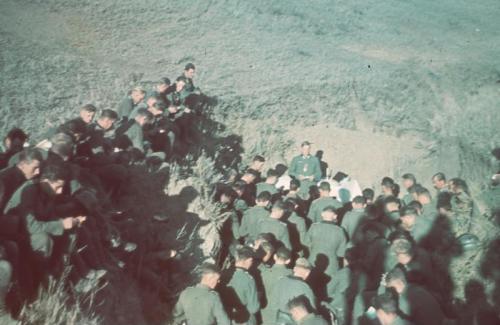
German Militarpfarrer (Chaplain) leading field service in August 1942

Further weakening the Germans OKW transferred key SS Panzer Divisions and the Grossdeutschland Division to France. Supporting Hungarian, Italian and Romanian allied armies which lacked motorization, modern armor or anti-tank units were unable to fulfill the gaps left by the loss of experienced German divisions and the expectations of Hitler.[xxviii] 6th Army was virtually immobilized for 10 days due to lack of supplies allowing the Russians to establish a defense on the Don Bend.[xxix] To the south the Germans were held up by lack of fuel and increased Soviet resistance including the introduction of a force of 800 bombers.[xxx] Glantz and House note that with the fall of Rostov on July 23rd “Hitler abruptly focused on the industrial and symbolic value of Stalingrad.”[xxxi] Undeterred by warnings from Halder that fresh Russian formations were massing east of the Volga and Quartermaster General, Wagner, who guaranteed that he could supply either the thrust to the Caucasus or Stalingrad but not both.[xxxii] Again frustrated by slow progress Hitler reverted to the original plan for 4th Panzer Army to assist 6th Army at Stalingrad, but the cost in time and fuel were significant to the operation and the question was whether “they could make up for Hitler’s changes in plan.”[xxxiii]

Strategic Implications

General Chuikov who directed the defense of Stalingrad during the battle

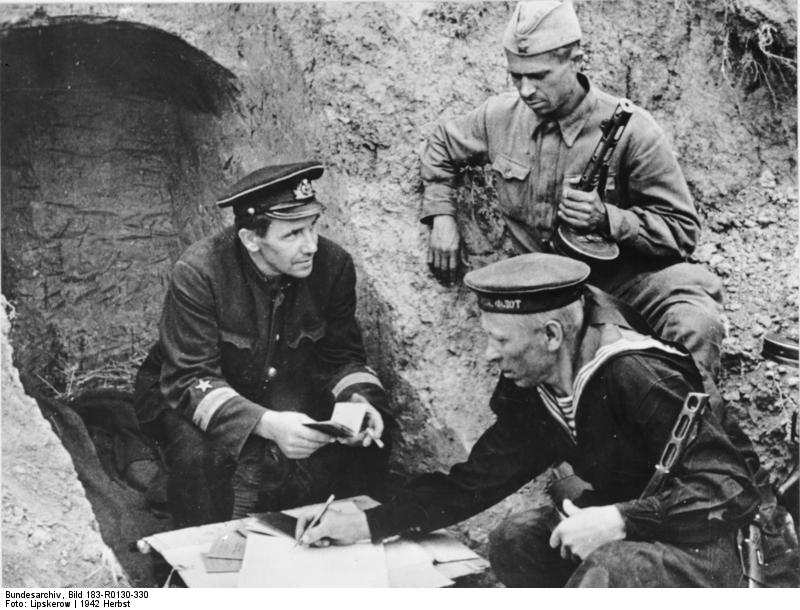
Soviet Naval Infantry and Political Officer

The changes in the German plan had distinct ramifications for both sides.  Von Mellenthin wrote that “the diversion of effort between the Caucasus and Stalingrad ruined our whole campaign.”[xxxiv] The Germans could not secure the Caucasus oil fields which Hitler considered vital to the German war effort.  They advanced deep into the region and captured the Maikop oil fields, though they were almost completely destroyed by the retreating Russians.[xxxv] Army Group A was halted by the Russians along the crests of the Caucasus on August 28th.[xxxvi] This left Hitler deeply “dissatisfied with the situation of Army Group A.”[xxxvii] Kleist and others attributed much of the failure to a lack of fuel[xxxviii] and Blumentritt noted that Mountain divisions that could have made the breakthrough were employed along the Black Sea coast in secondary operations.[xxxix]
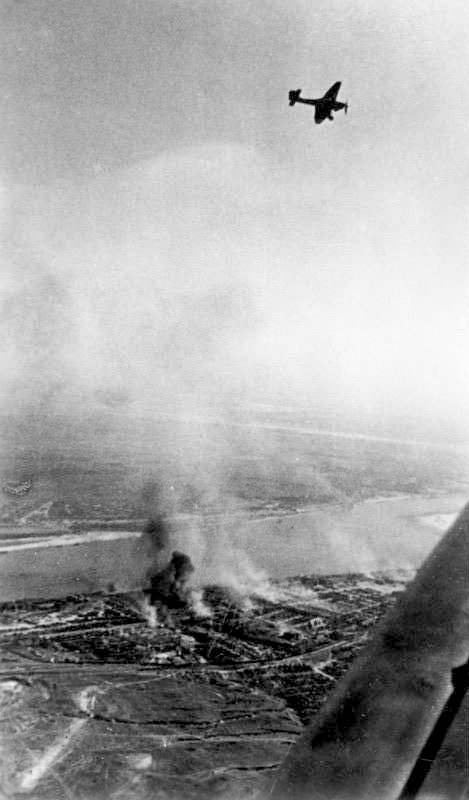
JU-87 Stuka over Stalingrad

Fuel and supply shortages delayed 6th Army’s advance while Hoth’s 4th Panzer Army was needlessly shuttled between Rostov and Stalingrad. By the time it resumed its advance the Russians “had sufficiently recovered to check its advance.”[xl] As 6th Army advanced the “protection of Army Group B’s ever-extending northern flank was taken over by the 3rd Rumanian, the 2nd Hungarian and the newly formed 8th Italian Army.”[xli] The allied armies were neither equipped for the Russian campaign nor well motivated.[xlii] The supply shortage in both army groups was not helped by a logistics bottleneck. All supplies came over a single Dnieper crossing, which Manstein noted, prevented swift movement of troops from one area to another.[xliii]

Reconnaissance Battalion of 24th Panzer Division near Stalingrad

Von Paulus’ 6th Army now attempted to rush Stalingrad between the 25th and 29th of July, while Hoth milled about on the lower Don.  However, Paulus’s piecemeal commitment of his divisions and failure to concentrate in the face of unexpectedly strong Soviet resistance caused the attacks to fail.  Paulus halted 6th Army on the Don so it could concentrate its forces and build its logistics base,[xliv] and to allow Hoth to come up from the south. This delay allowed the Russians to build up forces west of Stalingrad and reinforce the Stalingrad front and strengthen the defenses of the city,[xlv] and due to the distances involved it was easier for the Russians to reinforce the Stalingrad front.[xlvi] It also allowed the Russians to fill a number of key leadership positions with Generals who would skillfully fight the battle.[xlvii]
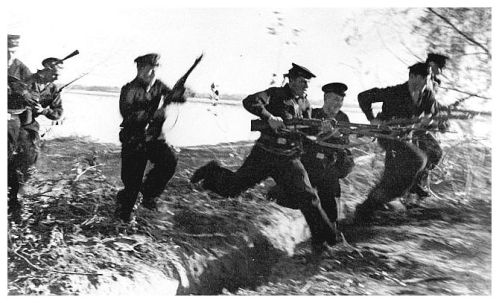
Russian Naval Infantry during early phase of battle

Hitler now focused on the capture of Stalingrad despite the fact that “as a city Stalingrad was of no strategic importance.”[xlviii] Strategically, its capture would cut Soviet supply lines to the Caucasus,[xlix] but this could be achieved without its capture. The checks in the south “began to give Stalingrad a moral importance-enhanced by its name-which came to outweigh its strategic value.”[l] To Hitler Stalingrad would gain “a mystic significance”[li] and along with Leningrad became “not only military but also psychological objectives.”[lii]

Red Army Armored troops using Lend-Lease American M3 Stuart and M3 Grant tanks

The Germans mounted a frontal assault with 6th Army and elements of 4th Panzer Army despite air reconnaissance that “the Russians are throwing forces from all directions at Stalingrad.[liii] Paulus as the senior General was in charge of the advance, with Hoth subordinated to him, but the attack had to wait until Hoth’s army could fight its way up from the south.[liv] Von Mellenthin comments rightly that “when Stalingrad was not taken on the first rush, it would have been better to mask it….”[lv] It is clear that the German advance had actually reached its culminating point with the failure of the advance into the Caucasus and Paulus’s initial setback on the Don, but it was not yet apparent to many involved.[lvi] The proper course of action would have been to halt and build up the front and create mobile reserve to parry any Russian offensive along northern flank while reinforcing success in the Caucasus. Manstein wrote that “by failing to take appropriate action after his offensive had petered out without achieving anything definite, he [Hitler] paved the way to the tragedy of Stalingrad!”[lvii]

Transfixed by Stalingrad
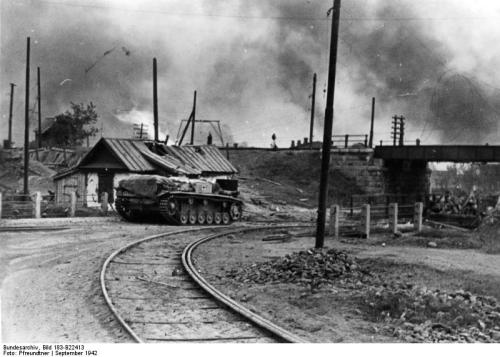
German Stug III at Stalingrad

On August 19th Paulus launched a concentric attack against the Russian 62nd and 64th Armies on the Don.  The attack ran into problems, especially in Hoth’s sector.[lviii] Yet, on the 22nd the 14th Panzer Corps “forced a very narrow breach in the Russian perimeter at Vertyachi and fought its way across the northern suburbs of Stalingrad,”[lix] and reached the Volga on the 23rd. That day 4th Air Fleet launched 1600 sorties against the city dropping over 1,000 tons of bombs.[lx] The breakthrough imperiled the Soviet position they had concentrated their strongest forces against Hoth.[lxi] The Germans held air superiority and continued heavy bombing attacks.  During the last days of August 6th Army “moved steadily forward into the suburbs of the city, setting the stage for battle.”[lxii] As the Soviets reacted to Paulus, Hoth achieved a breakthrough in the south which threatened the Russian position.  However 6th Army was unable to disengage its mobile forces to link up with the 4th Panzer Army and another opportunity had been missed.[lxiii]
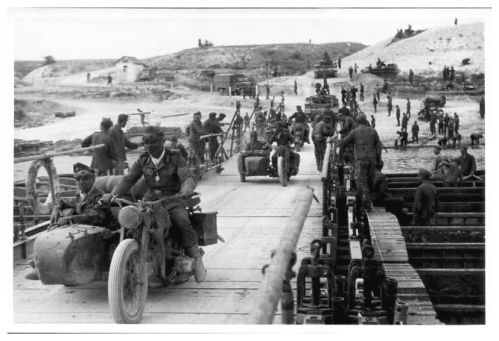
German unit crossing the Don

As 6th Army moved into the city Yeremenko ordered attacks against Hube’s 16th Panzer Division and Soviet resistance increased as more formations arrived the Germans suffered one of their heaviest casualty rates.”[lxiv] Though unsuccessful the counterattacks “managed to deflect Paulus’s reserves at the most critical moment.”[lxv] The Germans remained confident the first week of September as 6th Army and 4th Panzer Army linked up, but Yeremenko saved his forces by withdrawing and avoiding encirclement west of the city, retiring to an improvised line close to the city.[lxvi] On September 12th Chuikov was appointed to command 62nd Army in Stalingrad.  Chuikov understood that there “was only one way to hold on. They had to pay in lives. ‘Time is blood,’ as Chuikov put it later.”[lxvii] Stalin sent Nikita Khrushchev to the front “with orders to inspire the Armies and civilian population to fight to the end.”[lxviii] 13th Guards Rifle Division arrived on the 14th saved the Volga landings but it lost 30% casualties in its first 24 hours of combat.[lxix]
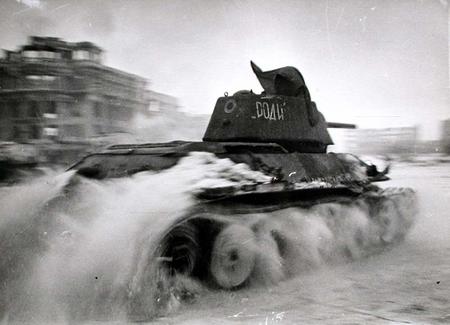
T-34 in Stalingrad

An NKVD regiment and other units held the strategically sited Mamaev Kurgan, keeping German guns from controlling the Volga.[lxx] The defenders fought house to house and block by block, Army and NKVD were reinforced by Naval Infantry.  Chuikov conducted the defense with a brutal ferocity, relieving senior commanders who showed a lack of fight and sending many officers to penal units.  Chuikov funneled massed German attacks into “breakwaters” where the panzers and infantry could be separated from each other causing heavy German casualties.[lxxi]
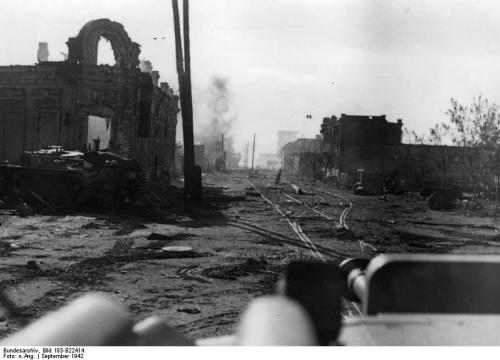
Street Fighting


Now the “city became a prestige item, its capture ‘urgently necessary for psychological reasons,’ as Hitler declared on October 2. A week later he declared that Communism must be ‘deprived of its shrine.’”[lxxii] The Germans did continue to gain ground, however slowly and at great cost, especially among their infantry, so much so that companies had to be combined.   Chuikov used his artillery to interdict the Germans from the far side of the Volga and the fight in the city was fought by assault squads with incredible ferocity and the close-quarter combat was dubbed “’Rattenkrieg’ by German soldiers.”[lxxiii] Paulus brought more units into the city and continued to slowly drive the Russians back against the river, by early October Chuikov wondered if he would be able to hold.[lxxiv] By early November Chuikov “was altogether holding only one-tenth of Stalingrad-a few factory buildings and a few miles of river bank.”[lxxv] Paulus expected “to capture the entire city by 10 November,”[lxxvi] despite the fact that many units were fought out. The 6th Army judged that 42% of the battalions of 51st Corps were fought out.[lxxvii] On 9 November Hitler declared “No power on earth will force us out of Stalingrad again!”[lxxviii]

Soviet Counteroffensive: Disaster on the Flanks

Soviet offensive on the flanks

Hungarian withdraw

Hungarian dead

On September 24th Hitler relieved Halder for persisting in explaining “what would happen when new Russian reserve armies attacked the over-extended flank that ran out to Stalingrad.”[lxxix] Many in the German side recognized the danger. Blumentritt said “The danger to the long-stretched flank of our advance developed gradually, but it became clear early enough for anyone to perceive it who was not willfully blind.”[lxxx] Warnings were also given by Rumanian Marshall Antonescu and the staff’s of Army Group B and 6th Army[lxxxi] but Hitler was transfixed on Stalingrad.  In doing so the Germans gave up the advantage of uncertainty and once their “aim became obvious…the Russian Command could commit its reserves with assurance.”[lxxxii]

Chuikov and his staff

In the midst of Stalin’s concern about Stalingrad Stavka planners never lost sight of their goal to resume large scale offensive operations and destroy at least one German Army Group.[lxxxiii] Unlike Hitler Stalin had begun to trust his Generals and Stavka under the direction of Marshal Vasilevsky produced a concept in September to cut off the “German spearhead at Stalingrad by attacking the weak Rumanian forces on its flanks.”[lxxxiv] At first Stalin “showed little enthusiasm” for the attack, fearing that Stalingrad might be lost, but on 13 September he gave his full backing to the proposal[lxxxv] which Zhukov, Vasilevsky and Vatutin developed into a plan involving two operations, Operation Uranus, to destroy the German and allied forces at Stalingrad, Operation Saturn to destroy all the German forces in the south and a supporting attack to fix German forces in the north, Operation Mars aimed at Army Group Center.[lxxxvi]
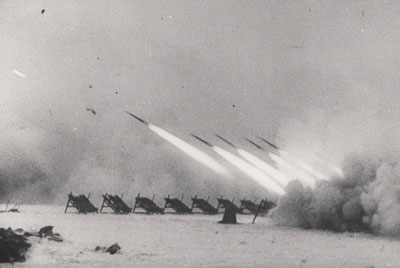
Soviet Katusha Rockets

To accomplish the destruction of 6th Army and part of 4th Panzer Army the Red Army employed over 60% of the “whole tank strength of the Red Army.”[lxxxvii] Strict secrecy combined with numerous acts of deception was used by the Red Army to disguise the operation.[lxxxviii] The plan involved an attack against 3rd Romanian Army on the northern flank by 5th Tank Army and two infantry armies with supporting units.[lxxxix] In the south against 4th Rumanian Army and weak element of 4th Panzer Army another force of over 160,000 men including 430 tanks were deployed.[xc] Despite warnings from his Intelligence Officer, Paulus did not expect a deep offensive into his flanks and rear and made no plans to prepare to face the threat.[xci] Other senior officers believed that the attack would take place against Army Group Center.[xcii] Warlimont notes that there was a “deceptive confidence in German Supreme Headquarters.”[xciii]

Luftwaffe JU-52s made many resupply runs into the pocket but suffered great losses

The storm broke on 19 November as Soviet forces attacked rapidly crushing Romanian armies in both sectors[xciv] linking up on the 23rd.[xcv] 48th Panzer Corps supporting the Romanians was weak and had few operational tanks.[xcvi] It attempted a counterattack but was “cut to pieces” in an encounter with 5th Tank Army.[xcvii] A promising attempt by 29th Motorized division against the flank of the southern Russian pincer was halted by the Army Group and the division was ordered to defensive positions south of Stalingrad.[xcviii] German airpower was neutralized by bad weather.[xcix] Paulus continued to do nothing as since the attacks were outside of his area of responsibility and waited for instructions.[c] As a result the 16th and 24th Panzer Divisions which could have assisted matters to the west remained “bogged down in street-fighting in Stalingrad.”[ci] Without support 6th Army units west of Stalingrad were forced back in horrific conditions.  By the 23rd 6th Army was cut off along with one corps of 4th Panzer Army and assorted Romanian units, over 330,000 men.  This now entrapped force that would require seven rifle armies and much staff attention to eliminate.[cii]

The Death of 6th Army
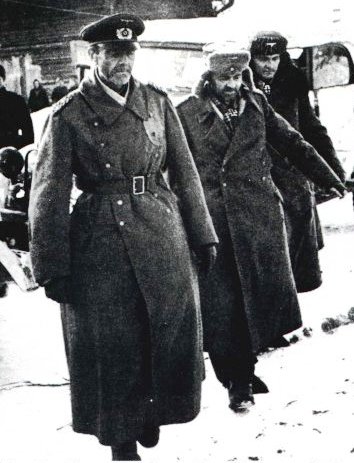
Paulus Surrenders

Hitler ordered Manstein to form Army Group Don to relieve Stalingrad. Hitler would not countenance a break out and wanted Manstein to break through and relieve 6th Army.[ciii] Hitler refused a request by Paulus on 23 November to move troops to prepare for a possible a break out attempt, assuring him that he would be relieved.[civ] Albert Speer notes that Zeitzler who replaced Halder insisted that the Sixth Army must break out to the west.”[cv] Hitler told Zeitzler that “We should under no circumstances give this up. We won’t get it back once it’s lost.”[cvi] Goering promised the Luftwaffe would be able to meet the re-supply needs of 6th Army by air, even though his Generals knew that it was impossible with the number of transport aircraft available.[cvii] Hitler took Goering at his word and exclaimed “Stalingrad can be held! It is foolish to go on talking any more about a breakout by Sixth Army…”[cviii] and a Führer decree was issued ordering that the front be held at all costs.[cix] Goerlitz states that “Hitler was incapable of conceiving that the 6th Army should do anything but fight where it stood.”[cx] Likewise Manstein had precious few troops with which to counterattack and had to protect the flank of Army Group A deep in the Caucasus. His army group was only corps strength and was spread across a 200 mile front.[cxi] Any relief attempt had to wait for more troops, especially Panzers.  Manstein too believed that the best chance for a breakout had passed and that it was a serious error for Paulus to put the request to withdraw through to Hitler rather than the Army Group or act on his own.[cxii] Many soldiers were optimistic that Hitler would get them out.[cxiii] Other generals like Guderian, Reichenau or Hoeppner might have acted, but Paulus was no rebel.[cxiv]
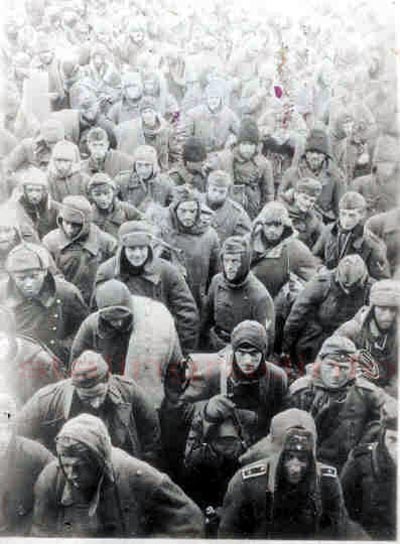
German POWs only 5000 of some 90,000 would see home again

Operation Saturn began on 7 December destroying the Italian 8th Army and forcing the Germans to parry the threat.[cxv] A relief attempt by 57th Panzer Corps under Hoth on 12 December made some headway until a massive Soviet counterattack on 24 December drove it back.[cxvi] This attack was hampered by OKW’s refusal to allocate the 17th Panzer and 16th Motorized divisions to Manstein,[cxvii] and by 6th Army not attacking out to link with the relief force.[cxviii]By 6 January Paulus signaled OKW: Army starving and frozen, have no ammunition and cannot move tanks anymore.”[cxix] On 10 January the Soviets launched Operation Ring to eliminate the pocket and despite all odds German troops fought on. On the 16th Paulus requested that battle worthy units be allowed to break out, but the request was not replied to.[cxx] On the 22nd the last airfield had been overrun and on 31 January Paulus surrendered.[cxxi]

Analysis: What Went Wrong

Stalingrad had strangely drawn the attention of both sides, but the Russians never lost sight of their primary objectives during the campaign. The Germans on the other hand committed numerous unforced errors mostly caused by Hitler and or von Paulus. These mistakes began early in the planning and After the fall of Stalingrad as the Soviets attempted to follow up their success by attempted to cut off Army Group “A” Manstein was permitted to wage a mobile defense while Von Kleist managed to withdraw with few losses.[cxxii] The superior generalship of Manstein and Von Kleist prevented the wholesale destruction of German forces in southern Russia and Manstein’s counter offensive inflicted a severe defeat on the Soviets. However the German Army had been badly defeated.  The seeds of defeat were laid early, the failure to destroy bypassed Soviet formations in July, the diversion of 4th Panzer Army from Stalingrad, and the divergent objectives of trying to capture the Caucasus and Stalingrad at the same time.  This diluted both offensives ensuring that neither succeeded.  Likewise the failure to recognize the culminating point when it was reached and to adjust operations accordingly was disastrous for the Germans. The failure create a mobile reserve to meet possible Russian counter offensives, and the fixation on Stalingrad took the German focus off of the critical yet weakly held flanks. The hubris of Hitler and OKW to believe that the Russians were incapable of conducting major mobile operations even as Stavka commenced offensive operations on those flanks all contributed to the defeat.  Clark notes these facts but adds that the Germans “were simply attempting too much.”[cxxiii] Soviet numbers allowed them to wear down the Germans even in defeat.[cxxiv] At the same time Stalin gave his commanders a chance to revive the mobile doctrine of deep operations with mechanized and shock armies that he had discredited in the 1930s.[cxxv] All through the campaign Zhukov and other commanders maintained both their nerve even when it appeared that Stalingrad was all but lost. They never lost sight of their goal of destroying major German formations though they failed to entrap Army Group A with 6th Army.

A Modern Application

It is well and good to attempt to remain on the offensive.  The U.S. currently has forces spread thinly over two combat theaters with possibilities that other threats in the same region could flare up.  Like the Germans the U.S. is operating in areas, especially Afghanistan where overland supply lines are vulnerable and where weather can and does affect resupply operations by both ground and air.  The fact that the U.S. is operating with just barely enough forces in areas where others have met disaster calls for a circumspect look at what our enemy’s capabilities really are and not allowing ourselves to be surprised when they do things that have worked for them in the past against the Russians.  While it is unlikely that the U.S. and NATO would face a Stalingrad type situation in Afghanistan it is possible that isolated forces could be overrun as the Afghans reprise tactics used so successfully against the Soviets and as they begin to operate in larger units, concentrate them quickly and with more firepower to catch NATO forces when they are most vulnerable.  It is true that they will not mass large numbers of tanks and artillery as the Soviets did against the Germans, but the principle of speed, concentration at the critical point and surprise can inflict defeats, even small ones like the attack on the US outpost in Wanat that can turn public sentiment in the U.S. and Europe against further commitments and against the war and force the NATO governments as well as the U.S. to give up the effort.

Notes

[i] Clark, Alan. Barbarossa: The Russian-German Conflict: 1941-45. Perennial Books, An imprint of Harper Collins Publishers, New York, NY 1965. p.191

[ii] Ibid.

[iii] Glantz, David M. and House, Jonathan. When Titan’s Clashed: How the Red Army Stopped Hitler. The University Press of Kansas, Lawrence KS, 1995. p.111

[iv] Ibid. Clark. p.191

[v] Beevor, Anthony. Stalingrad: The Fateful Siege: 1942-1943. Penguin Books, New York NY 1998. p.69

[vi] Manstein, Erich von. Forward by B.H. Liddle Hart, Introduction by Martin Blumenson. Lost victories: The War Memoirs of Hitler’s Most Brilliant General. Zenith Press, St Paul MN 2004. First Published 1955 as Verlorene Siege, English Translation 1958 by Methuen Company. p.291 This opinion is not isolated, Beevor Quotes Paulus “If we don’t take Maikop and Gronzy…then I must put an end to the war.” (Beevor pp. 69-70)  Halder on the other hand believed that Hitler emphasized that the objective was “the River Volga at Stalingrad. (Clark. p.190)

[vii] Ibid. Beevor. p.70.

[viii] Ibid. Glantz and House. p.106

[ix] Ibid. p.105-106

[x] Ibid. Clark. p.203.  The offensive did impose a delay on the German offensive.

[xi] Ibid. Clark. p.191 Each group also contained allied armies.

[xii] Ibid. p.209.

[xiii] Ibid. Glantz and House. p.119

[xiv] Ibid. Manstein. p.292.

[xv] Ibid. Clark. p.209

[xvi] Ibid. Clark.  p.211

[xvii] Ibid. Glantz and House. p.120. There is a good discussion of the impact of this decision here as 6th Army’s advance was given priority for both air support and fuel.

[xviii] Ibid. Beevor. p.74

[xix] Warlimont, Walter. Inside Hitler’s Headquarters 1939-45. Translated by R.H. Berry, Presido Press, Novato CA, 1964. p.249

[xx] Ibid. Beevor. p.75 This was the 10th NKVD Division and it took control of all local militia, NKVD, and river traffic, and established armored trains and armor training schools.

[xxi] Ibid. Clark. p.212

[xxii] Ibid. Glantz and House. p.121

[xxiii] Ibid. Beevor. p.85

[xxiv] Ibid. p.89

[xxv] Liddell-Hart, B.H. The German Generals Talk. Quill Publishers, New York, NY 1979. Originally published by the author in 1948. p.202

[xxvi] Ibid. Beevor. p.88

[xxvii] Ibid. Beevor. p.90

[xxviii] Ibid. Beevor. p.81

[xxix] Ibid. Glantz and House. p.121

[xxx] Ibid. Liddell-Hart. p.202

[xxxi] Ibid. Glantz and House. p.120

[xxxii] Goerlitz, Walter. History of the German General Staff. Westview Press, Frederick A. Praeger Publisher, Boulder, CO. 1985 p.416

[xxxiii] Ibid. Beevor. pp.95-96.

[xxxiv] Von Mellenthin, F.W. Panzer Battles: A Study of the Employment of Armor in the Second World War. Translated H. Betzler, Edited by L.C.F. Turner. Oklahoma University Press 1956, Ballantine Books, New York, NY. 1971. p.193

[xxxv] Shirer, William L. The Rise and Fall of the Third Reich. A Touchstone Book published by Simon and Schuster, 1981, Copyright 1959 and 1960. p.914

[xxxvi] Ibid. Glantz and House. p.122

[xxxvii] Ibid. Warlimont. p.256

[xxxviii] Ibid. Liddell-Hart. p.203

[xxxix] Ibid. p.204

[xl] Ibid. Shirer. p.914

[xli] Ibid. Goerlitz. p.416

[xlii] Ibid. Goerlitz. p.416

[xliii] Ibid. Manstein. p.293

[xliv] Ibid. Clark. p.214

[xlv] Ibid. Beevor. pp.97-99. The mobilization included military, political, civilian and industrial elements.

[xlvi] Liddell-Hart, B.H. Strategy. A Signet Book, the New American Library, New York, NY. 1974, Originally Published by Faber and Faber Ltd., London. 1954 & 1967. p.250

[xlvii] Ibid. Beevor. p.99.  Two key commanders arrived during this time frame, Colonel General Andrei Yeremenko, who would command the Stalingrad Front  and General Chuikov commander of 64th Army who would conduct the defense of the city.

[xlviii] Carell, Paul Hitler Moves East: 1941-1943. Ballantine Books, New York, NY 1971, German Edition published 1963. p.581

[xlix] Ibid. Shirer.  p.909.

[l] Ibid. Liddell-Hart, Strategy. p.250

[li] Wheeler-Bennett, John W. The Nemesis of Power: The German Army in Politics 1918-1945. St. Martin’s Press, New York, NY 1954.  p.531

[lii] Ibid. Wheeler-Bennett. p.531

[liii] Ibid. Beevor. p.96

[liv] Ibid. Clark. p.216.

[lv] Ibid. Von Mellenthin. P.193

[lvi] See Von Mellinthin pp.193-194.  Von Mellinthin quotes Colonel Dinger, the Operations Officer of 3rd Motorized Division at Stalingrad until a few days before its fall. Dingler noted that the Germans on reaching Stalingrad “had reached the end of their power. Their offensive strength was inadequate to complete the victory, nor could they replace the losses they had suffered.” (p.193) He believed that the facts were sufficient “not only to justify a withdrawal, but compel a retreat.” (p.194)

[lvii] Ibid. Manstein. p.294

[lviii] Ibid. Clark. p.216

[lix] Ibid. Clark. p.217

[lx] Ibid. Beevor. p.107

[lxi] Ibid. Beevor. p.107

[lxii] Ibid. Glantz and House. p.122

[lxiii] Ibid. Carell. P.601

[lxiv] Ibid. Beevor. p.118

[lxv] Ibid. Beevor. p.118

[lxvi] Ibid. Carell. p.602

[lxvii] Ibid. Beevor. p.128

[lxviii] Ibid. Carell. p.603

[lxix] Ibid. Beevor. p.134

[lxx] Ibid. Beevor. pp.136-137

[lxxi] Ibid. Beevor. p.149

[lxxii] Fest, Joachim. Hitler. Translated by Richard and Clara Winston, Harcourt, Brace, Jovanovich Publishers, San Diego, New York, London. 1974. p.661

[lxxiii] Ibid. Beevor. pp. 149-150

[lxxiv] Ibid. Beevor. p.164

[lxxv] Ibid. Carell. p.618

[lxxvi] Ibid. Glantz and House. p.123

[lxxvii] Ibid. Beevor. p.218

[lxxviii] Ibid. Carell. p.623

[lxxix] Ibid. Goerlitz. p.418

[lxxx] Ibid. Liddell-Hart. The German Generals Talk. p.207

[lxxxi] Ibid. Manstein. p292

[lxxxii] Ibid. Liddell-Hart. History of the Second World War. p.258

[lxxxiii] Ibid. Glantz and House. p.129

[lxxxiv] Ibid. Glantz and House. p.130

[lxxxv] Ibid. Beevor. pp.221-222 Glantz and House say that Stalin gave his backing in mid-October but this seems less likely due to the amount of planning and movement of troops involved to begin the operation in November.

[lxxxvi] Ibid. Glantz and House. p.130

[lxxxvii] Ibid. Beevor. p.226

[lxxxviii] Ibid. Glantz and House. p.132

[lxxxix] Ibid. Glantz and House. p.130

[xc] Ibid. Beevor. p.227

[xci] Ibid. Beevor. p.228

[xcii] Ibid. Clark. p.235

[xciii] Ibid. Warlimont. p.274

[xciv] Ibid, Carell. p.627 3rd Rumanian Army lost 75,000 men in three days.

[xcv] Ibid. Clark.pp.247-248

[xcvi] The condition of the few German Panzer Divisions in position to support the flanks was very poor, the 22nd had suffered from a lack of fuel and maintenance and this many of its tanks were inoperative. Most of the armor strength of the 48th Panzer Corps was provided by a Rumanian armored division equipped with obsolete Czech 38t tanks provided by the Germans.

[xcvii] Ibid. Clark. pp.251-252. The designation of 2nd Guards Tank Army by Clark has to be wrong and it is the 5th Tank Army as 2nd Guards Tank was not involved in Operation Uranus.  Carell, Beevor and Glantz properly identify the unit.

[xcviii] Ibid. Carell. p.630

[xcix] Ibid. Beevor. p.244

[c] Ibid. Beevor. p.247

[ci] Ibid. Beevor. p.245

[cii] Ibid. Glantz and House. p.134

[ciii] Ibid. Glantz and House. p.134

[civ] Ibid. Clark. p.256

[cv] Speer, Albert. Inside the Third Reich. Collier Books, a Division of MacMillan Publishers, Inc. New York, NY 1970. p.248

[cvi] Heiber, Helmut and Glantz, David M. Editors. Hitler and His Generals: Military Conferences 1942-1945. Enigma Books, New York, NY 2002-2003.  Originally published as Hitlers Lagebsprechungen: Die Protokollfragmente seiner militärischen Konferenzen 1942-1945. Deutsche Verlags-Anstalt GmbH, Stuttgart, 1962. p.27

[cvii] Ibid. Glantz and House. p.135 Glantz and House note that the amount of aircraft estimated to successfully carry out the re-supply operation in the operational conditions was over 1,000.  The amount needed daily was over 600 tons of which the daily reached only 300 tons only one occasion.

[cviii] Ibid. Speer. p.249

[cix] Ibid. Carell. p.636

[cx] Ibid. Goerlitz. p.426

[cxi] Ibid. Clark. p.252

[cxii] Ibid. Manstein. p.303

[cxiii] Ibid. Beevor. p.276

[cxiv] Ibid. Carell. p.640

[cxv] Ibid. Glantz and House. p.140

[cxvi] Ibid. Glantz and House. p.140

[cxvii] Ibid. Clark. p.264

[cxviii] Ibid. Manstein. p.337

[cxix] Ibid. Beevor. p320

[cxx] Ibid. Beevor. p.365

[cxxi] Of the approximately 330,000 in the pocket about 91,000 surrendered, another 45,000 had been evacuated.  22 German divisions were destroyed.

[cxxii] Ibid. Liddell-Hart. The German Generals Talk. p.211

[cxxiii] Ibid. Clark. p.250

[cxxiv] Ibid. Glantz and House. p.124

[cxxv] Ibid. Beevor. p.221

Bibliography

Beevor, Anthony. Stalingrad: The Fateful Siege: 1942-1943. Penguin Books, New York NY 1998

Carell, Paul Hitler Moves East: 1941-1943. Ballantine Books, New York, NY 1971, German Edition published 1963.

Clark, Alan. Barbarossa: The Russian-German Conflict:1941-45. Perennial Books, An imprint of Harper Collins Publishers, New York, NY 1965.

Fest, Joachim. Hitler. Translated by Richard and Clara Winston, Harcourt, Brace, Jovanovich Publishers, San Diego, New York, London. 1974

Glantz, David M. and House, Jonathan. When Titan’s Clashed: How the Red Army Stopped Hitler. The University Press of Kansas, Lawrence KS, 1995.

Goerlitz, Walter. History of the German General Staff. Westview Press, Frederick A. Praeger Publisher, Boulder, CO. 1985

Heiber, Helmut and Glantz, David M. Editors. Hitler and His Generals: Military Conferences 1942-1945. Enigma Books, New York, NY 2002-2003.  Originally published as Hitlers Lagebsprechungen: Die Protokollfragmente seiner militärischen Konferenzen 1942-1945. Deutsche Verlags-Anstalt GmbH, Stuttgart, 1962.

Liddell-Hart, B.H. The German Generals Talk. Quill Publishers, New York, NY 1979. Originally Published by the author in 1948.

Liddell-Hart, B.H. Strategy. A Signet Book, the New American Library, New York, NY. 1974, Originally Published by Faber and Faber Ltd., London. 1954 & 1967

Manstein, Erich von. Forward by B.H. Liddle Hart, Introduction by Martin Blumenson. Lost victories: The War Memoirs of Hitler’s Most Brilliant General. Zenith Press, St Paul MN 2004. First Published 1955 as Verlorene Siege, English Translation 1958 by Methuen Company

Shirer, William L. The Rise and Fall of the Third Reich. A Touchstone Book published by Simon and Schuster, 1981, Copyright 1959 and 1960

Speer, Albert. Inside the Third Reich. Collier Books, a Division of MacMillan Publishers, Inc. New York, NY 1970.

Von Mellenthin, F.W. Panzer Battles: A Study of the Employment of Armor in the Second World War. Translated H. Betzler, Edited by L.C.F. Turner. Oklahoma University Press 1956, Ballantine Books, New York, NY. 1971.

Warlimont, Walter. Inside Hitler’s Headquarters 1939-45. Translated by R.H. Berry, Presido Press, Novato CA, 1964.

Wheeler-Bennett, John W. The Nemesis of Power: The German Army in Politics 1918-1945. St. Martin’s Press, New York, NY 1954

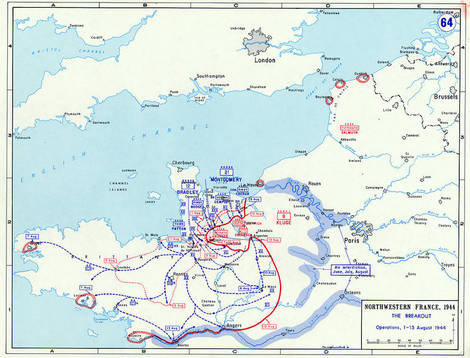
17 Comments

Filed under History, Military, world war two in europe

The Danger of Believing Historical Myths: Hitler, the Stab in the Back and the United States

The are many times in history where leaders of nations and peoples embrace myths about their history even when historical, biographical and archeological evidence points to an entirely different record.  Myths are powerful in the way that they inspire and motivate people. They can provide a cultural continuity as a people celebrates the key events and people that shaped their past, even if they are not entirely true.  At the same time myths can be dangerous when they cause leaders and people to make bad choices and actually become destructive. Such was the case in Germany following the First World War.

After the war the belief that the German Army was not defeated but was betrayed by the German people, especially those of the political left.  Like all myths there was an element of truth in the “stab in the back” myth, there were revolts against the Monarchy of Kaiser Wilhelm II and even mutiny on elements of the German High Seas Fleet and Army units stationed in Germany. However the crisis had been brought about by General Ludendorff who until the last month of the war refused to tell the truth about the gravity of Germany’s position to those in the German government.  So when everything came crashing down in late October and early November 1918 the debacle came as a surprise to most Germans.  The myth arose because the truth had not been told by Ludendorff who was arguably the most powerful figure in Germany from 1916-1918.  In the looming crisis which included Ludendorff’s collapse and relief, General Wilhelm Groener presented the facts to the Kaiser and insisted on his abdication.  The Republic that was proclaimed on the 9th of November was saddled with the defeat and endured revolution, civil war and threats from the extreme left and right.  When it signed the Treaty of Versailles it accepted the sole responsibility of Germany for the war and its damages. Ordered to dismantle its military, cede territory that had not been lost in battle and pay massive reparations the legend of the “stab in the back” gained widespread acceptance in Germany.

Hitler and Many in Germany Doubted the War making Potential of the United States

Hitler always believed that the defeat of Germany in the First World War was due to the efforts of internal enemies of the German Reich on the home front and not due to battlefield losses or the entry of the United States.  This was a fundamental belief for him and was expressed in his writings, speeches and actions.  The internal enemies of Germany for Hitler included the Jews, as well as the Socialists and Communists who he believed were at the heart of the collapse on the home front.  Gerhard Weinberg believes that the effect of this misguided belief on Hitler’s actions has “generally been ignored” by historians. (Germany, Hitler and World War II p. 196)

Hitler believed that those people and groups that perpetrated the “stab in the back” were “beguiled by the by the promises of President Wilson” (World in the Balance p.92) in his 14 Points.  Thus for him Americans were in part responsible for undermining the German home front, something that he would not allow to happen again.  In fact Hitler characterization of Wilson’s effect on the German people in speaking about South Tyrol.  It is representative of his belief about not only the loss of that region but the war: “South Tyrol was lost by those who, from within Germany, caused attrition at the front, and by the contamination of German thinking with the sham declarations of Woodrow Wilson.” (Hitler’s Second Book p.221)

While others will note Hitler’s lack of respect for the potential power of the United States, no other author that I am familiar with links Hitler’s actions and the reaction of the German political, military and diplomatic elites to the entry of the United States into the war to the underlying belief in the “stab in the back.”   Likewise Hitler had little regard for the military abilities or potential of the United States. Albert Speer notes that Hitler believed “the Americans had not played a very prominent role in the war of 1914-1918,” and that “they would certainly not withstand a great trial by fire, for their fighting qualities were low.” (Inside the Third Reich: Memoirs by Albert Speer p.121)

Hitler not only dismissed the capabilities of the Americans but also emphasized the distance that they were from Germany and saw no reason to fear the United States when “he anticipated major victories on the Eastern Front.” (Germany Hitler and World War II p.92)   Hitler’s attitude was reflected by the majority of the military high command and high Nazi officials. Ribbentrop believed that the Americans would be unable to wage war if it broke out “as they would never get their armies across the Atlantic.” (History of the German General Staff, Walter Goerlitz, p.408).  General Walter Warlimont notes the “ecstasy of rejoicing” found at Hitler’s headquarters after Pearl Harbor and the fact that the he and Jodl at OKW caught by surprise by Hitler’s declaration of war. (Inside Hitler’s Headquarters 1939-1945 pp.207-209) Kenneth Macksey notes Warlimont’s comments about Hitler’s beliefs; that Hitler “tended to dismiss American fighting qualities and industrial capability,” and that he “regarded anyone who tried to show him such information [about growing American strength] as defeatist.” (Why the Germans Lose at War, Kenneth Macksey, p.153.)

Others like Field Marshal Erwin Rommel record the disregard of senior Nazis toward American capabilities in weaponry.  Quoting Goering who when Rommel discussed 40mm anti-aircraft guns on aircraft that were devastating his armored forces Goering replied “That’s impossible. The Americans only know how to make razor blades.” (The Rommel Papers edited by B.H. Liddell-Hart p.295) Rommel was one of the few German commanders who recognized the folly of Hitler’s  declaration of war on the United States noting that “By declaring war on America, we had brought the entire American industrial potential into the service of Allied war production. We in Africa knew all about the quality of its achievements.” (The Rommel Papers p.296)

When one also takes into account the general disrespect of the German military for the fighting qualities of American soldiers though often with good reason (see Russell Weigley’s books Eisenhower’s Lieutenants and The American Way of War) one sees how the myth impacted German thought.  This is evidenced by the disparaging comments of the pre-war German military attaché to the United States; General Boeticher, on the American military, national character and capability. (See World in the Balance pp. 61-62)

The overall negative view held by many Germans in regard to the military and industrial power and potential of the United States reinforced other parts of the myth. Such false beliefs served to bolster belief in the stab-in-the back theory as certainly the Americans could not have played any important role in the German defeat save Wilson’s alleged demoralization of the German population.  This was true not only of Hitler, but by most of his retinue and the military, diplomatic and industrial leadership of the Reich. Hitler’s ultimate belief, shaped by the stab-in-the back and reinforced by his racial views which held the United States to be an inferior mongrel people. This led him to disregard the impact that the United States could have in the war and ultimately influenced his decision to declare war on the United States, a decision that would be a key factor in the ultimate defeat of Germany.

Myth can have positive value, but myth which becomes toxic can and often does lead to tragic consequences. All societies have some degree of myth in relationship to their history including the United States.  The myths are not all the same, various subgroups within the society create their own myth surrounding historic events.  It is the duty of historians, philosophers and others in the society to ensure that myth does not override reality to the point that it moves policy both domestic and foreign in a manner that is ultimately detrimental to the nation.  The lesson of history demonstrated by myths surrounding the German defeat and role of the United States in that defeat shows just how myth can drive a nation to irrational, evil and ultimately tragic actions not only for that nation and its people, but for the world.

Peace,

Padre Steve+

7 Comments

Filed under History, Military, philosophy

Lessons on Coalition Warfare: The Dysfunctional Coalition German and the Axis Partners on the Eastern Front

“The Dysfunctional Coalition: The Axis Powers and the Eastern Front in World War Two” by R. L. DiNardo. Published in The Journal of Military History October 1996, 60 Research Library pp. 711-730

A Romanian Renault 35 Light Tank Rather Than

The question of the German dominated European Axis alliance in the Second World War is one of the more neglected subjects of World War Two and has application to today’s multi-national campaign in Afghanistan. In most accounts of World War Two the relationship of the Germans to their coalition partners is minimal.  This includes the standard works on the subject of B.H. Liddell-Hart, Williamson Murray, Chester Wilmot and David M Glantz,   Of Germany’s Allies Italy usually receives some attention in the context of the campaign in North Africa and Mediterranean.  Its efforts on the Eastern Front are usually neglected except for how the Italian 8th Army was shattered during the Stalingrad campaign.  The efforts of Hungary, Rumania and Finland receive scant attention from anyone. Popular German memoirs provide little substantive help as most German commanders looked down on their military capabilities. Kesselring’s memoirs and Rommel’s papers give some views, mostly negative of the Italians and Manstein some mention on the Italians, Hungarians and Rumanians in the Stalingrad campaign.

Field Marshal Von Mannerheim of Finland Kept an Independent Course from Germany

In this badly needed essay Robert DiNardo examines the relationship of Germany to her allies on the Eastern Front where they came closest to fighting coalition warfare. This is a subject that he would expand on in his book “Germany and the Axis Powers: from Coalition to Collapse” (University of Kansas Press, 2005).  DiNardo believes that it is important to learn from the failure of Germany and its coalition just as we do from the success of the Allies.  This perhaps is his greatest contribution in an age where the United States must work with coalitions whose members have significant military weaknesses.  The situation in some ways places he United States in a similar position to Germany in the current wars on terror and campaigns in Iraq and especially Afghanistan.

Hungarian Soldiers on Obsolete CV-35 Tankettes at the Beginning of Barbarossa

DiNardo asserts “the way in which Germany conducted coalition warfare was reflective of the manner in which Hitler and the German military looked at the world, as well as the war in general” was a key factor in her defeat. German arrogance and hubris frequently kept them from gaining any advantage from their coalition partners. DiNardo believes that it was “a significant factor that contributed to the ultimate defeat of Nazi Germany.” (p.712)  He then notes the few successes of the coalition, particularly the German work with Rumanian air defense around the Ploesti oil refineries and the German-Finnish Winter Warfare School.  Apart from these he characterizes Axis coalition warfare on the eastern front as “poor” with “failures at every level.” (p.713)

DiNardo analyzes language barriers, the wide disparity between the modernity of the armies and the levels of technology and training of her coalition partners. He also deals with Germany’s failure to become the “arsenal of Fascism” as well as the lack of understanding of all the partners of the “relationship between national objectives, strategy and the morale of soldiers of officers and soldiers alike.” (p.713)  He provides a good description of the German liaison detachments allotted to the coalition armies, dealing with language, tactical communications weaknesses and the generally haughty attitude that the Germans displayed to their partners. He provides an excellent illustration of this in analyzing with the failure of XLVIII Panzer Corps at Stalingrad when the German Liaison to the Rumanian 1st Panzer Division was wounded and the division was destroyed for lack of German support.  So bad was the German attitudes toward their Allies at higher levels that DiNardo describes the German policies and attitudes as “imperialist.” (p.718)

Hungarian Withdraw from the Donets Bend

DiNardo also looks at the wide gap in transportation capabilities of the various armies and the failure of the Germans to better provide for the needs of their partners in contrast to the United States assistance to her allies.  In his analysis he notes how the Germans provided obsolete captured Czech and French weapons and vehicles to the allies instead of providing them with the plans to build German designs in Rumanian and Hungarian industrial concerns capable of their manufacture. (pp.718-719) The lack of modern equipment among the German allies impacted operations against the Red Army and was a factor the eventual defeat of the Germans the hands of the Red Army.

While even elite German formations often had significant equipment shortages and sometimes substandard equipment he does not note that the principle reason for this was that German did not go to a “total war” industrial production until Albert Speer took over as Armaments Minister.  This is perhaps the one weakness in the essay. The final part of the essay deals with the strategic goals and conflicts among the Axis coalition which were never worked out.  In this discussion he again goes to the relationships of the Germans at every level to their partners and how the Germans had a general distain for their allies’ capabilities. He discusses how various partners refused to cooperate with the Germans in different ways and times.

These problems impacted German efforts in significant way. The Finns never signed a formal alliance with Germany and pursued their own war goals, the underlying tensions between Hungary and Rumania over their own territory disputes meant that the Germans could not count on these key partners to work together in the campaign in Russia.  He finishes his essay by detailing the morale problems in the Hungarian, Italian and Rumanian armies as they fought on the Eastern front.

He sources this article well using histories, archival sources, operational orders and analysis by the various armies as well as interviews. Of particular note is that he goes to sources of the coalition partners and not just German sources.  This allows him to be far more nuanced and detailed in his discussion as opposed to others who simply ignore the contributions of the Axis partners.  His footnotes provide added detail and provide and lend support to his arguments.

The importance of this essay is twofold; first it provides a look at the relationship of German to her coalition partners on the Eastern Front.  This is important from a historic standpoint simply because it is such a neglected topic in most histories of the period and gives added depth to the reasons for Germany’s defeat.  One has to ask the “what if questions” in regard to had the Germans better treated, equipped and recognized their allies’ contributions to the war effort.

The second point of interest pertains to how history can inform the leaders of the United States and NATO in the Afghanistan campaign.  The lessons provided to any nation which has to engage in coalition warfare are important, especially of one of the partners enjoys significant military advantages over its allies.  This is the case in Afghanistan and the War on Terror where United States has found itself as the senior and vastly superior partner in a war which has multiple coalition partners in several theaters of operations.  Each coalition partner has certain military weaknesses in relationship to the United States as well as their own national interests, geo-political and economic relationships with competitors to the United States and internal political realities which impact their cooperation in the war.  As such the United States cannot allow itself to be cast in the role of a haughty imperialistic senior partner as did Germany and it must cultivate an attitude of assistance, respect and trust among its partners to assure their full cooperation and assistance in relation to U.S. goals in the war.  Failure to head the German lesson will ensure failure in the current campaigns.

1 Comment

Filed under History, iraq,afghanistan, world war two in europe

Can Anybody Spare a DIME: A Short Primer on Early Axis Success and How the Allies Won the Second World War

Hitler and Mussolini, the Axis Leaders Never Developed a Grand Strategy

All modern war is predicated on the full potential of a nation or alliance to fight a war.  This includes what is known in today’s parlance the DIME, or the Diplomatic, Intelligence, Military and Economic factors of national power. During the war the Axis powers almost exclusively fixated on the military dimension, especially at the operational and tactical level never coordinating a national or alliance grand strategy.  On the other hand the Allies were successful in doing so despite competing national interests of the British Empire, the Soviet Union and the United States.

Early German Success in France Changed the Face of Warfare

The Germans and Japanese were victorious in the early years of the World War Two due to their application of the most modern forms of warfare and ability to exploit weaknesses in their opponents.  For the Germans this entailed the use of the “Blitzkrieg” or lightening war which used the combined arms team of tanks, artillery, and mechanized infantry with close air support coordinated by commanders in mobile command posts who were able to adapt to tactical considerations on the ground and exploit enemy’s weaknesses.  This involved the classic forms of applied mass, speed and firepower to overwhelm enemy defenses at critical points and the encouragement of initiative by commanders, the Auftragstaktik. Led by men such as Heinz Guderian, Erich Von Manstein and Erwin Rommel to name but a few, the German commanders overcame allied opposition as well as the occasional hesitancy of their own senior leaders to defeat Allied forces throughout Europe.  The blitzkrieg involved risk, but the Germans for the most part, with key exceptions such as at Dunkirk during the French campaign took risks and exploited weaknesses in Allied political goals, military coordination and operational art. The Allies were hampered by weak political leadership, an aversion to risk, an outmoded strategy and poor coordination of a force which outnumbered the Germans and included more tanks than the Germans could field.  The German armaments were not necessarily superior to the Allies, but were better used for the most part.

German skill at the operational level was exemplified in Poland, France and the Low Countries, a daring Norwegian operation, which could be described as one of the first joint operations in military history, the Balkans and North Africa as well as the initial phases of Operation Barbarossa.  Each of these operations had flaws, the most glaring being at the strategic level and lack of a Grand Strategy.  The operations also exposed weaknesses in logistics and limits to what the mechanized and tactical air forces could do when stretched too far, North Africa and Russia as cases in point.  The Germans would always be outnumbered and fighting a multi-front war because of their limited naval capability, both in surface units and U-Boats, as well as the lack of a strategic air capability which kept them from eliminating Britain from the war.  Hitler’s desire for German domination in Europe excluded a true coalition effort to make allies with powers in Europe such as Vichy France which shared an aversion to the British especially after the attack of the British Navy on the French fleet in North Africa.  Likewise Germany’s alliance with Mussolini’s Italy was more of a strategic liability than a true partner. Hitler’s aversion to the Soviet State prevented any more than a brief cooperation with the USSR which was ended by the German invasion of the USSR. The Germans also failed in their war strategy by not going to a total war effort until 1943 after the ascension of Albert Speer as the Armaments Minister.  Thus German forces had to fight war “on the cheap” so to speak for the first part of the war, especially in North Africa and in Russia. In Russia the vast expanse of the front forced the Germans to thin out their forces to dangerous levels and whose pathetic road and rail network limited the already limited ability of the Wehrmacht to supply its forces as they advanced deep into Russia.

Admiral Yamamoto One of the Few Japanese Leaders to Understand what the Japanese Faced in Going to War with the United States

In the Pacific the Japanese used fast carrier task forces and naval air power coupled with superior surface warfare groups of fast battleships, cruisers and destroyers operating in conjunction with land based Army and Naval air units to isolate and destroy allied naval forces and outposts throughout the Pacific.   The Japanese exploited their superiority to conduct their own form of blitzkrieg.

Despite Inflicting Crushing Defeats on the Allies in late 1941 and early 1942 the Japanese period of Conquest would be Short Lived

At the same time the Japanese, even more so than the Germans lacked the ability to fight a long war; something that the best and most realistic of the Japanese strategists, Admiral Yamamoto understood and warned his government about before the attack on Pearl Harbor.  Likewise they like the Germans failed to develop a cohesive Grand Strategy in their war effort.  Competing priorities and inter-service rivalries between the Army and the Navy over resources, manufacturing priorities and war aims crippled Japanese efforts.  Despite this the Japanese used superior tactical application of forces, exploited Allied command and control weaknesses, numerical and qualitative superiority over dispersed and often obsolete Allied forces. The Allies in the opening phase of the war were often led by officers who had little respect for the Japanese and underestimated the Japanese skill at the tactical and operational level of warfare as well as the individual Japanese soldier and sailor, with tragic results.

USS Pope Being Blown out of the Water at the Battle of the Java Sea

The Japanese were constrained by limited resources and intense competition between the Army and Navy for those resources as well as a long term war in China which drew off the larger part of the Japanese Army and Army Air Forces.  The Japanese effort stalled after they lost much of their carrier fleet and experienced naval aviators at Coral Sea, Midway and the Guadalcanal Campaign.  The Americans, who assumed the mantle of the Pacific Theater after the initial Japanese success and weakness of British and Dutch forces in the Pacific and demands of the war in Europe began an aggressive defense and opened an offensive against the Japanese long before the Japanese believed that they would at Guadalcanal.

At the heart of the early German and Japanese success lay their superior application of the techniques and weapons of modern warfare on the land, sea and air against opponents who were initially ill-prepared to meet their onslaught.  They both had glaring weaknesses but their weaknesses in the early years of the war were masked by Allied ineptitude at all levels, tactical, operational and strategic.   Thus they were successful and at times wildly so, but in their success lay the seeds of their defeat.

Stalin, Roosevelt and Churchill overcame Significant Conflicts of Interest to Build a Grand Strategy

The defeat of the Axis powers was in large part a combination of superior Allied strategy at the “grand strategy” level and lack of a corresponding Axis Grand Strategy; as well as the Axis powers inherent weaknesses in natural resources, manpower and industrial capabilities to fight multi-front wars, coupled with poor transportation and logistics capabilities for distant operations.

The US Navy Breaking of the Japanese Naval and Diplomatic Codes as well as the Cracking of the German Ultra Code and Capture of the Enigma Machine Greatly Enhanced Allied Intelligence

The cracking of Japanese Naval and diplomatic codes and the capture of the German Enigma code machine and code books aided Allied strategic planning, none or the Axis intelligence services rose to the challenges of the war. The Allied victory and Axis defeat was in fact a combination of what is called the DIME, the Diplomatic Intelligence Military and Economic factors which caused the Axis defeat.  While it is in part due to Allied strategy, Axis deficiencies in each of these areas played a part in their ultimate defeat.

Massive US Industrial Capacity Drove the Allied War Effort

On the Grand Strategic level there was no comparison. The Allies, even factoring in often conflicting national goals were able to coordinate a strategy to first defeat Germany and then Japan.  The Americans, British and Russians began such cooperation even prior to the American entry into the war through the Lend Lease, followed by the British and American Combined Chiefs of Staff, which helped coordinate often disparate British and American strategies in Europe and Asia. Murray and Millett assert and I agree with the thesis that the British and Americans “came closest to designing a global strategy that accommodated their war aims.” (War to Be Won p.584) While close coordination with the Russians was illusory at best, the Western Allies were able to help keep the Russians in war the by helping to supply them (War to Be Won p.388), and on occasion launching operations which assisted the Russians, such as the invasion of Italy. The Italian invasion, though the pipe dream of Churchill to crack the “soft underbelly” of Europe was a key factor in the German decision to quit the Kursk offensive and redeploy Panzer Divisions, including SS formations to Italy and the West. This weakened the Germans in the face of the Russian counter offensive following Kursk which aided Russian success. The Axis powers knew no such coordinated strategic thinking.

Poor Italian Technology, Training and Organization Made them More of  a Burden to Germany than a Help

The Japanese, Germans and Italians ran separate wars based on their perceived national considerations at times which often ran contrary to the common needs of their coalition.  Italian actions in the Mediterranean caused a diversion in German efforts at key times, such as in Greece where the Germans had to save the Italians and delay the opening of Operation Barbarossa.  Italian incompetence forced the Germans to commit forces to North Africa, Greece, the Balkans and Italy upon its collapse which could have been used to great effect in Europe or Russia. The Japanese and Germans never coordinated their efforts to defeat either the western Allies or the Soviets.  The lack of a coherent Grand Strategy on the part of the Axis powers, especially in the early part of the war when Allied fortunes were at lowest ebb, was every bit as much a part of their ultimate defeat as was a coordinated or “superior” Allied strategy.

The lack of a coordinated Axis Grand Strategy was reflected in the way each fought its war, the Japanese were hindered by lack of natural resources, especially those most important in maintaining a war economy, fuels, metals, rubber and even foodstuffs for which they were dependant on foreign suppliers such as the United States.  They were also hindered by a war in China which consumed troops and supplies without a corresponding benefit.  (See Barnhart’s “Japan Prepares for Total War and Toland’s “Rising Sun.) Their inability to produce the machines of war in sufficient numbers to replace losses due to combat operations and their failure to keep up with advances in technology negated their initial success and superiority at sea and in the air.

US Naval Forces Would Dominate the Pacific

The Germans failed to mobilize their economy to a total war footing until after Stalingrad and the accession of Albert Speer to head Reich war production.   They also attempted to fight a multi-front war and were dependant on weak and unenthusiastic satellite states such as Romania and Hungary to hold what they deemed to be less important areas in order free up German units.  Likewise the Germans had not adequately prepared for the war at sea with sufficient surface, naval air or U-boat strength to win the battle of the Atlantic, nor had the Luftwaffe developed a strategic bombing capability with long range fighter escorts to win the Battle of Britain. German industrial efforts, even the great strides made after Speer took over war production were unable to keep pace with the massive production of the Americans and the Soviet Union.  The Red Army ground the Wehrmacht to dust on the Steppes of Russia, a key factor in that helped the American and British successfully invade Western Europe.

B-17s Over Europe

The preponderance of western Air, Naval, war production and natural resources enabled them to field Fleets, Armies and Air Forces which were unmatched in size or technical sophistication for their time in history.  The Japanese and the Germans had no way to win by 1944, short of developing and deploying Atomic weapons and delivery systems before the Americans and British did could defeat.  Murray and Millett note this in regard to Germany which had the Wehrmacht held out longer would have been the first target of the Atomic bombs. (War to Be Won p.483)

Atomic Bomb at Hiroshima, It could Have Been Berlin Instead

In summary the Axis powers were defeated by their own weaknesses in the diplomatic, intelligence, military and economic arenas as much as they were by superior Allied strategy.  This in no way negates the superior way in which the Allies marshaled their resources and coordinated a coherent Grand Strategy.  But even so the Allies by were running out of troops by the end of the European war.  Russian formations while still formidable were operating at greatly diminished strength by the end of the war and their losses “carried political and social consequences that were to burden the Soviet Union to its demise.” (War to Be Won p.483)  The British were bled dry and unable to keep up with losses suffered after Normandy. The Americans too suffered from a shortage of manpower, particularly in Army infantry forces, and had limited their Army to a mere 90 divisions of all types to fight a world war. They had diverted manpower to the Army Air Corps, Naval and Marine Corps leaving the Army chronically short infantry. The Americans were forced into emergency drafts of troops from the Air Corps and other ancillary formations and support units to fill out infantry formations during the winter of 1944-45.  (See Russell Weigley’s book Eisenhower’s Lieutenants.” and Max Hasting’s “Armageddon” for a good treatment of the manpower situation in 1944-45) This is one point were the Americans took a risk that almost backfired on them and could have cost them victory.

12 Comments

Filed under History, Military, world war two in europe, world war two in the pacific

Wacht am Rhein: The Battle of the Bulge

The Decision 


            Adolf Hitler gathered with the Chiefs of Oberkommando des Wehrmacht on September 16th 1944 at his “Wolf’s Lair” headquarters in East Prussia.  The situation was critical; he had recently survived an assassination attempt by Army officers led by Colonel Klaus Von Staufenberg at his Wolf’s Lair headquarters in East Prussia.  When the assassination attempt took place the German situation in Normandy was critical. The Americans broke out of the Bocage at St. Lo and spread out across Brittany and the interior of France with Patton’s 3rd Army leading the way.  Even as his commanders in the West pleaded for permission to withdraw to the Seine Hitler forbade withdraw and ordered a counter attack at Mortain to try to close the gap in the German line and isolate American forces. When the German offensive failed the German front collapsed. 40,000 troops, hundreds of tanks and thousands of vehicles were eliminated when the Americans and Canadians closed the Falaise pocket. Despite this cadres of decimated divisions including SS Panzer, Army Panzer and elite Paratroops made their way out of Normandy.  With the Germans in full retreat the Allies advanced to the border of the Reich itself. On the Eastern Front as well disaster threatened when the Red Army launched an offensive which annihilated Army Group Center and advanced to the border of Poland before outrunning supply lines and stalling on the Vistula.

Tiger II Advancing in the Ardennes

            Since Normandy Hitler had wanted to counter attack but had neither the forces nor the opportunity to strike the Allied armies. As the Allied offensive ground to a halt due to combat losses, lack of supplies and stiffening German resistance Hitler maintained a close eye on the situation in the West.  He believed that despite their success that the Americans and British alliance was weak and that a decisive blow could cause one or both to drop out of the war. During a briefing an officer noted the events of the day on the Western Front including a minor counterattack by kampfgrüppen of the 2nd SS Panzer and the 2nd Panzer Divisions which had made minor gains in the Ardennes, Hitler rose from his seat ““Stop!” He exclaimed. “I have come to a momentous decision. I shall go over to the counterattack….Out of the Ardennes, with the objective Antwerp.””[i]

            Thus began the planning for the last great German offensive of WWII.  Hitler “believed that sufficient damage could be inflicted to fracture the Anglo-American alliance, buy time to strike anew against the Soviets, and allow his swelling arsenal of V-weapons to change the course of the war.”[ii]  It was a course of born of desperation, even admitted by Hitler in his briefings to assembled commanders in the week prior to the offensive, one officer noted his remarks: “Gentlemen, if our breakthrough via Liege to Antwerp is not successful, we will be approaching an end to the war which will be extremely bloody. Time is not working for us, but against us. This is really the last opportunity to turn the war in our favor.”[iii]

US Soldiers manhandling a 57mm Anti-Tank Gun into Position

            Despite shortages of men and equipment, continuous Allied assaults and over the objections of General Guderian who argued to reinforce the Eastern Front[iv], the OKW staff secretly developed detailed plans. The planning was so secretive that the “Commander in Chief West and the other senior commanders destined to carry out the attack were not informed.”[v] The plans were submitted to Hitler on October 9th [vi] and presented to Field Marshalls Von Rundstedt and Model at the End of October. General Hasso Von Manteuffel, commander of 5th Panzer Army commented that: “The plan for the Ardennes offensive…drawn up completely by O.K.W. and sent to us as a cut and dried “Führer order.”[vii]  Likewise Model and Von Rundstedt objected to the scope of the attack. Von Rundstedt stated: “I was staggered…It was obvious to me that the available forces were way too small for such an extremely ambitious plan. Model took the same view of it as I did….”[viii]  Model reportedly said to General Hans Krebs: “This plan hasn’t got a damned leg to stand on.”[ix] And “you can tell your Führer from me, that Model won’t have any part of it.”[x] Sepp Dietrich, the old SS fighter and commander of 6th Panzer Army expressed similar sentiments.[xi]  Despite the objections by so many senior commanders Hitler scorned Model’s attempt to float a less ambitious plan to reduce the Allied salient at Aachen. Likewise Von Rundstedt’s desire to remain of the defense and wait for the Allies to attack using the armored forces to launch against any breakthrough was rejected.[xii] Hitler’s mind was set and the preparations moved forward.  The plan was complete down to the timing of the artillery bombardment and axes of advance, and “endorsed in the Führer’s own handwriting “not to be altered.””[xiii] Such a plan flew in the face of the well established doctrine of the Auftragstaktik which gave commanders at all levels the freedom of action to develop the battle as the situation allowed and opportunities arose.

SS General Sepp Dietrich Commander of the 6th SS Panzer Army

          The Germans who the Allies presumed to be at the brink of collapse made a miraculous  recovery following their ghastly losses in Normandy. Kampfgrüppen and remnants of divisions bled the Americans White at the Huertgen Forrest and blunted the British attempt to leapfrog the Northern Rhine at Arnhem decimating the British First Airborne division and causing heavy casualties among other British and American units. The German 15th Army avoided disaster when the British failed to close their escape route from Walchern island allowing 60,000 troops and much equipment to escape.   The Germans re-formed and reorganized the front.  They pulled back many units of the 5th and 6th Panzer Armies for re-fitting and diverted nearly all tank, armored fighting vehicle and artillery production to the West at the expense of the Eastern Front.  The Germans called up 17 year olds and transferred young fit personnel from the Navy and Luftwaffe to the Army and Waffen SS.  Here they were trained by experienced NCOs and officers and brought into veteran units alongside hardened veterans who showed taught them the lessons of 5 years of war.[xiv]  However the rapid influx of new personnel meant that they could not be assimilated as quickly as needed and thus many were not as well trained as they might have been with more time.[xv] Many infantry and Parachute units had received inexperienced officers, taken from garrison duty to fill key positions a problem that would show up during the offensive.[xvi]

Panzer IV Ausf H of an SS Panzer Divsion in the Bulge

            The Germans were aided by the caution displayed by the Allies throughout the campaign in France which allowed the Germans to reconstitute formations around veteran headquarters staffs.[xvii]  The Germans built up the 5th and 6th Panzer Armies as the Schwerpunkt of the offensive giving them the lion’s share of reinforcements and pulling them out of the line during the fall battles along the Seigfried line and in the Alsace and Lorraine.  The plan was for the two Panzer armies and 7th Army to punch through the Ardennes, cross the Meuse, drive across Belgium, capture Antwerp and severe the link between the British and the Americans.

The spearhead of the assault was 6th Panzer Army Commanded by SS General Sepp Dietrich. It was composed of 1st and 2nd SS Panzer Corps and Army’s LXVII Corps.  The 6th SS Panzer Army included some of the best formations available to the German Army at this late stage of the war including the 1st  SS Panzer Division, the Leibstandarte Adolf Hitler, the 2nd  SS Panzer Division Das Reich, the 9th SS Panzer Division Hohenstaufen and the12th  SS Panzer Division Hitler Jügend. It’s ranks were filled out by the 3rd Parachute Division, the 501st SS Heavy Tank Battalion (attached to 1st SS), the 3rd Panzer Grenadier Division and the 12th, 246th, 272nd, 277th and 326th Volksgrenadier or Infantry divisions. The 6th Panzer Army would be the northern thrust of the offensive and its ultimate objective was Antwerp.  The 6th Panzer Army would be aided by a hastily organized parachute battalion under Colonel Von Der Heydte[xviii] and the 150th Panzer Brigade under SS Colonel Otto Skorzeny which included teams of American dialect speaking soldiers in American uniforms and equipment that were to spread confusion and panic in American rear areas.[xix]

Bradley, Eisenhower and Patton at Bastogne

       To the south was the 5th Panzer Army commanded by General Hasso Von Manteuffel.  The 5th Panzer Army was to advance alongside of the 6th Panzer Army with Brussels as its objective.  Composed of the XLVII and LVIII Panzer Corps and LXVI Corps the major subordinate commands included the best of the Army Panzer divisions including the 2nd Panzer, Panzer Lehr, 9th and the16th Panzer division. It also had the elite Führer Begleit Brigade composed of troops from Panzer Corps Grossdeutschland and commanded by Otto Remer who had help crush the coup against Hitler in July.  The 5th Panzer Army also included the 18th, 26th, 62nd, 560th and later the 167th Volksgrenadier divisions.

The south flank was guarded by 7th Army commanded by General Erich Brandenburger composed of LIII, LXXX and LXXXV Corps.  It included the Führer Grenadier Brigade and later the 15th Panzergrenadier division.  It was the weakest of the three armies but eventually included 6Volksgrenadier divisions of varying quality and strength[xx] and the veteran 5th Parachute division.[xxi]  However with only 4 divisions at the start of the offensive the 7th Army was the equivalent of a reinforced corps.

             While this force seemed formidable it had a number of weaknesses beginning with tank strength.  The 1st and 12th SS Panzer divisions were only at approximately half their established tank strengths and faced severe shortages in other vehicles.[xxii]  2nd SS and 9th SS of II SS Panzer Corps reported similar shortages.[xxiii]The shortage of other motorized vehicles, even in Panzer divisions was acute.  “Even the best equipped divisions had no more than 80 percent of the vehicles called for under their tables of equipment, and one Panzergrenadier division had sixty different types of motor vehicles, a logistician’s nightmare.[xxiv] Panzer Lehr was so short in armored half tracks that only one battalion of its Panzer Grenadiers could be transported in them while others had to use “trucks or bicycles.”[xxv]

Limitations on equipment as well as fuel were not the only challenges that the Germans faced. The US V Corps launched an attack on the Roer River Dams just before the offensive making it necessary for the Germans to divert 6th SS Panzer Army infantry divisions and Jagdpanzer units to be used by 6th SS Panzer Army.  One regiment of 3rd Parachute Division and over half of a second division could not take part in the initial 6th Panzer Army attack. Likewise some Jagdpanzer and Sturmgeschutzen units did not arrive until three days after the offensive began.[xxvi]

Allied Response: Before the Battle

            While the German commanders sought to implement Hitler’s plan Allied commanders looked only to completing the destruction of Germany not believing the Germans capable of any major operation.  The Allied commanders with the exception of Patton did not believe the Germans capable of any more than local counter attacks.  Patton’s 3rd Army G-2 Colonel Koch was the only intelligence officer to credit the Germans with the ability to attack.[xxvii]  Most allied commanders and intelligence officers discounted the German ability to recover from disastrous losses, something that they should have learned in Holland or learned from the Soviet experiences on the Eastern front.  Bradley noted in his memoirs hat “I had greatly underestimated the enemy’s offensive capabilities.”[xxviii]  Carlo D’Este noted that “there was another basic reason why the Allies were about to be caught with their pants down: “Everyone at SHAEF was thinking offensively, about what they could do to the enemy, and never about what the enemy might do to them.””[xxix]   This mindset was amazing due to the amount of intelligence from Ultra and reports from frontline units that major German forces were no longer in the line.[xxx] Additionally nearly all commentators note that American units in the Ardennes did not conduct aggressive patrols to keep the enemy off balance and obtain intelligence.[xxxi]  One describes the efforts of 106th Division as “lackadaisical” and notes that enemy before the offensive was not the Germans but the cold.[xxxii] Max Hastings noted that: “the Allies’ failure to anticipate Hitler’s assault was the most notorious intelligence disaster of the war.”[xxxiii]

The Allies also were in the midst of a manpower crisis. Eisenhower did not have enough divisions to establish a clear manpower advantage as “there were not enough Anglo-American divisions, or enough replacements for casualties in the existing divisions.”[xxxiv]  No more American Infantry divisions were available as the Army had been capped at 90 divisions and infantry replacements were in short supply.  This shortage meant that Eisenhower could not pull divisions out of line to rest and refit. He could only transfer divisions such as the 4th and 28th Infantry divisions to the relative quiet of the Ardennes. He had no ability to “create a strategic reserve unless he abandoned the broad front strategy.”[xxxv] The Germans knew of the allied weakness and believed that they could achieve local superiority even if they did not believe they could reach Antwerp. Model believed that “he was sure that he would reach the Meuse in strength before the Americans could move sufficient reserves to halt his armies or even head them off.”[xxxvi]

American Response: The Breakthrough

            The German assault began on December 16th. Some breakthroughs were made especially in the vicinity of the Losheim Gap and the Schnee Eifel by the southern elements of 6th Panzer Army and Manteuffel’s 5th Panzer Army. However the Germans could not break through around Monschau and Elsenborn Ridge held by the inexperienced but well trained 99th Infantry division and elements of the veteran 2nd “Indianhead” Division.  In the far south near Diekirch the 4th Infantry Division held stubbornly against the attacks of 7th Army’s Volksgrenadiers. The Germans achieved their greatest success at Losheim where SS Colonel Josef Peiper and his 1st SS Panzer Regiment had driven off the US 14th Cavalry Group and penetrated 6 miles into the American front.  5th Panzer Army made several breakthroughs and isolated two regiments of newly arrived 106th Infantry Division in the Schnee Eifel. Manteufel also pressed the 28th Division hard along the Clerf River, Skyline Ridge and Clairvaux.  Yet at ‘no point on that first day did the Germans gain all of their objectives.”[xxxvii]  The credit goes to US units that stubbornly held on, but also to the poor performance of many German infantry units.  German commanders were frustrated by their infantry’s failure even as the panzers broke through the American lines.  Manteuffel noted his infantry was “incapable of carrying out the attack with the necessary violence.”[xxxviii]

US Airborne Commanders James Gavin (R) and Matthew Ridgeway (L)

            The initial Allied command response to the attack by senior commanders varied.  Bradley believed it was a spoiling attack “to try and force a shift of Patton’s troops from the Saar offensive back to the Ardennes.”[xxxix] Courtney Hodges of 1st Army agreed with Bradley and refused to allow General Gerow, commander of V Corps to call off 2nd Infantry Division’s attack against the Roer dams on the 16th in order to face the German offensive.[xl]  Gerow was one of the first American commanders to recognize the scope of the German attack but Hodges, perhaps the least competent senior American commander in Europe failed to heed Gerow’s advice. Soon after making this decision Hodges “panicked” and evacuated his headquarters at Spa fearing that it would be overrun by the advancing Germans.[xli] Eisenhower when informed of the news realized that something major was occurring and ordered the 7th Armored Division from the 9th Army and 10th Armored Division from 3rd Army into the Ardennes. On the 17th he made other dispositions and released the 82nd and 101st Airborne Divisions from SHAEF reserve at Rheims to the Ardennes under the command of XVIII Airborne Corps.[xlii]  However during this short amount of time Mantueffel’s panzers had advanced 20 miles.

SS Panzer Troops of Kampfgruppe Knittel on the advance.  Photo has often been identified for decades in books and other publications as Waffen-SS Colonel Joachim Peiper the commanding officer of the 1st SS Panzer Regiment and Kampfgruppe Peiper. This has been refuted by recent study.  Peiper is pictured below.

            At the command level Eisenhower made a controversial, but correct decsion to divide the command of the Bulge placing on a temporary basis all forces in the northern sector under Montgomery and leaving those to the south under Bradley.  Montgomery according to one commentary initially “had been astonishingly tactful in handing his American subordinates.”[xliii] However he quickly made himself obnoxious to many American commanders.[xliv] Following the battle Montgomery made the situation worse by claiming to have saved the Americans and giving credit to British units which scarcely engaged during the battle.[xlv]  Eisenhower also ordered Patton to launch a counter-attack along the southern flank of the German advance.  However Patton was already working on such an eventuality and promised to be able to launch a counterattack with three divisions by the 22nd.[xlvi]  Bradley praised Patton highly in his memoirs noting: “Patton’s brilliant shift of 3rd Army from its bridgehead in the Saar to the snow-covered Ardennes front became one of the most astonishing feats of generalship of our campaign in the West.”[xlvii]

American Response: the Shoulder’s Hold

                The 99th Division’s position was precarious, its right flank was subject to being turned and it was suffering severely at the hands of 12 SS Panzer and several Volksgrenadier divisions.  Gerow reinforced the 99th with elements of the 2nd Infantry division even before he had the final authorization to end its attack.  The two divisions stubbornly held Elsenborn Ridge and the villages of Rockerath, Krinkelt and Büllingen. By the 20th the 9th and 1st Infantry divisions arrived to strengthen the defense and lengthen the line to prevent it from being rolled up by the Germans.  The stubborn resistance of the Americans and arrival of reinforcements meant line was proof “against anything Sepp Dietrich might hurl against it”[xlviii]  By the 23rd Dietrich and 6th SS Panzer Army conceded defeat at Elsenborn and “turned its offensive attentions to other sectors.”[xlix]  German commanders like General Priess the commander of 1st SS Panzer Corps believed that terrain and road network in this sector was unfavorable to the German offensive and had proposed moving the attack further south.[l]  The Panzers could not deploy properly and the German infantry was not up to the task of driving the Americans out of their positions before the reinforcements arrived.

In the south the 4th Infantry Division held the line though heavily pressed by Brandenburger’s 7th Army.  The division was reinforced by elements of both 9th and 10th Armored divisions on the 17th and generally held its line along the Sauer River around Echternach “largely because the left flank of the enemy assault lacked the power-and particularly the armor-of the thrust farther north.”[li]

Turning Point: The Destruction of Kampfgruppe Peiper

            While V Corps fought the 6th Panzer Army to a standstill, to the south 1st SS Panzer Division led by Kampfgrüppe Peiper split the seam between V Corps and VIII Corps. The Kampfgrüppe moved west leaving a brutal path of destruction in its wake, including massacres of American POWs and Belgian civilians.[lii]  However its advance was marked with difficulty. On the night of the 17th it failed to take Stavelot. After clearing the American defenders from the town after a hard fight on the 19th it failed to capture a major American fuel dump a few miles beyond the town.  When the Germans approached the American commander ordered his troops to pour 124,000 gallons down the road leading to the dump and set it on fire, depriving the Germans of badly needed fuel.[liii]  Combat Engineers from the 291st Engineer Battalion blew a key bridge across the Ambleve at Trois Ponts and another bridge across the Lienne Creek which left the Germans bottled up in the Ambleve River valley.  This bought time for the 30th Infantry Division to set up positions barring Peiper from the Meuse.  The 30th would be joined by Combat Command B of 3rd Armored Division and elements of 82nd Airborne. These units eventually forced Peiper to abandon his equipment and extricate some 800 troops by foot by the 23rd after a hard fight with the Americans who had barred his every effort to break through to the Meuse.

Turning Point: The Crossroads: St Vith & Bastogne

            The battle rapidly became focused on key roads and junctions, in particular St. Vith in the north and Bastogne in the south.  At St. Vith the 7th Armored Division under General Hasbrouck, who Chester Wilmont calls one of the “great men of the Ardennes”[liv] completed a fifty mile road march from Aachen to St. Vith.  On his arrival he deployed his combat commands around the town which was the key to the road network in the north and also to the only rail line running west through the Ardennes.[lv]  Hasbrouck gathered in Colonel Hoge’s Combat Command B of 9th Armored Division and the 424th Infantry Regiment of the 106th Division into his defensive scheme as well as the survivors of the 112th Infantry Regiment of the 28th Infantry Division which had escaped the German onslaught after holding as long as possible along the Clerf River and Skyline Drive.[lvi]  With these units Hasbrouck conducted “an eight-day stand that was as critical and courageous, as the defense of Bastogne.”[lvii]  After holding the Germans at St. Vith the units were withdrawn to another defensive position along the Salm and Ourthe Rivers and the village of Viesalm.  This was done at the behest of Montgomery and General Ridgeway of XVII Airborne Corps whose 82nd Airborne had moved into that area on the 19th.  The arrival of the 82nd greatly assisted Hasbrouck’s force holding St. Vith whose defenders had lost an estimated 5000 casualties.[lviii]

The stand at St. Vith confined the “confined the Sixth Panzer Army’s penetration to a chokingly narrow corridor.”[lix]  It also posed a problem for German command and control which because it was out of the 6th Panzer Army’s area of operations Dietrich was unable to lend his weight into the fight.  “Hitler himself had strictly prohibited deviations from the zonal boundaries”[lx] which left the fight for St. Vith in the hands of 5th Panzer Army who felt the impact of the stand as the Americans “also choked off one of the Fifth Panzer Army’s best routes to Bastogne, almost nullifying the significance of the captured road junction at Houffalize.”[lxi]

To the south of St. Vith lay Bastogne, another key road junction needed by 5th Panzer Army for its advance.  On the night of the18th Panzer Lehr division came within two miles of the town before being checked by resistance by units of the 10th Armored division, remnants of 28th Division and misdirection by “friendly” Belgian guides onto a muddy path that helped halt their advance.[lxii]  This gave the 101st Airborne just enough time to get to the town and prevent its capture. The siege of Bastogne and its defense by the 101st elements of 9th and 10th Armored Divisions and 28th Division became an epic stand against Manteuffel’s Panzers which had surged around the town.  Wilmont comments that “had the Germans won the race for Bastogne, Manteuffel’s armor would have had a clear run to Dinant and Namur on December 19th and 20th[lxiii] when there were only scattered American units between them and the Meuse. Manteuffel b bypassed Bastonge after the failure to capture it and masked it with 26th Volksgrenadier Division and a regiment of Panzer Lehr.  The remainder of Panzer Lehr and the 2nd Panzer Division moved to the west. [lxiv]  The garrison endured numerous attacks and on the 22nd one of the most celebrated incidents of the war took place when Brigadier General Anthony McAuliffe responded to a demand for the surrender of the town with the reply; “Nuts.”  The town would continue to hold until relieved by 3rd Army on the afternoon of December 26th.[lxv]

Allied Response: The Counterattack


            The Allied counterattack began with 3rd Army in the south on 21 December.  Patton’s initially proposed to attack toward the base of the Bulge in order to cut off the largest number of Germans possible.  Eisenhower dictated an attack further west with the goal of relieving Bastogne.  Eisenhower wanted to delay the attack to concentrate combat power while Patton wanted to attack sooner in order to ensure surprise. Patton got his way but attacked on a wide front.  The attack lost its impetus and bogged down into a slugging match with 7th Army’s infantry and paratroops along the southern flank. [lxvi]  Patton’s failure to concentrate his forc forces for the advance to the north diminished his combat power.[lxvii] While Patton attacked from the south the 1st Army dealt with the advanced spearhead of 2nd Panzer Division which had reached the town of Celles and ran out of gas just four miles from Dinant and the Meuse. The 84th Infantry Division stopped the 116th Panzer division from being able to effect a relief of the 2nd Panzer the US 2nd Armored Division and allied fighter bombers chopped up the virtually immobile 2nd Panzer division completing that task by the 26th.[lxviii]

To the north Montgomery launched a cautious counterattack which slowly and methodically took back lost ground but allowed many Germans to escape. While Montgomery moved south Patton faced heavy German resistance from elements of 5th Panzer Army, reinforced by 1st SS Panzer Corps and 7th Army.  The rupture in the American front was not repaired until 17 January when the American forces met at Houffalize.[lxix] Bradley took over for Montgomery and the Americans pushed the Germans slowly back across the Clerf River by the 23rd.  The advance was hampered by tough German resistance and terrible weather which forced much of the attack to be made by dismounted troops as the roads had completely frozen over.[lxx]

The Allied counter attack has been criticized for allowing too many Germans to escape what could have been a major encirclement.  Patton recognized the incompleteness of the victory in the Ardennes stating: ““We want to catch as many Germans as possible, but he is pulling out.” The “but” clause, the note of regret, the awareness of the imperfection of his victories typified Patton.””[lxxi]  Patton in his memoirs notes: “In making the attack we were wholly ignorant of what was ahead of us, but we were determined to strike through to Bastogne.”[lxxii] Max Hastings simply said: “the Allies were content with success.”[lxxiii]  Murray and Millett place blame on Bradley and Hodges for choosing “merely to drive the enemy out of the Ardennes rather than destroy him.”[lxxiv]

Analysis: Could Wacht Am Rhein Have Worked?

          Could Wacht am Rhein worked?  If much was different, yes.  If the German had been stronger in tanks and vehicles and had adequate stocks of fuel; if their infantry was better trained, and had the Americans not resisted so stubbornly it might have at least got to the Meuse.  Perhaps if the the bad weather held keeping Allied air forces away from the Germans, or had St. Vith and Bastogne been taken by the 18th or 19th, they might have reached the Meuse.  Had the Germans executed their plan and coordinated their assault better[lxxv] in the 6th Panzer Army sector and had the 7th Army enough strength to conduct offensive operations in depth and secure the left flank the attack might have succeeded.  Because the Americans held the shoulders and road junctions, Manteuffel’s 5th Panzer Army, the only force besides the regimental sized Kampfgrüppe Peiper to actually threaten the Meuse was forced to advance while attempting to take Bastogne and defeat 3rd Army’s counterattack. Whether they could have made Antwerp is another matter.  Nearly all German commanders felt the offensive could not take Antwerp but did believe that they could inflict a defeat on the Allies and destroy a significant amount of allied combat power.

The German offense was a desperate gamble.  Too few divisions, scant supplies of petrol, formations that had recently been rebuilt and not given enough time to train to the standard needed for offensive operations coupled with Hitler’s insistence on an unalterable plan kept them from success.  At the same time the Allies were weak in troops as Eisenhower had no strategic reserve save the two American Airborne Divisions.  All reinforcements to the threatened sector had to come from the flanks and by the middle of the battle the 9th Army was drawn down to two divisions. Russell Weigley notes the constraints imposed by the 90 division Army, and of the limited stocks of artillery ammunition.[lxxvi] If the Germans had more forces they might have inflicted a significant defeat on the Allies had they been able to reinforce their success in depth.  Despite this they still inflicted punishing losses on the Americans though suffering greatly themselves.  Hastings notes that the real beneficiaries of the Ardennes offensive were the Russians.[lxxvii]  It is unlikely that the offensive could have ever achieved Hitler’s goals of taking Antwerp and fracturing the British-American alliance.

A Note About other Parts of the Campaign in France

The Riviera and Rhone

            The campaign in south France was strategically wise although opposed by the British to the last minute because they felt it would take away from Overlord.[lxxviii] Though delayed the campaign was well executed by 7th Army, particularly Lt. General Lucian Truscott’s VI Corps of 3 American divisions. Truscott believed “destroying the enemy army was the goal”[lxxix] managed the battle well and skillfully maneuvered his small forces against Blaskowitz’s 19th Army inflicting heavy losses, though some German commanders noted the caution of American infantry in the attack.[lxxx]  Only Blaskowitz’s tactical skills and the weakness of the American force prevented the Germans from disaster. The seizure of Marseilles and Toulon provided the allies with sorely needed ports that were invaluable to sustain the campaign.[lxxxi]

The Lorraine Campaign

            Patton attacked in the Lorraine with the goal of crossing the Moselle and attempting to break into Germany. He doing so he ran into some of the strongest German forces on the front and bogged down in the poor terrain and mud of the region.[lxxxii]  Patton was delayed in making his assault due to his place “at the far end of the logistics queue.”[lxxxiii] German forces skillfully defended the ancient fortress of city Metz forcing the Americans into a protracted campaign to clear the area with the last strongpoint surrendering on 13 December.  Patton is criticized for his failure to concentrate his forces[lxxxiv] but American tactics were less to blame than the weather, German resistance and shortages of infantry.[lxxxv] In some cases American infantry units performed admirably, particularly 80th Division’s assault on the Falkenburg Stellung.[lxxxvi]Liddell Hart criticized the Allies for failing to attack through the then weakly defended Ardennes, commenting: “By taking what appeared to be the easier paths into Germany the Allies met greater difficulties.”[lxxxvii]

The Huertgen Forrest

            The Huertgen Forrest was the worst managed American fight Western European campaign. [lxxxviii] General Courtney Hodges leadership was poor.[lxxxix] In the Huertgen he fed division after division into a battle that made no strategic sense.  American infantry performed poorly and took extremely heavy casualties leaving four divisions shattered.[xc]  Poor American tactics demonstrated by attacking into a forest in poor weather without concentration negated all of Hodges’ advantages in tanks, artillery and airpower. The forest contained no significant German forces capable of threatening any American advance[xci] and its gain offered little advantage.[xcii] Hastings noted that the gains the only saving grace was that it made it easier for the northern shoulder of the Bulge to hold[xciii]   General Model and his subordinates expertly handled their handful of excellent but weary divisions in this battle using terrain, weather and prepared defensive positions to contest nearly every yard of the Forrest.[xciv]

Conclusions

            The lessons of the Bulge and the other campaigns on the German-French border are many and can be gleaned from Allied and German mistakes. On the Allied side the most glaring mistakes were assumptions prior to the German attack that the Germans were incapable of any serious offensive and ignoring the fact that the Germans had attacked through the Ardennes in 1940.  Likewise the self limitation of the American Army to 90 divisions for world-wide service meant that there were no more divisions in the pipeline and that worn out divisions would have to be reinforced with inexperienced troops while in the front line which ensured a lack of cohesiveness in many divisions, especially the infantry.  Allied intelligence failures as well as their reliance of forces much smaller than they should have had for such a campaign ensured that they would suffer heavy losses in the Bulge while poor planning and execution by Hodges wasted many good troops in a senseless battle.  The Germans were hamstrung by Hitler’s fantasy that the Western Allies could be forced out of the war or the Alliance split by a defeat in the Ardennes.  Likewise German forces, even those so quickly reconstituted were often short troops, tanks and vehicles.  German commanders were forced by Hitler’s rigid insistence on not altering the plan to not be as flexible as they might have been in earlier offensives to adjust according to the situation on the ground.


[i] Dupay, Trevor N.  Hitler’s Last Gamble: The Battle of the Bulge December 1944-January 1945Harper Collins Publishers, New York NY 1994 p.2.

[ii] Hastings, Max. Armageddon:  The Battle for Germany 1944-1945 Alfred A Knopf, New York NY 2004 p.197.

[iii] Reynolds, Michael. Sons of the Reich: II SS Panzer Corps; Normandy, Arnhem, Ardennes, and on the Eastern Front.  Casemate Publishing, Havertown PA 2002 p.186

[iv] Ibid. p.198

[v] Warlimont, Walter. Inside Hitler’s Headquarters 1939-1945 translated by R.H. Barry. Presidio Press, San Francisco, CA 1964. p. 480

[vi] Ibid.

[vii] Liddell Hart, B.H. The German Generals Talk. Originally published 1948, Quill Publishers Edition, New York 1979 p.274.

[viii] Liddell Hart, B.H. The History of the Second World War G.P. Putnam’s Sons, New York NY 1970. p.646.

[ix] MacDonald, Charles B. A Time for Trumpets: The Untold Story of the Battle of the Bulge William Morrow and Company, New York, NY 1985 p.35.

[x] [x] Newton, Steven H. Hitler’s Commander: Field Marshal Walter Model, Hitler’s Favorite General.DeCapo Press, Cambridge MA 2005. p.329

[xi] Ibid. Hastings p.198.  Hastings quotes Dietrich: “All Hitler wants me to do is cross a river, capture Brussels, then go on and take Antwerp. And all this at the worst time of year through the Ardennes when the snow is waist-deep and there isn’t enough room to deploy four tanks abreast let alone armored divisions. When it doesn’t get light until eight and it’s dark again by four and with re-formed divisions made up chiefly of kids and sick old men-and at Christmas.”

[xii] Ibid. Liddell-Hart The German Generals Talk p.276

[xiii] Wilmont, Chester. The Struggle for Europe Harper and Brothers Publishers, New York, NY 1952 p.576

[xiv] Ibid. p.557.

[xv] Ibid. Hastings. p.199. Hastings notes that Manteuffel said: “It was not that his soldiers now lacked determination of drive; what they lacked were weapons and equipment of every sort. Von Manteuffel also considered the German infantry ill trained.”

[xvi] Ibid. Dupay.p.47  Dupay notes that in 3rd Parachute Division that most of the regimental commanders had no combat experience.

[xvii] Weigley, Russell  F. Eisenhower’s Lieutenants: The Campaign in France and Germany 1944-1945. Indiana University Press, Bloomington IN 1981 p.432.  Weigley speaks of Allied caution and predictable strategy, caution in logistical planning which did not allow the Allies to provide the fuel needs for a rapid drive into Germany and caution of operational commanders.

[xviii] Liddell Hart discusses the issue of paratroops at length in discussions with Manteuffel and General Kurt Student. At the time of the operation there were very few jump trained paratroops available for the operation as most of the 6 organized Parachute Divisions were committed to battle as infantry during the 1944 battles in the East, Italy and in the West. German Generals Talk pp.282-285.  Although Liddell Hart makes note of the employment of these troops and talked with Model and student about why they were not used to seize bridges and other critical terrain featured ahead of the Panzers instead of the use as a blocking force, I have found no one who questioned why the Germans did not use small glider detachments for the same purpose.  The Germans had demonstrated with Skorzeny when they rescued Mussolini from his mountain prison that they still retained this capability.  The use of the SS Paratroop battalion which could have been assigned to Skorzeny as a glider borne force could have been decisive in capturing the key bridges and terrain ahead of 6th Panzer Army.

[xix] Skorzeny’s operation was Operation Greif designed to sow confusion in the Allied Ranks.  His brigade numbered about 3500 men and had a good number of captured US vehicles including some tanks and tank-destroyers on hand to confuse American units that they came in contact with.

[xx] Ibid. Hastings.  p. 199.  Hastings quotes the Adjutant of 18th Volksgrenadier Division who “felt confident of his unit’s officers, but not of the men “some were very inexperienced and paid the price.”  MacDonald notes that the division had many Navy and Air Force replacements but was at full strength. p.646.

[xxi] See MacDonland pp. 644-655 for a detailed commentary on the German Order of Battle.

[xxii] Reynolds, Michael. Men of Steel: 1st SS Panzer Corps;  The Ardennes and Eastern Front 1944-1945 Sarpendon Publishers, Rockville Center NY, 1999. pp.36-37.  Reynolds notes that the 1st SS Panzer Regiment only had 36 Panthers and 34 Mark IV Panzers to begin the operation (excluding the attached 501st SS Heavy Tank Battalion).  He also notes that many of the tank crew replacements had no more than 6 weeks of military training and some of the tank crews had never been in a tank.  Similar problems were found in all the Panzer Divisions.  Severe shortages of armored half tracks, reconnaissance vehicles and other vehicles meant that Panzer Grenadier and Motorized battalions lacked the lift needed and some went on foot or on bicycles.

[xxiii] Ibid. Reynolds. Sons of the Reich. P.183

[xxiv] Ibid. MacDonald. p.44.

[xxv] Ibid.

[xxvi] Ibid. Dupay pp. 27-28.

[xxvii] Ibid. MacDonald. p.52.  MacDonald notes that Koch warned that the Germans were not finished, that “his withdraw, though continuing has not been a rout or mass collapse.” He calls Koch a “lone voice” in the Allied intelligence world.

[xxviii] Bradley, Omar  N. A Soldier’s Story Henry Holt and Company, New York NY 1951. p.459.  Weigley makes some poignant calling Bradley’s comments  “contradictory” and states that: “his apologia is hardly a model of coherence. (p.461)

[xxix]  D’Este, Carlo. Eisenhower: A Soldier’s Life Owl Books, Henry Holt and Company, New York NY 2002. p.638

[xxx] Dupay and others talk about this in detail. See Dupay pp. 35-44.

[xxxi] Ibid. p.38.

[xxxii] Ibid. Hastings. p.201

[xxxiii] Ibid. Hastings. p.199

[xxxiv] Ibid. Weigley. p.464

[xxxv] Ibid.

[xxxvi] Ibid. Wilmont. P.581.

[xxxvii] Ibid. p.583

[xxxviii] Ibid. Hastings. p.223

[xxxix] Ibid. Weigley. P.457

[xl] Ibid. p.471

[xli] Ibid. Hastings. pp.205-206

[xlii] Ibid. Wilmont. pp.583-584

[xliii] Murray, Williamson and Millett, Allan R. A War to Be Won: Fighting the Second World War The Belknap Press of Harvard University Press, Cambridge Massachusetts and London England, 2000 p.470 The authors must base their conclusion on the fact that Montgomery who mentioned to Eisenhower that Hodges might have to be relieved, did not do so and by the next day told Eisenhower that the action was not needed.  A  few other American commanders in the north were favorable to Montgomery but this appears to be a minority view.

[xliv] Ibid. Weigley. pp.504-506.  Weigley and Wilmont both note the comment of a British Staff Officer the Montgomery “strode into Hodges HQ like Christ come to cleanse the temple.” (Wilmont p.592)

[xlv] Ibid. Hastings. pp.230-232.  Hastings is especially critical of Montgomery.  Weigley, equally critical notes regarding  the January 7th press conference, Montgomery’s “inability to be self critical at any point.” p.566.

[xlvi] Ibid. Weigley. p.500.

[xlvii] Ibid. Bradley. p.472  Other commentators differ in their view of Patton’s movement.  Wilmont notes that Patton had no “equal in the on the Allied side in the rapid deployment of troops. (p.589) Weigley urges readers that “it should be kept in appropriate perspective; it was not a unique stroke of genius.” And he compares it to Guderians disengagement with Panzer Group 4 and 90 degree change of direction and assault against the Kiev pocket in the 1941 Russian campaign (p.500)  Hastings notes that “Patton had shown himself skilled in driving his forces into action and gaining credit for their successes. But he proved less effective in managing a tough, tight battle on the southern flank.” (p.230)  Regardless of the perspective and criticism Patton’s movement was unequaled by any Allied commander in the war and had he not moved so quickly the 101st Airborne might not have held Bastogne. Admittedly his attack north was dispersed along a wide front but part of the blame for this must be assigned to Eisenhower who dictated the attack toward the west vice the base of the Bulge where Patton desired to make it.  A note I would make is that being a cavalryman Patton thought like one and when faced with the tight battles in close quarters was not at his best.  Similar comparisons could be made to J.E.B. Stuart at Chancellorsville when he had to take command of Jackson’s Corps.

[xlviii] Ibid. Weigley. p.475

[xlix] Ibid. p.474

[l] Ibid. Reynolds Men of Steel pp.51-52.

[li] Ibid. Weigley. p.470

[lii] The worst of these took place at the village of Malmedy where Battery B 285th Field Artillery Observation Battalion of 7th Armored Division was captured and about 150 soldiers were rounded up and machined gunned in a field with survivors killed with pistol shots in the head.

[liii] Ibid. Weigley. pp.478-479.

[liv] Ibid. Wilmont. p.584

[lv] Ibid. Weigley. p.487

[lvi] Ibid. Weigley. pp.486-487

[lvii] Ibid. Hastings. p.215. Hastings gives most of the credit to Brigadier General Bruce Clarke of CCB 7th Armored Division for the stand.

[lviii] Ibid. MacDonald. 481-487.  MacDonald notes that following the war that the commanders of the units involved “would be grateful to Field Marshal Montgomery for getting them out of what they saw as a deathtrap for their commands. (p.487)

[lix] Ibid. Weigley. p.487

[lx] Ibid.

[lxi] Ibid.

[lxii] Ibid. Hastings. p.217 Also  MacDonald. p.289 who talks of the confused situation east of Bastogne both for the Americans and Germans.

[lxiii] Ibid. Wilmont. p.598

[lxiv] Ibid. Liddel Hart. The German Generals Talk. p.288

[lxv] The defense of Bastogne would continue until after the 1st of January as Hitler renewed the attempts to secure the town in order to push on to the Meuse. Other German formations including units of 1st SS Panzer Corps shifted south from their original attack would make determined efforts to dislodge the stubborn American defenders.

[lxvi] Ibid. Weigley. pp.500-501.  Bradley gives Patton more credit than later commentators. Wilmont notes that the Germans though “amazed at the speed with which Patton had disengaged from the Saar and wheeled them northward…they received due warning of his movement by monitoring the radio net which controlled American traffic, and they were braced to meet his assault. (p.599).

[lxvii] Ibid. Weigely. Pp.520-521

[lxviii] Ibid.  pp.535-537

[lxix] Ibid. pp. 558-561

[lxx] Ibid. pp.563-564

[lxxi] Ibid. p.566.

[lxxii] Patton, George S. War as I Knew It  Originally published by Houghton Mifflin Company NY 1947, Bantam Paperback Edition,  Bantam Books, New York, NY 1980 p.364

[lxxiii] Ibid. Hastings. p.230

[lxxiv] Ibid. Murray and Millett p.471.

[lxxv] Hastings notes that “Tactically, the Ardennes was one of the worst-conducted German battles of the war, perhaps reflecting that none of the generals giving the orders saw any prospect of success. (p.236)

[lxxvi] Ibid. Weigley. pp.567-572

[lxxvii] Ibid. Hastings. p.236-237.  Hastings believes that the employment of the 5th and 6th Panzer Armies in the East “made the task of Zhukov and his colleagues much harder.”

[lxxviii] Ibid. Weigley. p.236. I find it interesting that neither Hastings nor Liddell Hart mention the Riviera and Rhone campaign.

[lxxix] Ibid. Weigley. p.236

[lxxx] Giziowski, Richard. The Enigma of General Blaskowitz  Hippocrene Books Inc. New York NY, 1997. p.328

[lxxxi] Ibid.  Weigley comments on how much the overall supply situation was aided by the operation and capture of the ports and notes that the pace of the Cobra breakout had created a crisis in supply and “without the southern French ports the crisis would have been insurmountable.” (p.237)

[lxxxii] Ibid. p.397.  Weigley notes: “The immobilizing mud and the enemy’s recalcitrant resistance had fragmented the battle into affairs of squads, platoons, companies and battalions….and Patton’s juniors more than he controlled the course of action, to the extent that control was possible.”

[lxxxiii] Ibid. p.384

[lxxxiv] Ibid. p.390 Weigley states: “The American disinclination to concentrate power was rarely more apparent.” comparing the frontages of 1st, 9th and 3rd Armies and notes that Patton attacked along his entire front.”

[lxxxv] Ibid. Weigley. pp.400-401.  Weigley spends a fair amount of time on American infantry shortages in 3rd Army.

[lxxxvi] Ibid. Weigly. P.400.  Weigley notes a German General Wellm attributed part of that victory to the “prowess of the American infantry.”

[lxxxvii] Ibid. Liddell Hart. The History of the Second World War p.560

[lxxxviii] Hastings and Weigley both note how many American division and regimental commanders were relieved of command for their failures in the Huertgen.

[lxxxix] Ibid. Hastings. p.179.  Hastings notes that “instead of recognizing the folly of attacking on terrain that suited the Germans so well, Courtney Hodges reinforced failure.”

[xc] Ibid. Weigley. p.420.  Weigley notes the high numbers of ballet and non battle casualties in the 4th, 8th, 9th and 28th Divisions as well as CCR of 5th Armored and 2nd Ranger Battalion.

[xci] Ibid. Hastings. p.275.  Hastings notes that defending 275th Division “were poor grade troops who-like the garrison of Aachen posed no plausible threat to the flanks of an American advance to the Roer.”

[xcii] Weigley compares the battle in its effect on the American army to Grants “destruction of the Confederate army in the Wilderness-Spotsylvania-Cold Harbor campaign expended many proud old Union army formations…” (p.438)

[xciii] Ibid. Hastings. p.215

[xciv] Ibid. Newton. p.324

7 Comments

Filed under History, Military, world war two in europe

A Christian Defense of the Rights of Moslems and Others in a Democracy (or Constitutional Republic)

Martin Niemöller was a war hero.  He had served on U-Boats during the First World War and commanded a U-Boat in 1918 sinking a number of ships.  After the war he resigned his commission in the Navy in opposition to the Weimar Republic and briefly was a commander in a local Freikorps unit. His book Vom U-Boot zur Kanzel (From U-boat to Pulpit) traced his journey from the Navy to the pastorate. He became a Pastor and as a Christian opposed what he believed to be the evils of Godless Communism and Socialism.  This placed him in the very conservative camp in the years of the Weimar Republic and he rose in the ranks of the United Evangelical Church of the Old Prussian Union.  Active in conservative politics, Niemöller initially support the appointment of Adolf Hitler as Chancellor.  However, he quickly soured on Hitler due to his insistence on the state taking precedence over the Church.  Niemöller was typical of many Germans of his era and harbored ant-Semitic sentiments that he only completely abandoned his anti-Semitic views until after he was imprisoned.  He would spend 8 years as a prisoner of the Nazis a period hat he said changed him including his views about Jews, Communists and Socialists.  Niemöller was one of the founding members of the Pfarrernotbund (Pastor’s Emergency Federation) and later the Confessing Church. He was tried and imprisoned in concentration camps due to his now outspoken criticism of the Hitler regime.

Herman Maas was another Evangelical Pastor.  Unlike Niemöller, Maas was a active participant in the ecumenical movement, built bridges to the Jewish community and defended the rights of Jews as German citizens.  He received a fair amount of criticism for his attendance of Reichspräsident Friedrich Ebert’s funeral.  Ebert was both a Socialist and avowed atheist.  Maas too was active in the Pfarrernotbund and the Confessing church, and unlike Niemöller maintained his opposition to anti-Semitism and the Nazi policies against the Jews. He would help draft the Barmen declaration.  He too would be imprisoned and survive the war.  Maas was the first non-Jewish German to be officially invited to the newly formed state of Israel in 1950. In July 1964 Yad Vashem recognized the Maas as one of the Righteous Among the Nations.

Dietrich Bonhoeffer a young Pastor and theologian would also step up to oppose the Nazis and offer support for the Jews.  He helped draft the Bethel Confession which among other things rejected “every attempt to establish a visible theocracy on earth by the church as a infraction in the order of secular authority. This makes the gospel into a law. The church cannot protect or sustain life on earth. This remains the office of secular authority.”  He also helped draft the Barmen declaration which opposed and condemned Nazi Christianity.  Bonhoeffer would eventually along with members of his family take an active role in the anti-Nazi resistance as a double agent for Admiral Canaris’ Abwehr.  For this he would be executed after his final sermon in the concentration camp at Flossenburg just a month prior to the end of the war.  Another opponent of the Nazis in the Confessing Church was Swiss-German theologian Karl Barth.  Barth went into exile as a Swiss citizen but remained active in the criticism of the Nazi regime.

Bishop Galen of Münster and Father and others including Father Rupert Meyer in Munich who opposed Hitler in the early 1920s would also oppose the Nazi policies toward the Church and the Jews.  They would also end up in concentrations camps with some dying at the hands of the Nazis.

All these men took risks to defend the Jews who were religious minority group that had been traditionally discriminated against in Germany.  They opposed the Nazi policies which were widely supported by much of the German populace making them unpopular in their own churches as among the traditionally conservative supporters of the Evangelical and Catholic Churches.  The Jews were not simply discriminated against as a racial or religious group but also identified with the political left, especially the Social Democrats, Independent Socialists, Communists and the Spartacists. Since the Independent Socialists, Communists and Spartacists were all involved in attempts to create a Soviet state during the early tumultuous years of Weimar and been involved in many acts of violence against traditional German institutions and the state, they were viewed by Hitler and others as part of the Bolshevik-Jewish threat to Germany.  Karl Liebnicht and Rosa Luxembourg were among the high profile leaders of this movement in Germany and both were Jewish.  The fact that many in the leadership of the Bolshevik movement in the Soviet Union were Jewish added fuel to the fire that the Nazis stoked in Germany.  Hitler and the Nazis played on the historic, but muted prejudice against German Jews who in many cases were more secular and German than religious and had assimilated well in Germany.  Hitler’s rhetoric as well as that of other Nazis and Nazi publications helped identify the Jews as part of the “Stab in the back” myth that was commonly used by the German right to explain the defeat in the First World War.  Thus they were painted as a political and social threat to Germany.

When Hitler took power persecution of the Jews began in earnest.  Jews were along with Communists, Trade Unions and Socialists enemies of the state.  They were banned from the military, civil service and other government employment, professional associations and forced to wear a gold Star of David on their clothing.  Their property was seized, many were abused by SA men acting as deputized auxiliary police and many times their businesses, Synagogues and homes were vandalized, burned or seized by the state.  Many would be forced to flee in order not to be sent to ghettos and concentration camps.  Even those leaving only escaped with the minimum of their possessions as the Nazi regime extorted anything of value from them as they left Germany.  This was all done because Hitler and those like him portrayed the Jews as not only an inferior race, but enemies of the state and the German people.

Today we face a similar movement in conservative circles in the United States.  This time it is not the Jews, but Moslems who are the targets of xenophobic rage by many influential members of the “conservative” media, including Rush Limbaugh, Sean Hannity and numerous others.  Their popularity in voicing support for “Christian morale values” such as being against abortion has ingratiated them with conservative Christians.  It is so bad that that many “conservative” Christians cannot differentiate between their vitriolic and un-Christian rage against Moslems, Democrats or anyone else portrayed by the big media talkers as the enemy that they have forgotten the Gospel and become simply an appendage to Republican or “conservative” politicians.  It is not uncommon to see Christians on the web or on the call in talk radio programs identify lock stock and barrel with Limbaugh and others identifying the crass materialism and social Darwinism of “pure” Capitalism and the anti-Christian policy of pre-emptive war.   That may seem harsh, but many of these people in the “Conservative Bible project” seek to re-translate the Bible into their own political, social and economic policies even seeking to change or minimize any Scripture that might be equated with the “Social Gospel.”  Unfortunately many Christians and others have jumped in on the anti-Moslem and anti-immigrant crusades launched by those on the far right.

These men and women have found new grist in the wake of the traitorous terrorism of the disaffected and possibly psychotic Major Nidal Malik Hasan at Fort Hood where he killed 13 and wound 30 Soldiers and military civilians.  Why Hasan was allowed to continue to serve after numerous reports of his Anti-American and pro-Jihadist is the question that needs to be investigated.  However the reaction of some is to treat all Muslims as suspect in a collective manner.  This is troubling.  I have posted just a few of the comments by various “conservatives” some who are Christians to demonstrate the point.

Bryan Fischer of the American Family Association is demanding that Moslems be removed from the military or other security related positions in government.  His position is that until we can prove which Moslems are not going to commit acts of terrorism that we should ban them from the military.  His comments are here:

“It it is time, I suggest, to stop the practice of allowing Muslims to serve in the U.S. military. The reason is simple: the more devout a Muslim is, the more of a threat he is to national security. Devout Muslims, who accept the teachings of the Prophet as divinely inspired, believe it is their duty to kill infidels. Yesterday’s massacre is living proof. And yesterday’s incident is not the first fragging incident involving a Muslim taking out his fellow U.S. soldiers. Of course, most U.S. Muslims don’t shoot up their fellow soldiers. Fine. As soon as Muslims give us a foolproof way to identify their jihadis from their moderates, we’ll go back to allowing them to serve. You tell us who the ones are that we have to worry about, prove you’re right, and Muslims can once again serve. Until that day comes, we simply cannot afford the risk. You invent a jihadi-detector that works every time it’s used, and we’ll welcome you back with open arms. This is not Islamophobia, it is Islamo-realism.”

Pat Robertson of the 700 Club and Regent University said:

“Islam is a violent–I was going to say religion–but it’s not a religion. It’s a political system. It’s a violent political system bent on the overthrow of governments of the world and world domination.”

“They talk about infidels and all this. But the truth is, that’s what the game is. You’re dealing with not a religion. You’re dealing with a political system. And I think you should treat it as such and treat it’s adherents as such. As we would members of the Communist party and members of some Fascist group.”

Dave Gaubatz, author of Muslim Mafia said:

Politicians, Muslims, and law enforcement are concerned about a ‘backlash’ against Muslims. Now is the time for a professional and legal backlash against the Muslim community and their leaders.” The post was redacted later by the website that it was on to change “backlash against the Muslim community” to “backlash against the Muslim Brotherhood.”  I guess the website realized that the use of the term community went a bit far.

Brigitte Gabriel of the American Congress for Truth told students at the Joint Forces Staff College  in response to the question “Should we resist Muslims who want to seek political office in this nation?”

“Absolutely. If a Muslim who has — who is — a practicing Muslim who believes the word of the Koran to be the word of Allah, who abides by Islam, who goes to mosque and prays every Friday, who prays five times a day — this practicing Muslim, who believes in the teachings of the Koran, cannot be a loyal citizen to the United States of America.”

Tell that to the Moslem Soldiers and Marines who have given their lives for this country and their fellow warriors in Iraq and Afghanistan.  Some of those include: U. S. Army Corporal Kareem Rashad Sultan Khan who was killed by a roadside bomb in Iraq, U.S. Army Specialist Rasheed Sahib who was accidently shot to death by a fellow soldier in Iraq, U.S. Army Major James Ahearn, killed by a bomb in Iraq, Army Captain Humayun Khan, who lured a suicide car bomb away from the men in his charge, saving their lives but giving up his own, Army Spc. Rasheed Sahib, an American Muslim from Guyana, Army Spc. Omead Razani, a son of Iranian immigrants or Marine Staff Sgt. Kendall Damon Waters-Bey, who was killed in a helicopter crash, and sadly many more.
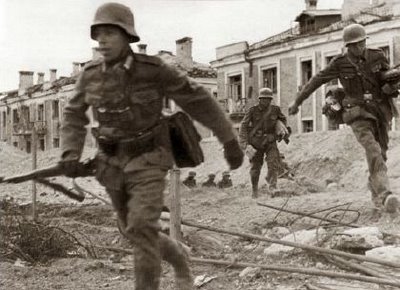
Popular Talk Radio host and Fox News commentator Glenn Beck made this comment back in December 2006:

“I’m telling you, with God as my witness… human beings are not strong enough, unfortunately, to restrain themselves from putting up razor wire and putting you on one side of it. When things—when people become hungry, when people see that their way of life is on the edge of being over, they will put razor wire up and just based on the way you look or just based on your religion, they will round you up. Is that wrong? Oh my gosh, it is Nazi, World War II wrong, but society has proved it time and time again: It will happen.”

Timothy Rollins of the American Partisan suggests in the wake of the Fort Hood shootings:

“While the dust is still settling and everything starts getting sorted out with the usual deflections away from the truth that this administration is notorious for doing, there is no better time than now to improve the safety of our military, and this can best be done by enacting the Great Muslim Purge from our military and other national security apparatuses. These people need to be removed from every security post, even to be completely removed from all levels of government employment, be it federal, state, county, city or other municipality. This applies especially to universities. To keep them employed in these positions places our food, water, and other essential services at unacceptable risk.”

Of course there is Doug Giles an unabashed “Christian” columnist for Townhall.com using scripture to justify torture making this delightfully Christian comment in one of his columns about the practice of water boarding:  “Please note: If Christ wasn’t cool with irrigating irate Islamicists for facts, I must admit, I would still have to green light our boys getting data from enemy combatants 007 style. Stick a fire hose up their tailpipe and turn it on full blast. I don’t care. I’m not as holy as most of you super saints or as evolved as some of you progressive atheists purport to be. Security beats spirituality in this scenario, as far as I’m concerned.”

This is so similar to the Nurnberg Laws and the Aryan Paragraph issued by the Nazis that it is scary.  Likewise the threats to American Moslems of placing them “behind razor wire” as we did to American Japanese citizens in World War II are chilling.  I wonder how Christians would react if an atheist or someone on the political left suggested all conservative Christians or members of pro-Life groups be imprisoned for the actions of Christians or pro-Life movement members like Scott Roeder or Eric Rudolph who killed to stop abortion or Fred Phelps and his Westboro Baptist Church?

This new found militancy has swept up the “Christian right” and others since 9-11 and has reached proportions that I could never have imagined. After my tour in Iraq I realized that much of what these people were saying was not Christian at all and when taken to their logical conclusion would be a police state in which anyone who opposed them would be persecuted. In Iraq I met many good Moslems fighting on our side against jihadists and terrorists many of whom have great respect and appreciation of the Christian faith and are more tolerant to Christians than many Christians are to Moslems.  These men put their families at risk to side with us to try to free Iraq from Al Qaida terror.  Almost all had lost family and friends to extremists.

As for the suggestions or demands that all Moslems be investigated and removed from the military these people insist that such action is necessary in the name of “security” and “protecting the Constitution.” All Moslems, even those who are loyal American citizens as well as those from Iraq and other nations who fight and die alongside Americans are placed on the same level as the fanatics and terrorists.  I question the motivations of the leaders of the movement but believe that most of the Christian conservatives have been caught up in the anger and the emotion of the times versus being true believers in what these men say.  That being said, you don’t have to be a true believer to be a willing accomplice in actions that first are not Christian and second trample on the Constitutional rights of American citizens.

I could keep citing examples but if someone can show me where this is condoned in the Gospels I would like to know.  The fact is that Christians are to place God first and defend the rights of others, even non-believers.  This is found not only in Scripture but runs through the Christian tradition across the denominational spectrum unfortunately there are Americans such as Marine Reservist Jasen Bruce have gone “terrorist hunting” and misidentifying a Greek Orthodox Priest as a Jihadist attacking him because of he didn’t speak English. http://www.tampabay.com/news/publicsafety/crime/article1050707.ece Admittedly people like Bruce are idiots, but it doesn’t take much to push some people over the edge.

The fact that so many people are suggesting such actions against American Moslems is troubling on a number of levels especially when those doing so claim to be Christians.  First is that it is the Church, or member’s thereof adopting a non-Christian worldview and attempting to use the state to enact legislation and laws against minority groups that they oppose, in this case the Moslems.  The fact that we live in a secular state, something that many of our Nation’s founding Fathers intended it to be, especially in regard to religion being mandated by the state is a point lost on many of these people.  Many Christians have completely embraced the mythology of the United States being a “Christian Nation.” With some even regarding the Constitution as a God inspired document.  For a more detailed critique of the Christian Nation mythology see Jared Holloway’s article on his Saepe Nihil Cogitamus website: http://jzholloway.wordpress.com/2009/08/04/did-the-founding-fathers-usa-found-the-nation-as-a-christian-nation/

Thankfully there are some, including the daughters of one of the men killed by Major Hasan who said on CBS The Early Show Kerry Cahill said:

“You can’t blanket a whole group of people. There’s extremists in every religion, and there’s extremists all over the world…when this man was obviously ill, I think.” Her sister Keely Vanacker said, “The death of our father or any of these victims shouldn’t be an excuse or a reason to begin to hate an entire group of people.”
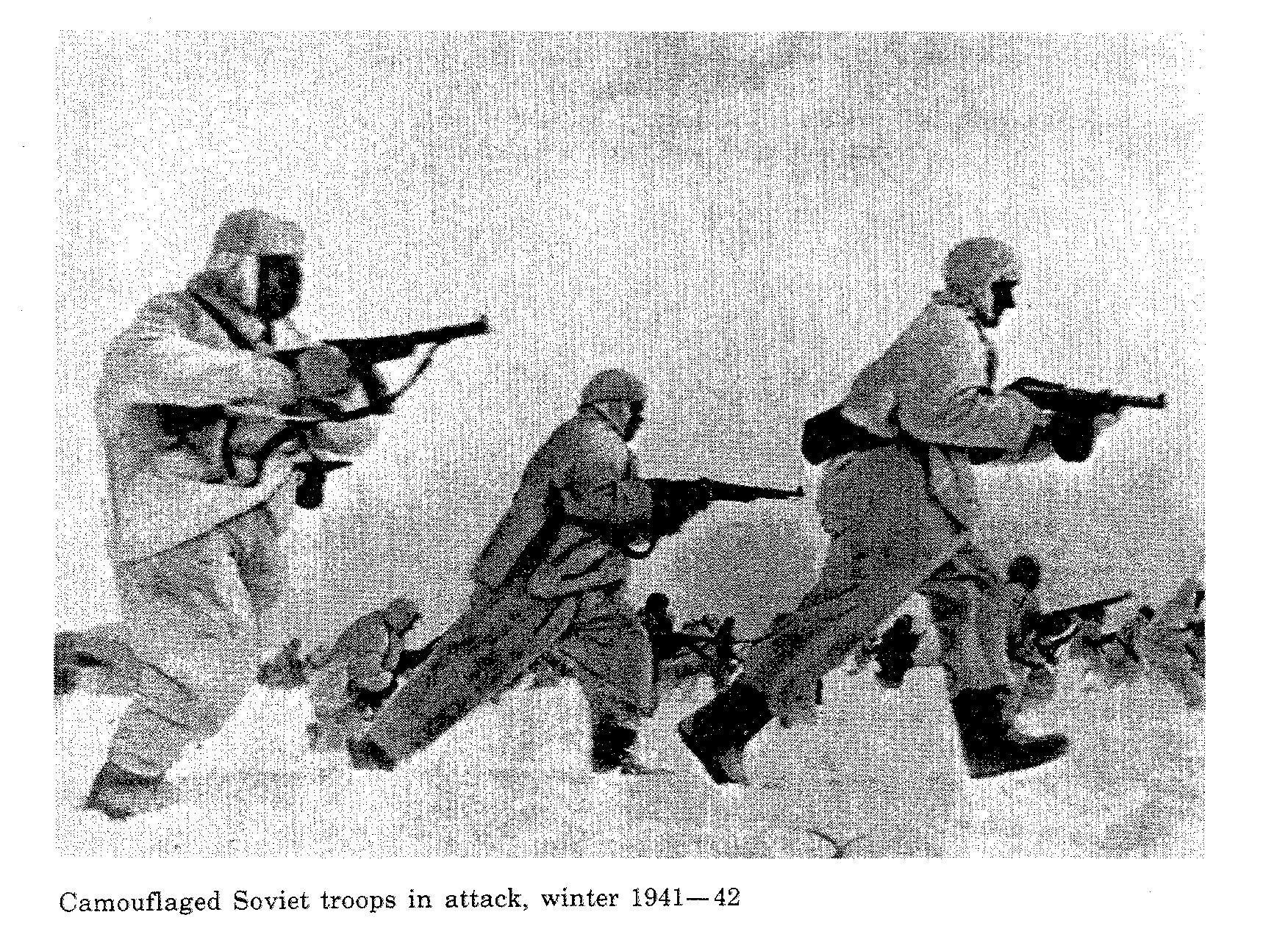
There are also leaders of the Religious Right who have taken a stand against such action, Reverend Rob Schenck, President of the National Clergy Council, comments in regard to the Moslem prayer vigil in Washington D.C. earlier this year:  “With over 1.5 billion Muslims in the world, it is important that Christians have an open dialogue with the Islamic community. The church must never be timid in reaching out to peoples and groups with differing beliefs and traditions. Too much is at stake for future generations not to begin this historic conversation. This is an opportunity that we cannot afford to miss.”
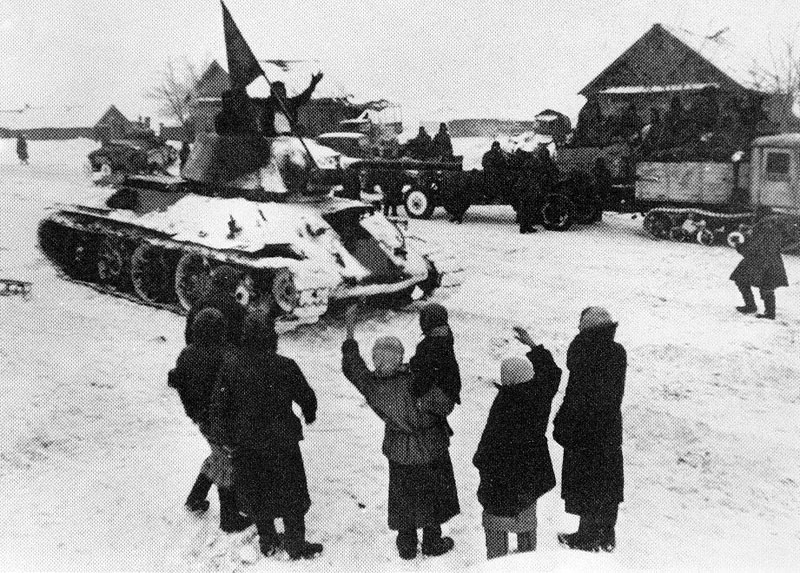
And the Reverend Patrick J. Mahoney, Director of the Christian Defense Coalition states:

“The heart of Christ is to reach out and build bridges to all peoples regardless of what their faith traditions or beliefs might be. Several years ago the Christian Defense Coalition began reaching out to the Muslim world which resulted in a prayer delegation going to Baghdad to pray for the nation of Iraq and Prime Minister Maliki. Since then we have had many conversations and discussions with Islamic leaders in Washington, D.C. and around the world. This news conference gives us another chance to dialogue and share with our Islamic neighbors. It also gives us the platform to celebrate the greatness of America where everyone is allowed to practice their faith tradition in the public square free from government interference of harassment. The prayer vigil on the lawn of the Capitol this Friday highlights that timeless truth. Since 9/11, the church should not run from Muslims in America but begin reaching out with God’s love.”

What the good people who suggesting these punitive actions against American Moslems do is dangerous, not just for Moslems and other minorities but for them.  American and English law is based on legal precedence.  Once something has been determined to be legal, or constitutional it is considered by the law to be settled law.  This is a point made by Chief Justice Roberts regarding Roe v. Wade at his confirmation hearings.  If Christians want to use the law against Moslems or for that matter any other minority be it religious or political they tread on very dangerous ground.  Not only do they make a mockery of the Gospel command to love our neighbors, care for the foreigners among us and to be a witness to non-Christians support policies or laws that if enacted could and very well would be used against them by their opponents.  Law is all about precedent and if such laws were enacted and upheld by the courts they would be settled law that could be used against anyone.   What these dear brothers and sisters fail to realize is that such laws can be turned against them if the state should ever decided based on the statements of actions of some that the Christian community is a threat to state security of the public welfare.  With the actions of some radical Christians who have committed murder and violence against political, social and religious opponents it would not be hard for the government to label whole churches as enemies of the state.  The law is a two edged sword and those who want to use it to have the state enforce their religious, social, ideological or political beliefs on others need to remember what comes around goes around.

The Confessing church understood this and many were imprisoned, exiled or killed for this belief.  The founding fathers of this country understood this too, that is why there is the Constitution protection of Religion in the First Amendment.  This was put in because Virginia Baptists who had been persecuted by Anglicans lobbied James Madison for the amendment in the Bill of Rights threatening to withdraw their support for his candidacy if he did not.  Niemöller would discover the depths of his earlier folly in prison telling one interviewer after the war:

“I find myself wondering about that too. I wonder about it as much as I regret it. Still, it is true that Hitler betrayed me. I had an audience with him, as a representative of the Protestant Church, shortly before he became Chancellor, in 1932. Hitler promised me on his word of honor, to protect the Church, and not to issue any anti-Church laws. He also agreed not to allow pogroms against the Jews, assuring me as follows: ‘There will be restrictions against the Jews, but there will be no ghettos, no pogroms, in Germany. I really believed given the widespread anti-Semitism in Germany, at that time—that Jews should avoid aspiring to Government positions or seats in the Reichstag. There were many Jews, especially among the Zionists, who took a similar stand. Hitler’s assurance satisfied me at the time. On the other hand, I hated the growing atheistic movement, which was fostered and promoted by the Social Democrats and the Communists. Their hostility toward the Church made me pin my hopes on Hitler for a while. I am paying for that mistake now; and not me alone, but thousands of other persons like me.”

It is easy for well meaning people Niemöller to be bought with promises of support by politicians and media types who speak the words they want to hear in difficult times.  So today I suggest the formation of an ecumenical Pastor’s Emergency League which will not be bought by the empty and godless promises of hate mongers on the right or the left.  Such a group of men and women spanning the breadth of the Christian tradition and others that see the danger of extremism of all types is becoming necessary.  Such a step is becoming necessary due to the militancy of the Christian right as well as the militancy of atheist groups who lobby against all public religious expression by any religion.  Such a League would respect the various creeds and statements of faith of each member’s denomination.  The movement o the right has set a dangerous course fraught with perils that they do not comprehend. Just allow those that they believe are oppressing or persecuting them now to be empowered with the precedent of laws discriminating against specific religious groups against the Christians that supported them in the first place.  It will be a bitter poison indeed when that happens to them later if American Moslems were to be targets by such laws.

We have entered a dangerous phase of American history.  These movements have the potential not only to oppress law-abiding and patriotic American Moslems and to crush the religious freedoms of all in this county. Suggesting that American citizens, including those who serve the county in the military or government of entire religious or ethnic groups be  targeted for punitive action on the basis of extremists and fanatics like Major Hasan sets a precedent that is chilling.

Niemöller would say it well in this poem:

First they came for the communists, and I did not speak out—because I was not a communist;
Then they came for the socialists, and I did not speak out—because I was not a socialist;
Then they came for the trade unionists, and I did not speak out—because I was not a trade unionist;
Then they came for the Jews, and I did not speak out—because I was not a Jew;
Then they came for me—and there was no one left to speak out for me.

Peace,

Padres Steve+

40 Comments

Filed under History, iraq,afghanistan, Military, philosophy, Religion

The American Campaign in Normandy

Note: This is the first of a series of four articles dealing with the campaign in France and Germany in 1944-1945.  The second installment “Mortain to Market-Garden” was posted a couple of months back. The link to that article is here: https://padresteve.wordpress.com/2009/09/17/mortain-to-market-garden-a-study-in-how-armies-improvise-in-rapidly-changing-situations/

The others should be posted in the coming weeks.


Introduction

eienhower and 101stEisenhower and 101st Airborne

The American landings on Omaha Beach were critical to the success of the Allied invasion northwestern Europe in the overall Overlord plan.  Without success at Omaha there would have been a strong chance that the German 7th Army and Panzer Group West could have isolated the remaining beachheads, and even if unsuccessful at throwing the Allies into the sea could have produced a stalemate that would have bled the Allies white.  This quite possibly could have led to a political and military debacle for the western allies which would have certainly changed the course of World War II and maybe the course of history.[i] This is not to say the Germans would have won the war, but merely to state that a defeat on Omaha could have changed the outcomes of the war significantly.   Subsequent to the successful landing there were opportunities both for the Allies and the Germans to change the way that the campaign unfolded, thus the battles leading up to the breakout at Avranches are critical to its development and the subsequent campaign in France.

OVERLORD: The Preparations

The planning for the Normandy invasion began in earnest after the QUADRANT conference in Quebec in August 1943.  The timetable for the operation was established at the Tehran conference where Stalin sided with the Americans on the need for an invasion of France in the spring of 1944.[ii] Prior to this there had been some planning by both the British and Americans for the eventual invasion initially named ROUNDUP.  These preparations and plans included a large scale raid at Dieppe in 1942 which ended in disaster but which provided needed experience in what not to do in an amphibious assault on a heavily defended beach.        The failure at Dieppe also darkened the mood of the Allies, the British in particular to the success of such operations, bringing to mind the failed Gallipoli campaign of 1915 as well as the opposed landings at Salerno and the USMC experience at Tarawa.[iii] Despite this the Americans led by General Marshall pushed for an early invasion of northwest Europe. Churchill and the British due to their weakness in land power pushed for land operations in the Mediterranean, and even in Norway as an option to the assault in France. The conflicted mindset of the Allies left them in the position of planning almost exclusively for the success of the initial landings and build up to the near exclusion of planning for the subsequent campaign once they landed. This especially included what one writer described as “the maze of troubles awaiting behind the French shore.”[iv]

lst-325 at normandyLST-325 at Normandy, Specialized Landing Ships and Craft were in High Demand and Short Supply in June 1944
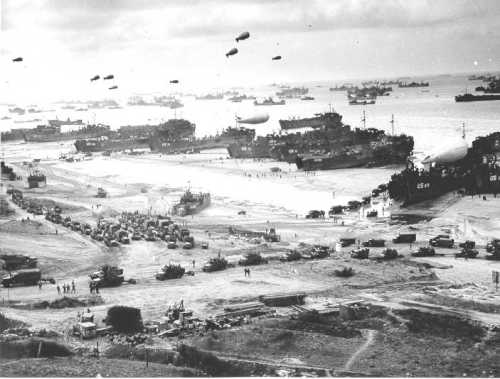
Despite conflicts between the Americans and British political and military leadership the planning for the Normandy landings detailed in NEPTUNE and OVERLORD moved ahead.  General Dwight Eisenhower was appointed as the commander of SHAEF with his major subordinates for Land, Air and Sea which caused consternation on both sides of the Atlantic.[v] [vi] The planned operation was expanded from the initial 3 division assault on a narrow front to a minimum 5 division assault on a broad front across Normandy[vii] supplemented by a strong airborne force.[viii] Overall the plan as it developed reflected a distinctly “American willingness to confront the enemy head-on in a collision which Britain’s leaders had sought for so long to defer.”[ix] It is ironic in a sense that the British avoidance of the head on attack was based on their known lack of manpower.  Britain had few infantry reserves to sustain the war effort and the Americans only late recognized their own deficiency in both quantity and quality of infantry forces on which their strategy depended.  That the western allies, so rich in material and natural resources would be so deficient in infantry manpower was a key constraint on the subsequent campaign in France and Germany.  The shortage of infantry forces would cause great consternation among the Allies as the campaign in France wore on. The Germans too faced manpower shortages due to the immense losses sustained on the Eastern front, those lost in Africa and those tied down in Italy, the Balkans and Norway as well as the drain caused by Luftwaffe Field Divisions and troops diverted into the Waffen-SS.   The German Army resorted to smaller divisions and the created many “static” divisions manned by elderly or invalid Germans to plug the gaps along the Atlantic wall. The Germans were also forced to recruit “Volksdeutsch” and foreign “volunteers” to fill out both Wehrmacht and Waffen-SS formations.

omaha_beach_low_tideOmaha Beach

Prior to the final decision to mount an invasion the Allied planners had contended with the location of the assault in northwestern France.  The Pas de Calais provided a direct route was rejected because it was where the Germans would expect the strike to occur and because it was where the German defenses were strongest.  The fiasco at Dieppe had provided ample proof of what could happen when making an assault into a heavily fortified port.  Likewise the mouth of the Seine near Le Harve was rejected because of the few beaches suitable for landing and because the forces would be split on both sides of the river.  Brittany was excluded due to its distance from the campaigns objectives in Germany.[x] This left Normandy which offered access to a sufficient number of ports and offered some protection from the weather. Normandy offered options to advance the campaign toward the “Breton ports or Le Harve as might be convenient.”[xi] Omaha beach, situated on the center right of the strike would be crucial to the success of the assault situated to the left of UTAH and the right of the British beaches.

Bild 101I-585-2184-33Outnumbered Paratroops of II Fallschirmjaeger Corps Delayed US Forces Considerably in Normandy
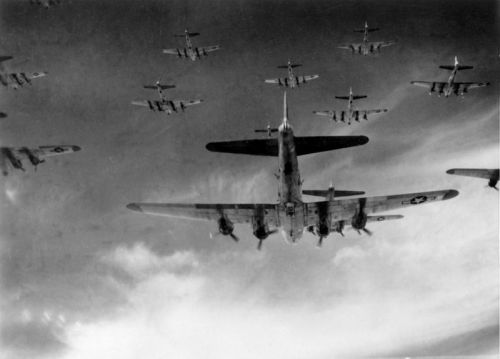
Once Normandy was selected as the location for the strike by the Allies, the planning sessions remained contentious.  This was especially true when the Allies debated the amount and type of amphibious lift that could be provided for the landings, particularly the larger types of landing ships and craft to support the Normandy invasion and the planned invasion of southern France, Operation ANVIL.  The increase in OVERLORD requirements for landing craft had an impact in the Mediterranean and resulted in ANVIL being postponed until later in the summer.

As part of their preparations the Allies launched a massive deception campaign, Operation FORTITUDE.  This operation utilized the fictitious First Army Group under the “command” of General George Patton. Patton was still smarting from his relief of command of 7th Army following slapping commanded an “Army Group” which incorporated the use of dummy camp sites, dummy tanks, aircraft and vehicles, falsified orders of battle and communications to deceive German intelligence.[xii] The success of this effort was heightened by the fact that all German intelligence agents in the U.K. had been neutralized or turned by the British secret service.  Additionally the Luftwaffe’s limited air reconnaissance could only confirm the pre-invasion build ups throughout England without determining the target of the invasion.[xiii] The German intelligence chief in the west, Colonel Baron von Roenne “was deceived by FORTITUDE’s fantasy invasion force for the Pas de Calais.”[xiv] Despite this Commander of the 7th Army recognized by 1943 that Normandy was a likely Allied target and efforts were made to shift 7th Army’s center of gravity from Brittany to Normandy.  The one potential German success in getting wind of when the Allied landings would occur was lost when German intelligence discovered two lines of Verlaine’s “Chason d’ Automme” in June 1944 which were to alert the French Resistance of the invasion.  The security section of 15th Army heard them transmitted on the afternoon of 5 June and notified General Jodl at OKW, but no action was taken to alert forces on the coast.[xv] Allied intelligence was aided by ULTRA intercepts of coded German wireless transmissions. However this was less of a factor than during the African and Italian campaigns as more German communications were sent via secure telephone and telegraph lines vice wireless.[xvi] Allied deception efforts were for the most part successful in identifying German forces deployed in Normandy. However they were uncertain about the location of the 352nd Infantry Division which had been deployed along OMAHA and taken units of the 709th Infantry Division under its command when it moved to the coast.[xvii]

b-17_group_in_formation8th Air Force Bombers Helped Hit German Oil Production Facilities and caused the Luftwaffe to spend its fighter squadrons over Germany than France
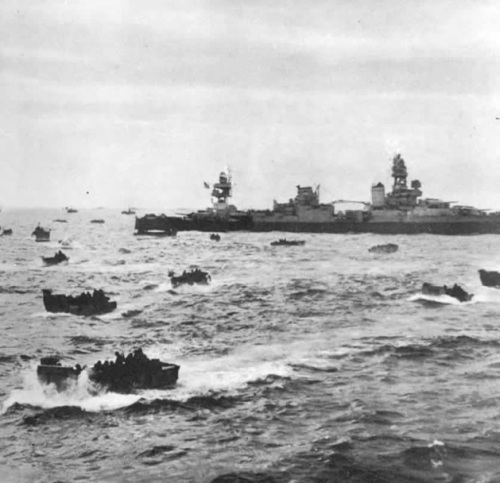
The Allied air campaign leading up to the invasion was based on attempting to isolate the invasion site from German reinforcements. Leigh-Mallory the Air Chief developed the “TRANSPORTATION PLAN” which focused efforts on destroying the French railroad infrastructure.[xviii] A more effective effort was led by General Brereton and his Ninth Air Force which was composed of medium bombers and fighters.  Brereton’s aircraft attacked bridges and rapidly achieved success in crippling German efforts to reinforce Normandy.[xix] Max Hastings gives more credit to the American bombing campaign in Germany to crippling the German defense in the west. General Spaatz and the 8th Air Force destroyed German production capacity in oil and petroleum as well as the degraded the German fighter force.  The American daylight raids so seriously degraded the German fighter force that it could not mount effective resistance to the invasion.[xx] Russell Weigley also notes that Albert Speer the Reich Armaments Minister said that “it was the oil raids of 1944 that decided the war.”[xxi]

omaha_beach_uss_augusta1944Landing craft passing USS Augusta

Planning and preparations for OMAHA were based around getting the 1st and 29th Infantry Divisions ashore and them securing a beachhead “twenty-five kilometers wide and eight or nine kilometers deep.”[xxii] American preparations were thorough and ambitious, but the American assault would go through the most heavily defended sector of German defenses in Normandy.  The landing beaches were wide and bordered by dunes which were nearly impassable to vehicles and “scrub covered bluffs thirty to fifty meters high…rough and impassable to vehicles even to tracked vehicles except at a few places.  The exits were unimproved roads running through four or five draws that cut the bluffs.”[xxiii] Dug in along those bluffs was the better part of the 352nd Division. The Americans compounded their selection of a difficult and heavily defended landing zone the Americans failed to take advantage of many of the “gadgets” that were offered by the British which in hindsight could have aided the Americans greatly.  The Americans made use of two battalions of DD (Dual Drive) tanks but turned down the offer of flail tanks, flamethrower tanks, and engineer tanks, the “funnies” developed by General Hobart and the British 79th Armored Division.[xxiv] Weigley believes that the American view of “tanks as instruments of mobility rather than of breakthrough power.” Likewise the Americans victories in the First World War were won by infantry with little tank support.[xxv] In this aspect the Americans were less receptive to utilizing all available technology to support their landings, something that when considering the fact that Americans were great lovers of gadgets and technology. The British use of the Armor, including the “Funnies” on the beaches to provide direct fire into German strong points lessened their infantry casualties on D-Day. Due to this lack of armor support on the beach American forces on OMAHA had little opportunity to exercise true combined arms operations during the initial landings.[xxvi]

dd-tankDual Drive or DD Tanks took heavy Losses at Omaha
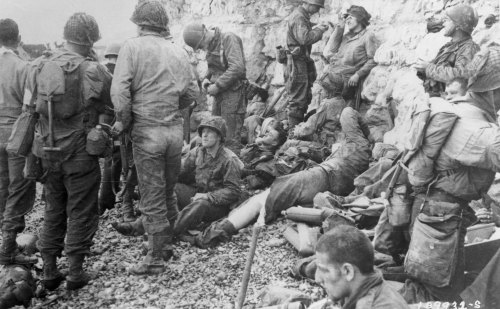
German preparations for an Allied landing in Normandy were less advanced than the Pas de Calais.  However they had made great strides since late 1943. Field Marshal Rommel greatly increased defensive preparations along the front, including the Normandy beaches.  One of Rommel’s initiatives was to deploy Panzer Divisions near the coast where they could rapidly respond to an invasion.  However Rommel did not get everything that he wanted.  The OKW only allotted him two Panzer Divisions to be deployed near the Normandy beaches.  Only one of these the 21st Panzer Division was deployed near Caen in the British sector.  One wonders the result had the 12th SS Panzer Division been deployed behind OMAHA. [xxvii]

OMAHA: The Landings

Like the rest of the Allied invasion forces the 1st and 29th U.S. Infantry Divisions set sail from their embarkation ports with the intent of landing on June 5th.  General Bradley, commanding the First Army until the American XII Army Group would be activated accompanied the invasion force.  The OMAHA landing was under the command of General Gerow and his V Corps while VII Corps led by the 4th Infantry Division landed at Utah supported by airdrops of the 82nd and 101st Airborne Divisions inland.  American command and control during the invasion was exercised from sea as in the Pacific, although General Officers were to go ashore with each of the American divisions.  A severe channel storm disrupted the plan to land on the 5th and Eisenhower delayed the invasion one day catching a break in the weather and electing to go on the 6th.[xxviii] This delay while uncomfortable for the embarked troops caused the Germans to believe that no invasion would take place until the next favorable tide and moon cycle later in the month.[xxix] The assumption that no invasion was possible ensured that a number of key senior German leaders, including Rommel were absent from the invasion front when the Allies landed.[xxx]

1st id normandy1st Infantry Divison Troops at the Omaha Beach Sea Wall
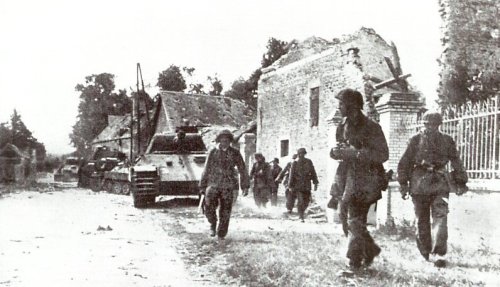
The landing beaches at OMAHA stretched about 6500 meters from Colleville-Sur-Mer to Vierville-Sur-Mere in the west.  The beaches are wide with bluffs overlooking them and a seawall between the beaches and the bluffs.  Additionally several small towns dot the beach. To the west of the town of Vierville, a prominent height overlooked the entire beachhead.  Named Pont du Hoc, it was believed to house a 150mm battery sighted where it could enfilade the OMAHA landing zones.  The Americans assigned to the 2nd Ranger Battalion to make a seaborne assault to land, scale the cliffs and take the battery.  Companies from this battalion made a heroic landing and scaled the cliffs to capture the strongpoint only to discover that the guns had not been emplaced.  The Rangers took heavy casualties and held their isolated beachhead against German counterattacks until relieved by the 29th Division on the morning of June 8th.[xxxi]

H-Hour for OMAHA was 0630.  Unfortunately the assault troops were transferred to their LCVP landing craft 16-20 kilometers from the beach.  The result was a long and dangerous ride in the small craft for the infantry.  Most of the infantry were completely soaked in sea spay and seasick before going ashore and they carried loads far above what they normally would carry into battle.[xxxii] The Armor support was one battalion of DD tanks, the 741st Armored Battalion, supporting the 16th Infantry Refiment of 1st Infantry Division. These were also launched too far out and nearly all of the tanks were swamped and lost before firing a shot in anger.[xxxiii] Other American support units needed to provide firepower on the beach were equally unfortunate. Weigley notes that at OMAHA “at least 10 of the LCVPs sank” as did “the craft carrying almost all of the 105mm howitzers that were to be the first artillery ashore after the tanks.”[xxxiv] The losses would cripple the assault on OMAHA and nearly cause its abandonment.

panzer111Panzers and Grenadiers in Normandy

As the soldiers of the American divisions on OMAHA came ashore they faced German defenders of the 352nd, 716th and a regiment of the 709th Infantry Division, the latter under the tactical command of the 352nd.   Without the bulk of their tanks artillery and lacking close air support the Americans struggled across the beaches and were cut down in large numbers before being pinned down behind the sea wall.[xxxv] With the Americans pinned down on the beach unable to advance, the time tables for the reinforcing waves became snarled amid the German beach obstacles which had not been cleared.  This was in large part due to 40% casualties among the Combat Engineers and the loss of all but five bulldozers.[xxxvi] Naval officers were frustrated in their attempts to provide naval gunfire support by the lack of identifiable targets on the beaches.  Yet German strongpoint’s were “knocked out by either by superbly directed vigorous gunfire from destroyers steaming as close as 800 yards offshore, or by determined action from Rangers or infantry.[xxxvii]

Soldiers ashore discovered that they were not facing the static 716th Division but the veteran 352nd Division as well.[xxxviii] Only the leadership and actions of Brigadier General Norman Cota the 29th Division’s Deputy Commander and Colonel Charles Canham of the 116th Infantry kept the situation from complete collapse.  They were able to rally their troops. Under their leadership small units from the 116th which had its linage back to the “Stonewall Brigade” as well as elements of the 16th and 18th Infantry Regiments began to move forward.  Surviving junior leaders began to lead survivors through the dunes and up the bluffs to attack German defenders of the roads leading up from the beach from the flank and rear.  A mid-day break in the weather allowed some close tactical air support giving the troops badly needed support.

With the situation desperate General Bradley considered the evacuation of OMAHA.  At sea events were as confused as Bradley and his staff attempted to make sense of what was going on.  Even later in the evening there was discussion of diverting all further reinforcements from OMAHA to the British beaches.[xxxix]At 1330 hours “Gerow signaled Bradley: “Troops formerly pinned down on beaches…advancing up heights behind beaches.”[xl] By the end of the day Bradley’s aid Major Hansen noted Bradley’s comments to Collins: “They are digging in on Omaha beach with their fingernails. I hope they can push in and get some stuff ashore.”  And Montgomery: “Someday I’ll tell Gen[eral] Eisenhower just how close it was for a few hours.”[xli]

me-at-normandy

The Author Teaching at Point du Hoc in 2004

The landings at OMAHA succeeded at a cost of over 2000 casualties.  Critical to the success of the landings were the German inability to reinforce their defending troops on the beach.  Likewise the weakness of the units available to mount the standard counterattack that was critical to German defensive plans on D-Day itself kept the Germans from driving the Americans back into the Channel. The 352nd Division fought superbly under the full weight of V Corps and the British XXX Corps on its right suffering heavy casualties as they contested every inch of ground.  The 716th Division composed of second rate troops melted under the onslaught.  Allied air supremacy played a key role as sorties by the 8th and 9th Air Forces helped keep German reinforcements from arriving and interdicted counter attacks inland.  Weigley credits the Allied air superiority with the success of the landings and with limiting casualties.[xlii] Von Rundstedt and other German commanders in France were limited by the delay and refusal of Hitler and OKW to release Panzer reserves when needed most early on June 6th.  By the close of D-Day allied forces had secured the five invasion beaches but not achieved their objectives of taking Caen and Bayuex.  Since the forces on the various beachheads had not linked up the beaches would have been extremely vulnerable had the Germans been able to mount a rapid counterattack by Panzers and strong infantry formations as they had at Salerno.

Major Battles to the Breakout at Avranches


Securing the Beachheads:

It took the V and VII Corps nearly a week to secure the beachheads. German forces including the stalwart 352nd Division resisted stubbornly and mounted sharp local counterattacks which kept the Americans off balance.  Elements of the 29th Division and the 90th Division began to push inland and to expand the beachhead toward UTAH. Opposed by the 352nd Division and elements of the 91st Airlanding Division and other non-divisional units the fighting revealed the inexperience of the American infantry formations and the uneven quality of their leadership.  As the Americans tackled the Germans in the labyrinth of the Bocage country the defensive skill of the Germans cost many American lives and delayed the joining of the beachheads. On the 13th the link up was solid enough to enabling the Americans to conduct the follow up operations needed to expand the beachhead, secure Cherbourg and clear the Cotentin.

tiger-tank normandyTiger Tank and Crew in Normandy

In some American divisions the hard fighting triggered a leadership crisis.  The lack of success of the 90th Division led General “Lightening Joe” Collins of VII Corps relieve the division commander and two regimental commanders of command, a portent of things to come with other American units.[xliii] As the V and VII corps pushed into the “Bocage” they were followed by a massive build up of troops and equipment delivered to the beaches and to the artificial “Mulberry” harbors.  Despite their numeric superiority, air supremacy and massive Naval gunfire support and facing the weakened 352nd, 91st and the 6th Parachute Regiment and other less than quality formations, survivors of the static divisions, the Americans made painfully slow progress as they moved off the beachhead and into the Bocage.[xliv]

The Capture of Cherbourg

Once the beachheads had been consolidated the Americans turned their attention toward Cherbourg. Cherbourg was the major naval port at the far northwest tip of the Cotentin.  D-Day planners counted on its swift capture and rehabilitation to serve as a supply port for the Allied forces. The 9th Division drove south to the coast near Barneville on the 18th of June cutting off the German forces covering the approaches to Cherbourg.[xlv] This put the Germans in a bind as the 7th Army “had to split its forces in the peninsula in order to hold the fortress a little longer and thus to gain time for the establishment of the southern front on the Cotentin peninsula.[xlvi] The German forces arrayed before Cherbourg waged a desperate defense centered around the 243rd Infantry Division and other assorted battle groups of LXXXIV Corps, whose commander General Marcks one of the best German Generals was killed in action on 12 June.[xlvii] The U.S. VII Corps under Collins with the 9th, 4th and 79th Divisions pushed up the peninsula capturing Cherbourg on June 29th.  Bradley pushed hard for the capture of the port as the Mulberries had been ravaged by a severe Channel storm the week prior. The port of Cherbourg was thoroughly demolished by German engineers and would not be fully operational for months. The loss of the Mulberries and delay in Cherbourg’s availability meant that few supplies were landed on the beaches would “hinder the escape from the constricting land of the hedgerows into which the Americans had come in search of a port.[xlviii]

The Battle of Caumont Gap

V Corps under Gerow made a cautious advance by phase lines toward Caumont, St Lo and Carentan.  The deliberate advance by the Corps toward a line weakly held by the Reconnaissance battalion of the 17th SS Panzer Grenadier Division was directed by Bradley who did not want to divert attention from the effort against Cherbourg.   After capturing Caumont V Corps halted and continued aggressive patrolling to deceive the Germans while digging in.[xlix] The possibility existed that a strong push against the weak German line could have led to an opportunity to envelope the German line west of Caen. This was a missed opportunity that in part led to the bloody and controversial campaign to capture Caen.[l]

British efforts around Caen

Montgomery had ambitious plans to break out of Normandy by capturing Caen on D-Day and driving toward Falaise and Argentan.  The British plans for this were frustrated by the rapid reinforcement of the sector by the Germans and the activities of 21st Panzer, Panzer Lehr, and the 12th SS Panzer Divisions.  A flanking maneuver at Villers-Bocage was frustrated by a few Tiger tanks led by the legendary Waffen SS Panzer commander Captain Michael Wittman whose tanks devastated a British Armored battalion.[li] A series of disastrous attacks toward Caen (EPSOM, CHARNWOOD and GOODWOOD) strongly supported by air strikes and Naval gunfire finally succeeded in taking that unfortunate city on July 18th but failed to take the heights beyond the town.[lii] Against crack well dug in German forces the British took heavy casualties in tanks and infantry seriously straining their ability to conduct high intensity combat operations in the future.[liii] The one benefit, which Montgomery would claim after the war as his original plan was that German forces were fixed before Caen and ground down so they could not be used against Bradley’s breakout in the west at St Lo.[liv]

Holding the line Michael_Wittmann_auf_Panzer_VI_(Tiger_I)Panzer Ace Captain Michael Wittmann on His Tiger Tank
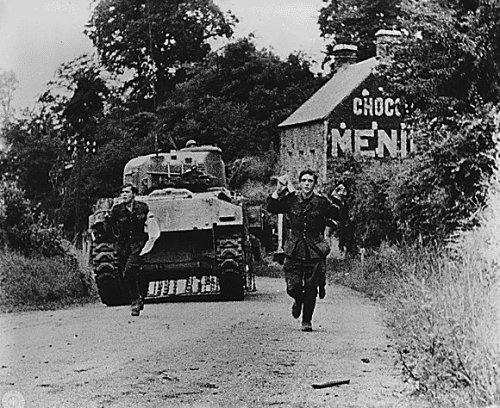
Clearing the Bocage: The Battle of the Cotentin Plain

Other German forces arrived, and reinforced the Caumont gap which no longer “yawned invitingly in front of V Corps.” [lv] Bradley wished to push forward rapidly to achieve a breakthrough in the American sector.[lvi] Facing the most difficult terrain in France amid the Bocage and swamps that limited avenues of approach to the American divisions committed to the offensive.  The Americans now faced their old foe the 352nd division as well various elements of II Parachute Corps, the 17th SS Panzer Grenadier and Panzer Lehr Divisions.  American tanks and infantry made slow progress and incurred high losses as they dueled the Germans at close range.  In the VIII Corps sector alone the attack “consumed twelve days and 10,000 casualties to cross eleven kilometers of the Bocage…the achievements of the VII and XIX Corps were no better than comparable.[lvii]

St. Lo

St. Lo was a key to Bradley’s breakout efforts.  His Army had to capture it and the roads leading out of it to launch Operation COBRA along the coast.  The task of capturing St. Lo was assigned to GEROW’S V Corps and Corlett’s XIX Corps.  They faced opposition from the tough paratroops of the German 3rd Parachute Division of II Parachute Corps.  The 2nd, 29th, 30th and 83rd Divisions fought a tough battle advancing eleven kilometers again with high numbers of casualties especially among the infantry to secure St. Lo on 18 July.[lviii] They finally had cleared the hedgerows.  St Lo epitomized the struggle that the American Army had to overcome in the Bocage.  Hard fighting but outnumbered German troops in excellent defensive country exacted a terrible price in American blood despite the Allied control of the skies.[lix]

st-loUS Tanks and German Prisoners at St Lo

Operation COBRA

With the Bocage behind him Bradley desired to push the Germans hard.  COBRA was his plan to break out of Normandy.  Bradley ably assisted by Collins they realized that the better terrain, road networks favored a breakout.  American preparations included a technical advance that allowed tanks to plow through hedgerows. This was the “Rhino” device fashioned by American troops which was installed on 3 of every 5 First Army Tanks for the operation.[lx] VII Corps was to lead the attack which was to begin on July 24th. American planning was more advanced than in past operations.  Collins and Bradley planned for exploitation operations once the breakthrough had been made. A massive air bombardment would precede the attack along with an artillery barrage by Collins corps artillery which was reinforced by additional battalions.   A mistake by the heavy bombers in the 24th resulted in the American troops being hit with heavy casualties and a postponement of the attack until the 25th.[lxi] The following day the attack commenced.  Another mistake by the bombers led to more American casualties[lxii] but VII Corps units pressed forward against the determined resistance of the survivors of Panzer Lehr and the remnants of units that had fought the Americans since the invasion began.  Although it was a “slow go” on the 25th Bradley and his commanders were already planning for and beginning to execute the breakout before the Germans could move up reinforcements.  The 26th of June brought renewed attacks accompanied by massive air strikes.  While not much progress was made on the 26th, the Americans discovered on the 27th that the German forces were retreating.  The capture of Marigny allowed VIII Corps to begin exploitation down the coastal highway to Coutances.  On the 27th General Patton was authorized to take immediate command of VIII Corps a precursor to the activation of his 3rd Army.  COBRA ripped a hole in the German line and inflicted such heavy casualties on the German 7th Army that it could do little to stop the American push.[lxiii] As the American forces pushed forward they reinforced their left flank absorbing the local German counterattacks which were hampered by the Allied close air support.

Avranches and Beyond

As the breakthrough was exploited the command of the forces leading it shifted to Patton and the newly activated 3rd Army. By the 28th VIII Corps led by the 4th and 6th Armored Divisions had reached Avranches and established bridgeheads over the See River with additional bridges being captured intact on the 30th.[lxiv] The capture of Avranches allowed the Americans to begin exploitation operations into Brittany and east toward the Seine. Weigley notes that for the first time in the campaign that in Patton the Americans finally had a commander who understood strategic maneuver and would use it to great effect.[lxv]

Conclusion

The American campaign in Normandy cost the U.S. Army a great deal. It revealed weaknesses in the infantry, the inferiority of the M4 Sherman tank to most German types, problems in tank-infantry cooperation and also deficiencies in leadership at senior, mid-grade and junior levels. Heavy casualties among infantry formations would lead to problems later in the campaign. Numerous officers were relieved including Division and Regimental commanders.  Nonetheless during the campaign the Americans grew in their ability to coordinate air and ground forces and adapt to the conditions imposed on them by their placement in the Cotentin.  The deficiencies would show up in later battles but the American Army learned its trade even impressing some German commanders on the ground in Normandy.[lxvi]


[i] See the alternative history of by Peter Tsouras Disaster at D-Day: The Germans Defeat the Allies, June 1944, Greenhill Books, London 1994. Tsouras describes the defeat of the Omaha landings and the effect on the course of the campaign leading to the overthrow of Hitler and a negotiated armistice in the west.  While this outcome could be rigorously debated other outcomes could have led to the fall of the Roosevelt and Churchill governments and their replacement by those not committed to unconditional surrender or a continuation of the war that brought about more German missile attacks on the U.K. and the introduction of other advanced German weapons that could have forced such a settlement. Another option could have led to the dropping of the Atomic Bomb on a German city vice Hiroshima.

[ii] Weigley, Russell F. Eisenhower’s Lieutenants: The Campaign of France and Germany, 1944-1945, Indiana University Press, Bloomington IN, 1981 p.33

[iii] Ibid pp. 34-35

[iv] Ibid p.35

[v] General Montgomery 21st Army group and Land Forces, Admiral Sir Bertram Ramsey as Allied Naval Expeditionary Force and Air Marshall Sir Trafford Leigh-Mallory as Commander in Chief Allied Expeditionary Air Force. Weigley p.43

[vi] Max Hastings in Overlord: D-Day and the Battle for Normandy Vintage Books, New York, 1984, comments that many in Britain wondered if Eisenhower with the lack of actual battle experience could be a effective commander and that Eisenhower was disappointed in the appointment of Leigh-Mallory and Ramsey, and had preferred Alexander over Montgomery, pp. 28-29.

[vii] Ibid. Weigley p.40.  Montgomery was the first to object to the 3 division narrow front invasion rightly recognizing that seizing Caen with its road junctions could provide a springboard for the campaign into open country.

[viii] Ibid. p.37

[ix] Hastings, Max. Overlord: D-Day and the Battle for Normandy Vintage Books, New York, 1984 p.29  Hastings finds the irony in the selection of the British officers to execute the plan that reflected the American way of thinking.

[x] The Germans agreed with this in their planning leaving Brittany very lightly defended.  See  Isby, David C. Ed. “The German Army at D-Day: Fighting the Invasion.” p.27 The report of General Blumentritt, Chief of Staff OB West noted that only 3 divisions were assigned to Brittany.

[xi] Ibid. Weigley, pp. 39-40

[xii] Ibid. p.73

[xiii] See Isby p. 69.  General Max Pemsel of 7th Army noted that “During  the spring of 1944, Seventh Army received only tow good photographs of British southern ports, which showed large concentrations of landing craft.”

[xiv] Ibid. Hastings p.63.  Hastings comments also about the success of using the turned Abwehr agents.

[xv] Warlimont, Walter. “Inside Hitler’s Headquarters: 1939-1945.” Translated from theGerman by R.H. Barry. Presidio Press, Novao CA, English Edition Copyright 1964 Wiedenfeld and Nicholson Ltd. Pp.422-423

[xvi] Ibid. Weigley pp. 53-54

[xvii] Ibid. p. 67

[xviii] Ibid. pp.57-64  Weigley spends a great deal of time on the wrangling between Eisenhower, Leigh Mallory and Spaatz on the nature of the plan, the allocation of forces both strategic and tactical assigned to carry it out and its success, or in the light of postwar analysis the lack of effect that it had on German operations.

[xix] Ibid. p.67-68.

[xx] Ibid. Hastings pp. 43-44 In large part due to the long range P-51 Mustang which accompanied the American bombing raids beginning in 1943.  Another comment is that the campaign drew the German fighters home to defend Germany proper and prevented their use in any appreciable numbers over the invasion beaches.

[xxi] Ibid. Weigley p.69

[xxii] Ibid. p.89

[xxiii] Ibid. pp. 88-89

[xxiv] Ibid. p.87

[xxv] Ibid. Weigley also talks about the rejection of General Corlett’s ideas to use Amtracks used by the Marines in the Pacific to land on less desirable, but less defended beaches to lessen casualties on the beaches and the need for additional support equipment even on smooth beaches.  One of Corlett’s criticisms was that too little ammunition was allotted to supporting the landings and not enough supporting equipment was provided. pp. 46-47

[xxvi] Hastings notes that with the strength and firepower of the German forces on OMAHA that many of these vehicles had they been employed would like have ended up destroyed further cluttering the beachhead. “Overlord” p.102

[xxvii] The battle over the deployment of the Panzer Divisions is covered by numerous historians.  The source of the conflict was between Rommel who desired to place the Panzer Divisions on the Coast under his command due to the fear that Allied air superiority would prevent the traditional Panzer counterthrust, General Gyer von Schweppenburg commander of Panzer Group West (Later the 5th Panzer Army) and Field Marshal Von Rundstedt who desired to deploy the divisions order the command of Rundstedt for a counter attack once the invasion had been launched, a strategy which was standard on the Eastern Front, and Hitler who held most of the Panzer reserve including the SS Panzer Divisions under his control at OKW.  Hitler would negotiate a compromise that gave Rommel the satisfaction of having three Panzer Divisions deployed behind coast areas in the Army Group B area of responsibility.  21st Panzer had those duties in Normandy.

[xxviii] Ibid. p.74-75

[xxix] Von Luck, Hans.  “Panzer Commander“ Dell Publishing, New York, 1989 pp. 169-170.  Von Luck a regiment commander in 21st Panzer noted that General Marcks of 84th Corps had predicted a 5 June invasion at a conference May 30th.

[xxx] Almost every D-Day historian talks about the weather factor and its effect on the German high command’s reaction to the invasion.  Rommel was visiting his wife for her birthday and planned to make a call on Hitler. Others including commanders of key divisions such as the 91st Airlanding Division were off to a war game in Rennes and the 21st Panzer Division to Paris.

[xxxi] Ibid. Weigley p. 96

[xxxii] See Cornelius Ryan, “The Longest Day” Popular Library Edition, New York 1959. pp. 189-193 for a vivid description of the challenges faced by soldiers going from ship to landing craft and their ride in to the beaches.

[xxxiii] Ibid. Weigley. p.78 Weigley talks about the order for the tanks to be carried ashore on their LCTs that did not get transmitted to the 741st.

[xxxiv] Ibid.

[xxxv] Ibid. Weigley  p. 87 The weather prevented the aerial bombardment from being effective. Because the bombers could not see their targets they dropped their bomb loads further inland, depriving the infantry of support that they were expecting.  Naval gunfire support had some effect but had to be lifted as the troops hit the beach leaving much of that support to come from Destroyers and specially equipped landing craft which mounted rockets and guns.

[xxxvi] Ibid. Hastings. pp. 90-91.

[xxxvii] Ibid. p.99

[xxxviii] Ibid. Weigley p.80

[xxxix] Ibid. p.101  Also see Weigley p.80

[xl] Ibid. p.99

[xli] Ibid. Weigley. p.95

[xlii] Ibid. p.94

[xliii] Ibid. p.99 Both Weigley and Hastings make note of the failure of both the Americans and British to train their troops to fight in the bocage once they had left the beaches.

[xliv] Ibid. Hastings. pp.152-153

[xlv] Ibid. Weigley p.101

[xlvi] Isby, David C., Ed. “Fighting in Normandy: The German Army from D-Day to Villers-Bocage.” Greenhill Books, London,  2001.  p.143

[xlvii] Ibid. Hastings p.173 Allied fighter bombers exacted a fearful toll among German commanders. The Commanders of the 243rd and 77th Divisions fighting in the Cotentin were also killed by air attacks on the 17th and 18th.   Further east facing the British the commander of the 12th SS Panzer Division, Fritz Witt on the 17th.

[xlviii] Ibid. Weigley. p.108

[xlix] Ibid. p.111-112.

[l] Ibid.

[li] The efforts of the 51st Highland Division and 7th Armored Division were turned aside by the Germans in the area and were dramatized by the destruction of  a British armored battalion by SS Captain Michael Wittman and his platoon of Tiger tanks.  See Hastings pp.131-135.

[lii] The British 8th Corps under General O’Connor lost 270 tanks and 1,500 men on 18 July attempting to crack the German gun line on the ridge beyond Caen. Weigley, pp.145-146.

[liii] Hastings comments about the critical British manpower shortage and the pressures on Montgomery to not take heavy casualties that could not be replaced. Overlord. pp.241-242.

[liv] Ibid. Weigley pp.116-120

[lv] Ibid. p.122

[lvi] Ibid. p121 Bradley told Eisenhower “when we hit the enemy this time we will hit him with such power that we can keep going and cause a major disaster.”

[lvii] Ibid. 134

[lviii] Ibid. Weigley. pp. 138-143.  Weigley notes of 40,000 U.S. casualties in Normandy up to the capture of St. Lo that 90% were concentrated among the infantry.

[lix] Weigley quotes the 329th Regiment, 83rd Division historian “We won the battle of Normandy, [but] considering the high price in American lives we lost. P.143. This is actually a provocative statement that reflects America’s aversion to massive casualties in any war.

[lx] Ibid. p.149

[lxi] Ibid. p. 152

[lxii] Ibid. pp. 152-153.  Among the casualties were the command group of the 9th Division’s 3rd Battalion 47th Infantry and General Leslie McNair who had come to observe the assault.

[lxiii] Ibid. pp.161-169. Weigley notes the advances in U.S. tactical air support, the employment of massive numbers of U.S. divisions against the depleted German LXXXIV Corps, and the advantage that the “Rhino” device gave to American tanks by giving them the ability to maneuver off the roads for the first time.

[lxiv] Ibid. pp.172-173.

[lxv] Ibid. p.172

[lxvi] Ibid. Isby, David C. “Fighting in Normandy,” p.184, an officer of the 352nd Division referred to the American soldier “was to prove himself a in this terrain an agile and superior fighter.”

Bibliography

Carell, Paul. “Invasion: They’re Coming!” Translated from the German by E. Osers, Bantam, New York 1964.

Hastings, Max. Overlord: D-Day and the Battle for Normandy Vintage Books, New York, 1984

Isby, David C. Ed. “The German Army at D-Day: Fighting the Invasion.” Greenhill Books, London 2004

Isby, David C., Ed. “Fighting in Normandy: The German Army from D-Day to Villers-Bocage.” Greenhill Books, London, 2001.

Ryan, Cornelius, “The Longest Day” Popular Library Edition, New York 1959

Tsouras, Peter. “Disaster at D-Day: The Germans Defeat the Allies, June 1944,” Greenhill Books, London 1994.

Von Luck, Hans.  “Panzer Commander“ Dell Publishing, New York, 1989

Warlimont, Walter. “Inside Hitler’s Headquarters: 1939-1945.” Translated from theGerman by R.H. Barry. Presidio Press, Novao CA, English Edition Copyright 1964 Wiedenfeld and Nicholson Ltd. Warlimont, Walter. “Inside Hitler’s Headquarters: 1939-1945.” Translated from theGerman by R.H. Barry. Presidio Press, Novao CA, English Edition Copyright 1964 Wiedenfeld and Nicholson Ltd.

Weigley, Russell F. Eisenhower’s Lieutenants: The Campaign of France and Germany, 1944-1945, Indiana University Press, Bloomington IN, 1981

5 Comments

Filed under Loose thoughts and musings