Tag Archives: alexander stephens

When Political Parties Implode, Pt 4: The Secession Crisis

Friends of Padre Steve’s World

Over the past six months or so I have alluded to events in the Republican Party that make it appear that it is about to implode. I am a historian, and there is precedent in American history for the collapse of a national political party. This happened before in the 1854 collapse of the Whig Party, the 1912 division in the republican Party, but more importantly during the 1858 through 1860 collapse of the Democratic Party. Now I am not a person to say that history repeats itself. there are similarities and trends, but nothing is ever exactly the same as to why different parties collapse.  

While the issues of each day may be different there are common threads of humanity, hubris and hatred that unite to destroy political parties. I think that this is happening now in the Republican Party, and that it is possible that something similar may occur with the Democratic Party in the coming years. So it is important to look at history whenever possible to see how different political leaders responded in times of intense ideological, economic, social, national, and sectional division.

I decided to add an afterward to the three part series on the disaster that the Democratic Party made for itself and the country between 1858 and 1860. The third part deals with the after effects of results of the democratic Party split in the election of 1860. This deals with the secession crisis that enveloped the nation as former Southern Democrats led their states into rebellion against the Union and Northern Democrats joined the anti-secession party in the North.

This is a section of one of the chapters of my Civil War and Gettysburg text and I hope that you will find it interesting and thought provoking.

Peace,

Padre Steve+
disunion_carolina-blog427

After the election Lincoln tried to reassure the South that he would remain true to his campaign promise not to interfere with slavery where it already existed, but he also refused to give in to threats of secession. Despite his belief that anything that he said would be twisted into the exact opposite by Southerners, Lincoln released a statement through Senator Lyman Trumbull in Springfield saying:

“The states will be left in complete control of their affairs and property within their respective limits as they have under any administration. I regard it as extremely fortunate for the peace of the whole country, that this point, upon which the Republicans have been for so long, as so presently misrepresented, is now brought to a practical test, and placed beyond the possibility of doubt. Disunionists per se, are now in hot haste to get out of the Union, precisely because they perceive they cannot, much longer, maintain apprehension among the southern people that in their homes, and firesides, and lives, are to be endangered by the action of the Federal Government.” [1]

On his way to Washington D.C. the President Elect stopped in New York and gave a speech “promising that he would “never of his own volition “consent to the destruction of this Union,” he qualified this promise with “unless it were that to be that thing for which the Union itself was made.” [2] Two days later Lincoln speaking Independence Hall in Philadelphia Lincoln further detailed what he meant in New York, going back to the premise of the Declaration of Independence in which “he asserted that he “never had a feeling politically that did not spring from the sentiments embodied in the Declaration…. I was not the mere matter of separation of the colonies from the mother land; but rather something in that Declaration” that provided “hope for the world for all future time. It was that which gave promise that in due time the weights should be lifted from the shoulders of all men, and that all should have an equal chance.” [3] It was a thought that he would continue to refine in the Emancipation Proclamation Gettysburg Address, the Thirteenth Amendment and in his Second Inaugural Address.

Stephen A. Douglas tried to reassure the Southern leaders as well even as argued against secession. He reminded Southerners how he had fought against Lincoln and the platform of the Republican Party and stated “that the mere election of any man to the Presidency does not furnish just cause for dissolving the Union.” [4] Addressing Southern concerns in a pragmatic way, the Little Giant tried to diffuse Southern fears by reminding them that the answer to their fears lay in the checks and balances laid out in the Constitution and in the ballot box. Douglas’s next words redound to the present day:

“It is apprehended that the policy of Mr. Lincoln and the principles of his party endanger the peace of the slaveholding states. Is that apprehension founded? No, it is not. Mr. Lincoln and his party lack the power, even if they had the disposition, to disturb or impair the rights and institutions of the South. They certainly cannot harm the South under existing laws. Will they have the power to repeal or change these laws, or to enact others? It is well known that they will be a minority in both houses of Congress, with the Supreme Court against them. Hence no bill can pass either house of Congress impairing or disturbing these rights or institutions of the southern people in any manner whatever, unless a portion of southern senators and representatives absent themselves so as to give an abolition majority in consequence of their actions.

In short, the President will be utterly powerless to do evil…. Four years shall soon pass, when the ballot box will furnish a peaceful, legal, and constitutional remedy for the evils and grievances with which the country might be afflicted.” [5]

An attempt in Congress led by President James Buchanan and Senator John J. Crittenden of Kentucky to bring about a constitutional compromise to mollify both sides was considered. A committee of thirteen senators was convened to entertain various compromise propositions, however, most of the suggested compromises were heavily weighted toward Southern interests, though it promised to restore the prohibition of slavery north of the line drawn in the Missouri Compromise.

lincolnearly

Abraham Lincoln

A frustrated Lincoln wrote, “I’ll tell you now what bothered me: the compromises measures introduced in Congress required the Republicans to make all the concessions.” [6] Lincoln warned Crittenden that such proposals would not be acceptable: “Entertain no proposition for a compromise in regard to the extension of slavery…. The instant you do they have us under again…. The tug has to come & better now than later.” [7]

Lincoln had seen how for four decades Southerners had pushed for compromises that only benefited them and the extension of slavery, even at the expense of Northern states rights and he was not about to let it happen again. The President Elect wrote:

“The Crittenden plan, I feared, would put the country back on the high road to a slave empire. Whether it was the revival of the Missouri Compromise line or a popular sovereignty, it was all the same. “Let neither be done,” I warned Republicans in Washington, “and immediately filibustering and extending slavery recommences. Within a year, we shall have to take Cuba as a condition on which the South will stay in the Union. Next it will be Mexico, then Central American. On the territorial question, I am inflexible. On that point hold firm as a chain of steel…” [8]

In the South the efforts of staunch Southern Unionists like Alexander Stephens to discourage secession were dismissed as the movement toward secession became a passion filled revolutionary movement, which acted as a cathartic movement for many Southerners. Like Douglas, Stephens had the greatest faith in the checks and balances provided in the Constitution and he pleaded with his fellow Georgians at the state capital of Milledgeville noting that the checks and balances “would render Lincoln “powerless to do any great mischief,” and he warned that “the dissolution of the Union would endanger this “Eden of the world,” that “instead of becoming gods, we shall become demons, and no distant day commence cutting one another’s throats…” [9] While his speech received favorable coverage in the North and even in London, it was met with little enthusiasm at home.

Influential Southern preachers joined in the push for secession and warned of what they saw as the dire consequences of Lincoln’s election. The Baptist clergyman James Furman expressed the outrage and paranoia of many in the South by warning after Lincoln’s election “If you are tame enough to submit, Abolition preachers will be at hand to consummate the marriage of your daughters to black husbands.” [10] Likewise entire southern denominations began to endorse secession, southern Methodists raised “alarms about a Union dominated by abolitionists as they called on the Lord for deliverance from the northern “Egypt.” The division of Israel and Judah (not to mention the nation’s already fractured churches0 became typologies for the American crisis. Just as southern Methodists had once “seceded from a corrupt church,” a Mississippi politician declared, “We must secede from a corrupt nation.” To drive the point home, Georgia Methodists ministers endorsed disunion by an overwhelming 87-9 vote.” [11]

Despite Lincoln and Douglas’s efforts during and after the election to strike a conciliatory tone, it did not take long before Southern states began to secede from the Union. In light of the profoundly sectional nature of Lincoln’s victory “emboldened many Southern politicians and journalists to insist that they would not be bound by the result.” [12] In his final speech before the Senate, Senator Robert Toombs of Georgia lambasted the “black Republicans” and abolitionists, “We want no negro equality, no negro citizenship, we want no negro race to degrade our own; and as one man [we] would meet you upon the border with the sword in one hand and the torch in the other.” [13] Other Senators, many who would become prominent leaders of the Confederacy made their speeches, some, like that of Jefferson Davis tinged with regret while others like Senator Stephen Mallory, and the future Secretary of the Navy for the Confederacy delivered a fiery broadside against his Northern colleagues, “You cannot conquer us. Imbue your hands in our blood and the rains of a century will not wipe away from them stain, while the coming generation will weep for your wickedness and folly.” [14] As these men finished the left the chambers of Congress where many had served for years many left with tears, while some marked their exit with angry words.

220px-Alexander_Stephens

Alexander Stephens

Stephens, still a Unionist at heart lamented the election even as he prepared to leave the Senate before becoming the vice president of the Confederacy, warned that “revolutions are much easier started than controlled, and the men who begin them [often] …themselves become the victims.” [15] Even so the senator noted “If the policy of Mr. Lincoln and his Republican associates be carried out…no man in Georgia will be more willing or ready than myself to defend our rights, interest, and honor at every hazard and to the last extremity.” [16] But as he resigned his office Stephens replied to a friend’s question, “why must we have civil war?”

“Because there are not virtue and patriotism and sense enough left in the country to avoid it. Mark me, when I repeat that in less than twelve months we shall be in the midst of a bloody war. What will become of us then God only knows.” [17]

But Stephens’ warning fell on deaf ears as passionate secessionist commissioners went throughout the South spreading their message of fear. “Thus fanned, mob spirit ran close enough to the surface to intimidate many moderates – the very temperament that inclines men toward moderation is apt to respond timidly when threatened or abused – and to push others closer to the extremist position.” [18] Such was the case with Southern moderates and Unionists as men like Stephens were swept up in the tumult as their states seceded from the Union. Senator Judah P. Benjamin of Louisiana wrote, “The prudent and conservative men South… were not able to stem the wild torrent of passion which is carrying everything before it…. It is a revolution…of the most intense character…and it can no more be checked by human effort, for the time, than a prairie fire by a gardener’s watering pot.” [19]

disunion_dec20_secession3-blog427

The Palmetto State of South Carolina was the first state to secede. Its senior senator, James Chesnut launched a fusillade against the North in a speech before the state legislature in which he argued that the South could not wait for another election: He thundered:

“Because of the Yankee puritans’ invasive mentality, incendiary documents would flood our region, Southern Republicans would fill our offices. Enemies would control our mails. The resulting upheaval would make “Lincoln’s election…a decree for emancipation. Slavery cannot survive the four years of an administration whose overwhelming influences” will be “brought to bear against it.” To submit now is to guarantee that before 1865, we must “slay the Negro, or ourselves be slain.” [20]

William Tecumseh Sherman was serving as the President the Louisiana State Seminary of Learning and Military Academy, what is now Louisiana State University. Like many men in the ante-bellum era, Sherman had thought little about the slavery issue, though he was very concerned with the preservation of the Union. He thought secession made no sense, especially for the people of the South. When Sherman read the news of South Carolina’s secession it “cut to the depths of his nationalistic soul.” The future general wept, and told his friend David Boyd “Boyd, you people of the South don’t know what you are doing! You think you can tear to pieces this great union without war…. “The North can make a steam-engine, locomotive, or railway car; hardly a yard of cloth or shoes can you make. You are rushing into war with one of the most powerful, ingeniously mechanical and determined people on earth…. You are bound to fail. Only in spirit and determination are you prepared for war.” [21] Sherman, the man who later proclaimed that “War is Hell” proved to be a remarkably accurate seer regarding the fate of the Confederacy.

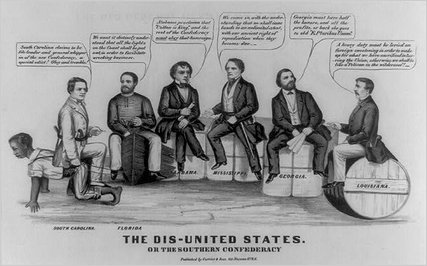
South Carolina was followed by Mississippi, Florida, Alabama, Georgia, Louisiana and Texas. “A belt of seven states from South Carolina to Texas, embracing nearly one-sixth of the country’s population and nearly one-fifth of the national domain, had proclaimed independence and severed its ties with the Union.” [22] Many of the declarations of causes for secession made it quite clear and explicit that slavery, and fear that the institution was threatened by Northern abolitionists was the root cause. The declaration of South Carolina is typical of these and is instructive of the basic root cause of the war:

“all the States north of that line have united in the election of a man to the high office of President of the United States, whose opinions and purposes are hostile to slavery. He is to be entrusted with the administration of the common Government, because he has declared that that “Government cannot endure permanently half slave, half free,” and that the public mind must rest in the belief that slavery is in the course of ultimate extinction.” [23]

Throughout the war slavery loomed large, even though in the beginning of the abolition controversies of the 1830s many northerners “were content to tolerate slavery’s indefinite survival in the South so long as it did not impinge on their own rights and aspirations at home.” [24] Such attitudes were still common in the North during the late 1850s, especially among Democrats.

But it was the continued actions and multiple transgressions of slavery supporters that energized northerners as never before. Their use of the courts to advance their rights and the cause of slavery, by the compromises that had extended slavery to the territories; their use of the courts especially the Dred Scott to allow slaveholders to recover their human property, even in Free States provoked no end of indignation throughout the North, even for those sympathetic to Southern concerns. Those actions demonstrated to Northerners:

“just how fundamental and intractable the differences with Southern political leaders were. Thus educated, most northern voters had decided by 1860 that only an explicitly anti-slavery party could protect their interests.” [25]

The fiery abolitionist and profoundly religious editor of The Liberator, William Lloyd Garrison, used biblical imagery in a rather astute analysis of the behavior of Southern leaders after the election of 1860. He wrote of the Southern response to Lincoln’s election:

“Never had the truth of the ancient proverb “Whom the gods intend to destroy, they first make mad” been more signally illustrated than in the condition of southern slaveholders following Lincoln’s election. They were insane from their fears, their guilty forebodings, their lust for power and rule, hatred of free institutions, their merited consciousness of merited judgments; so that they may be properly classed as the inmates of a lunatic asylum. Their dread of Mr. Lincoln, of his Administration, of the Republican Party, demonstrated their insanity. In vain did Mr. Lincoln tell them, “I do not stand pledged to the abolition of slavery where it already exists.” They raved just as fiercely as though he were another John Brown, armed for southern invasion and universal emancipation! In vain did the Republican party present one point of antagonism to slavery – to wit, no more territorial expansion. In vain did that party exhibit the utmost caution not to give offense to any other direction – and make itself hoarse in uttering professions of loyalty to the Constitution and the Union. The South protested that its designs were infernal, and for them was “sleep no more!” Were these not the signs of a demented people?” [26]

But both sides were blind to their actions and with few exceptions, most leaders, especially in the South badly miscalculated the effects of the election of 1860. The leaders in the North did not realize that the election of Lincoln would mean the secession of one or more Southern states, and Southerners “were not able to see that secession would finally mean war” [27] despite the warnings of Alexander Stephens to the contrary. In fact throughout the South it was believed that there would be no war because “they believed that the Yankees were cowards and would not fight”… “Senator James Chesnut of South Carolina offered to drink all the blood shed as a consequence of secession. It became a common saying in the South during the secession winter that “a lady’s thimble will hold all the blood that will be shed.” [28]

Following their secession the five slave states of the lower South: “appointed commissioners to the other slave states, and instructed them to spread the secessionist message across the entire region. These commissioners often explained in detail why their states were exiting the Union, and they did everything in their power to persuade laggard slave states to join the secessionist cause. From December 1860 to April 1861 they carried the gospel of disunion to the far corners of the South.” [29]

The editors of the Philadelphia Press accused the Southern secessionists of being enemies of democracy and wrote:

“should the Cotton States go out in a body, we shall witness the beginning of an experiment to establish, on this continent, a great slaveholding monarchy. With few exceptions, the leaders of the Disunion cabal are men of the most aristocratic pretensions – men who…easily adopt the habits and titles of the European nobility. South Carolina, which is the head of Secession, is almost a monarchy herself. Her representatives in both branches of Congress, for years past, have acted upon the idea that the people of the free states are servile, and Mr. Hammond, the most candid and straightforward of the set, denounced the laboring white masses of the free States as the mudsills of society …” [30]

The mood of the South in the fall of 1860 was “fearful, uncertain, impatient and volatile, eager to adopt the course that best offered hope of deliverance – which was ideally suited for the immediacy and urgency of the radical secessionists.” [31] Using the political machinery of the Democratic Party in the South which they now possessed, the proponents of secession were far better organized than Southern Unionists who had a difficult time putting up a united front in the face of the radicals.

Slavery and the superiority of the white race over blacks were at the heart of the message brought by these commissioners to the legislatures of the yet undecided states. Former Congressman John McQueen of South Carolina wrote to secessionists in Virginia “We, of South Carolina, hope to greet you in a Southern Confederacy, where white men shall rule our destinies, and from which we may transmit our posterity the rights, privileges and honor left us by our ancestors.” [32] In Texas McQueen told the Texas Convention: “Lincoln was elected by a sectional vote, whose platform was that of the Black Republican part and whose policy was to be the abolition of slavery upon this continent and the elevation of our own slaves to an equality with ourselves and our children.” [33] These Southern secessionists were realists, they knew that the election of 1860 was a watershed in terms of the history of slavery in the United States, emancipation was coming, it might take a decade, it might take twenty-five or even fifty years, but they knew that it was coming, and for them secession was the only logical action left that was “consistent with their ideology.” [34] Many of these men now viewed it as an issue of now or never.

In his First Inaugural Address Lincoln cut to the heart of the division in the country: “One section of our country believes slavery is right and ought to be extended, while the other believes it is wrong and ought not to be extended. This is the only substantial dispute.” [35] Of course he was right, and his Southern opponents agreed. Jefferson Davis wrote: “The great northern party, thus organized, succeeded in electing to the office of the Presidency a man who openly proclaimed his hatred of slavery, who declared that the government could not endure “half slave and half free.” [36]

As the war began, white Southerners of all types and classes rallied to the call of war against the hated Yankee. The common people, the poor yeomen farmers were often the most stalwart defenders of the South. With the Orwellian slogan “Freedom is not possible without slavery” ringing in their ears, they went to war against the Yankees alongside their slave-owning neighbors to “perpetuate and diffuse the very liberty for which Washington bled, and which the heroes of the Revolution achieved.” [37]

Alexander Stephens, the longtime friend of Lincoln who had been a devout Unionist, who had supported Stephen Douglas until the bitter end, and who had strenuously opposed secession in the months leading to the election of 1860 was now the Vice President of the Confederacy. He had been elected Vice President the same day as Jefferson Davis was elected President by the new Confederate Congress and now went through the South speaking about the nature of the new government. Stephens explained the foundations of the Southern state in his Cornerstone Speech of March 21st 1861, the speech echoed what many Southerners had believed for years regarding slavery and the status of Blacks, namely that Blacks were a lesser order of humanity:

Our new government is founded upon exactly the opposite idea; its foundations are laid, its corner- stone rests upon the great truth, that the negro is not equal to the white man; that slavery — subordination to the superior race — is his natural and normal condition. [Applause.] This, our new government, is the first, in the history of the world, based upon this great physical, philosophical, and moral truth.” [38]

Jefferson Davis had issued instructions to cabinet members to downplay slavery as an issue and was infuriated. The new President of the Confederacy wrote: “That speech infuriated me, Oh, what Stephens had said was true, perfectly true, but could anything hurt us more abroad than such impolitic remarks? It was the beginning of a fatal falling out between me and that rebellious and vindictive dwarf, who was hell-bent on forming his own policies and disputing mine with niggardly deviousness.” [39]

The Orwellian definition of slavery as being necessary to liberty and the Confederate leader’s proclamations that they were comparable to the founding fathers was condemned throughout the North. The editors of the New York Evening Post wrote:

“The founders fought to “establish the rights of man… an principles of universal liberty.” The South was rebelling “not in the interest of general humanity, but of a domestic despotism…. Their motto is not liberty, but slavery.” Thomas Jefferson’s Declaration of Independence spoke for “Natural Rights against Established Institutions,” added the New York Tribune, while “Mr. Jeff. Davis’s caricature thereof is made in the interest of an unjust, outgrown, decaying institution against the apprehended encroachments of human rights.” It was, in short, not a revolution for liberty but a counterrevolution “reversing the wheels of progress…. to hurl everything backward into deepest darkness… despotism and oppression.” [40]

Secession3

Virginia’s Ordinance of Secession

Secession commissioners from the first seven Confederate States fanned out to the undecided Slave states to spread the message of secession. One of these men was Henry Benning of Georgia. Benning spoke to the secession convention of Virginia, a state that the new Confederacy deemed all-important to its cause and which it had to have on its side in the coming confrontation with the Union. There the Georgia Supreme Court Justice used the time-honored method of racial fear mongering to sway the men of the Virginia House of Delegates, he thundered:

“If things are allowed to go on as they are, it is certain that slavery is be abolished except in Georgia and the other cotton States, and…ultimately in these States also,” Benning insisted. “By the time the North shall have attained the power, the black race will be a large majority, and we will have black governors, black legislatures, black juries, black everything.” [41]

Not letting up the fiery Georgian told the Virginians that the North would invade the South to end slavery and of the outcome of such an invasion:

“We will be overpowered and our men compelled to wander like vagabonds all over the earth,” he told his audience, “and for our women, the horrors of their state cannot contemplate in imagination.” This then, was “the fate that Abolition will bring upon the white race….We will be exterminated.” [42]

Virginia’s Governor, John Letcher was “a longtime foe of secession and had wanted to bring slavery to an end in Virginia, but once elected to the governorship he adroitly put all that behind him, and rather like [Robert E.] Lee, he went to work with considerable efficiency for two causes in which he did not believe.” [43] One Unionist delegate to the convention wrote of the proceedings, “The scenes witnessed within the wall of that room…have no parallel in the annals of ancient or modern times. On the morning of the 17th, Mr. Wise rose from his seat and drawing a large Virginia horse-pistol from his bosom laid it before him and proceeded to harangue the body in the most violent and denunciatory manner. He concluded by taking his watch from his pocket and, with glaring eyes and bated breath, declared that events were now transpiring which caused a hush to come over his soul.” [44] Those events were a planned seizure of Federal facilities including the arsenal at Harpers Ferry and the Naval Yard at Norfolk. But not all in Virginia were convinced. The strongly Unionist western counties of the state, where few people owned slaves and those who did held very few, voted heavily against secession. The counties withstood the initial shock of secession and would “in a wholly extra-legal way, abetted by Washington – perform its own act of secession, breaking away from Virginia and clinging to the Union as a bob-tailed but finally acceptable new state.” [45]

Former President John Tyler added his voice to the secession cause in Virginia and “personally drafted a document placing the state’s military force under Jefferson Davis’s direct command.” Shortly thereafter he was “elected to the Confederate Congress – becoming the only former President to win office in a foreign country.” [46] However, before he could take office, the former President, now an intractable enemy of the country that he once led, died in Richmond. Shortly thereafter his portrait was removed from its place of honor in the capital.

Tennessee was another state where secession was problematic. Eastern Tennessee was strongly Unionist and the counties “held a convention, denounced the governor and legislature for making the alliance with the Confederacy, and sent a memorial asking that the eastern counties be allowed to form a new state.” [47] The legislature and governor refused this but the area would prove a problem for Jefferson Davis as well as Lincoln who would have liked to help the Tennessee Unionists, but had no military way to do so.

The highly divided border states of Kentucky and Missouri remained in the Union, but became highly partisan battlegrounds between secessionists and Unionists in which insurgents used terrorist methods against their fellow citizens throughout the war. Kentucky’s pro-secession Governor, Beriah Magoffin called the legislature into convention to decide secession “but the legislature, by a vote of 54 to 36 in the lower house, refused to call one and adjourned on February 11 without taking any decisive action.” [48] Losing that vote, he issued a declaration of neutrality which caused both Lincoln and Jefferson Davis to move with caution in the state. Lincoln understood the strategic importance of Kentucky and said “I think to lose Kentucky is nearly the same as to lose the whole game….Kentucky gone, we cannot hold Missouri, nor, as I think, Maryland. These all against us, and the job on our hands is too large for us. We may as well consent to separation at once, including the surrender of this capital.” [49] Lincoln’s use of caution, diplomacy, and when needed the force of the law, courts, and the military paid strategic military and economic dividends for the North as the Ohio River remained under Union control.

Maryland too remained in the Union as Governor Thomas H. Hicks, with the help of federal troops resisted a call in the legislature for a secession vote, even so as Union volunteers marched to Washington in response to Lincoln’s calls for troops some regiments were attacked in Baltimore. The 6th Massachusetts Volunteer Infantry was set upon as a “crowd of southern sympathizers threw bricks and stones and fired into their ranks as they changed trains. They returned the fire, killing twelve citizens and wounding many more, then packed their four dead on ice for shipment north, and came on to Washington, bearing their seventeen wounded on stretchers.” [50]

To Lincoln, the issue of secession as well as territory was “never just about politics. To him it spoke about the nation, even if primarily as a symbol. In his mind the nation must be about freedom, never slavery.” [51] For him the Union was sacred and could not be dissolved for any reason, especially the cause of slavery. In contrast to the secessionists who proclaimed that the states had formed the Federal Government and had the right to dissolve the Union, Lincoln, using the reasoning and arguments of Daniel Webster asserted in his inaugural address that the Union actually predated the Constitution:

“Descending from these general principles, we find the propositions that, in legal contemplation, the Union is perpetual, confirmed by the history of the Union itself. The Union is much older than the Constitution. It was formed, in fact, by the Articles of Association in 1774. It was matured and continued by the Declaration of Independence in 1776. It was further matured, and the faith of all the then thirteen States expressly plighted and engaged that it should be perpetual, by the Articles of Confederation in 1778. And final, in 1787, one of the declared objects for ordaining and establishing the Constitution, was “to form a more perfect Union.” [52]

In early April 1861, a few days before the first shot was fired at Fort Sumter, a New York Times editorial made a proposition that unveiled the reality of the situation now confronting the divided nation, and which so many had for so long refused to face: “If two sections can no longer live together, they can no longer live apart in quiet until it is determined which is master. No two civilizations ever did, or can, come into contact as the North and South threaten to do, without a trial of strength, in which the weaker goes to the wall…. We must remain master of the occasion and the dominant power on this continent.” [53]

Thus, the American ideological war was born; it had taken decades to reach the point of no return. It had taken years of frustration, and attempts at compromise by politicians who attempted to dodge the moral issues inherent in slavery. Time could not heal the wounds caused by slavery as long as “one section of the country regarded it as a blessing, the other as a curse.” [54] Frederick Douglass observed: “Whatever was done or attempted with a view to the support and secularity of slavery on served to fuel the fire, and heated the furnace of [anti-slavery] agitation to a higher degree than had any before attained.” [55]

Notes

[1] Ibid. Oates The Approaching Fury pp.355-356

[2] Ibid. Goodwin Team of Rivals p. 310

[3] Ibid. Goodwin Team of Rivals p. 310

[4] Ibid. Oates The Approaching Fury p.338

[5] Ibid. Oates The Approaching Fury pp.338-339

[6] Ibid. Oates The Approaching Fury p.355

[7] Ibid. Guelzo Fateful Lightening p.134

[8] Ibid. Oates The Approaching Fury pp.354-355

[9] Ibid. Goldfield America Aflame p.184

[10] Ibid. McPherson Drawn With Sword p.50 These words are little different than the words of many conservative Evangelical Christian pastors, pundits and politicians today in relation to the legalization of Gay marriage.

[11] Ibid. Rable God’s Almost Chosen Peoples pp.38-39

[12] Ibid. Holzer Lincoln and the Power of the Press p.256

[13] Ibid. Goodheart 1861 p.77

[14] Ibid. Goodheart 1861 p.77

[15] Ibid. McPherson The Battle Cry of Freedom p.238

[16] Cooper, William J. We Have the War Upon Us: The Onset of the Civil War November 1860-April 1861 Alfred a Knopf, New York 2012 p.75

[17] Ibid. Catton The Coming Fury pp.46-47

[18] Ibid. Catton Two Roads to Sumter pp.250-251

[19] Ibid. McPherson The Battle Cry of Freedom p.237

[20] Ibid. Freehling The Road to Disunion Volume II p.398

[21] O’Connell Robert L. Fierce Patriot: The Tangled Lives of William Tecumseh Sherman Random House, New York 2013 p65

[22] Ibid. Catton Two Roads to Sumter p.248

[23] __________ Declaration of the Immediate Causes Which Induce and Justify the Secession of South Carolina from the Federal Union. Retrieved from The Avalon Project, Yale School of Law http://avalon.law.yale.edu/19th_century/csa_scarsec.asp 24 March 2014

[24] Ibid. Levine Half Slave and Half Free p.251

[25] Ibid. Levine Half Slave and Half Free p.253

[26] Ibid. Oates The Approaching Fury p.342

[27] Ibid. Catton The Coming Fury p.122

[28] Ibid. McPherson The Battle Cry of Freedom p.238

[29] Ibid. Dew Apostles of Disunion p.18

[30] Ibid. Stampp The Causes of the Civil War p.189

[31] Ibid. Catton Two Roads to Sumter p.250

[32] Ibid. Dew Apostles of Disunion p.48

[33] Ibid. Dew Apostles of Disunion p.48

[34] Ibid. Foner Free Soil, Free Labor, Free Men p.145

[35] Lincoln, Abraham First Inaugural Address March 4th 1861 retrieved from www.bartleby.com/124/pres31.html 24 March 2014

[36] Ibid. Oates The Approaching Fury p.429

[37] Ibid. McPherson Drawn With Sword pp.50-51

[38] Cleveland, Henry Alexander H. Stevens, in Public and Private: With Letters and Speeches, before, during and since the War, Philadelphia 1886 pp.717-729 retrieved from http://civilwarcauses.org/corner.htm 24 March 2014

[39] Ibid. Oates The Approaching Fury p.382

[40] Ibid. McPherson The Battle Cry of Freedom p.244

[41] Ibid. Dew Apostles of Disunion p.66

[42] Ibid. Dew Apostles of Disunion p.67

[43] Ibid. Korda Clouds of Glory p.232

[44] Osborne, Charles C. Jubal: The Life and Times of General Jubal A. Earl, CSA Algonquin Books of Chapel Hill, Chapel Hill NC 1992 p.49

[45] Ibid. Catton The Coming Fury p.365

[46] Goodheart, Adam The Ashen Ruin in The New York Times: Disunion, 106 Articles from the New York Times Opinionator: Modern Historians Revisit and Reconsider the Civil War from Lincoln’s Election to the Emancipation Proclamation Edited by Ted Widmer, Black Dog and Leventhal Publishers, New York 2013 p.71

[47] Ibid. Catton The Coming Fury p.365

[48] Ibid. Potter The Impending Crisis p.510

[49] Foote, Shelby, The Civil War, A Narrative. Volume One: Fort Sumter to Perryville Random House, New York 1963 1958 p.53

[50] Ibid. Foote The Civil War, A Narrative. Volume One p.53

[51] Ibid. Cooper We Have the War Upon Us p.80

[52] Ibid. Wills Lincoln at Gettysburg p.130-131

[53] Ibid. Foote The Civil War, A Narrative. Volume One p.43

[54] Ibid. Catton Two Roads to Sumter p.143

[55] Ibid. Levine Half Slave and Half Free p.253
3 Comments

Filed under civil war, History, Political Commentary

When Political Parties Implode, Pt 3: The 1860 General Election

Friends of Padre Steve’s World

Over the past six months or so I have alluded to events in the Republican Party that make it appear that it is about to implode. I am a historian, and there is precedent in American history for the collapse of a national political party. This happened before in the 1854 collapse of the Whig Party, the 1912 division in the republican Party, but more importantly during the 1858 through 1860 collapse of the Democratic Party. Now I am not a person to say that history repeats itself. there are similarities and trends, but nothing is ever exactly the same as to why different parties collapse.  

While the issues of each day may be different there are common threads of humanity, hubris and hatred that unite to destroy political parties. I think that this is happening now in the Republican Party, and that it is possible that something similar may occur with the Democratic Party in the coming years. So it is important to look at history whenever possible to see how different political leaders responded in times of intense ideological, economic, social, national, and sectional division.

This is a three part series on the disaster that the Democratic Party made for itself and the country between 1858 and 1860. The third part deals with the after effects of results of the democratic Party split in the election of 1860.

This is a section of one of the chapters of my Civil War and Gettysburg text and I hope that you will find it interesting and thought provoking.

Peace,

Padre Steve+

tearing1-500x353

The crisis continued to fester and when Lincoln was elected to the Presidency in November 1860, with no southern states voting Republican, the long festering volcano erupted. The various crises of the 1850s had brought the political emotions nation to a fever pitch and 1860 election season saw a dramatic rise in the overtly racial invective of the pro-slavery Democrats, including many in the North. It was also the election that “marked the crystallization of two fully sectionalized parties,” [1] neither of which could find a place of compromise in order to save the Union. A Mississippian observed that “the minds of the people are aroused to a pitch of excitement probably unparalleled in the history of our country.” [2] In the South

Like the present time where the rise of the internet, social media and other platforms allows people, including radical ideologues of various stripes an unparalleled opportunity to spew hate, the changing nature of technology made the campaign one of the most merciless in American history. “Cheap printing and the telegraph made it easier and easier for the shrillest of ideologues to find audiences, even national ones.” [3] As such the campaign prefigured those of the present time. The newspapers and the ideologues may not have changed many the minds of many voters, most of whom were by now hardened in their position, but “they likely helped spur a gigantic voter turnout – some 80 percent of eligible white males nationwide – which was deemed crucial to Republican success in swing states like Indiana and Pennsylvania.” [4]

Lincoln had run a masterful campaign, rising from a comparatively unknown to a national figure due to his debates with Stephen Douglas during the 1858 Illinois Senate campaign. The Republican Party that he represented was a “coalition of old Democrats, former Whigs, and members of the nativist American Party.” [5] Lincoln defeated the odds on favorite to win the Republican nomination, Senator William Seward, as well as Senator Salmon Chase and Missouri’s elder statesman Edward Bates. Lincoln took the nomination on the third ballot and then went on to defeat a fractured opposition which was composed of three different tickets, those of the Northern Democrat Stephen Douglas, the Southern Democrat John C. Breckenridge, and the third, a fusion Constitutional Union Party ticket of John C. Bell and Edward Everett.

The split in the Democrat ticket won the election for Lincoln and was in part the idea of fire-eaters in the South, especially those in South Carolina who could not abide the candidacy of Douglas. These Southern Democrats envisioned “the destruction of the national Democratic Party – and its powerful contingent of moderates in the state – as a visible vehicle for protecting slavery in the Union.” [6]  These men hated Douglas, a man that they once cheered, for his opposition to the Lecompton Constitution and the admission of Kansas as a Slave state. When the Democratic national convention met to nominate a presidential candidate the delegates especially the leaders of the Gulf state delegations “redoubled their sworn efforts to keep the nomination away from Douglas.” Douglas and his team of advisors attempted to work out a deal to secure the nomination with them, but they met with a stubborn refusal to cede the nomination to Douglas. The result was “an open party rupture” [7] which destroyed any chance of defeating Lincoln and the Republicans. The ever pragmatic Unionist Alexander Stephens “who stood with Douglas to the last, despaired, not only for his party but for his country: “There is a tendency everywhere, not only in the North, but the South, to strife, dissention, disorder, and anarchy.” [8]

Opponents of Lincoln turned the election to a referendum on race. The New York Herald, which was a strongly Democrat paper and had the largest circulation of any paper in the nation was typical of papers that used race to attack the Republicans. The Herald served up “a patented blend of sarcasm and sensationalism. The Herald’s editorial page cracked wise almost every day about “the Eternal nigger,” the “Almighty nigger,” the “Irrepressible nigger” and the “nigger-loving black republicans.” [9] In both the North and South opponents of Lincoln and the Republicans conjured up the fear of a future black president in order to further stoke the flames of racial hatred and division.

During the campaign Lincoln was careful to not to go beyond the printed words of his published speeches and he refused to issue any statements to mollify the conspiracy theory hysteria that was enveloping the South. “What is it I should say to quiet alarm?” he asked in October. “Is it that no interference by the government, with slaves or slavery within the states, is intended? I have said this so often already, that a repetition of it is but mockery, bearing an appearance of weakness.” [10] To be frank, Lincoln and other Republicans misread the true feelings of the South and “considered the movement South as sort of a political game of bluff, gotten up by politicians, and meant solely to frighten the North. He believed that when the leaders saw their efforts in that direction unavailing, the tumult would subside.” [11] William Seward equated the Southern threats to cries of “wolf” which had little meaning and told a gathering in New York, “For ten, aye twenty years, these threats have been renewed in the same language and in the same form, about the first day of November every four years. I do not doubt that these Southern statesmen and politicians think that they are going to dissolve the Union, but I think that they are going to do no such thing.” [12] The editor of a Tennessee paper admitted “the cry of disunion had been raised so often that few had taken it seriously in the campaign. Evidently, the ‘Northern sectionalists’ had believed it to be ‘all talk’… while most intelligent Southerners had assumed that it was ‘an idle menace, made to sway Northern sentiment.’” [13]

The Republican Party itself was a coalition of individuals who often held opposing views, and Lincoln understood that the election, as nearly every election tends to be, was not going to be about one issue alone and even the Republican doctrine of Free Soil was seen by them more as “an economic policy than an anti-slave policy.” [14] As important as abolition was to the founding of the Republican Party, other interests had to be taken into account. These included protective tariffs, infrastructure and railroads, and homestead legislation. Thus he could not go too far in any direction that might deviate from the party platform without risking a fracture in his own party He noted: “It would be both impudent, and contrary to the reasonable expectation of friends for me to write, or speak anything upon doctrinal points right now. Besides this my published speeches contain nearly all I could willingly say.” [15]

The Presidential campaign of 1860 was unique since it had four different tickets vying for the office and it unfolded into “three distinct campaigns: Douglas against Lincoln in the North; Breckinridge versus Bell in the South; and Douglas contesting Bell in the border states, with Lincoln and Breckinridge hoping for some support there as well.” [16] As purely sectional candidates Breckinridge had no hope of winning in the North and Lincoln no chance of winning in the South.

In the South politicians, preachers and newspaper editors sounded the alarm at the possibility of a Lincoln presidency which bordered on outright paranoid hysteria. Conspiracy theories and outright falsehoods about Negro atrocities were flouted as truth in the South, whipping up passions and stoking rampant fear, “R.S. Holt, a wealthy Mississippi planter and brother of the U.S. postmaster general, reported that “we have constantly a foretaste of what Northern-brotherhood means, in almost daily conflagrations & in discovery of poison, knives & pistols distributed among our slaves by the emissaries sent out for that purpose…. There cannot be found in all the planting States a territory ten miles square in which the footprints of these miscreants have not been discovered.” [17]

One of the most consistent defenders of slavery and long term proponents of secession, Virginia Edmund Ruffin wrote to Yancey that “a Republican victory was obviously coming and that it would be “a clear and unmistakable indication of future & fixed domination of the Northern section & its abolition party over the Southern states & their institutions, & the speedy progress to the extermination of Negro slavery & and the consequent ruin of the South.” [18] A newspaper editorial in Georgia warned “Let the consequences be what they may – whether the Potomac is crimsoned in human gore, and Pennsylvania Avenue is paved ten fathoms deep with mangled bodies…the South will never submit to such humiliation and degradation as the inauguration of Abraham Lincoln.” [19]

Prominent Southern ministers, though more cautious than the newspapermen and politicians sounded the alarm. Evangelical “proslavery had popularized the South’s unique approach to the Bible and the founding of the nation. The bible supported slaveholding; God supported the South. The formula was clear. Right made might. The South had to triumph.” [20] A Presbyterian editor counseled prayer to deal with the crisis but added: “An agitation that perpetually sends dread and disturbance in to every hamlet, and to every home and fireside in the land is intolerable. No people can abide it long. They will prefer the hazard of any convulsion, the perils of any terrible adventure, to a life of anxiety and disquiet. The instincts of nature will drive them to seek relief by any, even the most dangerous means.” [21] A prominent Southern journal remarked “In religious sentiment the South stands as a unit. Its pure doctrines are linked insuperably, though not by legal constraint, with the laws of the land. No isms and schism rankle our hearts. Christ is acknowledged as the common bond of union.” [22] Prominent church leaders like Leonidas Polk Episcopal Bishop of Louisiana made outright demands for secession if the Lincoln won. As it had so many times in the past two decades, religious sentiment helped fuel the Southern fire.

The only hope for the Democrats was for a “fusion” of the three opposition in key northern states to deny Lincoln their electoral votes and throw the election into the House.” [23] But this was not to be as there was far too much bad blood between the Buchanan faction headed by Breckinridge and Douglas, as well as distrust of the Bell ticket due to its connections with the earlier Know Nothing Party and movement. Jefferson Davis, long a proponent of secession went to Douglas to try to sway him from dropping out of the race in favor of a fusion ticket that could unite the Southern vote. Douglas recalled the conversation “If the Democrats run two candidates,” he said, “the Black Republicans will win the election. In that event the slave states will secede…” [24] Davis tried to convince Douglas to drop out saying that Breckinridge and Bell had agreed to if he would, and Douglas, who had a long standing enmity with the Mississippian wrote:

“This was strange talk from Davis, and I was damned suspicious that it might be a trap. It was all I could do to control my hatred for the Goddamned bastard. “The plan is impractical I said coldly. “If I withdraw, my friends in the North will go over to Lincoln. I’m in the hands of my friends and they won’t accept this proposition.

“Then I’ve done all that I can,” he said, rose and walked out.

Why the Goddamned hell should I withdraw? I asked my aides. I was a matter of honor with me. I had won my nomination fairly, on the basis of the party’s time honored principles. I refused to unite with a bunch of traitors and disunionists…

Others pressed me to unite with the “vandals,” as we called the Breckinridge party, but I answered with a thundering no. “I’m utterly opposed to fusing with any man or party who’ll not enforce the laws, maintain the Constitution, and preserve th4e Union in all contingencies,” I said. I wish to God Old Hickory was still alive, so that he could hang northern and southern traitors from the same gallows.” [25]

The split in the Democratic Party was irrevocable. While all factions of the party had some measure of responsibility for the party’s implosion in 1860, it was the old Southern leaders whose actions doomed the party. Bruce Catton wrote:

“Primary responsibility for the Democratic split in 1860 – the act that ensured a Republican triumph and left the South no cohesive national institution through which it could hope to share or regain power – belongs to those respected Southern leaders whose threats of party rupture and secession as political tactics, in the vain hope that a majority in the party and nation would fall in behind them before the tactic got out of hand. Because they would not adjust to circumstances they were engulfed by them – all without understanding that they were the leading architects of their disaster.” [26]

Despite the cleavage in the Democratic Party, the election of 1860 enthralled the nation as candidates and their surrogates made the cases for each. “Americans everywhere – North and South, men and women, slave and free – took an active part in the four-way campaign of 1860. Issues, platforms, speeches, and candidates were reviewed and debated in corn fields and cotton fields, workshops and markets, family gatherings, churches, picnics, races, sewing circles, family gathering, schoolhouses, slave quarters, taverns and beer gardens.” [27]

Unlike now when all states vote the same day for President, the elections of 1860 consisted of votes over a two month period of time in the different states. When Lincoln began to win early contests in the Northern states Douglas took his campaign south where he did not mince words and defied secessionists in his stated desire to preserve the Union. He told his secretary “That does it…Lincoln is the next President. We must try to preserve the Union. I’ll go to the Deep South where the secession spirit is strongest.” [28] In the South the Little Giant was met with scorn.

election-results-1860-map

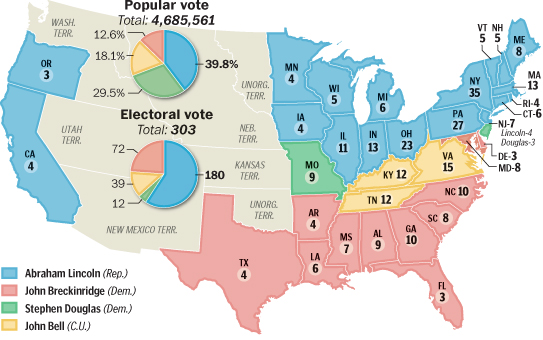
When all was said and done Douglas received twenty-nine percent of the national vote, Breckinridge eighteen percent, and Bell thirteen. “Lincoln carried seventeen free states and no slave states; Breckinridge, eleven slave states and no free states, Bell three slave states and no free states.” [29] Douglas only won the embattled state of Missouri despite having more of the national popular vote than either Bell or Breckinridge. Lincoln captured forty percent but took 180 electoral votes, far more than the minimum of 152 needed to elect. Lincoln’s gains among former Whigs who were attracted to him by economic versus anti-slavery policies allowed Lincoln to sweep the Northern states and secure the electoral majority. When Douglas heard the final results he was in Mobile Alabama. He told his friend John Forsyth, “Well, John, I am beaten, I said hoarsely. “Lincoln will win by a big margin in the Electoral College. Even if Breckinridge, Bell, and I had withdrawn and united behind a single Democratic candidate, Lincoln would still have won a majority of electoral votes.” [30]

For decades “Southerners had shown how minorities dominate majoritarian processes. The overwhelmingly ant-Slave Power North had now shown how an awakened majority routs a minority.” [31] Even so by November the new President elect realized that the South was not bluffing in terms of secession. “The election had clarified nothing. It simply meant that a nation which had spent a long generation arguing about slavery had grown tired of talk and wanted something done – without specifying what that something might be.” [32] The process “of sectional polarization was almost complete, and it remained to see what the response would come from the section that was at the losing end of the axis.” [33] The answer was not long in coming, in the South those who had talked threatened secession for years now put their words into action as the leaders of states of the Lower South met to plan their exit from the Union.

Notes

[1] Ibid. Potter The Impending Crisis p.447

[2] Ibid. McPherson The Battle Cry of Freedom p.229

[3] Ibid. Goodheart 1861 p.45

[4] Holzer, Harold Lincoln and the Power of the Press: The War For Public Opinion Simon and Schuster, New York 2014 p.255

[5] Ibid. Goodwin Team of Rivals p. 267

[6] Ibid. McCurry Confederate Reckoning p.44

[7] Ibid. Catton Two Roads to Sumter p.202

[8] Ibid. Goldfield America Aflame p.168

[9] Ibid. Goodheart 1861 p.45

[10] Ibid. McPherson The Battle Cry of Freedom p.231

[11] Ibid. Potter The Impending Crisis p.432

[12] Ibid. Catton The Coming Fury p.95

[13] Ibid. Goodwin Team of Rivals pp.274-275

[14] Ibid. Egnal Clash of Extremes p.255

[15] Ibid. Goodwin Team of Rivals p. 266

[16] Ibid. Goldfield America Aflame p.168

[17] Ibid. McPherson The Battle Cry of Freedom p.229

[18] Ibid. Catton The Coming Fury p.97

[19] Ibid. McPherson The Battle Cry of Freedom p.230

[20] Ibid. Daly When Slavery Was Called Freedom p.135

[21] Ibid. Rable God’s Almost Chosen Peoples pp.34-35

[22] Ibid. Daly When Slavery Was Called Freedom p.135

[23] Ibid. McPherson The Battle Cry of Freedom p.232

[24] Ibid. Oates The Approaching Fury p.329

[25] Ibid. Oates The Approaching Fury pp.329-330

[26] Ibid. Catton Two Roads to Sumter p.211

[27] Ibid. Levine Half Slave and Half Free p.223

[28] Ibid. Oates The Approaching Fury p.331

[29] Ibid. Potter The Impending Crisis p.447

[30] Ibid. Oates The Approaching Fury p.337

[31] Ibid. Freehling The Road to Disunion Volume II pp.338-339

[32] Ibid. Catton The Coming Fury p.119

[33] Ibid. Potter The Impending Crisis p.447


4 Comments

Filed under civil war, History, News and current events, Political Commentary

When Political Parties Implode, Pt 2: The 1860 Democratic Convention

democratic convnetion

Friends of Padre Steve’s World

Over the past six months or so I have alluded to events in the Republican Party that make it appear that it is about to implode. I am a historian, and there is precedent in American history for the collapse of a national political party. This happened before in the 1854 collapse of the Whig Party, the 1912 division in the republican Party, but more importantly during the 1858 through 1860 collapse of the Democratic Party. Now I am not a person to say that history repeats itself. there are similarities and trends, but nothing is ever exactly the same as to why different parties collapse.  

While the issues of each day may be different there are common threads of humanity, hubris and hatred that unite to destroy political parties. I think that this is happening now in the Republican Party, and that it is possible that something similar may occur with the Democratic Party in the coming years. So it is important to look at history whenever possible to see how different political leaders responded in times of intense ideological, economic, social, national, and sectional division.

This is a three part series on the disaster that the Democratic Party made for itself and the country between 1858 and 1860. This second part deals with the after effects of the Lecompton Constitution fiasco during the 1860 Democratic Party Conventions in Charleston and Baltimore.

This is a section of one of the chapters of my Civil War and Gettysburg text and I hope that you will find it interesting and thought provoking.

Peace,

Padre Steve+

The fight over Lecompton was a watershed in American politics that those who wrote the Constitution of the United States could not have imagined. The deeply partisan fight served to illuminate how easily “minuscule minorities’ initial concerns ballooned into unmanageable majoritarian crises. The tiny fraction of Missouri slaveholders who lived near the Kansas border, comprising a tinier fraction of the South and a still tinier fraction of the Union, had demanded their chance to protect the southern hinterlands.” [1] The crisis that Kansas Democrats provoked drew in the majority of Southern Democrats who came to their aid in Congress and President Buchanan. This provoked Northerner, including Democrats to condemn the Southern minority, which they believed was disenfranchising the majority of people in the territory in order to expand slavery there and to other territories in the west.

The issue of Lecompton crisis galvanized the political parties of the North and demolished any sense of national unity among the Democrats. The split in the Democratic Party mirrored the national divide and the party split into hostile Northern and Southern factions, which doomed it as a national party for the foreseeable future.

Following Lecompton the intra-party Democrat divide widened as “Pro-Douglas and pro-Buchanan Democrats openly warred on one another for the next two years; an unacknowledged but real split had taken place.” [2]

The battle over the Lecompton Constitution also marked the first time that a coalition Northern Democrats sided with anti-slavery forces to defeat pro-slavery legislation in congress. Though the measure to admit Kansas as a slave state was defeated it was a narrow victory; the “Republicans and anti-Lecompton Douglas Democrats, Congress had barely turned back a gigantic Slave Power Conspiracy to bend white men’s majoritarianism to slavemaster’s dictatorial needs, first in Kansas, then in Congress.” [3]

The political impact of the Lecompton crisis on the Democratic Party was an unmitigated disaster. The party suffered a major election defeat in the 1858 mid-term elections and lost its majority in the House of Representatives even though it barely maintained a slim majority in the Senate. While the victorious Republicans had won the election, they made little legislative headway since the Democrats still controlled the Senate and James Buchanan remained President. In a sense “there were two Democratic parties: one northern, on southern (but with patronage allies in the north); one having its center of power in the northern electorate and in the quadrennial party convention… the other with its center of power in Congress; one intent on broadening the basis of support to attract moderate Republicans, the other more concerned to preserve a doctrinal defense of slavery even if it meant driving heretics out of the party.” [4] Democratic Party divide fulfilled what Lincoln had said about the country, as the Democratic Party had “became increasingly a house divided against itself.” [5]

democrat condenders

Douglas’s courageous opposition to the fraud of Lecompton would be the chief reason for the 1860 split in the Democratic Party as Southern Democrats turned with a vengeance on the man who had been their standard bearer during the 1856 Democratic primary. “Most southern Democrats went to Charleston with one overriding goal: to destroy Douglas.” [6] The party decided to meet in the Charleston to decide on their platform and the man who would be their standard bearer in the election of 1860. When the convention met in April 1860 it rapidly descended into a nightmare for the Democrats as “Southern delegates were much more intent on making a point than on nominating a presidential candidate.” [7] The “Southern delegates demanded a promise of federal protection of slavery in all the territories and a de facto veto in the selection of the party’s presidential candidate” [8] in order to block the nomination of Douglas. Southern radicals “led by William Lowndes Yancey of Alabama stood for seven days agitating for a pro-slavery platform.” [9]

Ohio Democrat George A. Pugh responded to the Southern fire-eaters and said that “Northern Democrats had worn themselves out defending Southern interests – and he declared that the Northern Democrats like himself were now being ordered to hide their faces and eat dirt.” [10] Georgia Senator Alexander Stephens who had moderated his position and was supporting Douglas wrote that the radicals “strategy was to “rule or ruin.” [11] When their attempts to place the pro-slavery measures into the party platform were defeated by Northern delegates, it prompted “a walkout by delegates from Alabama, South Carolina, Georgia, Florida, Mississippi, Louisiana, and Texas.” [12] This deprived Douglass of the necessary two thirds majority needed for the nomination and “the shattered convention adjourned, to reconvene in Baltimore on June 18,” [13] the “incendiary rhetoric left the Democratic Party in ashes.” [14] A friend of Alexander Stephens suggested that the party might patch things up in Baltimore, but Stephens dismissed the suggestion and told his friend, “The party is split forever. The only hope was in Charleston.” [15]

Old line former Whigs who feared the disintegration of the country led by Kentucky Senator John J. Crittenden formed their own convention, the Constitutional Union Party and declared a pox on both the Buchanan and Douglas factions of the Democratic Party. They nominated a rather cold and uninspiring moderate slave owner, the sixty-four year old John Bell of Tennessee as their candidate for President and “then chose a man who overshadowed him, Edward Everett of Massachusetts, aged sixty-seven, as the vice-presidential nominee.” [16] But this ticket had no chance of success, as Bell “stood for moderation and the middle road in a country that just now was not listening to moderates, and the professional operators were not with him.” [17]

When the Democratic Party convention reconvened the results were as Stephens predicted. Another walk out by Southern delegates resulted in another and this time a final split. “Rival delegations from the Lower South States arrived in Baltimore, one side pledged to Douglas and the other to obstruction. When the convention voted for the Douglas delegations, the spurned delegates walked out, this time joined by colleagues from the Upper South.” [18] Though Douglas did not have the two-thirds majority, the convention “adopted a resolution declaring Douglas unanimously nominated.” [19] A day later the radicalized Southern delegates nominated their own candidate, the current Vice President, John C. Breckinridge of Kentucky as their candidate “for president on a slave-code platform.” [20]

There were now four presidential tickets, three composed of Democrats and former Whigs, “each supported by men who felt that they were following the only possible path to salvation. A Republican victory was almost certain, and the Democrats, who had the most to lose from such a victory, were blindly and with a fated stubbornness doing everything they could to bring that victory to pass.” [21]

The Democratic Party had imploded and doomed the candidacies of Douglas and Breckinridge. The Augusta Daily Chronic and Sentinel editorialized, “It is an utterly futile and hopeless task to re-organize, re-unite and harmonize the disintegrated Democratic party unless this is to be done by a total abandonment of principle… No, sensible people might as well make up their minds to the fact that the Democratic party is dissolved forever, that new organizations must take its place.” [22]    

Notes

[1] Ibid. Freehling, The Road to Disunion Volume II: Secessionists Triumphant 1854-1861 p.140

[2] Ibid. Levine Half Slave and Half Free p.213

[3] Ibid. Freehling, The Road to Disunion Volume II: Secessionists Triumphant 1854-1861 p.142

[4] Ibid. Potter The Impending Crisis p.394

[5] Fehrenbacher, Don E. Kansas, Republicanism, and the Crisis of the Union in The Civil War and Reconstruction Documents and Essays Third Edition edited by Michael Perman and Amy Murrell Taylor Wadsworth Cengage Learning Boston MA 2011 p.94

[6] Ibid. McPherson The Battle Cry of Freedom p.213

[7] Ibid. Goldfield America Aflame p.167

[8] Ibid. Levine Half Slave and Half Free p.216

[9] Ibid. Guelzo Fateful Lightening p.121

[10] Catton, Bruce The Coming Fury Phoenix Press, London 1961 p.32

[11] Ibid. McPherson The Battle Cry of Freedom p.215

[12] Ibid. Goldfield America Aflame p.167

[13] Ibid. Guelzo Fateful Lightening p.121

[14] Ibid. Goldfield America Aflame p.167

[15] Ibid. Catton The Coming Fury p.46

[16] Ibid. Potter The Impending Crisis p.417

[17] Ibid. Catton The Coming Fury p.46

[18] Ibid. Goldfield America Aflame p.168

[19] Ibid. Potter The Impending Crisis p.413

[20] Ibid. McPherson The Battle Cry of Freedom p.216

[21] Ibid. Catton The Coming Fury p.69

[22] Ibid. Guelzo Fateful Lightening p.121

3 Comments

Filed under civil war, History, News and current events, Political Commentary

Shades of Confederate Gray

fig25

Major General Patrick Cleburne C.S.A. 

“When the prophet, a complacent fat man,
Arrived at the mountain-top
He cried: “Woe to my knowledge!
I intended to see good white lands
And bad black lands—
But the scene is gray.”

Stephen Crane

Friends of Padre Steve’s World,

If you read my work you know how much I condemn the cause of the Confederacy and the institution of slavery. I also make no bones about the continued use of the symbols of the Confederacy by some who do not use them simply to honor the memory of dead soldiers but rather to further inflame political and racial divides. As a descendant of slave owners and Confederate officers I do understand the tension. THe family patriarch on my paternal side was an unreconstructed Rebel. He was a slave owner who served as a Lieutenant in the Confederate cavalry during the war and refused to sign the loyalty oath to the United States. For this he lost his lands and plantation. There are some who sincerely desire to honor their ancestors, and I think that is honorable, but to stand by an indefensible cause as my ancestors did is another matter to me.

I agree with historian George Santayana who wrote “Loyalty to our ancestors does not include loyalty to their mistakes.” I think we have to be able to deal with that, and I do not only mean for the descendants of slave owners and Confederates. Certainly the descendants of those in the North who cooperated with, enabled and profited from slavery, and then the entire movement to reenslaved freed blacks by other means after the war have nothing to be proud of in this regard. I readily admit that many political, industrial and religious leaders in the North were little better than many Southern leaders (see my articles Accomplices to Tyranny: The North & Reconstruction and Corporate Slavery & the Black Codes ). Both of these articles highlight how Northerners, especially politicians from both political parties and industrialists who took in those injustices committed against blacks. The same people on both sides of the Mason-Dixon Line dis similar things to poor whites who they referred to as “White Trash” as well as Native Americans, women later other immigrants like the Chinese. As we get closer to Labor Day I am going to spend some time on how American workers of all races were treated during that time, but not today.

IMG_1879

Instead I want to talk about shades of gray. As my regular readers know I believe that people are the most important part of history, and that people are seldom fully good or fully evil. In fact most people, saints and sinners alike live lives of some shade of gray. Thus I believe that good people can sometimes support evil causes and otherwise evil people can end up on the right side of history by supporting a good cause. We have other people that we treat as icons who had dark places in their lives, and did things that were not honorable; history is full of them. The problem is that we like to look at people as totally good or totally evil, it’s easier that way.

That is the case when we look at men who fought for the Confederacy and the Union during the Civil War, and since I have spent a lot of time hammering the cause that Confederate soldiers fought to defend, even those who opposed secession and slavery; it is only right that I spend some time talking about the shades of Confederate Gray. To do this we have to be able to put aside the notion that every Confederate was a racist or White Supremacist.

Hill.28135413_std

Lieutenant General A.P. Hill

Those who fought for the Confederacy spanned the spectrum of belief and often fought for reasons other than slavery and some of their stories are tragic. Lieutenant General A.P. Hill opposed slavery before the war and opposed secession but because his state and his family seceded he went south. In 1850 he was on leave from the army and learned of a lynching in his home town of Lynchburg, he wrote “Shame, shame upon you all, good citizens…Virginia must crawl unless you vindicate good order or discipline and hang every son of a bitch connected with this outrage.” Hill was incredibly brave and led his troops honorably throughout the war. Sadly he died in action just days before the end of the war at Petersburg and his widow took no part in any commemorations of the Lost Cause after the war.

Brigadier General Lewis Armistead who led Pickett’s troops to the High Water mark at the Battle of Gettysburg is another tragic figure. He was a widower who lived a life of much sorrow and loneliness and the army was his life; his best friends were in the army. His very best friend, Winfield Scott Hancock and his wife Almira remained with the Union, their parting in California at the beginning of the war is heartrending, and it was Hancock’s troops who inflicted the mortal wound on him.

Major General Patrick Cleburne, called the “Stonewall Jackson of the West” is another. He was an Irish immigrant to Arkansas. He had no slaves, opposed the institution and fought because the people he lived among were his friends. He was the first Confederate to broach the subject of emancipating the slaves, and for this he was ostracized, and not promoted to Lieutenant General and command of a Corps. He died in action at the Battle of Franklin in 1864.

There are others, Lieutenant General James Longstreet who was probably the best corps commander on either side during the war, quickly reconciled, became a Republican and served in various capacities in government after the war. For this, as well as needing a scapegoat for the loss at Gettysburg Longstreet was treated as a modern Judas Iscariot by many in the South, especially among the proponents of the Lost Cause. Major General William “Little Billy” Mahone was another like Longstreet who joined the Republican Party and suffered a fair amount of criticism for his stance.

Another more interesting personality was Colonel John S. Mosby, the legendary “Gray Ghost” of Virginia whose “Raiders” caused Union forces much difficulty throughout the war. Mosby is interesting, he did not support slavery, was not a proponent of secession but felt that it was his duty to fight for his state. This was not unusual because in that era most people in all parts of the country, felt much more loyalty to their own state, or even city or county than they did to the national government. He and his troops served honorably and after the war too he supported reconciliation, he became a Republican and a friend and supporter of Ulysses Grant. He was not ashamed of his service and stated after the war, “I am not ashamed of having fought on the side of slavery—a soldier fights for his country—right or wrong—he is not responsible for the political merits of the course he fights in” and that “The South was my country. But he also condemned those in the South who denied that slavery was the cause of the war. All this made him anathema and he had to live the rest of his life outside the south or serving in various overseas diplomatic postings.

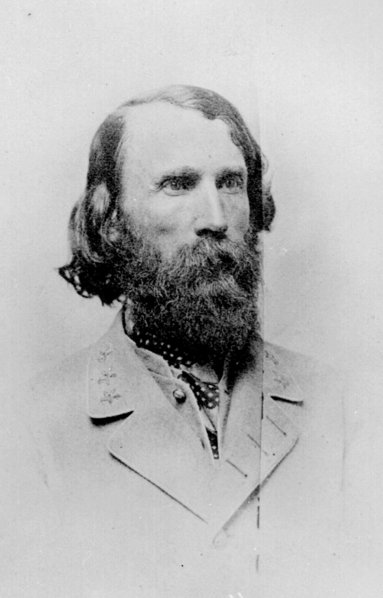
There were other shades of gray among Confederates, some like Lieutenant General Jubal Early who was not a slave owner and vehemently opposed secession in the Virginia legislature until the state seceded. When it did he joined the Confederate forces and became one of the fiercest supporters of Confederate independence who ever lived. In fact Early, though pardoned by President Andrew Johnson, never reconciled with the United States and became the leading proponent of the history of the Lost Cause. Early’s Corps Commander Lieutenant General Richard Ewell was more circumspect, he owned and admitted the mistakes he made during the war as a commander, and he fully reconciled to the United States. Before he died Ewell “insisted that nothing disrespectful to the United States Government be inscribed upon his tomb.”

Hampton_inline

Lieutenant General Wade Hampton

Lieutenant General Wade Hampton of South Carolina was one of the richest men in the South if not the country when war came. He supported secession, owned hundreds of slaves, but for a slave owner he was relatively decent in the way he treated his slaves. He fought through the war and returned home to nothing. He became involved in politics, remained very much a White Supremacist, but that being said built bridges to African American political and religious leaders when he ran for governor, even as the terrorist bands of the Red Shirts did all they could to ensure that blacks were harassed, disenfranchised and even killed to keep them from voting. To the surprise of the militants Hampton adopted a moderate course, kept blacks in his cabinet and in state offices, kept a regiment of African American militia in Charleston and opposed the black codes and Jim Crow. For this he was run out office. When he died his last words were “God bless my people, black and white.”

One the other hand there were men like Lieutenant General Nathan Bedford Forrest who helped found the Ku Klux Klan, and even led some of the early violence against blacks, and purchased black prisoners for use on his plantation after the war. However, he evolved on the issue, and left the Klan in 1869 and in 1875 two years before his death began to promote racial harmony. He spoke about that to a group of African Americans, where he received a bouquet of flowers from a black women he was condemned throughout the South. An article in the Charlotte Observer noted “We have infinitely more respect for Longstreet, who fraternizes with negro men on public occasions, with the pay for the treason to his race in his pocket, than with Forrest and Pillow, who equalize with the negro women, with only ‘futures’ in payment.”

There were many Confederate Soldiers who fought and died because they did believe in White Supremacy and hated the North, that too is a fact, and many of those who lived carried on that hate until they died.

birth_of_a_nation-3

There were others who never reconciled and who rewrote history to minimize the importance of slavery and White Supremacy to the Confederate cause, these included Jefferson Davis, his Vice President Alexander Stephens, and Brigadier General Henry Benning of Georgia. All had spearheaded the drive for secession, spoken and wrote forcefully for not only preserving but expanding slavery Stephens said quite clearly in 1861 what the Confederacy was founded upon in his Cornerstone Speech “Our new Government is founded upon exactly the opposite idea; its foundations are laid, its cornerstone rests, upon the great truth that the negro is not equal to the white man; that slavery, subordination to the superior race, is his natural and normal condition.” However, after the war all of them sought to distance themselves from this and change the narrative to Constitutional, economic and political reasons.

KKK-Nast

There were also many Confederate soldiers for whom the war never ended and they did continue it by other means, either as members of any of the various terrorist groups such as the Klan, the Red Shirts, the White League, the White Liners, or any of the related groups who terrorized and killed blacks and their white supporters, be they Northern “Carpetbaggers” or Southern “Scalawags.”

I could go on longer or in more detail on any of these men and probably could write a book about any of them, but I wanted to show that even when a cause is wrong, that we cannot condemn people as groups, and we also have to take into account people’s evolution on issues. The evolution of Wade Hampton and Nathan Bedford Forrest was far different than that of Jubal Early and others who supported the Lost Cause. I wish my family patriarch had been more like Mosby, Hampton, Hill, Ewell, Cleburne, or even Forrest rather than Jubal Early and others who never reconciled and in some cases continued to use violence to oppress others. 

Shades of gray. In history you can’t live with them and you can’t live without them.

Peace

Padre Steve+

3 Comments

Filed under civil rights, civil war, ethics, History, leadership, Political Commentary

The Heritage is Hate

Friends of Padre Steve’s World

  
I am honored to be at Gettysburg this weekend leading a group of my students on another Staff Ride. This is hallowed ground at which the forces of a rebellion founded on the principles of White Supremacy and the enslavement of African Americans were decisively defeated when they attempted to invade Free States to secure their right to enslave others.

When you come to Gettysburg you can buy all sorts of crap with the Confederate Battle Flag or the national flags of the Confederacy emblazoned on them. You can also see the Confederate Battle flag in the windows or hung outside businesses ride alongside the American flag. In some ways I can understand this. Lots of people come to this place, many of who had ancestors who fought for the Confederacy. Heck my ancestors did and at one time I was proud of that Confederate “heritage” until I actually got beyond the history of the Lost Cause which I had assumed was true and the whitewashing of the school textbooks that were part of my education, and not just in the South, mostly on the west coast.

I often get asked questions by my non-American students, my students from NATO or other allied countries on how a flag that symbolized treason and a failed rebellion can fly next to our own national flag, the Stars and Stripes. Part of this is heritage, and in fact the Confederate Battle Flag disappeared for a while after the Civil War except as a marker placed by grieving families on the graves of fallen Confederate soldiers. Truthfully I have no issue with that because they did not die fighting for Old Glory. However, when that flag became the chief symbol of the Ku Klux Klan in its terror campaign against newly free African Americans and their supporters it ceased to be simply a symbol a failed rebellion and of fallen soldiers, but became a symbol of race hatred.

Now let me make this clear. If a family who had a Confederate ancestor wants to fly the flag from their house or put one on a grave, I may disagree with them but they can do it. However, when I have that flag stuffed in my face by people who drive big-assed pickup trucks with massive Confederate Battle Flags flying from mounts on their truck beds my blood boils, especially when they drive through the streets of Gettysburg with it flying like the one that drove past me last night. Likewise one of the popular items sold by the souvenir stores is the t-shirt with the Battle Flag that says “Heritage not Hate” but I digress…

Now if someone wants to be so silly as to display their ignorance about what that heritage is, that is their choice, but I will not assist them. Since it is late here are just a couple of quotes from a Confederate Flag designer and the Confederate Vice President as to what that flag symbolized and what that cause was.

The designer of the second Confederate National Flag, which incorporated the Battle Flag as its jack, the so-called “Stainless Banner” which was introduced in 1863 was quite clear on the meaning and heritage of that flag. William T. Thompson, designer of the Second Confederate National Flag and editor of the Savannah Morning News wrote in 1863:

“As a people we are fighting to maintain the heavenly ordained supremacy of the white man over the inferior or colored race; a white flag would thus be emblematical of our cause. Such a flag would be a suitable emblem of our young confederacy, and sustained by the brave hearts and strong arms of the south, it would soon take rank among the proudest ensigns of the nations, and be hailed by the civilized world as THE WHITE MAN’S FLAG.”

“As a national emblem, it is significant of our higher cause, the cause of a superior race, and a higher civilization contending against ignorance, infidelity, and barbarism. Another merit in the new flag is, that it bears no resemblance to the now infamous banner of the Yankee vandals.”

The latter comment was due to many Confederate’s unhappiness with the Stars and Bars, the first national flag of the Confederacy, which to some too closely resembled the American flag that they admittedly hated.

Confederate Vice President Alexander Stephens in his Cornerstone Speech 1861boldly proclaimed:

“Our new Government is founded upon exactly the opposite idea; its foundations are laid, its cornerstone rests, upon the great truth that the negro is not equal to the white man; that slavery, subordination to the superior race, is his natural and normal condition.”

Since it is late and I have an early day tomorrow, I will close by saying if you choose to fly this flag and shove it in my face at least have the intellectual honesty and integrity to admit what that heritage was; it was about White Supremacy and Slavery, and the only state right that the South fought to protect was to ensure that slavery could not only continue to expand. The rights of Free States did not matter to them as was evidenced in the Congressional Gag rule of 1836 which forbade the discussion of slavery in the congress, something that John Quincy Adams fought for years until it was lifted. They had no problem with censoring Northern newspapers, which criticized slavery in the 1830s and 1840s. The Fugitive Slave Act of 1850 forced citizens of Freed States to deliver escaped slaves back to their Southern owners, and the Dred Scott decision denied that African Americans could be citizens.

I could go on but like I said I am tired. Have a great and hopefully thoughtful and reflective weekend.

Peace

Padre Steve+

2 Comments

Filed under civil rights, civil war, Political Commentary

Confederate Sunset in South Carolina 

confederate-flag

Friends of Padre Steve’s World

Historian George Santayana said “Loyalty to our ancestors does not include loyalty to their mistakes.” Today it appears that at least one legislature and governor has agreed with him.

This afternoon South Carolina Governor Nikki Haley signed a bill passed by overwhelming majorities in the South Carolina Senate and House to remove the Confederate Battle flag from grounds of the South Carolina State Capital. The ceremonial lowering will occur at 10 AM tomorrow, July 10th 2015, when it is lowered it will be transferred to a museum, which is an appropriate place. 

This is important, I did not imagine that it would occur in my lifetime, and I expect to live a fair number of years. The sad thing is that it took the murder of nine innocent African American church members at Emmanuel African American Episcopal Church in Charleston by a young man named Dylan Roof, who harbored White Supremacist dreams of a race war to bring this about. It took the abject horror of people being murdered in church to do make people begin to realize that maybe, just maybe that continuing to display this symbol of the Confederacy on state grounds was not a good idea.

I know that there are many who defend that flag. I am not among them, although I once was as members of both sides of my family fought under it during the Confederate rebellion against the United States. But it does belong to history and what it stood for, not what it stands for in myth, but what it stood for the men who raised it in rebellion in order to defend and expand what they referred to as the “peculiar institution,” the political, social, religious and economic system known as slavery.  That is a fact, simply read Confederate Vice President Alexander Stephen’s Cornerstone Speech of 1861 where he said:

“Our new government is founded upon exactly the opposite idea; its foundations are laid, its corner- stone rests upon the great truth, that the negro is not equal to the white man; that slavery — subordination to the superior race — is his natural and normal condition. [Applause.] This, our new government, is the first, in the history of the world, based upon this great physical, philosophical, and moral truth.”

In fact if you read every declaration of secession issued by the various states of the Confederacy, all insist that slavery was the main issue for which they seceded and for which they went to war. That did not change during the war and after the fighting was over, the flag of the Confederacy became the standard of White Supremacists throughout the South as they worked in the legislatures and in the courts to roll back the rights of blacks, using violence, intimidation and fraud to do so.

However, it was not until April 11th 1961 during the early days of the Civil Rights movement that the legislature of South Carolina voted to fly the Confederate Battle Flag over the state house in Columbia. This coincided with the centennial of the beginning of the Civil War when South Carolina troops on the orders of President Jefferson Davis opened fire on Fort Sumter. Ten years ago the flag was moved from the dome of the state house to a monument to Confederate veterans on the grounds of that complex.

Tomorrow morning that flag will come down, and I think that is a good thing for I do not believe that this symbol of rebellion and sadly white supremacy and racism should fly from any government building or complex. That being said if an individual chooses to fly the flag they should not be forbidden from doing so. I may object to that but I can only hope that with time and exposure to the truth that even these displays will come down. As to the people that fly these banners in order to display their racism, their hatred of other Americans and their desire for yet another rebellion, I am glad that they fly it so that I will know who they are, after all I favor truth in advertising and if I see this flag flying from a business I am sure that I will not spend my money in  those establishments.

As far as the people who honestly believe that in flying the flag they are honoring their heritage or ancestors, I can offer a measure of sympathy, but I encourage them not to sanitize history from facts. The fact is that the sacrifice and “heritage” our our ancestors, and I do include mine cannot be separated from the cause for which they fought, slavery, and for which those that came after them worked to ensure; racism, discrimination and even murder.

As gallant and even as chivalrous soldiers as many Confederate soldiers were, their sacrifice cannot be separated from the cause for which they fought, just like any other “honorable” soldiers who fought for evil causes. There are many such people that I admire for their soldierly qualities, while not espousing their cause.

Like Ulysses S. Grant I can mourn their sacrifice and admire the gallantry of soldiers even while acknowledging the injustice of the Confederate cause. After Lee’s surrender at Appomattox Grant wrote, “I felt…sad and depressed, at the downfall of a foe who had fought so long and valiantly, and had suffered so much for a cause, though that cause was, I believe, one of the worst for which a people has fought.” He later noted: “The Confederates were now our countrymen, and we did not want to exult over their downfall.”

It is time for this symbol of the Confederacy to come down forever and for the war that three quarters of a million American soldiers, Union and Confederates died, and for which millions of African Americans were enslaved and after the war thousands of freed blacks murdered or lynched, even as millions more were legally disenfranchised and discriminated against under Jim Crow. It is time for that to end, here and now. As far as me, I may honor my ancestors, but I will not honor the cause for which they fought.

Peace

Padre Steve+


Leave a comment

Filed under civil rights, civil war, History, News and current events, Political Commentary

We Hold These Truths

Declaration_of_Independence_by_JoeSnuffy

Last night I re-read the Declaration of Independence as I do about this time of year and as I do so I reflect upon the profoundly revolutionary nature of that document. It is not a long read, but quite profound and as I said revolutionary. As I read again I reflected on the beginning of the second sentence of that document.

“We hold these truths to be self-evident, that all men are created equal…” This statement is really the heart of the document and something that when penned by Thomas Jefferson and ratified by the Continental Congress in July 1776 overturned the political philosophy of the day. These words, which begin the second sentence of the Declaration of Independence announced something unimaginable to the people around the world, most of which labored under the rule of ensconced monarchies, nobilities and state religions. In the world where they were written a person’s family pedigree, ownership of property or even religious affiliation counted more than anything else. In that world few commoners had any hope of social advancement, no matter what their talent, ability or genius.

The words of the Declaration were a clarion call of equality and were revolutionary in their impact, not only in the American colonies but around the world. In the coming years people around the world would look to those words as they sought to free themselves from oppressive governments and systems where the vast majority of people had few rights, and in fact no equality existed.

But the liberty and equality stated in the Declaration of Independence did not extend to all in the United States, or in its territories as it expanded westward, and the inequity eventually brought on a great civil war.

Eighty-seven years after those words were published the nation was divided, in the midst of a great civil war, a climactic battle having just been fought at Gettysburg. A few months later President Abraham Lincoln penned one of the most insightful and influential documents ever written, the Gettysburg Address.

One thing that our founders overlooked was that even while proclaiming equality, they later enshrined that one group of people, African slaves were not equal, in fact they only counted as three fifths of a person. Eventually, many states on their own abolished slavery, but because of the invention of the Cotton Gin slavery became even more fully entrenched in the American South, when an oligarchy of land and slave owners held immense power, where nearly half of the population was enslaved and where even poor whites had few rights and little recourse to justice.

After the Dred Scott decision of 1857 which declared that African Americans, no matter if they were slave or free could be American Citizens and had no standing to sue in Federal courts. Scott had sued to gain his family’s freedom after his owner refused to allow him to purchase it, because they were in a territory where slavery was but even more importantly held that the Missouri Compromise of 1824 which had prohibited the introduction of Slavery into Federal territories was unconstitutional and that the Federal government had no right to limit slavery in territories acquired after the creation of the United States. Chief Justice Roger Taney writing for the majority wrote that the authors of the Constitution as viewed all African Americans:

“beings of an inferior order, and altogether unfit to associate with the white race, either in social or political relations, and so far inferior that they had no rights which the white man was bound to respect.”

Taney held that Article V of the Constitution barred any law that would deprive a slave owner of his “property” on entrance into free states or territories and he enunciated a string of negative effects, or “parade of horribles” that would derive if Scott’s petition for freedom was granted. His declaration is amazing in its ignorance and prejudice. Taney wrote:

“It would give to persons of the negro race, …the right to enter every other State whenever they pleased, …to sojourn there as long as they pleased, to go where they pleased …the full liberty of speech in public and in private upon all subjects upon which its own citizens might speak; to hold public meetings upon political affairs, and to keep and carry arms wherever they went.”

The two dissenting Justices, Curtis and McLain disagreed with the proposition that the writers of the Constitution believed as Taney and the majority believed, noting that at the time of the ratification of the Constitution that blacks could vote in five of the thirteen states, making them citizens, not just of those states but the United States. Referring to the Declaration of Independence in 1854 Lincoln wrote: “the standard maxim of free society …constantly spreading and deepening its influence,” ultimately applicable “to peoples of all colors everywhere.”

However, much to the concern of slave holders and the South, the decision energized the abolitionist movement who believed that now no black, even those with a long history of being Freed Men living in non-slave states could be claimed as property by those claiming to be former owners, and that state laws which gave blacks equal rights and citizenship could be overturned. Lincoln again referring to the Declaration wrote of the Dred Scott decision:

“to aid in making the bondage of the Negro universal and eternal….All the powers of the earth seem rapidly combining against him. Mammon is after him; ambition follows, and philosophy follows, and the theology of the day is fast joining the cry. They have him in his prison house;…One after another they have closed the heavy doors upon him…and they stand musing as to what invention, in all the dominions of mind and matter, can be produced the impossibility of his escape more complete than it is.”

Eventually the tensions led to the election of Lincoln along sectional lines and the immediate secession of seven southern states and the establishment of the Confederacy. British military historian and theorist Major General J.F.C. Fuller wrote that the war was “not between two antagonistic political parties, but a struggle to the death between two societies, each championing a different civilization…”

The Confederate Vice President, Alexander Stephens openly proclaimed that the inequity of African Americans was foundational to the Confederacy in his Cornerstone speech of 1861, if there are any doubters about the “rights” the leaders of the Southern States longed to preserve in their secession from the Union, Stephen’s words are all to clear in their intent:

“Our new government is founded upon exactly the opposite idea; its foundations are laid, its corner- stone rests upon the great truth, that the negro is not equal to the white man; that slavery — subordination to the superior race — is his natural and normal condition. [Applause.] This, our new government, is the first, in the history of the world, based upon this great physical, philosophical, and moral truth.”

Lincoln, in his Second Inaugural Address acknowledged what everyone had known, but few, him included in the North were willing to say in 1861:

“One-eighth of the whole population were colored slaves, not distributed generally over the Union, but localized in the southern part of it. These slaves constituted a peculiar and powerful interest. All knew that this interest was somehow the cause of the war. To strengthen, perpetuate, and extend this interest was the object for which the insurgents would rend the Union even by war, while the Government claimed no right to do more than to restrict the territorial enlargement of it….”

Even so it took time for the abolition of slavery to be acknowledged as a major concern by the Federal government, it was not until 1862 after Lee’s failed invasion of Maryland and the Battle of Antietam that Lincoln published the Emancipation Proclamation, and that only applied to Confederate occupied areas.

But in 1863 after Gettysburg Lincoln was asked to speak a “few words” at the dedication of the Soldiers’ cemetery. Lincoln’s words focused the issue of the war in relation to those first words of the second sentence of the Declaration of Independence, the understanding that all men are created equal.

“Four score and seven years ago our fathers brought forth on this continent, a new nation, conceived in Liberty, and dedicated to the proposition that all men are created equal.

Now we are engaged in a great civil war, testing whether that nation, or any nation so conceived and so dedicated, can long endure. We are met on a great battle-field of that war. We have come to dedicate a portion of that field, as a final resting place for those who here gave their lives that that nation might live. It is altogether fitting and proper that we should do this.

But, in a larger sense, we can not dedicate — we can not consecrate — we can not hallow — this ground. The brave men, living and dead, who struggled here, have consecrated it, far above our poor power to add or detract. The world will little note, nor long remember what we say here, but it can never forget what they did here. It is for us the living, rather, to be dedicated here to the unfinished work which they who fought here have thus far so nobly advanced. It is rather for us to be here dedicated to the great task remaining before us — that from these honored dead we take increased devotion to that cause for which they gave the last full measure of devotion — that we here highly resolve that these dead shall not have died in vain — that this nation, under God, shall have a new birth of freedom — and that government of the people, by the people, for the people, shall not perish from the earth.”

Unfortunately, the issue of equality has languished in our political debates. Equality is the sister of and the guarantor of the individual liberties enunciated in the Declaration. However because of human nature always more vulnerable to those that would attempt to enshrine their personal liberty over others, or attempt to use the courts and Constitution to deprive others of the rights that they themselves enjoy, or to enshrine their place in society above others. In some cases this is about race, sometimes religion, sometimes about gender and even sexual orientation. Likewise there are those that would try to roll back the rights of others, as those who seek to disenfranchise the poor and minorities, particularly African Americans at the ballot box.

That is why it is important, even as we celebrate and protect individual liberties that we also seek to fight for the equality of all citizens, irrespective of race, religion, gender or sexual orientation. The Declaration of Independence is our guide for this as Jefferson so eloquently wrote: “We hold these truths to be self-evident, that all men are created equal, that they are endowed by their Creator with certain unalienable Rights, that among these are Life, Liberty and the pursuit of Happiness. –That to secure these rights, Governments are instituted among Men…”

I wish all of my readers a happy Independence Day. I also ask that all of us please remember that unless liberty is liberty for all then it is really only liberty for some; those of great economic power and influence; or who happen to be the right race, religion, gender or sexual preference.I don’t believe that such was the intent of Jefferson and those who ratified the Declaration, and I know that it was not the case for Abraham Lincoln, who eighty-seven years later called Americans to embrace a new birth of freedom.

Peace

Padre Steve+

9 Comments

Filed under civil rights, History, Political Commentary

Racism and the Lost Cause

Friends of Padre Steve’s World

During the anniversary of the Battle of Gettysburg I tend to focus on that battle, and the actions of the men who fought it. I anticipate that I will add another article tomorrow from my Civil War and Gettysburg text dealing with a part of that battle, but today because it is so pertinent even 150 years after the war, I will revisit the myth of the Lost Cause and its influence on American history and race relations after the war was over. 

Sadly, the desire of Northern corporations, Southern landowners and those who sought reunion over justice, the rights of African Americans were not only subjugated to those interests but blacks were again degraded and their efforts to achieve their own freedom cast aside as politicians, landowners, academics, businessmen, preachers and even veterans organizations raced to forget what the war was about. 

This post is also part of my Gettysburg text and I do hope that it will cause us all to think about how history and justice can be obscured in the interest of covering over crimes for political, economic and social goals. 

Peace

Padre Steve+

Lost-Cause

Though Edmund Ruffin and his dreams of an independent republic built on slavery and white supremacy was dead, in the coming years, the Southern states would again find themselves under the governance of former secessionists who were unabashed white supremacists. The institution of slavery did not endure “but southerners’ racial beliefs and habits did…. The white ex-Confederate South proved much more successful in guarding this sacred realm” [1] during Reconstruction and after than they did during the war. Former secessionist firebrands who had boldly proclaimed slavery to be the deciding issue during the war changed their story. Instead of slavery being the primary cause of Southern secession and the war, it was “trivialized as the cause of the war in favor of such things as tariff disputes, control of investment banking and the means of wealth, cultural differences, and the conflict between industrial and agricultural societies.” [2]

Alexander Stephens who had authored the infamous Cornerstone Speech in 1861 that “that the negro is not equal to the white man; that slavery — subordination to the superior race — is his natural and normal condition” argued after the war that the war was not about slavery at all. Instead, the former Senator and Confederate Vice President changed his tune and argued that the war:

“had its origins in opposing principles….It was a strife between the principles of Federation, on the one side, and Centralism, or Consolidation on the other.” He concluded “that the American Civil War “represented a struggle between “the friends of Constitutional liberty” and “the Demon of Centralism, Absolutism, [and] Despotism!” [3]

Jefferson Davis, who had masterfully crafted “moderate” language, which radicals in the South used to their advantage regarding the expansion and protection of the rights of slave owners in the late 1850s to mollify Northern Democrats, and who wrote in October 1860 that: “The recent declarations of the Black Republican part…must suffice to convince many who have formerly doubted the purpose to attack the institution of slavery in the states. The undying opposition to slavery in the United States means war upon it where it is, not where it is not” [4] was not above changing his longstanding insistence that the slavery was the heart of the Confederacy’s claim to existence and the reason for secession.

birth_of_a_nation-3

After the war a revisionist Davis wrote:

“The Southern States and Southern people have been sedulously represented as “propagandists” of slavery, and the Northern as the champions of universal freedom…” and “the attentive reader…will already found enough evidence to discern the falsehood of these representations, and to perceive that, to whatever extent the question of slavery may have served as an occasion, it was far from being the cause for the conflict.” [5]

Instead of being about slavery the Confederate cause was mythologized by those promoting the false history of the “Lost Cause” a term coined by William Pollard in 1866, which “touching almost every aspect of the struggle, originated in Southern rationalizations of the war.” [6] By 1877 many southerners were taking as much pride in the “Lost Cause” as Northerners took in Appomattox.[7] Alan Nolen notes: “Leaders of such a catastrophe must account for themselves. Justification is necessary. Those who followed their leaders into the catastrophe required similar rationalization.” [8]

The Lost Cause was elevated by some to the level of a religion. In September 1906, Lawrence Griffith, speaking to a meeting of the United Confederate Veterans, stated that when the Confederates returned home to their devastated lands, “there was born in the South a new religion.” [9] The mentality of the Lost Cause took on “the proportions of a heroic legend, a Southern Götterdämmerung with Robert E. Lee as a latter day Siegfried.” [10]

This new religion that Griffith referenced in his speech was replete with the signs, symbols and ritual of religion:

“this worship of the Immortal Confederacy, had its foundation in myth of the Lost Cause. Conceived in the ashes of a defeated and broken Dixie, this powerful, pervasive idea claimed the devotion of countless Confederates and their counterparts. When it reached fruition in the 1880s its votaries not only pledged their allegiance to the Lost Cause, but they also elevated it above the realm of common patriotic impulse, making it perform a clearly religious function….The Stars and Bars, “Dixie,” and the army’s gray jacket became religious emblems, symbolic of a holy cause and of the sacrifices made on its behalf. Confederate heroes also functioned as sacred symbols: Lee and Davis emerged as Christ figures, the common soldier attained sainthood, and Southern women became Marys who guarded the tomb of the Confederacy and heralded its resurrection.” [11]

Jefferson Davis became an incarnational figure for the adherents of this new religion. A Christ figure who Confederates believed “was the sacrifice selected-by the North or by Providence- as the price for Southern atonement. Pastors theologized about his “passion” and described Davis as a “vicarious victim”…who stood mute as Northerners “laid on him the falsely alleged iniquities of us all.” [12] It was a theme that would be repeated by others in the coming decades, instead of a traitor to his nation; Davis became a figure like Jesus Christ, condemned though innocent.

In 1923 a song about Jefferson Davis repeated this theme:

Jefferson Davis! Still we honor thee! Our Lamb victorious, who for us endur’d a cross of martyrdom, a crown of thorns, soul’s Gethsemane, a nation’s hate, A dungeon’s gloom! Another God in chains.” [13]

The myth also painted another picture, that of slavery being a benevolent institution which has carried forth into our own time. The contention of Southern politicians, teachers, preachers and journalists, before, during and after the war was that slaves liked their status; they echoed the words of slave owner Hiram Tibbetts to his brother in 1842 “If only the abolitionists could see how happy our people are…..The idea of unhappiness would never enter the mind of any one witnessing their enjoyments” [14] as well as the words of Jefferson Davis who in response to the Lincoln’s Emancipation Proclamation called the slaves “peaceful and contented laborers.” [15]

gone_with_the_wind_b

The romantic images of the Lost Cause were conveyed to the American public by numerous writers and Hollywood producers including Thomas Dixon Jr. whose play and novel The Clansman became D.W. Griffith’s The Birth of a Nation; a groundbreaking part of American cinematography which was released in 1915. Margaret Mitchell, who penned the epic Pulitzer Prize winning novel Gone With the Wind, which in its 1939 film form won ten academy awards immortalized the good old days of the old South with images of faithful slaves, a theme which found its way into Walt Disney’s famed 1946 animated Song of the South. Through such films and books the myth of the Lost Cause became part of the national heritage with many people in states outside of the South and even some foreigners coming to believe the myth.

The Lost Cause helped buttress the myths that both comforted and inspired many Southerners following the war. “It defended the old order, including slavery (on the grounds of white supremacy), and in Pollard’s case even predicted that the superior virtues of cause it to rise ineluctably from the ashes of its unworthy defeat.” [16] The myth effectively helped pave the way to nearly a hundred more years of second class citizenship for now free blacks who were often deprived of the vote and forced into “separate but equal” public and private facilities, schools and recreational activities. The Ku Klux Klan and other violent organizations harassed, intimidated, persecuted and used violence against blacks.

When Reconstruction ended Southerners elected officials who turned a blind eye to the activities of the Klan and instituted state laws which denied most civil rights to African Americans, “From the 1880s onward, the post-Reconstruction white governments grew unwilling to rely just on intimidation at the ballot box and themselves in power, and turned instead to systematic legal disenfranchisement.” [17] Lynching was common and even churches were not safe. It would not be until the Civil Rights movement of the 1950s and 1960s that blacks would finally begin to gain the same rights enjoyed by whites in most of the South.

Despite this, many Union veterans to their dying day fought the Lost Causers. Members of the Grand Army of the Republic, the first truly national veteran’s organization, and the first to admit African American soldiers as equals, the predecessor of modern veteran’s groups, continued their fight to keep the public fixed on the reason for war, as well as point out the profound difference between what they believed that they fought for, and what their Confederate opponents fought for during the war.

“The Society of the Army of the Tennessee described the war as a struggle “that involved the life of the Nation, the preservation of the Union, the triumph of liberty and the death of slavery.” They had fought every battle…from the firing on the Union flag Fort Sumter to the surrender of Lee at Appomattox…in the cause of human liberty,” burying “treason and slavery in the Potter’s Field of nations” and “making all our citizens equal before the law, from the gulf to the lakes, and from ocean to ocean.” [18]

At what amounted to the last great Blue and Gray reunion at Gettysburg was held in 1937. The surviving members of the United Confederate Veterans extended an invitation to the GAR to join them there. The members of the GAR’s 71st Encampment from Madison Wisconsin, which included survivors of the immortal Iron Brigade who sacrificed so much of themselves at McPherson’s Ridge on July 1st 1863 adamantly, opposed a display of the Confederate Battle flag. “No Rebel colors,” they shouted. “What sort of compromise is that for Union soldiers but hell and damnation.” [19]

Ruffin outlived Lincoln who was killed by the assassin John Wilkes Booth on April 14th, 1864. However the difference between the two men was marked. In his Second Inaugural Address Lincoln spoke in a complete different manner than did Ruffin. He concluded that address with these thoughts:

“With malice toward none, with charity for all, with firmness in the right as God gives us to see the right, let us strive on to finish the work we are in, to bind up the nation’s wounds, to care for him who shall have borne the battle and for his widow and his orphan, to do all which may achieve and cherish a just and lasting peace among ourselves and with all nations.” [20]

Why this Matters Today

The_Storming_of_Ft_Wagner-lithograph_by_Kurz_and_Allison_1890a

The American Civil War provides a complex drama that political leaders, diplomats and military leaders would be wise to study, and not simply the military aspects and battles. Though the issues may be different in nations where the United States decides to intervene to prevent humanitarian disasters, to prevent local civil wars from becoming regional conflagrations, or to provide stability after a civil war, the conflict provides poignant example after poignant example. If we fail to remember them we will lose who we are as a nation. Sadly, all too often that is what we do.

Ken Burns wrote:

“after the South’s surrender at Appomattox we conspired to cloak the Civil War in bloodless, gallant myth, obscuring its causes and its great ennobling outcome – the survival of the Union and the freeing of four million Americans and their descendants from bondage. We struggled to rewrite our history to emphasize the gallantry of the wars’ top-down heroes, while ignoring the equally important bottom-up stories of privates and slaves. We changed the irredeemable, as the historian Davis Blight argues, into positive, inspiring stories.” [21]

The Union was preserved. Reconciliation was achieved to some degree, albeit in an imperfect manner. The continuance of legal racism and discrimination through the imposition of Jim Crow laws which discriminated against blacks and promoted segregation, poll-taxes and rigged tests to keep blacks from voting stained honor of the nation. The lack of repentance on the part of many of those who shamelessly promoted the Lost Cause and their current defenders continues to this day. Allen Guelzo wrote in the American Interest about the importance of both reconciliation and repentance to Frederick Douglass after the war:

“Douglass wanted the South not only to admit that it had lost, but also that it had deserved to lose. “The South has a past not to be contemplated with pleasure, but with a shudder”, he wrote in 1870. More than a decade later, Douglass was still not satisfied: “Whatever else I may forget, I shall never forget the difference between those who fought to save the Republic and those who fought to destroy it.” [22]

Likewise, that imperfect but reunited Union was all that stood in the way of Nazi Germany in the dark days of early 1942. Had the American republic fragmented during the war, had the South won, as so many kings and dictators of the day either openly or secretly desired, there would have been nothing to stand in the way of Hitler and his legions. Neither there would there be anyone to stand in the way of the modern despots, terrorists and dictatorships such as the Islamic State today.

Religion does matter to peoples, tribes and nations. It is still an important part of both foreign and domestic policy, even if a civilian policy maker or military strategist or operational planner does not believe in God and the effect of it cannot be minimized. Michael Oren notes “the impact of religion in shaping American attitudes and policies toward the Middle East” [23]in his book Power, Faith and Fantasy: America and the Middle East 1776 to the Present. The conflict between largely secular Roman Catholics, Orthodox Christians and Moslems in the Balkans is a glaring example of how people who are basically non-religious will rally around faith as a means of unity against rivals of a different faith, even those who are their long time neighbors.

Likewise, the attempt of former President Bush as well as President Obama to portray the response against Al Qaida and later the invasion of Iraq as “a war against terrorism – not as a war against Arabs, nor, more generally, against Muslims…” [24] has fallen on deaf ears in much of the Moslem world. Many Moslems, see the war as being waged against them and their religion. Many, even moderates have deeply ingrained beliefs similar to the late Osama Bin Laden, or the current leaders of the Al Qaida or the Islamic State for whom “this is a religious war, a war for Islam against infidels, and therefore, inevitably; against the United States, the greatest power of the world of the infidels.” [25]

In our culture of secularization we forget the primal importance of religion to others. Part of what we do not realize is that for people with Fundamentalist religious beliefs, no-matter what religion they belong to that religion is bedrock in times of tumult. When times are tough it is far easier for people to fall back on the more simple and fundamental aspects of their religious beliefs. For Americans this usually plays out in the individual drama of struggle, faith, sin and redemption and salvation. However, even in the United States religion can be, as we have seen from this brief look at the importance of religious faith and ideology in the ante-bellum United States, the Civil War and the aftermath of the war and Reconstruction, be translated into a catalyst and buttress for mass movements and holy war.

confederate-flag-picture

The controversies and conflicts brought on by the ideological, social and religious divides in the Ante-Bellum United States provide current leaders with historical examples. Our Civil War was heavily influenced by religion and the ideologies of the partisans in the North and in the South who were driven by religious motives, be those of the evangelical abolitionists or the proslavery evangelicals. If one is honest, one can see much of the same language, ideology and religious motivation at play in our twenty-first century United States. The issue for the vast majority of Americans, excluding certain neo-Confederate and White Supremacist groups, is no longer slavery; however the religious arguments on both sides of the slavery debate find resonance in our current political debates.

Likewise, for military, foreign policy officials and policy makers the subject of the role of religion can be quite informative. Similar issues are just as present in many the current conflicts in the Middle East, Africa and Eastern Europe which are driven by the religious motives of various sects. The biggest of these conflicts, the divide between Sunni and Shia Moslems, is a conflict that threatens to engulf the region and spread further. In it religion is coupled with the quest for geopolitical and economic power. This conflict in all of its complexity and brutality is a reminder that religion is quite often the ideological foundation of conflict.

These examples, drawn from our own American experience can be instructive to all involved in policy making. These examples show the necessity for policy makers to understand just how intertwined the political, ideological, economic, social and religious seeds of conflict are, and how they cannot be disconnected from each other without severe repercussions.

Samuel Huntington wrote:

“People do not live by reason alone. They cannot calculate and act rationally in pursuit of their self-interest until they define their self. Interest politics presupposes identity. In times of rapid social change established identities dissolve, the self must be redefined, and new identities created. For people facing the need to determine Who am I? Where do I belong? Religion provides compelling answers….In this process people rediscover or create new historical identities. Whatever universalist goals they may have, religions give people identity by positing a basic distinction between believers and non-believers, between a superior in-group and a different and inferior out-group.” [26]

By taking the time to look at our own history as well as our popular mythology; planners, commanders and policy makers can learn lessons if they take the time to learn, will help them understand similar factors in places American troops and their allies might be called to serve, or that we might rather avoid.

Notes 

[1] Ibid. Daly When Slavery Was Called Freedom pp.148-149

[2] Gallagher, Gary W. and Nolan Alan T. editors The Myth of the Lost Cause and Civil War History Indiana University Press, Bloomington and Indianapolis 2000 p.15

[3] Ibid. Dew Apostles of Disunion p.16

[4] Ibid. Catton The Coming Fury p.104

[5] Davis, Jefferson The Rise and Fall of the Confederate Government Volume One of Two, A public Domain Book, Amazon Kindle edition pp.76-77

[6] Ibid. Gallagher and Nolan The Myth of the Lost Cause and Civil War History p.12

[7] Millet Allen R and Maslowski, Peter. For the Common Defense: A Military History of the United States of America The Free Press, a division of McMillan Publishers, New York 1984 p.230

[8] Ibid. Gallagher and Nolan The Myth of the Lost Cause and Civil War History p.12

[9] Hunter, Lloyd The Immortal Confederacy: Another Look at the Lost Cause Religion in Gallagher and Nolan The Myth of the Lost Cause and Civil War p.185

[10] Ibid. McPherson The Battle Cry of Freedom p.854

[11] Ibid. Hunter The Immortal Confederacy Religion in Gallagher and Nolan The Myth of the Lost Cause and Civil War p.186

[12] Ibid. Hunter The Immortal Confederacy Religion in Gallagher and Nolan The Myth of the Lost Cause and Civil War p.198

[13] Ibid. Hunter The Immortal Confederacy Religion in Gallagher and Nolan The Myth of the Lost Cause and Civil War p.198

[14] Ibid. Levine Half Slave and Half Free p.106

[15] Ibid. Gallagher and Nolan The Myth of the Lost Cause and Civil War History p.16

[16] Ibid. Guelzo Fateful Lightening p.525

[17] Ibid. Guelzo Fateful Lightening p.526

[18] Ibid. Guelzo Fateful Lightening p.532

[19] Ibid. Guelzo Fateful Lightening p.532

[20] Ibid. Lincoln Second Inaugural Address

[21] Ibid. Burns A Conflict’s Acoustic Shadows p.102

[22] Guelzo, Allen C. A War Lost and Found in The American Interest September 1st 2011 retrieved 30 October 2014 from http://www.the-american-interest.com/articles/2011/09/01/a-war-lost-and-found/

[23] Oren, Michael Power, Faith and Fantasy: America and the Middle East 1776 to the Present W.W. Norton and Company, New York and London 2007 p.13

[24] Lewis, Bernard The Crisis of Islam: Holy War and Unholy Terror Random House, New York 2003 p.xv

[25] Ibid. Lewis The Crisis of Islam p.xv

[26] Ibid. Huntington The Clash of Civilizations p.97

3 Comments

Filed under civil war, film, Gettysburg, History, Political Commentary

Time for It to Come Down

confederate-flag-picture

It has been 150 years since the revolt of the Confederate States of America officially ended. However, the flag of that revolt still flies over on the grounds of the South Carolina capitol, remains part of the state flags of a number of former Confederate states, and is displayed in many fashions by people with various motives. Some belief, even genuinely that in displaying it they are honoring the men who fought under it. For others it is a symbol of continued defiance against a government that they hate, while for others it is a potent symbol of their hatred of African Americans and their earnest longing for a racist past that they believe were the good times.

That flag in its various guises, the Confederate Battle Flag, the Confederate Naval Ensign, or the National Flag of the Confederacy, sometimes called the Stars and Bars is an important part of American history. As such it cannot be completely done away with, it should remain as a part of history and as such confined to museums and things like reenactments of the battles. That being said, it has no place being flown over statehouses and should also be removed from the state flags that still retain it.

That flag is a part of my family’s history. If I wanted to I could join the Son’s of Confederate Veterans in a heartbeat. I have ancestors on both sides of my family who volunteered to serve the Confederacy even as their neighbors were declaring for the Union in what was then the western part of Virginia, what is now West Virginia. They were small time slave owners as well as yeoman farmers and they chose to serve a regime that despised them almost as much as it did the blacks. As members of the 8th Virginia Cavalry they fought until 1865 and following the war, some were reconciled to the Union while others refused to be and continued their revolt in other ways. Only one thing could have caused them to fight for a flag that offered them so little and that was they, like so many Southerners of similar means believed that keeping the black down ensured that they were superior to someone. If that meant enslaving blacks and fighting for a regime that did so, so be it. In fact after the war the patriarch of my paternal side refused to sign the loyalty oath to the United States and lost his family’s lands and plantation in addition to the slaves that he had already lost.

There was a time when I was young and desiring some kind of American military heritage to be proud of took a type of pride in the purely military side of the family, no matter what it was, Revolutionary War, Civil War (North and South), the World Wars as well as the service of my own father in Vietnam. As such I turned a blind eye to the cause that my ancestors who served the South fought and in some cases died to not only defend but to expand, if need be by the overthrow of the Union through force of arms. That cause was slavery, and while so many want to clothe secession and the term “states rights” the one right for which the South seceded was the right to enslave blacks and to expand that institution to non-slave territories, and even force anti-slavery Northerners to cooperate with through laws such as the Fugitive Slave Act of 1850, the Kansas-Nebraska Act and the Dred Scott Decision.

But this is not surprising, the revisionist historians of the Lost Cause triumphed in telling the story of the Civil War where force of arms failed. These people, including some historians managed to shift the focus of the war to the stories of the great soldiers who fought in the war, and to the lie that the war was about “constitutional” issues when in fact the South was winning almost every court and congressional battle regarding slavery in the decade and a half before secession. The South’s over-reaction to the election of Abraham Lincoln, an election that they sabotaged for their cause by splitting their electoral votes between the candidacies of Stephen Douglas and John C. Breckenridge is to this day lost on them.

The fact is that the Confederate Flag in all of its forms is not a symbol of freedom, it is not a symbol of a heritage that any person, even descendants of Southern veterans should take pride in.

Instead it is a symbol of treason. It is the symbol of men who sworn to uphold the Constitution that Senators, Congressmen, military officers, and other Federal officers and officials callously abandoned when their side did not win an election.

It is a flag of a republic which Alexander Stephens its Vice President described in his Cornerstone Speech:

Our new government is founded upon exactly the opposite idea; its foundations are laid, its corner- stone rests upon the great truth, that the negro is not equal to the white man; that slavery — subordination to the superior race — is his natural and normal condition. [Applause.] This, our new government, is the first, in the history of the world, based upon this great physical, philosophical, and moral truth.”

It is the symbol of a rebellion that brought about a war that cost between 650,000 and 750,000 military deaths, many more wounded and billions of dollars of damage to the country.

It is the symbol of men who after they regained control of their states passed innumerable laws to prescribe slavery in all but name through “Black” and “Jim Crow” laws.

It is the symbol of the original American terrorist organization, the Ku Klux Klan that used violence and murder to oppress and kill blacks and their supporters for a hundred years after Appomattox.

It is the symbol that neo-Confederates, White Supremacists, neo-Nazis and other racist and hate-groups rally around.

It has also found a home in some parts of the Tea Party Movement and the current Republican Party.

Some Southerners and others have defended it and fought to keep it flying on various state capitol grounds, war memorials and state parks. It is flown or displayed by individuals over homes and on vehicles, even in states that shed thousands of lives to end the Confederate rebellion.

As for me, a career military officer and descendent of Confederate veterans I find the Confederate flags in all of its forms hateful, divisive and treasonous. When I see it displayed outside of museums and reenactments my blood boils, especially when I see it displayed as a political statement against a government and Constitution that I have committed my life to defend.

I believe that all Americans should oppose its display, especially on the grounds of government facilities. I find it little different in substance than the Swastika banner of the Nazi Party, which became the national flag of Germany. Both flags were the symbols of regimes that were based on the belief in a superior “master race” and which desired to expand their racial views to other lands. While there was a difference that the Nazis believed in exterminating as well as enslaving those that they deemed to be “sub-human” the ultimate goal of the Confederacy was to perpetuate slavery and expand it over a people that they also believed to be sub-human.

Now I do believe that the Confederate flag does have a place, and the proper place for it is in museums and historical reenactments. I think that it also can be legitimately displayed on the graves of men who fought under it. As for the men who died for that flag, despite their cause I have a measure of sympathy as one who has served in war. They were valiant and brave soldiers even if the cause that they served was evil. I agree with Ulysses S. Grant who at Appomattox stopped the cheers of his soldiers noting:

I felt…sad and depressed, at the downfall of a foe who had fought so long and valiantly, and had suffered so much for a cause, though that cause was, I believe, one of the worst for which a people has fought.” He later noted: “The Confederates were now our countrymen, and we did not want to exult over their downfall.”

Apart from that I believe that displays of this flag only serve to show either historical ignorance or to display racist or anti-government attitudes that serve no constructive purpose and which only serve to encourage totalitarian enemies of freedom.

Thankfully, for the first time prominent Republican politicians beginning with Mitt Romney but now including South Carolina Governor Nikki Haley and South Carolina Senator Lindsey Graham are calling for the removal of the flag from the grounds of the South Carolina State Capitol. Others need to as well. It is about time that the Confederate flag, and the racist ideology that it stands for comes down for good.

Peace

Padre Steve+

1 Comment

Filed under civil war, History, News and current events, Political Commentary

ISIL, the Caliphate and Manifest Destiny: Two sides of the Same Coin

Friends of Padre Steve’s World

Today another section of my Gettysburg Staff Ride text, taken from the second introductory chapter which deals with how religion and ideology plays a huge role in conflict and how it was used during the American Civil War.  This section discusses how a people’s worldview is strongly linked to culture and religion. It deals with the rather uncomfortable truth that the Islamic concept of the Caliphate differs little from the American idea of Manifest Destiny, a concept which may have created our nation as we know it but in practice was as barbaric and dishonorable as nearly conquering power has ever done, in fact there are many on the political right in this country, especially the Christian Right who are apologists for what occurred in the past and who advocate more of the same now. 

This might be an uncomfortable read for some people, and I hope that is the case. Of course in no way am I condoning anything that the Islamic State is doing in its quest to create a Caliphate, that needs to be condemned and fought wherever possible, preferably by the people most affected by it, the Arabs. 

But the truth is, religiously based imperialism, be it Manifest Destiny or the Islamic State’s dream of a Caliphate are two sides of the same coin of evil. 

So with that I bid you a happy Friday.

Peace

Padre Steve+ 

Manife4

One can never separate war and the means by which it is fought from its political ends. According to Clausewitz, war is an extension or continuation of politics. Of course Clausewitz understood the term politics or policy in the light of the concept of a “World View” or to use the German term Weltanschauung. The term is not limited to doctrine or party politics, but it encompasses the worldview of a people or culture. The world view is oft used by the political, media and religious leadership of countries and can be quite instrumental in the decision by a people to go to war; who they war against, their reasons for going to war, the means by which they fight the war, and the end state that they envision. This concept includes racial, religious, cultural, economic and social dimensions of a worldview.

One of the problems that modern Americans and Western Europeans have is that we tend to look at the world, particularly in terms of politics and policy, be it foreign or domestic, through a prism from which we cannot see the forest for the trees. We look at individual components of issues such as economic factors, military capabilities, existing political systems, diplomatic considerations and the way societies get information in isolation from each other. We dissect them, we analyze them, and we do a very good job in examining and evaluating each individual component; but we often do this without understanding the world view and ideological factors that link how a particular people, nation or party understand these components of policy.

Likewise policy makers tend to take any information they receive and interpret it through their own worldview. This is true even if they have no idea what their world-view is or how they came to it. Most often a worldview is absorbed over years. Barbara Tuchman wrote “When information is relayed to policy-makers, they respond in terms of what is already inside their heads and consequently make policy less to fit the facts than to fit the notions and intentions formed out of the mental baggage that has accumulated in their minds since childhood.” [1]

Policy makers often fail to see just how interconnected the most primal elements of the human experience are to the worldview of others as well as their own.

Because of this, many policy makers, be they military or civilian do not understand how critical the understanding of worldview is to designing effective polices. Likewise, many fail to see how the world view of others influence their application of economic, political, diplomatic and military power as well as the use and dissemination of information in their nation or culture. This is true no matter which religion or sect is involved, even if a people or nation is decidedly secular, or at least outwardly non-religious.

Perhaps this is because we do not want to admit that our Western culture itself is very much a product of primal religious beliefs which informed politics, philosophy, ethics, law, economics, views of race, and even the arts for nearly two millennia. Perhaps it is because we are justifiably appalled and maybe even embarrassed at the excesses and brutality of our ancestors in using religion to incite the faithful to war; to use race and religion justification to subjugate or exterminate peoples that they found to be less than human; or to punish and conquer heretics.

The United States Military made a belated attempt to address ideology, culture and religion in terms of counter-insurgency doctrine when it published the U.S. Army/Marine Counterinsurgency Manual. The discussion of these issues is limited to two pages that specifically deal with various extreme Moslem groups that use that religion as a pillar of their ideology, strategy and operations. But the analysis in the counterinsurgency manual of is limited because its focus is very general and focused at a tactical level.

Likewise the analysis of world view, ideology and religion in the counterinsurgency manual is done in an “us versus them” manner. While the manual encourages leaders to attempt to understand the cultural differences there is little in it to help leaders to understand why this understanding of religion and ideology is important at the strategic and operational levels of war.

ISIS-MAP

Commendably, the manual discusses how terrorist and insurgent groups use ideology, which is frequently based on religion to create a narrative. The narrative often involves a significant amount of myth presented as history, both Al Qaida and ISIL use the idea of the Caliphate as a religious and political ideal to achieve, because for many Moslems the idea of the Caliphate “produces a positive image of the golden age of Islamic civilization.” [2]

But Islam is not the only religion to do this. Most Americans are blind as to how previous generations Americans have used the Christian religion and race as a theological tool to justify subjugating other peoples and how that impacts us today. Beginning with the “landing of the Mayflower Pilgrims, the notion that the British colonies in the New World had been founded with divine assistance, in order to fulfill a providential mission, was commonly accepted.[3] The idea that it was God’s will for White Protestant settlers to push west, conquer and settle the continent of North America crystalized in the term Manifest Destiny. This concept was what motivated Americans to move into lands claimed by Britain as well as those which belonged to Mexico. The fact that the lands belong to other nations “was a small matter…Because most Americans considered it their “manifest destiny” to absorb these regions into the United States.” [4] There was a hunger in the land for more and Congressman John L. O’Sullivan, the inventor of the phrase proclaimed “Yes, more, more, more!….More…till our national destiny is fulfilled and…the whole boundless continent is ours.” [5]

mex_war_cam_1846_1847

The issue came to a head when American settlers moved into Mexican territory in what is not Texas. The Mexican government allowed the settlers on the provision that they would become Catholic and swear allegiance to Mexico. The settlers did this but had no intention of honoring their word for they believed that their race and the Protestant religion they had denied to settle in Mexico “made them naturally superior to the mestizos – people of mixed Indian and European blood – who governed in the name of Mexico.” [6] This caused serious issues. Especially when the settlers, many of who were Southerners refused to give up their slaves when Mexico abolished slavery in 1829. The American colonists disregarded every agreement they had made with the Mexican government, they flouted the Catholic Church, and they refused to learn Spanish and refused to obey Mexican law. Eventually “their numbers dwarfed the tiny Mexican population of Texas.” [7]

One of the most prominent of the early settlers, Stephen Austin declared “for fifteen years, I have been laboring to Americanize Texas” noting that his enemies were a “population of Indians, Mexican and renegados, all mixed together, and all the natural enemies of white men and civilization.” [8] Eventually General Santa Anna attempted to seal the border between Texas and Louisiana to forestall the movement of any new settlers into the territory, but the move backfired and the Texans revolted and in the ensuing war secured their independence. The agreement pledged that Texas would remain an independent nation and not become part of the United States, but this agreement was broken as well and in 1845 Texas was admitted to the Union as a Slave State, furthering the cries of those advocating Manifest destiny for more. One Congressman asserted that:

“When God crowned American arms with success in the Revolution…he had not “designed the original States should be the only abode of liberty on earth. On the contrary, He only designed them as the great center from which civilization, religion, and liberty should radiate and radiate until the whole continent shall bask in their blessing.” [9]

The year after Texas joined the Union the administration of President James K. Polk provoked a war with Mexico which secured most of the rest of what we now know as the United States. In the process the Americans decided to violate treaties they had made with Native American tribes, and the “manifest destiny that represent hope for white Americans thus spelled doom for red Americans,” [10] and through war and disease the Americans decimated the Indian populations over the next fifty years.

A few voices were raised against the war with Mexico, former President John Quincy Adams said in the House of Representatives that in a war with Mexico “the banners of freedom will be the banners of Mexico; and your banners, I blush to speak the word, will be the banners of slavery.” [11] Abraham Lincoln doomed his reelection prospects in 1848 by condemn the war and criticizing President Polk. Alexander Stephens, a Southern Whig and later Vice President of the Confederacy assailed the President:

“The principle of waging war against a neighboring people to compel them to sale their country, is not only dishonorable, but disgraceful and infamous. What. Shall it be said that American honor aims at nothing higher than land…..never did I expect to live to see the day when the Executive of this country should announce that our honor was such a loathsome, beastly thing, that it could be satisfied with any achievements in arms, however brilliant and glorious, but must feed on the earth – gross, vile, dirt!” [12]

Walt Whitman prophetically noted that “the United States may conquer Mexico, but it will be as the man who swallows arsenic, which brings him down in turn. Mexico will poison us.” [13] Whitman would be proven right as it was the territorial acquisitions gained in the war with Mexico which lit the fuse which ignited the Civil War.

images-4

The deeply Christian and imperialist civil-religious concept of Manifest Destiny of can still be seen in pronouncements of some politicians, pundits and preachers who believe that that this is America’s mission in the world. Manifest Destiny is an essential element of the idea of American Exceptionalism which often has been the justification for much American foreign policy from the time of President McKinley. Former President George W. Bush alluded to this in his 2003 State of the Union Address, “that freedom is the right of every person and the future of every nation. The liberty we prize is not America’s gift to the world, it is God’s gift to humanity.” [14] Throughout the Bush presidency the idea that God undergirded the policy of the United States led to a mismatch of policy ends and the means to accomplish them. Former Israeli Ambassador to the U.S. and historian Michael Oren wrote:

“Not inadvertently did Bush describe the struggle against Islamic terror as a “crusade to rid the world of evildoers.” Along with this religious zeal, however, the president espoused the secular fervor of the neoconservatives…who preached the Middle East’s redemption through democracy. The merging of the sacred and the civic missions in Bush’s mind placed him firmly in the Wilsonian tradition. But the same faith that deflected Wilson from entering hostilities in the Middle East spurred Bush in favor of war.” [15]

Policy makers and military leaders must realize that if they want to understand how culture and religious ideology drive others to conquer, subjugate and terrorize in the name of God, they first have to understand how our ancestors did the same thing. It is only when they do that that they can understand that this behavior and use of ideology for such ends is much more universal and easier to understand.

If one wants to see how the use of this compulsion to conquer in the name of God in American by a national leader one needs to go no farther than to examine the process whereby President McKinley, himself a veteran of the Civil War, decided to annex the Philippine in 1898 following the defeat of the Spanish. That war against the Filipinos that we had helped liberate from Spanish rule saw some of the most bloodthirsty tactics employed in fighting the Filipino insurgents, who merely wanted independence. It was a stain on our national honor which of which Mark Twain wrote: “There must be two Americas: one that sets the captive free, and one that takes a once-captive’s new freedom away from him, and picks a quarrel with him with nothing to found it on; then kills him to get his land. . .” [16]

A doubtlessly sincere McKinley sought counsel from God about whether he should annex the Philippines or not.

“He went down on his knees, according to his own account, and “prayed to Almighty God for light and guidance.” He was accordingly guided to conclude “that there was nothing left to do for us but to take them all, and to educate the Filipinos. And uplift and civilize and Christianize them, by God’s grace to do the very best we could by them, as our fellowmen for whom Christ died.” [17]

On the positive side the counterinsurgency manual does mention how “Ideology provides a prism, including a vocabulary and analytical categories, through which followers perceive their situation.” [18] But again it does so at a micro-level and the lessons of it are not applied at the higher levels of strategic thinking and policy. This is often due to the fact that American and other Western policy makers “as a set of theological issues rather than as a profoundly political influence in public life.” [19] Even after nearly a decade and a half of unremitting war against enemies for whom religion is at the center of their politics policy makers still misread or neglect the importance of religion and religiously based ideology in the political motivations of their opponents. In many cases the religion of a people is stronger part of their identity than that of the state. Nations which were created during the post-colonial era “continue to see religion, clan, ethnicity, and other such factors as the markers of community identity.” [20]

Thus when faced with cultures for which religion provides the adhesive which binds each of these elements, such as the Islamic State or ISIL we attempt to deal with each element separately, as if they have no connection to each other. But that is where we err, for even if the religious cause or belief has little grounding in fact, science or logic, and may be the result of a culture’s attempt to seize upon mythology to build a new reality, it is, in the words of Reggie Jackson the “straw that stirs the drink” and to ignore or minimize it is to doom our efforts to combat its proponents.

Perhaps that is because people do not like to look at themselves and their own history in the mirror. People tend to be uncomfortable when the face that they see in the mirror is face too similar to those they oppose, especially those who are perfectly willing to commit genocide in the name of their God. It really does not matter if one holds a predominantly secularist worldview and lives a secular lifestyle, or if one is religious yet embarrassed by the religiously motivated criminal actions of their forefathers, the result is strikingly and tragically similar; it makes them blind to the religious motivations of others and causes them to misread events in often tragic ways.

Notes

[1] Tuchman, Barbara W. Practicing History Alfred A. Knopf, New Your 1981 p.289

[2] ___________ U.S. Army/ Marine Counterinsurgency Field Manual FM 3-24 MCWP 3-33.5 15 December 2006 with and forward by General David A Petraeus and General James Amos, Konecky and Konecky, Old Saybrook CT 2007 p.26

[3] Gonzalez, Justo L. The History of Christianity Volume 2: The Reformation to the Present Day Harper and Row Publishers San Francisco 1985 p.246

[4] McPherson, James. The Battle Cry of Freedom: The Civil War Era Oxford University Press, Oxford and New York 1988 p.42

[5] Ibid. McPherson The Battle Cry of Freedom p.48

[6] Ibid. Gonzales The History of Christianity Volume 2 p.248

[7] Guelzo Allen C. Fateful Lightening: A New History of the Civil War Era and Reconstruction Oxford University Press, Oxford and New York 2012 p.59

[8] Ibid. Gonzales The History of Christianity Volume 2 p.248

[9] Ibid. McPherson The Battle Cry of Freedom p.48

[10] Ibid. McPherson The Battle Cry of Freedom p.48

[11] Ibid. Gonzales The History of Christianity Volume 2 p.249

[12] Ibid. Guelzo Fateful Lightening: p.63

[13] Ibid. McPherson The Battle Cry of Freedom p.51

[14] Bush, George W. State of the Union Address Washington D.C. January 28th 2003 retrieved from Presidential Rhetoric.com http://www.presidentialrhetoric.com/speeches/01.28.03.html 10 June 2015

[15] Oren, Michael Power, Faith and Fantasy: America and the Middle East 1776 to the Present W.W. Norton and Company, New York and London 2007 p.584

[16] Twain, Mark To the Person Sitting in Darkness February 1901 Retrieved from The World of 1898: The Spanish American War The Library of Congress http://www.loc.gov/rr/hispanic/1898/twain.html 12 December 2014

[17] Ibid. Tuchman Practicing History p.289

[18] Ibid. U.S. Army/ Marine Counterinsurgency Field Manual p.27

[19] Rubin, Barry Religion in International Affairs in Religion: The Missing Dimension of Statecraft Oxford University Press, Oxford and New York 1994 p.20

[20] Ibid. Rubin Religion in International Affairs p.22

2 Comments

Filed under civil war, History, middle east, national security, News and current events, Political Commentary, Religion