Tag Archives: declaration of independence

The Journey: Padre Steve and Gay Rights

947188_10151670056587059_1172426886_n

Friends of Padre Steve’s World

I hope that you are having a good New Year. I am having power fights with my blind nearly 14 year old Papillon-Dachshund mix Molly. It seems that she has decided that she no longer likes here special kidney diet dog food and resists eating it until she can’t stand it any longer. I even heat it in the microwave to get it to room temperature and sometimes she eats it like there is no tomorrow other times she looks at it, looks up where I am and seems to be asking “this shit again?” Tonight after refusing to eat I was getting some iced tea for my wife Judy and she was trying to get in the refrigerator. Power fights with Dachshunds are one thing. Power fights with Papillons another, but power fights with a mix… well what can I say? But I digress…

What I am writing about tonight is a subject that has become increasingly important to me, and a subject that probably makes some of my more conservative Christian friends really wonder about me.

The past couple of nights I have written about historic  discrimination against Gays and Lesbians, as well as what Gays suffered in the military under the Don’t Ask Don’t Tell (DADT) policy. I do hope that you take time to read them and share them both if you haven’t already done so.

But anyway. I have been in the military coming up on 34 years between the Army and the Navy. When I enlisted and through the first two thirds of my career I can safely say that I fell rather strongly on the conservative-Christian side of the social issues debates. Over the years, especially the last seven since I returned a changed many from my time in Iraq, I have evolved significantly on most of these issues where although I while consider myself to be rather moderate I now fall decidedly on the liberal side of most social issues.

A lot of this has to do with the attitudes that I saw in churches that I was associated. Many people in my former denominations endorsed policies of the Christian Dominionist or Reconstruction movements, that basically upended First and Fourteenth Amendment protections and if enacted would basically turn the country into a theocracy. I have written about those things time and time again so I won’t elaborate on them now.

It was not only the policies, it was the attitude towards the LGBT community that really bothered me. For some reason it seemed that to many of my friends and colleagues that homosexuality was the only unforgivable sin, and not only that that homosexuals were somehow less than human and not entitled to the same rights as any other American citizen. Not only that they were blamed for every economic, social, foreign policy or natural disaster. Hurricane, blame the gays. Stock market crash, blame the gays, the 9-11 attacks, God’s judgement on the United States because of the gays. You name it, blame the gays, and that my friends still happens every day.

But my journey to accepting and fighting for Gays and Lesbians began a lot earlier.

When I first enlisted in the Army in 1981 it was not uncommon for gay slurs to be hurled at soldiers as a matter of course, especially at young men who did not appear manly enough or women who wouldn’t put out sexually when it was demanded of the. They were queers, fags, dykes and worse. There is a scene in the movie Full Metal Jacket where R. Lee Ermey, a man who actually was a Marine Corps Drill Instructor berates one of his recruits:

Gunnery Sergeant Hartman: Where the hell are you from anyway, private?
Private Cowboy: Sir, Texas, sir.
Gunnery Sergeant Hartman: Holy dog shit! Texas? Only steers and queers come from Texas, Private Cowboy, and you don’t look much like a steer to me, so that kinda narrows it down. Do you suck dicks?
Private Cowboy: Sir, no, sir!
Gunnery Sergeant Hartman: Are you a peter puffer?
Private Cowboy: Sir, no, sir!
Gunnery Sergeant Hartman: I bet you’re the kind of guy who would fuck a person in the ass and not even have the goddamn common courtesy to give him a reach-around. I’ll be watching you!

The sad thing is that such behavior was still common even in the 1990s and though not nearly so pervasive still happened on occasion in after the 9-11 attacks. But those taunts really bothered me and when I was commissioned as a Medical Service Corps Officer in 1983 I met gays in my officer training, they were closeted but they were targets. When I served as a company commander in 1985-1986 I had a number of gays and lesbians in my unit. As I mentioned before they were among my best and most trustworthy soldiers, always going the extra mile.

Meanwhile the unit had the highest drug positive rate in Europe when I took command and had so many real disciplinary and criminal cases on the docket I was told by the Group Commander to “clean that company up.” But when I got down to It I realized that I was so overwhelmed with the real criminals that I didn’t want to harass or prosecute my best soldiers, including those gays and lesbians. That was a watershed. While other commanders sought out gays in order to prosecute them and throw them out of the military I was protecting and promoting them, not because they were gay, but because they were excellent soldiers.

When I went to my next assignment as a personnel officer at the Academy of Health Sciences discharges of trainees for being gay was common. I know because I had to sign off on every discharge packet before it was sent for approval. Since we had five to seven thousand students at any time, both officers and enlisted I did not know the details of most of the stories nor meet the individuals concerned.

However, in 1987 I was given the responsibility of helping soldiers diagnosed as HIV positive with their career options. I also helped officers from the Army Medical Department draft the Army’s policies for those infected with the AIDS virus. At the time many of the Christians that I went to church with believed the myths and lies being promoted by leading Evangelicals about AIDS and displayed a tremendous amount of distain and even hatred towards gays and others infected or dying of that disease. I was dumbfounded that people who preached the love of God had neither compassion nor empathy for those suffering.

I left active duty to attend seminary at Southwestern Baptist Theological Seminary. There I knew a few closeted homosexuals and lesbians who had deep faith in Jesus, were outstanding students and potentially outstanding pastors or chaplains but who had to remain closeted. After I graduated when I was going through my Clinical Pastoral Education Residency one of the men I graduate with did a one unit internship. During that time he made the agonizing decision to come out as Gay. For him there was much to lose, but his example was inspiring and I still stay in touch with him. I also met a chaplain from the Metropolitan Community Church who had been raised in a Black Pentecostal church. He was an amazing and compassionate minister.

In the hospital setting I worked with a lot of homosexuals, of which many were Christians who suffered in their churches as their pastors and friends railed against homosexuals. When I served as the installation chaplain of an Army base I hired an organist who was gay. He worked for the National Guard as a civilian and was a Log Cabin Republican. He grew up in a very conservative church and though he had deep faith was not welcome in most civilian churches. At the time I was a fairly new  in a very conservative denomination and my bishops held that giving communion to Gays was forbidden, in fact they called it a sin. However, when he presented himself for communion, knowing his faith I took the advice of a conservative Missouri Synod Lutheran chaplain, don’t ask, just trust the grace of God in the Sacrament. That became my model of ministry from then on. I never mentioned it to my bishop. Thankfully he never asked or I would have had to be honest. This encounter brought more homosexuals to the chapel, and the chapel community which was composed mainly of military retirees and National Guard personnel welcomed them.

In civilian churches of my old denominations I knew Gays and Lesbians who struggled and tried to do everything they could to change, but no-matter how hard they tried, how hard they prayed, how many times well meaning friends attempted to cast out their demons in rituals similar to exorcisms they struggled and suffered. Most eventually drifted away because they knew that they would not be accepted.  I have had friends in church whose children came out as gay or lesbian. Some loved and accepted them, others turned them away. Judy and I have always done what we can to support them as we would the children of any friend.

That understanding of God’s grace as well as what I believed were the fundamental Constitutional and human rights of Gays and Lesbians brought me to where I am today.

I know that a lot of conservative Christians have and will condemn me for these beliefs and actions, but for me honesty, integrity, empathy and love have to take precedence over hate, blame and prejudice, even when that prejudice is clothed in the words or faith and righteousness. I just figure that once we begin to use religion to condemn others and bolster our own political power that we are no better than people like Al Qaeda, ISIL or the Taliban. We are no better than the Inquisitors or others who destroyed cities and massacred people, even other Christians because they didn’t believe the right way.

I believe that it is just a small step from hateful thoughts and words to actions that end up in genocide. The “German Christians” of the Nazi era demonstrated that to a fine degree. The authors of the Bethel Confession, including Dietrich Bonhoeffer who protested the German Christian alliance with the Nazis noting:

“every attempt to establish a visible theocracy on earth by the church as a infraction in the order of secular authority. This makes the gospel into a law. The church cannot protect or sustain life on earth. This remains the office of secular authority.

That I believe with all my heart and that is why I will support and fight for the rights of the LGBT community in order to ensure that they have the same rights and privileges of any citizen. Otherwise what does the rule of law mean? What does the Constitution mean? What does that sentence in the Declaration of Independence that:

“We hold these truths to be self-evident, that all men are created equal, that they are endowed by their Creator with certain unalienable Rights, that among these are Life, Liberty and the pursuit of Happiness.–That to secure these rights, Governments are instituted among Men…” 

Abraham Lincoln wrote in 1854 concerning the rights of Blacks, something that is certainly applicable as well to homosexuals: “the standard maxim of free society …constantly spreading and deepening its influence,” ultimately applicable “to peoples of all colors everywhere.” 

That my friends, especially my conservative Christian friends who do not understand why I would speak up for the LGBT community, is why I do it. So in the words of my favorite heretic Martin Luther I state today: “Here I stand, I can do no other. So help me God. Amen.”

Peace

Padre Steve+

3 Comments

Filed under christian life, faith, LGBT issues, Political Commentary

Reembracing the New Birth of Freedom

gburg address

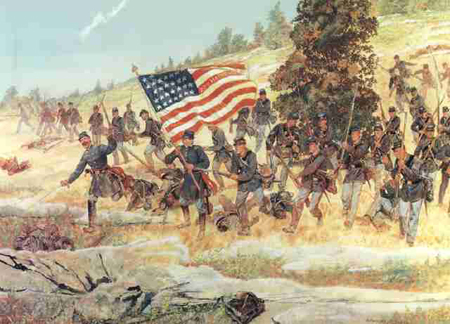
I am always humbled when I travel to Gettysburg as I did a week and a half ago. It is hard to believe in that now peaceful pastoral setting that over 157,000 Americans, almost 82,000 Union and 75,000 Confederate met in a three day battle. In those three days over 28,000 Confederates and 23,000 Union soldiers were killed, wounded, missing or captured. It was the greatest number of casualties inflicted in one battle on American soil in history.

The places that the battle was fought have become legendary, for they are “hallowed ground” as President Abraham Lincoln so eloquently put it. The places, McPherson’s and Herr’s Ridge, Seminary Ridge, the Railroad Cut, Barlow’s Knoll, Cemetery Hill, Culp’s Hill, The Wheat Field, Devil’s Den, the Peach Orchard, Little Round Top, Cemetery Ridge, the Apse of Trees, the Angle and the High Water Mark are in a sense holy, or hallowed, consecrated by those who struggled there, those who lived and those who gave the last full measure of devotion to their country. When I take my students there I always finish at the Soldier’s Cemetery where Abraham Lincoln delivered the Gettysburg Address.

I think about those men of both sides, fully convinced of the rightness of their cause who fought valiantly in the struggle. That being said when I go there though my family predominantly fought for the Confederacy my heart is drawn to those men who remained loyal to the Union and those who answered the call of Abraham Lincoln to serve in a cause greater than their own interests, the great and the small alike.

Lincoln was a masterful orator who managed to rally the Union and bring hundreds of thousands of men volunteer before Gettysburg. They came for an ideal an ideal which Lincoln’s oratory was probably the most effective at articulating in a way that men would volunteer to suffer hardship, fight and die to bring about. It was well put in the movie Gettysburg where Colonel Joshua Chamberlain, played by Jeff Daniels said:

“This is a different kind of army. If you look at history you’ll see men fight for pay, or women, or some other kind of loot. They fight for land, or because a king makes them, or just because they like killing. But we’re here for something new. This has not happened much, in the history of the world: We are an army out to set other men free. America should be free ground, all of it, from here to the Pacific Ocean. No man has to bow, no man born to royalty. Here we judge you by what you do, not by who your father was. Here you can be something. Here is the place to build a home. But it’s not the land. There’s always more land. It’s the idea that we all have value, you and me. What we’re fighting for, in the end… we’re fighting for each other…” [1]

On November 19th 1863 Lincoln delivered a “few words” at Gettysburg which were in all practical aspects a benediction at the dedication of the battlefield cemetery. Lincoln was the second speaker at the ceremony following former Pennsylvania Congressman Edward Everett who spoke for more than two hours, a typical speech from the period.

Everett was one of the leading orators of his day. Everett was “a scholar and Ivy-League diplomat who could hold mass audiences in thrall. His voice, diction, and gestures were successfully dramatic, and he always performed his carefully written text, no matter how long, from memory.” [2]

The 270 words of Lincoln’s address are perhaps the most important of any speech or document in American history save the Declaration of Independence and the Constitution of the United States, in those words “Lincoln, nevertheless managed to justify the ways of democracy more than anyone, then or now.” [3]

The speech was so powerful that Everett wrote Lincoln the next day:

“Permit me also to express my great admiration of the thoughts expressed by you, with such eloquent simplicity & appropriateness, at the consecration of the Cemetery. I should be glad, if I could flatter myself that I came as near to the central idea of the occasion, in two hours, as you did in two minutes.” [4]

The speech is short, but its eloquence is unmatched. Lincoln wrapped ideas, concepts and ideals that men have written volumes about into a speech so powerful that many have memorized it.

But few realize the context that it must be placed. Though the Union had defeated Lee’s Army at Gettysburg and Grant had taken Vicksburg to cut the Confederacy in half the North was growing war weary. During the fall of 1863 after a series of inconclusive battles in northern Virginia both Lee and Meade’s armies had sent significant numbers of troops to the west, to support operations in eastern Tennessee.

Lee sent Longstreet’s First Corps, which took part in the bloody battle of Chickamauga, which “is a Cherokee word meaning “river of death.” [5] where on September 19th and 20th the Federal Army of the Cumberland under General Rosecrans “were soundly whipped at …and driven back into the strategic point of Chattanooga.” [6] The number of casualties on both sides, over 16,000 Federal and 18,000 Confederate, a “combined total of 34,634 was exceeded only the three day slaughter at Gettysburg and by the week-long series of five battles known collectively as the Seven Days.” [7] Despite the number of casualties it was one of the biggest Confederate victories of the war. A clerk in Richmond wrote “The whole South will be filled again with patriotic fervor, and in the North there will be a corresponding depression.” [8] That changed rapidly when the Union reacted quickly and reversed the strategic situation. One action taken was to deploy Oliver Howard’s XI Corps and Henry Slocum’s XII Corps west, where “they would be commanded by Joe hooker, who was conveniently at hand and unemployed.” [9]

In the east during the following weeks “Lee and Meade, like two wounded, spent gladiators, sparred listlessly along the Rapidan. It seemed to Northerners that the fruits of Gettysburg had been thrown away.” [10] Lee sensed an opportunity to go back on the offensive against Meade’s weakened army, but his offensive was stopped on October 14th when “the Union Second Corps shattered a reckless attack by A.P. Hill’s corps at Bristoe Station, five miles south of Manassas.[11]

There was a faction in the North, the Copperheads, who were willing even after Gettysburg and Vicksburg to end the war on terms favorable to the Confederacy, even allowing for Confederate independence and the continuation of slavery. The efforts of the Copperheads to gain governorships in Ohio and Pennsylvania met defeat in November 1863, although their efforts would persist through the 1864 Presidential election.

However, the anti-abolitionist and racist views espoused by the northern Democrat Copperheads had begun to lose their potency in the North after July of 1863 with the onset of “the New York draft riot, which shocked many northerners into a backlash against the consequences of virulent racism” [12] and the sacrifice of the African American 54th Massachusetts Infantry when it assaulted Fort Wagoner outside of Charleston South Carolina, which occurred “just after the Democratic rioters in New York had lynched black people and burned the Colored Orphan Asylum. Few Republican newspapers failed to point the moral: black men who fought for the Union deserved more respect than white men who fought against it.” [13]

The speeches of Everett and Lincoln are deeply connected with Romanticism, the Greek revival and the Transcendentalist movement in the United States. Both were children of the enlightenment, and Everett, a former President of Harvard was well versed in these subjects and Lincoln, though a politician who appealed to the tenets of the Enlightenment, the Declaration of Independence and the Constitution. Lincoln appealed to the “sacred principles of the laws of nature,” and hailed “the constitution and laws” as “hewn from the solid quarry of sober reason.” For Lincoln, the war was a test of the practical worth of liberalism.” [14]

Everett had been a mentor to some of the leading Transcendentalist thinkers of his era including Ralph Waldo Emmerson who found that the experience of “Everett’s classroom gave him an entirely new direction in life. He wrote:

“Germany had created [literary] criticism in vain for us until 1820, when Edward Everett returned from his five years in Europe, and brought to Cambridge his rich results, which no one was so fitted by natural grace and splendor of his rhetoric to introduce and recommend….The novelty of the learning lost northing in the skill and genius of its interpreter, and the rudest undergraduate found a new morning opening to him in the lecture room at Harvard.” [15]

Everett, who had previously dedicated battlefields at Bunker Hill, as well as Lexington and Concord, was at his best when dedicating battlefields and cemeteries. He spent weeks preparing his speech. Everett had studied the battle and knew it well from official reports and talks with those who fought it. Everett painted a vivid picture of the battle for his audience and connected the sacrifice of those who fought and died to preserve the Union form antiquity and from those who founded the nation. In his narrative Everett aspired to more than mere accuracy. Along “with Bancroft and other romantic historians of his time, he meant to create a tradition that would inspire as well as inform. Like the Attic orators- and dramatists- he knew the power of symbols to create a people’s political identity.” [16]

Lincoln was sick when he delivered the address having what was mostly likely a mild form of Smallpox when he gave the address. Thus the tenor, simplicity and philosophical depth of the address are even more remarkable. It is a speech given in the manner of Winston Churchill’s “Blood sweat toil and tears” address to Parliament upon being appoint Prime Minister in 1940. Likewise it echoes the Transcendentalist understanding of the Declaration of Independence as a “test for all other things.” Many in the United States and Europe did not agree and argued that no nation found on such principles could long survive. But Lincoln disagreed. He believed that the “sacrifices of Gettysburg, Shiloh, Murfreesboro, Chancellorsville, and a hundred other places demonstrated otherwise, that men would die rather than to lose hold of that proposition. Reflecting on that dedication, the living should themselves experience a new birth of freedom, a determination….”that government of the people, by the people, for the people, shall not perish from the earth.[17]

The Unitarian pastor and leading Transcendentalist Theodore Parker wrote:

“Our national ideal out-travels our experience, and all experience. We began our national career by setting all history at defiance- for that said, “A republic on a large scale cannot exist.” Our progress since that has shown that we were right in refusing to be limited by the past. The practical ideas of the nation are transcendent, not empirical. Human history could not justify the Declaration of Independence and its large statements of the new idea: the nation went beyond human history and appealed to human nature.” [18]

Likewise Lincoln’s address echoes the thought of George Bancroft who wrote of the Declaration:

“The bill of rights which it promulgates is of rights that are older than human institutions, and spring from the eternal justice…. The heart of Jefferson in writing the Declaration, and of Congress in adopting it, beat for all humanity; the assertion of right was made for the entire world of mankind and all coming generations, without any exceptions whatsoever.” [19]

Parker’s words also prefigured an idea that Lincoln used in his address, that being: The American Revolution, with American history since, is an attempt to prove by experience this transcendental proposition, to organize the transcendental idea of politics. The ideal demands for its organization a democracy- a government of all, for all, and by all…” [20]

Lincoln delivered these words on that November afternoon:

Four score and seven years ago our fathers brought forth on this continent, a new nation, conceived in Liberty, and dedicated to the proposition that all men are created equal.

Now we are engaged in a great civil war, testing whether that nation, or any nation so conceived and so dedicated, can long endure. We are met on a great battle-field of that war. We have come to dedicate a portion of that field, as a final resting place for those who here gave their lives that that nation might live. It is altogether fitting and proper that we should do this.

But, in a larger sense, we cannot dedicate — we can not consecrate — we can not hallow — this ground. The brave men, living and dead, who struggled here, have consecrated it, far above our poor power to add or detract. The world will little note, nor long remember what we say here, but it can never forget what they did here. It is for us the living, rather, to be dedicated here to the unfinished work which they who fought here have thus far so nobly advanced. It is rather for us to be here dedicated to the great task remaining before us — that from these honored dead we take increased devotion to that cause for which they gave the last full measure of devotion — that we here highly resolve that these dead shall not have died in vain — that this nation, under God, shall have a new birth of freedom — and that government of the people, by the people, for the people, shall not perish from the earth.[21]

In a time where many are wearied by the foibles and follies of our politicians, even wondering about our form of government can survive Lincoln’s words matter. Dr. Allen Guelzo, Professor of Civil War Studies at Gettysburg College wrote in the New York Times:

“The genius of the address thus lay not in its language or in its brevity (virtues though these were), but in the new birth it gave to those who had become discouraged and wearied by democracy’s follies, and in the reminder that democracy’s survival rested ultimately in the hands of citizens who saw something in democracy worth dying for. We could use that reminder again today.” [22]

Dr. Guelzo is quite correct. Many people in this country and around the world are having grave doubts about our democracy. I wonder myself, but I am an optimist. I do believe that we will recover because for the life of me I see no nation anywhere else with our resiliency and ability to overcome the stupidity of politicians, pundits and preachers.

The amazing thing was that in spite of everything the Union survived. Lincoln was a big part of that but it was the men who left lives of comfort and security like Joshua Chamberlain and so many others who brought about that victory. Throughout the war, even to the end Southern political leaders failed to understand that Union men would fight and die for an ideal, something greater than themselves, the preservation of the Union and the freedom of an enslaved race. For those men that volunteered to serve, the war was not about personal gain, loot or land, it was about something greater. It was about freedom.

Now I for one do not think that we are currently living up to the ideals enunciated by Lincoln that day at Gettysburg. I can understand the cynicism disillusionment of Americans as well as those around the world who have for over 200 years looked to us and our system as a “city set on a hill.” That being said, when I read these words and walk that hallowed ground I am again a believer. I believe that we can realize the ideal, even in our lifetime should we desire.

[1] Shaara, Michael. The Killer Angels, Ballantine Books, New York. 1974 p.28

[2] Wills, Garry. Lincoln at Gettysburg: The Words that Remade America Simon and Schuster Paperbacks, New York 1992 p.25

[3] Guelzo Allen C. Fateful Lightening: A New History of the Civil War Era and Reconstruction Oxford University Press, Oxford and New York 2012 p.407

[4] Everett, Edward Letter from Edward Everett to Abraham Lincoln, (Transcription) 20 November 1863 retrieved from http://www.in.gov/judiciary/citc/files/everett-to-lincoln.pdf July 18th 2014

[5] Ibid. Guelzo Fateful Lighteningp.352

[6] Hebert, Walter H. Fighting Joe Hooker University of Nebraska Press, Lincoln and London 1999. Originally published by Bobbs-Merrill, New York 1944

[7] Foote, Shelby, The Civil War, A Narrative. Volume Two Fredericksburg to Meridian Random House, New York 1963 p.758

[8] Ibid. Foote The Civil War, A Narrative. Volume Two p.757

[9] Ibid. Foote The Civil War, A Narrative. Volume Two p.764

[10] Sears, Stephen W. Gettysburg Mariner Books, Houghton Mifflin Company Boston, New York 2004 p.513

[11] McPherson, James M. Tried by War: Abraham Lincoln as Commander in Chief Penguin Books, New York and London 2008 p.200

[12] McPherson, James. The Battle Cry of Freedom: The Civil War Era Oxford University Press, Oxford and New York 1988 p.686

[13] Ibid. McPherson The Battle Cry of Freedom p.687

[14] Ibid. Guelzo. Fateful Lightening pp.406-407

[15] Ibid. Wills. Lincoln at Gettysburg p.45

[16] Ibid. Wills. Lincoln at Gettysburg p.51

[17] Ibid. Guelzo. Fateful Lightening p.408

[18] Ibid. Wills. Lincoln at Gettysburg p.110

[19] Ibid. Wills. Lincoln at Gettysburg p.105

[20] Ibid. Wills. Lincoln at Gettysburg p.105

[21] Lincoln, Abraham The Gettysburg Address the Bliss Copy retrieved from http://www.abrahamlincolnonline.org/lincoln/speeches/gettysburg.htm

[22] Guelzo, Allen C. Lincoln’s Sound Bite: Have Faith in Democracy New York Time Opinionator, November 17th 2013 retrieved from http://opinionator.blogs.nytimes.com/2013/11/17/lincolns-sound-bite-have-faith-in-democracy/?_php=true&_type=blogs&_r=0 July 18th 2014


4 Comments

Filed under civil war, History, philosophy, Political Commentary

We Hold These Truths…

Declaration_of_Independence_by_JoeSnuffy

Last night I re-read the Declaration of Independence. I do this about every time this year. It is not a long read, but quite profound. As I read again I reflected on the beginning of the second sentence of that document.

“We hold these truths to be self-evident, that all men are created equal…” When penned by Thomas Jefferson and ratified by the Continental Congress in July 1776 these words, which begin the second sentence of the Declaration of Independence announced something unimaginable to the world, most of which labored under the rule of ensconced monarchies, nobilities and state religions, where your social status and religious affiliation counted more than anything else, places where few commoners had any hope of social advancement, no matter what their talent, ability or genius.

They were a clarion call of equality and revolutionary in their impact, not only in the American colonies but around the world. In the coming years people around the world would look to those words as they sought to free themselves from oppressive governments and systems where the vast majority of people had few rights, and in fact no equality existed.

But the liberty and equality stated in the Declaration of Independence did not extend to all in the United States, or in its territories as it expanded westward, and the inequity eventually brought on a great civil war.

Eighty seven years after those words were published the nation was divided, in the midst of a great civil war, a climactic battle having just been fought at Gettysburg. A few months later President Abraham Lincoln penned one of the most insightful and influential documents ever written, the Gettysburg Address.

One thing that our founders overlooked was that even while proclaiming equality, they later enshrined that one group of people, African slaves were not equal, in fact they only counted as three fifths of a person. Eventually, many states on their own abolished slavery, but because of the invention of the Cotton Gin slavery became even more fully entrenched in the American South, when an oligarchy of land and slave owners held immense power, where nearly half of the population was enslaved and where even poor whites had few rights and little recourse to justice.

After the Dred Scott decision of 1857 which declared that African Americans, no matter if they were slave or free could be American Citizens and had no standing to sue in Federal courts. Scott had sued to gain his family’s freedom after his owner refused to allow him to purchase it, because they were in a territory where slavery was but even more importantly held that the Missouri Compromise of 1824 which had prohibited the introduction of Slavery into Federal territories was unconstitutional and that the Federal government had no right to limit slavery in territories acquired after the creation of the United States. Chief Justice Roger Taney writing for the majority wrote that all African Americans were viewed by the authors of the Constitution as:

“beings of an inferior order, and altogether unfit to associate with the white race, either in social or political relations, and so far inferior that they had no rights which the white man was bound to respect.”

Taney held that Article V of the Constitution barred any law that would deprive a slave owner of his “property” on entrance into free states or territories. and enunciated a string of negative effects, or “parade of horribles” that would derive if Scott’s petition for freedom was granted. His declaration is amazing in its ignorance and prejudice. Taney wrote:

“It would give to persons of the negro race, …the right to enter every other State whenever they pleased, …to sojourn there as long as they pleased, to go where they pleased …the full liberty of speech in public and in private upon all subjects upon which its own citizens might speak; to hold public meetings upon political affairs, and to keep and carry arms wherever they went.”

The two dissenting Justices, Curtis and McLain disagreed with the proposition that the writers of the Constitution believed as Taney and the majority believed, noting that at the time of the ratification of the Constitution that blacks could vote in five of the thirteen states, making them citizens, not just of those states but the United States. Referring to the Declaration of Independence in 1854 Lincoln wrote: “the standard maxim of free society …constantly spreading and deepening its influence,” ultimately applicable “to peoples of all colors everywhere.”

However, much to the concern of slave holders and the South, the decision energized the abolitionist movement who believed that now no black, even those with a long history of being Freed Men living in non-slave states could be claimed as property by those claiming to be former owners, and that state laws which gave blacks equal rights and citizenship could be overturned. Lincoln again referring to the Declaration wrote of the Dred Scott decision:

“to aid in making the bondage of the Negro universal and eternal….All the powers of the earth seem rapidly combining against him. Mammon is after him; ambition follows, and philosophy follows, and the theology of the day is fast joining the cry. They have him in his prison house;…One after another they have closed the heavy doors upon him…and they stand musing as to what invention, in all the dominions of mind and matter, can be produced the impossibility of his escape more complete than it is.”

Eventually the tensions led to the election of Lincoln along sectional lines and the immediate secession of seven southern states and the establishment of the Confederacy. British military historian and theorist Major General J.F.C. Fuller wrote that the war was “not between two antagonistic political parties, but a struggle to the death between two societies, each championing a different civilization…”

The Confederate Vice President, Alexander Stephens openly proclaimed that the inequity of African Americans was foundational to the Confederacy in his Cornerstone speech of 1861, if there are any doubters about the “rights” the leaders of the Southern States longed to preserve in their secession from the Union, Stephen’s words are all to clear in their intent:

“Our new government is founded upon exactly the opposite idea; its foundations are laid, its corner- stone rests upon the great truth, that the negro is not equal to the white man; that slavery — subordination to the superior race — is his natural and normal condition. [Applause.] This, our new government, is the first, in the history of the world, based upon this great physical, philosophical, and moral truth.”

Lincoln, in his Second Inaugural Address acknowledged what everyone had known, but few, him included in the North were willing to say in 1861:

“One-eighth of the whole population were colored slaves, not distributed generally over the Union, but localized in the southern part of it. These slaves constituted a peculiar and powerful interest. All knew that this interest was somehow the cause of the war. To strengthen, perpetuate, and extend this interest was the object for which the insurgents would rend the Union even by war, while the Government claimed no right to do more than to restrict the territorial enlargement of it….”

Even so it took time for the abolition of slavery to be acknowledged as a major concern by the Federal government, it was not until 1862 after Lee’s failed invasion of Maryland and the Battle of Antietam that Lincoln published the Emancipation Proclamation, and that only applied to Confederate territories.

But in 1863 after Gettysburg Lincoln was asked to speak a “few words” at the dedication of the Soldiers’ cemetery. Lincoln’s words focused the issue of the war in relation to those first words of the second sentence of the Declaration of Independence, the understanding that all men are created equal.

“Four score and seven years ago our fathers brought forth on this continent, a new nation, conceived in Liberty, and dedicated to the proposition that all men are created equal.

Now we are engaged in a great civil war, testing whether that nation, or any nation so conceived and so dedicated, can long endure. We are met on a great battle-field of that war. We have come to dedicate a portion of that field, as a final resting place for those who here gave their lives that that nation might live. It is altogether fitting and proper that we should do this.

But, in a larger sense, we can not dedicate — we can not consecrate — we can not hallow — this ground. The brave men, living and dead, who struggled here, have consecrated it, far above our poor power to add or detract. The world will little note, nor long remember what we say here, but it can never forget what they did here. It is for us the living, rather, to be dedicated here to the unfinished work which they who fought here have thus far so nobly advanced. It is rather for us to be here dedicated to the great task remaining before us — that from these honored dead we take increased devotion to that cause for which they gave the last full measure of devotion — that we here highly resolve that these dead shall not have died in vain — that this nation, under God, shall have a new birth of freedom — and that government of the people, by the people, for the people, shall not perish from the earth.”

Unfortunately, the issue of equality has languished in our political debates. Equality is the sister of and the guarantor of the individual liberties enunciated in the Declaration. However because of human nature always more vulnerable to those that would attempt to enshrine their personal liberty over others, or attempt to use the courts and Constitution to deprive others of the rights that they themselves enjoy, or to enshrine their place in society above others. In some cases this is about race, sometimes religion, sometimes about gender and even sexual orientation. Likewise there are those that would try to roll back the rights of others, as those who seek to disenfranchise the poor and minorities, particularly African Americans at the ballot box.

That is why it is important, even as we celebrate and protect individual liberties that we also seek to fight for the equality of all citizens, irrespective of race, religion, gender or sexual orientation. The Declaration of Independence is our guide for this as Jefferson so eloquently wrote: “We hold these truths to be self-evident, that all men are created equal, that they are endowed by their Creator with certain unalienable Rights, that among these are Life, Liberty and the pursuit of Happiness.–That to secure these rights, Governments are instituted among Men…”

Have a happy 4th of July and please remember that unless liberty is liberty for all then it is really only liberty for some; those of great economic power and influence; or who happen to be the right race, religion, gender or sexual preference.

Peace

Padre Steve+

Leave a comment

Filed under civil rights, civil war, History, laws and legislation, News and current events, Political Commentary

The Never Ending Struggle Against Racism and Its Terrible Effects

ted-nugent-sotu-ap

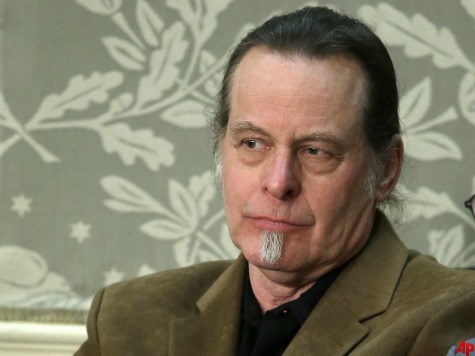
On the 149th Anniversary of Pickett’s Charge at the Battle of Gettysburg washed up rocker and right wing political activist Ted Nugent wrote in the Washington Times: “I’m beginning to wonder if it would have been best had the South won the Civil War.”  I found his remark appalling and disgraceful but I have come to expect such comments from him and and others who voice similar sentiments. If Nugent’s rant was a one time slip of the tongue there might be some grace, but even last week he called President Obama a “subhuman mongrel” a term so load with Ku Klux Klan, Jim Crow and Nazi imagery it defies imagination to hear it used today. When I hear such words spoken towards anyone I can only believe that the man that utters them is an unrepentant racist bent on the reestablishment of White Supremacy.

When I hear such sentiments, I think of men like Joshua Chamberlain. Chamberlain was a college professor who served in the Union Army and won fame and the Medal of Honor for the defense of Little Round Top at Gettysburg. There is a quote from the film Gods and Generals which I think about when I hear anyone suggesting that it would have been better for the Confederacy to have won the war:

“Now, somewhere out there is the Confederate army. They claim they are fighting for their independence, for their freedom. Now, I can not question their integrity. I believe they are wrong but I can not question it. But I do question a system that defends its own freedom while it denies it to an entire race of men. I will admit it, Tom. War is a scourge, but so is slavery. It is the systematic coercion of one group of men over another. It has been around since the book of Genesis. It exists in every corner of the world, but that is no excuse for us to tolerate it here when we find it right in front of our very eyes in our own country. As God as my witness, there is no one I hold in my heart dearer than you. But if your life, or mine, is part of the price to end this curse and free the Negro, then let God’s work be done.”

There is a spot near the Copse of Trees along Cemetery Ridge which is referred to as the “High Water Mark of the Confederacy.” It is close to where Confederate Brigadier General Lewis Armistead fell mortally wounded as the decimated remains of his command were overwhelmed by Union forces shortly after they breached the Union line. It is a place immortalized in history, literature and film. It is the place that marked the beginning of the end for the great evil of slavery in America.

My ancestors lived in Cabell County which in 1861 was part of Virginia. They were slave holders along the Mud River, a tributary of the Ohio River just to the north of what is now Huntington West Virginia. When war came to the country the family patriarch James Dundas joined the 8th Virginia Cavalry Regiment in which he served the bulk of the war as a Lieutenant.  When the war ended he refused to sign the loyalty oath to the Union. As a penalty his lands, which are now some of the most valuable in that part of West Virginia were confiscated and sold by the Federal Government. James Dundas was a true believer in the romantic and confused myth of the “Lost Cause.”

Because he served I am eligible for membership in the Sons of the Confederacy. But that is something that I will not do. While some join that organization to honor their ancestors, others that take that devotion to places that I cannot go.  As much as I admire the valor and personal integrity of many military men who served the Confederacy I cannot for a moment think that their “cause” was just.

It has been said that the North won the war but that the South won the history.  I think this is true. Many people reduce the reasons for the war to the South protecting its rights.  Sometimes the argument for the South is “states rights” or “economic freedom.” Those that make these arguments frequently romanticize the valor shown by Confederate soldiers on the battlefield. But sadly they often ignore or obscure the racism and evil of the Southern economic system.

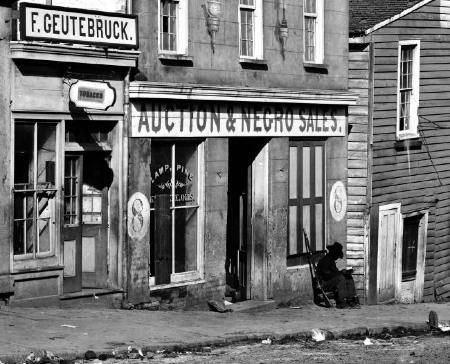
full_1361408284slave.market

The “rights” and the “economic freedom” espoused by those that led the secession and that are lamented by those like Nugent were categorically evil. Those rights and freedoms were built upon the rotten edifice of slavery. The South fought to maintain their rights to enslave and exploit Blacks to maintain an archaic economy based on agriculture, particularly the export of King Cotton. Thus I have no desire to become part of an organization enshrines the myth of the “Lost Cause” no matter what my family connections.

Some attempt to place the blame on the North, to turn the Northern States into economic predators’ intent on suppressing the economic rights of Southerners. These arguments serve to show the bankruptcy of the idea itself. The fact that the “economic and political freedom” of Southerners was founded on the enslavement of a whole race of people matters not because to such people the “cause” is greater.

The fact was that the longer the Southern economy relied on agriculture supported slavery it deprived itself of the means of economic progress. The same progress that propelled the North to prosperity. Because it cast its lot with King Cotton and slavery the South lagged in all industrial areas to include transportation infrastructure. Most non-slave owning whites lived at the poverty line. They were disrespected by the wealthy Plantation owners only enjoyed some elevated social status because the slaves ranked beneath them in the sociological and economic hierarchy.

To support its slave economy the South depended on cheap imports from England, which then was still considered an enemy of the United States. When tariffs to protect newly establish American industries were enacted in 1828 South Carolina attempted to nullify the Federal law and even raised troops and threatened to revolt in 1832.

The Southern economic system was immoral and antiquated. It enslaved blacks and it impoverished most rural Southerners.  The only exception to this were those that owned the land and the slaves, and small numbers of entrepreneurs. It was a hateful, backward and loathsome system which even Southern churches attempted to justify from Scripture.  Southern Baptists, Methodists and Presbyterians all broke away from their parent denominations in the 1840s over the issue of slavery.

So many died and so much of the South was destroyed in the defense of  the “cause” that one has to wonder just why Southern political and religious were willing to defend such an inadequate and evil economic system. Perhaps it was an innate sense of racial superiority that ran deep in the South, perhaps it was a misplaced sense of political pride and honor. Regardless of the reason, the war that they brought about devastated their homeland. The radicals that ran “Reconstruction” after the assassination of Abraham Lincoln ensured that Southerners suffered terrible degradation and impeded any real efforts to promote reconciliation between the races and between the regions.  Their misguided and often brutal rule ensured that Southern blacks would have even more obstacles raised against them by the now very angry and revengeful whites.  It would take another 80-100 years to end segregation and secure voting rights for blacks.

I was raised on the West Coast but have lived in the South much of my adult life due to military assignments. I served in National Guard units that trace their lineage to Confederate regiments in Texas and Virginia. Despite my Confederate connections both familial and by service I can find little of the romance and idealism that some find in the Confederacy and the “Lost Cause.” I see the Civil War for what it was, a tragedy of the highest order brought about by the need of some to enslave others to maintain their economic system.

BWeqwULCEAA72jU.jpg-large

Today there are many that use the flags of the Confederacy outside of their historic context. They are most often used as a symbol of continued racial hatred or of defiance to the Federal Government by White Supremacist or anti-government organizations.  Many that use them openly advocate for the overthrow of the Federal Government.  The calls for such “revolt” can be found all over the country even in the halls of Congress much as they were in the 1830s, 40s and 50s.

Some of this is based on libertarian economic philosophy which labels the government as the enemy of business. Some is religious opposition to some social policies, while some is based in xenophobic racial hatred, not just of Blacks, but also Latin Americans, Asians and Middle Eastern immigrants. The divisions in the country are probably as great as or greater than they were in the 1850s as the country lurched inexorably to Civil War.

I often see the symbols of the Confederacy, particularly the Battle Flag displayed in manners that can only be seen as symbols of defiance.  Somehow I find the display of that flag outside of its historic context revolting.

For such people the Federal Government is the enemy. I know that our system of government has its flaws. Likewise I cannot agree more about the corruption of many in political office, regardless of their political allegiance or ideology.

Today quite a few people on the political right call for revolt or secession. Some moderate politicians have attempted to compromise with such radicals, but those efforts only make things worse. Radicals are never satisfied and view compromise as weakness. Thus Thomas Jefferson said of the Missouri Compromise of 1824: “but this momentous question, like a fire bell in the night, awakened and filled me with terror. I considered it at once as the knell of the Union. It is hushed indeed for the moment, but this is a reprieve only, not a final sentence. A geographical line, coinciding with a marked principle, moral and political, once conceived and held up to the angry passions of men, will never be obliterated; and every new irritation will mark it deeper and deeper.”

We have allowed the issues of our time to become a fire of unbridled angry passion. We have allowed those with almost no historical understanding and who promote myth stake claims and promote ideas that are destructive to our union. Unfortunately I do not think that we have reached the high water mark of this movement. I fear like Jefferson that the hatred and division will only grow worse as some prepare for conflict.

A few months after the Battle of Gettysburg Abraham Lincoln made a few remarks at Gettysburg war cemetery.  Lincoln is reviled by men like Nugent and others that romanticize the Lost Cause. He is often demonized by many “conservative” politicians and pundits today, but his remarks are still remarkably pertinent:

“Four score and seven years ago our fathers brought forth on this continent, a new nation, conceived in Liberty, and dedicated to the proposition that all men are created equal.

Now we are engaged in a great civil war, testing whether that nation, or any nation so conceived and so dedicated, can long endure. We are met on a great battlefield of that war. We have come to dedicate a portion of that field, as a final resting place for those who here gave their lives that that nation might live. It is altogether fitting and proper that we should do this. But, in a larger sense, we cannot dedicate—we cannot consecrate—we cannot hallow—this ground. The brave men, living and dead, who struggled here, have consecrated it, far above our poor power to add or detract. The world will little note, nor long remember what we say here, but it can never forget what they did here. It is for us the living, rather, to be dedicated here to the unfinished work which they who fought here have thus far so nobly advanced. It is rather for us to be here dedicated to the great task remaining before us—that from these honored dead we take increased devotion to that cause for which they gave the last full measure of devotion—that we here highly resolve that these dead shall not have died in vain—that this nation, under God, shall have a new birth of freedom— and that government of the people, by the people, for the people, shall not perish from the earth.”

Today with so many radicals doing all that they can to plunge us into yet another civil war we should remember Lincoln’s words. We need to rededicate ourselves to this Union.  Tony Blair the former Prime Minster of Great Britain remarked in 2011:

“It may be strange for a former British Prime Minister to offer thoughts on America when the country will be celebrating its independence from Britain. But the circumstances of independence are part of what makes America the great and proud nation it is today. And what gives nobility to the American character.

That nobility isn’t about being nicer, better or more successful than anyone else. It is a feeling about the country. It is a devotion to the American ideal that at a certain point transcends class, race, religion or upbringing. That ideal is about values, freedom, the rule of law, democracy. It is also about the way you achieve: on merit, by your own efforts and hard work.

But it is most of all that in striving for and protecting that ideal, you as an individual take second place to the interests of the nation as a whole. This is what makes the country determined to overcome its challenges. It is what makes its soldiers give their lives in sacrifice. It is what brings every variety of American, from the lowest to the highest, to their feet when “The Star-Spangled Banner” is played.

Of course the ideal is not always met – that is obvious. But it is always striven for.

The next years will test the American character. The world is changing. New powers are emerging. But America should have confidence. This changing world does not diminish the need for that American ideal. It only reaffirms it.”

I think that the Prime Minister got it right and that Ted Nugent and those like him or defend his hateful ideology are ignorant racist fools. But hatred, ignorance and the belief in myth are often quite powerful in the hands of those who desire to maintain their power at any cost. History proves this, thus we must always confront them and not back down until we truly know that “new birth of freedom.”

Peace

Padre Steve+

Leave a comment

Filed under civil rights, civil war, News and current events, Political Commentary

Gettysburg at 150 and the Lingering Curse of the “Lost Cause” on the United States

gal9vfvf1

This week I will be writing a lot about the Battle of Gettysburg which happens to fall in the days before the celebration of our Declaration of Independence. Some of these will be articles that I published before and some will be new work. I think that the American Civil War and its consequences today is something that we need to look at as a society, and not from the romanticized “Lost Cause” revisionism that is so popular among many even today.

Last year washed up rocker and now political activist Ted Nugent wrote in the Washington Times “I’m beginning to wonder if it would have been best had the South won the Civil War.”  I find his remark appalling and disgraceful but I have come to expect such comments from him and and others who voice similar sentiments. But Nugent is not alone, an organization called The League of the South states its goals in very clear language: “The League of the South is a Southern Nationalist organization whose ultimate goal is a free and independent Southern republic.”

When I hear such sentiments and they are many now days I think of men like Joshua Chamberlain. Chamberlain was a college professor who served in the Union Army and won fame and the Medal of Honor for the defense of Little Round Top at Gettysburg. There is a quote from the film Gods and Generals which I think about when I hear anyone suggesting that it would have been better for the Confederacy to have won the war:

“Now, somewhere out there is the Confederate army. They claim they are fighting for their independence, for their freedom. Now, I can not question their integrity. I believe they are wrong but I can not question it. But I do question a system that defends its own freedom while it denies it to an entire race of men. I will admit it, Tom. War is a scourge, but so is slavery. It is the systematic coercion of one group of men over another. It has been around since the book of Genesis. It exists in every corner of the world, but that is no excuse for us to tolerate it here when we find it right in front of our very eyes in our own country. As God as my witness, there is no one I hold in my heart dearer than you. But if your life, or mine,is part of the price to end this curse and free the Negro, then let God’s work be done.”

There is a spot near the Copse of Trees along Cemetery Ridge which is referred to as the “High Water Mark of the Confederacy.” It is the spot close to where Confederate Brigadier General Lewis Armistead fell mortally wounded as the decimated remains of his command were overwhelmed by Union forces shortly after they breached the Union line. It is a place immortalized in history, literature and film. It is the place that marked the beginning of the end for the great evil of slavery in America.

My ancestors lived in Cabell County which in 1861 was part of Virginia. They were slave holders along the Mud River, a tributary of the Ohio River just to the north of what is now Huntington West Virginia. When war came to the country the family patriarch James Dundas and my great, great grandfather joined the 8th Virginia Cavalry Regiment in which he served the bulk of the war as a Lieutenant.  When it ended he refused to sign the loyalty oath to the Union and had his lands, which are now some of the most valuable in that part of West Virginia confiscated and sold by the Federal Government.  He was a believer in the “Lost Cause” that romantic and confused idea about the rightness of the South in its war against what they called “Northern aggression.”

Because he and others on both sides of my family served in Confederate ranks I am eligible for membership in the Sons of the Confederacy. However it is something that I cannot do.  There are some that do this as a means to honor their relatives that served in the war and I do not make light of their devotion to their family, but there are some that take that devotion to places that I cannot go.  As much as I admire the valor and personal integrity of many military men who served the Confederacy I cannot for a moment think that their “cause” was just.

It has been said that the North won the war but that the South won the history.  I think this is true. Many people now days like to reduce the reasons for the war to the South protecting its rights.  Sometimes the argument is “states rights” or “economic freedom” and those that make these arguments romanticize the valor shown by Confederate soldiers on the battlefield but conveniently ignore or obscure the evil of the Southern economic system.

The “rights” and the “economic freedom” espoused by those that led the secession and that are lamented by those like Nugent were based upon the enslavement and exploitation of the Black man to maintain an archaic economy based on agriculture, particularly the export of King Cotton.  Arguments which try to place the blame on the North, especially arguments that attempt to turn the Northern States into economic predators’ intent on suppressing the economic rights of Southerners only serve to show the bankruptcy of the idea itself. The fact that the “economic and political freedom” of Southerners was founded on the enslavement of a whole race of people matters not because the “cause” is greater.

One interesting point that many turn a blind eye to is that in each of its campaigns above the Mason Dixon Line Lee’s Army rounded up blacks, mostly freemen and sent them back to the South in chains to be used as slaves. I have to wonder what Southern success at Gettysburg would have meant to African Americans today. Lee believed that his campaign in Pennsylvania would bring about a result that would change the political situation in the North and bring about a situation where the North would recognize Southern independence. He wrote in April of 1863 “next fall there will be a great change in public opinion at the North. The Republicans will be destroyed & I think the friends of peace will become so strong that the next administration will go in on that basis…”

Of course Lee was wrong and his campaign was flawed in large part because he did not adequately define his intent to his commanders. That much is obvious in the writings of the surviving participants after the war.

The overall situation for the Confederacy in June of 1863 was grim. There had been food riots in Richmond, Vicksburg was on the bring of falling and with it the Confederacy would be split in two along the Mississippi River, the Union blockade of Southern ports was working, the South had not been recognized by any foreign powers and the textile industries of Europe had found other suppliers for “King Cotton.” Despite this Lee held on to the hope that a military victory in the East could change the political calculus.

The fact is that the longer the South relied solely on its agriculture which was supported by the institution of slavery it deprived itself of the means of economic progress, the same progress that propelled the North to prosperity. The south lagged in all industrial areas as well as transportation infrastructure. The majority of non-slave owning whites lived at the poverty line and only enjoyed some elevated social status because the slaves ranked beneath them on the sociological and economic hierarchy.  The South depended on cheap imports from England, which then was still considered an enemy of the country. When tariffs to protect newly establish American industries were enacted in 1828 South Carolina attempted to nullify the Federal law even raising troops and threatened a revolt in 1832.

The Southern economic system was immoral and antiquated. It enslaved blacks and it impoverished most rural Southerners, with the exception of those that owned the land and the slaves. It was a hateful, backward and loathsome system which even the southern churches attempted to justify from Scripture. Southern Baptists, Methodists and Presbyterians would all break away from their parent denominations regarding their support for the institution of slavery.

This does not mean that I think that the average Confederate soldier or officers were dishonorable men. Many officers who had served in the United States Army hated the breakup of the Union but served the South because it was the land that they were from. It was the home of their families and part of who they were.  To judge them as wanting 150 years later when we have almost no connection to family or home in a post industrial world is to impose the standards of a world that they did not know upon them. For those that gave up everything to serve one can feel a measure of sympathy.  So many died and so much of the South was destroyed in the defense of that “cause” one has to wonder just why the political and religious leaders of the South were willing to maintain such an inadequate and evil economic system one that hurt poor Southern whites nearly as much as it did blacks.

The war devastated the South and the radicals that ran “Reconstruction” ensured that Southerners suffered terrible degradation and that Southern blacks would have even more obstacles raised against them by the now very angry and revengeful whites.  It would take another 80-100 years to end segregation and secure voting rights for blacks. Thus I have no desire to become part of an organization that even gives the appearance of supporting the “cause” even if doing so would allow me to “honor” an ancestor who raised his hand against the country that I serve.

I was raised on the West Coast but have lived in the South much of my adult life due to military assignments. I have served in National Guard units that trace their lineage to Confederate regiments in Texas and Virginia. Despite my Confederate connections both familial and by service I can find little of the romance and idealism that some find in the Confederacy and the “Lost Cause.” I see the Civil War for what it was, a tragedy of the highest order brought about by the need of some to enslave others to maintain their economic system.

Today there are many that use the flags of the Confederacy outside of their historic context. They are often used as a symbol of either racial hatred or of defiance to the Federal Government by white Supremacist or anti-government organizations.  Many that use them openly advocate for the overthrow of the Federal Government.  The calls for such “revolt” can be found all over the country even in the halls of Congress much as they were in the 1830s, 40s and 50s. Some of this is based in libertarian economic philosophy which labels the government as the enemy of business, some based social policies which are against their religious beliefs and some sadly to say based in an almost xenophobic racial hatred.  The scary thing as that the divisions in the country are probably as great as or greater than they were in the 1850s as the country lurched inexorably to Civil War with neither side willing to do anything that might lessen their political or economic power even if it means the ruin of the country.

As seems to be the case around this time of year I have seen the symbols of the Confederacy, particularly the Battle Flag displayed in manners that can only be seen as symbols of defiance. July 4th will be celebrated this week and it seems to me that the flag that should be most prominently displayed is the Stars and Stripes not the Confederate Battle flag or even the Gadsen Flag which has become the symbol of the modern Tea Party movement.  Somehow I find the flag flown in rebellion to the country that I serve displayed in such an arrogant manner.

For people like the Federal Government which is the enemy. Now I know that our system of government has its flaws. Likewise I cannot agree more about the corruption of many in political office, regardless of their political allegiance.  While it is true that the Federal Government has taken upon itself many powers some never envisioned by those that crafted the Constitution, it has done so because leaders of both political parties have consented to it and even worked to strengthen the Federal Government with the consent of the American people that elect them again and again.

Despite this much of this has been accomplished by the Federal Government has been for the good for the country and people no matter what the critics say. Many of the things that we enjoy today are the result of the work of the Federal Government and not business as much as those that deify big corporations want to believe. There are the National Parks, laws against child labor and for safe workplaces brought about by Teddy Roosevelt, the infrastructure built in the 1930s and 1940s by the Franklin Roosevelt administration. The Roosevelt administration also brought about Social Security and banking regulations to protect Americans from corporations and banks that violated the public trust. The Eisenhower administration began the Interstate Highway system which is the backbone of our transportation system.  Likewise the Space Program and yes even the military have led the way in technological, scientific and medical innovation including that thing that we all take for granted today the Internet.

Today quite a few people are calling for revolt or secession if they do not get what they want be it socially, politically or economically. For years politicians on both sides have fought to minimize such talk and enact compromises with the usual discontent that comes with compromise.  Unfortunately many of those compromises have had the effect of widening the political divide much as the various compromises on the road to the Civil War.  Jefferson said of the Missouri Compromise of 1824: “but this momentous question, like a fire bell in the night, awakened and filled me with terror. I considered it at once as the knell of the Union. It is hushed indeed for the moment, but this is a reprieve only, not a final sentence. A geographical line, coinciding with a marked principle, moral and political, once conceived and held up to the angry passions of men, will never be obliterated; and every new irritation will mark it deeper and deeper.”

We have allowed the issues of our time to become a fire of unbridled angry passion where those with almost no historical understanding and whose history is often based on myth stake claims and promote ideas that will destroy this Union if they continue. Unfortunately we have not yet reached the high water mark of this movement yet and I fear like Jefferson that the hatred and division will only grow worse as both radical on the right and left prepare for conflict.

This week we celebrated the 236th anniversary of our Declaration of Independence.  It is a remarkable occasion. It is the anniversary that free people as well as those oppressed around the world look to as a beacon of liberty. It has been paid for time and time again, especially during that cruel Civil War which killed more American soldiers than any other war that we have fought.

A few months after Gettysburg Abraham Lincoln a man much reviled by those that have romanticized the Cause and who is demonized by many “conservative” politicians and pundits today as a “tyrant” made these brief remarks at the site of the battle:

Four score and seven years ago our fathers brought forth on this continent, a new nation, conceived in Liberty, and dedicated to the proposition that all men are created equal.

“Now we are engaged in a great civil war, testing whether that nation, or any nation so conceived and so dedicated, can long endure. We are met on a great battlefield of that war. We have come to dedicate a portion of that field, as a final resting place for those who here gave their lives that that nation might live. It is altogether fitting and proper that we should do this. But, in a larger sense, we cannot dedicate—we cannot consecrate—we cannot hallow—this ground. The brave men, living and dead, who struggled here, have consecrated it, far above our poor power to add or detract. The world will little note, nor long remember what we say here, but it can never forget what they did here. It is for us the living, rather, to be dedicated here to the unfinished work which they who fought here have thus far so nobly advanced. It is rather for us to be here dedicated to the great task remaining before us—that from these honored dead we take increased devotion to that cause for which they gave the last full measure of devotion—that we here highly resolve that these dead shall not have died in vain—that this nation, under God, shall have a new birth of freedom— and that government of the people, by the people, for the people, shall not perish from the earth.”

Today with so many radicals, especially those on the political right, but some on the left such as the “Anonymous” group doing all that they can to plunge us into yet another civil war we should remember Lincoln’s words and rededicate ourselves to this Union, this remarkable Union.  Tony Blair the former Prime Minster of Great Britain remarked in 2011:

“It may be strange for a former British Prime Minister to offer thoughts on America when the country will be celebrating its independence from Britain. But the circumstances of independence are part of what makes America the great and proud nation it is today. And what gives nobility to the American character.

That nobility isn’t about being nicer, better or more successful than anyone else. It is a feeling about the country. It is a devotion to the American ideal that at a certain point transcends class, race, religion or upbringing. That ideal is about values, freedom, the rule of law, democracy. It is also about the way you achieve: on merit, by your own efforts and hard work.

But it is most of all that in striving for and protecting that ideal, you as an individual take second place to the interests of the nation as a whole. This is what makes the country determined to overcome its challenges. It is what makes its soldiers give their lives in sacrifice. It is what brings every variety of American, from the lowest to the highest, to their feet when “The Star-Spangled Banner” is played.

Of course the ideal is not always met – that is obvious. But it is always striven for.

The next years will test the American character. The world is changing. New powers are emerging. But America should have confidence. This changing world does not diminish the need for that American ideal. It only reaffirms it.”

I think that the Prime Minister got it right and Ted Nugent is an ignorant fool but he has the right to be one.

Peace

Padre Steve+

6 Comments

Filed under civil rights, civil war, History, News and current events, Political Commentary

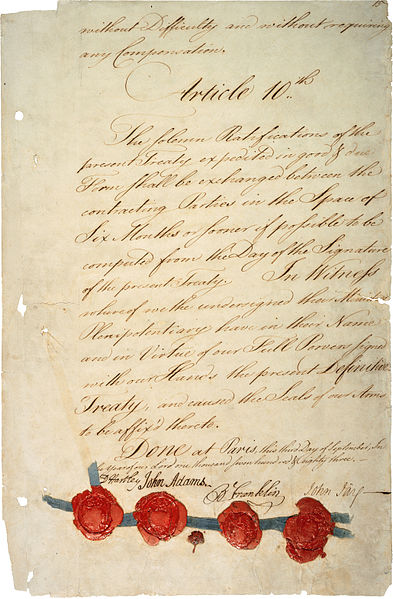
Real Independence: The Treaty of Paris 1783…We Didn’t do it Alone

It is easy to declare independence but it is far more difficult to achieve it. It is also easy to mythologize our history and ignore the fact that we did not achieve independence by our own efforts alone. No matter what country is involved there is almost always help in gaining independence. One only has to look at history to see the reality of this.

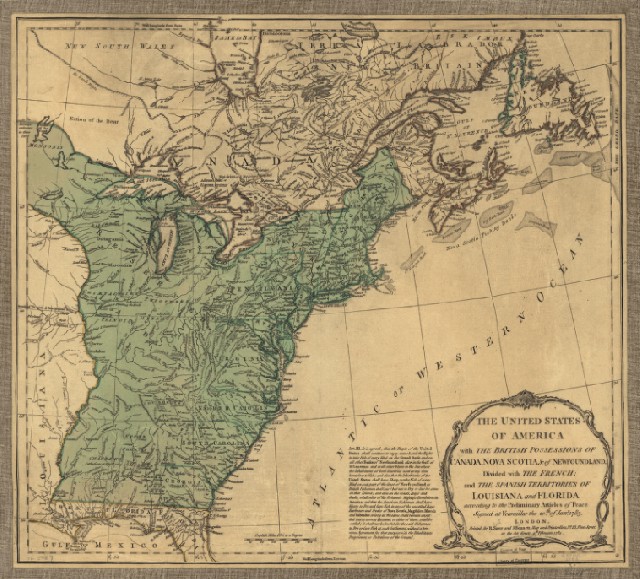
This was the case for the United States. In 1783 after over years of hostilities and over seven after the Continental Congress issued the Declaration of Independence the British Empire signed a treaty with the representatives of the colonies in Paris. The first article of the treaty was something that has not been seen before in modern European history:

“His Brittanic Majesty acknowledges the said United States, viz., New Hampshire, Massachusetts Bay, Rhode Island and Providence Plantations, Connecticut, New York, New Jersey, Pennsylvania, Delaware, Maryland, Virginia, North Carolina, South Carolina and Georgia, to be free sovereign and independent states, that he treats with them as such, and for himself, his heirs, and successors, relinquishes all claims to the government, propriety, and territorial rights of the same and every part thereof.”

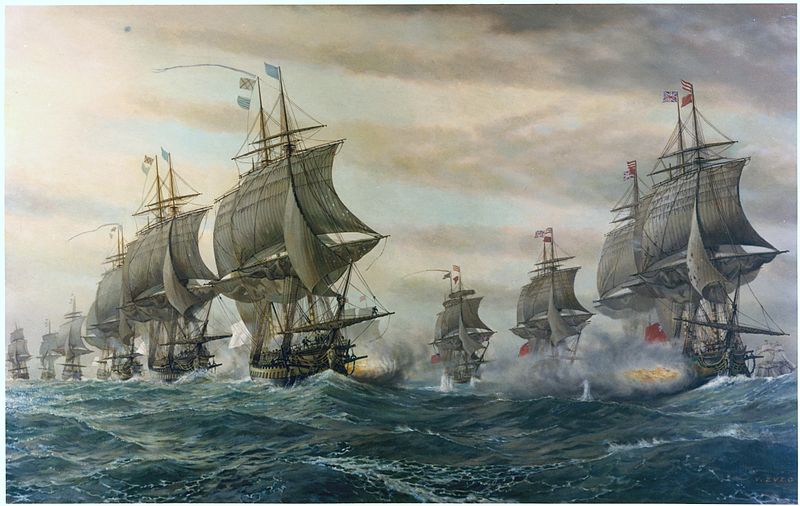
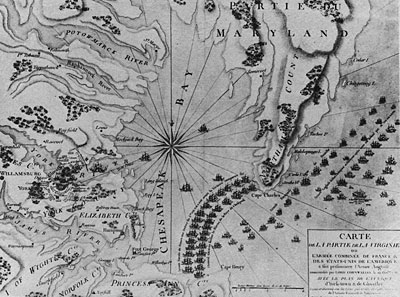
The treaty established the independence of the former British colonies and a new boundary, the Mississippi River which more than doubled the size of the new nation. The treaty was signed nearly two years after the American and French Armies, ably helped by the timely intervention of the French Navy forced Lord Cornwallis to surrender his army at Yorktown.

It is quite easy to fall prey to simple answers regarding the independence of the American nation. In fact it is not inaccurate to state that the vast majority of Americans today know little more than that the colonies declared their independence in 1776 and that George Washington led the armies and eventually became the first President. However the reality was that the independence of the new nation was secured by a number of factors including negotiations with a power that realized that the expenditure of lives and capital in what had become for them a world war of great cost.

The British negotiated a peace that was generous and which gave the American colonies more than they had begun the war. It required British garrisons to evacuate territories and fortifications in strategic areas on the Great Lakes and areas still occupied. However, the peace allowed the British to secure and expand their empire at the expense of the French, Spanish and Portuguese around the world. The new American nation would eventually eclipse the British Empire but it was not an easy journey and is something that should not be turned into myth or fiction by those that want to seek easy answers that align with their theology or myth.

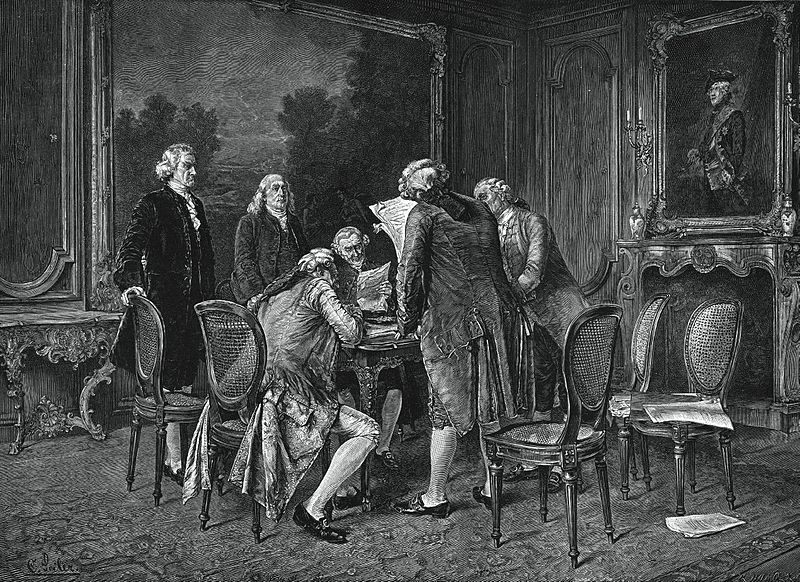
Independence was declared in 1776 but was not attained until nearly two years after Yorktown. It took military efforts of the colonies as well as diplomatic efforts of men like Benjamin Franklin to gain the vital assistance of the French who helped pay for our independence with their blood, treasure, overseas territories  and ultimately the overthrow of the French monarchy by a revolution partly inspired by the American Revolution and the economic problems brought about by the French war with England. That fact is something that we should not forget nor take lightly. We didn’t achieve our independence all by ourselves, just in case we think that we did.

Peace

Padre Steve+


1 Comment

Filed under History

Protecting the Ideal: Reflections on Gettysburg, Freedom and Why It Matters

I have spent this week writing about the Battle of Gettysburg which happens to fall in the days before the celebration of our Declaration of Independence. This week on the 149th Anniversary of Pickett’s Charge at the Battle of Gettysburg washed up rocker and now political activist Ted Nugent wrote in the Washington Times “I’m beginning to wonder if it would have been best had the South won the Civil War.”  I find his remark appalling and disgraceful but I have come to expect such comments from him and and others who voice similar sentiments.

When I hear such sentiments and they are many now days I think of men like Joshua Chamberlain. Chamberlain was a college professor who served in the Union Army and won fame and the Medal of Honor for the defense of Little Round Top at Gettysburg. There is a quote from the film Gods and Generals which I think about when I hear anyone suggesting that it would have been better for the Confederacy to have won the war:

“Now, somewhere out there is the Confederate army. They claim they are fighting for their independence, for their freedom. Now, I can not question their integrity. I believe they are wrong but I can not question it. But I do question a system that defends its own freedom while it denies it to an entire race of men. I will admit it, Tom. War is a scourge, but so is slavery. It is the systematic coercion of one group of men over another. It has been around since the book of Genesis. It exists in every corner of the world, but that is no excuse for us to tolerate it here when we find it right in front of our very eyes in our own country. As God as my witness, there is no one I hold in my heart dearer than you. But if your life, or mine,is part of the price to end this curse and free the Negro, then let God’s work be done.”

There is a spot near the Copse of Trees along Cemetery Ridge which is referred to as the “High Water Mark of the Confederacy.” It is the spot close to where Confederate Brigadier General Lewis Armistead fell mortally wounded as the decimated remains of his command were overwhelmed by Union forces shortly after they breached the Union line. It is a place immortalized in history, literature and film. It is the place that marked the beginning of the end for the great evil of slavery in America.

My ancestors lived in Cabell County which in 1861 was part of Virginia. They were slave holders along the Mud River, a tributary of the Ohio River just to the north of what is now Huntington West Virginia. When war came to the country the family patriarch James Dundas and my great, great grandfather joined the 8th Virginia Cavalry Regiment in which he served the bulk of the war as a Lieutenant.  When it ended he refused to sign the loyalty oath to the Union and had his lands, which are now some of the most valuable in that part of West Virginia confiscated and sold by the Federal Government.  He was a believer in the “Lost Cause” that romantic and confused idea about the rightness of the South in its war against what they called “Northern aggression.”

Because he served I am eligible for membership in the Sons of the Confederacy. However it is something that I cannot do.  There are some that do this as a means to honor their relatives that served in the war and I do not make light of their devotion to their family, but there are some that take that devotion to places that I cannot go.  As much as I admire the valor and personal integrity of many military men who served the Confederacy I cannot for a moment think that their “cause” was just.

It has been said that the North won the war but that the South won the history.  I think this is true. Many people now days like to reduce the reasons for the war to the South protecting its rights.  Sometimes the argument is “states rights” or “economic freedom” and those that make these arguments romanticize the valor shown by Confederate soldiers on the battlefield but conveniently ignore or obscure the evil of the Southern economic system.

The “rights” and the “economic freedom” espoused by those that led the secession and that are lamented by those like Nugent were based upon the enslavement and exploitation of the Black man to maintain an archaic economy based on agriculture, particularly the export of King Cotton.  Arguments which try to place the blame on the North, especially arguments that attempt to turn the Northern States into economic predators’ intent on suppressing the economic rights of Southerners only serve to show the bankruptcy of the idea itself. The fact that the “economic and political freedom” of Southerners was founded on the enslavement of a whole race of people matters not because the “cause” is greater.

The fact is that the longer the South relied solely on its agriculture which was supported by the institution of slavery it deprived itself of the means of economic progress, the same progress that propelled the North to prosperity. The south lagged in all industrial areas as well as transportation infrastructure. The majority of non-slave owning whites lived at the poverty line and only enjoyed some elevated social status because the slaves ranked beneath them on the sociological and economic hierarchy.  The South depended on cheap imports from England, which then was still considered an enemy of the country. When tariffs to protect newly establish American industries were enacted in 1828 South Carolina attempted to nullify the Federal law even raising troops and threatened a revolt in 1832.

The Southern economic system was immoral and antiquated. It enslaved blacks and it impoverished most rural Southerners, with the exception of those that owned the land and the slaves. It was a hateful, backward and loathsome system which even the southern churches attempted to justify from Scripture.  Southern Baptists, Methodists and Presbyterians would all break away from their parent denominations regarding slavery.

This does not mean that I think that the average Confederate soldier or officers were dishonorable men. Many officers who had served in the United States Army hated the breakup of the Union but served the South because it was the land that they were from. It was the home of their families and part of who they were.  To judge them as wanting 150 years later when we have almost no connection to family or home in a post industrial world is to impose the standards of a world that they did not know upon them. For those that gave up everything to serve one can feel a measure of sympathy.  So many died and so much of the South was destroyed in the defense of that “cause” one has to wonder just why the political and religious leaders of the South were willing to maintain such an inadequate and evil economic system one that hurt poor Southern whites nearly as much as it did blacks.

The war devastated the South and the radicals that ran “Reconstruction” ensured that Southerners suffered terrible degradation and that Southern blacks would have even more obstacles raised against them by the now very angry and revengeful whites.  It would take another 80-100 years to end segregation and secure voting rights for blacks. Thus I have no desire to become part of an organization that even gives the appearance of supporting the “cause” even if doing so would allow me to “honor” an ancestor who raised his hand against the country that I serve.

I was raised on the West Coast but have lived in the South much of my adult life due to military assignments. I have served in National Guard units that trace their lineage to Confederate regiments in Texas and Virginia. Despite my Confederate connections both familial and by service I can find little of the romance and idealism that some find in the Confederacy and the “Lost Cause.” I see the Civil War for what it was, a tragedy of the highest order brought about by the need of some to enslave others to maintain their economic system.

Today there are many that use the flags of the Confederacy outside of their historic context. They are often used as a symbol of either racial hatred or of defiance to the Federal Government by white Supremacist or anti-government organizations.  Many that use them openly advocate for the overthrow of the Federal Government.  The calls for such “revolt” can be found all over the country even in the halls of Congress much as they were in the 1830s, 40s and 50s. Some of this is based in libertarian economic philosophy which labels the government as the enemy of business, some based social policies which are against their religious beliefs and some sadly to say based in an almost xenophobic racial hatred.  The scary thing as that the divisions in the country are probably as great as or greater than they were in the 1850s as the country lurched inexorably to Civil War with neither side willing to do anything that might lessen their political or economic power even if it means the ruin of the country.

As seems to be the case around this time of year I have seen the symbols of the Confederacy, particularly the Battle Flag displayed in manners that can only be seen as symbols of defiance.  Wednesday was July 4th and it seems to me that the flag that should be most prominently displayed is the Stars and Stripes not the Confederate Battle flag or even the Gadsen Flag which has become the symbol of the modern Tea Party movement.  Somehow I find the flag flown in rebellion to the country that I serve displayed in such an arrogant manner.

For people like the Federal Government which is the enemy. Now I know that our system of government has its flaws. Likewise I cannot agree more about the corruption of many in political office, regardless of their political allegiance.  While it is true that the Federal Government has taken upon itself many powers some never envisioned by those that crafted the Constitution, it has done so because leaders of both political parties have consented to it and even worked to strengthen the Federal Government with the consent of the American people that elect them again and again.

Despite this much of this has been accomplished by the Federal Government has been for the good for the country and people no matter what the critics say. Many of the things that we enjoy today are the result of the work of the Federal Government and not business as much as those that deify big corporations want to believe. There are the National Parks, laws against child labor and for safe workplaces brought about by Teddy Roosevelt, the infrastructure built in the 1930s and 1940s by the Franklin Roosevelt administration. The Roosevelt administration also brought about Social Security and banking regulations to protect Americans from corporations and banks that violated the public trust. The Eisenhower administration began the Interstate Highway system which is the backbone of our transportation system.  Likewise the Space Program and yes even the military have led the way in technological, scientific and medical innovation including that thing that we all take for granted today the Internet.

Today quite a few people are calling for revolt or secession if they do not get what they want be it socially, politically or economically. For years politicians on both sides have fought to minimize such talk and enact compromises with the usual discontent that comes with compromise.  Unfortunately many of those compromises have had the effect of widening the political divide much as the various compromises on the road to the Civil War.  Jefferson said of the Missouri Compromise of 1824: “but this momentous question, like a fire bell in the night, awakened and filled me with terror. I considered it at once as the knell of the Union. It is hushed indeed for the moment, but this is a reprieve only, not a final sentence. A geographical line, coinciding with a marked principle, moral and political, once conceived and held up to the angry passions of men, will never be obliterated; and every new irritation will mark it deeper and deeper.”

We have allowed the issues of our time to become a fire of unbridled angry passion where those with almost no historical understanding and whose history is often based on myth stake claims and promote ideas that will destroy this Union if they continue. Unfortunately we have not yet reached the high water mark of this movement yet and I fear like Jefferson that the hatred and division will only grow worse as both radical on the right and left prepare for conflict.

This week we celebrated the 236th anniversary of our Declaration of Independence.  It is a remarkable occasion. It is the anniversary that free people as well as those oppressed around the world look to as a beacon of liberty. It has been paid for time and time again, especially during that cruel Civil War which killed more American soldiers than any other war that we have fought.

A few months after Gettysburg Abraham Lincoln a man much reviled by those that have romanticized the Cause and who is demonized by many “conservative” politicians and pundits today as a “tyrant” made these brief remarks at the site of the battle:

Four score and seven years ago our fathers brought forth on this continent, a new nation, conceived in Liberty, and dedicated to the proposition that all men are created equal.

“Now we are engaged in a great civil war, testing whether that nation, or any nation so conceived and so dedicated, can long endure. We are met on a great battlefield of that war. We have come to dedicate a portion of that field, as a final resting place for those who here gave their lives that that nation might live. It is altogether fitting and proper that we should do this. But, in a larger sense, we cannot dedicate—we cannot consecrate—we cannot hallow—this ground. The brave men, living and dead, who struggled here, have consecrated it, far above our poor power to add or detract. The world will little note, nor long remember what we say here, but it can never forget what they did here. It is for us the living, rather, to be dedicated here to the unfinished work which they who fought here have thus far so nobly advanced. It is rather for us to be here dedicated to the great task remaining before us—that from these honored dead we take increased devotion to that cause for which they gave the last full measure of devotion—that we here highly resolve that these dead shall not have died in vain—that this nation, under God, shall have a new birth of freedom— and that government of the people, by the people, for the people, shall not perish from the earth.”

Today with so many radicals on both the political right and political left doing all that they can to plunge us into yet another civil war we should remember Lincoln’s word and rededicate ourselves to this Union, this remarkable Union.  Tony Blair the former Prime Minster of Great Britain remarked last year:

“It may be strange for a former British Prime Minister to offer thoughts on America when the country will be celebrating its independence from Britain. But the circumstances of independence are part of what makes America the great and proud nation it is today. And what gives nobility to the American character.

That nobility isn’t about being nicer, better or more successful than anyone else. It is a feeling about the country. It is a devotion to the American ideal that at a certain point transcends class, race, religion or upbringing. That ideal is about values, freedom, the rule of law, democracy. It is also about the way you achieve: on merit, by your own efforts and hard work.

But it is most of all that in striving for and protecting that ideal, you as an individual take second place to the interests of the nation as a whole. This is what makes the country determined to overcome its challenges. It is what makes its soldiers give their lives in sacrifice. It is what brings every variety of American, from the lowest to the highest, to their feet when “The Star-Spangled Banner” is played.

Of course the ideal is not always met – that is obvious. But it is always striven for.

The next years will test the American character. The world is changing. New powers are emerging. But America should have confidence. This changing world does not diminish the need for that American ideal. It only reaffirms it.”

I think that the Prime Minister got it right and Ted Nugent is an ignorant fool but he has the right to be one.

Peace

Padre Steve+

Leave a comment

Filed under civil war, History, Political Commentary

Thoughts on Smoke, Suicides, Gracie Jane, the Media Legal System and I guess I’m not Patriotic

Gracie Jane…the Boston Legal Nancy Grace

Today was one of those weird days. I got up relatively early for a day off only to have my morning interrupted by a page from the Emergency Room to deal with a suicide. I showered and drove in to work knowing what the outcome was going to be even though our staff was trying heroically to save the patient.  On the way in I was reminded of Iraq once again as I drove through the dense smoke which has enshrouded our region from one of several wild fires.

Last night I had been out watching the Independence Day fireworks with Judy and our little dog Molly on the beach about a quarter of a mile from the Island Hermitage and I did pretty wel`l, though Molly did better. While I was occasionally flashing back to watching artillery and illumination rounds and hearing that infernal 122 rocket flying over me in Baghdad as well as being nervous in the large crowds that surrounded me I didn’t melt down despite some very close blasts from individuals firing some pretty large firework charges above our heads. Maybe it was the unflappable attitude of Molly. Molly isn’t afraid of anything and maybe her looking up and occasionally barking at the infernal things both comforted and amused me. However I digress….

I got to the ER sustained by a large cup of Dunkin Donuts coffee and found that our staff could not save the life of the individual. I have dealt with far too many suicides in the military where it seems to be epidemic now days as well as in my time as an ER and Trauma department Chaplain in major civilian medical centers. There are people that condemn those that commit suicide to hell and call it an “unpardonable sin.” I can’t do that. Suicide is a tragedy no matter when it happens and it is happening far too often among the ranks of our Active Duty, Reserve and National Guard forces and to those retired or discharged from the military.  I spent some time and with our staff as well as some of his senior enlisted leaders who were obviously affected by this and quietly said a prayer of commendation at the bedside.  This is a tragedy one that will unfortunately keep occurring even as Congress contemplates cuts to the force that include the Mental Health Professionals and Chaplains that are the last line of defense for these young men and women.  But then what value are the lives of the men and women that fight our wars compared to not raising the taxes for the incredible wealthy that profit off of our wars and the sacrifices of the troops.

When I got home Judy and I took a drive up to Beaufort North Carolina where we had lunch at Finz, a bar and grill. As always we sat in the bar and while eating lunch noticed a commotion. A waitress from the restaurant side rushed in and changed the channel from the peaceful natural disasters reported by the Weather Channel to Headline News where Gracie Jane (Nancy Grace, Gracie Jane is the caricature Nancy created by the writers of Boston Legal played with gusto by Jill Brennan) was having a conniption fit that Casey Anthony was found not guilty of killing her daughter in one of the most sensational trials since the O. J. Simpson trial.

Now I didn’t watch the trial my faith in the Media Legal system having been crushed with the failure of the O. J. jury to find him guilty and order him crushed to death with heavy stones. But evidently some jury in Florida where convicting someone of murder and having them put to death is a spectator sport failed to convict, something about reasonable doubt. It sounds to me that in such and environment that the prosecutors must have pulled a Marcia Clarke and botched the prosecution.  They should have petitioned to have the trial moved to Texas where they could have gotten the conviction and the death penalty. Even President Bush who never pardoned anyone as Governor couldn’t save the lady convicted of drowning her kids when she said she had repented when a jury convicted her of capital murder.

However, my friends as terrible as the verdict sounds as it seems justice has been denied, someone probably killed that little girl and will get away with it, the reaction of Gracie Jane was priceless as she was nearly apoplectic even saying that Satan must be having a “party in Hell” and that proving “reasonable doubt” an unfair burden to prosecutors.   But that is the way the Media Legal system works, Greta, Geraldo, Court TV and Gracie Jane, they thrive on trying these cases in the media and while our justice system is certainly imperfect and sometimes even insane ever person is due their day in court and it is the responsibility of prosecutors to prove guilt beyond reasonable doubt. These prosecutors had no direct evidence of the lady killing her daughter.  They had lots of circumstantial evidence even some pretty damning stuff from what Gracie Jane tells me but they couldn’t get a conviction. When I took a class in Military Law we were advised that if we didn’t believe that we could make the charges stick at a General Courts Martial in from of a judge and jury that it was inadvisable to charge soldiers with a crime, even if we were trying the case as a “non-judicial” case under Article 15 of the UCMJ. As a company commander I never lost because I made sure that if I charged someone that the evidence would prove guilt beyond a reasonable doubt.  These guys didn’t. They lost to better defense attorneys and someone got away with murder, manslaughter or child abuse. But the Media Legal system will never admit that they could be wrong in convicting people before a jury even gets the case. It’s a pity that Lincoln Meyer (a peeping Tom murderer played in a most creepy manner by David Dean Bottrell) couldn’t come up and clunk her on the head with a shovel like in Boston Legal).

Finally I ran afoul of a Tea Party partisan yesterday when I mentioned in his extended quote from the Declaration of Independence about removing despots and the right of people to revolt he cut off the quote where the Declaration says “Prudence, indeed, will dictate that Governments long established should not be changed for light and transient causes.” For this I was called everything but a Democrat, you’d think that I had spurned God and man for mentioning this. Instead the man and one of his friends set out to mock me as some kind of Constitution stomping, CNN and MSNBC watching infidel for my cautious and even distrustful views views in regard to the Tea Party movement and some of its leaders.  Of course when picked their arguments apart I got called more names was told that they were “Constitutionalists” and kept trying to shut me up. I had too much fun finally getting one to end his insulting comments aimed at me with “God Bless the USA!” Unfortunately when the phase is used to end an argument, insult the honor, integrity and intellectual honesty and question the patriotism of a fellow American it resonates about as well with me as much as “Heil Hitler!” did to Dietrich Bonhoeffer.

Evidently even though I have served the country in the military in peace and war the past 30 years including in combat I am less of a patriot than him or anyone else in the Tea Party.  Despite my personal victory today I fear for the worst when this man and others like him come to power. Dissent will be crushed as they use laws that they currently decry to punish their opponents or critics. Those that joined the movement out of legitimate frustration at the mess that Republicans and Democrats alike as well as most powerful supporters have made of this country will be sorely disappointed when they find that they are considered expendable to those that they put their trust in to deliver the country.

I personally find the often violent language and imagery used so flippantly by many the leaders of the Tea Party to be frightening. The use of such terms as evil, satanic, communist, Marxist or Fascist to characterize those that disagree with you is dangerous for it dehumanizes the other and appeals to the basest forms of human behavior.  The fact that some senior state organizers have links intellectual and economic to white supremacist groups and anti-government “militia” groups makes me even more nervous as do the unstated motivations of some of the principal financial backers the Koch brothers and Rupert Murdoch.  Contrary to what some believe this movement is not a movement of uneducated bumpkins to be trifled with. The Tea Party has money, media and power at its disposal it is not to be taken lightly even when its leaders make mistake after mistake concerning American history and the Constitution.

But it seems that none of them really studies history and that we have failed in teaching our people to learn from history, not the mythology that makes us feel good and warms our patriotic hearts. But according to the gentleman I must not have one of those. Oh well… God Bless the USA!

Well that’s all for tonight.

Peace

Padre Steve+

2 Comments

Filed under ER's and Trauma, faith, leadership, Lies of World Net Daily, Military, Pastoral Care, philosophy, Political Commentary, PTSD, purely humorous

Reflecting on the High Water Mark of the Confederacy and the Importance of Our Union

Yesterday was the 148th Anniversary of Pickett’s Charge at the Battle of Gettysburg. There is a spot near the Copse of Trees along Cemetery Ridge which is referred to as the “High Water Mark of the Confederacy.” It is the spot close to where Confederate Brigadier General Lo Armistead fell mortally wounded as the decimated remains of his command were overwhelmed by Union forces shortly after they breached the Union line. It is a place immortalized in history, literature and film. It is the place that marked the beginning of the end for the great evil of slavery in America.

My ancestors lived in Cabell County which in 1861 was part of Virginia. They were slave holders along the Mud River, a tributary of the Ohio River just to the north of what is now Huntington West Virginia. When war came to the country the family patriarch James Dundas and my great, great grandfather joined the 8th Virginia Cavalry Regiment in which he served the bulk of the war as a Lieutenant.  When it ended he refused to sign the loyalty oath to the Union and had his lands, which are now some of the most valuable in that part of West Virginia confiscated and sold by the Federal Government.  He was a believer in the “Lost Cause” that romantic and confused idea about the rightness of the South in its war against what they called “Northern aggression.”

Because he served I am eligible for membership in the Sons of the Confederacy. However it is something that I cannot do.  There are some that do this as a means to honor their relatives that served in the war and I do not make light of their devotion to their family, but there are some that take that devotion to places that I cannot go.  As much as I admire the valor and personal integrity of many military men who served the Confederacy I cannot for a moment think that their “cause” was just.

It has been said that the North won the war but that the South won the history.  I think this is true. Many people now days like to reduce the reasons for the war to the South protecting its rights.  Sometimes the argument is “states rights” or “economic freedom” and those that make these arguments romanticize the valor shown by Confederate soldiers on the battlefield but conveniently ignore or obscure the evil of the Southern economic system. The “rights” and the “economic freedom” were based upon the enslavement and exploitation of the Black man to maintain an archaic economy based on agriculture, particularly the export of King Cotton.  Arguments which try to place the blame on the North, especially arguments that attempt to turn the Northern States into economic predators’ intent on suppressing the economic rights of Southerners only serve to show the bankruptcy of the idea itself. The fact that the “economic and political freedom” of Southerners was founded on the enslavement of a whole race of people matters not because the “cause” is greater.

The fact is that the longer the South relied solely on its agriculture which was supported by the institution of slavery it deprived itself of the means of economic progress, the same progress that propelled the North to prosperity. The south lagged in all industrial areas as well as transportation infrastructure. The majority of non-slave owning whites lived at the poverty line and only enjoyed some elevated social status because the slaves ranked beneath them on the sociological and economic hierarchy.  The South depended on cheap imports from England, which then was still considered an enemy of the country. When tariffs to protect newly establish American industries were enacted in 1828 South Carolina attempted to nullify the Federal law even raising troops and threatened a revolt in 1832.

The Southern economic system was immoral and antiquated. It enslaved blacks and it impoverished most rural Southerners, with the exception of those that owned the land and the slaves. It was a hateful, backward and loathsome system which even the southern churches attempted to justify from Scripture.  Southern Baptists, Methodists and Presbyterians would all break away from their parent denominations regarding slavery.

This does not mean that I think that the average Confederate soldier or officers were dishonorable men. Many officers who had served in the United States Army hated the breakup of the Union but served the South because it was the land that they were from. It was the home of their families and part of who they were.  To judge them as wanting 150 years later when we have almost no connection to family or home in a post industrial world is to impose the standards of a world that they did not know upon them. For those that gave up everything to serve one can feel a measure of sympathy.  So many died and so much of the South was destroyed in the defense of that “cause” one has to wonder just why the political and religious leaders of the South were willing to maintain such an inadequate and evil economic system one that hurt poor Southern whites nearly as much as it did blacks.

The war devastated the South and the radicals that ran “Reconstruction” ensured that Southerners suffered terrible degradation and that Southern blacks would have even more obstacles raised against them by the now very angry and revengeful whites.  It would take another 80-100 years to end segregation and secure voting rights for blacks. Thus I have no desire to become part of an organization that even gives the appearance of supporting the “cause” even if doing so would allow me to “honor” an ancestor who raised his hand against the country that I serve.

I was raised on the West Coast but have lived in the South much of my adult life due to military assignments. I have served in National Guard units that trace their lineage to Confederate regiments in Texas and Virginia. Despite my Confederate connections both familial and by service I can find little of the romance and idealism that some find in the Confederacy and the “Lost Cause.” I see the Civil War for what it was, a tragedy of the highest order brought about by the need of some to enslave others to maintain their economic system.

Today there are many that use the flags of the Confederacy outside of their historic context. They are often used as a symbol of either racial hatred or of defiance to the Federal Government by white Supremacist or anti-government organizations.  Many that use them openly advocate for the overthrow of the Federal Government.  The calls for such “revolt” can be found all over the country even in the halls of Congress much as they were in the 1830s, 40s and 50s. Some of this is based in libertarian economic philosophy which labels the government as the enemy of business, some based social policies which are against their religious beliefs and some sadly to say based in an almost xenophobic racial hatred.  The scary thing as that the divisions in the country are probably as great as or greater than they were in the 1850s as the country lurched inexorably to Civil War with neither side willing to do anything that might lessen their political or economic power even if it means the ruin of the country.

In recent weeks I have seen the symbols of the Confederacy, particularly the Battle Flag displayed in manners that can only be seen as symbols of defiance.  Tomorrow is July 4th and it seems to me that the flag that should be most prominently displayed is not a Confederate banner, nor even the Gadsen flag, a flag from the Revolutionary War which is used as a rallying symbol for many in the Tea Party movement but the Stars and Stripes.  Somehow I find the flag flown in rebellion to the country that I serve displayed in such an arrogant manner

For many of these people it is the Federal Government which is the enemy. Now I know that our system of government has its flaws. Likewise I cannot agree more about the corruption of many in political office, regardless of their political allegiance.  While it is true that the Federal Government has taken upon itself many powers some never envisioned by those that crafted the Constitution, it has done so because leaders of both political parties have consented to it and even worked to strengthen the Federal Government with the consent of the American people that elect them again and again.

Despite this much of this has been accomplished by the Federal Government has been for the good for the country and people no matter what the critics say. Many of the things that we enjoy today are the result of the work of the Federal Government and not business as much as those that deify big corporations want to believe. There are the National Parks, laws against child labor and for safe workplaces brought about by Teddy Roosevelt, the infrastructure built in the 1930s and 1940s by the Franklin Roosevelt administration. The Roosevelt administration also brought about Social Security and banking regulations to protect Americans from corporations and banks that violated the public trust. The Eisenhower administration began the Interstate Highway system which is the backbone of our transportation system.  Likewise the Space Program and yes even the military have led the way in technological, scientific and medical innovation including that thing that we all take for granted today the Internet.

Today quite a few people are calling for revolt or secession if they do not get what they want be it socially, politically or economically. For years politicians on both sides have fought to minimize such talk and enact compromises with the usual discontent that comes with compromise.  Unfortunately many of those compromises have had the effect of widening the political divide much as the various compromises on the road to the Civil War.  Jefferson said of the Missouri Compromise of 1824: “but this momentous question, like a fire bell in the night, awakened and filled me with terror. I considered it at once as the knell of the Union. It is hushed indeed for the moment, but this is a reprieve only, not a final sentence. A geographical line, coinciding with a marked principle, moral and political, once conceived and held up to the angry passions of men, will never be obliterated; and every new irritation will mark it deeper and deeper.”

We have allowed the issues of our time to become a fire of unbridled angry passion where those with almost no historical understanding and whose history is often based on myth stake claims and promote ideas that will destroy this Union if they continue. Unfortunately we have not yet reached the high water mark of this movement yet and I fear like Jefferson that the hatred and division will only grow worse as both radical on the right and left prepare for conflict.

Tomorrow we celebrate the 235th anniversary of our Declaration of Independence.  It is a remarkable occasion. It is the anniversary that free people as well as those oppressed around the world look to as a beacon of liberty. It has been paid for time and time again, especially during that cruel Civil War which killed more American soldiers than any other war that we have fought.

A few months after Gettysburg Abraham Lincoln a man much reviled by those that have romanticized the Cause and who is demonized by many “conservative” politicians and pundits today as a “tyrant” made these brief remarks at the site of the battle:

Four score and seven years ago our fathers brought forth on this continent, a new nation, conceived in Liberty, and dedicated to the proposition that all men are created equal.

Now we are engaged in a great civil war, testing whether that nation, or any nation so conceived and so dedicated, can long endure. We are met on a great battlefield of that war. We have come to dedicate a portion of that field, as a final resting place for those who here gave their lives that that nation might live. It is altogether fitting and proper that we should do this.

But, in a larger sense, we cannot dedicate—we cannot consecrate—we cannot hallow—this ground. The brave men, living and dead, who struggled here, have consecrated it, far above our poor power to add or detract. The world will little note, nor long remember what we say here, but it can never forget what they did here. It is for us the living, rather, to be dedicated here to the unfinished work which they who fought here have thus far so nobly advanced. It is rather for us to be here dedicated to the great task remaining before us—that from these honored dead we take increased devotion to that cause for which they gave the last full measure of devotion—that we here highly resolve that these dead shall not have died in vain—that this nation, under God, shall have a new birth of freedom— and that government of the people, by the people, for the people, shall not perish from the earth.

Today with so many radicals on both the political right and political left doing all that they can to plunge us into yet another civil war we should remember Lincoln’s word and rededicate ourselves to this Union, this remarkable Union.  Tony Blair the former Prime Minster of Great Britain remarked today:

“It may be strange for a former British Prime Minister to offer thoughts on America when the country will be celebrating its independence from Britain. But the circumstances of independence are part of what makes America the great and proud nation it is today. And what gives nobility to the American character.

That nobility isn’t about being nicer, better or more successful than anyone else. It is a feeling about the country. It is a devotion to the American ideal that at a certain point transcends class, race, religion or upbringing. That ideal is about values, freedom, the rule of law, democracy. It is also about the way you achieve: on merit, by your own efforts and hard work.

But it is most of all that in striving for and protecting that ideal, you as an individual take second place to the interests of the nation as a whole. This is what makes the country determined to overcome its challenges. It is what makes its soldiers give their lives in sacrifice. It is what brings every variety of American, from the lowest to the highest, to their feet when “The Star-Spangled Banner” is played.

Of course the ideal is not always met – that is obvious. But it is always striven for.

The next years will test the American character. The world is changing. New powers are emerging. But America should have confidence. This changing world does not diminish the need for that American ideal. It only reaffirms it.”

I think that the Prime Minister got it right.

Peace

Padre Steve+

3 Comments

Filed under History, philosophy, Political Commentary, Religion