Tag Archives: george washington

The Gettysburg Campaign: Lee Decides to Go on the Offensive

993scr_3a12918e0189d2e

I am preparing to lead a Staff Ride of our students to Gettysburg in early March. As part of my preparation I am doing a lot of study to refresh myself on both the campaign and the battle, not only as an operational study, but at the strategic level. This short essay deals with Lee’s decision to invade the North following his victory at Chancellorsville. I will follow it up with other articles the next talking about the Northern strategy at both the strategic and operational levels.

In early May 1863 General Robert E. Lee, commanding the Army of Northern Virginia realized that the Confederacy was in desperate straits. Despite numerous victories against heavy odds, Lee knew that time was running out. Though he had beaten the Army of the Potomac under General Joseph Hooker at Chancellorsville, he had not destroyed it and that Army, along with a smaller force commanded by General Dix in Hampton Roads still threatened Richmond.

The strategic situation was bad, even if many Confederate politicians realized it or cared in the post Chancellorsville euphoria. In the west the strategic river city of Vicksburg Mississippi was threatened by the Army of Union General Ulysses S Grant, and Naval forces under the command of Admiral David Farragut. If Vicksburg fell the Union would control the entire Mississippi and cut the Confederacy in two. Union forces also maintained a strong presence in the areas of the Virginia Tidewater and the coastal areas of the Carolinas, while in Tennessee a Union Army was stalemated, but still threatening Chattanooga, the gateway to the Deep South. The blockade of the United States Navy had crippled the already tenuous economy of the Confederacy.

Some Confederate leaders realized the danger presented by Grant in the West. Secretary of War James Seddon recognized the danger in the Winter of 1862-1863 both suggested to Lee that he detach significant units to relieve the pressure in the west and blunt Grant’s advance. Lee would have nothing of it, he argued that the war would be won in the East. It was his view that if Virginia was lost, so was the Confederacy, and was concerned that whatever units left behind should he dispatch troops from his Army west, would be unable to defend Richmond.

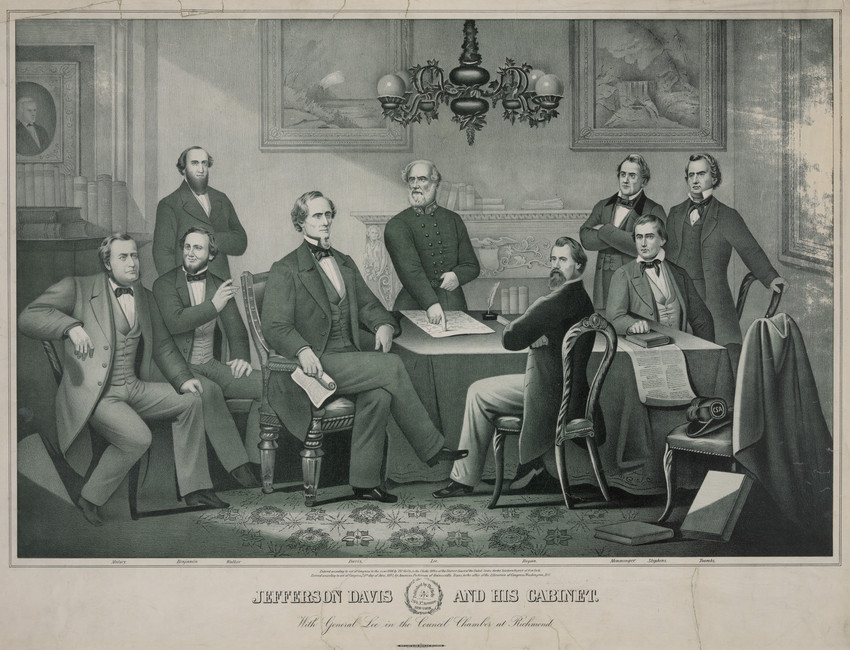
On May 14th Lee travelled by train to Richmond to meet with President Jefferson Davis and War Secretary James Seddon. At the meeting Lee argued for an offensive campaign in the east, to take the war to Pennsylvania. Lee had two goals three major goals, two which were directly related to the immediate military situation and one which went to the broader strategic situation. Unfortunately no notes from that conference are known to survive.

Lee had long believed that an offensive into the North was necessary, even before Chancellorsville. Lee did not believe that reinforcing the Confederate Armies in the West would provide any real relief, instead he believed that his Army, flush with victory needed to be reinforced and allowed to advance into Pennsylvania. Lee’s Chief of Staff Colonel Charles Marshall crafted a series of courses of action designed to present the invasion option as the only feasible alternative. Although both Seddon and Davis had reservations about the plan they agreed to it, unfortunately for all of them they never really settled the important goals of the campaign.

Lee believed that his offensive would relieve Grant’s pressure on Pemberton’s Army at Vicksburg. Likewise Lee believed that if he was successful in battle and defeated the Army of the Potomac in Pennsylvania that it could give the peace party in the North to bring pressure on the Lincoln Administration to end the war.  He also believed that if he could spend a summer campaign season in the North, living off of Union foodstuffs and shipping booty back to the Confederacy that it would give farmers in Northern Virginia a season to harvest crops unimpeded by major military operations.

However, the meeting evidently did not have all the results that Lee desired. Davis refused Lee reinforcements from the coastal Carolinas, and insisted on units being left to cover Richmond in case General Dix advanced on Richmond from Hampton Roads. Much of this was due to political pressure as well as the personal animus that existed between General D. H. Hill in the Carolinas towards Lee.

Likewise Lee’s decision revealed an unresolved issue in Confederate Grand Strategy. Many in the Confederacy realized that the only hope for success was to fight a defensive campaign that made Union victory so expensive that eventually Lincoln’s government would fall or be forced to negotiate.

However, Lee was convinced that ultimate victory could only be achieved by decisively defeating and destroying Federal military might. His letters are full of references to crush, defeat or destroy Union forces opposing him. His strategy of the offensive was demonstrated on numerous occasions in 1862 and early 1863, however it was unfeasible and counterproductive to Southern strategy. His offensive operations cost his Army dearly in the one commodity that the South could not replace, nor keep pace with its Northern adversary, his men.

When Lee fought defensive actions on ground of his choosing, like a Fredericksburg he was not only successful but husbanded his strength. However, when he went on the offensive in almost every case he lost between 15 and 22 percent of his strength, and the percentage of soldiers that he lost was always more than his Federal counterparts, even when his army inflicted greater aggregate casualties on his opponents. Lee recognized this as was evident in his correspondence but it did not deter his strategy of the offensive until after his defeat at Gettysburg.

The course of action was decided upon, but one has to ask if Lee’s decision was wise decision at a strategic point level, not simply the operational or tactical level where many Civil War students are comfortable. General Longstreet’s artillery commander, Colonel Porter Alexander described the appropriate strategy of the South well, he wrote:

“When the South entered upon war with a power so immensely her superior in men & money, & all the wealth of modern resources in machinery and the transportation appliances by land & sea, she could entertain but one single hope of final success. That was, that the desperation of her resistance would finally exact from her adversary such a price in blood & treasure as to exhaust the enthusiasm of its population for the objects of the war. We could not hope to conquer her. Our one chance was to wear her out.”  (Edward Porter Alexander, Fighting for the Confederacy: The Personal Recollections of General Edward Porter Alexander, ed. Gary W. Gallagher, University of North Carolina Press, Chapel Hill NC, 1989 p.415 

What Alexander describes is the same type of strategy successfully employed by Washington and his more able officers during the American Revolution, Wellington’s campaign on the Iberian Peninsula against Napoleon’s armies, and that of General Giap against the French and Americans in Vietnam. It was not a strategy that completely avoided offensive actions, but saved them for the right moment when victory could be obtained.

It is my belief that Lee erred in invading the North for the simple fact that the risks far outweighed the possible benefits. It was a long shot and Lee was a gambler, audacious possibly to a fault. His decision to go North also exhibited a certain amount of hubris as he did not believe that his army could be beaten, even when it was outnumbered.  Likewise he took the offensive in spite of the fact that many of his commanders were untested at the levels of command that they exercised. He had lost his right arm, General Stonewall Jackson, who died following being wounded at Gettysburg.

He knew from his previous battles the heavy casualties that even a victory over the Army of the Potomac would entail deep in Northern territory and the effect that a costly victory would have on his operations, but he still took the risk. That was short sighted and diametrically opposed to the strategy that the South needed to pursue in order to gain its independence. Of course some will disagree, but I am comfortable in my assertion that it was a mistake that greatly affected the Confederacy’s only real means of securing its independence, the breaking of the will of the Union by making victory so costly that it would not be worth the cost.

Peace

Padre Steve+

Leave a comment

Filed under civil war, History, leadership, Military

A Global Force for Good: Happy 238th Birthday to the US Navy

Navy Heritage WWII Recruitment Poster

http://www.navy.mil/viewVideo.asp?id=17676

“A good Navy is not a provocation to war. It is the surest guaranty of peace.” Theodore Roosevelt 

For me anything to do with the United States Navy is historical as well as decidedly personal. Sunday is the 238th anniversary of the founding of the United States Navy, actually the founding of the Continental Navy but let’s not get too technical.

The fact is that back in 1775 most people and political leaders in the revolting colonies felt that founding a Navy was quite foolish. After all, who in their right mind would ever dare to challenge the might of the British Royal Navy? Even revolting colonies. But like when King George III was told that “the Colonies are revolting” he reportedly said “tell me something I don’t know.” But I digress…

In fact had General George Washington not sent a letter to the Continental Congress say that he had taken some vessels in hand to disrupt the supplies of the the British Army a Navy might not have ever been established. Timing is everything and in this case it was pretty good timing.

Since that fortuitous day in 1775 the United States Navy went from being a piss ant annoyance to the Royal Navy to the premier naval power in the world. Men like John Paul Jones, Edward Preble Stephen Decatur, Thomas Truxtun, William Bainbridge, Oliver Hazard Perry, David Farragut, David Dixon Porter, George Dewey and many more blazed a path of glory which others, great and small would continue to build on the legacy of the iron men who sailed wooden ships into harm’s way. Men like Arleigh Burke, Howard Gilmore, John C. Waldron, Maxwell Leslie, Bull Halsey, Richard O’Kane, Daniel Callahan, Raymond Spruance, Ernest Evans built upon that legacy in the Second World War. Others would do so in the Cold War, Vietnam and the Global War on Terrorism.

Great ships like the USS Constitution, USS Monitor, USS Kerasarge, USS Olympia, USS Enterprise, USS Hornet, USS Yorktown, USS Growler, USS Tang, USS Hoel, USS Johnston, USS Samuel B Roberts, USS Laffey, USS San Francisco, USS Houston and USS Arizona, USS Nevada, USS West Virginia and USS California helped build a legacy of valiant sacrifice and service often at great cost in the defense of freedom.

But over those 238 years it all it came down to the men and now the men and women who served in every clime and place, many times outnumbered and facing certain defeat who through their courage, honor and commitment helped secure the liberty of their countrymen and others around the world. Most of these men and women served in obscurity in war and peace but all had the distinction of serving in the United States Navy.

As President John F Kennedy said: “I can imagine no more rewarding a career. And any man who may be asked in this century what he did to make his life worthwhile, I think can respond with a good deal of pride and satisfaction: ‘I served in the United States Navy.'”

295_26911932058_5614_n-1

Like my father before me I can say that I am proud to have served and continue to serve in the United States Navy, because we are no matter what some may say or think,  a global force for good.

Peace

Padre Steve+

1 Comment

Filed under History, Navy Ships, US Navy

237 Years of Service: Happy Birthday US Navy!

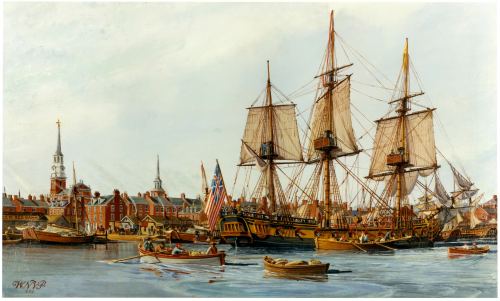
Raising the Flag Aboard the USS Alfred 

“It follows than as certain as that night succeeds the day, that without a decisive naval force we can do nothing definitive, and with it, everything honorable and glorious.” George Washington 15 November 1781 to the Marquis de Lafayette

On October 13th 1775 the Continental Congress passed legislation to establish a Navy for a country that did not yet exist.  It was the first was the first in a long line of legislative actions taken by it and subsequent Congresses that helped define the future of American sea power.

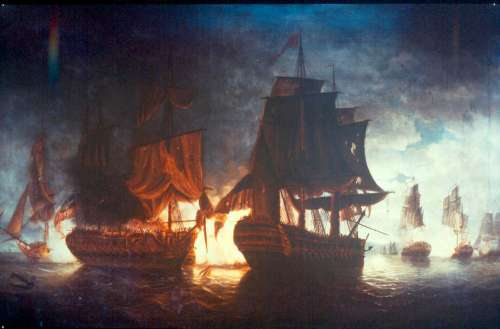
The Battle of Flamborough Head

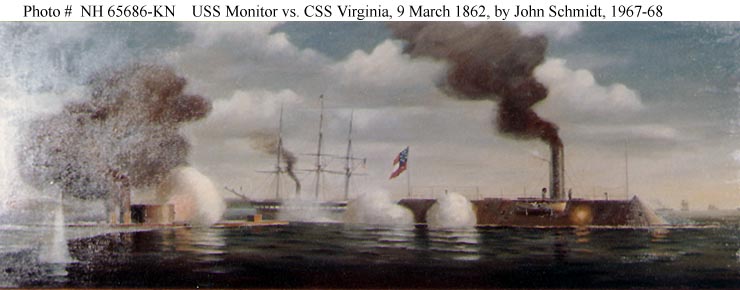
The legislation was the beginning of a proud service that the intrepid founders of our nation could have ever imagined.  Less than two months after it was signed on December 3rd 1775 Lieutenant John Paul Jones raised the Grand Union Flag over the new fleet flagship the Alfred. The fleet set sail and raided the British colony at Nassau in the Bahamas capturing valuable cannon and other military stores.  It was the first amphibious operation ever conducted by the Navy and Marines.

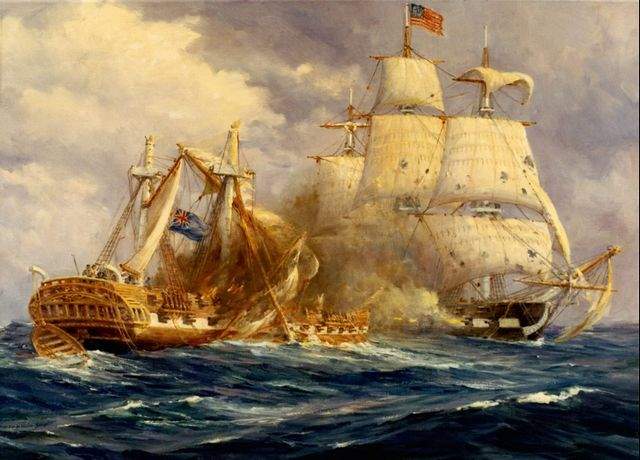
USS Constitution and HMS Guerriere

Jones received the first recognition of the American flag shortly after France recognized the new United States.  In command of the Sloop of War Ranger his ship received a nine-gun salute from the French flagship at Quiberon Bay.

Oliver Hazard Perry at the Battle of Lake Erie

Jones would go on to to greater glory when he in command of the Bonhomme Richard defeated the HMS Serapis at the Battle of Flamborough Head. During the battle when all seemed lost and the colors had been shot away he replied to a British question if he had surrendered replied “I have not yet begun to fight!”

Admiral David Farragut at the Battle of Mobile Bay

When the war ended very few of these ships remained most having been destroyed or captured during the war. But these few ships and the brave Sailors and Marines who manned them blazed a trail which generations of future sailors would build on.  The Navy has served the nation and the world as a “Global Force for Good” for 237 years.

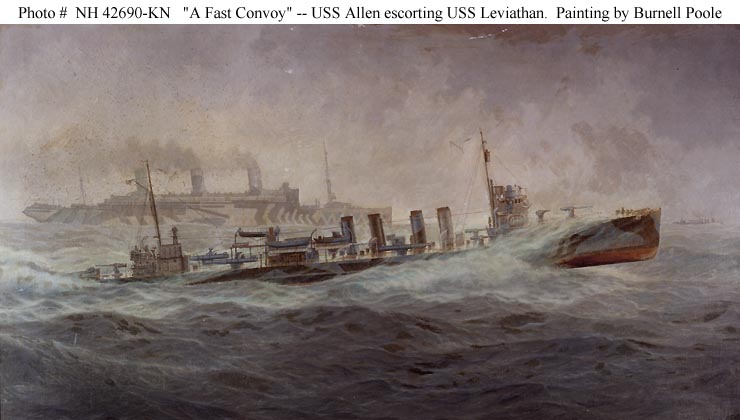
World War One: Convoy Escort USS Allen

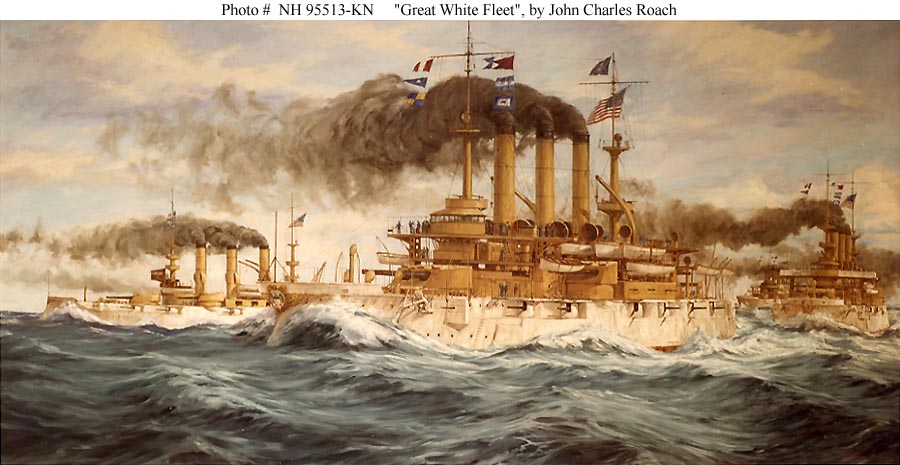
The Great White Fleet

This force for good is on duty today and those that have served over the past 237 years are part of a tradition that is more than honorable. President John F. Kennedy who served as a PT Boat Commander in World War Two remarked:

“I can imagine no more rewarding a career. And any man who may be asked in this century what he did to make his life worthwhile, I think can respond with a good deal of pride and satisfaction: ‘I served in the United States Navy.'”

The Battle of Midway

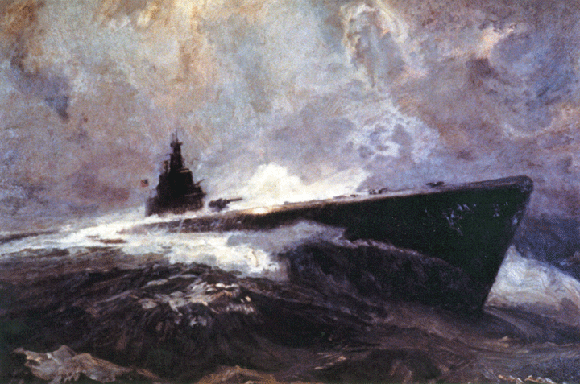
USS Growler

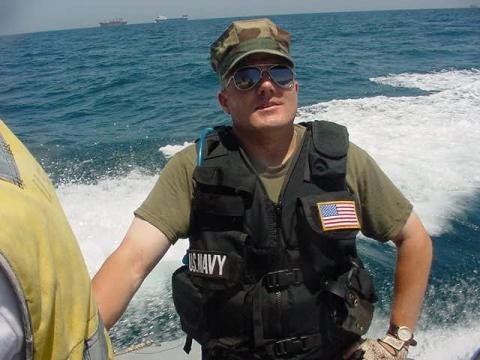
Tonight as you go to bed and sleep soundly after eating well and spending time with family, friends or enjoying some form of entertainment remember those of our Navy who serve at sea at the ready in the Straits of Hormuz, in the mountains and deserts of Afghanistan, the desolation of the Horn of Africa and around the world defending our interests, caring for our military personnel and their families and deploying to serve in harm’s way and in areas of devastation.  They are America’s “Global Force for Good.”  They are my shipmates they are your fellow citizens.  They are the United States Navy.

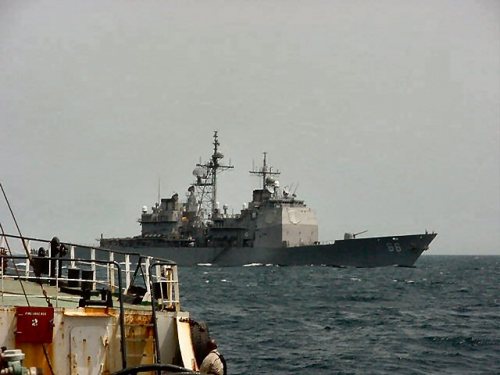
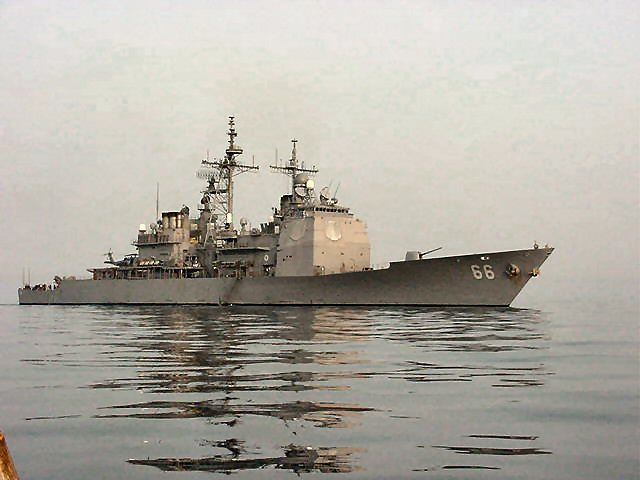
USS Hue City CG-66

Happy Birthday Shipmates.

Peace

Padre Steve+

1 Comment

Filed under History, Military, Navy Ships, US Navy

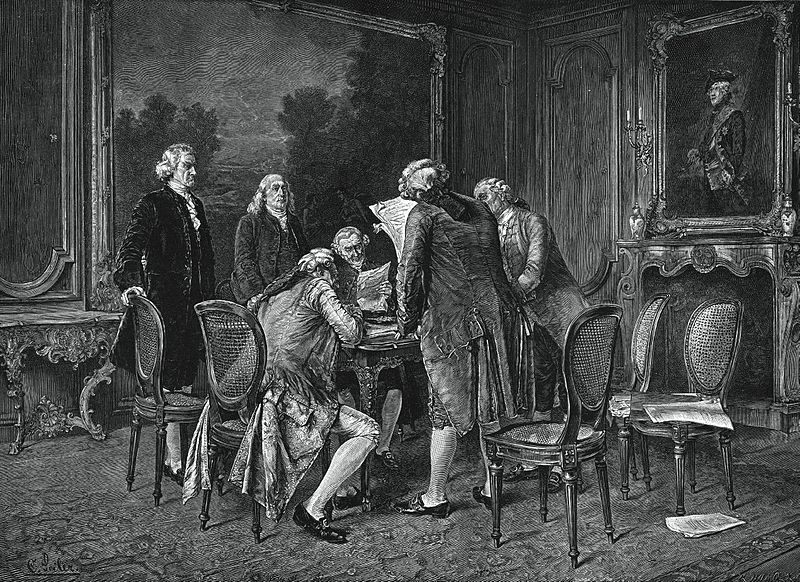
Real Independence: The Treaty of Paris 1783…We Didn’t do it Alone

It is easy to declare independence but it is far more difficult to achieve it. It is also easy to mythologize our history and ignore the fact that we did not achieve independence by our own efforts alone. No matter what country is involved there is almost always help in gaining independence. One only has to look at history to see the reality of this.

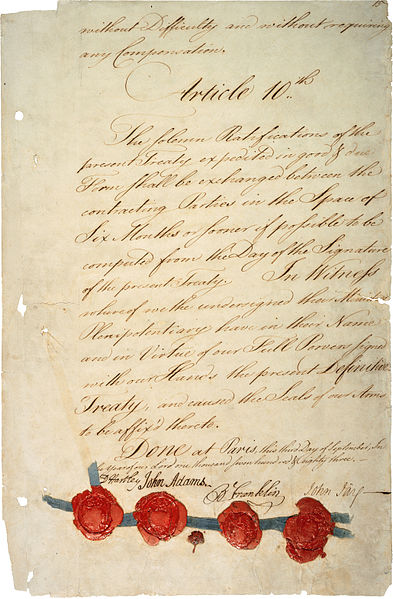
This was the case for the United States. In 1783 after over years of hostilities and over seven after the Continental Congress issued the Declaration of Independence the British Empire signed a treaty with the representatives of the colonies in Paris. The first article of the treaty was something that has not been seen before in modern European history:

“His Brittanic Majesty acknowledges the said United States, viz., New Hampshire, Massachusetts Bay, Rhode Island and Providence Plantations, Connecticut, New York, New Jersey, Pennsylvania, Delaware, Maryland, Virginia, North Carolina, South Carolina and Georgia, to be free sovereign and independent states, that he treats with them as such, and for himself, his heirs, and successors, relinquishes all claims to the government, propriety, and territorial rights of the same and every part thereof.”

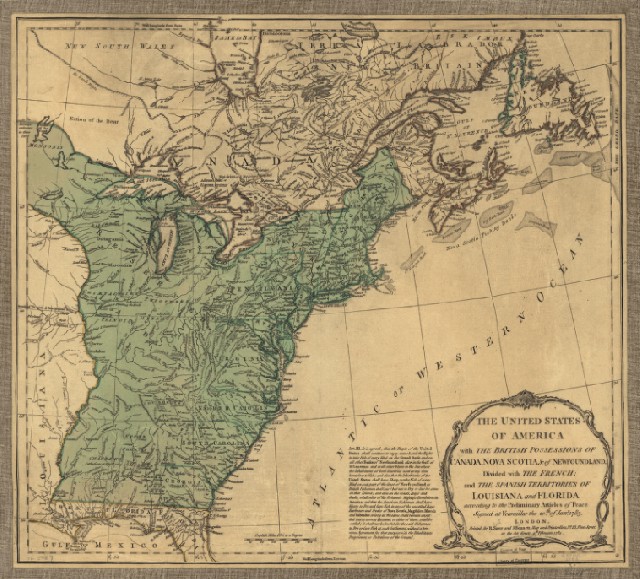
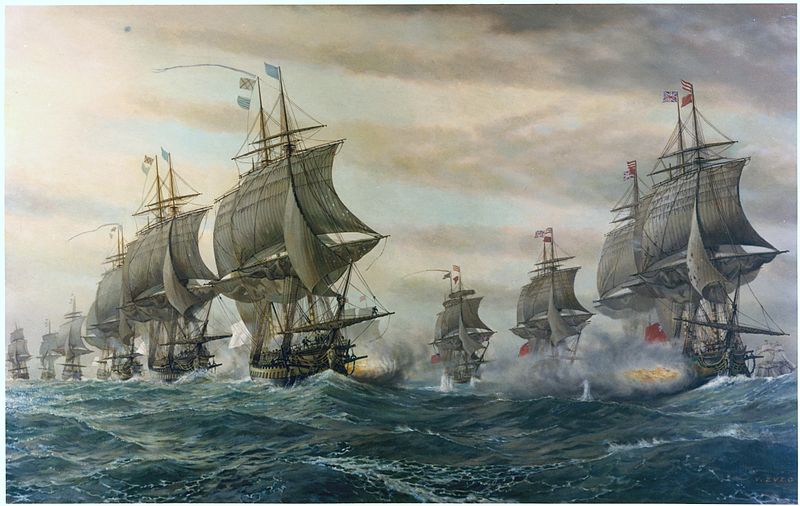
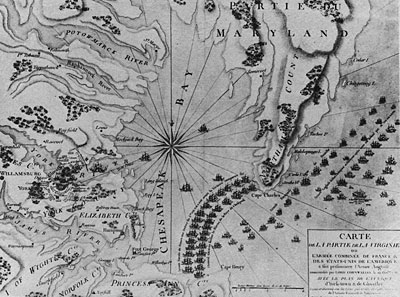
The treaty established the independence of the former British colonies and a new boundary, the Mississippi River which more than doubled the size of the new nation. The treaty was signed nearly two years after the American and French Armies, ably helped by the timely intervention of the French Navy forced Lord Cornwallis to surrender his army at Yorktown.

It is quite easy to fall prey to simple answers regarding the independence of the American nation. In fact it is not inaccurate to state that the vast majority of Americans today know little more than that the colonies declared their independence in 1776 and that George Washington led the armies and eventually became the first President. However the reality was that the independence of the new nation was secured by a number of factors including negotiations with a power that realized that the expenditure of lives and capital in what had become for them a world war of great cost.

The British negotiated a peace that was generous and which gave the American colonies more than they had begun the war. It required British garrisons to evacuate territories and fortifications in strategic areas on the Great Lakes and areas still occupied. However, the peace allowed the British to secure and expand their empire at the expense of the French, Spanish and Portuguese around the world. The new American nation would eventually eclipse the British Empire but it was not an easy journey and is something that should not be turned into myth or fiction by those that want to seek easy answers that align with their theology or myth.

Independence was declared in 1776 but was not attained until nearly two years after Yorktown. It took military efforts of the colonies as well as diplomatic efforts of men like Benjamin Franklin to gain the vital assistance of the French who helped pay for our independence with their blood, treasure, overseas territories  and ultimately the overthrow of the French monarchy by a revolution partly inspired by the American Revolution and the economic problems brought about by the French war with England. That fact is something that we should not forget nor take lightly. We didn’t achieve our independence all by ourselves, just in case we think that we did.

Peace

Padre Steve+


1 Comment

Filed under History

The Navy is the Future of National Security

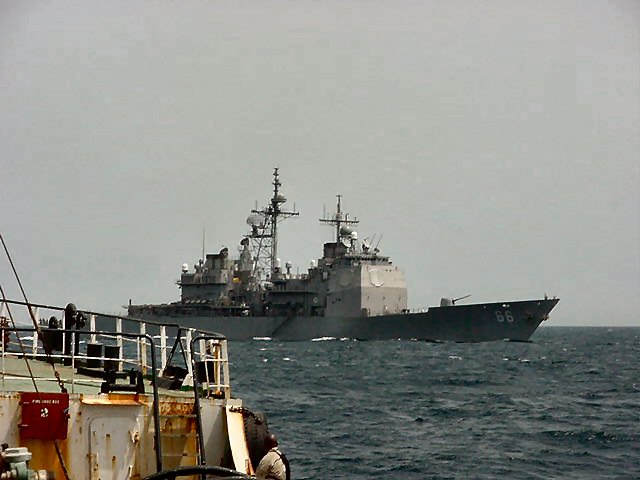
USS HUE CITY CG 66 in the Arabian Gulf 2002.  “I wish to have no Connection with any Ship that does not Sail fast for I intend to go in harm’s way.” John Paul Jones 

“Without a decisive naval force we can do nothing definitive, and with it, everything honorable and glorious.”  President George Washington

“A good Navy is not a provocation to war. It is the surest guaranty of peace.” President Theodore Roosevelt

“A powerful Navy we have always regarded as our proper and natural means of defense; and it has always been of defense that we have thought, never of aggression or of conquest. But who shall tell us now what sort of Navy to build? We shall take leave to be strong upon the seas, in the future as in the past; and there will be no thought of offense or provocation in that. Our ships are our natural bulwarks.” President Woodrow Wilson

“Events of October 1962 indicated, as they had all through history, that control of the sea means security. Control of the seas can mean peace. Control of the seas can mean victory. The United States must control the seas if it is to protect your security….” President John F. Kennedy

There are a great many debates in Congress and the Pentagon regarding the current and future military budgets in light of the massive budget deficits and economic crisis facing the nation.  Complicating the issue is our massive commitment to land campaigns that contribute little to the long term national security of the United States and its friends. These wars constrain our diplomatic military and economic ability to respond to other crises at home and around the world be they military threats, terrorism or natural or man made disasters.

Until the mid 20th Century theUnited States viewed the land forces when used abroad as expeditionary forces which were employed overseas for relatively short periods of times of combat.  The mission and strategy was to fight the war, bring all or most of the forces home, assist with security as needed and depend on a naval presence to show the flag without a continued large “boots on the ground” presence.   The two times that we have elected to fight protracted ground wars with no definable condition of victory we have come out weaker than we went in.  This was the case inVietnam a war which badly divided the nation and nearly destroyed the military as a viable force.  The present campaign in Afghanistan and the war in Iraq which is close to ending have the potential to do the same.

In the prosecuting the Global War on Terror which was launched in response to the attacks of September 11th 2001 we have for the most costly and historically flawed ways to use an American Army.  In doing so we have had to invest a huge amount of our expenditures simply to maintain a force to keep the status quo in a country that will turn on us as soon as it convenient to do so.

In the process of focusing on these aspects of this war we have forgotten the more crucial long term aspects of national security which can only be addressed by maritime power.  This power includes the military might of the Navy and Marine Corps team but also includes our Merchant Marine and Coast Guard.

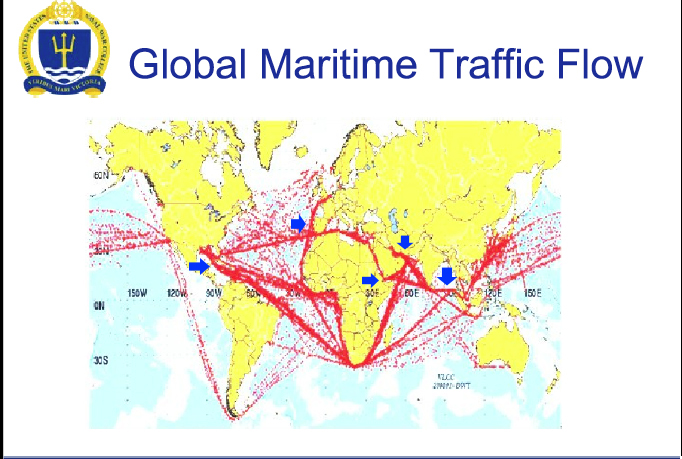
Ninety percent of world trade is transported by ship via sea lanes that have choke points such as the Strait of Hormuz,Strait of Malacca, the Bab El Mendeb and the Horn of Africa, and the Strait of Gibraltar.  Likewise other traffic must pass through the South China Sea, the Taiwan Straits or around Cape Horn.  Then there are the two major maritime canals the Panama and Suez Canals.  Terrorists, pirates, rogue nations and ascending Naval powers such asChinapose real threats in all of these critical maritime commerce choke points.

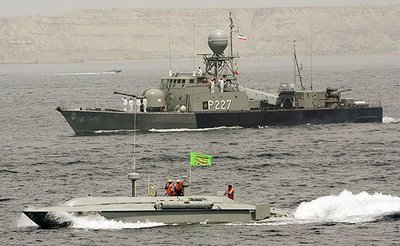
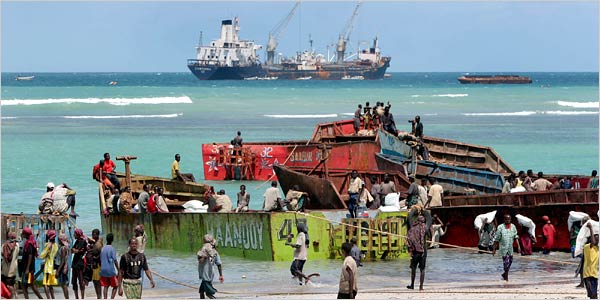
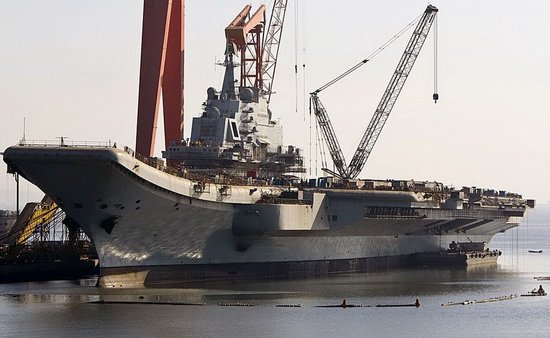
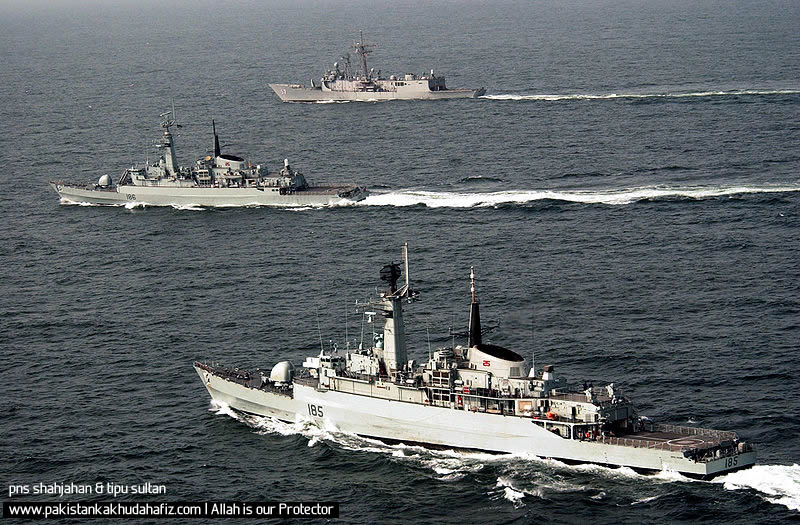
Real and potential threats to the choke points: Iranian Naval and Revolutionary Guard Naval forces, Somali pirates, the new Chinese aircraft carrier and a Pakistani Navy that may become an enemy overnight 

Most of the world’s population lives in what are called the littorals, the areas of land adjacent to oceans and major waterways.  Likewise most industry is located in these areas. Most of these populations and industries are also in areas under the same type of threats as the sea lanes and choke points.  Simply put the sea and the littorals are much more important to this country and the world than landlocked Afghanistan.  They also are much more easily influenced by naval power that is not bound to land bases in nations where governments and their policy to the United Statesand our friends can change overnight and which large land armies would have minimal impact.

The United States Navy has been and still is the world’s preeminent naval power. It will likely remain so for the foreseeable future but the navy is strained.  Since 2001 it has shrunk in size, shed some 52,000 sailors and seen its scope of responsibility and operational tempo increase putting greater strain on the ships, aircraft and personnel remaining.  Ships are aging, maintenance was deferred and the planned new construction has not materialized.  The Ticonderoga Class Guided Missile Cruisers are nearing an average age of 20 years, our carriers average 23 years old, many of our submarines are nearing the end of their projected service lives and some other ships are far older.

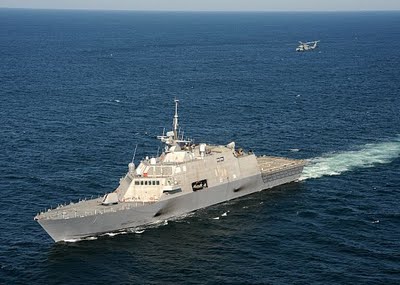
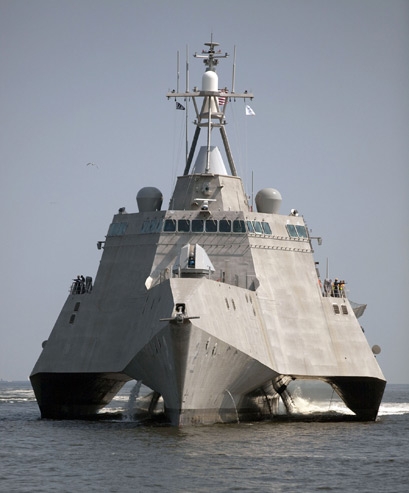
Ship classes like the Freedom and Independence class Littoral Combat Ships (LCS), San Antonio Class Landing Ships (LPD) and the DD-1000 Zumwalt Class are badly over budget, plagued with technical and workmanship issue and are behind in production.

USS Freedom (above) and USS Independence Littoral Combat Ships

The LCS in particular seems like a bad investment, the ships are undermanned and under armed, planned weapons modules are not in production and they are not designed for survivability.  In effect they are large fast ships with almost no offensive or defensive capabilities that would be hard pressed to survive in a fight with any current or future Corvette or Frigate fielded by an opposing naval force. In order to be effective they need heavier armament and larger crews and need a redesign to improve their survivability. It makes no sense to spend more than half a billion dollars each on ships that are not survivable and cannot fulfill their intended missions.  A better choice would be something similar to the Dutch De Zeven Provincien  German Sachsen or the French Lafayette Class frigates which have a heavy armament and good endurance or the smaller and cheaper German Braunschweig class Corvettes.

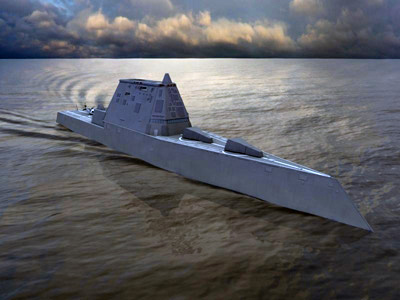
DD-1000 the Zumwalt Class

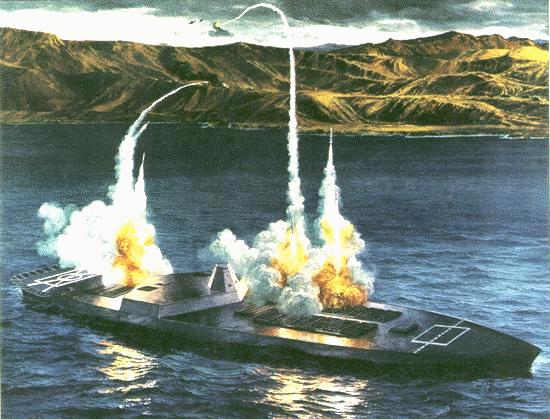
The Zumwalts are 14,000 ton “Destroyers” that were designed as a replacement for the battleship.  Originally 32 were planned but the high cost and multiple problems associated with the design. These issues have included such things as seaworthiness due to their hull form and other hull issues, its integrated advanced electro-magnetic propulsion system and its surface and air warfare capabilities.  Their armament has been an issue since the beginning as they cannot meet the standards of the Aegis equipped Cruisers and DDGs and cannot support the Ballistic Missile Defense capabilities of those ships.  Their naval gunfire support capability which was advertised as one of their main selling points is woeful. They are to be equipped with two 155mm long range naval guns designed to use a “smart” munitions. The ships will carry a limited supply of shells for these guns and because of the need for extended range and guidance capabilities the shells will have a smaller charge than their land based counterparts.   They will have only two-thirds of the VLS cells than Ticonderoga class ships meaning that they can carry few missiles of all types.  It is likely that the Tomahawk cruise missile will comprise the bulk of their missile armament but if one wants a ship that’s only significant capability is launching Tomahawks then there are many other ideas which are more economical and can carry far more missiles than the Zumwalts. One of these was the Arsenal ship which was designed to carry 500 Tomahawks on a stealthy platform that requires a small crew and had an estimated cost of 500-800 million dollars.  It was cancelled in favor of the project that eventually turned into the Zumwalt class. The DD-1000 program began with the DD-21 program in 1994 and the first ship may not enter service until 2015. The cost of just two of these ships has grown exponentially to 6.6 billion as of 2011.  The two ships under construction have little place in the current or future Navy and would likely serve as technology test beds.

The Arsenal Ship

While we have increased the numbers and continued the production of the highly successful Arleigh Burke class guided missile destroyers (DDG) and Wasp class Amphibious Assault ships (LHD) it is not enough to compensate for the continued attrition.  If worst case budget projections occur the Navy could experience massive cuts without any decrease in maritime threats or operational commitments.  The Coast Guard is in even worse shape.

The USS John S McCain DDG 56

The most important aspect of national defense, free trade and humanitarian assistance in the coming years are America’s Navy, Marine Corps, Coast Guard and Merchant Marine.  Without a strong Navy and the other components of maritime power we are at the mercy of tin-horned dictators, pirates and terrorists who live and operate in the most vital areas of the world’s maritime transportation network.

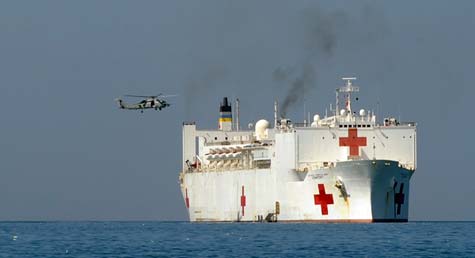
Humanitarian assistance: USNS Comfort off Haiti 

As our political leaders meet in the coming weeks and months decisions will be reached in matters of national security.  They will be based budget considerations alone as we have not operated on a clearly defined national security strategy since the end of the Cold War.  Force structure has to be decided based on the over arching national strategy and broad brushed and un-thought out cuts are a recipe for disaster.

History tells us this. Following our Revolution the nation was deep in debt and eliminated the Navy.  Since our merchant shipping was no longer protected by the Royal Navy and the treaty withFrancewas allowed to lapse American ships became easy prey for the Barbary Pirates.  Rather than build a navy to protect American citizens and shipping the nation paid “tribute” to dictators which amounted to tens of millions of dollars until Thomas Jefferson sent the new re-established Navy to counter the threat.   Our history and that of other maritime powers such asGreat Britainand theNetherlandsprovide many precedents for this use of power.

What needs to happen now is for the LCS ships and Zumwalt class production to end with the current ships building.  No carriers except the 50 year old USS Enterprise should be decommissioned until a full up national strategy review is completed and agreed to by both political parties.  That strategy needs to actually prioritize the most important areas of engagement that the military should focus its efforts.  The Middle East will remain important but will fade as Asia continues to gain importance.

Regarding other ship classes much needs to happen.  DDG production should be stepped up and an affordable yet fully capable replacement to the Ticonderoga class designed, to include the ability to conduct ballistic missile defense.  A diesel electric attack submarine needs to be fielded to complement the Virginia Class attack boats.  A Light Fleet Aircraft Carrier design should be designed and produced to compliment the Nimitz and Ford Class Carriers now in commission or building. The Navy should design or take an off the shelf Corvette or small Frigate type ship to fill the role envisioned by the LCS.  Such ships should be designed for specific tasks to avoid the massive cost overruns and simplify production.  When one remembers that it as the United States Navy that first developed the Destroyer Escort type ship to fill a specific role such an undertaking should be well within ship designer and capabilities so long as they do not try to “gold plate” the type and make it a jack of all trades and master of none ship.  Other types of ship should be studied to include smaller but still capable aircraft carriers and new amphibious ships to support the Marine Expeditionary forces.

Ships need to be designed with combat power, survivability as the first priorities and they need to be affordable and easy to mass produce.  Designs do not need to be over thought.  George Patton’s adage “a good plan violently executed now is better than a perfect plan next week” applies today for this nation and the Navy.  To adapt Patton’s adage I say that “a combat effective and survivable ship class that we can afford and mass produce now is better than a perfect ship that bankrupts us and cannot be produced in the numbers needed to secure the seas.” 

The Navy is the American Armed Force of the Future. Of all the Armed Services the Navy offers the United States the ability to protect its interests abroad and homeland security without the need to base large numbers of ground forces overseas.  Naval forces are flexible, are easily sustainable and conduct security, combat and humanitarian operations better and more affordably than any armed service in the world. When coupled with the expeditionary capability of the Marines offer a force that affordably provides national security.  George Washington, John Adams, Theodore Roosevelt and Franklin Delano Roosevelt all knew this.  I do hope that the current Administration, Congress and their successors will not allow the current superiority that we enjoy on the high seas to decay just as our greatest economic and military competitors build up their naval capabilities and the threat of terrorists, pirates and the small but dangerous navies of rogue states threaten the sea lanes that are absolutely vital to our economy and national security.

The Navy is also the least provocative armed service and history has repeatedly shown that naval forces are a deterrent to war and guarantee of peace.

On that last note…

Peace

Padre Steve+

3 Comments

Filed under History, Military, national security, Navy Ships, US Navy

Smaller than Life: The Thin Skinned, Petty, Small Minded and Visionless Political Elite and what we can do to Change the Political Culture

“Far better is it to dare mighty things, to win glorious triumphs, even though checkered by failure… than to rank with those poor spirits who neither enjoy nor suffer much, because they live in a gray twilight that knows not victory nor defeat.” Theodore Roosevelt

“When small men attempt great enterprises, they always end by reducing them to the level of their mediocrity.”

“In order to govern, the question is not to follow out a more or less valid theory but to build with whatever materials are at hand. The inevitable must be accepted and turned to advantage.” Napoleon Bonaparte

I have these times when lost in thought I imagine what it was like to have truly great political leaders in this country and inWestern Europe.  It just seems to me that those that we have entrusted with the reigns of government and those that aspire to the highest office in this country are perhaps the most pathetic, small minded, petty thin skilled and visionless that this country has ever produced.  I do not see a great leader such as Washington, Jefferson, Lincoln, Teddy Roosevelt, Franklin Roosevelt or Ronald Reagan in the lot of them.  As for the women that aspire to lead this country I see no Margaret Thatcher or Golda Meir among them.  In fact I don’t even see any truly skilled politicians like Bill Clinton and Richard Nixon out there.

I guess I say this because the whole lot of them seem to spend a lot more time campaigning for office even while in office than they actually spend working with their allies and political adversaries to do the right thing even if it goes against their ideology.  Lord knows that our political philosophy is important, but ideology, especially when it become sacrosanct is more than a philosophy of how our leaders should govern it is a set of shackles that binds them to one course of action, one set of beliefs and to the masters that they are beholden.

Campaigning is actually a lot easier than leading or governing because now days it has very little to do with substance or personal qualifications or achievement it simple means that suck up to people that have money and power better than others.  When politicians do that either by supporting one special interest or another without qualification they fail to honor the oath that they took when they entered office.  When the pledge their fealty to a certain cause or position regardless of its actual merits such as the Left has done with its pet constituencies and the Right is unabashedly doing as Presidential candidates sign pledges committing them to do what certain interest groups dictate they show that they are willing to prostitute themselves and their office to those interest groups.

Since our political class lives in constant campaign mode why should we expect them to actually take a risk and do something for the benefit of the country once they are elected?  They obviously don’t feel any need to otherwise as they would be taking risks to try to build with what we have at hand to save the country even the risk of not being elected or reelected.  The great Israeli Prime Minister Golda Meir said “I can honestly say that I was never affected by the question of the success of an undertaking. If I felt it was the right thing to do, I was for it regardless of the possible outcome.”  That is what our leaders need to be saying and doing now.

It seems that those campaigning for the highest office in the land are spineless crybabies.  Yogi Berra once said “All pitchers are liars or crybabies” well I think we can say that “All politicians are liars or crybabies” and be right on target.  I was amazed when I watched coverage of the great Iowa Imbecile Debate and Straw Poll this weekend and in the weeks leading up to this.  It was like watching a bunch of spoiled children calling each other names and then getting mad and crying when they got asked questions that they don’t want to answer accusing those that ask of asking “gotcha” questions.  When caught in obvious contradictions in regard to their campaign rhetoric and what they really do they lie or make excuses.  I watched the movie The Blues Brothers Elwood (Dan Aykroyd) tells his brother Jake “It wasn’t a lie it was bullshit” and I thought about our politicians in office and on the campaign trail.

They are a humorless lot who when you come right down to it have their every whim catered to and surround themselves with “yes” men and women.  This has to be true because if they had one person of true character and honesty that would have the unmitigated courage to say “What the fuck? Over” we might actually see them dealing with the real issues of our day; war, massive unemployment, a currency crisis decaying infrastructure and educational standards not to even mention the debt. John F. Kennedy said something that resonates today “A nation which has forgotten the quality of courage which in the past has been brought to public life is not as likely to insist upon or regard that quality in its chosen leaders today – and in fact we have forgotten.”

Somehow it seems that none of our current leaders or those running for their party’s nomination to the highest office in the land has the gravitas to stand by their word or the character to lay aside differences to work with their opponents to actually do something positive for once.  I cannot remember the last time that any of our leaders have done this except when they cobble together massive bills which sometimes have sections of questionable Constitutional legality that none have ever read before the President signs them into law. That’s not leadership, which is not wisdom, that is not foresight and that is not vision. That is cowardice masked in legislative accomplishment.  Theodore Roosevelt said “A typical vice of American politics is the avoidance of saying anything real on real issues.”

Unfortunately most of us are more interested in seeing our interests and agendas advanced no matter what we say.  After all we elect these men and women time after time and in our hyper-polarized body politic we would sacrifice the country to get our guys, whoever they are elected.  Ideology, political preservation and even religious dogma substitute for reason and personal courage in our world and we are paying for it.

Unfortunately I have no answers on how to solve this except that as a nation we need to start thinking big again to start actually believing in this country. We need to work together like we haven’t since John F. Kennedy challenged us to put men on the moon in under a decade.  The challenges are for the taking but our leaders have to be men and women of character and courage to take them up and a population willing to commit to “pay any price, bear any burden, meet any hardship, support any friend, oppose any foe to assure the survival and the success of liberty”

I actually think that John F. Kennedy said what we need to be doing now better than almost anyone I can imagine because what he said cuts to the heart of our present political crisis.  “Let us not seek the Republican answer or the Democratic answer, but the right answer. Let us not seek to fix the blame for the past. Let us accept our own responsibility for the future.”

I think that we can turn things around but we will have to stop the current political fratricide in order to do so.  We have to take responsibility for the future even as we clean up the mess that we have made in the past.  If we don’t we are going to suffer even worse consequences than we are experiencing now.  The stakes are great and the question is will we rise to the occasion?

God help us,

Peace,

Padre Steve+

1 Comment

Filed under History, leadership, Political Commentary

The Naming of a New Aircraft Carrier and the Centrality of the Navy in Future National Security Strategy

USS HUE CITY CG-66 Enforcing the UN Oil Embargo against Iraq in April 2002

“Control of the seas means security. Control of the seas means peace. Control of the seas can mean victory. The United States must control the sea if it is to protect our security.” —John F. Kennedy

“For in this modern world, the instruments of warfare are not solely for waging war. Far more importantly, they are the means for controlling peace. Naval officers must therefore understand not only how to fight a war, but how to use the tremendous power which they operate to sustain a world of liberty and justice, without unleashing the powerful instruments of destruction and chaos that they have at their command.” Admiral Arleigh Burke

Over the Memorial Day weekend Secretary of the Navy Ray Mabus announced the naming of the second ship in the Gerald R. Ford class aircraft carrier.  The name selected was significant as the ship will be named the USS John F. Kennedy CVN-79, her namesake being President John F. Kennedy who served as a junior officer in the Second World War commanding a Patrol Torpedo Boat, PT-109 in the Solomon Islands. Kennedy’s boat was rammed and split in two by the Japanese Fubuki class destroyer Amagiri in the early hours of August 2nd 1943.  Over a period of six days he made herculean efforts to save his crew and was awarded the Navy Marine Corps Medal and the Purple Heart.

The United States has always been a seafaring nation and today the vast majority of our commerce is borne by ships from the world over. The United States learned during the Revolution and the War of 1812 the importance of sea power when the Royal Navy for all intents and purposes rules the waves. Even the land victory of Washington at Yorktown was sealed by the intervention of the French Fleet which prevented the British from evacuating the garrison.  During the Civil War the Union Navy was the deciding factor as it blockaded Southern ports and forced the Mississippi River cutting the Confederacy in two and sealing its fate even as Confederate armies battled Union forces in the bloodiest battles ever seen on this continent. The Navy was the deciding factor in the Spanish American War sweeping the Spanish Navy from the seas and dooming its garrisons around the world.  The U.S. Navy began the First World War late but by the end was the ascendant naval power in the world and was one of the major reasons that the British in spite of the superiority that they had at the time agreed to the Washington and later London Naval accords.  When the Second World War erupted the United States was in the beginning stages of a Naval build up to reinforce and replace the fleet that was still dominated by the ships built prior to the Naval treaties.   In the Pacific the Japanese Navy steamrolled its scattered and ill equipped opposition while in the Atlantic German U-Boats decimated convoys very nearly breaking the back of Great Britain and the Soviet Union. However it was the Navy initially stretched to its limits by the Two Ocean War which regained the initiative which in an unprecedented build up of Naval Power defeated its adversaries and safeguarded the vast convoys of merchant ships carrying American troops and equipment into battle and bringing American Lend Lease aid to reach Britain and the Soviet Union. During the Cold War, Korea and Vietnam the Navy was a flexible and mobile response force to crises around the globe military, diplomatic and humanitarian, often diffusing situations without a shot having to be fired in anger and eliminating the need for large numbers of ground forces. In the 1980s the Navy secured the Gulf of Sirte against the threats of Libya’s Colonel Gaddafi and kept the Persian Gulf open during the Tanker Wars initiated by Iran on merchant ships transiting the Gulf. American naval power was again on display during the Gulf War and subsequent United Nations sanctions on Iraq.  After 9-11 the Navy has been a response force around the globe in the War on Terrorism as well as numerous natural disasters and humanitarian crises. When a crisis develops which might require a military response the first questions on the mind of every Presidential administration has been where is the nearest Carrier Strike Group and Marine Expeditionary unit.  Today the Navy supports military operations in Afghanistan, Iraq, and the Horn of Africa and against piracy.

The vast majority of the world’s populations now live on the littorals, or the land areas adjacent to the ocean.  The bulk of world commerce is maritime commerce; the United States depends on secure sea lanes to support our economy.

While sea power is essential to American national power, diplomatic, economic and military large standing armies are not. Yes our land forces must be strong and in quality the best in the world. At the same time whenever we have committed large numbers of land forces to ill defined campaigns we have squandered national power and prestige in wars that have been at best stalemates and at worst strategic defeats. This of course excemts the two World Wars where those large land forces were engaged they had a specific mission that was directly tied to national strategy.

We have come to a place in our national life where our strategic thinking still largely influenced by the World Wars and the Cold War has to be modified.  The major land wars launched by the Bush administration in Iraq and Afghanistan have proven incredibly costly in terms of manpower and economics and it is clear that the Obama administration and bipartisan Congress will seek to disengage sooner rather than later from those wars.  One knows that once those wars are over that land forces will shrink as plans are already on the table with cuts already beginning in some services.

Of course one has to ask what the military should be composed of in light of a coherent national security strategy that takes into account the full spectrum of threats to our nation many of which are not military in a traditional sense. To sustain large numbers of land forces on foreign territory is expensive and often fraught with peril when there are changes in the leadership of allied nations on which we depend for the basing of such forces. Even forward deployed Air Force assets are subject to these constraints.  Such basing was necessitated by the Soviet threat during the Cold War.  All previous overseas conflicts were viewed by American leaders as expeditionary in nature, land forces would go in with a specific goal for a limited time. If forces were left in place they were generally small and of a constabulary nature.

Only the Navy-Marine Corps team provides the flexibility to provide a rapid military or humanitarian response to overseas contingencies.  Critics call it “gunboat diplomacy” but then we have found what we are doing is not sustainable and we need an alternative.  That alternative is the Sea Services, which also include the Coast Guard and Merchant Marine.  The Bush administration reduced the Navy in terms of ships and personnel in order to support land wars of questionable strategic value, even turning thousands of Sailors into soldiers to support Army missions in Iraq and Afghanistan without reducing and even expanding the requirements of Naval forces.  This was a mistake of unmitigated proportions, no strategic goal that we have accomplished in either Iraq or Afghanistan could not have been accomplished by the Navy and Marine Corps and contingents of Special Forces, military and civilian advisors and the CIA.

Theodore Roosevelt had a saying, “speak softly and carry a big stick.” He was not an isolationist by any means; he advocated engagement with the world but also protections, military, economic and ecological for Americans.   A strong Navy was central to his thinking as were good relations with other nations.  He understood the importance of the Navy in supporting American interests. In his annual address to Congress on December 6th 1904 he stated:

“In treating of our foreign policy and of the attitude that this great Nation should assume in the world at large, it is absolutely necessary to consider the Army and the Navy, and the Congress, through which the thought of the Nation finds its expression, should keep ever vividly in mind the fundamental fact that it is impossible to treat our foreign policy, whether this policy takes shape in the effort to secure justice for others or justice for ourselves, save as conditioned upon the attitude we are willing to take toward our Army, and especially toward our Navy. It is not merely unwise, it is contemptible, for a nation, as for an individual, to use high-sounding language to proclaim its purposes, or to take positions which are ridiculous if unsupported by potential force, and then to refuse to provide this force. If there is no intention of providing and keeping the force necessary to back up a strong attitude, then it is far better not to assume such an attitude.”

Roosevelt understood better than most of his peers around the world of the necessity of worldwide engagement and the protection of American interests.  As interdependent as the United States and our allies are on international cooperation in anti-terrorism, humanitarian response and the free flow of commerce the Sea Services have to be the primary means of response.  Land forces are important but it is clear that they will need to be reorganized and rebuilt after the long and arduous conflicts that they have shouldered and ultimately they are dependent on the Navy for the bulk of their support when deployed overseas.

Any new national security strategy must prioritize our nation’s goals with diplomatic, intelligence, military and economic assets. We must leverage power and not squander it.  Naval forces are among the most flexible and economic means of exercising the military aspects of such strategy and are not hostage to unstable governments as are forward deployed land forces.   Naval power leverages national power in ways that forward deployed land forces cannot and are far more connected to goodwill than are ground forces which are seen by many around the world as occupying forces.

British Maritime strategist Julian Corbett in his book Some Principles of Maritime Strategyprovides a clear understanding of how sea power is best suited to the principle of a true national strategy for a maritime nation which emphasized limited and asymmetrical warfare.  Such strategy sustained the British Empire until it allowed itself to become mired in the trenches of Flanders and the shores of Gallipoli during the First World War killing off the flower of the nation’s youth and nearly bankrupting the nation and alienating much of the empire.

Corbett maintained that naval forces were best suited to controlling lines of communications, focus on the enemy, and maneuver for tactical advantage.  He also believed that naval forces best suited the political, economic and financial dimensions of waging war as well as war’s technological and material aspects.  One key aspect of this was the Corbett believed that continental war where large land armies are deployed inherently act against opponents limiting their political aims and increase the chance of total war with all of its destructive effects.  Corbett understood, as Clausewitz did before him the primacy of politics in war and necessity to devise appropriate strategies to protect the national interests while emphasizing efficiency in battle while preserving costly assets.

Ultimately the United States is a maritime power. When we try to become a continental power by engaging in protected land wars overseas we lose our strategic and economic advantage.  One can argue that we would not be in Iraq or Afghanistan today had it not been for the deployment of land and air forces on the Arabian Peninsula following the Gulf War.

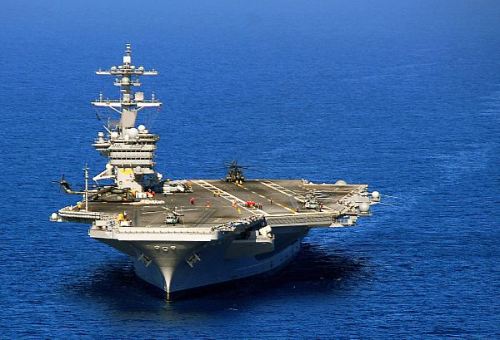
The new USS John F. Kennedy when completed will be one of the key platforms of American power projection in the middle part of this century and it is important that we strengthen and modernize the Navy so that it might meet the tasks required of it by our nation and our friends around the world.  It is imperative that we as a nation remember our heritage and return to it as we develop a strategy that is at last freed from the World War and Cold War model.  The time for that is now.

Peace

Padre Steve+

2 Comments

Filed under History, Military, national security, Navy Ships, US Navy

Christmas at the Front 1776-2010

Note: I wrote most of this on Christmas but didn’t finish it until a bit after 1AM on the 26th.

Today as on so many Christmas Days in days gone by military personnel serve on the front lines in wars far away from home and sometimes not far from their homes. Today American and NATO troops engage a resourceful and determined enemy in Afghanistan. To the west Americans support our Iraqi allies in their continued battle to end terrorism in that country while in many corners of the globe others stand watch on land, at sea and in the air. Unfortunately wars continue and until the end of time as we know it there will likely be war without end.

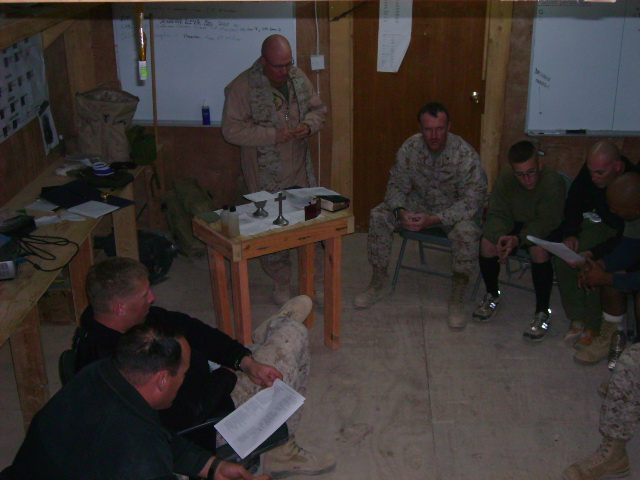
I have done my time in Iraq at Christmas on the Syrian-Iraqi Border with our Marine advisors and their Iraqis.  Since returning home have thought often of those that remain in harm’s way as well as those soldiers, sailors, Marines and airmen, American and from other nations that have spent Christmas on the front lines. Some of these events are absolutely serious while others display some of the “light” moments that occur even in the most terrible of manmade tragedies.

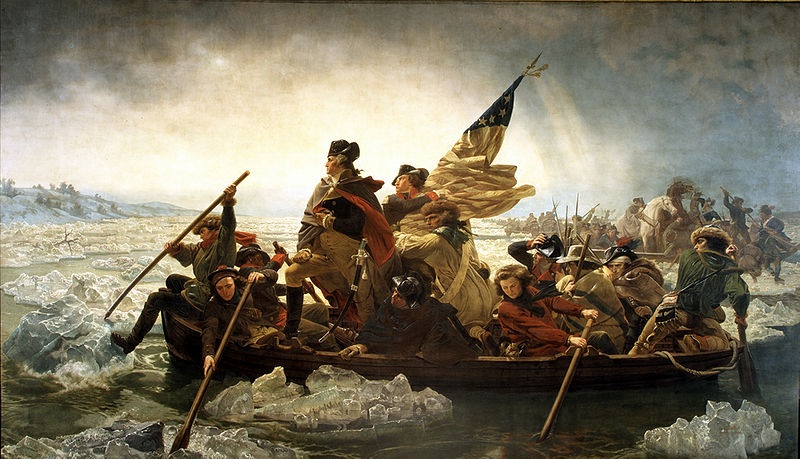
In American history we can look back to 1776, of course we could go back further but 1776 just sounds better. On Christmas of 1776 George Washington took his Continental Army across the Delaware to attack the British garrison at Trenton. Actually it was a bunch of hung over Hessians who after Christmas dinner on the 24th failed to post a guard but it was an American victory. In 1777 Washington and his Army had a rather miserable Christmas at Valley Forge where they spent the winter freezing their asses off and getting drilled into a proper military force by Baron Von Steuben.

While not a battle in the true sense of the word the Cadets at West Point wrote their own Christmas legend in the Eggnog Riot of 1826 when the Cadets in a bit of holiday revelry had a bit too much Eggnog and a fair amount of Whiskey and behaved in a manner frowned upon by the Academy administration. Needless to say that many of the Cadets spent the Christmas chapel services in a hung over state with a fair number eventually being tossed from the Academy for their trouble.

In 1837 the U.S. Army was defeated at the Battle of Lake Okeechobee by the Seminole Nation, not a Merry Christmas at all.  In 1862 the Army of the Potomac and Army of Northern Virginia faced each other across the Rappahannock River after the Battle of Fredericksburg while to the south in Hilton Head South Carolina 40,000 people watched Union troops play baseball some uttering the cry of many later baseball fans “Damn Yankees.” In 1864 the Army of the Potomac and Army of Northern Virginia faced each other again in the miserable trenches of Petersburg while General William Tecumseh Sherman enjoyed Christmas in Savannah Georgia after cutting a swath of destruction from Atlanta to the sea. He presents the city to Lincoln who simply says “nice, but I really wanted Richmond.”

Napoleon had something to celebrate on December 25th 1801 after surviving an assassination attempt on Christmas Eve and 1809 he was celebrating his divorce from Empress Josephine which had occurred on the 21st.

Meanwhile in Europe the 1914 “Christmas Truce” began between British and German troops and threatened to undo all the hard work of those that made the First World War possible.  Thereafter the High Commands of both sides ensured that such frivolity never happened again.

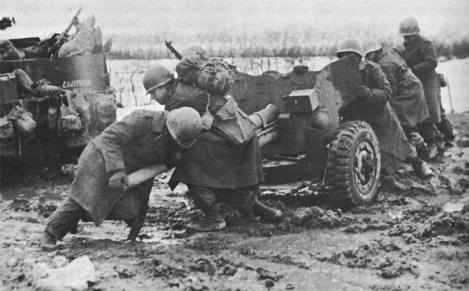
U.S. Soldiers and Anti-Tank Gun at the Battle of the Bulge

World War II brought much suffering in 1941 after Pearl Harbor the Japanese forced the surrender of Hong Kong and its British garrison while two days later the Soviets launched their counterattack at Moscow against Hitler’s Wehrmacht and the British were retaking Benghazi from the Afrika Corps.  A year later the Americans were clearing Guadalcanal of the Japanese and the Red Army was engaged in a climactic battle against the encircled German 6th Army at Stalingrad. At Stalingrad a German Physician named Kurt Reuber who is also a Lutheran minister draws “The Madonna of Stalingrad.”

The drawing which was taken out of Stalingrad by one of the last German officers to be evacuated now hangs in the Kaiser Wilhelm Memorial Church in Berlin. Reuber would draw another in 1943 while in a Soviet POW camp in which he would die in less than a month after that Christmas. Reuber wrote:

“I wondered for a long while what I should paint, and in the end I decided on a Madonna, or mother and child. I have turned my hole in the frozen mud into a studio. The space is too small for me to be able to see the picture properly, so I climb on to a stool and look down at it from above, to get the perspective right. Everything is repeatedly knocked over, and my pencils vanish into the mud. There is nothing to lean my big picture of the Madonna against, except a sloping, home-made table past which I can just manage to squeeze. There are no proper materials and I have used a Russian map for paper. But I wish I could tell you how absorbed I have been painting my Madonna, and how much it means to me.”
“The picture looks like this: the mother’s head and the child’s lean toward each other, and a large cloak enfolds them both. It is intended to symbolize ‘security’ and ‘mother love.’ I remembered the words of St.John: light, life, and love. What more can I add? I wanted to suggest these three things in the homely and common vision of a mother with her child and the security that they represent.”

In 1943 the Marines were battling the Japanese at New Britain while the Red Army was involved in its winter offensive against the Wehrmacht. In 1944 the Russians were advancing in Hungary, the Americans were engaged in a desperate battle with the Germans in the Ardennes with the German 2nd Panzer Division running out of gas 4 miles from the Meuse River and were destroyed by the American 2nd Armored Division. In the Pacific McArthur’s forces were battling the Japanese in the Philippines.

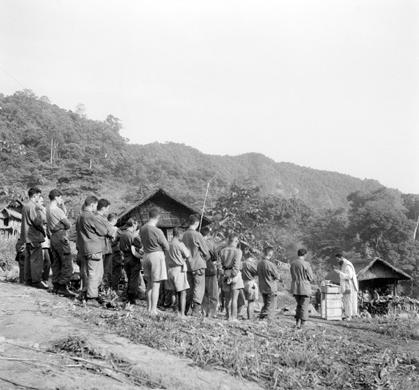
French Chaplain and Soldiers in Indochina

In the years following the Second World War Christmas was celebrated even while armies continued to engage in combat to the death. Christmas of 1950 was celebrated in Korea as the last American forces were withdrawn from the North following the Chinese intervention which the 1st Marine Division chewed up numerous Red Chinese divisions while fighting its way out of the Chosin Reservoir.  In the following years a stalemate along the front brought no end to the war and In French Indo-China the French garrison of Dien Bien Phu celebrated Christmas in primitive fashion unaware that General Giap was already marshalling his forces to cut them off and then destroy them shortly after Easter of 1954.   In 1964 the U.S. commits to the war in Vietnam and for the next 9 years American Soldiers, Marines, Sailors and Airmen will battle the North Vietnamese and Viet Cong with Marines fighting the North at Khe Sanh during Christmas of 1967.

Christmas on the Syrian Border with USMC Advisors

In the years after Vietnam American troops would spend Christmas in the Desert of Saudi Arabia preparing for Operation Desert Storm in 1990, in Somalia the following year and in the Balkans. After September 11th 2001 U.S. Forces spent their first of at least 10 Christmas’s in Afghanistan and in 2003 begin the first for at least 8 Christmas’s in Iraq.

Today Americans serve around the world far away from home fighting the war against Al Qaeda and its confederates and some will die even on this most Holy of Days while for others it will be their last Christmas.

Please keep them and all who serve now as well as those that served in the past, those that remain and those that have died in your prayers.

Peace

Padre Steve+


1 Comment

Filed under faith, History, Military

My God What Happened? I’ve become a Civil Rights Advocate and I know Why

“The means of defense against foreign danger historically have become the instruments of tyranny at home.” James Madison

I don’t know what it is, maybe the Mad Cow or something but somehow and I don’t know how I have become a raging civil libertarian championing or supporting all sorts of causes that as a law and order conservative that I would never espoused. I have been so riled up lately about what is going on with the Transportation Security Agency because I have been accosted by them and practically strip searched while traveling in my Navy uniform on valid travel orders with proper military identification while foreigners wearing clothes that could hide a truck bomb passed through the checkpoint.  That was back in 2003 before the current Grope on Site order was in place. This happened again in 2008 when coming home from Iraq. I think that it was those two instances that were the watershed for me.

When I was forced to remove my ribbons, rank, belt buckle and made to unzip back in 2003, or remove boots and belt buckle and uniform shirt less than an hour after returning from Iraq I knew that if the TSA was out of control, and that my dear readers was back in the days of the Bush administration.  When I realized that the TSA was subjecting military personnel in uniform with proper ID and on orders to such ludicrous and humiliating searches that the police state was already here even if most people didn’t see the danger.

Evidently I am still in a minority as according to a CNN/Gallup poll 80% of Americans supported the TSA so long as “it made them safe.” Of course probably 60% of the poll respondents have not had the pleasure of being assaulted by the TSA since they don’t fly.  It’s easy to support such practices if they don’t affect you.

I guess it is the repugnant Gestapo, STASI or KGB like invasive search methods that are nothing less than physical and sexual assault and battery that have turned me into a civil libertarian. It is the indictment of innocent citizens that only desire to travel by air and are forced to prove that they are not terrorists that bothers me. To see people with medical conditions and even children humiliated and even strip searched is abhorrent.  It is even more so because despite the billions of dollars allotted to the TSA not a single terrorist has been apprehended by them and the new tactics are already being rendered obsolete by the terrorists that attacked us on 9-11-2001.  With each year the TSA’s methods have grown more invasive and humiliating to average citizens whose only crime is travelling without any corresponding increase in air safety and security.

http://www.cbsnews.com/stories/2010/05/19/eveningnews/main6500349.shtml

Unfortunately the tactics of the TSA will not change because no politician wants to get blamed if something does go wrong and we will find that our liberties will be stripped away one by one under the benevolent and watchful eye of government bureaucrats and officials empowered by ill conceived laws; laws that the vast majority of the legislators that voted for them never even read.

George Washington said it so eloquently “Government is not reason; it is not eloquence. It is force. And force, like fire, is a dangerous servant and a fearful master.” James Monroe was even more prophetic when he addressed the Virginia Ratifying Convention in 1788:  “How prone all human institutions have been to decay; how subject the best-formed and most wisely organized governments have been to lose their check and totally dissolve; how difficult it has been for mankind, in all ages and countries, to preserve their dearest rights and best privileges, impelled as it were by an irresistible fate of despotism.”

Now I see that many people are okay with this and that I expect because I believe that the vast majority of people will always opt for security over freedom if pushed hard enough. However, when I see people that raised no alarm when the Patriot Act and other security legislation was passed by a Republican Congress and signed into law by President Bush now castigate President Obama for not going against the will of 80% of the population who think this is perfectly fine.  After all what politician goes against the will of voters when they are in great political difficulty?

When people like Rush Limbaugh state on the air “Mr. President don’t touch my teabags” when the fly on private jets I want to scream.  The differences now are that the TSA has bought technology that was not available in 2001 to do the job that Bush’s second director of Homeland Security Director Michael Chertoff advocated buying. Chertoff has been retained by the manufacturers of the devices and their lobbyists. Of course the company Rapiscan Systems also has Linda Daschle a former FAA official and wife of former Democrat Speaker of the House Tom Daschle on their payroll. I love bi-partisanship don’t you?

The second reason is all politics. There is a Democrat in the White House. A Democrat that Limbaugh and others will shred if he appears soft on terrorism and if terrorists somehow succeed in conducting an attack.  Obama is damned if he does and damned if he doesn’t, just as Bush was after 9-11 when people were in a panic and every politician, pundit and media personality was demanding action.

Sometimes I think in our current drift toward a police state civil libertarians are not appreciated because they raise issues that make people uncomfortable. You see for many if not most people it is better to trade safety and security for liberty when politicians, pundits and the media tell us that it is necessary and that they have our best interests at heart.  It is just as Daniel Webster said: “Good intentions will always be pleaded for every assumption of authority. It is hardly too strong to say that the Constitution was made to guard the people against the dangers of good intentions. There are men in all ages who mean to govern well, but they mean to govern. They promise to be good masters, but they mean to be masters.”

You see what is happening with the TSA is the tip of the iceberg. Once we get hit again no politician of any party with the possible exception of Ron Paul will willingly divest him themselves of the powers granted under emergency provision which are deemed “necessary” in a crisis and most people will support them.  Unfortunately it is hard for me to see how the provisions of the Patriot Act and the actions of the TSA in their current methods of passenger screening do not violate the 4th Amendment which states: The right of the people to be secure in their persons, houses, papers, and effects, against unreasonable searches and seizures, shall not be violated, and no Warrants shall issue, but upon probable cause, supported by Oath or affirmation, and particularly describing the place to be searched, and the persons or things to be seized.

Unfortunately such actions even with the approval of the citizenry trample the Constitution. It is the Constitution that is the best guarantee for us remaining a free society.  The Constitution as Justice David Davis wrote “is a law for rulers and people, equally in war and in peace, and covers with the shield of its protection all classes of men, at all times, and under all circumstances. No doctrine, involving more pernicious consequences, was ever invented by the wit of man than that any of its provisions can be suspended during any of the great exigencies of government. Such a doctrine leads directly to anarchy or despotism, but the theory of necessity on which it is based is false; for the government, within the Constitution, has all the powers granted to it, which are necessary to preserve its existence; as has been happily proved by the result of the great effort to throw off its just authority.”

We need to learn as a nation and people before it is too late the dangerous course that we have embarked upon. Other great nations have surrendered liberties in times of crisis and because it was necessary.  How many have recovered them without being totally destroyed and having to be rebuilt?

Al Qaeda and its allies have done what no previous enemy has ever succeeded in doing.  More than the human and material costs of 9-11-2001 and other terrorist acts Osama Bin Laden and his allies have succeeded in giving up essential liberties in the name of security. James Madison was correct when he wrote: The means of defense against foreign danger historically have become the instruments of tyranny at home. I pray that we will come to our collective senses before we lose everything.  When Patrick Henry said “Give me liberty or give me death” he understood that liberty and its defense were more important than life itself.  If we continue down this path we will lose even more liberty and it will be all be for our good and perfectly legal. Bin Laden and his evil consorts must be laughing as we walk down this path and are certainly going to keep making threats and attacks to cause us to curtail our freedom even more than we have. As Bin Laden said: “And he moved the tyranny and suppression of freedom to his own country, and they called it the Patriot Act under the disguise of fighting terrorism.”

God help us.

Peace

Padre Steve+


5 Comments

Filed under History, laws and legislation, national security, Political Commentary

A Soggy and Error Filled Night redeemed by the Long Ball: Tides win 11-6

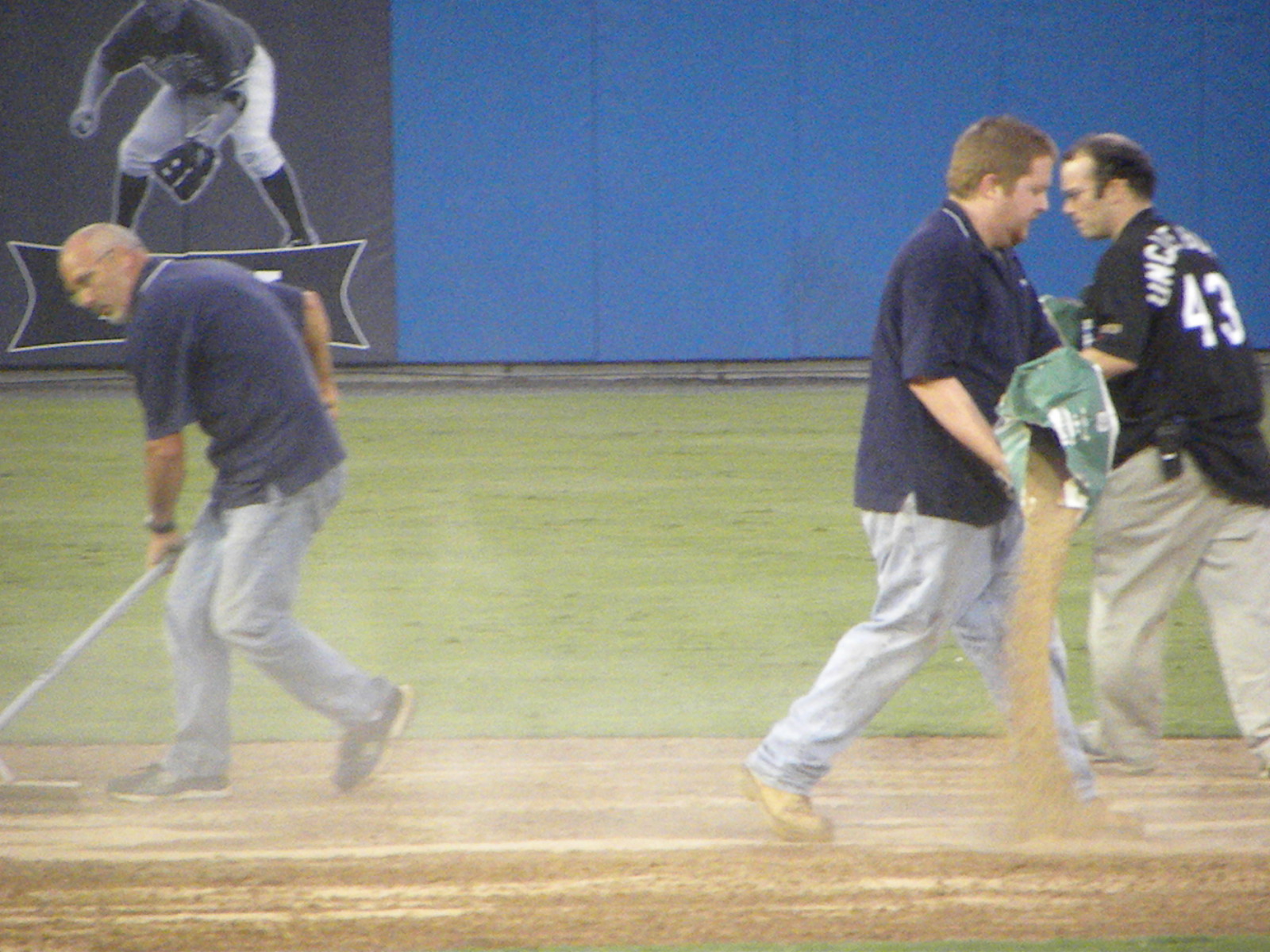
Drying out the infield

Before they were the Norfolk Tides they were known as the Tidewater Tides a reference to the rather quaint sounding name for the south side of the Hampton Roads region.  The Tidewater it is still called by many who forget that the term Tidewater is a rather polite term invented by travel agencies and developers to replace the rather dismal word “swamp.”  In fact the southern part of our region is taken up by the Great Dismal Swamp which is both rather large and rather dismal a good reason that it was named as such by none other than George “I’m on the Greenback” Washington.  Of course there Things in Norfolk went from bad to worse back to just bad before getting much worse before becoming incredibly good unless you play for or are a fan of the Indianapolis Indians.  The weather was lousy even by Hampton Roads standards for this time of year with drizzle and rain falling for most of the game making conditions for those playing on the field rather atrocious. Eventually 7 errors would be committed, 5 by the Tides on this rain filled evening that turned the infield at Harbor Park into muck.

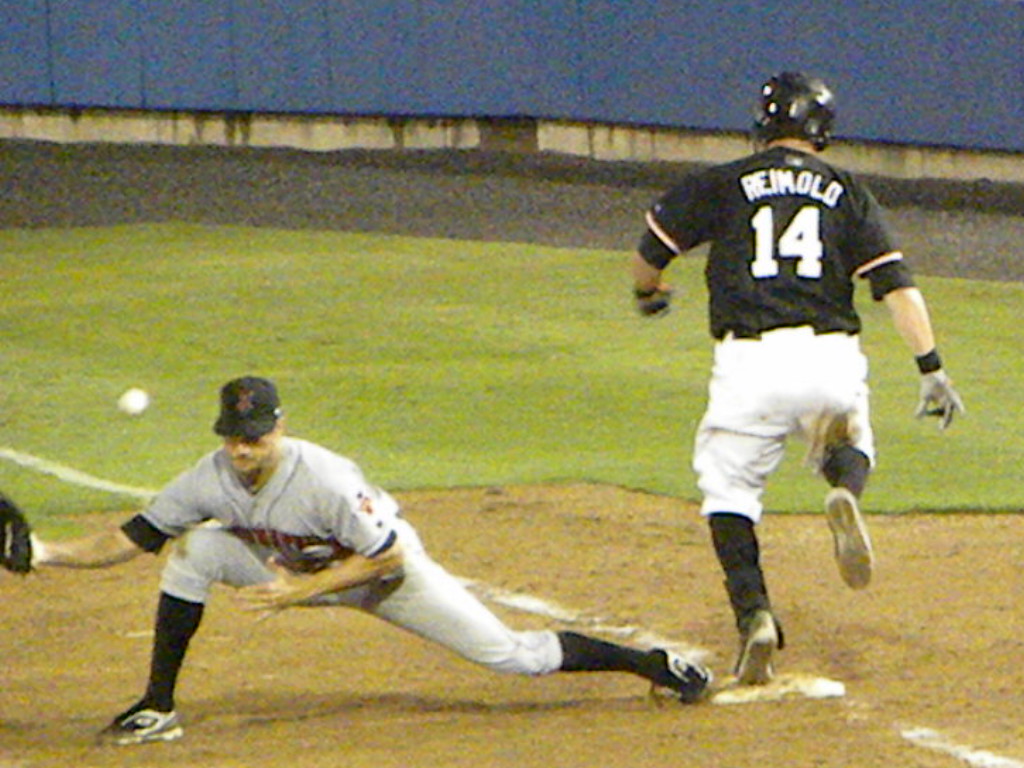
Nolan Reimold beats out an errant throw at first in the 6th inning, Robert Andino and Michael Aubrey scored

The game began inauspiciously for the Tides, starter Zach Britton struggled through the early innings before giving up 4 runs in the 4th inning. Britton loaded the bases giving up a single, a base on balls and a bunt single.  Alex Presley grounded into a force out to score Luke Carlin. With two outs Britton picked off Presley when he got too far off the bag resulting in a run down. During the run down Robert Andino threw the ball away allowing Carlin to reach third and Brian Friday to score.  The pickoff would have been the third out and Britton would have gotten out of the inning giving up just one run.  The next batter was Brandon Moss who tattooed the ball over the right field wall to give the Indians a 4-0 lead. Britton would struggle again in the 4th inning but work his way out of the jam and he would be relieved by Mike Hinckley in the top of the 5th.  Hinckley went three innings allowing only one hit and no runs walking none as striking out 4 Indians.

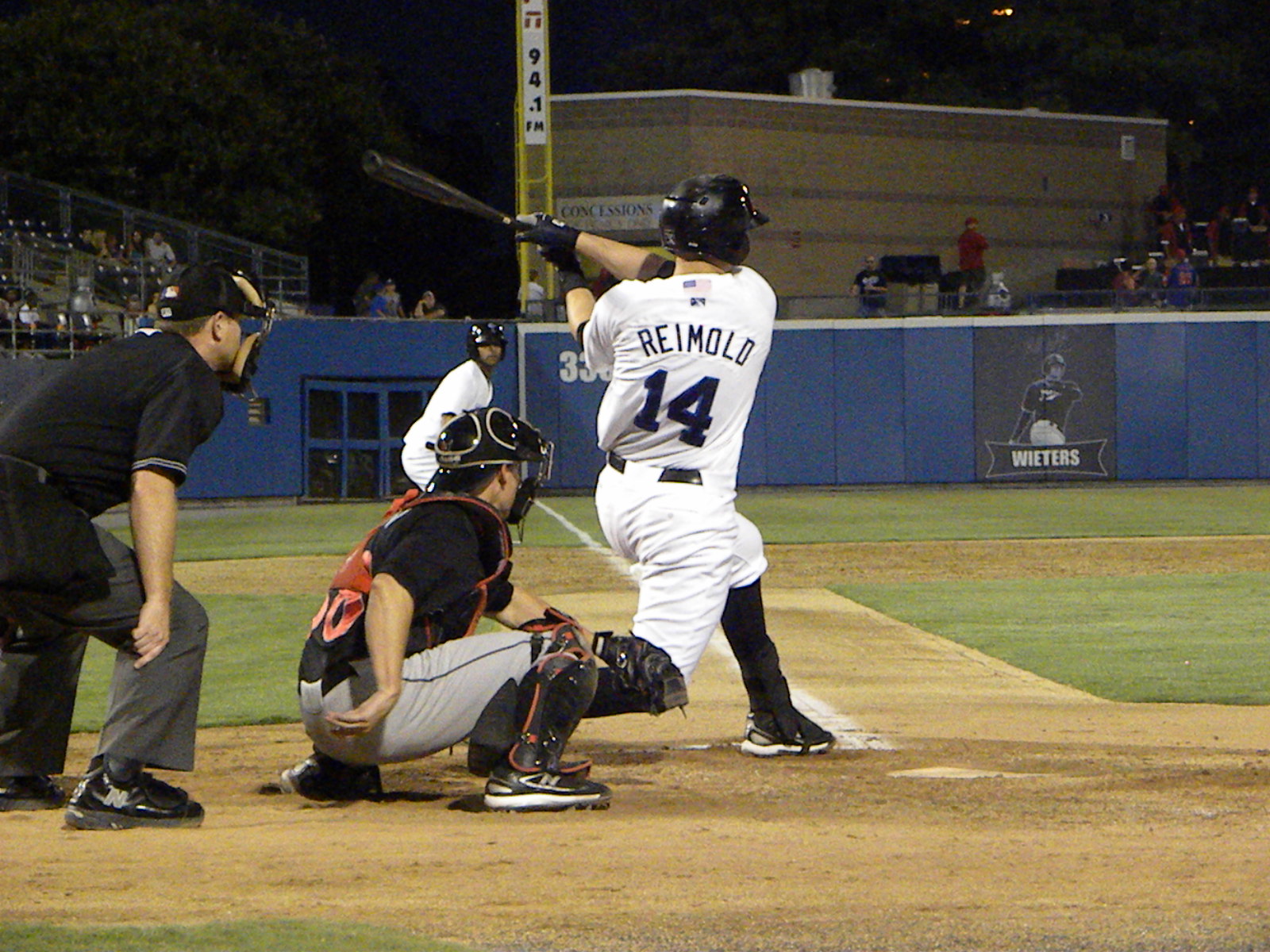
Nolan Reimold contributed a 3 run home run and hustled on the bases

The Indians would hold that lead into the 6th inning.  Starting pitcher Charlie Morton pitched well for 5 innings limiting the Tides to just 1 hit in the first 5 innings. In the 6th the wheels came off in large part due to the weather doing to the Indians what it had done to the Tides earlier in the game.  Michael Aubrey singled and advanced when Robert Andino got on due an error by Indians Third Baseman Doug Bernier.  Nolan Reimold grounded softly to third base and Bernier went to make the play and threw the ball away into foul territory past first base. Both Aubrey and Andino would score and the score was 4-2. In the 7th Morton walked Paco Figueroa and was taken out of the game in favor of Travis Chick.  Chick had little success. Matt Angle laid down a perfect sacrifice bunt to send Figueroa to second. Jeff Salazar singled and Figueroa went to third. Michael Aubrey doubled to score Figueroa and send Salazar to third. Robert Andino singled to score Salazar and was followed by Scott Moore who singled home Aubrey sending Andino to third.  Nolan Reimold grounded in a force out and Andino scored before Chick retired the side with the Tides now leading 6-4.

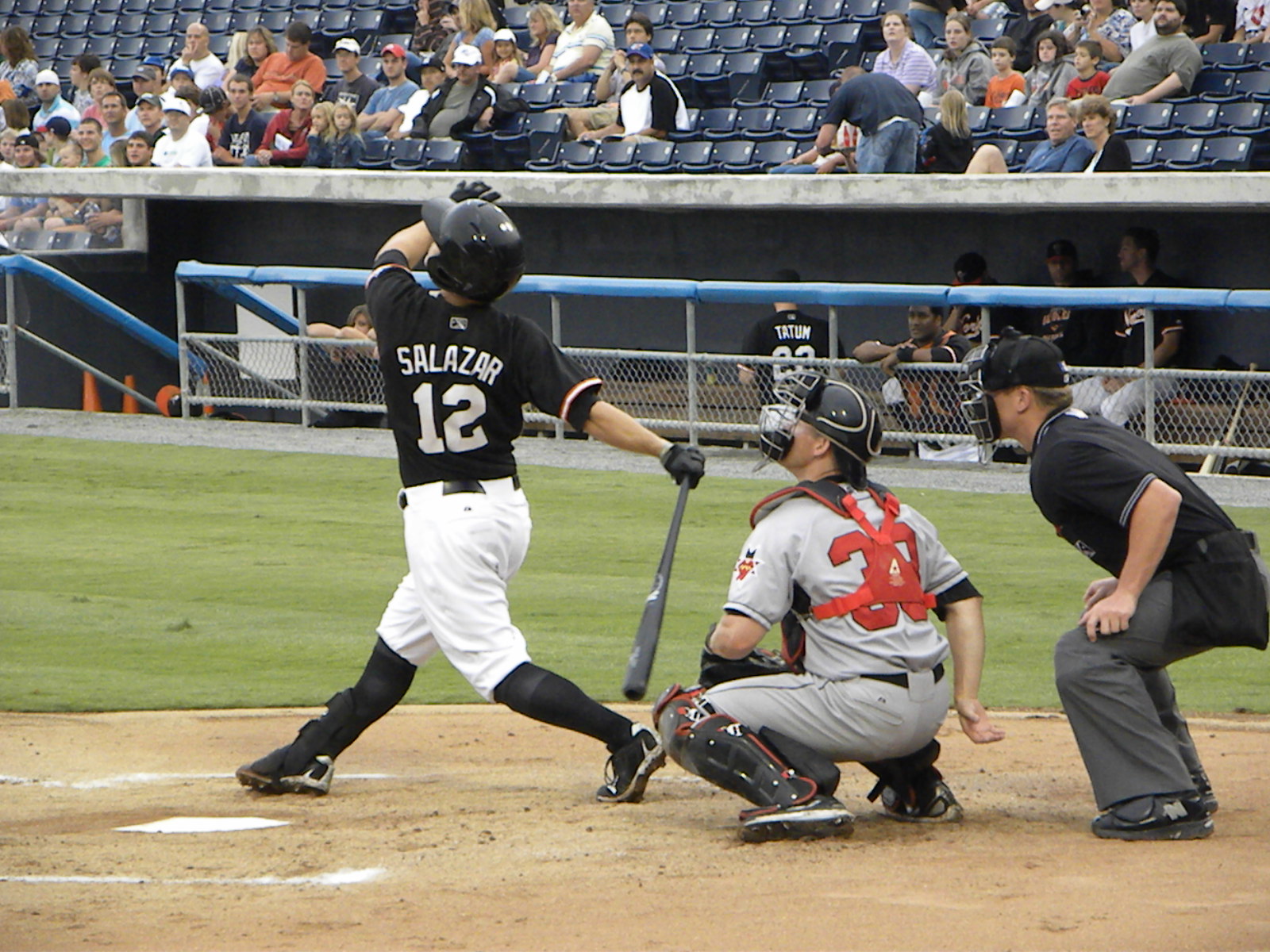
Jeff Salazar hit his 15th home run of the season

Alberto Castillo relieved Hinckley in the top of the 8th and gave up a single to Brandon Moss and double to Mitch Jones. He got Jim Negrych to ground out which scored Moss and then gave up a double to Jonathan Van Every to score Jones top tie the game at 6.  Castillo got the hook for Jim Hoey and Hoey stuck out both Luke Carlin and Brian Friday swinging to end the inning, the final pitch to Friday registered 98 miles an hour according the scoreboard radar.

A soaking wet Michel Hernandez waits for the grounds crew to do their magic

No with the score tied the Tides went to work and began to beat the Indians senseless. Daniel Moskos replaced Chick and gave up a single to Paco Figueroa. He struck out Matt Angle and with one out faced Jeff Salazar. Salazar leads the Tides in home runs but had not hit one since before he went on the DL.  Jeff plastered a pitch by Moskos far over the right field wall and the Tides led again by a score of 8-6.  The Tides were not done however and after Michael Aubrey popped out Robert Andino doubled off the right field wall.  Andino stole third and Scott Moore walked.  Nolan Reimold stepped to the plate and he too delivered the long ball going the opposite way and sending Moskos’ pitch over the right field wall nearly to the Elizabeth River.  The Tides now led 11-6 and finally and mercifully for the Indians Rhyne Hughes grounded out to end the inning.

Denis Sarfate got the closed out the game striking out two

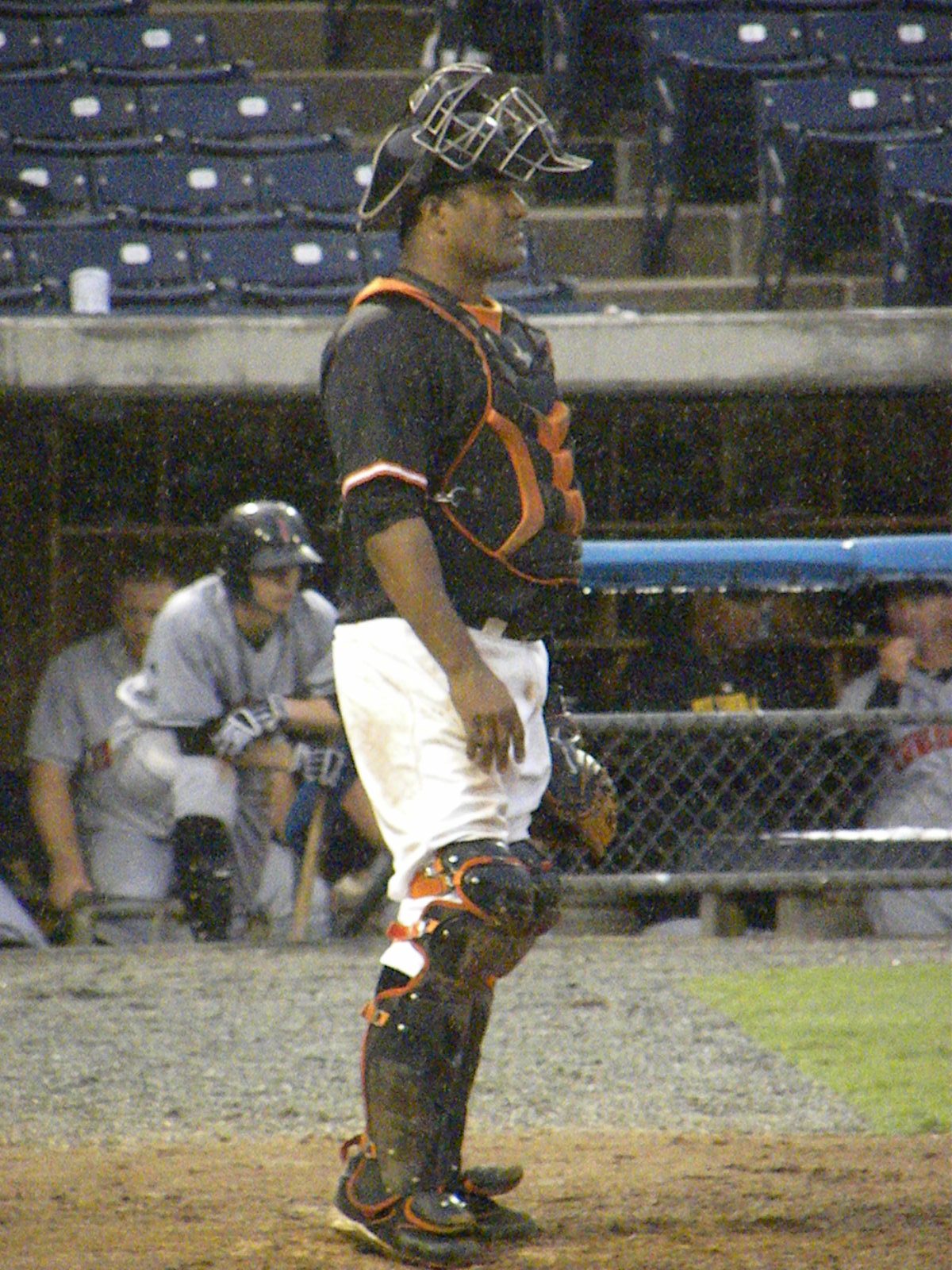
Denis Sarfate came in to close the game in a non-save situation.  He sent the Indians down in order striking out Doug Bernier and Brian Bixler swinging and got Alex Presley to ground out to second baseman Paco Figueroa who threw to Michael Aubrey at first to end the game.

The win was the second come from behind win for the Tides in as many days and in this game Jim Hoey (3-0 2.16 ERA) got the win and Daniel Moskos (0-4 9.60 ERA) the loss. The Indians had 6 runs on 8 hits with 2 errors leaving 6 men on base, the Tides 11 runs on 11 hits and 5 errors with 8 men stranded.  The teams meet tonight at Harbor Park with Henricus Vanden Hurk newly acquired from the Marlins by the Orioles making his first start for the Tides and Micheal Crotta (5-5 4.88 ERA) on the Hill for the Indians.

Hopefully the weather is better tonight than last night.

Peace

Padre Steve+
Leave a comment

Filed under Baseball, Batlimore Orioles, norfolk tides