Tag Archives: president donald trump

The Closet Of Anxieties

Friends of Padre Steve’s World,

Today has been a pretty crappy day. I have been anxious and a bit depressed. A couple of months ago I found an old friend on Facebook. When I found him I was excited. In addition to being my supervisory chaplain, he was a mentor. I lost contact with him after I entered the Navy in 1999. But that initial joy was turned to pain when on an almost daily basis he intruded on my Facebook page, attacked my beliefs, and my character. He had become a complete Trumpite, with no regard for my beliefs, except to attack nearly every day. Most of those attacks involved issues of race and social justice. It seemed that he hadn’t met a White Supremacist that he couldn’t defend or member of a minority group that he couldn’t blame.

So I dropped him and blocked him, I also tightened my privacy settings, and I did receive a lot of encouragement and love from other friends.

Of course I am also anxious about the Platelet Rich Plasma treatment that I will be getting on my right knee tomorrow. I’m not afraid of the procedure, but I’m afraid that it won’t help with the pain that I have in that knee. I am less anxious and more confident in the arthroscopic surgery I am having next Thursday to repair the meniscus on my left knee. I am tired of having to walk with the assistance of a cane and not to be able to run, power walk, or even go for a leisurely stroll. I get jealous and upset when I see people my age out jogging. I feel useless and crippled.

So anyway, I’m tired and going to read some uplifting book about the perpetrators of the Holocaust. Of course, that last part is sarcasm. I hope that I don’t have another of my more frequent crazy dream or nightmares and go crashing out of bed. I don’t need another ER visit.

Until tomorrow,

Peace,

Padre Steve+

2 Comments

Filed under Loose thoughts and musings, remembering friends

Holocaust Remembrance 2019: “To Forget a Holocaust is to Kill Twice”

Friends of Padre Steve’s World,

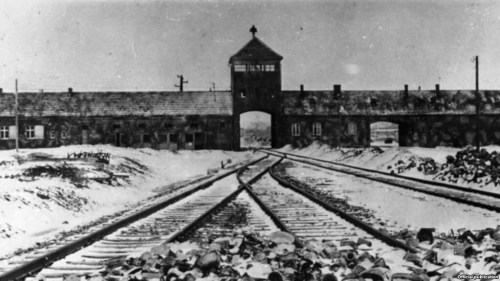
Seventy-four years ago today the Red Army liberated the Auschwitz Concentration Camp. Although Auschwitz was liberated, the Nazis continued to exterminate Jews at other camps and conducted forced marches in freezing winter weather to keep them from being liberated, marches which were both deadly and inhuman. Actions that even Heinrich Himmler had forbidden. Many of these actions were the work of Adolf Eichmann.

Even Rudolf Höss the former Commandant of Auschwitz, who admitted to killing over one and a half-million Jews, was appalled by the senseless brutality of what he saw. Höss, the meticulous killer of millions, was shocked by the columns of emaciated and Jews, with no winter clothing or in many cases not even shoes that Eichmann marched from Budapest and other cities and camps to Austria and Czechoslovakia in late 1944 and 1945 to keep the Russians from liberating them, even against the orders of Himmler.

There have been many episodes of genocide in human history, but none were more pointedly directed at a single group of people based on race hatred than the Holocaust of the Jews. While it is true that the Nazis exterminates millions of people than the nearly six million Jews they dispatched during the Holocaust. This is important, as the late Christopher Hitchens noted:

“We should not at all allow ourselves to forget the millions of non-Jewish citizens of Belarus, Russia, Ukraine, and other Slav territories who were also massacred. But for me the salient fact remains that anti-Semitism was the regnant, essential, organizing principle of all the other National Socialist race theories. It is thus not to be thought of as just one prejudice among many.” 

Hitchens was right, without the primary Nazi hatred and determination to obliterate the Jews from the face of the earth, their other atrocities would never occurred. Today, that rabid anti-semitism is again raising its evil head in Eastern and Western Europe, the Middle East, and even in the United States.

It is impossible for an objective person to deny this fact. Hate crimes against Jews are blossoming around the world like toxic mushrooms. The new perpetrators are the descendants of the former perpetrators, Protestant, Catholic, and Orthodox Christians, Muslims, and secularists who embrace the same social Darwinism that motivated many of the Nazis.

Or course the non-Muslim opponents of the Jews today also despise dark skinned minorities, non-Christians, not to mention atheists and secularists; thus what Hitchens says is still as accurate as it was when he wrote those words.

So here we are, Holocaust Remembrance Day, 2019. The question is, will we allow it to happen again? The late Iris Chang, who documented the Rape Of Nanking noted: “to forget a holocaust is to kill twice.” Sadly, I believe that without a sea change in public opinion and knowledge about the Holocaust, genocide, and anti-semitism we will see it happen again.

But will we allow it to happen again? I would hope not, but I have to say that human nature and the course of events is leading me to believe that it will happen again, maybe even in our lifetime.

That may be difficult to accept, but it is reality. What is the alternative to telling the truth? Except to perpetuate a lie, except to take the side of the perpetrators, and those who would do the same today. That includes many of President Trump’s most loyal supporters, Evangelical Christians who while outwardly allying with Israel, only do so in that their interpretation of Biblical prophecy might be fulfilled. That interpretation is that Christians will be raptured from the earth, and during a seven year Great Tribulation the Anti-Christ will conquer his foes and that in the end over two-thirds of all Jews will be killed, while the survivors convert to follow Christ.

Honestly, I cannot deem such politicized and racist theology to be Christian, or respectful and considerate of the elder brother of the Christian faith, Judaism, without which Christianity wouldn’t exist. Let me repeat that. Without Judaism Christianity would not exist, and the treatment of the Jews by the Christian Church has been shameful for the majority of its existence. I say that as a Christian.

In the 1930s and 1940s the Nazis created the euphemism the Jewish Question in order to remove the aspect of humanity from their policy. It wasn’t about human beings, it was about people that they considered sub-human minority that they were able to demonize to expedite their elimination. Hitchens wrote:

“Die Judenfrage,’ it used to be called, even by Jews. ‘The Jewish Question.’ I find I quite like this interrogative formulation, since the question—as Gertrude Stein once famously if terminally put it—may be more absorbing than the answer. Of course one is flirting with calamity in phrasing things this way, as I learned in school when the Irish question was discussed by some masters as the Irish ‘problem.’ Again, the word ‘solution’ can be as neutral as the words ‘question’ or ‘problem,’ but once one has defined a people or a nation as such, the search for a resolution can become a yearning for the conclusive. Endlösung: the final solution.”

Thus, once one labels the Jews, or for that matter any other despised minority a question, or a problem, we place ourselves on the path to Trump administration and his followers have done that since 2015 regarding Mexicans and other Hispanics, Arabs, Haitians, Sub-Saharan Africans, and too many others.

That is why I cannot be silent. I have to proclaim the words of Ellie Wiesel:

“I swore never to be silent whenever and wherever human beings endure suffering and humiliation. We must take sides. Neutrality helps the oppressor, never the victim. Silence encourages the tormentor, never the tormented.”

Silence it not an option, and to again quote Wiesel: “For the dead and the living, we must bear witness.”

We must bear witness, for if we do not it will happen again. Humanity is the one constant in history, and there are no exceptions once one begins down the path to labeling the fate of races, nations, and peoples a question or a problem which they can resolve with a solution, the more comprehensive, total, or final, the better. There are certainly plenty of people, including Trump’s closest advisors who would make draconian laws in order to enable the government to commit genocide.

Yehuda Bauer wrote:

“The horror of the Holocaust is not that it deviated from human norms; the horror is that it didn’t. What happened may happen again, to others not necessarily Jews, perpetrated by others, not necessarily Germans. We are all possible victims, possible perpetrators, possible bystanders.”

In the wake of an number of situations that I have seen and have watched in morbid fascination be debated on my Facebook timeline, I realize that with the prevailing attitudes being stoked by men like President Trump, his media supporters, and sadly, far too many Conservative Christians, that it will quite probably happen again.

I will fight it, butI have no doubt of the power, passion, and petulance of people consumed by race hatred under the guise of patriotism.

Until tomorrow,

Peace,

Padre Steve+

3 Comments

Filed under History, holocaust, Loose thoughts and musings, nazi germany

An Unnecessary Condition Of Affairs: A Temporary end to the #TRUMPDOWN

Friends of Padre Steve’s World,

I pondered writing this post late last night but was too tired to write it. It’s not long at all and it it is something that I wrote about previous shutdowns. Back in 2011 I wrote the following words regarding the shutdown provoked by Mitch McConnell and Paul Ryan and their Right Wing supporters at Fox News and Right Wing pundits, which ended up with the disastrous policy of sequestration.

“The attitudes that we have formed and angry words which we now use so ubiquitously are reflective of a deep hatred that now is becoming what defines us as a people.  In fact the deep and abiding hatred which now permeates our society is now threatening the international standing and I would say the national security of the United States.  We have only ourselves to blame because through our actions and inactions of the past decade we have made our choice to be what we have become and there is no one group especially in our political, media and business elites that have served us well.  In fact we have as voters chosen this toxic mix of elected officials often more influenced by hate spewing pundits and our own self interests rather than that of the nation and future generations much as we would like to claim that we are looking out for the future.”

Interestingly enough these same people, hitched their wagons to President Trump’s disastrous decision to shut down the government to build his monstrous monument to his morbid #MAGA manhood; that big beautiful wall. Of course anyone with a knowledge of history knows that such walls are expensive and ultimately self defeating.

For now the current Shutdown is over. Increasingly isolated Trump had no other exit for the trap that he laid for himself. Standing alone in the Rose Garden he capitulated to reality.

So for at least three weeks, the shutdown is over. Of course it really isn’t over as long as Trump thinks he can succeed, and there remains the ever present threat of him declaring a National Emergency. I think the latter is more likely, especially if the crisis in Venezuela results in bloodshed at the American Embassy. But for that we have to wait and see. My hope is that a legislative fix is found that actually increases border security without wasting money on that wall. One does not return to provenly ineffectual past remedies to solve present problems, but I digress…

To quote from the testimony of the former Confederate General Robert E. Lee before a Congressional Committee after the disaster of the American Civil War, or as it should still be called the War of the Southern Rebellion.

Before the committee, Lee, who had resigned his commission less than a month of been promoted to full Colonel and rejecting President Lincoln’s offer to command the Armies of the Union accepted commissions by Virginia and the Confederacy said:

“I may have said and I may have believed that the position of the two sections which they held to each other was brought about by the politicians of the country; that if the great mass of the people, if they had understood the real questions would have avoided it. I did believe at the time that it (the war) was an unnecessary condition of affairs, and might have been avoided if forbearance and wisdom had been practiced on both sides.”

But Lee was engaged in the same sort of moral equivalence that many politicians and pundits use today. In his testimony, Lee blamed both sides and conveniently left out his role in the conflict. Before the war Lee inherited the slaves of his father in law who had expressly said that they were to be emancipated. He delayed and did not do it. When he resigned his U.S. Army commission he said that he would only raise his sword in defense of Virginia, but he personally led two invasions of the North, invasions that his Army used to capture free blacks and return them to slavery. Despite the urging of some Confederate Generals, Lee steadfastly opposed the emancipation of slaves to serve in the Confederate Army until February of 1865. When the war was for all purposes lost, Lee redoubled his efforts and had hundreds of deserting Confederate Soldiers sentenced to death at Drumhead Court Martial. The vast majority of those troops were from Georgia and the Carolinas and their states, families, and homes were being ravaged by William Tecumseh Sherman’s Army’s March to the Sea.

Yes the American Civil War was an unnecessary condition of affairs, as was the Trump-McConnell Shutdown. In each case the blame is not shared across the board. These disasters can be laid at the feet of the men who provoked them and demanded them. In the case of the Civil War, those were the leaders of the South, who having the assurance of Lincoln that slavery was safe in the Slave states decided to secede, and who through the Fugitive Slave Law Of 1850 had an instrument to enforce slavery in the Free States.

In the current situation it all comes down to race once again. President Trump and many Republican leaders have blamed immigrants and racial minorities for all the problems of the country. They offer support to White Nationalist, Neo-Confederate, and Neo-Nazi groups, while demonizing anyone with darker skin. Trump’s Wall, like his Red MAGA hats are symbolic of that race hatred, and fear mongering. The Trump Shutdown can only be blamed on that. Trump bragged about the Shutdown and took responsibility for it. He owns it, maybe we should start calling it the #TRUMPDOWN ? It does have a nice ring.

So until tomorrow when I return to other subjects,

Peace,

Padre Steve+

Leave a comment

Filed under civil war, History, laws and legislation, Loose thoughts and musings, national security, News and current events, Political Commentary

From Limited to Total War: The American Civil War as a Watershed

Friends of Padre Steve’s World,

As always I continue to revise my Gettysburg and Civil War texts. I am posting the second half of a majorly revised section dealing the the nature of the war, and how it changed from a limited war to a total war. This subject may be uncomfortable to many readers, and I admit that. Truthfully I abhor war but I am a realist when it comes to human nature, politics, economics, ideology, religion, and even racism and race hatred play in the world.

Truthfully, if the North had continued the war with limited force, and goals, the Confederacy would have either become independent, or it would have been re-admitted to the Union with slavery intact, and the Thirteenth, Fourteenth, and Fifteenth Ammendments would have never been passed, and any concept of civil rights destroyed. You can be sure that with Southern States re-admitted without change that other things would not have occurred; Women’s sufferage, Native American citizenship, citizenship and civil rights for Asian immigrants, and most recently, LGBTQ people are directly tied to the constitutional amendments that the Union victory made possible.  Sometimes, as distasteful and repugnant as that may sound, a hard war is necessary to prevent an unjust peace. 

From a point of realpolitik,  the fact is that leaders in the South and the North, like so many other leaders in history and even today, failed to understand what the war that they helped unleash would bring about. War is not to be entered into lightly without connecting the dots between the act of policy that guides the war, as well as having the policy’s ends supported by the ways and means necessary to fulfill it, and not all of those are military. Diplomacy, economic power, and  information all play a part. 

Abraham Lincoln and his advisors came to understand this, maybe better than any presidential administration in United States history. Sadly, Lincoln was assassinated before he could guide the country through reunion, and Andrew Johnson was not up to the task. By the time Ulysses Grant became President, the opportune moment for reunion had passed. Though the South succeeded in rolling back civil rights for another century, they never were able to repeal those three critical amendments. That is why the hard war pursued by the Lincoln administration still matters for everyone with a stake in civil rights. Today, under the Trump Administration, the GOP Senate, and the GOP State majorities those civil rights stand endangered. The fight is not over.

Think about that, and have a great weekend,

Peace

Padre Steve+
gburg dead1

While the nature of war remained unchanged, the American Civil war changed the character of war, as it had been known for centuries, since the Peace of Westphalia, and the end of the Thirty Years War changed dramatically. In the American Civil War the character of war changed from the emphasis of the limited wars of the 18th Century and the Napoleonic era where opposing armies dueled each other into a war that encompassed the entire population. It also challenged a generation of military officers who had grown up with Henri Jomini’s principles of war and his emphasis on limited war.

The leading catalyst that convinced Lincoln and other Northern leaders of the need to abandon the strategy of limited war was the fact that the Confederates had:

 “blurred the distinction between combatants and noncombatants in the parts of the Confederacy and border states occupied by Union forces. The crops and livestock of Southern civilians were feeding and clothing Confederate armies. Their slaves were the principle labor force in the Confederate War economy. Thousands of Southern civilians became guerillas who roamed behind Union lines destroying supplies and ambushing unarmed as well as armed Unionists.” [1]

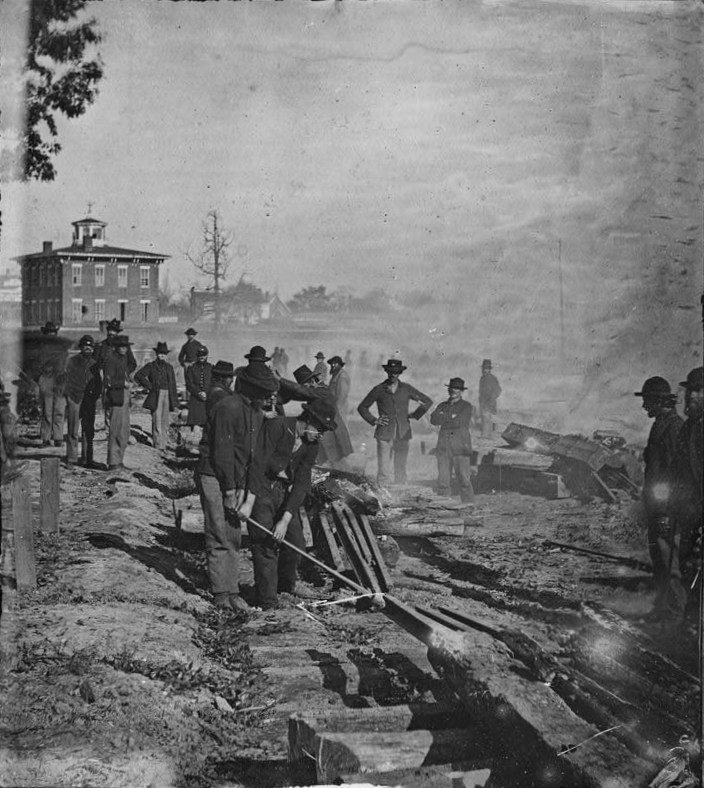
The Union reaction to the Confederate actions would portend a change in the war. And soon, the war bordered on Clausewitz’s definition of absolute or total war, especially in Sherman’s march through the South, and in the actions of Confederate irregulars who used terror against Unionist civilians and free Blacks. The actions of irregular Confederate forces to attack his troops and supply lines caused William Tecumseh Sherman, who earlier in the war had taken a conciliatory attitude to Southern civilians, to change his views.
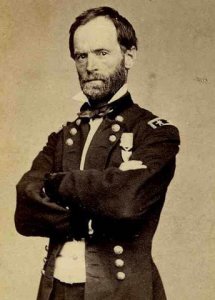
To Sherman, the Confederates had blurred the lines between combatants and non-combatants, he noted that the Union army must act

 “on the proper rule that all in the South are enemies of all in the North….. The whole country is full of guerilla bands…. The entire South, man woman, and child, is against us, armed and determined.” [2]

In response Henry Halleck, now backed with the legal authority of General Order 100, also known as The Lieber Code, which for the first time in American history defined the differences between partisans acting in the capacity as soldiers of the enemy army, and those who were not a part of a military unit, but rather men who blended back into the population after conducting armed attacks, [3] wrote to Sherman,

“I am fully of opinion that the nature of your position, the character of the war, the conduct of the enemy (and especially of non-combatants and women of the territory we have heretofore conquered and occupied), will justify you in gathering up all the forage and provisions which your army will require, both for a siege of Atlanta and for your supply in your march farther into the enemy’s country. Let the disloyal families of the country, thus stripped, go to their husbands, fathers, and natural protectors, in the rebel ranks; we have tried three years of conciliation and kindness without any reciprocation; on the contrary, those thus treated have acted as spies and guerillas in our rear and within our lines…. We have fed this class of people long enough. Let them go with their husbands and fathers in the rebel ranks; and if they won’t go, we must send them to their friends and protectors. I would destroy every mill and factory within reach which I did not want for my own use…..” [4]

The strategy of Sherman was to ensure that the Confederate heartland of the Deep South could no longer help to sustain Confederate armies in the field, it was military, economic, political, and diplomatic. He explained:

“I propose to act in such a manner against the material resources of the South as utterly to negate Davis’ boasted …promises of protection. If we can march a well-appointed army right through hiss territory, it is a demonstration to the world, foreign and domestic, that we have a power which Davis cannot resist.” [5]

in addition, Sherman was a pioneer of psychological warfare, he was convinced that the crushing will of White Confederate citizens was paramount to victory. He was

 “convinced that not only economic resources but also the will of Southern civilians sustained the Confederate War effort…. Sherman was well aware of the fear that his soldiers inspired among Southern whites. This terror “was a power,” he wrote, “and I intend to utilize it… to humble their pride, to follow them to their innermost recesses, and to make them dread and fear us…” [6]

When Confederate General John Bell Hood elected to fortify Atlanta, the largest and most important industrial city in the Confederacy against a Union attack, thereby making the population of the city a target, Sherman wrote to the Mayor of Atlanta to warn him of the consequences of allowing this:

“The use of Atlanta for warlike purposes is inconsistent with its character as a home for families. There will be no manufactures, commerce, or agriculture here, for the maintenance of families, and sooner or later want will compel the inhabitants to go…. You cannot qualify war in any harsher terms than I will. War is cruelty, and you cannot refine it; and those who brought war into our country deserve all the curses and maledictions a people can pour out…. You might as well appeal against the thunder-storm as against these terrible hardships of war. They are inevitable…” [7]

Sherman’s strategy worked, “it deprived Confederate armies of desperately needed supplies; it also crippled morale both at home front and in the army,” [8] His armies did more than destroy factories and farms in its path, wherever they went “they broke the power of the secessionist government, the slaveholder’s social order, and most of whatever fighting spirit remained among Confederate partisans.” [9]

Jefferson Davis understood the effect that Sherman’s army was having, he wrote, “Sherman’s campaign has produced a bad effect on our people, success against his future operations is needed to restore public confidence.” [10] Mary Boykin Chesnut saw the clouds of doom approaching and confided in her diary, “Since Atlanta I have felt as if all were dead in me, forever,” she wrote. “we are going to be wiped off the map.” [11]

The effects of Sherman’s march through Georgia and the Carolinas were felt in the Confederate armies at the front as just as he had predicted. Lee’s artillery chief, Brigadier General Porter Alexander wrote:

“The condition of the country at large was one of almost as great deprivation & suffering as that of the army itself; & in many localities even of much greater. North Carolina, South Carolina, & Georgia had been over-run by Sherman’s army carrying off many of the Negroes & most of the stock & destroying all accumulation of provisions which they could not use, & often burning barns & dwellings & all implements of agriculture…. Naturally, the wives & mothers left at home wrote longingly for the return of the husbands & sons who were in the ranks in Virginia. And, naturally, many of them could not resist these appeals, & deserted in order to return & care for their families.” [12]

A member of the 20th Maine noted the effect on Lee’s troops opposing them at Petersburg wrote, “Since Sherman’s victories… we see the affect it is having on Lee’s Army.” They were deserting in groups, “not only privates, but many officers with them.” [13] Lee was so frustrated and angry with the desertion problem that he resorted to summary executions of the men, occasionally without hearing their appeals.

The war was revolutionary in other ways, and brought about a host of social, philosophical, economic, and political changes which continue to impact the lives of people in the United States and around the world even today. Some of these, especially those regarding the abolition of slavery and emancipation, as well as the beginnings of the Women’s Rights movement have had a ripple effect in matters of political and social equality for other previously disenfranchised groups of citizens. One writer noted in regard to the social impacts that “The Civil War uprooted institutions, transformed our politics, influenced social relationships of half a continent, and wrought changes that echo down the generations.” 

 Mark Twain wrote in 1873 that the war “uprooted institutions that were centuries old, changed the politics of a people …and wrought so profoundly upon the national character that cannot be measured short of two or three generations.” [15]

In a sense, when Abraham Lincoln proclaimed  “a new birth of freedom” in his Gettysburg address it served as a watershed moment in American history because it brought to the forefront the understanding of Jefferson and the other signers of the Declaration of Independence that all men are created equal.

That statement, flowing from the Declaration was key to Lincoln’s understanding of human rights and dignity, and from it came the Emancipation Proclamation and the Thirteenth Amendment, which abolished slavery. Those would be followed by the Republican Congresses’ passage of the Fourteenth Amendment, which overturned the Dred Scott Decision, which denied all citizenship to blacks across the country, and by Ulysses S. Grant’s Fifteenth Amendment, which gave African American men to right to vote. These were all revolutionary ideas, and there was a counterrevolutionary backlash after the war “overthrew the fledgling experiment in racial equality” but “did not fully restore the old order. Slavery was not reinstated. The Fourteenth and Fifteenth Amendments were not repealed.” [16]  That is the human and political context by which we have to understand the American Civil War.

Thus it is important to study the Gettysburg campaign in the context of the Civil War because the campaign of 1863 in the east cannot be divorced from what was happening in the west at Vicksburg, nor the Union blockade, nor the diplomatic, economic and informational aspects of the war.  Likewise the Gettysburg campaign cannot be separated from its relationship to the broader understanding of the nature and character of war. To do this one must examine the connection between them and policies made by political leaders; to include the relationship of political to military leaders, diplomats, the leaders of business and industry and not to be forgotten, the press and the people. Likewise we must understand the various contexts of war, to include the social, political, ideological and even the religious components of war, how they impacted Civil War leaders and why civilian policy makers and military leaders must understand them today.

While the essential nature of war remains constant, wars and the manner in which they are fought have changed in their character throughout history, and this distinction matters not only for military professionals, but also policy makers.

The changing character of war was something that military leaders as well as policy makers struggled with during the American Civil War much as today’s military leaders and policy makers seek to understand the character of warfare today. British military theorist Colin Gray wrote:

 “Since the character of every war is unique in the details of its contexts (political, social-cultural, economic, technological, military strategic, geographical, and historical), the policymaker most probably will struggle of the warfare that is unleashed.” [17]

That was not just an issue for Abraham Lincoln and Jefferson Davis, both of whom struggled with the nature of the war which had been unleashed, but it is an issue for our present and future political leaders, who as civilian politicians are “likely to be challenged by a deficient grasp of both the nature of war as well as its contemporary context-specific character.” [18] 

This is actually very important in our present context as since “the end of the Cold War, the tendency among civilians – with President Bush as a prime example – has been to confuse strategy with ideology. The president’s freedom agenda, which supposedly provided a blueprint for how to prosecute the global war on terror, expressed grandiose aspirations without serious effort to assess the means required to achieve them.” [19] Likewise, it is something that President Obama did not fully understand, and President Trump, is flailing and failing at, not because he has a strategy or a coherent ideology, but because everything revolves around him.

Strategy is hard and mostly ignored until there is a crisis, “soldiers focus on their professional military duties, while politicians exercise their skill in policymaking. The strategy bridge between the two worlds, the two cultures, generally is left poorly guarded, if it is guarded at all.” [20] In the American Civil War, Abraham Lincoln and his administration as well as military advisers came to develop a realistic strategy to match his political goals, Lincoln understood the contexts of the war far better than his Confederate counterpart Jefferson Davis, whose administration and military leadership was never able to devise a coherent strategy because they did not fully grasp the contexts of the war, never seriously considered the ends, ways, and means to victory.

In addition to being the first modern war, or maybe I should say, the first war of the Industrial Age, the Civil War prefigured the idea of total war written about by Clausewitz that occurred in the World Wars of the Twentieth Century. The war combined a massive number of technological advances, which both preceded and occurred during it, in which the philosophical nature of the Industrial Revolution came to the fore.

Likewise, the enmity of the two sides for one another had been fostered by a half century of relentless and violent propaganda that ushered from the mouths of politicians, the press and even from the pulpit brought the element of hatred to the fore of the conflict; as Clausewitz correctly observed, “Even the most civilized of peoples, in short, can be filled with passionate hatred for each other.”  [21]

As the war went on the feelings of animosity and hatred often boiled over and were reflected in the words and sometimes the actions of the soldiers. A Confederate Captain wrote his wife to teach his children to have

 “a bitter and unrelenting hatred of the Yankee race” that had “invaded our country and devastated it… [and] murdered our best citizens…. If any luckless Yank should unfortunately come my way he need not petition for mercy. If he does I will give him lead.” 

A soldier from a Wisconsin regiment wrote to his fiancée after the assault on Resaca, Georgia that his unit had captured twenty-three Confederates and

 “our boys asked if they remembered Fort Pillow and killed them all. Where there is no officer with us, we take no prisoners…. We want revenge for our brother soldiers and will have it…. Some of the [rebels] say they will fight as long as there is one of them left. We tell them that is what we want. We want to kill them all off and cleanse the country.” [22]

While this was hatred was not universal and many times the combatants behaved with great chivalry on the battlefield, and Northern and Southern veterans led efforts at reconciliation after the war; such hatred was something that had not been a part of the American military experience.  The deep rooted enmity, especially in the South, would remain a constant over the next one hundred years. “White southerners who retained Confederate loyalties against Federal soldiers and northerners in general…. Confederates defiantly refused to forgive enemies who had inflicted such pain on their society.” [23]Likewise, many Union veterans felt that in their sacrifices to defeat the Confederacy and end slavery would be forgotten as time slipped by and the memory of the war subsided.

This very real hatred meant that there were many times when the American Civil War came close to Clausewitz’s understanding of absolute war in its in character, and it prefigured the great ideological wars of the twentieth century. J.F.C. Fuller noted “for the first time in modern history the aim of war became not only the destruction of the enemy’s armed forces, but also of their foundations- his entire political, social and economic order.” [24] It was the first war where at least some of the commanders, especially Ulysses S. Grant and William Tecumseh Sherman were men of the Industrial Age, in their thought and in the way that they waged war, in strategy, tactics even more importantly, psychologically. Fuller wrote:

“Spiritually and morally they belonged to the age of the Industrial Revolution. Their guiding principle was that of the machine which was fashioning them, namely, efficiency. And as efficiency is governed by a single end- that every means is justified- no moral or spiritual conceptions of traditional behavior must stand in its way.” [25]

President Lincoln, as well as Grant and Sherman realized in early 1864 that “the South was indeed a nation in arms and that the common European practice of having standing armies engaged each other in set-piece battles to determine the outcome of a war was not enough to win this struggle.” [26] Though none was a student of Clausewitz, their method of waging war was in agreement with the Prussian who wrote that

 “the fighting forces must be destroyed; that is, they must be put in such a position that they can no longer carry on the fight” but also that “the animosity and the reciprocal effects of hostile elements, cannot be considered to have ended so long as the enemy’s will has not been broken.”  [27]

Sherman told the mayor of Atlanta after ordering the civilian population expelled that “we are not only fighting hostile armies, but a hostile people, and must make the old and young, the rich and poor, feel the hard hand of war.” [28]Sherman was one of the first American military leaders to understand that a civil war could not be waged according to the limited war doctrines most American officers had been taught. He not only “carried on war against the enemy’s resources more extensively and systematically than anyone else had done, but he developed also a deliberate strategy of terror directed against the enemy’s minds.” [29] While some might find this troubling, the fact remains that it was Sherman’s Southern sweep of all that lay before him that broke the back of the Confederacy.

But Sherman and Grant were not alone in understanding the problem of fighting a limited war against the Confederacy. In the fall of 1862 a twenty-five year volunteer officer, Colonel Strong Vincent serving with McClellan’s army in Virginia understood what had to happen if the Union were to overcome the rebellion of the Confederacy. Vincent who would be instrumental in throwing back Hood’s assault on Little Round Top, and die leading the defense of that edifice, wrote to his wife about the need for harder measures.

“We must fight them more vindictively, or we shall be foiled at every step.  We must desolate the country as we pass through it, and not leave a trace of a doubtful friend or foe behind us; make them believe that we are in earnest, terribly in earnest; that to break this band in twain is monstrous and impossible; that the life of every man, yea, of every weak woman or child in the entire South, is of no value whatever compared with the integrity of the Union.” [30]

Abraham Lincoln came to embrace the eternal nature of war as well as the change in the character of the war over time. Lincoln had gone to war for the preservation of the Union, something that for him was almost spiritual in nature, as is evidenced by the language he used in both of his inaugural addresses and the Gettysburg Address.

Instead of a war to re-unite the Union with the Emancipation Proclamation the war became a war for the liberation of enslaved African Americans, After January 1st 1863 when the Emancipation Proclamation went into effect, Lincoln “told an official of the Interior Department, “the character of the war will be changed. It will be one of subjugation…The [old] South is to be destroyed and replaced by new propositions and ideas.” [31] That too was a modern understanding of war.

Of course, the revolution in military affairs that characterized the Civil War took time, but it was the political and military leaders of the North who better adapted themselves and their nation to the kind of war that was being fought. “Lincoln’s remarkable abilities gave him a wide edge over Davis as a war leader, while in Grant and Sherman the North acquired commanders with a concept of total war and the determination to make it succeed.” [32]

At the beginning of the war the leaders and populace of both sides still held a romantic idea of war. The belief that the war would be over in a few months and that would be settled by a few decisive battles was held by most, including many military officers on both sides. There were some naysayers like the venerable and rather corpulent General Winfield Scott, but politicians and the press mocked Scott and those who even suggested that the war would be long, hard, and bloody. Of course those who predicted a short, easy, and relatively bloodless war who were proven wrong, and the war became the bloodiest war ever waged by Americans, and it was against other Americans. In many ways it has yet to have ended.

Notes 

[1] Ibid. McPherson The War that Forged a Nation: Why the Civil War Still Matters p.35

[2] Ibid. McPherson Drawn With the Sword: Reflections on the American Civil War p.81

[3] Lieber noted in Article 82 of the code that “Men, or squads of men, who commit hostilities, whether by fighting, or inroads for destruction or plunder, or by raids of any kind, without commission, without being part and portion of the organized hostile army, and without sharing continuously in the war, but who do so with intermitting returns to their homes and avocations, or with the occasional assumption of the semblance of peaceful pursuits, divesting themselves of the character or appearance of soldiers – such men, or squads of men, are not public enemies, and, therefore, if captured, are not entitled to the privileges of prisoners of war, but shall be treated summarily as highway robbers or pirates.” And in Article 85 that, “War-rebels are persons within an occupied territory who rise in arms against the occupying or conquering army, or against the authorities established by the same. If captured, they may suffer death, whether they rise singly, in small or large bands, and whether called upon to do so by their own, but expelled, government or not. They are not prisoners of war; nor are they if discovered and secured before their conspiracy has matured to an actual rising or armed violence.” Lieber, Francis, General Orders No. 100 : The Lieber Code INSTRUCTIONS FOR THE GOVERNMENT OF ARMIES OF THE UNITED STATES IN THE FIELD 24 April 1863 Retrieved from The Yale Law School, Lillian Goldman Law Library, The Avalon Project Documents in Law, History and Diplomacy http://avalon.law.yale.edu/19th_century/lieber.asp#sec4 1 June 2016

[4] Ibid. Weigley The American Way of War: A History of United States Military History and Policy p.148

[5] Guelzo Allen C. Fateful Lightening: A New History of the Civil War Era and Reconstruction Oxford University Press, Oxford and New York 2012 p.445

[6] Ibid. McPherson Drawn With the Sword: Reflections on the American Civil War p.82

[7] Sherman, William Tecumseh, Letter to James M. Calhoun, Mayor of Atlanta September 12, 1864 in Perman, Michael and Murrell Taylor, Amy editors The Civil War and Reconstruction Documents and Essays Third Edition Wadsworth Cengage Learning Boston MA 2011 pp.147-148

[8] Ibid. McPherson Drawn With the Sword: Reflections on the American Civil War p.83

[9] Levine, Bruce The Fall of the House of Dixie: The Civil War and the Social Revolution that Transformed the South Random House, New York 2013 p.233

[10] Goldfield, David. America Aflame: How the Civil War Created a Nation Bloomsbury Press, New York 2011 p.348

[11] McPherson, James. The Battle Cry of Freedom: The Civil War Era Oxford University Press, Oxford and New York 1988 p.775

[12] Alexander, Edward Porter. Fighting for the Confederacy: The Personal Recollections of General Edward Porter Alexander edited by Gary Gallagher University of North Carolina Press, Chapel Hill 1989 pp.508-509

[13] Ibid. Guelzo Fateful Lightening p.469

[14] Lowry, Thomas P. The Stories the Soldiers Wouldn’t Tell: Sex in the Civil War Stackpole Books, Mechanicsburg PA 1994 p.176

[15] Ibid. McPherson The War that Forged a Nation: Why the Civil War Still Matters p.48

[16] McPherson, James. The Second American Revolution in Perman, Michael and Murrell Taylor, Amy editors The Civil War and Reconstruction Documents and Essays Third Edition Wadsworth Cengage Learning Boston MA 2011 p.14

[17] Gray, Colin S. Fighting Talk: Forty Maxims on War, Peace, and Strategy Potomac Book, Dulles VA 2009 p.36

[18] Ibid. Gray Fighting Talk p.36

[19] Bacevich, Andrew J. The Limits of Power: The End of American Exceptionalism (The American Empire Project) Metropolitan Books, Henry Holt and Company, New York 2008 Amazon Kindle Edition, Location 2375 of 3875

[20] Ibid. Gray Fighting Talk p.49

[21] Ibid. Clausewitz On War p.76

[22] Ibid. McPherson The War that Forged a Nation pp.49-50

[23] Gallagher, Gary W. The Confederate War: How Popular Will, Nationalism and Military Strategy Could not Stave Off Defeat Harvard University Press, Cambridge MA and London 1999 p.34

[24] Fuller, J.F.C. A Military History of the Modern World, Volume Three: From the Seven Days Battle, 1862,  to the Battle of Leyte Gulf, 1944  Minerva Press 1956 p.88

[25] Ibid. Fuller  A Military History of the Modern World, Volume Three p.88

[26] Flood, Charles Bracelen, Grant and Sherman: The Friendship that Won the War, Harper Perennial, New York 2005 p.238

[27] Ibid. Clausewitz p.90

[28] Ibid. McPherson The Battle Cry of Freedom: The Civil War Era  p.809

[29] Ibid. Weigley  The American Way of War: A History of United States Military History and Policy  p.149

[30]Nevins, James H. and Styple, William B. What death More Glorious: A Biography of General Strong Vincent Belle Grove Publishing Company, Kearney NJ 1997 p.57

[31] Ibid. McPherson The Battle Cry of Freedom p.558

[32] Ibid. McPherson The Battle Cry of Freedom p.857

2 Comments

Filed under civil rights, civil war, Gettysburg, History, Military, national security, Political Commentary

The Civil War’s Transgender Soldiers


Friends of Padre Steve’s World

Today in the Supreme Court President Trump and his theocratic supporters of the Christian Right won a victory on one of their fronts to suppress the civil rights of Court overturned stays issued by lower courts and appeals courts to Trump’s order of 2017 to remove transgender military personnel from the service and prevent others from serving. This in an era when the services are failing to meet recruiting and retention goals because the vast majority of young Americans cannot meet the physical, psychological, or legal requirements to serve in the military. So what does the administration do to satisfy its theocratic supporters, it moves to throw out an estimated 14,000 honorable soldiers, sailors, marines, and airmen; highly trained, experienced, personnel, and many combat veterans.

So, today I am posting an article about the women soldiers of the Civil War, many of who based on their personal narratives would be considered transgender today. It is a section in one of my yet to be published books on the Civil War. I hope that you enjoy.

Peace

Padre Steve+

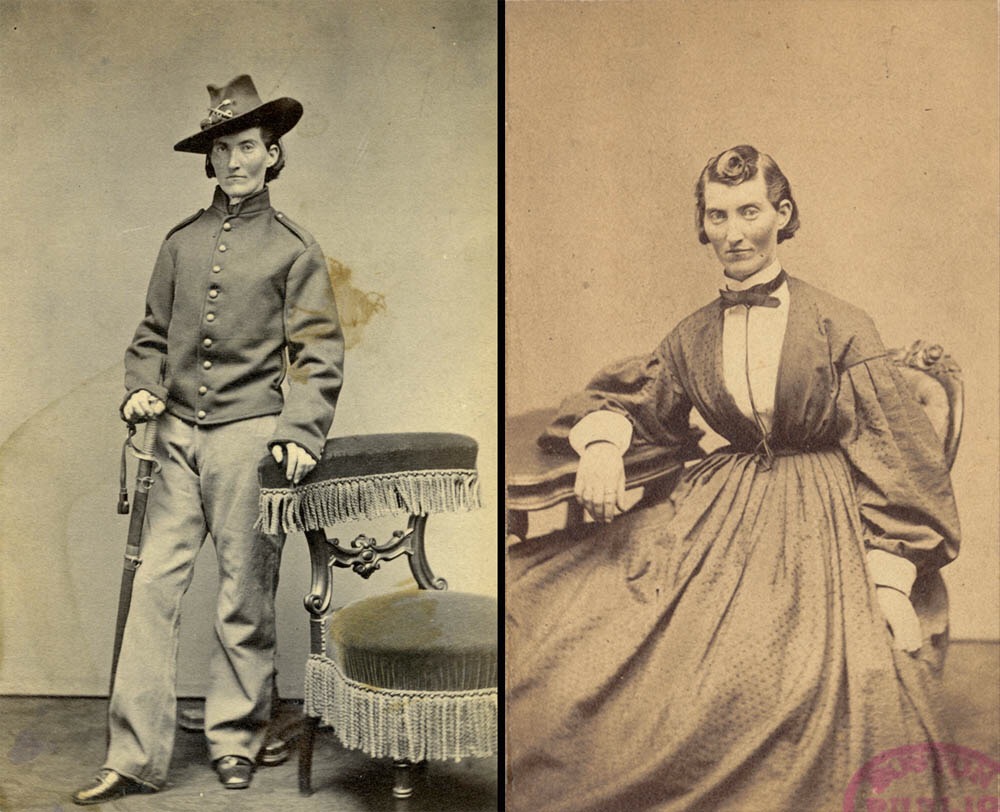
Of course when the Civil War broke out the logical end of this train of though was that should women be allowed to serve in the military. Legally and socially it was not possible for women to serve in the military in 1861, but this did not stop women in the Union or the Confederacy from doing so. Quite a few women on both sides of the conflict chaffed about not being allowed to fight for their countries, their families and their causes, and despite official prohibitions that kept women from serving in any capacity but nursing, a good number of women found their way to go to war. While men in the North and South “were expected to enlist, any woman actively participating in the Civil War was an oddity if not a renegade.” In some cases this involved hundreds of women taking male identities in order to fulfill their desires to serve their countries.

The motives of these women varied. In some cases women wanted gain the economic privileges of full citizenship, and for others the glory reserved to only to men. In our modern parlance those that took male identities would be considered transvestites or possibly transgender, but for them “transvestitism was a private rebellion against public conventions. By taking a male social identity, they secured for themselves male power and independence, as well as full status as citizens of their nation. In essence the Civil War was an opportunity for hundreds of women to escape the confines of their sex.” 

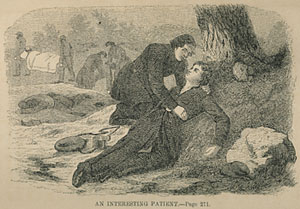
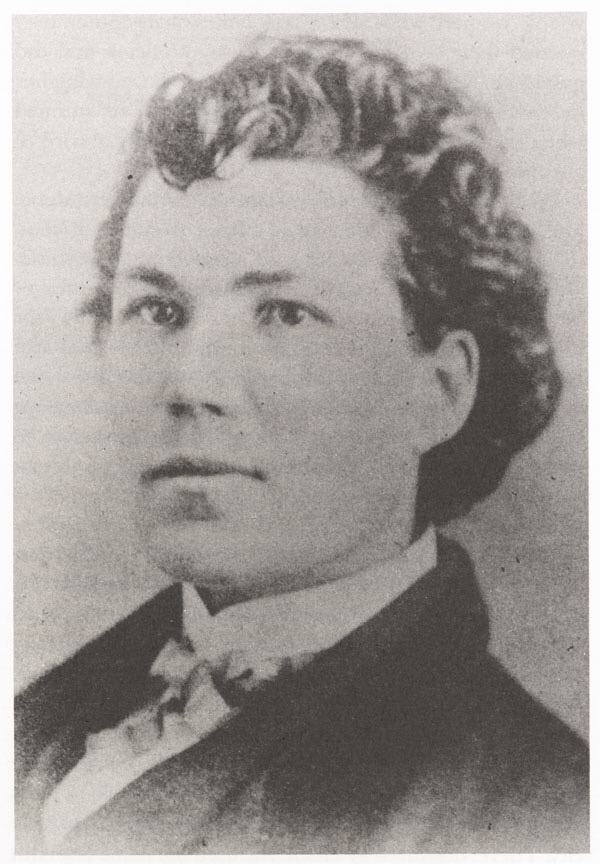
During the war hundreds of women went to war, taking on the identity of men. They enlisted under male names and pretended to be men. Unless they were discovered to be women, or unless they confessed to their wartime service either during or after the war, most women managed to serve without being caught. Sadly, most of their service records were lost. In 1861 Private Franklin Thompson “enlisted in Company F of the 2nd Michigan Infantry…unknown to comrades, Thompson actually was Sarah Emma Edmonds.” Edmonds served in the illustrious Iron Brigade until the disaster at Fredericksburg. Well known for her courage as Franklin Thompson, Edmonds participated in some of the bloodiest combats of the war. At Antietam she was caring for the wounded when she came upon a soldier who had been wounded in the neck. That soldier informed Edmonds that she was dying and after a surgeon came by and confirmed what the soldier said the dying soldier told Edmonds:

“I am not what I seem, but I am female. I enlisted from the purest motives, and I have remained undiscovered and unsuspected. I have neither father, mother nor sister. My only brother was killed today. I closed his eyes about an hour before I was wounded….I am Christian, and have maintained the Christian character ever since I entered the army. I have performed the duties of a soldier faithfully, and am willing to die for the cause of truth and freedom….I wish you to bury me with your own hands, that none may know after my death that I am other than my appearance indicates.”

That unknown woman was not alone, at least nine women, eight Union and one Confederate, fought at Antietam and of those five were casualties. Five women, two Federal and three Confederate took part at Gettysburg. All three Confederate women at Gettysburg were either killed or wounded, or captured, including two women who took part in Pickett’s Charge.


Sarah Edmonds published a book Nurse and Spy in the Union Army while recovering from malaria in 1863. The book, which was published the following year, sold 175,000 copies, the proceeds that she donated to care for sick and wounded Union veterans. After the war, Edmonds attended Oberlin College, married, had three of her own children and adopted two more. She “became a member of the Grand Army of the Potomac, the organization for Union veterans of the Civil War. She applied for, and received, a military pension, and upon her death in 1898 was buried with full military honors.” She was the only women admitted to the Grand Army of the Republic.


Another of the women to serve was Frances Louisa Clayton. Fighting for the Union as a member of the Minnesota State Militia Cavalry and 2nd Minnesota Battery, serving under the command of Ulysses S. Grant she was wounded at Fort Donelson. Like many other women soldiers, Clayton mastered the art of behaving as a man. She “became “a capital swordsman,” but also commanded attention with her “masculine stride in walking” and “her erect and soldierly carriage.” After the war she promoted her service in a book.


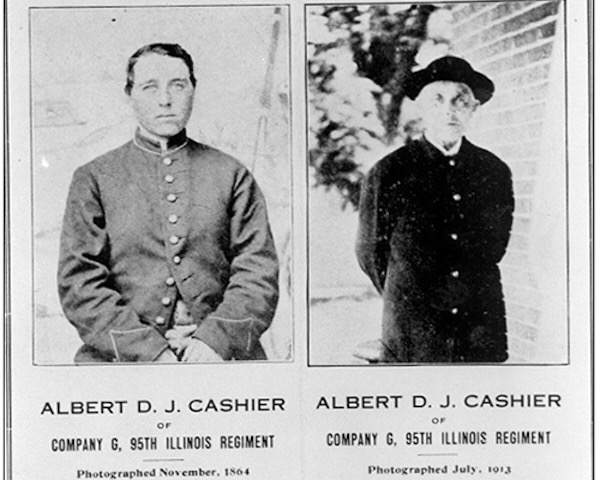
However, most women were more discreet during and after the war regarding their true sexuality. Private Albert Cashier hid his sexuality identity for his entire term of service. He enlisted in August 1862 as a member of the 95th Illinois. Cashier was born in Ireland as a woman, Jennie Hodgers. He fought in forty battles and was discharged with the regiment in August 1865. At Vicksburg he was briefly captured by the Confederates while conducting a reconnaissance “but managed to escape by seizing a gun from one of her guards, knocking him down, and outrunning others. Comrades recalled Private Cashier climbing to the top of their fieldworks to taut the enemy into showing themselves.”

After the war “Albert” returned home and lived as a “farmer and handyman and served as a caretaker in his church. He never married.” In 1890 he applied for and received a military pension and in 1911 the now elderly “man” was struck by a car and suffered a broken leg. The doctor threating him discovered that Albert was not a man, but a woman. But the doctor kept his confidentiality and without revealing “Albert’s” secret had the Union veteran admitted to the local Soldier’s and Sailors’ Home at Quincy, Illinois.” A few years later the elderly “man” began to exhibit erratic behavior and was “committed to a public mental hospital and the word was out.” With her story now sensational front page news and “old comrades in arms came to her defense.” Her comrades had never known that “Albert” was a man during or after the war, while the news was a surprise to them they came to her defense. To combat some of the sensationalism in the media Albert’s fellow soldiers testified “to Albert’s bravery in combat and public good works in later life. Albert/Jennie died at Watertown State Hospital in 1915 at age seventy-one. The local post of the Grand Army of the Republic arranged for her burial. Her headstone reads: “Albert D.J. Cashier, Company G, 95th Illinois Infantry.”

Wartime records are sketchy but as a minimum it is believed that “between 250 and 400 women disguised as men found their way into either the Federal or Confederate armies.” Women known to have served had a “combined casualty rate of 44 percent” including the fact that “eleven percent of women soldiers died in the military.”  Some of those women are now well known but many others are lost to history. Most women tried to keep their sexual identities secret, even to the point of their death on the battlefield. Most of the women who served in the armies returned home to resume relatively normal lives after the war.

Of the women that served in the ranks, some were discovered, and many remained protected by their fellow soldiers. Quite a few received promotions and even served as NCOs or junior officers. With women now serving in combat or combat support roles in the U.S. Military since Operation Desert Storm in 1991, the stigma and scandal that these cross-dressing women soldiers of the Civil War has faded and as scholars and the public both “continue probing cultural notions of gender and identity, the reemerging evidence that women historically and successfully engaged in combat has met with less intellectual resistance and has taken on new cultural significance.” As the United States military services examine the issues surrounding further moves to integrate the combat arms we also should attempt to more closely examine the service of the brave and often forgotten women who served on both sides of the Civil War

4 Comments

Filed under civil rights, civil war, History, LGBT issues, Loose thoughts and musings, Military, national security, News and current events, Political Commentary, us army, US Marine Corps, US Navy

So Far Yet to Go, Overt Racism on Display Yet Again: Catholic Youth Accost Native American at the Lincoln Memorial

Friends of Padre Steve’s World,

Tomorrow is the official observance of the birthday of Dr. Martin Luther King Jr. In the past I have been content to post variations on the theme of Dr. King’s I Have a Dream speech. In some of those I have also mentioned Dr. King’s Letter from a Birmingham Jail. I will address his I have a dream speech in a future post, probably near the anniversary of his assassination.

Today I decided to read the Letter from a Birmingham Jail again  and contemplate Dr. King’s words in the light of the overt racism that has become fashionable in Donald Trump’s America. Today I saw videos of a gang of white male Catholic High School students from Covington Kentucky accosting Native America Vietnam Veteran Nathan Phillips at the Lincoln Memorial. The students were in Washington DC for the annual March for life, but clad in Trump’s Make America Great Again hats and shirts they had surrounded and were shouting at the man and a few other Native Americans gathered there. One young man stood directly in front of Mr. Phillips giving him a mocking and menacing look. It was like watching Hitler Youth mock Jews in the 1930s, and they call themselves Christians, and I knew that I would not take much to turn these young men into killers. Historian Timothy Snyder wrote:

“The European history of the twentieth century shows us that societies can break, democracies can fall, ethics can collapse, and ordinary men can find themselves standing over death pits with guns in their hands. It would serve us well today to understand why.”

The actions of such people are so far out of the prophetic tradition of the Christian church and its ancestors the great Jewish prophets of the Old Testament that it makes my mind spin. I could see them in time standing over death pits with guns in their hands.

I wonder what they are learning from their parents and the school that they attend. While I was already planning on writing about Dr. King I realized just how far we have to go to see his dream come true.

The fact is that as much as anyone would like to deny it, the American President not only is a paranoid and narcissistic sociopath, but also a racist as well. He is all too much like the men and their supposedly Christian supporters who did all that they could to stop the civil rights movement and to fight against every evil cause that Dr. King stood to oppose. The sad thing is that as banal and abhorrent as the racism of President Trump is, that of his defenders is far worse, for they, at least his Christian supporters should know better.

The fact is that instead of speaking a few well meaning yet conscience salving platitudes about Dr. King we really have to remember who he really was and what his message spoke to, and no it was not his acknowledgement of American Exceptionalism. That being said he embodied all that was good about the ideal of the United States of America and the message of Jesus and the prophets; and he was killed for it. Dr. King understood the implications of following Jesus, the depths of Christian theology and the its prophetic past. When I hear and read Dr. King’s words I am reminded of the Sermon on the Mount as well as the messages of Jeremiah and the other great Old Testament prophets.

A year after I returned from Iraq I struggled with what I was becoming. Before Iraq I had always considered myself to be a conservative, but though I was already on the path to becoming a liberal and progressive I could not identify myself as such, so I called myself a “passionate moderate” and the site “Musings of a Passionate Moderate.” A few years ago I owned the fact that I am a liberal and progressive, but also a realist. I came to realize that while moderation is an important part of civic life, it is not redemptive if it stands in silent opposition to justice in the name of order. As my journey continued I began to understand the words of Dietrich Bonhoeffer who wrote:

“Christianity stands or falls with its revolutionary protest against violence, arbitrariness and pride of power and with its plea for the weak. Christians are doing too little to make these points clear rather than too much. Christendom adjusts itself far too easily to the worship of power. Christians should give more offense, shock the world far more, than they are doing now. Christian should take a stronger stand in favor of the weak rather than considering first the possible right of the strong.”

Dr. King wrote in his Letter from a Birmingham Jail: 

“I must make two honest confessions to you, my Christian and Jewish brothers. First, I must confess that over the past few years I have been gravely disappointed with the white moderate. I have almost reached the regrettable conclusion that the Negro’s great stumbling block in his stride toward freedom is not the White Citizen’s Counciler or the Ku Klux Klanner, but the white moderate, who is more devoted to “order” than to justice; who prefers a negative peace which is the absence of tension to a positive peace which is the presence of justice; who constantly says: “I agree with you in the goal you seek, but I cannot agree with your methods of direct action”; who paternalistically believes he can set the timetable for another man’s freedom; who lives by a mythical concept of time and who constantly advises the Negro to wait for a “more convenient season.” Shallow understanding from people of good will is more frustrating than absolute misunderstanding from people of ill will. Lukewarm acceptance is much more bewildering than outright rejection.” 

Dr. King’s words in that letter are timeless and their implications should be contemplated by anyone who truly believes in that proposition in the Declaration of Independence that “all men are created equal.” That is something that Dr. King certainly believed, but like those who sat on the fence in his day so many today choose to believe, but not to act upon. That is why that I continue to make my stand in the name of Jesus the Christ, the Gospel, and yes, the proposition of the Declaration that all men are created equal. If the President and his Christian supporters don’t get that then there is no hope for them as long as they continue down that path, but as I wrote yesterday, I still believe that people can have epiphanies.

I encourage all of my readers to read Dr. King’s letter. You can read it here:

https://www.africa.upenn.edu/Articles_Gen/Letter_Birmingham.html

So until tomorrow,

Peace

Padre Steve+

4 Comments

Filed under christian life, civil rights, ethics, History, Loose thoughts and musings, nazi germany, News and current events, Political Commentary

Dwight D. Eisenhower’s Farewell Speech: The Speech Of the Anti-Trump

Friends of Padre Steve’s World,

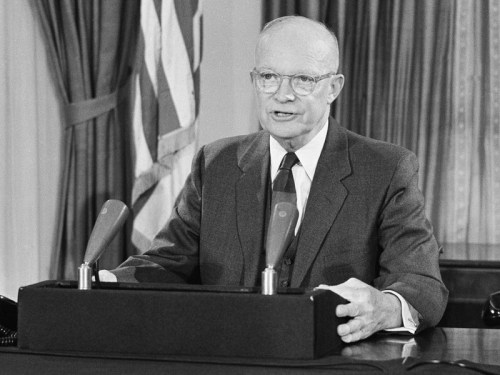
Fifty-eight years ago today President Dwight D. Eisenhower, a man far different than President Trump gave his farewell address to the nation. While most people only quote his warning about the military industrial complex, certainly well worth noting, most Americans have never read or watched the speech in its entirety.

Now Eisenhower was no saint. He did not always make the right choices, and he made mistakes. At the same time he retained a decided sense of humanity, goodness, and humility that make him a far better President than some would credit him.

Eisenhower served his country for half a century in peace and war, he combined a military career of over forty years with eight years as President during an immense time of change and crisis. He was born before the first flight of the Wright Brothers, and by the time he left office would see super-sonic jets, inter-continental ballistic missiles, and hydrogen bombs.

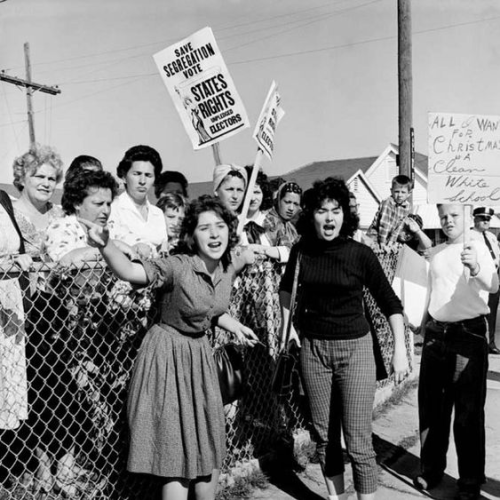
When he was born the United States was not yet a world power and had only just emerged from the Civil War, failed Reconstruction, and a soon to be an officially racist, and White Supremacist separate but equal law of the land. By the time he left office he had sent Federal troops to ensure that African American Children could attend formerly segregated public schools, the Supreme Court had decided that separate but equal was unconstitutional, and the Civil Rights movement was beginning to make inroads into the heartland of the United States.

Eisenhower knew the tragedy, heartache, and bloodshed that went along with isolationism and political philosophies that declared America First. He represented a different America than the crude Social Darwinism of Trump and his most willing enablers, Evangelical Christians. Eisenhower was neither.

I ask my readers to take the time to either watch or read Eisenhower’s speech. The text is posted below in its entirety.

My fellow Americans:

Three days from now, after half a century in the service of our country, I shall lay down the responsibilities of office as, in traditional and solemn ceremony, the authority of the Presidency is vested in my successor.

This evening I come to you with a message of leave-taking and farewell, and to share a few final thoughts with you, my countrymen.

Like every other citizen, I wish the new President, and all who will labor with him, Godspeed. I pray that the coming years will be blessed with peace and prosperity for all.

Our people expect their President and the Congress to find essential agreement on issues of great moment, the wise resolution of which will better shape the future of the Nation.

My own relations with the Congress, which began on a remote and tenuous basis when, long ago, a member of the Senate appointed me to West Point, have since ranged to the intimate during the war and immediate post-war period, and, finally, to the mutually interdependent during these past eight years.

In this final relationship, the Congress and the Administration have, on most vital issues, cooperated well, to serve the national good rather than mere partisanship, and so have assured that the business of the Nation should go forward. So, my official relationship with the Congress ends in a feeling, on my part, of gratitude that we have been able to do so much together.

II

We now stand ten years past the midpoint of a century that has witnessed four major wars among great nations. Three of these involved our own country. Despite these holocausts America is today the strongest, the most influential and most productive nation in the world. Understandably proud of this pre-eminence, we yet realize that America’s leadership and prestige depend, not merely upon our unmatched material progress, riches and military strength, but on how we use our power in the interests of world peace and human betterment.

III

Throughout America’s adventure in free government, our basic purposes have been to keep the peace; to foster progress in human achievement, and to enhance liberty, dignity and integrity among people and among nations. To strive for less would be unworthy of a free and religious people. Any failure traceable to arrogance, or our lack of comprehension or readiness to sacrifice would inflict upon us grievous hurt both at home and abroad.

Progress toward these noble goals is persistently threatened by the conflict now engulfing the world. It commands our whole attention, absorbs our very beings. We face a hostile ideology-global in scope, atheistic in character, ruthless in purpose, and insidious in method. Unhappily the danger it poses promises to be of indefinite duration. To meet it successfully, there is called for, not so much the emotional and transitory sacrifices of crisis, but rather those which enable us to carry forward steadily, surely, and without complaint the burdens of a prolonged and complex struggle-with liberty at stake. Only thus shall we remain, despite every provocation, on our charted course toward permanent peace and human betterment.

Crises there will continue to be. In meeting them, whether foreign or domestic, great or small,there is a recurring temptation to feel that some spectacular and costly action could become the miraculous solution to all current difficulties. A huge increase in newer elements of our defense; development of unrealistic programs to cure every ill in agriculture; a dramatic expansion in basic and applied research-these and many other possibilities, each possibly promising in itself, may be suggested as the only way to the road we which to travel.

But each proposal must be weighed in the light of a broader consideration: the need to maintain balance in and among national programs-balance between the private and the public economy, balance between cost and hoped for advantage-balance between the clearly necessary and the comfortably desirable; balance between our essential requirements as a nation and the duties imposed by the nation upon the individual; balance between action of the moment and the national welfare of the future. Good judgment seeks balance and progress; lack of it eventually finds imbalance and frustration.

The record of many decades stands as proof that our people and their government have, in the main, understood these truths and have responded to them well, in the face of stress and threat. But threats, new in kind or degree, constantly arise. I mention two only.

IV

A vital element in keeping the peace is our military establishment. Our arms must be mighty, ready for instant action, so that no potential aggressor may be tempted to risk his own destruction.

Our military organization today bears little relation to that known by any of my predecessors in peace time, or indeed by the fighting men of World War II or Korea.

Until the latest of our world conflicts, the United States had no armaments industry. American makers of plowshares could, with time and as required, make swords as well. But now we can no longer risk emergency improvisation of national defense; we have been compelled to create a permanent armaments industry of vast proportions. Added to this, three and a half million men and women are directly engaged in the defense establishment. We annually spend on military security more than the net income of all United State corporations.

This conjunction of an immense military establishment and a large arms industry is new in the American experience. The total influence-economic, political, even spiritual-is felt in every city, every state house, every office of the Federal government. We recognize the imperative need for this development. Yet we must not fail to comprehend its grave implications. Our toil, resources and livelihood are all involved; so is the very structure of our society.

In the councils of government, we must guard against the acquisition of unwarranted influence, whether sought or unsought, by the military-industrial complex. The potential for the disastrous rise of misplaced power exists and will persist.

We must never let the weight of this combination endanger our liberties or democratic processes. We should take nothing for granted only an alert and knowledgeable citizenry can compel the proper meshing of huge industrial and military machinery of defense with our peaceful methods and goals, so that security and liberty may prosper together.

Akin to, and largely responsible for the sweeping changes in our industrial-military posture, has been the technological revolution during recent decades.

In this revolution, research has become central; it also becomes more formalized, complex, and costly. A steadily increasing share is conducted for, by, or at the direction of, the Federal government.

Today, the solitary inventor, tinkering in his shop, has been over shadowed by task forces of scientists in laboratories and testing fields. In the same fashion, the free university, historically the fountainhead of free ideas and scientific discovery, has experienced a revolution in the conduct of research. Partly because of the huge costs involved, a government contract becomes virtually a substitute for intellectual curiosity. For every old blackboard there are now hundreds of new electronic computers.

The prospect of domination of the nation’s scholars by Federal employment, project allocations, and the power of money is ever present and is gravely to be regarded.

Yet, in holding scientific research and discovery in respect, as we should, we must also be alert to the equal and opposite danger that public policy could itself become the captive of a scientific-technological elite.

It is the task of statesmanship to mold, to balance, and to integrate these and other forces, new and old, within the principles of our democratic system-ever aiming toward the supreme goals of our free society.

V

Another factor in maintaining balance involves the element of time. As we peer into society’s future, we-you and I, and our government-must avoid the impulse to live only for today, plundering, for our own ease and convenience, the precious resources of tomorrow. We cannot mortgage the material assets of our grandchildren without risking the loss also of their political and spiritual heritage. We want democracy to survive for all generations to come, not to become the insolvent phantom of tomorrow.

VI

Down the long lane of the history yet to be written America knows that this world of ours, ever growing smaller, must avoid becoming a community of dreadful fear and hate, and be, instead, a proud confederation of mutual trust and respect.

Such a confederation must be one of equals. The weakest must come to the conference table with the same confidence as do we, protected as we are by our moral, economic, and military strength. That table, though scarred by many past frustrations, cannot be abandoned for the certain agony of the battlefield.

Disarmament, with mutual honor and confidence, is a continuing imperative. Together we must learn how to compose difference, not with arms, but with intellect and decent purpose. Because this need is so sharp and apparent I confess that I lay down my official responsibilities in this field with a definite sense of disappointment. As one who has witnessed the horror and the lingering sadness of war-as one who knows that another war could utterly destroy this civilization which has been so slowly and painfully built over thousands of years-I wish I could say tonight that a lasting peace is in sight.

Happily, I can say that war has been avoided. Steady progress toward our ultimate goal has been made. But, so much remains to be done. As a private citizen, I shall never cease to do what little I can to help the world advance along that road.

VII

So-in this my last good night to you as your President-I thank you for the many opportunities you have given me for public service in war and peace. I trust that in that service you find somethings worthy; as for the rest of it, I know you will find ways to improve performance in the future.

You and I-my fellow citizens-need to be strong in our faith that all nations, under God, will reach the goal of peace with justice. May we be ever unswerving in devotion to principle, confident but humble with power, diligent in pursuit of the Nation’s great goals.

To all the peoples of the world, I once more give expression to America’s prayerful and continuing inspiration:

We pray that peoples of all faiths, all races, all nations, may have their great human needs satisfied; that those now denied opportunity shall come to enjoy it to the full; that all who yearn for freedom may experience its spiritual blessings; that those who have freedom will understand, also, its heavy responsibilities; that all who are insensitive to the needs of others will learn charity; that the scourges of poverty, disease and ignorance will be made to disappear from the earth, and that, in the goodness of time, all peoples will come to live together in a peace guaranteed by the binding force of mutual respect and love.

It is a speech that calls to mind the best ideals of the American tradition; ideals that now lay trampled in the gutter by Trump and his Cult.

Until tomorrow,

Peace,

Padre Steve+

2 Comments

Filed under civil rights, History, leadership, national security, News and current events, Political Commentary

“Our Civil Rights Have no Dependency on Our Religious Opinions…” Celebrating the 233rd Anniversary of the Virginia Statute for Religious Liberty

Friends of Padre Steve’s World,

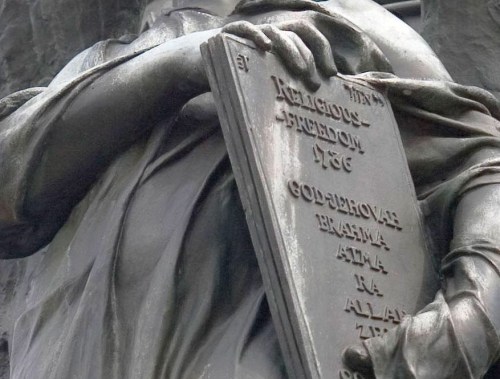
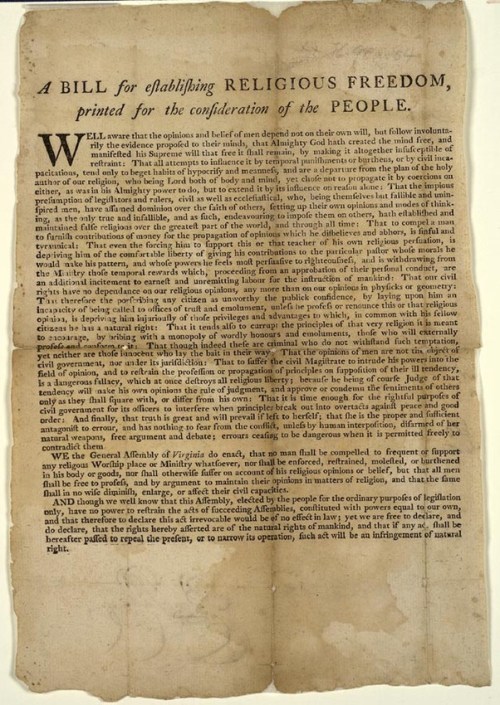
On this day, 233 years ago, the the legislature of the Commonwealth Of Virginia ratified a law written by Thomas Jefferson. It was the precursor to the Establishment and the Free Exercise Clauses Of the First Amendment to the Constitution of the United States.

It is the antithesis of, and the antidote to all theocratic movements, to include contemporary Christian Nationalism and it’s close cousin Christian Dominionism, or as it is sometimes called Seven Mountains Theology.

Jefferson, James Madison, and their Virginia Baptist ally, John Leland understood the threat to a republic such as ours posed by religious theocrats of any type, to include Christians.

The Virginia statute was necessitated by militant Anglicans who desired to re-establish themselves as the state religion in Virginia and had gone about using physical violence against various dissenters, especially Virginia’s Baptist minority. It is fascinating, in a frightening and grotesque sense of the word to see Virginia Baptists like Jerry Falwell Jr., and other Evangelical leaders of the Free Church tradition interpreting Religious Freedom in a manner similar to the Anglicans of Virginia in the 1780s, or in the manner of all Christians who follow the path of Constantine.

Such was the warning of the great Southern Baptist Pastor and seminary president George Truett, who wrote:

“Constantine, the Emperor, saw something in the religion of Christ’s people which awakened his interest, and now we see him uniting religion to the state and marching up the marble steps of the Emperor’s palace, with the church robed in purple. Thus and there was begun the most baneful misalliance that ever fettered and cursed a suffering world…. When … Constantine crowned the union of church and state, the church was stamped with the spirit of the Caesars…. The long blighting record of the medieval ages is simply the working out of that idea.”

The Virginia Statute stood in complete opposition to theocratic minded Americans then, and now. The statute which I post below in its entirety is must reading for anyone who thinks that they understand what the founders of the United States believed about religious liberty:

An Act for establishing religious Freedom

Whereas, Almighty God hath created the mind free;

That all attempts to influence it by temporal punishments or burthens, or by civil incapacitations tend only to beget habits of hypocrisy and meanness, and therefore are a departure from the plan of the holy author of our religion, who being Lord, both of body and mind yet chose not to propagate it by coercions on either, as was in his Almighty power to do,

That the impious presumption of legislators and rulers, civil as well as ecclesiastical, who, being themselves but fallible and uninspired men have assumed dominion over the faith of others, setting up their own opinions and modes of thinking as the only true and infallible, and as such endeavouring to impose them on others, hath established and maintained false religions over the greatest part of the world and through all time;

That to compel a man to furnish contributions of money for the propagation of opinions, which he disbelieves is sinful and tyrannical;

That even the forcing him to support this or that teacher of his own religious persuasion is depriving him of the comfortable liberty of giving his contributions to the particular pastor, whose morals he would make his pattern, and whose powers he feels most persuasive to righteousness, and is withdrawing from the Ministry those temporary rewards, which, proceeding from an approbation of their personal conduct are an additional incitement to earnest and unremitting labours for the instruction of mankind;

That our civil rights have no dependence on our religious opinions any more than our opinions in physics or geometry,

That therefore the proscribing any citizen as unworthy the public confidence, by laying upon him an incapacity of being called to offices of trust and emolument, unless he profess or renounce this or that religious opinion, is depriving him injuriously of those privileges and advantages, to which, in common with his fellow citizens, he has a natural right,

That it tends only to corrupt the principles of that very Religion it is meant to encourage, by bribing with a monopoly of worldly honours and emoluments those who will externally profess and conform to it;

That though indeed, these are criminal who do not withstand such temptation, yet neither are those innocent who lay the bait in their way;

That to suffer the civil magistrate to intrude his powers into the field of opinion and to restrain the profession or propagation of principles on supposition of their ill tendency is a dangerous fallacy which at once destroys all religious liberty because he being of course judge of that tendency will make his opinions the rule of judgment and approve or condemn the sentiments of others only as they shall square with or differ from his own;

That it is time enough for the rightful purposes of civil government, for its officers to interfere when principles break out into overt acts against peace and good order;

And finally, that Truth is great, and will prevail if left to herself, that she is the proper and sufficient antagonist to error, and has nothing to fear from the conflict, unless by human interposition disarmed of her natural weapons free argument and debate, errors ceasing to be dangerous when it is permitted freely to contradict them:

Be it enacted by General Assembly that no man shall be compelled to frequent or support any religious worship, place, or ministry whatsoever, nor shall be enforced, restrained, molested, or burthened in his body or goods, nor shall otherwise suffer on account of his religious opinions or belief, but that all men shall be free to profess, and by argument to maintain, their opinions in matters of Religion, and that the same shall in no wise diminish, enlarge or affect their civil capacities. And though we well know that this Assembly elected by the people for the ordinary purposes of Legislation only, have no power to restrain the acts of succeeding Assemblies constituted with powers equal to our own, and that therefore to declare this act irrevocable would be of no effect in law; yet we are free to declare, and do declare that the rights hereby asserted, are of the natural rights of mankind, and that if any act shall be hereafter passed to repeal the present or to narrow its operation, such act will be an infringement of natural right.

Please, take some time to let those words sink in, especially if you think that religious liberty is only for people of your favorite religion, or the one that you belong to. The fact is, that those who established religious liberty in the United States, many of them like John Leland, professing Christians, did not think that religious liberty was for the powerful, or those who wanted to dominate others on the basis of religion wedded to government and political power.

Leland wrote:

“The notion of a Christian commonwealth should be exploded forever. … Government should protect every man in thinking and speaking freely, and see that one does not abuse another. The liberty I contend for is more than toleration. The very idea of toleration is despicable; it supposes that some have a pre-eminence above the rest to grant indulgence, whereas all should be equally free, Jews, Turks, Pagans and Christians.”

With that I bid you a good night.

Until tomorrow and another day of Trump’s Evangelical supported Shutdown,

Peace,

Padre Steve+

4 Comments

Filed under christian life, civil rights, faith, History, laws and legislation, Loose thoughts and musings, News and current events, Political Commentary, Religion

Look Who’s Back (Er ist Wieder Da) A Comedy With a Far too Serious Message

Friends of Padre Steve’s World,

I just watched the German satirical comedy Er ist Wieder Da or as it is called in its English title Look Who’s Back, on Netflix.

The film is about Hitler who wakes up in a garden near the former Reichs Chancellory In 2014 with no knowledge of anything that happened in the intervening 50 years. He is befriended by a man that runs a newspaper kiosk, as well as a down on his luck television producer. Neither man believes that he is Hitler, but in the world of YouTube, Facebook, and Google, the Führer becomes a reality television celebrity.

I am not going to give away the story or or any spoilers. At times it is hysterically funny as it goes between scripted scenes to unscripted scenes done on the streets of Berlin and other German cities with people who are not actors. I guess that for me, the unscripted scenes were the most frightening, because regardless of whether the people were members of the AfD, the NPD, the CDU, the Greens, the SPD, or Die Linke, many were attracted to the the populist, anti-immigrant, and anti-democratic film version of spouted. It was like watching the Borat of the Third Reich.

However, there is one exchange of dialogue toward the end of the film that is far too troubling not to cite here, simply because it is not only appropriate to Hitler and Germany, but to France and Le Pen, Hungary and Orban, Turkey and Erdogan, the Philippines and Duterte; and if we don’t think we are so different that 1933 Germany, the United States and Donald Trump.

The television producer who helped bring Hitler back to fame says:

“Yes history repeats itself. You are fooling people with your propaganda.”

Hitler replied:

“Oh Sawatski. In 1933, people were not fooled by propaganda. They elected a leader who openly disclosed his plans with great clarity. The Germans elected me.”

The film is frightening, it might even be more so if I was German, but it is frightening enough in the United States.

That exchange between Hitler and Sawatski demonstrates exactly what President Trump and his base believe, otherwise he would never have remained in office despite everything. The fact is, that like Hitler, there are many people who love him and would do all they could to see his racist, authoritarian, and unconstitutional dreams come into being. In 2015 candidate Trump made the comment:

“You know what else they say about my people? The polls, they say I have the most loyal people. Did you ever see that? Where I could stand in the middle of Fifth Avenue and shoot somebody and I wouldn’t lose any voters, okay? It’s like incredible.”

Like those that followed Hitler into the Bunker and flames of Berlin, Trump’s most loyal followers will do that today.

I have never laughed so hard at a movie that terrified me more than this. I have to say, that my friends is exceptional satire.

Until tomorrow,

Peace,

Padre Steve+

Leave a comment

Filed under film, History, holocaust, Loose thoughts and musings, movies, nazi germany, News and current events

Wanted, One Senator Of Courage: Will Any Republican Make a Principled Stand Against Trump?

Stephen A. Douglas

Friends of Padre Steve’s World,

I wrote this in June of last year and as we go into the fourth week of a pointless partial government shutdown, the effects of which are now beginning to be felt, I thought it pertinent. So I did a few edits The shutdown and the President’s determination to find a way to build his wall, even publicly musing about declaring an imaginary national emergency to get his way, would be enough by themselves without all the charges that will be proven against him will certainly will enshrine his place as the worst President in American history. As such, James Buchanan is probably rejoicing in his grave that he has competition.

Likewise, it has become apparent that it is very unlikely anyone in his Trumpified Republican Party will rise to the occasion to lead a principled opposition against him, as Senator Stephen Douglas did against Buchanan. But then, Douglas was willing to stake his political career on defending the country and Constitution against the unconstitutional actions of a President of his own political party.

As I watch President Trump’s administration attack the law, the Constitution, and violate the civil rights and human rights of citizens as well as people who have come to the United States to flee oppression and danger at home; to threaten freedom of speech and freedom of the press; to categorize political opponents inside and outside of his party as traitors; to legitimize the most repressive dictatorial regimes while attacking longstanding allies; even as he works to destroy the work of American Presidents and diplomats to build a world order that has brought great benefit to the United States and the world by defeating the Nazis, Imperial Japan, and eventually the Soviet Union. He has chosen the choice of being a rogue superpower rather than being the moderating and stabilizing force in the world that it has played since World War Two. Robert Kagan wrote in the Washington Post on June 14th:

“The United States’ adversaries will do well in this world, for Trump’s America does not want war. It will accommodate powers that can harm it. It will pay them the respect they crave and grant them their spheres of interest. Those that depend on the United States, meanwhile, will be treated with disdain, pushed around and used as pawns. At times, they will be hostages to be traded for U.S. gain. The United States and the postwar liberal order protected them and helped them prosper, but it also left them vulnerable to any American leader willing to offer them up as sacrifices to appease aggressors. That is a kind of realism, too… It recognizes no moral, political or strategic commitments. It feels free to pursue objectives without regard to the effect on allies or, for that matter, the world. It has no sense of responsibility to anything beyond itself.”

The President and his administration show little regard for the Constitution and established law in this country and our treaties and agreements with other nations. He appoints men and women who had they been Germans after the Second World War would have been charged with war crimes and crimes against humanity to high office. He defends White Nationalists and Neo-Nazis. He confounds loyalty to himself with patriotism and loyalty to the country. His threat of declaring a national emergency if he doesn’t get his Wall demonstrates that fact to a tee.

He uses propaganda to demonize those who seek law and justice. In any normal time a cry would arise from his own party saying “no more,” but his party does nothing, and even those leaders who occasionally speak out against his policies take no actions because they are afraid of retribution. That happened to long time conservative Congressman Mark Sanford in South Carolina this week when the President tweeted his support for his primary opponent. During the primary season White Nationalists, self-proclaimed Nazis, and other Trump supporters advocating the most extreme, unconstitutional and abhorrent positions often swept the field against conservatives who themselves would have been considered extremists just a few years ago. The GOP is on the Party if Trump and it took less than two years to become so.

Barbara Tuchman wrote in her book The March of Folly: From Troy to Vietnam something that we are observing up close and personal as President Trump and his administration flounder in a sea of make believe, a cloud cuckoo land of alternative facts, alternative truth, and alternative history:

“Wooden-headedness, the source of self-deception, is a factor that plays a remarkably large role in government. It consists in assessing a situation in terms of preconceived fixed notions while ignoring or rejecting any contrary signs. It is acting according to wish while not allowing oneself to be deflected by the facts.”

To be true, the Trump administration is not the first in history, in fact not even in our own country to ignore facts when making decisions. However, it is remarkable in its ability not only to shun facts but to make up its own narrative that depends on denying reality while impugning the character, honesty, and decency of those who present facts and truth that is verifiable. To be sure, competence and prudence are not and probably will never be marks of President Trump, his closest advisors, or his enablers in Congress. My hope is that some Republican in either the House or Senate rises up to confront the ineptitude and folly being demonstrated on a daily basis.

President James Buchanan

In some ways the incompetence and refusal to deal with reality by the Trump administration reminds me of the administration of James Buchanan during the years before the American Civil War. Buchanan’s collusion with Chief Justice Roger Taney regarding the Dred Scott decision before his inauguration stained him from the beginning and poisoned his relationship with Congress by declaring that the Congress never had the right to limit slavery as it had in the Missouri Compromise. Buchanan’s presidency is considered by most historians to be the worst in American history, incompetent, arrogant, and ineffective.

Likewise, Buchanan’s attempt to jam the Lecompton Constitution through Congress as a reward to Southern Democrats blew up in his face. The Lecompton Constitution was a gerrymandered bill which ignored the will of the vast majority of Kansas’s settlers who were anti-slavery. The work of the pro-slavery element in Kansas was so onerous that it brought Republicans and Northern Democrats together for the first time as Southern Democrats threatened secession if Kansas was not admitted as a Slave State. Ignoring warnings that supporting a measure that would open the door to slavery in all the western territories would split his party, Buchanan pushed on. His intransigence on the matter brought Democratic Senator Stephen A. Douglas of Illinois to the fore in opposing it. Nicknamed “the Little Giant,” Douglas was the odds on favorite to be the Democratic nominee for the Presidency. Douglas was not against the institution of slavery, and he was a racist, but he had no tolerance for those who would upend carefully crafted compromises to expand it through the whole country. Thus he  took his case to the floor of the Senate and to the President himself.

The Confrontation between the Senator and the President was unparalleled. Douglas recalled:

The Lecompton constitution, I told Buchannan bluntly, was a blatant fraud on the people of Kansas and the process of democracy, I warned him not to recommend acceptance of it. With his head titled forward in that bizarre habit of his, he said that he intended to endorse the constitution and send it to Congress. “If you do,” I thundered, “I’ll denounce it the moment that it is read.” His face turned red with anger. “I’ll make Lecompton a party test,” he said. “I expect every democratic Senator to support it.” I will not, sir!

Angry and offended by the confrontation of Douglas, Buchanan cut the senator off and issued his own threat to Douglas and his political career saying:

“But I desire you to remember that no Democrat ever yet differed from an administration of his own choice without being crushed….Beware of the fate of Tallmadge and Rives,” two senators who had gone into political oblivion after crossing Andrew Jackson.” The redoubtable Senator from Illinois was undeterred by the President’s threat and fought back, “Douglas riposted: “Mr. President, I wish to remind you that General Jackson is dead, sir.”  

Douglas,s action was unprecedented. Never before had a sitting Senator, to confront a President of his own party and threatened to oppose him in Congress. It was simply not done, but now Douglas was doing it, but doing so to his President’s face, and the consequences for him, his party, and the country would be immense.

Undeterred by facts, Buchanan and Southern Democrats fought for the bill’s passage. When Buchanan’s supporters pushed for Lecompton’s approval and the admission of Kansas as a Slave State, Douglas fired back, warning:

 “You do,” I said, “and it will lead directly to civil war!” I warned the anti-Lecompton Democrats of the North that the President intended to put the knife to the throat of every man who dared to think for himself on this question and carry out principles in good faith. “God forbid,” I said “that I ever surrender my right to differ from a President of the United States for my own choice. I am not a tool of any President!”

Under Douglas the Northern Democrats joined with Republicans for the first time to defeat the admission of Kansas as a Slave State. Douglas recalled the battle:

“After the Christmas recess, the Administration unleashed its heavy horsemen: Davis, Slidell, Hunter, Toombs, and Hammond, all southerners. They damned me as a traitor and demanded that I be stripped of my chairmanship of the Committee on Territories and read out of the Democratic party. Let the fucking bastards threaten, proscribe, and do their worst, I told my followers; it would not cause any honest man to falter. If my course divided the Democratic party, it would not be my fault. We were engaged in a great struggle for principle, I said, and we would defy the Administration to the bitter end.”

Douglas and his supporters did just that, Buchanan and his supporters were outfought and outmaneuvered by Douglas’s Democrats and their Republican allies. The bill was sent back to Kansas where in a new election the people of Kansas voted solidly against the Lecompton Constitution. In the following Congressional elections the thoroughly discredited Democrats lost their majority, their party now hopelessly divided with Southerners determined to destroy Douglas at any cost, even if it meant losing the presidency, the conflict opened the door for the election of Abraham Lincoln in 1860.

I wonder if there will be a Republican in the Congress with the courage that Stephen A. Douglas displayed in confronting the incompetent and vindictive President Buchanan during the Lecompton Crisis. Will there be a Republican with enough courage to stop the insanity of the Trump administration even if it means in the short term to divide the party and doom their political future? Honestly I doubt it as does conservative Republican political strategist Rick Wilson. Wilson wrote:

“Nothing you do matters to this Congress. No matter what damage you inflict on our economy, our alliances, trade, our stature in the world, our role as an exemplar of democratic values, our ability to serve as an honest broker in the international community, and our security, Paul Ryan and Mitch McConnell will lay supine before you.” 

But if Trump’s march of folly is to be stopped, someone in the Republican Senate or House will have to have the courage to stand up and defend the necessity of thinking for themselves, and doing what is right, sadly there is no Stephen Douglas in today’s GOP.

Have a great day.

Peace

Padre Steve+

3 Comments

Filed under civil war, History, laws and legislation, News and current events, Political Commentary