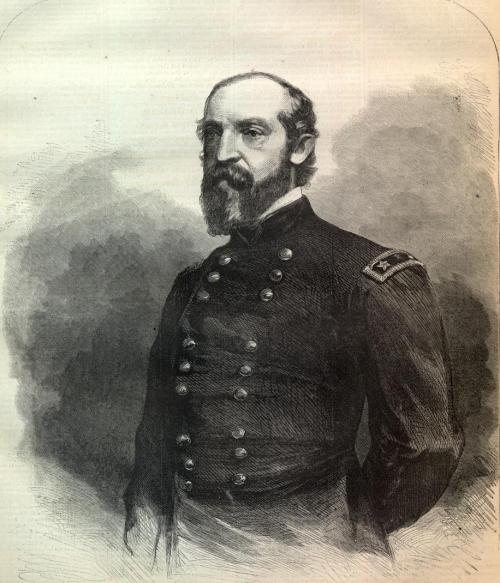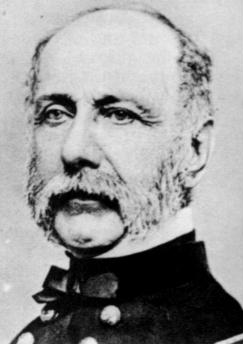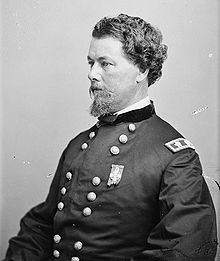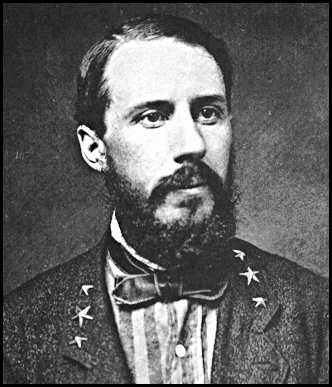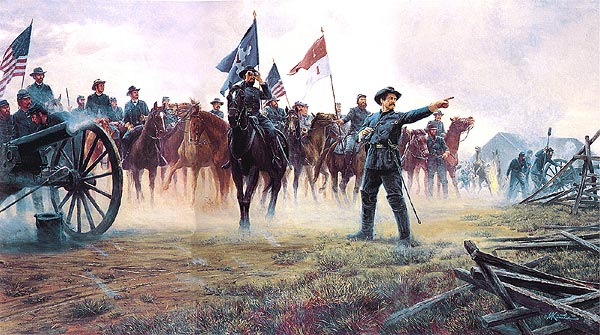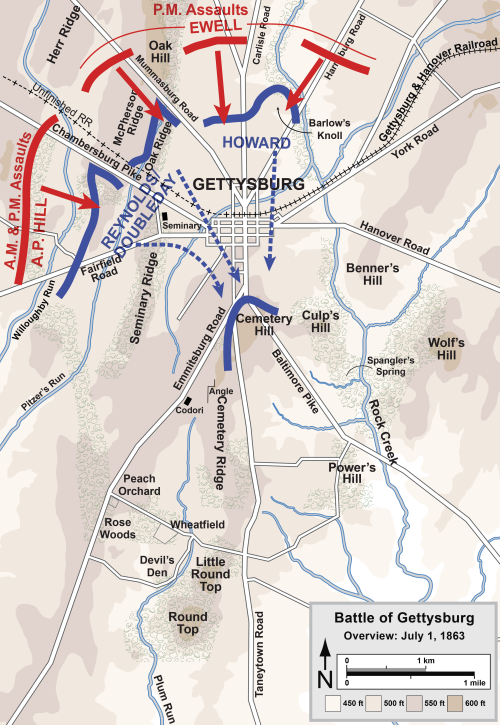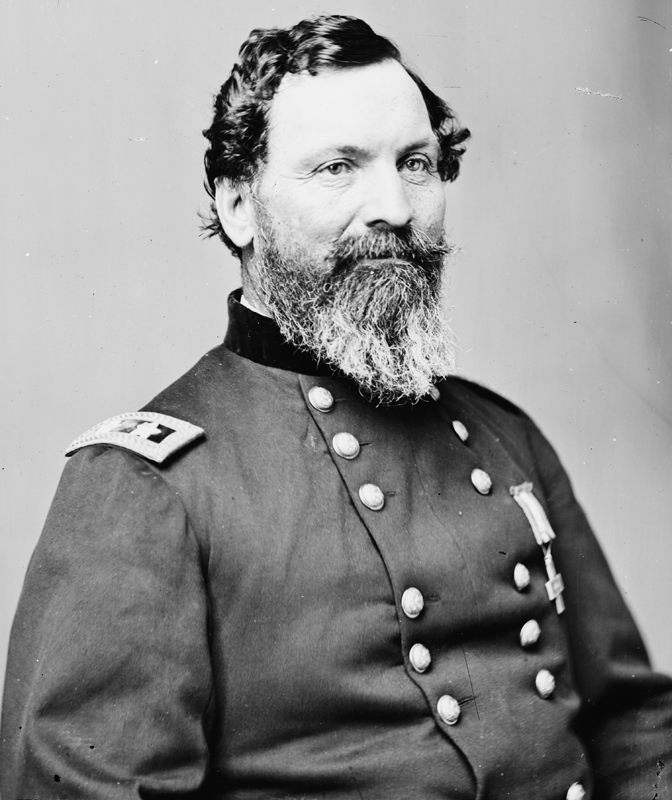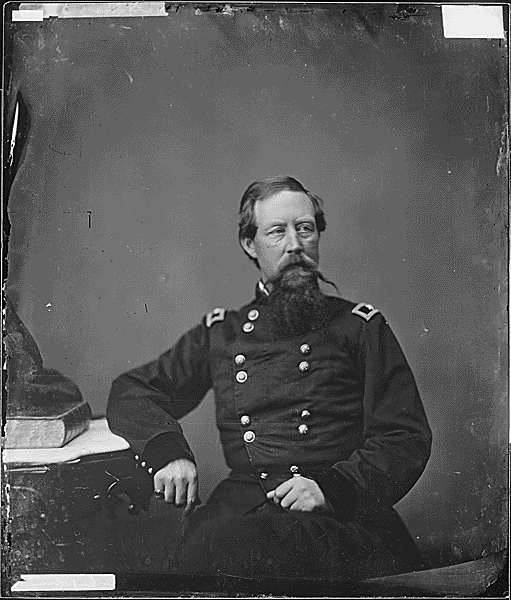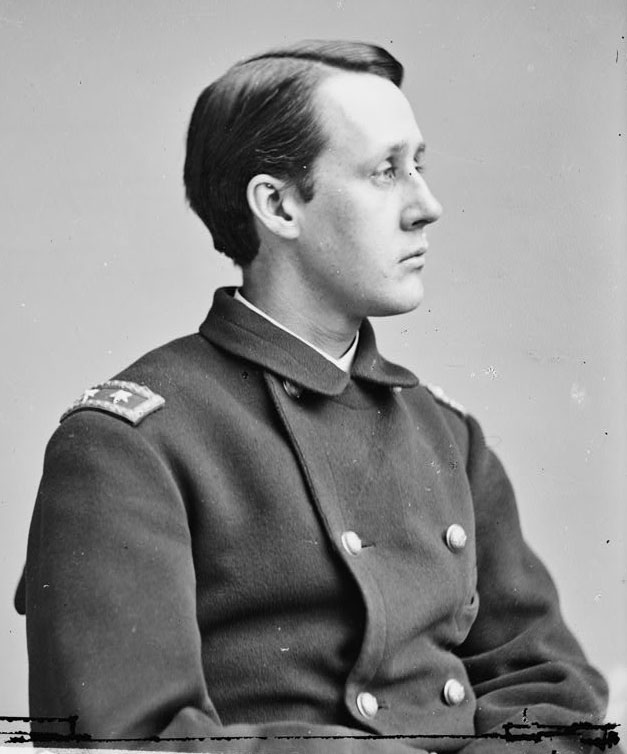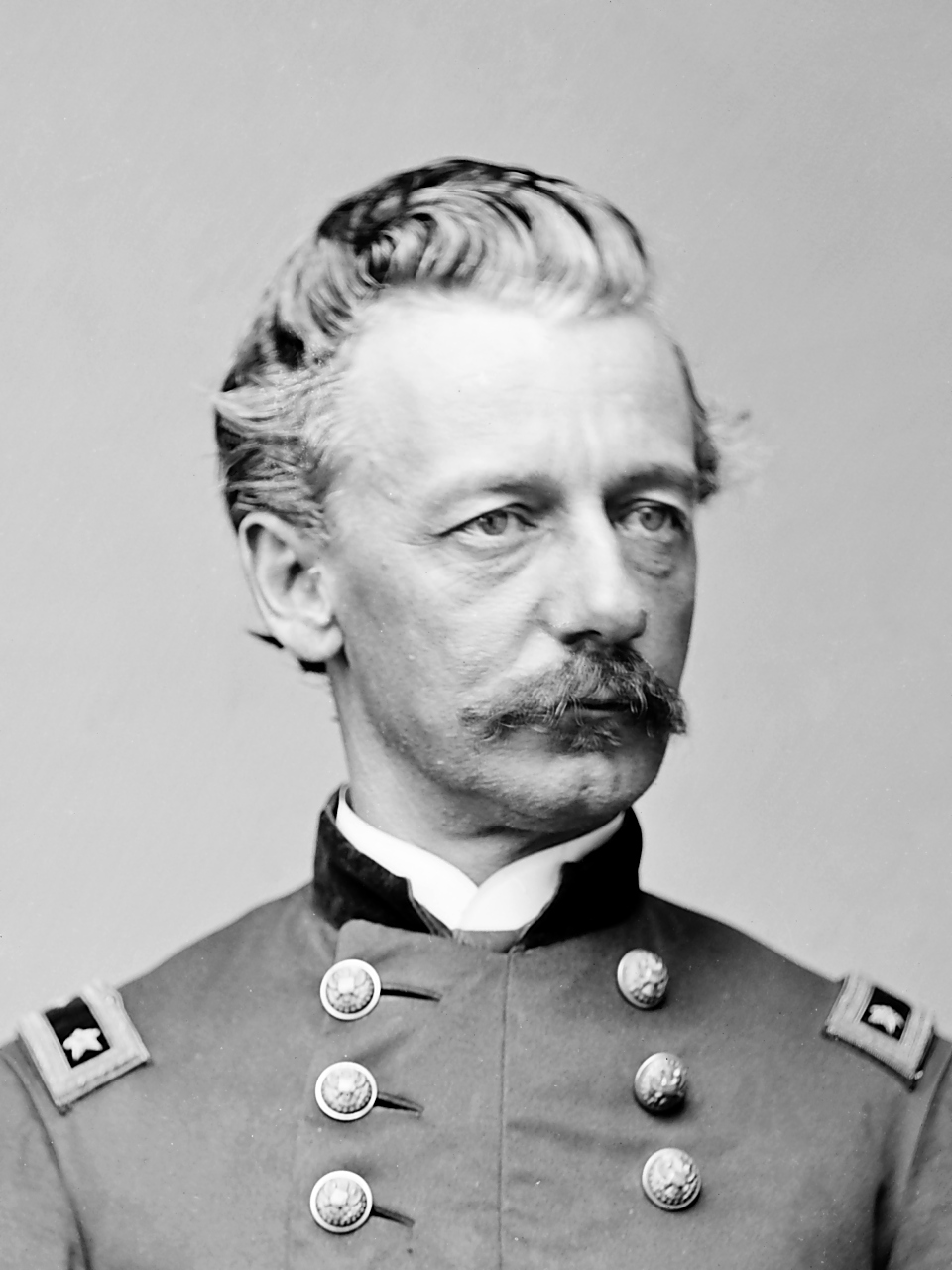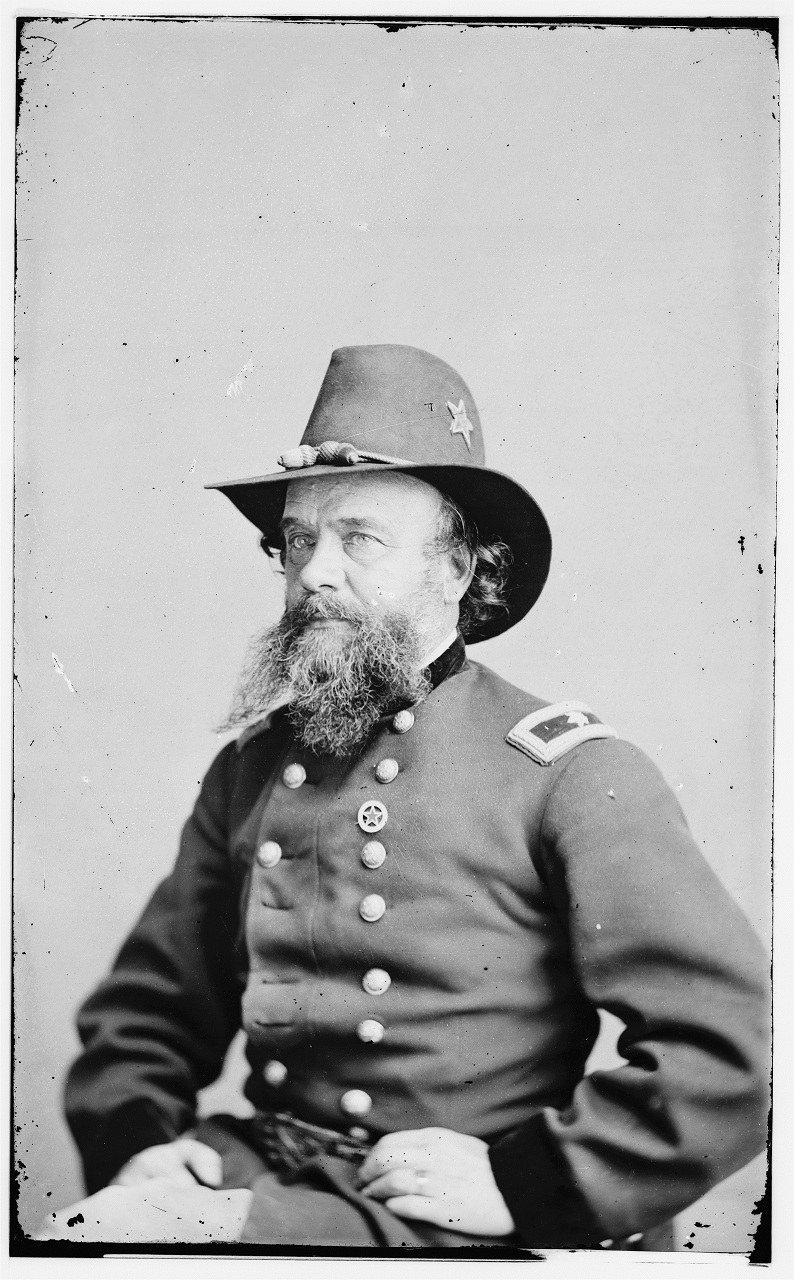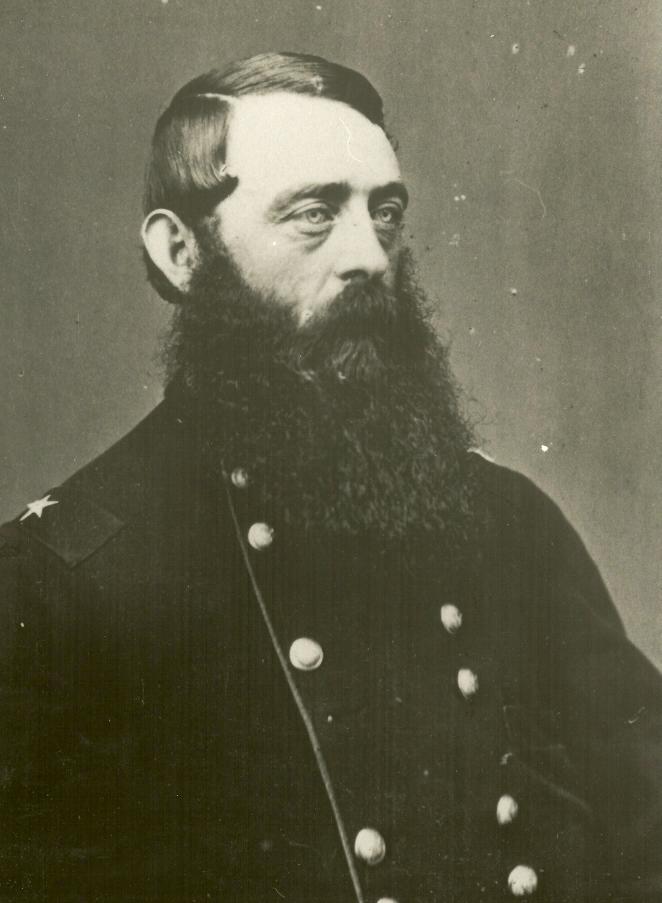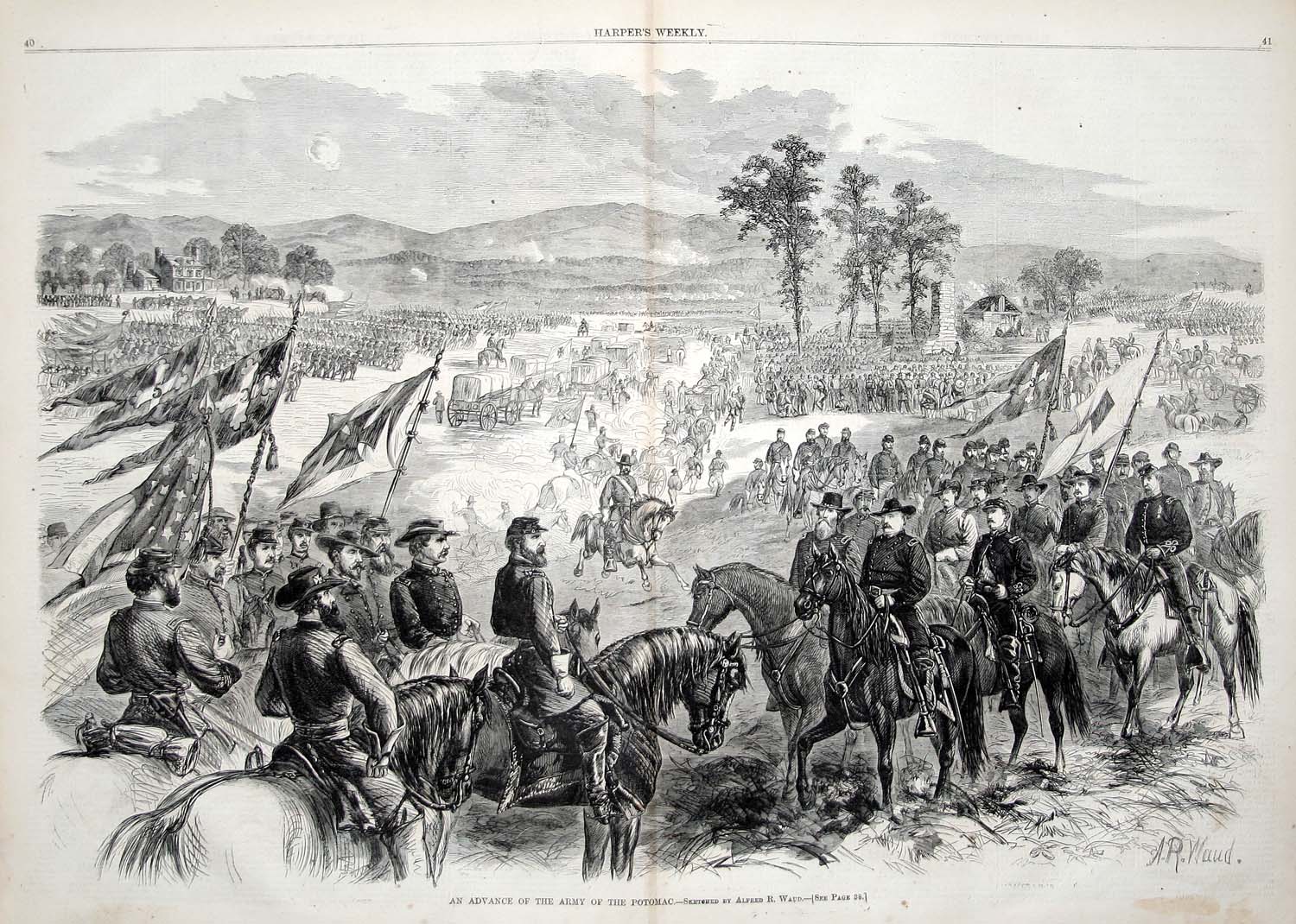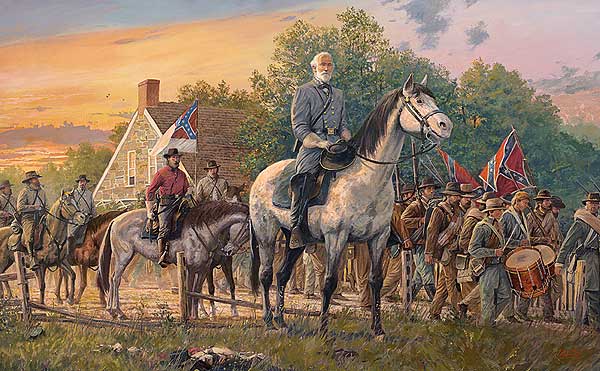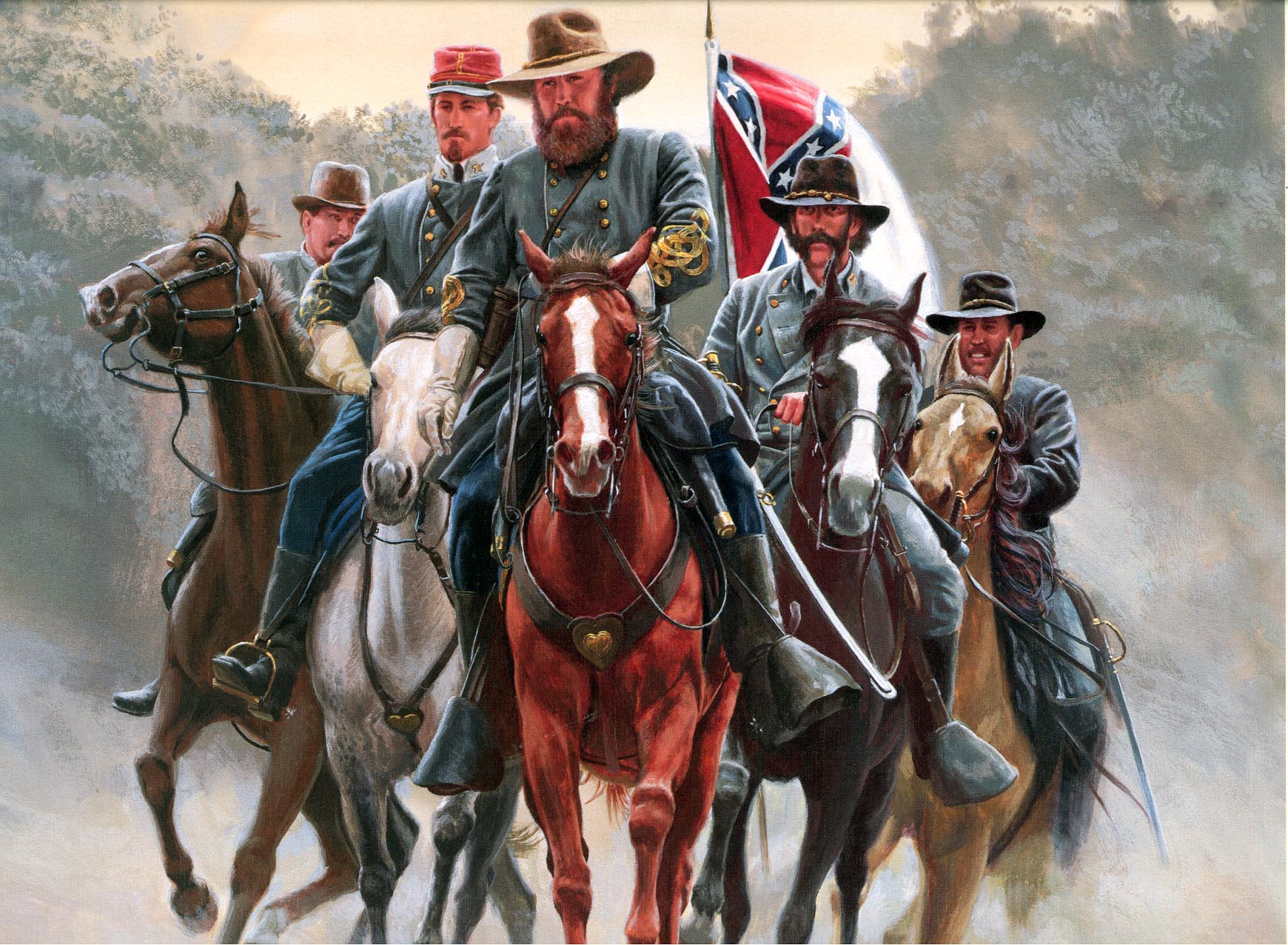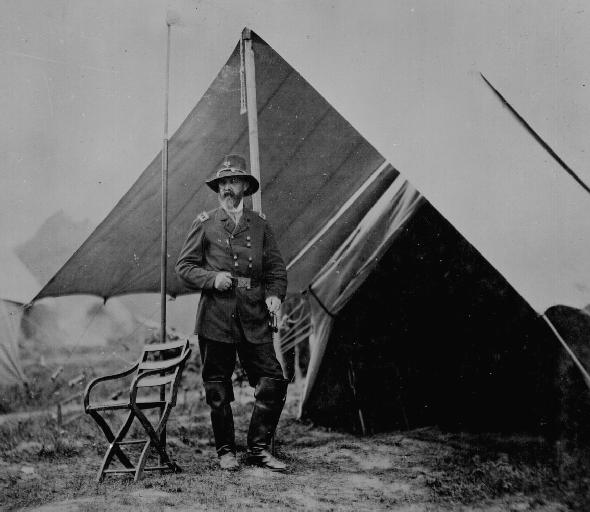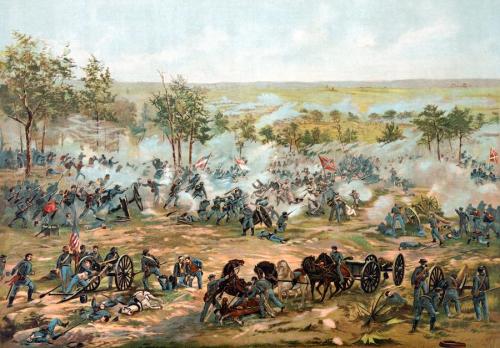
Tag Archives: robert e lee

The King of Battle at Gettysburg: Union and Confederate Artillery Types and Organization

cemeteryridgearty

Note to my friends at Padre Steve’s World: This is another in my articles on Gettysburg that I am preparing for my next “Staff Ride” for the incoming class at the Staff College where I teach. Eventually I will have a page with a tab at the top of this site for my readers to access all of those articles.

The Artillery of the Army of the Potomac at Gettysburg proved that it was the “King of Battle” and a key part of Union commanders and their use of combined arms. The superiority of the Federal artillery at Gettysburg over their Confederate counterparts was not simply due to the numbers of guns employed, it was in the manner that they were employed and the manner that Federal commanders employed the artillery under their command.

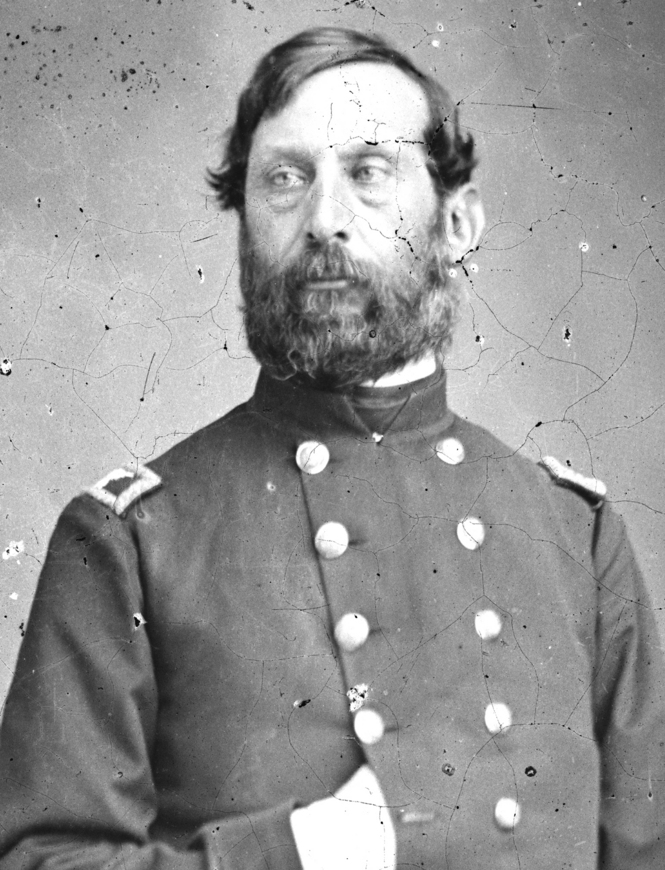
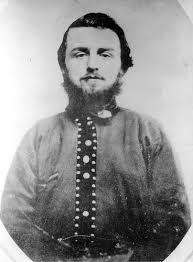
porteralexanderColonel Porter Alexander

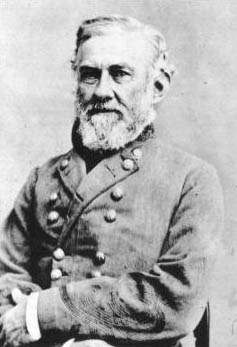
This is not to say that the Confederate artillerymen were inferior to their Federal counterparts, Porter Alexander, who commanded First Corps artillery under Longstreet was an excellent artillery commander, although Brigadier General Henry J. Hunt was by far superior to his Confederate Counterpart Brigadier General William Pendleton. The problems lay in equipment, ammunition and their employment by their carious Corps and division commanders.

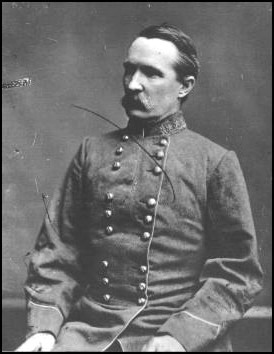
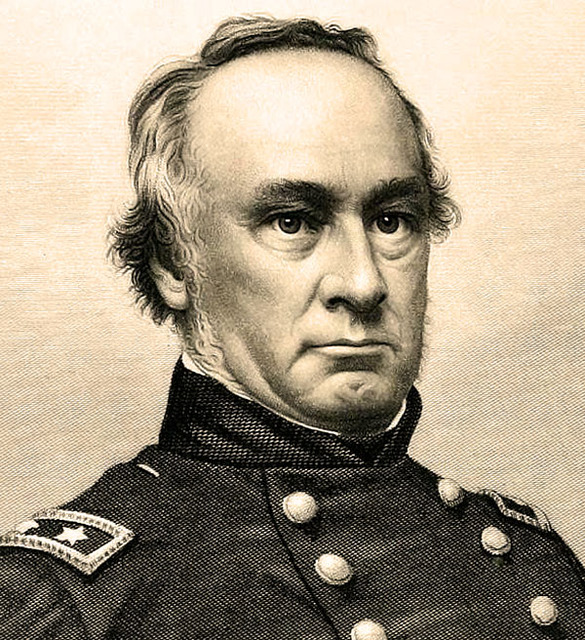
henryhuntBrigadier General Harry Hunt

Hunt and Pendleton were both graduates of the West Point, however Pendleton had left active service in the 1830s to become an Episcopal Priest and had no combat experience. Hunt remained in the Army, served in Mexico and at the beginning of the war was the the chief artillery instructor at West Point. His treatise on the use of artillery Instructions for Field Artillery published by the War Department in 1861 was the primary instruction for all Union artillery units.

WNPendeltonBrigadier General William Pendleton

Union and Confederate organizations differed. Hunt was instrumental in reorganizing Union artillery organizations. Brigades retained their assigned batteries for direct support of those units. Divisions and Corps lost their artillery which was brought into an Artillery Reserve for greater flexibility on the battlefield. As such the Artillery Reserve became the instrument of of the Army commander and served as what we would now call “general support” artillery. The organization allowed Meade to better manage his artillery at Gettysburg and employ it where he needed at the time where it was most required. This ensured that Meade and his subordinate commanders had a good command of fires throughout the battle.

HD_WilkesonBattery_z.preview

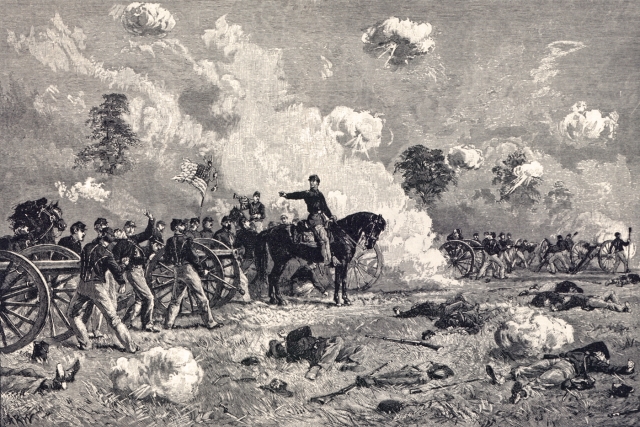
Hunt and his subordinates sought to concentrate their artillery but also to employ cross fires on advancing enemy infantry. During the battle Union artillery was particularly effective during Buford’s delaying action where its skillful employment caused Heth and Pender’s Divisions large number of casualties on July 1st. At Cemetery Hill on the evening of July 1st where Howard’s positioning of batteries on that hill with Steinwehr’s Division ensured that it held.  On July 2nd it was used with great effect during the savage fighting at the Peach Orchard, the Wheat Field, Devil’s Den and Little Round Top. However its greatest effect was in decimating Pickett’s Division and supporting units on July 3rd. 

The Confederate Artillery was assigned to each Army Corps and although Pendleton was Lee’s Artillery Chief he had little influence on the battle. Instead that authority was dispersed to the artillerymen serving under each Corps commander. While this worked well at the corps level it ensured that Lee had no way of effectively coordinating fires throughout the battle. As such on the third day Porter Alexander, a battalion commander and Longstreet’s senior artilleryman was limited to his First Corps batteries and whatever artillery was lent by A. P. Hill’s Third Corps as the artillery of Second Corps was unavailable and on the wrong side of the battlefield when needed.

At the battery level Union artillery was on the whole organized by type in six gun batteries. Confederate artillery units were organized in four or six gun batteries in which types of guns were often mixed, leading to supply problems and inconsistency in rates of fire and range. Union batteries also had better quality ammunition and gunpowder supplies.

smoothboreammorifledammo6pdrcarriagetravelcaisson-and-limber
Field Artillery batteries were of two types. Foot Artillery which accompanied the Infantry and Horse Artillery which accompanied the Cavalry. The crews of the Foot Artillery either marched alongside their guns or rode on the caissons. The crews of the Horse Artillery rode horses in order to better keep up with the Cavalry Units they supported.

Parrott-Answer-LRESM

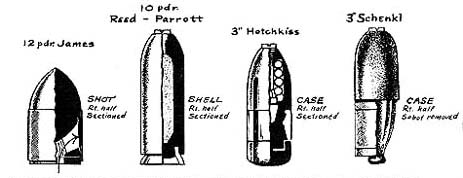
All the field artillery weapons were line of sight weapons. They had neither the range nor the fire direction capability for indirect fire. Ammunition included solid shot, exploding shells and canister which was used at short range against infantry.

The increase in range and effectiveness of rifled muskets made the job of the artilleryman more dangerous than it had been in previous wars. Thus when employed in the offense or during close assaults artillerymen were exposed to musket fire resulting in heavier casualties among the gun crews.

At Gettysburg the Army of the Potomac about 360 guns, the total number of guns available to Lee and the Army of Northern Virginia varies depending on the source between 262 and 241 guns.

The Union for the most part used weapons made in the United States, whereas the Confederates having few ordnance factories of their own were limited and attempted to obtain weapons from Europe. At Gettysburg it had two of the 2.75 inch Whitworth Breechloading Rifles were the most modern and long range weapons on the battlefield and prefigured the field artillery weapons that would dominate the battlefield in the Twentieth Century.

cannons

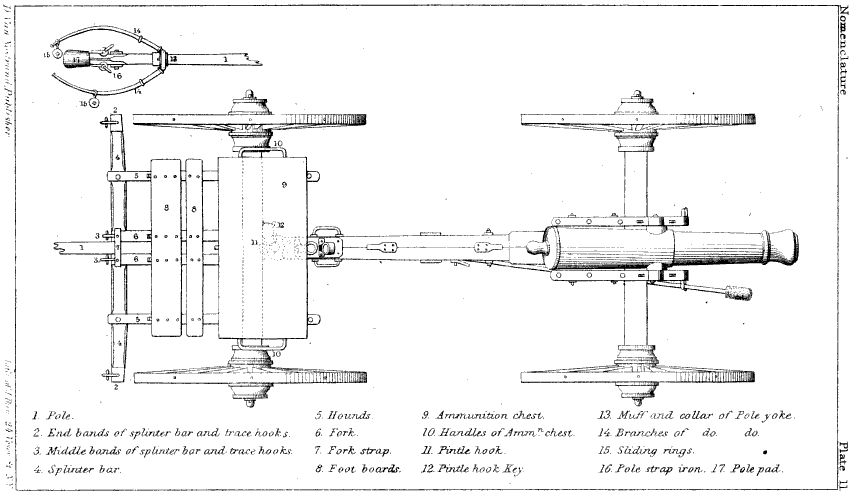
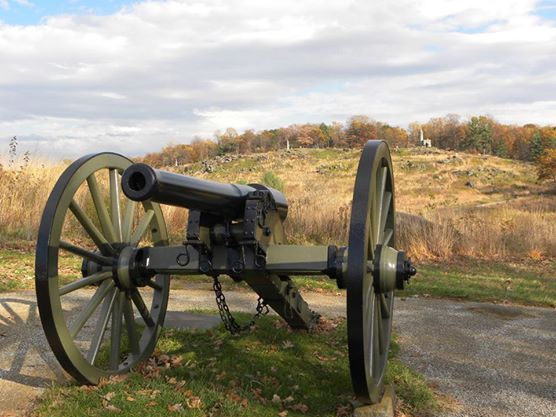
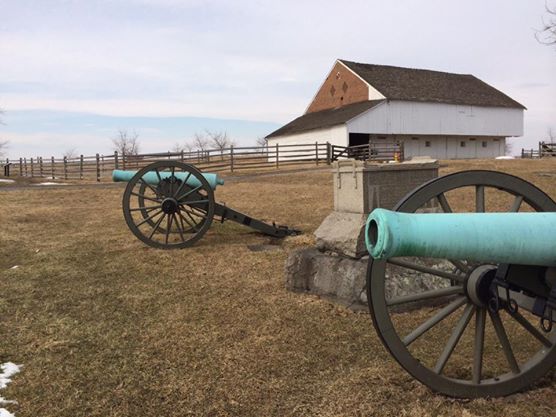
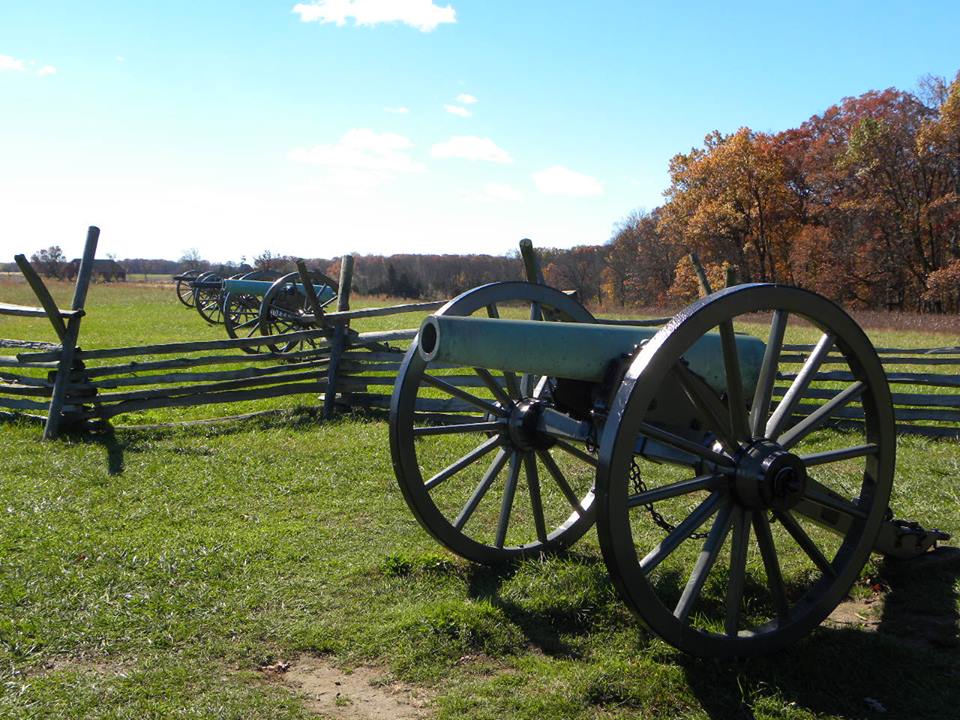
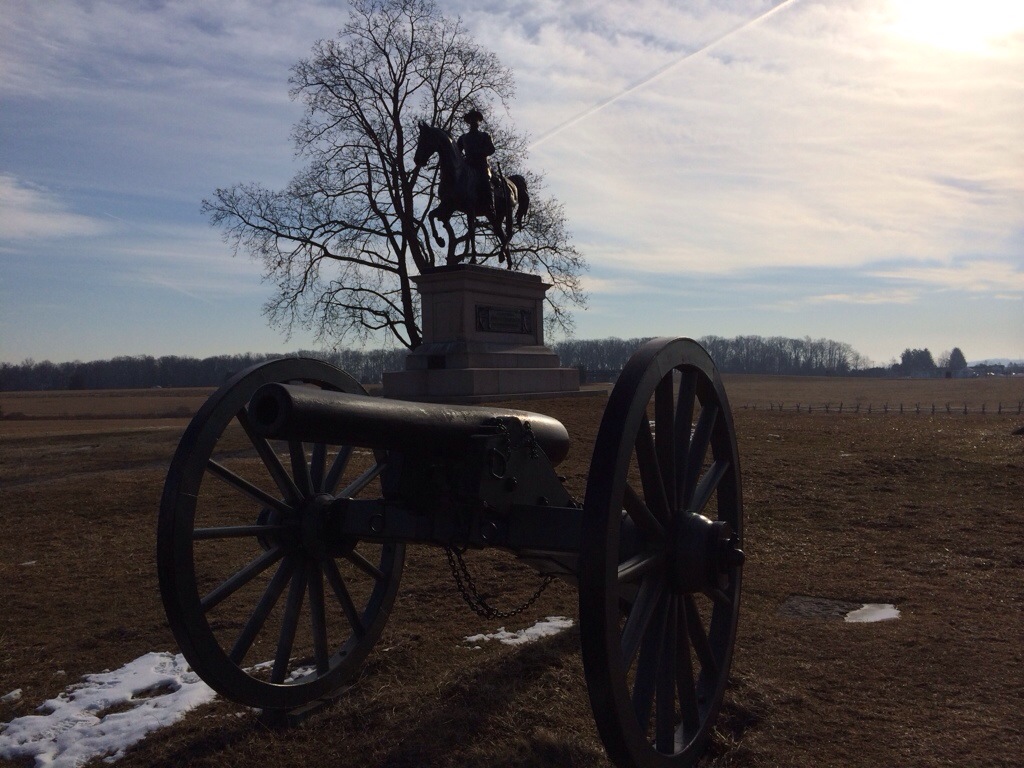
There were three basic types of cannon used at Gettysburg. Rifled cannon, Smoothbores and Howitzers. The bulk of Federal Artillery was made up of rifled cannon, especially the 3” Ordnance Rifle of which Meade had 146 at Gettysburg. There were also 142 of the M 1857 12 pound smoothbore “Napoleon’s” named after Emperor Napoleon III of France. Forty to forty-four percent of the guns available to Lee’s Army of Northern Virginia were Napoleons, of which they had 107 at Gettysburg. The technical details of each type are listed below.

Rifled Cannon
 999130_10152038135167059_1801660138_n

10-Pounder Parrott Rifle, M ’63

Bore Diameter             3.0 in (7.64 cm)
Tube Material              Cast and Wrought Iron
Tube Length                78 in (198 cm)
Tube Weight                890 lb (404 kg)
Powder Charge           1 lb (0.45 kg)
Range (5° Elevation)   2,000 yd (1,829 m)

10-Pounder Parrott Rifle, M ’61

Bore Diameter             2.9 in (7.37 cm)
Tube Material              Cast and Wrought Iron
Tube Length                78 in (198 cm)
Tube Weight                890 lb (404 kg)
Powder Charge           1 lb (0.45 kg)
Range (5° Elevation)   2,000 yd (1,829 m)

At Gettysburg (total M61 and M63)
60 Union; 42 Confederate

20-Pounder Parrott Rifle

Bore Diameter                 3.67 in (9.32 cm)
Tube Material                  Cast and Wrought Iron
Tube Length                    89 in (226 cm)
Tube Weight                    1,750 lb (794 kg)
Powder Charge                2 lb (0.91 kg)
Range (5° Elevation)        2,100 yd (1,920 m)
At Gettysburg 24 Union

3.67-Inch Navy Parrott Rifle

Bore Diameter                 3.67 in (9.32 cm)
Tube Material                  Cast and Wrought Iron
Tube Length                    89 in (226 cm)
Tube Weight                    1,750 lb (794 kg)
Powder Charge               2 lb (0.91 kg)
Range (5° Elevation)       2,100 yd (1,920 m)
At Gettysburg                  4 Confederate

cemeteryridge
3-Inch Ordnance Rifle

Bore Diameter                 3.0 in (7.62 cm)
Tube Material                  Wrought Iron
Tube Length                    73 in (185 cm)
Tube Weight                   816 lb (370 kg)
Powder Charge              1 lb (0.45 kg)
Range (5° Elevation)      1,835 yd (1,678 m)
At Gettysburg                 146 Union; 73 Confederate

14-Pounder James Rifle

Bore Diameter                3.80 in (9.65 cm)
Tube Material                 Bronze
Tube Length                   65 in (165 cm)
Tube Weight                   918 lb (416 kg)
Powder Charge              0.75 lb (0.34 kg)
Range (5° Elevation)     1,700 yd (1,554 m)
At Gettysburg                4 Union

12-Pounder (2.75 Inch) Whitworth Breechloading Rifle

Bore Diameter                2.75 in (7 cm)
Tube Material                 Iron and Steel
Tube Length                   104 in (264 cm)
Tube Weight                   1,092 lb (495 kg)
Powder Charge              1.75 lb (0.79 kg)
Range (5° Elevation)      2,800 yd (2,560 m)
At Gettysburg                  2 Confederate

Blakely Rifle

Bore Diameter                 3.4 in (8.64 cm)
Tube Material                  Steel
Tube Length                    59 in (150 cm)
Tube Weight                    800 lb (363 kg)
Powder Charge               1 lb (0.45 kg)
Range (5° Elevation)       1,850 yd (1,691 m)
At Gettysburg                   3 Confederate

Smoothbore

1497705_10152329726382059_1343167358_n

12-Pounder Napoleon-Federal Manufacture

Bore Diameter               4.62 in (11.73 cm)
Tube Material                Bronze
Tube Length                  66 in (168 cm)
Tube Weight                 1,227 lb (557 kg)
Powder Charge            2.5 lb (1.13 kg)
Range (5° Elevation)    1,619 yd (1480 m)
At Gettysburg               142 Union

12-Pounder Napoleon-Confederate Manufacture

Bore Diameter              4.62 in (11.73 cm)
Tube Material               Bronze
Tube Length                 66 in (168 cm)
Tube Weight                 1,227 lb (557 kg)
Powder Charge            2.5 lb (1.13 kg)
Range (5° Elevation)    1,619 yd (1480 m)
At Gettysburg               107 Confederate

6-Pounder Field Gun

Bore Diameter              3.67 in (9.32 cm)
Tube Material               Bronze
Tube Length                 60 in (152 cm)
Tube Weight                 884 lb (401 kg)
Powder Charge            1.25 lb (0.57 kg)
Range (5° Elevation)    1,523 yd (1,393 m)
At Gettysburg                1 Confederate

Howitzers

12-Pounder Field Howitzer

Bore Diameter              4.62 in (11.73 cm)
Tube Material               Bronze
Tube Length                 53 in (135 cm)
Tube Weight                788 lb (357 kg)
Powder Charge           1 lb (0.45 kg)
Range (5° Elevation)   1,072 yd (980 m)
At Gettysburg               2 Union; 26 Confederate

24-Pounder Field Howitzer

1454601_10152040914857059_709344690_n

Bore Diameter               5.82 in (14.78 cm)    
Tube Material                Bronze
Tube Length                  65 in (165 cm)
Tube Weight                  1,318 lb (598 kg)
Powder Charge             2 lb (0.91 kg)
Range (5° Elevation)     1,322 yd (1,209 m)
At Gettysburg                4 Confederate

20140308-231743.jpg

So until tomorrow,

Peace

Padre Steve+

1 Comment

Filed under civil war, History, Military

Counting the Cost: Gettysburg in Flesh and Blood

CW-GettysburgDead

“It is well that war is so terrible. We should grow too fond of it.” Robert E Lee

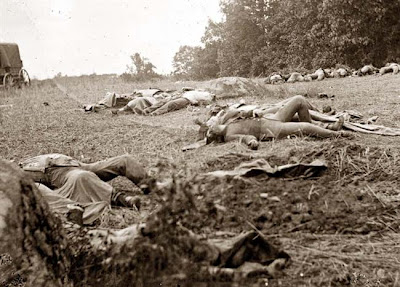
Too often we look at distant battles and campaigns in terms of strategy, operations, tactics, leadership and the weaponry employed. Likewise we might become more analytical and look at the impact of the battle or campaign in the context of the war it was fought,  or in the manner in which the tactics or weapons used revolutionized warfare. Sometimes in our more reflective moments we might look at individual bravery or sacrifice, often missing in our analysis is the cost in flesh and blood.

The words of Guy Sager in his classic work The Forgotten Soldier about World War Two on the Eastern front is lost on many that study war:

“Too many people learn about war with no inconvenience to themselves. They read about Verdun or Stalingrad without comprehension, sitting in a comfortable armchair, with their feet beside the fire, preparing to go about their business the next day, as usual…One should read about war standing up, late at night, when one is tired, as I am writing about it now, at dawn, while my asthma attack wears off. And even now, in my sleepless exhaustion, how gentle and easy peace seems!”
battleofgettysburg-devils-den

In an age where so few have served in the military and even few have seen combat in some way shape or form many who study war are comfortable experts who learn about war with no inconvenience to themselves. When I hear men and women, the pundits, politicians and preachers, that Trinity of Evil who constantly urge on others to go to war for causes, places or conflicts that they have little understanding of from the comfort of their living rooms or television studios I grow weary.

As a historian who also is a military chaplain who has seen war I struggle with what Sager said. Thus when I read military history, study and write about particular battles or engagements, or conduct staff rides as I will this weekend at Gettysburg the human cost is always present in my mind. The fact that I still suffer the effects of PTSD including night terrors and chronic insomnia keeps what I do in good focus, and prevents me from being a comfortable expert. Thus to do a staff ride, to walk the battlefield, especially in somewhat uncomfortable weather is a good thing. It connects us more in at least a small way to the men that fought there.

To walk a battlefield where tens of thousands of men were killed and wounded is for me a visit to hallowed ground. I have felt that at Waterloo, Verdun, Arnhem, Normandy, the West Wall, the Shuri Line, Antietam, Chancellorsville and of course the battlefield which I have visited more than any in my life, Gettysburg. There are times when I walk these fields that I am overcome with emotion. This I think is a good thing, for as an American who has family ties to the Civil War, Gettysburg in particular is hallowed ground.

nursingnationdivided-jpg-20130518
Sisters of Charity on the Battlefield

The past few weeks I have been doing a lot of reading and writing on Gettysburg as part of my preparation for the staff ride. In my position as a Chaplain who also teaches Ethics and will be teaching more military history I cannot be a cheerleader. I try to be dispassionate in how I teach and while dealing with big issues that my students need to face as Joint Staff Officers. Some of these men and women will probably become Flag or General Officers. Thus I do feel a certain responsibility to teach not only the strategy and other important military aspects, but also the cost in human lives and ethical considerations. I take my work seriously. Like James Longstreet I have to ask “Why do men fight who were born to be brothers?”

As the sun set on the evening of July 3rd 1863 the battered Army of Northern Virginia and the battered but victorious Army of the Potomac tended their wounds, buried their dead and prepared for what might happen next.

Gettysburg-Casualties1

Following the disastrous attack aimed at the Union center, what is commonly called “Pickett’s Charge” Lee and his surviving commanders prepared for an expected Union counter attack. However, George Meade, the commander of the Army of the Potomac who had correctly anticipated Lee’s assault decided not to gamble on a counter attack, though it was tempting. He knew too well the tenacity and skill of the Confederate commanders and soldiers on the defense and did not want to risk a setback that might give Lee another chance.

Nurse-Anne-Bell-cares-for-wounded-soldiers-600x366

The dead and wounded littered the battlefield. Field hospitals, little more than butcher shops where arms and legs were amputated by overworked surgeons and attendants while those with abdominal wounds that could not be easily repaired were made as comfortable as possible. Triage was simple. If a casualty was thought to have a reasonable chance at survival he was treated, if not they were set aside in little groups and allowed to die as peacefully as possible. Chaplains made their way around, Protestant’s ensuring that their soldiers “knew Jesus” and Catholics administering the Last Rites.

Corporal Horatio Chapman of the 20th Connecticut Volunteers wrote about the the July 3rd:

But in front of our breastworks, where the confederates were massed in large numbers, the sight was truly awful and appalling. The shells from our batteries had told with fearful and terrible effect upon them and the dead in some places were piled upon each other, and the groans and moans of the wounded were truly saddening to hear. Some were just alive and gasping, but unconscious. Others were mortally wounded and were conscious of the fact that they could not live long; and there were others wounded, how bad they could not tell, whether mortal or otherwise, and so it was they would linger on some longer and some for a shorter time-without the sight or consolation of wife, mother, sister or friend. I saw a letter sticking out of the breast pocket of one of the confederate dead, a young man apparently about twenty-four. Curiosity prompted me to read it. It was from his young wife away down in the state of Louisiana. She was hoping and longing that this cruel war would end and he could come home, and she says, “Our little boy gets into my lap and says, `Now, Mama, I will give you a kiss for Papa.’ But oh how I wish you could come home and kiss me for yourself.” But this is only one in a thousand. But such is war and we are getting used to it and can look on scenes of war, carnage and suffering with but very little feeling and without a shudder.”

Colonel William Oates of the 15th Alabama whose brave troopers assaulted Little Round Top on July 2nd wrote:

“My dead and wounded were nearly as great in number as those still on duty. They literally covered the ground. The blood stood in puddles in some places on the rocks; the ground was soaked with the blood of as brave men as ever fell on the red field of battle.”

Another Confederate soldier describe the scene west of the town on July 4th:

“The sights and smells that assailed us were simply indescribable-corpses swollen to twice their size, asunder with the pressure of gases and vapors…The odors were nauseating, and so deadly that in a short time we all sickened and were lying with our mouths close to the ground, most of us vomiting profusely.”
Elon_John_Farnsworth

Elon Farnsworth

Among the killed and wounded were the great and the small. John Reynolds who died on day one, Winfield Scott Hancock, the valiant commander of the Union II Corps wounded during Pickett’s Charge, “Mad” Dan Sickles, who had nearly brought disaster on the Federal lines by advancing to the Peach Orchard on July 2nd had a leg amputated. The Army of the Potomac lost a large number of brigade and regimental commanders including Strong Vincent, the young and gallant brigade commander who helped save Little Round Top, and young Elon Farnsworth, who had been promoted from Captain to Brigadier General just days before his death on the Cavalry field to the east of the town.

The Confederates suffered grievous losses. Divisional commanders like Dorsey Pender and Johnston Pettigrew were mortally wounded, John Bell Hood was severely wounded, Isaac Trimble, wounded and captured while Harry Heth was wounded. Casualties were even higher for commanders and the brigade and regiment level. The toll of brigade and regimental commanders  that were killed or wounded was fearful. In Picket’s division alone all three brigade commanders, Kemper, Armistead and Garnett were killed or wounded while 26 of 40 Field Grade officers were casualties. 46% (78 of 171) of the regiments of the Army of Northern Virginia suffered casualties at the command level. The Confederate casualties, especially among the best leaders were irreplaceable and Lee’s Army never recovered from the loss of seasoned leaders who were already in short supply.
wesleyculp

Wesley Culp

For some like Private Wesley Culp of the 2nd Virginia it was a final trip home. Culp had grown up in Gettysburg and took a job prior to the war in Virginia. In 1861 he enlisted to serve among his friends and neighbors. He was killed on the morning of July 3rd on Culp’s Hill on property owned by his uncle where he grew up and had learned to hunt.

One witness, Frank Haskell looked in at a field hospital in the Union II Corps area and wrote:

“The Surgeons with coats off and sleeves rolled up…are about their work,… “and their faces and clothes are spattered with blood; and though they look weary and tired, their work goes systematically and steadily on- how much and how long they have worked, the piles of legs, arms, feet, hands, fingers…partially tell.” (Gettysburg by Stephen W Sears, Mariner Books, Houghton Mifflin Company Boston, New York 2004 p.466)

All told between 46,000 and 51,000 Americans were killed or wounded during the three days of Gettysburg. Busey and Martin’s Regimental Strengths and Losses at Gettysburg lists the following casualty figures, other accounts list higher numbers. One also has to remember that many of the missing were killed but their bodies were simply never found.

Killed          wounded         missing         total
Union                    3,155          14,531             5,369           23,055
Confederate         4,708          12,693             5,830            23,231
Total                     7,863           27,224            11,199          46,286

To provide a reference in 8 years of war in Iraq the United States suffered fewer casualties than during the three days of Gettysburg. It was the bloodiest single battle in American history.

At the end of the war, Joshua Chamberlain, the hero of Little Round Top who was well acquainted with the carnage of war asked the most difficult questions:

“…men made in the image of God, marred by the hand of man, and must we say in the name of God? And where is the reckoning for such things? And who is answerable? One might almost shrink from the sound of his own voice, which had launched into the palpitating air words of order–do we call it?–fraught with such ruin. Was it God’s command that we heard, or His forgiveness that we must forever implore?”

May we pray for peace that such an event never take place again.

Peace

Padre Steve+

1 Comment

Filed under civil war, History, leadership, Military

The Frustrations of General Lee at Gettysburg: Mistakes, Miscommunication and Misunderstanding, the Confederate Failure on July 2nd

1-2-86A-25-ExplorePAHistory-a0h4m9-a_349

On the morning of July 2nd 1863 General Robert E Lee appeared to be angry and anxious. Many who had traveled with him over the course of the last year of campaigning noted that “Lee was not at his ease…” and “more anxious and ruffled than I have ever seen him before…”[i]

One can understand Lee’s frustration. He was angry. He was angry at General Stuart for failing to follow his directions, although his orders to Stuart were vague and confusing and had opened the door for Stuart’s absence.  Stuart had left Lee without his best cavalry commanders and units and those that Lee had were unavailable because of how Lee had deployed them. Lee was also displeased with Harry Heth for “disobeying his instructions, not to bring on a general engagement and equally displeased with corps commander Powell Hill for letting it happen.”[ii]

Lee was also frustrated with Ewell, Rodes and Early of Second Corps. They had resisted Lee’s suggestion of renewing the main attack in their sector. They also objected to leaving their positions around Culp’s Hill and Cemetery Hill feeling that to give up hard won ground would demoralize their troops. Instead they offered to “support” an attack on the right when it started, but Lee left no exact instructions for them to do so. Lee was beset by a situation he had never found himself in before. It was as if “the attitude of these high-ranking officers…was strangely out of keeping with the aggressive spirit of the Army of Northern Virginia…Instead of offering their commander hearty cooperation and eagerness to respond positively to his suggestions, they gave him objections and reasons why they should not do certain things.”[iii]

But even more importantly Lee was frustrated by the attitude and actions of his “Old War Horse” Pete Longstreet of First Corps. Longstreet was vehemently opposed to Lee’s plan to attack. Lee had told him the previous night “If the enemy is there tomorrow, we must attack him.” Longstreet’s reply “If he is there… it will be because he is anxious that we should attack him-a good reason, in my judgment for not doing so,”[iv] failed to deter Lee from his plans. Lee became even more anxious when returning from a visit to Ewell at mid-morning to find neither that Hood nor McLaws’ divisions of Longstreet’s had yet to step off to the attack.

There is much controversy in what happened as no copy of a plan of attack exists and there are conflicts in how the key participants remembered the meetings. Lee obviously believed that Longstreet would mount an early attack. Longstreet claimed that no order was given to attack until Lee returned from his trip to Ewell.

Gettysburg_Battle_Map_Day2Gettysburg Day Two- Map by Hal Jesperson

Early in the morning Lee still was unaware of the location of most of the Federal army or where its flanks were. He knew that the Federal army occupied favorable ground and had good interior lines. He also knew that his forces were spread out over a wide arc which made it hard for each of his corps to render support to the others.  Likewise he had no cavalry with him to make a reconnaissance and the officers that he dispatched to make a reconnaissance gave him faulty information indicating that there were no Federal troops between him and the Round Tops.

His battle plan for July second hinged on factors that he did not control. First it depended on his scout’s report that there were no Federal troops between Cemetery Ridge and the Round Tops and that the Round Tops were undefended. Theoretically had the information that he received about the Federal positions been accurate it would have been a good plan. Longstreet’s Corps attacking en echelon with McLaws leading supported by Hood and Anderson’s division from Hill’s Corps. His second assumption based on the scouting report was that “General Meade lacked either the troops or the intellect to anchor his left flank properly.”[v] Meade proved him wrong on both counts. Likewise, though Lee explained the concept of attack to McLaws, none of the other commanders, Longstreet, Porter, Hood or Anderson recounted being given those instructions.

Despite that Lee was determined to take the offense and categorically rejected any possibility of going over to a defensive posture. With his senior commanders each causing him trouble Lee “dug in his heels. In order to assert his authority, he would not- increasingly he could not- alter his plan.”[vi]  Thus Lee went ahead and forced the reluctant and recalcitrant Longstreet to attack, even when it became apparent that Federal troops occupied the ground that he was planning to attack in strength.

Lee’s intent was again garbled, though Lee explained his concept of attack to McLaws, none of the other commanders, Longstreet, Porter, Hood or Anderson recounted being given those instructions.  As such the coordinated attack en echelon never took place, and this was compounded by Longstreet’s failures in leading the attack that day.

charge-up-little-round-top

Once again the Confederate onslaught appeared that it might sweep the field but again it fell short at great cost of life. The Confederate attacks were uncoordinated, corps commanders did not control division commanders and division commanders operating independently of each other failed to coordinate their attacks. As a result all failed, despite the gallantry and initiative exercised by Confederate soldiers, who according to some Confederate commanders was the best they had ever fought.

Lee was a burdened man. The war had aged him greatly. Though he was still “only” the commander of the Army of Northern Virginia he also had on his mind what was going on in other theaters. He was burdened by the knowledge that the South was depending on him for victory, and he had forced the issue of invading the North.

The crux of the matter was that after the loss of Jackson Lee never altered his manner of command. Lee exercised “his command of the Army of Northern Virginia through his corps commanders. Each was expected to understand the overall plan and his specific role within it. Once he conveyed his intentions, Lee assumed the role of observer.”[vii] Although he knew almost all of his senior commanders, including their strengths and limitations as commanders he did not adjust his command style to those factors. One has said quite correctly that Lee “did not think of his general’s suitability to the nature of his their assignments.”[viii] This was critical. He depended on Longstreet to act with the swiftness of Jackson, of Hill to control his corps, Stuart to maintain contact and Ewell to support his course of action. In each case he failed to grasp how each man needed a different leadership style and did not effectively communicate his directions to them.

lee and longstreet 10709161246_9f5baf6452_o

There were chances to win the day had Lee or any of his commanders exercised proper command and control of their units. Men who had seldom failed Lee over the past year made mistakes and acted in manners contradictory to their previous performance of duty. Perhaps in some cases this was due to their inexperience in working directly for Lee, or in others lack of sensitivity to the nuance of Lee’s command style that Jackson understood so well.

This compounded the mistakes that Lee made in returning to the offensive and leaving Ewell’s command in a place where it could not lend its weight to his attack. In the end Lee’s “toleration of the shortcomings of his subordinates that day lessened the chances of Confederate success.”[ix]

Lee conducted the battle in manner that had to be his worst performance of the war. His loose style of command coupled with the extended lines of his army was insufficient, unlike Meade, Hancock and others on the Federal side Lee took little personal role in the events of the day receiving only one report and issuing one order after the battle was joined.[x] He was joined in this by his senior commanders especially Hill and Ewell, though Longstreet did venture in and take control of the fighting in the Peach Orchard. Porter Alexander described what he saw as “the utter absurdity” of the Confederate position which made it “preposterous to hope to win a battle when so strung out & separated that cooperation between the three corps was impossible except by a miracle.” [xi]He observed that “comparatively little pains was exercised to bring it about either.”

Porter Alexander’s comments go to the heart of what went wrong on the second day of the Battle of Gettysburg. Lee assumed that his subordinates would act as Jackson would and he ignored his own best advice. In the end it set hi  up for disaster on July 3rd as he still continued to believe that he could take the Federal position and with that win the war.

Peace

Padre Steve+


[i] Sears, Stephen. Gettysburg Houghton and Mifflin Company, Boston and New York, 2003 pp.237-238

[ii] Ibid. p.237

[iii] Coddington, Edwin B. The Gettysburg Campaign, A Study in Command, A Touchstone Book, Simon and Schuster New York, 1968 p.365

[iv] DeWert, Jeffry D. General James Longstreet The Confederacy’s Most Controversial Soldier, A Touchstone Book, Simon and Schuster, New York and London 1993 p.257

[v] Ibid. Sears p.264

[vi] Ibid. Sears, p.238

[vii] Tredeau, Noah Andre. Gettysburg: A Testing of Courage, Harper Collins Publishers, New York 2002 p.315

[viii] Dowdy, Clifford. Lee and His Men at Gettysburg: The Death of a Nation Skyhorse Publishing, New York 1986, originally published as Death of a Nation Knopf, New York 1958 p.173

[ix] Pfanz, Harry F. Gettysburg The Second Day. University of North Carolina Press, Chapel Hill 1987 p. 427

[x] Ibid. DeWert. pp.278-279

[xi] Ibid. DeWert. p.267

2 Comments

Filed under civil war, History, leadership, Military

Experience versus Inexperience, Accident and Intent: Harry Heth and John Buford on July 1st at Gettysburg

bufordholdatallcosts

On June 30th 1863 Robert E. Lee’s Army of Northern Virginia was still spread out over wide parts of south central Pennsylvania and Maryland. He had issued orders to concentrate his forces near Cashtown but his orders to his subordinate commanders still lacked clarity. As such his corps commanders still acted in a nearly independent manner.

Lee was operating blind. Due to his own operational decisions he was without any significant cavalry forces to screen his army and conduct reconnaissance as it operated deep in enemy territory. He had only found out about the location and proximity to his forces of the Army of the Potomac from the report of Longstreet’s spy Harrison.

On June 30th Major General Harry Heth sent a brigade of his division to conduct a reconnaissance in the direction of Gettysburg. The brigade commander Brigadier General Johnston Pettigrew was instructed to avoid being drawn into battle. Pettigrew observed Federal cavalry of John Buford taking up positions west of the town and chose not to engage. He retired from the field and reported the presence of well drilled Federal cavalry to General Heth. As he was doing so A.P. Hill arrived and rejected Pettigrew’s report insisting that the Army of the Potomac was still over 20 miles away in Maryland. Neither Hill or Heth trusted Pettigrew’s report as Pettigrew’s was not a professional soldier.

The following morning Heth with Hill’s permission decided to send a force to Gettysburg to see what was there and to obtain a large number of shoes that he heard were in the town.

henryhethMajor General Henry (Harry) Heth

Heth was an 1847 graduate of West Point. He graduated at the bottom of his class. Heth was commissioned as an Infantry Officer in the United States Army. Heth did not serve in Mexico but on the frontier. He had commanded a company in battle against the Lakota Sioux in 1855 and wrote the first marksmanship manual for use in the U.S. Army.

Heth was a Virginian and a close friend of A.P. Hill. He spent the early part of the war as Lee’s Quartermaster where he became one of Lee’s favorite officers. This was the beginning of a close relationship where Lee looked after Heth’s career. Heth served as regimental commander in the actions in the Kanawha Valley of Western Virginia being assigned to Kirby Smith’s Department of Tennessee. There he commanded a division but took part no any major actions.

Lee brought him back to the Army of Northern Virginia in 1863 to command a brigade in Hill’s Division. He took commanded that brigade at Chancellorsville in which he made an ill advised unsupported attack against Union forces in which his brigade sustained heavy casualties. Despite this, during the reorganization of the army Heth was promoted to command of the Division when Hill assumed command of Third Corps when it was created following the death of Stonewall Jackson.

Lee had given his commanders orders not to provoke a major engagement until the Army was fully concentrated. However neither Heth nor Hill believed that the troops that Pettigrew observed were a threat, believing them to be nothing more than local militia.

Hill was sick and decided to conduct a reconnaissance despite his lack of cavalry. Hill decided to conduct an infantry reconnaissance, However instead of sending a small force he dispatched two of his divisions, those of Heth and Dorsey Pender and remained in his quarters. Heth, the most inexperienced division commander took the lead and advanced his division in a column not deployed for battle or reconnaissance.

Lee’s intent seemed to be clear at this point clear. He desired to have a tired and weary Union force under a new commander under political pressure attack him on ground of his choosing. He hoped to defeat the Union forces piecemeal as they came into the battle. By initiating the action Hill and Heth set in motion events that would lead to the climactic battle of the Civil War. Hill’s decision to use such a large force and Heth’s inexperience in leading such a mission put Lee in a position where he began to make more mistakes.

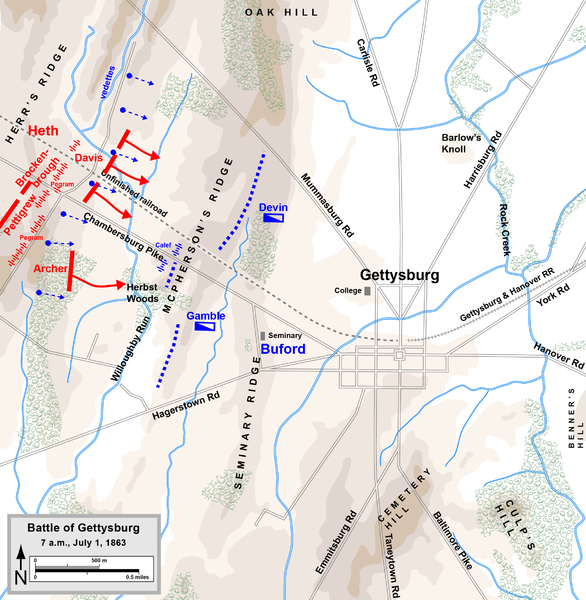
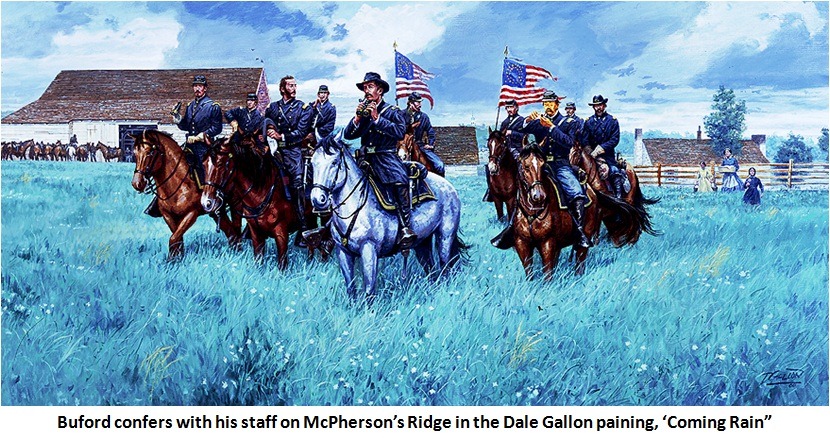
The Federal Cavalry that Heth’s troops encountered was the First Cavalry Division under the Command of Brigadier General John Buford. Buford’s division arrived in Gettysburg ahead of the Army of the Potomac on the 30th. Buford and his brigade commanders immediately recognized the importance of the ground when they saw Pettigrew’s troops. Buford order his troops to deploy on the ridges west of Gettysburg, Herr Ridge, McPherson Ridge and Seminary Ridge. It was the perfect place for a delaying action against superior forces.

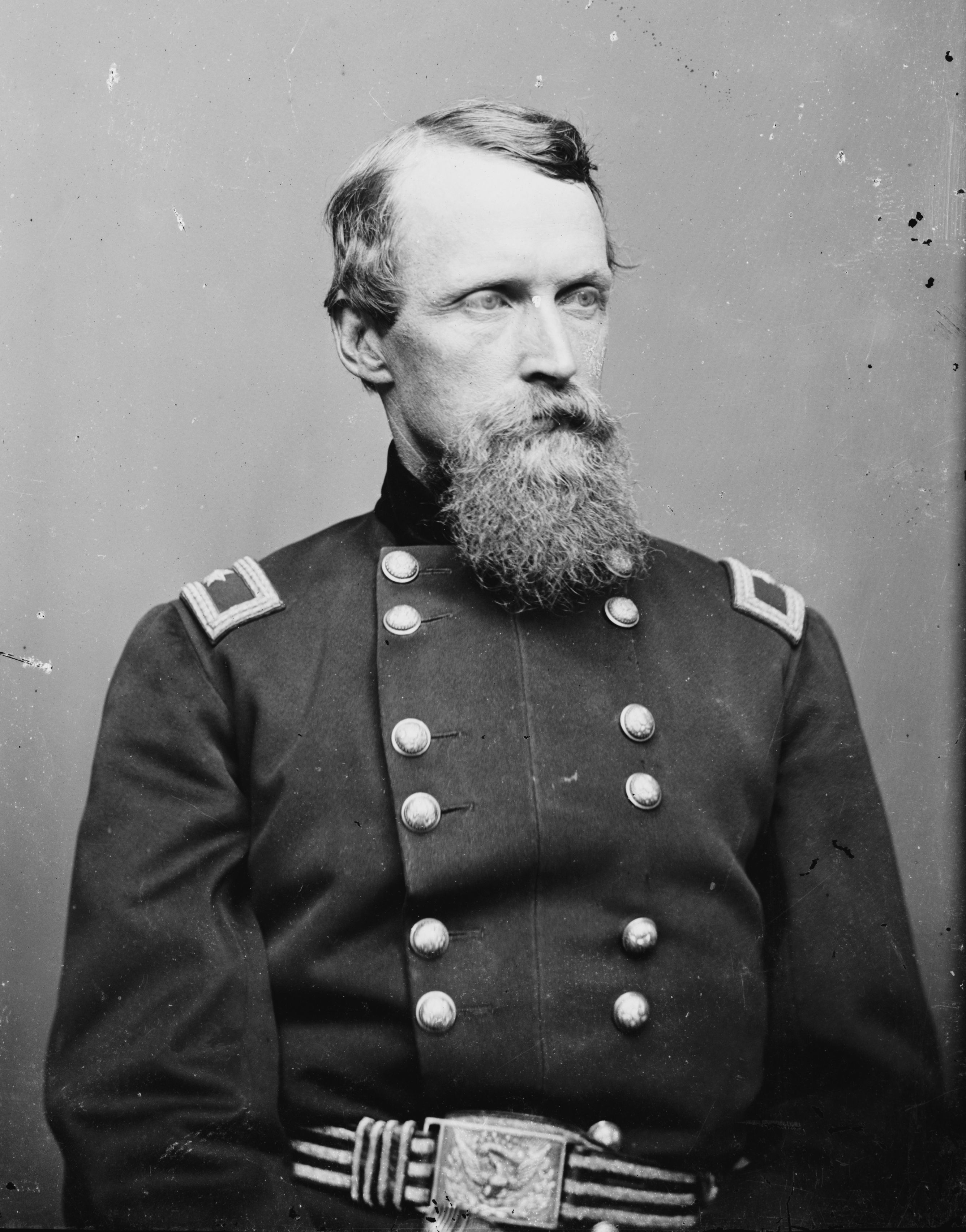
john_bufordBrigadier General John Buford

Buford was also a graduate of West Point and served as a Cavalry officer in the Army before the war. He was from Kentucky and his father was a Democrat who had opposed Abraham Lincoln. Much of his family chose to fight for the Confederacy but Buford remained loyal to his oath and remained in the Army.

Prior to the war Buford had served against the Sioux and on peacekeeping duty in the bitterly divided State if Kansas. Later he served in the Utah War in 1858. He was a modern soldier who recognized that the tactics of the Army had to change due to improvements in weapons and technology.  He was promoted to Brigadier General in 1862 and served in numerous engagements as a Cavalry Brigade commander before being given command of the 1st Cavalry Division after Chancellorsville.

gettysburg_day1_0700

The Delaying Action, July 1st 1863 Map by Hal Jespersen, http://www.posix.com/CW

Buford was a keen student of war and a commander who was able to control his forces. When Heth’s division attacked he fought a masterful action. This allowed the Infantry Corps of the Army of the Potomac to arrive on the field of battle. Buford’s action to select the ground upon which the battle was fought was instrumental to the Union victory at Gettysburg. Even though Federal forces were pushed back on the first day they were able to maintain control of the high ground east of the city with interior lines of communication which they fortified.

After Heth engaged the Federal army Lee decided that he had to force the battle and continue the attack. Lee brushed aside the objections of General Longstreet and ignored the fact that he did not fully know the numbers and disposition of the troops arrayed against him.

Lee’s decision to engage the enemy was disastrous. Lee decided to attack after the ill conceived decision of Hill and Heth to get involved in a big fight and the correspondingly excellent command decisions of Buford to choose good ground and then to fight a skilled engagement.

While Lee and Hill’s decisions shaped the battle the tactical decisions of Heth and Buford in their conduct of the battle and their advice to their superiors had a dramatic effect on how the Battle of Gettysburg unfolded. Heth’s lack of experience in the east against the Army of the Potomac and limited battle experience as a senior commander certainly was a factor. Likewise, Buford’s experience played a major role. Buford had spent the war in action against Lee’s Army. He knew the capabilities of his enemies and knew what had to be done to give his side a chance to win.

Bufords-Cavalry

Like many battles success is often due to such factors. Had Heth been more experienced and been more prudent in conducting his mission Lee might not have made his fateful decision to commit his army at a Gettysburg. Had Buford not seen the importance of the ground that he selected and deployed himself accordingly the rest of the Army may not have gotten to Gettysburg before Lee had gained the critical ground east and south of the town.

On such decisions battles are decided and wars won. Heth was a good soldier, but his relative inexperience and inability to control his command was a decisive factor in the battle. On the other hand Buford’s experience and poise under pressure enabled the rest of the army to come up on that first day of battle. Had he not done so it is possible that despite the bad decisions made by Lee, Hill and Heth that the Army of northern Virginia might have seized the critical ground east of Gettysburg before the bulk of the Federal Army arrived.

Had that happened it would have been interesting to see how the rest of the campaign unfolded. But such is speculation and that is a subject for novelists, writers of historical fiction or alternate history. Instead we are left with the real decisions of people that to this day influence us. Experience versus inexperience, accident versus design and the decisions of men long dead are things that we must ponder as we look at this battle and seek to learn lessons that will benefit us today.

Peace

Padre Steve+

Leave a comment

Filed under civil war, History, leadership, Military

Lee Blunders into Battle: Day One at Gettysburg

Railroad_CutBetween Heth’s Divsion and I Corps at the Railroad Cut-Dale Gallon

The Army of Northern Virginia commanded by Robert E Lee was now deep in Union territory and nearly blind to the location of the Federal Army of the Potomac. On the 30th advanced units of Dick Ewell’s Second Corps had gone nearly as far as Harrisburg while most of the Army was on the road around Chambersburg. J.E.B. Stuart and his cavalry was far away encumbered by a large captured Federal wagon train around Hanover and not in position to report on Union troop movements.

As reports from the spy Harrison came to Longstreet he reported them to Lee. Lee was surprised but quickly began to concentrate the Army around Cashtown. As the rest of the army gathered General A.P. Hill sent Johnston Pettigrew’s Brigade of Harry Heth’s Division to Gettysburg on the 30th. Pettigrew observed the Federal cavalry of Buford’s 1st Cavalry Division as they took up positions on Seminary Ridge. Since it was late he declined to engage and reported the Federal concentration to Hill, believing it to be nothing more than militia and cavalry.

427_2Buford Defending McPherson’s Ridge Mort Kunstler

On the morning of July 1st Hill ordered Harry Heth’s to advance his division to Gettysburg without the benefit of cavalry support or reconnaissance. Hill believed that the troops reported by Pettigrew could be nothing more than local militia. As they advanced the leading brigades under Brigadier General James Archer and Joseph Davis met Federal forces. Heth first became embroiled in a fight with Buford’s cavalry, which forced him to deploy and held up his advance along McPherson’s and Herr’s Ridge. Lee’s “laxness with respect to reconnaissance and his lack of control of Hill’s movements caused him to stumble into battle.” For the master of so many battlefields it was an inauspicious beginning.

Heth had been surprised and then suffered heavy casualties when lead elements of the Federal 1st Corps under the command of Major General John Reynolds arrived. In the ensuing fight both Archer’s and Davis’ brigades were mauled with Archer being captured and Davis wounded. As the fight continued the Federal XI Corps under Oliver Howard arrived, extended the Right of the Federal line and emplaced troops on the hills to the east of the town. Unfortunately Howard’s dispositions were faulty and the choice of his First Division commander Barlow to advance to an exposed area of high ground proved to be nearly disastrous to the Federal position.

gettysburg_battle_map_of day1Gettysburg Day One (Map by Hal Jespersen, http://www.posix.com/Com)

Lee was surprised by the engagement and though he chastised Heth for getting involved but committed his army to the attack the Federals. Reynolds was killed early in the engagement but the fight was bitter, the Iron Brigade exacted a fearful toll on Archer and Davis’s brigades.

The attack by Heth was helped immensely when the lead elements of Ewell’s 2nd Corps in the form of Robert Rodes’ division arrived. Rodes’ division hit the right flank of the I Corps where it joined XI Corps and was joined by part of Jubal Early’s Division to his right. They overwhelmed the division of Francis Barlow who was wounded and captured, as well as other elements of XI Corps which was deployed on bad ground for defense.

The attack was well conceived but poorly executed, in part due to the failures of some of the subordinate brigade commanders. However, the attack threw the Federal line into confusion and the Federals shifted to meet the attack. Heth sought and got permission from Lee to renew his attack and the combination forced the Federal troops to withdraw through Gettysburg and up to Cemetery Ridge, where two brigade’s of Steinwehr’s division and the tough survivors of the Iron Brigade were already in place.

800px-First_day_at_gettysburgPender’s Division Goes into Action

In making the attack Lee acted against his own directions to his commanders. Though he only had a fraction of his army on the field and was unaware of the strength and location of the bulk of the Federal Army, Lee committed himself to a general engagement. In the process he placed his army at a disadvantage. Unless he could break the Federal line and take Cemetery Hill he would leave the Army of the Potomac with the high ground and with the ability to fight on interior lines, while his forces would be spread out over a long arcing line.

leeindexLee with A.P. Hill and Heth Bradley Schmehl

Ewell’s arrival was fortuitous because it temporarily tilted the balance to Lee, but the advantage was short lived, once again due to a vague order from Lee. This time it was an order to Ewell and like many things about Lee’s conduct of the battle this too is shrouded in controversy.

Lee’s report describes the order:

“General Ewell was, therefore, instructed to carry the hill occupied by the enemy, if he found it practicable, but to avoid a general engagement until the arrival of the other divisions of the army…”

But Lee had already committed himself to a general engagement in pursuing the attack during the afternoon. Although it appeared that Federal forces in turmoil as Reynold’s was dead and elements of XI Corps in retreat the situation was serious but the Confederates were not in a perfect or even completely advantageous position. Howard was able to rally his troops on Cemetery Hill taking advantage of his earlier deployment of Steinwehr’s division. Abner Doubleday who had succeeded Reynold’s brought his tropes back to reinforce the line as well as occupy Culp’s Hill to the right.

bogbayardwilkesonwebAbner Doubleday directs his troops on Day One

When Meade learned of Reynold’s death he dispatched Winfield Scott Hancock of II Corps to take command of all Federal Forces. Though he was junior to Howard, Hancock was able to work out a command arrangement with Howard and take command. Howard had to his credit Federal command position was strengthened.

Hancock doncemeteryhilljuly1_zps512a40faHancock Arrives on the Battlefield

Hancock was authorized by Meade to select where the Army would make its stand. Hancock told Howard “But I think this is the strongest position by nature upon which to fight a battle that I have ever saw…and if it meets your approbation I will select this as the battlefield.” Howard agreed and both men set off to rectify their lines.

Despite their success Ewell and his Corps were disorganized and not in a good position to take advantage of their earlier success. Likewise he was limited in the forces that he had available to continue the attack. Both his and A.P. Hill’s Corps only had two of their divisions in the field. Hill reported that his divisions “were exhausted by some six hours of hard fighting (and that) prudence led me to be content with what had been gained, and not push forward troops exhausted and necessarily disordered, probably to encounter fresh troops of the enemy.” Ewell reported that “all the troops with me were jaded by twelve hours’ marching and fighting.” Lee’s report of the battle indicated that the four divisions involved were “already weakened and exhausted by a long and bloody struggle.”

As such a night assault would have been exceptionally risky. Ewell would have only had the tired and disorganized survivors of four brigades at his disposal with no support from A.P. Hill on his right.

Early's_Charge_on_East_Cemetery_Hill

Ewell has often been criticized by the defenders of Lee and the legend of the Lost Cause for his failure to press the attack on Cemetery Ridge or Culp’s Hill. Critics cite that Federal forces were still disorganized and he could have easily attacked and driven the Federal Forces form the hills. Much is made of the protests of Major General Isaac Trimble as well as General John Gordon who were with Ewell. However as Edwin Coddington noted that these men concentrated their efforts on Ewell’s action to determine what went wrong at Gettysburg. In large part this was due to their inability to criticize Lee. Trimble’s account made its way into Michael Shaara’s classic novel of Gettysburg, the Killer Angels and were acted with conviction by Morgan Shepperd in the film adaptation of the book Gettysburg. Coddington correctly observed that “they forgot, however, the exact circumstances that kept the move from being “practicable” at the time.”

Rodes after battle report supported Ewell’s decision. He wrote before “the completion of his defeat before the town the enemy had begun to establish a line of battle on the heights back of the town, and by the time my line was in condition to renew the attack, he displayed quite a formidable line of infantry and artillery immediately in my front, extending smartly to my right, and as far as I could see to my left in front of Early.” Unfortunately for historians Rodes was killed in action at the Third Battle of Winchester in September 1864.

The Army of Northern Virginia came very close to sweeping Federal forces from the field on July 1st in spite of Lee’s lack of planning and clear commanders intent. But close was not enough. His forces which were committed in a piecemeal manner were unable to follow up their initial success. His orders to Ewell, to take the high ground “if practicable” were correctly interpreted by Ewell. Thus Federal corps under the command of Howard and Hancock were able to regroup, dig in and be reinforced by the rest of the Army on good ground of their choosing with interior lines.

Whether Lee intended to engage the Army of the Potomac at Gettysburg so early in the campaign is debated. His multiple and contradictory strategic aims left his commanders acting much on their own. His lack of clear commander’s intent to his subordinate commanders created confusion on the battlefield and paved the way to many controversies in the years following the war as Southerners sought to explain the failure of the Lost Cause, for which Lee could not be blamed.

Much of the controversy comes from Lee’s own correspondence which indicates that he might have not fully understood his own intentions. Some correspondence indicates that Lee desired to avoid a general engagement as long as possible while other accounts indicate that he wanted an early and decisive engagement. The controversy was stoked after the war by Lee’s supporters, particular his aides Taylor and Marshal and generals Gordon and Trimble, men like Longstreet and were castigated by Lee’s defenders for suggesting that Lee made mistakes on the battlefield.

Lee’s actual misunderstanding of his situation can be seen in the account of Isaac Trimble, traveling with Lee at the beginning of the invasion of Pennsylvania. He wrote:

“We have again outmaneuvered the enemy, who even now does not know where we are or what our designs are. Our whole army will be in Pennsylvania day after tomorrow, leaving the enemy far behind and obliged to follow by forced marches. I hope with these advantages to accomplish some single result and to end the war, if Providence favors us.”

The vagueness of Lee’s instructions to his commanders led to many mistakes and much confusion during the battle. Many of these men were occupying command positions under him for the first time and were unfamiliar with his command style. Where Stonewall Jackson might have understood Lee’s intent, even where Lee issued vague or contradictory orders, many others including Hill and Ewell did not. Lee did not change his command style to accommodate his new commanders.

That lack of flexibility and inability to clearly communicate Lee’s intent to his commanders and failure to exercise control over them proved fatal to his aims in the campaign. Stephen Sears scathing analysis of Lee’s command at Gettysburg perhaps says it the best. “In the final analysis, it was Robert E. Lee’s inability to manage his generals that went to the heart of the failed campaign.”

The vagueness of Lee’s intent was demonstrated throughout the campaign and was made worse by the fog of war. Day one ended with a significant tactical victory for Lee’s army but without a decisive result which would be compounded into a strategic defeat by Lee’s subsequent decisions on the 2nd and 3rd of July.

Peace,

Padre Steve+

2 Comments

Filed under civil war, History, leadership, Military

Gettysburg: The Order of Battle

battle-of-gettysburg-war-is-hell-store

Note: This is a resource for those following my Gettysburg series and for my students that go with me on the Gettysburg Staff Ride. When the armies met at Gettysburg Lee’s Army of Norther Virginia had about 75,000-80,000 effectives, Meade’s Army of the Potomac had about 80,000-85,000 depending on the sources. This meant that they were relatively evenly matched in terms of manpower and that the battle came down to leadership, tactical decisions and strategic factors that were already in play by the time that the armies met at Gettysburg.

As a note of explanation the Confederate forces at the division and brigade level were named after their commander’s, or in some cases previous commanders. Confederate units were allocated to the Army from the various states, thus there is no Confederate “Regulars” as are shown in the Union order of battle. Union Corps were numbered as were the divisions and brigades in each corps. In some cases the brigades or divisions were referred to by the names of their commanders, but this was not consistent. Federal forces consisted of both Regular Army units as well as units allocated by the states. The reader can note the composition of each brigade in both the Union and Confederate armies to see from where the soldiers were recruited from.

So apart from that there is no story to tell tonight. Nothing in the way of commentary. This is simply a resource.
Have a great night.

Peace

Padre Steve+
confeorg

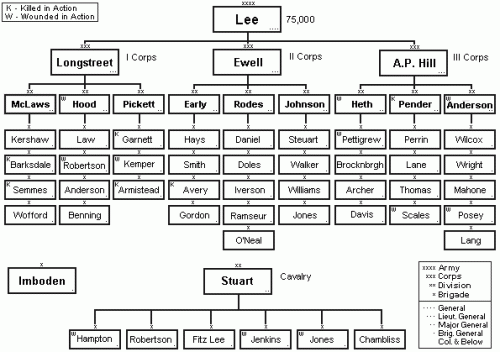
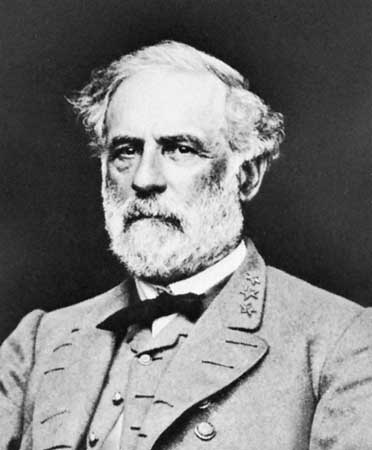
Army of Northern Virginia – General Robert Edward Lee, Commanding


ileerob001p1

General Staff: Chief of Staff and Inspector General: Col Robert H. Chilton; Chief of Artillery: BG William N. Pendleton; Medical Director: Dr. Lafayette Guild; Aide de Camp and Asst. Adjutant General: Maj Walter H. Taylor; Aide de Camp and Asst. Military Secretary: Maj Charles Marshall; Aide de Camp and Asst. Inspector General: Maj Charles S. Venable; Aide de Camp: Maj Thomas M. R. Talcott

General Headquarters
Escort: 39th Virginia Cavalry Battalion (companies A & C)
James_Longstreet

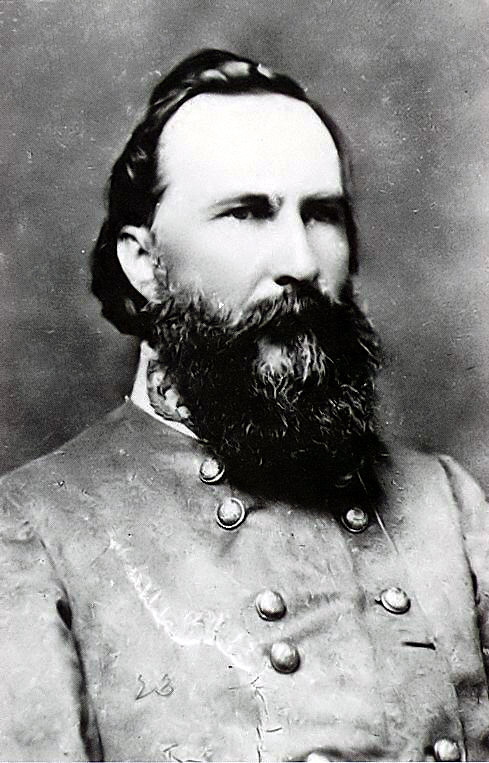
I Corps- Lt. Gen. James Longstreet, Commanding
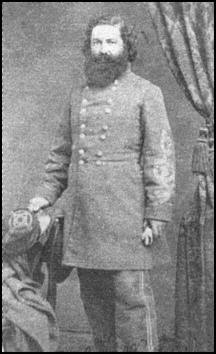
Lafayette_McLaws

McLaws’ Division- MG Lafayette McLaws

Kershaw’s Brigade-BG Joseph B. Kershaw
2nd South Carolina, 3rd South Carolina, 7th South Carolina, 8th South Carolina,  15th South Carolina; 3rd South Carolina Battalion
Barksdale’s Brigade- BG William Barksdale (mw); Col Benjamin G. Humphreys
13th Mississippi, 17th Mississippi, 18th Mississippi, 21st Mississippi
Semmes’ Brigade- BG Paul J. Semmes (mw); Col Goode Bryan
10th Georgia, 50th Georgia, 51st Georgia, 53rd Georgia
Wofford’s Brigade- BG William T. Wofford
16th Georgia, 18th Georgia, 24th Georgia, Cobb’s (Georgia) Legion, Phillips’ (Georgia) Legion, 3rd Georgia Sharpshooter Battalion
Cabell’s Artillery Battalion- Col Henry C. Cabell; Maj Samuel P. Hamilton
1st North Carolina Artillery, Battery A, Pulaski (Georgia) Artillery, 1st Richmond Howitzers, Troup (Georgia) Artillery
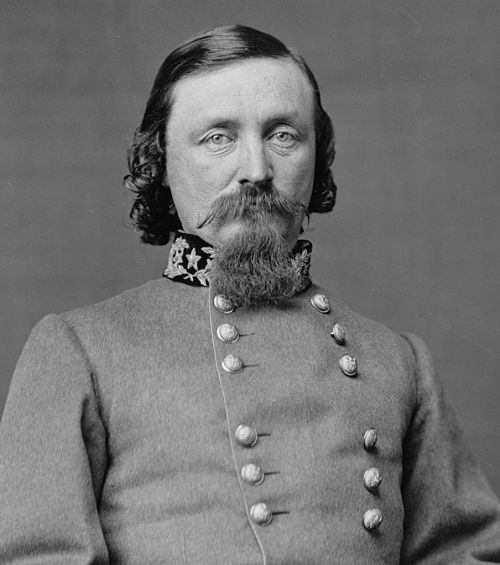
GeorgePickett

Pickett’s Division- MG George E. Pickett

Garnett’s Brigade- BG Richard B. Garnett (k); Maj Charles S. Peyton
8th Virginia, 18th Virginia, 19th Virginia, 28th Virginia, 56th Virginia
Kemper’s Brigade- BG James L. Kemper (w&c); Col Joseph Mayo, Jr
1st Virginia, 3rd Virginia, 7th Virginia, 11th Virginia, 24th Virginia
Armistead’s Brigade- BG Lewis A. Armistead (mw&c); Ltc William White (w); Maj Joseph R. Cabell; Col William R. Aylett
9th Virginia, 14th Virginia, 38th Virginia, 53rd Virginia, 57th Virginia
Dearing’s Artillery Battalion- Maj James Dearing; Maj John P. W. Read (w)
Fauquier (Virginia) Artillery, Hampden (Virginia) Artillery, Richmond Fayette (Virginia) Artillery, Blount’s (Virginia) Battery
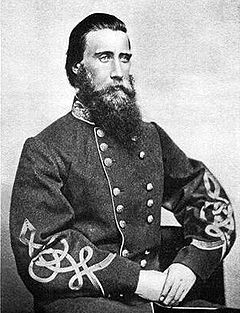
Lt._Gen._John_B._Hood

Hood’s Division- MG John Bell Hood (w); BG Evander M. Law

Law’s Brigade-BG Evander M. Law; Col James L. Sheffield
4th Alabama, 15th Alabama, 44th Alabama, 47th Alabama, 48th Alabama
Robertson’s Brigade- BG Jerome B. Robertson (w); Ltc Philip A. Work
3rd Arkansas, 1st Texas, 4th Texas, 5th Texas
Anderson’s Brigade- BG George T. Anderson (w); Ltc William Luffman (w)
7th Georgia, 8th Georgia, 9th Georgia,  11th Georgia,  59th Georgia
Benning’s Brigade- BG Henry L. Benning
2nd Georgia, 15th Georgia,  17th Georgia, 20th Georgia
Henry’s Artillery Battalion- Maj Mathias W. Henry; Maj John C. Haskell
Branch (North Carolina) Battery, Charleston German (South Carolina) Artillery, Palmetto (South Carolina) Light Artillery, Rowan North Carolina Artillery
Artillery Reserve- Col James B. Walton
Alexander’s Artillery Battalion- Col Edward P. Alexander (w)
Ashland (Virginia) Artillery, Bedford (Virginia) Artillery, Brooks (South Carolina) Artillery, Madison (Louisiana) Light Artillery, Richmond (Virginia) Battery, Bath (Virginia) Battery
Washington (Louisiana) Artillery Battalion- Maj Benjamin F. Eshleman
First Company, Second Company, Third Company, Fourth Company
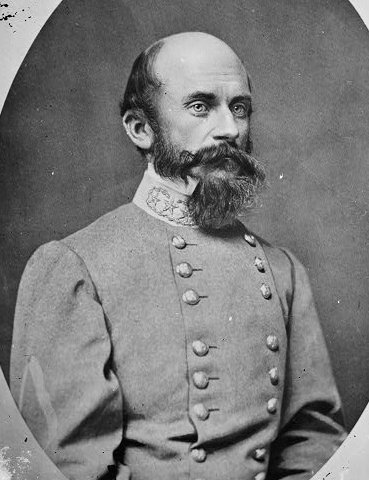
Richard-Ewell

II Corps- Lt. Gen. Richard S. Ewell Commanding
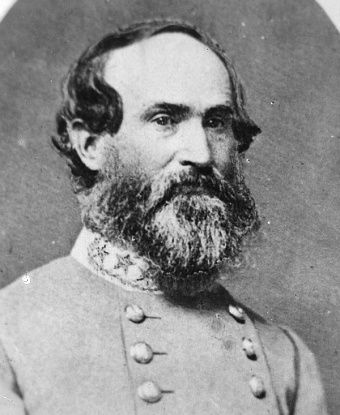
??????????????????????????????????????????????????????????????????????????????????????????????

Early’s Division- MG Jubal A. Early
Hays’ Brigade- BG Harry T. Hays
5th Louisiana, 6th Louisiana, 7th Louisiana, 8th Louisiana, 9th Louisiana
Smith’s Brigade-BG William Smith
31st Virginia, 49th Virginia, 52nd Virginia
Hoke’s Brigade- Col Isaac E. Avery (mw); Col Archibald C. Godwin
6th North Carolina: Maj Samuel McD. Tate, 21st North Carolina: Col William W. Kirkland, Maj James Beall, 57th North Carolina: Col Archibald C. Godwin, Ltc Hamilton C. Jones
Gordon’s Brigade- BG John Brown Gordon
13th Georgia, 26th Georgia, 31st Georgia, 38th Georgia, 60th Georgia, 61st Georgia
Jones’ Artillery Battalion- Ltc Hilary P. Jones
Charlottesville (Virginia) Artillery, Courtney (Virginia) Artillery, Louisiana Guard Artillery, Staunton (Virginia) Artillery
Cavalry 35th Virginia Battalion: Ltc Elijah V. White
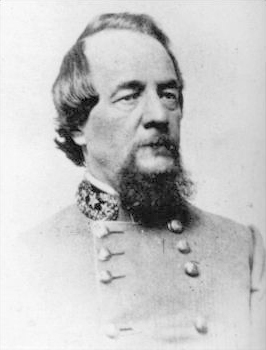
JohnsonE

Johnson’s Division- MG Edward Johnson

Steuart’s Brigade- BG George H. Steuart
1st Maryland Battalion, 1st North Carolina, 3rd North Carolina, 10th Virginia, 23rd Virginia, 37th Virginia
Stonewall Brigade- BG James A. Walker
2nd Virginia, 4th Virginia, 5th Virginia, 27th Virginia, 33rd Virginia
Nicholls’ Brigade-Col Jesse M. Williams
1st Louisiana, 2nd Louisiana, 10th Louisiana, 14th Louisiana, 15th Louisiana
Jones’ Brigade- BG John M. Jones (w); Ltc Robert H. Dungan
21st Virginia, 25th Virginia, 42nd Virginia, 44th Virginia, 48th Virginia, 50th Virginia
Andrews’ Artillery Battalion- Maj Joseph W. Latimer (mw); Cpt Charles I. Raine
1st Maryland Battery, Alleghany (Virginia) Artillery, Chesapeake (Maryland) Artillery, Lee (Virginia) Battery
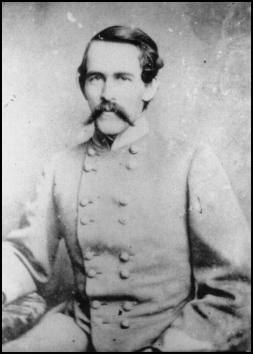
robert-rodes

Rodes’ Division- MG Robert E. Rodes

Daniel’s Brigade-BG Junius Daniel
32nd North Carolina, 43rd North Carolina, 45th North Carolina, 53rd North Carolina, 2nd North Carolina Battalion
Doles’ Brigade-BG George P. Doles
4th Georgia, 12th Georgia, 21st Georgia, 44th Georgia
Iverson’s Brigade- BG Alfred Iverson, Jr.
5th North Carolina, 12th North Carolina, 20th North Carolina, 23rd North Carolina
Ramseur’s Brigade- BG Stephen D. Ramseur
2nd North Carolina, 4th North Carolina, 14th North Carolina, 30th North Carolina
Rodes’ (old) Brigade- Col Edward A. O’Neal
3rd Alabama, 5th Alabama, 6th Alabama, 12th Alabama, 26th Alabama
Carter’s Artillery Battalion-Ltc Thomas H. Carter
Jefferson Davis (Alabama) Artillery, King William (Virginia) Artillery, Morris (Virginia) Artillery, Orange (Virginia) Artillery

Artillery Reserve- Col J. Thompson Brown
First Virginia Artillery Battalion- Cpt Willis J. Dance
2nd Richmond (Virginia) Howitzers, 3rd Richmond (Virginia) Howitzers, Powhatan (Virginia) Artillery, Rockbridge (Virginia) Artillery, Salem (Virginia) Artillery
Nelson’s Artillery Battalion- Ltc William Nelson
Amherst (Virginia) Artillery, Fluvanna (Virginia) Artillery, Milledge’s Georgia Battery
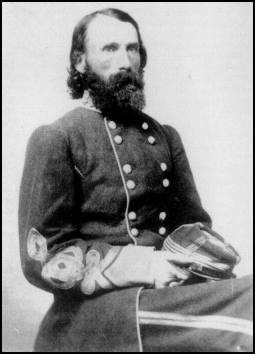
general_a_p_hill

III Corps- Lt. Gen. Ambrose Powell Hill Commanding
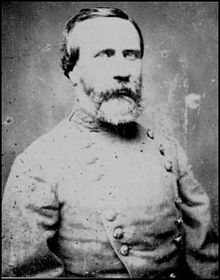
Richard_H._Anderson

Anderson’s Division- MG Richard H. Anderson
Wilcox’s Brigade- BG Cadmus M. Wilcox
8th Alabama, 9th Alabama, 10th Alabama, 11th Alabama, 14th Alabama
Mahone’s Brigade- BG William Mahone
6th Virginia, 12th Virginia, 16th Virginia, 41st Virginia, 61st Virginia
Wright’s Brigade-BG Ambrose R. Wright; Col William Gibson; BG Ambrose R. Wright
3rd Georgia, 22nd Georgia, 48th Georgia, 2nd Georgia Battalion
Perry’s Brigade- Col David Lang
2nd Florida, 5th Florida, 8th Florida
Posey’s Brigade- BG Carnot Posey (w); Col. Nathaniel Harris
12th Mississippi, 16th Mississippi, 19th Mississippi, 48th Mississippi
Cutt’s Artillery Battalion- Maj John Lane
Company A, Company B, Company C
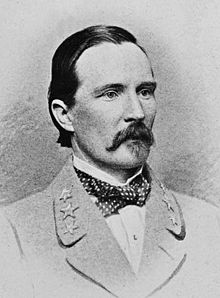
heth

Heth’s Division- MG Henry Heth (w); BG James J. Pettigrew (w)
Pettigrew’s Brigade-BG James J. Pettigrew; Col James K. Marshall (k); Maj John T. Jones (w)
11th North Carolina, 26th North Carolina, 47th North Carolina, 52nd North Carolina
Heth’s (old) Brigade- Col John M. Brockenbrough; Col Robert M. Mayo
40th Virginia, 47th Virginia, 55th Virginia, 22nd Virginia Battalion
Archer’s Brigade- BG James J. Archer (w&c); Col Birkett D. Fry (w&c); Ltc Samuel G. Shepard
13th Alabama, 5th Alabama Battalion, 1st Tennessee (Provisional Army), 7th Tennessee,  14th Tennessee
Davis’ Brigade- BG Joseph R. Davis (w)
2nd Mississippi, 11th Mississippi, 42nd Mississippi, 55th North Carolina
Garnett’s Artillery Battalion- Ltc John J. Garnett
Donaldsonville (Louisiana) Artillery, Huger (Virginia) Artillery, Lewis (Virginia) Artillery, Norfolk (Virginia) Blues Artillery
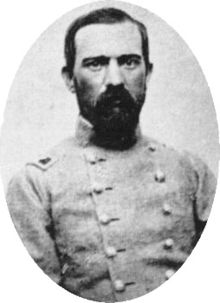
William_Dorsey_Pender

Pender’s Division-MG William D. Pender (mw); BG James H. Lane; MG Isaac R. Trimble (w&c); BG James H. Lane
McGowan’s Brigade-Col Abner M. Perrin
1st South Carolina (Provisional Army), 1st South Carolina Rifles, 12th South Carolina, 13th South Carolina, 14th South Carolina
Lane’s Brigade- BG James H. Lane; Col Clark M. Avery
7th North Carolina, 18th North Carolina, 28th North Carolina, 33rd North Carolina, 37th North Carolina
Thomas’ Brigade- BG Edward L. Thomas
14th Georgia, 35th Georgia, 45th Georgia, 49th Georgia
Scales’ Brigade- BG Alfred M. Scales (w); Ltc George T. Gordon; Col William L. J. Lowrance
13th North Carolina, 16th North Carolina, 22nd North Carolina, 34th North Carolina, 38th North Carolina
Poague’s Artillery Battalion- Maj William T. Poague
Albemarle (Virginia) Artillery, Charlotte (North Carolina) Artillery, Madison (Mississippi) Artillery, Brooke’s Virginia Battery
Artillery Reserve- Col Reuben L. Walker
McIntosh’s Artillery Battalion- Maj David G. McIntosh
Danville (Virginia) Artillery, Hardaway (Alabama) Artillery, 2nd Rockbridge (Virginia) Artillery, Johnson’s Virginia Battery
Pegram’s Artillery Battalion- Maj William R. J. Pegram; Cpt Ervin B. Brunson
Crenshaw (Virginia) Battery, Fredericksburg (Virginia) Artillery, Letcher (Virginia) Artillery, Pee Dee (South Carolina) Artillery, Purcell (Virginia) Artillery
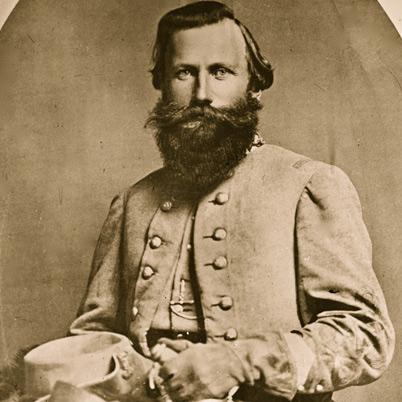
CWP015

Cavalry Division- Maj. Gen. James Ewell Brown Stuart
Hampton’s Brigade- BG Wade Hampton (w)
1st North Carolina, 1st South Carolina, 2nd South Carolina, Cobb’s (Georgia) Legion, Jeff Davis (Mississippi) Legion, Phillips (Georgia) Legion
Robertson’s Brigade (not present at Gettysburg) BG Beverly H. Robertson
4th North Carolina, 5th North Carolina
Fitzhugh Lee’s Brigade- BG Fitzhugh Lee
1st Maryland Battalion, 1st Virginia, 2nd Virginia, 3rd Virginia, 4th Virginia, 5th Virginia
Jenkins’ Brigade- BG Albert G. Jenkins (w); Col Milton J. Ferguson
14th Virginia, 16th Virginia, 17th Virginia, 34th Virginia Battn., 36th Virginia Battn., Jackson’s (Virginia) Battery
William H. F. (Rooney) Lee’s Brigade- Col John R. Chambliss, Jr.
2nd North Carolina Cavalry, 9th Virginia, 10th Virginia, 13th Virginia
Jones’ Brigade- BG William E. Jones
6th Virginia, 7th Virginia, 11th Virginia
Stuart’s Horse Artillery- Maj Robert F. Beckham
Breathed’s (Virginia) Battery, Chew’s (Virginia) Battery, Griffin’s (Maryland) Battery Hart’s (South Carolina) Battery, McGregor’s (Virginia) Battery, Moorman’s (Virginia) Battery
Imboden’s Command- BG John D. Imboden
18th Virginia, 62nd Virginia, McNeill’s Company (Virginia), Staunton (Virginia) Battery

Union Order of Battle
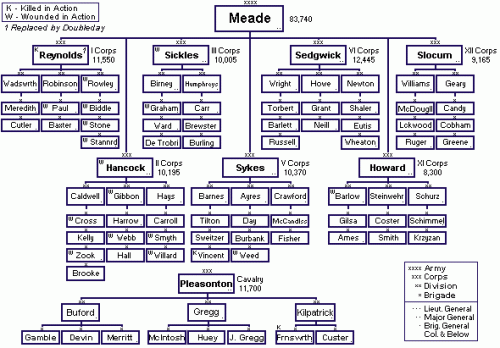
unionorg

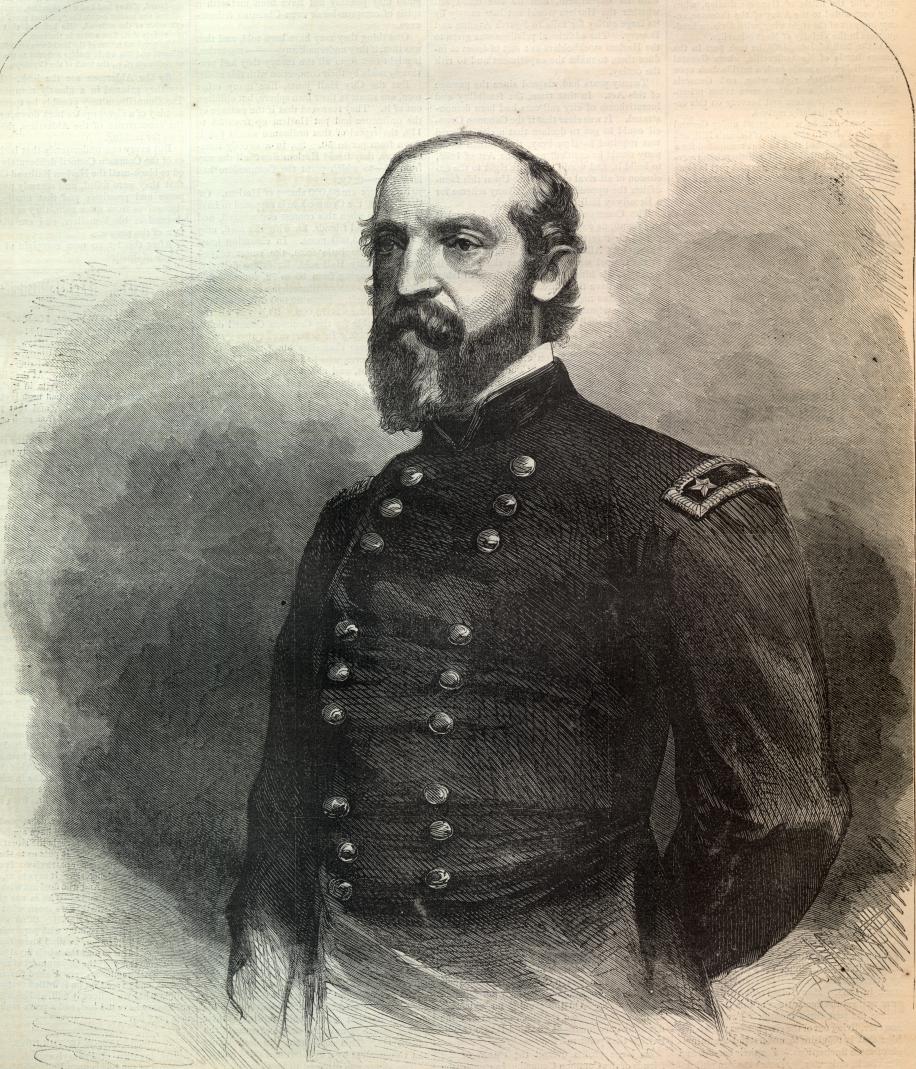
general-george-meade

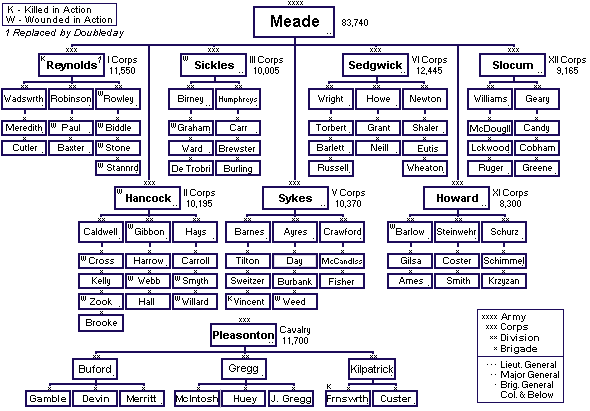
Army of the Potomac – Major General George Gordon Meade, Commanding


General Staff: Chief of Staff: Maj. Gen. Daniel Butterfield, Chief of Artillery: Brig. Gen. Henry J. Hunt, Medical Director: Maj Jonathan Letterman, Chief of Engineers: Brig. Gen. Gouverneur K. Warren, Bureau of Military Information: Col. George H. Sharpe
Command of the Provost Marshal General: Brig. Gen. Marsena R. Patrick
93rd New York: Col. John S. Crocker, 8th United States (8 companies): Capt. Edwin W. H. Read, 2nd Pennsylvania Cavalry: Col. R. Butler Price, 6th Pennsylvania Cavalry (Companies E&I): Capt. James Starr, Regular cavalry
Engineer Brigade: Brig. Gen. Henry W. Benham
15th New York (3 companies): Maj Walter L. Cassin, 50th New York: Col. William H. Pettes, U.S. Battalion: Capt. George H. Mendell
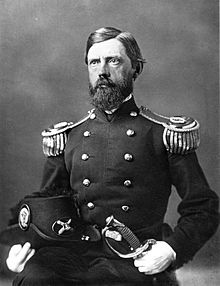
GenJFRenyolds

I Corps- Maj. Gen. John F. Reynolds (k)
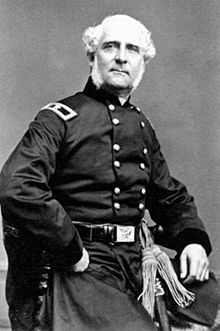
JSWadsworthBGenleft

First Division- Brig. Gen. James S. Wadsworth
1st  Brigade (The Iron Brigade)-Brig. Gen. Solomon Meredith (w); Col.. William W. Robinson
19th Indiana, 24th Michigan, 2nd Wisconsin, 6th Wisconsin, 7th Wisconsin
2nd Brigade- Brig. Gen. Lysander Cutler
7th Indiana, 76th New York, 84th New York (14th Militia), 95th New York, 147th New York, 56th Pennsylvania (9 companies)
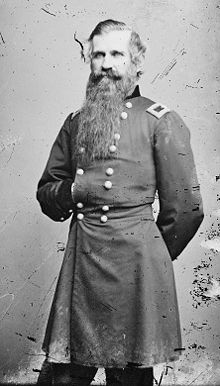
john_Cleveland_Robinson

Second Division- Brig. Gen. John C. Robinson
1st Brigade- Brig. Gen. Gabriel R. Paul (w); Col. Samuel H. Leonard (w); Col. Adrian R. Root (w&c); Col. Richard Coulter (w); Col. Peter Lyle; Col. Richard Coulter
16th Maine, 13th Massachusetts, 94th New York, 104th New York, 107th Pennsylvania
2nd Brigade-Brig. Gen. Henry Baxter
12th Massachusetts, 83rd New York (9th Militia), 97th New York, 11th Pennsylvania, 88th Pennsylvania, 90th Pennsylvania
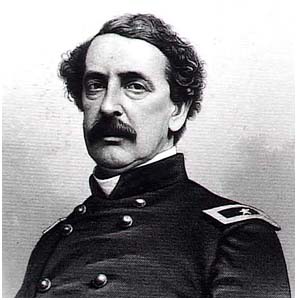
abner-doubleday

Third Division- Maj. Gen. Abner Doubleday; Brig. Gen. Thomas A. Rowley; Maj. Gen. Abner Doubleday
1st Brigade- Col. Chapman Biddle; Brig. Gen. Thomas A. Rowley; Col. Chapman Biddle
80th New York (20th Militia), 121st Pennsylvania, 142nd Pennsylvania, 151st Pennsylvania
2nd Brigade-Col. Roy Stone (w); Col. Langhorne Wister (w); Col. Edmund L. Dana
143rd Pennsylvania, 149th Pennsylvania, 150th Pennsylvania
3rd Brigade- Brig. Gen. George J. Stannard (w); Col. Francis V. Randall
13th Vermont, 14th Vermont, 16th Vermont
Artillery Brigade- Col. Charles S. Wainwright
Maine Light, 2nd Battery (B), Maine Light, 5th Battery (E), 1st New York Light, Batteries E&L, 1st Pennsylvania Light, Battery B, 4th United States, Battery B
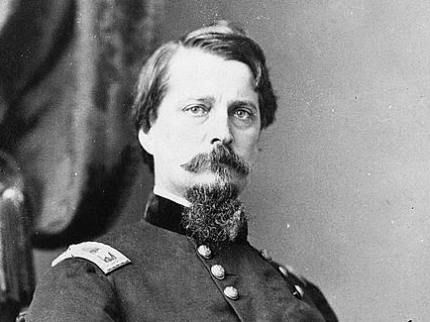
HancockWinfield_teaser

II Corps- Maj. Gen. Winfield S. Hancock (w); Brig. Gen. John Gibbon; Brig. Gen. William Hays
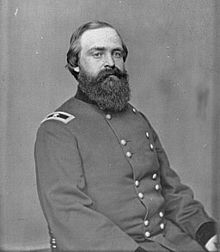
John_C._Caldwell

First Division- Brig. Gen.  John C. Caldwell
1st Brigade- Col. Edward E. Cross (mw); Col. H. Boyd McKeen
5th New Hampshire, 61st New York, 81st Pennsylvania , 148th Pennsylvania
2nd Brigade (The Irish Brigade) – Col. Patrick Kelly
28th Massachusetts, 63rd New York (2 companies),69th New York (2 companies), 88th New York (2 companies), 116th Pennsylvania (4 companies)
3rd Brigade-Brig. Gen. Samuel K. Zook (mw); Lt. Col.. Charles G. Freudenberg (w); Col. Richard P. Roberts (k); Lt. Col.. John Fraser
52nd New York, 57th New York, 66th New York, 140th Pennsylvania
4th Brigade- Col. John R. Brooke (w)
27th Connecticut (2 companies), 2nd Delaware, 64th New York, 53rd Pennsylvania, 145th Pennsylvania (7 companies)
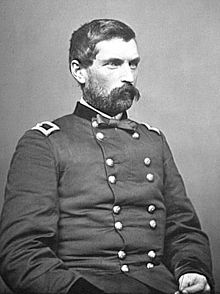
john_Gibbon

Second Division- Brig. Gen. John Gibbon (w); Brig. Gen. William Harrow
1st Brigade- Brig. Gen. William Harrow; Col. Francis E. Heath
19th Maine, 15th Massachusetts, 1st Minnesota, 82nd New York (2nd Militia)
2nd Brigade- Brig. Gen. Alexander S. Webb (w)
69th Pennsylvania, 71st Pennsylvania, 72nd Pennsylvania, 106th Pennsylvania
3rd Brigade- Col. Norman J. Hall
19th Massachusetts, 20th Massachusetts, 7th Michigan, 42nd New York, 59th New York (4 companies)
Unattached: Massachusetts Sharpshooters, 1st Company
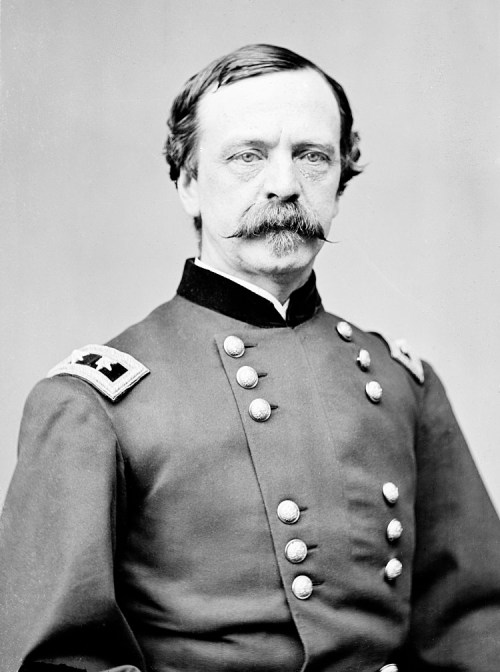
Daniel_Edgar_Sickles

III Corps- Maj. Gen. Daniel E. Sickles (w); Maj. Gen. David B. Birney
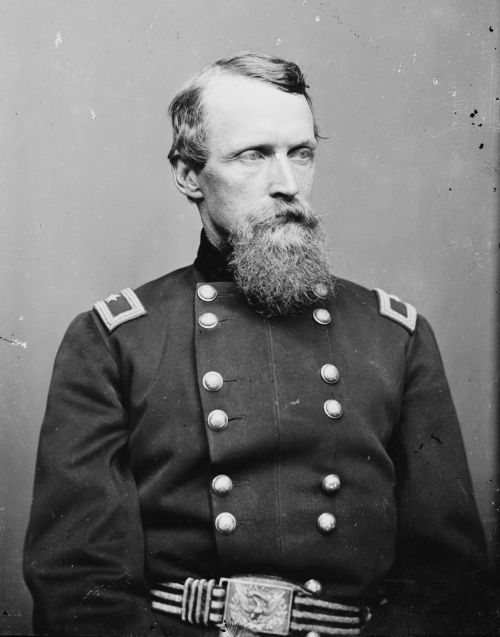
David_B._Birney_-_Brady-Handy

First Division- Maj. Gen. David B. Birney; Brig. Gen. J. H. Hobart Ward (w)
1st Brigade- Brig. Gen. Charles K. Graham (w&c); Col. Andrew H. Tippin; Col. Henry J. Madill
57th Pennsylvania (8 companies), 63rd Pennsylvania, 68th Pennsylvania, 105th Pennsylvania, 114th Pennsylvania, 141st Pennsylvania
2nd Brigade- Brig. Gen. J. H. Hobart Ward; Col. Hiram Berdan
20th Indiana, 3rd Maine, 4th Maine, 86th New York, 124th New York, 99th Pennsylvania, 1st United States Sharpshooters, 2nd United States Sharpshooters (8 companies)
3rd Brigade- Col. P. Régis de Trobriand
17th Maine, 3rd Michigan, 5th Michigan, 40th New York, 110th Pennsylvania (6 companies)
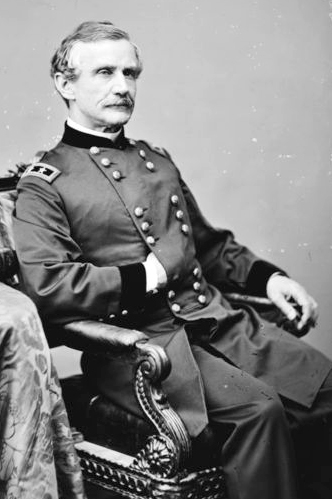
HumphreysA

Second Division- Brig. Gen. Andrew A. Humphreys
1st Brigade- Brig. Gen. Joseph B. Carr (w)
1st Massachusetts, 11th Massachusetts, 16th Massachusetts, 12th New Hampshire, 11th New Jersey,26th Pennsylvania
2nd Brigade-Col. William R. Brewster
70th New York, 71st New York, 72nd New York, 73rd New York, 74th New York, 120th New York
3rd Brigade-Col. George C. Burling
2nd New Hampshire, 5th New Jersey, 6th New Jersey, 7th New Jersey, 8th New Jersey,115th Pennsylvania
Artillery Brigade-Capt. George E. Randolph (w); Capt. A. Judson Clark
1st New Jersey Light, Battery B, 1st New York Light, Battery D, New York Light, 4th Battery, 1st Rhode Island Light, Battery E, 4th United States, Battery K
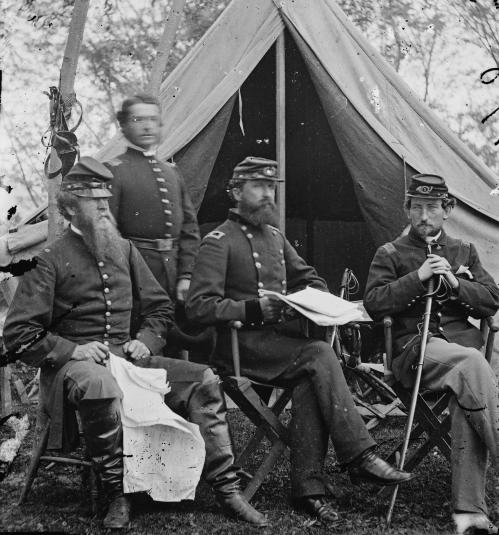
George_Sykes_and_staff_-_Brady-Handy

V Corps-Maj. Gen. George Sykes

James_Barnes

First Division- Brig. Gen. James Barnes (w)
1st Brigade-Col. William S. Tilton
18th Massachusetts, 22nd Massachusetts, 1st Michigan, 118th Pennsylvania
2nd Brigade-Col. Jacob B. Sweitzer
9th Massachusetts, 32nd Massachusetts, 4th Michigan, 62nd Pennsylvania
3rd Brigade-Col. Strong Vincent (mw); Col. James C. Rice
20th Maine, 16th Michigan, 44th New York, 83rd Pennsylvania
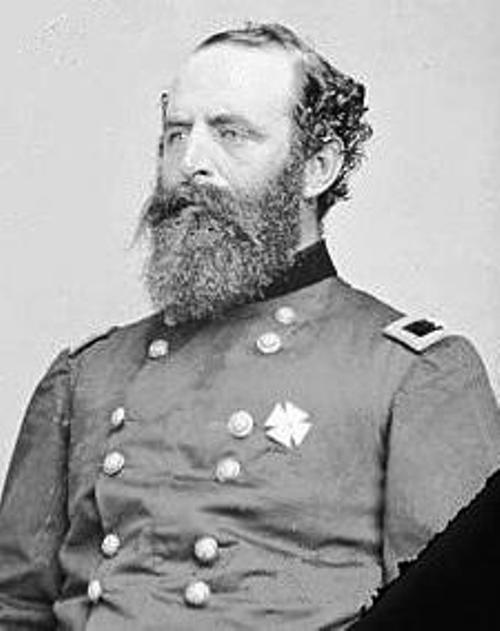
2.-Brig.-Gen.-Romeyn-B.-Ayres

Second Division-Brig. Gen. Romeyn B. Ayres
1st Brigade- Col. Hannibal Day
3rd United States (Cos. B, C, E, G, I and K), 4th United States (Cos. C, F, H and K), 6th United States (Cos. D, F, G, H and I), 12th United States (Cos. A, B, C, D and G, 1st Bn. and Cos. A, C and D, 2nd Bn.), 14th United States (Cos. A, B, D, E, F and G, 1st Bn. and Cos. F and G, 2nd Bn.)
2nd Brigade-Col. Sidney Burbank
2nd United States (Cos. B, C, F, H, I and K), 7th United States (Cos. A, B, E and I), 10th United States (Cos. D, G and H), 11th United States (Cos. B, C, D, E, F and G),17th United States (Cos. A, C, D, G and H, 1st Bn. and Cos. A and B, 2nd Bn.)
3rd Brigade-Brig. Gen. Stephen H. Weed (k); Col. Kenner Garrard
140th New York, 146th New York, 91st Pennsylvania, 155th Pennsylvania
Third Division-Brig. Gen. Samuel W. Crawford
1st Brigade-Col. William McCandless
1st Pennsylvania Reserves (9 companies), 2nd Pennsylvania Reserves, 6th Pennsylvania Reserves,13th Pennsylvania Reserves
2nd Brigade (not present—assigned to Washington defenses)
3rd Brigade-Col. Joseph W. Fisher
5th Pennsylvania Reserves, 9th Pennsylvania Reserves, 10th Pennsylvania Reserves, 11th Pennsylvania Reserves, 12th Pennsylvania Reserves (9 companies)
Artillery Brigade-Capt. Augustus P. Martin
Massachusetts Light, 3rd Battery, 1st New York Light, Battery C, 1st Ohio Light, Battery L, 5th United States, Battery D, 5th United States, Battery I
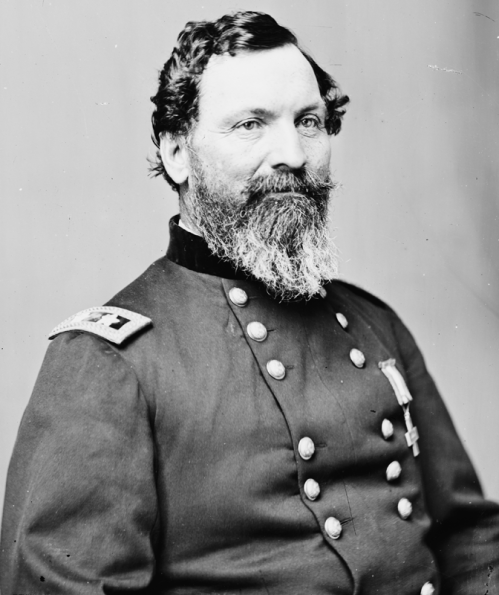
John_Sedgwick

VI Corps-Maj. Gen. John Sedgwick

HGWright

First Division-Brig. Gen. Horatio G. Wright
1st Brigade-Brig. Gen. Alfred T. A. Torbert
1st New Jersey, 2nd New Jersey, 3rd New Jersey, 15th New Jersey
2nd Brigade-Brig. Gen. Joseph J. Bartlett; Col. Emory Upton
5th Maine, 121st New York, 95th Pennsylvania, 96th Pennsylvania
3rd Brigade-Brig. Gen. David A. Russell
6th Maine, 49th Pennsylvania (4 companies), 119th Pennsylvania, 5th Wisconsin

Provost Guard: 4th New Jersey (3 companies): Capt. William R. Maxwell
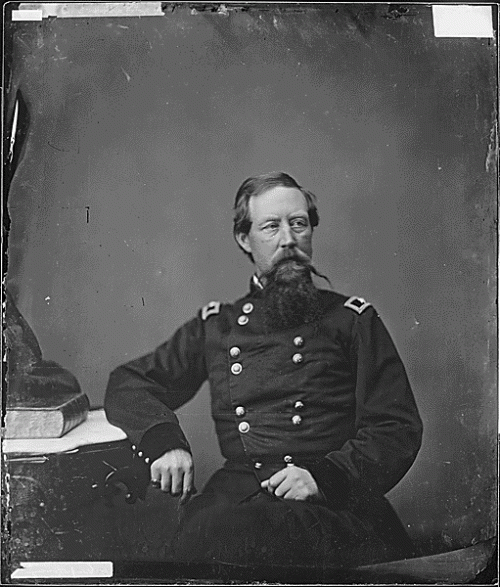
albion-howe-111-b-4713

Second Division- Brig. Gen. Albion P. Howe
2nd Brigade-Col. Lewis A. Grant
2nd Vermont, 3rd Vermont, 4th Vermont, 5th Vermont, 6th Vermont
3rd Brigade-Brig. Gen. Thomas H. Neill
7th Maine (6 companies), 33rd New York (detachment), 43rd New York, 49th New York, 77th New York, 61st Pennsylvania
NewtonJohn

Third Division-Maj. Gen. John Newton; Brig. Gen. Frank Wheaton
1st Brigade-Brig. Gen. Alexander Shaler
65th New York, 67th New York, 122nd New York, 23rd Pennsylvania, 82nd Pennsylvania
2nd Brigade-Col. Henry L. Eustis
7th Massachusetts, 10th Massachusetts, 37th Massachusetts, 2nd Rhode Island.
3rd Brigade-Brig. Gen. Frank Wheaton; Col. David J. Nevin
62nd New York, 93rd Pennsylvania, 98th Pennsylvania,139th Pennsylvania
Artillery Brigade-Col. Charles H. Tompkins
Massachusetts Light, 1st Battery, New York Light, 1st Battery, New York Light, 3rd Battery, 1st Rhode Island Light, Battery C, 1st Rhode Island Light, Battery G, 2nd United States, Battery D, 2nd United States, Battery G, 5th United States, Battery F
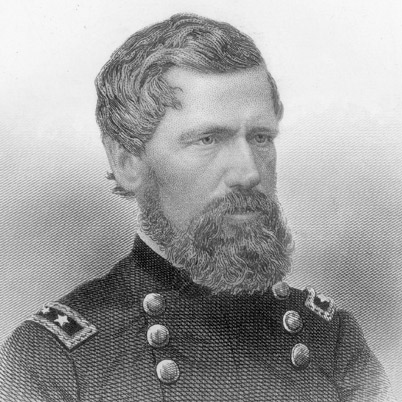
Oliver-Otis-Howard-9345101-1-402

XI Corps-Maj. Gen. Oliver O. Howard; Maj. Gen. Carl Schurz
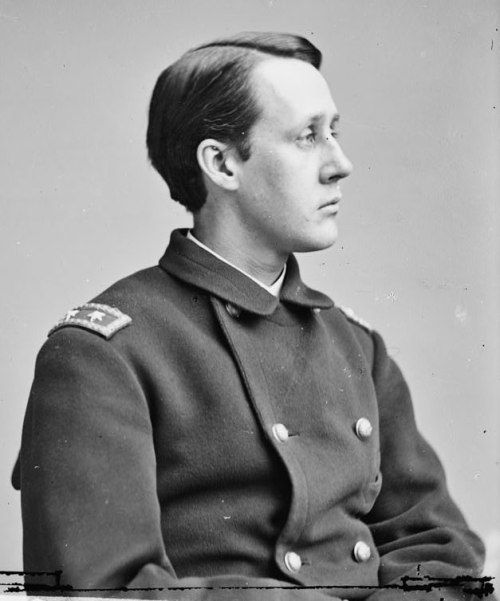
Francis_C._Barlow

First Division-Brig. Gen. Francis C. Barlow (w); Brig. Gen. Adelbert Ames
1st Brigade-Col. Leopold von Gilsa
1st New York (9 companies), 54th New York, 68th New York, 153rd Pennsylvania
2nd Brigade-Brig. Gen. Adelbert Ames; Col. Andrew L. Harris
17th Connecticut, 25th Ohio, 75th Ohio, 107th Ohio
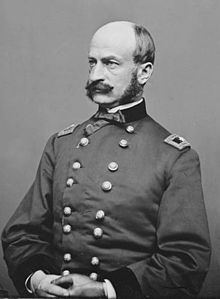
Adolph_von_Steinwehr

Second Division-Brig. Gen. Adolph von Steinwehr
1st Brigade-Col. Charles R. Coster
134th New York, 154th New York, 27th Pennsylvania, 73rd Pennsylvania
2nd Brigade  Col. Orland Smith
33rd Massachusetts, 136th New York, 55th Ohio, 73rd Ohio
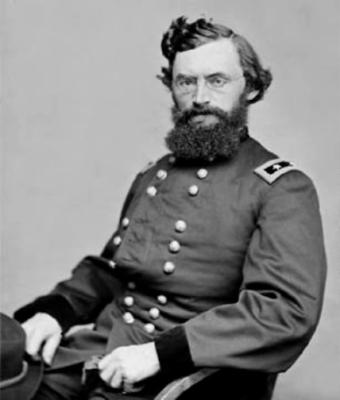
schurz

Third Division-Maj. Gen. Carl Schurz; Brig. Gen. Alexander Schimmelfennig; Maj. Gen. Carl Schurz
1st Brigade-Brig. Gen. Alexander Schimmelfennig; Col. George von Amsberg
82nd Illinois, 45th New York, 157th New York, 61st Ohio, 74th Pennsylvania
2nd Brigade-Col. Wladimir Krzyzanowski
58th New York, 19th New York, 82nd Ohio, 75th Pennsylvania, 26th Wisconsin
Artillery Brigade-Maj Thomas W. Osborn
1st New York Light, Battery I, New York Light, 13th Battery, 1st Ohio Light, Battery I, 1st Ohio Light, Battery K, 4th United States, Battery G
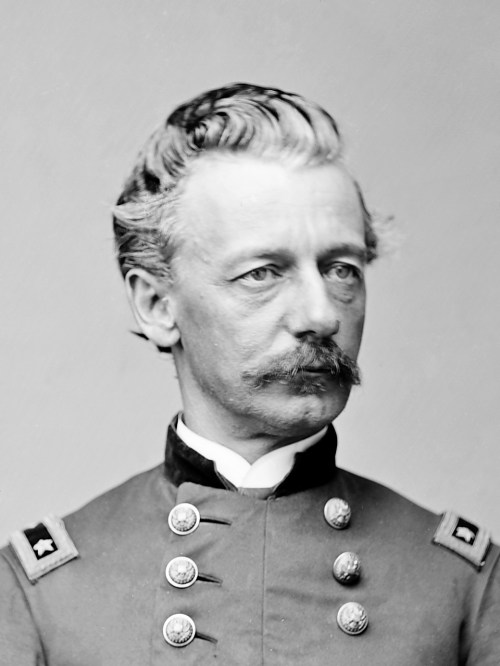
Henry_Warner_Slocum

XII Corps-Maj. Gen. Henry W. Slocum; Brig. Gen. Alpheus S. Williams
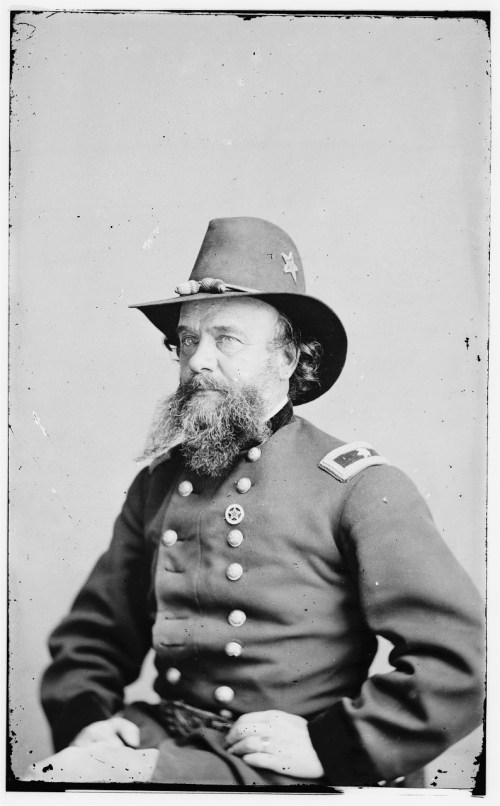
alpheus-williams1

First Division-Brig. Gen. Alpheus S. Williams; Brig. Gen. Thomas H. Ruger
1st Brigade-Col. Archibald L. McDougall
5th Connecticut, 20th Connecticut, 3rd Maryland, 123rd New York, 145th New York, 46th Pennsylvania
3rd Brigade-Brig. Gen. Thomas H. Ruger; Col. Silas Colgrove
27th Indiana, 2nd Massachusetts, 13th New Jersey, 107th New York, 3rd Wisconsin
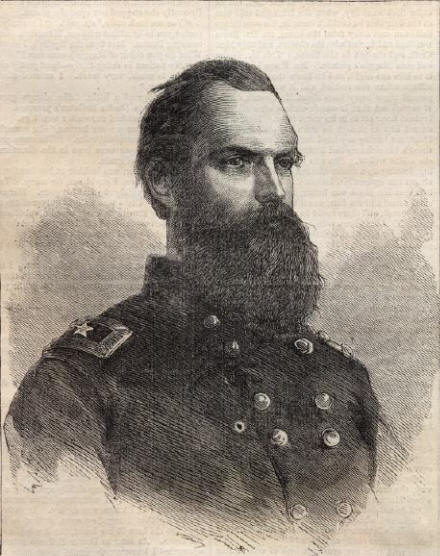
General-John-Geary

Second Division-Brig. Gen. John W. Geary
1st Brigade-Col. Charles Candy
5th Ohio, 7th Ohio, 29th Ohio, 66th Ohio, 28th Pennsylvania, 147th Pennsylvania (8 companies)
2nd Brigade-Col. George A. Cobham, Jr.; Brig. Gen. Thomas L. Kane
29th Pennsylvania, 109th Pennsylvania, 111th Pennsylvania
3rd Brigade-Brig. Gen. George S. Greene (w)
60th New York, 78th New York, 102nd New York, 137th New York, 149th New York
Lockwood’s Brigade-Brig. Gen. Henry H. Lockwood
1st Maryland, Potomac Home Brigade, 1st Maryland, Eastern Shore,150th New York
Artillery Brigade-Lt Edward D. Muhlenberg
1st New York Light, Battery M, Pennsylvania Light, Battery E,4th United States, Battery F  5th United States, Battery K
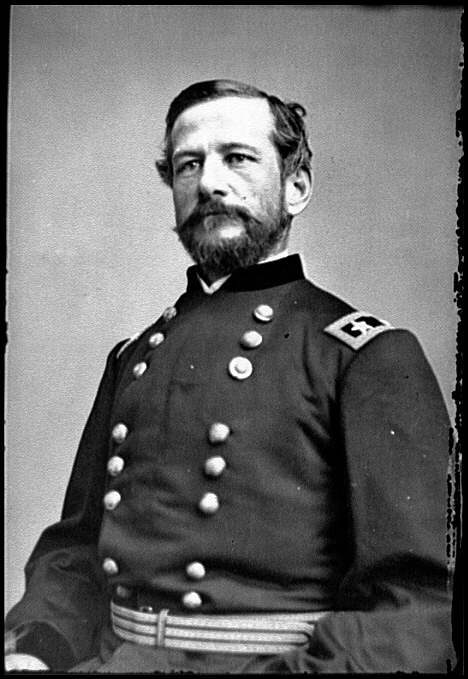
pleasonton

Cavalry Corps -Maj. Gen. Alfred Pleasonton
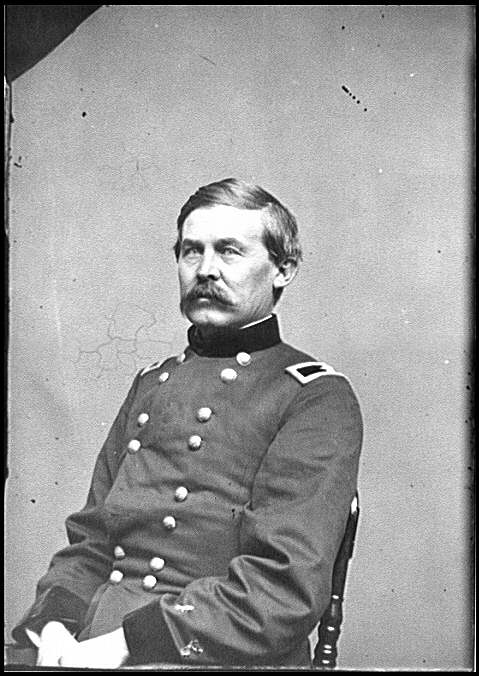
buford

First Division-Brig. Gen. John Buford
1st Brigade-Col. William Gamble
8th Illinois, 12th Illinois (4 cos.) & 3rd Indiana (6 cos.), 8th New York
2nd Brigade-Col. Thomas Devin
6th New York (6 companies), 9th New York, 17th Pennsylvania, 3rd West Virginia, Companies A and C
Reserve Brigade-Brig. Gen. Wesley Merritt
6th Pennsylvania, 1st United States, 2nd United States, 5th United States, 6th United States
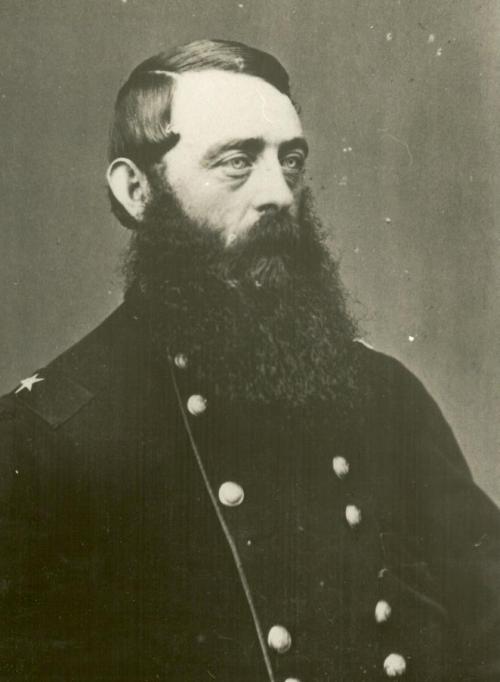
dmgregg

Second Division-Brig. Gen. David Gregg
1st Brigade-Col. John B. McIntosh
1st Maryland (11 companies), Purnell (Maryland) Legion, Company A, 1st Massachusetts, 1st New Jersey, 1st Pennsylvania, 3rd Pennsylvania, 3rd Pennsylvania Heavy Artillery, Section, Battery H
3rd Brigade-Col. John I. Gregg
1st Maine (10 companies), 10th New York, 4th Pennsylvania, 16th Pennsylvania
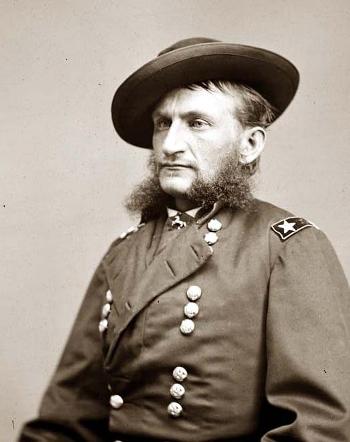
Kilpatrick-Judson(1)

Third Division-Brig. Gen. Judson Kilpatrick
1st Brigade-Brig. Gen. Elon J. Farnsworth (k); Col. Nathaniel P. Richmond
5th New York, 18th Pennsylvania, 1st Vermont, 1st West Virginia (10 companies)
2nd Brigade-Brig. Gen. George A. Custer
1st Michigan, 5th Michigan, 6th Michigan, 7th Michigan: (10 companies)
Horse Artillery
1st Brigade-Capt. James M. Robertson
9th Michigan Battery, 6th New York Battery,2nd United States, Batteries B and L, 2nd United States, Battery M, 4th United States, Battery E
2nd Brigade-Capt. John C. Tidball
1st United States, Batteries E and G, 1st United States, Battery K, 2nd United States, Battery A
Robert_O_Tyler

Artillery Reserve-Brig. Gen. Robert O. Tyler, Capt. James M. Robertson

1st Regular Brigade-Capt. Dunbar R. Ransom
1st United States, Battery H, 3rd United States, Batteries F and K, 4th United States, Battery C, 5th United States, Battery C
1st Volunteer Brigade-Lt. Col.. Freeman McGilvery
Massachusetts Light, 5th Battery (E), Massachusetts Light, 9th Battery, New York Light, 15th Battery, Pennsylvania Light, Batteries C and F
2nd Volunteer Brigade-Capt. Elijah D. Taft
1st Connecticut Heavy, Battery B, 1st Connecticut Heavy, Battery M, Connecticut Light, 2nd Battery. New York Light, 5th Battery
3rd Volunteer Brigade-Capt. James F. Huntington
New Hampshire Light, 1st Battery, 1st Ohio Light, Battery H, 1st Pennsylvania Light, Batteries F and G, West Virginia Light, Battery C
4th Volunteer Brigade-Capt. Robert H. Fitzhugh
Maine Light, 6th Battery, Maryland Light, Battery A, New Jersey Light, 1st Battery, 1st New York Light, Battery G, 1st New York Light, Battery K
Train Guard: 4th New Jersey Infantry (7 companies)

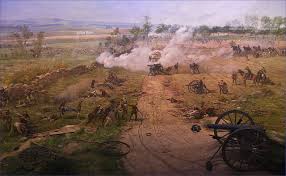
Leave a comment

Filed under civil war, History, Military

Gettysburg: June 28th the Day of Surprises

army-potomac-1500Army of the Potomac on the March


If you were an ordinary soldier in either the Army of the Potomac or Army of Northern Virginia June 28th 1863 would not have been much different than any of the previous days. Both armies had been on the march, both were moving north and with the exception of a few minor cavalry engagements no troops had yet engaged in battle.

However it is almost never good when a commander gets surprised. On June 28th 1863, three men, General Robert E Lee, Lieutenant General J.E.B. Stuart and Major General George G Meade all were surprised by unexpected, and in the case of Lee and Stuart truly disturbing news. The manner in which each responded was critical to how the Battle of Gettysburg unfolded and indicative of each mans’ ability as a commander.

Harrison-1-

Harrison

On the morning of June 28th Lieutenant General James Longstreet was alerted to the presence of a man claiming to have information on the movement and location of the Army of the Potomac. The man’s name was Harrison and that he was an actor. Harrison is one of those mysterious figures that occasionally show up in the context of a historical event and make it even more interesting. He reported the location of Federal Cavalry as well as the location of five of the Army of the Potomac’s seven army corps, all too close for comfort. Questioned about the location and activities of Stuart, Harrison could give no information.

gettysburg-general-lee

Any commander that embarks on a high risk offensive operation in enemy territory must do so with great care, especially in regard to command and control of his forces. This is especially true regarding reconnaissance. Lee had been operating blind for well over a week and this was his fault. Because Lee had issued such vague orders Stuart was well to the east conducting his ride around the Federal army and completely useless to Lee.

longstreet

Longstreet

Though Lee still had three brigades of Stuart’s Cavalry Division available, none were in a position to assist his reconnaissance needs. Again blame for this has to be laid at the feet of Lee. Robertson’s and Jones’ brigades were still deep in Virginia guarding Snicker’s and Ashby’s Gap. Iboden’s Brigade was to the west at Hancock Maryland. Jenkins’ brigade, which was not a part of Stuart’s division, was far to the front with Ewell’s Corps.

In the case of the selection of Jones’ and Robertson’s brigades for the mission of screening Lee, Stuart made a critical mistake. Jones and Robertson both had serious deficiencies as leaders and proved that they had Lee’s “confidence or understood his expectations…and Stuart badly misread the amount of personal connection his superior required.”[i] Longstreet had recommended that Stuart assign the excellent Wade Hampton and his brigade to the mission of screening the Army, but Stuart ignored his counsel.

CWP015

Stuart

While Lee’s orders to Stuart allowed Stuart to go off on his mission Lee had plenty of cavalry available but employed it in a woeful manner and did not take the steps necessary to ensure that the commanders assigned understood his expectations. This was another critical mistake made by Lee and as Alan.T. Nolan wrote: “There seems to be no excuse for Lee’s finding himself at Chambersburg on the 28th without a single regiment of cavalry”[ii] The tragic thing for the Confederacy was that Lee would make this same mistake in failing to communicate his intent with other subordinates throughout the campaign.

Lee assumed quite wrongly that the reason he had not heard from Stuart was that Hooker’s army had not moved. This was a bad miscalculation on Lee’s part and Longstreet trusted Harrison and promptly reported the information to Lee. Lee refused to see Harrison as he had little appreciation for or confidence in the words of “spies.” That being said Lee reacted with alacrity and issued orders to concentrate his army near Cashtown.

The surprise of the Union Army being concentrated so near him took away Lee’s ability to retain the initiative of a campaign of maneuver. Likewise, because his army was so scattered he was now in danger of being hit and defeated in detail by the Federal army. It was a dangerous position for him to be in and he knew it. In a sense he was fortunate that on the 28th the Army of the Potomac was changing command and unable to strike while he was so vulnerable.

Seventy miles away J.E.B. Stuart was at Rockville Maryland where despite learning that the Army of the Potomac was moving did not hasten to re-join the main army. Instead, he and his troopers became distracted and captured a large Federal wagon train, 125 brand new wagons carrying supplies north. Instead of burning them and leaving his prisoners he decided to advance into Pennsylvania with his treasure. The effect was to radically slow down his march and keep him out of the battle when Lee most needed his presence.

While Lee and Stuart reacted to surprises that were largely of their own making another officer received a surprise of his own. On the night of June 27th George Meade was simply one of seven Corps Commanders in the Army of the Potomac. That changed suddenly when he was awoken at 3 Am on the 28th by Halleck’s messenger and Deputy Adjutant General Colonel James Hardie. In his hand Hardie had a letter of instruction from Halleck which began: “You will receive with this the order of the President placing you in command of the Army of the Potomac.” [iii]

meade2

Meade

Meade, though he desired the appointment as commander of the Army did not expect it.  He believed that if Hooker was relieved of command that John Reynolds of First Corps or another would receive it. He was outranked by two Corps commanders including Reynolds. Meade wrote to his wife the reasons he would not get command a few days before: “because I have no friends, political or others, who press or advance my claims or pretentions.”[iv] The latter was not because of he did not have friends, but because unlike Hooker, Sickles and so many others he stayed out of the various political cabals in the army and their constant intrigues.

The order gave Meade command of the troops at Harper’s Ferry which had been denied to Hooker just days before. It also gave him freedom of command. It read: “You will not be hampered by any minute instructions from these headquarters” and “you are free to act as you deem proper under the circumstances as they arise.”[v] Likewise he was authorized to command General Couch’s forces along the Susquehanna. A further power given to Meade which had not been given to previous commanders of the Army of the Potomac was the authority to relieve from command and dismiss officers from the army, or appoint to command officers regardless of seniority as he saw fit. It was a power that during the tumult of battle that he would use well.

The appointment of Meade was met with relief by most of his fellow Corps commanders. He was respected, despite having a temper which would occasionally erupt and send him into busts of rage. He was viewed as a truthful, honest and caring commander who after a blow up would do what he could to reconcile. He was passionate about the lives of his troops and whenever possible avoided battles that he believed their sacrifice would be in vain. He knew his trade, paid close attention to detail and knew and understood his troops and commanders. He had earned respect throughout his career and during the battles on the Peninsula, Antietam, Fredericksburg and Chancellorsville proved that he was an excellent leader and commander of troops.

Meade had an immense task to accomplish. When he went to bed on the night of the 27th he was unaware of the locations of the bulk of the Federal Army and knew that Lee was already deep in Pennsylvania. Meade was determined to bring Lee to battle was cautious as he did not want to take a chance of his forces being split up and defeated in detail. He knew that if he was to defeat Lee he had to concentrate his combat power. He wired Halleck that he would “move toward the Susquehanna keeping Baltimore and Washington well covered, and if the enemy is checked in his attempt to cross the Susquehanna or if he turns toward Baltimore, to give him battle.”[vi] He prepared a fallback position along Pipe Creek and gave his Corps commanders permission to withdraw back to the Pipe Creek line outside Taneytown Maryland if they felt threatened by a larger Confederate force.

He kept General Daniel Butterfield as his Chief of Staff despite Butterfield’s close association with Hooker and his political cabal and appointed Major General George Sykes to command his old V Corps. He also wired Halleck with an “unheard of request: to promote in one jump three brilliant young officers from the rank of captain to that of brigadier general. They were Elon J. Farnsworth of the 8th Illinois Cavalry, George A Custer of the 5th United States Cavalry and Wesley Merritt of the 2nd United States Cavalry.”[vii] Each was appointed to command brigades in Pleasanton’s Cavalry Corps which was being reorganized that day.

buford-on-mcphersons-ridge

Meade recognized the importance of Gettysburg and began to move his forces toward the town even as Lee gathered his army. By the evening of the 30th Meade’s 1st Cavalry Division under the command of Brigadier General John Buford detected Confederate infantry to the west of the town. Buford with a keen eye for terrain instantly recognized that it was favorable ground. He knew that the battle was to be there and sent word back to John Reynolds, commander of I Corps:

“Have Occupied Gettysburg. Contacted large force of Reb infantry. I think they are coming this way. Expect they will be here in force in the morning.”[viii]

Until tomorrow,

Peace

Padre Steve+


[i] Trudeau, Noah Andre. Gettysburg, A Testing of Courage Harper Collins, New York, 2003. p.69

[ii] Nolan, Alan T. R.E. Lee and July 1 at Gettysburgin The First Day at Gettysburg, Gallagher, Gary W. Editor, Kent State University Press, Kent Ohio 1992 p. 20

[iii] Foote, Shelby, The Civil War, A Narrative. Volume Two Fredericksburg to Meridian Random House, New York 1963 p.451

[iv] Ibid.

[v] Ibid.

[vi] Coddinton, Edwin B. The Gettysburg Campaign, A Study in Command A Touchstone Book, Simon and Shuster New York 1968 pp. 219-220

[vii] Ibid. p.220

[viii] Shaara, Michael. The Killer Angels. Ballantine Books, New York. 1974 p.40


Leave a comment

Filed under civil war, History, leadership, Military

Gettysburg, Vicksburg and the Campaign of 1863: The Relationship between Strategy and Operational Art

american14_5

Today we look at the Gettysburg Campaign in terms of how we understand the connection between strategy and operational art. In doing so we have to place it in the context that Lees campaign has in relationship to the Confederate command relationships and where it fits in the continuum of unified action as we understand it today.

To do so we have to make the connection between national strategic objectives, theater objectives, operational objective and tactical objectives. We have to explore command and control structures, staff organization and the understand the effect of the Diplomatic, Informational, Economic and Military elements of national power that impact a nations ability to wage war.

fig 1-5 jp-03

The summer campaign of 1863 in the Civil War gives us the opportunity to do this as we explore the Gettysburg campaign in relation to Vicksburg and the overall strategic situation that both sides faced.

The Confederacy had a twofold problem in its organization for war and how it conducted the war. First it had no organization at the strategic level to direct the war and it never developed a grand strategy from which its national strategic objectives could be translated for action at the theater, operational and tactical levels of warfare.

The overarching national strategic objective of the Confederacy was to attain independence. To such ends the governors of the 11 Confederate States raised units to fight any Federal armies which dared to force them back into the Union. The various states controlled the use of their units. Some kept their best units at home, while others dispatched units to Confederate armies such as Lees Army of Northern Virginia. After that there was not much thought given to how to fight the war.

Other than the stated desire for independence and their common hatred of the Yankee,there was little in the way of unity within the Confederate States. Each state viewed itself as an independent nation only loosely bound to the other states. There was much distrust of any attempt to organize a true central government with any actual authority or power in Richmond. Jefferson Davis may have been President but his country was hamstrung by its own internal divisions.

The Confederacy lacked a clear defined command structure to coordinate war efforts. This included its military operations, diplomatic efforts and economy. Jefferson Davis, an able man to be sure was a man given to suspicion and had major personality conflicts with all of his senior commanders save Robert E. Lee. These conflicts did impact operations, just as did the refusal of various states to support operations or campaigns apart from ones that impacted their state directly.

While Jefferson Davis and his Secretary of War theoretically exercised direction of the war no formal mechanism existed to coordinate the needs of the various military departments or armies. In effect each army operated independently often competing with each other for the troops, supplies and materials needed to fight, as well as having to contend with recalcitrant state governments, each loathe to sacrifice anything that might compromise their own independence. Attempts by the authorities in Richmond to centralize some measure of authority were met with resistance by the states. Thus statesrights were not only the cause of the war, but also the cause of the Confederate downfall.[i]

In a country as vast as the Confederacy that lacked the industry, transportation infrastructure, population and economic power of the North this was a hindrance that could not be overcome by the soldierly abilities of its armies alone.

VicksburgBlockade

This had a direct effect on the campaign of 1863. In the west, Confederate commanders were very much left to fend for themselves and to add to their misery failed even to coordinate their activities to meet the threat of Grant and his naval commander, Admiral David Dixon Porter. In the East, Lee having established a close relationship with Jefferson Davis as his military advisor during the first year of the war exercised a disproportionate influence on the overall strategy of the Confederacy.

Lee in theory was simply one of a number of army or department commanders, yet he was responsible for a decision that impacted the entire war effort. The Confederate cabinet could reject Lees proposal as readily as that of any other department commander, Bragg, or Pemberton or Beauregard, for example, each of whom was zealous to protect the interests of the region for which he was responsible…” But this was Lee, the first soldier of the Confederacy- the first soldier of the world…”[i] Lees plan was approved by the cabinet by a vote of five to one. The lone dissenter was Postmaster General John H. Reagan who believed a fatal mistake had been made…”[ii]

reagan

The Lone Dissenter, Postmaster General John H Reagan

Lees decision to launch an invasion of the north in hopes of a quick victory to secure independence had numerous adverse effects on the broader needs of the Confederacy at a time when the Confederacy had little room for a misstep. Lee was a remarkable commander at the operational level but his military thinking process was very much Napoleonic. To succeed Lees design required a climactic Napoleonic battle,[iii] to defeat Union armies and this was something that his new opponent Meade would not allow.

The lack of any sense of unity in the Confederate hierarchy was disastrous. The lack of agreement on a grand strategy and the inability of the Confederate States Government and the various state governments to cooperate at any level culminated in the summer of 1863 with the loss of Vicksburg and the failure of Lees invasion of Pennsylvania.

Confederate army units and their commanders generally excelled on the tactical level, and their soldiers endured hardship well. They displayed amazing individual initiative on the battlefield and they won many victories against superior forces, especially in the early part of the war. But neither the Confederate government nor the various army commanders were able to translate battlefield success to operational, theater specific or national strategic objectives.

This can be contrasted with the Union, which though it was slow to understand the nature of the war did have people who, through trial and error developed a cohesive strategy that led to success at the operational level and the tactical level. George McClellan, whatever his faults as a field commander possessed a strategic design for winning the war,[iv] the necessity of unity of command and successfully built an effective army.

meigs

General Montgomery Meigs, the Logistician

The Union understood the changing nature of modern war and in stark contrast to the inefficient and graft ridden Confederate agencies developed an efficient and well managed War Department where the importance of logistics interbureau cooperation became a paramount concern. The Quartermasters Department under the direction of Quartermaster General Montgomery Meigs was particularly efficient in supplying the needs of a military fighting on exterior lines in multiple theaters of operation.

This had a profound effect on operations. When the Union forces by necessity had to operate in enemy territory they were well supplied whereas whenever Confederate Forces conducted operations in the North or even in friendly Border States they were forced to subsist off the land. This meant that Confederate operations in the north were no more than raids, even the large invasions launched by Lee. They had no staying power to keep and hold any ground that they took in enemy territory. This can be contrasted with the Union which when it sent its forces south meant them to stay. Lee could not fathom this and because he believed that no Federal Army could stand a summer in the Deep South and that Grant would be forced to withdraw. The use of railroads to supply its far flung forces operating in the south as well as its use of maritime transportation along the coast and on inland waterways ensured that its armies could always be supplied.

Henry Halleck was the first true American military theorist who published Elements of Military Art and Science in 1846. While his is often given short shrift because he was not an effective field commander, and had an acerbic personality which rubbed people the wrong way was one of the most important individuals in organizing the eventual Union victory. This included matters of strategy, picking effective subordinate commanders and understanding the logistical foundations of strategy.

Weigley wrote of Halleck:

He sponsored and encouraged the operations of Brigadier General Ulysses. S. Grant and Flag Officer Andrew H. Foote that captured Forts Henry and Donaldson in February 1862 and  thereby opened up the Tennessee and Cumberland Rivers for Union penetration deep into the state of Tennessee and toward the strategically important Memphis and Charleston Railroad. Hallecks insights into the logistical foundations of strategy proved consistently accurate. Throughout the war, he maintained a shrewd eye for logistically viable lines of operation for the Union forces, and he increasingly recognized that one of the most effective weapons of offensive strategy, in an age when battle meant exposure to rifled firepower, was not to aim directly at the enemy armies but at their logistical base.[i]

Halleck was also instrumental in helping to oust Hooker, raise Meade to command the Army of the Potomac. When Lincoln brought Grant east to become General in Chief Halleck took on the new position of Chief of Staff. This was a task that he fulfilled admirably, allowing Grant to remain in the field and ensuring clear communication between Lincoln and Grant as well as relieving Grant of the burden of personally corresponding with his department commanders.[ii]

By establishing what we now understand as the beginning of a modern command and staff organizational structure the Union was far more able to link its national, theater and operational level objectives with its tactical objectives, even when some of its commanders were not as good as Confederates and blundered into defeats.

In the end during the summer of 1863 it was the Union which was better able to link the ends, ways and means of the strategic direction of the war. This is something that Davis and Lee were unable to do as they struggled with political division, a lack of cooperation from the states, and the lack of any true grand strategy.

Lee’s strategy of the offensive was wrong and compounded the problems faced by the Confederacy. The losses that his army suffered were irreplaceable, not just in terms of overall numbers of soldiers but in terms of his mid-level leaders, his battalion, regiment and brigade commanders who suffered grievous losses and were even more critical to the leadership of his army.

Lee recognized the terrible effects of his officer casualties in a letter to General John Bell Hood on May 21st: There never were such men in an Army before. But there is the difficulty- proper commanders- where can they be obtained?[iii] His actions at Gettysburg only added to his crisis in keeping his army supplied with competent commanders, as so many were left dead, wounded or captured during the campaign.

Even had Lee won the battle of Gettysburg his casualties in Union territory would have been prohibitive. He would have spent most of his ammunition, incurred serious losses in personnel and horses, and been burdened by not having to care for his wounded and still been deep in Union territory away from his nearest logistics hub. Had Lee won at Gettysburg his ammunition would have been nearly exhausted in victory, while Federal logistics would have improved as the Army of the Potomac fell back toward the eastern cities.[iv] This would have forced him to withdraw from Pennsylvania even had he been victorious.

It is true that a victory on northern soil might have emboldened the peace party in the North, but even then that could not have an effect on the desired effect on the Lincoln Administration until the election of 1864, still 16 months away. Likewise, in July 1863 such a victory would probably not have triggered foreign recognition or assistance on the part of France or England. Skilful northern diplomacy prevented an internal conflict from becoming an international war.[v] Jefferson Davis held on to his fantasy until August 1863, when even he was forced to deal with reality was a vain hope indeed and ended his diplomatic efforts to bring England into the war.

England would not intervene for many reasons and the Confederate government did not fully appreciate the situation of the countries that they hoped would intervene on their behalf:

its dependence on northern foodstuffs, access to new cotton supplies, turmoil in Europe, fear of what might happen to Canada and to British commerce in a war with the Union, and an unwillingness to side with slavery. The British government also wanted to establish precedents by respecting the blockade, a weapon that it often used.[vi]

Confederate politicians were hindered by a very narrow, parochial view of the world, had little understanding of modern industry, economics and the type of diplomacy employed by Europeans both to strengthen their nations, but also to maintain a balance of power.

As we look at the Gettysburg and Vicksburg campaigns in the summer of 1863 these are important things to consider. The relationship between national strategic objectives, theater objectives, operational objectives and tactical success cannot be minimized. Success on the battlefield alone is almost always insufficient to win a war unless those wins serve a higher operational and strategic purpose, and the costs of battles and campaigns have to be weighed in relation to the strategic benefits that derive from them.

gettysburg retreat

Retreat from Gettysburg

In the end the total failure of the two campaigns destroyed any real hope of Confederate military victory. At Vicksburg the Confederacy lost all of Pembertons army, 33,000 men and Lee suffered over 28,000 casualties from an army which had begun the campaign with about 80,000 troops.

This essay is certainly not an exhaustive look at the subject, but if we do not consider them we cannot really understand the bigger picture of the situation that the two sides faced and how they dealt with them. While the weapons and tactics employed by the sides are obsolete the thought processes and strategic considerations are timeless.

While I will be writing more about the specifics of the battle in the coming days including leadership issues, tactical considerations and even the relationships and friendships between commanders on both sides that transcended the war.

Notes


[i] Ibid. p.429-430

[ii] Millet, Allan R. and Maslowski, Peter, For the Common Defense: A Military History of the United States The Free Press a Division of Macmillan Inc. New York, 1984 p. 221

[iii] Sears, Stephen W Gettsyburg Houghton Mifflin Company Boston and New York, 2004 p.51

[iv] Ibid. Weigley, Russell. The American Way of War p.116

[v] Ibid. Millet and Maslowski p.220

[vi] Ibid.


[i] Foote, Shelby, The Civil War, A Narrative. Volume Two Fredericksburg to Meridian Random House, New York 1963 pp.432-433

[ii] Ibid. p.433

[iii] Weigley, Russell. The American Way of War Indiana University Press, Bloomington Indiana 1974, p.115

[iv] Weigley, Russell F. American Strategy from Its Beginnings through the First World War. In Makers of Modern Strategy, from Machiavelli to the Nuclear Age edited by Paret, Peter, Princeton University Press, Princeton New Jersey 1986. P.429
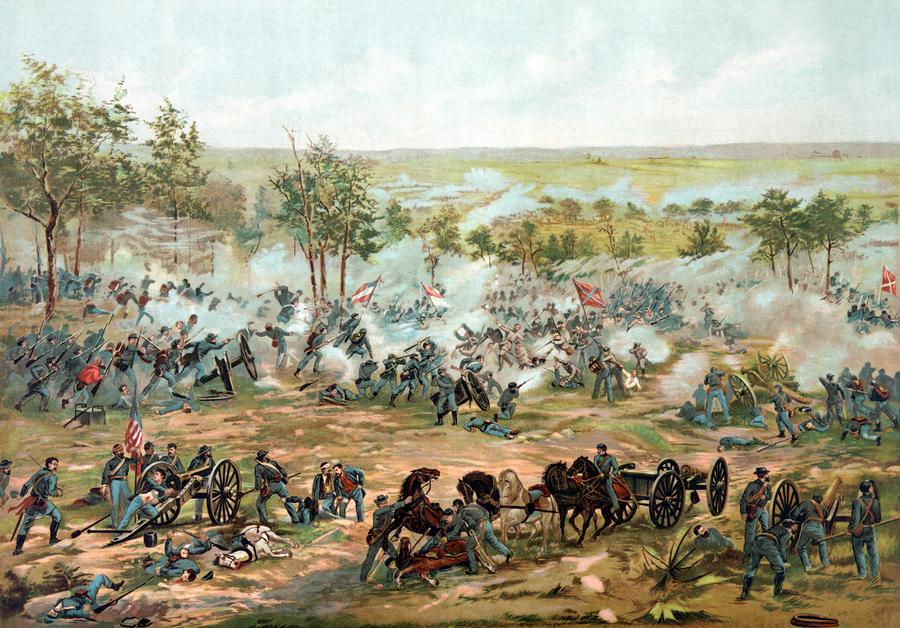

[i] Fuller, J.F.C Grant and Lee: A Study in Personality and Generalship Indiana University Press, Bloomington Indiana, 1957 p.35
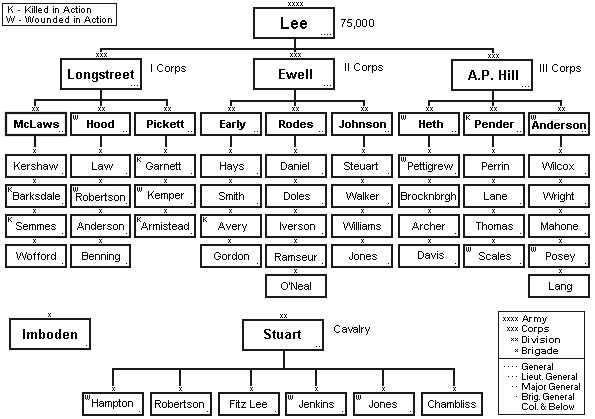
Leave a comment

Filed under civil war, History, leadership, Military

The Gettysburg Campaign: Lee Moves North, the Battle of Brandy Station, Stuart’s Ride and the Relief of Fighting Joe Hooker

on-to-gettysburg-900L

Lee with his Commanders at Williamsport 

Note: This is another of my preparations for for the Gettysburg Staff Ride that I will be conducting with students from the Staff College that I teach. 

On June 3rd 1863 Robert E Lee began to move his units west, away from Fredericksburg to begin his campaign to take the war to the North. He began his exfiltration moving Second Corps under Richard Ewell and First Corps under James Longstreet west. Initially he left A.P. Hill’s Third Corps at Fredericksburg to guard against any sudden advance by Hooker’s Army of the Potomac toward Richmond.
Once it was ascertained that Hooker was not making for Richmond, Hill’s Corps followed and on June 7th all three Corps were reunited at Culpepper. Lee’s movement did not go unnoticed, Hooker’s aerial observers detected the move, but Hooker after throwing pontoon bridges across the river and discovering that Hill’s troops were firmly entrenched made no move to pursue. He asked permission to advance on Richmond but was order not to cross the river, lest his army be exposed and destroyed by a thrust at its rear

CWP015

General J.E.B. Stuart 

Meanwhile, J.E.B. Stuart and his Cavalry Corps had been at Brandy Station near Culpepper for two weeks. On the 5th Stuart staged a grand review of five of his brigades which included a mock charge against the guns of his horse artillery. According to witnesses it was a spectacular event, so realist that during the final charge some women fainted.

As Lee made his move Hooker attempted to ascertain Lee’s intentions. With Lee moving west he asked Lincoln for permission to advance on Richmond, which was denied. Lincoln did not believe that Hooker could take Richmond and believed that if he did it would leave the logistics train of Army of the Potomac as well as Washington exposed to Lee.
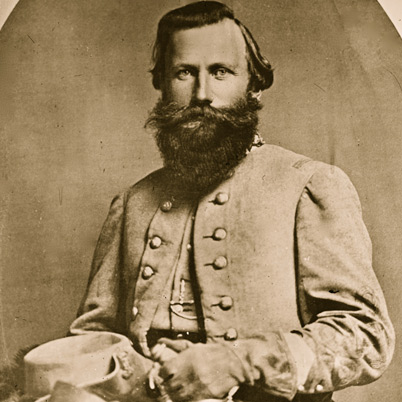
General-Hooker-002

Major General Joseph Hooker 

Hooker believed that Stuart’s intent was to disrupt his logistics and communications. He ordered his Cavalry Corps Commander, Major General Alfred Pleasanton to attack Stuart.  On June 9th Pleasanton’s forces, now reorganized under three aggressive division commanders, John Buford, David Gregg and Judson Kilpatrick and reinforced by two brigades of infantry surprised Stuart at Brandy Station.
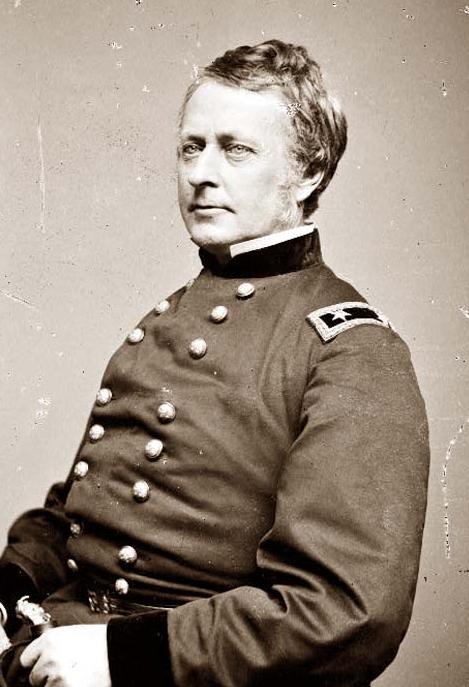
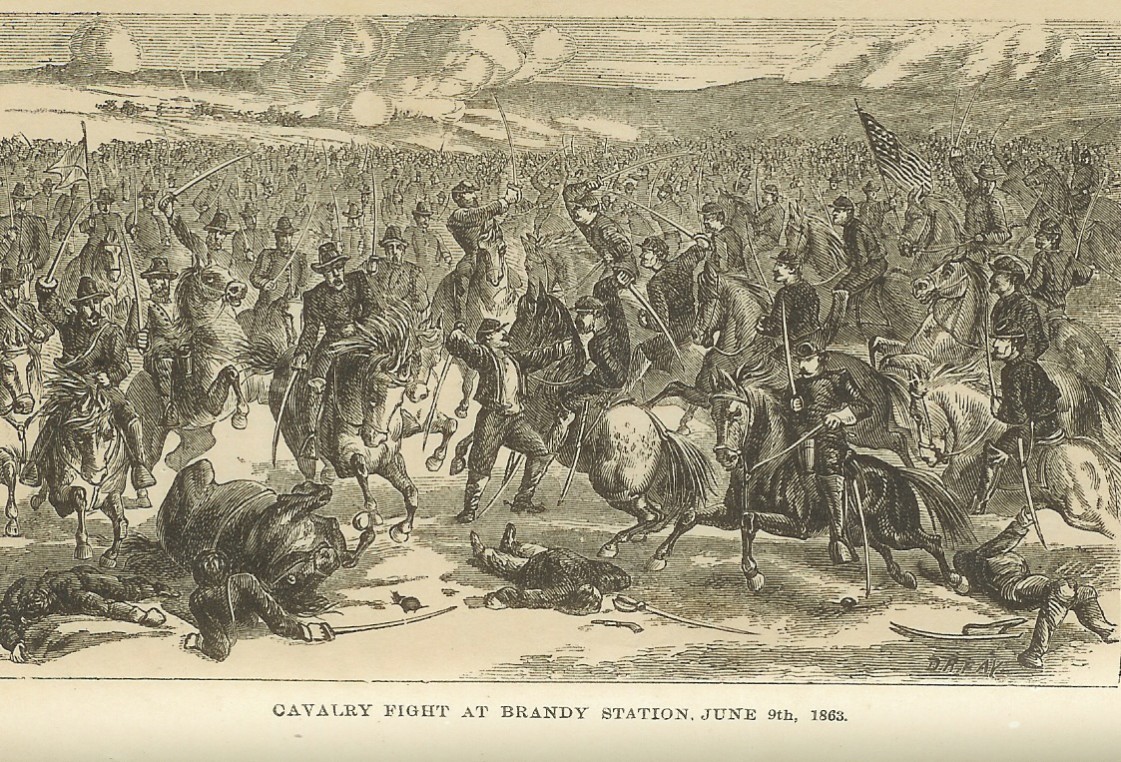
Cav Fight at Brandy Station

The resultant action was the largest cavalry engagement of the war. Over 20,000 troopers engaged in an inconclusive see-saw battle that lasted most of the day. Stuart claimed victory as he maintained control of the battlefield and inflicted more casualties than his forces incurred.  But the battle was more significant than the number of casualties inflicted or who controlled the battlefield at the end of the day. For the first time Stuart had been surprised by an aggressively led Union Cavalry force.  The Union troopers fought a stubborn and fierce battle and retired in good order. Stuart did not appreciate it but the battle was a watershed, it ended the previous dominance of the Confederate Cavalry arm. It was something that in less than a years’ time would cost him his life.

800px-Brandy_Station_Overview

The Battle of Brandy Station (Map by Hal Jespersen, http://www.posix.com/CW)

However, Stuart’s repulse of Pleasanton’s force did enable Lee’s Army to continue north undetected by Hooker. Ewell’s Corps entered the Shenandoah Valley and defeated a Union force at Winchester on June 14th.  Then with the rest of the Army following he moved to Williamsport Maryland where he called a halt to allow the rest of his corps and the army to come up.

HD_halleckHW4.preview

Major General Henry Halleck 

Hooker was slow to appreciate what Lee was doing. Prodded by Lincoln Hooker moved the Army of the Potomac to a position where it could defend Washington in case Lee was to make a thrust at the Federal capitol. In a series of fierce cavalry clashes west of Washington, Stuart successfully kept the Federal cavalry from discerning the movements of Lee’s Army.

Lee’s initial move to break contact with the Federal Army and keep his movements and intentions secret was an excellent example of deception. Stuart’s success at screening Lee’s movements contributed to Federal confusion. Lee’s deception was so successful that Pleasanton believed that Lee’s objective was Pittsburgh, far to the west. Even when Hooker determined that the bulk of Lee’s infantry was in the Shenandoah he was not certain if Lee would move east toward Baltimore and Washington west or would Lee continue up the valley into Pennsylvania.  

But at this point Lee then made the first of a number of mistakes that would characterize his campaign.  The most grievous of these in my view was his inability to get his commanders to understand his intent. The necessity of subordinate commanders understanding the intent of their superior is essential to the success of any military operation. Lee failed to do this a number of times.

After Stuart recovered from the surprise at Brandy Station Lee gave Stuart permission to move the bulk of his cavalry into the Federal rear.  Lee instructed Stuart that once he determined that Hooker was moving to pursue that Stuart must return to guard Ewell’s flank. However, Lee did not insist on this and left the decision in Stuart’s hands.  When Stuart discovered the Army of the Potomac stationary near Manassas he suggested to Lee that he lead his force around the Federal Army to deceive Hooker as to Lee’s intentions. Lee agreed but told Stuart to maintain close observance of the Federal Army.

Unfortunately his orders left Stuart much in the way of interpretation. He wrote:

You will, however be able to judge whether you can pass around their army without hindrance, doing all the damage that you can, and cross the river east of the mountains. In either case you must move on and feel the right of Ewell’s troops, collecting information, provisions etc.”  Lee added, “Be watchful and circumspect in all your movements.” 

Lee expected Stuart to do this, but his lack of clarity and vagueness allowed to Stuart interpret the order in a manner that benefited him, as he had been stung by criticism of his conduct of the Battle of Brandy Station in the Southern press. For Stuart this was a chance to regain the limelight and add to his luster. He decided to move independently and continue his ride around the Army of the Potomac. It was the last time that Lee had contact with Stuart until the end of the second day of the battle at Gettysburg. Stuart’s absence was critical for it left Lee blind as to the whereabouts of Hooker’s Army or any other threats.

Historians have long wondered why Lee allowed and why Stuart conducted an operation that left Lee blind and had no obvious advantages. Stephen W Sears notes in his book Gettysburg that: “The very concept of Stuart’s expedition was fueled by overconfidence and misjudgment at the highest command level. As soldier-historian Porter Alexander judged the matter, “We took unnecessary risk, which was bad war, & the only bad war too, I think, in all our tactics.” (i)

Lee also took little notice of the events occurring to the west. The siege of Vicksburg was entering its final weeks and with it the hopes of the Confederacy, but Lee was convinced that the war had to be won in the east and quickly.

Lee had no idea that the man directing the campaign against that city, Ulysses S Grant would become his nemesis in less than a years’ time. While Lee had an understanding of all the men who had commanded the armies that he faced, Grant was a man that he never really understood.

As Vicksburg withered and Stuart dithered Lee continued to move north with his Army, crossing into Maryland. By June 24th Ewell’s lead division was near Chambersburg with orders to advance on the Susquehanna and Harrisburg

420px-Gettysburg_Campaign

The Gettysburg Campaign (Map by Hal Jespersen, http://www.posix.com/cw)

As Lee moved north Hooker attempted to convince Lincoln to attack Richmond, but Lincoln did not believe that the Confederate capitol was the key to victory. Lincoln denied Hooker’s request giving the following instruction:

“I think Lee’s army, not Richmond is your true objective point. If he comes toward the Upper Potomac, follow on his flank and on his inside track, shortening your line whilst he lengthens his. Fight him too when the opportunity offers. If he stays where he is, fret him, fret him and fret him.”

Hooker was upset by the constant directives from Lincoln and General Henry Halleck, the General in Chief of the Union Armies. Hooker complained to Lincoln in a letter which seemed to infer that he wanted Lincoln to remove Halleck from his position. On June 15th Lincoln responded:

“To remove all misunderstanding I now place you in the strict military relation to General Halleck of a commander of one of the armies to the general-in-chief of all of the armies. I have not intended differently, but as it seems to be differently understood I shall direct him to give you orders and for you to obey him.”

With that order Lincoln did something that he had not done in relation to the Army of the Potomac since the beginning of the war.  For the first time he enforced unity of command and stopped the commander of that army from directly appealing to him. Lee had tired of commanders such as McClellan and Hooker demanding absolute control of the Army and the war. This time it was Hooker that advocated having “one commander for all the troops whose operations which can have influence on General Lee’s operations.” Lincoln agreed and ensured that Hooker would not be that man.

Neither Lincoln nor Halleck agreed to give Hooker the authority that he demanded.  Lincoln insisted that Hooker obey the orders of Halleck, a man who Hooker despised. The final straw came on June 27th when Hooker demanded that the garrison of Harper’s Ferry be withdrawn and placed under his command. When this was refused he tendered his resignation as commander of the Army of the Potomac. Halleck forwarded that request to Lincoln and promptly sent an order via his Assistant Adjutant General, Colonel James Hardie relieving Hooker of command, simultaneously appointing Major General George Meade, commander of V Corps as the new commander of the army.

june16jenkinscav

By now the movements of Confederate forces deep into Maryland and Pennsylvania gave Lincoln and Halleck the information that they needed about Lee’s movements. Lee’s army was moving toward Harrisburg and the Susquehanna. On the day of Hooker’s relief Lee had no idea that the Union army had already crossed the Potomac, the absence of Stuart had left him blind.

general-george-meade

Major General George Meade 

To this point a number of issues important to those involved in planning campaigns became clear: Deception, commander’s intent and unity of command. Lee successfully used deception to prevent the Federals from discerning his purposes. That was balanced by his lack of clarity in communicating his intent to Stuart. Finally there was the principle of unity of command for the Union forces, something that had eluded Lincoln and his lieutenants throughout the first two years of the war.

All that said, I am going to leave you hanging for the night.

Peace

Padre Steve+


i. Sears, Stephen W. Gettysburg, Mariner Books, Houghton Mifflin Company, Boston and New York, 2003. P.106

1 Comment

Filed under civil war, History, leadership, Military

The Gettysburg Campaign: Lee Decides to Go on the Offensive

993scr_3a12918e0189d2e

I am preparing to lead a Staff Ride of our students to Gettysburg in early March. As part of my preparation I am doing a lot of study to refresh myself on both the campaign and the battle, not only as an operational study, but at the strategic level. This short essay deals with Lee’s decision to invade the North following his victory at Chancellorsville. I will follow it up with other articles the next talking about the Northern strategy at both the strategic and operational levels.

In early May 1863 General Robert E. Lee, commanding the Army of Northern Virginia realized that the Confederacy was in desperate straits. Despite numerous victories against heavy odds, Lee knew that time was running out. Though he had beaten the Army of the Potomac under General Joseph Hooker at Chancellorsville, he had not destroyed it and that Army, along with a smaller force commanded by General Dix in Hampton Roads still threatened Richmond.

The strategic situation was bad, even if many Confederate politicians realized it or cared in the post Chancellorsville euphoria. In the west the strategic river city of Vicksburg Mississippi was threatened by the Army of Union General Ulysses S Grant, and Naval forces under the command of Admiral David Farragut. If Vicksburg fell the Union would control the entire Mississippi and cut the Confederacy in two. Union forces also maintained a strong presence in the areas of the Virginia Tidewater and the coastal areas of the Carolinas, while in Tennessee a Union Army was stalemated, but still threatening Chattanooga, the gateway to the Deep South. The blockade of the United States Navy had crippled the already tenuous economy of the Confederacy.

Some Confederate leaders realized the danger presented by Grant in the West. Secretary of War James Seddon recognized the danger in the Winter of 1862-1863 both suggested to Lee that he detach significant units to relieve the pressure in the west and blunt Grant’s advance. Lee would have nothing of it, he argued that the war would be won in the East. It was his view that if Virginia was lost, so was the Confederacy, and was concerned that whatever units left behind should he dispatch troops from his Army west, would be unable to defend Richmond.

On May 14th Lee travelled by train to Richmond to meet with President Jefferson Davis and War Secretary James Seddon. At the meeting Lee argued for an offensive campaign in the east, to take the war to Pennsylvania. Lee had two goals three major goals, two which were directly related to the immediate military situation and one which went to the broader strategic situation. Unfortunately no notes from that conference are known to survive.

Lee had long believed that an offensive into the North was necessary, even before Chancellorsville. Lee did not believe that reinforcing the Confederate Armies in the West would provide any real relief, instead he believed that his Army, flush with victory needed to be reinforced and allowed to advance into Pennsylvania. Lee’s Chief of Staff Colonel Charles Marshall crafted a series of courses of action designed to present the invasion option as the only feasible alternative. Although both Seddon and Davis had reservations about the plan they agreed to it, unfortunately for all of them they never really settled the important goals of the campaign.

Lee believed that his offensive would relieve Grant’s pressure on Pemberton’s Army at Vicksburg. Likewise Lee believed that if he was successful in battle and defeated the Army of the Potomac in Pennsylvania that it could give the peace party in the North to bring pressure on the Lincoln Administration to end the war.  He also believed that if he could spend a summer campaign season in the North, living off of Union foodstuffs and shipping booty back to the Confederacy that it would give farmers in Northern Virginia a season to harvest crops unimpeded by major military operations.

However, the meeting evidently did not have all the results that Lee desired. Davis refused Lee reinforcements from the coastal Carolinas, and insisted on units being left to cover Richmond in case General Dix advanced on Richmond from Hampton Roads. Much of this was due to political pressure as well as the personal animus that existed between General D. H. Hill in the Carolinas towards Lee.

Likewise Lee’s decision revealed an unresolved issue in Confederate Grand Strategy. Many in the Confederacy realized that the only hope for success was to fight a defensive campaign that made Union victory so expensive that eventually Lincoln’s government would fall or be forced to negotiate.

However, Lee was convinced that ultimate victory could only be achieved by decisively defeating and destroying Federal military might. His letters are full of references to crush, defeat or destroy Union forces opposing him. His strategy of the offensive was demonstrated on numerous occasions in 1862 and early 1863, however it was unfeasible and counterproductive to Southern strategy. His offensive operations cost his Army dearly in the one commodity that the South could not replace, nor keep pace with its Northern adversary, his men.

When Lee fought defensive actions on ground of his choosing, like a Fredericksburg he was not only successful but husbanded his strength. However, when he went on the offensive in almost every case he lost between 15 and 22 percent of his strength, and the percentage of soldiers that he lost was always more than his Federal counterparts, even when his army inflicted greater aggregate casualties on his opponents. Lee recognized this as was evident in his correspondence but it did not deter his strategy of the offensive until after his defeat at Gettysburg.

The course of action was decided upon, but one has to ask if Lee’s decision was wise decision at a strategic point level, not simply the operational or tactical level where many Civil War students are comfortable. General Longstreet’s artillery commander, Colonel Porter Alexander described the appropriate strategy of the South well, he wrote:

“When the South entered upon war with a power so immensely her superior in men & money, & all the wealth of modern resources in machinery and the transportation appliances by land & sea, she could entertain but one single hope of final success. That was, that the desperation of her resistance would finally exact from her adversary such a price in blood & treasure as to exhaust the enthusiasm of its population for the objects of the war. We could not hope to conquer her. Our one chance was to wear her out.”  (Edward Porter Alexander, Fighting for the Confederacy: The Personal Recollections of General Edward Porter Alexander, ed. Gary W. Gallagher, University of North Carolina Press, Chapel Hill NC, 1989 p.415 

What Alexander describes is the same type of strategy successfully employed by Washington and his more able officers during the American Revolution, Wellington’s campaign on the Iberian Peninsula against Napoleon’s armies, and that of General Giap against the French and Americans in Vietnam. It was not a strategy that completely avoided offensive actions, but saved them for the right moment when victory could be obtained.

It is my belief that Lee erred in invading the North for the simple fact that the risks far outweighed the possible benefits. It was a long shot and Lee was a gambler, audacious possibly to a fault. His decision to go North also exhibited a certain amount of hubris as he did not believe that his army could be beaten, even when it was outnumbered.  Likewise he took the offensive in spite of the fact that many of his commanders were untested at the levels of command that they exercised. He had lost his right arm, General Stonewall Jackson, who died following being wounded at Gettysburg.

He knew from his previous battles the heavy casualties that even a victory over the Army of the Potomac would entail deep in Northern territory and the effect that a costly victory would have on his operations, but he still took the risk. That was short sighted and diametrically opposed to the strategy that the South needed to pursue in order to gain its independence. Of course some will disagree, but I am comfortable in my assertion that it was a mistake that greatly affected the Confederacy’s only real means of securing its independence, the breaking of the will of the Union by making victory so costly that it would not be worth the cost.

Peace

Padre Steve+

Leave a comment

Filed under civil war, History, leadership, Military