Tag Archives: the gettysburg address

A New Birth of Freedom: The Gettysburg Address at 150

mkholrt

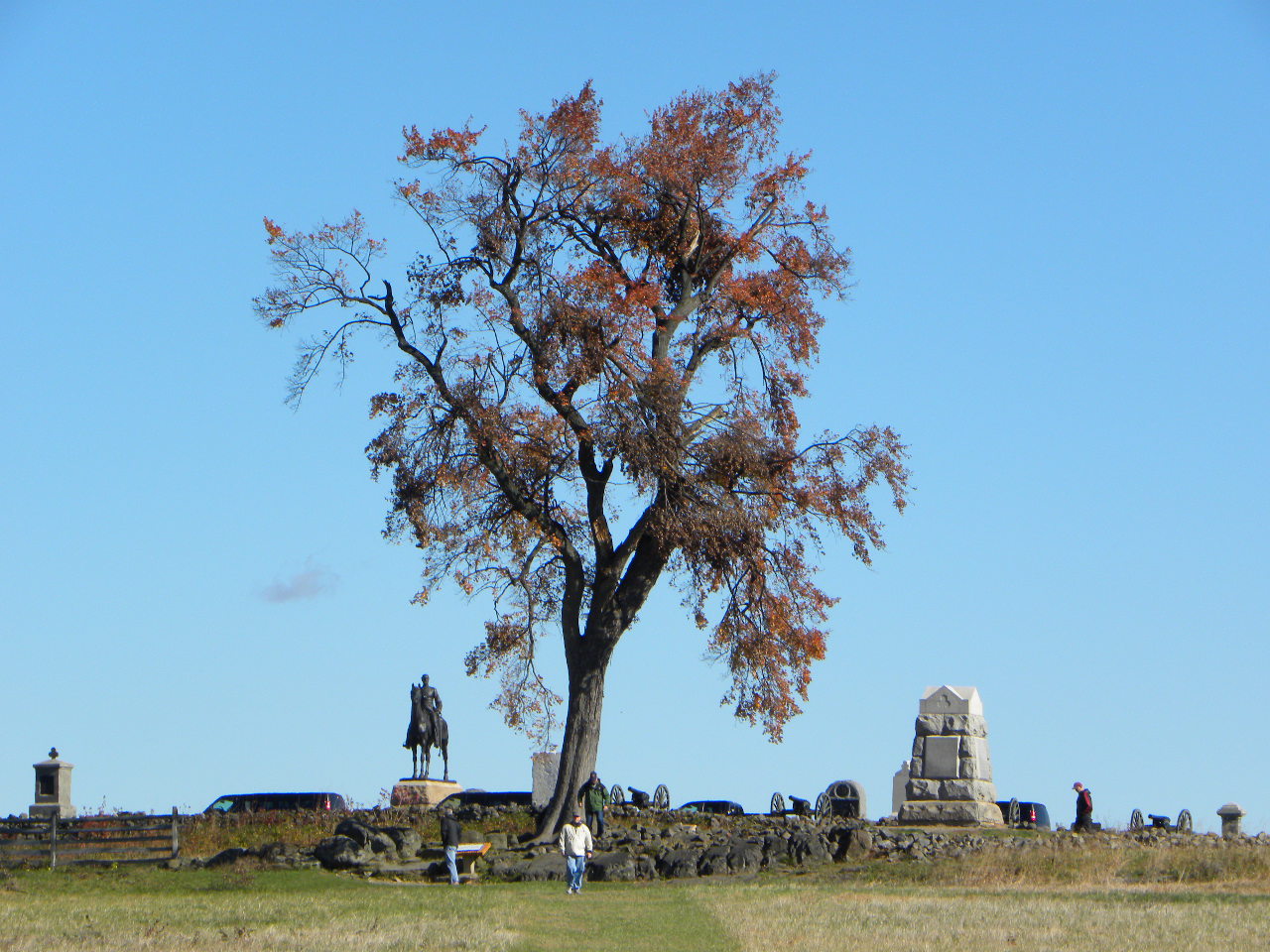
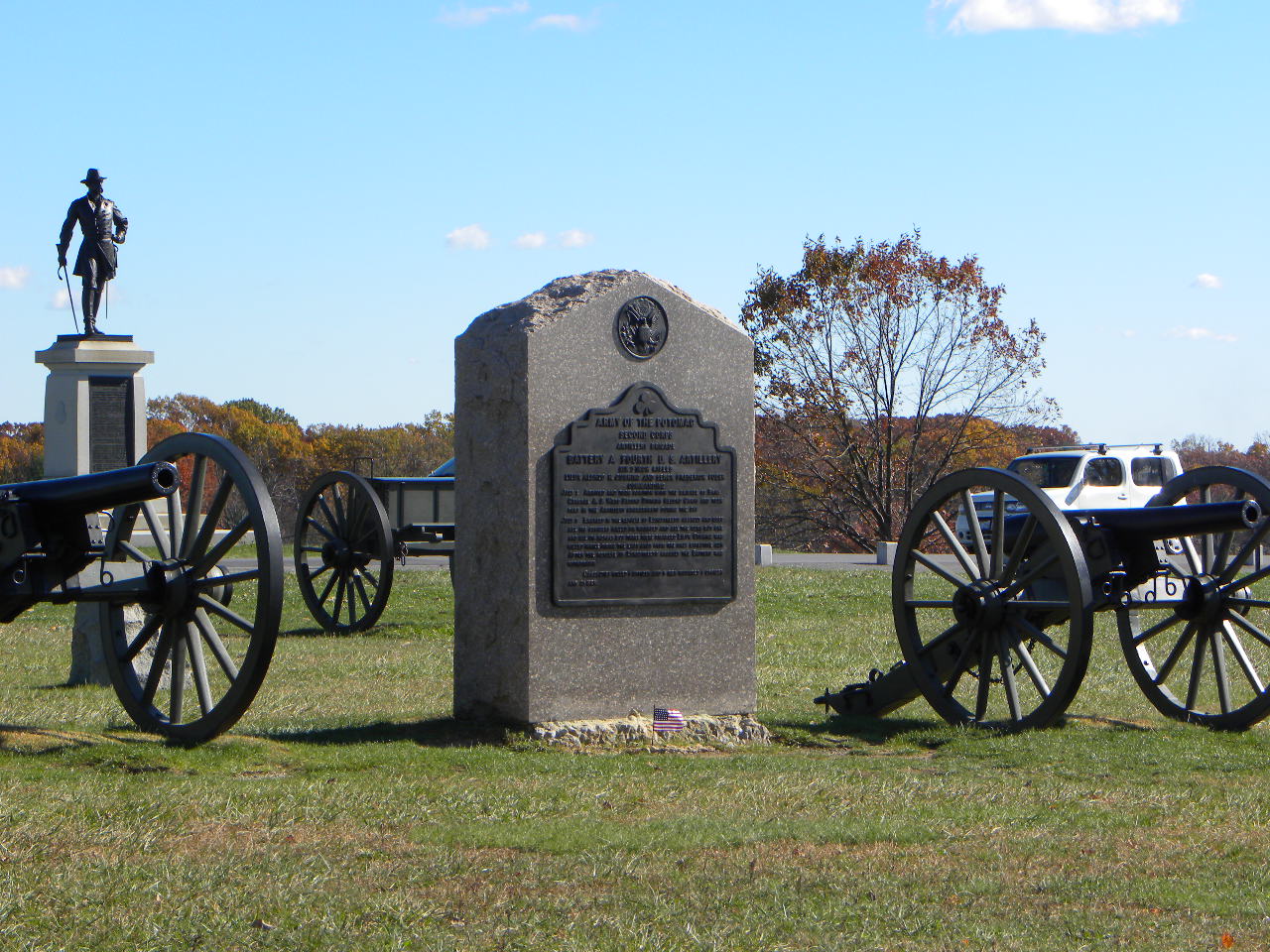
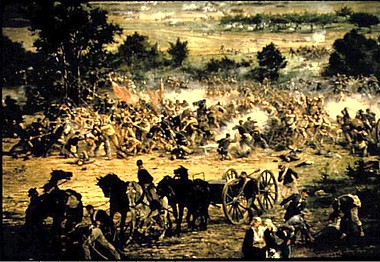
I am always humbled when I travel to Gettysburg as I did just two weeks ago. It is hard to believe in that now peaceful pastoral setting that over 157,000 Americans, almost 82,000 Union and 75,000 Confederate met in a three day battle. In those three days over 28,000 Confederates and 23,000 Union soldiers were killed, wounded, missing or captured. It was the greatest number of casualties inflicted in one battle on American soil in history.

The places that the battle was fought have become legendary, for they are “hallowed ground” as President Abraham Lincoln so eloquently put it. The places, McPherson’s and Herr’s Ridge, Seminary Ridge, the Railroad Cut, Barlow’s Knoll, Cemetery Hill, Culp’s Hill, The Wheat Field, Devil’s Den, the Peach Orchard, Little Round Top, Cemetery Ridge, the Apse of Trees, the Angle and the High Water Mark are in a sense holy, or hallowed, consecrated by those who struggled there, those who lived and those who gave the last full measure of devotion to their country.

gal9vfvf1

I think about those men of both sides, fully convinced of the rightness of their cause who fought valiantly in the struggle. That being said when I go there though my family predominantly fought for the Confederacy my heart is drawn to those men who remained loyal to the Union and those who answered the call of Abraham Lincoln to serve in a cause greater than their own interests, the great and the small alike.
DSCN8774

Lincoln was a masterful orator who managed to rally the Union and bring hundreds of thousands of men volunteer before Gettysburg. They came for an ideal an ideal which Lincoln’s oratory was probably the most effective at articulating in a way that men would volunteer to suffer hardship, fight and die to bring about. It was well put in the movie Gettysburg where Colonel Joshua Chamberlain said:

“This is a different kind of army. If you look at history you’ll see men fight for pay, or women, or some other kind of loot. They fight for land, or because a king makes them, or just because they like killing. But we’re here for something new. This has not happened much, in the history of the world: We are an army out to set other men free. America should be free ground, all of it, from here to the Pacific Ocean. No man has to bow, no man born to royalty. Here we judge you by what you do, not by who your father was. Here you can be something. Here is the place to build a home. But it’s not the land. There’s always more land. It’s the idea that we all have value, you and me. What we’re fighting for, in the end… we’re fighting for each other…”
images-61

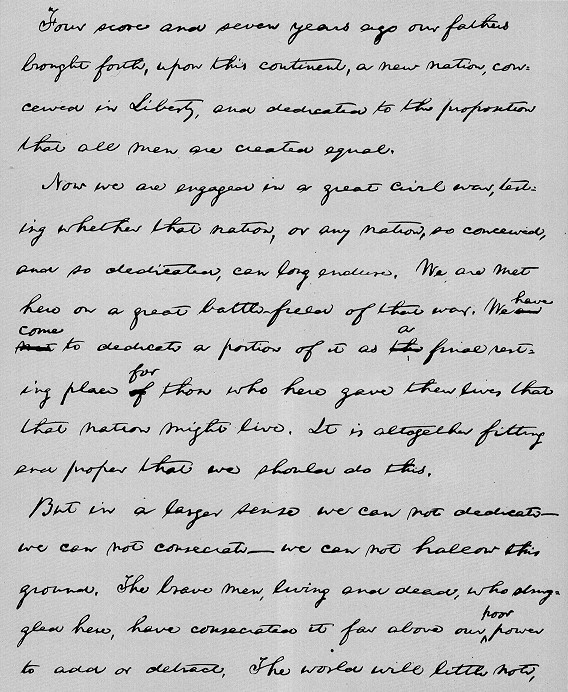
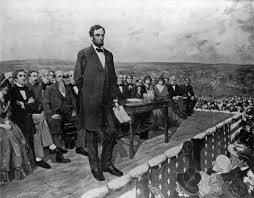
On November 19th 1863 Lincoln delivered a “few words” at Gettysburg which were in all practical aspects a benediction at the dedication of the battlefield cemetery. Lincoln was the second speaker at the ceremony following former Pennsylvania Congressman Edward Everett who spoke for more than two hours, a typical speech from the period. The 270 words of Lincoln’s address are perhaps the most important of any speech or document in American history save the Declaration of Independence and the Constitution of the United States.

The speech was so powerful that Everett wrote Lincoln the next day:

“Permit me also to express my great admiration of the thoughts expressed by you, with such eloquent simplicity & appropriateness, at the consecration of the Cemetery. I should be glad, if I could flatter myself that I came as near to the central idea of the occasion, in two hours, as you did in two minutes.”

The speech is short, but it’s eloquence is unmatched. Lincoln wrapped ideas, concepts and ideals that men have written volumes about into a speech so powerful that many have memorized it.
18640903.nashcartoon

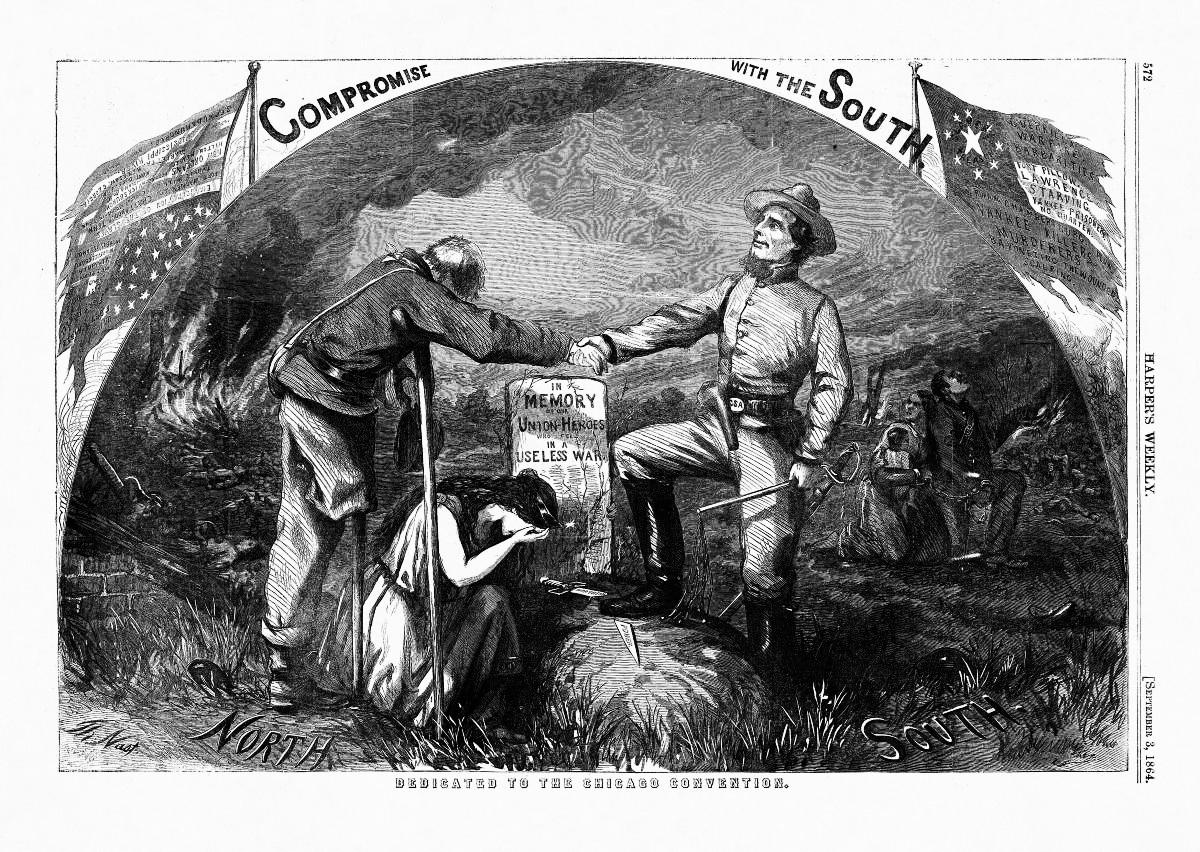
But few realize the context that it must be placed. Though the Union had defeated Lee’s Army at Gettysburg and Grant had taken Vicksburg to cut the Confederacy in half the North was groining war weary. There were those in the North, the Copperheads who were willing even after Gettysburg and Vicksburg to end the war on terms favorable to the Confederacy, even granting Confederate independence and the continuation of slavery. Likewise Lincoln was sick when he delivered the address having what was mostly likely a mild form of Smallpox when he gave the address. Thus the tenor, simplicity and depth are even more remarkable. It is a speech given in the manner of Winston Churchill’s “Blood sweat toil and tears” address to Parliament upon being appoint Prime Minister in 1940.

cropped-dscn88191.jpg

In a time where many are wearied by the foibles and follies of our politicians, even wondering about our form of government can survive Lincoln’s words matter. Dr Allen Guelzo, Professor of Civil War Studies at Gettysburg College wrote in the New York Times today:

“The genius of the address thus lay not in its language or in its brevity (virtues though these were), but in the new birth it gave to those who had become discouraged and wearied by democracy’s follies, and in the reminder that democracy’s survival rested ultimately in the hands of citizens who saw something in democracy worth dying for. We could use that reminder again today.”

Dr Guelzo is quite correct. Many people in this country and around the world are having grave doubts about our democracy. I wonder myself, but I am an optimist. I do believe that we will recover because for the life of me I see no nation anywhere else with our resiliency and ability to overcome the stupidity of politicians, pundits and preachers.

The amazing thing was that in spite of everything the Union survived. Lincoln was a big part of that but it was the men who left lives of comfort and security like Joshua Chamberlain and so many others who brought about that victory. Throughout the war, even to the end Southern political leaders failed to understand that Union men would fight and die for an ideal, something greater than themselves, the preservation of the Union and the freedom of an enslaved race. For those that volunteered it was not about personal gain, loot or land,it was about something greater. It was about freedom.
GAFac1

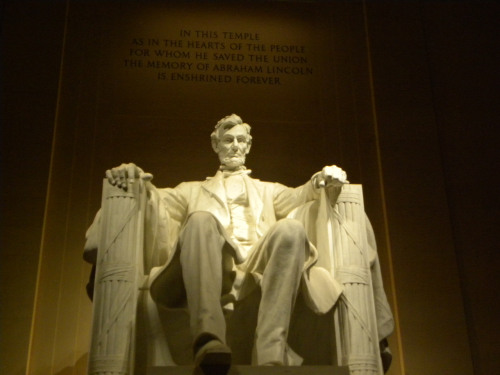
Now I for one do not think that we are currently living up to the ideals enunciated by Lincoln that day at Gettysburg. I can understand the cynicism disillusionment of Americans as well as those who have for over 200 years looked to us and our system as a “city set on a hill.” That being said, when I read these words and walk that hallowed  ground I am again a believer that we can realize the ideal.

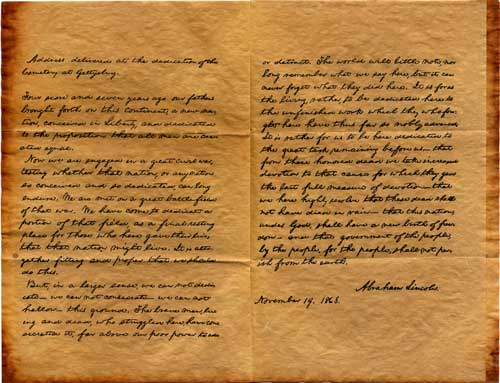
Four score and seven years ago our fathers brought forth on this continent, a new nation, conceived in Liberty, and dedicated to the proposition that all men are created equal.

Now we are engaged in a great civil war, testing whether that nation, or any nation so conceived and so dedicated, can long endure. We are met on a great battle-field of that war. We have come to dedicate a portion of that field, as a final resting place for those who here gave their lives that that nation might live. It is altogether fitting and proper that we should do this.

But, in a larger sense, we can not dedicate — we can not consecrate — we can not hallow — this ground. The brave men, living and dead, who struggled here, have consecrated it, far above our poor power to add or detract. The world will little note, nor long remember what we say here, but it can never forget what they did here. It is for us the living, rather, to be dedicated here to the unfinished work which they who fought here have thus far so nobly advanced. It is rather for us to be here dedicated to the great task remaining before us — that from these honored dead we take increased devotion to that cause for which they gave the last full measure of devotion — that we here highly resolve that these dead shall not have died in vain — that this nation, under God, shall have a new birth of freedom — and that government of the people, by the people, for the people, shall not perish from the earth.
dscn0061

In the hope that we again realize those ideals and help bring about “a new birth of freedom,” I wish you a good night.

Peace

Padre Steve+

Leave a comment

Filed under civil war, History, leadership, Political Commentary

Images of Gettysburg

DSCN8811

“In great deeds something abides. On great fields something stays. Forms change and pass; bodies disappear, but spirits linger, to consecrate ground for the vision-place of souls. And reverent men and women from afar, and generations that know us not and that we know not of, heart-drawn to see where and by whom great things were suffered and done for them, shall come to this deathless field to ponder and dream; And lo! the shadow of a mighty presence shall wrap them in its bosom, and the power of the vision pass into their souls.” Joshua Chamberlain speaking at the dedication of the Monument to the 20th Maine October 3, 1889, Gettysburg, PA


I took a class trip this weekend to Gettysburg. The trip was what we in the military term as a Staff Ride which is an event that takes the participants to a battle site to see first hand, discuss and analyze the battle. The value of such events is that it takes them from simple book learning to getting a chance to walk the same ground, put “eyes on target” and actually get a feel for what it was like for those that fought the battle. 

Gettysburg is one of the more remarkable battles in American history if for nothing else its size and what was at stake. In June of 1863 the Army of Northern Virginia commanded by General Robert E. Lee invaded the North.  Lee’s Army crossed the Potomac River into Maryland and then deep into Pennsylvania pursued by the Federal Army of the Potomac initially commanded by Major General Joe Hooker and then by Major General George Meade.

The armies met in what can be best described in a meeting engagement at the town of Gettysburg. Neither army had planned to fight there but through a series of events both armies entered into a fight that in combination with the defeat of the Confederate Army at Vicksburg Mississippi doomed the Confederacy and ensured that the Union would survive.

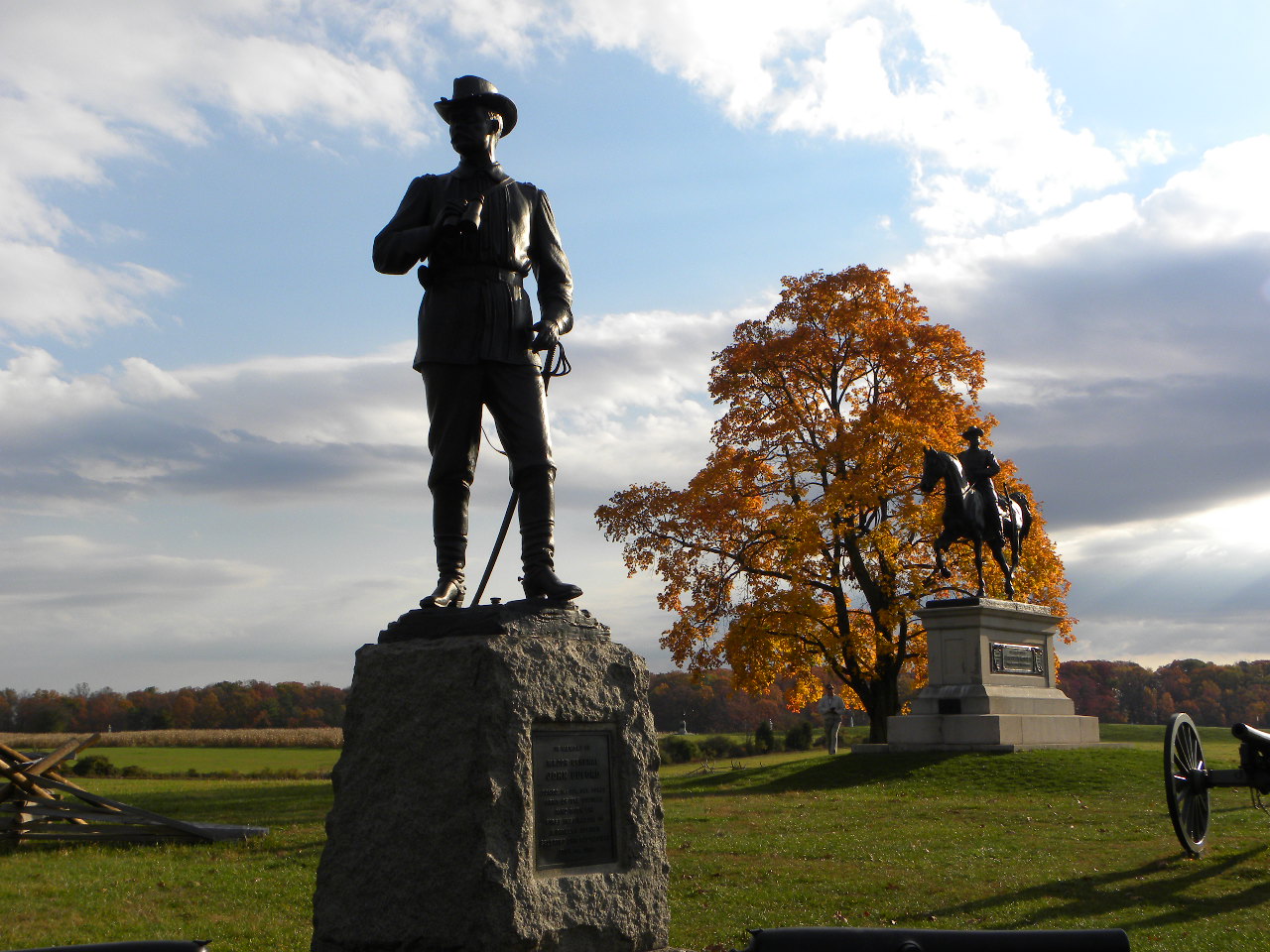
Gettysburg is marked by many monuments to units that fought at the battle as well as individuals. The National Park Service does a wonderful job there and is constantly working within the constraints of space, time and the encroachment of more people in the area to restore the battlefield to conditions of the time.

As for the monuments themselves most were placed by States, towns and Veteran’s groups over the last 150 years. Placed with love and admiration by the soldiers of both sides and those who knew them.

Here are some photos that I took of the battlefield this weekend.

DSCN8774

Monuments to General’s Burford and Reynolds on McPherson’s Ridge

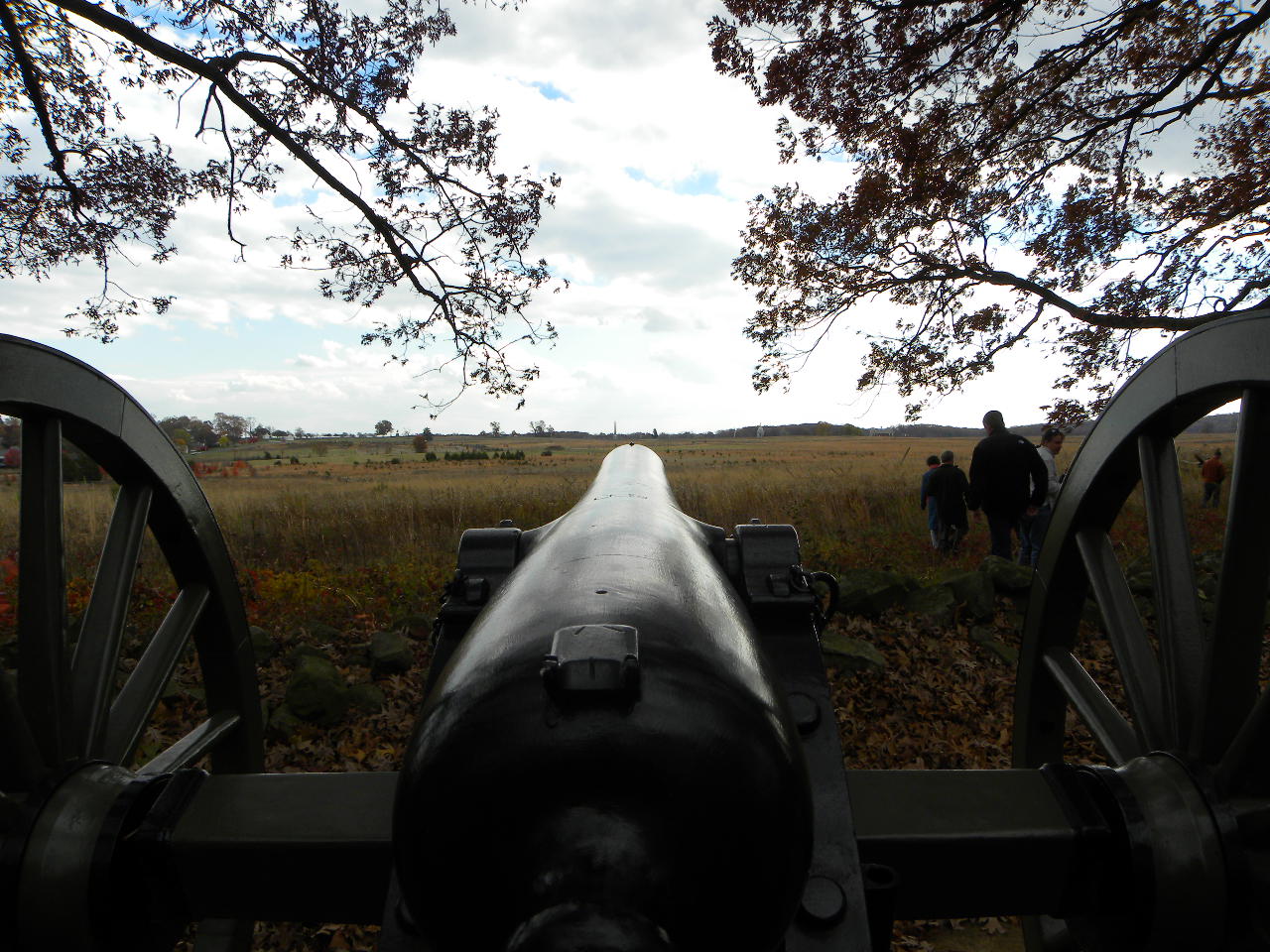
DSCN8783Confederate canon on Seminary Ridge racing Federal lines

DSCN8792Monument to Colonel Ellis and 124th New York at Devil’s Den

DSCN8799Monument to 148th Pennsylvania at the Wheat Field

DSCN8806

Gouverneur Warren Monument Little Round Top

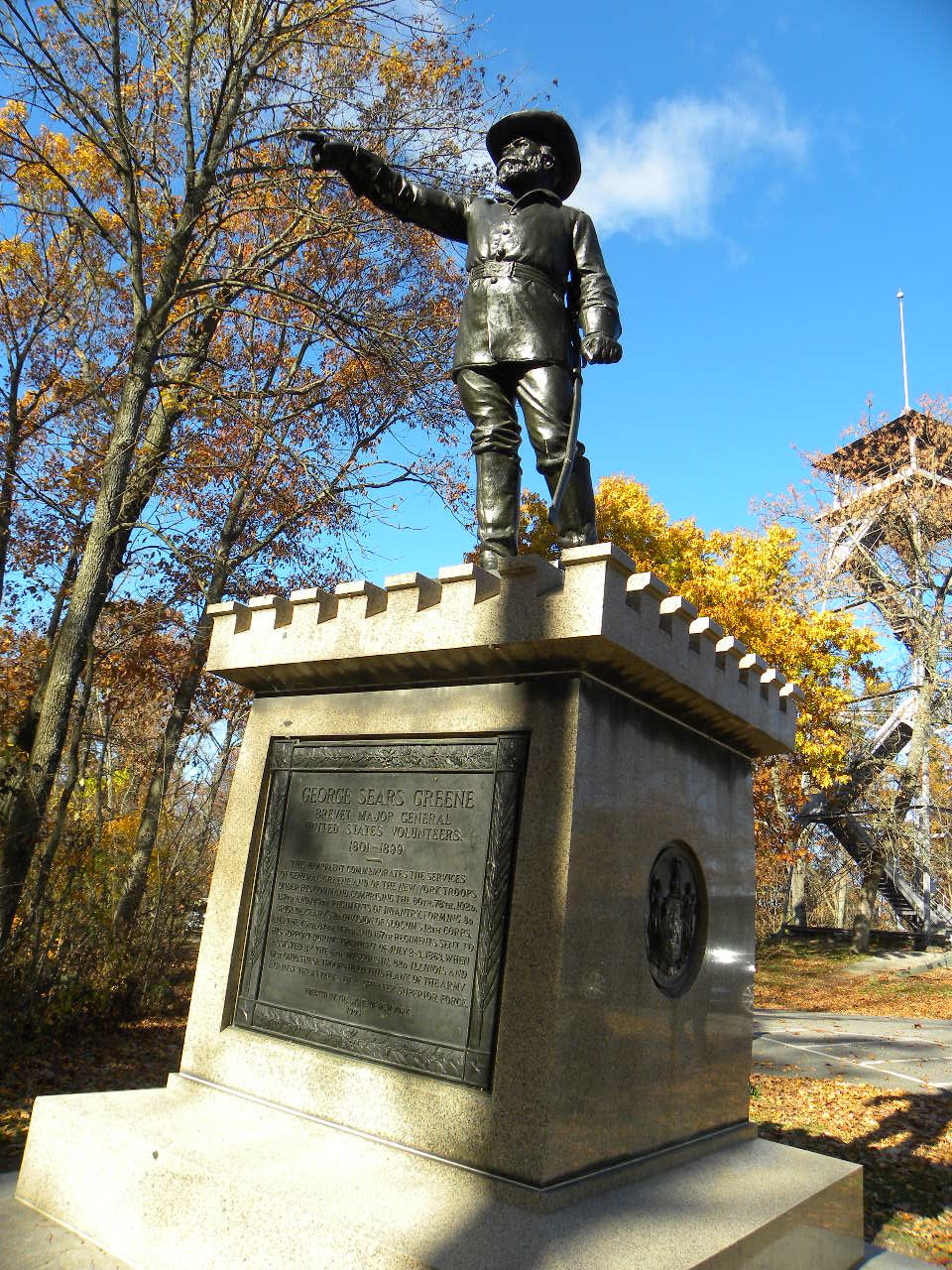
DSCN8818Brigadier General George Greene Monument Culp’s Hill

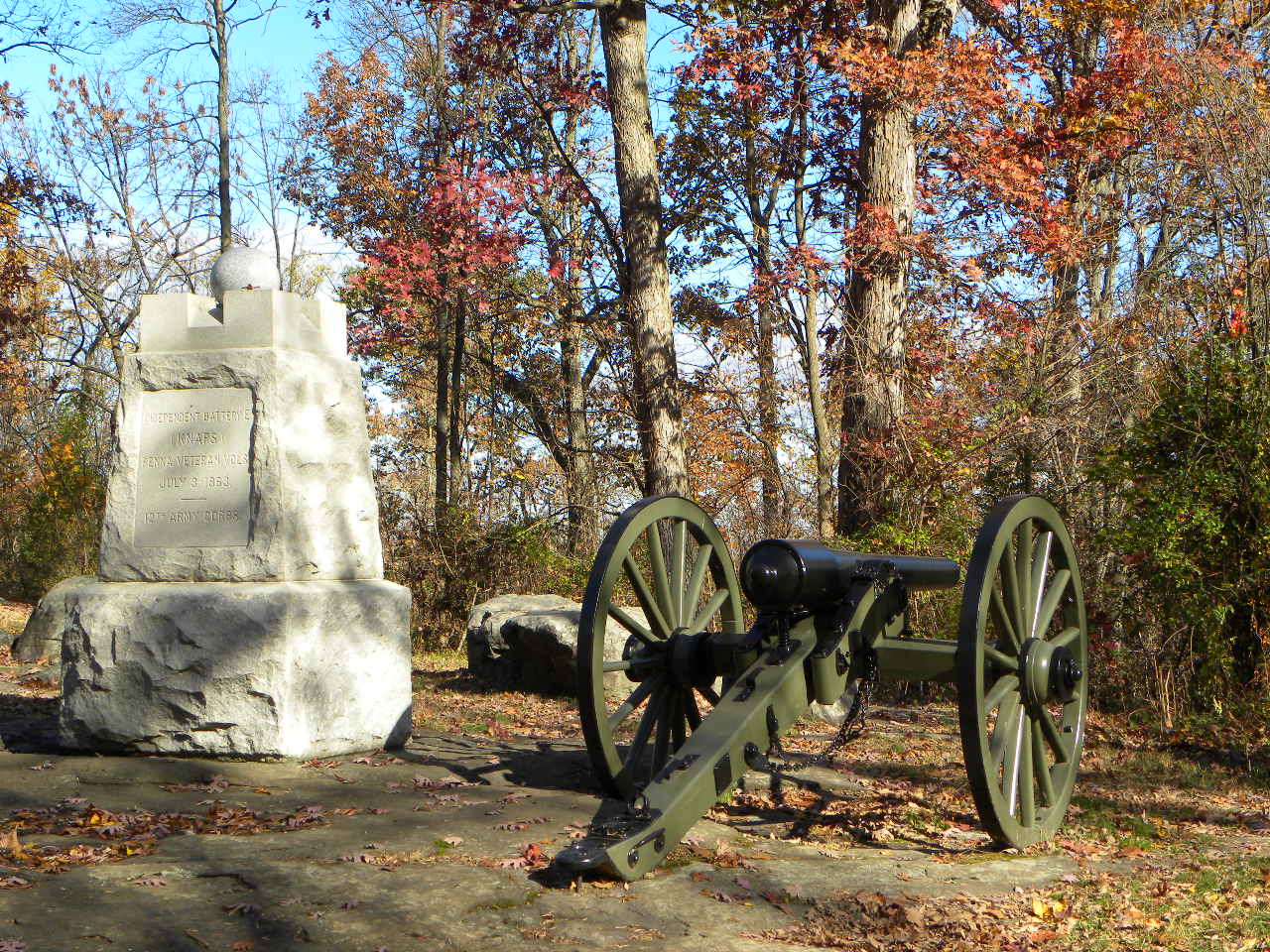
DSCN8819Pennsylvania Independent Artillery Battery E Monument at Culp’s Hill

DSCN8826Monument to 1st Minnesota at Cemetery Ridge

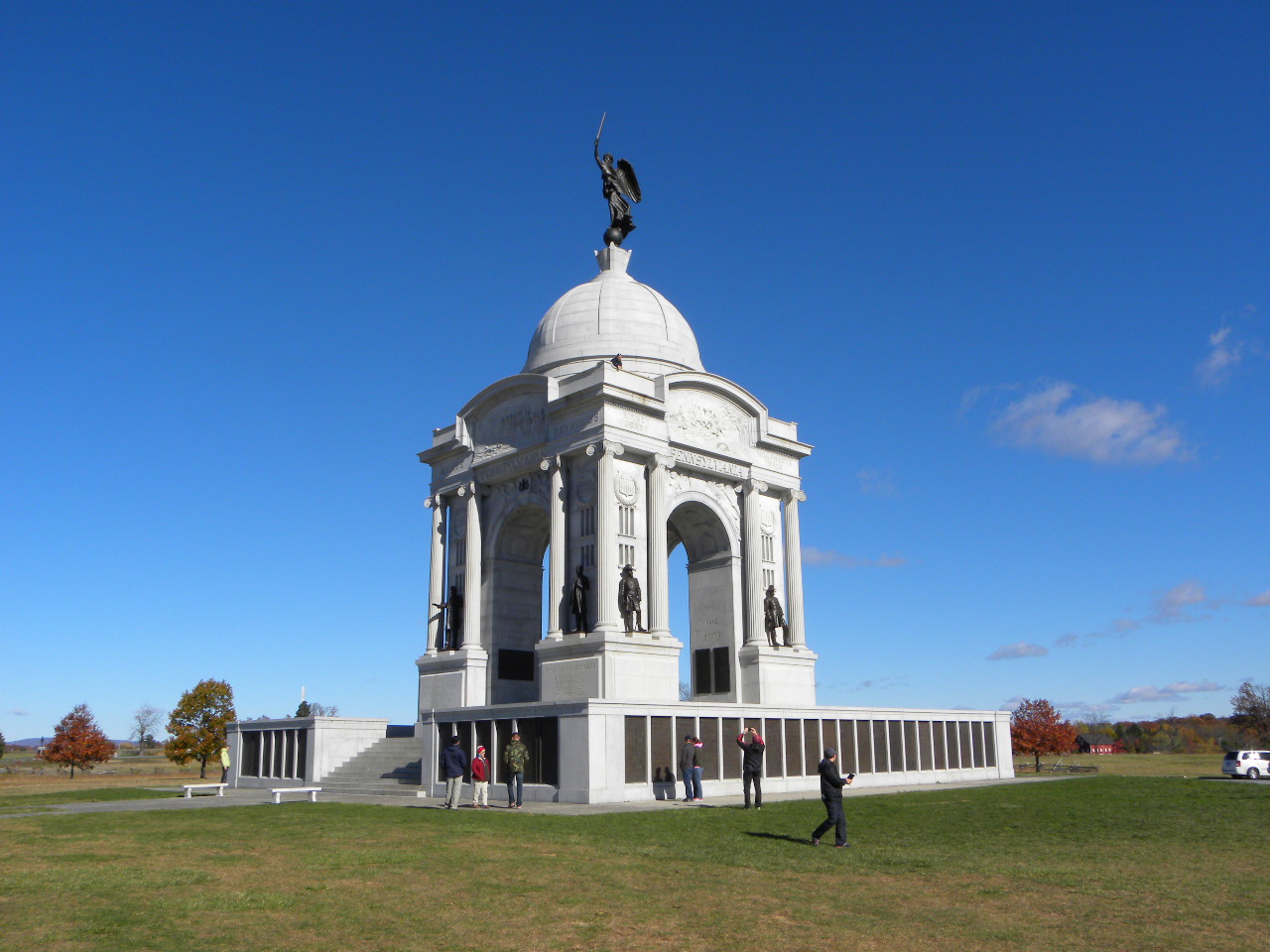
DSCN8828Pennsylvania Monument Cemetery Ridge

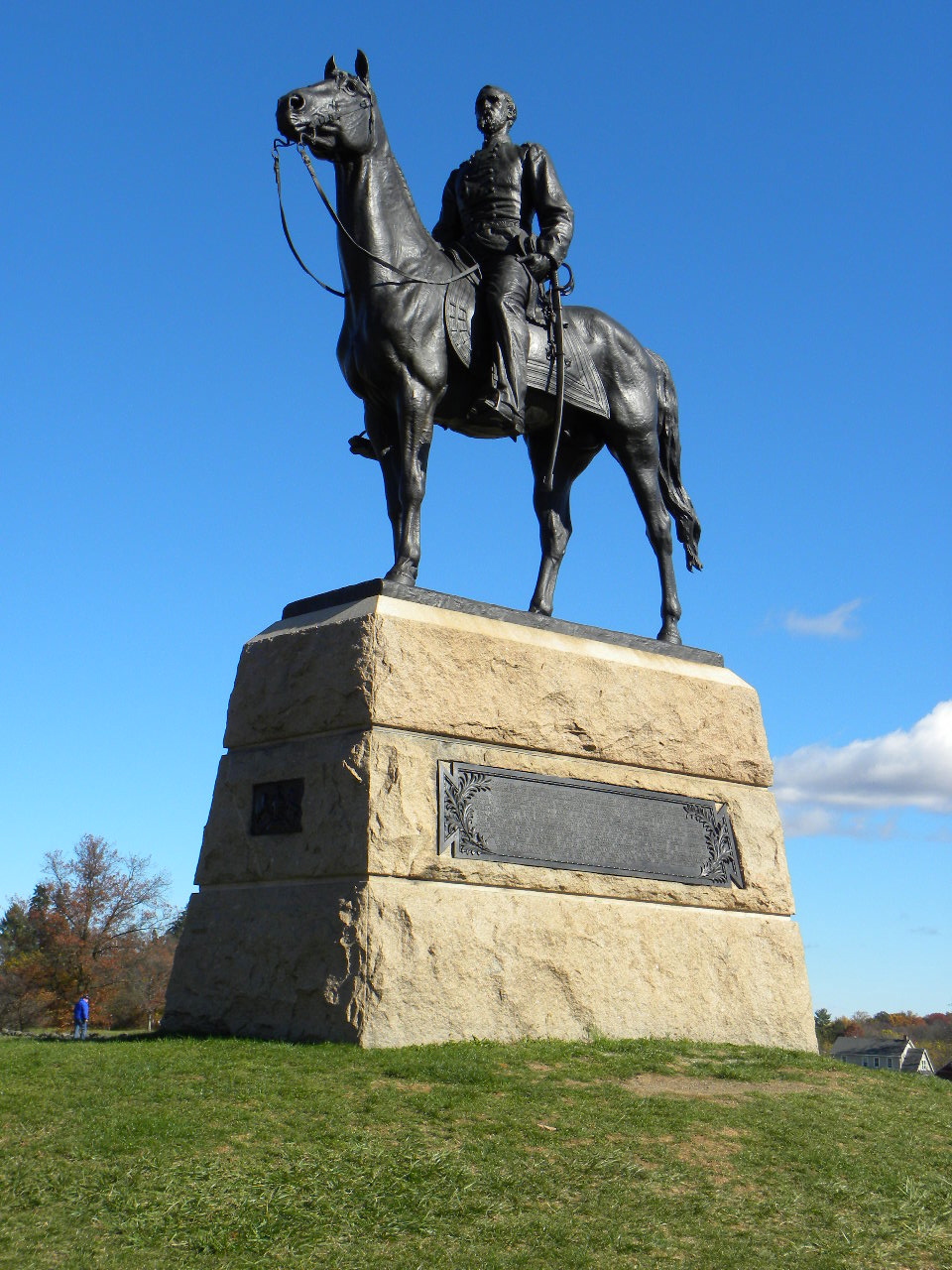
DSCN8831DSCN8832Two views of Monument to General George Meade

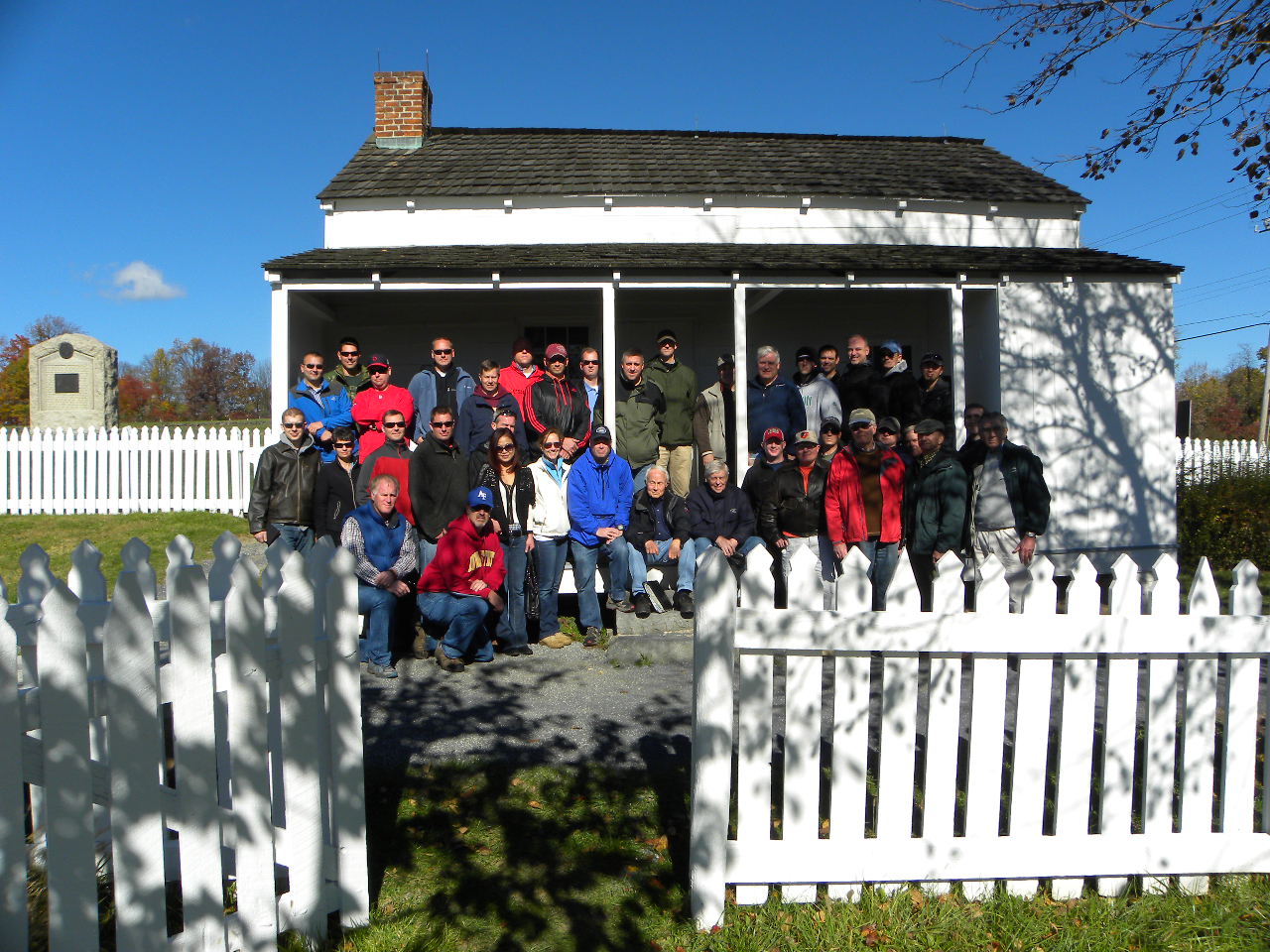
DSCN8834My Class and group at General Meade’s Headquarters east of Cemetery Ridge

DSCN8842Monument to Pennsylvania Cavalry Cemetery Ridge

DSCN8843Virginia Monument on Seminary Ridge near start point for Pickett’s Charge

DSCN8830The Copse of Trees, target of Pickett’s Charge

DSCN8854Monument to a Federal Infantry Regiment near the Copse of Trees on Cemetery Ridge

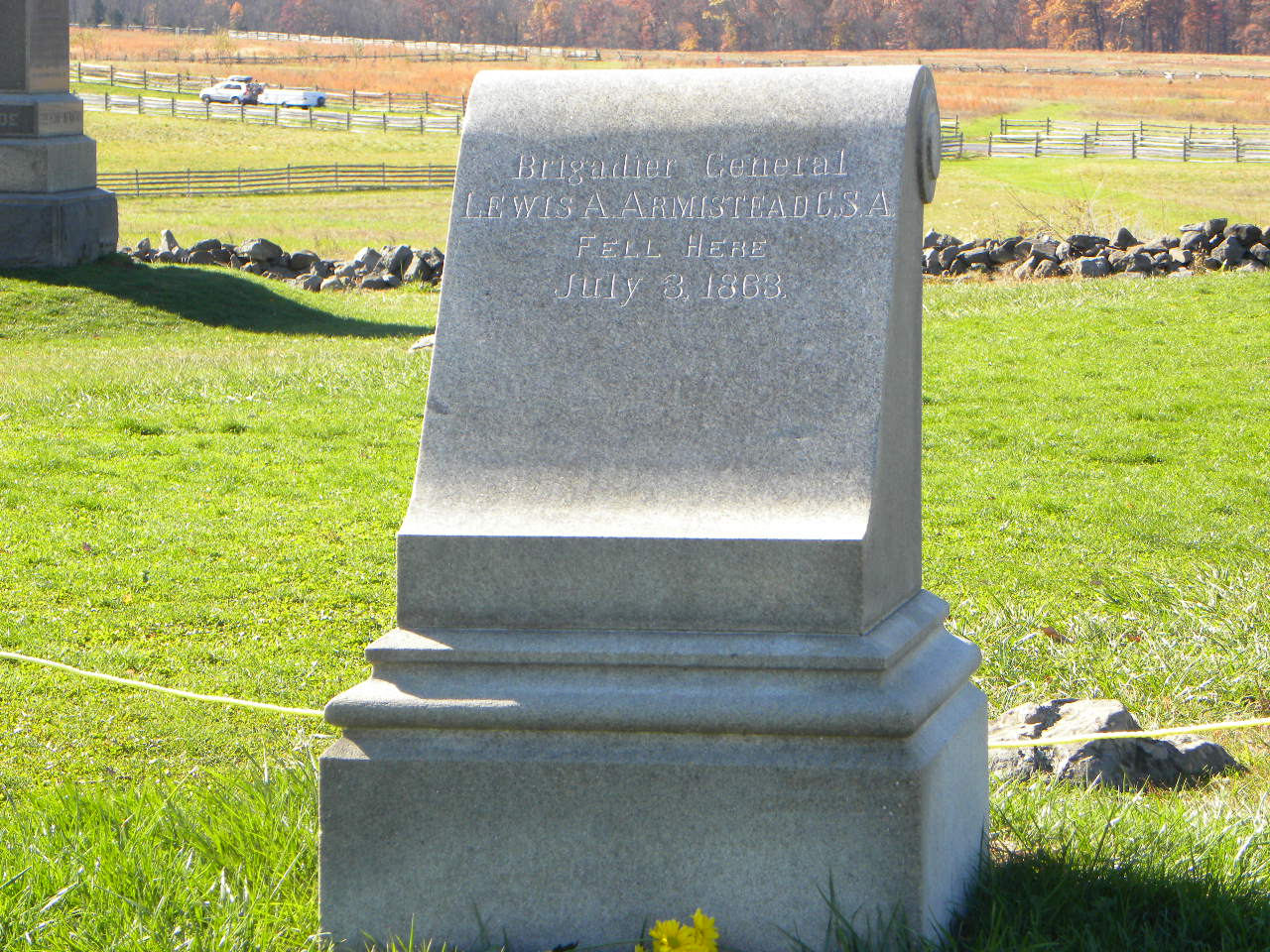
DSCN8856Monument to General Lewis Armistead CSA at the High Water Mark of the Confederacy

DSCN8851DSCN8855Monuments at the Angle on Cemetery Ridge

In a few short weeks our nation will commemorate the 150th anniversary of President Lincoln’s Gettysburg Address. His words, brief yet eloquent sum up the meaning and symbolism in the monuments that mark this hallowed ground.

Four score and seven years ago our fathers brought forth on this continent, a new nation, conceived in Liberty, and dedicated to the proposition that all men are created equal.

Now we are engaged in a great civil war, testing whether that nation, or any nation so conceived and so dedicated, can long endure. We are met on a great battle-field of that war. We have come to dedicate a portion of that field, as a final resting place for those who here gave their lives that that nation might live. It is altogether fitting and proper that we should do this.

But, in a larger sense, we can not dedicate — we can not consecrate — we can not hallow — this ground. The brave men, living and dead, who struggled here, have consecrated it, far above our poor power to add or detract. The world will little note, nor long remember what we say here, but it can never forget what they did here. It is for us the living, rather, to be dedicated here to the unfinished work which they who fought here have thus far so nobly advanced. It is rather for us to be here dedicated to the great task remaining before us — that from these honored dead we take increased devotion to that cause for which they gave the last full measure of devotion — that we here highly resolve that these dead shall not have died in vain — that this nation, under God, shall have a new birth of freedom — and that government of the people, by the people, for the people, shall not perish from the earth.

That is why these reminders of the past matter so much today.

Peace

Padre Steve+


Leave a comment

Filed under civil war, History

A Trip to Gettysburg

mkholrt

“In great deeds, something abides. On great fields something stays. Forms change and pass; bodies disappear, but spirits linger, to consecrate the ground for the vision-place of souls. And reverent men and women from afar, and generations that know us not and that we know not of, heart-drawn to see where and by whom great things were suffered and done for them….” Joshua Lawrence Chamberlain 

I am in Gettysburg this weekend as part of a Staff Ride with members of my Joint Forces Staff College course. I have been to Gettysburg many times but each time I go my appreciation for what occurred there 150 years ago grows. As I muse about the battle, as well as the entire war my thoughts are often drawn to the words of Joshua Lawrence Chamberlain, Colonel of the 20th Maine at Little Round Top.

In a few weeks the nation will mark the 150th anniversary of President Abraham Lincoln’s Gettysburg Address and I am staying not far from where Lincoln delivered the speech.

On Saturday and Sunday we will tour the battlefield and discuss the battle. I will be taking a good number of photos and probably do some writing about what I see and my thoughts on the events of the battle over the next few days.

However even though I will be thinking about the battle, I will also be thinking of the sacrifice made there to preserve the Union and defeat a rebellion that at its heart was based on maintaining a social and economic system that enslaved a race of people and treated them as less than human. If course the defenders of that revolt point to it being about “states rights” but those rights were fundamentally about preserving and expanding the practice of slavery and subjugating the black race in order to maintain the economic and political power of slave owners and traders.

images-61

Until then I will leave you with the immortal words of President Lincoln.

Four score and seven years ago our fathers brought forth on this continent, a new nation, conceived in Liberty, and dedicated to the proposition that all men are created equal.

Now we are engaged in a great civil war, testing whether that nation, or any nation so conceived and so dedicated, can long endure. We are met on a great battle-field of that war. We have come to dedicate a portion of that field, as a final resting place for those who here gave their lives that that nation might live. It is altogether fitting and proper that we should do this.

But, in a larger sense, we can not dedicate — we can not consecrate — we can not hallow — this ground. The brave men, living and dead, who struggled here, have consecrated it, far above our poor power to add or detract. The world will little note, nor long remember what we say here, but it can never forget what they did here. It is for us the living, rather, to be dedicated here to the unfinished work which they who fought here have thus far so nobly advanced. It is rather for us to be here dedicated to the great task remaining before us — that from these honored dead we take increased devotion to that cause for which they gave the last full measure of devotion — that we here highly resolve that these dead shall not have died in vain — that this nation, under God, shall have a new birth of freedom — and that government of the people, by the people, for the people, shall not perish from the earth.

Peace

Padre Steve+

Leave a comment

Filed under civil war, History

Gettysburg at 150 and the Lingering Curse of the “Lost Cause” on the United States

gal9vfvf1

This week I will be writing a lot about the Battle of Gettysburg which happens to fall in the days before the celebration of our Declaration of Independence. Some of these will be articles that I published before and some will be new work. I think that the American Civil War and its consequences today is something that we need to look at as a society, and not from the romanticized “Lost Cause” revisionism that is so popular among many even today.

Last year washed up rocker and now political activist Ted Nugent wrote in the Washington Times “I’m beginning to wonder if it would have been best had the South won the Civil War.”  I find his remark appalling and disgraceful but I have come to expect such comments from him and and others who voice similar sentiments. But Nugent is not alone, an organization called The League of the South states its goals in very clear language: “The League of the South is a Southern Nationalist organization whose ultimate goal is a free and independent Southern republic.”

When I hear such sentiments and they are many now days I think of men like Joshua Chamberlain. Chamberlain was a college professor who served in the Union Army and won fame and the Medal of Honor for the defense of Little Round Top at Gettysburg. There is a quote from the film Gods and Generals which I think about when I hear anyone suggesting that it would have been better for the Confederacy to have won the war:

“Now, somewhere out there is the Confederate army. They claim they are fighting for their independence, for their freedom. Now, I can not question their integrity. I believe they are wrong but I can not question it. But I do question a system that defends its own freedom while it denies it to an entire race of men. I will admit it, Tom. War is a scourge, but so is slavery. It is the systematic coercion of one group of men over another. It has been around since the book of Genesis. It exists in every corner of the world, but that is no excuse for us to tolerate it here when we find it right in front of our very eyes in our own country. As God as my witness, there is no one I hold in my heart dearer than you. But if your life, or mine,is part of the price to end this curse and free the Negro, then let God’s work be done.”

There is a spot near the Copse of Trees along Cemetery Ridge which is referred to as the “High Water Mark of the Confederacy.” It is the spot close to where Confederate Brigadier General Lewis Armistead fell mortally wounded as the decimated remains of his command were overwhelmed by Union forces shortly after they breached the Union line. It is a place immortalized in history, literature and film. It is the place that marked the beginning of the end for the great evil of slavery in America.

My ancestors lived in Cabell County which in 1861 was part of Virginia. They were slave holders along the Mud River, a tributary of the Ohio River just to the north of what is now Huntington West Virginia. When war came to the country the family patriarch James Dundas and my great, great grandfather joined the 8th Virginia Cavalry Regiment in which he served the bulk of the war as a Lieutenant.  When it ended he refused to sign the loyalty oath to the Union and had his lands, which are now some of the most valuable in that part of West Virginia confiscated and sold by the Federal Government.  He was a believer in the “Lost Cause” that romantic and confused idea about the rightness of the South in its war against what they called “Northern aggression.”

Because he and others on both sides of my family served in Confederate ranks I am eligible for membership in the Sons of the Confederacy. However it is something that I cannot do.  There are some that do this as a means to honor their relatives that served in the war and I do not make light of their devotion to their family, but there are some that take that devotion to places that I cannot go.  As much as I admire the valor and personal integrity of many military men who served the Confederacy I cannot for a moment think that their “cause” was just.

It has been said that the North won the war but that the South won the history.  I think this is true. Many people now days like to reduce the reasons for the war to the South protecting its rights.  Sometimes the argument is “states rights” or “economic freedom” and those that make these arguments romanticize the valor shown by Confederate soldiers on the battlefield but conveniently ignore or obscure the evil of the Southern economic system.

The “rights” and the “economic freedom” espoused by those that led the secession and that are lamented by those like Nugent were based upon the enslavement and exploitation of the Black man to maintain an archaic economy based on agriculture, particularly the export of King Cotton.  Arguments which try to place the blame on the North, especially arguments that attempt to turn the Northern States into economic predators’ intent on suppressing the economic rights of Southerners only serve to show the bankruptcy of the idea itself. The fact that the “economic and political freedom” of Southerners was founded on the enslavement of a whole race of people matters not because the “cause” is greater.

One interesting point that many turn a blind eye to is that in each of its campaigns above the Mason Dixon Line Lee’s Army rounded up blacks, mostly freemen and sent them back to the South in chains to be used as slaves. I have to wonder what Southern success at Gettysburg would have meant to African Americans today. Lee believed that his campaign in Pennsylvania would bring about a result that would change the political situation in the North and bring about a situation where the North would recognize Southern independence. He wrote in April of 1863 “next fall there will be a great change in public opinion at the North. The Republicans will be destroyed & I think the friends of peace will become so strong that the next administration will go in on that basis…”

Of course Lee was wrong and his campaign was flawed in large part because he did not adequately define his intent to his commanders. That much is obvious in the writings of the surviving participants after the war.

The overall situation for the Confederacy in June of 1863 was grim. There had been food riots in Richmond, Vicksburg was on the bring of falling and with it the Confederacy would be split in two along the Mississippi River, the Union blockade of Southern ports was working, the South had not been recognized by any foreign powers and the textile industries of Europe had found other suppliers for “King Cotton.” Despite this Lee held on to the hope that a military victory in the East could change the political calculus.

The fact is that the longer the South relied solely on its agriculture which was supported by the institution of slavery it deprived itself of the means of economic progress, the same progress that propelled the North to prosperity. The south lagged in all industrial areas as well as transportation infrastructure. The majority of non-slave owning whites lived at the poverty line and only enjoyed some elevated social status because the slaves ranked beneath them on the sociological and economic hierarchy.  The South depended on cheap imports from England, which then was still considered an enemy of the country. When tariffs to protect newly establish American industries were enacted in 1828 South Carolina attempted to nullify the Federal law even raising troops and threatened a revolt in 1832.

The Southern economic system was immoral and antiquated. It enslaved blacks and it impoverished most rural Southerners, with the exception of those that owned the land and the slaves. It was a hateful, backward and loathsome system which even the southern churches attempted to justify from Scripture. Southern Baptists, Methodists and Presbyterians would all break away from their parent denominations regarding their support for the institution of slavery.

This does not mean that I think that the average Confederate soldier or officers were dishonorable men. Many officers who had served in the United States Army hated the breakup of the Union but served the South because it was the land that they were from. It was the home of their families and part of who they were.  To judge them as wanting 150 years later when we have almost no connection to family or home in a post industrial world is to impose the standards of a world that they did not know upon them. For those that gave up everything to serve one can feel a measure of sympathy.  So many died and so much of the South was destroyed in the defense of that “cause” one has to wonder just why the political and religious leaders of the South were willing to maintain such an inadequate and evil economic system one that hurt poor Southern whites nearly as much as it did blacks.

The war devastated the South and the radicals that ran “Reconstruction” ensured that Southerners suffered terrible degradation and that Southern blacks would have even more obstacles raised against them by the now very angry and revengeful whites.  It would take another 80-100 years to end segregation and secure voting rights for blacks. Thus I have no desire to become part of an organization that even gives the appearance of supporting the “cause” even if doing so would allow me to “honor” an ancestor who raised his hand against the country that I serve.

I was raised on the West Coast but have lived in the South much of my adult life due to military assignments. I have served in National Guard units that trace their lineage to Confederate regiments in Texas and Virginia. Despite my Confederate connections both familial and by service I can find little of the romance and idealism that some find in the Confederacy and the “Lost Cause.” I see the Civil War for what it was, a tragedy of the highest order brought about by the need of some to enslave others to maintain their economic system.

Today there are many that use the flags of the Confederacy outside of their historic context. They are often used as a symbol of either racial hatred or of defiance to the Federal Government by white Supremacist or anti-government organizations.  Many that use them openly advocate for the overthrow of the Federal Government.  The calls for such “revolt” can be found all over the country even in the halls of Congress much as they were in the 1830s, 40s and 50s. Some of this is based in libertarian economic philosophy which labels the government as the enemy of business, some based social policies which are against their religious beliefs and some sadly to say based in an almost xenophobic racial hatred.  The scary thing as that the divisions in the country are probably as great as or greater than they were in the 1850s as the country lurched inexorably to Civil War with neither side willing to do anything that might lessen their political or economic power even if it means the ruin of the country.

As seems to be the case around this time of year I have seen the symbols of the Confederacy, particularly the Battle Flag displayed in manners that can only be seen as symbols of defiance. July 4th will be celebrated this week and it seems to me that the flag that should be most prominently displayed is the Stars and Stripes not the Confederate Battle flag or even the Gadsen Flag which has become the symbol of the modern Tea Party movement.  Somehow I find the flag flown in rebellion to the country that I serve displayed in such an arrogant manner.

For people like the Federal Government which is the enemy. Now I know that our system of government has its flaws. Likewise I cannot agree more about the corruption of many in political office, regardless of their political allegiance.  While it is true that the Federal Government has taken upon itself many powers some never envisioned by those that crafted the Constitution, it has done so because leaders of both political parties have consented to it and even worked to strengthen the Federal Government with the consent of the American people that elect them again and again.

Despite this much of this has been accomplished by the Federal Government has been for the good for the country and people no matter what the critics say. Many of the things that we enjoy today are the result of the work of the Federal Government and not business as much as those that deify big corporations want to believe. There are the National Parks, laws against child labor and for safe workplaces brought about by Teddy Roosevelt, the infrastructure built in the 1930s and 1940s by the Franklin Roosevelt administration. The Roosevelt administration also brought about Social Security and banking regulations to protect Americans from corporations and banks that violated the public trust. The Eisenhower administration began the Interstate Highway system which is the backbone of our transportation system.  Likewise the Space Program and yes even the military have led the way in technological, scientific and medical innovation including that thing that we all take for granted today the Internet.

Today quite a few people are calling for revolt or secession if they do not get what they want be it socially, politically or economically. For years politicians on both sides have fought to minimize such talk and enact compromises with the usual discontent that comes with compromise.  Unfortunately many of those compromises have had the effect of widening the political divide much as the various compromises on the road to the Civil War.  Jefferson said of the Missouri Compromise of 1824: “but this momentous question, like a fire bell in the night, awakened and filled me with terror. I considered it at once as the knell of the Union. It is hushed indeed for the moment, but this is a reprieve only, not a final sentence. A geographical line, coinciding with a marked principle, moral and political, once conceived and held up to the angry passions of men, will never be obliterated; and every new irritation will mark it deeper and deeper.”

We have allowed the issues of our time to become a fire of unbridled angry passion where those with almost no historical understanding and whose history is often based on myth stake claims and promote ideas that will destroy this Union if they continue. Unfortunately we have not yet reached the high water mark of this movement yet and I fear like Jefferson that the hatred and division will only grow worse as both radical on the right and left prepare for conflict.

This week we celebrated the 236th anniversary of our Declaration of Independence.  It is a remarkable occasion. It is the anniversary that free people as well as those oppressed around the world look to as a beacon of liberty. It has been paid for time and time again, especially during that cruel Civil War which killed more American soldiers than any other war that we have fought.

A few months after Gettysburg Abraham Lincoln a man much reviled by those that have romanticized the Cause and who is demonized by many “conservative” politicians and pundits today as a “tyrant” made these brief remarks at the site of the battle:

Four score and seven years ago our fathers brought forth on this continent, a new nation, conceived in Liberty, and dedicated to the proposition that all men are created equal.

“Now we are engaged in a great civil war, testing whether that nation, or any nation so conceived and so dedicated, can long endure. We are met on a great battlefield of that war. We have come to dedicate a portion of that field, as a final resting place for those who here gave their lives that that nation might live. It is altogether fitting and proper that we should do this. But, in a larger sense, we cannot dedicate—we cannot consecrate—we cannot hallow—this ground. The brave men, living and dead, who struggled here, have consecrated it, far above our poor power to add or detract. The world will little note, nor long remember what we say here, but it can never forget what they did here. It is for us the living, rather, to be dedicated here to the unfinished work which they who fought here have thus far so nobly advanced. It is rather for us to be here dedicated to the great task remaining before us—that from these honored dead we take increased devotion to that cause for which they gave the last full measure of devotion—that we here highly resolve that these dead shall not have died in vain—that this nation, under God, shall have a new birth of freedom— and that government of the people, by the people, for the people, shall not perish from the earth.”

Today with so many radicals, especially those on the political right, but some on the left such as the “Anonymous” group doing all that they can to plunge us into yet another civil war we should remember Lincoln’s words and rededicate ourselves to this Union, this remarkable Union.  Tony Blair the former Prime Minster of Great Britain remarked in 2011:

“It may be strange for a former British Prime Minister to offer thoughts on America when the country will be celebrating its independence from Britain. But the circumstances of independence are part of what makes America the great and proud nation it is today. And what gives nobility to the American character.

That nobility isn’t about being nicer, better or more successful than anyone else. It is a feeling about the country. It is a devotion to the American ideal that at a certain point transcends class, race, religion or upbringing. That ideal is about values, freedom, the rule of law, democracy. It is also about the way you achieve: on merit, by your own efforts and hard work.

But it is most of all that in striving for and protecting that ideal, you as an individual take second place to the interests of the nation as a whole. This is what makes the country determined to overcome its challenges. It is what makes its soldiers give their lives in sacrifice. It is what brings every variety of American, from the lowest to the highest, to their feet when “The Star-Spangled Banner” is played.

Of course the ideal is not always met – that is obvious. But it is always striven for.

The next years will test the American character. The world is changing. New powers are emerging. But America should have confidence. This changing world does not diminish the need for that American ideal. It only reaffirms it.”

I think that the Prime Minister got it right and Ted Nugent is an ignorant fool but he has the right to be one.

Peace

Padre Steve+

6 Comments

Filed under civil rights, civil war, History, News and current events, Political Commentary

Protecting the Ideal: Reflections on Gettysburg, Freedom and Why It Matters

I have spent this week writing about the Battle of Gettysburg which happens to fall in the days before the celebration of our Declaration of Independence. This week on the 149th Anniversary of Pickett’s Charge at the Battle of Gettysburg washed up rocker and now political activist Ted Nugent wrote in the Washington Times “I’m beginning to wonder if it would have been best had the South won the Civil War.”  I find his remark appalling and disgraceful but I have come to expect such comments from him and and others who voice similar sentiments.

When I hear such sentiments and they are many now days I think of men like Joshua Chamberlain. Chamberlain was a college professor who served in the Union Army and won fame and the Medal of Honor for the defense of Little Round Top at Gettysburg. There is a quote from the film Gods and Generals which I think about when I hear anyone suggesting that it would have been better for the Confederacy to have won the war:

“Now, somewhere out there is the Confederate army. They claim they are fighting for their independence, for their freedom. Now, I can not question their integrity. I believe they are wrong but I can not question it. But I do question a system that defends its own freedom while it denies it to an entire race of men. I will admit it, Tom. War is a scourge, but so is slavery. It is the systematic coercion of one group of men over another. It has been around since the book of Genesis. It exists in every corner of the world, but that is no excuse for us to tolerate it here when we find it right in front of our very eyes in our own country. As God as my witness, there is no one I hold in my heart dearer than you. But if your life, or mine,is part of the price to end this curse and free the Negro, then let God’s work be done.”

There is a spot near the Copse of Trees along Cemetery Ridge which is referred to as the “High Water Mark of the Confederacy.” It is the spot close to where Confederate Brigadier General Lewis Armistead fell mortally wounded as the decimated remains of his command were overwhelmed by Union forces shortly after they breached the Union line. It is a place immortalized in history, literature and film. It is the place that marked the beginning of the end for the great evil of slavery in America.

My ancestors lived in Cabell County which in 1861 was part of Virginia. They were slave holders along the Mud River, a tributary of the Ohio River just to the north of what is now Huntington West Virginia. When war came to the country the family patriarch James Dundas and my great, great grandfather joined the 8th Virginia Cavalry Regiment in which he served the bulk of the war as a Lieutenant.  When it ended he refused to sign the loyalty oath to the Union and had his lands, which are now some of the most valuable in that part of West Virginia confiscated and sold by the Federal Government.  He was a believer in the “Lost Cause” that romantic and confused idea about the rightness of the South in its war against what they called “Northern aggression.”

Because he served I am eligible for membership in the Sons of the Confederacy. However it is something that I cannot do.  There are some that do this as a means to honor their relatives that served in the war and I do not make light of their devotion to their family, but there are some that take that devotion to places that I cannot go.  As much as I admire the valor and personal integrity of many military men who served the Confederacy I cannot for a moment think that their “cause” was just.

It has been said that the North won the war but that the South won the history.  I think this is true. Many people now days like to reduce the reasons for the war to the South protecting its rights.  Sometimes the argument is “states rights” or “economic freedom” and those that make these arguments romanticize the valor shown by Confederate soldiers on the battlefield but conveniently ignore or obscure the evil of the Southern economic system.

The “rights” and the “economic freedom” espoused by those that led the secession and that are lamented by those like Nugent were based upon the enslavement and exploitation of the Black man to maintain an archaic economy based on agriculture, particularly the export of King Cotton.  Arguments which try to place the blame on the North, especially arguments that attempt to turn the Northern States into economic predators’ intent on suppressing the economic rights of Southerners only serve to show the bankruptcy of the idea itself. The fact that the “economic and political freedom” of Southerners was founded on the enslavement of a whole race of people matters not because the “cause” is greater.

The fact is that the longer the South relied solely on its agriculture which was supported by the institution of slavery it deprived itself of the means of economic progress, the same progress that propelled the North to prosperity. The south lagged in all industrial areas as well as transportation infrastructure. The majority of non-slave owning whites lived at the poverty line and only enjoyed some elevated social status because the slaves ranked beneath them on the sociological and economic hierarchy.  The South depended on cheap imports from England, which then was still considered an enemy of the country. When tariffs to protect newly establish American industries were enacted in 1828 South Carolina attempted to nullify the Federal law even raising troops and threatened a revolt in 1832.

The Southern economic system was immoral and antiquated. It enslaved blacks and it impoverished most rural Southerners, with the exception of those that owned the land and the slaves. It was a hateful, backward and loathsome system which even the southern churches attempted to justify from Scripture.  Southern Baptists, Methodists and Presbyterians would all break away from their parent denominations regarding slavery.

This does not mean that I think that the average Confederate soldier or officers were dishonorable men. Many officers who had served in the United States Army hated the breakup of the Union but served the South because it was the land that they were from. It was the home of their families and part of who they were.  To judge them as wanting 150 years later when we have almost no connection to family or home in a post industrial world is to impose the standards of a world that they did not know upon them. For those that gave up everything to serve one can feel a measure of sympathy.  So many died and so much of the South was destroyed in the defense of that “cause” one has to wonder just why the political and religious leaders of the South were willing to maintain such an inadequate and evil economic system one that hurt poor Southern whites nearly as much as it did blacks.

The war devastated the South and the radicals that ran “Reconstruction” ensured that Southerners suffered terrible degradation and that Southern blacks would have even more obstacles raised against them by the now very angry and revengeful whites.  It would take another 80-100 years to end segregation and secure voting rights for blacks. Thus I have no desire to become part of an organization that even gives the appearance of supporting the “cause” even if doing so would allow me to “honor” an ancestor who raised his hand against the country that I serve.

I was raised on the West Coast but have lived in the South much of my adult life due to military assignments. I have served in National Guard units that trace their lineage to Confederate regiments in Texas and Virginia. Despite my Confederate connections both familial and by service I can find little of the romance and idealism that some find in the Confederacy and the “Lost Cause.” I see the Civil War for what it was, a tragedy of the highest order brought about by the need of some to enslave others to maintain their economic system.

Today there are many that use the flags of the Confederacy outside of their historic context. They are often used as a symbol of either racial hatred or of defiance to the Federal Government by white Supremacist or anti-government organizations.  Many that use them openly advocate for the overthrow of the Federal Government.  The calls for such “revolt” can be found all over the country even in the halls of Congress much as they were in the 1830s, 40s and 50s. Some of this is based in libertarian economic philosophy which labels the government as the enemy of business, some based social policies which are against their religious beliefs and some sadly to say based in an almost xenophobic racial hatred.  The scary thing as that the divisions in the country are probably as great as or greater than they were in the 1850s as the country lurched inexorably to Civil War with neither side willing to do anything that might lessen their political or economic power even if it means the ruin of the country.

As seems to be the case around this time of year I have seen the symbols of the Confederacy, particularly the Battle Flag displayed in manners that can only be seen as symbols of defiance.  Wednesday was July 4th and it seems to me that the flag that should be most prominently displayed is the Stars and Stripes not the Confederate Battle flag or even the Gadsen Flag which has become the symbol of the modern Tea Party movement.  Somehow I find the flag flown in rebellion to the country that I serve displayed in such an arrogant manner.

For people like the Federal Government which is the enemy. Now I know that our system of government has its flaws. Likewise I cannot agree more about the corruption of many in political office, regardless of their political allegiance.  While it is true that the Federal Government has taken upon itself many powers some never envisioned by those that crafted the Constitution, it has done so because leaders of both political parties have consented to it and even worked to strengthen the Federal Government with the consent of the American people that elect them again and again.

Despite this much of this has been accomplished by the Federal Government has been for the good for the country and people no matter what the critics say. Many of the things that we enjoy today are the result of the work of the Federal Government and not business as much as those that deify big corporations want to believe. There are the National Parks, laws against child labor and for safe workplaces brought about by Teddy Roosevelt, the infrastructure built in the 1930s and 1940s by the Franklin Roosevelt administration. The Roosevelt administration also brought about Social Security and banking regulations to protect Americans from corporations and banks that violated the public trust. The Eisenhower administration began the Interstate Highway system which is the backbone of our transportation system.  Likewise the Space Program and yes even the military have led the way in technological, scientific and medical innovation including that thing that we all take for granted today the Internet.

Today quite a few people are calling for revolt or secession if they do not get what they want be it socially, politically or economically. For years politicians on both sides have fought to minimize such talk and enact compromises with the usual discontent that comes with compromise.  Unfortunately many of those compromises have had the effect of widening the political divide much as the various compromises on the road to the Civil War.  Jefferson said of the Missouri Compromise of 1824: “but this momentous question, like a fire bell in the night, awakened and filled me with terror. I considered it at once as the knell of the Union. It is hushed indeed for the moment, but this is a reprieve only, not a final sentence. A geographical line, coinciding with a marked principle, moral and political, once conceived and held up to the angry passions of men, will never be obliterated; and every new irritation will mark it deeper and deeper.”

We have allowed the issues of our time to become a fire of unbridled angry passion where those with almost no historical understanding and whose history is often based on myth stake claims and promote ideas that will destroy this Union if they continue. Unfortunately we have not yet reached the high water mark of this movement yet and I fear like Jefferson that the hatred and division will only grow worse as both radical on the right and left prepare for conflict.

This week we celebrated the 236th anniversary of our Declaration of Independence.  It is a remarkable occasion. It is the anniversary that free people as well as those oppressed around the world look to as a beacon of liberty. It has been paid for time and time again, especially during that cruel Civil War which killed more American soldiers than any other war that we have fought.

A few months after Gettysburg Abraham Lincoln a man much reviled by those that have romanticized the Cause and who is demonized by many “conservative” politicians and pundits today as a “tyrant” made these brief remarks at the site of the battle:

Four score and seven years ago our fathers brought forth on this continent, a new nation, conceived in Liberty, and dedicated to the proposition that all men are created equal.

“Now we are engaged in a great civil war, testing whether that nation, or any nation so conceived and so dedicated, can long endure. We are met on a great battlefield of that war. We have come to dedicate a portion of that field, as a final resting place for those who here gave their lives that that nation might live. It is altogether fitting and proper that we should do this. But, in a larger sense, we cannot dedicate—we cannot consecrate—we cannot hallow—this ground. The brave men, living and dead, who struggled here, have consecrated it, far above our poor power to add or detract. The world will little note, nor long remember what we say here, but it can never forget what they did here. It is for us the living, rather, to be dedicated here to the unfinished work which they who fought here have thus far so nobly advanced. It is rather for us to be here dedicated to the great task remaining before us—that from these honored dead we take increased devotion to that cause for which they gave the last full measure of devotion—that we here highly resolve that these dead shall not have died in vain—that this nation, under God, shall have a new birth of freedom— and that government of the people, by the people, for the people, shall not perish from the earth.”

Today with so many radicals on both the political right and political left doing all that they can to plunge us into yet another civil war we should remember Lincoln’s word and rededicate ourselves to this Union, this remarkable Union.  Tony Blair the former Prime Minster of Great Britain remarked last year:

“It may be strange for a former British Prime Minister to offer thoughts on America when the country will be celebrating its independence from Britain. But the circumstances of independence are part of what makes America the great and proud nation it is today. And what gives nobility to the American character.

That nobility isn’t about being nicer, better or more successful than anyone else. It is a feeling about the country. It is a devotion to the American ideal that at a certain point transcends class, race, religion or upbringing. That ideal is about values, freedom, the rule of law, democracy. It is also about the way you achieve: on merit, by your own efforts and hard work.

But it is most of all that in striving for and protecting that ideal, you as an individual take second place to the interests of the nation as a whole. This is what makes the country determined to overcome its challenges. It is what makes its soldiers give their lives in sacrifice. It is what brings every variety of American, from the lowest to the highest, to their feet when “The Star-Spangled Banner” is played.

Of course the ideal is not always met – that is obvious. But it is always striven for.

The next years will test the American character. The world is changing. New powers are emerging. But America should have confidence. This changing world does not diminish the need for that American ideal. It only reaffirms it.”

I think that the Prime Minister got it right and Ted Nugent is an ignorant fool but he has the right to be one.

Peace

Padre Steve+

Leave a comment

Filed under civil war, History, Political Commentary

Four Score and Seven: July 4th at Gettysburg

“Dead men and plenty here – and I saw plenty [3] of them in all shapes on the field – Help to wound & Kill men then Patch them up I could show more suffering here in one second than you will see in a Life…” Elbert Corbin, Union Soldier at Gettysburg 1st Regiment, Light Artillery, N. Y. S. Volunteers (Pettit’s Battery)

“In great deeds something abides. On great fields something stays. Forms change and pass; bodies disappear, but spirits linger, to consecrate ground for the vision-place of souls.” Colonel Joshua Lawrence Chamberlain

The Army of Northern Virginia and Army of the Potomac remained on the bloodstained Gettysburg battlefield on July 4th 1863. Both armies had suffered severely in the fighting around 50,000 soldiers from both sides lay dead, dying or wounded on the battlefield. Surgeons and their assistants manned open air hospitals while parties of stretcher bearers evacuated wounded men for treatment and other soldiers began to identify and bury the dead.  Halfway across the continent Confederate Lieutenant General John C Pemberton surrendered his emaciated forces at Vicksburg to Major General Ullysses S Grant which cut the Confederacy in half. It was a fitting day of remembrance as it was the 87th anniversary of the signing of the Declaration of Independence, and the significance was not lost on any of the commanders.

It was a somber day, the sweltering heat sunshine which had bathed the battlefield as Longstreets’ Corps Corps attacked Cemetery Ridge was broken by heavy rain and wind. The commanders of both armies, General Robert E Lee and Major General George Mead attempted to discern the others intent while making their own plans. It was Lee’s hope that Meade would attack and possibly give him the opportunity to inflict a defeat on the Union forces.  Meade, still new to command and cautious did not renew the engagement and Lee began to withdraw the battered Army of Northern Virginia from the field.

As Lee withdrew Meade slowly pursued and lost a chance at trapping the Confederate Army before it could escape across the rain swollen Potomac River.  Lee completed his withdraw under pressure on the 14th and his rear-guard under the command of Major General Harry Heth fought an action against Union forces at the in which the accomplished academic and author Brigadier General James Pettigrew was mortally wounded.

Meade’s lackluster pursuit was criticized by many including President Lincoln who believed that had Meade been more aggressive that the war could have ended there. Had Lee’s army been destroyed in little over a week after the surrender of Vicksburg it could have well brought about the downfall of the Confederacy in the summer of 1863.  Even so the skill of Meade in defeating Lee at Gettysburg was one of the greatest achievements by a Union commander during the war in the East.  In earlier times Lee had held sway over his Federal opponents. McClellan, Porter, Pope, Burnside and Hooker had all failed against Lee and his army.

Many of the dead at Gettysburg were the flower of the nation. Intelligent, thoughtful and passionate they were cut down in their prime. The human cost some of over 50,000 men killed or wounded is astonishing. In those three days more Americans were killed or wounded than in the entire Iraq campaign.

The war would go on for almost two more years adding many thousands more dead and wounded. However the Union victory at Gettysburg was decisive. Never again did Lee go on the offensive and when Grant came East at the end of 1863 to command Union armies in the East against Lee the Federal armies fought with renewed ferocity and once engaged Grant never let Lee’s forces out of their grip.

In November 1863 Lincoln travelled to Gettysburg to dedicate a cemetery and commemorate the dead. He penned a short speech which still echoes in the hearts of Americans as one of the greatest tributes ever spoken. His Gettysburg Address is a speech that still calls Americans to the cause of freedom and the to remember the great cost of liberty with renewed passion.

“Fourscore and seven years ago our fathers brought forth on this continent a new nation, conceived in liberty and dedicated to the proposition that all men are created equal. Now we are engaged in a great civil war, testing whether that nation or any nation so conceived and so dedicated can long endure. We are met on a great battlefield of that war. We have come to dedicate a portion of that field as a final resting-place for those who here gave their lives that that nation might live. It is altogether fitting and proper that we should do this. But in a larger sense, we cannot dedicate, we cannot consecrate, we cannot hallow this ground. The brave men, living and dead who struggled here have consecrated it far above our poor power to add or detract. The world will little note nor long remember what we say here, but it can never forget what they did here. It is for us the living rather to be dedicated here to the unfinished work which they who fought here have thus far so nobly advanced. It is rather for us to be here dedicated to the great task remaining before us–that from these honored dead we take increased devotion to that cause for which they gave the last full measure of devotion–that we here highly resolve that these dead shall not have died in vain, that this nation under God shall have a new birth of freedom, and that government of the people, by the people, for the people shall not perish from the earth.”

Peace

Padre Steve+

1 Comment

Filed under civil war, History

The Memorial Day Order

“It is rather for us to be here dedicated to the great task remaining before us — that from these honored dead we take increased devotion to that cause for which they gave the last full measure of devotion — that we here highly resolve that these dead shall not have died in vain — that this nation, under God, shall have a new birth of freedom — and that government of the people, by the people, for the people, shall not perish from the earth.” From the Gettysburg Address 

“Dark and sad will be the hour to this nation when it forgets to pay grateful homage to its greatest benefactors. The offering we bring to-day is due alike to the patriot soldiers dead and their noble comrades who still live; for, whether living or dead, whether in time or eternity, the loyal soldiers who imperiled all for country and freedom are one and inseparable.” From Frederick Douglass’ Memorial Day Speech 1884

It was after the great bloodletting known as the American Civil War that Memorial Day, originally known as Decoration Day was established. The first observance was made by the recently freed slaves of Charleston South Carolina who honored the memory of the Union Soldiers who had died at the Washington Racecourse Prison Camp on May 1st 1865.  Other celebrations began around the country in May and June of 1866. By 1868 the Commander of the Grand Army of the Republic Union Veterans association General John Logan issued an order directing that the 30th of May 1868 be designated to the memory of the Union Soldiers, Sailors and Marines who had given their lives in the defense of the Union.

Since its establishment the holiday has grown to encompass the honored dead of all American wars.  However its roots were in the Civil War, a war that claimed the lives of between 600,000 and 700,000 American military personnel on both sides of the conflict. It is hard to imagine that on one, September 17th 1862 that over 23,000 Union and Confederate Soldiers were killed, wounded or missing. At Gettysburg more men were killed and wounded than in the entirety of the Iraq and Afghanistan wars. Two percent of the population was killed in the war. To put that in perspective that casualty rate would involve the deaths of more than 6 million soldiers, well over twice as many men and women as currently serve on active duty and in the reserve components.

The order is remarkable in its frankness and the understanding of the war in the immediate context of its conclusion.  In 1868 the day would be observed at 183 cemeteries in 27 States and the following year over 300 cemeteries. Michigan was the first state to make the day a holiday and by 1890 all states in the North had made it so. In the South there were similar observances but the meaning attributed to the events and the sacrifices of the Soldiers of both sides was interpreted differently. In the North it was about preserving the Union and in the South the interpretation of the Lost Cause.  Yet in both regions and all states, the surviving Soldiers, family members and communities honored their dead.

This Memorial Day we will honor all that have fallen but in our mind are the few that fight our current wars, wars that unlike that terrible Civil War, the majority of the population does not experience.

The order of the Grand Army of the Republic establishing Memorial Day is posted below.

Peace

Padre Steve+

HEADQUARTERS GRAND ARMY OF THE REPUBLIC, General Orders No.11, WASHINGTON, D.C., May 5, 1868

I. The 30th day of May, 1868, is designated for the purpose of strewing with flowers or otherwise decorating the graves of comrades who died in defense of their country during the late rebellion, and whose bodies now lie in almost every city, village, and hamlet church-yard in the land. In this observance no form of ceremony is prescribed, but posts and comrades will in their own way arrange such fitting services and testimonials of respect as circumstances may permit.

We are organized, comrades, as our regulations tell us, for the purpose among other things, “of preserving and strengthening those kind and fraternal feelings which have bound together the soldiers, sailors, and marines who united to suppress the late rebellion.” What can aid more to assure this result than cherishing tenderly the memory of our heroic dead, who made their breasts a barricade between our country and its foes? Their soldier lives were the reveille of freedom to a race in chains, and their deaths the tattoo of rebellious tyranny in arms. We should guard their graves with sacred vigilance. All that the consecrated wealth and taste of the nation can add to their adornment and security is but a fitting tribute to the memory of her slain defenders. Let no wanton foot tread rudely on such hallowed grounds. Let pleasant paths invite the coming and going of reverent visitors and fond mourners. Let no vandalism of avarice or neglect, no ravages of time testify to the present or to the coming generations that we have forgotten as a people the cost of a free and undivided republic.

If our eyes grow dull, other hands slack, and other hearts cold in the solemn trust, ours shall keep it well as long as the light and warmth of life remain to us.

Let us, then, at the time appointed gather around their sacred remains and garland the passionless mounds above them with the choicest flowers of spring-time; let us raise above them the dear old flag they saved from dishonor; let us in this solemn presence renew our pledges to aid and assist those whom they have left among us a sacred charge upon a nation’s gratitude, the soldier’s and sailor’s widow and orphan.

II. It is the purpose of the Commander-in-Chief to inaugurate this observance with the hope that it will be kept up from year to year, while a survivor of the war remains to honor the memory of his departed comrades. He earnestly desires the public press to lend its friendly aid in bringing to the notice of comrades in all parts of the country in time for simultaneous compliance therewith.

III. Department commanders will use efforts to make this order effective.

By order of

JOHN A. LOGAN,
Commander-in-Chief

N.P. CHIPMAN,
Adjutant General

Official:
WM. T. COLLINS, A.A.G.

1 Comment

Filed under History, Military

Reflecting on the High Water Mark of the Confederacy and the Importance of Our Union

Yesterday was the 148th Anniversary of Pickett’s Charge at the Battle of Gettysburg. There is a spot near the Copse of Trees along Cemetery Ridge which is referred to as the “High Water Mark of the Confederacy.” It is the spot close to where Confederate Brigadier General Lo Armistead fell mortally wounded as the decimated remains of his command were overwhelmed by Union forces shortly after they breached the Union line. It is a place immortalized in history, literature and film. It is the place that marked the beginning of the end for the great evil of slavery in America.

My ancestors lived in Cabell County which in 1861 was part of Virginia. They were slave holders along the Mud River, a tributary of the Ohio River just to the north of what is now Huntington West Virginia. When war came to the country the family patriarch James Dundas and my great, great grandfather joined the 8th Virginia Cavalry Regiment in which he served the bulk of the war as a Lieutenant.  When it ended he refused to sign the loyalty oath to the Union and had his lands, which are now some of the most valuable in that part of West Virginia confiscated and sold by the Federal Government.  He was a believer in the “Lost Cause” that romantic and confused idea about the rightness of the South in its war against what they called “Northern aggression.”

Because he served I am eligible for membership in the Sons of the Confederacy. However it is something that I cannot do.  There are some that do this as a means to honor their relatives that served in the war and I do not make light of their devotion to their family, but there are some that take that devotion to places that I cannot go.  As much as I admire the valor and personal integrity of many military men who served the Confederacy I cannot for a moment think that their “cause” was just.

It has been said that the North won the war but that the South won the history.  I think this is true. Many people now days like to reduce the reasons for the war to the South protecting its rights.  Sometimes the argument is “states rights” or “economic freedom” and those that make these arguments romanticize the valor shown by Confederate soldiers on the battlefield but conveniently ignore or obscure the evil of the Southern economic system. The “rights” and the “economic freedom” were based upon the enslavement and exploitation of the Black man to maintain an archaic economy based on agriculture, particularly the export of King Cotton.  Arguments which try to place the blame on the North, especially arguments that attempt to turn the Northern States into economic predators’ intent on suppressing the economic rights of Southerners only serve to show the bankruptcy of the idea itself. The fact that the “economic and political freedom” of Southerners was founded on the enslavement of a whole race of people matters not because the “cause” is greater.

The fact is that the longer the South relied solely on its agriculture which was supported by the institution of slavery it deprived itself of the means of economic progress, the same progress that propelled the North to prosperity. The south lagged in all industrial areas as well as transportation infrastructure. The majority of non-slave owning whites lived at the poverty line and only enjoyed some elevated social status because the slaves ranked beneath them on the sociological and economic hierarchy.  The South depended on cheap imports from England, which then was still considered an enemy of the country. When tariffs to protect newly establish American industries were enacted in 1828 South Carolina attempted to nullify the Federal law even raising troops and threatened a revolt in 1832.

The Southern economic system was immoral and antiquated. It enslaved blacks and it impoverished most rural Southerners, with the exception of those that owned the land and the slaves. It was a hateful, backward and loathsome system which even the southern churches attempted to justify from Scripture.  Southern Baptists, Methodists and Presbyterians would all break away from their parent denominations regarding slavery.

This does not mean that I think that the average Confederate soldier or officers were dishonorable men. Many officers who had served in the United States Army hated the breakup of the Union but served the South because it was the land that they were from. It was the home of their families and part of who they were.  To judge them as wanting 150 years later when we have almost no connection to family or home in a post industrial world is to impose the standards of a world that they did not know upon them. For those that gave up everything to serve one can feel a measure of sympathy.  So many died and so much of the South was destroyed in the defense of that “cause” one has to wonder just why the political and religious leaders of the South were willing to maintain such an inadequate and evil economic system one that hurt poor Southern whites nearly as much as it did blacks.

The war devastated the South and the radicals that ran “Reconstruction” ensured that Southerners suffered terrible degradation and that Southern blacks would have even more obstacles raised against them by the now very angry and revengeful whites.  It would take another 80-100 years to end segregation and secure voting rights for blacks. Thus I have no desire to become part of an organization that even gives the appearance of supporting the “cause” even if doing so would allow me to “honor” an ancestor who raised his hand against the country that I serve.

I was raised on the West Coast but have lived in the South much of my adult life due to military assignments. I have served in National Guard units that trace their lineage to Confederate regiments in Texas and Virginia. Despite my Confederate connections both familial and by service I can find little of the romance and idealism that some find in the Confederacy and the “Lost Cause.” I see the Civil War for what it was, a tragedy of the highest order brought about by the need of some to enslave others to maintain their economic system.

Today there are many that use the flags of the Confederacy outside of their historic context. They are often used as a symbol of either racial hatred or of defiance to the Federal Government by white Supremacist or anti-government organizations.  Many that use them openly advocate for the overthrow of the Federal Government.  The calls for such “revolt” can be found all over the country even in the halls of Congress much as they were in the 1830s, 40s and 50s. Some of this is based in libertarian economic philosophy which labels the government as the enemy of business, some based social policies which are against their religious beliefs and some sadly to say based in an almost xenophobic racial hatred.  The scary thing as that the divisions in the country are probably as great as or greater than they were in the 1850s as the country lurched inexorably to Civil War with neither side willing to do anything that might lessen their political or economic power even if it means the ruin of the country.

In recent weeks I have seen the symbols of the Confederacy, particularly the Battle Flag displayed in manners that can only be seen as symbols of defiance.  Tomorrow is July 4th and it seems to me that the flag that should be most prominently displayed is not a Confederate banner, nor even the Gadsen flag, a flag from the Revolutionary War which is used as a rallying symbol for many in the Tea Party movement but the Stars and Stripes.  Somehow I find the flag flown in rebellion to the country that I serve displayed in such an arrogant manner

For many of these people it is the Federal Government which is the enemy. Now I know that our system of government has its flaws. Likewise I cannot agree more about the corruption of many in political office, regardless of their political allegiance.  While it is true that the Federal Government has taken upon itself many powers some never envisioned by those that crafted the Constitution, it has done so because leaders of both political parties have consented to it and even worked to strengthen the Federal Government with the consent of the American people that elect them again and again.

Despite this much of this has been accomplished by the Federal Government has been for the good for the country and people no matter what the critics say. Many of the things that we enjoy today are the result of the work of the Federal Government and not business as much as those that deify big corporations want to believe. There are the National Parks, laws against child labor and for safe workplaces brought about by Teddy Roosevelt, the infrastructure built in the 1930s and 1940s by the Franklin Roosevelt administration. The Roosevelt administration also brought about Social Security and banking regulations to protect Americans from corporations and banks that violated the public trust. The Eisenhower administration began the Interstate Highway system which is the backbone of our transportation system.  Likewise the Space Program and yes even the military have led the way in technological, scientific and medical innovation including that thing that we all take for granted today the Internet.

Today quite a few people are calling for revolt or secession if they do not get what they want be it socially, politically or economically. For years politicians on both sides have fought to minimize such talk and enact compromises with the usual discontent that comes with compromise.  Unfortunately many of those compromises have had the effect of widening the political divide much as the various compromises on the road to the Civil War.  Jefferson said of the Missouri Compromise of 1824: “but this momentous question, like a fire bell in the night, awakened and filled me with terror. I considered it at once as the knell of the Union. It is hushed indeed for the moment, but this is a reprieve only, not a final sentence. A geographical line, coinciding with a marked principle, moral and political, once conceived and held up to the angry passions of men, will never be obliterated; and every new irritation will mark it deeper and deeper.”

We have allowed the issues of our time to become a fire of unbridled angry passion where those with almost no historical understanding and whose history is often based on myth stake claims and promote ideas that will destroy this Union if they continue. Unfortunately we have not yet reached the high water mark of this movement yet and I fear like Jefferson that the hatred and division will only grow worse as both radical on the right and left prepare for conflict.

Tomorrow we celebrate the 235th anniversary of our Declaration of Independence.  It is a remarkable occasion. It is the anniversary that free people as well as those oppressed around the world look to as a beacon of liberty. It has been paid for time and time again, especially during that cruel Civil War which killed more American soldiers than any other war that we have fought.

A few months after Gettysburg Abraham Lincoln a man much reviled by those that have romanticized the Cause and who is demonized by many “conservative” politicians and pundits today as a “tyrant” made these brief remarks at the site of the battle:

Four score and seven years ago our fathers brought forth on this continent, a new nation, conceived in Liberty, and dedicated to the proposition that all men are created equal.

Now we are engaged in a great civil war, testing whether that nation, or any nation so conceived and so dedicated, can long endure. We are met on a great battlefield of that war. We have come to dedicate a portion of that field, as a final resting place for those who here gave their lives that that nation might live. It is altogether fitting and proper that we should do this.

But, in a larger sense, we cannot dedicate—we cannot consecrate—we cannot hallow—this ground. The brave men, living and dead, who struggled here, have consecrated it, far above our poor power to add or detract. The world will little note, nor long remember what we say here, but it can never forget what they did here. It is for us the living, rather, to be dedicated here to the unfinished work which they who fought here have thus far so nobly advanced. It is rather for us to be here dedicated to the great task remaining before us—that from these honored dead we take increased devotion to that cause for which they gave the last full measure of devotion—that we here highly resolve that these dead shall not have died in vain—that this nation, under God, shall have a new birth of freedom— and that government of the people, by the people, for the people, shall not perish from the earth.

Today with so many radicals on both the political right and political left doing all that they can to plunge us into yet another civil war we should remember Lincoln’s word and rededicate ourselves to this Union, this remarkable Union.  Tony Blair the former Prime Minster of Great Britain remarked today:

“It may be strange for a former British Prime Minister to offer thoughts on America when the country will be celebrating its independence from Britain. But the circumstances of independence are part of what makes America the great and proud nation it is today. And what gives nobility to the American character.

That nobility isn’t about being nicer, better or more successful than anyone else. It is a feeling about the country. It is a devotion to the American ideal that at a certain point transcends class, race, religion or upbringing. That ideal is about values, freedom, the rule of law, democracy. It is also about the way you achieve: on merit, by your own efforts and hard work.

But it is most of all that in striving for and protecting that ideal, you as an individual take second place to the interests of the nation as a whole. This is what makes the country determined to overcome its challenges. It is what makes its soldiers give their lives in sacrifice. It is what brings every variety of American, from the lowest to the highest, to their feet when “The Star-Spangled Banner” is played.

Of course the ideal is not always met – that is obvious. But it is always striven for.

The next years will test the American character. The world is changing. New powers are emerging. But America should have confidence. This changing world does not diminish the need for that American ideal. It only reaffirms it.”

I think that the Prime Minister got it right.

Peace

Padre Steve+
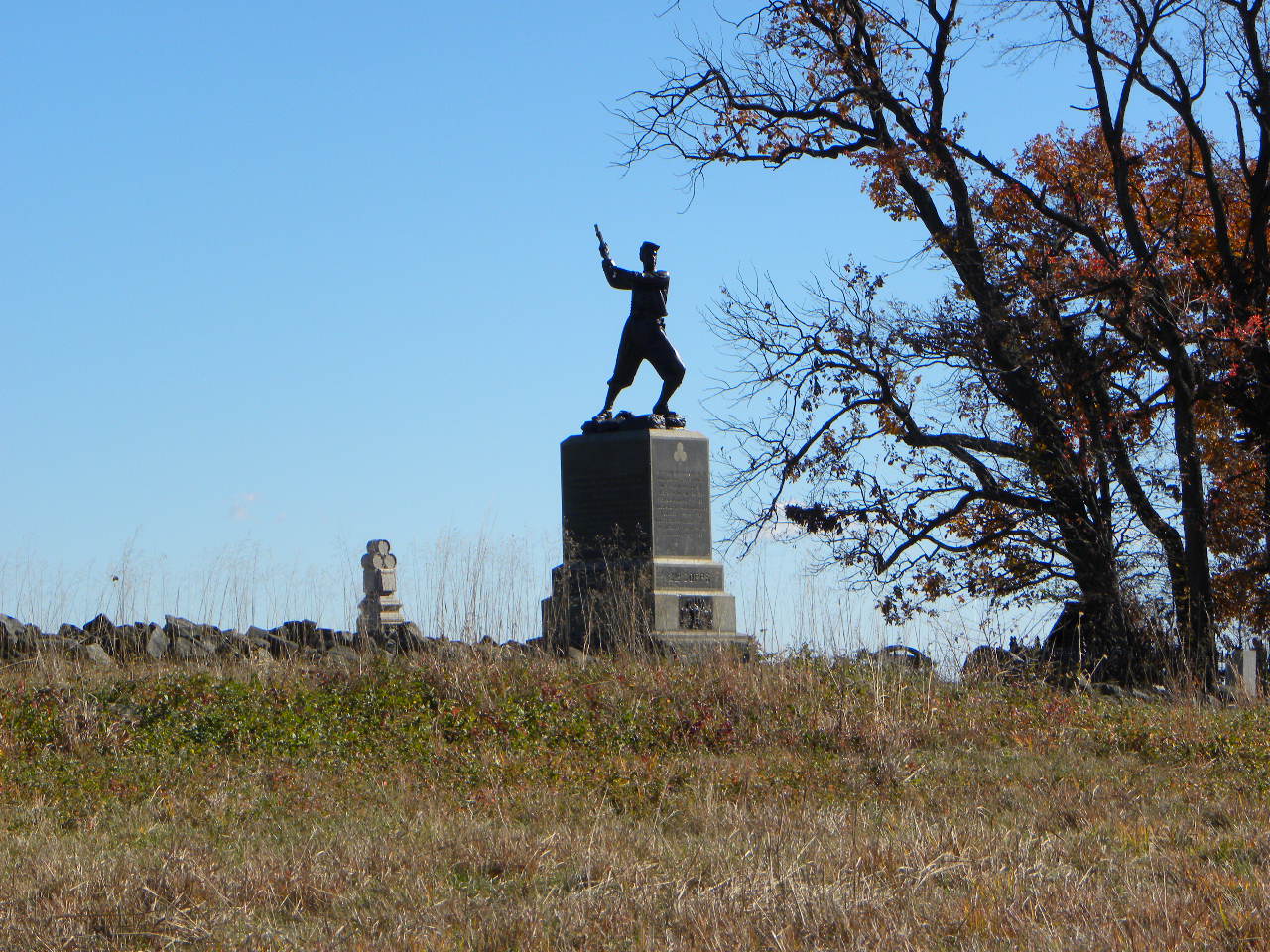
3 Comments

Filed under History, philosophy, Political Commentary, Religion

The Unfinished Work of Memorial Day

“It is for us the living, rather, to be dedicated here to the unfinished work which they who fought here have thus far so nobly advanced…” Abraham Lincoln, from the Gettysburg Address

“Heroism is latent in every human soul – However humble or unknown, they (the veterans) have renounced what are accounted pleasures and cheerfully undertaken all the self-denials – privations, toils, dangers, sufferings, sicknesses, mutilations, life-” Major General Joshua Lawrence Chamberlain

Sometimes it is best to remember that people that lived long before us have profound things to say about subjects that we often address in rather cheap and banal ways.  It is easy to do this; in fact many people, especially ideologues and pundits simply quote the great men and women of history simply to buttress what they want to say in much the same manner that preachers from all sides of the theological spectrum will comb the Bible or the Church Fathers to find support for often decidedly un-Christian ideas.  Of course unscrupulous preachers of other religions do the same with their sacred texts so it tends be a universal problem.

Of course we should know better than to do this but all of us do it to one degree or another.  Even worse are those that will misquote people either to bolster their arguments or to tear down the person that they quote.  It should not be that way on Memorial Day. The sacrifices of those that gave “the last full measure” in defense of their homeland, principles and those that they loved are too great to trivialize by using the sacrifices of the fallen to promote themselves as they prepare to launch political campaigns as was recently done by a prominent politician at an annual event which honors veterans in Washington DC.

I think that Abraham Lincoln eulogized the fallen better than almost anyone in the history of our nation when he traveled to Gettysburg and gave a refreshingly short speech for a politician.  Lincoln considered the speech a failure but history shows it to be one of the most remarkable ever made by any American public figure.

“Four score and seven years ago our fathers brought forth on this continent, a new nation, conceived in Liberty, and dedicated to the proposition that all men are created equal.

Now we are engaged in a great civil war, testing whether that nation, or any nation so conceived and so dedicated, can long endure. We are met on a great battlefield of that war. We have come to dedicate a portion of that field, as a final resting place for those who here gave their lives that that nation might live. It is altogether fitting and proper that we should do this.

But, in a larger sense, we cannot dedicate—we cannot consecrate—we cannot hallow—this ground. The brave men, living and dead, who struggled here, have consecrated it, far above our poor power to add or detract. The world will little note, nor long remember what we say here, but it can never forget what they did here. It is for us the living, rather, to be dedicated here to the unfinished work which they who fought here have thus far so nobly advanced. It is rather for us to be here dedicated to the great task remaining before us—that from these honored dead we take increased devotion to that cause for which they gave the last full measure of devotion—that we here highly resolve that these dead shall not have died in vain—that this nation, under God, shall have a new birth of freedom— and that government of the people, by the people, for the people, shall not perish from the earth.”

Supreme Court Justice Oliver Wendell Holmes gave a speech in 1884 twenty years after his service in the 20th Massachusetts Regiment in the Civil War. A veteran of Antietam and other major engagements he made these remarks in a speech so powerful that it was a key factor in Theodore Roosevelt’s decision to nominate him for the Court.

“Every year–in the full tide of spring, at the height of the symphony of flowers and love and life–there comes a pause, and through the silence we hear the lonely pipe of death. Year after year lovers wandering under the apple trees and through the clover and deep grass are surprised with sudden tears as they see black veiled figures stealing through the morning to a soldier’s grave. Year after year the comrades of the dead follow, with public honor, procession and commemorative flags and funeral march–honor and grief from us who stand almost alone, and have seen the best and noblest of our generation pass away…

But grief is not the end of all. I seem to hear the funeral march become a paean. I see beyond the forest the moving banners of a hidden column. Our dead brothers still live for us, and bid us think of life, not death–of life to which in their youth they lent the passion and joy of the spring. As I listen, the great chorus of life and joy begins again, and amid the awful orchestra of seen and unseen powers and destinies of good and evil our trumpets sound once more a note of daring, hope, and will.”   

In his inaugural address President John F. Kennedy a combat veteran of the Solomons Campaign provided a message which though not directly related to Memorial Day certain echoed the themes of the sacrifices of our fallen but also call us to the highest ideals of our nation. As a Naval Officer in command of PT 109 his boat was rammed and sunk by a Japanese destroyer after which his leadership and courage was a deciding factor in the survival of most of his crew. Kennedy was a child of privilege but he volunteered for the arduous duty of service on the tiny PT Boats.  The speech is considered one of the premier speeches by an American President.

“In your hands, my fellow citizens, more than mine, will rest the final success or failure of our course. Since this country was founded, each generation of Americans has been summoned to give testimony to its national loyalty. The graves of young Americans who answered the call to service surround the globe.

Now the trumpet summons us again — not as a call to bear arms, though arms we need — not as a call to battle, though embattled we are — but a call to bear the burden of a long twilight struggle, year in and year out, “rejoicing in hope; patient in tribulation,”² a struggle against the common enemies of man: tyranny, poverty, disease, and war itself….

In the long history of the world, only a few generations have been granted the role of defending freedom in its hour of maximum danger. I do not shrink from this responsibility — I welcome it. I do not believe that any of us would exchange places with any other people or any other generation. The energy, the faith, the devotion which we bring to this endeavor will light our country and all who serve it. And the glow from that fire can truly light the world.

And so, my fellow Americans, ask not what your country can do for you; ask what you can do for your country.

My fellow citizens of the world, ask not what America will do for you, but what together we can do for the freedom of man.

Finally, whether you are citizens of America or citizens of the world, ask of us here the same high standards of strength and sacrifice which we ask of you. With a good conscience our only sure reward, with history the final judge of our deeds, let us go forth to lead the land we love, asking His blessing and His help, but knowing that here on earth God’s work must truly be our own.”   

In 1984 President Ronald Reagan visited Omaha Beach in Normandy, the site of the bloodiest of the D-Day landings on June 6th 1944.  Reagan was a master of rhetoric and understood the importance of his visit to this hallowed site at the apex of the Cold War.  At that time it was unimaginable to most people that the Soviet Union would be no more barely 5 years hence and Reagan used the speech to link the sacrifices of those who fought and died at Normandy to those that served in his day. While his focus was on the sacrifice of America and its British, Canadian and French allies that landed on the beaches of Normandy he recognized the sacrifices of the Soviet Union which lost 20 million soldiers and civilians in the war against the Nazis. Reagan said of those who went ashore in Normandy:

“The men of Normandy had faith that what they were doing was right, faith that they fought for all humanity, faith that a just God would grant them mercy on this beachhead or on the next. It was the deep knowledge — and pray God we have not lost it — that there is a profound, moral difference between the use of force for liberation and the use of force for conquest. You were here to liberate, not to conquer, and so you and those others did not doubt your cause. And you were right not to doubt.

You all knew that some things are worth dying for. One’s country is worth dying for, and democracy is worth dying for, because it’s the most deeply honorable form of government ever devised by man. All of you loved liberty. All of you were willing to fight tyranny, and you knew the people of your countries were behind you….The men of Normandy had faith that what they were doing was right, faith that they fought for all humanity, faith that a just God would grant them mercy on this beachhead or on the next. It was the deep knowledge — and pray God we have not lost it — that there is a profound, moral difference between the use of force for liberation and the use of force for conquest. You were here to liberate, not to conquer, and so you and those others did not doubt your cause. And you were right not to doubt.

You all knew that some things are worth dying for. One’s country is worth dying for, and democracy is worth dying for, because it’s the most deeply honorable form of government ever devised by man. All of you loved liberty. All of you were willing to fight tyranny, and you knew the people of your countries were behind you.”   

Today President Barak Obama made these remarks to conclude his speech following the solemn duty that all Presidents have in laying a wreath at the Tomb of the Unknowns at Arlington National Cemetery.  Obama who is vilified by his most extreme opponents, as was Reagan for that matter ended his speech with these comments in which he eloquently expressed what the nation must do for its military, veterans and those killed in action or missing as well as the highest example of the brotherhood that those of us who have served in harm’s way feel for our fellow Soldiers, Marines, Sailors, Airmen and Coast Guardsmen:

“Our nation owes a debt to its fallen heroes that we can never fully repay. But we can honor their sacrifice, and we must. We must honor it in our own lives by holding their memories close to our hearts, and heeding the example they set. And we must honor it as a nation by keeping our sacred trust with all who wear America’s uniform, and the families who love them; by never giving up the search for those who’ve gone missing under our country’s flag or are held as prisoners of war; by serving our patriots as well as they serve us — from the moment they enter the military, to the moment they leave it, to the moment they are laid to rest.

That is how we can honor the sacrifice of those we’ve lost. That is our obligation to America’s guardians — guardians like Travis Manion. The son of a Marine, Travis aspired to follow in his father’s footsteps and was accepted by the USS [sic] Naval Academy. His roommate at the Academy was Brendan Looney, a star athlete and born leader from a military family, just like Travis. The two quickly became best friends — like brothers, Brendan said.

After graduation, they deployed — Travis to Iraq, and Brendan to Korea. On April 29, 2007, while fighting to rescue his fellow Marines from danger, Travis was killed by a sniper. Brendan did what he had to do — he kept going. He poured himself into his SEAL training, and dedicated it to the friend that he missed. He married the woman he loved. And, his tour in Korea behind him, he deployed to Afghanistan. On September 21st of last year, Brendan gave his own life, along with eight others, in a helicopter crash.

Heartbroken, yet filled with pride, the Manions and the Looneys knew only one way to honor their sons’ friendship — they moved Travis from his cemetery in Pennsylvania and buried them side by side here at Arlington. “Warriors for freedom,” reads the epitaph written by Travis’s father, “brothers forever.”

The friendship between 1st Lieutenant Travis Manion and Lieutenant Brendan Looney reflects the meaning of Memorial Day. Brotherhood. Sacrifice. Love of country. And it is my fervent prayer that we may honor the memory of the fallen by living out those ideals every day of our lives, in the military and beyond. May God bless the souls of the venerable warriors we’ve lost, and the country for which they died.”

Sometimes our fallen are eulogized by the less notable and sometimes oft vilified people. One of these men was Robert Ingersoll, a politician, orator and lecturer as well as an agnostic in a time when that was not a popular belief.  Ingersoll was the son of a Congregationalist minister who often preached for revivalist Charles Finney.  Ingersoll was also a veteran of the Civil War where he raised and commanded the 11th Illinois Cavalry Regiment which fought at Shiloh.  remarked:

“These heroes are dead. They died for liberty – they died for us. They are at rest. They sleep in the land they made free, under the flag they rendered stainless, under the solemn pines, the sad hemlocks, the tearful willows, and the embracing vines. They sleep beneath the shadows of the clouds, careless alike of sunshine or of storm, each in the windowless Place of Rest. Earth may run red with other wars – they are at peace. In the midst of battle, in the roar of conflict, they found the serenity of death. I have one sentiment for soldiers living and dead: cheers for the living; tears for the dead.”  

As we conclude this Memorial Day weekend let us remember those who have given the last full measure of duty for our nation, those who have served those that continue to serve and the friends and loved ones who cherish the lives and memories of each one.  Let us remember as a nation, as fellow citizens and never let our own agendas, ambitions or even our baser instincts sully their memory. May we choose the higher calling of service to our country and each other as Americans, the ideals of which are woven in the lives and sacrifices of those that we honor today and as Lincoln said to finish “the great task remaining before us—that from these honored dead we take increased devotion to that cause for which they gave the last full measure of devotion—that we here highly resolve that these dead shall not have died in vain—that this nation, under God, shall have a new birth of freedom— and that government of the people, by the people, for the people, shall not perish from the earth.”

Peace

Padre Steve+
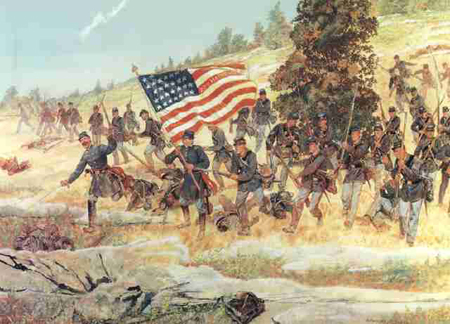
2 Comments

Filed under faith, History, Military, Political Commentary