Tag Archives: washington naval treaty

The Naming of a New Aircraft Carrier and the Centrality of the Navy in Future National Security Strategy

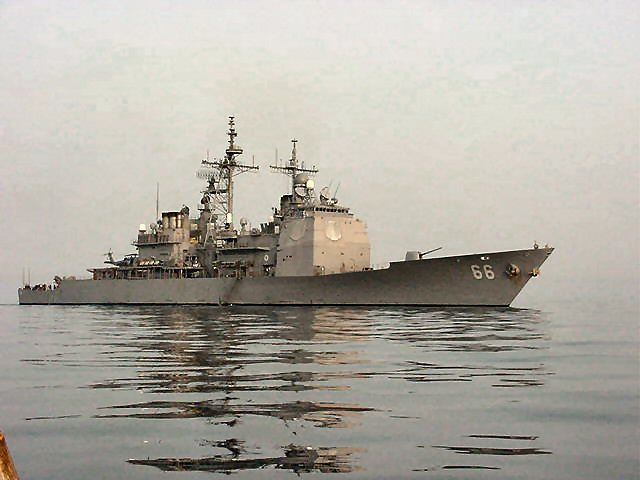
USS HUE CITY CG-66 Enforcing the UN Oil Embargo against Iraq in April 2002

“Control of the seas means security. Control of the seas means peace. Control of the seas can mean victory. The United States must control the sea if it is to protect our security.” —John F. Kennedy

“For in this modern world, the instruments of warfare are not solely for waging war. Far more importantly, they are the means for controlling peace. Naval officers must therefore understand not only how to fight a war, but how to use the tremendous power which they operate to sustain a world of liberty and justice, without unleashing the powerful instruments of destruction and chaos that they have at their command.” Admiral Arleigh Burke

Over the Memorial Day weekend Secretary of the Navy Ray Mabus announced the naming of the second ship in the Gerald R. Ford class aircraft carrier.  The name selected was significant as the ship will be named the USS John F. Kennedy CVN-79, her namesake being President John F. Kennedy who served as a junior officer in the Second World War commanding a Patrol Torpedo Boat, PT-109 in the Solomon Islands. Kennedy’s boat was rammed and split in two by the Japanese Fubuki class destroyer Amagiri in the early hours of August 2nd 1943.  Over a period of six days he made herculean efforts to save his crew and was awarded the Navy Marine Corps Medal and the Purple Heart.

The United States has always been a seafaring nation and today the vast majority of our commerce is borne by ships from the world over. The United States learned during the Revolution and the War of 1812 the importance of sea power when the Royal Navy for all intents and purposes rules the waves. Even the land victory of Washington at Yorktown was sealed by the intervention of the French Fleet which prevented the British from evacuating the garrison.  During the Civil War the Union Navy was the deciding factor as it blockaded Southern ports and forced the Mississippi River cutting the Confederacy in two and sealing its fate even as Confederate armies battled Union forces in the bloodiest battles ever seen on this continent. The Navy was the deciding factor in the Spanish American War sweeping the Spanish Navy from the seas and dooming its garrisons around the world.  The U.S. Navy began the First World War late but by the end was the ascendant naval power in the world and was one of the major reasons that the British in spite of the superiority that they had at the time agreed to the Washington and later London Naval accords.  When the Second World War erupted the United States was in the beginning stages of a Naval build up to reinforce and replace the fleet that was still dominated by the ships built prior to the Naval treaties.   In the Pacific the Japanese Navy steamrolled its scattered and ill equipped opposition while in the Atlantic German U-Boats decimated convoys very nearly breaking the back of Great Britain and the Soviet Union. However it was the Navy initially stretched to its limits by the Two Ocean War which regained the initiative which in an unprecedented build up of Naval Power defeated its adversaries and safeguarded the vast convoys of merchant ships carrying American troops and equipment into battle and bringing American Lend Lease aid to reach Britain and the Soviet Union. During the Cold War, Korea and Vietnam the Navy was a flexible and mobile response force to crises around the globe military, diplomatic and humanitarian, often diffusing situations without a shot having to be fired in anger and eliminating the need for large numbers of ground forces. In the 1980s the Navy secured the Gulf of Sirte against the threats of Libya’s Colonel Gaddafi and kept the Persian Gulf open during the Tanker Wars initiated by Iran on merchant ships transiting the Gulf. American naval power was again on display during the Gulf War and subsequent United Nations sanctions on Iraq.  After 9-11 the Navy has been a response force around the globe in the War on Terrorism as well as numerous natural disasters and humanitarian crises. When a crisis develops which might require a military response the first questions on the mind of every Presidential administration has been where is the nearest Carrier Strike Group and Marine Expeditionary unit.  Today the Navy supports military operations in Afghanistan, Iraq, and the Horn of Africa and against piracy.

The vast majority of the world’s populations now live on the littorals, or the land areas adjacent to the ocean.  The bulk of world commerce is maritime commerce; the United States depends on secure sea lanes to support our economy.

While sea power is essential to American national power, diplomatic, economic and military large standing armies are not. Yes our land forces must be strong and in quality the best in the world. At the same time whenever we have committed large numbers of land forces to ill defined campaigns we have squandered national power and prestige in wars that have been at best stalemates and at worst strategic defeats. This of course excemts the two World Wars where those large land forces were engaged they had a specific mission that was directly tied to national strategy.

We have come to a place in our national life where our strategic thinking still largely influenced by the World Wars and the Cold War has to be modified.  The major land wars launched by the Bush administration in Iraq and Afghanistan have proven incredibly costly in terms of manpower and economics and it is clear that the Obama administration and bipartisan Congress will seek to disengage sooner rather than later from those wars.  One knows that once those wars are over that land forces will shrink as plans are already on the table with cuts already beginning in some services.

Of course one has to ask what the military should be composed of in light of a coherent national security strategy that takes into account the full spectrum of threats to our nation many of which are not military in a traditional sense. To sustain large numbers of land forces on foreign territory is expensive and often fraught with peril when there are changes in the leadership of allied nations on which we depend for the basing of such forces. Even forward deployed Air Force assets are subject to these constraints.  Such basing was necessitated by the Soviet threat during the Cold War.  All previous overseas conflicts were viewed by American leaders as expeditionary in nature, land forces would go in with a specific goal for a limited time. If forces were left in place they were generally small and of a constabulary nature.

Only the Navy-Marine Corps team provides the flexibility to provide a rapid military or humanitarian response to overseas contingencies.  Critics call it “gunboat diplomacy” but then we have found what we are doing is not sustainable and we need an alternative.  That alternative is the Sea Services, which also include the Coast Guard and Merchant Marine.  The Bush administration reduced the Navy in terms of ships and personnel in order to support land wars of questionable strategic value, even turning thousands of Sailors into soldiers to support Army missions in Iraq and Afghanistan without reducing and even expanding the requirements of Naval forces.  This was a mistake of unmitigated proportions, no strategic goal that we have accomplished in either Iraq or Afghanistan could not have been accomplished by the Navy and Marine Corps and contingents of Special Forces, military and civilian advisors and the CIA.

Theodore Roosevelt had a saying, “speak softly and carry a big stick.” He was not an isolationist by any means; he advocated engagement with the world but also protections, military, economic and ecological for Americans.   A strong Navy was central to his thinking as were good relations with other nations.  He understood the importance of the Navy in supporting American interests. In his annual address to Congress on December 6th 1904 he stated:

“In treating of our foreign policy and of the attitude that this great Nation should assume in the world at large, it is absolutely necessary to consider the Army and the Navy, and the Congress, through which the thought of the Nation finds its expression, should keep ever vividly in mind the fundamental fact that it is impossible to treat our foreign policy, whether this policy takes shape in the effort to secure justice for others or justice for ourselves, save as conditioned upon the attitude we are willing to take toward our Army, and especially toward our Navy. It is not merely unwise, it is contemptible, for a nation, as for an individual, to use high-sounding language to proclaim its purposes, or to take positions which are ridiculous if unsupported by potential force, and then to refuse to provide this force. If there is no intention of providing and keeping the force necessary to back up a strong attitude, then it is far better not to assume such an attitude.”

Roosevelt understood better than most of his peers around the world of the necessity of worldwide engagement and the protection of American interests.  As interdependent as the United States and our allies are on international cooperation in anti-terrorism, humanitarian response and the free flow of commerce the Sea Services have to be the primary means of response.  Land forces are important but it is clear that they will need to be reorganized and rebuilt after the long and arduous conflicts that they have shouldered and ultimately they are dependent on the Navy for the bulk of their support when deployed overseas.

Any new national security strategy must prioritize our nation’s goals with diplomatic, intelligence, military and economic assets. We must leverage power and not squander it.  Naval forces are among the most flexible and economic means of exercising the military aspects of such strategy and are not hostage to unstable governments as are forward deployed land forces.   Naval power leverages national power in ways that forward deployed land forces cannot and are far more connected to goodwill than are ground forces which are seen by many around the world as occupying forces.

British Maritime strategist Julian Corbett in his book Some Principles of Maritime Strategyprovides a clear understanding of how sea power is best suited to the principle of a true national strategy for a maritime nation which emphasized limited and asymmetrical warfare.  Such strategy sustained the British Empire until it allowed itself to become mired in the trenches of Flanders and the shores of Gallipoli during the First World War killing off the flower of the nation’s youth and nearly bankrupting the nation and alienating much of the empire.

Corbett maintained that naval forces were best suited to controlling lines of communications, focus on the enemy, and maneuver for tactical advantage.  He also believed that naval forces best suited the political, economic and financial dimensions of waging war as well as war’s technological and material aspects.  One key aspect of this was the Corbett believed that continental war where large land armies are deployed inherently act against opponents limiting their political aims and increase the chance of total war with all of its destructive effects.  Corbett understood, as Clausewitz did before him the primacy of politics in war and necessity to devise appropriate strategies to protect the national interests while emphasizing efficiency in battle while preserving costly assets.

Ultimately the United States is a maritime power. When we try to become a continental power by engaging in protected land wars overseas we lose our strategic and economic advantage.  One can argue that we would not be in Iraq or Afghanistan today had it not been for the deployment of land and air forces on the Arabian Peninsula following the Gulf War.

The new USS John F. Kennedy when completed will be one of the key platforms of American power projection in the middle part of this century and it is important that we strengthen and modernize the Navy so that it might meet the tasks required of it by our nation and our friends around the world.  It is imperative that we as a nation remember our heritage and return to it as we develop a strategy that is at last freed from the World War and Cold War model.  The time for that is now.

Peace

Padre Steve+
2 Comments

Filed under History, Military, national security, Navy Ships, US Navy

The Post Treaty Super Dreadnought Battleships: Introduction

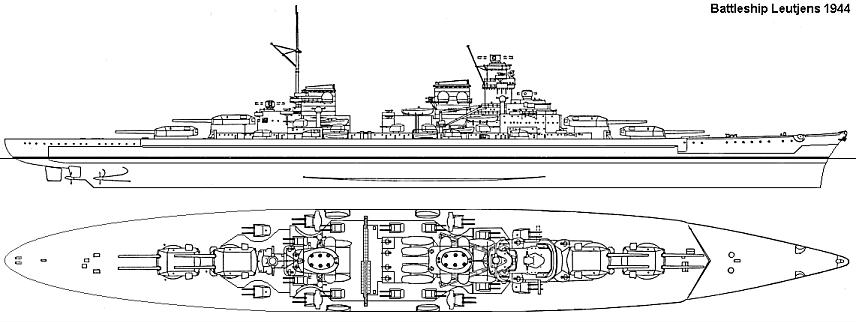
Line Drawing of the German H-39 Class Battleship

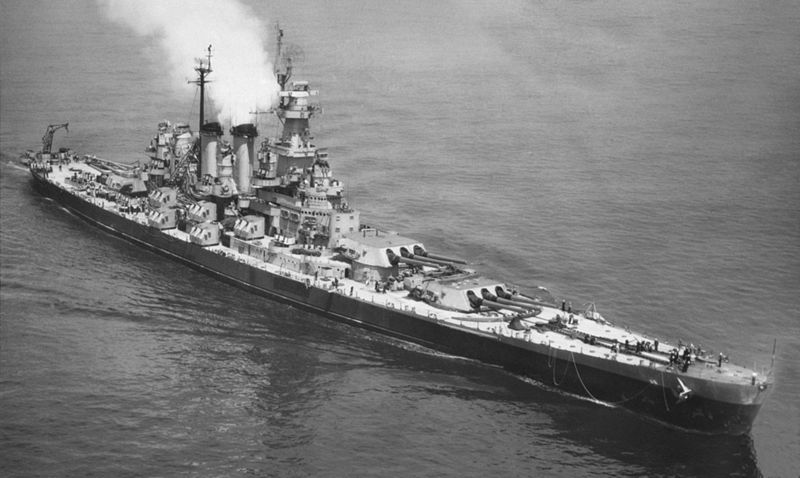
Note: This is the introductory article for a series of 8 articles on the classes of battleships built or planned by the major powers following the expiration of the Second London Naval Treaty. A previous series of articles dealt with the battleships constructed in compliance or close compliance with the treaty. This series will cover the Japanese Yamato Class, the British Lion Class and the Vanguard, the German Bismarck Class and H39 Class, the Soviet Sovyetskiy Soyuz Class and the American Iowa and Montana classes.

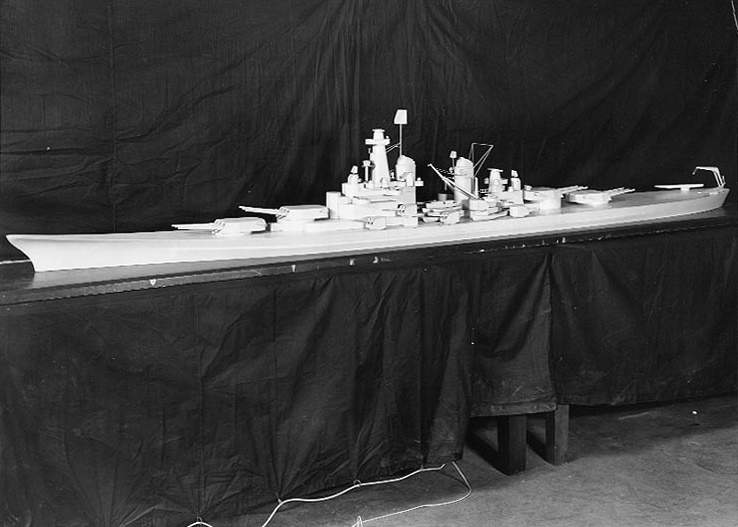
Model of the Montana Class

All of these ships were designed and built or designed in the late 1930s and early 1940s and with the exception of the Sovietetskiy Soyuz Class built on each navy’s experience. The Japanese had constructed no treaty battleships in the 1930s so the Yamato’s were the first battleships constructed by Japan since the Nagato Class which had been completed in the 1920s and the incomplete Tosa Class.

The Bismarck

The Second London Naval Treaty of 25 March 1936 was signed by France, Britain and the United States. Japan walked out on the conference and the Italians did not sign because of the outcry that their invasion of Abyssinia had evoked.  The treaty called for ships to have a standard displacement of no more than 35,000 tons and main armament of 14” guns, a reduction in size of armament from the previous London and Washington treaties. When the Japanese pulled out and the Italians refused to sign the United States invoked the escalator clause which permitted them to disregard treaty limitations.

USS Iowa lead ship of the Iowa class

The Americans who invoked only the armament part of the clause on the North Carolina and South Dakota classes but took full advantage of it to construct the 45,000 ton Iowa class. The Montana Class of 65,000 tons mounting twelve 16” guns and protection proof against that type of shell. Those ships were never laid down but will be covered in this series of articles.

Line Drawing of the Lion Class

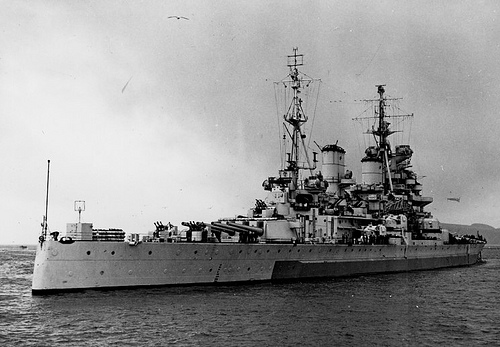
The British Royal Navy planned the Lion Class which was in essence an enlargement of the King George V Class armed with nine 16” guns.  The Lion class of which 4 ships were to built was cancelled early in the war and only one further battleship the 44.500 ton HMS Vanguard would be completed by the Royal Navy but not until 1946.

HMS Vanguard

The Germans, who were not a signatory to the treaty but had an agreement with Britain to limit their total naval tonnage to 35% of Britain’s had build the Scharnhorst Class Battlecruisers in the mid 1930s and began the Bismarck Class the largest capital ships completed in Europe. These were to be followed by the H39, H41, H42, H43 and H44 classes ranging in displacement from 56,444 tons to 131,000 tons with armament ranging from eight 16” to eight 20” guns. Only two of the H39’s were laid down and cancelled while in the early stages of construction and I will only discuss the H39 class in this series.

Sovyetskiy Soyuz Class

The Soviet Union which was never a signatory to any of the naval treaties and had not built a battleship since the First World War planned the massive Sovyetskiy Soyuz Class which would have displaced 58,220 tons and mounted nine 16” guns. The four initial ships of the class but were never completed.

Yamato

The Japanese Yamato Class, the largest battleships ever constructed of 69,998 tons standard displacement armed with nine 18” guns, the largest main battery ever installed on battleships were the largest capital ships built before the second generation of U.S. Navy super carriers.

The first article I write will be about the Bismarck Class and that will appear later this week.


10 Comments

Filed under History, Military, Navy Ships

The South Dakota Class Battleships: The Best of the Treaty Battleships

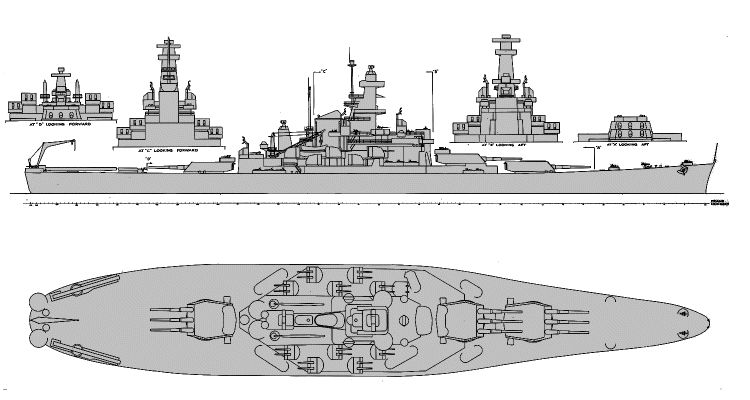
USS South Dakota Class Line Drawing

This is the fifth in a series of six articles on the battleships built under the provision of the Washington and London Naval Treaty limitations in the 1930s. I am not including the ships which were completed in the immediate aftermath of the Washington Treaty limitations. This series looks at the modern battleships that the World War II combatants would produce in the 1930s which saw service in the war. Part one covered the Italian Vittorio Veneto class entitled The Pride of the Regina Marina: The Vittorio Veneto Class Battleships. Part two French Firepower Forward: The unrealized potential of the Dunkerque and Richelieu Class Battleships covered the French Dunkerque class and Richelieu class Battleships. Part three covered the British Royal Navy King George V Classbattleships entitled British Bulwarks: The King George V Class Battleships Part Four  which was about the North Carolina Class is entitled The Next Generation: The North Carolina Class Battleships. I have already published the final part which covers the German Scharnhorst Class entitled Power and Beauty the Battle Cruisers Scharnhorst and Gneisenau . The German Bismarck, Japanese Yamato, British Vanguard and American Iowa

Classes will be covered in a subsequent series.

As the world edged closer to war in the late 1930s the U.S. Navy followed up its decision to build the two ship North Carolina class battleships with additional fast battleships. Initially the General Board wanted two additional North Carolina’s but the Chief of Naval Operations William H. Standley wanted a different design.

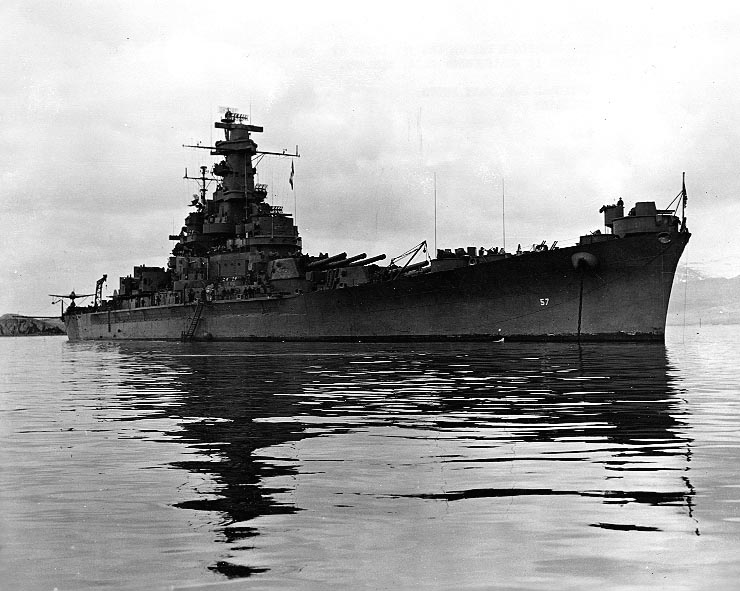
USS South Dakota BB-57 in 1943

Design work started in 1937 and several designs were proposed in order to correct known deficiencies in the preceding North Carolina class to include protection and the latest type of steam turbines.  As in the North Carolina’s the Navy struggled to find the optimal balance between armament, protection and speed. In the end the Navy decided on a shorter hull form with greater beam which necessitated greater power to maintain a high speed. The armor protection was maximized by using an interior sloped belt of 12.2 inch armor with 7/8” STS plates behind the main belt which made the protection the equivalent to 17.3 inches of vertical armor. The Belt continued to the bottom of the ship though it was tapered with the belt narrowing to 1 inch to provide addition protection against plunging fire which struck deeper than the main belt. As an added feature to protect against torpedo hits a multi-layered four anti-torpedo bulkhead system was included, designed to absorb the impact of a hit from a 700 pounds of TNT.

In order to accommodate the machinery necessary to provide the desired speed of 27 knots on the shorter hull the machinery spaces were rearranged.  The new design placed the boilers directly alongside the turbines with the ship’s auxiliaries and evaporators also placed in the machinery rooms. Additional design changes made to save space included making the crew berthing areas smaller. This included that of officers as well as the senior officers and shrinking the size of the galley’s and the wardroom from those on the North Carolina’s. The resultant changes allowed the ships to achieve the 27 knot speed, improved protection and the same armament of the North Carolina’s within the 35,000 treaty limit.

Two ships of the design were approved and with the escalator clause invoked by the Navy two more ships were ordered all with the nine 16” gun armament of the North Carolina’s.  The leading ship of the class the South Dakota was designed as a fleet flagship and in order to accommodate this role two of the 5” 38 twin mounts were not installed leaving the ship with 16 of these guns as opposed to the 20 carried by the rest of the ships of the class. The final design was a class of ships capable of 27.5 knots with a range of 17,000 miles at 15 knots mounting nine 16” guns with excellent protection on the 35,000 tons and full load displacement of 44,519 tons.

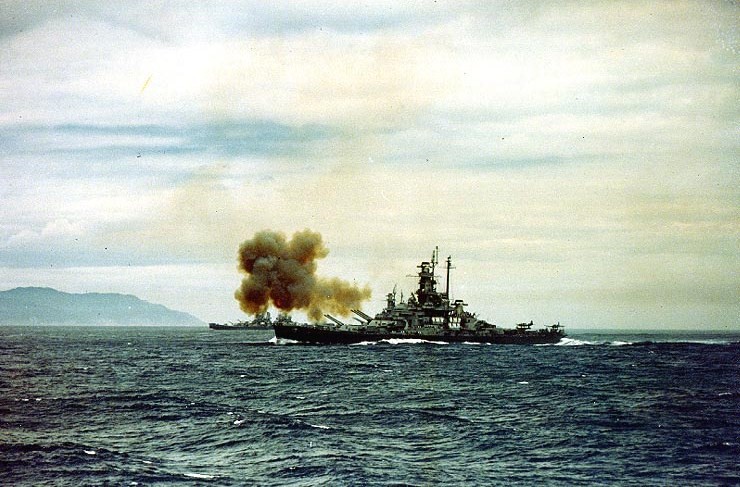
The lead ship of the class the USS South Dakota BB-57 was laid down 5 July 1939 at New York Shipbuilding in Camden New Jersey, launched on 7 June 1941 and commissioned on 20 March 1942.  Following her commissioning and her shakedown cruise South Dakota was dispatched to the South Pacific. Soon after her arrival she struck a coral reef at Tonga which necessitated a return to Pearl Harbor for repairs.  When repairs were complete she was attached to TF 16 escorting the USS Enterprise CV-6 during the Battle of the Santa Cruz Islands on 26 October 1942.  During the battle she was credited with shooting down 26 Japanese aircraft but was struck by a 500 lb bomb on her number one turret. She joined TF-64 paired with the battleship USS Washington during the Second Naval Battle of Guadalcanal on14-15 November 1942. During the action South Dakota suffered a power outage and was hit by over 40 shells from Japanese ships which knocked out 3 fire control radars, her radio and main radar set. 3 destroyers were also lost but the Washington mortally wounded the fast battleship Kirishima and destroyer Ayanami which were scuttled the next day and damaged the heavy cruisers Atago and Takao. She returned to New York for repairs which completed in February 1943 and joined the carrier USS Ranger CV-4 for operations in the Atlantic until April when she was attached to the British Home Fleet. She sailed for the Pacific in August 1943 and rejoined the Pacific Fleet in September and joined Battleship Divisions 8 and 9 and supported the invasion of Tarawa providing naval gunfire support to the Marines. The rest of the war was spent escorting carriers as well as conducting bombardment against Japanese shore installations. She was present at the Japanese surrender in Tokyo Bay and returned to the United States in 1945 and was decommissioned and placed in reserve on 31 January 1947. She was stricken from the Naval Register on 1 June 1962 and sold for scrap in October of that year. Various artifacts of this gallant ship to include a propeller, a 16” gun and the mainmast are part of the USS South Dakota Memorial Park in Sioux Falls South Dakota and 6,000 tons of armored plate were returned to the U.S. Atomic Energy Commission for use in civilian nuclear programs and a second screw is displaced outside the U.S. Naval Museum in Washington D.C.  She received 13 battle stars for World War II service.  South Dakota had the dubious distinction of having the youngest sailor of the war 12 year old Calvin Graham who confessed lying about his age to the Gunnery Officer Sergeant Schriver. Graham was court-martialed and given a dishonorable discharge spending 3 months in the ship’s brig before he was able to be returned to the United States where just after his 13th birthday he entered 7th grade.

USS Indiana BB-58 Bombarding Japan in 1945

The second ship of the class the USS Indiana BB-58 was laid down at Newport News Naval Shipyard on 20 November 1939 launched on 21 November 1941 and commissioned on 30 April 1942.  She served throughout the Pacific War by serving with the fast battleships of Vice Admiral Willis Lee’s TF-34, escorting carriers during major battles such that the Battle of the Philippine Sea or as it is better known the Marianas Turkey Shoot. She returned to the United States for overhaul and missed the Battle of Leyte Gulf but served at Iwo Jima, Okinawa and operations against the Japanese home islands.  Following the war she was decommissioned in 1947 and sold for scrap in September 1963.   A number of her relics are preserved at various locations in Indiana and her prow is located in Berkeley California.

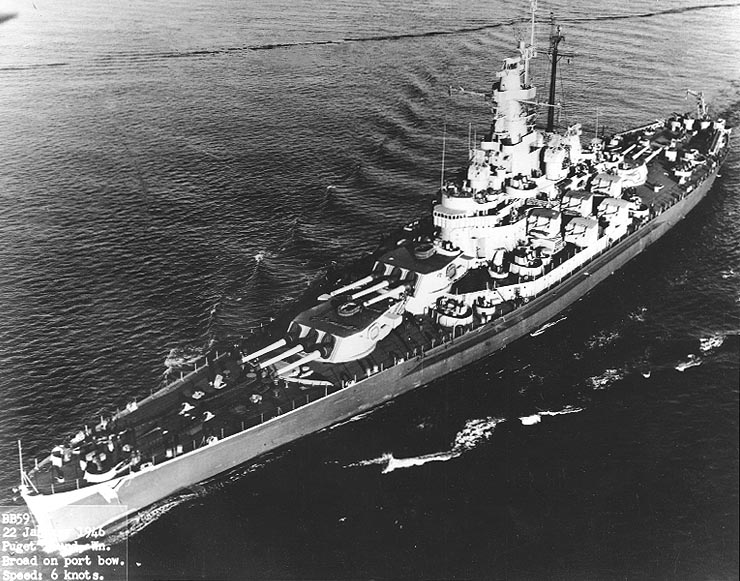
USS Massachusetts BB-59 in January 1946 in the Puget Sound

The third ship of the class the USS Massachusetts BB-59 was laid down on 20 July 1939 at Bethlehem Steel Corporation Fore River Yard in Salem Massachusetts and launched on 23 September 1941 and commissioned on 12 May 1942. After her shakedown cruise she was assigned to the Atlantic Fleet where she took part in Operation Torch, the Allied invasion of French North Africa. During the operation she engaged French shore batteries, damaged the battleship Jean Bart and sank 2 cargo ships and along with the heavy cruiser Tuscaloosa sank the destroyers Fougueux and Boulonnais and the light cruiser Primauguet. Following her assignment in the Atlantic she sailed for the Pacific where she began operations in January 1944. She took part in almost every major operation conducted by the Pacific Fleet escorting the Fast Carrier Task Forces and operating as a unit of TF-34 the Fast Battleship Task force including the Battle of Leyte Gulf.  She ended the war conducting operations against the Japanese home islands.  She was decommissioned in 1947 and stricken from the Naval Register on 1 June 1962. She was saved from the fate of Indiana and South Dakota as the people of Massachusetts with the assistance of schoolchildren who donated $50,000 for her renovation and preservation as a memorial. She became that in 1965 at Battleship Cove in Fall River Massachusetts and she remains there designated as a National Historic Landmark.  During the naval build up of the 1980s much equipment common to all modern battleships was removed for use in the recommissioned battleships of the Iowa class.

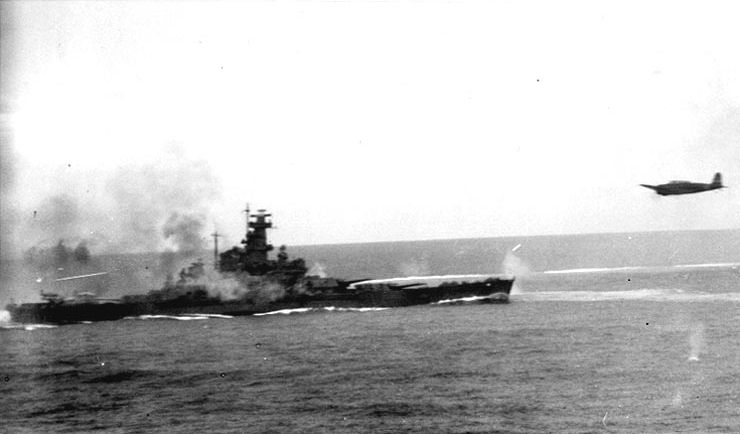
USS South Dakota at the Battle of the Santa Cruz Islands


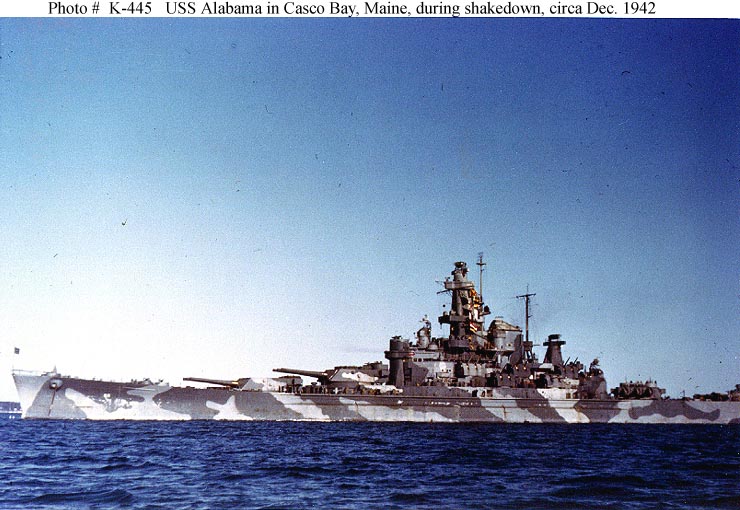
The final ship of the class the USS Alabama BB-60 was on 1 February 1940 at Norfolk Naval Shipyard. She was launched on 21 February 1942 and commissioned 16 August 1942. Following her shakedown cruise and initial training off the Atlantic coast she joined the repaired South Dakota and operated as part of TF 22 attached to the British Home Fleet. She conducted convoy escort operations, participated in the reinforcement of Spitsbergen and in an operation which attempted to coax the German battleship Tirpitz out of her haven in Norway. Tirpitz did not take the bait and Alabama and South Dakota returned to the United States in August 1943.  After training with the fast carriers she took part in the invasion of the Gilberts taking part in Operation Galvanic against Tarawa and the Army landings on Makin Island. As 1944 began Alabama continued her operations with the fast carriers and the fast battleships of TF-34.  She took part in operations against the Marshalls and took part in the invasion of the Marianas Islands and the Marianas Turkey Shoot. From there she supported the invasion of Palau and other islands in the Caroline Islands followed by operations against New Guinea and the invasion of the Philippine and the Battle of Leyte Gulf before returning to the United States for overhaul. She returned to action during the invasion of Okinawa and in shore bombardment operations against the Japanese Mainland. When the war ended the Alabama had suffered no combat deaths and only 5 wounded following the misfire of one of her own 5” guns earning her the nickname of “Lucky A.”  Hall of Fame pitcher Bob Feller served as a Chief Petty Officer and gun mount captain on Alabama during the war. She was decommissioned on 9 January 1947 and stricken from the Naval Register on 1 June 1962. The people of the State of Alabama formed the “Alabama Battleship Commission” and raised $1,000,000 including over $100,000 by schoolchildren to bring her to Alabama as a memorial.  She was turned over to the state in 1964 and opened as a museum on 9 January 1965. She was declared a National Historic Landmark in 1986.  She has been used as a set in several movies and continues to serve as a museum preserving the legacy of the men that served aboard her and all of the battleship sailors of World War II.

In the 1950s a number of proposals were considered to modernize the ships of the class to increase their speed to 31 knots using improved steam turbines or gas turbines. The Navy determined that to do this would require changes to the hull form of the ships making the cost too prohibitive.  The ships were certainly the best of the treaty type battleships produced by any nation in the Second World War. The damage sustained by South Dakota at the Second Naval Battle of Guadalcanal would have not only put most battleships of her era out of action but might have caused enough damage to sink them. Their armament was equal or superior to all that except the Japanese Yamato Class and their protection was superior to most ships of their era.

It is good that both the Massachusetts and the Alabama have been preserved as memorials to the ships of the class, their sailors and the United States Navy in the Second World War. Because of the efforts of the people of Massachusetts and Alabama millions of people have been able to see these magnificent ships and remember their fine crews. Both have hosted reunions of their ships companies since becoming museum ships and with the World War Two generation passing away in greater numbers every day soon these ships as well as the USS Texas, USS North Carolina, USS Missouri, USS New Jersey and USS Wisconsin will be all that is left to remember them unless a home can be found for the USS Iowa which stricken from the Naval Register awaits an uncertain fate as a resident of the “Ghost Fleet” in Suisun Bay California.  No other nation preserved any other dreadnought or treaty battleship thus only these ships remain from the era of the Dreadnought.

10 Comments

Filed under History, Military, Navy Ships, US Navy, world war two in europe, world war two in the pacific

The Next Generation: The North Carolina Class Battleships

This is the fourth in a series of six articles on the battleships built under the provision of the Washington and London Naval Treaty limitations in the 1930s. I am not including the ships which were completed in the immediate aftermath of the Washington Treaty limitations. This series looks at the modern battleships that the World War II combatants would produce in the 1930s which saw service in the war. Part one covered the Italian Vittorio Veneto class entitled The Pride of the Regina Marina: The Vittorio Veneto Class Battleships. Part two French Firepower Forward: The unrealized potential of the Dunkerque and Richelieu Class Battleships covered the French Dunkerque class and Richelieu class Battleships. Part three covered the British Royal Navy King George V Class battleships entitled British Bulwarks: The King George V Class Battleships Part Five which was to be a subsection of this article will be on the South Dakota Class. I have already published the final part which covers the German Scharnhorst Class entitled Power and Beauty the Battle Cruisers Scharnhorst and Gneisenau . The German Bismarck, Japanese Yamato, British Vanguard and American Iowa Classes will be covered in a subsequent series.

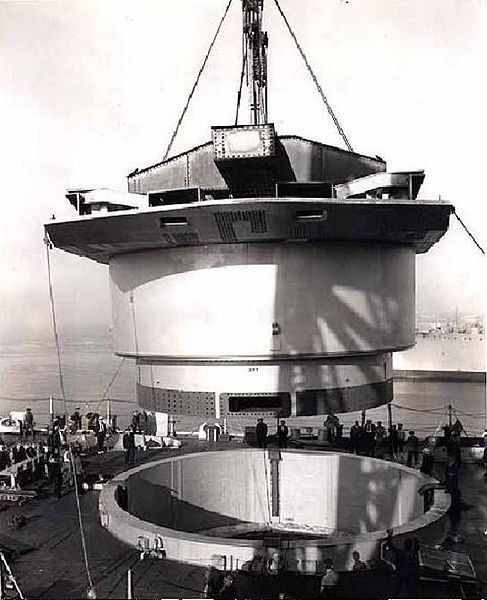
Turret base of USS Washington being lowered into barbet

The United States finished the First World War as the rising economic and potential military power in the world. The British Empire was economically reeling beset by massive debts, heavy loss of life and an empire which was beginning to smell the fresh breezes of independence.  The United States retreated into isolationism and a naïve and unfounded optimism that war could be outlawed while turning its back on the one organization that might have helped bring nations together, the League of Nations. In this environment the United States sponsored the Washington Naval Conference of 1922 which produced the Washington Naval Treaty.  The treaty stipulated limitations on total battleship tonnage, main armament and the maximum tonnage allowed per ship. Ships already in existence could not be replaced until they reached the age of 20 years. A battleship “building holiday” of 10 years was mandated with the major signatories allowed to complete a few ships that were already under construction. Whole classes of new construction were cancelled and many ships under construction were scrapped on the ways or completed only to be scrapped or sunk as targets. The Royal Navy completed two ships of the Nelson Class, the United States completed the 3 ship Maryland Class using a 4th vessel the incomplete USS Washington as a target and the Japanese were allowed to complete two ships of the Nagato Class. The Royal Navy completed the Battleship Eagle and Battle Cruisers Furious, Glorious and Courageous as Aircraft Carriers, the U.S. Navy the incomplete Battle Cruisers Lexington and Saratoga and the Japanese the Battle Cruiser Akagi and Battleship Kaga as carriers. The treaty limits of the Washington Conference were renewed in the London Treaty which also sought to limit the main batteries of new battleships to 14 inch guns.

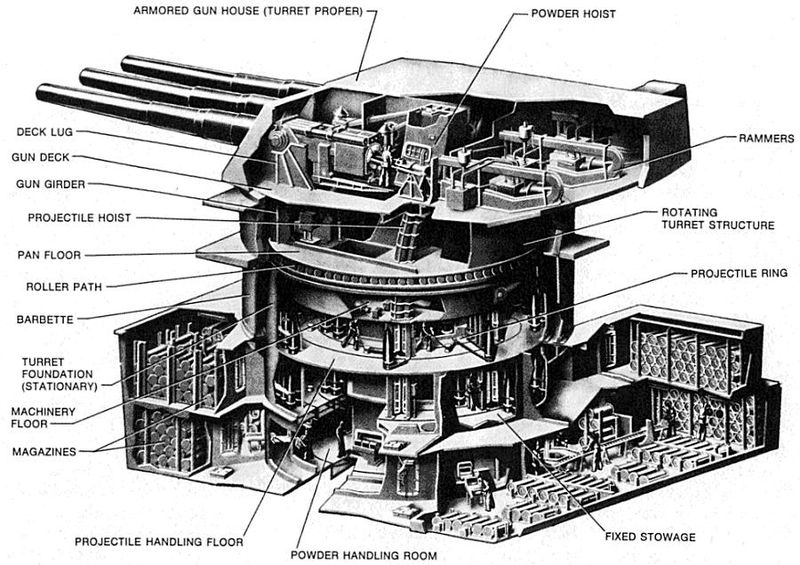
North Carolina Class 16″ Gun Turret

The U.S. Navy began a study of new designs for a fast battleship class to comply with the treaty restrictions in May to July of 1935.  A minimum of 35 different designs were submitted and reviewed by the Navy and also reviewed by the faculty of the Naval War College. After a considerable amount of debate a design called the Type XVI was selected. The design originally called for twelve 14” guns mounted in three quadruple turrets. Other designs considered called for twelve 14″ guns in triple turrets. When the Japanese opted out of the treaty and the Italians began building the Vittorio Veneto Class with 15” guns the U.S. Navy adopted the “escalation clause” and the design was modified to mount nine 16” guns in triple turrets primarily due to the expectation that the Japanese Imperial Navy would mount larger guns in its new ships.

Initial Type XVI design with 14″ guns

The Navy worked to achieve the maximum speed, armament and protection that it could within the 35,000 ton treaty limitations. There was debate among Admirals and designers as to how to solve the problem with some factions leaning toward greater speed and lighter armor and armament and others weighing in on a slightly slower ship with greater firepower and protection. The Type XVI (modified) design original called for twelve 14” guns in quadruple turrets but this was changed to nine 16” guns in triple turrets. The main armor belt was 12” inclined 15 degrees with 16” armor on the turret faceplates and barbets having 16” side armor.  Their conning tower was also protected by 14” armor.  This gave them heavier armor than the Italian Vittorio Veneto Class. They had a lighter belt than the British King George V Class but more protection accorded to their turrets, barbets and conning tower while they had slightly less armor than the French Richelieu class due to those ships all guns forward and all or nothing armor protection.

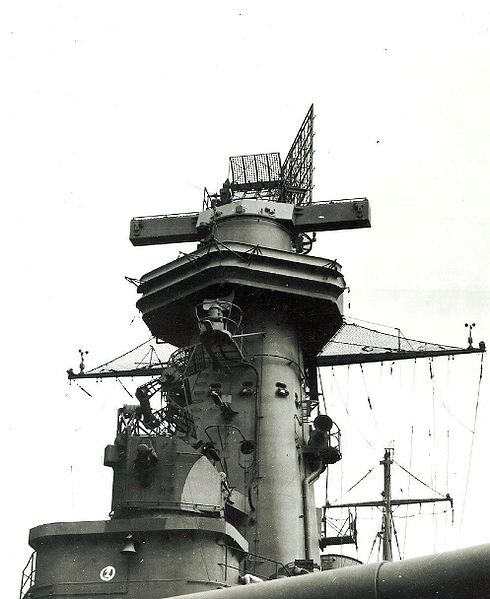
View of USS Washington Conning Tower showing Mk 38 5″ gun directors and SG Surface Search Radar

Their top speed of 27 knots was slower than their European counterparts but their range was far superior to all being able to steam over 20,000 miles at 15 knots and 6,610 miles at 25 knots. Their top speed and ranged decreased slightly during the war with the addition of more anti-aircraft guns and sensors.  Most of the designs considered had speeds from 27-30 knots depending on whether the designers sacrificed speed for armament and protection or protection and firepower for speed. One design, the Type VII resembled earlier classes of battleships with a speed of only 23 knots in favor of much heavier protection on a shorter hull.

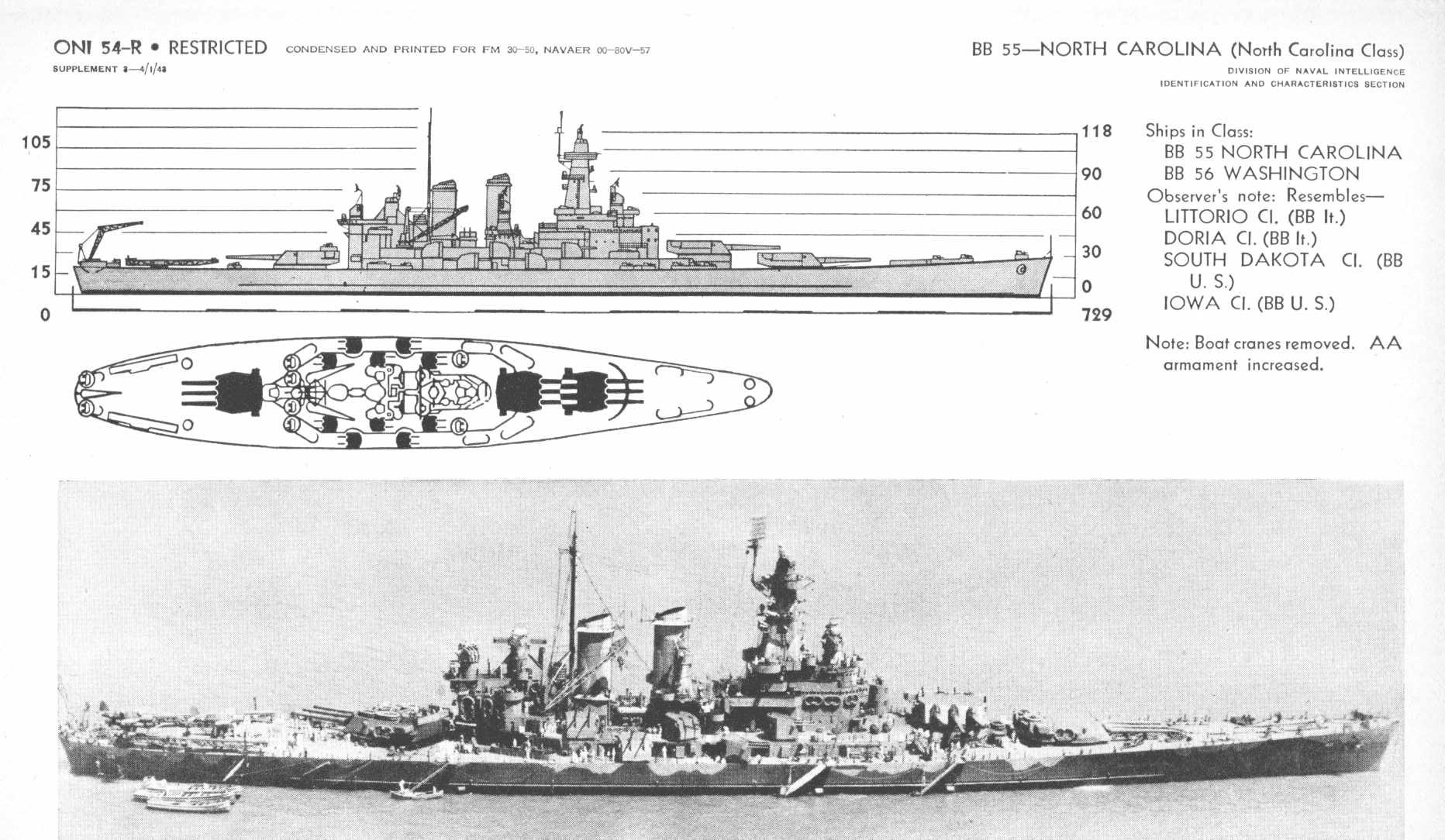
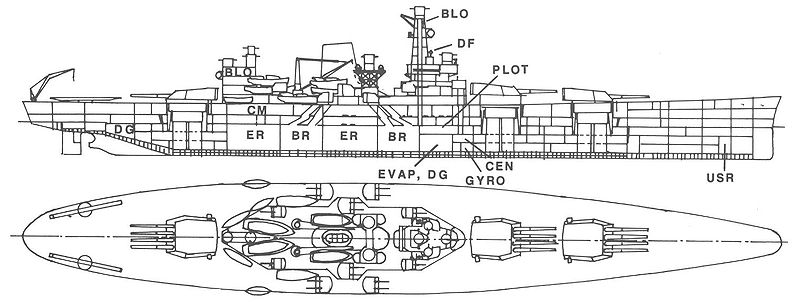
USS North Carolina BB-55

The North Carolina Class was comparable in many ways with the Japanese Nagato Class in speed, protection and armament but with a far greater cruising range.

The North Carolina’s also were superior to their contemporaries in their anti-aircraft armament as well as their electronics, radar and fire direction suites which were all continuously upgraded throughout the war.

The construction of the ships was slow due to material shortages, the design change to 16” guns and labor issues which not only lengthened the length of their construction but raised their cost from $50 million to $60 million dollars each.

North Carolina during underway replenishment in the Pacific

USS North Carolina was laid down on 27 October 1937 launched on 13 June 1940 and commissioned 9 April 1941 though it was months before she was operational due to severe longitudinal vibration of her propeller shafts which was corrected by a modified propeller design.  Despite the efforts to keep to the treaty limitations the ships displaced 36,600 long tons and had a full load displacement of 44,800 long tons. By 1945 the ships full load displacement had increased to 46,700 long tons for North Carolina and 45,370 long tons for Washington.

Torpedo Damage to North Carolina

When she completed her shakedown cruise she was sent to the Pacific where she joined Task Force 16 and the USS Enterprise on 6 August 1942.   She defended Enterprise during the Battle of the Easter Solomons on 24 August and during an 8 minute period she shot down between 7 and 14 Japanese aircraft. On 15 September she was badly damaged by a torpedo from the Japanese submarine I-15 which necessitated her withdraw to Pearl Harbor for repairs. The gravity of the hit sparked great debate in the Navy regarding her protection with some wondering if too much had been sacrificed in her design.  Upon her return to service she operated with TF 38 and TF 58 protecting the carrier task forces in their operations against the Japanese as well as with TF 34 the Fast Battleship Task Force under the command of Vice Admiral Willis Lee.  Serving throughout the Pacific campaign she took part in every major operation in the Central Pacific except Leyte Gulf and against the Japanese mainland.  Her Marines and Sailors took part in the initial occupation of Japan.  She was decommissioned and placed in reserve on 1 June 1960 and survived scrapping to be bought by the State of North Carolina for $250,000 and turned into a memorial at Wilmington North Carolina.  She remains a National Historic Landmark and is maintained by the USS North Carolina Battleship Commission. She is exceptionally well maintained and much of the ship is open for tours.

USS Washington BB-56 on high speed run in 1945

The USS Washington was laid down 14 June 1938 launched on 1 June 1940 and commissioned 15 May 1941 though like North Carolina had propeller shaft vibrations which delayed her operational availability.  She became the first U.S. Navy Battleship to take an active part in the war when she joined the British Home Fleet in March 1942 operating with the Royal Navy escorting Arctic convoys bound for the Soviet Union against possible forays of the Battleship Tirpitz and other heavy German surface units until 14 July when she returned to the United States for a brief overhaul.  She then was deployed to the South Pacific to join U.S. Forces operating against the Japanese at Guadalcanal and became the Flagship of Rear Admiral Willis Lee.  During the Naval Battle of Guadalcanal on the night of 14-15 November she and the USS South Dakota sailed with 4 destroyers to intercept a Japanese task force.  The Japanese force led by the Battleship Kirishima included 2 heavy and 2 light cruisers as well as 9 destroyers.  The Japanese hit the Americans hard early in the battle sinking 3 of the 4 American destroyers and inflicting significant topside damage to South Dakota which caused a power outage and knocked her out of the action.  Washington sailed on undetected by the Japanese and opened a devastating barrage against Kirishima scoring hits with 9 16” shells and 40 5” shell. Kirishima was mortally wounded and was scuttled by her crew the following day.  Washington then drove off the other Japanese ships sparing Henderson Field from certain damage.

Washington blasting Kirishima at the Naval Battle of Guadalcanal 14-15 November 1942

Washington’s victim the IJN Battleship Kirishima

Washington continued operations in the South and Central Pacific until she was damaged in a collision with USS Indiana which resulted in her losing nearly 60 feet from her bow on 1 February 1944. She received temporary repairs before returning to the Puget Sound Naval Shipyard to receive a new bow and other modernizations returning to action in May 1944. She remained in operation against the Japanese the rest of the war. She was decommissioned in 1947 and struck from the Naval Register on 1 June 1960 and sold for scrap.

Various improvements and ideas were suggested while the ships remained in reserve as some in the Navy wished to reactivate them to include lightening them to increase their speed and conversion into Helicopter Carriers all of which were rejected.

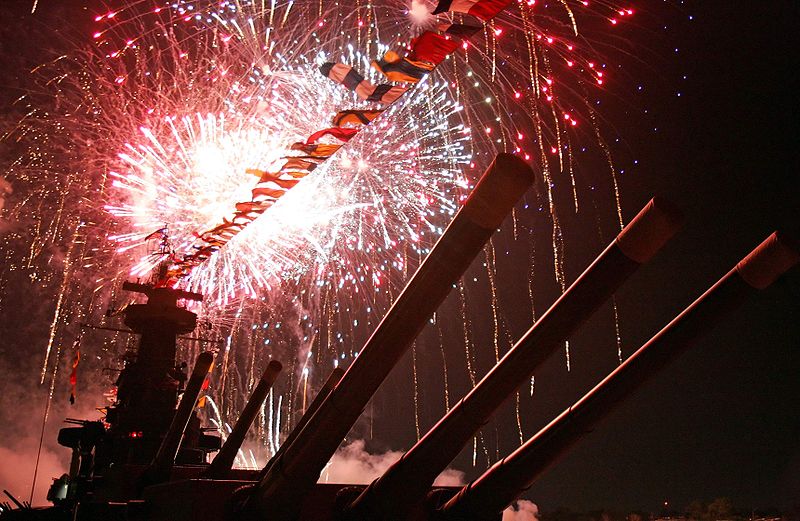
Fireworks over the North Carolina in Wilmington (US Navy Photo)

Though the North Carolina’s were a compromise design they performed admirably throughout the war.  They and their brave crews are remembered in Naval History and the preservation of North Carolina has ensured that they will never be forgotten.

9 Comments

Filed under History, Military, Navy Ships, world war two in europe, world war two in the pacific

British Bulwarks: The King George V Class Battleships

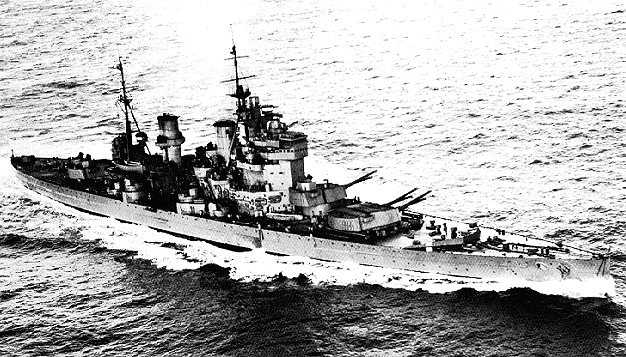
HMS King George V

This is the third in a series of five articles on the battleships built under the provision of the Washington and London Naval Treaty limitations in the 1930s. I am not including the ships which were completed in the immediate aftermath of the Washington Treaty limitations. This series looks at the modern battleships that the World War II combatants would produce in the 1930s which saw service in the war. This article covers the British Royal Navy King George V Class battleships. Part one covered the Italian Vittorio Veneto class entitled The Pride of the Regina Marina: The Vittorio Veneto Class Battleships. Part two French Firepower Forward: The unrealized potential of the Dunkerque and Richelieu Class Battleships covered the French Dunkerque class and Richelieu class Battleships. Part Four the American North Carolina and South Dakota Classes. I have already published the final part which covers the German Scharnhorst Class entitled Power and Beauty the Battle Cruisers Scharnhorst and Gneisenau . The German Bismarck, Japanese Yamato, British Vanguard and American Iowa Classes will be covered in a subsequent series.

HMS King George V in 1941

In the wake of the First World War the major naval powers entered into an agreement restricting the construction of capital ships and limiting the numbers that treaty signatories were allowed to keep. As a result numerous ships were scrapped or disposed of and the majority of planned ships were either cancelled while building or never laid down. In some cases to comply with treaty restrictions ships such as the Royal Navy’s Nelson Class which was a compromise design which sacrificed speed for protection and firepower.  By the late 1920s the Royal Navy’s battle force was comprised of the Nelson’s, the fast Battlecruisers Hood, Renown and Repulse and 10 ships of the Queen Elizabeth and Revenge classes all designed before the First World War.

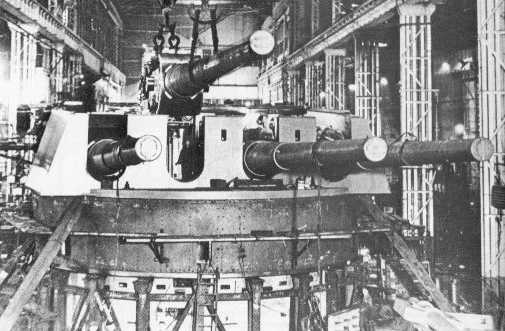
King George V Class Quad Turret being built

The Royal Navy began planning for a new class of battleships in 1928 but the plans were shelved with the signing of the London Naval Treaty which continued the “building holiday” on capital ship construction as well as size and armaments until 1937.  With the realization that its battle force was becoming dated as other nations laid down new classes of battleships the Royal Navy recommenced planning in 1935.  The Navy planned to build to the maximum of the 35,000 displacement limitation and placed a great measure of emphasis on armor and protection. The ships were designed to achieve a 28 knot speed which made them faster than all British battleships although slower than the Battlecruisers. The planners had alternative designs to use 14”, 15” or 16” guns with the Navy favoring the 15” models which had equipped all of their other ships with the exception of the Nelson’s. However the Admiralty to use 14” as the government was endeavoring to negotiate with other powers to impose a 14” limitation on armament for new battleships.  While the Americans and French agreed to the limit neither the Japanese nor Italians followed suit and as a result all new battleships of other powers had larger guns than the King George V Class ships with the French and Italians opting for 15”on the Vittorio Veneto Class, the Americans 16” on the North Carolina, South Dakota and Iowa Classes and the Japanese 18” guns for their Yamato Class. The Germans who were not a signatory built their Scharnhorst Class with 11” although they were planned as 15” ships and would equip the Bismarck Class with 15” guns.  The Royal Navy attempted to rectify this by placing more guns on the ships than those of other navies but the planned armament of twelve 14” guns mounted in quadruple turrets but this was impossible on the 35,000 platform without compromising protection or speed.  Thus the Admiralty compromised on 10 guns mounted in 2 quadruple and 1 twin turret.

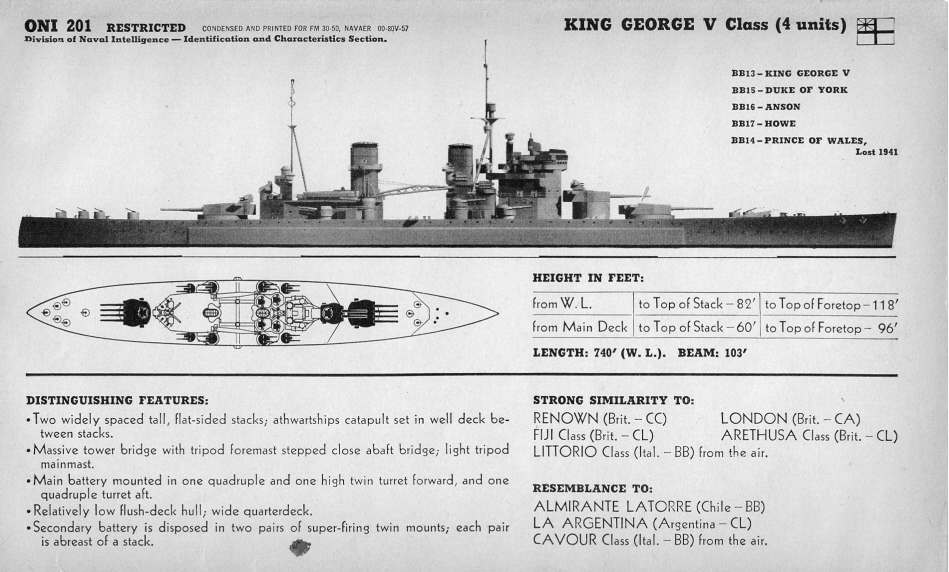
ONI Drawing of King George Class

The ships displaced a full load displacement of 42,237 tons in 1942 which had increased to 44,460 tons in  1944. The were 745 feet long had a beam of 103 feet, a top speed of 28 knots with a cruising range of 5,400 nautical miles at 18 knots. Their relatively poor endurance limited their operations in the Pacific and even nearly caused King George V to have to abandon the chase of the Bismarck in May 1941.

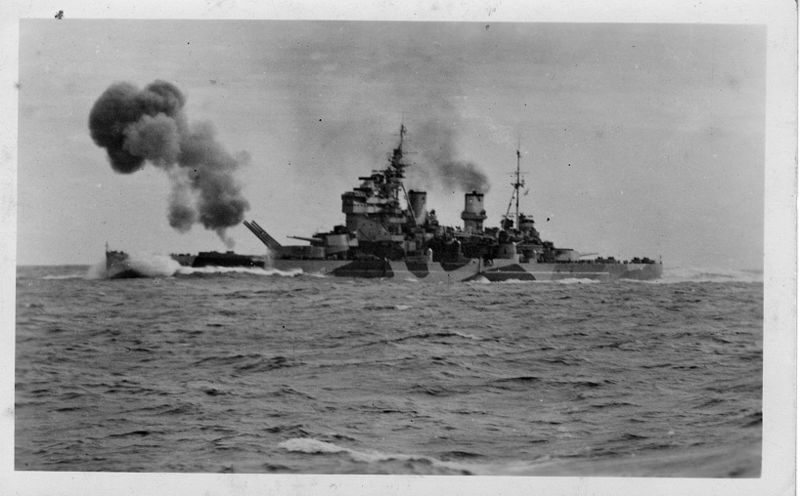
The main batteries of the ships proved problematic in combat with the quadruple turret design causing all the ships problems. This was demonstrated in the engagement of the Prince of Wales against the Bismarck as well as the King George V in its duel with the German behemoth when A turret became disabled and completely out of action for 30 minutes and half of the main battery being out of action for most of the engagement for mechanical reasons.  The Duke of York achieved excellent results against the Scharnhorst but even in that engagement the main battery was only able to be in action 70% of the time.  One of the other drawbacks of the design was that in order to replace a gun due to wear that the turret itself had to be dismantled in order to remove and replace the guns.

The main secondary armament of 5.25” dual purpose guns in twin mounts suffered from poor rate of fire and slow traverse well below their designed standards.

The mounting of the armament was designed to provide protection against turret explosions which could potentially detonate the ship’s magazines.  The main side and underwater protection scheme was sound and protected the ships well in combat.  The vertical protection was also sound as was the protection afforded to the turret barbets and placement of the magazines to shield them from plunging fire.  Only the Prince of Wales was lost due to enemy action had later examination of her wreck revealed that the culprit was a torpedo which detonated in a propeller shaft outside of the armored belt which caused uncontrolled flooding when she was attacked by Japanese aircraft on 8 December 1941.

HMS Anson conducting gunnery exercises

The propulsion systems developed problems after 1942 when fuel oil quality was decreased because of the need for aviation gas.  The new mixtures which were higher viscosity and contained more water than the boilers could effectively burn increased maintenance costs and decreased efficiency. To compensate the Admiralty designed new higher pressure fuel sprayers and burners which returned the boilers to full efficiency.

The lead ship of the class the King George V was laid down on 1 January 1937, launched on 21 February 1939 and commissioned on 11 December 1940.  As the flagship of the Home Fleet she took part in the unsuccessful search for the Scharnhorst and Gneisenau and in the hunt for the Bismarck in which she earned lasting fame in helping to sink that ship.  She took part in the Murmansk convoy protection as well as Operation Husky, the invasion of Sicily before sailing to the Far East for operations against the Japanese. She finished the war with the British Pacific Fleet and was present at the Japanese surrender in Tokyo Bay.  She returned as flagship of Home Fleet until she was decommissioned in 1949. She was subsequently sold for scrap in 1957.

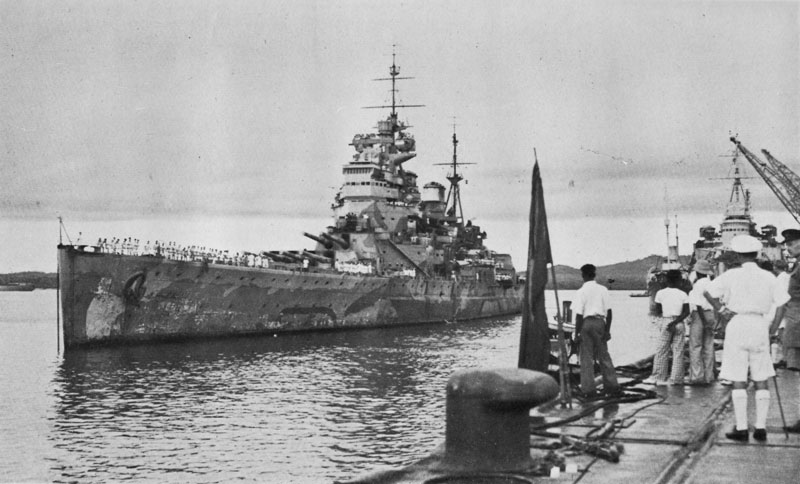
Prince of Wales pulling into Singapore

The second ship the Prince of Wales laid down on 1 January 1937, launched on 3 May 1939 and commissioned 19 January 1941 although she was not officially completed until March 1941. Her initial operation came in May 1941 when she sailed with the HMS Hood to intercept the Bismarck. When she sailed she still had shipyard technicians aboard.  Damaged in the action she did score an important hit on Bismarck which cut a fuel line making her forward tanks inaccessible and causing her to make her run for Brest which she did not complete. Another hit damaged her aircraft catapult and a third an electric dynamo.

Church Service on Prince of Wales at Argentia Bay with Churchill and Roosevelt in attendance

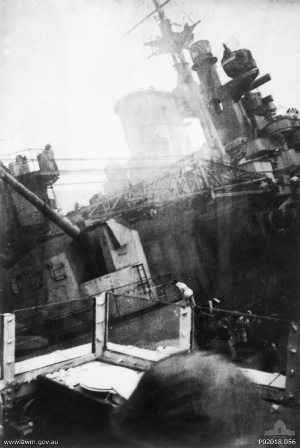
Following repairs she carried Winston Churchill to the Argentia Bay Newfoundland where he met with Franklin D. Roosevelt and together drafted the Atlantic Charter. She accompanied the HMS Repulse to Singapore to bolster the British presence in the Far East but without air cover was sunk by Japanese aircraft which struck her with 4 torpedoes and a bomb, the key hit being a lucky hit on her propeller shaft which caused flooding that caused a loss of power to pumps and anti-aircraft defenses.

Prince of Wales sinking and being abandoned

The third ship the Duke of York was laid down 5 May 1937, launched on 28 February 1940 and commissioned 4 November 1941. She provided convoy escort for the Lend Lease convoys to the Soviet Union as well the sinking of the Scharnhorst on 26 December 1943 during the Battle of North Cape. She was transferred to the Pacific in 1944 and served at Okinawa.  She was decommissioned in 1949 and scrapped in 1957.

Duke of York

The fourth ship of the class the Howe was laid down on 1 June 1937, launched 9 April 1940 and commissioned on 29 August 1942.  She served with the Home Fleet and in the Mediterranean until she was transferred to the Pacific in August 1944. She was stuck by a Kamikaze in May 1945 and Howe was sent for refit at Durban South Africa. She was still in refit when the war ended. She returned home and was placed in reserve in 1950 and scrapped in 1958.

HMS Howe

The last of the class the Anson was laid down 20 July 1937, launched 24 February 1940 and commissioned on 22 June 1942. She operated in the Mediterranean and the North Atlantic and was sent to the Pacific in 1945 where she accepted the surrender of the Japanese Forces at Hong Kong. She returned to Britain and was decommissioned in 1941 and scrapped in 1957.

HMS Anson

The ships had rather unremarkable careers for the most part with the exception of the Prince of Wales and King George V in the hunt for the Bismarck and the Duke of York sinking the Scharnhorst. They had a number of technical problems which limited their operations in the war. However they and their brave crews deserve to be remembered as helping to hold the line against the Axis in the early years of the war and sank two of the four German Battleships lost during the war.  This alone was as remarkable achievement as of their contemporaries only the USS Washington sank an enemy battleship in combat.


12 Comments

Filed under History, Military, Navy Ships, world war two in europe, world war two in the pacific

French Firepower Forward: The unrealized potential of the Dunkerque and Richelieu Class Battleships

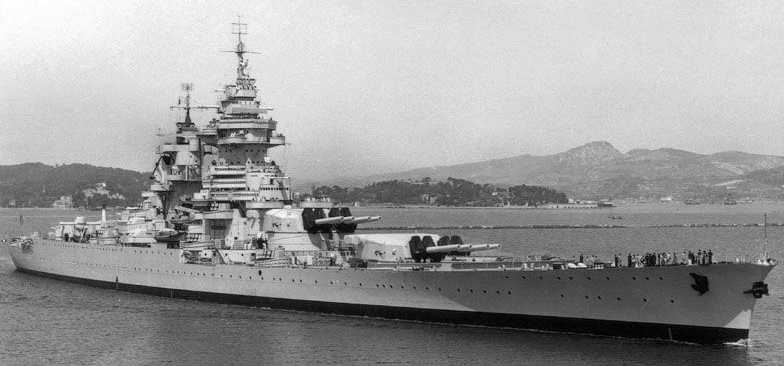
Richelieu in the 1950s © Photo Marius BAR – Toulon (France) site internet : http://www.mariusbarnumerique.fr  

This is the second in a series of five articles on the battleships built under the provision of the Washington and London Naval Treaty limitations in the 1930s. I am not including the ships which were completed in the immediate aftermath of the Washington Treaty limitations. This series looks at the modern battleships that the World War II combatants would produce in the 1930s which saw service in the war. Part one covered the Italian Vittorio Veneto class entitled The Pride of the Regina Marina: The Vittorio Veneto Class Battleships. This article covers the French Dunkerque class and Richelieu class Battleships. Part Three will deal with the British King George V Class and Part Four the American North Carolina and South Dakota Classes. I have already published the final part which covers the German Scharnhorst Class entitled Power and Beauty the Battle Cruisers Scharnhorst and Gneisenau . The German Bismarck, Japanese Yamato, British Vanguard and American Iowa Classes will be covered in a subsequent series.

Dunkerque 1937

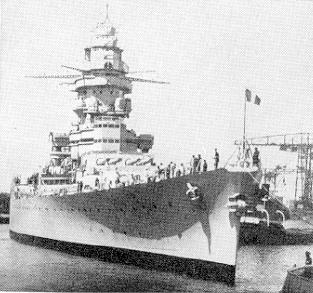
In the late 1920s the French Navy having concentrated on cruiser construction following the war realized the need to develop a class of Fast Battleships to counter the German Deutschland class Pocket Battleships but was limited by the Washington Treaty to just 70,000 tons which meant that in order to have a number of battleships that they would have to be smaller but still mount a significant armament. The new class of ship which the French termed a Fast Battleship was more like a battle cruiser being less heavily armed or armored than current battleships and less so than the new classes of ships being developed by other navies in the mid-1930s.  The Dunkerque class had a designed displacement of 26,500 tons and a top speed of 31 knots the ships mounted 8 13” guns in two quadruple turrets both mounted forward. This allowed all guns to fire forward during engagements to present the smallest possible silhouette to the enemy.  They employed all or nothing armor protection ensuring the strongest protection over vital spaces with their armor designed to protect the ships against German 11” gunfire from the Pocket Battleships or the Scharnhorst Class Battlecruisers. They also mounted a powerful dual purpose armament recognizing the need for defense against aircraft as well as surface ships.

Dunkerque Class:


Dunkerque was laid down on 24 December 1932, launched on 2 October 1935 and commissioned on 1 May 1937. Her sister Strasbourg followed and was laid down in 1934 and launched on 12 December 1936 and commissioned in 1939. When war was declared the two ships spent their time operating with the Royal Navy searching for German raiders and to escort convoys.

Strasbourg

When the Germans overran France in June 1940 the ships took refuge at Mers-el-Kibir where with other French Fleet units they were the target of the Royal Navy to keep them from being taken over by the Germans on 3 July 1940. Dunkerque was heavily damaged in the attack and sank with the loss of 210 sailors after being hit by 4 15” shells from the Battlecruiser HMS Hood and Battleships HMS Resolution and HMS Valiant a testament to their light armor protection.  Strasbourg escaped to Toulon with 5 destroyers where she joined the bulk of the French Fleet in the so called “Free Zone” of Vichy France. She was joined by Dunkerque following the completion of temporary repairs in February 1942.

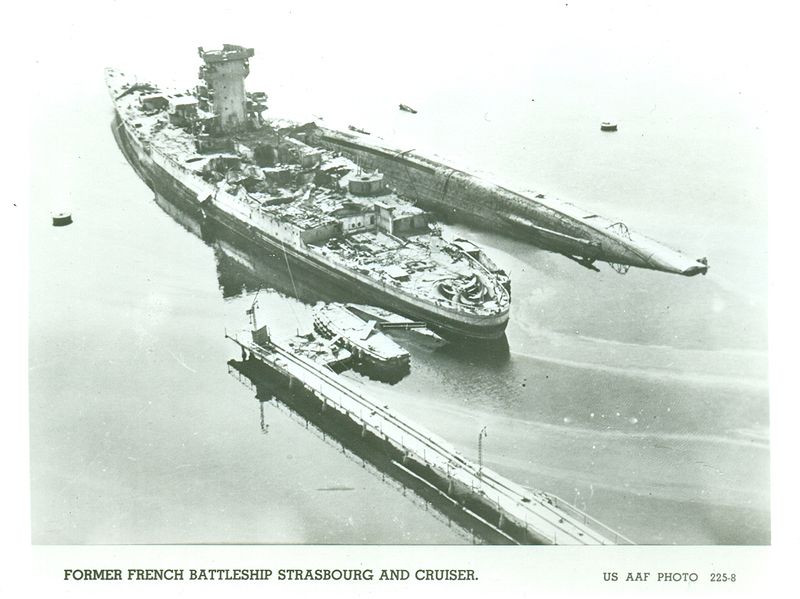
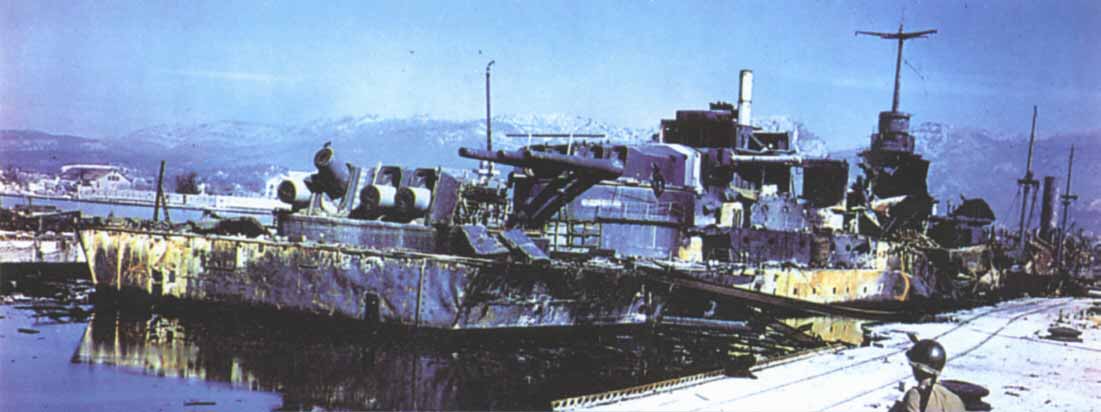
Dunkerque entered drydock for permanent repairs and was there when the Germans occupied Vichy. Under threat of capture the Fleet was scuttled. Dunkerque was destroyed in drydock and declared a total loss. Both the Germans and Italians attempted scrapping operations and the wreck was further damaged by Allied bomber attacks.

The Hulk of the Dunkerque in1944

What was left of the hulk was refloated and finally scrapped in 1958. Strasbourg was scuttled but refloated by the Italian Navy in July 1943 and after the Italian surrender taken over by the Germans. Sunk again in an American air attack in August 1944 she was refloated and used as a test bed for underwater explosions until she was condemned.  She was sold for scrapping in 1955.

Richelieu Class


The Richelieu class was derived from the Dunkerque class in response to the Italian Vittorio Veneto Class.  With a standard displacement of 35,000 tons and a full load displacement of 48,950 tons the ships were the largest build for the French Navy until the commissioning of the Nuclear Aircraft Carrier Charles DeGaulle.  The ships shared the layout of the Dunkerque Class with their main battery of 8 15” guns mounted in quadruple turrets forward which like the Dunkerque’s allowed them to present the smallest silhouette possible to an opposing ship while being able to employ their entire main battery.   Their speed, protection and design were state of the art and comparable to their contemporaries in other navies.  They were capable of 32 knots at full speed and had a cruising range of 7671 miles at 20 knots.  The main battery was spaced far enough apart to ensure that a single hit could not put both turrets out of action and each turret was internally subdivided to prevent a single hit from knocking out all four guns. The mounted 9 6” dual purpose guns in three triple turrets aft and 24 4” AA guns in 12 twin-mounts located amidships.  During the war Richelieu was repaired and refitted in the US receiving 56 40mm Bofors AA guns in quadruple mounts and 48 20mm Oerlikon AA guns in place of her original 37mm cannons and 13.2 inch machine guns.

Richelieu arrives in New York in 1943

Richelieu was laid down in October 1935, launched in January 1939 and began sea trials in January 1940. When the Germans broke through the French defenses and threatened Brest Richelieu put to sea to French North Africa and was commissioned in June at Dakar. She was damaged by an aerial torpedo launched by a Swordfish Torpedo bomber from the HMS Hermes and received emergency repairs in Dakar. On 24 September she fought an engagement against the Royal Navy at the Battle of Dakar and was damaged by two 15” shells fired by the HMS Barham and was further damaged by a misfire in one of her turrets. Following the French return to the Allied camp she was sailed to New York for major repairs and modernization from January to November of 1943. Following this she operated with the British Home Fleet until March of 1944 when she was sent to the India Ocean to serve with the British Far East Fleet in operations against the Japanese until the end of the war. Following the war she took part in the initial stages of the campaign in French Indochina. She was placed in reserve in 1956 and struck from the Navy list and scrapped in 1968.

The Damaged Jean Bart at Casablanca

Her sister Jean Bart was laid down in December 1936 and launched on 6 March 1940.  Only 75% complete with untested engines and only one of her main battery turrets and no secondary armament installed Jean Bart put to sea to escape the German advance and sailed to Casablanca.  The navy attempted to ship her second main battery turret on a freighter but that ship was sunk by a U-boat enroute to Casablanca. She was at Casablanca when the Allies invaded North Africa and was attacked by the U.S. Navy when the Vichy government refused to surrender on 8 November 1942.  She was engaged by the Battleship USS Massachusetts and aircraft from the carrier USS Ranger and was damaged by several bombs and shells from the 16” guns of Massachusetts. She engaged Massachusetts with her one working turret but scored no hits. On the 10th she opened fire on the USS Augusta and was attacked again by aircraft from the Ranger which damaged her so that she had to be run aground to prevent her from sinking.  She remained in Dakar for the duration of the war as it was not feasible to sail her to the United States for completion. Following the war it was suggested that she be converted to an aircraft carrier but that was rejected and she was completed as a battleship and commissioned in 1949.  She took part in the Suez crisis of 1956, was decommissioned in 1957 and finally sold for struck in 1969 and sold for scrap in 1970.

Jean Bart in the 1950s

Both the Dunkerque and Richelieu class were ships of unrealized potential due to the French surrender and the deep divisions between the Vichy and Free French governments.  Had circumstances been different they might have played an important role in the Battle of the Atlantic or in the Mediterranean during the war. Once wonders how they might have done in open combat with their Italian contemporaries or even the German Bismarck and Tirpitz. Instead they and their brave crews had to battle the Axis powers as well as former allies in circumstances in which all the cards were against them. One of Richelieu’s 15” guns is mounted on the waterfront at Brest as a memorial to these brave ships and the men that sailed them.

20 Comments

Filed under History, Navy Ships, world war two in europe

The Pride of the Regina Marina: The Vittorio Veneto Class Battleships

Vittorio Veneto and Littorio

This is the first in a series of five articles on the battleships built under the provision of the Washington and London Naval Treaty limitations in the 1930s. I am not including the ships which were completed in the immediate aftermath of the Washington Treaty limitations. This series looks at the modern battleships that the World War II combatants would produce in the 1930s which saw service in the war. Part one covers the Italian Vittorio Veneto class, Part Two the French Dunkerque and Richelieu Classes, Part Three the British King George V Class and Part Four the American North Carolina and South Dakota Classes. I have already published the final part which covers the German Scharnhorst Class entitled Power and Beauty the Battle Cruisers Scharnhorst and Gneisenau The German Bismarck, Japanese Yamato, British Vanguard and American Iowa Classes will be covered in a subsequent series.

Technically many of these ships were constructed after the expiration of the treaties but since most of the navies at least attempted to maintain a façade of compliance with them most were officially listed as complying with the treaty restrictions.

The Washington Treaty placed a limit on the displacement and armament of battleships. The London Treaty continued them which limited the displacement of new ships to 35,000 tons with the main battery being limited to 16” guns. Each of the treaty signatories as well as the Germans who had been bound by the much more stringent Treaty of Versailles restrictions endeavored to build to the limit of the treaty and if possible skirt the limitations in terms of displacement which allowed them to increase protection as well as more powerful engineering plants.

The Royal Italian Navy had not completed a battleship design since the Andria Doria Class which were constructed between 1912 and 1915 and modernized given an extensive modernization between 1937 and 1940.  A subsequent class the Francesco Caracciolo class was started during the First World War but no ships of the class were completed.

In the 1930s a new naval arms race was underway in the Mediterranean as the French Navy had begun a new class of Fast Battleships, the Dunkerque class which were designed to defeat the German Deutschland class “pocket battleships” and the follow on Richelieu Class. Mussolini saw the new French ships as a threat to the control of the Mediterranean and ordered the construction of a new class of battleships to help Italy achieve naval dominance in the Mediterranean.

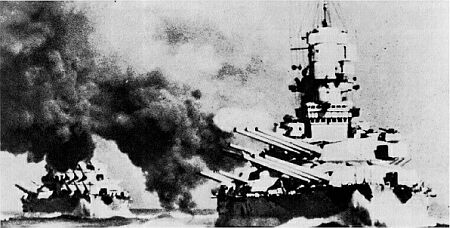
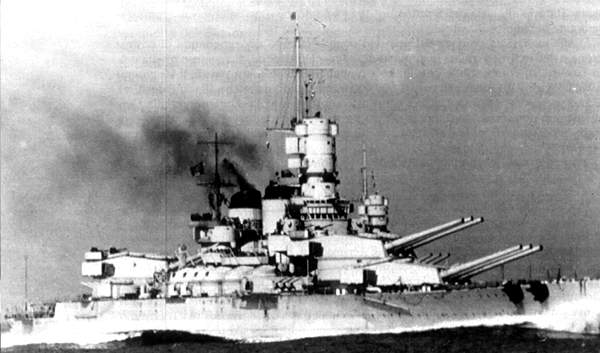
The new ships were of a breathtaking design, large, fast and heavily armed officially listed as meeting the prescribed treaty limit of 35,000 tons they actually would displace 41,177 tons standard displacement and 45,963 tons full load. Armed with a main battery of 9 15” guns in triple turrets and a secondary armament of 12 6” and 12 3.5” guns along with 20 37mm and 30 20mm anti-aircraft guns and capable of 29 knots in service and with a relatively short range of 3900 miles at 20 knots they were formidable ships for operations in the Mediterranean. They were well protected although their Pugliese torpedo defense system proved inferior to traditional designs.

Their main armament though formidable was not without its flaws. The 15” guns had a very long range of 42 km or 26.6 miles and high muzzle velocity of 2900 fps. The high muzzle velocity led to a barrel life of only about half that of their counterparts and inconsistent shell fall patterns.  The guns also suffered from a slow rate of fire of only 1.3 rounds per gun a minute.

The Ships:

Vittorio Veneto in 1943

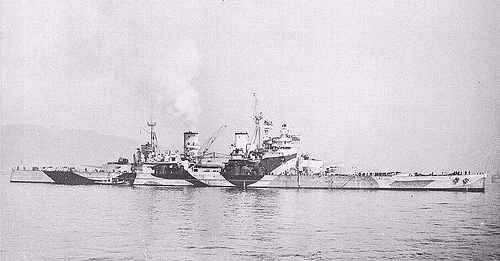
Vittorio Veneto: The Vittorio Veneto was laid down 1934 along with her sister the Littorio and was launched on 25 July 1937 and commissioned on 28 April 1940. She would see action numerous times and give a good account of herself against the British taking part in 56 war missions. She fought at the Battle of Cape Spartivento (Teulada) where she fired 19 salvos to drive off a 7 ship British cruiser squadron in a pitched battle that also included the battleship HMS Ramillies and battle cruiser HMS Renown. In 1941 she took part in the Battle of Cape Matapan where she was damaged by an aerial torpedo after driving off a British cruiser squadron. After repairs she was back in action and on 15 June 1942 participated in the Battle of Mid-June, where she and her sister ship Littorio successfully fenced off a large British convoy from Alexandria by their mere presence at sea.  She was also the first Italian battleship equipped with radar. She surrendered with the Italian fleet to the Allies on 8 September 1943 surviving furious German air attacks. She was interred at the Great Bitter Lakes in the Suez Canal. After the war she taken as war compensation and was returned to Italy and scrapped beginning in 1948.

Littorio

Littorio (later Italia): Littorio was laid down in 1934 and launched on 22 August 1937 and commissioned on 6 May 1940.  She participated in 43 operations including the Battle of Sirte and several actions against British convoys.  Following the Battle of Mid-June she was struck by an aerial torpedo dropped by a Wellington bomber. She was repaired and upon the removal of Mussolini from power was renamed Italia and surrendered with the Italian Fleet on 8 September 1943 being damaged by a Fritz-X radio controlled bomb. With her sister Vittorio Veneto she was interred in the Great Bitter Lake and was returned to Italy where she was decommissioned and scrapped beginning in 1948.

Roma

Roma: Roma was laid down 18 September 1938, launched on 9 June 1940 and commissioned 14 June 1942.  Despite her addition to the fleet she was not deployed due to a fuel shortage. She sailed with the Italian Fleet to surrender on 8 June under the guise of the fleet sailing to attack the Allied invasion fleet off Salerno. The Germans discovering the ruse launched air attacks by Dornier Do-217s armed with Fritz-X radio controlled bombs attacked the fleet as it transited the Strait of Bonafacio.

Roma exploding after being hit by Fritz-X radio guided bomb

Roma was hit by two of the missiles the first which flooded two boiler rooms and the aft engine room.  She was hit soon after by a second Fritz-X which hit in the forward engine room causing catastrophic damage and igniting the number two turret magazine blowing the turret off the ship and causing the ship to capsize and break in two as she sank carrying 1255 of her crew including Admiral Carlo Bergamini to their death. Roma was the first ship sunk by a radio controlled bomb, the forerunner of our current air launched anti-ship missiles.

The Fritz-X Radio Guided Bomb

Impero: Impero was laid down but never completed and scrapped after the war.

The Vittorio Veneto class was a sound design and operationally successful against the Royal Navy and the brave sailors of the Regina Marina who manned these fine ships should not be forgotten.

10 Comments

Filed under History, Military, Navy Ships, world war two in europe

Forgotten on the Far Side of Ford Island: USS Utah, USS Detroit, USS Raleigh and USS Tangier

USS Utah BB-31 in 1920s

When you visit Pearl Harbor most eyes are drawn to the USS Missouri and the USS Arizona Memorial on Battleship Row.  On the mooring quays the names of the Battleships California, Oklahoma, Maryland, West Virginia, Tennessee and Arizona mark the places where the proud Battle Force of the U.S. Pacific fleet was moored on the fateful morning of December 7th 1941.  Movies such as Tora! Tora! Tora!, In Harm’s Way and Pearl Harbor have recorded the attack in varying degrees of accuracy for audiences worldwide in the 1960s, 1970s and 2000s. All record the attack on Battleship row and the attacks on the Army Air Corps at Hickam Field but all overlook the former battleship moored on the west side of Ford Island, the two elderly light cruisers and the Seaplane Tender moored nearby.

USS Utah AG-16 in 1935

Of course these ships hold little interest to most people, they were elderly, Utah had been converted to a gunnery training ship years before and the Omaha Class light cruisers Raleigh and Detroit were obsolescent and after Pearl Harbor would serve in the backwaters of the Pacific war.  The Tangier a new Seaplane Tender occupied the berth aft of Utah.


The USS Utah AG-16, ex-BB-31 was one of the early U.S. Navy Dreadnought battleships of the Florida Class. Utah was 521 feet long, displaced 21,825 tons and mounted 10 12” guns making her comparable to British Dreadnoughts of the Neptune and Colossus class and slightly inferior to the German Helgoland class.  Utah was commissioned on 31 August 1911 and served at the Vera Cruz incident where a Naval “battalion” of 17 officers and 371 her prevented the delivery of arms from Germany to Mexican dictator Victoriano Huerta.  The in the clash with Huerta’s forces the sailors distinguished themselves earning 7 Congressional Medals of Honor.

Utah served as part of the U.S. Battle Squadron sent to operate with the Royal Navy operating out of Ireland conducting convoy protection missions and preparing to engage the German High Seas Fleet if called upon.  Utah served from 1919-1931 as a battleship conducting training and goodwill missions to Europe and South America before being converted to a gunnery training and target ship (AG16) in 1931 per the stipulations of the Washington Naval Conference. In 1941 she was modernized and equipped with weapons being installed on modern destroyers before resuming training duties with the fleet at Pearl Harbor.

On the morning of December 7th Utah was moored on the West side of Ford Island and at colors the ship was struck by a torpedo forward and began to heal to port. With the flooding causing the list to increase the senior officer on the ship, LCDR Isquith the Chief Engineer ordered Utah abandoned and while most of the crew was able to escape some were trapped below including Chief Water Tender Peter Tomich who remained below to ensure that the boilers were secured and his sailors safely out of the boiler rooms.  Tomich was awarded the Congressional Medal of Honor for his sacrifice.  By 0812 the mooring cables had snapped and Utah lay on her beam sinking into the harbor her war over.  6 Officers and 58 crewmen died the majority trapped in the ship.  The ship would be partially righted to clear an adjacent berth in 1944.

The Raleigh and Detroit were Omaha Class Light Cruisers 555 feet long, displacing 7050 tons and mounting 12 6” guns and 10 21” torpedo tubes and were capable of 3 knots. This made them more heavily armed than the contemporary Japanese Nagara Class or the British C, D  or E Class light cruisers and larger than all but the two ship E Class. However by the beginning of the war they were inferior to all newly constructed ships.

USS Raleigh CL-7 fighting to stay afloat

The cruiser Raleigh took a torpedo that caused her to list so sharply that it was feared she would capsize, however the heroic efforts of her crew and service force craft and sailors kept her afloat and allowed her to fight another day. Most of her war would be fought in the Aleutians and following the war she would be decommissioned and scrapped.

USS Detroit CL-8 1945, final configuration

Detroit was able to get underway during the attack and avoid damage to join other ships which had escaped to form an ad hoc task group to find the Japanese strike force.  She would also serve in the Aleutians through 1944 when she became flagship of the Replenishment Group servicing the U.S. Carrier Task Forces of the 3rd and the 5th Fleets. She would be present in Tokyo Bay for the signing of the peace treaty ending the war. She too would be decommissioned and scrapped shortly after the war.

Tangier would serve in many parts of the Pacific as a mobile base for PBY Catalina’s which conducted reconnaissance, anti-submarine and search and rescue operations in support of the fleet for the duration of the war. She was decommissioned in 1947 and sold for scrap in 1961.

USS Utah Memorial (Google Earth)

Today a monument is located on Ford Island near the rusting hulk of the Utah. It replaced a bronze plaque which had been placed on the wreck in the late 1940s. The Memorial was officially dedicated on Memorial Day 1972.  The monument is not listed on most tourist brochures and the memorial attracts few visitors. I was able to visit the memorial in 1978 while on a Navy Junior ROTC Cadet Cruise to Pearl Harbor and back.  The official USS Utah association website is linked here: http://ussutah.org/ and the Historical Naval Ships Association webpage on Utah is here: http://hnsa.org/ships/utah.htm and the Naval History and Heritage Webpage is here: http://www.history.navy.mil/photos/sh-usn/usnsh-u/bb31-y.htm

The Raleigh, Detroit and Tangier have no memorials.  Despite the anonymity of these ships and the men who served on them they all played a role in the war and they should not be forgotten.

Peace

Padre Steve+
 

33 Comments

Filed under History, Military, Navy Ships, world war two in the pacific

The Battle Fleet that Never Was: The USS Washington, the South Dakota Class and the Lexington Class Battle Cruisers

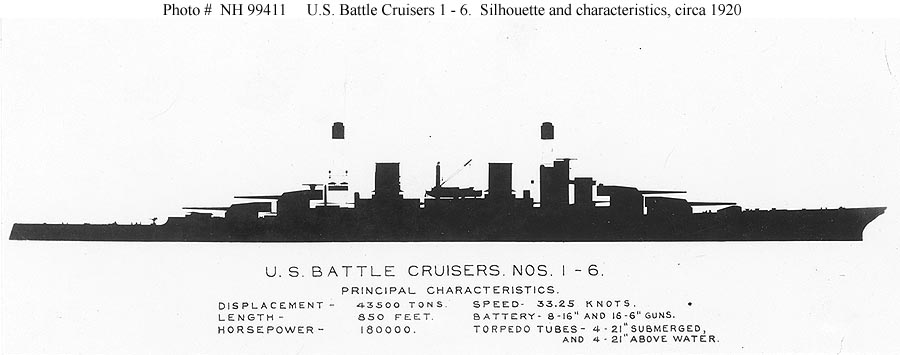
Artist depiction of the Lexington as Battle Cruiser

Note: This is the first of a series of articles on what might have happened if the Washington Naval Treaty had not been signed. This article is a look at the American fleet that never was, the following articles will be in the alternative history genre looking at a war breaking out in the Pacific in 1937.

Historians almost always muse on what might have been.  One of the most significant events of the years following the First World War was the Washington Naval Conference and Treaty. The treaty called by the President Harding and conducted under the auspices of the League of Nations was the first international disarmament conference and attended by none nations having interests in the Pacific. The major players in the conference from the naval power perspective were the British, Americans, Japanese, French and Italians.  Each nation had an agenda for the conference, for the United States it was to break the Anglo-Japanese naval accord and to limit the Japanese naval build up.  The British, exhausted and financially reeling from the effects of the First World War had a number of goals.  Though they had the largest navy and the most Dreadnaught type battleships and battle cruisers of any Navy many of its ships were obsolete or worn out from wartime service.  They had little capital to put into new ship construction, especially considering the vast resources of the United States which was already well into a vast naval buildup including ships that would be among the largest and most heavily armed in the world.  It was in the interest of Britain to limit the both the number, tonnage and armament of these ships.

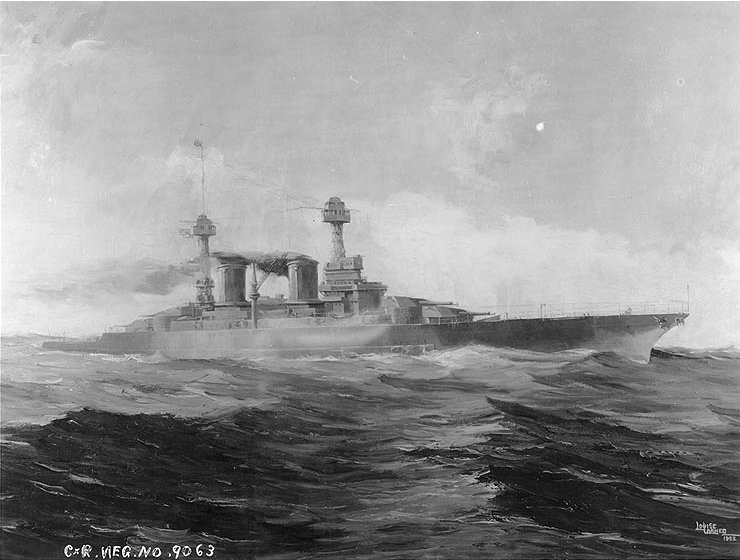
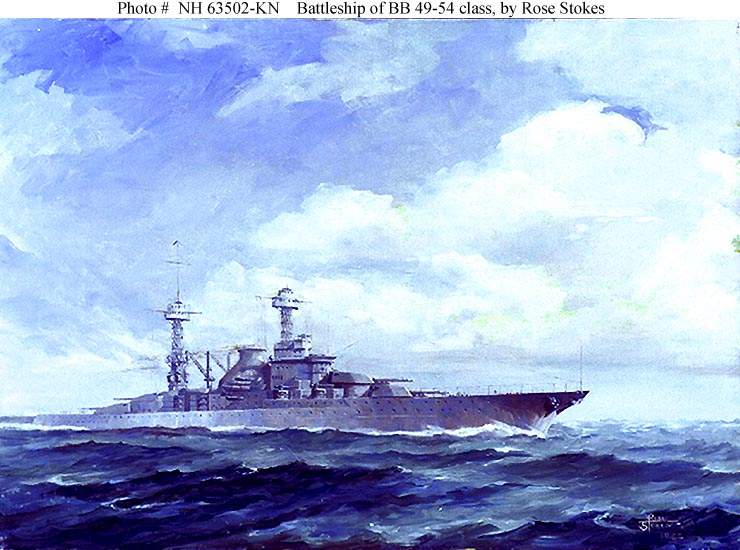
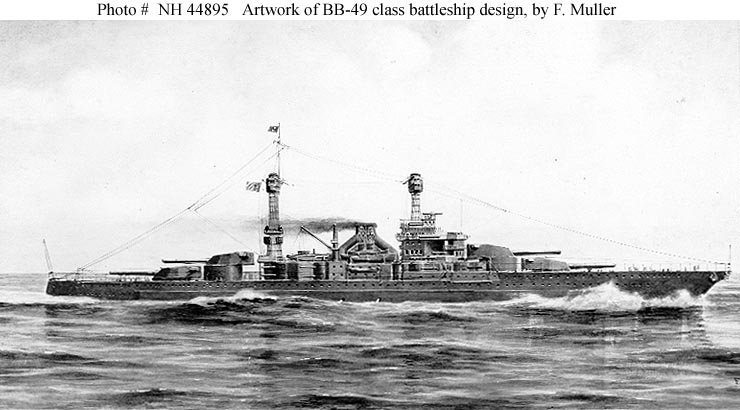
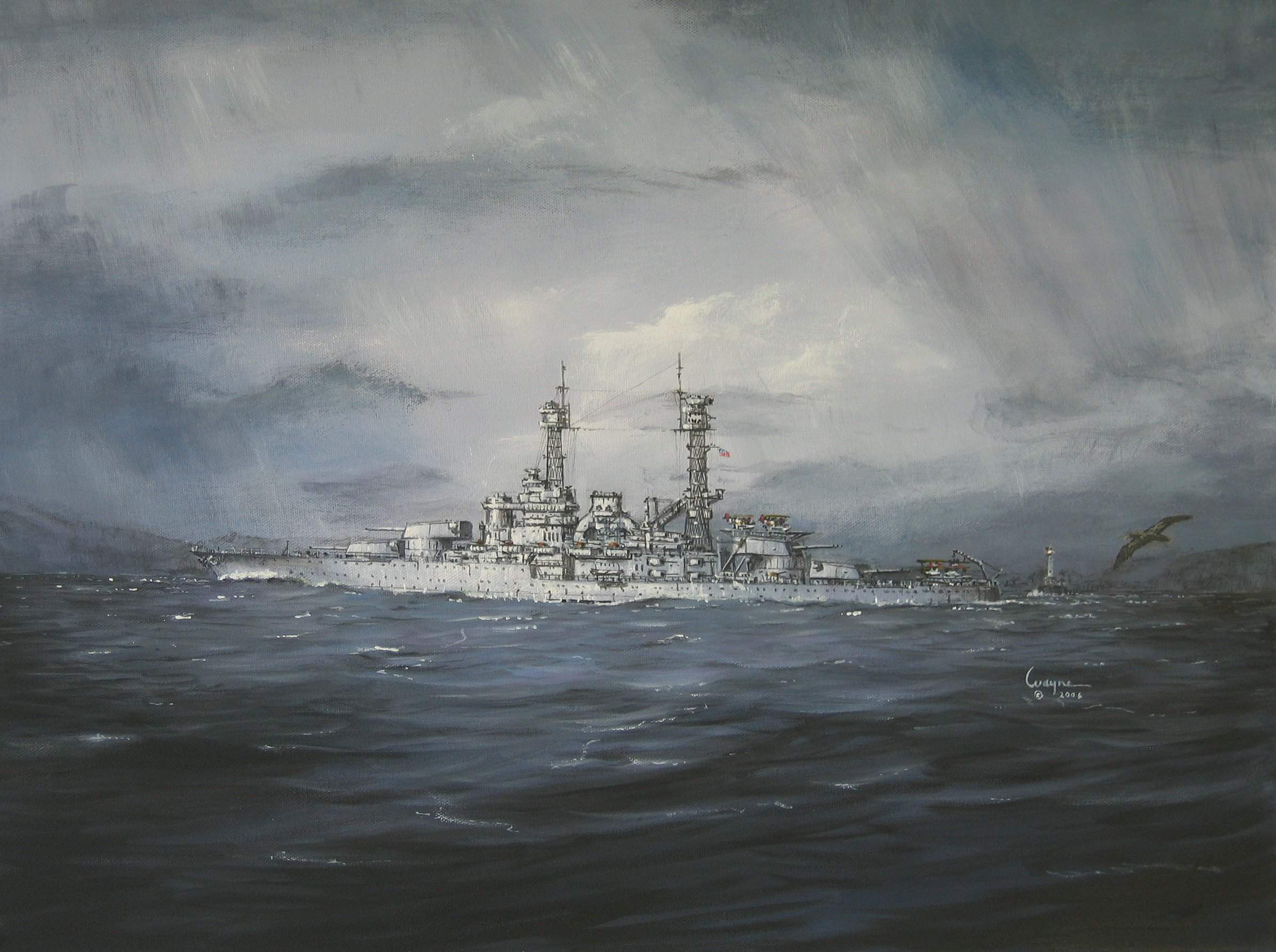
Artist impression of South Dakota Class

The treaty which was ratified in 1922 limited the United States and Great Britain to a maximum of 525,000 tons in their battle ship fleets and 125,000 tons in aircraft carriers.  The Japanese agreed to a limit of 315,000 tons and the French and Italians 175,000 tons each.  Tonnage for battleships was limited to a maximum of 35,000 tons with a limitation on guns size to 16 inches.  Since the bulk of the ships planned or being built by the US and Japan exceeded those limits they would be effected more than the British whose post war shipbuilding program had not begun in earnest. For the US this had a dramatic effect on its planned fleet, which if built would have become the dominant Navy of the 1920s and 1930s.  It is fascinating to think what might have happened if the treaty had not been signed and what the battle fleets of the various nations would have looked like in 1941 had war not come sooner.

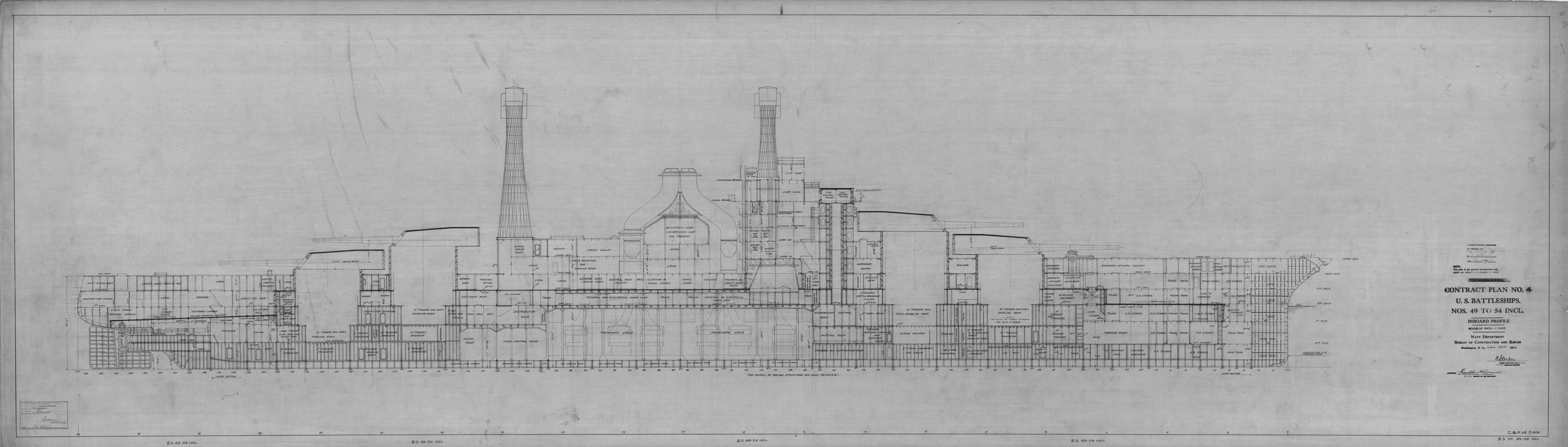
Plans for South Dakota Class

The American Navy went to war in 1941 with 18 battleships, the most modern of which were the new North Carolina and Washington and the rest averaging over 20 years old in 1941. The most modern of these ships were the Colorado class composed of the Colorado, Maryland and West Virginia each mounting eight 16”/50 guns.  The fourth ship of the class the Washington was sunk as a gunnery target when 75% complete under the terms of the Washington Naval Treaty.

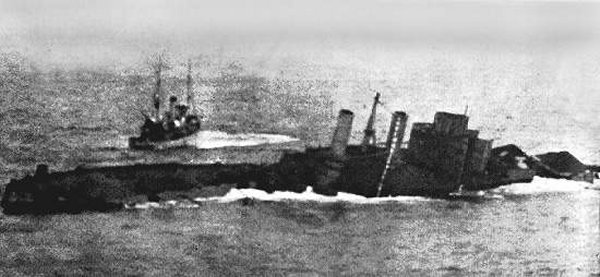
The incomplete USS Washington sinking

However it was a battle force that could have been much larger and far more capable, a force that may not been regulated to convoy escort duties and shore bombardment but instead may have taken on the Imperial Navy on the high seas in battleship combat not seen since Jutland.  Yet this was not to be, the great fleet of super-battleships was never built and only two hulls completed the Lexington and Saratoga which instead of being completed as battle cruisers were completed as aircraft carriers.

Artist impression of South Dakota Class

The Americans had set out to build the largest, most modern and powerful battleships and battle cruisers afloat.  The Navy had already produced the Colorado class super-dreadnaughts which were equal to or superior to any battleships of their era.  The Navy planned for a class of six battle cruisers which would be superior to any similar ship afloat, the Lexington class and a class of six battleships, the South Dakota class mounting twelve 16”/50 guns in triple turrets.

Artist impression of South Dakota Class as they might have appeared in 1938

The two classes were leviathans and to counter them the British made plans for a four ship 48,000 ton class of battleships, the N3 project mounting nine 18” guns and a class of battle cruisers mounting nine 16” guns.  The ships of both classes were designed with their main battery mounted forward in order to save weight on armor.  Both classes were canceled with the signing of the treaty and none were laid down.  It is suggested by some that the G3 battle cruiser design was a ploy to get the United States to agree to the cancellation of its capital ship projects. The guns planned for the G3 class were mounted on the Nelson class battleships which complied with treaty limits.  Although powerful ships they suffered from engineering problems which often reduced their speed from what was designed.  Along with the HMS Hood, the sole ship completed of the four ship Admiral class the Nelson and Rodney were the most modern battleships in the Royal Navy until the King George V class entered service in 1941.  The Japanese planned for eight battleships and eight battle cruisers centered on the two existing Nagato class battleships and 4 Kongo class battle cruisers to be joined by the two ship 40,000 ton Tosa class battleships, the Tosa and the Kaga, of which Kaga was completed as an aircraft carrier. They were to be joined by the 4 improved Tosa class or Kii class fast battleships of 42,000 which were ordered but never laid down.  These were to be joined by the four ship Amagi class battle cruiser class.  Amagi was destroyed during the Tokyo earthquake of 1922 and scrapped and Akagi completed as an aircraft carrier.  All of the planned Japanese ships were to mount ten 16” guns in five twin turrets.

Lexington Class final design drawing

The American ships were to be powerful and based on main battery, protection and speed they would have acquitted themselves well had they been built.  The Japanese ships would have had a speed advantage over the South Dakota’s but this would have been offset by the gun power and protection of the latter.  The American Lexington class would have been faster than any of their competitors.

South Dakota Class Design Specifications
Displacement: 43,200 tons normal
Dimensions: 684 x 106 x 33 feet/208.5 x 32.3 x 10.1 meters
Propulsion: Turbo-electric, 12 285 boilers, 4 shafts, 50,000 shp, 23 knots
Crew: 1191
Armor: 8-13.5 inch belt, 3.5 inch deck, 4.5-13.5 inch barbettes, 5-18 inch turrets, 8-16 inch CT
Aviation: none
Armament: 4 triple 16″/50cal, 16 6″/53cal, 8 3″/50cal AA, 2 21 inch torpedo tubes (submerged)

The six ships in the Class, South Dakota, Indiana, Montana, North Carolina, Iowa and Massachusetts were all scrapped in accordance with the treaty when partially complete, the North Carolina being in the most advanced stage of construction, 37.8% when construction was halted.

Lexington class Battle Cruiser Design Specifications

Displacement 43,500 Tons, Dimensions, 874′ (oa) x 105′ 5″ x 31′ (max).
Armament 8 x 16″/50 16 x 6″/53 4 x 3″8 x 21″ torpedo tubes
Machinery, 180,000 SHP; G.E. Geared Turbines with Electric Drive, 4 screws
Speed, 35 Knots, Crew 1500

The ships with the exception of the Lexington and Saratoga were scrapped incomplete.  All were to be named after famous warships or battles, and the Constellation, Constitution, Ranger and the United States were to be named after some of the most illustrious ships ever to serve in the US Navy.

If all of the ships, including the Washington of the Colorado class been completed the US Navy would have had eight battleships and six battle cruisers mounting 16 inch guns to compliment the nine battleships of the Nevada, Pennsylvania, New Mexico and California classes which all mounted 14 inch batteries.  The fleet would have been superior to either the Royal Navy or the Imperial Japanese Navy even with the ships planned by those navies.  Economically the United States was the only nation in the world capable of sustaining a naval arms race of this magnitude, the British economy and political will would have been unable to sustain it and the limited industrial capacity and dependence on the United States for raw materials and machine tools needed to construct their ships would have limited their ability to produce such a fleet. Without the conversion of the Lexington, Saratoga and their Japanese counterparts the Akagi and Kaga into aircraft carriers the development of the carrier would likely have gone slower and that type of ship may not have risen to the prominence that they gained during the Second World War.

8 Comments

Filed under History, Military, Navy Ships

The Battleships of Pearl Harbor

Arizona Leading the Battle Line

“Yesterday, Dec. 7, 1941 – a date which will live in infamy – the United States of America was suddenly and deliberately attacked by naval and air forces of the Empire of Japan…. The attack yesterday on the Hawaiian Islands has caused severe damage to American naval and military forces. Very many American lives have been lost.” Except of President Franklin D Roosevelt’s Pearl Harbor Speech December 8th 1941

Today is the 68th anniversary of the Japanese attack on Pearl Harbor and as we were then we are at war.

A Date that Will Live in Infamy: USS Arizona Burning

I remember reading Walter Lord’s “Day of Infamy” when I was a 7th grade student at Stockton Junior High School back in 1972.  At the time my dad was on his first deployment to Vietnam on the USS Hancock CVA-19.  As a Navy brat I was totally enthralled with all things Navy and there was little that could pull me out of the library.  Over the years I have always found the pre-World War Two battleships to be among the most interesting ships in US Navy history.  No they are not the sleek behemoths like the USS Wisconsin which I look at almost every day from Portsmouth Naval Medical Center as it lays moored across the Elizabeth River in Norfolk.  No these ships were the backbone of the Navy from the First World War until Pearl Harbor.  They were the US Navy answer to the great Dreadnaught race engaged in by the major Navies of the world in the years prior to, during and after World War One.

These ships were built over a period of 10 years and incorporated the advances in technology since the HMS Dreadnaught first came down the ways in 1906 to the experience gained in combat during the “Great War.”  While the United States Navy did not engage in battleship to battleship combat the ships built by the US Navy were the equal of many of the British and German ships of the era.

Oklahoma Before the War

The Battle Force of the Pacific Fleet in 1941 included 9 battleships of which 8 were at Pearl Harbor on the morning of December 7th.  In the event of war the US War Plans, called “Orange” called for the Pacific Fleet led by the Battle Force to cross the Pacific, fight a climactic Mahanian battle with the battleships of the Imperial Japanese Navy and after vanquishing the Japanese foe to relieve American Forces in the Philippines.  However this was not to be as by the end of December 7th all eight were out of action, with two, the Arizona and Oklahoma permanently lost to the Navy.

USS Oklahoma Being Raised from the Mud

These ships comprised 4 of the 6 classes of battleships in the US inventory at the outbreak of hostilities.  Each class was an improvement on the preceding class in speed, protection and firepower.  The last class of ships, the Maryland class composed of the Maryland, Colorado and West Virginia, was the pinnacle of US Battleship design until the North Carolina class was commissioned in 1941.  Since the Washington Naval Treaty limited navies to specific tonnage limits as well as the displacement of new classes of ships the United States like Britain and Japan was limited to the ships in the current inventory at the time of the treaty’s ratification.

USS Nevada Aground and Burning

The ships at Pearl Harbor included the two ships of the Nevada Class, the Nevada and Oklahoma. The Two ships of the Pennsylvania class, the Pennsylvania and her sister the Arizona, the two California class ships, the California and Tennessee and two of the three Maryland’s the Maryland and West Virginia.  The Colorado was undergoing a yard period at Bremerton and the three ships of the New Mexico class, New Mexico, Mississippi and Idaho had been transferred to the Atlantic before Pearl Harbor to bolster US strength in that area due to the German threat.  The three older ships of the New York and Wyoming Classes, the New York, Arkansas and Texas also were in the Atlantic. Two older battleships, the Utah and Wyoming had been stripped of their main armaments and armor belts and served as gunnery training ships for the fleet. The Utah was also at Pearl Harbor.

USS Nevada Firing on Utah Beach: D-Day

The ships that lay at anchor at 0755 that peaceful Sunday morning on “Battleship Row” and in the dry dock represented the naval power of a bygone era which was not recognized until two hours later. The age of the battleship had passed, but even the Japanese who launched the attack did not realize that the era had passed as they continued to build the massive super-battleships Yamato and Musashi mounting 9 18” guns and displacing 72,000 tons, near twice that of the battleships of the Pacific Fleet.

Arizona’s Main Battery

The Oklahoma and Nevada were the oldest ships in the Battle Force.  Launched in 1914 and commissioned in 1916 the Nevada and Oklahoma mounted ten 14” guns and displaced 27.500 tons and were capable of 20.5 knots. Serving in World War One alongside the British Home Fleet they were modernized in the late 1920s they were part of the US presence in both the Atlantic and Pacific in the inter-war years. Oklahoma would take part in the evacuation of American citizens from Spain in 1936 during the Spanish Civil War.  During the Pearl Harbor attack Oklahoma was struck by 5 aerial torpedoes capsized and sank at her mooring with the loss of 415 officers and crew. Recent analysis indicates that she may have been hit by at least on torpedo from a Japanese midget submarine. Her hulk would be raised but she would never again see service and sank on the way to the breakers in 1946.

USS Pennsylvania in Drydock with Wrecked USS Cassin and USS Downs

Nevada was the only Battleship to get underway during the attack.  As she attempted to escape the harbor she was heavily damaged and to prevent her sinking in the main channel she was beached off Hospital Point.  She would be raised and returned to service by the May 1943 assault on Attu.  She would then return to the Atlantic where she would take part in the Normandy landings off Utah Beach and the invasion of southern France in July 1944.  She then returned to the Pacific and took part in the operations against Iwo Jima and Okinawa where she again provided naval gunfire support.  Following the war she would be assigned as a target at the Bikini atoll atomic bomb tests, surviving these she would be sunk as a target on 31 July 1948.

USS Pennsylvania at Guam

The two ships of the Pennsylvania Class were improved from the Oklahoma’s.  Mounting twelve 14” guns and displacing 31,400 tons and capable of 21 knots they were commissioned in 1916 and also participated in operations in the Atlantic in the First World War.  Both being rebuilt and modernized in 1929-1931 they were mainstays of the fleet being present at Presidential reviews and making goodwill visits around the world.  Pennsylvania was the Pacific Fleet Flagship on December 7th 1941 and was in dry dock undergoing maintenance at the time of the attack. Struck by two bombs she received minor damage and would be in action in early 1942. She underwent minor refits and took part in many amphibious landings in the Pacific and was present at the Battle of Surigo Strait.  Heavily damaged by an aerial torpedo at Okinawa Pennsylvania would be repaired and following the war used as a target for the atomic bomb tests. She was sunk as a gunnery target in 1948.

USS Pennsylvania Passing Under Golden Gate Bridge Before the War

Arizona was destroyed during the attack.  Hit by 8 armor piercing bombs one of which penetrated her forward black powder magazine she was consumed in a cataclysmic explosion which killed 1103 of her 1400 member crew.  She was never officially decommissioned and the colors are raised and lowered every day over the Memorial which sits astride her broken hull.

USS Tennessee 1938

The Tennessee and California were the class following the New Mexico’s which were not present at Pearl Harbor.  These ships were laid down in 1917 and commissioned in 1920.  They mounted twelve 14” guns, displaced 32.300 tons and were capable of 21 knots.  Tennessee was damaged by two bombs and was shield from torpedo hits by West VirginiaCalifornia was hit by two torpedoes but had the bad luck to have all of her major watertight hatches unhinged in preparation for an inspection.

USS Tennessee at Okinawa

She sank at her moorings and would be refloated, rebuilt and along with Tennessee modernized with the latest in radar, fire control equipment and anti-aircraft armaments.  Both ships would be active in the Pacific campaign and be engaged at Surigo Strait where they inflicted heavy damage on the attacking Japanese squadron. Both would survive the war and be placed in reserve until 1959 when they were stricken from the Navy list and sold for scrap.

USS California Passing Under Brooklyn Bridge

The Maryland and West Virginia were near sisters of the Tennessee class.  They were the last battleships built by the United States before the Washington Naval Treaty.  Mounting eight 16” guns they had the largest main battery of any US ships until the North Carolina class.

USS Maryland 1944

The displaced 32,600 tons and could steam at 21 knots. Laid down in 1917 and commissioned in 1921 they would be modernized in the late 1920s they were the most modern of the “Super-Dreadnoughts” and included advances in protection and watertight integrity learned from British and German experience at Jutland.

USS California 1944

At Pearl Harbor Maryland  was moored inboard of Oklahoma was hit by 2 bombs.  She would be quickly repaired and returned to action.  She received minimal modernization during the war. She would participate in operations throughout the entirety of the Pacific Campaign mainly conducting Naval Gunfire Support to amphibious operations. 

USS West Virginia 1934

and in 1944


West Virginia suffered some of the worst damage in the attack. Hit by at least 5 torpedoes and two bombs she was saved from Oklahoma’s fate by the quick action of her damage control officer to counter flood so she would sink on an even keel.  She would be raised, refloated and taken back to the West Coast for an extensive modernization on the order of the Tennessee and California. 

Damage to West Virginia’s Hull

The last Pearl Harbor to re-enter service she made up for lost time as she lead the battle line at Surigo Strait firing 16 full salvos at the Japanese squadron helping sink the Japanese Battleship Yamashiro in the last battleship versus battleship action in history.  West Virginia, Maryland and their sister Colorado would survive the war and be placed in reserve until they were stricken from the Naval List and sold for scrap in 1959.

The battleships of Pearl Harbor are gone, save for the wreck of the Arizona and various relics such as masts, and ships bells located at various state capitals and Naval Stations.  Unfortunately no one had the forethought to preserve one of the survivors to remain at Pearl Harbor with the Arizona.  Likewise the sailors who manned these fine ships, who sailed in harm’s way are also passing away.  Every day their ranks grow thinner.  As December 7th  passes into history it is fitting to remember these men and the great ships that they manned.   If you know a Pearl Harbor survivor or a sailor who served on one of these ships take the time to thank them.

Peace,

Padre Steve+
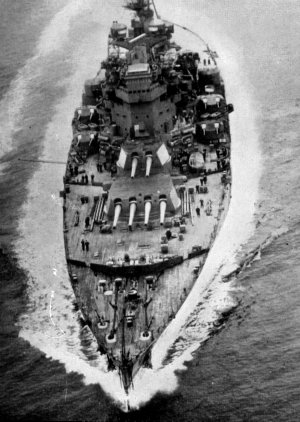
USS Arizona Memorial

21 Comments

Filed under History, Military, Navy Ships, world war two in the pacific