Tag Archives: winston churchill

Stringbags vs. the Bismarck

Alan Fearnley; (c) Alan Fearnley; Supplied by The Public Catalogue Foundation

Friends of Padre Steve’s World

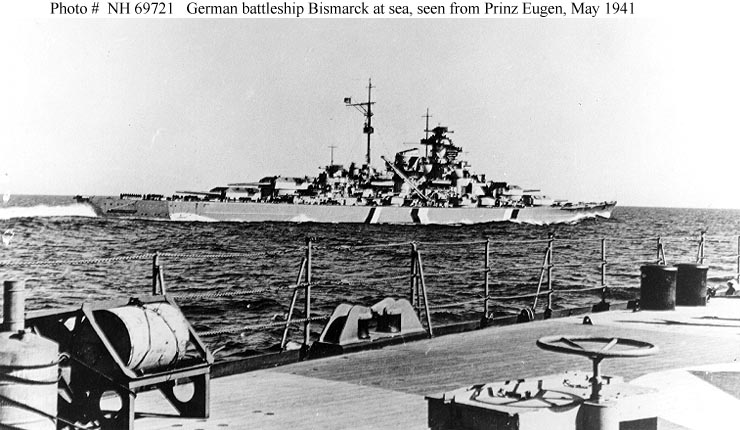
A couple of days ago I reposted an article about the sinking of the HMS Hood by the German Battleship Bismarck. The story of the Bismarck is an epic saga of naval warfare and history. It is tragedy played out as if scripted by a playwright in three parts. The first was the sinking of the illustrious “Mighty” Hood by the Bismarck on May 24th 1941. 

The second, which I deal with today, was the pursuit and search for Bismarck by the British Home Fleet and the desperate attempt of the British to find a way, any way, to slow Bismarck down and bring her to battle, before she could return to the safety of Nazi occupied France.  The final chance to stop the mighty German Leviathan came as night fell on May 26th. 

I hope you appreciate the heroism of the men who flew the hopelessly obsolete aircraft who dealt the blow which crippled Bismarck. This is a re-wright of past articles and I will post the final article about the sinking of the Bismarck tomorrow. 

Peace

Padre Steve

h69721

On May 24th 1941 the German Battleship Bismarck had sunk the celebrated Battlecruiser HMS Hood in the Denmark Strait and had seriously damaged the new Battleship HMS Prince of Wales. The news of the disaster stunned the Royal Navy. Fighting a war on multiple fronts and now standing alone against Hitler’s Germany the British deployed every warship available to find and sink Bismarck.

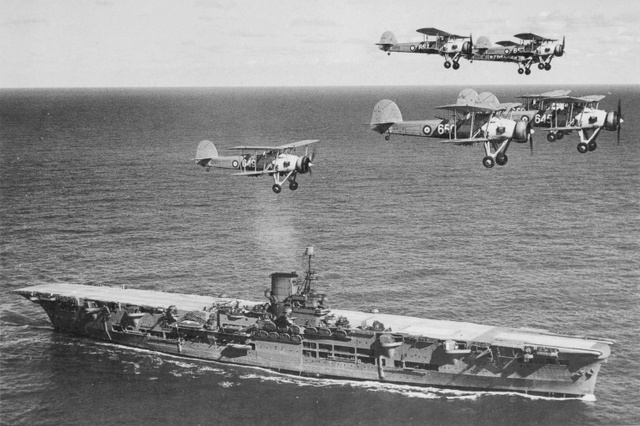
On the evening of the 24th of May Bismarck was being shadowed by the heavy cruisers HMS Norfolk and HMS Suffolk. To the east the ships of the Home Fleet, Britain’s last line of defense under the command Admiral John Tovey was making the fastest speed to intercept the Bismarck.  Far to the southeast, Vice Admiral James Sommerville’s  “Force H” comprised of the carrier HMS Ark Royal, the fast but elderly battlecruiser HMS Renown, and the light cruiser HMS Sheffield were ordered to leave the vital convoy which there were escorting and proceed to the northwest to join the hunt for the German battleship.

HMS_Ark_Royal_h85716

HMS Ark Royal with Swordfish in 1939

With Bismarck loose the North Atlantic Convoys on which Britain depended for her survival were vulnerable. The previous year the commander of the Bismarck task force Admiral Günther Lütjens with the Battlecruisers Scharnhorst and Gneisenau had wreaked havoc on the convoys. Now of Britain was on edge with the news of Bismarck’s break out into the Atlantic. Churchill was furious with the Navy when the Mighty Hood, the largest and most powerful ship in the Royal Navy destroyed with the loss of all but three crew members. Now every effort was directed to find and sink the Bismarck.

gallbismlastdays01

Bismarck photographed from a Swordfish from 825 Squadron

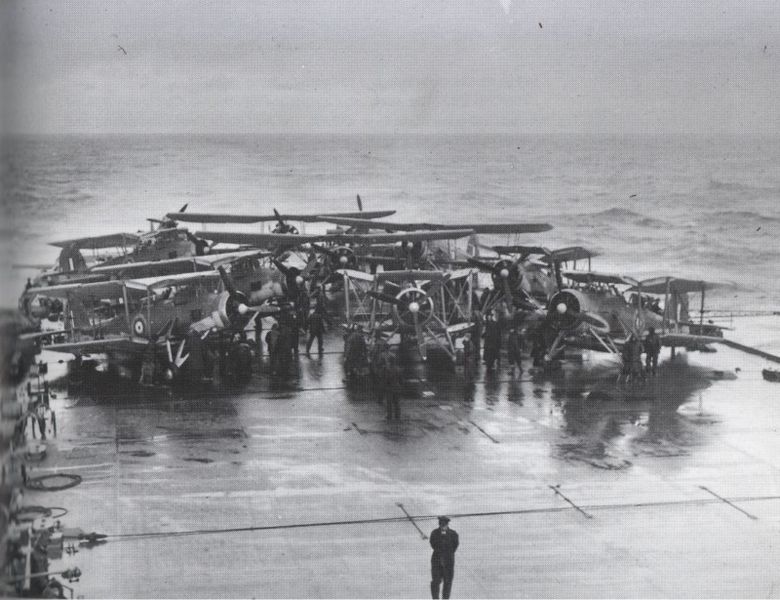
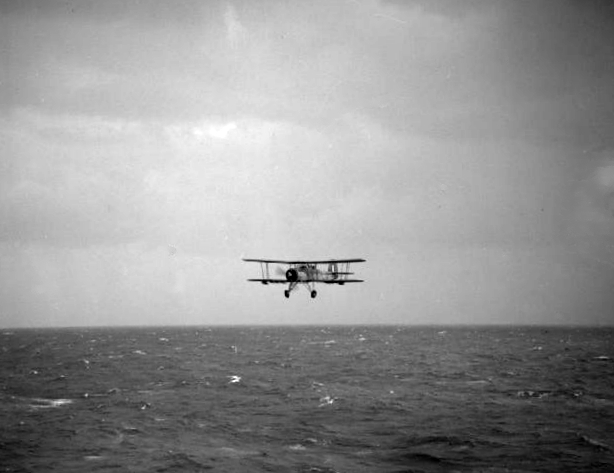
Accompanying the Home Fleet was the brand new Aircraft Carrier HMS Victorious with 825 Naval Air Squadron embarked under the command of LCDR Eugene Esmond. The squadron, like many in the Fleet Air Arm was equipped with Fairy Swordfish Torpedo Bombers. The squadron had seen action aboard other carriers in the North Atlantic, the Norway Campaign and in the Mediterranean before being assigned to the Victorious. On the night of 24 May 1941, in foul North Atlantic weather the Victorious launched nine Swordfish from a range of 120 miles in a desperate attempt to slow the Bismarck down. Esmond’s squadron scored one hit amidships on the Bismarck which did no serious damage.

780px-Swordfish_on_HMS_Victorious_before_strike_on_Bismarck

825 Squadron Swordfish on HMS Victorious

About 6 hours after the attack by Victorious’s Swordfish, Bismarck shook her pursuers and disappeared into the mists of the North Atlantic, while her consort, the Heavy Cruiser Prinz Eugen escaped to the northwest in order to conduct independent raiding operations. Not knowing the location or course of the Bismarck the Royal Navy frantically searched for the German Leviathan. Most of the ships nearest to Bismarck’s last reported position were low on fuel and others seemed too far away to be of any importance in the search.

However the British were able to intercept and decode some German communications which indicated that Lütjens had orders to steam to Brest, in German occupied France for repairs.

Though the British believed that the Bismarck could be headed toward Brest they could not be sure, as each hour passed the chances of finding and bringing Bismarck to battle diminished. For nearly 36 hours the British searched in vain for the Bismarck, and for much of the 25th Tovey’s squadron was searching in the wrong direction. Then at 1030 on the 26th of May their luck changed.

Likewise the crew of the Bismarck believed with every hour that they would soon be under the protection of Herman Goering’s Luftwaffe and safely in France, but the good fortune of the British was the worst thing that could happen to the 2200 men aboard Bismarck.

On that morning a Royal Air Force Coastal Command PBY Catalina co-piloted by US Navy Ensign Leonard Smith found the Bismarck. Once Smith transmitted Bismarck’s location every available ship converged on her location but unless something could be done to slow the German down the chances bringing her to battle diminished by the hour.

The only heavy forces close enough to successfully engage Bismarck, Tovey’s battleships HMS King George V and HMS Rodney were over 100 miles behind Bismarck, too far away unless Bismarck changed course or could be slowed down. Somerville’s Force H to the south did not have the combat power to survive a surface engagement with the Bismarck should they encounter the Bismarck without the support of other heavy fleet units. Even so Sommerville was willing to risk the Renown in a suicidal action to bring Bismarck to battle if it would allow Tovey to catch her before she could escape. Desperation was the order of the day for both sides.

HMS_Ark_Royal_swordfish

820 Squadron Swordfish returning to Ark Royal after the attack on Bismarck

The situation was desperate, if Bismarck could not be slowed down she would be in range of heavy Luftwaffe Air support as well as support from U-Boats and destroyers based in France. Unless something akin to a miracle occurred Bismarck would join the Scharnhorst and Gneisenau in Brest and with the addition of Bismarck’s sister-ship Tirpitz form a surface squadron strong enough to devastate British shipping in the Atlantic.

Ark Royal’s aircraft were the last hope of slowing down Bismarck before she could effect her escape and emerge from the Atlantic after having dealt the Royal Navy a devastating blow.

The strike aircraft available on Ark Royal were the most unlikely aircraft imaginable to successfully carry out such a mission. Ark Royal’s 820 Squadron, like Victorious’ 824 Squadron was equipped with Fairy Swordfish Mk 1 Torpedo Bombers. These were biplanes with their crew compartment exposed to the weather.

Introduced to the Navy in 1936 the aircraft was an antique compared with most aircraft of its day. Likewise the Mark XII 18” torpedo carried by the aircraft was smaller or slower and equipped with a less powerful warhead than comparable torpedoes used by other navies. Despite their limitations the venerable Swordfish had performed admirably during the early part of the war sinking or damaging three Italian battleships at Taranto in November 1940. Their success against the Italians at Taranto gave inspiration to the Japanese for their attack against the U.S. Pacific Fleet at Pearl Harbor the following year. But now, in the face of foul weather and a powerful opponent the Swordfish were all the Royal Navy had left to stop Bismarck before she could make her escape.

gallbismlastdays03

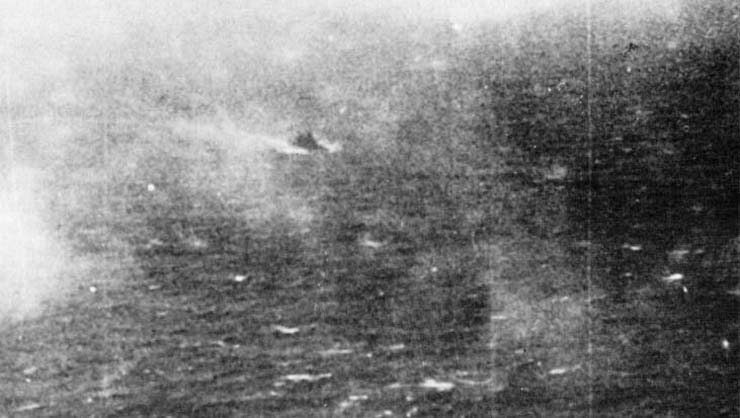
Bismarck steering erratically after the torpedo hit to her stern

With that in mind  Sommerville in sent his light cruiser, the  HMS Sheffield ahead to shadow Bismarck while Ark Royal closed in to launch her Swordfish against Bismarck. The first wave of aircraft strike, unaware Sheffield was near Bismarck mistakenly attacked the British cruiser. Thankfully, the new design magnetic detonators failed to detonate the torpedoes saving Sheffield from destruction. With little daylight left the aircraft returned to Ark Royal where they rearmed with torpedoes equipped with contact fuzes and refueled by flight deck crew laboring in rain and 50 knot winds blowing across the carrier’s flight deck. Just before 8 p.m. 15 Swordfish of 820 Squadron took off for what they knew was the very last chance to attack Bismarck before night fell. If they failed Bismarck would most certainly escape.

As darkness began to fall the 15 Swordfish from 820 Squadron descended through the clouds to attack the German ship. Just fifteen obsolete aircraft and thirty men attacking the most powerful warship afloat. They dispersed and attacked from all points of the compass. Bismarck twisted and turned and fired all of her guns at the attacking aircraft. The Germans fired with every weapon available, even the 15″ guns of her main battery, which she fired her into the ocean ahead of the Swordfish. It appeared for a moment that the Bismarck had successfully avoided serious damage. All but two torpedoes missed.  One torpedo struck the German midships and barely dented her massive armor. However a second torpedo, launched by a Swordfish piloted by Lieutenant John Moffat hit Bismarck in her weakly armored stern. The hit jammed Bismarck’s port rudder at a 12 degree angle, and destroyed her steering gear. The weather was such that German damage control teams could not repair the damage. Bismarck now steamed in circles, unable to maneuver. This enabling Tovey with King George V, Rodney, the heavy cruisers Norfolk and Dorchester, as well as a number of destroyers to catch up with the elusive German.

The attacks of the antiquated Swordfish on the Bismarck achieved results that no one in the Royal Navy expected. When reports indicated that Bismarck had reversed course following the torpedo attack Tovey could not believe them. It was only when lookouts aboard Sheffield confirmed the reports from the Swordfish that Tovey realized that Bismarck must have been damaged and was unable to maneuver.

It was a dramatic and unexpected turn of events. The German crew sank into gloom as the night went on and they dealt with torpedo attacks from the British Destroyers as Tovey’s battleships moved in for the kill.

To be continued…

Leave a comment

Filed under aircraft, History, Military, Navy Ships, World War II at Sea, world war two in europe

ISIL: A Generational Problem in Which the Enemy Gets a Vote

295_26912117058_5652_n

I have been writing much in recent days about the war that we are now in against the Islamic State, or ISIL.  Today Secretary of defense Hegel and Chairman of the Joint Chiefs of Staff General Martin Dempsey briefed the Senate Armed Services Committee about the developing strategy to defeat ISIL. They both echoed what I have been writing, that this is not going to be a short and easy war. It was the kind of briefing that Secretary Rumsfeld, Paul Wolfowitz and others should have given Congress before launching the Iraq war in 2003.

Unlike Rumsfeld and others who plainly concocted a fairy tale about the character, length and cost of the war which they and their propagandists in the media deceived the American public into supporting that war, this was a briefing conducted by realists who did not paint beautiful picture of just how easy it will be to win this war, and how it really won’t be over until it’s over. Retired Marine Corps General James Mattis very wisely said: “No war is over until the enemy says it’s over. We may think it over, we may declare it over, but in fact, the enemy gets a vote.”

In fact the aftermath of that 2003 invasion opened a Pandora’s box of chaos, and opened the door to what T.E. Lawrence warned about in 1919: “A Wahabi-like Moslem edition of Bolshevism is possible, and would harm us almost as much in Mesopotamia as in Persia…” ISIL is exactly that, a fulfillment of Lawrence’s warning.

Unfortunately no one really likes realists, they rain on people’s ideological parades and no one likes to have their parade rained on. Both men recognize that after the past thirteen years of war, as well as the massive upheaval spawned in the region in large part because of it, and the many other crises  that the American military and our NATO allies are having to confront, that American military and diplomatic options are less than optimal and as General Mattis said the enemy gets a vote. As Winston Churchill said:

“Never, never, never believe any war will be smooth and easy, or that anyone who embarks on the strange voyage can measure the tides and hurricanes he will encounter. The statesman who yields to war fever must realize that once the signal is given, he is no longer the master of policy but the slave of unforeseeable and uncontrollable events…. Always remember, however sure you are that you could easily win, that there would not be a war if the other man did not think he also had a chance.”

General Dempsey cautioned the Senators that this was not going to be a short or easy effort. He noted as any realist would : “It’s a generational problem, and we should expect that our enemies will adapt their tactics as we adjust our approach.” 

They outlined a number of elements of the strategy to include the continued air campaign, coordination with the Iraqis, the advisory mission and the diplomatic efforts being made to build an alliance, as well as to build up “moderate” Syrian rebel forces that are functioning under some kind of “moderate” authority, whatever that is, and if there is such a thing in Syria I hope we find it.

The fact is there is nothing easy about any of these options, even the advisory piece is fraught with danger and the potential of being expanded into a ground combat operation. President Obama has promised not to enter into a ground war, but remember the enemy, as well as the other participants in war get a vote. General Dempsey acknowledged this when he told the committee: “If we reach the point where I believe our advisors should accompany Iraqi troops on attacks against specific ISIL targets, I’ll recommend that to the president.” Yes, the decision to commit troops in a ground combat role is ultimately that of the President as Commander in Chief, but the Congress and the American people need to be part of the decision making process and get a vote. If Congress fails to weigh in on this, and either vote for committing troops, or putting limitations on military action, they will have failed in one of their chief constitutional duties.

General Dempsey also noted the nature of the air campaign that is being conducted and which will be conducted in Syria, saying: “we will be prepared to strike ISIL targets in Syria that degrade ISIL’s capabilities. This won’t look like a ‘shock and awe’ campaign because that is simply not how ISIL is organized, but it will be a persistent and a sustainable campaign.” Part of this is due to ISIL as General Dempsey said, but also as he later noted the growing mismatch between policy ends and the means available to deal with them including the will of Congress to provide those means. Dempsey warned of the danger if the “will to provide means does not match the will to pursue ends,”  a time bomb that the austerity minded Congress foisted on the nation through sequestration in 2012. 

Dempsey was cautiously optimistic in his assessment:

“Given a coalition of capable, willing regional and international partners, I believe we can destroy ISIL in Iraq, restore the Iraq-Syria border and disrupt ISIL in Syria…ISIL will ultimately be defeated when their cloak of religious legitimacy is stripped away and the populations on which they have imposed themselves reject them. Our actions are intended to move in that direction.”

General Dempsey recognized that American military power alone cannot solve this situation and that ultimately if ISIL is to be defeated and destroyed, those people that they have conquered need to rise up and reject them. I think that is possible, but it may take years of suffering and oppression at the hands of ISIL for those people to rise up against them. The Sunni did it in Anbar in 2006-2009 to help turn around the Iraq campaign, but they did so on the basis that their rights would be respected and that they would have a real voice in the Shi’ite dominated Iraqi government. Instead they were tossed aside by the Maliki government making them far more apprehensive and unwilling to go all in on defeating ISIL as they did its predecessor.  The Sunni attitude is much like that of the Arabs who rebelled against the Turks, of whom T. E. Lawrence wrote:

“The Arabs rebelled against the Turks during the war not because the Turk Government was notably bad, but because they wanted independence. They did not risk their lives in battle to change masters, to become British subjects or French citizens, but to win a show of their own.”

This is the reality and it is not pretty. Reality sucks, but as Mark Twain said

“Reality can be beaten with enough imagination.”

Peace

Padre Steve+

1 Comment

Filed under Foreign Policy, History, iraq,afghanistan, middle east, Military, national security, Political Commentary, War on Terrorism

Winston Churchill, Turkey and the High Cost of Two Dreadnoughts

churchill1914

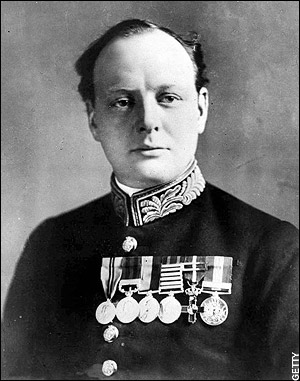
One of the more interesting and overlooked factors in the days leading up to the First World War, which had significant ramifications in the Middle East involved Winston Churchill. Churchill was serving as First Lord of the Admiralty and made a decision which ensured the Ottoman Empire would be pushed into an alliance with Germany.

For many years Britain had been the chief supplier of ships for the Ottoman Navy. In fact in the years leading up to World War One the Ottomans had purchased over 40 ships from Great Britain and on August 2nd 1914 was expecting to take delivery of two, extremely modern Dreadnoughts, the Sultan Osman I and the Reshadieh. The Sultan Osman was armed with fourteen 12” guns, the Reshadieh with ten 13” guns, making them the equal or superior to most battleships afloat. The Turkish Government had paid over 4 billion Pounds for the ships and made the final payment on August 2nd shortly before the Turkish Captain and 500 crew members were to come aboard for a ceremony formally handing over the ship to the Turkish Navy.

HMS_Agincourt_1915

HMS Agincourt 

Much of the money the Turks used to pay for the ships came from the donations of ordinary Turkish citizens. Money came from taverns, from cafes, schools, Mosques and markets. Those that donated were awarded a commemorative medal, the ships were the pride of Turkey and the empire. The nation awaited the delivery of the ships which would ensure the superiority of the Turkish Navy against its traditional foe, Russia.

HMS_Erin

HMS Erin

As War approached Churchill began to prepare, keeping many of his plans and actions even from the government. Less than an hour before the ceremony Churchill ordered the ships seized and and the Royal Navy kept the Turkish Captain and crew locked aboard a nearby transport. The Turkish Captain later wrote:

“… We paid the last installment (700.000 Turkish liras). The manufacturer and we agreed on that the ships would be hand over on 2 August 1914. Nevertheless, after we made our payment and half an hour before the ceremony, the British declared that they have requisitioned the ships… Although we have protested, nobody paid attention.”

Churchill had gained two modern Dreadnoughts for the Royal Navy, and the British shipyards kept the money, the Turks were never compensated for the loss. The ships were renamed HMS Agincourt and HMS Erin. Both served throughout the war and at the Battle of Jutland, and bother were scrapped in the early 1920s due to the restrictions of the Washington Naval Treaty.

SMS_Goeben-ptbow3

SMS Goeben

But in the process whereby the British gained the ships, ensured that Turkey would ally itself with Germany. The positive effects were mitigated by the Germans providing the very modern dreadnought type  Molkte Class Battlecruiser Goeben and Light Cruiser Breslau to the Turks, giving them the edge over the Russians. Breslau was mined and sunk in 1918 but Goeben served in the Turkish Navy as the Yavuz Sultan Selim until she was decommissioned in 1954, and scrapped in 1973.

Likewise, Churchill’s decision meant that when Turkey entered the war that the strategically important Bosporus strait which was Russia’s only year round access to foreign shipping was closed, keeping Britain and France from being able to supply their Russian ally. The ill-fated Gallipoli campaign, launched by Churchill was the attempt to break the Turkish stranglehold, and the costly failure of that operation helped ensure the defeat of Russia and the overthrow of the Czar..

In the long term it had affects that we are still feeling the today. The entry or Turkey into the war and the subsequent collapse of the Ottoman Empire was the catalyst for the arbitrary borders drawn by the allies across the Middle East.

Had Turkey remained neutral throughout the war, or even sided with the allies the course of history might be far different. We don’t know, but the Ottoman Empire might have endured or it might have peacefully morphed into something different.

Churchill’s decision turned out to be one of the more important, and less known events before the war broke out, and certainly we still feel the ramifications today. Actions have consequences, and sometimes what seems expedient to give a tactical edge, sometimes has far reaching strategic consequences. Consequences that sometimes linger for generations.

Peace

Padre Steve+

4 Comments

Filed under History, history, middle east, Military, world war one

Remembering the “Mighty Hood” and the Battle of the Denmark Strait

hms-hood-sinking11Artist rendition of the Loss of the HMS Hood

Seventy-three years ago today the “Mighty Hood” was sunk by the German Battleship Bismarck. It is an anniversary that I always mark. I first read about this battle in C.S Forrester’s little book Hunting the Bismarck which was used as the screenplay for the 1960 film Sink the Bismarck. This essay is in honor of the gallant HMS Hood and her crew.  It is fitting although the HMS Hood and her killer, the German battleship Bismarck were American. Both were great ships manned by gallant crews and the loss of both ships was tragic, especially from the aspect of the great loss of human life. May we never forget the sacrifice of these men and all others who have gone down to the sea in great ships.

hood-malta1HMS Hood at Malta

There are some warships and naval engagements which assume legendary proportions.  The Battle of the Denmark Strait on 24 May 1941 between the two largest battleships in commission at the time, the pride of the British Royal Navy the HMS Hood and the German behemoth Bismarck is legendary as are those two mighty ships.  The battle came at a critical time as the Britain stood alone against the seemingly invincible German Blitzkrieg.

hood-at-san-francisco1Hood in San Francisco on 1920s goodwill tour

Britain had been driven from Western Europe and was being bombed regularly by Herman Goering’s Luftwaffe while a British expeditionary force that had been sent to Greece had been defeated and the Germans were assaulting Crete with airborne forces.  In the Western Desert the Afrika Korps under Field Marshall Erwin Rommel had driven off a British counter-offensive on the Libyan-Egyptian frontier and were laying siege to Tobruk and in the Atlantic German U-Boats sank 66 Allied Merchant Ships of over 375,000 tons and the Royal Navy would lose 25 warships not including the Hood.

hms_hood_march_17_19241

The Hood was the pride of the Royal Navy and was world famous due to her inter-war international presence and goodwill visits.  Displacing 47,430 tons full load she was armed with eight 15” guns in four twin turrets.  Designed as a battle cruiser she was less heavily armored than contemporary battleships and had very weak vertical protection from plunging shellfire.  This was a fault which was known but never rectified between the wars and when the war came the Royal Navy could ill-afford to take her out of service for the necessary improvements to her protection system.  She was fast with a designed speed of 31 knots which been reduced to 28 knots by 1939 as a result of modifications which increased her displacement.   This was further reduced by the wear and tear on her propulsion plant to 26.5 knots by 1940.

Hood was designed before the battle of Jutland (May 1916) where the weaknesses in the armor protection of British Battlecruisers was exposed as three, the HMS Invincible, HMS Queen Mary and HMS Indefatigable were destroyed by plunging fire which exploded their magazines.  Though her design was modified during construction she still was vulnerable to plunging fire. She was scheduled for a major refit which would have included significant improvement in armor protection in 1941 but the war prevented the Hood from receiving anything more than improvements to her anti-aircraft batteries.

Combat1lgHood (nearly hidden by falling shells) in action at Mers-El-Kebir

During the war Hood was engaged in patrol and search operations against German raiders in the North Atlantic and in June 1940 joined Force “H” in the Mediterranean.  As Flagship of Force “H” she took part in the sinking of French Fleet Units including the Battleship Bretagne at Mers-El-Kebir on 3 July 1940 following the French surrender to the Germans and remained in operation searching for the German Pocket Battleship Admiral Scheer and Heavy Cruiser Admiral Hipper until she was withdrawn for a brief refit in January 1941. Following another brief refit in mid-March, Hood was underway from mid-March searching for the German raiders Scharnhorst and Gneisenau and a false report of Bismarck breaking out into the Atlantic in April 1941. She returned to Scapa Flow on 6 May 1941.

bismarck1Bismarck

When the British discovered that Bismarck had entered the Atlantic, Hood as the flagship of Vice Admiral Lancelot Holland was dispatched with the newly commissioned battleship HMS Prince of Wales to join the Heavy Cruisers HMS Suffolk and HMS Norfolk at the entrance to the Denmark Strait.  When the cruisers discovered Bismarck along with her consort the Heavy Cruiser Prinz Eugen the two British battleships steamed into naval history.

flagshippg213

Bismarck was slightly larger than Hood and mounted the same main armament but that was about all the two ships had in common. If the battle was a battle between heavyweight prize fighters Hood was the valiant but crippled champion and Bismarck the young and overpowering challenger.  Bismarck was slightly faster than the limping Hood and was one of the most well protected ships ever built.  Her gunnery officers and the men that manned those deadly 15” guns were like previous generations of German sailors’ gunnery experts working some of the finest naval guns ever made.

Schlachtschiff Bismarck, SeegefechtBismarck firing on Hood

gallbismdenmarkstrait11

The German ships shadowed at a distance by the Norfolk and Suffolk German task force under the command of Admiral Gunther Lütjens emerged from the strait and was sighted by the British at 0537.  Knowing his ship’s weakness in regard to plunging fire Admiral Holland desired to steer a direct course at the German ships in order to close the range quickly. Events dictated otherwise and the British were forced to close the range much more slowly and exposing Hood and Prince of Wales to German plunging fire for a longer period of time.  Holland turned to close faster with the result that his gunnery was degraded by wind and spray coming over the bows of his ships and the inability to fire his after turrets.

hood0231Hood from Prince of Wales moments before being hit and sunk

At 0553 Holland ordered his ships to open fire without the benefit of Suffolk and Norfolk being in position to engage the Prinz Eugen.  The Hood initially concentrated her fire on Prinz Eugen assuming her to be the Bismarck while Prince of Wales engaged Bismarck.  Prince of Wales drew first blood striking Bismarck three times. One which damaged her seaplane catapult, a second which did minor damage to machinery spaces and a third which passed through the bow near the waterline which severed fuel lines from her forward fuel tanks.

prinzeugen-21Prinz Eugen

Both German ships opened fire at 0555 concentrating on the Hood.  Prinz Eugen immediately hit Hood with at least one 8” shell which set a large fire among the ready to use 4”ammunition stored in lockers near the mainmast. The hit started a large fire which Hood’s damage control teams raced to contain.  At 0600 Holland ordered his ships to turn to port in order to bring his rear turrets into the fight. As the squadron executed the turn Hood was straddled by a salvo from Bismarck and observers on Prince of Wales observed an explosion between “X” turret and the mainmast which consumed the Hood causing her bow to jut sharply out of the water before sinking beneath the waves in under 3 minutes time. Witnesses on both sides of the engagement were stunned by the sudden and violent end of the Hood and the Germans rapidly shifted fire to the Prince of Wales knocking her out of the action.  Against the advice of Bismarck’s Captain Ernst Lindemann, Lütjens did not follow up his advantage to sink the crippled British ship.

hood_explosion_sketch1Hood blows up. Drawing by the Captain of HMS Prince of Wales J.C. Leach

Only three crewmen Petty Officer Ted Briggs, Seaman Bob Tilburn and Midshipman Bill Dundas survived the sinking of Hood out of a total of 1415 souls embarked. They were rescued 4 hours later nearly dead of hypothermia staying awake by sinking “Roll out the Barrel” by the destroyer HMS Electra.

hood_blowup1

Briggs who died in 2008 recounted the sinking:

“Then she started listing to starboard. She righted herself, and started going over to port. When she had gone over by about 40 degrees we realised she was not coming back…” Briggs was sucked under the water “I had heard it was nice to drown. I stopped trying to swim upwards. The water was a peaceful cradle – I was ready to meet my God. My blissful acceptance of death ended in a sudden surge beneath me, which shot me to the surface like a decanted cork in a champagne bottle. I turned, and 50 yards away I could see the bows of the Hood vertical in the sea. It was the most frightening aspect of my ordeal, and a vision which was to recur terrifyingly in nightmares for the next 40 years.” (The Daily Telegraph 5 October 2008)

briggs1Ted Briggs

tilburn4111Bob Tilburn

The Admiralty reported the loss of the Hood later in the day saying Hoodreceived an unlucky hit in a magazine and blew up.”  The official report of the sinking released later in the year said:

That the sinking of Hood was due to a hit from Bismarck’s 15-inch shell in or adjacent to Hood’s 4-inch or 15-inch magazines, causing them all to explode and wreck the after part of the ship. The probability is that the 4-inch magazines exploded first.”

The commission’s findings have been challenged by a number of naval historians and there are several theories of how the magazines might have exploded but all point to a massive magazine explosion but probably not due to a plunging round but from another hit which detonated the unprotected 4” magazines or a hit from Bismarck below Hood’s waterline which stuck a magazine.  Hood’s wreckage was located in 2001 lying across two debris fields and the examination revealed that the after magazines had exploded.  The site is designated as a War Grave by Britain and protected site under the Protection of Military Remains Act of 1986.

bismarck-sinking1Bismarck sinking

Bismarck and her crew did not long survive her victory being crippled by a lucky aerial torpedo hit from a Fairley Swordfish bomber flying from the HMS Ark Royal on 26 May and being scuttled by her crew after absorbing massive damage from the HMS King George V, HMS Rodney and several cruisers including HMS Dorsetshire the plucky and persistent Norfolk and several destroyers. When she went down she took with her all but 115 souls of her crew of over 2200 which included the Fleet Staff of Admiral Lütjens.

hms-prince-of-wales1HMS Prince of Wales

Prince of Wales would take Winston Churchill to Argentia Bay Newfoundland to meet with Franklin Roosevelt from 9-12 August 1941 where the Atlantic Charter was drafted. She reported to the Far East where she was sunk along with the Battlecruiser HMS Repulse on 9 December 1941 by a force of land based Japanese aircraft.  The Prinz Eugen was the only heavy ship of the German Navy to survive the war and was taken by the US Navy at the end of the war. She was expended as a target during the Able and Baker nuclear tests at Bikini Atoll.  Too radioactive to be repaired she was towed to Kwajalein Atoll where she capsized and sank on 22 December 1946. Her wreck is still visible.

The loss of the Hood traumatized the people of Britain and the Royal Navy; she had been the symbol of British Naval power for over 20 years and people around the world were likewise stunned at her demise. The sinking of the Hood and the loss of her crew was a tragedy which all sailors assigned to large and prestigious ships and the nations that they sail for need to keep in mind.

No matter how mighty any ship may be, every ship has an Achilles heel and no ship is unsinkable.  Of the over 3600 officers and crew of the Hood and the Bismarck only 118 survived.

dundasw1

I will remember the Hood, her gallant crew especially my very distant relative Midshipman Bill Dundas who I never met.  He left the Royal Navy about 1960 and was killed in a car wreck in 1965.  According to the Hood Association website he was troubled by the sinking for the rest of his life.  One can understand.

Peace

Padre Steve+

4 Comments

Filed under History, Military, Navy Ships, world war two in europe

“Integrity, Purity Unselfish Devotion to Duty” Reflections on Winfield Scott Hancock after another Gettysburg Staff Ride

hancock

“I shall not fight upon the principle of state-rights, but for the Union, whole and undivided.” Winfield Scott Hancock

I am back home after leading another trip to Gettysburg with a new group of students.

I always come away from Gettysburg with a new appreciation of the sacrifice that was made there by so many Americans. I am always humbled and learn something new. I only wish that most Americans and our leaders of both political parties as well as most media types and pundits could grasp what I experience on each visit to this “hallowed ground.”

Quite honestly I do not think that the vast majority Americans understand, appreciate or value in the slightest the sacrifices of the men who fought and in many cases died to preserve the Union at Gettysburg. Even among those who do I think that the object of their appreciation are the military aspects of the battle often taken in isolation, not the profound strategic dimensions of what this battle as well as the fall of Vicksburg in the west at the same time had on the war.

Nor do they appreciate the massive political, ideological and social effects bought about by those Union victories in ending the war and how those effects redound to us today. This is especially true of the pundits, politicians and preachers, the “Trinity of Evil” as I call them whose shrill voices urge on divisions between our people; including some that call out for violence to maintain their groups social, economic or religious advantages over others. Quite a few even lament the fall of the South and the institution including the washed up rock and roll musician of the political right Ted Nugent who wrote in the Washington Times in July 2012: “I’m beginning to wonder if it would have been best had the South won the Civil War.” 

All of that concerns me as an American and a historian; because I realize how dangerous such historical ignorance and visceral propaganda is in the life of any nation. Thus when I go to Gettysburg, or for that matter any other battlefield of our American Civil War the sacrifices of those men and what they fought to maintain is again imprinted on my heart.

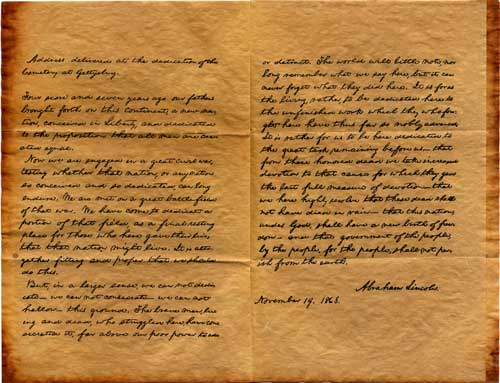
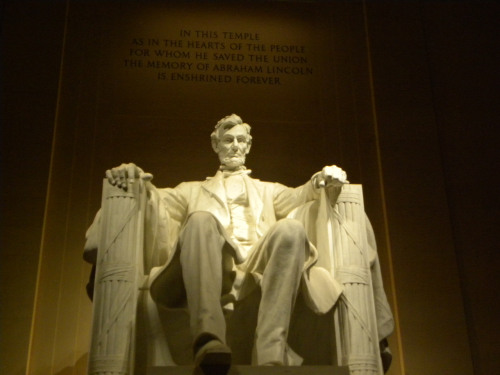
Abraham Lincoln eloquently noted about those soldiers who fought to turn back the Confederate tide at Gettysburg in his Gettysburg Address:

“But, in a larger sense, we can not dedicate — we can not consecrate — we can not hallow — this ground. The brave men, living and dead, who struggled here, have consecrated it, far above our poor power to add or detract. The world will little note, nor long remember what we say here, but it can never forget what they did here. It is for us the living, rather, to be dedicated here to the unfinished work which they who fought here have thus far so nobly advanced. It is rather for us to be here dedicated to the great task remaining before us — that from these honored dead we take increased devotion to that cause for which they gave the last full measure of devotion — that we here highly resolve that these dead shall not have died in vain — that this nation, under God, shall have a new birth of freedom — and that government of the people, by the people, for the people, shall not perish from the earth.”

While I am an idealist I am also a pragmatist. I respect the right of others, even those that disagree with things that I very much believe in and support. Like it or not the keystone of our governmental system is one of compromise. That being said having relatives that fought on both sides of the American Civil War that I am not a sectionalist. Nor am I a person that attempts to use the political system to ensure that others have to follow my religious beliefs or to enrich certain groups. The democracy that is part of our republic’s system of government is not a perfect system by any means. In fact as the great English Prime Minister Winston Churchill noted “democracy was the worst form of government except for all the others.”

Thus I appreciate military men who maintain their oath to the nation in times of great conflict not abandoning it to support causes that they know are wrong because the people of their state, or interest group seek to divide that Union. Winfield Scott Hancock was one of those kind of men, as was George Meade, and John Buford, all of whom played key roles in defeating the Confederates at Gettysburg.

Hancock, who earned the title “Hancock the Superb” was the commander of the Union II Corps at Gettysburg. Upon the death of John Reynolds early on the first day of battle Hancock was appointed by Meade as commander of the Federal Left Wing, in effect becoming Meade’s deputy commander for the rest of the battle. He was seriously wounded as Pickett’s Charge came to its bloody end at “the Angle” and his dear friend Confederate General Lewis Armistead lay mortally wounded a few hundred yards away.

Hancock is an interesting character. He was from Pennsylvania but was a Democrat. He was not a Republican like Lincoln. Hancock was not a political ideologue but was since he was a Democrat he was suspect by some in the party establishments of both parties and never was given independent command.

Hancock gave his advice to Armistead and others who were preparing to leave the Union in early 1861 including Armistead and his commanding officer Brigadier General Albert Sidney Johnston. He made himself clear:

“I shall not fight upon the principle of state-rights, but for the Union, whole and undivided.” 

During the war he served with distinction and Ulysses Grant wrote of him:

“Hancock stands the most conspicuous figure of all the general officers who did not exercise a separate command. He commanded a corps longer than any other one, and his name was never mentioned as having committed in battle a blunder for which he was responsible. He was a man of very conspicuous personal appearance…. His genial disposition made him friends, and his personal courage and his presence with his command in the thickest of the fight won for him the confidence of troops serving under him. No matter how hard the fight, the 2d corps always felt that their commander was looking after them.”

After the war he supervised the execution of those convicted of the assassination of Abraham Lincoln and in various postings in the occupied South attempted to mitigate some of the actions of those bent on vengeance and others who tried to exploit the defeated people of the south for political or economic gain.

Hancock ran for President and lost a narrow election in 1880 to James A. Garfield. After that he returned to the Army and died at the age of 61at his headquarters of complications from diabetes.

He was praised by political opponents. Former President Rutherford B. Hayes wrote:

“if when we make up our estimate of a public man, conspicuous both as a soldier and in civil life, we are to think first and chiefly of his manhood, his integrity, his purity, his singleness of purpose, and his unselfish devotion to duty, we can truthfully say of Hancock that he was through and through pure gold.” 

Another political opponent Republican General Francis A. Walker lamented not supporting Hancock in 1880 after the great corruption that engulfed the country during “Gilded Age” of the “Robber Barons” the 1880s. Walker wrote:

“Although I did not vote for General Hancock, I am strongly disposed to believe that one of the best things the nation has lost in recent years has been the example and the influence of that chivalric, stately, and splendid gentleman in the White House. Perhaps much which both parties now recognize as having been unfortunate and mischievous during the past thirteen years would have been avoided had General Hancock been elected.”

DSCN9741

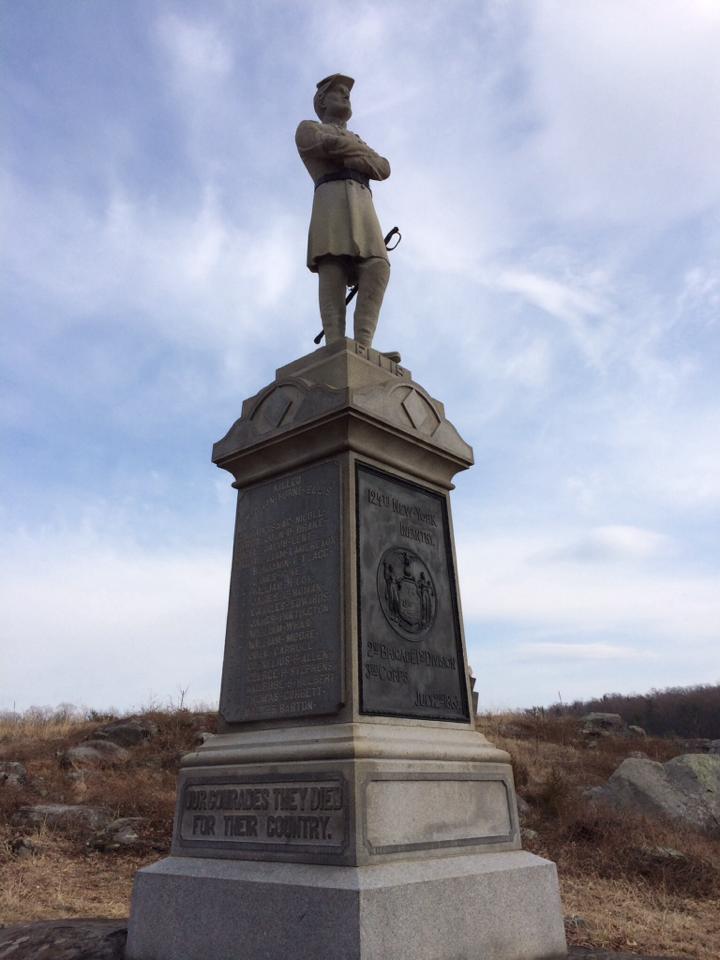
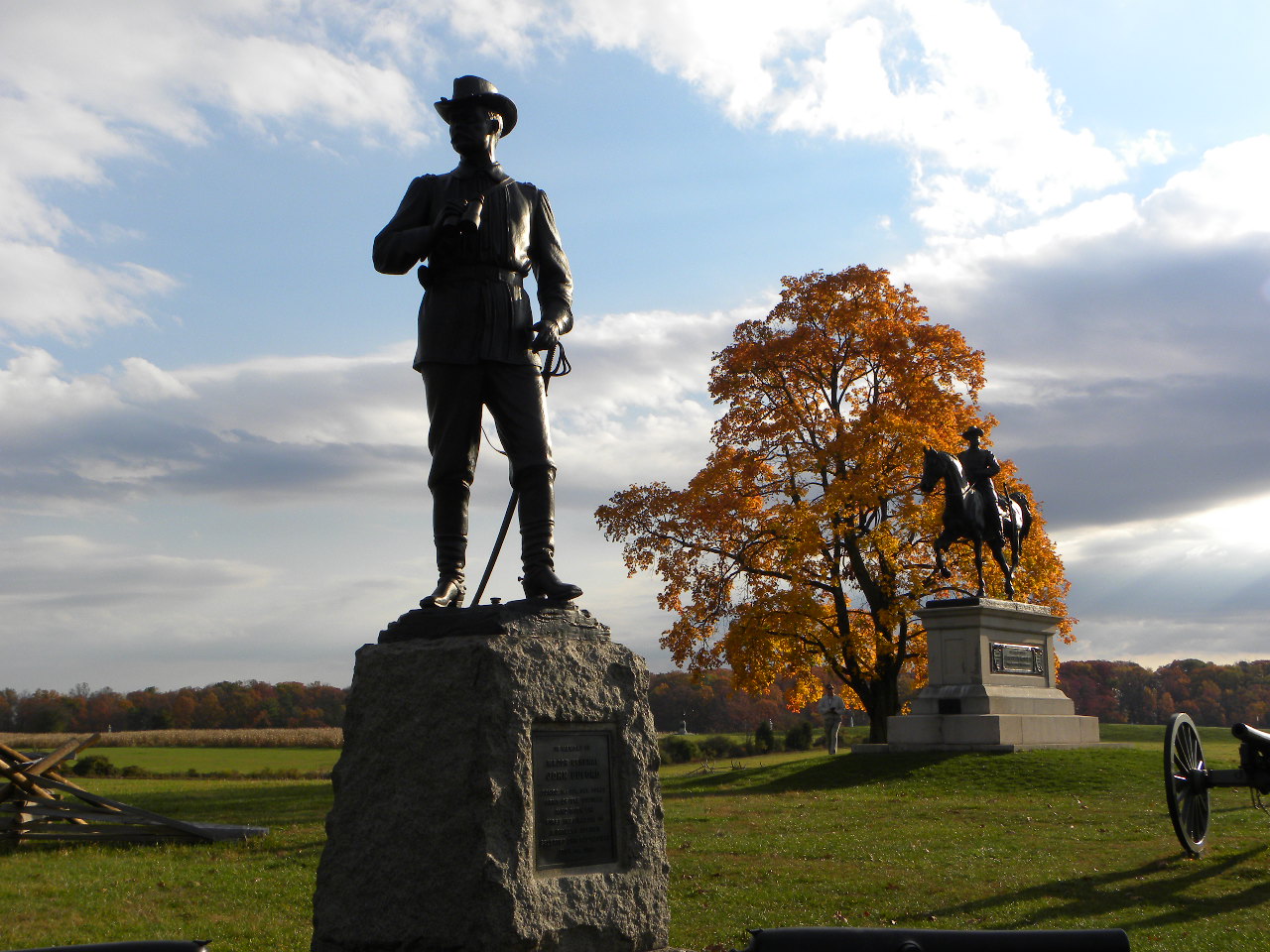
As I stood at the statue that marks Hancock on Cemetery Hill this weekend I again was struck by the bravery, courage and integrity of that remarkable man.

Peace

Padre Steve+

1 Comment

Filed under civil war, History, Political Commentary

Remembering Gettysburg and the New Birth of Freedom

reynoldsmemorial

I am always humbled when I travel to Gettysburg as I did this weekend.  It is hard to believe in that now peaceful pastoral setting that over 157,000 Americans, almost 82,000 Union and 75,000 Confederate met in a three day battle. In those three days over 28,000 Confederates and 23,000 Union soldiers were killed, wounded, missing or captured. It was the greatest number of casualties inflicted in one battle on American soil in history.

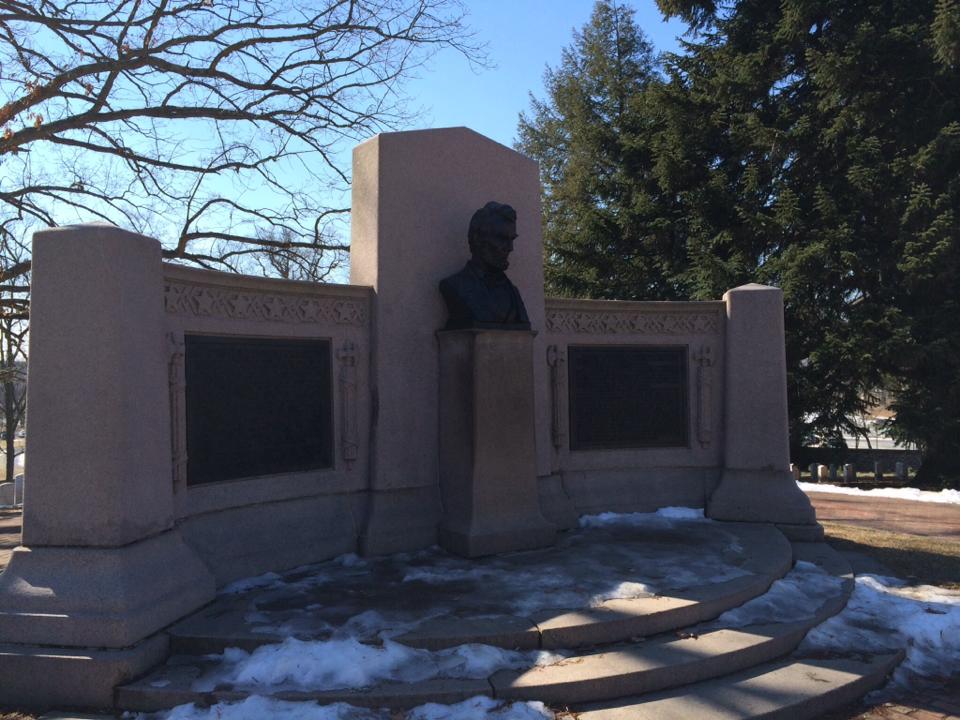
I left on Friday with students from our Staff College and returned home this evening. It was my first time leading a Staff Ride like this though I have participated in them at other battlefields and led less extensive visits to Gettysburg when I was stationed at Fort Indiantown Gap Pennsylvania in 1997-1998. I have a good group of students, Army, Navy and Air Force Officers of much experience. In addition to simply examining the battlefield and telling the story of the battle, I have been working over the past two months to build a foundation that enables them to learn the enduring and timeless lessons of leadership, command, control, communication, the linkage between national strategy objectives, the operational art, operational objectives and tactical objectives.  Unlike other visits I added a final stop at the Gettysburg Soldiers’ Cemetery where President Abraham Lincoln delivered the Gettysburg Address.

irishbrigadememorial

The places that the battle was fought have become legendary, for they are “hallowed ground” as Lincoln so eloquently put it. The places, McPherson’s and Herr’s Ridge, Seminary Ridge, the Railroad Cut, Barlow’s Knoll, Cemetery Hill, Culp’s Hill, The Wheat Field, Devil’s Den, the Peach Orchard, Little Round Top, Cemetery Ridge, the Apse of Trees, the Angle and the High Water Mark are in a sense holy, or hallowed. They were consecrated by those who struggled there, those who lived and those who gave the last full measure of devotion to their country.

I think about those men of both sides and how they came to serve. In 1863 the majority of those who fought were volunteers. Some were motivated by their convictions, fully convinced of the rightness of their cause. Other went to war with mixed feelings. Some fought for family, or their homes, or because they felt that they could do no otherwise, and some even fought against the cause that their families or states believed in.

devilsden

But no matter what their reason for going to war they  That being said when I go there though my family predominantly fought for the Confederacy my heart is drawn to those men who remained loyal to the Union and those who answered the call of Abraham Lincoln to serve in a cause greater than their own interests, the great and the small alike.

highwatermark

Lincoln was a masterful orator who managed to rally the Union and bring hundreds of thousands of men volunteer before Gettysburg. They came for an ideal an ideal which Lincoln’s oratory was probably the most effective at articulating in a way that men would volunteer to suffer hardship, fight and die to bring about. It was well put in the movie Gettysburg where Colonel Joshua Chamberlain said:

“This is a different kind of army. If you look at history you’ll see men fight for pay, or women, or some other kind of loot. They fight for land, or because a king makes them, or just because they like killing. But we’re here for something new. This has not happened much, in the history of the world: We are an army out to set other men free. America should be free ground, all of it, from here to the Pacific Ocean. No man has to bow, no man born to royalty. Here we judge you by what you do, not by who your father was. Here you can be something. Here is the place to build a home. But it’s not the land. There’s always more land. It’s the idea that we all have value, you and me. What we’re fighting for, in the end… we’re fighting for each other…”

joshua_l-1._chamberlain_at_little_round_top

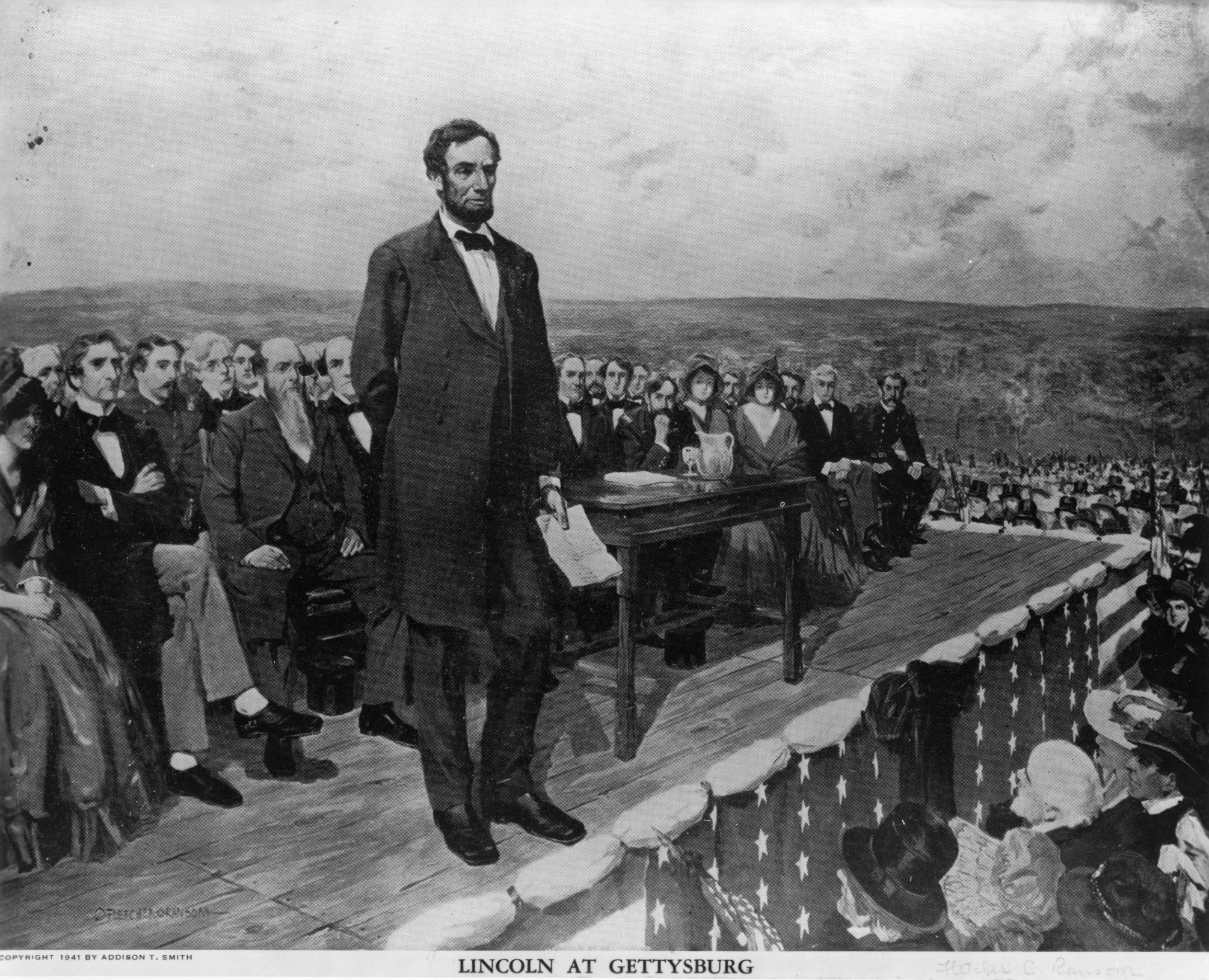
On November 19th 1863 Lincoln delivered a “few words” at Gettysburg which were in all practical aspects a benediction at the dedication of the battlefield cemetery. Lincoln was the second speaker at the ceremony following former Pennsylvania Congressman Edward Everett who spoke for more than two hours, a typical speech from the period. The 270 words of Lincoln’s address are perhaps the most important of any speech or document in American history save the Declaration of Independence and the Constitution of the United States.

The speech was so powerful that Everett wrote Lincoln the next day:

“Permit me also to express my great admiration of the thoughts expressed by you, with such eloquent simplicity & appropriateness, at the consecration of the Cemetery. I should be glad, if I could flatter myself that I came as near to the central idea of the occasion, in two hours, as you did in two minutes.”

gburgaddressmemorial

The speech is short, but it’s eloquence is unmatched. Lincoln wrapped ideas, concepts and ideals that men have written volumes about into a speech so powerful that many have memorized it.

But few realize the context that it must be placed. Though the Union had defeated Lee’s Army at Gettysburg and Grant had taken Vicksburg to cut the Confederacy in half the North was growing war weary. There were those in the North, the Copperheads who were willing even after Gettysburg and Vicksburg to end the war on terms favorable to the Confederacy, even granting Confederate independence and the continuation of slavery. Likewise Lincoln was sick when he delivered the address having what was mostly likely a mild form of Smallpox when he gave the address. Thus the tenor, simplicity and depth are even more remarkable. It is a speech given in the manner of Winston Churchill’s “Blood sweat toil and tears” address to Parliament upon being appoint Prime Minister in 1940.

In a time where many are wearied by the foibles and follies of our politicians, even wondering about our form of government can survive Lincoln’s words matter. Dr Allen Guelzo, Professor of Civil War Studies at Gettysburg College wrote in the New York Times on the 150th anniversary of the Address:

“The genius of the address thus lay not in its language or in its brevity (virtues though these were), but in the new birth it gave to those who had become discouraged and wearied by democracy’s follies, and in the reminder that democracy’s survival rested ultimately in the hands of citizens who saw something in democracy worth dying for. We could use that reminder again today.”

GAFac1

Dr Guelzo is quite correct. Many people in this country and around the world are having grave doubts about our democracy. I wonder myself, but I am an optimist. I do believe that we will recover because for the life of me I see no nation anywhere else with our resiliency and ability to overcome the stupidity of politicians, pundits and preachers.
The amazing thing was that in spite of everything the Union survived. Lincoln was a big part of that but it was the men who left lives of comfort and security like Joshua Chamberlain and so many others who brought about that victory.

Gettysburg Address

Throughout the war, even to the end Southern political leaders failed to understand that Union men would fight and die for an ideal, something greater than themselves, the preservation of the Union and the freedom of an enslaved race. For those that volunteered it was not about personal gain, loot or land,it was about something greater. It was about freedom.
Now I for one do not think that we are currently living up to the ideals enunciated by Lincoln that day at Gettysburg. I can understand the cynicism disillusionment of Americans as well as those who have for over 200 years looked to us and our system as a “city set on a hill.” That being said, when I read these words and walk that hallowed  ground I am again a believer that we can realize the ideal.

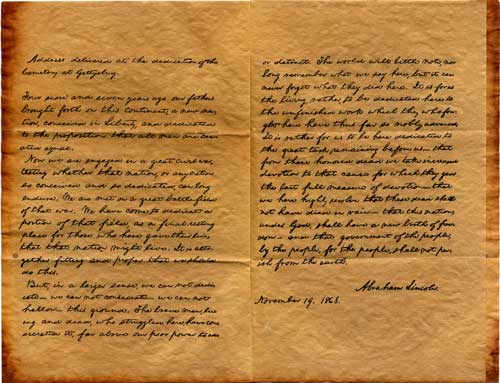
Four score and seven years ago our fathers brought forth on this continent, a new nation, conceived in Liberty, and dedicated to the proposition that all men are created equal.

Now we are engaged in a great civil war, testing whether that nation, or any nation so conceived and so dedicated, can long endure. We are met on a great battle-field of that war. We have come to dedicate a portion of that field, as a final resting place for those who here gave their lives that that nation might live. It is altogether fitting and proper that we should do this.

But, in a larger sense, we can not dedicate — we can not consecrate — we can not hallow — this ground. The brave men, living and dead, who struggled here, have consecrated it, far above our poor power to add or detract. The world will little note, nor long remember what we say here, but it can never forget what they did here. It is for us the living, rather, to be dedicated here to the unfinished work which they who fought here have thus far so nobly advanced. It is rather for us to be here dedicated to the great task remaining before us — that from these honored dead we take increased devotion to that cause for which they gave the last full measure of devotion — that we here highly resolve that these dead shall not have died in vain — that this nation, under God, shall have a new birth of freedom — and that government of the people, by the people, for the people, shall not perish from the earth.

In the hope that we again realize those ideals and help bring about “a new birth of freedom,” I wish you a good night.
Peace

Padre Steve+

Leave a comment

Filed under civil war, History, leadership, Political Commentary

A New Birth of Freedom: The Gettysburg Address at 150

mkholrt

I am always humbled when I travel to Gettysburg as I did just two weeks ago. It is hard to believe in that now peaceful pastoral setting that over 157,000 Americans, almost 82,000 Union and 75,000 Confederate met in a three day battle. In those three days over 28,000 Confederates and 23,000 Union soldiers were killed, wounded, missing or captured. It was the greatest number of casualties inflicted in one battle on American soil in history.

The places that the battle was fought have become legendary, for they are “hallowed ground” as President Abraham Lincoln so eloquently put it. The places, McPherson’s and Herr’s Ridge, Seminary Ridge, the Railroad Cut, Barlow’s Knoll, Cemetery Hill, Culp’s Hill, The Wheat Field, Devil’s Den, the Peach Orchard, Little Round Top, Cemetery Ridge, the Apse of Trees, the Angle and the High Water Mark are in a sense holy, or hallowed, consecrated by those who struggled there, those who lived and those who gave the last full measure of devotion to their country.

gal9vfvf1

I think about those men of both sides, fully convinced of the rightness of their cause who fought valiantly in the struggle. That being said when I go there though my family predominantly fought for the Confederacy my heart is drawn to those men who remained loyal to the Union and those who answered the call of Abraham Lincoln to serve in a cause greater than their own interests, the great and the small alike.

DSCN8774

Lincoln was a masterful orator who managed to rally the Union and bring hundreds of thousands of men volunteer before Gettysburg. They came for an ideal an ideal which Lincoln’s oratory was probably the most effective at articulating in a way that men would volunteer to suffer hardship, fight and die to bring about. It was well put in the movie Gettysburg where Colonel Joshua Chamberlain said:

“This is a different kind of army. If you look at history you’ll see men fight for pay, or women, or some other kind of loot. They fight for land, or because a king makes them, or just because they like killing. But we’re here for something new. This has not happened much, in the history of the world: We are an army out to set other men free. America should be free ground, all of it, from here to the Pacific Ocean. No man has to bow, no man born to royalty. Here we judge you by what you do, not by who your father was. Here you can be something. Here is the place to build a home. But it’s not the land. There’s always more land. It’s the idea that we all have value, you and me. What we’re fighting for, in the end… we’re fighting for each other…”

images-61

On November 19th 1863 Lincoln delivered a “few words” at Gettysburg which were in all practical aspects a benediction at the dedication of the battlefield cemetery. Lincoln was the second speaker at the ceremony following former Pennsylvania Congressman Edward Everett who spoke for more than two hours, a typical speech from the period. The 270 words of Lincoln’s address are perhaps the most important of any speech or document in American history save the Declaration of Independence and the Constitution of the United States.

The speech was so powerful that Everett wrote Lincoln the next day:

“Permit me also to express my great admiration of the thoughts expressed by you, with such eloquent simplicity & appropriateness, at the consecration of the Cemetery. I should be glad, if I could flatter myself that I came as near to the central idea of the occasion, in two hours, as you did in two minutes.”

The speech is short, but it’s eloquence is unmatched. Lincoln wrapped ideas, concepts and ideals that men have written volumes about into a speech so powerful that many have memorized it.

18640903.nashcartoon

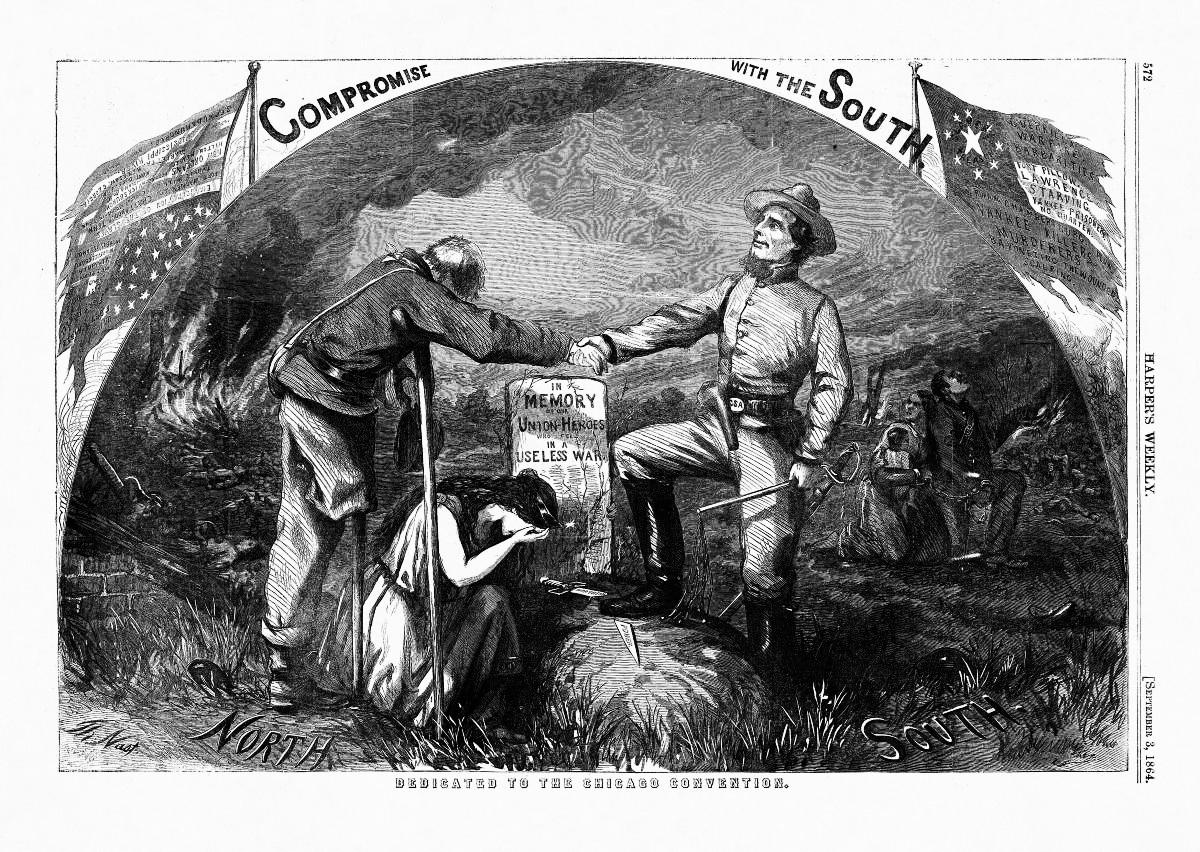
But few realize the context that it must be placed. Though the Union had defeated Lee’s Army at Gettysburg and Grant had taken Vicksburg to cut the Confederacy in half the North was groining war weary. There were those in the North, the Copperheads who were willing even after Gettysburg and Vicksburg to end the war on terms favorable to the Confederacy, even granting Confederate independence and the continuation of slavery. Likewise Lincoln was sick when he delivered the address having what was mostly likely a mild form of Smallpox when he gave the address. Thus the tenor, simplicity and depth are even more remarkable. It is a speech given in the manner of Winston Churchill’s “Blood sweat toil and tears” address to Parliament upon being appoint Prime Minister in 1940.

cropped-dscn88191.jpg

In a time where many are wearied by the foibles and follies of our politicians, even wondering about our form of government can survive Lincoln’s words matter. Dr Allen Guelzo, Professor of Civil War Studies at Gettysburg College wrote in the New York Times today:

“The genius of the address thus lay not in its language or in its brevity (virtues though these were), but in the new birth it gave to those who had become discouraged and wearied by democracy’s follies, and in the reminder that democracy’s survival rested ultimately in the hands of citizens who saw something in democracy worth dying for. We could use that reminder again today.”

Dr Guelzo is quite correct. Many people in this country and around the world are having grave doubts about our democracy. I wonder myself, but I am an optimist. I do believe that we will recover because for the life of me I see no nation anywhere else with our resiliency and ability to overcome the stupidity of politicians, pundits and preachers.

The amazing thing was that in spite of everything the Union survived. Lincoln was a big part of that but it was the men who left lives of comfort and security like Joshua Chamberlain and so many others who brought about that victory. Throughout the war, even to the end Southern political leaders failed to understand that Union men would fight and die for an ideal, something greater than themselves, the preservation of the Union and the freedom of an enslaved race. For those that volunteered it was not about personal gain, loot or land,it was about something greater. It was about freedom.

GAFac1

Now I for one do not think that we are currently living up to the ideals enunciated by Lincoln that day at Gettysburg. I can understand the cynicism disillusionment of Americans as well as those who have for over 200 years looked to us and our system as a “city set on a hill.” That being said, when I read these words and walk that hallowed  ground I am again a believer that we can realize the ideal.

Four score and seven years ago our fathers brought forth on this continent, a new nation, conceived in Liberty, and dedicated to the proposition that all men are created equal.

Now we are engaged in a great civil war, testing whether that nation, or any nation so conceived and so dedicated, can long endure. We are met on a great battle-field of that war. We have come to dedicate a portion of that field, as a final resting place for those who here gave their lives that that nation might live. It is altogether fitting and proper that we should do this.

But, in a larger sense, we can not dedicate — we can not consecrate — we can not hallow — this ground. The brave men, living and dead, who struggled here, have consecrated it, far above our poor power to add or detract. The world will little note, nor long remember what we say here, but it can never forget what they did here. It is for us the living, rather, to be dedicated here to the unfinished work which they who fought here have thus far so nobly advanced. It is rather for us to be here dedicated to the great task remaining before us — that from these honored dead we take increased devotion to that cause for which they gave the last full measure of devotion — that we here highly resolve that these dead shall not have died in vain — that this nation, under God, shall have a new birth of freedom — and that government of the people, by the people, for the people, shall not perish from the earth.

dscn0061

In the hope that we again realize those ideals and help bring about “a new birth of freedom,” I wish you a good night.

Peace

Padre Steve+

Leave a comment

Filed under civil war, History, leadership, Political Commentary

All In or Stay the Hell Out: Syria, the United States NATO and the Middle East, the Guns of August All Over Again

hi-syria-gas-rtx12sc9

The Balkans aren’t worth the life of a single Pomeranian grenadier.”  Otto Von Bismarck

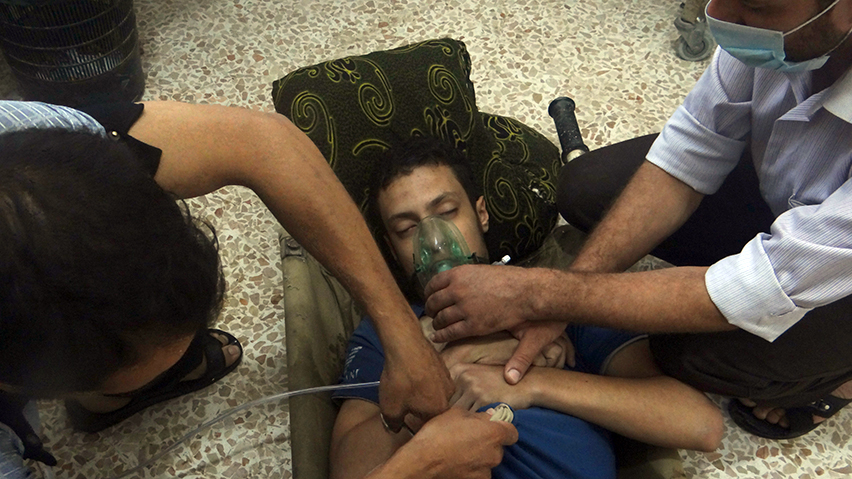
The terrible civil war in Syria appears to be reaching its crescendo as someone, probably the Assad Regime or its allies, or possibly the Syrian rebels are using Chemical weapons to kill non-combatants and rebel combatants. The evidence that the weapons have been used is apparently convincing enough for the UN to send in inspectors and for the US Secretary of State John Kerry to state that it is certain that they have been used.

Now NATO allies as well as representatives of Jordan and the Gulf States are meeting to decide what to do in response. Since most experts believe that the Assad regime is culpable for these attacks the belief is that the United Sates, NATO and the Arab Allies could be preparing for some kind of attack Syria. The Russians, long time supporters of Syria are pushing back against this and the Syrians are promising that any attack will result in a war that envelopes the region.

Chaos-in-Syria

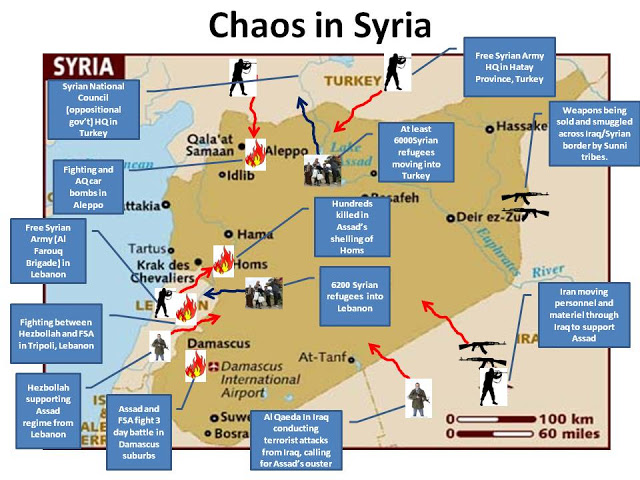
What is happening in Syria is a tragedy and must be stopped. War crimes have certainly been committed by all sides in Syria and the direct involvement of Hezbollah and Iran on the side of the Assad regime and Al Qaeda affiliates on the side of the rebels complicate any response. However, that being said the question must be asked “just whose responsibility is to stop it?”

Some say the United States and NATO, others the Arab League while others the various factions of Syrians themselves.

My heart cries out for intervention in Syria if for nothing else but on humanitarian grounds. But the fact is intervention in Syria has to be much more thought out and organized than intervention that we have conducted since the fall of the Berlin Wall. It will not be a cake walk and quite likely will lead to consequences far worse than the average citizen or boneheaded Congressman has never given a cogent thought.

Syria is an incredibly complicated country. It is multi-ethnic and multi-religion. Arabs, Kurds, Druze and others live in patchwork communities and regions even as various sects of Sunni, Shia, Sufi and Salafist Moslems vie for power while the divided Christian minority , Catholics, Orthodox, Anglicans and others hope to live and remain in their own country.

As far as others in the Region besides Iran and Hezbollah, various Sunni and Shia Iraqi insurgents have crossed over into Syria, while Israel teeters on the bring of being drawn in to the conflagration.

No matter what happens there will be no winners in what is happening in Syria. There is a high probability that the Syrian civil war will overflow the borders of that unfortunate country and drag the region and possibly major world powers into the war. If that happens there are no winners, only losers. The biggest question is who will be the biggest loser?

That being said even tonight there are reports of military movements in the region even as NATO and Arab coalition partners gather to discuss a response. I am resigned to the fact that the Syrian Civil war will overflow Syria’s borders and draw in the powers of many countries. Just who I am not exactly sure at this time. In the US there is a marked tepid feeling among voters about getting involved. That may be a good thing. It may temper our response and make us deliberate the consequences of military action or inaction.

Bertrand Russell once said that “War does not determine who is right – only who is left.” I wonder if anyone in any of the nations currently involved or possibly that might be engaged in the war actually things about what Russell said.

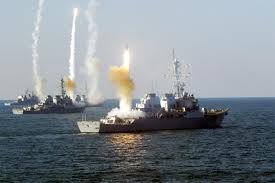
The fact is that what is going on in Syria is the proverbial “Tar Baby.” There is no clean easy solution to the situation. Lobbing in a few hundred cruise missiles and launching airstrikes in support of the rebels is unlikely to have a profound strategic affect. Instead, unless NATO and its allies are willing to risk an actual ground war after the missile and air strikes then the fact of the matter is that those strikes will have little long term effect. If a ground invasion happens it will be bloody and not the cake walk that so many in Western Governments, media and populations that rely on a very small number of military professionals to fight their wars think it will be.

If by some chance the United States and its allies get drawn into the Syrian Civil War than all of them had better think of what the consequences of that involvement will be, for the region, the world and our own countries. The fact is that a major war in Syria will drag the rest of the region into it. This is not 2003 Iraq or 2011 Libya. The fact is that Syria is heavily splintered into various regional, ethnic and religious groups, most who have lived among each other for millennia and most of whom hate each other.

I cannot speak for other governments around the region and the world, allied to the United States or not. However I do know that our Constitution has in it the formula of who should committed the country to war and that, despite our recent history is not the President by his executive authority Commander in Chief but by Congress after due deliberation and a vote to declare war.

My thoughts are that if we in the United States are serious about this, that we believe that Syria and Assad need to be taken down then fine. Let us call Congress back to Washington now and have them debate the issue. If they vote for war then they need to do two things, the first is that Congress needs to be called away from its vacation and get to work debating the issue. If the President backed by a declaration of war from Congress and a repeal of the sequester that is gutting the country and the military.

If they cannot do this then let’s stop the bullshit and tell the work that the situation in Syria is terrible but the consequences of going to war without either an end in mind or analysis of the costs involved is criminal. Bismarck said it well in regard to the Balkans and his comments should be taken to heart by the United States and its allies.

The situation in Syria cries out for action, but that action must be action that helps the people of Syria, the region and the world and is not just an action to salve our collective consciousness and say that we did something. Simply throwing some cruise missiles at Syria accomplishes nothing unless there is a plan of what we intend to see happen. William Tecumseh Sherman said: “It is only those who have neither fired a shot nor heard the shrieks and groans of the wounded who cry aloud for blood, more vengeance, more desolation. War is hell.”

My thoughts on this are to make going to war difficult. If the President and his cabinet determines that they believe in consultations with our allies that war is the last and best of the worst case options, the Congress needs to cut short its vacation. Republican and Democrat leaders need to gather and a decision has to be made. If we go to war it can no longer be done under the very loose and terribly vague rules of the War Powers Act because any attack on Syria will certainly escalate beyond a short term military strike done “on the cheap.”

There is no cheap or easy to Syria. If military action is the only way to solve the problem then Congress must convene, make a formal declaration of war and also repeal sequestration. A war in Syria will be costly in blood and treasure and will likely pull in many other countries. The human costs in the region, not just Syria will be beyond imagination while the costs to the world economy will be severe and quite possibly push the world into another recession or possibly depression.

The military power alone of the United States has been used far too many times as our governments under successive Republican and Democrat leadership have opted not to use the full measure of our diplomatic, intelligence, military and economic power to solve problems. Instead we fall back to the easiest and most ready means to satiate our need for a quick solution to complex problems, the military option. Military power alone, especially if it is incapable of ending the conflict and bringing a just peace is not an answer in Syria.

Syria03_GQ_07Dec12_getty_b_642x390

The fact is that we Americans do not know the world nor do we understand it. Americans have become simple and lazy when it comes to dealing with complex issues. We deal in sound bites and tweets, the more fiery the better even as we stick our heads in the sand as to what is happening in the world. Ask how many people are more interested in the beginning of the College and Pro-Football seasons in the next couple of weeks versus those interested in really important issues of war and peace and you will get your answer on our priorities as Americans. We have no sense of history and are quite ignorant of the world around us and the political, cultural, religious, philosophical, ideological and economic factors that make up our world so our first response is almost always the sword.

If the President and Congress feel that it is absolutely necessary to go to war over the atrocities being committed in Syria let them make that decision, but only after considerable debate, consultations with allies, the United Nations and the Arab League followed by a vote on an actual declaration of war, the repeal of sequestration and a major stimulus to prevent the economy from tanking when the cost of oil goes through the roof and cripples the world economy.

Winston Churchill cautioned leaders “Never, never, never believe any war will be smooth and easy, or that anyone who embarks on the strange voyage can measure the tides and hurricanes he will encounter. The statesman who yields to war fever must realize that once the signal is given, he is no longer the master of policy but the slave of unforeseeable and uncontrollable events.” 

images-56

To paraphrase Bismarck, Syria is not worth the life of one American or Allied Soldier unless our governments are willing to do it right. All in or stay the hell out and don’t go in without counting the real and the potential costs.

Peace

Padre Steve+

2 Comments

Filed under middle east, Military, national security, Political Commentary

The 9-11 Generation: The Few

“We few, we happy few, we band of brothers….”

Winston Churchill referred to the Royal Air Force’s heroism in the Battle of Britain.  He remarked “Never in the field of human conflict was so much owed by so many to so few.”  By comparison with that tiny force the American military is massive. However in comparison with the missions that it has been given since September 11th 2001 and its size relative to the population of the United States it is a small force; a force that much more has been asked than anyone could have imagined on that terrible day.

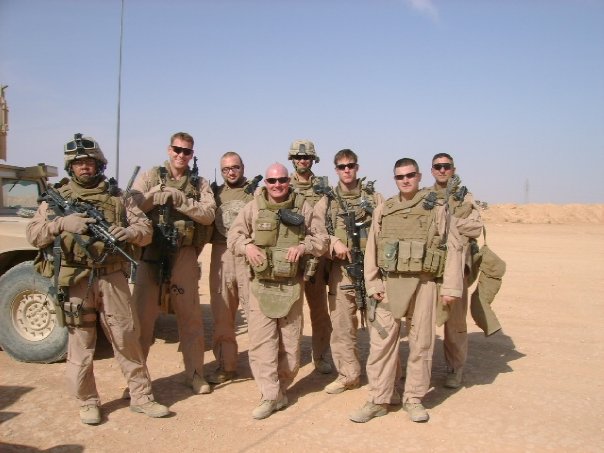
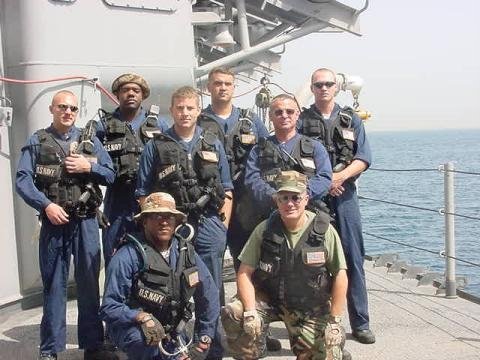
Since the attacks of September 11th 2001 over 2.8 million young Americans have volunteered to serve in the nations military.  Since that fateful day some 5.5 million Americans have served in all branches of the military both active and reserve, many like me were on active duty that fateful morning. Today about 2.2 million serve in the various components of the military, just 1.4 million on active duty out of a total estimated population of 120 million men and women aged 18-49 fit to serve.

That makes the accomplishments of those that have served so much greater.  Never before has our country asked so much for such a long period of time from such a miniscule segment of the population.  Every single Soldier, Sailor, Marine, Airman and Coastguardsman that currently serve volunteered in a time of war to either join or extend their service in the military. Over 2.3 million have served in Iraq or Afghanistan with many more that have served in the Middle East and other regions supporting those wars as well as other anti-terrorist operations around the world.  While we have been committed to wars that may not be “winnable” we have accomplished so much and exacted revenge upon Osama Bin Laden and many of those who planned and perpetrated the attacks of 9-11-2001.

Many were children some as young as 8 years old when the attacks took place who have grown up in the years following the attack.  Others pressed the upper age limits to enlist many seeking age waivers to do so.  The vast majority of the men and women who enlisted because they felt it was their duty, not for money, not for glory.  They came from every State, District and Territory where Old Glory flies as a symbol of freedom.  The represent every race, creed and political party, and come from what the media like to call the “Red States and the Blue States” only for them it is not a question of “Red or Blue” but “Red White and Blue.”  Others have come to the United Statesfrom other nations because they felt that there was something great and noble about this nation and our ideals.

Some would wrongly call this military and those that serve in it a mercenary force, but no it is not and they are professionals that serve our country in time of war.  Mercenaries simply sign on for the money and fight for any regime that will employ them.  We are not mercenaries.

Over the course of this war some of those ideals have faded and of those that go back time and time again do it often because they do not want to abandon their friends or see their sacrifices wasted.  The war has taken and continues to take a toll on this small segment of America.  Over 6200 have died in action and over 45200 wounded, 77 wounded just today September 11th 2011 in Afghanistan.  The numbers do not count the large numbers suffering from PTSD or other combat stress related injuries nor does it count those that have died by suicide following deployment.

Among the many speeches today I was most taken with that of Vice President Joe Biden. The Vice President talked about this generation in a speech today at the Pentagon. The speech was one of the most moving that I have heard about our military in a long time.  It made me even more proud of all that I serve alongside.  I have excepted this passage:

“Many of them were just kids on that bright September morning. But like their grandparents after December 7, 1941, they courageously bore the burden that history placed on their shoulders. And as they came of age, they showed up to fight for their country – 2,800,000 Americans of the 9/11 Generation were moved to join our military since the 9/11 attacks, to finish the war that began on 9/11. They joined knowing full well that they were likely to be deployed in harm’s way – and in many cases deployed multiple times in Afghanistan, Iraq and in other parts of the world….

Over a decade at war, they pioneered new tactics, mastered new languages, developed and employed advanced new technologies. They took on responsibilities once reserved only for those with years of seniority- responsibilities that extended far beyond the base or the battlefield to politics, economics, and development tasks….And one more thing about this generation of warriors-never before in our history has America asked so much, over such a sustained period, of an all-volunteer fighting force. So I say without doubt or exaggeration that the 9/11 generation ranks among the greatest our nation has ever produced.” (See the video or read the speech at http://foxnewsinsider.com/2011/09/11/video-and-text-vice-president-biden-speaks-at-the-pentagon-reflects-on-the-courage-of-the-911-victims-and-their-families/

I have long contended that this generation of patriots who serve in our military as well as in our Federal police and intelligence services are a “new greatest generation.”  All of us have served to defend this country many making multiple deployments to combat zones.  I have made just two combat deployments and feel that I have not done enough, especially compared to those that have done far more of these deployments.  However I would guess that I will get at least one more in before my long career is done.

All Americans and millions of people around the world owe so much to these men and women as well as those from other nations that stand together with us.  For us it is not just remembering that terrible day that changed the world, but to give ourselves to serve and hopefully keep this from happening again.

Always remember9-11-2001, never forget that day or those that died at the hallowed grounds of the World Trade Center, the Pentagon and that lonely field outside Shanksville Pennsylvania.   But please never forget those that continue to give the last full measure of devotion, the 9-11 Generation.

Peace

Padre Steve+

2 Comments

Filed under History, Military, traumatic national events

What if Hitler was assassinated in 1943? An Alternative History of Kursk and the End of World War II in Europe

This is an alternative history of how the Germans might have avoided the disaster at Kursk. It looks at what might have happened if an actual assassination attempt on Hitler had succeeded in March 1943 and how Manstein might have been able to execute the “backhand” strategy that he favored using a mobile defense.  This is predicated by Hitler’s death, based on Hitler’s actions and control of operational decisions Manstein would never have been allowed the freedom to conduct operations in this manner.  In eliminating Hitler I have also included personnel changes and the overall strategy for the German High Command, and the probable response of Stalin to Hitler’s death had it occurred in the spring of 1943. I have tried to be faithful to known historical opinions and actions of the participants and likely reactions to such a situation although one cannot predict precisely what people would have done.  Thus I have documented the article with footnotes as if it were an actual history. It would have been interesting to be able to lengthen this and included sections on tactical actions based on memoirs of German and Russian soldiers. I wrote it as at the behest of one of my Master’s Degree Professors and first published it in August of 2009 on this site under the title of Operation “Dachs” My First Foray into the Genre “Alternative History.” I believe that history is history and this despite what the term “alternative history” implies is fiction.  Though it is based on my belief of how German leaders might have reacted in the spring of 1943 and references actual events that I have altered for the sake of the story it is not history. But one has to wonder what would have happened had the plot to kill Hitler by blowing up his aircraft on its return to Germany from a conference with the commanders of Army Group Center succeeded.


Background: The Strategic Situation Spring 1943

In April 1943 the German High Command faced a decision on which the fate of Nazi Germany would hinge, but for the first time in the war it was not under the thumb of Adolf Hitler. Following Manstein’s counter-stroke following the Stalingrad disaster there was considerable pressure to follow up with that success with a continued offensive. Manstein himself had proposed this but Field Marshal Von Kluge refused to agree to an immediate offensive because he felt his troops needed rest and refitting.
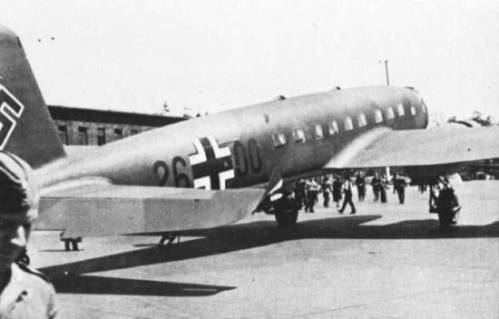
Hitler’s Fw-200 “Condor” before its fatal flight

On March 13th Hitler flew out to meet with Von Kluge at Army Group Center HQ at Smolensk.  On the flight back Hitler’s FW-200 was racked by an explosion crash landing near Minsk, taken down by a bomb planted on the plane by Colonel Henning Von Trescow of Kluge’s staff.[i] While Hitler survived, he remained in critical condition, barely alive at a SS hospital until his death on 20 April 1943, his 54th birthday. The crash landing was reported by the escorting ME-109s of JG-53, and a Alarm Company from a Security Division at Minsk rescued Hitler but were driven off the crash site by a large force of Soviet Partisans who destroyed the aircraft and any evidence to the cause which the escorting fighters attributed to mechanical problems. 

There were no other survivors. Von Kluge, expecting to be implicated the Fuhrer’s death committed suicide after visiting troops on the front line, and was succeeded at Army Group Center by Field Marshal Model the commander of 9th Army. The other conspirators were frozen into inaction when Hitler survived the crash and made no attempt to take over the government, realizing that “our plans for seizing power in Berlin and other large cities were still not adequate to the task.”[ii] In the absence of Hitler Reichsmarschall Goering, Hitler’s designated successor, took action to secure his power and using contacts in the GESTAPO accused Himmler of treason for making contact with Neutral intermediaries in Sweden[iii] and replaced him with SS General Kurt Wolfe, and reappointed Rudolf Diels, the former head of the GESTAPO when it was still under his control[iv], to head it again.  Himmler attempted to flee and was caught near Luneburg when he committed suicide with a cyanide capsule before he could be interrogated. Other potential rivals were eliminated; Martin Bormann, who Goering hated, was arrested on charges of exceeding his authority, embezzlement, and harming the war effort and was executed.[v] Joseph Goebbels swore his loyalty to Goering even before Hitler’s death.  He and Albert Speer were directed to arrange the state funeral for the late Fuhrer. Berlin Radio announced the Fuhrer’s death on the 21 April, Hitler’s body was prepared and lay in state at the Chancellery.   A period of mourning was declared 21 April to 1 May on which the State Funeral took place. On 2 May Goering announced that Field Marshal Von Rundstedt was the new Chief of OKW and would coordinate strategy on all fronts. The next day Goering called together a meeting of the heads of OKH, OKW, the Inspector General of Panzer Troops, and the commanders of the Eastern Front Army Groups, Western Europe and Africa as well as Reichsfuhrer Karl Wolff, Admiral Donitz and Field Marshal Von Richthofen[vi] representing the Luftwaffe to decide on a course of action for the summer. It was the first time that all had been called together to discuss the overall situation since Barbarossa began in 1941, and the first true attempt to formulate a grand strategy during the war.

Options and Decision: The Zossen Conference 3 May 1943[vii]
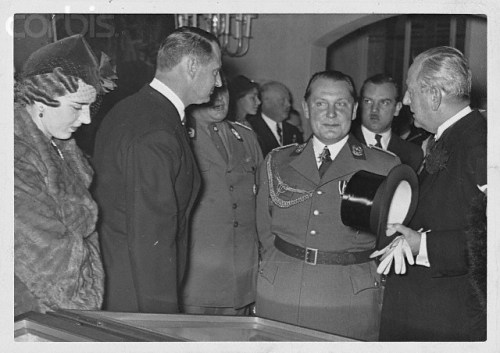
Goering meeting Diplomats following Hitler’s State Funeral

Herman Goering looked up from the maps spread out on the conference table.  He looked surprisingly fit, somehow between the crash of Hitler’s aircraft and his death he had pulled himself together and out of his drug induced malaise.  It was as if he again had a purpose. Field Marshal Von Rundstedt now Chief of OKW following Goering’s relief of Field Marshal Keitel, and General Jodl had just finished briefing the situation in western and southern Europe, following briefings by Colonel General Zeitzler of OKH, the Inspector General of Armored Troops, General Guderian and Field Marshal Von Manstein of Army Group South.  Albert Speer briefed tank and aircraft production numbers while the Chief of the Army personnel office noted the requirement for 800,000 replacements “but even the most ruthless call-up was able to produce only 400,000.”[viii] Looking from the table he spoke: “Gentlemen, the situation is critical and I have to admit that I have thought so for a number of months but have been unable to speak out.   Our political situation is perilous, the Italians are ready to abandon our cause. Our forces in North Africa will soon be unable to hold out as our Italian friends have let us down again.[ix] I expect that if Jodl and Kesselring are right about Allied intentions that we will have our hands full in the west shortly.  Kesselring and Arnim, you need to evacuate as many German soldiers from Africa as possible,[x] use all air and naval forces that you can, I know it will be difficult, especially with the heavy losses we have taken in transport aircraft and the pathetic Italian Navy.”  Goering paused, his gaze passing around the room.  “In the west we need to assume that the Allies will invade and the ‘very real danger that the enemy may turn against Brittany and Normandy,’ Field Marshal Rommel will take command of OB West to build up the Atlantic Wall in these sectors.”[xi] “Zeitzler, Manstein, we need to shore up the eastern front.”

“Herr Reichsmarschall, the Fuhrer had approved the plan called ZITADELLE, to attack the Russians here in the Kursk salient.” responded Zeitzler.[xii] “We should be ready to begin the offensive this month.”  Goering raised his hand stopping Zeitzler.  “I know, but I have considered that plan and I cannot support it. Richthofen briefed me on it prior to the Fuhrer’s death and general, we must have another plan, and an attack on Kursk is so obvious the Russians will be ready to meet it.  I have considered what the General Guderian and Minister Speer said regarding tank production and the state of the Panzer arm.  I cannot approve Zitadelle, but we must find a way to deal the Russians a defeat without squandering our strength attacking such an obvious target. Model too is dubious of the prospects; he believes that the Russians know our intentions and has requested a delay to strengthen his forces.”[xiii] “Reichsmarshall.” chimed in Jodl. “You are correct, the premature commitment of central reserves in such an offensive will not help our cause, in fact only local success is what can be expected from Zitadelle.”[xiv]
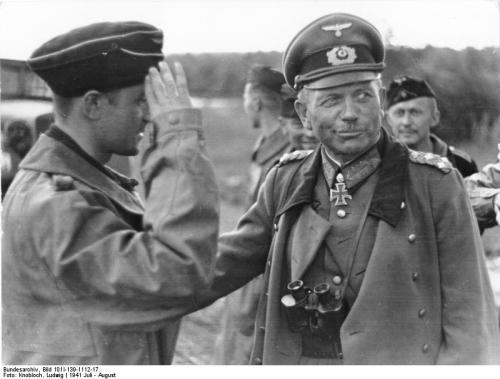
Colonel General Heinz Guderian 

“But Reichsmarshall, we must recapture the initiative in the east, we must take the offensive!” retorted Zeitzler. “Our new units of Panthers and Tigers will give us a decisive technical advantage.”[xv] Guderian now joined in. “But the Panthers still have many technical problems, it would be better to wait until they are worked out before we commit them to a major offensive, and besides, how many people do you think even know where Kursk is?”[xvi]

“Zeitzler, I appreciate your zeal.” Interrupted Goering, “But Jodl and Guderian are correct, even a successful attack at Kursk will not alter the strategic situation. We must work to stave off defeat.  Manstein has a plan that may help, there is some risk, but I see no other way. An offensive at Kursk would require tanks and aircraft that must be used to combat the Allied bombing of the Reich and to safeguard withdraw of our units from Africa, it would force us to commit everything with little gain.” Goering paused and said to Manstein, “Go ahead Manstein.”

“Reichsmarshall, Gentlemen.  Our situation in the east is not hopeless, in March I felt that an immediate offensive would succeed in pinching off the Kursk bulge, but I think now that the moment of opportunity has passed for such an attack.  Instead we should fight a defensive battle of maneuver as called for byTruppenführung that we have developed from the days of the Reichswehr.  We should build up our forces; give ground where we can, and when we have the chance strike the enemy on the backhand, as we did at Kharkov.”[xvii]

Zeitzler jumped in. “But how can we do that? If we don’t strike now while we have the opportunity the Russians will grow stronger, and how can we know where they will strike?”[xviii]

“General Zeitzler, the Russians are already building up heavy armored forces in the area of Kursk, and diverting forces from other sectors of the front to that area.  The south offers them the best opportunity to finish what they started in the winter.  They will come and it will be in the south, they will want Kharkov and they will again attempt to envelop our forces in the south. If they succeed they will follow up and rapidly move into the Balkans, Romania and Hungary will turn on us and it will be a disaster, we cannot afford that.”  Manstein looked up, Jodl nodded and Model said “Once that is done they will push to Kiev and Poland.” Goering interjected “Thank you Model, you are right, Field Marshal Manstein; please go on with your plan.”

Field Marshal Erich Von Manstein at the Front

Motioning to the map Manstein continued. “We will concentrate the majority of our Panzer forces here, just west of Kharkov and another group here west of Orel.  We will also build fall back positions for our infantry forces here along the Dnieper.  We should be ready to withdraw from the Crimea should the need arise, we cannot afford another encirclement.  When the Russians attack we will give ground, even Kharkov if needed. Our infantry divisions will fight a delaying action supported by Jagdpanzer and Sturmgeschutzen, the Luftwaffe will need to give us good close air support from Stukas and as the Russians outrun their supply depots and their offensive loses momentum we will attack, like a badger defending itself.  Our Panzers will cut off their spearheads west of Kharkov while we bleed them dry in the north; we will then roll them up, stabilize the line and prepare for the winter.”  Manstein sounded confident; those in the room began to sense that his plan could work.  Rundstedt spoke up: “That will give us the chance to transfer forces to other fronts and, maybe, since Hitler is dead there might be a chance for Reichsmarschall to negotiate a settlement,[xix] otherwise gentlemen the Allies will destroy our cities from the air and grind our armies down until we have no recourse but surrender.”

“Right” added Goering, making eye contact with each man in the room. “We must have success in the defense, we must buy time and we must work to end this war before Germany is destroyed. ‘We will have reason to be glad if Germany can keep the boundaries of 1933 after the war.”[xx] He paused and said “General Zeitzler, you are relieved of your duties at OKH, General Guderian, you are now the Chief of OKH.[xxi] Manstein, you will command the East, General Hoth will take your Army Group. You will work with Guderian and Model to flesh out this plan.  We must get the Panther, Tiger and Ferdinand units operational as soon as possible.  I believe that the Russians will attack by June. Richthofen, I need you to look to the Luftwaffe. We have not had a good year and we have to succeed in defending the Reich from Allied bombers and provide support to the ground forces. Of course flak needs to be built up. The Luftwaffe Field Divisions with the exception of the Fallschirmjaeger and Herman Goering Panzer Division need to be transferred to Army control.”  He looked at Speer: “Herr Speer, the Fuhrer entrusted you with our war production program, you must increase production of tanks and aircraft. Speed the production of the ME-262 and cancel all programs that take away from the panzers, fighters and ground support aircraft that we need now.” He put his hands on his hips and took a deep breathe. He looked at Wolfe, Himmler’s successor.  Wolff, the Reich needs the Waffen SS, the Panzer troops are exceptional, but I want all Waffen SS Formations, with including the Panzers turned over to Army control, we cannot keep dividing our resources. With the personnel from the Luftwaffe Field Divisions we should be able to provide the Army with excellent troops to rebuild experienced formations.”  Goering looked around the room; “Are there any questions Gentlemen?” Putting his arm across Manstein’s soldier and said: “I think that Badger is a fitting name for your plan. Our little Dachs will tear them to pieces.”   Later, Goering met with Foreign Ministry officials emphasizing the need to strengthen German Allies and seek peace with the west. He “admitted that he was worried about the future. ‘It’s not quite clear to me how we are going to end this war.’”[xxii] Those present could not believe how Goering had conducted himself, and all left the meeting thinking that it might be possible to stave off defeat.  It was an incredible performance. After Hitler’s crash he had secretly undergone a “systematic withdraw cure which had ended his drug addiction.”[xxiii] The change was marked.

STAVKA Headquarters Moscow: 7 May 1943

Josef Stalin was ecstatic.  His agents reported that Hitler was dead even before the announcement from Berlin.  Partisans had confirmed that it was Hitler’s aircraft that they found and recovered some of Hitler’s personal belongings, including his cap, which they presented to Stalin.  Intelligence reported that Goering had taken power, and Stalin was sure that his position was weak and many believed that Goering, was not up to the task, and that a renewed offensive could bring down the Nazi regime.  Now was the time to bring the Nazi terror to an end and Stalin called his key leaders together.  While Stalin wanted an immediate offensive his generals wanted to wait just in case the Germans attacked Kursk.  “Zhukov, Vasilevsky, and various General Staff officers urged caution and recommended that the Red Army remain on the defensive until the Germans expended their offensive strength.”[xxiv] Stalin supported by commanders, like Vatutin, “argued for a resumption of offensive action in early summer to preempt German action and regain the momentum lost in March 1943.”[xxv] In the end a compromise was reached and despite the temporary defensive stand “Russian strategic planning in the summer of 1943 was inherently offensive in nature.”[xxvi] The new offensive would be launched on 15 June if the Germans had not attacked before.  It would be named Operation Kutuzov[xxvii] and be aimed at the Orel salient and Kharkov.  The northern prong under Rokossovsky’s Central Front would destroy the Germans around Orel and drive west while Vatutin’s Voronezh and Konev’s Steppe Front would take Kharkov and drive toward the Dnieper.[xxviii] The Southwest Front and South Fronts would attack and destroy the German forces along the Mius, the goal: “collapse of the German defenses and an advance to the line of the Dnieper River from Smolensk in the north southward to the Black Sea.”[xxix]
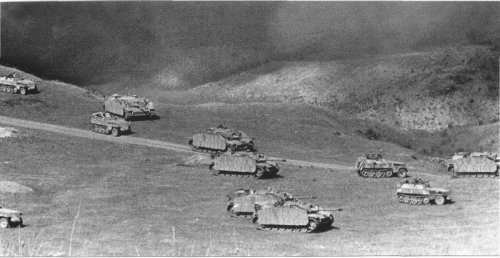
Sturmgeschutzen and SdKfw 251 APCs moving into position

Manstein met with Model, Hoth and Guderian to develop DACHS. They had  to play for time and deceive the Russians as to their true intent so they could build up their forces.  Deception operations were mounted on both sides of the Kursk bulge to give the impression of attack preparations.  1st Panzer Army and Army Detachment Kempf  were to launch a diversion called Operations HABICHT and PANTHER southeast of Kursk  “designed to push the Soviets back from the industrial area of the Donets River.”[xxx] The defensive plan called for the infantry supported by tank destroyers, assault guns the heavy Ferdinands as well as mobile Pioneer units to conduct a withdraw to delay and disrupt the Russian attack.  Bridges were prepared for demolition, defensive positions constructed at choke points which would be defended and then abandoned when no longer defensible, and minefields laid to slow the Russian advance.  This was critical for 9th Army now commanded by General Henrici in the Orel salient north of Kursk.  Henrici, a defensive master constructed a series of defensive belts to allow his army to withdraw from the bulge without being cut off and inflict heavy casualties on the Russians through skillful deployment of anti-tank weapons, especially self propelled guns.[xxxi] In the south 4th Panzer Army, now commanded by SS General Paul Hausser[xxxii] and Army detachment Kempf made preparations to allow the Russians to advance past Kharkov using the same defend and delay tactics and then counterattack. As the armies prepared, Speer and Guderian’s efforts to rebuild the Panzer force were bearing fruit.  By 15 May the first brigade of Panther tanks was activated and began training west of Kharkov.[xxxiii] Two battalions of Ferdinands, one for 9thArmy and one for 4th Panzer Army were activated.[xxxiv] Sturmgeschutzbattalions were assigned to each infantry corps. Panzer divisions built up so that all had an average of 130 tanks, with the SS Divisions and Gross Deutschland receiving more.  Tiger battalions were assigned to each Panzer Corps.

The Summer Campaign

German Infantry

On 1 June Operations PANTHER and HABICHT hit the unfortunate Soviet 6thArmy, which had been victimized by Manstein’s counter-stroke in March.  III Panzer Corps of Army Detachment Kempf supported by Corps Raus (IX Corps) linked up with 1st Panzer Army at Kupiansk on 3 June.  The Russian counterattacked with 8th Guards Army and the 2nd and 23rd Tank Corps. The battle of Kupiansk resulted in the destruction of 6th Army and the 23rd Tank Corps which was surprised by the 503rd Panzer Detachment’s Tigers. 2nd Tank Corps received a similar mauling at the hands of the 6th Panzer Division.  On 9 June the Germans returned to their start positions.

Soviet Tanks and AT Guns at Kupiansk

The attack at Kupiansk surprised STAVKA which had been deceived by the build up of Panzers around the Kursk salient.  Stalin continued to hound his generals to begin Kutuzov on time, but the generals were “chastened” by the defeat at Kupiansk and “earlier experiences”[xxxv] and wanted to delay. Stalin forced them to begin Kutuzov on 22 June, the 2nd Anniversary of Barbarossa.  Manstein and his Eastern Front commanders held their breath.  Teams of Brandenburger commandos operating in the Soviet rear and Luftwaffe reconnaissance aircraft reported Russian units moving to advanced positions to the north and south of Kursk.  Vatutin commanding the Voronezh Front was ambushed and killed by a Brandenburger detachment supporting Ukrainian irregulars[xxxvi] as he returned from visiting 69th Army near Prokhorovka station on 19 June and was replaced by Lieutenant General Katukov of 1st Tank Army.  Katukov “was one of the Red Army’s most accomplished and experienced armor officers.”[xxxvii]

Manstein with Tigers

In the north Rokossovsky’s Central Front and Popov’s Bryansk Front supported by 11th Guards Army[xxxviii] began concentric attacks on the German 9th and 2nd Panzer Armies and ran into Henrici’s labyrinth on 22 June.  They hit the first line they found it empty, the Germans having repaired to secondary positions,[xxxix] German 88’s and self propelled guns took a heavy toll on the tanks of 2nd Tank Army.  The 3rd Tank Army under General Rybalko’s army committed after the initial assault “attempted a fresh penetration instead of exploiting the earlier efforts of the 3rd and 63rd Armies… Rybalko’s force included 698 serviceable tanks…but lacked the artillery and engineers for such a deliberate assault.”[xl] Popov telephoned Stalin at noon on 25 June “to report that Rybalko was practically stalled and suffering heavy losses in tanks.”[xli]The Germans committed the 5th and 8th Panzer divisions[xlii] against 3rd Tank Army. The fresh Panzers inflicted painful losses on Rybalko.  On 27 June Stalin called to complain about the handling of the army, demanding a direct assault.[xliii] The battle turned into a “grinding battle of armored attrition.”[xliv] After “a few bloody days bereft of any success, Rybalko’s tank formations had to be pulled out of the line into reserve.”[xlv] The “battle for the Orel salient ended three weeks later with a German defensive victory, as Army Group Center extricated its two armies from the box prepared for them while inflicting heavy casualties on three Soviet Fronts.”[xlvi] The Soviets lost over 629,000 men and 3,500 tanks.[xlvii] In comparison German losses were light and by falling back they shortened their line freeing units for other operations.  Stalin had Orel but failed to destroy the Germans and lost heavily in the attempt.

Panzer IV’s engaging Soviet forces

In the south Konev’s Steppe and Katukov’s Voronezh Fronts prepared their assault on Kharkov.  They attempted to deceive the Germans by simulating the massing of a “notional tank and combined-arms army” in the western side of the Kursk bulge.[xlviii] The deception was unsuccessful as reconnaissance by Luftwaffe aircraft and Brandenburgers failed to uncover any troop concentrations and Russian deserters, talked of a strike at Kharkov. The offensive “Rumiantsev” was opened by the 5th and 6th Guards armies supported by 53rd and 69th Armies on 21 June; a day later 7th Guards Army jumped off, two additional armies supported the west flank of the offensive.[xlix] The Russians in the two fronts began the operation with 980,000 men and 2,500 tanks.[l] Opposing them were 4th Panzer Army and Army Detachment Kempf’s 350,000 men and 1,750 tanks and assault guns including 100 Tigers and 192 Panthers.[li]
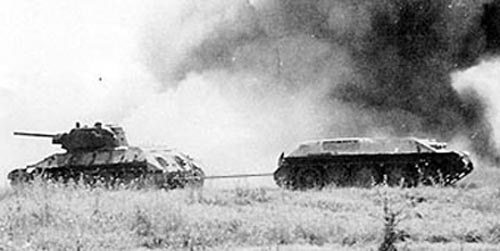
T-34 towing disabled T-34 near Orel

STAVKA “chose to strike the strongest portion of Hoth’s defense head-on, to engage and defeat the German force and avoid the problems of flank threats.”[lii] Unfortunately they complicated the attack by focusing it at “precisely the boundary between the Voronezh and Steppe Fronts, causing increased coordination problems from the start of the operation.”[liii] The Germans used Ferdinands, Jagdpanzers and Sturmgeschutz in a mobile defensive role, as infantry fought delaying actions as they withdrew to successive defensive lines, inflicting brutal losses on the Russians.  Aided by massive artillery preparation the Russians broke through the weakened Army Detachment Kempf near Belgorad[liv] taking the city on 24 June.  Corps Raus’ 167th Infantry Division was taken on its exposed left flank forcing Raus to “fight a delaying action…until the withdraw reached Kharkov.” [lv] The Germans reacted to the threat by committing the “veteran 5th SS Panzer Grenadier Division Wiking” to reinforce Army Detachment Kempf.[lvi] Despite the success “the German defenses proved so tenacious that the leading brigades of the two tank armies had to enter the fray.”[lvii]
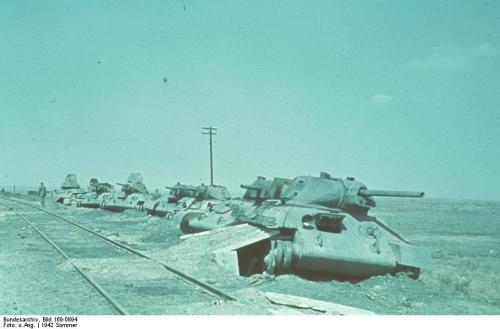
Destroyed column of T-34s

As the Russians advanced the German fell back.  Hoth directed Hausser to wait before counterattacking with XLVIII Panzer Corps and II SS Panzer Corps.  Katukov pushed the 1st and 5th Tank Armies into the hole in the German lines and moved toward Kharkov which was liberated by the 89th and 183rd Guards Divisions[lviii] on 2 July.  The liberation of Kharkov and Belgorad while exhilarating had cost Katukov over 250,000 casualties.  Skillful employment of mobile defense and local counterattacks by mixed Panzer battlegroups, such as one by Grossdeutschland on the flank of 5th Tank Army caused panic and some units withdrew “leaving behind masses of equipment of every description.”[lix]The tank armies had lost upwards of 50 percent of their tanks, infantry divisions were now down to half strength, some down to 3000 men.[lx] Yet the Soviets attempted to drive south to trap the Germans.  They were hit by XLVIII Panzer Corps and II SS Panzer Corps, both of which had seen little action thanks to Hoth’s conservation of strength. XLVIII Panzer Corps hit the 1st Tank Army at the “key road junction of Bogodukhov, 30 kilometers northwest” of Kharkov “severely mauling the leading three brigades”[lxi] forcing 1st Tank Army to withdraw towards Kursk. 5th Tank army moved to support but was taken in the flank by II SS Panzer Corps.  The SS Corps encircled the remainder of 5th Tank Army. Hunted by the SS on the open steppe the survivors slipped through gaps in the encirclement but both armies were ravaged.  By 15 June 1st Tank Army was down to 120 tanks and 5th Tank Army had “50 of its original 503 tanks and self-propelled guns serviceable.”[lxii] XLVII Panzer Corps took Kharkov on 18 July.
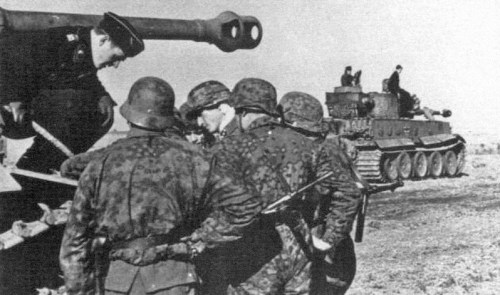
SS Panzer Grenadiers and Panzertrüppen Tigers of 3rd SS Panzer Division prepping for battle

The victory paid dividends for the Germans. The Front held and the Russians had taken nearly a million casualties and lost almost 6000 tanks and self-propelled guns.  Three Tank Armies had been smashed, 5th Tank Army would not be fit for field duty for two months.[lxiii] 3rd Tank Army earned a Guards designation but was withdrawn from combat.[lxiv] 6th Army, victimized by PANTHER was destroyed while the 5th, 6th and 7th Guards Armies were shattered. Additionally, the Germans decimated two independent tank corps.  Stalin reacted by halting operations, cancelling follow on offensives and rebuilding the Red Army’s tank armies and mechanized forces.  He realized that his Generals had been right in not wanting to undertake offensive operations until the Germans had been weakened, but the German insistence on not going on the offensive caused him to ignore their arguments. He decided to wait until winter to launch his next offensive, but that offensive would never be launched as by the time he was ready the war was over.
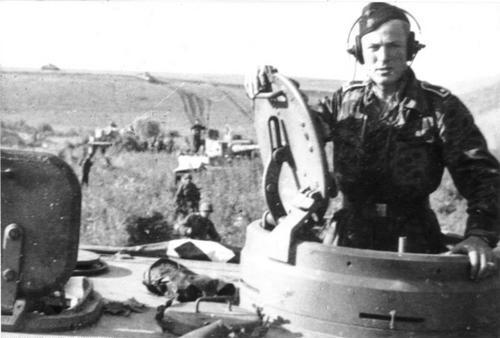
German Tank Commander as Panzers mop up

The elimination of the Russian threat enabled Italy to be reinforced as well as the reinforcement of the Atlantic Wall.  The Salerno landings were a disaster, the Allies driven into the sea by Panzer Divisions released from the Eastern Front.  The disasters at Salerno and the Russian debacle brought overwhelming domestic political pressure on Roosevelt and Churchill to end the war. Clandestine talks began in Switzerland between Avery Dulles and Karl Wolff[lxv] while Walter Schellenberg met with Count Bernadotte.[lxvi] Despite the previous demand for unconditional surrender the Allies decided to negotiate with the new German leadership might end the war in Europe.  Goering surrendered power to General Beck and gave himself and other accused war criminals up to the Allies. Beck took power, withdrew to 1939 borders, dismantled the death camps and disbanded the Nazi Party, and its police apparatus.[lxvii] Peace came to Europe on 9 November 1943, 25 years after Kaiser Wilhelm’s abdicated his throne.

Goering Surrenders to the Allies


[i] Clark, Alan. Barbarossa: The Russian German Conflict, 1941-45. Harper Collins Publishers, New York, NY 1965. Pp.307-311. There was an attempt on Hitler’s life on his return from Kluge’s headquarters.  Only the bomb did not go off, all components had worked but the detonator did not fire.  Clark notes that “the Devil’s hand had protected Hitler.” (p.311)

[ii] Galante, Pierre. Operation Valkyrie: The German Generals’ Plot Against Hitler. Translated by Mark Howson and Cary Ryan. Harper and Row Publishers, New York, NY 1981. Originally published as Hitler est il Mort? Librairie Plon-Paris-Match, France. 1981. p.167

[iii] Padfield, Peter. Himmler. MJF Books, New York. 1990. p.474.  Himmler had a number of contacts and intermediaries who he used to attempt contact with the Allies as early as 1943.

[iv] Höhne, Heinze. The Order of the Death’s Head: The Story of Hitler’s SS. Translated by Richard Barry. Penguin Books, New York and London, 2000. First English edition published by Martin Secker and Warburg Ltd. London 1969. Originally published as Der Orden unter dem Totenkopf, Verlag Der Spiegel, Hamburg 1966.  Diels remained an ally of Goering even marrying his sister in 1943.

[v] Von Lang, Jochen. The Secretary: Martin Bormann: The Man Who Manipulated Hitler. Translated by Christa Armstrong and Peter White. Random House Inc. 1979. Originally published as Der Secretär. Deutsche-Verlags-Anstalt, Stuttgart. 1977 p.9.  At his trial Goering remarked to other defendants. “If Hitler had died sooner, I as his successor would not have had to worry about Bormann. He would have been killed by his own staff even before I could have given the order to bump him off.”

[vi] Irving, David. Göring: A Biography. William Morrow and Company, New York, NY 1989. Richthofen had succeeded Jeschonnek in March when Goering relieved him. Goering believed that Jeschonnek “was too pliable at the Wolf’s Lair.” Goering had actually considered this a number of times but postponed it several times. p.388

[vii] Guderian, Heinz. Panzer Leader. (abridged) Translated from the German by Constantine Fitzgibbon, Ballantine Books, New York 1957. pp.244  Hitler conducted a similar conference involving many of the same people in Munich.

[viii] Carell, Paul. Scorched Earth: The Russian German War 1943-1944. Translated by Ewald Osers, Ballantine Books, New York, NY 1971, published in arrangement with Little-Brown and Company. p. 336

[ix] Ibid. Irving. pp. 377-379.

[x] Ibid. Guderian. p.243

[xi] Ibid. Irving. p.378

[xii] Glantz, David M and House, Jonathan. The Battle of Kursk.  University Press of Kansas, Lawrence, KS. 1999. pp.21-25.  Operations order 5 had been approved by Hitler on and issued by OKH on 13 March. It was followed by Operations Order 6 on 15 April.

[xiii] Ibid. Clark. p.324.

[xiv] Warlimont, Walter. Inside Hitler’s Headquarters 1939-45. Translated by R.H. Berry, Presido Press, Novato CA, 1964. p.334 These objections of Jodl were from June, but indicate the feeling of Jodl for the Zitadelle as planned and when would have likely been his response in such a situation.

[xv]Glantz, David M. and House, Jonathan. When Titans Clashed: How the Red Army Stopped Hitler. University Press of Kansas, Lawrence, KS. 1995. p.157 Zeitzler had been a consistent advocate for Zitadelle since he heard Manstein’s initial proposal in March.

[xvi]Macksey, Kenneth. Guderian: Creator of the Blitzkrieg. Stein and Day Publishing, New York, NY 1975 p.206

[xvii] Ibid. Clark. p.322

[xviii] Ibid. Clark. p.323.  Zeitzler made this argument with Jodl during a briefing in April 1943.

[xix] Shirer, William L. The Rise and Fall of the Third Reich. A Touchstone Book published by Simon and Schuster, 1981, Copyright 1959 and 1960. p.1115.  Hitler had told Keitel and Jodl that “When it comes to negotiating [for peace]…Goering can do much better than I. Goering is much better at those things.”

[xx] Speer, Albert. Inside the Third Reich. Collier Books, a Division of MacMillan Publishers, Inc. New York, NY 1970. p.245.  From a conversation with Speer in late 1942.

[xxi] Ibid. Glantz and House. Clash of Titans. pp. 216-217. Hitler would replace Zeitzler with Guderian in June 1944.

[xxii] Ibid. Irving. p.379 From a conversation with State Secretary Ernst von Weizäcker 11 February 1943.

[xxiii] Ibid. Speer.  p.512. The ending of the addiction took place at Nurnberg and Goering surprised many of his co-defendants with his “remarkable energy.”

[xxiv] Ibid. Glantz and House. Kursk. p.28

[xxv] Ibid. Glantz and House. Kursk. p.28.

[xxvi] Ibid. Glantz and House. Kursk. p.264

[xxvii] Overy, Richard. Russia’s War: A History of the Soviet War Effort: 1941-1945. Penguin Books, New York NY and London, 1997. pp.211

[xxviii] Erickson, John. The Road to Berlin. Cassel Military Paperbacks, London, 2003. First Published by Weidenfeld and Nicholson, 1983. p.76

[xxix] Ibid. Glantz and House. Kursk. p.265

[xxx] Ibid. Glantz and House. Kursk. p.23.

[xxxi] Liddell-Hart, B.H. The German Generals Talk. Quill Publishing, New York, NY. 1979. Copyright 1948 by B.H. Liddell-Hart. p.215  Henrici describes the methods that he used in 1944 as Commander of 1st Panzer Army and as Commander of Army Group Vistula during the defense of Berlin.

[xxxii] Hausser would actually command 7th Army in Normandy in 1944.

[xxxiii] Ibid. Glantz and House Kursk. p.53 This was the 10th Panzer Brigade assigned to XLVIII Panzer Corps.  Additionally Clark notes production figures for Panthers from Speer that indicate that 324 Panthers would be available by 31 May. (Clark. p.325)

[xxxiv] Ibid. Glantz and House. Kursk. p.52.  At Kursk the two Ferdinand detachments were both assigned to 9th Army.

[xxxv] Ibid. Glantz and House. Kursk. p.28.

[xxxvi] Ibid. Carell. p.510.  Vatutin was killed by Ukrainian irregulars in April 1944.

[xxxvii] Ibid. Glantz and House. Kursk. p.62

[xxxviii] Newton, Steven H. Hitler’s Commander: Field Marshal Walter Model, Hitler’s Favorite General. DeCapo Press, Cambridge MA 2005. p. 256

[xxxix] Ibid. Liddell-Hart. p.215.

[xl] Ibid. Glantz and House. Kursk. p.236

[xli] Ibid. Erickson. p.113. At Kursk the call took place on 20 July when Rybalko was in this situation.

[xlii] Ibid. Newton. p.256

[xliii] Ibid. Erickson. p.114

[xliv] Ibid. Glantz and House. Kursk. p.236

[xlv] Ibid. Erickson. p.114

[xlvi] Ibid. Newton. p.256

[xlvii] Ibid. Glantz and House. p.345. The actual losses were 429,000 men and 2,500 tanks against a German force significantly weakened by Zitadelle.  Had the Russians attacked the Germans rather than receiving the German attack first their losses in men and machines would have been far higher.  I have reflected that in the alternative numbers.

[xlviii] Ibid. Glantz and House. When Titans Clashed. p.168  The Soviets did try this in their counter offensive following Zitadelle.

[xlix] Ibid. Glantz and House. When Titans Clashed. p.169

[l] Ibid. Glantz and House. Kursk. p.344. Actual figures for beginning of offensive.

[li] Ibid. Glantz and House. Kursk. p.338.  Figures from beginning of Zitadelle.

[lii] Ibid. Glantz and House. Kursk. p.244 The actual text reads “Manstein’s defense” not Hoth’s.

[liii] Ibid. Glantz and House. Kursk. p.244

[liv] Von Mellenthin, F.W. Panzer Battles: A Study of the Employment of Armor in the Second World War. Translated by H. Betzler, Ballantine Books, New York, NY, 1971. Originally Published University of Oklahoma Press, 1956. p.286

[lv] Raus, Erhard. Panzer Operations: The Eastern Front Memoir of General Raus, 1941-1945. Compiled and Translated by Steven H Newton. Da Capo Press a member of the Perseus Book Group, Cambridge, MA 2003. p.214

[lvi] Ibid. Glantz and House. Kursk. p.247

[lvii] Ibid. Glantz and House. When Titans Clashed. p.169

[lviii] Ibid. Erickson. p.121  These were the actual divisions that liberated Kharkov.

[lix] Ibid.  Von Mellenthin . p.287

[lx] Ibid. Glantz and House. p.252

[lxi] Ibid. Glantz and House. When Titans Clashed. p.170

[lxii] Ibid. Glantz and House. Kursk. p.252

[lxiii] Ibid. Glantz and House. Kursk. p.252

[lxiv] Ibid. Glantz and House. Kursk. p.237

[lxv] Ibid. Hohne. p.572

[lxvi] Ibid.  Hohne. p.570

[lxvii] Ibid. Galante. pp 69 and 207

Bibliography

Carell, Paul. Scorched Earth: The Russian German War 1943-1944. Translated by Ewald Osers, Ballantine Books, New York, NY 1971, published in arrangement with Little-Brown and Company

Clark, Alan. Barbarossa: The Russian German Conflict, 1941-45. Harper Collins Publishers, New York, NY 1965

Erickson, John. The Road to Berlin. Cassel Military Paperbacks, London, 2003. First Published by Weidenfeld and Nicholson, 1983

Galante, Pierre. Operation Valkyrie: The German Generals’ Plot Against Hitler.Translated by Mark Howson and Cary Ryan. Harper and Row Publishers, New York, NY 1981. Originally published as Hitler est il Mort? Librairie Plon-Paris-Match, France. 1981.

Glantz, David M and House, Jonathan. The Battle of Kursk.  University Press of Kansas, Lawrence, KS. 1999.

Glantz, David M. and House, Jonathan. When Titans Clashed: How the Red Army Stopped Hitler. University Press of Kansas, Lawrence, KS. 1995

Guderian, Heinz. Panzer Leader. (abridged) Translated from the German by Constantine Fitzgibbon, Ballantine Books, New York 1957

Höhne, Heinze. The Order of the Death’s Head: The Story of Hitler’s SS. Translated by Richard Barry. Penguin Books, New York and London, 2000. First English edition published by Martin Secker and Warburg Ltd. London 1969. Originally published as Der Orden unter dem Totenkopf, Verlag Der Spiegel, Hamburg 1966.

Irving, David. Göring: A Biography. William Morrow and Company, New York, NY 1989

Liddell-Hart, B.H. The German Generals Talk. Quill Publishing, New York, NY. 1979. Copyright 1948 by B.H. Liddell-Hart

Macksey, Kenneth. Guderian: Creator of the Blitzkrieg. Stein and Day Publishing, New York, NY

Newton, Steven H. Hitler’s Commander: Field Marshal Walter Model, Hitler’s Favorite General. DeCapo Press, Cambridge MA 2005

Overy, Richard. Russia’s War: A History of the Soviet War Effort: 1941-1945.Penguin Books, New York NY and London, 1997

Padfield, Peter. Himmler. MJF Books, New York. 1990

Raus, Erhard. Panzer Operations: The Eastern Front Memoir of General Raus, 1941-1945. Compiled and Translated by Steven H Newton. Da Capo Press a member of the Perseus Book Group, Cambridge, MA 2003

Shirer, William L. The Rise and Fall of the Third Reich. A Touchstone Book published by Simon and Schuster, 1981, Copyright 1959 and 1960.

Speer, Albert. Inside the Third Reich. Collier Books, a Division of MacMillan Publishers, Inc. New York, NY 1970.

Von Lang, Jochen. The Secretary: Martin Bormann: The Man Who Manipulated Hitler. Translated by Christa Armstrong and Peter White. Random House Inc. 1979. Originally published as Der Secretär. Deutsche-Verlags-Anstalt, Stuttgart. 1977

Von Mellenthin, F.W. Panzer Battles: A Study of the Employment of Armor in the Second World War. Translated by H. Betzler, Ballantine Books, New York, NY, 1971. Originally Published University of Oklahoma Press, 1956.

Warlimont, Walter. Inside Hitler’s Headquarters 1939-45. Translated by R.H. Berry, Presido Press, Novato CA, 1964.
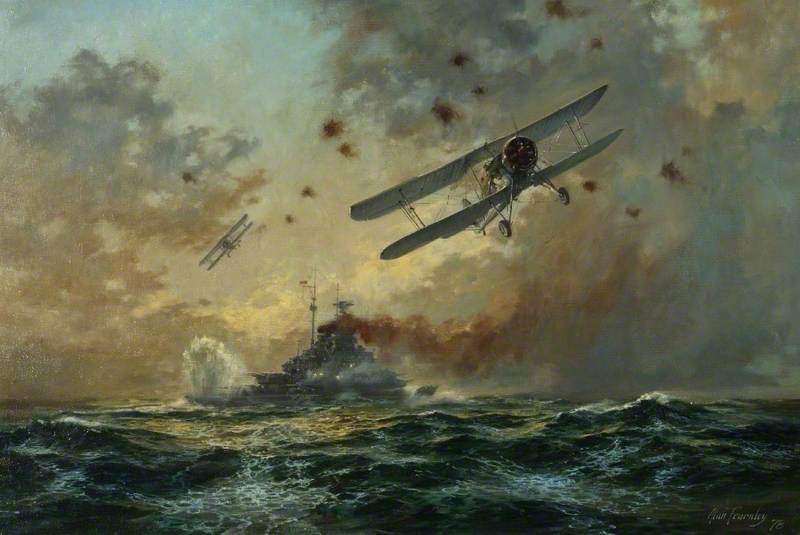
15 Comments

Filed under alternative history, Military, world war two in europe