Monthly Archives: May 2013

Back from the Abyss: Padre Steve’s Reflections of 5 Years Dealing with PTSD Faith and Life

295_26912097058_4309_n

“God will not look you over for medals, degrees or diplomas but for scars.” Elbert Hubbard

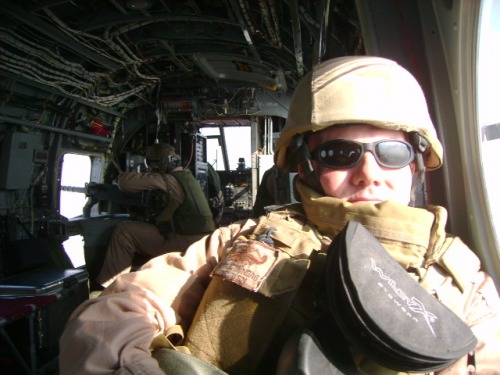
It has been five full years since I descended into the hell of the abyss that is PTSD. Back in the late spring and early summer of 2008 just a few months after my return from what I still consider my best tour of duty in over 30 years of military service with US advisors and Iraq Army and Security forces in Al Anbar Province in 2007-2008 I was in a state of emotional and spiritual collapse.

I really couldn’t believe then what was happening to me or they way that it would end up shaping my life to the present day. In retrospect my return from Iraq marked a beginning of a personal hell that for a number of years seemed like that it would never end. It was painful, it was isolating and it marked a profound change in the way that I saw God, faith, politics and social justice. It changed me in ways that I never could have imagined when I got on a bus heading for Fort Jackson South Carolina following the July 4th holiday of 2007.

Those brave souls that have followed me on this website as well as those that are still my friends despite occasional disagreements and misunderstandings, those that may not understand me but still are my friends have seen this.

So five years later what is it like?

I still have trouble sleeping, not as much as I used to but enough to impact my life. I don’t take heavy doses of sleep meds anymore, just some Melatonin as well as a mild dosage of an anti-anxiety medication and anti-depressant. A far better combination than medications that made me feel like I was hung over without that benefit of sharing too many drinks with friends at the local watering hole.

481801_10151367001287059_1003164983_n

As opposed to the years immediately following my time in Iraq I have to say that I am no longer self medicating with alcohol. I remember in 2009 going out for dinner, having a few beers, then going to a ball game and drinking a few more and coming home with Krispy Kreme donuts and drinking more beer on a regular basis and usually taking a couple of shots or Jaegermeister or glasses of Spanish Brandy just to get to sleep so I could go back to facing life and death situations the next day in our ICUs. I don’t need that anymore, even though sleep can be problematic and dreams and nightmares rivaling anything I can watch on my HD TV…

I still love to pony up to the bar and share a couple of pints with friends but I don’t need it to numb myself into feeling no pain. Talking with many other vets who have served in Iraq, Afghanistan or even Vietnam I know that I wasn’t alone in those dark days.

n671902058_1153794_4301

I have become a bit less hyper-vigilant though when I come home to Virginia Beach than I was just three years ago and most certainly five years ago in May of 2008. However, that being said I do notice that I am more on guard on the roads and that little things, sirens, emergency vehicles, loud noises and traffic still set me off more than when I am in rural North Carolina. This week I have been home because my wife Judy had some surgery and I have had to readjust to the traffic, noises and other things that I haven’t really had to deal with the past few years. That has been both interesting and enlightening.

I absolutely hate air travel. I don’t like the crowds, the stress of security or the constant delays, changes and overcrowding. Truthfully I felt more comfortable flying the skies of Iraq on Marine, Army and Air Force fixed and rotor wing aircraft and on occasion being shot at in Iraq’s Al Anbar Province than I do on any airline today in this country.

Physical fitness matters more than it did before, even though I was in very good shape before and during my time in Iraq. But when I came home from that I was not only wounded in mind and spirit, but my body was beaten up. Chronic nagging injuries and chronic pain kept me from doing what I liked doing and what helped me keep my physical-spiritual and emotional balance. Those nagging injuries took a long time to heal, and they took some adjustments on my part which took me several years to adapt to and compensate in my physical regimen.  I can say now that I am in as good or better shape than I was before I left for Iraq in 2007. Maybe I’ll write a best selling book and do an exercise video like Jane Fonda…

flight-to-baghdad-4-me

Whereas in 2008 through 2010 and even until 2011 I was exceptionally sensitive to criticism to the changes that were occurring in my life including my move to the “left” both theologically and politically I have gotten to the point that I realize that it is more important to be honest and authentic as to who I am and what I believe. I have found that those that really matter to me don’t care so much about those things and that relationships maintained with people who don’t always agree with each other where all remain their personal integrity are far more rewarding than relationships that are first and foremost decided by allegiance to political or religious orthodoxy no matter what side of the spectrum it is from. I hate group think. Thus though I have to now consider me to be on the “liberal” side of the political and theological divide I still have to be considered a moderate simply because I refuse to make people my enemy simply because I disagree with them or they with me.

When I began this site in the spring of 2009 I named it Padre Steve’s World…Musings of a Passionate Moderate. I think I did that because it actually described me then, and now, even though I am pretty passionately liberal about some things and that doesn’t bother me in any way because it comes from my wrestling with God and faith and realizing that integrity matters more than about anything else. I have toyed with changing the title of the site but have decided against that because I am a moderate liberal committed to a Christian faith that speaks for the oppressed and is willing to confront those that would use faith, political or economic power to oppress the weak or those different from us.

Since I returned from Iraq in 2008 I discovered what it was to really question faith and God. To become for a couple of years a man who was for all practical purposes an agnostic praying that God still existed and cared. I discovered that in doing so that faith returned, different but more real than I had ever experienced in a life spent in the Christian faith and ministry.

fatherpippy

That brought change because my rediscovered faith brought me into conflict with people in the church denomination and faith community where I had been ordained as a priest. I was asked to leave and found a new home church and denomination that fit my life, faith experience and where I could live and minister in complete integrity. In the church that took me in during the fall of 2010 I can be faithful to the Gospel and care for the lost, the least and the lonely, especially those who have been abused by churches and ministries that have sold their soul to right wing political ideologues whose only concern is their political power and influence and would use churches and Christians to do their evil bidding. I guess that I learned that just because someone wraps the Bible in an American Flag, believes that Jesus brought us the Constitution and says that they “support the troops” it doesn’t necessarily mean that they care a whit about the Bible, the Flag, the Constitution or the Troops. I hope that isn’t too harsh….

Oh well, I feel that I am beginning to ramble so I will say good night and “God Bless,” no matter what God that you profess or for that matter don’t profess.

Peace

Padre Steve+

2 Comments

Filed under christian life, faith, iraq,afghanistan, Pastoral Care, PTSD, Tour in Iraq

Things Haven’t Changed That Much: Jackie Robinson Goes to the 1964 GOP Convention and the Freedom Summer

$(KGrHqF,!qEF!GdOTlS(BQOjfQWE0w~~60_57

“A new breed of Republicans had taken over the GOP.  As I watched this steamroller operation in San Francisco, I had a better understanding of how it must have felt to be a Jew in Hitler’s Germany.” Jackie Robinson on his observations of the 1964 Republican National Convention

Jackie Robinson was a Republican. So was I for 32 years and for much of that time I considered myself a “conservative” whatever that means, though I thought it meant freedom, limited government and opportunity for all regardless of race, color, religion or any other trait or belief. I also believed and still do in a strong defense, but I can no longer consider myself a man that blesses American intervention in other people’s wars unless there is a clear and present danger to the United States, not simply our so called “interests” which may not be those of the nation at all but of multi-national corporations which were originally American businesses but not only need our military, diplomatic and intelligence resources to increase their profits.

My parents were Kennedy type Democrats, but in the 1970s, torn by the extremism of the 1972 Democratic Convention in Chicago and feeling the hatred of people for those in the military, including a Sunday School teacher who told me that my dad, then serving in Vietnam was “baby killer” I at the age of 12 decided that I would be a Republican. I was a Republican until I returned from Iraq in 2008, fully aware of the lies that took us into that war and seeing the cost both to American servicemen and the people of Iraq.

republican-national-convention-delegates_1964

I have been doing a lot of reading lately on a period of history that as a historian I had pretty much skipped over. That is the period of the Civil Rights movement of the early to mid-1960s. I guess I skipped over it because I was more interested in the glory of war and patriotism wrapped in historic myth than in the experiences of fellow citizens who had been killed, abused, tormented and persecuted by people like me simply because of the color of their skin. I had not yet begun to appreciate the concept of justice at home being interconnected to our deepest held principles and how we embody them in our foreign policy.

For many years I echoed the point made by some conservatives that it was the GOP that helped make the Voter’s Rights Act of 1964 and Civil Rights Act of 1965 passed into law. That is true. Most Republicans voted for them, with a notable exception, Barry Goldwater. However, what is also true is that the Republicans that voted for the 1964 act were considered “liberals” and treated shamefully at the 1964 convention, whose delegates voted down a part of the platform that would have supported that act. Of the Democrats that voted against those bills almost all came from the Deep South, a region which within a decade become a Republican stronghold and a key part of the Southern Strategy of every GOP Presidential Candidate since Richard Nixon. A Republican aide at the 1964 convention told a reporter that “the nigger issue was sure to put Goldwater in the White House.” (See Freedom Summer by Bruce Watson p.163)

However as a life long baseball fan there is one thing that I know, that if there had been no Branch Rickey and Jackie Robinson we might not have gotten Rosa Parks or the Reverend Martin Luther King Jr.

fsms1

Robinson was appointed as a special delegate to New York Governor Nelson Rockefeller who was running against Goldwater and attended the convention. He had given up his job as a spokesman for and Vice President of the Chock Full O’Nuts Coffee Company to assist Rockefeller’s campaign in 1964.

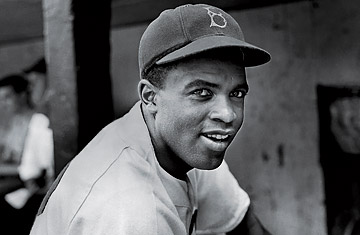
Robinson knew what it was like to be the “point man” in the integration of baseball and in his career was threatened with physical violence and death on many occasions. Some teammates circulated petitions that they would not play for a team that had a “black” on it. Robinson, encouraged by Rickey persevered and became an icon in baseball, the Civil Rights movement and the history of the United States. However, not even 10 years after his retirement from baseball and 2 years after he was elected to the Hall of Fame he once again discovered just how deep racism still ran in this country.  As he attended the convention FBI agents and other Federal authorities attempted to find the bodies of three young Voting Rights staff who were part of the 1964 Freedom Summer campaign in Mississippi. Eventually, later in the summer the bodies of James Chaney, Andrew Goodman and Michael Schwerner would be discovered buried in the base of a dam near Philadelphia Mississippi. Their killers were local law enforcement officers and members of the Ku Klux Klan.

200px-AndrewGoodman-JamesChaney-MichaelSchwerner

Maybe I lived in my own fantasy world. My experience growing up was on the West Coast living in a military family in small towns and big cities. I am proud to be part of the first class that attended high school in my home town when the courts ordered desegregation in our schools. That experience at Edison High School of Stockton California from 1975-78 changed me, as did having a black roommate in college.

However, that being said it took me a long time to realize that things really haven’t changed that much from 1964 in many parts of the country, especially since I have lived most of my adult live in the historic States that comprised the Confederacy. I can say from practical observation and knowledge that racism and other forms of more acceptable prejudice live on in this country. There is not a day that goes by that I do not run into the vestiges of the hate that lived during the Freedom Summer of 1964. It is more subtle in some cases, but other times is so blatant that is sickening. I never expected that I would ever be called a “nigger lover” or “wigger” until I had people make those comments on this website in response to articles that had nothing to do with race relations or civil rights, nor did I expect physical threats from people who call themselves “Christian.” Those were learning experiences that I won’t soon forget.

G21767P

Robinson wrote of his experience at the 1964 Convention:

“I wasn’t altogether caught of guard by the victory of the reactionary forces in the Republican party, but I was appalled by the tactics they used to stifle their liberal opposition.  I was a special delegate to the convention through an arrangement made by the Rockefeller office. That convention was one of the most unforgettable and frightening experiences of my life. The hatred I saw was unique to me because it was hatred directed against a white man.  It embodied a revulsion for all he stood for, including his enlightened attitude toward black people.

A new breed of Republicans had taken over the GOP.  As I watched this steamroller operation in San Francisco, I had a better understanding of how it must have felt to be a Jew in Hitler’s Germany.

The same high-handed methods had been there.

The same belief in the superiority of one religious or racial group over another was here.  Liberals who fought so hard and so vainly were afraid not only of what would happen to the GOP but of what would happen to America.  The Goldwaterites were afraid – afraid not to hew strictly to the line they had been spoon-fed, afraid to listen to logic and reason if it was not in their script.

I will never forget the fantastic scene of Governor Rockefeller’s ordeal as he endured what must have been three minutes of hysterical abuse and booing which interrupted his fighting statement which the convention managers had managed to delay until the wee hours of the morning.  Since the telecast was coming from the West Coast, that meant that many people in other sections of the country, because of the time differential, would be in their beds.  I don’t think he has ever stood taller than that night when he refused to be silenced until he had had his say. 

It was a terrible hour for the relatively few black delegates who were present.  Distinguished in their communities, identified with the cause of Republicanism, an extremely unpopular cause among blacks, they had been served notice that the party they had fought for considered them just another bunch of “niggers”.  They had no real standing in the convention, no clout.  They were unimportant and ignored.  One bigot from one of the Deep South states actually threw acid on a black delegate’s suit jacket and burned it.  Another one, from the Alabama delegation where I was standing at the time of the Rockefeller speech, turned on me menacingly while I was shouting “C’mon Rocky” as the governor stood his ground.  He started up in his seat as if to come after me.  His wife grabbed his arm and pulled him back.

“Turn him loose, lady, turn him loose,” I shouted.

 I was ready for him.  I wanted him badly, but luckily for him he obeyed his wife…” From Jackie Robinson “I Never Had it Made” Chapter XV On Being Black Among the Republicans

Belva Davis, then a young journalist wrote of her experiences at that convention:

While the Goldwater organization tried to keep its delegates in check on the floor, snarling Goldwater fans in the galleries around us were off the leash. The mood turned unmistakably menacing…

Suddenly Louis and I heard a voice yell, “Hey, look at those two up there!” The accuser pointed us out, and several spectators swarmed beneath us. “Hey niggers!” they yelled. “What the hell are you niggers doing in here?’”

I could feel the hair rising on the back of my neck as I looked into faces turned scarlet and sweaty by heat and hostility. Louis, in suit and tie and perpetually dignified, turned to me and said with all the nonchalance he could muster, “Well, I think that’s enough for today.” Methodically we began wrapping up our equipment into suitcases.

As we began our descent down the ramps of the Cow Palace, a self-appointed posse dangled over the railings, taunting. “Niggers!” “Get out of here, boy!” “You too, nigger bitch!” “Go on, get out!” “I’m gonna kill your ass!”

I stared straight ahead, putting one foot in front of the other like a soldier who would not be deterred from a mission. The throng began tossing garbage at us: wadded up convention programs, mustard-soaked hot dogs, half-eaten Snickers bars. My goal was to appear deceptively serene, mastering the mask of dispassion I had perfected since childhood to steel myself against any insults the outside world hurled my way.

Then a glass soda bottle whizzed within inches of my skull. I heard it whack against the concrete and shatter. I didn’t look back, but I glanced sideways at Louis and felt my lower lip began to quiver. He was determined we would give our tormentors no satisfaction.

“If you start to cry,” he muttered, “I’ll break your leg.” ( Belva Davis “Never in My Wildest Dreams: A Black Woman’s Life in Journalism) 

The sad thing is that in many states the new GOP has taken a page out of the past and has been either passing legislation or attempting to pass legislation that makes it harder  for Blacks and other minorities to vote. Groups have shown up armed at heavily black polling sites in recent elections and efforts have been made to ensure that minorities cannot vote. They have also challenged the 1964 Voter’s Rights Act in Court and have a friend in Justice Antonine Scalia who called it a “racial entitlement” and violation of State sovereignty.

ae-eop-freedom-school_tx700

The tactics are quite similar to those used in the Deep South prior to 1964 which made it virtually impossible for a Black man or woman to cast a vote, and if they tried even to register to vote did so at the peril of their lives or families. The opponents of integration, voter’s rights and equal rights used some of the same lines used today against those that support these rights. “Communists sympathizers, Socialists, Atheists, Anti-Christian, Anti-American, Anti-Constitution,” you name it the same labels are being applied to those that simply want to be at the table. The sad thing that many of the most vicious users of such untruths are my fellow Christians.

freedom_cross1

These are hard things to look at and it is far easier to believe myth than it is to actually seek truth. A few years back I cannot every in a million years having written this article. However the threats to minorities be they racial, religious or even gender have become part an parcel of the new GOP, the GOP that I could not remain a part of when I returned from Iraq.

I guess that I am becoming a Civil Rights advocate, or then, maybe it’s that I’m actually becoming more of a Christian. Branch Rickey said “I may not be able to do something about racism in every field, but I can sure do something about it in baseball.”  Oh well, I amy not be able to do something about racism and other prejudice everywhere but I can do it here and wherever I work or preach.

fs12

Oh well whatever, it really doesn’t matter so long as I can live with myself. Besides, I’ll get labeled anyway so what does it matter? I would rather be in the same camp as someone like Jackie Robinson and Branch Rickey than Antonine Scalia or those that seek to keep people down simply because they are different anyway.

Martin Niemoller once said:

First they came for the , communist
and I didn’t speak out because I wasn’t a communist.

Then they came for the socialists,
and I didn’t speak out because I wasn’t a socialist.

Then they came for the trade unionists,
and I didn’t speak out because I wasn’t a trade unionist.

Then they came for me,
and there was no one left to speak for me.

Peace

Padre Steve+

6 Comments

Filed under civil rights, History, philosophy, Political Commentary

Remembering Hell: The Fall of Dien Bien Phu 59 Years Gone by and Still Forgotten

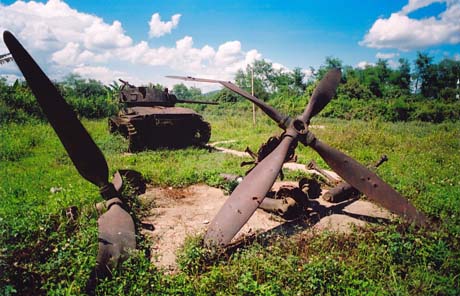
Dien Bien Phu War Remnants

Dien Bien Phu Today

It was an epic battle in a tragic war and most people neither know or care what happened in the valley where a small border post named Dien Bien Phu became synonymous with forgotten sacrifice. This year fewer remembrances are taking place. Some are in Vietnam and others in France.

Diplomat_Sep10059-227x300

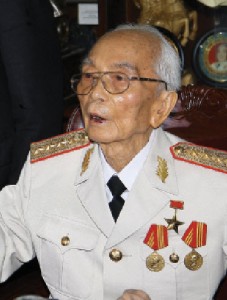
General Vo Nguyen Giap

On May 7th 2011 in Hanoi a small remembrance was held to mark the fall of Dien Bien Phu and honor the victor, 101 year old General Vo Nguyen Giap at his home. Giap is the last senior commander of the war alive at 103 he remains active. That 2011 ceremony was one of the few remembrances held anywhere marking that battle which was one of the watersheds of the 20th Century. A half a world away in Houston Texas a small group of French veterans, expatriates and historians laid a wreath at the Vietnam War Memorial.  In Paris an ever shrinking number of French survivors gather each year on May 7th at 1815 hours for a religious service at the Church of Saint Louis des Invalides to remember the dead and missing of the French Expeditionary Corps lost in Indochina. A small number of other small ceremonies have been held this year.

This battle is nearly forgotten by time even though it and the war that it symbolized is probably the one that we need to learn from before Afghanistan becomes our Indochina.

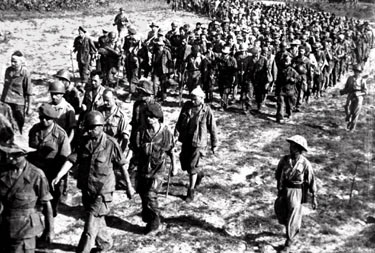
FRENCH SOLDIERS SURRENDER

French Prisoners

On May 8th 1954 the French garrison of Dien Bien Phu surrendered to the Viet Minh.  It was the end of the ill-fated Operation Castor in which the French had planned to lure the Viet Minh Regulars into open battle and use superior firepower to decimate them.  The strategy which had been used on a smaller scale the previous year at Na Son.

The French had thought they had come up with a template for victory based on their battle at Na Son in how to engage and destroy the Viet Minh. The plan was called the “Air-land base.”  It involved having strong forces in a defensible position deep behind enemy lines supplied by air.  At Na Son the plan worked as the French were on high ground, had superior artillery and were blessed by General Giap using human wave assaults which made the Viet Minh troops fodder for the French defenders.  Even still Na Son was a near run thing for the French and had almost no effect on Viet Minh operations elsewhere while tying down a light division equivalent and a large portion of French air power.

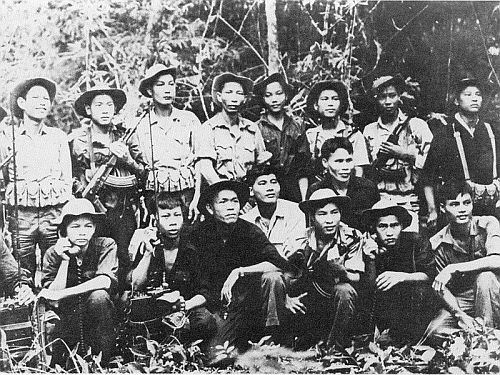
nlfmainforce

Viet Minh Regulars

The French took away the wrong lesson from Na-Son and repeated it at Dien Bien Phu.  The French desired to use Dien Bien Phu as a base of operations against the Viet Minh.  Unfortunately the French chose badly. The elected to occupy a marshy valley surrounded by hills covered in dense jungle. They elected to go light on artillery and the air head was at the far end of the range of French aircraft, especially tactical air forces which were in short supply.  To make matters worse the General Navarre, commander of French forces in Indochina informed that the French government was going to begin peace talks and that he would receive no further reinforcements elected to continue the operation.

dien-bien-phu

French Paras Drop into Dien Bien Phu

Likewise French logistics needs were greater than the French Air Force and American contractors could supply.  French positions at Dien Bien Phu were exposed to an an enemy who held the high ground and were not mutually supporting. The terrain was so poor that French units were incapable of any meaningful offensive operations against the Viet Minh. As such they could only dig in and wait for battle. Despite this many positions were not adequately fortified and the artillery was in exposed positions.

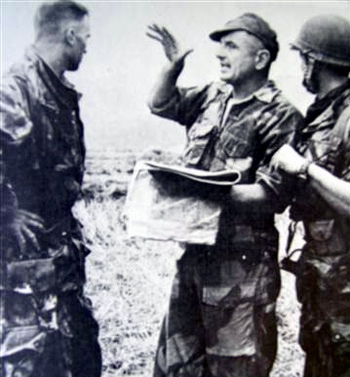
bigeard_instruction_saut

Major Marcel Bigeard 

The French garrison was a good quality military force composed of veteran units. It was comprised of Paras, Foreign Legion, Colonials (Marines), North Africans and Vietnamese troops. Ordinarily in a pitched battle it would have done well, but this was no ordinary battle and their Viet Minh opponents were equally combat hardened, well led and well supplied and fighting for their independence.

Many of the French officers including Lieutenant Colonel Langlais and Major Marcel Bigeard commander of the 6th Colonial Parachute Battalion were among the best leaders in the French Army. Others who served in Indochina including David Galula and Roger Trinquier would write books and develop counter-insurgency tactics which would help Americans in Iraq. Unfortunately the French High Command badly underestimated the capabilities and wherewithal of the Giap and his divisions.

65193421-small_269244

Viet Minh Supply Column

Giap rapidly concentrated his forces and built excellent logistics support.  He placed his artillery in well concealed and fortified positions which could use direct fire on French positions. Giap also had more and heavier artillery than the French believed him to have.  Additionally he brought in a large number of anti-aircraft batteries whose positions enabled the Viet Minh to take a heavy toll among French Aircraft.  Giap also did not throw his men away in human assaults.  Instead he used his Sappers (combat engineers) to build protective trenches leading up to the very wire of French defensive positions.  In time these trenches came to resemble a spider web.

Without belaboring this post the French fought hard as did the Viet Minh. One after one French positions were overwhelmed by accurate artillery and well planned attacks.  The French hoped for U.S. air intervention, even the possibility of using nuclear weapons against the Viet Minh. They were turned down by a US Government that had grown tired of a war in Korea.

dien bien phu6

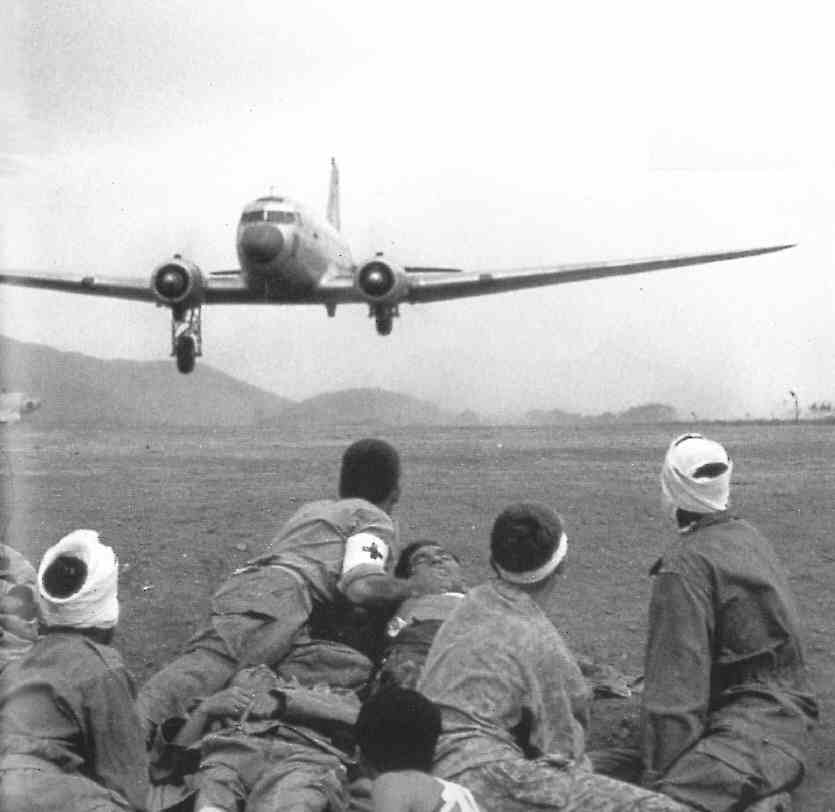
Wounded Awaiting Medivac 

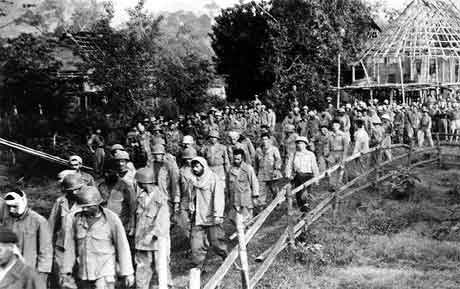
Relief forces were unable to get through and the garrison died, despite the bravery of the Paratroops. Colonials and Legionaries. The French garrison was let down by their high command and their government and lost the battle due to inadequate logistics and air power. The survivors endured a brutal forced march of nearly 400 miles on foot to POW camps in which many died. Many soldiers who survived the hell of Dien Bien Phu were subjected to torture, including a practice that we call “water boarding.” General Georges Catroux who presided over the official inquiry into the debacle at Dien Bien Phu wrote in his memoirs: “It is obvious that there was, on the part of our commanding structure, an excess of confidence in the merit of our troops and in the superiority of our material means.”

Few French troops caved to the Viet Minh interrogations and torture but some would come away with the belief that one had to use such means to fight the revolutionaries.  Some French troops and their Algerian comrades would apply these lessons against each other within a year of their release. French soldiers and officers were shipped directly from Indochina to Algeria to wage another protracted counterinsurgency often against Algerians that they had served alongside in Indochina. The Algerian campaign proved to be even more brutal and it was lost politically before it even began.

dien_bien_phu

The March to Captivity

The wars in Indochina and Algeria tore the heart out of the French Army. The defeats inflicted a terrible toll. In Indochina many French career soldiers felt that the government’s “lack of interest in the fate of both thousands of missing French prisoners and loyal North Vietnamese…as dishonorable.” Divisions arose between those who served and those who remained in France or Germany and created bitter enmity between soldiers. France would endure a military coup which involved many who had fought in Vietnam and Algeria. Having militarily won that war these men called The Centurions by Jean Lartenguy had been turned into liars by their government.  They were forced to abandon those who they had fought for and following the mutiny, tried, imprisoned, exiled or disgraced. Colonial troops who remained loyal to France were left without homes in their now “independent” nations. They saw Dien Bien Phu as the defining moment. “They responded with that terrible cry of pain which pretends to free a man from his sworn duty, and promises such chaos to come: ‘Nous sommes trahis!’-‘We are betrayed.’

The effects of the wars in French Indochina, Algeria and Vietnam on the French military establishment were long lasting and often tragic. The acceptance of torture as a means to an end sullied even the hardest French officers. Men like Galula and Marcel Bigeard refused to countenance it, while others like Paul Aussaresses never recanted.

One of the most heart rending parts of the Dien Bien Phu story for me is that of Easter 1954 which fell just prior to the end for the French:

“In all Christendom, in Hanoi Cathedral as in the churches of Europe the first hallelujahs were being sung. At Dienbeinphu, where the men went to confession and communion in little groups, Chaplain Trinquant, who was celebrating Mass in a shelter near the hospital, uttered that cry of liturgical joy with a heart steeped in sadness; it was not victory that was approaching but death.” A battalion commander went to another priest and told him “we are heading toward disaster.” (The Battle of Dienbeinphu, Jules Roy, Carroll and Graf Publishers, New York, 1984 p.239)

As a veteran of Iraq whose father served in Vietnam I feel an almost a spiritual link to our American and French brothers in arms who fought at Dien Bien Phu, the Street Without Joy, Algiers and places like Khe Sanh, Hue City, the Ia Drang and the Mekong. When it comes to this time of year I always have a sense of melancholy and dread as I think of the unlearned lessons and future sacrifices that we may be asked to make.

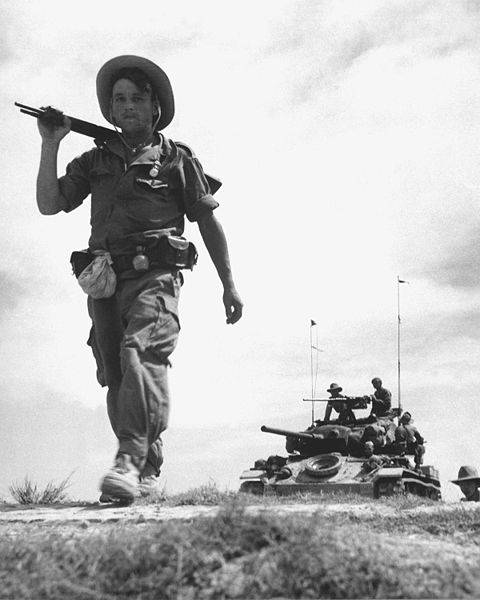
FrenchForeignLegionaireVtNamDOD

Legionairs on the Street Without Joy

The lessons of the French at Dien Bien Phu and in Indochina were not learned by the United States as it entered Vietnam, Iraq or Afghanistan. Nor were the lessons of Algeria. It was an arrogance for which we paid dearly and I do not think that many in our political, media and pundits or military have entirely learned or that we in the military have completely shaken ourselves. We lost 54,000 dead in Vietnam, nearly 4500 in Iraq and close to 2600 in Afghanistan, not counting vast numbers of wounded. There are those even as we have been at war for 12 years who advocate even more interventions in places that there is no good potential outcome, only variations on bad. How many more American Soldiers, Sailors, Marines and Airmen will need die without “victory” whoever we might want too define it?

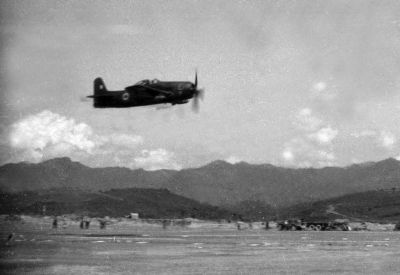
normal_03_56_F8F_decollage_a_DBP_Beriel_ph

French Navy F-8 Bearcat at Dien Bien Phu

Like the French our troops who returned from Vietnam were forgotten.The U.S. Army left Vietnam and returned to a country deeply divided by the war. Vietnam veterans remained ostracized by the society until the 1980s. As Lieutenant General Harold Moore  who commanded the battalion at the Ia Drang immortalized in the film We Were Soldiers recounted “in our time battles were forgotten, our sacrifices were discounted, and both our sanity and suitability for life in polite American society were publicly questioned.”

For those interested in the French campaign in Indochina it has much to teach us. Good books on the subject include The Last Valley by Martin Windrow, Hell in a Very Small Place by Bernard Fall; The Battle of Dienbeinphu by Jules Roy; and The Battle of Dien Bien Phu- The Battle America Forgot by Howard Simpson. For a history of the whole campaign, read Street Without Joy by Bernard Fall. I always find Fall’s work poignant, he served as a member of the French Resistance in the Second World War and soldier later and then became a journalist covering the Nuremberg Trials and both the French and American wars in Vietnam and was killed by what was then known as a “booby-trap” while covering a platoon of U.S. Marines.

I do pray that we will learn the lessons before we enter yet another hell.

Peace

Padre Steve+

6 Comments

Filed under History, iraq,afghanistan, Military, vietnam

Irrelevant Incidents and Un-winnable Wars: Thoughts on Returning from War 5 Years Later

On the 59th anniversary of the Fall of Dien Bien Phu I thought that I would re-post this little article…

padresteve's avatarThe Inglorius Padre Steve's World

6Fi9832

Just shy of five years ago in February 2008 I returned from Iraq after a tour with our advisors to the Iraqi Army and Security forces in the far reaches of Al Anbar Province. I flew back to the United States on a chartered flight with about 200 other men and women, individual augments from the US Navy who had served in Iraq and Afghanistan. We had a few days in Kuwait to “decompress” and then were on our way home. Those that conducted our training in that time had been in Kuwait, at large bases, separated from home but enjoying creature comforts that made it feel that we were in “Little America.”

Our aircraft stopped at Ramstein Air Base in Germany for a crew change and refueling. While there the aircraft was filled to its capacity with servicemen and their families returning from Germany to the United States. Crying…

View original post 1,765 more words

1 Comment

Filed under Loose thoughts and musings

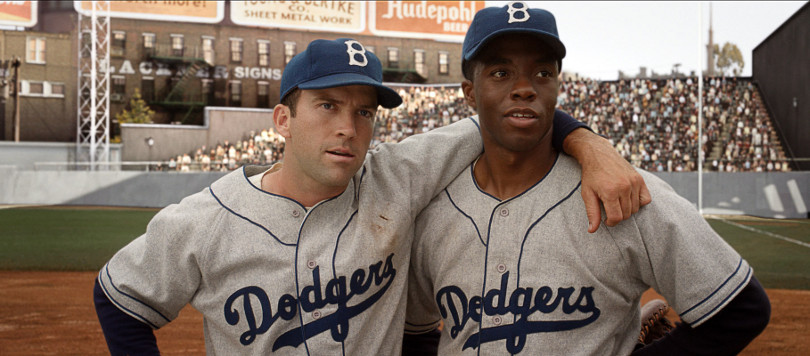
42: Thank God for Jackie Robinson and Branch Rickey


WFTCRMImageFetch.aspx

“Your enemy will be out in force. But you cannot meet him on his own low ground.” Branch Rickey (Harrison Ford) in the movie 42

“The right of every American to first-class citizenship is the most important issue of our time.” Jackie Robinson

Tonight I went and saw the movie 42. I have been wanting to see it since before it came out. As anyone who knows me or reads my articles on this website knows I am not only a historian and theologian but maybe more importantly a student of the game of baseball and baseball history. I have written articles on the integration of baseball as well as Jackie Robinson. I have read many books and article about the subject and even still I was unprepared for what I saw tonight. As I watched the movie I found that I was often overcome with tears. That doesn’t happen to me often in movies.

42-movie

A while back I wrote an article about African American soldiers in the First World War and I had a man ask in a comment “why is everything about racism?” The fact that the article was about history and the neglected sacrifices of African Americans who volunteered to serve their country in a time of war and were treated as less than human by many of their fellow citizens was lost on the man. The fact that the French government and not the American government recognized their achievements on those battlefields was also lost on the man. The same is unfortunately true in many other parts of our national life.

branch_rickey

Call me a liberal or whatever, but I find racism and other forms of discrimination and hatred to be abhorrent, especially when those that are their most virulent supporters claim to be Christians. Seeing on film the things that I have previously read about in the life and career of Jackie Robinson brought me to tears through much of the movie. To see the hatred, the threats and the open prejudice of people towards Jackie grieved me. It is hard to believe that 80 years after the Civil War and over 170 years after the publication of the Declaration of Independence that so many white people fought against the simple concept of the equality of the races and the rights of people to fully participate in society, even in sports.

611_1366048749

Unfortunately racism and many other forms of discrimination are still alive and well in our country. I am 53 years old. I came to age in an era where my high school class was the first to be desegregated in my hometown and attend high school completely in a desegregated environment. When I finished high school I really believed that racism was dead and on its way out. Unfortunately, 35 years after I graduated I still see it. In many cases it is much more subtle but I can say that there are times when it is nearly as blatant as it was in April of 1947 when Jackie Robinson first stepped onto Ebbets Field in Brooklyn.

Jackie Robinson Shaking Branch Rickey's Hand

Some of the things that I have read and see about President Obama over the past 5-6 years are glaring examples of such racist attitudes. A friend of mine, a conservative evangelical Christian pastor and a graduate of the Citadel who hails from Georgia told me that many of his fellow Southerners believe that the President “doesn’t know his proper place.” I found that interesting because that has been a charge directed by many whites at blacks and others that aspire to higher office or jobs that they do not feel that blacks, other minorities or women should do.

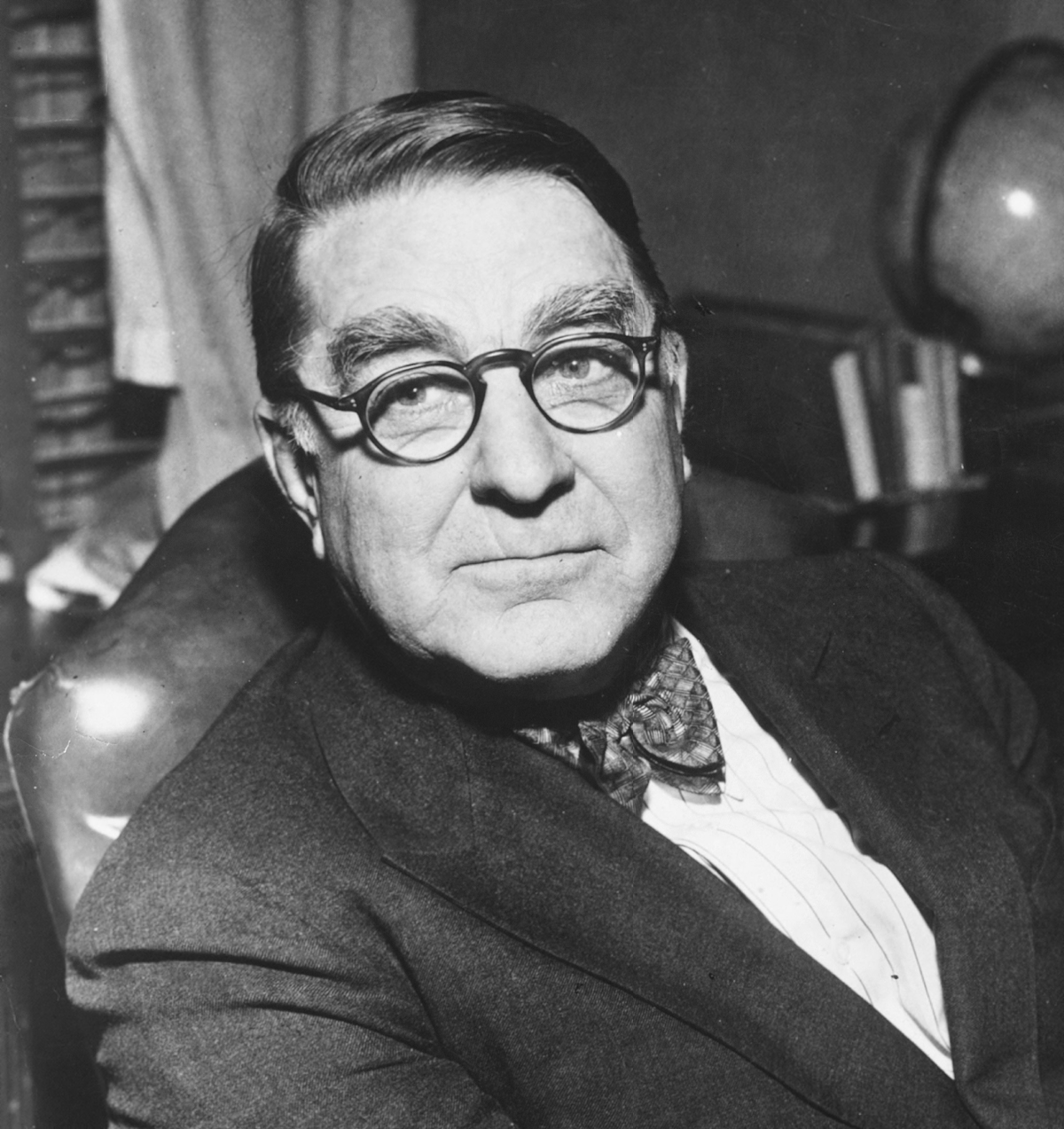
Branch Rickey, the President and General Manager of the Dodgers was a visionary and a true Christian who dared to challenge the status quo of his age. Jackie Robinson was a courageous man who endured death threats, physical abuse, taunting and even physical assaults during ball games masked as wild pitches and hard base running. Rickey told Robinson when he signed with the Dodger’s “we’ve got no army. There’s virtually nobody on our side. No owners, no umpires, very few newspapermen. And I’m afraid that many fans will be hostile. We’ll be in a tough position. We can win only if we can convince the world that I’m doing this because you’re a great ballplayer, a fine gentleman.”

For me it seems so hard to comprehend the hatred that would seek to deny people who are fellow citizens, human beings and in the case of Christians, brothers or sisters in Christ a place at the table.  Whether that table is elected office, baseball diamond or even a church simply because of their race, gender, religion or even sexual orientation I do believe that the table should be open to all and that one’s character and competence need to be the measure, and not the color of their skin, whether they are male or female, the place that they are from, who their parents happen to be, the God that they worship or the people they love. I’m sure that both Robinson and Rickey would agree.

I admire both Branch Rickey and Jackie Robinson, as well as the Dodger’s team Captain Pee-Wee Reese for what they did in that pivotal season of 1947. However, there is so much more work to be done in our generation. I do hope that we find it in ourselves to answer this sacred call.

Peace

Padre Steve+


1 Comment

Filed under Baseball, film, History

Thoughts on the 2013 National Day of Prayer

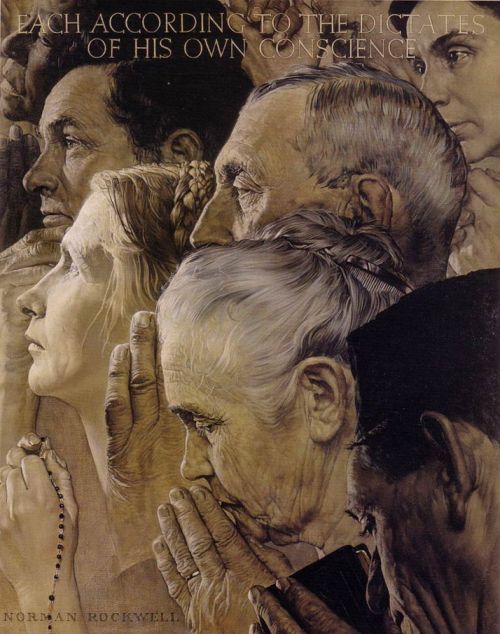
norman-rockwell-freedom-of-worship-1

“The notion of a Christian commonwealth should be exploded forever…Government should protect every man in thinking and speaking freely, and see that one does not abuse another.  The liberty I contend for is more than toleration.  The very idea of toleration is despicable; it supposes that some have a pre-eminence above the rest to grant indulgence, whereas all should be equally free, Jews, Turks, Pagans and Christians.” John Leland

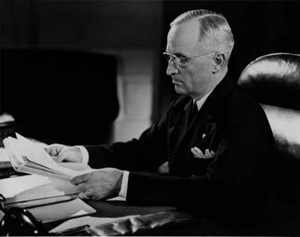
Today was the National Day of Prayer. The event was established by President Harry S Truman in 1952 was designed to mark the common freedom that we have as American citizens.

I am a big fan of religious liberty and critic of those that desire to establish any religion as the official religion of the country and in doing so suppress the rights of others. An attempt was made in the North Carolina State Legislature early this year to establish the right of the state to establish a religion in complete disregard of the Constitution of the United States and the Constitution of the State of North Carolina. Part of the text of that bill, which was killed in committee stated:

“The North Carolina General Assembly does not recognize federal court rulings which prohibit and otherwise regulate the State of North Carolina, its public schools, or any political subdivisions of the State from making laws respecting an establishment of religion.

I do feel that there are those that want to use such occasions as today’s observance of the National Day of Prayer as a means to establish their religion, as the law of the land. However, if we actually look at our history such is not the case and was never the intent of our founders or those that established the National Day of Prayer.
harry-truman

President Truman’s proclamation stated:

“Now, Therefore, I, Harry S. Truman, President of the United States of America, do hereby proclaim Friday, July 4, 1952, as a National Day of Prayer, on which all of us, in our churches, in our homes, and in our hearts, may beseech God to grant us wisdom to know the course which we should follow, and strength and patience to pursue that course steadfastly. May we also give thanks to Him for His constant watchfulness over us in every hour of national prosperity and national peril.”

Ronald Reagan eloquently stated the purpose and significance of the National Day of Prayer in his 1983 proclamation which in part read:

It took the tragedy of the Civil War to restore a National Day of Prayer. As Abraham Lincoln said, “Intoxicated with unbroken success, we have become too self-sufficient to feel the necessity of redeeming and preserving grace, too proud to pray to the God that made us.”

Revived as an annual observance by Congress in 1952, the National Day of Prayer has become a great unifying force for our citizens who come from all the great religions of the world. Prayer unites people. This common expression of reverence heals and brings us together as a Nation and we pray it may one day bring renewed respect for God to all the peoples of the world.

From General Washington’s struggle at Valley Forge to the present, this Nation has fervently sought and received divine guidance as it pursued the course of history. This occasion provides our Nation with an opportunity to further recognize the source of our blessings, and to seek His help for the challenges we face today and in the future.

Now, Therefore, I, Ronald Reagan, President of the United States of America, do hereby proclaim Thursday, May 5, 1983, National Day of Prayer. I call upon every citizen of this great Nation to gather together on that day in homes and places of worship to pray, each after his or her own manner, for unity of the hearts of all mankind.

President Reagan’s 1983 and subsequent proclamations stood firmly in the American tradition of Civil Religion and was decidedly non-sectarian.  It acknowledged that our citizens “come from all the great religions of the world” and called on Americans to gather on the day “in homes and places of worship to pray, each after his or her own manner, for unity of the hearts of all mankind.”

While the American religious tradition is highly Christian and even more so from the Reformed tradition this has always existed in tension with a decidedly secularist philosophy embodied by many of the Founding Fathers who were very careful to recognize the importance of religion but at the same time both sought to protect religious liberty by NOT enacting laws to establish a particular religion nor to entangle the government in the affairs of religion which could in their view be detrimental to true religious liberty.

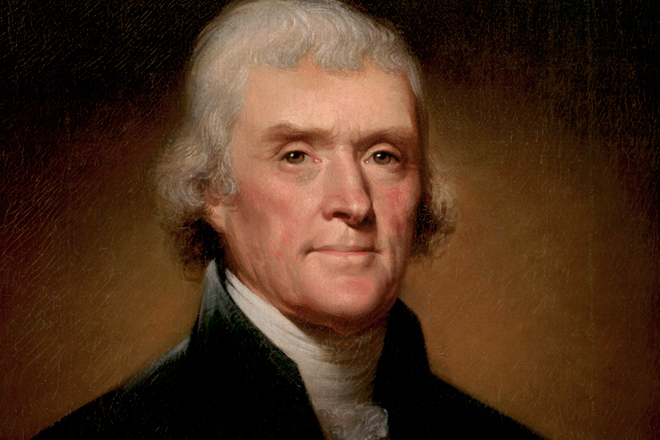
In fact both Thomas Jefferson and James Madison were very careful about proclamations and ensuring that government was not favoring any particular religious body. Jefferson wrote to Reverend Samuel Miller in 1808 that:

Fasting and prayer are religious exercises; the enjoining them an act of discipline. Every religious society has a right to determine for itself the time for these exercises, and the objects proper for them, according to their own particular tenets; and right can never be safer than in their hands, where the Constitution has deposited it. …civil powers alone have been given to the President of the United States and no authority to direct the religious exercises of his constituents.”
james_madison

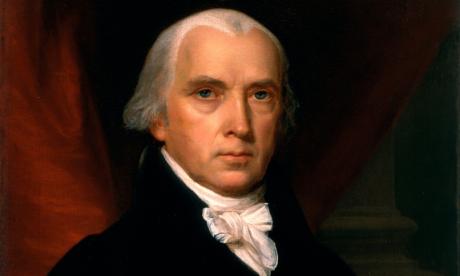
Madison who was the author of the Bill of Rights and included religious liberty in the First Amendment in support of Virginia Baptists who were under pressure from those who were determined to make and keep the Episcopal Church as the state religion of the commonwealth. Madison wrote to Edward Livingston in 1822 that:

“There has been another deviation from the strict principle in the Executive Proclamations of fasts & festivals, so far, at least, as they have spoken the language of injunction, or have lost sight of the equality of all religious sects in the eye of the Constitution. Whilst I was honored with the Executive Trust I found it necessary on more than one occasion to follow the example of predecessors. But I was always careful to make the Proclamations absolutely indiscriminate, and merely recommendatory; or rather mere designations of a day, on which all who thought proper might unite in consecrating it to religious purposes, according to their own faith & forms. In this sense, I presume you reserve to the Govt. a right to appoint particular days for religious worship throughout the State, without any penal sanction enforcing the worship.”

President Obama’s 2013 Proclamation for the National Day of Prayer stands in line with the founders as well as that of Presidents Truman and Reagan. It calls Americans to join with him to:

Americans have long turned to prayer both in times of joy and times of sorrow. On their voyage to the New World, the earliest settlers prayed that they would “rejoice together, mourn together, labor, and suffer together, always having before our eyes our commission and community in the work.” From that day forward, Americans have prayed as a means of uniting, guiding, and healing. In times of hardship and tragedy, and in periods of peace and prosperity, prayer has provided reassurance, sustenance, and affirmation of common purpose.

Prayer brings communities together and can be a wellspring of strength and support. In the aftermath of senseless acts of violence, the prayers of countless Americans signal to grieving families and a suffering community that they are not alone. Their pain is a shared pain, and their hope a shared hope. Regardless of religion or creed, Americans reflect on the sacredness of life and express their sympathy for the wounded, offering comfort and holding up a light in an hour of darkness.

All of us have the freedom to pray and exercise our faiths openly. Our laws protect these God-given liberties, and rightly so. Today and every day, prayers will be offered in houses of worship, at community gatherings, in our homes, and in neighborhoods all across our country. Let us give thanks for the freedom to practice our faith as we see fit, whether individually or in fellowship.

On this day, let us remember in our thoughts and prayers all those affected by recent events, such as the Boston Marathon bombings, the Newtown, Connecticut shootings, and the explosion in West, Texas. Let us pray for the police officers, firefighters, and other first responders who put themselves in harm’s way to protect their fellow Americans. Let us also pray for the safety of our brave men and women in uniform and their families who serve and sacrifice for our country. Let us come together to pray for peace and goodwill today and in the days ahead as we work to meet the great challenges of our time.

The Congress, by Public Law 100-307, as amended, has called on the President to issue each year a proclamation designating the first Thursday in May as a “National Day of Prayer.”

NOW, THEREFORE, I, BARACK OBAMA, President of the United States of America, by virtue of the authority vested in me by the Constitution and the laws of the United States, do hereby proclaim May 2, 2013, as a National Day of Prayer. I join the citizens of our Nation in giving thanks, in accordance with our own faiths and consciences, for our many freedoms and blessings, and in asking for God’s continued guidance, mercy, and protection.

However, no matter how similar President Obama’s proclamation is to those of President Reagan or Truman or for that matter any other President with the exception of President George W Bush, he is attacked by people on the extremely partisan political right World Net Daily columnist Bob Unruh and others for supposedly “cleansing the day of prayer of Christianity.”

The fact that Unruh and others like him routinely engage in this behavior makes me tired. The real fact of the matter is that most of the men who helped establish the freedom of religious faith and practice in this country were decidedly not very Christian and determined not to repeat the tragic mistakes of European nations which had both established state religions or churches and had on numerous occasions entered into bloody warfare to ensure that their religion came out on top.
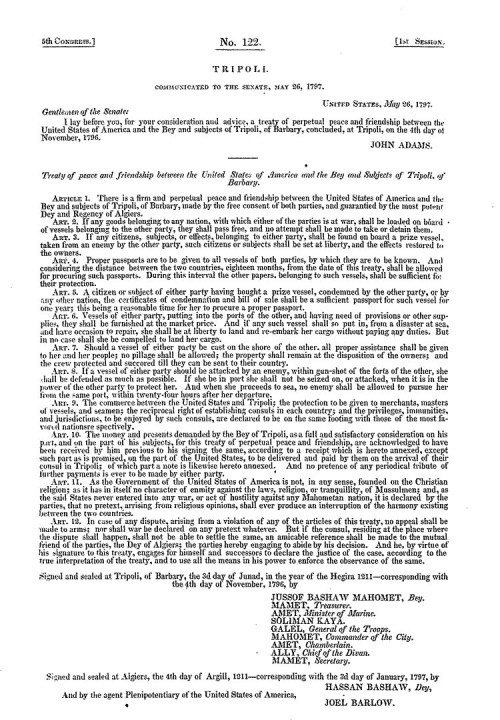
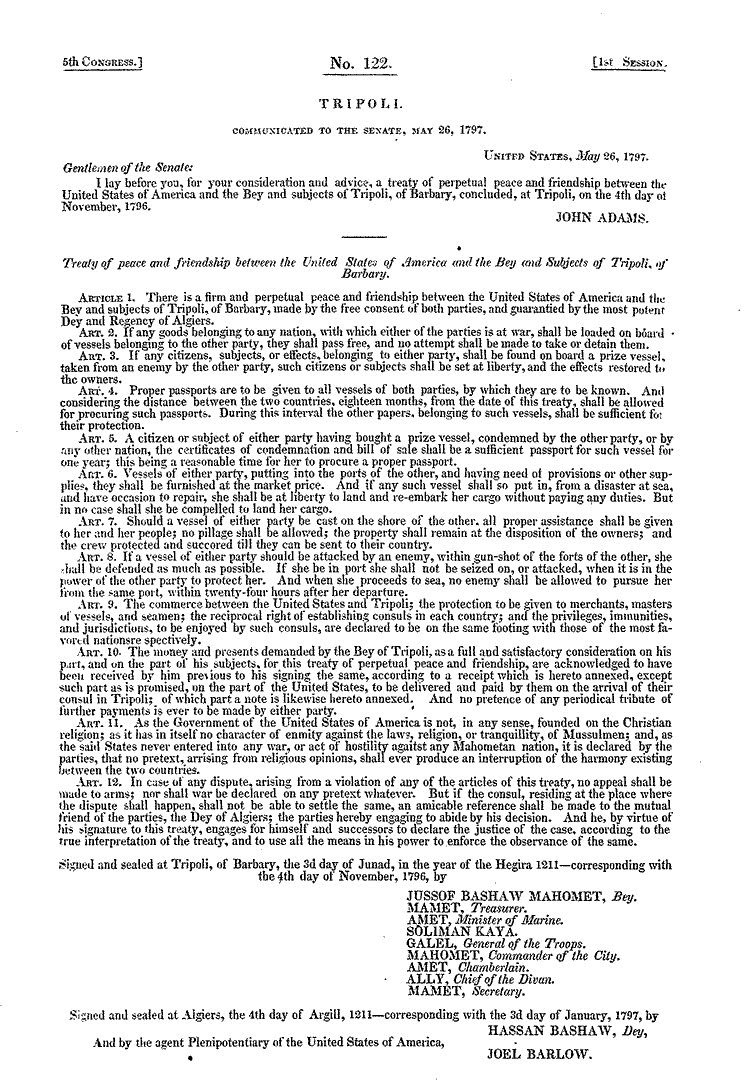
TreatyofTripoli

Our founders were so opposed to the idea of a State Religion that in one of the first treaties entered into with another nation, the Treaty of Tripoli of 1796 drafted by the future President John Adams noted in Article 11:

As the government of the United States of America is not in any sense founded on the Christian Religion, — as it has in itself no character of enmity against the laws, religion or tranquility of Musselmen, — and as the said States never have entered into any war or act of hostility against any Mehomitan nation, it is declared by the parties that no pretext arising from religious opinions shall ever produce an interruption of the harmony existing between the two countries.”
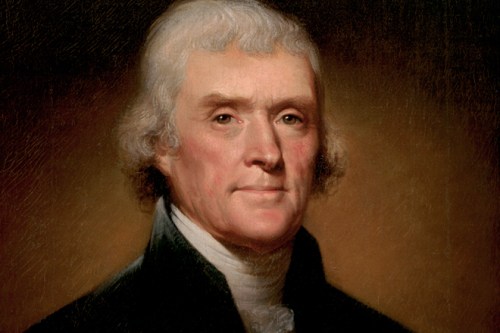
thomas_jefferson_rect

Jefferson wrote in the Virginia Act for the Establishment of Religious Freedom:

Be it therefore enacted by the General Assembly, That no man shall be compelled to frequent or support any religious worship, place, or ministry whatsoever, nor shall be enforced, restrained, molested, or burdened in his body or goods, nor shall otherwise suffer on account of his religious opinions or belief; but that all men shall be free to profess, and by argument to maintain, their opinions in matters of religion, and that the same shall in nowise diminish, enlarge, or affect their civil capacities. 

Madison wrote:

“Who does not see that the same authority which can establish Christianity, in exclusion of all other religions, may establish with the same ease any particular sect of Christians, in exclusion of all other sects?”
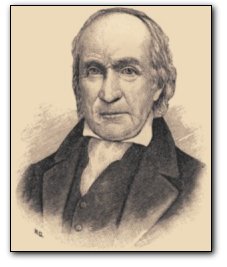
leland-1-1

John Leland, leader of the Virginia Baptists who were being persecuted by Episcopalians intent on re-establishing themselves as the official State Religion of Virginia became involved in the fight for religious liberty in the newly independent colonies wrote:

“The notion of a Christian commonwealth should be exploded forever…Government should protect every man in thinking and speaking freely, and see that one does not abuse another.  The liberty I contend for is more than toleration.  The very idea of toleration is despicable; it supposes that some have a pre-eminence above the rest to grant indulgence, whereas all should be equally free, Jews, Turks, Pagans and Christians.”

Leland heavily influenced both Madison and Jefferson in crafting the Virginia statement on religious liberty and the First Amendment. Toward the end of his life Madison wrote:

“The settled opinion here is, that religion is essentially distinct from civil Government, and exempt from its cognizance; that a connection between them is injurious to both; that there are causes in the human breast which ensure the perpetuity of religion without the aid of the law; that rival sects, with equal rights, exercise mutual censorships in favor of good morals; that if new sects arise with absurd opinions or over-heated imaginations, the proper remedies lie in time, forbearance, and example; that a legal establishment of religion without a toleration could not be thought of, and with a toleration, is no security for and animosity; and, finally, that these opinions are supported by experience, which has shewn that every relaxation of the alliance between law and religion, from the partial example of Holland to the consummation in Pennsylvania, Delaware, New Jersey, &c., has been found as safe in practice as it is sound in theory. Prior to the Revolution, the Episcopal Church was established by law in this State. On the Declaration of Independence it was left, with all other sects, to a self-support. And no doubt exists that there is much more of religion among us now than there ever was before the change, and particularly in the sect which enjoyed the legal patronage. This proves rather more than that the law is not necessary to the support of religion” (Letter to Edward Everett, Montpellier, March 18, 1823).

I am all in on religious liberty including the rights of people that are not Christians to practice whatever faith or non-faith that they please. This is the freedom that our founders fought to bring forth in this land.

Today we celebrated the National Day of Prayer and I had the privilege of leading our prayer at our facility. I have included that prayer here:

Loving God, we thank you for the privilege of living in this country where our founders were wise enough to neither establish nor forbid any religious practice. We thank you that as the beneficiaries of the wisdom handed down by these men that we have the liberty to believe and practice our faith in the manner that we see fit and that whether Christian or Jew, Moslem or Wiccan, Buddhist or any other faith represented in our land that we have this freedom. We thank also thank you for the freedoms granted to all, the freedom to believe, practice and even not believe as our conscience dictates and that Congress can enact no law to either establish a state religion nor prevent the free exercise of the beliefs of any citizen. 

For the wisdom and the foresight of these fallible men whose actions redound to us we give you thanks.  We pray this in your Holy Name. Amen. 

So as the time draws near to go to bed and I offer my night prayers for all, I do wish you the peace and freedom that so many Americans have fought and died to maintain.

Peace

Padre Steve+

Leave a comment

Filed under faith, History, laws and legislation, Lies of World Net Daily, Religion

“You May Fire When Ready Gridley” The Battle of Manila Bay 1 May 1898: Victory and Unexpected Consequences

676px-USS_Olympia_art_NH_91881-KN

In 1898 Spain was a weak and declining power with overseas territories which were seething with resentment to Spanish rule and ripe for the pickings of any power that wanted to challenge Spain. The United States was beginning its ascendency to becoming a world power and the Spanish colony of Cuba, which had many American economic interests and the possession of which could allow the United States to dominate the Caribbean was considered by many American political and economic leaders to be ripe for the picking. It was just a short distance from the United States, had a restive population whose cause was being promoted and exploited by the Yellow journalists of the Hearst media empire.

In response to the alleged dangers faced by American citizens in Havana, President McKinley sent the USS Maine to Cuba to safeguard American interests and citizens. The deployment was part of a larger world wide deployment of US Navy forces in the Caribbean, Europe and Asia. On February 15th the Maine blew up and sank. The American press declared it to be an act of terrorism perpetrated by Spanish agents in Havana. A US Navy investigation concluded that such was the case, while Spanish investigators concluded Maine’s loss was due to a magazine explosion. The truth of the matter was that the Maine blew up and the cause is inconclusive with experts, including a commission led by Admiral Hyman Rickover in 1974 determining that the cause could have been an internal ammunition magazine explosion, while others do not rule out the possibility of a Spanish mine.

Regardless of the actual cause tensions rapidly escalated and on April 23rd Spain declared war on the United States. On the 25th Congress declared war on Spain. In the Pacific the US Navy Asiatic Squadron under the command of Commodore George Dewey set sail from Honk Kong to Manila, where a poorly equipped squadron of mostly obsolete ships under the command of Admiral Patricio Montojo awaited them.

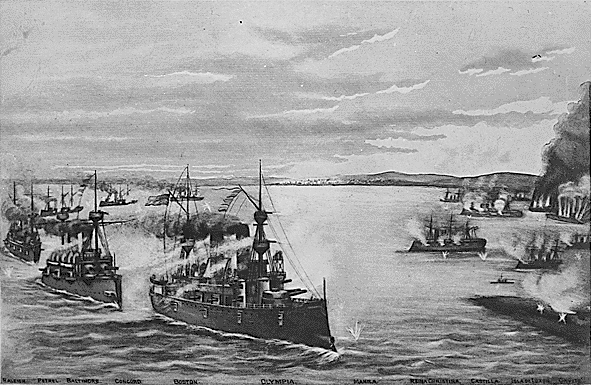
USS_Olympia_with_Dewey_at_Battle_of_Manila_bay_DSCN4191_at_Vermont_State

The US Navy forces were modern and well equipped compared to the Spanish. Composed of 4 relatively modern protected cruisers and 2 gunboats led by the Protected Cruiser USS Olympia. Dewey’s force was well trained and its ships superior to anything in the Spanish squadron. The Spanish ships, undermanned and some of which had much of their armament shipped ashore to supplement shore batteries were composed of 4 unprotected cruisers, two small protected cruisers and two gunboats. A number of smaller and even less capable ships were in the area but took no part in the action.

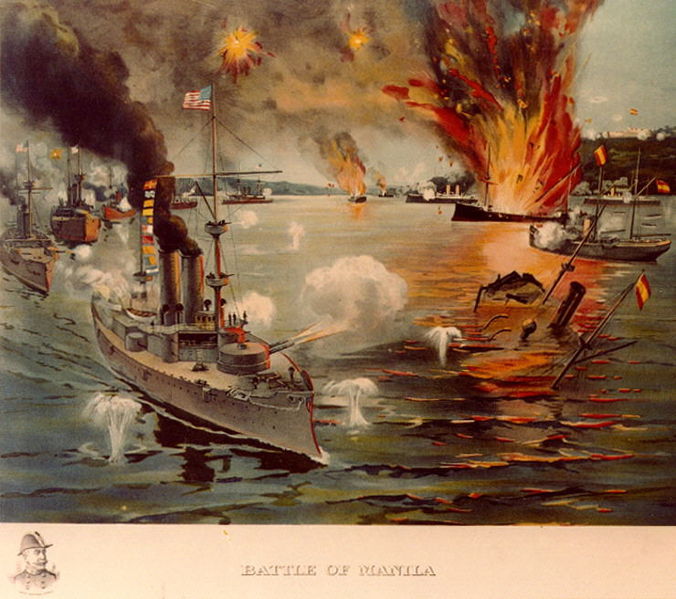
Dewey’s squadron sailed into Manila Bay on the evening of the 30th of April, surprising Montojo who believed that the approaches to the bay were too treacherous to navigate at night for mariners unfamiliar with them. Arriving in Manila Bay in the early morning hours and ineffectively opposed by shore batteries at El Fraile and Cavite and at 0541 Dewey ordered the Captain of the Olympia to open fire using the famous line “You may fire when ready Gridley.”

ManilaBayBattle

Within two and a half hours the Spanish force was destroyed. Dewey lost one man dead and 9 men wounded though some Spanish sources report that Dewey might have lost 13 killed and 30 wounded. The Spanish force lost all of its engaged forces with 77 men killed and 271 wounded. Dewey’s force would destroy the Spanish shore batteries and land Marines taking possession of the Cavite Naval Yard on May 7th.

The action was the first major naval action conducted by the United States overseas in the steam age and helped secure the United States a place in the early 20th Century colonization of Asia by European powers and Japan. As a result of Dewey’s victory other Spanish possessions in the Pacific like Guam would be occupied by the United States. It would also through the American occupation of the Philippines necessitate a campaign against the recently liberated Filipino population who had looked to the United States as liberators, and eventually to the Philippines becoming a major campaign in the Pacific war between Japan and the United States.

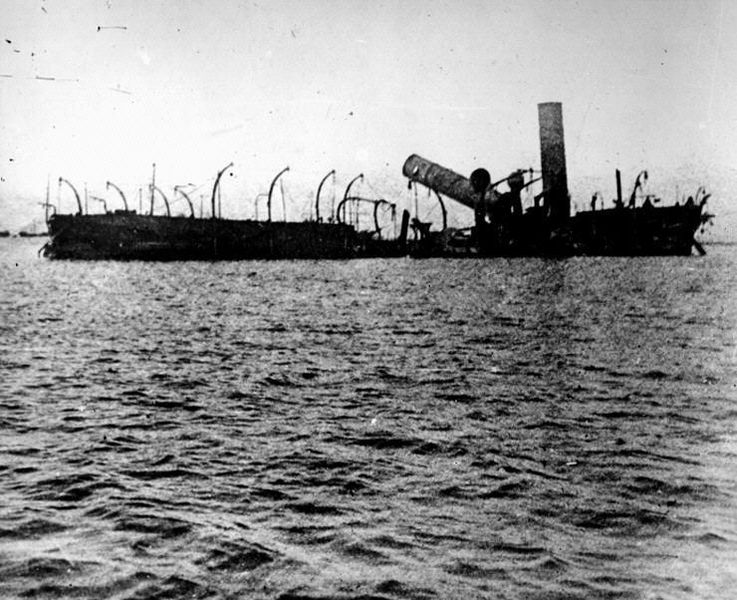
737px-Sunken_Reina_Cristina_3

The wreck of the Spanish Flagship the Cruiser Regina Cristina 

Destroying the Montojo’s Spanish squadron was easy compared to the American counter-insurgency campaign against the Filipinos and the later conflict with the Japanese in the Second World War. However, Dewey’s defeat of Montojo’s squadron would help establish the United States as a world power and help ensure that the United States Navy would become one of the world’s preeminent Naval forces within a decade of the battle. Spain never fully recovered from the battle or the war and declined in influence. eventually succumbing to a violent civil war in the 1930s.

As a so common the initial battle or battles of a war can seem easy compared to the later tasks of occupying and ruling a conquered territory or the unexpected consequences that follow. As such it should serve as a warning for those that see easy conquests and do not calculate what might happen after the initial battle is won.

Peace

Padre Steve+

Leave a comment

Filed under History, Navy Ships, US Navy