Monthly Archives: March 2014

Miscellaneous Musings on a Wednesday Night

20130403-153235.jpg

Well my friends it is another Wednesday night in the season of Lent and all is well at our little household. Since my return from Gettysburg Sunday night I have been in recovery mode. It is amazing how much work went into that trip and when I count in the fact that I had to spring forward over the weekend I have to admit that I was totally exhausted when I got home. I was in bed early last night and for once I got a relatively decent night of sleep in.

At work today I spent time with people, read, and did some reflecting on other Civil War and Gettysburg subjects. I also did some musing on Ethics and the state of it in our military, especially in the senior leadership over the past 15 to 20 years or so.

Both history and ethics matter a great deal to me. I think in our quest to become more efficient that we have forgotten both, and that many of the troubles that we face in this country are because we lack any real appreciation for history, philosophy or ethics. The fact is that they are not disciplines that lead to “job creation,” which is the mantra of so many Politicians, Pundits and Preachers, that Unholy Trinity, that it makes me want to vomit. Last year after he became Governor of North Carolina, the new governor and former “successful businessman” Pat McCrory promised to cut off financial aid for students taking courses not directly related to a “job.”

Of course to him this meant the humanities, history, philosophy, the social sciences and the arts. Not STEM or classes that teach people how to turn widgets, those  are immune because they produce a truly subservient class of people who do not ask questions.

Of course the study and teaching of the subject that McCrory and others want to cut are distinctly related to the preservation of our culture and society so I can see why a businessman like McCrory would so deftly attempt to sweep them aside. They are inconvenient if you are intent on creating a society to create a society of mindless drones who can do jobs but are incapable of any critical thought. So we wonder why at every level of government, private industry and even the church that people behave in ways which defy the norms of a civilized society.

Despite how loud many religious conservatives decry how far we have fallen, they are often complicit in the very things that they decry and condemn. The reason for this? Because they exalt in thought and action the very philosophies that they supposedly stand against. But then they have bought into the hateful philosophy of Ayn Rand and her violent Social Darwinism and are too poorly educated to realize it.

Wow, I think I just chased that rabbit and I have to admit that I digress… sorry.

So anyway, where was I?

Okay I remember, I was writing about what I was doing after the Gettysburg Staff Ride. It has been an interesting few days. I love the fact that there are baseball games on television again. It is a pleasant sensation to look up from a couch, bed or bar to see a baseball game. It will be even better when I am back at Harbor Park in section 102 watching the Norfolk Tides of the International League. Baseball you see is one of the few things that brings peace to my soul. No matter where or what level the sight of that diamond and smell of the freshly cut grass brings peace to my often troubled soul.

Tonight I am watching the Ken Burns Baseball series. I was struck by the comment that men who fail seven out of ten times are heroes. I think that is the case in real life. Most of us are lucky if we hit .250 in the game of life, much less .300. As for me I tend to operate by the grace of God at the Mendoza Line, or .200, just enough to stay in the game.

I have a number of writing projects planned, I am completing an application for a Ph.D. program in Organizational Leadership in which I will be able to combine my academic and professional interests into a multidisciplinary degree program. Unlike a lot of people pursuing a Ph.D. I already am pretty sure about the subject I will pursue for my dissertation. For those that haven’t guessed by what I have written the past few weeks it might have something to do with the Civil War.

So tomorrow at work I will start working on my Ethics class, the Gettysburg Staff Ride and preparations for teaching some other classes.

It is a good life. Have a great night and blessed tomorrow.

Peace

Padre Steve+

1 Comment

Filed under Baseball, ethics, Loose thoughts and musings, Political Commentary

Calling the X-Files Team: Agents Scully and Mulder Please Find MA-370

malaysia-airlines-boeing-777.jpg1394548966

I hate to admit it but the strange disappearance of Malaysian Airlines Flight 370 is beginning to look like an X-File.

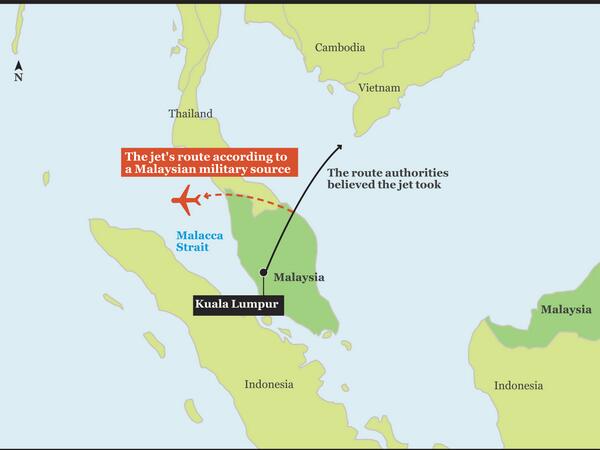
When the aircraft was first reported missing I thought the aircraft had to have fallen victim to either a mechanical failure or terrorism. However it looks like that things are not what they would appear to be. The latest information has the aircraft traveling hundreds of miles in the opposite direction of its flight plan.

It has been four, soon to be five days since the aircraft disappeared. In that time there have been reports that the families and co-workers of the presumed victims have been able to get calls through to cell phones which have rang through and some of which have shown up as active on a Chinese internet provider tracker.

Frankly I don’t know what to think. The aircraft a Boeing 777-200 ER had a good maintenance record and the aircraft type has a very safe operational history. The only fatal accident occurred when a Korean Air aircraft crashed due to pilot error while landing at San Francisco International Airport. It was a testament to the design and strength of the aircraft that keep causalities to a bare minimum.

From what Interpol and other police and security agencies are saying right now this does not appear to be a terrorist incident. Of course that could change if evidence is uncovered that shows this to be the case.

BidF1btCYAAxw1E

The last reported position was over the Straits of Malacca, one of the busiest maritime transit corridors in the world, but no one on the ground or at sea reported anything out of the ordinary at the time when the aircraft disappeared.

I hope, as I imagine most people hope that the aircraft made a safe emergency landing in some remote area and that the passengers and crew are safe. However with every passing day the chances of that grow more remote and personally I cannot imagine this to be the case to begin with.

Could the aircraft and the 239 souls aboard been the victim of a terrorist incident or hijacking? I assume that it is possible. Could it have been the victim of a catastrophic mechanical failure. Yes, but since it appears that it continued on for hours after its last contact with land based ground controllers I think not.

Authorities in Malaysia and around the world are checking every possible lead that might shed light on this most likely tragic situation. Nothing has been ruled out.

The are other possibilities, but all are at best speculation. Thus I wonder if we should call in Agents Dana Scully and Fox Mulder from the X-Files to figure this out.

To me the whole thing is totally weird. I want things to work out and the people traveling aboard her to be safe. However, this is very unusual. A jumbo-jet with an experienced Captain and crew making a turn away from its course without notifying ground control. That is strange.

Likewise no matter what happened I cannot help but imagine the terror that the passengers and crew felt, unless it somehow did land safely in some remote place.

The whole situation is perplexing. I really don’t know what to make of it, though for all concerned I how that the aircraft is found, and the souls aboard are safe.

Maybe we should call the real life versions of Scully and Mulder to figure this out, and I am not kidding. This is pretty weird.

Until tomorrow.

Peace

Padre Steve+

1 Comment

Filed under News and current events

Creepy Television Shows: Padre Steve Loves Bates Motel and Those Who Kill

BatesMotel

Well my friends after a coupled of weeks of seriousness something a little less serious, unless you take creepy things more seriously than you should. Yes I could be writing more about Gettysburg or other military History tonight. Likewise I could be writing about pressing social issues or world events, faith and religion, politics or baseball. I do promise that I will do some of that soon.

However, I don’t do a lot of television. I am not a fan of a lot of the new shows on today. I can watch Seinfeld, Boston Legal, MASH, any of the Star Trek series, The X-Files, Cheers, House MD or any number of older television series for hours on end. I also love The Simpson’s, Family Guy, Southpark and American Dad and the same is true with many other series.

However, I do not enjoy what is referred to as “reality TV.” The fake nature of this artificial reality bugs the shit out of me. Truthfully I deal with enough real reality every day not to want to deal with the contrived reality of Duck Dynasty or anything else of the genre.

Tftd2

Neither am I a fan of soap operas, even those of the horror genre. Unfortunately between reality TV and various soap operas it seems that much of television has become a wasteland of prepackaged formulas designed to keep non-thinking people coming back.

Likewise I refuse to watch any supposedly “Christian” television. I cannot think of much more that is less Christian than I see on most Christian networks. The fact that most extol the voices or pride, avarice, greed, and even violence all baptized with carefully selected verses of scripture and done in the name of God makes me think that they are the tools of the Devil himself.

The-xfiles-facts

It is hard to believe that in an era where there are hundreds of television shows to watch on any given night that I have nothing to watch unless I put in a DVD or BlueRay disc of something that is now off the air.

Rod

However, that being said I have always loved creepy and suspenseful shows. I loved The X-Files, which I already mentioned. Likewise always I loved The Twilight Zone, Tales From the Crypt, Tales from the Dark Side and the long running Criminal Minds. I love the creepy, suspenseful and the sometimes somewhat twisted humor and irony of these shows.

However, it is been a while since I have seen any really creepy and suspenseful new shows. I am sure that there are some out there but it has taken me time to find a couple new shows that I really like. That search my friends ended last week when my wife Judy insisted that I watch Bates Motel. I loved it.

Following it there was another show, Those Who Kill. I loved it as well. Very suspenseful, creepy and well done. You cannot ask for much more in two shows that run back to back.

batesbathroom

Bates Motel is basically the prequel to the legendary Hitchcock film Psycho. Last year Judy realized that her decoration of our master bathroom in a Rubber Ducky pattern was not interesting to me. So for my birthday when I was still stationed in Camp LeJeune she redecorated that bathroom in a Psycho theme. I loved it. When I cam home and saw it I laughed myself sick. That being said there are some nights that when I have to get up to do my business that I am taken aback.

Bates Motel is really well done, as is Those Who Kill. I think that the former is really creepy because of the whole story and the fact that we meet Norma Bates, an overprotective mother who happens to be kind of hot.  The latter is about a detective and a professor of forensic psychology who track down serial killers. Both shows are creepy, very well done and very suspenseful. In other words they appeal to me.

I think a big part of the reason I like these shows is because they demonstrate the human condition in a manner not seen in other places. We live in a beautiful but at times scary world.

With that I have to take my attention back to the new Bates Motel followed by Those Who Kill.

Peace and Suspense,

Padre Steve+

1 Comment

Filed under enteratinment, film, televsion

Remembering Gettysburg and the New Birth of Freedom

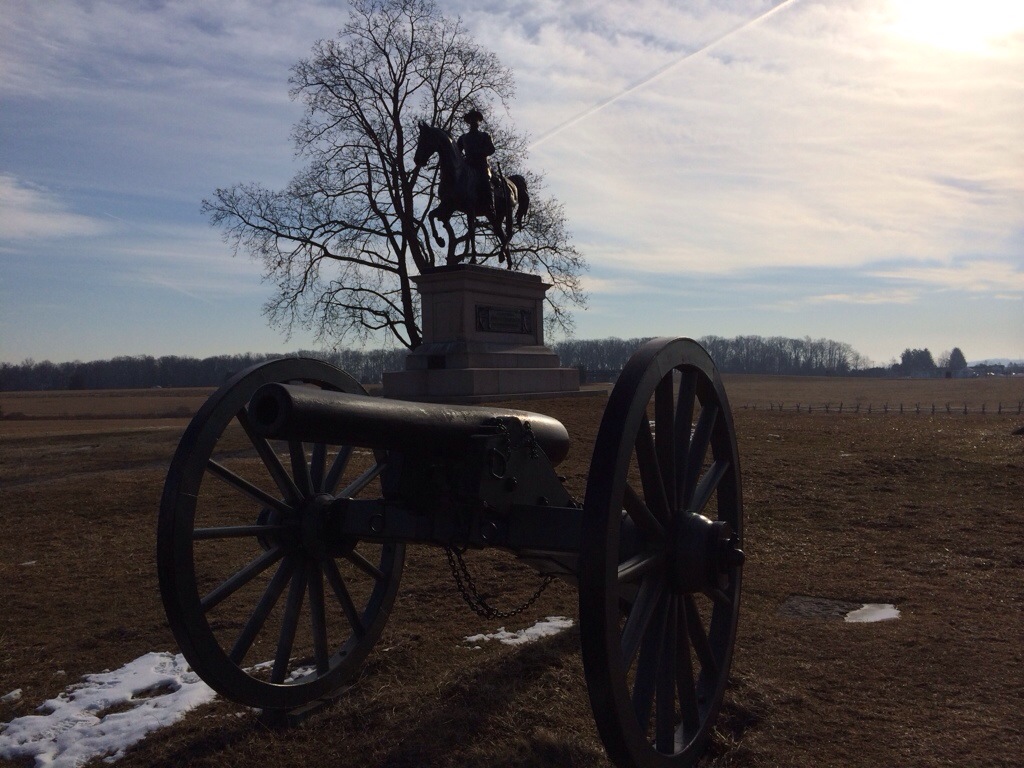
reynoldsmemorial

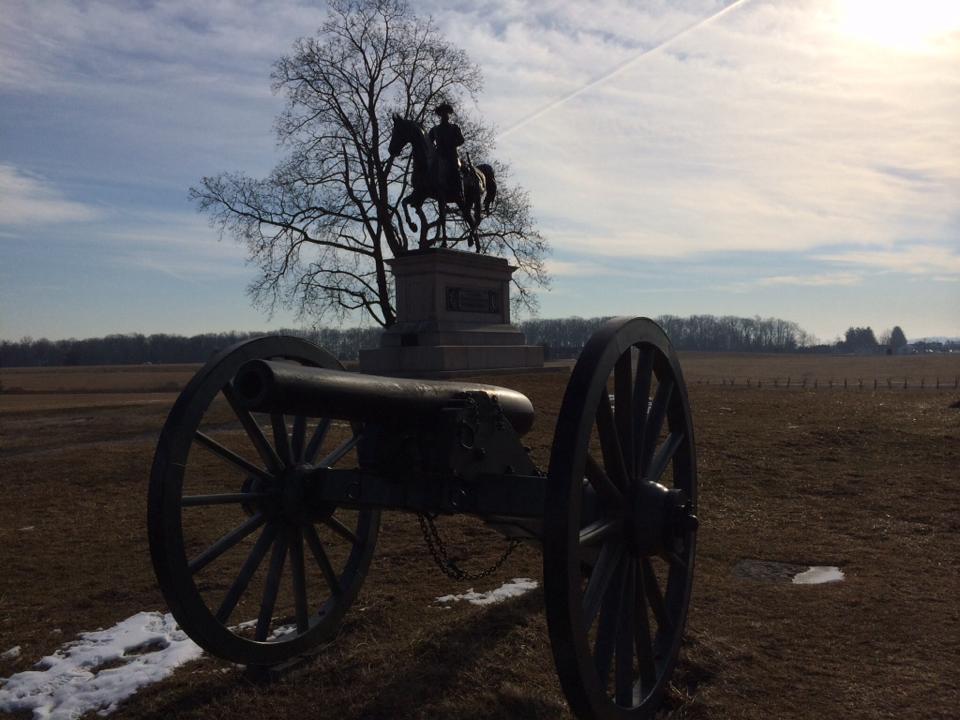
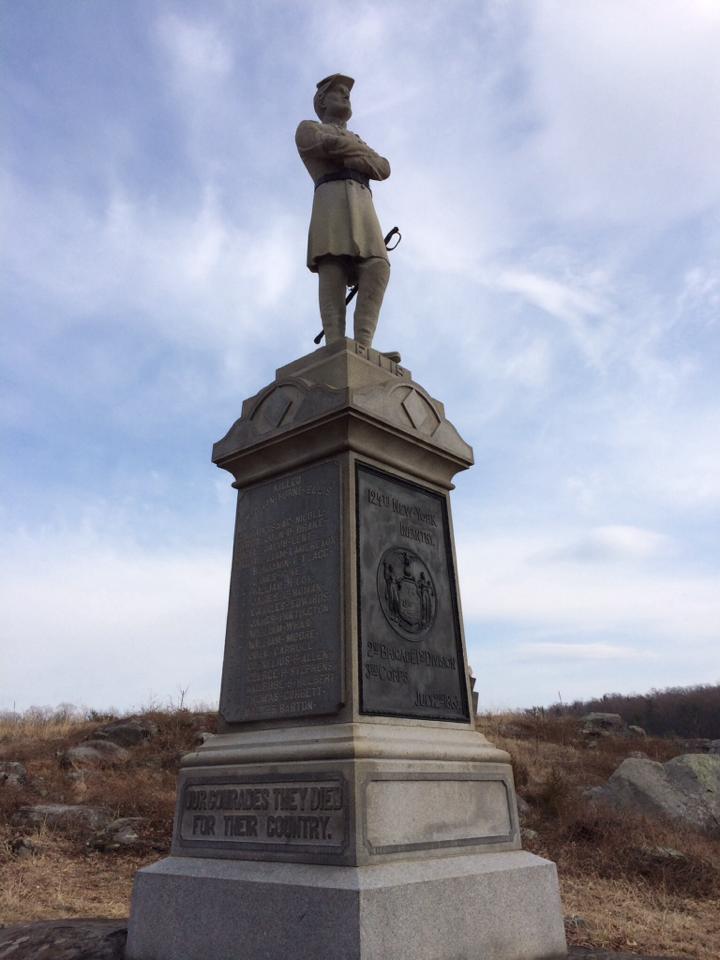
I am always humbled when I travel to Gettysburg as I did this weekend.  It is hard to believe in that now peaceful pastoral setting that over 157,000 Americans, almost 82,000 Union and 75,000 Confederate met in a three day battle. In those three days over 28,000 Confederates and 23,000 Union soldiers were killed, wounded, missing or captured. It was the greatest number of casualties inflicted in one battle on American soil in history.

I left on Friday with students from our Staff College and returned home this evening. It was my first time leading a Staff Ride like this though I have participated in them at other battlefields and led less extensive visits to Gettysburg when I was stationed at Fort Indiantown Gap Pennsylvania in 1997-1998. I have a good group of students, Army, Navy and Air Force Officers of much experience. In addition to simply examining the battlefield and telling the story of the battle, I have been working over the past two months to build a foundation that enables them to learn the enduring and timeless lessons of leadership, command, control, communication, the linkage between national strategy objectives, the operational art, operational objectives and tactical objectives.  Unlike other visits I added a final stop at the Gettysburg Soldiers’ Cemetery where President Abraham Lincoln delivered the Gettysburg Address.

irishbrigadememorial

The places that the battle was fought have become legendary, for they are “hallowed ground” as Lincoln so eloquently put it. The places, McPherson’s and Herr’s Ridge, Seminary Ridge, the Railroad Cut, Barlow’s Knoll, Cemetery Hill, Culp’s Hill, The Wheat Field, Devil’s Den, the Peach Orchard, Little Round Top, Cemetery Ridge, the Apse of Trees, the Angle and the High Water Mark are in a sense holy, or hallowed. They were consecrated by those who struggled there, those who lived and those who gave the last full measure of devotion to their country.

I think about those men of both sides and how they came to serve. In 1863 the majority of those who fought were volunteers. Some were motivated by their convictions, fully convinced of the rightness of their cause. Other went to war with mixed feelings. Some fought for family, or their homes, or because they felt that they could do no otherwise, and some even fought against the cause that their families or states believed in.

devilsden

But no matter what their reason for going to war they  That being said when I go there though my family predominantly fought for the Confederacy my heart is drawn to those men who remained loyal to the Union and those who answered the call of Abraham Lincoln to serve in a cause greater than their own interests, the great and the small alike.

highwatermark

Lincoln was a masterful orator who managed to rally the Union and bring hundreds of thousands of men volunteer before Gettysburg. They came for an ideal an ideal which Lincoln’s oratory was probably the most effective at articulating in a way that men would volunteer to suffer hardship, fight and die to bring about. It was well put in the movie Gettysburg where Colonel Joshua Chamberlain said:

“This is a different kind of army. If you look at history you’ll see men fight for pay, or women, or some other kind of loot. They fight for land, or because a king makes them, or just because they like killing. But we’re here for something new. This has not happened much, in the history of the world: We are an army out to set other men free. America should be free ground, all of it, from here to the Pacific Ocean. No man has to bow, no man born to royalty. Here we judge you by what you do, not by who your father was. Here you can be something. Here is the place to build a home. But it’s not the land. There’s always more land. It’s the idea that we all have value, you and me. What we’re fighting for, in the end… we’re fighting for each other…”

joshua_l-1._chamberlain_at_little_round_top

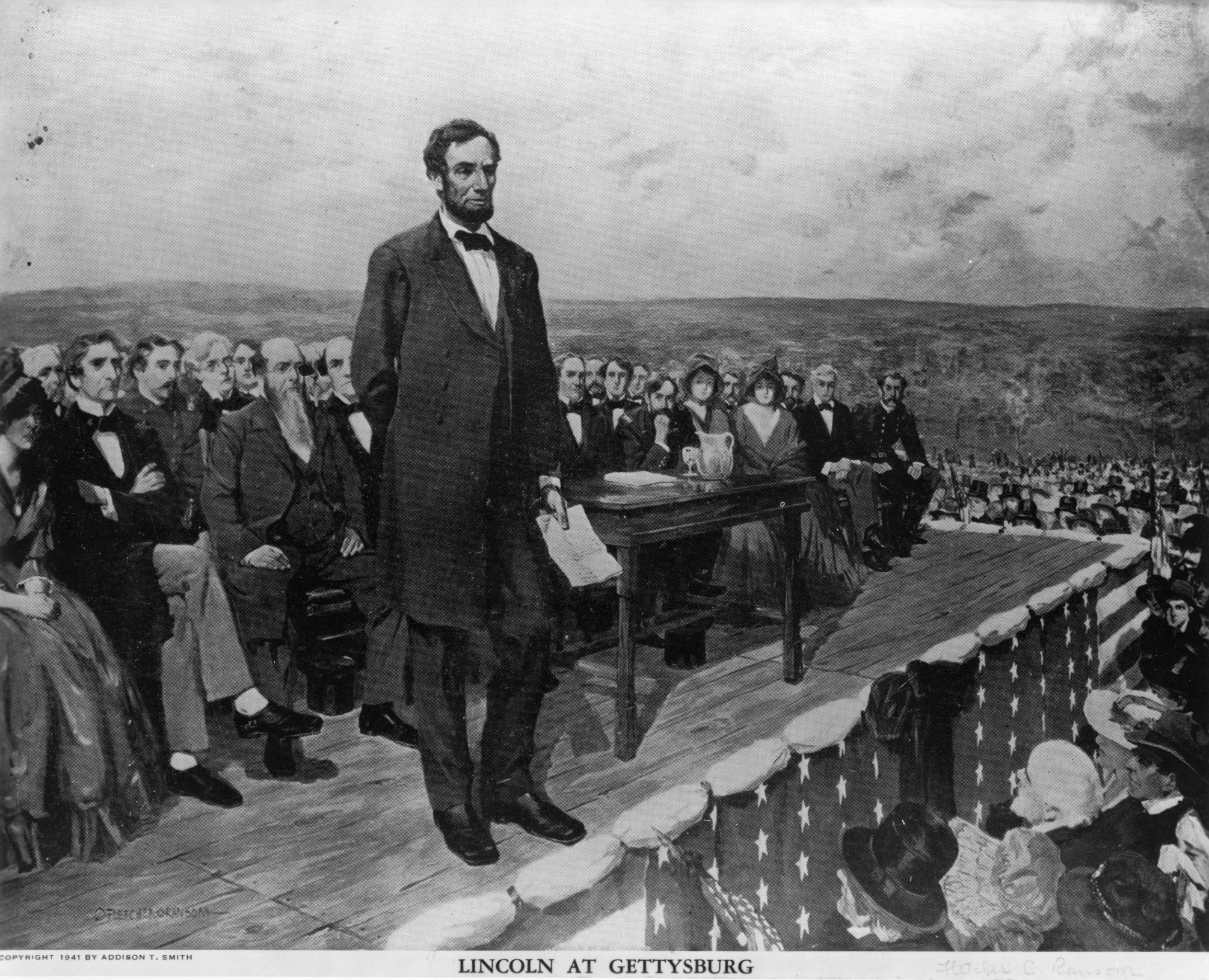
On November 19th 1863 Lincoln delivered a “few words” at Gettysburg which were in all practical aspects a benediction at the dedication of the battlefield cemetery. Lincoln was the second speaker at the ceremony following former Pennsylvania Congressman Edward Everett who spoke for more than two hours, a typical speech from the period. The 270 words of Lincoln’s address are perhaps the most important of any speech or document in American history save the Declaration of Independence and the Constitution of the United States.

The speech was so powerful that Everett wrote Lincoln the next day:

“Permit me also to express my great admiration of the thoughts expressed by you, with such eloquent simplicity & appropriateness, at the consecration of the Cemetery. I should be glad, if I could flatter myself that I came as near to the central idea of the occasion, in two hours, as you did in two minutes.”

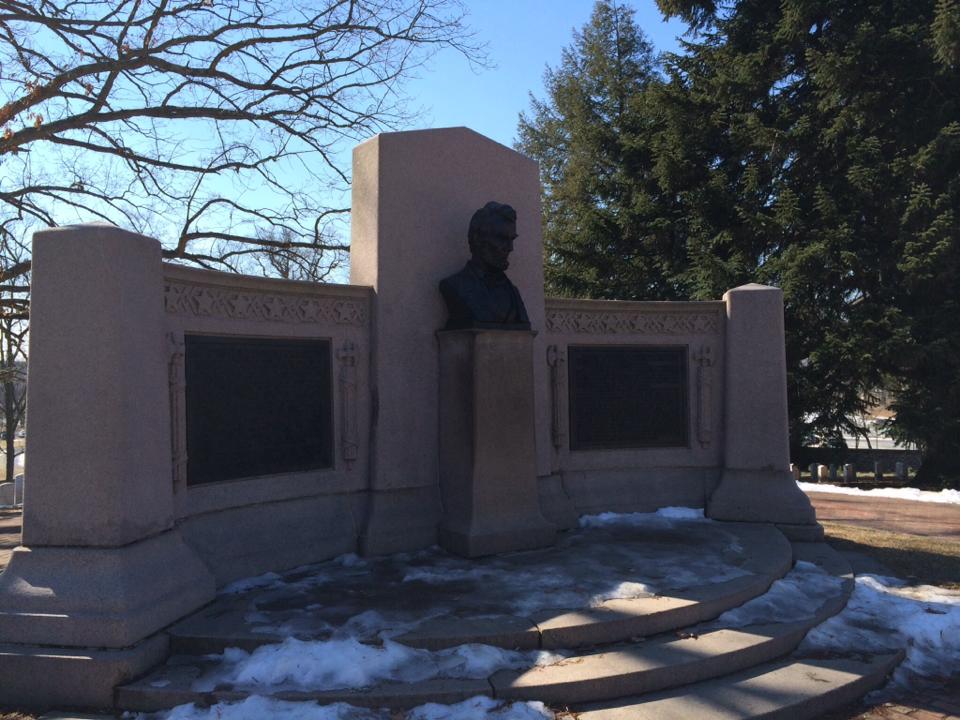
gburgaddressmemorial

The speech is short, but it’s eloquence is unmatched. Lincoln wrapped ideas, concepts and ideals that men have written volumes about into a speech so powerful that many have memorized it.

But few realize the context that it must be placed. Though the Union had defeated Lee’s Army at Gettysburg and Grant had taken Vicksburg to cut the Confederacy in half the North was growing war weary. There were those in the North, the Copperheads who were willing even after Gettysburg and Vicksburg to end the war on terms favorable to the Confederacy, even granting Confederate independence and the continuation of slavery. Likewise Lincoln was sick when he delivered the address having what was mostly likely a mild form of Smallpox when he gave the address. Thus the tenor, simplicity and depth are even more remarkable. It is a speech given in the manner of Winston Churchill’s “Blood sweat toil and tears” address to Parliament upon being appoint Prime Minister in 1940.

In a time where many are wearied by the foibles and follies of our politicians, even wondering about our form of government can survive Lincoln’s words matter. Dr Allen Guelzo, Professor of Civil War Studies at Gettysburg College wrote in the New York Times on the 150th anniversary of the Address:

“The genius of the address thus lay not in its language or in its brevity (virtues though these were), but in the new birth it gave to those who had become discouraged and wearied by democracy’s follies, and in the reminder that democracy’s survival rested ultimately in the hands of citizens who saw something in democracy worth dying for. We could use that reminder again today.”

GAFac1

Dr Guelzo is quite correct. Many people in this country and around the world are having grave doubts about our democracy. I wonder myself, but I am an optimist. I do believe that we will recover because for the life of me I see no nation anywhere else with our resiliency and ability to overcome the stupidity of politicians, pundits and preachers.
The amazing thing was that in spite of everything the Union survived. Lincoln was a big part of that but it was the men who left lives of comfort and security like Joshua Chamberlain and so many others who brought about that victory.

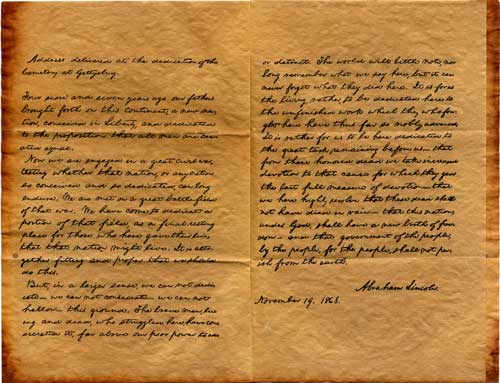
Gettysburg Address

Throughout the war, even to the end Southern political leaders failed to understand that Union men would fight and die for an ideal, something greater than themselves, the preservation of the Union and the freedom of an enslaved race. For those that volunteered it was not about personal gain, loot or land,it was about something greater. It was about freedom.
Now I for one do not think that we are currently living up to the ideals enunciated by Lincoln that day at Gettysburg. I can understand the cynicism disillusionment of Americans as well as those who have for over 200 years looked to us and our system as a “city set on a hill.” That being said, when I read these words and walk that hallowed  ground I am again a believer that we can realize the ideal.

Four score and seven years ago our fathers brought forth on this continent, a new nation, conceived in Liberty, and dedicated to the proposition that all men are created equal.

Now we are engaged in a great civil war, testing whether that nation, or any nation so conceived and so dedicated, can long endure. We are met on a great battle-field of that war. We have come to dedicate a portion of that field, as a final resting place for those who here gave their lives that that nation might live. It is altogether fitting and proper that we should do this.

But, in a larger sense, we can not dedicate — we can not consecrate — we can not hallow — this ground. The brave men, living and dead, who struggled here, have consecrated it, far above our poor power to add or detract. The world will little note, nor long remember what we say here, but it can never forget what they did here. It is for us the living, rather, to be dedicated here to the unfinished work which they who fought here have thus far so nobly advanced. It is rather for us to be here dedicated to the great task remaining before us — that from these honored dead we take increased devotion to that cause for which they gave the last full measure of devotion — that we here highly resolve that these dead shall not have died in vain — that this nation, under God, shall have a new birth of freedom — and that government of the people, by the people, for the people, shall not perish from the earth.

In the hope that we again realize those ideals and help bring about “a new birth of freedom,” I wish you a good night.
Peace

Padre Steve+

Leave a comment

Filed under civil war, History, leadership, Political Commentary

An Evening at Gettysburg

20140308-231743.jpg

Today was a really good day conducting our Staff College Gettysburg Staff Ride.

This is an optional event for our students and it is the first time that I have conducted it. My predecessor had done it 80 times in the last 20 years. I can only hope that I get that chance.

Today we covered the events of the first two days of the battle examining them in the light of the concepts or command and control, intelligence and mission command. What we discussed today was linked with concepts that we discussed before the trip. These included linking national and military strategy with the operational art and from there to tactics.

Though what occurred at Gettysburg happened over 150 years ago the concepts are timeless because they deal with the human aspects of leadership, communications and command.

Weapons and tactics may change but the human side remains the same. That it is why it is so important, especially in an era where STEM (Science, Math, Engineering and Technology) are exalted above the humanities.

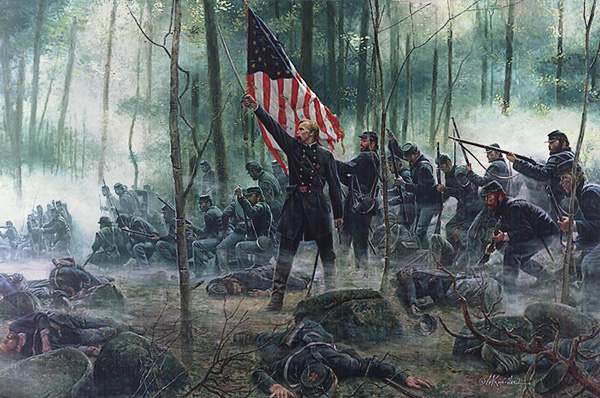
We finished this afternoon at Little Round Top where Grouvenor Warren, Strong Vincent and Joshua Chamberlain kept the Confederate Army from turning the Union flank and quite possibly winning a decisive victory.

Tomorrow we will continue our Staff Ride with the events of July 3rd 1863 on Culp’s Hill and Cemetery Ridge.

This evening I spent with seven of our officers having a nice dinner and a nightcap.

Until tomorrow,

Peace

Padre Steve+

Leave a comment

Filed under civil war, History, leadership, Military

At Gettysburg

mkholrt

“In great deeds, something abides. On great fields, something stays. Forms change and pass; bodies disappear; but spirits linger, to consecrate ground for the vision-place of souls… generations that know us not and that we know not of, heart-drawn to see where and by whom great things were suffered and done for them, shall come to this deathless field, to ponder and dream; and lo! the shadow of a mighty presence shall wrap them in its bosom, and the power of the vision pass into their souls.” Joshua Chamberlain

Tonight I am getting ready for bed but still anxiously preparing for tomorrow and Sunday as I lead about 25 of our officer students and some of their family members on what is called a “Staff Ride” of the Gettysburg Battlefield. In preparing for this I have taught three classes periods at our school and prepared a lot of my own research and writing.

We drove up today and in the van I was in we were able to talk about aspects of the campaign as well as the Civil War connected to this battle. We also discussed the timeless aspects of leadership and dealing with the complexities of people and organizations.

Since the trip up took longer than usual due to bad weather in Hampton Roads and bad traffic around Washington DC I am not going to write much tonight. That is why I led the article with the comments of Joshua Lawrence Chamberlain, the hero of Little Round Top. For me Gettysburg is as Abraham Lincoln so rightly put it “hallowed ground.” I feel that “mighty presence” that Chamberlain described every time I come here. I am drawn here by the actions of men who I never knew but through books and movies, but men who I feel a deep kinship, something spiritual, something deep, something that abides.

I am honored to teach, and in a sense to pass along a bit of what the men who fought here did to consecrate this ground and to give our nation a “new birth of freedom.”

Peace

Padre Steve+

Leave a comment

Filed under civil war, History, Loose thoughts and musings

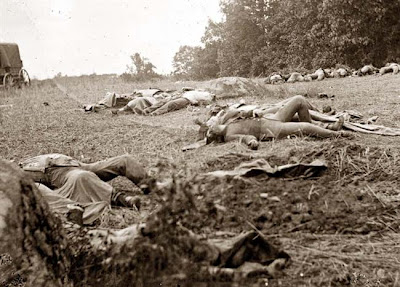
Counting the Cost: Gettysburg in Flesh and Blood

CW-GettysburgDead

“It is well that war is so terrible. We should grow too fond of it.” Robert E Lee

Too often we look at distant battles and campaigns in terms of strategy, operations, tactics, leadership and the weaponry employed. Likewise we might become more analytical and look at the impact of the battle or campaign in the context of the war it was fought,  or in the manner in which the tactics or weapons used revolutionized warfare. Sometimes in our more reflective moments we might look at individual bravery or sacrifice, often missing in our analysis is the cost in flesh and blood.

The words of Guy Sager in his classic work The Forgotten Soldier about World War Two on the Eastern front is lost on many that study war:

“Too many people learn about war with no inconvenience to themselves. They read about Verdun or Stalingrad without comprehension, sitting in a comfortable armchair, with their feet beside the fire, preparing to go about their business the next day, as usual…One should read about war standing up, late at night, when one is tired, as I am writing about it now, at dawn, while my asthma attack wears off. And even now, in my sleepless exhaustion, how gentle and easy peace seems!”
battleofgettysburg-devils-den

In an age where so few have served in the military and even few have seen combat in some way shape or form many who study war are comfortable experts who learn about war with no inconvenience to themselves. When I hear men and women, the pundits, politicians and preachers, that Trinity of Evil who constantly urge on others to go to war for causes, places or conflicts that they have little understanding of from the comfort of their living rooms or television studios I grow weary.

As a historian who also is a military chaplain who has seen war I struggle with what Sager said. Thus when I read military history, study and write about particular battles or engagements, or conduct staff rides as I will this weekend at Gettysburg the human cost is always present in my mind. The fact that I still suffer the effects of PTSD including night terrors and chronic insomnia keeps what I do in good focus, and prevents me from being a comfortable expert. Thus to do a staff ride, to walk the battlefield, especially in somewhat uncomfortable weather is a good thing. It connects us more in at least a small way to the men that fought there.

To walk a battlefield where tens of thousands of men were killed and wounded is for me a visit to hallowed ground. I have felt that at Waterloo, Verdun, Arnhem, Normandy, the West Wall, the Shuri Line, Antietam, Chancellorsville and of course the battlefield which I have visited more than any in my life, Gettysburg. There are times when I walk these fields that I am overcome with emotion. This I think is a good thing, for as an American who has family ties to the Civil War, Gettysburg in particular is hallowed ground.

nursingnationdivided-jpg-20130518
Sisters of Charity on the Battlefield

The past few weeks I have been doing a lot of reading and writing on Gettysburg as part of my preparation for the staff ride. In my position as a Chaplain who also teaches Ethics and will be teaching more military history I cannot be a cheerleader. I try to be dispassionate in how I teach and while dealing with big issues that my students need to face as Joint Staff Officers. Some of these men and women will probably become Flag or General Officers. Thus I do feel a certain responsibility to teach not only the strategy and other important military aspects, but also the cost in human lives and ethical considerations. I take my work seriously. Like James Longstreet I have to ask “Why do men fight who were born to be brothers?”

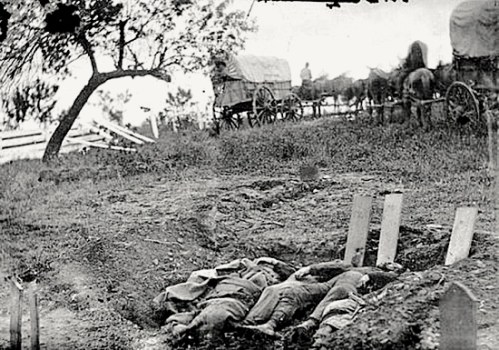
As the sun set on the evening of July 3rd 1863 the battered Army of Northern Virginia and the battered but victorious Army of the Potomac tended their wounds, buried their dead and prepared for what might happen next.

Gettysburg-Casualties1

Following the disastrous attack aimed at the Union center, what is commonly called “Pickett’s Charge” Lee and his surviving commanders prepared for an expected Union counter attack. However, George Meade, the commander of the Army of the Potomac who had correctly anticipated Lee’s assault decided not to gamble on a counter attack, though it was tempting. He knew too well the tenacity and skill of the Confederate commanders and soldiers on the defense and did not want to risk a setback that might give Lee another chance.

Nurse-Anne-Bell-cares-for-wounded-soldiers-600x366

The dead and wounded littered the battlefield. Field hospitals, little more than butcher shops where arms and legs were amputated by overworked surgeons and attendants while those with abdominal wounds that could not be easily repaired were made as comfortable as possible. Triage was simple. If a casualty was thought to have a reasonable chance at survival he was treated, if not they were set aside in little groups and allowed to die as peacefully as possible. Chaplains made their way around, Protestant’s ensuring that their soldiers “knew Jesus” and Catholics administering the Last Rites.

Corporal Horatio Chapman of the 20th Connecticut Volunteers wrote about the the July 3rd:

But in front of our breastworks, where the confederates were massed in large numbers, the sight was truly awful and appalling. The shells from our batteries had told with fearful and terrible effect upon them and the dead in some places were piled upon each other, and the groans and moans of the wounded were truly saddening to hear. Some were just alive and gasping, but unconscious. Others were mortally wounded and were conscious of the fact that they could not live long; and there were others wounded, how bad they could not tell, whether mortal or otherwise, and so it was they would linger on some longer and some for a shorter time-without the sight or consolation of wife, mother, sister or friend. I saw a letter sticking out of the breast pocket of one of the confederate dead, a young man apparently about twenty-four. Curiosity prompted me to read it. It was from his young wife away down in the state of Louisiana. She was hoping and longing that this cruel war would end and he could come home, and she says, “Our little boy gets into my lap and says, `Now, Mama, I will give you a kiss for Papa.’ But oh how I wish you could come home and kiss me for yourself.” But this is only one in a thousand. But such is war and we are getting used to it and can look on scenes of war, carnage and suffering with but very little feeling and without a shudder.”

Colonel William Oates of the 15th Alabama whose brave troopers assaulted Little Round Top on July 2nd wrote:

“My dead and wounded were nearly as great in number as those still on duty. They literally covered the ground. The blood stood in puddles in some places on the rocks; the ground was soaked with the blood of as brave men as ever fell on the red field of battle.”

Another Confederate soldier describe the scene west of the town on July 4th:

“The sights and smells that assailed us were simply indescribable-corpses swollen to twice their size, asunder with the pressure of gases and vapors…The odors were nauseating, and so deadly that in a short time we all sickened and were lying with our mouths close to the ground, most of us vomiting profusely.”
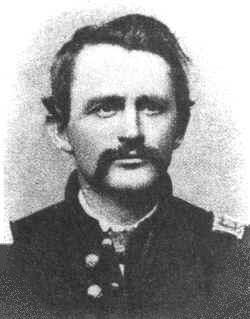
Elon_John_Farnsworth

Elon Farnsworth

Among the killed and wounded were the great and the small. John Reynolds who died on day one, Winfield Scott Hancock, the valiant commander of the Union II Corps wounded during Pickett’s Charge, “Mad” Dan Sickles, who had nearly brought disaster on the Federal lines by advancing to the Peach Orchard on July 2nd had a leg amputated. The Army of the Potomac lost a large number of brigade and regimental commanders including Strong Vincent, the young and gallant brigade commander who helped save Little Round Top, and young Elon Farnsworth, who had been promoted from Captain to Brigadier General just days before his death on the Cavalry field to the east of the town.

The Confederates suffered grievous losses. Divisional commanders like Dorsey Pender and Johnston Pettigrew were mortally wounded, John Bell Hood was severely wounded, Isaac Trimble, wounded and captured while Harry Heth was wounded. Casualties were even higher for commanders and the brigade and regiment level. The toll of brigade and regimental commanders  that were killed or wounded was fearful. In Picket’s division alone all three brigade commanders, Kemper, Armistead and Garnett were killed or wounded while 26 of 40 Field Grade officers were casualties. 46% (78 of 171) of the regiments of the Army of Northern Virginia suffered casualties at the command level. The Confederate casualties, especially among the best leaders were irreplaceable and Lee’s Army never recovered from the loss of seasoned leaders who were already in short supply.
wesleyculp

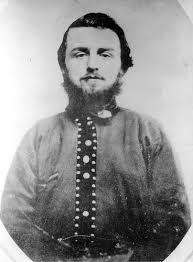
Wesley Culp

For some like Private Wesley Culp of the 2nd Virginia it was a final trip home. Culp had grown up in Gettysburg and took a job prior to the war in Virginia. In 1861 he enlisted to serve among his friends and neighbors. He was killed on the morning of July 3rd on Culp’s Hill on property owned by his uncle where he grew up and had learned to hunt.

One witness, Frank Haskell looked in at a field hospital in the Union II Corps area and wrote:

“The Surgeons with coats off and sleeves rolled up…are about their work,… “and their faces and clothes are spattered with blood; and though they look weary and tired, their work goes systematically and steadily on- how much and how long they have worked, the piles of legs, arms, feet, hands, fingers…partially tell.” (Gettysburg by Stephen W Sears, Mariner Books, Houghton Mifflin Company Boston, New York 2004 p.466)

All told between 46,000 and 51,000 Americans were killed or wounded during the three days of Gettysburg. Busey and Martin’s Regimental Strengths and Losses at Gettysburg lists the following casualty figures, other accounts list higher numbers. One also has to remember that many of the missing were killed but their bodies were simply never found.

Killed          wounded         missing         total
Union                    3,155          14,531             5,369           23,055
Confederate         4,708          12,693             5,830            23,231
Total                     7,863           27,224            11,199          46,286

To provide a reference in 8 years of war in Iraq the United States suffered fewer casualties than during the three days of Gettysburg. It was the bloodiest single battle in American history.

At the end of the war, Joshua Chamberlain, the hero of Little Round Top who was well acquainted with the carnage of war asked the most difficult questions:

“…men made in the image of God, marred by the hand of man, and must we say in the name of God? And where is the reckoning for such things? And who is answerable? One might almost shrink from the sound of his own voice, which had launched into the palpitating air words of order–do we call it?–fraught with such ruin. Was it God’s command that we heard, or His forgiveness that we must forever implore?”

May we pray for peace that such an event never take place again.

Peace

Padre Steve+

1 Comment

Filed under civil war, History, leadership, Military

The Enduring Message of Lent for those at the Mendoza Line

cross-ash-wednesday

Jesus said to his disciples:“Take care not to perform righteous deeds in order that people may see them…”

Today was Ash Wednesday the beginning of Lent. For those who do not know me or are not familiar with my life, story or writings it is a time that I best describe as one where I am conflicted. Lent is my least favorite season of the liturgical year.

But before you start picking up stones, arrows or even bullets to schwack me, let me tell you why…

You see I have no issue with what Jesus said, which is at the heart of the Ash Wednesday Gospel reading from Matthew Chapter six. In fact I totally agree with what Jesus said in the passage because I know that I am a total screw up and as far as the Christian life goes I am a “Mendoza Line” performer.*

I am always amazed when I read the words of Jesus and compare them with the way many American Christians do the Christian life:

“Take care not to perform righteous deeds in order that people may see them…”

“When you pray, do not be like the hypocrites, who love to stand and pray in the synagogues and on street corners so that others may see them…”

“When you fast, do not look gloomy like the hypocrites. They neglect their appearance, so that they may appear to others to be fasting…”

What has become apparent to me is that many Christians are quite proud at being the new chosen people and many actually look down on unbelievers or for that matter even other Christians who do not fit with interpretation of either doctrinal correctness or personal holiness.

I can no longer do that and to think that for quite a few years I did is something that bothers me.

You see I am not bothered by people who really know their faith, nor am I bothered by those who those who live a beautiful life of personal holiness and piety. Such would be petty especially because people who are able to do this are probably doing better than me. What bothers me is when people hold their holiness over the heads of other people as if they were better than others.

Such attitudes are not the Gospel, but they are all too common and sadly the world can see right through Christian hypocrisy. That might be what people inside the church, especially young people are fleeing it, and why more and more people are rejecting what they see in the visible church, while still wanting to seek God and a spiritual life.
I have to admit that if I was not already a Christian in the face of so many intolerant, vile, hypocritical people who claim to represent Jesus that I would reject the Christian faith out of hand. There is nothing that I want from people that feel that they are superior to others when all that we have as Christians is from the “free gift of God.”

I really don’t need to be reminded that I am a screw up. At the same time there is something liberating in the message of Lent. It runs counter to the message of our culture. As I mentioned last night I will be giving up some things, but not because I am any better than anyone else, but to remind me of my humanity and my need for God.

I doubt that I will ever really look forward to or enjoy Lent, but I don’t have to look forward to it or enjoy the season in order to have some spiritual growth and benefit from it. I hope to have some spiritual growth during this season of Lent. For the first time since I returned from Iraq I am going to try to do a few of the more external observances, but will not get stuck in them. Instead I will seek to learn and grow spiritually during this time.

Pope Francis mentioned something last year that I think is relevant to us during the Lenten season, especially of we in our efforts to seek God find a way to exclude him through our own self righteousness:

“Spiritual worldliness, which hides behind the appearance of piety and even love for the Church, consists in seeking not the Lord’s glory but human glory and personal well-being.”

To be honest that expresses the frustration I experience during Lent and I pray that somehow in my life and witness of Jesus the Christ that I will not through my own self-righteousness drive people away from him.

Peace

Padre Steve+

*Note: Mario Mendoza with a shortstop who played with the Pittsburgh Pirates. He was an excellent defensive player but his hitting left much to be desired. In the course of his career he hit for an average of .215. To this day a ball player who hits at the .200 level is known as a Mendoza line hitter, it is the level that a player can hit at and still stay in the major leagues.

3 Comments

Filed under christian life, faith

The Frustrations of General Lee at Gettysburg: Mistakes, Miscommunication and Misunderstanding, the Confederate Failure on July 2nd

1-2-86A-25-ExplorePAHistory-a0h4m9-a_349

On the morning of July 2nd 1863 General Robert E Lee appeared to be angry and anxious. Many who had traveled with him over the course of the last year of campaigning noted that “Lee was not at his ease…” and “more anxious and ruffled than I have ever seen him before…”[i]

One can understand Lee’s frustration. He was angry. He was angry at General Stuart for failing to follow his directions, although his orders to Stuart were vague and confusing and had opened the door for Stuart’s absence.  Stuart had left Lee without his best cavalry commanders and units and those that Lee had were unavailable because of how Lee had deployed them. Lee was also displeased with Harry Heth for “disobeying his instructions, not to bring on a general engagement and equally displeased with corps commander Powell Hill for letting it happen.”[ii]

Lee was also frustrated with Ewell, Rodes and Early of Second Corps. They had resisted Lee’s suggestion of renewing the main attack in their sector. They also objected to leaving their positions around Culp’s Hill and Cemetery Hill feeling that to give up hard won ground would demoralize their troops. Instead they offered to “support” an attack on the right when it started, but Lee left no exact instructions for them to do so. Lee was beset by a situation he had never found himself in before. It was as if “the attitude of these high-ranking officers…was strangely out of keeping with the aggressive spirit of the Army of Northern Virginia…Instead of offering their commander hearty cooperation and eagerness to respond positively to his suggestions, they gave him objections and reasons why they should not do certain things.”[iii]

But even more importantly Lee was frustrated by the attitude and actions of his “Old War Horse” Pete Longstreet of First Corps. Longstreet was vehemently opposed to Lee’s plan to attack. Lee had told him the previous night “If the enemy is there tomorrow, we must attack him.” Longstreet’s reply “If he is there… it will be because he is anxious that we should attack him-a good reason, in my judgment for not doing so,”[iv] failed to deter Lee from his plans. Lee became even more anxious when returning from a visit to Ewell at mid-morning to find neither that Hood nor McLaws’ divisions of Longstreet’s had yet to step off to the attack.

There is much controversy in what happened as no copy of a plan of attack exists and there are conflicts in how the key participants remembered the meetings. Lee obviously believed that Longstreet would mount an early attack. Longstreet claimed that no order was given to attack until Lee returned from his trip to Ewell.

Gettysburg_Battle_Map_Day2Gettysburg Day Two- Map by Hal Jesperson

Early in the morning Lee still was unaware of the location of most of the Federal army or where its flanks were. He knew that the Federal army occupied favorable ground and had good interior lines. He also knew that his forces were spread out over a wide arc which made it hard for each of his corps to render support to the others.  Likewise he had no cavalry with him to make a reconnaissance and the officers that he dispatched to make a reconnaissance gave him faulty information indicating that there were no Federal troops between him and the Round Tops.

His battle plan for July second hinged on factors that he did not control. First it depended on his scout’s report that there were no Federal troops between Cemetery Ridge and the Round Tops and that the Round Tops were undefended. Theoretically had the information that he received about the Federal positions been accurate it would have been a good plan. Longstreet’s Corps attacking en echelon with McLaws leading supported by Hood and Anderson’s division from Hill’s Corps. His second assumption based on the scouting report was that “General Meade lacked either the troops or the intellect to anchor his left flank properly.”[v] Meade proved him wrong on both counts. Likewise, though Lee explained the concept of attack to McLaws, none of the other commanders, Longstreet, Porter, Hood or Anderson recounted being given those instructions.

Despite that Lee was determined to take the offense and categorically rejected any possibility of going over to a defensive posture. With his senior commanders each causing him trouble Lee “dug in his heels. In order to assert his authority, he would not- increasingly he could not- alter his plan.”[vi]  Thus Lee went ahead and forced the reluctant and recalcitrant Longstreet to attack, even when it became apparent that Federal troops occupied the ground that he was planning to attack in strength.

Lee’s intent was again garbled, though Lee explained his concept of attack to McLaws, none of the other commanders, Longstreet, Porter, Hood or Anderson recounted being given those instructions.  As such the coordinated attack en echelon never took place, and this was compounded by Longstreet’s failures in leading the attack that day.

charge-up-little-round-top

Once again the Confederate onslaught appeared that it might sweep the field but again it fell short at great cost of life. The Confederate attacks were uncoordinated, corps commanders did not control division commanders and division commanders operating independently of each other failed to coordinate their attacks. As a result all failed, despite the gallantry and initiative exercised by Confederate soldiers, who according to some Confederate commanders was the best they had ever fought.

Lee was a burdened man. The war had aged him greatly. Though he was still “only” the commander of the Army of Northern Virginia he also had on his mind what was going on in other theaters. He was burdened by the knowledge that the South was depending on him for victory, and he had forced the issue of invading the North.

The crux of the matter was that after the loss of Jackson Lee never altered his manner of command. Lee exercised “his command of the Army of Northern Virginia through his corps commanders. Each was expected to understand the overall plan and his specific role within it. Once he conveyed his intentions, Lee assumed the role of observer.”[vii] Although he knew almost all of his senior commanders, including their strengths and limitations as commanders he did not adjust his command style to those factors. One has said quite correctly that Lee “did not think of his general’s suitability to the nature of his their assignments.”[viii] This was critical. He depended on Longstreet to act with the swiftness of Jackson, of Hill to control his corps, Stuart to maintain contact and Ewell to support his course of action. In each case he failed to grasp how each man needed a different leadership style and did not effectively communicate his directions to them.

lee and longstreet 10709161246_9f5baf6452_o

There were chances to win the day had Lee or any of his commanders exercised proper command and control of their units. Men who had seldom failed Lee over the past year made mistakes and acted in manners contradictory to their previous performance of duty. Perhaps in some cases this was due to their inexperience in working directly for Lee, or in others lack of sensitivity to the nuance of Lee’s command style that Jackson understood so well.

This compounded the mistakes that Lee made in returning to the offensive and leaving Ewell’s command in a place where it could not lend its weight to his attack. In the end Lee’s “toleration of the shortcomings of his subordinates that day lessened the chances of Confederate success.”[ix]

Lee conducted the battle in manner that had to be his worst performance of the war. His loose style of command coupled with the extended lines of his army was insufficient, unlike Meade, Hancock and others on the Federal side Lee took little personal role in the events of the day receiving only one report and issuing one order after the battle was joined.[x] He was joined in this by his senior commanders especially Hill and Ewell, though Longstreet did venture in and take control of the fighting in the Peach Orchard. Porter Alexander described what he saw as “the utter absurdity” of the Confederate position which made it “preposterous to hope to win a battle when so strung out & separated that cooperation between the three corps was impossible except by a miracle.” [xi]He observed that “comparatively little pains was exercised to bring it about either.”

Porter Alexander’s comments go to the heart of what went wrong on the second day of the Battle of Gettysburg. Lee assumed that his subordinates would act as Jackson would and he ignored his own best advice. In the end it set hi  up for disaster on July 3rd as he still continued to believe that he could take the Federal position and with that win the war.

Peace

Padre Steve+


[i] Sears, Stephen. Gettysburg Houghton and Mifflin Company, Boston and New York, 2003 pp.237-238

[ii] Ibid. p.237

[iii] Coddington, Edwin B. The Gettysburg Campaign, A Study in Command, A Touchstone Book, Simon and Schuster New York, 1968 p.365

[iv] DeWert, Jeffry D. General James Longstreet The Confederacy’s Most Controversial Soldier, A Touchstone Book, Simon and Schuster, New York and London 1993 p.257

[v] Ibid. Sears p.264

[vi] Ibid. Sears, p.238

[vii] Tredeau, Noah Andre. Gettysburg: A Testing of Courage, Harper Collins Publishers, New York 2002 p.315

[viii] Dowdy, Clifford. Lee and His Men at Gettysburg: The Death of a Nation Skyhorse Publishing, New York 1986, originally published as Death of a Nation Knopf, New York 1958 p.173

[ix] Pfanz, Harry F. Gettysburg The Second Day. University of North Carolina Press, Chapel Hill 1987 p. 427

[x] Ibid. DeWert. pp.278-279

[xi] Ibid. DeWert. p.267

2 Comments

Filed under civil war, History, leadership, Military

Lent is Here Again…Oh Joy…

lent

Lent is my least favorite season of the Church year. Try as I might, despite the catholic ethos that I acquired as a student in  a Southern Baptist Seminary, Clinical Pastoral Education and the military chaplaincy I have a hard time with it.

I think that part of the reason is I don’t think that I need to set aside a season of the year to acknowledge what a colossal screw up I am. Like George Constanza in Seinfeld I don’t need God, my mother or anyone else to remind me of my shortcomings. They are ever before me.

Despite that for years I tried to be the most observant observer of the outward traditions of the season. If we were to fast from meat on Fridays I would do it on Wednesdays too. As someone who came to the catholic side of life later in life I felt that I needed to out do those who had grown up that way. As a priest in a conservative Episcopal denomination with aspirations of eventually making the transition to Rome I did all that I could to take up the internal spiritual disciplines as well as the external forms of Catholicism. I did so good at it that I was banned from publishing by the Archbishop who headed our denomination’s communications department. The irony is that he is now a Priest in the Anglican Ordinate that is in communion with Rome. Go figure.

But that all came apart during and after my time in Iraq. Beset with chronic PTSD and moral injury faith itself became problematic. For all intents and purposes I existed as an agnostic who prayed that God still existed for nearly two years after I returned from Iraq. For me that fact that I returned to faith in any form was a miracle and when it did return I was told to find a new church home because now instead of being either too “Catholic” or “a Wounded Warrior Priest” I was now “too liberal.”

I would like to say that I am over it but obviously I am not, but I digress…

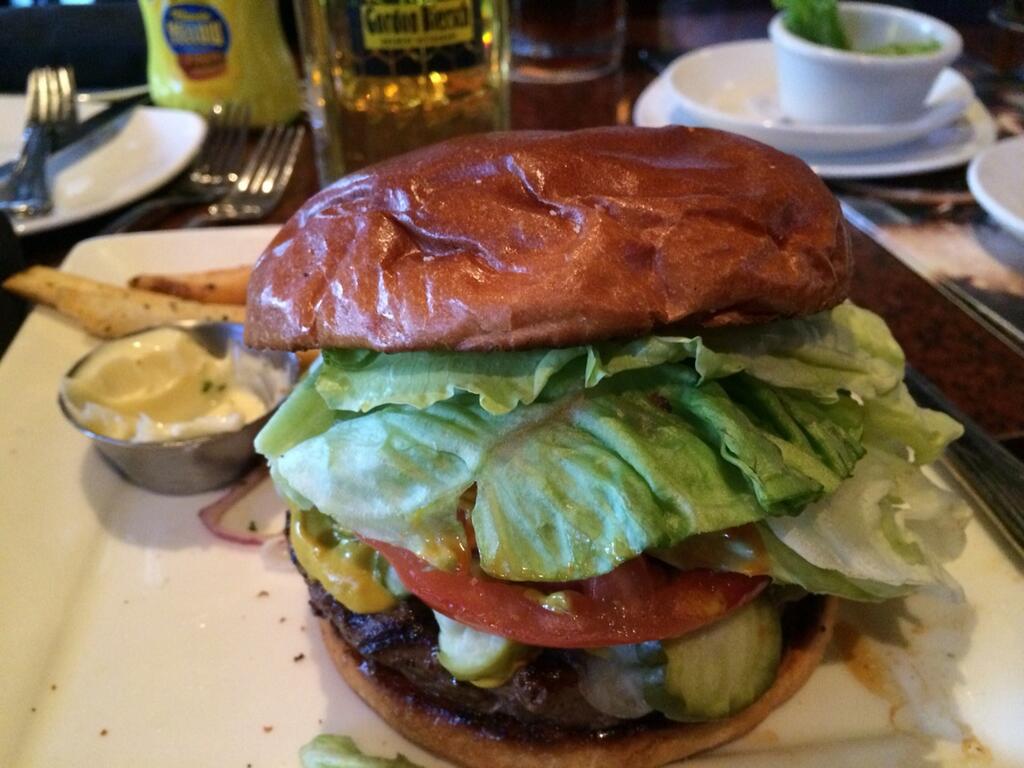
So this year Lent is again upon us. Tonight was Fat Tuesday, so I had a big burger, fries and a couple of beers for dinner at Gordon Biersch. Afterward I  picked up some fresh Krispy Kreme hot glazed donuts on the way home and washed them down with another beer. For those of you that don’t know there is little better than beer and hot fresh donuts. I discovered that in my darkest hours after Iraq. I think I even have a post that I wrote back in 2009 called Beer and Donuts. I’m not going to look for it now and give you the link but you can put “Beer and Donuts” in the search box on the home page and I am sure you will find it.

In my journey I am coming to realize that holiness is not simply a matter of out Phariseeing the Pharisees, or matters of external observance. I am coming to believe that Jesus really nailed it when he said that to fulfill the law was to love God and love your neighbor.

So my Lenten observance will be of two aspects. For the first time since 2010 I am going to give up something physical, the hamburger.I am going to go without a hamburger of any kind until Easter. When I break my Lenten fast it will be with a hamburger, or should I say a very non-Kosher cheeseburger.

That may not seem like much, but please hear me out. For those that  not know me when I eat a hamburger it is not simply to ingest something fast and filling, it is a ritual that is almost spiritual in its own right. You see I don’t eat crappy burgers. I eat fresh burgers of the best quality, cooked medium or medium rare. I prefer a toasted bun, fresh crisp lettuce, tomatoes and red onions and either Swiss or Gruyère cheese. I then need at least two to four ounces of dill pickles, a side of mayo, catchup and at least a half bottle of yellow mustard. It is a nearly religious ritual for me to enjoy a burger in this manner.  After all a eating a hamburger should be a spiritual experience.

Bh6mIhqCAAMTni9.jpg_largeThe Last Burger before Easter

As far as the spiritual dimension I am going to try to be a bit more conscious of my prayer life, more importantly my prayer for others who are in distress. I figure that God will take care of my needs and that when I pray it would be better that I concern myself with people who are in real danger, real need, real distress. Those who are the least, the lost and the lonely. Likewise I will endeavor to be more positive in all of my interactions. I am going to try to take the words of the immortal Sergeant Oddball (Donald Sutherland) of Kelly’s Heroes seriously.

“Why don’t you knock it off with them negative waves? Why don’t you dig how beautiful it is out here? Why don’t you say something righteous and hopeful for a change?”

Tomorrow I will celebrate a simple Ash Wednesday liturgy at our small chapel and the scripture readings will come out of Matthew Chapter Six where Jesus begins “beware of practicing your piety before others in order to be seen by them…”

With that I will take my “Mario Mendoza Line ” self off line and begin working on yet another Gettysburg article.

Peace and blessings

Padre Steve+

1 Comment

Filed under christian life, faith, Religion