Monthly Archives: March 2014

The Tragedy of Friends at War; Lewis Armistead and Winfield Scott Hancock on Cemetery Ridge


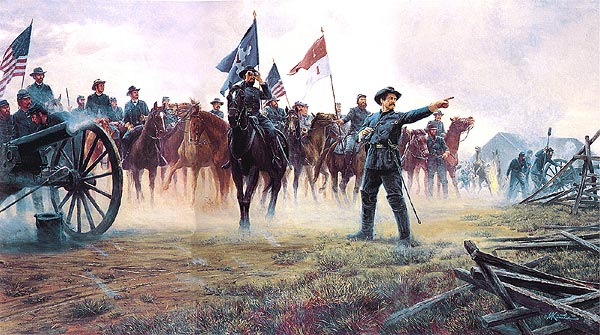
armistead

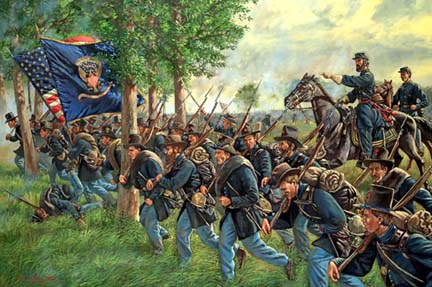
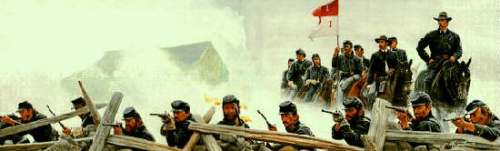
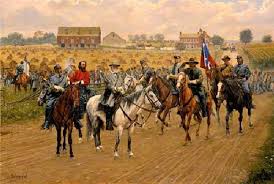
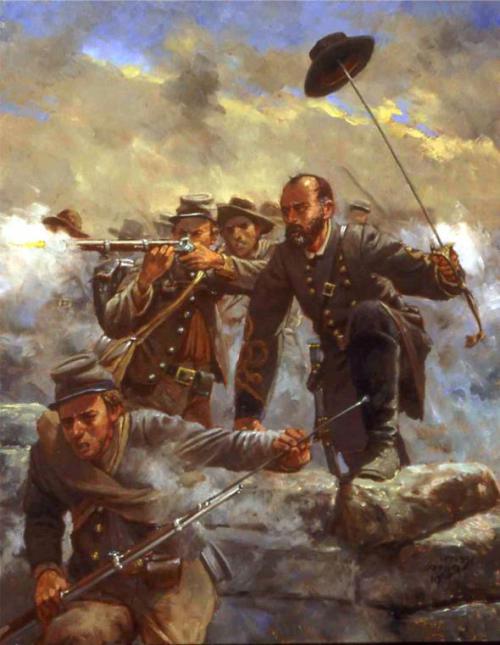
“Armistead at Gettysburg” by Keith Rocco

The bonds of friendship forged by soldiers are some of deepest and long lasting that are formed anywhere.  For American military professionals those bonds are formed in the small rather closed society that is the regular United States military.  They are formed in war and peace, and are marked by years of deployments, isolated duty and combat.  They are part of a culture that is often quite different than that of civilian society. That is the case now as it was in 1860.

When the Southern States seceded from the Union men who had spent much of their adult lives serving together discovered had to say goodbye and prepare to fight each other. Most did so with a heavy heart even though many had strong convictions about the rightness of their region’s cause. Those who left the army to serve the Confederate states were often torn by doubt and questions of where their loyalty lay. They wrestled with their oath of office and the costs of perhaps having to face their dearest friends on future battlefields.

They were different from the mass levies of civilian volunteers who rallied to the flags of the Union and Confederacy in 1861. The volunteers, most of whom did not have the deep and abiding friendships of the professionals were often motivated by ideological, sectional or religious hatred of the other and went to war with great aplomb.

The American Civil War has many such tales. One of the most remembered is that of Union General Winfield Scott Hancock and Confederate General Lewis Armistead. It was key story line in Michael Shaara’s Pulitzer Prize winning novel The Killer Angels was immortalized in the movie Gettysburg which is based on Shaara’s novel.

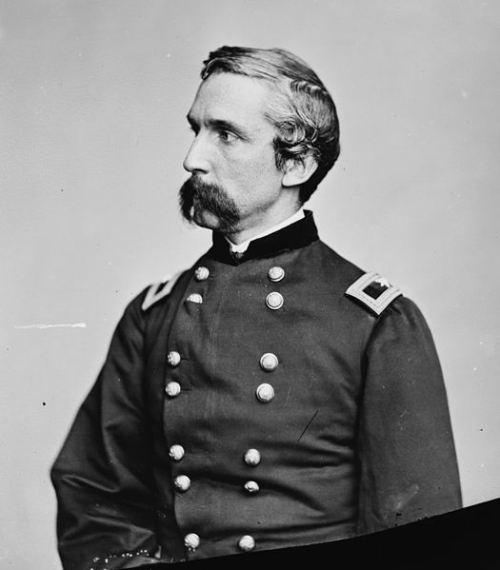
hancockMajor General Winfield Scott Hancock USA 

Hancock was from Pennsylvania. He was a career soldier and Infantry officer, a graduate of West Point Class of 1844. He served in Mexico and held numerous positions. In 1861 he was stationed in California as a Quartermaster under the command of Colonel (Brevet Brigadier General) Albert Sidney Johnston. One of his fellow officers was Captain Lewis Armistead, a twice widowed Virginian who also served as a commander of the New San Diego Garrison under Johnston’s command. Hancock and his wife Almira became fast friends with the widowed Virginian.

Armistead was a nephew of the officer who defended Fort McHenry from the British in the War of 1812. Armistead had academic and personal difficulties at West Point including an altercation with Jubal Early in which he broke a plate over Early’s head.  Between his academic difficulties and the fight with Early he resigned from the Academy. However, his father helped him obtain a commission as an Infantry officer in 1839. Armistead’s career from that point on was similar to many other officers of his day. He served with distinction in Mexico, the Great Plains, Kansas, Utah and California.

As the war clouds built and various southern states seceded from the Union numerous officers from the South were torn between their oath, their friendships and their deep loyalty to their home states and families. In the end most Southern officers resigned their commissions, many with mixed feelings and quite often sadness. A minority of southern born officers remained loyal to the Union. The most prominent of these men were General Winfield Scott and Major General George Thomas, the “Rock of Chickamauga.” Likewise Union Brigadier General John Buford’s family in Kentucky supported the Confederacy.

For those southern officers who remained loyal to the Union to was often at a great personal cost. Thomas’s action cost him his relationship with his immediate family who deemed him to be a traitor. He and others were pilloried and demonized in the basest ways by many in the South. Some Southerners who served the Union were executed when they were captured. George Pickett, who called for his fellow Virginian Thomas’ death ordered 22 North Carolinians who he captured fighting for the Union in Kinston North Carolina to be executed and he was not alone.
armistead2

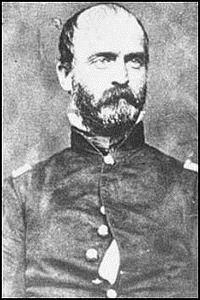
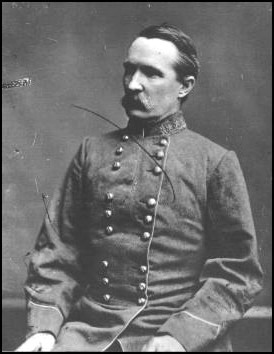
Brigadier General Lewis Armistead CSA

However, for most it was different. As talk of secession and war heated up officers stationed on the frontier debated the issues and asked each other what they would do if war came. In California Armistead and other officers asked Hancock, who was a Democrat and not openly hostile to the South, advice on what he would do if war came. Hancock’s reply was simple. I shall not fight upon the principle of state-rights, but for the Union, whole and undivided” 

The parting came in 1861. When it was apparent that many officers would be resigning and heading home to join their state’s forces the Hancock’s hosted a going away party for their friends. Almira Hancock wrote of the party that “Hearts were filled with sadness over the surrendering of life-long ties.” Colonel Albert Sidney Johnston’s wife Eliza went to a piano and sang the popular Irish song Kathleen Mavourneen:

“Mavourneen, mavourneen, my sad tears are falling, To think that from Erin and thee I must part!

It may be for years, and it may be forever, Then why art thou silent, thou voice of my heart?…”

The parting was especially emotional for Armistead who had been a friend of the Hancock’s for 17 years. They had helped in following the death of both of his wives and children. He was tearful. He put his arm on his friend’s shoulder as he said: “Hancock, good-by; you can never know what this has cost me, and I hope God will strike me dead if I am ever induced to leave my native soil, should worse come to worse.”

Armistead led his brigade during the Peninsula campaign and battles around Richmond and his brigade was decimated in Lee’s failed assault on prepared Federal positions at Malvern Hill. Armistead did not endear himself to many of the volunteer officers who served in the Confederate ranks. One of his Colonels resigned over Armistead’s supposedly harsh treatment to which Armistead replied: “I have felt obliged to speak to him as one military man would to another and as I have passed nearly all my life in camps my manner may not be understood or appreciated by one who has been all his life a civilian.” Armistead’s words can easily be understood by military professionals whose lives have been shaped in a different manner than their civilian counterparts.

At Gettysburg Armistead spoke his fears to his comrades. One was Brigadier General Dick Garnett, another of Armistead and Hancock’s comrades from the California days on the night of July 2nd. The next afternoon Armistead and Garnett led their brigades of Pickett’s Division against Hancock’s II Corps which was defending Cemetery Ridge.

During the engagement Garnett was killed just before reaching the Union lines and Hancock gravely wounded. Armistead, lead the remnants of his decimated brigade to the Stone Wall, near the Copse of Trees. He rallied his troops fearing that some were faltering calling out: “Come on boys, give them the cold steel! Who will follow me?”

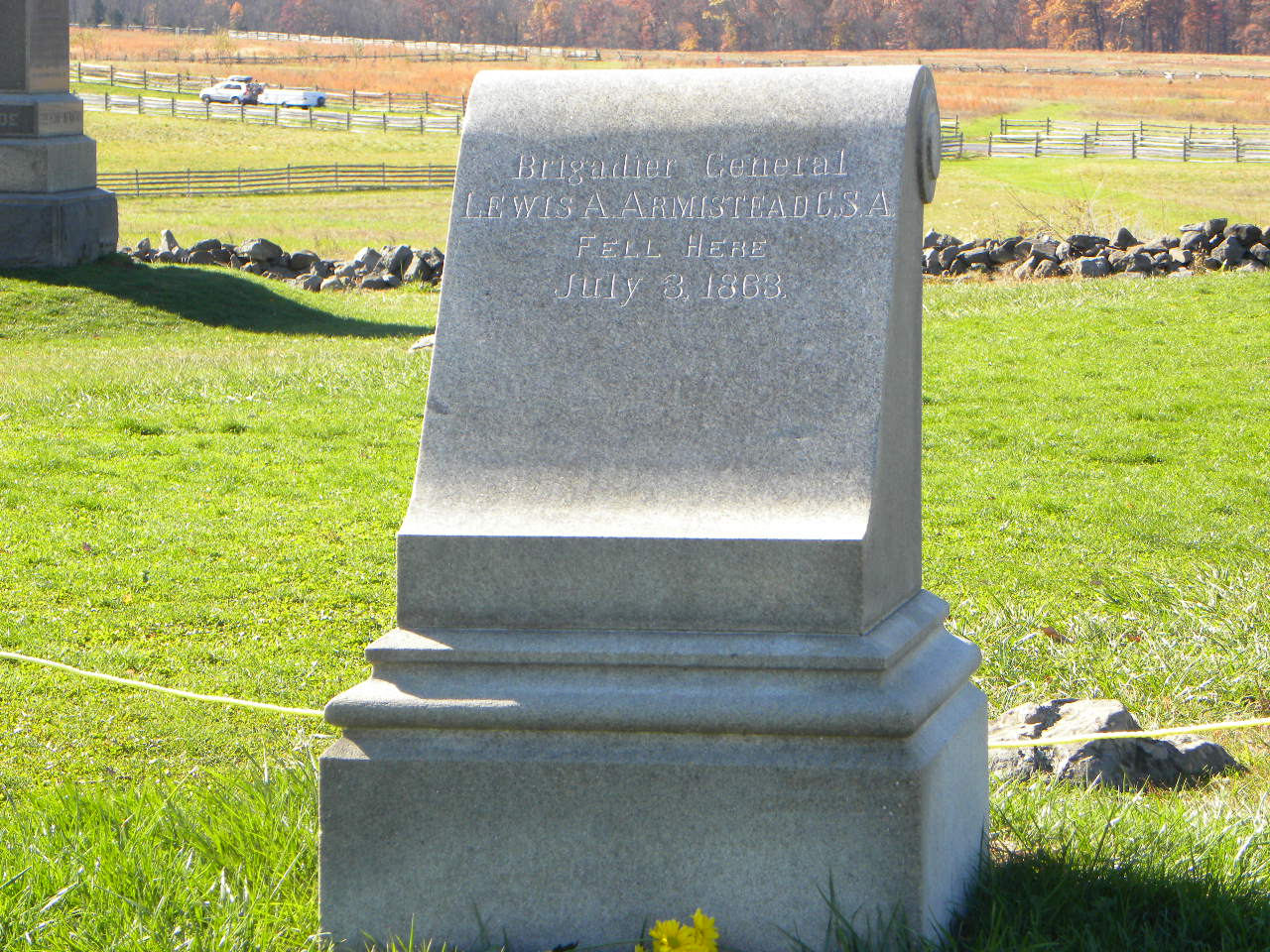
His troops breached the Union line and his black hat atop his sword led his troops forward. It was then that he met more Federal troops who unleashed a volley of musket fire that cut down many of the survivors. Armistead was wounded in the right arm and shoulder and fell near one of the Union artillery pieces, a point now known as “The High Water Mark” of the Confederacy.

As Armistead lay wounded he was approached by Major Bingham of Hancock’s staff. Bingham, a Mason noticed that Armistead was making a Masonic sign of distress. When Bingham told Armistead of Hancock’s injury Armistead was grieved and told Bingham to “Tell General Hancock for me that I have done him and you all an injury which I shall regret the longest day I live.”  The meaning of those words is debated, especially by Southerners who cherish the myth of the Lost Cause. However, based on Armistead’s conduct and behavior in the time before he left California, it is not unreasonable to assume that as he lay dying he truly regretted what he had done. He gave Bingham a wrapped Bible and Prayer book to give to Almira Hancock, inscribed were the words “Trust in God and fear nothing.” 
hancock minnesota forward

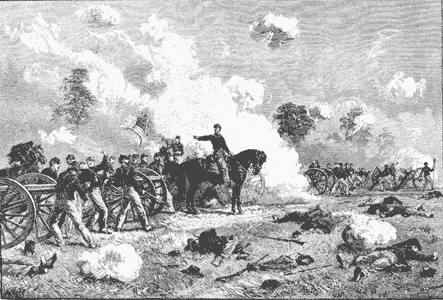
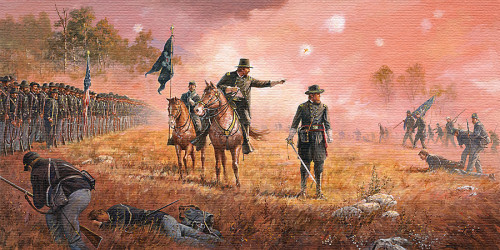
“Minnesota Forward” Hancock directing the Defense by Dale Gallon

Armistead died from infections caused by his wounds which were initially not thought to be life threatening. A Union surgeon described him as: “seriously wounded, completely exhausted, and seemingly broken-spirited.”

Hancock’s injuries were severe, but he recovered. He would go on to continued fame and be one of the most admired and respected leaders of the Army during and after the war. He was gracious as a victor and spoke out against reprisals committed against Southerners after the war.
DSCN8856

In 1880 Hancock was the Democratic nominee for President. He lost a close election to James Garfield, losing the popular vote by fewer than 40,000 votes. It was an era of great political corruption and Hancock was one of the few major public figures viewed favorably for his integrity. Even his political opponents respected him for his integrity and honesty. Former President Rutherford B Hayes said:

“if when we make up our estimate of a public man, conspicuous both as a soldier and in civil life, we are to think first and chiefly of his manhood, his integrity, his purity, his singleness of purpose, and his unselfish devotion to duty, we can truthfully say of Hancock that he was through and through pure gold.” 

A few years after his death Republican General Francis A Walker, lamenting the great corruption of the time said:

“Although I did not vote for General Hancock, I am strongly disposed to believe that one of the best things the nation has lost in recent years has been the example and the influence of that chivalric, stately, and splendid gentleman in the White House. Perhaps much which both parties now recognize as having been unfortunate and mischievous during the past thirteen years would have been avoided had General Hancock been elected.”
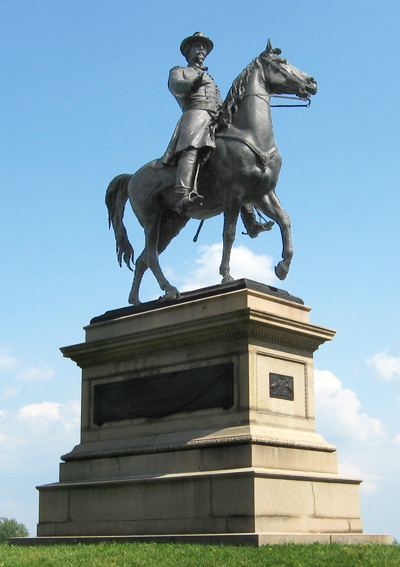
Hancock-4c_4500

The story of Hancock and Armistead is one that reminds us of the depth of friendships that many military professionals develop and cherish. It is also a story that reminds us of how hardened ideologues can divide a nation to the point of civil war. It is a story that should give pause to any political or spiritual leader that incites people to war against their neighbor and uses their ideology to slander, demean or even enslave and brutalize their political opponents.

The blood of the approximately 50,000 soldiers that were killed or wounded during the three days of the Battle of Gettysburg is ample reminder of the tragedy of war, especially war that forces the dearest of friends to fight and even kill one another.

Peace

Padre Steve+

13 Comments

Filed under civil war, History, leadership, Military

“Don’t Give an Inch” The Engineer and the Professors on the Hill, Major General Gouverneur Warren and Colonels Strong Vincent and Joshua Chamberlain

daytwoconfederate-charge-up-little-round-top-battle-of-gettysburg-c-1863

The Confederate Onslaught

“In great deeds, something abides. On great fields, something stays. Forms change and pass; bodies disappear; but spirits linger, to consecrate ground for the vision-place of souls… generations that know us not and that we know not of, heart-drawn to see where and by whom great things were suffered and done for them, shall come to this deathless field, to ponder and dream; and lo! the shadow of a mighty presence shall wrap them in its bosom, and the power of the vision pass into their souls.” ― Joshua Lawrence Chamberlain

The Federal Army at Gettysburg had a wide variety of officers. Many senior officers were graduates of West Point but in the expansion of the Army and the call of up militia from the various states other officers were political appointments. Many had no prior military service and at times that lack of experience was tragic. However some of the time those volunteers were the men who by their service helped save the Union.

413px-Gettysburg_Battle_Map_Day2Gettysburg Day Two Overview: Map by Hal Jespersen http://www.posix.com/CW 

On July 2nd 1863 the situation at Gettysburg was precarious. Robert E Lee had ordered an attack to seize a hill at the far end of the Federal line, Little Round Top and turn the Union flank. General Meade had ordered III Corps under Major General Dan Sickles to extend it’s line to defend the southern section of his line on Cemetery Ridge. Unfortunately Sickles, without permission moved his Corps several hundred yards west forming a vulnerable salient at the Peach Orchard leaving the southern flank in the air.

gkwarrenMajor General Gouverneur Warren

When Meade saw the developing situation he sent his Chief Engineer, Major General Gouverneur Warren to take charge on the flank. When Warren arrived he found the hill undefended and he dispatched staff officers to get assistance from any units in the area. Major General George Sykes of V Corps responded sending a messenger to the commander of his 1st Division. The messenger encountered the commander of the division’s 3rd Brigade Colonel Strong Vincent who immediately took the initiative and ordered his four regiments up Little Round Top without waiting for permission.

gkwarren_roundtopWarren at Little Round Top

Vincent and his regiments arrived in a nick of time. He deployed his regiments, along the spur running to the south if the top of the hill. The 16th Michigan on the right with the 44th New York, 83rd Pennsylvania at his center and the 20th Maine under the Command of Colonel Joshua Chamberlain on the extreme left of the line. Vincent ordered to Chamberlain to “hold at all costs.” Chamberlain led his regiment skillfully and when nearly out of ammunition led a charge down the slope of Little Round Top which ended the Confederate chances of gaining the hill and turning the flank of Meade’s Army.

little_round_top2Little Round Top-Map by Hal Jespersen http://www.posix.com/CW 

Warren was a West Point graduate and had been a topographical engineer for most of his pre-war career and saw combat against the Sioux at the Battle of Ash Grove in 1855. When the war began Warren was a mathematics instructor at West Point. He helped raise a militia regiment in New York and was appointed to Lieutenant Colonel. As a regimental commander and later brigade commander he saw much combat and was wounded at the Battle of Gaines Mill during the Seven Days.  When the Army was reorganized in February 1863 he was named Chief Engineer of the Army of the Potomac by Major General Joseph Hooker. When Major General Meade relieved Hooker on June 28th he retained Warren.

colstrong_vincentThe 26 year old Colonel Strong Vincent

Colonel Strong Vincent was a 26 year old Harvard graduate and lawyer from Erie Pennsylvania. He was appointed as a 1st Lieutenant and Adjutant of the Erie Regiment and married his wife Elizabeth the same day.  He wrote her before his death “if I fall, remember you have given your husband to the most righteous cause that ever widowed a woman.”

Vincent was commissioned as a Lieutenant Colonel in the 83rd Pennsylvania September 14th 1861. He assumed command of the regiment when the commander was killed during the Seven Days in June of 1862. He commanded the regiment at Fredericksburg in December 1862 and was promoted to command the 3rd Brigade when its commander was killed at Chancellorsville in May 1863.

joshua_chamberlain_-_brady-handyJoshua Chamberlain

Colonel Joshua Chamberlain was a graduate of Bowdoin College and Bangor Theological Seminary. Chamberlain was fluent in 9 languages other than English. He was Professor of Rhetoric at Bowdoin before seeking an appointment in a Maine Regiment without consulting either the college or his family. He was offered command of the 20th Maine but asked to be appointed as a Lieutenant Colonel which he was in August 1862. He fought at Fredericksburg and was named commander of the regiment when Colonel Adelbert Ames, his commander was promoted following Chancellorsville.

vincentdont-give-an-inch-up-5-smaller“Don’t Give and Inch!”

The battle of Little Round Top is one of the most famous of all Civil War battles. Chamberlain along with Vincent are immortalized in the film Gettysburg which is based on Michael Shaara’s Pulitzer Prize winning novel The Killer Angels. Vincent was mortally wounded while leading the defense of the hill. When killed he was standing on a large boulder with a riding crop ordering the men of the 16th Michigan who were beginning to waiver “don’t give an inch.” Two months later his wife gave birth to a baby girl. The baby would not live a year and was buried next to him

Warren became a distinguished Corps commander until he ran afoul of the fiery General Phillip Sheridan in 1865. Sheridan relieved Warren of command of V Corps following the Battle of Five Forks where Sheridan believed that Warren’s Corps had moved too slowly in the attack. The relief was brutal and ruined his career.  Warren resigned his commission as a Major General after the war and returned to his permanent rank as a Major of Engineers. He served another 17 years doing engineering  duty being promoted to Lieutenant Colonel in 1879. He sought a Court of Inquiry to exonerate himself but this was refused until President Grant left office. The Court eventually exonerated him but he died before the results were published. Embittered he directed that he be buried in civilian clothes and without military honors.

Chamberlain was awarded the Medal of Honor for his valor at Little Round Top in 1893. He was gravely wounded during the siege of Petersburg in June of 1864 while commanding a brigade and promoted to Brigadier General. He returned to duty later in the year as commander of the 1st Brigade, 1st Division V Corps and was again wounded at Petersburg in a skirmish at Quaker Road and was promoted to Brevet Major General by Abraham Lincoln.

Chamberlain was given the unique honor to receive the surrender of Lee’s decimated Army of Northern Virginia at Appomattox. He would go on to serve as a four term Governor of Maine and remained active with the Grand Army of the Republic veteran’s organization. He remained active as an educator and as the President of Bowdoin College. He founded the Maine Institute for the Blind which is now known as the Iris Foundation. He died of complications from his wartime wounds on February 24th 1914.

These three men acted with great courage and alacrity on the afternoon of July 2nd 1863. Warren for his immediate action to call for assistance when he discovered that the hill was undefended and the line exposed, Vincent for his swift taking of responsibility and getting his brigade up the hill before the Confederates could gain the summit and Chamberlain for his dogged refusal to yield against repeated assaults.

DSCN8806Only one of the three, Warren was a professional soldier. Unfortunately as a topographic engineer he was an outsider to many in the army and not fully appreciated by Grant or Sheridan who destroyed his career. The youthful Vincent died of his wounds days after the battle. He was recommended for promotion to Brigadier General by Meade but the promotion was never confirmed by the Senate. Chamberlain is still one of the revered commanders of the Civil War.

It is easy for those enamored with military history to forget the stories behind the men that fought the battles of war. It is easy to isolate and analyze a commander’s actions in battle and ignore the rest of their lives.  I think that this does a great disservice to the men themselves. I say this because everyone who serves in the military has their reasons for serving. Some noble and some base and many a combination of many motives. Likewise everyone who dons the uniform in time of war gives up something of themselves and sometimes even heroes are destroyed by the institutions that they serve. That is a warning to all who serve. Chamberlain wrote:

“It is something great and greatening to cherish an ideal; to act in the light of truth that is far-away and far above; to set aside the near advantage, the momentary pleasure; the snatching of seeming good to self; and to act for remoter ends, for higher good, and for interests other than our own.”

In the hopes that we all will strive to cherish that ideal, that truth and to set aside all that keeps us from it.

Peace

Padre Steve+
Leave a comment

Filed under civil war, History, leadership, Military

Policies Contrary to Their Own Interests: Putin’s New Cold War

140303080112-01-ukraine-0303-horizontal-gallery

“A phenomenon noticeable throughout history regardless of place or period is the pursuit by government of policies contrary to their own interests.” Barbara Tuchman

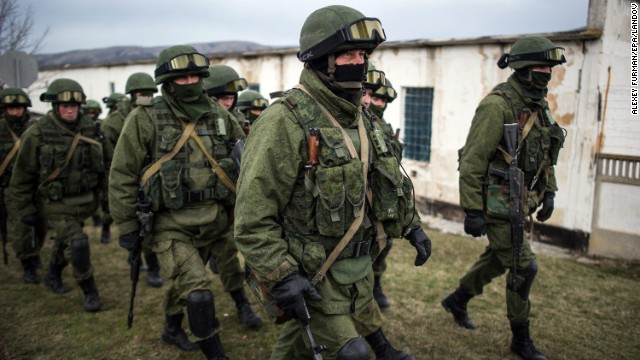
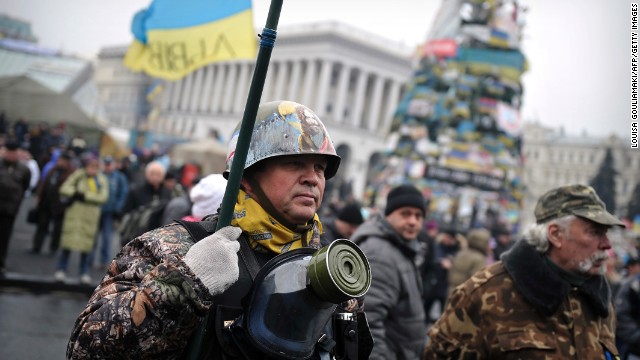
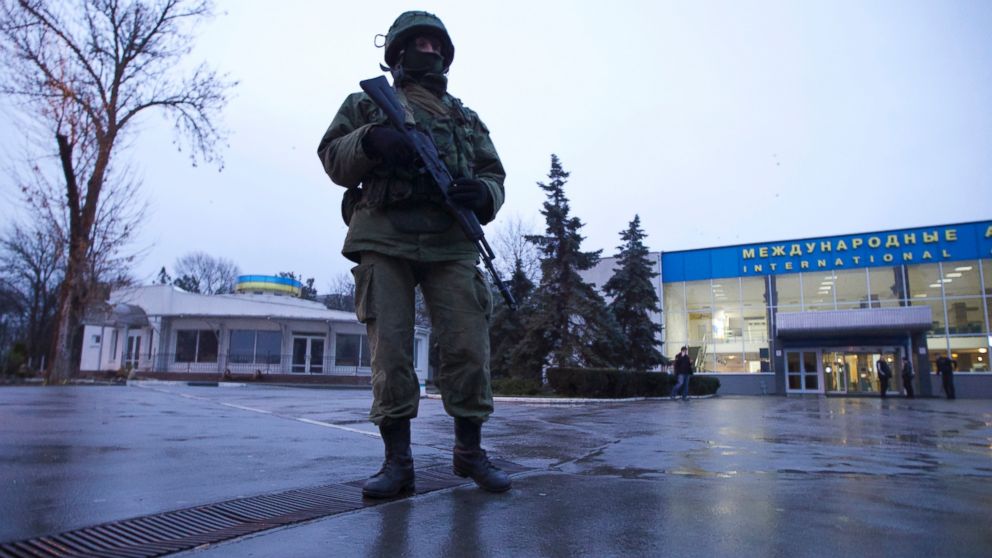
Today Russian forces continued their occupation of Crimea in spite of international outrage. Not only did they continue to build up their forces in Ukraine to the point that they operationally control the peninsula, they upped the ante demanding that Ukrainian army and navy units to surrender by Wednesday or face a “military storm.”

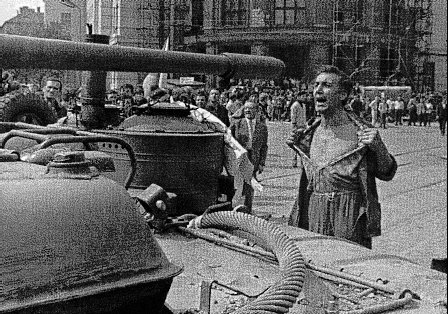
praguePrague 1968

It is something that Europe has not seen since the Cold War when the Soviet Union used military force and violence to put down revolts in Hungary and Czechoslovakia.

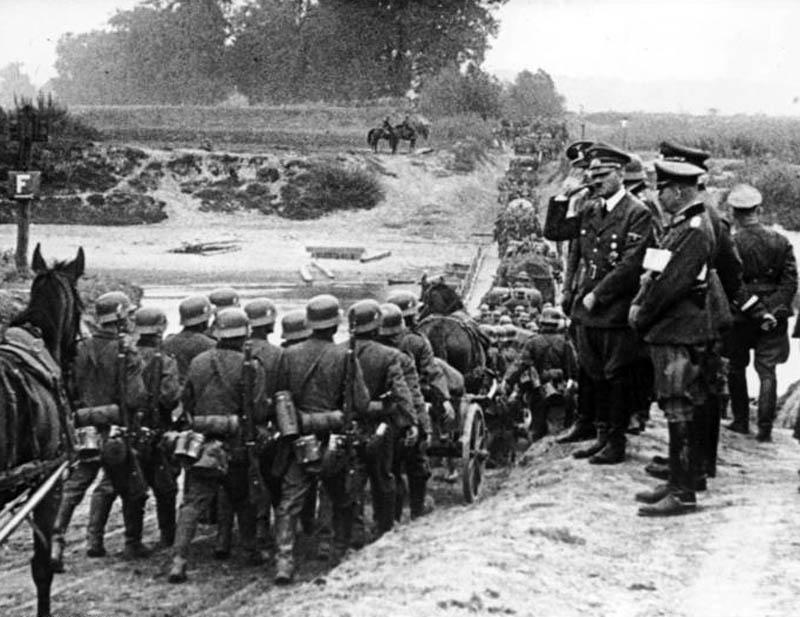
Polen, Parade vor Adolf HitlerCzechoslovakia 1939

However, I think in political terms it is much closer to Hitler’s invasion of Czechoslovakia in 1939 after Britain France and Italy stripped that country of its power by forcing the Czechs to surrender the Sudetenland to Hitler in October of 1938. Up to that moment the European powers bet on the appeasement of the Hitler regime. In a sense over the past decade the West has given Putin free reign to exercise his power over former territories, coercing them and occasionally using economic and even military power to bring them into line.

But now it is Ukraine. a complex region where Asiatic Russia meets Europe. The Ukraine is not Georgia or Chechnya. It is a region that has been a battlefield between Russia, the indigenous peoples as well as Germany, Poland, the Austro-Hungarian Empire and Turkey. It is the dividing line between western Catholicism and Russian Orthodoxy. In the 1850s even England and France found themselves intervening in the Crimea.

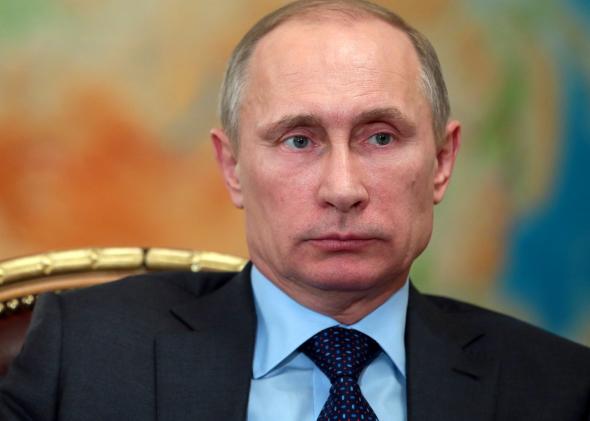
474933475-russias-president-vladimir-putin-attends-a-meeting-in.jpg.CROP.promo-mediumlarge

I believe that Putin under the flimsiest of pretensions has elected to use military force to attempt to coerce the Ukraine back under the thumb of a Russian Hegemon and to frighten the West into not intervening. It is a mistake. Just as in 1938 when Hitler believed that he could continue to steamroll the through Europe without war. In betting on the weakness of the West, Putin is playing the same game. Contrary to the speculation that Putin is doing this as a show of strength it is actually a display of Putin’s domestic insecurity.

Russia is not nearly as economically or militarily strong as Putin acts. There are serious ethnic and social divisions in the country and despite its assertions the Russian economy is much more dependent on the good graces of other nations as it is not. Already following Putin’s move into the Crimea the Russian currency and stock markets are tanking. I suspect that the West will soon impose sanctions that hit Russian economic and banking oligarchs where it hurts which will undercut support for Putin where he needs it most. Likewise I expect that Russia will be expelled from the G-8 and possibly cut off from other international banking and economic organizations.Likewise both the U.S. and the United Kingdom are bound by treaty to protect the territorial integrity of the Ukraine.

140302073009-03-ukraine-0203-horizontal-galleryPutin has had a run of success until now. However his crackdown against dissidents, campaigns against homosexuals and the state supported Russian Orthodox Church assault against other Christian denominations have already undermined his credibility as a world leader.

The invasion of the Ukraine will solidify opposition to Russia abroad, and increase anti-Putin sentiment in Russia. Should the Russian military attempt to invade other parts of Ukraine as they are threatening, Putin will find that he has bit off more than he can chew. His forces are certainly more than a match for the Ukrainian military, but he will not be able to hold or occupy the vast areas of the Ukraine in the face of opposition that will rapidly move toward a protracted insurgency. This insurgency will be supported by nations such as Chechnya which will take the war to the heart of Russia. It will turn out worse for Russia than the invasion of Afghanistan for the Soviet Union.

A new Cold War has already begun, Putin has made sure of that. The world that existed just three weeks ago when athletes from around the world gathered in Sochi for the Winter Olympics no longer exists. The only thing that we can hope is that the new Cold War does not become a hot war.

I am reminded of Barbara Tuchman’s words in The Guns of August: “The muffled tongue of Big Ben tolled nine by the clock as the cortege left the palace, but on history’s clock it was sunset, and the sun of the old world was setting in a dying blaze of splendor never to be seen again.” 

The world that we knew is now changed.

Let us pray for peace.

Padre Steve+


1 Comment

Filed under Foreign Policy, History, national security, News and current events

“For God’s Sake Forward!” John Reynolds at Gettysburg

reynoldsz_maritato_ironbrigadeforward

Iron Brigade Forward! Battle of Gettysburg, PA – July 1, 1863 by Mark Maritato

“…by his promptitude and gallantry he had determined the decisive field of the war, and he opened brilliantly a battle which required three days of hard fighting to close with a victory.” Major General Harry Hunt, Chief of Artillery, Army of the Potomac on the actions of Major General John F Reynolds at Gettysburg

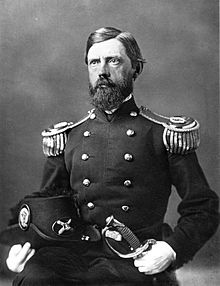
Major General John Reynolds was one of the finest commanders on either side during the Civil War. He graduated in the middle of his class at West Point in 1841 and served in the artillery. He fought during the war with Mexico and was promoted for bravery twice, to Captain at Monterrey and Major at Buena Vista. Following the war he remained in the army serving in the west and as Commandant of the Corps of Cadets at West Point from 1860 to June of 1861 when he was appointed as Colonel of the 14th U.S. Infantry regiment. However before he could take command of that unit he was promoted to Brigadier General.

Reynolds commanded a brigade of Pennsylvania volunteers on the Peninsula and was captured on June 27th but was released in a prisoner exchange on August 15th. He fought as a Division commander at Second bull Run where his Division held firm as much of the army retreated. He missed Antietam as he was called to train Pennsylvania militia when Lee invaded Maryland. he commanded I Corps at Fredericksburg and again at Chancellorsville.

Reynolds now held command of his troops on his home soil. A native of Lancaster Pennsylvania  Reynolds was the senior Corps commander in the Army of the Potomac. Considered by his peers and superiors to be the best commander in the Army he had been given command of a wing of the Army, his own I Corps, Oliver Howard’s XI Corps and John Sedgewick’s III Corps. He also had John Buford’s 1st Cavalry Division under his command.

Early in June Abraham Lincoln had offered command of the Army of the Potomac to Reynolds. However according to some credible reports Reynolds set a condition which Lincoln in the political climate of the time could not grant. Reynolds insisted he would be free from the political interference which had beset previous Army commanders. Both Reynolds’ request and Lincoln’s response are understandable.

Reynolds was not a fan of Major General Joseph Hooker and opposed Hooker’s decision to retreat at Chancellorsville. When Hooker was relieved of command of the Army by Lincoln, Major General George Meade, commander of V Corps another Pennsylvanian took his place. Reynolds, a friend of Meade supported the decision and Meade, who trusted Reynolds’ judgement and abilities kept him in his key role as commander of the Left Wing.

Reynolds’ wing of three Infantry corps and Buford’s Cavalry division acted as the advance elements of the Army. Late in the afternoon of June 30th Buford’s troops observed Johnston Pettigrew’s brigade of Harry Heth’s division near Gettysburg. Pettigrew on detecting Buford’s cavalry refused to engage. Buford chose to take the good high ground west of Gettysburg and hold it. He sent word to Reynolds that he would hold the ground to give Reynolds time to arrive.

800px-John_Reynolds_death_2

The Death of Reynolds (Waud)

Buford sent messages late in the evening to both Reynolds and the Union Calvary Corps commander, Major General Alfred Pleasanton describing the situation. Reynolds’ units were south of Emmitsburg moving north. Early on the morning of the 1st of July Reynolds brought his troops up as Buford and his cavalry troopers engaged Heth’s division in a very successful delaying action.

Reynolds rode ahead and briefly met Buford at the Lutheran Seminary where Buford ensured Reynolds that his troopers could hold. With that Reynolds ordered his First Corps and the lead division under the command of Abner Doubleday to advance to the action at the double-quick. Reynolds sent a message to Meade through a staff officer stating “Tell the General that we will hold the heights to the south of the town, and that I will barricade the streets of the town if necessary.” Reynolds had an acute eye for the situation and rapidly brought his corps as well as Howard’s XI Corps to the field.

GenJFRenyoldsAs his units arrived into an already raging battle Reynolds directed them to key areas of the battlefield. With Confederate troops moving toward the high ground Reynolds directed the “Iron Brigade” into position in Herr’s (McPherson’s) Woods. Reynolds exhorted the men forward.“Forward! men, forward! for God’s sake, and drive those fellows out of the woods!” As he said these words he was struck by a bullet at the base of his skull and died instantly.

The Federal troops, I Corps under the command of Doubleday and XI under Major General Oliver Howard withdrew through Gettysburg to Cemetery Hill, where Howard had wisely placed two brigades as well as a significant amount of artillery earlier in the day. Reynolds’ old friend Major General Winfield Scott Hancock of II Corps arrived on the field to take command on the order of George Meade.

Hill’s troops entered the town but did not attempt to take the hill, he did not believe that his exhausted and disorganized troops were in a position to combat fresh troops in good defensive positions. Likewise Ewell passed on an opportunity to take nearby Culp’s Hill as his corps was not fully up and the divisions which had been in action were now in disarray and he recognized the strong position occupied by the Federal forces.

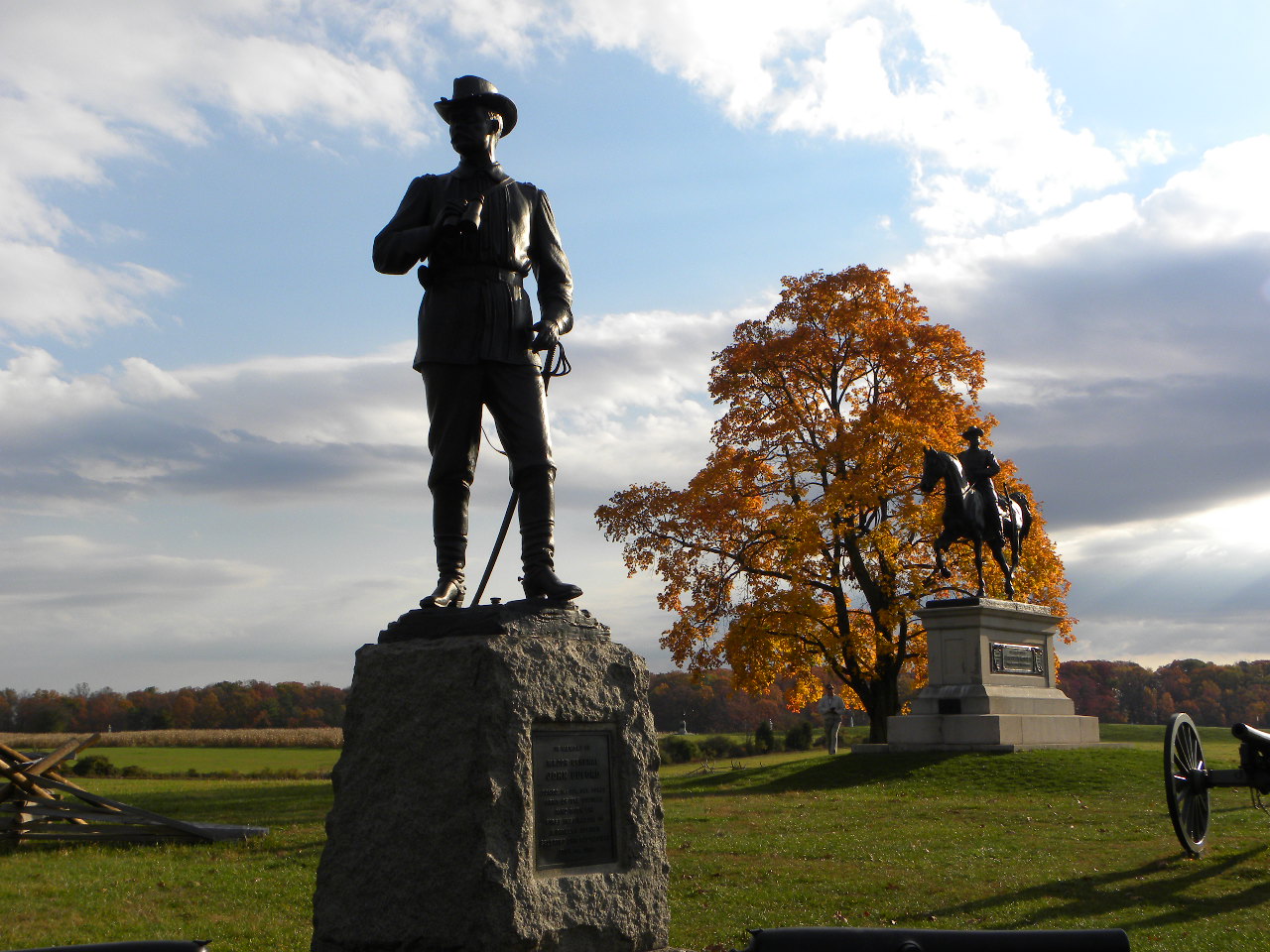
DSCN8774Monuments to Buford and Reynolds at McPherson’s Ridge

The first day ended with the Army of the Potomac holding the high ground in an easily defensible position on interior lines. Lee’s Army was spread out and the defense mounted by Buford and Reynolds had disrupted Hill’s Corps causing significant casualties to the Confederates and denying them the opportunity to take the high ground.

Buford is to be given much of the credit for choosing the ground of the battle and fighting a stellar delaying action against superior forces. But had Reynolds not brought his units up in the expeditious manner in which he did and then all of Buford’s efforts might have been in vain. The two men, bound by their professionalism and commitment to duty and their oath helped save the Union on that first day of July 1863.

Peace

Padre Steve+

Leave a comment

Filed under civil war, History, leadership, Military

Experience versus Inexperience, Accident and Intent: Harry Heth and John Buford on July 1st at Gettysburg

bufordholdatallcosts

On June 30th 1863 Robert E. Lee’s Army of Northern Virginia was still spread out over wide parts of south central Pennsylvania and Maryland. He had issued orders to concentrate his forces near Cashtown but his orders to his subordinate commanders still lacked clarity. As such his corps commanders still acted in a nearly independent manner.

Lee was operating blind. Due to his own operational decisions he was without any significant cavalry forces to screen his army and conduct reconnaissance as it operated deep in enemy territory. He had only found out about the location and proximity to his forces of the Army of the Potomac from the report of Longstreet’s spy Harrison.

On June 30th Major General Harry Heth sent a brigade of his division to conduct a reconnaissance in the direction of Gettysburg. The brigade commander Brigadier General Johnston Pettigrew was instructed to avoid being drawn into battle. Pettigrew observed Federal cavalry of John Buford taking up positions west of the town and chose not to engage. He retired from the field and reported the presence of well drilled Federal cavalry to General Heth. As he was doing so A.P. Hill arrived and rejected Pettigrew’s report insisting that the Army of the Potomac was still over 20 miles away in Maryland. Neither Hill or Heth trusted Pettigrew’s report as Pettigrew’s was not a professional soldier.

The following morning Heth with Hill’s permission decided to send a force to Gettysburg to see what was there and to obtain a large number of shoes that he heard were in the town.

henryhethMajor General Henry (Harry) Heth

Heth was an 1847 graduate of West Point. He graduated at the bottom of his class. Heth was commissioned as an Infantry Officer in the United States Army. Heth did not serve in Mexico but on the frontier. He had commanded a company in battle against the Lakota Sioux in 1855 and wrote the first marksmanship manual for use in the U.S. Army.

Heth was a Virginian and a close friend of A.P. Hill. He spent the early part of the war as Lee’s Quartermaster where he became one of Lee’s favorite officers. This was the beginning of a close relationship where Lee looked after Heth’s career. Heth served as regimental commander in the actions in the Kanawha Valley of Western Virginia being assigned to Kirby Smith’s Department of Tennessee. There he commanded a division but took part no any major actions.

Lee brought him back to the Army of Northern Virginia in 1863 to command a brigade in Hill’s Division. He took commanded that brigade at Chancellorsville in which he made an ill advised unsupported attack against Union forces in which his brigade sustained heavy casualties. Despite this, during the reorganization of the army Heth was promoted to command of the Division when Hill assumed command of Third Corps when it was created following the death of Stonewall Jackson.

Lee had given his commanders orders not to provoke a major engagement until the Army was fully concentrated. However neither Heth nor Hill believed that the troops that Pettigrew observed were a threat, believing them to be nothing more than local militia.

Hill was sick and decided to conduct a reconnaissance despite his lack of cavalry. Hill decided to conduct an infantry reconnaissance, However instead of sending a small force he dispatched two of his divisions, those of Heth and Dorsey Pender and remained in his quarters. Heth, the most inexperienced division commander took the lead and advanced his division in a column not deployed for battle or reconnaissance.

Lee’s intent seemed to be clear at this point clear. He desired to have a tired and weary Union force under a new commander under political pressure attack him on ground of his choosing. He hoped to defeat the Union forces piecemeal as they came into the battle. By initiating the action Hill and Heth set in motion events that would lead to the climactic battle of the Civil War. Hill’s decision to use such a large force and Heth’s inexperience in leading such a mission put Lee in a position where he began to make more mistakes.

The Federal Cavalry that Heth’s troops encountered was the First Cavalry Division under the Command of Brigadier General John Buford. Buford’s division arrived in Gettysburg ahead of the Army of the Potomac on the 30th. Buford and his brigade commanders immediately recognized the importance of the ground when they saw Pettigrew’s troops. Buford order his troops to deploy on the ridges west of Gettysburg, Herr Ridge, McPherson Ridge and Seminary Ridge. It was the perfect place for a delaying action against superior forces.

john_bufordBrigadier General John Buford

Buford was also a graduate of West Point and served as a Cavalry officer in the Army before the war. He was from Kentucky and his father was a Democrat who had opposed Abraham Lincoln. Much of his family chose to fight for the Confederacy but Buford remained loyal to his oath and remained in the Army.

Prior to the war Buford had served against the Sioux and on peacekeeping duty in the bitterly divided State if Kansas. Later he served in the Utah War in 1858. He was a modern soldier who recognized that the tactics of the Army had to change due to improvements in weapons and technology.  He was promoted to Brigadier General in 1862 and served in numerous engagements as a Cavalry Brigade commander before being given command of the 1st Cavalry Division after Chancellorsville.

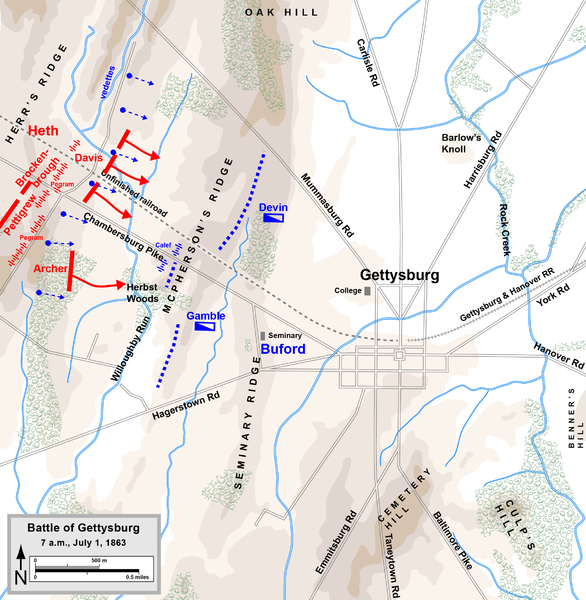
gettysburg_day1_0700

The Delaying Action, July 1st 1863 Map by Hal Jespersen, http://www.posix.com/CW

Buford was a keen student of war and a commander who was able to control his forces. When Heth’s division attacked he fought a masterful action. This allowed the Infantry Corps of the Army of the Potomac to arrive on the field of battle. Buford’s action to select the ground upon which the battle was fought was instrumental to the Union victory at Gettysburg. Even though Federal forces were pushed back on the first day they were able to maintain control of the high ground east of the city with interior lines of communication which they fortified.

After Heth engaged the Federal army Lee decided that he had to force the battle and continue the attack. Lee brushed aside the objections of General Longstreet and ignored the fact that he did not fully know the numbers and disposition of the troops arrayed against him.

Lee’s decision to engage the enemy was disastrous. Lee decided to attack after the ill conceived decision of Hill and Heth to get involved in a big fight and the correspondingly excellent command decisions of Buford to choose good ground and then to fight a skilled engagement.

While Lee and Hill’s decisions shaped the battle the tactical decisions of Heth and Buford in their conduct of the battle and their advice to their superiors had a dramatic effect on how the Battle of Gettysburg unfolded. Heth’s lack of experience in the east against the Army of the Potomac and limited battle experience as a senior commander certainly was a factor. Likewise, Buford’s experience played a major role. Buford had spent the war in action against Lee’s Army. He knew the capabilities of his enemies and knew what had to be done to give his side a chance to win.

Bufords-Cavalry

Like many battles success is often due to such factors. Had Heth been more experienced and been more prudent in conducting his mission Lee might not have made his fateful decision to commit his army at a Gettysburg. Had Buford not seen the importance of the ground that he selected and deployed himself accordingly the rest of the Army may not have gotten to Gettysburg before Lee had gained the critical ground east and south of the town.

On such decisions battles are decided and wars won. Heth was a good soldier, but his relative inexperience and inability to control his command was a decisive factor in the battle. On the other hand Buford’s experience and poise under pressure enabled the rest of the army to come up on that first day of battle. Had he not done so it is possible that despite the bad decisions made by Lee, Hill and Heth that the Army of northern Virginia might have seized the critical ground east of Gettysburg before the bulk of the Federal Army arrived.

Had that happened it would have been interesting to see how the rest of the campaign unfolded. But such is speculation and that is a subject for novelists, writers of historical fiction or alternate history. Instead we are left with the real decisions of people that to this day influence us. Experience versus inexperience, accident versus design and the decisions of men long dead are things that we must ponder as we look at this battle and seek to learn lessons that will benefit us today.

Peace

Padre Steve+
Leave a comment

Filed under civil war, History, leadership, Military

Putin’s Mistake: Creating an Afghanistan in the Ukraine

474933475-russias-president-vladimir-putin-attends-a-meeting-in.jpg.CROP.promo-mediumlarge

It appears that  it is 1980 all over again. From  all accounts Vladimir Putin will succeed in chopping off the heavily Russian region of Crimea from the Ukraine. His troops accomplished the task in short order. The weak and isolated Ukrainian border guard and military units stood no chance against an invasion which had obviously been planned for month. This was not a knee-jerk response by Putin. Though events moved rapidly,  the alacrity with which the Russian troops moved in, aided by ethnic Russians, and the rubber stamp action of the upper house of the Russian legislature to approve it demonstrates that it was not simply a move to “protect Russian citizens.”

The response of the new provisional government in Ukraine is that the invasion, and it is an invasion no-matter what Putin and his allies claim, is an act of war. The Ukrainian President has mobilized all reserves, however conventional Ukrainian military force is insignificant compared to what Russia can deploy against it. That being said if Putin elects to continue his aggressive and short sighted overreach by moving troops into other parts of the Ukraine it will trigger a massive insurgency against his forces and it may cause other now independent regions of the old Soviet empire to offer support to Ukraine. The President of Chechnya has already made the offer and its hardy and brutal soldiers are quite good at conducting insurgency and terrorist campaigns.

AP_Crimea_140228_DG_16x9_992

The West’s response is limited by geography. Any U.N. response against it will be vetoed in the Security Council by Russia. The United States, the European Union and NATO will protest. They will probably enact sanctions on Russia’s financial oligarchs on which Putin’s power rests and will possibly move troops to the western areas of the Ukraine and maybe limited naval forces into the Black Sea.

For those like Representative Mike Rogers of the House Intelligence Committee and others who said the Obama “missed the opportunity to deploy military forces to Ukraine,” I have to ask what forces and for what purpose?  U.S. military options are quite limited after 13 years of fighting costly wars, including the preemptive invasion of Iraq. Those wars, fought on borrowed money because the Bush administration refused to raise any taxes of any kind to support them harmed the country. Our forces, both the troops and equipment are worn out by war. The ability of the nation to rebuild and sustain them has been compromised by the economic costs of the 2008 banking and real estate crisis.  Likewise the Republican actions to force sequestration and other cuts on the military in order to get President Obama to cave to their domestic agenda has been detrimental to our overall national security.

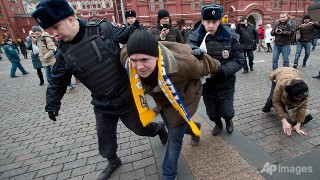
russia-ukraine-protestPolice in Moscow arrest anti-Invasion Protesters

Those efforts themselves will not immediately accomplish much. However, when combined with an insurgency that has the ability to strike Moscow and St. Petersburg, the costs of maintain an occupying army in hostile territory are factored in they become more important. Likewise the ambivalence of the Russian people, who despite the imperialistic Russian media blitz has not risen to support war will eventually bring Putin problems at home.

The invasion of Crimea is not good for anyone. Ukraine needs time to sort out what it will become and a war is not in the interests of anyone.

The situation is intense and fraught with danger. Passions in many parts of the Ukraine are riding high and Putin’s move is more risky than he may realize. This is not the Republic of Georgia which Putin successfully invaded in 2008, abetted by the incompetence of that country’s leaders. If Putin continues down this course he will open the door to a real life Pandora’s Box, one that may take him and his government down just as Afghanistan helped end the Soviet empire.

Of course it is too early to say what will happen. The geopolitics, and economic realities, the internal politics of Russia, the Ukraine and the West will all influence what happens. In the past Putin has conducted a skillful game of realpolitik, however this time he may have overplayed what was a strong diplomatic, economic and political hand by launching this invasion. Those that think that simply because the EU depends on Russia for much of its natural gas and oil forget that Russia cannot cut off the supply without financial repercussions that directly affect Putin’s allies in the Russian financial oligarchy.

So now we watch as all the actors make their moves. It is a dangerous game that Putin has embarked upon.

We can only pray that it does not turn into disaster for all concerned.

Peace

Padre Steve+

Leave a comment

Filed under Foreign Policy, national security, News and current events, Political Commentary

Lee Blunders into Battle: Day One at Gettysburg

Railroad_CutBetween Heth’s Divsion and I Corps at the Railroad Cut-Dale Gallon

The Army of Northern Virginia commanded by Robert E Lee was now deep in Union territory and nearly blind to the location of the Federal Army of the Potomac. On the 30th advanced units of Dick Ewell’s Second Corps had gone nearly as far as Harrisburg while most of the Army was on the road around Chambersburg. J.E.B. Stuart and his cavalry was far away encumbered by a large captured Federal wagon train around Hanover and not in position to report on Union troop movements.

As reports from the spy Harrison came to Longstreet he reported them to Lee. Lee was surprised but quickly began to concentrate the Army around Cashtown. As the rest of the army gathered General A.P. Hill sent Johnston Pettigrew’s Brigade of Harry Heth’s Division to Gettysburg on the 30th. Pettigrew observed the Federal cavalry of Buford’s 1st Cavalry Division as they took up positions on Seminary Ridge. Since it was late he declined to engage and reported the Federal concentration to Hill, believing it to be nothing more than militia and cavalry.

427_2Buford Defending McPherson’s Ridge Mort Kunstler

On the morning of July 1st Hill ordered Harry Heth’s to advance his division to Gettysburg without the benefit of cavalry support or reconnaissance. Hill believed that the troops reported by Pettigrew could be nothing more than local militia. As they advanced the leading brigades under Brigadier General James Archer and Joseph Davis met Federal forces. Heth first became embroiled in a fight with Buford’s cavalry, which forced him to deploy and held up his advance along McPherson’s and Herr’s Ridge. Lee’s “laxness with respect to reconnaissance and his lack of control of Hill’s movements caused him to stumble into battle.” For the master of so many battlefields it was an inauspicious beginning.

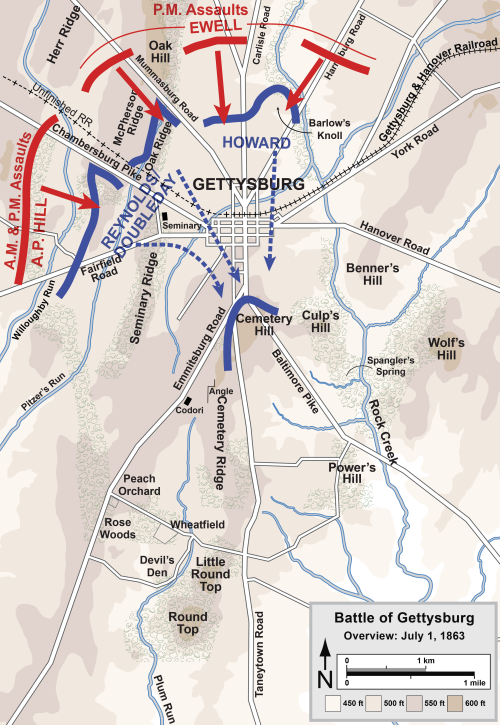
Heth had been surprised and then suffered heavy casualties when lead elements of the Federal 1st Corps under the command of Major General John Reynolds arrived. In the ensuing fight both Archer’s and Davis’ brigades were mauled with Archer being captured and Davis wounded. As the fight continued the Federal XI Corps under Oliver Howard arrived, extended the Right of the Federal line and emplaced troops on the hills to the east of the town. Unfortunately Howard’s dispositions were faulty and the choice of his First Division commander Barlow to advance to an exposed area of high ground proved to be nearly disastrous to the Federal position.

gettysburg_battle_map_of day1Gettysburg Day One (Map by Hal Jespersen, http://www.posix.com/Com)

Lee was surprised by the engagement and though he chastised Heth for getting involved but committed his army to the attack the Federals. Reynolds was killed early in the engagement but the fight was bitter, the Iron Brigade exacted a fearful toll on Archer and Davis’s brigades.

The attack by Heth was helped immensely when the lead elements of Ewell’s 2nd Corps in the form of Robert Rodes’ division arrived. Rodes’ division hit the right flank of the I Corps where it joined XI Corps and was joined by part of Jubal Early’s Division to his right. They overwhelmed the division of Francis Barlow who was wounded and captured, as well as other elements of XI Corps which was deployed on bad ground for defense.

The attack was well conceived but poorly executed, in part due to the failures of some of the subordinate brigade commanders. However, the attack threw the Federal line into confusion and the Federals shifted to meet the attack. Heth sought and got permission from Lee to renew his attack and the combination forced the Federal troops to withdraw through Gettysburg and up to Cemetery Ridge, where two brigade’s of Steinwehr’s division and the tough survivors of the Iron Brigade were already in place.

800px-First_day_at_gettysburgPender’s Division Goes into Action

In making the attack Lee acted against his own directions to his commanders. Though he only had a fraction of his army on the field and was unaware of the strength and location of the bulk of the Federal Army, Lee committed himself to a general engagement. In the process he placed his army at a disadvantage. Unless he could break the Federal line and take Cemetery Hill he would leave the Army of the Potomac with the high ground and with the ability to fight on interior lines, while his forces would be spread out over a long arcing line.

leeindexLee with A.P. Hill and Heth Bradley Schmehl

Ewell’s arrival was fortuitous because it temporarily tilted the balance to Lee, but the advantage was short lived, once again due to a vague order from Lee. This time it was an order to Ewell and like many things about Lee’s conduct of the battle this too is shrouded in controversy.

Lee’s report describes the order:

“General Ewell was, therefore, instructed to carry the hill occupied by the enemy, if he found it practicable, but to avoid a general engagement until the arrival of the other divisions of the army…”

But Lee had already committed himself to a general engagement in pursuing the attack during the afternoon. Although it appeared that Federal forces in turmoil as Reynold’s was dead and elements of XI Corps in retreat the situation was serious but the Confederates were not in a perfect or even completely advantageous position. Howard was able to rally his troops on Cemetery Hill taking advantage of his earlier deployment of Steinwehr’s division. Abner Doubleday who had succeeded Reynold’s brought his tropes back to reinforce the line as well as occupy Culp’s Hill to the right.

bogbayardwilkesonwebAbner Doubleday directs his troops on Day One

When Meade learned of Reynold’s death he dispatched Winfield Scott Hancock of II Corps to take command of all Federal Forces. Though he was junior to Howard, Hancock was able to work out a command arrangement with Howard and take command. Howard had to his credit Federal command position was strengthened.

Hancock doncemeteryhilljuly1_zps512a40faHancock Arrives on the Battlefield

Hancock was authorized by Meade to select where the Army would make its stand. Hancock told Howard “But I think this is the strongest position by nature upon which to fight a battle that I have ever saw…and if it meets your approbation I will select this as the battlefield.” Howard agreed and both men set off to rectify their lines.

Despite their success Ewell and his Corps were disorganized and not in a good position to take advantage of their earlier success. Likewise he was limited in the forces that he had available to continue the attack. Both his and A.P. Hill’s Corps only had two of their divisions in the field. Hill reported that his divisions “were exhausted by some six hours of hard fighting (and that) prudence led me to be content with what had been gained, and not push forward troops exhausted and necessarily disordered, probably to encounter fresh troops of the enemy.” Ewell reported that “all the troops with me were jaded by twelve hours’ marching and fighting.” Lee’s report of the battle indicated that the four divisions involved were “already weakened and exhausted by a long and bloody struggle.”

As such a night assault would have been exceptionally risky. Ewell would have only had the tired and disorganized survivors of four brigades at his disposal with no support from A.P. Hill on his right.

Early's_Charge_on_East_Cemetery_Hill

Ewell has often been criticized by the defenders of Lee and the legend of the Lost Cause for his failure to press the attack on Cemetery Ridge or Culp’s Hill. Critics cite that Federal forces were still disorganized and he could have easily attacked and driven the Federal Forces form the hills. Much is made of the protests of Major General Isaac Trimble as well as General John Gordon who were with Ewell. However as Edwin Coddington noted that these men concentrated their efforts on Ewell’s action to determine what went wrong at Gettysburg. In large part this was due to their inability to criticize Lee. Trimble’s account made its way into Michael Shaara’s classic novel of Gettysburg, the Killer Angels and were acted with conviction by Morgan Shepperd in the film adaptation of the book Gettysburg. Coddington correctly observed that “they forgot, however, the exact circumstances that kept the move from being “practicable” at the time.”

Rodes after battle report supported Ewell’s decision. He wrote before “the completion of his defeat before the town the enemy had begun to establish a line of battle on the heights back of the town, and by the time my line was in condition to renew the attack, he displayed quite a formidable line of infantry and artillery immediately in my front, extending smartly to my right, and as far as I could see to my left in front of Early.” Unfortunately for historians Rodes was killed in action at the Third Battle of Winchester in September 1864.

The Army of Northern Virginia came very close to sweeping Federal forces from the field on July 1st in spite of Lee’s lack of planning and clear commanders intent. But close was not enough. His forces which were committed in a piecemeal manner were unable to follow up their initial success. His orders to Ewell, to take the high ground “if practicable” were correctly interpreted by Ewell. Thus Federal corps under the command of Howard and Hancock were able to regroup, dig in and be reinforced by the rest of the Army on good ground of their choosing with interior lines.

Whether Lee intended to engage the Army of the Potomac at Gettysburg so early in the campaign is debated. His multiple and contradictory strategic aims left his commanders acting much on their own. His lack of clear commander’s intent to his subordinate commanders created confusion on the battlefield and paved the way to many controversies in the years following the war as Southerners sought to explain the failure of the Lost Cause, for which Lee could not be blamed.

Much of the controversy comes from Lee’s own correspondence which indicates that he might have not fully understood his own intentions. Some correspondence indicates that Lee desired to avoid a general engagement as long as possible while other accounts indicate that he wanted an early and decisive engagement. The controversy was stoked after the war by Lee’s supporters, particular his aides Taylor and Marshal and generals Gordon and Trimble, men like Longstreet and were castigated by Lee’s defenders for suggesting that Lee made mistakes on the battlefield.

Lee’s actual misunderstanding of his situation can be seen in the account of Isaac Trimble, traveling with Lee at the beginning of the invasion of Pennsylvania. He wrote:

“We have again outmaneuvered the enemy, who even now does not know where we are or what our designs are. Our whole army will be in Pennsylvania day after tomorrow, leaving the enemy far behind and obliged to follow by forced marches. I hope with these advantages to accomplish some single result and to end the war, if Providence favors us.”

The vagueness of Lee’s instructions to his commanders led to many mistakes and much confusion during the battle. Many of these men were occupying command positions under him for the first time and were unfamiliar with his command style. Where Stonewall Jackson might have understood Lee’s intent, even where Lee issued vague or contradictory orders, many others including Hill and Ewell did not. Lee did not change his command style to accommodate his new commanders.

That lack of flexibility and inability to clearly communicate Lee’s intent to his commanders and failure to exercise control over them proved fatal to his aims in the campaign. Stephen Sears scathing analysis of Lee’s command at Gettysburg perhaps says it the best. “In the final analysis, it was Robert E. Lee’s inability to manage his generals that went to the heart of the failed campaign.”

The vagueness of Lee’s intent was demonstrated throughout the campaign and was made worse by the fog of war. Day one ended with a significant tactical victory for Lee’s army but without a decisive result which would be compounded into a strategic defeat by Lee’s subsequent decisions on the 2nd and 3rd of July.

Peace,

Padre Steve+
2 Comments

Filed under civil war, History, leadership, Military

An Unsettled Saturday

947188_10151670056587059_1172426886_n

I am attempting to relax today and while I am still working on doing research and writing for my upcoming Gettysburg Staff ride with our Staff College students my mind is unsettled today. It appears that I have a lot going on in it. As Hedley Lamarr said: “My mind is a raging torrent, flooded with rivulets of thought cascading into a waterfall of creative alternatives.”

DSCN8774

As I said I have a lot more work to do on Gettysburg to prep me and my students for the trip. In the next few days I need to write a few articles as well as do some editing on others that they can use for the trip and their future reference. Likewise I need to take my materials and decide exactly what events and people I want to focus on as we walk the battlefield Saturday and Sunday.

Gay-Turn-away-law-passed-to-further-Discriminate-service-for-Gay-persons

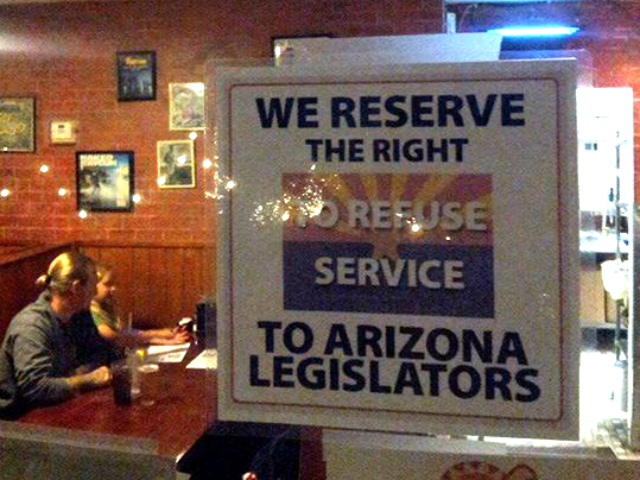
Because of that I have not been doing much writing on other subjects that I think are important. These include the recent focus some to attempt to use their religious beliefs to legislate discrimination by the state on those that the disapprove. I did write about what was happening in Kansas a couple of weeks back but have not had any time to write about the situation in Arizona as well as other battleground states in the struggle of the LGBT community for basic civil rights that others enjoy.

AP_Crimea_soldiers_bc_140301_16x9_992

Likewise I am very concerned with what is going on in Russia and the Ukraine and worried that the West and Russia have entered a new Cold War. When I think about that I remember the euphoria of the Iron Curtain falling, and how the West missed the opportunity to embrace Russia and instead treated her as a defeated power. In a sense I can understand the Russians taking advantage of the West’s weakness to re-stake in some manner its claim to Crimea. Whether they outright annex it, use their military and economic leverage to get the region autonomy or divide it along ethnic lines is not the point. The point is that this goes back long before Putin and is the product of centuries of intrigue and political calculation going back to Catherine the Great.

In a sense the end of the Cold War was a defeat for the old Soviet Union.  But I think that the West in its triumphant celebration and euphoria about “democracy” taking over failed to remember something that is common to the end of all wars that beget new ones. Eric Hoffer wrote: “A war is not won if the defeated enemy has not been turned into a friend.” Sadly to say we did not attempt in any real way to make Russia a friend, and now it appears they are once again an enemy.

I certainly do not condone what Putin and the Russian legislature is doing to ratchet up the tensions by sending in troops, moving naval forces and potentially recalling their ambassadors to the United States and maybe the EU. It is very dangerous and any time a nation embarks on military conquest to solve a problem it almost inevitably produces undesired negative effects. It is my hope that the crisis will be defused and that Ukrainians and Russians in the Ukraine can sort this out. Unfortunately I think that things will get worse before they get better. At best I think we can hope for is a partition of the region and a Cold War, at worst a regional war between Ukrainians and Russians that could draw in others.

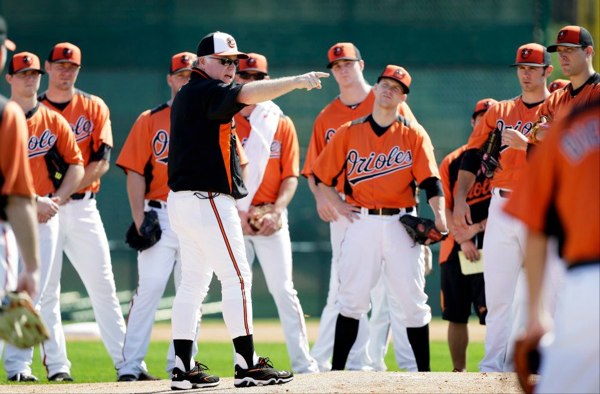
orioles-spring-training

However, amid the din of these crisis, as well as the continued disruption of home life as we wait for the repairs and reconstruction following our great household flood there is hope. Baseball spring training games are beginning and opening day is a mere 30 days away.

As Sharon Olds wrote back in 1987: Baseball is reassuring.  It makes me feel as if the world is not going to blow up.” 

With that in mind I wish you peace,

Padre Steve+
1 Comment

Filed under Baseball, civil war, News and current events