Monthly Archives: April 2014

A Centurion’s Remarkable Sunday in Jerusalem: The Story of Longinus

jesustriumphal-entry

This article is the first story in a prequel trilogy to a trilogy that I wrote about Longinus the Centurion who according to tradition commanded the detail in charge of the crucifixion of Jesus. I plan on re-publishing each segment this week as part of Holy Week and I hope that you find them interesting. Story is basically historical fiction and my imagination about what it must have been like to be a Roman officer witnessing the drama of the Passion during what we now call Holy Week.

I find a special affinity to this soldier who while serving his country in a land far from home whose people detested the occupiers of their country by a foreign power that most considered infidels. I don’t think that anyone can really understand the plight of the Roman officers assigned to the occupation of Judea and Samaria in the First Century until they have  done their time in Iraq or Afghanistan. These peoples, though not Jewish have similar divisions,  contradictions and prejudices against foreigners as those that lived in First Century Palestine. Those American, NATO or coalition troops that served in Iraq or Afghanistan, especially those who actually worked alongside or came to know the people in those countries understand the plight of the Roman soldiers assigned to occupation duty throughout the Empire, but especially in the volatile provinces of Judea and Samaria like Longinus.

So enough of the introduction, on to the story…

centurioncross_1

Longinus and his men were tired. Pilate, the Governor had decided that he would travel from his Provincial capital of Caesarea in order to maintain a close watch on the Jews of Jerusalem during the annual celebration of Passover. During such times that city, the largest in the province would see its population expand exponentially as Jews from the diaspora, that is those living around the known world would make pilgrimage to the holy city.

Longinus’s men had helped provide the escort as Pilate travelled the nearly 80 miles moving up from the coastal plain where Caesarea was up to the hill country of Judea. The trip took three days as Pilate wanted to be in the city in plenty of time. The weather was conducive to the march, but though well trained Longinus’ men were not Romans but primarily recruited locally from drafts of Syrian’s and Samaritans.

Longinus never really enjoyed this assignment. He had served in other areas as a young officer and much preferred serving with and commanding Italians, Greeks, Macedonians and others to the men that he now commanded, but his duty was to serve wherever he was sent. He thought at times of his family in Italy near his home in Lanciano in the Abruzzo region near the Adriatic, missing his wife and children.

coin-vespasian-judea-capta-sestertiusThe duty of Longinus and other Romans in the region chiefly consisted of helping police the region and protecting the much despised tax collectors. One of those tax collectors, a Jewish man named Matthew had left the employ of Caesar a few years back and was now a “disciple” of some itinerant Jewish preacher named Jesus. He had heard a story from another Centurion about this preacher that made him chuckle. Evidently some Jews of the sect know as the Pharisees, a particularly strict group tried to trap the Jesus with the question of whether it was lawful to pay taxes to the Romans. They thought that they had trapped him because if he answered in the affirmative he would be rejected by them and discredited among the people, while if he answered that it was not they would have him on record as urging the people to disobey Caesar.

The Centurion who told the story said how with him standing in the background watching and listening that Jesus asked one of the Pharisees to bring him a coin. Looking at the coin he asked the man whose image was on it. The Pharisee, a bit hesitantly replied that it was “Caesar” to which Jesus, who supposedly was an unlearned but charismatic bumpkin from Galilee replied “give to Caesar what is Caesar and to God that which was God’s.” Longinus’ colleague, an outsider looking in at this curious religious dispute was amazed with the acumen of Jesus in dealing with a question that someone less intuitive could have botched with potentially fatal consequences.

romans-35

The march through Samaria was particularly uneventful but as the Legionaries entered Judea, a region seething with hostility toward the Romans he and his men became more guarded, very aware of the hostility that sometimes invited violence.

They arrived about noon on Friday in order not to stir up the Jewish faithful on their sabbath and took up residence in the Fortress Antonia, the symbol of Roman might in this always rebellious city. That evening and the next day were uneventful, but on Sunday, Longinus was told to have his troops stand by in case of violence. The man named Jesus was entering the city and pandemonium was expected. According to rumor this Jesus had raised a many from the dead in Bethany the day before and was being greeted as a potential King and liberator.

The Roman presence was muted, Pilate and senior commanders not wanting to do anything that might provoke an insurrection. The troops remained on alert at the fortress while Longinus and a number of other officers went to observe events at a distance.

Longinus was amazed at what he saw. Thousands of people singing and throwing cloaks and palms along the street as Jesus, mounted on a white donkey accompanied by his disciples as well as numerous people from Bethany where he had been staying paraded down the street.

The procession moved toward the Temple where an understandably nervous delegation of Pharisees and the Priests of the Temple wondered what Jesus might do. If he was the “Messiah” that they preached about it could be a direct threat to their positions of power and provoke a Roman crackdown against them.

Jesus dismounted from the donkey and entered the Temple area, now crowed with thousands of pilgrims coming to offer sacrifice where he began to condemn the moneychangers. The moneychangers were in charge of selling animals for sacrifice to pilgrims, many of whom who could not bring their own animals for sacrifice. They were not according to what Longinus knew from his previous visits to the city at Passover and other Holy days men of good repute. They were believed to make their profit off the poor and widows and even the Romans that knew of the practice considered it less than honorable, and certainly the religious authorities were making money from their efforts.

jesus_templecleanse

As Jesus went into the Temple, Longinus and his fellow officers stayed back. As Gentiles their presence would create a crisis so they remained outside entrusting a Jew who worked with them to make the observation. They could hear commotion in the Temple and as they watched money changers and others came spilling out of the Temple grounds, many surrounded by their animals, lambs, doves and oxen. Longinus wondered what in the name of Jupiter was going on and soon his spy came running out of the Temple to make his report.

Slowing down as he approached Longinus he breathlessly gave his report. Jesus had taken a whip and driven out the moneychangers, condemning their activities and those of the religious leaders. Longinus had never heard of Jesus ever doing anything remotely violent before and this shocked him. He asked what else had happened and the spy reported that the Temple police and authorities did nothing and that Jesus left without further incident.

pontius-pilate1

Longinus knew that the coming days could prove interesting. Going to Pilate that evening he gave his report. Pilate was quite concerned about the situation and considered it volatile. He ordered Longinus and the other officers to maintain an elevated state of readiness in case there was some sort of protest or even civil strife between the followers of Jesus and the Jewish authorities.

Longinus left Pilate and he and his fellow officers discussed the situation, briefed their subordinates and as night fell met in the tavern in the fortress where they quietly drank and wondered what the coming days might bring.

Peace

Padre Steve+
2 Comments

Filed under faith, History, Religion

“The Glory of Fighting” The Anticlimactic Clash of Cavalry at Gettysburg, July 3rd 1863

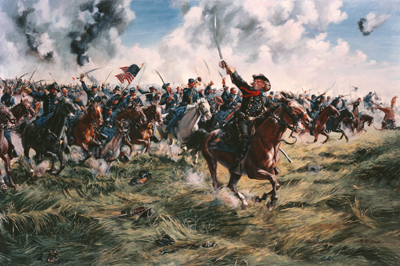
4 RCuster leads his Michigan Brigade  on July 3rd

Robert E. Lee’s prodigal son had finally returned. On the evening of July 2nd 1863 with the attacks of Longstreet now finished and Ewell’s abortive battle for Culp’s Hill reaching its bloody Lieutenant General J.E.B. Stuart finally arrived at Robert E Lee’s headquarters on Seminary Ridge. The meeting was brief and unwitnessed by anyone but the participants.

Apparently the meeting between Lee and his Cavalry division commander was short “abrupt and frosty.” Porter Alexander noted that Lee only said “Well General, you are here at last” and Stuart’s aide Major Henry McClellan reported that Stuart “regarded the incident as painful beyond description.” (1) In his official report of the battle “Lee would allude to Stuart with but a single pejorative sentence: “The movements of the Army preceding the Battle of Gettysburg had been much embarrassed by the absence of the cavalry.” (2) In Stuart’s defense it needs to be re-emphasized that Lee had four brigades of cavalry at his disposal but did not use them effectively.

Stuart left as quickly as he arrived and in his official report he noted that his new orders were to take up a position “on the left wing of the Army of Northern Virginia.” (3) For a man like Stuart whose soldierly skills as a cavalry commander and leader were only matched by his vanity the incident was humiliating, he had failed Robert E Lee.

300px-Gettysburg_East_Cavalry_Field3

Lee’s plan for Stuart the next day was that Stuart Stuart moved four of his brigades the following morning to the north and east. The plan was for his forces to be in position to assist the exploitation of any breakthrough made by Pickett’s attack. Stuart hoped to cover his movement from Federal observation but he was discovered and his movement reported back to Meade. Stuart blamed the discovery on the trail brigades of Hampton and Fitzhugh Lee who had “debouched onto open ground and disclosed his presence.” (4)

david-greggBrigadier General David Gregg

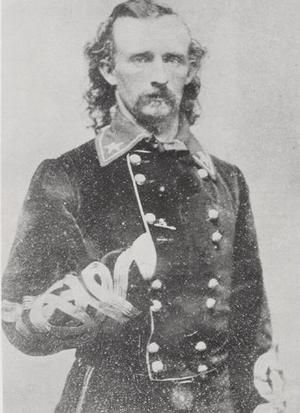
Brigadier General David Gregg commanding the Second Cavalry Division received word of Stuart’s approach and prepared to intercept him and in the process relieve the Michigan Brigade of the newly minted Brigadier General George Custer so it could rejoin Jusdon Kilpatrick’s division.

300_2631176Brigadier General George Armstrong Custer

Upon his arrival Gregg realized that he would be outnumbered and that Stuart posed “a serious threat to the Federal rear.”(5) Custer indicated that he thought Gregg would soon have a battle and Gregg replied “in that case he would like to have the assistance of his Michigan brigade.” (6) Custer indicated his agreement and without bothering to consult the Cavalry Corps Commander Alfred Pleasanton Gregg ordered Custer to remain with him and “willingly risked his military career and reputation in his anxiety to protect the Federal rear.” (7)

Gregg’s action was yet another of the superior judgements executed by a Federal commander during the battle. It was an outstanding example of how Federal commanders on the whole recognized the overall tactical situation and used their judgement to take action when waiting for a superior could prove fatal to the army. In our modern understanding it would be an example of how Mission Command is to work.

During the battle Stuart displayed little of his normally sharp tactical leadership and took little part in the battle leaving the conduct of it to his subordinates. Though the Federal Horse Artillery was outnumbered Gregg used the two batteries he had far more effectively than Stuart used his. Additionally Gregg had two brigade commanders willing to take the fight to the Confederates.

The main battle took place after Three PM when Pickett’s attack was battling for its life during its assault on Cemetery Hill. There were a number of charges and counter charges and the battle was tactically a draw but a victory for Gregg who had forced Stuart to enter a battle “in which the Confederates gained nothing except the “glory of fighting” (8) and had stopped Stuart from his objective of disrupting the Federal rear and aiding Pickett’s assault.

Stuart’s aid Major Henry McClellan wrote of the battle:

“The result of this battle shows that there is no possibility that Stuart could successfully have carried out his intention of attacking the rear of the Federal right flank, for it was sufficiently protected by Gregg’s command. As soon as General Gregg was aware of Stuart’s presence he wisely assumed the aggressive and forced upon Stuart a battle…while Gregg himself performed the paramount flank of protecting the right flank of the Federal Army.” (9)

McClellan’s analysis is both succinct and accurate. As Stuart’s forces retired and Pickett’s shattered command withdrew the Battle of Gettysburg was effectively over.

1. Sears, Stephen W. Gettysburg A Mariner Book, Houghton Mifflin Company, Boston and New York 2003. pp.257-258

2. Taylor, John M. Duty Faithfully Performed: Robert E Lee and his Critics Brassey’s Dulles VA 1999 p.150

3 Trudeau, Noah Andre. Gettysburg: A Testing of Courage, Harper Collins Books New York 2001 p.316 

4 Coddinton, Edwin B. Gettysburg: A Study in Command. A Touchstone Book, Simon and Schuster, New York 1968 pp.520-521

5. Ibid. p.521

6. Ibid.

7. Ibid. p.522

8. Ibid. p.523

9. McClellan, Henry Brainerd The Life and Campaigns of Major General J.E.B. Stuart Commander of the Cavalry of the Army of Northern Virginia 1885. Digital edition copyright 2011 Strait Gate Publications, Charlotte NC location 6516 of 12283

4 Comments

Filed under civil war, History, leadership, Military

The Forgotten Hero: Brigadier General George Sears Greene at Culp’s Hill: Night of July 2nd and 3rd 1863

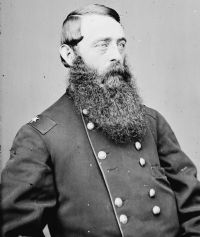
220px-George_S._GreeneBrigadier General George Sears Greene

On the night of July 1st 1863 Dick Ewell’s Second Corps of the Army of Northern Virginia and the Army of the Potomac on Cemetery and Culp’s Hill prepared for another day of battle. Despite a significant amount of success Lee’s Army had failed to drive the lead elements of the Army of the Potomac off of Cemetery Hill. As the evening progressed more Federal troops in the form of Henry Slocum’s XII Corps began to take up positions on Cemetery Hill as well as Culp’s Hill which Oliver Howard and Winfield Scott Hancock recognized to be vital to holding the Federal position.

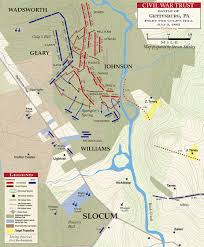
The three brigades of Geary’s division entered the line to the east of Wadsworth’s division of I Corps along the northern and eastern face of Culp’s Hill. Key to the position was the placement of the brigade of Brigadier General George S. Greene one of the oldest, if not the oldest Union officer on the field. Greene’s brigade took a position next to the remnants of the Iron Brigade which had fought so hard along Seminary Ridge earlier in the day.

Greene had been born in 1801 and had graduated from West Point as an artillery officer some six years before Robert E. Lee. He graduated second in his class at West Point in 1823 and after 13 years left the army in 1836 to enter civilian life as an engineer. Greene missed the Mexican War but when the call came for volunteers in 1861 he was appointed to command the 60th New York Volunteer Infantry. Promoted to Brigadier General in 1862 he commanded his brigade and served as an acting division commander at Antietam. He was a descendent of Nathaniel Greene and his son Lieutenant Dana Greene USN was the Executive officer of the USS Monitor at the Battle of Hampton Roads against the CSS Virginia.

culps hill map

As the Federal units on Culp’s Hill took their positions they began to do something that was not yet commonplace in either army. They began to construct field fortifications and breastworks. Working through the night with the ample materials at hand they dug in and linked their positions with each other as well as Brigadier General Thomas Kane’s brigade to Greene’s right. The line of fortifications took advantage of the natural terrain which on its own made the ground good for the defense, but when fortified made it nearly impregnable to assault.

During the day of July second little happened on Ewell’s front. Though he had persuaded General Lee to leave his troops in place Ewell remained mostly inactive on July second with the exception of some skirmishing and a battle between the Stonewall Brigade and Gregg’s division of Federal Cavalry on Brinkerhoff’s Ridge about two and a half miles east of the town.

It would not be until the evening of the 2nd that Ewell’s troops went into action against the now very well entrenched Federal Forces on Cemetery and Culp’s Hill. The assaults began on Cemetery Hill where Jubal Early’s division attacked forces along the north and east section of the hill to be supported by Robert Rodes’ division on the west.

However as with most of the Confederate offensive actions of the battle this too fell apart as Rodes division gave little support to Early’s attack as due to both Rodes’ and Ewell’s indecisiveness Rodes “did not give himself enough time to get his big division into formation for the attack. By the time he had completed the complicated maneuver of wheeling his brigades forty-five degrees to the left and advancing them half a mile to a good place from which to charge up Cemetery Hill the battle was over.” [1]

Though Early achieved some success his division was repulsed and the threat to the Union gun line on Cemetery Hill was ended. One author noted of Early’s attack: Courage and determination could not offset superior numbers and fresh troops. With no help coming and enemy units swarming around them, all those Rebels who were still under some command and control began to fall back.” [2]

Longstreet’s attack on the Federal left forced George Meade to pull troops from his quiet sector along Culp’s Hill in order to reinforce his forces in the Peach Orchard, the Wheat Field and along the southern extension of Cemetery Ridge. According to most accounts Meade directed Slocum to send “at least one division” to the threatened sector which weakened the forces deployed on Culp’s Hill considerably.

However within XII Corps there was much confusion and in addition to William’s division Geary had pulled two of his brigades out of line leaving only George Greene’s brigade to defend Culp’s Hill “guarding nearly half a mile of Twelfth Corps works.”[3] Neither Slocum nor Williams realized the danger and before the units which had left the hill could return Allegheny Johnson’s division of Ewell’s corps which had sat inactive and impatiently awaiting orders to attack all day jumped off.

culp's hill149th New York Volunteer Infantry on Culp’s Hill

The Confederate attack began around Seven PM and continued through the night. Johnson sent some 4,700 men to attack Greene’s 1,300 dug in veterans. “That kind of manpower edge would have likely been decisive elsewhere on the field that day, but against Pop Greene’s providential and well-constructed breastworks the odds leveled out.” [4]Greene’s men fought hard as Greene directed them and requested reinforcements from I Corps and XI Corps who in turn sent units including the Iron Brigade to help. However, the six regiments that arrived had been reduced to fractions of their former strength by the first day’s battle “increased Greene’s force only by about 755 men.” [5]Additionally, Hancock who heard the battle raging “sent two regiments to the relief of Slocum as well.”[6] Greene’s report of the battle noted:

“we were attacked on the whole of our front by a large force few minutes before 7 p.m. The enemy made four distinct charges between 7 and 9.30 p.m., which were effectually resisted. No more than 1,300 were in our lines at any one time. The loss of the enemy greatly exceeds ours.”[7]

As the night wore on Confederate attacks continued and in the darkness other Federal units arrived, including those from XII Corps which had gone earlier in the day. By mid-morning Johnson’s assault was done. His units had suffered severe casualties and his division had been drained of all attacking power by the time Lee needed it on the morning of July 3rd to support Pickett’s attack. “This division, formed by Stonewall Jackson was never the same again. Its glories were in the past.”[8] In the end the Army of the Potomac still held both Cemetery and Culp’s Hill, in large part due to the actions of the old soldier, George Greene who’s foresight to fortify the hill and superb handling of his troops and those who reinforced him kept Johnson’s division from rolling up the Federal right.

Ewell’s troops would play no further role in the battle. In the end his presence around Cemetery and Culp’s Hill diminished the resources that Lee needed to support his other assaults on the second and third day of battle. In effect it left Lee without one third of his forces. The result was the sacrifice of many troops with nothing to show for it. Ultimately Lee is to blame for not bringing Ewell’s forces back to Seminary Ridge where they and their artillery may have had a greater effect on the battle.

greene monumentMonument to General George S Greene on Culp’s Hill

The real hero of Culp’s Hill was Greene. But Greene in many ways is a forgotten hero, he was not given much credit in Meade’s after action report though Slocum attempted to rectify this and Meade made some minor changes to his report. But it was in later years that Greene was began to receive recognition for his actions. James Longstreet gave Greene credit for saving the Union line on the night of July 2nd and said that “there was no better officer in either army” at the dedication of the 3rd Brigade monument on Culp’s Hill in 1888. Greene died in 1899 having been officially retired from the Army in 1893 as a First Lieutenant, his highest rank in the Regular Army. A monument to Greene stands on Culp’s Hill looking east in the direction of Johnson’s assault.

Until tomorrow,

Peace

Padre Steve+


[1] Coddington, Edwin B. The Gettysburg Campaign: A Study in Command, A Touchstone Book, Simon and Schuster Ne5w York, 1968 pp.429-430

[2] Tredeau, Noah Andre. Gettysburg: A Testing of Courage, Harper Collins Publishers, New York 2002 p.409

[3] Pfanz, Harry W. Gettysburg: Cemetery Hill and Culp’s Hill University of North Carolina Press, Chapel Hill NC 1993 p. 204

[4] Sears, Stephen W. Gettysburg. Houghton Mifflin Co. Boston and New York 2003 p.326

[5] Ibid. Coddington p.431

[6] Jordan, David M. Winfield Scott Hancock: A Soldier’s Life Indian University Press, Bloomington and Indianapolis 1988 p.94

[7] Luvaas, Jay and Nelson Harold W. editors. The U.S. Army War College Guide to the Battle of Gettysburg South Mountain Press, Carlisle PA 1986 pp. 159-160

[8] Dowdy, Clifford. Lee and His Men at Gettysburg: The Death of a Nation Skyhorse Publishing, New York 1986, originally published as Death of a Nation Knopf, New York 1958 p.262

5 Comments

Filed under civil war, History, leadership, Military

Surrender at Appomattox: Ulysses S. Grant, Robert E. Lee and Joshua Lawrence Chamberlain teach us about Reconciliation

The Authentic History Center

It was the day after General Robert E Lee had requested to Lieutenant General Ulysses S. Grant that his Army of Northern Virginia be allowed to surrender. The once mighty army now a haggard but proud force of about 11,000 soldiers faced hopeless odds against a vastly superior enemy. Since Gettysburg Lee’s army had been on the defensive, Lee’s ill fated offensive into Pennsylvania being one of the two climactic blows that sealed the doom of the Confederacy, the other Grant’s victory at Vicksburg which fell a day after Pickett’s Charge.

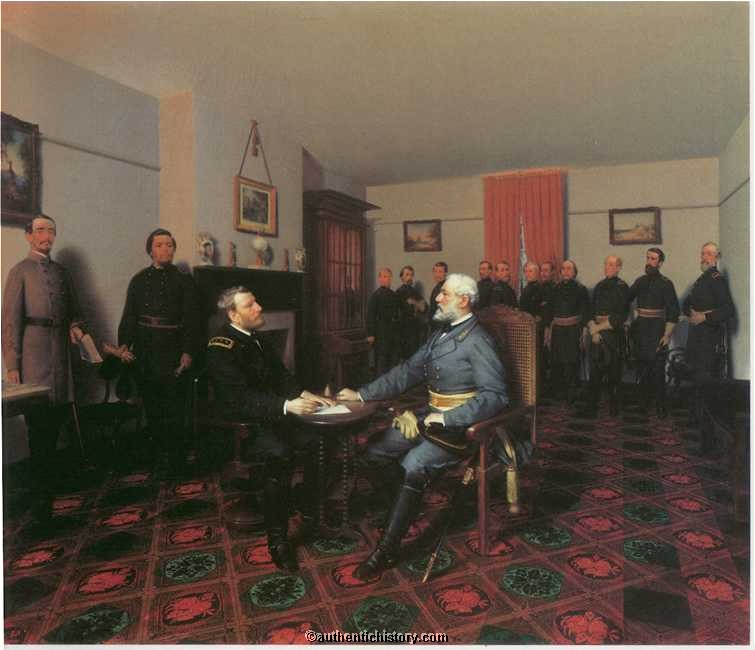
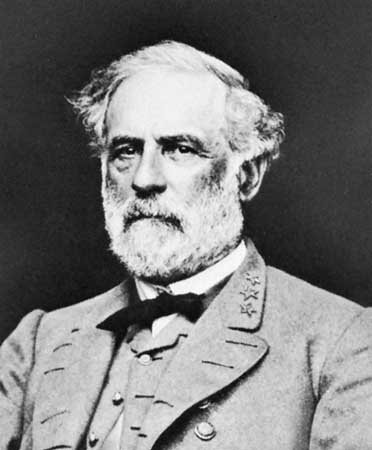
On the 9th and 10th of April three men, Ulysses S Grant, Robert E Lee and Joshua Lawrence Chamberlain taught succeeding generations the value of mutual respect and reconciliation after a bitter and bloody war.

ileerob001p1

With each battle following Gettysburg the Army of Northern Virginia became weaker and finally after the nine month long siege of Petersburg ended with a Union victory there was little else to do. When his artillery chief Porter Alexander recommended that the Army be released, “take to the woods and report to their state governors” Lee replied:

“Already [the country] is demoralized by the four years of war. If I took your advice, the men would be without rations and under no control of their officers. They would be compelled to rob and steal in order to live…. We would bring on a state of affairs it would take the country years to recover from… You young fellows might go bushwhacking, but the only dignified course for me would be to go to General Grant and surrender myself and take the consequences of my acts.”

Abraham Lincoln had already set the tone for the surrender in his Second Inaugural Address given just over a month before the surrender of Lee’s army. Lincoln closed that speech with these words of reconciliation:

“With malice toward none, with charity for all, with firmness in the right as God gives us to see the right, let us strive on to finish the work we are in, to bind up the nation’s wounds, to care for him who shall have borne the battle and for his widow and his orphan, to do all which may achieve and cherish a just and lasting peace among ourselves and with all nations.”

poor--ulysses-s-grant-president-1040cs021412

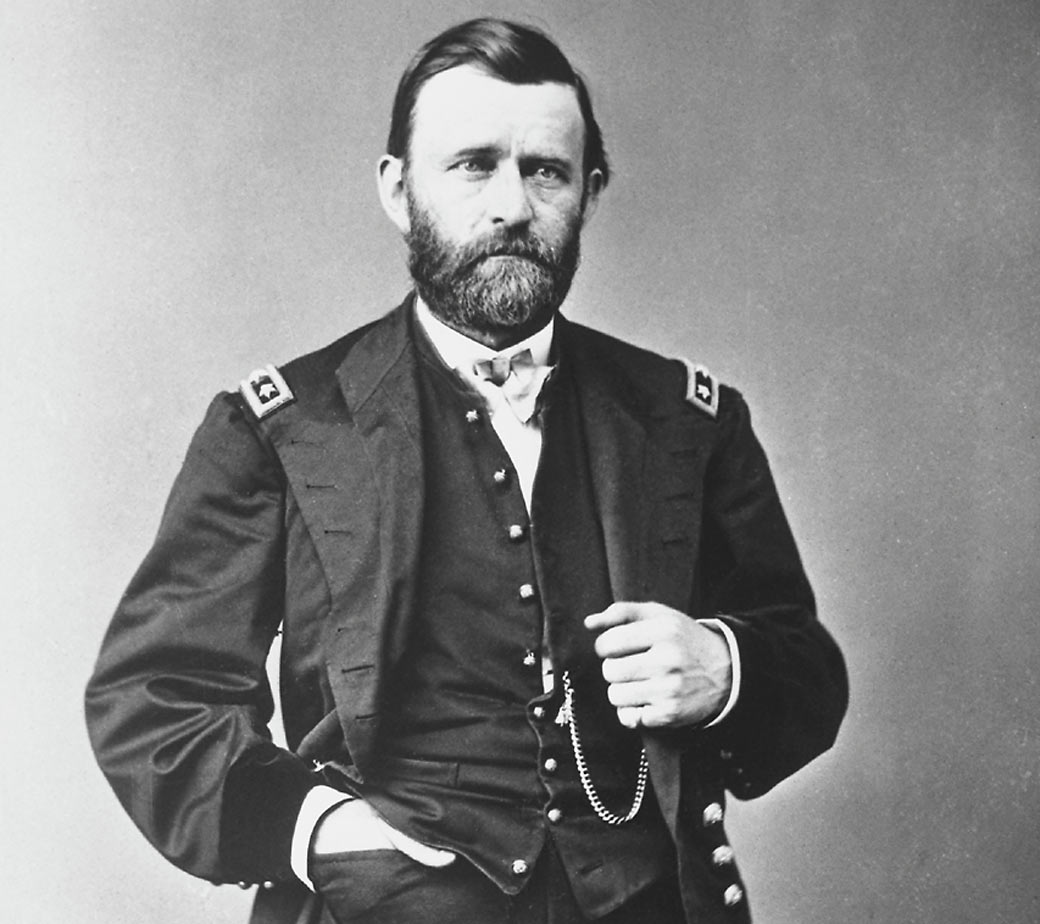
Grant provided his vanquished foe generous surrender terms. Grant met with Lee and offered the following terms of surrender:

“In accordance with the substance of my letter to you of the 8th inst., I propose to receive the surrender of the Army of N. Va. on the following terms, to wit: Rolls of all the officers and men to be made in duplicate. One copy to be given to an officer designated by me, the other to be retained by such officer or officers as you may designate. The officers to give their individual paroles not to take up arms against the Government of the United States until properly exchanged, and each company or regimental commander sign a like parole for the men of their commands. The arms, artillery and public property to be parked and stacked, and turned over to the officer appointed by me to receive them. This will not embrace the side-arms of the officers, nor their private horses or baggage. This done, each officer and man will be allowed to return to their homes, not to be disturbed by United States authority so long as they observe their paroles and the laws in force where they may reside.”

When Lee left the building Federal troops began cheering but Grant ordered them to stop. He later noted: “The Confederates were now our countrymen, and we did not want to exult over their downfall.”

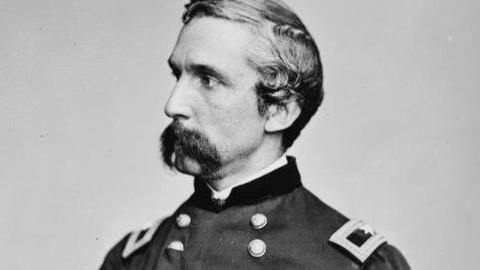
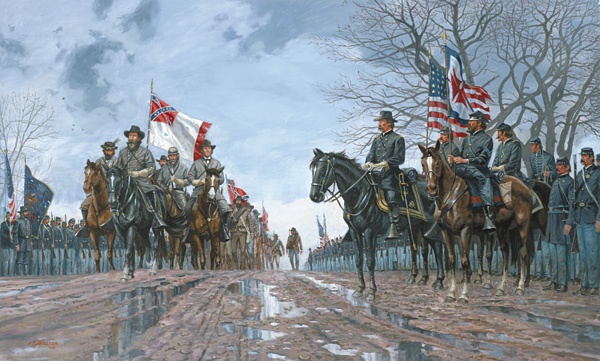
The surrender itself was accomplished with a recognition that soldiers who have given the full measure of devotion can know when confronting a defeated enemy. Major General Joshua Lawrence Chamberlain, the heroic victor of Little Round Top was directed by Grant to receive the surrender of the defeated Confederates. As they passed, moved with emotion he ordered his soldiers to salute the defeated enemy for whose cause he had no sympathy.

PH2010062902996

Chamberlain was not just a soldier, but before the war had been Professor of Natural and Revealed Religions at Bowdoin College, and a student of theology before the war. He could not help to see the significance of the occasion. He understood that he would be criticized by some for offering the salute, however unlike some, the staunch abolitionist and Unionist who had nearly died on more than one occasion fighting the defeated Confederate Army understood that no true peace could transpire unless the enemies became reconciled to one another.

He noted that his chief reason for doing so:

“The momentous meaning of this occasion impressed me deeply. I resolved to mark it by some token of recognition, which could be no other than a salute of arms. Well aware of the responsibility assumed, and of the criticisms that would follow, as the sequel proved, nothing of that kind could move me in the least. The act could be defended, if needful, by the suggestion that such a salute was not to the cause for which the flag of the Confederacy stood, but to its going down before the flag of the Union. My main reason, however, was one for which I sought no authority nor asked forgiveness. Before us in proud humiliation stood the embodiment of manhood: men whom neither toils and sufferings, nor the fact of death, nor disaster, nor hopelessness could bend from their resolve; standing before us now, thin, worn, and famished, but erect, and with eyes looking level into ours, waking memories that bound us together as no other bond;—was not such manhood to be welcomed back into a Union so tested and assured? Instructions had been given; and when the head of each division column comes opposite our group, our bugle sounds the signal and instantly our whole line from right to left, regiment by regiment in succession, gives the soldier’s salutation, from the “order arms” to the old “carry”—the marching salute. Gordon at the head of the column, riding with heavy spirit and downcast face, catches the sound of shifting arms, looks up, and, taking the meaning, wheels superbly, making with himself and his horse one uplifted figure, with profound salutation as he drops the point of his sword to the boot toe; then facing to his own command, gives word for his successive brigades to pass us with the same position of the manual,—honor answering honor. On our part not a sound of trumpet more, nor roll of drum; not a cheer, nor word nor whisper of vain-glorying, nor motion of man standing again at the order, but an awed stillness rather, and breath-holding, as if it were the passing of the dead!”

The next day Robert E Lee address his soldiers for the last time. Lee’s final order to his loyal troops was published the day after the surrender. It was a gracious letter of thanks to men that had served their beloved commander well in the course of the three years since he assumed command of them outside Richmond in 1862.

General Order
No. 9


After four years of arduous service marked by unsurpassed courage and fortitude, the Army of Northern Virginia has been compelled to yield to overwhelming numbers and resources.

need not tell the survivors of so many hard fought battles, who have remained steadfast to the last, that I have consented to the result from no distrust of them.
But feeling that valour and devotion could accomplish nothing that could compensate for the loss that must have attended the continuance of the contest, I have determined to avoid the useless sacrifice of those whose past services have endeared them to their countrymen.

By the terms of the agreement, officers and men can return to their homes and remain until exchanged. You will take with you the satisfaction that proceeds from the consciousness of duty faithfully performed, and I earnestly pray that a merciful God will extend to you his blessing and protection.

With an unceasing admiration of your constancy and devotion to your Country, and a grateful remembrance of your kind and generous conideration for myself, I bid you an affectionate farewell. — R. E. Lee, General

Warriors_Tribute_at_Appomattox

The surrender was the beginning of the end. Other Confederate forces continued to resist for several weeks, but with the surrender of the Army of Northern Virginia led by the man that nearly all Southerners saw as the embodiment of their nation the war was effectively over.

Lee had fought hard and after the war was still under the charge of treason, but he understood the significance of defeat and the necessity of moving forward as one nation. In August 1865 Lee wrote to the trustees of Washington College of which he was now President:

“I think it is the duty of every citizen, in the present condition of the Country, to do all in his power to aid the restoration of peace and harmony… It is particularly incumbent upon those charged with the instruction of the young to set them an example of submission to authority.

It is a lesson that all of us in our terribly divided land need to learn regardless of or political affiliation or ideology. Lee learned that Grant’s Aide-de-Camp was a Seneca and said after the surrender “It is good to have one real American here.” The officer replied, “Sir, we are all Americans.”

It is time again that we learn that lesson.

Peace

Padre Steve+

Leave a comment

Filed under civil war, History, Military, philosophy, Political Commentary

Gettysburg Day Two: The Peach Orchard, Wheat Field and Devil’s Den

barksdales_charge_lg

“Mission command is the conduct of military operations through decentralized execution based upon mission-type orders. Successful mission command demands that subordinate leaders at all echelons exercise disciplined initiative, acting aggressively and independently to accomplish the mission. Essential to mission command is the thorough knowledge and understanding of the commander’s intent at every level of command.” From the Mission Command White Paper and JP 3-31

As on the first day of battle and throughout the Gettysburg campaign issues of command and control would be of paramount importance. On the second day the glaring deficiencies of Robert E Lee and his corps commanders command and control at Gettysburg would again be brought to the fore while the exemplary command of the Army of the Potomac by George Meade, Winfield Scott Hancock, staff artillery officer Henry Hunt and staff engineer Gouverneur Warren exemplified the best aspects of what we now define as Mission Command.

On the morning of July 2nd the Army of the Potomac was mostly assembled on the high ground from Culp’s Hill to Cemetery Hill and along Cemetery Ridge. In the north XII Corps under the command of Major General Henry Slocum held Culp’s Hill. The battered remnants of I and XI Corps under the command of Oliver Howard and Abner Doubleday held Cemetery Hill while Winfield Scott Hancock’s crack II Corps extended the line down Cemetery Ridge. To II Corps right was Dan Sickles’ III Corps with George Sykes V Corps in Reserve. John Sedgwick’s VI Corps was still enroute, marching up the Baltimore Pike.

It was a solid and well laid out position which commanded the battlefield. Major General Gouverneur Warren the Army’s Staff Engineer Officer who had been sent by Meade to assist Hancock the night of the first wrote his wife that morning: “we are now all in line of battle before the enemy in a position where we cannot be beaten but fear being turned.” (1)

sicklesMajor General Dan Sickles

There was one notable problem, Dan Sickles did not like the position assigned to his corps. His corps which joined the left flank of II Corps was to extend down Cemetery Ridge to Devil’s Den and Little Round Top. All morning he had been lobbying Meade, through Meade son and Aide-de-Camp Captain George Meade, the Artillery Reserve Commander Henry Hunt, Warren and even Meade himself to no avail. Sickles was disturbed because John Buford’s Cavalry division which has been deployed on the Federal left had been moved to the rear by Pleasanton the Cavalry Corps commander and not replaced.

Hunt who had accompanied Sickles back to his corps pointed out that the position was too exposed and too expansive for the number of troops Sickles had in his corps. He advised Sickles not to advance and assured Sickles that he would discuss Sickles’ concerns with Meade. (2)

To remedy the situation he sent out four companies of Sharpshooters supported by the 3rd Maine Infantry to make a reconnaissance. Those troops ran into a large force of advancing Confederate Infantry near Seminary Ridge and withdrew, Colonel Brenden of the Sharpshooters informing Sickles of the Confederate advance.

Sickles now felt that the Union line was about to be turned as it had been at Chancellorsville and without consulting Meade or Hancock took it upon himself to save the situation. It was an act of brazen insubordination, but typical of the mercurial, vain and scandal plagued man who “wore notoriety like a cloak” and “whether he was drinking, fighting, wenching or plotting, he was always operating with the throttle wide open.” (3)

About mid-afternoon Sickles advanced III Corps forward in a “mile long line of battle with waving flags and rumbling batteries rolling west into the afternoon sunlight.” (4) The sight confused other commanders such as John Gibbon commanding a division in II Corps who watched in amazement from his vantage point on Cemetery Ridge. Sickles advanced nearly a mile in front of his previous position opening a gap between III Corps and II Corps. He attempted to hold a new line that was longer and more exposed than the number of troops that he had available. He placed Humphrey’s division along the Emmitsburg Road and extended Birney’s division through the Peach Orchard, a wheat field down to Devil’s Den where he ran out of troops.

gettysburg-peach-orchard

Sickles had formed an exposed and vulnerable salient which was too thinly manned for its length. It was open to attack on three sides, had little depth, no reserves and no place to fall back to as an alternate position. (5) It was also about to be hit by the full fury and power of Hood’s and McLaws’ divisions of Longstreet’s First Corps supported by 46 well placed artillery pieces (6) all about to open fire on Sickles badly deployed corps.

About 3 PM Meade broke from a planned commander’s conference to investigate what had happened to Sickles and III Corps, accompanying Meade was Warren. Warren who was most familiar with that part of the battlefield noted that III Corps was “very badly disposed on that part of the field.”7

Confronting Sickles in the Peach Orchard Meade was visibly perturbed. Meade informed Sickles that “General I am afraid that you are too far out” (8) attempting to control his temper. Sickles disagreed and said with support he could hold the position because it was higher ground than what he had previously occupied. Meade then pointed out the obvious stating “General Sickles this is in some respects higher ground than that to the rear, but there is still higher in front of you…” (9) As the conversation progressed Meade told Sickles that “this is neutral ground, our guns command it as well as the enemy’s. The reason you cannot hold it applies to them.”(10)

Sickles offered to withdraw but as he did so the Confederate cannonade began signaling the beginning of Longstreet’s attack. Meade told Sickles “I wish to God you could [withdraw]…but those people will not permit it.” (11) Another account states that Meade told Sickles “You cannot hold this position but the enemy will not let you get away without a fight.”(12)

Since Sedgwick’s powerful VI Corps had just arrived Meade ordered it into reserve. He then ordered Sykes V Corps from its reserve position and one division of II Corps to support the dangerously exposed III Corps around the Peach Orchard and Wheat Field. He then told Sickles “if you need more artillery call on the reserve!” (13) It was an action that very likely saved the day, another example of Meade taking control of a bad situation preventing it from becoming even worse.

For Lee and Longstreet the morning had been spent disagreeing on a plan to crush Meade. Though his army was operating on exterior lines with his corps having no way to effectively coordinate their actions and still lacking Stuart’s Cavalry, Pickett’s Infantry division and Law’s brigade of Hood’s division Lee insisted that Longstreet and First Corps make a frontal attack on the Union left. Longstreet demurred and tried to convince Lee of turning the Union flank to the south of the Round Tops. Longstreet told Hood “The General is a little nervous this morning; he wishes me to attack; I do not wish to do so without Pickett. I never like to go into battle with one boot off.” (14)

Lee did not believe that such a move could succeed without the assistance of Stuart’s cavalry and Longstreet did not believe that with Pickett’s division that his corps had the combat power to successfully complete the mission. Hood objected to the attack pleading with Longstreet that it was “unwise to attack up the Emmitsburg Road, as ordered” and requested that he be allowed to “turn Round Top and attack the enemy flank and rear.”(15)

HD_hoodJB1Major General John Bell Hood

The debate between Longstreet and Hood continued as Hood objected and Longstreet reiterated Lee’s insistence on the planned attack. Hood pleaded for freedom of maneuver believing that an attack up the rocky hills was doomed and later noted “it seemed to me that the enemy occupied a position so strong- I may say impregnable – that independently of their flank fire, they could easily repulse our attack by merely throwing or rolling stones down the mountainside as we approached.”(16) Despite his objections to the plan Longstreet ordered Hood to attack as Lee planned and after a fourth attempt by Hood to persuade Longstreet to change the plan Longstreet told his subordinate “We must obey the orders of General Lee.” (17)

However in addition to his contention with Lee and Hood Longstreet had to deal with Lee jumping the chain of command. With Longstreet in earshot order McLaws to make an attack on the Peach Orchard and ignored McLaws repeated requests to make a further reconnaissance before launching the attack. By the time Hood and McLaws divisions were in place along with Anderson’s division from Hill’s Third Corps it was nearly four o’clock. The senior commanders of the Army of Northern Virginia had functioned poorly throughout the day but when the attack began it was like a violent storm as Confederate troops fell upon the exposed Federal III Corps.

mclawsMajor General Lafayette McLaws

When the attack was launched McLaws division and the left wing of Hood’s division struck the exposed positions of III Corps. Sickles was severely wounded by a bouncing cannon ball which shattered a leg knocking him out of the fight, Hood too was badly wounded early in the action leaving command of his division to Brigadier General Evander Law, whose brigade had just arrived on the battlefield after a long march from New Guilford in the Cumberland Valley. Though now in command Law continued to command his own brigade in the assault and Robertson took the initiative to bring up the rest of the division. (18)

McLaws and Hood’s soldiers hit Sickles Corps hard shattering it. Despite fierce resistance from the Federal forces Sickles’ corps was forced to retreat. The reinforcements ordered to the sector from V Corps, II Corps and the artillery reserve arrived piecemeal and also sustained heavy casualties but eventually helped to stem the Confederate tide. III Corps was wrecked and effectively out of the battle but the actions of Meade, Hancock, Warren, Gibbon, Sykes and Hunt to respond to Sickles folly kept the Confederates from sweeping the field.

fig33

Law, Robertson’s and Benning’s brigades opened Hood’s attack toward Devil’s Den and Little Round Top.
Fierce fighting ensued at Devil’s Den where the Federal line, occupied by Colonel A. Van Horn Ellis’ 124th New York and 4 guns of Smith’s artillery battery put up a stiff resistance. Ellis’s small regiment numbered but 18 officers and 220 men when it entered the fight but it held off several charges of the Texans and even conducted a counter-attack before being overwhelmed by fresh troop’s from Benning’s brigade. During the fight Ellis mounted his horse noting that “The men must see us today.”(19) Ellis died in the action as did many of his brave soldiers. In the valley between Devil’s Den and the Round Tops the 4th Maine and Smith’s 2 remaining guns fought large numbers of Hood’s troops and as the outnumbered Federals fell back the Texan’s of Robertson’s brigade and Law’s Alabamians surged toward the rocky hill.

Col. Van Horne Ellis, 124th N.Y. InfColonel Augustus Van Horn Ellis

Brigadier General William Barksdale’s Mississippi brigade which had distinguished itself at Fredericksburg stormed the Federal positions breaking through the salient and driving forward. He led his brigade forward though it had suffered significant casualties and was losing cohesion. Barksdale insisted on continuing to the advance and not taking time to reform his lines shouting at one of his regimental commanders “No! Crowd them- we have them on the run. Move your regiments.” (20 )

GeneralBarksdale_zps3678f799willardBarksdale and Willard (below)

As the brigade reached the lower portion of Cemetery Ridge a fresh Federal brigade commanded by Colonel George Willard struck the Mississippians. Willard’s brigade was seeking redemption having been one of the units forced to surrender at Harpers Ferry the previous September. His troops fresh and full of fight fell upon the Mississippians who were spent and disorganized having reached their culminating point. Barksdale continued to urge on his men but was mortally wounded and his troops driven back by the New Yorkers. Willard did not live long to savor the redemption as he was hit by a cannon ball and killed instantly.

The First MinnesotaFirst Minnesota attacks Wilcox’s Brigade

To the north of the salient Anderson’s division of Hill’s corps attacked toward Cemetery Ridge meeting heavy resistance. Cadmus Wilcox’s brigade advanced unsupported up to Cemetery Ridge which due to the dispatch of troops to the Peach Orchard was only lightly defended. When Hancock saw the threat he ordered the 1st Minnesota commanded by Colonel William Covill, all of 262 men to charge the advancing Confederates telling Covill: “Colonel, do you see those colors?…Then take them.” 21 Between 170-178 of the Minnesotans fell in the counter-attack but they succeeded in blunting Wilcox’s attack and Wilcox seeing no help or support withdrew from Cemetery Ridge.

By the evening fresh Federal troops directed by Meade, Hancock and Hunt poured into the sector. By the end of the day despite sustaining massive casualties the Federal Army held its ground in large part thanks to the active role played by Meade, Hancock, Warren and Hunt in anticipating danger and bringing the appropriate forces to bear.

The fighting around the Peach Orchard, the Wheat field and Devil’s Den was confusing as units of both sides became mixed up and cohesion was lost. Both sides sustained heavy casualties but Lee’s Army could ill afford to sustain such heavy losses. By the end of the evening both McLaws and Hood’s divisions were spent having lost almost half of their troops as casualties. Hood was severely wounded early in the fight, and many other Confederate commanders were killed or mortally wounded including the irrepressible Barksdale. Combined with the repulse at Little Round Top the Confederate troops consolidated their positions.

In the end though McLaws’ and Hood’s divisions had succeeded in thrashing Sickles’ exposed salient they were unsuccessful at breaking the Federal line. Casualties were heavy on both sides but the attack had failed and it had failed because because of senior leadership of Lee and his corps commanders. One of Lee’s biographer’s wrote “Longstreet was disgruntled, Ewell was inept and Hill was unwell.” (22) To make matters worse Lee did not assert himself and even his most devoted biographer Douglas Southall Freeman would write that on July 2d “the Army of Northern Virginia was without a commander.” (23)

Until the next installment,

Peace

Padre Steve+

1 Jordan, David M. Happiness is Not My Companion: The Life of G.K. Warren Indiana University Press, Bloomington Indiana 2001 p.89

2 Foote, Shelby The Civil War, A Narrative: Fredericksburg to Meridian. Vintage Books, a Division of Random House, New York 1963 p.495 

3 Catton, Bruce The Army of the Potomac: Glory Road Doubleday and Company, Garden City New York, 1952 pp.150-151

4 Ibid p.288 

5 Ibid. Foote p.496

6 Ibid. p.289

7 Ibid. Jordan p.90 

8 Ibid. Foote p.496

9 Schultz, Duane The Most Glorious Fourth: Vicksburg and Gettysburg July 4th 1863. W.W. Norton and Company New York and London, 2002 p.251

10 Sears, Stephen Gettysburg Houghton Mifflin Company Boston and New York 2004 p.263

11 Ibid. 

12 Ibid. Sears p.263

13 Ibid. Foote p.497

14 Pfanz, Harry W. Gettysburg the Second Day University of North Carolina Press, Charlotte and London, 1987 p.112 

15 Ibid. Foote p.499

16 Ibid. 

17 Ibid.

18 Coddington, Edwin B. The Gettysburg Campaign a Study in Command A Touchstone Book, Simon and Schuster, New York 1968 pp.402-403

19 Ibid. Pfanz p.293

20 Truedeau, Noah Andre Gettysburg a Testing of Courage Perennial Books, Harper Collins Publishers, New York 2002 p.368

21 Ibid. p.393

22 Taylor, John M. Duty Faithfully Performed: Robert E Lee and His Critics Brassey’s, Dulles VA 1999 p.149

23 Freeman, Douglas S. R.E. Lee volume 3 Charles Scribner’s Sons, New York 1935 p.150


1 Comment

Filed under civil war, History, leadership, Military

Death of the Yamato

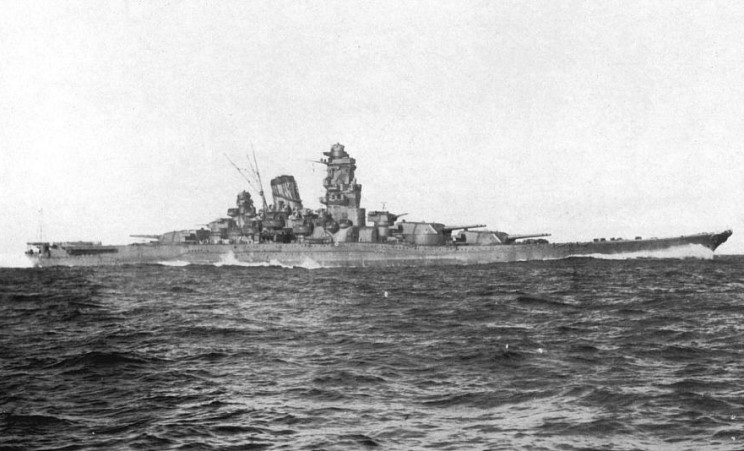
Yamato_sea_trials_2

As dawn broke on April 7th 1945 the great Super-Battleship Yamato, the pride of the Japanese Imperial Navy and nine escorts steamed toward Okinawa on a suicide mission. It was literally the end of empire and the end of a navy. What had begun on December 7th 1941 was now winding down as the Imperial Navy launched its last offensive operation against the United States Navy.

The Imperial Navy was already at the end of its tether. Following the disasters at the Battle of the Philippine Sea which decimated the carrier air arm of the Imperial Navy; the subsequent losses in the defense of Formosa which used up the majority of any remaining carrier aircraft and crews; and the Battle of Leyte Gulf which decimated the surface forces of the navy what remained was a pitiful remnant of a once dominant fleet.

The great battleship Yamato and her sister ship Musashi were the largest warships ever built until the advent of the USS Enterprise CVN-65. Displacing over 72,000 tons 863 feet long and 127 feet in beam these ships mounted the largest artillery battery ever placed on a warship. Their nine 18.1” guns mounted in three triple turrets each weighing over 2500 tons weighed as much or more than the largest destroyers of the time. They could fire their massive shells 26 miles and had the capability of firing a special anti-aircraft shell known as the Sanshiki or beehive round.

Battleship_Yamato_under_air_attack_April_1945

Musashi was sunk during the Battle of the Sibuyan Sea at Leyte Gulf on October 24th 1944 after being hit by 19 ariel torpedoes and 17 bombs. Yamato engaged the American Escort Carriers and destroyers of Taffy-3 at the Battle off Samar the following day but was prevented by the audacity of the inferior American destroyers and timidity of the Japanese commander Vice Admiral Takeo Kurita from achieving any notable success.

The remains of the Imperial Navy were hampered by a lack of fuel, air power and training time. When the United States attacked Iwo Jima in February 1945, barely 700 miles from the home islands of Japan not a single Japanese surface ship sortied to challenge the American Navy.

However when the American attacked Okinawa on April 1st the Navy launched Operation Ten-Go. In spite of overwhelming American superiority in both naval air and surface forces the tiny task force was to fight its way to Okinawa, beach their ships and once the ships were destroyed the crews were to join Japanese Army forces on the island.

The doomed sortie was in part due to the insistence of the Imperial Army which derided the Imperial Navy for its failures at Philippine Sea and Leyte Gulf and pressure from Emperor Hirohito who asked “But what about the Navy? What are they doing to assist in defending Okinawa? Have we no more ships?” In response the Naval High command devised what amounted to a suicide mission for Yamato and her escorts. The plan was opposed by many in the Navy and leaders of the task force who saw it as a futile mission. Only the insistence of Admiral Kusaka who told the reticent commanders that the Emperor expected the Navy to make its best effort to defend Okinawa persuaded the Captains of the doomed force to accept the mission.

g313714

At about 1600 on April 6th the ships of the task force weighed anchor and departed their anchorage at Tokuyama hoping to take advantage of approaching darkness to mask their departure. They were detected and shadowed by American submarines which provided real time information on the course and speed of the Japanese ships to the American leadership.

The next morning the task force was spotted by patrol planes and its position relayed to the American fleet commander, Admiral Raymond Spruance, the victor of Midway. Spruance ordered the six fast battleships battleships, accompanied by two battlecruisers, seven cruisers and 21 destroyers engaged in shore bombardment to intercept the Japanese force. However, Admiral Marc Mitscher of Task Force 58, the fast carriers launched a massive air strike of over 400 aircraft against the Japanese.

Steichin-48

At 1232 the first wave of American aircraft began their attacks on the doomed Japanese force. As the succeeding waves of American aircraft attacked Yamato was hit by 15 bombs and at least 8 torpedoes, almost all of which struck her port side created an imminent risk of capsizing. The damage control teams counter flooded the starboard engine and boiler rooms which kept the ship from turning turtle, but which also further reduced her speed.

images

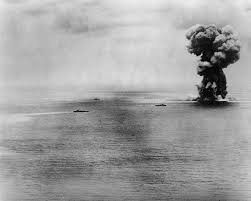
By 1405 the great ship was dead in the water and just minutes before her commander had ordered the crew to abandon ship. At 1420 she capsized and began to sink and at 1423 she blew apart in a massive explosion that was reportedly heard and seen 120 miles away and created a mushroom cloud that reached 20,000 feet.

Captain Tameichi Hara of the light cruiser Yahagi which had already sank described the demise of the great ship in his book Japanese Destroyer Captain:

“We looked and saw Yamato, still moving. What a beautiful sight. Suddenly smoke belched from her waterline. We both groaned as white smoke billowed out until it covered the great battleship, giving her the appearance of a snow-capped Mount Fuji. Next came black smoke mingled with the white, forming to a huge cloud which climbed to 2000 meters. As it drifted away we looked to the surface of the sea again and there was nothing. Yamato had vanished. Tremendous detonations at 1423 of that seventh day of April signaled the end of this “unsinkable” symbol of the Imperial Navy.”

Only 280 men of the estimated 3000 crew members were rescued by the surviving escorts. Of her escorts, the Yahagi and four destroyers were also sunk. The Americans lost a total of ten aircraft and 12 men. Never again would the surface forces of the Imperial Navy threaten U.S. forces or take any meaningful part in the war.

The sacrifice of Yamato and her escorts was a futile was of lives and though many in Japan revere their sacrifice as noble it served no purpose. The loss of Yamato, named after the ancient Yamato province in a sense was symbolic of the demise of the Japanese Empire.

I cannot help but think of gallantry of the doomed crews of these ships, sacrificed for the “honor” of leaders that did not really value their sacrifice.

It is a commentary that is timeless.

Peace

Padre Steve+

2 Comments

Filed under History, Military, Navy Ships, world war two in the pacific

I Have Been to the Mountain: The Assassination of Dr Martin Luther King Jr.

Friends of Padre Steve’s World
I posted a short article about how I am doing. But I will also provide a re-run for those who want something more.
Peace, Padre Steve+

padresteve's avatarThe Inglorius Padre Steve's World

20130404-203529.jpg

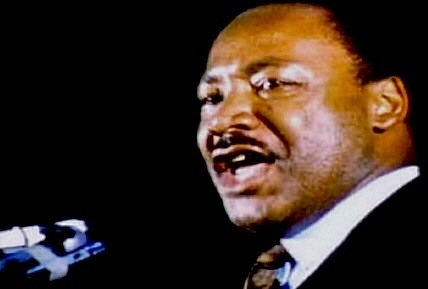
“And then I got to Memphis. And some began to say the threats…or talk about the threats that were out… What would happen to me from some of our sick white brothers? Well I don’t know what will happen now. We’ve got some difficult days ahead. but it doesn’t matter with me now. Because I been to the mountaintop. And I don’t mind. Like anybody, I would like to live a long life. Longevity has its place. But I’m not concerned about that now. I just want to do God’s will. And He’s allowed me to go up to the mountain. And I’ve looked over.and I have seen the promised land. I may not get there with you. But I want you to know tonight, that we, as a people, will get to the promised land! And so I am happy, tonight. I’m not worried about anything. I am not…

View original post 1,533 more words

1 Comment

Filed under Loose thoughts and musings

Work Work Work…I Missed You…

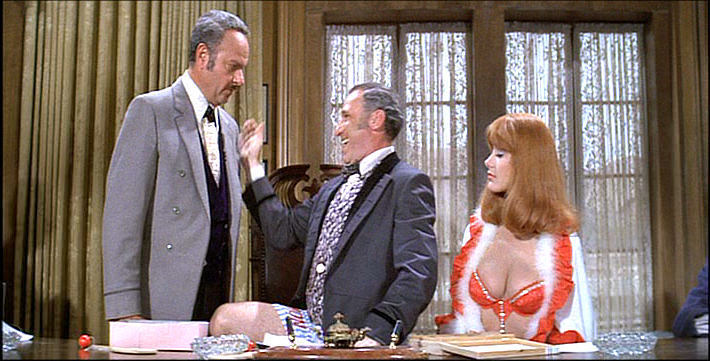
Blazing-Saddles-mel-brooks-17584809-710-361

Well my friends it is a Sunday night and I am tired. I have been working all week with contractors in my house and after my chapel service this morning I came home and continued to work. Thankfully if everything works out on Wednesday the painters and other contractors will be back to finish the last bits of what we need done and a friend will be over to help install new lighting.

My dog Molly has been a joy, and hopefully in the next few days both of us will have reason to celebrate and chill out.

But anyway since I am too tired to think of anything new to post, though I might put up a re-run of an older post I wish you a good night and good week.

Peace

Padre Steve+

P.S. There is a funny Blazing Saddles message in the title of this post…

<a href=”http://www.hypersmash.com/dreamhost/”>http://www.hypersmash.com/dreamhost/</a&gt;


Leave a comment

Filed under Loose thoughts and musings

Baseball and My Spiritual Journey

DSCN9079

Note: I have been working hard this week with contractors in the house making repairs to the damage caused when our water heater blew out on February 3rd. Thankfully, despite being so tired I have been able to make a couple of baseball games at Harbor Park here in Norfolk. I have been too tired to make it all the way through either game despite the fact that they were good close games. Tonight I only made it to the top of the 7th inning. At the time the Tides were up 2-1 but had blown a number of opportunities to blow the game open. I got home and found they had lost 3-2. Thankfully I am beginning to see the light at the end of the rebuilding and renovation tunnel and it is not the train. Depending how I feel tomorrow I may try to take in part of the final game of this series. Unfortunately I still have much work that needs to be done around the house…but I digress… on to Baseball and my spiritual journey.

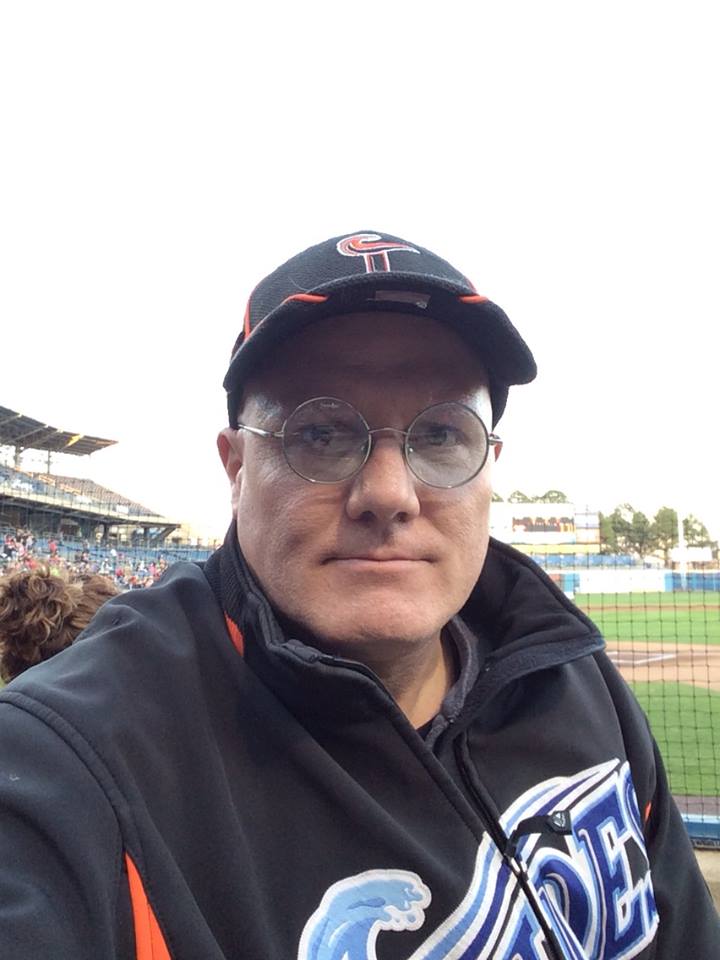
me-and-lefty

“Baseball is a curious anomaly in American life. It seems to have been ingrained in people in their childhood…. Baseball is, after all, a boy’s game, and children are innocent of evil. So even adults who are prejudiced revert to their childhood when they encounter a baseball player and they react with the purity of little children.” Jackie Robinson Baseball Has Done It

RSCN9072

I feel closeness to God at the ballpark that after Iraq is hard for me to find in many other places.  For me there is a mystery, magic about a ballpark that just isn’t there for the other sports.  With the opening of baseball season I am soaking in the pleasantness of the game.  The past two nights I have had the television on with baseball games.  It is so much more peaceful and edifying than the deluge of political talk and reality shows that are the staple of entertainment now days.

jeff-me-rocky-bridges

For me the other sports can grab my momentary attention but because of their nature cause them to be merely ordinary and occasionally interesting.  Baseball is another matter, it is more than a game. As George Will said “Baseball, it is said, is only a game. True. And the Grand Canyon is only a hole in Arizona. Not all holes, or games, are created equal.” For me baseball is a metaphor for life, a spiritual experience and a game that mirrors life and faith in many ways. For me this goes back to childhood.

As a kid my dad made me learn the fundamentals of the game and whether we were attending a game in person, watching one on television or playing catch, pepper or practicing infield or pitching in the back yard or in a park, dad was all about the game.  Of course he was the same way with football, hockey, basketball and golf, but the sport that he seemed most passionate about was baseball.  As a kid dad was a Cincinnati Reds fan and as we moved West he became a solid San Francisco Giants fan.

RSCN9126

My mom went along to many games while we were in Anaheim and she lives and dies with the Giants. My mom was a Navy Wife and back then there were not nearly the support structures that we have today and Navy wives had to be wear many hats.  One of those hats was being my chauffeur and number one fan. When my dad was deployed to Vietnam when we were in Stockton she would take me to my Little League games and shuttle me and my friends to Billy Herbert Field to see the Stockton Ports.

My dad’s mother, my grandmother who hailed from the hollers of West Virginia was a die hard Los Angeles Dodgers fan. I still wonder how a woman from West Virginia became a Dodgers’ fan but she was incredibly independent.  My grandfather was killed in a trucking accident when my dad was a small child leaving Granny a widow with two young boys to raise.
She was a single parent and for a while lived with family as she established herself. It was the late 1930s and she went to work, raised her two boys and bought her own house.  Unlike most people in West Virginia at that time she was a Republican. This was long before West Virginia ever voted for a Republican either President or statewide office. True to form Granny was a Dodgers fan in a land of Reds, Indians and Pirates fans, fierce and independent.  I have to admire her perseverance but as a Giants fan I cannot fathom her being a fan of the Evil Dodgers. Despite having fallen under the spell of the Dark Lords of Chavez Ravine Granny was a real baseball fan. Any time you went to Granny’s house and there was a game on, the television was tuned in to it. When she visited us in Texas in the early 1990s we went to a Texas Rangers game but it was called because of tornadoes and severe thunder storms.

I can say that thanks to my dad, mom and grandmother that I was immersed in baseball from an early age and when we got to a place where dad could take us to ball games on a regular basis he did.

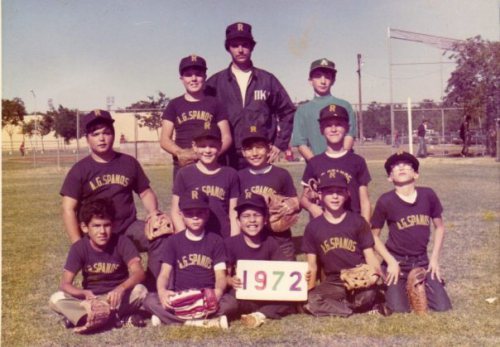
1972-oak-park-american-league-rams

Dad always made sure that we got to see baseball wherever we lived. In 1967 he took us to see the Seattle Pilots during their first and only season in that fair city before they went to Milwaukee and became the Brewers.  In the elementary schools of those days many our teachers would put the playoff and World’s Series games on the TV as many of those games were played during daylight hours.  I remember watching Bob Gibson pitch when the Cardinals played against the Red Sox in the 1967 series.  It was awesome to see that man pitch.   I remember the Amazing Mets upsetting the Orioles in 1969 and the Orioles take down the Reds in 1970. I will never forget the 1970 All Star Game where Pete Rose ran over Ray Fosse at home plate for the winning run and the great dynasty teams of the 1970s, especially the Reds and the Athletics who dominated much of that decade and the resurgence of the Yankees in the summer that the Bronx burned.

When we were stationed in Long Beach California dad had us at Anaheim stadium all the time.  I imagine that we attended at least 20 games there in 1970 and another 25-30 in 1971 as well as a couple at Dodger stadium that year.  We met a lot of the Angel players at community events and before the games. I entered the “My Favorite Angel” contest and my entry was picked as a runner up. This netted me two seats behind the plate and having Dick Enberg announced my name on the radio.  I wrote about Jim Spencer a Gold Glove First Baseball who later played for the Yankees.  I still have a hat from that team with numerous autographs on the inside of the bill including Sandy Alomar, Jim Spencer, Jim Fregosi, Chico Ruiz, and Billy Cowan. It was a magical time for a 10 year old boy.

When we moved to Stockton California dad took us to see the A’s dynasty teams including a number of playoff games.  But he also took us across San Francisco Bay to watch the Giants.  I got to see Ed Halicki of the Giants no-hit the Mets a Candlestick on August 24th 1975.  In Anaheim, Oakland and San Francisco I got to see some of the greats of the era play in those stadiums, Catfish, Reggie, McCovey, Garvey, Vida Blue, Harmon Killebrew and so many others.

I became acquainted with Minor League Baseball when we moved to Stockton in1971. At the time the Stockton Ports were the Class A California League farm team for the Baltimore Orioles.  I remember a few years back talking to Orioles great Paul Blair who played for the Ports in the early 1960s about Billy Hebert Field and how the sun would go down in the outfield blinding hitters and spectators in its glare.  I became a closet Orioles fan back then and today I have a renewed interest in the Orioles because of their affiliation with the Norfolk Tides.  The retired GM of the Tides, Dave Rosenfield has told me about his young days in the California League and time at Billy Hebert Field in the 1950s.

As I have grown older my appreciation for the game only deepens despite strikes and steroids and other problems that plague the game at the major league level.  I am in awe of the game and the diamond on which it is played.  I have played catch on the field of dreams, seen a game in the Yankee Stadium Right Field bleachers, seen a no-hitter, playoff games and met many players. I’ve watched the game in Japan, seen historic moments when deployed to combat zones in and have thrown out the first pitch in a couple of minor league games.

DSCN9061

I am enchanted with the nearly spiritual aspects of the game. The foul lines theoretically go on to infinity, only broken by the placement of the outfield wall.  Likewise unlike all other sports there is no time limit, meaning that baseball can be an eschatological game going on into eternity. The Hall of Fame is like the Calendar of Saints in the Catholic, Orthodox and Anglican Churches.  There are rituals, the exchange of batting orders and explanation of the ground rules, the ceremonial first pitch, players not stepping on the foul line when entering and leaving the field of play, no talking about it when a pitcher is throwing a no-hitter and the home run trot. The care of a field by an expert ground crew is a thing to behold, especially when they still use the wooden box frames to lay down the chalk on the baselines and the batters box.

Likewise I am enthralled with the Americanness of the game. Michael Novak wrote:

“Baseball is as close a liturgical enactment of the white Anglo-Saxon Protestant myth as the nation has. It is a cerebral game, designed as geometrically as the city of Washington itself, born out of the Enlightenment and the philosophies so beloved of Jefferson, Madison, and Hamilton. It is to games what the Federalist Papers are to books; orderly, reasoned, judiciously balanced, incorporating segments of violence and collision in a larger plan of rationality, absolutely dependent on an interiorization of public rules.”

46628_462714772058_671902058_6542652_7607640_n

My kitchen and much of my dining room are as close to a baseball shrine as Judy will let me make them.
Since I returned from Iraq the baseball diamond is one of my few places of solace. When I was stationed in Norfolk I had season tickets behind home plate at Harbor Park.  At the end of the 2010 season I was transferred to Camp LeJeune and was able to take in a good number of Kinston Indians games but since that team was sold and moved at the end of the 2011 season I didn’t get to see many games in the flesh. Thankfully with my return to the Hampton Roads area I have my season ticket back at Harbor Park and life is coming back into balance.

As I do that I can hear the words of James Earl Jones in the great film Field of Dreams:

“The one constant through all the years has been baseball. America has rolled by like an army of steamrollers. It’s been erased like a blackboard, rebuilt, and erased again. But baseball has marked the time. This field, this game, is a part of our past. It reminds us of all that once was good, and what could be again.”

1545172_10152386504177059_4839237168100844105_n

In a sense those word say it all to me. In the midst of war, economic crisis and deep political division they are also a prayer of hope of what once was good, and what be again.

Peace

Padre Steve+
Leave a comment

Filed under Baseball, faith

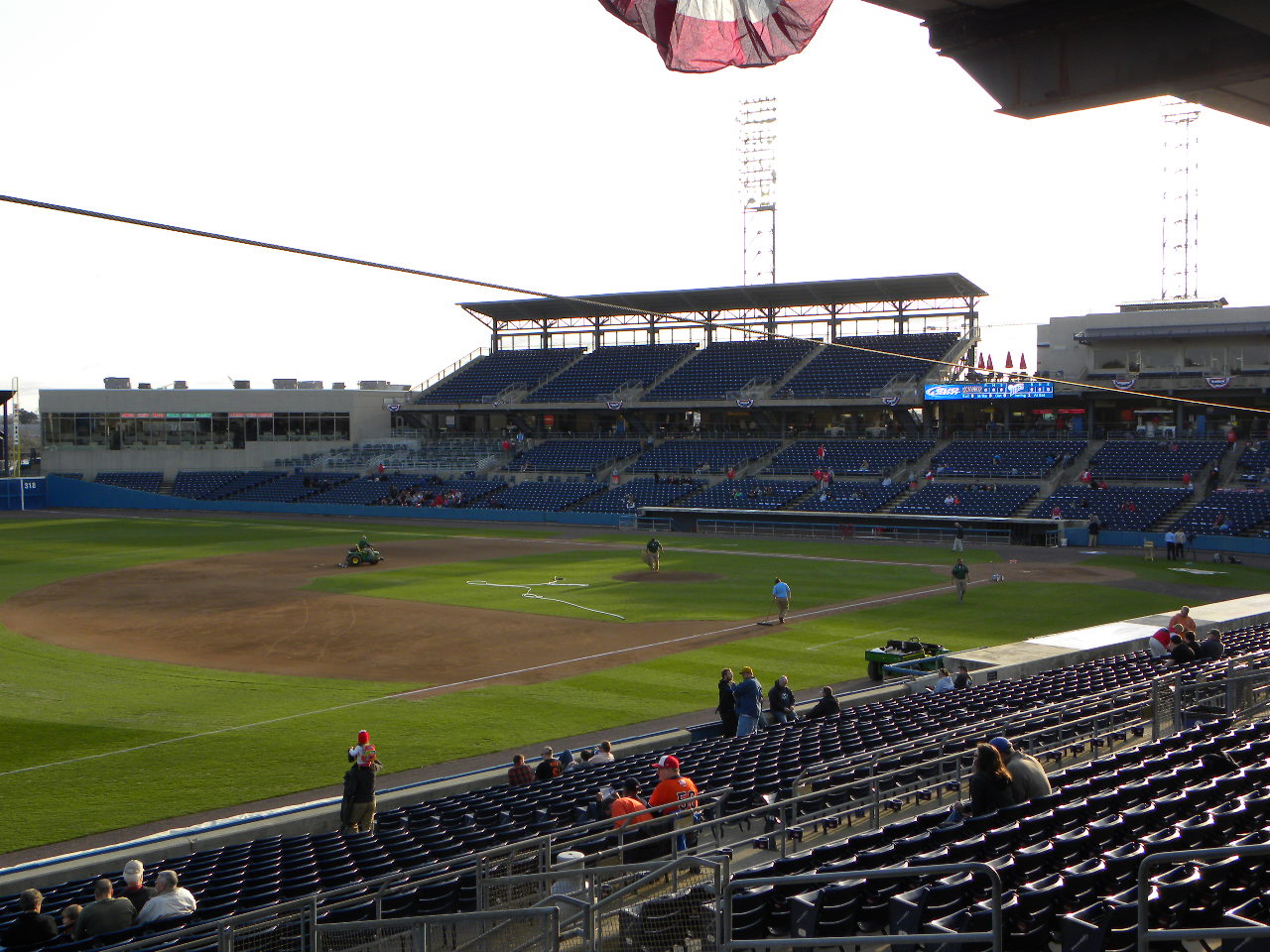
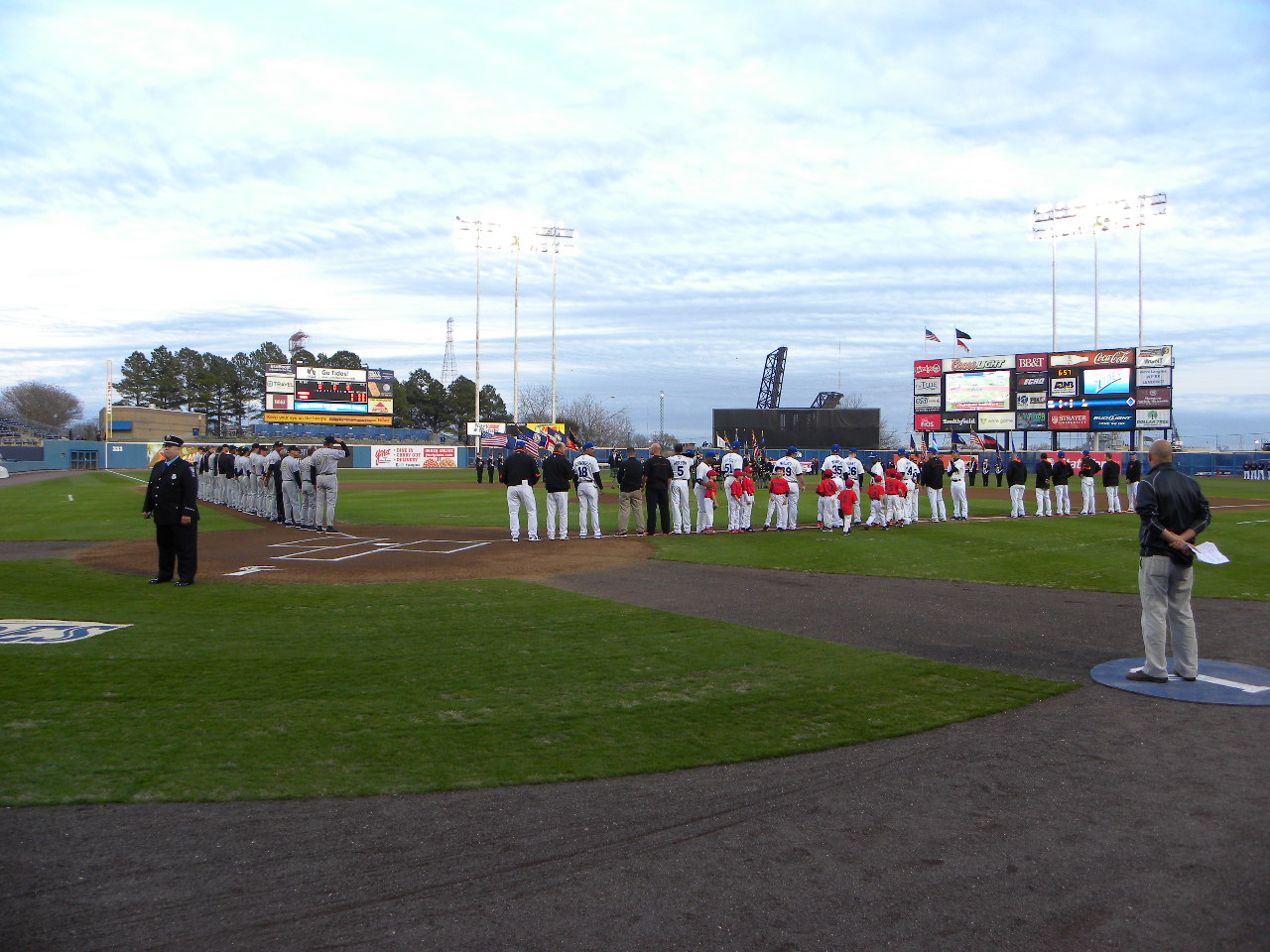
The Home Opener: Images of Opening Night at Harbor Park

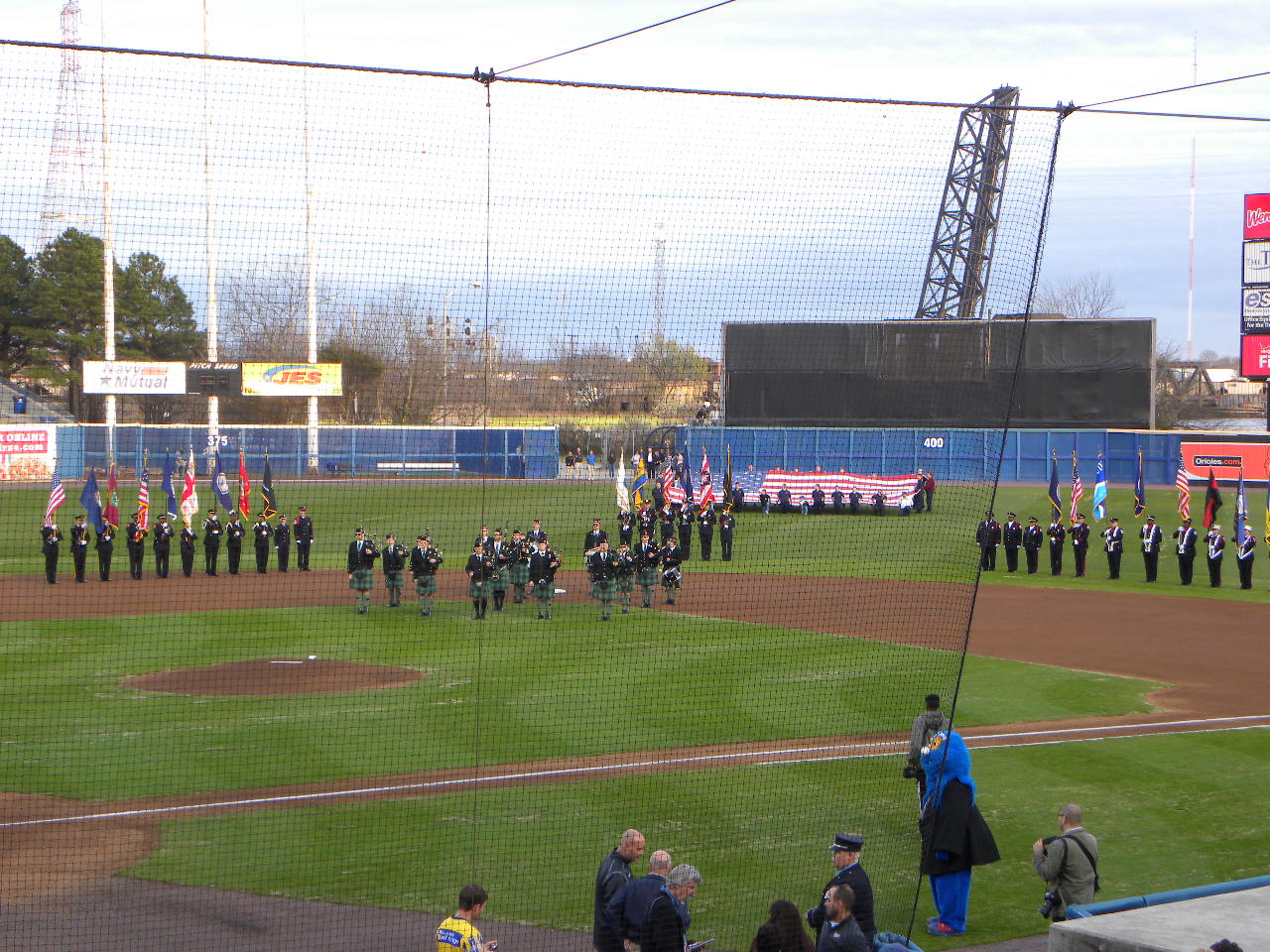
DSCN8860

“A home opener is always exciting, no matter if it’s home or on the road.” — Yogi Berra

It is the day that I have waited for since the last September, baseball returned in the form of Opening Day at Norfolk’s Harbor Park. Major League Opening Day is always great, especially if you live near enough to a Major League club to attend. For many of us we have to wait for Opening Day at one of the Minor League ballparks. In Norfolk our Norfolk Tides are the AAA level affiliate of the Baltimore Orioles.

DSCN8911

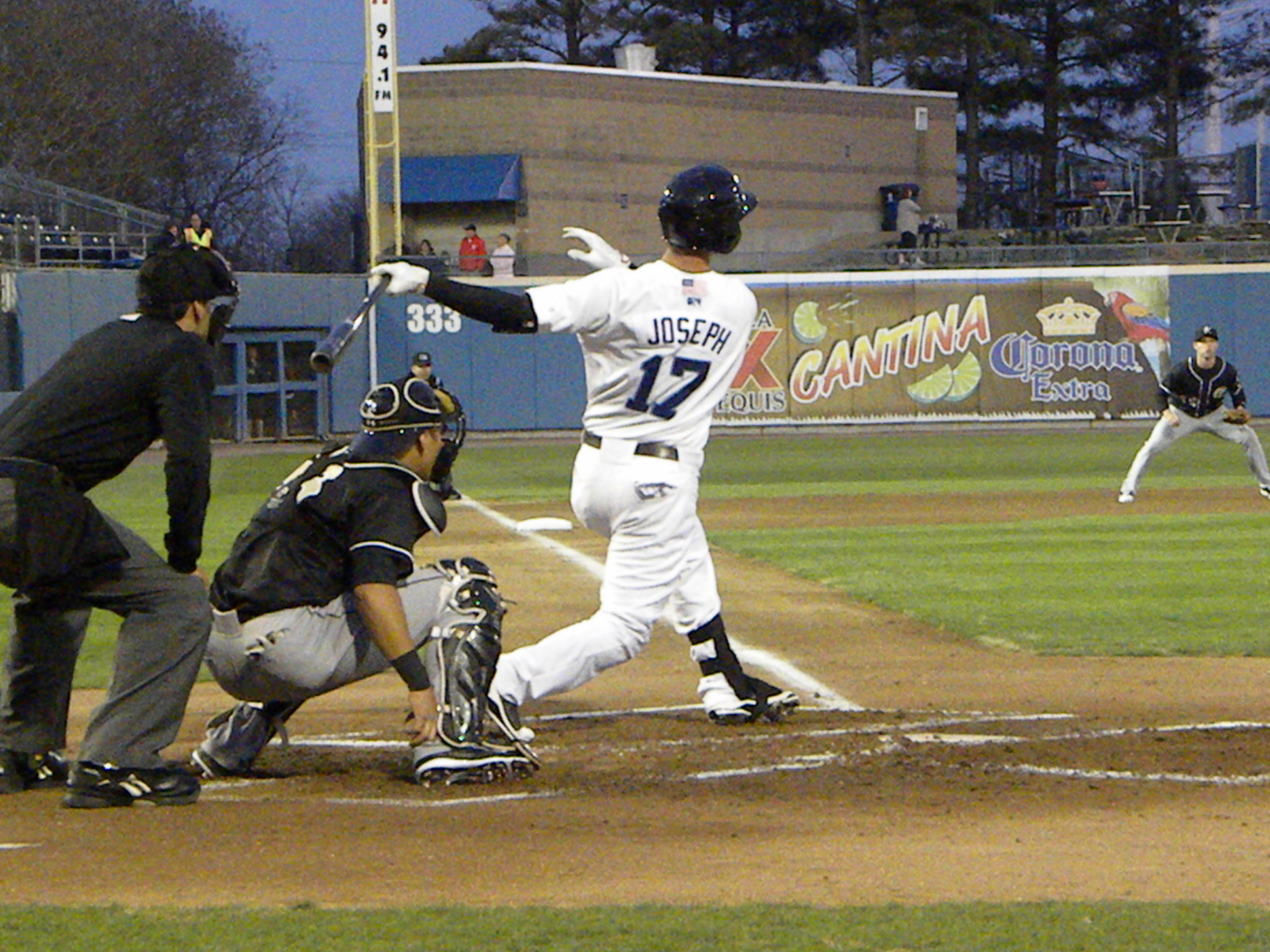
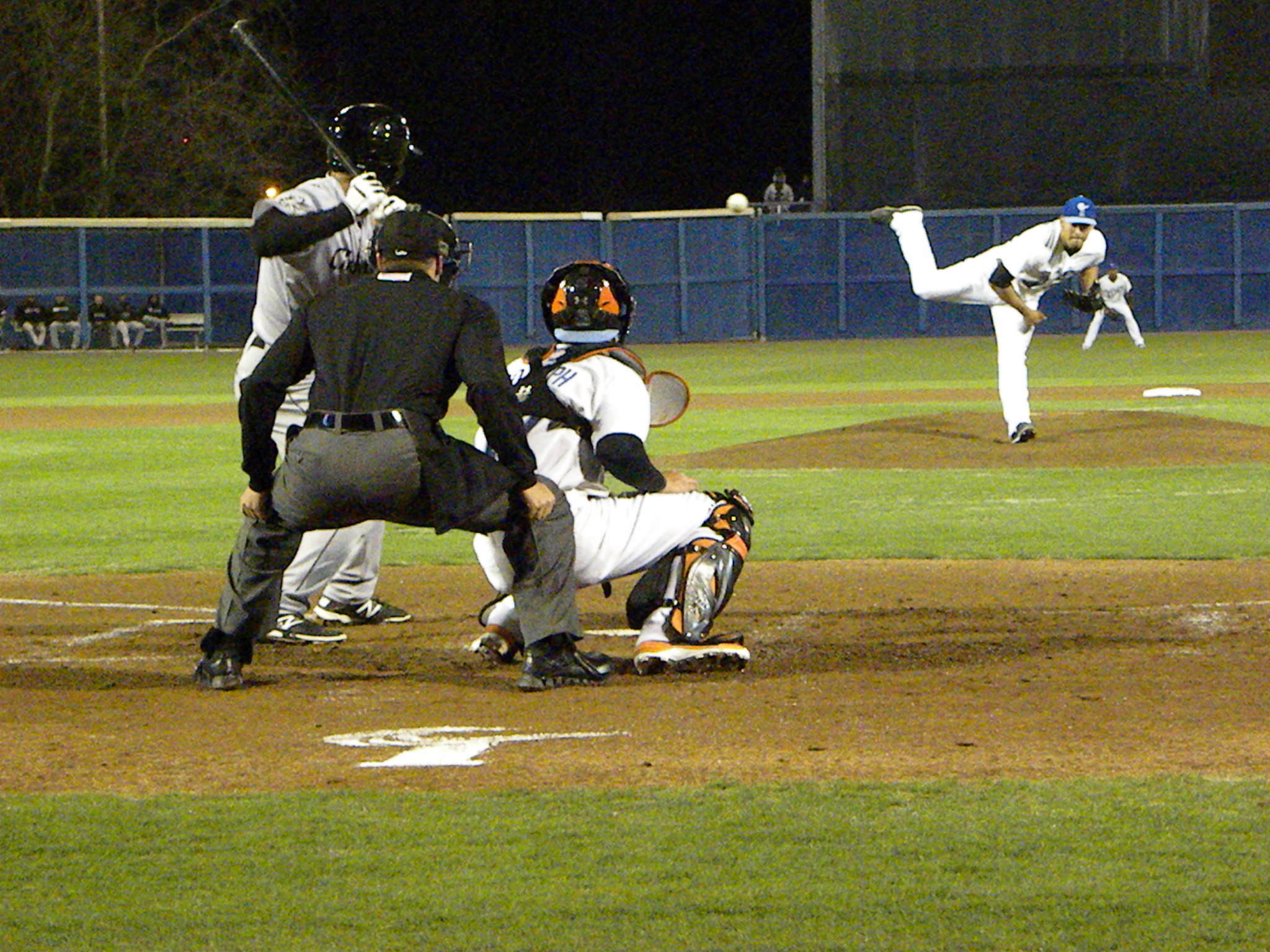
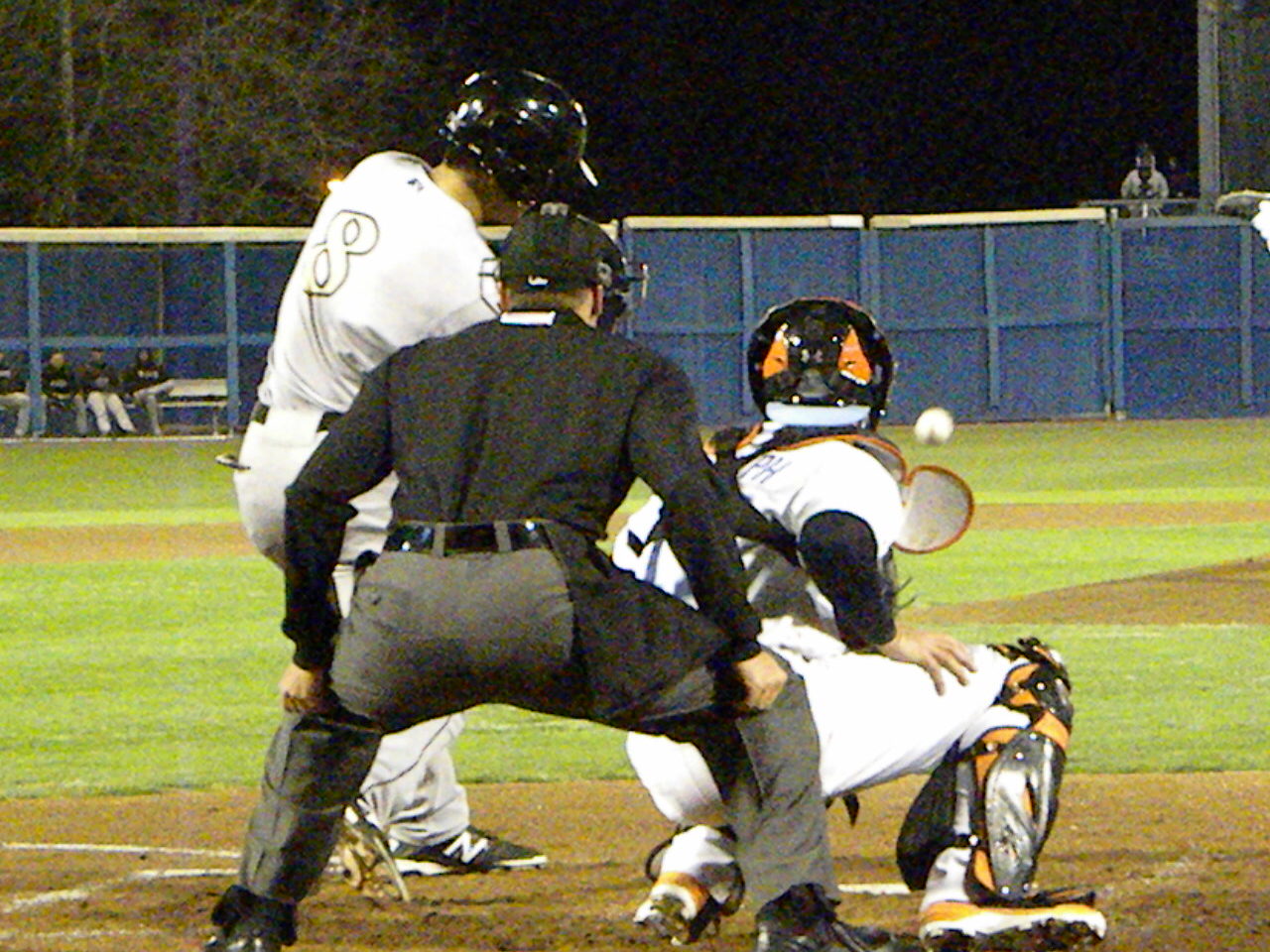
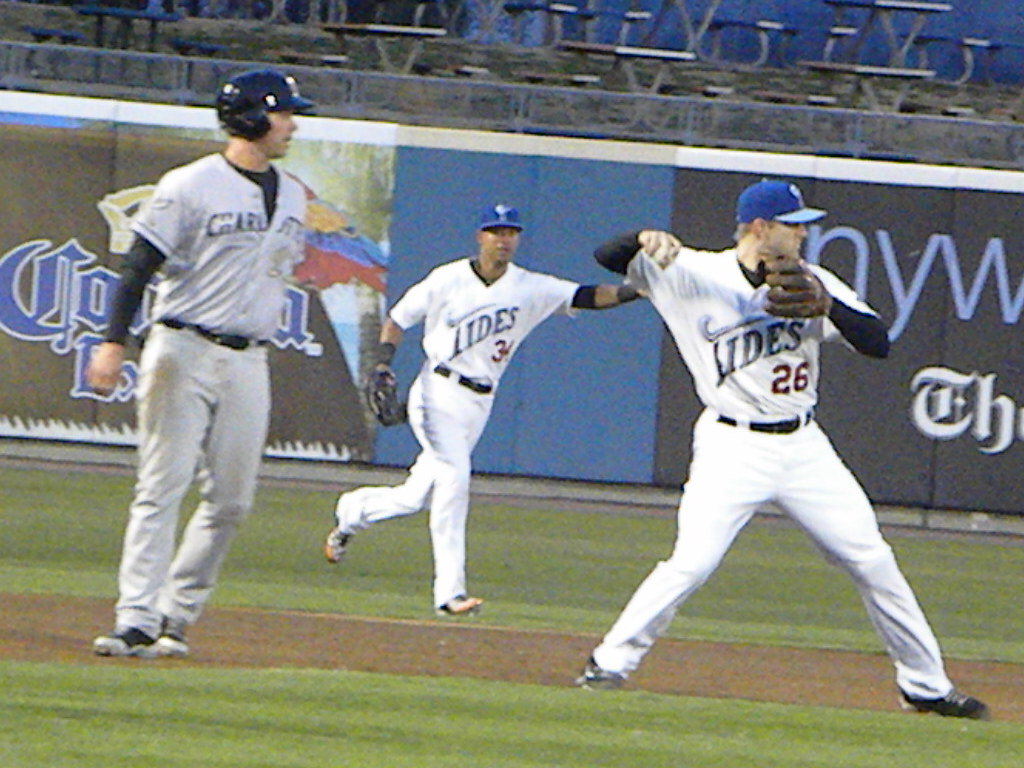
This evening the Tides hosted the Charlotte Knights, the AAA affiliate of the Chicago White Sox. The Tides fell to the Knights by a score of 3-0. Of course wanted the Tides to win but more important for me was the fact that I was back in my refuge with the people that I have gotten to know each season for the last ten years.

DSCN8958

For me there is something amazing about a ball game. In a way Norfolk’s Harbor Park for me is like Hemingway’s A Clean Well-Lighted Place. I fully understand the feelings of the older waiter in that short but poignant story of life, meaning and a place of refuge. As Sharon Olds wrote: “Baseball is reassuring. It makes me feel as if the world is not going to blow up.”

RSCN8946

So today with contractors still banging around the house I give you these images from my place of refuge.

DSCN8857DSCN8858DSCN8861RSCN8881RSCN8974RSCN8910RSCN9004

Peace

Padre Steve+

Leave a comment

Filed under Baseball, norfolk tides