Monthly Archives: May 2014

“The Offering We Bring…” Remembering the First Memorial Day

racecourse_t600

“Dark and sad will be the hour to this nation when it forgets to pay grateful homage to its greatest benefactors. The offering we bring to-day is due alike to the patriot soldiers dead and their noble comrades who still live; for, whether living or dead, whether in time or eternity, the loyal soldiers who imperiled all for country and freedom are one and inseparable.” From Frederick Douglass’ Memorial Day Speech 1884

Memorial Day, at one time known as Decoration Day is one of our most sacred civil holidays that we celebrate in the United States, or at least it should be. It was a holiday born out of the shedding of the blood of about 600,000 American soldiers, from the North and the South in the Civil War, a singular event that still echoes in our history and in some sense defines who we are. The sad thing is that many; if not most Americans it is simply another holiday, a chance maybe to get a three day weekend at the end of the school year and beginning of summer vacation. This is so because we and our government dominated by business interests and our own wallets for decades knowingly made the decision to sacrifice of the teaching of history and heritage at the altar of “education” that “produces jobs.”

But the first observance of what we now know as Memorial Day is fascinating and it needs to be remembered. Frederick Douglass was absolutely right when he spoke the words that I began this article, and we need to remember the humble beginnings of this day which was first marked by recently freed slaves in Charleston South Carolina on May 1st 1865, barely two weeks after Abraham Lincoln was assassinated and three weeks after the surrender of Robert E. Lee and the Army of Northern Virginia at Appomattox Court House. Their commemoration was for the most part forgotten as Charleston sought to remove the vestiges of any Union sacrifice within the city limits in the 1880s.

The acrid smell of smoke of the last battles of the American Civil War was still lingering over many towns and cities in the South on May 1st 1865.  Charleston South Carolina, the hotbed of secession was particularly hard hit during the war. In 1861 Cadets of the Citadel and South Carolina militia forces began the war with the bombardment of Fort Sumter. Union Forces laid siege to the city in late 1863, a siege which ended with the city’s surrender to Union forces on 18 February 1865. The day of the surrender was somewhat ironic. Charleston, the city most associated with the opening of the conflict surrendered to Union forces on the fourth anniversary of the inauguration of Jefferson Davis as President of the Confederacy. By the time of its surrender much of the city had been destroyed by Union siege artillery and naval forces.

Charleston had also been the home of three of the Prisoner of War Camps. One was located in the Charleston City Jail and the other at Castle Pinckney which had been one of the ante-bellum U.S. Army installations in the city. A third camp was erected on the site of the Washington Race Course and Jockey Club in 1864. This was an open air camp and Yale Historian David Blight wrote that “Union soldiers were kept in horrible conditions in the interior of the track; at least 257 died of exposure and disease and were hastily buried in a mass grave behind the grandstand.”

By the end of the war most of the white population of the city had left and most of those remaining were recently freed slaves. After their liberation and the city’s occupation by Federal forces, which included the famous 54th Massachusetts as well as the 20th, 35th and 104th US Colored Troops Regiments, about 28 these recently liberated Black men went to work and properly reinterred these 257 Union dead on the raceway building a high fence around it. They inscribed “Martyrs of the Race Course” on an arch above the cemetery entrance.

unionsoldierscemetary

On May 1st over 10,000 Black Charlestonians gathered at the site to honor the fallen. Psalms, Scriptures and prayers were said, hymns were sung and many brought flowers. A parade of 2800 children covered the burial ground with flowers.  They were followed by members of the Patriotic Association of Colored Men and the Mutual Aid Society. This society’s members provided relief supplies to Freedmen and provided aid to bury those Blacks who were too poor to afford burial. More citizens followed many laying flower bouquets on the graves. Children then led the singing of The Star Spangled Banner, America and Rally around the Flag. The Brigade composed of the 54th Massachusetts and the 35th and 104th Colored Regiments marched in honor of their fallen comrades. Following the formalities many remained behind for a picnic.

Other communities established their own Memorial Day observances in the years following the war, but the event in Charleston was the first. The first “Official” commemoration was on 30 May 1868 when Union General John Logan who headed the veteran’s organization called The Grand Army of the Republic appealed to communities to honor the dead by holding ceremonies and decorating the graves of the fallen.

In the South three different days served a similar purpose.  In Virginia people commemorated the day on June 3rd, the birthday of Confederate President Jefferson Davis, the Carolinas marked the day on 10 May, the birthday of General Thomas “Stonewall” Jackson. In much of the Deep South the event was conducted April 26th, the anniversary of the surrender of General Joseph Johnson’s Army to General William Tecumseh Sherman.  For many in the South, still attempting to come to grips with their defeat the day would become about “The Lost Cause” or “the defense of Liberty” or “States Rights” and the war was often referred to as the “War of Northern Aggression.”

The “Martyrs of the Racecourse” cemetery is no longer there. The site is now a park honoring the fascinatingly complex Confederate General and post-Reconstruction Governor of South Carolina Wade Hampton. An oval track remains in the park and is used to run or walk by the local population and cadets from the Citadel. Thankfully, at long last in 2010, one hundred and forty-five years after the dedication of that cemetery a marker was placed in that park commemorating the cemetery and the event that we now recognize as the first Memorial Day.

The Union dead who had been so beautifully honored by the Black population were moved to the National Cemetery at Beaufort South Carolina by the 1880s. Some state that the reason for this was that the cemetery had fallen into neglect, and this may be the case, but the event and their memory conveniently erased from memory of Charlestonians. I do not think that this would have happened had the people who had the bodies moved simply restored and maintained the cemetery. Had not historian David Blight found the documentation we probably still would not know of this touching act by former slaves who honored those that fought the battles, and gave their lives to win their freedom. Blight wrote in 2011 in the 1870s Charleston “had no place for the former slaves’ march on their masters’ racecourse.”

The African American population of Charleston understood the bonds of slavery and oppression. They understood the tyranny of prejudice in which they only counted as 3/5ths of a person. They understood and saw the suffering of those that were taken prisoner while attempting to liberate them from the tyranny of slavery. They stand as an example for us today.

But their suffering was not over. Within little more than a decade Blacks in the South would be subject to Jim Crow and again treated by many whites as something less than human.  The struggle of they and their descendants against the tyranny of racial prejudice, discrimination and violence over the next 100 years would finally bear fruit in the Civil Rights movement, some of whose leaders, like the Reverend Doctor Martin Luther King Jr. would also become martyrs. Unfortunately that struggle is not over.

Frederick Douglass spoke to Union Veterans on Memorial Day 1878.  His words, particularly in light of the war and the struggles of African Americans since and the understanding of what those who were enslaved understood liberation to be are most significant to our time. It was not merely a war based on sectionalism or even “States rights,” it was a war of ideas, a war of diametrically opposed ideologies. He said:

“But the sectional character of this war was merely accidental and its least significant feature.  It was a war of ideas, a battle of principles and ideas which united one section and divided the other; a war between the old and new, slavery and freedom, barbarism and civilization; between a government based upon the broadest and grandest declaration of human rights the world ever heard or read, and another pretended government, based upon an open, bold and shocking denial of all rights, except the right of the strongest.” 

Douglass’s words were powerful then and they resonate today as many of the same ideas that were the cause of the Civil War and were continued during Jim Crow are still alive. Unfortunately there are those in our society who labor daily to establish the “rights” of the strongest over the weak, the poor, the powerless and minorities of all kinds. Of course such actions, often wrapped in the flag, patriotism and buttressed with cherry picked quotes (many of which are fake, changed or taken out of context) from some of our founders are designed to re-establish the oligarchy of the power of the few, much like the men who owned the lives of the slaves and poor whites in the ante-bellum American South. Such actions do nothing but demean and trample the sacrifice of those who fought for freedom and the only remedy is to fight them with the full knowledge of truth.

I do hope that in the coming days as we prepare to celebrate Memorial Day that we do so in a fitting manner. Let us honor those Americans who died that others might be free. Let us look back at what freedom actually means and not forget the sacrifices of those that gave, and still give their lives in the “last full measure of devotion to duty” that others might live.

Peace

Padre Steve+

5 Comments

Filed under civil rights, civil war, History, News and current events, Political Commentary

Remembering Why We Keep Memorial Day

Friends of Padre Steve’s World,
Memorial Day weekend is approaching and as usual I am becoming more reflective as I think about all who have given the “last full measure of devotion” to duty and this country. For most this holiday is not much more than the kickoff to summer and fun in the sun. But for me it is all too melancholy. In addition to my usual articles I will be re-posting a number of articles about Memorial Day from previous years. I hope that you will share them to increase the awareness of what this holiday means for all of us.
Peace,
Padre Steve+

padresteve's avatarThe Inglorius Padre Steve's World

memorial-day1-300x225

“even if those who come after us are to forget all that we hold dear, and the future is to teach and kindle its children in ways as yet unrevealed, it is enough for us that this day is dear and sacred…”

Nearly 20 years after the Civil War, Oliver Wendell Holmes Jr. then serving as Chief Justice of the Massachusetts Supreme Court spoke on Memorial Day 1884 in Keene New Hampshire at a gathering of veterans. He recalled an incident not long before where he had heard a young man ask “why people still kept up Memorial Day. The question was one that he pondered before his speech and that he attempted to find an answer, not to his fellow veterans who certainly understood their shared memories of war “but an answer which should command the assent of those who do not share our memories.”

I think that having…

View original post 1,240 more words

Leave a comment

Filed under Loose thoughts and musings

“A Spirit of Unbelief”: A.P. Hill, Harry Heth and the Prelude to the Battle of Gettysburg

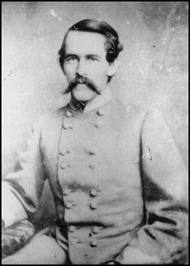
Hill.28135413_stdLieutenant General A.P. Hill

Note: One of the most important things to understand about the Battle of Gettysburg or for that matter any battle or campaign is leadership as well as organizational structure and climate of command. The study of A.P. Hill’s Third Corps is important to understanding how the battle unfolds and what happens at Gettysburg particularly on July 1st. In our understanding “Successful mission command demands that subordinate leaders at all echelons exercise disciplined initiative, acting aggressively and independently to accomplish the mission. Essential to mission command is the thorough knowledge and understanding of the commander’s intent at every level of command.”

While the leaders at Gettysburg on both sides would be unaware of our present definition they certainly would have been acquainted with the maxims of Napoleon, who many studied under Dennis Hart Mahan at the West Point. Napoleon noted: “What are the conditions that make for the superiority of an army? Its internal organization, military habits in officers and men, the confidence of each in themselves; that is to say, bravery, patience, and all that is contained in the idea of moral means.”

Likewise in a maxim that has direct application to the Confederate campaign in Pennsylvania Napoleon noted “To operate upon lines remote from each other and without communications between them, is a fault which ordinarily occasions a second. The detached column has orders only for the first day. Its operations for the second day depend on what has happened to the main body. Thus according to circumstances, the column wastes its time in waiting for orders or it acts at random….” [1]

I have spent more time in this chapter developing the issues of organization, leadership, climate of command and relationships between leaders because of their importance to the campaign. From these students should be able to draw lessons that would be applicable to leadership, organization and campaigning at the operational level of war.

As the Army of Northern Virginia began to concentrate near Cashtown after the reports that the Army of the Potomac was in Maryland it was Lieutenant General A.P. Hill’s Third Corps that was nearest to Gettysburg. Major General Harry Heth’s division led the corps and arrived on June 29th followed by Major General Dorsey Pender’s division on the 30th. Hill ordered his last division under the command of Major General Richard Anderson to remain behind and join the corps on July 1st. [2]

On the 30th Harry Heth sent Johnston Pettigrew’s Brigade to Gettysburg to “search the town for army supplies (shoes especially), and to return the same day.” [3] It was the first in a series of miscalculations that brought Lee’s army into a general engagement that he wished to avoid.

The Confederate Third Corps commanded by Lieutenant General Ambrose Powell (A.P.) Hill had been formed as part of the reorganization of the army following Stonewall Jackson’s death after the Battle of Chancellorsville. Hill had a stellar reputation as a division commander; his “Light Division” had distinguished itself on numerous occasions, especially at Antietam where its timely arrival after a hard forced march from Harper’s Ferry helped save Lee’s army late in the battle. At Chancellorsville Hill briefly succeeded Jackson until he too was wounded.

But that being said Hill was no stranger to controversy, beginning with a clash with James Longstreet during the Seven Days battles in which time Longstreet placed Hill under arrest and Hill challenged Longstreet to a duel. Lee quickly reassigned Hill to Jackson’s command as Jackson was operating in a semi-independent assignment. [4] Hill was in an intractable controversy with Stonewall Jackson for nearly a year until Jackson succumbed to his wounds. Jackson at one point during the invasion of Maryland prior to Antietam had Hill placed under arrest for the number of stragglers that he observed in Hill’s hard marching division as well as other errors that Jackson believed Hill had made. The dispute continued and the animosity deepened between the two men and in January 1863 Hill asked Lee for a trial by courts-martial on charges preferred against him by Jackson. Lee refused this and wrote to Hill: “Upon examining the charges in question, I am of the opinion that the interests of the service do not require that they be tried, and therefore, returned them to General Jackson with an indorsement to that effect….” [5] Just before Chancellorsville Jackson wrote to Lee “I respectfully request that Genl. Hill be relieved of duty in my Corps.” This time Lee simply ignored the request and though the two generals remained at loggerheads they also remained at their commands at Chancellorsville. [6]

Hill was recommended for promotion to Lieutenant General and command of the new Third Corps by Lee on May 24th and was promoted over the heads of Harvey Hill and Lafayette McLaws. The move displeased Longstreet who considered McLaws “better qualified for the job” and but who felt that the command should have gone to Harvey Hill whose “record was as good as that of Stonewall Jackson…but, not being a Virginian, he was not so well advertised.” [7]

Hill was slightly built and high strung. “Intense about everything” Hill was “one of the army’s intense disbelievers in slavery.” [8] Hill was an 1847 graduate of West Point and briefly served in Mexico but saw no combat. He spent some time in the Seminole wars and in garrison duty along the East Coast, spending 1855-1860 in the Coastal Survey and resigned his commission before Virginia’s secession. At the outbreak of the war he “received his commission as colonel, and soon trained one of Johnston’s best regiments in the Valley.” [9] He commanded a brigade under Longstreet on the Peninsula and was promoted to Major General and command of a division in May 1862. He was plagued by health problems which had even delayed his graduation from West Point, health issues that would arise on the first day at Gettysburg.

Hill’s Third Corps was emblematic of the “makeshift nature of the reorganization of the whole army.” [10] It was composed of three divisions; the most experienced being that of the recently promoted and hard fighting Major General Dorsey Pender. Pender’s division, was built around four excellent brigades from Hill’s old “Light Division” one of which Pender had commanded before his promotion. Hill strongly recommended Pender’s promotion which was accepted by Lee. Pender found the command to be a heavy burden. He was “an intelligent, reflective man, deeply religious and guided by a strong sense of duty….” [11]

Hill’s second experienced division was that of Major General Richard Anderson, transferred from Longstreet’s First Corps, something else which failed to endear Hill to Longstreet. [12] The unassuming Anderson had distinguished himself as a brigade and division commander in Longstreet’s corps, but in “an army of prima donnas, he was a self-effacing man, neither seeking praise for himself nor winning support by bestowing it on others.” [13] At Chancellorsville he fought admirably and Lee wrote that Anderson was “distinguished for the promptness, courage and skill with which he and his division executed every order.” [14] With four seasoned brigades under excellent commanders it was a good addition to the corps, although the transition from Longstreet’s stolid and cautious style of command to Hill’s impetuous style introduced “another incalculable of the reshuffled army.” [15]

heth

Major General Harry Heth

Major General Harry Heth’s division was the final infantry division assigned to the corps. This division was recently formed from two brigades of Hill’s old Light Division and “the two new brigades that Jefferson Davis had forced on an already disrupted army organization.” [16] The organization of this division as well as its leadership would be problematic in the days to come, especially on June 30th and July 1st 1863.

Heth like Pender was also newly promoted to his grade and the action at Gettysburg would be his first test in division command. Heth was a native Virginian, well connected politically who through his social charm had “many friends and bound new acquaintances to him” readily. [17] Heth was a West Point graduate who had an undistinguished academic career graduating last in the class of 1847. His career in the ante-bellum army was typical of many officers, he served “credibly in an 1855 fight with Sioux Indians” but his real claim to fame was in authoring the army’s marksmanship manual which was published in 1858. [18]

Heth’s career with the Confederate army serving in western Virginia was undistinguished but he was a protégé of Robert E. Lee who recommended him as a brigade commander to Jackson before Chancellorsville. Tradition states that of all his generals that Heth was the only one “whom Lee called by his first name.” [19] A.P. Hill when writing Lee about the choice of a successor for the Light Division noted that Heth was “a most excellent officer and gallant soldier” but in the coming campaign “my division under him, will not be half as effective as under Pender.” [20] Douglas Southall Freeman noted that Heth was “doomed to be one of those good soldiers…who consistently have bad luck.” [21]

Heth’s division was composed of two depleted brigades from the Light Division which had taken heavy casualties at Chancellorsville. The brigade commanded by James Archer from Alabama and Mississippi was “well led and had a fine combat reputation.” But the second brigade was more problematic. A Virginia brigade it had once been considered one of the best in the army had deteriorated in quality following the wounding of its first commander Brigadier General Charles Field. Heth took command of it at Chancellorsville and both he and the brigade performed well, but when Heth was promoted the lack of qualified officers left it under the command of its senior colonel, John Brockenbrough. [22] His third brigade came from Mississippi and North Carolina and was commanded by Brigadier General Joe Davis whose uncle was President Jefferson Davis. Davis had served on his uncle’s staff for months and had no combat experience. [23] One author noted that Davis’s promotion to Brigadier General “as unadulterated an instance of nepotism as the record of the Confederacy offers.” [24] His subordinate commanders were no better, one William Magruder was so bad that J.E.B. Stuart suggested that “he have his commission revoked” and only one of the nine field grade officers in his brigade had military training, and that from the Naval Academy. [25]

pettigrew

Brigadier General Johnston Pettigrew

Heth’s largest brigade was new to the army. Commanded by the North Carolina academic Johnston Pettigrew it had no combat experience though Pettigrew was considered a strong leader, badly wounded at Seven Pines and thinking his wound mortal “he refused to permit his men to leave the ranks to carry him to the rear” [26] and was captured but later paroled and returned to the army later in the year.

Hill was under the impression that Meade’s army was still miles away, having just come from meeting Lee who assured him that “the enemy are still at Middleburg,” (Maryland) “and have not yet struck their tents.” [27] With that assurance Heth decided to use June 30th to send Pettigrew’s brigade on the foraging expedition to Gettysburg. An officer present noted that Heth instructed Pettigrew “to go to Gettysburg with three of his regiments present…and a number of wagons for the purpose of collecting commissary and quartermaster stores for the use of the army.” [28]

However Heth did instruct Pettigrew in no uncertain terms not to “precipitate a fight” should he encounter “organized troops” of the Army of the Potomac. [29] Heth was specific in his report that “It was told to Pettigrew that he might find in the town in possession of a home guard,…but if, contrary to expectations, he should find any organized troops capable of making resistance., or any part of the Army of the Potomac, he should not attack it.” [30]

That in mind one has to ask the question as to why Heth would employ “so many men on a long, tiring march, especially as without a cavalry escort he took the risk of sending them into a trap” when his “objects hardly justified” using such a large force. [31] Likewise it has to be asked why the next day in light of Lee’s standing orders not to provoke an engagement that Hill would send two divisions, two thirds of his corps on a reconnaissance mission. Some have said that Hill would have had to move to Gettysburg on July 1st anyway due to forage needs of the army, [32] but this is not indicated in any of Hill or Heth’s reports.

As his troops neared Gettysburg Pettigrew observed the Federal cavalry of Buford’s 1st Cavalry Division as they neared the town. He received another report “indicating that drumming could be heard in the distance – which might mean infantry nearby, since generally cavalry generally used only bugles.” [33] He then prudently and in accordance with his orders not to precipitate a fight “elected to withdraw rather than risk battle with a foe of unknown size and composition.” [34] His troops began their retrograde at 11 a.m. leaving Buford’s cavalry to occupy the town at ridges. On Confederate wrote “in coming in contact with the enemy, had quite a little brush, but being under orders not to bring a general engagement fell back, followed by the enemy.” [35]

Upon returning Pettigrew told Hill and Heth that “he was sure that the force occupying Gettysburg was a part of the Army of the Potomac” but Hill and Heth discounted Pettigrew’s report. [36] “Heth did not think highly of such wariness” and “Hill agreed with Heth” [37] Hill believed that nothing was in Gettysburg “except possibly a cavalry vidette.” [38] Hill was not persuaded by Pettigrew or Pettigrew’s aide Lieutenant Louis Young who had previously served under Hill and Pender who reported that the “troops that he saw were veterans rather than Home Guards.” [39] Hill reiterated that he did not believe “that any portion of the Army of the Potomac was up” but then according to Young Hill “expressed the hope that it was, as this was the place he wanted it to be.” [40] The West Point Graduates Hill and Heth may have manifested an often typical “distain for citizen soldiers…a professional questioning a talented amateur’s observations” [41] If so it was a distain that would cost the Confederacy dearly in the days to come.

Pettigrew was “aghast at Hill’s nonchalant attitude” [42] and Young was dismayed and later recalled that “a spirit of unbelief” seemed to cloud their thinking. [43] In later years he wrote “blindness in part seems to have come over our commanders, who slow to believe in the presence of an organized army of the enemy, thought that there must be a mistake in the report taken back by General Pettigrew.” [44]

Heth then asked Hill since neither believed Pettigrew’s report “whether Hill would have any objection to taking his division to Gettysburg again to get those shoes. Hill replied “none in the world.” [45] Douglas Southall Freeman wrote “On those four words fate hung” [46] and then, in “that incautious spirit, Hill launched Harry Heth’s division down the Chambersburg Pike and into battle at Gettysburg.” [47]

Notes

[1] Napoleon Bonaparte, Military Maxims of Napoleon in Roots of Strategy: The Five Greatest Military Classics of All Time edited by Phillips, Thomas R Stackpole Books Mechanicsburg PA 1985 p.410

[2] Coddinton, Edwin B. The Gettysburg Campaign, A Study in Command A Touchstone Book, Simon and Shuster New York 1968 p.194

[3] Ibid. Coddinton, The Gettysburg Campaign, A Study in Command p. 263

[4] Dowdy, Clifford. Lee and His Men at Gettysburg: The Death of a Nation Skyhorse Publishing, New York 1986, originally published as Death of a NationKnopf, New York 1958 p.81

[5] Freeman, Douglas Southall, Lee’s Lieutenant’s a Study in Command, One volume abridgement by Stephen W Sears, Scribner, New York 1998 p.460

[6] Sears, Stephen W. Chancellorsville A Mariner Book, Houghton and Mifflin Company, Boston and New York 1996 p.51

[7] Foote, Shelby, The Civil War, A Narrative. Volume Two Fredericksburg to Meridian Random House, New York 1963 p.453

[8] Ibid. Dowdy, Lee and His Men at Gettysburg: The Death of a Nation p.79

[9] Ibid. Freeman Lee’s Lieutenant’s a Study in Command p.109

[10] Ibid. Dowdy, Lee and His Men at Gettysburg: The Death of a Nation p.88

[11] Ibid. Dowdy, Lee and His Men at Gettysburg: The Death of a Nation p.85

[12] Ibid. Dowdy, Lee and His Men at Gettysburg: The Death of a Nation p.86

[13] Ibid. Dowdy, Lee and His Men at Gettysburg: The Death of a Nation p.86

[14] Ibid. Freeman Lee’s Lieutenant’s a Study in Command p.512

[15] Ibid. Dowdy, Lee and His Men at Gettysburg: The Death of a Nation p.86

[16] Ibid. Dowdy, Lee and His Men at Gettysburg: The Death of a Nation p.87

[17] Ibid. Freeman Lee’s Lieutenant’s a Study in Command p.527

[18] Krick, Robert K. Three Confederate Disasters on Oak Ridge: Failures of Brigade Leadership on the First Day of Gettysburg in The First Day at Gettysburg edited by Gallagher, Gary W. Kent State University Press, Kent Ohio 1992 p.96

[19] Ibid. Krick. Three Confederate Disasters on Oak Ridge p.96

[20] Ibid. Freeman Lee’s Lieutenant’s a Study in Command p.527

[21] Ibid. Freeman Lee’s Lieutenant’s a Study in Command p.46

[22] Ibid. Dowdy, Lee and His Men at Gettysburg: The Death of a Nation p.87

[23] Ibid. Freeman Lee’s Lieutenant’s a Study in Command p.533

[24] Ibid. Krick. Three Confederate Disasters on Oak Ridge p.99

[25] Ibid. Krick. Three Confederate Disasters on Oak Ridge p.101

[26] Ibid. Freeman Lee’s Lieutenant’s a Study in Command p.136

[27] Guelzo, Allen C. Gettysburg: The Last Invasion Vintage Books a Division of Random House, New York 2013 p.131

[28] Tredeau, Noah Andre. Gettysburg: A Testing of Courage, Harper Collins Publishers, New York 2002 p.128

[29] Sears, Stephen W. Gettysburg. Houghton Mifflin Co. Boston and New York 2003 p.136

[30] Ibid. Tredeau Gettysburg: A Testing of Courage, p.129

[31] Ibid. Coddinton,. The Gettysburg Campaign, A Study in Command p. 263

[32] Ibid. Guelzo. Gettysburg: The Last Invasion p.131 This argument does have merit based on the considerations Guelzo lists but neither Hill, Heth or Lee make any mention of that need in their post battle reports.

[33] Ibid. Tredeau Gettysburg: A Testing of Courage, p.130

[34] Gallagher, Gary. Confederate Corps Leadership on the First Day at Gettysburg: A.P. Hill and Richard S. Ewell in a Difficult Debut in The First Day at Gettysburg edited by Gallagher, Gary W. Kent State University Press, Kent Ohio 1992 p.42

[35] Ibid. Tredeau Gettysburg: A Testing of Courage, p.135

[36] Ibid. Coddinton, The Gettysburg Campaign, A Study in Command pp. 263-264

[37] Foote, Shelby, The Civil War, A Narrative. Volume Two Fredericksburg to Meridian Random House, New York 1963 p.465

[38] Pfanz Harry W. Gettysburg: The First Day University of North Carolina Press, Chapel Hill and London 2001 p.27

[39] Ibid. Gallagher, Gary. Confederate Corps Leadership on the First Day at Gettysburg p.42

[40] Ibid. Pfanz. Gettysburg: The First Day p.27

[41] Ibid. Gallagher, Gary. Confederate Corps Leadership on the First Day at Gettysburg p.42

[42] Ibid. Guelzo. Gettysburg: The Last Invasion p.131

[43] Ibid. Coddinton, The Gettysburg Campaign, A Study in Command p. 264

[44] Ibid Pfanz Gettysburg: The First Day p.27

[45] Ibid. Coddinton, The Gettysburg Campaign, A Study in Command p. 264

[46] Ibid. Freeman Lee’s Lieutenant’s a Study in Command p. 563

[47] Ibid. Krick. Three Confederate Disasters on Oak Ridge p.94

1 Comment

Filed under civil war, History, leadership, Military

Never Forget, They are Not Just Names… Reflections on War, Loss and Change: Iraq, Afghanistan and Deep Space Nine

Friends of Padre Steve’s World,
I didn’t sleep well last night and today I have been doing some more reading, research and writing on Gettysburg. That being said part of why I have not been sleeping well is related to PTSD and Iraq, the nightmare that keeps on giving. This is an article that I wrote about a year ago. Those that know me that in addition to baseball that God also speaks to me through Star Trek in its various forms. The upcoming weekend will be Memorial Day and I am always a bit melancholily over that weekend. That being said I find a lot of connections between Star Trek and life in the real world. Despite the fact that I wrote this a year ago it seems for me that little has changed. More people die, often far to young in wars that were or are of little benefit to our national security. The fact is that all of those that have died in the wars we have waged since 2001 are not just numbers, or not just names. They are real people with families, friends and colleagues that both cared about them, loved them and valued them. That even applies to the people that we have been fighting. So, since I am tired I wish you a good night.
Peace
Padre Steve+

padresteve's avatarThe Inglorius Padre Steve's World

481801_10151367001287059_1003164983_n-1.jpg

KIRA: Sir, the latest casualty reports have just been posted.
SISKO: How many this time?
KIRA: Including the troops lost at AR five five eight, seventeen hundred and thirty.
SISKO: Seventeen hundred thirty.
KIRA: That’s a lot of names.
SISKO: They’re not just names. It’s important we remember that. We have to remember.

I have had trouble sleeping the past couple of weeks and I think that late last night or early this morning I figured it out.

I am remembering.

It was about this time of year six years ago I was getting ready to celebrate my 24th wedding anniversary with Judy knowing that about a week and a half later I would be leaving for Iraq for duty in Al Anbar Province with our advisors and wondering, if at the height of the war I would come back.

Of course I did come back and the following year…

View original post 1,007 more words

2 Comments

Filed under Loose thoughts and musings

Gettysburg Day One: A Breakdown in Leadership, Disaster at Oak Ridge

rodes

Major General Robert Rodes

Major General Robert Rodes was new to commanding a division. The big, blond and charismatic Rodes was one of the most popular leaders in the Army of Northern Virginia. Rodes had a great ability to inspire his subordinates, in part due to his physical appearance which was “as if he had stepped from the pages of Beowulf[1] but also due to his “bluff personality featuring “blunt speech” and a tincture of “blarney.” [2]

Rodes graduated at the age of 19 from the Virginia Military Institute and remained at the school as an assistant professor for three years. He left VMI when Thomas “Stonewall” Jackson received the full professorship he desired and became a successful civil engineer working with railroads in Alabama. He had just been appointed a full professor at VMI as the war was declared. [3]

With the coming of war Rodes abandoned his academic endeavors and was appointed Colonel of the 5th Alabama regiment of infantry. Early in the war Rodes distinguished himself as the commander of that regiment and later as a brigade commander. He took acting command of Major General D. H. Hill’s former division at Chancellorsville and handled that unit well. Following Chancellorsville Rodes was recommend for promotion to Major General and permanent command the division by Stonewall Jackson, in one of his last acts before his untimely death from pneumonia as that remarkable commander recovered from wounds sustained at Chancellorsville. With his appointment Rodes was the first non-West Point graduate to command a division in the Army of Northern Virginia.

Rodes’ division was the largest in the Army of Northern Virginia. Composed of five brigades and numbering around 8000 men it was a powerful force. All of its brigades save one had seen action before, but that large brigade of 2200 men was well trained and commanded by West Point graduate Junius Daniel [4] and was expected to perform well despite its inexperience.

battle-of-gettysburg-oak-ridge-july-1

The despite Gettysburg campaign was to be Rodes first command as a Major General and his brigade commanders were an uneven lot. Following the heavy losses in senior officers at Chancellorsville experienced and competent officers were becoming harder to come by. As a result some brigades were commanded by officers either not experienced or competent in their new commands.

Rodes was fortunate to have Brigadier Generals Stephen Ramsuer and George Doles in command of two of his brigades. Both had led their units well at Chancellorsville under Rodes direction, and would fight well in Gettysburg and subsequent actions. [5] Brigadier General Junius Daniel, though experienced was new to the Army of Northern Virginia and his brigade untested.

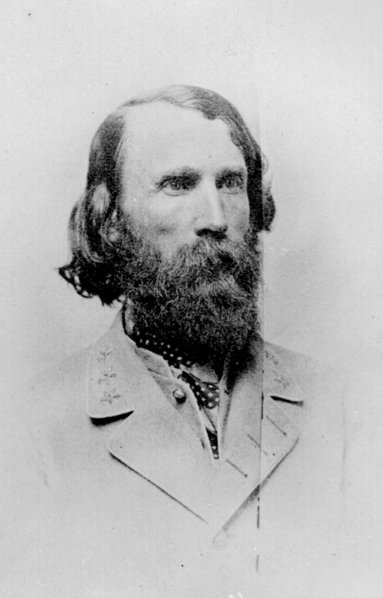
iverson

Brigadier General Alfred Iverson

This left two brigades under questionable leadership. One brigade from North Carolina was commanded by Brigadier General Alfred Iverson. Iverson who was considered a “reliable secession enthusiast” was appointed to command the North Carolina troops whose political steadiness and loyalty was questioned by Richmond. [6] Because of this Iverson became “embroiled in bitter turmoil with his North Carolinians.” [7] Iverson both in the Mexican War, the 1850s and in his service to the Confederacy owed his position to political appointments and patronage. Though he was from Georgia he helped raise the 20th North Carolina regiment of infantry and became its first Colonel. However he was constantly at war with his officers and his regiment never bonded with him. As a regimental commander he did see a fair amount of action but his leadership was always a question mark. After he took command of the brigade Iverson “sent an aide to the camp of his former regiment to arrest all twenty-six of its officers.” [8] Those officers responded in kind and “retained a powerful bevy of counsel including…Colonel William Bynum who would later become a member of the Supreme Court.” [9] Iverson then refused promotions to any officer who had opposed him. One of the aggrieved officers of the 20th North Carolina “wrote an outraged letter home insisting that resistance to Iverson was every reasonable man’s duty and asserting that he would oppose him again “with great pleasure” if the occasion offered.” [10] In his previous action at Chancellorsville Iverson “had not distinguished himself.” [11] After Chancellorsville he had “been stigmatized for his conspicuous absence at the height of the fighting.” [12]

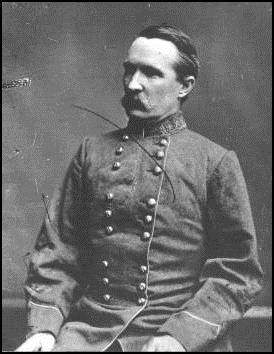
o'neal

Colonel Edward A. O’Neal

The last brigade to mention is the brigade which Rodes had commanded prior to taking command of the division at Chancellorsville. Due to the lack of qualified officers it was commanded by its senior regimental commander Colonel Edward A. O’Neal. O’Neal was another political animal, who unlike Iverson had no prior military training and nothing he had done before the war “had prepared him for command at any level.” [13] As an Alabama lawyer O’Neal was however well connected politically which gained him rapid rank and seniority over other officers, this eventually led to his command of the 26th Alabama which was a part of Rodes brigade. Rodes had reservations about O’Neal’s ability to command the brigade and recommended two other officers, John Gordon and John T. Morgan who instead were assigned to other brigades and both of whom became General Officers, [14] Gordon finish the war as a Lieutenant General and commander of Second Corps. Richmond forwarded a commission to Lee for O’Neal to be promoted to Brigadier General but Lee, obviously with reservations about O’Neal’s capabilities blocked the promotion. [15]

On June 30th Rodes’ division marched about twenty miles and bivouacked at Heidlersburg where he met with his corps commander Ewell, fellow division commander Jubal Early and Isaac Trimble who was accompanying Second Corps where they puzzled over Lee’s orders as to the movement of Second Corps the following day, which indicated that Ewell should march to Gettysburg or Cashtown “as circumstances may dictate.” [16] Neither Rodes nor Early gave favorable opinions of the order and Ewell asked the rhetorical question “Why can’t a commanding General have someone on his staff who can write an intelligible order?” [17]

Ewell who assumed that Cashtown was the desired junction of the army ordered his to march from on the morning of July 1st 1863 toward Cashtown to join with Hill’s corps. His choice of routes was good as it gave him the opportunity to turn south towards Gettysburg “as circumstances” dictated.[18] Rodes division was at Middletown (modern Bilgerville) when Ewell was informed that Hill’s troops were in action against Federal cavalry outside of Gettysburg. Ewell then ordered his divisions south to support Hill’s corps in its attack even though he was not clear on what the strength or composition of the Federal forces. [19]

Like Heth to his west Rodes was also operating somewhat independently and like Heth when confronted with the opportunity for battle ignored the instruction “to avoid a general engagement, if practicable.” [20] The operation was Rodes’ first as a Major General and he like the other commanders in Second Corps was operating independently “as Ewell preferred.” [21] About four miles north of the town Rodes wrote that “to my surprise, the presence of the enemy there in force was announced by the sound of a sharp cannonade, and instant preparations for battle were made.” [22]

The arrival of Rodes’ division as well as Early’s division was decisive in turning the tide of the battle toward the Confederates that afternoon. The Union I Corps and Buford’s cavalry division had fought Heth’s poorly coordinated and led attacks to a standstill, but when Rodes arrived he found “a golden opportunity spread before him.” [23] From his position at Oak Ridge he saw the opportunity to take the Federal troops opposing Hill in the flank though his position did not “provide him as comprehensive view as he thought. [24] He also saw the divisions of Howard’s XI Corps advancing out of Gettysburg and moving north.

Rodes brought up Carter’s artillery battalion and ordered it to fire on the Union positions. This and the reports from Devin’s brigade of Buford’s cavalry division deployed north of the town alerted the commanders of I Corps who turned to meet the new threat from their north.

dilger

Captain Hubert Dilger

Carter’s artillery, deployed in the open immediately drew the fire of Captain Hubert Dilger’s Battery I First Ohio Artillery from Howard’s XI Corps. Dilger commanded one of the best artillery units in the army, a German immigrant and artilleryman serving in the Grand Duke of Baden’s Horse Artillery at the beginning of the war arrived in the United States at the invitation of a distant uncle, to “practice the war-making he had only previously rehearsed.” [25] Dilger was “blunt and a bit arrogant…loved by his men but not by his superiors.” At Chancellorsville he and his battery had helped save the Federal right “when it used a leapfrogging technique to keep the victorious Confederate infantry at bay.” [26] The effect of Dilger’s fire was blasted carter’s artillery blowing up several caissons and guns causing casualties among the men. [27]

dilgersbatteryDilger’s Battery goes into action

Thinking he had an adequate grasp of the situation Rodes did not order a reconnaissance before launching his attack, nor did the brigades assigned to it put out skirmishers, a normal precaution when advancing to the attack. [28] Rodes deployed his troops over the rough ground of the ridge as quickly as he could and dashed off a note to Jubal Early stating “I con burst through the enemy in an hour.” [29] He was to be badly mistaken.

Rodes deployed Doles’ excellent brigade to guard his left against the advancing XI Corps units a task which it conducted admirably until the arrival of Jubal Early’s division and after which it too joined the attack on XI Corps. Initially this opened a gap between Doles and the rest of the division but this could not be exploited by the Federals.

His division initially deployed on a one brigade front. As they neared the Federal positions Rodes developed a relatively simple plan to “attack on a two brigade front, sending in O’Neal’s and Iverson’s men simultaneously, then following up with Daniel’s brigade in echelon on the right.” [30] It was a sound plan, but in execution it was “bungled right at the start.” [31] Direction was faulty, units were mingled and a gap developed between O’Neal and Iverson. [32]

O’Neal’s brigade had stalled almost immediately when fired upon by Union troops who had been hidden by a wall which had obscured them from Rodes’ view. Striking the O’Neal’s advancing troops at the oblique the Union troops wreaked havoc on the unsuspecting Confederates. These men were solid veterans from Baxter’s brigade of Robinson’s division as well as Dilger’s artillery which delivered effective canister fire at O’Neal’s brigade” [33] which “killed or wounded about half of the advancing men with a series of point blank volleys pumped directly into their flank.” [34] To further complicate matters O’Neal had chosen to remain back with his reserve regiment rather than “going forward to direct the advancing regiments.” [35] Rodes noted in his after action report that O’Neal’s three attacking regiments “moved with alacrity (but not in accordance with my orders as to direction)” and when he ordered the 5th Alabama up to support “I found Colonel O’Neal, instead of personally superintending the movements of his brigade, had chosen to remain with his reserve regiment. The result was that the whole brigade was repulsed quickly and with loss….” [36]

As Rodes bad luck would have it Iverson on O’Neal’s right did not advance simultaneously or on the same axis, but in waited to see O’Neal’s advance. Like O’Neal, Iverson did not advance with or direct his advancing troops. [37] As a result the brigade drifted right and its exposed left was subject to attack from Baxter’s, Paul’s and Hook’s brigades of Robinson’s division. Like O’Neal’s brigade it too blundered into the path of well concealed veterans who like they did with O’Neal’s Alabamians and slaughtered them. The Federals advanced into the broken ranks of the North Carolina regiments they captured many. Official Confederate reports list only 308 missing but that number differs from the Union reports, Robinson reporting 1000 prisoners and three flags and Baxter’s nearly 400 alone. [38]

88thPAchargeThe 88th Pennsylvania Charges Iverson’s Brigade

Iverson was badly shaken by the slaughter and “went to pieces and became unfit for further command,” [39] being just close enough to observe it. He panicked and notified Rodes that one of his regiments had surrendered in masse though he later retracted that in his official report where he noted “when I found afterward that 500 of my men were left lying dead and wounded on a line as straight as a dress parade, I exonerated …the survivors.” [40] His brigade had lost over two-thirds of its strength in those few minutes, one regiment the 23rd North Carolina lost 89 percent of those it took into battle, and at the end of the day would “count but 34 men in its ranks.” [41] Iverson’s conduct during the battle was highly criticized by fellow officers after it. Accused of cowardice, drunkenness and hiding during the action he was relieved of his command upon the army’s return to Virginia “for misconduct at Gettysburg” [42] and sent back to Georgia. Some complained after the war that Iverson was helped by politicians once he returned to Richmond and instead of facing trial “got off scot free & and had brigade of reserves given to him in Georgia.” [43]

With the center of his attacking forces crushed the brigades of Junius Daniels and Stephen Ramseur entered the fray to the right of Iverson’s smashed brigade. These capable officers achieved a link up with the battered brigades of Harry Heth at the Railroad cut after Daniel’s brigade had fought a fierce battle with Culter’s and Stone’s brigades in the area [44] and allowed the Confederates a unified front with which they pressed east. To the east Doles’ brigade advanced with Jubal Early’s division smashed the outnumbered and badly spread out divisions of Oliver Howard’s XI Corps. The timely arrival of that division coupled with the skillful work of Daniel and Ramseur saved Rodes from even more misfortune on that first day of battle, but Rodes’ plan “to burst through the enemy” with his division had evaporated. [45] Rodes’ division lost 3000 of its 8000 men present killed, wounded or captured in those few short hours on July 1st 1863.

The battle at Oak Ridge was a series of tactical debacles within a day of what appeared to be a “Confederate strategic bonanza.” [46] Despite the mistakes Rodes never lost his own self-control. He recovered from each mistake and continued to lead his division. He “kept his men on the ridge driving forward until with Hill, and on the flats left joined Early’s right to form a continuous line into Gettysburg.” [47] It was a hard lesson for the young Major General, but one that he learned from. He would be killed at killed at the Third Battle of Winchester on September 19th 1864.
Notes:

[1] Freeman, Douglas Southall, Lee’s Lieutenant’s a Study in Command, One volume abridgement by Stephen W Sears, Scribner, New York 1998 p.39

[2] Krick, Robert K. Three Confederate Disasters on Oak Ridge: Failures of Brigade Leadership on the First Day of Gettysburg in The First Day at Gettysburg edited by Gallagher, Gary W. Kent State University Press, Kent Ohio 1992 p.115

[3] Dowdy, Clifford. Lee and His Men at Gettysburg: The Death of a Nation Skyhorse Publishing, New York 1986, originally published as Death of a Nation Knopf, New York 1958 p.123

[4] Sears, Stephen W. Gettysburg. Houghton Mifflin Co. Boston and New York 2003 p.53

[5] Ibid. Krick Three Confederate Disasters on Oak Ridge p.117

[6] Guelzo, Allen C. Gettysburg: The Last Invasion Vintage Books, a Division of Random House, New York 2013 p.25

[7] Ibid. Sears Gettysburg p.53

[8] Ibid. Krick Three Confederate Disasters on Oak Ridge p.129

[9] Ibid. Krick Three Confederate Disasters on Oak Ridge p.131

[10] Ibid. Krick Three Confederate Disasters on Oak Ridge p.130-131

[11] Ibid Freeman, Lee’s Lieutenant’s a Study in Command p.564

[12] Tredeau, Noah Andre. Gettysburg: A Testing of Courage, Harper Collins Publishers, New York 2002 p.145

[13] Ibid. Krick Three Confederate Disasters on Oak Ridge p.120

[14] Ibid. Krick Three Confederate Disasters on Oak Ridge p.123

[15] Pfanz Harry W. Gettysburg: The First Day University of North Carolina Press, Chapel Hill and London 2001 p.162Also see Krick pp.123-124 Following Gettysburg Lee continued to block O’Neal’s promotion and that officer went to extraordinary lengths to obtain a General’s commission using every political ally he had in Alabama and in Richmond. Finally Lee settled the matter before the Wilderness campaign writing that he made “more particular inquiries into his capacity to command the brigade and I cannot recommend him to the command.” Krick pp.123-124

[16] Ibid Pfanz Gettysburg: The First Day p.148

[17] Ibid Pfanz Gettysburg: The First Day p.149

[18] Ibid. Sears Gettysburg p.160

[19] Ibid Tredeau, Gettysburg: A Testing of Courage p.169-170

[20] Ibid Freeman, Lee’s Lieutenant’s a Study in Command p.564

[21] Foote, Shelby, The Civil War, A Narrative. Volume Two Fredericksburg to Meridian Random House, New York 1963 p.472

[22] Luvaas, Jay and Nelson Harold W editors. The U.S. Army War College Guide to the Battle of Gettysburg South Mountain Press, Carlisle PA 1986 p.35

[23] Ibid. Foote, Shelby, The Civil War, A Narrative. Volume Two p.472

[24] Ibid. Guelzo Gettysburg: The Last Invasion p.170

[25] Ibid Tredeau, Gettysburg: A Testing of Courage p.208

[26] Gottfried, Bradley The Artillery of Gettysburg Cumberland House Publishing, Nashville TN 2008 pp.59-60 Dilger was awarded the Medal of Honor for his actions at Chancellorsville in 1893, part of the citation stating that Dilger: “fought his guns until the enemy were upon him, then with one gun hauled in the road by hand he formed the rear guard and kept the enemy at bay by the rapidity of his fire and was the last man in the retreat.”

[27] Ibid Tredeau, Gettysburg: A Testing of Courage p.210

[28] Ibid. Guelzo Gettysburg: The Last Invasion p.170

[29] Ibid. Guelzo Gettysburg: The Last Invasion p.170

[30] Ibid. Sears Gettysburg p.197

[31] Ibid. Sears Gettysburg p.197

[32] Ibid Freeman, Lee’s Lieutenant’s a Study in Command p.565

[33] Ibid. Sears Gettysburg p.198

[34] Ibid. Foote, Shelby, The Civil War, A Narrative. Volume Two p.473

[35] Ibid Freeman, Lee’s Lieutenant’s a Study in Command p.565

[36] Ibid Luvaas The U.S. Army War College Guide to the Battle of Gettysburg p.36

[37] Ibid. Krick Three Confederate Disasters on Oak Ridge p.132

[38] Ibid Pfanz Gettysburg: The First Day p.175

[39] Coddington, Edwin B. The Gettysburg Campaign: A Study in Command, A Touchstone Book, Simon and Schuster New York, 1968 p.290

[40] Ibid Luvaas The U.S. Army War College Guide to the Battle of Gettysburg p.37

[41] Ibid. Sears Gettysburg p.201

[42] Ibid. Guelzo Gettysburg: The Last Invasion p.173

[43] Ibid. Krick Three Confederate Disasters on Oak Ridge p.136

[44] Ibid. Coddington, The Gettysburg Campaign: A Study in Command, p.292

[45] Ibid. Guelzo Gettysburg: The Last Invasion p.173

[46] Ibid. Krick Three Confederate Disasters on Oak Ridge p.138

[47] Ibid. Dowdy Lee and His Men at Gettysburg: The Death of a Nation p.138

2 Comments

Filed under civil war, History, Military

Who Profits by War?

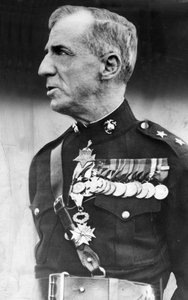
butler-medals1

In an age where Defense contractors overcharge and under produce, where lobbyists for them ensure that congressional leaders and other elected officials and appointees cater to the needs of these corporations it is important to know who profits from war. It is certainly not the military personnel, nor is it the taxpayer.

The sad fact is that the people that profit from unending war are those who really couldn’t care less about the economy, except as it benefits them nor care about the taxpayers or those that they send into battle in wars that do little or nothing to enhance the security this nation, or for that matter the security of those we are supposedly fight for.

Major General Smedley Butler who was awarded the Congressional Medal of Honor twice, and earned the ire of the Hoover Administration for criticizing Mussolini wrote a book called War is a Racket. I recommend everyone read it because it is timeless. Dwight Eisenhower kind of echoed it when he talked about the military-industrial complex.

Here is the second chapter of that hard hitting book. By the way take the time to Google the names of these corporations in this chapter and see how many are still profiting from war.

Peace

Padre Steve+

Who Makes The Profits?

The World War, rather our brief participation in it, has cost the United States some $52,000,000,000. Figure it out. That means $400 to every American man, woman, and child. And we haven’t paid the debt yet. We are paying it, our children will pay it, and our children’s children probably still will be paying the cost of that war.

The normal profits of a business concern in the United States are six, eight, ten, and sometimes twelve percent. But war-time profits — ah! that is another matter — twenty, sixty, one hundred, three hundred, and even eighteen hundred per cent — the sky is the limit. All that traffic will bear. Uncle Sam has the money. Let’s get it.

Of course, it isn’t put that crudely in war time. It is dressed into speeches about patriotism, love of country, and “we must all put our shoulders to the wheel,” but the profits jump and leap and skyrocket — and are safely pocketed. Let’s just take a few examples.

Take our friends the du Ponts, the powder people — didn’t one of them testify before a Senate committee recently that their powder won the war? Or saved the world for democracy? Or something? How did they do in the war? They were a patriotic corporation. Well, the average earnings of the du Ponts for the period 1910 to 1914 were $6,000,000 a year. It wasn’t much, but the du Ponts managed to get along on it. Now let’s look at their average yearly profit during the war years, 1914 to 1918. Fifty-eight million dollars a year profit we find! Nearly ten times that of normal times, and the profits of normal times were pretty good. An increase in profits of more than 950 per cent.

Take one of our little steel companies that patriotically shunted aside the making of rails and girders and bridges to manufacture war materials. Well, their 1910-1914 yearly earnings averaged $6,000,000. Then came the war. And, like loyal citizens, Bethlehem Steel promptly turned to munitions making. Did their profits jump — or did they let Uncle Sam in for a bargain? Well, their 1914-1918 average was $49,000,000 a year!

Or, let’s take United States Steel. The normal earnings during the five-year period prior to the war were $105,000,000 a year. Not bad. Then along came the war and up went the profits. The average yearly profit for the period 1914-1918 was $240,000,000. Not bad.

There you have some of the steel and powder earnings. Let’s look at something else. A little copper, perhaps. That always does well in war times.

Anaconda Copper for instance. Average yearly earnings during the pre-war years 1910-1914 of $10,000,000. During the war years 1914-1918 profits leaped to $34,000,000 per year. (One should read their history of strip mining massive pollution, ARCO bought them in the 1970s but was stuck with massive environmental problems, such that the company is only on the books to show the losses)

Or Utah Copper. Average of $5,000,000 per year during the 1910-1914 period. Jumped to an average of $21,000,000 yearly profits for the war period.

Let’s group these five, with three smaller companies. The total yearly average profits of the pre-war period 1910-1914 were $137,480,000. Then along came the war. The average yearly profits for this group skyrocketed to $408,300,000. A little increase in profits of approximately 200 per cent.

Does war pay? It paid them. But they aren’t the only ones. There are still others. Let’s take leather. For the three-year period before the war the total profits of Central Leather Company were $3,500,000. That was approximately $1,167,000 a year. Well, in 1916 Central Leather returned a profit of $15,000,000, a small increase of 1,100 per cent. That’s all.

The General Chemical Company (now part of Honeywell) averaged a profit for the three years before the war of a little over $800,000 a year. Came the war, and the profits jumped to $12,000,000. a leap of 1,400 per cent.

International Nickel Company — and you can’t have a war without nickel — showed an increase in profits from a mere average of $4,000,000 a year to $73,000,000 yearly. Not bad? An increase of more than 1,700 per cent.

American Sugar Refining Company (largest Sugar refining company in the world, name brand Domino Sugar) averaged $2,000,000 a year for the three years before the war. In 1916 a profit of $6,000,000 was recorded.

Listen to Senate Document No. 259. The Sixty-Fifth Congress, reporting on corporate earnings and government revenues. Considering the profits of 122 meat packers, 153 cotton manufacturers, 299 garment makers, 49 steel plants, and 340 coal producers during the war. Profits under 25 per cent were exceptional. For instance the coal companies made between 100 per cent and 7,856 per cent on their capital stock during the war. The Chicago packers doubled and tripled their earnings.

And let us not forget the bankers who financed the great war. If anyone had the cream of the profits it was the bankers. Being partnerships rather than incorporated organizations, they do not have to report to stockholders. And their profits were as secret as they were immense. How the bankers made their millions and their billions I do not know, because those little secrets never become public — even before a Senate investigatory body.

But here’s how some of the other patriotic industrialists and speculators chiseled their way into war profits.

Take the shoe people. They like war. It brings business with abnormal profits. They made huge profits on sales abroad to our allies. Perhaps, like the munitions manufacturers and armament makers, they also sold to the enemy. For a dollar is a dollar whether it comes from Germany or from France. But they did well by Uncle Sam too. For instance, they sold Uncle Sam 35,000,000 pairs of hobnailed service shoes. There were 4,000,000 soldiers. Eight pairs, and more, to a soldier. My regiment during the war had only one pair to a soldier. Some of these shoes probably are still in existence. They were good shoes. But when the war was over Uncle Sam has a matter of 25,000,000 pairs left over. Bought — and paid for. Profits recorded and pocketed.

There was still lots of leather left. So the leather people sold your Uncle Sam hundreds of thousands of McClellan saddles for the cavalry. But there wasn’t any American cavalry overseas! Somebody had to get rid of this leather, however. Somebody had to make a profit in it — so we had a lot of McClellan saddles. And we probably have those yet.

Also somebody had a lot of mosquito netting. They sold your Uncle Sam 20,000,000 mosquito nets for the use of the soldiers overseas. I suppose the boys were expected to put it over them as they tried to sleep in muddy trenches — one hand scratching cooties on their backs and the other making passes at scurrying rats. Well, not one of these mosquito nets ever got to France!

Anyhow, these thoughtful manufacturers wanted to make sure that no soldier would be without his mosquito net, so 40,000,000 additional yards of mosquito netting were sold to Uncle Sam.

There were pretty good profits in mosquito netting in those days, even if there were no mosquitoes in France. I suppose, if the war had lasted just a little longer, the enterprising mosquito netting manufacturers would have sold your Uncle Sam a couple of consignments of mosquitoes to plant in France so that more mosquito netting would be in order.

Airplane and engine manufacturers felt they, too, should get their just profits out of this war. Why not? Everybody else was getting theirs. So $1,000,000,000 — count them if you live long enough — was spent by Uncle Sam in building airplane engines that never left the ground! Not one plane, or motor, out of the billion dollars worth ordered, ever got into a battle in France. Just the same the manufacturers made their little profit of 30, 100, or perhaps 300 per cent.

Undershirts for soldiers cost 14¢ [cents] to make and uncle Sam paid 30¢ to 40¢ each for them — a nice little profit for the undershirt manufacturer. And the stocking manufacturer and the uniform manufacturers and the cap manufacturers and the steel helmet manufacturers — all got theirs.

Why, when the war was over some 4,000,000 sets of equipment — knapsacks and the things that go to fill them — crammed warehouses on this side. Now they are being scrapped because the regulations have changed the contents. But the manufacturers collected their wartime profits on them — and they will do it all over again the next time.

There were lots of brilliant ideas for profit making during the war.

One very versatile patriot sold Uncle Sam twelve dozen 48-inch wrenches. Oh, they were very nice wrenches. The only trouble was that there was only one nut ever made that was large enough for these wrenches. That is the one that holds the turbines at Niagara Falls. Well, after Uncle Sam had bought them and the manufacturer had pocketed the profit, the wrenches were put on freight cars and shunted all around the United States in an effort to find a use for them. When the Armistice was signed it was indeed a sad blow to the wrench manufacturer. He was just about to make some nuts to fit the wrenches. Then he planned to sell these, too, to your Uncle Sam.

Still another had the brilliant idea that colonels shouldn’t ride in automobiles, nor should they even ride on horseback. One has probably seen a picture of Andy Jackson riding in a buckboard. Well, some 6,000 buckboards were sold to Uncle Sam for the use of colonels! Not one of them was used. But the buckboard manufacturer got his war profit.

The shipbuilders felt they should come in on some of it, too. They built a lot of ships that made a lot of profit. More than $3,000,000,000 worth. Some of the ships were all right. But $635,000,000 worth of them were made of wood and wouldn’t float! The seams opened up — and they sank. We paid for them, though. And somebody pocketed the profits.

It has been estimated by statisticians and economists and researchers that the war cost your Uncle Sam $52,000,000,000. Of this sum, $39,000,000,000 was expended in the actual war itself. This expenditure yielded $16,000,000,000 in profits. That is how the 21,000 billionaires and millionaires got that way. This $16,000,000,000 profits is not to be sneezed at. It is quite a tidy sum. And it went to a very few.

The Senate (Nye) committee probe of the munitions industry and its wartime profits, despite its sensational disclosures, hardly has scratched the surface.

Even so, it has had some effect. The State Department has been studying “for some time” methods of keeping out of war. The War Department suddenly decides it has a wonderful plan to spring. The Administration names a committee — with the War and Navy Departments ably represented under the chairmanship of a Wall Street speculator — to limit profits in war time. To what extent isn’t suggested. Hmmm. Possibly the profits of 300 and 600 and 1,600 per cent of those who turned blood into gold in the World War would be limited to some smaller figure.

Apparently, however, the plan does not call for any limitation of losses — that is, the losses of those who fight the war. As far as I have been able to ascertain there is nothing in the scheme to limit a soldier to the loss of but one eye, or one arm, or to limit his wounds to one or two or three. Or to limit the loss of life.

There is nothing in this scheme, apparently, that says not more than 12 per cent of a regiment shall be wounded in battle, or that not more than 7 per cent in a division shall be killed.

Of course, the committee cannot be bothered with such trifling matters.

3 Comments

Filed under History, Military, Political Commentary

Counting the Cost: Reflections on Armed Forces Day 2014

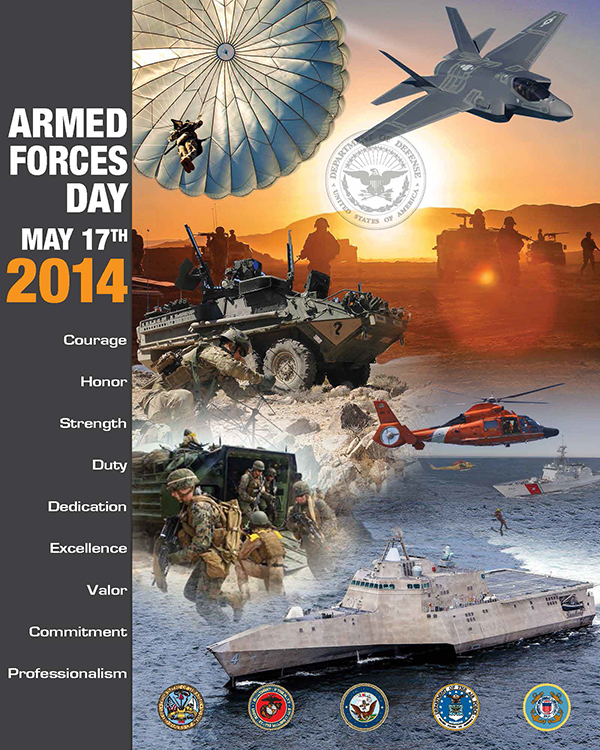
Event-Armed-Forces-Day-poster-2014

“What is the cost of war? what is the bill?…“This bill renders a horrible accounting. Newly placed gravestones. Mangled bodies. Shattered minds. Broken hearts and homes. Economic instability. Depression and all of its attendant miseries. Back -breaking taxation for generations and generations. For a great many years as a soldier I had a suspicion that war was a racket; not only until I retired to civilian life did I fully realize it….” Major General Smedley Butler USMC

Today is Armed Forces Day and unfortunately most of the country will not notice unless they are attending a Baseball game where it is being observed or some special event on a base, national cemetery, monument or VFW hall.

There are also a fair number of local celebrations to honor members of the Armed Forces across the country but for the most part they are small and not well publicized. As a career officer and son of a Vietnam veteran Navy Chief I appreciate those events and the people that put them together. Being a veteran of Operation Iraqi Freedom and Operation Enduring Freedom, especially those that have taken the time to honor Iraq and Afghanistan veterans.

At any given time less than 1% of Americans are serving in all components of the military. For over 10 years we have been at war in Afghanistan and Iraq as well as other locations that we don’t like to talk about too much. However this has not been the effort of a nation at war, it is the war of a tiny percentage of the population.

As a nation we are disconnected from the military and the wars that the military fights. The fact is that most Americans do not have a personal or vested interest in these wars, they have been insulated by political leaders of both parties from them. There is no draft, and no taxes were raised to fund the wars and the military is now worn out.

We have been at war for nearly 14 years and truthfully there is no end in sight. In that time every single Soldier, Sailor, Marine and Airman volunteered for duty or reenlisted during this time period. Motives may have varied from individual to individual, but unlike the World Wars, Korea and Vietnam every single one volunteered to serve in time of war. I think that this makes the current generation of veterans quite unique, we are no longer a military composed of citizen soldiers we are now, even our reserve components a Warrior caste, set apart from the society that we serve.

There is a tragic disconnection between the military and civilian society in the United States. This is the result of deliberate public policy since the end of the Vietnam War supported by both political parties. For almost 40 years we have relied on an all volunteer force. It is that relatively small and socially isolated military which is sent to fight wars while the bulk of the population is uninvolved and corporations, lobbyists and think tanks get rich.

Andrew Bacevich wrote in his new book Breach of Trust: How Americans failed their Soldiers and their Country:

“Rather than offering an antidote to problems, the military system centered on the all-volunteer force bred and exacerbated them. It underwrote recklessness in the formulation of policy and thereby resulted in needless, costly, and ill-managed wars. At home, the perpetuation of this system violated simple standards of fairness and undermined authentic democratic practice. The way a nation wages war—the role allotted to the people in defending the country and the purposes for which it fights—testifies to the actual character of its political system. Designed to serve as an instrument of global interventionism (or imperial policing), America’s professional army has proven to be astonishingly durable, if also astonishingly expensive. Yet when dispatched to Iraq and Afghanistan, it has proven incapable of winning. With victory beyond reach, the ostensible imperatives of U.S. security have consigned the nation’s warrior elite to something akin to perpetual war.”

Bacevich, a retired Army Colonel and Vietnam veteran who lost a son in Iraq is dead on, as is Rachel Maddow who wrote in her outstanding book Drift: The Unmooring of American Military Power:

“The reason the founders chafed at the idea of an American standing army and vested the power of war making in the cumbersome legislature was not to disadvantage us against future enemies, but to disincline us toward war as a general matter… With citizen-soldiers, with the certainty of a vigorous political debate over the use of a military subject to politicians’ control, the idea was for us to feel it- uncomfortably- every second we were at war. But after a generation or two of shedding the deliberate political encumbrances to war that they left us… war making has become almost an autonomous function of the American state. It never stops.” 

The lobbyists, pundits, politicians and preachers that promote war don’t care about the troops. This is because no matter who is in office or who controls congress these people and corporations will promote policies that keep them employed and their businesses enriched. Marine Major General and Medal of Honor winner Smedley Butler was quite right when he said:

“War is a racket. It always has been. It is possibly the oldest, easily the most, surely the most vicious. It is the only one international in scope. It is the only one in which the profits are reckoned in dollars and the losses in lives. A racket is best described, I believe, as something that is not what it seems to the majority of the people. Only a small ‘inside’ group knows what it is about. It is conducted for the benefit of the very few, at the expense of the very many. Out of war a few people make huge fortunes.”

I think that the reason that our current wars have gone on so long is the that misguided policies have brought about a chronic disconnection in our society between those that serve in the military. But how can there not be when in the weeks after 9-11 people like President Bush and others either directly or in a manner of speaking told people to “go shopping” * as we went to war in Afghanistan? When I returned from Iraq I returned to a nation that was not at war whose leaders used the war to buttress their respective political bases.

The results are terrible. Suicide rates are continuing to rise among veterans who have returned to find that neither the VA nor the civilian mental health care sector is prepared to care for them.

I think that Armed Forces Day should be better celebrated and I am grateful to the people that do things every day to thank and support military personnel. These wonderful people that do this come from across the political spectrum. Some are veterans and others non-veterans. But they care for and appreciate the men and women that serve in and fight the wars that no-one else can be bothered to fight.

481801_10151367001287059_1003164983_n-2

Of course the politicians, pundits, preachers and the defense contractors, banks and lobbyists will find a way to profit. They will do so no matter how many more troops are killed, wounded or injured and how badly it affects military personnel or their families and will push to abandon those who fought as they do after every war. After all, to quote Smedley Butler, “war is a racket.”

Peace

Padre Steve+

President Bush’s actually words were “Now, the American people have got to go about their business. We cannot let the terrorists achieve the objective of frightening our nation to the point where we don’t — where we don’t conduct business, where people don’t shop…” http://georgewbush-whitehouse.archives.gov/news/releases/2001/10/20011011-7.html

2 Comments

Filed under History, iraq,afghanistan, leadership, Military, national security, Political Commentary

Why This? Why Me? Why Now? “Leak: Why Mark Felt Became Deep Throat” by Max Holland

Friends of Padre Steve’s World. Nothing really new today, but a re-run from a couple of years ago. I am working on another Gettysburg article which I will publish in the next day or two. Today something else that was interesting occurred. Jeb Magruder died. For those who do not remember the Watergate burglary and cover-up which brought down the Nixon administration Magruder was a Nixon staffer who testified that he heard Nixon order the Watergate break-ins. I wrote this article on Max Holland’s book “Leak: Why Mark Felt Became Deep Throat” the story of the Deputy FBI Director who supplied Bob Woodward and Carl Bernstein the information that they needed to help bring down that administration. This article was a review that I did for Max Holland’s account of that event. Holland wrote me and said: “Thank you, Stephen, for that compelling review and excellent summary. It made the book sound so interesting that I wanted to read it–and I wrote it!” It is an excellent read and for those willing to defend or excuse the actions of any Presidential administration to other elected official because of their political leanings…Have a great night. Rest easy.
Peace
Padresteve+

padresteve's avatarThe Inglorius Padre Steve's World

Motives do matter and actions often have unintended consequences. That is the lesson of Max Holland’s book about Mark Felt. Felt was the man whose leaks helped end the Presidency of Richard Nixon and skyrocket the young and obscure Bob Woodward and Carl Bernstein to fame. For more than three decades Mark Felt’s identity remained hidden a mystery man to the public, a man popularized by the dark moniker “Deep Throat.” His role as the leaker was suspected by some, including President Nixon and some of his staff but known only for sure by Woodward, Bernstein and Washington Post Editor Ben Bradlee.

In this truly scholarly book Max Holland pieces together the dark underside of the Watergate tapestry that Woodward and Bernstein helped to break in 1972 and would go on to write about in All the President’s Men and The Final Days. It is a book that is important…

View original post 943 more words

Leave a comment

Filed under Loose thoughts and musings

Frightened by Christians

10151918_10152444030142059_7871957421917905974_n

“I like your Christ, I do not like your Christians. Your Christians are so unlike your Christ.” Mahatma Gandhi

I expect that this article might make some people uncomfortable but it is something that I need to write.

I am a Christian. I am a Priest and I am a Navy Chaplain. But for the most part I am afraid of Christians. There are many reasons for this. Some are more general in the way I see Christians treat others; their own wounded as well as non-believers, the political machinations of pastors and “Christian” special interest groups masquerading as ministries.

But most of why I am afraid is because what I have experienced at the hand of many Christians, some of whom I had counted as friends many of whom are pastors, priests or chaplains. To experience rejection or being shamed by people that you thought were friends is very hard, especially when that at one time you trusted them implicitly to care for you. However to be rejected by those that you trusted “in the name of God, ” or rather because you violated supposedly “correct” doctrinal beliefs about God is frightening.

It seems to me that with many Christians and churches that the “unconditional” love of God that they proclaim not really unconditional. It is totally conditional on believing what they believe or behaving in the way they think that you should.

For those that do not know me or my story I am a career military officer with over 30 years of service between the Army and Navy. I have been a chaplain since 1992 and served in the National Guard, Army Reserve, Active Duty Army and the Navy. I am a trained hospital chaplain; I have a great academic background. I went to Iraq in 2007 and came home with a terrible case of severe chronic PTSD. I still suffer from some anxiety, depression and plenty of insomnia. I find mental health care hard to get in my new assignment and I realize how woefully unprepared that our medical system, military, VA and civilian is to care for that vast numbers of veterans like me.

After Iraq I suffered a collapse of my faith and for close to two years was a practical agnostic. Only my deep sense of call and vocation kept me going and there were times that I wondered if I would be better off dead.

When faith returned through what I call my Christmas miracle it was different. I totally relate to author Anne Rice who said:

“My faith in Christ is central to my life. My conversion from a pessimistic atheist lost in a world I didn’t understand, to an optimistic believer in a universe created and sustained by a loving God is crucial to me. But following Christ does not mean following His followers. Christ is infinitely more important than Christianity and always will be, no matter what Christianity is, has been, or might become.”

I have always questioned a lot but after my crisis of faith I began to see through the bullshit. I began to not only question things my former church taught, but openly stated my convictions about how we treat others as Christians, the equality of people in general and tolerance for those different than us including gays and Moslems who for some Christians are rather low on the scale of those that God might love.

After Iraq I was sickened by the crass politicization of conservative American Christianity and many of its leaders. Men and women who advocate war without end, be it real wars against “enemies” of American, or promote a culture war even against other Christians that they do not like or agree with. Of course this is all done in “Jesus name.”

Likewise I question the opulence and materialism of the church. I question the nearly cult like focus and near worship accorded to the Pastor-CEOs of the megachurches and the television preachers and teachers. I wonder in amazement about how many of these leaders live like royalty and have devoted followers who despite repeated scandals treat them as the voice of God.

Along with the that I question the preference of many American Christian leaders for the rich and their disdain for the poor, the alien and the outcasts among us. I don’t know where where they get it.

All of that got me thrown out of a church that I had served 14 years a priest and chaplain back in 2010. I thought I had a lot of friends in that church. I still have some that keep in contact with me but after my dismissal most abandoned me. That hurts worse than anything.

In fact when I came home from Iraq in crisis and falling apart the first person who asked about how I was doing with God was not clergy. It was my first shrink. I was asked by a commanding officer after Iraq “where does a chaplain go for help?” I told him “not to other chaplains.”  The sad thing is that man who did care about me suffered untreated terrible PTSD and Traumatic Brain Injury and committed suicide earlier this year.

I have had a few experiences this week that have opened that wound again and reminded me of why I am afraid of many that call themselves Christians. I had a friend comment on some coarse language I used in a rant on a social media site, the friend noted a certain word that I used was used to silence others.

I replied that he was wrong, that the ultimate way to silence others was to invoke God and shame them. That is the ultimate trump card because no one is bigger than God.

The good thing is that when he realized why I had said the word and realized what he said had further wounded me and understood a bit of what I was going through he was quite gracious, sympathetic and apologetic. He is still a friend and he means a lot to me. Thankfully there was not another broken relationship.

But my friend’s initial comment made me realize how many of us as Christians, even well meaning people, focus on outward behaviors, words or actions of others without understanding what they are going through. Like Dietrich Bonhoeffer said:

“Many people are looking for an ear that will listen. They do not find it among Christians, because these Christians are talking where they should be listening.”

I am thankful that I have a number of friends including a good number of Christians from various backgrounds who have stood by me even if they disagree with my theology, politics or favorite baseball team.

That being said with the exception of such
people who have been with me through thick and thin I am almost terrified of being around Christians. Church in most cases is a frightening place for me, and the sad fact is that if I were not already a Christian there is little in American Christianity that would ever cause me to be interested in Jesus.  I can totally understand why churches are hemorrhaging members, especially young people and why the fastest growing religious preference in our society is “none” for I too am in some sense an outcast.

As Pedro Cerrano (Dennis Haysbert) said in the movie Major League: “I Like Jesus very much, but he no help with curveball.”

Pray for me a sinner,

Peace

Padre Steve+

13 Comments

Filed under christian life, faith, Military, ministry, Pastoral Care, Political Commentary, PTSD

Church, Faith, Tolerance and Reconcilliation

1622612_10152232336042059_727365308_n

“Sometimes I think it is my mission to bring faith to the faithless, and doubt to the faithful.” Paul Tillich

My friends, I write this because of something that happened to me a couple of days ago. It was an incident that upset me greatly because it ended up in the fracturing of a relationship by a friend who evidently could not tolerate where I was in my life as a priest and Christian. I discovered again the reality of what Dietrich Bonhoeffer wrote:

“Many people are looking for an ear that will listen. They do not find it among Christians, because these Christians are talking where they should be listening. But he who can no longer listen to his brother will soon be no longer listening to God, either; he will be doing nothing but prattle in the presence of God, too. This is the beginning of the death of the spiritual life, and in the end there will be nothing left but spiritual chatter and clerical condescension arrayed in pious words… never really speaking to others.”

My experience of the Church is profoundly influenced by my life in the nether world of the military culture. My world view is shaped by a blending of various Christian traditions, mutual support and collaboration among believers of often radically different points of view. Because of the love, care and mentoring of people from a blend of different traditions I came to know God and survived a tumultuous childhood with many moves.

As a historian I have been blessed to study church history from the early Church Fathers to the present. As I look to church history I find inspiration in many parts of the Christian tradition. In fact rather being threatened by them I have become appreciative of their distinctiveness. I think that there is a beauty in liturgy and stability in the councils and creeds of the Church. At the same time the prophetic voice of evangelical preaching shapes me, especially the message of freedom and tolerance embodied in the lives and sacrifice of men like John Leland, the American Baptist who helped pioneer the concept of Freedom of Religion established in the Constitution of the United States, of William Wilberforce who labored to end slavery in England and, Martin Luther King Jr. who led the Civil Rights movement.

Likewise that prophetic message of the faith is demonstrated in the ministry, writing and martyrdom of Dietrich Bonhoeffer and his contemporaries Martin Niemoller and Jesuit priest Father Rupert Meyer. All three resisted and preached against the evils of Nazism. In a more contemporary setting I am inspired by Bishop Desmond Tutu who helped topple apartheid in South Africa.

Women like Teresa of Avila and St Catherine show me that women have a legitimate place of ministry and leadership in the Church. I am convinced through my study of Church history, theology and a deep belief in the power of the Holy Spirit that women can and should serve as Priests and Bishops in the church.

My theology has shaped by the writings of Hans Kung, Yves Congar, Jurgen Moltmann, Andrew Greeley, and Henry Nouwen. I’ve been challenged by St Francis of Assissi, John Wesley and Martin Luther. I am especially inspired by Pope John XXIII whose vision brought about the Second Vatican Council and I am inspired by Pope Francis.

I pray that Christians can live in peace with one another and those who do not share our faith. I pray that we can find ways to overcome the often very legitimate hurts, grievances and divisions of our 2000 year history. At the same time I pray that we can repent from our own wrongs and work to heal the many wounds created by Christians who abused power, privilege and even those who oppressed others, waged war and killed in the name of Jesus.

I do not believe that neither triumphalism nor authoritarianism has a place in in a healthy understanding of the church and how we live. I am suspicious of any clergy who seek power in a church or political setting. I profoundly reject any argument that requires the subjection of one Church with its tradition to any other Church. In fact I think that the arrogance and intolerance of Christians to others is a large part of why people are leaving the church in droves and that the fastest growing “religious group” is the “nones” or those with no religious preference. Andrew Greeley said something that we should take to heart:

“People came into the Church in the Roman Empire because the Church was so good — Catholics were so good to one another, and they were so good to pagans, too. High-pressure evangelization strikes me as an attempt to deprive people of their freedom of choice.”

I grew up in and have lived my life in a very open and ecumenical environment. I have lost any trace denominational parochialism and competition that I might have had if I had become a pastor of a civilian parish instead of a chaplain. It is interesting that the pastor that first ordained me in the evangelical tradition and the bishop that ordained me as a priest both did so with the intent that I serve as a chaplain. Whether it was the recognition of a gifting for the work or the fact that they didn’t want me messing up their civilian operations by asking hard questions I will never know.

I believe that my environment and the men and women who have helped shape my life have been a stronger influence in the way I think about ecumenical relations and ministry than my actual theology or ecclesiology. Whether they were Catholics, Anglicans, Lutherans, Methodists, Presbyterians, Evangelicals or even those considered by many to be outside the faith including Jews, Moslems, Buddhists, Mormons and even complete non-believers all have contributed to my life and faith.

I have grown weary of refighting theological debates that have divided the church for a thousand years. Since what we know of theology including our Scriptures and Creeds are based on faith and not science I see no reason to continue to battle.

That doesn’t mean that I think we should put our brains in neutral but rather we must wrestle with how to integrate our faith with science, philosophy and reason, otherwise we will become irrelevant. In that sense I identify with Saint Anslem of Canterbury who wrote about a faith seeking understanding and Erasmus of Rotterdam who very well understood the importance of both faith and reason. In that sense I am very much at home with the Anglian triad of Scripture, Reason and Tradition when it comes to approaching faith.

I struggle with faith and belief. After Iraq I spent two years as a practical agnostic. As Andrew Greeley wrote: “Most priests, if they have any sense or any imagination, wonder if they truly believe all the things they preach. Like Jean-Claude they both believe and not believe at the same time.” Andrew Greeley “The Bishop and the Beggar Girl of St Germain”

I am an Old Catholic and believe that inter-communion does not require from either communion the acceptance of all doctrinal opinion, sacramental devotion, or liturgical practice characteristic of the other, but implies that each believes the other to hold all the essentials of the Christian faith. I like to think that I embody what the early Anglicans referred to as the via media and that somehow my life and ministry has been about building bridges at the intersections of faith with a wide diversity of people.

When I have tried to embrace traditionalism or choose to fight theological battles I have ended up tired, bitter and at enmity with other Christians. In a sense when I tried those paths I found that they didn’t work for me. I discovered that I was not being true to who God had created and guided my life, education and experience. I feel like T. E. Lawrence who wrote:

“The rare man who attains wisdom is, by the very clearness of his sight, a better guide in solving practical problems than those, more commonly the leaders of men, whose eyes are misted and minds warped by ambition for success….”

My favorite theological debates have been with other chaplains over pints of good beer in German Gasthausen or Irish pubs. Those were good times, we argued but we also laughed and always left as friends and brothers. I believe since we are human that none of us will ever fully comprehend all of God or his or her truth. I believe that the Holy Spirit, God’s gracious gift to her people will guide us into all Truth. For me my faith has become more about relationships and reconciliation than in being right.

As far as those who disagree with me that is their right, or your right if you disagree. I don’t expect agreement and I am okay with differences and even if I disagree with an individual or how another religious denominations polity, theology, beliefs or practices those are their rights. In fact I am sure that those that believe things that I don’t are at least as sincere as me and that those beliefs are important to them. I just ask that people don’t try to use them to force their faith or belief on others, be it in churches or by attempting to use the power of government to coerce others into their belief systems.

To my friend who broke contact with me when I refused to debate his argument that I should submit myself to his Church and tradition, the door is open for reconciliation.

Peace

Padre Steve+

2 Comments

Filed under christian life, faith, Religion