Monthly Archives: June 2015

Saturday Musings: The Same Mistakes

IMG_0535

Friends of Padre Steve’s World

Not much to write tonight, mainly because I have been avoiding the heat and humidity here in the Virginia Tidewater by doing little but staying inside and working on my Gettysburg and Civil War book, but then as Yogi Berra once said “it’s not the heat, it’s the humility.” 

But really, I have been continuing to do research and work on the text and that continues to lead me to pure gold in the pursuit for truth, historical truth that is as relevant today as it was when it happened over a century and a half ago.

Sadly, the same issues that dominated America in the 1840s, 1850s, 1860s and later following Reconstruction still dominate so much of our social, political and religious debate. Whether it is the voting franchise which many on the political right seek to restrict, the rights of women, blacks and other minorities, immigrants and the LGBT community, to any semblance of political, economic equality or social justice very little has changed. Not only that there are some political, media and religious leaders who argue for the unabashed imperialism of Manifest Destiny and American Exceptionalism.

Sadly, as it was then, much, if not most of this can be laid squarely at the feet of Evangelical Protestant and other conservative Christian leaders. A century and a half ago men who claimed to be Christian leaders led the efforts to support slavery, discriminate against women, persecute gays and promote imperialistic policies that would have embarrassed the founders of the United States. After the defeat of the Confederacy most of the same people used the same theology to disenfranchise and discriminate against African Americans through Jim Crow laws, as well as discriminate against minorities, women and gays all the while claiming to be the victims of persecution.

Before the Civil War many Protestant ministers, intellectuals, and theologians, not only Southerners, but men like “Princeton’s venerable theologian Charles B. Hodge – supported the institution of slavery on biblical grounds, often dismissing abolitionists as liberal progressives who did not take the Bible seriously.”  This leaves a troubling question over those who claim to oppose other issues on supposedly Biblical grounds. Conservative Anglican theologian Alistair McGrath asks, “Might not the same mistakes be made all over again, this time over another issue?”

In the next few days I will be publishing excerpts of the text relating to those issues here.

I thank all of those who subscribe to this site, as well as those who follow my writings through Twitter or Facebook. The fact that so many people are doing this humbles me, and to repeat what Yogi Berra said, “it’s not the heat, it’s the humility.”

Peace

Padre Steve+

1 Comment

Filed under civil rights, civil war, History, LGBT issues, News and current events, Political Commentary

ISIL, the Caliphate and Manifest Destiny: Two sides of the Same Coin

Friends of Padre Steve’s World

Today another section of my Gettysburg Staff Ride text, taken from the second introductory chapter which deals with how religion and ideology plays a huge role in conflict and how it was used during the American Civil War.  This section discusses how a people’s worldview is strongly linked to culture and religion. It deals with the rather uncomfortable truth that the Islamic concept of the Caliphate differs little from the American idea of Manifest Destiny, a concept which may have created our nation as we know it but in practice was as barbaric and dishonorable as nearly conquering power has ever done, in fact there are many on the political right in this country, especially the Christian Right who are apologists for what occurred in the past and who advocate more of the same now. 

This might be an uncomfortable read for some people, and I hope that is the case. Of course in no way am I condoning anything that the Islamic State is doing in its quest to create a Caliphate, that needs to be condemned and fought wherever possible, preferably by the people most affected by it, the Arabs. 

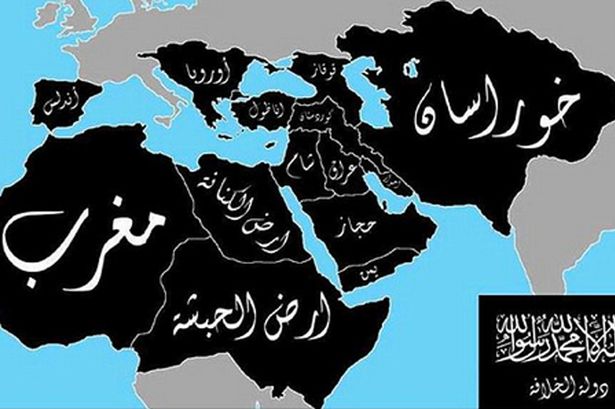
But the truth is, religiously based imperialism, be it Manifest Destiny or the Islamic State’s dream of a Caliphate are two sides of the same coin of evil. 

So with that I bid you a happy Friday.

Peace

Padre Steve+ 

Manife4

One can never separate war and the means by which it is fought from its political ends. According to Clausewitz, war is an extension or continuation of politics. Of course Clausewitz understood the term politics or policy in the light of the concept of a “World View” or to use the German term Weltanschauung. The term is not limited to doctrine or party politics, but it encompasses the worldview of a people or culture. The world view is oft used by the political, media and religious leadership of countries and can be quite instrumental in the decision by a people to go to war; who they war against, their reasons for going to war, the means by which they fight the war, and the end state that they envision. This concept includes racial, religious, cultural, economic and social dimensions of a worldview.

One of the problems that modern Americans and Western Europeans have is that we tend to look at the world, particularly in terms of politics and policy, be it foreign or domestic, through a prism from which we cannot see the forest for the trees. We look at individual components of issues such as economic factors, military capabilities, existing political systems, diplomatic considerations and the way societies get information in isolation from each other. We dissect them, we analyze them, and we do a very good job in examining and evaluating each individual component; but we often do this without understanding the world view and ideological factors that link how a particular people, nation or party understand these components of policy.

Likewise policy makers tend to take any information they receive and interpret it through their own worldview. This is true even if they have no idea what their world-view is or how they came to it. Most often a worldview is absorbed over years. Barbara Tuchman wrote “When information is relayed to policy-makers, they respond in terms of what is already inside their heads and consequently make policy less to fit the facts than to fit the notions and intentions formed out of the mental baggage that has accumulated in their minds since childhood.” [1]

Policy makers often fail to see just how interconnected the most primal elements of the human experience are to the worldview of others as well as their own.

Because of this, many policy makers, be they military or civilian do not understand how critical the understanding of worldview is to designing effective polices. Likewise, many fail to see how the world view of others influence their application of economic, political, diplomatic and military power as well as the use and dissemination of information in their nation or culture. This is true no matter which religion or sect is involved, even if a people or nation is decidedly secular, or at least outwardly non-religious.

Perhaps this is because we do not want to admit that our Western culture itself is very much a product of primal religious beliefs which informed politics, philosophy, ethics, law, economics, views of race, and even the arts for nearly two millennia. Perhaps it is because we are justifiably appalled and maybe even embarrassed at the excesses and brutality of our ancestors in using religion to incite the faithful to war; to use race and religion justification to subjugate or exterminate peoples that they found to be less than human; or to punish and conquer heretics.

The United States Military made a belated attempt to address ideology, culture and religion in terms of counter-insurgency doctrine when it published the U.S. Army/Marine Counterinsurgency Manual. The discussion of these issues is limited to two pages that specifically deal with various extreme Moslem groups that use that religion as a pillar of their ideology, strategy and operations. But the analysis in the counterinsurgency manual of is limited because its focus is very general and focused at a tactical level.

Likewise the analysis of world view, ideology and religion in the counterinsurgency manual is done in an “us versus them” manner. While the manual encourages leaders to attempt to understand the cultural differences there is little in it to help leaders to understand why this understanding of religion and ideology is important at the strategic and operational levels of war.

ISIS-MAP

Commendably, the manual discusses how terrorist and insurgent groups use ideology, which is frequently based on religion to create a narrative. The narrative often involves a significant amount of myth presented as history, both Al Qaida and ISIL use the idea of the Caliphate as a religious and political ideal to achieve, because for many Moslems the idea of the Caliphate “produces a positive image of the golden age of Islamic civilization.” [2]

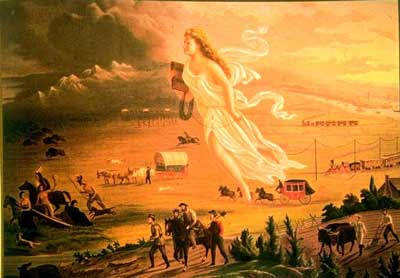
But Islam is not the only religion to do this. Most Americans are blind as to how previous generations Americans have used the Christian religion and race as a theological tool to justify subjugating other peoples and how that impacts us today. Beginning with the “landing of the Mayflower Pilgrims, the notion that the British colonies in the New World had been founded with divine assistance, in order to fulfill a providential mission, was commonly accepted.[3] The idea that it was God’s will for White Protestant settlers to push west, conquer and settle the continent of North America crystalized in the term Manifest Destiny. This concept was what motivated Americans to move into lands claimed by Britain as well as those which belonged to Mexico. The fact that the lands belong to other nations “was a small matter…Because most Americans considered it their “manifest destiny” to absorb these regions into the United States.” [4] There was a hunger in the land for more and Congressman John L. O’Sullivan, the inventor of the phrase proclaimed “Yes, more, more, more!….More…till our national destiny is fulfilled and…the whole boundless continent is ours.” [5]

mex_war_cam_1846_1847

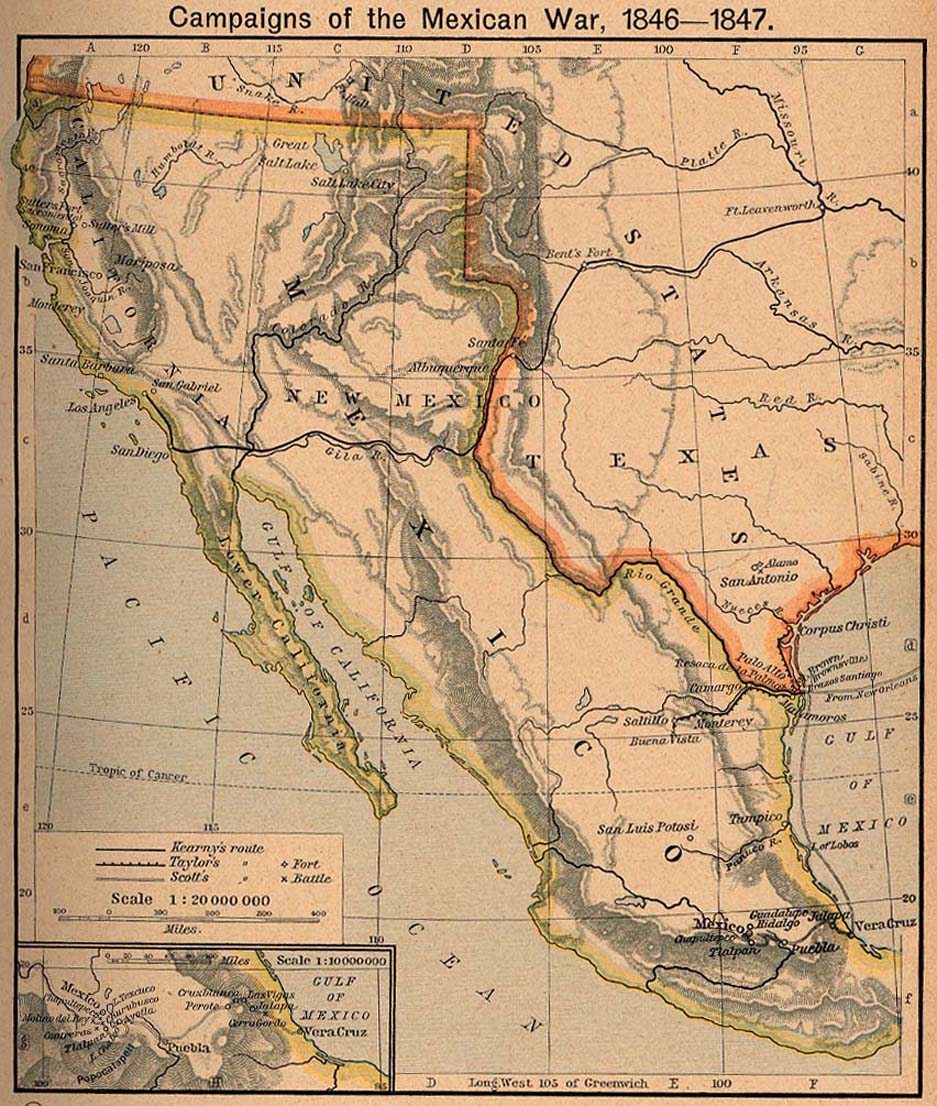
The issue came to a head when American settlers moved into Mexican territory in what is not Texas. The Mexican government allowed the settlers on the provision that they would become Catholic and swear allegiance to Mexico. The settlers did this but had no intention of honoring their word for they believed that their race and the Protestant religion they had denied to settle in Mexico “made them naturally superior to the mestizos – people of mixed Indian and European blood – who governed in the name of Mexico.” [6] This caused serious issues. Especially when the settlers, many of who were Southerners refused to give up their slaves when Mexico abolished slavery in 1829. The American colonists disregarded every agreement they had made with the Mexican government, they flouted the Catholic Church, and they refused to learn Spanish and refused to obey Mexican law. Eventually “their numbers dwarfed the tiny Mexican population of Texas.” [7]

One of the most prominent of the early settlers, Stephen Austin declared “for fifteen years, I have been laboring to Americanize Texas” noting that his enemies were a “population of Indians, Mexican and renegados, all mixed together, and all the natural enemies of white men and civilization.” [8] Eventually General Santa Anna attempted to seal the border between Texas and Louisiana to forestall the movement of any new settlers into the territory, but the move backfired and the Texans revolted and in the ensuing war secured their independence. The agreement pledged that Texas would remain an independent nation and not become part of the United States, but this agreement was broken as well and in 1845 Texas was admitted to the Union as a Slave State, furthering the cries of those advocating Manifest destiny for more. One Congressman asserted that:

“When God crowned American arms with success in the Revolution…he had not “designed the original States should be the only abode of liberty on earth. On the contrary, He only designed them as the great center from which civilization, religion, and liberty should radiate and radiate until the whole continent shall bask in their blessing.” [9]

The year after Texas joined the Union the administration of President James K. Polk provoked a war with Mexico which secured most of the rest of what we now know as the United States. In the process the Americans decided to violate treaties they had made with Native American tribes, and the “manifest destiny that represent hope for white Americans thus spelled doom for red Americans,” [10] and through war and disease the Americans decimated the Indian populations over the next fifty years.

A few voices were raised against the war with Mexico, former President John Quincy Adams said in the House of Representatives that in a war with Mexico “the banners of freedom will be the banners of Mexico; and your banners, I blush to speak the word, will be the banners of slavery.” [11] Abraham Lincoln doomed his reelection prospects in 1848 by condemn the war and criticizing President Polk. Alexander Stephens, a Southern Whig and later Vice President of the Confederacy assailed the President:

“The principle of waging war against a neighboring people to compel them to sale their country, is not only dishonorable, but disgraceful and infamous. What. Shall it be said that American honor aims at nothing higher than land…..never did I expect to live to see the day when the Executive of this country should announce that our honor was such a loathsome, beastly thing, that it could be satisfied with any achievements in arms, however brilliant and glorious, but must feed on the earth – gross, vile, dirt!” [12]

Walt Whitman prophetically noted that “the United States may conquer Mexico, but it will be as the man who swallows arsenic, which brings him down in turn. Mexico will poison us.” [13] Whitman would be proven right as it was the territorial acquisitions gained in the war with Mexico which lit the fuse which ignited the Civil War.

images-4

The deeply Christian and imperialist civil-religious concept of Manifest Destiny of can still be seen in pronouncements of some politicians, pundits and preachers who believe that that this is America’s mission in the world. Manifest Destiny is an essential element of the idea of American Exceptionalism which often has been the justification for much American foreign policy from the time of President McKinley. Former President George W. Bush alluded to this in his 2003 State of the Union Address, “that freedom is the right of every person and the future of every nation. The liberty we prize is not America’s gift to the world, it is God’s gift to humanity.” [14] Throughout the Bush presidency the idea that God undergirded the policy of the United States led to a mismatch of policy ends and the means to accomplish them. Former Israeli Ambassador to the U.S. and historian Michael Oren wrote:

“Not inadvertently did Bush describe the struggle against Islamic terror as a “crusade to rid the world of evildoers.” Along with this religious zeal, however, the president espoused the secular fervor of the neoconservatives…who preached the Middle East’s redemption through democracy. The merging of the sacred and the civic missions in Bush’s mind placed him firmly in the Wilsonian tradition. But the same faith that deflected Wilson from entering hostilities in the Middle East spurred Bush in favor of war.” [15]

Policy makers and military leaders must realize that if they want to understand how culture and religious ideology drive others to conquer, subjugate and terrorize in the name of God, they first have to understand how our ancestors did the same thing. It is only when they do that that they can understand that this behavior and use of ideology for such ends is much more universal and easier to understand.

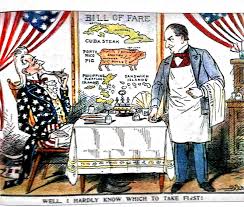
If one wants to see how the use of this compulsion to conquer in the name of God in American by a national leader one needs to go no farther than to examine the process whereby President McKinley, himself a veteran of the Civil War, decided to annex the Philippine in 1898 following the defeat of the Spanish. That war against the Filipinos that we had helped liberate from Spanish rule saw some of the most bloodthirsty tactics employed in fighting the Filipino insurgents, who merely wanted independence. It was a stain on our national honor which of which Mark Twain wrote: “There must be two Americas: one that sets the captive free, and one that takes a once-captive’s new freedom away from him, and picks a quarrel with him with nothing to found it on; then kills him to get his land. . .” [16]

A doubtlessly sincere McKinley sought counsel from God about whether he should annex the Philippines or not.

“He went down on his knees, according to his own account, and “prayed to Almighty God for light and guidance.” He was accordingly guided to conclude “that there was nothing left to do for us but to take them all, and to educate the Filipinos. And uplift and civilize and Christianize them, by God’s grace to do the very best we could by them, as our fellowmen for whom Christ died.” [17]

On the positive side the counterinsurgency manual does mention how “Ideology provides a prism, including a vocabulary and analytical categories, through which followers perceive their situation.” [18] But again it does so at a micro-level and the lessons of it are not applied at the higher levels of strategic thinking and policy. This is often due to the fact that American and other Western policy makers “as a set of theological issues rather than as a profoundly political influence in public life.” [19] Even after nearly a decade and a half of unremitting war against enemies for whom religion is at the center of their politics policy makers still misread or neglect the importance of religion and religiously based ideology in the political motivations of their opponents. In many cases the religion of a people is stronger part of their identity than that of the state. Nations which were created during the post-colonial era “continue to see religion, clan, ethnicity, and other such factors as the markers of community identity.” [20]

Thus when faced with cultures for which religion provides the adhesive which binds each of these elements, such as the Islamic State or ISIL we attempt to deal with each element separately, as if they have no connection to each other. But that is where we err, for even if the religious cause or belief has little grounding in fact, science or logic, and may be the result of a culture’s attempt to seize upon mythology to build a new reality, it is, in the words of Reggie Jackson the “straw that stirs the drink” and to ignore or minimize it is to doom our efforts to combat its proponents.

Perhaps that is because people do not like to look at themselves and their own history in the mirror. People tend to be uncomfortable when the face that they see in the mirror is face too similar to those they oppose, especially those who are perfectly willing to commit genocide in the name of their God. It really does not matter if one holds a predominantly secularist worldview and lives a secular lifestyle, or if one is religious yet embarrassed by the religiously motivated criminal actions of their forefathers, the result is strikingly and tragically similar; it makes them blind to the religious motivations of others and causes them to misread events in often tragic ways.

Notes

[1] Tuchman, Barbara W. Practicing History Alfred A. Knopf, New Your 1981 p.289

[2] ___________ U.S. Army/ Marine Counterinsurgency Field Manual FM 3-24 MCWP 3-33.5 15 December 2006 with and forward by General David A Petraeus and General James Amos, Konecky and Konecky, Old Saybrook CT 2007 p.26

[3] Gonzalez, Justo L. The History of Christianity Volume 2: The Reformation to the Present Day Harper and Row Publishers San Francisco 1985 p.246

[4] McPherson, James. The Battle Cry of Freedom: The Civil War Era Oxford University Press, Oxford and New York 1988 p.42

[5] Ibid. McPherson The Battle Cry of Freedom p.48

[6] Ibid. Gonzales The History of Christianity Volume 2 p.248

[7] Guelzo Allen C. Fateful Lightening: A New History of the Civil War Era and Reconstruction Oxford University Press, Oxford and New York 2012 p.59

[8] Ibid. Gonzales The History of Christianity Volume 2 p.248

[9] Ibid. McPherson The Battle Cry of Freedom p.48

[10] Ibid. McPherson The Battle Cry of Freedom p.48

[11] Ibid. Gonzales The History of Christianity Volume 2 p.249

[12] Ibid. Guelzo Fateful Lightening: p.63

[13] Ibid. McPherson The Battle Cry of Freedom p.51

[14] Bush, George W. State of the Union Address Washington D.C. January 28th 2003 retrieved from Presidential Rhetoric.com http://www.presidentialrhetoric.com/speeches/01.28.03.html 10 June 2015

[15] Oren, Michael Power, Faith and Fantasy: America and the Middle East 1776 to the Present W.W. Norton and Company, New York and London 2007 p.584

[16] Twain, Mark To the Person Sitting in Darkness February 1901 Retrieved from The World of 1898: The Spanish American War The Library of Congress http://www.loc.gov/rr/hispanic/1898/twain.html 12 December 2014

[17] Ibid. Tuchman Practicing History p.289

[18] Ibid. U.S. Army/ Marine Counterinsurgency Field Manual p.27

[19] Rubin, Barry Religion in International Affairs in Religion: The Missing Dimension of Statecraft Oxford University Press, Oxford and New York 1994 p.20

[20] Ibid. Rubin Religion in International Affairs p.22

2 Comments

Filed under civil war, History, middle east, national security, News and current events, Political Commentary, Religion

Lincoln and the Importance of Civilian Leadership

Friends of Padre Steve’s World

I am posting another section of the first chapter of my Gettysburg text tonight. It is about the importance of civilian leadership in regard to the military and the importance of not just relying on military power to win wars. The American Civil War gives us a good example of civilian leaders who grasped both of these elements of leadership and national power. Of course the article is just a part of a text that goes into a lot more depth on both subjects., but it is a part of the introductory chapter. 

I expect that I will be writing about the three latest attacks on the LGBT community by the governors of Texas, Michigan and the legislature of North Carolina which occurred today in the next couple of days. I am doing some more work on my Gettysburg test and the chapter dealing with religion, ideology and politics which dovetail nicely with these events, I just have to put everything together, and I would rather do it right than to do a half-assed job. 

Have a great evening,

Peace

Padre Steve+

lincoln-selfstanding

Abraham Lincoln

Over time the Union developed what we would now refer to as a “whole of government approach” to the war. This included not only the military instrument but the use of every imaginable means of national power, from the diplomatic, the economic and the informational aspects of the Union in the effort to subdue the Confederacy. The understanding and use of the “whole of government approach” to war and conflict is still a cornerstone of United States military policy in “unified action, to achieve leverage across different domains that will ensure conditions favorable to the U.S. and its allies will endure.” [1]

Over the United States Government and that of the Confederacy sat two men whose backgrounds were widely different, Abraham Lincoln and Jefferson Davis. Lincoln had no real military experience, training or background. Davis, seemed to be a man fully ready based on his background as a West Point graduate, Army officer and Secretary of War to be a wartime commander in chief. However, it was Lincoln who learned how to be an effective wartime leader, while Davis, despite his background floundered in that capacity. James McPherson notes that:

“In all five functions as commander in chief – policy, national strategy, military strategy, operations, and tactics – Lincoln’s conception and performance were dynamic rather than static. He oversaw the evolution of the war from one of limited ends with limited means to be a full-scale effort that destroyed the old Union and built a new and better one on its ashes.” [2]

Not only was Lincoln’s evolution in military affairs remarkable, but he had a far better grasp of people than his prickly Confederate counterpart. “Lincoln was more eloquent than Davis in expressing war aims, more successful in communicating with people, more skillful as a political leader in keeping factions together for the war effort, better able to work with his critics to achieve a common goal. Lincoln was flexible, pragmatic, with a sense of humor to smooth relationships and help him survive the stress of his job.” [3] On the other hand Davis was none of these. He had a hard time getting along with people, as was evidenced by the rate that he went through secretaries of war, five in four years and his bad relations with two of his premier generals, Joseph Johnston and P.T.G. Beauregard. Quarrelsome and disputatious, “Davis seemed to prefer winning an argument to winning the war; Lincoln was happy to lose an argument if it would help win the war.” [4] The example of Davis is ample evidence that just because someone has military experience does not mean that they are able to assume the duties of commander-in-chief.

MTE4MDAzNDEwOTA2OTQwOTQy

Edwin Stanton

One of the key aspects of a successful whole of government approach to war, crisis and national emergency is effective civilian leadership at the cabinet level, especially the Secretary of State and the Secretary of Defense. In 1861 the later was split between Secretary of War, who headed the War Department and the Secretary of the Navy who headed the Department of the Navy. When he was elected Lincoln chose Simon Cameron as Secretary of War and Gideon Welles as Secretary of the Navy. Welles’s solid leadership of the Navy was never in question was both efficient and competent in managing the affairs of the rapidly expanding Navy.

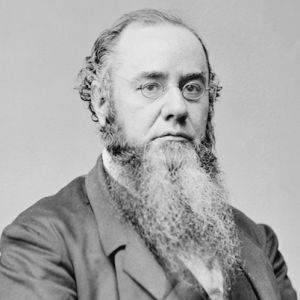
However, Lincoln’s first Secretary of War, Simon Cameron was incompetent. Under Cameron the War Department lacked direction and within months was engulfed in controversy and charges of corruption and inefficiency. Though he was a skillful politician who “maintained his power base in Pennsylvania through the skillful use of patronage to reward loyalists and punish opponents” [5] Cameron was incompetent corrupt, and he was not equal to the task of managing the rapidly expanding war effort. Congress began to investigate and a number of Cameron’s political allies were found to have made great profits off of war contracts, which public funds had been wasted and the men who had volunteered to serve endangered. Lincoln and Secretary of State William Seward “agreed that Cameron should be removed and that Edwin Stanton – the diligent lawyer who had served as Seward’s window into the late Buchannan administration – would be a good successor.” [6]

Stanton and Lincoln’s relationship went back to an incident where the former, a very powerful and successful lawyer had humiliated Lincoln in Cincinnati before the Reaper lawsuit of 1855 where after a change of venue Stanton got Lincoln kicked off the case. It was an incident that Lincoln found humiliating, and that he vowed never to again return to Cincinnati. That being said, Lincoln had a keen appreciation for Stanton’s abilities. During the final days of the Buchannan administration it was Stanton as attorney general provided the intelligence that “had helped root out traitors and keep Washington safe from capture.” [7] Lincoln removed Cameron and as consolation sent him off to serve as Ambassador to Russia in St. Petersburg rather than humiliating Cameron, who still had a loyal base in Pennsylvania. Cameron’s reputation remained intact until the “House Committee on Contracts published its 1,100-page report in February 1862, detailing the extensive corruption in the War department that led to the purchasing of malfunctioning weapons, diseased horses, and rotten food.” [8] The act humiliated Cameron, and Lincoln took the unusual step of writing a long public letter to Congress to somewhat protect Cameron’s reputation by declaring that he and the entire cabinet “were at least equally responsible with [Cameron] for whatever error, wrong, or fault was committed.” [9] This was the first of many times where Lincoln chose to share the blame rather than further humiliate disgraced members of his administration, and it was a characteristic that

Cameron’s replacement as Secretary of War, Edwin Stanton was an entirely different type of man than Cameron. He was hard driving and ruthless in his pursuit of policies that would win the war. Stanton “drove himself as his staff of undersecretaries with maniacal fury and animation, auditing army contracts, reviewing and digesting military data for Lincoln’s use, intimidating army contractors, barking orders, and banging on his stand-up writing desk to make his point.” [10] Stanton’s brusque and brutally honest nature offended many people, but “he brought efficiency and integrity to the business of war contracts.” [11]

Likewise Stanton forced Union generals to adhere to administration policies, sacking those who were incompetent or recalcitrant and making a key change to the high command by replacing George McClellan as General-in-Chief with Major General Henry Wager Halleck. He also redefined the duties of the office making Halleck an advisor to the administration and liaison with the armies in the field. Halleck was perfectly suited to this position as “there was a need, in a civilian-run republic, fore a reliable and competent organizer who could serve as that kind of liaison  between the civilian leadership at the War Department and the military at the front.” [12] When Lincoln and Stanton brought in Ulysses Grant to serve as General-in Chief in March 1864, Halleck remained in Washington where he continued his staff and liaison work allowing Grant to command the armies in the field.

Stanton tolerated no inefficiency and immediately went to work to clear out corrupt officials and deny office seekers whose only claim to office was the patronage of elected officials or even their families. He denied one such man who came with the recommendation of Mary Todd Lincoln and then paid her a visit. Stanton “told her that “in the midst of a great war for national existence,” his “first duty is to the people,” and his next duty is to protect your husband’s honor, and your own. If he appointed unqualified men simply to return favors, it would “strike as the very root of all confidence.” [13] Mrs. Lincoln agreed and never asked Stanton for such favors again.

MeigsMontgomery

Major General Montgomery Meigs 

The working staff of the Stanton and Halleck’s War Department developed rapidly. Major General Montgomery Meigs served as Quartermaster General and effectively coordinated with railroads, weapons manufacturers and suppliers of clothing, food and other necessities to supply the army and navy so well that Union forces never lacked for what they needed to win the war. Like Stanton, Meigs was incorruptible and unlike Cameron, “a congressional audit could not find so much as one penny unaccounted for in any major contract authorized by Meigs.” [14]

Stanton and Meigs were “aided by the entrepreneurial talent of northern businessmen” which allowed that “the Union developed a superior managerial talent to mobilize and organize the North’s greater resources for victory in the modern industrialized conflict that the Civil War became.” [15] The other two major players in the War department were Commissary General Joseph P. Taylor and Chief of Ordnance James Wolfe Ripley. Neither man had the same talent as Meigs, but both turned into excellent administrators who ensured that Union forces always had ample supplies of provisions, weapons and ammunition.

The Confederacy never achieved anything like this, with the exception of his Chief of Ordnance, Josiah Gorgas the men in charge of ensuring that the Confederate armies had adequate supplies of food, clothing and equipment were inept, incompetent and utterly incapable of running a way.

The understanding of this eternal nature and ever changing character of war to leaders of nations as well as military commanders and planners has been very important throughout history. It can be seen in the ways that Jefferson Davis and Abraham Lincoln conducted the war. Lincoln, though he did not have the previous military experience of Davis, was the better learner and leader who came to understand the nature of modern war, including its logistic, political and diplomatic, and social-cultural contexts.

jeffdavis

Jefferson Davis

The contrast between Lincoln and Davis “directs attention to the difficulties of translating political judgment into effective warmaking.” [16] As such military leaders, understanding their relationship with the civil government should be the people to advise and instruct policy makers in aligning their policies to what is actually feasible based on the ends ways and means, as well as the strengths and limitations of the military to carry out policy decisions. History reminds us “that policymakers committed strongly to their political desires are not easily deflected by military advice of a kind that they do not want to hear.” [17] Too many times in history military leaders for many reasons have failed to raise their voice and to speak unpleasant truths regarding what is possible and what is not, often with catastrophic results for their nations. Likewise political leaders bent upon their own goals, even those goals that are at odds with their nation’s interests can ensure that their nation ends up on the ash heap up history.

Notes

[1] ________ JCWS Student Text 1 3rd Edition, 14 June 2013 p.2-4

[2] McPherson, James M. Tried by War: Abraham Lincoln as Commander in Chief Penguin Books, New York and London 2008 p.267

[3] McPherson, James M. American Victory, American Defeat in Why the Confederacy Lost edited by Gabor S. Boritt Oxford University Press, Oxford and New York 1992 p.37

[4] Ibid. McPherson American Victory, American Defeat p.37

[5] Goodwin, Doris Kearns Team of Rivals: The Political Genius of Abraham Lincoln Simon and Schuster, New York 2005 p.403

[6] Stahr, Walter Seward: Lincoln’s Indispensable Man Simon and Schuster, New York 2012 p.325

[7] Ibid. Goodwin Team of Rivals p.410

[8] Ibid. Goodwin Team of Rivals p.413

[9] Ibid. Goodwin Team of Rivals p.413

[10] Guelzo Allen C. Fateful Lightening: A New History of the Civil War Era and Reconstruction Oxford University Press, Oxford and New York 2012 p.312

[11] Ibid. McPherson Tried by War p.69

[12] Ibid. Guelzo Fateful Lighteningp.315

[13] Ibid. Goodwin Team of Rivals p.414

[14] Ibid. Guelzo Fateful Lighteningp.315

[15] Ibid. McPherson. The Battle Cry of Freedom p.857

[16] Ibid. Gray Fighting Talk p.38

[17] Ibid. Gray Fighting Talk p.38

Leave a comment

Filed under civil war, History, leadership

The Duggars & the Danger of Absolutism

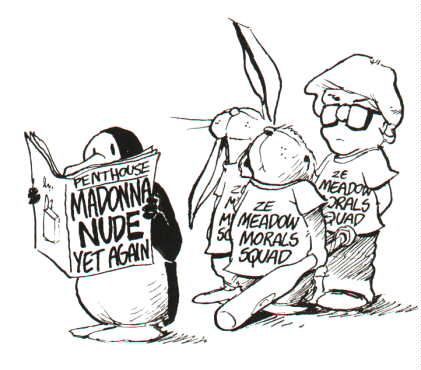
orange-BloomCounty-morals

“Religion carries two sorts of people in two entirely opposite directions: the mild and gentle people it carries towards mercy and justice; the persecuting people it carries into fiendish sadistic cruelty…” Alfred North Whitehead 

Friends of Padre Steve’s World,

Yesterday I wrote about my thoughts on the situation regarding the Duggar family and how I saw the incident as demonstrating the moral implosion of the Christian Right. As I wrote about it I began to think about the religious world of the Christian Right that I spent much of my life in before I returned shattered from my experiences serving in Iraq. For me the war was a watershed in my life and in my faith.

Those who follow my writings know how much I struggle with faith and doubt on a daily basis. I believe, but as the man told Jesus when he asked Jesus to heal his child “I believe, help my unbelief.” I no longer believe in the “absolute truths” that I once believed. Of course to some this makes me a heretic or worse. That being said, I have faith in a God I cannot see. I have faith in a God who clothes himself in human weakness and allows himself to be killed as a state criminal.

That being said I see many of my fellow Christians, not to mention those of other faiths who attempt to use their interpretation of what they believe are absolute truths and attempt to impose them on others. Using their houses of worship they indoctrinate believers into believing the “truth” including the judgment on non-believers. The Duggars and their stalwart supporters are prime examples of this. As I said yesterday, if the Duggars were simply minding their own business and raising their family according to their beliefs the story, while revolting and disgusting in its moral tenor would not have become a political issue. However, because the Duggars have used their fame to insert themselves and their ideology into the political arena where they routinely appear at the side of presidential candidates, influential congressmen and senators, governors and as keynote speakers at quasi-religious political events where they rail against liberals, gays, Moslems and others it has become precisely that.

But then I kind of understand the amount of indoctrination that it takes for people like the Duggars and their supporters to get where they are. I went to churches for much of my adult life where right wing politics was part and parcel of everything that these churches taught. The “voters guides” put out by the Christiian Coalition were not only distributed before, during and after worship services, but they were required reading. Pseudo-historians came and sold their wares about America’s Christian Heritage to people who devoured them. I remember going through mandatory classes for clergy in my previous denomination which were entitled “The Government of God” and utilized Robert Bork’s book Slouching Towards Gomorrah: Modern Liberalism and American Decline as its primary text. Obviously the class had little to do with faith, but was a tool by which we were indoctrinated to believe by the political-religious ideology of our church leaders. There were several more texts, which basically echoed Bork’s thought, but they were taught in a manner is if they were as important as the often contradictory Biblical tests or the writings of the church Fathers, the great saints, Scholastics or Protestant Reformers. It was an exercise in political indoctrination based on religious ideology. At the time I had no idea that what the church leaders were appealing to was nothing more than a variation on the Christian Dominionism ideology. 

Such ideology is incredibly dangerous because when people in power take it to heart and act upon it, all pretense of fairness, justice and integrity is lost. Those who are simply different are persecuted, those who do not tow a particular party or religious line are suspect, and the innocent are presumed guilty. It has happened throughout human history in every corner of the world, and it still goes on today especially in the religious and cultural world that the Duggars are a part. Their “faith” if you can call it that is built on the absolute certitude that they are right and thus even if they do wrong it is not as bad because they are standing for God.

This type of religious and moral absolutism is terrifying when it reaches its fruition, and so I ended up rejecting that view of faith and life after coming home from Iraq. For publicly voicing my disagreement on a number of issues retaliated to those matters I was asked to leave that denomination in 2010.

I believe again, but my doubts are real. But even more I have a belief in justice, and I believe that that justice itself cannot be built on absolutes. As Captain Jean Luc Picard (Patrick Stewart) noted in the Star Trek the Next Generation episode Justice: 

“I don’t know how to communicate this, or even if it is possible. But the question of justice has concerned me greatly of late. And I say to any creature who may be listening, there can be no justice so long as laws are absolute. Even life itself is an exercise in exceptions.”

I have found that as Picard said, “that life itself is an exercise in exceptions.”  We all make them, and the Bible and the history of the church is full of them. So I have a hard time with those who claim an absolute certitude in beliefs that are built on faith and treat them as fact, despite the fact that they are not provable. Dietrich Bonhoeffer noted the problem well when he talked of this problem and described the dilemma of so many believers:

“Man no longer lives in the beginning–he has lost the beginning. Now he finds he is in the middle, knowing neither the end nor the beginning, and yet knowing that he is in the middle, coming from the beginning and going towards the end. He sees that his life is determined by these two facets, of which he knows only that he does not know them”

Even so the Duggars and their supporters, like many believers of all faiths wrap themselves in the certitude of their faith. They espouse doctrines that at best are humanity’s best attempts to describe a God that is infinitely bigger and more complex than they believe. The contest then becomes not about God himself, but the manner that the human being who interprets God espouses as incontrovertible doctrine. Eric Hoffer wrote:

“A doctrine insulates the devout not only against the realities around them but also against their own selves. The fanatical believer is not conscious of his envy, malice, pettiness and dishonesty. There is a wall of words between his consciousness and his real self.”

That certitude and the belief that we absolutely know the mind of a God who claims that we cannot know is the height of arrogance and it ensures that when we speak in terms of absolutes that we do not understand God, nor do we believe in justice, because as Captain Picard so wisely noted “life itself is an exercise in exceptions.” Even the most devout of believers make exceptions, simply because they are human and can’t avoid it, unless they are sociopaths.

Henri Nouwen wrote something very profound that all who claim to know God’s absolute will or truth need to consider. Nouwen wrote: “Theological formation is the gradual and often painful discovery of God’s incomprehensibility. You can be competent in many things, but you cannot be competent in God.”

The fact is that no one can be competent in God, and that those who claim to are either hopelessly deluded by their ignorance, or worse, are evil men masquerading as good. Those who pro port to know absolutes and want to use the Bible or any other religious text as some sort of rule book that they alone can interpret need to ask themselves this question, posed by Commander Riker to Captain Picard when he talked about absolutes and life: “When has justice ever been as simple as a rulebook?” 

Sadly too many people the Duggars apply their own misconceptions and prejudices to their scriptures and use them as a weapon of temporal and divine judgement on all who they oppose. However, as history, life and even our scriptures testify, that none of us can absolutely claim to know the absolutes of God. As Captain Picard noted “life itself is an exercise in exceptions.” 

Thus our human justice, as feeble as it often is must take this into account: It takes true wisdom to know when and how to make these exceptions, wisdom based on reason, grace and mercy. Justice, is to apply the law in fairness and equity, knowing that even our best attempts can be misguided and if based on emotion, hatred, racism or vengeance all clothed in the language of righteousness can be more evil than any evil it is supposed to correct.

Does it matter if we are doing it the sake of law and order, or for love of country, or to defend the faith; if at the heart of it what we call justice, or moral absolutes is nothing more than the implementation of an agenda to crush the powerless under our heel and promote even more injustice? If we lean toward the view that we are implementing the absolute law and will of God then we had better be sure, as Nouwen so well noted we can be competent in many things, but we cannot, as much as we deceive ourselves, be competent in God.

But we see it all too often, religious people and others misusing faith to condemn those they do not understand or with whom they disagree. This is why the Duggar controversy is important. As Patrick Stewart playing Captain Jean Luc Picard noted in the Start Trek Next Generation episode The Drumhead:

“We think we’ve come so far. Torture of heretics, burning of witches it’s all ancient history. Then – before you can blink an eye – suddenly it threatens to start all over again.”

Peace

Padre Steve+

8 Comments

Filed under christian life, faith, News and current events, Political Commentary

Duggared: The Moral Implosion of the Christian Right

There was a time when child molestation was considered a sin by conservative Christians and there was a time when multiple criminal acts of a sexual nature committed against children would have been condemned by anyone even claiming to be a Christian. Of course that that didn’t mean that such acts did not happen, but at least in public Christian leaders condemned the criminal acts that we used to call mortal sin, even if they offered the offender a chance at repentance and reconciliation.

But that was before the days of “culture war” proclaimed by Pat Buchanan and the Christian “jihad” to use the terms of Roman Catholic theologian Peter Kreeft, a convert from Evangelical Protestant Calvinism to the Catholic faith in his book Ecumenical Jihad. For Buchanan, Kreeft and others like them defending the indefensible is the norm if it supports the dominance of Christians over their non-Christian neighbors. Kreeft’s whole thesis follows the premise that the “liberal elites” are attacking the very basis of Christian civilization, as such the “culture war” and “fanaticism” perfectly acceptable. While Kreeft does not openly endorse violence as a response, his thesis does not necessarily condemn it. The reason for this is that  Kreeft promotes the idea of a militant Church that is linked to the state and has the power to punish and persecute its enemies.  Of course this is a page that Kreeft borrows from radical Islam and by doing so he does’t seem to mind throwing out the teachings of Jesus. Instead Kreeft, Buchannan and many others, especially Christians who follow “Dominionist” theology return to the model of the imperial church in which believers have all right to rule over unbelievers because God wants it that way.

Interestingly enough the Duggars have been out there preaching the same message, which is why I had to mention it.

As a person who cut his teeth during the heady early days of the Christian Right’s march to power I am astounded to see the moral implosion of what properties to call itself “conservative Christianity” in the United States. This implosion has been on full display in the situation involving the Duggar family, a fundamentalist Christian family who due to their ability to breed like rabbits have enjoyed a near cult like status with the Christian Right, complete with reality television show, book deals and political influence with many of the 2016 Republican Presidential contenders.

Now let me be clear. I have nothing against large families, people sharing their faith, or even endorsing political candidates.  As for the Duggars as I do not know them. I only know them by their carefully crafted media image which is in the process of coming apart. That being said, what is going on here is a disaster for people who actually value the Christian faith and do9 what they can to share the love of Jesus in word and in deed with their neighbors. It is a disaster for the Christian culture that the Duggars supposedly defend.

The story has all of the elements, except murder, that make a great crime novel: admitted sexual crimes of the family’s oldest son Josh, who admits to molesting, not one, not two, not three, but four of his sisters and, at least one other girl, some of them while they were asleep. The story features a father and mother who covered up the crime and refused to get their son any real mental health treatment, and a police Department that did nothing about the situation even after they were notified. To add some spice it features a host of politicians, pundits and preachers, which remind one of the townspeople in he classic film Inherit the Wind.  Interestingly enough almost all of these people boast of their Christian moral superiority and routinely condemn other people’s supposed sexual sins, especially Gays.  Not only do they do this, they throw all of their political and moral capital into ensuring that Gays and Lesbians do not have the same rights as they have.

Since the story broke the political hacks of the Christian Right have been working overtime to spin the story as “Christian persecution” by the supposedly “Left Wing media.” Presidential Candidate Mike Huckabee, a Southern Baptist preacher was among the first to defend the Duggars and make this claim. But he has to do this, the Duggars are among his most influential supporters.  The pictures Huckabee smiling with Josh Duggar all over the internet in the wake of Huckabee’s candidacy announcement make for great copy if the scandal goes away. If not they are a liability. But the Huckster isn’t alone in defending the Duggars. Supposedly conservative “Christian” pundits, politicians and preachers have been coming out of the woodwork, not to condemn the crimes which are admitted to and documented, but to attack those who throw the bullshit flag on the Duggars.

This my friends is an important distinction, because if the Duggars were some poor family with no money or influence the Christian Right would never defend them. However, the Duggars are not some poor family that is just out there minding its own business, who had a child commit sexual crimes. They are a family that has used its fame and fortune to mercilessly attack anyone who disagrees with their cultish view of the Christian faith. Of course this is almost always on display at political rallies and meetings where they incessantly condemn the Gays and fight against marriage equity, where quite often it was the perpetrator of the crimes in the Duggar family, Josh, who was leading the charge. After their sins and crimes came to light the parents had the nerve to trot out two of their daughters to defend Josh and say that it was minor molestation. When I saw that I realized that this family has no regard for real Christian morality or faith. Sadly they will stoop to anything to protect their franchise and keep the money coming in. But why should we be surprised at any of this. Eric Hoffer wrote, “A doctrine insulates the devout not only against the realities around them but also against their own selves. The fanatical believer is not conscious of his envy, malice, pettiness and dishonesty. There is a wall of words between his consciousness and his real self.” 

Though their television show has been cancelled they are getting a lot of air time as the Fox News Network does all that it can to defend them. Likewise the Duggar family’s “image crisis” is being managed by Mike Huckabee’s long time adviser Chad Gallagher of Legacy Consulting.

But even then, a few Fox commentators, Greg Gutfield and Geraldo Rivera took the time to go off the reservation and condemned the Duggars. Gutfeld dared to ask what the Duggars defenders would be saying if the Duggars were not Christians, while Rivera asked viewers to take religion out of the equation and ask what they would think of any family that allowed such crimes to happen and then to cover them up. Note that Gutfeld and Rivera are not Christians. Rivera is Jewish, and and Gutfeld, a former Catholic altar boy is an “Agnostic Atheist,” thus, unlike many of the Fox hosts, neither has a need to defend “Christianity” by defending criminals.  I think that this gives them a bit more objectivity in the matter, despite the fact that they work for Fox.

While the fight the Christian Right is waging involves the Duggars, who they are desperately trying to rehabilitate, it is bigger than that. The the political leaders of the Christian Right are waging an ideological war on all comers, something that Pope Francis recently condemned. The Pope said:

“In ideologies there is not Jesus: in his tenderness, his love, his meekness. And ideologies are rigid, always. Of every sign: rigid. And when a Christian becomes a disciple of the ideology, he has lost the faith: he is no longer a disciple of Jesus, he is a disciple of this attitude of thought… For this reason Jesus said to them: ‘You have taken away the key of knowledge.’ The knowledge of Jesus is transformed into an ideological and also moralistic knowledge, because these close the door with many requirements. The faith becomes ideology and ideology frightens, ideology chases away the people, distances, distances the people and distances of the Church of the people. But it is a serious illness, this of ideological Christians. It is an illness, but it is not new, eh?”

Pope Francis nails the issue. The more that these supposedly Christian leaders do to defend the indefensible behaviors of their own people and the more that they do to attempt to use the police power of the state to enforce their beliefs on others, the more people they will drive away from the faith. Most people tend to like what they see in Jesus, even non-believers often admire his teachings, but they do not like the leaders of the Christian Right and are fleeing the churches in astronomical numbers.

So, these leaders can keep Duggering around with their Jihad, making a mockery of faith, of friendship and inciting hatred in the name of God while defending actions for which there is no defense. I have to wonder where it will stop.

The Duggars and their supporters are sowing the wind, and in doing so they will reap the whirlwind and they are blind to what they are doing.

So that is all for today,

Peace

Padre Steve+

6 Comments

Filed under christian life, faith, News and current events, Political Commentary

The First Modern War – Introduction

Friends of Padre Steve’s World

Those who are habitual readers here know that I teach military history and ethics. One of the things that I lead is a Staff Ride at Gettysburg for which I am in the process of writing a text which will probably when I am done will be two, maybe even three books. The text is massive and I have been done a lot of editing, revising and even expanding it as I come to realize just how limited my previous vision was for producing it.

I have been writing about the pursuit of truth for several months, and one of those truths is that war cannot be separated from its contexts and that military power alone does not win wars or establish a just and equitable peace. That is one of the problems with many who write popular military history, they are so focused on the battles, campaigns, tactics and technology that they focus so much on the military aspects, that the miss the other contexts that are so important.

A few days ago I released a section of this same chapter dealing with women in the Civil War. Today is the introduction to that chapter, appropriately titled “The First Modern War.” It deals with the political, social-cultural, economic, technological, military strategic, geographical, and historical contexts of the war and introduces us to the importance of capable and competent civilian leadership as was exhibited by Lincoln and his advisers; and that how that knowing understanding the contexts keeps leaders from seeking short-cuts from the snake oil salesmen who promise a “silver bullet” with which all war can be won.

I’ll be releasing the second section of this chapter dealing with the importance of civilian leadership either tomorrow or Wednesday because I need to get my opinion piece that deals with the Duggaring of the Religious Right.

So, have a wonderful evening.

Peace

Padre Steve+

Hancock doncemeteryhilljuly1_zps512a40fa

The American Civil War was the first modern war. It was a watershed event in an era, which introduced changes in new types of weapons, more lethal versions of older weapons, tactics, army organization, logistics, intelligence and communications. Though the war did not change the essential nature of war, which Clausewitz says is “is an act of violence to compel our opponent to fulfill our will” [1] it expanded the parameters of war and re-introduced the concept of “total war” to the world and “because its aim was all embracing, the war was to be absolute in character.” [2] In a sense it was a true revolution in military affairs.

The Civil War was truly a revolution in military affairs. The war changed the character of war, as it had been known for centuries, since the Peace of Westphalia and the end of the Thirty Years War. In the American Civil War, the character of war changed from a limited war waged between opposing armies to a total war, waged between two people who shared much in common but were divided by an ideology which encompassed politics, economics, society, law, and even religion.

The war was revolutionary in other ways, and brought about a host of social, philosophical, economic, and political changes which continue to impact the lives of people in the United States and around the world even today. Some of these, especially those regarding the abolition of slavery and emancipation, as well as the beginnings of the Women’s Rights movement have had a ripple effect in matters of political and social equality for other previously disenfranchised groups of citizens. As one author noted “The Civil War uprooted institutions, transformed our politics, influenced social relationships of half a continent, and wrought changes that echo down the generations.” [3]

In a sense, when Abraham Lincoln proclaimed “a new birth of freedom” in his Gettysburg address it served as a watershed moment in American history because it brought to the forefront the understanding of Jefferson and the other signers of the Declaration of Independence that all men are created equal.

Thus it is important to study the Gettysburg campaign in the context of the Civil War because the campaign of 1863 in the east cannot be divorced from what was happening in the west at Vicksburg, nor the Union blockade, nor the diplomatic, economic and informational aspects of the war. Likewise the Gettysburg campaign cannot be separated from its relationship to the broader understanding of the nature and character of war. To do this one must examine the connection between them and policies made by political leaders; to include the relationship of political to military leaders, diplomats, the leaders of business and industry and not to be forgotten, the press and the people. Likewise we must understand the various contexts of war, to include the social, political, ideological and even the religious components of war, how they impacted Civil War leaders and why civilian policy makers and military leaders must understand them today.

While the essential nature of war remains constant, wars and the manner in which they are fought have changed in their character throughout history, and this distinction matters not only for military professionals, but also policy makers. The changing character of war was something that military leaders as well as policy makers struggled with during the American Civil War much as today’s military leaders and policy makers seek to understand the character of warfare today. British military theorist Colin Gray writes “Since the character of every war is unique in the details of its contexts (political, social-cultural, economic, technological, military strategic, geographical, and historical), the policymaker most probably will struggle of the warfare that is unleashed.” [4] That was not just an issue for Abraham Lincoln and Jefferson Davis, both of whom struggled with the nature of the war which had been unleashed, but it is one for our present political leaders, who as civilian politicians are “likely to be challenged by a deficient grasp of both the nature of war as well as its contemporary context-specific character.” [5]

In addition to being the first modern war, or maybe I should say, the first war of the Industrial Age, the Civil War became a “total war.” It was the product of both the massive number of technological advances which both preceded and occurred during it, in which the philosophical nature of the Industrial Revolution came to the fore. Likewise, the enmity of the two sides for one another which had been fostered by a half century of relentless and violent propaganda which ushered from the mouths of politicians, the press and even from the pulpit, even to the point of outright armed conflict and murder in “Bleeding Kansas” during the 1850s.

As a total war it became a war that was as close to Clausewitz’s understanding of absolute war in its in character waged on the American continent, and it prefigured the great ideological wars of the twentieth century, as J.F.C. Fuller noted “for the first time in modern history the aim of war became not only the destruction of the enemy’s armed forces, but also of their foundations- his entire political, social and economic order.” [6] It was the first war where at least some of the commanders, especially Ulysses S. Grant and William Tecumseh Sherman were men of the Industrial Age, in their thought and in the way that they waged war, in strategy, tactics even more importantly, psychologically. Fuller wrote:

“Spiritually and morally they belonged to the age of the Industrial Revolution. Their guiding principle was that of the machine which was fashioning them, namely, efficiency. And as efficiency is governed by a single end- that every means is justified- no moral or spiritual conceptions of traditional behavior must stand in its way.” [7]

Both men realized in early 1864 that “the South was indeed a nation in arms and that the common European practice of having standing armies engaged each other in set-piece battles to determine the outcome of a war was not enough to win this struggle.” [8] Though neither man was a student of Clausewitz, their method of waging war was in agreement with the Prussian who wrote that “the fighting forces must be destroyed; that is, they must be put in such a position that they can no longer carry on the fight” but also that “the animosity and the reciprocal effects of hostile elements, cannot be considered to have ended so long as the enemy’s will has not been broken.” [9]

William Tecumseh Sherman told the mayor of Atlanta after ordering the civilian population expelled that “we are not only fighting hostile armies, but a hostile people, and must make the old and young, the rich and poor, feel the hard hand of war.” [10] Sherman was one of the first American military leaders to understand that a civil war could not be waged according to the limited war doctrines most American officers had been taught. He not only “carried on war against the enemy’s resources more extensively and systematically than anyone else had done, but he developed also a deliberate strategy of terror directed against the enemy’s minds.” [11] While some might find this troubling, the fact remains that it was Sherman’s Southern sweep of all that lay before him that broke the back of the Confederacy.

Abraham Lincoln came to embrace the eternal nature of war as well as the change in the character of the war over time. Lincoln had gone to war for the preservation of the Union, something that for him was almost spiritual in nature, as is evidenced by the language he used in both of his inaugural addresses and the Gettysburg Address. Instead of a war to re-unite the Union with the Emancipation Proclamation the war became a war for the liberation of enslaved African Americans, After January 1st 1863 when the Emancipation Proclamation went into effect, Lincoln “told an official of the Interior Department, “the character of the war will be changed. It will be one of subjugation…The [old] South is to be destroyed and replaced by new propositions and ideas.” [12] That too was a modern understanding of war.

Of course, the revolution in military affairs that characterized the Civil War took time, but it was the political and military leaders of the North who better adapted themselves and their nation to the kind of war that was being fought. “Lincoln’s remarkable abilities gave him a wide edge over Davis as a war leader, while in Grant and Sherman the North acquired commanders with a concept of total war and the determination to make it succeed.” [13]

At the beginning of the war the leaders and populace of both sides still held a romantic idea of war. The belief that the war would be over in a few months and that would be settled by a few decisive battles was held by most, including many military officers on both sides. There were some naysayers like the venerable and rather corpulent General Winfield Scott, but politicians and the press mocked Scott and those who even suggested that the war would be long, hard, and bloody. Of course those who predicted a short, easy, and relatively bloodless war who were proven wrong, and the war became the bloodiest war ever waged by Americans, and it was against other Americans.

The Civil War became an archetype of the wars of the twentieth century, and I believe will be so for the twenty-first century as well because of the emphasis on competing ideologies often buttressed with near fanatical religious extremism. The American Civil War evolved into a clash between peoples with radically different ideologies, which extended beyond the province of purely military action. The war “was preceded by years of violent propaganda, which long before the war had obliterated all sense of moderation, and awakened in the contending parties the primitive spirit of tribal fanaticism.” [14]

Those who conducted the American Civil War added new dimensions to war, and the technology they embraced increased war’s lethality in ways that they did not anticipate. For the first time since the 30 Years’ War, this war on the American continent saw opponents intentionally target the property, homes and businesses of the opposing civilian populations as part of their military campaign. The Civil War was a precursor to the wars that followed, especially the First World War that it prefigured in so many ways.

British general and military theorist J.F.C. Fuller encapsulated the massive amount of change brought about by the Civil War quite well in his book A Military History of the Modern World:

The war fought by Grant and Lee, Sherman and Johnston, and others closely resembled the First of the World Wars. No other war, not even the Russo-Japanese War of 1904-1905, offers so exact a parallel. It was a war of rifle bullets and trenches, of slashings, abattis, and even of wire entanglements- an obstacle the Confederates called “a devilish contrivance which none but a Yankee could devise” because at Drewry’s Bluff they had been trapped in them and slaughtered like partridges.” It was a war of astonishing in its modernity, with wooden wire-bound mortars hand and winged grenades, rockets, and many forms of booby traps. Magazine rifles and Requa’s machine guns were introduced and balloons were used by both sides although the confederates did not think much of them. Explosive bullets are mentioned and also a flame projector, and in June, 1864, General Pendleton asked the chief ordnance officer at Richmond whether he could supply him with “stink-shells” which would give off “offensive gases” and cause “suffocating effect.” The answer he got was “stink-shells, none on hand; don’t keep them; will make them if ordered.” Nor did modernity end there; armoured ships, armoured trains, land mines and torpedoes were used. A submarine was built by Horace H. Hundley at Mobile….” [15]

However, like all in nearly all wars, the many lessons of the American Civil War were forgotten, or even worse, completely dismissed by military professionals in the United States as well as in Europe. Thus 50 years later during First World War, the governments Britain, France, Imperial Germany, Austria-Hungary and Imperial Russia wasted vast amounts of manpower and destroyed the flower of a generation because they did not heed the lessons of the Civil War. For that matter neither did General John Pershing, commander of the American Expeditionary Force who three and a half years after those countries destroyed the flower of their nation’s manhood and repeated all of their mistakes with the lives of American soldiers. Fuller noted:

“Had the nations of Europe studied the lessons of the Civil War and taken them to heart they could not in 1914-1918 have perpetuated the enormous tactical blunders of which that war bears record.” [16]

The lessons of the war are still relevant today. Despite vast advances in weaponry, technology and the distances with which force can be applied by opponents, war remains an act of violence to compel an enemy to fulfill our will. War according to Clausewitz is “more than a chameleon that slightly adapts its characteristics to the given case.” [17] but it is always characterized by the violence of its elements, the province of chance and its subordination to the political objective and as such forces political and military leaders as well as policy makers to wrestle with “the practical challenge of somehow mastering the challenge of strategy in an actual historical context.” [18]

Colin Gray in his book Fighting Talk emphasizes that the “contexts of war are all important.” Gray makes a case for seven essential contexts that must be understood by policy makers and military leaders regarding war, which if ignored or misunderstood “can have strong negative consequences.” [19] Gray enunciates seven contexts of war that policy makers as well as military professionals ignore at the own peril: There is the political context, the social context, the cultural context, the economic context; the military-strategic context, the geographic context and the historical context. Gray notes these seven contexts “define all the essential characteristics of a particular armed conflict.” [20]

Gray discusses the importance of this. Noting that strategists are “ever on the look out for shortcuts” [21] and because they are pragmatic, wanting simple and well defined solutions they tend not to want to deal with complexities that muddy the water, that those who decide on strategy are “eternally at hazard to the siren call of the technological solution, the cultural fix, the promise of historical understanding and so forth.” [22] He notes that there are always those trying to sell strategists catalogs, which promise “products that answer the strategist’s questions” turning “the base metal of confusion of information into the pure gold of comprehension.” [23] But such easy answers are often little more than snake oil. The virtue of seeing war through all of these contexts “obliges strategists to examine holistically, in the round,” [24] that the “recognition of war’s multiple contexts helps immunize the strategist against getting captured by such fantasies.” [25]

The study of the Civil War can be helpful to political leaders, military strategists, joint planners and commanders because it so wonderfully shows just how important understanding the context of wars is. Likewise it gives us an American context where we can see the interplay of how Clausewitz’s “paradoxical trinity- composed of primordial violence, hatred, and enmity, which are to be regarded as a blind natural force; of the play of chance and the element of subordination, as an instrument of policy, which makes it subject to reason alone.” [26]

This is especially important, because we live during an era of great technological, social, geopolitical and philosophical change, just as did the leaders of the United States and the Rebel Confederates States did in the ante-bellum and the war years. The importance of this cannot be underestimated, for in this era of change, like in every era, some leaders and commanders were either resistant to, or failed to understand the changes being forced upon them in their conduct of war by the industrialization of war and its attendant technology.

Examples of this are found in the actions of so many leaders and commanders in the Civil War. Like the American political and military leaders who in Iraq “were ignorant of how to conduct themselves in a military and social-cultural context of irregular warfare” [27] many of the officers who fought the Civil War completely ignorant of what they were facing. Educated in Napoleonic the principles of Henri Jomini, officers who only knew limited war in Mexico and irregular warfare against Indians were faced with fighting a total war on a continental scale. The war witnessed a host of new technologies and “many officers found themselves wholly unprepared for what they faced, in effect, compelled to purchase learning with lives.” [28]

However, unlike many political leaders, Abraham Lincoln came to understand the radical and revolutionary nature of the war and had to find military leaders who understood the same. In frustration Lincoln rebuked those who urged limited war saying “The government cannot much longer play a game in which it stakes all, and its enemies stake nothing. Those enemies must understand that they cannot experiment for ten years trying to destroy the government, then if the fail still come back into the Union unhurt.” [29]

Eventually Lincoln found Ulysses Grant and his lieutenants William Tecumseh Sherman and Philip Sheridan. These me not only understood the military aspects of the contexts of the war, but embraced them and applied them with ruthless skill and vigor that stunned the leaders and the people of the South. When John Bell Hood wrote Sherman a letter in which he condemned the Union commander for the destruction of Atlanta, and the forced evacuation of its inhabitants, even invoking God’s judgment Sherman would have nothing of it. Sherman wrote back that “Hood’s appeal to a “just God” was “sacrilegious,” Sherman insisted, for it was the South which had “plunged a nation into war, dark and cruel war, who dared and badgered us to battle.” Having created the war, the South would now experience it.” [30]

Strategists and planners must develop a philosophical foundation that they must seek to understand the contexts of war matters now more than ever. By looking at the Gettysburg campaign in context we can begin to draw lessons that we can apply today. Not that our situation is the same as the leaders who led the Union and Confederacy in the Civil War, but exploring these issues is vital to us understanding the contexts of the wars that we fight today and the world in which we live.

Notes

[1] Clausewitz, Carl von. On War Indexed edition, edited and translated by Michael Howard and Peter Paret, Princeton University Press, Princeton NJ 1976 p.75

[2] Fuller, J.F.C. The Conduct of War 1789-1961 Da Capo Press, New York 1992. Originally published by Rutgers University Press, New Brunswick N.J p.99

[3] Lowry, Thomas P. The Stories the Soldiers Wouldn’t Tell: Sex in the Civil War Stackpole Books, Mechanicsburg PA 1994 p.176

[4] Gray, Colin S. Fighting Talk: Forty Maxims on War, Peace, and Strategy Potomac Book, Dulles VA 2009 p.36

[5] Ibid. Gray Fighting Talk p.36

[6] Fuller, J.F.C. A Military History of the Modern World, Volume Three: From the Seven Days Battle, 1862, to the Battle of Leyte Gulf, 1944 Minerva Press 1956 p.88

[7] Ibid. Fuller A Military History of the Modern World, Volume Three p.88

[8] Flood, Charles Bracelen, Grant and Sherman: The Friendship that Won the War, Harper Perennial, New York 2005 p.238

[9] Ibid. Clausewitz p.90

[10] McPherson, James. The Battle Cry of Freedom: The Civil War Era Oxford University Press, Oxford and New York 1988 p.809

[11] Weigley, Russell F. The American Way of War: A History of United States Military History and Policy University of Indiana Press, Bloomington IN, 1973 p.149

[12] Ibid. McPherson The Battle Cry of Freedom p.558

[13] Ibid. McPherson The Battle Cry of Freedom p.857

[14] Ibid. Fuller The Conduct of War 1789-1961 p.99

[15] Ibid. Fuller A Military History of the Modern World, Volume Three p.89

[16] Ibid. Fuller A Military History of the Modern World, Volume Three p.89

[17] Ibid. Clausewitz On War p.89

[18] Ibid. Gray Fighting Talk p.38

[19] Ibid. Gray Fighting Talk p.5

[20] Ibid. Gray Fighting Talk p.3

[21] Ibid. Gray Fighting Talk p.5

[22] Ibid. Gray Fighting Talk pp. 5-6

[23] Ibid. Gray Fighting Talk p.5

[24] Ibid. Gray Fighting Talk p.5

[25] Ibid. Gray Fighting Talk p.5

[26] Ibid. Clausewitz On War p.89

[27] Ibid. Gray Fighting Talk pp.38-39

[28] Sinnreich, Richard Hart Awkward Partners: military history and American military education in The Past as Prologue: The Importance of History to the Military Profession edited by Williamson Murray and Richard Hart Sinnreich Cambridge University Press, Cambridge and New York 2006 p.56

[29] McPherson, James M. Drawn With the Sword: Reflections on the American Civil War Oxford University Press, Oxford and New York 1996 p.80

[30] Fellman, Michael. Lincoln and Sherman in Lincoln’s Generals edited by Gabor S. Boritt University of Nebraska Press, Lincoln NE 1994 p.153

4 Comments

Filed under civil war, History, Military

Chasing Rabbits in Pursuit of Truth

bugs-bunny-whats-up-doc

Friends of Padre Steve’s World

I have been thinking about new articles write and you will see some in the next few days. I have been very busy this weekend working on my Gettysburg text and the usual weekend activities. Even so, I have found that in the Gettysburg text and other things that I have been working on I have been often engaged in the very productive activity of chasing rabbits in pursuit of truth.

Some would say that this is a bad thing but I would choose to disagree. I think that we miss a lot by not chasing rabbits, especially those that lead us to truth, knowledge and wisdom that we would otherwise never come to know.

I think that I learned the value of chasing rabbits from my Professor of New Testament at Southwestern Baptist Theological Seminary back in 1991-1992, Dr. Tom Urrey. Dr. Urrey was a fascinating character, a brilliant mind, gifted teacher and someone who never lost his sense of being able to connect theology with life. I had him for a year of New Testament survey courses. The first semester was devoted to the Gospels and the Book of Acts, and the second semester to the remainder of the New Testament.

One thing about Dr. Urrey was that he tended to go off script and chase rabbits, and we students were very good at encouraging this behavior by the questions that we raised. As such we did not even finish the Gospel of Matthew the first semester, and only made it through Romans, First Corinthians and a bit of Second Corinthians the second semester. However, I do not feel that I missed much because what Dr Urrey did do was to lead us to truth by chasing rabbits, truth that we would never had seen had he insisted on driving us through the text at ludicrous speed. (please note the gratuitous Mel Brooks Spaceballs reference)

Now you have to understand something about me. Back then such behavior was frustrating to me because I had the misconception from my time in the that in order to learn something you had to ram your way through it no matter what the cost. Now a quarter century later, I really appreciate what Dr. Urrey allowed us to do in class by enabling him to chase rabbits, and for that I am forever grateful.

For me now it is important, be it in teaching, writing, or research to follow the rabbit wherever he may lead. In doing so I find that I am discovering knowledge that I would have never before attained had I stayed between the lines. I know that by following the rabbit regarding the subject matter in my Gettysburg texts that I have been led to so much new knowledge about contemporary subjects only tangentially related to the Battle of Gettysburg or the Civil War.

Some of this you will see when I put out a major revision to something that I have written and posted here before, especially in my work on Gettysburg and the Civil War. Of course I do this with other subjects as well, but since so much of my time over the past two years has been devoted to Gettysburg and the Civil War era it is those subjects have captivated me and brought me so much more understanding, not just of them in isolation, but for what is going on today.

Now over the coming week I plan on publishing some new material here, some of it relating to the ongoing implosion of the politically minded Christian Right and their political allies related to the Duggar family and their cover up of the admitted criminal activity of their son Josh. I have been spending some time on thinking how to approach that subject, especially because for me truth matters too much to jump the gun and get things wrong in the process.

Apart from that subject we will see where chasing the rabbit leads me. So until tomorrow, I wish you a good evening and pleasant dreams.

Peace

Padre Steve+


Leave a comment

Filed under civil war, History, philosophy, Teaching and education

“They fight to liberate” Remembering the Men of D-Day at 70 Years

Friends of Padre Steve’s World

Like yesterday today has been a very busy day and apart for being busy most of my time has been devoted to doing more work on my Gettysburg Text. Even so, with the Greatest Generation passing away I realized that last year I had written something that is still pertinent about D-Day and the men who fought, sacrificed and died to liberate the many millions suffering under Nazi rule.

Have a nice night.

Peace

Padre Steve+

padresteve's avatarThe Inglorius Padre Steve's World

It is hard to believe now as we look at the serene beaches of Normandy that seventy years ago they were places of desperate combat in which hundreds of thousands of Allied and German soldiers, sailors, airmen and marine-commandos battled in a contest that helped free Europe of Nazi tyranny and changed the course of history.

Then they were young, most in their twenties, but some in their teens or thirties as well as a smattering of senior leaders or old career soldiers in their 40s and 50s. When I first began to read about and study the battle a good number were still alive, most about the same age as I am now. Today, their ranks thinning they are passing into history. When the 80th anniversary is celebrated, the few that remain will all be about 100 years old, and even now, the youngest of these men are…

View original post 1,632 more words

1 Comment

Filed under Loose thoughts and musings

D-Day at 70 Years and Forever: Courage, Sacrifice and Reconciliation…

Friends of Padre Steve’s World

It has been a busy but very productive day for me, but I have not had the opportunity to write an new article on either Midway or D-Day. So instead I am reposting something that I wrote last year.

For me both of these battles are very important for us to remember, not so much for the military minutia, something that I am very good at, but more importantly because the brave men who fought them are rapidly passing away. Their importance in defeating regimes that were based on the superiority of race, and which had subjected hundreds of millions of people in Europe and Asia to tyranny, including genocide, medical experimentation, and many other war crimes which beggar the imagination.

Thus, regardless of ones politics today, regardless of the misdeeds of the leaders of our own nation after the war in so many places, we should never casually dismiss the sacrifice of the men and women who stood against such tyranny. Men and women who are so rapidly passing into eternity.

As your take a few minutes to read this post about those men who went ashore in Normandy on June 6th 1994, please never forget the them, for they are and will likely forever remain, the Greatest Generation.

Peace

Padre Steve+

padresteve's avatarThe Inglorius Padre Steve's World

d-day-opener1Omaha Beach

“We are on this Earth for only a moment in time.  And fewer of us have parents and grandparents to tell us about what the veterans of D-Day did here 70 years ago.  As I was landing on Marine One, I told my staff, I don’t think there’s a time where I miss my grandfather more, where I’d be more happy to have him here, than this day.  So we have to tell their stories for them.  We have to do our best to uphold in our own lives the values that they were prepared to die for.  We have to honor those who carry forward that legacy, recognizing that people cannot live in freedom unless free people are prepared to die for it.” President Barack Obama at the 70th Anniversary of the D-Day Landings, June 6th 2014

Seventy years ago the liberation of France began on the…

View original post 1,979 more words

Leave a comment

Filed under Loose thoughts and musings

Improbable and Unlikely: Victory at Midway

800px-tbd_attacking_at_midway_painting-1

Friends of Padre Steve’s World

As I mentioned earlier in the week I am publishing a number of articles on Greatest Generation as we remember the anniversaries of the Battle of Midway in 1942 and the D-Day landings in 1944.

This article is a compilation of a number of articles that I have done in the past with a bit of edition. It deals with the battle of Midway. I hope to do some really serious writing on the topic someday, but most of my writing and research time has been devoted to the Battle of Gettysburg and the American Civil War. Too bad I am not like LCDR Data in Star Trek the Next Generation. Image the productivity, but I digress…

I grew up in a Navy family when it was not popular for people to “support the troops” back during the Vietnam War and in the post-Vietnam era. That being said I developed a love for all things Navy and buried myself in the library, reading and checking out books. My friends probably remember he hauling armloads of books too and from class and too and from school  on the buses that we rode. One of those books was Walter Lord’s classic Incredible Victory about the Battle of Midway. Through it and other books I felt as if I had come to know the men who fought that battle, the men of both sides, gaining an appreciation for their bravery and humanity. As I have mentioned time and time again on this site, people matter the most in history, especially in war. In the intervening years I have spent over 34 years in the U.S. Army and U.S. Navy serving at sea and ashore in combat operations. As such I have a connection to these men, I can imagine what they were going through.

As we get further away from these events we have fewer people who even know about them, and that is really sad because they are so important, and the sacrifices of the men who fought those battles helped secure an opportunity freedom for so many. I know that after the war that the United States has not always lived up to the ideals set forth in the Declaration of Independence, nor how our founders believed that we should pursue relations with other countries. In fact, they would not recognize what we have become. Even so, it is important for us to reexamine these events, to remember the men and women who served, and to remember their sacrifice, even as we acknowledge the tragedy of war and all that it brings.

I hope that you enjoy this and trust that you will have a good day.

Peace

Padre Steve+
 538x362xNorth-American-Aviation-B-25B-Mitchell-launches-from-USS-Hornet-CV-8-18-April-1942-21.jpg.pagespeed.ic.fjuaPl49hb

The Doolittle Raid

Prelude to Battle

The Imperial Japanese Navy under the command of Admiral Isoruku Yamamoto had been humiliated. On April 18th 1942 16 B-25 bombers under the command of Colonel Jimmy Doolittle were launched from the deck of the USS Hornet and bombed Tokyo.  Though the physical damage was insignificant the psychological impact was massive on the Japanese military establishment. In response to the threat, Yamamoto was directed to bring the aircraft carriers of the U.S. Navy to battle and to destroy them.

Prior to the Doolittle Raid, Yamamoto and his deputy Rear Admiral Matome Ugaki had explored the possibility of attacking Midway. However, the Japanese armed forces were competing with each other to determine an overall strategy for the war effort. The Army was insistent on a China strategy while the Navy preferred expansion in the Western, South and Central Pacific.  Yamamoto’s idea envisioned seizing Midway and using it as a forward base from which an invasion of Hawaii could be mounted as well as the bait to draw the carrier task forces of the U.S. Navy into battle and destroy them. Until the Doolittle Raid shocked the Japanese leadership he was unable to do this.

“I Shall Run Wild for the First Six Months”
 893594c746

Admiral Isoruku Yamamoto

Yamamoto was one of the few Japanese military or political leaders who opposed war with the United States. He had lived in the United States, gotten to know Americans and recognized the how the massive economic and industrial power of the United States would lead to the defeat of Japan. He told Premier Konoye in 1941 “I shall run wild for the first six months or a year, but I have utterly no confidence for the second or third years of the fighting.”

It is hard to imagine now, but in June of 1942 it seemed a good possibility that the Americans and British could be on the losing side of the Second World War.

True to Yamamoto’s words in 1942 the Japanese onslaught in the Pacific appeared nearly unstoppable. The Imperial Navy stormed across the Pacific and Indian Oceans in the months after Pearl Harbor decimating Allied Naval forces that stood in their way.  The British Battleships HMS Prince of Wales and HMS Repulse were sunk by land based aircraft off of Singapore. A force of Royal Navy cruisers and the Aircraft Carrier HMS Hermes were sunk by the same carriers that struck Pearl Harbor in the Indian Ocean.  Darwin Australia was struck with a devastating blow on February 19th and on February 27th the Japanese annihilated the bulk of the American, British, Dutch and Australian naval forces opposing them at the Battle of the Java Sea. American forces in the Philippines surrendered on May 8th 1942 while the British in Singapore surrendered on February 15th.

In only one place had a Japanese Naval task force been prevented from its goal and that was at the Battle of the Coral Sea.  Between 4-8 May the US Navy’s Task Force 11 and Task Force 17 centered on the Carriers USS Lexington and USS Yorktown prevented a Japanese invasion force from taking Port Moresby. Their aircraft sank the light carrier Shoho, damaged the modern carrier Shokaku and decimated the air groups of the Japanese task force. But it was the unexpected raid by US Army Air Corps B-25 Bombers launched from the USS Hornet under command of Colonel Jimmy Doolittle on April 18th 1942 which embarrassed Yamamoto so badly that he ordered the attack to take Midway and destroy the remaining US Naval power in the Pacific.

Cracking the Code
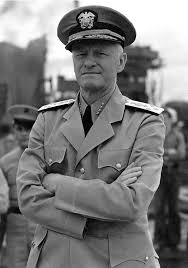
 images-2

Admiral Chester Nimitz

United States Navy codebreakers had broken the Japanese diplomatic and naval codes in 1941, and in May the Navy code breakers at Pearl Harbor discovered Yamamoto’s plan to have the Imperial Navy attack Midway Island and the Aleutian Islands.  Knowing the Japanese were coming, and that the occupation of Midway by Japanese forces would give them an operational base less than 1000 miles from Pearl Harbor, Admiral Chester Nimitz, commander of the U.S. Pacific Fleet committed the bulk of his naval power, the carriers USS Enterprise CV-6, USS Yorktown CV-5 and USS Hornet CV-8 and their 8 escorting cruisers and 15 destroyers to defend Midway.  This force of 26 ships with 233 aircraft embarked to defend Midway while a force of smaller force 5 cruisers and 4 destroyers was dispatched to cover the Aleutians.  The forces on the ground at Midway had a mixed Marine, Navy and Army air group of 115 aircraft which included many obsolete aircraft, 32 PBY Catalina Flying Boats and 83 fighters, dive bombers, torpedo planes and Army Air Force bombers piloted by a host of inexperienced but resolute airmen with which to defend itself. It also had a ground force of U.S. Marines, should the Japanese actually land on the island.
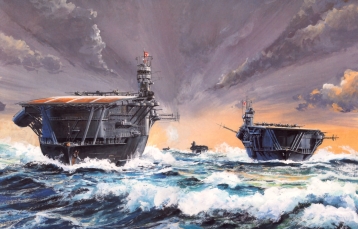
20150122152242

The Japanese Fleet and was built around the elite First Carrier Striking Group, the Kido Butai composed of the Pearl Harbor attackers Akagi, Kaga, Soryu and Hiryu. Led by Vice Admiral Chuichi Nagumo its highly trained and combat experienced air groups composed of 273 aircraft. This force was escorted by 2 Battleships, 3 Cruisers 12 Destroyers. Yamamoto commanded a force of 2 light carriers, 5 Battleships, 11 cruisers and 27 destroyers.  Meanwhile a force of 4 battleships, 12 destroyers assigned screen to the Aleutian invasion force which was accompanied by 2 carriers 6 cruisers and 10 destroyers. The other carriers embarked a further 114 aircraft.  The Japanese plan was ambitious but it was so ambitious that the Japanese Task forces were scattered over thousands of square miles of the Northern Pacific Ocean from which they could not rapidly come to the support of each other.
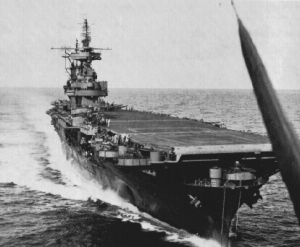
uss-enterprise-cv-6-1

With the foreknowledge provided by the code breakers the US forces hurried to an intercept position northeast of Midway. They eluded the Japanese submarine scout line which the Japanese Commander Admiral Yamamoto presumed would find them when they sailed to respond to the Japanese attack on Midway.  Task Force 16 with the Enterprise and Hornet sailed first under the command of Rear Admiral Raymond A Spruance in place of the ailing William “Bull” Halsey. Task Force 17 under Rear Admiral Frank “Jack” Fletcher was built around the Yorktown which had been miraculously brought into fighting condition after suffering heavy damage at Coral Sea. Fletcher assumed overall command by virtue of seniority and Admiral Nimitz instructed his commanders to apply the principle of “calculated risk” when engaging the Japanese as the loss of the US carriers would place the entire Pacific at the mercy of the Japanese Navy.
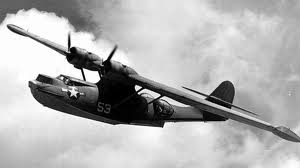
images-43

On June 3rd a PBY Catalina from Midway discovered the Japanese invasion force transport group.  US long-range B-17 bombers launched attacks against these ships but inflicted no damage.

“Our hearts burn with the conviction of sure victory.”
 10-japanese-carriers-coral-sea-midway

On the night of June 3rd 1942 Nagumo’s First Carrier Strike Force sailed east toward the tiny Midway Atoll. Nagumo had seen many of the risks involved in the plan and considered it an “impossible and pointless operation” before the Doolittle Raid on Tokyo, but even the reluctant Nagumo fell in line as Yamamoto relentlessly lobbied for the operation.

As the First Carrier strike force closed within 300 miles of Midway on the night of June 3rd 1942 Nagumo and his staff prepared for the battle that they and many others believed would be the decisive battle. Aircraft received their final preparations, bombs were loaded and as night faded into early morning air crew arose, ate their breakfast and went to their aircraft. The ships had been observing radio silence since they departed their bases and anchorages in Japan the previous week. Honed to a fine edge the crews of the ships and the veteran aircrews anticipated victory.

The crews of the ships of the task force and the air groups embarked on the great aircraft carriers Akagi, Kaga, Soryu and Hiryu as well as their escorts were confident. They had since the war began known nothing but victory. They had devastated the Pacific Fleet at Pearl Harbor and roamed far and wide raiding allied targets and sinking allied shipping across the Pacific and deep into the Indian Ocean. Commander Magotaro Koga of the destroyer Nowaki wrote in his diary “Our hearts burn with the conviction of sure victory.

Chuichi_Nagumo

Vice Admiral Chuichi Nagumo

However, Nagumo and his sailors had no idea that most of what they knew about their American opponents was wrong. Nagumo and Yamamoto were confident that the Americans could field no more than two operational carriers to defend Midway. They had no idea that the Yorktown, which they believed had been sunk at Coral Sea was operational and her air group reinforced by the aircraft of the damaged Saratoga which was being repaired on the West Coast. Unknown to the Japanese the Yorktown and her escorts had joined Enterprise and Hornet northeast of Midway.

The Japanese were going into battle blind. They had planned to get aerial surveillance of US Fleet dispositions at Pearl Harbor, but that had been cancelled because the atoll at French Frigate Shoals that the Japanese flying boats would operate from had been occupied by a small US force. Likewise a line of Japanese submarines arrived on station a day too late, after the US carrier task forces had passed by them. Those aboard the First Carrier Strike Force, including Nagumo or his senior commanders and staff had no idea that the Americans not only knew of their approach but were already deployed in anticipation of their strike.

Within a day all of the Japanese carriers would be sunk or sinking. Thousands of Japanese sailors would be dead and the vaunted air groups which had wreaked havoc on the Allies would be decimated, every aircraft lost and the majority of pilots and aircrew dead. It would be a most unexpected and devastating defeat stolen out of the hands of what appeared to be certain victory.

There is a lesson to be learned from the Japanese who sailed into the night on June 3rd 1942 and saw the sunrise of June 4th. There is no battle, campaign or war that goes according to plan. Thousands of Japanese sailors and airmen went to bed on the night of the 3rd expecting that the following night, or within the next few days they would be celebrating a decisive victory. Thousands of those sailors would be dead by the night of the 4th of June 1942, and as their ships slid beneath the waves, the ambitions of Imperial of Japan to defeat the United States Navy and end the war were dealt a decisive defeat from which they never recovered.

Hawks at Angles Twelve
 f2 number mf 21

One of the more overlooked aspects of the Battle of Midway is the sacrifice of Marine Fighter Squadron 221 on the morning of June 4th 1942.   The Marine aviators flying a mix of 21 obsolescent Brewster F2A-3 Buffalos and 7 Grumman F4F-3 Wildcats engaged a vastly superior force of Japanese Navy aircraft as they vectored toward the atoll to begin softening it up for the planned invasion.
g701850

Led by Major Floyd Parks the squadron had arrived at Midway on Christmas day 1941 being delivered by the USS Saratoga after the aborted attempt to relieve Wake Island.  The squadron along with Marine Scout Bombing Squadron 241 (VMSB 241) formed Marine Air Group 22.  They fighter pilots of VMF-221 scored their first victory shooting down a Japanese Kawanishi H8K2 “Emily” flying boat. The squadron which initially was composed of just 14 aircraft, all F2A-3’s was augmented by 7 more F2A-3s and 7 of the more advanced F4F-3s before the battle.
douglas-sbd5-dauntless-dive-bomber-battle-of-midway-01

USMC Vought SB2-U3 Vindicators

When the Japanese First Carrier Striking Group was spotted in the wee hours of June 4th the Marines and other aircrew aboard Midway scrambled to meet them.  The 18 SBD-2 Dauntless’ and 12 Vought SB2-U3 Vindicator dive bombers of VMSB-241, the 6 TBF Avengers of the Navy Torpedo Eight detachment, 4 Army Air Corps B-26 Marauders and 15 B-17 Flying Fortresses flew out to attack the Japanese carriers while the fighters rose to intercept the 108 aircraft heading toward Midway. The 72 strike aircraft, 36 Aichi 99 Val Dive Bombers and 36 Nakajima B5N Torpedo/ High Level Bombers were protected by 36 AM6-2 Zeros which thoroughly outclassed the Marine opponents in speed, maneuverability and in the combat experience of their pilots.

The Marine fighters audaciously attacked the far superior Japanese force, throwing themselves against the Japanese phalanx with unmatched courage.  Despite their courage the Marine fighters were decimated by the Japanese Zeros.  The Marines shot down 4 Val dive bombers and at least three Zeros but lost 13 Buffalos and 3 Wildcats during the battle.  Of the surviving aircraft only three Buffalos and three Wildcats were in commission at the end of the day. Among the casualties killed was Major Parks.  Of the surviving pilots of VMF-221, two became “Aces” during the war. Lieutenant Charles M. Kunz would later fly in VMF-224, adding six victories to end the war with 8 victories. Capt. Marion E. Carl would later fly in VMF-223 raising his score to 18.5 Japanese aircraft shot down.  Other pilots like 2nd Lieutenant Clayton M. Canfield shot down two additional aircraft while flying with VMF-223. 2nd Lieutenant Walter W. Swansberger won the Medal of Honor at Guadalcanal.
F2A-3+Buffalo

VMF-221 Attacks

The last remaining Marine fighter pilot of VMF-221 from the battle of Midway, Williams Brooks died in January 2010 and was buried with full military honors, in Bellview, Nebraska. Brooks in his after action report described his part in the battle:

I was pilot of F2A-3, Bureau number 01523, Our division under Capt. Armistead was on standby duty at he end of the runway on the morning of June 4, 1942, from 0415 until 0615. At about 0600, the alarm sounded and we took off. My division climbed rapidly, and I was having a hard time keeping up. I discovered afterwards that although my wheels indicator and hydraulic pressure indicator both registered “wheels up”, they were in reality about 1/3 of the way down. We sighted the enemy at about 14,000 feet, I would say that there were 40 to 50 planes. At this time Lt. Sandoval was also dropping back. My radio was at this time putting out no volume, so I could not get the message from Zed. At 17,000 feet, Capt. Armistead led the attack followed closely by Capt. Humberd. They went down the left of the Vee , leaving two planes burning. Lt. Sandoval went down the right side of the formation and I followed. One of us got a plane from the right side of the Vee. At this time, I had completely lost sight of my division. As I started to pull up for another run on the bombers, I was attacked by two fighters. Because my wheels being jammed 1/3 way down, I could not out dive these planes, but managed to dodge them and fire a burst or so into them as they went past me and as I headed for the water. As I circled the island, the anti-aircraft fire drove them away. My tabs, instruments and cockpit were shot up to quite an extent at this time and I was intending to come in for a landing. 

It was at this time that I noticed that a important feature in their fighting. I saw two planes dog-fighting over in the east, and decided to go help my friend if at all possible. My plane was working very poorly, and my climb was slow. As I neared the fight both planes turned on me. It was then that I realized I had been tricked in a sham battle put on by two Japs and I failed to recognize this because of the sun in my eyes. Then I say I was out-numbered, I turned and made a fast retreat for the island, collecting a goodly number of bullets on the way. After one of these planes had been shaken, I managed to get a good burst into another as we passed head-on when I turned into him. I don’t believe this ship could have gotten back to his carrier, because he immediately turned away and started north and down. I again decided to land, but as I circled the island I saw two Japs on a Brewster. Three of my guns were jammed, but I cut across the island, firing as I went with one gun. But I could not get there in time to help the American flier and as soon as the Brewster had gone into the water I came in for a landing at approximately 0715 (estimated). 

As for VMF-221 it was re-equipped with the F4F-4 and later with the F4U Corsair during the course of two more deployments overseas.  VMF-221 finished the war with a score of 155 victories, 21 damaged and 16 probable kills, the second highest total of any Marine Corps Squadron during the war.

Their bomber counterparts of VMSB 241 attacked the Japanese task force on the morning of June 4th and scored no hits while losing 8 aircraft. The survivors were again in action later in the day as well as the following day where they helped sink the Japanese Heavy Cruiser Mikuma with their squadron leader Major Henderson diving his mortally wounded aircraft into the cruiser’s number 4 8” gun turret. While the Marines’ actions are not as well known or as successful as those of their Navy counterparts they were brave.  Fighter pilots had to engage some of the most experienced pilots flying superior machines while the bomber crews had little to no experience before being thrown into combat.

Into the Valley of Death: The Last Ride of the Torpedo Bombers
 eneterprise-vt-6-midway1

Alfred, Lord Tennyson wrote in the Charge of the Light Brigade something that echoes to this day when we talk or write about men who charge the gates of death against superior enemies.

Half a league half a league,

Half a league onward,

All in the valley of Death

Rode the six hundred:

‘Forward, the Light Brigade!

Charge for the guns’ he said:

Into the valley of Death

Rode the six hundred.
 VT-6

They were not six hundred and they were not mounted on horses, but the Naval Aviators of Torpedo Squadrons 3, 6 and 8 and their aerial steeds 42 Douglas TBD Devastators and 6 TBF Avengers wrote a chapter of courage and sacrifice seldom equaled in the history of Naval Aviation. Commanded by veteran Naval Aviators, LCDR Lance “Lem” Massey, LCDR Eugene Lindsey and LCDR John Waldron the squadrons embarked aboard the carriers flew the obsolete TBD Devastators. The young pilots of the Midway based Torpedo 8 detachment under the command of LT Langdon Fieberling flew in the new TBF Avengers.
tbd-devastator1

The TBD which first flew in 1935 entered service in 1937 and was possibly the most modern naval aircraft in the world when it entered service.  It was a revolutionary aircraft. It was the first monoplane widely used on carriers and was first all-metal naval aircraft.  It was the first naval aircraft with a totally enclosed cockpit, the first with hydraulic powered folding wings.  The TBD had crew of three and had a maximum speed of 206 miles an hour and carried a torpedo or up to 1500 pounds of bombs (3 x 500) or a 1000 pound bomb.  129 were built and served in all pre-war torpedo bombing squadrons based aboard the Lexington, Saratoga, Ranger, Yorktown, Enterprise and Hornet with a limited number embarked aboard Wasp. 
Go-in-and-get-a-hit


The Devastator saw extensive service prior to the war which pushed many airframes to the end of their useful service life and by 1940 only about 100 were operational by the beginning of the war.  They were still in service in 1942 as their replacement the TBF Avenger was not available for service in large enough numbers to replace them before Midway.  The TBDs performed adequately against minor opposition at Coral Sea and in strikes against the Marshalls but the squadrons embarked on Yorktown (VT3), Enterprise (VT-6) and Hornet (VT-8) were annihilated at Midway with only 6 of 41 aircraft surviving their uncoordinated attacks against the Japanese Carrier Strike Force.  They were too slow, had poor maneuverability, insufficient armor and defensive armament.

The Torpedo squadrons attacked independently of each other between 0920 and 1030 on June 4th 1942. The Japanese Combat Air Patrol ripped into the slow, cumbersome and under armed TBD Devastators as they came in low to launch their torpedoes.  Torpedo Eight from Hornet under the command of LCDR John C Waldron pressed the attack hard but all 15 of the Devastators were shot down.  Only Ensign George Gay’s aircraft was able to launch its torpedo before being shot down and Gay would be the sole survivor of the squadron to be picked up later by a PBY Catalina patrol plane.
Page500_163_6

g66074

LCDR John Waldron (above) LCDR Lem Massey (below)

Torpedo Six from the Enterprise under the command of LCDR Eugene Lindsey suffered heavy casualties losing 10 of 14 aircraft with Lindsey being one of the casualties.  The last group of Devastators to attack was Torpedo Three from the Yorktown under the command of LCDR Lem Massey losing 11 of 13 aircraft with Massey a casualty last being seen standing on the wing of his burning aircraft as it went down.  These aircraft were also decimated and Massey killed but they had drawn the Japanese Combat Air Patrol down to the deck leaving the task force exposed to the Dive Bombers of the Enterprise and Yorktown.  The six aircraft of the Torpedo Eight detachment from Midway under the command of LT Fieberling lost 5 of their 6 aircraft while pressing their attacks.  Only Ensign Bert Earnest and his aircraft survived the battle landing in a badly damaged state on Midway.  Four U.S. Army B-26 Marauder Medium Bombers were pressed into service as torpedo bombers of which 2 were lost.  No torpedo bomber scored a hit on the Japanese Task force even those torpedoes launched at close range failed to score and it is believe that this was in large part due to the poor performance of the Mark 13 aircraft torpedoes.
enterprise-tbd-landing1

Despite the enormous losses of the torpedo squadrons their sacrifice was not in vain. Their attacks served to confuse the Japanese command and delay the rearmament of aircraft following the Japanese strikes on Midway. They also took the Japanese Combat Air Patrol down to sea level and opened the way for American Dive Bombers to strike the Japanese with impunity fatally damaging the Akagi, Kaga and Soryu in the space of 5 minutes.
ts8

The men of Torpedo 8 only one survived 

After Midway the remaining TBDs were withdrawn from active service and no example survives today. The TBF became the most effective torpedo bomber of the war and some remained in service in a civilian capacity to fight forest fires until 2012.


The Provence of Chance: Five Minutes that Changed the War
 Battle%20of%20Midway%20flat_080817160843

The land based aircraft from Midway attacked the Japanese carrier force taking heavy casualties and failed to damage the Japanese task force. When the results of the first strike of the Japanese bombers that hit Midway was analyzed Nagumo readied his second wave.

As this was happening the American carriers launched their strike groups at the Japanese fleet leaving enough aircraft behind as for Combat Air Patrol and Anti-submarine patrol missions.  As the Americans winged toward the Japanese fleet the Japanese were in a state of confusion. The confusion was caused when a scout plane from the Heavy Cruiser Tone that had been delayed at launch discovered US ships but did not identify a carrier among them until later into the patrol. The carrier was the Yorktown and TF 17, but for Nagumo who first expected no American naval forces, then received a report of surface ships without a carrier followed by the report of a carrier the reports were unsettling.
Dauntless_dive_bombers

Aboard the Japanese ships, orders and counter-orders were issued as the Japanese attempted to recover their strike aircraft and prepare for a second strike on the island, but when the Yorktown task force was discovered, orders were changed and air crews unloaded ground attack ordnance in favor of aerial torpedoes and armor piercing bombs. In their haste to get their aircraft ready to strike the Americans, the hard working Japanese aircrews did not have time to stow the ordnance removed from the aircraft. But due to their hard work at 1020 they had the Japanese strike group ready to launch against the US carriers. Aircraft and their crews awaited the order to launch, their aircraft fully armed and fully fueled.
sbdpilot

CDR Wade McClusky 

There had been confusion among the Americans as to the exact location of the Japanese Carriers. Bombing 8 and Scouting 8 from Hornet made a wrong turn and not find the Japanese carriers. The squadrons had to return due to a lack of fuel and a number of bombers and their fighter escort had to ditch in the ocean and wait for rescue. The Enterprise group composed of Bombing-6 and Scouting 6 under CDR Wade McClusky was perilously low on fuel when they spotted the wake of a Japanese destroyer steaming at high speed to catch up with the Japanese carriers.  Taking a chance, McClusky followed it straight to the Japanese Task Force arriving about 1020. The Yorktown’s group under LCDR Max Leslie arrived about the same time.
4-17-106

When the American dive bombers arrived over the Japanese Carrier Strike Force they found the skies empty of Japanese aircraft. Below, aboard the Japanese ships there was a sense of exhilaration as each succeeding group of attackers was brought down and with their own aircraft ready to launch and deal a fatal blow to the American carrier wondered how big their victory would be. The war would soon be decided.
g701870

At 1020 the first Zero of the Japanese attack group began rolling down the flight deck of the flagship Akagi, aboard Kaga aircraft were warming up as they were on the Soryu.  The unsuspecting Japanese were finally alerted to the threat of the American dive bombers when lookouts screamed “helldivers.” The Japanese fighters assigned to the combat air patrol were flying too low as the mopped up the last of the doomed torpedo bombers and were not in a position to intercept the Americans.
2edd2yr

Wade McClusky’s aircraft lined up over the Akagi and Kaga pushing into their dives at 1022. There was a bit of confusion when the bulk of Scouting 6 joined the attack of Bombing 6 on the Kaga. That unprepared ship was struck by four 1000 pound bombs which exploded on her flight deck and hangar deck igniting the fully fueled and armed aircraft of her strike group and the ordnance littered about the hangar deck.  Massive fires and explosions wracked the ship and in minutes the proud ship was reduced to an infernal hell with fires burning uncontrollably. She was abandoned and would sink at 1925 taking 800 of her crew with her.
sbddauntless

LT Dick Best of Scouting 6 peeled off from the attack on Kaga and shifted to the Japanese flagship Akagi. On board Akagi were two of Japan’s legendary pilots CDR Mitsuo Fuchida leader of and CDR Minoru Genda the architect of the Pearl Harbor attack and subsequent string of Japanese victories. Both officers were on the sick list and had come up from sick bay to watch as the fleet was attacked. Seeing Kaga burst into flames they stood mesmerized until Akagi’s lookouts screamed out the warning “helldivers” at 1026.
SBDstoastjapcarrier

Best’s few aircraft hit with deadly precision landing two of their bombs on Akagi’s flight deck creating havoc among the loaded aircraft and starting fires and igniting secondary explosions which turned the ship into a witch’s cauldron.  By 1046 Admiral Nagumo and his staff were forced to transfer the flag to the cruiser Nagara as Akagi’s crew tried to bring the flames under control. They would do so into the night until nothing more could be done and abandoned ship at 2000.  Admiral Yamamoto ordered her scuttled and at 0500 on June 5th the pride of the Japanese carrier force was scuttled.
SBD_ditching_near_USS_Astoria_1942

LCDR Max Leslie ditches his aircraft near a cruiser 

VB-3 under LCDR Max Leslie from the Yorktown stuck the Soryu with 17 aircraft, however only 13 of the aircraft had bombs due to an electronic arming device malfunction on 4 of the aircraft, including that of Commander Leslie.  Despite this Leslie led the squadron as it dove on the Soryu at 1025 hitting that ship with 3 and maybe as many as 5 bombs. Soryu like her companions burst into flames as the ready aircraft and ordnance exploded about her deck. She was ordered abandoned at 1055 and would sink at 1915 taking 718 of her crew with her. A few hours later Hiryu, which had succeeded in launching strikes that seriously damaged Yorktown met the fate of her sisters. Yorktown would be sunk by a Japanese submarine, along with the destroyer Hamman a few days later as her crew attempted to get her to Pearl Harbor. In five pivotal minutes the course of the war in the Pacific was changed.

A Final Ignominy
mikuma_135889

IJN Mikuma 

Admiral Yamamoto was still attempting to digest the calamity that had befallen Admiral Nagumo’s carrier task force. In the shocked atmosphere of the mighty Super Battleship Yamato’s command center the Staff of the Combined Fleet was hastily attempting to arrive at a solution which might reverse the disaster and bring victory.  Admiral Ugaki, Yamamoto’s Chief of Staff, despite strong personal doubts, ordered Vice Admiral Nobutake Kondo to prepare for a night surface engagement with the US Fleet and dispatched a strong surface force to bombard Midway in order to prevent the Americans from reinforcing it and to prevent its further use against his forces should the invasion move forward.  Kondo then organized his fleet to attempt to find the American carriers and bring them to battle before dawn.

Kondo detached Vice Admiral Takeo Kurita’s Close Support Group composed of Cruiser Seven, the fastest and most modern cruisers in the Imperial Navy proceed at full speed to attack Midway.  Kurita’s cruisers, the Kumano, Suzuya, Mikuma and Mogami were each armed with 10 8” guns and were escorted by the two destroyers.

Kurita’s force was 80 miles from Midway when Yamamoto realizing that his plan was unrealistic ordered Kondo’s forces to retreat and rendezvous with his main force shortly after midnight. The order was met with a measure of relief by most officers in the force and the force turned northwest and steamed at 28 knots to meet the Main Body.  At 0215 lookouts on Kumano sighted a submarine on the surface which turned out to be the USS Tambor which had been shadowing the group, and made a signal for the force to make a emergency 45 degree turn to port.

During the process Mogami’s Navigator took over from the watch to oversee the tricky maneuver. In doing so he thought that there was too much distance between him and the ship ahead, the Mikuma. So he adjusted his course to starboard and then realized his mistake. The ship he thought was Mikuma was actually Suzuya and Mikuma was directly ahead. As soon as he recognized his mistake Mogami’s Navigator ordered a hard turn to port and reversed the engines but it was too late. Mogami’s bow crashed into Mikuma’s port quarter. The impact caused minimal damage to Mikuma but Mogami was heavily damaged. She lost 40 feet of her bow and everything else was bent back to port at right angles to her number one turret.

Mogami’s damage control teams isolated the damage and worked the ship up to 12 knots. This was not fast enough for Kurita to make his rendezvous so he left Mikuma and the destroyers to escort Mogami while he steamed ahead with Kumano and Suzuya.
72149d1361e15e9f1540c2b425c023c7

Tambor’s skipper LCDR John W Murphy sent a contact report at 0300 reporting “many unidentified ships.” He followed this with more detailed information and the Americans on Midway began to launch its remaining serviceable aircraft to attack the threat. A flight of B-17 Bombers launched at 0430 could not find the Japanese ships but at 0630 a PBY Catalina found the Japanese and radioed Midway “two Japanese battleships streaming oil.”  The remaining 12 aircraft of VSMB-241 under command of Captain Marshall Tyler a mix of SBD Dauntless and SB2U Vindicators took off at 0700. His force attacked at 0808 scoring no hits. However, Marine Captain Richard Fleming, his Vindicator on fire dropped his bomb and then crashed his aircraft into Mikuma’s after turret. Sailors aboard Mogami were impressed, the American had sacrificed himself in a suicide attack worthy of the Samurai. The fire was sucked down air intakes into the starboard engine room with disastrous results. The Mikuma’s engineers were suffocated by the smoke and fumes and Mikuma was greatly reduced in speed.
mogami

Mikuma shattered, note wreckage of Captain Fleming’s Vindicator on turret 

The two ships limped northwest at 12 knots escorted by the destroyers and were unmolested through much of the day with the exception of an ineffective attack by the B-17s at 0830. The following morning the Dive Bombers of Enterprise and Hornet were at work and found the crippled Japanese ships. Waves over US Dive Bombers attacked the cruisers throughout the morning and into the afternoon. Mikuma was hit at least 5 times and secondary explosions of ammunition and torpedoes doomed the ship. Mogami was also heavily damaged but remained afloat while both destroyers received bomb damage.  At sunset the tough cruiser rolled over to port and sank into the Pacific. Mogami whose damage control teams had performed miracles to keep their ship afloat helped the destroyers rescue survivors from Mikuma.  Only 240 were rescued with 650 officers and sailors going down with the ship.
Link15-Mikuma-damage

Survivors abandoning Mikuma

The action against the cruisers ended the combat operations at Midway. The Japanese ships were doomed by Yamamoto’s decision to try to salvage victory from defeat and the error of Mogami’s Navigator during the emergency turn when Kumano sighted Tambor. The only thing that kept the result from being total was the efficacy of Mogami’s damage control teams.  Mogami was out of the war for 10 months following repairs and conversion to an Aircraft Cruiser in which her aft turrets were removed to increase the number of float plane scouts that the ship could carry. She rejoined the fleet in April 1943 and was sunk following the Battle of the Surigao Strait on 25 October 1944.

The Mogami and Mikuma proved to be tough ships to sink. Unprotected by friendly aircraft they fought hard against the unopposed American Dive Bombers. They suffered massive damage from 500 and 1000 pound bombs, both direct hits and near misses. Mogami was saved by the skill of her damage control teams and the foresight of her Damage Control Officer to jettison her torpedoes so that they did not explode and compound the damage wrought by the American bombs.


Epilogue

At Midway a distinctly smaller force defeated a vastly superior fleet in terms of experience, training and equipment. At the very moment that it appeared to the Japanese that they would advance to victory their vision disappeared. In a span of less than 5 minutes what looked like the certain defeat of the US Navy became one of the most incredible and even miraculous victories in the history of Naval warfare. In those 5 minutes history was changed in a breathtaking way. While the war would drag on and the Japanese still inflict painful losses and defeats on the US Navy in the waters around Guadalcanal the tide had turned and the Japanese lost the initiative in the Pacific never to regain it.
h73065

The Japanese government hid the defeat from the Japanese people instead proclaiming a great victory. The American government could not fully publicize the victory for fear of revealing the intelligence that led to the ability of the US Navy to be at the right place at the right time and defeat the Imperial Navy.

The American victory at Midway changed the course of the war in the Pacific. The Battle of Midway established the aircraft carrier and the fast carrier task force as the dominant force in naval warfare which some would argue it still remains. Finally those five minutes ushered in an era of US Navy dominance of the high seas which at least as of yet has not ended as the successors to the Enterprise, Hornet and Yorktown ply the oceans of the world and the descendants of those valiant carrier air groups ensure air superiority over battlefields around the world today.

Leave a comment

Filed under aircraft, History, Military, Navy Ships, US Navy, World War II at Sea, world war two in the pacific