Monthly Archives: July 2017

Midsummer Night Dreaming: The MLB All Star Game 2017

Friends of Padre Steve’s World,

Saul Steinberg wrote:  “Baseball is an allegorical play about America, a poetic, complex, and subtle play of courage, fear, good luck, mistakes, patience about fate, and sober self-esteem.” 

I think that it is something we need more of today. Those that have followed my writing on this site for any length of time know that perhaps more than any other thing on earth that the game of Baseball is an important part of my life and spirituality.

Baseball, unlike most sports is very much a game with a calendar that is almost liturgical in its make up. It is also a game where those who “have gone before” are as much a part of the present as a part of history. It is a game that people like me ascribe an almost mystical or religious significance.

I have grown up with baseball. My dad ingrained it in me, my mom came to my little league games when my dad was in Vietnam and even my paternal grandmother had a baseball game on whenever one was on.

I like to say that God speaks to me through baseball, and I do think that I am right about this, much more so than Scripture which I never know if I am interpreting correctly, especially because so many learned people tell me that I’m a heretic. So I guess I have to let God speak to me in other ways, like baseball.

The All Star Game is part of my “Church Calendar.” it is a moment in the summer where the game and I pause. I pause to reflect on life and remember so many things about the specific All Star Games, my dad and life.

I fell in love with the All Star Game in 1970, the game that Pete Rose ended in extra innings when he ran over Cleveland Indians catcher Ray Fosse to win the game for the National League. Likewise I remember the 1999 All Star Game at Fenway Park when Ted Williams was honored and the All Century Team was named. I found it interesting that Pete Rose, arguably the best hitter in the history of the game who was banned from baseball for life by A. Bartlett Giamatti for betting on the game was included on that team. I agreed with the selection then and in light of the fact that so many other men of sometimes questionable morals and character are in the Hall of Fame think that the ban on Rose should be lifted and that he be voted into the Hall of Fame.

The All Star Game is a celebration of the game, its history and players, not just the ones playing in the current year. I am interested in this game in some ways because I have seen quite a few players at some level of their minor league careers in the South Atlantic, Carolina, Southern, Eastern, International or Pacific Coast Leagues. For me it is really cool to see men that I watched when they were in the minors now playing in the All Star Game. For those that don’t follow the minor leagues it provides a certain amount of perspective because most players in the minors never make the majors and even many of those who do don’t stay there. It is a hard life and for most the money is not that great, thus I do not begrudge the salaries that they make when they get to the majors. It takes a tremendous amount of talent, hard work, determination and sometimes luck to make it in the majors, to stay there and to become an All Star. Those that do it consistently year after year are amazing.

For 14 years MLB determined that the game would decide home field advantage for the World Series. This year it went back to an exhibition game, but unlike the NBA, NFL, or NHL, the game was well played and the players were playing to win, diving catches, running hard, playing hard even as they had fun.

I appreciate their work, because in my calling and career as a Priest, Chaplain and military officer I am a journeyman. I’ve been around a long time, in a sense been up and down in the majors and minors in a number of different positions. I have had some good seasons so to speak, but I have also had plenty of bad ones and spent a lot of time in the military and church versions of the minor leagues. I think it gives me a manner of perspective when appreciating the hard work and excellence needed to be an All Star. If I was ever to be honored in such a way I would have to say something like John Kruk said back in 1993 when he was elected to the All Star Team “It’s amazing that fans want to see me play. What is our society coming to?” I kind of understand that. I have done some preaching at our chapel the past couple of weeks and I have been told that my sermons were some of the best they have ever heard. Honestly I don’t think I’m that good, but I do appreciate the comments. It’s kind of nice to hear it and I know that they mean it, but honestly, I worked hard to prepare having not really preached for years, and swung for the fence on both Sundays.  Luckily for me managed to hit the metaphorical ball, I could have just as easily struck out and looked like an idiot.

I enjoyed last night’s game. There was a lot of great pitching and defense, which is something that sets this game apart from the other major sport all-star games in this country. Last night the game went into extra innings and the American League won by a score of 2-1 on a lead off home run in the top of the 10th by Seattle Mariner’s Second Basema Robinson Cano against the Chicago Cubs closer Wade Davis. Andrew Miller of the Indians came into get the save backed up by excellent defensive plays by Justin Upton and Jose Lindor. It is what baseball is all about. 

Maybe one day I’ll get to attend one of these games in person. But until them I’ll enjoy them just the same, because for me, nothing bad accrues from baseball in any manner of delivery.

So until tomorrow, have a great day,

Peace

Padre Steve+

1 Comment

Filed under Baseball, ministry

There Are Still Nightmares: Reliving the Inner Terror of War 


Friends of Padre Steve’s World

It was a good but exhausting weekend and yesterday at work was very busy and challenging. So this I am posting just a note today.

Saturday night, or rather early Sunday morning I had another of my high definition Iraq nightmares. Very realistic and terrifying. Once again I found myself being attacked while in a HUMMV and being thrown out of the vehicle with enemy gunmen closing in. During the nightmare I threw myself out of bed and looked up to see a gunman dressed in black with an AK pointed at me, so I tried to tackle him and when I awoke in a very groggy state I found that I was wrestling my television to the ground. All of this in my sleep. It took about thirty minutes to calm down. Minnie, Izzy and Pierre all came in to check on me and the left. Izzy gave me a short snuggle and I finally got back to sleep in enough time to get back up, go to breakfast and finish my sermon preparation. 

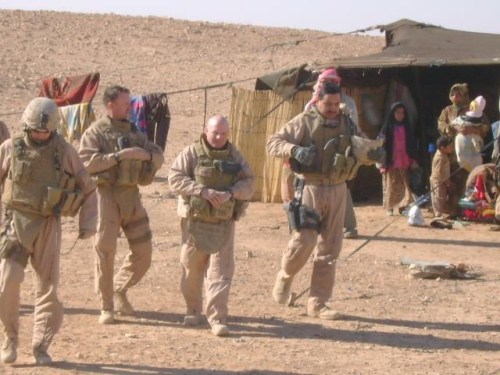
I find it amazing that ten years after I departed for Iraq that I still relive my greatest fears from when I was over there, traveling with small groups of American advisors and Iraqi troops throughout the badlands of Al Anbar. I was always afraid that our tiny convoys, usually just two or three HUMMVs and maybe an Iraqi vehicle or two would get ambushed by an IED and attacked. Being so small and mostly away from big concentrations of American troops with significant firepower we were very vulnerable. We got shot at from a distance a few times, mostly in Ramadi, and couldn’t return fire because we couldn’t see who was shooting at us. 

While we were there I seldom slept, even when we were back at our home base at Ta Qaddum to plan our next mission. That base was relatively secure but it had taken rocket and mortar fire before we got there. Thankfully that had ended but it was always in the back of our minds when we heard gunfire coming from the nearby town of Habbinyah. I remember doing a run around the airfield one day when I heard gunfire coming from the town with me in plain view of it. I ran faster than I think I ever have before to get out of the line of sight. T. E. Lawrence wrote of his time with the Arabs in the First World War “We lived always in the stretch or sag of nerves, either on the crest or in the trough of waves of feeling.” Those words well describe my time in Iraq. 

My nightmares include fragments of what happened as well as my fears that thankfully never materialized. Over the past three years I have ended up in the emergency room twice, once with a broken nose from these episodes. I suppose if I had been sleeping in my own bed, which I am not because my snoring has gotten so loud that Judy, who is profoundly deaf could not sleep even wearing ear plugs that took another 30 decibels off her hearing, that I would have gone to the ER again. In the guest room I didn’t run into my nightstand with my face. Even so it is not fun. 

In the past I have quoted James Spader’s character Raymond Reddington from the television series The Blacklist. Reddington told an FBI agent who had seen his fiancée murdered: “There is nothing that can take the pain away. But eventually, you will find a way to live with it. There will be nightmares. And every day when you wake up, it will be the first thing that you think about. Until one day, it’s the second.” 

That being said I am not depressed or in a funk and life is relative good. I am rather fortunate, despite the often terrifying reality of living with my PTSD and these bloody nightmares, things could be a lot worse. I do have nightmares but at least at the moment they are not dominating my waking hours.

Tonight I plan on watch the Major League Baseball All Star Game. I’ll write about that for tomorrow before moving on to other things. 

Peace

Padre Steve+ 

5 Comments

Filed under iraq, PTSD, Tour in Iraq

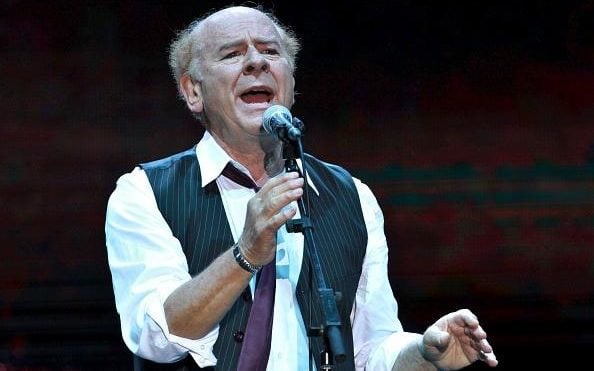
The Sound of Silence and a Prayer: An Evening at an Art Garfunkel Concert


Friends of Padre Steve’s World,

Yesterday was an eventful day. I’ll tell you details over the next few days but last night we had the privilege of being able to see Art Garfunkel in concert. 

I admit it. I am a child of the 1960s and 1970s and I am not ashamed. When I look at my life which includes 36 years of military service, multiple deployments, two of which were combat deployments I am still basically a anti-war 1960s and 1970s person. Likewise, I believe that in terms of speaking out for the poor, the disenfranchised, the weak, the sick, the elderly, those wounded in war, that all of us have a responsibility as citizens to do our best to alleviate the conditions that do harm to the least, the lost, and the lonely. 

One of the songs that was a part of my life back then was The Sound of Silence. It is as hauntingly relevant, maybe more today, than when it was first written and performed by Paul Simon and Art Garfunkel. As he sang it last night I closed my eyes and listened with tears flowing down my cheeks. I imagined the young Simon and Garfunkel singing it and me listening to it on the LP and on my 8 track cassette tape. 

In the age of Trump and Imperial Evangicslism those words are prophetic and etched in my mind especially after my tour in Iraq which changed my life in so many ways. 

Hello darkness, my old friend, I’ve come to talk with you again

Because a vision softly creeping, Left its seeds while I was sleeping

And the vision that was planted in my brain, Still remains, Within the sound of silence

After Iraq I came to know the darkness, and in my most desperate times, the darkness became an old friend, one that I continue to converse with, especially at night and in my dreams and nightmares. I had a particularly violent one of those Saturday night and early yesterday morning. I’ll write about it later in the week. 

In restless dreams I walked alone, Narrow streets of cobblestone 

‘Neath the halo of a street lamp, I turned my collar to the cold and damp

When my eyes were stabbed by the flash of a neon light, That split the night

And touched the sound of silence

My dreams, even the good ones are restless and in them I am alone and I have visions that are often not for the faint of heart. 

And in the naked light I saw, Ten thousand people, maybe more

People talking without speaking, People hearing without listening

People writing songs that voices never share, And no one dared

Disturb the sound of silence

Before Iraq I did little to disturb the sound of silence, but after Iraq, in the despair, depression, and discombobulating of PTSD, I found that I must speak, or perhaps perish. 

Fools, said I, you do not know, Silence like a cancer grows

Hear my words that I might teach you, Take my arms that I might reach you

But my words, like silent raindrops fell, 

And echoed in the wells of silence

I have found that many people are content to talk without speaking, hear without listening, write songs that voices never share, because they are all too willing not to disturb the sound of silence.

And the people bowed and prayed, To the neon god they made

And the sign flashed out its warning, In the words that it was forming

And the sign said, the words of the prophets are written on the subway walls, And tenement halls

And whispered in the sounds of silence

And the people in the churches bow and pray, to the inauthentic god they made, a god that they fashioned in their image, one that on occasion might resemble that of the Bible, the Torah, or the Koran, but which is far removed from an conception of truth. 

Garfunkel sang a couple of songs and after that concluding with a variation the nighttime prayer that I learned as a child, one that I actually find more comforting than the one I learned, and one that I pray will take me through each night. 

Now I lay me down to sleep,

I pray the Lord my soul to keep.

Guide me safely through the night,

Wake me with the morning light.

I am glad that we got the chance to see this amazing American troubadour; to hear his songs, and listen to his stories and poems. He is a treasure. So until tomorrow. 

Peace,

Padre Steve+ 

1 Comment

Filed under faith, music, philosophy

Pastor Robert Jeffress and the Imperial Evangelical Church of Trump


Friends of Padre Steve’s World,

Well it is Sunday and I’ll be the guest preacher in my Protestant chapel service at the base as I did last week. Since then I’ve been thinking over the week about what it means to be an American Christian at this point in our history. Frankly, based on the words of the pastor of First Baptist Church of Dallas, Texas, Robert Jeffress, I must not be one because according to him Christian critics of Presdent Trump are “irrelevant to Christians.” That may be so and even if it is than I will continue to speak out against the idolatry of Pastor Jeffress and the other proponents of an imperial evangelicalism that is little more than an American version of the German Christian movement that went all in for Adolf Hitler. Pastor Jeffress would be an ideal candidate for the office of Reichs Bishop when President Trump proclaims Evangelical Christianity as the State Church. 

As for me I say the hell with those who want to establish the bastardized evangelicalism that we know today as the official state sanctioned version of Christianity. For those who don’t think that is likely or possible you are wrong. The words and actions of the President, the Vice President, a number of cabinet members, and many members of Congress all point to this. But worst of all men like Jeffress and most of the leading popular evangelical pastors and evangelists in the county are working toward that end and the day that it finally happens is coming sooner than you think. A minority of Christians who are better at making former Christians, agnostics, and atheists than disciples of Jesus want nothing more than to gain political power and are willing to use the most base and unchristian President in recent memory as their vehicle to temporal power. 

Barry Goldwater, the scion of the modern Conservative movement warned us about them over thirty years ago in the Senate chambers when he said: “The religious factions that are growing throughout our land are not using their religious clout with wisdom. They are trying to force government leaders into following their position 100 percent.” After he left the Senate he told John Dean: 

“Mark my word, if and when these preachers get control of the [Republican] party, and they’re sure trying to do so, it’s going to be a terrible damn problem. Frankly, these people frighten me. Politics and governing demand compromise. But these Christians believe they are acting in the name of God, so they can’t and won’t compromise. I know, I’ve tried to deal with them.”

Sadly, Goldwater was right. Jeffress and others want no more than to use the power that they have with President Trump to rule with an iron fist that is no different than that of the Taliban, and no no different than the inquisition. 

Likewise the late Senator Mark Hatfield, an Evangelical Christian himself noted:

“As a Christian, there is no other part of the New Right ideology that concerns me more than its self-serving misuse of religious faith. What is at stake here is the very integrity of biblical truth. The New Right, in many cases, is doing nothing less than placing a heretical claim on Christian faith that distorts, confuses, and destroys the opportunity for a biblical understanding of Jesus Christ and of his gospel for millions of people.”  

It is time for people who actually believe in the sacred principles embodied in the Declaration of Independence, the Bill of Rights, the Gettysburg Address, the Four Freedoms, and the I Have a Dream speech to stand. It does not matter if you are a Christian, a Jew, a Muslim, a Hindu, Buddhist, Wiccan, agnostic, atheist, or Free Thinker, or for that matter anything except being an American that cherishes liberty for all. 

The late George Truett, a great Southern Baptist pastor, President of Southwestern Baptist Theological Seminary, and also the pastor of Jeffress’s Fist Baptist Church of Dallas until 1944, wrote something that anyone with any sense and understanding of history and church-state relations should take note of:

“Constantine, the Emperor, saw something in the religion of Christ’s people which awakened his interest, and now we see him uniting religion to the state and marching up the marble steps of the Emperor’s palace, with the church robed in purple. Thus and there was begun the most baneful misalliance that ever fettered and cursed a suffering world…. When … Constantine crowned the union of church and state, the church was stamped with the spirit of the Caesars…. The long blighting record of the medieval ages is simply the working out of that idea.”

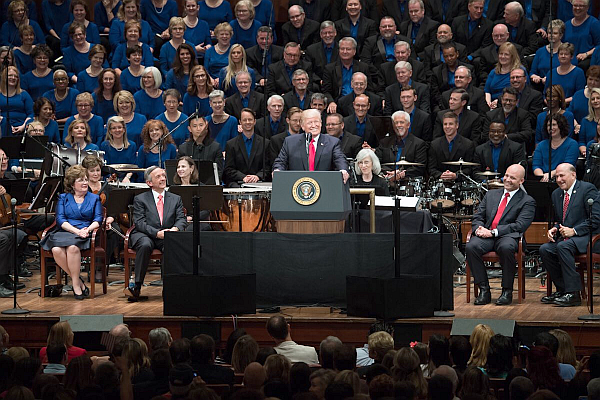
President Trump has recognized the same thing and with the help of the vast majority of American Evangelicals he is doing the same thing as Constantine and men like Robert Jeffress are to vain and power hungry to understand that they are sealing the doom of the Christian faith in the United States. That is why I will not stop writing, not stop speaking, and not stop fighting. I may be to use the words of Jeffress an insignificant and irrelevant gnat to him and the President but I’ll be damned if I let men like them use Jesus as a vehicle for tyranny. I’ll be damned when I let a political preacher like Jeffress stand on the same platform as the President and use it to condemn fellow Christians. as his very own church choir debates a hymn entitled Make America Great Again, a song which is a hymn of praise not to Jesus but to the nationalistic jingoism of President Trump. His predecessor in the pulpit of First Baptist, George Truett would be dismayed by the actions of the man who now holds that pulpit. 

Likewise our nation’s founders would be dismayed but not surprised to see this going on. Many wrote about the danger of it and did their best to build up a wall of separation, but that wall is being dismantled before our very eyes. When it is gone we will all regret it, and yes by all I even include the Evangelical Christians who now worship at the altar of Robert Jeffress and Donald Trump. 

So until tomorrow,

Peace

Padre Steve+ 

9 Comments

Filed under christian life, civil rights, faith, History, ministry, nazi germany, News and current events, Political Commentary

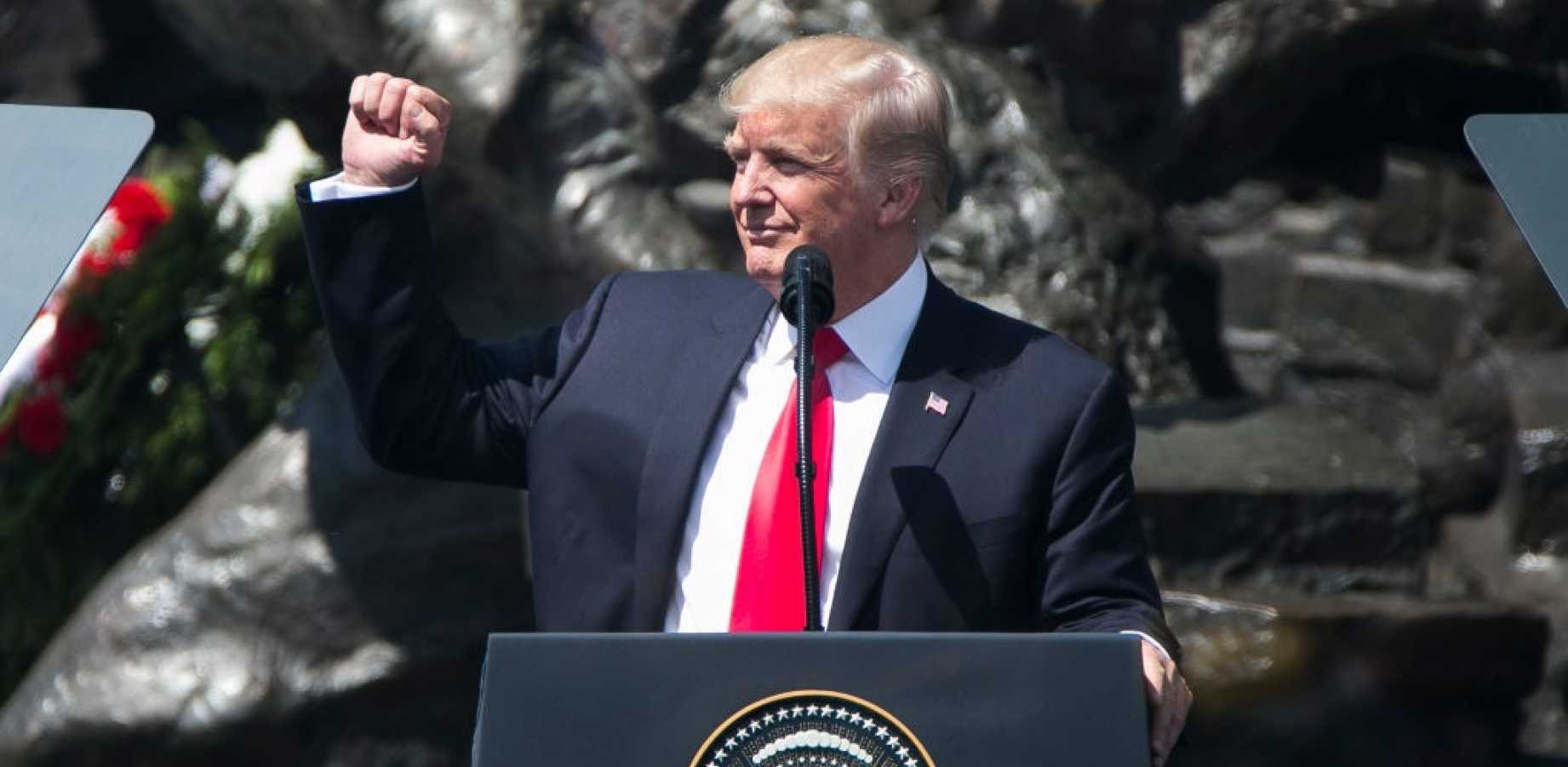
Survival as What? President Trump’s Warsaw Speech


Friends of Padre Steve’s World,

Today I have just a few thoughts about President Trump’s Warsaw speech as well as some of his other comments while in Poland. 

I know people have different opinions about the speech but my greatest concern was that while the President spoke of “defending Western civilization” he never once mentioned the ideals that are at the heart of the United States. He never talked about what is written in the Declaration of Independence or the Constitution or appealing to those documents as well as the ideals of our founders or his predecessors, not even Ronald Reagan. Instead it was similar to his dystopian Inaugural Address on a global level. Likewise during and after the speech he continued his attacks on the free press, something that his Polish host has been doing since he took office. 

It reminded me of the “blood and soil” speeches of Adolf Hitler and other leading Nazis and it appealed to a concept of white, European, Christian that has more in common with Nazi and other Fascist movements, as well as the “noble Confederacy,” the Lost Cause, and White nationalism than it has to do with the promise of the United States and its ideals. The thing that the President does not seem to grasp is that no enemy can conquer this nation if we live up to the ideals in the Declaration of Independence and the Preamble of the Constitution. Abraham Lincoln said it well on more than one occasion: 

“From whence shall we expect the approach of danger? Shall some trans-Atlantic military giant step the earth and crush us at a blow? Never. All the armies of Europe and Asia…could not by force take a drink from the Ohio River or make a track on the Blue Ridge in the trial of a thousand years. No, if destruction be our lot we must ourselves be its author and finisher. As a nation of free men we will live forever or die by suicide.”

But even more to the point Lincoln noted something that the President does not understand or appreciate: 

“America will never be destroyed from the outside. If we falter and lose our freedoms, it will be because we destroyed ourselves.”

The President has frequently threatened those freedoms as he attacks his opponents and disparagesAmericans, including military, intelligence, and law enforcement officials or agencies who disagree with him. At the G-20 summit he appeared to have given Vladimir Putin a pass on the well documented Russian efforts to influence and interfere with the 2016 general election. It is troubling for me to see our President give more credence to a thug like Putin than to American intelligence officials, military officers, and diplomats. The things that the President often says, especially on Twitter are more often than not directed at Americans and our closest allies are troubling because it seems that he is more willing to believe the words of a sworn enemy of the United States than to believe Americans. Likewise when he talks uses terms that make me think of Spencer Tracy in the film Judgment at Nuremberg. In that film Tracy took aim at those who surrendered freedom for security and those who would at the same time blame minority groups for the nation’s ills and those who would use the same tactics as our enemies would. In doing so he will destroy what this nation was founded upon and there will be no easy righting of the ship of state. 

In the film during the scene where Spencer Tracy pronounces judgment on a German jurist played by Burt Lancaster. It is a riveting moment as Tracy says these words. They are important so I will leave you with them and wish you a good day.

“But this trial has shown that under a national crisis, ordinary – even able and extraordinary – men can delude themselves into the commission of crimes so vast and heinous that they beggar the imagination. No one who has sat through the trial can ever forget them: men sterilized because of political belief; a mockery made of friendship and faith; the murder of children. How easily it can happen. There are those in our own country too who today speak of the “protection of country” – of ‘survival’. A decision must be made in the life of every nation at the very moment when the grasp of the enemy is at its throat. Then, it seems that the only way to survive is to use the means of the enemy, to rest survival upon what is expedient – to look the other way. Well, the answer to that is ‘survival as what’? A country isn’t a rock. It’s not an extension of one’s self. It’s what it stands for. It’s what it stands for when standing for something is the most difficult! Before the people of the world, let it now be noted that here, in our decision, this is what we stand for: justice, truth, and the value of a single human being.”

Peace

Padre Steve+ 

Leave a comment

Filed under History, leadership, nazi germany, News and current events

Race Hatred and the Comfortable Contemporary American Christian


KKK-Nast

Friends of Padre Steve’s World,

I ran across a blog yesterday that sickened me. It is written by a woman in Louisiana who claims to be a Christian, but based on her own words wonder. Her article was to defend as a martyr a white woman in Texas who killed her daughters when she discovered that her eldest daughter desired to marry a Latino man. It wasn’t enough for the woman to merely punish her daughters but she had to kill them. The woman had long standing mental illness issues and had been denied a permit to own a weapon because of them. But according to this supposedly Christian blogger she killed her daughters because race-mixing is a sin. How the blogger superimposed her racist ideology on the murderer is beyond me. There may be more to the story that I don’t know, if there is, and if the woman that this blogger idealizes as a Christian martyr held those same beliefs the case is even more chilling.

The words of the blogger are chilling. The woman describes herself in these words:

My name is Jennifer Juanita Mayers. I live in Baton Rouge, Louisiana.  I am happily married and a mother to three wonderful daughters.  I enjoy graphic design, interior design, luxury furniture and an overall fashionable lifestyle.

I demand the best things in life because I deserve it.  When you expect the best, you receive the best.

Some people find me and my opinions abrasive but I live for Jesus Christ and every single word that I speak, think, or type is done in His name.  He chose me as his Messenger incarnate when I was a small child.

Few will ever know the pain and suffering of crucifixion.  We share that pain together.  We are ONE.

Without getting into details the woman obviously has some delusions about the Christian faith which are shared by many Christians of our era, but I am not going to dissect that faith today as I have written much about it in the past.

What I want to discuss is her passionate race hatred and her justification of cold-blooded murder in the name of racial purity. Her words reminded me of the Nazi laws on racial purity as well as American laws which forbade inter-racial marriage up until Loving v. Virginia overturned them in 1967. She writes in her article “America’s Martyr: NO Race Mixing:”

Friends, I invite you to ponder the image above.  The beautiful woman is Christy Sheats.  The Texas wife and mother who is being vilified in the media for shooting and killing her teenage daughters.  It makes for a great headline in mainstream media but what goes unsaid is even more powerful.

A devout Republican and gun rights advocate, she no doubt discovered that both of her daughters had been promiscuous and were sleeping with black boys and she took it upon herself to put an end to that cycle.  She was brave enough to stand up and say ENOUGH!  Not in MY house! And she should be lauded.

Race mixing is not only an ungodly thing, it causes such confusion and humiliation.  Not only for the children born of this sin, but for the grandparents who would have to carry this burden. Mrs. Sheats was the picture of elegance and I know she would not want to have to explain to her friends why she was carrying around a yellow mixed baby that her promiscuous daughters had created.

Rather than be forced into this life of depravity and sin, she chose to go down grasping her weapon in the name of God.  As far as I am concerned, she is a martyr for Christ.

 “It would be horribly tragic if my ability to protect myself or my family were to be taken away, but that’s exactly what Democrats are determined to do by banning semi-automatic handguns,” she wrote in March, along with an anti-gun control video.

She was just your typical wife and mother, doing everything she could to protect her children from the promiscuous and sinful life that they had become sucked into.

Before we slander her name or make her out to be a villain, I think we should take a moment of silence and appreciate her bravery and her devout Will to die for Christ.

A martyr indeed, my friends.  And Glory be to God, as always for HE is in control.

xoxo

Jenn

I don’t know about you friend, but what I see in this is absolutely frightening. The fact that this woman argues that a murderer is justified for racial purity and calls the person who does it a martyr when she dies in a shootout with the police is truly either mentally ill herself, or embodies an evil that is unimaginable for most people.

I did some checking around and this woman has a Twitter account which was suspended at least for a while last year. When it was she posted a short blog post saying that it was “a discrimination of my FREE SPEECH that Jesus Christ died in order for me to have. This is a crime against my faith.  Against my beliefs.  This is a crucifixion in the highest order.  President Trump will NEVER stand for this.”

The fact that she is both ignorant of the Constitution and the Christian faith is par for the course nowadays but her screeds put her in a fairly small cloud-cuckoo land that is usually inhabited by a small number of neo-Nazis.

But her blog (in between her tips on how to live a luxurious life) contains even more racist rants than the article I have cited. Her posts read like Julius Streicher’s Der Sturmer. She has other posts including one calling Dr. Martin Luther King Jr. “black trash” on the MLK holiday, writing about “lesser races” and going into anti-Islamic and pro-Muslim ban rants in support of the President. In another she calls abortion as being the only thing worse than being black but approves of it “if the baby is mongoloid.  That is a true burden that I would not carry, nor would I expect any woman to suffer.  It would be an embarrassment to me and my family and I could not allow an imperfection like that in my hone.  And I do not have the time or patience to raise one of those.”

She also writes anti-LGBTQ screeds, and about deporting all blacks from the country. The sad thing is that with the advent of President Trump such thoughts and actions are again in vogue.

I looked through some of the comments on her page and quite a few were supportive of her. I guess that is even more concerning to me. I will not provide the link to her blog, but you can Google her and find it.

Anyway… Try to think some happy thoughts,

Until tomorrow,

Peace

Padre Steve+

7 Comments

Filed under christian life, civil rights, News and current events, Political Commentary

Our Liberty Depends on Freedom of the Press

Franklin-Press

Friends of Padre Steve’s World,

Benjamin Franklin wrote: Whoever would overthrow the liberty of a nation must begin by subduing the freeness of speech.” This is true in any nation, but especially so in a democracy like ours. Our founders understood the vital importance of a free press to the health of the nation, and they understood that people had to be educated so that they might be able to discern truth from lies. Thomas Jefferson underscored this fact when he wrote: “Were it left to me to decide whether we should have a government without newspapers, or newspapers without a government, I should not hesitate a moment to prefer the latter. But I should mean that every man should receive those papers and be capable of reading them.”

There is a terrible threat to the freedom of the press today. One comes from the government. Well before he took office President Trump began to openly threaten the freedom of the press. Since he took office he has increased his attacks on the press as a whole and against individual journalists. Likewise his surrogates do the same and twist the very meaning of the Constitution in order to justify their attacks on it.

The fact is that such actions are the key to dictatorship. It is evident that the attacks are meant to discredit the press and to make the people suspicious of the one non-governmental source of information that our founders insisted as being absolutely vital to our freedom as Americans. Jefferson said so when he wrote: Our liberty depends on the freedom of the press, and that cannot be limited without being lost.”

But the other threat to the freedom of the press comes from a populace that is unable to understand the basic workings of our form of government and who will not accept or tolerate opinions different from their own. Such is grist in the hands of leaders who despise the constitutional liberties granted to all Americans, not just their interest groups or supporters, as well the very proposition that our nation was founded upon; the proposition in the Declaration that “all men are created equal…”

But despots of all types despise a free press, and fear it. Napoleon Bonaparte once remarked that “Four hostile newspapers are more to be feared than a thousand bayonets.” This is why tyrants fear the press. A Southern critic of slavery, Hinton Helper wrote “Slavery tolerates no freedom of the press, no freedom of speech, no freedom of opinion.”

In our history there have been times when free speech and a free press were banned. One of the most notable times was during the debates about slavery during the 1830s and 1840s as the abolitionist movement began to be more vocal. They attempted to silence dissent in Congress, and beginning in 1836 the House of Representatives, led by Southern members of Congress passed a “gag rule” for its members. The “Gag Rule” “banned all petitions, memorials, resolutions, propositions, or papers related in any way or to any extent whatever to the subject of slavery.”

Likewise they attempted to quash any opposition to slavery in the press at the federal and state level. In response to the proliferation of abolitionist literature in the South which was being sent through the mail, Senator John C. Calhoun proposed that Congress pass a law to prosecute “any postmaster who would “knowingly receive or put into the mail any pamphlet, newspaper, handbill, or any printed, written, or pictorial representation touching the subject of slavery.” Calhoun was not alone as other members of Congress as well as state legislatures worked to restrict the import of what they considered subversive and dangerous literature.

Critics of a free press often point to times where the press has failed its duty and there are times that it has. There have been partisans who have used the press to inflame opinion rather than to inform. That being said, people need to be able to discern truth from error, they need to understand their form of government and its checks and balances. The press has the responsibility of reporting and educating. The press can bear legitimate criticism when it is wrong or acts in bad faith, but the answer is not to suppress the opinions of any government critic, especially the press whose duty it is to keep the government and its leaders honest. Supreme Court Justice Felix Frankfurter wrote: Freedom of the press is not an end in itself but a means to the end of a free society.”

But even with the flaws of the press our founders understood it to be absolutely vital to the American experiment and to humanity. James Madison wrote: To the press alone, chequered as it is with abuses, the world is indebted for all the triumphs which have been gained by reason and humanity over error and oppression.”

Likewise, Benjamin Franklin wrote:

“Freedom of speech is a principal pillar of a free government; when this support is taken away, the constitution of a free society is dissolved, and tyranny is erected on its ruins. Republics…derive their strength and vigor from a popular examination into the action of the magistrates.”

To silence the press, to restrict its access, to ban negative reporting about the government, or to attempt to delegitimize and demonize press opponents destroys a necessary pillar of a free government. Once a free press is silenced that which remains serves only as a propaganda organ for the government, incapable of telling the truth. This is why it is so important; a free press is not about the freedoms of journalists to speak, but of a people to be informed. During the height of the controversy of the publication of the Pentagon Papers which exposed the years of lies the government had been telling about the American involvement in Vietnam which the government tried to suppress, the late executive editor of the Washington Post, Ben Bradlee told Dick Cavett that freedom of the press was “not the right, exclusively, of a few people who have chosen journalism as a career. That isn’t what the hell it’s about… “It’s about your right to read, your right to be informed.”

Freedom of the press must be guarded and cherished, and it is under some of the most malicious attacks today that it has ever experienced in our nation. It is something that must be defended despite its shortfalls and the various biases of different news organizations, and it is up to citizens to know their form of government and to be smart enough to recognize when news is, to use the current word, fake.

Until tomorrow,

Peace

Padre Steve+

3 Comments

Filed under History, News and current events, Political Commentary

Fireworks, PTSD, and Memories of Iraq

img_0223-3

Friends of Padre Steve’s World,

Sorry for the late posting as I did not sleep well last night. Fireworks and explosions tend to trigger my PTSD and send me back to Iraq.

Now we had a great 4th of July spending time with each other and then going over to a small get together at a friend’s house for dinner before the city started shooting off its big fireworks show about a mile from our house. We got home just before it began and even though we were inside we could hear the explosions even as neighbors shot off fireworks around the lake that we live near.

I tend to avoid fireworks but they seemed louder than last night than in the past. Eventually I went to bed planning to get up early and run but my sleep was rather awful with a lot of Iraq memories intruding into it. When I got up this morning I realized that I hadn’t posted what I had originally written for today, and then had the realization that it was 10 years ago today that I got on a bus to Fort Jackson, South Carolina to begin my journey to Iraq.

That was startling and maybe my unconscious mind was more aware of it than I realized.

The war and memories of it are still very real to me and as I read about what is going on in Iraq, Syria, and North Korea, those memories become more inflamed as I worry that many more of my brothers and sisters, could soon be in harm’s way. U.S. Army General and hero of the Battle of Gettysburg, Gouverneur Warren wrote to his wife after the Civil War was over, words which I understand more than I ever wanted:

“I wish I did not dream that much. They make me sometimes dread to go to sleep. Scenes from the war, are so constantly recalled, with bitter feelings I wish to never experience again. Lies, vanity, treachery, and carnage.”

So anyway, until tomorrow,

Peace,

Padre Steve+

Leave a comment

Filed under iraq, Military, PTSD

Stand by Those Principles, Against All Foes, At Any Cost: Independence Day 2017


Friends of Padre Steve’s World,

It is July 4th and the 241st anniversary of the declaration by the leaders of 13 colonies of their independence from Britain and the founding on a new nation. It was a nation founded on a principle of the Enlightenment, the principle that all men are created equal, and as their Declaration of Independence noted that as such are “endowed by their creator with certain unalienable rights, among which are life, liberty, and the pursuit of happiness.” 

That founding principle was revolutionary and regardless of how badly it was many times lived out in the history of our nation, it was and still is the first time that a nation was not founded on the basis of ethnicity or religion, but rather a principle, a proposition that no matter how noble was, and still is often despised by Americans. 

One of the most notable was George Fitzhugh, a major Southern slaveholder and apologist for not only slavery but the inequality of poor whites and women wrote: 

“We must combat the doctrines of natural liberty and human equality, and the social contract as taught by Locke and the American sages of 1776. Under the spell of Locke and the Enlightenment, Jefferson and other misguided patriots ruined the splendid political edifice they erected by espousing dangerous abstractions – the crazy notions of liberty and equality that they wrote into the Declaration of Independence and the Virginia Bill of Rights. No wonder the abolitionists loved to quote the Declaration of Independence! Its precepts are wholly at war with slavery and equally at war with all government, all subordination, all order. It is full if mendacity and error. Consider its verbose, newborn, false and unmeaning preamble…. There is, finally, no such thing as inalienable rights. Life and liberty are not inalienable…. Jefferson in sum, was the architect of ruin, the inaugurator of anarchy. As his Declaration of Independence Stands, it deserves the appropriate epithets which Major Lee somewhere applies to the thought of Mr. Jefferson, it is “exuberantly false, and absurdly fallacious.

Fitzhugh also wrote: 

“We conclude that about nineteen out of twenty individuals have “a natural and inalienable right” to be taken care of and protected, to have guardians, trustees, husbands or masters; in other words they have a natural and inalienable right to be slaves. The one in twenty are clearly born or educated in some way fitted for command and liberty.”

But he was not alone. In 1860 South Carolina led a procession of 11 states out of the Union based on the proposition that only certain men were created equal. Every declaration of secession had at its heart the statement that the institution of slavery was to be protected and expanded with the implication that African American slaves could never be equal, free, or enjoy the slightest legal protections of citizenship. These states were willing to fight a war for this and even at the end of that war many of their leaders resisted any call for granting emancipation to blacks, and then when that was over use terrorism and law to again strip away the rights from newly freed blacks through lynching, the Black Codes, and Jim Crow. 

In 1852 not long after the passage of the Compromise of 1850 which included an enhanced Fugitive Slave Act which dictated that Northerners had to cooperate in the recapture and reenslavement of blacks residing in their free states, Frederick Douglass preached one of the most damning sermons about what July 4th meant to slaves. He said:

“I answer; a day that reveals to him, more than all other days in the year, the gross injustice and cruelty to which he is the constant victim. To him, your celebration is a sham; your boasted liberty, an unholy license; your national greatness, swelling vanity; your sounds of rejoicing are empty and heartless; your denunciations of tyrants, brass fronted impudence; your shouts of liberty and equality, hollow mockery; your prayers and hymns, your sermons and thanksgivings, with all your religious parade, and solemnity, are, to him, mere bombast, fraud, deception, impiety, and hypocrisy—a thin veil to cover up crimes which would disgrace a nation of savages. There is not a nation on the earth guilty of practices, more shocking and bloody, than are the people of these United States, at this very hour.” 

Even so men like Fitzhugh would proclaim: “Liberty for the few – slavery in every form, for the mass.”

Of course such is not liberty, it is tyranny and it is the seedbed of dictatorship. The word liberty is often abused by those who seek total power and control over the lives of others. Abraham Lincoln said as much when he noted: 

“We all declare for liberty” but “in using the same word we do not all mean the same thing. With some the word liberty may mean for each man to do as he pleases with himself and the product of his labor; while with others the same word may mean for some men to do as they please with other men and the product of other men’s labor.” 

The proposition in the Declaration that all men are created equal is essential to understanding or appreciating liberty. If we view others as below us, as even less than human then we cannot say that we believe in liberty. If we decide to limit the right of citizens to speak out because of their color, their national origin, their race, their religion, their gender, or sexual identity then we are not for liberty, we are no better than George Fitzhugh or others, even the Nazis, who enslaved, imprisoned, and exterminated others in the name of their power, and their right. 

If our concept of liberty is so limited by our ideology that we cannot accept others having it or being equal to us then we stand against the very proposition that the United States was founded and we should bury the American experiment and stop lying about a proposition that we no longer believe in. The eminent American jurist wrote these words, which for me are like the Declaration, the Preamble of the Constitution, the Gettysburg Address, Lincoln’s Second Inaugural Address, and Dr. Martin Luther King Jr.’s I Have a Dream speech are secular scripture that are sacred to my understanding of being an American, and something that I will never yield. Judge Hand said: 

“Liberty lies in the hearts of men and women; when it dies there, no constitution, no law, no court can even do much to help it. The spirit of Liberty is the spirit which is not too sure that it is right; the spirit of Liberty is the spirit which seeks to understand the minds of other men and women; the spirit of Liberty is that which weighs their interests alongside its own without bias.”

So today, on this 241st anniversary of our independence when the rights of citizenship, the rights of suffrage, the rights of the freedom of the press and freedom of speech are under assault for the man occupying the highest office in the land I do not despair. I do not despair because the spirit of liberty still lives in my heart as it does many others who still believe in that sacred and revolutionary proposition that all men are created equal and endowed by their creator with certain unalienable rights, among them life, liberty, and the pursuit of happiness. 

In the darkness of 1852 Frederick Douglass said these words to people who at the time were refused citizenship and who were enslaved:  

“I have said that the Declaration of Independence is the ring-bolt to the chain of your nation’s destiny; so, indeed, I regard it. The principles contained in that instrument are saving principles. Stand by those principles, be true to them on all occasions, in all places, against all foes, and at whatever cost.”

May we not forget those words on this day when the founding proposition of our country is under attack. 

Cherish our independence and never stop believing in or fighting for liberty. 

Peace

Padre Steve+ 

1 Comment

Filed under History, News and current events, philosophy, political commentary

The Tragedy of Friends Divided By War: Winfield Scott Hancock and Lewis Armistead on Cemetery Ridge


Friends of Padre Steve’s World,

I have been rating but continuing to work on my Civil War and Gettysburg texts this weekend, and because of that I am retiring to an older post about the relationships of close friends in war. In this case, friends who had served together for many years who ended up fighting each other at Gettysburg. The story is tragic, because none of them hated each other, or held any animosity towards each other, but instead had followed what they believed to be their duty, some in the continued service of the Union, and others to that of their home states. Even so the bonds of friendship were never severed. Of course, unless you have served with people in war and in the military it it hard to comprehend such a fate. Even now, I know men that I consider friends, men who now hold very different political and social beliefs than me, and if God forbid there was ever another civil war, we would be on opposite sides, but they would still be friends, and I would grieve the fact that we would be fighting. 

I do plan on reworking this section of my Gettysburg text again, adding to it and further exploring the dynamics of the relationships at play in this story. But for now, since I have been working on other things, this will have to do.

Have a great day,

Peace

Padre Steve+

The bonds of friendship forged by soldiers are some of deepest and long lasting that are formed anywhere.  For American military professionals those bonds are formed in the small rather closed society that is the regular United States military. They are formed in war and peace, and are marked by years of deployments, isolated duty and combat. They are part of a culture that is often quite different than that of civilian society. That is the case now as it was in 1860.

When the Southern States seceded from the Union men who had spent much of their adult lives serving together discovered had to say goodbye and prepare to fight each other. Most did so with a heavy heart even though many had strong convictions about the rightness of their region’s cause. Those who left the army to serve the Confederate states were often torn by doubt and questions of where their loyalty lay. Robert E. Lee was a good example of the conflict that many Southern officers faced. “The Southern professional officer in 1861 was confronted with a cruel choice symbolized by Lee’s anguished pacing at Arlington. On one hand, the Southern officer’s political allegiances drew him to the Confederacy; on the other his professional responsibility drew him to the Union.” [1] They wrestled with their oath of office and the costs of perhaps having to face their dearest friends on future battlefields. Lee’s letter to his sister Ann Marshall, who remained a supporter of the Union, after he resigned from the army he had served for 32 years reflects that anguish, torn between his loyalties Lee wrote “With all my devotion to the Union, and the dear feeling of loyalty and duty of an American citizen, I have not been able to make up my mind to raise my hand against my relatives, my children, my home.” [2] He added: “I know you will blame me…but you must think as kindly of me as you can, and believe that I have endeavored to do what I think right.” [3]

They were different from the mass levies of civilian volunteers who rallied to the flags of the Union and Confederacy in 1861. The volunteers, most of whom did not have the deep and abiding friendships of the professionals were often motivated by ideological, sectional or religious hatred of the other and went to war with great aplomb. However, the professionals for the most part went to war against former comrades with heavy heart, “old army colleagues found themselves wrenched from the normal course of their lives when their states joined the Confederacy.” [4]

The American Civil War has many such tales. Porter Alexander wrote of his final words with his superior James B. McPherson, who later went on to be a highly successful corps commander under Grant and Sherman before being killed outside Atlanta in 1864. McPherson desired that Alexander remain in California as an Engineering officer and warned him about the nature of the coming war and gave him his counsel as a friend:

“Now this is not going to be any 90 day or six months affair as some of the politicians are predicting. Both sides are in deadly earnest & it is long & desperate & fought to the bitter end. ..God only knows what may happen to you individually, but for your cause there can be but one possible result. It must be lost….” [5]

Alexander wrote: “Nothing could exceed the kindness & real affection with which McPherson urged these views on me…. His earnest talk impressed me deeply & made me realize that a crisis in my life was at hand. But I felt helpless to avert it or even to debate the question what I should do. I could not controvert one of McPhersons’ statements or arguments; I could only answer this: “Mac, My people are going to war, & and for their liberty. If I don’t come & bear my part they will believe me a coward…” [6]

One of the most remembered is that of Union General Winfield Scott Hancock and Confederate General Lewis Armistead. It was key story line in Michael Shaara’s Pulitzer Prize winning novel The Killer Angels was immortalized in the movie Gettysburg which is based on Shaara’s novel.
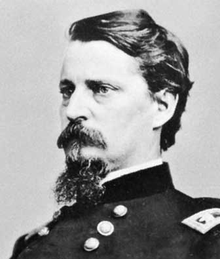

                                                                            Major General Winfield Scott Hancock USA

Hancock was from Pennsylvania. He was a career soldier and Infantry officer, a graduate of West Point Class of 1844. He served in Mexico and held numerous positions. In 1861 he was stationed in California as a Quartermaster under the command of Colonel (Brevet Brigadier General) Albert Sidney Johnston with the Sixth Infantry Regiment. One of his fellow officers was Captain Lewis Armistead, a twice widowed Virginian who also served as a commander of the New San Diego Garrison under Johnston’s command, and Richard Garnett commanding a company at Fort Yuma. Hancock and his wife Almira became fast friends with the widowed Virginian.

Armistead was a nephew of the officer who defended Fort McHenry from the British in the War of 1812. Armistead had academic and personal difficulties at West Point and “was bounced out, not once but twice.” [7] His troubles included an altercation with Jubal Early in which he broke a plate over Early’s head.  Between his academic difficulties and the fight with Early he resigned from the Academy. However, his father helped him obtain a commission as an Infantry officer in 1839. Armistead’s career from that point on was similar to many other officers of his day. He served with distinction in Mexico, the Great Plains, Kansas, Utah and California.

As the war clouds built and various southern states seceded from the Union numerous officers from the South were torn between their oath, their friendships and their deep loyalty to their home states and families. In the end most Southern officers resigned their commissions, many with mixed feelings and quite often sadness. A large minority, some “40 to 50 per cent of Southern West Point graduates on active duty in 1860 held on to their posts and remained faithful to the Union.” [8] The most prominent of these men were General Winfield Scott and Major General George Thomas, the “Rock of Chickamauga.” Likewise Union Brigadier General John Buford’s family in Kentucky supported the Confederacy.

For those southern officers who remained loyal to the Union to was often at a great personal cost. Thomas’s action cost him his relationship with his immediate family who deemed him to be a traitor. He and others were pilloried and demonized in the basest ways by many in the South. Some Southerners who served the Union were executed when they were captured. George Pickett, who called for his fellow Virginian Thomas’ death ordered 22 North Carolinians who he captured fighting for the Union in Kinston North Carolina to be executed. Pickett was not alone in such sentiments.


                                                                               Brigadier General Lewis Armistead CSA

However, for most it was different. As talk of secession and war heated up officers stationed on the frontier debated the issues and asked each other what they would do if war came. In California Armistead and other officers asked Hancock, who was a Democrat and not openly hostile to the South, advice on what he would do if war came. Hancock’s reply was simple. I shall not fight upon the principle of state-rights, but for the Union, whole and undivided” [9]

The parting came in 1861. When it was apparent that many officers would be resigning and heading home to join their state’s forces the Hancock’s hosted a going away party for their friends. Almira Hancock wrote of the party that “Hearts were filled with sadness over the surrendering of life-long ties.” [10]

Colonel Albert Sidney Johnston’s wife Eliza went to a piano and sang sentimental songs such as Mary of Argyle and the popular Irish song Kathleen Mavourneen. [11] Almira Hancock wrote “Those songs…will ever be remembered by survivors of that mournful gathering.” [12]

“Mavourneen, Mavourneen, my sad tears are falling, 

to think that from Erin and thee I must part!

It may be for years, and it may be forever, 

Then why art thou silent, thou voice of my heart?

The parting was especially emotional for Armistead who had been a friend of the Hancock’s for 17 years. They had helped in following the death of both of his wives and children. He was tearful. He put his arm on his friend’s shoulder as he said: “Hancock, good-by; you can never know what this has cost me, and I hope God will strike me dead if I am ever induced to leave my native soil, should worse come to worse.” [13] As he departed Armistead gave a wrapped Bible and Prayer book to Almira Hancock, in case of his death, inscribed were the words “Trust in God and fear nothing.” [14]

Armistead led his brigade during the Peninsula campaign and battles around Richmond and his brigade was decimated in Lee’s failed assault on prepared Federal positions at Malvern Hill. Armistead did not endear himself to many of the volunteer officers who served in the Confederate ranks. One of his Colonels resigned over Armistead’s supposedly harsh treatment to which Armistead replied: “I have felt obliged to speak to him as one military man would to another and as I have passed nearly all my life in camps my manner may not be understood or appreciated by one who has been all his life a civilian.” [15] Armistead’s words can easily be understood by military professionals whose lives have been shaped in a different manner than their civilian counterparts.

At Gettysburg Armistead spoke his fears about the charge to his comrades. One was Brigadier General Dick Garnett, another of Armistead and Hancock’s comrades from the California days on the night of July 2nd. Garnett’s career had paralleled that Armistead, the same age Garnett struggled at West Point in his third year “he failed and withdrew. Taking the same courses again during the next term, he finished fourteenth among his new classmates, then graduated in 1841 standing 29th of fifty-two graduates.” [16]

Armistead and Garnett served together in the Sixth Infantry for most of their careers. They were promoted at similar times, a pattern of promotion that continued into their Confederate service. The next afternoon, the two friends who had served together so long and whose careers were so similar led their brigades of Pickett’s Division across the valley between Seminary Ridge and Cemetery Ridge against their friend and comrade Winfield Scott Hancock’s II Corps which was defending Cemetery Ridge.

Garnett had to lead his brigade on horseback, having been injured during the army’s march to Gettysburg. During the engagement Garnett was killed just before reaching the Union lines and Hancock gravely wounded. Armistead, lead the remnants of his decimated brigade to the Stone Wall, near the Copse of Trees. He rallied his troops fearing that some were faltering calling out: “Come on boys, give them the cold steel! Who will follow me?” [17]

His troops breached the Union line and his black hat atop his sword led his troops forward. He reached the now unmanned artillery of Cushing’s battery and called to his remaining men “The day is ours men, come and turn this artillery on them.” [18] It was then that he met more Federal troops who unleashed a volley of musket fire that cut down many of the survivors. Armistead was wounded in the right arm and shoulder and fell near one of the Union artillery pieces, a point now known as “The High Water Mark” of the Confederacy.


As Armistead lay wounded he was approached by Major Bingham of Hancock’s staff. Bingham, a Mason noticed that Armistead was making a Masonic sign of distress. When Bingham told Armistead of Hancock’s injury Armistead was grieved and told Bingham to “Say to General Hancock for me that I have done him, and you all, an injury, which I shall always regret.” [19]

The meaning of those words is debated, especially by Southerners who cherish the myth of the Lost Cause. However, based on Armistead’s conduct and behavior in the time before he left California, it is not unreasonable to assume that as he lay dying he truly regretted what he had done. Armistead died from infections caused by his wounds which were initially not thought to be life threatening. A Union surgeon described him as: “seriously wounded, completely exhausted, and seemingly broken-spirited.” [20]

Garnett’s body was never found and was probably buried in a mass grave with other Confederate soldiers and was likely taken after the war to his native Virginia “together with thousands of unidentified bodies from Gettysburg, for burial in Richmond’s Hollywood Cemetery.[21] Armistead was buried by a member of the 107th Ohio near the XI Corps field hospital. About a month later a physician from Philadelphia tracked down the soldier and “dug up the “Rough box” containing the body and embalmed poor Armistead’s remains for sale to grieving family members.” [22] Armistead’s family buried the remains in Old Saint Paul’s Cemetery in Baltimore.

Robert Krick wrote: “Death on adjacent bits of blood soaked ground in Adams County, Pennsylvania, yielded a final common thread, that of indignity: Lewis Armistead’s corpse wound up a hostage to petty human greed, while Dick Garnett’s entirely disappeared.” [23]

Hancock’s injuries were severe, but he recovered. He would go on to continued fame and be one of the most admired and respected leaders of the Army during and after the war. He was gracious as a victor and spoke out against reprisals committed against Southerners after the war.

In 1880 Hancock was the Democratic nominee for President. He lost a close election to James Garfield, losing the popular vote by fewer than 40,000 votes. It was an era of great political corruption and Hancock was one of the few major public figures viewed favorably for his integrity. Even his political opponents respected him for his integrity and honesty. Former President Rutherford B Hayes said:

“if when we make up our estimate of a public man, conspicuous both as a soldier and in civil life, we are to think first and chiefly of his manhood, his integrity, his purity, his singleness of purpose, and his unselfish devotion to duty, we can truthfully say of Hancock that he was through and through pure gold.” [24]

A few years after his death Republican General Francis A Walker, lamenting the great corruption of the time said:

“Although I did not vote for General Hancock, I am strongly disposed to believe that one of the best things the nation has lost in recent years has been the example and the influence of that chivalric, stately, and splendid gentleman in the White House. Perhaps much which both parties now recognize as having been unfortunate and mischievous during the past thirteen years would have been avoided had General Hancock been elected.” [25]

The story of Hancock, Armistead and Garnett is one that reminds us of the depth of friendships that many military professionals develop and cherish. It is also a story that reminds us of how hardened ideologues can divide a nation to the point of civil war. It is a story that should give pause to any political or spiritual leader that incites people to war against their neighbor and uses their ideology to slander, demean or even enslave and brutalize their political opponents.

The blood of the approximately 50,000 soldiers that were killed or wounded during the three days of the Battle of Gettysburg is ample reminder of the tragedy of war, especially war that forces the dearest of friends to fight and even kill one another.

Notes 

[1] Huntington, Samuel P. The Soldier and the State: The Theory and Politics of Civil-Military Relations, The Belknap Press of Harvard University Press, Cambridge MA and London 1957 p.212

[2] Thomas, Emory Robert E. Lee W.W. Norton and Company, New York and London 1995 p.188

[3] Korda, Michael. Clouds of Glory: The Life and Legend of Robert E. Lee Harper Collins Publishers, New York 2014 pp.230-231

[4] Jordan, David M. Winfield Scott Hancock: A Soldier’s Life Indiana University Press, Bloomington and Indianapolis 1988 p.33

[5] Alexander, Edward Porter. Fighting for the Confederacy: The Personal Recollections of General Edward Porter Alexander edited by Gary Gallagher University of North Carolina Press, Chapel Hill 1989 p.24

[6] Ibid. Alexander. Fighting for the Confederacy p.25

[7] Guelzo, Allen C. Gettysburg: The Last Invasion Vintage Books a Division of Random House, New York 2013 p.379

[8] Ibid. Huntington The Soldier and the State p.213

[9] Ibid. Jordan Winfield Scott Hancock p.33

[10] Ibid. Jordan Winfield Scott Hancock p.34

[11] Ibid. Jordan Winfield Scott Hancock p.34

[12] Ibid. Jordan Winfield Scott Hancock p.34

[13] Ibid. Jordan Winfield Scott Hancock p.34

[14] Krick, Robert K. The Parallel Lives of Two Virginia Soldiers Armistead and Garnett in The Third Day at Gettysburg and Beyond edited by Gary Gallagher, University of North Carolina Press, Chapel Hill and London 1994 p.112

[15] Tagg, Larry The Generals of Gettysburg: The Leaders of America’s Greatest Battle Da Capo Press Cambridge MA 1998 Amazon Kindle Edition p.244


[16] Ibid. Krick Armistead and Garnett p.101

[17] Stewart, George R. Pickett’s Charge: A Micro-History of the Final Attack at Gettysburg, July 3rd 1863 Houghton Mifflin Company Boston 1959 pp.216-217

[18] Hess, Earl J. Pickett’s Charge: The Last Attack at Gettysburg University of North Carolina Press, Chapel Hill and London 2001 p.262

[19] Ibid. Stewart Pickett’s Charge pp.254-255

[20] Ibid. Stewart Pickett’s Charge pp.254

[21] Ibid. Krick Armistead and Garnett p.123

[22] Ibid. Krick Armistead and Garnett p.123

[23] Ibid. Krick Armistead and Garnett p.123

[24] Ibid. Jordan Winfield Scott Hancock p.319

[25] Stone, Irving They Also Ran Doubleday, New York 1943 and 1981 pg. 188

1 Comment

Filed under civil war, Gettysburg, History, leadership, Military