Monthly Archives: April 2020

A New Thread in the Tapestry of My Life: Serving People in the Age of COVID-19


Friends of Padre Steve’s World

It is interesting to think about life, what has transpired, and what might have been if only…

Like anyone I wonder about all of the “what ifs” and “might have been” parts of my life. Of course there are many, going back to things that I could not control, such as the choices that my parents made regarding their lives, career, family, and home. Then there are my own choices, choices that I made, some for better, and some maybe for worse. Then there were the choices of men and women in my life and career that impacted my life and the decisions that I made, again for better or worse.

Some of my dreams, and nightmares too, involve those decisions, particularly the ones that I could not control; but then there were those decisions, particularly regarding my military career choices, that come back to haunt my dreams. Those can be troubling; the things that I volunteered to do and the costs of those to Judy as a result of those decisions. Many of those decisions, particularly my decisions to volunteer for certain deployments and operations have come at a great cost to both of us, the struggle with the effects of PTSD even ten years after my return from Iraq is still very real.

But then I am reminded that none of us have a crystal ball that allows us to see what the result of our decisions will be; none of us are God, or some other omniscient being. We make our decisions based on what we know, and what we think might be the outcome of our decisions.

If only my knees hadn’t been too badly injured and slow to recover I would have been out of the Navy, probably teaching history (now online) at the college level while relegating my calling as a priest to the background. But after that I  couldn’t retire, but due to a administrative error in calculating my statutory retirement date as I expected in April. I am now scheduled to retire in August, but with Coronavirus there is even uncertainty about that, and frankly I couldn’t care less, because I would rather serve and be in the thick of the fight than sitting on my ass or doing something that provides for me and Judy, but does not help in the time of crisis.

Between last spring when I first put in my voluntary retirement  paperwork working in the most miserable tour of all my time in the military, and doubting my call as a Priest, something miraculous happened. The screwed up knees and administrative mistakes ended up renewing my call and ministry among people I would never have expected to be serving. But even with that I never expected that I would still be serving on active duty at the age of 60, providing needed and valued ministry to people of all faiths, including atheists, in the midst of the novel Coronavirus 19 pandemic that is infecting some of them, or infecting and killing their family members, friends, or others that they know. Of course I take all of the guidance seriously to protect those I serve as well as Judy and me, but a new thread has been woven into the tapestry of my life. I felt the renewed call not long after I arrived, but this has solidified it.

I love the television series Star Trek the Next Generation. One of my favorite episodes is called Tapestry. In the episode Captain Picard is killed. He is then met by the being known as Q, played by John De Lancie for a do-over, a second chance to reverse a choice that he made as a young officer.

On Q’s promise that his choice will not alter history Picard takes the chance and he ends up regretting it. In his second chance to avoid the incident that allowed him to be killed he alienates himself from his friends, and turns him in to a different person, unwilling to take chances and doomed to insignificance. When he returns to his new present he finds himself alive but a different person. Instead of a starship captain is a nondescript lieutenant junior grade doing a job that he hates as an assistant astrophysics officer.

tapestry2

Distraught Picard complains to Q:

Picard: You having a good laugh now, Q? Does it amuse you to think of me living out the rest of my life as a dreary man in a tedious job?

Q: I gave you something most mortals never experience: a second chance at life. And now all you can do is complain?

Picard: I can’t live out my days as that person. That man is bereft of passion… and imagination! That is not who I am!

Q: Au contraire. He’s the person you wanted to be: one who was less arrogant and undisciplined in his youth, one who was less like me… The Jean-Luc Picard you wanted to be, the one who did not fight the Nausicaan, had quite a different career from the one you remember. That Picard never had a brush with death, never came face to face with his own mortality, never realized how fragile life is or how important each moment must be. So his life never came into focus. He drifted through much of his career, with no plan or agenda, going from one assignment to the next, never seizing the opportunities that presented themselves. He never led the away team on Milika III to save the Ambassador; or take charge of the Stargazer’s bridge when its captain was killed. And no one ever offered him a command. He learned to play it safe – and he never, ever, got noticed by anyone.

It is a fascinating exchange and one that when I wonder about the choices that I have made that I think about; because when all is said and done, my life, like all of ours is a tapestry. On reflection Picard tells Counselor Troi, “There are many parts of my youth that I’m not proud of. There were… loose threads – untidy parts of me that I would like to remove. But when I… pulled on one of those threads – it’d unravel the tapestry of my life.”

I think that I can agree with that. All the things in my life, the good things and the bad, as well as the paths not taken have all been a part of the tapestry of my life. I would not be who I am without them; and that I cannot comprehend. I would rather be the flawed me that is me, than the perfect me that never existed. Thus, all of those threads of my tapestry are in a sense, precious and even holy.

I’ll keep all of them, but of all I will remember this thread, as well as my combat tours, and life and death in ICUs and ERs the most. Suddenly at the age of 60 life has begun again. As the late great Sid Caesar once said:

“A great NOW will be a great WAS! A bad NOW will always be a bad WAS, and all you can hope for is a Great GONNA BE!”

As old as I am and as long as I have served, my future is yet to be written, and the tapestry of my life continues, even as new threads are woven into it. Every experience in my life has helped make me the person that I am. A friend of mine from my high school years sent me an email after I explained the experiences behind my writings, and noted “maybe all of that prepared you for such a time as this.” It was an affirmation by someone who doesn’t always share my political, social, or interpretation of the Christian faith that I am doing what I need to be, in such a time as this.

Value the tapestry of your life, and always find something good to life for and work towards.

Peace,

Padre Steve+

1 Comment

Filed under christian life, Coronavirus, faith, life, Military, ministry, philosophy, star trek, Tour in Iraq, US Navy

“God himself could not sink this ship.” The Titanic, Bruce Ismay and Trump

Friends of Padre Steve’s World,

In 1912 the Bishop of Winchester said these words in a sermon marking the end of the R.M.S. Titanic: “Titanic, name and thing, will stand as a monument and warning to human presumption,” as well it should. Sadly, it seems that that Trump administration is doing its best to strip away vital safety, health, and environmental regulations that protect people from even worse disasters than that which befell the great ship 109 years ago, making it a a very contemporary story. But only a historian would understand that. I happen to be a historian.

The story of the Titanic has been told many times, and it should be a cautionary tale for those who in the name of profit and glory seek to dismantle safety and environmental standards. I remember reading Walter Lord’s classic treatment of the story, A Night to Remember back in 7th Grade. It made a tremendous impact on me, and every so often I will go back and read it again.

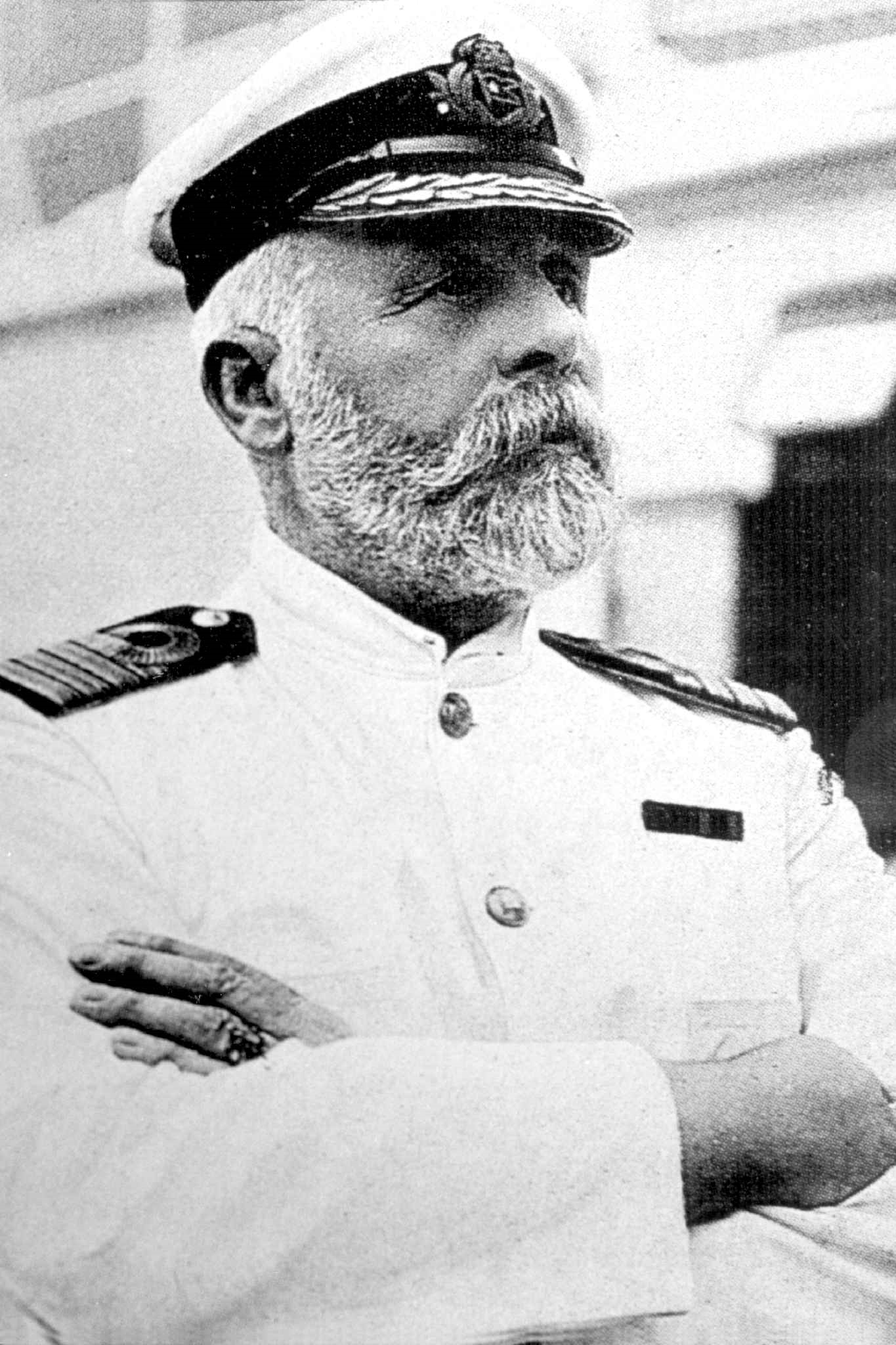
Captain Edward Smith

The Titanic’s Captain, Edward Smith, was blinded by his faith in shipbuilding technology. He spoke about the Adriatic which he commanded previously, “I cannot imagine any condition which would cause a ship to founder. I cannot conceive of any vital disaster happening to this vessel. Modern ship building has gone beyond that.”  One U.S. Senator spoke about this during the hearings about the sinking of Titanic of her captain, “Overconfidence seems to have dulled the faculties usually so alert.” 

The story of what happened to the great ship is as hard to believe now as it was then, but then incredible tragedies be they the loss of ships, aircraft, buildings or bridges, and even spacecraft always invoke such feelings. When I was told about the Space Shuttle Challenger blowing up in 1986 I remarked to the young soldier who brought me the news “don’t be silly Space Shuttles don’t blow up.” 

Walter Lord, who was probably the most prolific historian and author of the Titanic disaster used to talk of the “if onlys” that haunted him about the sinking of Titanic:

If only, so many if onlys. If only she had enough lifeboats. If only the watertight compartments had been higher. If only she had paid attention to the ice that night. If only the Californian did come…” 

Bruce Ismay

The word “if” probably the biggest two letter word that plagues human history, looms large in the tragedy of Titanic. The great ship, which was the largest ship and one of the fastest ocean liners of her time was the victim of her owner and operators hubris as much as she was that of the iceberg which sank her. The ship was heralded by Bruce Ismay, the Chairman and Managing Director of the White Star Line as “unsinkable,“ a claim that was echoed in the press.

Her builders had no such illusions and protested Ismay’s claims. They thought it dishonest and spoke out publicly.  Thomas Andrews the Managing Director of Harland and Wolff Shipyards where she was built commented “The press is calling these ships unsinkable and Ismay’s leadin’ the chorus. It’s just not true.” 

Titanic was designed with the latest shipbuilding innovations, watertight compartments, a double bottom, and equipped with Marconi wireless. She was billed as “unsinkable” by her owners but those innovations as advanced as they were for her day were insufficient to save her when her Captain and owners chose to charge through a known ice field at full speed, ignoring the risks.

The ship had two major design flaws. First, the watertight compartments did not extend far enough up the hull to prevent water from going over them should the compartments to their fore or aft flooded. Likewise, her designers never imagined that so many watertight compartments could be compromised to cause  her to sink. They had not considered the type of damage that the iceberg inflicted. Instead they believed that in any collision at sea, only one or two compartments might flood.

Thomas Andrews

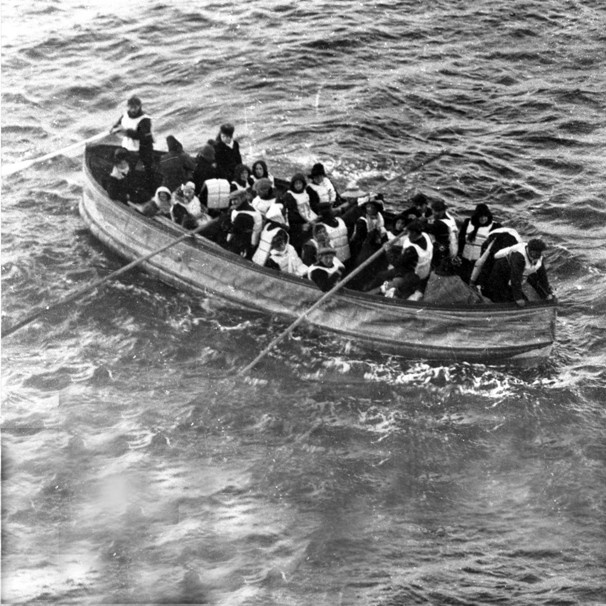
As far as lifeboats, the great ship carried far too few. Thomas Andrews, her builder wanted 64. but the owners twisted his arm to bring the number down to 32. But despite that, Titanic sailed with only 20 lifeboats, of which 4 were collapsible boats, smaller than smaller lifeboats. Justifying himself under antiquated regulations (which were written for ships of 10,000 tons) which allowed just 16 boats J. Bruce Ismay the Director of White Star Line told Andrews:

“Control your Irish passions, Thomas. Your uncle here tells me you proposed 64 lifeboats and he had to pull your arm to get you down to 32. Now, I will remind you just as I reminded him these are my ships. And, according to our contract, I have final say on the design. I’ll not have so many little boats, as you call them, cluttering up my decks and putting fear into my passengers.” 

If only the Californian had come. Californian was the nearest vessel to Titanic and in easy wireless range. However her wireless was unmanned, she did not have enough operators to man it 24 hours a day. Her lookouts saw Titanic but despite flares being fired from Titanic her watch standers never assumed Titanic to be in extremis. The watch standers of Californian seemed in that moment oblivious to the understanding that flares fired from a ship at sea were a indeed a distress signal. Despite watching the great ship in extremis, no one aboard Californian made a move to alter course to find out what really was going on. After receiving the report from his watch officer, the Captain when back to sleep.

The next nearest ship, Carpathia heard the call and made a valiant attempt to reach Titanic but was too late. Her Captain, Arthur Rostrum had served at sea for 27 years, but had only been a Captain for two years, and had only recently assumed command of Carpathia. Unlike the skipper of Californian, he was woken from his sleep by his First Officer and telegraph operator, he did not simply roll over and go back to sleep, though his ship was just ten miles, less than an hour’s steaming await from the stricken liner. When Rostrum learned that Titanic was in distress he acted immediately, altered course to Titanic’s location, and prepared his ship for rescue operations. The only problem was that his ship was capable of just 14 knots and he was 58 miles away.

If only…so many “if onlys” and so many traceable to one man, the Director of White Star Line J. Bruce IsmayThomas Andrews, her designer would go down with the ship, but Ismay ensured his own survival, by after having micromanaged much of the voyage, and ignored the experts concerning the design, safety, and operation of the ship. Ismay is symbolic of men who allow their own hubris, vanity and power to destroy the lives of many.  He is so much like those that helped bring about the various economic crises that have wracked the United States and Western Europe and so many other tragedies.

After the disaster the tragedy was investigated by the United States Senate, as well as the British Board of Trade. The Senate report was truthful. However, the inquiry of the latter was condemned by the White Star Line’s Archivist, Paul Louden-Brown. He noted: “I think the enquiry is a complete whitewash. You have the [British] Board of Trade in effect enquiring into a disaster that’s largely of its own making.”

Ismay and Titanic are symbols of men guided only by their quest for riches and glory who revel in their power and scorn wise counsel or regulation, government or otherwise. They often believe that rules don’t apply to them. It is a cautionary tale for us today as corporations, lobbyists, and politicians seek to dismantle sensible and reasonable safety and environmental regulations for the sake of their unmitigated profit. Today we are seeing the Trump administration doing all that it can to strip away important safety, workplace, and environmental regulations in order to maximize profits At the expense of human life.

But the warning goes far beyond that, it applies to any of us who adopt the mindset, “this cannot happen to us.” After all, there are times when we all end up as victims of our own hubris, such is the human condition. That is especially the case now where an American President defies all precedent, ignores laws, demeans the Constitution, stands against the very proposition of the Declaration, “that all men are created equal…” and who represents the unregulated hubris and incompetence of men more than Bruce Ismay and Donald Trump? I think that they are a perfect match.

When both men reached the pinnacle of success, they ignored every warning sign of impending disaster. Ismay proclaimed, and the media repeated that Titanic was unsinkable. His claims were even believed by members of the crew, one of them who answered a passenger as the ship was sinking and being abandoned “God himself could not sink this ship.”

Since January the President ignored the approaching Coronavirus 19 when its effects could have been mitigated by preparing, by developing a easily produced, and distributed testing device with which results could be obtained in hours, not days or weeks. He ignored his advisors like Peter Navarro, and his medical advisors who warned him of the approaching calamity. Navarro, a man who I had not held in much regard until now, actually predicted this in 2006, and tried to warn the President in January, but his pleas were ignored.

Had he been in the position of Bruce Ismay on board the ill-fated ship the President would have likely saved himself like Ismay. He would have absconded into a lifeboat while being the President of the Line and in his case the nation. Walter Lord wrote about Ismay, and probably prophetically like Trump saved himself while thousands died. Walter Lord wrote:

“This Sunday he was enough a member of the crew to see the ice message that arrived from another ship. In the bright, sunny Palm Court—just as the bugler sounded lunch—Captain Smith gave him a warning from the Baltic. During the afternoon Ismay (who liked to remind people who he was) fished it out of his pocket and waved it at Mrs. Ryerson and Mrs. Thayer. In the smoking room before dinner, while the twilight still glowed through the amber-stained windows, Captain Smith sought and got the message back. Then Ismay walked down to the restaurant, immaculate in his dinner jacket, very much a First Class passenger. After the crash he went back to being in the crew—up with the Captain on the bridge … consulting with Chief Engineer Bell … and now, despite the tongue-lashing from Fifth Officer Lowe, shouting orders about the boats. Then came another switch. At the very last moment, he suddenly climbed into Boat C. Down it dropped, with 42 people including Bruce Ismay—just another passenger.”

That would be President Trump. He loves playing President, and playing the role of the Commander in Chief , even calling himself “a wartime President” while claiming that he has no responsibility for anything, while blaming State governors for not being prepared in order to dodge responsibility. When that doesn’t work he claims that he has “absolute authority” as President, which flies in the face of the Constitutional separation of powers between the Executive, Legislative, and Judicial branches of government as well as the powers accorded to state Governors, legislatures, and courts. Then he backed off a little bit today.

However, if one examines his words and behaviors as a husband, a businessman, and President the facts are obvious. Trump takes no responsibility for anything he has ever done, and would either abandon the ship of state, including the citizens of the United States, and even the cult of people who believed every word he said, or quite willingly drive it into the abyss of death and destruction while blaming everyone else but himself as he scrambles for safety.

He does that every day, so it is not unlikely that when an existential threat to the nation, people, economy, and national security occurs that he will abandon the country and even his Cult followers in order to save himself.  He will sell out those he called  “the most loyal people,” even he abandons the sinking ship. So you might want to check and see what color your life jacket is. If it is orange, you are doomed to die in the abyss that he created, while he sails away, hiding in a lifeboat.

This is a hard lesson to learn, but believe me when I say it. It is the history of Donald J. Trump, and all he has done as a businessman and as President. Ask all of the loyal men and women who volunteered to serve in his administration whose lives and reputations are in tatters, to wake up before like the vast majority of the Titanic’s passengers and crew, go to their deaths as the ship’s musicians play Nearer my God to Thee. 

With that I am done for the night.

Until tomorrow,

Peace,

Padre Steve+

12 Comments

Filed under authoritarian government, books and literature, Coronavirus, culture, Diseases Epidemics and Pandemics, ethics, History, leadership, News and current events, Political Commentary, US Presidents

Colfax Easter Massacre at 147, The Day Freedom Died

Friends of Padre Steve’s World,

One hundred and forty-seven years ago today one of the worst acts of terrorism against Americans by Americans was conducted by members of the White Leagues, a violent white supremacist group in Louisiana. This is from one of my Civil war texts and it is something not to forget in an age where violence against racial and religious minorities is again raising its head.

So tomorrow when I revisit the RMS Titanic and mention a few other things to big to fail.

Have a good day,

Peace,

Padre Steve+

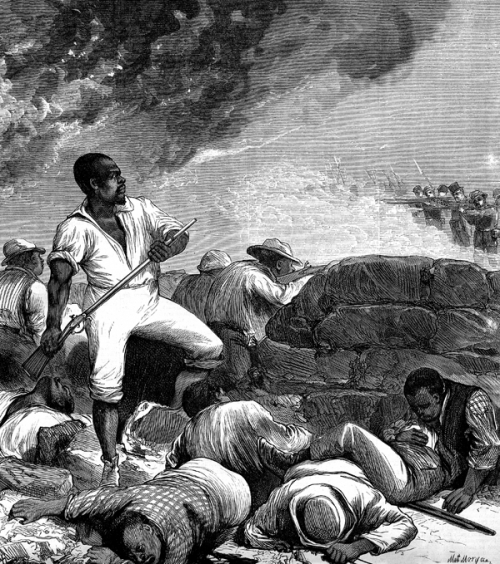
The violence against Southern blacks escalated in the wake of the passage of the Fourteenth and Fifteenth Amendments and with the increasing number of blacks being elected to office in some Southern states during the elections of 1872. In Louisiana a Federal court ruled in favor of Republican Reconstruction candidates following a Democrat campaign to interfere with the vote, which included attacks on polling sites and the theft of ballot boxes. As a result the Louisiana Democrats “established a shadow government and organized paramilitary unit known as the White League to intimidate and attack black and white Republicans.” [1]

The White League in Louisiana was particularly brutal in its use of violence. The worst massacre committed by the White League occurred Easter Sunday 1873 when it massacred blacks in Colfax, Louisiana. Colfax was an isolated nondescript hamlet about three hundred fifty miles northwest of New Orleans. It sat on the grounds of a former plantation whose owner, William Calhoun, who worked with the former slaves who were now freedmen. The town itself “composed of only a few hundred white and black votes” [2] was located in the newly established Grant Parish. The “parish totaled about 4,500, of whom about 2,400 were Negroes living on the lowlands along the east bank of the Red.” [3] Between 1869 and 1873 the town and the parish were the scene of numerous violent incidents and following the 1872 elections, the whites of the parish were out for blood.

White leaders in Grant Parish “retaliated by unleashing a reign of terror in rural districts, forcing blacks to flee to Colfax for protection.” [4] The blacks of parish fled to the courthouse seeking protection from a violent white mob following the brutal murder of a black farmer and his family on the outskirts of town. The people of Colfax, protected by just a few armed black militiamen and citizens deputized by the sheriff took shelter in the courthouse knowing an attack by the White Supremacists was coming.  As the White League force assembled one of its leaders told his men what the day was about. He said, “Boys, this is a struggle for white supremacy….There are one hundred-sixty-five of us to go into Colfax this morning. God only knows who will come out. Those who do will probably be prosecuted for treason, and the punishment for treason is death.” [5] The attack by over 150 heavily armed men of the White League, most of whom were former Confederate soldiers, killed at least seventy-one and possibly as many as three-hundred blacks. Most of the victims were killed as they tried to surrender. The people, protected by just a few armed men were butchered or burned alive by the armed terrorist marauders. It was “the bloodiest peacetime massacre in nineteenth-century America.” [6]

The instigators of the attack claimed that they acted in self-defense. They claimed that “armed Negroes, stirred up by white Radical Republicans, seized the courthouse, throwing out the rightful officeholders: the white judge and sheriff”and they claimed that the blacks had openly proclaimed “their intention to kill all the white men, they boasted they would use white women to breed a new race.” [7]The claims were completely fabricated, after sending veteran former army officers who were serving in the Secret Service to investigate, the U.S. Attorney for Louisiana, J.R. Beckwith sent an urgent telegram to the Attorney General:

“The Democrats (White) of Grant Parish attempted to oust the incumbent parish officers by force and failed, the sheriff protecting the officers with a colored posse. Several days afterward recruits from other parishes, to the number of 300, came to the assistance of the assailants, when they demanded the surrender of the colored people. This was refused. An attack was made and the Negroes were driven into the courthouse. The courthouse was fired and the Negroes slaughtered as they left the burning building, after resistance ceased. Sixty-five Negroes terribly mutilated were found dead near the ruins of the courthouse. Thirty, known to have been taken prisoners, are said to have been shot after the surrender, and thrown into the river. Two of the assailants were wounded. The slaughter is greater than the riot of 1866 in this city. Will send report by mail.” [8]

Federal authorities arrested nine white men in the wake of the massacre and after two trials in which white majority juries were afraid to go against public opinion, three were “convicted of violating the Enforcement Act of 1871.” [9] None were convicted of murder despite the overwhelming evidence against them and even the lesser convictions enraged the White Supremacists in Louisiana who had employed the best lawyers possible and provided them and the defendants with unlimited financial backing. Assisted by the ruling of Supreme Court Associate Justice Joseph Bradley, who had a long history of neglecting Southern racism, white Democrats appealed the convictions to the Supreme Court.

The attack, and the court cases which followed, notably the judgment of the Supreme Court in United States v. Cruickshank which dealt with the appeal of the men responsible for the Colfax Massacre led to a “narrowing of Federal law enforcement authority” and were “milestones on the road to a “solid” Democratic South.” [10] The decision of the court in United States v. Cruikshank was particularly perverse in its interpretation of constitutional rights and protections. The court ruled in favor of the terrorists and declared that “the right of the black victims at Colfax to assemble hand not been guaranteed because they were neither petitioning Congress nor protesting a federal law. Assembling for any other cause was not protected.” [11]

The Cruikshank decision amounted to a Supreme Court endorsement of violence against blacks, and made it “impossible for the federal government to prosecute crimes against blacks unless they were perpetrated by a state and unless it could prove a racial motive unequivocally.”[12] Northern politicians and newspapers, reeling under the effects of the stock market crash of 1873, which had denounced the massacre just a year before now ran from the story and from support of African Americans. A Republican office holder wrote, “The truth is, our people are tired out with this worn cry of ‘Southern outrages…. Hard times and heavy taxes make them wish the ‘nigger,’ the ‘everlasting nigger,’ were in hell or Africa.” [13] Racism and race hatred was not exclusively the parlance of the South.

In the wake of Justice Bradley’s reversal of the Colfax convictions whites in Grant Parish engaged in brutal reprisals against blacks, leading to many murders and lynchings, crimes which law enforcement, even that favorable to the rights of African Americans were afraid to prosecute for fear of their own lives. Louisiana’s Republican Governor, William Pitt Kellogg wrote Attorney General Williams blaming the violence on Bradley’s ruling, which he wrote, “was regarded as establishing the principle that hereafter no white man could be punished for killing a negro, and as virtually wiping the Ku Klux laws of the statute books.” He added that with the Army leaving the state that his government and other Reconstruction governments would fall, “if Louisiana goes,” Kellogg wrote, “Mississippi will inevitably follow and, that end attained, all the results of the war so far as the colored people are concerned will be neutralized, all the reconstruction acts of Congress will be of no more value than so much waste paper and the colored people, though free in name, will be practically remitted back to servitude.” [14] Governor Kellogg could not have been more correct.

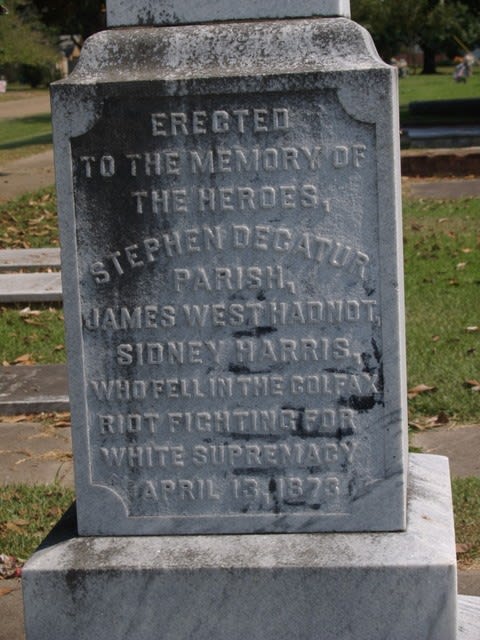
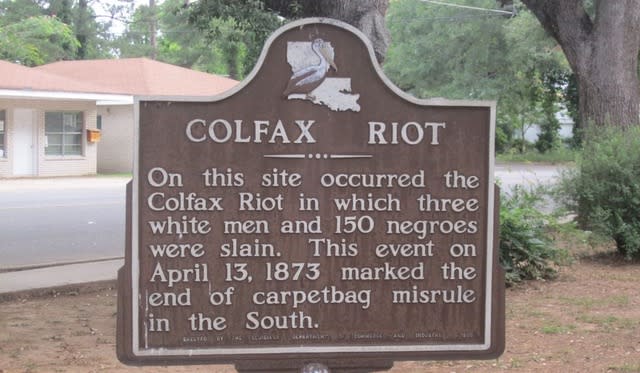
In the years that followed many of the men involved in the massacre and other murders before and after were hailed as heroes, some, including the leader of the attackers, Christopher Columbus Nash were again appointed to office in Colfax and Grant Parish and blacks were reminded every day of just what they had lost. On April 13th 1921 the men who committed the massacre were honored with a memorial in the Colfax cemetery honoring them as “Heroes… who fell in the Colfax Riot fighting for White Supremacy.” In 1951 the State of Louisiana Department of Commerce and Industry dedicated a marker outside the Courthouse which read: “On the site occurred the Colfax Riot in which three White men and 150 Negroes were slain, this event on April 13, 1873 marked the end of Carpetbag misrule in the South.” [15] That marker still stands, there is no marker commemorating the victims.

Other massacres followed across the South, aimed at both blacks and their white Republican allies. In Louisiana the White League had some 14,000 men under arms, in many cases drilling as military units led by former Confederate officers. A White League detachment southwest of Shreveport “forced six white Republicans to resign their office on pain of death – and then brutally murdered them after they had resigned.” [16] This became known as the Coushatta Massacre and it was a watershed because for the first time the White League targeted whites as well as African Americans. The violence, now protected by the courts ensured that neither would last long in the post-Reconstruction South and that the freedom of African Americans in those states would amount to a cruel illusion.

In 1875, President Ulysses S. Grant including comments about the Colfax massacre and the subsequent court decisions in his message to Congress. Grant was angry and wrote: “Fierce denunciations ring through the country about office-holding and election matters in Louisiana…while every one of the Colfax miscreants goes unwhipped of justice, and no way can be found in this boasted land of civilization and Christianity to punish the perpetrators of this bloody and monstrous crime.”[17] President Grant, the man who so wanted to help African Americans attain the full measure of freedom, was unable to do more as the Congress and Courts took sides with the Southern insurgents.

Notes

[1] Ibid. Foner Forever Free p.151

[2] Ibid. Langguth After Lincoln p.312

[3] Ibid. Lane The Day Freedom Died p.42

[4] Ibid. Goldfield America Aflame p.493

[5] Ibid. Lane The Day Freedom Died p.91

[6] Ibid. Goldfield America Aflame p.493

[7] Ibid. Lane The Day Freedom Died p.11

[8] Ibid. Lane The Day Freedom Died p.22

[9] Ibid. Goldfield America Aflame p.494

[10] Ibid. Lane The Day Freedom Died p.251

[11] Ibid. Langguth After Lincoln p.314

[12] Ibid. Goldfield American Aflame p.494

[13] Ibid. Lane The Day Freedom Died p.213

[14] Ibid. Lane The Day Freedom Died p.217

[15] Ibid. Lane The Day Freedom Died pp.261-262

[16] Ibid. McPherson The War that Forged a Nation p. 185

[17] Ibid. Lane The Day Freedom Died p.228

Leave a comment

Filed under civil rights, civil war, crime, History, laws and legislation, Political Commentary, racism, terrorism, White nationalism

Going Forward into the Past: Coronavirus-19 Easter 2020 and Going Back to Our Roots


Friends of Padre Steve’s World,

This kind of returns to the theme of the article I wrote on Good Friday. On the first Good Friday the followers of Jesus fled the scene and hid. The same was true on the first Holy Saturday, and yes, even the first Easter Sunday. If it had not been for the appearance of Mary Magdalene, Mary the Mother of Jesus, and a woman named Salome coming to anoint his body according to Luke, Mary Magdalene alone according to John,  or Mary Magdalene and Mary the Mother of Jesus according to Matthew and Mark just to visit the tomb we can remain assured that the male followers would have remained in their spider holes until they were sure that it was safe to come out. Regardless of the account it was one or all of these women who found Peter and John, who ran to the tomb to find it empty. Then they returned to discuss the matter with whoever of the disciples they could find, except Judas Iscariot who was simply hanging around and rotting, but I digress.

What is important is that they pretty much remained in hiding until Jesus made his first port-Resurrection visits to them. Even then, they didn’t do much in public and were not engaged in preaching or knocking on doors to share their faith. One of the disciples, a man named Thomas expressed his doubts until he met Jesus face to face when Jesus made one of his appearances. During the encounter challenged by Jesus to put his hands in the wounds on his hands and side. Personally, I think it would be good for all Christians to experience doubt, or even what Saint John of the Cross called the Dark Night of the Soul, or the total absence of any feeling of the presence of God. However, in our Americanized profit before prophet materialistic and success absorbed church, that message is a hard sell. Perhaps the Coronavirus 19 pandemic will change that, but only time will tell.

I think that what is happening now with the Coronavirus-19 pandemic has shaken our faith in the illusionary comforts and successes of this life. I think that this illusion of control needs to be shaken to the core, especially for the Christian, regardless of tradition, Catholic, Orthodox, Protestant, Evangelical, or Pentecostal/ Charismatic. German theologian Jürgen Moltmann wrote:

“In a civilization that glorifies success and happiness and is blind to the sufferings of others, people’s eyes can be opened to the truth if they remember that at the centre of the Christian faith stands an unsuccessful, tormented Christ, dying in forsakenness.”

This is not a denial of the resurrection, but a realization that while Christ is risen, that we still live in a world that is afflicted by the actions of human beings to exploit it, destroy it, and exploit and dehumanize other human beings in quest of power and profit. It is the obligation of the Christian and other people of faith to stand up against respond to the plight of suffering people, as Dietrich Bonhoeffer noted:

“We are not to simply bandage the wounds of victims beneath the wheels of injustice, we are to drive a spoke into the wheel itself.”

Tonight I read the story of a Pentecostal Church in Beckley West Virginia devoting its Easter weekend to using 3D printers to manufacture face masks and shields to CDC and FDA specifications for local hospital workers who are desperately short of PPE. I was blown away. They understood that the mission of Christian, the Church as well as other believers in such as situation is not just simply praying or gathering, but rather doing what they could to act, to do something more than gathering, praising, praying, or celebrating while others suffer and die.

I have learned and still am learning what Bonhoeffer so eloquently wrote not before he was killed by SS at Flossenburg on the personal order of Hitler:

“During the last year or so I’ve come to know and understand more and more the profound this-worldliness of Christianity.  The Christian is not ahomo religiosus, but simply a man, as Jesus was a man…I’m still discovering right up to this moment, that it is only by living completely in this world that one learns to have faith. One must completely abandon any attempt to make something of oneself, whether it be a saint, or a converted sinner, or a churchman (a so-called priestly type!) a righteous man or an unrighteous one, a sick man or a healthy one.  By this-worldliness I mean living unreservedly in life’s duties, problems, successes and failures, experiences and perplexities.  In so doing we throw ourselves completely into the arms of God, taking seriously, not our own sufferings, but those of God in the world—watching with Christ in Gethsemane. That, I think, is faith; that is metanoia; and that is how one becomes a man and a Christian.”

I truly believe that this pandemic is an opportunity to re-learn what our ancestors in faith knew from experience: That faith is most real when there is little worldly to hope for, when our illusions of worldly power, and with it the power, and exclusivity of the Church are broken down by something smaller yet more disruptive and deadly than the leaders of our greatest cathedrals, or most massive megachurch stadiums could ever imagine, because what we worship is not spiritual, but material treasures. We, and I mean me as well, have often found our worth in our possessions, those things that we think we own or or think we possess.

This horrible pandemic is by no means over. It will most likely continue to wash over our planet like tsunami waves disrupting our lives and killing many. Between each wave there intervals of comparative quiet, until the next wave hits. This will continue until a vaccine is developed and provided around the world. That could take a year to eighteen months. During that time our lives will be changed in ways that none of us can imagine.

But in the midst of this, when ways out seem so fraught with danger, on Easter we have to remember hope. As Moltmann wrote:

“Believing in the resurrection does not just mean assenting to a dogma and noting a historical fact. It means participating in this creative act of God’s … Resurrection is not a consoling opium, soothing us with the promise of a better world in the hereafter. It is the energy for a rebirth of this life. The hope doesn’t point to another world. It is focused on the redemption of this one.”

That is the task now, not just of Christian, but of all people of faith as well as those who do not believe in God or any higher power. We have to focus on the redemption of the real world, and doing everything we can to alleviate the suffering of others and not abandoning them, as we hope that others will not abandon us in the hour of our need. As Bonhoeffer noted we have to see the world through the eyes of Jesus in Gethsemane.

If people of faith, Christian or not, respond by loving and caring for those who before we didn’t think were worthy of the love of God, or probably more accurately believed were unworthy of associating with us, then maybe people will believe our message again.

When I was a teenager growing up in the middle of the Jesus movement in the 1970s there was a Christian Rock Group out of Calvary Chapel, Costa Mesa named Daniel Amos. Written by Terry Scott Taylor, the Song, Losers and Winners  https://genius.com/Daniel-amos-losers-and-winners-lyrics  reminds us that being a Christian, or for that matter any member of any faith, that God cares for everyone, regardless of who we are or our status in life, and we should too.

I ain’t namin’ names
But I sense that some pride remains
And I do not want to exclude myself
But I had to take a look
In the light of God’s own Book
So see if this sin ain’t yours as well
Do you hail the gifted ones
And the others do you shun?
Do you speak to only those you chose?
Well, God’s love, it has no bounds
Has no ups, and it has no downs
Goes out to those who win and to those who lose
Now, clubs and cliques, they choose and pick
And they make their interviews
Screen the undesirables
And turn down clowns and fools
But Jesus died for sinners
Losers and winners
Yes, it’s proven by His love for me and you
Do you give the highest place
To someone ’cause you like his face
And turn aside those you deem less than yourself?
Well, love that is natural
Can be less than satisfactual
For we all are one, no less than anyone else,
Now, clubs and cliques, they choose and pick
And they make their interviews
Screen the undesirables
And turn down clowns and fools
But Jesus died for sinners
Losers and winners
Yes, it’s proven by His love for me and you
So until tomorrow, let that sink in. The Jesus I believe in loves and cares for everyone, and his command is that his followers do the same.
So in this unusual for our age Easter and Easter season let us remember that it is not about us and our superiority, prosperity, privilege, pride, or worldly possessions or honor that we live. Nor is about our theology or who we believe God, is, or what our doctrine teaches about the Deity Himself or Herself, but it is for others, regardless of our faith, their faith, or lack of it, for we all are human beings on the Big Blue Marble that we call Earth. We live or die together.
Until tomorrow or whenever,
Peace,
Padre Steve+

Leave a comment

Filed under christian life, Coronavirus, Diseases Epidemics and Pandemics, faith, life, ministry, News and current events, Religion

“If I Offended You… I’m not in the least Sorry” The Liberation of Buchenwald at 75

Friends of Padre Steve’s World,

During our trip to Germany last year we visited the Buchenwald Concentration Camp, which as a Major Camp had numerous sub-Camps, including Ohrdruf which Generals George Patton and Dwight Eisenhower visited shortly after its liberation in April 1945. Both went out of their way to describe the horrors they saw.

In our day there are fewer and fewer people who lived through or personal saw or documented the evils of the Nazi Concentration Camps. Likewise, there are a host of Holocaust deniers who produce a plethora of pseudo-scholarly articles claiming to be legitimate historians. Even more frighteningly the rise of apologists for the Nazi regime including those who are active members of allegedly conservative parties in the United States and the European Union is beginning to influence politics. The abject racism, rejection of anyone considered racially inferior, and quite often their unhidden anti-Semitism show that what lies in the dark heart of Naziism is not dead and in fact is rising.

In the United States its rise is being fueled and legitimized by the Presidency of Donald Trump who has referred to American Nazis and White Supremacists as “very good people” after one of their protests where an anti-Nazi demonstrator was murdered and others brutally attacked. In the same time frame a good number of Republican candidates have exposed themselves as White Supremacists and actual Nazis while running for office. A host of new-Nazi and White supremacist organizations openly meet and flood the internet with their race hatred, and it goes unchecked by the Administration and the Justice Department.

The fact is that anyone who denies the Holocaust, attempts to minimize it, or advocates the same policies of race hatred and violence against political, religious, or other opponents is no better than the perpetrators of the Holocaust. Likewise, those who stand by and say nothing are worse. As Yehuda Bauer wrote:

“The horror of the Holocaust is not that it deviated from human norms; the horror is that it didn’t. What happened may happen again, to others not necessarily Jews, perpetrated by others, not necessarily Germans. We are all possible victims, possible perpetrators, possible bystanders.”

The good thing is that there were people who took the time to record what they saw in the Nazi Concentration Camps and exposed those deeds to the world in such a way that only perverted and evil people could brazenly deny those facts.

One of the most detailed descriptions of a liberated Concentration Camp was written by General George Patton in his memoirs entitled War as I Knew It.

… we drove to Ohrdruf and visited the first horror camp any of us had ever seen. It was the most appalling sight imaginable.

A man who said he was one of the former inmates acted as impresario and showed us first the gallows, where men were hanged for attempting to escape. The drop board was about two feet from the ground, and the cord used was piano wire which had an adjustment so that when the man dropped, his toes would just reach the ground and it would take about fifteen minutes for him to choke to death, since the fall was not sufficient to break his neck. The next two men to die had to kick the board out from under him. It was stated by some of the Germans present that the generals who were executed after the Hitler bomb incident were hanged in this manner.

Our guide then took us to the whipping table, which was about the height of the average man’s crotch. The feet were placed in stocks on the ground and the man was pulled over the table, which was slightly hollowed, and held by two guards, while he was beaten across the back and loins. The stick which they said had been used, and which had some blood on it, was bigger than the handle of a pick.

Our guide claimed that he himself had received twenty-five blows with this tool. It later developed that he was not a prisoner at all, but one of the executioners. General Eisenhower must have suspected it, because he asked the man very pointedly how he could be so fat. He was found dead next morning, killed by some of the inmates.

Just beyond the whipping table there was a pile of forty bodies, more or less naked. All of these had been shot in the back of the head at short range, and the blood was still cooling on the ground.

In a shed near-by was a pile of forty completely naked bodies in the last stages of emaciation. These bodies were lightly sprinkled with lime – not, apparently, for the purpose of destroying them, but to reduce the smell. As a reducer of smell, lime is a very inefficient medium.

The total capacity of the shed looked to me to be about two hundred bodies. It was stated that bodies were left until the shed was full and then they were taken out and buried. The inmates said some three thousand people had been buried from this shed since January 1, 1945.

When our troops began to draw near, the Germans thought it expedient to remove the evidence of their crimes. They therefore used the inmates to exhume the recently buried bodies and to build a sort of mammoth griddle of 60 cm. railway tracks laid on a brick foundation. The bodies were piled on this and they attempted to burn them. The attempt was a bad failure. Actually, one could not help but think of some gigantic cannibalistic barbecue. In the pit itself were arms and legs and portions of bodies sticking out of the green water which partially filled it.

General Walker and General Middleton had wisely decided to have as many soldiers as possible visit the scene. This gave me the idea of having the inhabitants themselves visit the camp. I suggested this to Walker, and found that he had already had the mayor and his wife take a look at it. On going home those two committed suicide. We later used the same system in having the inhabitants of Weimar go through the even larger slave camp (Buchenwald) north of that town. (Excerpted for G. Patton War as I Knew It)

Dwight D. Eisenhower wrote after seeing the camp:

The same day [April 12, 1945] I saw my first horror camp. It was near the town of Gotha. I have never felt able to describe my emotional reactions when I first came face to face with indisputable evidence of Nazi brutality and ruthless disregard of every shred of decency. Up to that time I had known about it only generally or through secondary sources. I am certain, however that I have never at any other time experienced an equal sense of shock.

Eisenhower was so moved that he ordered that the best reporters and newsmen come and record what he had seen. He did not want the horrors to be denied by history. He wrote:

I visited every nook and cranny of the camp because I felt it my duty to be in a position from then on to testify at first hand about these things in case there ever grew up at home the belief or assumption that `the stories of Nazi brutality were just propaganda.’ Some members of the visiting party were unable to through the ordeal. I not only did so but as soon as I returned to Patton’s headquarters that evening I sent communications to both Washington and London, urging the two governments to send instantly to Germany a random group of newspaper editors and representative groups from the national legislatures. I felt that the evidence should be immediately placed before the American and British publics in a fashion that would leave no room for cynical doubt.

One of those reporters was Edward R. Murrow who broadcast his visit to Buchenwald:

There surged around me an evil-smelling stink, men and boys reached out to touch me. They were in rags and the remnants of uniforms. Death already had marked many of them, but they were smiling with their eyes. I looked out over the mass of men to the green fields beyond, where well-fed Germans were ploughing….

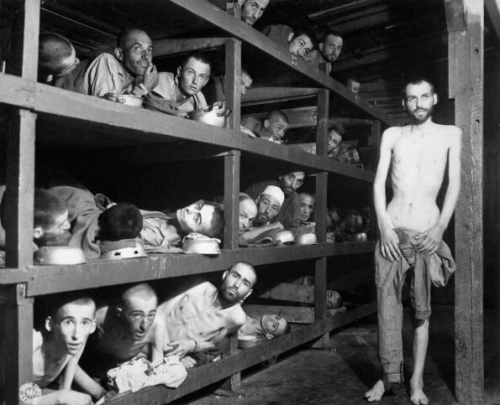
[I] asked to see one of the barracks. It happened to be occupied by Czechoslovaks. When I entered, men crowded around, tried to lift me to their shoulders. They were too weak. Many of them could not get out of bed. I was told that this building had once stabled 80 horses. There were 1200 men in it, five to a bunk. The stink was beyond all description.

They called the doctor. We inspected his records. There were only names in the little black book — nothing more — nothing about who had been where, what he had done or hoped. Behind the names of those who had died, there was a cross. I counted them. They totaled 242 — 242 out of 1200, in one month.

As we walked out into the courtyard, a man fell dead. Two others, they must have been over 60, were crawling toward the latrine. I saw it, but will not describe it.

In another part of the camp they showed me the children, hundreds of them. Some were only 6 years old. One rolled up his sleeves, showed me his number. It was tattooed on his arm. B-6030, it was. The others showed me their numbers. They will carry them till they die. An elderly man standing beside me said: “The children — enemies of the state!” I could see their ribs through their thin shirts….

We went to the hospital. It was full. The doctor told me that 200 had died the day before. I asked the cause of death. He shrugged and said: “tuberculosis, starvation, fatigue and there are many who have no desire to live. It is very difficult.” He pulled back the blanket from a man’s feet to show me how swollen they were. The man was dead. Most of the patients could not move.

I asked to see the kitchen. It was clean. The German in charge….showed me the daily ration. One piece of brown bread about as thick as your thumb, on top of it a piece of margarine as big as three sticks of chewing gum. That, and a little stew, was what they received every 24 hours. He had a chart on the wall. Very complicated it was. There were little red tabs scattered through it. He said that was to indicate each 10 men who died. He had to account for the rations and he added: “We’re very efficient here.”

We proceeded to the small courtyard. The wall adjoined what had been a stable or garage. We entered. It was floored with concrete. There were two rows of bodies stacked up like cordwood. They were thin and very white. Some of the bodies were terribly bruised; though there seemed to be little flesh to bruise. Some had been shot through the head, but they bled but little.

I arrived at the conclusion that all that was mortal of more than 500 men and boys lay there in two neat piles. There was a German trailer, which must have contained another 50, but it wasn’t possible to count them. The clothing was piled in a heap against the wall. It appeared that most of the men and boys had died of starvation; they had not been executed.

But the manner of death seemed unimportant. Murder had been done at Buchenwald. God alone knows how many men and boys have died there during the last 12 years. Thursday, I was told that there were more than 20,000 in the camp. There had been as many as 60,000. Where are they now?

I pray you to believe what I have said about Buchenwald. I reported what I saw and heard, but only part of it. For most of it, I have no words. 

If I have offended you by this rather mild account of Buchenwald, I’m not in the least sorry….

The fact is that as much as we want to pretend that what happened a Buchenwald, Flossenbürg, Dachau, Bergen-Belsen, Auschwitz, Soribor, Belzec, and Treblinka are images from history that cannot happen again, they are an ever present reality and they cannot be ignored. Sadly, I cannot help but to imagine that this can and will happen again in my lifetime. The late Primo Levi, a Jewish Italian philosopher and survivor of Auschwitz wrote: “It happened, it can happen again.” 

I will now quote from one of my favorite episodes of Star Trek the Next Generation called The Drumhead uttered by Jean Luc Picard:

We think we’ve come so far. Torture of heretics, burning of witches it’s all ancient history. Then – before you can blink an eye – suddenly it threatens to start all over again.

That is our reality. There are people, even neighbors and those that we think are friends who would become perpetrators or remain bystanders when those that transgress the way of Trump . I would love to be wrong about this, but I am a historian and a theologian and I know the human condition far too well to sit back and remain silent, no matter what the cost.

I often quote historian Timothy Snyder, but he was all too correct when he wrote these words about three and a half years ago:

The European history of the twentieth century shows us that societies can break, democracies can fall, ethics can collapse, and ordinary men can find themselves standing over death pits with guns in their hands. It would serve us well today to understand why.

If you don’t believe me read the words of the President, his closest supporters, the prominent political preachers of the Christian Right, and any number of Trump leaning columnists, pundits, and politicians. There are some who are so far gone that they will accuse any opponent of being disloyal, not the the Constitution or the law but to President Trump.

Some of the preachers even blame the Jews for the current Coronavirus 19 pandemic, as well as abortion and pornography. One, a supposed “Christian Pastor” and I use those two words loosely, named Rick Wiles specifically blamed the Jews for controlling abortion and pornography. He said that President Trump wouldn’t take executive action to shut down porn or abortion because his daughter Ivanka and her husband Jarod Kushner are Jews. Earlier in the month he blamed the Jews for Coronavirus as well. I can fault Jarod and Ivanka for much, but being Jews or being responsible for abortion and pornography, my God no. Sadly, there a lot more like Wiles out there.

Others don’t directly blame the Jews, but use other terms coined by the American and German eugenicists in the 1920s, 1930s, and were finally put into action by the Nazis in 1939. These people, often very learned decided that others, particularly the elderly, the chronically sick, the mentally ill, the physically or mentally disabled, “asocials”, babies born with disabilities or illnesses, were not worth keeping alive. Bill O’Reilly, formerly of Fox News described most of the victims of the virus “were on their last legs anyway.”  His words reminded me of the terms of the eugenicists and the Nazi killers, “Life unworthy of life.” 

In 2018, one of those people tried to get my commanding officer to have me tried by Court Martial for a sermon in which he lied about what I said. I had to spend my money to hire a lawyer to defend me from the false charges and have them dismissed during the preliminary investigation.

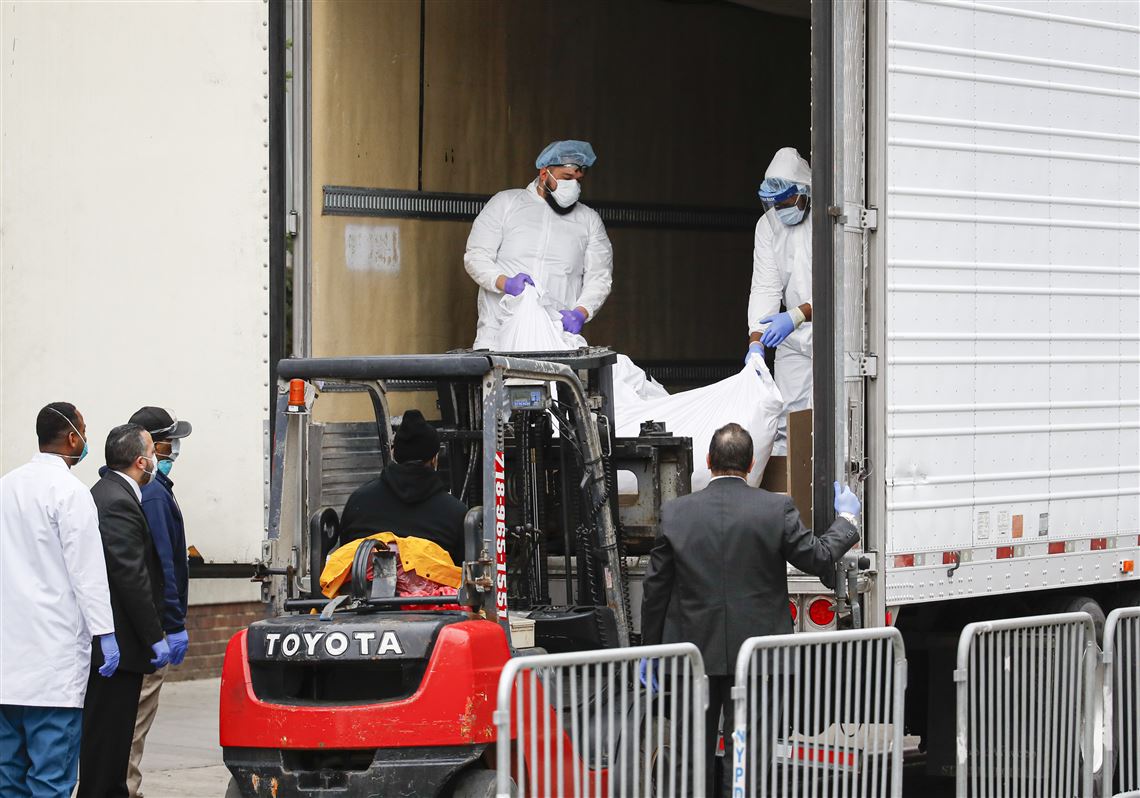
No we are living in the middle of a deadly pandemic that has officially killed over 20,000 Americans, infected a half million more, and has a death rate of 41% among resolved cases, that is those who have died or survived the virus. Sadly, that number represents under 10% of the total official number of cases, of which around 481,00o are still active. Within weeks the economy has crashed, and the unemployment rate is over 10%. Mass graves for the dead are being dug in New York.

If the President desired to use them, there are a host of Executive Orders that would give him nearly absolute power. I am sure that his executive centric Attorney General, Bob Barr would no doubt implement in order to secure total power. So far the President has not shown the will to truly wield his executive powers during the current national emergency. For the first time all 50 States are under emergency declarations. I hope that the President resists the urge to listen to people like the Attorney General, or anyone advocating such action.

Trust me, if this happens and we lat it go, our fate will be worse than that of Nazi Germany because we should have known better. We should have learned from Dwight Eisenhower and George Patton. We should have learned fro Dietrich Bonhoeffer and Martin Niemöller, we should have learned from the Nuremberg trials, but we have not.

So with all of that happy commentary I will leave you until tomorrow.

Until then have a good night, and please, never forget.

Peace

Padre Steve+

8 Comments

Filed under Coronavirus, Diseases Epidemics and Pandemics, euthanasia, germany, History, holocaust, laws and legislation, natural disasters, nazi germany, News and current events, Political Commentary, world war two in europe

Routines Thrown Out of Kilter: A Good Friday Reflection in the Season of COVID


Friends of Padre Steve’s World,

It has been a strange Good Friday, and for that matter Holy Week itself. With the Coronavirus pandemic and the resultant interruption of our normal daily routines, it has been hard to keep track of what day it is. This week was very busy at work and on Tuesday I actually asked a co-worker what day it was, and asked the same of Judy on Wednesday. I don’t know about you, but the end of my former routine has left me somewhat untethered.

But I guess that was the way the followers of Jesus felt on that first Good Friday. With the exception of John, and Mary the Mother of Jesus the rest went into hiding, fearing for their lives. Now instead of packed churches and Easter Egg hunts, family get togethers, or other celebrations, we have empty church buildings and most other events are cancelled, severely restricted, or modified due to social distancing and other precautions.

This doesn’t simply effect Christians, but others whose religious gatherings, such as the Jewish Passover which began last night, or Ramadan for Muslims which begins in May. Likewise, non-religious people have also seen their own routines thrown out of kilter.

I don’t really have any words of wisdom to share except to believe that whatever the new normal is, that we will find ways of building new routines, social, or religious as time goes by.

Today, I have tried to stay offline as much as possible, to take a step back, reflect,  think and pray.  I did this while I was sitting in social isolation while waiting for oil changes and inspections to be done on our cars. Likewise, I paid particular heed to the separation, and the physical changes, and barriers of different types, including masks while picking up a cup of coffee or Coke in convenience stores. I walked  down one of our city’s busiest streets only to notice the emptiness of businesses, churches, and traffic.

While walking to get coffee while waiting on the first car, I saw a Methodist church with three wooden crosses planted on it. One had a piece of black cloth attached, blowing in the chilliness of a stiff breeze. I paused, and in that moment I imagined more about the pain, emptiness, separation, and loneliness of that first Good Friday than I think I ever did before.

On my way home I received a call from one of our civilian workers. He believed that he and other workers had been exposed to COVID, due to their proximity to a worker who had tested positive. I was able to refer him to someone who had the influence to get an answer to him. I was happy to help, but I worry for him and others exposed to the virus.

But, for me, those crosses and that black cloth symbolized all that we are all going through today with this pandemic. The deaths, the suffering, the anxieties about the virus, and the devastating ripple effects: people being separated from family and friends at death, friends without jobs, people worrying about making car payments, rent or mortgage payments, utilities, and other bills, and wondering if their lives will ever be the same or return somewhat normal. That list can go on and on.

Add to it the separation from family, friends, and our daily routines, all of which to some extent we grieve. For me, the words of T.E. Lawrence ring true today:

“You wonder what I am doing? Well, so do I, in truth. Days seem to dawn, suns to shine, evenings to follow, and then I sleep. What I have done, what I am doing, what I am going to do, puzzle and bewilder me. Have you ever been a leaf and fallen from your tree in autumn and been really puzzled about it? That’s the feeling.”

Yes, that is the feeling,

Peace,

Padre Steve+

2 Comments

Filed under christian life, Coronavirus, faith, Loose thoughts and musings, News and current events, Religion

“We are All Americans” Reflection on Appomattox during The COVID-19 Pandemic

chamberlian gordon appomattox

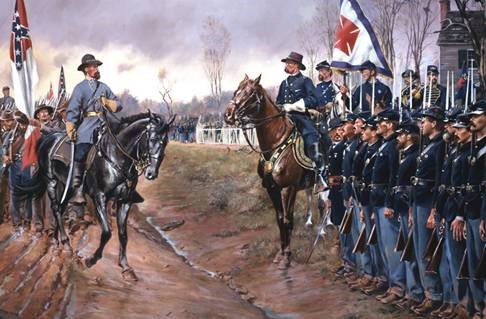
Joshua Chamberlain Receives the Surrender of John Gordon at Appomattox

Friends of Padre Steve’s World,

It has been a difficult, tiring, and yet extraordinary week. I have had little sleep, and did all that I could do to be with and among the people I serve. Of course I always wear a high quality face mask when outside the confines of my very isolated cubicle so I can be out and among them. Unfortunately, technology, the unpreparedness of our nation and military for the novel Coronavirus pandemic, and my own medical needs made yesterday very exhausting and frustrating. I haven’t published anything here since 7 April, which is unusual for me, as I seldom miss a day without writing something. Over the past couple of days I have been working on a different article which will be later today or early tomorrow. I just thought that this was more timely.

So now I am publishing a highly edited and revised post about the surrender of General Robert E. Lee and his Army of Northern Virginia to the Armies commanded by Lieutenant General Ulysses S. Grant at Appomattox.

That event is something that all Americans should still celebrate today, because it was a moral and patriotic act of surrendering individual agendas for the sake of the Union, reconciliation, and equality. I hope that we can learn from it today.

Until tomorrow or whenever,

Peace,

Padre Steve+

One hundred and fifty-five years ago on the 9th and 10th of April 1865, four men, Ulysses S Grant, Robert E. Lee, Joshua Lawrence Chamberlain and Ely Parker, taught succeeding generations of Americans the value of mutual respect and reconciliation.

The four men were all very different. The very thought that they would do so after a bitter and bloody war that had cost the lives of close to three quarters of a million Americans which had left hundreds of thousands others maimed, shattered or without a place to live, and who had seen vast swaths of the country ravaged by war and its attendant plagues is quite remarkable.

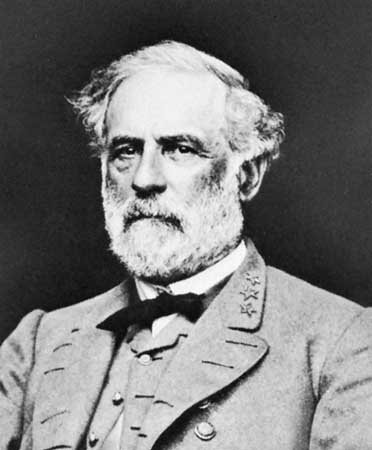
The differences in the men, their upbringing, and their views about life seemed to be insurmountable. The Confederate commander, General Robert E. Lee was the epitome of a Southern aristocrat and career army officer.

Lieutenant General Ulysses S. Grant, like Lee was a West Point graduate and veteran of the War with Mexico, but there the similarities ended. Grant was an officer of humble means who had struggled with alcoholism and failed in his civilian life after he left the army, before returning to it as a volunteer when war began.

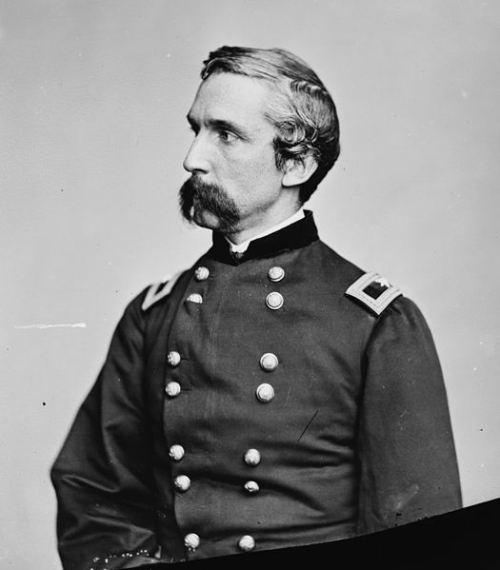
Major General Joshua Lawrence Chamberlain had been a professor of rhetoric and natural and revealed religion from Bowdoin College until 1862 when he volunteered to serve in the Army against the wishes of his wife. He was one of the heroes of Little Round Top at the Battle of Gettysburg, who helped exemplify the importance of citizen soldiers, and military professionals in peace and war.

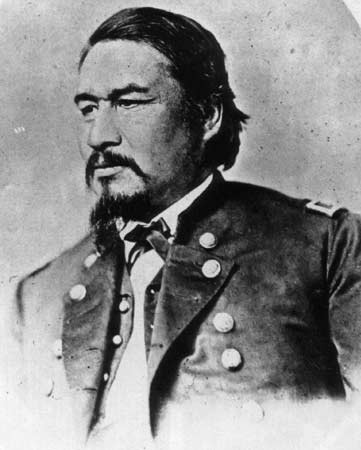
Finally there was Colonel Ely Parker, a full-blooded Seneca Indian.  Parker was professional engineer by trade, but was barred from being an attorney because as a Native American he was never considered an American citizen. At the beginning of the war Parker was rejected from serving in the army for the same reason, but his friend Grant obtained him an officer’s commission and kept him on his staff for the entirety of the war.
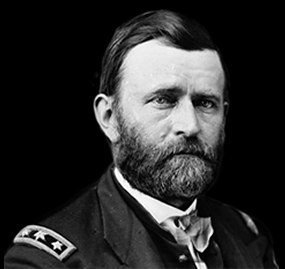
grant 1

General Ulysses S. Grant

On 5 April 1865 the Confederate line around the fortress of Petersburg was shattered at the battle of Five Forks. To save the last vestiges of his army Lee attempted to withdraw to the west. Within a few days the once magnificent Army of Northern Virginia was trapped near the town of Appomattox. On the morning of April 9th 1865 Lee replied to an entreaty of Lieutenant General Ulysses S. Grant requesting that he and his Army of Northern Virginia be allowed to surrender. Lee wrote to Grant:

HEADQUARTERS ARMY OF NORTHERN VIRGINIA, APRIL 9, 1865

Lieut. Gen. U.S. GRANT:

I received your note of this morning on the picket-line, whither I had come to meet you and ascertain definitely what terms were embraced in your proposal of yesterday with reference to the surrender of this army. I now ask an interview in accordance with the offer contained in your letter of yesterday for that purpose.

R.E. LEE, General.

The once mighty Army of Northern Virginia, which had won many victories, but more defeats, and in almost every battle except Fredericksburg and Cold Harbor, lost as a higher percentage of casualties that they could not replace, as compared to their foes in the Army of the Potomac. At its peak strength during the Gettysburg campaign, Lee’s Army numbered nearly 80,000 men, but less than two years later it was now a haggard and emaciated, but still proud force of about 15,000 soldiers. For Lee to continue the war now would mean that they would have to face even more hopeless odds against a vastly superior enemy. Grant recognized this and wrote Lee:

I am equally anxious for peace with yourself, and the whole North entertains the same feeling. The terms upon which peace can be had are well understood. By the South laying down their arms they will hasten that most desirable event, save thousands of human lives, and hundreds of millions of property not yet destroyed. Seriously hoping that all our difficulties may be set-tied without the loss of another life, I subscribe myself, &c.,

Since the high water mark at Gettysburg, Lee’s army had been on the defensive. Lee’s ill-fated offensive into Pennsylvania was one of the two climactic events that sealed the doom of the Confederacy. The other was Grant’s victory at Vicksburg, Mississippi, which surrendered to him a day after Pickett’s Charge. That day became known as The Most Glorious Fourth, because the dual defeats coincided with the 87th anniversary of the Declaration of Independence. But it was Grant’s victory which cut the Confederacy in half, and was the true beginning of the end of the Confederacy.
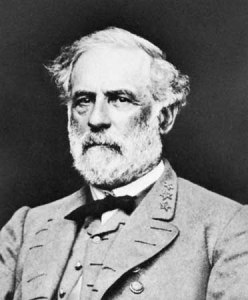
ileerob001p1

General Robert E. Lee

However, those disastrous defeats did not end the war. Lee conducted a bloody and ultimately doomed defensive struggle that lasted through 1864 as Grant bled the Confederates dry during the Overland Campaign, leading to the long siege of Petersburg. Likewise the armies of William Tecumseh Sherman cut a swath through the Deep South, captured Atlanta, the true industrial and economic hub of the Confederacy. Grant forced Lee into a protracted siege at Petersburg, while Sherman cut a swath across Georgia and the Carolinas, capturing Charleston, South Carolina, the ideological heart of the Confederate cause, South Carolina’s Capital of Columbia, and Wilmington, North Carolina, the last of the major Confederate seaports.

With each battle that followed Gettysburg, the Army of Northern Virginia became weaker, and finally after the nine month long siege of Petersburg ended with a Union victory there was little else to do. Lee wanted to continue the war but his beloved shatter shell of an Army was trapped. On the morning of April 9th a final attempt to break through the Union lines by Major General John Gordon’s division was turned back by vastly superior Union forces.

But, two days before, on April 7th Grant wrote a letter to Lee, which began the process of ending the war in Virginia. He wrote:

General R. E. LEE:

The result of the last week must convince you of the hopelessness of further resistance on the part of the Army of Northern Virginia in this struggle. I feel that it is so, and regard it as my duty to shift from myself the responsibility of any further effusion of blood, by asking of you the surrender of that portion of the C. S. Army known as the Army of Northern Virginia.

U.S. GRANT, Lieutenant-General

Lee was hesitant to surrender knowing Grant’s reputation for insisting on unconditional surrender, terms that Lee could not yet bring himself to accept. Lee replied to Grant’s offer with this message:

HEADQUARTERS ARMY OF NORTHERN VIRGINIA, APRIL 7, 1865 Lieut. Gen. U.S. GRANT:

I have received your note of this date. Though not entertaining the opinion you express on the hopelessness of further resistance on the part of the Army of Northern Virginia, I reciprocate your desire to avoid useless effusion of blood, and therefore, before considering your proposition, ask the terms you will offer on condition of its surrender.

R.E. LEE, General.

The correspondence continued over the next day even as the Confederates hoped to fight their way out of the trap that they were in. But now Robert E. Lee, who had through his efforts extended the war for at least six months, knew that he could no longer continue. Even so, some of Lee’s younger subordinates wanted to continue the fight. When his artillery chief Porter Alexander recommended that the Army be released he recommended that the soldiers of the Army, “take to the woods and report to their state governors.”

Lee knew that such action would bring about even more death and destruction.

“We have simply now to face the fact that the Confederacy has failed. And as Christian men, Gen. Alexander, you & I have no right to think for one moment of our personal feelings or affairs. We must consider only the effect which our action will have upon the country at large.”

Lee continued:

“Already [the country] is demoralized by the four years of war. If I took your advice, the men would be without rations and under no control of their officers. They would be compelled to rob and steal in order to live…. We would bring on a state of affairs it would take the country years to recover from… You young fellows might go bushwhacking, but the only dignified course for me would be to go to General Grant and surrender myself and take the consequences of my acts.”

Alexander was so humbled at Lee’s reply he later wrote “I was so ashamed of having proposed such a foolish and wild cat scheme that I felt like begging him to forget he had ever heard it.” When Alexander saw the gracious terms of the surrender he was particularly impressed with how non-vindictive the terms were, especially in terms of parole and amnesty for the surrendered soldiers.

Abraham Lincoln had already set the tone for the surrender in his Second Inaugural Address given just over a month before the surrender of Lee’s army. Lincoln closed that speech with these words of reconciliation.

“With malice toward none, with charity for all, with firmness in the right as God gives us to see the right, let us strive on to finish the work we are in, to bind up the nation’s wounds, to care for him who shall have borne the battle and for his widow and his orphan, to do all which may achieve and cherish a just and lasting peace among ourselves and with all nations.”
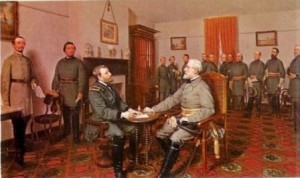
appomattox surrender

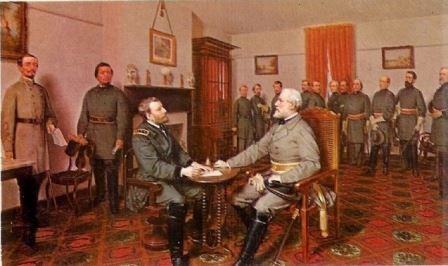
Lee met Grant at the house of Wilmer McLean, who had moved to Appomattox in 1861 after his home near Manassas had been used as a Confederate headquarters and was damaged by artillery fire. Lee was dressed in his finest uniform complete with sash, while Grant was dressed in a mud splattered uniform and overcoat only distinguished from his soldiers by the three stars on his shoulder boards. Grant’s dress uniforms were far to the rear in the baggage trains, and Grant was afraid that his slovenly appearance would insult Lee, but it did not. It was a friendly meeting. Before getting down to business the two reminisced about the Mexican War in which they had both served and first met. At that time Lee was one of the rising stars of the Army, and Grant a mere Lieutenant.

Grant provided his vanquished foe very generous surrender terms:

“In accordance with the substance of my letter to you of the 8th inst., I propose to receive the surrender of the Army of N. Va. on the following terms, to wit: Rolls of all the officers and men to be made in duplicate. One copy to be given to an officer designated by me, the other to be retained by such officer or officers as you may designate. The officers to give their individual paroles not to take up arms against the Government of the United States until properly exchanged, and each company or regimental commander sign a like parole for the men of their commands. The arms, artillery and public property to be parked and stacked, and turned over to the officer appointed by me to receive them. This will not embrace the side-arms of the officers, nor their private horses or baggage. This done, each officer and man will be allowed to return to their homes, not to be disturbed by United States authority so long as they observe their paroles and the laws in force where they may reside.”

When Lee left the building Federal troops began cheering in jubilation, but Grant ordered them to stop. He did not want to personally humiliate Lee anymore than the reality of defeat and surrender already done.  Afterward, Grant felt a sense of melancholy and wrote “I felt…sad and depressed, at the downfall of a foe who had fought so long and valiantly, and had suffered so much for a cause, though that cause was, I believe, one of the worst for which a people has fought.” He later noted: “The Confederates were now our countrymen, and we did not want to exult over their downfall.”

In the hours before and after the signing of the surrender documents old friends and West Point classmates, separated by four long years of war gathered on the porch or around the house. Grant and others were gracious to their now defeated friends and the bitterness of war began to melt away. Some Union officers offered money to help their Confederate friends get through the coming months. It was an emotional reunion, especially for the former West Point classmates gathered there.

“It had never been in their hearts to hate the classmates they were fighting. Their lives and affections for one another had been indelibly framed and inextricably intertwined in their academy days. No adversity, war, killing, or political estrangement could undo that. Now, meeting together when the guns were quiet, they yearned to know that they would never hear their thunder or be ordered to take up arms against one another again.”

Grant also ordered that 25,000 rations be transported to the starving Confederate army waiting to surrender. The gesture meant much to the defeated Confederate soldiers who had had little to eat ever since the retreat from Petersburg began.

The surrender itself was accomplished with a recognition that only soldiers who have given the full measure of devotion can know when confronting a defeated and humiliated enemy who before had been their countrymen. Major General Joshua Lawrence Chamberlain, the heroic victor of Little Round Top was directed by Grant to receive the final surrender of the defeated Confederate infantry divisions on the morning of April 12th 1865.

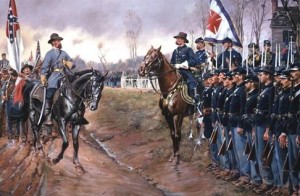
The morning dawned rainy and the beaten Confederates marched to the surrender grounds. As first division in the column, that of John Gordon passed, Chamberlain was so moved by emotion he ordered his soldiers to salute the defeated enemy for whose cause he had no sympathy. Chamberlain honored the defeated Rebel army by bringing his division to present arms.

Gordon, was “riding with heavy spirit and downcast face,” looked up, surveyed the scene, wheeled about on his horse, and “with profound salutation returned the gesture by lowering his saber to the toe of his boot. The Georgian then ordered each following brigade to carry arms as they passed third brigade, “honor answering honor.”
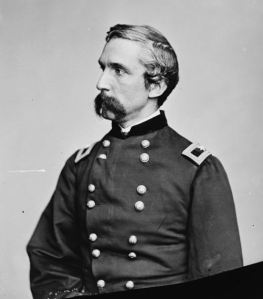
joshua_chamberlain_-_brady-handy

Joshua Lawrence Chamberlain

Chamberlain was not just a soldier, but before the war had been Professor of Natural and Revealed Religions at Bowdoin College, and a student of theology before the war. Chamberlain, a citizen soldier could not help to see the significance of the occasion. He understood that some people would criticize him for saluting the surrendered enemy.

However, Chamberlain, unlike others, understood the value of reconciliation, and at his heart was a Christian, and theologian, as well a staunch abolitionist and Unionist, who had nearly died on more than one occasion fighting the defeated Confederate Army. However, unlike many hardline politicians and ideologues, Chamberlain understood that the achievement of equality for all, the freedom, enfranchisement, and integration of African Americans into society, and true Union could be achieved unless the enemies became reconciled to one another. At that point the men of the Army of Northern Virginia knew that they were defeated and at the mercy of those who vanquished them.

Chamberlain noted that his reasons for doing what he did afterward.

“The momentous meaning of this occasion impressed me deeply. I resolved to mark it by some token of recognition, which could be no other than a salute of arms. Well aware of the responsibility assumed, and of the criticisms that would follow, as the sequel proved, nothing of that kind could move me in the least. The act could be defended, if needful, by the suggestion that such a salute was not to the cause for which the flag of the Confederacy stood, but to its going down before the flag of the Union. My main reason, however, was one for which I sought no authority nor asked forgiveness. Before us in proud humiliation stood the embodiment of manhood: men whom neither toils and sufferings, nor the fact of death, nor disaster, nor hopelessness could bend from their resolve; standing before us now, thin, worn, and famished, but erect, and with eyes looking level into ours, waking memories that bound us together as no other bond;—was not such manhood to be welcomed back into a Union so tested and assured? Instructions had been given; and when the head of each division column comes opposite our group, our bugle sounds the signal and instantly our whole line from right to left, regiment by regiment in succession, gives the soldier’s salutation, from the “order arms” to the old “carry”—the marching salute. Gordon at the head of the column, riding with heavy spirit and downcast face, catches the sound of shifting arms, looks up, and, taking the meaning, wheels superbly, making with himself and his horse one uplifted figure, with profound salutation as he drops the point of his sword to the boot toe; then facing to his own command, gives word for his successive brigades to pass us with the same position of the manual,—honor answering honor. On our part not a sound of trumpet more, nor roll of drum; not a cheer, nor word nor whisper of vain-glorying, nor motion of man standing again at the order, but an awed stillness rather, and breath-holding, as if it were the passing of the dead!”

The next day Robert E Lee addressed his soldiers for the last time. Lee’s final order to his loyal troops was published the day after the surrender. It was a gracious letter of thanks to men that had served their beloved commander well in the course of the three years since he assumed command of them outside Richmond in 1862.

General Order
No. 9

After four years of arduous service marked by unsurpassed courage and fortitude, the Army of Northern Virginia has been compelled to yield to overwhelming numbers and resources.

I need not tell the survivors of so many hard fought battles, who have remained steadfast to the last, that I have consented to the result from no distrust of them.

But feeling that valour and devotion could accomplish nothing that could compensate for the loss that must have attended the continuance of the contest, I have determined to avoid the useless sacrifice of those whose past services have endeared them to their countrymen.

By the terms of the agreement, officers and men can return to their homes and remain until exchanged. You will take with you the satisfaction that proceeds from the consciousness of duty faithfully performed, and I earnestly pray that a merciful God will extend to you his blessing and protection.

With an unceasing admiration of your constancy and devotion to your Country, and a grateful remembrance of your kind and generous consideration for myself, I bid you an affectionate farewell. — R. E. Lee, General

Sadly, Lee failed to acknowledge his role in bringing the Confederacy to complete destruction by not telling his Commander in Chief, President Jefferson Davis that the war was lost when Atlanta fell. For all his virtues, he could not overcome his innate racism, and lack of moral courage to confront an arrogant superior that the war could not be won and the Confederacy surrender. Only Lee could have done so, Davis would not listen to anyone else, as no one had Lee’s stature and respect among Southerners. But he did not do that until his army was for all intents and purposes destroyed. If effect he continued to fight when there was no human, or Christian purpose to do so. With the fall of Atlanta he knew that there was no political, economic, diplomatic, or military reason to continue the war, but he did so anyway.

But Appomattox was the beginning of the end of the end. The war had really been lost at Gettysburg and Vicksburg in July 1863, and was certainly lost when Sherman captured Atlanta and began his march across Georgia, which ensured that the Confederates would have to deal with Abraham Lincoln and not the Northern Peace Democrats or Copperheads, who were willing to let the Confederacy live than to continue a war that was being won on all fronts. Other Confederate forces continued to resist for several weeks, but with the surrender of the Army of Northern Virginia, led by the man that nearly all Southerners saw as the embodiment of their nation the war was effectively over.

Lee had fought hard and after the war was still under the charge of treason, but he understood the significance of defeat and the necessity of moving forward as one nation. In August 1865 Lee wrote to the trustees of Washington College of which he was now President:

“I think it is the duty of every citizen, in the present condition of the Country, to do all in his power to aid the restoration of peace and harmony… It is particularly incumbent upon those charged with the instruction of the young to set them an example of submission to authority.

Unfortunately, by that time, despite his remaining prejudice and failure to acknowledge the evil of the cause for which he had fought, offered words which should have been heeded by every man and woman in the former Confederacy.
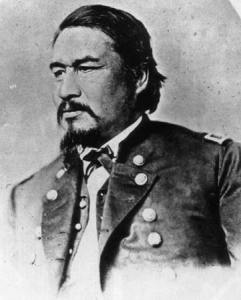
eparker05-966-g

Brigadier General Ely Parker

Lee’s words, do offer a lesson for all of us in our terribly divided land need to learn regardless of or political affiliation or ideology in the midst of a global pandemic that pays no respect to the lives of anyone, that knows no border, race, creed, nation, or religion.

After he had signed the surrender document, Lee learned that Grant’s Aide-de-Camp Colonel Ely Parker, was a full-blooded Seneca Indian. He stared at Parker’s dark features and said: “It is good to have one real American here.”

Parker, a man whose people had known the brutality of the White man, as well as a man who was not considered a citizen and would never gain the right to vote in his lifetime, replied, “Sir, we are all Americans.”

That afternoon Parker would receive a commission as a Brevet Brigadier General of Volunteers, making him the first Native American to hold that rank in the United States Army. He would later be made a Brigadier General in the Regular Army.

I don’t know what Lee thought of that. His reaction is not recorded and he never wrote about it after the war, but it might have been in some way led to Lee’s letter to the trustees of Washington College. I think with our land so divided, ands that is time again that we learn the lessons so evidenced in the actions and words of Ely Parker, Ulysses Grant, Robert E. Lee and Joshua Chamberlain, for we are all Americans.

Sadly, I think that there is a portion of the American population who will not heed these words and will continue to agitate for policies and laws similar to those that led to the Civil War, and which those that could not reconcile defeat, and almost immediately put into place laws that made newly freed slaves, into slaves by another name again during the Post-Reconstruction and Jim Crow eras. For me such behavior and attitudes are incompressible, but they are all too real, and all too present in our divided nation.

But I still maintain hope that in spite of everything that divides us, in spite of the intolerance and hatred of some, that we can overcome. I think that the magnanimity of Grant in victory, the humility of Lee in defeat, the graciousness of Chamberlain in honoring the defeated foe, and the stark bluntness of Parker, the Native American, in reminding Lee, that “we are all Americans,” is something that is worth remembering, and yes, even emulating today.

But even more so we need to remember the words of the only man whose DNA and genealogy did not make him a European transplant, the man who Lee refereed to as the only true American at Appomattox, General Ely Parker, the Native American who fought for a nation that not acknowledge him as a citizen until long after he was dead.

In the perverted, unrequited racist age of President Donald Trump we have to stop the bullshit, and take to heart the words of Ely Parker. “We are all Americans.” If we don’t get that there is no hope for our country. No amount of military or economic might can save us if we cannot understand Parker’s words, or the words of the Declaration: “We hold these truths to be self evident, that all men are created equal…” Really, it does not matter if our relatives were second sons of European Gentry, religious dissidents, refugees of repressive regimes, African Slaves, Asians seeking a new life in a new country, or Mexican citizens who turned on their own country to become citizens of a new Republic, men like Mariano Vallejo, the Mexican governor of El Norte and one of the First U.S. Senators from California.

Let us never forget Ely Parker’ words at Appomattox, “We are all Americans.”

Sadly, there are not just more than a few Americans, and many with no familial or other connection to the Confederacy and the South than deeply held racism who would rather see another bloody civil war because they hate the equality of Blacks, Women, immigrants, and LGBTQ Americans more than they love the Declaration of Independence and the Constitution of the United States.

That is why Parker’s words to Lee still matter so much and why we must never give up the fight for equality for all Americans. Likewise, whether one likes it or not, Robert E. Lee broke his sacred oath to the Constitution as a commissioned officer, and refused to free the slaves entrusted to his care by his Father in Law in 1859, who also refused to support his Confederate President’s plan to emancipate and free African American slaves who were willing to fight for the Confederacy until February 1865.

Lee the Myth is still greater than Lee the man in much of this country. Lee the man is responsible for the deaths for more Americans than the leaders of Imperial Germany, Imperial Japan, Nazi Germany, or any other foreign power. He even cast aside such loyalists as George Pickett, whose division he destroyed in a suicidal attack at Gettysburg on July 3rd 1863, and then continued to damn Pickett for mistakes which were his own until the end of the war.

Both sides of my family fought for the Confederacy as officers and members of the 8th Virginia Cavalry. Most reconciled, but others didn’t, including the patriarch of my paternal side of the family. His decision ended up costing the family millions of dollars in the following years. The maternal side was smart enough to reconcile after the war and to later engage in the profoundly libertarian practice of bootlegging until the end of prohibition. I don’t know if any members of either side of my family were KKK supporters, but if they were I wouldn’t be surprised.  They lost almost all they had during the war by fighting on the wrong side and when their rebellion ended in defeat many refused to reconcile with the United States, or head the words of Robert E. Lee, and they deserved it.

But, despite his words Robert E. Lee refused to completely admit his crime of treason. He used the language of reconciliation without fully embracing it.

So for me April 9th is very personal. I have served my country for nearly 38 and a half years, and in the midst of a pandemic I continue to serve while wondering if the grim necessity of the times keep me from retiring.

That being said, I cannot abide men and women who treat the men and women that I have served with in the defense of this county as less than human or fully entitled to the rights that are mine, more to my birth and race than today than any of my inherent talents or abilities. That includes my ancestors who fought for the Confederacy on both sides of my family. Ancestors or not, they were traitors to everything that I believe in and hold dear.

As for me, principles and equality trump all forms of racism, racist ideology, and injustice, even when the President himself advocates for them. I am a Union man, despite my Southern ancestry, and I will support the rights of people my ancestors would never support, Blacks, Hispanics, Women, LTBTQ, and other racial, religious, or gender minorities.

So I am a Unionist and a continuing abolitionist when it comes to protecting and advancing the rights of those whose rights continue to be trumped by prejudice. So I am a supporter of Equal rights for African Americans, immigrants of all races, nationalities, and religions. Likewise, I am a women’s rights advocate, including their reproductive rights, and a supporter of LGBTQ people and their rights, most of which are opposed by the Evangelical Christians who I grew up with. I also will not hesitate to criticize the elected President of the United States when he pisses on the preface of the Declaration of Independence, the United States Constitution, and attacks the bedrock principles of the Bill of Rights.

How can I be silent? I know that I cannot be a bystander, Even when in the midst of a pandemic these same people are not only being victimized by the Coronavirus pandemic, but by the government that should be doing it can to protect and defend the lives and livelihoods of all of us, citizens, those on the way to citizenship, or those who simply hope and long to be free by leaving their homelands to become truly free.

So I will stand fast on this anniversary of Appomattox and echo the words of Eli Parker to all, no-matter their status or unforgiving ideology that stand against them:  “Sir, we are all Americans.” Such people, who represent the most extreme and ideological pillars of the political Right and Left, may not understand this, but I certainly do.

The failure to work towards reconciliation and equality on both sides of the ideological spectrum will doom us all, and destroy the Republic and the ideals that were planted in the Declaration, the Bill of Rights, and the Constitution, the XIII, XIV, XV, and XIX Amendments, the Civil Rights Act of 1965, the Voting Rights Act of 1964, the end of DOMA, and the yesterday to be ratified Women’s Rights Act. The reversal of any of these achievements places us on a trail that only leads to an imperfect and imagined past which is often overplayed with myth and ideology to create a nation where diversity is the enemy, where race and religion matter more than the simple understanding that “all men are created equal and endowed by their creator with certain unalienable rights…” 


Leave a comment

Filed under civil rights, civil war, Coronavirus, ethics, faith, germany, Gettysburg, History, laws and legislation, leadership, LGBT issues, Military, national security, natural disasters, News and current events, Political Commentary, racism, Religion, spirituality, White nationalism

Nothing Seemed Simple Anymore: COVID 19 and How it Will Change our Lives

Friends of Padre Steve’s World,

Barbara Tuchman wrote:

“One constant among the elements of 1914—as of any era—was the disposition of everyone on all sides not to prepare for the harder alternative, not to act upon what they suspected to be true.

Her words are as true as when she wrote the in her book The Guns of August, published over a half century ago. The fact is, that historically speaking all that we thought true about the world we live in has been changed in a historical nanosecond. Walter Lord, one of my favorite narrative historians wrote in his book The Good Years 1900-1914:

Economics were only part of the story. Almost overnight, Americans lost a happy, easygoing, confident way of looking at things. Gone was the bright lilt of “When You Wore a Tulip”; already it was the sadly nostalgic, “There’s a Long, Long Trail a-Winding,” or the grimly suggestive, “I Didn’t Raise My Boy to Be a Soldier.” A mounting crescendo of screaming headlines… atrocity stories… U-boat sinkings… charges and counter-charges shocked the nation, jarred its faith, left a residue of doubt and dismay.

Nothing seemed simple any more. Nothing was black and white. Nothing was “right” or “wrong,” the way Theodore Roosevelt used to describe things. And as the simple problems vanished, so did the simple solutions. Trust-busting, direct primaries, arbitration treaties and all the rest. They somehow lost their glamour as exciting panaceas, and nothing took their place. But the problems grew and grew —preparedness… taxes… war… Bolshevism… disillusionment… depression… Fascism… Moscow… fallout… space… more taxes.

So the old life slipped away, never to return again, and wise men sensed it almost at once. Men like Henry White, the immensely urbane diplomat who had served the country so well. “He instinctively felt,” according to his biographer Allan Nevins, “that his world —the world of constant travel, cosmopolitan intercourse, secure comfort and culture —would never be the same again.” The Philadelphia North American felt the same way, but in blunter words: “What does this mean but that our boasted civilization has broken down?”

Perhaps it was just as well. There was much that was wrong with this old way of living —its injustices, its naivete, its waste, its smug self-assurance. Men would come along to fix all that. New laws, controls, regulations, forms filled out in triplicate would keep anybody from getting too much or too little. And swarms of consultants, researchers, special assistants, and executive committees would make sure that great men always said and did the right thing.

There would be great gains. But after all the gains had been counted, it would turn out that something was also lost —a touch of optimism, confidence, exuberance, and hope. The spirit of an era can’t be blocked out and measured, but it is there nonetheless. And in these brief, buoyant years it was a spark that somehow gave extra promise to life. By the light of this spark, men and women saw themselves as heroes shaping the world, rather than victims struggling through it.

Actually, this was nothing unique. People had seen the spark before, would surely do so again. For it can never die as long as men breathe. But sometimes it burns low, leaving men uncertain in the shadows; other times it glows bright, catching the eye with breath-taking visions of the future.

That being said, yesterday was a good but exhausting day. The CDC and the military, including the Navy, came to their senses over the weekend and decided to recommend that all Americans were face masks to prevent more infections from the novel Coronavirus 19. They decided that as a minimum that even improvised masks could reduce the spread of the virus, even though the masks might not be fully effective. However, I was recommending that to my chain of command every time that I could over the past month, only to be told that the Navy was following CDC guidelines.

I have served as an ICU and ER Chaplain during two pandemics and I have to say that some protection, any protection, is better than none. So I went to work yesterday with the mask that Judy made for me and began my walk-about ministry for the the day. it is amazing how serious most people are taking things now versus a week or two ago. I guess we are finally waking up to the fact that the novel Coronavirus 19 is like nothing we have dealt with in our lifetimes, and it is changing the world that we live in before our very eyes. What we thought was true just a few weeks ago, and our supposed invulnerability to disaster or disease, has been shattered.

I lost count of the number of people I spent time with and checked on throughout the day. Tomorrow I will do more of the same with other across the shipyard. One of my jobs as a Chaplain is to help advise the Commander and other leaders of the pulse of the command, without breaking anyone’s confidentiality. I can say that morale among our sailors and civilian workers is pretty good, although there is a lot of anxiety about the COVID 19 pandemic, and all the economic, social, and family impacts that it is causing.

The fact is that people matter. I will do video, phone, email, or other types of non-face to face ministry, in fact I advertise that fact, but where I really belong is doing face to face ministry, within the confines of social distancing, with my face mask and gloves on, is walking, listening, talking, caring, sharing, and praying for our people. My God, the burdens that they are carrying are immense, as I am sure that yours are at this time.

Thankfully, where I work, we have a caring chain of command, and I am blessed to be serving where I am now. Not everyone can say that about their workplace, military or civilian. Our people, military and civilian alike make me proud, and it is an honor to serve them in a time of crisis. A longtime friend, and reader of my writings here had misunderstood some things I said. He wrote me a long and thoughtful private email. I have known him since I was a sophomore in high school, and his dad, a pastor played an important part in my life and ministry, until he unexpectedly died on an operating table at the hospital where he served as a chaplain.

Instead of being offended I took the time to write my friend back, to both thank him for his thoughts, express my continued thoughts and appreciation of him, and let him know that he and his family were never out of my prayers. I then took the time to explain things in my life that led me to where and who I am today, that he might have misinterpreted. He replied, that my explanation really helped understand why I write the way that I do, and he said, “it looks like all that you have been through before have been preparing you for today.”  I agree with that assessment, without all the things that I have been through, experienced, learned, and sometimes painfully grown from, all have helped prepare me for today.

Let’s face it, it is really hard to completely convey one’s story unless you occasionally share a meal, visit, or drink together. The virtual world of blogs, social media, texts, and instant messaging is helpful, but it is not the same as sitting alongside one another. This my preference, despite being an extreme introvert, to push out where my people are, and yes, social distancing is painful, but unfortunately necessary right now, but within the guidelines I still push myself out, when all the other institutional caregivers switch to non-face to face mediums. I do use them, but as a back up to face to face, mask and gloves, observing proper social distance visits to the places where my people work.

So with that being said I must lay down my head, say a few prayers and read myself to sleep with our oldest dog surprisingly snuggled at my feet.

Until tomorrow, stay safe and be careful out there.

Peace,

Padre Steve+


10 Comments

Filed under books and literature, Coronavirus, Diseases Epidemics and Pandemics, History, natural disasters, News and current events, Political Commentary, world war one

The Submarine Class that Revolutionized Naval Warfare

Friends of Padre Steve’s World,

I needed a bit of a break from writing about the novel Coronavirus 19 Pandemic. So tonight I answered some kind comments from friends and other people I met on Facebook, as well as wishing my mother a happy 85th Birthday. I also spent time with my Papillon dogs, while eating vegan bean burritos on low carb tortillas, with lots of jalapeño and habanero sauces, while binge watching “The Blacklist” while sipping a dram of an excellent single malt Scotch.

So tonight I have gone back to one of my staples, navy ships, in this case an older article about the class of World War II submarine, the German Type XXI U-Boat, it was a True Wonder weapon, which was the first submarine to truly be called one. So until whenever, I wish you all the best,

Peace,

Padre Steve+ 

Throughout history there have been ships that have changed the course of naval history, strategy and made previous types of ships obsolete overnight. Such ships included the USS Monitor, the HMS Dreadnought and USS Nautilus are but three, but we have to add to the list the German Type XXI U-Boats which forever changed the way that submarines were built around the world, as well as their deadliness. Now nuclear and diesel electric powered submarines have proven to be nearly undetectable, and are armed with torpedoes to sink surface ships or other submarines, conventionally armed or nuclear armed cruise missiles, even hypersonic ones, and Intercontinental Ballistic Missiles. The are capable of inserting special operations teams, and covertly conducting intelligence operations, and the Type XXI is the ancestor and inspiration for them all.

I was thinking of adding one of the first aircraft carriers to the list of three, but which one would I choose? The HMS Furious, Argus, or Hermès; the USS Langley, Lexington or Yorktown; or possible the IJN Hosho, Akagi, or Kaga? I cannot make that judgment. With the exception of Yorktown all the rest were experimental or conversions of other platforms. The aircraft carrier changed naval warfare, but the Type XXI revolutionized it in a way the aircraft carrier couldn’t. While aircraft carriers grew in size and power, they still remained detectable and their reach limited by the range of the aircraft that they carry. They are incredibly powerful warships and national strategic assets, but they are vulnerable and require the protection of multiple surface ships, and yes, even submarines in order to safeguard them and allow them to survive to ensure that they can survive long enough to complete their missions.

type xxi u-boat SRH025-p40

The Type XXI was designed in 1943 in order to regain the German initiative at sea, and thereby reassert German naval power in the Atlantic in order to turn the tide against the Allies. By 1943 the Allies had turned the tide against the Germans as the Type VII and Type IX U-Boats took heavy losses against naval units and convoys which now had air support of carrier and shore based aircraft at every stage of their trek across the North Atlantic. Likewise, the allied capture of an Enigma coding unit allowed the allies to read any any encoded radio transmission from the U-Boats, and their onshore commanders. Until the invention of the the Schnorchel device, the Type VII and Type IX boats had to surface for prolonged periods in order to recharge their batteries. Likewise they had limited range, speed and endurance when submerged. The same was true of allied submarines, but they did not have to operate against the innovations of the allies. The advent of the Escort Carrier, long range patrol bombers, and hunter killer groups of Destroyers and the new Destroyer Escorts took a great toll on the U-Boat Force. 1943 was the watershed in the U-Boat campaign against the Americans and British. Their losses became onerous when compared to the losses that they inflicted, and for all practical reasons the Germans had lost the war at sea.

U3008

U-3008 in U.S. Navy Service

In order to meet the challenge the Germans opted for new technology based on the high speed hydrogen powered Walter turbines for underwater operations. Since these turbines which produced a high underwater speed had short endurance,  the designers modified the design to use conventional diesels, but equipped the boats with batteries that had three times the capacity of previous boats. The Type XXI boats were a radical change from all previous submarine designs which were basically surface ships with the ability to operate underwater for limited periods of time. The Type XXIs were really the first true submarines. They could operate underwater at speeds that were faster than many of their opponents. They had a streamlined hull design which facilitated a higher submerged speed of 18 knots, and enabled silent running making them very difficult to track. They could remain underwater for 11 days while only needing 5 hours to recharge their batteries when using the schnorkel device.

Bundesarchiv_Bild_146-2008-0214,_Uboot_-Wilhelm_Bauer-_(ex_U_2540)

The Wilhelm Bauer the former U-2540 in 1960

The Type XXI had a full streamlined hull and conning tower. Equipment which were externally mounted such as the radio antennae, hydrophones, DF Ring, and forward planes were fully retractable. They had no deck guns, and their twin 20mm flak guns were mounted in a streamlined housing on the conning tower. The German designers eliminated the traditional open bridge in favor of three small openings for the watch officer and 2 lookouts. They had a superior silent running ability and at 15 knots were quieter than the US Navy’s Balao Class that could only make 8 knots submerged. They had a 1 inch thick steel aluminum alloy pressure hull with a designed crush depth of 280 meters (919 feet), a greater designed crush depth greater than any previous submarine. Based on the experience of the Type VII and Type IX boats which often exceeded their designed crush depth by hundreds of feet during the war.

The Type XXI’s incorporated other innovations which would be incorporated into the post-war submarines of the victorious Allied powers. Among these innovations were a semi-automatic hydraulic torpedo reload system which allowed three 6 torpedo salvos to be fired in less than 20 minutes where prior U-Boats had manual reloads which took over 10 minutes to reload a single torpedo. To make the fullest use of this capability the German equipped the boats with an advanced passive and active sonar system called the called Gruppenhorchgerät and Unterwasser-Ortungsgerät NIBELUNG mounted in the bow. The improved passive system sonar system enabled the boats to approach to where they could emit short active sonar bursts to fix the target location without detection. They could fire torpedoes from a depth of 160 feet, far deeper than any other submarine of the era. The torpedoes themselves were an advanced design called the LUT or Lageunabhängiger Torpedo. The LUT was a guided torpedo that could be fired from the U-Boat regardless of the target’s bearing as it was programmed to steer an interception course that was programmed by the torpedo computer.

Submarines influenced by the Type XXI

USS_Gudgeon_;0856710 tang class

USS Gudgeon a Tang Class submarine

ORP_Orzel2 wishkey class

Polish Submarine ORP Orzel a WHISKEY Type Submarine

SS-571-Nautilus-trials

USS Nautilus on trials

The Type XXI boats were unique in production as they had no prototype and went directly in production. They were assembled from prefabricated sections built from factories around Germany and transported to the major shipbuilding yards by train. This was efficient but caused problems that slowed final assembly as many of the factories had no experience building U-Boats and quality suffered because the exacting specifications required by the Kriegsmarine. Likewise Allied air strikes on German factories and rail networks hampered production.

Yet even in spite of these difficulties 119 Type XXI Boats were completed by the end of the war, although only four were rated as combat ready, and only two were fully operational when the war ended. Of these only one embarked on a war patrol. Most of the remaining boats were destroyed in air attacks while in port, or scuttled by the Germans to prevent their capture.

Eight Type XXIs were taken over by Allied navies at the end of the war where they were used to evaluate their advanced technology for use in future submarines. The U.S. Navy Tang Class boats were heavily influenced by the Type XXI as were the GUPPY upgrades to Balao and Tench class boats. The first nuclear submarines of the U.S. Navy, the Nautilus, Seawolf and the Skate Classes all incorporated design features of the Type XXIs. The Soviet Union developed its 613 and 614 project submarines which became the type known by NATO as the WHISKEY class from the Type XXIs that they received following Germany’s surrender. In 1957 the Federal Republic of Germany raised the scuttled U-2540 and commissioned her as the research submarine Wilhelm Bauer. That boat was operated by both the Bundesmarine and civilian crews until her decommissioning in 1982. She is now a museum ship open to the public in Bremerhaven.

The Type XXIs were the first true submarines and influenced every submarine constructed since. Though introduced too late in the war to make a difference they were truly a wonder-weapon. So until tomorrow when I may or may not resume writing about the novel Coronavirus 19. I just might give myself another day or two break from something that won’t end anytime soon.

Peace

Padre Steve+

2 Comments

Filed under Coronavirus, germany, History, Military, Navy Ships, nazi germany, World War II at Sea

Perpetrators, Victims, and Bystanders in the Age of COVID-19

Friends of Padre Steve’s World,

We are now living in an age where established norms of civilized peoples have been turned upside down and inside out. This is due to combination of events, some that I mentioned in my last post. however, the most troubling that I see is for people in positions of power where they could actually do good to mitigate our losses in the novel Coronavirus 19 Pandemic, either directly contribute to its spread, or turn their backs knowing what is happening. Holocaust Historian Yehuda Bauer wrote: “Thou shall not be a perpetrator, thou shall not be a victim, and thou shall never, but never, be a bystander.”

But here we are again with that choice. Like the Holocaust it comes down to the question of who lives and who dies. But unlike the Holocaust where those decisions were made by people who killed their carefully selected  victims by bullets, gas, medical experiments, euthanasia, or who worked and starved them to death, we are brought to this point by the lack of preparation and callous indifference to the disease when it had a chance to be stopped, slowed, or brought under control until a vaccination or an effective treatment can be found. Now, doctors and nurses, themselves potential victims because they do not have adequate personal protective equipment, will have to make choices about who lives and who dies because they do not have enough ICU beds and ventilators to treat everyone. Last week I wrote  about the coming combat mass casualty triage that many hospitals will have to implement in the coming days and weeks. To those who have not seen combat, been in mass casualty situations, or really their history, the decisions will seem cruel, and maybe even unjust, but that is the reality that we are soon to face here.

Honestly I don’t see the doctors and nurses who have to make such decisions as perpetrators, as they too are being infected and dying. They are also victims, as are the infected and dying. The real perpetrators are those that allowed this virus to spread, who denied it being a threat, minimized the threat, those who delayed acting, and those who have profited by it are the perpetrators.

The rest of us have a choice. We can take the side of and do everything we can to help the victims, or we can join the list of perpetrators by perpetuating their lies and crimes, or be bystanders who turn a blind eye to what is happening, neither taking a stand for or against what is happening. Sophie Scholl who lost her life at the age of 22 by writing the truth about the evils of the Nazi regime wrote:

“The real damage is done by those millions who want to ‘survive.’ The honest men who just want to be left in peace. Those who don’t want their little lives disturbed by anything bigger than themselves. Those with no sides and no causes. Those who won’t take measure of their own strength, for fear of antagonizing their own weakness. Those who don’t like to make waves—or enemies. Those for whom freedom, honour, truth, and principles are only literature. Those who live small, mate small, die small. It’s the reductionist approach to life: if you keep it small, you’ll keep it under control. If you don’t make any noise, the bogeyman won’t find you. But it’s all an illusion, because they die too, those people who roll up their spirits into tiny little balls so as to be safe. Safe?! From what? Life is always on the edge of death; narrow streets lead to the same place as wide avenues, and a little candle burns itself out just like a flaming torch does. I choose my own way to burn.”

I haven’t mentioned the numbers lately. They started to remind me of the nightly casualty counts that were shown like baseball box scores on the nightly national news broadcasts on ABC, CBS, and NBC. Sadly, every one of these numbers is a real person. The infected and dead are of all races, religions, genders, rich and poor, good and bad alike.

So I ask that when you read them to remember that, each one a real person with hopes and dreams, either ended or put on indefinitely by the virus. Then there is the ripple effects, all the family members, friends, acquaintances, and colleagues left behind. There are now holes in lives of people who have lost loved ones or friends, that cannot  be filled by pious talk, blaming others, or by saying that this is God’s will or judgement.

Each of these people, the infected, the dead, and even those who recover bear the physical, emotional, and spiritual know the feeling of the God forsaken, as do those who knew them, loved them, and suffered with them. Forgive the intrusion of faith here, but for me it is the image of Jesus the Christ, hanging on a cross, forgiving a thief, comforting his mother, can crying out to his God and Father in defense of those killing him, “forgive them they know not what they do.” But then there were the bystanders who just sat back and watched, whose inaction be it from their agreement to what was occurring or fear of speaking out allowed them to do nothing. Elie Wiesel wrote “What hurts the victim most is not the cruelty of the oppressor, but the silence of the bystander.” 

So here are today’s latest numbers. Worldwide the toll stands at 1,261,095 infections, 68,468 deaths, and 260,032 recoveries. A death rate that is now up to 21% based on the resolved cases, be they recovered or dead. Of the 932,595 active cases we have no idea as to how their cases will resolve. Hopefully the numbers of recoveries against deaths in these cases will begin to lower the death rate number. However, we cannot know that number until the cases are resolved, but the death rate among resolved cases has climbed from the 14%-15% rate to 20-21% in about ten days worldwide.

But in the United States, for once we are now leading the world in terms of the number of infections, despite the fact that our intelligence agencies wanted the President as early as mid January of what was coming. The President, denied, delayed, dithered, and dispersed the blame to everyone but himself until he saw the stock markets tank.

So with that being said let us talk about the United States and how many people are infected, died or recovered here. In the Good Ol’ USA, which if we remember the words of our President had become  great again under his personal leadership, there are now 331,285 total cases, 9,479 deaths, and 17,091 recoveries from the virus. That is a 36% death rate. That rate among the resolved cases has remained constant between 35-40% over the last week and a half. additionally we have only tested 1,751,296 people, and thousands of they tests have not been processed because the laboratory system is overwhelmed.  But the number of Americans tested is just slightly over one half of one percent of the Census Bureau’s 2019 population estimate of 329,450,000. So we cannot be sure of how many people have been exposed to, infected by, recovered, or died of the disease.

Likewise we now lead the world in total infections, our deaths only trail those of Spain and France. We’re number three, can I get a cheer for that? I doubt it because within a week at the most we will also lead the world in deaths. So let’s hear that chant of USA! USA! USA! And We’re number One!”  Can I get an Amen brothers and sisters? I hate to sound flippant and sarcastic at such a time, but with so many people ignoring social distancing and doing nothing to stop the spread of the virus, including pastors who flaunt their state laws and Federal recommendations and continue to gather, or Florida’s Governor Rick DeSantis who reopened his states beaches barely two days after he closed them, how can I not be somewhat sarcastic and flippant? It’s gallows humor. These people are going to spread the virus or contract it themselves. The data shows that each infected person spreads the virus to an average of 2 to 3 other people. Do these people want others to become infected, or spread the virus to their friends and families, or do they have some kind of death wish?

I’m sorry, but those are rhetorical questions No sane person would want that to be the case, unless they are brainwashed cult members, apocalyptic Christians, or sociopaths who only want the worst for others in order to achieve their own salvation or annihilation. You cannot be too sure about religious ideologues, some of them get a kick of thinking that they will be martyrs for their cause, even if that cause were a lie. Just ask the 9-11 hijackers, but they are all dead. Ideologues, religious or otherwise who seek to kill people and then want the honor of martyrdom are simply narcissistic sociopaths who could care less about the death they inflict and the subsequent consequences, because it is really all about them.

But the President was not alone in first dismissing the virus or the impact that it would have. It appears that China’s President Xi did the same thing, as did Russia’s President Putin, and many other world leaders. No matter who they are or what country they lead, if they denied, delayed, or otherwise left their people unprotected in the face of this virus they are the perpetrators. Especially leaders that ignored the warnings of their medical and scientific advisors and urged people to go back to work as if things were still normal and the virus couldn’t kill them. Admittedly, their is a scale of culpability in this, early on many nations said that they were not like China, or then like Italy. Denial is not just a river in Egypt, but the sooner a nation and it’s leaders got over denial, the sooner they began to actually take action to protect the lives of their people.

Likewise so so called religious leaders who encourage the ignorant sheep in close proximity of each other fully realizing that some or many could be contagious, supposedly in the name of religious freedom, but more to gather their cults and collect their money as for profit prophets, promoting imaginary cures based on supposed secret “words from God” or miracle cures that can be purchased, and providing you have faith will work. They and others like them are the perpetrators.

But that leaves the rest of us. Will we speak? Or will we for whatever reasons, as logical as they may seem to be we have a choice of what we will do.

But then there are the heroes who save lives and are punished for doing so. One of them is Captain Brett Crozier, the Commanding Officer of the aircraft carrier USS Theodore Roosevelt, tried to inform his chain of command of an large outbreak of COVID-19 on his ship that was threatening to overwhelm the capacities of his medical department. He did not get a satisfactory answer so he blasted out an email to many Navy officials, which was leaked by someone and published by the San Francisco Chronicle. But his email got attention, and he was allowed to take the ship to Guam, where he was able to begin transferring infected sailors off the ship and arranged to have the rest of the crew tested, and placed in safe quarters.

He was also bound by the DOD’s decision to follow CDC guidelines and not to have his crew wear Personal Protective Equipment if they were not medical personnel, or already infected and showing symptoms. That CDC guidance was finally changed Friday, and I just received a text saying we were now allowed and encouraged to wear cloth masks. Thankfully, during this period many of our workers were teleworking or on paid administrative leave due to they or their family members are in high risk groups for contracting the virus. Commanders of ships at sea didn’t get that opportunity.

The strange thing to me is that multiple Naval Commanding  Officers whose negligence, lack of adherence to Naval Regulations, or concern for the welfare of their crews and safety of their ships enjoyed the benefit of a full hearing by experienced Naval Officers before they were relieved of their commands. This did not occur with Captain Crozier, who was relieved by Acting Secretary of the Navy Thomas Modly against the advice of the Chief of Naval Operations. Modly has noted that he understood and admitted that President Trump, a man who fired Modly’s predecessor Richard Spencer who publicly stated that the President’s defense and pardoning of convicted war criminals harmed good order and discipline in the Armed Forces, wanted to fire Captain Crozier, despite the fact that he protected his ship and crew. However, against the advice of the Chief of Naval Operation and other senior Naval officers, Mr. Modly relieved Captain Crozier before such a board of inquiry could be convened, which meant that there is no chance of one occurring now, except as a means to decide if he should be prosecuted for his actions.

Of course any such board would have probably affirmed Captain Crozier’s actions, unlike the Commanding officers of other ships who covered up their ship’s training, manning, and technical or mechanical deficiencies and who by doing so sacrificed the lives of their sailors, and grave and costly damage to their ship which rendered those ships non mission capable for more than a year each. Despite the lies being presented by the President aided by his media and political apologists, Captain Crozier exhibited the finest of Naval tradition in protecting his ship and crew, and boldly risked his career for the defense of his crew and the nation. And it appears that he too has contracted COVID-19 and may be prosecuted for his actions. In this case it appears to me that the Navy’s justice system has been turned inside out and upside down.

So I must make a judgment. Captain Crozier acted in the best interests of his ship, sailors, the Naval tradition, sore values, and truth. In doing so he was afforded less justice then men whose lack of concern for their ships, crews, and the nation were given. Likewise, though his actions saved lives, and will result in the ship and crew being fully mission capable with a few weeks. Yet he was given less respect or protection for his actions, by the President has in pardoning convicted war criminals.

But as a veteran of over 38 years of military service, in peace and war,  I have to admit that I am ashamed of our political, military, and moral leadership which would pardon war criminals, give full hearings to men whose actions led to deaths of their crew members and long term costly repairs to their ships, before relieving them, who then condone and defend their actions against Captain Crozier whose real offense was trying to save his crew. He is a victim of both the disease, and the Navy leadership, who have become perpetrators of injustice.

Captain Crozier was denied a fair hearing, and and condemned because the President wanted it to happen. That my friends, as an officer whose oath is to “defend the Constitution against all enemies, foreign and domestic” and not the actions of any a political party or President, demands that my honor is based on defending the Constitution, and at the same time knowing that it is not my career that is sacred, but the honor and reputation of the nation in upholding our laws, Constitution, and institutions of the nation, against usurpers who  only seek to expand their power and gratification at the expense of the United States, and its citizens, even using the police and military power of the state against them to do so, I have to make a stand for truth, and like General Ludwig Beck who resigned his position as Chief of Staff of the Wehrmacht in defiance of Hitler’s invasion of Czechoslovakia, and who lost his life in Operation Valkyrie in 1944, I have to state like Beck:

“Final decisions about the nation’s existence are at stake here; history will incriminate these leaders with bloodguilt if they do not act in accordance with their specialist political knowledge and conscience. Their soldierly obedience reaches its limit when their knowledge, their conscience, and their responsibility forbid carrying out an order.”

For me, my friends, that is the heart of the matter. This is about the public health and the welfare of my neighbor, not about me. If any order is issued in contradiction  to the  the Declaration of Independence, the Bill of  Rights, the U.S.Constitution, or the Uniform Code of Military Justice,  I must raise my voice against it, and as a matter of honor defend those accused  of breaking them. How can a man with any sense of honor not due so?

We all have a choice. Will we be a perpetrator, victim, or bystander during this crisis? I cannot be a bystander, I cannot be silent. I have to echo and proclaim the words of Dr. Martin Luther King Jr. “Our lives begin to end the day we become silent about things that matter.” 

So until after that tomorrow  and I wish you all the best, and please be careful out there.

Peace,

Padre Steve+


2 Comments

Filed under Coronavirus, Diseases Epidemics and Pandemics, ethics, healthcare, History, laws and legislation, leadership, national security, natural disasters, Political Commentary, Religion, US Navy