Author Archives: padresteve

padresteve's avatar

About padresteve

I'm a Navy Chaplain and Old Catholic Priest

Midsummer Dreaming: The MLB All-Star Game

espn_a_prosets_600

“Baseball is an allegorical play about America, a poetic, complex, and subtle play of courage, fear, good luck, mistakes, patience about fate, and sober self-esteem.”  Saul Steinberg

Friends of Padre Steve’s World,

Those that have followed my writing on this site for any length of time know that perhaps more than any other thing on earth that the game of Baseball is an important part of my life and spirituality.

Baseball, unlike most sports is very much a game with a calendar that is almost liturgical in its makeup. It is also a game where those who “have gone before” are as much a part of the present as a part of history. It is a game that people like me ascribe an almost mystical or religious significance.

I have grown up with baseball. My dad ingrained it in me, my mom came to my little league games when my dad was in Vietnam and even my paternal grandmother had a baseball game on whenever one was on.

me-and-lefty-phillips

The author with California Angels” Manager Lefty Phillips in 1970

I like to say that God speaks to me through Baseball, and I do think that I am right about this, much more so than Scripture which I never know if I am interpreting correctly, especially because so many learned people tell me that I’m a heretic. So I guess I have to let God speak to me in other ways, like Baseball.

The All Star Game is part of my “Church Calendar.” it is a moment in the summer where the game and I pause. I pause to reflect on life and remember so many things about the specific All Star Games, my dad and life.

All Star games in any sport are problematic. Most have no meaning. The NFL Pro-Bowl is such bad football that it has almost no relationship to the game as it is played every Sunday. The NBA and NHL games are better, but again because of the nature of those games little resemble their regular season or playoff games. Added to this as that none of those games have any bearing on what happens in the sport where the Baseball All Star Game matters, it determines home field advantage in the World Series.

I fell in love with the All Star Game in 1970, the game that Pete Rose ended in extra innings when he ran over Cleveland Indians catcher Ray Fosse to win the game for the National League. Likewise I remember the 1999 All Star Game at Fenway Park when Ted Williams was honored and the All-Century Team was named. I found it interesting that Pete Rose, arguably the best hitter in the history of the game who was banned from baseball for life by A Bartlett Giamatti for betting on the game was included on that team. I agreed with the selection then and in light of the fact that so many other men of sometimes questionable morals and character are in the Hall of Fame think that the ban on Rose should be lifted and that he be voted into the Hall of Fame.

The All Star Game is a celebration of the game, its history and players, not just the ones playing in the current year. I am interested in this game in some ways because I have seen quite a few players at some level of their minor league careers in the South Atlantic, Carolina, Southern, Eastern, International or Pacific Coast Leagues. For me it is really cool to see men that I watched when they were in the minors now playing in the All Star Game. For those that don’t follow the minor leagues it provides a certain amount of perspective because most players in the minors never make the majors and even many of those who do don’t stay there. It is a hard life and for most the money is not that great, thus I do not begrudge the salaries that they make when they get to the majors. It takes a tremendous amount of talent, hard work, determination and sometimes luck to make it in the majors, to stay there and to become an All Star. Those that do it consistently year after year are amazing.

I appreciate their work, because in my calling and career as a Priest, Chaplain and military officer I am a journeyman. I’ve been around a long time, in a sense been up and down in the majors and minors in a number of different positions. I have had some good seasons so to speak, but I have also had plenty of bad ones and spent a lot of time in the military and church versions of the minor leagues. I think it gives me a manner of perspective when appreciating the hard work and excellence needed to be an All Star. If I was ever to be honored in such a way I would have to say something like John Kruk said back in 1993 when he was elected to the All Star Team “It’s amazing that fans want to see me play. What is our society coming to?”

Tonight’s game will be played at the Great American Ballpark in Cincinnati, the home of the Cincinnati Reds. The game will mark the return of the Baseball’s all-time hit leader, Pete Rose to such festivities. Rose’s on the field accomplishments are clouded by the fact that he bet on baseball as a manager, and new allegations that he may have did so as a player as well.

In spite of that nothing can take away from Rose’s on field accomplishments and as with all of history baseball has myths and legends that need to be scrutinized but at the end of the day have to be acknowledged. This is true for Pete Rose as much as it is for any historical figure, including Abner Doubleday who was unappreciated as a general but became linked forever to the game known as America’s national pastime and to Cooperstown New York, the home of Baseball’s Hall of Fame. As such Doubleday is probably better known to most Americans, particularly baseball fans than any Union general who fought at Gettysburg.

fw-baseball-doubleday

Abner Doubleday

Like the Civil War, Baseball too is filled with myths which connect it to our culture, and one “is the myth that Abner Doubleday invented the sport one fine day in 1839 at the farmer Phinney’s pasture at Cooperstown.”  It was early American baseball star Albert G. Spaulding who linked the creation of baseball to the Civil War and in particular to Abner Doubleday by way of an apocryphal story of one of Doubleday’s childhood friends, years after Doubleday’s death.

In 1907, Spaulding worked with Abraham G. Mills the fourth President of the National League, the same man who had served in Doubleday’s funeral honor guard to conclude that “that the first scheme for playing it, according to the best evidence obtained to date, was devised at Cooperstown New York, in 1839.” 2625 But this is simply myth and the underappreciated hero of the first day of battle at Gettysburg is much better known for something that he did not do.

The ironies of history and myth are fascinating. Interestingly enough Abraham Mills paid homage to Doubleday noting, “in the years to come, in the view of hundreds of thousands of people who are devoted to baseball, Abner Doubleday’s fame will rest evenly, if not quite so much that he was its inventor…as upon his brilliant and distinguished career as an officer in the Federal Army.”

History, myth, scoundrels and baseball. What else can be said about this wonderful game which is so much a part of American lore?

Have a great night,

Peace

Padre Steve+

1 Comment

Filed under Baseball

Brilliant Soldiers & Evil Causes: Hans-Ulrich Rudel

Friends of Padre Steve’s World

I have been writing about the need to be as transparent and honest about history as possible. I have resorted to calling that un-sanitized history. I will be coming back to that in relation to the American Civil War in the not too distant future but tonight I am going to delve into a different era, an era where the acts of valiant and courageous military men are separated from the cases that they fought for and sometimes believed in.

HansUlrichRudel

Colonel Hans-Ulrich Rudel was undoubtedly the greatest ground attack pilot that ever lived. His record is unsurpassed by any combat pilot flying ground attack missions. According to official Luftwaffe records he flew 2350 combat missions beginning in June 1941 and  May 8th 1945.

Rudel was born in Rosenheim Bavaria in 1916. As a young man he joined the Luftwaffe as an officer cadet not long after Hitler took power in Germany. Like many young men and women of his era Rudel was an ardent Nazi. Despite that and his unrepentant admiration for Adolf Hitler and Hitler’s ideology, his combat achievements are unmatched by any ground attack pilot before or since. That ids one of the things that makes him, and others like him so difficult to evaluate for any honest historian.

Rudel’s early career as an aviator was inauspicious. He was not regarded well as a pilot and spent the Polish campaign as an observer.  He did not take part in a combat role during the campaign in the west, the Battle of Britain or Crete between May of 1940 and May of 1941. He was assigned to Sturzkampfgeschwader 2 (StG 2) “Immelmann” at the beginning of Operation Barbarossa, the German invasion of the Soviet Union.  He finally saw combat in June 1941 in the Soviet Union and thereafter was almost always in combat.

a76b1a78b54f96fc159903950317bccc

Flying various models of the Ju-87 Stuka Rudel was one of two pilots credited with sinking the Soviet Battleship Marat at Kronstadt harbor near Leningrad (Petersburg) on September 23rd 1941. During the war he was never shot down by an opposing aircraft but was shot down by anti-aircraft artillery or forced to land 32 times. He destroyed over 2000 targets including 519 tanks, hundreds of other vehicles and artillery pieces, he previously mentioned Battleship Marat, several other ships, 70 anding craft, bridges, armored trains and 9 aircraft in air to air combat. His accomplishments during the latter part of the war are remarkable because of the Soviet dominance of the airspace on the Eastern Front. Losses among ground attack pilots flying the obsolete Stukas were high and the fact that he flew multiple missions on a daily basis for several years is a record unsurpassed in modern warfare.

Hans Ulrich Rudel was the most highly decorated officer in the Luftwaffe, holding the highest decoration awarded to anyone other than Herman Goering. Among the holders of the Knight’s Cross with Oak Leaves, Swords and Diamonds,Rudel was the only one awarded the Gold Oak Leaves.

Rudel was critically wounded by the explosion of a 40mm anti-aircraft shell during a mission on February 8th 1945 and his life was saved by the quick action of his observer. His right leg was amputated below the knee and despite the severity and painfulness of his wound he returned to combat against the advancing Soviets on March 25th 1945. His war ended on May 8th 1945 when he led the remnants of his squadron to surrender to the Americans at an occupied airfield in Kitzingen Germany.

He spent 10 months in American captivity after his surrender and after his release moved to Argentina where he became a friend of the Argentinean dictator Juan Peron. He returned to Germany in the 1950s and became active in right wing nationalist politics. While he was a successful businessman his still openly National Socialist political views kept him marginalized in the newly established West German Bundeswehr.

However, with the threat of a Soviet armored assault across the German plain during the Cold War Rudel was tapped to assist the U.S. Air Force in the development of the A-10 Thunderbolt ground attack aircraft. Despite its ungainly appearance the A-10, known by its nickname “Warthog” has proven to be one of the most successful combat aircraft produced by the United States. His writings on tactics were required reading for pilots involved with the aircraft’s development by the A-10’s lead designer Pierre Sprey.

warthog2

Rudel was a remarkable pilot and combat flyer. His valor and combat accomplishments are unquestioned but his undying attachment to Nazi ideology following the war caused a scandal that claimed the careers of two Bundeswehr Luftwaffe Generals including World War Two fighter ace Walter Krupinski (197 kills). He died in 1982 still admired by British and American combat pilots including the legendary British ace Douglas Bader. However, many of those men did not know Rudel’s political activities or associations during or after the war. As a Luftwaffe pilot Rudel did not engage in the atrocities committed by the SS or Wehrmacht, nor was he ever tried as a war criminal.

In retrospect it is important to understand that Rudel’s political views were shaped by the times in which he lived and the radicalism that swept Germany during the 1920s and 1930s. Likewise it is also important to note that unlike many other officers who grew up during the same period, including fellow Luftwaffe aces Johannes Steinhoff and Adolf Galland, Rudel never recanted his Nazi views.  In the early 1950s he published a tract that condemned German officers who did not wholeheartedly support Adolf Hitler during the war. He also recommended attacking the Soviet Union in the 1950s in order to reacquire Lebensraum, the very doctrine which drove the Nazi invasion of Poland, Eastern Europe and the Soviet Union during the war.

I think it is important to be able to recognize military accomplishments but also to recognize that even valiant soldiers can serve evil governments. Even worse, some of them give their unrequited support to the evil ideology of those regimes. Thus Rudel is not alone. He stands with other Nazi, Communist, Fascist and others soldiers of totalitarianism whose valor and deeds are tainted by evil and the crimes of the regimes that they supported.

Rudel’s mixed legacy, like many from the Nazi era as well as from other nations should serve as a reminder to any soldier, sailor or airman, including Americans. That warning; to always be careful to ensure that honest patriotism does not become corrupted by the ideology of those that appeal to fear, hate and revenge as the source of their power is just as relevant now as it was when the young Hans Ulrich Rudel joined the Luftwaffe and enlisted in the cause of Adolf Hitler.

Peace

Padre Steve+

1 Comment

Filed under aircraft, History, leadership, Military, nazi germany, world war two in europe

Truth and Un-sanitized History

10570298_10152872503382059_5058681841617456899_n

Friends of Padre Steve’s World,

I have spent the last couple of days introducing to new readers to things that I have come to believe. Since I am a historian I will continue to do that today.

I have a passion for truth, especially in the realm of historical thought, in fact over the past few years this passion has deepened to a level of profoundness that I never dreamed. In fact for me this passion has become a duty, a duty to truth; an un-sanitized, warts and all examination of subjects attempting to strip away the veneer of myth in order to find truth. This is not easy, but it is what my life has become, knowing that in the long run I will not discover all truth, but hopefully point others to examine history, the sciences, philosophy and even theology to find truth. The process can be uncomfortable, especially when confronted by facts, documents, scientific and archeological data which shows what we used to think was truth, as either incomplete, romantic myth, or even complete lies, untruths and fabrication. Oscar Wilde once wrote,“The truth is rarely pure and never simple.”

Barbara Tuchman once wrote: “The reality of a question is inevitably more complicated than we would like to suppose.” That is the nature of truth. It does not matter if it is truth about history, biography, philosophy and religion, science, politics, economics or any part of life. To actively seek truth means that one must open up themselves to the possibility of doubting, as Rene Descartes wrote: “If you would be a real seeker after truth, it is necessary that at least once in your life you doubt, as far as possible, all things.” I admit that this is not comfortable, but it is necessary.

As a historian I have a tremendous passion for truth, and for unsanitized history and for me this means looking at what we know with a critical eye, to compare and examine sources to question what we or others knew before. Far too often what we believe about our own history is often more preserving myth more than by asking hard questions and applying reasoned critical study. To do this is dangerous, because to do so we have to admit that what we know today could be proven wrong at some time in the future when new facts, documents, archeological finds or other historical or scientific are discovered. To those content with half-truth, partial truth or even myth this is disconcerting, and those of us who attempt to unravel myth from fact and present things in a new way are called “revisionists” as if that is somehow a bad thing. The sad thing is we are having to revise in many cases, supposed history that was revised by people who needed to propagate myth, such as with those who promoted the myth of the Lost Cause, the romantic, noble Confederacy which for well over a half century was propagated as historical truth. This myth was sold to the American public in such in film, television and books, fiction and non-fiction alike, to the point that much of white America, even outside the South accepted the myth of the Lost Cause as truth. Films like Birth of a Nation, Gone with the Wind and even Disney’s Song of the South, helped ingrain the myth as truth, and even today when so much more is known, many people hold on to the myth and attack those who differ. 

A lot of my readers may wonder why I write so much about the American Civil War as well as the ante-bellum and Reconstruction eras of American history. For me they are very important for a couple of reasons; first they are eras, that for good and bad define us as a nation and people. Second, they still have relevance to what happens today, especially in the understanding of liberty, civil rights and race relations.

I have a passion for this. The American Civil War and the Battle of Gettysburg are intrinsic parts of who we are as Americans today. The events of that war and this battle continue to reverberate in many aspects of our political, social and national life. Thus for me teaching about this event and what happened on the “hallowed ground” of Gettysburg, as Abraham Lincoln called it, and even 150 years later it matters far more than most of us realize.

Civil War hero Joshua Chamberlain is an icon of the Civil War and American history. A professor of Rhetoric and Natural and Revealed Religions at Bowdoin College he volunteered to serve with the 20th Maine Infantry, his military career in the Civil War has been depicted in movies such as Gettysburg and Gods and Generals and written about in biographies and even historical fiction. Chamberlain was one of the heroes of Gettysburg, and his story has a myth like quality, but he too was a complex, contradictory and sometimes flawed character. However, Chamberlain attached a great importance to passing down the stories of people who did noble deeds and who lived exemplary lives. He wrote, “The power of noble deeds is to be preserved and passed on to the future.”

I sincerely believe what Chamberlain said and I am getting ready to lead another Staff Ride for students from our Staff College to Gettysburg next month.  I do beleive that the power of noble deeds needs to be preserved and passed on to the future.  Even the deeds of less than perfect, often contradictory and sometimes even scandalous  individuals. That is part of the task of the historian. I do this in what I teach and what I write, both in the academic setting as well as on this website.

We live in a time of great cynicism, some of which I can understand. We also live in a time where many people and our institutions operate in a “zero defect” culture, those who fail in any way are shunted aside, punished or even chastised or ostracized. However, when I look at the men who fought at Gettysburg, or for that matter almost any individual who has accomplished great things, none are perfect people and many have great flaws in character, or supported causes or ideologies that were evil. That being said, even less than perfect people can rise to do great deeds, deeds that need to be remembered, passed down and told to succeeding generations.

Many great leaders, or other men and women that we consider today to be great, influential or important were or are quite fallible. Even those who did great things often made gross mistakes, had great flaws in their character, and some lived scandalous lives. Such deeds may tarnish their legacy or take some of the luster away from their accomplishments. But I think that these flaws are often as important as their successes for they demonstrate the amazing capacity of imperfect people to accomplish great things, as well as the incredible complexity of who we are as people. No one is perfect. There are degrees of goodness and even evil in all of us. It is part of the human condition. That is the beauty of un-sanitized history, that is the beauty of stripping away myth to discover the humanity of people, and to recognize who they are, who we are, the good, the bad and even the ugly.

When I look at the perfection that imperfect people expect of others I am reminded of something that William Tecumseh Sherman said about his relationship with Ulysses Grant. These were flawed men, but they were in large part responsible for the Union victory in the Civil War. However, to be honest, neither man would never reach the level of command that they rose to in our current military culture, nor would they rise to the top in corporate America. They are too flawed. Sherman said it well, “Grant stood by me when I was crazy, and I stood by him when he was drunk, and now we stand by each other.” 

That is a part of my passion about Gettysburg and my appreciation and admiration of the brave men who fought in that battle. As I continue to write about that battle and about those men I hope that my readers will gain a new appreciation of their complex and contradictory natures, as well as think about what that means to us today, as individuals and as a society, for it is only when we strip away the myth and seek the truth. Marcus Aurelius wrote:

“If someone is able to show me that what I think or do is not right, I will happily change, for I seek the truth, by which no one was ever truly harmed. It is the person who continues in his self-deception and ignorance who is harmed.”

Those truths can be scientific, they can be historical or literary, and quite often the truth can also be quite personal.

As John F Kennedy said at Yale in 1962: “The great enemy of truth is very often not the lie–deliberate, contrived and dishonest–but the myth–persistent, persuasive and unrealistic. Too often we hold fast to the cliches of our forebears. We subject all facts to a prefabricated set of interpretations. We enjoy the comfort of opinion without the discomfort of thought.”

So until tomorrow, have a thoughtful night.

Peace

Padre Steve+


1 Comment

Filed under civil war, History, philosophy

My Faith: A Journey and Mission

IMG_0230

Friends of Padre Steve’s World

Today I am writing because a couple of days ago I celebrated the nineteenth anniversary of my ordination to the Priesthood. Likewise, I have a lot of new readers and subscribers to the site, as well as a lot of Twitter followers who maybe see the title of the page and wonder want I am about. So this is kind of an introduction to me and my faith journey, kind of how I view life. Paul Tillich once said, “Sometimes I think it is my mission to bring faith to the faithless, and doubt to the faithful.” Truthfully I have in large part adopted that as a model for life and faith as a rather miscreant priest, in large part because so many Christians, especially clergy seem too busy prattling on about programs, policies, politics and seem not to understand that most people, just want a listening ear, as Dietrich Bonhoeffer wrote:

“Many people are looking for an ear that will listen. They do not find it among Christians, because these Christians are talking where they should be listening. But he who can no longer listen to his brother will soon be no longer listening to God, either; he will be doing nothing but prattle in the presence of God, too. This is the beginning of the death of the spiritual life, and in the end there will be nothing left but spiritual chatter and clerical condescension arrayed in pious words… never really speaking to others.”

My experience of the Church is profoundly influenced by my life in the nether world of the military culture. My world view is shaped by a blending of various Christian traditions, mutual support and collaboration among believers of often radically different points of view. Because of the love, care and mentoring of people from a blend of different traditions I came to know God and survived a tumultuous childhood with many moves.

As a historian I have been blessed to study church history from the early Church Fathers to the present. As I look to church history I find inspiration in many parts of the Christian tradition. In fact rather being threatened by them I have become appreciative of their distinctiveness. I think that there is a beauty in liturgy and stability in the councils and creeds of the Church. At the same time the prophetic voice of evangelical preaching shapes me, especially the message of freedom and tolerance embodied in the lives and sacrifice of men like John Leland, the American Baptist who helped pioneer the concept of Freedom of Religion established in the Constitution of the United States, of William Wilberforce who labored to end slavery in England and, Martin Luther King Jr. who led the Civil Rights movement.

Likewise that prophetic message of the faith is demonstrated in the ministry, writing and martyrdom of Dietrich Bonhoeffer and his contemporaries Martin Niemoller and Jesuit priest Father Rupert Meyer. All three resisted and preached against the evils of Nazism. In a more contemporary setting I am inspired by Bishop Desmond Tutu who helped topple apartheid in South Africa.

Women like Teresa of Avila and St Catherine show me that women have a legitimate place of ministry and leadership in the Church. I am convinced through my study of Church history, theology and a deep belief in the power of the Holy Spirit that women can and should serve as Priests and Bishops in the church.

My theology has shaped by the writings of Hans Kung, Yves Congar, Jurgen Moltmann, Andrew Greeley, and Henry Nouwen. I’ve been challenged by St Francis of Assissi, John Wesley and Martin Luther. I am especially inspired by Pope John XXIII whose vision brought about the Second Vatican Council and I am inspired by Pope Francis.

I pray that Christians can live in peace with one another and those who do not share our faith. I pray that we can find ways to overcome the often very legitimate hurts, grievances and divisions of our 2000 year history. At the same time I pray that we can repent from our own wrongs and work to heal the many wounds created by Christians who abused power, privilege and even those who oppressed others, waged war and killed in the name of Jesus.

I do not believe that neither triumphalism nor authoritarianism has a place in in a healthy understanding of the church and how we live. I am suspicious of any clergy who seek power in a church or political setting. I profoundly reject any argument that requires the subjection of one Church with its tradition to any other Church. In fact I think that the arrogance and intolerance of Christians to others is a large part of why people are leaving the church in droves and that the fastest growing “religious group” is the “nones” or those with no religious preference. Andrew Greeley said something that we should take to heart:

“People came into the Church in the Roman Empire because the Church was so good — Catholics were so good to one another, and they were so good to pagans, too. High-pressure evangelization strikes me as an attempt to deprive people of their freedom of choice.”

I grew up in and have lived my life in a very open and ecumenical environment. I have lost any trace denominational parochialism and competition that I might have had if I had become a pastor of a civilian parish instead of a chaplain. It is interesting that the pastor that first ordained me in the evangelical tradition and the bishop that ordained me as a priest both did so with the intent that I serve as a chaplain. Whether it was the recognition of a gifting for the work or the fact that they didn’t want me messing up their civilian operations by asking hard questions I will never know.

I believe that my environment and the men and women who have helped shape my life have been a stronger influence in the way I think about ecumenical relations and ministry than my actual theology or ecclesiology. Whether they were Catholics, Anglicans, Lutherans, Methodists, Presbyterians, Evangelicals or even those considered by many to be outside the faith including Jews, Moslems, Buddhists, Mormons and even complete non-believers all have contributed to my life and faith.

I have grown weary of refighting theological debates that have divided the church for a thousand years. Since what we know of theology including our Scriptures and Creeds are based on faith and not science I see no reason to continue to battle.

That doesn’t mean that I think we should put our brains in neutral but rather we must wrestle with how to integrate our faith with science, philosophy and reason, otherwise we will become irrelevant. In that sense I identify with Saint Anselm of Canterbury who wrote about a faith seeking understanding and Erasmus of Rotterdam who very well understood the importance of both faith and reason. In that sense I am very much at home with the Anglican triad of Scripture, Reason and Tradition when it comes to approaching faith.

I struggle with faith and belief. After Iraq I spent two years as a practical agnostic. As Andrew Greeley wrote: “Most priests, if they have any sense or any imagination, wonder if they truly believe all the things they preach. Like Jean-Claude they both believe and not believe at the same time.” Andrew Greeley “The Bishop and the Beggar Girl of St Germain”

I am an Old Catholic and believe that inter-communion does not require from either communion the acceptance of all doctrinal opinion, sacramental devotion, or liturgical practice characteristic of the other, but implies that each believes the other to hold all the essentials of the Christian faith. I like to think that I embody what the early Anglicans referred to as the via media and that somehow my life and ministry has been about building bridges at the intersections of faith with a wide diversity of people.

When I have tried to embrace traditionalism or choose to fight theological battles I have ended up tired, bitter and at enmity with other Christians. In a sense when I tried those paths I found that they didn’t work for me. I discovered that I was not being true to who God had created and guided my life, education and experience. I feel like T. E. Lawrence who wrote:

“The rare man who attains wisdom is, by the very clearness of his sight, a better guide in solving practical problems than those, more commonly the leaders of men, whose eyes are misted and minds warped by ambition for success….”

My favorite theological debates have been with other chaplains over pints of good beer in German Gasthausen or Irish pubs. Those were good times, we argued but we also laughed and always left as friends and brothers. I believe since we are human that none of us will ever fully comprehend all of God or his or her truth. I believe that the Holy Spirit, God’s gracious gift to her people will guide us into all Truth. For me my faith has become more about relationships and reconciliation than in being right.

As far as those who disagree with me that is their right, or your right, if that is the case. I don’t expect agreement and I am okay with differences and even if I disagree with an individual or how another religious denominations polity, theology, beliefs or practices those are their rights. In fact I am sure that those that believe things that I don’t are at least as sincere as me and that those beliefs are important to them. I just ask that people don’t try to use them to force their faith or belief on others, be it in churches or by attempting to use the power of government to coerce others into their belief systems.

Have a great night,

Peace

Padre Steve+

3 Comments

Filed under christian life, ethics, faith, Religion

Confederate Sunset in South Carolina 

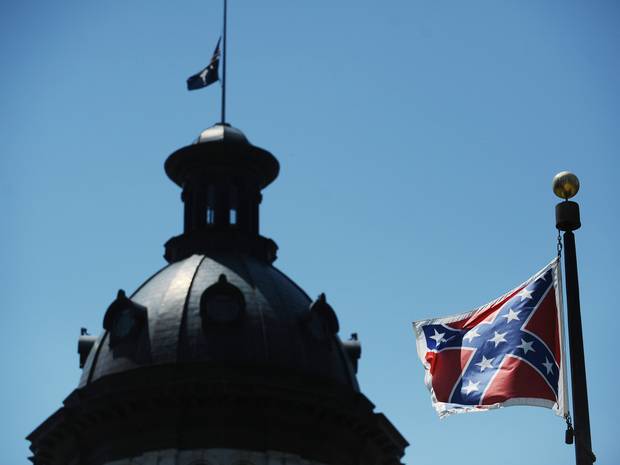
confederate-flag

Friends of Padre Steve’s World

Historian George Santayana said “Loyalty to our ancestors does not include loyalty to their mistakes.” Today it appears that at least one legislature and governor has agreed with him.

This afternoon South Carolina Governor Nikki Haley signed a bill passed by overwhelming majorities in the South Carolina Senate and House to remove the Confederate Battle flag from grounds of the South Carolina State Capital. The ceremonial lowering will occur at 10 AM tomorrow, July 10th 2015, when it is lowered it will be transferred to a museum, which is an appropriate place. 

This is important, I did not imagine that it would occur in my lifetime, and I expect to live a fair number of years. The sad thing is that it took the murder of nine innocent African American church members at Emmanuel African American Episcopal Church in Charleston by a young man named Dylan Roof, who harbored White Supremacist dreams of a race war to bring this about. It took the abject horror of people being murdered in church to do make people begin to realize that maybe, just maybe that continuing to display this symbol of the Confederacy on state grounds was not a good idea.

I know that there are many who defend that flag. I am not among them, although I once was as members of both sides of my family fought under it during the Confederate rebellion against the United States. But it does belong to history and what it stood for, not what it stands for in myth, but what it stood for the men who raised it in rebellion in order to defend and expand what they referred to as the “peculiar institution,” the political, social, religious and economic system known as slavery.  That is a fact, simply read Confederate Vice President Alexander Stephen’s Cornerstone Speech of 1861 where he said:

“Our new government is founded upon exactly the opposite idea; its foundations are laid, its corner- stone rests upon the great truth, that the negro is not equal to the white man; that slavery — subordination to the superior race — is his natural and normal condition. [Applause.] This, our new government, is the first, in the history of the world, based upon this great physical, philosophical, and moral truth.”

In fact if you read every declaration of secession issued by the various states of the Confederacy, all insist that slavery was the main issue for which they seceded and for which they went to war. That did not change during the war and after the fighting was over, the flag of the Confederacy became the standard of White Supremacists throughout the South as they worked in the legislatures and in the courts to roll back the rights of blacks, using violence, intimidation and fraud to do so.

However, it was not until April 11th 1961 during the early days of the Civil Rights movement that the legislature of South Carolina voted to fly the Confederate Battle Flag over the state house in Columbia. This coincided with the centennial of the beginning of the Civil War when South Carolina troops on the orders of President Jefferson Davis opened fire on Fort Sumter. Ten years ago the flag was moved from the dome of the state house to a monument to Confederate veterans on the grounds of that complex.

Tomorrow morning that flag will come down, and I think that is a good thing for I do not believe that this symbol of rebellion and sadly white supremacy and racism should fly from any government building or complex. That being said if an individual chooses to fly the flag they should not be forbidden from doing so. I may object to that but I can only hope that with time and exposure to the truth that even these displays will come down. As to the people that fly these banners in order to display their racism, their hatred of other Americans and their desire for yet another rebellion, I am glad that they fly it so that I will know who they are, after all I favor truth in advertising and if I see this flag flying from a business I am sure that I will not spend my money in  those establishments.

As far as the people who honestly believe that in flying the flag they are honoring their heritage or ancestors, I can offer a measure of sympathy, but I encourage them not to sanitize history from facts. The fact is that the sacrifice and “heritage” our our ancestors, and I do include mine cannot be separated from the cause for which they fought, slavery, and for which those that came after them worked to ensure; racism, discrimination and even murder.

As gallant and even as chivalrous soldiers as many Confederate soldiers were, their sacrifice cannot be separated from the cause for which they fought, just like any other “honorable” soldiers who fought for evil causes. There are many such people that I admire for their soldierly qualities, while not espousing their cause.

Like Ulysses S. Grant I can mourn their sacrifice and admire the gallantry of soldiers even while acknowledging the injustice of the Confederate cause. After Lee’s surrender at Appomattox Grant wrote, “I felt…sad and depressed, at the downfall of a foe who had fought so long and valiantly, and had suffered so much for a cause, though that cause was, I believe, one of the worst for which a people has fought.” He later noted: “The Confederates were now our countrymen, and we did not want to exult over their downfall.”

It is time for this symbol of the Confederacy to come down forever and for the war that three quarters of a million American soldiers, Union and Confederates died, and for which millions of African Americans were enslaved and after the war thousands of freed blacks murdered or lynched, even as millions more were legally disenfranchised and discriminated against under Jim Crow. It is time for that to end, here and now. As far as me, I may honor my ancestors, but I will not honor the cause for which they fought.

Peace

Padre Steve+


Leave a comment

Filed under civil rights, civil war, History, News and current events, Political Commentary

Early American Military Theorists: Mahan & Halleck

Friends of Padre Steve’s World

Something a bit different. Again this is a part of one of the chapters of my Gettysburg and Civil War text, but this time dealing with two men who were the first American military theorists, Dennis Hart Mahan, the father of Alfred Thayer Mahan the great naval strategist and Henry Wager Hillock. Both men contributed to American military thought for over a century until they and their French-Swiss mentor Henri Jomini’s theories were overtaken by those of the Prussian Carl von Clausewitz. 

They both are interesting characters and both had an influence on American history today ion large part due to their influence on the education of most of the generals who conducted the Civil War, and in the case of Halleck in advising Abraham Lincoln during the war. 

I hope that you enjoy

Peace

Padre Steve+

West_Point

Background 

As we continue to examine the Civil War as the first modern war we have to see it as a time of great transition and change for military and political leaders. As such we have to look at the education, culture and experience of the men who fought the war, as well as the various advances in technology and how that technology changed tactics, which in turn influenced the operational and strategic choices that defined the characteristics of the Civil War and wars to come.

The leaders who organized the vast armies that fought during the war were influenced more than military factors. Social, political, economic, scientific and even religious factors influenced their conduct of the war. The officers that commanded the armies on both sides grew up during the Jacksonian opposition to professional militaries, and for that matter even somewhat trained militias. The Jacksonian period impacted how officers were appointed and advanced. Samuel Huntington wrote:

“West Point was the principle target of Jacksonian hostility, the criticism centering not on the curriculum and methods of the Academy but rather upon the manner of how cadets were appointed and the extent to which Academy graduates preempted junior officer positions in the Army. In Jacksonian eyes, not only was specialized skill unnecessary for a military officer, but every man had the right to pursue the vocation of his choice….Jackson himself had an undisguised antipathy for the Academy which symbolized such a different conception of officership from that which he himself embodied. During his administration disciple faltered at West Point, and eventually Sylvanus Thayer, the superintendent and molder of the West Point educational methods, resigned in disgust at the intrusion of the spoils system.” [1]

This is particularly important because of how many officers who served in the Civil War were products of the Jacksonian system and what followed over the next two decades. Under the Jackson administration many more officers were appointed directly from civilian sources than from West Point, often based on political connections. “In 1836 when four additional regiments of dragoons were formed, thirty officers were appointed from civilian life and four from West Point graduates.” [2]

While this in itself was a problem, it was made worse by a promotion system based on seniority, not merit. There was no retirement system so officers who did not return to the civilian world hung on to their careers until they quite literally died with their boots on. The turnover in the highest ranks was quite low, “as late as 1860, 20 of the 32 men at or above the rank of full colonel held commissions in the war of 1812.” [3] This held up the advancement of outstanding junior officers who merited promotion and created a system where “able officers spent decades in the lower ranks, and all officers who had normal or supernormal longevity were assured of reaching higher the higher ranks.” [4]

Robert E. Lee was typical of many officers who stayed in the Army. Despite his success Lee was constantly haunted by his lack of advancement. While he was still serving in Mexico having gained great laurels, including a brevet promotion to Lieutenant Colonel, the “intrigues, pettiness and politics…provoked Lee to question his career.” He wrote, “I wish I was out of the Army myself.” [5]

In 1860 on the brink of the war, Lee was “a fifty-three year-old man and felt he had little to show for it, and small hope for promotion.” [6] Lee’s discouragement was not unwarranted, for despite his exemplary service, there was little hope for promotion and to add to it, Lee knew that “of the Army’s thirty-seven generals from 1802 to 1861, not one was a West Pointer.” [7]

The careers of other exemplary officers including Winfield Scott Hancock, James Longstreet, and John Reynolds languished with long waits between promotions between the Mexican War and the Civil War. The long waits for promotion and the duty in often-desolate duty stations on the western frontier, coupled with family separations caused many officers to leave the Army. A good number of these men would volunteer for service in 1861 a go on to become prominent leaders in both the Union and Confederate armies. Among these officers were such notables as Thomas “Stonewall” Jackson, Ulysses S. Grant, William Tecumseh Sherman, Henry Halleck, George McClellan and Jubal Early.

The military education of these officers at West Point was based very technical and focused on engineering, civil, and topographic, disciplines that had a direct contribution to the expanding American nation. What little in the way of formal higher level military education West Point cadets received was focused the Napoleonic tactics and methods espoused by Henri Jomini as Clausewitz’s works had yet to make their way to America. Dennis Hart Mahan taught most military theory and tactics courses being taught at the academy in the formative years of so many of the men who would lead the armies that fought the American Civil War.

Many Americans looked on the French, who had been the allies of the United States in the American Revolution, favorably during the ante-bellum period. This was especially true of the fledgling United States Army, which had just fought a second war with Great Britain between 1812 and 1815, and “outstanding Academy graduates in the first half of the nineteenth century, such as Halleck and Mahan, were sent to France and Prussia to continue their education. Jomini was consider as the final word on the larger aspects of military operations, and American infantry, cavalry, and artillery tactics imitated those of the French Army.” [8]

Dennis_Hart_Mahan

Respected but Never Loved: Dennis Hart Mahan

Mahan, who graduated at the top of the West Point class of 1824 was recognized as having a brilliant mind very early in his career, as a third classman that “he was appointed an acting assistant professor of mathematics.” [9] Following his graduation the brilliant young officer was sent by the army to France, where he spent four years as a student and observer at the “School of Engineering and Artillery at Metz” [10] before returning to the academy where “he was appointed professor of military and civil engineering and of the science of war.” [11] It was a position that the young professor excelled as subjected “the cadets…to his unparalleled knowledge and acid disposition.” [12]

Mahan spent nearly fifty years of his life at West Point, including nearly forty years as a faculty member he could not imagine living life without it. Thus he became “morbid when the Academy’s Board of Visitors recommended his mandatory retirement from the West Point Faculty” and on September 16th 1871 the elderly Mahan “committed suicide by leaping into the paddlewheel of a Hudson River steamer.” [13]

While he was in France Mahan studied the prevailing orthodoxy of Henri Jomini who along with Clausewitz was the foremost interpreter of Napoleon and Napoleon’s former Chief of Staff Marshal Ney. When we look at Mahan’s body of work in his years at West Point, Jomini’s influence cannot be underestimated. Some have noted, and correctly so, that “Napoleon was the god of war and Jomini was his prophet” [14] and in America the prophet found a new voice in that of Dennis Hart Mahan.

Thus, if one wants to understand the underlying issues of military strategy and tactics employed by the leaders of the Civil War armies, the professional soldiers, as well as those who learned their trade on the battlefield of America, one has to understand Jomini and his American interpreter Mahan.

Unlike the Prussian Clausewitz, whose writings were still unknown in America, Jomini saw the conduct of war apart from its human element and controlled by certain scientific principles. The focus in principles versus the human element is one of the great weaknesses of traditional Jominian thought.

The basic elements of Jominian orthodoxy were that: “Strategy is the key to warfare; That all strategy is controlled by invariable scientific principles; and That these principles prescribe offensive action to mass forces against weaker enemy forces at some defensive point if strategy is to lead to victory.” [15] Like Clausewitz, Jomini interpreted “the Napoleonic era as the beginning of a new method of all out wars between nations, he recognized that future wars would be total wars in every sense of the word.” [16] In his thesis Jomini laid out a number of principles of war including elements that we know well today: operations on interior and exterior lines, bases of operations, and lines of operation. Jomini understood the importance of logistics in war, envisioned the future of amphibious operations and his thought would be taken to a new level by Alfred Thayer Mahan, the son of Dennis Hart Mahan in his book The Influence of Sea Power on History.

To be fair, Jomini foresaw the horrific nature of the coming wars, but he could not embrace them, nor the concepts that his Prussian counterpart Carl von Clausewitz regarding the base human elements that made up war. “Born in 1779, Jomini missed the fervor of the Revolutionary generation and the romantic world view that inspired its greatest theorist, Jacques Antoine Guibert. He came to intellectual maturity during a period of codification and quest for stability in all spheres of life, including the waging of war.” [17] Jomini expressed his revulsion for the revolutionary aspects of war, and his desire to return to the limited wars of the eighteenth century:

“I acknowledge that my prejudices are in favor of the good old times when the French and English guards courteously invited each other to fire first as at Fontenoy, preferring them to the frightful epoch when priests, women. And children throughout Spain plotted the murder of individual soldiers.” [18]

Jomini’s influence was great throughout Europe and was brought back to the United States by Mahan who principally “transmitted French interpretations of Napoleonic war” [19] especially the interpretation given to it by Henri Jomini. However, when Mahan returned from France he was somewhat dissatisfied with some of what he learned. This is because he understood that much of what he learned was impractical in the United States where a tiny professional army and the vast expenses of territory were nothing like European conditions in which Napoleon waged war and Jomini developed his doctrine of war.

It was Mahan’s belief that the prevailing military doctrine as espoused by Jomini:

“was acceptable for a professional army on the European model, organized and fighting under European conditions. But for the United States, which in case of war would have to depend upon a civilian army held together by a small professional nucleus, the French tactical system was unrealistic.” [20]

Mahan set about rectifying this immediately upon his return to West Point, and though he was now steeped in French thought, he was acutely sensitive to the American conditions that in his lectures and later writings had to find a home. As a result he modified Jominian orthodoxy by rejecting one of its central tenants-primary reliance on offensive assault tactics.” [21] Mahan wrote, “If the offensive is attempted against a strongly positioned enemy… it should be an offensive not of direct assault but of the indirect approach, of maneuver and deception. Victories should not be purchased by the sacrifice of one’s own army….To do the greatest damage to our enemy with the least exposure of ourselves,” said Mahan, “is a military axiom lost sight of only by ignorance to the true ends of victory.” [22]

However, Mahan had to contend with the aura of Napoleon, which affected the beliefs of many of his students and those who later served with him at West Point, including Robert E. Lee. “So strong was the attraction of Napoleon to nineteenth-century soldiers that American military experience, including the generalship of Washington, was almost ignored in military studies here.” [23] It was something that many American soldiers, Union and Confederate would pay with their lives as commanders steeped in Napoleon and Jomini threw them into attacks against well positioned and dug in opponents well supported by artillery. Lee’s assault on Cemetery Ridge on July 3rd 1863 showed how little he had learned from Mahan regarding the futility of such attacks, and instead trusted in his own interpretation of Napoleon’s dictums of the offense.

Thus there was a tension in American military thought between the followers of Jomini and Mahan. The conservative Jominian interpretation of Napoleonic warfare predominated much of the officer corps of the Army, and within the army “Mahan’s decrees failed to win universal applause.” [24] However, much of this may have been due in part to the large number of officers accessed directly from civilian life into the army during the Jacksonian period. Despite this, it was Dennis Hart Mahan who more than any other man “taught the professional soldiers who became the generals of the Civil War most of what they knew through the systematic study of war.” [25]

When Mahan returned from France and took up his professorship he became what Samuel Huntington the “American Military Enlightenment” and he “expounded the gospel of professionalism to successive generations of cadets for forty years.” [26]Some historians have described Mahan by the “star professor” of the Military Academy during the ante-bellum era. [27] Mahan’s influence on the future leaders of the Union and Confederate armies went beyond the formal classroom setting. Mahan established the “Napoleon Club,” a military round table at West Point.[28] In addition to his writing and teaching, Mahan was one of the preeminent influences on the development of the army and army leadership during the ante-bellum period.

However, Mahan and those who followed him such as Henry Halleck, Emory Upton and John Bigelow who were the intellectual leaders of the army had to contend with an army culture which evidenced “a distain for overt intellectual activities by its officers for much of the nineteenth and twentieth centuries….Hard fighting, hard riding, and hard drinking elicited far more appreciation from an officer’s peers that the perusal of books.” [29]

Mahan dominated the academy in many ways. For the most part Mahan ran the academic board, an institution that ran the academy, and “no one was more influential than Mahan in the transition of officership from a craft into a profession.” [30] Mahan was a unique presence at West Point who all students had to face in their final year before they could graduate and become a commissioned officer. “His Engineering and Science of War course was the seedbed of strategy and tactics for scores of cadets who later became Civil War Generals.” [31] That being said most of what Mahan taught was the science of engineering related to war and he “went heavy on the military engineering and light on strategy” [32] relying primarily on Jomini’s work with his modifications for the latter.

The prickly professor was “respected by his students but never loved.” One student described him as “the most particular, crabbed, exacting man that I ever saw. He is a slim little skeleton of a man and is always nervous and cross.” [33] As a teacher Mahan was exceptional, but he was exceptionally demanding of his students. Those cadets who had survived the first three years at the academy were confronted by this “irritable, erudite, captious soldier-professional who had never seen combat” yet who was “America’s leading military mind.” [34]

Mahan was “aloof and relentlessly demanding, he detested sloppy thinking, sloppy posture, and a sloppy attitude toward duty…Mahan would demand that they not only learn engineering and tactics, but that every manner and habit that characterizes an officer- gentlemanly deportment, strict integrity, devotion to duty, chivalric honor, and genuine loyalty- be pounded into them. His aim was to “rear soldiers worthy of the Republic.” [35]

Mahan was one of the first American military professionals to stress the importance of military history to the military profession. He wrote that without: “historical knowledge of the rise and progress” of the military art…it is impossible to get even “tolerably clear elementary notions” beyond “those furnished by the mere technical language….It is in military history that we are to look for the source of all military science.” [36]

Mahan’s greatest contributions in for American military doctrine were his development of the active defense and emphasis on victory through maneuver. Mahan stressed “swiftness of movement, maneuver, and use of interior lines of operation. He emphasized the capture of strategic points instead of the destruction of enemy armies,” [37] while he emphasized the use of “maneuver to occupy the enemy’s territory or strategic points.” [38]

Key to Mahan’s thought was the use of maneuver and the avoidance of direct attacks on prepared positions. Mahan cautioned that the offensive against prepared positions “should be an offensive not of direct assaults but of the indirect approach, of maneuver and deception. Victories should not be purchased at the sacrifice of one’s own army….” It was a lesson that Robert E. Lee learned too late. As such Mahan prefigured future theorists such as B.H. Liddell Hart in propagating the doctrine of the indirect approach. Mahan warned: “To do the greatest damage to our enemy with the least exposure to ourselves,… is a military axiom lost sight of only by ignorance to the true ends of victory.” [39]

His emphasis on “military history led Mahan to abandon the prevailing distinction between strategy and tactics in terms of the scale of operations. He came to see that strategy, involving fundamental, invariable principles, embodied what was permanent in military science, while tactics concerned what was temporary.” Mahan believed that “History was essential to a mastery of strategy, but it had no relevance to tactics.” [40]

Mahan emphasized that “study and experience alone produce the successful general” noting “Let no man be so rash as to suppose that, in donning a general’s uniform, he is forthwith competent to perform a general’s function; as reasonably he might assume that in putting on robes of a judge he was ready to decide any point of the law.” [41] Here, Mahan’s advice is timeless and still applies today, especially in an era when many armchair generals, most without any military experience or training, especially pundits and politicians pontificate their expertise on every cable news channel twenty-four hours a day.

Mahan certainly admired Napoleon and was schooled in Jomini. Mahan believed in the principles that Jomini preached but he was not an absolutist. He believed that officers needed to think for themselves on the battlefield. Mahan preached that celerity and reason were the pillars of military success, and that “no two things in his military credo were more important than the speed of movement- celerity, that secret of success- or the use of reason. Mahan preached these twin virtues so vehemently and so often through his chronic nasal infection that the cadets called him “Old Cobbon Sense.” [42]

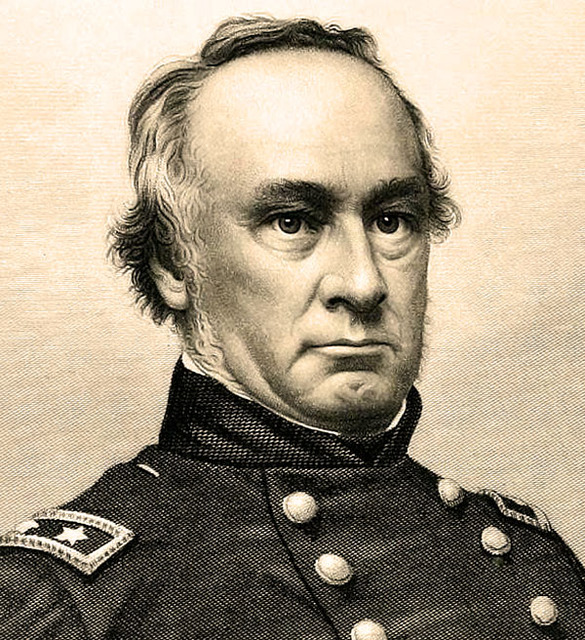
HD_halleckHW4.preview

Old Brains: Henry Wager Halleck 

Mahan’s teaching was both amplified and modified by the work of his star pupil Henry Wager Halleck. During his time as a cadet Halleck “achieved “a kind of strategic protégé status, even becoming part of the faculty while still a cadet.” [43] Halleck wrote the first American textbook on military theory Elements of Military Art and Science. Halleck’s book was published in 1846 and though it was not a standard text at West Point “it was probably the most read book among contemporary officers.” [44] The text was based on a series of twelve lectures Halleck had given the Lowell Institute in 1845, as at the time Halleck was considered one of America’s premier scholars as he remained for many years.

Like Mahan, Halleck was heavily influenced by the writings of Jomini, and the Halleck admitted that his book “was essentially a compilation of other author’s writings,” [45] including those of Jomini and Mahan; and he “changed none of Mahan’s and Jomini’s dogmas.” [46] In addition to his own book, Halleck also “translated Jomini’s Life of Napoleon” from the French. [47]

Halleck, like his mentor Mahan “recognized that the defense was outpacing the attack” [48] in regard to how technology was beginning to change war. As such, “five of the fifteen chapters in Halleck’s Elements are devoted to fortification; a sixth chapter is given over to the history and importance of military engineers.” [49] Halleck’s Elements became one of the most influential texts on American military thought during the nineteenth century, and “had a major influence on American military thought.” [50] Mahan’s book was read by many military leaders before, during and after the war, and some civilians, most notably Abraham Lincoln who upon entering officer sought to learn all that he could about military affairs, and whom Halleck would serve as Lincoln’s primary military advisor.

Halleck believed in and espoused Mahan’s enlightenment too, and he fought against the Jacksonian wave of populism. He eloquently spoke out for a more professional military against the Jacksonian critics of professional military institutions. Halleck advocated his case for a more professional military against the Jacksonian critics and pled “for a body of men who shall devote themselves to the cultivation of military science” and the substitution of Prussian methods of education and advancement for the twin evils of politics and seniority.” [51]

Notes

[1] Huntington, Samuel P. The Soldier and the State: The Theory and Politics of Civil-Military Relations, The Belknap Press of Harvard University Press, Cambridge MA and London 1957 pp.204-205

[2] Ibid. Huntington The Soldier and the State p.206

[3] Skelton, William B. An Officer Corps Responds to an Undisciplined Society by Disciplined Professionalism in Major Problems in American Military History: Documents and Essays edited by John Whiteclay Chambers II and G. Kurt Piehler Houghton Mifflin Company, Boston and New York 1999 p. 132

[4] Ibid. Huntington The Soldier and the State p.207

[5] Thomas, Emory Robert E. Lee W.W. Norton and Company, New York and London 1995 p.139

[6] Korda, Michael. Clouds of Glory: The Life and Legend of Robert E. Lee Harper Collins Publishers, New York 2014 p.213

[7] Ibid. Huntington The Soldier and the State p.207

[8] Ibid. Huntington The Soldier and the State p.197

[9] Waugh, John C. The Class of 1846: From West Point to Appomattox, Stonewall Jackson, George McClellan and their Brothers Ballantine Books, New York 1994 p.65

[10] Hagerman, Edward. The American Civil War and the Origins of Modern Warfare Midland Book Editions, Indiana University Press. Bloomington IN. 1992. p.7

[11] Ibid. Hagerman The American Civil War and the Origins of Modern Warfare p.7

[12] Ibid. Waugh The Class of 1846 p.65

[13] Millet, Allan R. and Maslowski, Peter, For the Common Defense: A Military History of the United States The Free Press a Division of Macmillan Inc. New York, 1984 p.126

[14] Hittle, J.D. editor Jomini and His Summary of the Art of War a condensed version in Roots of Strategy, Book 2 Stackpole Books, Harrisburg PA 1987 p. 429

[15] Shy, John Jomini in Makers of Modern Strategy, from Machiavelli to the Nuclear Age edited by Paret, Peter, Princeton University Press, Princeton New Jersey 1986 p.146

[16] Ibid. Hittle, Jomini and His Summary of the Art of War p. 428

[17] Ibid. Hagerman The American Civil War and the Origins of Modern Warfare p.4

[18] Ibid. Hittle Jomini p.429

[19] Ibid. Shy Jomini p.414

[20] Ibid. Hagerman The American Civil War and the Origins of Modern Warfare p.7

[21] Ibid. Hagerman The American Civil War and the Origins of Modern Warfare p.9

[22] Ibid. Weigley The American Way of War p.88

[23] Ibid. Shy Jomini p.414

[24] Ibid. Hagerman The American Civil War and the Origins of Modern Warfare p.13

[25] Ibid. Shy Jomini p.414

[26] Ibid. Huntington The Soldier and the State pp. 217-218

[27] Robertson, James I. Jr. General A.P. Hill: The Story of a Confederate Warrior Random House, New York 1987 p.8

[28] Hagerman also notes the contributions of Henry Halleck and his Elements of Military Art and Science published in 1846 (p.14) and his influence on many American Officers.  Weigley in his essay in Peter Paret’s Makers of Modern Strategy would disagree with Hagerman who notes that in Halleck’s own words that his work was a “compendium of contemporary ideas, with no attempt at originality.” (p.14) Weigley taking exception gives credit to Halleck for “his efforts to deal in his own book with particularly American military issues.” Paret, Peter editor. Makers of Modern Strategy: For Machiavelli to the Nuclear Age Princeton University Press, Princeton NJ 1986 p.416.

[29] Van Riper, Paul The relevance of history to the military profession: An American Marine’s View in The Past as Prologue: The Importance of History to the Military Profession edited by Williamson Murray and Richard Hart Sinnreich Cambridge University Press, Cambridge and New York 2006 p.35

[30] Ibid. Millet and Maslowski For the Common Defensep.126

[31] Ibid. Robertson General A.P. Hill p.8

[32] O’Connell Robert L. Fierce Patriot: The Tangled Lives of William Tecumseh Sherman Random House, New York 2013 p.6

[33] Pfanz, Donald. Richard S. Ewell: A Soldier’s Life University of North Carolina Press, Chapel Hill and London 1998 pp.25-26

[34] Ibid. Waugh, p.64

[35] Ibid Waugh The Class of 1846, pp.63-64

[36] Ibid. Huntington The Soldier and the State p.220

[37] Wert, Jeffry D. General James Longstreet The Confederacy’s Most Controversial Soldier, A Touchstone Book, Simon and Schuster, New York and London 1993 p.30

[38] Ibid. Hagerman The American Civil War and the Origins of Modern Warfare p.14

[39] Ibid. Weigley The American Way of War p.88

[40] Ibid. Huntington The Soldier and the State p.220

[41] Ibid. Huntington The Soldier and the State pp.221

[42] Ibid. Waugh The Class of 1846 p.64

[43] Ibid. O’Connell Fierce Patriot p.11

[44] Ibid. Hagerman The American Civil War and the Origins of Modern Warfare p.14

[45] Marszalek, John F. Commander of All of Lincoln’s Armies: A Life of General Henry W. Halleck The Belknap Press of Harvard University Press, Cambridge MA and London 2004 p.42

[46] Ambrose, Stephen E. Halleck: Lincoln’s Chief of Staff Louisiana State University Press, Baton Rouge and London 1962 p.6

[47] Weigley, Russell F. American Strategy from Its Beginnings through the First World War. In Makers of Modern Strategy, from Machiavelli to the Nuclear Age edited by Paret, Peter, Princeton University Press, Princeton New Jersey 1986 p.416

[48] Ibid. Hagerman The American Civil War and the Origins of Modern Warfare p.14

[49] Ibid. Weigley, American Strategy from Its Beginnings through the First World War. In Makers of Modern Strategy, from Machiavelli to the Nuclear Age p.417

[50] Ibid. Ambrose Halleck p.7

[51] Ibid. Huntington The Soldier and the State p.221


2 Comments

Filed under civil war, History, Military

Strike Down the Sinners: The Politics of the Christian Right

4476555

Friends of Padre Steve’s World

This is a topic that sadly I am again forced to return to in light of the incredibly vocal and strident calls of leaders of the Christian Right in response to the Supreme Court ruling on Marriage Equality. The tragic thing is that these men and women seem not to care about the long term damage they are doing not only to the political system, but the witness of Christians and the continued viability of the Christian church in the United States.

Nineteen years ago today, when I was ordained as a priest I was a part of a church that was heavily invested in the political machinations of the Christian Right so I do understand from experience the mindset of some of these leaders. This is not to say that everyone in leadership of that church were like this, but some were, and they held important positions.

I write this on the anniversary of my ordination because I do care about the witness of Christians and the long term viability of the church. Since I am a historian I do understand what happens when church leaders allow their insistence on maintaining or gaining political power and influence to override the words of Jesus and the mission of the church. I want to point out, that while I certainly fall on the progressive to liberal side of the Christian faith that I know many wonderful conservative Evangelicals who while maintaining the their beliefs, still do all they can to be gracious and loving to all, and in their actions show that love and respect to people that they disagree with on doctrinal, social and political issues. Sadly, the actions of the leaders of the Christian Right are obliterating the efforts of these really good and caring Christians to maintain a witness of love, and that offends me. I was talking to one of these pastors today, an old friend from the Navy Chaplain Corps who is now retired and serving as pastor of a Baptist church here in Virginia, and we commiserated about what the actions of these leaders are doing.

Barry Goldwater, the man who was one of the most responsible for the resurgence of American Conservatism, had a keen sense of the danger faced by the conservative movement if the Christian Right ever took control of the Republican Party. Goldwater whether you liked him or not or disagreed with his political thought was no fool. In 1981 after the Christian Right had risen to power and helped Ronald Reagan win the presidency, Goldwater realized that the Christian Right was not content with being part of a conservative coalition but wanted control of the Republican Party. On the floor of the Senate Goldwater spoke these words:

“Mark my word, if and when these preachers get control of the [Republican] party, and they’re sure trying to do so, it’s going to be a terrible damn problem. Frankly, these people frighten me. Politics and governing demand compromise. But these Christians believe they are acting in the name of God, so they can’t and won’t compromise. I know, I’ve tried to deal with them.”

Goldwater was right and the takeover of the Republican Party by the Christian Right is an accomplished fact. The Republican Party is now the party of the Christian Right and the party of religious conservative culture warriors. It is unbending, uncompromising and many of its leaders, including most of the announced presidential candidates believe that they are acting in the name of God.

It is an incredibly dangerous situation, not just for the nation and our political system, but for the Church itself.

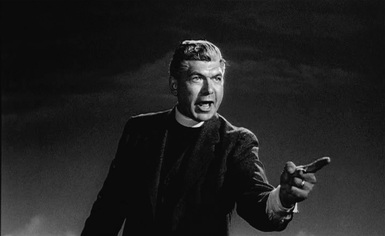
Our current political climate reminds me of the movie Inherit the Wind, the fictional portrayal of the Scopes Monkey Trial. In the movie one of the most stalwart critics of evolution, the former presidential candidate and preacher Matthew Brady played by Frederic March, led the city where the trial is being held into an anti-secular fervor.  At the beginning of the trial he encourages the townspeople to attend a “prayer meeting.” The meeting becomes quite heated as the town’s preacher, Reverend Brown, played by Claude Akins launches into a full assault on all that oppose Brady, and therefore God.

The preacher works himself into a frenzy, condemning the accused and all that would defend him, including his very own daughter:

“Oh, Lord of the tempest and the thunder, strike down this sinner, as thou did thine enemies of old in the days of the Pharaohs! Let him know the terror of thy sword! Let his soul, for all eternity, writhe in anguish and damnation!”

His daughter, who is engaged to the accused cries out: “No! No, Pa! Don’t pray to destroy Bert!”

Then the reverend utters words which remind me so much of what I heard in Iowa this weekend:

“Lord, we call down the same curse on those who ask grace for this sinner—though they be blood of my blood, and flesh of my flesh!”

At this point, Brady, realizing that the situation is getting out of control stops the preacher and says:

“it is possible to be overzealous, to destroy that which you hope to save — so that nothing is left but emptiness.” He then quotes from the book of Proverbs: “Remember the wisdom of Solomon in the book of Proverbs. “He that troubleth his own house shall inherit the wind.”

To me this seems to be analogous to the current dilemma faced by the Republican Party. For decades has helped to create, sustain and institutionalize monster of the Christian Right. Old leaders see the danger but cannot admit their culpability in its rise and takeover of that party. As such they continue to enable it. Goldwater was one of the very few Republicans to see this coming and now, as he feared, the preachers have taken control of the party. Like Reverend Brown they will damn all who do not agree with them, even those of their own party.

The leaders of this political-religious movement have been overzealous, and will continue to be so because like Matthew Brady and Reverend Brown and their supporters, they cannot acknowledge that their zeal may be misdirected and malevolent.

Like Reverend Brown, they are consumed by their hatred for non-believers, that they are even willing to destroy the people closest to them to do so. I know this is true, because when I expressed doubt and did not tow the party line of my former church I was thrown out. Sadly, most of the men that I had previously counted as my closest friends abandoned or even condemned me.

I find the similarities amazing. But even more troubling I find the fear, hatred and paranoia the leaders of the Christian Right display all too reminiscent of church leaders in Germany during the 1920s and early 1930s.  Those leaders, Protestants and Catholics alike supported Hitler, because Hitler promised to fight against the things that they hated; Jews, Socialists, Communists, homosexuals, immigrants, and of course atheists, agnostics and other non-believers.

Martin Niemöller, a man who now is nearly universally lauded for opposition to Hitler initially supported him. Niemöller, later regretted that support and wrote:

“I hated the growing atheistic movement, which was fostered and promoted by the Social Democrats and the Communists. Their hostility toward the Church made me pin my hopes on Hitler for a while. I am paying for that mistake now; and not me alone, but thousands of other persons like me.” 

German Christians, like Niemöller, felt that their values were under attack by Communists, Socialists, and Jews and yes, even homosexuals. In order to maintain their influence and power they willingly allied themselves with the Nazis. After the Nazis took power, the only spoke up against the Nazi abuses it to defend their own ecclesiastical power and place in society, and seldom to speak up for the victims of the Nazis. When the war was over and young people began to question the actions of those that led the Church in Germany it began a process that has led to the de-Christianization of that country.

The current leadership of the Christian Right, especially those with yearnings to be the next President, are doing the same thing as their German brothers did in the 1920s and 1930s. The constant hate filled attacks of Christian leaders on those that are not Christians will come back to bite them. This is not fantasy, it is reality. One only has to look at the history of the Church to see it played out time after time. But then, unless we decide to re-write history like the fraudulent pseudo-historian David Barton does so well, why bother reading it?

The actions of many Christian leaders are dangerous to the faith as a whole, but it seems that they are willing to throw that away in order to gain political power, and as Ron and Rand Paul’s adviser Gary North wrote:

“The long-term goal of Christians in politics should be to gain exclusive control over the franchise. Those who refuse to submit publicly to the eternal sanctions of God by submitting to His Church’s public marks of the covenant–baptism and holy communion–must be denied citizenship, just as they were in ancient Israel.”

The actions of the leaders of the Christian Right are blatantly short sighted and ultimately will hasten the decline and fall of what we know as Christianity in America, but they don’t seem to care. These leaders have subscribed to an Imperial Church model that must take and hold political power in order to maintain their own political, economic and social dominance, even at the expense of the Gospel. Instead of the message of reconciliation they preach pre-packaged, focus group tested selections of “Biblical Values” which they and their political allies know are useful as wedge issues to win political power.

The leaders of the Christian Right rail against things they consider “sinful” such as homosexuality, abortion and birth control. At the same time they willingly turn a blind eye to the treatment of the poor, support efforts to disenfranchise poor and minority voters, even Christians that tend to vote for Democrats. They advocate wars of aggression and bless cultural and economic norms that go entirely against the Christian tradition as they go about with a Bible in one hand and Ayn Rand’s Atlas Shrugged in the other.

The effects of this politicization are more and more apparent and the statistics don’t lie. The United States is not Christian nation and any sense of the definition, and this is not the fault of secularists. It is the fault of Christians especially those political partisan pastors and pundits of the Christian Right that for the past 40 years have sold their souls for political power at the expense of the Gospel.

A recent Barna survey noted that less than one half of one percent of people aged 18-23 hold what would be considered a “Biblical world view.” This is compared to about one of every nine other adults.  Other surveys bear this out.

Think about it: The Barna Group in another survey of people 18-29 years old asked what phrases best described Christians: The top five answers “Anti-homosexual, judgmental, hypocritical and too involved in politics.” This view was held by 91% of non-Christians and a staggering 80% of young churchgoers.

This hypocrisy is demonstrated time and time again. In 2013 these politically corrupted religious leaders turned a blind eye to and even cheered the gutting of the Voting Rights Act of 1964 by the Supreme Court, or cheered that decision despite the fact that many of not most of those adversely affected by that decision are African American Christians. The next day they lambasted the same justices for overturning the Defense of Marriage Act and refusing to hear a challenge to California’s Proposition 8, dealing with the Federal recognition of Gay marriage. Just over a week ago the same leaders were apoplectic when the Supreme Court ruled in favor of Marriage Equality and Gay Marriage, and upheld the Affordable Health Care Law.

The histrionics exhibited by them would be comical if the men and women ranting away were not so vehemently hateful towards their opponents, and some have suggested killing gays and their Christian supporters to root out evil. This isn’t just political theater for them, they really mean it. The real tragedy of their behavior is that even more people will turn away from Jesus. Mahatma Gandhi said it so well “I like your Christ, I do not like your Christians. Your Christians are so unlike your Christ.”

The leaders of the Christian Right continue to wage the culture war, but what cost? Here I am not even dealing with the politics, as one can debate the merits of the Obama administration as well as its decisions and policies, and even Supreme Court decisions. Even many progressives criticize the President and the Supreme Court on a wide number of issues, so that is not the point.

The fact is that young people are leaving the church in unheard of numbers and it is very evident to me why they are doing so. The Church has embraced the culture wars over preaching the Gospel, which if I recall correctly is based on loving people, even ones enemies.  Jesus said it so well: “By this everyone will know that you are my disciples, if you have love for one another.” John 13:35 NRSV.

In 2014 leaders of the Christian Right were able to bring enough culture warriors to the polls hold their majority in the House of Representatives and gain the majority in the Senate. But it was an election where less than 40% of eligible voters voted and most of the contested seats were in areas where they dominate, which magnified their strength. But in the coming 2016 Presidential election the demographics do not favor them and get worse in every year. The leaders of the Christian Right know this and still continue on and wage their culture war with greater zeal further alienating millions of people not just from their political position, but the message of Jesus himself.

Perhaps Christian leaders who have sold their souls for such paltry political gains should be asking these questions: What does it profit a man to gain the whole world but lose his soul and what does it profit the Church to wield political power but lose its soul?

It is a question that Christians need to ask. Dietrich Bonhoeffer once wryly noted “If you board the wrong train, it is no use running along the corridor in the other direction.” Sadly, that train has left the station and the leaders of the Christian Right are not only on it, but they are driving it into oblivion.

Peace

Padre Steve+

2 Comments

Filed under christian life, ethics, faith, film, History, laws and legislation, LGBT issues, News and current events, Political Commentary

Primordial Hatred: Insurgency in the Civil War

Friends of Padre Steve’s World

Sometime we look aghast at atrocities committed by people in other nations fighting civil wars or nations fighting various insurgents. Sadly, we usually fail to appreciate the nature of war, which in our sanitized brains we cannot comprehend. In all of our romanticism, especially that of the nobility of the Confederacy, and the Myth of the Lost Cause we forget the the American Civil War was profoundly ideological, heavily religious and fought with a ferocity that we cannot imagine. British military historian and theorist J.F.C. Fuller noted that “was preceded by years of violent propaganda, which long before the war had obliterated all sense of moderation, and awakened in the contending parties the primitive spirit of tribal fanaticism.”  Clausewitz said it best when he noted that war “As a total phenomenon its dominant tendencies always make war a paradoxical trinity–composed of primordial violence, hatred, and enmity…”

The American Civil War teaches us about this, and it shows us that we as Americans can be just as vicious, bloodthirsty and savage in our methods of war as anyone else.

As a side note I expect to be writing some about the Confederate Flag and something that I saw yesterday, a church that held a ceremony hoisting the “Christian Flag” over the American flag. I have very strong feelings about both of these subjects but those will wait.

Have a great day, and think on these things.

Peace

Padre Steve+

lawrencebattle1863

The Destruction of Lawrence Kansas by Quantrill’s Raiders 1863


Perhaps the most vicious and bloodthirsty part of the American Civil War as the part played by the men leading irregular campaigns in the border states and on the peripheries of the major campaigns. In the South these units were called “partisan rangers” and “With a guerrilla tradition dating from the Revolution and an exaggerated notion of the romanticism associated with guerrilla operations, southerners formed dozens of ranger units.” [1] The guerrilla and counter-guerrilla campaigns of these units prefigured the insurgencies and counter insurgencies of future wars including those in fought by the French in Indochina and Algeria, the United States in Vietnam, Iraq and Afghanistan. These actions actually began before the war, as early as 1854 in Kansas and continued on into the war. Sadly, these campaigns are ignored in all recent major works on counterinsurgency, including the American Army and Marine Corps Counterinsurgency Manual.

These irregular campaigns in the Border States, especially Missouri were “ugly, vicious, no-holds-barred bushwhacking that came close to total war” [2] and they “came to epitomize and carry to some of the worst excesses of violence of the Civil War mainly because of the failure of rational strategy and control was even more marked there than elsewhere.[3] At the beginning of the War the Union lacked the troops to maintain peace in the area and as such Confederate guerrillas and insurgents gained a large foothold in Missouri. Union troops under the command of Major General David Hunter and John Schofield, the later commander of American Forces in Cuba during the Cuba campaign of the Spanish American War “nearly ruined their careers with repeated failures.” In operations much like later operations of the French and Americans in Indochina, Algeria and Iraq “They tried building forts in guerrilla infested areas, but local partisans struck when they discovered the soldiers at a disadvantage.” [4]

The Confederate insurgency campaigns in Missouri and Kansas were by men like William Clarke Quantrill, “Bloody” Bill Anderson, and other pathological killers. Anderson “rode with enemy scalps dangling from his horse’s bridle, and Coleman Younger and Frank and Jesse James displayed the thuggery that made them postwar outlaws.” [5] James McPherson wrote:

“In contrapuntal disharmony the guerrillas and Jayhawkers plundered and pillaged their way across the state, taking no prisoners, killing in cold blood, terrorizing the civilian population, and leaving large parts of Missouri a scorched earth. In August 1863 Quantrill’s band rode into Lawrence, Kansas, and killed all the adult males they found there – more than 150 in all. A year later Bloody Bill Anderson’s gang took twenty four unarmed Union soldiers travelling home on furlough train, shot them in the head, then turned on a posse of pursuing militia and slaughtered 127 of them, including the wounded and captured.” [6]

At Lawrence, Quantrill issued orders to kill “every man big enough to carry a gun.” The brutality and atrocities committed by Quantrill’s gang were perhaps some of the worst seen during the war. On their trek to Lawrence, Quantrill “force Kansas farmers to act as guides and then executed them.” [7] They arrived under the cover of night and devastated the town, when they departed they left behind “80 new widows and 250 fatherless children weeping in the ruins of the town. Nearly 200 buildings had been wrecked or burned, including all three newspaper offices and most of the business district, for a property loss amounting to two million dollars.” [8] After the raid Quantrill directed his men to resume their disguises as farmers, merchants and professed Unionists.

The Confederates did not have a monopoly on this type of behavior, “Unionist “Jayhawkers” such as James H. Lane, Charles R. Jennison, and James Montgomery matched them atrocity for atrocity.” [9] The admission of West Virginia as a Free State “threw up yet another guerrilla conflict wracking West Virginia as much as the similar guerrilla conflict, similarly precipitated, devastated Missouri.” [10] A Union Captain from Ohio “serving with West Virginia soldiers was astonished by this “passion, this desire for revenge….Hate rankled in their breasts.” [11] Many West Virginia Unionists in the interior of the State were forced to flee their homes to cities along the Ohio where they could be protected by Union troops.

In light of the fact that many civilians were actively aiding Quantrill’s Confederate insurgents Brigadier General Thomas Ewing Jr. to evacuate the worst offenders, men and unmarried women alike to a colony in Arkansas, though he made allowance for them to be provisioned by Union forces and to take clothing and household goods as necessary. After Quantrill’s massacre of the men of Lawrence General Ewing issued General Orders number 11. The order directed “the forcible removal of all persons, male or female, child or adult, loyal or disloyal, who lived more than a mile from a Federal post in the in the four Missouri counties south of the Missouri River and adjacent to the border.” [12]

The evacuation involved to carry out the order affected an estimated 20,000 inhabitants of “Bates, Cass, and Jackson Counties and the northern half of Vernon County, which were supposed to have sustained Quantrill’s raiders…. Those who could persuade the commander of the nearest military post of their Unionism might be issued certificates permitting them to remain in the state if they moved to military posts. The rest had to go. Hay and grain found in the area after evacuation would be destroyed or taken to military posts and credited to Unionists.” [13] In a sense the order prefigured future counterinsurgency or anti-partisan strategies employed by the Germans, the French and later the Americans in the Twentieth and Twenty-first centuries.

While these campaigns often were part of local hatred “Confederate irregular forces were intended to be an adjunct to the conventional field armies” and they “developed into a powerful tool for the Confederate war effort.” [14] The best and most disciplined of these forces were those commanded by John Singleton Mosby who operated in conjunction with Robert E. Lee’s Army of Northern Virginia. Nicknamed the “Gray Ghost” by his Union opponents, Mosby “kept his men under military discipline and bedeviled the Yankee invaders.” [15] His troops would accompany J.E.B. Stuart’s cavalry during the Gettysburg campaign conducting reconnaissance operations behind the Union lines during the opening phases of the campaign.

The violence and the problems caused by Confederate guerrillas and irregulars brought about changes to the rules of warfare. Lincoln approved the orders of Major General John Pope “to hold civilians responsible for shooting at Union soldiers from their houses, to execute captured guerrillas who fired on Union troops, to expel from occupied territory any civilians who refused to take an oath of allegiance to the United States, and to treat them as spies if they returned.” [16] General Order 100 written by Franz Lieber for the War Department and signed by Abraham Lincoln in 1863. Several articles of this document specifically addressed the guerrilla threat, beginning with Article 82, which stated:

“Men, or squads of men, who commit hostilities, whether by fighting, or inroads for destruction or plunder, or by raids of any kind, without commission, without being part and portion of the organized hostile army, and without sharing continuously in the war, but who do so with intermitting returns to their homes and avocations, or with the occasional assumption of the semblance of peaceful pursuits, divesting themselves of the character or appearance of soldiers – such men, or squads of men, are not public enemies, and, therefore, if captured, are not entitled to the privileges of prisoners of war, but shall be treated summarily as highway robbers or pirates.” [17]

Despite the efforts of the Confederate guerrillas and insurgents who tied down many Union troops, the vigorous action of Union leaders, political as well as military kept the key Border States in the Union. The heavy handed but necessary actions of General Ewing and others deprived Quantrill and other insurgent leaders of safe havens and helped to secure the region from further attacks and the insurgents were forced to move to other areas. These Union measures deprived the Confederates of the chance to become independent by controlling the Ohio Valley and the Mississippi.

Notes

[1] Millet, Allan R. and Maslowski Peter For the Common Defense: A Military History of the United States, Revised and Expanded Edition The Free Press, New York 1994 p.180

[2] Ibid. McPherson The War that Forged a Nation p. 50

[3] Ibid. Weigley A Great Civil War p.44

[4] Gallagher, Gary, Engle, Stephen, Krick, Robert K. and Glatthaar The American Civil War: The Mighty Scourge of War Osprey Publishing, Oxford UK 2003 p.251

[5] Ibid. Millet and Maslowski Peter For the Common Defense: A Military History of the United States, Revised and Expanded Edition p.181

[6] Ibid. McPherson The War that Forged a Nation p. 52

[7] Ibid. Gallagher et al The American Civil War: The Mighty Scourge of War p.252

[8] Ibid. Foote The Civil War: A Narrative Volume Two p.705

[9] Ibid. Millet and Maslowski For the Common Defense: A Military History of the United States, Revised and Expanded Edition p.181

[10] Ibid. Weigley A Great Civil War p.55

[11] Ibid. McPherson The War that Forged a Nation p. 50

[12] Ibid. Foote The Civil War: A Narrative Volume Two p.705

[13] Ibid. Weigley A Great Civil War p.45

[14] Ibid. McPherson The War that Forged a Nation p. 52

[15] Ibid. Millet and Maslowski For the Common Defense: A Military History of the United States, Revised and Expanded Edition p.181

[16] Ibid. McPherson The War that Forged a Nation pp.36-37

[17] Lieber, Francis Instructions for the Government of Armies of the United States in the Field, prepared by Francis Lieber, LL.D., Originally Issued as General Orders No. 100, Adjutant General’s Office, 1863, Washington 1898: Government Printing Office. Retrieved from http://avalon.law.yale.edu/19th_century/lieber.asp 6 May 2014

2 Comments

Filed under civil war, History, Military

A New Birth of Freedom

gburg address

Friends of Padre Steve’s World. Yesterday we celebrated the 239th anniversary of American independence and the revolutionary document we know as the Declaration of Independence. I wrote about that yesterday and discussed the context of it as well as the contradiction to it posed by the institution of slavery. I talked about Abraham Lincoln and how for him the Declaration was the real heart of the American nation. In Novwmber of 1863 after nearly three years of bloody Civil War and about 10 months following the Emancipation Proclamation, Lincoln was invited to say a few words at the dedication of the Soldeirs Cemetary at Gettysburg. 

In those few words Lincoln redefined forever the concept of Liberty found in the Declaration, he universalized it. Though of practice of it often falls short, it is the high bar for which we must strive. If we do not we will return to the days when freedom was only for the few, and sadly there are many on the political right who not only believe that Liberty is reserved for the few but labor incessantly to prevent people from the full excercuse of the rights of citizenship and wherever possible to roll them back. 

I hope that you enjoy this.

Peace

Padre Steve+

I am always humbled when I travel to Gettysburg as I about to do again early next month. It is hard to believe in that now peaceful pastoral setting that over 157,000 Americans, almost 82,000 Union and 75,000 Confederates met in a three-day battle. In those three days over 28,000 Confederates and 23,000 Union soldiers were killed, wounded, missing or captured. It was the greatest number of casualties inflicted in one battle on American soil in history.

The places that the battle was fought have become legendary, for they are “hallowed ground” as President Abraham Lincoln so eloquently put it. The places, McPherson’s and Herr’s Ridge, Seminary Ridge, the Railroad Cut, Barlow’s Knoll, Cemetery Hill, Culp’s Hill, The Wheat Field, Devil’s Den, the Peach Orchard, Little Round Top, Cemetery Ridge, the Apse of Trees, the Angle and the High Water Mark are in a sense holy, or hallowed ground. Those who struggled there, those who lived and those who gave the last full measure of devotion to their country consecrated them more than any of us could ever do. When I take my students there I always finish at the Soldier’s Cemetery where Abraham Lincoln delivered the Gettysburg Address.

I think about those men of both sides, fully convinced of the rightness of their cause who fought valiantly in the struggle. That being said when I go to Gettysburg my heart, my mind and my soul are with the men who remained loyal to the Union and those who answered the call of Abraham Lincoln to serve in a cause greater than their own interests, the great and the small alike. This is despite the fact that my family predominantly fought for the Confederacy.

Lincoln was a masterful orator who managed to rally the Union and bring hundreds of thousands of men to volunteer to serve before Gettysburg. These men volunteered for an ideal, an ideal for which Lincoln’s oratory was probably the most effective means at articulating in an ideal that men would volunteer to suffer hardship, fight and die to bring about. It was well put in the movie Gettysburg where Colonel Joshua Chamberlain, played by Jeff Daniels said:

“This is a different kind of army. If you look at history you’ll see men fight for pay, or women, or some other kind of loot. They fight for land, or because a king makes them, or just because they like killing. But we’re here for something new. This has not happened much, in the history of the world: We are an army out to set other men free. America should be free ground, all of it, from here to the Pacific Ocean. No man has to bow, no man born to royalty. Here we judge you by what you do, not by who your father was. Here you can be something. Here is the place to build a home. But it’s not the land. There’s always more land. It’s the idea that we all have value, you and me. What we’re fighting for, in the end… we’re fighting for each other…” [1]

On November 19th 1863 Lincoln delivered a “few words” at Gettysburg which were in all practical aspects a benediction at the dedication of the battlefield cemetery. Lincoln was the second speaker at the ceremony following former Pennsylvania Congressman Edward Everett who spoke for more than two hours, a typical speech from the period.

Everett was one of the leading orators of his day. Everett was “a scholar and Ivy-League diplomat who could hold mass audiences in thrall. His voice, diction, and gestures were successfully dramatic, and he always performed his carefully written text, no matter how long, from memory.” [2]

The 270 words of Lincoln’s address are perhaps the most important of any speech or document in American history save the Declaration of Independence and the Constitution of the United States, in those words “Lincoln, nevertheless managed to justify the ways of democracy more than anyone, then or now.” [3]

The speech was so powerful that Everett wrote Lincoln the next day:

“Permit me also to express my great admiration of the thoughts expressed by you, with such eloquent simplicity & appropriateness, at the consecration of the Cemetery. I should be glad, if I could flatter myself that I came as near to the central idea of the occasion, in two hours, as you did in two minutes.” [4]

The speech is short, but its eloquence is unmatched. Lincoln wrapped ideas, concepts and ideals that men have written volumes about into a speech so powerful that many have memorized it.

But few realize the context that it must be placed. Though the Union had defeated Lee’s Army at Gettysburg and Grant had taken Vicksburg to cut the Confederacy in half the North was growing war weary. During the fall of 1863 after a series of inconclusive battles in northern Virginia both Lee and Meade’s armies had sent significant numbers of troops to the west, to support operations in eastern Tennessee.

Lee sent Longstreet’s First Corps, which took part in the bloody battle of Chickamauga, which “is a Cherokee word meaning “river of death.” [5] where on September 19th and 20th the Federal Army of the Cumberland under General Rosecrans “were soundly whipped at …and driven back into the strategic point of Chattanooga.” [6] The number of casualties on both sides, over 16,000 Federal and 18,000 Confederate, a “combined total of 34,634 was exceeded only the three day slaughter at Gettysburg and by the week-long series of five battles known collectively as the Seven Days.” [7] Despite the number of casualties it was one of the biggest Confederate victories of the war. A clerk in Richmond wrote “The whole South will be filled again with patriotic fervor, and in the North there will be a corresponding depression.” [8] That changed rapidly when the Union reacted quickly and reversed the strategic situation. One action taken was to deploy Oliver Howard’s XI Corps and Henry Slocum’s XII Corps west, where “they would be commanded by Joe Hooker, who was conveniently at hand and unemployed.” [9]

In the east during the following weeks “Lee and Meade, like two wounded, spent gladiators, sparred listlessly along the Rapidan. It seemed to Northerners that the fruits of Gettysburg had been thrown away.” [10] Lee sensed an opportunity to go back on the offensive against Meade’s weakened army, but his offensive was stopped on October 14th when “the Union Second Corps shattered a reckless attack by A.P. Hill’s corps at Bristoe Station, five miles south of Manassas.[11]

There was a faction in the North, the Copperheads, who were willing even after Gettysburg and Vicksburg to end the war on terms favorable to the Confederacy, even allowing for Confederate independence and the continuation of slavery. They “clamored for negotiations with the Confederacy to restore the Union on the basis of status quo antebellum and, until the closing months of the war charged that as long as the antislavery party remained in power the restoration of the Union could not be achieved.” [12] They believed that the war was a failure and that military action could not be achieved by force of arms.

The leading Copperheads included Clement Vanlandingham of Ohio and George W. Woodward of Pennsylvania were typical, both opposed the use of force against Confederate secession; Woodward had written in 1860 that “Slavery was intended as a special blessing to the people of the United States,” that “Secession is not disloyalty” and “I cannot condemn the South for withdrawing….I wish Pennsylvania could go with them.” [13] The efforts of the Copperheads to gain governorships in Ohio and Pennsylvania met defeat in November 1863, as the Union victories at Gettysburg and Vicksburg “undercut their theme of the war’s failure.” [14] Their efforts would persist through the 1864 Presidential election, but instead of preaching the war’s failure they would concentrate on defeating emancipation. The Copperheads, “labeled all Republicans, including Lincoln, as radicals bent upon destroying the Union and undermining the Constitution.” [15]

However, the anti-abolitionist and racist views espoused by the northern Democrat Copperheads had begun to lose their potency in the North after July of 1863 with the onset of “the New York draft riot, which shocked many northerners into a backlash against the consequences of virulent racism” [16] and the sacrifice of the African American 54th Massachusetts Infantry when it assaulted Fort Wagner outside of Charleston South Carolina, which occurred “just after the Democratic rioters in New York had lynched black people and burned the Colored Orphan Asylum. Few Republican newspapers failed to point the moral: black men who fought for the Union deserved more respect than white men who fought against it.” [17]

It is also important to understand how Lincoln’s address at Gettysburg is reflective of the various intellectual and philosophical movements of the time. Even the location of the cemetery and the burial plots within it was significant. A Gettysburg lawyer, David Wills proposed to “Governor Andrew Curtain of Pennsylvania the establishment of a soldiers’ cemetery where the Union dead could be reburied with dignity and honor.” [18] The place was then outside the city, a plot of 17 acres purchased by Wills adjacent to the existing town cemetery on Cemetery Hill. That was significant culturally, for the Gettysburg Cemetery was part of a movement called the Rural Cemetery movement. The movement was part of the Greek revival in the United States and connected with the Transcendentalist movement.

The Rural Cemetery movement was launched at Cambridge’s Mount Auburn Cemetery, and Edward Everett was a key figure in it. Mount Auburn “took Athens’s Kerameikos as its model, since that ancient burial ground existed outside the city proper, near the groves of the Akademy, in what was still countryside.” [19] In his speech at Mount Auburn’s dedication, U.S. Supreme Court Justice Joseph Story noted:

“The Greeks exhausted the resources of their exquisite art in adorning the habitations of the dead. They discouraged internments within the limits of their cities; and consigned their relics to shady groves, in the neighborhood of murmuring streams and merry fountains, close by the favorite resorts of those who were engaged in the study of philosophy and nature, and called them, with the elegant expressiveness of their own beautiful language, cemeteries or “places of repose.” [20]

He further noted:

“Our cemeteries, rightly selected and properly arranged, may be made subservient to some of the highest purposes of religion and human duty. They may preach lessons to which none may refuse to listen and which all that live must hear. Truths may there be felt and taught, in the silence of our meditations, more persuasive and more enduring than ever flowed from human lips.” [21]

Everett in his Gettysburg oration linked what they were doing at the Soldiers’ Cemetery with the Greek tradition:

“It was appointed by law in Athens, that the obsequies of the citizens who fell in battle should be performed at the public expense, and in the most honorable manner. Their bones were carefully gathered up from the funeral pyre where their bodies were consumed, and brought home to the city. There, for three days before the interment, they lay in state, beneath tents of honor, to receive the votive offerings of friends and relatives,–flowers, weapons, precious ornaments, painted vases (wonders of art, which after two thousand years adorn the museums of modern Europe),–the last tributes of surviving affection. Ten coffins of funereal cypress received the honorable deposit, one for each of the tribes of the city, and an eleventh in memory of the unrecognized, but not therefore unhonored, dead, and of those whose remains could not be recovered….” [22]

The layout of the cemetery, and the manner in which the dead were buried was also significant when one considers the messages of both Everett and Lincoln that day. “The cemetery at Gettysburg was arranged so that every grave was of equal importance; William Saunders’s design, like Lincoln’s speech, affirmed that every dead soldier mattered equally regardless of rank or station.” [23] In this place “some 3,577 Union soldiers (half of them unknown) from eighteen states are buried.” [24]

The speeches of Everett and Lincoln are deeply connected with Romanticism, the Greek revival and the Transcendentalist movement in the United States. Both were children of the enlightenment, and Everett, a former President of Harvard was well versed in these subjects and Lincoln, though a politician who appealed to the tenets of the Enlightenment, the Declaration of Independence and the Constitution. Lincoln appealed to the “sacred principles of the laws of nature,” and hailed “the constitution and laws” as “hewn from the solid quarry of sober reason.” For Lincoln, the war was a test of the practical worth of liberalism.” [25]

Everett had been a mentor to some of the leading Transcendentalist thinkers of his era including Ralph Waldo Emerson who found that the experience of “Everett’s classroom gave him an entirely new direction in life.” Emerson wrote:

“Germany had created [literary] criticism in vain for us until 1820, when Edward Everett returned from his five years in Europe, and brought to Cambridge his rich results, which no one was so fitted by natural grace and splendor of his rhetoric to introduce and recommend…. The novelty of the learning lost northing in the skill and genius of its interpreter, and the rudest undergraduate found a new morning opening to him in the lecture room at Harvard.” [26]

Everett, who had previously dedicated battlefields at Bunker Hill, as well as Lexington and Concord, was at his best when dedicating battlefields and cemeteries. He spent weeks preparing his speech. Everett had studied the battle and knew it well from official reports and talks with those who fought it. Everett painted a vivid picture of the battle for his audience and connected the sacrifice of those who fought and died to preserve the Union form antiquity and from those who founded the nation. He noted why they had gathered:

“We have assembled, friends, fellow-citizens, at the invitation of the Executive of the great central State of Pennsylvania, seconded by the Governors of seventeen other loyal States of the Union, to pay the last tribute of respect to the brave men who, in the hard-fought battles of the first, second, and third days of July last, laid down their lives for the country on these hillsides and the plains before us, and whose remains have been gathered into the cemetery which we consecrate this day. As my eye ranges over the fields whose sods were so lately moistened by the blood of gallant and loyal men, I feel, as never before, how truly it was said of old that it is sweet and becoming to die for one’s country. I feel, as never before, how justly, from the dawn of history to the present time, men have paid the homage of their gratitude and admiration to the memory of those who nobly sacrifice their lives, that their fellow-men may live in safety and in honor. And if this tribute were ever due, to whom could it be more justly paid than to those whose last resting-place we this day commend to the blessing of Heaven and of men?” [27]

In his narrative Everett aspired to more than mere accuracy. Along “with Bancroft and other romantic historians of his time, he meant to create a tradition that would inspire as well as inform. Like the Attic orators- and dramatists- he knew the power of symbols to create a people’s political identity.” [28]
DSCN9741

Lincoln was sick when he delivered the address having what was mostly likely a mild form of Smallpox when he gave the address. Thus the tenor, simplicity and philosophical depth of the address are even more remarkable. It is a speech given in the manner of Winston Churchill’s “Blood sweat toil and tears” address to Parliament upon being appoint Prime Minister in 1940. Likewise it echoes the Transcendentalist understanding of the Declaration of Independence as a “test for all other things.”

Many in the United States and Europe did not agree and argued that no nation found on such principles could long survive. The more reactionary European subscribers of Romanticism ridiculed the “idea that a nation could be founded on a proposition….and they were not reluctant to point to the Civil War as proof that attempting to build a government around something as bloodless and logical as a proposition was futile.” [29]

But Lincoln disagreed. He believed that the “sacrifices of Gettysburg, Shiloh, Murfreesboro, Chancellorsville, and a hundred other places demonstrated otherwise, that men would die rather than to lose hold of that proposition. Reflecting on that dedication, the living should themselves experience a new birth of freedom, a determination- and he drove his point home with a deliberate evocation of the great Whig orator Daniel Webster- “that government of the people, by the people, for the people, shall not perish from the earth.” [30]

The Unitarian pastor and leading Transcendentalist Theodore Parker wrote:

“Our national ideal out-travels our experience, and all experience. We began our national career by setting all history at defiance- for that said, “A republic on a large scale cannot exist.” Our progress since that has shown that we were right in refusing to be limited by the past. The practical ideas of the nation are transcendent, not empirical. Human history could not justify the Declaration of Independence and its large statements of the new idea: the nation went beyond human history and appealed to human nature.” [31]

Likewise Lincoln’s address echoes the thought of George Bancroft who wrote of the Declaration:

“The bill of rights which it promulgates is of rights that are older than human institutions, and spring from the eternal justice…. The heart of Jefferson in writing the Declaration, and of Congress in adopting it, beat for all humanity; the assertion of right was made for the entire world of mankind and all coming generations, without any exceptions whatsoever.” [32]

Parker’s words also prefigured an idea that Lincoln used in his address, that being: The American Revolution, with American history since, is an attempt to prove by experience this transcendental proposition, to organize the transcendental idea of politics. The ideal demands for its organization a democracy- a government of all, for all, and by all…” [33]

Lincoln delivered these words on that November afternoon:

Four score and seven years ago our fathers brought forth on this continent, a new nation, conceived in Liberty, and dedicated to the proposition that all men are created equal.

Now we are engaged in a great civil war, testing whether that nation, or any nation so conceived and so dedicated, can long endure. We are met on a great battle-field of that war. We have come to dedicate a portion of that field, as a final resting place for those who here gave their lives that that nation might live. It is altogether fitting and proper that we should do this.

But, in a larger sense, we cannot dedicate — we can not consecrate — we can not hallow — this ground. The brave men, living and dead, who struggled here, have consecrated it, far above our poor power to add or detract. The world will little note, nor long remember what we say here, but it can never forget what they did here. It is for us the living, rather, to be dedicated here to the unfinished work which they who fought here have thus far so nobly advanced. It is rather for us to be here dedicated to the great task remaining before us — that from these honored dead we take increased devotion to that cause for which they gave the last full measure of devotion — that we here highly resolve that these dead shall not have died in vain — that this nation, under God, shall have a new birth of freedom — and that government of the people, by the people, for the people, shall not perish from the earth.[34]

In a time where many are wearied by the foibles and follies of our politicians, even wondering about our form of government can survive Lincoln’s words matter. Dr. Allen Guelzo, Professor of Civil War Studies at Gettysburg College wrote in the New York Times:

“The genius of the address thus lay not in its language or in its brevity (virtues though these were), but in the new birth it gave to those who had become discouraged and wearied by democracy’s follies, and in the reminder that democracy’s survival rested ultimately in the hands of citizens who saw something in democracy worth dying for. We could use that reminder again today.” [35]

Dr. Guelzo is quite correct. Many people in this country and around the world are having grave doubts about our democracy. I wonder myself, but I am an optimist. I do believe that we will recover because for the life of me I see no nation anywhere else with our resiliency and ability to overcome the stupidity of politicians, pundits and preachers.

The amazing thing was that in spite of everything the Union survived. Lincoln was a big part of that but it was the men who left lives of comfort and security like Joshua Chamberlain and so many others who brought about that victory. Throughout the war, even to the end Southern political leaders failed to understand that Union men would fight and die for an ideal, something greater than themselves, the preservation of the Union and the freedom of an enslaved race. For those men that volunteered to serve, the war was not about personal gain, loot or land, it was about something greater. It was about freedom, and when we realize this fact “then we can contemplate the real meaning of “that cause for which they gave the last full measure of devotion.” [36]
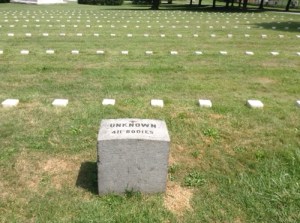
Gettysburg_Unknowns.JPG

Now I for one do not think that we are currently living up to the ideals enunciated by Lincoln that day at Gettysburg. I can understand the cynicism disillusionment of Americans as well as those around the world who have for over 200 years looked to us and our system as a “city set on a hill.” That being said, when I read these words and walk that hallowed ground I am again a believer. I believe that we can realize the ideal, even in our lifetime should we desire.

Notes

[1] Shaara, Michael. The Killer Angels, Ballantine Books, New York. 1974 p.28

[2] Wills, Garry. Lincoln at Gettysburg: The Words that Remade America Simon and Schuster Paperbacks, New York 1992 p.25

[3] Guelzo Allen C. Fateful Lightening: A New History of the Civil War Era and Reconstruction Oxford University Press, Oxford and New York 2012 p.407

[4] Everett, Edward Letter from Edward Everett to Abraham Lincoln, (Transcription) 20 November 1863 retrieved from http://www.in.gov/judiciary/citc/files/everett-to-lincoln.pdf July 18th 2014

[5] Ibid. Guelzo Fateful Lighteningp.352

[6] Hebert, Walter H. Fighting Joe Hooker University of Nebraska Press, Lincoln and London 1999. Originally published by Bobbs-Merrill, New York 1944

[7] Foote, Shelby, The Civil War, A Narrative. Volume Two Fredericksburg to Meridian Random House, New York 1963 p.758

[8] Ibid. Foote The Civil War, A Narrative. Volume Two p.757

[9] Ibid. Foote The Civil War, A Narrative. Volume Two p.764

[10] Sears, Stephen W. Gettysburg Mariner Books, Houghton Mifflin Company Boston, New York 2004 p.513

[11] McPherson, James M. Tried by War: Abraham Lincoln as Commander in Chief Penguin Books, New York and London 2008 p.200

[12] Harris, William C. With Charity for All: Lincoln and the Restoration of the Union The University Press of Kentucky, Lexington KY 1997 p.7

[13] McPherson, James. The Battle Cry of Freedom: The Civil War Era Oxford University Press, Oxford and New York 1988 p.685

[14] Ibid. McPherson The Battle Cry of Freedom p.685

[15] Ibid. Harris With Charity for All p.7

[16] Ibid. McPherson The Battle Cry of Freedom p.686

[17] Ibid. McPherson The Battle Cry of Freedom p.687

[18] McPherson, James M. This Hallowed Ground Crown Publishers, New York 2003 p.137

[19] Ibid. Wills. Lincoln at Gettysburg p.63

[20] Ibid. Wills. Lincoln at Gettysburg p.64

[21] Ibid. Wills. Lincoln at Gettysburg p.65

[22] Everett, Edward Gettysburg Address retrieved from http://voicesofdemocracy.umd.edu/everett-gettysburg-address-speech-text/ 21 August 2014

[23] Faust, Drew Gilpin, This Republic of Suffering: Death and the American Civil War Vintage Books, a division of Random House, New York 2008 p.100

[24] Ibid. McPherson This Hallowed Ground p.137

[25] Ibid. Guelzo. Fateful Lightening pp.406-407

[26] Ibid. Wills. Lincoln at Gettysburg p.45

[27] Ibid. Everett Gettysburg Address

[28] Ibid. Wills. Lincoln at Gettysburg p.51

[29] Ibid. Guelzo. Fateful Lightening p.409

[30] Ibid. Guelzo. Fateful Lightening p.408

[31] Ibid. Wills. Lincoln at Gettysburg p.110

[32] Ibid. Wills. Lincoln at Gettysburg p.105

[33] Ibid. Wills. Lincoln at Gettysburg p.105

[34] Lincoln, Abraham The Gettysburg Address the Bliss Copy retrieved from http://www.abrahamlincolnonline.org/lincoln/speeches/gettysburg.htm

[35] Guelzo, Allen C. Lincoln’s Sound Bite: Have Faith in Democracy New York Time Opinionator, November 17th 2013 retrieved from http://opinionator.blogs.nytimes.com/2013/11/17/lincolns-sound-bite-have-faith-in-democracy/?_php=true&_type=blogs&_r=0 July 18th 2014

[36] Ibid. McPherson This Hallowed Ground p.138

1 Comment

Filed under civil rights, civil war, Gettysburg, History, Political Commentary