Category Archives: faith

The Presence of Molly


wherewegoingdad

“Dogs are our link to paradise. They don’t know evil or jealousy or discontent. To sit with a dog on a hillside on a glorious afternoon is to be back in Eden, where doing nothing was not boring–it was peace.”  Milan Kundera

Molly Fur is still with me. Though we had to have her put down Monday I have felt her presence, especially as I drive too and from work. You see Molly was my constant companion and that wonderful furry baby spent innumerable hours traveling with me in North Carolina and on what seemed were our endless treks between Emerald Isle and Virginia Beach.

Molly loved riding with me and it did not matter how long or short the the trip was she had developed her own rituals for the rides. She would take a drink from her water dish before leaving the house, ensure that she had peed before hopping into the car and then take her place either in the front seat next to me of the back seat, centered so she could look over my shoulder. She was a comforting presence on those long trips and she savored every moment of them, especially when we would stop at a drive through for lunch and she would get her “Molly Burger.” When we got to our destination she was always happy, if coming home to Virginia she would joyfully run to Judy at the front door, and if heading back to Emerald Isle demand that I walk her to the beach, all the while hunting for deer.

I have never seen a dog savor life as much as Molly and thus I am not surprised that I still feel her presence in the car. Yesterday was funny because I thought I saw her shadow in the seat next to me and I reached over to pet her. She wasn’t there, but I could feel her spirit. That may sound weird to some of you, even religious people who believe in an afterlife, but somehow exclude everything but we contemptible human beings from it. I think that one of my favorite passages in the Bible is the one in Romans chapter eight which talks about the creation awaits its redemption, even groans for its redemption, and having heard Molly groan I know that this means dogs and other furry friends too. Personally I don’t give a flying fuck if any supposedly Christian leader condemns me as a heretic, for believing this.  But as Mark Twain said: “The dog is a gentleman; I hope to go to his heaven not man’s.”  Since I am already stoking the fires of Hell that according to some await me let me echo the words of Will Rogers who said “If there are no dogs in Heaven, then when I die I want to go where they went,”   even as I totally agree with the late curmudgeon Andy Rooney  who said “The average dog is a nicer person than the average person.”   I can feel the flames heating up, can’t you?

So, since I have already been condemned as a heretic to Hell even by some Christian “friends”  who have had the nerve to do so on social media, this matters not.  For I know that Molly is with me any time I get in my car. She is now like a guardian angel and I can feel her presence and frankly I would rather have her spiritual presence and the presence of my Papillon Pack of Minnie Scule and Izzy Bella around me than most people. A friend of mine noted that I have to start training up Izzy in “the way of the dog” not to replace Molly, but to be my next guardian angel. Thankfully, the little girl is already working on that.

So until tomorrow, thank you for all of your thoughts, prayers and love.

I wish you all the greatest love and joy possible. 

Peace

Padre Steve+

6 Comments

Filed under christian life, dogs, faith

Hate vs. Hate: A Clash in Garland

ss1-copy

“We think we’ve come so far. Torture of heretics, burning of witches it’s all ancient history. Then – before you can blink an eye – suddenly it threatens to start all over again.” Jean Luc Picard Star Trek the Next Generation – the Drumhead

Well the direct confrontation and collision between radical Moslems and their most radical opponents has finally happened. American Moslem Jihadists attack a gathering where those who hate Moslems are doing their best to incite Moslems to violence in Garland. Hate met hate and sadly, I fear this is just the beginning.

elton-simpson-1_thumb

Elton Simpson

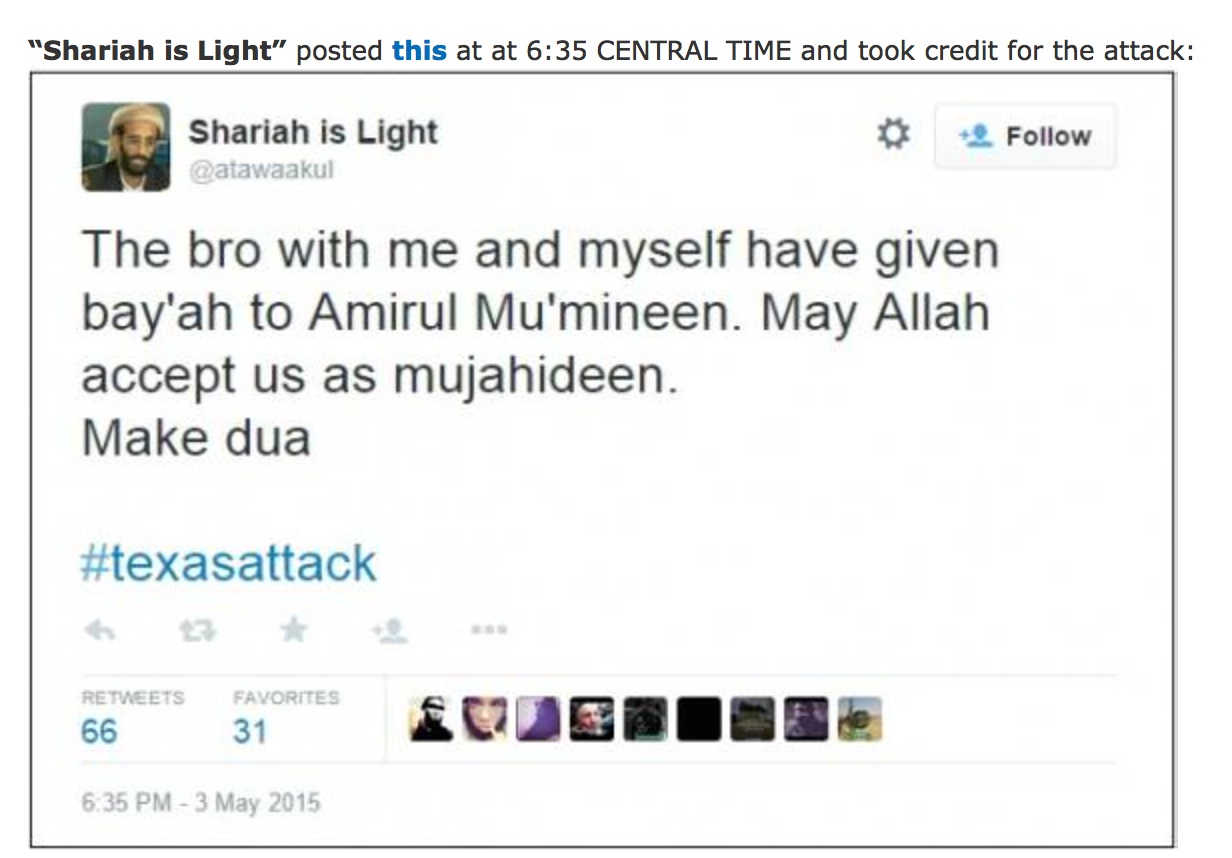
The attackers, one named Elton Simpson from Phoenix who had previously been convicted about lying about his involvement with terror groups and a second who was likely his room-mate were killed when they opened fire outside the event wounding a security guard in the ankle. Just prior to the attack Simpson sent out a twitter message with the hashtag #texasattack stating “May Allah accept us as mujahideen.”

albritani

AbuHussainAlBritani

Over the past few week various members of the Islamic State (ISIS or ISIL) have encouraged attacks on this particular gathering. The attacks were cheered by AbuHussainAlBritani (@_AbuHu55ain) on Twitter who may also have helped direct them. Four hours before the attack he tweeted: The knives have been sharpened, soon we will come to your streets with death and slaughter! #QaribanQariba . During and after the attack he continued to tweet:

My friends, if you ask me those are fighting words that need to be taken deadly serious.

The event Simpson and his accomplice attacked was sponsored by the American Freedom Defense Initiative headed by well-known racist and Moslem baiter Pamela Geller who has determined that all Moslems are the enemy. Like the Southern Poverty Law Center I believe that it is a hate group, but that being said even hate groups have free speech rights and should not be violently attacked.

The event supposedly promoted standing with “free speech” rights and was dedicated to standing in solidarity with the staff of the Charlie Hebdo magazine which was slaughtered by Islamic terrorists in January. Critics said it was an anti-Moslem gathering and there is some truth in that statement and I am inclined to classify it as such because I know what Geller stands for. It included a speech given by Dutch right-wing, anti-Moslem and some would say Fascist politician Geert Wilders. However, the highlight of the event was the completion to draw a cartoon image of the Prophet Mohammed, which is considered blasphemous by Moslems. The prize was $10,000 for the best rendition of the Prophet. Of course by “best” I would assume this would be the most hateful, inflammatory and derogatory defection, without the often brilliant satire of the murdered staff of Charlie Hebdo. There is a difference between hate and racism versus satire and I’m sure that knowing Geller and those devoted to her cause that this was not satire, and was probably more like Julius Streicher’s depiction of Jews in Der Sturmer. The irony that Geller, a Jewish woman would employ the hatred and racist pornography of the Nazi Streicher in her attacks on Moselms is not lost on me. 

Now as much as I despise Geller and her ignorant and hate filled screeds against all Moslems I stand with her in regard to free speech, even that with which I disagree. I also know that for Geller that free speech is a one way street. Likewise I question the wisdom of conducting the event, knowing that it might provoke a violent response, but I do not think for a moment that such speech should be banned, and no civilized person or group would ever violently attack such a gathering. Sadly Geller’s actions play right into the hands of the Moslem extremists. 


1348081765_074872_1348081855_noticia_normal

Stéphane Charbonnier of Charlie Hebdo- Murdered in Cold Blood

Over the past couple of years and especially over the past few months we have seen an increase in such attacks by radicalized Moslems on those who they believe have blasphemed the Prophet. Charlie Hebdo in Paris, an attack on a coffee shop in Australia, and an attack on a free speech event in Copenhagen Denmark. After the Charlie Hebdo attack the Al Qaeda Arabian Peninsula (AQAP) group claimed credit for the attack. One of its leaders, Sheikh Usama (RA) said in his message to the West: “If there is no check on the freedom of your words, then let your hearts be open to the freedom of our actions.” 

Of course such words are a declaration of war against free speech.

breivik

Anders Behring Breivik killed 69 and wounded 110 mostly children

Likewise there have been attacks by right-wing and often allegedly “Christian” people against Moslems, or people who just happened to look like Moslems. Anders Behring Breivik, a Norwegian went into action to kill the enemies of Western Civilization and Christian culture on July 22nd 2008.  In an assault that included a car bomb which killed 8 people and wounded 209 and an attack on a youth camp which killed 69 and wounded another 110, almost all of them children.

wade-michael-page-nazi-flag

Wade Page

Wade Page, a neo-Nazi and White Supremacist attacked a Sikh Temple, confusing it with a Moslem gathering killed 6 people and wounded many more who had simply come to worship before he was killed by police.

hicks

In February three America students at University of North Carolina were gunned down execution style in their home by Craig Stephen Hicks. According to those who know Hicks hated all religion and was quite angry at the Christians and Jews who participated together with Moslems and others in the ecumenical memorial services after the attacks of September 11th 2001.

The key ingredient in all of these attacks no matter who is conducting them is a hatred of the other, a passionate hatred that Eric Hoffer noted “can give meaning and purpose to an empty life. These people haunted by the purposelessness of their lives try to find a new content not only by dedicating themselves to a holy cause but also by nursing a fanatical grievance.”   

The sad thing is that I believe that this is just the beginning. The whole purpose of those radicalized to hate other with such passion to bring about an ideological-religious war between Islam and the West. The cycle of violence will increase until it boils over as it is incited by extremists of all types, Moslem, Christian, Jewish, Atheist, you name them. Real honest debate and dialogue has been replaced by the most base and vitriolic attacks and violence and that my friends is why this is just the beginning.

I am a realist and I fear for what happens when eventually people connected to the Islamic State conduct a strike on an America city or event with a nuke, dirty-bomb, chemical agent or biological agent which causes mass causalities and destruction. Mark my words it will happen no matter how hard we try to prevent it. When it happens the Geller’s of the world will use it to justify all means of attacks and persecution of Moslems in this country, the vast majority of whom are innocent, law abiding and loyal Americans. It will be worse that what we did to American citizens of Japanese descent after Pearl Harbor, and I would not be surprised Moslems rounded up and their property vandalized or seized.

I for one am glad that the terrorists did not succeed and were killed but there will be more and they will undoubtedly will be more competent and deadly than Simpson and his accomplice ever dreamed of being.

Peace

Padre Steve+

2 Comments

Filed under civil rights, faith, national security, Political Commentary, terrorism

Hatred in the Name of God: The Ultimate Trump Card

GodHatesFags-TsongasArena043

Atticus Finch, the hero of the book and film To Kill a Mockingbird said: 

“Sometimes the Bible in the hand of one man is worse than a whisky bottle in the hand of (another)… There are just some kind of men who – who’re so busy worrying about the next world they’ve never learned to live in this one, and you can look down the street and see the results.”

Eric Hoffer wrote that “Hatred is the most accessible and comprehensive of all the unifying agents. Mass movements can rise and spread without belief in a god, but never without a belief in a devil.” We like to believe that religion is a benign or positive influence in the world. As much as I want to believe the positive aspects I have to admit based on the historical and sociological evidence that this is not so, especially during unsettled times of great change. We live in such an era and when it comes to identity and supremacy, God is the ultimate trump card and hatred in the name of God is something that many religious groups and people specialize.

This has been especially true in the lead up to the Obergfell v. Hodges case that was argued at the Supreme Court regarding Gay marriage. The religious opponents of Gay marriage, in particular conservative Christians have many times resorted to the most unmitigated hatred masked in insipidly shallow theology to condemn the gays and anyone that supports them. Of course the final argument they posit is that God will punish the United States for Gay marriage.

That is fascinating. God will punish the United States for Gay marriage but not for waging unjust, illegal and immoral wars? God will punish the United States for Gay marriage, but not for the way we treat the poor? God will punish the United States for Gay marriage, but not for unabashed materialistic greed that is so condemned throughout the Christian Bible? God will judge the United States for Gay marriage but not the extermination of Native Americans and the enslavement of African Americans? God will punish the United States for Gay marriage, but not the unmitigated quest for material wealth and power that so defines the most popular churches and pastors in the country? God will punish the United States for Gay Marriage but excuse everything else?

Truthfully I find it stunning that of all the things a supposedly vengeful and just God could punish us for, that Gay marriage is the tipping point. But such is the unhinged message of the preachers, pundits and politicians of the Christian Right who believe in a capricious “God” who coincidently just happens to hate the same people that they hate, which is very convenient. But then as Annie Lamott said: You can safely assume you’ve created God in your own image when it turns out that God hates all the same people you do.”

Of course they are not alone. In fact the most fanatical individuals and groups on earth are almost all tied to religions, whether it is the Islamic State and Al Qaeda, Boko Haram, Hezbollah, Orthodox Jews, radical Hindus and Buddhists as well as militant Christians. Of course all of these groups have different goals, but their thought and philosophy are quite similar. The fact is that for all of the, God is their trump card. End of argument.

Robert Heinlein wrote:

“Almost any sect, cult, or religion will legislate its creed into law if it acquires the political power to do so.”

Heinlein, author of the classic Starship Troopers was absolutely correct. Just look at any place in any time where any religion, sect or cult has gained control of a government. They are not loving, they are not forgiving and they use the police power of the state to persecute any individual or group that is judged to be in error, or even worse has the gall to question their authority.

Since the Christian groups tend to thrive in the West, they only speak in terms of violence, most, with the exception of Russian Orthodox Christians, do not have a government to translation of those words into action. Many, especially conservative Catholics and some Evangelical and Charismatic Protestants seem for a long for the day when they can assume control of a theocratic government.

Samuel Huntington wrote in his book The Clash of Civilizations:

“People do not live by reason alone. They cannot calculate and act rationally in pursuit of their self-interest until they define their self. Interest politics presupposes identity. In times of rapid social change established identities dissolve, the self must be redefined, and new identities created. For people facing the need to determine Who am I? Where do I belong? Religion provides compelling answers….In this process people rediscover or create new historical identities. Whatever universalist goals they may have, religions give people identity by positing a basic distinction between believers and non-believers, between a superior in-group and a different and inferior out-group.”

Huntington was right, you see the true believers, those who follow their religion without question and believe that it is superior to all others also believe that their religion entitles them to be atop the food chain, others who don’t believe like them be damned, if not in this life, the next. That is the certitude of the true believer, especially the religious one. Secular or atheistic fanatics could care less about the next life, for this life is all that they have. But the religious “true believers” are not only interested in destroying someone in this life, but ensuring that in the next that they suffer for eternity, unless they believe in the annihilation of the soul after death, which really spoils the whole Dante’s Inferno perspective of the damned in the afterlife.

Eric Hoffer wrote:

“The impression somehow prevails that the true believer, particularly the religious individual, is a humble person. The truth is the surrendering and humbling of the self breed pride and arrogance. The true believer is apt to see himself as one of the chosen, the salt of the earth, the light of the world, a prince disguised in meekness, who is destined to inherit the earth and the kingdom of heaven too. He who is not of his faith is evil; he who will not listen will perish.”

That is why they, the religious true believers of any faith are capable of such great evil, and why such people can murder innocents in the most brutal manner simply because they do not believe correctly.

Please do not get me wrong. I am a Christian, a priest, a historian and a theologian, but I also know just how insidious those who hold their religion over those of others can be. While I hold faith dear, I know that it can be abused for the claim of some to have God as their final authority is a sort of trump card with which they are able to justify the most obscene and evil acts against others.

One of my heroes of religious liberty is John Leland, a Baptist whose passionate defense of religious freedom prevented Virginia from re-establishing a state church after the American Revolution and whose influence was key in the decision of Madison and Jefferson to amend the Constitution with the Bill of Rights, particularly the First Amendment. In fact, late in life, well after his success in working with Madison and Jefferson Leland wrote:

“The liberty I contend for is more than toleration. The very idea of toleration is despicable; it supposes that some have a pre-eminence above the rest to grant indulgence; whereas all should be equally free, Jews, Turks [Muslims], Pagans and Christians. Test oaths and established creeds should be avoided as the worst of evils.”

Like Leland, I contend for more than tolerance and I contend for acceptance. But that acceptance ends when any person or group is willing to use their religion to enslave, murder, or otherwise dominate other people in the name of their God, not just in this life, but in the next. This is especially true of those who use the police power of the state to enforce their beliefs and hatred on others.  I will do whatever I can to expose them for what they are, regardless of the “faith” they supposedly represent.

I guess that is why I am even more frightened of religious true believers than non-religious true believers. While the non-religious true believer may sacrifice everything for the sake of power and control in this life, and may in fact commit the most heinous crimes against humanity, their hatred is bounded in space and time to this earth. The religious true believer is not content with that, their enemies must be damned and punished in this life, but for eternity, without hope of salvation.

That is why they are so dangerous for their hatred is unbounded by time, or space, it lasts for eternity, and eternity my friends is a very long time.

With that I wish you a good day and try to love someone.

Peace

Padre Steve+

Leave a comment

Filed under civil rights, ethics, faith, History, LGBT issues, Political Commentary

Why I Fight for Gay Rights

IMG_0535

Friends of Padre Steve’s World,

I think that the question “why?” is important, and it is important for my readers to know just why I would be spending so much time to defending the rights of Gays and the LGBTQ community. Those who have been reading for this site the past few days know that I have been very passionately speaking out on the behalf of Gays and Lesbians.

“Why?” is an important question my friends, one that far too many people fail to ask of those who set or influence policy. I would love to see the media ask any supposedly Conservative politician “why” they are against gay rights. I mean seriously ask why, and then ask hard follow-up questions.

I am sure that there are some Christians that marvel that another Christian, and a Navy Chaplain with a strong conservative pedigree to boot would defend the rights of Gays, Lesbians and others that they disapprove. However, at this point in my life I can do no other.

I am a historian who also happens to be a priest and senior Navy Chaplain. I know too much, and if I do not speak up I would be culpable of the same crimes that German Christians, clergy and military officers did when they said nothing when the Jews, Gays and others were persecuted, imprisoned and murdered by the Nazi regime.

In the early 1900s the Jews of Germany were making progress, gaining entrance into government, the military and the political process. Germany in those days was a haven for Jews, especially Eastern European Jews who had to live with open persecution and pogroms sanctioned by Czarist Russia and other eastern European states. German Jews in that era were preeminent scientists, physicians and had entered the government and military. The Germany Armaments Minister Walther Rathenau who helped keep the German military in the war through his immense talents was Jewish, as was the commanding officer who recommended the young Corporal Adolf Hitler for the award of the Iron Cross First Class in 1918. However, when Germany was defeated in the First World War, Jews took much of the blame, and conservative German Christians were at the forefront well before anyone knew the name of Adolf Hitler.

Of course, they were a minority, and many were Socialists and in the search for villains after the defeat and the abdication of Kaiser Wilhelm II, the Jews were high on the hit list, especially for conservative Christians of both the Protestant and Catholic faiths who saw their dreams die at the end of the war.

Much is the same for the LGBT community in the United States. Conservative Christians blame Gays for all the social ills and maladies that German Christians did the Jews, Socialists and yes, German homosexuals did in the 1920s. If you actually bother to read the writing of the German right wing and conservatives of that era you will find language that is startlingly similar to the language used by conservative American Christians use today against Gays, liberal Jews, progressives and yes Moslems as well. It is an amazing study if you have the integrity and interest to bother to read it instead of listening to the pundits, politicians and especially the political preachers of the American right. However, if you don’t it matters not, because after all “God hates the gays” so why shouldn’t you?

But then wasn’t that what the German Christians who allied themselves to Hitler did concerning the Jews? After all the Jews were “Christ killers.” Hitler, Goering, Goebbels and all the leading Nazis said so. But today if there is a natural disaster in the United States who is to blame? The Gays of course, and almost every conservative political preacher in America agrees. Pat Robertson, Franklin Graham, Robert Jeffress, James Robison, John Hagee and even soon to be repeat presidential candidate Mike Huckabee all agree that it is all the Gays fault. Just like Hitler, Goering, Goebbels and others said of the Jews in Germany. Get rid of the Gays and voila, problem solved.

Since most of these preachers, pundits and politicians believe that Gays are destined for Hell and are the enemies of God, it is only a matter of time before they not only endorse legal restrictions and persecution, but endorse genocide. If fact some have, Scott Lively and others have actually went to Africa and campaigned for “Kill the Gays” bills in Uganda. They actually promote legislation in other countries that would make it legal not just to ensure that Gays have second or third rate citizenship, but to imprison and execute them. Given the chance they would do so here.

You see, every mass movement of religious and nationalist hate needs a scapegoat. For the German right it was the Jews, for the modern American right it is the Gays. As Eric Hoffer wrote: “Hatred is the most accessible and comprehensive of all the unifying agents. Mass movements can rise and spread without belief in a god, but never without a belief in a devil.” To the German Right in the 1920s and 1930s the Jews were the Devil, to many conservative American Christians the Gays are the Devil.

You see it is just a short jump from thoughts, to words to actions. Those who embrace the hatred of Gays, just as those who embraced the hatred of the Jews are just a little ways from thoughts, to words to actions. Believe me, with a Congress that now has a sizable number of people who honestly believe that the Gays are the enemy, not just of them but of God that actions may well follow. One only has to look at the anti-gay measures in Russia, some parts of Eastern Europe, the Middle East and in particular Africa, where aided by anti-Gay American Christians nations like Uganda are criminalizing homosexuality and even speaking up for gays as a heterosexual.

That being said I think that the tide of history is going the other direction, but that does not mean that such people are not dangerous should they ever be in a place to enforce their religious and ideological beliefs on others.

Mahatma Gandhi wrote:

“Your beliefs become your thoughts, Your thoughts become your words, Your words become your actions, Your actions become your habits, Your habits become your values, Your values become your destiny.”

That is why as a white, male, Christian, Navy Chaplain and priest I must speak out against such hatred and support the rights of the LGBT community. I have to speak out, as do other Christians. As Martin Niemoller, a naval hero of the First World War and conservative German pastor who initially supported Hitler noted:

In Germany they first came for the Communists, and I didn’t speak up because I wasn’t a Communist. Then they came for the Jews, and I didn’t speak up because I wasn’t a Jew. Then they came for the trade unionists, and I didn’t speak up because I wasn’t a trade unionist. Then they came for the Catholics, and I didn’t speak up because I was a Protestant. Then they came for me – and by that time no one was left to speak up.

Sadly, today, most conservative American Christians don’t understand this profound political philosophy. Likewise, they, like Martin Niemoller and others throughout history, will find that some of the people that they support will turn on them once they no longer need their votes or political support.

That my friends is a fact and why anyone should beware of any religious leader or politician who turns any minority group into a Devil should be feared, because they do mean business, and their ruthlessness is only concealed by the veneer of religion and law.

That my friends is why I write, why I speak, and why I fight.

Peace

Padre Steve+

Leave a comment

Filed under civil rights, ethics, faith, History, laws and legislation, LGBT issues

My Journey to Support Gay Rights

Friends of Padre Steve’s World

Gays-military-flag-rainbow-lgbt-don-t-ask-don-t-tell-19837645_67849_ver1.0_640_480

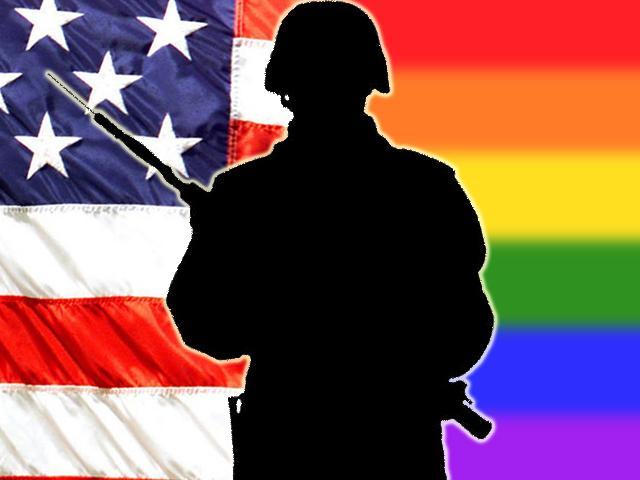
In light of what I have been writing about the Obergfell v. Hodges and comparing that case to the historic examples of the 1856 Dred Scott decision and the 1896 Plessy v. Ferguson ruling I think it is important for my readers to know I got to the place where I have become an advocate for the rights of my friends in the LGBTQ community.

Frankly my journey has been a long strange trip. Most of my life I would have considered myself a conservative Christian and a career military officer, most of that as Pa chaplain. Generally people with similar backgrounds to me do not end up as advocates for Gays and Lesbians. But throughout my life and career I have had problems with the way other Christians and fellow military members treated Gays and Lesbians. Even in the days that I considered homosexual behavior to be sinful, I had a hard time condemning, ridiculing or supporting those who sought to harm homosexuals in any way, including fellow clergy, members of my former church or fellow officers or chaplains.

Now I know that there will vehemently disagree on what I believe and stand for, believe me I have been called everything but a white man by some people, including some that I used to count as friends. Likewise I have been threatened by others. But as I see it I have to stand up for what I believe and defend those whose civil rights are constantly under attack by people who not only condemn them in this world, but to everlasting damnation as well.

But this my friends is my long strange trip. It is what I believe with all my heart, and why I pray that the Supreme Court will legalize Gay marriage throughout this land. though I am not Gay, this matters to me. I have too many Gay and Lesbian friends who have endured hellish persecution for people who call themselves Christians and claim to be defending Christian values when they forget that the most important part of the Christian life is to love, love even your enemies, both real and imagined. But I digress…here is my journey…

I have been in the military coming up on 34 years between the Army and the Navy. That is a long time. When I enlisted and through the first two thirds of my career I can safely say that I fell rather strongly on the conservative-Christian side of the social issues debates. Over the years, especially the last seven since I returned a changed many from my time in Iraq, I have evolved significantly on most of these issues where although I while consider myself to be rather moderate I now fall decidedly on the liberal side of most social issues.

A lot of this has to do with the attitudes that I saw in churches that I was associated. Many people in my former denominations endorsed policies of the Christian Dominionist or Reconstruction movements, that basically upended First and Fourteenth Amendment protections and if enacted would basically turn the country into a theocracy. I have written about those things time and time again so I won’t elaborate on them now.

It was not only the policies, it was the attitude towards the LGBT community that really bothered me. For some reason it seemed that to many of my friends and colleagues that homosexuality was the only unforgivable sin, and not only that that homosexuals were somehow less than human and not entitled to the same rights as any other American citizen. Not only that they were blamed for every economic, social, foreign policy or natural disaster. Hurricane, blame the gays. Stock market crash, blame the gays, the 9-11 attacks, God’s judgment on the United States because of the gays. You name it, blame the gays, and that my friends still happens every day.

But my journey to accepting and fighting for Gays and Lesbians began a lot earlier.

When I first enlisted in the Army in 1981 it was not uncommon for gay slurs to be hurled at soldiers as a matter of course, especially at young men who did not appear manly enough or women who wouldn’t put out sexually when it was demanded of the. They were queers, fags, dykes and worse. There is a scene in the movie Full Metal Jacket where R. Lee Ermey, a man who actually was a Marine Corps Drill Instructor berates one of his recruits:

Gunnery Sergeant Hartman: Where the hell are you from anyway, private?

Private Cowboy: Sir, Texas, sir.

Gunnery Sergeant Hartman: Holy dog shit! Texas? Only steers and queers come from Texas, Private Cowboy, and you don’t look much like a steer to me, so that kinda narrows it down. Do you suck dicks?

Private Cowboy: Sir, no, sir!

Gunnery Sergeant Hartman: Are you a peter puffer?

Private Cowboy: Sir, no, sir!

Gunnery Sergeant Hartman: I bet you’re the kind of guy who would fuck a person in the ass and not even have the goddamn common courtesy to give him a reach-around. I’ll be watching you!

The sad thing is that such behavior was still common even in the 1990s and though not nearly so pervasive still happened on occasion in after the 9-11 attacks. But those taunts really bothered me and when I was commissioned as a Medical Service Corps Officer in 1983 I met gays in my officer training, they were closeted but they were targets. When I served as a company commander in 1985-1986 I had a number of gays and lesbians in my unit. As I mentioned before they were among my best and most trustworthy soldiers, always going the extra mile.

Meanwhile the unit had the highest drug positive rate in Europe when I took command and had so many real disciplinary and criminal cases on the docket I was told by the Group Commander to “clean that company up.” But when I got down to It I realized that I was so overwhelmed with the real criminals that I didn’t want to harass or prosecute my best soldiers, including those gays and lesbians. That was a watershed. While other commanders sought out gays in order to prosecute them and throw them out of the military I was protecting and promoting them, not because they were gay, but because they were excellent soldiers.

When I went to my next assignment as a personnel officer at the Academy of Health Sciences discharges of trainees for being gay was common. I know because I had to sign off on every discharge packet before it was sent for approval. Since we had five to seven thousand students at any time, both officers and enlisted I did not know the details of most of the stories nor meet the individuals concerned.

However, in 1987 I was given the responsibility of helping soldiers diagnosed as HIV positive with their career options. I also helped officers from the Army Medical Department draft the Army’s policies for those infected with the AIDS virus. At the time many of the Christians that I went to church with believed the myths and lies being promoted by leading Evangelicals about AIDS and displayed a tremendous amount of distain and even hatred towards gays and others infected or dying of that disease. I was dumbfounded that people who preached the love of God had neither compassion nor empathy for those suffering.

I left active duty to attend seminary at Southwestern Baptist Theological Seminary. There I knew a few closeted homosexuals and lesbians who had deep faith in Jesus, were outstanding students and potentially outstanding pastors or chaplains but who had to remain closeted. After I graduated when I was going through my Clinical Pastoral Education Residency one of the men I graduate with did a one unit internship. During that time he made the agonizing decision to come out as Gay. For him there was much to lose, but his example was inspiring and I still stay in touch with him. I also met a chaplain from the Metropolitan Community Church who had been raised in a Black Pentecostal church. He was an amazing and compassionate minister.

In the hospital setting I worked with a lot of homosexuals, of which many were Christians who suffered in their churches as their pastors and friends railed against homosexuals. When I served as the installation chaplain of an Army base I hired an organist who was gay. He worked for the National Guard as a civilian and was a Log Cabin Republican. He grew up in a very conservative church and though he had deep faith was not welcome in most civilian churches. At the time I was a fairly new  in a very conservative denomination and my bishops held that giving communion to Gays was forbidden, in fact they called it a sin. However, when he presented himself for communion, knowing his faith I took the advice of a conservative Missouri Synod Lutheran chaplain, don’t ask, just trust the grace of God in the Sacrament. That became my model of ministry from then on. I never mentioned it to my bishop. Thankfully he never asked or I would have had to be honest. This encounter brought more homosexuals to the chapel, and the chapel community which was composed mainly of military retirees and National Guard personnel welcomed them.

In civilian churches of my old denominations I knew Gays and Lesbians who struggled and tried to do everything they could to change, but no-matter how hard they tried, how hard they prayed, how many times well meaning friends attempted to cast out their demons in rituals similar to exorcisms they struggled and suffered. Most eventually drifted away because they knew that they would not be accepted.  I have had friends in church whose children came out as gay or lesbian. Some loved and accepted them, others turned them away. Judy and I have always done what we can to support them as we would the children of any friend.

That understanding of God’s grace as well as what I believed were the fundamental Constitutional and human rights of Gays and Lesbians brought me to where I am today.

I know that a lot of conservative Christians have and will condemn me for these beliefs and actions, but for me honesty, integrity, empathy and love have to take precedence over hate, blame and prejudice, even when that prejudice is clothed in the words or faith and righteousness. I just figure that once we begin to use religion to condemn others and bolster our own political power that we are no better than people like Al Qaeda, ISIL or the Taliban. We are no better than the Inquisitors or others who destroyed cities and massacred people, even other Christians because they didn’t believe the right way.

I believe that it is just a small step from hateful thoughts and words to actions that end up in genocide. The “German Christians” of the Nazi era demonstrated that to a fine degree. The authors of the Bethel Confession, including Dietrich Bonhoeffer who protested the German Christian alliance with the Nazis noting:

“every attempt to establish a visible theocracy on earth by the church as a infraction in the order of secular authority. This makes the gospel into a law. The church cannot protect or sustain life on earth. This remains the office of secular authority.

That I believe with all my heart and that is why I will support and fight for the rights of the LGBT community in order to ensure that they have the same rights and privileges of any citizen. Otherwise what does the rule of law mean? What does the Constitution mean? What does that sentence in the Declaration of Independence that:

“We hold these truths to be self-evident, that all men are created equal, that they are endowed by their Creator with certain unalienable Rights, that among these are Life, Liberty and the pursuit of Happiness.–That to secure these rights, Governments are instituted among Men…” 

Abraham Lincoln wrote in 1854 concerning the rights of Blacks, something that is certainly applicable as well to homosexuals: “the standard maxim of free society …constantly spreading and deepening its influence,” ultimately applicable “to peoples of all colors everywhere.” 

That my friends, especially my conservative Christian friends who do not understand why I would speak up for the LGBT community, is why I do it. So in the words of my favorite heretic Martin Luther I state today: “Here I stand, I can do no other. So help me God. Amen.”

Peace

Padre Steve+


9 Comments

Filed under christian life, faith, History, LGBT issues, News and current events, Political Commentary

Music, Liturgy & the Relief of the Soul

davids_harp__image_1_sjpg1312

Friends of Padre Steve’s Word

Something a little bit different. A while back I was asked to write and article for a periodical called “The Liturgical Singer” which is published by the That National Association of Pastoral Musicians. The article came out only in hard copy and at the request of a couple of friends I am posting it here. Have a great night.

Peace

Padre Steve+


“And whenever the evil spirit from God came upon Saul, David took the lyre and played it with his hand, and Saul would be relieved and feel better, and the evil spirit would depart from him.” 1 Samuel 16:23

When I was in seminary one of the most valuable courses I ever took was an introductory course in Church Music. The course opened my heart to music in the liturgical setting. Now I am not a musician, I play the radio and sing monotone. Like many pastors, priests and theologians I am a word person; written, spoken I am a word person. That being said I learned early on that music can be a balm for the wounded and suffering soul.

Sadly, I don’t think that many priests or pastors truly understand this. I am a Priest and Navy Chaplain. But, I am one of the wounded. I suffer from severe PTSD, anxiety, and more often than not I find going to church often makes things worse. As an Iraq Veteran I can somewhat relate to King Saul. Sometimes the effects of PTSD feel like an evil spirit, and when I came home from war I went through a spiritual crisis that was so bad that for nearly two years I was for all practical purposes an agnostic hoping that God still existed.

Hans Christian Anderson wrote that “Where words fail, music speaks.” All too often our worship, even in liturgical churches focuses more on words, than it does the healing property of music.

Those who suffer from trauma of any kind, including PTSD, or who suffer from anxiety, depression or other afflictions of the soul don’t usually come to church to see a show or to get yet another self-help lecture baptized with a few selected Bible verses. They don’t come to be entertained. They come for solace, they come to encounter God as do most regular churchgoers. But a recent Barna survey noted that less than 20% of regular churchgoers feel close to God on even a monthly basis. Martin Luther, who suffered from tremendous depression and despair for much of his life wrote “My heart, which is so full to overflowing, has often been solaced and refreshed by music when sick and weary.”

One has to ask why this is. I think one reason is that in many churches, even liturgical churches music has become entertainment. While this is pervasive in our American church culture it is not new. Erasmus of Rotterdam wrote:

“We have brought into our churches certain operatic and theatrical music; such a confused, disorderly chattering of some words as I hardly think was ever in any of the Grecian or Roman theatres. The church rings with the noise of trumpets, pipes, and dulcimers; and human voices strive to bear their part with them….”

As entertain it really is no longer part of liturgy, which is by definition the work of the people. I think the type or style of music is less important than the message that it conveys. I honestly believe different types of music touch our soul in different ways. That being said I think that the message of the music should lead people into the presence of God and to do that church music directors and liturgists need to back off of the culture of entertainment that has invaded the Church. I can say that there are songs, hymns and psalms of almost every musical style which reside in my heart. In the midst of my spiritual crisis I found that some of these songs stayed with me. One verse of Abide With Me was one of my prayers during that time:

Come not in terrors, as the King of kings, But kind and good, with healing in Thy wings, Tears for all woes, a heart for every plea— Come, Friend of sinners, and thus abide with me.

I have found that when a liturgist leads a people into the presence of God it is that the songs, hymns and songs they use actually allow the people to participate in the liturgy. The songs speak of God’s presence even in the midst of suffering, they allow those who suffer a measure of hope, even in the midst of what St. John of the Cross referred to as “the dark night of the soul.” When this happens the music becomes part of the participant’s experience of God, it takes up residence in the depth of the soul and there it remains reminding the person that they are not alone. Percy Bysshe Shelley wrote that “Music, when soft voices die, vibrates in the memory.”

Peace

Padre Steve+

Leave a comment

Filed under christian life, faith, ministry, music, PTSD

Pious and Conflicted: General Dorsey Pender

pender

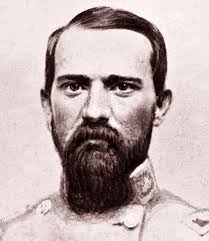
Major General Dorsey Pender C.S.A.

Friends of Padre Steve’s World

I am continuing to periodically intersperse and publish short articles about various commanders at Gettysburg on the site. These all are drawn from my student text and may become a book in their own right.  The reason is I am going to do this is because I have found that readers are often more drawn to the lives of people than they are events. As I have noted before that people matter, even deeply flawed people, and we can learn from them.

Today’s article is about Major General Dorsey Pender who commanded A.P. Hill’s old “Light Division” in Hill’s Third Corps at Gettysburg. Pender is interesting, young an pious, but often conflicted in his faith. His questions are similar to those asked by those who want to believe but struggle with believing. His relationship with his wife, a very strong believer was often marred by differences in belief. I hope you enjoy.

Peace

Padre Steve+

Dorsey Pender was a “pious, serious North Carolinian” [1] born in Edgecomb County in 1834 who received “his early education in the common schools of the county” [2] before he was appointed to West Point. He graduated with the class of 1854, a class that included Custis Lee, Oliver O. Howard, J.E.B. Stewart, S.D. Lee, John Pegram, and Stephen Weed. He graduated nineteenth of the forty-six cadets in that class.

He married his wife Fanny in 1859. She was the sister of one of his academy classmates Samuel Shepperd who died a year after graduating from the academy. She accompanied Dorsey to the Pacific Northwest where he was serving at the outbreak of the war. They had been married two years when he volunteered to serve the Confederacy, he was just twenty-seven and she just nineteen and already a mother expecting a second child when he went to war. Like many young couples separated by war theirs was often plagued by misunderstandings and highly emotional, something that is evidenced in their correspondence.

Pender is often described as devout in terms of his religious beliefs but his devoutness was in large part due to the spiritual conflict that he was going through. Pender was a tremendously proud man but felt the need for some kind of salvation and while he “sincerely tried to be a good Christian” but could not understand why good works did not earn salvation.” [3] The young general sought the counsel of a chaplain, but this did not ease his mind. Eventually he was baptized and confirmed in the Episcopal Church, but even this brought conflict with his wife who was not able to be with him. Despite these attempts he still doubted and months later still “considered himself a “perjured” sinner, having made vows that he could not keep.” [4] This type of religious experience, that of men who question their faith was not unique to Pender and is not unusual today.

Prior to the war he served on the frontier and in California with the artillery and dragoons. During the secession crisis he “offered his services to the Confederacy even before most of the states, including his own, had seceded.” [5] He was appointed to command the 6th North Carolina where he “earned the everlasting respect and admiration” of his men. [6] After the Battle of Seven Pines he was made an acting Brigadier General and given command of Johnston Pettigrew’s brigade. [7]

As he gained more experience Pender became a favorite of Robert E. Lee who admired him for his competence as well as forthrightness. “At Harper’s Ferry and Shepherdstown Pender had shown himself qualified to handle more than one brigade.” [8] Pender was “only seven years out of West Point” [9] in May of 1863 when he was promoted to Major General and given command of his division. He was only twenty-nine years old, and the “youngest of that rank in the army.” [10] The young general was deeply loyal to Powell Hill and a partisan of the Light Division which he now commanded. Though he was young he had risen “on first rate ability, steadfast ambition and a headlong personal leadership in battle which gave a driving force to his brigade” [11] which he considered “the best brigade of the best division” [12] in the army.

Lee praised him as “a most gallant officer” and was deeply sensitive about keeping Pender with the troops that found him so inspiring, noting “I fear the effect upon men of passing him over in favour of another not so identified with them.” [13] Pender was an “intelligent, reflective man, deeply religious and guided by a strong sense of duty.” [14]

When the army marched north into Pennsylvania had to write to “relieve the concern of his young wife that the Lord will not bless the Southern cause if the Confederacy does more than defend its own territory.” [15] Fanny was not convinced by her husband’s attempts to justify as she believed that such an endeavor “was unjust and illegitimate, and tempted God.” [16]

Pender’s four veteran brigades were commanded by three experienced officers and one new to brigade command. However, the young general would not get to lead them into action for long as he was mortally wounded by a shell fragment before the division was to go into action on July 2nd at Gettysburg. Though surgeons believed he would recover he succumbed to his wound during the Confederate withdraw from Gettysburg. “In his dying moments, he asked that Fanny be told that he had no fear of dying.” [17] He continued and said “I can confidently resign my soul to God, trusting in the atonement of our Lord Jesus Christ. My only regret is to leave her and our children.” [18]Evidently, he finally found a measure of peace in the faith that had eluded him in life. Fanny never remarried and became an independent women serving as the head of a school and as Postmistress of Tarboro North Carolina where she died in 1922 at the age of eighty-eight.

Notes

[1] Ibid. Guelzo, Gettysburg: The Last Invasion p.23

[2] Ibid. Warner Generals in Gray p.233

[3] Rable, George C. God’s Almost Chosen People’s: A Religious History of the Civil War The University of North Carolina Press, Chapel Hill 2010 p.244

[4] Ibid. Rable God’s Almost Chosen Peoples p.244

[5] ibid. Tagg The Generals of Gettysburg p.325

[6] Ibid. Glatthaar General Lee’s Army from Victory to Collapse p.196

[7] Ibid. Freeman Lee’s Lieutenants p.146

[8] Ibid. Freeman Lee’s Lieutenants p.387

[9] Ibid. Dowdy. Lee and His Men at Gettysburg p.85

[10] Ibid. Sears Gettysburg p.47

[11] Ibid. Dowdy. Lee and His Men at Gettysburg p.85

[12] Ibid. Freeman Lee’s Lieutenants p.45

[13] Ibid. Sears Gettysburg p.47

[14] Ibid. Dowdy. Lee and His Men at Gettysburg p.85

[15] Ibid. Freeman Lee’s Lieutenants p.45

[16] Ibid. Guelzo. Gettysburg: The Last Invasion p.66

[17] Ibid. Wilson and Clair They Also Served p.113

[18] Ibid. Dowdy Lee and His Men at Gettysburg p.226

1 Comment

Filed under christian life, civil war, faith, Gettysburg, History, Military

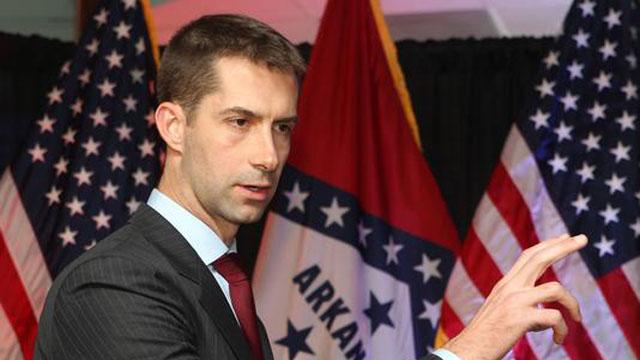
A Question for Tom Cotton and Other War Mongers

cotton

I have been at my denominational Chaplain and Pastoral Counselor conference and we were talking about the concept of Moral Injury.  Sadly the concept while real is so misunderstood. Many in the Christian psychotherapy and pastoral counseling world have reduced the concept to what the soldier did on a battlefield that causes him problems and which he must confess to God to be forgiven. But the bigger issue in moral injury is not that, it is the betrayal of trust by the nation of those that they send to war for the most spurious and often illegal and immoral reasons.

Most people who join the military are idealistic and have a trust of their government, their leaders, their military services and even their churches and God that is a major part of their life. Sadly, that trust is betrayed when the nation sends them into wars which are illegal, immoral and place them in situations where they do or see things that break that trust often forever. This happened to many of our Vietnam vets and is happening again to those of us who served in Iraq or Afghanistan.

Sadly, most Americans, about 99% have no skin in this game. The young men and women who go to war represent far less than one percent of the American population. Many ethnic minorities and come from either the middle class or the poor. Likewise, a growing percentage are men and women who grew up as military brats. I’m one of those, but I see a lot more now. In World War II even the political and economic elites sent their sons to war, but this is not the case today. In fact it is hard to name the children of any national political or corporate leaders who have served in Iraq or Afghanistan. The only one that comes to mind to me is Vice President Joe Biden’s son Beau, who served in Iraq.

But even as we still struggle to deal with the results of the Iraq blunder, there are those who foolishly desire to involve this nation in another war. A war which can have no good outcome and which when push comes to shove few will oppose, because other than the incredibly small minority that serve in the military, no one has any skin in the game.

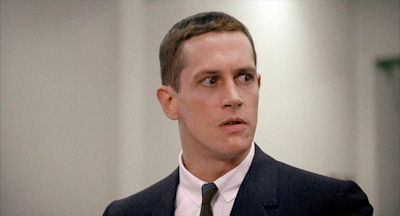
Senator Tom Cotton, a former Army Lieutenant and Iraq veteran, with about as much sense as Doug Neidermeyer from Animal House is beating the drums of war with Iran saying that any military action against Iran would be short and easy. Senator Cotton-Neidermeyer say that it would require just a few days of bombing to complete the mission of crippling Iran’s nuclear program.

Of course he is not alone there is a rising chorus of war mongers who want yet to wage another preemptive war. This would be a war that baring a direct attack of Iran on the United States or an ally that we are bound by treaty to defend would be illegal under every international convention. It would be comparable to the actions of Nazi Germany in its wars of aggression that we sent Nazi leaders to the gallows at Nuremberg.

U.S. Supreme Court Associate Justice Robert Jackson who served as the American prosecutor and worked with our allies to set up the Nuremberg proceedings made this comment which always should be for most in the mind of any American leader when considering going to war: “If certain acts of violation of treaties are crimes, they are crimes whether the United States does them or whether Germany does them, and we are not prepared to lay down a rule of criminal conduct against others which we would not be willing to have invoked against us.” Justice Robert Jackson International Conference on Military Trials, London, 1945, Dept. of State Pub.No. 3080 (1949), p.330.

neidermeyer

If Senator Cotton-Neidermeyer gets his war, baring an Iranian attack on us or one of our allies it be illegal an tantamount to what we put the leaders of the Third Reich on trial for.  Likewise, it would be like the one waged against Iraq one waged under false pretenses which cost so many lives, bled the nation’s treasury dry and reduced our trust and standing in the world.  

We sowed the wind in Iraq, and with climatic struggle between the Islamic State and the Iraqi Shia, supported by Iranian Revolutionary Guards, are reaping the whirlwind. 

Senator Cotton seems not to get the fact that in any war the enemy gets a vote, and the Iranians, even if we manage to cripple their nuclear program will certainly exact a price in blood and treasure that Lieutenant Cotton-Neidermeyer does not seem to understand or appreciate. U.S. ships in the Persian Gulf will have to right off salvos of anti-ship missiles, swarm attacks by Iranian missile and torpedo boats as well as air attacks and submarines. No matter how well we do in defending against these attacks it is undoubtable that ships will be damaged or even sunk and many, maybe even hundreds or thousands of sailors killed, something not seen since World War Two. Likewise the U.S. installations in Bahrain and Qatar will be bombarded with hundreds of short and medium ranged missiles many which will get through our missile defense systems.

When the bodies of our dead military personnel come back, will Senator Cotton be there to meet them? I doubt it because for him, they are just the cost of war. Will he and his allies increase support for the bereaved families, or the wounded? I doubt it, because all of them are bent of cutting the benefits to the wounded, the broken and those shattered by war, because such expenditures get in the way of lining the pockets of their benefactors.

Yes, they will beat their chests and talk about “our heroes” and castigate as traitors those who opposed the war that they brought about in order to cover their guilt.

While we would eventually prevail in such an exchange it would be disastrous and further weaken our military as well as our standing in the world. But then there is the moral question, especially for those who like Senator Cotton and so many of the others who advocate an illegal, immoral preemptive war of aggression who claim to be Christians need to ask.

That question was asked by the iconic hero of the American Civil War Joshua Chamberlain on the front lines at Petersburg in the closing days of that war: “…men made in the image of God, marred by the hand of man, and must we say in the name of God? And where is the reckoning for such things? And who is answerable? One might almost shrink from the sound of his own voice, which had launched into the palpitating air words of order–do we call it?–fraught with such ruin. Was it God’s command that we heard, or His forgiveness that we must forever implore?” 

That my friends is what Senator Cotton and others of those who advocate yet another war of aggression need to answer.

Peace

Padre Steve+

5 Comments

Filed under afghanistan, ethics, faith, Foreign Policy, History, iraq, leadership, Military, national security, PTSD

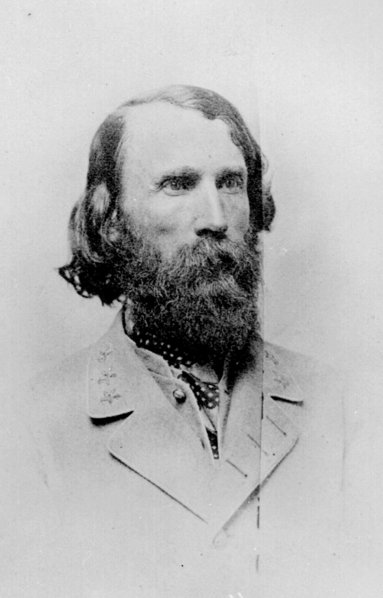
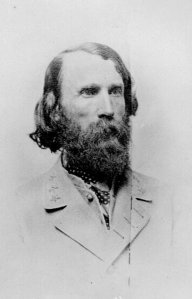
The Most Lovable of All Lee’s Generals: A.P. Hill

Hill.28135413_std

Lieutenant General Ambrose Powell Hill

Friends of Padre Steve’s World

I am continuing to periodically intersperse and publish short articles about various commanders at Gettysburg on the site. These all are drawn from my student text and will likely become a book in their own right when I finish the chapter on the Union commanders.  The reason is I am going to do this is because I have found that readers are often more drawn to the lives of people than they are events. As I have noted before that people matter, even deeply flawed people, and we can learn from them. Sometimes good and even honorable people serve malignant causes, while bad or even wicked people support good causes, usually for selfish reasons, but that is the constant quandary that human beings find themselves.

Today’s article is about Confederate Lieutenant General A.P. Hill. Hill is an interesting character to me, a man of a lot of contradictions both on and off the battlefield. He was gallant and reckless at the same time plagued with ill-health, some of which was certainly real, but at some times may have been stress induced. He made lasting friendships with men who he would later oppose in battle. He fought for a cause that he found repugnant for he hated slavery and the maltreatment of blacks, even condemning the actions of the people of his home town before the war in that regard. In an army filled with highly religious officers, even some who might be termed fanatical in terms of their beliefs, Hill was a skeptic who had little appreciation for those like Stonewall Jackson who he believed were fanatics.

So anyway, tomorrow I will be writing about the assassination of Abraham Lincoln, one of the darkest days in our history.

Peace

Padre Steve+

Ambrose Powell Hill was born about ten miles from Culpepper Court House Virginia in 1825. He was the youngest son of a “a highly esteemed, merchant, farmer, and politician….noted for his courage, famed for his hospitality and beloved for his character.” [1] The young Powell Hill was a good student and gifted horseman who loved the outdoors. His mother was introverted and a hypochondriac who seldom left the house and through her he acquired a love of reading.

As a child Hill attended Black Hills Seminary, a private school for well to do families and though he was a good student was not fond of the significant religious overtones of the school. In addition his mother, who had been raised Episcopalian became caught up in a Baptist revival which swept Northern Virginia in 1840. His mother embraced the austere faith of her new church. Soon “dancing, boisterous conduct, card-playing, and all forms of theatrics were banned in the Main Street home.” [2] From that time on the young Hill “spurned religion” and “always looked with disapproval on anyone who – like Stonewall Jackson, for instance- practiced religion with excessive intensity.” [3]

With his father’s approval and his mother approbation Hill sought admission to West Point and was accepted in 1842. Hill had little problem with the academics of the academy, but conduct was another matter. Hill entered the West Point with a good number of men who would become famous over the next two decades including George McClellan, Thomas Jackson, Cadmus Wilcox, Darius Couch and George Pickett. Hill would have been part of the illustrious class of 1846, but the young cadet had a certain proclivity for women and a certain amount of debauchery, causing him to lose a year of study after contracting “a case of gonorrhea, followed by complications, which were followed by lingering prostatitis.” [4] These afflictions caused many other ailments that would plague him the rest of his life. At West Point, Hill roomed with George McClellan, a refined cadet from Philadelphia, and became a longtime friend. His delayed graduation put him in the class of 1847 where along with his new roommate Julian McAllister and friends Harry Heth and Ambrose Burnside were the social leaders of the class due to their later “practical jokes and boisterous conduct.” [5]

Hill graduated fifteenth in his class and was assigned to the artillery. The young Second Lieutenant accompanied Brigadier General Joseph Lane’s brigade to Mexico where he saw limited action at the end of the war and mainly served on occupation duty. In Mexico and in the following years he was stricken with various fevers including typhoid and yellow fever, as well as recurrences of his prostatitis which so limited his ability to serve in the field with the artillery that he requested a transfer to a desk job. This he was granted by Secretary of War Jefferson Davis who detailed him “for special duty in the United States Coast Survey offices in Washington D.C.” [6]

The assignment to the Coast Survey offices was unusual, especially for Hill’s era of service, for they were a part of the Department of the Navy. Despite much political support, Hill could not get promoted to captain, most likely due to the fact that he was working for the Navy. Hill was generally unlucky at love being twice engaged and twice rejected, the latter time when his fiancée’s parents learned that he had had gonorrhea.

But Hill eventually found a bride as war drew near, Kitty Morgan McClung. She was a young and well off widow who was the sister of Confederate Brigadier General John Hunt Morgan. The two had a happy marriage and were nearly insuperable, Hill affectionately called her Dolly. They had four daughters, only two of who reached adulthood the last born three months after Hill’s death at Petersburg. During the war Dolly had a hard time remaining away from her husband. “She appeared to be impervious to danger and repeatedly ignored Hill’s admonitions to stay away from the front.” [7] Legend has it that she was nearly captured when attempting to spy on Union General Philip Sheridan.

When war came Hill’s friends at the Coastal Survey attempted to convince him to remain with the Union, as serving in their office he would have little chance of taking up arms against Virginia. The now happily settled and married Virginian was torn. He hated slavery and the depreciations visited on blacks; having in 1850 responded to the lynching of a young black man in his home town of Lynchburg: “Shame, shame upon you all, good citizens…Virginia must crawl unless you vindicate good order or discipline and hang every son of a bitch connected with this outrage.” [8] Likewise he was not in favor of secession, but he, like so many other Southern officers felt a stronger connection to family and his Virginia heritage than to the Union, and resigned his commission on February 26th 1861.

Hill was appointed as a Colonel of infantry in May 1861 to organize and command the 13th Virginia Infantry regiment. He commanded the regiment in the Valley and western Virginia as well as at First Manassas. By February 1862 he was a Brigadier General commanding Longstreet’s old Virginia brigade on the Peninsula where he distinguished himself against McClellan at Williamsburg. On May 26th 1862 he was promoted to Major General and given command of the very large so called “Light Division.” He emerged from the fighting on the Peninsula, the battles around Richmond and the Seven Days “with the reputation of being one of the best combat officers that Lee had.” [9] However, his success on the battlefield, like so many commanders, came at great cost. In those battles his division suffered nearly 5,500 casualties. “Six colonels and three majors were killed; two brigadiers (Anderson and Pender), eleven colonels and six lieutenant colonels wounded.” [10]

Hill had an earned reputation as a brilliant division commander with the Light Division. Despite his clashes with Longstreet, and especially with Jackson, who had Hill arrested twice and attempted to have him court-martialed, Lee recommended him to take command of Third Corps. Lee sang his praise of Hill and his abilities to Jefferson Davis noting that Hill was “the best soldier of his grade with me.” [11] However, Hill had never commanded more than one division in action, except for the confused hour after Jackson had been struck down. Hill, however, was devoted, prompt, and energetic, and deserved promotion.” [12]

Hill’s reputation as a superb division commander was well earned. At Antietam when Lee’s army was in danger of destruction, he “drove his men at a killing pace toward the sound of distant gunfire….” [13] Hill’s “Light Division’s remarkable march from Harper’s Ferry- seventeen miles in less than eight hours- rivaled the best marks by Jackson’s famous foot cavalry.” [14] Upon his arrival “instantly recognized the military situation, Kyd Douglas wrote, “and without waiting for the rest of the division and without a breathing spell he threw his columns into line and moved against the enemy, taking no note of their numbers.” [15] Hill’s march saved the Army of Northern Virginia from destruction as he dealt reverses to his old friends McClellan and Burnside. “Lee’s reference to him in his official Sharpsburg report, “And then A.P. Hill came up,” had become a byword in the army.” [16] There were other times, notably at Second Manassas and Fredericksburg where “he was sometimes careless on the battlefield,” and in both instances “his defensive postings were poor and nearly proved very costly.” [17]

Hill was a “nervous wiry man with a persistent chip of underappreciation [sic] on his shoulders and a bevy of chronic illnesses when under stress.” [18] He had an “impetuous streak and fiery temperament that matched his red beard, traits that at times had brought him trouble on the battlefield and off…” [19] Despite this, Hill exhibited a fondness and care for the welfare of his men that earned their respect and admiration. One officer called him “the most lovable of all Lee’s generals,” while “his manner so courteous as almost to lack decision.” [20]

Hill detested Jackson, who he referred to as “that old Presbyterian fool.” [21] His poor relations with Jackson’s confidants at Second Corps ensured that Ewell took Second Corps when Lee reorganized the army after Chancellorsville.

Lee appointed Hill to command Third Corps of which “half of the troops had been with him all along” [22] in the Light Division. Lee liked Hill’s aggressiveness and command instincts, which mirrored his own. Lee hoped that Hill’s aggressive instincts as a division commander would translate into success at the corps level. Longstreet was not in favor of Powell Hill’s appointment, most likely due to his altercation with him the previous year and lobbied for the promotion of D.H. Hill.

In his letter recommending the promotion of A.P. Hill and Ewell to serve as corps commanders, Lee wrote to Davis:

“I wish to take advantage of every circumstance to inspire and encourage…the officers and men to believe that their labors are appreciated, and that when vacancies occur that they will receive the advantages of promotion….I do not know where to get better men than those I have named.” [23]

But the decision to promote Ewell and Hill, both Virginians, stirred some dissent among those that believed that Lee was “favoring Virginians over officers from other states. The promotion of A.P. Hill, as previous noted was “made over the head of two Major Generals more senior than Hill- North Carolinian D.H. Hill and Georgian Lafayette McLaws.” [24] There is some validity to this perception, as Longstreet’s biographer Jeffry Wert noted:

“While the bulk of the troops hailed from outside the Old Dominion, two of the three corps commanders, six of the ten division commanders – including Jeb Stuart with the cavalry – and sixteen of forty-seven brigade commanders were natives of Virginia, along with the army commander and the chief of artillery.” [25]

As a Corps commander Hill enjoyed the confidence of many of his commanders, “the affection of his staff and the admiration of his men.” [26] He ceases to engage in conflict with other officers but “after advancement to corps command, Hill – the victim of what now seems to be a psychosomatic ailment – performed somewhat unevenly and was often incapacitated.” [27] For whatever reason, ill-health or the added responsibility Hill “is not the same man who impetuously led the fighting Light division.” [28]

His sickness did not mean that he was either shirking duty or a coward. During the final agony of the Army of Northern Virginia Hill, who was very sick, left his sick bed against the advice of his doctor to resume command of his decimated Third Corps at Petersburg. On April 1st he was shot through the heart by a Union infantryman of the 138th Pennsylvania as he attempted to ascertain the situation his broken corps faced as the Confederate lines collapsed.

His pregnant wife was told of his death and in the chaos of the fall of Richmond and the Confederate retreat it took several days before Hill’s body was buried. Dolly remarried in 1870, one of her daughters noted that “she was very averse to talking of anything connected with the war…” and nothing, not even a pardon from the Federal government “softened Dolly’s bitterness over the struggle that had taken her husband’s life.” [29] That bitterness also made her refuse “to support any of the “Lost Cause” sentiments that sprouted up during this time.” [30] She died in Lexington Kentucky in 1920.

Notes

[1] Robertson, James I. Jr. General A.P. Hill: The Story of a Confederate Warrior Random House, New York 1987 p.5

[2] Ibid. Robertson General A.P. Hill p.6

[3] Ibid. Robertson General A.P. Hill pp.6-7

[4] Waugh, John C. The Class of 1846: From West Point to Appomattox, Stonewall Jackson, George McClellan and their Brothers Ballantine Books, New York 1994 p.166

[5] Ibid. Robertson General A.P. Hill p.13

[6] Ibid. Robertson General A.P. Hill p.26

[7] Ibid. Wilson and Clair They Also Served p.91

[8] Ibid. Robertson General A.P. Hill p.22

[9] Ibid. Robertson General A.P. Hill p.95

[10] Ibid. Robertson General A.P. Hill p.95

[11] Ibid. Freeman Lee’s Lieutenants p.526

[12] Ibid. Freeman Lee p.304

[13] Ibid. Robertson, General A.P. Hillp.143

[14] Sears, Stephen W. Landscape Turned Red: The Battle of Antietam Houghton-Mifflin Company, Boston and New York 1983 p.285

[15] Ibid. Robertson General A.P. Hill p.144

[16] Ibid. Tagg The Generals of Gettysburg p.301

[17] Ibid. Sears Gettysburg p.45

[18] Ibid. Guelzo, Gettysburg: The Last Invasion p.22

[19] Ibid. Sears Landscape Turned Red p.285

[20] Ibid. Tagg The Generals of Gettysburg p.301

[21] Ibid. Guelzo, Gettysburg: The Last Invasion p.22

[22] Foote, Shelby, The Civil War, A Narrative. Volume Two Fredericksburg to Meridian Random House, New York 1963 p.434

[23] Ibid. Freeman Lee’s Lieutenants p.526

[24] Ibid. Taylor, John Duty Faithfully Performed p.290

[25] Ibid. Wert General James Longstreet p.249

[26] Ibid. Freeman Lee’s Lieutenants p.35

[27] Ibid. Warner Generals in Gray p.135

[28] Ibid. Freeman Lee’s Lieutenants p.35

[29] Ibid. Robertson General A.P. Hill p.321

[30] Ibid. Wilson and Clair They Also Served p.91

Leave a comment

Filed under civil war, faith, Gettysburg, History, leadership, Military

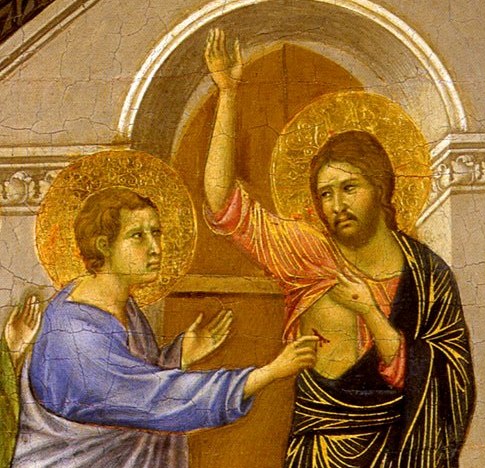
Doubt, Faith and Realism: Doubting Thomas

jesusthomas

Yesterday I celebrated Eucharist on the Second Sunday of Easter its a number of m students and their families at our Staff College Chapel. I have to say that I love what do, I never will regret following the call that I first felt aboard the USS Frederick (LST-1184) back in 1978 to become a Navy Chaplain.

Of course was with everything in my life it has not been easy, and to quote Jerry Garcia I have to admit “what a long strange trip it’s been.” Bug my friends I digress…

That being said, today was a specially day. I was able to celebrate Eucharist with some very nice people and today the Gospel lesson, from the final chapter of John centered on the story of St. Thomas, or he is better know among most people today, “Doubting Thomas.”

The interesting thing is that unlike most “true believers” today Thomas was not rejected by the other disciples as they testified to the resurrection, nor by Jesus himself. Thomas you see was a realist who wanted proof. Thomas wanted to put his hand in the wounds of Jesus, the same Jesus who he knew was crucified and dead. As a realist, Thomas know that dead is dead and unless as he told the other disciples, unless he could put his hand in the wounds of Jesus he would not believe.

Personally, I admire that, more than most people could imagine. Faith is faith, it is not about having to absolutely know, but is about trust, about belief even when you cannot prove it, otherwise it would not be faith. That is why when I see those who have to prove that the absolute certitude that they call “faith” is “absolute truth” I realize that they have totally missed the point of the Gospel.

Having gone through a period of almost two years where as a priest and chaplain I was for all practical purposes an agnostic hoping that God existed I understand this. In fact I have to admit that even today I doubt as much as I believe. I totally understand Thomas, and in fact not only understand, but feel a special kinship with this much maligned follower of Jesus.

Truthfully I think that doubt is a very good thing, it keeps us honest, it keeps us from becoming pious, arrogant, religious assholes who think that they know it all.

Truthfully, I don’t know it all. In fact, as the late Earl Weaver said, “it’s what you learn after you know it all that counts.” At least that seems to be the case for Thomas and the other disciples because what happened with Jesus and the resurrection blew their minds, it was not anything that they could fathom.

Perhaps Thomas, having not been one of the first witnesses to the resurrection was actually more circumspect and a bit more like us than the disciples who first saw Jesus following his crucifixion and resurrection. I would actually saw more honest, for in fact Thomas was a realist who refused to believe unless he had some kind of physical evidence. That my friends I appreciate more than I ever did, because even though Thomas saw Jesus, talked with him and had Jesus show him his wounds, Thomas only believed when he saw and touched those wounds. I cannot condemn nor can I question the faith of the man who is most identified with doubt.

Doubt is not bad. As the late Father Andrew Greeley wrote in his novel The Bishop and the Beggar Girl of St. Germain: 

“Most priests, if they have any sense or any imagination, wonder if they truly believe all the things they preach. Like Jean-Claude they both believe and not believe at the same time.” 

That my friends is faith. That is Easter, if we knew it absolutely it would not be faith and that would be against everything proclaimed by those that first followed Jesus. In fact if we claim with absolute certitude that we know everything needed to be right with God and that we know exactly what God desires, we are probably liars, or at the minimum sadly deluded. As the late Father Henri Nouwen wrote:

“Theological formation is the gradual and often painful discovery of God’s incomprehensibility. You can be competent in many things, but you cannot be competent in God.”

I think this is something that Thomas and the other disciples came to understand. All of them had their moments of faith, and certainly their times of unbelief, even after the resurrection. Maybe that is why Jesus told Thomas “Have you believed because you have seen me? Blessed are those who have not seen and yet have come to believe.”  

Thomas was a realist. Even though the other disciples testified to Jesus being alive, Thomas knew that dead, was dead. He knew that Jesus had died on that cross and that it would take more than words to make him believe that Jesus was alive.

Faith is not about certitude as much as the apologists and propagandists of any faith may say, faith always has to have an element of doubt, otherwise it cannot legitimately be called faith. In fact sincere faith admits that it could be wrong, and as the Paul the Apostle said “If Christ has not been raised, your faith is futile….”

Personally, I find nothing wrong with that. For me that is honest faith, that is Easter faith.

So, have a great day.

Peace

Padre Steve+


1 Comment

Filed under christian life, faith, Religion