Category Archives: History

Dred Scott: A Warning for Today

Friends of Padre Steve’s World

I am a historian, and as such I look to history to understand people and current events. As such I am looking at the upcoming Supreme Court hearing in the case of Obergefell v. Hodges and thinking about it in relation to the Dred Scott Ruling of 1856.

This case deals with Gay marriage and the attempts of mainly Christian Conservatives to roll back the rights of those in the LBGTQ community to marry. Not only does they seek to prevent Gay marriage where it is not permitted but they seek to roll back those rights in states where the majority of voters through their legislators have passed those laws, and negate the traditional understanding of reciprocity between states concerning recognition of marriages performed in other states. As such it is a major case with big ramifications. 

On one hand if the justices rule in favor of those challenging the laws which allow gays to marry it will strike at the very heart of the meaning of the Declaration of Independence’s  central message that “all men are created equal.” Likewise such a ruling will return LBGTQ citizens to a second class status in which though they pay taxes and serve their country in many ways, and contribute to the positive good of all Americans, they will not enjoy the liberties of other citizens and can be denied basic services, or even the right to be at the bedside of a dying spouse. 

Though Gay marriage harms no one its opponents have announced that it will have apocalyptic consequences and will result in a massive persecution of Christians who oppose it. The legal arguments espoused by the opponents of Gay marriage are similar to those who supported the both the protection and expansion of slavery in the 1850s, and those who after emancipation and the Thirteenth Amendment enacted “Black” or “Jim Crow” laws. Sadly, if Gay marriage is upheld by the Court, a number of States are pledging to enact similar laws regarding Gays, and some states are already doing so. 

From more recent Court rulings it appears that the Gay marriage will be upheld, but you never know with the Roberts Court. Several members, Justices Thomas, Alito and Scalia have long histories of opposing and ruling against the rights of gays.  

Today I am looking at the effects of the Dred Scott decision of the Supreme Court. The decision was one of the worst, if not the worst ever enacted by the Supreme Court. The consequences were chilling as it proclaimed that Blacks were a “subordinate and inferior class of beings” who had no rights. It also in combination with the Compromise of 1850 opened territories to slavery and put Blacks in Free States at jeopardy of being re-enslaved.

I ask my readers to imagine what it will be like for Gays if the Supreme Court rules against Gay marriage. I will probably post something tomorrow about the use of the “Black laws” and “Jim Crow” and relate that to the “Gay laws” that are being enacted in many states and locales, laws which serve no purpose than to deprive citizens of basic rights, services and freedoms enjoyed by other citizens. 

This article is an edited part of one of the chapters of my Gettysburg/ Civil War text. I have worked it so that here it is a stand alone article. So please read this and share, it is important and none of us can be complacent.

Peace,

Padre Steve+

the-dred-scott-case-1846-1857-402x618

As the 1850s wore on, the divisions over slavery became deeper and voices of moderation retreated. The trigger for the worsening of the division was the political battle regarding the expansion of slavery; even the status of free blacks in the north who were previously slaves, over whom their owners asserted their ownership. Southerners considered the network to help fugitive slaves escape to non-slave states, called the Underground Railroad “an affront to the slaveholders pride” and “anyone who helped a man or woman escape bondage was simply a thief” who had robbed them of their property and livelihood, as an “adult field hand could cost as much as $2000, the equivalent of a substantial house.” (1)

In 1856 the Supreme Court, dominated by southern Democrats ruled in favor of southern views in the Dred Scott decision, one pillar of which gave slavery the right to expand by denying to Congress the power to prohibit slavery in Federal territories. Taney’s ruling in the case insisted that “Neither the Declaration of Independence nor the Constitution had been intended to apply to blacks he said. Blacks were “so far inferior that they had no rights which the white man was bound to respect.” Taney did not stop with this but he declared the Missouri Compromise itself unconstitutional for “Congress had exceeded its authority when it forbade slavery in the territories by such legislation as the Missouri Compromise, for slaves were private property protected by the Constitution.” (2)

The decision was momentous, but the judicial fiat of Taney and his court majority was a disaster for the American people. It solved nothing and further divided the nation:

“In the South, for instance, it encouraged southern rights advocates to believe that their utmost demands were legitimatized by constitutional sanction and, therefore, to stiffen their insistence upon their “rights.” In the North, on the other hand, it strengthened a conviction that an aggressive slavocracy was conspiring to impose slavery upon the nation, and that any effort to reach an accommodation with such aggressors was futile. While strengthening the extremists, it cut the ground from under the moderates.” (3)

The decision in the case is frightening when one looks upon its tenor and implications. The majority opinion which was written by Chief Justice Roger Taney was chilling, not only in its views of race, but the fact that blacks were perpetually property without the rights of citizens. Taney wrote:

“Can a negro, whose ancestors were imported into this country, sold as slaves, become a member of the political community formed and brought into existence by the Constitution of the United States, and as such become entitled to all the rights, and privileges, and immunities, guaranteed by that instrument to the citizen?…It is absolutely certain that the African race were not included under the name of citizens of a state…and that they were not included, and were not intended to be included, under the word “citizens” in the Constitution, and therefore claim none of the rights and privileges which that instrument provides for and secures to citizens of the United States. On the contrary, they were at that time considered as a subordinate and inferior class of beings, who had been subjugated by the dominant race, and, whether emancipated or not, yet remain subject to their authority, and had no rights or privileges but those who held the power and the Government might choose to grant them” (4)

The effect of the ruling on individuals and the states was far reaching. “No territorial government in any federally administered territory had the authority to alter the status of a white citizen’s property, much less to take that property out of a citizen’s hands, without due process of law or as punishment for some crime.” (5) Free slaves were no longer safe, even in Free States, from the possibility of being returned to slavery, because they were considered property. The tens of thousands of free blacks in the South were effectively stripped of citizenship, and became vulnerable to either expulsion or re-enslavement, something that the legislatures in Virginia, North Carolina and Missouri debated in 1858. Likewise the decision “cast doubt on the free status of every African American regardless of residence.” (6) 

But the decision had been influenced by President-Elect James Buchanan’s secret intervention in the Supreme Court deliberations two weeks before his inauguration. Buchanan hoped by working with the Justices that he would save the Union from breaking apart by appeasing slave owners and catering to their agenda. “The president-elect wanted to know not only when, but if the Court would save the new administration and the Union from the issue of slavery in the territories. Would the judges thankfully declare the explosive subject out of bounds, for everyone who exerted federal power? The shattering question need never bother President Buchanan.” (7) In his inaugural address he attempted to camouflage his intervention and “declared that the Court’s decision, whatever it turned out to be, would settle the slavery issue forever.” (8) 

But Buchanan was mistaken. The case made the situation even more volatile as it impaired “the power of Congress- a power which had remained intact to this time- to occupy the middle ground.” (9)  Taney’s decision held that Congress “never had the right to limit slavery’s expansion, and that the Missouri Compromise had been null and void on the day of its formulation.” (10)

The Court’s decision “that a free negro was not a citizen and the decision that Congress could not exclude slavery from the territories were intensely repugnant to many people in the free states” (11)  and it ignited a firestorm in the north where Republicans now led by Abraham Lincoln, decried the decision and southerners basked in their judicial victory. Southerners were exultant, the Richmond Enquirer wrote that the Court had destroyed “the foundation of the theory upon which their warfare has been waged against the institutions of the South.” (12) Northerners now quite rightly feared that an activist court would rule to deny their states the right to forbid slavery. As early as 1854 Lincoln posed the idea that the Declaration of Independence was “the standard maxim of free society …constantly spreading and deepening its influence,” ultimately applicable “to peoples of all colors everywhere.” (13) 

After the Dred Scott decision Lincoln warned that the Declaration was being cheapened and diluted, he remained insistent on this point, he noted:

“Our Declaration of Independence was held sacred by all, and thought to include all” Lincoln declared, “but now, to aid in making the bondage of the Negro universal and eternal, it is assaulted, and sneered at, and construed, and hawked at, and torn, till, its framers could ride from their graves, they could not recognize it at all.” (14)

Lincoln attacked the decision noting that Taney “insists at great length that negroes were no part of the people who made, or for whom made, the declaration of Independence or the Constitution.” But as Doris Kearns Goodwin notes “in at least five states, black voters action on the ratification of the Constitution and were among the “We the People” by whom the Constitution was ordained and established.” Lincoln acknowledged that the founders “did not declare all men equal in all respects. They did not mean to say that all were equal in color, size, intellect, moral developments, or social capacity.” But they dis declare all men “equal in ‘certain inalienable rights, among which are life, liberty, and the pursuit of happiness.’…They meant simply to declare the right, so the enforcement of it might follow as circumstances permit.” (15)

Not only that, Lincoln asked the logical question regarding Taney’s judicial activism. Lincoln and other Republican leaders “noted that all slavery needed was one more Dred Scott decision that a state could not bar slavery and the objective of Slave Power to nationalize slavery would be accomplished.” (16) How long would it be, asked Abraham Lincoln, before the Court took the next logical step and ruled explicitly that the:

“Constitution of the United States does not permit a state to exclude slavery from its limits?” How far off was the day when “we shall lie down pleasantly thinking that the people of Missouri are on the verge of making their State free; and shall awake to the reality, instead, that the Supreme Court has made Illinois a slave State?” (17)

Lincoln discussed the ramification of the ruling for blacks, both slave and free:

“to aid in making the bondage of the Negro universal and eternal….All the powers of the earth seem rapidly combining against him. Mammon is after him; ambition follows, and philosophy follows, and the theology of the day is fast joining the cry. They have him in his prison house;…One after another they have closed the heavy doors upon him…and they stand musing as to what invention, in all the dominions of mind and matter, can be produced the impossibility of his escape more complete than it is.” (18)

Frederick Douglass noted that “Judge Taney can do many things…but he cannot…change the essential nature of things – making evil good, and good, evil.” (19)

Lincoln was not wrong in his assessment of the potential effects of the Dred Scott decision on Free States. State courts in free-states made decisions on the basis of Dred Scott that bode ill for blacks and cheered slave owners. In newly admitted California the state supreme court ominously “upheld a slaveowner’s right to retain his property contrary to the state’s constitution.” (20)

A similar decision by a New York Court was being used by slave-states to bring that issue to the Taney Court following Dred Scott. “In 1852 a New York judge upheld the freedom of eight slaves who had left their Virginia owner while in New York City on their way to Texas.” (21) The Dred Scott decision brought that case, Lemon v. The People back to the fore and “Virginia decided to take the case to the highest New York court (which upheld the law in 1860) and would have undoubtedly appealed it to Taney’s Supreme Court had not secession intervened.” (22) Even non-Republican parties such as the Democrats could see the writing on the wall. The national publication of the Democratic Party, the Washington Union “announced that the clear implication of the Dred Scott decision was that all state laws prohibiting a citizen from another state, either permanently or temporarily, were unconstitutional.” (23)

Notes

1. Goodheart, Adam. Moses’ Last Exodus in The New York Times: Disunion, 106 Articles from the New York Times Opinionator: Modern Historians Revisit and Reconsider the Civil War from Lincoln’s Election to the Emancipation Proclamation Edited by Ted Widmer, Black Dog and Leventhal Publishers, New York 2013 p.15

2.  Goodwin, Doris Kearns Team of Rivals: The Political Genius of Abraham Lincoln Simon and Schuster, New York 2005 p. 189

3.  Potter, David M. The Impending Crisis: America before the Civil War 1848-1861 completed and edited by Don E. Fehrenbacher Harper Collins Publishers, New York 1976Ibid. Potter The Impending Crisis p.291

4. Guelzo Allen C. Fateful Lightening: A New History of the Civil War Era and Reconstruction Oxford University Press, Oxford and New York 2012 p.91

5. Ibid. Guelzo Fateful Lightening pp.91-92

6. Goldfield, David America Aflame: How the Civil War Created a Nation Bloomsbury Press, New York, London New Delhi and Sidney 2011p.142

7. Freehling, William. The Road to Disunion Volume II: Secessionists Triumphant 1854-1861 Oxford University Press, Oxford and New York 2007 p.115

8. Ibid. Freehling, The Road to Disunion Volume II: Secessionists Triumphant 1854-1861 p.109

9. Ibid. Potter The Impending Crisis p.291

10. Levine, Bruce Half Slave and Half Free: The Roots of the Civil War Revised Edition, Hill and Wang, a division of Farrar, Strauss and Giroux, New York 1992 and 1995   p.210

11. Ibid. Potter The Impending Crisis p.279

12. Ibid. Goodwin Team of Rivals p. 190

13.  Catton, William and Bruce, Two Roads to Sumter: Abraham Lincoln, Jefferson Davis and the March to Civil War McGraw Hill Book Company New York 1963, Phoenix Press edition London p.139

14. Ibid. Guelzo Fateful Lightening p.93

15. Ibid. Goodwin Team of Rivals p. 190

16. Gienapp, William The Republican Party and Slave Power in The Civil War and Reconstruction Documents and Essays Third Edition edited by Michael Perman and Amy Murrell Taylor Wadsworth Cengage Learning Boston MA 2011 p.81

17. Ibid. Levine Half Slave and Half Free p.211

18. Ibid. Catton Two Roads to Sumter p.139

19. Ibid. Goodwin Team of Rivals p. 190

20. Ibid. Gienapp The Republican Party and Slave Power p.81

21. McPherson, James. The Battle Cry of Freedom: The Civil War Era Oxford University Press, Oxford and New York 1988 p.181

22. Ibid. McPherson The Battle Cry of Freedom p.181

23. Ibid. Gienapp The Republican Party and Slave Power p.82
2 Comments

Filed under civil rights, civil war, History, laws and legislation, LGBT issues, marriage and relationships, Political Commentary

Prelude to Gettysburg: A Spirit of Unbelief

Hill.28135413_std

Lieutenant General A.P. Hill


Friends of Padre Steve’s World 

Here is a revised chapter from my Gettysburg text. I will be taking another group of my students up in two weeks.

Have a great weekend.

Peace

Padre Steve+

When Robert E. Lee learned of the Army of the Potomac’s presence north of the Potomac River he ordered his widely dispersed army concentrate near Cashtown and Gettysburg. It was a complicated movement that involved at least five major operations: the shift of the bulk of Ewell’s Second Corps from its planned attack on Harrisburg, the redirection of Early’s division east from its position on the Susquehanna to the west, the movement of Hill’s Third Corps from the area around Cashtown to a position east of Gettysburg, Longstreet’s First Corps north to Chambersburg and Cashtown and the cavalry brigades of Beverly Robertson, Grumble Jones and John Imboden which were to join the army in Pennsylvania. The movement “would take at least two days – the 29th and the 30th of June – and perhaps more…the complete its concentration, especially since the rains had “made the roads very muddy,” forcing “the infantry” to march off the roads….” [1]

Lieutenant General A.P. Hill’s Third Corps that was nearest of Lee’s major units to Cashtown and Gettysburg. Major General Harry Heth’s division led the corps and arrived at Cashtown on June 29th. His division was followed by that of Major General Dorsey Pender which arrived on the 30th. Hill ordered his last division under the command of Major General Richard Anderson to remain behind at “Fayetteville until July 1, when he would join the rest at Cashtown.” [2]

Cashtown was important as a road junction and because it “was situated at one of the few gaps in the Pennsylvania Mountains” and because one of the roads emanating from it “snaked eight miles to another community called Gettysburg.” [3] However the order to concentrate the army at Cashtown presented its own problems. First was the matter of forage. There was not enough room for all the units ordered to Cashtown to have adequate areas to forage, as:

“each division would (by the standard required of nineteenth-century armies) require a circle twelve and a half miles around its encampments to forage (for water, firewood, and feed for men and horses); one single regiment could denuded an acre of woodland just for firewood every three days.” [4]

Likewise, because of the limited road network, Cashtown was becoming a choke point which as his units closed in slowed their movement and created massive traffic problems and confusion. Hill ordered Heth’s division to take the lead and advance to Cashtown on the 29th. The units of Hill’s corps had to endure heavy rains on the 29th which slowed their march and Heth halted at Cashtown knowing that the army would concentrate there while Pender’s division moved into the area his division had vacated.

Early in the morning of June 30th Harry Heth decided to undertake a foraging expedition to Gettysburg.to “search the town for army supplies (shoes especially), and to return the same day.” [5] It was the first in a series of miscalculations that brought Lee’s army into a general engagement that Lee wished to avoid and it is hard to comprehend in light of Lee’s orders not to precipitate a fight.

However, the expedition had taken a toll on the soldiers, especially in terms of shoes, clothes and equipment. The “long march over the hard macadam roads of the North had played havoc with the scraggly foot coverings of Lee’s men.” [6] After muster on the morning of June 30th Heth ordered Johnston Pettigrew’s “brigade to Gettysburg in search of supplies, especially badly needed shoes, which were badly needed by his the men of his division.” Heth, for a reason he never elaborated on decided that there must be shoes in Gettysburg. Perhaps he did not know that the town had been picked clean by John Gordon’s brigade of Jubal Early’s division just a few days before, but for whatever reason he believed this to be the case.

Hill’s Third Corps had been formed as part of the reorganization of the army following Stonewall Jackson’s death after the Battle of Chancellorsville. Hill had a stellar reputation as a division commander; his “Light Division” had distinguished itself on numerous occasions, especially at Antietam where its timely arrival after a hard forced march from Harper’s Ferry helped save Lee’s army late in the battle. At Chancellorsville Hill briefly succeeded Jackson until he too was wounded.

Hill was recommended for promotion to Lieutenant General and command of the new Third Corps by Lee on May 24th 1863. He was promoted over the heads of both Harvey Hill and Lafayette McLaws. The move displeased Longstreet who considered Lafayette McLaws “better qualified for the job.” Likewise there were others who felt that the command should have gone to Harvey Hill, now commanding the Department of North Carolina who’s “record was as good as that of Stonewall Jackson…but, not being a Virginian, he was not so well advertised.” [7]

Ambrose Powell Hill was slightly built and high strung. “Intense about everything” Hill was “one of the army’s intense disbelievers in slavery.” [8] Hill was an 1847 graduate of West Point and briefly served in Mexico but saw no combat. He spent some time in the Seminole wars but due to frequent bouts of ill-health he spent much of his career in garrison duty along the East Coast. Since he was prone to sickness he was assigned to the office of Coastal Survey, a Navy command from 1855 through 1861. Despite pleas from his superiors and his own opposition to secession and slavery, Hill resigned his commission just before Virginia’s secession.

At the outbreak of the war he “received his commission as colonel, and soon trained one of Johnston’s best regiments in the Valley.” [9] He commanded a brigade under Longstreet on the Peninsula and was promoted to Major General and command of the Light Division in May 1862, leading it with distinction, especially at Antietam where his march from Harper’s Ferry and timely arrival on the afternoon of September 17th saved the army of Northern Virginia from utter and complete destruction. He was plagued by health problems which had even delayed his graduation from West Point, health issues that would arise on the first day at Gettysburg.

Hill’s Third Corps was emblematic of the “makeshift nature of the reorganization of the whole army.” [10] It was composed of three divisions. His best and most experienced division was that of the recently promoted and hard fighting Major General Dorsey Pender. Pender’s division was built around four excellent brigades from Hill’s old “Light Division” one of which Pender had commanded before his promotion. Hill had strongly recommended Pender’s promotion during the reorganization, a proposal which was accepted by Lee. Pender, though a fierce fighter and excellent leader, found command of a division to be a heavy burden. He was “an intelligent, reflective man, deeply religious and guided by a strong sense of duty….” [11]

Hill’s second experienced division was that of Major General Richard Anderson. This division had been transferred from Longstreet’s First Corps during the reorganization. Longstreet resented losing the division to Hill, with who he had previously run afoul and this was yet another issue which failed to endear Hill to Longstreet. [12]

The unassuming Anderson had distinguished himself as a brigade and division commander in Longstreet’s corps, but in “an army of prima donnas, he was a self-effacing man, neither seeking praise for himself nor winning support by bestowing it on others.” [13] At Chancellorsville Anderson fought admirably and Lee wrote that Anderson was “distinguished for the promptness, courage and skill with which he and his division executed every order.” [14] With four seasoned brigades under excellent commanders it was a good addition to the corps, although the transition from Longstreet’s stolid and cautious style of command to Hill’s impetuous style introduced “another incalculable of the reshuffled army.” [15]

Major General Harry Heth’s division was the final infantry division assigned to the corps. The division was new and had was cobbled together from two brigades of Hill’s old Light Division and “the two new brigades that Jefferson Davis had forced on an already disrupted army organization.” [16] The organization of this division as well as its leadership would be problematic in the days to come, especially on June 30th and July 1st 1863. The hasty and makeshift organization under leaders who had not served together, many of who were new to command, as well as units which had not fought together spelled trouble.

Harry Heth, like Dorsey Pender was also newly promoted to his grade and the action at Gettysburg would be his first test in division command. Heth was a native Virginian. He came from a family that well connected both socially and politically. He had a social charm had “many friends and bound new acquaintances to him” readily. [17] Heth was a cousin of George Pickett. He was a West Point graduate and classmate of Hill. At West Point Heth had an undistinguished academic career and graduated last in the class of 1847. His career in the ante-bellum army was typical of many officers, he served “credibly in an 1855 fight with Sioux Indians” but his real claim to fame was in authoring the army’s marksmanship manual which was published in 1858. [18]

heth

Major General Harry Heth

Heth’s career with the Confederate army serving in western Virginia was undistinguished but he was a protégé of Robert E. Lee who recommended him as a brigade commander to Jackson before Chancellorsville. Tradition states that of all his generals that Heth was the only one “whom Lee called by his first name.” [19] A.P. Hill when writing Lee about the choice of a successor for the Light Division noted that Heth was “a most excellent officer and gallant soldier” but in the coming campaign “my division under him, will not be half as effective as under Pender.” [20] Douglas Southall Freeman noted that Heth was “doomed to be one of those good soldiers…who consistently have bad luck.” [21]

Heth’s division was composed of two depleted brigades from the Light Division which had taken heavy casualties at Chancellorsville. One brigade, commanded by the hard fighting former regular army officer Brigadier General James Archer. Archer was from Maryland and a graduate of Princeton University who had given up a law practice to join the army. Described as a “little gamecock” who “had no sense of fear” [22] Archer had saved the Confederate line at Fredericksburg leading a desperate counterattack at Prospect Hill. The brigade was composed of four veteran regiments, but was now down to barely 1200 soldiers in the ranks by the time it arrived at Cashtown. However, the brigade which was recruited from Alabama and Tennessee was “well led and had a fine combat reputation.”

But the second brigade was more problematic. This was the Virginia brigade under the command of “the plodding, uninspiring Colonel John Brockenbrough.” [23] Brockenbrough was an “1850 of the Virginia Military Institute and a farmer,” who had “entered the Confederate service as Colonel of the 40th (Virginia) in May 1861.” [24] The brigade had once been considered one of the best in the army had deteriorated in quality following the wounding of its first commander Brigadier General Charles Field. Heth took command of it at Chancellorsville where both he and the brigade performed well. The brigade had taken very heavy casualties and now was reduced to under 1000 effectives. When Heth was promoted the lack of qualified officers left it under the command of its senior colonel, John Brockenbrough.[25] Lee did not consider Brockenbrough “suited for promotion” but “could be counted on to keep together a command sadly reduced in numbers.” [26]

His third brigade came from Mississippi and North Carolina and was commanded by the “stuffy and ambitious” [27] Brigadier General Joe Davis whose uncle was President Jefferson Davis. Davis had served on his uncle’s staff for months and had no combat experience. [28] One author noted that Davis’s promotion to Brigadier General “as unadulterated an instance of nepotism as the record of the Confederacy offers.” [29] His subordinate commanders were no better, one William Magruder was so bad that J.E.B. Stuart suggested that “he have his commission revoked” and only one of the nine field grade officers in his brigade had military training, and that from the Naval Academy. [30] The brigade was also a makeshift operation with two veteran regiments including the 11th Mississippi which had “gone through blood and fire together on the Peninsula through Antietam.” [31] After Antietam, these units were then paired with two new regiments and a new politically connected commander and sent to the backwater of North Carolina where they saw no action. The veteran regiments “mistrusted not only their commander, but the reliability of its yet untested units.” [32]

pettigrew

Brigadier General Johnston Pettigrew

Heth’s largest brigade was new to the army. Commanded by the North Carolina academic Brigadier General Johnston Pettigrew it had no combat experience. Pettigrew himself was considered a strong leader. He had been badly wounded at Seven Pines and thinking his wound mortal “he refused to permit his men to leave the ranks to carry him to the rear.” [33] He was captured but later paroled and returned to the army to command a brigade later in the year.

Hill was under the impression that Meade’s army was still miles away, having just come from meeting Lee who assured him that “the enemy are still at Middleburg,” (Maryland) “and have not yet struck their tents.” [34] With that assurance Heth decided to use June 30th to send Pettigrew’s brigade on the foraging expedition to Gettysburg. An officer present noted that Heth instructed Pettigrew “to go to Gettysburg with three of his regiments present…and a number of wagons for the purpose of collecting commissary and quartermaster stores for the use of the army.” [35]

However Heth did instruct Pettigrew in no uncertain terms not to “precipitate a fight” should he encounter “organized troops” of the Army of the Potomac. [36] Heth was specific in his report that “It was told to Pettigrew that he might find in the town in possession of a home guard,…but if, contrary to expectations, he should find any organized troops capable of making resistance., or any part of the Army of the Potomac, he should not attack it.” [37]

That in mind one has to ask the question as to why Heth would employ “so many men on a long, tiring march, especially as without a cavalry escort he took the risk of sending them into a trap” when his “objects hardly justified” using such a large force. [38] Edwin Coddington is particularly critical of Heth in this regard.

Likewise it has to be asked why the next day in light of Lee’s standing orders not to provoke an engagement that Hill would send two divisions, two thirds of his corps on what was supposedly reconnaissance mission. Some have said that Hill would have had to move to Gettysburg on July 1st anyway due to forage needs of the army, [39] but this is not indicated in any of Hill or Heth’s reports.

As his troops neared Gettysburg Pettigrew observed the Federal cavalry of Buford’s 1st Cavalry Division as they neared the town. He received another report “indicating that drumming could be heard in the distance – which might mean infantry nearby, since generally cavalry generally used only bugles.” [40] He then prudently and in accordance with his orders not to precipitate a fight “elected to withdraw rather than risk battle with a foe of unknown size and composition.” [41] His troops began their retrograde at 11 a.m. leaving Buford’s cavalry to occupy the town at ridges. On Confederate wrote “in coming in contact with the enemy, had quite a little brush, but being under orders not to bring a general engagement fell back, followed by the enemy.” [42]

Upon returning Pettigrew told Hill and Heth that “he was sure that the force occupying Gettysburg was a part of the Army of the Potomac” but Hill and Heth discounted Pettigrew’s report. [43] “Heth did not think highly of such wariness” and “Hill agreed with Heth” [44] Hill believed that nothing was in Gettysburg “except possibly a cavalry vedette.” [45] Hill was not persuaded by Pettigrew or Pettigrew’s aide Lieutenant Louis Young who had previously served under Hill and Pender who reported that the “troops that he saw were veterans rather than Home Guards.” [46] Hill reiterated that he did not believe “that any portion of the Army of the Potomac was up” but then according to Young Hill “expressed the hope that it was, as this was the place he wanted it to be.[47]

Part of the issue was related to the fact that Pettigrew, though highly intelligent, and who had been an observer of wars in Europe was not a professional soldier. Likewise, since had was new to the Army of the Northern Virginia he was an unknown to both Hill and Heth. As such they dismissed his report. In their casual dismissal of Pettigrew’s report, the West Point Graduates Hill and Heth may have manifested an often typical “distain for citizen soldiers…a professional questioning a talented amateur’s observations” [48]

Pettigrew was “aghast at Hill’s nonchalant attitude” [49] and Young was dismayed and later recalled that “a spirit of unbelief” seemed to cloud the thinking of Hill and Heth. [50] In later years Young wrote that the “blindness in part seems to have come over our commanders, who slow to believe in the presence of an organized army of the enemy, thought that there must be a mistake in the report taken back by General Pettigrew.” [51]

Since neither man believed Pettigrew’s report, Heth then asked Hill “whether Hill would have any objection to taking his division to Gettysburg again to get those shoes.” Hill replied “none in the world.” [52] It was to be a fateful decision, a decision that brought about a series of events which in turn led to the greatest battle even fought on the American continent.

Douglas Southall Freeman wrote “On those four words fate hung” [53] and in “that incautious spirit, Hill launched Harry Heth’s division down the Chambersburg Pike and into battle at Gettysburg.” [54]

 Notes

[1] Guelzo, Allen C. Gettysburg: The Last Invasion Vintage Books a Division of Random House, New York 2013 p.128

[2] Coddington, Edwin B. The Gettysburg Campaign, A Study in Command A Touchstone Book, Simon and Shuster New York 1968 p.194

[3] Robertson, James I. Jr. General A.P. Hill: The Story of a Confederate Warrior Random House, New York 1987

[4] Ibid. Guelzo, Gettysburg: The Last Invasion p.128

[5] Ibid. Coddington, The Gettysburg Campaign, A Study in Command p. 263

[6] Ibid. Robertson A.P. Hill p.205

[7] Foote, Shelby, The Civil War, A Narrative. Volume Two Fredericksburg to Meridian Random House, New York 1963 p.453

[8] Ibid. Dowdy, Lee and His Men at Gettysburg: The Death of a Nation p.79

[9] Ibid. Freeman Lee’s Lieutenant’s a Study in Command p.109

[10] Ibid. Dowdy, Lee and His Men at Gettysburg: The Death of a Nation p.88

[11] Ibid. Dowdy, Lee and His Men at Gettysburg: The Death of a Nation p.85

[12] Ibid. Dowdy, Lee and His Men at Gettysburg: The Death of a Nation p.86

[13] Ibid. Dowdy, Lee and His Men at Gettysburg: The Death of a Nation p.86

[14] Ibid. Freeman Lee’s Lieutenant’s a Study in Command p.512

[15] Ibid. Dowdy, Lee and His Men at Gettysburg: The Death of a Nation p.86

[16] Ibid. Dowdy, Lee and His Men at Gettysburg: The Death of a Nation p.87

[17] Ibid. Freeman Lee’s Lieutenant’s a Study in Command p.527

[18] Krick, Robert K. Three Confederate Disasters on Oak Ridge: Failures of Brigade Leadership on the First Day of Gettysburg in The First Day at Gettysburg edited by Gallagher, Gary W. Kent State University Press, Kent Ohio 1992 p.96

[19] Ibid. Krick. Three Confederate Disasters on Oak Ridge p.96

[20] Ibid. Freeman Lee’s Lieutenant’s a Study in Command p.527

[21] Ibid. Freeman Lee’s Lieutenant’s a Study in Command p.46

[22] Ibid. Guelzo, Gettysburg: The Last Invasion p.134

[23] Sears, Stephen W. Gettysburg. Houghton Mifflin Co. Boston and New York 2003 p.55

[24] Pfanz Harry W. Gettysburg: The First Day University of North Carolina Press, Chapel Hill and London 2001 p.118

[25] Ibid. Dowdy, Lee and His Men at Gettysburg: The Death of a Nation p.87

[26] Ibid. Freeman Lee’s Lieutenant’s a Study in Command p.529

[27] Ibid. Guelzo, Gettysburg: The Last Invasion p.133

[28] Ibid. Freeman Lee’s Lieutenant’s a Study in Command p.533

[29] Ibid. Krick. Three Confederate Disasters on Oak Ridge p.99

[30] Ibid. Krick. Three Confederate Disasters on Oak Ridge p.101

[31] Ibid. Guelzo, Gettysburg: The Last Invasion p.134

[32] Ibid. Guelzo, Gettysburg: The Last Invasion p.134

[33] Ibid. Freeman Lee’s Lieutenant’s a Study in Command p.136

[34] Ibid. Guelzo, Gettysburg: The Last Invasion p.131

[35] Trudeau, Noah Andre. Gettysburg: A Testing of Courage, Harper Collins Publishers, New York 2002 p.128

[36] Ibid. Sears Gettysburg p.136

[37] Ibid. Trudeau Gettysburg: A Testing of Courage, p.129

[38] Ibid. Coddington, The Gettysburg Campaign, A Study in Command p. 263

[39] Ibid. Guelzo. Gettysburg: The Last Invasion p.131 This argument does have merit based on the considerations Guelzo lists but neither Hill, Heth or Lee make any mention of that need in their post battle reports.

[40] Ibid. Trudeau Gettysburg: A Testing of Courage, p.130

[41] Gallagher, Gary. Confederate Corps Leadership on the First Day at Gettysburg: A.P. Hill and Richard S. Ewell in a Difficult Debut in The First Day at Gettysburg edited by Gallagher, Gary W. Kent State University Press, Kent Ohio 1992 p.42

[42] Ibid. Trudeau Gettysburg: A Testing of Courage, p.135

[43] Ibid. Coddington, The Gettysburg Campaign, A Study in Command pp. 263-264

[44] Foote, Shelby, The Civil War, A Narrative. Volume Two Fredericksburg to Meridian Random House, New York 1963 p.465

[45] Ibid. Pfanz Gettysburg: The First Day p.27

[46] Ibid. Gallagher, Gary. Confederate Corps Leadership on the First Day at Gettysburg p.42

[47] Ibid. Pfanz. Gettysburg: The First Day p.27

[48] Ibid. Gallagher, Gary. Confederate Corps Leadership on the First Day at Gettysburg p.42

[49] Ibid. Guelzo. Gettysburg: The Last Invasion p.131

[50] Ibid. Coddington, The Gettysburg Campaign, A Study in Command p. 264

[51] Ibid Pfanz Gettysburg: The First Day p.27

[52] Ibid. Coddington, The Gettysburg Campaign, A Study in Command p. 264

[53] Ibid. Freeman Lee’s Lieutenant’s a Study in Command p. 563

[54] Ibid. Krick. Three Confederate Disasters on Oak Ridge p.94

Leave a comment

Filed under civil war, Gettysburg, History, leadership, Military

Pious and Conflicted: General Dorsey Pender

pender

Major General Dorsey Pender C.S.A.

Friends of Padre Steve’s World

I am continuing to periodically intersperse and publish short articles about various commanders at Gettysburg on the site. These all are drawn from my student text and may become a book in their own right.  The reason is I am going to do this is because I have found that readers are often more drawn to the lives of people than they are events. As I have noted before that people matter, even deeply flawed people, and we can learn from them.

Today’s article is about Major General Dorsey Pender who commanded A.P. Hill’s old “Light Division” in Hill’s Third Corps at Gettysburg. Pender is interesting, young an pious, but often conflicted in his faith. His questions are similar to those asked by those who want to believe but struggle with believing. His relationship with his wife, a very strong believer was often marred by differences in belief. I hope you enjoy.

Peace

Padre Steve+

Dorsey Pender was a “pious, serious North Carolinian” [1] born in Edgecomb County in 1834 who received “his early education in the common schools of the county” [2] before he was appointed to West Point. He graduated with the class of 1854, a class that included Custis Lee, Oliver O. Howard, J.E.B. Stewart, S.D. Lee, John Pegram, and Stephen Weed. He graduated nineteenth of the forty-six cadets in that class.

He married his wife Fanny in 1859. She was the sister of one of his academy classmates Samuel Shepperd who died a year after graduating from the academy. She accompanied Dorsey to the Pacific Northwest where he was serving at the outbreak of the war. They had been married two years when he volunteered to serve the Confederacy, he was just twenty-seven and she just nineteen and already a mother expecting a second child when he went to war. Like many young couples separated by war theirs was often plagued by misunderstandings and highly emotional, something that is evidenced in their correspondence.

Pender is often described as devout in terms of his religious beliefs but his devoutness was in large part due to the spiritual conflict that he was going through. Pender was a tremendously proud man but felt the need for some kind of salvation and while he “sincerely tried to be a good Christian” but could not understand why good works did not earn salvation.” [3] The young general sought the counsel of a chaplain, but this did not ease his mind. Eventually he was baptized and confirmed in the Episcopal Church, but even this brought conflict with his wife who was not able to be with him. Despite these attempts he still doubted and months later still “considered himself a “perjured” sinner, having made vows that he could not keep.” [4] This type of religious experience, that of men who question their faith was not unique to Pender and is not unusual today.

Prior to the war he served on the frontier and in California with the artillery and dragoons. During the secession crisis he “offered his services to the Confederacy even before most of the states, including his own, had seceded.” [5] He was appointed to command the 6th North Carolina where he “earned the everlasting respect and admiration” of his men. [6] After the Battle of Seven Pines he was made an acting Brigadier General and given command of Johnston Pettigrew’s brigade. [7]

As he gained more experience Pender became a favorite of Robert E. Lee who admired him for his competence as well as forthrightness. “At Harper’s Ferry and Shepherdstown Pender had shown himself qualified to handle more than one brigade.” [8] Pender was “only seven years out of West Point” [9] in May of 1863 when he was promoted to Major General and given command of his division. He was only twenty-nine years old, and the “youngest of that rank in the army.” [10] The young general was deeply loyal to Powell Hill and a partisan of the Light Division which he now commanded. Though he was young he had risen “on first rate ability, steadfast ambition and a headlong personal leadership in battle which gave a driving force to his brigade” [11] which he considered “the best brigade of the best division” [12] in the army.

Lee praised him as “a most gallant officer” and was deeply sensitive about keeping Pender with the troops that found him so inspiring, noting “I fear the effect upon men of passing him over in favour of another not so identified with them.” [13] Pender was an “intelligent, reflective man, deeply religious and guided by a strong sense of duty.” [14]

When the army marched north into Pennsylvania had to write to “relieve the concern of his young wife that the Lord will not bless the Southern cause if the Confederacy does more than defend its own territory.” [15] Fanny was not convinced by her husband’s attempts to justify as she believed that such an endeavor “was unjust and illegitimate, and tempted God.” [16]

Pender’s four veteran brigades were commanded by three experienced officers and one new to brigade command. However, the young general would not get to lead them into action for long as he was mortally wounded by a shell fragment before the division was to go into action on July 2nd at Gettysburg. Though surgeons believed he would recover he succumbed to his wound during the Confederate withdraw from Gettysburg. “In his dying moments, he asked that Fanny be told that he had no fear of dying.” [17] He continued and said “I can confidently resign my soul to God, trusting in the atonement of our Lord Jesus Christ. My only regret is to leave her and our children.” [18]Evidently, he finally found a measure of peace in the faith that had eluded him in life. Fanny never remarried and became an independent women serving as the head of a school and as Postmistress of Tarboro North Carolina where she died in 1922 at the age of eighty-eight.

Notes

[1] Ibid. Guelzo, Gettysburg: The Last Invasion p.23

[2] Ibid. Warner Generals in Gray p.233

[3] Rable, George C. God’s Almost Chosen People’s: A Religious History of the Civil War The University of North Carolina Press, Chapel Hill 2010 p.244

[4] Ibid. Rable God’s Almost Chosen Peoples p.244

[5] ibid. Tagg The Generals of Gettysburg p.325

[6] Ibid. Glatthaar General Lee’s Army from Victory to Collapse p.196

[7] Ibid. Freeman Lee’s Lieutenants p.146

[8] Ibid. Freeman Lee’s Lieutenants p.387

[9] Ibid. Dowdy. Lee and His Men at Gettysburg p.85

[10] Ibid. Sears Gettysburg p.47

[11] Ibid. Dowdy. Lee and His Men at Gettysburg p.85

[12] Ibid. Freeman Lee’s Lieutenants p.45

[13] Ibid. Sears Gettysburg p.47

[14] Ibid. Dowdy. Lee and His Men at Gettysburg p.85

[15] Ibid. Freeman Lee’s Lieutenants p.45

[16] Ibid. Guelzo. Gettysburg: The Last Invasion p.66

[17] Ibid. Wilson and Clair They Also Served p.113

[18] Ibid. Dowdy Lee and His Men at Gettysburg p.226

1 Comment

Filed under christian life, civil war, faith, Gettysburg, History, Military

Greetings from Shangri-La: The Doolittle Raid

hornet1941-4-18-020807

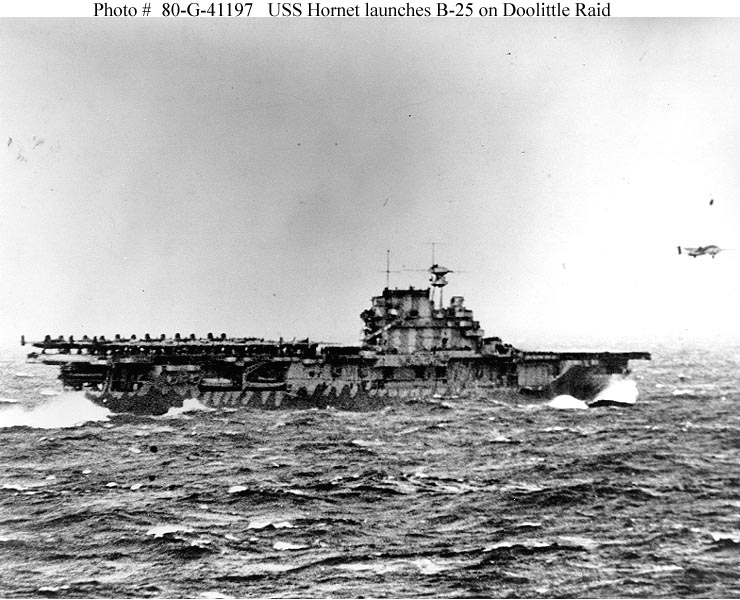
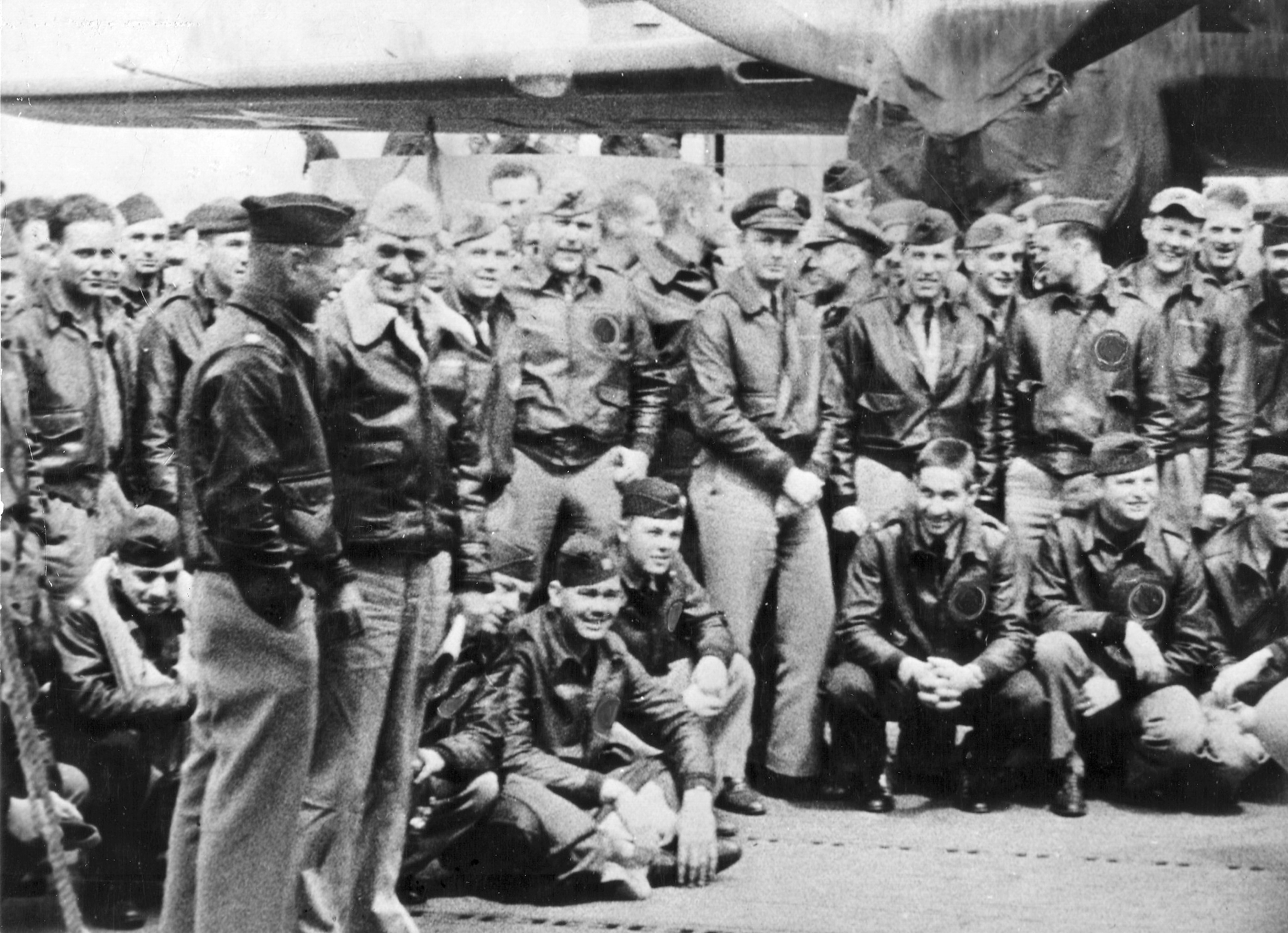
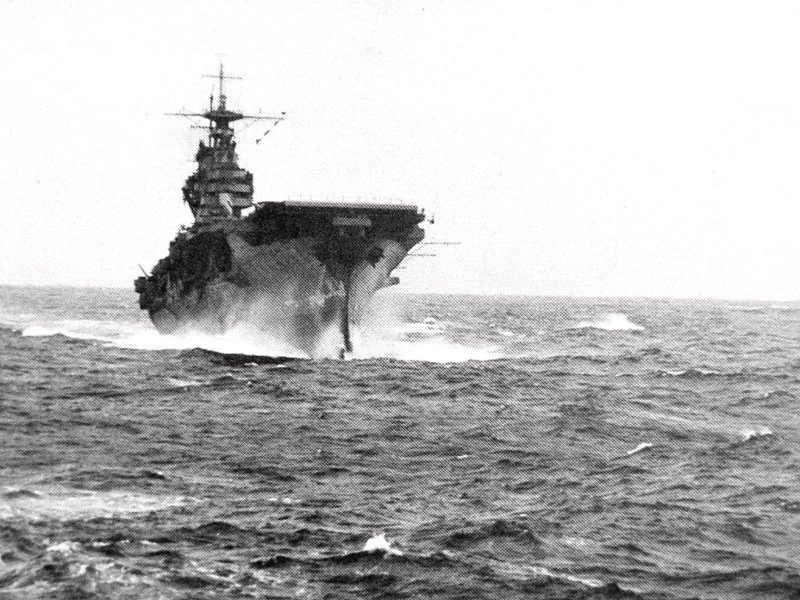
This week marks the 73rd anniversary of the Doolittle Raid on Tokyo. 80 US Army Air Corps flyers manning 16 B-25 Mitchell bombers conducted a mission from the deck of the USS Hornet CV-8 which though it caused little damage changed the course of World War Two in the Pacific.

Marc_A._Mitscher_and_James_Doolittle

Doolittle and his Airmen with Hornet’s C.O. Captain Marc Mitscher 

The genus of the strike came from the desire of President Franklin Roosevelt to bomb Japan as soon as possible during a meeting just prior to Christmas 1941. Various aircraft types were considered and in the end the military chose the B-25 because it had the requisite range and had the best characteristics. Aircraft and their crews from the 17th Bomb Group which had the most experience with the aircraft were modified to meet the mission requirements. Lieutenant Colonel Jimmy Doolittle was selected to lead the mission.

Once the aircraft were ready they and their crews reported to Eglin Field for an intensive three week period of training. Supervised by a Navy pilot the crews practiced simulated carrier take offs, low level flying and bombing, night flying and over water navigation. When the training was complete the aircraft and crews and support personnel flew to McClellan Field for final modifications and then to NAS Alameda California where they were embarked on the Hornet Hornet’s air group had to be stowed on the ships hanger deck since the 16 B-25s had to remain of the flight deck. Each bomber was loaded with 4 specially modified 500 lb. bombs, three high explosive and one incendiary.

Departing Alameda on April 2nd the Hornet and her escorts, Hornet’s Task Force 18 rendezvoused with the Admiral William “Bull” Halsey’s Task Force 16 built around the USS Enterprise CV-6. task Force 16 provided escort and air cover during the mission. The carriers, escorted by 4 cruisers, 8 destroyers and accompanied by two oilers hoped to get close enough to the Japanese home islands so that the raiders could reach bases in allied China.

hornet-rough-seas1

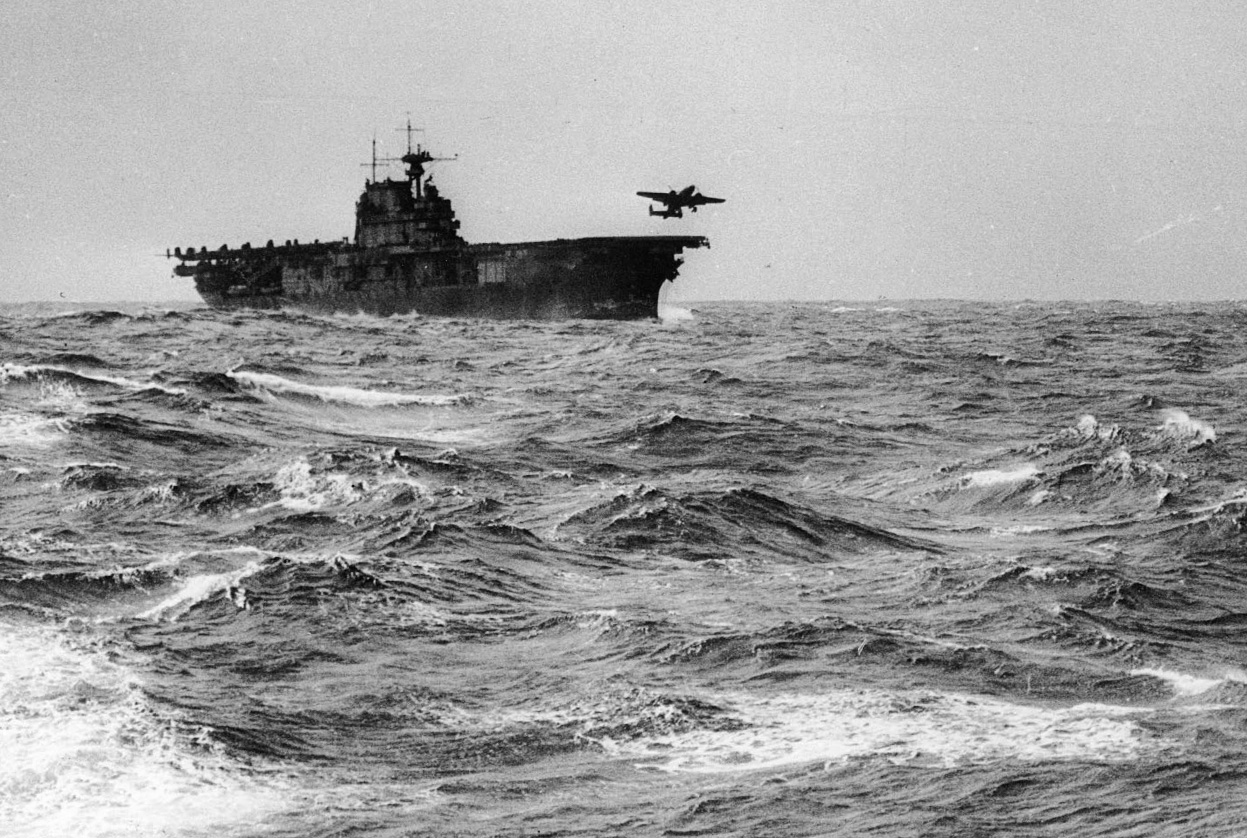
Hornet in Heavy Seas while launching the Raiders

The destroyers and slow oilers broke off on the evening of the 17th after refueling the carriers and cruisers. The two carriers and the cruisers then commenced a high speed run to get into range. However early in the morning of April 18th the ships were sited by a Japanese patrol boat, the #23 Nitto Maru which was sunk by the USS Nashville but not before it got off a radio message alerting the Japanese command. However the Japanese knowing that carrier aircraft had a relatively short range did not expect an attack. However, realizing the danger that the sighting brought, Captain Marc Mitscher elected to launch immediately, even though it meant that bombers would have to ditch their aircraft or attempt to land well short of the friendly Chinese airfields. The launch was 10 hours earlier and about 170 miles farther out from the Chinese bases than planned.

538x362xNorth-American-Aviation-B-25B-Mitchell-launches-from-USS-Hornet-CV-8-18-April-1942-21.jpg.pagespeed.ic.fjuaPl49hb

B-25 Launching from Hornet

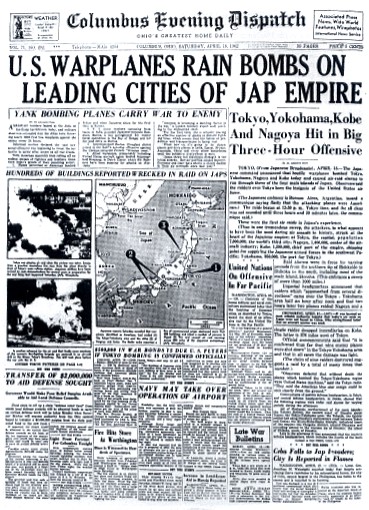
Flying in groups of two to four aircraft the raiders struck the Japanese cities of Tokyo, Yokohama, Yokosuka, Nagoya, Kobe and Osaka. Minimal damage was done and only one aircraft was damaged. However they needed to fly nearly 1500 more miles to get to areas of China unoccupied by Japanese forces. Miraculously most of the aircraft and crews managed to find refuge in China. 69 of the 80 pilots and crew members avoided death or capture. Two flyers drowned, one died when parachuting from his aircraft. Eight men were captured. Of those captured by the Japanese three, Lieutenants William Farrow, Dean Hallmark and Corporal Harold Spatz were tried and executed for “war crimes” on October 15th 1942.

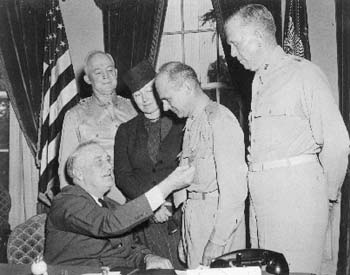
Many of the surviving flyers continued to serve in China while others continued to serve in North Africa and Europe, another 11 died in action following the raid. Doolittle felt that with the loss of all aircraft and no appreciable damage that he would be tried by courts-martial. Instead since the raid had so bolstered American morale he was awarded the Medal of Honor, promoted to Brigadier General and would go on to command the 12th Air Force, the 15th Air Force and finally the 8th Air Force.

The raid shook the Japanese, especially the leadership of the Imperial Navy who had allowed American aircraft to strike the Japanese homeland. The attack helped convince Admiral Isoroku Yamamoto that an attack on Midway was needed in order to destroy the American Carriers and the threat to the home islands.

When asked by a reporter about where the attack was launched from, President Roosevelt quipped “Shangri-La” the fictional location of perpetual youth in the Himalayas’ made famous in the popular book and movie Lost Horizon.

01_raid_newspaper

The raid in terms of actual damage and losses to the attacking forces was a failure, but in terms of its impact a major victory of the United States. The attack was psychologically devastating to Japanese leaders, including Prime Minister Hideki Tojo, whose personal aircraft was nearly hit by one of the raiders and Admiral Isoroku Yamamoto, who felt personally humiliated and dishonored by the fact that bombers launched from American carriers.

Likewise the raid gave the people of the United States a huge morale boost at a time when very little was going right. It forced the Japanese Navy to launch the attack on Midway that turned out to be a disaster, decimating the best of the Japanese Naval Air Forces and the loss of four aircraft carriers and enable the US Navy to take the offensive two months later at Guadalcanal.

President-Franklin-Delano-Roosevelt-pins-the-Congressional-Medal-of-Honor-on-Brig.-Gen.-James-Doolittle.

Franklin Roosevelt Awards Medal of Honor to Jimmy Doolittle 

In the years after the war the survivors would meet. Today only two survivors of the raid remain alive. The two men presented the Congressional Gold Medal awarded to the group to the National Museum of the U.S. Air Force on Saturday, 73 years to the day after their bombing attack on Japan rallied Americans in World War II. Ninety-nine year old Lt.Col. Richard “Dick” Cole and ninety-three year old Staff Sergeant David Thatcher presented the medal which was carried to the museum in  a ceremonial flight of B-25 bombers. Cole was Doolittle’s co-pilot and Thatcher the tail gunner in the bomber nicknamed the “Ruptured Duck.”

It will not be long before these last two survivors will be gone and it is up to us to never forget their heroism, sacrifice and service in a mission the likes of which had never before been attempted, and which would in its own way help change the course of the Second World War.

Peace

Padre Steve+

9 Comments

Filed under History, Military, world war two in the pacific

A Question for Tom Cotton and Other War Mongers

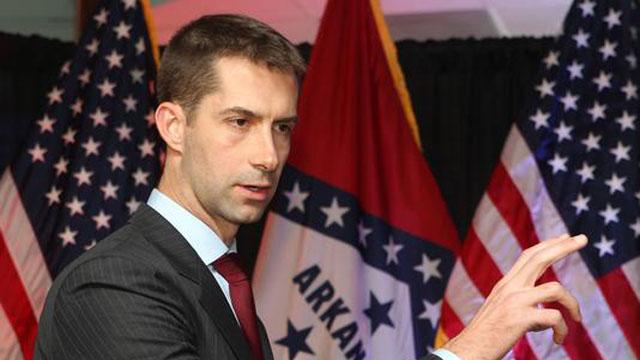
cotton

I have been at my denominational Chaplain and Pastoral Counselor conference and we were talking about the concept of Moral Injury.  Sadly the concept while real is so misunderstood. Many in the Christian psychotherapy and pastoral counseling world have reduced the concept to what the soldier did on a battlefield that causes him problems and which he must confess to God to be forgiven. But the bigger issue in moral injury is not that, it is the betrayal of trust by the nation of those that they send to war for the most spurious and often illegal and immoral reasons.

Most people who join the military are idealistic and have a trust of their government, their leaders, their military services and even their churches and God that is a major part of their life. Sadly, that trust is betrayed when the nation sends them into wars which are illegal, immoral and place them in situations where they do or see things that break that trust often forever. This happened to many of our Vietnam vets and is happening again to those of us who served in Iraq or Afghanistan.

Sadly, most Americans, about 99% have no skin in this game. The young men and women who go to war represent far less than one percent of the American population. Many ethnic minorities and come from either the middle class or the poor. Likewise, a growing percentage are men and women who grew up as military brats. I’m one of those, but I see a lot more now. In World War II even the political and economic elites sent their sons to war, but this is not the case today. In fact it is hard to name the children of any national political or corporate leaders who have served in Iraq or Afghanistan. The only one that comes to mind to me is Vice President Joe Biden’s son Beau, who served in Iraq.

But even as we still struggle to deal with the results of the Iraq blunder, there are those who foolishly desire to involve this nation in another war. A war which can have no good outcome and which when push comes to shove few will oppose, because other than the incredibly small minority that serve in the military, no one has any skin in the game.

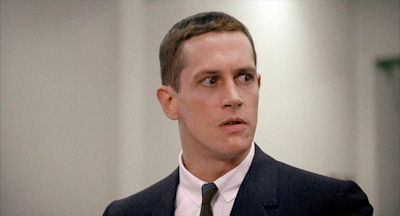
Senator Tom Cotton, a former Army Lieutenant and Iraq veteran, with about as much sense as Doug Neidermeyer from Animal House is beating the drums of war with Iran saying that any military action against Iran would be short and easy. Senator Cotton-Neidermeyer say that it would require just a few days of bombing to complete the mission of crippling Iran’s nuclear program.

Of course he is not alone there is a rising chorus of war mongers who want yet to wage another preemptive war. This would be a war that baring a direct attack of Iran on the United States or an ally that we are bound by treaty to defend would be illegal under every international convention. It would be comparable to the actions of Nazi Germany in its wars of aggression that we sent Nazi leaders to the gallows at Nuremberg.

U.S. Supreme Court Associate Justice Robert Jackson who served as the American prosecutor and worked with our allies to set up the Nuremberg proceedings made this comment which always should be for most in the mind of any American leader when considering going to war: “If certain acts of violation of treaties are crimes, they are crimes whether the United States does them or whether Germany does them, and we are not prepared to lay down a rule of criminal conduct against others which we would not be willing to have invoked against us.” Justice Robert Jackson International Conference on Military Trials, London, 1945, Dept. of State Pub.No. 3080 (1949), p.330.

neidermeyer

If Senator Cotton-Neidermeyer gets his war, baring an Iranian attack on us or one of our allies it be illegal an tantamount to what we put the leaders of the Third Reich on trial for.  Likewise, it would be like the one waged against Iraq one waged under false pretenses which cost so many lives, bled the nation’s treasury dry and reduced our trust and standing in the world.  

We sowed the wind in Iraq, and with climatic struggle between the Islamic State and the Iraqi Shia, supported by Iranian Revolutionary Guards, are reaping the whirlwind. 

Senator Cotton seems not to get the fact that in any war the enemy gets a vote, and the Iranians, even if we manage to cripple their nuclear program will certainly exact a price in blood and treasure that Lieutenant Cotton-Neidermeyer does not seem to understand or appreciate. U.S. ships in the Persian Gulf will have to right off salvos of anti-ship missiles, swarm attacks by Iranian missile and torpedo boats as well as air attacks and submarines. No matter how well we do in defending against these attacks it is undoubtable that ships will be damaged or even sunk and many, maybe even hundreds or thousands of sailors killed, something not seen since World War Two. Likewise the U.S. installations in Bahrain and Qatar will be bombarded with hundreds of short and medium ranged missiles many which will get through our missile defense systems.

When the bodies of our dead military personnel come back, will Senator Cotton be there to meet them? I doubt it because for him, they are just the cost of war. Will he and his allies increase support for the bereaved families, or the wounded? I doubt it, because all of them are bent of cutting the benefits to the wounded, the broken and those shattered by war, because such expenditures get in the way of lining the pockets of their benefactors.

Yes, they will beat their chests and talk about “our heroes” and castigate as traitors those who opposed the war that they brought about in order to cover their guilt.

While we would eventually prevail in such an exchange it would be disastrous and further weaken our military as well as our standing in the world. But then there is the moral question, especially for those who like Senator Cotton and so many of the others who advocate an illegal, immoral preemptive war of aggression who claim to be Christians need to ask.

That question was asked by the iconic hero of the American Civil War Joshua Chamberlain on the front lines at Petersburg in the closing days of that war: “…men made in the image of God, marred by the hand of man, and must we say in the name of God? And where is the reckoning for such things? And who is answerable? One might almost shrink from the sound of his own voice, which had launched into the palpitating air words of order–do we call it?–fraught with such ruin. Was it God’s command that we heard, or His forgiveness that we must forever implore?” 

That my friends is what Senator Cotton and others of those who advocate yet another war of aggression need to answer.

Peace

Padre Steve+

5 Comments

Filed under afghanistan, ethics, faith, Foreign Policy, History, iraq, leadership, Military, national security, PTSD

Teaching, Taxes, Texas and Lincoln

IMG_0535

Well my friends it has been a very busy day. A day full of teaching and writing. A day of filing taxes, thankfully I’ll get some of what I paid in back, and tomorrow I will be heading to Houston, Texas for a Chaplain Training conference at my denomination headquarters. I will return home on Monday afternoon.

Today it was the first meeting of my ethics class and the first meeting for the Gettysburg Staff Ride. I also did a modified version of last night’s post  on the assassination of Abraham Lincoln to send to my colleagues and students at the Staff College.

While doing my taxes tonight I watched the movie Lincoln again and as I saw the flags flying half-staff on the base this afternoon I pondered the depth of the loss of the late President 150 years ago today. As I did so I thought of both the Gettysburg Address and his Second Inaugural Address, for I so much desire the day that all of our citizens shall embrace the ideal that these dead shall not have died in vain — that this nation, under God, shall have a new birth of freedom — and that government of the people, by the people, for the people, shall not perish from the earth.

But now, I need to pack as I need to be at the airport at 4:30 A.M. and get to bed. So until tomorrow,

Peace

Padre Steve+

1 Comment

Filed under civil rights, civil war, History, leadership

A Terrible Good Friday: The Assassination of Abraham Lincoln

gburg address

Good Friday is somber day, and I think that there was none more somber than Good Friday 1865. Shortly after 10 P.M. at Ford’s theater a handsome and well known actor walked into the booth occupied by President Lincoln at Washington’s Ford’s Theater. The President was there with his wife Mary Todd Lincoln and another couple after a very full day of business to watch the play Our American Cousin a farcical look at the visit of an American visiting his English relatives when going to settle the family estate.

Lincoln was looking forward to the play. Though the war continued the surrender of Robert E. Lee’s Army of Northern Virginia to Ulysses S. Grant on April 9th for all intents and purposes had placed the final nail in the Confederacy’s malevolent coffin, and it was if a burden have been removed from Lincoln’s shoulders. His task now what the reintegration of the rebellious states back into the Union, a task that he believed needed to be accomplished without malice while still seeking justice. He made this clear in his Second Inaugural Address just over a month before:

“With malice toward none, with charity for all, with firmness in the right as God gives us to see the right, let us strive on to finish the work we are in, to bind up the nation’s wounds, to care for him who shall have borne the battle and for his widow and his orphan, to do all which may achieve and cherish a just and lasting peace among ourselves and with all nations.”

Just three days before Lincoln had given his last public speech at the White House. It was a practical speech dealing with the nuts and bolts reuniting the country including announcing his support for Negro Suffrage. He said:

“By these recent successes the re-inauguration of the national authority — reconstruction — which has had a large share of thought from the first, is pressed much more closely upon our attention. It is fraught with great difficulty. Unlike a case of a war between independent nations, there is no authorized organ for us to treat with. No one man has authority to give up the rebellion for any other man. We simply must begin with, and mould from, disorganized and discordant elements. Nor is it a small additional embarrassment that we, the loyal people, differ among ourselves as to the mode, manner, and means of reconstruction.”

In the speech Lincoln discussed the issues related to the new government of Louisiana and its dealings with African Americans, which did not go far enough for Lincoln, who was intent on extending the franchise to vote for all blacks, even if it took time to make it so. John Wilkes Booth was in attendance that day and as he listened he became ever angrier and he vowed to a fellow conspirator Lewis Powell, “That is the last speech he will make” and Booth was going to ensure this himself.

Lincoln had been troubled for some time by terrible insomnia and dreams, both bizarre and ghoulish. A few days before he had told Mary and others sharing dinner with them of a troubling dream which he described in detail, Mary and those at the table so accustomed to Lincoln’s customary wit and humor were stunned as Lincoln spoke. He closed the description with these words:

“Determined to find the cause of a state of things so mysterious and shocking, I kept on until I entered the East Room, which I entered. There I was met with a sickening surprise. Before me was a catafalque, on which rested a corpse wrapped in funeral vestments. Around it were stationed soldiers who were acting as guards; and a throng of people, some gazing mournfully at the corpse, whose face was covered, others weeping pitifully: ‘Who is dead in the White House?’ I demanded of one of the soldiers. ‘The President’ was the answer; ‘he was killed by an assassin!’ “Then came a loud burst of grief from the crowd…” [1]

Mary and the others were so upset, particularly with the large number of death threats Lincoln had received throughout the war. However, Lincoln told them all not to worry as “it was only a dream.”

On that Good Friday Lincoln was determined not to mourn, instead of attending Good Friday services or contemplating the war, or reconstruction, he simply wanted to laugh and chose to attend the play, wanting General Grant and his wife to attend. However Grant needed to travel to New Jersey and declined the offer.

Despite this Lincoln was in a cheerful mood, looking forward to the future and discussing all the things that he wanted to see and do after his term in office. Mary was startled by his cheerfulness and Lincoln told her “I have never felt better in my life.” [2] Lincoln and his party arrived late to the cheers of the cast and took their seats in the box about 8:30 to the strains of Hail to the Chief. As the play resumes Lincoln’s bodyguard slips away to get a drink and about twelve minutes after ten Booth slipped into the box where Lincoln sat watching the play. As the crowd roared its delight at a particularly funny scene a shot rings out and Lincoln’s arm jerks up and he slumps over. Booth then jumped to the stage from the box, injuring his leg and shouting “Sic semper tyrannis” or thus always to tyrants. It was the beginning of a series of attempted assassinations designed to decapitate the Federal government, Secretary of State Seward was badly wounded by Lewis Payne, a third assassin backed out at the last minute and failed to attack Vice President Johnson.

Though physicians sought to save the President the wound was mortal, the bullet having ender the back of his head, and dug deep into his brain, lodging behind his left eye. At 7:22 A.M. Abraham Lincoln was dead. It was a disaster for the nation as the new President, Andrew Johnson was a political enemy of Lincoln and not in line with Lincoln’s understanding of reconstruction and reconciliation. A poor Southerner from Tennessee, Johnson hated the Southern plantation aristocracy and would act as a punisher, while radical reconstructionist members of the cabinet and Congress would act in such a way that reconstruction would never achieve all that Lincoln believed that it could.

While radical Confederates rejoiced in Lincoln’s death others were more circumspect. Jefferson Davis who was fleeing and hoping to continue the war realized that the South would not fare as well under Johnson as Lincoln. In fact Johnson’s lack of understanding of the nuances of northern politics as well as his loathing of blacks, his “beliefs, prejudices, personality traits were a recipe for disaster at a time when an unprecedented national crisis put a premium on the capacity to think in new and creative ways.” [3]

The Army of the Potomac learned of Lincoln’s assassination on Easter Sunday. Joshua Chamberlain told a woman whose mansion was at the center of his division’s camp when she asked what disturbed him “It is bad news for the South.” When the woman asked if it was Lee or Davis Chamberlain told her that it was Lincoln and said “The South has lost its best friend, Madam.” [4]

Chamberlain ordered chaplain to conduct a field memorial for the fallen President. The division chaplain a Catholic Priest, Father Egan spoke and roused the men, and Egan ended his service “Better so, Better to die glorious, than live infamous. Better to be buried beneath a nation’s tears, than to walk the earth guilty of the nation’s blood.” [5]

During the war Lincoln had endeared himself to his soldiers and they responded with great emotion. One burst into tears and sobbed “He was our best friend. God bless him,” another wrote home “What a hold Old Abe had on the hearts of the soldiers of the army could only be told by the way they showed their mourning for him.” Admiral David Dixon Porter wrote “The United States has lost the greatest man she ever produced.” [6]

The bullet fired by John Wilkes Booth was a disaster for the country. Sadly, there are some today, in particular the White Supremacist group The League of the South are choosing to celebrate the assassination of the man that they so hate, and honor the assassin as a hero. However, I have to agree with Admiral Porter, there has never been a President before or after who was anything like this man, and I dedicate myself to the quest for equality of all people and for a reconciliation like the leaders of the League of the South and their forbearers will never embrace, for they hate this nation as much as they hate Lincoln. I also fear what such people would do to President Obama should they ever get the opportunity.

Peace

Padre Steve+

Notes

[1] Winik, Jay April 1865: The Month that Saved America Harper Collins, New York 2001 p.205

[2] Ibid. Winik April 1865 p.220

[3] Foner, Eric Forever Free: The Story of Emancipation and Reconstruction Vintage Books, New York 2005 p.109

[4] Wallace, Willard. The Soul of the Lion: A Biography of Joshua L. Chamberlain Stan Clark Military Books, Gettysburg PA 1960 p.193

[5] Ibid. Wallace The Soul of the Lion p.194.

[6] Flood, Charles Bracelen Grant and Sherman: The Friendship that Won the War Harper Perennial, New York 2005 pp.329-330

Leave a comment

Filed under civil war, History, leadership, Political Commentary

The Most Lovable of All Lee’s Generals: A.P. Hill

Hill.28135413_std

Lieutenant General Ambrose Powell Hill

Friends of Padre Steve’s World

I am continuing to periodically intersperse and publish short articles about various commanders at Gettysburg on the site. These all are drawn from my student text and will likely become a book in their own right when I finish the chapter on the Union commanders.  The reason is I am going to do this is because I have found that readers are often more drawn to the lives of people than they are events. As I have noted before that people matter, even deeply flawed people, and we can learn from them. Sometimes good and even honorable people serve malignant causes, while bad or even wicked people support good causes, usually for selfish reasons, but that is the constant quandary that human beings find themselves.

Today’s article is about Confederate Lieutenant General A.P. Hill. Hill is an interesting character to me, a man of a lot of contradictions both on and off the battlefield. He was gallant and reckless at the same time plagued with ill-health, some of which was certainly real, but at some times may have been stress induced. He made lasting friendships with men who he would later oppose in battle. He fought for a cause that he found repugnant for he hated slavery and the maltreatment of blacks, even condemning the actions of the people of his home town before the war in that regard. In an army filled with highly religious officers, even some who might be termed fanatical in terms of their beliefs, Hill was a skeptic who had little appreciation for those like Stonewall Jackson who he believed were fanatics.

So anyway, tomorrow I will be writing about the assassination of Abraham Lincoln, one of the darkest days in our history.

Peace

Padre Steve+

Ambrose Powell Hill was born about ten miles from Culpepper Court House Virginia in 1825. He was the youngest son of a “a highly esteemed, merchant, farmer, and politician….noted for his courage, famed for his hospitality and beloved for his character.” [1] The young Powell Hill was a good student and gifted horseman who loved the outdoors. His mother was introverted and a hypochondriac who seldom left the house and through her he acquired a love of reading.

As a child Hill attended Black Hills Seminary, a private school for well to do families and though he was a good student was not fond of the significant religious overtones of the school. In addition his mother, who had been raised Episcopalian became caught up in a Baptist revival which swept Northern Virginia in 1840. His mother embraced the austere faith of her new church. Soon “dancing, boisterous conduct, card-playing, and all forms of theatrics were banned in the Main Street home.” [2] From that time on the young Hill “spurned religion” and “always looked with disapproval on anyone who – like Stonewall Jackson, for instance- practiced religion with excessive intensity.” [3]

With his father’s approval and his mother approbation Hill sought admission to West Point and was accepted in 1842. Hill had little problem with the academics of the academy, but conduct was another matter. Hill entered the West Point with a good number of men who would become famous over the next two decades including George McClellan, Thomas Jackson, Cadmus Wilcox, Darius Couch and George Pickett. Hill would have been part of the illustrious class of 1846, but the young cadet had a certain proclivity for women and a certain amount of debauchery, causing him to lose a year of study after contracting “a case of gonorrhea, followed by complications, which were followed by lingering prostatitis.” [4] These afflictions caused many other ailments that would plague him the rest of his life. At West Point, Hill roomed with George McClellan, a refined cadet from Philadelphia, and became a longtime friend. His delayed graduation put him in the class of 1847 where along with his new roommate Julian McAllister and friends Harry Heth and Ambrose Burnside were the social leaders of the class due to their later “practical jokes and boisterous conduct.” [5]

Hill graduated fifteenth in his class and was assigned to the artillery. The young Second Lieutenant accompanied Brigadier General Joseph Lane’s brigade to Mexico where he saw limited action at the end of the war and mainly served on occupation duty. In Mexico and in the following years he was stricken with various fevers including typhoid and yellow fever, as well as recurrences of his prostatitis which so limited his ability to serve in the field with the artillery that he requested a transfer to a desk job. This he was granted by Secretary of War Jefferson Davis who detailed him “for special duty in the United States Coast Survey offices in Washington D.C.” [6]

The assignment to the Coast Survey offices was unusual, especially for Hill’s era of service, for they were a part of the Department of the Navy. Despite much political support, Hill could not get promoted to captain, most likely due to the fact that he was working for the Navy. Hill was generally unlucky at love being twice engaged and twice rejected, the latter time when his fiancée’s parents learned that he had had gonorrhea.

But Hill eventually found a bride as war drew near, Kitty Morgan McClung. She was a young and well off widow who was the sister of Confederate Brigadier General John Hunt Morgan. The two had a happy marriage and were nearly insuperable, Hill affectionately called her Dolly. They had four daughters, only two of who reached adulthood the last born three months after Hill’s death at Petersburg. During the war Dolly had a hard time remaining away from her husband. “She appeared to be impervious to danger and repeatedly ignored Hill’s admonitions to stay away from the front.” [7] Legend has it that she was nearly captured when attempting to spy on Union General Philip Sheridan.

When war came Hill’s friends at the Coastal Survey attempted to convince him to remain with the Union, as serving in their office he would have little chance of taking up arms against Virginia. The now happily settled and married Virginian was torn. He hated slavery and the depreciations visited on blacks; having in 1850 responded to the lynching of a young black man in his home town of Lynchburg: “Shame, shame upon you all, good citizens…Virginia must crawl unless you vindicate good order or discipline and hang every son of a bitch connected with this outrage.” [8] Likewise he was not in favor of secession, but he, like so many other Southern officers felt a stronger connection to family and his Virginia heritage than to the Union, and resigned his commission on February 26th 1861.

Hill was appointed as a Colonel of infantry in May 1861 to organize and command the 13th Virginia Infantry regiment. He commanded the regiment in the Valley and western Virginia as well as at First Manassas. By February 1862 he was a Brigadier General commanding Longstreet’s old Virginia brigade on the Peninsula where he distinguished himself against McClellan at Williamsburg. On May 26th 1862 he was promoted to Major General and given command of the very large so called “Light Division.” He emerged from the fighting on the Peninsula, the battles around Richmond and the Seven Days “with the reputation of being one of the best combat officers that Lee had.” [9] However, his success on the battlefield, like so many commanders, came at great cost. In those battles his division suffered nearly 5,500 casualties. “Six colonels and three majors were killed; two brigadiers (Anderson and Pender), eleven colonels and six lieutenant colonels wounded.” [10]

Hill had an earned reputation as a brilliant division commander with the Light Division. Despite his clashes with Longstreet, and especially with Jackson, who had Hill arrested twice and attempted to have him court-martialed, Lee recommended him to take command of Third Corps. Lee sang his praise of Hill and his abilities to Jefferson Davis noting that Hill was “the best soldier of his grade with me.” [11] However, Hill had never commanded more than one division in action, except for the confused hour after Jackson had been struck down. Hill, however, was devoted, prompt, and energetic, and deserved promotion.” [12]

Hill’s reputation as a superb division commander was well earned. At Antietam when Lee’s army was in danger of destruction, he “drove his men at a killing pace toward the sound of distant gunfire….” [13] Hill’s “Light Division’s remarkable march from Harper’s Ferry- seventeen miles in less than eight hours- rivaled the best marks by Jackson’s famous foot cavalry.” [14] Upon his arrival “instantly recognized the military situation, Kyd Douglas wrote, “and without waiting for the rest of the division and without a breathing spell he threw his columns into line and moved against the enemy, taking no note of their numbers.” [15] Hill’s march saved the Army of Northern Virginia from destruction as he dealt reverses to his old friends McClellan and Burnside. “Lee’s reference to him in his official Sharpsburg report, “And then A.P. Hill came up,” had become a byword in the army.” [16] There were other times, notably at Second Manassas and Fredericksburg where “he was sometimes careless on the battlefield,” and in both instances “his defensive postings were poor and nearly proved very costly.” [17]

Hill was a “nervous wiry man with a persistent chip of underappreciation [sic] on his shoulders and a bevy of chronic illnesses when under stress.” [18] He had an “impetuous streak and fiery temperament that matched his red beard, traits that at times had brought him trouble on the battlefield and off…” [19] Despite this, Hill exhibited a fondness and care for the welfare of his men that earned their respect and admiration. One officer called him “the most lovable of all Lee’s generals,” while “his manner so courteous as almost to lack decision.” [20]

Hill detested Jackson, who he referred to as “that old Presbyterian fool.” [21] His poor relations with Jackson’s confidants at Second Corps ensured that Ewell took Second Corps when Lee reorganized the army after Chancellorsville.

Lee appointed Hill to command Third Corps of which “half of the troops had been with him all along” [22] in the Light Division. Lee liked Hill’s aggressiveness and command instincts, which mirrored his own. Lee hoped that Hill’s aggressive instincts as a division commander would translate into success at the corps level. Longstreet was not in favor of Powell Hill’s appointment, most likely due to his altercation with him the previous year and lobbied for the promotion of D.H. Hill.

In his letter recommending the promotion of A.P. Hill and Ewell to serve as corps commanders, Lee wrote to Davis:

“I wish to take advantage of every circumstance to inspire and encourage…the officers and men to believe that their labors are appreciated, and that when vacancies occur that they will receive the advantages of promotion….I do not know where to get better men than those I have named.” [23]

But the decision to promote Ewell and Hill, both Virginians, stirred some dissent among those that believed that Lee was “favoring Virginians over officers from other states. The promotion of A.P. Hill, as previous noted was “made over the head of two Major Generals more senior than Hill- North Carolinian D.H. Hill and Georgian Lafayette McLaws.” [24] There is some validity to this perception, as Longstreet’s biographer Jeffry Wert noted:

“While the bulk of the troops hailed from outside the Old Dominion, two of the three corps commanders, six of the ten division commanders – including Jeb Stuart with the cavalry – and sixteen of forty-seven brigade commanders were natives of Virginia, along with the army commander and the chief of artillery.” [25]

As a Corps commander Hill enjoyed the confidence of many of his commanders, “the affection of his staff and the admiration of his men.” [26] He ceases to engage in conflict with other officers but “after advancement to corps command, Hill – the victim of what now seems to be a psychosomatic ailment – performed somewhat unevenly and was often incapacitated.” [27] For whatever reason, ill-health or the added responsibility Hill “is not the same man who impetuously led the fighting Light division.” [28]

His sickness did not mean that he was either shirking duty or a coward. During the final agony of the Army of Northern Virginia Hill, who was very sick, left his sick bed against the advice of his doctor to resume command of his decimated Third Corps at Petersburg. On April 1st he was shot through the heart by a Union infantryman of the 138th Pennsylvania as he attempted to ascertain the situation his broken corps faced as the Confederate lines collapsed.

His pregnant wife was told of his death and in the chaos of the fall of Richmond and the Confederate retreat it took several days before Hill’s body was buried. Dolly remarried in 1870, one of her daughters noted that “she was very averse to talking of anything connected with the war…” and nothing, not even a pardon from the Federal government “softened Dolly’s bitterness over the struggle that had taken her husband’s life.” [29] That bitterness also made her refuse “to support any of the “Lost Cause” sentiments that sprouted up during this time.” [30] She died in Lexington Kentucky in 1920.

Notes

[1] Robertson, James I. Jr. General A.P. Hill: The Story of a Confederate Warrior Random House, New York 1987 p.5

[2] Ibid. Robertson General A.P. Hill p.6

[3] Ibid. Robertson General A.P. Hill pp.6-7

[4] Waugh, John C. The Class of 1846: From West Point to Appomattox, Stonewall Jackson, George McClellan and their Brothers Ballantine Books, New York 1994 p.166

[5] Ibid. Robertson General A.P. Hill p.13

[6] Ibid. Robertson General A.P. Hill p.26

[7] Ibid. Wilson and Clair They Also Served p.91

[8] Ibid. Robertson General A.P. Hill p.22

[9] Ibid. Robertson General A.P. Hill p.95

[10] Ibid. Robertson General A.P. Hill p.95

[11] Ibid. Freeman Lee’s Lieutenants p.526

[12] Ibid. Freeman Lee p.304

[13] Ibid. Robertson, General A.P. Hillp.143

[14] Sears, Stephen W. Landscape Turned Red: The Battle of Antietam Houghton-Mifflin Company, Boston and New York 1983 p.285

[15] Ibid. Robertson General A.P. Hill p.144

[16] Ibid. Tagg The Generals of Gettysburg p.301

[17] Ibid. Sears Gettysburg p.45

[18] Ibid. Guelzo, Gettysburg: The Last Invasion p.22

[19] Ibid. Sears Landscape Turned Red p.285

[20] Ibid. Tagg The Generals of Gettysburg p.301

[21] Ibid. Guelzo, Gettysburg: The Last Invasion p.22

[22] Foote, Shelby, The Civil War, A Narrative. Volume Two Fredericksburg to Meridian Random House, New York 1963 p.434

[23] Ibid. Freeman Lee’s Lieutenants p.526

[24] Ibid. Taylor, John Duty Faithfully Performed p.290

[25] Ibid. Wert General James Longstreet p.249

[26] Ibid. Freeman Lee’s Lieutenants p.35

[27] Ibid. Warner Generals in Gray p.135

[28] Ibid. Freeman Lee’s Lieutenants p.35

[29] Ibid. Robertson General A.P. Hill p.321

[30] Ibid. Wilson and Clair They Also Served p.91

Leave a comment

Filed under civil war, faith, Gettysburg, History, leadership, Military

The Oddest, Most Eccentric Genius: Lt. General Richard Ewell

Richard-Ewell

Lieutenant General Richard Ewell C.S.A.

Friends of Padre Steve’s World

I am continuing to periodically intersperse and publish short articles about various commanders at Gettysburg on the site. These all are drawn from my student text and may become a book in their own right.  The reason is I am going to do this is because I have found that readers are often more drawn to the lives of people than they are events. As I have noted before that people matter, even deeply flawed people, and we can learn from them.

Today’s article is about Lieutenant General Richard Ewell who commanded the Confederate Second Corps at Gettysburg. He is another complex character, whose actions at Gettysburg are surrounding in controversy. This article does not go into those but instead focuses on the man and his leadership qualities, character, particularly his struggle with faith and depression.

Peace

Padre Steve+


Dick Ewell was a modest man and “had maintained a reputation for solid competence.” [1] Freeman wrote:

“In part, the appointment of Dick Ewell was made because of sentimental association with the name Jackson, and in part because of admiration for his unique, picturesque, and wholly lovable personality. Of his ability to lead a corps nothing was known. Ewell had never handled more than a division and he had served with Lee directly for less than a month.” [2]

Richard Ewell was native of Virginia on February 8th 1817 in the District of Columbia. His father, Thomas Ewell, was a physician and scientific writer whose works created controversy with both the Catholic and Episcopal Churches. Though a gifted writer and editor, his finances declined even as the size of his family increased, plunging the family into poverty. The elder Ewell struggled with depression and alcoholism and died at the age of forty in in 1826 when Richard was nine years old. Ewell’s maternal grandfather was Benjamin Stoddert who served in the Revolutionary war and as the first Secretary of the Navy by John Adams. Stoddert helped create the Navy that rose to greatness. “In just three years he purchased land for six navy yards, acquired fifty ships, and recruited 6,000 sailors, including a corps of talented young officers that included David Porter, Isaac Hull, Oliver Perry, and Stephen Decatur.[3]

When his father died, the family remained in poverty on the family farm, albeit poverty with a distinguished heritage that his mother ensured that her children understood. She also instilled a strict religious faith in her son. With one brother at West Point and another having died of a liver infection, possibly caused by typhoid, Richard took over the management of the family farm. His mother, who sought more than a rudimentary education for him worked for several years to get him an appointment to West Point. Through her efforts he was finally admitted to the academy in 1836.

The young Ewell was an eccentric in many ways like his father, mother and grandfather:

“In him one could see the practical, precise mind of his grandfather Benjamin Stoddert and, negatively, the cynicism and sharp tongue of his mother, Elizabeth. The similarities to his deceased father were more pronounced. Richard possessed Thomas Ewell’s violent temper, high intellect, nervous energy, and love of alcohol.” [4]

In 1836 Ewell entered West Point, from which he graduated in 1840 along with his classmates, William Tecumseh Sherman and George Thomas. Some of his seniors in his cadet company included Joseph Hooker, John Sedgwick, P.T.G. Beauregard, Henry Halleck, Jubal Early and Henry Hunt, all of whom served as General officers in either the Union or Confederate armies during the Civil War. Some of the underclassmen who served under him included both James Longstreet and Ulysses S. Grant. By the end of his time at West Point Ewell had “developed into not only an impressive student but an impressive soldier.[5] He graduated thirteenth in a class of forty-two and chose to be commissioned in the Dragoons.

Upon graduation and his brevet promotion to Second Lieutenant the young officer reported to the First Dragoons and served on the western territories and plains of the rapidly expanding nation. Ewell was picky as far as relationships went and seeing the often sad examples of men who married on the frontier he elected to wait, which caused him not to marry until after the Civil War began.

On the frontier his Christian faith began to wane. He still believed in God, but he was a skeptic, did not own a Bible and found little solace in region, even as his mother converted to Catholicism and entered a novitiate with a Catholic religious order. His antipathy was deepened as he observed the behavior of Christian missionaries working among the various Indian tribes. Of the missionaries he observed “wife beating, fornication, theft and adultery.” He was taken by surprise when his younger brother William decided to become a missionary. Ewell wrote: “I have seen so much injury done the Indians here by them that I am rather skeptic[c]al of their utility. Some of the greatest scamps we have are missionaries.[6] Despite this he never completely lost faith. Stonewall Jackson had a marked influence on his return to faith. One night before a battle he heard Jackson praying inside his tent and later remarked that “he had never before heard a prayer so devout and beautiful; he then for the first time, felt the desire to be a Christian.[7]

When war came with Mexico Ewell, now a First Lieutenant went with his company. He fought at Vera Cruz, Cerro Gordo, Puebla and Churubusco. While he suffered no physical harm in combat, he developed malaria. He lost his older brother Tom, who while serving with the Mounted Rifles was mortally wounded at Cerro Gordo. Likewise his cousin Levi Gannt, was killed at Chapultepec. Following Mexico, he served in various duties became a noted Indian fighter on the western frontier. Those duties showed that “he had proved his mettle and established his credibility.” [8]

As secession drew near, Ewell was very sick again with fever and was returned to Virginia, some thought to die. However, that did not stop him from offering to fight a group of secessionists in Texas who were threatening to attack a Federal installation. He returned to health and on April 24th 1861 he resigned his commission in the U.S. Army, an act that he wrote “was like death to me.” [9] He was commissioned in the new Confederate Army as a Lieutenant Colonel of Cavalry shortly after his resignation.

Completely bald, and speaking with a lisp, Ewell’s oddities “endeared him to his officers and men,” [10] and by January 1862 he was a division commander and Major General serving under Jackson in the Valley campaign. John Gordon noted that Ewell “had in many respects the most unique personality I have ever known. He was composed of anomalies, the oddest, most eccentric genius in the Confederate Army….” [11] During that campaign he distinguished himself. During the campaign “Next to Jackson himself, Ewell stood out. Every act of Ewell’s in the campaign had been the standard of a competent, alert, and courageous lieutenant.” [12]

William C. Oates wrote of Ewell:

“Ewell was a first-class lieutenant, but he did not have enough confidence in himself to make him successful with an independent command…He hesitated…Therein was Ewell’s deficiency as a general. He had a splendid tactical eye, capable of grand military conceptions, and once resolved quick as lightening to act, yet never quite confident of his own judgment and sought the approval of others before he would execute.” [13]

Ewell had been an effective and dependable division commander under Jackson but had been wounded at Groveton where he was severely wounded and lost a leg, which meant the “absence for long months of the most generous, best disciplined, and in many soldierly qualities, the ablest of Jackson’s subordinates.” [14] Longstreet “regarded him as a superior officer in every respect to Hill.” [15]However, Ewell, though serving long with Jackson in the Shenandoah Valley had served “only briefly under Lee” [16] before being wounded at Groveton. The result was that neither Lee nor Ewell fully knew or understood each other. Lee knew Ewell’s excellent reputation among the soldiers of Second Corps and “may have heard rumors that on his deathbed Jackson expressed a preference for Ewell as his successor” [17] but he had little familiarity with Ewell.

In sending the recommendation on to Richmond Lee termed Ewell “an honest, brave soldier, who has always done his duty well.” [18] It was not a resounding recommendation, but then Lee barely knew Ewell. Lee wrote after the war that he recommended Ewell “with full knowledge of “his faults as a military leader- his quick alternations from elation to despondency[,] his want of decision &c.” [19]

Three days after his promotion Ewell married his widowed cousin, Lizinka Campbell, who he had long admired. Lizinka was the daughter of a Tennessee Congressman and had inherited he first husband’s estate. The couple had renewed their relationship during Ewell’s recovery from his wounds suffered at Grovetown. However, the marriage did not help Ewell. Lizinka was domineering and attempted to extend her “domination to the operations of 2nd Corps.” This “created animosity all around.” [20] One colonel noted that Lizinka’s conduct:

“very seriously injured old Ewell, and the very cleverness, which at other times would render her agreeable has only tended to make her more unpopular. She manages everything,” he complained, “from the General’s affairs down to the courier’s, who carries his dispatches. All say they are under the petticoat government.” [21]

Many questions hovered around the appointment of Ewell including how the loss of his leg, his recent marriage, newness to corps command, and unfamiliarity with Lee’s style of command would have on him.

The latter was even more problematic than any residual mental or physical effects of his wound and change in lifestyle. The fact was that Ewell was unfamiliar with Lee’s methods of command in large part because he “had served directly under Lee something less than a month, and then always subject to Jackson’s guidance. Lee never had an opportunity of the lack of self-confidence in Ewell.” [22] Had Lee known that the humble Ewell had reservations of his own about assuming command of a corps and going back to battle after the traumatic amputation of his leg he might have reconsidered his choice.

Ewell had written “I don’t feel up to a separate command” and he had “no desire to see the carnage and shocking sights of another field of battle.” [23] Ewell admitted to his new bride Lizinka that he was “provoked excessively with myself at times at my depression of spirits & dismal way of looking at everything, present & future….” [24] Lee did speak privately about his concerns to Ewell, but no record exists of the conversation, regardless Lee was not concerned enough to remove Ewell from command or to assign his corps to important tasks. However, Ewell was “never the same man in body or mind after the loss of his leg at Groveton.” [25] His decision making on the battlefield became clouded and he was often indecisive.

After Gettysburg Ewell continued to command Second Corps through the Battle of Spotsylvania Court House, “after which his health compelled his temporary retirement from active field duty.” [26] He was reassigned to be the commander of the Department of Richmond and was captured at Sayler’s Creek in April 1865. After the war Ewell was honest about his shortcomings as a corps commander, especially of his actions at Gettysburg. He told one officer “it took a dozen blunders to lose Gettysburg he committed a good many of them.” [27]

He retired to his wife’s dilapidated farm in Tennessee, which he rehabilitated through much hard work. He was active in his community and did not become immersed in the conflicts of various commanders. In January 1872 he and his family were stricken with fever, Lizinka died and he followed a few days later.

In his final days, the faith that he had so long avoided sustained him remarked to a former subordinate he said “I don’t know how it all is, but the mercy of God is greater than the mercy of men.” [28] He dictated that he wanted a simple funeral and no monument over his grave. “Above all, he insisted that nothing disrespectful to the United States Government be inscribed upon his tomb.” [29]

Unlike his former subordinate the bitter, hate filled and arrogant Jubal Early, the reserved and humble Dick Ewell reconciled with his country and owned his mistakes.

Peace

Padre Steve+

Notes

[1] Ibid. Taylor, John Duty Faithfully Performed p.130

[2] Ibid. Freeman Lee’s Lieutenants p.322

[3] Pfanz, Donald. Richard S. Ewell: A Soldier’s Life University of North Carolina Press, Chapel Hill and London 1998 p.9

[4] Ibid. Pfanz Richard S. Ewell p.11

[5] Ibid. Pfanz Richard S. Ewell p.24

[6] Ibid. Pfanz Richard S. Ewell p.33

[7] Ibid. Pfanz Richard S. Ewell p.266

[8] Ibid. Pfanz Richard S. Ewell p.99

[9] Ibid. Pfanz Richard S. Ewell p.121

[10] Ibid. Freeman Lee’s Lieutenants p.172

[11] Ibid. Girardi. The Civil War Generals p.209

[12] Ibid. Freeman Lee’s Lieutenants p.220

[13] Ibid. Girardi. The Civil War Generals p.209

[14] Ibid. Freeman Lee’s Lieutenants p.322

[15] Ibid. Wert A Glorious Army p.214

[16] Gallagher, Gary. Confederate Corps Leadership on the First Day at Gettysburg: A.P. Hill and Richard S. Ewell in a Difficult Debut in The First Day at Gettysburg edited by Gallagher, Gary W. Kent State University Press, Kent Ohio 1992 p.47

[17] Ibid. Gallagher Confederate Corps Leadership on the First Day at Gettysburg p.47

[18] Ibid. Gallagher Confederate Corps Leadership on the First Day at Gettysburg p.48

[19] Ibid. Gallagher Confederate Corps Leadership on the First Day at Gettysburg p..49

[20] Ibid. Wilson and Clair They Also Served p.25

[21] Ibid. Pfanz Richard S. Ewell p.356

[22] Freeman, Douglas Southall, Lee an abridgment by Richard Harwell, Touchstone Books, New York 1997 p.305

[23] Ibid. Guelzo, Gettysburg: The Last Invasion p.23

[24] Ibid. Pfanz Richard S. Ewell p.279

[25] Ibid. Freeman Lee’s Lieutenants p.720

[26] Ibid. Warner Generals in Gray p.85

[27] Ibid. Freeman Lee’s Lieutenants p.605

[28] Ibid. Pfanz Richard S. Ewell pp.495-496

[29] Ibid. Pfanz Richard S. Ewell p.496

[30] Ibid. Pfanz Richard S. Ewell p.268


Leave a comment

Filed under civil war, faith, History, leadership, Military

The Lost Cause Lives in Texas

confederate_flag_memorial

Over the past few years there has been an increase in Neo-Confederate propaganda, talk of secession and civil war coming from people who for the most part call themselves Christians. To be honest there is a reason for this, and that reason is because a Black Man was elected as President and all the underlying pent-up racism that never died despite the great advances that we have seen since the dawn of the Civil Rights Era. Doctor King may have a Holiday, but racism is not dead and often it is cloaked in the myth of the Lost Cause.

Over the past few weeks down in Orange Texas, the Local Sons of the Confederate Veterans chapter have decided to spruce up the monument to the Texas Confederate dead. Now I have lived throughout the South and in most of the former Confederate states there are monuments to the Confederate war dead, and it seems that almost every town has one. They are a part of history and those I vehemently disagree with what those men fought for and would have fought against them, such monument are a part of our history. Monuments to fallen soldiers are part of every almost every western culture and a way for families and communities to remember those who died.

However, the kerfuffle in Orange is a bit different. The monument has been there a long time and truthfully, the Sons of Confederate Veterans own it and the land that it is on. It not on public property actually, if the monument has fallen into disrepair I have no problem with them doing that. However, what they are doing is different. They are erecting flagpoles for 32 Confederate flags. Eight of them are various renditions of the flags of the Confederacy itself and twenty-four are going to be replicas of the flags of Texas Regiments that fought in the war.

Now I do understand that those flags do have some historical meaning and significance, at the same time that historical meaning and significance is connected to a cause that was about the rights of states to promote White Supremacy and slavery. The supporters of the Confederate flag project in Orange are saying that this was not the case.

“David Moore, Lieutenant Division Commander of the Texas Sons of Confederate Veterans, told The Post that Southern states did not fight the Civil War to defend slavery, but instead to defend state’s rights after they were “invaded by Northern troops.” He said the monument in Orange honors the ancestors of the 2,600 members of Texas Sons of Confederate Veterans.” [1]

My feeling is if the Sons of Confederate Veterans wanted to honor their ancestors and remember the military organizations they could place plaques with the regimental histories and the names of those killed in action. They could actually try to make it somewhat reverent and at the same time educational, but this, the display of so many flags looks more like a display designed to incite division and make current the Lost Cause.

A couple of years ago washed up rocker, draft dodger and professional muckraker Ted Nugent made the comment that he wondered if it would have been better that the South had won the Civil War. Nugent’s statements, like those of the Sons of Confederate Veterans in Texas are blatant examples of the enduring influence of the Lost Cause Myth, and show the revisionism and dishonest “scholarship” of the Neo-Confederates. The dishonesty and lack of truth in this quote, which is typical of the movement finds its genus in the discredited myth of the Lost Cause.

Sadly, a lot of the proponents of this are leaders in the radical, theocratic movement known as Christian Dominionism. This movement and its leaders believe that it is the duty of Christians to claim all of culture, politics and economics for God, and to disenfranchise or even kill those who do not agree. Many times their rhetoric is tinged with violence, racism, xenophobia and frankly paranoid and conspiratorial views of anyone that does not agree with them. Leaders of this movement are closely connected to, and often are advisers to prominent current and former Republican elected officials including Rand and Ron Paul, Ted Cruz, Sarah Palin, Michelle Bachmann, Rick Perry, Bobby Jindal and Sam Brownback.

One of the most troubling things about this movement is its growing ties to and sympathy for neo-Confederate movements and the myth of the Lost Cause.

I have written about the ideological and religious roots of the American Civil War. While I was researching that article I began to see just who closely the language of this allegedly Christian movement parallels that of those who led the South to disaster in the Civil War and then to cover their crimes and to justify their actions.

These people are part of a growing fringe movement which advocates all the ideas espoused by the leaders of the Confederacy: secession, nullification, White Supremacy and some advocate violence and insurrection. Many of these despise Abraham Lincoln; they use state legislatures to pass Jim Crow like voting restrictions that particularly impact the poor, the elderly and minorities, and they use the cover of their religious rights to establish laws that allow the open discrimination against Gays. They favor an oligarchy of the rich and corporations that is very similar in its philosophy and ideology to that of the Southern elites and the plantation owners. People who not only enslaved blacks, but used their economic power to keep poor whites in their place.

Some of the Dominionists echo the words of the defenders of slavery. Douglas Wilson, a pastor in the Presbyterian Church of America in Idaho and apologist for Confederate views wrote: “slavery produced in the South a genuine affection between the races that we believe we can say has never existed in any nation before the War or since.” Wilson also wrote that “There has never been, a multi-racial society that has existed with such mutual intimacy and harmony in the history of the world.” Of course there is no truth in that statement whatsoever as any actual student of the ante-bellum South would know. It is fiction and lies being propertied as truth by a Christian pastor in an established denomination.

The cause of the Civil War to the Christian neo-Confederates was not slavery, not economics or even Constitutional issues or anything else that real historians debate but rather a theological myth, as Steven Wilkins explained: “the cause of the Civil War was theological incompatibility between North and South, the former having ‘rejected Biblical Calvinism…“there was radical hatred of Scripture and the old theology [and] Northern radicals were trying to throw off this Biblical culture and turn the country in a different direction….” 

These thoughts are reiterated in many parts of the Dominionist movement in the writings of its godfather R. J. Rushdoony who through his own writings and the continued work of his son-in-law Gary North influence both Ron and his son U.S. Senator and now Republican Presidential Candidate Rand Paul as well as many others in the so called “Christian Right.”

So I have decided to post just a bit of my research on the Lost Cause here, just to show some of the similarities of thought.

As the Southern States seceded, the Reverend William Leacock of Christ Church, New Orleans declared in his Thanksgiving sermon in December of 1860: “Our enemies…have “defamed” our characters, “lacerated” our feelings, “invaded “our rights, “stolen” our property, and let “murderers…loose upon us, stimulated by weak or designing or infidel preachers. With “the deepest and blackest malice,” they have “proscribed” us “as unworthy members… of the society of men and accursed before God.” Unless we sink to “craven” beginning that they “not disturb us,…nothing is now left us but secession.” [2]

The people who drove the nation to war incited secession, not for just any “state’s rights” but for White Supremacy and slavery. Henry Benning of Georgia was a strong Separatist, as proponents of secession were known in Georgia. He led the debate for secession at the Georgia convention, and spoke as a representative at the Virginia secession debate. At both debates the fiery justice proclaimed the disaster that would befall the South under Republican rule: In Virginia he presented a nearly apocalyptic vision of Republican rule:

“On the “not distant” day when the South contains “the only slave States,” climaxed Benning, “The North will have the power to amend the Constitution” and declare “slavery…abolished.” Then the master who “refuses to yield” will doubtless be hung.” Race “war will break out everywhere, like hidden fire from the earth. Eventually “our men will be compelled to wander like vagabonds.” And “as far as our women, the horrors of their state we cannot contemplate.” [3]

He closed his speech with the prediction that under Lincoln and the “Black Republicans” that: “We will be completely exterminated…and the land will be left in the possession of the blacks…” [4]

When you read the words of many of the Dominionist and the Christian neo-Confederate leaders you see a similar cry of victimhood and an apocalyptic vision that is best described as paranoia run rampant. This is only a sample, my research on the Lost Cause, the ante-Bellum South and the contemporary Neo-Confederate Christians connection with the Dominionists continues. What follows here is just a sample of the research that his going into my Civil War and Gettysburg texts plus some additional commentary.

When Edmund Ruffin pulled the lanyard of the cannon that fired the first shot at Fort Sumter it marked the end of an era and despite Ruffin, Stephens and Davis’ plans gave birth to what Lincoln would describe as “a new birth of freedom.”

When the war ended with the Confederacy defeated and the south in ruins, Ruffin still could not abide the result. In a carefully crafted suicide note he sent to his son the bitter and hate filled old man wrote on June 14th 1865:

“I here declare my unmitigated hatred to Yankee rule- to all political, social and business connections with the Yankees and to the Yankee race. Would that I could impress these sentiments, in their full force, on every living Southerner and bequeath them to every one yet to be born! May such sentiments be held universally in the outraged and down trodden South, though in silence and stillness, until the now far-distant day shall arrive for just retribution for Yankee usurpation, oppression and outrages, and for deliverance and vengeance for the now ruined, subjugated and enslaved Southern States! … And now with my latest writing and utterance, and with what will be near my last breath, I here repeat and would willingly proclaim my unmitigated hatred to Yankee rule — to all political, social and business connections with Yankees, and the perfidious, malignant and vile Yankee race.” [5]

Though Ruffin was dead in the coming years the southern states would again find themselves under the governance of former secessionists who were unabashed white supremacists. Former secessionist firebrands who had boldly proclaimed slavery to be the deciding issue when the war changed their story. Instead of slavery being the primary cause of Southern secession and the war, it was “trivialized as the cause of the war in favor of such things as tariff disputes, control of investment banking and the means of wealth, cultural differences, and the conflict between industrial and agricultural societies.” [6]

Alexander Stephens who had authored the infamous1861 Cornerstone Speech that “that the negro is not equal to the white man; that slavery — subordination to the superior race — is his natural and normal condition” argued after the war that the war was not about slavery at all, that it:

“had its origins in opposing principles….It was a strife between the principles of Federation, on the one side, and Centralism, or Consolidation on the other.” He concluded “that the American Civil War “represented a struggle between “the friends of Constitutional liberty” and “the Demon of Centralism, Absolutism, [and] Despotism!” [7]

Jefferson Davis, who had masterfully crafted “moderate” language which radicals in the South used to their advantage regarding the expansion and protection of the rights of slave owners in the late 1850s to mollify Northern Democrats, and who wrote in October 1860 that: “The recent declarations of the Black Republican party…must suffice to convince many who have formerly doubted the purpose to attack the institution of slavery in the states. The undying opposition to slavery in the United States means war upon it where it is, not where it is not.” [8]

After the war a revisionist Davis wrote:

“The Southern States and Southern people have been sedulously represented as “propagandists” of slavery, and the Northern as the champions of universal freedom…” and “the attentive reader…will already found enough evidence to discern the falsehood of these representations, and to perceive that, to whatever extent the question of slavery may have served as an occasion, it was far from being the cause for the conflict.” [9]

Instead of being about slavery the Confederate cause was mythologized by those promoting the false history of the “Lost Cause” a term coined by William Pollard in 1866, which “touching almost every aspect of the struggle, originated in Southern rationalizations of the war.” [10] By 1877 many southerners were taking as much pride in the “Lost Cause” as Northerners took in Appomattox. [11] Alan Nolen notes: “Leaders of such a catastrophe must account for themselves. Justification is necessary. Those who followed their leaders into the catastrophe required similar rationalization.” [12]

The Lost Cause was elevated by some to the level of a religion. In September 1906, Lawrence Griffith speaking to a meeting of the United Confederate Veterans stated that when the Confederates returned home to their devastated lands, “there was born in the South a new religion.” [13] The mentality of the Lost Cause took on “the proportions of a heroic legend, a Southern Götterdämmerung with Robert E. Lee as a latter day Siegfried.” [14]

This new religion that Griffith referenced was replete with signs, symbols and ritual:

“this worship of the Immortal Confederacy, had its foundation in myth of the Lost Cause. Conceived in the ashes of a defeated and broken Dixie, this powerful, pervasive idea claimed the devotion of countless Confederates and their counterparts. When it reached fruition in the 1880s its votaries not only pledged their allegiance to the Lost Cause, but they also elevated it above the realm of common patriotic impulse, making it perform a clearly religious function….The Stars and Bars, “Dixie,” and the army’s gray jacket became religious emblems, symbolic of a holy cause and of the sacrifices made on its behalf. Confederate heroes also functioned as sacred symbols: Lee and Davis emerged as Christ figures, the common soldier attained sainthood, and Southern women became Marys who guarded the tomb of the Confederacy and heralded its resurrection.” [15]

Jefferson Davis became an incarnational figure for the adherents of this new religion. A Christ figure who Confederates believed “was the sacrifice selected-by the North or by Providence- as the price for Southern atonement. Pastors theologized about his “passion” and described Davis as a “vicarious victim”…who stood mute as Northerners “laid on him the falsely alleged iniquities of us all.” [16]

In 1923 a song about Davis repeated this theme:

Jefferson Davis! Still we honor thee! Our Lamb victorious, who for us endur’d A cross of martyrdom, a crown of thorns, soul’s Gethsemane, a nation’s hate, A dungeon’s gloom! Another God in chains!” [17]

The myth also painted another picture, that of slavery being a benevolent institution which has carried forth into our own time. The contention of Southern politicians, teachers, preachers and journalists was that slaves liked their status; they echoed the words of slave owner Hiram Tibbetts to his brother in 1842 “If only the abolitionists could see how happy our people are…..The idea of unhappiness would never enter the mind of any one witnessing their enjoyments” [18] as well as Jefferson Davis who in response to the Emancipation Proclamation called the slaves “peaceful and contented laborers.” [19]

The images of the Lost Cause, was conveyed by numerous writers and Hollywood producers including Thomas Dixon Jr. whose play and novel The Clansman became D.W. Griffith’s The Birth of a Nation, a groundbreaking part of American cinematography which was released in 1915; Margaret Mitchell who penned the epic Pulitzer Prize winning novel Gone With the Wind which in its 1939 film form won ten academy awards immortalized the good old days of the old South with images of faithful slaves, a theme which found its way into Walt Disney’s famed 1946 animated Song of the South.

The Lost Cause helped buttress the myths that both comforted and inspired many Southerners following the war. “It defended the old order, including slavery (on the grounds of white supremacy), and in Pollard’s case even predicted that the superior virtues of cause it to rise ineluctably from the ashes of its unworthy defeat.” [20] The myth helped pave the way to nearly a hundred more years of effective second class citizenship for now free blacks who were often deprived of the vote and forced into “separate but equal” public and private facilities, schools and recreational activities. The Ku Klux Klan and other violent organizations harassed, intimidated, persecuted and used violence against blacks.

“From the 1880s onward, the post-Reconstruction white governments grew unwilling to rely just on intimidation at the ballot box and themselves in power, and turned instead to systematic legal disenfranchisement.” [21] Lynching was common and even churches were not safe. It would not be until the Civil Rights movement of the 1950s and 1960s that blacks would finally begin to gain the same rights enjoyed by whites in most of the South.

That radical thought is still out there. The League of the South posted this on its website:

This 14th of April will mark the 150th anniversary of John Wilkes Booth’s execution of the tyrant Abraham Lincoln. The League will, in some form or fashion, celebrate this event. We remember Booth’s diary entry: “Our country owed all her troubles to him, and God simply made me the instrument of his punishment.” A century and a half after the fact, The League of the South thanks Mr. Booth for his service to the South and to humanity. [22]

Michael Hill, the co-founder of this organization wrote:

“As a traditional Christian Southerner, I want no part of “America.” I’m not talking about a particular piece of land in the western hemisphere; rather, I am talking about an idea, a proposition, a regime, a way of life. I am a Southerner, an old-fashioned Christian. The status of “American” is my antithesis.

Now before you tell me to “Love it or leave it” and pack up and move somewhere else, let me explain. The South, Alabama in particular, is my home. It is also a captive colony of this American monstrosity. Yes, many of our citizens have, wittingly or unwittingly, embraced Americanism for either survival or profit. I have not, and I intend to convince my fellow Southerners to join my side. I do not intend to leave Alabama or the South. Nor do I intend to leave them in the clutches of America. I intend to fight, and if necessary kill and die, for their survival, well-being, and independence.” [23]

William Ruffin outlived Lincoln who was killed by the assassin John Wilkes Booth on April 14th 1864. However the difference between the two men was marked. In his Second Inaugural Address Lincoln spoke in a different manner than Ruffin. He concluded that address with these thoughts:

“With malice toward none, with charity for all, with firmness in the right as God gives us to see the right, let us strive on to finish the work we are in, to bind up the nation’s wounds, to care for him who shall have borne the battle and for his widow and his orphan, to do all which may achieve and cherish a just and lasting peace among ourselves and with all nations.” [24]

I have ancestors on both sides of my family who fought for the Confederacy. While they are my ancestors I cannot subscribe to or honor the cause for which they fought, and for which at least one died. The Confederate flag, though a part of American history is a symbol of White Supremacy, hatred and rebellion. The only reason that I can think that any group would want to fly thirty-two of them is to proclaim that their cause still lives and that they have not abandoned the ideology and beliefs of their ancestors. This is not about displaying history. It is all about promoting White-Christian Supremacy and to again elevate the myth of the Lost Cause as truth.

For me, the words and actions as well as the symbols of the old and new Confederates stand in stark contrast to those support and defend. I sincerely hope that they and their cause eventually fade away to insignificance without again bringing us to civil war.

Peace

Padre Steve+

Notes

[1] Holley, Peter These Texas rebels say the American flag is more racist than the Confederate flag Washington Post 8 April 2015 retrieved 10 April 2015 from http://www.washingtonpost.com/news/morning-mix/wp/2015/04/08/these-texas-rebels-say-the-american-flag-is-more-racist-than-the-confederate-flag/?tid=sm_fb


[2] Freehling, William. The Road to Disunion Volume II: Secessionists Triumphant 1854-1861 Oxford University Press, Oxford and New York 2007 p.511

[3] Ibid. Freehling The Road to Disunion Volume II p.511

[4] Dew, Charles B. Apostles of Disunion: Southern Secession Commissioners and the Causes of the Civil War University Press of Virginia, Charlottesville and London 2001 p.67

[5] Edmund Ruffin (1794-1865). Diary entry, June 18, 1865. Manuscript Division, Library of Congress Retrieved from http://blogs.loc.gov/civil-war-voices/about/edmund-ruffin/ 24 March 2014

[6] Gallagher, Gary W. and Nolan Alan T. editors The Myth of the Lost Cause and Civil War History Indiana University Press, Bloomington and Indianapolis 2000 p.15

[7] Dew, Charles Apostles of Disunion p.16

[8] Catton, Bruce The Coming Fury p.104

[9] Davis, Jefferson The Rise and Fall of the Confederate Government Volume One of Two, A public Domain Book, Amazon Kindle edition pp.76-77


[10] Gallagher, Gary and Nolan, Alan The Myth of the Lost Cause and Civil War History p.12

[11] Millet Allen R and Maslowski, Peter. For the Common Defense: A Military History of the United States of America The Free Press, a division of McMillan Publishers, New York 1984 p.230

[12] Ibid. Gallagher and Nolan The Myth of the Lost Cause and Civil War History p.12

[13] Hunter, Lloyd The Immortal Confederacy: Another Look at the Lost Cause Religion in Gallagher and Nolan The Myth of the Lost Cause and Civil War p.185

[14] McPherson, James The Battle Cry of Freedom p.854

[15] Ibid. Hunter The Immortal Confederacy Religion in Gallagher and Nolan The Myth of the Lost Cause and Civil War p.186

[16] Ibid. Hunter The Immortal Confederacy Religion in Gallagher and Nolan The Myth of the Lost Cause and Civil War p.198

[17] Ibid. Hunter The Immortal Confederacy Religion in Gallagher and Nolan The Myth of the Lost Cause and Civil War p.198

[18] Levine, Bruce Half Slave and Half Free p.106

[19] Ibid. Gallagher and Nolan The Myth of the Lost Cause and Civil War History p.16

[20] Guelzo, Allen Fateful Lightening p.525

[21] Ibid. Guelzo Fateful Lightening p.526

[22] Hill, Michael Honoring John Wilkes Booth League of the South Website http://leagueofthesouth.com/honoring-john-wilkes-booth569/ retrieved 10 April 2015

[23] Hill, Michael. Why I am Not an American League of the South Website http://leagueofthesouth.com/why-i-am-not-an-american-566/ retrieved 10 April 2015

[24] Ibid. Lincoln Second Inaugural Address


2 Comments

Filed under civil rights, civil war, History, News and current events, Political Commentary