Category Archives: History

DOMA Struck Down: The Day After our 30th Wedding Anniversary

1013538_671668626182004_634812401_n

Our 30th Wedding Anniversary Celebration 

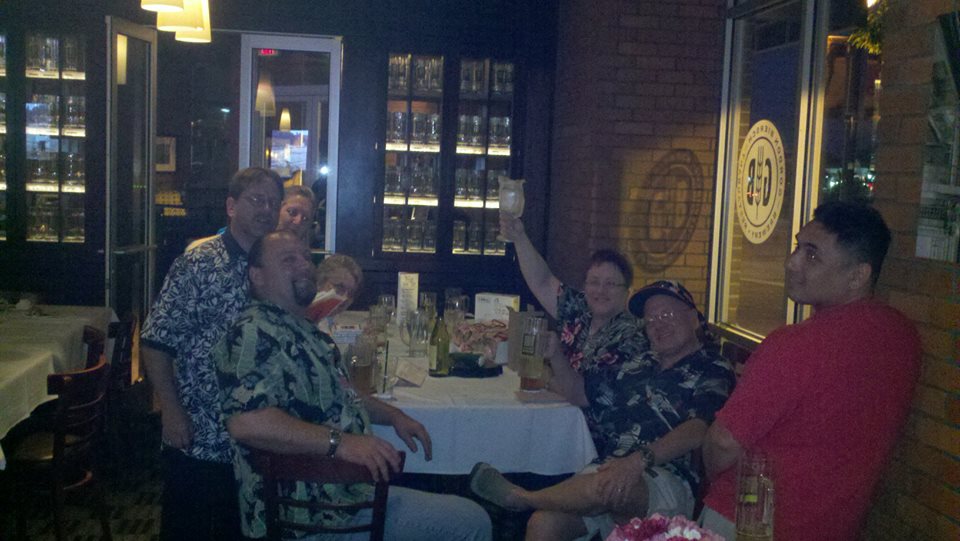
Last night Judy and I celebrated our 30th wedding anniversary with close to 40 friends at Gordon Biersch. What we love about our friends is that they span the spectrum of what is the United States. They include people from all races, religions and political views and even sexual preference, and when together they get along. It really is a wonderful thing to see. And we enjoyed our time with them last night and thank the management of of Virginia Beach Gordon Biersch Brewery Restaurant for helping make it such a wonderful time.

24419_10151620210532059_1908706513_n

Our First Wedding Anniversary Neubrucke Germany 1984

This brings me to today’s Supreme Court decision overturning the Defense of Marriage Act. It was a historic day, celebrated by many and vilified by some conservative Christians who have opposed equal rights for gays for as long as as possible. I am happy for my Gay and Lesbian friends and cheer this decision.

Of course most of the opponents reasons for opposing this are religious and the way that they interpret both scripture and history. I have no argument with them believing that. I am a Christian as well but do not hold the beliefs of the more conservative part of Christianity regarding gays, especially in regard to their rights under the civil laws of the country. I figure that the members of any religion have the right to define what they believe and even the behaviors of people who are willing members of their faith and that the government has no right to judge or legislate what they believe in regard to how they run their churches or places of worship. Thus if the Roman Catholics refuse to ordain women or with few exception married men, or if Evangelical pastors refuse to marry gays or a certain denomination refuses to acknowledge the validity of another religious group within the confines of their faith they have every right to do so. Such is the protection built into the Constitution. I may not agree with those views but I will oppose any government efforts to silence them.

Barry Goldwater said: “Mark my word, if and when these preachers get control of the [Republican] party, and they’re sure trying to do so, it’s going to be a terrible damn problem. Frankly, these people frighten me. Politics and governing demand compromise. But these Christians believe they are acting in the name of God, so they can’t and won’t compromise. I know, I’ve tried to deal with them.” November, 1994, in John Dean, Conservatives Without Conscience.

That being said in our country they do not have the right to impose their beliefs on others that do not share them. That is the side of the constitutional coin. The United States is not the Holy Roman Empire or the nations that descended from it, nor is it Calvin’s Geneva or Elizabethan England where the religion of the sovereign, or in the case of Geneva the council members who shared the faith of John Calvin. In those cases the religion of the sovereign was used to legislate against and punish dissenters, often using prison or the death penalty. Thus I will resist all attempts by religious groups to impose their beliefs through civil law on the society as a whole.

Chris Kluwe, the outspoken and very thoughtful punter of the Oakland Raiders put it well yesterday: “We preach tolerance and legislate hate. We love our neighbor, unless our neighbor happens to be “different.” We elect politicians, year in and year out, on a platform of oppression and prejudice that merely changes its name to fit in with the times.” 

That was a big consideration to the men that drafted our Constitution but one that the descendants of the religions denominations most likely to be discriminated against by State Churches and punished for their beliefs seem to have forgotten. I have written about this a number of times and who can read them at the links below:

The Toxic Faith of “Americananity” and its Antidote  

Bishop Jenky’s Obama and Hitler, Stalin, Bismarck and Clemenceau Comparison: Bad History, Bad Theology and Bad Politics  

The Double Edged Sword of Denying Religious Rights  

Religious Freedom and Religious Hypocrisy the New Improved 2012 Model  

The Gift of Religious Liberty and the Real Dangers to It  

Surrendering Religious Liberty to the State for Money: The Example of Florida I n 2011  

Religious Freedom…Do We Really Want or Believe in It?  

Glenn Beck Attacks the Churches and Threatens Religious Liberty  

A Christian Defense of the Rights of Moslems and Others in a Democracy (or Constitutional Republic)  

Star Trek God and Me: Ecclesiastical Tyranny Today, the Drumhead Revisited  

Gordon Klingenschmitt and his Followers- The Klingenfraud and the Klingenban  

Bringing Faith to the Faithless and Doubt to the Faithful  

Things Haven’t Changed That Much: Jackie Robinson Goes to the 1964 GOP Convention and the Freedom Summer  

The Great Evangelical Disaster: Selling the Birthright….and not Even a Bowl of Soup to Show for It  

Start by Prosecuting Me: A Challenge to the Drumhead Justice of World Net Daily’s Erik Rush and Joseph Farrah  

Be Careful of What you Vote Against: A Warning from History  

The Pejorative use of the term Cult by people that should know Better: Reverend Robert Jeffress and Mitt Romney  

Will we Stand? The Moral Responsibility of Christians in our Time

The Radical Influence of the Christian Dominionism on American Politics: It’s All Jimmy carter’s Fault….Not Really but it is a Catchy Headline  

The Clear and Present Danger of Unrepentant Ideologues  

Taking the Wrong Train  

Darkness into Light: Turning Systematized Hatred in the Name of God into Reconciliation  

The Unchristian Christianity of Modern America  

The Road to Totalitarianism is paved with Good Intentions  

How to Make an Incredibly Difficult War Unwinnable: The Crass Hatred of “Pastor” Terry Jones for Moslems Endangers Americans  

The Fruit of Glenn Beck’s Spirit   

Revisiting the Political Captivity of the Church 

Since I have written about the subject of religious rights and civil rights so many times I will not go into details here, if you want you can peruse any or all of the above articles to get where I am coming from. But I do want to quote two famous Baptists from our history. George Truett who was a professor at Southwestern Baptist Seminary long before I attended there wrote about the danger of the Church alliance with the sate advocated by so many leaders of the religious right, who even now are threatening to urge their people to disobey any Supreme Court ruling regarding marriage equity that they do not approve:

“Constantine, the Emperor, saw something in the religion of Christ’s people which awakened his interest, and now we see him uniting religion to the state and marching up the marble steps of the Emperor’s palace, with the church robed in purple. Thus and there was begun the most baneful misalliance that ever fettered and cursed a suffering world…. When … Constantine crowned the union of church and state, the church was stamped with the spirit of the Caesars…. The long blighting record of the medieval ages is simply the working out of that idea.” 

The second is John Leland, leader of the Virginia Baptists in the fight for the separation of church and state. Persecuted by Anglicans the Baptists persuaded James Madison and Thomas Jefferson to ensure that the guarantee of religious liberty was enshrined in the Bill of Rights wrote:

“The notion of a Christian commonwealth should be exploded forever…Government should protect every man in thinking and speaking freely, and see that one does not abuse another.  The liberty I contend for is more than toleration.  The very idea of toleration is despicable; it supposes that some have a pre-eminence above the rest to grant indulgence, whereas all should be equally free, Jews, Turks, Pagans and Christians.”

Marriage-Equality-104371316011_xlarge

As far as today’s ruling I am very glad for my friends in the Gay community to have their marriages recognized by the Federal government. It is a long time coming. I think the watershed moment for me in this debate came in late 1993 when I was in my Clinical Pastoral Education residency program and I had to deal with those dying from complications from AIDS.

I remember two incidents. One was a young successful architect who was in our ICU having taken a dramatic turn for the worse. His partner and friends were barred from the room by his family who prior to this had condemned him and ostracized him. They had their pastor with them who though the man was unconscious, heavily sedated and dying was preaching to him to repent. The man’s own pastor from another denomination was excluded by the family and eventually left. This left me with the man’s partner and close friends in a waiting area away from the man that they loved. It was heartbreaking and I wondered what it would be like if Judy was forbidden from being at my side as I died because someone disapproved of her or our marriage. But what happened to the young man and his friends was legal because the family had the final say and the partner had no rights.

The second was a young man from West Texas who was dying on our general medical ward. His partner and parents were both there. The parents, dad in a plaid shirt and cowboy hat and boots, a rancher and his wife stood with the partner. All were crying, the family shared their faith with me, Southern Baptists who believed in the grace and love of God. As their son passed away and the partner asked, “what will I do now?” they embraced him and said “you are part of our family now and you can live with us.” It was a moment of grace and God’s love that was so absent in the other situation.

Over the years I have know, been friends with and worked with many gays and lesbians. I have felt terrible that for the most part they had to hide their love for one another either in the military or in their churches. I have had friends ostracized by their faith community or turned out of the military for admitting their sexual orientation.

Today is a good day for them and our country. Yes I know that some will not agree with me for mainly religious reasons and that is okay because they have that right. That being said I rejoice for all the men and women that I know who are gay or lesbian who will finally have the chance to openly enjoy what Judy and I have known and celebrated the past 30 years of marriage.

Peace

Padre Steve+

Leave a comment

Filed under christian life, civil rights, faith, History, laws and legislation, marriage and relationships, Religion

The Heresy of Thinking and Reason in an Age of Fanaticism

The Heresy of Thinking and Reason in an Age of Fanaticism.

Leave a comment

Filed under History, philosophy, Political Commentary

Padre Steve’s 2013 Down and Dirty Primer on the Muddle East

Free Syrian Army soldiers in Idlib

“When you are up to your arse in alligators it is hard to remember that your mission is to drain the swamp.” Old British Colonial Saying

Note: This is an update to my 2011 Primer on the Muddle East

During the dark days of World War Two when Field Marshal Erwin Rommel was making fools of a series of British commanders in North Africa people including senior British military and government leaders sometimes referred to the theater of operations as “the Muddle East.” Some things never seem to change. The Muddle East today is quite frankly speaking in a real muddled state if there ever was one with world leaders and regional leaders muddling about as if they were the New York Mets.

A large part of the muddle goes back to the fall of the Ottoman Empire at the close of the First World War when the victorious Allied Powers redrew the map of the Middle East and made alliances with various local tribal sheiks who many times were crowned king over other tribes who didn’t necessarily want them as king. This along with heavy handed European military actions such as the British using poison gas dropped from aircraft in Iraq and a real lack of effort to better the lives of the newly “liberated” peoples of the region was just the start. Add to the cesspool a bunch of oil presided over by major oil companies, the anti-colonial movements that flourished in the years after World War Two when the French, British and Italians had to divest themselves of their Middle Eastern holdings. The French had to fight a real war in Algeria but finally withdrew leaving Algeria’s new rulers to goof up the country and oppress their people for decades to come.  In the coming years many of these newly independent nations found that life still sucked so in a number of countries military officers overthrew the despised monarchs promising reforms but oppressing their people while blaming all their problems on the Israelis.  They got their asses kicked by the Israelis in a series of wars which did a number of things that made the Middle East Muddle even worse.

First it ensured that Palestinian Arabs ended up under Israeli rule and were used with great aplomb by the Middle Eastern despots to prop up support for their regimes while doing nothing to help the Palestinians other than to put them in camps in Lebanon.  Even when the Egyptians made a peace deal with Israel most of the Arab World ostracized them.  Then in 1979 the Shah of Iran was sent packing by a bunch of Mullahs and in 1981 Saddam Hussein’s Iraq attacked Iran in one of the bloodier wars of the late 20th Century which finally ended in 1988. Of course the United States was pissed at the Mullahs so Saddam became our favorite Arab despot for a while.  Add to the mix the Soviet Union and the United States arming their favorite Arab dictators who were given carte blanche to continue oppressing their people so long as it didn’t interfere with their support of either party or the oil supply. Finally the Soviets went Tango Uniform in 1989 not long after being forced out of Afghanistan by the U.S. supplied, Pakistani supported and Saudi Arabian fundamentalist financed Mujahideen.

With the Soviets “Tango Uniform” and the Warsaw Pact nations trying to get into NATO the United States was now the uncontested Numero Uno country in the world Saddam presumed upon his late supporters and invaded Kuwait, albeit after thinking that the U.S. Ambassador to Iraq said that we wouldn’t mind.

Well he was wrong we did mind and got a lot of countries from NATO and including a bunch of Arab countries like Egypt, Syria and Saudi Arabia to get on board on a mission to get Saddam’s troops out of Kuwait. It was a kick ass mission and since the United Nations didn’t authorize removing Saddam and because President George H.W. Bush was smart enough to not to drive on Baghdad to kick him out preferring the despot we knew to a quagmire Saddam was left in power.

So we stationed ground and air forces around the Gulf to keep Saddam and Iran in check and even put them in Saudi Arabia which a large number of radicals such as Osama Bin Laden equated to letting the Devil play in Allah’s Holy Sandbox.  So Osama went and set up a base with the Medieval bunch of Pashtun known as the Taliban in Afghanistan stirred up a bunch of shit killing Americans and blowing up stuff including the World Trade Center in 1993, the Khobar Towers barracks complex in 1996, the USS Cole in 2000 and then 2001 another attack on the World Trade Center which took down the towers with hijacked aircraft and also struck the Pentagon triggered an American response against Bin Laden and his Taliban hosts.  The United States then invaded in Iraq in 2003 and succeeded in taking out Saddam but also succeeded in alienating a good many Iraqis who greeted us with open arms because we goofed up the occupation and pissed a lot of them off by dissolving the Army, Police and Civil Service and letting thugs and opportunists take over. Unfortunately since we didn’t go in with enough troops to secure all the Iraqi bases, their weapons depots and actually take control of surrendering Iraqi units these newly unemployed and dishonored people launched an insurgency bolstered by Al Qaeda and other foreign fighters even as Sunni and Shi’a Moslems began to settle scores with each other. Insurgency and civil war, two great tastes that go great together, but what the heck right?

Of course it took years to get control of the situation on the ground and thankfully the United States forces in Iraq were helped when the Sunni Moslems in Al Anbar Province realized that these foreign fighters were a worse enemy than the United States and switched sides. This turned the tables in Iraq and the insurgency was brought under control and an elected government managed to start to get their stuff together and allow us to begin withdrawing from Iraq. Of course the focus on Iraq gave the Taliban a chance to regroup as the Afghani Government proved itself corrupt, incompetent and not to give a shit about the Afghani people. So the Taliban who had been hated made a comeback and made our lives much harder so that now almost 10 years into the fight we are having a really hard time.  Well enough about us there was plenty more going on in the Muddle East besides the Iraq and Afghanistan wars.

Let’s see….there was the law of unintended consequences in that by taking Saddam Down and weakening Iraq we took away Iran’s natural enemy and the key to the balance of power in the region. Iran was strengthened and began a nuclear program that everyone with half a brain knows in intended for military use and expanded its influence in Lebanon where the Iranian backed Hezbollah took power.  Now Hezbollah which actually has an experienced military force and probably owns 40,000 or so rockets and missiles a good number of which can hit deep in Israel seems to be ready for war especially because they fought the Israelis to a stalemate in 2008, the first time an Arab military ever did that. Not only did they take on the Israelis but they are also helping Syrian dictator Bashir Assad turn the tide against the polyglot Syrian rebel forces which are being assisted by Sunni foreign fighters from all over the Middle East and the ever present Al Qaida presence.

Then was the effect that the wars in those countries made things harder for us in many other friendly Arab nations.  Of course there is the problem of a nuclear armed Pakistan which is about as stable as a Japanese nuclear reactor after getting hit by a tsunami and plays both sides of the street in the war on terror.  The Palestinians and Israelis continued their love affair and since Fatah which ran Palestinian Authority was so corrupt and gooned up a more militant group, Hamas took power in the Gaza strip. Hamas is a pretty bloodthirsty lot too but not the same level of threat as Hezbollah to the Israelis.  Of course the Israelis have done little to help the situation by their often heavy handed treatment of Palestinians and Israeli Arabs.

The witches’ cauldron of the Muddle East is getting even more muddled on a daily basis as young Arabs throughout the Muddle East are rising up against their despotic rulers and it doesn’t seem that any are safe, those allied with the United States and the West as well as those that have been a thorn in the side of the United States and the West. It just seems that despots and tyrants are no longer in vogue. The uprisings began in Iran after a disputed election where reformers were cheated of power and the revolt crushed by the Revolutionary Guard and other thugs of the Iranian regime. However with the election of “moderate” whatever that means cleric Hasan Rowhani as President hopes are that Iran, despite the machinations of many other clerics and the Revolutionary Guard might be brought to the negotiating table. That being said Iran is reportedly sending about 4000 troops to go help Assad in Syria so go figure.

Elsewhere in the Middle East things continue to boil. In December 2010 the people of Tunisia rose up and overthrew their President for Life Ben Ali in a peaceful uprising followed shortly after by the Egyptians who tossed out long term President and U.S. ally Hosni Mubarak. In Tunisia a “moderate Islamist” regime has been attempting to maintain control of radicals and keep some semblance of balance in that country while in Egypt the Islamic Brotherhood was able to get majorities elected in the Parliament and elect Mohammed Morsi as President. Needless to say both countries are still in turmoil.

In Iraq the Sunni Shi’a divide is as wide as ever and that country is threatening to become engulfed in yet another civil war as sectarian violence increases and the Kurds make more moves toward independence.

2013-05-31T115012Z_01_IST12_RTRIDSP_3_TURKEY-PROTESTS

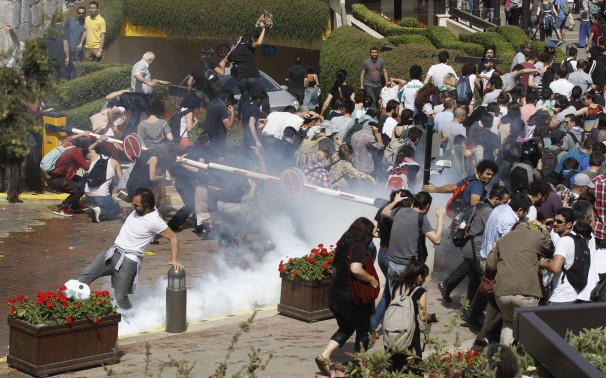
Turkey, the heart of the old Ottoman Empire is now beginning to erupt as secularist elements in the society are protesting the policies of Islamist President Recep Tayyip Erdoğan leading to repeated clashes over the past two weeks between protestors and police.

054

Afghanistan though technically not part of the Middle East continues to be a problem for US and NATO consuming intelligence, economic diplomatic and military resources that could be put to play with better effect elsewhere.  What T.E. Lawrence said of the British occupation of a restive Mesopotamia  in 1920:

“We realise the burden the army in Mesopotamia is to the Imperial Exchequer, but we do not see as clearly the burden it is to Mesopotamia. It has to be fed, and all its animals have to be fed. The fighting forces are now eighty-three thousand strong, but the ration strength is three hundred thousand. There are three labourers to every soldier, to supply and serve him.” ‘France, Britain, and the Arabs’ by Col. T. E. Lawrence The Observer, 8 August 1920

In Libya the Arab Spring claimed the long time pain in the ass Moammar Gaddafi. That conflict center of the action in 2011 until Gaddafi was overthrown and murdered. Since then Libya has remained in turmoil despite elections, militias run amok and the US Ambassador Chris Stevens was killed in an attack on the US Consulate and CIA base in Benghazi on September 11th 2012.

Yemen and Bahrain, Algeria, and Jordan have or are experiencing demonstrations which look to be revolts in the making and even Saudi Arabia is trying to head off a potential popular uprising.

However the real problem now, the problem that threatens to send the region into a regional war is the revolt in Syria which began with peaceful protests by reformers against the Assad regime. However the hard line response of that regime to the protests spawned a civil war which now threatens to overflow the borders of Syria. France, Britain and the US have stated that they believe that there is evidence that the Syria government has used chemical weapons, in particular Sarin nerve agents against the rebels. The conflict has claimed the lives of an estimated 80,000 people with hundreds of thousands more now living as refugees.

The conflict in Syria epitomizes one of the greatest challenges in the Middle East that many in the West are just beginning to recognize, the Sunni Shi’a divide. That divide is becoming more serious with every passing day as Iran continues to lead and assist Shi’a elements in predominantly Sunni Arab countries, as well as in Iraq where the Arab Shi’a are in the majority. The conflict in Syria is predominantly Sunni versus Shi’a though in that patchwork nation of Sunni, Shi’a, Alawite Shi’a tribe of the Assad clan, various Christian and Druse groups. Lebanon which borders Syria is as divided as its larger neighbor and Hezbollah holds tremendous power in that country.

Yes my friends this is a mess and almost everybody that is anybody in the military and economic power houses of the world doesn’t have their handprints all over at least some part of this mess. All of these own some of the blame for what is going on, both the rulers of the nations in the region as well as world powers who all try to influence the nations and peoples for their own diplomatic, intelligence, military or economic gain. Almost no one is unsoiled by their involvement in the Muddle East over the past 90 years or so and so in a way all of great world powers, as well as the despots who ran these countries are to blame.

images-46

The region is more volatile than at any time in recent history and events there could easily ignite a regional war with worldwide implications.  That is why the region has been called the Muddle East for decades.  We all hope and pray for the best and that somehow all of this that the promise of a peaceful and democratic “Arab Spring” will become a reality, but there are better than even odds that things get way worse before they get better. There are just too many wild cards in this deck and the swamp is full of hungry alligators.

With the announcement this week that the US would provide military aid and training to the Syrian rebels and that US forces will remain in Jordan even as US and NATO Patriot missile batteries stand ready in Turkey there is a really good chance that the conflict in Syria will not stay in Syria.

Of course there is always the wild card if what Israel may do in what it perceives to be its security interests against outward foes such as Iran and Syria but also inside its borders and occupied territories, especially if it is attacked or provoked by Iran, Hezbollah or Hamas.

May God help us all and bring about peaceful change, or as my Iraqi friends simply say “Inshallah, God willing.”

Peace

Padre Steve+

Leave a comment

Filed under History, iraq,afghanistan, middle east, Military, national security

D-Day: Brigadier General Theodore “Ted” Roosevelt III Lands at Utah Beach

Theodore Roosevelt Jr4

“Courage, above all things, is the first quality of a warrior.” Carl Von Clausewitz

By the standards of military service on the front line the man was ancient. He was 56 years old, had arthritis and a history of heart problems, but he was his father’s son.

The oldest man to land on the beaches of Normandy was the son of a President, Theodore “Teddy” Roosevelt who had taken leave of his office as Assistant Secretary of the Navy at the outset of the Spanish-American War. With the help of his friend Colonel Leonard Wood, Roosevelt formed the legendary First U.S. Volunteer Cavalry Regiment, the “Rough Riders” and led them in the fight at the Battle of San Juan Hill.

The son of the President entered the business world and then served as a Reserve officer and since he had received prior military training was commissioned as a Major when the United States entered World War One. He volunteered for overseas service and served as a battalion commander and later as commander of the 26th Infantry Regiment of the 1st Infantry Division. Leading from the front he was wounded and gassed at Soissons in 1918. For his service he was awarded the Distinguished Service Cross and the French Chevalier Légion d’honneur.

After the war he helped found the American Legion and entered politics and was elected to the New York State Assembly. However while serving as Assistant Secretary of the Navy in the Harding Administration he was linked to the Teapot Dome Scandal and though cleared of any wrongdoing his name was tarnished. Opposed by his cousin Franklin Delano Roosevelt his political fortunes in elected offices floundered. However he was appointed as Governor of Puerto Rico and later Governor-General of the Philippines a post that he served until 1935 when he returned to the United States and the business world serving as an executive with American Express.

Between the wars “Ted” continued his Army Reserve service attending his annual training periods as well as attending the Infantry Officer Basic and Officer Advanced Courses as well as the Command and General Staff College. When war came to Europe he again volunteered for active service, attended a refresher course and was promoted to Colonel in the Army Reserve. Mobilized in April 1940 he was given command of his old 26th Infantry Regiment assigned to the First Infantry Division and was promoted to Brigadier General in late 1941 becoming the Assistant Division Commander.

Ted_Cane_France

He served well in that role in North Africa and Sicily and earned citations for bravery being constantly on the front lines with his soldiers. However his association with the Division Commander, the unorthodox Terry Allen earned the enmity of George Patton and Omar Bradley. Patton disliked Allen and hated the way both Allen and Roosevelt eschewed “spit and polish” and “dressed down,” often wearing unauthorized uniform items. After Bradley assumed command of 7th Army he relieved both officers, believing that they were guilty of “loving their division too much” something that he admitted was one of the hardest decisions that he made in the war. Roosevelt served as a liaison officer with the Free French Forces in Italy before returning to England to assume duties as Assistant Division Commander of the 4th Infantry Division. Allen would go on to command the 104th Infantry Division in an exemplary manner during the command’s in France and Germany in 1944-45 with even Bradley praising him and his new division as one of the best in Europe.

TeddyJr5-530x414

Roosevelt constantly trained with the troops and asked his commander, Major General Raymond “Tubby” Barton for permission to land with the first wave in the invasion. After being denied twice Roosevelt put his request to Barton in writing:

“The force and skill with which the first elements hit the beach and proceed may determine the ultimate success of the operation…. With troops engaged for the first time, the behavior pattern of all is apt to be set by those first engagements. [It is] considered that accurate information of the existing situation should be available for each succeeding element as it lands. You should have when you get to shore an overall picture in which you can place confidence. I believe I can contribute materially on all of the above by going in with the assault companies. Furthermore I personally know both officers and men of these advance units and believe that it will steady them to know that I am with them.”

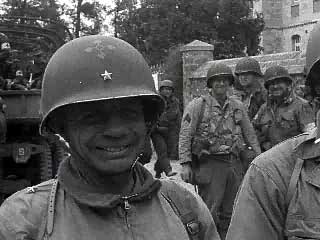
Barton reluctantly approved the request not expecting Roosevelt to survive the landings. Roosevelt was in the first wave of assault troops at Utah Beach. On landing he discovered that the first wave was about a mile off course. Armed with a pistol and supported by a cane Roosevelt led a reconnaissance to find the causeways off the beach. He briefed the battalion commanders and then ordered an attack from where the troops had landed telling his officers “We’ll start the war from right here!” a moment immortalized in the film The Longest Day in which Henry Fonda played Roosevelt.

fon2

Henry Fonda Portrays Brigadier General Theodore “Ted” Roosevelt III in “The Longest Day”

His actions were key in the success of the Utah Beach landings and he was recommended for the Distinguished Service Cross by General Barton. Just over a month after the invasion after continuously leading his troops in Normandy Roosevelt died of a heart attack on July 12th 1944, the very day he had been selected for his second star and promotion to Major General and had orders to take command of the 90th Infantry Division. His award was upgraded to the Congressional Medal of Honor which was posthumously awarded on September 28th 1944. He was buried in the American Cemetery in Normandy, the remains of his younger brother Quentin who had been killed in the First World War were exhumed and interred next to his in 1955.

The Medal of Honor citation reads:

For gallantry and intrepidity at the risk of his life above and beyond the call of duty on 6 June 1944, in France. After 2 verbal requests to accompany the leading assault elements in the Normandy invasion had been denied, Brig. Gen. Roosevelt’s written request for this mission was approved and he landed with the first wave of the forces assaulting the enemy-held beaches. He repeatedly led groups from the beach, over the seawall and established them inland. His valor, courage, and presence in the very front of the attack and his complete unconcern at being under heavy fire inspired the troops to heights of enthusiasm and self-sacrifice. Although the enemy had the beach under constant direct fire, Brig. Gen. Roosevelt moved from one locality to another, rallying men around him, directed and personally led them against the enemy. Under his seasoned, precise, calm, and unfaltering leadership, assault troops reduced beach strong points and rapidly moved inland with minimum casualties. He thus contributed substantially to the successful establishment of the beachhead in France.

Roosevelt’s story is quite amazing. In the modern wars of the late 20th and early 21st Centuries few commanders as senior as Roosevelt would ever be in the first wave of an invasion or offensive operation. The personal courage and example set by Roosevelt in both World Wars, leading from the front and maintaining relationships with the troops that he commanded in combat is something that we talk about a lot in various military leadership classes but often seems to be smothered by business models promoted by think tanks and others with money to be made.

Likewise, a commander suffering from Roosevelt’s infirmities would not be allowed to command troops in combat today. But in the Second World War when many other American Generals failed miserably and often could not be found near the front and were relieved of command for incompetence and cowardice the old, crippled and infirm Roosevelt led from the front. He made decisions on Utah Beach on D-Day that helped ensure that the landings were a success. Bradley, who had fired Roosevelt after the Sicilian Campaign with Allen said that the most heroic act that he had seen in combat was “Ted Roosevelt on Utah Beach.”

Roosevelt was an exception to Clausewitz’s axiom that “boldness becomes rarer, the higher the rank.” I think that even if a General wanted to lead in the manner of Roosevelt today that he would be punished by the institution for risking himself.

Peace

Padre Steve+

Leave a comment

Filed under History, Military, movies, world war two in europe

June 5th 1944 the Eve of D-Day: Rommel Goes Home for a Birthday Party

2

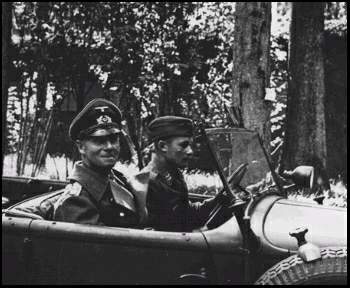
Rommel Inspecting German Positions in Normandy

At Chateau La Roche Guyon on the River Seine Field Marshal Erwin Rommel bid farewell to his staff. The weather was miserable and it looked as if the Allies under General Eisenhower would be forced to postpone any invasion of France for several weeks. Rommel, who had been constantly at war away from his wife Lu and son Manfred for most of the preceding five years decided to take a few days of leave, after all June 6th was Lu’s birthday and he decided that he would spend it with her. He had even purchased a pair of shoes in Paris to give as a gift.

Hans-Speidel

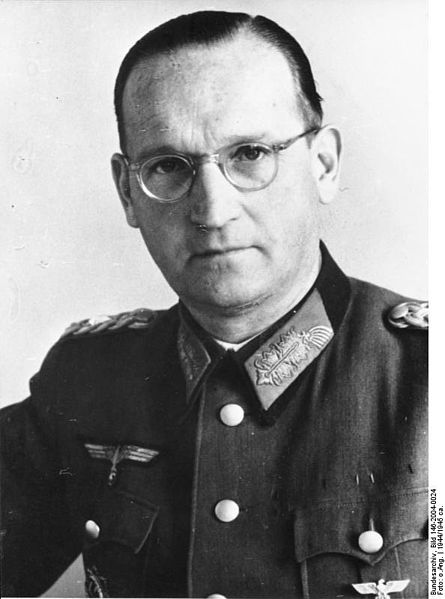
General Hans Speidel

His Chief of Staff, General Hans Speidel bid Rommel, his aide de camp and driver farewell as they drove off in his Horch staff car. Of course it was the correct decision. The weather appeared completely unfavorable to an invasion, however the Germans, deprived on long range weather forecasts for the loss of ships and weather stations in the Atlantic and Greenland did not know that the Allies had discovered that the weather would moderate for about 24 hours beginning the night of the 5th and morning of the 6th. Eisenhower made the decision to invade on the 6th of June. The Germans, continued normal planning and training in anticipation that the long awaited invasion would not occur for two to three weeks. Many other German commanders were either on leave or involved in war games and exercises away from their headquarters.

omaha_3_lg

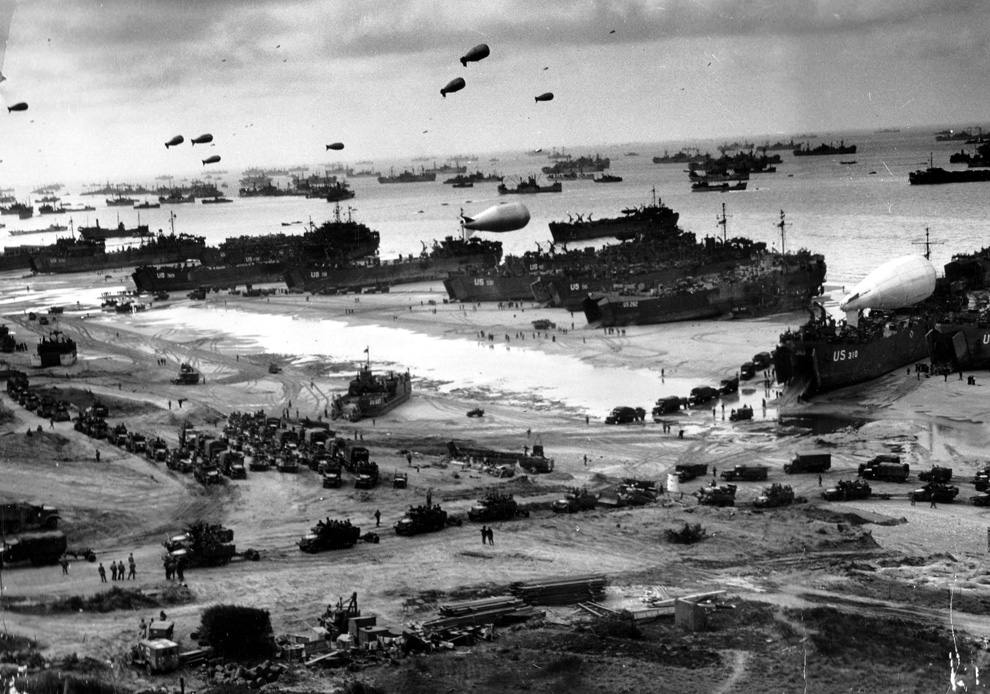
In the early morning hours of June 6th Allied paratroops from three Airborne Divisions, the 1st British and American 82nd and 101st began landing in Normandy. At dawn on June 6th troops from 6 Allied Divisions began amphibious landings at five invasion beaches, Gold, Juno and Sword in the British sector and Omaha and Utah beach in the American sector.

Speidel called Rommel at his home early on the 6th of June to inform him of the landings. Hitler had limited Rommel and other German commander’s ability to respond to an invasion by keeping the authority to commit the German armored reserve to himself. By the time Rommel arrived back at La Roche Guyon on the night of June 6th tens of thousands of Allied troops from six Infantry and three Airborne Divisions were reinforcing their beach heads and supported by overwhelming naval and air forces were driving inland. The forces that Rommel immediately commanded were sufficient to slow the Allied advance but not to throw the invaders back into the English Channel.

r1

The campaign for Normandy would devolve into a war of attrition that would end with the Allied breakout at St Lo in July. That event coincided with Rommel being severely wounded in an Allied air attack on July 17th and the attempt on Hitler’s life July 20th. In the succeeding days with their command structure paralyzed by Hitler’s retribution against those or implicated in the attempt on his life, who included many commanders and staff officers in France fighting the Allies.

images-45

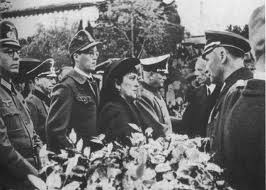
Rommel’s Wife Lucy and Son Manfred at his Funeral

Rommel would also be implicated in the attempt on Hitler’s life and would die at his own hand on October 17th 1944 after being offered the choice between suicide or a trial in which he would be found guilty and his family endangered.

One wonders what might have happened had Rommel been present in Normandy when the Allies landed. Perhaps history would have unfolded in a number of different ways. The results might have been the same, perhaps the Germans under Rommel would have succeeded in throwing the Allied forces back into the sea, and perhaps the victor of Normandy might have been able to help overthrow Hitler and end the war. Of course we will never know.

d23_0p012623

What we do know are the facts. Rommel spent a few hours with his wife on her birthday before having to travel back to Normandy without getting the chance to try to persuade Hitler to change the command arrangements that might have changed the outcome of the invasion. We know that deprived of the ability to control all of the key forces in his operational area, especially the Panzer Divisions and without the Luftwaffe being able even to contest Allied air superiority that Rommel, the legendary Desert Fox was condemned to fight a desperate defensive struggle against an enemy who control the seas, the skies and seemingly had unlimited resources. We also know that he was involved in the plot to kill Hitler and paid with his life for his involvement.

441014 Rommel Family

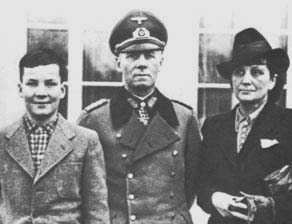
Rommel with his Wife and Son

Rommel is one of those tragic figures in history. A man caught up in the excesses of his era who discovered how the leader that he had sworn a loyalty oath to had betrayed his country and millions of his fellow soldiers. Rommel discovered the lies of his leaders too late. He like many soldiers in so many wars assumed that they could be trusted. When he discovered that they could not he took the chance to oppose them and was murdered by them.

Of course Rommel had flaws. He was an opportunist at times and did not oppose Hitler in the early years. In fact much of his fame was due to the propaganda of Josef Goebbels who exploited Rommel’s military success in Africa. However it was in Africa that Rommel began to see the truth about Hitler, the seeds of which led to his involvement with those who plotted Hitler’s death and lead him to his own death. Rommel, like so many military leaders before and after him had feet of clay.

Disillusionment with the lies of my leaders that took my country to war is something that I experienced between the attacks on September 11th 2001 and my return from Iraq in February 2008. As such, as a man who has spent the bulk of the last 11 1/2 years of war away from his wife who discovered that his leaders lied about wars and their cost, moral, physical and economic I feel a certain kinship with Field Marshal Rommel. I can understand why he took the chance to take a few days of leave to spend it with his wife.

War is a terrible thing.

Peace

Padre Steve+

5 Comments

Filed under History, leadership, Military, world war two in europe

The Province of Chance: The Battle of Midway, 5 Minutes that Changed the Course of a War

Battle%20of%20Midway%20flat_080817160843

“War is the province of chance. In no other sphere of human activity must such a margin be left for this intruder. It increases the uncertainty of every circumstance and deranges the course of events.” Carl Von Clausewitz 

“Even against the greatest of odds, there is something in the human spirit – a magic blend of skill, faith, and valor – that can lift men from certain defeat to incredible victory.”  Walter Lord

Six months after Pearl Harbor the United States Navy met the Imperial Japanese Navy in battle on the seas and in the airspace around Midway Island. It was a battle between a fleet that had known nothing but victory in the months after Pearl Harbor and one with the exception of a few minor tactical successes was reeling.

images-41

The Japanese had swept across the Pacific and the Indian Oceans and decimated every Allied Naval forces that stood in their way. After Pearl Harbor they had sunk the HMS Prince of Wales and HMS Repulse off of Singapore.  Next in a series of engagements destroyed the bulk of the US Asiatic Fleet in the waters around the Philippines and the Dutch East Indies culminating in the Battle of the Java Sea where the bulk of the American, British, Dutch and Australian (ABDA) naval forces engaged were annihilated attempting to fight superior Japanese forces.

Hermes_sinking

HMS Hermes sinking after Japanese Carrier air attack

In the Indian Ocean Admiral Nagumo’s carriers dispatched a force of Royal Navy cruisers and the Aircraft Carrier HMS Hermes. In only one place had a Japanese Naval task force been prevented from achieving its goal. At the Battle of the Coral Sea where Task Force 11 and Task Force 17 centered on the Carriers USS Lexington and USS Yorktown prevented a Japanese invasion force from taking Port Moresby sinking the light carrier Shoho, damaging the modern carrier Shokaku and decimating the air groups of the Japanese task force.

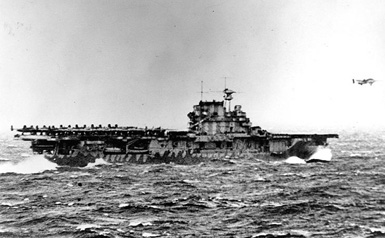
Hornet_launches

In May US Navy code breakers under the direction of Commander Joe Rochefort at Pearl Harbor discovered the next move of the Imperial Navy an attack on Midway Island and the Aleutian islands. Since the occupation of Midway by Japanese forces would give them an operational base less than 1000 miles from Pearl Harbor Admiral Chester Nimitz committed the bulk of his naval power, the carriers USS Enterprise CV-6, USS Yorktown CV-5 and USS Hornet CV-8 and their 8 escorting cruisers and 15 destroyers, a total of 26 ships with 233 aircraft embarked to defend Midway. Nimitz also sent a force of 5 cruisers and 4 destroyers to cover the Aleutians.

images-42

images-43

Land based air assets on Midway were composed of a mixed Marine, Navy and Army air group of 115 aircraft, many of which were obsolete. Aboard Midway there were 32 US Navy PBY Catalina Flying Boats, 83 fighters, dive bombers, torpedo planes and Army Air Force bombers piloted by a host of inexperienced pilots.

Nimitz’s instructions to his Task Force Commanders was simple “You will be governed by the principle of calculated risk, which you shall interpret to mean the avoidance of exposure of your force to attack by superior enemy forces without good prospect of inflicting … greater damage on the enemy.”

893594c746

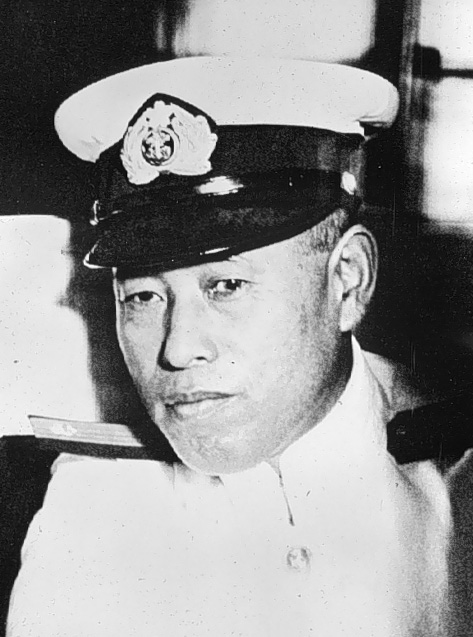
Admiral Isoroku Yamamoto commanded the Combined Fleet. The victor of Pearl Harbor and the triumph’s in the first six months of the Pacific War was determined to end the war with a decisive battle at Midway. His plans were opposed by many in the Imperial General Staff, especially those in the Army but when the US raid on Tokyo, the Doolittle Raid, all opposition to the attack was dropped.

10-japanese-carriers-coral-sea-midway

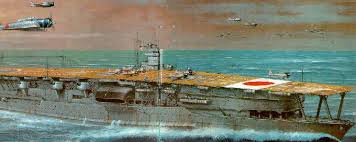
The Japanese sent a force of 7 battleships and 7 carriers against Midway. These included the elite First Carrier Striking Group composed of the Pearl Harbor attackers Akagi, Kaga, Soryu and Hiryu and their highly trained and combat experienced air groups. Among the surface ships was Yamamoto’s flagship, the mighty Battleship Yamato, at 72,000 tons and armed with 9 18” guns, the most powerful and largest battleship ever to see combat.

The strike force included 273 aircraft and was escorted by 14 cruisers and 39 destroyers. They were to take Midway and then destroy the US Navy when it came out to fight. Yamamoto sent a force force of 4 battleships, 12 destroyers assigned screen to the Aleutian invasion force which was accompanied by 2 carriers 6 cruisers and 10 destroyers. The other carriers embarked a further 114 aircraft.

Despite this great preponderance in numbers Yamamoto’s plan was complex and his forces too far apart from each other to offer support should and get into trouble. The powerful Japanese Task forces were scattered over thousands of square miles of the Northern Pacific Ocean where they could not rapidly come to the assistance of any other group.

images-44

With the foreknowledge provided by the code breakers the US forces hurried to an intercept position northeast of Midway eluding the Japanese submarine scout line which the Japanese Commander Admiral Yamamoto presumed would find them when they sailed to respond to the Japanese attack on Midway.  Task Force 16 with the Enterprise and Hornet sailed first under the command of Rear Admiral Raymond A Spruance and Task Force 17 under Rear Admiral Frank “Jack” Fletcher with the Yorktown which had been miraculously brought into fighting condition after suffering heavy damage at Coral Sea. Fletcher assumed overall command by virtue of seniority and Admiral Nimitz instructed his commanders to apply the principle of calculated risk when engaging the Japanese as the loss of the US carriers would place the entire Pacific at the mercy of the Japanese Navy.

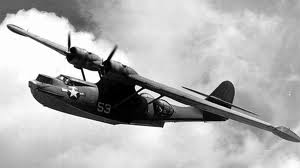
On June 3rd a PBY Catalina discovered the Japanese invasion force and US long range bombers launched attacks against it causing no damage. The morning of the 4th the Americans adjusted their search patterns in and the Japanese came into range of Midway and commenced their first strike against the island.

g17056

In response land based aircraft from Midway attacked the Japanese carrier force taking heavy casualties and failing to damage the Japanese task force. The American Carrier task forces launched their strike groups at the Japanese fleet leaving enough aircraft behind of the Combat Air Patrol and Anti-submarine patrol.  As the Americans winged toward the Japanese fleet the Japanese were in a state of confusion. The confusion was caused when a scout plane from the Heavy Cruiser Tone that had been delayed at launch discovered US ships but did not identify a carrier among them until later into the patrol. The carrier  was the Yorktown and TF 17, but for Nagumo who first expected no American naval forces, then received a report of surface ships without a carrier followed by the report of a carrier the reports were unsettling.

a5f7ab19-17c6-4928-90a4-5bb913d156eb

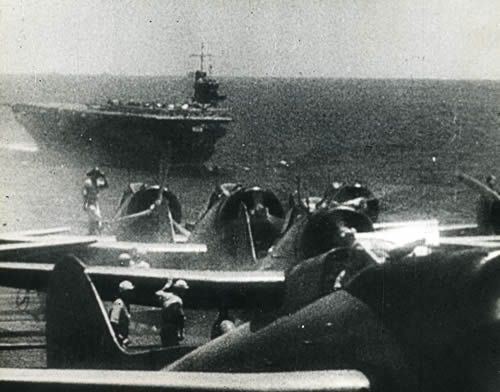
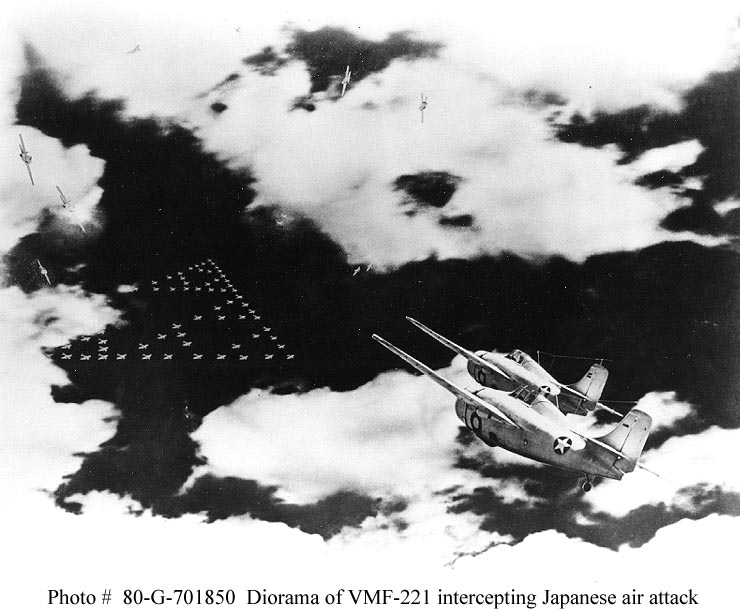
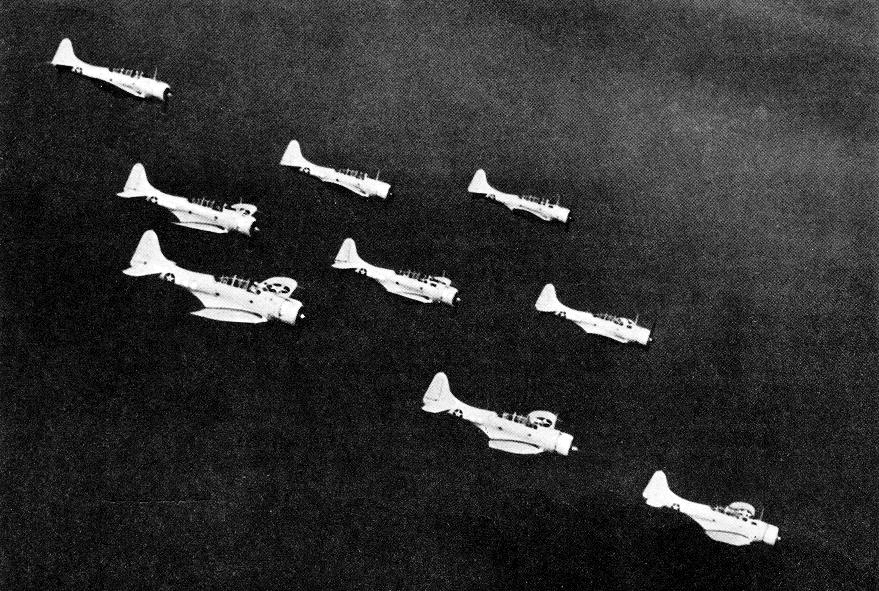
Orders and counter-orders were issued as the Japanese attempted to recover their strike aircraft and prepare for a second strike on the island and then on discovery of the Yorktown task force, orders changed and air crews unloaded ground attack ordnance in favor of aerial torpedoes and armor piercing bombs. The hard working Japanese aircrew did not have time to stow the ordnance removed from the aircraft but by 1020 they had the Japanese strike group ready to launch against the US carriers.

g701850

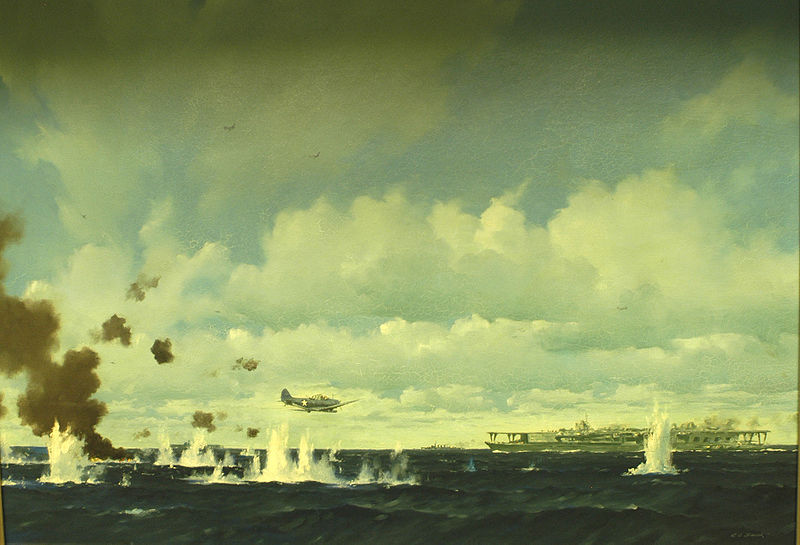
As the Japanese crews worked the Japanese carriers were engaged in fending off attacks by the US torpedo bomber squadrons, VT-6 from Enterprise, VT-8 from Hornet and VT-3 from Yorktown. The Japanese Combat Air Patrol ripped into the slow, cumbersome and under armed TBD Devastators as they came in low to launch their torpedoes.  Torpedo Eight from Hornet under the command of LCDR John C Waldron pressed the attack hard but all 15 of the Devastators were shot down. Only Ensign George Gay’s aircraft was able to launch its torpedo before being shot down and Gay would be the sole survivor of the squadron.

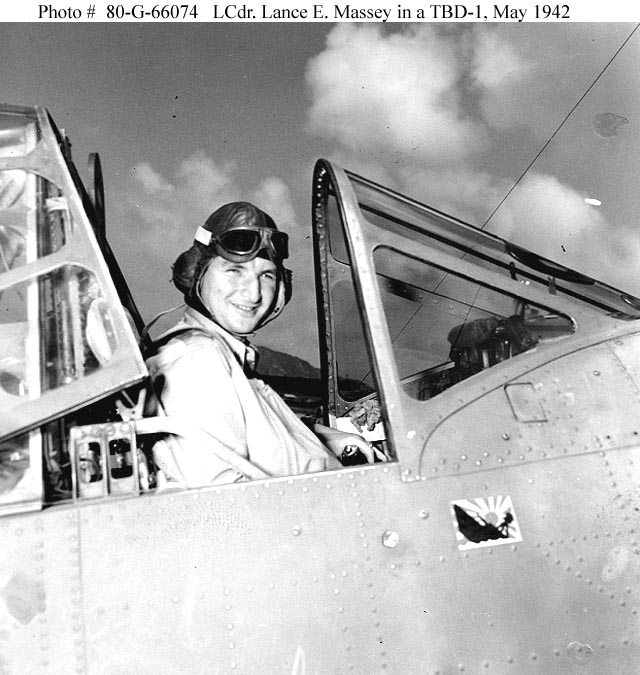
g66074


LCDR Lance Massey CO of VT-3

Page500_163_6

LCDR John Waldron CO of VT-8

220px-Eugene_Lindsey;h84903

LCDR Eugene Lindsey CO of VT-6

Torpedo 6 from Enterprise under the command of LCDR Eugene Lindsey suffered heavy casualties losing 10 of 14 aircraft with Lindsey being one of the casualties.  The last group of Devastators to attack was Torpedo 3 from Yorktown under the command of LCDR Lem Massey from the Yorktown. These aircraft were also decimated and Massey killed but they had drawn the Japanese Combat Air Patrol down to the deck leaving the task force exposed to the Dive Bombers of the Enterprise and Yorktown.

800px-tbd_attacking_at_midway_painting-1

There had been confusion among the Americans as to the exact location of the Japanese Carriers. Bombing 8 and Scouting 8 from Hornet did not find the carriers and had to return for lack of fuel while losing a number of bombers and their fighter escort having to ditch inn the ocean and wait for rescue. The Enterprise group composed of Bombing-6 and Scouting 6 under CDR Wade McClusky was perilously low on fuel when the wake of a Japanese destroyer was spotted.  McClusky followed it to the Japanese Task Force. The Yorktown’s group under LCDR Max Leslie arrived about the same time.

Dauntless_dive_bombers

When the American dive bombers arrived over the Japanese Carrier Strike Force they found the skies empty of Japanese aircraft. Below, aboard the Japanese ships there was a sense of exhilaration as each succeeding group of attackers was brought down and with their own aircraft ready to launch and deal a fatal blow to the American carrier wondered how big their victory would be. The war would soon be decided.

midway4

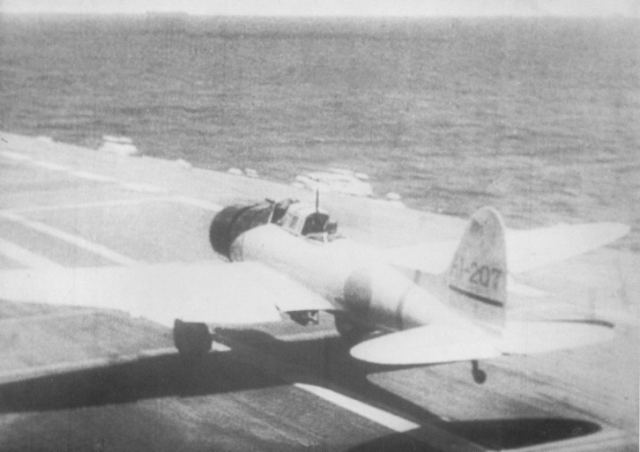
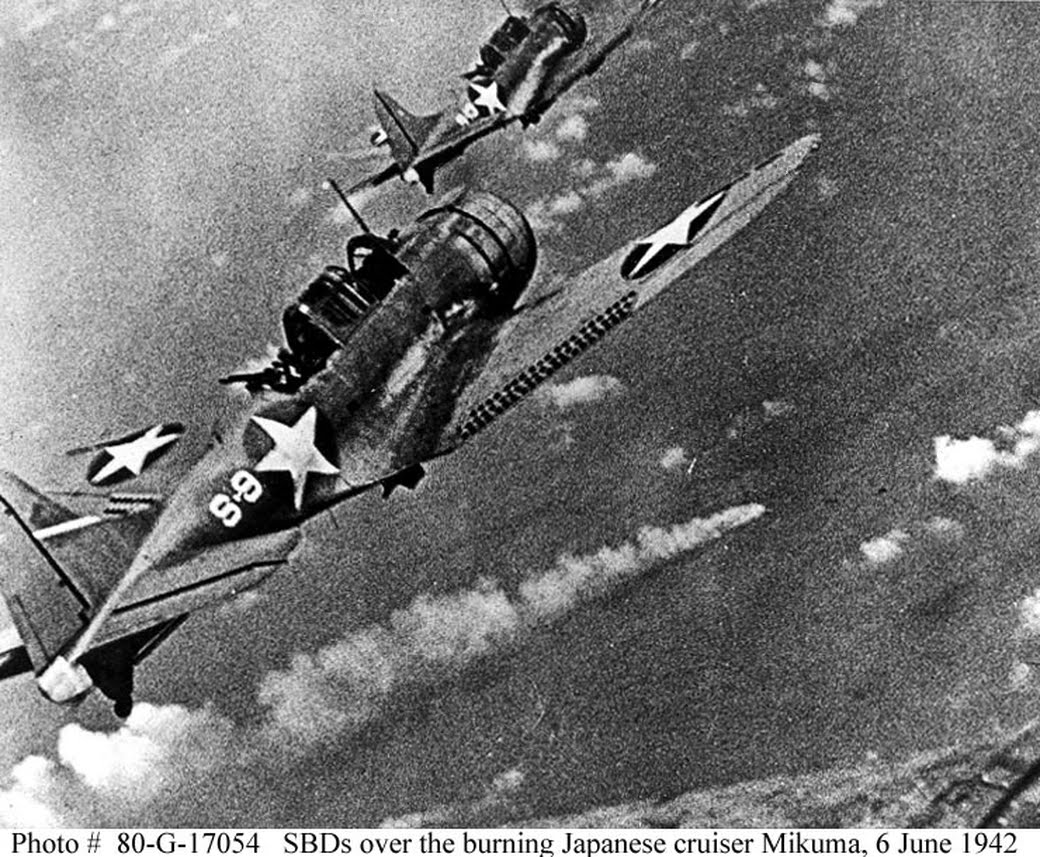
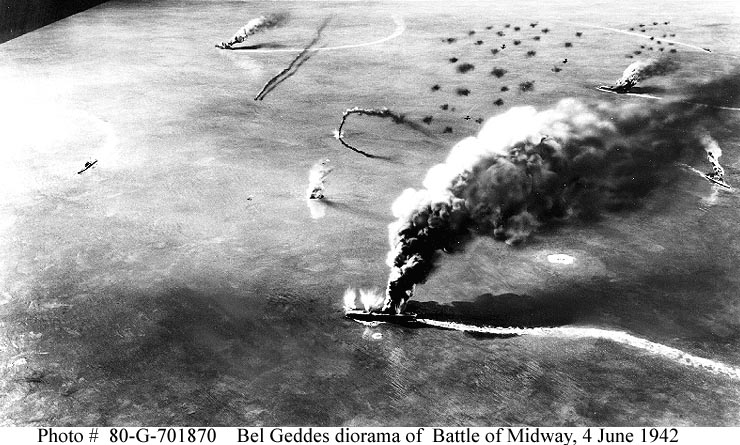
At 1020 the first Zero of the Japanese attack group began rolling down the flight deck of the flagship Akagi, aboard Kaga aircraft were warming up as they were on the Soryu.  The unsuspecting Japanese were finally alerted when lookouts screamed “helldivers.” Wade McClusky’s aircraft lined up over the Akagi and Kaga pushing into their dives at 1022. There was a bit of confusion when the bulk of Scouting 6 joined the attack of Bombing 6 on the Kaga. That unprepared ship was struck by four 1000 pound bombs which exploded on her flight deck and hangar deck igniting the fully fueled and armed aircraft of her strike group and the ordnance littered about the hangar deck.  Massive fires and explosions wracked the ship and in minutes the proud ship was reduced to an infernal hell with fires burning uncontrollably. She was abandoned and would sink at 1925 taking 800 of her crew with her.

douglas-sbd5-dauntless-dive-bomber-battle-of-midway-01

LT Dick Best of Scouting 6 peeled off from the attack on Kaga and shifted to the Japanese flagship Akagi. On board Akagi were two of Japan’s legendary pilots CDR Mitsuo Fuchida leader of and CDR Minoru Genda the architect of the Pearl Harbor attack and subsequent string of Japanese victories. Both officers were on the sick list and had come up from sick bay to watch as the fleet was attacked. Seeing Kaga burst into flames they stood mesmerized until Akagi’s lookouts screamed out the warning “helldivers” at 1026.  Best’s few aircraft hit with deadly precision landing two of their bombs on Akagi’s flight deck creating havoc among the loaded aircraft and starting fires and igniting secondary explosions which turned the ship into a witch’s cauldron.  By 1046 Admiral Nagumo and his staff were forced to transfer the flag to the cruiser Nagara as Akagi’s crew tried to bring the flames under control. They would do so into the night until nothing more could be done and abandoned ship at 2000.  Admiral Yamamoto ordered her scuttled and at 0500 on June 5th the pride of the Japanese carrier force was scuttled.

g701870

VB-3 under LCDR Max Leslie from the Yorktown stuck the Soryu with 17 aircraft, however only 13 of the aircraft had bombs due to an electronic arming device malfunction on 4 of the aircraft, including that of Commander Leslie.  Despite this Leslie led the squadron as it dove on the Soryu at 1025 hitting that ship with 3 and maybe as many as 5 bombs. Soryu like her companions burst into flames as the ready aircraft and ordnance exploded about her deck. She was ordered abandoned at 1055 and would sink at 1915 taking 718 of her crew with her.

h73065

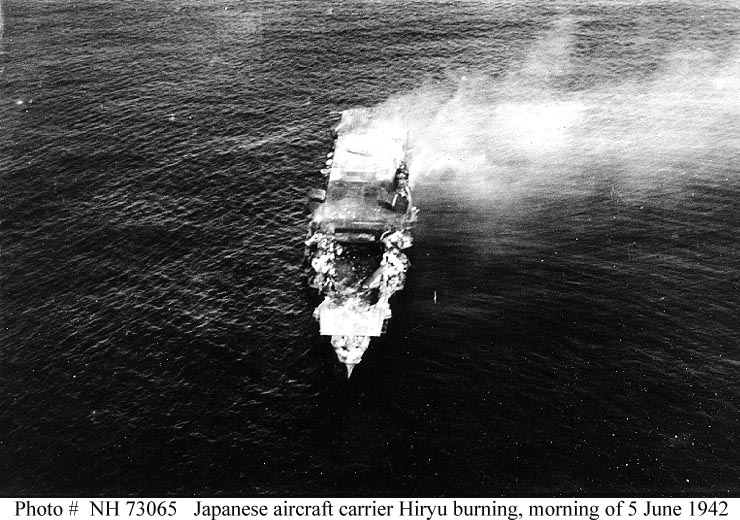
The remaining Japanese flattop the Hiryu attained the same fate later in the day after engaging in an epic duel with the Yorktown which her aircraft heavily damaged. Yorktown would be sunk by the Japanese submarine I-168 while being towed to safety.

71380-004-B4724C34

USS Yorktown under attack from Kate Torpedo Bombers from Hiryu on June 4th 1942

In five pivotal minutes the course of the war in the Pacific was changed. Authors have entitled books about Midway Incredible Victory by Walter Lord and Miracle at Midway by Gordon Prange and those titles reflect the essence of the battle.

At Midway a distinctly smaller force defeated a vastly superior fleet in terms of experience, training and equipment. At the very moment that it appeared to the Japanese that they would advance to victory their vision disappeared. In a span of less than 5 minutes what looked like the certain defeat of the US Navy became one of the most incredible and even miraculous victories in the history of Naval warfare. In those 5 minutes history was changed in a breathtaking way. While the war would drag on and the Japanese still inflict painful losses and defeats on the US Navy in the waters around Guadalcanal the tide had turned and the Japanese lost the initiative in the Pacific never to regain it.

The Japanese government hid the defeat from the Japanese people instead proclaiming a great victory. The American government could not fully publicize the victory for fear of revealing the intelligence that led to the ability of the US Navy to be at the right place at the right time and defeat the Imperial Navy.

uss-enterprise-cv-6-1

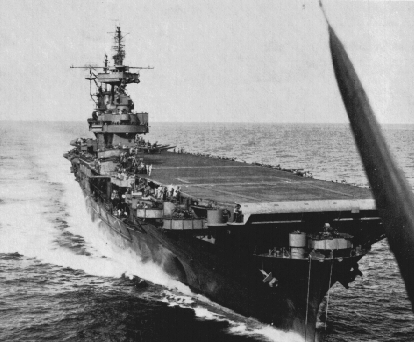
The American victory at Midway changed the course of the war in the Pacific. The Battle of Midway established the aircraft carrier and the fast carrier task force as the dominant force in naval warfare which some would argue it still remains. Finally those five minutes ushered in an era of US Navy dominance of the high seas which at least as of yet has not ended as the successors to the Enterprise, Hornet and Yorktown ply the oceans of the world and the descendants of those valiant carrier air groups ensure air superiority over battlefields around the world.

Peace

Padre Steve+

1 Comment

Filed under History, Military, Navy Ships, US Navy, world war two in the pacific

DNA Tests and Family Mysteries

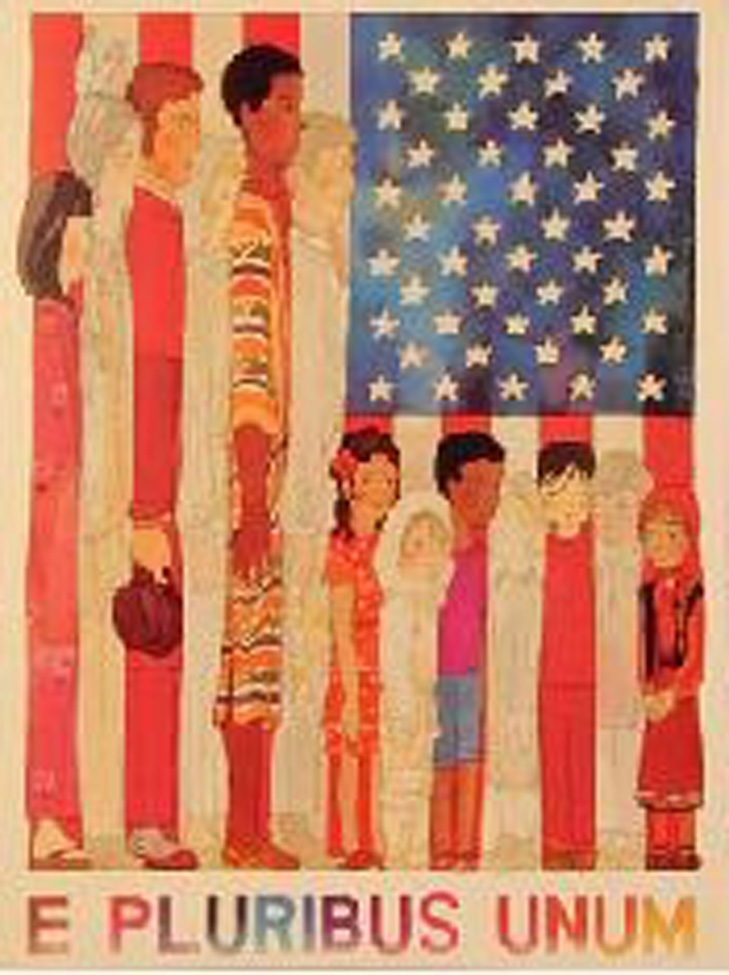
e-pluribus-unum

“We’re Americans, with a capital ‘A’, huh? You know what that means? Do ya? That means that our forefathers were kicked out of every decent country in the world. We are the wretched refuse. We’re the underdog. We’re mutts! Here’s proof: his nose is cold! But there’s no animal that’s more faithful, that’s more loyal, more lovable than the mutt.” Pvt John Winger (Bill Murray) Stripes 1981

A few weeks back I spit into a test tube and sent it in to see what it revealed about my DNA. I thought that it was pretty clear cut as people on both sides of the family have done a lot of research into the subject even publishing books. Pretty much I am a Mutt.

Now the DNA test revealed some things that I was pretty sure about. According to it about 70% of my DNA make-up comes from the British Isles. I have parts of the family from England, Scotland, Ireland and the Outlaw Josie Wales. That much was pretty sure. We have records of these relationships, some extending back to about 1060 in Scotland on my dad’s side of the family.

My mom had said for years that part of her grandmother’s family was Scandinavian though she did not know exactly where they came from. The DNA test said that about 20% of my DNA was Scandinavian. Now the trick is to find out where they originated and how they got to be part of me.

Finally I was thrown for a loop by the last 10% of the DNA. I expected something out of Western or Central Europe, French or German based on some family histories and speculation, as well as the outside possibility that one of my slave owning ancestors, and yes I had them could have brought some African DNA into the mix. I was prepared for any of those possibilities and none of them bothered me in the least. I thought that they might be fun to research.

However the final 10% of the DNA was Eastern European, which could be the Baltic States, Poland, Ukraine, Belarus, Hungary, Slovakia or any of the Balkan States. That is a mystery because none of the records or accounts that I have seen indicate any Eastern European ancestry. However it is there and it is a mystery.

It will be interesting to see how this develops. Could there be an anglicized misspelling of a name that we thought was English but is Eastern European, I do think there is a possibility of that. Likewise there is the possibility that a connection exists that we do not know about.

Of the next few days and weeks, we will be doing some digging into the family tree to figure out the gory details of this discovery.

What is interesting is that no matter how things work out or what we discover, the fact is that most Americans whose families have been in this land ever since we wiped out most of the Native Americans to take it are a blend, sometimes of races and ethnicities that we never could imagine. I for one think that is a strength and something that we should be happy about. Not the part about wiping out the Native Americans, that is pretty awful and shameful, but rather that most of us are a blend of God knows how many races, cultures, religions and ethnicities. Having seen the results of inbreeding, cultures that have stopped evolving and religions that would kill in the name of God I think it is pretty cool that somehow in spite of ourselves sometimes that we are E pluribus unam- Out of many, one. 

Have a great night.

Peace,

Padre Steve+

1 Comment

Filed under History, philosophy

The Last Battle of the Bismarck

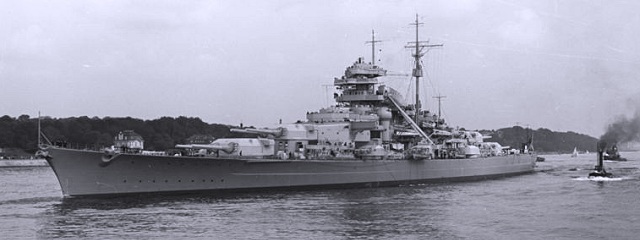
battleship-bismarck

Battleship Bismarck

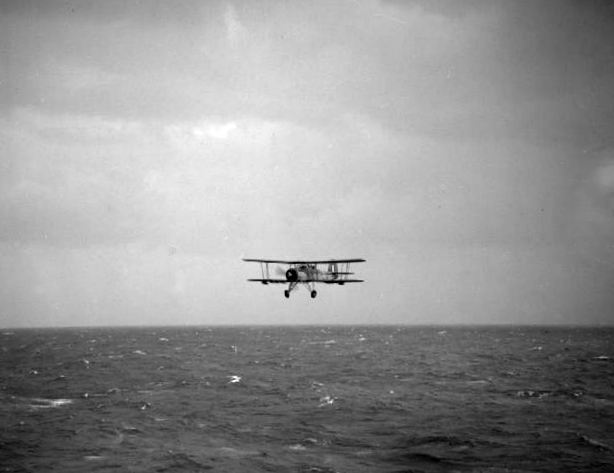
The torpedo from the Swordfish from the HMS Ark Royal that struck the mighty Bismarck in her stern and jammed her rudders doomed that ship and her crew. It was an astounding turn of events. The Bismarck had sunk the legendary British Battle Cruiser HMS Hood in minutes and had she persisted could have sunk the new Battleship HMS Prince of Wales. Instead, Vice Admiral Gunther Lutjens in command of the Bismarck and her consort the Heavy Cruiser Prinz Eugen decided to break off contact and make for safety in the French port of Brest.

images-39 Sinking of the Hood

Bismarck slipped her pursuers and allowed Prinz Eugen to escape. It seemed that nothing that the British could do would stop her from gaining the safety of the French port and with it the knowledge that she had sunk the most powerful ship in the Royal Navy and gotten away. Then out of nowhere Bismarck was spotted by a Royal Air Force Coastal Command PBY Catalina seaplane piloted by an American Naval Officer. Then a relatively small and slow torpedo dropped from an obsolescent Swordfish torpedo bomber, a “stringbag” hit the Bismarck in perhaps the only place that could have changed the developing narrative of a great German naval victory.

As darkness fell on May 26th, Bismarck, unable to steer towards Brest due to her damage and the following seas steered toward the oncoming British armada at a reduced speed. Her crew, now exhausted from countless hours on watch and at their battle stations knew that they were doomed.

HMS_Ark_Royal_swordfish

Swordfish returning from attacking Bismarck

Despite this they still labored trying in vain for a way to repair their ship. As Bismarck’s engineers and damage control personnel sought at way to repair the damage on that dark night Royal Navy destroyers under the command of Captain Phillip Vian harassed her, closing to fire torpedoes and keep the exhausted crew of the mighty German ship engaged at their battle stations throughout the long night.

photo045

Bismarck under Fire from King George V and Rodney

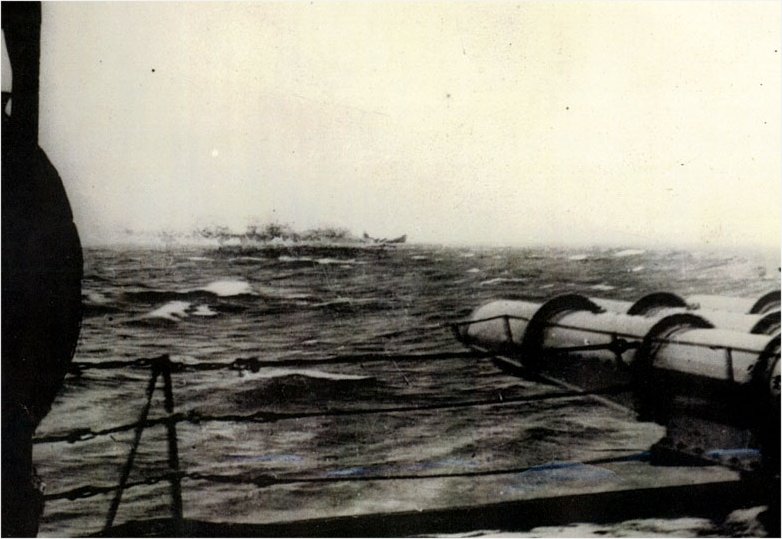
As light broke on the morning of the 27th the remaining heavy units from the Home Fleet, the Battleships HMS King George V and HMS Rodney along with the Heavy Cruisers HMS  Norfolk which had been part of the pursuit since the first day and HMS Dorsetshire which had broke from its convoy escort duties on the 26th closed in for the kill.

WTBR_Bismarck_Sinking_pic

Bismarck from Dorsetshire

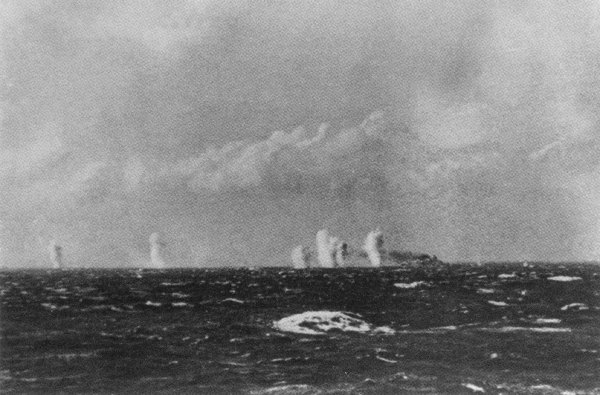
At 0847 the British Battleships opened fire on Bismarck, which replied with accurate salvos straddled Rodney. However British shells hammered the Bismarck, 16” shells from Rodney destroying the command center of Bismarck and her main fire control stations. Within 30 minutes the mighty guns which had sunk the Hood were silent and the British ships pounded Bismarck from point blank range with 16”, 14”, 8” and 6” shells as well as torpedoes.

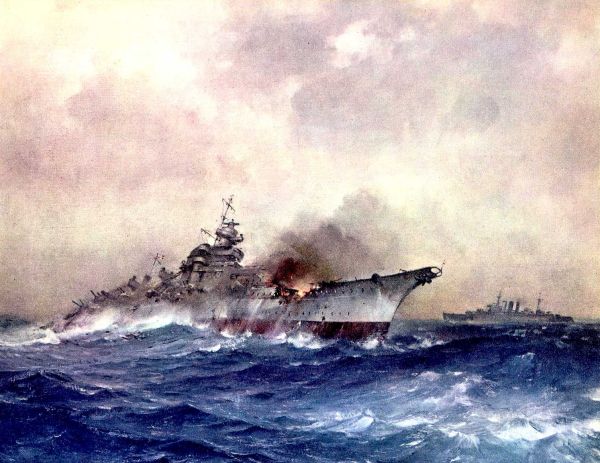
painting28 The end of the Bismarck

The British ships scored at least 400 hits but though they had silenced Bismarck the ship was still afloat, burning and certainly doomed but undaunted. Finally, with their adversary obviously doomed and their own fuel supplies dangerously low Admiral Tovey ordered the battleships to break off the action even as the cruisers continued to fire their guns and torpedoes.

bismar1

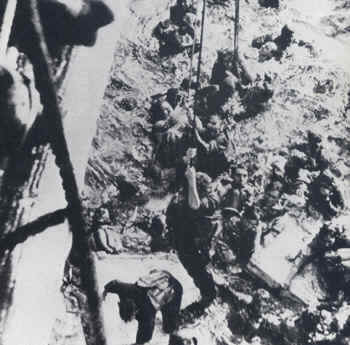
Bismarck Survivors being hauled aboard Dorsetshire

Even so the Bismarck’s senior surviving officer, her First Officer Fregattenkapitan (Commander) Hans Oels ordered her Chief Engineer Korvettenkapitan (Lieutenant Commander) Gerhard Junack to prepare the ship for scuttling and ordered the crew to abandon ship. The watertight doors were opened and scuttling charges fired. At 1039 the Bismarck slipped beneath the waves.

hmsdorsetshirempl1284

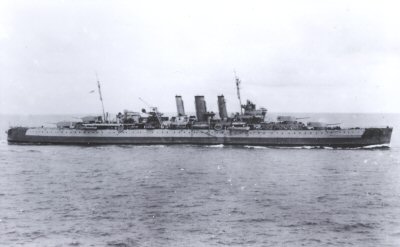
HMS Dorsetshire 1941

Hundreds of survivors bobbed about in the cold waters of the North Atlantic. 110 were rescued by British ships, mostly by Dorchester. Then lookouts spotted the periscope of a U-Boat and the British ships broke off their rescue operations leaving hundreds more survivors to die of exposure or their wounds in the Atlantic. A few more were rescued later by German ships or U-boats but about 2200 German sailors went down with their ship or died awaiting rescue that never came. 2 officers and 113 men survived the sinking of the Bismarck.

images-40

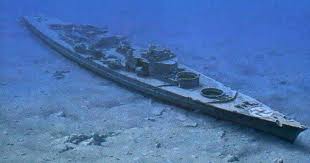
Artist’s image of the Wreck of the Bismarck

Subsequent investigations would show that all the British shells and torpedoes could not have sunk the Bismarck and that it was indeed the scuttling charges that sent her to the bottom of the Atlantic. Even so, she was doomed and the damage would have sent her to the bottom within 12 to 24 hours had Oels not order Junack to scuttle the ship. Within a year the Ark Royal, Prince of Wales, and Dorsetshire would also lie at the bottom of the seas. Prince of Wales sunk by Japanese land based bombers off Malaya in 1941, Dorsetshire by Japanese Carrier aircraft in April 1942 and Ark Royal by the U-Boat U-81 in November 1941. Of the destroyers that harassed Bismarck the night before her sinking only one, the Polish Destroyer ORP Piorun would survive the war.

The tragedy of mission of the Bismarck is that nearly 3700 sailors died aboard the two mightiest ships in the world, the Hood and the Bismarck died in battles that though now legendary did not alter the course of the war. Hood’s loss though tragic did not alter the strategic equation as more new battleships of the King George V class entered service and German capital ships, harassed and damaged by RAF bomber sorties and attacks by the Royal Navy’s Fleet Air Arm confined to ports in France, Germany or Norway slipped into irrelevance as the war progressed and the German U-Boat force took the lead in the Battle of the Atlantic.

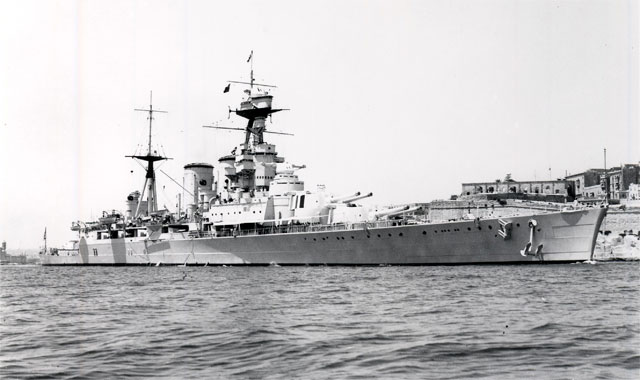
HMS_Hood

The Mighty Hood

As one who has served at sea on a cruiser at war which came within minutes of a surface engagement with Iranian Revolutionary Guard patrol boats in the Northern Arabian Gulf in 2002 I have wondered what would happen in the event of an engagement that seriously damaged or sank our ship. Thus I have a profound sense of empathy for the sailors that perished aboard both the Hood and the Bismarck in the fateful days of May 22-27 1941.

In hopes that no more brave sailors will have to die this way.

Peace

Padre Steve+

1 Comment

Filed under History, Military, Navy Ships, nazi germany, world war two in europe

The “Buddy” Poppy: Symbol of Memorial Day

flanders_field

In Flanders Fields

John McCrae, 1915.

In Flanders fields the poppies blow

Between the crosses, row on row

That mark our place; and in the sky

The larks, still bravely singing, fly

Scarce heard amid the guns below.

We are the Dead. Short days ago

We lived, felt dawn, saw sunset glow,

Loved and were loved, and now we lie

In Flanders fields.

Take up our quarrel with the foe:

To you from failing hands we throw

The torch; be yours to hold it high.

If ye break faith with us who die

We shall not sleep, though poppies grow

In Flanders fields.

 1144221_orig

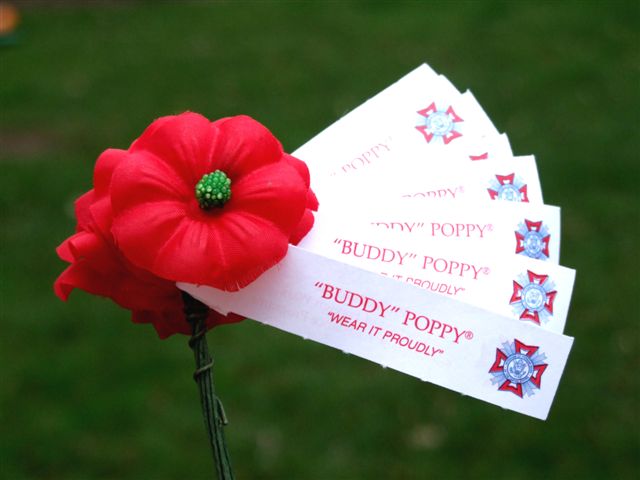
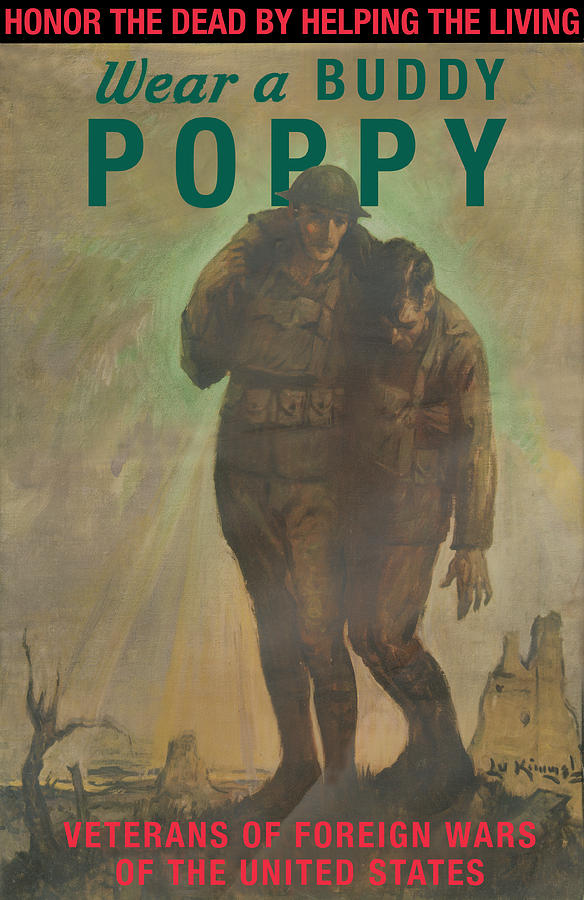
Besides the American Flag the Buddy Poppy is perhaps the most ubiquitous symbol of Memorial Day.  This poppy as we know it came about when Mrs Moina Michael read McRea’s poem and inspired wrote this verse:

We cherish too, the Poppy red

That grows on fields where valor led,

It seems to signal to the skies

That blood of heroes never dies.

She then had the inspiration to begin wearing Red Poppies on Memorial Day and sold the poppies to friends and others with the money going to those in need. A French woman visiting the United States, a Madame Guerin discovered the new custom and took it back to France where she began to make artificial red poppies to sell with the proceeds going to the widows and orphans of the First World War. The custom spread to other countries and in 1921 the Franco-American Children’s League sold the poppies but disbanded in 1921. Madame Guerin approached the newly formed Veteran’s of Foreign Wars, the VFW in 1922 for assistance and in 1922 the VFW became the first American organization to sell poppies. Two years later the Buddy Poppy program began. The artificial poppies were made by disabled veterans who were paid for their work in order to provide them some form of income and distributed by other veterans across the country.  Today the VFW continues to distribute the Buddy Poppies which are still produced by disabled Veterans at the nation’s Veteran’s Administration Hospitals.

I remember the first Buddy Poppy that I every received. It was just before Memorial Day 1970, before it became a 3 day weekend falling on the last Monday of May. We were living with my Grandparents in Huntington West Virginia as my dad sought suitable housing for us in Long Beach California while he was in the Navy.

wear-a-buddy-poppy-lu-kimmel

Our initial move from the small town of Oak Harbor Washington, where my dad had been stationed at Naval Air Station Whidbey Island to Long Beach had not gone well. The first place we lived was in a dangerous neighborhood and with my dad traveling frequently to Naval Shipyards around the country to help commission new ships the stress on the family, especially my mother in dealing with that and two young boys was too much. Dad sent us back to Huntington where my Grandparents and numerous other relatives still lived for the duration of the school year as he sought better housing.

Memorial Day then was filled with visits to cemeteries to place flowers on the graves of departed relatives as well as flags on the graves of relatives who had served in the military. We made a number of stops that day at the Bowen and Dundas cemeteries as well as others where relatives were interred. Afterward we had a home cooked meal prepared by my maternal grandmother Christine and then made a trip on a city bus to my paternal grandmother Verdie.

Holidays, were much like that for us during that time that we lived in Huntington, until my dad came back and brought us back to Long Beach in June. Just before my dad arrived to take us back to Long Beach my mom, her cousin Valerie and I were shopping downtown, which at the time before I-64 took traffic around the town and led to a new mall and shopping complex being built just out of town, was a bustling place of commerce and activity. Major retailers all had their stores downtown, while the best movie theaters and restaurants were there as well.

Poppies_Rocky-Brunos

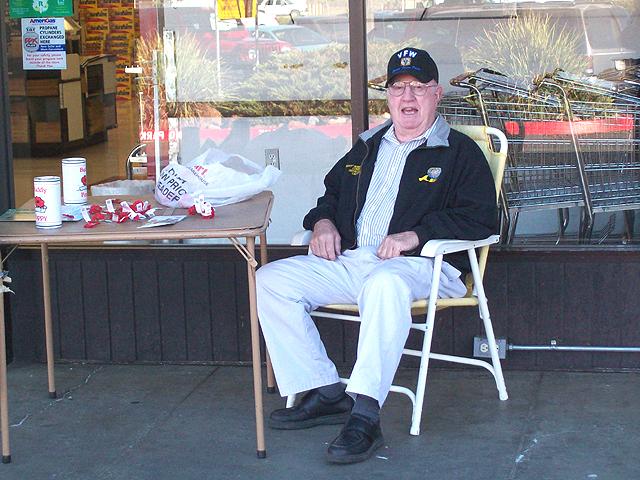
We were coming out of the old SS Kresge store on Fourth Avenue and an elderly man wearing a VFW cap approached us and handed me a poppy. He had to be in his 70s so I presume that he was a Veteran of the First World War. He chatted briefly with my mom and Valerie and I am sure my mom gave him a bit of money for the poppy. I kept it for many years and it was eventually lost in one of our moves. But I will not forget it and any time I see a Veteran distributing them I make sure that I get one.

Babe-Ruth_MAIN

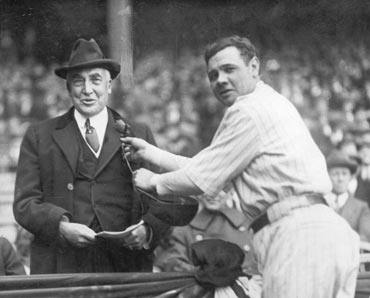
Babe Ruth and President Warren G Harding with the first official Buddy Poppy of 1923 

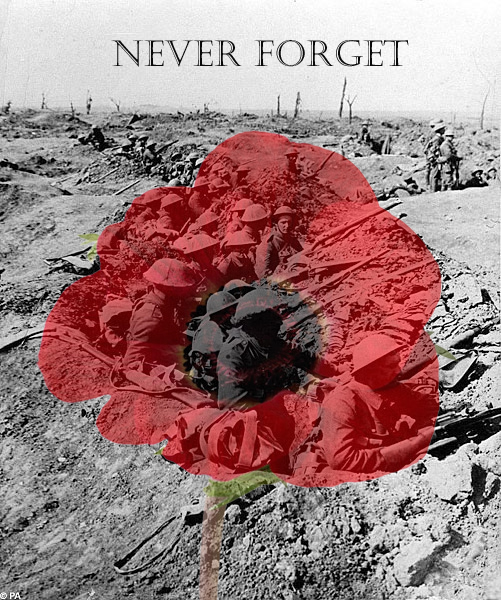
For me the Buddy Poppy is a symbol of thanks for the sacrifices made by so many, those who did not come home from wars being killed or missing in action, as well as the wounded and the families of the dead and those that came home forever changed by their time in war. This year marks the 90th anniversary of it being the official flower of remembrance for those who died in our nation’s wars.

The poppy has even more significance for me now having served in Iraq. Seeing war’s devastation and knowing so many who have either been killed or wounded in the wars that we have engaged since September 11th 2001 has impacted me in ways that I could not have imagined before the war. Likewise having come back changed by my experience and having to deal with the affliction of severe PTSD I sense a camaraderie with those men who came home changed from war and in many cases returned to a country that did not understand them.

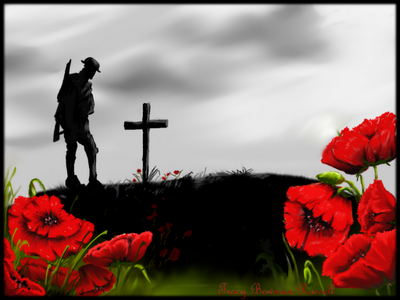
Remembrance_Day___Poppy_Day_by_daliscar

I will be observing the “Go Silent” moment at 12:01 today with the Iraq Afghanistan Veterans Association to honor those who have given the last full measure.

Peace

Padre Steve+
4 Comments

Filed under History, News and current events

My Melancholy Memorial Day Thoughts

Remembrance_Day___Poppy_Day_by_daliscar

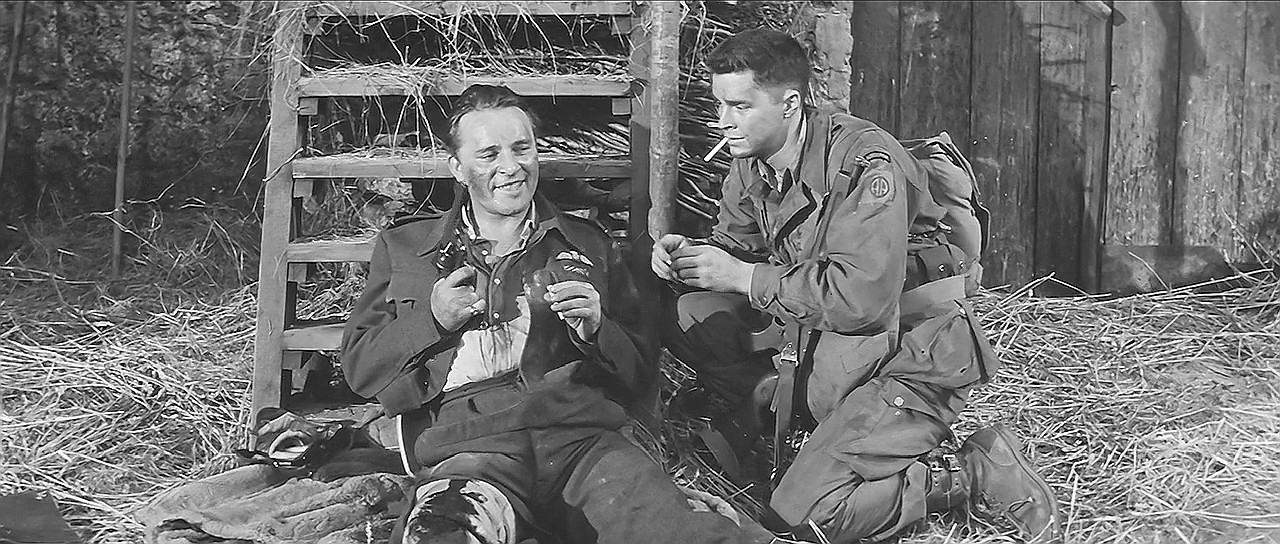
“It’s funny isn’t it. He’s dead, I’m crippled, you’re lost. Suppose it’s always like that. I mean war.” Flying Officer David Campbell played by Richard Burton in “The Longest Day” 

LD20

I came back a different man from Iraq. It seems that for me with every passing year Memorial Day becomes more of a melancholy observance. It is a weekend and observance that I feel deeply having lost friends in war and served in Iraq as well as Operation Enduring Freedom. It is also a day in which I feel more and more disconnected from the vast majority of my fellow Americans. I don’t know, but just from my observation it seems that for most Americans the weekend serves as not much more than the end of the school year and the beginning of the summer holiday and vacation season.

I could be wrong, but it seems to me that for most Americans, the vast majority who have themselves never served a day in uniform and who have no more than a passing relationship with anyone who is either serving in our current wars or has served in any war that war is at best a spectator sport. It is an attitude that has been nurtured by our politicians of all parties, political pundits and preachers for decades. As a result there is a grave disconnect between the society at large and the men and women who serve in the military and in our wars.

To be fair I don’t think it is a matter of ordinary people not caring, not that at all, just that no one has really called the nation to war, as such we have been at war but only a small amount of the population is called on to serve. The real fact of the matter is that the wars that we have fought since World War II have not been national affairs. If they were we would not be continually fighting wars that most people neither understand and which in many if not most cases we would be better off staying out of completely.  That being said I am appreciative of those who do things to care for and honor our veterans, honor our fallen and do practical things for the survivors. There are some really wonderful people, many who have never served who do what they can for those who fight and die in or come back forever changed from these misbegotten and unpopular wars.

What I do find offensive are the war mongers and profiteers who have never served. I feel this way about those who did all that they could to avoid serving in the military and those who did the very minimum to satisfy outward appearances of service while avoiding anything difficult, especially deployment to combat zones. Of the latter I can think of five to six currently serving and very outspoken conservative members of the House of Representatives and the Senate that fit the description. I shan’t mention the members of the previous Presidential administration who through their willing lies caused the deaths of nearly 4500 American military personnel in Iraq. I speak about men who in their writings, their appearances on news networks and their think tanks and corporations that do nothing but profit off of war. Some are current or former politicians, others supposedly “academics” and others men who smell a profit in war.

memorial-day1-300x225

I find such people to be loathsome and wonder how on Memorial Day weekend they can show their faces. But then they are rather shameless. Sometimes their actions make me wonder if the sacrifices made by those who serve are in vain. However, I strive to resist that and pray that our sacrifices will not be in vain. While they profit from war others pay the bill and it has always been this way. Marine Corps Major General Smedley Butler, a two time winner of the Congressional Medal of Honor wrote after World War One in his book War is a Racket:

“This bill renders a horrible accounting. Newly placed gravestones. Mangled bodies. Shattered minds. Broken hearts and homes. Economic instability. Depression and all of its attendant miseries. Back -breaking taxation for generations and generations. For a great many years as a soldier I had a suspicion that war was a racket; not only until I retired to civilian life did I fully realize it….”

Maybe I feel this way because I grew up in a military family where my dad was frequently deployed and served in Vietnam, a place where some of my friends fathers died, and because I have been in the military 32 years between the Army and the Navy. Maybe it is partly because I am a military historian, theologian, priest and chaplain who has seen the horrors of war and the wounds that remain for life in the bodies, minds and spirits of those that fight in them.  I cannot speak of how my heart feels when I see young men and women, wounded in war, their lives forever changed bravely struggling to go on even as the war mongers, war profiteers and chicken-hawks profit off of their suffering.

481801_10151367001287059_1003164983_n-1.jpg

So for me this is a rather melancholy time. A time where I struggle. I honor the fallen, my brothers and sisters who have given the last full measure of devotion in serving this country, those that I know personally or have served with and those who did so before I was every born.

Until tomorrow.

Peace

Padre Steve+
3 Comments

Filed under History, iraq,afghanistan, Military, News and current events, shipmates and veterans