Category Archives: leadership

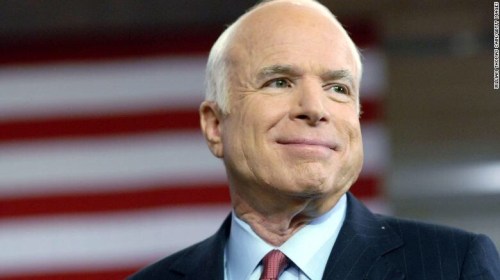
The Capstone of a Life: John McCain’s Parting Words

Friends of Padre Steve’s World,

Last night I didn’t get to sleep until about 4 A.M. I had been up until 1 A.M. working in the house and today I spent about 10 hours ripping out carpet, moving furniture, and working to lay new flooring in our house. My friend who has been doing the really hard stuff that requires skill to make it look good is coming back tomorrow to help finish the job. I I’d the furniture moving and carpet removal. Why anyone would put carpet in a house is beyond me. It is amazing, even with vacuuming and shampooing just how much dirt and crap is in and under the carpet. All I can say is yuck, which coincidentally is the mildest thing that I can say or think about President Trump.

However, that term does not apply to the late Senator John McCain’s message as he decided not to go on a ventilator to try to prolong his life. He knew his time had come and he released this message in which he quoted John Hemingway. McCain’s words were that of a thankful man who knew the ups and downs of life, it’s success and failure, but left life thankful and content.

In life he taught us much in positive and negative examples. He owned his failures but was happy that he had some influence in the life of this nation and the world at this time in history. I think that it is important that Senator McCain was the kind of person who did not reject people if they differed in opinion with him. His selection of President Barack Obama to do a eulogy at his funeral symbolizes that far too scarce ability to be friends with political or ideological adversaries. That used to be a pretty normal state of affairs in our country, but it is almost extinct today.

His words about the end of his life are remarkable and should be read by all. But before I share them I have to note that his last Tweet on Twitter was extending his sympathy to an Army officer and pilot killed in Iraq on his ninth deployment in 16 years of service. I cannot imagine something similar to be President Trump’s final tweet.

However, what I cannot say that there was anything in Senator McCain’s final note that could be described as “yuck.” Instead is was a very personal letter of someone schooled in life who never stopped reading or learning. The Senator from Arizona wrote:

“The world is a fine place and worth the fighting for and I hate very much to leave it … I hate to leave it. But I don’t have a complaint. Not one. It’s been quite a ride. I’ve known great passions, seen amazing wonders, fought in a war, and helped make a peace. I’ve lived very well and I’ve been deprived of all comforts. I’ve been as lonely as a person can be and I‘ve enjoyed the company of heroes. I’ve suffered the deepest despair and experienced the highest exultation. I made a small place for myself in the story of America and the history of my times. What an ingrate I would be to curse the fate that concludes the blessed life I’ve led. I prefer to give thanks for those blessings, and my love to the people who blessed me with theirs. The bell tolls for me. I knew it would. So I tried, as best I could, to stay a ‘part of the main.‘ I hope those who mourn my passing, and even those who don’t, will celebrate as I celebrate a happy life lived in imperfect service to a country made of ideals, whose continued service is the hope of the world. And I wish all of you great adventures, good company, and lives as lucky as mine.” —John McCain

Rest In Peace Senator McCain, for I know that you will.

Peace,

Padre Steve+

1 Comment

Filed under faith, leadership, life, News and current events, philosophy, Political Commentary

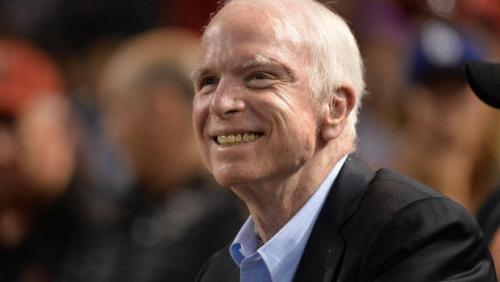
“Our Nation Aches for Truth Tellers” Rest In Peace Senator John S. McCain

gettyimages-829707042

Friends of Padre Steve’s World,

Today the United States and the world lost a voice of honor, decency, and courage. Senator John McCain died today after a gallant yet futile battle with an aggressive brain cancer, the same cancer that took the life of his friend Senator Ted Kennedy a decade ago. Senator Ben Sasse remarked: “Our nation aches for truth-tellers. This man will be greatly missed.”

I have always admired Senator McCain for his military service. This included his courage in one of the most frightening and dreadful things a sailor can experience, a fire at sea; in his case the disastrous fire aboard the USS Forrestal which killed over 150 of his shipmates and left him injured. Then his courage under fire and his indefatigable spirit while a prisoner of the North Vietnamese for five years. As a Senator he hewed his own path, while loyal to his party he did not hesitate to oppose it when its policies went against his sense of honor, dignity, or humanity.

I could go on but it is very late. I have been working in my house all day to get ready for laying more flooring in the morning. In fact I didn’t sit down until One A.M. While I was working Judy told me that Senator McCain had died. A few hours later I have to say that Senator Chuck Schumer, who certainly disagreed with McCain more often than not during their time in the Senate said it best:

“As you go through life, you meet few truly great people. John McCain was one of them. His dedication to his country and the military were unsurpassed, and maybe most of all, he was a truth teller — never afraid to speak truth to power in an era where that has become all too rare. The Senate, the United States, and the world are lesser places without John McCain.”

I will take some time to process his death and what it means. But for tonight I will just remember his remarkable life and hope that we as Americans can again rise to the ideals of our country that he tried hard to embody, even when he acknowledged that he had failed to do.

He was a rare man. I think that his defiance of President Trump was very much like that of Senator Stephen A. Douglas against President James Buchanan in the 1858 confrontation regarding the LeCompton Constitution. Like Douglas, McCain was demonized by the President and his supporters in his Party. But honestly I could hear Senator McCain echoing Douglas’s words against Buchanan and his administration:

“After the Christmas recess, the Administration unleashed its heavy horsemen: Davis, Slidell, Hunter, Toombs, and Hammond, all southerners. They damned me as a traitor and demanded that I be stripped of my chairmanship of the Committee on Territories and read out of the Democratic party. Let the fucking bastards threaten, proscribe, and do their worst, I told my followers; it would not cause any honest man to falter. If my course divided the Democratic party, it would not be my fault. We were engaged in a great struggle for principle, I said, and we would defy the Administration to the bitter end.”

Regardless of whether one agreed or disagreed with Senator McCain on the issues, one could never dispute the fact that he tried to operated and stand on principle, especially over the last two years of his life and career where like Douglas he had to stand on principle against an unprincipled President and his equally unprincipled supporters. I only wish that McCain had lived to see his principles overcome the malevolent machinations of President Trump, his unprincipled administration, and his cult like supporters.

Until tomorrow,

Peace

Padre Steve+

2 Comments

Filed under ethics, History, leadership, Military, News and current events, Political Commentary

U.S. Army Artillery Doctrine and Tactics from the Mexican War to the Wilderness

Friends of Padre Steve’s World,

It has been a very long day. My legs hurt, I broke the big toe on my right foot Thursday afternoon, and between real work and work at home I put on about 7.5 miles on my legs. Thankfully I used Mr. Cane, who came into my life when I broke my tib-fib near the knee back in 2011 was there to help me out. I showed up at command PT dressed out in my PT uniform with Mr. Cane, but it was not the “Cane Mutiny.” Yes, that is a very bad pun, but when your are as tired as I am and in as much pain you really don’t care, but I digress… 

I still am working on my article about the President’s terrible week which seems to get more fascinating by the hour. Maybe after a long day working in the house tomorrow, ripping out nasty old carpet. laying some flooring in closets, and doing a bunch of other stuff I might try to finish it tomorrow, which is actually today because I am still awake and it is after midnight. 

So what the hell, tonight I am reposting a section of my unpublished Civil War book A Great War in a Revolutionary Age of Change. This section continues one that I posted two or three weeks ago dealing with U.S. Army artillery. This particular section deals with the period between 1846 and the summer of 1864. It is as non-partisan as you can get, but I hate to admit that the thought of  M-1857 12 Pound smoothbore “Napoleons” firing at massed Confederate infantry in the open  as they did during Pickett’s Charge does warm my heart. Oh my God it almost gives me a woody, but that isn’t exactly very Christian of me, but as I readily admit I am no saint and pretty much a Mendoza Line Christian. At least I can admit it. 

So have a great day and please get some sleep. 

Peace,

Padre Steve+
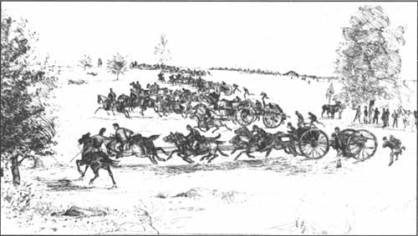
fig20

American artillery doctrine subordinated the artillery to the infantry. Doctrine dictated that on the offensive “was for about one-third of the guns to occupy the enemy’s artillery and two-thirds to fire on the infantry and cavalry. Jomini liked the concentrated offensive cannonade where a breach of the line was to be attempted.” [1] But being such a small service, it was difficult for Americans to actually implement Napoleonic practices, or organization as the organization itself “was rooted in pre-Napoleonic practice, operating as uncoordinated batteries.” [2]

American artillerymen of the Mexican War could not match the massive firepower and concentration of Napoleon’s army. Instead it utilized mobile tactics, which gave it “the opportunity to maneuver in open country to support the infantry.” [3] During the war the actions of the highly mobile light batteries proved decisive, as did the spirit of their officers and soldiers. The Americans may not have had the organization of Napoleon, but “the audacious spirit was there.” [4] In a number of engagements American batteries employed the artillery rush, even gaining the admiration of Mahan, a noted exponent of the defensive. Among the leaders of the artillery at the Battle of Buena Vista were Captain Braxton Bragg, and Lieutenants John Reynolds and George Thomas, all of who would go on to fame in the Civil War. During a moment when Mexican forces threatened to overwhelm the American line, Bragg’s battery arrived:

“Without support, Bragg whirled his guns into battery only a few rods from the enemy…. The Mississippi Rifles and Lane’s Hoosiers also double-quicked from the rear of the plateau. From then on it was a storybook finish for the Americans, and artillery made the difference. Seventeen guns swept the Mexicans with grape and canister…. Reynolds, Thomas, and the others stood to the work with their captains until 5 o’clock. Santa Ana was through…” [5]

At Casa Mata outside of Mexico City, Americans found their flank threatened by Mexican cavalry. Captain James Hunter and Lieutenant Henry Hunt observed the situation and “Without awaiting orders they rushed their guns to the threatened sector…  With Duncan directing them, all stood their posts long enough to spray the front ranks of mounted Mexicans with canister, the shotgun effect of which shredded the half-formed attack columns, dissolving all alignment and sending the lancers scrambling rearward in chaos…” [6] As a result these and other similar instances the artillery came out of the war with a sterling reputation and recognition of their gallant spirit. John Gibbon reflected such a spirit when he wrote: “Batteries derive all their value from the courage and skill of the gunners; from their constancy and devotion on difficult marches; from the quickness and capacity of the officers; and especially from the good condition and vigor of the teams, without which nothing can be undertaken.” [7]

At the beginning of the war U.S. Army doctrine recommended placing batteries equally across the line and concentrating them as needed. The last manual on artillery tactics Instruction for Field Artillerypublished in 1859 retained much of its pre-Mexican War content and the doctrine in it provided that artillery was to “be organized at the regiment and brigade level with no reserve.” [8] Nonetheless some artillery officers discussed the possibilities of concentration, Grand Batteries, and the artillery reserve, no changes in organization occurred before the war. However, these discussions were all theoretical, as practical experience of these officers was limited to the small number of weapons employed in the Mexican War, and the “immediate problem was the organization of an unaccustomed mass of artillery.” [9] The Artillerist’s Manual, a highly technical treatise on gunnery was written by Captain John Gibbon in 1859 while he was serving at West Point and used by artillerymen of both sides during the war.  In  Gibbon described the principle object of the artillery was to, “sustain the troops in the attack and defense, to facilitate their movements and to oppose the enemy’s; to destroy his forces as well as the obstacles that protect them; and to keep up the combat until the opportunity for a decisive blow.”  [10]

Since the United States Army traditionally drawn their doctrine from the French this meant going back to the Napoleonic model the foundational unit of which was the battery. The field artillery batteries were classed as either foot artillery or horse artillery. The horse artillery accompanied the cavalry and all gun crews went into battle mounted as cavalrymen. The soldiers of the foot artillery either rode with the guns or walked. The battery was the basic unit for American artillery and at the “start of the war the artillery of both sides was split into self-contained batteries, and each battery allocated to a particular brigade, regiment or even battalion of infantry.” [11]

12 pound napoleon

At the battery level Union artillery was organized by type into six-gun batteries. Confederate artillery units were organized into four or six-gun batteries in which the guns were often of mixed type. This often led to supply problems for Confederate gunners and inconsistent rates of fire and or range. Confederate gunners also had to deal with poor quality power and explosive shells, a condition that only worsened as the war continued. The well-trained Union gunners had better quality ammunition and gunpowder as well as what seemed to the Confederates to have limitless ammunition.

Each gun was manned by a seven-man crew and transported by a team of horses that towed a limber, which transported the cannon and a caisson, which transported the ammunition. The caissons would normally be stocked with four chests of ammunition. For a Napoleon “a standard chest consisted of twelve shot, twelve spherical case, four shells, and four canister rounds for a total of 112 rounds of long range ammunition.” [12] In addition to the ammunition carried in the caissons of each gun, more ammunition was carried in the corps and division supply trains.

As the war progressed the both the Union and Confederate armies reorganized their field artillery. In the North this was a particular problem due to the lack of flexibility and politics in the Army which were prejudiced against large artillery formations, despite the great numbers of batteries and artillerymen now in the army. However the Federal army had good artillerymen. The Regular Army batteries were the foundation of the artillery service. Unlike the infantry units which were overwhelmingly composed of volunteer soldiers, the artillerymen were regulars, many who had served for years in the ante-bellum army.

Since there were few billets for senior artillerymen many artillery officers volunteered or were selected to serve in the infantry to get promoted or to take advantage of their experience and seniority. One of those chose was John Reynolds who promote to Lieutenant Colonel and given orders to form an infantry regiment. Before he could get started in that work he was made a Brigadier General of Volunteers. He wrote: “I would, of course, have preferred the Artillery arm of service, but could not refuse the promotion offered me under any circumstance, much less at this time, when the Government has a right to my services in any capacity.” [13] Other artillerymen who rose to prominence outside of the branch during the war included William Tecumseh Sherman, George Meade, John Gibbon, George Thomas, Ambrose Burnside, and Abner Doubleday, and Confederates Stonewall Jackson, Braxton Bragg, Jubal Early, and A.P. Hill.

However, General Winfield Scott took action to keep a core of experienced artillery officers with the artillery. At Scott’s behest, “the War Department limited the resignations of artillerymen to accept higher rank in infantry regiments, resulting in a core of capable and experienced officers.” [14]  This allowed George McClellan to select two exceptional artillery veterans, William Barry and Harry Hunt to “organize the branch and to oversee training.” [15] McClellan appointed Barry, who had been commissioned in 1836 as the head of his artillery. After the defeat at Bull Run, Barry “prepared as set of guidelines or principles for the artillery service. He prescribed a uniform caliber of guns in each battery, four to six cannon in each battery, and that four batteries – one Regular Army and three volunteer – be attached to each division.” [16]  In this organization, McClellan and Barry “called for the Regular Army battery commander to take charge of those batteries assigned to the division. This was in addition to his responsibilities to his own battery.” The practical effect of this was that “with the exception of the Artillery Reserve, the highest artillery command remained that of a Captain.” [17]

Hunt was responsible for the organization of the Artillery Reserve and the siege train. The Artillery Reserve was given eighteen batteries, about 100 guns or about one-third of the army’s artillery. It would be a source from which to replace and reinforce batteries on the line, but Hunt also understood its tactical employment. He explained:

‘In marches near the enemy it is often desirable to occupy positions with guns for special purposes: the command fords, to cover the throwing and taking up bridges, and for other purposes for which it would be inconvenient and unadvisable to withdraw their batteries from the troops. Hence the necessary reserve of artillery.” [18]

Hunt’s Artillery Reserve would be of great value in the early battles of maneuver. “The primary advantage of the army artillery reserve was the flexibility it gave the commander, making it unnecessary to go through the division or corps commanders. The reserve batteries could be used whenever or wherever needed.” [19] But this would not be in the offense role that Napoleon used his artillery to smash his opponents, for technology and terrain would seldom allow it; but rather in the defense; especially at the battles of Malvern Hill and Gettysburg. However, “Gettysburg was the last battle of the Civil War in which field artillery fire was paramount…” but “By the end of 1863, the tide of war had changed in the eastern theater, with both sides making more use of field fortifications to cover themselves from the murderous fire of the infantry rifle.” [20]

Even so, lack of promotion opportunity for artillerymen was a problem for both sides during the war, and artillerymen who showed great promise were sometimes promoted and sent to other branches of service. A prime example of such a policy was Captain Stephen Weed “who fought his guns brilliantly in the first two years of the war, and a Chancellorsville even commanded the artillery of a whole army corps.” Henry Hunt “singled him out as having a particular flair for handling large masses of cannon, and wanted to see him promoted.” [21] He was promoted to Brigadier General but in the infantry where he would lead a brigade and die helping to defend Little Round Top. In all “twenty-one field-grade artillery officers in the Regular Army became generals in the Volunteers, but only two remained with the artillery branch.” [22]

Both Barry and Hunt sought to rectify this issue. Barry insisted that a “battery of artillery was the equivalent of a battalion of infantry” [23] and pressed for a higher grade structure for the artillery. Colonel Charles Wainwright wrote of their efforts: “Many officers of the regular artillery have long been trying to get a recognition of their arm of the service, doing away with the regiments and making a corps of it, the same as the engineers and ordnance. McClellan and Hunt drew up a plan soon after Antietam, which by Stanton and Halleck, but nothing more has been hear of it.” [24]

However, Barry and Hunt were opposed by War Department insiders. General Lorenzo Thomas, the Adjutant General used law and regulation to prevent promotions in the artillery beyond Captain and as to General Officers as well. Thomas insisted that the battery was equivalent of an infantry company or cavalry troop. He noted “that laws long in force stipulated that only one general officer could be appointed per each for each forty infantry companies or cavalry troops.” [25] He applied this logic to the artillery as well, which meant in the case of the Army of the Potomac which had over sixty batteries that only one general could be appointed. The result could be seen in the organization of the Army of the Potomac at Gettysburg, the artillery component, “which included approximately 8,000 men with 372 pieces – almost the manpower (and certainly the firepower) of a complete army corps. It included only two general officers… then there were three colonels and no other high ranks at all. One army corps had its guns commanded by a lieutenant.” [26] Over time the situation would improve and the artillery given some autonomy within the Army, at Gettysburg Meade gave Hunt command authority to employ the artillery as he deemed necessary, even over the objections of the corps commanders.

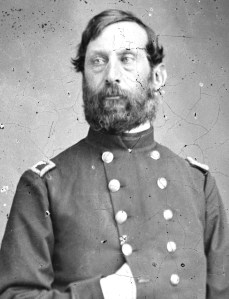
General Henry Hunt was probably the most instrumental officer when it came to reorganizing Union artillery organizations in the Army of the Potomac. Following the Battle of Chancellorsville, Hunt prevailed upon the army commander, Joseph Hooker to create “artillery brigades assigned to each corps. This overcame a problem at Chancellorsville, where the batteries of uncommitted divisions had gone unused. The reorganization also made a practical adjustment to the situation where the attrition of divisions was making the corps the basic tactical unit.” [27] In the reorganization the infantry brigades retained their assigned batteries for direct support, but the guns of the divisions were organized into brigades at the corps level. The artillery brigades of the infantry corps had “from four to eight batteries, depending on the size of the corps.” [28] Despite being reflagged as brigades the command structure was not increased. This was often due to the fact “that for much of the war commanding officers persisted in regarding artillery as merely a subsidiary technical branch, an auxiliary which might add a little extra vitality to a firing line if conditions were favourable – but more typically would not.” [29] Dr. Vardell Nesmith noted:

“Resistance within the Army to formalizing tactical organizations for field artillery above the level of the battery was a complex phenomenon. Certainly there was some hesitance on the part of the Army establishment to create new organizations that would come between infantry and cavalry commanders and their fire support assets. Also one cannot discount the institutionalized tendency to keep everyone in their proper place – in other words, to keep a new power group from organizing.” [30]

Organized into brigades the Artillery Reserve became the instrument of the Army commander and served as what we would now call “general support”artillery where they were invaluable to Union army commanders to be available to augment other batteries and to replace batteries which had suffered casualties while on line. The organization of the artillery into brigades, even if they were field expedient organizations did much to increase the effectiveness of the arm. They supplanted “the battery in tactics and to considerable degree in administration. Supply and maintenance were improved, and more efficient employment and promptness and facility of movement resulted. In addition, the concentration of batteries was favorable for instruction, discipline, and firepower. Fewer guns were needed, and in 1864, the number of recommended field pieces per 1,000 men was reduced from 3 to 2.5.” [31]
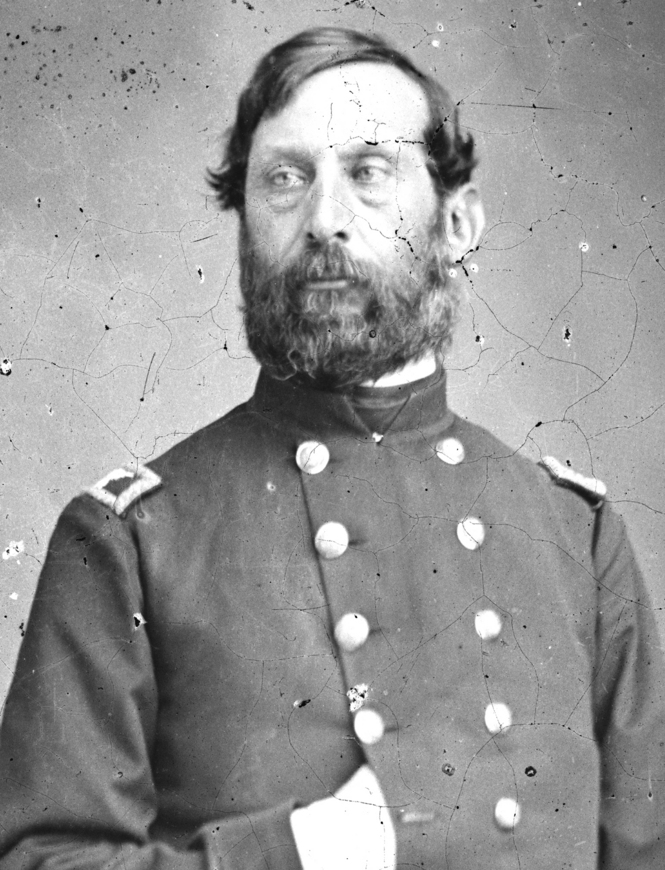
henryhunt

General Henry Hunt

Hunt lobbied the War Department to provide a staff for each brigade, but since the new units were improvised formations no staffs were created and no promotions authorized for their commanders. Colonel Wainwright proposed a congressional bill to organizer volunteer artillery units into a corps of artillery, but lamented:

“Both Barry and General Hunt while commanding the artillery of this army have frequently complained in their reports of the great want of field officers. Were the light batteries of each state organized as a corps, and provided with field officers in the proportion proposed in the bill referred to above, this want would be provided for. The officers of light batteries also have a claim demanding some such change. No class of officers in our volunteer service stand as high as high as those of our light batteries. I say without hesitation that they are very far superior as a class in all respects to the officers of the infantry or cavalry. Yet for them there is not a chance at this time any chance of promotion above a simple captaincy, except in the few light regiments spoken of. I can point to several cases of captains of light batteries who, from this want of field officers, have for the past year exercised all the authority and borne all the responsibility of a brigadier-general.” [32]

But change did come, however slowly and with great resistance from the War Department bureaucracy, and the artillery service “did succeed in winning some measure of recognition for its independent status and tactics. After Gettysburg the army’s artillery commander was accept as having overriding authority in gunnery matters, with the infantry relegated to a merely consulting role, although in practice the change brought little improvement.” [33] The beginning of this came in August 1863 when George Meade promulgated an order that “defined Hunt’s authority in matters of control of the artillery in the Army of the Potomac. The order “definitely stated that Hunt was empowered to supervise and inspect every battery in the army, and in battle to employ them “under the supervision of the major-general commanding.” [34] The order was important but still did not go far enough to remedy the problem of a lack of field officers in the artillery, a problem that was not completely remedied during the war although Ulysses Grant did allow a limited number of promotions to provide more field grade officers in the artillery service of the Army of the Potomac and other armies under his command in the Eastern Theater. Likewise some additional billets were created in the brigades as brigade commanders “were authorized a staff consisting of an adjutant, quartermaster, commissary officer, ordnance officer (an artillery officer on ordnance duty), medical officer, and artillery inspector, with each staff officer having one or more assistants…” However the staff officers had to be detailed from the batteries, thereby reducing the number of officers present with those units”[35] However, in most cases the brigade commanders remained Captains or First Lieutenants.

In the Western theater there was a trend toward the centralization of the artillery in the various armies depending on the commander and the terrain and the size of the operation. As the war progressed in the west commanders began to group their artillery under brigades, divisions, and finally under the various army corps. At Shiloh Grant concentrated about 50 guns “in the notorious “Hornet’s Nest,” perhaps saving him from defeat.” [36] Artillery tactics shifted away from the offense to the defense and even during offensive operations western commanders were quick to entrench both their infantry and artillery. During the Atlanta campaign and march to the sea William Tecumseh Sherman successfully reduced his artillery complement first to 2 guns per 1,000 men then to 1 per 1,000. [37] This was in large part because he was conducting a campaign of maneuver and was far from his logistics base. Since supplies had to be carried with the army itself with a heavy reliance on forage, Sherman recognized that his army had to be trimmed down. Likewise, “the terrain and concept of operations must have been very important in his decision.” His “rapid, almost unopposed raid through Georgia gave no opportunities for the massing of large batteries in grand manner.” [38] During the campaign Sherman marched without a siege train and reinforced his cavalry division with light artillery batteries.

Notes 

[1] Ibid. Hagerman The American Civil War and the Origins of Modern Warfare p.21

[2] Ibid, Bailey Field Artillery and Firepower p.195

[3] Ibid, Bailey Field Artillery and Firepower p.194

[4] Ibid. Nesmith Stagnation and Change in Military Thought: The Evolution of American Field Artillery Doctrine, 1861-1905 – An Example p.6

[5] Nichols, Edward J. Toward Gettysburg: A Biography of General John Reynolds, The Pennsylvania State University Press 1958, reprinted by Old Soldier Book Gaithersburg MD 1987 p.43

[6] Ibid. Longacre The Man Behind the Guns: A Military Biography of General Henry J. Hunt, Chief of Artillery, Army of the Potomac pp.53-54.

[7] Gibbon, John. Artillerist’s Manual: Compiled from Various Sources and Adapted to the Service of the United States. 1859 retrieved from http://www.artilleryreserve.org/Artillerists%20Mannual.pdf 19 January 2017 pp.345-346

[8] Ibid. Hagerman The American Civil War and the Origins of Modern Warfare p.22

[9] Ibid. Nesmith Stagnation and Change in Military Thought: The Evolution of American Field Artillery Doctrine, 1861-1905 – An Example p.19

[10] Ibid. Gibbon  Artillerist’s Manual: Compiled from Various Sources and Adapted to the Service of the United States. p.343

[11] Ibid. Griffith, Battle Tactics of the Civil War p.165

[12] Gottfried, Bradley The Artillery of Gettysburg Cumberland House Publishing, Nashville TN 2008 p.15

[13] Ibid. Nichols Toward Gettysburg: A Biography of General John Reynoldsp.75

[14] Wert, Jeffry D. The Sword of Lincoln: The Army of the Potomac Simon and Schuster, New York and London 2005 p.39

[15] Ibid. Wert The Sword of Lincoln: The Army of the Potomac p.39

[16] Ibid. Wert The Sword of Lincoln: The Army of the Potomac p.40

[17] Ibid. Nesmith Stagnation and Change in Military Thought: The Evolution of American Field Artillery Doctrine, 1861-1905 – An Example pp.21-22

[18] Ibid. Longacre The Man Behind the Guns: A Military Biography of General Henry J. Hunt, Chief of Artillery, Army of the Potomac p.98

[19] Ibid. McKenny The Organizational History of Field Artillery 1775-2003 p.65

[20] Ibid. McKenny The Organizational History of Field Artillery 1775-2003 p.74

[21] Ibid. Griffith, Battle Tactics of the Civil War p.166

[22] Ibid. McKenny The Organizational History of Field Artillery 1775-2003 p.60

[23] Ibid. Nesmith Stagnation and Change in Military Thought: The Evolution of American Field Artillery Doctrine, 1861-1905 – An Example p.22

[24] Wainwright, Charles S. A Diary of Battle: The Personal Journal of Colonel Charles S. Wainwright 1861-1865 edited by Allan Nevins, Da Capo Press, New York 1998 p.336

[25] Ibid. Longacre The Man Behind the Guns: A Military Biography of General Henry J. Hunt, Chief of Artillery, Army of the Potomac p.100

[26] Ibid. Griffith, Battle Tactics of the Civil War p.166

[27] Ibid. Hagerman The American Civil War and the Origins of Modern Warfare p.94

[28] Ibid. Hagerman The American Civil War and the Origins of Modern Warfare p.94

[29] Ibid. Griffith, Battle Tactics of the Civil War p.166

[30] Ibid. Nesmith Stagnation and Change in Military Thought: The Evolution of American Field Artillery Doctrine, 1861-1905 – An Example pp.22-23

[31] Ibid. McKenny The Organizational History of Field Artillery 1775-2003 p.62

[32] Ibid. Wainwright. A Diary of Battle: The Personal Journal of Colonel Charles S. Wainwright 1861-1865 p.337

[33] Ibid. Griffith, Battle Tactics of the Civil War p.166

[34] Ibid. Longacre The Man Behind the Guns: A Military Biography of General Henry J. Hunt, Chief of Artillery, Army of the Potomac p.181

[35] Ibid. McKenny The Organizational History of Field Artillery 1775-2003 p.61

[36] Ibid, Bailey Field Artillery and Firepower p.198

[37] Ibid. Hagerman The American Civil War and the Origins of Modern Warfare p.284

[38] Ibid. Griffith, Battle Tactics of the Civil War p.178

Leave a comment

Filed under artillery, civil war, Gettysburg, History, leadership, Military, us army

A Man Characterized by Straightforward Truthfulness: Major General George Meade, the Victor of Gettysburg

Friends of Padre Steve’s World,

Today was a long and busy day as tomorrow will be so I am going to re-publish a part of one of my Gettysburg texts about General George Meade. If I get a chance tomorrow I will post my thoughts regarding the conviction of Paul Manafort, the confession of Michael Cohen, and the indictment of Trump ally, Congressman Duncan Hunter Jr. But that is a more than I want to do right now, so it will wait. Who knows there might be more indictments tomorrow or the next day.

This is basically a biographical vignette which I inserted into the campaign narrative to help bring additional light on Meade, a man who because he was neither flamboyant, nor particularly inspirational, but he was smart, had tremendous tactical acumen and great physical and moral courage. He was also able to successfully collaborate with his commanders to defeat Robert E. Lee at Gettysburg. Sadly he is often overlooked or discounted. This is just a bit about Meade, his life and career leading up to Gettysburg.

Peace,

Padre Steve+

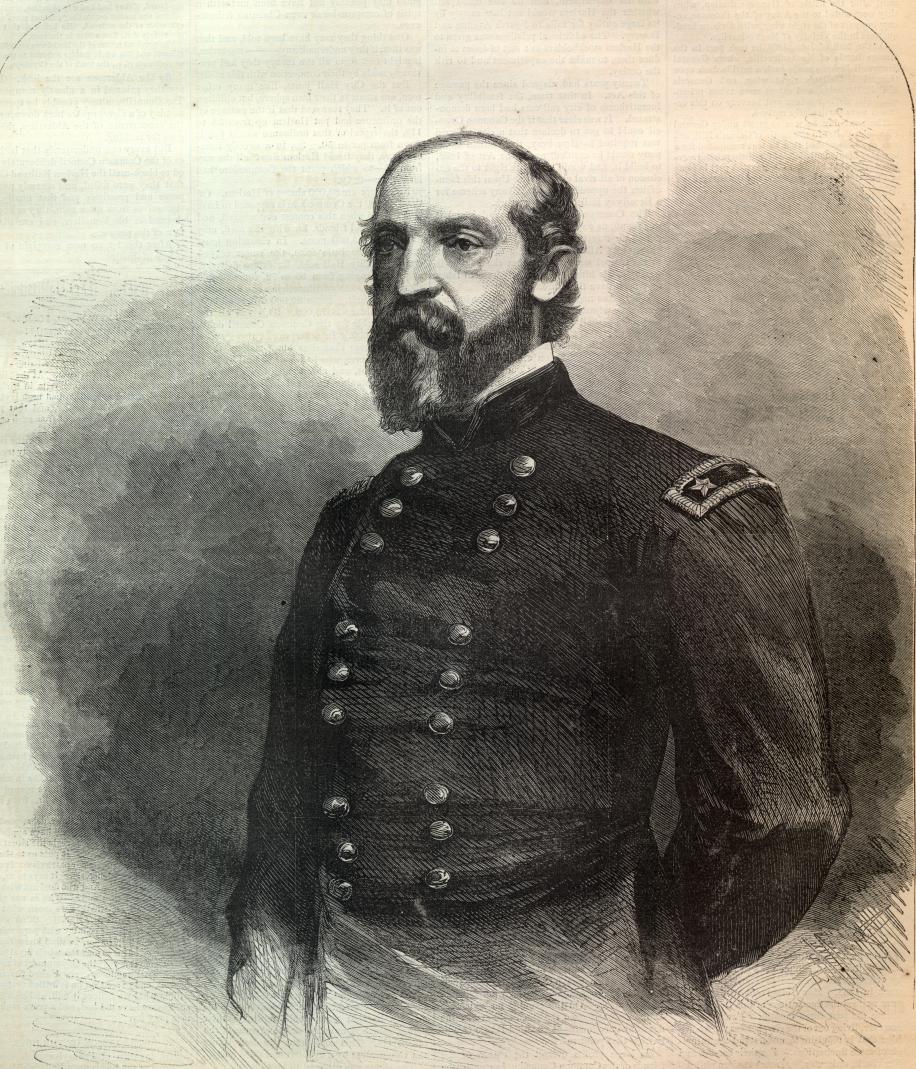
general-george-meade

Major General George Gordon Meade

George Gordon Meade was the son of an American merchant who served as the naval agent for the U.S. government in that country until 1817. Meade was born in Cadiz on December 31st 1815 and grew up in Pennsylvania and Maryland. His father had been ruined financially in Spain when supporting the Spanish government by loaning it over $375,000 in the Peninsular War against Napoleon. Meade’s father remained in Spain to try to recover his lost fortune he sent his wife and children back to the United States where the family lived on the margins of poverty. The money should have been reimbursed to him under the terms of the Treaty of Florida “which obligated the American government to assume any Spanish obligations to American citizens.” However “the U.S. government discovered loopholes that it allowed it to dodge all responsibility to an increasingly bitter and disappointed Richard Meade.” [1]

Meade’s father returned to the U.S. and the family moved from Philadelphia to Washington D.C. were Richard Meade, “worn down physically and mentally by his struggles” [2] died in 1828 when George was just 12 years old and attending “a boarding-school at Mount Airy, a few miles from Philadelphia, known as the American Classical and Military Lyceum.” [3] It was here that Meade got his first taste of military discipline as the school was modeled after West Point and in addition to their studies the students participated in military drill.

At the Lyceum, Meade was known for being “an amiable boy, full of life, but rather disposed to avoid the rough-and-tumble frolics of youths his age; quick at his lessons, and popular with both teachers and scholars.” [4] The family ran out of money to keep him at the school and he returned to Baltimore where he was enrolled in the Mount Hope School in Baltimore as his mother sought to gain him an appointment at West Point. At Mount Hope he studied Latin, English composition and mathematics. A certificate from the headmaster of the school obtained by his mother discussed Meade’s academic acumen.

“The knowledge he has gained…is far greater than is usually acquired by young men of his age in a single year. He possesses an uncommon quickness of perception and is, therefore, capable of acquiring knowledge with great rapidity….” [5]

Meade entered West Point in 1831 when he was just sixteen years old after being nominated by Andrew Jackson. The financial condition of his family was mostly responsible for this as “West Point was the one place where the young Meade could obtain a free college education.” [6] At West Point Meade did not excel in his studies, though he was not near the bottom of his class and his performance in some subjects such as military engineering gave no indication of how he would excel later in life. He graduated nineteenth of fifty-six in the class of 1835. Unlike many classes which were crowed with men destined for greatness, there were few notables in this class. Other than Meade there was Lincoln’s Postmaster General Montgomery Blair, Brigadier General Herman Haupt, who directed the transportation system of the Union army in the East during the war and John Pemberton, who as a Confederate general would surrender Vicksburg to Grant.

Meade was commissioned as a Brevet Second Lieutenant and assigned to the artillery and resigned his commission after serving his one year obligation and entered civilian life as a topographic engineer. Such was not an unusual occurrence in the tiny army of that era, as “over the previous two years more than a hundred West Point graduates had left the army.” [7] He found his civilian employment with the Bureau of Topographical Engineers and over the next five years took part in surveying the Texas-Louisiana boundary line, an assignment on the Mississippi River Delta, and the Canadian-United States boundary, an area of perpetual dispute from the time of American independence. It was during his time of civilian work with the Bureau that he met and married his wife Margaret Sergeant Wise, the daughter of Congressman John Sergeant, who had been the running mate of Henry Clay in the 1832 presidential election.

In 1842 Congress passed a measure which limited topographic survey to officers of the Topographic Engineer Corps. For Meade this was a godsend, for with the assistance of Margaret’s brother-in-law Congressman Henry A. Wise of Virginia Meade was reappointed as a Second Lieutenant in the Topographic Engineers on May 19th 1842. He had lost nearly six years of seniority, but “he had fairly earned his rank of Second Lieutenant of Topographic Engineers.” [8] His first assignments included surveying the Aroostook River in Maine and the design and construction of a lighthouse for Brandywine Shoals, Delaware.

In 1845 with a war with Mexico looming due to the annexation of Texas, Lieutenant Meade reported to the headquarters of General Zachary Taylor in Corpus Christi. Here he conducted surveys of the Nueces River and other inland waterways. Meade accompanied Taylor to the disputed border area around between the Nueces and the Rio Grande where some of the first actions of the war took place in 1846. During the war he served in Mexico “principally with Taylor’s army, where he won a brevet for gallantry at Monterrey.”[9] During his time in Texas and Mexico Meade became disgusted with the political machinations that surrounded the war and in a letter home he wrote “the mighty engine of influence, that curse of our country, which forces party politics into everything.” [10]

Meade was transferred to the army of Winfield Scott where he was no longer the senior Topographic Engineer but the junior. He chafed at his inactivity with Scott and complained about it. Major Turnbull, the senior Topographic Engineer told Scott that Meade was “Meade was unexpectedly with the army and that he had quite enough officers without him.” [11] In light of this Scott sent Meade back, where he returned to building lighthouses missing the bulk of the campaign. That assignment was cut short in 1849 when Meade was ordered to Florida “amid an outbreak of violence by the Seminoles.” [12] In Florida he survey a line of forts and upon completion returned to lighthouse work at Brandywine Shoals and then in Key Largo.

When the Army established the Lighthouse Board, Meade was appointed t the Seventh District where he continued his work in Florida. Among the lighthouses that he built was the Sand Key lighthouse at Key West which stands to this day. Meade was still just a First Lieutenant but he was rising in terms of the work that he was doing and was “promoted to superintendent of the Seventh Lighthouse District” [13] and took over the Fourth District as well when its superintendent was transferred to the West Coast. In this work Meade prospered. The most impressive monument to Meade’s work is the 163 foot tall Barnegat Bay Light in New Jersey. Meade was justifiably proud of his accomplishments and after the war noted that “I have always thought my services in the construction of lighthouses, and subsequently on the Lake Survey were of considerable importance.” [14]

In 1856 Meade was promoted to Captain and given charge over the vast Great Lakes survey. In Meade’s words he work involved:

“the delineation of the shores, and bottom of the lakes, bringing to light the hidden dangers; obtaining the evidence and capacity and depth of water in all the harbors and rivers and consequently the most practical mode of improving them; furnishing the evidence of the wants of navigation in reference to lighthouses, beacons and buoys and the proper sites for same.” [15]

Meade had to lobby Congress for funding and expanded the number of officers and personnel involved until by 1860 he had ten teams, some working on land and some aboard ships with a budget which he expanded from $25,000 to $75,000 in three years. It was a remarkable job, but then Meade had matured as an officer and as a leader.

Meade was still involved with this mission when Fort Sumter was attacked. To the consternation of local leaders in Detroit, he and his officers refused to be part of a mass meeting where the locals were insisting the Federal officers publically renew their oaths. This decision was part of Meade’s innate conservatism. Meade felt that doing so without the order of the War Department was not within his prevue.

Meade was not a firebrand, conservative and logical thought that the best course would for both sides to step back and catch their breath. He was “dismayed at the arrogance of the fire-eaters, to whom Southern secession seemed like a simple riot which would be suppressed by the mere appearance of Federal troops.” [16] The decision angered Senator Zach Chandler who had organized the event and Chandler would remain an opponent of Meade throughout the war.

He had never been a political officer and was determined to avoid becoming one, he wrote “as a soldier, holding a commission, it has always been my judgement that duty required that I should disregard all political questions, and obey orders.” [17] Thus he avoided some of the more overtly political displays in Michigan but wrote:

“I have ever held it to be my duty…to uphold and maintain the Constitution and resist the disruption of this Government. With this opinion I hold the other side responsible for this existing condition of affairs.” [18]

He was viewed with suspicion by Radical Republicans as “another politically unreliable McClellan Democrat” and William Lloyd Garrison’s The Liberator noted that his look “reveals a character that never yet efficiently and consistently served a liberal cause.” [19]

He immediately volunteered for field duty, but it his request was not answered due to resistance in the Corps of Topographic Engineers. It was not until after the debacle at Bull Run when he would be appointed a Brigadier General of Volunteers, even as he was preparing to resign his commission to take command of a Michigan Regiment.

Meade was appointed to command a brigade of the Pennsylvania Reserves and saw much action at the head of his brigade on the Peninsula, serving alongside his friend John Reynolds who commanded another brigade in the division. Meade exhibited a coolness under fire that earned the respect of his soldiers and officers. His fearless nature had “resulted in his being wounded twice by bullets almost simultaneously at the Battle of Glendale on the Peninsula” [20] and incurring other wounds and close calls at South Mountain, Antietam and Fredericksburg. In September 1862 he was promoted to command the division and after Fredericksburg he was promoted to command Fifth Corps. His promotions “from brigade commander in the Pennsylvania Reserve Division to corps command had been earned on battlefields.” [21] Serving in almost all of the army’s campaigns in the East Meade “gained increasing distinction as a highly competent and skillful officer. At Fredericksburg his division was the only unit to achieve any kind of success in a battle that otherwise was known as the worst fiasco in the history of the Army of the Potomac.” [22]

Like many of the commanders at Gettysburg Meade’s personality, temperament and character were complex, leading to people who met him or served with him to different conclusions. He possessed little flair for the dramatic or the theatrical. He was quietly religious and modest and “he usually kept aloof and made no effort to make himself popular” especially with reporters and “they exacted a toll for this treatment, and as a result Meade’s reputation suffered from a poor press.” [23]

He did not fit the stereotype of a commanding general of an army, he possessed none of McClellan’s style, Hooker’s dash or Reynold’s handsomeness. Some of his critics in the ranks referred to him as “a damned old goggle-eyed snapping turtle” while others called him “Old Four Eye” based on the glasses that he wore.[24] Meade handled such comments well for he had few delusions about himself, he remarked to an officer “I know they call me a damned old snapping turtle.” [25] As for his physical appearance a reporter noted that Meade “is colorless, being of a ghostly pale,” and “his nose of the antique bend.” [26] Another noted that he looked more like “a learned pundit than a soldier” [27] while his attire did not help, an aide noted “as for clothes, General Meade was nowhere.” Another officer remarked, “it would be rather hard to make him look well dressed.”[28]

Meade was sharp minded and quick tempered, “irritable and touchy in camp, possessed of a famous temper and imperfect means of controlling it.” [29] His temper was rooted in his sense of perfectionism and truthfulness. Theodore Lyman wrote that “I never saw a man in my life who was so characterized by straightforward truthfulness as he is.” [30] But Meade’s often volcanic temper and abject truthfulness were that of a logical man who could not abide “stupidity, negligence or laziness.” [31]Lyman observed “I don’t know any thin old gentleman, with a hooked nose and cold blue eye, who, when he is wrathy, exercises less of Christian charity than my well-beloved Chief!” [32]

Unlike some leaders whose temper led them to make unwise decisions with the lives of their troops, “in matters involving the safety of the army or the lives of thousands of men he exercised self-control and showed great moral courage in his decisions.” [33] At the same time he was a man who if after an angry outburst was full of regret, and as introspective as he was had “a cordial desire, if he had been wrong to make amends.” [34]

He was a man who in the war did not lose his humanity either towards the soldiers that he commanded or the victims of war. He was moved to acts of compassion when he saw suffering women and children whose lives had been upended by war. During the campaign of 1864 Meade:

“happened upon a poorly dressed woman fringed by several crying children – a family which the cavalry had robbed – he pulled out a five-dollar bill and also saw that food was provided for the day’s neediest. “The soft-hearted General…though of his own small children,” Colonel Lyman reflected. “He is a tender hearted man.”[35]

It was this complex man, a modest, conservative perfectionist, prone to volcanic eruptions of temper, but possessing of a strong sense of honesty even in regard to himself, who in the early morning hours of June 28th 1863 would have the fate of the Union thrust upon his shoulders.

Notes

[1] Huntington, Tom Searching for George Gordon Meade: The Forgotten Victor of Gettysburg Stackpole Books, Mechanicsburg PA 2013 p.12

[2] Ibid. Huntington Searching for George Gordon Meade p.12

[3] Meade, George edited by George Gordon Meade The Life and Letters of George Gordon Meade, Major General United States Army Volume I Big Byte Books Amazon Kindle Edition 2014 originally published 1913 location 185 of 7307

[4] Ibid. Huntington Searching for George Gordon Meade p.12

[5] Cleaves, Freeman Meade of Gettysburg University of Oklahoma Press, Norman and London 1960 p.10

[6] Sears, Stephen W. Gettysburg. Houghton Mifflin Co. Boston and New York 2003 p.85

[7] Ibid. Huntington Searching for George Gordon Meade p.13

[8] Ibid. Cleaves Meade of Gettysburg p.18

[9] Pfanz Harry W. Gettysburg: The First Day University of North Carolina Press, Chapel Hill and London 2001 p.43

[10] Ibid. Huntington Searching for George Gordon Meade p.29

[11] Ibid. Cleaves Meade of Gettysburg p.43

[12] Ibid. Huntington Searching for George Gordon Meade p.31

[13] Ibid. Cleaves Meade of Gettysburg p.49

[14] Ibid. Huntington Searching for George Gordon Meade p.32

[15] Ibid. Cleaves Meade of Gettysburg p.50

[16] Ibid. Catton The Army of the Potomac: Glory Roadp.257

[17] Ibid. Huntington Searching for George Gordon Meade p.39

[18] Ibid. Cleaves Meade of Gettysburg p.52

[19] Ibid. Guelzo Gettysburg: The Last Invasion p.88

[20] Tagg, Larry The Generals of Gettysburg: The Leaders of America’s Greatest Battle Da Capo Press Cambridge MA 1998 Amazon Kindle Edition p.2

[21] Ibid. Wert A Glorious Army p.267

[22] Ibid. Coddington The Gettysburg Campaign pp.213-214

[23] Ibid. Coddington The Gettysburg Campaign p.213

[24] Ibid. Guelzo Gettysburg: The Last Invasion p.87

[25] Ibid. Foote The Civil War, A Narrative. Volume Two p.454

[26] Wert, Jeffry D. The Sword of Lincoln: The Army of the Potomac Simon and Schuster, New York and London 2005 p.268

[27] Ibid. Foote The Civil War, A Narrative. Volume Two p.454

[28] Ibid. Wert The Sword of Lincoln p.268

[29] Ibid. Catton The Army of the Potomac: Glory Roadp.257

[30] Ibid. Coddington The Gettysburg Campaign p.211

[31] Ibid. Coddington The Gettysburg Campaign p.211

[32] Ibid Sears. Gettysburg. Pp.125-126

[33] Ibid. Coddington The Gettysburg Campaign p.211

[34] Ibid. Coddington The Gettysburg Campaign p.212

[35] Ibid. Cleaves Meade of Gettysburg p.247


1 Comment

Filed under civil war, Gettysburg, History, leadership, Military, us army

What a Long Strange Trip it’s Been: This Navy Chaplain’s Work Becomes Part of an Army Operational Manual

Friends of Padre Steve’s World,

I received word yesterday of something that I think is really cool. I was asked by the Army Combined Arms Directorate at Fort Leavenworth for permission to include an adaptation of a portion of my Gettysburg text as a one page vignette for the new edition of Army Doctrine Publication 5-0, The Operations Process. This will be published in January 2019 and gives the Army permission to use it in this as well as other Army and Joint publications for twenty years.

This is kind of a big thing for me. Now it will not generate any royalties, but it will get my work out to a much larger audience than I have ever reached before. The publication of this vignette in the publication may end up in getting my Gettysburg trilogy in print of other publishers and actually published. The trilogy is very different than most accounts of the battle due to its focus on biography as well as overall operational and tactical decision making within the scope of the battle narrative.

You might wonder what difference of a vignette like this in such a publication makes on the readers who in this case are the current and future leaders of the Army. Let me tell you. When I was a new Army Lieutenant in 1983 the Army published FM 22-100, Military Leadership. For a field manual it was one of the best ever written. In it there was a vignette about Colonel Joshua Lawrence Chamberlain at Little Round Top during the Battle of Gettysburg.

The vignette captured my imagination and it was hard to believe that some thirty years later as a Navy Chaplain and historian that I would be leading the Gettysburg Staff Ride at the Joint Forces Staff College. It inspired me to take seriously the human dynamic in war and in history. Anyone who has read this blog for any length of time can attest to how serious I take the human factor whether it be in military history, politics, religion, civil rights, and even baseball.

The new edition of ADP 100-5 will be standard reading for NCOs, as well as junior and senior officers, and operational planners. Because of the Army’s oversize role in producing doctrine for the Joint force it will likely be a part of Marine Corps and Joint planning manuals and courses. For a Navy Chaplain and historian at the end of a 38 year military career which included 17 1/2 years in the Army, National Guard, and Army Reserve this is a big honor. In the words of Jerry Garcia and the Grateful Dead in their classic song Truckin’ “What a long strange trip it’s been.”

The vignette as written will include segments of my text that I published on this blog. According to the Army the vignette will read like this:

Collaboration: Meade’s Council of War

In June 1863, General Robert E. Lee prepared the Army of Northern Virginia for a second invasion of the North. Moving through the Shenandoah Valley and north toward Harrisburg, Lee’s Army made contact with the Army of the Potomac near the town of Gettysburg on July 1, 1863. Day one of the battle saw initial Confederate success. By the afternoon of day two, Major General George Meade (who had just recently assumed command of the Army of the Potomac) had moved the bulk of his force into defensive positions on the high ground south of the city. The battlefield was set.   

Late in the afternoon of July 2, Lee launched heavy assaults on both the Union’s left and right flanks. Fierce fighting raged at Little Round Top, the Wheatfield, Devil’s Den, Culp’s Hill, and Cemetery Hill. Despite heavy losses, the Army of the Potomac held their lines. That evening, Meade reported back to General-in-Chief Henry Halleck, “The enemy attacked me about 4 P.M. this day…and after one of the severest contests of the war was repulsed at all points.” Meade ended his message: “I shall remain in my present position to-morrow, but am not prepared to say until better advised of the condition of the army, whether operations will be of an offensive or a defensive character.” Having essentially made his decision, Meade summoned his corps commanders and chief of intelligence to assess the condition of the army and to hear from his commanders on courses of action for the next day.

The meeting began around 9 P.M. in which Brigadier General John Gibbon noted, “was at first very informal and in the shape of a conversation.” The meeting lasted about two hours as General Meade listened intently to his subordinates’ discussion.  The tradition in such meetings or council of war is a discussion and then a vote by the officers on the course of action. Meade’s Chief of Staff Major General Butterfield posed three questions:

 “Under existing circumstances, is it advisable for this army to remain in its present position, or retire to another nearer its base of supplies?

 It being determined to remain in present position, shall the army attack or wait the attack of the enemy?

 If we wait attack, how long?”

Meade’s commanders responded from junior to senior in rank. All wanted to remain on the field another day, but none favored to attack. When the discussion concluded Meade decided that the question was settled and the troops would remain in position.  The two-hour discussion and vote formed consensus of the commanders and improved their confidence, resulting in the outcome Meade was seeking-to stay and fight.

What I have stressed in my text and teaching about Gettysburg is just how George Gordon Meade actively sought the input and collaboration of his Generals while Confederate General Robert E. Lee did nothing of the sort at Gettysburg. I think that at every level of leadership that Union leaders were much more involved and able to adapt to a rapidly changing situation which any leadership failure could had led to an epic battlefield disaster. George Meade, who had just taken command of the Army of the Potomac on June 28th set the tone for his commanders.

Sadly, among many students of the battle and Civil War history buffs, Meade gets little recognition. But without his leadership and active direction of the battle and trust in his subordinates the battle of Gettysburg might likely become a great defeat for the Union. I do not think that it would have led to a Confederate victory in the war, but it would have complicated the Union War effort.

If you are interested in reading more from the articles used in this vignette please go to the following link on this blog.

“A Council of War: Meade and His Generals Decide to Stay and Fight at Gettysburg July 2nd 1863.” Padre Steve’s World. https://padresteve.com/2014/04/25/a-council-of-war-meade-and-his-generals-decide-to-stay-and-fight-at-gettysburg-july-2nd-1863/

Have a great night,

Peace,

Padre Steve+

2 Comments

Filed under civil war, Gettysburg, History, leadership, life, Loose thoughts and musings, Military, us army

History, Trump, and the Unthinkable


Friends of Padre Steve’s World,

There are times that is terrifying to be a historian who has specialized in the study of tyrannical regimes. This is the case with me. Even since my undergraduate study working under Dr. Helmut Heussler at California State University Northridge I have studied the transition of society from democracy to dictatorship. While my studies then and ever since focused on the rise of National Socialism in Germany, the fact is that what happened in Germany was not unique, it is a part of the human condition and the people of any country can find themselves under the foot of a dictatorship if the conditions are right. I believe that conditions in the United States have never been more ripe for dictatorship than they are today.

Historian Timothy Snyder wrote:

“The European history of the twentieth century shows us that societies can break, democracies can fall, ethics can collapse, and ordinary men can find themselves standing over death pits with guns in their hands. It would serve us well today to understand why.”

This is especially frightening since the Republican majority Congress turns a blind eye to his malfeasance and ignores their duty under the Constitution, and his cult like supporters, especially supposedly conservative Christians have become fanatical in their support. The President’s constant encouragement violence and vengeance against any critic by his supports is being being answered by them. The incidents are far too numerous to mention here, and I have been one of them in my own chapel congregation try to get me tried by court martial by lying about what I said in a sermon.

In all truth I believe that the President’s base inclination is that of an authoritarian even if he lacks any underlying ideology, except perhaps the racism that is emblematic of his words and his administrations policies and actions. The demonization of darker skinned people, be they Mexicans and Central Americans, Africans, Arabs and South Asians, and American Blacks. Calling Mexicans “rapists,” equating all Mexicans or Central Americans with a violent gang called MS-13, and referring to refugees as an “infestation.” These are just some of the racist tropes that he like so many tyrants before him and today use to dehumanize their victims and make it that much easier for his supporters, law enforcement officials, and maybe someday military personnel to commit crimes against humanity or war crimes.

As chaos continues to engulf the House of Trump, as investigations regarding Trump’s relations with Russia gain steam, and as his poll numbers crash, I become more concerned that the unthinkable will happen.

partridge if you can't be a dictator

I believe that during the past few days we have been witnessing the beginning of the unthinkable. The escalation of the President’s attacks on the First Amendment in his attacks on the Press, and the attacks on career intelligence and law enforcement officials beginning with former CIA Director John Brennan with a host of others in his sight. His actions are unprecedented, they make those of Richard Nixon pale in comparison. The man is already off the reservation and there is no telling what he will do next. Thankfully, many former senior intelligence and military officials are speaking out. I expect many more to add their voices but given the President’s use of lies and propaganda to muddy the waters while both inciting his followers and demoralizing his opponents to inaction I am not sure that their voice will be enough.

I think that first there will be an event that triggers a national emergency whether contrived or coincidental that will result in a Reichstag Fire moment. This will allow the President to use already existing provisions in the Patriot Act or any number of Cold War era Executive Orders to suspend Constitutional rights, and maybe even suspend Congress or cancel elections to claim dictatorial powers. It may be major terrorist attack or a war but it will be enough to either sway some of his opponents into supporting him during the emergency or paralyze the opposition against him based on the fear of what happened.

I believe that if or when one or the other happen that the Trump regime will use it to suspend civil rights and liberties and maybe even suspend Congress and the courts in the name of security. Sadly, I think that in such a case that very few people would resist. Of course the 35-40% of people that would support him as he said, even if he shot someone on 5th Avenue would be at the forefront, but many other people would follow all because they are afraid and desire security more than freedom.

06-30a

Once that happens there will be a Night of the Long Knives event where troublesome opponents, or even supporters with a different agenda are arrested and killed in an extrajudicial manner.

Now this is not all Trump’s doing. For the last three decades many of those that now support him, especially the leaders of the Religious Right, Fox News, and radio and internet demagogues have prepared the ground for his rise. He merely stepped into a movement that was ready made for his demagoguery.

This is why all Americans, no matter if they are conservative or liberal need to be alert and awake to the times. Even the President’s supporters are not safe should they differ with him or grow a conscience when friends or family are targeted by the President and his administration.

Snyder, warned us in his book On Tyranny. He wrote:

“Be calm when the unthinkable arrives. Modern tyranny is terror management. When the terrorist attack comes, remember that authoritarians exploit such events in order to consolidate power. The sudden disaster that requires the end of checks and balances, the dissolution of political parties, the suspension of freedom of expression, the right to a fair trial, and so on, is the oldest trick in the Hitlerian book. DO NOT FALL FOR IT.”

Human beings are the one constant in history, and human nature is very consistent when it comes to how we respond when under attack. One only has to think of the fear that followed the 9-11 attacks and the willingness of people to give the government vast new powers, including an authorization for the use of military for against Al Qaida which has not been updated or supplemented since 2001, despite the fact that many of the places our military are operating in today have nothing to do with Al Qaida.

I believe that the chances of such a think happening have gone up exponentially since the President and the Executive branch have not filled many critical ambassadorships, as well as thousands of key billets in the State Department, the Department of Defense, the Department of Justice, and the Department of Homeland Security.  Likewise, with its callous treatment of our allies and lack of concern about Russian interference in American elections, and in Europe the administration has weakened us at home and abroad making the country vulnerable to cyber attacks on our cities, infrastructure, and election systems, foreign or domestic terrorists, or even direct military action against American military installations or ships overseas, or against our allies.

This is a very dangerous time and every day I wake up wondering if this will be the day that our Republic as we knew it dies. I do not know if this will be the result of a war with North Korea or Iran, or possibly a major terror attack, but as things spiral out of control I cannot shake the feeling that we are going to have our Reichstag Fire moment, and that we will not rise to the challenge. Instead I think that most Americans will give up freedom in the name of security simply because that is human nature and has been demonstrated throughout history on every continent. James Madison noted:

“The means of defence against foreign danger have been always the instruments of tyranny at home. Among the Romans it was a standing maxim to excite a war, whenever a revolt was apprehended. Throughout all Europe, the armies kept up under the pretext of defending, have enslaved the people.”

Now is a time that we must all be awake and aware of what is going on in our country and the world. The storm clouds are building and we most be cognizant of the times or be engulfed and overwhelmed when the unthinkable arrives. That may not be pleasant to contemplate, but it is necessary.

I would like to believe that I will be proven wrong, and honestly I want to be proven wrong because I do not want our nation to have to endure war, terrorism, and  tyrannical despotism.

So, until tomorrow I wish you a good day,

Peace,

Padre Steve+

3 Comments

Filed under History, laws and legislation, leadership, nazi germany, News and current events, Political Commentary, terrorism, War on Terrorism

All Good Things: My Decision to Retiree from the Military

img_4376

Friends of Padre Steve’s World,

In the Star Trek Film Generations Captain Jean Luc Picard told Commander William Riker:

“Someone once told me that time was a predator that stalked us all our lives. But I rather believe than time is a companion who goes with us on the journey, and reminds us to cherish every moment because they’ll never come again. What we leave behind is not as important how we lived. After all, Number One, we’re only mortal.” 

Today was like any other Saturday for me except that I made the decision to put in my retirement papers from the Navy. Lord willing about this time next year I will be “piped ashore” in a retirement ceremony.

When that day comes it will be the end of a thirty-eight year military career in which I have served as an enlisted man, then an officer. I have served in the active duty Army, the Army Reserve, and California, Texas, and Virginia Army National Guard. Then in February of 1999 after 17 1/2 years in the Army I declared free agency so to speak and joined the Navy.  On February 8th I was a Major in the Army Reserve and on the 9th I was taking the oath of office as a Navy Lieutenant. My wife and my paternal grandmother were there when I took the oath in a humble, and now abandoned Naval Reserve Center in Huntington West Virginia.

So now, some 19 years and 8 months later I have made the decision to put in my retirement papers. For me it is a time for reflecting and realizing that it is the right time to do this. The last number of months in my assignment have been difficult and brought me little joy. I have sought to serve my congregations and to mentor, help, and protect the personnel assigned to me.

I have grown weary of the frustrations of dealing with a moribund bureaucracy, decaying facilities with no money to fix them, the prospect of losing most of my experienced enlisted personnel with no experienced personnel coming in, and dealing with Protestant and Catholic congregations that try my very soul. When one of my Protestant parishioners attempted to have me tried by court martial because he disagreed with my sermon content and then wrote a lying letter to my commander forcing an investigation in which I had to spend money on a lawyer to defend myself I crossed the Rubicon. I knew that I was going to retire at the end of my current tour.

Then this week I hit the culminating point when the faith group leader of my Catholic congregation and my new contract Priest raised such a ruckus and problems for my enlisted personnel and one of my Chaplains that I had to intervene despite being on leave and in the middle of massive work on my house. I spent Friday evening texting that lay leader and it only made me more upset. I realized that no matter what I did that had done to keep them going in the absence of a priest and how I fought for them that they had no loyalty of concern for me or my personnel. Gratefulness to others is not a virtue for most American Christians today, I knew that but learned it again.

This morning I read a Navy Message announcing a Selective Early Retirement Board for Captains and Commanders. I am in the zone and if chosen to be retired I would have little lead time to plan my retirement and do all the things that I would need to do medically, administratively, and personally to retire and have a decent chance of landing on me feet. Honestly, I would have rather spent the last year in a combat zone in Iraq like I did in 2007 and 2008 than deal with the bullshit that I have been dealing with lately.

I know that did the best that I could and I can say that the team of chaplains and Religious Program Specialists whose work I help direct and support are some of the finest people I have ever served with. Their honesty and likewise their care for me has been about the only thing that got me through. Honestly, I am so grateful for them and I treasure them all, just as I have so many of my other soldiers, sailors, marines, airmen, and civilians employed by the military for the last thirty-seven years.

I am at peace, and I am going to spent the time leading up to my retirement to cherish every moment. Now I know that my situation at work is not going to change but I am going to cherish the moments with the people that I care for and do my best to serve without getting to stressed out because I know now that I my future is only beginning. “Second star to the right and straight on till morning.”

Peace

Padre Steve+


17 Comments

Filed under christian life, faith, History, iraq, leadership, life, Military, ministry

“Now, I am become Death, the destroyer of worlds” Hiroshima at 73 Years


Friends of Padre Steve’s World,

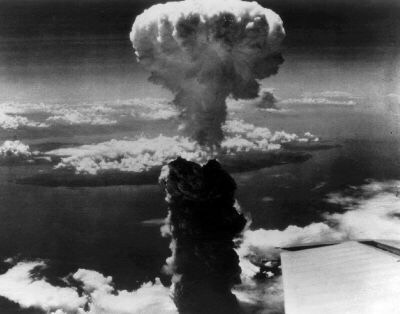
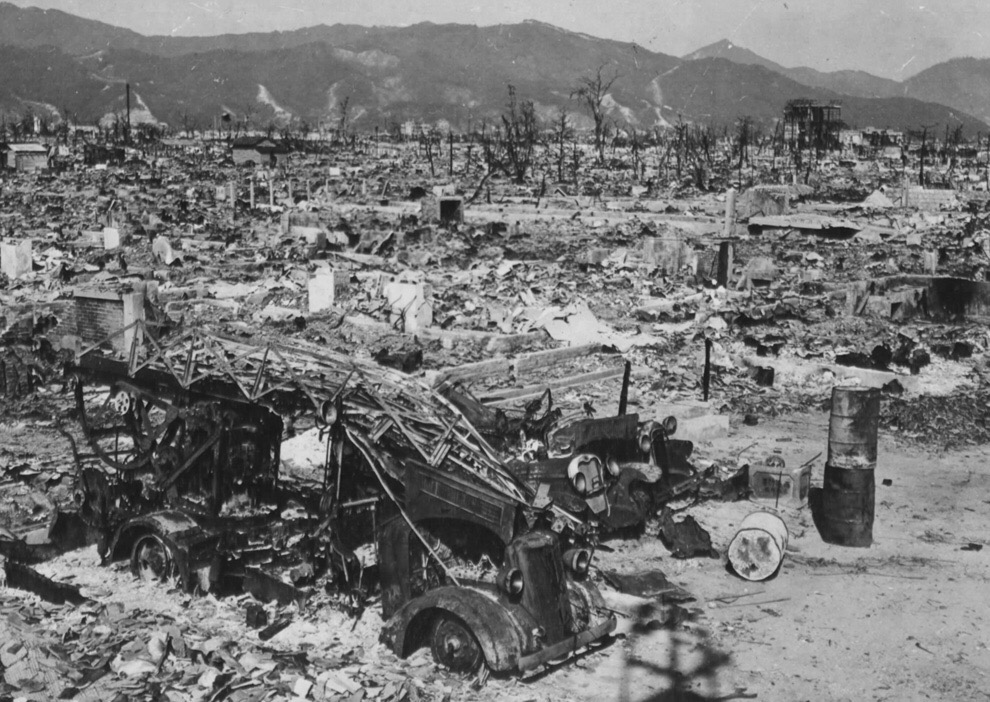
Seventy-three years ago the world changed. A remarkably destructive weapon was introduced in combat, a single bomb that annihilated the city of Hiroshima Japan. The effects were immediate, 70,000 to 80,000 people were killed, tens of thousands of others wounded, many of whom would suffer from the effects of radiation and radiation burns the rest of their lives. Within days a second bomb was dropped on Nagasaki with similar results, and Japan sued for peace. The Second World War was over and a new world was born, a world under the shadow of nuclear weapons.

The anniversary of that event today is something that all of us should ponder with great trepidation as the world seems to lurch towards a day when such a weapon will be used again. The question should not be one of mere military or tactical expediency, but must consider the moral dimension of the use of these weapons as well as the whole concept of total war.

In his book Hiroshima, John Hershey wrote:

“The crux of the matter is whether total war in its present form is justifiable, even when it serves a just purpose. Does it not have material and spiritual evil as its consequences which far exceed whatever good might result? When will our moralists give us an answer to this question?” 

His question is worth considering. It is no wonder that Robert Oppenheimer one of the members of the team that developed the bomb quoted a verse from the Bhagavad-Gita after he witnessed the test explosion “Trinity” on July 16th 1945: “Now, I am become Death, the destroyer of worlds.” 

Up until April of last year I spend the last three and a half years teaching the ethics of war to senior military officers at a major U.S. Military Staff College. One of the things that we do in the class is to have the officers do presentations on different historical, or potential ethical problems faced by national policy makers, military commanders and planners. The goal is to have these men and women dig deep and examine the issues, and think about the implications of what they will do when they go back out to serve as commanders, staff officers, advisors to civilian leaders and planners.

In each class that I taught, at least one student dealt with the use of the Atomic bombs.  Most were Air Force or Navy officers who have served with nuclear forces. Unlike the depiction in the classic movie Dr. Strangelove or other depictions that show officers in these forces as madmen, the fact is that I was always impressed with the thoughtfulness and introspective nature of these men and women. They sincerely wrestle with the implications of the use of these weapons, and many are critical of the use of them at Hiroshima and Nagasaki. It is comforting to me to know that at least in the U.S. military that there are many who can reflect and do try to look at things not just from a purely military standpoint. Of course since I know humanity I figure that there are others in our ranks who are not so reflective or sensitive to the moral implications of the use of these weapons, among whom is our current President. The fact that the President acts on impulse and seems to have no moral compass, strategic sense, or anything apart than what benefits him causes me to shudder, especially when he has to actually confront North Korea on their ICBM and nuclear programs, not to mention the use of weapons of mass destruction by a terrorist group. As Barbara Tuchman wrote: “Strong prejudices and an ill-informed mind are hazardous to government, and when combined with a position of power even more so.”

I am no stranger to what these weapons, as well as chemical and biological weapons can do. Thirty years ago when I was a young Army Medical Service Corps lieutenant I was trained as a Nuclear, Chemical and Biological Defense Officer. I learned the physical effects of exposure to these weapons, how many Rads of radiation a person could receive before they became sick and died. I learned what radiation exposure does to people at each stage. We trained with maps to chart fallout patterns, and the maps had the cities and towns that we lived in, this was Cold War Germany and yes both NATO and the Warsaw Pact expected that tactical nuclear weapons and chemical weapons would be used and we had to be able to operate in contaminated environments. We operated under the idea of Mutual Assured Destruction or MAD as a deterrent to war. It was chilling and made me realize that the use of these weapons today would be suicidal. When Chernobyl melted down we were in the fallout zone and were given instructions on what we could and could not do in order to minimize any possible exposure to radiation poisoning.

So when it comes to the first use of the Atomic bomb I am quite reflective. As a historian, military officer, chaplain and priest who has been trained on what these weapons can do I have a fairly unique perspective. Honestly, as a historian I can understand the reasons that President Truman ordered its use, and I can understand the objections of some of the bomb’s designers on why it should not be used. I’ve done the math and the estimates of casualties had there been an invasion of the Japanese home islands is in the millions, most of which would have been Japanese civilians.


My inner lawyer can argue either point well, that being said the manner in which it was used at Hiroshima and Nagasaki troubles me. Hiroshima did have military targets, but a big part of the choice was its location, surrounded by hills, which created a bowl that would focus the explosion and maximized its effect. Many of the larger military and industrial targets lay outside the kill zone. The designers and officers on the committee wanted to show the Japanese, as well as the world the destructive power of the weapon. Those who opposed its use hoped that it would convince the leaders of nations that war itself needed to be prevented. These men wrestled with the issue even as they prepared the first bombs for deployment against Japan. The recommendations of the committee can be found here:

http://www.atomicarchive.com/Docs/ManhattanProject/Interim.shtml
Of the 150 scientists who were part of the bomb’s design team only 15% recommended the military use without a demonstration to show the Japanese the destructive power of the bomb and a chance to end the war. The poll of the scientists can be found here:

http://www.atomicarchive.com/Docs/ManhattanProject/Poll.shtml
Leo Szilard wrote a letter to Edward Teller seeking his support in sending a petition to President Truman regarding his opposition to the use of the weapon based on purely moral considerations. Szilard wrote:

“However small the chance might be that our petition may influence the course of events, I personally feel that it would be a matter of importance if a large number of scientists who have worked in this field want clearly and unmistakably on record as to their opposition on moral grounds to the use of these bombs in the present phase of the war.

Many of us are inclined to say that individual Germans share the guilt for the acts which Germany committed during this war because they did not raise their voices in protest against those acts, Their defense that their protest would have been of no avail hardly seems acceptable even though these Germans could not have protested without running risks to life and liberty. We are in a position to raise our voices without incurring any such risks even though we might incur the displeasure of some of those who are at present in charge of controlling the work on “atomic power.”

The entire text of Szilard’s letter can be found here:

http://www.atomicarchive.com/Docs/ManhattanProject/SzilardTeller1.shtml
The two petitions of the scientists to the President are here, the second letter concludes with this recommendation:

“If after the war a situation is allowed to develop in the world which permits rival powers to be in uncontrolled possession of these new means of destruction, the cities of the United States as well as the cities of other nations will be continuous danger of sudden annihilation. All the resources of the United States, moral and material, may have to be mobilized to prevent the advent of such a world situation. Its prevention is at present the solemn responsibility of the United States–singled out by virtue of her lead in the field of atomic power.

The added material strength which this lead gives to the United States brings with it the obligation of restraint and if we were to violate this obligation our moral position would be weakened in the eyes of the world and in our own eyes. It would then be more difficult for us to live up to our responsibility of bringing the unloosened forces of destruction under control.

In view of the foregoing, we, the undersigned, respectfully petition: first, that you exercise your power as Commander-in-Chief to rule that the United States shall not resort to the use of atomic bombs in this war unless the terms which will be imposed upon Japan have been made public in detail and Japan knowing these terms has refused to surrender; second, that in such an event the question whether or not to use atomic bombs be decided by you in the light of the consideration presented in this petition as well as all the other moral responsibilities which are involved.”

http://www.atomicarchive.com/Docs/ManhattanProject/SzilardPetition.shtml

http://www.atomicarchive.com/Docs/ManhattanProject/Petition.shtml

Ralph Bard, Undersecretary of the Navy wrote to Secretary of War Stimson his opinion on July 17th 1945:

“Ever since I have been in touch with this program I have had a feeling that before the bomb is actually used against Japan that Japan should have some preliminary warning for say two or three days in advance of use. The position of the United States as a great humanitarian nation and the fair play attitude of our people generally is responsible in the main for this feeling.”

I think that those who debate the history of this need to look at the entire picture and read the letters, the documents and take into account everything. My hope is that leaders, policy makers, legislators and we the people continue to work to eliminate nuclear weapons. It is true that the nuclear stockpiles of the United States and Russia are significantly smaller than when the Cold War ended, but even so what remain are more than enough to extinguish human life on the planet. Add to these the Chinese, French, British, Indian, Pakistani and the hundreds of undeclared weapons of Israel the fact is that there remains the possibility that they could be used. Likewise there are nuclear programs in other nations, especially North Korea, which given enough time or believing them necessary could produce weapons. But the North Koreans are not alone, they could easily be joined by others including Iran and Saudi Arabia. Add to this the possibility of a terrorist group producing or acquiring a weapon the world is still a very dangerous place.

That is the world that we live in and the world in which policy makers, legislators and educated people who care about the world must attempt to make safe. If you asked me I would say outlaw them, but that will never happen. Edward Teller wrote Leon Szilard:

“First of all let me say that I have no hope of clearing my conscience. The things we are working on are so terrible that no amount of protesting or fiddling with politics will save our souls…. Our only hope is in getting the facts of our results before the people. This might help to convince everybody that the next war would be fatal. For this purpose actual combat use might even be the best thing…. But I feel that I should do the wrong thing if I tried to say how to tie the little toe of the ghost to the bottle from which we just helped it to escape…”

The ghost is out of the bottle, and nothing can ever get it back in. We can only hope and pray that reasonable people prevent any of these weapons from ever being used and that war itself would end.

Until tomorrow,

Peace

Padre Steve+

3 Comments

Filed under Foreign Policy, History, leadership, Military, national security, Political Commentary, war crimes, world war two in the pacific

When Conservatives Make Deals With Devils: Lessons from 1929 and 2016

Alfred Hugenberg (third from Right) reviews Nazi SA men in 1931

Friends of Padre Steve’s World,

Just a short thought for the day. I have been reading Joachim Fest’s biography of Adolf Hitler. Like so many books that I read it is a massive volume but despite that and the fact that it has been translated from the original German it reads very well. This is not always the case with books translated from German.

I came across a passage dealing with Hitler and the Nazi Party’s surprising election victories that propelled it to prominence among the parties of the German Right in 1929. It was a landslide in which the other major parties of the German Right and center were decimated in the Reichstag. Alfred Hugenberg, a highly successful businessman and publisher had become leader of the Deutschnationale Volkspartei (German Nationalist Peoples Party) DVNP decided to enter into an alliance with Hitler. Fest wrote:

In evaluating this episode we must not overlook the power-hungry blindness of the German nationalist conservatives. By parasitically seizing on the force and vitality of the Nazi movement, by uniting with the secretly despised but also admired upstart Hitler, they were trying to forestall German nationalist conservatism’s departure from the stage of history, when that departure had been long since decided.

The German conservatives had experienced a collapse much like the ossified leaders of Republican Party during the primaries of 2016 as Donald Trump and his followers swept on to claim the GOP nomination. Despite their comments about the untrustworthiness of Trump throughout the primaries they fell in line to support him, not because they thought he could become President but because they thought they could harness the power of the wave that thrust him to prominence. But they were as wrong as Hugenberg and the German conservatives in 1929. Trump ended up taking their party from them. Fest wrote of Hugenberg and the German conservatives:

Fascinated by the demogogic wildness of the Nazis, Hugenberg and the rest of the conservatives in the coalition stared at the tremendous wave they had set in motion. They encouraged it, repeatedly lent impetus to it, and in their smug faith in their natural leadership thought they were riding it when they had long since been swamped by it.

The German left would also underestimate Hitler like the American left did with Trump in the days leading up to the 2016 general election where despite losing the popular vote by a large margin Trump won the election based on narrow victories in key swing states. But that is a matter to be explored at another time.

The Republican leadership, especially Party Chairman Reince Priebus thought that they could control Trump and harness the energy of his followers but they have been proven wrong.

What will follow is still to be determined, but without the cynical cooperation and feckless non-resistance to Trump the GOP leadership under Priebus lost the party. The GOP is now the party of Trump, just as the German conservative movement was swallowed up by the Nazis after Hitler took power and every other conservative party voted itself out of existence even before Hitler outlawed other parties.

Hugenberg would be a party of Hitler’s first cabinet, just as Priebus would become Trump’s first Chief of Staff, and both soon found that they had been outmaneuvered and made fools of by the men and movements they thought that they could control. Others found themselves similarly outmaneuvered including Franz Von Papen, Oskar Von Hindenburg, and General Kurt Von Schleicher, the last would pay with his life for his mistake during the Night of the Long Knives.

Of course there are many more comparisons to be made, but for tonight it is enough to note that leaders of failing parties seldom remember that if you make a deal with a devil, that devil will almost always win. Both Hugenberg and Priebus demonstrate that fact.

Until tomorrow,

Peace,

Padre Steve+

5 Comments

Filed under History, leadership, nazi germany, News and current events, Political Commentary

Dealing With “Christian” Political Extremists: My Recent Experience

img_0535

Friends of Padre Steve’s World,

Last night I wrote about Attorney General Jeff Sessions and his newly formed Religious Tyranny Task Force. The goal of that task force is to make sure that white conservative Christians can impose their beliefs on other and suffer no recriminations from discriminating against Gays and others that they do not want to serve or care for, even if their religious rights trump the civil rights of others. It is perhaps one of the most incestuous and dangerous displays of marriage of the Church and the police power of the state in the history of the United States.

Likewise, last month I wrote an article about having been accused by a chapel congregation member of conduct unbecoming an officer and contempt towards the President of the United States. I wrote the article after I was cleared of the charges during the preliminary inquiry. But it left me with many questions about the people of my congregation; questions that I have been wrestling for the better part of the month.

Since I am the senior supervisory chaplain on my base and come from a tiny denomination of the Old Catholic tradition that is stuck in the middle between Roman Catholicism and Protestantism I am an odd fit. My denomination is orthodox in its theology of God and Christ but very much a part of the the understandings of the Protestant Social Gospel of the early 1900s, the social teachings that came out of the Roman Catholic Church during Vatican II, and the Civil Rights Movement. I am also informed by being a trained historian.  This includes having a strong understanding of influence of the early Baptists in the United States on religious liberty as it came to be written into the Bill of Rights. The Baptists of that period were highly persecuted, in Europe and in the North American colonies by state churches. As a result they were much more progressive and tolerant of the rights of all religious minorities and even non-believers.

These men included Roger Williams who founded the colony of Rhode Island as a colony with no state religion and Virginia Baptist John Leland who was the inspiration for James Madison drafting the Bill of Rights.

I do my best to support the congregation and my junior chaplains regardless of their theological beliefs or political viewpoints. As such I try to allow my junior chaplains the chance to do good by pastoring the congregation while I support by them substituting every four to six weeks so they can get a full weekend off once in a while. In fact my policy is that I will not police their sermon content or how they do ministry so long as they care about the people, are not abusive, do not violate the rights of others, or commit crimes. So if a congregation member were to complain to me about their sermon I would tell that congregant to talk to them and if they could not work it out to contact that chaplains church or religious organization. I cannot police the beliefs

Since the accusations were leveled and I was told that I was exonerated I have been thinking of how next to approach the congregation, and today I got a copy of the investigation. I was heartened by some of the statements given by members of the congregation, while others troubled me. In the investigation was a copy of the letter the complainant sent to my commander. The difference between his letter and even the even the most prejudiced other congregant was amazing for even those somewhat critical of the sermon admitted their prejudices and gave me some benefit of doubt. In fact his letter was over the top and in opposition to what everyone of the others said that the investigating officer decided not to get a statement from him. But I could never believe that someone could make up such venomous lies in an attempt to destroy my name, reputation and career in such a despicable manner.

My review of the investigation and the statements has made me even more concerned about going before the congregation again. Knowing the attitudes of many it feels like by doing so I will be exposing myself to other charges from people who are little different than the Gestapo, Stasi, and KGB informants who routinely denounced priests and pastors. Sadly, with the Justice Department now behind them such people will have free reign to denounce people simply based on their often quite shallow and narrow theological understandings which are far more informed by their right wing politics than by Scripture, Tradition, or Reason.

So in the next few weeks I have a decision to make on how I will deal with this. I have a few ideas and I discuss them with my Protestant pastors who are much more conservative than me are incredibly supportive. I also am thinking and praying about what to do. Whatever I do I will script my remarks and have at least one of my other chaplains in attendance. I may even record it because I don’t want to give any of these Trump cultists to make up anything that cannot be refuted.

The sad thing is that I even have to be concerned about this. I never in a million years could have imagined being denounced by retired military officer for my sermon content. That gives me pause and frankly makes me very concerned. The experience has embittered me.  Don’t get me wrong. There are a few people in the congregation who have stood behind me and encouraged me, but most have either turned their backs on me or remained bystanders.

So I ask for your prayers, thoughts, encouragement, or wisdom in what I should do next. I am struggling with anger while trying to love and forgive the people who hurt me that God still loves and who Christ died to save.

However, there is one thing that I do know. It is something that both Dr. Martin Luther King Jr. and Dietrich Bonhoeffer understood. Dr. King said: “Our lives begin to end the day we become silent about things that matter.”  While Bonhoeffer wrote: “Silence in the face of evil is itself evil: God will not hold us guiltless. Not to speak is to speak. Not to act is to act.” 

So I know I cannot remain silent because what is happening in the church in the United States not to mention the country is a manifestation of evil.

Until tomorrow,

Peace,

Padre Steve+


21 Comments

Filed under christian life, civil rights, culture, ethics, faith, History, leadership, LGBT issues, Military, ministry, nazi germany, Political Commentary, Religion, US Navy