Category Archives: Military

Thoughts on An Anniversary of 38 Years of Military Service

Friends of Padre Steve’s World,

Sorry I haven’t posted for the last couple of days but I have been both tired and busy. However, I needed the break. We had major damage to a 60-70 year old Maple tree in in our backyard which had to be repaired following a microburst storm on Monday. Thankfully, a realtor friend of ours recommended someone who would do a professional job at a decent price.

Likewise, I haven’t slept well because my new CPAP mask has irritated my face and led to a bacterial infection that I just finished a course of antibiotics to treat.

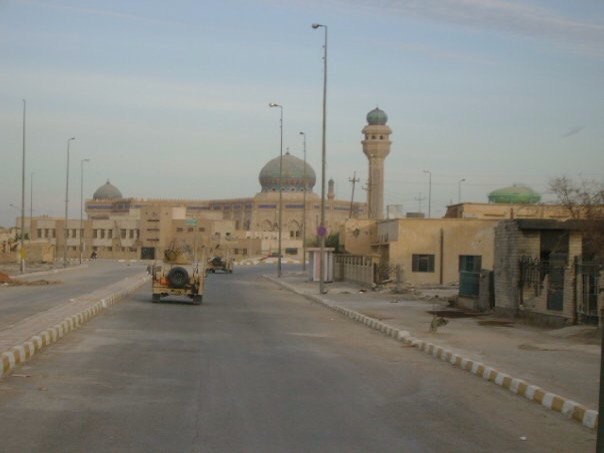
That being said today is the 38th anniversary of my enlistment in the California Army National Guard, which with my simultaneous enrollment in the UCLA Army ROTC program began my military career. That career has spanned 38 years without a break in service, in the California National Guard, the active duty Army, the Texas and Virginia National Guard, the Army Reserve, activated and mobilized service in the Reserve and finally the last 20+ years in the Navy. In that capacity I served seven years with the Marine Corps, and four years in Joint assignments.

In the words of Jerry Garcia and the Grateful Dead, “what a long strange trip it’s been.” 

Now, in seven months time I will be retiring from the Navy. This too is a stressful time of transition, not just for me but my wife Judy as we try to get our current home ready to sell and find a new home, without all the steps in our townhome.

However, it will be good to finally retire from military service. I’ve done my time in peace and war, and screwed up my body, mind and spirit in the process. At the same time I am glad that I will be done serving a potentially criminal and authoritarian regime. Like the German General Ludwig Beck realized when it was too late:

“It is a lack of character and insight, when a soldier in high command sees his duty and mission only in the context of his military orders without realizing that the highest responsibility is to the people of his country.” 

I remain committed to my oath and the Constitution. I won’t surrender that. It is a matter of honor.

Until tomorrow,

Peace,

Padre Steve+


3 Comments

Filed under leadership, Military, Political Commentary, Tour in Iraq, us army, US Marine Corps, US Navy

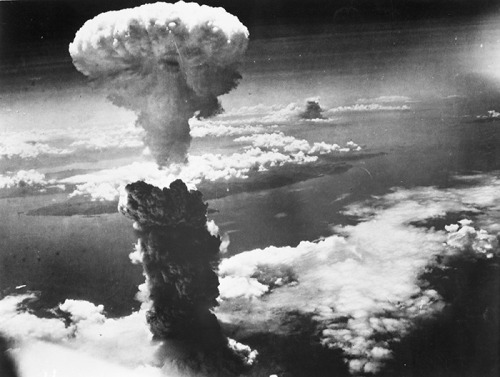
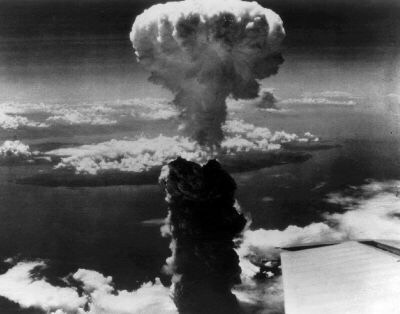
“We Had Adopted an Ethical Standard Common to the Barbarians of the Dark Ages” the Atomic Bombing Of Nagasaki

7A_Nagasaki_Bomb_Cloud

Friends of Padre Steve’s World,

August 9th was the anniversary of the second and hopefully last nuclear weapon used in war, the bomb called the Fat Man which was dropped on the Japanese city of Nagasaki. Three days before the city of Hiroshima had been destroyed by the first atomic bomb used in combat. It is a decision that forever changed the consequences of waging total war. It was a decision that still haunts humanity and which policy makers and military strategists wrestle with in an age where at nine nations have deployable nuclear weapons and a number of other nations are developing or trying to obtain.

It is also the subject that is wrestled with by students of major military staff colleges and universities. I know, I taught the ethics elective at the Joint Forces Staff College. In each of our classes at least one brave officer did a presentation detailing the ethical issues involved the decision and the implications today. For those not familiar with the military the truth is that most officers are quite circumspect and much more grown up about the subject than the average citizen, politician, or even the current President or National Security Advisor. But then there are probably some some who would be like Colonel Paul Tibbets who flew the B-29 bomber Enola Gay which dropped said these words in an interview in 1989:

“I made up my mind then that the morality of dropping that bomb was not my business. I was instructed to perform a military mission to drop the bomb. That was the thing that I was going to do the best of my ability. Morality, there is no such thing in warfare. I don’t care whether you are dropping atom bombs, or 100-pound bombs, or shooting a rifle. You have got to leave the moral issue out of it.”

Tibbets, like Truman justified his position based on his view of the bestiality of the crimes committed by the Japanese during the war. It was quite a common point of view. Both views are troubling considering the power of the weapons being used. They almost sound the like excuses of German military officers and political officials on trial at Nuremberg between 1945 and 1948.

It was a decision made by President Truman one reason was purely pragmatic. For Truman, the “The buck stops here” was more than a motto, it was a way of life. He took responsibility for his action, but there is a certain banality in the way he wrote about them in his memoirs.

The atomic bomb was a wonder weapon that promised to end the war with a minimum of American casualties. Truman noted in 1952:

“I gave careful thought to what my advisors had counseled. I wanted to weigh all the possibilities and implications… General Marshall said in Potsdam that if the bomb worked we would save a quarter of a million American lives and probably save millions of Japanese… I did not like the weapon… but I had no qualms if in the long run millions of lives could be saved.”

But Truman’s decision was also based on the factor of revenge and viewing the Japanese as animals.  In response to a telegram from the Reverend Samuel McCrea Cavert, the General Secretary of the Federal Council of The Churches of Christ in America, the predecessor of the National Council of Churches. Reverend Cavert was a Presbyterian minister. Cavert’s telegram stated:

“Many Christians deeply disturbed over use of atomic bombs against Japanese cities because of their necessarily indiscriminate destructive efforts and because their use sets extremely dangerous precedent for future of mankind. Bishop Oxnam, President of the Council, and John Foster Dules, Chairman of its Commission on a just and durable peace are preparing statement for probable release tomorrow urging that atomic bombs be regarded as trust for humanity and that Japanese nation be given genuine opportunity and time to verify facts about new bomb and to accept surrender terms. Respectfully urge that ample opportunity be given Japan to reconsider ultimatum before any further devastation by atomic bomb is visited upon her people.”

Truman’s response to the telegram revealed the darker side of his decision to use the bomb.

My dear Mr. Cavert:

I appreciated very much your telegram of August ninth.

Nobody is more disturbed over the use of Atomic bombs than I am but I was greatly disturbed over the unwarranted attack by the Japanese on Pearl Harbor and their murder of our prisoners of war. The only language they seem to understand is the one we have been using to bombard them.

When you have to deal with a beast you have to treat him as a beast. It is most regrettable but nevertheless true.

The President’s senior military advisors were certainly of a different point of view about the use of the weapons. Admiral William Leahy who served as Chief of Staff to the Commander in Chief and was the senior Naval Officer in service disagreed and told Stimson of his misgivings about using the atomic bomb at this particular point in the war. In his memoirs which were released in 1949 he wrote:

“It is my opinion that the use of this barbarous weapon at Hiroshima and Nagasaki was of no material assistance in our war against Japan. The Japanese were already defeated and ready to surrender because of the effective sea blockade and the successful bombing with conventional weapons… My own feeling was that in being the first to use it, we had adopted an ethical standard common to the barbarians of the Dark Ages. I was not taught to make wars in that fashion, and that wars cannot be won by destroying women and children.”

General Dwight D. Eisenhower disagreed with the use of the atomic bomb and recorded his interaction with Stimson:

“In 1945 Secretary of War Stimson, visiting my headquarters in Germany, informed me that our government was preparing to drop an atomic bomb on Japan. I was one of those who felt that there were a number of cogent reasons to question the wisdom of such an act. During his recitation of the relevant facts, I had been conscious of a feeling of depression and so I voiced to him my grave misgivings, first on the basis of my belief that Japan was already defeated and that dropping the bomb was completely unnecessary, and secondly because I thought that our country should avoid shocking world opinion by the use of a weapon whose employment was, I thought, no longer mandatory as a measure to save American lives.”

Stimson did not agree with the Eisenhower, he would later recall words that echoed those of Truman in 1952, not his words to Revered Cavert immediately after the event.

“My chief purpose was to end the war in victory with the least possible cost in the lives of the men in the armies which I had helped to raise. In the light of the alternatives which, on a fair estimate, were open to us I believe that no man, in our position and subject to our responsibilities, holding in his hands a weapon of such possibilities for accomplishing this purpose and saving those lives, could have failed to use it and afterwards looked his countrymen in the face.”

Admiral William Leahy who served as Chief of Staff to the Commander in Chief and was the senior Naval Officer in service disagreed and told Stimson of his misgivings about using the atomic bomb at this particular point in the war. In his memoirs which were released in 1949 he wrote:

“Once it had been tested, President Truman faced the decision as to whether to use it. He did not like the idea, but he was persuaded that it would shorten the war against Japan and save American lives. It is my opinion that the use of this barbarous weapon at Hiroshima and Nagasaki was of no material assistance in our war against Japan. The Japanese were already defeated and ready to surrender because of the effective sea blockade and the successful bombing with conventional weapons… My own feeling was that in being the first to use it, we had adopted an ethical standard common to the barbarians of the Dark Ages. I was not taught to make wars in that fashion, and that wars cannot be won by destroying women and children.”

General Hap Arnold, the Commander of the Army Air Forces noted: “It always appeared to us that, atomic bomb or no atomic bomb, the Japanese were already on the verge of collapse.” 

Those who questioned the decision would be vindicated by the U.S. Strategic Bombing Survey study published in 1946. That study laid out the facts in stark terms:

“Certainly prior to 31 December 1945, and in all probability prior to 1 November 1945, Japan would have surrendered even if the atomic bombs had not been dropped, even if Russia had not entered the war, and even if no invasion had been planned or contemplated.” 

Later, Dr. J. Samuel Walker, the Chief Historian of the Nuclear Regulatory Commission wrote:

“Careful scholarly treatment of the records and manuscripts opened over the past few years has greatly enhanced our understanding of why Truman administration used atomic weapons against Japan. Experts continue to disagree on some issues, but critical questions have been answered. The consensus among scholars is the that the bomb was not needed to avoid an invasion of Japan. It is clear that alternatives to the bomb existed and that Truman and his advisers knew it.” 

Thus the moral question remains and perhaps is best answered by the words of Dr. Leó Szilárd who first proposed building atomic weapons. In 1960 he noted to U.S. News and World Reports:

Suppose Germany had developed two bombs before we had any bombs. And suppose Germany had dropped one bomb, say, on Rochester and the other on Buffalo, and then having run out of bombs she would have lost the war. Can anyone doubt that we would then have defined the dropping of atomic bombs on cities as a war crime, and that we would have sentenced the Germans who were guilty of this crime to death at Nuremberg and hanged them? 

But, again, don’t misunderstand me. The only conclusion we can draw is that governments acting in a crisis are guided by questions of expediency, and moral considerations are given very little weight, and that America is no different from any other nation in this respect.

I think now some 74 years later we need to ponder that question before it can happen again. India and Pakistan are moving closer to nuclear war, Russia, China, North Korea, and yes even the United States are modernizing weapons and delivery systems. Admiral Leahy, General Eisenhower, and Dr. Szilard turned out to be right. As did General Omar Bradley who said:

“Ours is a world of nuclear giants and ethical infants. We know more about war than we know about peace, more about killing than we know about living. If we continue to develop our technology without wisdom or prudence, our servant may prove to be our executioner.”

Eisenhower, Leahy, Bradley, and Szilard were correct. The weapons have grown more deadly, the delivery systems, more accurate with greater range, speed, and maneuverability, and even their miniaturization, make their use more likely than not. If they are used it will be the beginning of the end.

Until Tomorrow,

Peace

Padre Steve+

3 Comments

Filed under ethics, Foreign Policy, History, leadership, Military, US Army Air Corps, war crimes, world war two in the pacific

When Christians Break Bad: a Review Of “When Christians Break Bad: Letters from the Insane, Inane, and Profane” by Bonnie Weinstein


Friends Of Padre Steve’s World,

I had the chance to read and review the new book by Bonnie Weinstein entitled “When Christians Break Bad: Letters from the Insane, Inane, and Profane.” 

Bonnie is the wife of my friend, Mikey Weinstein, the founder and director of the  Military Religious Freedom Foundation. Last year Mikey and members of his legal team helped clear me of false charges of a member of my chapel congregation, charges, that if they were true could have ended up in me being tried by Court Martial. The man accused me of in a sermon of comparing President Trump to Hitler and The fact that the charges were untrue did not mean that the Navy was not obligated to investigate. I knew that I needed a good and experienced lawyer and I reached out to Mikey. The investigating officer did a thorough investigation and interviewed close to half of the congregation present that day. Mikey’s lawyer was stellar and the next day I was informed by the investigating officer that I had been exonerated. I later obtained a copy of the investigation from our legal officer. It was quite revealing as far as the political leanings of my congregation. For many, even those who defended me, it was not an issue of theology, or Biblical teaching, it was the fact that the subject material conflicted with their political ideology. But I digress, on to the book.

The book will be available on Amazon tomorrow. Mikey sent me a pre-publication version of the book. The first chapter should be mandatory reading for every person who actually cares about the First Amendment as well true religious liberty. Most of the rest of the book paints a terrible picture of the state of much of American Christianity. But the first chapter provides a truthful and transparent view of what our founders believed about established religions.

In each of the subsequent chapters some of the most hateful, vengeance ridden, and ignorant letters and emails from self identified Christians are shown in gory detail, as well as the responses of various MRFF staff and volunteers. The sad thing is that I used to live in that intolerant, theologically ignorant, and political driven culture. The letters and emails don’t surprise me, they are all too much like comments I have received on this site, and what I have experienced on social media when I criticized those that promote Christian Theocracy. I won’t give them the pleasure of repeating their comment, but invite you to read the book.

I remember the days when I took what they said about Mikey and MRFF as gospel. Supposedly he and MRFF were attacking the foundations of American religious freedom, especially that of Christians. However, 96% of the people Mikey and MRFF represent are Christians, and far from being an atheist, as he is often accused, Mikey is a practicing Jew. He is an also Air Force Veteran, a graduate of the Air Force Academy, whose father before him served in the Air Force with distinction as an officer.

Mikey, Bonnie, and the MRFF are more committed to the religious liberties of all Americans than are the loudest proponents of Christian Religious Freedom, which truthfully is a front for a modern version of medieval and Reformation era Christian Theocracy. The kind of religious freedom that brought about the Crusades, the trials of heretics, and the great religious wars that engulfed Europe for nearly a century and a half and led to nations with State Churches that many of our founders fled.

I am sure that Mikey and Bonnie would agree with the words of the great Virginia Baptist and friend of Thomas Jefferson and James Madison, the authors of the Virginia Declaration of Religious Liberty, and the First Amendment:

“Is conformity of sentiments in matters of religion essential to the happiness of civil government? Not at all. Government has no more to do with the religious opinions of men than it has with the principles of mathematics. Let every man speak freely without fear–maintain the principles that he believes–worship according to his own faith, either one God, three Gods, no God, or twenty Gods; and let government protect him in so doing, i.e., see that he meets with no personal abuse or loss of property for his religious opinions. Instead of discouraging him with proscriptions, fines, confiscation or death, let him be encouraged, as a free man, to bring forth his arguments and maintain his points with all boldness; then if his doctrine is false it will be confuted, and if it is true (though ever so novel) let others credit it. When every man has this liberty what can he wish for more? A liberal man asks for nothing more of government.”

Likewise, the great American commentator, Civil War Officer, and atheist when it wasn’t popular, Robert Ingersoll, noted: “This is my doctrine: Give every other human being every right you claim for yourself.”  

This is exactly the kind of freedom that Mikey, Bonnie, and the rest of the MRFF team fight for, and unlike their legal opponents such as the ACLJ and nearly every other proponent of theocracy, they don’t have deep pockets.

Buy the book, it is both educational, and shocking in terms of how many conservative Christians view the role of government. Conservative Scion Barry Goldwater told John Dean:

“Mark my word, if and when these preachers get control of the [Republican] party, and they’re sure trying to do so, it’s going to be a terrible damn problem. Frankly, these people frighten me. Politics and governing demand compromise. But these Christians believe they are acting in the name of God, so they can’t and won’t compromise. I know, I’ve tried to deal with them.” November, 1994, in John Dean, Conservatives Without Conscience.

That has happened and they have taken the most Un-Christian President who has ever lived as their idol.

Until tomorrow,

Peace

Padre Steve+

1 Comment

Filed under faith, History, laws and legislation, Loose thoughts and musings, Military, ministry

Recovering: Calmer but Still Anxious, yet Determined

Friends of Padre Steve’s World,

Today has been a day of recovery from the physical and emotional stress of being run off the road last week. Despite having dealt with the effects of PTSD for almost a decade and pretty well versed in what happens in the brain and body during a traumatic event, but it has been a long time since I have actually been through something this traumatic.

It’s funny, when it happened I was pretty much pumped up on norepinephrine and cortisol. They control the  fight or flight response, and norepinephrine is similar to adrenaline. When I pulled my damaged car into the grass median I didn’t have anyone to fight. So the initial rush wore off and my anxiety and fear began to build. Since I went over that yesterday, I’ll move on.

Judy was a tower of strength to me over the weekend. She understood and even this morning was willing to take me to early fat boy PT, then to the Naval Medical Center for my other appointments and the pharmacy. I thanked her but said I needed to do it on my own. I was nervous on the road, but extra careful. I gave myself lots of time, kept good following distances, and kept a sharp eye out.

My early morning PT was good for me, as was the aquatic physical therapy. I think they helped release some endorphins, which combined with some time in the sauna calmed me down. Of course I had to wait an ungodly amount of time at the medical center pharmacy for my antidepressant prescription, but such is life. But, I was able to get my paperwork to the orthopedist so he can approve me to take the Physical Readiness Test this fall.

The past two PRT cycles after the fall that injured my knees, ankles, and hip, and has resulted in so much pain and inconvenience as I tried to recover, I wasn’t cleared to participate. The injuries, the failed treatments, and failed meniscus surgery left me unable to physically do much, so I gained weight and got depressed because I saw no hope in sight. I could only walk with the aid of crutches or a cane for months. Of course I gained weight and came in over my maxim body fat allowance.

Since then things have changed. I was switched to aquatic physical therapy and the orthopedics Department Head made me his patient. Despite the injuries to my knees, I am not yet a candidate for knee replacement, so he decided a last ditch effort to relieve my pain, which had been a consistent 7-10 on the pain scale for months. He decided to repeat the gel injections in both knees before trying any other surgeries. This time they worked and soon I was walking relatively normally without the aid of crutches or canes, and the pain level went down to the 2-3 range. I do a lot of walking and swimming and since the first week of June have lost about 17 pounds. My goal is to lose another 10-15 pounds by the 15th of October. I am now up to walking, on a good day, 8-10 miles. I hope  by eating nothing but soup, salad, fruit, and low carb/calorie yogurt over the next week that I meet my allowed body fat allowance by next Monday, on the next “fat boy” weigh in. I think I need to lose about 5 pounds to make it. That won’t stop me from working to lose all I need for my last official weigh in before retirement. If I don’t succeed, under the revised regulations it could screw up my retirement. I won’t let that happen, even if I die in the attempt.

So until tomorrow I leave you with less anxiety, more determination, and a desire to kick ass and take names. I’ll start catching up with current events tonight and tomorrow.

Until then,

Peace

Padre Steve+


Leave a comment

Filed under healthcare, Loose thoughts and musings, Military, US Navy

Emotional and Physical Recovery from a Traumatic Event

Pearls Before Swine Comic Strip for August 07, 2017

Comic, Pearls Before Swine, (c) 2017 by Stephan Pastis

Friends of Padre Steve’s World,

On Thursday afternoon my car was run off the road by an inattentive driver with a very loud exhaust system.

I honestly thought I would be better the next day, but late in the afternoon when Judy took me to get the car, I got in the driver seat and I felt sick to my stomach and was trembling. I got the car home and she drove us to Gordon Biersch where we had a nice night.

I didn’t sleep well, lots of nightmares and I didn’t leave bed, except to let the dogs out until about 1 PM. I knew I had to get a few groceries at Kroger and Wegmans so I made the trip. Until I got to the Kroger parking lot the trip went well. Then it seemed that every old lady was trying to crash by cutting me off or taking up most of a lane. I was doing into panic mode, but took a deep breath, regathered myself and instead of going directly to Wegmans I stopped by Gordon Biersch for a one and done to calm the nerves. Since I no longer take a specific anti anxiety medication, I stopped taking the minimal PRN dosage of Xanax a few years back because I was experiencing less anxiety.

The crash has re-triggered that anxiety, something I will talk to with my shrink on Tuesday and my psychiatric medicine manager Wednesday. But yesterday I needed to calm down. I texted Judy and posted my situation on Facebook. A good friend came over and spent some time with me at the bar. I then did a take out order since Judy told me that. Wegmans could wait.

Judy reminded me of the chemical chain reaction that trauma sends through the body, and how it takes time for that to play out. I am lucky to have her.

This morning we planned to go out to breakfast, but since neither of us were hungry we stayed in bed with the dogs. They have been very comforting, especially my girl Izzy. Judy is about to drive us to Biersch for dinner so we can get out of the house.

Tomorrow I am up really early for fat boy PT, then I have to drive to the Naval Medical Center for aquatic physical therapy and to get my antidepressant refilled  since I have gone without it 5 days and don’t want to crash and get suicidal. Then I will go in to work.

About the cartoon. That is how I have felt all weekend. The cartoon is Pearls Before Swine by Stephan Pastis. This particular cartoon ran in August of 2017. His comics can be accessed at GoComics.com, I hope that since I didn’t ask permission to run it that you will flood his site with hits and buy his books.

So until tomorrow, and hopefully better times,

Peace,

Padre Steve+


3 Comments

Filed under Loose thoughts and musings, mental health, Military, PTSD

PTSD: Anxiety, Fear, and Things That Lurk on the Road

Friends Of Padre Steve’s World,

Back in August of 1978 when I met and fell hopelessly head over heals in love with my wife Judy, I had no idea how badly she had been damaged by the actions of her parents, siblings, and one particular grandmother. Between physical, emotional violence, neglect, and abuse that continued long after we were married in 1983, she showed herself to be a rock for me over the past couple of days.

On Thursday night I wrote about it thinking that by Friday I would be doing better. I got the car back late Friday afternoon. Judy took me to get it and take it home before driving me out to dinner. This morning I didn’t want to get out of bed. I have had trouble sleeping, but bed feels safe.

That being said I had to go to a grocery store to pick up a few things and see if I could get a refill on my antidepressant. I couldn’t get the refill today because they had to transfer it from the Naval Medical Center. Since I have to go there on Monday anyway, I go without. But I planned on going to another grocery store, a Wegmans, for the very best strawberries, cantaloupe, dark chocolate almond bark, and Paulaner Beer from Munich. But as I was trying to leave Kroger it seamed that every insane old woman in the parking lot was trying to crash into my car. No kidding, there were at least three times in the parking lot that old ladies locked eyes with me and tried to force me into crashes with parked cars by purposely restricting my ability to maneuver. To avoid each, I stopped and yielded.

On the way to Wegmans I stopped by Gordon Biersch for a one and done beer to calm my nerves. I posted my situation on Facebook and let Judy know. A friend came by to check on me. Judy told me to take the time to regather my nerves. I then brought us take out from there on my way home.

I think that it’s important to have someone who understands your anxieties, fears, and weaknesses. I haven’t felt this vulnerable, fearful, and anxious, since my last Commodore at EOD Group Two In 2008, took his life in January 2014. Tomorrow, I plan to take Judy out to breakfast and make the trip to Wegmans I had planned for today. Monday, it is back to fat boy PT at the base, followed by aquatic physical therapy at the Naval Medical Center, after which I will try to get my antidepressant refilled. I’ll see my shrink on Tuesday, and my psych drug doctor Wednesday. The rest of the week will between split between work, physical therapy, and medical appointments.

For the moment I am not okay. I am so frightened, anxious, and fearful that I don’t want to go out or get in my car. I love doing both, and for most of my life driving, and traveling has been relaxing. I don’t know when or if it will be so again, most of that is residue from convoys in Iraq. However, over a decade after I came home all it took to throw me back into that emotional morass, was an incident precipitated by someone who probably never noticed what happened on Thursday.

Pray for me a sinner,

Peace,

Padre Steve+


5 Comments

Filed under mental health, Military, PTSD, Tour in Iraq

The PTSD Startle Response: Never far from the Surface

Friends Of Padre Steve’s World,

PTSD is an unwanted gift that keeps giving. One of its many manifestations is a startle response. My wife Judy can tell you about them, and it took me many years to understand how inadvertent and programmed they are, she’s had them for decades, me just since returning from Iraq in 2008. Until I started dealing with my shit, I failed to understand hers and many times when she would startle and I wasn’t very sympathetic. She has dealt with childhood PTSD for a lot longer than I have combat PTSD, and even after I came back from Iraq I didn’t understand how deep the trauma she experienced still affected her.

I remain hyper vigilant, have terrible nightmares and night terrors, when I go out somewhere I always stay aware of my circumstances, but it has been a few years since I had something happen like today. I was on my way home from work at the beginning of rush hour and and was about a mile or so off base when a large pickup truck with one of those noice enhanced exhaust systems roared up close alongside on the right lane. The noise caused me to look over my shoulder and I caught the vision of the truck, just big and dark, speeding past me. I went into my automatic response, I swerved to avoid a possible collision, entered the edge of the grass on the median and then hit a curb in a turn lane. The impact blew out the tires on the left side of my car. I didn’t try to keep driving and slowly pulled into the grass of the median and turned on my emergency flashers.

The interesting thing was that hundreds of cars passed me with none stopping to offer assistance until a female Virginia Beach Police officer coming from the opposite direction stopped to help. She got me a tow truck and the car will be in the shop until tomorrow afternoon. I am going to let my insurance company, USAA, know what happened in the morning.

Of course I have no positive identification of the pickup truck and he probably meant no harm, just gunning his engine to get home quicker. The fact that the loudness of his exhaust system and noise enhanced muffler startled me is irrelevant. That’s not a crime. But what surprised me is that nobody but a police officer offered to help. I couldn’t do that. I paid for the tow to a tire store that I do business with and walked to meet Judy at a restaurant where I had here waiting in case I needed a ride.

I have nothing but praise for the Virginia Beach Police officer and the tow service. I also thank all of my friends who have contacted me on social media, and for Judy who stayed in touch with me until she was sure that I was safe. I just knew that the location of the incident wasn’t conducive to her traveling to retrieve me.

Whatever happens next I am glad that I am okay and that apart from some money that it won’t cost us anything. I am safe and have a new appreciation for Judy’s startle reflex.

So until tomorrow,

Peace,

Padre Steve+


Leave a comment

Filed under mental health, Military, PTSD, Tour in Iraq

The Battle of Savo Island and Threats to the U.S. Navy Today

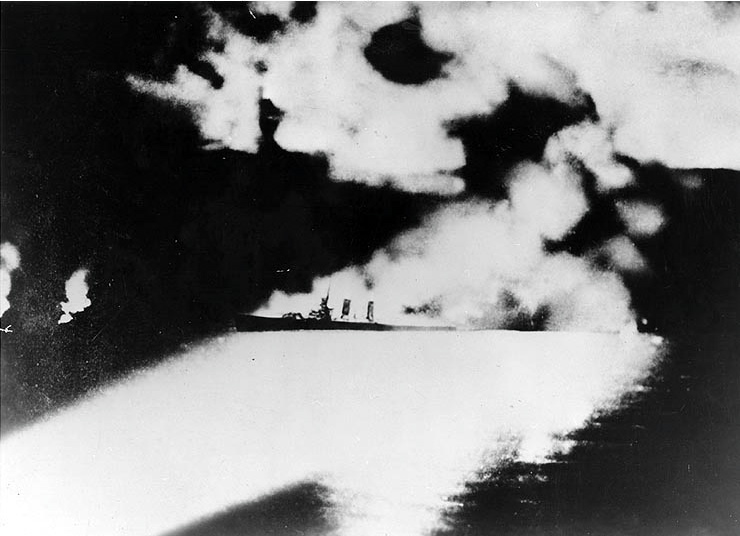
USS_Quincy_CA-39_savo

                         USS Quincy under Attack off Savo Island 

Friends of Padre Steve’s World,

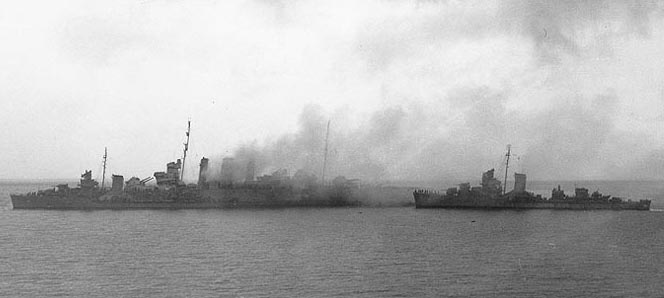
Tonight I am going back to my World War II vault and reposting an older article about the Battle Of Savo Island off Guadalcanal. It was the most lopsided defeat in modern American Naval history. It happened a long time ago and in an age where the United States Navy has not lost a ship in combat, other to mines since August 6th 1945, we forget to remember that should a war break out with a near-peer competitor, like the Chinese Communists or the Russians in waterers where they can gain local superiority, or even regional powers such as Iran which could use asymmetric means of large numbers of small missile equipped ships and attack boats, costal submarines, and land based anti-ship missiles in “swarm attacks” to overwhelm technologically superior American ships in confined waters. We have come close to losing major ships, the cruiser USS Princeton and Helicopter Carrier USS Tripoli, to very primitive moored mines during the First Gulf War, the USS Ruben James to a mine during the tanker wars, and the USS Stark which was hit by Iraqi Exocet anti-ship missiles in 1987. Likewise we have come close to losing the Guided Missile destroyers USS Cole (Terrorist attack), USS John S. McCain and USS Fitzgerald (avoidable collisions with merchant ships). 

We have been lucky. We won’t be as lucky in a real live shootout today. Ships will be lost, damaged, and sailors will die. Compounding the problem for the United States is that years of focus on Iraq and Afghanistan, failed experiments with reducing crew size (smart-ship), reductions in numbers of ships and sailors to satisfy the budgets needs to the unnecessary invasion of Iraq, and the stress put on remaining ships and aircraft have worn us down. Readiness rates remain down, and we no longer have the shipbuilding and repair facilities to replace losses and repair damaged ships, especially in a war with China. 

That is why instead of commenting on today’s news I write about the worst defeat suffered by the U.S. Navy in the modern era, which I label from World War II to the present. 

Until tomorrow,

Peace,

Padre Steve+ 

On August 8th 1942 the U.S. Task Force supporting the invasion of Guadalcanal was tired. The crews of the ships had been in continuous combat operations conducting naval gunfire support missions, fending off numerous Japanese air attacks and guarding against submarine attacks for two days. The force commanded by Admiral Richmond K. Turner was still unloading materials, equipment and supplies needed by the men of the 1st Marine Division who they had put ashore on the morning of the seventh.

On the afternoon of the eighth Turner was informed by Admiral Frank “Jack” Fletcher that he was pulling his carrier task force out of action. Fletcher alleged that he did not have enough fighter aircraft (79 remaining of an original 98) and as low on fuel. The carriers had only been in action 36 hours and Fletcher’s reasons for withdraw were flimsy. Fletcher pulled out and left Turner and his subordinate commanders the responsibility of remaining in the area without air support with the transports still unloaded, and full of badly needed supplies and equipment.

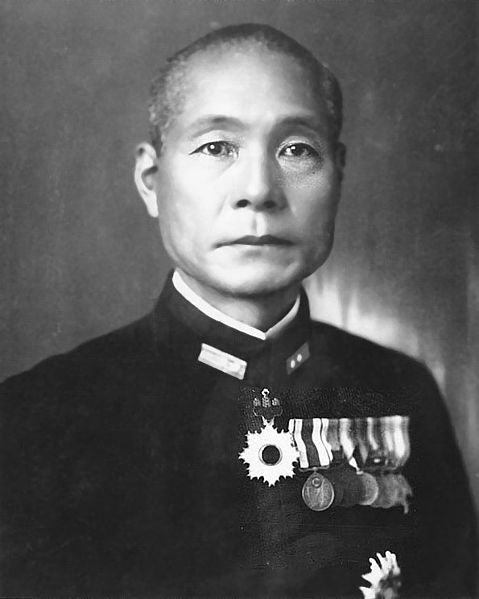
Gunichi_Mikawa

                                          Admiral Gunichi Mikawa

As the American drama played out, the Japanese moved forces into position to strike the Americans. Admiral Gunichi Mikawa commander of the 8th Fleet and Outer South Seas Force based at Rabaul New Britain quickly assembled a force of 6 heavy cruisers, the 14,000 ton Atago Class Chokai, and the four smaller ships of the Kako Class, the Aoba, Kako, Kinugasa and Furutaka, the light cruisers Yubari and Tenryu and the destroyer Yunagi. Mikawa raised his flag aboard Chokai and the force sped down “the slot” which ran the length of the of the Solomon’s chain mid day on the seventh.

The Americans had warning of their coming. The first sighting was by B-17s before the Japanese forces had reached Rabaul. The second was the elderly U.S. Navy submarine S-38 at 2000 on the 7th when they were 550 miles away not far from Rabaul. This report was discounted because it would not be unusual to find a number of fleet units steaming near a major naval base and fleet headquarters. The last which should have alerted the allies was a sighting by a Royal Australian Air Force patrol aircraft on the morning of the 8th. However the pilot did not report the sighting until he returned from his mission returned to his base and had his tea. The eight hour delay in reporting the information as well as errors in it which reported 2 submarine tenders as part of the force lulled the Allied forces into believing that the Japanese were setting up a seaplane base and posed no threat to the invasion forces. It was a fatal error of reporting and judgment by the pilot.

USS_Astoria_(CA-34)_off_Guadalcanal_1942

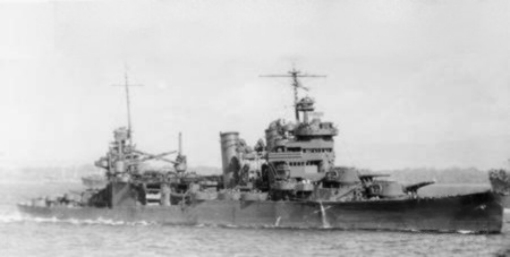
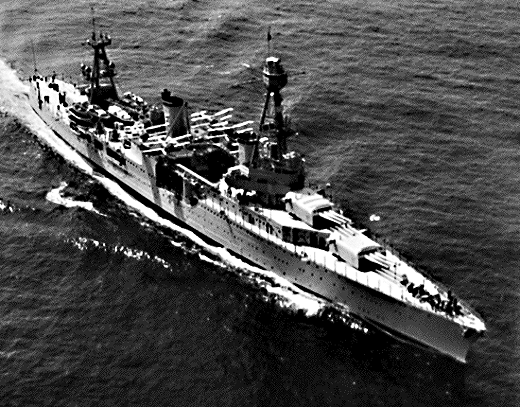
USS Astoria on August 8th off Guadalcanal and USS Chicago (below)

CA-29_Chicago

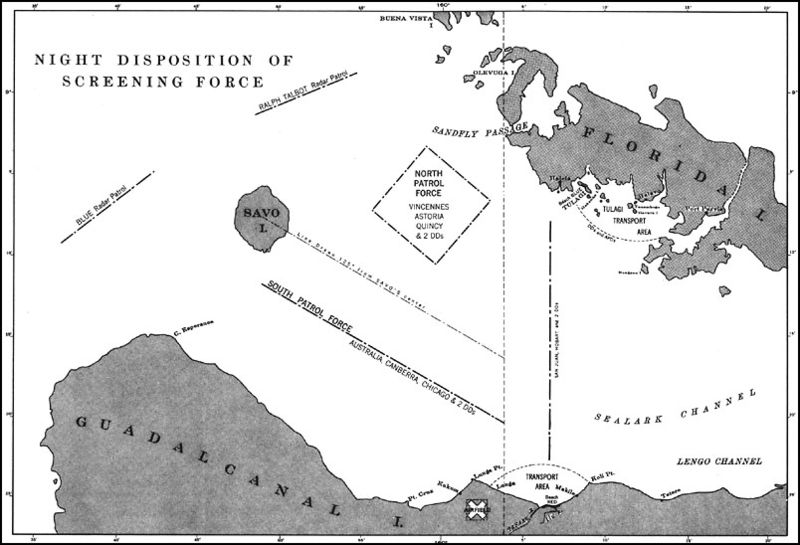
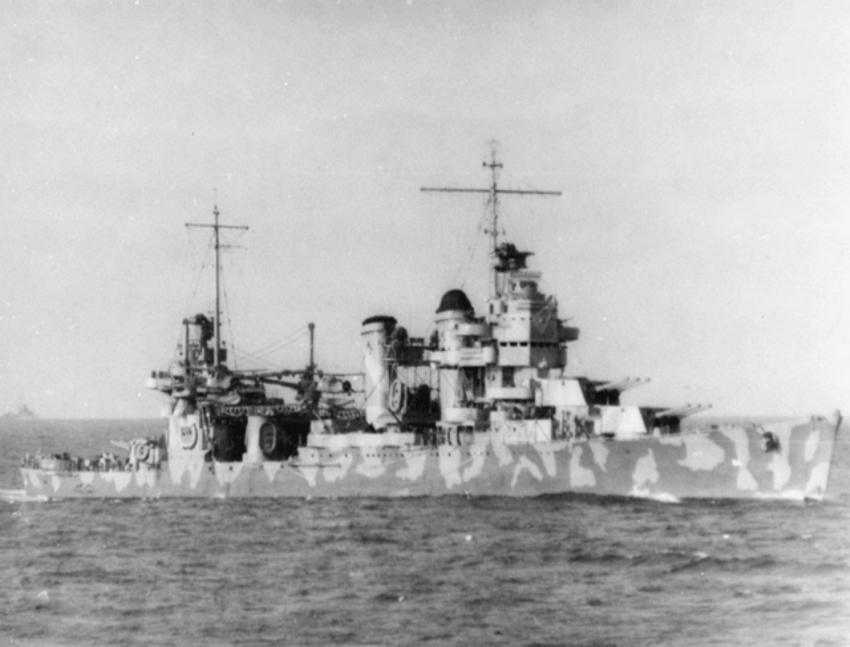
In the absence of good information Turner deployed his support ships to cover the three entrances into what soon would be known as Iron Bottom Sound. He placed the Anti Aircraft Cruiser USS San Juan and Australian Light Cruiser HMAS Hobart to the east with two destroyers under the command of Rear Admiral Norman Scott. To protect the south west entrance into the sound south of Savo Island Turner placed the Heavy Cruisers USS Chicago, HMAS Australia and HMAS Canberra and two destroyers under the command of Rear Admiral R.A.C. Crutchley RN who in theory commanded the screening force. To the north of Savo he deployed the Heavy Cruisers USS Vincennes, USS Astoria and USS Quincy and two destroyers under the tactical direction of Captain Frederick Riefkohl aboard Vincennes. To the west of Savo he placed two destroyers to act as picket ships. Unfortunately these ships radar sets were insufficient and would fail to pick up the approaching enemy.

800px-SavoIslandMap

                                                   Allied Dispositions

During the early evening Turner recalled Crutchley to his flagship for consultations of what to do regarding Fletcher’s retreat. Crutchley came over in his flagship the Australia denuding the southern force of its commander as well as one of its three heavy cruisers. He left the commanding officer of Chicago Captain Howard D. Bode in tactical command but Bode did not have his ship take the lead position in the patrol assuming Crutchley would return bymidnight.

USS_Vincennes_(CA-44)_in_the_Solomons_1942

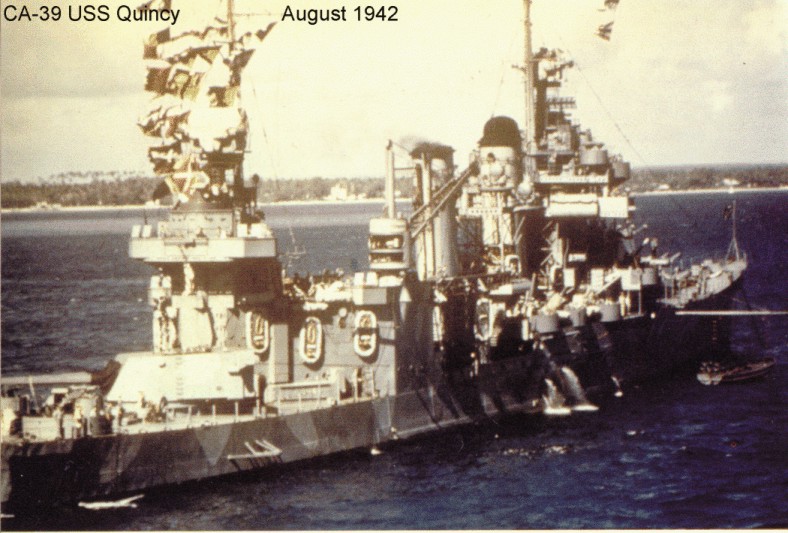
USS Vincennes (above) and USS Quincy (below)

ca__39_uss_quincy___1942.08.03___1a

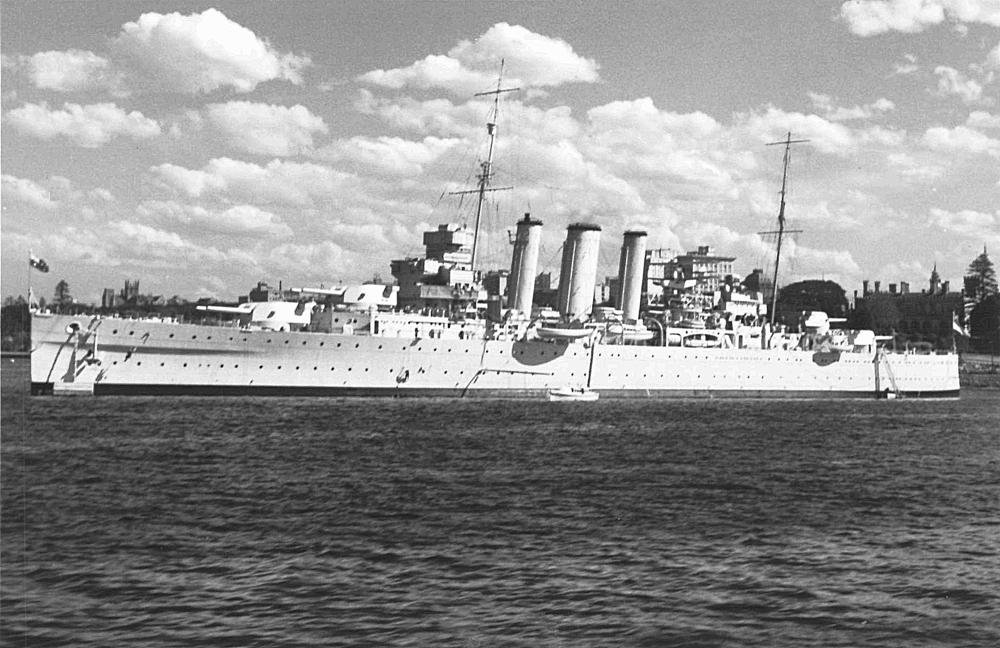
HMAS Canberra Sydney Harbour

                                                    HMAS Canberra 

Mikawa launched float planes to scout the locations of the American ships and to provide illumination once the battle began. Some of these aircraft were spotted but no alert measures were taken as many assumed the Japanese to be friendly aircraft. Many commanding officers were asleep or resting away from the bridge of their ships, lookouts were tired and not expecting the Japanese and Condition Two was set in order to provide some of the tired crews a chance to rest.

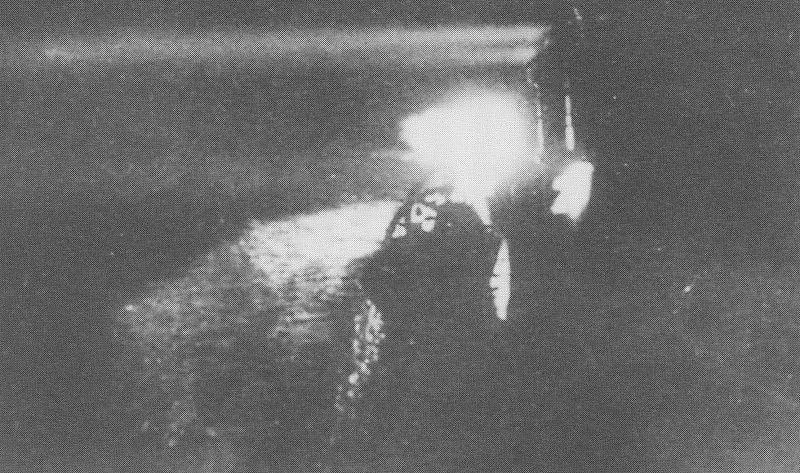
800px-SavoIslandYubariSearchlight

Light Cruiser Yubari illuminating American cruisers at Savo Island

Admiral Mikawa now new the Allied disposition and ordered his ships to battle stations at 0045. At 004 he sighted and passed astern of USS Blue the southern picket which also failed to detect the Japanese force. Mikawa assumed that the destroyer might have reported his presence, briefly turned north but turned back to his original course when a lookout allegedly spotted a destroyer to his northeast. He gave the order to attack at 0132 and promptly spotted the American destroyer USS Jarvis which had been heavily damaged and without radio communications was making her way toAustralia for repair and passed her after some ships fired torpedoes and raced toward the southern force at 26 knots. With the southern force just a few miles away Mikawa ordered his ships to commence firing at 0136 and at 0138 torpedoes had been launched.

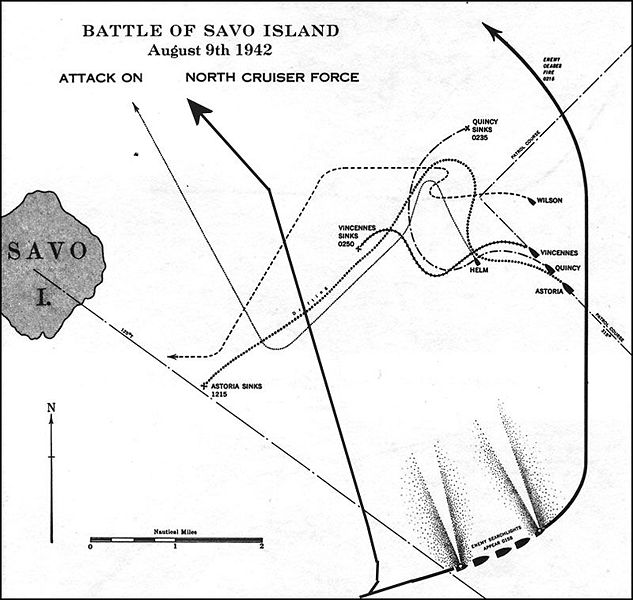
Mikawa’s lookouts spotted the northern group at 0144 and changed course. The maneuver was badly executed and left the Japanese in two columns as they swiftly closed on the Americans. Mikawa’s flagship Chokai launched torpedoes at 0148 and Astoria the cruiser closest to the Japanese set general quarters at 0145 and at 0150 the Japanese illuminated her with searchlights and opened fire. Astoria under the direction of her gunnery officer returned fire at 0152 ½ just before her Captain came to the bridge unaware of the situation. He ordered a cease fire until he could ascertain who he was firing at assuming the Japanese to be friendly ships. He delayed 2 minutes and ordered fires commenced at 0154 but the delay was fatal. Astoria had opened fire on the Chokai which then had time to get the range on the American cruiser and hit her with an 8” salvo which caused fires which provided the other Japanese ships an aiming point.

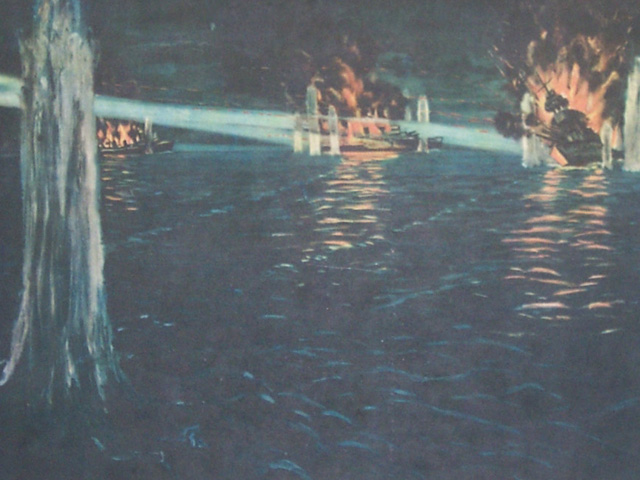
SavoJapaneseWarArt

Japanese artist depiction of attack on US Navy Cruisers at Savo Island

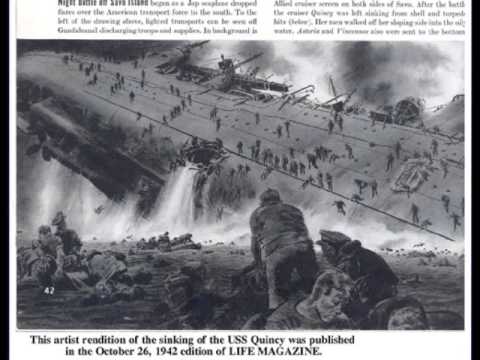
Astoria was left burning and heavily damaged barely maintaining headway but attempted to fight on scoring a hit on Chokai’s forward turret even as the Japanese opened up on the next cruiser in line the USS Quincy. Quincy caught between the two Japanese columns. Aoba illuminated her with her searchlight and Japanese forces opened fire. The gunnery officer order Quincy to return fire getting two salvos off before her skipper Captain Samuel Moore came to the bridge, briefly ordered a cease fire assuming that he was firing on Americans and turned on his running lights. Quincy was ripped by salvo after salvo which killed Captain Moore and nearly everyone in the pilothouse just as a torpedo ripped into her engineering spaces turning them into a sealed death trap forcing the engineer to shut down the engines. Burning like a Roman candle Quincy was doomed she was ordered abandoned and capsized and sank at 0235. However Quincy did not die in vain, at 0205 two of her 8” shells hit Chokai causing enough damage the Admiral’s chart room that Mikawa would order a withdraw at 0220 which spared the now defenseless American transports.

633px-SavoIslandMap2A

Vincennes, the lead ship and flagship was next in the line of death. Captain Reifkohl order General Quarters sounded not long after the Japanese illuminated the southern group. At 0150 Vincennes was lit up by the searchlights of three Japanese ships which opened fire on her. Vincennes returned fire at 0153 hitting Kinugasa before she was hit starting fires on her scout planes mounted on their catapults. The Japanese mauled Vincennes, three possibly four torpedoes ripped into her as shells put ever gun out of action. At 0215 she was left burning and sinking by the Japanese who soon withdrew from the action. Ordered abandoned she sank at 0250.

Savo_Island canberra

         HMAS Canberra being evacuated by the Patterson and Blue

Canberra struggled against the odds but was abandoned and was sent to the bottom by an American torpedo at 0800. Astoria also struggled for life but the damage was too great and she was abandoned sinking at 1215. Mikawa withdrew up the sound but on his return the Heavy Cruiser Kako 70 miles from home was sunk by torpedoes from the American submarine S-44 sinking in 5 minutes.

hqdefault (1)

The Americans and Australians lost 4 Heavy Cruisers sunk and one heavily damaged. Two destroyers were also damaged. Casualties were heavy; Quincy lost 389 men killed, Vincennes, 342, Astoria, 235, Canberra, 85, Ralph Talbot, 14, Patterson, 10, and Chicago, 2.

It was an unmitigated disaster, an allied force destroyed in less than 30 minutes time. Boards of inquiry were held and Captain Bode hearing that he shouldered much blame killed himself in 1943.

USSQuincy7

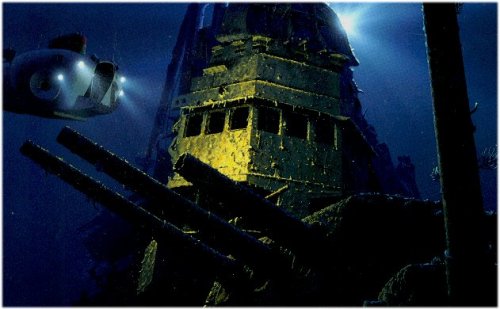
     Wrecks of the USS Quincy, Astoria, Vincennes, and HMAS Canberra

It was a rude awakening to a Navy which had believed that technical advances would give it victory and which  in the words of Admiral Ernest King  was not yet “sufficiently battle minded.” It was the first of many equally bloody battles in the waters around Guadalcanal which in the coming campaign became known as Ironbottom Sound.

Leave a comment

Filed under History, leadership, Military, national security, Navy Ships, News and current events, US Marine Corps, US Navy, World War II at Sea, world war two in the pacific

“I am Death, the Destroyer Of Worlds” Hiroshima and the Genie that Will Not go Back in the Bottle at 74 years


Friends of Padre Steve’s World,

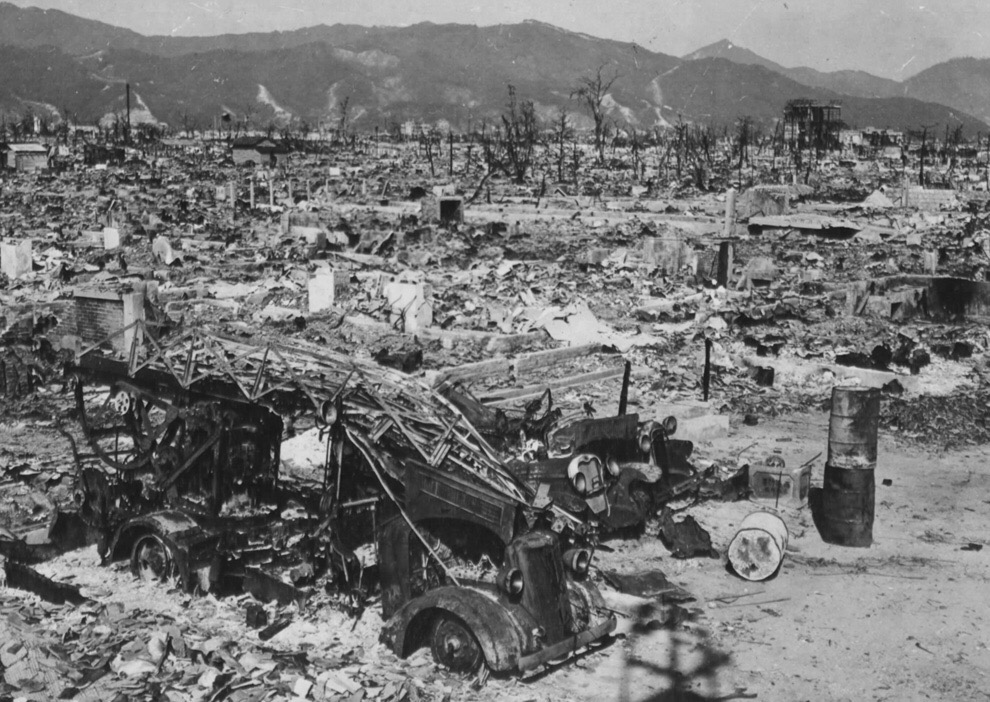
Seventy-four years ago the world changed. A remarkably destructive weapon was introduced in combat, a single bomb that annihilated the city of Hiroshima Japan. The effects were immediate, 70,000 to 100,000 people were killed, tens of thousands of others wounded, many of whom would suffer from the effects of radiation and radiation burns the rest of their lives. Within days a second bomb was dropped on Nagasaki with similar results, and Japan sued for peace. The Second World War was over and a new world was born, a world under the shadow of nuclear weapons.

The anniversary of that event today is something that all of us should ponder with great trepidation as the world seems to lurch towards a day when such a weapon will be used again. The question should not be one of mere military or tactical expediency, but must consider the moral dimension of the use of these weapons as well as the whole concept of total war.

In his book Hiroshima, John Hershey wrote:

“The crux of the matter is whether total war in its present form is justifiable, even when it serves a just purpose. Does it not have material and spiritual evil as its consequences which far exceed whatever good might result? When will our moralists give us an answer to this question?” 

His question is worth considering. It is no wonder that Robert Oppenheimer one of the members of the team that developed the bomb quoted a verse from the Bhagavad-Gita after he witnessed the test explosion “Trinity” on July 16th 1945: “Now, I am become Death, the destroyer of worlds.” 

Up until April of 2017 I spend the last three and a half years teaching the ethics of war to senior military officers at a major U.S. Military Staff College. One of the things that we do in the class is to have the officers do presentations on different historical, or potential ethical problems faced by national policy makers, military commanders and planners. The goal was to have these men and women dig deep and examine the issues, and think about the implications of what they will do when they go back out to serve as commanders, staff officers, advisors to civilian leaders and planners. Sadly, in the gutting of that institution after I departed the Ethics elective and all other electives were eliminated. They also cut back the number of seminars from 13 to five and limited the students to O-5s and O-6s, with command experience, directly contravening the intentions of the Goldwater-Nichols Act which was designed to prevent repeats of Vietnam, the failed Iran hostage rescue attempt, and the invasion of Grenada. The intent of the legislation was to better coordinate the efforts of the services and inculturation of younger officers to understand the capabilities of their sister services, as well as teach history, strategy, and ethics to rising leaders in the Defense Department, State Department, CIA, DIA, and other agencies charged with our national security.

In each class that I taught, at least one student dealt with the use of the Atomic bombs.  Most were Air Force or Navy officers who have served with nuclear forces. Unlike the depiction in the classic movie Dr. Strangelove or other depictions that show officers in these forces as madmen, the fact is that I was always impressed with the thoughtfulness and introspective nature of these men and women. They sincerely wrestle with the implications of the use of these weapons, and many are critical of the use of them at Hiroshima and Nagasaki. It is comforting to me to know that at least in the U.S. military that there are many who can reflect and do try to look at things not just from a purely military standpoint. Of course since I know humanity I figure that there are others in our ranks who are not so reflective or sensitive to the moral implications of the use of these weapons, among whom is our current President. The fact that President Trump acts on impulse and seems to have no moral compass, strategic sense, or anything apart than what benefits him causes me to shudder, especially when he has to actually confront North Korea on their ICBM and nuclear programs, not to mention the use of weapons of mass destruction by a terrorist group. As Barbara Tuchman wrote: “Strong prejudices and an ill-informed mind are hazardous to government, and when combined with a position of power even more so.”

I am no stranger to what these weapons, as well as chemical and biological weapons can do. Thirty-five years ago when I was a young Army Medical Service Corps lieutenant I was trained as a Nuclear, Chemical and Biological Defense Officer. I learned the physical effects of exposure to these weapons, how many Rads of radiation a person could receive before they became sick and died. I learned what radiation exposure does to people at each stage. We trained with maps to chart fallout patterns, and the maps had the cities and towns that we lived in, this was Cold War Germany and yes both NATO and the Warsaw Pact expected that tactical nuclear weapons and chemical weapons would be used and we had to be able to operate in contaminated environments. We operated under the idea of Mutual Assured Destruction or MAD as a deterrent to war. It was chilling and made me realize that the use of these weapons today would be suicidal. When Chernobyl melted down we were in the fallout zone and were given instructions on what we could and could not do in order to minimize any possible exposure to radiation poisoning.

So when it comes to the first use of the Atomic bomb I am quite reflective. As a historian, military officer, chaplain and priest who has been trained on what these weapons can do I have a fairly unique perspective. Honestly, as a historian I can understand the reasons that President Truman ordered its use, and I can understand the objections of some of the bomb’s designers on why it should not be used. I’ve done the math and the estimates of casualties had there been an invasion of the Japanese home islands is in the millions, most of which would have been Japanese civilians.
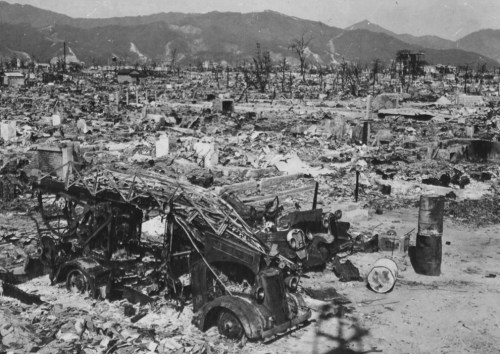

My inner lawyer can argue either point well, that being said the manner in which it was used at Hiroshima and Nagasaki troubles me. Hiroshima did have military targets, but a big part of the choice was its location, surrounded by hills, which created a bowl that would focus the explosion and maximized its effect. Many of the larger military and industrial targets lay outside the kill zone. The designers and officers on the committee wanted to show the Japanese, as well as the world the destructive power of the weapon. Those who opposed its use hoped that it would convince the leaders of nations that war itself needed to be prevented. These men wrestled with the issue even as they prepared the first bombs for deployment against Japan. The recommendations of the committee can be found here:

http://www.atomicarchive.com/Docs/ManhattanProject/Interim.shtml
Of the 150 scientists who were part of the bomb’s design team only 15% recommended the military use without a demonstration to show the Japanese the destructive power of the bomb and a chance to end the war. The poll of the scientists can be found here:

http://www.atomicarchive.com/Docs/ManhattanProject/Poll.shtml
Leo Szilard wrote a letter to Edward Teller seeking his support in sending a petition to President Truman regarding his opposition to the use of the weapon based on purely moral considerations. Szilard wrote:

“However small the chance might be that our petition may influence the course of events, I personally feel that it would be a matter of importance if a large number of scientists who have worked in this field want clearly and unmistakably on record as to their opposition on moral grounds to the use of these bombs in the present phase of the war.

Many of us are inclined to say that individual Germans share the guilt for the acts which Germany committed during this war because they did not raise their voices in protest against those acts, Their defense that their protest would have been of no avail hardly seems acceptable even though these Germans could not have protested without running risks to life and liberty. We are in a position to raise our voices without incurring any such risks even though we might incur the displeasure of some of those who are at present in charge of controlling the work on “atomic power.”

The entire text of Szilard’s letter can be found here:

http://www.atomicarchive.com/Docs/ManhattanProject/SzilardTeller1.shtml
The two petitions of the scientists to the President are here, the second letter concludes with this recommendation:

“If after the war a situation is allowed to develop in the world which permits rival powers to be in uncontrolled possession of these new means of destruction, the cities of the United States as well as the cities of other nations will be continuous danger of sudden annihilation. All the resources of the United States, moral and material, may have to be mobilized to prevent the advent of such a world situation. Its prevention is at present the solemn responsibility of the United States–singled out by virtue of her lead in the field of atomic power.

The added material strength which this lead gives to the United States brings with it the obligation of restraint and if we were to violate this obligation our moral position would be weakened in the eyes of the world and in our own eyes. It would then be more difficult for us to live up to our responsibility of bringing the unloosened forces of destruction under control.

In view of the foregoing, we, the undersigned, respectfully petition: first, that you exercise your power as Commander-in-Chief to rule that the United States shall not resort to the use of atomic bombs in this war unless the terms which will be imposed upon Japan have been made public in detail and Japan knowing these terms has refused to surrender; second, that in such an event the question whether or not to use atomic bombs be decided by you in the light of the consideration presented in this petition as well as all the other moral responsibilities which are involved.”

http://www.atomicarchive.com/Docs/ManhattanProject/SzilardPetition.shtml

http://www.atomicarchive.com/Docs/ManhattanProject/Petition.shtml

Ralph Bard, Undersecretary of the Navy wrote to Secretary of War Stimson his opinion on July 17th 1945:

“Ever since I have been in touch with this program I have had a feeling that before the bomb is actually used against Japan that Japan should have some preliminary warning for say two or three days in advance of use. The position of the United States as a great humanitarian nation and the fair play attitude of our people generally is responsible in the main for this feeling.”

I think that those who debate the history of this need to look at the entire picture and read the letters, the documents and take into account everything. My hope is that leaders, policy makers, legislators and we the people continue to work to eliminate nuclear weapons. It is true that the nuclear stockpiles of the United States and Russia are significantly smaller than when the Cold War ended, but even so what remain are more than enough to extinguish human life on the planet. Add to these the Chinese, French, British, Indian, Pakistani and the hundreds of undeclared weapons of Israel the fact is that there remains the possibility that they could be used. Likewise there are nuclear programs in other nations, especially North Korea, which given enough time or believing them necessary could produce weapons. But the North Koreans are not alone, they could easily be joined by others including Iran and Saudi Arabia. Add to this the possibility of a terrorist group producing or acquiring a weapon the world is still a very dangerous place.

That is the world that we live in and the world in which policy makers, legislators and educated people who care about the world must attempt to make safe. If you asked me I would say outlaw them, but that will never happen. Edward Teller wrote Leon Szilard:

“First of all let me say that I have no hope of clearing my conscience. The things we are working on are so terrible that no amount of protesting or fiddling with politics will save our souls…. Our only hope is in getting the facts of our results before the people. This might help to convince everybody that the next war would be fatal. For this purpose actual combat use might even be the best thing…. But I feel that I should do the wrong thing if I tried to say how to tie the little toe of the ghost to the bottle from which we just helped it to escape…”

We are on the brink again. India and Pakistan are once again girding themselves up for nuclear war over Kashmir. Iran, after having ceased its production of enriched uranium, has resumed it following the Trump Administration voiding the nuclear nonproliferation agreement signed during the Obama administration. Despite its promises to President Trump, North Korea still seems intent on developing nuclear weapons and delivery systems. The Russians are developing hypersonic missiles and torpedoes which could deliver nuclear warheads against American targets, and the Chinese are increasing their nuclear capability. The United States is now embarked on a plan to modernize its nuclear arsenal and under the Trump administration loosen the restraints on the use of nuclear weapons.

The ghost is out of the bottle, and nothing can ever get it back in. We can only hope and pray that reasonable people prevent any of these weapons from ever being used and that war itself would end. But then, General Of the Army Omar Bradley said in 1948:

“Ours is a world of nuclear giants and ethical infants. We know more about war than we know about peace, more about killing than we know about living. If we continue to develop our technology without wisdom or prudence, our servant may prove to be our executioner.”

I think that the “soldier’s General” was correct. Too many people just don’t care about life, Ethics, or peace.

So, until tomorrow, I leave you with that less than cheerful thought.

Peace

Padre Steve+

2 Comments

Filed under ethics, faith, Foreign Policy, History, leadership, middle east, Military, national security, News and current events, Political Commentary, world war two in the pacific

PTSD, Madness; to Perchance to Dream and Yet Live: Iraq Twelve Years Later

Friends of Padre Steve’s World,

Guy Sajer wrote in his book The Forgotten Soldier these words:

“Only happy people have nightmares, from overeating. For those who live a nightmare reality, sleep is a black hole, lost in time, like death.” 

I am exhausted tonight and I will be going to bed early for me. Hopefully I will get some restful sleep. I will be posting this article to post shortly after midnight by which time I hope not only to be in bed but asleep.

I have suffered a week of violent nightmares taking me back to my worst fears when I was serving in the badlands of Iraq’s Al Anbar Province in 2007 and 2008 supporting U.S. Advisors to Iraqi Army, Border Forces, Police, Highway Patrol, and Provincial Reconstruction teams. I rolled out of bed in a nightmare and cut my arm, and I woke up screaming and reaching for the pistol of an Iraqi insurgent who was about to shoot me, scaring the absolute shit out of our oldest Papillon dog Minnie, whose terrified Yelp woke me up.

I do not often write about it because I have been doing better, but I suffer from severe and chronic PTSD related to my experiences at war. The images are seared into my brain and sometimes the memories, and my deepest fears from my time there as an unarmed Chaplain working for the most part with very small groups of Americans and our Iraqis far away from the help of the big battalions if we got into serious trouble. I have written about those experiences and my struggles after my return many times on this blog. Likewise, I have had my story told on the front pages of the Jacksonville Daily News and the Washington Times. A video of my story is on the Department of Defense Real Warriors Campaign website, and is a large part of a chapter of Pulitzer Prize winning War Correspondent David Wood’s book  What Have We Done: The Moral Injury of America’s Longest Wars.  

Since Iraq, my nightmares are very vivid and often involve much physical acting out. The physical acting out is unusual and I have actually injured myself badly enough to require trips to the emergency room after crashing hard throwing myself out of bed combatting imaginary enemies. Likewise, other have been violent and physical enough to wake Judy up.

This is nothing new. In another nightmare a year or so ago I was being attacked by an Iraqi insurgent. Our advisor team had been attacked as we were stopped in the dark to determine if an Improvised Explosive Device had been laid in the road in front of us. This was just a few miles from the Iraq-Syrian border between Al Qaim and COP South, the base of the advisor team which was working with the 3rd Battalion of the 3rd Brigade of the Iraqi 7th Division.

The part about being stopped in the desert in the dark while examining a potential IED actually happened. The attack did not happen but at the time I fully expected something like it to happen. We were sitting ducks on a two lane highway in the middle of the desert. But the attack never happened and we continued to COP South, which would become a part of many of my future missions.

But in my nightmare it happened and as the fighting devolved into close quarters hand to hand combat I found myself grappling an insurgent who was attacking me with a large knife. I managed to roll on top of him and knock the knife from his hand when I was awakened. I was on top of Judy and she was afraid that I was going to strangle her. My hands had not gotten to her throat but she woke me and told me what had happen. I dropped back to my side of the bed in a cold sweat. I could not believe what had happened and that terrifies me. I have set up an appointment prior to my regularly scheduled one with my shrink to talk about this.

Since I my day had been quite good and I have been much more relaxed at work since putting in my retirement papers the event came as a huge surprise. In trying to figure out what triggered it I was at loss until I remembered that I had had dinner last night with a retired Navy EOD Captain who had been my Chief Staff Officer at EOD Group Two and running partner before I went to Iraq. He was sent there not long after me and we met at Camp Victory in Baghdad not long before I left Iraq on the way to Kuwait and home in 2008. We enjoyed a wonderful dinner last night and we did talk about all manner of things including our time in Iraq and those men that we had served alongside.

I saw my sleep doctor yesterday regarding my latest sleep study. Without my sleep Medical Tinos I did not enter in to REM sleep, or dream sleep. In addition to prescribing me a different CPAP machine and increasing the pressure , he referring me to a neurologist colleague of his in the sleep clinic. Honestly, I don’t know what god it will do, but I hope that he can find some kind of answer.

But trying to explain my trying to explain nightmares and night terrors is is not really helpful, they are now part of who I am. I think that Stephen King said it best:

“Nightmares exist outside of logic, and there’s little fun to be had in explanations; they’re antithetical to the poetry of fear.” 

Yes,  I can still try to logically deduce my nightmares and night terrors, but the poetry of fear as Stephen King so rightly calls it cannot be fully explained. For those of us who deal with the memories of combat, of having been shot at and have seen the human cost of war, the dead, the wounded, the destruction, and the aftermath of war, they are all too real and they never completely leave us.

Christmas on the Syrian border

Over eleven years after I returned from Iraq I still find that much of me is still there. In fact, deep down I miss Iraq and the Iraqis that I was honored to know and to serve alongside and I still pray for them and for their future. Maybe someday I will get back. I would love that.

For all that remains with me about Iraq, I left a good part of me there, with my advisors and Iraqis. It was the best of times, and the worst of times, but it is a major part of who I am now, and why I want to continue to live.

So until tomorrow, Inshallah, إن شاء الله

Peace

Padre Steve+
5 Comments

Filed under History, iraq, middle east, Military, ministry, News and current events, to iraq and back, Tour in Iraq, us army, US Marine Corps, US Navy