Category Archives: Military

Joyeux Noël, Christmas Eve 2018: History and Memory, the Stubborn Humanity Within Us

joyeux_noel3

Friends of Padre Steve’s World,

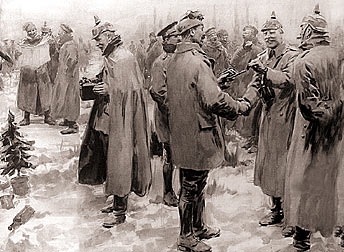
Last night I rewatched the film Joyeux Noel (Merry Christmas) which is one of my Christmas traditions. When I watch it I cannot stop. I don’t look at my social media, I don’t tweet. Although it recounts an incident that occurred over a century ago, I am drawn to it out of a feeling of camaraderie, and a hope that people of good will can, and maybe will someday put and end to the scourge of war. I guess one reason I have to put down everything else is that I cry through most of the film.

I do not think that  end of war will happen anytime soon, for as Henry Wordsworth Longfellow wrote some fifty years before this incident, “for hate is strong, and mocks the song, of peace on earth, goodwill to men.” 

But I dare not, even in the age of a madman in the White House and warmongering dictators and despots wreaking havoc on the world, give up the hope of peace. I tend to watch it before or after reading Stanley Weintraub’s book: Silent Night: the Story Of the World War One Christmas Truce. 

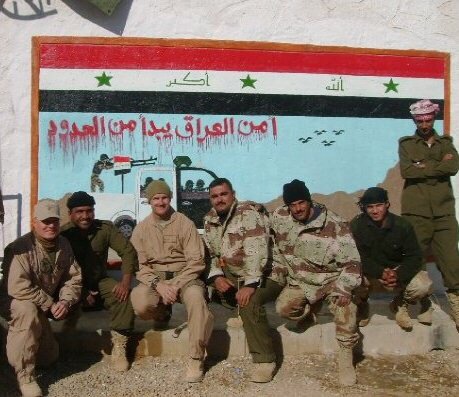
It was a book that I refused to read until after I returned from Iraq in 2008. Of course as a military historian I knew of the Christmas Truce, but it was something that I tried to keep a distance from after September 11th, 2001. After my experience of Christmas on the Iraq – Syrian Border In 2007 I could no longer ignore it.

Weintraub Wrote:

Christmas 1914 evokes the stubborn humanity within us, and suggests an unrealized potential to burst its seams and rewrite a century.

I say that my time in Iraq did that to me. I cannot forget the Masses that I celebrated on the border and my time with Americans, Iraqi Soldiers, and local Bedouin during those days.

In the film, one of the main characters is the Chaplain of the Scottish battalion played by Gary Lewis tells a Lieutenant:

“Tonight, these men were drawn to that altar like it was a fire in the middle of winter. Even those who aren’t devout came to warm themselves. Maybe just to be together, maybe just to forget the war.” 

12010440-mmmain

The war was supposed to be over by Christmas, or so the planners had said. Instead after a series of massive battles that produced unprecedented number of casualties the war settled into a stalemate. As the sides exhausted themselves in a series of meeting engagements throwing the flower of their idealistic youth into the great maw of the front to be torn apart by massed artillery and machine gun fire the planners sought new ways to find military victory.

In December 1914 with neither side having the ability to force the issue and casualties already running over a million dead and wounded the armies dug in. Massive trench networks were constructed in the mud of France and Belgium as the artillery continued its impersonal work of destroying men, machines and the homeland of millions of civilians.

From Clipboard

Despite the stalemate the high commands of the various nations continued to through their troops into meaningless attacks to gain a few yards of their opponent’s trench networks. The attackers always suffered the worst as they went “over the top” and were cut down by well sited machine guns and networks of defensive redoubts.

As Christmas neared individual parties of British and German troops began to fraternize exchanging gifts and attempting despite the wishes of their commanders to maintain an attitude of live and let live. On Christmas Eve German troops began to decorate their trenches with Christmas trees and lights, carols were sung and Christmas greetings exchanged as the local truces became widespread and soldiers met in no man’s land to talk and give each other gifts of cigarettes, alcohol, food and souvenirs.  In some places the sides helped each other collect and bury their dead and some Chaplains even led Christmas services in which men of both sides worshipped.

football-truce

The truce would not last as the high commands of each side issued strict orders against them and within days had moved the units that they believed most “infected” by the Christmas spirit to other locations and replaced them with units inculcated with the message of the inhumanity of their enemy. Such messages often included the religious understanding of this being a “holy war” against enemies of God and humanity. It is funny that though Muslims are frequently demonized for committing Jihad, that Christians have a terrible record when it comes to finding theological reasons to kill those that they believe, even other Christians to be the enemy.

Christmas Day December 1914 World War One

joyeux-noel-2


joyeux-noel-3

This really wasn’t surprising, after all for in the years leading up to the war many school children, especially in France and Germany had been propagandized. Churches and ministers cooperated in the carnage.

In the movie Joyeux Noel the British Padre who had cooperated in the Christmas truce is relieved by his Bishop and sent home. The Bishop then preaches to the newly arrived soldiers, those replacing the men who had found peace for a moment. The sermon is not a work of fiction, it is actually part of a sermon that actually was given in Westminster Abbey in 1915. It was a sentiment that fit the mood of the high command who sought to minimize the danger of peace without victory. It was a sermon, the likes of which were preached by ministers, preachers, priests and bishops throughout that terrible war. It is a sermon that many preachers, Christian, Jewish, Islamic and Hindu even today mimic with terrible consequences.

“Christ our Lord said, “Think not that I come to bring peace on earth. I come not to bring peace, but a sword.” The Gospel according to St. Matthew. Well, my brethren, the sword of the Lord is in your hands. You are the very defenders of civilization itself. The forces of good against the forces of evil. For this war is indeed a crusade! A holy war to save the freedom of the world. In truth I tell you: the Germans do not act like us, neither do they think like us, for they are not, like us, children of God. Are those who shell cities populated only by civilians the children of God? Are those who advanced armed hiding behind women and children the children of God? With God’s help, you must kill the Germans, good or bad, young or old. Kill every one of them so that it won’t have to be done again.”

Unfortunately I have met and heard men preach the same message against those they hate, a message that twists the words of Jesus in a diabolical way to justify the worst acts of nations and peoples. In the year 2018 wars rage around the world. Some are conducted by well organized professional militaries but many by militias, paramilitary and terrorists groups. In some cases the brutality and inhumanity exhibited makes the industrialized carnage of the First World War seem sane. Even now preachers of various religions, including Christians, Moslems and Jews advocate the harshest treatment of the enemies of their peoples all in “the name of God.”

295_26912097058_4309_n

n671902058_1153798_5336

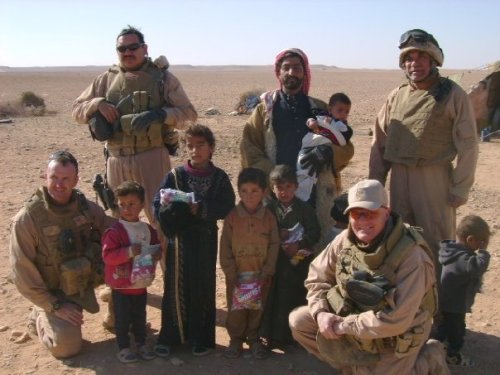
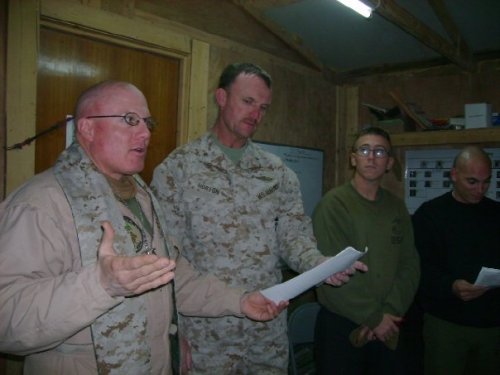
Eleven short years ago I was traveling up and down the western border of Iraq with Syria. I was visiting our Marines that were advising the Iraqi Army and Border Forces, conducting Christmas services for them and also visiting Iraqi soldiers as well as civilians. In a couple of instances Iraqi and Jordanian Christians working as interpreters came to the Eucharist services, for one it had been years since he had received the Body and Blood of Christ in the Holy Communion. While out and about visiting Iraqis we were hosted by Iraqi troops and well as Bedouin tribesmen and their families. The warmth and hospitality and faith of these wonderful people was amazing.

T.E. Lawrence wrote that the Bedouin could not look for God within him: he was too sure that he was within God.” 

n671902058_1153804_6925

I think that for me that Christmas week was the one that will remain with me more than any and despite being in a war zone, it for me was a time of peace on earth and good will toward men. Some people cannot imagine how a career military officer could feel that way. In the movie the French company commander is confronted by his father after the truce, and after the military postal censors had reported the many incidents of fraternization with the enemy to the various high commands in France, Germany, and Great Britain.

The Country? What does it know of what we suffer here? Of what we do without complaints? Let me tell you, I felt closer to the Germans than to those who cry “Kill the Krauts!” before their stuffed turkey…  no, you’re just not living the same war as me. Or as those on the other side.”  

Weintraub wrote:

“To many, the end of the war and the failure of the peace would validate the Christmas cease-fire as the only meaningful episode in the apocalypse. It belied the bellicose slogans and suggested that the men fighting and often dying were, as usual, proxies for governments and issues that had little to do with their everyday lives. A candle lit in the darkness of Flanders, the truce flickered briefly and survives only in memoirs, letters, song, drama and story.”

During World War One there were men who retained their conscience and tried to mitigate the effects of the war and suffering. Likewise there were those who could not let go of their hate. One such Soldier was Adolf Hitler, whose story is recounted in Weintraub’s book:

Although he was out of the line in reserve, discussion arose about crossing into Niemandsland to share Christmas with the British. He refused. “Such a thing should not happen in wartime,” Hitler argued. “Have you no German sense of honor left at all?” More than patriotic scruples were involved. Although a baptized Catholic, he rejected every vestige of religious observance while his unit marked the day in the cellar of the Messines monastery to which they had retired on the 23rd. “Adi” was distinctly odd. He received no mail or parcels, never spoke of family or friends, neither smoked nor drank, and often brooded alone in his dugout. In the ruins open to the sky, Corporal Frobenius, a Lutheran theology student also decorated with the Iron Cross, read the Christmas gospel to a joint congregation of Catholics and Protestants, but not to Corporal Hitler.

Hitler’s Nihilism, racist nationalism, and unrepentant rejection of his religious heritage while gaining the support of the most religious Christians in the Reich would be part  of his life until he took it in his Berlin Bunker In 1945, and it would be shared by all too many men since the First World War until the present.

I will not be one of them.

Maybe someday we will begin to understand, until then, like so many others in so many wars before, I am still dreaming of home.

Until tomorrow,

Peace

Padre Steve+

2 Comments

Filed under ethics, faith, film, History, Military, movies, Political Commentary, world war one

Hope In Hell: Dr. Kurt Reuber and the Madonna Of Stalingrad

Bundeswehr zeigt "Stalingrad"-Ausstellung

Friends of Padre Steve’s World,

It is almost Christmas and I am reflecting about the true meaning of Christmas in a world where hope seems to be dying before our eyes. In such an environment I reflect on men who lived in a human made hell, a hell made by hate filled ideologues who launched the world into its bloodiest war, and I wonder, could it happen again? A decade ago I would have said it never could again happen, but now I am not so sure. So, in the age of Donald Trump, I must try to find hope wherever I can find it.

I think most of my readers know that I am a career military officer and have served in peace and war as a chaplain. That service includes a tour in Iraq, a war, which by almost any standard would have been considered unjust and illegal, yet I served there, and came back a changed man. As such the stories of those who served in war, especially those who serve in hopeless battles, and even in evil causes during Christmas have a special place in my heart. One of those men was a German pastor and medical doctor named Kurt Reuber.

k_reuberl

As I said, Reuber was a theologian, pastor and medical doctor, likewise he was an accomplished artist and used that medium to convey his own faith, and doubts. He was a friend of Albert Schweitzer in 1939 he was conscripted to serve as a physician in the Germany Army. By November 1942 he was a seasoned military physician serving with the 16th Panzer Division, part of the German 6th Army, which had been fighting in the hell of Stalingrad. When his division along with most of 6th Army was surrounded by the Soviets, cut off from most supply and without real hope of relief, he like other physicians continued to serve the soldiers committed to his care.

pg-34-stalingrad-2-getty

However, unlike most physicians, the care Reuber offered care included spiritual matters, as he sought to help his soldiers deal with the hopelessness of their situation. As Reuber reflected on the desperation of the German soldiers in the Stalingrad pocket. He wrote to his family.

“I wondered for a long while what I should paint, and in the end I decided on a Madonna, or mother and child. I have turned my hole in the frozen mud into a studio. The space is too small for me to be able to see the picture properly, so I climb on to a stool and look down at it from above, to get the perspective right. Everything is repeatedly knocked over, and my pencils vanish into the mud. There is nothing to lean my big picture of the Madonna against, except a sloping, home-made table past which I can just manage to squeeze. There are no proper materials and I have used a Russian map for paper. But I wish I could tell you how absorbed I have been painting my Madonna, and how much it means to me.”

“The picture looks like this: the mother’s head and the child’s lean toward each other, and a large cloak enfolds them both. It is intended to symbolize ‘security’ and ‘mother love.’ I remembered the words of St. John: light, life, and love. What more can I add? I wanted to suggest these three things in the homely and common vision of a mother with her child and the security that they represent.”

The picture was drawn on the back of a captured Soviet map and when he finished it he displayed it in his bunker, which became something of a shrine. Reuber wrote:

“When according to ancient custom I opened the Christmas door, the slatted door of our bunker, and the comrades went in, they stood as if entranced, devout and too moved to speak in front of the picture on the clay wall…The entire celebration took place under the influence of the picture, and they thoughtfully read the words: light, life, love…Whether commander or simple soldier, the Madonna was always an object of outward and inward contemplation.”

drkrop

As the siege continued men came to the bunker for both medical care and spiritual solace.  On Christmas Eve Reuber found himself treating a number of men wounded by bombs outside the bunker. Another soldier lay dying, just minutes before the soldier had been in the bunker singing the Christmas hymn O Du Froehliche.  Reuber wrote:

“I spent Christmas evening with the other doctors and the sick. The Commanding Officer had presented the letter with his last bottle of Champagne. We raised our mugs and drank to those we love, but before we had had a chance to taste the wine we had to throw ourselves flat on the ground as a stick of bombs fell outside. I seized my doctor’s bag and ran to the scene of the explosions, where there were dead and wounded. My shelter with its lovely Christmas decorations became a dressing station. One of the dying men had been hit in the head and there was nothing more I could do for him. He had been with us at our celebration, and had only that moment left to go on duty, but before he went he had said: ‘I’ll finish the carol with first. O du Frohliche!” A few moments later he was dead. There was plenty of hard and sad work to do in our Christmas shelter. It is late now, but it is Christmas night still. And so much sadness everywhere.”

On January 9th 1943 with all hope of escape or reinforcement gone Reuber gave the picture to the battalion commander as the officer was too ill to carry on and was one of the last soldiers to be evacuated from the pocket. Reuber’s commander carried the Madonna out of the pocket and returned it delivered it to Reuber’s family, preserving it for all.

Reuber was taken prisoner and survived the harrowing winter march to the Yelabuga prison camp. In late 1943 Reuber wrote his Christmas Letter to a German Wife and Mother – Advent 1943. It was a spiritual reflection but also a reflection on the hope for life after the war, when the Nazi regime would be defeated, and Germany given a new birth.

Reuber wrote:

“The concatenation of guilt and fate has opened our eyes wide to the guilt. You know, perhaps we will be grateful at the end of our present difficult path yet once again that we will be granted true salvation and liberation of the individual and the nation by apparent disappointment of our “anticipation of Advent”, by all of the suffering of last year’s as well as this year’s Christmas. According to ancient tradition, the Advent season is simultaneously the season of self-reflection. So at the very end, facing ruin, in death’s grip – what a revaluation of values has taken place in us! We thus want to use this period of waiting as inner preparation for a meaningful new existence and enterprise in our family, in our vocation, in the nation. The Christmas light of joy is already shining in the midst of our Advent path of death as a celebration of the birth of a new age in which – as hard as it may also be – we want to prove ourselves worthy of the newly given life.”  (Erich Wiegand in Kurt Reuber, Pastor, Physician, Painter, Evangelischer Medienverb. Kassel 2004. )

prisoner's madonna

Reuber did not live to see that day. He died of Typhus on January 20th 1944, not long after writing this and just a few weeks after painting another portrait of the Madonna, this one entitled The Prisoner’s Madonna. He was not alone, of the approximately 95,000 German POWs taken at Stalingrad only about 6,000 returned home.

His paintings survived the war and his family gave The Madonna of Stalingrad to the Kaiser Wilhelm Memorial Church in Berlin after it was restored as a symbol of hope and reconciliation. Copies are also displayed in Coventry Cathedral and the Russian Orthodox Cathedral in Volgograd, the former Stalingrad. A copy of The Prisoner’s Madonna is now displayed at the Church of the Resurrection in Kassel.

I have a print of the Madonna of Stalingrad in my office. It has become one of the most meaningful pictures I have since I returned from Iraq in 2008. To me they are symbols of God’s presence when God seems entirely absent.

Praying for an end to war.

Peace

Padre Steve+

3 Comments

Filed under christian life, faith, History, Military, nazi germany, Political Commentary, world war two in europe

A Watershed Moment, and a Time to Be Afraid: Jim Mattis Resigns in Protest

Friends of Padre Steve’s World,

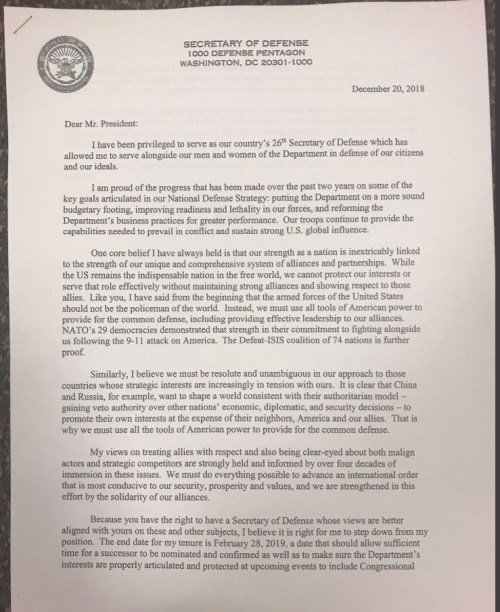
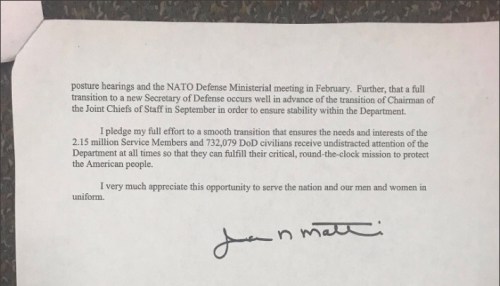
Secretary of Defense James Mattis resigned his position in protest at the manner in which President Trump is endangering the security of the United States. His resignation letter speaks for itself but it echoes many things that I have written regarding the Trump military and foreign policy since his election campaign. The final straw for Mattis was Trump’s unilateral decision against the advice of Mattis, the Department Of Defense, the State Department, and the National Security Council to withdraw all U.S. Troops from Syria falsely claiming that ISIS had been defeated.

Secretary Mattis’s letter is show below.

It was a watershed moment in American History. Honestly, I never expected Mattis to survive this long in the Trump Swamp. Everything about him stands in complete opposition to everything that Donald Trump embodies. The disgraced convicted felon Michael Flynn much more represents for which Trump stands.

Mattis was and remains a Marine who exemplified the Marine motto Semper Fidelis, and of living the creed of Duty, Honor, Country. Many times during his time in office he resisted the worst impulses and decisions made by the President. He knew that his duty and oath were to the Constitution of the United States and not the President. I think that he has become a tragic figure, he accepted the position thinking that he could serve the country better by taking it rather than not.

In the end Mattis could not abide the constant attacks on what he believed were the foundations of American national security and he resigned in protest. In a way he reminds me of Colonel General Ludwig Beck, Chief of Staff of the German Army, who resigned in protest over Hitler’s planned invasion of Czechoslovakia in 1938. Beck, who died in the attempt to kill Hitler on July 20th, 1944 said:

It is a lack of character and insight, when a soldier in high command sees his duty and mission only in the context of his military orders without realizing that the highest responsibility is to the people of his country.”

Working with former Secretary of State Rex Tillerson, and former National Security Advisor H.R. McMaster he had allies within the administration who could help check the President’s worst instincts. But Tillerson and McMaster were forced out and replaced by men who Trump believes that are more personally loyal to him, leaving Mattis isolated in the administration. Mattis was not able to get his recommendation for the next Chairman of the Joint Chiefs of Staff, Air Force Chief of Staff General David Goldfein approved by Trump. Mattis took this as a personal affront because the Secretary of Defense usually gets his recommendation for the position approved by the President. I wonder if Trump rejected Goldfein because in addition to being a decorated combat veteran who was actually shot down over Serbia in 1999, is also Jewish. Honestly, I don’t think that Trump could stomach having a Jewish war hero as his Chief military advisor. Maybe someone should ask that question, but I digress…

Mattis’s resignation, combined with Trump’s declaration of victory over ISIS and withdraw announcement sent a chill throughout Washington and around the world. Even influential Republican leaders who have carried Trump’s water are seeing the approaching danger of Trump unrestrained. The only question is if they will have the courage to choose principle over personal profit and power. Sadly, to this point they have not backed their words with action. Perhaps with the wheels coming off this presidency they will, but I think they are more afraid of his cult like followers than they are of him, so we will have to see.

Trump promises that he will nominate a replacement for Mattis soon. Make no mistake, whoever Trump chooses will be pliant and nothing more than his lackey. The replacement will be someone in the tradition of Field Marshal Wilhelm Keitel, who was absolutely committed to Adolf Hitler and who not only went along with, but signed criminal orders that obliged the German military to commit war crimes, at home and abroad. Supreme Court Justice Robert Jackson who served as the Chief American Prosecutor at Nuremberg said about Keitel:

“Keitel, the weak and willing tool, delivered the armed forces, the instrument of aggression, over to the party and directed them in executing its felonious designs.”

I am not sure who would want the job, but I am sure that he will be an modern embodiment of Keitel, and I will be glad that I will be retired within a few months of his confirmation. A year ago I thought that Senator Tom Cotton would gladly take it, but since he was one of the leading critics of the Syria withdraw, that he saw as a surrender to Russia I am not so sure. I don’t think that he’s that stupid. Instead, I think that Trump may pick a retired General or Admiral from his partisans for the job, there are plenty of them out there who would take it, I could be wrong, but we’ll have to see.

Regardless of who takes over for Mattis is the fact that with Mattis out of the way, Trump’s worst instincts will win policy debates and he may even lose John Bolton. Today the danger to our country and to to world has increased exponentially. To quote General Colin Powell’s words in his waning days as Secretary of State, “I sleep like a baby … every two hours I wake up screaming.”

I think that may be the case for many of us in the coming days, weeks, and months. Since I already do that due to my PTSD and combat based nightmares and night terrors this will be nothing new. If that hasn’t been the case for you, welcome to my world.

Peace,

Padre Steve+

6 Comments

Filed under ethics, Foreign Policy, History, leadership, Military, national security, nazi germany, News and current events, Political Commentary

I Won’t Shut Up Until It’s Fixed: Military and Veteran Mental Health Treatment

Friends of Padre Steve’s World,

Last night I came across the story which threw me back in to the abyss of PTSD. I still suffer terribly from it. I have terrible nightmares and night terrors and often physically act out my dreams. Since 2014 this has resulted in two Emergency Room visits due to the injuries incurred in those dreams, including a broken nose. In the deepest depths of anxiety, fear, depression and at times paranoia I contemplated suicide many times. The only thing that kept me from it was what the effect would be on Judy and how my dog Molly would understand that daddy wasn’t ever coming back.

Anyway, I read about the story of Colonel Jim Turner who committed suicide in the parking lot of the Bay Pines Florida, Department Of Veternas Affairs Medical Center. He had dressed in his Dress Blues with Medals, got out of his car, sat on his service records, and killed himself with a rifle. The story struck so close to home because in July of 2014 I was at the same point following an encounter with a a provider and what was a very inhuman and machinelike system of treatment at Naval Medical Center, Portsmouth, Virginia.

I had been getting treatment and therapy since the summer of 2008 when I crashed following my return from Iraq. In 2013 I thought that I was doing well enough to discontinue therapy. But in early January 2014, my former Commodore at EOD Group Two, Captain Tom Sitsch committed suicide outside a hospital in New Hampshire. He had been retired about five years and his life was falling apart, but when I met in the spring of 2008 he was the only man who seemed to care about me, and how I was coping as I was crashing. His death hit me really hard and I realized that I needed to get back into therapy at least to have someone to talk to every couple of weeks to make sure that I was  okay.

I wrote about these encounters on this blog a number of times from the day until it happened until the situation was resolved by the intervention of my former Commanding Officer at Naval Hospital Camp LeJeune, NC who had since been promoted to Admiral and put me in direct contact with Rear Admiral Jeff Moulton who commanded the Medical Center and Naval Region East.

After my encounter with the provider, a young Psychiatric Resident physician, I was considering suicide in a very similar way to how Colonel Turner killed himself. I was goi g to purchase a chrome plated M1911A1 .45 pistol, my favorite or all weapons I used in the military, clothe myself in my choker whites with full medals and put a round in my heart. I was ready to do it, and then I thought of the effect on my wife Judy, my dogs, and the people who would witness what I did.

If Admiral Lane had not reached out to Admiral Moulton I might well have died by my own hand. But those men took the time to listen to me and ensure that I got help. They saved my life. I am still in therapy. I still suffer crazy nightmares and act out my dreams, even last week when I scared the shit out of my Papillon dog Izzy and Judy when I tried to defend myself from a enemy combatant who had a pistol pointed at me, but I don’t want to die.

But an interesting thing happened. While reviewing my medical records in preparation for going into the VA system I found that the young Psychiatry Resident had put in a very perjorative diagnois Of a personality disorder based on a brief visit and a phone call, in fact the diagnosis was put in weeks after I had talked with her and after I had talked with Admiral. I guess she never thought that I would know about it. I talked with my current therapist who could access her notes about it today. When we talked he gave the dates on her notes, he told me what she wrote, and so this evening I went to my blog archives because I knew I had written about it when it happened. The result blew me away.

If I was a civilian I could sue her for malpractice, but since I am on active duty I cannot due to to provisions of the Feres Decsion. Now at this point in my life I don’t want revenge, I just want to have the perjorative diagnosis removed from my records. Until today I didn’t realize that I had the evidence at my fingertips, my scrambled brain had me think that the encounter was in 2015, but my blog and the Medical records show that it happened in July and August of 2014.

Pray for me, and if you have any legal advice please let me know. I plan to go forward as the psychiatrist is still on active duty at another base heading a clinic that treats patients with PTSD. I wonder if she is using her position to slander young sailors and marines who disagree with her or do not want to use her as a therapist, and who don’t know that a provider can so easily use a medical record to prejudice other providers against them.

As I said back in 2014, I will not shut up until the system is fixed. The late Colonel David Hackworth who Inhad the honor of corresponding with before he died noted: “If a policy is wrongheaded feckless and corrupt I take it personally and consider it a moral obligation to sound off and not shut up until it’s fixed.”

That is now part of my mission, not just for me, but for men like Colonel Turner, Captain Sitsch, and the countless men and women who have been callously treated by military and Veterans Administration mental health providers. For the approximately 20 military personnel and veterans who take their lives every day. All of us deserve better,

By my calculations the psychiatrist who did this to me wasn’t even born whenI enlisted in the Army or had even entered medical school when I deployed to Iraq. At the time that she saw me she had never deployed, been in combat, or commanded troops, in fact I would dare say that when I saw her I had much more experience dealing with death and troops suffering from PTSD than she did. I’m pretty sure that when I told her I didn’t want to do therapy with her I told her that, perhaps she was offended that a non-physician would tell her that, but I tend to tell the truth, and call things the way that I see them.

So anyway, until tomorrow, or maybe since it’s after midnight, later today I wish you peace, and pray for me a sinner.

Peace,

Padre Steve+


6 Comments

Filed under ethics, leadership, mental health, Military, News and current events, PTSD, suicide, Tour in Iraq, us army, US Marine Corps, US Navy

The Banality of Criminality: Complicity and Dishonor in the Age of Trump, the Example of Michael Flynn

Friends of Padre Steve’s World,

Dwight D. Eisenhower noted:

“The supreme quality for leadership is unquestionably integrity. Without it, no real success is possible, no matter whether it is on a section gang, a football field, in an army, or in an office.”

It is becoming more clear every day that the wheels are coming off the Presidency of Donald Trump, and that as a man and as a person that he is losing any grip on reality and lives in a cloud-Cuckoo land of lies, untruths, and alternate facts. He has shown throughout his life and career that he has no integrity, especially while serving as President, which makes Eisenhower’s words relevant to our present crisis.

Likewise it is quite clear now, that the President has been implicated in what the founders of the country and the writers of our Constitution would understand to be high crimes and misdemeanors. The banality of his and his administration’s criminality is buttressed by the cult of personality that surrounds him. The latter would not be possible without the fifty year process of the moral and ethical disintegration of the Republican Party. Eisenhower wouldn’t recognize the GOP of today.

However, the President has not been indicated in Federal Court, nor charged with crimes and impeached by the House of Representatives yet, but the writing is on the wall. It is only a matter of time before Robert Mueller indicts the men closest to the President; his son Donald Jr., and son-in-Law Jared Kushner. The evidence is mounting of their premeditated attempt to collude with Russia for both political and financial gain. The revelations of the past week would be the beginning of the end for the President and his lawless administration if only the GOP members of the Senate would have the courage to do what Barry Goldwater did in 1974 to give Richard Nixon an ultimatum.

Over the past week we have seen countless GOP leaders excuse the blatant lies of the President, and ignore the complicity of him, his family, and his closest collaborators as “they didn’t happen”, “if they did happen they weren’t criminal”, ” they happened and they were against the law, but they are not really Crimes because it’s a bad law”, or “people do them all the time”, and “what about Hillary?” Of course none of these defenses call for personal responsibility or defense of the law and Constitution, it is all about holding onto power.

But even more troubling than the President and his conditorei of putrid family members, bankers, investors, shyster lawyers, and incredibly compromised and often incompetent individuals he has appointed to cabinet positions, are some of the former military men in the cabinet who served in the cabinet. The most notorious of these is the convicted felon and retired Lieutenant General Michael Flynn, who after getting a gift in the form of sentencing accused the FBI of tricking him into lying. I won’t even go into Ryan Zinke, John Kelly, or Mike Pompeo.

Flynn’s film-flam act is maddening to me because as an officer he should have known better. He lied to investigators and he certainly knew that lying to them was wrong. I know this because I enlisted the same year that he was commissioned, and was just two years behind him when I was commissioned. We come out of the same post-Vietnam pipeline of Army officers. We both were commissioned from the ROTC program, albeit from different universities. But we knew the rules, our programs were similar in that Ethics was taught, and after Vietnam it was considered a big deal. I don’t know about Flynn, but I had to take a course on military law while in ROTC. We went through officer basic and officer advanced courses that contained a common core of classes, We served as platoon leaders, company executive officers, company commanders, as well as battalion and brigade staff officers.

As officers we both administered the Uniform Code of Military Justice, and both took sworn statements, administered Miranda Rights, conducted 15-6 investigations, Reports of Survey, and as commanders administered non-judicial punishment under Article 15. When doing that we served as prosecutor, judge, and jury over the soldiers charged with violating the UCMJ. There is no way that Flynn didn’t known that lying to an investigator wasn’t wrong. He lied and knew that it was wrong.

My career path veered from his when I returned to the National Guard to attend seminary full time to become a Chaplain. My senior positions have all been served as an Army or Navy Chaplain. Like him I served in combat, except I did so unarmed, far away from big battalions that could protect me.

But maybe I embraced an ethic that Flynn didn’t, let’s call it The Code. Let me explain.

My thirty-seven plus year military career began in the Army. I enlisted in the California Army National Guard when I entered the senior ROTC program at UCLA. Though I never attended West Point, Annapolis, or any of the other military academies, I always embraced the Cadet Code of the United States Military Academy at West Point. It states:

“A cadet will not lie, cheat, steal, or tolerate those who do.”

Likewise I have always subscribed to and tried to uphold the motto of West Point, which General Douglas MacArthur put into such moving words in 1962:

“Duty, Honor, Country” — those three hallowed words reverently dictate what you ought to be, what you can be, what you will be. They are your rallying point to build courage when courage seems to fail, to regain faith when there seems to be little cause for faith, to create hope when hope becomes forlorn.

Unhappily, I possess neither that eloquence of diction, that poetry of imagination, nor that brilliance of metaphor to tell you all that they mean.

The unbelievers will say they are but words, but a slogan, but a flamboyant phrase. Every pedant, every demagogue, every cynic, every hypocrite, every troublemaker, and, I am sorry to say, some others of an entirely different character, will try to downgrade them even to the extent of mockery and ridicule.

But these are some of the things they do. They build your basic character. They mold you for your future roles as the custodians of the nation’s defense. They make you strong enough to know when you are weak, and brave enough to face yourself when you are afraid.

They teach you to be proud and unbending in honest failure, but humble and gentle in success; not to substitute words for action; not to seek the path of comfort, but to face the stress and spur of difficulty and challenge; to learn to stand up in the storm, but to have compassion on those who fall; to master yourself before you seek to master others; to have a heart that is clean, a goal that is high; to learn to laugh, yet never forget how to weep; to reach into the future, yet never neglect the past; to be serious, yet never take yourself too seriously; to be modest so that you will remember the simplicity of true greatness, the open mind of true wisdom, the meekness of true strength.

They give you a temper of the will, a quality of the imagination, a vigor of the emotions, a freshness of the deep springs of life, a temperamental predominance of courage over timidity, an appetite for adventure over love of ease.

They create in your heart the sense of wonder, the unfailing hope of what next, and the joy and inspiration of life. They teach you in this way to be an officer and a gentleman…”

The code may sound old fashioned, a bit puritanical, or even pharisaical to some, including many current and former officers. I actually had a friend, a retired Army Chaplain who retired at a grade higher than I will ever hold told me that in my criticism of the President and his high ranking supporters that he saw “my inner Pharisee” come out. I told him that it wasn’t my “inner Pharisee, but my inner Army company Commander.” I subscribe to a code of honor that far too many people across the political spectrum despise and ridicule, especially those of the Christian Right who defend the President as if he is the Messiah. Sometimes I feel like Jack Nicholson’s character in A Few Good Men, except I wouldn’t order the code red.

The concept of honor may be a punch line to many people but for me it has been a way of life. That honor includes telling the truth, even as an officer to commanders and those that outrank me. Doing this has cost me dearly many times in my career in both the Army and Navy. I cannot shut up an be silent when I see superiors lying, cheating, and tolerating those who do. To enforce such ideas on junior personnel is expected, but to speak those words in a prophetic voice to those in power is dangerous, but I have often lived dangerously, and truthfully I have been lucky. Only once has someone tried to have me tried by Court Martial, and that was a retired officer last year who made a written complain to my commanding officer for a sermon that I preached, but I digress…

The reality is that throughout my life I have tried to live up to the Cadet Code, and the motto of Duty, Honor, Country my whole life and for doing somI have often been treated as an anachronism, out of step with the world, even at times from senior military officers.

I could tell you stories, but only over a beer in a bar about those instances, without any recording devices at hand. That being said, if I ever ran into the people that I am talking about, I would confront them in person and give them a chance to defend their actions. I would then walk away, satisfied that my honor was still intact.

But what bothers me now mor than anything is watching men and women who I once respected, defend the indefensible, excuse the inexcusable, and accuse the already acquitted for actions of the President and those around him who if he had been a Democrat they would have already voted to impeach. But my standard has been consistent regardless of who the President is and what his party affiliation. I wanted to see Bill Clinton impeached, I couldn’t support John Edwards because of he cheated on his wife when she had cancer, and as much as I liked and admired him, I thought it was right that former Senator Al Franken resigned, as much as I liked and respected him as a Senator. I have no respect for Newt Gingrich in part for having an affair, and divorcing his wife while she was fighting cancer. Likewise,as much as I like him as a person, I still believe that George W. Bush was a War Criminal for invading Iraq.

The office of the President, the Constitution, and our system of government mean much more to me than my party affiliation. Frankly, that has always been the case for me.

I spent the vast majority of my adult life as a Republican for God’s sakes, but after returning from Iraq, and seeing the claims of the Bush Administration for the war, which I had believed, turn out to be lies on the order of the crimes that we prosecuted at Nuremberg, just couldn’t remain in the party.

When I see people who I know and consider to be friends throw ethics, morality, and faith under the bus to defend the indefensible acts of this President I do get worried, and all of us should be because it is happening all the time.

I was raised to believe that military officers are to hold to a higher moral code than politicians, lawyers, businessmen, or even priests or preachers; I was an officer long before I was ordained. For me it all goes back to the West Point Cadet Code.

So when I see Michael Flynn attack the FBI for “tricking him to lie” after he was cut a huge deal for his testimony, I have to wonder where he was in the classes about military ethics. But then maybe his Professor of Military Science hadn’t been assigned to the Task Force that investigated the My Lai Massacre, or whose primary history professor at California State University Northridge, Dr. Helmut Haeussler, who served as an interpreter at the Nuremberg Trials. I know what happens when military officers sacrifice their integrity to serve leaders that have none, or in wars where they abandon all the principles that they were supposed to uphold.

But then, just maybe in the words of my friend, mentor, and former superior, maybe I am a Pharisee because I value honor over political expediency, or what helps me the most right now.

So for today I will leave you with the words of General Ludwig Beck who lost his life during the abortive attempt to kill Hitler on July 20th 1944:

“It is a lack of character and insight, when a soldier in high command sees his duty and mission only in the context of his military orders without realizing that the highest responsibility is to the people of his country.”

That is what I consider to the moral failure of the officers cannot see anything wrong in the actions of this President and his administration; they place their party and ideology over the Constitution, the law, and the people. They not only tolerate, but they defend those who lie, cheat, and steal to gain political power.

For me it always comes back to that code of honor.

Until tomorrow,

Peace,

Padre Steve+

3 Comments

Filed under crime, culture, ethics, History, Military, News and current events, Political Commentary

A Futile Sacrifice: The Sinking of HMS Prince of Wales and HMS Repulse

Friends of Padre Steve’s World,

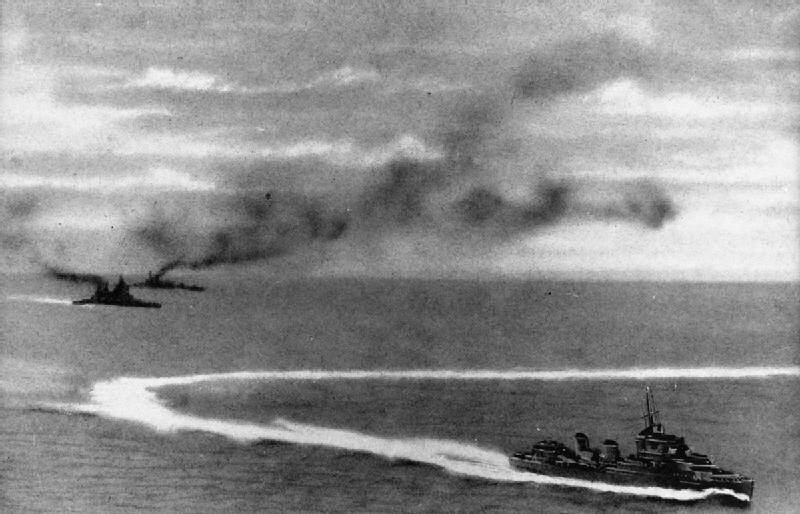
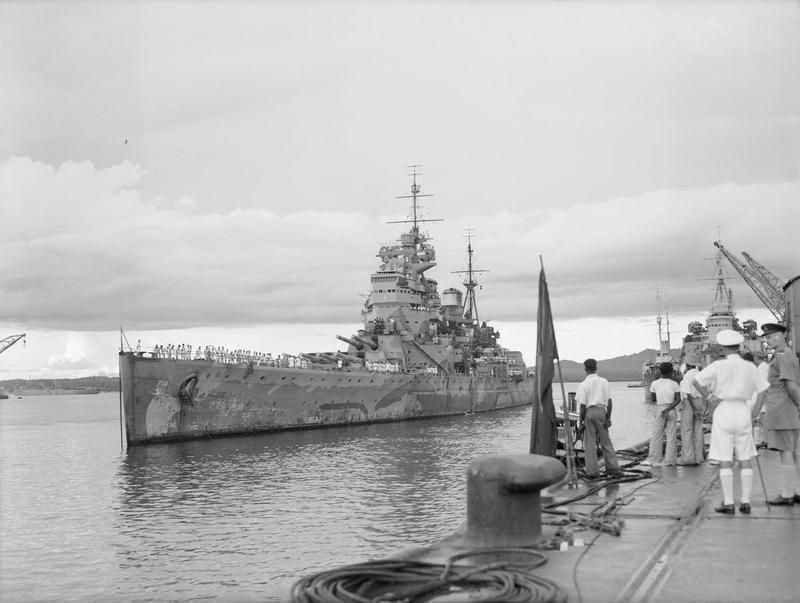
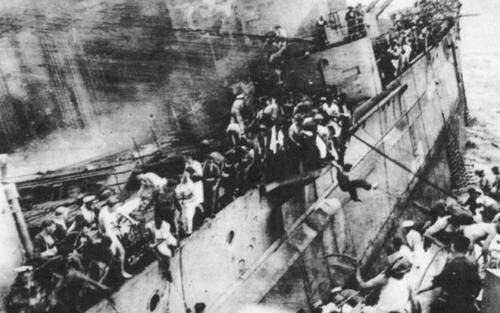
Throughout history there have been times that commanders have sacrificed themselves and the forces under their command for no good reason. One of the most futile of these instances occurred on December 10th 1941 when Force Z, commanded by Admiral Tom Phillips went into action against Japanese Air Forces off the Malay coast.

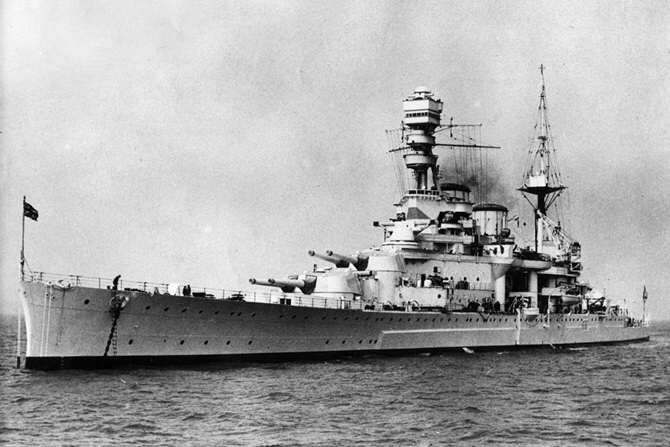
HMS Repulse (above) and HMS Prince of Wales (below)

The task force, composed of the new battleship HMS Prince of Wales, and the battlecruiser HMS Repulse had only recently arrived in the Far East. They had been ordered there by Winston Churchill, against the advice of the Admiralty, and other leaders of the Commonwealth. They were to be accompanied by the aircraft carrier HMS Indomitable. However, the new carrier had been damaged by grounding at Jamaica in November 1941. Even without the grounding incident it is unlikely that Indomitable could have reached Singapore in time to join the task force and provide it with the air cover necessary for its survival.

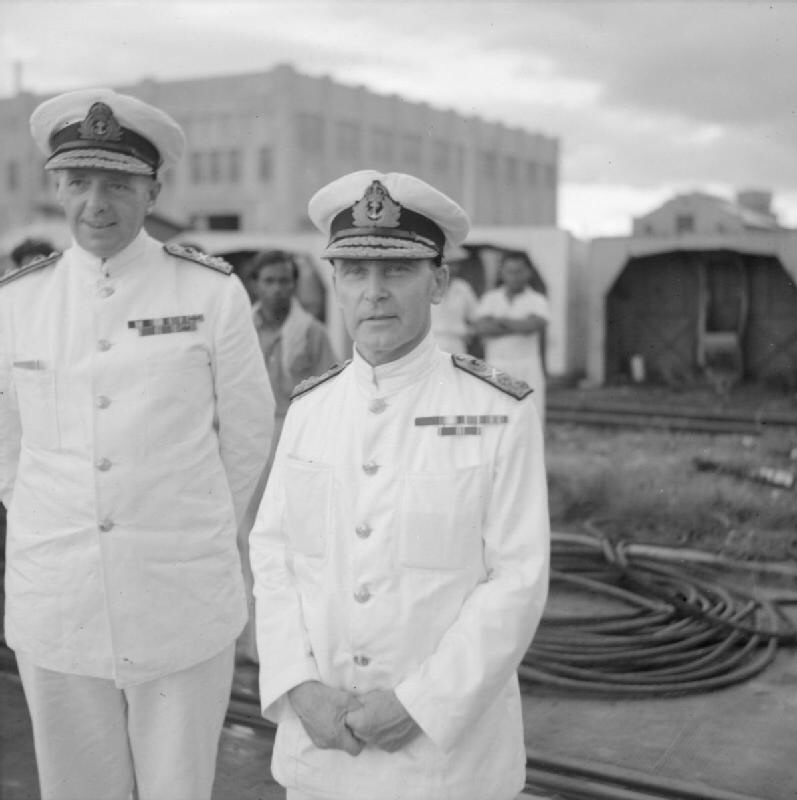
Admiral Tom Phillips (R) at Singapore

The Commander of Force Z, Admiral Phillips was considered by many in the Royal Navy to be a “desk Admiral.” He had held few sea commands and never commanded a surface force in combat. However, he had served as Naval Advisor to King George VI, and had gained the attention and favor of Winston Churchill while serving as Deputy Chief of the Naval Staff. Churchill had him appointed as Acting Vice Admiral and later Acting Admiral to command what would become known as Force Z.

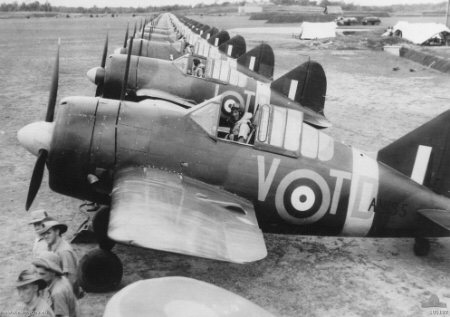
His task force arrived at Singapore on December 2nd 1941. When the Japanese attacked on December 8th (to Americans December 7th due to the International Date Line) Phillips decided to sortie to intercept and sink Japanese transports and their escorts. In doing so Phillips fell into a Japanese trap and made it worse by valuing radio silence over air support. He refused to contact or coordinate his moments with the one fighter squadron assigned to support him, No. 453 Squadron, Royal Australian Air Force.

No. 453 Squadron (RAAF) Brewster Buffaloes

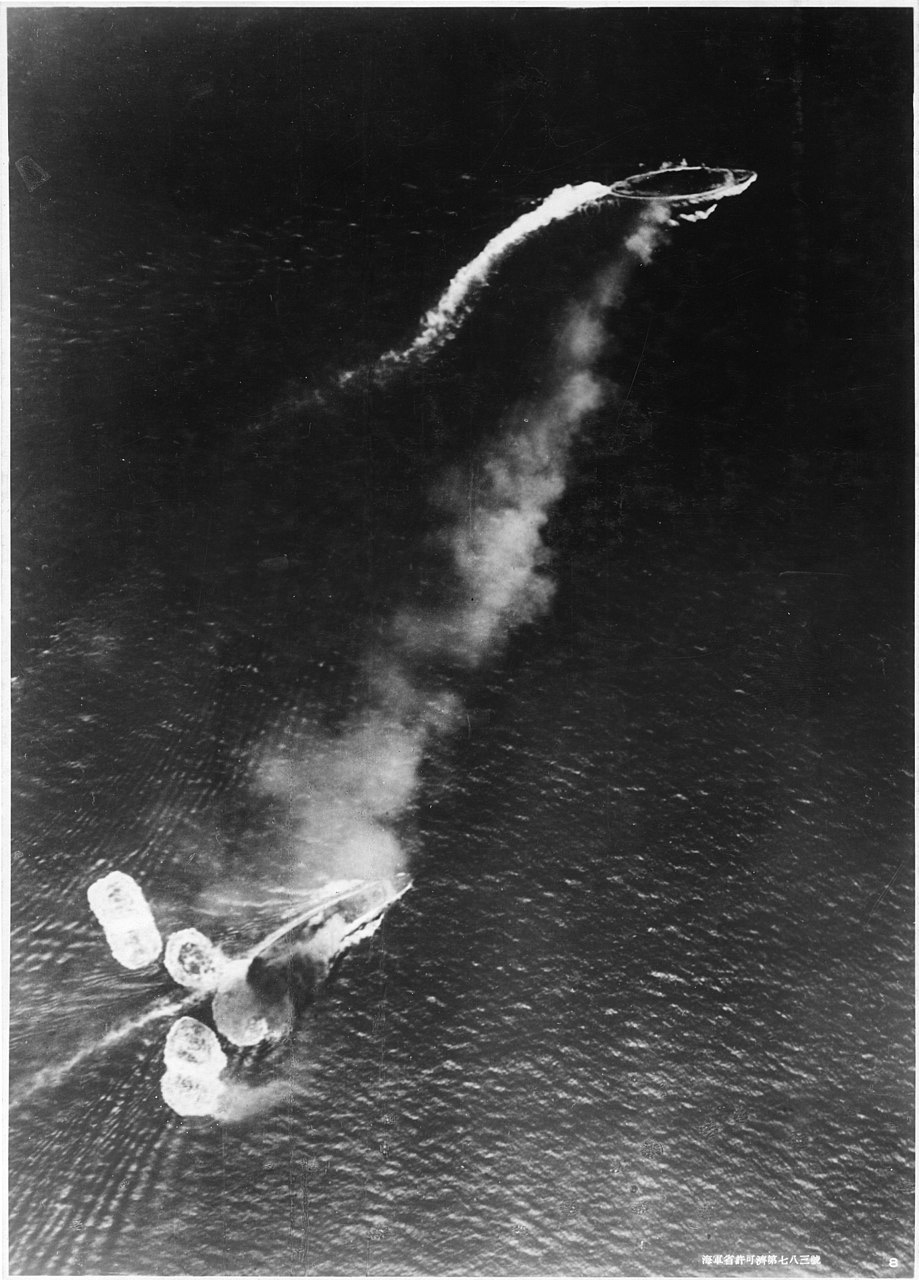
Disregarding the experience of the Royal Navy in the Mediterranean, Phillips held air power in contempt, believing it not to be a threat to surface forces, and committed his task force to battle without air support. The result was predictable. Both Prince of Wales and Repulse were sent to the bottom of the ocean in under two hours. Hundreds of sailors lost their lives, including Admiral Phillips. They sank no enemy transports, no enemy warships, and downed no enemy aircraft. But even with the support of the 10 Brewster Buffaloes of 453 Squadron, it is highly unlikely that the ships could have survived the Japanese onslaught; Phillips’s decision to sail into harm’s way doomed the fleet, just as much as Churchill’s decision to send it to Singapore did.

It was a complete waste of lives and two fine fast Battleships which could have provided excellent service with Aircraft Carriers of the U. S. Pacific Fleet, had they been sent to Australia and then on to the South Pacific rather than Singapore. But Churchill could not see this, and Phillips was even more myopic. Phillips had never served in combat and his task for would have been better served by a commander like Admiral James Somerville who had commanded a force of carriers, fast Battleships, and cruisers in combat against an enemy who often had air supremacy.

HMS Prince of Wales being Abandoned

Phillips, to be sure was a gallant an honorable man, but he was not up to the task that he was appointed by Churchill to accomplish. As a result, the Royal Navy lost both the Prince of Wales and Repulse, as well as hundreds of gallant and experienced sailors.

As for me, a historian and Naval Officer, it is one of the few operations of the Second World War that brings my anger to a boiling point every time that I think about it. There was no strategic, operational, or tactical benefit to it. Churchill would have been better off to keep the ships in the Atlantic or the Western Indian Ocean. He might have received some political criticism, but what would have that been to the loss of these ships for no strategic, operational, or tactical gain?

So, with that in mind and with the possibility that the Chinese Navy could surprise the United States Navy in the South China Sea, I bid you an unsettled night.

Peace,

Padre Steve+

4 Comments

Filed under History, Military, Navy Ships, World War II at Sea

Remembering the Rape of Nanking

Friends of Padre Steve’s World,

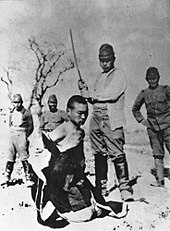
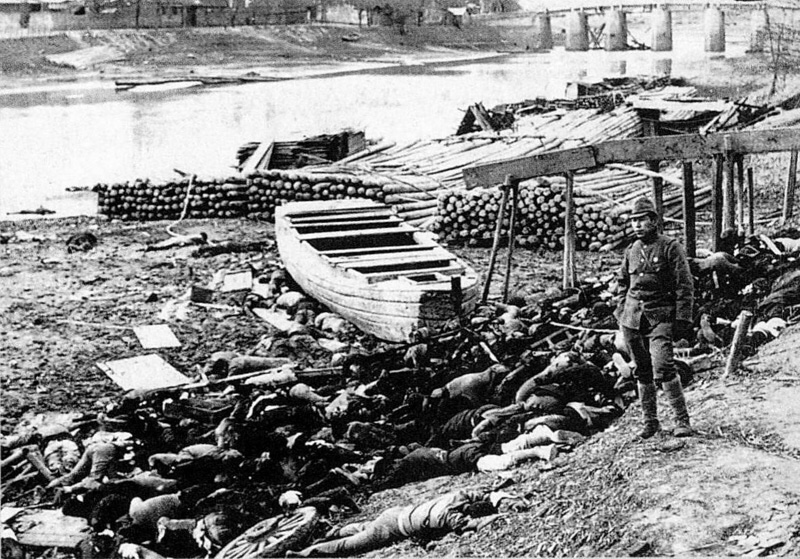
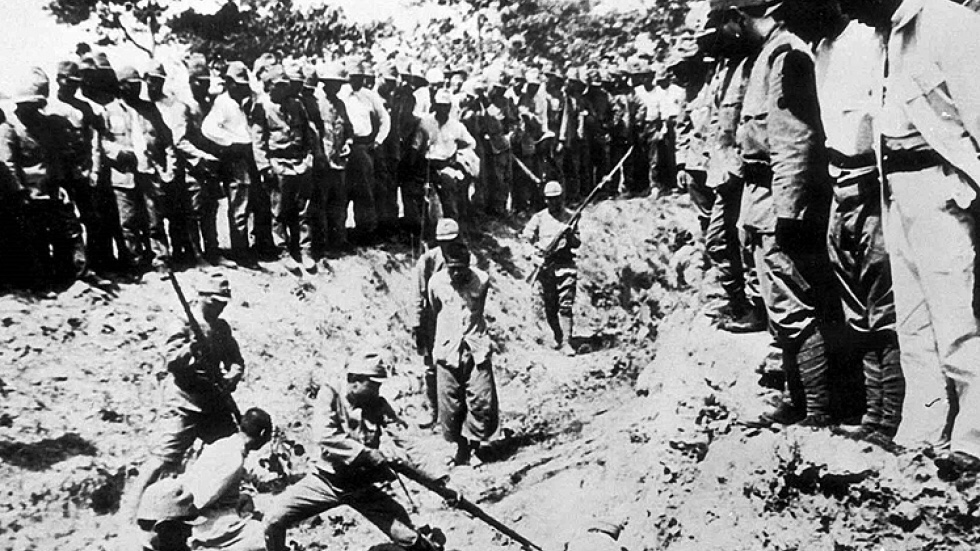
Eighty-one years ago Japanese Army troops under the command of Lieutenant General Asaka Yasuhiko launched an attack on the Nationalist Chinese defenders of the city of Nanking. That attack and the subsequent occupation led to one of the most heinous displays of inhumanity and war crimes in modern history. As a single event it ranks as high or higher than any single event directed at one city during the Nazi Holocaust against the Jews. 

Not long after I started this blog I wrote an article on the Rape of Nanking. The event which occurred in 1937 was one of the most extensively documented war crimes in modern history. But despite that there are many, especially those of Japanese political right who deny that the event ever occurred and if if atrocities happened in Nanking it was the Chinese government which carried them out. It is amazing that I still get comments from such people on that original article. The critics are war crime deniers who are no better than Holocaust deniers. 

Since many of my newer readers might have never seen that article I am re-posting it today. 

Please note, many of the pictures in this article are quite disturbing.

Have a good day,

Peace

Padre Steve+

The historical controversy regarding the Rape of Nanking in 1937 by the Japanese Army is hotly debated.[1] The massacres occurred in the initial occupation of the city and the two months following in mid December 1937.  The initial reaction to the actions of the Japanese was reported by western journalists and even a German Nazi Party member by the name of John Rabe who assisted in protecting Chinese during the massacre and reported it on his return to Germany. The actions of the Japanese Army shocked many in the west and helped cement the image of the Japanese being a brutal race in the west.

Victims of the Japanese Atrocities

The controversy’s visibility was raised since the 1997 publication of Iris Chang’s The Rape of Nanking. However, with few exceptions the incident had received little attention by Western historians until Chang’s book was published. The reason for this was  that  China was a sideshow for for the United States and Britain throughout much of the war. When Chiang Kai Shek’s Nationalists were overthrown by the Communists in 1948 the incident disappeared from view in the United States. The  United States government  reacted to the overthrow of Chaing by helping to rebuild Japan and rehabilitate the Japanese while opposing the Chinese Communists.  In fact it was only “after the Cold War was the Rape of Nanking Openly discussed.”[2]

Chinese Children Murdered at Nanking

Chang’s book was instrumental as it brought new attention to the actions of the Japanese Army in the slaughter of Prisoners of War and civilians following the occupation of the city.  Even as Chang’s work was published “revisionist” works began to appear in the 1980s which have either denied the atrocities, sought to minimize numbers killed by Japanese Forces or rationalized the them began to appear in Japan. The revisionists were led by Masaaki Tanaka who had served as an aide to General Matsui Iwane the commander of Japanese forces at Nanking.  Tanaka denied the atrocities outright calling them “fabrications” casting doubt upon numbers in the trial as “propaganda.” He eventually joined in a lawsuit against the Japanese Ministry of Education to remove the words “aggression” and “Nanjing massacre” from textbooks, a lawsuit which was dismissed but was influential to other revisionists and Japanese nationalist politicians and publishers.[3]

Japanese Troops Engaged in Killing

Most early accounts of the occupation and war crimes have used a number of 200,000 to 300,000 victims based upon the numbers provided during the War Crimes Trials of 1946.[4] Unlike the numbers of victims of the Nazi Holocaust the numbers are less accurate.  Authors who maintain the massacres such as Chang and others such as Japanese military historian Mashario Yamamoto who admits Japanese wrongdoing and excess but challenges the numbers use the same statistical sources to make their arguments.  Chang not only affirms the original numbers but extrapolates that even more may have been killed as a result of the disposal of bodies in the Yangtze River rather than in mass graves away from the city as well as the failure of survivors to report family member deaths to the Chinese authorities.[5] She also notes contemporary Chinese scholars who suggest even higher numbers.

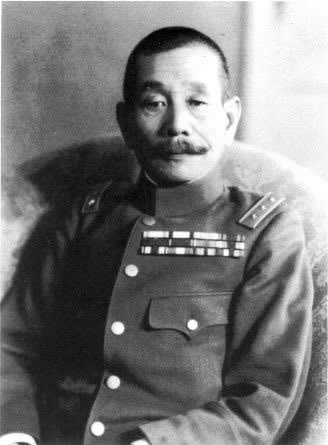
Prince Asaka (above) and General Matsui (below)

Herbert Bix discussed Japanese knowledge of the atrocities in detail up and down the chain of command including Prince Asaka, granduncle of Emperor Hirohito who commanded troops in Nanking, the military and Foreign Office, and likely even Hirohito himself.[6]

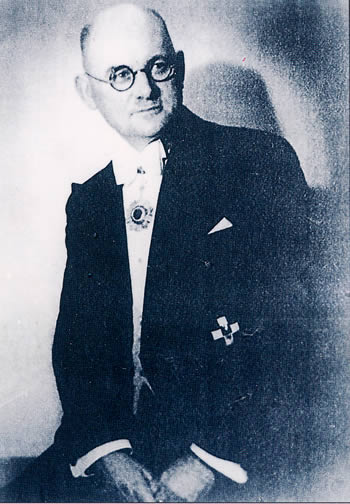
German National and Nazi Party Member John Rabe, protected Chinese at Nanking and reported what he witnessed to the German Government.  He is known as “The Good Man of Nankin.

The publication Rabe’s diaries in 2000, entitled, The Good Man of Nanking, provided an additional first hand account by a westerner who had the unique perspective of being from Japan’s ally Nazi Germany.  His accounts buttress the arguments of those like Chang who seek to inform the world about the size and scope of Japanese atrocities in Nanking. In his diary, Rabe wrote:

Two Japanese soldiers have climbed over the garden wall and are about to break into our house. When I appear they give the excuse that they saw two Chinese soldiers climb over the wall. When I show them my party badge, they return the same way. In one of the houses in the narrow street behind my garden wall, a woman was raped, and then wounded in the neck with a bayonet. I managed to get an ambulance so we can take her to Kulou Hospital … Last night up to 1,000 women and girls are said to have been raped, about 100 girls at Ginling College … alone. You hear nothing but rape. If husbands or brothers intervene, they’re shot. What you hear and see on all sides is the brutality and bestiality of the Japanese soldiers.

Rabe was responsible for the survival of close to 200,000 Chinese.

Dr. Robert O. Wilson, an American physician in Nanking wrote:

The slaughter of civilians is appalling. I could go on for pages telling of cases of rape and brutality almost beyond belief. Two bayoneted corpses are the only survivors of seven street cleaners who were sitting in their headquarters when Japanese soldiers came in without warning or reason and killed five of their number and wounded the two that found their way to the hospital.

Let me recount some instances occurring in the last two days. Last night the house of one of the Chinese staff members of the university was broken into and two of the women, his relatives, were raped. Two girls, about 16, were raped to death in one of the refugee camps. In the University Middle School where there are 8,000 people the Japs came in ten times last night, over the wall, stole food, clothing, and raped until they were satisfied. They bayoneted one little boy of eight who [had] five bayonet wounds including one that penetrated his stomach, a portion of omentum was outside the abdomen. I think he will live.

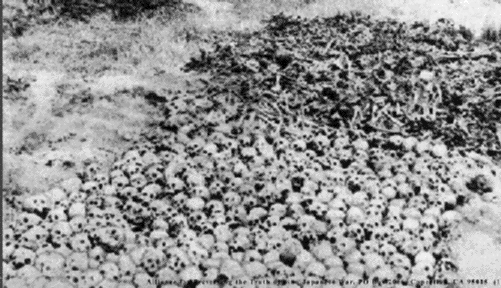
A Field of Skulls at Nanking

The Legation Secretary of the German Embassy wrote to the Foreign Ministry In Berlin:

On December 13, about 30 soldiers came to a Chinese house at No. 5 Hsing Lu Koo in the southeastern part of Nanking, and demanded entrance. The door was open by the landlord, a Mohammedan named Ha. They killed him immediately with a revolver and also Mrs. Ha, who knelt before them after Ha’s death, begging them not to kill anyone else. Mrs. Ha asked them why they killed her husband and they shot her. Mrs. Hsia was dragged out from under a table in the guest hall where she had tried to hide with her 1 year old baby. After being stripped and raped by one or more men, she was bayoneted in the chest, and then had a bottle thrust into her vagina. The baby was killed with a bayonet. Some soldiers then went to the next room, where Mrs. Hsia’s parents, aged 76 and 74, and her two daughters aged 16 and 14 [were]. They were about to rape the girls when the grandmother tried to protect them. The soldiers killed her with a revolver. The grandfather grasped the body of his wife and was killed. The two girls were then stripped, the elder being raped by 2–3 men, and the younger by 3. The older girl was stabbed afterwards and a cane was rammed in her vagina. The younger girl was bayoneted also but was spared the horrible treatment that had been meted out to her sister and mother. The soldiers then bayoneted another sister of between 7–8, who was also in the room. The last murders in the house were of Ha’s two children, aged 4 and 2 respectively. The older was bayoneted and the younger split down through the head with a sword

Yamamoto who is a military historian by trade and is viewed as a “centrist” in the debate, places the massacres in the context of Japanese military operations beginning with the fall of Shanghai up to the capture of Nanking. Yamamoto criticizes those who deny the massacres but settles on a far lower number of deaths, questioning the numbers used at the War Crimes Trials. He blames some on the Chinese Army[7] and explains many others away in the context of operations to eliminate resistance by Chinese soldiers and police who had remained in the city in civilian clothes. He  claims that  “the Japanese military leadership decided to launch the campaign to hunt down Chinese soldiers in the suburban areas because a substantial number of Chinese soldiers were still hiding in such areas and posing a constant threat to the Japanese.”[8] David Barrett in his review of the Yamamoto’s work notes that Yamamoto believes that “there were numerous atrocities, but no massacre….”[9] Yoshihisa Tak Mastusaka notes that while a centrist Yamamoto’s work’s “emphasis on precedents in the history of warfare reflects an underlying apologist tone that informs much of the book.”[10] 

Revisionist work also criticizes the trials surrounding Nanking and other Japanese atrocities.  An example of such a work is Tim Maga’s Judgment at Tokyo: The Japanese War Crimes Trials which is critiqued by historian Richard Minear as “having a weak grasp of legal issues” and “factual errors too numerous to list.”[11]Such is a recurrent theme in revisionist scholarship, the attempt to mitigate or minimize the scale of the atrocities, to cast doubt upon sources and motivations of their proponents or sources, to use questionable sources themselves or to attribute them to out of control soldiers, the fog of war and minimize command knowledge as does Yamamoto. Politics is often a key motivating factor behind revisionist work.

General Matsui Riding into Nanking

But the testimony of General Matsui before and after the war crimes trials in which he was convicted and sentenced to death is illuminating, and exposes the lies of the revisionists for what they are. Matsui confessed to one of his aides:

“I now realize that we have unknowingly wrought a most grievous effect on this city. When I think of the feelings and sentiments of many of my Chinese friends who have fled from Nanjing and of the future of the two countries, I cannot but feel depressed. I am very lonely and can never get in a mood to rejoice about this victory … I personally feel sorry for the tragedies to the people, but the Army must continue unless China repents. Now, in the winter, the season gives time to reflect. I offer my sympathy, with deep emotion, to a million innocent people.”

During his war crimes trial Matsui testified:

The Nanjing Incident was a terrible disgrace … Immediately after the memorial services, I assembled the higher officers and wept tears of anger before them, as Commander-in-Chief … I told them that after all our efforts to enhance the Imperial prestige, everything had been lost in one moment through the brutalities of the soldiers. And can you imagine it, even after that, these officers laughed at me … I am really, therefore, quite happy that I, at least, should have ended this way, in the sense that it may serve to urge self-reflection on many more members of the military of that time.

Iris Chang

Chang would never be the same after researching and writing the Rape of Nanking. Traumatized by what she had learned and burdened by the weight of what she had taken on she killed herself on November 9th 2004.

A Chinese Woman with a Bayonet in her Vagina

“Revisionist” history will almost certainly remain with us, so long as people study the past.  However one has to be careful in labeling a divergent view of a historical subject as necessarily revisionist.  There are occasions when new evidence arises and a “new” or “revisionist” work may actually disprove previous conclusions regarding historic events or persons.  This might occur when what we know about a subject comes from a single or limited number of sources who themselves were limited in what they had available for research and new evidence comes to light. At the same time where numerous sources from diverse points of view attest to the genuineness of an event, the revisionist’s theses should be themselves scrutinized based on evidence presented as well as their political, ideological or racial motivations.  While one does not want to silence voices of opposition to prevailing beliefs one has to be careful in examining their claims, especially when they arise in the context of political or ideological conflicts.

Notes

[1] Bix, Herbert P. Hirohito and the Making of Modern Japan, Harper Collins Publishers, New York, NY 2000. pp.333-334. Bix does a good job explaining the number of victims of the incident drawing on Chinese and Japanese sources.

[2] Kreuter, Gretchen. The Forgotten Holocaust in The Bulletin of Atomic Scientists, March-April 1998 p.66

[3] Fogel, Joshua A. The Nanjing Massacre in History and Historiography, University of California Press, Berkley CA 2000, pp.87-89

[4] Toland, John. The Rising Sun: The Rise and Fall of the Japanese Empire 1936-45. Random House, New York, NY 1970 pp. 50-51. Toland in his brief discussion of the massacres notes both the civilian casualty figures and figures for male citizens of military age who were slaughtered.  Toland also notes the large numbers of women raped by Japanese soldiers.

[5] Chang, Iris. The Rape of Nanking: The Forgotten Holocaust of World War II Penguin Books, New York, NY 1997 pp.102-103. Chang has been criticized by some historians in a number of ways including that she was not a historian, that she compares the atrocities to the Nazi Holocaust and her emotional attachment to the subject which may have been a contributing factor in her 2004 suicide.

[6] Bix. p.336

[7] Yamamoto, Masahiro. The Rape of Nanking: Anatomy of an Atrocity. Praeger Publishers an imprint of the Greenwood Group, Westport, CT 2000. http://site.ebrary.com/lib/apus/docDetail.action?docID=10018001&p00=nanking  p.83

[8] Ibid. p.92.

[9] Barrett, David P.  Review of The Rape of Nanking: Anatomy of an Atrocity by Masashiro Yamamoto Canadian Journal of History/Annales canadiennes d’Histoire XXXVIII, April/Avril 2003 p.170

[10] Mastusaka, Yoshihisa Tak.  Review of The Rape of Nanking: Anatomy of an Atrocity by Masashiro Yamamoto American Historical Review, April 2002 p.525

[11] Minear, Richard. Review of Judgment at Tokyo: The Japanese War Crimes Trials by Tim Mata  American Historical Review. April 2002 p.526

2 Comments

Filed under History, Military, war crimes, world war two in the pacific

The Heroic Navy Salvage Drivers of Pearl Harbor

Friends of Padre Steve’s World,

One of the more interesting aspects of the Pearl Harbor attack were the efforts of the US Navy to salvage and return to duty the ships sunk or so heavily damaged that they were thought to be irreparable after the attack. 19 ships were sunk or damaged during the attack, or roughly 20% of the fleet present on December 7th 1941. Unlike other great feats of maritime salvage like that of the German Fleet at Scapa Flow after the First World War, this massive effort led to the majority of the ships being returned to an operational status for further service in the war.

I first learned about the dangers of the salvage operations when I visited Pearl Harbor on an NJROTC cadet training cruise in the spring of 1978. During the week we spent in Pearl between the outbound leg on the USS Frederick LST-1184 and our return to California aboard the USS Gray FF-1054, we had a visit with the Navy dive team stationed at Pearl Harbor. They explained how they did their jobs as well as the dangers still encountered diving on the wreck of the USS Arizona.

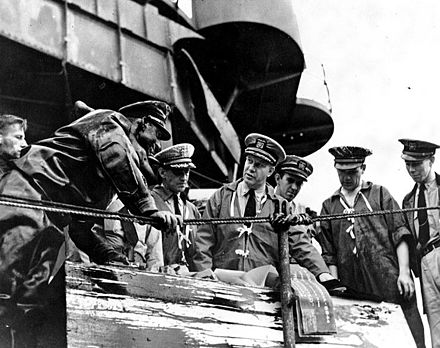
Captain Homer Wallin directing Salvage Operations

Many people know something about the attack, but one of the most remarkable aspects of it was the effort to salvage the fleet in the months following the attack. Under the leadership of Captain Homer N. Wallin teams of Navy and civilian divers from the Pacific Bridge Company worked day and night to salvage the sunken ships. The divers spent over 20,000 man hours under water in the highly hazardous waters; which were filled with unexploded ordinance, and contaminated by fuel and sadly decomposing human bodies. Wallin wrote: 

The scene to the newcomer was foreboding indeed. There was a general feeling of depression throughout the Pearl Harbor area when it was seen and firmly believed that none of the ships sunk would ever fight again.” 

The divers wore were rubberized coveralls with gloves. The divers were equipped with a lead-weighted belt which weighed 84 pounds and lead-weighted shoes, each of which weighed 36 pounds. Each diver wore a copper helmet attached to a breastplate. Air was supplied through a hose which was attached to the helmet and ran up to a compressor monitored by men on the surface.

The work was extremely hazardous, the wrecked ships contained numerous hazards, any of which could cut his air hose and cause his death, and they also contained highly toxic gasses. They often worked in total darkness and had to communicate with the men on the surface via a telephone cable. The divers had to be exceptionally talented to and needed a great amount of coordination senses and balance to work with welding torches, suction hoses, and heavy equipment in the confines of the shattered ships. During the salvage operations a number of divers lost their lives.

Before the ships could be raised ammunition, including the massive 14 and 16 inch shells weighing anywhere from 1300 to 2000 pounds each, Japanese bombs and torpedoes, fuel oil, gasoline, electrical equipment and batteries, weapons, and whenever possible the bodies of the entombed crews had to be removed, and then every hole had to be patched to make them buoyant. After the ships were raised cleanup crews had to go aboard and clear the ships of other hazardous waste as repair crews began their work to repair the basic systems needed to get the ships to West Coast shipyards for the major overhauls, The herculean effort was one of the greatest engineering feats in maritime history.

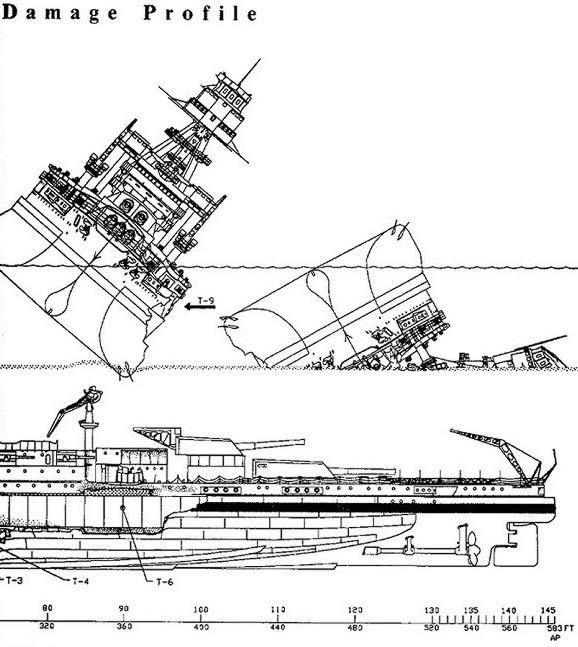
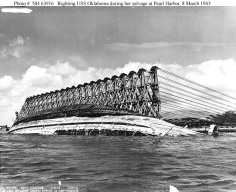
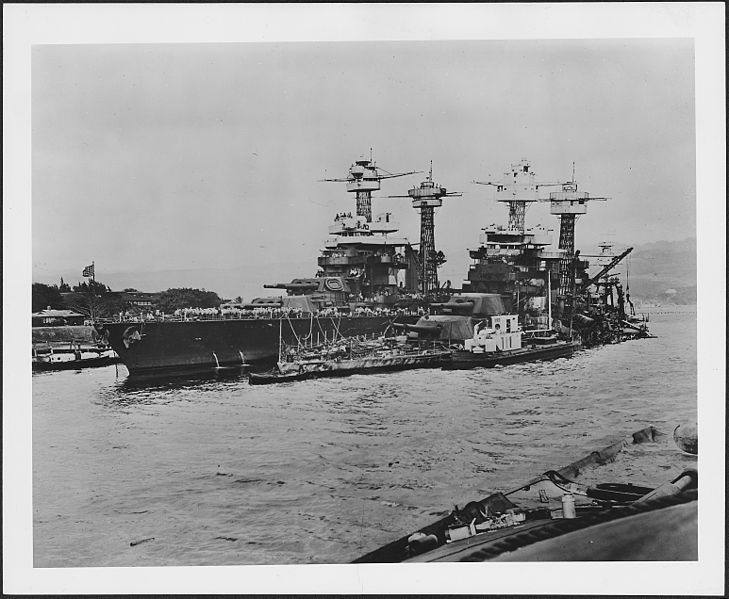
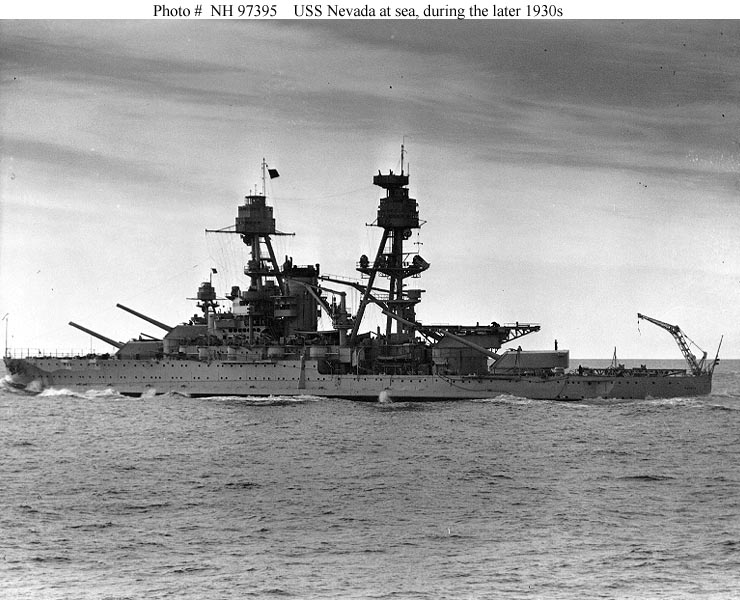
Of these were battleships, the USS Arizona sunk by a cataclysmic explosion, her broken hulk with her collapsed foremast the iconic symbol of the attack. USS Oklahoma was capsized on Battleship Row.  USS Nevada was grounded and sunk off Hospital Point after an abortive attempt to sortie during the attack. USS California and USS West Virginia lay upright on the bottom of Pearl Harbor, their superstructure, distinctive cage masts and gun turrets visible above the oily water.

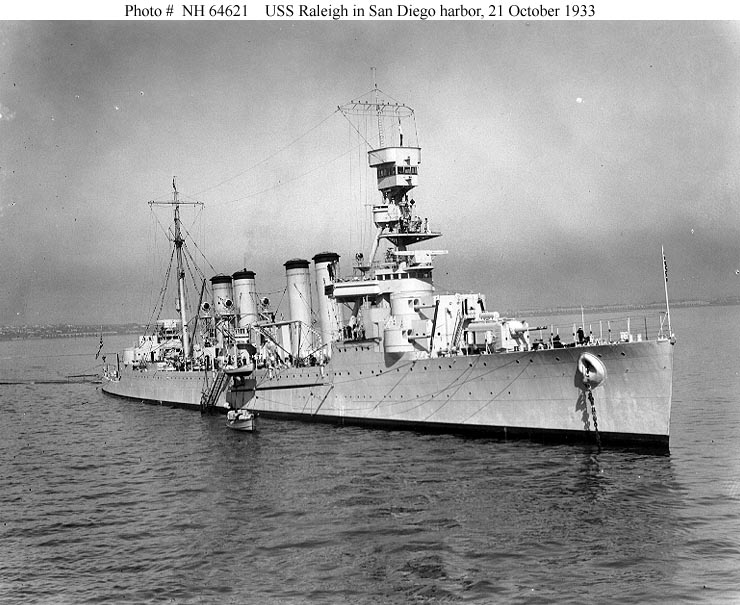
The former battleship USS Utah lay capsized on the far side of Ford Island while the light cruiser USS Raleigh was fighting for her life barely afloat near Utah.  The ancient Minelayer USS Oglala was laying on her side next to the light cruiser USS Helena at the 1010 Dock. She was not hit by a bomb or torpedo but was said to have “died of fright” when Helena was hit by a torpedo, the blast which opened the seams of her hull. The destroyers USS Cassin and USS Downes were wrecks in the main dry dock. USS Shaw was minus her bow in the floating dry dock after exploding in what was one of the more iconic images of the attack. Other ships received varying amounts of damage.

As the engineers, damage control and salvage experts looked at the damage they realized that every ship would be needed for the long term fight. The building program of the US Navy was just beginning to pick up steam and it would be some time before new construction could not only make up for the losses but also be ready to fight a Two Ocean War. The decision was made to salvage and return to duty any ship deemed salvageable.

Even the seemingly less important ships needed to be rapidly salvaged. Some which initially appeared to be unsalvageable needed at the minimum to be cleared from dry docks and docks needed by operational or less damaged ships. Likewise equipment, machinery and armaments from these ships needed to be salvaged for use in other ships.

Even by modern standards the efforts of the Navy divers and salvage experts and the civilians who worked alongside them were amazing. In the end only three of the 19 ships never returned to service. The work began quickly and on December 14th Commander James Steele began to direct the salvage operations on the sunken hulks. Captain Wallin relieved Steele on January 9th 1942. Wallin formed a salvage organization of Navy officers and civilian contractors. The civilian contractors were instrumental in the operation. Many of the civilians had experience in salvage operations, or underwater construction efforts, such as working on the Golden Gate Bridge which often exceeded the experience of the Navy divers.

The divers recovered bodies whenever possible, salvaged equipment, removed weapons and ammunition, made temporary repairs and help rig the ships for righting or re-floating. In each case the salvage experts, divers and engineers faced different challenges.

Arizona was never raised. Her superstructure was cut down, main battery and some anti-aircraft guns removed. The main batter guns were delivered to the Army Coastal Artillery for use as shore batteries but none reached an operational status before the end of the war. The dives aboard were so dangerous that eventually the attempts to recover bodies ceased as several divers lost their lives in the wreck.  Over the years the National Parks Service has continued to dive on the wreck to assess it as a war grave and memorial.

Utah too was not raised. She was righted in 1942 but efforts to do more were halted because the elderly wreck had no remaining military value. Her wreck along with that of Arizona are war graves, many of their crew members, including over 1000 of Arizona’s men forever remain entombed in their ships. When I visited Pearl Harbor in 1978 as a Navy Junior ROTC Cadet and visited both memorials I was humbled at what I saw. They are haunting reminders of the cost paid by sailors during wartime.

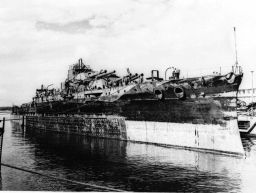
Nevada was the first major ship salvaged. She was re-floated in February 1942 and after temporary repairs sailed to the West Coast on her own power. After repairs and a significant modernization of her anti-aircraft systems was complete she returned to action in 1943 in the invasion of Attu Alaska. She participated in many amphibious operations including Normandy, Southern France, Iwo Jim and Okinawa. She survived the Atomic Bomb tests in 1946 but wrecked and radioactive she was sunk as a target off Hawaii in 1948.

The salvage of the Oklahoma was one of the more challenging endeavors faced by Wallin’s men. Hit by at least five torpedoes during the attack the great ship capsized, her tripod masts digging deep into the mud of the harbor as she settled. Over 400 over her crew lay dead inside the ship. Since it was apparent that the ship was a total loss the salvage operations did not commence until the middle of 1942. The primary goal of the operation was to clear needed space for berthing large ships along Battleship Row. The operation involved making the ship as watertight as possible, solidifying the bottom of the harbor around her to enable her to roll and emplacing a massive system of righting frames, anchor chains and shore mounted winches and cables. The process involved cutting away wrecked superstructure, removing ammunition, weapons and the bodies of those entombed in their former home. She was completely righted in July 1943, and floated again in November. Moved to a dry dock in December she was made watertight and moored in another part of the harbor. Following the war she was being towed to a scrap yard but sank in a storm in May 1947.

California was raised in March and after temporary repairs sailed under her own power to the West Coast. Her repairs and modernization were a major undertaking. Fully reconditioned and modernized to standards of most modern battleships she returned to service in January 1944. She served in retaking Saipan, Guam, Tinian, as well as Leyte Gulf were she had a significant part in the Battle of Surigao Strait. Hit by a Kamikaze she was repaired and returned to action at Okinawa and support the occupation operations of the Japanese Home Islands. She was decommissioned in 1947 and sold for scrapping in 1959.

West Virginia suffered the most severe damage of the battleships returned to duty. She was raised in July 1942 and after repairs sailed to Puget Sound Naval Shipyard. Like California she was completely rebuilt and returned to action in October 1944 in time to take the lead role in destroying the Japanese Battleship Yamashiro. She served throughout the remainder of the war in the Pacific at Iwo Jima, Okinawa and the occupation of Japan.

The Mahan Class destroyers Cassin and Downes were so badly damaged sitting in the Dry Dock Number One with Pennsylvania so that initially they were believed beyond salvage. However after closer inspection it was determined that the hull fittings, main weapons systems and propulsion machinery on both ships were worth salvaging. These items were removed, shipped to Mare Island Naval Shipyard and installed on new hulls being constructed. The hulks of the old ships were scrapped at Pearl Harbor. Those ships were commissioned as the Cassin and Downes and served throughout the war.

Both were decommissioned in 1945 and scrapped in 1947. Their sister ship Shaw which had blown up in the floating dry dock was wrecked from her bridge forward. However the rest of the ship including her engineering spaces were intact. A temporary bow was fashioned and the ship sailed to Mare Island under her own power. Completely overhauled she was back in service by July 1942. She was decommissioned in 1945 and scrapped in 1946.

The ancient minelayer Oglala was raised in July and sent back to the West Coast where she was repaired and recommissioned as an internal combustion engine repair ship. She survived the war was decommissioned and transferred to Maritime Commission custody. She was a depot ship at the Suisun Bay Reserve Fleet until 1965 when she was sold for scrap.

If you are interested, Captain Wallin’s complete report can be read here:

https://www.history.navy.mil/content/dam/nhhc/research/library/online-reading-room/war-and-conflict/wwii/pearl-harbor/pearlharborwallin/d767_92_w3.pdf

The salvage feat to return these ships to duty was one of the most remarkable operations of its type ever conducted. Not only were most of the ships salvaged but most returned to duty. While none survive today many played key roles during the war. Artifacts of some of the ships are on display at various Naval Bases, Museums and State Capitals. They, their brave crews, and the Navy Divers and civilian diving and salvage experts who conducted this task exhibited the finest traditions of the US Navy. The successors of the Navy divers at Mobile Diving Salvage Units One and Two still carry on that tradition today.

Peace

Padre Steve+

Leave a comment

Filed under History, Military, Navy Ships, US Navy, World War II at Sea, world war two in the pacific

The Ships at Pearl Harbor, December 7th 1941: A Brief History of Each Ship

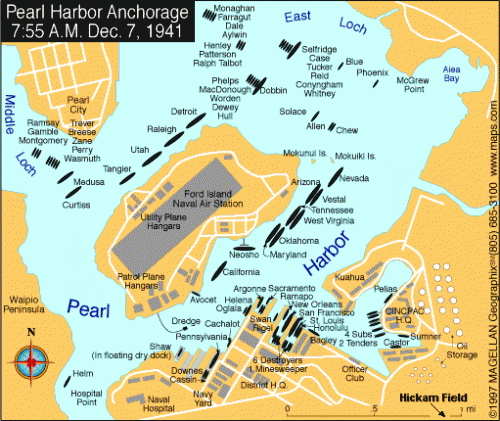
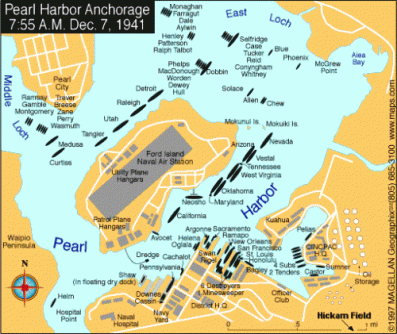
harbrmap1

Friends of Padre Steve’s World,

The attack on Pearl Harbor is one of the seminal moments in the history of the United States where at one time the nation rose up as one to the challenge of an attack against it and against its armed forces. Sadly, for most Americans today no matter what their political ideology the concept of coming together in a crisis is a foreign and possibly even a hateful idea.

However, in December 1941 the Pacific Fleet of the United States Navy was attacked at Pearl Harbor of the nation came together as it never had before. On the morning of December 7th 1941 there were over ninety ships of the Pacific Fleet at Pearl Harbor. While over twenty percent of these ships were sunk or damaged in the attack, almost all returned to service in the war. Likewise, many of the surviving shipswere lost in action during the war. Only two ships or craft remain of the ships present on December 7th 1941, the tug USS Hoga and the Coast Guard Cutter USCG Taney which is now a museum ship in Baltimore Maryland. The rest, lost in action, sunk as targets or scrapped. Of the gallant men who served as their crews during the war and at Pearl Harbor very few remain. They are part of what we now refer as the “Greatest Generation.” 

In 1978 I had the opportunity to visit Pearl Harbor and visit the USS Arizona and USS Utah Memorials during what was a nearly three week long cruise and visit to Pearl Harbor while a Navy Junior ROTC Cadet.  I cannot forget forget that experience, as the visits to both memorials, sited above the wrecks of the two sunken ships in which more than 1000 Americans remain entombed to this day left a mark on me.

Today I remember all of the ships present, from the greatest to the most humble, as well as their gallant crews, many of whom were volunteers who had gone into service not long before the attack, because they believed that the nation was in danger who were present at Pearl Harbor on December 7th 1941. I also remember a government which though torn by by ideological differences decided to unite to meet the threat of advancing enemies even before they targeted the United States.

The fact ids that only two of the ships present at the Pearl Harbor attack are still afloat, and the vast majority of their crews have passed away. Very few survivors of that day of infamy remain and it is our sad task to keep reminding the nation and the world of the price of arrogance.

This is the story of the ships that were at Pearl Harbor that fateful morning of December 7th 1941.

Peace

Padre Steve+

A few years ago I wrote a piece called The Battleships of Pearl Harbor. I have added to it, and recently republished it. I followed that with an article entitled “Forgotten on the Far Side of Ford Island: The USS Utah, USS Raleigh, USS Detroit and USS Tangier.

Of course most anyone that has see either Tora! Tora! Tora! or Pearl Harbor is acquainted with the attack on “Battleship Row” and the airfields on Oahu.  What are often overlooked in many accounts are the stories of some of the lesser known ships that played key roles or were damaged in the attack.  Since none of the articles that I have seen have discussed all of the U.S. Navy ships at Pearl Harbor on that fateful morning I have taken the time to list all the ships with the exception of yard and patrol craft present at Pearl Harbor on December 7th, 1941.I have also excluded Coast Guard cutters in Honolulu. A brief account of each ship’s war service and final disposition is included.  I believe that this is the only site that has this information in a single article.

During the attack 18 ships were sunk or damaged but only three, Arizona, Oklahoma and Utah never returned to service.  During the war a further 18 ships were sunk or written off as losses during the war. All ships lost in the war are marked with an asterisk. One ship, the USS Castor remained in active service until 1968 serving in the Korean and Vietnam Wars. One ship, the Light Cruiser Phoenix was sunk in the Falklands War while serving as the Argentine ship General Belgrano. No U.S. Navy ships apart from the Yard Tug Hoga (not included in this article) remain today.  It is unfortunate that the Navy or any organization had the foresight to save one of these ships. It would have been fitting for one of the battleships that survived the war to be preserved as a memorial ship near the Arizona Memorial. While the USS Missouri serves this purpose symbolic of the end of the war it is a pity that no ship at Pearl Harbor was preserved so that people could see for themselves what these gallant ships was like.

Battleships
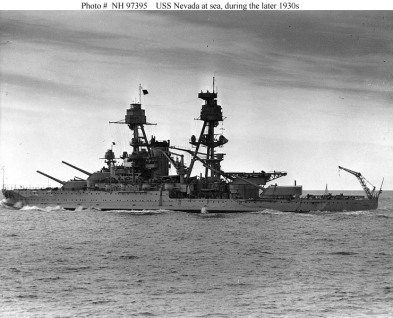
uss Nevadab36

Nevada (BB-36) Nevada was the only Battleship to get underway during the attack.  As she attempted to escape the harbor she was heavily damaged and to prevent her sinking in the main channel she was beached off Hospital Point.  She would be raised and returned to service by the May 1943 assault on Attu.  She would then return to the Atlantic where she would take part in the Normandy landings off Utah Beach and the invasion of southern France in July 1944.  She then returned to the Pacific and took part in the operations against Iwo Jima and Okinawa where she again provided naval gunfire support.  Following the war she would be assigned as a target at the Bikini atoll atomic bomb tests, surviving these she would be sunk as a target on 31 July 1948. She received 7 battle stars for her WWII service.
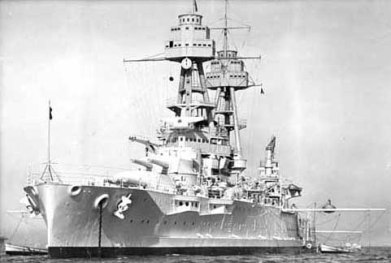
uss_oklahoma1

USS Oklahoma

*Oklahoma (BB-37) During the Pearl Harbor attack Oklahomawas struck by 5 aerial torpedoes capsized and sank at her mooring with the loss of 415 officers and crew. Her hulk would be raised but she would never again see service and sank on the way to the breakers in 1946.  She was awarded one battle star for her service during the attack.

USS Pennsylvania

Pennsylvania (BB-38) Pennsylvania was the Pacific Fleet Flagship on December 7th 1941 and was in dry dock undergoing maintenance at the time of the attack. Struck by two bombs she received minor damage and would be in action in early 1942. She underwent minor refits and took part in many amphibious landings in the Pacific and was present at the Battle of Surigo Strait.  Heavily damaged by an aerial torpedo at Okinawa Pennsylvania would be repaired and following the war used as a target for the atomic bomb tests. She was sunk as a gunnery target in 1948.  She received 8 battle stars for her WWII service.
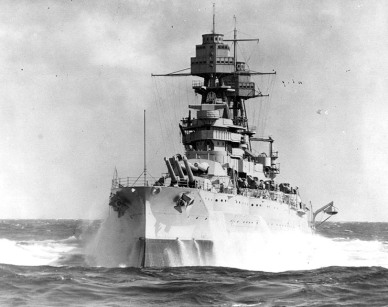
USS_Arizona_(BB-39)_-_1930s

The USS Arizona before the attack

*Arizona (BB-39) Arizona was destroyed during the attack.  Hit by 8 armor piercing bombs one of which penetrated her forward black powder magazine she was consumed in a cataclysmic explosion which killed 1103 of her 1400 member crew.  She was decommissioned as a war loss but her colors are raised and lowered every day over the Memorial which sits astride her broken hull.  She received one battle star for her service at Pearl Harbor.
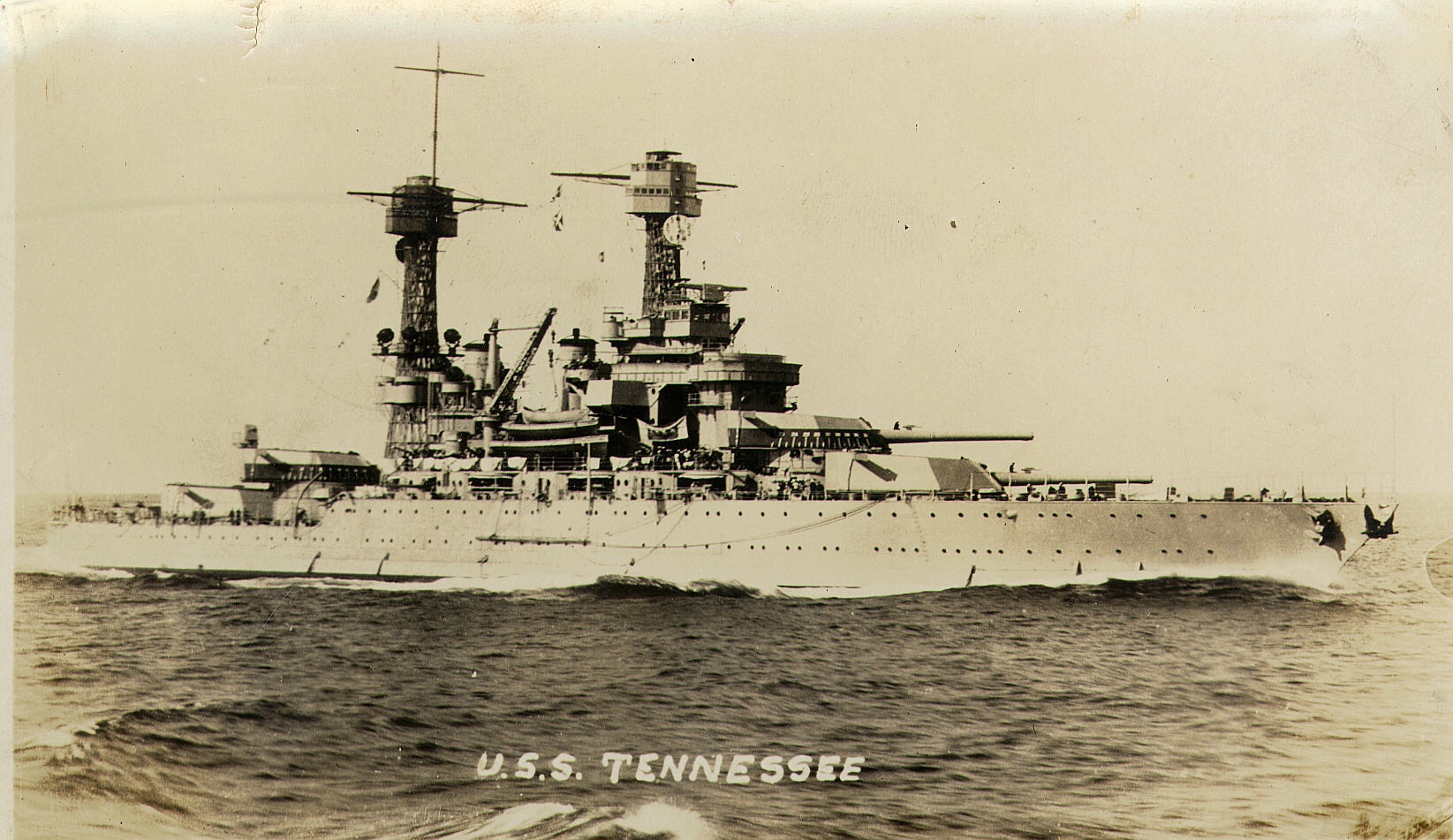
Tennessee (BB-43) Tennessee was damaged by two bombs and was shield from torpedo hits by West Virginia. After repairs she conducted operations in the Pacific until she reported to Puget Sound Naval Shipyard in August 1942 for a complete rebuild and modernized with the latest in radar, fire control equipment and anti-aircraft armaments. She returned to active service in May 1943. She provided Naval Gunfire support in numerous amphibious operations and was a key ship during the Battle of Surigo Strait firing in six-gun salvos to make careful use of her limited supply of armor-piercing projectiles, Tennessee got off 69 of her big 14-inch bullets before checking fire.  Her gunfire helped sink the Japanese Battleships Fuso and Yamishiro and other ships of Admiral Nishimura’s Southern Force.  She was damaged by a Kamikaze off Okinawa on 18 April 1945 which killed 22 and wounded 107 of her crew but did not put her out of action.  Her final assignment of the war was to cover the landing of occupation troops at Wakayama, Japan.  She was decommissioned in 1947 and remained in reserve until 1959 when she was sold for scrap. Tennessee earned a Navy Unit Commendation and 10 battles stars for World War II service.
USSCalifornia

USS California transiting the Panama Canal

California (BB-44) California was hit by two torpedoes but had the bad luck to have all of her major watertight hatches unhinged in preparation for an inspection. Hit by two torpedoes and two bombs she sank at her moorings suffering the loss of 98 killed and 61 wounded. She was refloated and received temporary repairs at Pearl Harbor before sailing to Puget Sound Naval Shipyard to be completely rebuilt and modernized with the latest in radar, fire control equipment and anti-aircraft armaments. She returned to service in January 1944. She saw her first action in the Marianas and was in continuous action to the end of the war. She played an important part in the Battle of Surigo Strait and in the amphibious landings at Guam and Tinian, Leyte, Iwo Jima and Okinawa.  She was decommissioned in 1947 and placed in reserve finally being sold for scrap in 1959. She received 7 battle stars for her WWII service.
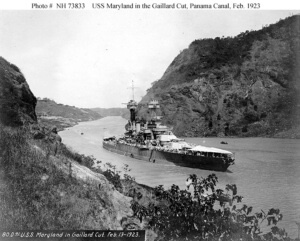
Maryland (BB-45) At Pearl Harbor Maryland was moored inboard of Oklahoma and was hit by 2 bombs.  She would be quickly repaired and returned to action and receive minimal modernization during the war. She would participate in operations throughout the entirety of the Pacific Campaign providing naval gunfire support to the landings at Tarawa, Kwajalein, Saipan, where she was damaged by an aerial torpedo, Palau, Leyte where she was damaged by a Kamikaze, Okinawa and the battleship action at Surigo Strait.  Decommissioned in 1947 she was placed in reserve and sold for scrap in 1959. On 2 June 1961 the Honorable J. Millard Tawes, Governor of Maryland, dedicated a lasting monument to the memory of the venerable battleship and her fighting men. Built of granite and bronze and incorporating the bell of “Fighting Mary,” this monument honors a ship and her 258 men who gave their lives while serving aboard her in WWII.  This monument is located on the grounds of the State House, Annapolis, Md. Maryland received seven battle stars for World War II service.
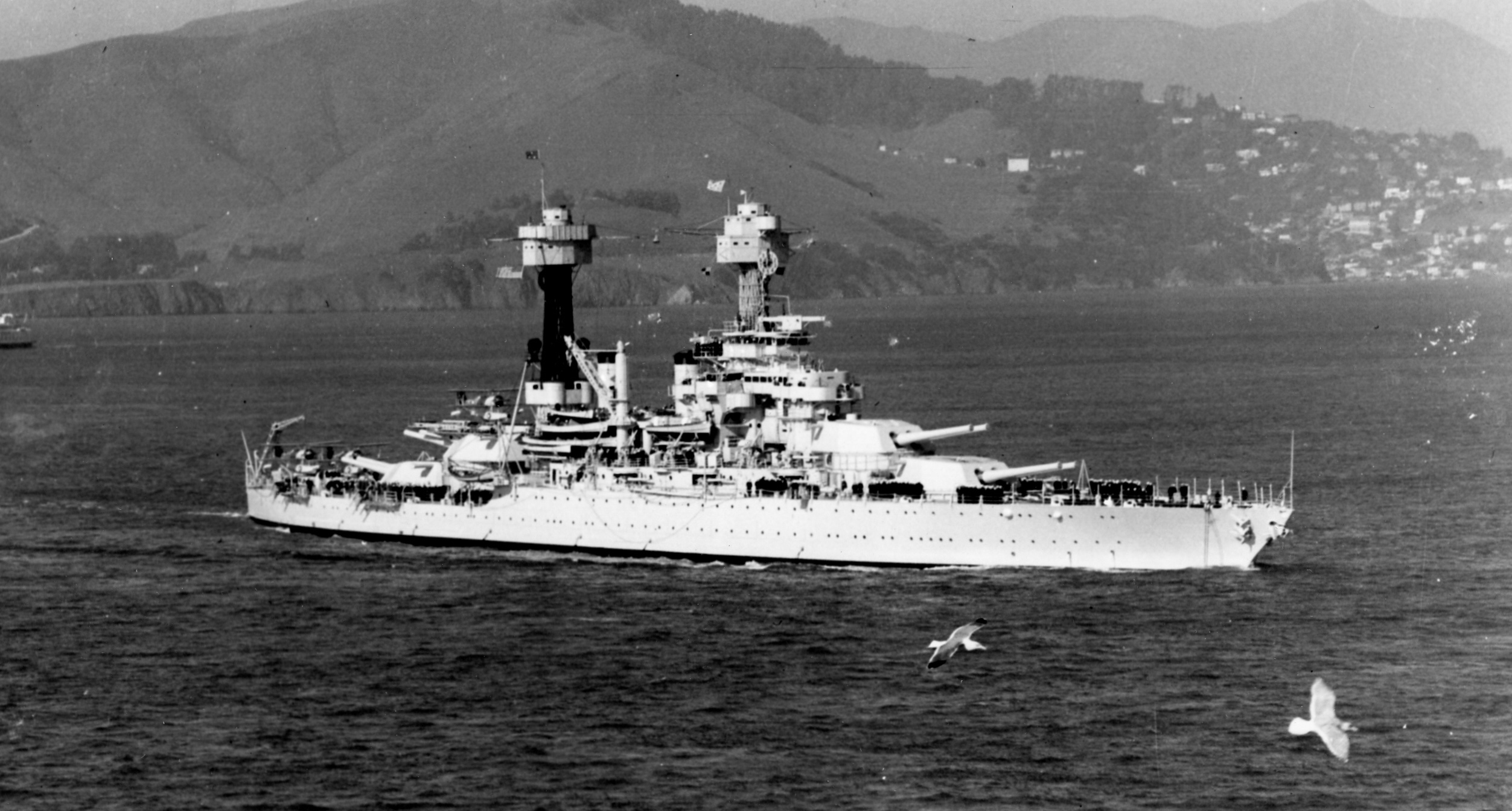
The USS West Virginia before the war and after her salvage and reconstruction
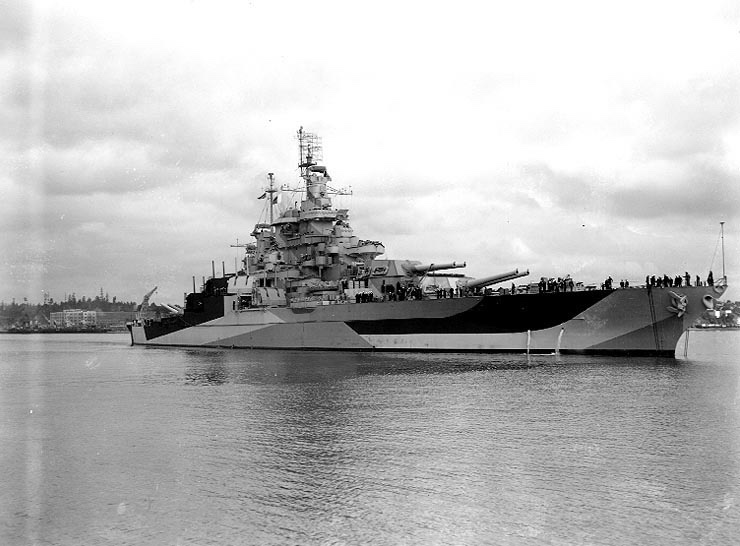
West Virginia (BB-48) West Virginia suffered some of the worst damage in the attack. Hit by at least 5 torpedoes and two bombs she was saved from Oklahoma’s fate by the quick action of her damage control officer to counter flood so she would sink on an even keel.  She would be raised, refloated and taken back to the West Coast for an extensive modernization on the order of the Tennessee and California. The last Pearl Harbor battleship to re-enter service she made up for lost time as she lead the battle line at Surigo Strait firing 16 full salvos at the Japanese squadron helping sink the Japanese Battleship Yamashiro in the last battleship versus battleship action in history West Virginia was decommissioned in 1947, placed in reserve and sold for scrap in 1959.

Heavy Cruisers

New Orleans (CA-32) Minor shrapnel damage from near miss. Fought throughout the war in the Pacific; bow blown off by Japanese torpedo at Battle of Trassafaronga in November 1942, repaired. 17 battle stars for WWII service, decommissioned 1947 and sold for scrap in 1957.
san fran

USS San Francisco CA-38

San Francisco (CA-38 Undamaged at Pearl Harbor, fought through Pacific war, most noted for actions at the Naval Battle of Guadalcanal fighting Japanese Battleship Hiei. Decommissioned 1946 and sold for scrap in 1959. San Francisco earned 17 battle stars during World War II. For her participation in the Naval Battle of Guadalcanal, she was awarded the Presidential Unit Citation. For the same action, three members of her crew were awarded the Medal of Honor: Lieutenant Commander Herbert E. Schonland, Lieutenant Commander Bruce McCandless , and Boatswain’s Mate 1st Class Reinhardt J. Keppler (posthumous). Admiral Daniel Callaghan was also awarded the Medal of Honor (posthumous).  During the November 1942 repair at Mare Island, it was necessary to extensively rebuild the bridge. The bridge wings were removed as part of that repair, and are now mounted on a promontory in Lands End, San Francisco at Golden Gate National Recreation Area overlooking the Pacific Ocean. They are set on the great circle course from San Francisco  to Guadalcanal.  The old ship’s bell is housed at the Marines Memorial Club in San Francisco.

Light Cruisers
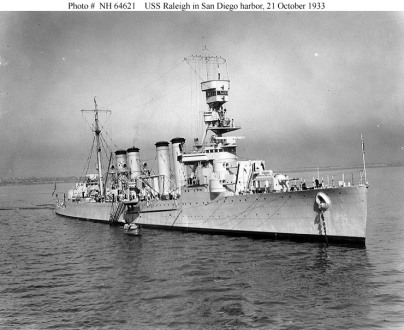
uss Raliegh

Raleigh (CL-7) Heavily damaged by torpedo, repaired served throughout war mainly in North Pacific . Decommissioned 1945 and scrapped 1946

Detroit (CL-8) Undamaged and got underway during attack. Mainly served in North Pacific and on convoy duty earning 6 battle stars for WWII service, decommissioned and sold for scrap 1946
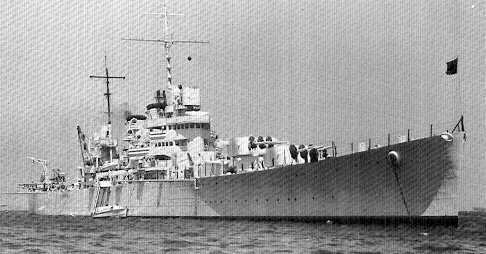
USS Phoenix
Belgrano-Sunk-copy2

The Argentine Navy Cruiser General Belgrano, the former USS Phoenix sinking during the Battle of the Falklands 1982

Phoenix (CL-46) Undamaged at Pearl Harbor and served throughout war and at the Battle of Surigo Strait she helped sink the Japanese Battleship Fuso.  She earned 9 battle stars for WWII service. Decommissioned 1946 and transferred to Argentina 1951. Served as General Belgrano and sunk by submarine HMS Conqueror on 2 May 1982 during the Falklands War.

Honolulu (CL-48) Suffered minor hull damage from near miss. Served in Pacific and fought several engagements against Japanese surface forces in the Solomons. At the Battle of Kolombangara on the night of 12-13 July 1943 she was damaged by a torpedo but sank the Japanese Light Cruiser Jintsu. Earned 9 battle stars for WWII service, decommissioned 1947 and sold for scrap 1949
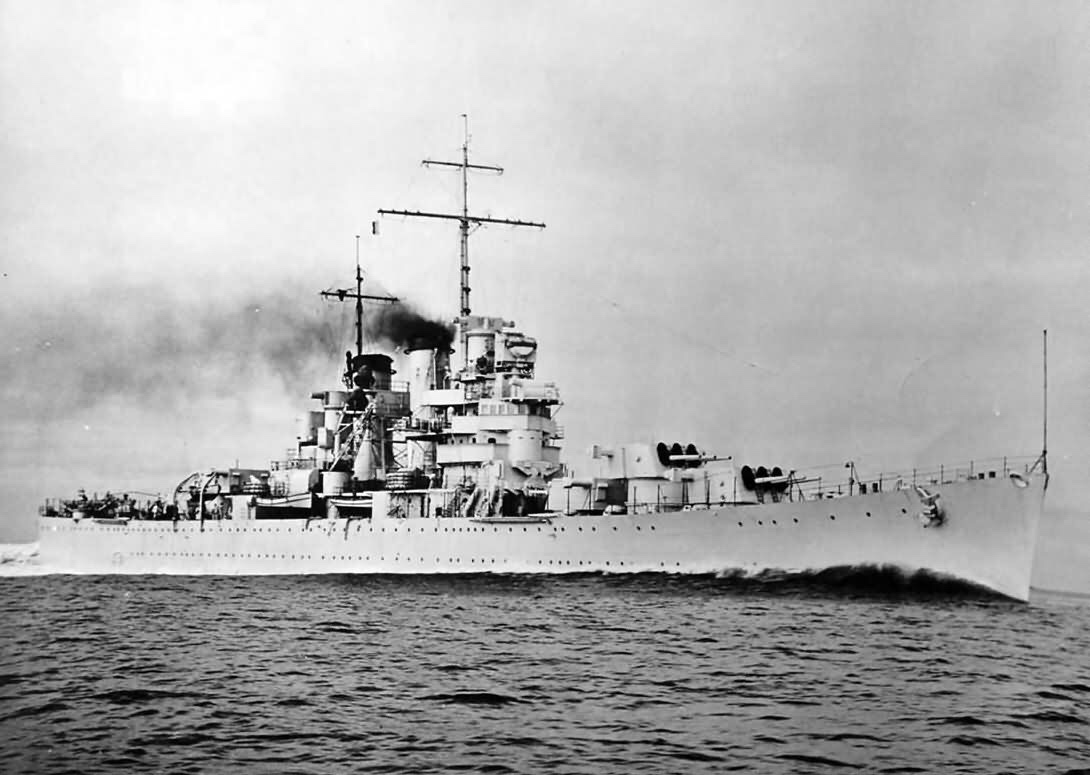
USS St. Louis

St. Louis (CL-49) St. Louis got underway at 0930 nearly torpedoed by Japanese midget sub. She served throughout war in numerous operations and was damaged at the Battle of Kolombangara. She earned 11 battle stars for WWII service. She decommissioned 1946 and transferred to Brazil where she was renamed Tamandare stricken in 1976 sold for scrap in 1980 but sank while under tow to Taiwan.

*Helena (CL-50) Damaged and repaired. Engaged in many battles around Solomon Islands where at the Battle of Cape Esperance at Guadalcanal she sank the Japanese Heavy Cruiser Furutaka and destroyer Fubiki. She was engaged during the Naval Battle of Guadalcanal and was sunk at Battle of Kula Gulf 6 July 1943.  She was the first ship to be awarded the Naval Unit Commendation and was awarded 7 battle stars for her WWII service.

Destroyers
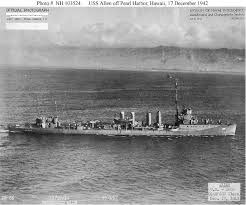
Allen (DD-66) Undamaged during attack spent war in local operations in Oahu area. Decommissioned 1945 and scrapped 1946

Schley (DD-103) Being overhauled on December 7th was undamaged in attack. Converted into High Speed Transport (APD) in 1942, earned 11 battle stars for WWII service and decommissioned in 1945 and scrapped in 1946

Chew (DD-106) Undamaged during attack and conducted local operations in Oahu operations for remainder or war, decommissioned 1945 and scrapped 1946.
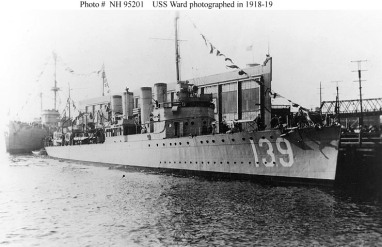
h95201

USS Ward

*Ward (DD-139) Ward was underway patrolling Channel entrance to Pearl Harbor on December 7th, sank Japanese midget submarine. Converted to APD in 1943 and served in numerous operations prior to being heavily damaged by Japanese bombers at Ormoc Bay off Leyte in December 1944 starting fires that could not be controlled. She was sunk by USS O’Brien (DD-725) after survivors were rescued. By a strange twist of fate the C.O. of O’Brien LCDR Outerbridge who had commanded Ward when she sank the Japanese submarine at Pearl Harbor. Ward earned 10 battle stars for WWII service.
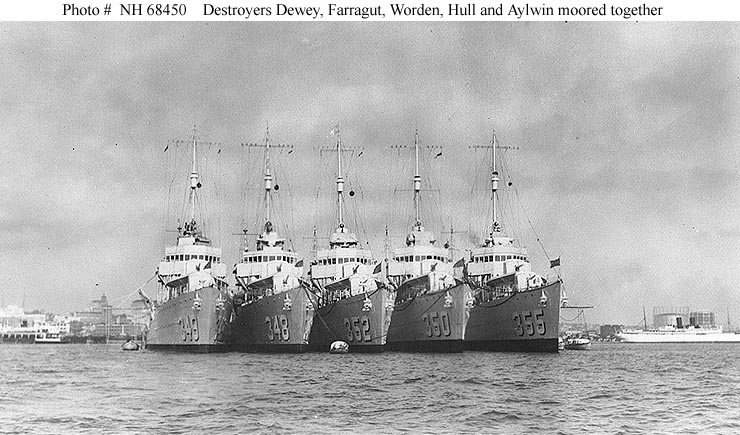
Dewey (DD-349) Being overhauled on December 7th Dewey served throughout the war earning 13 battle stars escorting carriers, convoys and supporting amphibious operations. Decommissioned October 1945 and sold for scrap 1946

Farragut (DD-348) Got underway during attack suffered minor damage from strafing. During the war she operated from the Aleutians to the South Pacific and Central Pacific escorting carriers and supporting amphibious operations. She earned 14 battle stars for WWII service. Decommissioned 1945 and sold for scrap 1947

*Hull (DD-350) Undamaged at Pearl Harbor she operated from the Aleutians to the South Pacific and Central Pacific escorting carriers and supporting amphibious operations. She earned 10 battle stars before sinking in “Halsey’s Typhoon” on 18 December 1944.

MacDonough (DD-351) MacDonough got underway during attack and was undamaged, during war served in North and Central Pacific escorting carriers and supporting amphibious operations. She earned 13 battle stars for her WWII service. Decommissioned October 1945 and sold for scrap 1946

*Worden (DD-352) Worden got underway during attack and went to sea with ships searching for Japanese strike force. Served at Midway and the South Pacific before being transferred to the Aleutians where she grounded on a pinnacle due to winds and currents at Constantine Harbor Amchitka Island on 12 January 193, she broke up in the surf and was written off as a total loss. Wordenwas awarded 4 battle stars for her WWII service.

Dale (DD-353) Dale got underway immediately under the command of her Command Duty Officer, an Ensign and joined ships searching for Japanese strike force. During war served in North and Central Pacific and took part in the Battle of the Komandorski Islands on 26 March 1943.  Earned 12 battle stars for WWII service, decommissioned October 1945 sold for scrap December 1946.

*Monaghan (DD-354)  Monaghan was the Ready destroyer on December 7th and ordered underway when Ward sank the midget submarine. On way out of harbor rammed, depth charged and sank a Japanese midget submarine that had gotten into Pearl Harbor. She participated in Coral Sea, Midway, Aleutians, the Battle of the Komandorski Islands and Central Pacific operations before sinking with the loss of all but 6 crewmen during the great Typhoon of November 1944 sinking on 17 November. She received 12 battle stars for her WWII service.
dd_uss_aylwin_dd355

USS Aylwin

Aylwin (DD-355) Got underway within an hour of the beginning of the attack with 50% of her crew and four officers, all Ensigns manning her leaving her Commanding Officer and others behind in a launch as she was under direction not to stop for anything. This incident was captured in the movie In Harm’s Way. During the war Aylwin saw action at Coral Sea, Midway, Guadalcanal, the Aleutians, and the Central Pacific up to the Okinawa and due to the action of her crew survived the great typhoon of November 1944. She earned 13 battle stars for her WWII service and was decommissioned in October 1945. She was sold for scrap in December 1946.
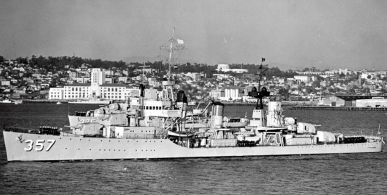
357selfridge_01

USS Selfridge

Selfridge (DD-357) Manned by a crew from 7 different ships Selfridge got underway at 1300 and was undamaged in the attack. Throughout war she served primarily as an escort to carriers and transports. Torpedoed by Japanese destroyer and lost her bow at Battle of Vella Lavella on 6 October 1942. Repaired and finished war. Earned 4 battle stars for WWII service and was decommissioned in October 1945 and sold for scrap in December 1946.

Phelps (DD-360) Undamaged at Pearl Harbor Phelps was credited with shooting down one enemy aircraft. She was in action at Coral Sea, Midway, Guadalcanal, the Aleutians and the Central Pacific picking up 12 battle stars for her WWII service. Decommissioned in October 1945 and scrapped 1947.

Cummings (DD-365) Sustained minor damage from bomb fragments but got underway quickly. During war served on convoy escort, with fast carrier task forces and provided Naval Gunfire Support from the Aleutians to the Indian Ocean where she operated with the Royal Navy. On 12 August 1944, President Roosevelt broadcast a nationwide address from the forecastle of Cummings after a trip the Alaska. Cummings was decommissioned in December 1945 and sold for scrap in 1947.

*Reid (DD-369) Undamaged at Pearl Harbor Reid escorted convoys and amphibious operations throughout the Pacific until she was sunk by Kamikazes at Ormoc Bay in the Philippines on 11 December 1944. On 31 August 1942 she sank by gunfire the Japanese submarine RO-1 off Adak Alaska. She received 7 battle stars for her WWII service.

Case (DD-370) Undamaged at Pearl Harbor Case escorted the fast carrier task forces throughout much of the war as well as conducted Anti-Submarine Warfare operations and Naval Gunfire Support. She sank a Midget submarine outside the fleet anchorage at Ulithi on 20 November 1944 and a Japanese transport off of Iwo Jima on 24 December 1944. She earned 7 battle stars for her WWII service and was decommissioned in December 1945 and sold for scrap in December 1947.

Conyngham (DD-371) Undamaged during attack she was underway that afternoon. Spent most of war on convoy escort, escorting carrier task forces and conducting Naval Gunfire Support missions she was damaged twice by strafing Japanese aircraft she earned 14 battle stars for her WWII service. Used in 1946 Atomic Bomb tests and destroyed by sinking in 1948.

Cassin (DD-372) Destroyed in drydock but salvaged returned to service 1944 escorting convoys and TG 38.1 the Battle Force of the fleet at Leyte Gulf as well as supporting amphibious operations. She earned 6 battle stars for her WWII service.  Decommissioned December 1945 and sold for scrap 1947
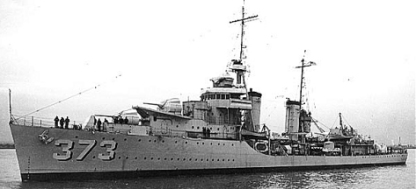
shaw09h3

USS Shaw

Shaw (DD-373) Sustained massive damage due to magazine explosion, salvaged and repaired served throughout war and awarded 11 battle stars. Damaged by Japanese dive bombers off Cape Gloucester on 25 December 1943 with loss of 3 killed and 33 wounded. Decommissioned October 1945 and scrapped 1947

*Tucker (DD-374) Undamaged at Pearl Harbor Tucker conducted convoy escort operations and was sunk when she struck a mine escorting a transport to Espiritu Santo on 1 August 1942 sinking on 4 August. She received one battle star for her WWII service.

Downes (DD-375) Destroyed in drydock and salvaged. Decommissioned June 1942, rebuilt and recommissioned 1943. After she was recommissioned and used to escort convoys and conduct Naval Gunfire Support to amphibious operations. She earned 4 battle stars for her WWII service. Decommissioned 1947 and sold for scrap.
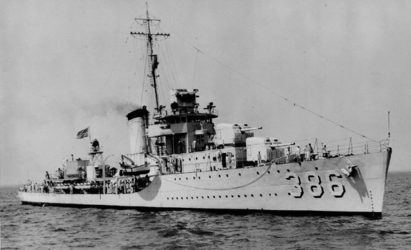
USS Bagley

Bagley (DD-386) Undamaged at Pearl Harbor Bagley conducted convoy escort operations and supported amphibious landings throughout the Pacific earning 1 battle stars ended the war on occupation duty at the Sasebo-Nagasaki area until returning to the United States. She earned 12 battle stars for her WWII service and was decommissioned in June 1946 and sold for scrap in October 1947.

*Blue (DD-387) Blue was undamaged and got underway during the attack under the direction of 4 Ensigns.  Served on convoy escort duties, present at Battle of Savo Island on 9 August 192 and was torpedoed off Guadalcanal by Japanese destroyer Kawakaze on 21 August and was scuttled 22 August. She earned five battle stars for her WWII service.

Helm (DD-388) Helm was underway, nearing West Loch at the time of the attack. Helm served in the Solomons and the South Pacific until February 19. She joined the fast carrier task forces of 5thFleet in May 1944. On 28 October at Leyte Gulf 28 October 1944 Helm and companion destroyer Gridley made sank the Japanese submarine I-46. She was used for a target during Operation Crossroads and scrapped in 1946. She received 11 battle stars for her WWII service.

Mugford (DD-389) Mugford was on standby status and had steam up which allowed her to get to sea during the attack in which she shot down Japanese aircraft. She spent much of 1942 on convoy duty between the U.S. and Australia. She took part in the Guadalcanal invasion and was struck by a bomb which killed 8 men, wounded 17 and left 10 missing in action. She would go on to serve in the Central and South Pacific being damaged by a near miss from a bomb on 25 December off Cape Gloucester and was stuck by a Kamikaze on 5 December 1944 in Surigo Strait. She escorted the fast carriers of TF 8 and 58 and later served on anti-submarine and radar picket duty. She decommissioned 1946 and was used in the Atomic Bomb tests and after use as a test ship for radioactive decontamination was sunk on 22 March 1948 at Kwajalein. She received 7 battle stars for her WWII service.

Ralph Talbot (DD-390) Ralph Talbot got underway by 0900 on the morning of the attack and joined other ships at sea attempting to find the Japanese strike force. She spent much of 1942 engaged in escort duties and took part in the Battle of Savo Island where she engaged the Japanese as part of the Northern Group and was damaged by Japanese shellfire. She spent the war in the South and Central Pacific escorting convoys and supporting amphibious operations and was damaged by a Kamikaze off Okinawa. She remained in service until 1946 when she was assigned to JTF-1 and the Operations Crossroads Atomic Bomb test. She survived the blast and was sunk in 198. She earned 12 battle stars for her WWII service.

*Henley (DD-391) Undamaged at Pearl Harbor Henley was already at General Quarters when the attack began because a new sailor sounded the General Quarters alarm instead of Quarters for Muster. As a result her weapons were manned. She got underway during the attack under the command of a junior Lieutenant and joined other ships patrolling outside of Pearl Harbor. Henley carried out convoy and anti-submarine patrols mainly around Australian continuing those duties through the Guadalcanal campaign. She was torpedoed and sunk by Japanese bombers on 3 October 1943 while conducting a sweep in support of troops ashore near Finshafen New Guinea. Henley earned 4 battle stars for her WWII service.

Patterson (DD-392) Patterson was undamaged during the attack and proceeded to sea conducting anti-submarine warfare patrols. She would spend the bulk of the war as an escort for fast carrier task forces. She was with the Southern Group during the Battle of Savo Island and suffered a hit on her #4 gun mount that killed 10 sailors.  She was awarded 13 battle stars for her WWII service. Decommissioned in November 1945 she was stricken from the Naval Vessel Register in 1947 and sold for scrap.

*Jarvis (DD-393) Jarvis survived Pearl Harbor undamaged and got underway to join other ships in patrols around Oahu.  She served as an escort for carriers and convoys and the invasion of Guadalcanal. She was heavily damaged by an aircraft launched torpedo during the landings but her crew made temporary repairs and restored power. She was ordered to Efate New Hebrides but evidently unaware of the order her Commanding Officer set sail for Sidney Australian and repairs from the Destroyer Tender USS Dobbin. She passed south of Savo Island as the Japanese cruiser force approached and refused assistance for the USS Blue.  She was last seen on the morning of 9 August 1942 by a scout plane from Saratoga. Already heavily damaged and having little speed, no radio communications and few operable guns was attacked by a force of 31 Japanese bombers sinking with all hands at 1300 on 9 August. Jarvis was awarded 3 battle stars for her WWII service.

Submarines
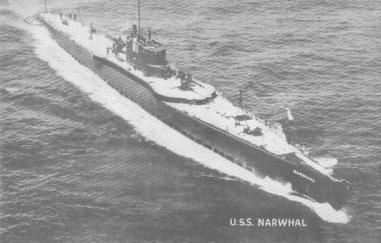
v-5a

USS Narwhal

Narwhal (SS-167) Narwhal was one of a class of three large cruiser submarines that was built in the mid 1920s. Narwhal was 14 years old at the time of the attack. She was undamaged at Pearl Harbor and was used primarily to support special missions and special operations forces in raids against Japanese shore installations. Narwhal earned 15 battle stars for her service in the Pacific and was decommissioned in February 1945 and sold for scrap in May. Her 6” guns are enshrined at the Naval Submarine Base Groton.

Dolphin (SS-169) Undamaged in the Pearl Harbor attack Dolphin made 3 war patrols in late 1941 and early 1942 before being withdrawn from combat service and used for training due to her age. She was decommissioned in October 1945 and sold for scrap in 1946. She received 2 battle stars for her service in WWII.

Cachalot (SS-170) Undamaged at Pearl Harbor Cachalot conducted three war patrols damaging an enemy tanker before being withdrawn from combat service in the fall of 1942 being judged too old for arduous combat service. She served as a training ship until June 1945 and was decommissioned in October 1945 and sold for scrap in January 1947. She was awarded 3 battle stars for her WWII service.
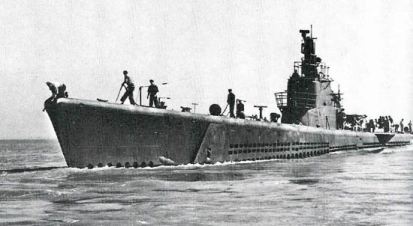
ss_uss_tautog_ss199

USS Tautog

Tautog (SS-199) Tautog was undamaged at Pearl Harbor and made the Japanese pay for not sinking her. She helped avenge the Pearl Harbor attack sinking 26 enemy ships of 71,900 tons including the submarines RO-30 and I-28 and destroyers Isoname and Shirakumo in 13 war patrols. She was withdrawn from combat service in April 1945 and served and operated in conjunction with the University of California’s Department of War Research in experimenting with new equipment which it had developed to improve submarine safety. She was decommissioned in December 1945. Spared from the Atomic Bomb tests she served as an immobile reserve training ship in the Great Lakes until 1957 and was scrapped in 1960.  Tautog was awarded 14 battle stars and a Naval Unit Commendation for her service in WWII.

Minelayer
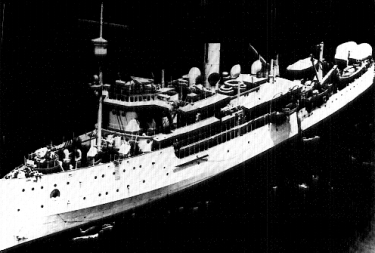
OGLALA

USS Oglala

Oglala (CM-4) Sank due to concussion from torpedo hit on Helena. Raised and repaired, converted to internal combustion repair ship. Decommissioned 1946 transferred to Maritime Commission custody and scrapped 1965

Minesweepers

Turkey (AM-13) Undamaged at Pearl Harbor she was redesignated as a Fleet Tug in 1942. She was decommissioned in November 1945 and sold for scrap in 1946. She received one battle star for her service at Pearl Harbor.

Bobolink (AM-20) Undamaged at Pearl Harbor and redesignated as an Ocean Going Tug in 1942. She decommissioned in 1946 and sold through the Maritime Administration. She received one battle star for her service at Pearl Harbor.

Rail (AM-26) Undamaged at Pearl Harbor Rail was redesignated as a Ocean Going Tug in June 1942. She supported operations throughout the Pacific earning 6 battle stars for her WWII service. She was decommissioned in 1946 and transferred to the Maritime Administration for disposal in 1947.

Tern (AM-31) Undamaged in the attack Tern was redesignated as an Ocean Going Tug in June 1942 and supported the fleet for the remainder of the war. She was decommissioned and struck from the Navy List in December 1945. She earned one battle star for her service at Pearl Harbor.

*Grebe (AM-43) Undamaged at Pearl Harbor Grebe was redesignated as an Ocean Going Tug in June 1942.  On 6 December 1942 Grebe grounded while attempting to float SS Thomas A. Edison at Vuanta Vatoa, Fiji Islands. Salvage operations were broken up by a hurricane that destroyed both ships 1-2 January 1943.
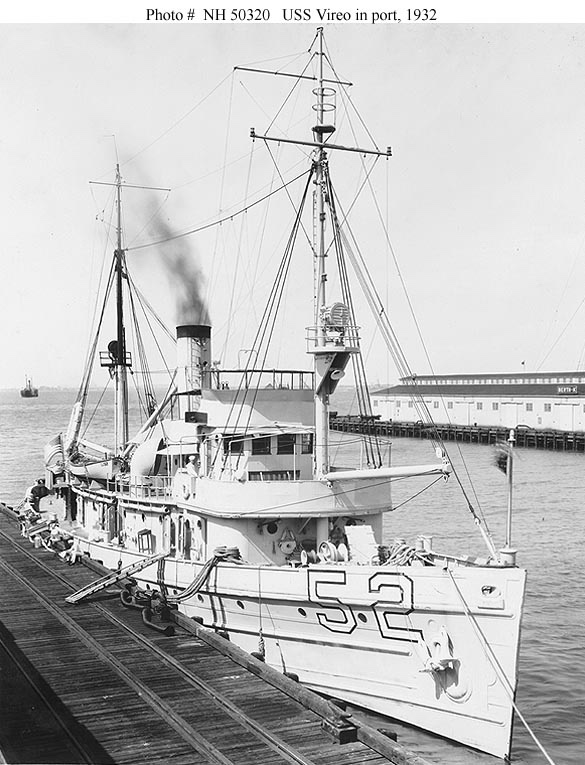
Vireo (AM-52) Undamaged at Pearl Harbor Vireo was designated an Ocean Going Tug in May 1942. At the Battle of Midway she was assisting USS Yorktown CV-5 when that ship was torpedoed by a Japanese submarine and sunk.  She was damaged in a Japanese air strike off Guadalcanal on October 15th 1942 abandoned but recovered by U.S. Forces and repaired supporting damaged fleet units. She was decommissioned in 1946 and disposed of by the Maritime Administration in 1947. Her final disposition is unknown. She was awarded 7 battle stars for her WWII service.

Coastal Minesweepers

Cockatoo (AMC-8) Undamaged at Pearl Harbor Cockatoooperated in the 14th Naval District from Pearl Harbor throughout the war. She was transferred to the Maritime Commission 23 September 1946.

Crossbill (AMC-9) Undamaged in the attack she operated in an in-service status attached to the 14th Naval District from 1941 to 1947.
AMc-14_Condor

USS Condor

Condor (AMC-14) Undamaged in the attack she operated in the Hawaiian Islands throughout World War II. Placed out of service 17 January 1946, she was transferred to the Maritime Commission for disposal 24 July 1946.

Reedbird (AMC-30) Undamaged during the attack she operated in Hawaiian waters throughout World War II. Then ordered inactivated, Reedbird returned to San Diego where she was stripped and placed out of service 14 January 1946. Her name was struck from the Navy list 7 February 1946 and on 8 November 1946 she was delivered to the Maritime Commission for disposal.

Light Minelayers (Note: All of these ships were WWI era “four piper” destroyers converted to Mine Warfare ships in the 1920s and 1930s)
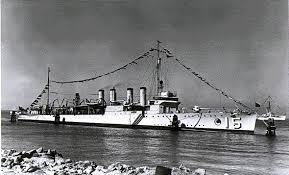
gable

USS Gamble

*Gamble (DM-15) Gamble was undamaged at Pearl Harbor and served throughout the Pacific. On 29 August 1942 she sank Japanese submarine I-123 near Guadalcanal. On 6 May 1943 she mined the Blackett Strait with her sisters USS Preble and USS Breese. On the night of 7-8 May a Japanese destroyer force entered the minefield one of which Kurashio, went down and two others Oyashio and Kagero were sunk by Allied aircraft the next day. The sinking of Kagero provided a measure of revenge as that ship was part of the Japanese Carrier Strike Group that attacked Pearl Harbor. On 18 February 1945 Gamble was damaged by two bombs while operating off of Iwo Jima. Badly damaged she was towed to Saipan but salvage was impossible and she was decommissioned sunk off of Apra Harbor Guam on 16 July 1945. She was awarded 7 battle stars for her WWII service.

Ramsay (DM-16) Ramsey got underway during the attack and dropped depth charges in the vicinity of what was believed to be a midget submarine. She served in the Solomons and Aleutians and was redesignated as a Miscellaneous Auxiliary (AG-98) in 1944 operating around Pearl Harbor. She was decommissioned in October 1945 and scrapped in 1946. She received 3 battle stars for her WWII service.

*Montgomery (DM-17) Undamaged in the attack Montgomeryconducted ASW operations in the wake of the attack. She operated throughout the Pacific until she was damaged by a mine while anchored off Ngulu on 17 October 1944. She was decommissioned on 23 April 1945 and sold for scrap in 1946. She was awarded 4 battle stars for her WWII service.

Breese (DM-18) Breese got underway during the attack and assisted in sinking a midget submarine. She was engaged throughout the war in the Pacific and operated with Gamble and Preble to mine the Blackett Strait in May 1943, an operation that resulted in the sinking of 3 Japanese destroyers. She was decommissioned and sold for scrap in 1946. She was awarded 10 battle stars for her WWII service

Tracy (DM-19) Tracy was being overhauled during the attack and all machinery and armament was dismounted.  After the overhaul she operated around the Pacific and in February 1943 she Tracy, as task group leader, led Montgomery (DM-17) and Preble (DM-20) in laying a field of 300 mines between Doma Reef and Cape Esperance. That night, Japanese destroyer Makigumo struck one of these mines and was damaged so badly that she was scuttled. Tracy was decommissioned and scrapped in 1946. She received 7 battle stars for her WWII service

Preble (DM-20) Preble was being overhauled on December 7thand took no part in the action. During the war she operated throughout the Pacific and in company with Gamble and Breeselaid a minefield on 6 May 1943 which resulted in sinking 3 Japanese destroyers. She was redesignated as a Miscellaneous Auxiliary (AG-99) and she was regulated to convoy escort duties until the end of the war. She was decommissioned in December 1945 and sold for scrap in 1946. She was awarded 8 battle stars for WWII service.

Sicard (DM-21) Sicard was under overhaul at the Naval Shipyard during the attack. During the war she primarily served on convoy escort duty with and in some mine laying operations. She was reclassified a miscellaneous auxiliary, AG-100, effective 5 June 1945, decommissioned in December 1945 and sold for scrap in 1946. She was awarded 2 battle stars for her WWII service.

Pruitt (DM-22) Pruitt was being overhauled during the attack and served throughout the Pacific during the war. She was reclassified a miscellaneous auxiliary, AG-101, effective 5 June 1945, decommissioned November and stricken from the Navy List in December 1945 being scrapped at Philadelphia Naval Shipyard. She was awarded 3 battle stars for her WWII service.

High Speed Minesweepers (Note: All of these ships were WWI era “four piper” destroyers converted to Mine Warfare ships in the 1920s and 1930s)
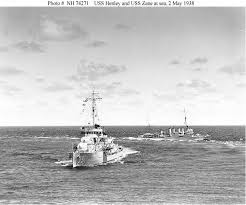
Zane (DMS-14) Undamaged at Pearl Harbor Zane saw much service in the South and Central Pacific in WWII. She conducted minesweeping, convoy escort and ASW operations from Pearl Harbor to the Marianas campaign. She was damaged in a firefight with Japanese destroyers at Guadalcanal in 1942.  After the invasion of Guam she was reassigned to target towing duties. Reclassified from high-speed minesweeper to a miscellaneous auxiliary, AG-109, on 5 June 1945 she decommissioned in December 1945 and sold for scrap in 1946. She was awarded 6 battle stars and a Naval Unit Commendation for her service in WWII.

*Wasmuth  (DMS-15) Wasmuth was undamaged during the attack and spent 1942  conducting patrol and convoy escort duties in the Aleutians and the West Coast. On 27 December 1942 while escorting a convoy in heavy seas two of her depth charges were ripped off their racks and exploded under her fantail blowing off her stern.  Despite repair attempts her crew was evacuated and she sank on 29 December 1942. She was awarded one battle star for her service at Pearl Harbor.
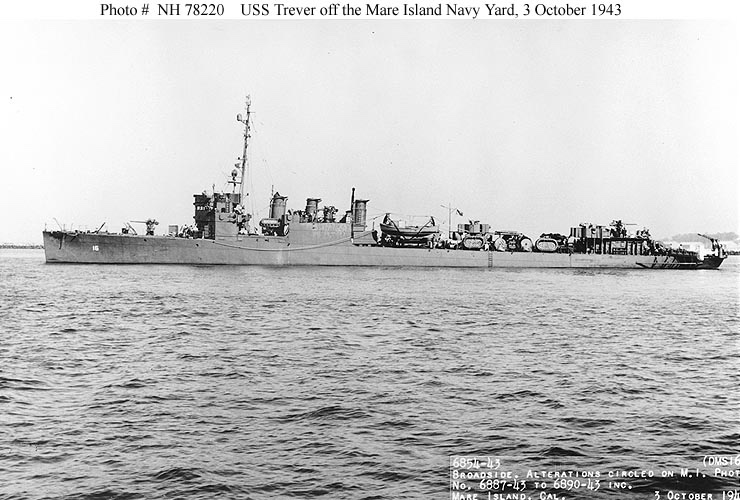
Trever (DMS-16) Trever got underway during the attack without her Commanding Officer. During the war she saw extensive service. In 1945 she was regulated to training and local operations around Pearl Harbor. On 4 June 1945, she was reclassified as a miscellaneous auxiliary and designated as AG-110 and decommissioned in December 1945 and sold for scrapping in 1946. She received 5 battle stars for her WWII service.

*Perry (DMS-17) Perry got underway during the attack and was undamaged. During the war she engaged in numerous minesweeping and escort duties. She struck a mine during the Peleliu invasion off Florida Island and sank on 6 September 1944. She was awarded 6 battle stars for her WWII service.

Gunboat
pg_uss_sacramento

USS Sacramento

Sacramento (PG-19) The elderly Sacramento was undamaged during the attack and participated in rescue and salvage operations after the attack. During the war she served as a tender for PT Boats and an air sea rescue vessel.  Sacramento was decommissioned on 6 February 1946 at Suisun Bay, Calif., and simultaneously transferred to the War Shipping Administration for disposal. She was sold on 23 August 1947 for mercantile service, initially operating under Italian registry as Fermina. She received one battle star for her service at Pearl Harbor.

Destroyer Tenders
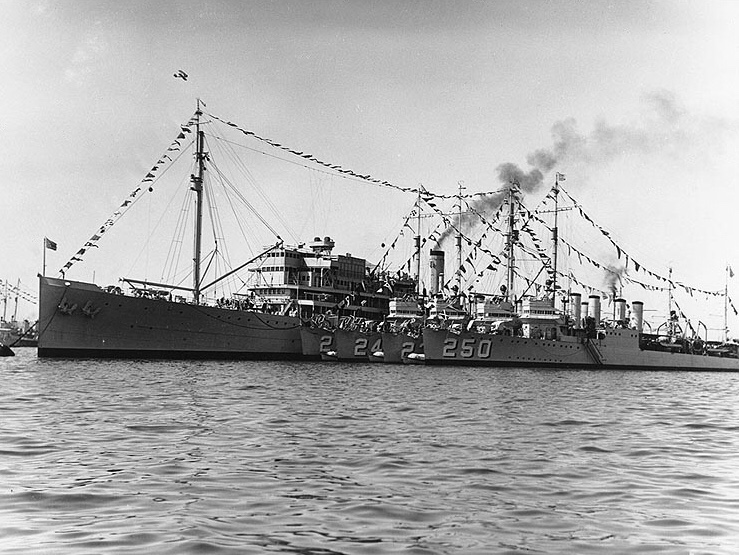
USS Dobbin with USS Lawrence and three other destroyers

Dobbin (AD-3) Dobbin received minor damage from a bomb burst alongside which killed 2 crewmembers.  During the war she would serve in the South Pacific supporting Pacific Fleet Destroyer Squadrons. She was decommissioned and transferred to the Maritime Administration in 1946. She was awarded one battle star for her service at Pearl Harbor.

Whitney (AD-4) Whitney was moored with a nest of destroyers during the attack and helped them prepare for sea during the attack issuing supplies and ammunition to help them get underway. Her sailors helped in repair and salvage operations on several ships during and after the attack.  She would provide vital support to destroyer squadrons during the war and serve until 1946 when she was decommissioned and transferred to the Maritime Administration and scrapped in 1948. She received one battle star for her service at Pearl Harbor.

Seaplane Tenders

Curtiss (AV-4) Damaged by bomb and repaired. She served throughout the war and was damaged by a  Kamikaze in 1945 while operating off Okinawa. Repaired she finished the war and served on active duty until 1956 when she was decommissioned and placed in reserve. She was scrapped 1972. Curtiss received 7 battle stars for her WWII service.

Tangier (AV-8) Moored just past the USS Utah Tangier was undamaged in the attack and contributed her guns to the air defense as well as shooting at a Japanese midget submarine that had penetrated the harbor. She maintained a very active operational carrier in the Pacific. Decommissioned in 1946 Tangier was sold for scrap in 1961. She earned 3 battle stars for her WWII service.

Seaplane Tenders (Small)
avocet3-08

Avocet (AVP-4) Undamaged at Pearl Harbor Avocet Avocetserved in the Alaskan and Aleutian theatres of operations as a unit of Patrol Wing 4. During the years, she tended patrol squadrons, transported personnel and cargo, and participated in patrol, survey, and salvage duties. She was decommissioned in December 1945 and sold in 1946. She received one battle star for her service at Pearl Harbor.

Swan (AVP-7) Swan was on the Marine Railway drydock during the attack and was undamaged. During the war she was primarily used on target towing duties. She was decommissioned in December 1945 and disposed of by the Maritime Commission in 1946. She received one battle star for her service at Pearl Harbor.

Seaplane Tenders (Destroyer) (Note: All of these ships were WWI era “four piper” destroyers converted to Seaplane Tenders in the 1920s and 1930s)

Hulbert (AVD-6) Hulbert was undamaged during the attack and spent 1942-1943 conducting support missions for flying boats. Reclassified DD-342 she was used as an escort and plane guard for new Escort Carriers at San Diego until the end of the war. She was decommissioned in November 1945 and sold for scrap in 1946. She received 2 battle stars for her WWII service.
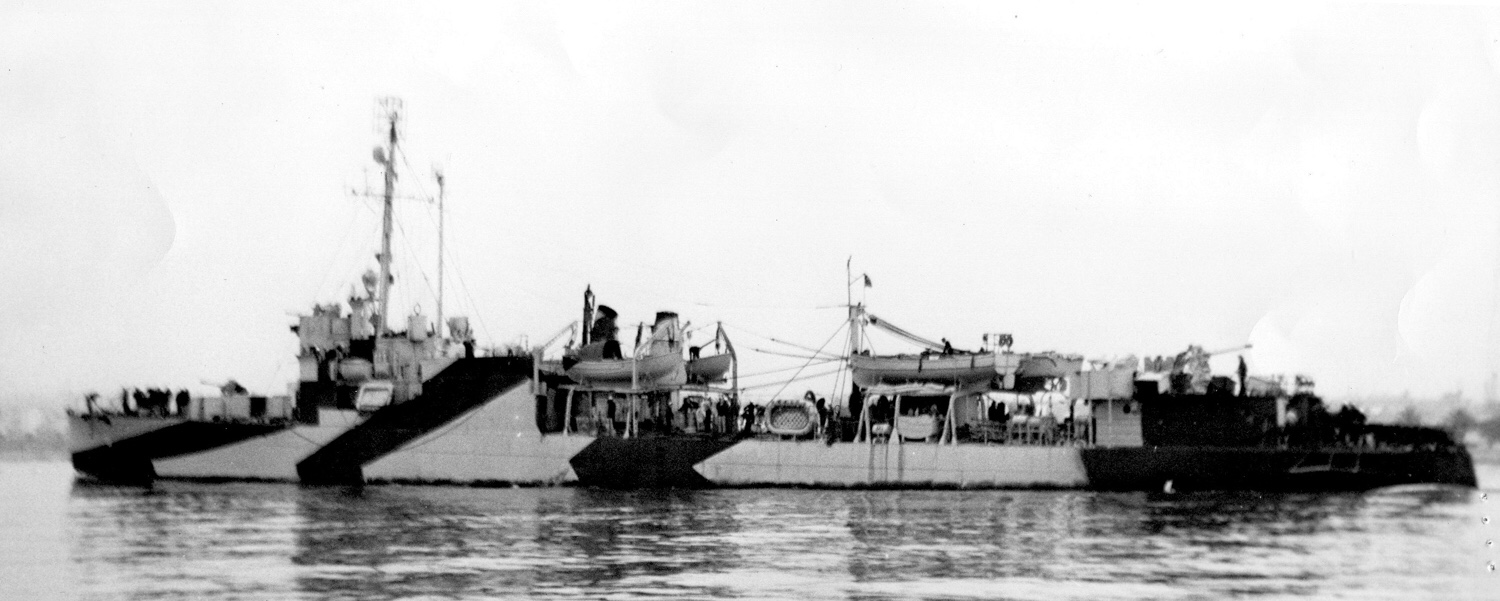
USS Thornton

*Thornton (AVD-11) Thornton contributed her guns to the defense of Pearl Harbor and served in varying locales in the Pacific supporting the operations of flying boats. She was lost during the Okinawa invasion when collided with Ashtabula (AO-51) and Escalante (AO-70). Her starboard side was severely damaged. She was towed to Kerama Retto. On 29 May 1945 a board of inspection and survey recommended that Thornton be decommissioned, beached stripped of all useful materiel as needed, and then abandoned. She was beached and decommissioned on 2 May 1945. Her name was struck from the Navy list on 13 August 1945. In July 1957, Thornton’s abandoned hulk was donated to the government of the Ryukyu Islands. She received 3 battle stars for her WWII service.

Ammunition Ship
Pyro (AE-1) Pyro was undamaged in the attack and served the war transporting ammunition to naval bases around the Pacific. She was decommissioned in 1946 and scrapped in 1950. She was awarded one battle star for her service at Pearl Harbor.

Oilers

Ramapo (AO-12) Ramapo was not damaged at Pearl Harbor and due to her slow speed was regulated to fuel transport operations between the Aleutians and the Puget Sound. She was decommissioned in 1946 and transferred to the Maritime Administration.
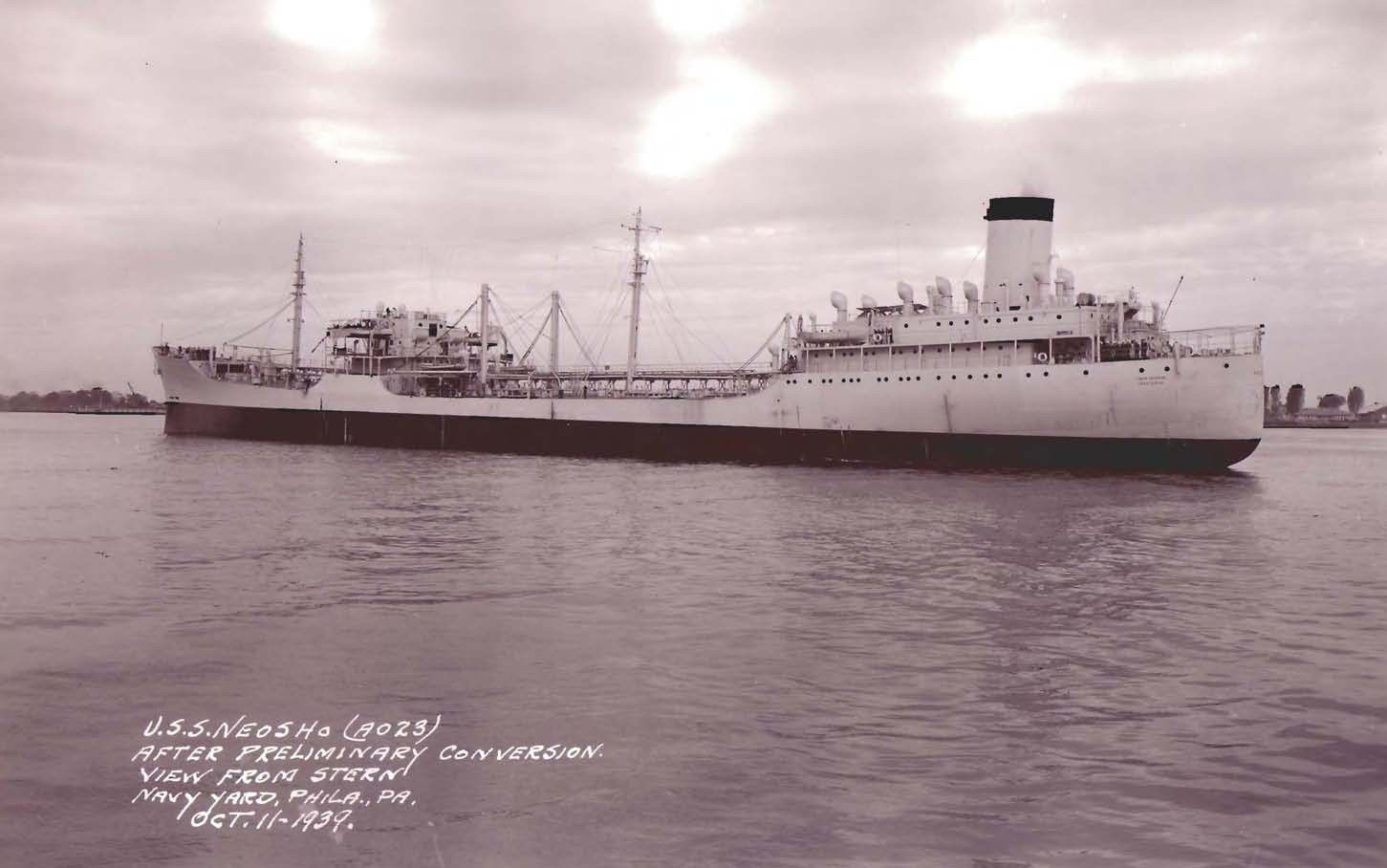
*Neosho (AO-23) Undamaged during the attack her Captain alertly moved her from her berth near Battleship Row to a less exposed part of the harbor.  She operated with the carrier task forces and was heavily damaged at the Battle of Coral Sea by Japanese aircraft. Her crew kept her afloat for 4 days until she was discovered and her crew rescued before she was sunk by gunfire from USS Henley on 11 May 1942. Neosho was awarded 2 battle stars for her WWII service.

Repair Ships

Medusa (AR-1) Medusa was undamaged at Pearl Harbor and spent the war throughout the South Pacific repairing numerous vessels damaged in combat. After the war she served to prepare ships for inactivation before being decommissioned in 1947 and turned over to the Maritime Administration. She was scrapped in 1950. She received one battle star for her service at Pearl Harbor.
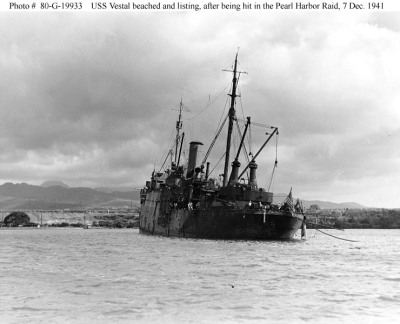
g19933

USS Vestal after the attack

Vestal (AR-4) Vestal was damaged while moored adjacent to USS Arizona. Repaired following the attack Vestal served throughout war in the Pacific and was vital during the critical days of 1942 when she and her crew performed valiant service on major fleet units damaged during the Guadalcanal campaign and actions around the Solomon Islands. Carriers Enterprise and Saratoga, battleships South Dakota and North Carolina, cruisers San Francisco, New Orleans, Pensacola and St. Louis were among the 5,603 jobs on 279 ships and 24 shore activities that she completed in a 12 month tour at Espiratu Santo. She would continue to perform this level of service the remainder of the war. During a stint at Ulithi she completed 2,195 jobs for 149 ships including 14 battleships, 9 carriers, 5 cruisers and 5 destroyers.  She continued her vital work even after the war into 1946 when she was finally decommissioned.  She was sold for scrap in 1950. She received 1 battle star for her service at Pearl Harbor.

Rigel (AR-11) Rigel was at Pearl Harbor completing her transformation from Destroyer Tender to Repari Ship. She incurred minor damage and she served throughout the war conducting vital repairs to numerous ships. She was decommissioned and transferred to the Maritime Administration in 1946.  Her ultimate fate is unknown. She was awarded 4 battle stars for her WWII service.

Submarine Tender
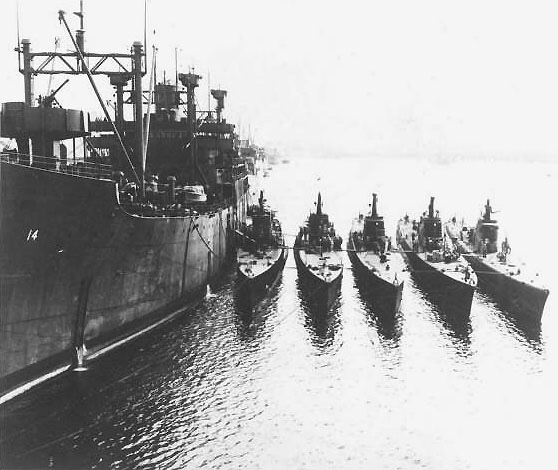
USS Pelias with 5 Submarines

Pelias (AS-14) Undamaged during the attack Pelias supported submarine squadrons based in the Pacific throughout the war. She was placed in commission in reserve 6 September 1946, and in service in reserve 1 February 1947. On 21 March 1950 she was placed out of service in reserve but later performed berthing ship duty at Mare Island until she decommissioned 14 June 1970. She was scrapped in 1973.

Submarine Rescue Ship
Widgeon (ASR-1) Widgeon conducted salvage, rescue and fire fighting operations on the sunk and damaged battleships on battleship row. During the war she served as the duty submarine rescue ship at Pearl Harbor and San Diego.  After the war she supported the Operation Crossroads. She was decommissioned and sold for scrap in 1947. She received on battle star for her service at Pearl Harbor.

Hospital Ship
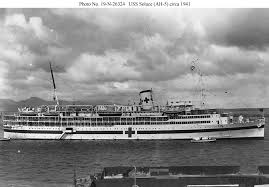
Solace (AH-5) Solace was undamaged in the attack and provided medical care to many of the wounded after the attack. She served throughout the war caring for the wounded and dying in the Gilberts, the Marshalls, Guam, Saipan, Palau, Peleliu, Iwo Jima and Okinawa.  Solace was decommissioned at Norfolk on 27 March, struck from the Navy list on 21 May, and returned to the War Shipping Administration on 18 July 1946. She was sold to the Turkish Maritime Lines on 16 April 1948 and renamed SS Ankara, rebuilt as a passenger liner. SS Ankara was laid up in 1977 and scrapped at Aliaga, Turkey, in 1981. Solace received seven battle stars for World War II service.

Cargo Ship
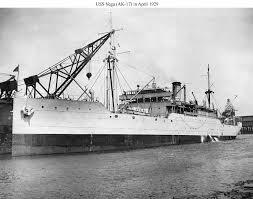
Vega (AK-17) Vega was at Honolulu offloading ammunition when the attack occurred. She served in the Aleutians and in the Central Pacific during the war. Decommissioned and scrapped in 1946. She received 4 battle stars for her WWII service.

General-Stores-Issue Ships

Castor (AKS-1) Castor was strafed by Japanese aircraft during the attack but suffered little damage. She would go on to an illustrious career in WWII, Korea and Vietnam before being decommissioned 1968 and scrapped in Japan in 1969. She was awarded three battle stars for World War II service, two for Korean War service and six campaign stars for Vietnam War service.
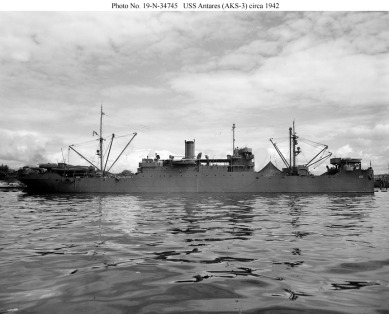
antares_aks2b-08

USS Antares 

Antares (AKS-3) Antares was at the Pearl Harbor entrance and spotted a midget submarine. She reported the contact to the USS Ward which sank the sub.  During the war Antares made many supply runs in the Pacific and was at Okinawa. Sailing from Saipan to Pearl Harbor she was attacked by the Japanese submarines I-36, whose torpedoes missed their target and the kaiten-carrying I-165. She opened fire on one of the subs forcing it to dive. She was decommissioned in 1946 and sold for scrap in 1947. She was awarded 2 battle stars for her WWII service.

Ocean-going Tugs
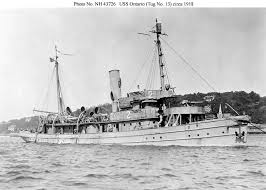
Ontario (AT-13) Undamaged at Pearl Harbor Ontario would support operations in the Pacific throughout the war. She was decommissioned in 1946 and sold in 1947. She received one battle star for her service at Pearl Harbor.

Sunnadin (AT-28) Undamaged in the attack she operated at Pearl Harbor for the duration of the war. She was decommissioned in 1946 and transferred to the Maritime Administration. Her final disposition is unknown. She was awarded one battle star for her service during the Pearl Harbor attack.

Keosanqua (AT-38) Keosanqua was at the Pearl Harbor entrance preparing to transfer a tow from the USS Antares. She took the tow to Honolulu during the attack. She operated at Pearl Harbor and in the Central Pacific conducting towing operations. She was decommissioned in 1946   ransferred to the Maritime Commission 11 July for disposal, she was sold the same day to Puget Sound Tug & Barge Co., Seattle, Wash. Resold to a Canadian shipping firm in 1948, she was renamed Edward J. Coyle. In 1960 she was renamed Commodore Straits.
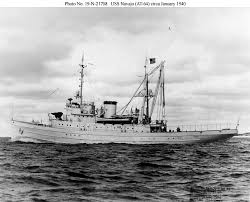
*Navajo (AT-64) Navaho was 12 miles outside Pearl Harbor entrance when the attack occurred. She operated in the South Pacific until 12 December 1942 when she was torpedoed and sunk by the Japanese submarine I-39 while towing gasoline barge YOG-42 150 miles east of Espiritu Santo, 12 December 1943 with the loss of all but 17 of her crew of 80.  She earned 2 battle stars for her WWII service.

Miscellaneous Auxiliaries
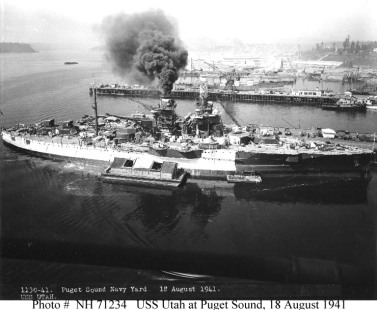
ussUtah

USS UTah AG-16

*Utah (AG-16 ex-BB-31) Sunk at her moorings and righted 1944 but not raised, wreck is now a memorial at Ford Island.
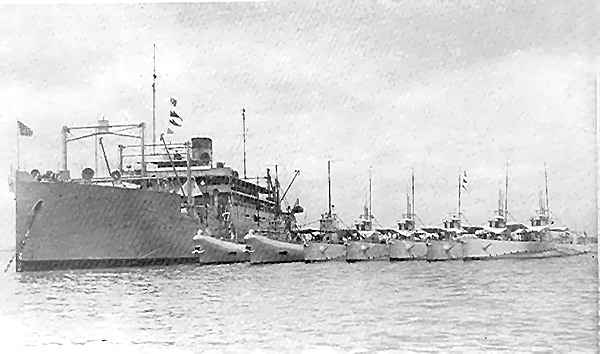
USS Argonne as a Submarine Tender

Argonne (AG-31) A former Submarine Tender, Argonne was undamaged during the attack and served in a variety of capacities during the war supporting operations in the Pacific. For a time she was Admiral Halsey’s flagship as Commander Southwest Pacific in 1942 during the Guadalcanal Campaign.  On 10 November 1944, Argonne lay moored to a buoy in berth 14, Seeadler Harbor, when the ammunition ship Mount Hood (AE-11) blew up, 1,100 yards away causing damage to her and other ships which she assisted after the explosion. She was decommissioned in 1946 and transferred to the Maritime Administration. She was scrapped in 1950. Argonne was awarded one battle star for her service at Pearl Harbor.
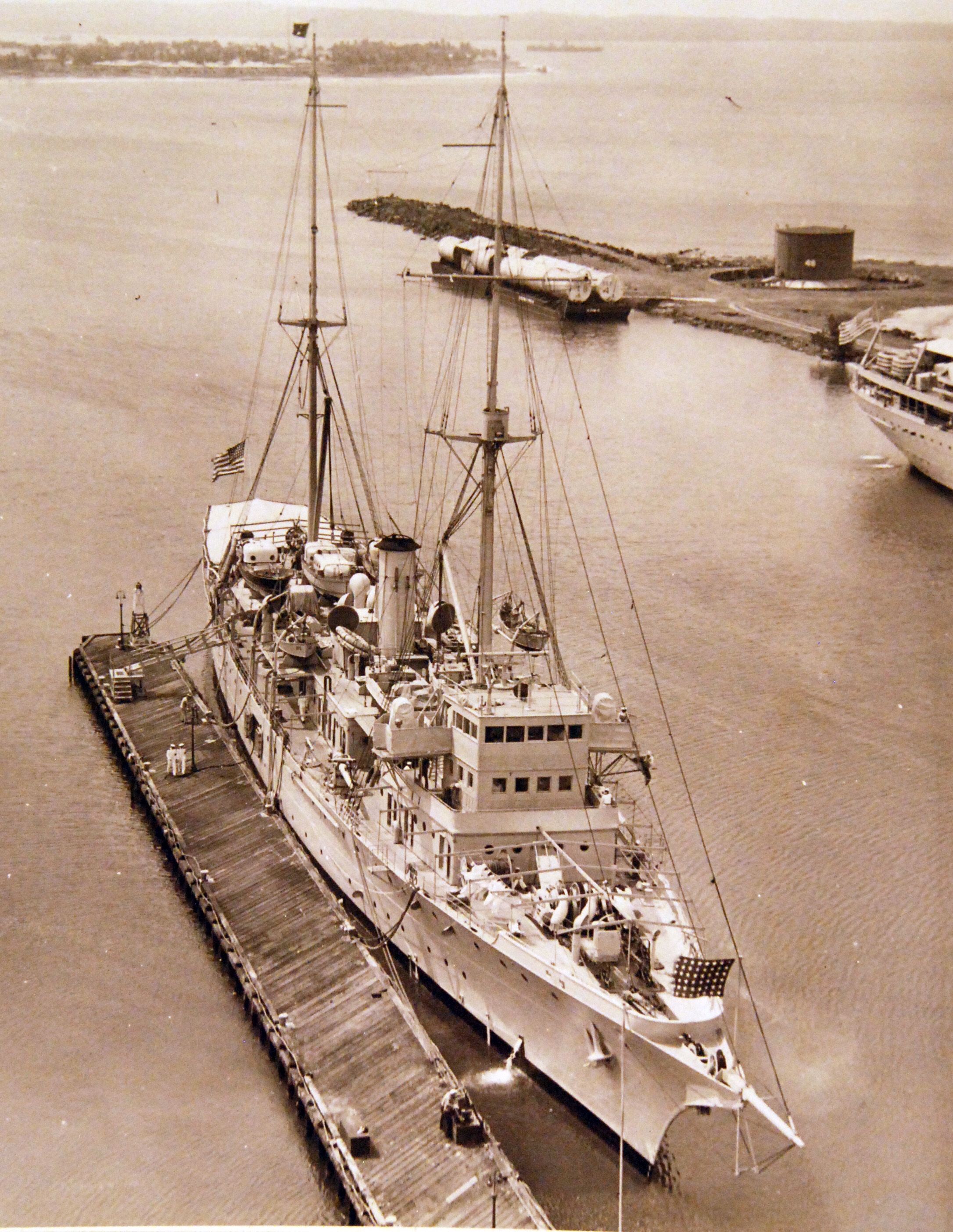
.

USS Sumner (ex-Bushnell)

Sumner (AG-32) Sumner was undamaged during the attack and was redesignated as a Survey Ship AGS-5. She was damaged by a Japanese shell off Iwo Jima on 8 March 1945. She was decommissioned in 1946 and transferred to the Maritime Administration. She was awarded 3 battle stars for her WWII service.

2 Comments

Filed under History, Military, Navy Ships, US Navy, World War II at Sea, world war two in the pacific

The Opening Shot: The USS Ward at Pearl Harbor

USS Ward Painting

Friends of Padre Steve’s World,

It is the day before the anniversary of the attack on Pearl Harbor, and as I always do this time of year I spend a significant amount of time writing about it, so that we never forget the brave men of the Greatest Generation who were there.

One of these men was Lieutenant Commander William Outerbridge, the commanding office of the USS Ward DD-139. Outerbridge and veteran of 14 years of service, and he had taken command of the elderly ship less than 24 hours before she began her weekend Anti-Submarine patrol of the entrance to Pearl Harbor. In the inter-war years promotion was slow and opportunities for advancement slim. Outerbridge had been commissioned following graduation from the Naval Academy in 1927. He was the only Regular Navy Officer on the ship.

USS Ward 1919

The Ward was old but had very few miles on her. She was a Wickes class destroyer displacing 1250 tons and was armed with four 4” 50 caliber and two 3” guns. She was launched and commissioned in 1918 and was decommissioned and placed in reserve in 1921. Recommissioned in January 1941 she was assigned to Destroyer Division 80 at Pearl Harbor. This squadron of elderly ships consisting of the Ward along with USS Schley, USS Chew, and the even older USS Allen, was assigned to the Inshore Patrol Command.

As tensions between the United States and Japan increased the War Department and Department of the Navy issued a “War Warning” and Admiral Husband Kimmel, Commander in Chief Pacific Fleet ordered a “shoot on sight” against any ship or submarine operating in the security zone outside Pearl Harbor which effectively put the ships of DesDiv 80 on a war footing.

Outerbridge had taken command on Friday December 5th and taken the ship to sea 6th at 0628. He had no idea that in just over 24 hours the guns of his ship would be the first American warship to fire at an enemy combatant in the Pacific during the war.

USS Condor

As the Ward patrolled the area just a couple of miles off of the entrance to Pearl Harbor the minesweeper USS Condor AMc-14 spotted a white wake near her at 0342.  The Officer of the Deck and Captain determined that it was the periscope of a submarine.  They signaled the Ward which was patrolling nearby: “Sighted submerged submarine on westerly course, speed nine knots” at 0348.

USS Antares

Outerbridge ordered the Ward to general quarters. After a futile search Outerbridge secured from General Quarters at 0443.  At 0458 Pearl Harbor’s anti-torpedo net gate was opened to allow passage of Condor and a number of other small ships including the Stores Ship USS Antares (AKS 14). Antares was towing a target back to base when at about 0635 a lookout on Ward noticed a wake following the auxiliary between her and her the raft.

Ward gun crew

Outerbridge returned to the bridge and sounded general quarters at 0640.  Outerbridge increased Ward’s speed to 25 knots and commended firing on the sub at 0645.  Ward’s number three gun scored a hit at the base of the sub’s conning tower and Wardcharged the sub.  Coming close alongside the Ward dropped depth charges which sank the sub.

Outerbridge notified harbor control at 0651 sending the message “Depth bombed sub operating in defensive sea area.” Some of his own officers thought that it was possible that Ward had attacked an American submarine but Outerbridge was confident that the sub was hostile. To emphasize that this was different from false alarms that headquarters was accustomed sent another message at 0653 “Attacked, fired upon, depth bombed, and sunk submarine operating in defensive sea area.”  It was just over an hour before the first Japanese planes would begin their bombing runs.

Japanese Midget Submarine Recovered From Pearl Harbor

Delays in seeking more conformation and reluctance to believe the report resulted in the message not being rapidly transmitted up the chain of command. It was a symptom of a parochial and divided command structure which did not respond quickly to the needs of war.

The rest is history. Within two hours the Battle line of the Pacific Fleet was sunk or crippled, all told 18 ships were sunk or damaged.  2402 Sailors, Marines and Soldiers were killed and another 1247 wounded.

But the war for Outerbridge and the Ward was not over. Outerbridge was promoted and transferred while the Ward was converted to a Fast Transport and redesigned APD-16 in 1943. She participated in actions in the Solomon Islands, New Guinea and the Philippines.

USS Ward burning

Ward burning after Kamikaze Attack

On December 7th 1944 while conducting operations at Ormoc Bay the veteran ship was hit by a Japanese “Betty” Twin engine bomber. The large aircraft acting as a Kamikaze crashed into Ward and started fires and flooding that could not be controlled. One of the ships that came to Ward’s assistance was the USS O’Brien (DD 725) commanded by her former commander, William Outerbridge, who had commanded Ward at Pearl Harbor. Three years to the day after sinking the Japanese submarine Outerbridge was ordered to sink his former ship after rescuing her crew.

Outerbridge retired as a Rear Admiral in 1957 and died in 1986.  Like others of his generation he served in war and peace.  As we remember the attack on Pearl Harbor let us not forget him as well as the fine crew of the USS Ward.  These men were alert that quiet Sunday morning 77 years ago and took action. They sunk a Japanese midget submarine intent on entering Pearl Harbor and reported their actions.  One wonders what might have happened if Outerbridge’s reports had been acted on, interceptors scrambled and anti-aircraft defenses on ships and ashore been ready when the Japanese attackers swept in to attack Pearl Harbor.  Of course we will never know.
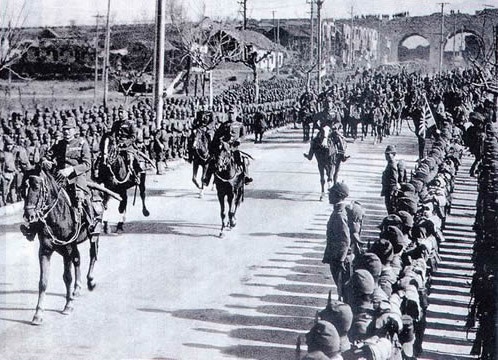
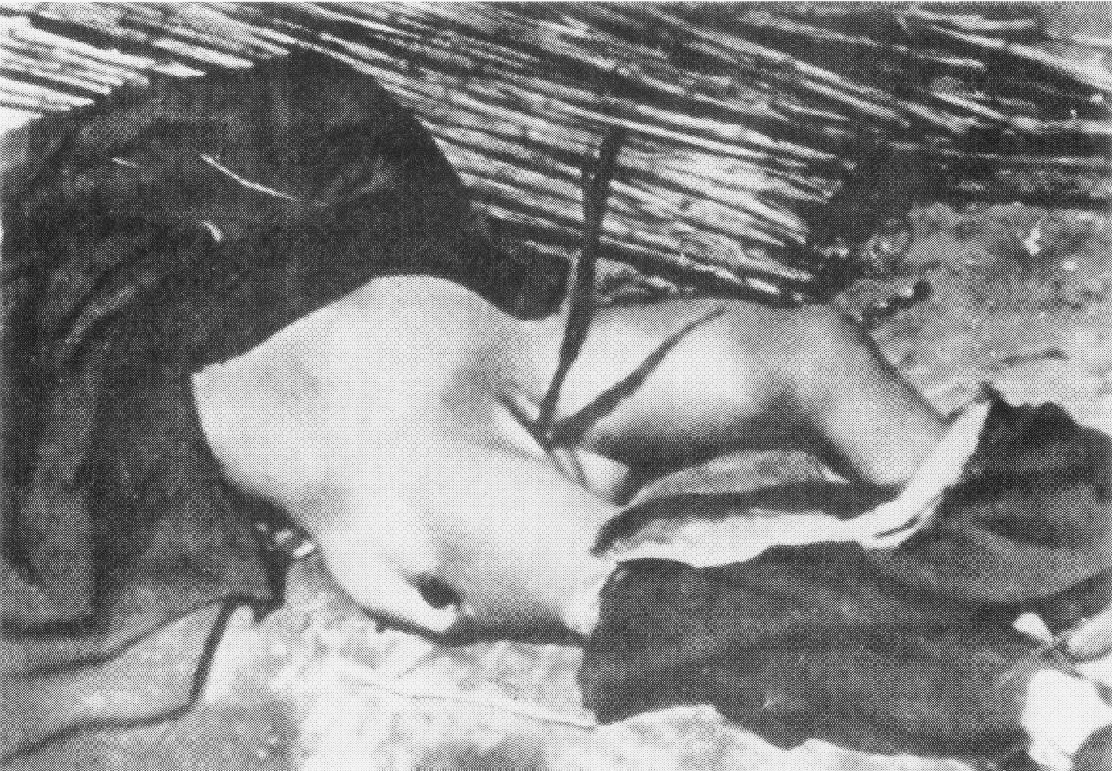
Peace

Padre Steve+

Leave a comment

Filed under History, Military, Navy Ships, US Navy, World War II at Sea, world war two in the pacific