Category Archives: philosophy

To Boldly Go…. Binge Watching Star Trek the Next Generation from the Beginning and Wondering About Possibilities not of This Earth

Friends Of Padre Steve’s World,

I have always been what some would call a Trekkie. Ever since I was a young child watching Star Trek the Original Series I have been fascinated with space, other universes, galaxies, and other life that must exist beyond earth. As a Christian and theologian I have to admit that the possibilities of a non earthnocentric order fascinate me. Christians, especially pastors, and theologians love to talk about the attributes of God: his omniscience, his power, his omnipresence, ad infinitum, but instead of contemplating the unknown potentials of a universe that we know little about, our puny minds remained focused only on earth and ways in which to destroy it in order to ensure the Apocalypse arrives, I cannot do that.

While obviously as a Christian I have to live fully in this world, and in doing so bear witness of Jesus the Christ, fight for equality and human rights, and do my best to bear witness of the truth, that human beings can be among the most noble as well as debased beings that have ever existed. There are certainly examples in the Judeo-Christian Scriptures to support both extremes, and theologians who those who support the total depravity of humanity, or an exalted view of humankind.

But, as Dietrich Bonhoeffer so succinctly noted:

“Man no longer lives in the beginning–he has lost the beginning. Now he finds he is in the middle, knowing neither the end nor the beginning, and yet knowing that he is in the middle, coming from the beginning and going towards the end. He sees that his life is determined by these two facets, of which he knows only that he does not know them” 

The fact is, that we human beings are stuck in that uncomfortable middle, and to admit that is a step on the road to freedom. That is what I find so fascinating about Star Trek the Next Generation, it confronts human nature with the added dimension of the possibility, if we don’t destroy ourselves first, that we will meet others from other solar systems and galaxies.

In the finale of Star Trek the Next Generation, the being known as Q discusses that question with Captain Picard:

Capt. Picard: I sincerely hope that this is the last time that I find myself here.

Q: You just don’t get it, do you, Jean-Luc? The trial never ends. We wanted to see if you had the ability to expand your mind and your horizons. And for one brief moment, you did.

Capt. Picard: When I realized the paradox.

Q: Exactly. For that one fraction of a second, you were open to options you had never considered. That*is the exploration that awaits you. Not mapping stars and studying nebulae, but charting the unknown possibilities of existence.

I really do believe that being open to options that we never considered is both a part of the Christian life, as well as humanity in general.

I certainly don’t have the answers, but I am am open to answers that lie beyond my realm of sight and thought. There are times that I think that I was born 300 years too late for the Enlightenment and probably at least 300 years too soon for the world of Star Trek, I am caught in that uncomfortable middle that Bonhoeffer spoke of, but in the middle of the middle.

But for now I have 171 more episodes of Star Trek the Next Generation to go, then on to Star Trek Deep Space Nine, and Star Trek Voyager. 

So until tomorrow,

Peace,

Padre Steve+

Leave a comment

Filed under christian life, enteratinment, faith, life, philosophy, Religion, star trek, televsion

The Nature Of Evil

Friends of Padre Steve’s World,

Thirty years ago when I was in seminary my Philosophy Of Religion Professor, Dr. Yandall Woodfin told our class that until we had death with the realities of evil, death, and suffering we had not yet done Christian theology. He was right, but I have not learned that by wrestling with theology per say, but rather human experience as recorded by history, especially my studies of the Holocaust, and American Slavery, as well as what the and as observed in my life as a trauma and surgery department chaplain in a number of large and medium sized hospitals, including Parkland Memorial Hospital in Dallas.

Since that time I have witnessed hundreds of violent deaths. Most in the United States but some in Iraq. I have seen cruelty, committed by human beings that only can be described as evil. I have also spoken directly with men who killed in cold blood, including an assassination type hit on a man and his son who owed him fifty dollars. That man was a Navy Hospital Corpsmen with a wife and a child, his victims a couple of locals. When I looked in his eyes there was no feeling, it didn’t matter what he had did, he was a classic sociopath. He had no empathy for the men he killed or the devastation he left in the lives of his wife and child. The state he committed the murder in does have the death penalty, but he received two back to back life sentences. The Navy discharged him and that cut off my attempts to communicate with him.

But the question always comes back to the nature of evil itself, and the willing ignorance of many people of it. Having come face to face with this man and others like him, I have to agree with the comments of Captain and psychologist Gustave Gilbert about the Nazi War Criminals at Nuremberg:

“In my work with the defendants (at the Nuremberg Trails 1945-1949) I was searching for the nature of evil and I now think I have come close to defining it. A lack of empathy. It’s the one characteristic that connects all the defendants, a genuine incapacity to feel with their fellow men. Evil, I think, is the absence of empathy.”

I have to admit that the amount of ignorance in the defense of evil that I see daily is simply mind blowing. It makes me shake my head. But then I cannot be surprised anymore. About two years ago I saw a poll in which nine percent of Americans said that holding White Supremacist or Neo-Nazi views and ideology was okay. 

Now nine percent doesn’t sound like a big number or anything to worry about until you extrapolate that percentage into the numbers of people who hold that view. Based on the population of the United States that nine percent equals about thirty million individuals. Now I’m sure that many of these patriotic Americans are not card carrying Klansmen or Nazis, but the fact that they would turn a blind eye to the evil of both in the name of some incomprehensible moral equivalence as did President Trump after Charlottesville is quite disturbing. Perhaps it is his example that enables them to be so open about their acceptance of evil. 

A while back on my Facebook page a friend of a friend commented on an article which discussed new research that indicates that the Nazis in their occupation of the Ukraine killed perhaps a half million more Jews than previously believed. That woman made the comment that there were others, and yes that is true. Had the Nazis won the war tens of millions more of the Jews as well as the Slavs who they referred to as Untermenschen or subhumans would have been killed, either directly or through a policy of intentional starvation. But make no bones about it, from the months that Hitler spent in Landsberg prison for his role in the Beer Hall Putsch of 1923 writing Mein Kampf until the end of the war as the Red Army closed in on his bunker in Berlin, the Jews above all were the object of his personal hatred. 

Close to six million Jews and millions of others were killed by the Nazis. Millions of Africans were enslaved in the United States and even after emancipation were by law treated as less than full citizens. Under Jim Crow they were discriminated against at every level of government including states that were neither a part of the Confederacy or not even States when the Civil War was fought, they were impressed as forced labor under the Black Codes and thousands were murdered, often in public by people who brought their children to watch Black men die. 

But these people were not just numbers. It’s all to easy to blur them into a mass of dehumanized humanity by talking about the millions, when every single one was a human being, yes, I believe created in the image of God. We have to see their faces and we have to recognize their essential humanity as men and women, children, fathers, mothers, brothers, sisters, husbands and wives, whose lives were in the case of the Jews obliterated as if they never existed, and others like African slaves who were simply property.

I explained that in quite a few fewer words and told her that she shouldn’t challenge me on the subject, which of course she did. So I went into more detail and shot her argument down in flames, to the cheers of other commentators on the post. When you have spent much of your academic life studying a subject it really gets old hearing people make excuse for evil by trying to minimize that evil, especially against the targeted people. 

It’s like Confederate apologists saying that the institution of slavery which enslaved millions of Africans was actually worse for White people. Yes it is true that many poor whites benefited little from slavery, but they were not bought and sold as chattel, sold away from their wives and children, whipped, and marched across country in chains to new owners, or yes even killed simply because they were not considered human beings but property. 

Sadly, as Dr. Timothy Snyder wrote “The history of the Holocaust is not over. Its precedent is eternal, and its lessons have not yet been learned.” 

So there are about 30 million Americans who believe that holding Nazi and White Supremacist beliefs is okay. A few years ago I would believed that the number was lower, but after seven months of living in Trump’s America I believe that it might be even higher than the poll indicated. I only say this based on the postings I see on various social media platforms, news comment pages, the proliferation of websites that cater to these beliefs, and the lack of real condemnation of such individuals by the majority of the GOP Senate and House majorities, and the outright defense of them by other GOP representatives at the Federal and State level. These people have not learned the lessons of the Holocaust, nor American slavery. 

Again I don’t believe that the majority of these people are real card carrying Nazis or Klansmen. Most would probably be considered great citizens: they work, they raise families, they go to church, and many would claim that they have “a Black or Jewish friend” so obviously they cannot be racists. But that being said they turn a blind eye to the evil of race hatred and White supremacy, and sometimes join in on social media meme wars where they mock the victims. But no matter what, not condemning the purveyors of White Supremacist or Neo-Nazi ideology, or by using the arguments of moral equivalence to minimize those crimes against humanity makes these people as complicit in the past, present, and future crimes of Naziism as if they were. 

They may be ordinary people, as seemingly normal as anyone else, but as Hannah Arendt noted about Adolf Eichmann and other Nazis who advanced the destruction of the Jews was that they were so normal. She wrote: 

“The trouble with Eichmann was precisely that so many were like him, and that the many were neither perverted nor sadistic, that they were, and still are, terribly and terrifyingly normal. From the viewpoint of our legal institutions and of our moral standards of judgment, this normality was much more terrifying than all the atrocities put together.” 

That my friends is as true as the day she wrote it after Eichmann’s trial, as it is today, and why we must constantly educate people in every forum possible that it is all too easy to become either a perpetrator or evil or a bystander. As Snyder wrote: “It is less appealing, but morally more urgent, to understand the actions of the perpetrators. The moral danger, after all, is never that one might become a victim but that one might be a perpetrator or a bystander. It is tempting to say that a Nazi murderer is beyond the pale of understanding. …Yet to deny a human being his human character is to render ethics impossible. To yield to this temptation, to find other people inhuman, is to take a step toward, not away from, the Nazi position. To find other people incomprehensible is to abandon the search for understanding, and thus to abandon history.” 

Since they were human beings the Nazis were not unique to history. In every era of history human beings have committed atrocities, many in the name of some kind of ethnic, religious, or nationalist ideology of supremacy that held other people to be less than human. That may sound harsh, but it is all too true based on history.

Yehuda Bauer wrote: “The horror of the Holocaust is not that it deviated from human norms; the horror is that it didn’t. What happened may happen again, to others not necessarily Jews, perpetrated by others, not necessarily Germans. We are all possible victims, possible perpetrators, possible bystanders.” 

In the movie Judgment at Nuremberg the judge played by Spencer Tracy noted something important about the defendants in the trial. His words need to be heard today as well:

Janning, to be sure, is a tragic figure. We believe he loathed the evil he did. But compassion for the present torture of his soul must not beget forgetfulness of the torture and the death of millions by the Government of which he was a part. Janning’s record and his fate illuminate the most shattering truth that has emerged from this trial: If he and all of the other defendants had been degraded perverts, if all of the leaders of the Third Reich had been sadistic monsters and maniacs, then these events would have no more moral significance than an earthquake, or any other natural catastrophe.

But this trial has shown that under a national crisis, ordinary – even able and extraordinary – men can delude themselves into the commission of crimes so vast and heinous that they beggar the imagination. No one who has sat through the trial can ever forget them: men sterilized because of political belief; a mockery made of friendship and faith; the murder of children. How easily it can happen. There are those in our own country too who today speak of the “protection of country” – of ‘survival’. A decision must be made in the life of every nation at the very moment when the grasp of the enemy is at its throat. Then, it seems that the only way to survive is to use the means of the enemy, to rest survival upon what is expedient – to look the other way. Well, the answer to that is ‘survival as what’? A country isn’t a rock. It’s not an extension of one’s self. It’s what it stands for. It’s what it stands for when standing for something is the most difficult! Before the people of the world, let it now be noted that here, in our decision, this is what we stand for: justice, truth, and the value of a single human being.

It is high time that we learn that again and that we make up our minds to oppose the ideologies that made the Holocaust and Slavery possible. As Hannah Arendt observed: “The sad truth is that most evil is done by people who never make up their minds to be good or evil.”

But then there are those who have no problem with it, sociopaths who have an extreme absence of empathy.

So until tomorrow, 

Peace

Padre Steve+

7 Comments

Filed under crime, ER's and Trauma, ethics, faith, History, holocaust, Military, ministry, nazi germany, News and current events, philosophy, Political Commentary, world war two in europe

“To Be Ignorant of What Occurred Before…” The Willful Ignorance Of History

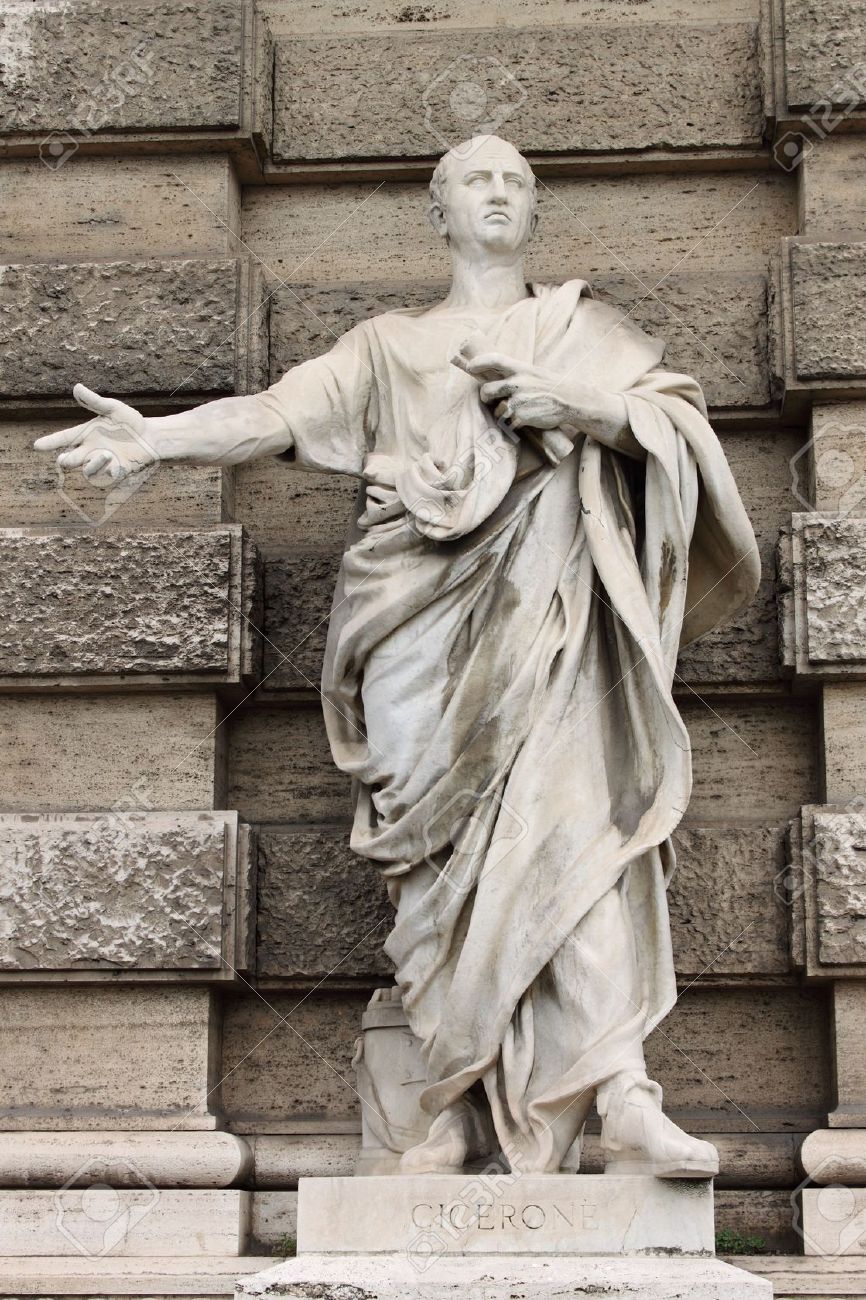
Statue-of-Cicero-Stock-Photo-rome

Friends of Padre Steve’s World,

I have been writing a lot about the Holocaust of late and as I was working on my latest book I came across a quote by British Historian Laurence Rees from his book “Auschwitz, a New History:

“Soon the last survivor and the last perpetrator from Auschwitz will have joined those murdered at the camp. There will be no one on this earth left alive who has a personal experience of the place. When that happens, there is a terrible danger that this history will merge into the distant past and just become one terrible event among many…. But that should not be allowed to happen.

We must judge behavior by the context of the times, and judged by the context of mid-twentieth century, sophisticated European culture, Auschwitz and the Nazis’ “Final Solution” represent the lowest act in all history. Through their crime, the Nazis brought into the world an awareness of what educated, technologically advanced human beings can do – as long as they possess a cold heart. Once allowed into the world, knowledge of what they did must not be unlearned. It lies there – ugly, inert, waiting to be discovered by each new generation. A warning for us, and for those who will come after. (Rees, Auschwitz p.299)

I have been reading about the declining number of students studying history, and the relative ignorance of Americans as a whole as to history, including the gross and willful ignorance of it by the President. As a historian that frightens me.

The great Roman philosopher and political theorist Marcus Tullius Cicero wrote, “History is the witness that testifies to the passing of time; it illumines reality, vitalizes memory, provides guidance in daily life and brings us tidings of antiquities.”

Those who follow my writings here on this site know that I am a historian and that much of what I write, even regarding current events, is framed by history and the stories of those who came before us. That is one of my driving passions, a passion for historical truth, and a passion to ensure that the past is not forgotten.

Cicero is an important figure in history. He resisted the moves toward the dictatorship of the Caesars and would die for his belief in the Republic. As such he inspired the founders of the United States, including Thomas Jefferson and John Adams. Adams wrote of the Roman:

“As all the ages of the world have not produced a greater statesman and philosopher united than Cicero, his authority should have great weight.”

Sadly, it seems that our society, and even our education system is disconnecting itself from history. We have pretty much stopped teaching history in schools, and often what is taught is myth. As such we have become a society that through its ignorance of the past is ever repeating the worst aspects of our history. As a whole we are ignorant of our past, and that ignorance is demonstrated by many of our political, business, journalism, educational, and military leaders on a daily basis.

Cicero wrote “To be ignorant of what occurred before you were born is to remain always a child. For what is the worth of human life, unless it is woven into the life of our ancestors by the records of history?”

Our lives must be woven together with those who came before us, without that sacred connection to the past, we endanger the future, and doom those who follow us. Cicero wrote, “The life of the dead is placed in the memory of the living.” Thus, it is for us the living to remember and never forget those who have gone before. That is why I write.

At some point I will write more on things that Cicero wrote and said, including political and social lessons that are as relevant today as when he wrote them, but as historian George Santayana noted: “Those who do not remember the past are condemned to repeat it.”

I fear that the President and his sycophants in the GOP and his Cult like followers in their ignorance of history and willful disregard for the Constitution and our institutions will end in the kind of political disaster that brought an end to the Roman Republic.

These are perilous times and I am afraid that the lessons of Cicero, Santayana, and Rees have not been learned.

Until tomorrow,

Peace

Padre Steve+

2 Comments

Filed under History, holocaust, News and current events, philosophy, Political Commentary

A Centurion and His Officers Reflect on “Following Orders” the Roman Soldiers on Holy Saturday

Friends of Padre Steve’s World

Today is what Christians call “Holy Saturday.” It is a day of reflection between the death of Jesus on Good Friday and his Resurrection. So unless something really unusual and earth shattering occurs I am going to take the Easter weekend to do some reflection, including on some spiritual topics. In light of that I am simply going to post three of my older fictional accounts of that weekend, yesterday, today, and Easter Sunday.

As a genre this series falls in the realm of historical fiction, which means that while they may be set in a historical event, that they are fiction. Likewise, I admit that they and the main character are more a reflection of me, and my journey, and my over-active imagination, than my cursory study of Roman and New Testament History.

Likewise, the story itself is timeless and transcends the bounds of the Christian religion, it is about humanity. As I say to so often, human beings are one constant in history. Here are men who are involved in the torture and killing of a man they know to be innocent. It is a study in human behavior and reflection. If you have ever read the accounts of soldiers of occupying armies, propping up unpopular governments against insurgents, there is something to be learned. They were just following orders.

That being said, have a nice weekend, and if you do it, have a nice Easter.

Peace,

Padre Steve+

holy-saturday

The horrible day was passed and a new morning greeted Longinus as he arose. The sun rising over the escarpment in the east that overlooked the Jordan River cast a warm red and yellow glow as its rays infiltrated the window overlooking the courtyard of Fortress Antonia. It seemed an eternity since he watched the sun rise as Pilate debated what to do with that Jesus fellow.

Longinus and his fellow officers Flavius and Decius had spent much of the previous evening in the tavern following the executions. It was not a typical night for them. There was little frivolity, few jokes and none talked much about the events of the day, which had begun for Longinus not long after midnight. Flavius, whose servant had been healed by Jesus in Capernaum had briefly discussed the meaning of Longinus’s comments as the Galilean preacher died upon the cross. Longinus pondered the words again. “Surely this man is the son of God” or something to that effect. He didn’t remember his exact words and he couldn’t even remember why he had said them, but then the day was long and the events struck a nerve. He had seen or taken part in many executions as well as difficult battles. He disliked executions in general but until now he had managed to keep his soul protected from from what he felt on Golgotha by the wall that he had built around his heart.

Longinus looked out the window and then at his desk. He would need to call his officers together soon. He was sure that even though it was the sabbath that those that plotted against Roman rule, as well as the various factions at work in Jerusalem were still plotting, scheming and at work. He wondered how in such a climate anyone could call the day “holy.”

He did not like what had happened the previous day. When Pilate gave in to the Jewish leaders in regard to killing the Galilean he very uneasy. Pilate should have damned the whole politics of the situation and let the man go. The events still bothered him. The man was innocent. Pilate knew it, Longinus knew, hell they all knew and yet all of them had aided and abetted those that wanted the man named Jesus dead. Longinus felt a shame that in all of his years of soldiering he had never before felt. Pilate was able to wash his hands of responsibility. Longinus wished he could do so for himself, but the blood of the innocent man, which still stained the tip of the lance that Longinus had plunged into him, would not let him. Longinus shook his head in disgust.

Just then Decius knocked and entered with the news that Pilate had ordered a guard set at the tomb of Jesus. Supposedly the Jesus fellow had said that he would rise from the dead and the Jews wanted to make sure that no one tried to make off with the body of Jesus.

Longinus was not surprised, somehow as strange as the week had been it made perfect sense. Set a guard over the tomb of a man who was betrayed by one his own, denied by others and abandoned by all but one? It was ridiculous; people don’t rise from the dead. Dead is dead. Longinus thought rather cynically that it was a waste of his troops time and effort. If the Jews were so concerned why didn’t they send their Temple Police to guard the tomb? But then he realized that such duties were beneath the Temple establishment. The dead were unclean, so get the infidel Romans to do the dirty work, that way if something went wrong they could take the blame. It figured.

14_2009_da_02_int

He ordered Decius to set the guard. As he did this he received a report that two of his Samaritan soldiers had been brought in by a patrol dead drunk late in the evening. He would have to discipline them later, that was the lot of a commanding officer. How he wished that he was commanding a unit of Italians in a home province or on a campaign rather than these Samaritan and Syrian cast offs in this God forsaken backwater of the Empire. At least he had a number of good officers under his command, perhaps if he remained in Palestine he could organize a transfer of he and his officers to the Italian Cohort stationed in Caesarea where his friend commanded one of the units. Though he too was based in Caesarea it was much better to be assigned to that Italian unit rather than the locally recruited units.

Flavius joined them as they set down to eat breakfast. Outside Quentin and other sergeants mustered the men, and proceeded to carry out the order of the day. Patrols were dispatched to remind any Zealots or sicarii that even if they had gotten Pilate to do their bidding regarding the Galilean that Rome was still in charge of their capital.

The officers discussed details of the planned movement that would take them back to Caesarea in the next couple of days, whenever Pilate decided that the situation in Jerusalem was calm enough to leave. That would be a day or two at least as the multitudes that had come to observe Passover from the diaspora returned to their homes about the Empire and beyond.

The sun now shown brightly through the window and Pilate looked at the still menacing hill known as Golgotha, now devoid of crosses. He thought about that final scene yesterday amid the gloom as the tree men including the Galilean hung suspended between the heavens and earth. It was a sight that he would not soon forget.

Flavius and Longinus hoped for an uneventful couple of days in order to prepare for the always-dangerous trip through Judea. The Zealots, the Sicarii and other insurgents always hoped to kill Roman soldiers. But tonight, the Gods willing Longinus and his comrades would meet over a cup of ale in the tavern and maybe things would begin to return normal, whatever that meant in this place.

To be continued…

Leave a comment

Filed under christian life, ethics, faith, History, Military, philosophy, Political Commentary

Unexpected Death, Friends, and Conditions Requiring me to Probably Postpone Retirement

Friends of Padre Steve’s World,

There are so many things I could Write about today, but late this afternoon I found that one of our friends from Gordon Biersch passed away yesterday. The cause is still undetermined bit we were with him here Monday. Mitch and his wife Barb have been friends for years.

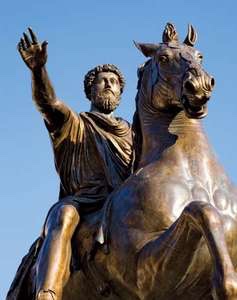
I am reminded of the words of Marcus Aurelius: “Do not act as if you had ten thousand years to throw away. Death stands at your elbow. Be good for something while you live and it is in your power.”

I am shocked. Just a couple of weeks ago I lost another friend, younger than me. Confronting mortality is difficult. From the first time I had a gun held to my head during a robbery to the last time I was under fire in combat I have imagined what it would be like to die. I’m not obsessive about it, but when a friend suddenly passes away, it makes me think. T.E. Lawrence wrote words with which I can heartily agree:

“Immorality, I know. Immortality, I cannot judge.”

Most of the times Mitch came here he came here to read and socialize. You couldn’t say anything negative against him. He was quiet, polite, friendly, and interested in other people. He was also intelligent, and while he primarily read fiction, was quite well versed in other subjects. I really feel bad for Barb, she lost a great husband. Word of his passing reverberated throughout the bar and restaurant. One of our bartenders was on the verge of tears when he found out. Most of us were just in shock.

As for me, he was about my age, which is another reminder of my mortality, and another reason to be thankful about my life and the blessings I have.

I also found out today that if I need surgery on my right knee that since I am within six months of my approved voluntary retirement date that I may have to cancel my planned retirement and go with a retirement date based on my statuary retirement when I am 60. That would mean a retirement date of April 1st of 2020. It won’t make people happy but according to the head of the retirement branch since I was approved for voluntary retirement I could cancel that request in order to serve out the rest of my statuary retirement time. Since I have a chaplain coming in to replace me in October it shouldn’t even a problem. The details will probably be a pain in the ass, but if I can get my knee fixed while still on active duty it will be worth it. I don’t want to be pushed into the VA system when my injury might preclude employment. I don’t mind the VA system if I am able to work, but I don’t want to be unemployable immediately after I retire because I need surgery and a recovery period, so maybe I need to cancel my current retirement plans and settle for April 1st, 2020. Not that I wasn’t looking forward to getting the heck out of Dodge when I could. There are a lot of things I see coming in the Military, the Navy, and the Chaplain Corps that I have great concerns about, and if I had the choice I would retire tomorrow. However, when I submitted my retirement papers last July I never expected the injuries I incurred the following month, the delays in treatment, and the non-response of my right knee to all treatments so far.

Honestly, by now I expected to be able to walk and jog again with a minimum of discomfort. Instead, both knees try to go out on me and hurt like the devil. My surgeon tells me that my left knee is as good as it will get and will likely require a replacement in a few years. I am okay with that, so long as my right knee gets fixed or replaced before I retire. It hurts a lot worse than the left knee, which was the case before I got hurt. This requires actions that I would not have considered until now.

So anyway, until tomorrow,

Peace,

Padre Steve+

1 Comment

Filed under faith, life, Loose thoughts and musings, philosophy

Just Gods and a Good Life: Marcus Aurelius and St. Paul for today

Friends of Padre Steve’s World,

Tonight, just a short thought from the great Roman Statesman, Emperor, and Philosopher, Marcus Aurelius:

“Live a good life. If there are gods and they are just, then they will not care how devout you have been, but will welcome you based on the virtues you have lived by. If there are gods, but unjust, then you should not want to worship them. If there are no gods, then you will be gone, but will have lived a noble life that will live on in the memories of your loved ones.”

I try to live my life in that manner as. Christian. St. Paul himself said “And if Christ has not been raised, our preaching is useless and so is your faith.” So by some chance if we as Christians are wrong, we should always look back to the words of Marcus Aurelius.

I’m not going anywhere else with this tonight,

So Peace,

Padre Steve+

Leave a comment

Filed under ethics, faith, History, Loose thoughts and musings, philosophy, Political Commentary, Religion

Stupid is as Stupid Believes

Friends of Padre Steve’s World,

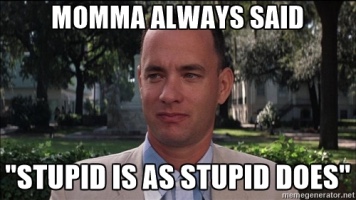
Anyone who ever watched the classic film Forrest Gump knows the classic comment by Forrest played by Tom Hanks: “Stupid is, as stupid does.” But Forrest didn’t really get to the root of the epistemology question, of why people do things. Truthfully it all,comes down to beliefs.

If one believes that the world is flat in spite of all the scientific and physical evidence are stupid.

If one believes that their religious beliefs and traditions trump all other such believes and traditions, which none of which are based on fact, but rather faith, they are stupid.

If anyone believes that vaccines against a host of proven scourges which in times before they were introduced killed millions of and devastated the pieces of millions of others are more harmful than beneficial, they are stupid.

If someone believes that a particular political ideology is superior to all others, or has no weaknesses, they are stupid.

If someone believes that their race is superior to all others beasts on some combination of religion, political and racial ideology, or pseudo-science, the are stupid.

I could go on to a host of other topics including long held military dictums, economic and social theories, but I will not.

There is not one human held theory or belief that when followed to its logical conclusion cannot be either disproven or questioned. But there are some things which on the simple basis of fact can not only be disproven, but the following of can be called stupid.

The fact is that stupid people do stupid things, but the deeper truth goes back to what they believe. Forrest Gump wasn’t the brightest bulb in the box but he had good character and a bit of common sense. That makes a lot of difference.

So as the world heads into a very trying and tumultuous time when basic beliefs or right and wrong, true and false, ethical and unethical are being refined and tested to separate the precious from the dross, it is time for every serious person to look to character, and if they are Americans ask if a particular belief or ideology aligns with the premise of the Declaration that “all men are created equal and endowed by their creator with the certain unalienable rights to life, liberty, and the pursuit of happiness.” From my point of view, if they do not, regardless of their beliefs, religious, or political ideology, they are stupid.

Stupid is, as stupid believes, and the beliefs result in actions that can only be labeled as stupid.

Until tomorrow,

Peace,

Padre Steve+

1 Comment

Filed under Loose thoughts and musings, movies, News and current events, philosophy, Political Commentary, Religion

“You can take our lives and our freedom, but you cannot take our honour. We are defenseless but not honourless.” Remembering the Resistors to the Enabling Act Of 1933

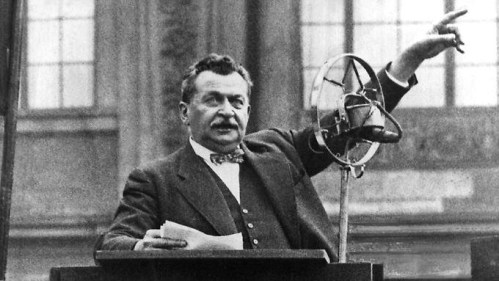
Otto Wels

Friends of Padre Steve’s World,

I will not be talking about the Mueller report until we know what is actually contained in it. So I will continue to discuss historical events that are relevant in our time.

One of the most relevant as this country and others lurch toward legally elected authoritarian governments is the example of the Hitler’s Enabling Act, or by its full title Gesetz zur Behebung der Not von Volk und Reich (“Law to Remedy the Distress of People and Reich”) came on the heels of the Reichstag Fire Decree and though very short had tremendous repercussions for the German Republic and in effect made Hitler and his administration a dictatorship. The legislative branch, the Reichstag was limited to nothing more than a rubber stamp for the executive, as was the judicial branch, the Reichsrat. It supposedly protected the rights of the President, the Reichstag, and judiciary, but it made Hitler the the sole decider of domestic and social laws, as well as all foreign policy decisions.

The law stated:

The Reichstag has enacted the following law, which is hereby proclaimed with the assent of the Reichsrat, it having been established that the requirements for a constitutional amendment have been fulfilled:

Article One

In addition to the procedure prescribed by the constitution, laws of the Reich may also be enacted by the government of the Reich. This includes the laws referred to by Articles 85 Paragraph 2 and Article 87 of the constitution. (Article 85 and 87 dealt with the budgetary process and allocation of funds for advertisement.)

Article Two

Laws enacted by the government of the Reich may deviate from the constitution as long as they do not affect the institutions of the Reichstag and the Reichsrat. The rights of the President remain unaffected.

Article Three:

Laws enacted by the Reich government shall be issued by the Chancellor and announced in the Reich Gazette. They shall take effect on the day following the announcement, unless they prescribe a different date. Articles 68 to 77 of the Constitution do not apply to laws enacted by the Reich government. (These Articles dealt with the legislative process in which the Reichstag, Government, Reichsrat, and President all had specific responsibilities which limited the power of the government to rush laws into force without due process and deliberation, and if needed the approval of the electorate)

Article Four

Treaties of the Reich with foreign states, which relate to matters of Reich legislation, shall for the duration of the validity of these laws not require the consent of the legislative authorities. The Reich government shall enact the legislation necessary to implement these agreements. (This removed the requirement of the Reichstag to approve treaties)

Article Five

This law enters into force on the day of its proclamation. It expires on April 1, 1937; it expires furthermore if the present Reich government is replaced by another.

When the legislation was introduced the debate was muted. While the Communist Party was yet to be banned, deputies of the Communist Party could not attend the session, many had already been arrested and many more were in hiding or had fled the country. Hermann Goering adjusted the rules for a quorum in order to compensate for the lack of members in attendance. Deputies of the Social Democratic Party were also terrorized, hounded, and some arrested, but 94 attended, outnumbered they did not buckle under the Nazi threats, which included the chamber being ringed by armed members of the SA and SS.

The non-Nazi Protestant based conservative parties provided no resistance, but the Catholic Center Party was torn by concerns that the legislation could limit the rights of the Catholic Church. However, they had been outmaneuvered by Hitler who had already negotiated a Concordant with the Vatican. The result was to ensure that the Catholic Center Party would vote for the measure, which passed with a mere 94 deputies opposing it, all members of the Social Democratic Party.

The only member of the Reichstag to speak against the measure was the head of the Social Democrats, Otto Wels. In defiance of Hitler, Goering, the Nazi Deputies, and the threatening SA and SS men uttered words that every resistor in every country threatened by authoritarian leaders who despise the rule of law and the Constitutions that they used to gain power need to hear and proclaim, because the truth can never be silenced:

“You can take our lives and our freedom, but you cannot take our honour. We are defenseless but not honourless.”

Otto Wels died as an exile in France. Many Social Democrats were placed in Concentration Camps and died, likewise some Communists. The Catholic Center Party would find itself betrayed, and many of its leaders would be killed, jailed, or placed in Concentration Camps, and Hitler would persecute opposition members of the Catholic Church as if no Concordat had ever been negotiated.

But eventually the Nazis would be driven from power. Their descendants today must be confronted at all costs. Democracy, and Constitutional republics based on the principles of the Declaration of Independence, which recognizes that all men are created equal, and the Constitution of the United States which was the first to checks and balances between the Executive, Legislative, and Judicial branches of government in which the Legislative branch was assumed to be the most important.

We have reached a point in the history of the United States where the Executive Branch, over a period of decades has assumed the powers of dictatorship as the Legislative branch over the corresponding time has surrendered its prerogatives and powers, while the judicial branch had become the domain of politically appointed judges and justices,

One does not know what will happen next, but anyone who values the primary principles of the Declaration and the Constitution must ne willing to take a stand like Otto Wels when confronted with a dictatorship in the making. Even if the President unleashes the power of the police and his own heavily armed supporters against opponents, we must remember like Otto Wels, they can “take our lives and freedom, but they cannot take our honor…”

This is something that anyone committed to the principles of the Declaration and Constitution must take seriously over the next 19 months leading to the next Presidential election. If we fail, the effects will be felt for at least a generation, and the institutions of our government will be transformed in ways that the founders could only imagine in their worst dreams.

Democrats and Never Trump conservatives must keep this in mind. Nothing is guaranteed right now, it is quite possible that Trump and his cult like supporters in Congress and the courts could enact something like the Enabling Act if we are not careful, regardless of the findings of the Mueller investigation or anything else, and we must be careful to watch for the major terrorist attack, or war that could lead to the implementation of already legislated laws, or executive orders that give nearly dictatorial powers to the executive, and which would be supported by a majority of Americans.

So until tomorrow.

Peace,

Padre Steve+

Leave a comment

Filed under ethics, History, laws and legislation, nazi germany, News and current events, philosophy, Political Commentary, Religion

“Remember Thou Art Mortal”the Death Of a Friend and a Cold Look at My Own Mortality

Friends of Padre Steve’s World,

I had retired Navy friend die over the weekend. He was a Chief Warrant Officer with about 30 years of service when he retired not long before their marriage. None of us knew it then but he probably had the stage four Brain Cancer that was diagnosed not long after their marriage. He stayed active and when he retired he was still in peak physical shape. He did a lot of sea time, mainly on cruisers and destroyers, and deployed with Naval Special Warfare Teams to various combat zones.

He was younger than me and in May of 2017 I had the honor of performing the marriage of Dan and his wife in the presence of their children at their home. He passed away Saturday and I found out last night. I didn’t sleep well, it is hard to believe that Dan Trevino is dead.

His death reminded me of my mortality, that and an extensive pre-retirement physical form on which I have to list everything that is wrong with me now or I have ever been treated for over the course of my career. I have to explain any yes answers and since there is not enough room on the form I am having to type it out on Microsoft Word and attach it. I think that I am about seventy to seventy-five percent complete, but I found today will waiting in the hospital pharmacy that I do need my foot high 2000 or so page medical record. I also have to dig up my old Army Medical records, and am waiting for more from the Navy and a civilian doctor that the Navy sent me out to in Camp LeJeune. There is nothing like having a friend that you admired who was younger and in better shape die and going through all of these forms, and I haven’t yet started with the Veterans Administration, but once I am done with this, that is my next priority.

I spent most of today at the Naval Medical Center. I had a follow up appointment from my left knee, which I had arthroscopic surgery on about six weeks ago. It is progressing, it still hurts some and though much stronger than it was, it still occasionally catches, but it is doing better than the right knee which I will have my follow up for after failed Platelet Rich Plasma treatments and injections of a gel into the knee, which I have completed but don’t seem to be working. I also had to see the dermatologist who treated me for a pre-cancerous condition on my face. That is gone, but in it’s place I now have some kind of bacterial infection that has caused a rash on my face and will require three months of creams and antibiotics to treat, as well as a telephone consult with my sleep doctor. This is a pain but it beats the heck out of being dead.

So back to work tomorrow, more physical therapy, and more medical appointments on the docket, and more digging through the records to complete this part of my medical requirements. All this even as I start the job search for after the Navy.

But also in thinking about this I am deciding to make this time an opportunity for growth. Marcus Aurelius wrote:

“Your days are numbered. Use them to throw open the windows of your soul to the sun. If you do not, the sun will soon set, and you with it.”

I am going to use my days open up the windows of my soul to the sun, and in the process hopefully grow wiser and more loving. As the great Roman soldier-philosopher said:

“Life is short. Do not forget about the most important things in our life, living for other people and doing good for them.”

We should do well to remember our fallen friends like Dan and while remembering our mortality, also remember that no matter what our infirmities, and how long our past, we still have a future. As a Christian, in spite of my many doubts I believe this. The German theologian Jurgen Moltmann wrote:

“As time goes on we become old, the future contracts, the past expands…But by future we don’t just mean the years ahead; we always mean as well the plenitude of possibilities which challenge our creativity…In confrontation with the future we can become young if we accept the future’s challenges.”

Until tomorrow,

Peace,

Padre Steve+

1 Comment

Filed under life, Loose thoughts and musings, philosophy

A New Year Resolution: Read, Read, and When You Can’t Read Anymore, Read Some More

Friends of Padre Steve’s World,

Welcome to 2019. I know, we’re all still a bit hung over from last night, but welcome to the New Year. Admittedly it doesn’t yet feel a lot different than 2018, but I really expect that 2019 will mark an epochal change in our history. Since I wrote about that yesterday I won’t go back for more.

That being said there is one resolution that I think that all people, the great and the small, should do, and that is not to cry boo who, but read like our lives depended on it, which in a sense they do. By reading, I don’t mean just the news, commentary, or opinion sections of print or online news services, but get real books, especially works of history, biography, philosophy, and the classics.

Barbara Tuchman wrote:

“Books are the carriers of civilization. Without books, history is silent, literature dumb, science crippled, thought and speculation at a standstill. Without books, the development of civilization would have been impossible. They are engines of change (as the poet said), windows on the world and lighthouses erected in the sea of time. They are companions, teachers, magicians, bankers of the treasures of the mind. Books are humanity in print.”

Likewise, the French philosopher Voltaire hit the nail on the head when he said:

“Despite the enormous quantity of books, how few people read! And if one reads profitably, one would realize how much stupid stuff the vulgar herd is content to swallow every day.”

That my friends is fact. If you want to be able to better distinguish fact from fake, read.

Last year I committed to read more, even as I stayed current on the news, analysis of it, and commentary, even as I continued to write. My office at work is crammed with books, as is much of our home. I think that we follow well the advice of Dr. Seuss who wrote:

“Fill your house with stacks of books, in all the crannies and all the nooks.”

So I read, and I read, until my eyes they turned red. I read with those eyes that had turned red, in bed and even in the head.

I read as I eat, and eat as I read, because somewhere in my soul I have this great need, which I ever did cede I would be a great deal poorer indeed.

The pages they turned and as my eyes burned I knew I could never be through so long as my fingers don’t turn blue. I read and read with voices sounding through my head I, but I will not stress even though I digress…

But really, I read a lot last year and will continue to do so in the coming year. I cannot remember who said it, but someone that oI respect recently said that we should all read at least thirty books a year. That comes out to a bit over half a book a week.

I write about reading rainbow quite frequently, so today after a little extra inspiration last night I decided to look back at what I actually read this year. Here is the list which includes printed books and those that I read on my Amazon Kindle reader in no particular order:

The War that Ended Peace by Margaret McMillan

Castles of Steel: Britain, Germany and the Winning of the Great War at Sea by Robert Massie

Das Reich: The March of the 2nd SS Panzer Division through France, June 1944 by Max Hastings

The Nightmare Years: 1930-1940 by William Shirer.

Silent Night: The Story Of the World War One Christmas Truce by Stanley Weintraub

The Guns Of August by Barbara Tuchman

The Proud Tower: A Portrait Of Europe Before the War, 1890-1914 by Barbara Tuchman

1913: The Year Before the Storm by Florian Illies

The Path to Genocide: Essays on Launching the Final Solution by Christopher Browning

The Nazis: A Warning from History by Laurence Rees

The Holocaust: A New History by Laurence Rees

Denying the Holocaust: The Growing Assault on Truth and Memory by Deborah Lipstadt

Stalingrad by Anthony Beevor

The Fall of Berlin 1945 by Anthony Beevor

Hitler by Joachim Fest

Where Ghosts Walked: Munich’s Road to the Third Reich by David Clay Large

The Trial Of the Germans by Eugene Davidson

Vietnam’s Forgotten Army: Heroism and Betrayal in the ARVN by Andrew Wiest

The Anatomy Of the Nuremberg Trials by Telford Taylor

Incredible Victory by Walter Lord

Telling Lies about Hitler: History, the Holocaust, and the Trial Of David Irving by Richard Evans

The Eichmann Trial by Deborah Lipstadt

A Bright and Shining Lie: John Paul Vann and America in Vietnam by Neil Sheehan

Street Without Joy: The French Debacle in Vietnam by Bernard Fall

After Tet: the Bloodiest Year in Vietnam by Ronald Spector

Waterloo: The Story Of Four Days, Three Armies, and Three Battles by Bernard Cornwell

Grant by Ron Chernow

Lies My Teacher Told Me by James Loewen

Landscape Turned Red by Stephen W. Sears

Ill Fares the Land by Tony Judt

On Tyranny by Timothy Snyder

Ordinary Men: Reserve Police Battalion 101 and the Final Solution in Poland by Christopher Browning

Hitler’s Thirty Days to Power by Henry Ashby Turner

The Night of the Long Knives by Max Gallo

The Nazi and the Psychiatrist: Hermann Goering, Dr. Douglas M. Kelly, and a Fatal Meeting of Minds at the End of WWII by Jack El- Hai

Hitler’s Generals on Trial: The Last War Crimes Tribunal at Nuremberg by Valerie Hebert

Buchenwald : ostracism and violence 1937 to 1945 : guide to the permanent exhibition at the Buchenwald Memorial edited by Volkhard Knigge in collaboration with Michael Löffelsender, Rikola-Gunnar Lüttgenau and Harry Stein on behalf of the Buchenwald and Mittelbau-Dora Memorials Foundation ; translation: Judith Rosenthal

The Participants: The Men Of the Wannsee Conference by Hans-Christian Jasch

The Good Years: 1900 to the First World War by Walter Lord

Munich Playground by Ernest Pope

The Fall of the Dynasties: 1905-1922 by Edmond Taylor

Pearl Harbor Christmas: A World at War, December 1941 by Stanley Weintraub

Eichmann Before Jerusalem: The Unexamined Life Of a Mass Murderer by Bettina Stangeth

Enemy of the People: The Untold Story Of the Journalists Who Opposed Hitler by Terrance Petty

Hunting Eichmann: How a Band Of Survivors and a Young Spy Agency Tracked Down the Most Notorious Nazi by Neal Bascomb

The Eichmann Kommandos by Justice Michael Musmanno

The Road to Unfreedom: Russia, Europe, America by Timothy Snyder

Perpetrators: The World Of the Holocaust Killers by Gunther Lewy

Thinking the Twentieth Century by Tony Judt with Timothy Snyder

The Butcher Of Poland: Hitler’s Lawyer, Hans Frank by Garry O’Connor

Third Reich in History and Memory by Richard Evans

The First Salute: a View Of the American Revolution by Barbara Tuchman

Fear: Trump in the White House by Bob Woodward

Dereliction Of Duty: Lyndon Johnson, Robert McNamara, the Joint Chiefs of Staff and the Lies that Led to Vietnam by H. R. McMaster

Dispatches by Michael Herr

The Last Battle by Cornelius Ryan

Everything Trump Touches Dies by Rick Wilson

The Best and the Brightest by David Halberstadt

The Final Hours: The Luftwaffe Plot Against Goering by Johannes Steinhoff

Bring the War Home: The White Power Movement and Paramilitary America by Kathleen Belew

The Somme by Peter Hart

July 1914: Countdown to War by Sean McMeekin

Hitler Ascent: 1889-1939 by Volker Ulrich

What Have We Done: the Moral Injuries of Americas Longest Wars by David Wood

QB VII by Leon Uris

Russian Roulette by Michael Isikopf and Davis Corn, Operation Eichmann: The Inside Story Of History’s Most Notorious Manhunt Told by its Chief Investigator by Zivi Aharoni and Wilhelm Dietl

The Road not Taken: Edward Lansdale and the American Tragedy in Vietnam by Max Boot

Hue 1968 by Mark Bowden

Why Don’t We Learn From History by B. H. Liddell-Hart

Lincoln’s Lieutenants: The High Command Of the Army Potomac by Stephen Sears

The Collapse of the Third Republic: an Inquiry Into the Fall of France 1940 by William Shirer

The Wehrmacht: History, Myth, Reality by Wolfram Wette

War of Annihilation: Combat and Genocide on the Eastern Front, 1941 by Geoffrey Megargee

Sherman’s March by Burke Davis

Antietam by Bruce Catton

The Culture Of Defeat: on National Trauma, Mourning, and Recovery by Wolfgang Shivelsbusch

The Nanking Massacre: History Of China, Japan, and the Events Surrounding the Nanking Massacre by Mukuro Mori

The Miracle Of Dunkirk by Walter Lord

Note that very few books that I read this year deal with current events. I have always been that way. For the most part books on current events tend not to have stood the test of time.

I also read quite a few of the transcripts of the Nuremberg Trial, and still have many more to go. It kind of do those in between, and since each volume is the size of a book, they should count as books, but I don’t count them as books, although maybe I should.

Not counting the Nuremberg transcripts I read about 78 books this year, that’s about a book and a half a week, and I am not a speed reader. Yet it is not only about quantity, it is about content. Likewise, if one is to read one must understand and learn the lessons of the the past and the men and women have already learned and passed down. As Will Rogers notes:

“There are three kinds of men. The ones that learn by readin’. The few who learn by observation. The rest of them have to pee on the electric fence for themselves.”

Reading is the key to not falling for what the vulgar hoard is both eager and content to devour. That includes the average 15 lies, falsifications, and distortions of truth that the American President tweets or speaks every day. So I close with the words of Dr. Seuss:

“The more that you read, the more things you will know. The more that you learn, the more places you’ll go.”

Until tomorrow,

Peace,

Padre Steve+

2 Comments

Filed under books and literature, History, Loose thoughts and musings, philosophy