It is barely a day and a half after the massacre committed by Islamic terrorists in Paris, and the shock is still being felt around the world. In watching the images and listening to the words of various leaders I feel that something has changed; that the illusion of peace that we have lived under, has been shattered.
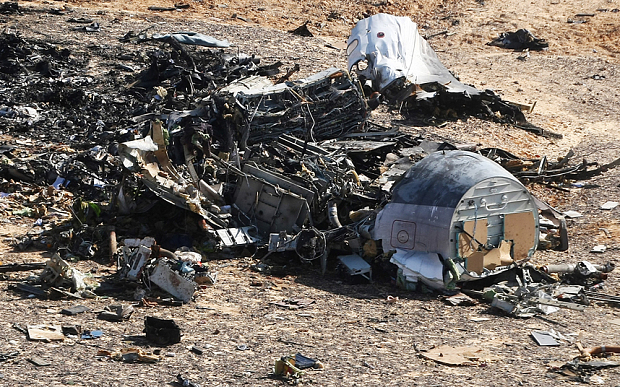
In two weeks the self-proclaimed Islamic State has claimed credit for the downing of a Russian airliner over the Sinai Peninsula, an attack in Beirut Lebanon, and, on Friday night the horrific series of attacks in Paris. The combined death toll for the three attacks is close to 400, almost all of who were innocent civilians doing nothing more than going about their daily lives. Hundreds more were wounded in Beirut and Paris. ISIL has promised to conduct more attacks on all nations that oppose them in Syria and Iraq. The attacks have awakened people to the fact that ISIL is not just a threat to the Middle East, but around the world.
Some are now calling this war, and in fact it is, a war that most of us have ignored though it has been going on for over two decades. But in just two weeks, the hybrid terrorist state known as ISIL has changed the course of that war. The war as we know it began in the years after the First Gulf War as young Saudis returning from Afghanistan, led by Osama Bin Laden took up arms against the “infidel” Americans based in Saudi Arabia. In the 1990s the terrorism was confined to Al Qaeda attacks throughout the Middle East, and included attacks on American military personnel, installations, and ships. Then on September 11th 2001 Al Qaeda changed the narrative by attacking the United States, killing nearly 3000 people at the World Trade Center, the Pentagon, and aboard four airliners. The United States responded by going after Al Qaeda and its supporters in Afghanistan.
Had the American response been contained to that action, the war might have taken a different course, and we might not be here today. But within months of 9-11 the Bush Administration began planning to attack Saddam Hussein’s Iraq and propagandizing the American people to support it, with or without allied or United Nations sanction. The operation to topple Saddam opened Pandora’s box, and who knows when we will ever live in peace again. Twelve years after President Bush announced the end operations in Iraq aboard the USS Abraham Lincoln with a banner that boldly proclaimed, “Mission Accomplished” behind him, the war that he unleashed in Iraq has spread in ways that even the most pessimistic critics of Bush did not predict.
With the war now entering an even more troubling and dangerous phase we should remind ourselves of the words of Winston Churchill, “Never, never, never believe any war will be smooth and easy, or that anyone who embarks on the strange voyage can measure the tides and hurricanes he will encounter. The statesman who yields to war fever must realize that once the signal is given, he is no longer the master of policy but the slave of unforeseeable and uncontrollable events…. Always remember, however sure you are that you could easily win, that there would not be a war if the other man did not think he also had a chance.”
As I observe events on I am reminded of Barbara Tuchman’s description of Sir Edward Gray on the eve of the First World War, “Watching with his failing eyes, the lamps being lit in St. James Park, Grey was heard to remark that“the lamps are going out all over Europe; we shall not see them again in our lifetime.”
Sadly, I do believe that the last lamps of peace are going out around the world in the fight against the Islamic State. I have no idea when, how, or even if this conflict will end.
Captain Jean Luc Picard said in Star Trek the Next Generation, “the road from legitimate suspicion to rampant paranoia is very much shorter than we think….”
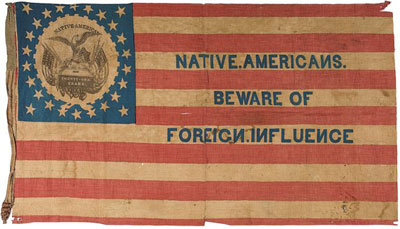
I am amazed at the amount of fear being sown on the political campaign trail and by so many politicians, pundits, and preachers, the Trinity of Evil who employ fear and falsehoods with great aplomb to drive people into their camp. Sadly, too many people do not see this and respond based on the emotion of fear, and distrust, driven by the paranoia sown by the politicians, preachers, and pundits. I write about history all the time, and a few month’s back I wrote a piece for my Civil War and Gettysburg text that dealt with the Know Nothing Party and movement of the 1840s and 1850s. The story of the Know Nothings provides good lessons for us today, that is why I placed their flag as header for this article, because their whole platform was based on fear and paranoia. For the Know Nothings it was the fear of Irish and German immigrants, especially Catholics; for us it is Arabs, Moslems, Chinese, and Latin Americans, particularly Mexicans.
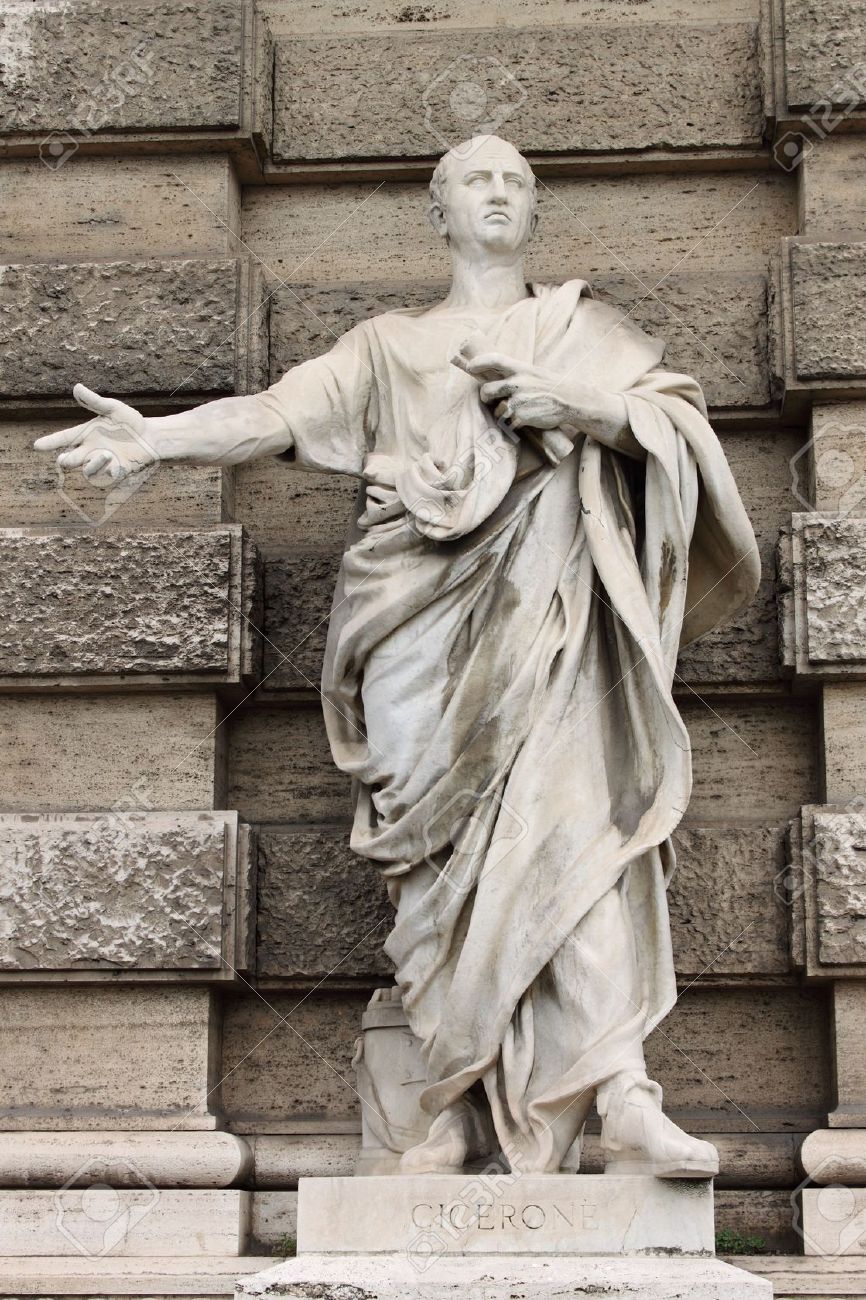
We live in a time when there are legitimate threats, and real things to fear, but the politicians, pundits and preachers take things that are reasonable to be concerned about, and then find some external or internal enemy to blame them on. As Captain Picard so well noted, the road from legitimate suspicion to rampant paranoia is very much shorter than we think, and if we go down that road, we will destroy ourselves and our civil liberties. The Roman philosopher Cicero expressed this so well when he wrote, “No power on earth, if it labors beneath the burden of fear, can possibly be strong enough to survive.”
I am reminded of the speech made by the character played by Burt Lancaster in the great movie Judgement at Nuremberg. It is really amazing and speaks to the condition that we are finding ourselves in today.
“There was a fever over the land. A fever of disgrace, of indignity, of hunger. We had a democracy, yes, but it was torn by elements within. Above all, there was fear. Fear of today, fear of tomorrow, fear of our neighbors, and fear of ourselves. Only when you understand that – can you understand what Hitler meant to us. Because he said to us: ‘Lift your heads! Be proud to be German! There are devils among us. Communists, Liberals, Jews, Gypsies! Once these devils will be destroyed, your misery will be destroyed.’ It was the old, old story of the sacrificial lamb. What about those of us who knew better? We who knew the words were lies and worse than lies? Why did we sit silent? Why did we take part? Because we loved our country! What difference does it make if a few political extremists lose their rights? What difference does it make if a few racial minorities lose their rights? It is only a passing phase. It is only a stage we are going through. It will be discarded sooner or later. Hitler himself will be discarded… sooner or later. The country is in danger. We will march out of the shadows. We will go forward. Forward is the great password. And history tells how well we succeeded, your honor. We succeeded beyond our wildest dreams. The very elements of hate and power about Hitler that mesmerized Germany, mesmerized the world! We found ourselves with sudden powerful allies. Things that had been denied to us as a democracy were open to us now. The world said ‘go ahead, take it, take it! Take Sudetenland, take the Rhineland – remilitarize it – take all of Austria, take it! And then one day we looked around and found that we were in an even more terrible danger. The ritual began in this courtroom swept over the land like a raging, roaring disease. What was going to be a passing phase had become the way of life. Your honor, I was content to sit silent during this trial. I was content to tend my roses. I was even content to let counsel try to save my name, until I realized that in order to save it, he would have to raise the specter again. You have seen him do it – he has done it here in this courtroom. He has suggested that the Third Reich worked for the benefit of people. He has suggested that we sterilized men for the welfare of the country. He has suggested that perhaps the old Jew did sleep with the sixteen year old girl, after all. Once more it is being done for love of country. It is not easy to tell the truth; but if there is to be any salvation for Germany, we who know our guilt must admit it… whatever the pain and humiliation.”
We must guard ourselves from the rampant fear and paranoia promoted by the politicians, pundits, and preachers who rant throughout the twenty-four hour news cycle if we are to maintain our civil liberties and freedoms. This is why I write, because we cannot allow ourselves to fall into the age old trap that is being set for us by the politicians, pundits, and preachers who make their living by exploiting people’s fears and sowing distrust which becomes a poison, which left untreated leads of vast and heinous crimes.
As a career military officer and veteran of the Iraq campaign as well as Operation Enduring Freedom I get very reflective around Veteran’s Day. For me it is a melancholy time. I remember those who have gone to war, those who did not come home, and those who came home, especially those who came home wounded in body, mind, or spirit; those who were forever changed by their experience of war.
One of my heroes is T.E. Lawrence, the immortal Lawrence of Arabia. After World War One ended and the politicians, diplomats, and business leaders betrayed those who served, as well as the people of many nations with a terrible peace, Lawrence wrote, “We were fond together because of the sweep of open places, the taste of wide winds, the sunlight, and the hopes in which we worked. The morning freshness of the world-to-be intoxicated us. We were wrought up with ideas inexpressible and vaporous, but to be fought for. We lived many lives in those whirling campaigns, never sparing ourselves: yet when we achieved and the new world dawned, the old men came out again and took our victory to remake in the likeness of the former world they knew. Youth could win, but had not learned to keep, and was pitiably weak against age. We stammered that we had worked for a new heaven and a new earth, and they thanked us kindly and made their peace.”
One hundred and one years ago, in November 1914, millions of soldiers were fighting in horrible conditions throughout Europe. From the English Channel to Serbia, Poland and Galicia; French, British, German, Austro-Hungarian, Serbian and Russian troops engaged each other in bloody and often pointless battles. Often commanded by old men who did not understand how the character of war had changed, millions were killed, wounded, maimed or died of disease.
After four years, with the Empires that were at the heart of the war’s outbreak collapsing one after the other there was an armistice. On the eleventh hour, of the eleventh day, of the eleventh month the shooting stopped and the front lines quieted. By then over 20 million people, soldiers and civilians alike had died. Millions more had been wounded, captured, seen their homes and lands devastated or been driven from there ancestral homelands, never to return.
The human cost of that war was horrific. Over 65 million soldiers were called up on all sides of the conflict, of which nearly 37.5 million became casualties, some 57.5% of all soldiers involved. Some countries saw the flower of their manhood, a generation decimated. Russia sustained over 9 million casualties of the 12 million men they committed to the war, a casualty rate of over 76%. The other Allied powers suffered as well. France lost 6.4 million of 8.5 million, or 73%, Great Britain 3.1 million of nearly 9 million, 35%; Italy 2.2 million of 5.6 million, 39%. Their opponents, Germany, Austria-Hungary and the Ottoman Empire suffered greatly. Germany sustained 7.1 million casualties of 11 million men called up, or nearly 65%, Austria 7 million of 7.8 million, 90% and the Ottoman Empire 975,000 of 2.8 million or 34% of the soldiers that they sent to war.
It was supposed to be the War to end all War…but it wasn’t, it was the mother of countless wars.
It has been a century since that bleak November of 1914, and ninety-six years since the time where for a brief moment, people around the world, but especially in Europe dared to hope for a lasting and just peace. But that would not be the case…
The victors imposed humiliating peace terms on the vanquished, be it the Germans on the Russians, or the Allies on Germany and her partners. The victors divided up nations, drew up borders without regard to historic, ethnic, tribal or religious sensibilities. But then, it was about the victors imposing themselves and their quest for domination, expanding colonial empires and controlling natural resources rather than seeking a just and lasting peace. The current war against the Islamic State is one of the wars spawned by the Sykes-Picot agreement which divided the Middle East between the French and the British at the end of the war. It was a war that keeps on giving.
Of course we have known the disastrous results of their hubris, a hubris still carried on by those who love and profit by war…war without end which continues seemingly with no end in sight.
I am a veteran of Iraq and Operation Enduring Freedom, as well as the Bosnia mission and the Cold War. My dad was a Vietnam veteran who enlisted during the Korean War. I serve because it is the right thing to do, not because I find war romantic or desirable. It is as General William Tecumseh Sherman said “Hell.” If called to go back to Iraq, where I left so much of my soul, I would go in a heartbeat.
This week as we do every year we will pay our homage to honor our veterans, especially in the United States, Great Britain, Canada and France. But sometimes it seems so hollow, for in all of our countries those that serve are a tiny minority of those eligible to serve, who are much of the time ignored or even scorned by those that feel that providing for them after they have served is too much of a burden on the wealthy who make their profits on the backs of these soldiers, sailors, marines and airmen.
I have walked about since returning from Iraq often in a fog, trying to comprehend how a country can be at war for so long, and there is such a gap between the few who serve and the vast majority for whom war is an abstract concept happening to someone else, in places far away, and whose experience of war is its glorification in video games. Personally I find that obscene, and feel that I live in a foreign world. Erich Maria Remarque wrote in All Quiet on the Western Front:
“I imagined leave would be different from this. Indeed, it was different a year ago. It is I of course that have changed in the interval. There lies a gulf between that time and today. At that time I still knew nothing about the war, we had been only in quiet sectors. But now I see that I have been crushed without knowing it. I find I do not belong here any more, it is a foreign world.”
Similarly Guy Sajer wrote in his classic The Forgotten Soldier:
“In the train, rolling through the sunny French countryside, my head knocked against the wooden back of the seat. Other people, who seemed to belong to a different world, were laughing. I couldn’t laugh and couldn’t forget.”
Major General Gouverneur Warren wrote to his wife two years after the American Civil War:
“I wish I did not dream that much. They make me sometimes dread to go to sleep. Scenes from the war, are so constantly recalled, with bitter feelings I wish to never experience again. Lies, vanity, treachery, and carnage.”
Sometimes I find it obscene that retailers and other corporations have turned this solemnity into another opportunity to profit. But then why should I expect different? Such profiteers have been around from the beginning of time, but then maybe I still am foolish enough to hope for something different. Please don’t get me wrong, I do appreciate the fact that some businesses attempt in at least some small way to thank veterans. I also know there are many businesses and business owners who do more than offer up tokens once a year, by putting their money where their mouth is to support returning veterans with decent jobs and career opportunities; but for too many others the day is just another day to increase profits while appearing to “support the troops.”
As Marine Corps legend and two-time Medal of Honor winner Major General Smedley Butler Wrote:
“What is the cost of war? what is the bill? “This bill renders a horrible accounting. Newly placed gravestones. Mangled bodies. Shattered minds. Broken hearts and homes. Economic instability. Depression and all of its attendant miseries. Back -breaking taxation for generations and generations. For a great many years as a soldier I had a suspicion that war was a racket; not only until I retired to civilian life did I fully realize it….”
But the marketers of war do not mind, almost Orwellian language is used to lessen its barbarity. Dave Grossman wrote in his book On Killing:
“Even the language of men at war is the full denial of the enormity of what they have done. Most solders do not “kill,” instead the enemy was knocked over, wasted, greased, taken out, and mopped up. The enemy is hosed, zapped, probed, and fired on. The enemy’s humanity is denied, and he becomes a strange beast called a Jap, Reb, Yank, dink, slant, or slope. Even the weapons of war receive benign names- Puff the Magic Dragon, Walleye, TOW, Fat Boy, Thin Man- and the killing weapon of the individual soldier becomes a piece or a hog, and a bullet becomes a round.”
There is even a cottage industry of war buffs, some of who are veterans seeking some kind of camaraderie after their service, but most of whom have little or know skin in the real game, and at no inconvenience to themselves. As far as the veterans I understand, but as for the others I can fully understand the words of Guy Sajer, who wrote:
“Too many people learn about war with no inconvenience to themselves. They read about Verdun or Stalingrad without comprehension, sitting in a comfortable armchair, with their feet beside the fire, preparing to go about their business the next day, as usual…One should read about war standing up, late at night, when one is tired, as I am writing about it now, at dawn, while my asthma attack wears off. And even now, in my sleepless exhaustion, how gentle and easy peace seems!”
It was to be the War to end all war” but I would venture that it was the war that birthed countless wars, worse tyrannies and genocides; That war, which we mark the end of today, is in a very real and tragic sense, the mother of the wars that have followed. Today, war threatens in so many places; the Middle East, Ukraine, Asia, and Africa. Terrorism has apparently returned with a vengeance. War without end, amen.
As so to my friends, my comrades and all that served I honor you, especially those that I served alongside. We are a band of brothers; no matter what the war profiteers do, no matter how minuscule our number as compared to those who do not know what we do, and those who never will. We share a timeless bond and no one can take that away.
I close with the words of a German General from the television mini-series Band of Brothers which kind of sums up how I feel today. The American troops who have fought so long and hard are watching the general address his troops after their surrender. An American soldier of German-Jewish descent translates for his comrades the words spoken by the German commander, and it as if the German is speaking for each of them as well.
Men, it’s been a long war, it’s been a tough war. You’ve fought bravely, proudly for your country. You’re a special group. You’ve found in one another a bond that exists only in combat, among brothers. You’ve shared foxholes, held each other in dire moments. You’ve seen death and suffered together. I’m proud to have served with each and every one of you. You all deserve long and happy lives in peace.
The great Roman philosopher and political theorist Marcus Tullius Cicero wrote, “History is the witness that testifies to the passing of time; it illumines reality, vitalizes memory, provides guidance in daily life and brings us tidings of antiquities.”
Those who follow my writings here on this site know that I am a historian and that much of what I write, even regarding current events, is framed by history and the stories of those who came before us. That is one of my driving passions, a passion for historical truth, and a passion to ensure that the past is not forgotten. Sadly, it seems that our society, and even our education system is disconnecting itself from history. We have pretty much stopped teaching history in schools, and often what is taught is myth. As such we have become a society that through its ignorance of the past is ever repeating the worst aspects of our history. As a whole we are ignorant of our past, and that ignorance is demonstrated by many of our political, business, journalism, educational, and military leaders on a daily basis.
Cicero wrote “To be ignorant of what occurred before you were born is to remain always a child. For what is the worth of human life, unless it is woven into the life of our ancestors by the records of history?”
Our lives must be woven together with those who came before us, without that sacred connection to the past, we endanger the future, and doom those who follow us. Cicero wrote, “The life of the dead is placed in the memory of the living.” Thus, it is for us the living to remember and never forget those who have gone before.
The Roman philosopher and political theorist Cicero wrote words that are chilling, and over 2000 years after he wrote them, still troubling, “Inter Arma Enim Silent Leges,” in time of war the law stands silent…
Yesterday I wrote a piece that dealt with the moral and ethical costs of fighting a war against the self-proclaimed Islamic State using the lens of the Star Trek Deep Space Nine episode In the Pale Moonlight. I found it troubling and even had some nightmares involving this war, as a result I did not sleep well last night. So today I am going to continue the discussion, with a slightly different emphasis, again using a Deep Space Nine episode, this one called Inter Arma Enim Silent Leges which deals with a Federation security service trying to co-opt the Chief Medical Officer of Deep Space Nine to spy for them.
James Madison wrote that “A popular government, without popular information, or the means of acquiring it, is but a prologue to a farce or a tragedy; or, perhaps both.”
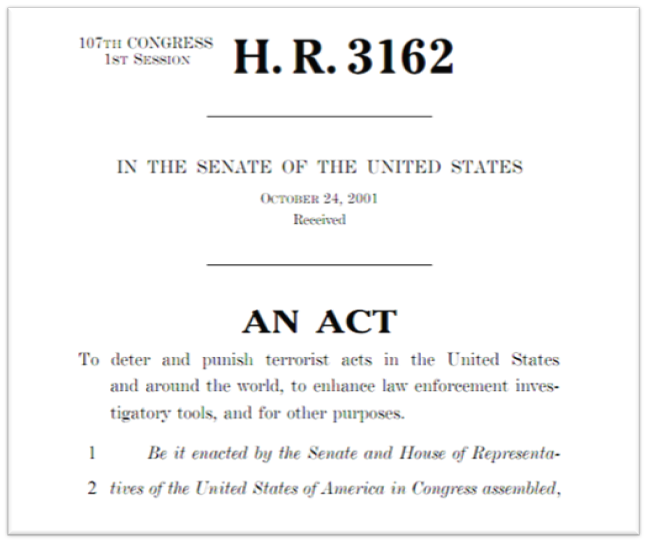
After September 11th 2001 the National Security State went into overdrive with the passage of the so called Patriot Act. That act opened the floodgates for an ever expanding national security state. With the growing likelihood that a Russian airline was destroyed by a terrorist bomb over the Sinai Peninsula, the probability is that more and more civil liberties will disappear in the name of national security. The fact is that we as a society need to wrestle with the questions of maintaining an open and free society in the midst of a world that is growing ever more dangerous. If we are to maintain an open and free society we must have this discussion, and we cannot allow ourselves to be duped into surrendering the very rights and civil liberties that we hold dear, in the name of security against threats real, and imagined. The fact that the threat to civil liberties is growing, and has been for the last decade and a half under both Republican and Democratic administrations, and Congresses controlled at one time or another by the Republican and the Democratic Parties.
I have a lot of apprehension when I read the reports about the activities of the National Security Agency, other intelligence and police agencies at all levels of government and the pervasive erosion of civil rights. The national security state and the seeming all pervasive security and surveillance apparatus which demolishes any sense of privacy, especially the protections enunciated in the Fourth Amendment and to some extent the First Amendment. Of course the use of similar methods by the private sector, often in conduction with government agencies is another concern, but that needs to wait for another day.
I also understand from history and empirical evidence that many others, many from unfriendly countries do not share those apprehensions. Many of these competitors are willing to use whatever openness that we have as a society against us, using similar technology and methods used by our intelligence, police, governmental and private sector. It makes for an ethical, legal and even constitutional conundrum. I know that I am not comfortable with this, and perhaps maybe none of us should be.
It is very easy on one hand in light of history, our Constitution and democratic process to condemn the NSA, the FISA courts and other lawfully constituted agencies and those that drafted the laws over the decades that allow the activities which they now conduct. The same can be said of foreign intelligence agencies which all engage in similar activities including the British GCHQ, the German Bundesnachrichtendienst and so many others including the Chinese and Russians.
Likewise it is equally easy in light of history, current events and national security concerns for people to jump to the other side of the fence and not only defend the activities of the NSA and agencies like it, and to demonize those that protest or expose such activities.
When I see the talking heads on cable news shows defending or condemning such activities and not agonizing over the complexity and issues involved I get worried. Because there are legitimate concerns voiced by critics as well as defenders. But since we live in an era of soundbites, gotcha and half-truths being portrayed as all truth I find it helpful to use either historical examples, literature or fiction, and even science fiction to wrestle with the fundamental truths. So I find looking at such issues through the prism of Star Trek sometimes more interesting and provocative than simply doing the whole moralizing pundit thing.
There was an episode of Star Trek Deep Space Nine that aired well before the events of 9-11-2001, and the subsequent Global War on Terror, that I find fascinating. The episode deals with a secretive agency in Starfleet operating in the gray areas between the laws and ideals of the Federation and the threats that the Federation faces. Even when the Federation is a peace, Section 31, as it is called is engaged in activities https://www.youtube.com/watch?v=DhkfuyBLDlYagainst historic or potential enemies. In a way it is somewhat like the NSA or the Defense Intelligence Agency.
At the beginning of the Deep Space Nine Episode Inter Arma Enim Silent Leges the head of Section 31, a man only known as Sloan comes back Doctor Julia Bashir to involve him in an clandestine operation. An operation to on the Romulans who at this point are a Federation ally against the Dominion.
Sloan makes his approach and Bashir, who expresses his reservations:
BASHIR: You want me to spy on an ally.
SLOAN: To evaluate an ally. And a temporary ally at that. I say that because when the war is over, the following will happen in short order. The Dominion will be forced back to the Gamma Quadrant, the Cardassian Empire will be occupied, the Klingon Empire will spend the next ten years recovering from the war and won’t pose a serious threat to anyone. That leaves two powers to vie for control of the quadrant, the Federation and the Romulans.
BASHIR: This war isn’t over and you’re already planning for the next.
SLOAN: Well put. I hope your report is equally succinct.
BASHIR: How many times do I have to tell you, Sloan? I don’t work for you.
SLOAN: You will. It’s in your nature. You are a man who loves secrets. Medical, personal, fictional. I am a man of secrets. You want to know what I know, and the only way to do that is to accept the assignment.
I find the exchange both illuminating and riveting. The fact is that in the situation we face today the arguments of both sides should make us very uncomfortable.
Whether we like it or not or not, the incredibly rapid technical and communication advances of the past couple of decades have primed us for our present conundrum of liberty and privacy or security. That technology, as wonderful as it is has enabled a generation to grow up in a virtual world in many ways detached from the moral and ethical balances between individual rights and liberties as well responsibility to community.
All the wonderful gadgets that we employ in everyday life, make it easy for enemies and “friends” to do things that were unimaginable to people other than science fiction writers even twenty to thirty years ago. Likewise they were certainly beyond the wildest imaginations of any of the founders who drafted Constitution.
The reality is, the things that make are lives so easy are also the things that have the potential to remove the very liberties that we treasure, either by our enemies using them, or those that defend us.
The truth is, that throughout history, even our own there have been operatives within the government in charge of secrets, as well as spies. In the Inter Arma Enim Silent Leges episode we see an operation that is full of duplicity and moral ambiguity all committed in the name of security. I won’t go into the details because it is too full of twists, and turns, you can read the plot of the episode at Memory Alpha.org http://en.memory-alpha.org/wiki/Inter_Arma_Enim_Silent_Leges_%28episode%29
There is an exchange between Dr. Bashir and Admiral Ross of Starfleet command which is very enlightening because it practically mirrors how many on both the civil liberties and the national security side of the current controversy feel about the War on Terror.
BASHIR: You don’t see anything wrong with what happened, do you.
ROSS: I don’t like it. But I’ve spent the last year and a half of my life ordering young men and young women to die. I like that even less.
BASHIR: That’s a glib answer and a cheap way to avoid the fact that you’ve trampled on the very thing that those men and women are out there dying to protect! Does that not mean anything to you?
ROSS: Inter arma enim silent leges.
BASHIR: In time of war, the law falls silent. Cicero. So is that what we have become? A twenty fourth century Rome driven by nothing more than the certainty that Caesar can do no wrong!
ROSS: This conversation never happened.
In light of the controversy of today regarding the NSA, FISA Courts, government secrecy and intelligence gathering information on its own citizens, as well as allies, friends and and enemies we face a growing tide of reporters and others seeking to reveal those secrets. Back in 1989 ethicist Sissela Bok wrote something very important in her book Secrets: Moral Choice in Public and Private Life:
“…as government secrecy expands, more public officials become privy to classified information and are faced with the choice of whether or not to leak … growing secrecy likewise causes reporters to press harder from the outside to uncover what is hidden. And then in a vicious circle, the increased revelations give government leaders further reasons to press for still more secrecy.”
As we wade through the continuing controversy surrounding these issues we will see people do exactly what Bok said. These are the exact arguments are being made by the people and officials directly involved in such activities, as well as former elected and appointed officials, and members of the press.
The interesting thing to me is that very few of the people or agencies, past and present, Republican and Democrat involved have clean hands. It is amazing to see former champions of civil liberties defend the NSA actions and those that empowered the NSA in the Patriot Act now condemn it. I find it both fascinating and frightening.
At the end of the Inter Arma Enim Silent Leges episode the mysterious Sloan pops back in on Doctor Bashir who is in his quarters, asleep and depressed by what he experienced during the operation on Romulus and with Admiral Ross.
SLOAN: Good evening.
BASHIR: Are you expecting applause? Have you come to take a bow?
SLOAN: I just wanted to say thank you.
BASHIR: For what? Allowing you to manipulate me so completely?
SLOAN: For being a decent human being. That’s why we selected you in the first place, Doctor. We needed somebody who wanted to play the game, but who would only go so far. When the time came, you stood your ground. You did the right thing. You reached out to an enemy, you told her the truth, you tried to stop a murder. The Federation needs men like you, Doctor. Men of conscience, men of principle, men who can sleep at night. You’re also the reason Section Thirty one exists. Someone has to protect men like you from a universe that doesn’t share your sense of right and wrong.
BASHIR: Should I feel sorry for you? Should I be weeping over the burden you’re forced to carry in order to protect the rest of us?
SLOAN: It is an honor to know you, Doctor. Goodnight.
We live in this kind of world and maybe it is good to sometimes step back and look at issues using a different prism. I really don’t have the answers. I am a civil libertarian who places a high value on the openness of a government to its people. I also know that there are those that have no regard for such openness or, to quote Sloan don’t “share your sense of right and wrong.”
Maybe that is not a good answer. I really don’t know. All I know is that as uncomfortable as this all is that those on both sides of the issue have valid points and concerns. It is a debate that needs to happen if we are able to balance that a society needs to balance individual rights and responsibility to the community; openness and secrecy; civil liberties and national security.
But that being said. it is a debate that needs to happen, even if it makes us uncomfortable. I for one think that it is better that we be uncomfortable when looking at such an important debate than to be prisoners of our certitude.
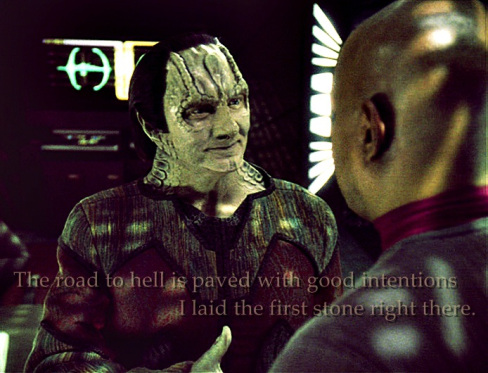
“My father used to say that the road to Hell is paved with good intentions. I laid the first stone right there. I’d committed myself. I’d pay any price, go to any lengths, because my cause was righteous. My… intentions were good. In the beginning, that seemed like enough.” Captain Benjamin Sisko (Avery Brooks) Star Trek Deep Space Nine, In the Pale Moonlight
Friends of Padre Steve’s World,
With the increasing probability that elements of the self-proclaimed Islamic State brought down a Russian airliner in the Sinai last week, it is important to ask what we are willing to do to protect innocent lives. I am not just talking about the situation in Syria and Iraq, where tens of thousands have died and millions have been displaced; but around the world from a hybrid terrorist state that knows no creed but victory or death.
The question is not just about fighting the Islamic State as this is already happening. Though there is no formal alliance and many of the states involved have their own interests at heart, the war now involves the United States, some NATO allies, Russia, Iran, Saudi Arabia, and a number of Arab states, not to mention the kaleidoscope of different warring parties in Iraq and Syria. Until last week the United States was content to fight using airpower alone. Now it appears that albeit with great hesitancy the Obama administration is slowly expanding the fight to include ground troops, although at the time this is limited to special operations troops and advisers.
As the war expands, we do have to ask hard questions, chief among them how far we will go to fight the Islamic State. The fact that no matter what course of action the United States, our allies, and the other combatants take, each one has its drawbacks, as well as benefits. Each one involves a certain amount of risk, and the fact is that the Islamic State does believe that the United States, Europe, Russia, Iran, and Israel are their greatest enemies and is working to attack each one. This poses a question of making alliances with disparate nations, some of which are mortal enemies of each other. But sometimes necessity makes strange bedfellows, just ask Winston Churchill and Josef Stalin.
So today, I am posing a reflection from the television series Star Trek Deep Space Nine. I think that among the Star Trek series that my favorite is Deep Space Nine. Of course all of the Star Trek series and movies deal with ethics, philosophy and morality to some extent; but Deep Space Nine is perhaps the most interesting to me. Don’t get me wrong I think that the Original Series and Start Trek the Next Generationwere and are leap years ahead of most television series when it comes to addressing ethical, moral and existential issues, but somehow living in the post 9-11 “War on Terrorism” world I find Deep Space Nineto be the most compelling. I think that is that the fact that the moral issues get blurred which attracts me to the series, and to this episode in particular.
I think that using the medium of science fiction we can think about real life issues in a new, and maybe more creative way than we might. I think it to do this is to think outside the traditional box, which sometimes limits our discussion, and consideration of all of the factors involved. But the subject is uncomfortable because it makes us face truths that we might not want to see, and parts of ourselves, our beliefs, and our values that can become clouded in times of crisis.
One of my favorite episodes is from season six and is entitled “In the Pale Moonlight.”The episode deals with the unsavory matter of contriving a reason to get the Romulan Empire to join with the Federation and the Klingons to fight the Dominion-Cardassian alliance that is threatening those entities as well as potentially the entire Alpha Quadrant. I have included a link to the conclusion of that episode here:
The ethics of this episode seem very timely as I look at the new phase of the conflict that the United States has been engaged for the past thirteen years. The fact is that in spite of our appeal to higher ideals we are having to make alliances with powers that are only slightly less unsavory than ISIS, powers whose polices have help ISIS grow. In a sense it is the classic scenario of making a deal with the devil to defeat one’s enemy. Of course this is not a new phenomena, individuals and nations have made such deals, sometimes with mortal enemies throughout history.
Unfortunately we usually judge such decisions based on their results, rather than wrestle with the ethical issues involved and how we might behave in similar situations. For me the philosophical and ethical issues involved in such alliances have a special interest and as such I tend to notice or recall instances where I saw, read or heard something that makes a connection to an ethical or moral dilemma faced by policy makers and planners today.
Some of the issues involved for policy makers are related to the traditional Just War Theory, and what is called the “Supreme Emergency” exemption. This exemption basically posits that when faced with a supreme and existential emergency a person or state may engage in behaviors that ordinarily would be considered unethical if the situation were not of a supreme emergency.
Of course such decisions in the real world are difficult. Those who have a system of beliefs that help them define right and wrong behaviors, even if they are not codified in law may struggle with such decisions, while those who act according to what they deem necessary or expedient, unbridled by religious, philosophical or other similar codes may not, instead making their decisions based on what appears to be necessary at the time.
This Deep Space Nine episode is remarkable because we get to see an actor playing a military commander dealing with the morality of the course of action that he is taking. In one of the early scenes Captain Sisko expresses his doubts relating to the morality of a decision that he is making in a war that has already consumed the lives of tens of millions of people.
After an incident where a Federation starship was destroyed, Sisko went to Elim Garak (Andrew Robinson), an exiled Cardassian intelligence officer to uncover any evidence about Dominion-Cardassian collusion to attack the Romulans. When none was uncovered and Garak’s sources on Cardassia were compromised he agreed to allow Garak to manufacture evidence in order to get the Romulans into the war on the side of the Federation and Klingons. Sisko compounded the situation by having the Klingons release a master forger who was on death row to help Garak. Sisko knew it was wrong and confided in his log:
“Why I didn’t listen to the voice in the back of my mind telling me not to believe a word he said, I’ll never know… But it didn’t take long for me to come face to face with the fact that I’d made a mistake.”
When the former prisoner gets drunk and attacks the owner of a tavern on the space station Sisko was in a bind. He wanted no evidence that the man had been on his station and in order to keep Quark, the bar owner quite had to bribe him. Sisko again expressed his doubts in his personal log:
“Maybe I should have put a stop to it right there. Maybe I should have said, “Thank you very much for your input, Mister Garak, I will take your suggestion under advisement,” and then gone back to my office and forgotten the whole thing. But I didn’t. Because in my heart, I knew what he was saying made sense.”
Even so Sisko still had doubts:
“That was my first moment of real doubt, when I started to wonder if the whole thing was a mistake. So I went back to my office. And there was a new casualty list waiting for me. People are dying out there every day! Entire worlds are struggling for their freedom! And here I am still worrying about the finer points of morality! No, I had to keep my eye on the ball! Winning the war, stopping the bloodshed, those were the priorities! So I pushed on. And every time another doubt appeared before me, I just found another way to shove it aside.”
When nations feel they are engaged in a life and death struggle, those who serve as policy makers, planners and military commanders often make uncomfortable compromises with their own religious, ethical or philosophical codes. Sisko continued down the path despite his doubts but justified his actions by the fact that Starfleet had approved them:
“Maybe… I was under more pressure than I realized. Maybe it really was starting to get to me, but I was off the hook. Starfleet Command had given the plan their blessing and I thought that would make things easier. But I was the one who had to make it happen. I was the one who had to look Senator Vreenak in the eye and convince him that a lie… was the truth.”
The forgery was completed and the Romulan Senator secretly arrived on the station to examine the evidence and as he did so all Sisko could do was wait, confiding in his log:
“So all I could do was wait… and see how masterful Tolar’s forgery really was. So I waited… tried to catch up on my paperwork, but I find it very difficult to focus on criminal activity reports, cargo manifests… So I went back to pacing, staring out of the window. I’m not an impatient man, I’m not one to agonize over decisions once they’re made. I got that from my father. He always says, “Worry and doubt are the greatest enemies of a great chef. The soufflé will either rise or it won’t – there’s not a damn thing you can do about it, so you might as well just sit back and wait and see what happens.” But this time the cost of failure was so high, I found it difficult to take his advice. If Vreenak discovered that the data rod was a forgery, if he realized that we were trying to trick them into the war it could push the Romulans even farther into the enemy camp. They could start to openly help the Dominion. If worst came to worst they could actually join the war against us. I had the distinct feeling that victory or defeat would be decided in the next few minutes.”
It did not work, Vreenak discovered that the data rod was a forgery and threatened to expose Sisko’s deception and possibly bring the Romulans into alliance with the Dominion. When Sisko’s actions blew up in his face and his deceit was revealed he was not happy and resigned himself to face the consequences:
“So it all blew up in my face. All the lies and the compromises, the inner doubts and the rationalizations – all for nothing. Vreenak was furious. I can’t say I blamed him; I’d have reacted the same way. After telling me in no uncertain terms that he intended to expose this “vile deception” to the entire Alpha Quadrant, he got back in his shuttle and headed home. There didn’t seem to be anything more to do… so I went back to work. Two days later we got the news.”
Sisko learned in a Starfleet communication that Vreenak’s shuttle had blown up and that is was suspected to be the work of the Dominion. When Sisko found that Vreenak was dead he went to Garak and forcefully confronted him, striking him in the process. He accused Garak of sabotaging the senator’s ship and killing him as well as the forger, Tolar. Instead of backing down Garak confronted the results and the ethical issue. The heated exchange between the two men is fascinating:
Garak: If you can allow your anger to subside for a moment, you’ll see that they did not die in vain! The Romulans will enter the war!
Captain Sisko: There’s no guarantee of that!
Garak: Oh, but I think that there is. You see, when the Tal Shiar finishes examining the wreckage of Vreenak’s shuttle, they’ll find the burnt remnants of a Cardassian optolythic data rod which somehow miraculously survived the explosion. After painstaking forensic examination, they’ll discover that the rod contains a recording of a high-level Dominion meeting, at which the invasion of Romulus was being planned.
Captain Sisko: And then they’ll discover that it is a fraud!
Garak: Oh, I don’t think they will! Because any imperfections in the forgery will appear to be a result of the explosion. So – with a seemingly legitimate rod in one hand, and a dead senator in the other, I ask you, Captain – what conclusion would you draw?
As Sisko’s anger subsided Garak continued:
“That’s why you came to me, isn’t it, Captain? Because you knew I could do those things that you weren’t capable of doing? Well, it worked. And you’ll get what you want: a war between the Romulans and the Dominion. And if your conscience is bothering you, you should soothe it with the knowledge that you may have just saved the entire Alpha Quadrant. And all it cost was the life of one Romulan senator, one criminal, and the self-respect of one Starfleet officer. I don’t know about you, but I’d call that a bargain.”
Shortly thereafter Sisko found out that the out that the deception was successful as Garak had said it would be. The Romulans who recovered the damaged data rod believed that it was genuine and declared war on the Dominion-Cardassian alliance and had entered the war on the side of the Federation. He completed his personal log:
“At oh-eight-hundred hours, station time… the Romulan Empire formally declared war against the Dominion. They’ve already struck fifteen bases along the Cardassian border. So, this is a huge victory for the good guys! This may even be the turning point of the entire war! There’s even a “Welcome to the Fight” party tonight in the wardroom!… So… I lied. I cheated. I bribed men to cover up the crimes of other men. I am an accessory to murder. But most damning of all… I think I can live with it… And if I had to do it all over again… I would. Garak was right about one thing – a guilty conscience is a small price to pay for the safety of the Alpha Quadrant. So I will learn to live with it…Because I can live with it…I can live with it. Computer – erase that entire personal log.”
My guess is that before this war is over, there will be men and women serving in positions of responsibility in our or allied militaries, policy makers and government officials who will make similar deals, violating their own moral codes and even laws in order to defeat the Islamic State and prevent acts of terror against their citizens. Most, like Sisko will not be happy but will live with their decisions. The fact is that long asymmetrical wars in which nation states have to fight non-state terrorist entities get really ugly and the longer and more bloody that they become the more decent and honorable people will make decisions like Sisko and resort to actions that in normal times they would never countenance.
This is nothing new. Those who have fought in such wars throughout history have found ways to “live” with actions that they would not approve of had things been different. Wars such as the one that we are fighting and continue to fight in the years ahead have a corrosive affect on the human spirit. They corrupt and destroy even when they are “successful.”
The question is: Can we live with it? Sadly, as much as I hate to admit it, in a similar situation I think like Sisko, that I could condone or be complicit in something like this. I too could probably convince myself that the end justified the means and that I could live with it, against ISIL. If in fact an ISIL bomb downed the Russian airliner, it is a watershed, and points to worse things to come, and we will have to ask the question, “can you live with it?”
Of course it is possible that this was an accident, truthfully, I do as tragic as it would be, hope this it the case.
Of course there is always the possibility that ISIL or one of its allied groups did it. But another possibility cannot be ruled out; that a bomb was planted bye third party, possibly the Russians themselves, hoping to implicate ISIL. That my friends is far to frightening to contemplate as there are too many nations that have both the capability and a motive to do this.
There are some other issues that I want to discuss about this war using the Star Trek motif, and like this they will be unsettling.
I finished up my latest Gettysburg Staff Ride and as always I end up in a reflective mood. There was so much this time that caught my attention, both in the actual staff ride and my run up and down Cemetery Ridge on Friday evening. I guess the one thing that continues to strike me is a theological question that I began to wonder about after my return from Iraq.
The question is more theological, philosophical, and sociological in nature, and it goes to a place that most of us are unwilling or unable to go. I say this because so many Americans have no idea what war is really about. We tend to exalt the military, say that we “support the troops” but no one asks the hard questions of whether the wars that we are fighting, and the vast amounts of money we are spending are worth it. Frankly I think that the reason is that because for the vast majority of Americans that war is an abstract concept, and they are so disconnected from the military that they do not understand. As such the military is idolized and even mythologized by a public that is willing to send them to war, but unwilling to understand or question decisions of policy that begin and perpetuate war without end.
I see the sacrifice, the broken lives, bodies, minds and families of our military personnel who have deployed so many times. With the expansion of the war against the self-proclaimed Islamic State the wars will probably continue indefinitely. Do I think that the war against ISIS/ISIL is worth it? I have to admit I do, they are thugs who have commandeered a religion to justify their crusade against all who do not agree with them and who seek to obliterate all history and culture that they do not agree, and to paraphrase Vice President Biden, Hell is where they will reside.
At the same time I cannot support a war in which a tiny minority of citizens have skin in the game while those who send them to war do so with no cost to themselves. In fact it wearies me to think that those who so loudly call for war refuse to support those who fight with increased taxes, or even war bonds. I have no doubt that those who send people to war, and those who allow them to do so without question, have no interest in actually putting their lives, or the lives of their sons and daughters on the line.
Joshua Chamberlain, the hero of Little Round Top asked the question that I think needs to be asked by all of us today:
“…men made in the image of God, marred by the hand of man, and must we say in the name of God? And where is the reckoning for such things? And who is answerable? One might almost shrink from the sound of his own voice, which had launched into the palpitating air words of order–do we call it? – fraught with such ruin. Was it God’s command that we heard, or His forgiveness that we must forever implore?”
My question for those who advocate war without end, who refuse to serve, and even refuse to sacrifice a wooden nickel to support those wars, is, whose forgiveness will you implore?
One of the most troubling aspects of genocide is the degree to which people will go to rationalize and justify it, especially if it is supposedly commanded by their “God.” This includes people who exalt their human leader’s pronouncements to that of a god.
Thus, today’s article is difficult to write. I realuze that some people will be offended because to those that cannot see the nuance that any criticism of their beliefs is akin to an attack on God. That is not my intent at all, there are too many people of faith in all religions who work against the extremists who proport to speak evil in the name of their God. Likewise I am not attempting by any stretch of the imagination to broad brush or demonize people of faith.
That being said, there are extremists, and there are many ordinary people who obey without questioning, and if ordered by a high enough authority will commit unspeakable acts.
My sole intent is to point out some of the questions and issues that people of faith need to ask when they faced with the killing of inocents or defenseless people in the name of God, or of a political leader.
One only has to look at history and the words or actions of people who live among us to realize that the seeds of genocide are always being sown by those who find others less than human. The men and women who sow the seeds of future genocide can do so in the name of their God, their religion, their religious or secular political ideological, or their views on the superiority of their race. The Nazis provide us a road map of the twisted logic used by the perpetrators of such actions, but they are not alone in history, and people like them exist today, some peddling their hatred in the name of God and religion, but not always.
When one reads the speeches, the after action reports, and the post-war testimony of those who orchestrated and conducted the worst terror of the Nazi regime against the Jews and others that they considered to be less than human, or in the case of the handicapped and the mentally ill, “life unworthy of life” they are stunning, and troubling.
During his Posen speech of October 1943 SS Reichsfuhrer Heinrich Himmler was quite clear about the aims of the Nazis, and their goals regarding the Jews and other Untermenschen (Sub humans) including infants and children. Himmler said, “We came to the question: what to do with the women and children? I decided to find a clear solution here as well. I did not consider myself justified to exterminate the men – that is, to kill them or have them killed – and allow the avengers of our sons and grandsons in the form of their children to grow up. The difficult decision had to be taken to make this people disappear from the earth…”
One would think that killing babies, any babies, but in the particular case Jewish babies to prevent them from growing up to avenge the deaths of their parents would be repulsive, especially to Jews. For most Jews it is, but like every religion Judaism has its share of extremists. One of them is the controversial Rabbi Yitzhak Shapira, the dean of the Od Yosef Hai Yeshiva near Nablus in Israel. In a chapter in his book Torat ha-Melekh [The King’s Teaching] entitled “Deliberate harm to innocents,” which provides numerous justifications to kill gentiles, Shapira wrote:
“In any situation in which a non-Jew’s presence endangers Jewish lives, the non-Jew may be killed even if he is a righteous Gentile and not at all guilty for the situation that has been created… Hindrances—babies are found many times in this situation. They block the way to rescue by their presence and do so completely by force. Nevertheless, they may be killed because their presence aids murder. There is justification for killing babies if it is clear that they will grow up to harm us, and in such a situation they may be harmed deliberately, and not only during combat with adults.”
The Rabbi’s followers have engaged in frequent violence against Palestinians and Jews who do not hold his radical views. In 2006 he was detained for questioning after writing an article in which he said that all Palestinian males from age 13 and up should be killed or expelled from the West Bank. The rabbi condemns any moderation by the Israeli Defense Forces, and he criticizes Israel’s legal system and judiciary when its rulings conflict with his uncompromising views. To be sure his book was condemned by other Rabbis, especially of the Reformed School, but some Orthodox Rabbis supported it.
Those views are not unlike the stated views of the leaders of the so-called Islamic State when it comes to the killing of non-believers. In that organization’s 2013 Declaration of Warthose leaders stated:
“If you can kill a disbelieving American or European – especially the spiteful and filthy French – or an Australian, or a Canadian, or any other disbeliever from the disbelievers waging war, including the citizens of the countries that entered into a coalition against the Islamic State, then rely upon Allah, and kill him in any manner or way however it may be. Do not ask for anyone’s advice and do not seek anyone’s verdict. Kill the disbeliever whether he is civilian or military, for they have the same ruling. Both of them are disbelievers. Both of them are considered to be waging war [the civilian by belonging to a state waging war against the Muslims]. Both of their blood and wealth is legal for you to destroy, for blood does not become illegal or legal to spill by the clothes being worn.”
Many Imam’s and Mufti’s around the world and in the Middle East have issued Fatwah’s against the Islamic State and condemned its teachings. But many of these clerics, who often represent their tribal or government leaders, are considered to be disbelievers and “defenders of Israel” by the Islamic State. As such, many Moslem clerics, and large numbers the vast oppressed masses of impoverished, and often disenfranchised Arab Moslems are attracted to that ideology, especially that directed against the Jews, who are seen as the ultimate enemy.
There are Christians too that find theological justification for killing children, and their reasons are chillingly like those of Himmler: An article on the blog Rational Christianity writes;
“Why were the children killed, if they weren’t guilty? Apparently, they were considered as morally neutral, since they weren’t yet old enough to be held accountable or to have done much right or wrong. While not as corrupt as their parents, they were part of the society that was judged, and shared its earthly (though not its eternal) fate.”
Another author, a man named Wayne Jackson of Apologetics Press writes of the children of the Canaanites, “Would it not have been infinitely worse, in view of eternity, had these children grown to maturity and adopted the same pagan practices as their parents?”
William Lane Craig, a frequent apologist wrote in the Reasonable faith website a comment that sounds like it could have come from the lips of Himmler in dealing with the effect of the mass murders of Jews and others on the troops of the Einsatzgruppen. Craig wrote,
“So whom does God wrong in commanding the destruction of the Canaanites? Not the Canaanite adults, for they were corrupt and deserving of judgment. Not the children, for they inherit eternal life. So who is wronged? Ironically, I think the most difficult part of this whole debate is the apparent wrong done to the Israeli soldiers themselves. Can you imagine what it would be like to have to break into some house and kill a terrified woman and her children? The brutalising effect on these Israeli soldiers is disturbing.”
However, Craig has no qualms about what the Israelites did, simply because the genocide was commanded by God.
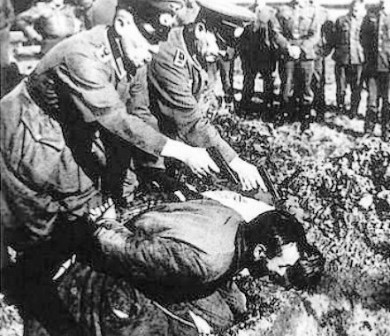
If one substitutes “Hitler” for “God” one sees a similar rationalization used members of the Einsatzgruppen. Colonel Walter Blume, a Police Colonel at Vitebsk who tried to “care” for his troops during a mass execution of Jews. He wrote, “If I am now asked about my inner attitude which I then held, I can only say that it was absolutely split. On the one hand there was the strict order of my superior… and as a soldier I had to obey. On the other hand I considered the execution of this order cruel and humanly impossible. My very presence at this execution convinced me of this in a final manner. I still know that I wanted to make the situation easier for my men who were certainly moved by the same feelings. When ten men were shot there was always a pause until the next had been brought in. During these pauses I let my men sit down and rest and I joined them. I still know what I said exactly the following words to them at this time: “As much as it is no job for German men and soldiers to shoot defenseless people but the Fuhrer has ordered these shootings because he is convinced that these men would otherwise shoot at us as partisans or would shoot our comrades and our women and children were to be protected if we undertake these executions. This we would have to remember when we carry out this order.” Furthermore, I tried talking about neutral subjects to make the difficult spiritual situation easier and to overcome it.”
That is the troubling issue for me. Genocide is genocide and evil, no matter who commands it. We can try to wiggle around and avoid the subject by saying that whatever God we have is above normal law, or that our secular leader’s commands are above the law, but we cannot escape the fact that genocide is immoral and an immutable evil; even if we do it in the name of our God.
I think that is the problem that I have with people who follow their leaders down the path to genocide, even those who they believe are speaking for God. Likewise, I am very much concerned when people seem to care more about the emotional and spiritual effects of mass murders on the perpetrators than on the victims.
But then, the victims are dead and have no one left to speak for them.
Some people reading my site the past week or so probably believe that I am obsessed the Holocaust, genocide, and mass murder. I know that the subject is extremely uncomfortable and that most people would rather not be reminded of it, but the further we get from the Holocaust and the further it recedes into memory, the more danger we face of more genocides.
While these may not involve the Jews, we cannot assume the Jews are completely safe. The fact is that large percentages of people in many countries, and not just Middle Eastern Moslem countries harbor significant anti-Semitic attitudes. The highest percentages of anti-Semetic feeling outside of the Middle East are in Eastern Europe, Central and South America, and parts of Asia, including South Korea, something which suprised me.
If such events like the Holocaust were limited to history they would simply be a tragic footnote on the road of human progress, but they are not. Sadly, these events continue with startling regularity and most of us bury our heads in the sand of our culture of entertainment and denial. The fact is it is easier that way. Yehuda Bauer a leading scholar of the Holocaust wrote, “Thou shalt not be a victim, thou shalt not be a perpetrator, but, above all, thou shalt not be a bystander.” The tragic thing is that we are not even decent bystanders, we just turn our backs and look the other way.
Paul Theroux wrote, “As for the sanctimony of people who seem blind to the fact that mass murder is still an annual event, look at Cambodia, Rwanda, Darfur, Tibet, Burma and elsewhere-the truer shout is not “Never again” but “Again and again.”
How many times must it happen and how many times will we allow our politicians to label other people, other groups as undesirable, less than human, or unworthy of being our neighbors or even of life itself? When I hear politicians talk groups of people in using very generic and neutral terms like “problem, or question” I get worried. This is the language of exclusion, and of dehumanization. Thus when I hear a very popular presidential candidates as well as the pundits and preachers who support them talking about the “immigrant problem”, the “Mexican problem”, the “Moslem problem”, the “Black problem”, “Gay problem”; the word “problem” being a euphemism to dehumanize the people in question, I know that it can happen again, even in this country. For when they talk about the problem or question, they then begin to seek a solution, another nice and neutral word. In the current climate there are talks of walls, massive deportations, camps, denial of rights, even of citizenship, or even basic human rights like housing, subsistence, and medical care. Christopher Hitchens wrote:
“Die Judenfrage,’ it used to be called, even by Jews. ‘The Jewish Question.’ I find I quite like this interrogative formulation, since the question—as Gertrude Stein once famously if terminally put it—may be more absorbing than the answer. Of course one is flirting with calamity in phrasing things this way, as I learned in school when the Irish question was discussed by some masters as the Irish ‘problem.’ Again, the word ‘solution’ can be as neutral as the words ‘question’ or ‘problem,’ but once one has defined a people or a nation as such, the search for a resolution can become a yearning for the conclusive. Endlösung: the final solution.”
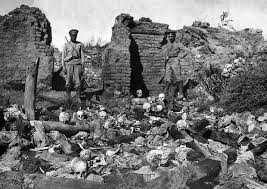
This is not just an issue of the past, be it foreign countries like Germany, Rwanda, Cambodia, and Armenia. It is not simply an issue that is happening in other nations today, like in the areas controlled by the so-called Islamic State; but it has happened in the United States. We cannot wash our hands of genocide when our ancestors committed it on a massive scale, and when for much of our history we have turned our backs on it in other parts of the world. We have pundits like Rush Limbaugh who famously said, “Holocaust? Ninety million Indians? Only four million left? They all have casinos — what’s to complain about?”
Likewise there is the supposedly Christian “historian” David Barton has justified genocide of Native Americans as necessary for the spread of capitalism and Christian civilization “People complain about the fact that the American military and buffalo hunters went out and wiped out all the buffalo in the western plains. Doing that was what brought the Indians to their knees because the Indians lived on those wide western plains where there were very few towns; Indians didn’t go into town to buy supplies, they went to the buffalo herds, that’s where they got their meat, that’s where they got their coats, the hides provided coats, they provided covering for their teepees. If you don’t have the buffalos, those Indians cannot live on the open western plains without those buffalo and so what happened was the military wiped out the supply line by wiping out the buffalo. That’s what brought those wars to an end, that’s what brought the Indians to their knees and ended all the western conflict.” Of course back in 2011 current presidential candidate Mike Huckabee said that all Americans “should be forced at gunpoint” to listen to Barton.
Hitler himself drew inspiration from the American example. As a child he read German translations of American Western novels, a practice that he maintained even as his Reich collapsed around him.
He told people at dinner regarding his conquest of Russia, “Above all, no remorse on the subject! We are not going to play children’s nurses; we’re absolutely without obligation as far as these people are concerned… There’s only one duty: to Germanize this country by the immigration of Germans, and to look upon the natives as Redskins…. In this business I shall go straight ahead cold bloodedly…. I don’t see why a German who eats a piece of bread should torment himself with the idea that the soil that produces this bread has been won by the sword. When we eat wheat from Canada, we don’t think about the despoiled Indians.”
Other minimize the systematic enslavement of African-Americans, the persecution of Asian immigrants and the later imprisonment of Japanese Americans, all committed by White Americans in the name of economics, security, or prosperity.
I could keep going on but I think that you get the point, which is that it can happen again and we always have to be on guard. It would not take much, in times of crisis, and desperation people, even the best and brightest can delude themselves into the commission of terrible crimes against others. That is the lesson of history, and we should not forget it, lest it happen again.
Today I am posting just a brief thought that really struck me the past week as I have been reading, writing, and doing some more research on the Holocaust.
There has been a lot of talk about religious liberty over the past few years, mostly coming from the Christian Right. I am all for the freedom of all people to have religious liberty. My life has been dedicated to that proposition, including protecting the religious and civil rights of people who may despise me, and what I believe in.
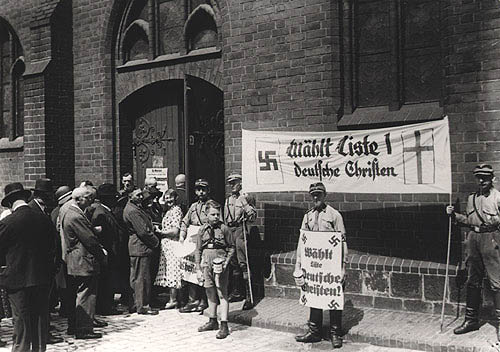
I was watching the television miniseries Nuremberg and when I watched the opening statement of Justice Robert Jackson portrayed by Alec Baldwin I went back to read the transcript of the actual opening statement rendered by Justice Jackson. One of the things that Jackson said in that opening statement dealt with the Nazi understanding of “religious liberty.” That concept is little different from that of the Christian Right. Jackson stated:
“The forecast of religious persecution was clothed in the language of religious liberty, for the Nazi program stated, “We demand liberty for all religious denominations in the State.” But, it continues with the limitation, “so far as they are not a danger to it and do not militate against the morality and moral sense of the German race.”
Note how similar that is to statements of leading members of the Christian Right over the past twenty to thirty years, statements which have grown in intensity and radicalism over the past few years. The statements of many supposedly Christian political, media, and religious leaders, about curtailing or limiting the religious or rights of those who are not Christians, be they Moslems, progressive or liberal Christians, Reform Jews, agnostics, atheists, homosexuals are chilling. Those statements by these leaders, which are so numerous and include statements by current presidential candidates, are so numerous and explicit that they defy any semblance of Christian civilization.
Sadly, the most vocal and popular leaders of Christian Right have equated their morality as that of all Americans and the United States and as such have openly stated their desire to crush the civil and religious rights of others. As such they have legislated “Religious Freedom Restoration Acts” at the Federal, and even more restrictive measures at the State and Local levels, acts, which permit people in public office as well as others to deny service to those whose beliefs, or lifestyles that they oppose, simply based on their “sincerely held” religious beliefs.
Those who legislate these actions honestly believe that those they oppose are a danger to them, their faith and to the nation. They believe this as much as those who followed Hitler believed about the correctness of curtailing the religious and civil liberty of the people, the Jews, the Socialists, homosexuals and others that they opposed. It is not that all of them are evil, or for that matter even bad people; it is just that they have chosen to believe the fear mongering lies and distortions of their political and religious leaders.
In the late 1920s and early 1930s a prominent German pastor, a war hero from the First World War believed the lies of the Nazis, and supported Hitler in his rise to power. That pastor was Martin Niemoller. However, unlike most German church leaders Niemoller soon recognized his error when Hitler took power. Niemoller had feared the “liberals” of his day, the Social Democrats who had been a major force in the early days of the Weimar Republic. After Hitler took power, Niemoller recognized his mistake and wrote, “I hated the growing atheistic movement, which was fostered and promoted by the Social Democrats and the Communists. Their hostility toward the Church made me pin my hopes on Hitler for a while. I am paying for that mistake now; and not me alone, but thousands of other persons like me.”
In the hands of tyrants there is no such thing as religious liberty, especially those that argue the most stridently that they are defending their religious freedom. Those today, mostly leaders of the highly politicized Christian Right are making a terrible mistake. When there is no liberty for those who do not agree with religious conservatives, there is no liberty for anyone. Thomas Jefferson put it well, “History, I believe, furnishes no example of a priest-ridden people maintaining a free civil government. This marks the lowest grade of ignorance, of which their civil as well as religious leaders will always avail themselves for their own purposes.”
Friends of Padre Steve's World
I welcome comments, even those which disagree with my positions and articles. I have done this for years, but recently I have been worn out by some people.
I have just a couple of rules for comments. First, be respectful of me and other commentators. If you are polite and respectful' even if I disagree with you your comment will be posted and I will respond accordingly.
That being said I will not allow people to hijack the comment section to push their religious or ideological views. Unless the comment deals with the meat of the article, don't expect me to allow you to preach, especially if you are a racist, anti-Semetic, or are a homophobe.
Nor will I allow spam comments. Most of those are automatically blocked by Wordpress but some do get through, and deal with them accordingly.
Peace
Padre Steve+










 The Inglorius Padre Steve's World